Due forze di 3 N e 4 N sono applicate allo stesso corpo.
Quando l’angolo fra le due forze varia da a , il modulo della forza risultante varia fra
- A. 1 N e 7 N
- B. 7 N e 1 N
- C. 5 N e 7 N
- D. 7 N e 5 N
- E. non varia. Topic: Newtonian Mechanics Metodi: Vector Decomposition Competenze: Physical Reasoning Objects: — Fonte: Testo (PDF) — p.3 Risposta: D · Soluzioni (PDF)
Two forces of 3 N and 4 N are applied to the same body.
When the angle between the two forces varies from to , the magnitude of the resultant force varies between
- A. 1 N and 7 N
- B. 7 N and 1 N
- C. 5 N and 7 N
- D. 7 N and 5 N
- E. it does not vary. Answer: D · Soluzioni (PDF)
I grafici X e Y mostrano la pressione, il volume, l’entropia e la temperatura di una data massa di gas perfetto durante un esperimento in cui il gas si trova inizialmente nello stato indicato dal punto 1 e dopo una trasformazione reversibile raggiunge lo stato indicato dal punto 2.
Quali delle seguenti affermazioni sono corrette?
- Il gas si espande secondo la legge di Boyle.
- La pressione decresce a temperatura costante.
- Il recipiente ha le pareti isolanti.
- A. Solo la 1.
- B. Solo la 3.
- C. Solo la 1 e la 2.
- D. Solo la 1 e la 3.
- E. Nessuna delle tre.
 Grafici P-V e T-S trasformazione reversibile
Topic: Thermodynamics Metodi: Ideal Gas Law, Thermodynamic Cycle Analysis Competenze: Diagrammatic Reasoning Objects: Gas Fonte: Testo (PDF) — p.3 Risposta: B · Soluzioni (PDF)
Graphs X and Y show the pressure, volume, entropy and temperature of a given mass of ideal gas during an experiment in which the gas is initially in the state indicated by point 1 and after a reversible transformation reaches the state indicated by point 2.
Which of the following statements are correct?
- The gas expands according to Boyle’s law.
- The pressure decreases at constant temperature.
- The container has insulating walls.
- A. Only 1.
- B. Only 3.
- C. Only 1 and 2.
- D. Only 1 and 3.
- E. None of the three.
P-V and T-S graphs of a reversible transformation
Answer: B · Soluzioni (PDF)
Se indica la posizione di un oggetto al tempo , quale di questi grafici rappresenta meglio il caso in cui l’oggetto ha una velocità che aumenta in modulo nel tempo?
- A. A
- B. B
- C. C
- D. D
- E. E
 Cinque grafici posizione-tempo
Topic: Newtonian Mechanics Metodi: Kinematic Equations Competenze: Diagrammatic Reasoning Objects: — Fonte: Testo (PDF) — p.3 Risposta: C · Soluzioni (PDF)
If indicates the position of an object at time , which of these graphs best represents the case in which the object has a speed that increases in magnitude over time?
- A. A
- B. B
- C. C
- D. D
- E. E
Five position-time graphs
Answer: C · Soluzioni (PDF)
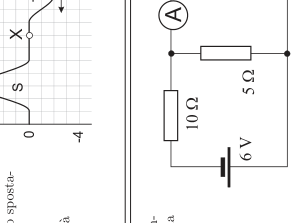
Due impulsi trasversali viaggiano con la stessa velocità e in verso opposto lungo una corda. La figura mostra un’istantanea all’istante .
Assumendo che la velocità sia di 1 quadretto/s, quanto vale lo spostamento del punto X dopo 3 secondi?
- A. +2 unità
- B. +1 unità
- C. 0 unità
- D. −1 unità
- E. −2 unità
 Istantanea due impulsi su corda
Topic: Oscillations & Waves Metodi: Superposition Principle, Wave Equation Competenze: Diagrammatic Reasoning Objects: String Fonte: Testo (PDF) — p.3 Risposta: C · Soluzioni (PDF)
Two transverse pulses travel with the same speed and in opposite directions along a rope. The figure shows a snapshot at the instant .
Assuming that the speed is 1 square/s, what is the displacement of point X after 3 seconds?
- A. +2 units
- B. +1 unit
- C. 0 units
- D. −1 units
- E. −2 units
Snapshot of two pulses on a rope
Answer: C · Soluzioni (PDF)
Nel circuito mostrato in figura le due pile e l’amperometro hanno una resistenza elettrica interna trascurabile.
L’amperometro misura:
- A. zero
- B. 0.4 A
- C. 0.6 A
- D. 0.8 A
- E. 1.2 A
 Circuito con due pile e amperometro
Topic: Circuits Metodi: Kirchhoff’s Laws, Equivalent Circuit Reduction Competenze: Physical Reasoning Objects: Battery, Wire Fonte: Testo (PDF) — p.3 Risposta: E · Soluzioni (PDF)
In the circuit shown in the figure, the two batteries and the ammeter have negligible internal electrical resistance.
The ammeter measures:
- A. zero
- B. 0.4 A
- C. 0.6 A
- D. 0.8 A
- E. 1.2 A
Circuit with two batteries and ammeter
Answer: E · Soluzioni (PDF)
In figura è mostrato un circuito in cui il tratto superiore compreso tra X e Y è costituito da un filo rigido in grado di ruotare liberamente intorno all’asse orizzontale XY. È presente un campo magnetico diretto verso destra. Il circuito è inizialmente fermo nel piano della figura.
Quando l’interruttore viene chiuso, la parte mobile del circuito, rispetto al piano della figura, …
- A. … resta ferma.
- B. … ruota di in verso uscente.
- C. … ruota di in verso entrante.
- D. … ruota di in verso uscente.
- E. … ruota di in verso entrante.
 Circuito con filo rotante in campo magnetico
Topic: Magnetism Metodi: Lorentz Force Analysis Competenze: Physical Reasoning, Diagrammatic Reasoning Objects: Wire, Switch Fonte: Testo (PDF) — p.3 Risposta: A · Soluzioni (PDF)
The figure shows a circuit in which the upper section between X and Y consists of a rigid wire able to rotate freely about the horizontal axis XY. There is a magnetic field directed to the right. The circuit is initially at rest in the plane of the figure.
When the switch is closed, the movable part of the circuit, relative to the plane of the figure, …
- A. … remains still.
- B. … rotates by in the outward direction.
- C. … rotates by in the inward direction.
- D. … rotates by in the outward direction.
- E. … rotates by in the inward direction.
Circuit with rotating wire in a magnetic field
Answer: A · Soluzioni (PDF)
Un gruppo di alunni ha fornito le seguenti affermazioni sulla teoria cinetica dei gas perfetti.
Quale affermazione è falsa?
- A. Le collisioni tra le molecole sono elastiche.
- B. La velocità delle molecole diminuisce progressivamente tra un urto e l’altro.
- C. Le molecole si muovono in modo casuale.
- D. Le molecole possono essere considerate di volume trascurabile.
- E. L’energia cinetica media è proporzionale alla temperatura misurata in kelvin. Topic: Kinetic Theory Metodi: Kinetic Theory of Gases Competenze: Physical Reasoning Objects: Gas Fonte: Testo (PDF) — p.3 Risposta: B · Soluzioni (PDF)
A group of students provided the following statements about the kinetic theory of ideal gases.
Which statement is false?
- A. Collisions between molecules are elastic.
- B. The speed of the molecules decreases progressively between one collision and the next.
- C. The molecules move randomly.
- D. The molecules can be considered to have negligible volume.
- E. The average kinetic energy is proportional to the temperature measured in kelvin. Answer: B · Soluzioni (PDF)
Due satelliti identici X e Y sono in orbita circolare intorno alla Terra. Il raggio dell’orbita di X è il doppio del raggio dell’orbita di Y.
Quali delle seguenti affermazioni sono corrette?
- L’energia potenziale gravitazionale di X è maggiore di quella di Y.
- L’energia cinetica di X è minore di quella di Y.
- I periodi delle due orbite sono uguali.
- A. La 1, la 2 e la 3.
- B. La 1 e la 2.
- C. La 2 e la 3.
- D. Solo la 1.
- E. Solo la 3. Topic: Gravitation Metodi: Kepler’s Laws, Newton’s Law of Gravitation Competenze: Physical Reasoning Objects: Satellite, Planet Fonte: Testo (PDF) — p.3 Risposta: B · Soluzioni (PDF)
Two identical satellites X and Y are in circular orbit around the Earth. The radius of X’s orbit is twice the radius of Y’s orbit.
Which of the following statements are correct?
- The gravitational potential energy of X is greater than that of Y.
- The kinetic energy of X is less than that of Y.
- The periods of the two orbits are equal.
- A. 1, 2 and 3.
- B. 1 and 2.
- C. 2 and 3.
- D. Only 1.
- E. Only 3. Answer: B · Soluzioni (PDF)
Un’automobile si muove lungo un rettilineo in pianura, partendo da ferma all’istante , con un’accelerazione rappresentata nel grafico in figura.
Qual è la velocità dell’automobile all’istante ?
- A.
- B.
- C.
- D.
- E.
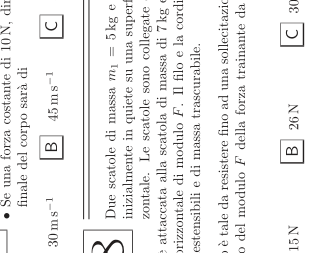 Grafico accelerazione-tempo automobile
Topic: Newtonian Mechanics Metodi: Kinematic Equations, Calculus-Integration Competenze: Diagrammatic Reasoning Objects: — Fonte: Testo (PDF) — p.3 Risposta: C · Soluzioni (PDF)
A car moves along a straight road on flat ground, starting from rest at time , with an acceleration represented in the graph in the figure.
What is the speed of the car at time ?
- A.
- B.
- C.
- D.
- E.
Car acceleration-time graph
Answer: C · Soluzioni (PDF)
Un’astronauta pesa 500 N sulla Terra e 25 N su un asteroide X.
L’accelerazione di gravità sull’asteroide X è approssimativamente
- A.
- B.
- C.
- D.
- E. Topic: Gravitation, Newtonian Mechanics Metodi: Free-Body Diagram, Newton’s Law of Gravitation Competenze: Physical Reasoning Objects: Planet Fonte: Testo (PDF) — p.4 Risposta: C · Soluzioni (PDF)
An astronaut weighs 500 N on Earth and 25 N on an asteroid X.
The gravitational acceleration on asteroid X is approximately
- A.
- B.
- C.
- D.
- E. Answer: C · Soluzioni (PDF)
In un esperimento sull’effetto fotoelettrico uno studente misura il potenziale di arresto quando un metallo è illuminato con una radiazione di lunghezza d’onda . Lo studente registra le misure che ottiene per varie lunghezze d’onda nel grafico mostrato in figura, ma omette di indicare le grandezze sugli assi X e Y.
Le grandezze corrette da riportare sugli assi sono
| X | Y | |
|---|---|---|
| (A) | ||
| (B) | ||
| (C) | ||
| (D) | ||
| (E) |
 Grafico effetto fotoelettrico assi non etichettati
Topic: Modern-Quantum Physics Metodi: Photon Energy Relation, Graph Linearization Competenze: Diagrammatic Reasoning, Physical Reasoning Objects: Photon Fonte: Testo (PDF) — p.4 Risposta: D · Soluzioni (PDF)
In an experiment on the photoelectric effect a student measures the stopping potential when a metal is illuminated with radiation of wavelength . The student records the measurements obtained for various wavelengths in the graph shown in the figure, but omits to indicate the quantities on the X and Y axes.
The correct quantities to be shown on the axes are
| X | Y | |
|---|---|---|
| (A) | ||
| (B) | ||
| (C) | ||
| (D) | ||
| (E) |
Photoelectric effect graph with unlabeled axes
Answer: D · Soluzioni (PDF)
Lo schizzo rappresenta un elettrone che sta per entrare in una zona di campo magnetico uniforme entrante nel piano della figura. La velocità dell’elettrone è verso destra.
Appena entrato nella zona del campo magnetico, l’elettrone risente della forza magnetica che è diretta…
- A. … verso l’alto nel piano della figura.
- B. … verso il basso nel piano della figura.
- C. … verso sinistra nel piano della figura.
- D. … verso destra nel piano della figura.
- E. … perpendicolarmente al piano della figura, con verso uscente.
 Elettrone che entra in zona di campo magnetico
Topic: Magnetism Metodi: Lorentz Force Analysis Competenze: Physical Reasoning, Diagrammatic Reasoning Objects: Electron Fonte: Testo (PDF) — p.4 Risposta: B · Soluzioni (PDF)
The sketch represents an electron that is about to enter a region of uniform magnetic field directed into the plane of the figure. The velocity of the electron is to the right.
As soon as it enters the region of the magnetic field, the electron experiences a magnetic force that is directed…
- A. … upward in the plane of the figure.
- B. … downward in the plane of the figure.
- C. … to the left in the plane of the figure.
- D. … to the right in the plane of the figure.
- E. … perpendicular to the plane of the figure, in the outward direction.
Electron entering a region of magnetic field
Answer: B · Soluzioni (PDF)
In figura è rappresentata una persona in piedi, a 5 m da uno specchio piano. Una palla si trova 3 m davanti all’uomo, in direzione perpendicolare allo specchio.
Qual è la distanza tra la persona e l’immagine della palla?
- A. 2 m
- B. 3 m
- C. 5 m
- D. 7 m
- E. 10 m
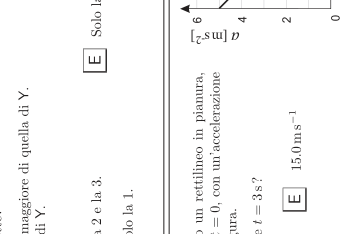 Persona e palla davanti a specchio piano
Topic: Geometric Optics Metodi: Ray Tracing Competenze: Physical Reasoning Objects: Mirror, Ball Fonte: Testo (PDF) — p.4 Risposta: D · Soluzioni (PDF)
The figure shows a person standing 5 m from a plane mirror. A ball is located 3 m in front of the person, in a direction perpendicular to the mirror.
What is the distance between the person and the image of the ball?
- A. 2 m
- B. 3 m
- C. 5 m
- D. 7 m
- E. 10 m
Person and ball in front of a plane mirror
Answer: D · Soluzioni (PDF)
Una pietra viene lanciata verticalmente verso l’alto con velocità iniziale , dalla superficie lunare. Essa raggiunge il culmine della traiettoria all’altezza e ritorna giù al punto di partenza dopo un tempo dal lancio.
Raddoppiando la sua velocità iniziale, rimarrà in volo per un tempo e raggiungerà un’altezza dati, in funzione di , da
- A.
- B.
- C.
- D.
- E. Topic: Newtonian Mechanics Metodi: Kinematic Equations Competenze: Physical Reasoning Objects: Projectile, Planet Fonte: Testo (PDF) — p.4 Risposta: D · Soluzioni (PDF)
A stone is thrown vertically upward with initial velocity , from the lunar surface. It reaches the peak of its trajectory at height and returns down to the starting point after a time from the launch.
Doubling its initial velocity, it will remain in flight for a time and will reach a height given, as a function of , by
- A.
- B.
- C.
- D.
- E. Answer: D · Soluzioni (PDF)
Una candela è posta davanti a uno specchio sferico concavo. Due raggi luminosi uscenti dallo stesso punto della candela incidono sullo specchio che ha il suo fuoco nel punto F, come mostrato nella figura.
Dopo essersi riflessi nello specchio i raggi luminosi…
- A. … divergono e formano un’immagine virtuale.
- B. … divergono e formano un’immagine reale.
- C. … convergono e formano un’immagine virtuale.
- D. … convergono e formano un’immagine reale.
- E. … sono paralleli.
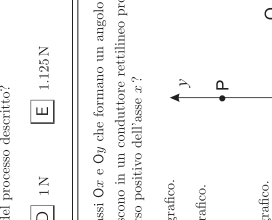 Due raggi su specchio sferico concavo
Topic: Geometric Optics Metodi: Ray Tracing, Thin Lens & Mirror Equation Competenze: Diagrammatic Reasoning Objects: Mirror Fonte: Testo (PDF) — p.4 Risposta: D · Soluzioni (PDF)
A candle is placed in front of a concave spherical mirror. Two light rays emerging from the same point of the candle strike the mirror, which has its focus at point F, as shown in the figure.
After being reflected by the mirror, the light rays…
- A. … diverge and form a virtual image.
- B. … diverge and form a real image.
- C. … converge and form a virtual image.
- D. … converge and form a real image.
- E. … are parallel.
Two rays on a concave spherical mirror
Answer: D · Soluzioni (PDF)
Un nucleo radioattivo decade in un suo isotopo, a seguito di diversi processi che avvengono in sequenza.
Quale delle seguenti combinazioni di particelle potrebbe essere emessa durante questi processi?
- A. Una particella e una particella .
- B. Una particella e due particelle .
- C. Una particella e un neutrone.
- D. Una particella e due neutroni.
- E. Due particelle e un neutrone. Topic: Nuclear & Particle Physics Metodi: Radioactive Decay Law Competenze: Physical Reasoning Objects: Nucleus Fonte: Testo (PDF) — p.4 Risposta: B · Soluzioni (PDF)
A radioactive nucleus decays into one of its isotopes, as a result of several processes that occur in sequence.
Which of the following combinations of particles could be emitted during these processes?
- A. One particle and one particle.
- B. One particle and two particles.
- C. One particle and one neutron.
- D. One particle and two neutrons.
- E. Two particles and one neutron. Answer: B · Soluzioni (PDF)
Un filo di platino ha una resistenza di alla temperatura di fusione del ghiaccio e una resistenza di alla temperatura di ebollizione dell’acqua a pressione atmosferica; esso può quindi essere usato come sonda termometrica.
Quando il filo ha una resistenza di , la sua temperatura è di
- A.
- B.
- C.
- D.
- E. Topic: Circuits Metodi: Graph Linearization, Approximation & Series Expansion Competenze: Physical Reasoning, Mathematical Modeling Objects: Wire, Resistor Fonte: Testo (PDF) — p.4 Risposta: C · Soluzioni (PDF)
A platinum wire has a resistance of at the melting temperature of ice and a resistance of at the boiling temperature of water at atmospheric pressure; it can therefore be used as a thermometric probe.
When the wire has a resistance of , its temperature is
- A.
- B.
- C.
- D.
- E. Answer: C · Soluzioni (PDF)
Dalla cima di una scogliera a picco sul mare, con una fionda viene lanciata orizzontalmente una sferetta di acciaio alla velocità di .
Se la sferetta tocca la superficie del mare dopo circa 2 secondi, quanto è alta approssimativamente la scogliera? Nota: L’attrito dell’aria si può trascurare.
- A. 20 m
- B. 30 m
- C. 35 m
- D. 40 m
- E. 80 m Topic: Newtonian Mechanics Metodi: Kinematic Equations Competenze: Physical Reasoning, Estimation & Approximation Objects: Projectile, Ball Fonte: Testo (PDF) — p.4 Risposta: A · Soluzioni (PDF)
From the top of a cliff overlooking the sea, a steel ball is launched horizontally with a slingshot at a speed of .
If the ball touches the surface of the sea after about 2 seconds, approximately how high is the cliff? Note: Air friction can be neglected.
- A. 20 m
- B. 30 m
- C. 35 m
- D. 40 m
- E. 80 m Answer: A · Soluzioni (PDF)
Il grafico rappresenta una particolare trasformazione termodinamica in cui 1 kg di una certa sostanza passa dallo stato gassoso a allo stato solido a . Il calore ceduto dalla sostanza nell’unità di tempo è costante durante tutta la trasformazione.
Il punto di fusione della sostanza è a
- A.
- B.
- C.
- D.
- E.
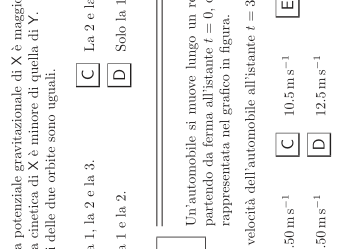 Grafico raffreddamento sostanza da gas a solido
Topic: Thermodynamics Metodi: Thermodynamic Cycle Analysis Competenze: Diagrammatic Reasoning Objects: — Fonte: Testo (PDF) — p.4 Risposta: C · Soluzioni (PDF)
The graph represents a particular thermodynamic transformation in which 1 kg of a certain substance passes from the gaseous state at to the solid state at . The heat given off by the substance per unit time is constant throughout the entire transformation.
The melting point of the substance is at
- A.
- B.
- C.
- D.
- E.
Graph of cooling of a substance from gas to solid
Answer: C · Soluzioni (PDF)
Un blocco di massa è tenuto fermo su una superficie priva di attrito, inclinata di rispetto all’orizzontale, e a un certo istante viene lasciato libero.
Due secondi dopo che il blocco è stato rilasciato, il modulo della componente del peso parallela al pendio () e la distanza () percorsa sono all’incirca
| [N] | [m] | |
|---|---|---|
| (A) | 15 | 10 |
| (B) | 15 | 5.0 |
| (C) | 26 | 2.5 |
| (D) | 26 | 5.0 |
| (E) | 30 | 5.0 |
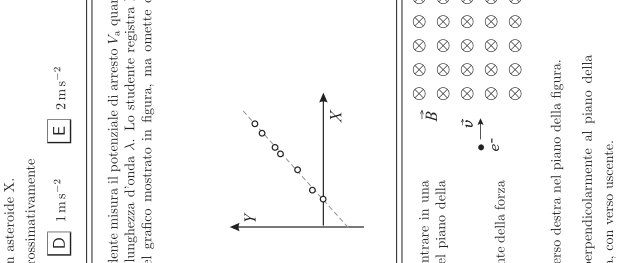 Blocco su piano inclinato 30°
Topic: Newtonian Mechanics Metodi: Free-Body Diagram, Kinematic Equations Competenze: Physical Reasoning Objects: Block, Inclined Plane Fonte: Testo (PDF) — p.5 Risposta: A · Soluzioni (PDF)
A block of mass is held stationary on a frictionless surface, inclined at to the horizontal, and at a certain instant it is released.
Two seconds after the block has been released, the magnitude of the component of the weight parallel to the slope () and the distance () traveled are approximately
| [N] | [m] | |
|---|---|---|
| (A) | 15 | 10 |
| (B) | 15 | 5.0 |
| (C) | 26 | 2.5 |
| (D) | 26 | 5.0 |
| (E) | 30 | 5.0 |
Block on a 30° inclined plane
Answer: A · Soluzioni (PDF)
Quale dei seguenti circuiti, in cui A rappresenta un amperometro, potrà essere utilizzato in un esperimento per illustrare la carica e la scarica di un condensatore in un circuito in corrente continua?
Si consideri il caso in cui il condensatore sia inizialmente scarico.
- A. A
- B. B
- C. C
- D. D
- E. E
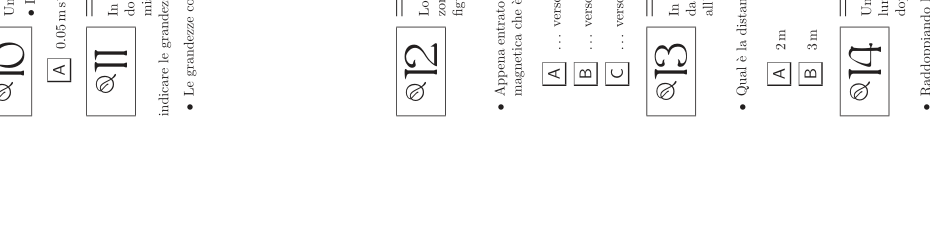 Cinque circuiti RC con amperometro
Topic: Circuits Metodi: Kirchhoff’s Laws Competenze: Diagrammatic Reasoning Objects: Capacitor, Galvanometer, Battery Fonte: Testo (PDF) — p.5 Risposta: C · Soluzioni (PDF)
Which of the following circuits, in which A represents an ammeter, could be used in an experiment to illustrate the charging and discharging of a capacitor in a direct current circuit?
Consider the case in which the capacitor is initially uncharged.
- A. A
- B. B
- C. C
- D. D
- E. E
Five RC circuits with ammeter
Answer: C · Soluzioni (PDF)
Cinque vagoni identici sono fermi, staccati uno dall’altro a distanze variabili, su un binario orizzontale; in caso di urto tra due vagoni, questi rimangono agganciati. Un sesto vagone — identico agli altri — viene lanciato verso gli altri a velocità .
Qual è la velocità dei sei vagoni subito dopo essersi tutti agganciati, se l’attrito è trascurabile?
- A.
- B.
- C.
- D.
- E. Topic: Newtonian Mechanics, Conservation of Momentum Metodi: Conservation of Momentum, Impulse-Momentum Theorem Competenze: Physical Reasoning Objects: Cart Fonte: Testo (PDF) — p.5 Risposta: D · Soluzioni (PDF)
Five identical train cars are stationary, detached from one another at varying distances, on a horizontal track; in the event of a collision between two cars, they remain coupled. A sixth car — identical to the others — is launched toward the others at speed .
What is the speed of the six cars immediately after they have all coupled together, if friction is negligible?
- A.
- B.
- C.
- D.
- E. Answer: D · Soluzioni (PDF)
Un ragazzo lancia una pietra con una fionda costituita da due corde di gomma che vengono allungate e poi rilasciate. Le due corde obbediscono alla legge di Hooke. Quando ciascuna corda è allungata di un tratto rispetto alla sua lunghezza a riposo, la pietra parte con una velocità .
Assumendo che tutta l’energia potenziale delle corde sia trasferita alla pietra, qual è, se ciascuna corda subisce un allungamento pari a , la velocità della pietra?
- A.
- B.
- C.
- D.
- E. Topic: Conservation of Energy, Oscillations & Waves Metodi: Energy Conservation Method, Hooke’s Law Competenze: Physical Reasoning, Mathematical Modeling Objects: Spring, Projectile Fonte: Testo (PDF) — p.5 Risposta: D · Soluzioni (PDF)
A boy launches a stone with a slingshot consisting of two rubber cords that are stretched and then released. The two cords obey Hooke’s law. When each cord is stretched by an amount relative to its resting length, the stone leaves with a speed .
Assuming that all the potential energy of the cords is transferred to the stone, what is the speed of the stone if each cord undergoes a stretch equal to ?
- A.
- B.
- C.
- D.
- E. Answer: D · Soluzioni (PDF)
Qual è l’ordine di grandezza del numero di elettroni che si assumono bevendo un bicchiere d’acqua?
- A. elettroni
- B. elettroni
- C. elettroni
- D. elettroni
- E. Nessun elettrone perché l’acqua è neutra. Topic: Order-of-Magnitude Estimation Metodi: Order-of-Magnitude Estimation Competenze: Estimation & Approximation Objects: — Fonte: Testo (PDF) — p.5 Risposta: B · Soluzioni (PDF)
What is the order of magnitude of the number of electrons taken up by drinking a glass of water?
- A. elettroni
- B electrons
- C. electrons
- D electrons
- E. Nessun elettrone perché l’acqua è neutra. Topic: Order-of-Magnitude Estimation Metodi: Order-of-Magnitude Estimation Competenze: Estimation & Approximation Objects: — Fonte: Testo (PDF) — p.5 Risposta: B · Soluzioni (PDF)
Si hanno a disposizione una lente convergente di focale e una lente divergente di focale . Si eseguono le seguenti prove:
- si pone un oggetto a 25 cm dalla lente divergente;
- si pone un oggetto a 15 cm dalla lente divergente;
- si pone un oggetto a 25 cm dalla lente convergente;
- si pone un oggetto a 15 cm dalla lente convergente;
- si pone un oggetto a 5 cm dalla lente convergente.
In quante delle prove descritte si ottiene un’immagine di dimensioni ridotte rispetto all’oggetto?
- A. 1
- B. 2
- C. 3
- D. 4
- E. 5 Topic: Geometric Optics Metodi: Thin Lens & Mirror Equation, Ray Tracing Competenze: Mathematical Modeling Objects: Lens Fonte: Testo (PDF) — p.5 Risposta: C · Soluzioni (PDF)
A converging lens with focal length and a diverging lens with focal length are available. The following tests are carried out:
- an object is placed 25 cm from the diverging lens;
- an object is placed 15 cm from the diverging lens;
- an object is placed 25 cm from the converging lens;
- an object is placed 15 cm from the converging lens;
- an object is placed 5 cm from the converging lens.
In how many of the described tests is an image obtained with reduced dimensions compared to the object?
- A. 1
- B. 2
- C. 3
- D. 4
- E. 5 Answer: C · Soluzioni (PDF)
Una pattinatrice sul ghiaccio sta ruotando su se stessa con le braccia tese orizzontalmente. Si considerino trascurabili tutti gli attriti.
Dopo che le braccia sono state portate aderenti al corpo, quali delle seguenti quantità sono rimaste costanti?
- Il momento di inerzia.
- L’energia cinetica.
- Il momento angolare.
- A. Solo la 1 e la 2.
- B. Solo la 2 e la 3.
- C. Solo la 1.
- D. Solo la 2.
- E. Solo la 3. Topic: Rotational Dynamics Metodi: Torque & Angular Momentum Analysis, Conservation Laws Competenze: Physical Reasoning Objects: — Fonte: Testo (PDF) — p.5 Risposta: E · Soluzioni (PDF)
An ice skater is spinning on herself with her arms extended horizontally. All friction is to be considered negligible.
After the arms have been brought close to the body, which of the following quantities have remained constant?
- The moment of inertia.
- The kinetic energy.
- The angular momentum.
- A. Only 1 and 2.
- B. Only 2 and 3.
- C. Only 1.
- D. Only 2.
- E. Only 3. Answer: E · Soluzioni (PDF)
La figura mostra un protone che si sposta da un punto T a un punto S in prossimità di una sferetta caricata negativamente.
Se per effettuare lo spostamento è necessario compiere sul protone un lavoro pari a , la differenza di potenziale tra i due punti è
- A.
- B.
- C.
- D.
- E.
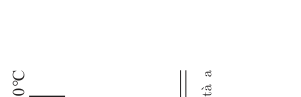 Protone che si sposta vicino a sferetta negativa
Topic: Electrostatics Metodi: Electric Potential Method, Coulomb’s Law Competenze: Physical Reasoning Objects: Point Charge, Conducting Sphere Fonte: Testo (PDF) — p.5 Risposta: D · Soluzioni (PDF)
The figure shows a proton moving from a point T to a point S near a negatively charged small sphere.
If to carry out the displacement it is necessary to do work equal to on the proton, the potential difference between the two points is
- A.
- B.
- C.
- D.
- E.
Proton moving near a negative small sphere
Answer: D · Soluzioni (PDF)
Due blocchi di metallo, di uguale sezione, di lunghezze pari a 10 cm e 20 cm e conducibilità termiche rispettivamente e , sono attaccati uno all’altro come in figura. L’estremità libera del primo blocco è mantenuta alla temperatura , mentre l’estremità libera del secondo blocco è mantenuta alla temperatura .
In regime stazionario, la temperatura della giunzione tra i due blocchi è
- A.
- B.
- C.
- D.
- E.
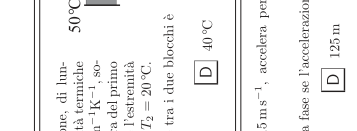 Due blocchi metallici a conducibilità diverse in serie
Topic: Thermodynamics Metodi: Thermodynamic Cycle Analysis, Physical Modeling Competenze: Mathematical Modeling Objects: Block Fonte: Testo (PDF) — p.5 Risposta: E · Soluzioni (PDF)
Two metal blocks, of equal cross-section, with lengths equal to 10 cm and 20 cm and thermal conductivities respectively and , are attached to each other as in the figure. The free end of the first block is maintained at temperature , while the free end of the second block is maintained at temperature .
In steady state, the temperature of the junction between the two blocks is
- A.
- B.
- C.
- D.
- E.
Two metal blocks with different conductivities in series
Answer: E · Soluzioni (PDF)
Un’automobile, che sta viaggiando a , accelera per 5 s, portando la sua velocità a .
Quanto spazio percorre durante questa fase se l’accelerazione è costante?
- A. 50 m
- B. 75 m
- C. 100 m
- D. 125 m
- E. 200 m Topic: Newtonian Mechanics Metodi: Kinematic Equations Competenze: Physical Reasoning Objects: — Fonte: Testo (PDF) — p.5 Risposta: C · Soluzioni (PDF)
A car, which is traveling at , accelerates for 5 s, bringing its speed to .
How much distance does it cover during this phase if the acceleration is constant?
- A. 50 m
- B. 75 m
- C. 100 m
- D. 125 m
- E. 200 m Answer: C · Soluzioni (PDF)
Su una lastra opaca sono praticate due sottili fenditure parallele molto vicine. La lastra viene illuminata da un fascio collimato di luce verde monocromatica, che incide perpendicolarmente. Su uno schermo posto dietro la lastra si osservano frange d’interferenza in prossimità dell’asse ottico.
La distanza tra le frange può essere aumentata…
- A. … diminuendo la distanza tra la lastra e lo schermo.
- B. … aumentando la distanza tra la sorgente e la lastra.
- C. … aumentando la distanza tra le fenditure.
- D. … aumentando la larghezza di ciascuna fenditura.
- E. … sostituendo la sorgente di luce con una sorgente di luce monocromatica rossa. Topic: Wave Optics Metodi: Interference & Diffraction Analysis Competenze: Physical Reasoning Objects: Slit, Screen Fonte: Testo (PDF) — p.6 Risposta: E · Soluzioni (PDF)
Two thin parallel slits very close together are made in an opaque plate. The plate is illuminated by a collimated beam of monochromatic green light, which strikes it perpendicularly. On a screen placed behind the plate, interference fringes are observed near the optical axis.
The distance between the fringes can be increased…
- A. … by decreasing the distance between the plate and the screen.
- B. … by increasing the distance between the source and the plate.
- C. … by increasing the distance between the slits.
- D. … by increasing the width of each slit.
- E. … by replacing the light source with a source of monochromatic red light. Answer: E · Soluzioni (PDF)
Una certa quantità di gas è riscaldata a pressione costante fino a quando il suo volume è triplicato. Successivamente viene compressa adiabaticamente fino a tornare al suo volume iniziale. Infine è raffreddata a volume costante fino alla sua temperatura originale.
Adottando il modello di gas perfetto, quale tra i seguenti grafici meglio rappresenta queste trasformazioni termodinamiche?
- A. A
- B. B
- C. C
- D. D
- E. E
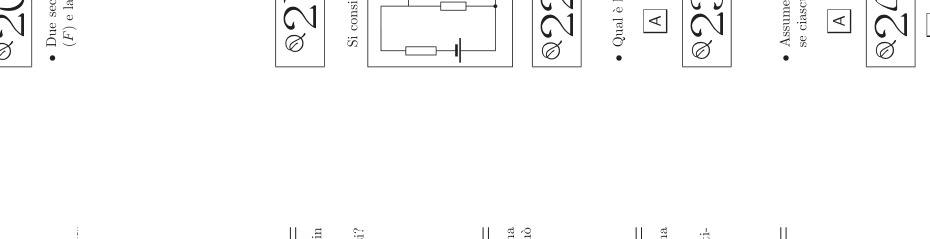 Cinque grafici P-V trasformazioni termodinamiche
Topic: Thermodynamics Metodi: Thermodynamic Cycle Analysis, Ideal Gas Law Competenze: Diagrammatic Reasoning Objects: Gas Fonte: Testo (PDF) — p.6 Risposta: C · Soluzioni (PDF)
A certain amount of gas is heated at constant pressure until its volume has tripled. It is then compressed adiabatically until it returns to its initial volume. Finally it is cooled at constant volume back to its original temperature.
Using the ideal gas model, which of the following graphs best represents these thermodynamic transformations?
- A. A
- B. B
- C. C
- D. D
- E. E
Five P-V graphs of thermodynamic transformations
Answer: C · Soluzioni (PDF)
Due piccole sfere identiche conduttrici si trovano a distanza molto maggiore del loro diametro. Esse vengono inizialmente caricate rispettivamente con cariche e . La forza che esercitano l’una sull’altra in questa posizione ha modulo . Le sfere vengono poi collegate con un sottile filo conduttore senza spostarle dal posto in cui sono; successivamente il filo viene rimosso.
Qual è il modulo della forza che agisce fra le sfere al termine del processo descritto?
- A. 0
- B. 0.125 N
- C. 0.250 N
- D. 1 N
- E. 1.125 N Topic: Electrostatics Metodi: Coulomb’s Law Competenze: Physical Reasoning, Mathematical Modeling Objects: Conducting Sphere Fonte: Testo (PDF) — p.6 Risposta: B · Soluzioni (PDF)
Two identical small conducting spheres are located at a distance much greater than their diameter. They are initially charged respectively with charges and . The force they exert on each other in this position has magnitude . The spheres are then connected with a thin conducting wire without moving them from the place where they are; afterwards the wire is removed.
What is the magnitude of the force acting between the spheres at the end of the described process?
- A. 0
- B. 0.125 N
- C. 0.250 N
- D. 1 N
- E. 1.125 N Answer: B · Soluzioni (PDF)
Il grafico in figura mostra un piano con gli assi e che formano un angolo retto.
Quale delle seguenti correnti elettriche che fluiscono in un conduttore rettilineo produrrà un campo magnetico nel punto O orientato nel verso positivo dell’asse ?
- A. Passante per Q perpendicolare entrante nel piano del grafico.
- B. Passante per Q perpendicolare uscente dal piano del grafico.
- C. Passante per P parallela a .
- D. Passante per P perpendicolare entrante nel piano del grafico.
- E. Passante per P perpendicolare uscente dal piano del grafico.
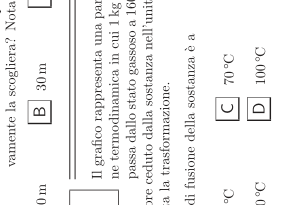 Piano Oxy con punti P e Q per campo magnetico
Topic: Magnetism Metodi: Biot-Savart Law, Ampère’s Law Competenze: Diagrammatic Reasoning Objects: Wire Fonte: Testo (PDF) — p.6 Risposta: E · Soluzioni (PDF)
The graph in the figure shows a plane with the axes and that form a right angle.
Which of the following electric currents flowing in a straight conductor will produce a magnetic field at point O oriented in the positive direction of the axis ?
- A. Passing through Q perpendicular entering the plane of the graph.
- B. Passing through Q perpendicular exiting the plane of the graph.
- C. Passing through P parallel to .
- D. Passing through P perpendicular entering the plane of the graph.
- E. Passing through P perpendicular exiting the plane of the graph.
Oxy plane with points P and Q for magnetic field
Answer: E · Soluzioni (PDF)
Un’automobile di 800 kg che sta viaggiando su un rettilineo a frena e si arresta in 50 m sotto l’azione di una forza costante.
L’intensità della forza frenante è
- A. 9 N
- B. 240 N
- C. 7 200 N
- D. 14 400 N
- E. 28 800 N Topic: Newtonian Mechanics Metodi: Kinematic Equations, Free-Body Diagram Competenze: Physical Reasoning Objects: — Fonte: Testo (PDF) — p.6 Risposta: C · Soluzioni (PDF)
An 800 kg car traveling on a straight road at brakes and comes to a stop in 50 m under the action of a constant force.
The magnitude of the braking force is
- A. 9 N
- B. 240 N
- C. 7 200 N
- D. 14 400 N
- E. 28 800 N Answer: C · Soluzioni (PDF)
Un liquido scorre, in regime stazionario, in un condotto che presenta, in un certo punto, un restringimento.
Quale tra i seguenti grafici rappresenta l’andamento della portata in massa in funzione della posizione lungo il condotto, in un tratto che comprende il restringimento?
- A. A
- B. B
- C. C
- D. D
- E. E
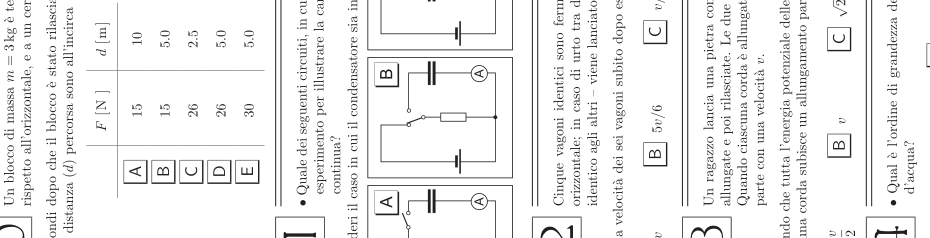 Cinque grafici portata in massa lungo condotto
Topic: Fluid Mechanics Metodi: Continuity Equation, Bernoulli’s Equation Competenze: Diagrammatic Reasoning Objects: Tube Fonte: Testo (PDF) — p.6 Risposta: B · Soluzioni (PDF)
A liquid flows, in steady state, in a duct that has, at a certain point, a narrowing.
Which of the following graphs represents the trend of the mass flow rate as a function of position along the duct, in a section that includes the narrowing?
- A. A
- B. B
- C. C
- D. D
- E. E
Five graphs of mass flow rate along the duct
Answer: B · Soluzioni (PDF)
Un piccolo altoparlante viene posto a una estremità di un tubo rettilineo di sezione piccola rispetto alla sua lunghezza. L’altra estremità del tubo è chiusa. L’altoparlante è collegato a un generatore di frequenza variabile. La più piccola frequenza a cui il tubo risuona è pari a 300 Hz. Vengono immesse nel tubo, in successione, onde di frequenza 600 Hz, 1000 Hz, 1500 Hz, 2100 Hz e 2400 Hz.
Quante di queste frequenze daranno origine a risonanza?
- A. 1
- B. 2
- C. 3
- D. 4
- E. 5
 Tubo chiuso con altoparlante a un’estremità
Topic: Oscillations & Waves Metodi: Wave Equation, Simple Harmonic Motion Analysis Competenze: Physical Reasoning Objects: Tube Fonte: Testo (PDF) — p.6 Risposta: B · Soluzioni (PDF)
A small loudspeaker is placed at one end of a straight tube whose cross-section is small compared to its length. The other end of the tube is closed. The loudspeaker is connected to a variable-frequency generator. The lowest frequency at which the tube resonates is 300 Hz. Waves of frequency 600 Hz, 1000 Hz, 1500 Hz, 2100 Hz and 2400 Hz are fed into the tube in succession.
How many of these frequencies will give rise to resonance?
- A. 1
- B. 2
- C. 3
- D. 4
- E. 5
Closed tube with loudspeaker at one end
Answer: B · Soluzioni (PDF)
Un corpo di massa 2 kg si sposta inizialmente verso Est a una velocità di .
Se una forza costante di 10 N, diretta verso Nord, viene applicata per 6 secondi, la velocità finale del corpo sarà di
- A.
- B.
- C.
- D.
- E. Topic: Newtonian Mechanics Metodi: Vector Decomposition, Kinematic Equations Competenze: Mathematical Modeling Objects: — Fonte: Testo (PDF) — p.6 Risposta: C · Soluzioni (PDF)
A body of mass 2 kg initially moves toward the East at a speed of .
If a constant force of 10 N, directed toward the North, is applied for 6 seconds, the final velocity of the body will be
- A.
- B.
- C.
- D.
- E. Answer: C · Soluzioni (PDF)
Due scatole di massa e sono inizialmente in quiete su una superficie liscia e orizzontale. Le scatole sono collegate da un filo. Una cordicella è attaccata alla scatola di massa di 7 kg e viene tirata da una forza orizzontale di modulo . Il filo e la cordicella sono praticamente inestensibili e di massa trascurabile.
Se il filo è tale da resistere fino ad una sollecitazione massima di 15 N, oltre la quale si rompe, qual è il valore massimo del modulo della forza trainante da applicare per mantenere i due blocchi collegati durante il moto?
- A. 15 N
- B. 26 N
- C. 30 N
- D. 36 N
- E. 72 N
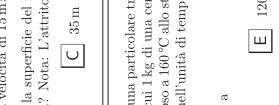 Due scatole collegate da filo su piano orizzontale
Topic: Newtonian Mechanics Metodi: Free-Body Diagram, Kinematic Equations Competenze: Physical Reasoning Objects: Block, String Fonte: Testo (PDF) — p.6 Risposta: D · Soluzioni (PDF)
Two boxes of mass and are initially at rest on a smooth horizontal surface. The boxes are connected by a string. A cord is attached to the box of mass 7 kg and is pulled by a horizontal force of magnitude . The string and the cord are practically inextensible and of negligible mass.
If the string is such that it can withstand up to a maximum stress of 15 N, beyond which it breaks, what is the maximum value of the magnitude of the driving force to be applied in order to keep the two blocks connected during the motion?
- A. 15 N
- B. 26 N
- C. 30 N
- D. 36 N
- E. 72 N
Two boxes connected by a string on a horizontal plane
Answer: D · Soluzioni (PDF)
Si esprima la dimensione fisica del campo di induzione magnetica in termini delle dimensioni delle grandezze fondamentali: lunghezza (L), massa (M), tempo (T) e intensità di corrente (I).
- A.
- B.
- C.
- D.
- E. Topic: Magnetism, Electromagnetism Metodi: Dimensional Analysis Competenze: Physical Reasoning, Unit Conversion Objects: — Fonte: Testo (PDF) — p.6 Risposta: B · Soluzioni (PDF)
Express the physical dimension of the magnetic induction field in terms of the dimensions of the fundamental quantities: length (L), mass (M), time (T) and electric current (I).
- A.
- B.
- C.
- D.
- E. Answer: B · Soluzioni (PDF)
Un corpo carico positivamente si trova in una regione di campo elettrico verticale uniforme; inizialmente è in una posizione di equilibrio sotto l’azione del peso e del campo elettrico. Il corpo viene spostato di poco verso il basso, fermato e lasciato libero di muoversi.
Cosa fa il corpo dopo essere stato rilasciato?
- A. Torna nella posizione iniziale e si ferma.
- B. Compie un moto armonico intorno alla posizione iniziale.
- C. Cade con accelerazione costante.
- D. Si muove verso l’alto con accelerazione costante.
- E. Resta fermo nella posizione in cui è stato lasciato. Topic: Electrostatics, Newtonian Mechanics Metodi: Free-Body Diagram, Electric Potential Method Competenze: Physical Reasoning Objects: Point Charge Fonte: Testo (PDF) — p.6 Risposta: E · Soluzioni (PDF)
A positively charged body is located in a region of uniform vertical electric field; initially it is in a position of equilibrium under the action of weight and the electric field. The body is moved slightly downward, stopped, and left free to move.
What does the body do after being released?
- A. It returns to the initial position and stops.
- B. It undergoes harmonic motion around the initial position.
- C. It falls with constant acceleration.
- D. It moves upward with constant acceleration.
- E. It remains still in the position where it was left. Answer: E · Soluzioni (PDF)