Question 1 A projectile is launched vertically upwards. Consider the motion of the projectile after it has been launched but before it returns to the ground. Assuming that all forces exerted by the air are negligible, the force(s) acting on the projectile is (are):
- A. a downward force of gravity along with a steadily decreasing upward force.
- B. a steadily decreasing upward force from the moment it leaves the launcher until it reaches its highest point; on the way down there is a steadily increasing downward force of gravity as the projectile gets closer to the Earth. c. an almost constant downward force of gravity along with an upward force that steadily decreases until the projectile reaches its highest point; on the way down there is only a constant downward force of gravity. d. an almost constant downward force of gravity only. e. none of the above. The projectile falls back to the ground because of its natural tendency to rest on the Earth.
Topic: Newtonian Mechanics Metodi: Free-Body Diagram, Kinematic Equations Competenze: Physical Reasoning Objects: Projectile Fonte: Testo (PDF) — p.2
Domanda 1 Un proiettile viene lanciato verticalmente verso l’alto. Considerate il movimento del proiettile dopo che è stato
- Ma prima di tornare a terra. Supponendo che tutte le forze esercitate dall’aria siano trascurabili, la forza (s) che agisce sul proiettile è (sono):
- A. una forza gravitazionale in discesa insieme a una forza ascendente in costante diminuzione.
- B. una forza ascendente che diminuisce costantemente dal momento in cui lascia il lanciatore fino a quando raggiunge il suo Il punto più alto; sulla strada verso il basso c’è una forza di gravità in continuo aumento verso il basso come la Il proiettile si avvicina alla Terra. c. una forza gravitazionale quasi costante verso il basso insieme a una forza ascendente che diminuisce costantemente fino a quando il proiettile non raggiunge il suo punto più alto; sulla strada verso il basso c’è solo una costante discesa forza della gravità. d. una forza gravitazionale quasi costante verso il basso. e. nessuna delle cose sopra. Il proiettile cade di nuovo a terra a causa della sua naturale tendenza a riposare su la Terra.
Topic: Newtonian Mechanics Metodi: Free-Body Diagram, Kinematic Equations Competenze: Physical Reasoning Objects: Projectile Fonte: Testo (PDF) — p.2
Question 2 The figure shows a frictionless channel in the shape of a segment of a circle with centre at “O”. The channel is attached to a frictionless horizontal table top. You are looking down at the table. Assume that all forces exerted by the air are negligible. A ball is shot at high speed into the channel at “p” and exits at “r”. Consider the following distinct forces:
- A downward force of gravity.
- A force exerted by the channel pointing from q to O.
- A force in the direction of motion.
- A force pointing from O to q. Which of the above forces is (are) acting on the ball when it is within the frictionless channel at position “q”?
- A. 1 only.
- B. 1 and 2.
- C. 1 and 3.
- D. 1, 2, and 3.
- E. 1, 3, and 4. Page 2 of 12 2015 Australian Science Olympiads Exam – Physics ©Australian Science Innovations 2015 ABN 81731558309
Topic: Newtonian Mechanics Metodi: Free-Body Diagram, Vector Decomposition Competenze: Diagrammatic Reasoning, Physical Reasoning Objects: Ball Fonte: Testo (PDF) — p.2
Domanda 2 La figura mostra un canale senza attrito a forma di segmento di cerchio con centro a O. Il il canale è collegato ad una tavola orizzontale senza attrito. Stai guardando giù al tavolo. Supponiamo che tutte le forze esercitate dall’aria sono trascurabili. Una palla viene sparata ad alta velocità nel canale a p e esce a “r”. Considerate le seguenti forze distinte:
- Una forza gravitazionale in discesa.
- Una forza esercitata dal canale che punta da q a O.
- Una forza nella direzione del movimento.
- Una forza che punta da O a q. Qual delle forze di cui sopra agisce sulla palla quando si trova all’interno del canale senza attrito in posizione “q”?
- solo A. 1.
- B. 1 e 2.
- C. 1 e 3.
- D. 1, 2 e 3.
- E. 1, 3 e 4. Pagina 2 di 12 2015 esame delle Olimpiadi di Scienze australiane Fisica ©Australian Science Innovations 2015 ABN 81731558309
Topic: Newtonian Mechanics Metodi: Free-Body Diagram, Vector Decomposition Competenze: Diagrammatic Reasoning, Physical Reasoning Objects: Ball Fonte: Testo (PDF) — p.2
Question 3 A book lies at rest on a table. The table is at rest on the surface of the Earth. By Newton’s Third Law, the reaction force to the weight of the book is:
- A. the gravitational force of the Earth on the book.
- B. the normal force exerted by the table on the book.
- C. the gravitational force exerted by the Earth on the table.
- D. the normal force exerted by the Earth on the table.
- E. the gravitational force of the book on the Earth.
Topic: Newtonian Mechanics, Gravitation Metodi: Free-Body Diagram Competenze: Physical Reasoning, Diagrammatic Reasoning Objects: Planet Fonte: Testo (PDF) — p.3
Domanda 3 Un libro giace a riposo su un tavolo. Il tavolo è a riposo sulla superficie della Terra. Secondo la terza legge di Newton, il la forza di reazione al peso del libro è:
- A. la forza gravitazionale della Terra sul libro.
- B. la forza normale esercitata dalla tabella sul libro.
- C. la forza gravitazionale esercitata dalla Terra sulla tavola.
- D. la forza normale esercitata dalla Terra sulla tavola.
- MSK1/> la forza gravitazionale del libro sulla Terra.
Topic: Newtonian Mechanics, Gravitation Metodi: Free-Body Diagram Competenze: Physical Reasoning, Diagrammatic Reasoning Objects: Planet Fonte: Testo (PDF) — p.3
Question 4 Bonnie and Jake have been visiting Goulburn and were amazed to see the aurora australis one night. On their way home a few days later they have to drive through a massive storm, and while stopped at a section of flooded road they have a discussion about the weather and their trip. Bonnie tells Jake that the aurora they witnessed was due to high sunspot activity, producing large numbers of high energy charged particles, which experience a force in the Earth’s magnetic field and are diverted towards the poles, where they collide with molecules in the atmosphere, producing the coloured light of the aurora. She mentions that there must have been a lot of sunspot activity to produce an aurora visible as far north as Goulburn. Jake, who is from Tasmania, tells Bonnie that he has seen the aurora several times before, and each time he does there is a storm within a few days later. He concludes from this observation that periods of high sunspot activity cause storms on Earth. Bonnie thinks that Jake’s reasoning is flawed. Which of the following is the best statement Bonnie can make to point out the flaw in Jake’s argument? a. “But Jake, I know from the atmospheric physics course that I took last semester that storms are actually the result of low-pressure systems in the Earth’s atmosphere.” b. “But Jake, you’ve considered what happens when there is high sunspot activity, but your argument ignores the influence of periods of low sunspot activity on Earth’s weather systems. You really need to compare the two situations to draw any conclusions.” c. “But Jake, you’ve assumed that just because there are storms just after sunspots, the storms are caused by the high sunspot activity.” d. “But Jake, there are stormy periods in some areas but not in others while there is sunspot activity.” e. Bonnie is mistaken, there is nothing wrong with Jake’s argument. Page 3 of 12 2015 Australian Science Olympiads Exam – Physics ©Australian Science Innovations 2015 ABN 81731558309
Topic: Magnetism, Astrophysics Metodi: Physical Modeling Competenze: Physical Reasoning Objects: Star, Planet Fonte: Testo (PDF) — p.3
Domanda 4 Bonnie e Jake sono stati a Goulburn e sono rimasti sorpresi di vedere l’aurora australis una notte. On La loro strada per tornare a casa pochi giorni dopo devono guidare attraverso una tempesta massiccia, e mentre si fermano a un Sezione di strada inondata hanno una discussione sul tempo e il loro viaggio. Bonnie dice a Jake che L’aurora che hanno visto è stata dovuta ad un’alta attività delle macchie solari, che produce un gran numero di energie cariche particelle che sperimentano una forza nel campo magnetico terrestre e sono deviate verso i poli, dove si scontrano con molecole nell’atmosfera, producendo la luce colorata dell’aurora. Lei… menziona che ci deve essere stata molta attività macchia solare per produrre un’aurora visibile fino a nord come Goulburn. Jake, che è della Tasmania, dice a Bonnie che ha visto l’aurora diverse volte prima, e Ogni volta che lo fa c’è una tempesta entro pochi giorni. Il Consiglio ha adottato una decisione che periodi di alta attività delle macchie solari causano tempeste sulla Terra. Bonnie pensa che il ragionamento di Jake sia sbagliato. Quale delle seguenti dichiarazioni è la migliore da fare da Bonnie per sottolineare il difetto dell’argomento di Jake? a. Ma Jake, so dal corso di fisica atmosferica che ho preso lo scorso semestre che le tempeste sono in realtà il risultato di sistemi a bassa pressione nell’atmosfera terrestre. b. Jake, hai già pensato a cosa succede quando c’è un’alta attività delle macchie solari, ma il tuo argomento è: ignora l’influenza dei periodi di bassa attività delle macchie solari sui sistemi meteorologici della Terra. - Davvero ? La Commissione ha adottato una decisione che prevede che le due situazioni siano confrontate per trarre conclusioni. c. Ma Jake, hai pensato che solo perché ci sono tempeste appena dopo le macchie solari, le tempeste sono causata dall’alta attività delle macchie solari. d. Ma Jake, in alcune zone ci sono periodi tempestosi ma non in altre mentre c’è attività di macchie solari. e. Bonnie si sbaglia, non c’e’ niente di male nell’argomento di Jake. Pagina 3 di 12 2015 esame delle Olimpiadi di Scienze australiane Fisica ©Australian Science Innovations 2015 ABN 81731558309
Topic: Magnetism, Astrophysics Metodi: Physical Modeling Competenze: Physical Reasoning Objects: Star, Planet Fonte: Testo (PDF) — p.3
Question 5 A projectile of mass M is moving directly north when it collides with and sticks to a second projectile of mass m travelling directly south. Both projectiles have the same kinetic energy, and . Which of the following statements is true in the instant after the collision?
- A. The object moves north.
- B. The object moves south.
- C. The object stops dead in the air.
- D. As soon as they collide the object must move directly downwards.
- E. It depends on how hard the impact of the objects on each other is.
Topic: Conservation of Momentum, Newtonian Mechanics Metodi: Conservation of Momentum, Impulse-Momentum Theorem Competenze: Physical Reasoning, Mathematical Modeling Objects: Projectile Fonte: Testo (PDF) — p.4
Domanda 5 Un proiettile di massa M si sta muovendo direttamente a nord quando si schianta e si attacca a un secondo proiettile di Mass m che viaggia direttamente a sud. Entrambi i proiettili hanno la stessa energia cinetica e . Qual è il numero di le seguenti affermazioni sono vere nell’istante successivo alla collisione?
- A. L’oggetto si muove verso nord.
- B. L’oggetto si muove verso sud.
- C. L’oggetto si ferma morto nell’aria.
- D. Non appena si scontrano l’oggetto deve muoversi direttamente verso il basso.
- E. Dipende da quanto sia forte l’impatto degli oggetti l’uno sull’altro.
Topic: Conservation of Momentum, Newtonian Mechanics Metodi: Conservation of Momentum, Impulse-Momentum Theorem Competenze: Physical Reasoning, Mathematical Modeling Objects: Projectile Fonte: Testo (PDF) — p.4
Question 6 A projectile is launched at an angle to the ground such that it has both a horizontal and a vertical component to its initial velocity. Assuming all forces exerted by the air are negligible, which of the following statements is true? a. The speed of the projectile is zero at the top of its trajectory, and the acceleration of the projectile is the same at the top of the trajectory as it is just before it hits the ground. b. The speed of the projectile is the same at the top of its trajectory as it is just before it hits the ground, and the acceleration of the projectile is higher just before it hits the ground than it is at the top of the trajectory. c. The speed of the projectile is lower at the top of its trajectory than is it just before it hits the ground, and the acceleration of the projectile is higher at the top of its trajectory than it is just before it hits the ground. d. The speed of the projectile is lower at the top of its trajectory than is it just before it hits the ground, and the acceleration of the projectile is the same at the top of its trajectory as it is just before it hits the ground. e. The speed of the projectile is higher at the top of its trajectory than is it just before it hits the ground, and the acceleration of the projectile is the same at the top of its trajectory as it is just before it hits the ground.
Topic: Newtonian Mechanics Metodi: Kinematic Equations, Free-Body Diagram Competenze: Physical Reasoning Objects: Projectile Fonte: Testo (PDF) — p.4
Domanda 6 Un proiettile viene lanciato ad un angolo verso il terreno in modo che abbia sia un orizzontale che un verticale componente alla sua velocità iniziale. Se si presuppone che tutte le forze esercitate dall’aria siano trascurabili, quale delle forze le seguenti affermazioni sono vere? a. La velocità del proiettolo è zero nella parte superiore della sua traiettoria, e l’accelerazione del proiettolo è lo stesso in cima alla traiettoria che è appena prima di colpire il terreno. b. La velocità del proiettile è la stessa in cima alla sua traiettoria che è appena prima di colpire il La velocità del proiettile è più alta appena prima di colpire il terreno di quanto non sia al punto di
- Al vertice della traiettoria. c. La velocità del proiettile è inferiore nella parte superiore della sua traiettoria rispetto a quella che è appena prima di colpire il La velocità del proiettile è più alta nella parte superiore della sua traiettoria che non è solo prima che colpisca il terreno. d. La velocità del proiettile è inferiore nella parte superiore della sua traiettoria rispetto a quella che è appena prima di colpire il La velocità del proiettile è la stessa in cima alla sua traiettoria. prima che colpisca il terreno. e. La velocità del proiettile è più alta in cima alla sua traiettoria che è appena prima di colpire il La velocità del proiettile è la stessa in cima alla sua traiettoria. prima che colpisca il terreno.
Topic: Newtonian Mechanics Metodi: Kinematic Equations, Free-Body Diagram Competenze: Physical Reasoning Objects: Projectile Fonte: Testo (PDF) — p.4
Question 7 When a screw is very tight the most effective way to loosen it is by:
- A. using a screwdriver with a fat handle and pushing down hard while turning to increase the grip.
- B. using a screwdriver with a fat handle and not pushing down too hard in case you deform the screw head. c. using a long screwdriver so that you are applying the force a long way from the point of contact. d. using a short screwdriver so that you are applying the force as close as possible to the point of contact. e. None of the above. Page 4 of 12 2015 Australian Science Olympiads Exam – Physics ©Australian Science Innovations 2015 ABN 81731558309
Topic: Rotational Dynamics, Rigid Body Statics Metodi: Torque & Angular Momentum Analysis, Free-Body Diagram Competenze: Physical Reasoning Objects: Lever Fonte: Testo (PDF) — p.4
Domanda 7 Quando una vite è molto stretta il modo più efficace per allentare è:
- A. con una cacciavite con maniglia grassa e spingendo con forza mentre si gira per aumentare l’attaccamento.
- B. utilizzando uno screw-driver con maniglia grassa e non spingendo troppo in basso nel caso in cui si deformi la vite
- La testa. c. utilizzare un cacciavite lungo in modo che si applichi la forza a lungo dal punto di contatto. d. con un cacciavite corto, in modo che si applichi la forza il più vicino possibile al punto di
- Il contatto. e. Niente di quanto sopra. Pagina 4 di 12 2015 esame delle Olimpiadi di Scienze australiane Fisica ©Australian Science Innovations 2015 ABN 81731558309
Topic: Rotational Dynamics, Rigid Body Statics Metodi: Torque & Angular Momentum Analysis, Free-Body Diagram Competenze: Physical Reasoning Objects: Lever Fonte: Testo (PDF) — p.4
Question 8 An elevator in a four storey building is moving upward with constant acceleration. The dashed curve shows the position y of the ceiling of the elevator as a function of the time t. At the instant indicated by the set of branching (solid) curves, a bolt breaks loose and drops from the ceiling. In the absence of air resistance, which curve best represents the position of the bolt as a function of time as seen by an observer who is not in the lift? a b c d e
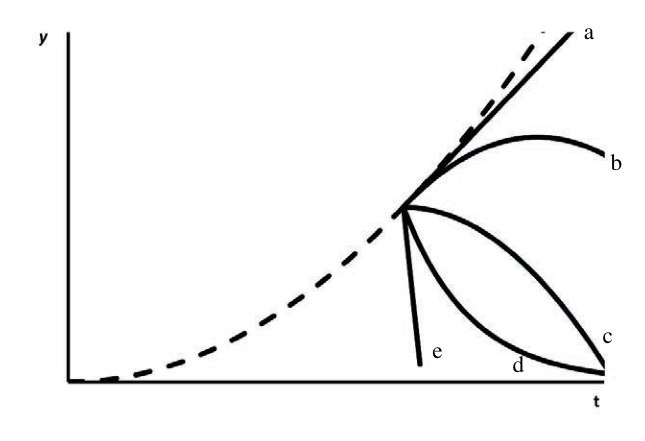 grafico posizione y(t) con curve a-d
Topic: Newtonian Mechanics Metodi: Kinematic Equations, Physical Modeling Competenze: Physical Reasoning, Diagrammatic Reasoning Objects: Block Fonte: Testo (PDF) — p.5
Domanda 8 Un ascensore in un edificio di quattro piani si sta muovendo verso l’alto con costante accelerazione. La curva tracciata indica la posizione y del soffitto dell’ascensore in funzione del tempo t. Nel momento indicato dal l’insieme di curve ramificate (solide), un bullone si rompe e cade dal soffitto. In assenza di aria resistenza, che la curva meglio rappresenta la posizione del bullone come funzione del tempo visto da un osservatore che non è nell’ascensore? a b c d e
- grafico posizione y) con curva a-d *
Topic: Newtonian Mechanics Metodi: Kinematic Equations, Physical Modeling Competenze: Physical Reasoning, Diagrammatic Reasoning Objects: Block Fonte: Testo (PDF) — p.5
Question 9 Matt is going to make a cake for Alix’s birthday. The recipe says to use half a teaspoon of cinnamon, but he can’t find a clean teaspoon. Instead he decides to weigh an appropriate amount on his kitchen scales. To the nearest order of magnitude, what is the mass of half a teaspoon of cinnamon?
- A. 0.01g
- B. 0.1g
- C. 1g
- D. 10g
- E. 100 g Page 5 of 12 2015 Australian Science Olympiads Exam – Physics ©Australian Science Innovations 2015 ABN 81731558309
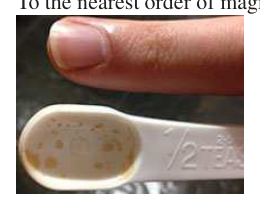 foto cucchiaino con cannella
Topic: Order-of-Magnitude Estimation Metodi: Order-of-Magnitude Estimation Competenze: Estimation & Approximation Objects: — Fonte: Testo (PDF) — p.5
Domanda 9 Matt preparerà una torta per il compleanno di Alix. La ricetta dice di usare mezzo cucchiaino di cannella, ma… Non riesce a trovare un cucchiaino di tè pulito. Invece decide di pesare una quantità adeguata sulle sue scale della cucina. Per il massimo ordine di grandezza, quanto è la massa di mezzo cucchiaino di cannella?
- A. 0.01g
- B. 0.1g
- C. 1g
- D. 10g
- E. 100 g Pagina 5 di 12 2015 esame delle Olimpiadi di Scienze australiane Fisica ©Australian Science Innovations 2015 ABN 81731558309
foto cucchiaino con cannella
Topic: Order-of-Magnitude Estimation Metodi: Order-of-Magnitude Estimation Competenze: Estimation & Approximation Objects: — Fonte: Testo (PDF) — p.5
Question 10 A large truck breaks down on the freeway and receives a push to the nearest exit by a small car as shown below. While the car, still pushing the truck, is speeding up to get to cruising speed a. the amount of force with which the car pushes on the truck is equal to that with which the truck pushes back on the car. b. the amount of force with which the car pushes on the truck is smaller than that with which the truck pushes back on the car. c. the amount of force with which the car pushes on the truck is greater than that with which the truck pushes back on the car. d. the car’s engine is running so the car pushes against the truck, but the truck’s engine is not running so the truck cannot push back against the car. The truck is pushed forward simply because it is in the way of the car. e. neither the car nor the truck exert any force on the other. The truck is pushed forward simply because it is in the way of the car. Page 6 of 12 2015 Australian Science Olympiads Exam – Physics ©Australian Science Innovations 2015 ABN 81731558309 SECTION B: WRITTEN ANSWER QUESTIONS USE THE ANSWER BOOKLET PROVIDED Note: Suggested times are given for section B as a general guide only. You may take more or less time on any question – everyone is different.
Topic: Newtonian Mechanics Metodi: Free-Body Diagram Competenze: Physical Reasoning Objects: Cart Fonte: Testo (PDF) — p.6
Domanda 10 Un grosso camion si è rotto sulla strada e viene spinto verso l’uscita più vicina da una piccola macchina come mostrato
- Qui sotto. Mentre l’auto, che spinge ancora il camion, si sta accelerando per raggiungere la velocità di crociera a. la forza con cui l’auto spinge sul camion è pari a quella con cui il camion spinge indietro l’auto. b. la forza con cui l’auto spinge il camion è inferiore a quella con cui il veicolo Il camion spinge indietro l’auto. c. la forza con cui l’auto spinge il camion è superiore a quella con cui il Il camion spinge indietro l’auto. d. il motore della macchina è in funzione, quindi la macchina spinge contro il camion, ma il motore del camion non è in funzione Quindi il camion non può spingere contro l’auto. Il camion viene spinto in avanti semplicemente perché è in
- La strada dell’auto. e. né l’auto né il camion esercitano alcuna forza l’uno sull’altro. Il camion viene spinto avanti semplicemente Perche’ sta bloccando la macchina. Pagina 6 di 12 2015 esame delle Olimpiadi di Scienze australiane Fisica ©Australian Science Innovations 2015 ABN 81731558309 PARTE B: Risposte scritte Utilizzate il volantino di risposta fornito Nota: I tempi suggeriti sono forniti per la sezione B solo come guida generale. Potresti prendere più o meno tempo per Domanda: tutti sono diversi.
Topic: Newtonian Mechanics Metodi: Free-Body Diagram Competenze: Physical Reasoning Objects: Cart Fonte: Testo (PDF) — p.6
Question 11 Suggested Time: 20 min Consider a hollow, frictionless inverted cone within which an object of mass m is free to slide. The cone has an angle of between its central axis and sloped side, and a radius r at height h. a) The object of mass m is released from rest at height h to slide inside the cone. (i) What will be its speed when it reaches the bottom? (ii) What assumption(s) did you make in the previous part? r h b) The object of mass m is collected and released again, but in the horizontal direction this time, with speed v. It slides in a circular path around the inside of the cone. Hence, its acceleration is towards the central axis of the cone. (i) Draw a diagram showing the forces acting on the mass. (ii) Find the magnitude of the normal force on the mass. (iii) Find an expression for the height of the mass. c) The object of mass m continues along its circular path until it is bumped slightly so that its speed is unchanged, but it is now directed slightly down the cone (but still mostly around the cone). Describe and explain the motion of the mass. Page 7 of 12 2015 Australian Science Olympiads Exam – Physics ©Australian Science Innovations 2015 ABN 81731558309
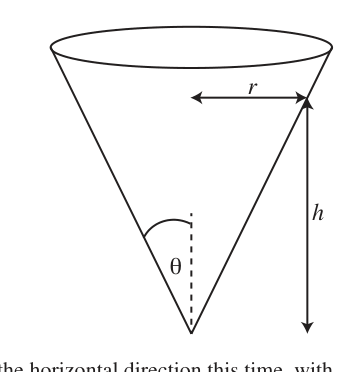 cono invertito cavo con etichette r, h, θ
Topic: Newtonian Mechanics, Conservation of Energy Metodi: Free-Body Diagram, Vector Decomposition, Energy Conservation Method Competenze: Diagrammatic Reasoning, Mathematical Modeling, Physical Reasoning Objects: Block Fonte: Testo (PDF) — p.7
Domanda 11 Tempo di programmazione: 20 minuti Considerate un cono inverso vuoto e senza attrito, all’interno del quale un oggetto di massa m è libero di scivolare. Il cono ha un angolo di tra il suo asse centrale e il suo lato inclinato, e un raggio r all’altezza h. a) L’oggetto di massa m viene rilasciato dal riposo ad un’altezza h a scivola dentro il cono. (i) Qual sarà la sua velocità quando raggiungerà il fondo? (ii) Quali presupposti avete fatto nella precedente
- La parte? r h b) L’oggetto di massa m viene raccolto e rilasciato di nuovo, ma questa volta in direzione orizzontale, con velocità V. Slide in un percorso circolare intorno all’interno del cono. La sua accelerazione è quindi verso l’asse centrale del cono. (i) Disegnare un diagramma che mostri le forze che agiscono sulla massa. (ii) Trova la magnitudine della forza normale sulla massa. (iii) Trova un’espressione per l’altezza della massa. c) L’oggetto di massa m continua lungo il suo percorso circolare fino a quando non viene colpito leggermente in modo che la sua velocità è invariato, ma ora è diretto leggermente verso il cono (ma ancora principalmente intorno al cono). Descrivere e spiegare il movimento della massa. Pagina 7 di 12 2015 esame delle Olimpiadi di Scienze australiane Fisica ©Australian Science Innovations 2015 ABN 81731558309
Con l’etichetta r, h, θ *
Topic: Newtonian Mechanics, Conservation of Energy Metodi: Free-Body Diagram, Vector Decomposition, Energy Conservation Method Competenze: Diagrammatic Reasoning, Mathematical Modeling, Physical Reasoning Objects: Block Fonte: Testo (PDF) — p.7
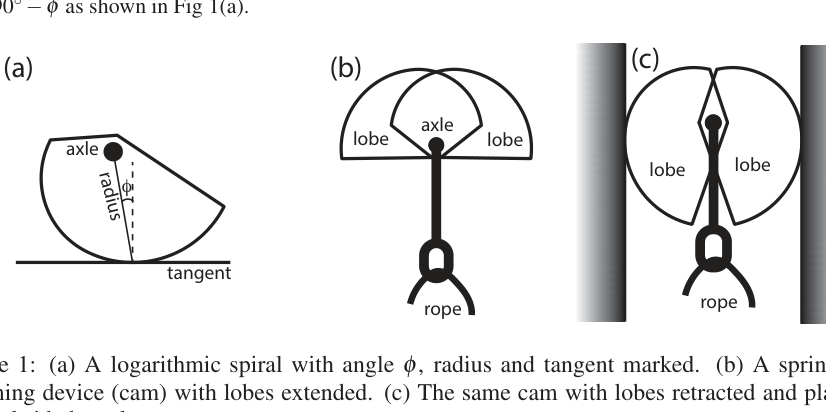
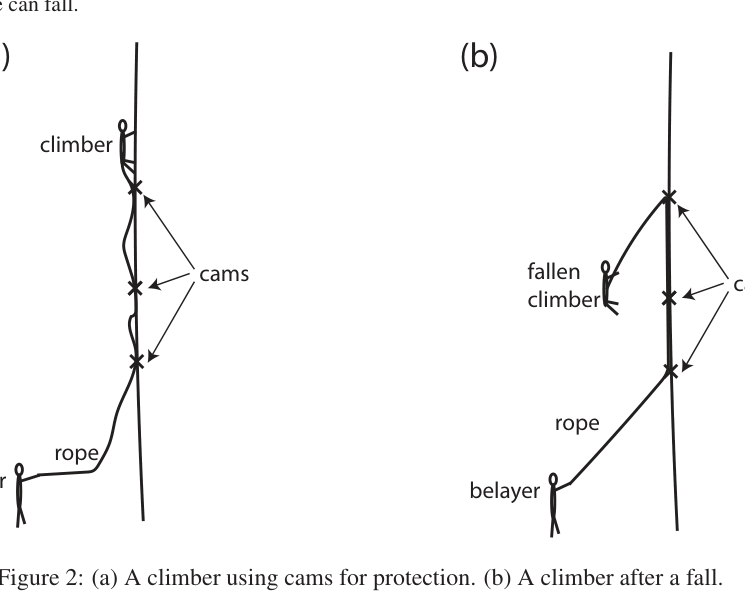
Question 12 Suggested Time: 25 min The logarithmic spiral is a curve that is seen often in nature, for example in sea shells and sunflowers. It is also known as a constant angle spiral, because it has the property that at each point on the curve, the angle between the radius (the line to the centre of the spiral) and the tangent is constant; this angle is as shown in Fig 1(a). axle radius tangent rope rope axle lobe lobe lobe lobe (a) (b) (c) Figure 1: (a) A logarithmic spiral with angle , radius and tangent marked. (b) A spring-loaded camming device (cam) with lobes extended. (c) The same cam with lobes retracted and placed in a parallel sided crack. The spring-loaded camming device (cam for short) is a piece of rock climbing equipment based on the logarithmic spiral and its properties. A cam’s purpose is to protect the climber by limiting the distance he or she can fall. rope belayer cams climber rope belayer cams fallen climber (a) (b) Figure 2: (a) A climber using cams for protection. (b) A climber after a fall. Page 8 of 12 2015 Australian Science Olympiads Exam – Physics ©Australian Science Innovations 2015 ABN 81731558309 A cam is comprised of two lobes, each the shape of a section of a logarithmic spiral whose centres are on a common axle; this axle is attached to the rope and hence the climber. The springs in the device restore the cam to the shape shown in Figure 1(b). The lobes can be retracted (releasing the springs) allowing the cam to be placed in a crack in the rock as shown in Figure 1(c). If the climber falls, the downward force from the fall is converted by the cam to an outward force on the rock. Friction keeps the cam in place in the crack. The frictional force has a maximum value where is the normal force. a) Suppose a climber places a cam in a parallel-sided crack. Draw all the forces on the cam in a labelled free body diagram on p. 4 of the Answer Booklet, when (i) the climber is above the cam (ii) the climber has fallen and is hanging from the cam b) Cams rely on friction to work; it is dangerous to use them on smooth rock. What is the minimum coefficient of friction that the rock should have, in terms of the camming angle ? Note that the force exerted by the axle on each lobe must be along the line joining the axle with the point of contact of that lobe with the rock, or the lobe will rotate. You may assume the force due to the spring on each lobe is negligible, and the cam lobes do not deform the rock. c) What does the logarithmic spiral shape of the cam lobes mean for the cam’s functionality at different amounts of retraction? d) As a climber climbs above a cam they may inadvertently pull the cam from side to side. Consider the springs’ forces on the lobes of a cam placed in a crack and pulled from side to side. (i) Describe the effect that this will have on the cam. Explain your reasoning with the help of diagrams. (ii) Circle the diagram showing the safer crack for a climber to use on p. 5 of the Answer Booklet. Give reasons for your answer. Page 9 of 12 2015 Australian Science Olympiads Exam – Physics ©Australian Science Innovations 2015 ABN 81731558309
 spirale logaritmica e cam a lobi (pannelli a,b,c)
 scalatore con cam e caduta (pannelli a,b)
Topic: Newtonian Mechanics, Rigid Body Statics Metodi: Free-Body Diagram, Vector Decomposition, Torque & Angular Momentum Analysis Competenze: Diagrammatic Reasoning, Mathematical Modeling, Physical Reasoning Objects: String, Spring Fonte: Testo (PDF) — p.8
Domanda 12 Tempo di programmazione: 25 minuti La spirale logaritmica è una curva che si vede spesso nella natura, ad esempio nelle conchiglie marine e nei girasole. It è anche conosciuto come una spirale angolare costante, perché ha la proprietà che in ogni punto della curva, la angolo tra il raggio (la linea al centro della spirale) e la tangente è costante; questo angolo è come illustrato alla figura 1(a). aereo radius tangente corde corde aereo lobito lobito lobito lobito (a) (b) (c) Figura 1: a) Spirale logaritmica con angolo , raggio e tangente segnati. b) Un motore a molla dispositivo di camming (cam) con lobi estesi. c) La stessa camma con lo spigolo ritratto e collocata in una
- Fraglia laterale parallela. Il dispositivo di camming caricato con molla (cam per breve) è un equipaggiamento di arrampicata basato su spirale logaritmica e le sue proprietà. Lo scopo di una camma è quello di proteggere l’alpinista limitando la distanza
- Può cadere. corde di scarico camere alpinista corde di scarico camere caduto alpinista (a) (b) Figura 2: (a) Un alpinista che usa camme per la protezione. b) Un alpinista dopo una caduta. Pagina 8 di 12 2015 esame delle Olimpiadi di Scienze australiane Fisica ©Australian Science Innovations 2015 ABN 81731558309 Una cam è composta da due lobi, ognuno della forma di una sezione di una spirale logaritmica i cui centri sono un asse comune; questo asse è collegato alla corda e quindi all’alpinista. Ristabilire le sorgenti del dispositivo la camma alla forma mostrata alla figura 1(b). Le lobbe possono essere ritirate (liberando le sorgenti) consentendo di la camma da inserire in una crepa nella roccia come mostrato alla figura 1(c). Se l’alpinista cade, la discesa La forza della caduta viene convertita dalla camma in una forza esterna sulla roccia. La frizione mantiene la telecamera dentro .
- Un posto nella crepa. La forza di attrito ha un valore massimo , dove è la forza normale. a) Supponiamo che un alpinista posizioni una camma in una crepa parallela. Tracciare tutte le forze sulla telecamera in un il diagramma del corpo libero etichettato sulla p. 4 del libro di risposte, quando (i) l’alpinista è sopra la camma (ii) l’alpinista è caduto e si appende alla camma b) Le telecamere dipendono dal frattamento per funzionare; è pericoloso usarle su rocce lisce. Qual è il minimo il coefficiente di attrito che la roccia dovrebbe avere, in termini di angolo di camming ? Si noti che la forza esercitata dall’asse su ciascun lobo deve essere lungo la linea che unisce l’asse con il punto di contatto di quel lobo con la roccia, o il lobo ruoterà. Potete assumere la forza a causa della sorgente su ogni lobo è trascurabile, e i lobi di camma non deformano la roccia. c) Che cosa significa la forma logaritmica della spirale dei lobi della camma per la funzionalità della camma a
- le diverse quantità di ritiro? d) Quando un alpinista sale sopra una camma, può involontariamente tirare la camma da un lato all’altro. Considerate le forze delle sorgenti si esercitano sui lobi di una camma inserita in una crepa e tirata da un lato all’altro. (i) Descrivere l’effetto che questo avrà sulla telecamera. Spiegare il vostro ragionamento con l’aiuto di
- I diagrammi. (ii) Circolare il diagramma che mostra la crepa più sicura da usare per un scalatore su p. 5 della risposta
- Il libretto. Datemi le ragioni per la vostra risposta. Pagina 9 di 12 2015 esame delle Olimpiadi di Scienze australiane Fisica ©Australian Science Innovations 2015 ABN 81731558309
- logaritmica spirale e cam a lobi (pannelli a, b, c) *
Scalatore con caduta (pannelli a, b)
Topic: Newtonian Mechanics, Rigid Body Statics Metodi: Free-Body Diagram, Vector Decomposition, Torque & Angular Momentum Analysis Competenze: Diagrammatic Reasoning, Mathematical Modeling, Physical Reasoning Objects: String, Spring Fonte: Testo (PDF) — p.8
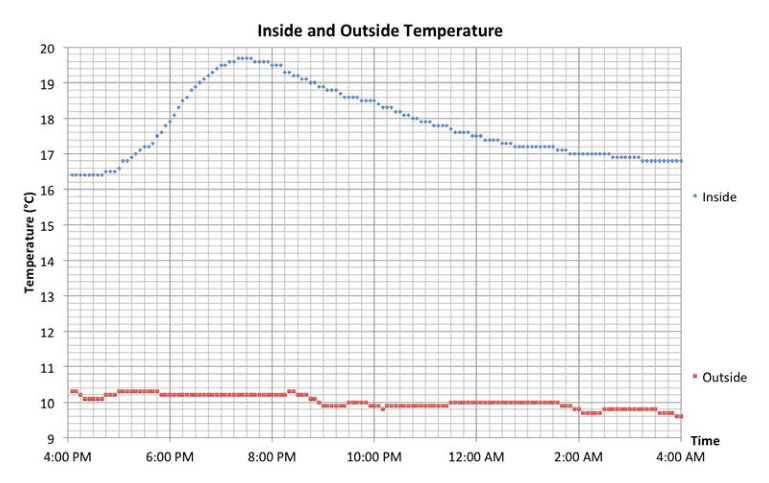
Question 13 Suggested Time: 25 min One evening a house was heated by burning 10 kg of hardwood in a slow combustion heater. The fire went out at 7:30 pm. The efficiency of the heater is 68% and hardwood releases 1.9 MJ/kg of energy when it is burnt. The temperature both inside and outside the house was recorded and is shown in Figure 3. Figure 3: The temperature inside and outside the house on this evening. a) (i) How much energy was released by burning the hardwood? (ii) The total heat capacity is the amount of heat required to increase the temperature of an object by . Estimate the total heat capacity of the house. b) After the fire went out the house began to cool. (i) Draw a straight line of best fit to the linear region of the graph on p. 6 of the Answer Booklet. (ii) Write down an equation which describes the relationship of the line of best fit. (iii) When does this relationship apply to this house? (iv) Does the relationship you found using the data match your expectations about how the house would cool? Explain your answer, including what your expectations are and physical reasons for them. c) Use your answer to 13b to make a better estimate of the total heat capacity of the house. Justify your estimate. Page 10 of 12 2015 Australian Science Olympiads Exam – Physics ©Australian Science Innovations 2015 ABN 81731558309
 temperatura dentro/fuori casa vs tempo
Topic: Thermodynamics, Conservation of Energy Metodi: First Law of Thermodynamics, Energy Conservation Method, Experimental Data Analysis Competenze: Graph Linearization, Physical Reasoning, Mathematical Modeling Objects: — Fonte: Testo (PDF) — p.10
Domanda 13 Tempo di programmazione: 25 minuti Una sera una casa fu riscaldata bruciando 10 kg di legno duro in un caldaio a lenta combustione. Il fuoco E’ uscito alle 19:30 L’efficienza del riscaldatore è del 68% e il legno duro rilascia 1,9 MJ/kg di energia quando viene bruciata. La temperatura sia all’interno che all’esterno della casa è stata registrata e è mostrata in Figura 3 Figura 3: La temperatura dentro e fuori casa di stasera. a) (i) Quanta energia è stata rilasciata bruciando il legno duro?
- la capacità calda totale è la quantità di calore necessaria per aumentare la temperatura di un oggetto di . Calcolare la capacità termico totale della casa. b) Dopo che il fuoco è scomparso la casa ha cominciato a raffreddarsi. (i) Disegnare una linea retta che si adatta meglio alla regione lineare del grafico su p. 6 della risposta
- Il libretto. (ii) Scrivere un’equazione che descriva il rapporto tra la linea di migliore adempimento. (iii) Quando si applica questa relazione a questa casa? (iv) La relazione che ha trovato utilizzando i dati corrisponde alle sue aspettative circa il modo in cui le informazioni sono state utilizzate? La casa sarebbe una cosa bella? Spiegate la vostra risposta, comprese le vostre aspettative e le vostre condizioni fisiche
- Le ragioni. c) Usate la vostra risposta a 13b per fare una migliore stima della capacità termico totale della casa. Giustificare
- La tua stima. Pagina 10 di 12 2015 esame delle Olimpiadi di Scienze australiane Fisica ©Australian Science Innovations 2015 ABN 81731558309
temperatura dentro/fora casa vs tempo
Topic: Thermodynamics, Conservation of Energy Metodi: First Law of Thermodynamics, Energy Conservation Method, Experimental Data Analysis Competenze: Graph Linearization, Physical Reasoning, Mathematical Modeling Objects: — Fonte: Testo (PDF) — p.10
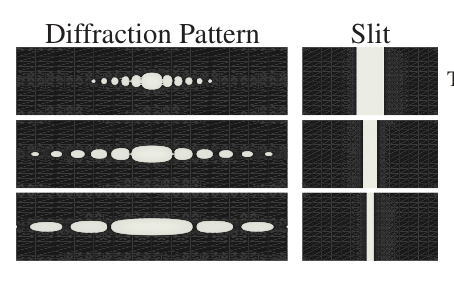
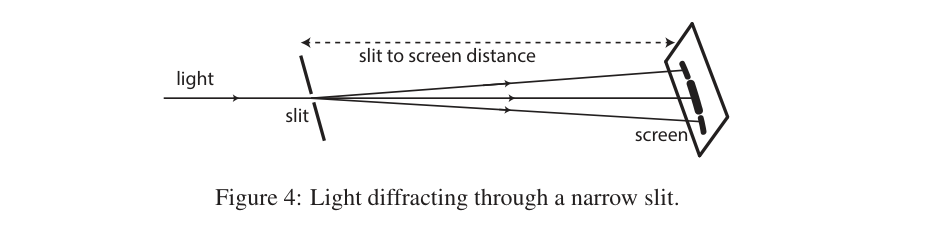
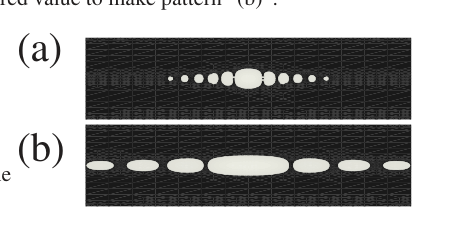
Question 14 Suggested Time: 20 min When light passes through a very narrow slit it diffracts. This means that the light spreads out and forms a pattern with bright and dark spots on a distant screen. Some examples of these patterns are shown below, with magnified images of the slits that generated them to the right. The wavelength of the light and the distance from the slit to the screen were kept constant in these images. Diffraction Pattern Slit The width of the central bright region is • proportional to the wavelength of the light • proportional to the distance from the slit to the screen • inversely proportional to the width of the slit. light slit slit to screen distance screen Figure 4: Light diffracting through a narrow slit. a) Red light of wavelength 650 nm is shone though a slit of width m onto a screen 1.20 m from the slit and produces the pattern labelled “(a)” below. Exactly one of the slit width, wavelength or distance to screen was changed to produce the pattern labelled “(b)” below. For each possible parameter below find its required value to make pattern “(b)”: (i) slit width, (ii) wavelength, (iii) distance from the slit to the screen. Give your answers in the spaces on p. 8 of the Answer Booklet. (a) (b) b) A diffraction pattern from a different single slit is shown on p. 8 of the Answer Booklet. Draw a possible single slit which could have produced this pattern in the box to the right of the pattern. c) When a narrow slit is replaced by a small rectangular aperture (hole) the light spreads out in all directions and forms a pattern such as the one labelled Example on p. 8 of the Answer Booklet. Draw diagrams to fill in the blanks of diffraction patterns or aperture shapes in the table on pp. 8–9 of the Answer Booklet. d) Explain why the width of the central bright region is proportional to the distance from the slit to the screen. Page 11 of 12 2015 Australian Science Olympiads Exam – Physics ©Australian Science Innovations 2015 ABN 81731558309 Integrity of Competition If there is evidence of collusion or other academic dishonesty, students will be disqualified. Markers’ decisions are final. Page 12 of 12 2015 Australian Science Olympiads Exam – Physics ©Australian Science Innovations 2015 ABN 81731558309
 pattern di diffrazione e fenditure campione
 schema luce che diffrange da fessura stretta
 pannelli risposta (a)(b) diffrazione
Topic: Wave Optics Metodi: Interference & Diffraction Analysis, Superposition Principle Competenze: Diagrammatic Reasoning, Mathematical Modeling, Physical Reasoning Objects: Slit, Screen Fonte: Testo (PDF) — p.11
Domanda 14 Tempo di programmazione: 20 minuti Quando la luce passa attraverso una fessura molto stretta diffraziona. Ciò significa che la luce si diffonde e si forma un modello con macchie luminose e scure su uno schermo lontano. Alcuni esempi di questi modelli sono mostrati di sotto, con immagini ingrandite delle fessure che le hanno generate a destra. L’onda della luce e la distanza dalla fessura allo schermo è stata mantenuta costante in queste immagini. Modello di diffrazione Slit La larghezza della regione luminosa centrale è • proporzionale alla lunghezza d’onda della luce • proporzionale alla distanza dalla fessura alla schermo • inversamente proporzionale alla larghezza della fessura. luce di taglio spazi di apertura per la distanza dello schermo schermo Figura 4: Luce diffrazione attraverso una fessura stretta. a) La luce rossa di lunghezza d’onda 650 nm è illuminata su uno schermo di 1,20 m attraverso una fessura di larghezza m dalla fessura e produce il modello etichettato (a) di seguito. Esattamente uno della larghezza della fessura, la lunghezza d’onda o la distanza dallo schermo sono stati modificati per produrre il modello etichettato (b) di seguito. Per ogni parametro possibile di seguito trova il suo valore richiesto per creare un modello (b):
- larghezza della fessura,
- lunghezza d’onda,
- la distanza dalla fessura allo schermo. Date le vostre risposte negli spazi sulla p. 8 del Rispondi al libro. (a) (b) b) Un modello di diffrazione da una singola fessura diversa è mostrato a p. 8 del libro di risposte. Disegna un possibile singolo fessura che avrebbe potuto produrre questo modello nella scatola a destra del modello. c) Quando una fessura stretta viene sostituita da una piccola apertura rettangolare (buco), la luce si diffonde in tutti i indicazioni e forma un modello come quello etichettato Esempio a p. 8 del libro di risposte. Disegnare diagrammi per riempire i vuoti dei modelli di diffrazione o delle forme di apertura nella tabella di pp. 89 del libro delle risposte. d) Spiegare perché la larghezza della regione luminosa centrale è proporzionale alla distanza dalla fessura alla lo schermo. Pagina 11 di 12 2015 esame delle Olimpiadi di Scienze australiane Fisica ©Australian Science Innovations 2015 ABN 81731558309 Integrità della concorrenza Se ci sono prove di collusione o di altre disonestà accademiche, gli studenti saranno Disqualificato. Le decisioni sui marcatori sono definitive. Pagina 12 di 12 2015 esame delle Olimpiadi di Scienze australiane Fisica ©Australian Science Innovations 2015 ABN 81731558309
- modello di diffrazione e campione di rivestimento *
- schema di luce che differenzia la stretta di fascia *
*pannelli risposta (a)
Topic: Wave Optics Metodi: Interference & Diffraction Analysis, Superposition Principle Competenze: Diagrammatic Reasoning, Mathematical Modeling, Physical Reasoning Objects: Slit, Screen Fonte: Testo (PDF) — p.11