Problema 1: a.
Sistema de coordenada en la posición del barco enemigo con m posición de la montaña, m altura de la montaña y m posición de la costa este de la isla. es el ángulo de disparo.
b.
Como entonces,
Reemplazando en
c. Dado que km = 200 m entonces,
Para que el proyectil supere la montaña es necesario que la trayectoria cumpla que,
Como m m el proyectil no supera la montaña y choca a una altura (respecto del nivel del agua) de 937.5 m.
d. La velocidad mínima necesaria para que el proyectil es aquella en la cual la trayectoria cumple,
Despejando se obtiene que
e. La distancia más cercana a la orilla este a la cual un proyectil puede impactar está dado por las raíces de la trayectoria obtenida utilizando la velocidad mínima determinada en el punto anterior,
Las raíces y son
corresponde a la posición del barco enemigo y a la distancia a la cual el proyectil impacta en el agua. Entonces el rango de distancia medida desde la orilla este es,
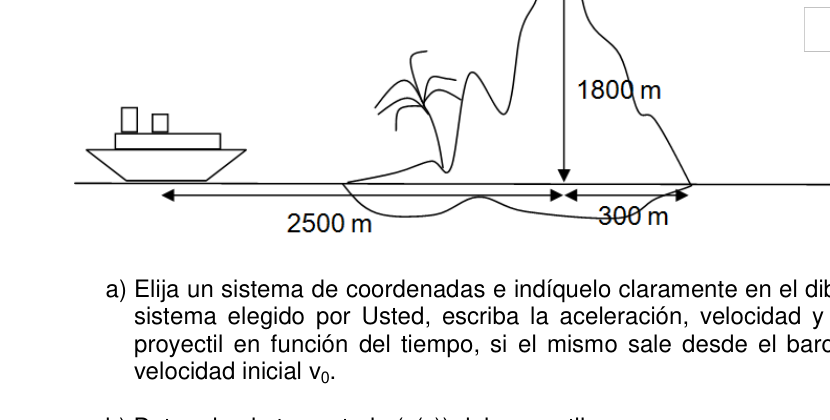 barco, isola, montagna 1800m, traiettoria
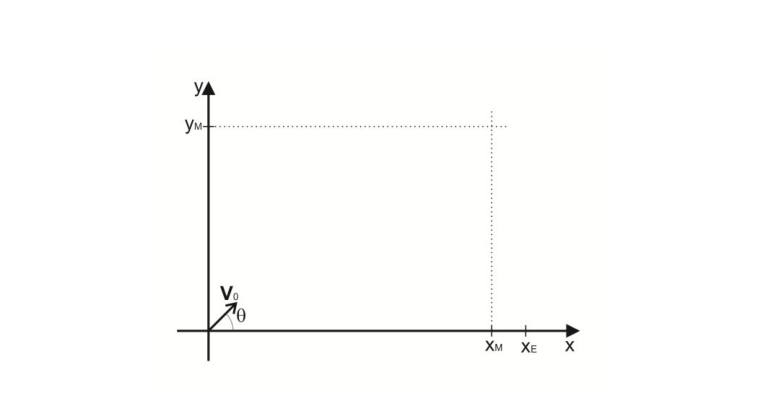 sistema di coordinate per proiettile
Topic: Newtonian Mechanics Metodi: Kinematic Equations, Vector Decomposition, Physical Modeling Competenze: Mathematical Modeling, Physical Reasoning Objects: Projectile Fonte: Testo (PDF) — p.15
Problema 1: a.
Sistema di coordinate in posizione del navetto nemico con m posizione della nave montagna, m altezza della montagna e m posizione della costa orientale dell’isola. è l’angolo di lancio.
b.
Como entonces,
Sostituendo da
c. Poiché km = 200 m allora,
Per superare la montagna, il proiettile deve essere in orario che:
Come m m il proiettile non supera la montagna e colpisce una altezza (rispetto al livello dell’acqua) di 937,5 m.
d. La velocità minima necessaria per il proiettile è quella in cui il proiettile percorso complesso,
La chiusura ottiene che
e. La distanza più vicina alla costa orientale che un proiettile può colpire è data per le radici del percorso ottenuto utilizzando la velocità minima determinata nel punto precedente,
Le radici e sono:
corrisponde alla posizione della nave nemico e alla distanza a cui il proiettile colpisce l’acqua. Quindi il range di distanza misurato dalla riva orientale è,
barco, isola, montagna 1800m, traiettoria
sistema di coordinate per proiettile
Topic: Newtonian Mechanics Metodi: Kinematic Equations, Vector Decomposition, Physical Modeling Competenze: Mathematical Modeling, Physical Reasoning Objects: Projectile Fonte: Testo (PDF) — p.15
Problem number one: a.
Coordinate system in enemy ship position with m position mountain, m mountain height and m position of the east coast of the island. is the angle of shooting.
b.
Como entonces,
Substituting for
c. Since km = 200 m then,
For the projectile to overcome the mountain, the trajectory must meet the following criteria:
As m m the projectile does not overrun the mountain and hits a height (in respect of water level) of 937.5 m.
d. The minimum speed required for the projectile is that at which the projectile is trajectory is fulfilled,
Clearing you get that
e. The closest distance to the east bank to which a projectile can strike is given The roots of the trajectory obtained using the minimum speed determined at the previous point,
The roots and are
corresponds to the position of the enemy ship and to the distance at which the projectile is It impacts the water. So the range of distance measured from the east bank is,
barco, isola, montagna 1800m, traiettoria
sistema di coordinate per proiettile
Topic: Newtonian Mechanics Metodi: Kinematic Equations, Vector Decomposition, Physical Modeling Competenze: Mathematical Modeling, Physical Reasoning Objects: Projectile Fonte: Testo (PDF) — p.15
Problema 2: a.
b. Cuerpo 1.
Según el sistema de coordenada elegido para el cuerpo 1
Cuerpo 2.
Según el sistema de coordenada elegido para el cuerpo 2 En la dirección x) En la dirección y)
Como la cuerda no tiene masa y no hay fricción en las poleas,
c. De la ecuación de movimiento del cuerpo 1
d. De la ecuación de movimiento en la dirección x) del cuerpo 2
e. Como
De la ecuación de movimiento en la dirección y) del cuerpo 2
Luego
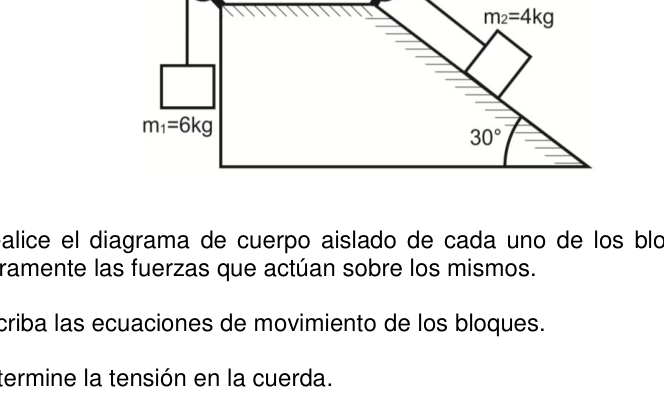 blocchi collegati da fune su piano inclinato 30°
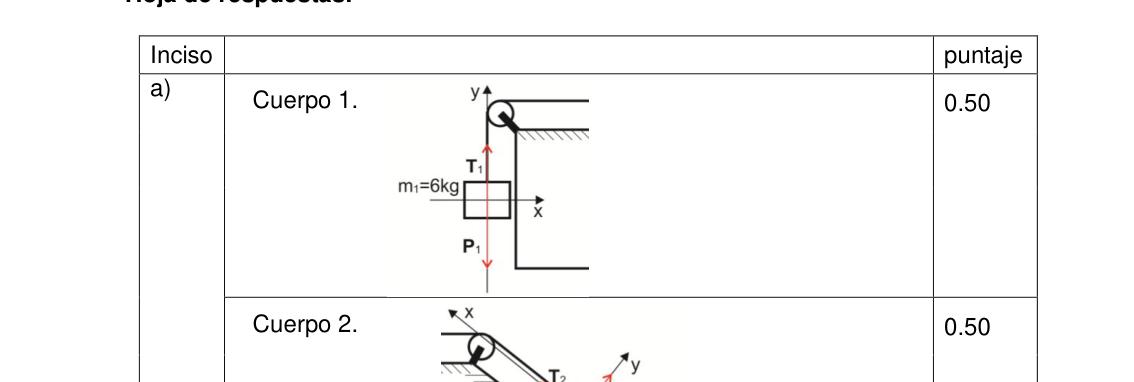 diagramma corpo libero Cuerpo 1 (soluzione)
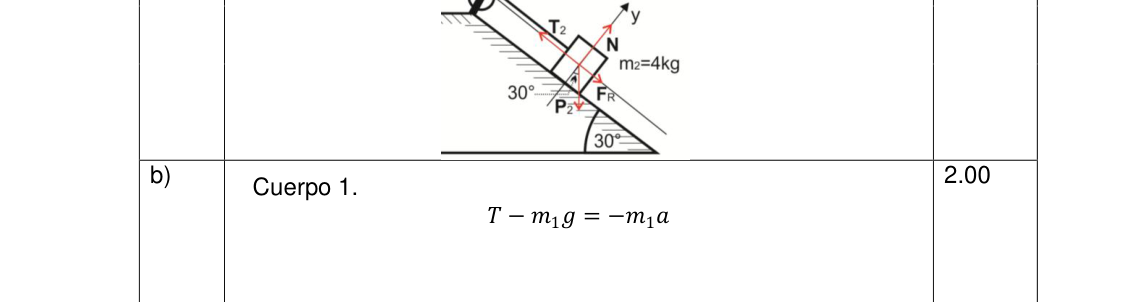 diagramma corpo libero Cuerpo 2 (soluzione)
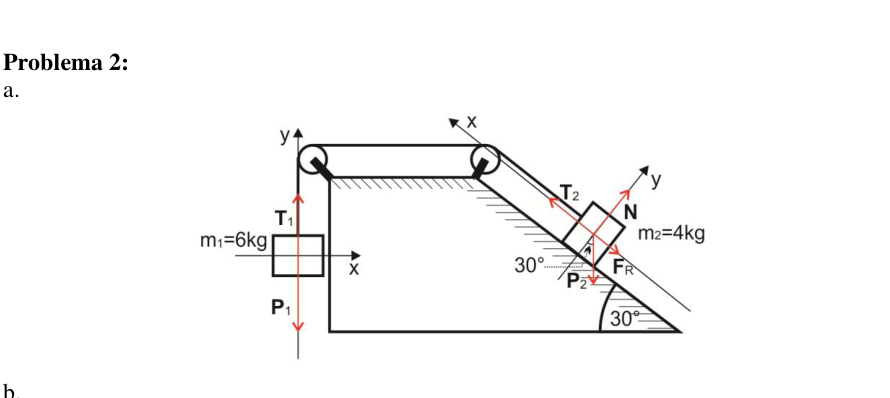 diagramma corpo libero entrambi i blocchi
Topic: Newtonian Mechanics Metodi: Free-Body Diagram, Vector Decomposition, Physical Modeling Competenze: Diagrammatic Reasoning, Mathematical Modeling, Physical Reasoning Objects: Block, String, Pulley, Inclined Plane Fonte: Testo (PDF) — p.17
Il problema 2: a.
b. Corpo uno.
Secondo il sistema di coordinate scelto per il corpo 1
Corpo 2.
Secondo il sistema di coordinate scelto per il corpo 2 In direzione x) In indirizzo e)
Poiché la corda non ha massa e non c’è attrito nelle pollice,
c. Della equazione di movimento del corpo 1
d. dell’equazione di movimento nella direzione x) del corpo 2
e. Come
dell’equazione di movimento in direzione y) del corpo 2
Poi
blocchi collegati da fune il suo pianoforte inclinato 30°
*diagrafo corpo libero Corpo 1 (soluzione) *
*diagrafo corpo libero Corpo 2 (soluzione) *
diagrafo corpo libero entrambi i blocchi
Topic: Newtonian Mechanics Metodi: Free-Body Diagram, Vector Decomposition, Physical Modeling Competenze: Diagrammatic Reasoning, Mathematical Modeling, Physical Reasoning Objects: Block, String, Pulley, Inclined Plane Fonte: Testo (PDF) — p.17
Problem two: a.
b. Body one.
According to the coordinate system chosen for the body 1
Body two.
According to the coordinate system chosen for body 2 In the address x) In the address y)
Since the rope has no mass and no friction in the pulleys,
c. From the equation of motion of the body 1
d. Of the equation of motion in the direction x) of the body 2
e. As
Of the equation of motion in the direction y) of the body 2
Then
The following is the list of the instruments used in the production of the instrument:
The following table shows the results of the evaluation of the results of the evaluation:
The following table shows the results of the evaluation of the results of the evaluation:
The Commission has also adopted a draft decision on the implementation of the Community’s budget.
Topic: Newtonian Mechanics Metodi: Free-Body Diagram, Vector Decomposition, Physical Modeling Competenze: Diagrammatic Reasoning, Mathematical Modeling, Physical Reasoning Objects: Block, String, Pulley, Inclined Plane Fonte: Testo (PDF) — p.17
Problema 3:
a. La energía inicial del sistema es
Por conservación de energía
b. Por conservación de energía, cuando el resorte se comprimió totalmente se debe cumplir que
c. Por conservación de energía, la velocidad del bloque en la loma tiene igual magnitud pero dirección contraria a la velocidad inicial,
d. Por conservación de energía hasta el punto B
Entre los puntos B y C hay roce dinámico por lo cual no se conserva la energía en ese tramo. El módulo de la fuerza de roce es,
La perdida de energía es,
e. La energía se conserva desde C hasta el resorte y desde el resorte a C. Al pasar por el tramo entre los puntos C y B, el bloque pierde la misma energía -1.3J que cuando recorrió el tramo la primera vez, por lo cual en el punto B la energía del bloque es,
La mínima energía para alcanzar la elevación es,
Por lo tanto, el bloque no alcanza la elevación . La altura a la cual llega el bloque es,
Prueba Experimental Hoja de respuestas.
Puntos 1 a 7. Por cada medición: 1.50 ptos.
| medición | D [cm] | d [cm] | D’ [cm] | d’ [cm] | M [g] |
|---|---|---|---|---|---|
| 1 | 1.8 | 12.2 | 4.1 | 9.9 | 18.7 |
| 2 | 1.6 | 10.4 | 3.5 | 8.5 | 19.4 |
| 3 | 1.7 | 11.3 | 3.8 | 9.2 | 19.0 |
| 4 | 1.5 | 9.5 | 3.3 | 7.7 | 18.5 |
| 5 | 1.4 | 8.6 | 3.0 | 7.0 | 18.8 |
| 6 | 1.2 | 7.8 | 2.7 | 6.3 | 18.2 |
| 7 | 1.1 | 6.9 | 2.4 | 5.6 | 18.6 |
| 8 | 1.0 | 6.0 | 2.1 | 4.9 | 19.1 |
| 9 | 0.8 | 5.2 | 1.8 | 4.2 | 18.2 |
| 10 | 0.7 | 4.3 | 1.5 | 3.5 | 18.8 |
Punto 8: 5.00 ptos.
SOLUCION
| medición | D [cm] | d [cm] | D’ [cm] | d’ [cm] | M [g] |
|---|---|---|---|---|---|
| 1 | 1.8 | 12.2 | 4.1 | 9.9 | 18.7 |
| 2 | 1.6 | 10.4 | 3.5 | 8.5 | 19.4 |
| 3 | 1.7 | 11.3 | 3.8 | 9.2 | 19.0 |
| 4 | 1.5 | 9.5 | 3.3 | 7.7 | 18.5 |
| 5 | 1.4 | 8.6 | 3.0 | 7.0 | 18.8 |
| 6 | 1.2 | 7.8 | 2.7 | 6.3 | 18.2 |
| 7 | 1.1 | 6.9 | 2.4 | 5.6 | 18.6 |
| 8 | 1.0 | 6.0 | 2.1 | 4.9 | 19.1 |
| 9 | 0.8 | 5.2 | 1.8 | 4.2 | 18.2 |
| 10 | 0.7 | 4.3 | 1.5 | 3.5 | 18.8 |
Las distancias se miden con 1 mm de incertidumbre y la masa de agua con 0.2 g si la jeringa tiene 5 subdivisiones por cada
Otra opción es asociar una incertidumbre igual al ancho del intervalo de masas determinadas dividido 2. En este caso:
blocco su loma con due molle R1 e R2
Topic: Conservation of Energy, Newtonian Mechanics Metodi: Energy Conservation Method, Conservation of Energy, Statistical Averaging Competenze: Physical Reasoning, Experimental Data Analysis, Error Propagation Objects: Block, Spring Fonte: Testo (PDF) — p.19
Figure
Figure
Figure
Figure
Figure
Figure
Figure
Figure
Figure
Figure
Figure
Figure
Figure
Figure
p.9 — bilancia a bracci con pesi (Figura 1)
p.9 — regola su bordo tavolo con tapita (Figura 2)
Problema 3:
a. L’energia iniziale del sistema è
Per la conservazione dell’energia
b. Per conservare l’energia, quando la risorsa è stata completamente compressa deve essere rispettata che
c. Per conservare l’energia, la velocità del blocco nella loma è uguale ma in direzione contraria alla velocità iniziale,
d. Per conservazione dell’energia fino al punto B
Tra i punti B e C c’è un rottura dinamico che non consente di conservare l’energia in quel punto.
- La trama. Il modulo della forza di rottura è,
La perdita di energia è,
e. L’energia viene conservata da C fino alla primavera e dalla primavera fino a C. Passando per il tratto Tra i punti C e B, il blocco perde la stessa energia -1.3J che quando ha percorso il la prima volta, quindi al punto B l’energia del blocco è,
L’energia minima per raggiungere l’elevazione è:
Il blocco non raggiunge quindi l’elevazione . L’altezza a cui raggiunge il blocco è,
Prova sperimentale Pagina di risposte.
Punti da uno a sette. Per ogni misurazione: 1,50 p.
medizione d [cm] d [cm] d [cm] d [cm] d [cm] m [g] |---|---|---|---|---|---| | 1 | 1.8 | 12.2 | 4.1 | 9.9 | 18.7 | | 2 | 1.6 | 10.4 | 3.5 | 8.5 | 19.4 | | 3 | 1.7 | 11.3 | 3.8 | 9.2 | 19.0 | | 4 | 1.5 | 9.5 | 3.3 | 7.7 | 18.5 | | 5 | 1.4 | 8.6 | 3.0 | 7.0 | 18.8 | | 6 | 1.2 | 7.8 | 2.7 | 6.3 | 18.2 | | 7 | 1.1 | 6.9 | 2.4 | 5.6 | 18.6 | | 8 | 1.0 | 6.0 | 2.1 | 4.9 | 19.1 | | 9 | 0.8 | 5.2 | 1.8 | 4.2 | 18.2 | | 10 | 0.7 | 4.3 | 1.5 | 3.5 | 18.8 |
Sotto il punto:
SOLUCIONE
medizione d [cm] d [cm] d [cm] d [cm] d [cm] m [g] |---|---|---|---|---|---| | 1 | 1.8 | 12.2 | 4.1 | 9.9 | 18.7 | | 2 | 1.6 | 10.4 | 3.5 | 8.5 | 19.4 | | 3 | 1.7 | 11.3 | 3.8 | 9.2 | 19.0 | | 4 | 1.5 | 9.5 | 3.3 | 7.7 | 18.5 | | 5 | 1.4 | 8.6 | 3.0 | 7.0 | 18.8 | | 6 | 1.2 | 7.8 | 2.7 | 6.3 | 18.2 | | 7 | 1.1 | 6.9 | 2.4 | 5.6 | 18.6 | | 8 | 1.0 | 6.0 | 2.1 | 4.9 | 19.1 | | 9 | 0.8 | 5.2 | 1.8 | 4.2 | 18.2 | | 10 | 0.7 | 4.3 | 1.5 | 3.5 | 18.8 |
Le distanze sono misurate con 1 mm di incertezza e la massa dell’acqua con 0,2 g se: la siringa ha 5 suddivisioni per ogni
Un’altra opzione è associare un’incertezza uguale alla larghezza dell’intervallo di massa
- di cui al punto 2. In questo caso:
blocco la sua loma con due molle R1 e R2
Topic: Conservation of Energy, Newtonian Mechanics Metodi: Energy Conservation Method, Conservation of Energy, Statistical Averaging Competenze: Physical Reasoning, Experimental Data Analysis, Error Propagation Objects: Block, Spring Fonte: Testo (PDF) — p.19
Figurare
Figurare
Figurare
Figurare
Figurare
Figurare
Figurare
Figurare
Figurare
Figurare
Figurare
Figurare
Figurare
Figurare
p.9 bilanciamento a bracci con peso (Figura 1)
**p.9 ** regola il bordo della tavola con tappeto (Figura 2)
Problem three:
a. The initial energy of the system is
Energy conservation
b. For energy conservation, when the spring is fully compressed it must be met which
c. For energy conservation, the block velocity in the loop is equal to the magnitude but direction contrary to the initial speed,
d. By energy conservation up to point B
Between points B and C there is dynamic friction so no energy is conserved in that I’ll take the stretch. The modulus of bridging force is,
The energy loss is,
e. Energy is conserved from C to spring and from spring to C. Passing the stretch Between points C and B, the block loses the same energy -1.3J as when it traveled the So at point B the energy of the block is,
The minimum energy to reach the elevation is,
Therefore, the block does not reach the elevation. The height at which the block reaches is,
The test shall be carried out in accordance with the following conditions: Answer sheet.
Scores are 1-7. For each measurement: 1.50 pts.
♪ ♪ Measurement ♪ ♪ D [cm] ♪ D [cm] ♪ D [cm] ♪ M [g] ♪ |---|---|---|---|---|---| | 1 | 1.8 | 12.2 | 4.1 | 9.9 | 18.7 | | 2 | 1.6 | 10.4 | 3.5 | 8.5 | 19.4 | | 3 | 1.7 | 11.3 | 3.8 | 9.2 | 19.0 | | 4 | 1.5 | 9.5 | 3.3 | 7.7 | 18.5 | | 5 | 1.4 | 8.6 | 3.0 | 7.0 | 18.8 | | 6 | 1.2 | 7.8 | 2.7 | 6.3 | 18.2 | | 7 | 1.1 | 6.9 | 2.4 | 5.6 | 18.6 | | 8 | 1.0 | 6.0 | 2.1 | 4.9 | 19.1 | | 9 | 0.8 | 5.2 | 1.8 | 4.2 | 18.2 | | 10 | 0.7 | 4.3 | 1.5 | 3.5 | 18.8 |
The point is 8:5.00 p.m.
The Commission
♪ ♪ Measurement ♪ ♪ D [cm] ♪ D [cm] ♪ D [cm] ♪ M [g] ♪ |---|---|---|---|---|---| | 1 | 1.8 | 12.2 | 4.1 | 9.9 | 18.7 | | 2 | 1.6 | 10.4 | 3.5 | 8.5 | 19.4 | | 3 | 1.7 | 11.3 | 3.8 | 9.2 | 19.0 | | 4 | 1.5 | 9.5 | 3.3 | 7.7 | 18.5 | | 5 | 1.4 | 8.6 | 3.0 | 7.0 | 18.8 | | 6 | 1.2 | 7.8 | 2.7 | 6.3 | 18.2 | | 7 | 1.1 | 6.9 | 2.4 | 5.6 | 18.6 | | 8 | 1.0 | 6.0 | 2.1 | 4.9 | 19.1 | | 9 | 0.8 | 5.2 | 1.8 | 4.2 | 18.2 | | 10 | 0.7 | 4.3 | 1.5 | 3.5 | 18.8 |
Distances are measured with 1 mm of uncertainty and the water mass with 0.2 g if the syringe has 5 subdivisions for each
Another option is to associate an uncertainty equal to the width of the mass interval. the following: In this case:
block its rim with two R1 and R2 springs
Topic: Conservation of Energy, Newtonian Mechanics Metodi: Energy Conservation Method, Conservation of Energy, Statistical Averaging Competenze: Physical Reasoning, Experimental Data Analysis, Error Propagation Objects: Block, Spring Fonte: Testo (PDF) — p.19
Figure
Figure
Figure
Figure
Figure
Figure
Figure
Figure
Figure
Figure
Figure
Figure
Figure
Figure
The weight of the weighted arm balances (Figure 1)
The table edge shall be adjusted with a rug (Figure 2)