Question 2.
(a) A planet has a radius and the gravitational field strength at its surface is . A satellite is placed in a circular orbit of radius around the planet.
Obtain an expression for , the period of orbit of the satellite, in terms of , and , explaining the relevant physics in each of your steps.
(3)
(b) Both the Earth and Jupiter can be assumed to have circular orbits about the Sun. Jupiter has an orbital period, years. What is the orbital radius of Jupiter in au?
Note: an au (astronomical unit) is the average distance between the Earth and the Sun.
(1)
(c) The density of the Earth changes sharply between the core and the mantle. By taking just two suitable values of the density of the core and mantle of the Earth from the graph in Figure 1, estimate a value of the mass of the Earth using this data. Your values and calculation must be shown.
(3)
(d) A planet of mass has an orbiting moon of mass . The mass of the moon is about the mass of the planet.
(i) Sketch a set of equipotential lines for the planet–moon system. Ignore the orbital motion of the moon. Without detailed calculation, indicate on your sketch the relative positions of the neutral point (a point of zero field strength) and the centre of mass of the planet–moon system.
A rocket of mass is launched from the planet. The rocket engine is used very briefly at take-off when it is close to the planet’s surface, and it almost immediately reaches speed , after which the fuel is exhausted and there is no further propulsion. It is then in free-fall and will have just enough energy to reach the moon. Assume that you can ignore relative motion of the planet and moon, and ignore air resistance. Obtain expressions and calculate values for:
(ii) The distance, , from the planet’s centre, where the speed of the rocket is lowest.
(iii) The launch speed of the rocket from the planet, in terms of the variables , , the radius of the planet, , and the separation of the centres of the moon and planet, .
For this question part, you may take kg, kg, m.
(9)
(e) The Earth can be considered to consist of concentric spheres of material, the outer sphere being the crust with a density of kg m. If the mass of the Earth is kg, what will be the fractional change in the gravitational field strength when descending to the bottom of a gold mine, a distance m below the surface of the Earth?
Hint: the field inside a hollow spherical shell is zero.
(4)
(f) A planetary sized object similar to the Earth was formed from a very large spherical cloud of interstellar dust collapsing under gravity to form a spherical body of uniform density and radius .
(i) Find an expression for the change in gravitational potential energy as the radius of the proto-planet increases from to by the formation of a thin spherical shell of material of mass .
(ii) Now derive an expression for the total transfer of gravitational potential energy in the formation of the planet. Use the following terms: the gravitational constant , and the final radius and mass, and respectively.
(iii) If all of this energy was used to heat the planet formed at a very low initial temperature, estimate the temperature that the planet would have reached.
For this planet, take km, kg, and the average specific heat capacity of the material of the planet is J kg K.
(5)
[25 marks]
 Figure 1: Earth density vs radius (core and mantle)
Topic: Gravitation, Newtonian Mechanics, Thermodynamics Metodi: Kepler’s Laws, Newton’s Law of Gravitation, Energy Conservation Method, Calculus-Integration, Conservation of Energy Competenze: Mathematical Modeling, Physical Reasoning Objects: Planet, Satellite, Star Fonte: Testo (PDF) — p.3
Domanda 2.
**(a) ** Un pianeta ha un raggio e la forza del campo gravitazionale sulla sua superficie è . Un satellite è posizionato in un’orbita circolare di raggio attorno al pianeta.
Ottieni un’espressione per , il periodo di orbita del satellite, in termini di , e , spiegando la fisica pertinente in ciascun tuo passo.
(3)
**(b) ** Si può presumere che sia la Terra che Giove abbiano orbite circolari intorno al Sole. Giove ha un periodo orbitale, anni. Qual è il raggio orbitale di Giove in AU?
Nota: un au (unità astronomica) è la distanza media tra la Terra e il Sole.
(1)
(c) The density of the Earth changes sharply between the core and the mantle. Prendendo solo due valori appropriati della densità del nucleo e del mantello della Terra dal grafico della Figura 1, stimare un valore della massa della Terra utilizzando questi dati. I vostri valori e calcoli devono essere mostrati.
(3)
**(d) ** Un pianeta di massa ha una luna in orbita di massa . La massa della luna è di circa la massa del pianeta.
(i) Segnare un insieme di linee equipotenziali per il sistema planetario-lunare. Ignora il movimento orbitale della luna. Senza calcoli dettagliati, indicare sullo schizzo le posizioni relative del punto neutro (un punto di forza di campo zero) e del centro di massa del sistema planetarioluna.
Un razzo di massa viene lanciato dal pianeta. Il motore del razzo viene utilizzato molto brevemente al decollo quando è vicino alla superficie del pianeta, e raggiunge quasi immediatamente la velocità , dopo la quale il carburante viene esaurito e non c’è ulteriore propulsione. E’ allora in caduta libera e avrà energia sufficiente per raggiungere la luna. Supponiamo di poter ignorare il movimento relativo del pianeta e della luna e ignorare la resistenza dell’aria. Ottenere espressioni e calcolare valori per:
(ii) La distanza, , dal centro del pianeta, dove la velocità del razzo è più bassa.
(iii) La velocità di lancio del razzo dal pianeta, in termini di variabili , , il raggio del pianeta, , e la separazione dei centri della luna e del pianeta, .
Per questa parte della domanda, è possibile prendere kg, kg, m.
(9)
**(e) ** La Terra può essere considerata costituita da sfere concentriche di materiale, la sfera esterna essendo la crosta con una densità di kg m. Se la massa della Terra è kg, qual sarà il cambiamento frazionario nella forza del campo gravitazionale quando scende al fondo di una miniera d’oro, a una distanza m sotto la superficie della Terra?
Signore: il campo all’interno di una conchiglia sferica vuota è zero.
(4)
(f) A planetary sized object similar to the Earth was formed from a very large spherical cloud of interstellar dust collapsing under gravity to form a spherical body of uniform density and radius .
(i) Trovare un’espressione per il cambiamento dell’energia gravitazionale potenziale quando il raggio del proto- pianeta aumenta da a mediante la formazione di una sottile conchiglia sferica di materiale di massa .
(ii) Ora derivi un’espressione per il trasferimento totale di energia potenziale gravitazionale nella formazione del pianeta. Usare i termini seguenti: costante gravitazionale e raggio finale e massa, e rispettivamente.
(iii) Se tutta questa energia fosse stata utilizzata per riscaldare il pianeta formato a una temperatura iniziale molto bassa, stima la temperatura che il pianeta avrebbe raggiunto.
Per questo pianeta, prendi km, kg, e la capacità termico specifica media del materiale del pianeta è J kg K.
(5)
[25 punti]
*Figura 1: densità della Terra vs raggio (core e mantello) *
Topic: Gravitation, Newtonian Mechanics, Thermodynamics Metodi: Kepler’s Laws, Newton’s Law of Gravitation, Energy Conservation Method, Calculus-Integration, Conservation of Energy Competenze: Mathematical Modeling, Physical Reasoning Objects: Planet, Satellite, Star Fonte: Testo (PDF) — p.3
Question 3.
(a) A particle is moving in a horizontal circle and is kept in its path by a string tied to a point at a height above the centre of the circle.
(i) Find the period of rotation in terms of and the gravitational field strength , explaining the physics of your derivation in words.
(ii) If the tension in the string is three times the weight of the particle, find the length of the string , in terms of .
(5)
(b)
(i) A particle of mass is suspended by a thin elastic string of natural length in which a tension would produce an extension . Write down an expression for the period of oscillation of the mass in terms of and .
(ii) Two particles of equal mass on a smooth horizontal table are connected by the same thin elastic string of natural length . The particles are held at rest at a distance apart.
i. Describe their motions between the time they are released and when they collide.
ii. If the particles are released simultaneously, calculate the time elapsed before they collide, given m.
(7)
(c) A piece of elastic cord of length and cross-sectional area is stretched to twice its natural length. Assuming that the total volume remains constant, and that cross-sectional area is uniform along its length, and the Young’s modulus for the material remains constant,
(i) obtain an expression for the final tension in terms of and .
(ii) Show that the work done in stretching the elastic is given by .
(5)
(d) The behaviour of the boxing training ball shown in Figure 2 can be modelled as two identical vertical springs, each of natural length and spring constant , attached to a mass . A force applied to a single spring doubles its length to . The top spring is attached to the ceiling and the bottom spring to the floor of a room of height .
(i) Determine the equilibrium position of the ball below the ceiling in terms of .
(ii) The ball is given a small vertical displacement from equilibrium and released. Find an expression for the period of the vertical oscillations.
(iii) The ball is given a small horizontal displacement from equilibrium and released. Using a suitable approximation, provide an expression for the horizontal force exerted on the ball by the springs, and hence find the period of the horizontal oscillations.
(8)
[25 marks]
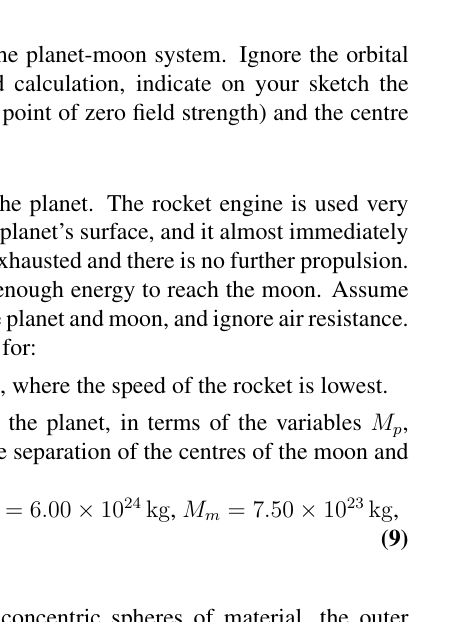 Figure 2: boxing training ball on two vertical springs
Topic: Oscillations & Waves, Elasticity & Materials, Newtonian Mechanics Metodi: Simple Harmonic Motion Analysis, Hooke’s Law, Stress-Strain Analysis, Free-Body Diagram, Small-Angle Approximation Competenze: Mathematical Modeling, Physical Reasoning Objects: Spring, String, Ball Fonte: Testo (PDF) — p.4
Domanda 3.
**(a) ** Una particella si muove in un cerchio orizzontale e viene mantenuta nel suo percorso da una corda legata a un punto ad un’altezza al di sopra del centro del cerchio.
(i) Trova il periodo di rotazione in termini di e la forza del campo gravitazionale , spiegando la fisica della tua derivazione in parole.
(ii) Se la tensione della corda è tre volte il peso della particella, trovare la lunghezza della corda , in termini di .
(5)
(b)
(i) Una particella di massa è sospesa da una sottile corda elastica di lunghezza naturale in cui una tensione produrrebbe un’estensione . Scrivere un’espressione per il periodo di oscillazione della massa in termini di e .
ii) Due particelle di massa uguale su una tavola orizzontale liscia sono collegate dalla stessa sottile corda elastica di lunghezza naturale . Le particelle sono tenute a riposo a una distanza da loro.
i. Descrivi i loro movimenti tra il momento in cui vengono rilasciati e il momento in cui si scontrano.
ii. Se le particelle vengono rilasciate contemporaneamente, calcolare il tempo trascorso prima che si schiantino, dato m.
(7)
**(c) ** Un pezzo di corda elastica di lunghezza e di superficie trasversale viene esteso fino al doppio della sua lunghezza naturale. Supponendo che il volume totale rimanga costante e che l’area di sezione trasversale sia uniforme lungo la sua lunghezza e che il modulo del Young per il materiale rimanga costante,
-
ottenere un’espressione della tensione finale in termini di e .
-
dimostrare che il lavoro svolto nel prolungare l’elastica è dato da .
(5)
**(d) ** Il comportamento della palla di allenamento da boxe mostrata nella figura 2 può essere modellato come due sorgenti verticali identiche, ciascuna di lunghezza naturale e costante sorgente , attaccate a una massa . Una forza applicata a una singola molla raddoppia la sua lunghezza a . La molla superiore è collegata al soffitto e la molla inferiore al pavimento di una stanza di altezza .
(i) Determinare la posizione di equilibrio della palla sotto il soffitto in termini di .
- la palla viene spostata in piccole dimensioni verticali dall’equilibrio e rilasciata. Trova un’espressione per il periodo delle oscillazioni verticali.
(iii) La palla riceve un piccolo spostamento orizzontale dall’equilibrio e viene rilasciata. Usando un approccio appropriato, fornire un’espressione della forza orizzontale esercitata sulla palla dalle molle, e quindi trovare il periodo delle oscillazioni orizzontali.
(8)
[25 punti]
Figura 2: palla di allenamento per il boxe su due molle verticali
Topic: Oscillations & Waves, Elasticity & Materials, Newtonian Mechanics Metodi: Simple Harmonic Motion Analysis, Hooke’s Law, Stress-Strain Analysis, Free-Body Diagram, Small-Angle Approximation Competenze: Mathematical Modeling, Physical Reasoning Objects: Spring, String, Ball Fonte: Testo (PDF) — p.4
Question 4.
(a) Show that the pressure at depth in a liquid of density is given by , where is the pressure at the surface.
(2)
(b) A large water tank sits on the ground and is kept full of water to a depth . Water issues horizontally from a small circular hole of radius in the side wall at a height above the ground.
(i) Using Bernoulli’s equation (or otherwise), show that the speed of the water leaving the hole is .
(ii) Show that the water strikes the ground at a horizontal distance from the base of the tank.
(iii) Find the value of for which is a maximum, and determine this maximum range.
(iv) At what other value of does the water strike the ground at the same point as in (iii)?
(6)
(c) A closed hollow container of volume and mass is held submerged in water of density by a string attached to the bottom of a tank. If the container is just on the point of floating when the string is cut,
(i) obtain an expression for the tension in the string in terms of , , and .
(ii) A cylindrical hollow metal container has a diameter m and a height of m, and a total mass kg. Calculate the tension .
(4)
(d) A uniform rod of length , cross-sectional area , and material density floats with a fraction of its length submerged in a liquid of density . Show that .
A wooden rod of length m has density kg m. It floats in water ( kg m). What length of the rod is above the water?
(4)
(e) A solid circular cone of height , mass , and base radius floats in a liquid of density with its axis vertical and vertex downwards. The cone floats with a height submerged below the liquid surface (where ).
The volume of a circular cone is .
(i) Obtain an expression relating the mass of the cone to the fraction submerged, in terms of , , , and .
(ii) A weight equal to the weight of the cone is placed on the base. As this weight is added, the cone sinks until the base is just level with the liquid surface before rising back up. Show that .
(9)
[25 marks]
Topic: Fluid Mechanics, Newtonian Mechanics Metodi: Bernoulli’s Equation, Hydrostatic Equilibrium, Free-Body Diagram, Kinematic Equations, Continuity Equation Competenze: Mathematical Modeling, Physical Reasoning Objects: Container, Cylinder, Rod Fonte: Testo (PDF) — p.6
Domanda 4.
**(a) ** Indicare che la pressione a profondità in un liquido di densità è data da , dove è la pressione alla superficie.
(2)
**(b) ** Un grande serbatoio di acqua si trova a terra e viene tenuto pieno di acqua fino a una profondità . L’acqua emana orizzontalmente da un piccolo buco circolare di raggio nella parete laterale ad un’altezza sopra il suolo.
(i) Usando l’equazione di Bernoulli (o altrimenti), dimostrare che la velocità dell’acqua che lascia il buco è .
ii) Indicare che l’acqua colpisce il terreno a distanza orizzontale dalla base del serbatoio.
(iii) Trova il valore di per il quale è il massimo e determina tale gamma massima.
(iv) A quale altro valore di l’acqua colpisce il suolo nello stesso punto di cui al punto iii)?
(6)
**(c) ** Un contenitore vuoto chiuso di volume e massa è tenuto immerso in acqua di densità con una corda attaccata alla parte inferiore di un serbatoio. Se il contenitore è appena sul punto di galleggiare quando la corda è tagliata,
(i) ottenere un’espressione della tensione nella corda in termini di , , e .
ii) Un contenitore metallico vuoto cilindrico ha un diametro m e un’altezza m e una massa totale kg. Calcolare la tensione .
(4)
**(d) ** Una canna uniforme di lunghezza , area di sezione trasversale e densità di materiale galleggia con una frazione della sua lunghezza immersa in un liquido di densità . Mostra che .
Una barra di legno di lunghezza m ha una densità kg m. Flotta in acqua ( kg m). Quanto è lunga la canna sopra l’acqua?
(4)
**(e) ** Un cono solido circolare di altezza , massa e raggio di base galleggia in un liquido di densità con l’asse verticale e il vertice verso il basso. Il cono galleggia con un’altezza immersa sotto la superficie liquida (dove ).
Il volume di un cono circolare è .
(i) Ottenere un’espressione che relaziona la massa del cono alla frazione sommersa, in termini di , , e .
- si colloca sulla base un peso pari al peso del cono. Con l’aggiunta di questo peso, il cono affonda fino a che la base è a livello della superficie liquida prima di rialzarsi. Mostra che .
(9)
[25 punti]
Topic: Fluid Mechanics, Newtonian Mechanics Metodi: Bernoulli’s Equation, Hydrostatic Equilibrium, Free-Body Diagram, Kinematic Equations, Continuity Equation Competenze: Mathematical Modeling, Physical Reasoning Objects: Container, Cylinder, Rod Fonte: Testo (PDF) — p.6
Question 5.
(a) A potential divider circuit consists of two resistors and connected in series across a supply voltage . A load of resistance is connected across .
(i) Derive an expression for the output voltage across in terms of , , , and .
(ii) For V, , , and , calculate .
(4)
(b) A strain gauge has resistance when unstrained. Its gauge factor is defined as , where is the strain (fractional change in length) and is the change in resistance. for this gauge.
The strain gauge is connected as one arm of a Wheatstone bridge with three equal resistors, each of resistance , and a battery of EMF V with negligible internal resistance.
(i) Calculate the out-of-balance voltage when the strain gauge is under a strain .
(ii) A second identical strain gauge, experiencing the same strain but oriented to decrease resistance, is placed in the opposite arm of the bridge. How does this affect ?
(6)
(c) Three resistors of resistance , , and are connected in a network to a battery of EMF and negligible internal resistance. Calculate the current supplied by the battery and the power dissipated in each resistor.
(Sketch the network diagram clearly.)
(5)
(d) Consider a semi-infinite ladder network of identical resistors, each of resistance , as shown in Figure 5. The network consists of series resistors and shunt resistors repeating to infinity.
(i) Show that the input resistance of the network between terminals A and B is .
(ii) A battery of EMF V and internal resistance is connected across A and B. Calculate the current drawn from the battery and the voltage at the first shunt resistor.
(6)
(e) An array of identical cells, each of EMF and internal resistance , is arranged in rows and columns (i.e. rows each of cells in series). The array is connected to an external resistance .
(i) Obtain an expression for the current through .
(ii) Find the condition on , , , and such that the power delivered to is maximised.
(4)
[25 marks]
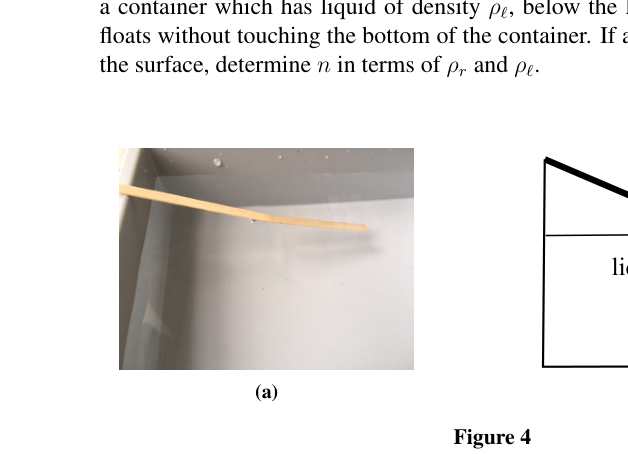 Figure 5: semi-infinite ladder resistor network
Topic: Circuits, Electrostatics Metodi: Kirchhoff’s Laws, Equivalent Circuit Reduction, Electric Potential Method, Superposition Principle Competenze: Mathematical Modeling, Physical Reasoning Objects: Resistor, Battery, Wire Fonte: Testo (PDF) — p.8
Questa 5.
**(a) ** Un circuito di divisore potenziale è costituito da due resistori e collegati in serie attraverso una tensione di alimentazione . Un carico di resistenza è collegato attraverso .
(i) Derivare un’espressione per la tensione di uscita su in termini di , , e .
(ii) Per V, , e , calcolare .
(4)
**(b) ** Un tensiometro ha una resistenza quando non è tenso. Il suo fattore di misurazione è definito come , dove è la tensione (cambiamento frazionario di lunghezza) e è il cambiamento di resistenza. per questo calibro.
Il tensiometro è collegato come un braccio di un ponte Wheatstone con tre resistenze uguali, ciascuna di resistenza , e una batteria di EMF V con una resistenza interna trascurabile.
(i) Calcolare la tensione fuori equilibrio quando il tensione è sotto tensione .
- un secondo tensiometro identico, con la stessa tensione ma orientato a ridurre la resistenza, è posto nel braccio opposto del ponte. Come influisce questo su ?
(6)
**(c) ** Tre resistitori di resistenza , e sono collegati in rete a una batteria di EMF e una resistenza interna trascurabile. Calcolare la corrente fornita dalla batteria e la potenza dissipata in ciascun resistore.
(Segna chiaramente il diagramma della rete.)
(5)
**(d) ** Considerate una rete di scale semiconfinite di resistori identici, ciascuno di resistenza , come mostrato alla figura 5. La rete è composta da resistori di serie e resistori di shunt che si ripetono fino all’infinito.
(i) Indicare che la resistenza di ingresso della rete tra i terminali A e B è .
ii) Una batteria di EMF V e resistenza interna è collegata tra A e B. Calcolare la corrente trattenuta dalla batteria e la tensione della prima resistenza di scambio.
(6)
**(e) ** Un array di celle identiche, ciascuna di EMF e resistenza interna , è disposta in file e colonne (cioè: ogni riga delle celle in serie). L’array è collegato ad una resistenza esterna .
(i) Ottenere un’espressione per la corrente attraverso .
(ii) Trovare la condizione su , , e in modo tale che la potenza consegnata a sia massimizzata.
(4)
[25 punti]
Figura 5: rete di resistenza a scala semipermanente
Topic: Circuits, Electrostatics Metodi: Kirchhoff’s Laws, Equivalent Circuit Reduction, Electric Potential Method, Superposition Principle Competenze: Mathematical Modeling, Physical Reasoning Objects: Resistor, Battery, Wire Fonte: Testo (PDF) — p.8
Question 6.
(a) Three capacitors of capacitances , , and are connected in series across a potential difference of V.
(i) Calculate the charge stored on each capacitor and the potential difference across each.
(ii) Calculate the total energy stored in the combination.
(iii) The three capacitors are now connected in parallel across the same V. Calculate the total energy stored. Comment on any difference from (ii).
(4)
(b) A parallel plate capacitor has plates of area separated by a distance .
(i) Show that the capacitance is .
(ii) The capacitor is charged to a potential difference and then disconnected from the supply. The plates are then pulled apart to a separation . Determine the new potential difference, the new energy stored, and account for any change in energy.
(5)
(c) Two concentric conducting spheres have radii and (). They carry equal and opposite charges (inner sphere positive).
(i) Using Gauss’s law, find the electric field in the region , and hence obtain an expression for the capacitance of this system.
(ii) A capacitor of this type has m and m. It is charged to a potential difference of V. Calculate the charge on the inner sphere and the energy stored.
(iii) The outer sphere is earthed momentarily and then an additional charge is placed on the inner sphere. Determine the new potential difference between the spheres.
(7)
(d) A capacitor of capacitance is charged to an initial potential difference V and is then connected in series with a resistor and an LED. The LED can be considered to have a constant forward voltage drop of V and to be off for voltages below this. A constant current circuit is used to keep the current through the LED at mA while the LED is on.
(i) Determine the time for which the LED remains lit after the circuit is switched on.
(ii) Sketch a graph of the capacitor voltage against time, from until the LED goes off.
(9)
[25 marks]
Topic: Electrostatics, Circuits Metodi: Gauss’s Law, Electric Potential Method, Kirchhoff’s Laws, Energy Conservation Method Competenze: Mathematical Modeling, Physical Reasoning Objects: Capacitor, Resistor, Conducting Sphere Fonte: Testo (PDF) — p.11
Questione 6.
**(a) ** Tre condensatori di capacità , e sono collegati in serie su una differenza di potenziale di V.
(i) Calcolare la carica immagazzinata su ciascun condensatore e la differenza potenziale di ciascun condensatore.
- Calcolare l’energia totale immagazzinata nella combinazione.
(iii) I tre condensatori sono ora collegati in parallelo attraverso lo stesso V. Calcolare l’energia totale immagazzinata. Commento su eventuali differenze da (ii).
(4)
**(b) ** Un condensatore di piastre parallele ha piastre di superficie separate da una distanza .
(i) Indicare che la capacità è .
(ii) Il condensatore è caricato a una differenza di potenziale e quindi disconnesso dalla alimentazione. Le piastre sono poi separate per una separazione . Determina la nuova differenza di potenziale, la nuova energia immagazzinata e spiega qualsiasi cambiamento di energia.
(5)
**(c) ** Due sfere di conduttore concentrici hanno i raggi e (). Esse portano cariche uguali e opposte (sfera interna positiva).
(i) Usando la legge di Gauss, trovare il campo elettrico nella regione , e quindi ottenere un’espressione per la capacità di questo sistema.
ii) Un condensatore di questo tipo ha m e m. È caricato ad una differenza potenziale di V. Calcolare la carica sulla sfera interna e l’energia immagazzinata.
(iii) The outer sphere is earthed momentarily and then an additional charge is placed on the inner sphere. Determinare la nuova differenza potenziale tra le sfere.
(7)
(d) A capacitor of capacitance is charged to an initial potential difference V and is then connected in series with a resistor and an LED. Il LED può essere considerato avere una caduta di tensione anteriore costante di V e essere spento per le tensioni inferiori a questa. Un circuito di corrente costante è utilizzato per mantenere la corrente attraverso il LED a mA mentre il LED è acceso.
- Determinare il tempo per il quale il LED rimane acceso dopo l’apertura del circuito.
(ii) Segnare un grafico della tensione del condensatore contro il tempo, da fino a quando il LED non si spegne.
(9)
[25 punti]
Topic: Electrostatics, Circuits Metodi: Gauss’s Law, Electric Potential Method, Kirchhoff’s Laws, Energy Conservation Method Competenze: Mathematical Modeling, Physical Reasoning Objects: Capacitor, Resistor, Conducting Sphere Fonte: Testo (PDF) — p.11