Qu 1. General Questions
(a) A powerboat instructor has mass 60 kg. With the bow (front) of her boat just touching the harbour, she removes the outboard motor from the stern (back) and intends to carry it along the length of the boat to shore. Her boat is 5 m long with a mass of 180 kg. The outboard motor has a mass of 40 kg. As she walks she realises that she has forgotten to affix the boat to shore. Determine how far from the shore she will be when she reaches the bow of the boat in the cases that:
(i) Frictional forces between the boat and water can be ignored;
(ii) the frictional force between the boat and water is proportional to the velocity of the boat.
(b) The BepiColombo mission to Mercury launched in October 2018 is only the second satellite destined to enter an orbit around Mercury, 6 years after launch in 2024. Given that, at their closest, Mercury and Mars are approximately equidistant from the Earth, explain why a mission to put a satellite in orbit around Mercury requires significantly more energy expenditure than a similar mission to Mars.
(c) A paper sphere is constructed from thin spherical lunes of paper glued together, as illustrated in Fig. 1, with a photo of the constructed paper sphere shown in Fig. 2(a). There is a small hole shown in the top end of the sphere through which air can enter or leave. The paper is very thin, but krinkly and stiff. It supports itself as a sphere when resting on the table, as in Fig. 2(c).
When a crumpled sphere is bounced gently from one hand to another as in Fig. 2(b), it gradually takes on a spherical shape, filling with air. Suggest a possible explanation for why it might become filled with more air rather than crumple even more.
(d) A class II 1 mW laser, suitable for use in the classroom, is deemed safe enough in the unfortunate case that it is shone directly in the eye, due to the blink reflex. The diameter of such a laser beam is 6 mm when it reaches the eye, and we can assume that the intensity is uniform across the beam. For an eye focusing the beam on the retina, explain why the beam does not focus to a point, and estimate the factor by which the intensity of the beam is increased on the retina. Make clear any numerical values that you estimate.
(e) Estimate the number of protons that you could pour into an empty teacup before it overflowed. The protons and the cup do not interact electrostatically, but the protons cannot leak through the cup.
(f) The composition of dry air by volume is 78% nitrogen, 21% oxygen and 1% argon, with atomic masses 14.0, 16.0 and 39.9 respectively. The density of dry air is 1.23 kg m at 15°C. Calculate the total kinetic energy of the molecules of 1 m of air under these conditions.
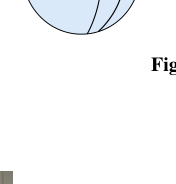 Fig. 1: spherical lune surface area
 Fig. 2: paper sphere crumpled and full
Topic: Conservation of Momentum, Gravitation, Kinetic Theory Metodi: Conservation of Momentum, Newton’s Law of Gravitation, Kinetic Theory of Gases, Order-of-Magnitude Estimation, Dimensional Analysis Competenze: Physical Reasoning, Estimation & Approximation Objects: Satellite, Planet, Sphere, Gas Fonte: Testo (PDF) — p.4
Qu 1. Domande generali
**(a) ** Un istruttore di motoscafo ha una massa di 60 kg. Con l’arco (in avanti) della sua barca che tocca il porto, rimuove il motore esterna dalla poppa (a schiena) e intende portarlo lungo la lunghezza della barca fino alla riva. La sua barca è lunga 5 metri e pesa 180 kg. Il motore esterno ha una massa di 40 kg. Mentre cammina si rende conto di aver dimenticato di fissare la barca a riva. Determina quanto lontano dalla riva sarà quando raggiungerà l’arco della barca nei casi in cui:
-
le forze di frizione tra la barca e l’acqua possono essere ignorate;
-
la forza di attrito tra la barca e l’acqua è proporzionale alla velocità della barca.
La missione BepiColombo a Mercurio lanciata nell’ottobre 2018 è solo il secondo satellite destinato a entrare in orbita attorno a Mercurio, 6 anni dopo il lancio nel 2024. Dato che, al loro punto più vicino, Mercurio e Marte sono approssimativamente a ugual distanza dalla Terra, spiegate perché una missione per mettere un satellite in orbita attorno a Mercurio richiede significativamente più spesa energetica di una missione simile a Marte.
**(c) ** Una sfera di carta è costruita da sottili lunelli sferici di carta incollati insieme, come illustrato nella figura. 1, con una foto della sfera di carta costruita mostrata nella figura. 2(a). Nella parte superiore della sfera si trova un piccolo buco attraverso il quale l’aria può entrare o uscire. La carta è molto sottile, ma rugosa e rigida. Si sostiene come sfera quando si riposa sul tavolo, come in Figura. 2(c).
Quando una sfera arrugginita rimbalza delicatamente da una mano all’altra come in Figura. 2 (b), assume gradualmente una forma sferica, riempendosi di aria. Suggerisci una possibile spiegazione del perché potrebbe riempirsi di più aria piuttosto che crollare ancora di più.
Un laser di classe II di 1 mW, adatto all’uso in classe, è considerato abbastanza sicuro nel caso sfortunato in cui sia risplendito direttamente negli occhi, a causa del riflesso di lampeggiamento. Il diametro di un tale raggio laser è di 6 mm quando raggiunge l’occhio, e possiamo presumere che l’intensità sia uniforme in tutto il raggio. Per un occhio che focalizza il fascio sulla retina, spiegare perché il fascio non focalizza su un punto e stimare il fattore per cui l’intensità del fascio aumenta sulla retina. Chiarificare i valori numerici che si stimano.
**(e) ** Estima il numero di protoni che puoi versare in una tazza di tè vuota prima che si esci. I protoni e la tazza non interagiscono elettrostaticamente, ma i protoni non possono sfuggire attraverso la tazza.
**(f) ** La composizione dell’aria secca in volume è di azoto del 78%, ossigeno del 21% e argone dell’1%, rispettivamente con masse atomiche 14,0, 16,0 e 39,9. La densità dell’aria secca è di 1,23 kg m a 15°C. Calcolare l’energia cinetica totale delle molecole di 1 m di aria in queste condizioni.
Fig. 1: superficie della luna sferica
Fig. 2: sfera di carta arrugginita e piena
Topic: Conservation of Momentum, Gravitation, Kinetic Theory Metodi: Conservation of Momentum, Newton’s Law of Gravitation, Kinetic Theory of Gases, Order-of-Magnitude Estimation, Dimensional Analysis Competenze: Physical Reasoning, Estimation & Approximation Objects: Satellite, Planet, Sphere, Gas Fonte: Testo (PDF) — p.4
Qu 2. Mechanical Toy
A simple balance toy is made as shown in Fig. 3. Two masses, , are mounted at the end of symmetrical arms of length each at an angle to the body of the toy at a height above the pivot point. Initially we shall take the body of the toy to be of zero mass.
(a) Taking the zero of potential energy as the point where the arms connect to the body of the toy, find an expression for the potential energy, , of the system if the toy is tilted clockwise through an angle . A diagram will be helpful.
(b) For the system to be stable, we expect to be zero. Find the angle for which this is true and explain why you reject other solutions.
(c) Further, we require to be positive.
(i) Explain why the second derivative must be positive.
(ii) Using this condition, explain where the masses must be relative to the toy for stability.
(d) For a small sideways displacement of the point of contact, . Use this and the small angle approximation to find the potential and kinetic energy of the toy in terms of and .
(e) Compare your expressions to the equivalent terms for the potential and kinetic energies of a mass on a spring undergoing SHM. Explain why you would expect the toy to undergo SHM for small displacements. Using the expression for the angular frequency of a mass on a spring, , find an equivalent expression for the toy, by analogy.
(e) Repeat the analysis but allow the body of the toy itself to have a mass and a centre-of-mass level with the point where the arms contact it. How will the new oscillation frequency compare with the previous one, assuming the system is still stable?
 Fig. 3: balance toy with arms and masses
Topic: Oscillations & Waves, Newtonian Mechanics, Rigid Body Statics Metodi: Free-Body Diagram, Simple Harmonic Motion Analysis, Small-Angle Approximation, Energy Conservation Method Competenze: Mathematical Modeling, Physical Reasoning Objects: Rod, Spring Fonte: Testo (PDF) — p.6
Qu 2. Gioco meccanico
Un semplice giocattolo di equilibrio è realizzato come mostrato nella figura. 3. Due masse, , sono montate all’estremità di bracci simmetrici di lunghezza , ciascuna ad un angolo al corpo del giocattolo ad un’altezza sopra il punto di pivot. Inizialmente prenderemo il corpo del giocattolo per essere di massa zero.
**(a) ** Prendendo lo zero di energia potenziale come punto in cui le braccia si collegano al corpo del giocattolo, trovare un’espressione per l’energia potenziale, , del sistema se il giocattolo è inclinato in senso orario attraverso un angolo . Un diagramma sarà utile.
**(b) ** Per rendere il sistema stabile, ci aspettiamo che sia zero. Trova l’angolo per il quale questo è vero e spiega perché rifiuti altre soluzioni.
(c) Further, we require to be positive.
- spiegare perché la seconda derivata deve essere positiva.
(ii) Sfruttando questa condizione, spiegare dove le masse devono essere relative al giocattolo per la stabilità.
**(d) ** Per un piccolo spostamento laterale del punto di contatto, . Utilizzare questa e l’approssimazione a angolo piccolo per trovare il potenziale e l’energia cinetica del giocattolo in termini di e .
**(e) ** Confronta le tue espressioni con i termini equivalenti per le energie potenziali e cinetiche di una massa su una sorgente sottoposta a SHM. Spiegate perché vi aspettate che il giocattolo subisca un’intervento di SHM per piccoli spostamenti. Usando l’espressione per la frequenza angolare di una massa su una molla, trovare un’espressione equivalente per il giocattolo, per analogia.
**(e) ** Ripetere l’analisi ma permettere al corpo del giocattolo di avere una massa e un livello di massa centrale con il punto in cui le braccia lo contattano. Come si comparerà la nuova frequenza di oscillazione con quella precedente, se il sistema è ancora stabile?
Fig. 3: giocattolo di equilibrio con braccia e masse
Topic: Oscillations & Waves, Newtonian Mechanics, Rigid Body Statics Metodi: Free-Body Diagram, Simple Harmonic Motion Analysis, Small-Angle Approximation, Energy Conservation Method Competenze: Mathematical Modeling, Physical Reasoning Objects: Rod, Spring Fonte: Testo (PDF) — p.6
Qu 3. Sisyphus’s Coffee
Ben often drinks coffee, but finds that he rarely finishes his cup completely; the coffee is normally too cold by the end for him to drink it all up. This situation puzzles him and, as he is a physicist, he decides to model it. As the coffee cools to a more comfortable temperature, Ben can drink it faster, but when it goes below a critical temperature, , it is too cold and he stops drinking it. He therefore models the rate of drinking as
where is the volume and the temperature at time . is a positive constant parameterising how fast he is drinking.
(a) Explain how Ben’s model accounts for the variation in his rate of drinking and suggest, with reasoning, a value for .
(b) A picture of Ben’s cup is shown below on the left. Identify and discuss the physical factors of the coffee and mug you would expect the rate of heat loss to depend on, and the relative contributions they might make. Express the rate of cooling as a function of these factors, defining any symbols that you use. Hint: assume the simplest reasonable dependence on the variables in question. You may also assume his mug is cylindrical.
(c) Show that Ben’s model produces behaviour which accounts for his observations and estimate the amount of coffee he wastes with each mug he drinks, explaining your reasoning carefully. Hint:
(d) Ben travels to a conference where he notices that, in an effort to get participants to drink their coffee up during the break, rather than taking it with them into the lecture theatre, it is being served in cups like the one on the right in the image above. The cups are made of polystyrene. Ben does not wish to accept a cup of coffee unless he is certain that he can drink it all up before it goes cold, otherwise he will be stuck with liquid in a cup and nowhere to put it. Explain whether or not you would advise him to accept a coffee. As a physicist, Ben will only be convinced by coherent quantitative reasoning.
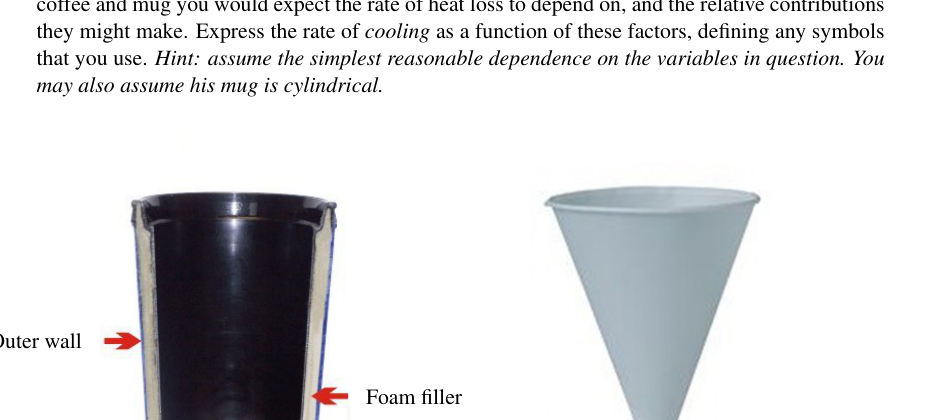 Fig. 4: Ben’s insulated mug and polystyrene cup
Topic: Thermodynamics, Newtonian Mechanics Metodi: Differential Equations, First Law of Thermodynamics, Physical Modeling, Approximation & Series Expansion Competenze: Mathematical Modeling, Physical Reasoning Objects: Container Fonte: Testo (PDF) — p.7
Qu 3. Caffè di Sisifo
Ben beve spesso caffè, ma scopre che raramente finisce completamente la tazza; il caffè è normalmente troppo freddo per lui per bere tutto. Questa situazione lo sconcertò e, essendo un fisico, decise di modellarla. Mentre il caffè si raffredda a una temperatura più comoda, Ben può bere più velocemente, ma quando scende sotto una temperatura critica, , è troppo freddo e smette di bere. Il modello di consumo di alcool è quindi
dove è il volume e la temperatura al tempo . è una costante positiva che determina la velocità con cui beve.
**(a) ** Spiegare come il modello di Ben spiega la variazione del suo tasso di consumo e suggerire, con ragionamento, un valore per .
**(b) ** Sotto a sinistra è mostrata una foto della tazza di Ben. Identifica e discuta i fattori fisici del caffè e della tazza di cui si prevede che dipenderà il tasso di perdita di calore e i relativi contributi che potrebbero apportare. Esprimere il tasso di raffreddamento in funzione di questi fattori, definendo i simboli che si utilizzano. Suggerimento: assumere la più semplice e ragionevole dipendenza dalle variabili in questione. Potresti anche supporre che la sua tazza sia cilindrica.
**(c) ** Mostra che il modello di Ben produce un comportamento che spiega le sue osservazioni e stima la quantità di caffè sprecata con ogni tazza che beve, spiegando con attenzione il tuo ragionamento. Indice:
Ben viaggia ad una conferenza dove si accorge che, nel tentativo di far bere il caffè ai partecipanti durante la pausa, invece di portarlo con sé in aula, viene servito in tazze come quella a destra nell’immagine sopra. Le coppe sono di polistirolo. Ben non vuole accettare una tazza di caffè a meno che non sia sicuro di poterla bere tutta prima che si raffreddi, altrimenti sarà bloccato con liquido in una tazza e non avrà dove metterla. Spiegate se gli consigliereste di accettare un caffè o meno. Come fisico, Ben sarà convinto solo da un ragionamento quantitativo coerente.
Fig. 4: Coppa isolata di Ben e tazza di polistirolo
Topic: Thermodynamics, Newtonian Mechanics Metodi: Differential Equations, First Law of Thermodynamics, Physical Modeling, Approximation & Series Expansion Competenze: Mathematical Modeling, Physical Reasoning Objects: Container Fonte: Testo (PDF) — p.7
Qu 4. Stable Nuclei
A nucleus contains nucleons and protons. Its mass, can be ‘explained’ using the semi-empirical mass formula:
where
and
This model is partly based on theory and partly on experiment, with and taken to vary continuously.
(a)
(i) Find an expression for the binding energy of the nucleus, . The term captures the tendency of nucleons to form pairs in the nucleus so is often referred to as the ‘pairing’ term. Suggest, with reasoning, the physical origins of the other terms in your expression, giving as much detail as you can. It may help to know that the electrostatic energy of a spherical distribution of charge with radius is .
(ii) The term in equation (2) which is accompanied by the constant is often written alternatively as . Suggest why this might be.
(b)
(i) Represent the binding energy graphically as a function of for a given mass number, justifying your reasoning. How many protons does it predict for the most stable nuclei? Show that is a decent approximate value.
(ii) Figure 5, on the next page, shows the contributions of the various terms, with the exception of the pairing term, to the binding energy per nucleon as a function of mass number. Considering nuclei with an odd number of nucleons, predict the mass number of the most stable nuclei showing your method clearly.
(c) By analogy with the electrostatic energy of a spherical distribution of charge, , include a term for the gravitational energy in your expression for the binding energy per nucleon. Continuing to assume that the number of nucleons is odd, use your new expression to estimate the minimum mass for which a neutron star can be stable.
(d) Returning to (b), make a less basic approximation of the value of for which nuclei are stable, and hence a less basic prediction for the mass number of the most stable nuclei.
Hint: Halley’s method is a root-finding algorithm which rapidly converges on the root of an equation . If is an approximation to a root of , then
is a better approximation. Here, refers to the first derivative of with respect to , evaluated at . Likewise is the second derivative of with respect to , evaluated at .
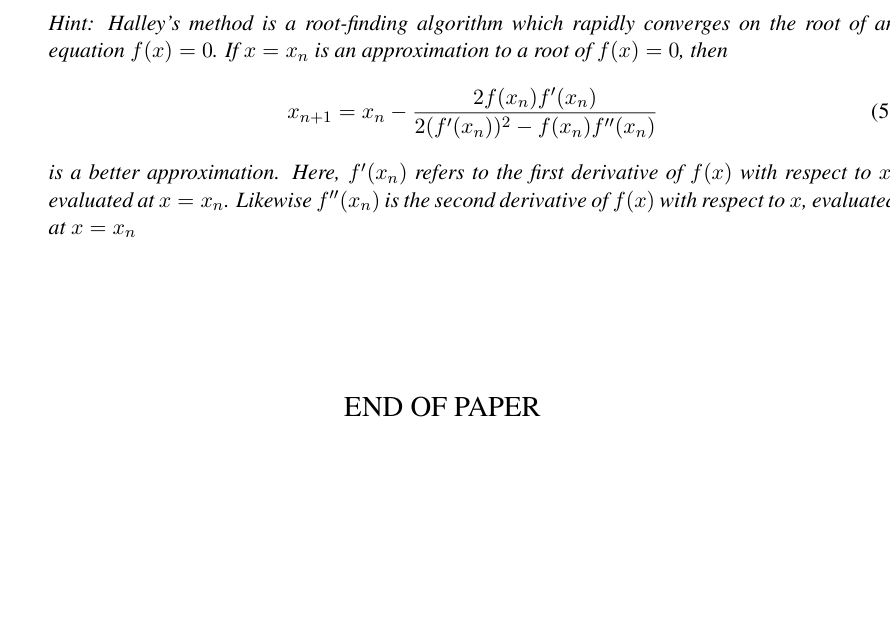 Fig. 5: semi-empirical mass formula binding energy terms
Topic: Nuclear & Particle Physics, Electrostatics, Gravitation Metodi: Coulomb’s Law, Approximation & Series Expansion, Calculus-Integration, Symmetry Argument Competenze: Mathematical Modeling, Physical Reasoning Objects: Nucleus, Star Fonte: Testo (PDF) — p.8
Qu 4. Nucli stabili
Un nucleo contiene nucleoni e protoni. La sua massa, può essere “esposta” usando la formula di massa semiempirica:
dove
e
Questo modello è in parte basato sulla teoria e in parte sull’esperimento, con e che varia continuamente.
(a)
(i) Trovare un’espressione per l’energia di legame del nucleo, . Il termine cattura la tendenza dei nucleoni a formare coppie nel nucleo, quindi viene spesso indicato come il termine “coppiazione”. Suggerisci, con ragionamento, le origini fisiche degli altri termini nella tua espressione, fornendo il più dettaglio possibile. Può essere utile sapere che l’energia elettrostatica di una distribuzione sferica di carica con raggio è .
(ii) Il termine nell’equazione (2) che è accompagnato dalla costante è spesso scritto alternativamente come . Suggerisci perché potrebbe esserlo.
(b)
(i) Rappresentare l’energia di legame in modo grafico come funzione di per un dato numero di massa, giustificando il suo ragionamento. Quanti protoni prevede per i nuclei più stabili? Indicare che è un valore approssimativo decente.
(ii) La figura 5, sulla pagina successiva, mostra i contributi dei vari termini, ad eccezione del termine di coppiazione, all’energia di legame per nucleone in funzione del numero di massa. Considerando i nuclei con un numero impar di nucleoni, prevedi il numero di massa dei nuclei più stabili mostrando chiaramente il tuo metodo.
**(c) ** In analogia con l’energia elettrostatica di una distribuzione sferica di carica, , includere un termine per l’energia gravitazionale nella tua espressione per l’energia di legame per nucleone. Continuando a supporre che il numero dei nucleoni sia strano, usa la tua nuova espressione per stimare la massa minima per la quale una stella di neutroni può essere stabile.
**(d) ** Tornando a (b), si fa un approssimazione meno basilare del valore di per il quale i nuclei sono stabili, e quindi una previsione meno basilare per il numero di massa dei nuclei più stabili.
Suggerimento: il metodo di Halley è un algoritmo di ricerca delle radici che converge rapidamente sulla radice di un’equazione . Se rappresenta un’approssimazione di una radice di ,
- E’ un’approssimazione migliore. Qui, si riferisce alla prima derivata di rispetto a , valutata a . Allo stesso modo è la seconda derivata di rispetto a , valutata a .
Fig. 5: formula di massa semiempirica di termini di energia di legame
Topic: Nuclear & Particle Physics, Electrostatics, Gravitation Metodi: Coulomb’s Law, Approximation & Series Expansion, Calculus-Integration, Symmetry Argument Competenze: Mathematical Modeling, Physical Reasoning Objects: Nucleus, Star Fonte: Testo (PDF) — p.8