Question 2 — This question is about Centre of Mass and Centre of Gravity.
Centre of mass has many applications in systems, and can enable otherwise complex calculations to be simplified, often in collisions and rotational dynamics.
a) Two weights with masses and are attached to the ends of a light rod at distances and respectively, measured from a point that is along the line of the rod but beyond the end. A normal force, , applied to some point on the rod will hold it in equilibrium.
(i) What is meant by the word equilibrium?
(ii) By taking moments about the origin point of and , show that a single force, , applied normal to the rod will hold it in equilibrium, if it acts at the point given by
(iii) If an excess force is applied to the centre of mass of the rod, what is the ratio of the kinetic energy gained of to that of ? (3)
b) (i) A 75 cm long uniform plank of mass 0.24 kg hangs over the edge of a table as in Fig. 1 and supports a 0.35 kg mug of tea with a diameter of 8.0 cm which sits on the end of the plank with one side on the edge. A pile of textbooks, each of mass 0.48 kg is used to weigh the plank down on the table, with 15 cm of plank resting under the books that are also 15 cm wide. How many books are required to support the system? (2)
(ii) Two uniform, similar rods of the same material AB of lengths and BC of length respectively, are joined rigidly at B. They are suspended from A on a string and the rods hang at angles and to the vertical. Obtain an expression for in terms of and . (3)
(iii) A wooden stick of length and density has a rectangular cross section of side . It floats in a liquid of density . If it floats vertically, obtain an expression for the vertical difference in heights of the centres of mass of the liquid displaced and the stick, in terms of , and . (1)
(iv) A light rod of length cm has masses of 0.40 kg and 0.90 kg attached to the ends of the rod. It is thrown vertically upwards with a flick of the wrist, from a height above the ground, rotating at eight times each second, and returning to height . It is given 110 J of energy initially. How many rotations does it make before it lands? (3)
c) A small ball of mass travelling at speed collides linearly and inelastically with a ball of mass moving at speed . A set of equal time interval photographs are taken of the collision, and are set out in Fig. 2.
(i) Sketch this and add to it the position of the centre of mass of the particles.
(ii) From measurements of the tracks on this paper, estimate the fraction of the KE lost in the collision. (2)
d) (i) A thin uniform string of mass and length hangs over a light, smooth pulley of negligible radius. When displaced from equilibrium, it slides off and leaves the pulley at speed . Obtain an expression for in terms of and . (4)
(ii) In a pendulum clock, the length of the pendulum must be kept constant, independent of temperature changes, if the clock is to run at the correct rate. In the diagram of Fig. 3, a triangular support for the pendulum mass is made of an isosceles triangle of rods, the horizontal rod of length with coefficient of thermal expansion in and two sloping rods of length of a different metal with coefficient of thermal expansion . The pendulum mass is attached at its centre and the pendulum is supported so that it can swing in and out of the page. If the pendulum is temperature compensated for small temperature changes , what is the required ratio of the lengths in terms of and ? (3)
(iii) A light rod of length has two similar masses attached to the left and right ends. It is suspended horizontally by a string in a non-uniform vertical gravitational field which increases linearly in strength from at the left end to at the right end.
i. When the rod is balanced, as a fraction of , what is the difference between the centre of mass of the system and the point of suspension (the centre of gravity)?
ii. If the string is now attached to the centre of the rod, a third mass must also be attached to the rod in order to balance it. In terms of , how far from the left end of the rod must this mass be attached? (4)
[25 marks]
 Fig. 1: plank, books, mug of tea
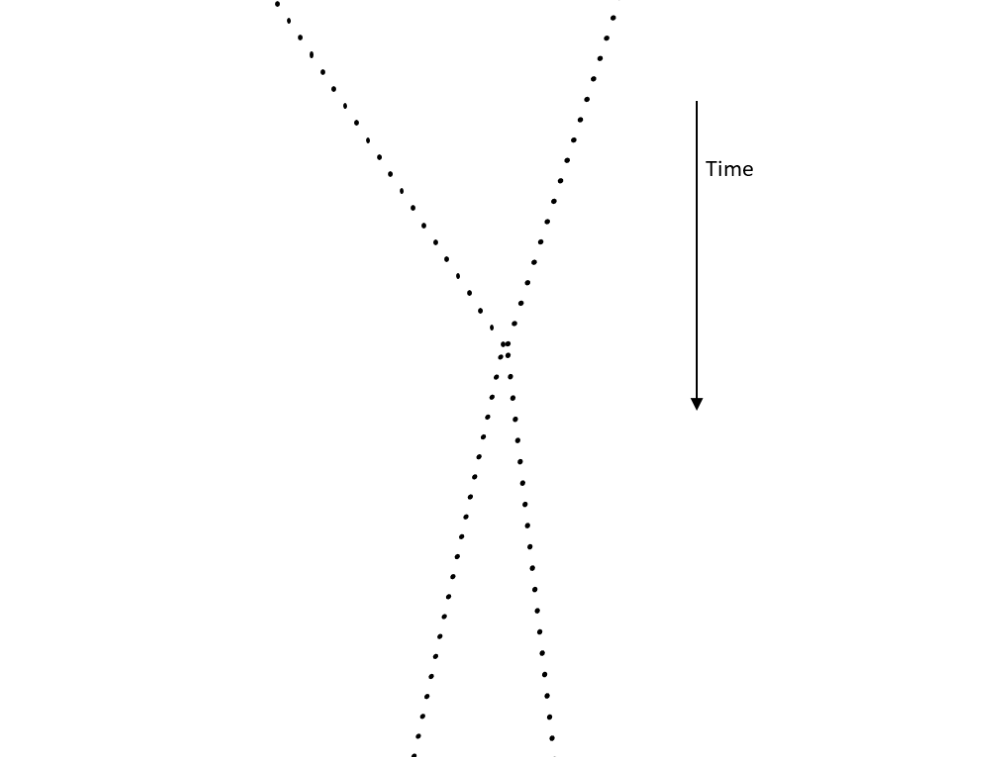 Fig. 2: collision dot tracks with time axis
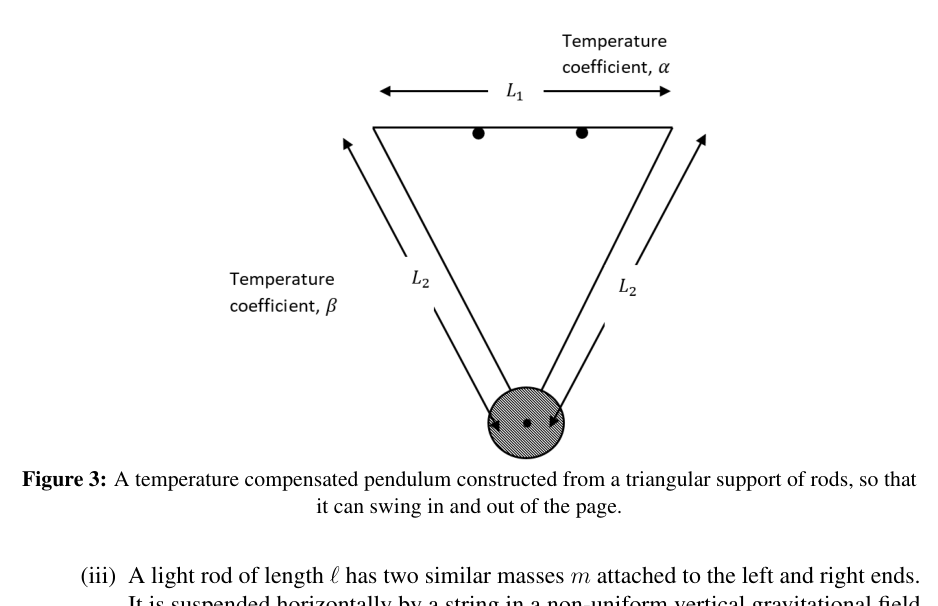 Fig. 3: temperature-compensated triangular pendulum
Topic: Rigid Body Statics, Rotational Dynamics, Oscillations & Waves Metodi: Torque & Angular Momentum Analysis, Free-Body Diagram, Energy Conservation Method, Conservation of Momentum, Simple Harmonic Motion Analysis Competenze: Physical Reasoning, Mathematical Modeling Objects: Rod, Pulley, String, Pendulum, Ball Fonte: Testo (PDF) — p.3
Questa domanda 2 Questa domanda riguarda il centro di massa e il centro di gravità.
Il centro di massa ha molte applicazioni nei sistemi e può consentire di semplificare calcoli altrimenti complessi, spesso in collisioni e dinamiche di rotazione.
a) Due pesi con masse e sono fissate alle estremità di una canna leggera rispettivamente a distanze e , misurate da un punto che si trova lungo la linea della canna ma oltre la fine. Una forza normale, , applicata a un punto della canna la manterrà in equilibrio.
(i) What is meant by the word equilibrium?
(ii) By taking moments about the origin point of and , show that a single force, , applied normal to the rod will hold it in equilibrium, if it acts at the point given by
(iii) Se viene applicata una forza in eccesso al centro di massa della canna, qual è il rapporto tra l’energia cinetica ottenuta da e quella di ? (3)
b)
- una tavola uniforme di 75 cm di lunghezza di massa 0,24 kg appesa sul bordo di un tavolo come in Figura. 1 e supporta una tazza di tè di 0,35 kg di diametro di 8,0 cm che si trova all’estremità della tavola con un lato sul bordo. Per pesare la tavola sul tavolo viene utilizzato un mucchio di libri di testo, ognuno di massa 0,48 kg, con 15 cm di tavola che si riposano sotto i libri che hanno anch’essi 15 cm di larghezza. Quanti libri sono necessari per sostenere il sistema? (2)
ii) Due barre uniformi e simili dello stesso materiale AB di lunghezza e BC di lunghezza , rispettivamente, sono rigidamente unite a B. Sono sospesi da A su una corda e le barre appendono ad angoli e verso la verticale. Ottenere un’espressione per in termini di e . (3)
(iii) Un bastone di legno di lunghezza e densità ha una sezione laterale rettagonale di lato . Flotta in un liquido di densità . Se galleggia verticalmente, si ottiene un’espressione per la differenza verticale di altezza dei centri di massa del liquido spostato e del bastone, in termini di , e . (1)
(iv) Una canna leggera di lunghezza cm ha una massa di 0,40 kg e 0,90 kg attaccata alle estremità della canna. È lanciato verticalmente verso l’alto con un colpo del polso, da un’altezza sopra il suolo, ruotando otto volte al secondo, e tornando ad un’altezza . Inizialmente viene dato 110 J di energia. Quante rotazioni fa prima di atterrare? (3)
c) Una piccola palla di massa che si muove a velocità collide in modo lineare e inelastico con una palla di massa in movimento a velocità . Una serie di fotografie con intervalli di tempo uguali sono state scattate della collisione e sono illustrate nella figura. 2.
-
Sniciare e aggiungere la posizione del centro di massa delle particelle.
-
Sulla base delle misure delle tracce riportate in questa carta, calcolare la frazione di KE perduta nella collisione. (2)
d) (i) Una sottile corda uniforme di massa e lunghezza si appende su una polla leggera e liscia di raggio trascurabile. Quando viene spostato dall’equilibrio, si scivola e lascia la polla a velocità . Ottenere un’espressione per in termini di e . (4)
- per un orologio a pendolo, la lunghezza del pendolo deve essere mantenuta costante, indipendentemente dai cambiamenti di temperatura, se il orologio deve funzionare a velocità corretta. Nel diagramma di Fig. 3, un supporto triangolare per la massa del pendolo è costituito da un triangolo di bastone a pari stellare, la canna orizzontale di lunghezza con coefficiente di espansione termica in e due bastone inclinate di lunghezza di un metallo diverso con coefficiente di espansione termica . La massa del pendolo è fissata al suo centro e il pendolo è sostenuto in modo che possa oscillare dentro e fuori dalla pagina. Se il pendolo è compensato a temperatura per piccole variazioni di temperatura , qual è il rapporto richiesto tra le lunghezze in termini di e ? (3)
(iii) Una canna leggera di lunghezza ha due masse simili attaccate alle estremità sinistra e destra. È sospesa orizzontalmente da una corda in un campo gravitazionale verticale non uniforme che aumenta linearmente di forza da all’estremità sinistra a all’estremità destra.
i. Quando la canna è equilibrata, come frazione di , qual è la differenza tra il centro di massa del sistema e il punto di sospensione (il centro di gravità)?
ii. Se la corda è ora attaccata al centro della canna, deve essere attaccata anche una terza massa alla canna per bilanciarla. In termini di , a che distanza dall’estremità sinistra della canna deve essere fissata questa massa? (4)
[25 punti]
Fig. 1: tavola, libri, tazza di tè
Fig. 2: piste di punto di collisione con asse temporale
Fig. 3: pendolo triangolare compensato a temperatura
Topic: Rigid Body Statics, Rotational Dynamics, Oscillations & Waves Metodi: Torque & Angular Momentum Analysis, Free-Body Diagram, Energy Conservation Method, Conservation of Momentum, Simple Harmonic Motion Analysis Competenze: Physical Reasoning, Mathematical Modeling Objects: Rod, Pulley, String, Pendulum, Ball Fonte: Testo (PDF) — p.3
Question 3 — This question is about investigating materials with X rays and electrons.
An accelerated charge radiates electromagnetic radiation. A synchrotron electron storage ring uses this idea to produce a continuous spectrum of electromagnetic radiation as the electrons are accelerated in a circular trajectory.
a) Particular wavelengths of light can be selected using a monochromator, some of which make use of diffraction and interference from crystals. The diagram shows two rays from the continuous spectrum striking two adjacent crystal planes separated by a distance . The crystal planes act as partially reflecting mirrors. For certain angles , measured to the reflecting plane, the emerging rays are monochromatic.
(i) What is the path difference between the two rays shown, in terms of ?
(ii) Determine the wavelength in terms of and .
(iii) If nm, calculate the first order wavelength of light strongly scattered at an angle of , and
(iv) the direction and magnitude of the change in momentum of the photons of this wavelength. You may use a diagram. (5)
b) In practice two crystals are used such that the light enters and leaves the monochromator in the same direction. The height, , between the incoming and outgoing beams is fixed. Using a suitable approximation to first order, obtain a formula for in terms of the wavelength , the crystal lattice spacing , and the height . (3)
c) Monochromatic light of part (b) is incident on a sample of copper so that electrons are emitted via the photoelectric effect. The energy of the emitted electrons are investigated using a hemispherical electron energy analyser, shown in Fig. 6.
, referred to as the pass energy, is the energy of the electron travelling from the analyser entrance to the exit slit of the electron detector along the equipotential path defined by , in which and are the inner and outer hemisphere radii, respectively.
These charged spheres produce a radial electric field between them. Only electrons of the particular energy describe a perfectly semi circular path and are detected. The inner sphere is at a potential and the outer one is at a potential so as to make the electric field radial.
(i) Draw a sketch of the electric field lines between the hemispheres.
(ii) Write down the potential of the inner hemisphere in terms of the charge on the hemisphere and its radius .
(iii) In the simplest form possible, determine an expression for the pass energy, in terms of the radii of the hemispheres and , the difference in the potentials (i.e. ), and the electronic charge .
(iv) If the mean radius of the hemispheres is 50 mm with a separation of 10 mm, what potential difference between the plates gives a pass energy of 5.0 eV? (7)
d) In a solid such as copper, the electrons exist in very closely spaced energy levels, which can be investigated. A 5.0 eV free electron is produced, for example, when an electron is in an energy level 4.0 eV below the top level in the solid and is released without collision in photoelectric emission. The workfunction of copper is 4.6 eV.
(i) What was the photon energy used?
(ii) What wavelength is this and which part of the electromagnetic spectrum does it correspond to? (3)
(iii) When an electron travels from the solid into the vacuum, it changes speed, similar to the behaviour of light crossing a boundary. Whilst inside the material the electron was travelling in the direction shown in Fig. 7, at to the surface normal.
i. Calculate a value for the (relative) refractive index , corresponding to the electron going from the vacuum into the copper.
ii. For the electron leaving the copper at , at what angle does it emerge into the vacuum? (2)
e) Light of wavelength nm passes through an evacuated tube of length cm with thin glass ends. The beam interferes with a second coherent beam of light on a screen, causing destructive interference, as shown in Fig. 8. Air has a refractive index given by where Pa. What minimum pressure of air in the tube would cause the interference pattern to become constructive interference at the screen? (2)
f) The refractive index of a material for electrons depends upon the wavelength of the electron. So if we instead consider X rays reflecting off adjacent layers of a crystal, we can take into account the effect of refraction within the material. An example is illustrated in Fig. 9 in which adjacent layers of atoms are laid down on a substrate. X rays are incident at angle and refracted in the second layer at angle . If there are multiple layers and reflections, then these will dominate the intensity of the reflection at the first surface from the vacuum. So we can look at the path difference between the emerging rays G and H. In this very simplified model, the layers have been given the same thickness .
(i) Determine the path length BCD.
(ii) What is the optical path difference between rays G and H? (3)
[25 marks]
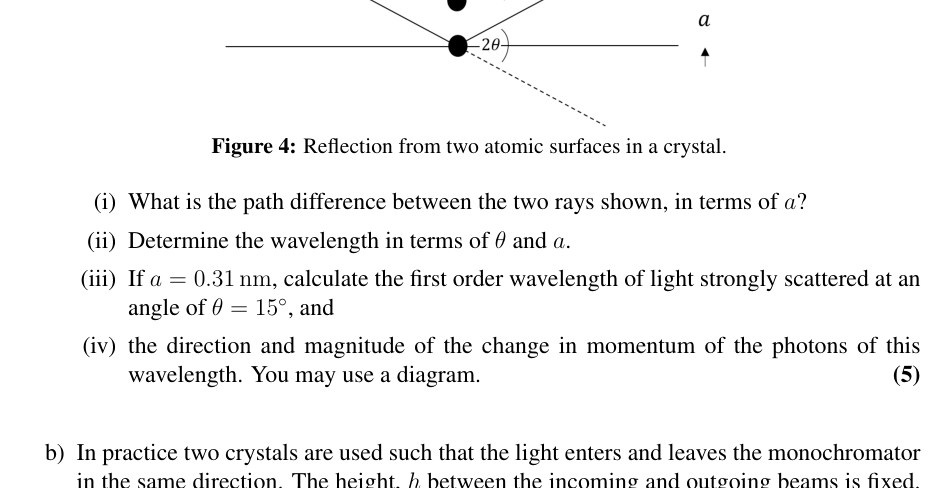 Fig. 4: Bragg reflection from crystal planes
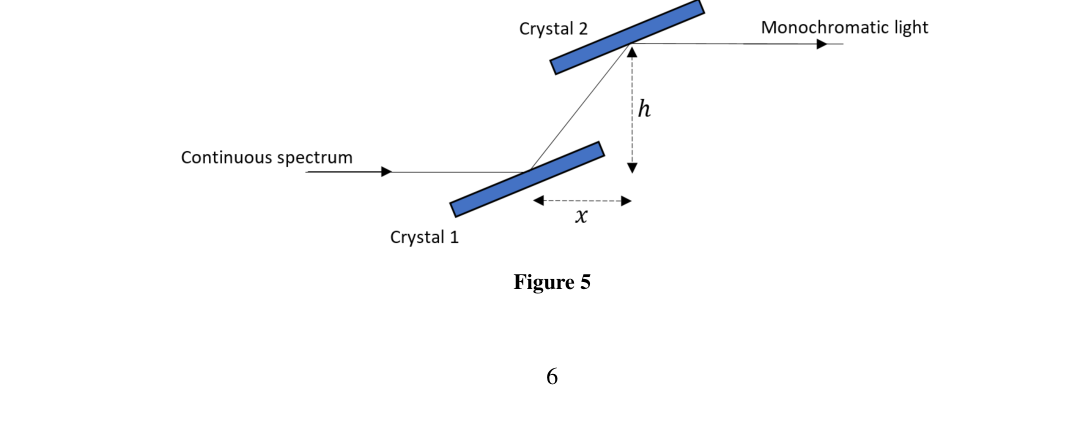 Fig. 5: dual-crystal monochromator setup
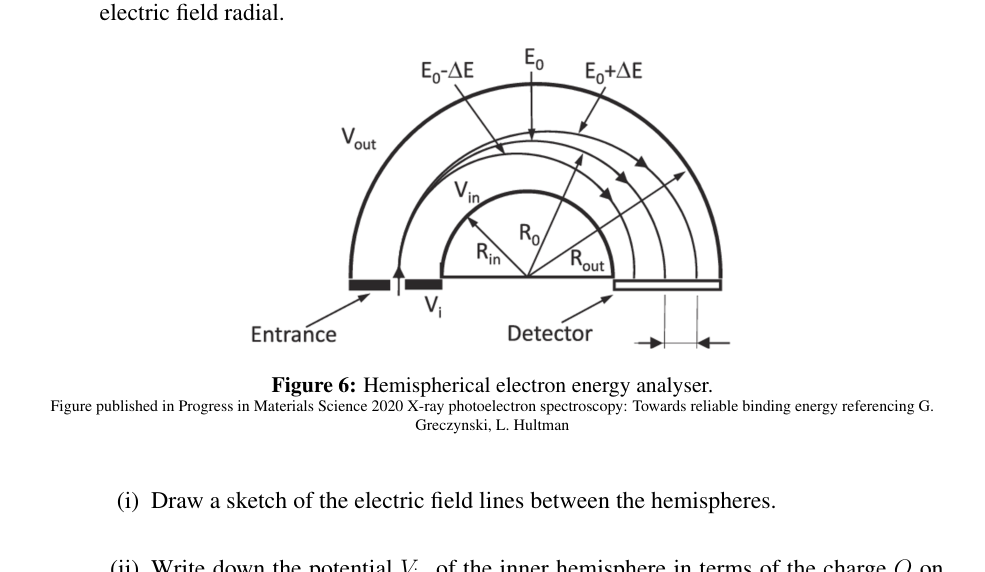 Fig. 6: hemispherical electron energy analyser
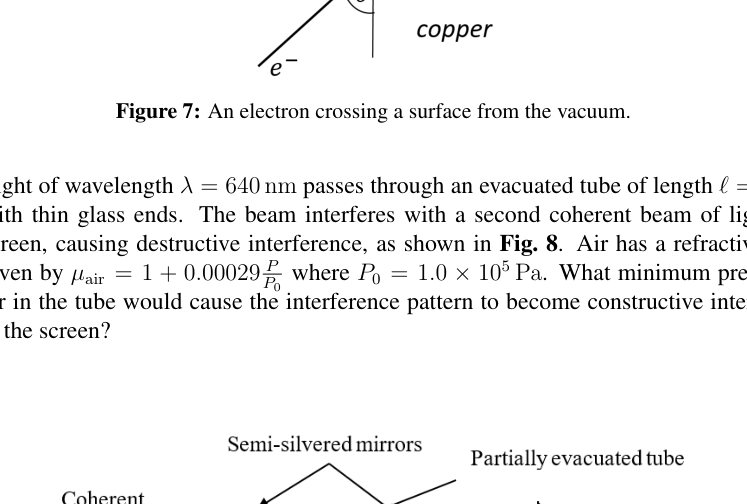 Fig. 7: electron crossing vacuum-copper surface
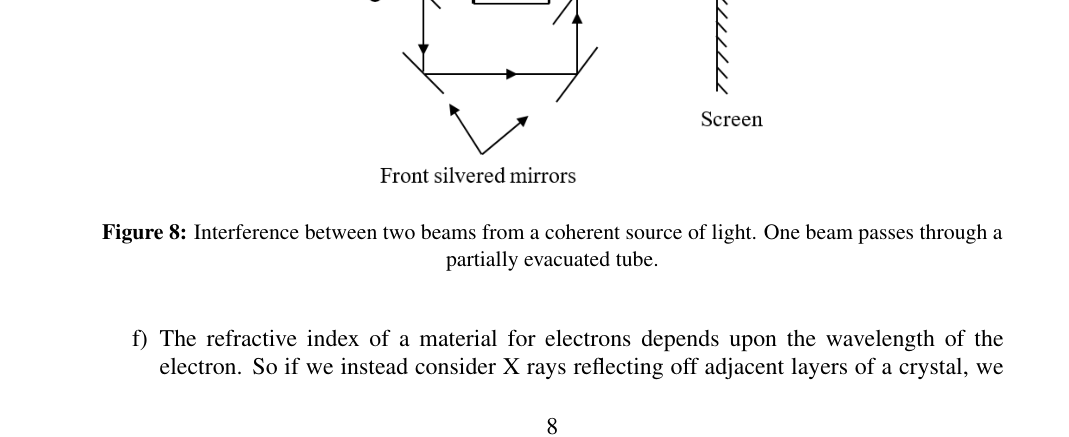 Fig. 8: two-beam interference with evacuated tube
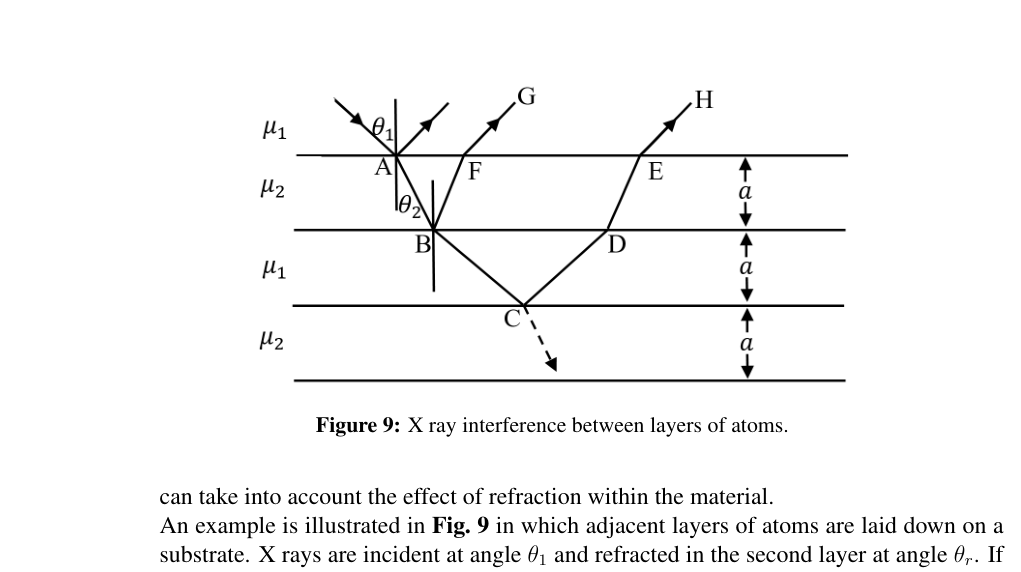 Fig. 9: X-ray interference between crystal layers
Topic: Wave Optics, Modern-Quantum Physics, Electrostatics Metodi: Interference & Diffraction Analysis, Snell’s Law, Electric Potential Method, Photon Energy Relation, Coulomb’s Law Competenze: Physical Reasoning, Mathematical Modeling Objects: Electron, Photon, Conducting Sphere, Diffraction Grating, Screen Fonte: Testo (PDF) — p.6
Questa domanda 3 Questa domanda riguarda l’indagine di materiali con raggi X ed elettroni.
Una carica accelerata irradia radiazioni elettromagnetiche. Un anello di stoccaggio di elettroni di sincrotrone utilizza questa idea per produrre uno spettro continuo di radiazioni elettromagnetiche mentre gli elettroni vengono accelerati in una traiettoria circolare.
a) Le lunghezze d’onda particolari della luce possono essere selezionate con un monocromatore, alcuni dei quali utilizzano la diffrazione e l’interferenza dei cristalli. Il diagramma mostra due raggi dello spettro continuo che colpiscono due piani cristallini adiacenti separati da una distanza . I piani cristallini agiscono come specchi parzialmente riflessivi. Per alcuni angoli , misurati sul piano riflettente, i raggi emergenti sono monocromatici.
(i) Qual è la differenza di percorso tra i due raggi mostrati, in termini di ?
ii) Determinare la lunghezza d’onda in termini di e .
(iii) Se nm, calcolare la lunghezza d’onda di primo ordine della luce fortemente dispersa ad un angolo di , e
- la direzione e la magnitudine del cambiamento di impulso dei fotoni di questa lunghezza d’onda. Potresti usare un diagramma. (5)
b) In pratica si utilizzano due cristalli in modo tale che la luce entri e esce dal monocromatore nella stessa direzione. L’altezza, , tra i fasci di ingresso e di uscita è fissa. Usando un approssimazione adatta al primo ordine, si ottiene una formula per in termini di lunghezza d’onda , spaziamento della rete cristallina e altezza . (3)
c) La luce monocromatica di cui alla parte b) incide su un campione di rame in modo che gli elettroni siano emessi tramite l’effetto fotoelettrico. L’energia degli elettroni emessi viene studiata utilizzando un analizzatore di energia elettronica emisferica, mostrato nella figura. 6.
, denominata pass energy, è l’energia dell’elettrone che viaggia dall’ingresso dell’analista alla fessura di uscita del rilevatore di elettroni lungo il percorso equipotenziale definito da , in cui e sono rispettivamente i raggi dell’emisfero interno ed esterno.
Queste sfere cariche producono un campo elettrico radial tra di loro. Solo elettroni della particolare energia descrivono un percorso perfettamente semicircolare e vengono rilevati. La sfera interna è a un potenziale e quella esterna è a un potenziale in modo da rendere il campo elettrico radiale.
(i) Disegnare uno schema delle linee di campo elettrico tra gli emisferi.
ii) Indicare il potenziale dell’emisfero interno in termini di carica sull’emisfero e del suo raggio .
(iii) Nella forma più semplice possibile, determinare un’espressione per l’energia di passaggio, in termini di raggi degli emisferi e , la differenza dei potenziali (cioè ), e la carica elettronica .
Se il raggio medio degli emisferi è di 50 mm con una separazione di 10 mm, quale differenza potenziale tra le placche dà un’energia di passaggio di 5,0 eV? (7)
d) In un solido come il rame, gli elettroni esistono in livelli di energia molto vicini, che possono essere studiati. Un elettrone libero di 5.0 eV viene prodotto, ad esempio, quando un elettrone si trova in un livello di energia di 4.0 eV al di sotto del livello superiore nel solido e viene rilasciato senza collisione in emissione fotoelettrica. La funzione di lavoro del rame è di 4,6 eV.
(i) Qual è stata l’energia fotonica utilizzata?
(ii) Che lunghezza d’onda è questa e a quale parte dello spettro elettromagnetico corrisponde? (3)
(iii) Quando un elettrone viaggia dal solido nel vuoto, cambia velocità, simile al comportamento della luce che attraversa un confine. Mentre all’interno del materiale l’elettrone stava viaggiando nella direzione mostrata nella figura. 7, a sulla superficie normale.
i. Calcolare un valore per l’indice di rifrazione (relativo) , corrispondente all’elettrone che va dal vuoto nel rame.
ii. Per l’elettrone che lascia il rame a , a quale angolo emerge nel vuoto? (2)
e) La luce di lunghezza d’onda nm passa attraverso un tubo evacuato di lunghezza cm con estremità di vetro sottili. Il fascio interferisce con un secondo fascio di luce coerente su uno schermo, causando interferenze distruttive, come mostrato nella figura. 8. L’aria ha un indice di rifrazione indicato da dove Pa. Quale pressione minima dell’aria nel tubo avrebbe causato che il modello di interferenza diventi un’interferenza costruttiva sullo schermo? (2)
f) L’indice di rifrazione di un materiale per gli elettroni dipende dalla lunghezza d’onda dell’elettrone. Quindi se invece consideriamo i raggi X che riflettono gli strati adiacenti di un cristallo, possiamo prendere in considerazione l’effetto della rifrazione all’interno del materiale. Un esempio è illustrato in Figura 1. 9 in cui strati adiacenti di atomi sono disposti su un substrato. I raggi X sono incidenti all’angolo e rifrazionati nel secondo strato all’angolo . Se ci sono più strati e riflessi, questi domineranno l’intensità del riflesso alla prima superficie dal vuoto. Quindi possiamo guardare la differenza di percorso tra i raggi emergenti G e H. In questo modello molto semplificato, i strati hanno ottenuto lo stesso spessore .
(i) Determinare la lunghezza del percorso BCD.
(ii) Qual è la differenza tra i raggi G e H? (3)
[25 punti]
Fig. 4: riflessione di Bragg da pianeti di cristallo
Fig. 5: impostazione del monocromatore a doppio cristallo
Fig. 6: analizzatore di energia elettronica emisferica
Fig. 7: superfici di rame a vuoto che attraversano elettroni
Fig. 8: interferenza a due raggi con il tubo evacuato
Fig. 9: interferenza a raggi X tra gli strati di cristallo
Topic: Wave Optics, Modern-Quantum Physics, Electrostatics Metodi: Interference & Diffraction Analysis, Snell’s Law, Electric Potential Method, Photon Energy Relation, Coulomb’s Law Competenze: Physical Reasoning, Mathematical Modeling Objects: Electron, Photon, Conducting Sphere, Diffraction Grating, Screen Fonte: Testo (PDF) — p.6
Question 4 — This question is about the physics of the DART mission to deflect an asteroid.
The Double Asteroid Redirection Test (DART) was a mission by NASA to measure the effectiveness of the deflection of an asteroid through a high-speed impact. Such a strategy would be a cheap way of achieving planetary defence against such asteroids should one of comparable size threaten the Earth. The DART probe successfully impacted into Dimorphos, an asteroid moon of the asteroid Didymos, on 26th September 2022 (see Fig. 10). The target was chosen as it would only affect the orbit of the moon and so there was no danger of it being pushed into an Earth-crossing orbit, and Dimorphos is comparable to the 140 m minimum size to be considered a potentially hazardous asteroid, so is like the real threats we might face.
a) DART was fitted with the most up-to-date ion drive available (NEXT-C) to ensure it could accelerate up to the required impact velocity with only a fraction of the mass of fuel that would be needed for conventional rockets. It does this by applying a very small thrust for a very long time. The fuel used was singly ionised xenon-131 ions. The accelerating potential was 1800 V.
(i) What was the ejection speed of the xenon? Assume the xenon ions started from rest.
(ii) The current of ions was 3.52 A. What is the thrust generated?
(iii) The probe hit Dimorphos 306 days after launch. If the ion drive had been run continuously for that time (and there was enough xenon to do so), what would have been the speed at impact? Assume linear acceleration of the probe in deep space starting from rest, and take the average mass of the probe to be 600 kg during the acceleration phase. (6)
Dimorphos was discovered through dips in the brightness of Didymos as it passes in front and behind the asteroid (known as transits).
b) Radar observations of Didymos measured its diameter to be 780 m (assuming a spherical shape) and the centre-to-centre distance to Dimorphos to be 1.20 km (assuming a circular orbit). The relative depth of the dips in brightness meant that the diameter of Dimorphos was derived to be 164 m (again assuming a spherical shape), and the period of the orbital motion was 11 h 55 min.
(i) By considering the forces acting on each of the objects in their circular orbits, calculate the total mass of the binary system.
(ii) Assuming both asteroid and moon have the same density, calculate the mass of Didymos and Dimorphos. (3)
c) The DART probe had a mass of 570 kg at impact and was travelling at a speed of km s (relative to the rest frame of Dimorphos).
(i) By conserving momentum and assuming a head-on inelastic collision, determine the change in Dimorphos’ orbital speed, . Give your answer in mm s.
(ii) The impact will have made the orbit elliptical, although by considering the total energy of the orbit you can calculate the radius of an equivalent circular one.
i. Obtain an expression for the total energy of a satellite, , in orbit about a central mass, , in terms of , , and the radius of orbit . Using this approach, calculate
ii. the expected decrease in orbital radius, , and hence
iii. the expected decrease in orbital period, , giving your answer in minutes. (10)
d) Less than a month after the impact, it was announced that the observed orbital period shortening was 32 minutes. This is larger than the one in part (c) due to the momentum transfer enhancement factor, , which quantifies how much the ejecta from the surface and deformation of Dimorphos has amplified the effect. To calculate accurately is quite complicated and will need months of observations, but a very rough estimate can be made using the approximation . Treating the value in part (c) as the case, find the observed value of and hence a ballpark estimate for the value of . (6)
[25 marks]
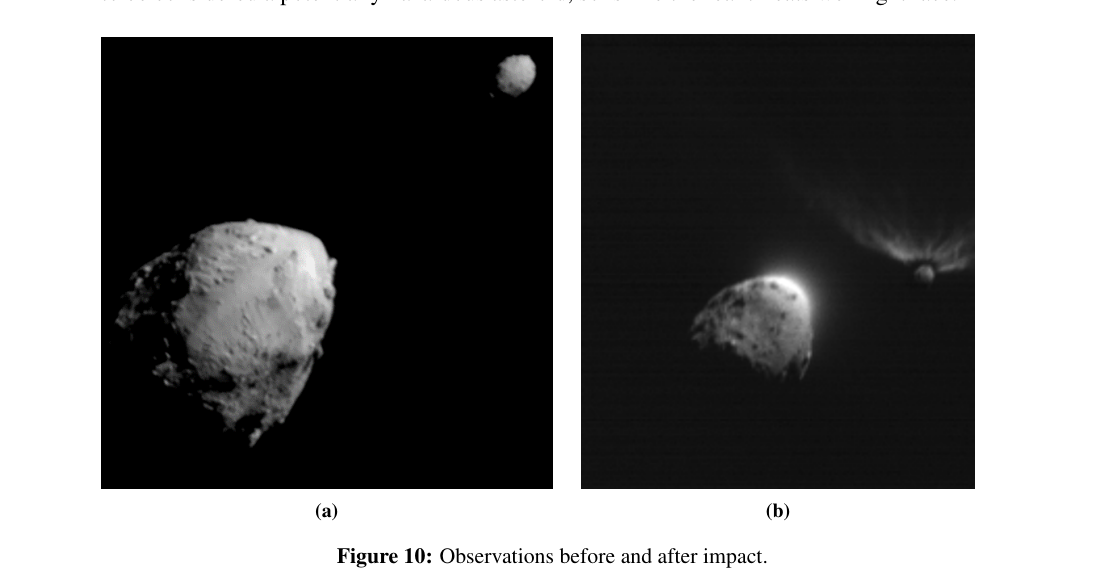 Fig. 10: DART asteroid Didymos and Dimorphos images
Topic: Gravitation, Newtonian Mechanics, Conservation of Momentum Metodi: Newton’s Law of Gravitation, Kepler’s Laws, Conservation of Momentum, Energy Conservation Method, Kinematic Equations Competenze: Physical Reasoning, Mathematical Modeling Objects: Satellite, Planet Fonte: Testo (PDF) — p.10
Questa domanda riguarda la fisica della missione DART per deviare un asteroide.
Il Double Asteroid Redirection Test (DART) è stata una missione della NASA per misurare l’efficacia della deflessione di un asteroide attraverso un impatto ad alta velocità. Una strategia simile sarebbe un modo economico per ottenere una difesa planetaria contro tali asteroidi se uno di dimensioni paragonabili minacciasse la Terra. La sonda DART ha colpito con successo Dimorphos, una luna asteroide dell’asteroide Didymos, il 26 settembre 2022 (vedi Figura. 10). L’obiettivo è stato scelto perché avrebbe influenzato solo l’orbita della luna e quindi non c’era alcun pericolo di essere spinto in un’orbita che attraversa la Terra, e Dimorphos è paragonabile alla dimensione minima di 140 m da considerare un asteroide potenzialmente pericoloso, quindi è come le minacce reali che potremmo affrontare.
a) DART è dotato del motore ionico più aggiornato disponibile (NEXT-C) per garantire che possa accelerare fino alla velocità di impatto richiesta con solo una frazione della massa di combustibile necessaria per i razzi convenzionali. Questo lo fa applicando una spinta molto piccola per molto tempo. Il combustibile utilizzato era singolo ioni di xenone-131. Il potenziale di accelerazione era di 1800 V.
(i) Qual era la velocità di ejezione del xenone? Supponiamo che gli ioni di xenone siano partiti dal riposo.
(ii) La corrente di ioni è stata di 3,52 A. Qual è la spinta generata?
La sonda ha colpito Dimorphos 306 giorni dopo il lancio. Se il motore ionale fosse stato eseguito continuamente per quel tempo (e ci fosse abbastanza xenone per farlo), quale sarebbe stata la velocità all’impatto? Supponiamo l’accelerazione lineare della sonda nello spazio profondo a partire dal riposo e prendiamo che la massa media della sonda sia di 600 kg durante la fase di accelerazione. (6)
Dimorphos è stato scoperto attraverso immersioni nella luminosità di Didymos mentre passa davanti e dietro l’asteroide (noto come transiti).
b) Le osservazioni radar di Didymos hanno misurato il suo diametro a 780 m (presumendo una forma sferica) e la distanza dal centro al centro di Dimorphos a 1,20 km (presumendo un’orbita circolare). La profondità relativa dei dip in luminosità ha significato che il diametro di Dimorphos è stato derivato a 164 m (riassumendo una forma sferica), e il periodo del movimento orbitale è stato di 11 h 55 min.
(i) Calcolare la massa totale del sistema binario considerando le forze che agiscono su ciascuno degli oggetti nelle loro orbite circolari.
(ii) Supponendo che sia l’asteroide che la luna abbiano la stessa densità, calcolare la massa di Didimo e Dimorfo. (3)
c) La sonda DART aveva una massa di 570 kg all’impatto e viaggiava a una velocità di km s (rispetto al quadro di riposo di Dimorphos).
(i) Con la conservazione dell’impulso e assumendo una collisione inelastica frontale, determinare la variazione della velocità orbitale di Dimorphos, . Rispondi in mm s.
(ii) L’impatto avrà reso l’orbita ellittica, sebbene considerando l’energia totale dell’orbita si possa calcolare il raggio di una circolare equivalente.
i. Ottenere un’espressione per l’energia totale di un satellite, , in orbita intorno a una massa centrale, , in termini di , , e del raggio di orbita . Con questo approccio, calcolare
ii. la diminuzione prevista del raggio orbitale, , e quindi
iii. la diminuzione prevista del periodo orbitale, , dando la risposta in minuti. (10)
d) Meno di un mese dopo l’impatto, è stato annunciato che il periodo orbitale osservato è stato ridotto a 32 minuti. Questo è maggiore di quello riportato nella parte c) a causa del fattore di potenziamento del trasferimento di impulso, , che quantifica quanto l’ejecta dalla superficie e la deformazione di Dimorphos abbia amplificato l’effetto. Calcolare con precisione è piuttosto complicato e richiederà mesi di osservazioni, ma si può fare una stima molto approssimativa utilizzando l’approssimazione . Trattando il valore della parte c) come il caso , si trova il valore osservato di e quindi una stima del valore di . (6)
[25 punti]
Fig. 10: DART asteroide Didymos e Dimorphos immagini
Topic: Gravitation, Newtonian Mechanics, Conservation of Momentum Metodi: Newton’s Law of Gravitation, Kepler’s Laws, Conservation of Momentum, Energy Conservation Method, Kinematic Equations Competenze: Physical Reasoning, Mathematical Modeling Objects: Satellite, Planet Fonte: Testo (PDF) — p.10
Question 5 — This question is about the physics involved in star formation.
The James Webb Space Telescope (JWST) has only been publicly releasing images since July 2022 and has already shown it is a more than worthy successor to the Hubble Space Telescope (HST). In Fig. 11 is a recent side by side comparison of the ‘Pillars of Creation’ in the Eagle Nebula — a famous area undergoing considerable star formation.
Some of the new stars being born will be large and hot, so will have strong stellar winds and considerable ionising radiation that will carve out holes around them, meaning that over time the dust columns as we see them will disappear. The ionised bubble is known as a Strömgren Sphere and is created by ionising photons (those with energies greater than 13.6 eV) ionising any hydrogen atoms in the vicinity. At the edge there is a balance between new ionisations and electrons recombining with hydrogen nuclei. The formula for the radius of the sphere is:
where is the number of ionising photons per second, quantifies the probability that a proton and electron recombine into a hydrogen atom, and is the number density of hydrogen nuclei in the sphere (assumed to be the same as the number density of electrons).
Some Solar data: Mass of the Sun, kg; Radius of the Sun, m; Luminosity of the Sun, W; Effective surface temperature of the Sun, K; Peak wavelength in solar spectrum, nm; Distance from Sun to Earth m.
a) Infrared measurements by JWST suggest that in this region some O and B class stars will be formed. An example of such a star has a mass of , radius of , luminosity of , and effective surface temperature of 35 800 K.
(i) Given that the peak wavelength in a blackbody spectrum (i.e. the wavelength at which the power emitted is a maximum) is inversely proportional to the effective surface temperature, , so , verify by calculation that photons emitted at the star’s peak wavelength will be ionising.
(ii) In the Pillars of Creation, m and ionisation will lead to an equilibrium temperature inside the sphere of 8000 K for which m s. Assuming that the star emits monochromatically at just the peak wavelength, estimate and hence estimate . Give your answer in light years (ly).
(iii) The height of the pillar on the left is 5 ly. How many such large stars will be needed to photoevaporate the pillar (given long enough), such that it is no longer visible? Assume they are evenly spread out throughout the pillar. (5)
As well as the ionising effects on its surroundings, a new, bright star will exert radiation pressure, and this can trigger further collapses of regions of the nebula into other stars. Assuming the region outside the Strömgren Sphere is purely neutral hydrogen, the mass that will be collapsed by an external pressure is given as:
This is known as the Bonner-Ebert mass, where is the Boltzmann constant, is the temperature of the neutral hydrogen in the nebula, and is the mass of a hydrogen atom. The radiation pressure is given as:
where is the luminosity of the star (the power output), is the distance from the star, and is the speed of light.
b) Taking the temperature of the nebula to be K, and taking , calculate the cloud mass that will begin to collapse just outside the Strömgren Sphere and form a new star (cluster). Give your answer in solar masses. (2)
Radiation pressure can also be important in some stars in keeping them in equilibrium against the gravitational forces trying to compress them. The gravitational pressure at the centre of a star is given by:
where is the mass enclosed within radius , and is the density. Since in real stars both and are complicated functions of , this integral is not straightforward to do and generally can only be done numerically. In equilibrium, this will be balanced by contributions from the gas pressure and blackbody radiation pressure:
where and are the central density and central temperature, respectively, is the Stefan-Boltzmann constant, and is the average mass of the particles. Generally, in the core of the star is a mix of fully ionised hydrogen and helium, so
where and are the mass fractions of hydrogen and helium, respectively.
c) At the centre of the Sun, lots of its initial hydrogen has already been turned into helium, so , , kg m and K.
(i) Estimate the pressure at the centre of the Sun, .
(ii) Calculate as a percentage of . Comment on your answer.
(iii) Consider a solar mass, Earth-sized white dwarf and assume it has a constant density equal to its average density. Carry out the integration and estimate . How many times larger is it than the solar ? ( km) (10)
The photons generated by the nuclear fusion in the core of the Sun are gamma ray photons, however by the time they reach the surface of the Sun they are mostly visible light. This is because the photons spend a very long time being absorbed and then re-emitted by particles in the plasma, and initially this is via Compton scattering, which lowers the energy of the photon with each emission, and then later via Thomson scattering, which does not affect the photon energy but does mean it continues to bounce around in the star.
Throughout all the scattering, the photons follow a “random walk”, meaning that after steps of average step size (known as the mean free path), the final displacement, , is
d) The energy density of blackbody photons is and the mean temperature of the Sun is K.
(i) By considering the total energy stored as EM radiation in the Sun and the current luminosity, estimate the time it takes for a photon to diffuse from the core to the surface. Give your answer in years.
(ii) Hence find the mean free path, , and the number of interactions, . (4)
Unlike photons, neutrinos produced in the fusion reactions hardly interact at all with the dense, opaque plasma in the core. Consequently, they can tell us about the energy production happening now, which can be compared to the observed luminosity and alert us to any changes over the photon diffusion timescale. In 2018, the Borexino experiment detected, for the first time, neutrinos from the proton-proton I branch from the Sun. This branch is responsible for 92% of the Sun’s energy output, and each neutrino corresponds to 13.1 MeV of energy provided to the star by fusion reactions. The measured neutrino flux at the position of the Earth was neutrinos cm s.
e) Use the photon output luminosity to predict the neutrino flux at Earth and compare it to the measured value. Comment on the implications of your answer. (4)
[25 marks]
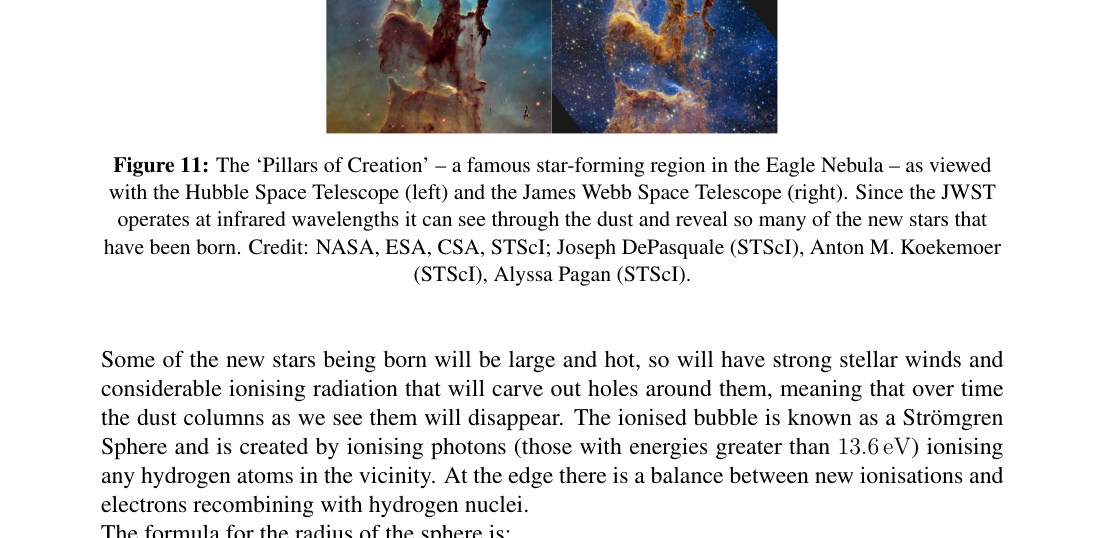 Fig. 11: Pillars of Creation HST and JWST comparison
Topic: Astrophysics, Modern-Quantum Physics, Thermodynamics Metodi: Physical Modeling, Photon Energy Relation, Calculus-Integration, Statistical Averaging, Approximation & Series Expansion Competenze: Physical Reasoning, Estimation & Approximation Objects: Star, Photon, Electron Fonte: Testo (PDF) — p.12
Questione 5 Questa domanda riguarda la fisica coinvolta nella formazione stellare.
Il telescopio spaziale James Webb (JWST) ha pubblicato immagini solo dal luglio 2022 e ha già dimostrato di essere un più che degno successore del telescopio spaziale Hubble (HST). - In Fig. 11 è un recente confronto fianco a fianco dei “pilastri della creazione” nella Nebulosa dell’Aquila, una famosa area che subisce una notevole formazione stellare.
Alcune delle nuove stelle che nasceranno saranno grandi e calde, avranno forti venti stellari e notevole radiazione ionizzante che creeranno buchi intorno a loro, il che significa che nel tempo le colonne di polvere come le vediamo scompariranno. La bolla ionizzata è conosciuta come una Strömgren Sphere e viene creata ionisando fotoni (quelli con energie superiori a 13,6 eV) ionisando qualsiasi atomo di idrogeno nelle vicinanze. Al bordo c’è un equilibrio tra nuove ionizzazioni e elettroni ricombinanti con nuclei di idrogeno. La formula per il raggio della sfera è:
se è il numero di fotoni ionizzanti al secondo, quantifica la probabilità che un protone e un elettrone si ricombino in un atomo di idrogeno, e è la densità numerica dei nuclei di idrogeno nella sfera (presumendo che sia la stessa densità numerica degli elettroni).
Alcuni dati solari: massa del Sole, kg; raggio del Sole, m; luminosità del Sole, W; temperatura superficiale efficace del Sole, K; lunghezza d’onda di picco nello spettro solare, nm; distanza dal Sole alla Terra m.
a) Le misurazioni infrarosse effettuate dal JWST suggeriscono che in questa regione si formeranno alcune stelle di classe O e B. Un esempio di tale stella ha una massa di , un raggio di , una luminosità di e una temperatura superficiale effettiva di 35 800 K.
(i) Considerato che la lunghezza d’onda di picco in uno spettro di corpi neri (cioè la lunghezza d’onda alla quale la potenza emessa è massima) è inversamente proporzionale alla temperatura superficiale effettiva, , quindi , verificare mediante calcolo che i fotoni emessi alla lunghezza d’onda di punta della stella saranno ionizzanti.
(ii) Nei Pilastri della Creazione, m e l’ionizzazione porteranno ad una temperatura di equilibrio all’interno della sfera di 8000 K per la quale m s. Supponendo che la stella emetta monocromaticamente solo alla lunghezza d’onda di picco, stima e quindi stima . Rispondi in anni luce.
- l’altezza del pilastro a sinistra è di 5 litri. Quante stelle di questo tipo saranno necessarie per fotovaporare il pilastro (se dato abbastanza lungo), in modo che non sia più visibile? Supponiamo che siano uniformemente distribuiti in tutto il pilastro. (5)
Oltre agli effetti ionizzanti sull’ambiente circostante, una nuova stella luminosa eserciterà pressione radiante, e questo può innescare ulteriori crolli di regioni della nebulosa in altre stelle. Supponendo che la regione al di fuori della Sfera di Strömgren sia un idrogeno puramente neutro, la massa che collasserà da una pressione esterna viene data come:
Questa è nota come massa di Bonner-Ebert, dove è la costante di Boltzmann, è la temperatura dell’idrogeno neutro nella nebulosa e è la massa di un atomo di idrogeno. La pressione radiologica è data come segue:
dove è la luminosità della stella (potenza di uscita), è la distanza dalla stella e è la velocità della luce.
b) Calcolando la temperatura della nebulosa a K e , calcolare la massa delle nuvole che inizieranno a crollare appena fuori dalla sfera di Strömgren e formeranno una nuova stella (cluster). Di’ la tua risposta in massa solare. (2)
La pressione delle radiazioni può anche essere importante in alcune stelle per mantenerle in equilibrio contro le forze gravitazionali che cercano di comprimerne. La pressione gravitazionale al centro di una stella è data da:
dove è la massa chiusa all’interno del raggio e è la densità. Poiché in stelle reali sia che sono funzioni complicate di , questa integrale non è semplice da fare e generalmente può essere fatta solo numericamente. In equilibrio, questo sarà bilanciato dai contributi della pressione del gas e della pressione delle radiazioni del corpo nero:
dove e sono rispettivamente la densità centrale e la temperatura centrale, è la costante di Stefan-Boltzmann e è la massa media delle particelle. Generalmente, nel nucleo della stella si trova un mix di idrogeno e elio completamente ionizzati, quindi
dove e sono rispettivamente le frazioni di massa di idrogeno e elio.
c) Al centro del Sole, gran parte del suo idrogeno iniziale è già stato trasformato in elio, quindi , , kg m e K.
(i) Calcolare la pressione al centro del Sole, .
(ii) Calcolare in percentuale di . Commenta la tua risposta.
(iii) Considerate una massa solare, una nana bianca delle dimensioni della Terra e supponiamo che abbia una densità costante uguale alla sua densità media. Realizzare l’integrazione e stimare . How many times larger is it than the solar ? ( km) (10)
I fotoni generati dalla fusione nucleare nel nucleo del Sole sono fotoni a raggi gamma, tuttavia quando raggiungono la superficie del Sole sono per lo più luce visibile. Questo perché i fotoni passano molto tempo ad essere assorbiti e quindi emessi nuovamente dalle particelle del plasma, e inizialmente questo avviene attraverso la dispersione di Compton, che abbassa l’energia del fotone con ogni emissione, e poi più tardi attraverso la dispersione di Thomson, che non influenza l’energia del fotone ma significa che continua a rimbalzare in giro per la stella.
Durante tutta la dispersione, i fotoni seguono una “camminata casuale”, il che significa che dopo i passi di dimensioni medie (noto come il percorso libero medio), il spostamento finale, , è
d) La densità energetica dei fotoni del corpo nero è e la temperatura media del Sole è K.
(i) Considerando l’energia totale immagazzinata come radiazione EM nel Sole e la luminosità corrente, si stima il tempo necessario per diffondere un fotone dal nucleo alla superficie. Dammi la tua risposta dopo anni.
(ii) Trovare quindi il percorso libero medio, , e il numero di interazioni, . (4)
A differenza dei fotoni, i neutrini prodotti nelle reazioni di fusione difficilmente interagiscono affatto con il plasma denso e opaco nel nucleo. Di conseguenza, possono dirci della produzione di energia che sta avvenendo ora, che può essere paragonata alla luminosità osservata e avvertire di eventuali cambiamenti nella scala temporale di diffusione dei fotoni. Nel 2018, l’esperimento Borexino ha rilevato, per la prima volta, i neutrini del protone-protone I ramo del Sole. Questo ramo è responsabile del 92% della produzione di energia del Sole, e ogni neutrino corrisponde a 13,1 MeV di energia fornita alla stella dalle reazioni di fusione. Il flusso misurato di neutrini nella posizione della Terra è stato neutrini cm s.
e) Utilizzare la luminosità di uscita dei fotoni per prevedere il flusso di neutrini sulla Terra e confrontarlo con il valore misurato. Commenta le implicazioni della tua risposta. (4)
[25 punti]
Fig. 11: Pilastri della creazione confronto HST e JWST
Topic: Astrophysics, Modern-Quantum Physics, Thermodynamics Metodi: Physical Modeling, Photon Energy Relation, Calculus-Integration, Statistical Averaging, Approximation & Series Expansion Competenze: Physical Reasoning, Estimation & Approximation Objects: Star, Photon, Electron Fonte: Testo (PDF) — p.12