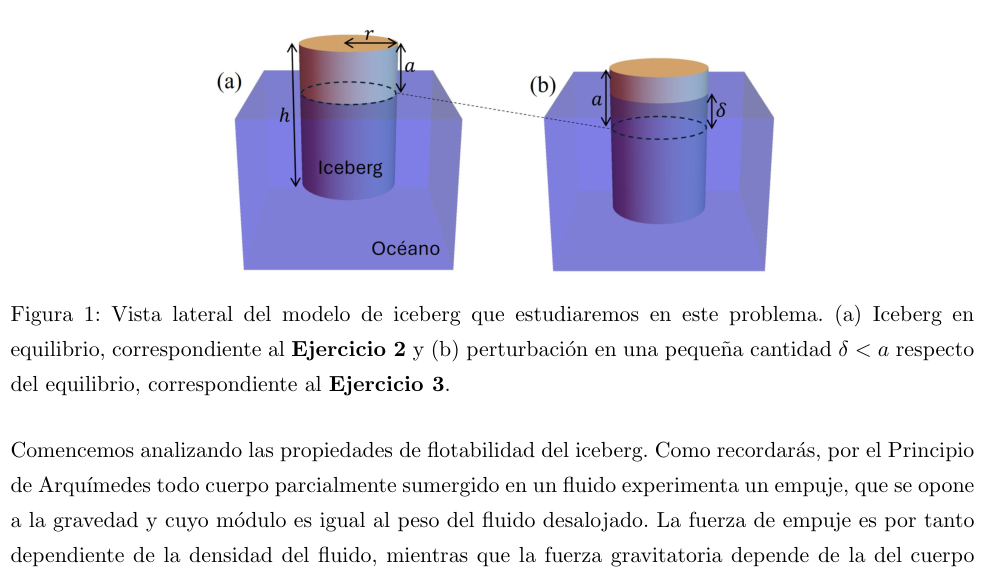
Problema 1: La física del iceberg En este problema vamos a estudiar la física de los icebergs desde el punto de vista de la mecánica y la termodinámica. Para ello, modelizaremos un iceberg como un cilindro de hielo de radio y altura , tal y como se puede observar en la siguiente figura. Figura 1: Vista lateral del modelo de iceberg que estudiaremos en este problema. (a) Iceberg en equilibrio, correspondiente al Ejercicio 2 y (b) perturbación en una pequeña cantidad respecto del equilibrio, correspondiente al Ejercicio 3. Comencemos analizando las propiedades de flotabilidad del iceberg. Como recordarás, por el Principio de Arquímedes todo cuerpo parcialmente sumergido en un fluido experimenta un empuje, que se opone a la gravedad y cuyo módulo es igual al peso del fluido desalojado. La fuerza de empuje es por tanto dependiente de la densidad del fluido, mientras que la fuerza gravitatoria depende de la del cuerpo sumergido. Por simplicidad, en este problema supondremos que las densidades del hielo (dulce) y del agua (dulce) son constantes (en particular, independientes de la temperatura) y satisfacen . Ejercicio 1. (1 punto) La salinidad es una medida de la concentración de sales disueltas en agua y se define como la masa de sales disueltas por unidad de masa de agua pura (por ejemplo, una salinidad del 3 % significa que hay 3 g de sal disuelta por cada 100 g de agua pura). Supongamos que el agua del océano tiene una salinidad . Asumiendo que el volumen del agua no cambia tras disolver sales, calcula la densidad del agua salada en función de su salinidad y de la densidad del agua dulce, . Como aplicación numérica calcula la densidad del océano Ártico, que tiene una salinidad aproximada del 3 %.
Topic: Fluid Mechanics, Newtonian Mechanics Metodi: Physical Modeling, Hydrostatic Equilibrium, Dimensional Analysis Competenze: Mathematical Modeling, Physical Reasoning, Unit Conversion Objects: Cylinder Fonte: Testo (PDF) — p.1
Problema 1: Fisica dell’iceberg In questo problema, studiamo la fisica degli iceberg dal punto di vista della meccanica e della natura. la termodinamica. Per questo, modelliamo un iceberg come un cilindro di ghiaccio a radio e altezza , come si può osservare nella figura seguente. Figura 1: Vista laterale del modello di iceberg che studieremo in questo problema. (a) Iceberg in equilibrio, corrispondente a Esercizio 2 e (b) perturbazione di una piccola quantità rispetto a di equilibrio, corrispondente a Esercizio 3. Iniziamo analizzando le proprietà di flottabilità dell’iceberg. Come ricorderai, per il Principio di Archimede ogni corpo parzialmente immerso in un fluido prova un impulso, che si oppone la gravità e il cui modulo è uguale al peso del fluido sfrattato. La forza di spinta è quindi La forza gravitazionale dipende dalla densità del fluido, mentre la forza gravitazionale dipende da quella del corpo. immerso. Per semplicità, in questo problema supponiamo che le densità di ghiaccio (dolce) e dell’acqua (dolce) sono costanti (in particolare, indipendenti dalla temperatura) e soddisfano . Esercizio 1. (1 punto) La salinità è una misura della concentrazione di sali dissoluti in acqua e definita come la massa di sali dissolti per unità di massa di acqua pura (ad esempio, una salinità) il 3% significa 3 g di sale dissoluto per ogni 100 g di acqua pura). Supponiamo che l’acqua del l’oceano ha una salinità . Supponendo che il volume dell’acqua non cambie dopo aver dissolto i sali, calcola la densità dell’acqua salata in funzione della sua salinità e della densità dell’acqua dolce, . Come Applicazione numerica calcola la densità dell’oceano artico, che ha una salinità approssimativa del 3%.
Topic: Fluid Mechanics, Newtonian Mechanics Metodi: Physical Modeling, Hydrostatic Equilibrium, Dimensional Analysis Competenze: Mathematical Modeling, Physical Reasoning, Unit Conversion Objects: Cylinder Fonte: Testo (PDF) — p.1
Problem 1: The physics of the iceberg In this problem we’re going to study the physics of icebergs from the point of view of mechanics and The thermodynamics. Para ello, modelizaremos un iceberg como un cilindro de hielo de radio y altura , as can be seen in the following figure. Figure 1: Side view of the iceberg model that we’ll study in this problem. (a) Iceberg in the Balance, corresponding to Exercise 2 and (b) disturbance in a small amount with respect to the balance, corresponding to Exercise 3. Let’s start by analyzing the buoyancy properties of the iceberg. As you will remember, by the Principle Every body partially submerged in a fluid experiences a push, which opposes the The mass of the liquid is equal to the mass of the displaced fluid. The force of thrust is therefore The density of the fluid depends on the gravitational force of the body. I’m going underwater. For simplicity, in this problem we’ll assume that the densities of ice (sweet) and of water (sweet) are constant (in particular temperature independent) and satisfacen . Exercise one. (1 point) Salinity is a measure of the concentration of salts dissolved in water and is defined as the mass of salts dissolved per unit mass of pure water (e.g. a salinity The 3% mean that there is 3 g of dissolved salt per 100 g of pure water). Suppose the water of the the ocean has a salinity . Assuming that the volume of water does not change after dissolving salts, calculates the the salt water density based on its salinity and the freshwater density, . As The numbering app calculates the density of the Arctic Ocean, which has a salinity of approximately 3%.
Topic: Fluid Mechanics, Newtonian Mechanics Metodi: Physical Modeling, Hydrostatic Equilibrium, Dimensional Analysis Competenze: Mathematical Modeling, Physical Reasoning, Unit Conversion Objects: Cylinder Fonte: Testo (PDF) — p.1
Ejercicio 2. (1.5 puntos) Considera que un bloque de hielo de agua dulce se desprende de la masa continental y cae al océano, convirtiéndose en un iceberg en equilibrio con la forma anteriormente descrita. Determina la altura [ver figura 1(a)] emergida sobre el nivel del mar así como el porcentaje de volumen del iceberg que queda sumergido. Como aplicación numérica, calcula qué porcentaje del iceberg queda emergido suponiendo y una salinidad del 3 %.
 Iceberg cilindrico equilibrio e perturbazione
Topic: Fluid Mechanics, Newtonian Mechanics Metodi: Hydrostatic Equilibrium, Free-Body Diagram, Physical Modeling Competenze: Physical Reasoning, Mathematical Modeling Objects: Cylinder Fonte: Testo (PDF) — p.1
Esercizio 2. (1.5 punti) Considera che un blocco di ghiaccio d’acqua dolce si sbrichi dalla massa Il continente e cade nell’oceano, diventando un iceberg in equilibrio con la forma precedente descritto. Determina l’altezza [vedi figura 1(a)] emersa sul livello del mare e la percentuale di volume dell’iceberg che viene immerso. Come applicazione numerica, calcola quale percentuale di L’iceberg emerge con e una salinità del 3%.
Cilindrico iceberg equilibrio e perturbazione
Topic: Fluid Mechanics, Newtonian Mechanics Metodi: Hydrostatic Equilibrium, Free-Body Diagram, Physical Modeling Competenze: Physical Reasoning, Mathematical Modeling Objects: Cylinder Fonte: Testo (PDF) — p.1
Exercise two. (1.5 points) considers that a block of freshwater ice is released from the mass It’s a continental iceberg and falls into the ocean, becoming an iceberg in balance with the previously formed iceberg. described. Determines the height [see figure 1(a)] above sea level and the percentage of the volume of the iceberg that is submerged. As a numerical application, it calculates what percentage of the iceberg is produced assuming and a salinity of 3%.
The following table shows the results of the calculation of the total amount of the calculation:
Topic: Fluid Mechanics, Newtonian Mechanics Metodi: Hydrostatic Equilibrium, Free-Body Diagram, Physical Modeling Competenze: Physical Reasoning, Mathematical Modeling Objects: Cylinder Fonte: Testo (PDF) — p.1
Ejercicio 3. (2.5 puntos) Supongamos que el iceberg se encuentra flotando en reposo y que recibe una perturbación de manera que en el instante inicial éste se sumerge una pequeña cantidad respecto del equilibrio [ver figura 1(b)]. Dibuja un diagrama con las fuerzas a las que el hielo está sometido y escribe explícitamente la 2ª Ley de Newton. ¿Qué tipo de movimiento describirá el iceberg a partir de este momento? ¿Puedes determinar la altura de iceberg emergido respecto a la posición de equilibrio en función del tiempo? ¿Cuál será la velocidad máxima que experimentará el iceberg? A continuación vamos a analizar el problema desde un punto de vista termodinámico. Como sabes, cuando dos cuerpos a distinta temperatura entran en contacto, se produce una transferencia de calor desde el cuerpo con mayor temperatura al de menor. Ese calor se emplea en variar las temperaturas de cada cuerpo (calor específico) y en cambiar sus estados de agregación (calor latente). Supongamos que inicialmente las temperaturas del hielo y del océano son y , respectivamente, que los calores específicos del hielo y del agua líquida son y , y que el calor latente de fusión del hielo es .
Topic: Oscillations & Waves, Fluid Mechanics, Thermodynamics Metodi: Free-Body Diagram, Simple Harmonic Motion Analysis, First Law of Thermodynamics Competenze: Diagrammatic Reasoning, Mathematical Modeling, Physical Reasoning Objects: Cylinder Fonte: Testo (PDF) — p.2
Esercizio 3. (2.5 punti) Supponiamo che l’iceberg si trovi a galla in riposo e che riceva una perturbazione tale da far immergere all’istante iniziale una piccola quantità per quanto riguarda l’equilibrio [vedi figura 1(b)]. Disegna un diagramma con le forze a cui il ghiaccio sta Subito e scrive esplicitamente la seconda legge di Newton. Che tipo di movimento descriverà l’iceberg? A partire da questo momento? Puoi determinare l’altezza dell’iceberg emerso rispetto alla posizione di equilibrio in base al tempo? Qual è la velocità massima che l’iceberg sperimenterà? Quindi analizzeremo il problema dal punto di vista termodinamico. Come sai, quando due corpi a temperature diverse entrano in contatto, si verifica un trasferimento di calore dal corpo con più temperatura al più basso. Questo calore viene utilizzato per variare le temperature La temperatura di ogni corpo (calore specifico) e il suo stato di aggregazione (calore latente) Supponiamo che inizialmente le temperature del ghiaccio e dell’oceano siano e , rispettivamente, che le temperature del mare e del ghiaccio sono e , rispettivamente, che le temperature del mare e del mare sono e , rispettivamente, che le temperature del mare e del mare sono e , rispettivamente, che le temperature del mare e del mare sono . I calori specifici del ghiaccio e dell’acqua liquida sono e , e il calore latente di fusione del ghiaccio è .
Topic: Oscillations & Waves, Fluid Mechanics, Thermodynamics Metodi: Free-Body Diagram, Simple Harmonic Motion Analysis, First Law of Thermodynamics Competenze: Diagrammatic Reasoning, Mathematical Modeling, Physical Reasoning Objects: Cylinder Fonte: Testo (PDF) — p.2
Exercise three. Let’s say the iceberg is floating at rest and receives a disturbance such that at the initial moment a small amount of is absorbed the balance (see figure 1(b)). Draw a diagram of the forces at which the ice is He’s subdued and he’s explicitly writing Newton’s Second Law. What kind of movement will the iceberg describe? From this moment on? ¿Puedes determinar la altura de iceberg emergido respecto a la posición de equilibrio en función del tiempo? What will be the maximum speed the iceberg will experience? We’ll then look at the problem from a thermodynamic standpoint. As you know, When two bodies at different temperatures come into contact, a heat transfer occurs. From the body with the highest to the lowest temperature. That heat is used to vary temperatures. The main objective of the study is to determine the effects of the effects of the effects of the effects of the effects of the effects of the effects of the effects of the effects of the effects of the effects of the effects of the effects of the effects of the effects of the effects of the effects of the effects of the effects of the effects of the effects of the effects of the effects of the effects of the effects of the effects of the effects of the effects of the effects of the effects of the effects of the effects of the effects of the effects of the effects of the effects of the effects of the effects of the effects of the effects of the effects of the effects of the effects of the effects of the effects of the effects of the effects of the effects of the effects of the effects of the effects of the effects of the effects of the effects of the effects of the effects of the effects of the effects of the effects of the effects of the effects of the effects of the effects of the effects of the effects of the effects of the effects of the effects of the effects of the effects of the effects of the effects of the effects of the effects of the effects of the effects of the effects of the effects of the effects of the on the on the environment on the environment. Suppose that the initial ice and ocean temperatures are and , respectively, that the The specific heat of ice and liquid water is and , and the latent heat of ice melting is .
Topic: Oscillations & Waves, Fluid Mechanics, Thermodynamics Metodi: Free-Body Diagram, Simple Harmonic Motion Analysis, First Law of Thermodynamics Competenze: Diagrammatic Reasoning, Mathematical Modeling, Physical Reasoning Objects: Cylinder Fonte: Testo (PDF) — p.2
Ejercicio 4. (1.5 puntos) Explica por qué desde un punto de vista físico es razonable pensar que la temperatura de equilibrio sea . Determina el calor transferido del océano al iceberg hasta que éste se funde y se alcanza la temperatura de equilibrio. Dar el valor numérico de este calor para un iceberg promedio de masa . Asume que la temperatura del océano es y que la del hielo es y considera que , y . Compara tu resultado con el consumo promedio de un hogar durante un mes de 270 kWh.
Topic: Thermodynamics Metodi: First Law of Thermodynamics, Physical Modeling Competenze: Mathematical Modeling, Estimation & Approximation Objects: Cylinder Fonte: Testo (PDF) — p.2
Esercizio 4. La Commissione ha inoltre adottato una proposta di direttiva che prevede che le misure adottate per la protezione dell’ambiente siano adeguate. temperatura di equilibrio è . Determina il calore trasferito dall’oceano all’iceberg fino a quando questo si fonde e si raggiunge la temperatura di equilibrio. Dare il valore numerica di questo calore per un iceberg media di massa . Supponiamo che la temperatura dell’oceano sia e che quella del ghiaccio sia e considera che , e . Confronta il tuo risultato con il consumo medio di una casa per un mese di 270 kWh.
Topic: Thermodynamics Metodi: First Law of Thermodynamics, Physical Modeling Competenze: Mathematical Modeling, Estimation & Approximation Objects: Cylinder Fonte: Testo (PDF) — p.2
- Exercise four. (1.5 points) Explains why it is physically reasonable to think that the The balance temperature is . It determines the heat transferred from the ocean to the iceberg until it The temperature of the liquid is the temperature of the liquid. Give the numerical value of this heat for an iceberg promedio de masa . It assumes that the temperature of the ocean is and that the temperature of the ice is and considers that , and . Compare your score to the average monthly consumption of a household of 270 kWh.
Topic: Thermodynamics Metodi: First Law of Thermodynamics, Physical Modeling Competenze: Mathematical Modeling, Estimation & Approximation Objects: Cylinder Fonte: Testo (PDF) — p.2
Ejercicio 5. (1 punto) Centrémonos en el proceso de fusión del iceberg, es decir, una vez ya ha alcanzado los y comienza a derretirse. Durante todo el proceso asumiremos que el calor transferido por unidad de tiempo, , viene dado por , siendo la diferencia de temperaturas entre el agua oceánica y el iceberg, la superficie de hielo en contacto con el agua líquida y una constante. ¿Qué dimensiones tiene la constante y qué representa físicamente? ¿En qué unidades se mide en el SI?
Topic: Thermodynamics Metodi: Dimensional Analysis, Physical Modeling Competenze: Physical Reasoning, Mathematical Modeling Objects: — Fonte: Testo (PDF) — p.2
Esercizio 5. (1 punto) Centrémonos en el proceso de fusión del iceberg, es decir, una vez ya ha alcanzado los y comienza a derretirse. Durante tutto il processo, presumere che il calore trasferito per unità di tempo, , viene data da , essendo la differenza di temperature tra l’acqua oceanica e l’iceberg, la superficie del ghiaccio in contatto con l’acqua liquida e una costante. Quali dimensioni ha la costante e cosa rappresenta fisicamente? In quali unità viene misurata in SI?
Topic: Thermodynamics Metodi: Dimensional Analysis, Physical Modeling Competenze: Physical Reasoning, Mathematical Modeling Objects: — Fonte: Testo (PDF) — p.2
- Exercise five. (1 punto) Centrémonos en el proceso de fusión del iceberg, es decir, una vez ya ha alcanzado los y comienza a derretirse. During the whole process we will assume that the heat transferred per unit of time, , is given by , where is the temperature difference between Ocean water and iceberg, surface of ice in contact with liquid water and a constant. What dimensions does the constant have and what does it physically represent? In which units is measured in SI?
Topic: Thermodynamics Metodi: Dimensional Analysis, Physical Modeling Competenze: Physical Reasoning, Mathematical Modeling Objects: — Fonte: Testo (PDF) — p.2
Ejercicio 6. (2.5 puntos) Cuando el iceberg cilíndrico se derrite su tamaño disminuye. Por simplicidad, asumamos que el iceberg mantiene su forma cilíndrica y que su radio decrece durante el proceso, mientras que su altura se mantiene constante con valor . Calcula el tiempo que éste tardará en fundirse completamente (de hielo a a agua a ). Como aplicación numérica, determina cuánto tiempo se tardará en fundir un iceberg promedio de masa y diámetro de asumiendo que la temperatura del océano es , , y (en unidades del SI). Ayuda: Utiliza la fórmula del calor latente para obtener en función de . Combínala con la ecuación para del ejercicio 5 para relacionar el tiempo de fusión y el radio del iceberg. Puedes hacerlo de manera exacta (integrando) o utilizando las aproximaciones que creas oportunas.
Problema 2: Diseñando pulsos de attosegundo El premio Nobel de Física del pasado año 2023 fue otorgado a los investigadores Anne L’Huillier, Ferencz Krausz y Pierre Agostini1, investigadores del campo de la Óptica. En concreto el premio se les ha otorgado por sus trabajos, principalmente experimentales, de interacción de la luz con la materia. El tipo de luz con la que trabajan es una luz “muy especial”, que se emite en forma de destellos extremadamente breves, que nos permiten observar fenómenos que ocurren en la naturaleza en instantes de tiempo muy cortos.
Topic: Thermodynamics, Fluid Mechanics Metodi: First Law of Thermodynamics, Differential Equations, Calculus-Integration Competenze: Mathematical Modeling, Physical Reasoning Objects: Cylinder Fonte: Testo (PDF) — p.2
Esercizio 6. (2.5 punti) Quando l’iceberg cilindrico si scioglie, la sua dimensione diminuisce. Per semplicità, supponiamo che l’iceberg mantenga la sua forma cilindrica e che il suo raggio diminuisca durante il periodo di proceso, mientras que su altura se mantiene constante con valor . Calcola il tempo che questo richiederà in totale fusione (da ghiaccio a ad acqua a ). Come applicazione numerica, determina quanto tempo ci vorrà per fondere un iceberg di massa media e di diametro supponendo che la temperatura dell’oceano sia , , e (in unità SI). Aiuto: Utilizza la formula del calore latente per ottenere in funzione di . Combina con l’equazione per di esercizio 5 per correlare il tempo di fusione e il raggio dell’iceberg. Puoi farlo per farlo in modo preciso (integrando) o utilizzando gli approcci che riteni opportunamente.
Problema 2: progettando pulsi di attosegondo Il premio Nobel per la fisica del 2023 è stato assegnato ai ricercatori Anne L’Huillier, Ferencz Krausz e Pierre Agostini1, ricercatori nel campo dell’ottica. In particolare, il premio è stato assegnato a Il suo lavoro, soprattutto sperimentale, ha riguardato l’interazione della luce con la materia. Il tipo di luce con cui lavorano è una luce “molto speciale”, che viene emessa sotto forma di lampioni estremamente brevi, che ci permettono di osservare fenomeni che accadono in natura in istanti. di breve tempo.
Topic: Thermodynamics, Fluid Mechanics Metodi: First Law of Thermodynamics, Differential Equations, Calculus-Integration Competenze: Mathematical Modeling, Physical Reasoning Objects: Cylinder Fonte: Testo (PDF) — p.2
Exercise 6. (2.5 points) When the cylindrical iceberg melts its size decreases. Por simplicidad, asumamos que el iceberg mantiene su forma cilíndrica y que su radio decrece durante el process, while its height is maintained constant at . Calculate how long it will take in full melting (from ice to to water to ). As a numerical application, it determines how long it will take to melt an average iceberg of mass and diameter assuming that the ocean temperature is , , and (in SI units). Help: Use the latent heat formula to get based on . Combine it with the equation for of Exercise 5 to relate the melting time and the radius of the iceberg. You can do it . to do so precisely (by integrating) or using any approach you think is appropriate.
Problem 2: Designing pulses of the second The Nobel Prize in Physics last year 2023 was awarded to researchers Anne L’Huillier, Ferencz Krausz and Pierre Agostini1, researchers in the field of optics. In particular, the prize is awarded to He has been awarded for his work, primarily experimental, on the interaction of light with matter. The kind of light they work with is a very special light, which is emitted in the form of extremely short flashes, which allow us to observe phenomena that occur in nature in moments. In a very short time.
Topic: Thermodynamics, Fluid Mechanics Metodi: First Law of Thermodynamics, Differential Equations, Calculus-Integration Competenze: Mathematical Modeling, Physical Reasoning Objects: Cylinder Fonte: Testo (PDF) — p.2
Ejercicio 1. (1.5 puntos) Veamos un ejemplo de la utilidad de estos pulsos o destellos de luz. Imagínate que quieres medir con gran precisión la distancia que separa a los dos átomos de hidrógeno que componen la molécula de hidrógeno, . Para ello, te propones medir el tiempo que tarda en viajar la luz entre los dos átomos. Si dichos átomos están separados una distancia de 0,47 Angstroms () y la luz viaja a 300000 km/s ¿de cuánto tiempo estamos hablando?
Topic: Oscillations & Waves, Modern-Quantum Physics Metodi: Kinematic Equations, Order-of-Magnitude Estimation Competenze: Estimation & Approximation, Physical Reasoning Objects: Atom Fonte: Testo (PDF) — p.4
Esercizio 1. (1.5 punti) Vediamo un esempio dell’utilità di questi pulsi o lampioni di luce. Immaginate di voler misurare con grande precisione la distanza che separa i due atomi di idrogeno che compongono la molecola di idrogeno, . Per questo, si propone di misurare il tempo che ci vuole per viaggiare la luce tra i due atomi. Se questi atomi sono separati a una distanza di 0,47 Angstroms () e la luce viaggia a 300000 km/s. Quanto tempo stiamo parlando?
Topic: Oscillations & Waves, Modern-Quantum Physics Metodi: Kinematic Equations, Order-of-Magnitude Estimation Competenze: Estimation & Approximation, Physical Reasoning Objects: Atom Fonte: Testo (PDF) — p.4
Exercise one. (1.5 points) Let’s take an example of the usefulness of these pulses or flashes of light. Imagine you want to measure with great precision the distance between the two hydrogen atoms que componen la molécula de hidrógeno, . To do this, you propose to measure the time it takes to travel light between the two atoms. If these atoms are separated by a distance of 0.47 Angstroms () y la luz viaja a 300000 km/s ¿de cuánto tiempo estamos hablando?
Topic: Oscillations & Waves, Modern-Quantum Physics Metodi: Kinematic Equations, Order-of-Magnitude Estimation Competenze: Estimation & Approximation, Physical Reasoning Objects: Atom Fonte: Testo (PDF) — p.4
Ejercicio 2. (3 puntos) Como sabes la luz es una onda electromagnética y como tal podemos pensar en ella como una onda periódica sinusoidal, la misma que la de un oscilador armónico. ¿Sabrías calcular la longitud de onda que tendría una onda electromagnética si su período es de 0,157 attosegundos ()? ¿y su frecuencia?
Topic: Oscillations & Waves, Electromagnetism Metodi: Wave Equation, Simple Harmonic Motion Analysis Competenze: Mathematical Modeling, Unit Conversion Objects: — Fonte: Testo (PDF) — p.4
Esercizio 2. Come sapete, la luce è un’onda elettromagnetica e come tale possiamo pensare in esso come un’onda sinusoidale periodica, la stessa di un oscillatore armonico. Potresti calcolare la lunghezza d’onda di un’onda elettromagnetica se il suo periodo è di 0,157 ottosegondi? ()? e la frequenza?
Topic: Oscillations & Waves, Electromagnetism Metodi: Wave Equation, Simple Harmonic Motion Analysis Competenze: Mathematical Modeling, Unit Conversion Objects: — Fonte: Testo (PDF) — p.4
Exercise two. (3 points) As you know, light is an electromagnetic wave, and as such we can think In it, it’s like a periodic sine wave, the same as a harmonic oscillator. Can you calculate the wavelength that an electromagnetic wave would have if its period is 0.157 attosegund? ()? And its frequency?
Topic: Oscillations & Waves, Electromagnetism Metodi: Wave Equation, Simple Harmonic Motion Analysis Competenze: Mathematical Modeling, Unit Conversion Objects: — Fonte: Testo (PDF) — p.4
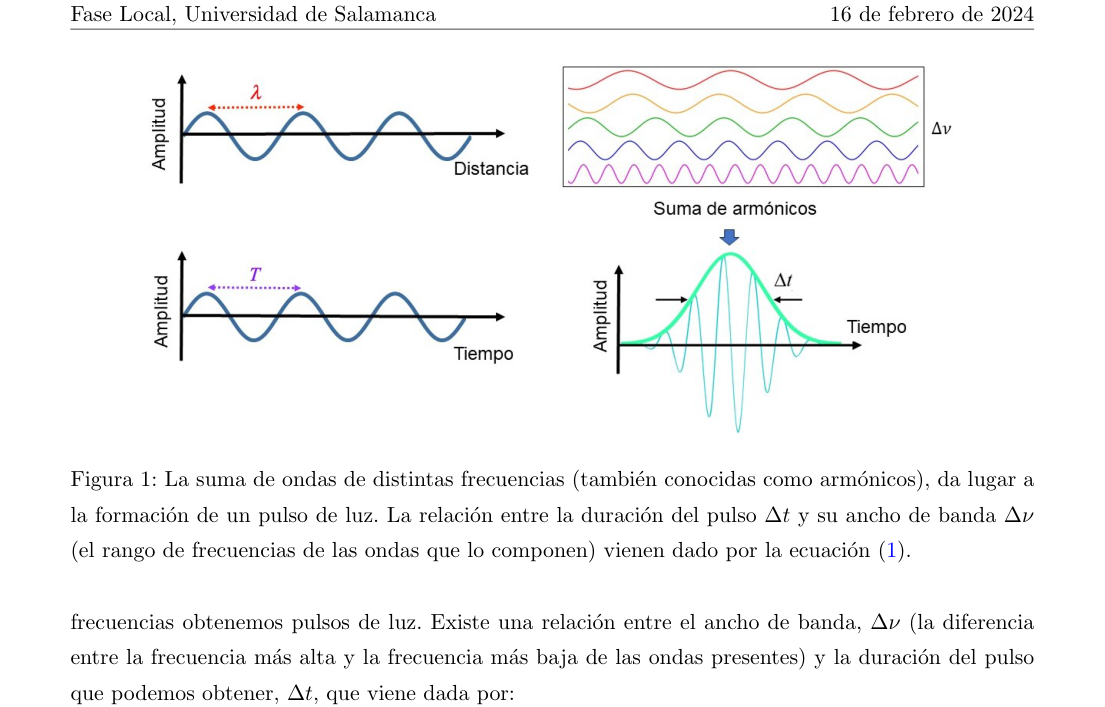
Ejercicio 3. (1.5 puntos) Si has hecho bien los cálculos la longitud de onda que has obtenido pertenece al rango de los rayos X, muy lejos de la luz visible. Tus resultados te pueden dar una pista de por qué la generación de pulsos de luz en el rango de los attosegundos es tan interesante, y de por qué para generarlos necesitamos longitudes de onda muy cortas, en el rango de los rayos X. Ahora bien, el caso que hemos analizado es un poco extremo, y hoy en día el récord está en alcanzar pulsos que duran 43 as2. Para entender la duración temporal más breve que pueden alcanzar estos pulsos o destellos de luz, podemos estar de acuerdo en que su duración total no puede ser inferior a un ciclo, es decir a una oscilación completa del campo eléctrico. Conseguir pulsos de pocos ciclos es todo un reto tecnológico, y normalmente los pulsos de luz que se obtienen son de varios ciclos. La estrategia para obtener un pulso de luz la podemos entender por similitud con el fenómeno de la interferencia, tal y como se explica en la figura. Al sumar adecuadamente muchas ondas de distintas 1https://www.nobelprize.org/prizes/physics/2023/press-release/ 2T. Gaumnitz, A. Jain, Y. Pertot, M. Huppert, I. Jordan, F. Ardana-Lamas, and H. J. Wörner, Streaking of 43- attosecond soft-X-ray pulses generated by a passively CEP-stable mid-infrared driver, Opt. Exp. 25, 27506-27518 (2017). Figura 1: La suma de ondas de distintas frecuencias (también conocidas como armónicos), da lugar a la formación de un pulso de luz. La relación entre la duración del pulso y su ancho de banda (el rango de frecuencias de las ondas que lo componen) vienen dado por la ecuación (1). frecuencias obtenemos pulsos de luz. Existe una relación entre el ancho de banda, (la diferencia entre la frecuencia más alta y la frecuencia más baja de las ondas presentes) y la duración del pulso que podemos obtener, , que viene dada por: Para obtener un pulso con una duración de 43 as, ¿qué ancho de banda necesitamos?
 Somma di armoniche per formare un impulso
Topic: Oscillations & Waves, Wave Optics Metodi: Superposition Principle, Wave Equation, Interference & Diffraction Analysis Competenze: Mathematical Modeling, Physical Reasoning, Estimation & Approximation Objects: Photon Fonte: Testo (PDF) — p.4
Esercizio 3. (1.5 punti) Se avete fatto bene i calcoli la lunghezza d’onda che avete ottenuto appartiene alla gamma dei raggi X, molto lontano dalla luce visibile. I risultati possono dare un indizio Perché la generazione di impulsi di luce nel raggio degli attosegondi è così interessante, e per Per generarli, abbiamo bisogno di lunghezze d’onda molto brevi, nel raggio dei raggi X. Ora Beh, il caso che abbiamo analizzato è un po’ estremo, e oggi il record è di raggiungere i polsi. che durano 43 as2. Per capire la durata temporale più breve che possono raggiungere questi pulsi o i brividi di luce, possiamo concordiamo che la loro durata totale non può essere inferiore a un ciclo, è dire un’oscillazione completa del campo elettrico. Ottenere i polsi di pochi cicli è un grande problema La luce che viene ottenuta è di cicli diversi. La strategia per ottenere un pulso di luce può essere intesa per la somiglianza con il fenomeno della l’interferenza, come illustrato nella figura. Ad esempio, la somma di molte onde diverse 1https://www.nobelprize.org/prizes/physics/2023/press-release/ 2T. Gaumnitz, A. Jain, Y. Percio’, M. Huppert, I. Jordan, F. Ardana-Lamas, e H. J. Wörner, Streaking of 43- Attosecond soft-X-ray pulse generate da un passivamente CEP-stabile mid-infrared driver, Opt. Exp. 25, 27506-27518 (2017). Figura 1: La somma di onde di diverse frequenze (anche conosciute come armoniche) dà luogo a la formazione di un impulso di luce. Relazione tra la durata del pulso e la sua larghezza di banda (la gamma di frequenze delle onde che la compongono) viene data dall’equazione (1). frequenze otteniamo pulsi di luce. C’è una relazione tra la larghezza di banda, (la differenza tra La frequenza di pulso è di circa un milione di metri. che possiamo ottenere, , che viene data da: Per ottenere un polso di 43 acri, che larghezza di banda abbiamo bisogno?
Summa di armoniche per formare un impulso
Topic: Oscillations & Waves, Wave Optics Metodi: Superposition Principle, Wave Equation, Interference & Diffraction Analysis Competenze: Mathematical Modeling, Physical Reasoning, Estimation & Approximation Objects: Photon Fonte: Testo (PDF) — p.4
Exercise three. (1.5 points) If you’ve done the math right, the wavelength you’ve got is in the X-ray range, far away from visible light. Your results may give you a clue to Why the generation of pulses of light in the attosecond range is so interesting, and why And to generate them, we need very short wavelengths, in the X-ray range. Now, now. Well, the case we’ve been looking at is a little extreme, and today the record is in reaching pulses. which lasts 43 as2. To understand the shortest time duration these pulses or light flashes, we can agree that its total duration cannot be less than one cycle, is say a complete oscillation of the electric field. Getting pulses in a few cycles is a challenge. It’s a very technological process, and the pulses of light that are usually obtained are several cycles. The strategy for obtaining a pulse of light can be understood by similarity to the phenomenon of interference, as explained in the figure. By adding together many waves of different waves The European Parliament has adopted a resolution on the situation in the Baltic States. 2T. Gaumnitz, A. Jain, Y. So, M. I’m going to the hospital. Jordan, F. Ardana-Lamas, and H. J. Wörner, Streaking of 43- Attosecond soft-X-ray pulses generated by a passively CEP-stable mid-infrared driver, Opt. Explain it. 25, 27506-27518 (2017). Figure 1: The sum of waves of different frequencies (also known as harmonics) gives rise to The formation of a pulse of light. The ratio of pulse length to its bandwidth (the frequency range of the waves that make up it) are given by equation (1). Frequencies, we get pulses of light. There is a relationship between the bandwidth, (the difference between the bandwidth and the bandwidth) The frequency of the pulse is the frequency between the highest and lowest frequency of the waveforms present. which we can get, , which is given by: To get a pulse with a duration of 43 aces, what bandwidth do we need?
The sum of the harmonics to form a momentum
Topic: Oscillations & Waves, Wave Optics Metodi: Superposition Principle, Wave Equation, Interference & Diffraction Analysis Competenze: Mathematical Modeling, Physical Reasoning, Estimation & Approximation Objects: Photon Fonte: Testo (PDF) — p.4
Ejercicio 4. (4 puntos) Conocida la duración del pulso (43 as) y el ancho de banda que necesitamos para generarlo, acudimos a un fabricante de pulsos de luz láser, que nos ofrece fuentes de luz a dos longitudes de onda diferentes: 6.5 nm y 120 nm (). ¿Cuál de ellas elegirías para generar pulsos de luz de 43 as? (Pista: calcula el número de períodos o de oscilaciones del campo electromagnético que tendría el pulso con cada una de las dos fuentes de luz).
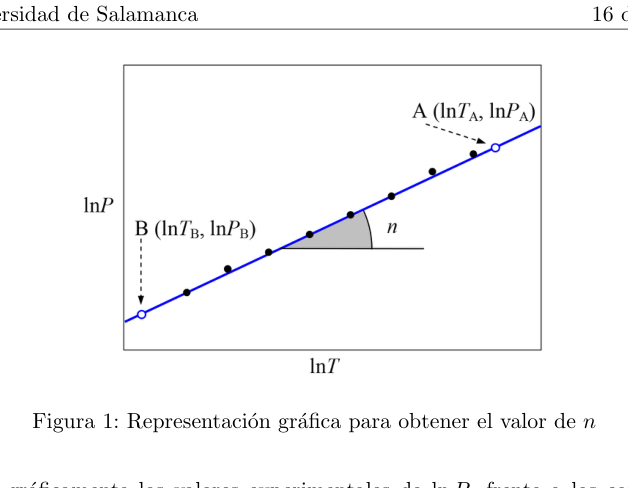
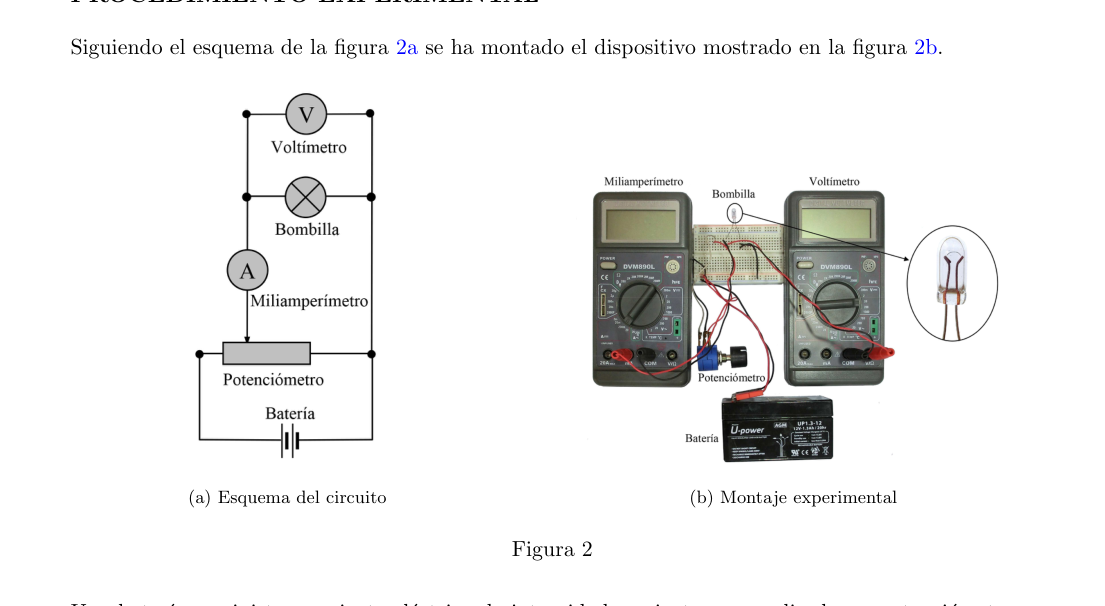
Problema 3: Radiación y temperatura de una bombilla OBJETIVO Estudiar la dependencia de la energía emitida por el filamento de una lámpara incandescente con su temperatura. FUNDAMENTO TEÓRICO Los cuerpos pueden transferir calor a otros cuerpos que se encuentran a diferente temperatura mediante conducción, convección y radiación. La radiación está constituida por ondas electromagnéticas, cuya distribución en el espectro depende de la temperatura. Sea una bombilla con un filamento de wolframio por el que circula una corriente eléctrica de intensidad creciente. Cuando la temperatura del filamento es muy baja, la bombilla pierde energía principalmente por conducción y convección, pero a temperaturas suficientemente altas predomina la radiación, de modo que la conducción y la convección pueden considerarse despreciables. En estas condiciones, se puede aceptar que la potencia eléctrica, , suministrada a la bombilla se disipa íntegramente por el filamento en forma de radiación. La potencia radiada, , por el filamento, cuando se encuentra a una temperatura, , muy superior a la temperatura ambiente es: donde es el área de la superficie emisora, es un coeficiente adimensional característico de cada cuerpo, llamado emisividad, una constante que se conoce como constante de Stefan-Boltzmann y es un exponente entero. Como , y , no van a intervenir en este problema, puede simplificarse la expresión (1), haciendo: De este modo, la potencia radiada queda escrita del siguiente modo: El objetivo del problema es la determinación de a partir de datos experimentales. El primer paso es linealizar la expresión (3) aplicando logaritmos naturales: Figura 1: Representación gráfica para obtener el valor de Si se representan gráficamente los valores experimentales de , frente a los correspondientes de , se obtendrá una línea recta (figura 1). Una vez trazada la recta, para determinar su pendiente pueden tomarse dos puntos de esa recta, A y B, suficientemente separados, cuyas coordenadas son y . La pendiente de la recta, , es: PROCEDIMIENTO EXPERIMENTAL Siguiendo el esquema de la figura 2a se ha montado el dispositivo mostrado en la figura 2b.
- A. Esquema del circuito
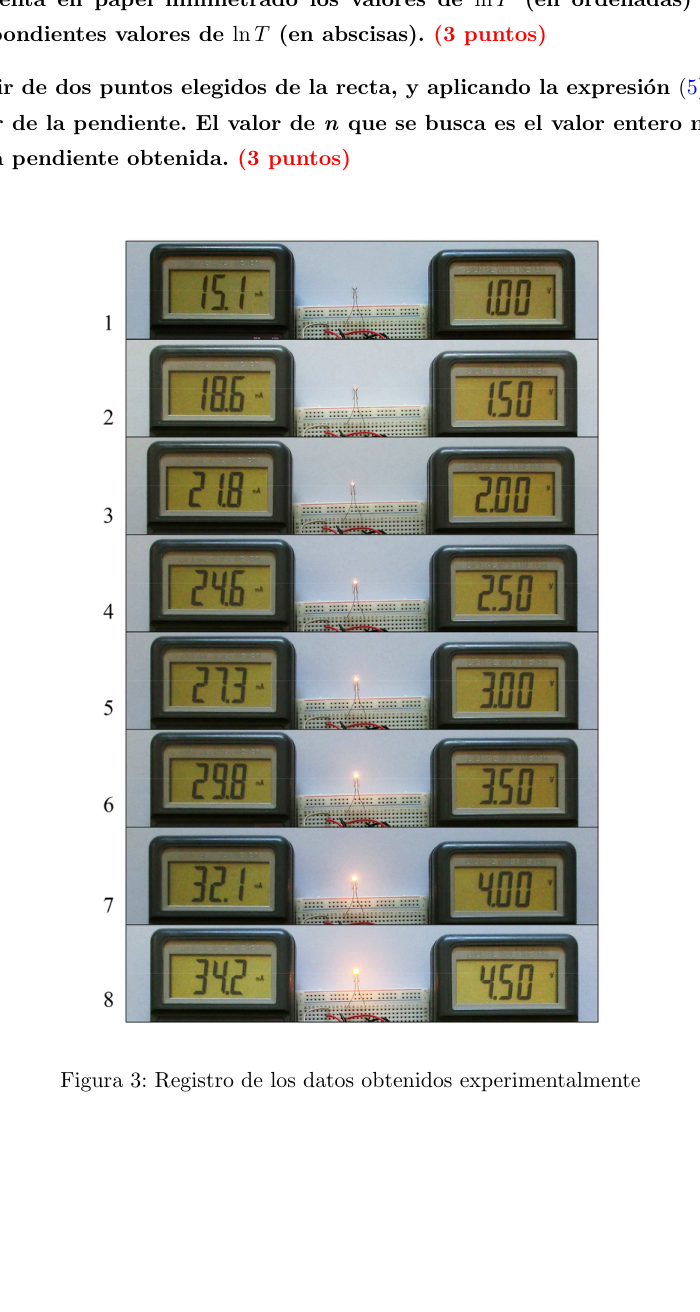
- B. Montaje experimental Figura 2 Una batería suministra corriente eléctrica de intensidad creciente por medio de un potenciómetro a una pequeña bombilla. Mediante un voltímetro y un mili-amperímetro se determinan las sucesivas diferencias de potencial, y las intensidades eléctricas en la bombilla. Con estas dos magnitudes puede calcularse la resistencia del filamento, en cada momento y la potencia, , suministrada a la bombilla (al encontrarse su filamento incandescente aceptaremos que esta potencia es la que emite el filamento en forma de radiación). La resistencia eléctrica, , de un filamento de wolframio aumenta con la temperatura, . La dependencia entre estas variables puede ajustarse bien a la siguiente relación empírica: donde y son los valores a temperatura ambiente. En consecuencia, a partir de la expresión (8) puede conocerse la temperatura , del filamento en cada momento: Para utilizar la expresión (9), al inicio del experimento se midió la temperatura ambiente y la resistencia del filamento a esa temperatura. Estos valores fueron: () y . A continuación se conectó la batería y, actuando sobre el potenciómetro se tomaron medidas crecientes de la diferencia de potencial y de la intensidad. Los resultados de ocho medidas se muestran en la figura 3, en la que está registrado un detalle del montaje, con el miliamperímetro a la izquierda (en consecuencia, no olvidar que las medidas que aparecen son en miliamperios), la bombilla en el centro y el voltímetro a la derecha. A partir de los datos disponibles realiza las siguientes tareas:
- Traslada las medidas que aparecen el la figura 3 a una tabla como la siguiente, cuyo contenido es: (4 puntos) 1ª columna: medida de la diferencia de potencial que da el voltímetro. 2ª columna: medida de la intensidad que da el amperímetro. 3ª columna: cálculo de la resistencia de la bombilla, según la expresión (6). 4ª columna: temperatura del filamento, conocidas y , aplicando la expresión (9). 5ª columna: potencia suministrada, que es igual a la potencia radiada, aplicando (7). 6ª columna: logaritmo natural de la temperatura. 7ª columna: logaritmo natural de la potencia. (V) (A) () (K) (W)
- Representa en papel milimetrado los valores de (en ordenadas) frente a los correspondientes valores de (en abscisas). (3 puntos)
- A partir de dos puntos elegidos de la recta, y aplicando la expresión (5), determina el valor de la pendiente. El valor de que se busca es el valor entero más próximo al de la pendiente obtenida. (3 puntos) Figura 3: Registro de los datos obtenidos experimentalmente
Topic: Oscillations & Waves, Wave Optics Metodi: Wave Equation, Superposition Principle Competenze: Physical Reasoning, Mathematical Modeling, Estimation & Approximation Objects: Battery, Resistor Fonte: Testo (PDF) — p.5
Figure
Figure
Figure
Figure
Figure
Figure
Figure
Figure
Figure
Figure
Figure
Figure
Figure
p.7 — Grafico ln P vs ln T con pendenza n
p.7 — Schema circuito e montaggio sperimentale bombilla
p.9 — Foto misure strumenti 8 misurazioni
Esercizio 4. (4 punti) Conosciuto il tempo di pulso (43 ac) e la larghezza di banda che ci serve Per generarlo, abbiamo consultato un produttore di pulsi laser, che ci offre due fonti di luce. diverse lunghezze d’onda: 6,5 nm e 120 nm (). Quale di queste sceglierebbe di generare pulsi di luce di 43 acri? (Conta: calcola il numero di periodi o oscillazioni del campo elettromagnetico che il pulso avrebbe con ciascuna delle due fonti di luce).
Problema 3: Radiamento e temperatura di una lampada Obiettivo Studiare la dipendenza dell’energia emessa dal filamento di una lampada incandescente con il suo temperatura. Fondamento teorico I corpi possono trasferire calore ad altri corpi che si trovano a temperature diverse attraverso conduzione, convezione e radiazioni. La radiazione è costituita da onde elettromagnetiche, la cui distribuzione nello spettro dipende dalla temperatura. Se una lampada con filamento di wolframio attraverso la quale circola un corrente elettrica di intensità crescente. Quando la temperatura del filamento è molto bassa, la lampada perde energia principalmente a conduzione e convezione, ma a temperature sufficientemente elevate, la radiazione predominante, In questo modo la guida e la convezione possono essere considerate sconsiderate. In queste condizioni, si può accettare che la potenza elettrica, , fornita alla lampada si dissipi completamente dal filamento in forma di radiazione. La potenza irradiata, , dal filamento, quando si trova a una temperatura, , molto superiore a la temperatura ambiente è: dove è l’area della superficie emissione, è un coefficiente dimensionale caratteristico di ciascuna corpo, chiamato emissività, una costante che è conosciuta come costante di Stefan-Boltzmann e è un intero esponente. Come , e , non interveniranno in questo problema, la procedura può essere semplificata. espressione (1), facendo: La potenza irradiata è così scritta: L’obiettivo del problema è determinare a partire da dati sperimentali. Il primo passo è linealizzare l’espressione (3) applicando logaritmi naturali: Figura 1: Rappresentazione grafica per ottenere il valore di Se si presentano graficamente i valori sperimentali di , rispetto ai corrispondenti di , si ottiene una linea retta (Figura 1). Una volta tracciata la linea retta, per determinare la sua pendenza Si possono prendere due punti di quella retta, A e B, sufficientemente separati, le cui coordinate sono y . La pendenza della retta, , è: PROCEDUTO sperimentale Il dispositivo mostrato in figura 2b è montato secondo lo schema di cui alla figura 2a.
- A. Schema del circuito
- B. Assemblaggio sperimentale Figura 2 Una batteria fornisce corrente elettrica di intensità crescente mediante un potenziometro a una piccola lampadina. Con un voltímetro e un mili-amperietro si determinano le successive differenze di potenziale, e intensità elettriche nella lampada. Con queste due magnitudini la resistenza del filamento, a ogni momento e la potenza, , fornita alla La luce di una lampada (quando il filamento incandescente è trovato accetteremo che questa potenza è quella che emette la filamento in forma di radiazione). La resistenza elettrica, , di un filamento di wolframio aumenta con la temperatura, . La dipendenza tra queste variabili può essere ben adattata al seguente rapporto empirico: dove e sono i valori a temperatura ambiente. Di conseguenza, a partire dall’espressione (8) la temperatura del filamento può essere conosciuta in ogni momento: Per usare l’espressione (9), all’inizio dell’esperimento si misurano la temperatura ambiente e la resistenza di filamento a questa temperatura. Questi valori sono stati: () e . A La batteria è stata quindi collegata e, agendo sul potenzimetro, sono state prese misure crescenti La differenza di potenziale e di intensità. I risultati di otto misure sono riportati nella tabella di Fig. 3, che mostra un dettaglio dell’assemblaggio, con il miliampirimetro a sinistra (in In questo caso, non dimenticate che le misure che appaiono sono in milliamperi), la lampada al centro e il voltometro a destra. Sulla base dei dati disponibili svolge i seguenti compiti:
- Trasferisce le misure riportate in figura 3 in una tabella come segue, contenuto è: (4 punti) 1° colonna: misura della differenza di potenziale del voltímetro. 2° colonna: misura dell’intensità dell’ampiezzatore. Colonna 3: Calcolo della resistenza della lampada, secondo l’espressione (6). 4a colonna: temperatura del filamento, nota e , applicando l’espressione (9). 5a colonna: potenza fornita, che è pari alla potenza emessa, applicando (7). 6a colonna: logaritmo naturale della temperatura. 7° colonna: logaritmo naturale della potenza. (V) (A) () (K) (W)
- Rappresenta in millimetro i valori (ordinati) rispetto ai valori i corrispondenti valori (in abscissi). (3 punti)
- A partire da due punti scelti della retta, e applicando l’espressione (5), determina il valore dell’anello. Il valore di ricercato è il valore intero più vicino la collana ottenuta. (3 punti) Figura 3: Registrazione dei dati ottenuti sperimentalmente
Topic: Oscillations & Waves, Wave Optics Metodi: Wave Equation, Superposition Principle Competenze: Physical Reasoning, Mathematical Modeling, Estimation & Approximation Objects: Battery, Resistor Fonte: Testo (PDF) — p.5
Figurare
Figurare
Figurare
Figurare
Figurare
Figurare
Figurare
Figurare
Figurare
Figurare
Figurare
Figurare
Figurare
**p.7 ** Grafico ln P vs ln T con pendenza n
**p.7 ** Schema di circuito e montaggio sperimentale della lampada
**p.9 ** Foto misure strumenti 8 misurazioni
- Exercise four. (4 points) Known pulse length (43 ac) and bandwidth we need To generate it, we went to a laser pulse manufacturer, who offered us two light sources. longitudes de onda diferentes: 6.5 nm y 120 nm (). Which one would you choose to generate pulses of light of 43 aces? (Hint: calculates the number of periods or oscillations of the electromagnetic field that the pulse would have with each of the two light sources).
Problem 3: Radiation and temperature of a bulb Objective Study the dependence of the energy emitted by the filament of an incandescent lamp with its The temperature. Theoretical foundation Bodies can transfer heat to other bodies at different temperatures by conduction, convection and radiation. Radiation is made up of electromagnetic waves, The distribution of these spectrums depends on the temperature. A bulb with a tungsten filament through which an electric current of intensity is circulated growing. When the filament temperature is very low, the bulb loses energy mainly by conduction and convection, but at sufficiently high temperatures radiation predominates, So the driving and convection can be considered despicable. In these conditions, the You can accept that the electrical power, , supplied to the bulb is completely dissipated by the radiation-formed filament. The radiated power, , by the filament, when at a temperature, , much higher than the ambient temperature is: where is the area of the emission surface, is a characteristic dimension coefficient of each body, called emissivity, a constant known as Stefan-Boltzmann constant and It’s a whole exponent. Since , and will not intervene in this problem, the expression (1), by: The radiated power is thus written as follows: The objective of the problem is to determine from experimental data. The first step is linearise the expression (3) by applying natural logarithms: Figure 1: Graphical representation to obtain the value of If the experimental values of are represented graphically, compared to the corresponding values of , a straight line is obtained (Figure 1). Once the straight line is drawn, to determine its slope Two points of that straight line, A and B, can be taken sufficiently apart, whose coordinates are y . The slope of the straight line, , is: The Commission shall adopt implementing acts in accordance with Article 21 of this Regulation. The device shown in Figure 2b has been fitted following the scheme in Figure 2a.
- A. Circuit scheme
- B. Experimental assembly Figure 2 A battery supplies increasingly intense electric current through a potentiometer to A little light bulb. The following are determined by means of a voltmeter and a milli-ampeter: diferencias de potencial, y las intensidades eléctricas en la bombilla. With these two magnitudes The filament resistance, at each time and the power, , supplied to the filament can be calculated. The light bulb (when its filament is incandescent we will accept that this power is what emits the radiation-formed filament). The electrical resistance, , of a tungsten filament increases with temperature, . The dependence between these variables can be well adjusted to the following empirical relationship: where and are the ambient temperature values. Consequently, from the expression (8) The temperature of the filament can be known at any time: To use the expression (9), at the beginning of the experiment the ambient temperature and resistance were measured. The filament at that temperature. These values were: () and . A The battery was then connected and, acting on the potentiometer, increasing measures were taken. The difference in potential and intensity. The results of eight measures are shown in the Figure 3, which shows a detailed assembly, with the millimeter on the left (in Consequently, do not forget that the measurements that appear are in milliampers), the bulb in the center And the voltmeter to the right. On the basis of the available data, it performs the following tasks:
- The measurements shown in Figure 3 are moved to a table as follows, Content is: (4 points) 1st column: measurement of the potential difference given by the voltmeter. 2nd column: measurement of the intensity given by the ampere. 3rd column: Calculation of the resistance of the bulb according to expression (6). 4th column: filament temperature, known as and , using the expression (9). 5th column: power supplied, which is equal to the power radiated, applying (7). Column 6th: natural logarithm of temperature. 7th column: natural logarithm of the power. (V) (A) () (K) (W)
- It represents on millimeter paper the values of (in order) against the values of the corresponding values of (in abscesses). (three points)
- From two points chosen in the line, and applying the expression (5), determines the value of the ring. The value of sought is the nearest integer The slope obtained. (three points) Figure 3: Record of data obtained experimentally
Topic: Oscillations & Waves, Wave Optics Metodi: Wave Equation, Superposition Principle Competenze: Physical Reasoning, Mathematical Modeling, Estimation & Approximation Objects: Battery, Resistor Fonte: Testo (PDF) — p.5
Figure
Figure
Figure
Figure
Figure
Figure
Figure
Figure
Figure
Figure
Figure
Figure
Figure
p.7 — Grafico ln P vs ln T con pendenza n
p.7 — Schema circuito e montaggio sperimentale bombilla
p.9 — Foto misure strumenti 8 misurazioni