- Il filtro verde viene sostituito da un filtro blu.
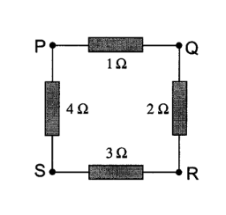 Circuito quattro resistori P Q R S
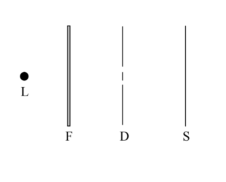 Schema doppia fenditura interferenza luce
Topic: Wave Optics, Geometric Optics Metodi: Interference & Diffraction Analysis, Physical Modeling, Superposition Principle Competenze: Physical Reasoning, Diagrammatic Reasoning Objects: Slit Fonte: Testo (PDF) — p.6
- The green filter is replaced by a blue filter.
Four-resistor circuit P Q R S
Double-slit interference pattern of light
- La doppia fenditura viene sostituita da un’altra con distanza maggiore tra le fenditure.
Topic: Wave Optics Metodi: Interference & Diffraction Analysis, Superposition Principle Competenze: Physical Reasoning, Mathematical Modeling Objects: Slit Fonte: Testo (PDF) — p.6
- The double slit is replaced by another one with a greater distance between the slits.
- Viene impiegata una sorgente luminosa più intensa.
- A. Tutte e tre
- B. Solo 1 e 2
- C. Solo 2 e 3
- D. Solo 1
- E. Solo 3 Domanda 1.18 (MC) Le cefeidi sono stelle particolari che mostrano una variazione periodica della loro luminosità. La luminosità assoluta può essere dedotta dalla durata del periodo. Disponi di una fotocamera con la quale puoi misurare l’intensità della luminosità (apparente) delle stelle. Fotografi due cefeidi A e B e constati che l’intensità misurata della cefeide B è 18 volte più debole di quella della cefeide A. Dal periodo della variazione di luminosità sai anche che la cefeide A ha una luminosità assoluta doppia rispetto alla cefeide B. Quanto è più lontana la cefeide B rispetto alla cefeide A?
- A. 3 volte più lontana
- B. 6 volte più lontana
- C. 9 volte più lontana
- D. 18 volte più lontana
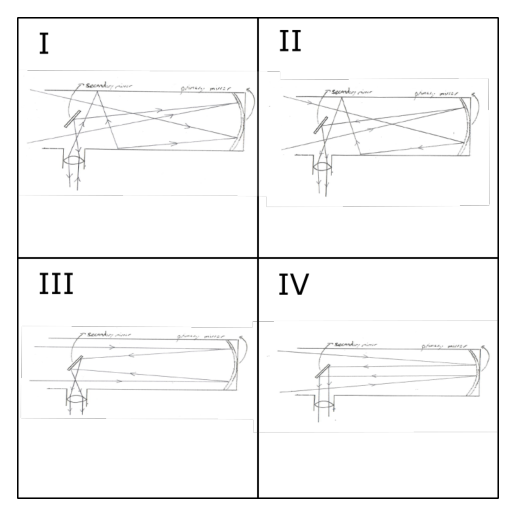
- E. 36 volte più lontana Domanda 1.19 (MC) Come si può aumentare la quantità di fotoni ricevuti da un telescopio? A) Usando un telescopio con uno specchio primario più grande. B) Usando un telescopio con uno specchio secondario più grande. C) Usando un telescopio con un oculare più grande. D) Collegando direttamente una fotocamera sensibile invece di utilizzare un oculare. E) Filtrando la luce rossa e conservando solo i fotoni blu ad alta energia. Parte 1 - 4/7 Olimpiadi di Fisica: Secundo turno 18.01.2023 Domanda 1.20 (MC) Considera un telescopio. Quale dei seguenti cammini ottici è possibile?
- A. I
- B. II
- C. III
- D. IV Domanda 1.21 (MC) Emmy tiene un cucchiaio con il braccio teso e osserva il suo riflesso nella superficie interna ed esterna del cucchiaio. Nel farlo, si accorge di quanto segue: A) I riflessi all’interno e all’esterno sono invertiti (capovolti). B) Il riflesso all’interno è invertito e quello all’esterno no. C) Il riflesso all’esterno è invertito e quello all’interno no. D) I riflessi all’interno e all’esterno non sono invertiti. Parte 1 - 5/7 Olimpiadi di Fisica: Secundo turno 18.01.2023 Multiple Choice: foglio risposte Riportate le vostre risposte nelle caselle previste su questa pagina. Cognome: Nome: Totale: A B C D E Domanda 1.1 □ □ □ □ Domanda 1.2 □ □ □ □ □ Domanda 1.3 □ □ □ □ □ Domanda 1.4 □ □ □ Domanda 1.5 □ □ □ □ □ Domanda 1.6 □ □ □ □ Domanda 1.7 □ □ □ □ □ Domanda 1.8 □ □ □ □ □ Domanda 1.9 □ □ □ □ □ Domanda 1.10 □ □ □ □ Domanda 1.11 □ □ □ □ □ Domanda 1.12 □ □ □ □ □ Domanda 1.13 □ □ □ □ Domanda 1.14 □ □ □ □ □ Domanda 1.15 □ □ □ □ □ Domanda 1.16 □ □ □ □ □ Domanda 1.17 □ □ □ □ □ Domanda 1.18 □ □ □ □ □ Domanda 1.19 □ □ □ □ □ Domanda 1.20 □ □ □ □ Domanda 1.21 □ □ □ □ Parte 1 - 6/7 SOLUTION Olimpiadi di Fisica: Secundo turno 18.01.2023 Multiple Choice: soluzioni A B C D E Domanda 1.1 ■ □ □ □ Domanda 1.2 □ ■ □ □ □ Domanda 1.3 □ ■ □ □ □ Domanda 1.4 ■ □ □ Domanda 1.5 □ ■ □ □ □ Domanda 1.6 □ □ ■ □ Domanda 1.7 □ □ □ ■ □ Domanda 1.8 □ □ □ ■ □ Domanda 1.9 ■ □ □ □ □ Domanda 1.10 ■ □ □ □ Domanda 1.11 □ □ ■ □ □ Domanda 1.12 □ □ □ ■ □ Domanda 1.13 ■ □ □ □ Domanda 1.14 □ □ □ ■ □ Domanda 1.15 □ □ □ □ ■ Domanda 1.16 □ ■ □ □ □ Domanda 1.17 □ ■ □ □ □ Domanda 1.18 ■ □ □ □ □ Domanda 1.19 ■ □ □ □ □ Domanda 1.20 □ □ ■ □ Domanda 1.21 □ ■ □ □ Parte 1 - 7/7 Olimpiadi di Fisica: Secundo turno 18.01.2023 Problemi lunghi Durata: 120 minuti Punteggio: 48 punti (3 16) Cominciate ogni problema su un nuovo foglio, al fine di facilitarne la correzione. Indicazione generale: i problemi sono composti da parti parzialmente indipendenti. In caso di blocco, si consiglia di continuare a leggere e di fare le parti più facili. Problema lungo 2.1: Effetto magnus (16 punti) Gli oggetti volanti in rotazione vengono deviati dalla loro traiettoria balistica a causa dell’interazione con l’aria circostante. In questo esercizio esaminiamo da più vicino questo effetto, che prende il nome dal fisico Heinrich Magnus. A tale scopo, nella parte A. elaboriamo un semplice modello per spiegare l’effetto e nella parte B. applichiamo i risultati ottenuti a un esempio. Parte A. Effetto Magnus (9 punti) In questa parte consideriamo un cilindro di altezza h e raggio R. Il cilindro ruota attorno al proprio asse con una velocità angolare e il suo centro di massa si muove con una velocità . Per la parte A. usiamo il sistema inerziale che si muove assieme al cilindro a una velocità (vedi schizzo). P x y Figura A.1: Cilindro dal punto di vista del sistema inerziale in movimento i. (1 pt) Quali sono le componenti e della velocità del punto P sulla superficie laterale del cilindro in funzione di , e dell’angolo ? ii. (0.5 pt) Qual è la velocità dell’aria lontano davanti al cilindro? Lo strato d’aria sulla superficie laterale del cilindro viene trascinata dal cilindro in rotazione. Pertanto, assumiamo che la velocità dell’aria nel punto P sia uguale alla somma della velocità e della velocità del punto P sul cilindro. iii. (3 pt) Assumi che la pressione nel punto sia . Usa l’equazione di Bernoulli per trovare la pressione in qualsiasi punto P sulla superficie laterale del cilindro in funzione di , dell’angolo , e . Consideriamo ora un elemento della superficie laterale del cilindro. A iv. (1.5 pt) Calcola le componenti e della forza agente sulla superficie A con lati di lunghezza e altezza . v. (1 pt) In quale direzione punta la forza totale agente sul cilindro? Un’argomentazione senza calcoli è sufficiente. vi. (2 pt) A quanto ammonta questa forza? Suggerimento: Parte B. Traiettoria (7 punti) In questa parte applichiamo l’effetto Magnus alla traiettoria di un pallone da calcio. Per questo abbiamo bisogno della forza dell’effetto Magnus nel caso di un pallone che vola con una velocità e ruota con una velocità angolare Parte 2 - 1/14 Olimpiadi di Fisica: Secundo turno 18.01.2023 dove indica la densità dell’aria () e il raggio del pallone. Inoltre, per questo esercizio assumiamo che un pallone da calcio pesi 420 g e abbia un raggio di 11 cm. La distanza dalla bandierina del calcio d’angolo al centro della porta è . Shaqiri vuole segnare un gol dalla bandierina del calcio d’angolo. Calcia il pallone in modo che l’asse di rotazione sia sempre perpendicolare al terreno. Shaqiri porta i. (2 pt) Quali forme descrivono le componenti orizzontali e verticali della traiettoria della palla? ii. (2.5 pt) Shaqiri calcia il pallone con una velocità di rotazione di 10 giri al secondo e una velocità orizzontale iniziale di . Con quale angolo rispetto alla linea di fondo deve calciare in modo che il pallone superi la linea di porta esattamente al centro della porta? iii. (2.5 pt) A quale velocità verticale verso l’alto deve calciare il pallone in modo che colpisca di nuovo il terreno esattamente quando attraversa la linea di porta? Parte 2 - 2/14 Olimpiadi di Fisica: Secundo turno 18.01.2023 Problema lungo 2.2: Crisi energetica (16 punti) In una piacevole giornata autunnale, Richard Feynman legge sul giornale che per il successivo inverno è prevista una carenza di combustibili fossili. Attualmente vive con Arline Greenbaum in un appartamento condiviso riscaldato a nafta. La coppia inizia a chiedersi come ridurre il consumo di nafta. In inverno, la temperatura esterna è e loro desiderano che il loro appartamento sia mantenuto alla temperatura di , nel qual caso l’appartamento perde di calore che devono essere compensati. La nafta ha un potere calorifico di . L’acqua ha una capacità termica di e un calore latente di solidificazione di . Parte A. Domande di riscaldamento (4.5 punti) i. (1 pt) Stima il rendimento del riscaldamento dell’acqua sanitaria a nafta. ii. (1 pt) Quanta acqua potrebbe essere riscaldata da a con 1 L di nafta? iii. (0.5 pt) Per quanto tempo possono mantenere la temperatura del loro appartamento con 1 L di nafta? iv. (2 pt) Assumendo che l’appartamento perda calore solo tramite conduzione
Topic: Fluid Mechanics, Newtonian Mechanics, Thermodynamics Metodi: Bernoulli’s Equation, Kinematic Equations, Vector Decomposition, Free-Body Diagram, First Law of Thermodynamics Competenze: Mathematical Modeling, Physical Reasoning, Diagrammatic Reasoning Objects: Mirror, Star, Photon, Cylinder, Ball Fonte: Testo (PDF) — p.6
Figure
Figure
Figure
Figure
Figure
Figure
Figure
Figure
Figure
Figure
Figure
Figure
p.4 — Due piastre conducibilita termica diversa
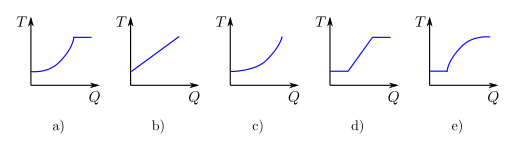
p.4 — Grafici riscaldamento miscuglio acqua-ghiaccio
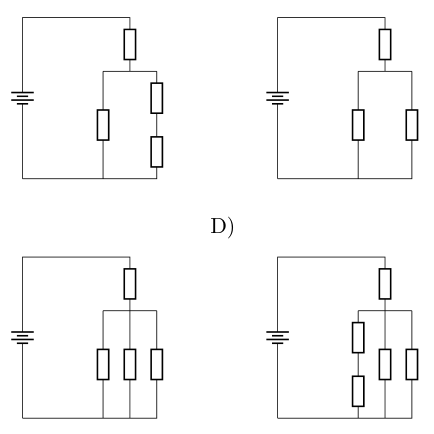
p.5 — Circuiti rete resistori infinita opzioni A-D
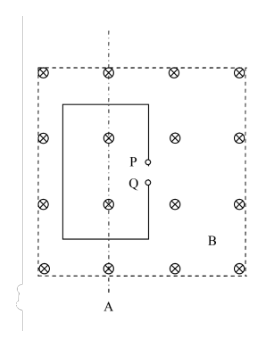
p.5 — Maglia rettangolare in campo magnetico
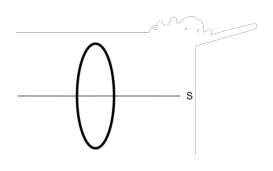
p.5 — Anello toroidale carico campo elettrico
p.7 — Cammini ottici telescopio quattro opzioni
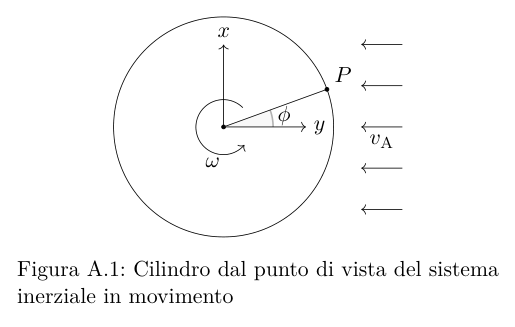
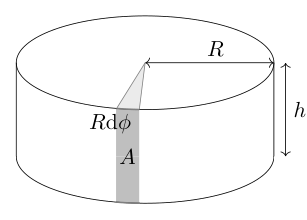
p.10 — Cilindro rotante sistema inerziale Figura A.1
p.10 — Elemento superficie laterale cilindro A
p.11 — Schema calcio angolo Shaqiri porta theta
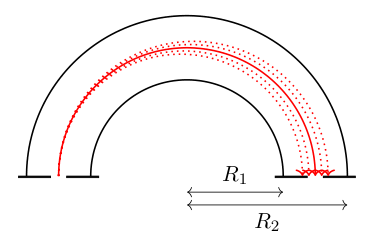
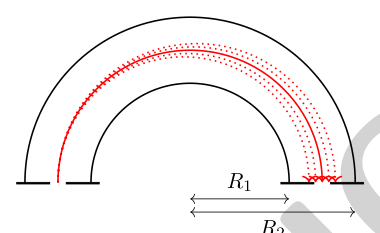
p.13 — Analizzatore emisferico R1 R2 elettroni
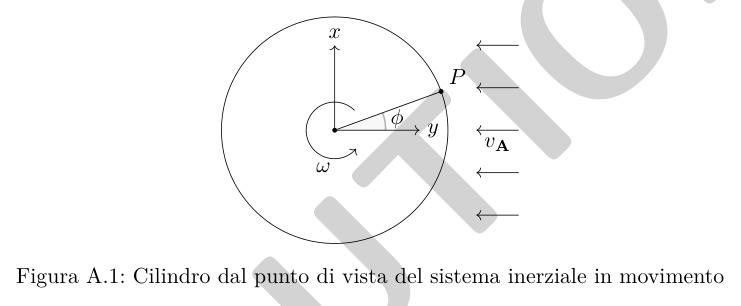
p.14 — Cilindro sistema inerziale soluzione A.1
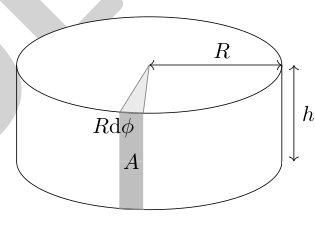
p.15 — Elemento superficie cilindro soluzione
p.17 — Traiettoria pallone angolo theta soluzione
p.21 — Analizzatore emisferico soluzione
- A brighter light source is used.
- A. All three
- B. Only 1 and 2
- C. Only 2 and 3
- D. Only 1
- E. Only 3
Question 1.18 (MC) Cepheids are special stars that exhibit a periodic variation in their brightness. Their absolute luminosity can be deduced from the duration of the period. You have a camera that allows you to measure the apparent brightness (intensity) of stars. You photograph two Cepheids, A and B, and observe that the measured brightness of Cepheid B is 18 times weaker than that of Cepheid A. From the period of brightness variation, you also know that Cepheid A has twice the absolute luminosity of Cepheid B. How much farther away is Cepheid B compared to Cepheid A?
- A. 3 times farther
- B. 6 times farther
- C. 9 times farther
- D. 18 times farther
- E. 36 times farther
Question 1.19 (MC) How can the number of photons received by a telescope be increased? A) Using a telescope with a larger primary mirror. B) Using a telescope with a larger secondary mirror. C) Using a telescope with a larger eyepiece. D) Connecting a sensitive camera directly instead of using an eyepiece. E) Filtering out red light and keeping only high-energy blue photons.
Part 1 - 4/7 Physics Olympiad: Second round January 18, 2023
Question 1.20 (MC) Consider a telescope. Which of the following optical paths is possible?
- A. I
- B. II
- C. III
- D. IV
Question 1.21 (MC) Emmy holds a spoon with her arm fully extended and observes her reflection on both the inner and outer surfaces of the spoon. In doing so, she notices the following: A) Reflections on both the inside and outside are inverted (upside down). B) The reflection on the inside is inverted, while that on the outside is not. C) The reflection on the outside is inverted, while that on the inside is not. D) Reflections on both the inside and outside are not inverted.
Part 1 - 5/7 Physics Olympiad: Second Round January 18, 2023 Multiple Choice: Answer Sheet
Please record your answers in the boxes provided on this page. Last Name: First Name: Total:
A B C D E Question 1.1 □ □ □ □ Question 1.2 □ □ □ □ □ Question 1.3 □ □ □ □ □ Question 1.4 □ □ □ Question 1.5 □ □ □ □ □ Question 1.6 □ □ □ □ Question 1.7 □ □ □ □ □ Question 1.8 □ □ □ □ □ Question 1.9 □ □ □ □ □ Question 1.10 □ □ □ □ Question 1.11 □ □ □ □ □ Question 1.12 □ □ □ □ □ Question 1.13 □ □ □ □ Question 1.14 □ □ □ □ □ Question 1.15 □ □ □ □ □ Question 1.16 □ □ □ □ □ Question 1.17 □ □ □ □ □ Question 1.18 □ □ □ □ □ Question 1.19 □ □ □ □ □ Question 1.20 □ □ □ □ Question 1.21 □ □ □ □
Part 1 - 6/7
SOLUTION Physics Olympiad: Second Round January 18, 2023 Multiple Choice: Solutions
A B C D E Question 1.1 ■ □ □ □ Question 1.2 □ ■ □ □ □ Question 1.3 □ ■ □ □ □ Question 1.4 ■ □ □ Question 1.5 □ ■ □ □ □ Question 1.6 □ □ ■ □ Question 1.7 □ □ □ ■ □ Question 1.8 □ □ □ ■ □ Question 1.9 ■ □ □ □ □ Question 1.10 ■ □ □ □ Question 1.11 □ □ ■ □ □ Question 1.12 □ □ □ ■ □ Question 1.13 ■ □ □ □ Question 1.14 □ □ ■ □ □ Question 1.15 □ □ □ ■ □ Question 1.16 □ □ □ ■ □ Question 1.17 □ □ □ ■ □ Question 1.18 □ □ □ ■ □ Question 1.19 □ □ □ ■ □ Question 1.20 □ □ □ ■ □ Question 1.21 □ □ □ ■ Question 1.14 □ □ □ ■ □
Question 1.15 □ □ □ □ ■
Question 1.16 □ ■ □ □ □
Question 1.17 □ ■ □ □ □
Question 1.18 ■ □ □ □ □
Question 1.19 ■ □ □ □ □
Question 1.20 □ □ ■ □
Question 1.21 □ ■ □ □
Part 1 - 7/7 Physics Olympiad: Second Round January 18, 2023 Long Problems Duration: 120 minutes Score: 48 points (3 worth 16)
Begin each problem on a new sheet to facilitate grading.
General instruction: The problems consist of partially independent parts. In case of getting stuck, it is recommended to continue reading and attempt the easier parts.
Long Problem 2.1: Magnus Effect (16 points) Rotating flying objects are deflected from their ballistic trajectory due to interaction with the surrounding air. In this exercise, we examine this effect more closely, which is named after physicist Heinrich Magnus. To this end, in part A we develop a simple model to explain the effect, and in part B we apply the obtained results to an example.
Part A. Magnus Effect (9 points) In this part, we consider a cylinder of height h and radius R. The cylinder rotates about its own axis with angular velocity , and its center of mass moves with velocity . For part A, we use the inertial reference frame moving together with the cylinder at velocity (see sketch).
P x y Figure A.1: Cylinder as viewed from the inertial reference frame moving with it. i. (1 pt) What are the components and of the velocity of point P on the lateral surface of the cylinder, expressed in terms of , , and the angle ? ii. (0.5 pt) What is the velocity of the air far ahead of the cylinder? The layer of air on the lateral surface of the cylinder is dragged along by the rotating cylinder. Therefore, we assume that the air velocity at point P equals the sum of the velocity and the velocity of point P on the cylinder. iii. (3 pt) Assume that the pressure at point is . Use Bernoulli’s equation to find the pressure at any point P on the lateral surface of the cylinder, expressed in terms of , the angle , , and . Now consider an element of the lateral surface of the cylinder. A iv. (1.5 pt) Calculate the components and of the force acting on surface A, which has sides of length and height . v. (1 pt) In which direction does the total force acting on the cylinder point? A qualitative argument without calculations is sufficient. vi. (2 pt) What is the magnitude of this force? Hint: Part B. Trajectory (7 points) In this part, we apply the Magnus effect to the trajectory of a soccer ball. For this purpose, we need the expression for the Magnus force in the case of a ball moving with velocity and rotating with angular velocity Part 2 - 1/14 Physics Olympiad: Second Round January 18, 2023 where denotes the air density () and the radius of the football. Additionally, for this exercise we assume a soccer ball weighs 420 g and has a radius of 11 cm. The distance from the corner flag to the center of the goal is .
Shaqiri aims to score a goal from the corner flag. He kicks the ball such that its axis of rotation is always perpendicular to the ground.
Shaqiri performs i. (2 points) What shapes describe the horizontal and vertical components of the ball’s trajectory? ii. (2.5 points) Shaqiri kicks the ball with a rotational speed of 10 revolutions per second and an initial horizontal velocity of . At what angle relative to the sideline must he kick so that the ball crosses the goal line exactly at the center of the goal? iii. (2.5 points) At what upward vertical velocity must he kick the ball so that it hits the ground again precisely when crossing the goal line?
Part 2 - 2/14 Physics Olympiad: Second Round January 18, 2023 Long Problem 2.2: Energy Crisis (16 points) On a pleasant autumn day, Richard Feynman reads in the newspaper that a shortage of fossil fuels is expected for the upcoming winter. Currently, he lives with Arline Greenbaum in a shared apartment heated by kerosene. The couple begins to wonder how they can reduce their kerosene consumption. In winter, the outdoor temperature is and they wish to maintain their apartment at a temperature of , in which case the apartment loses of heat that must be compensated. Kerosene has a heating value of . Water has a specific heat capacity of and a latent heat of solidification of .
Part A. Heating Questions (4.5 points)
i. (1 pt) Estimate the efficiency of kerosene-based hot water heating.
ii. (1 pt) How much water could be heated from to using 1 L of kerosene?
iii. (0.5 pt) For how long could they maintain their apartment’s temperature using 1 L of kerosene?
iv. (2 pt) Assuming the apartment loses heat only through conduction
Figure
Figure
Figure
Figure
Figure
Figure
Figure
Figure
Figure
Figure
Figure
Figure
p.4 — Two plates with different thermal conductivities
p.4 — Graphs of heating a water-ice mixture
p.5 — Infinite resistor network circuits, options A–D
p.5 — Rectangular loop in a magnetic field
p.5 — Charged toroidal ring, electric field
p.7 — Optical paths in telescope, four options
p.10 — Rotating cylinder, inertial frame Figure A.1
p.10 — Lateral surface element of cylinder A
p.11 — Football corner kick, Shaqiri’s angle theta
p.13 — Hemispherical analyzer R1 R2 electrons
p.14 — Cylinder, inertial frame solution A.1
p.15 — Cylinder surface element, solution
p.17 — Ball trajectory, angle theta solution
p.21 — Hemispherical analyzer, solution