Problem 1 (13 points)
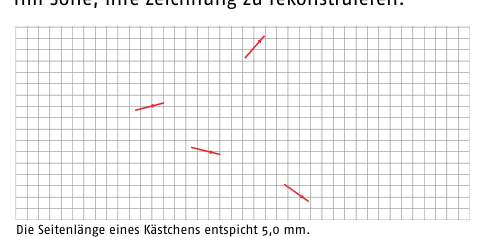 tracce raggi su griglia per ricostruzione lente
Topic: Geometric Optics Metodi: Physical Modeling, Ray Tracing Competenze: Physical Reasoning, Diagrammatic Reasoning Objects: Lens Fonte: Testo (PDF) — p.2
Problema 1 (13 punti)
tracce raggi su griglia per ricostruzione lente
Topic: Geometric Optics Metodi: Physical Modeling, Ray Tracing Competenze: Physical Reasoning, Diagrammatic Reasoning Objects: Lens Fonte: Testo (PDF) — p.2
Problem 1 (13 points)
The Commission shall adopt implementing acts in accordance with Article 21 of the Treaty establishing the European Community.
Topic: Geometric Optics Metodi: Physical Modeling, Ray Tracing Competenze: Physical Reasoning, Diagrammatic Reasoning Objects: Lens Fonte: Testo (PDF) — p.2
Problem 2 (9 points) The side length of one grid square corresponds to 5.0 mm. 2012 Contact Secretariat Lulu Hoffmeister Tel.: 04 31 / 8 80-53 87 Fax: 04 31 / 8 80-31 48 E-mail: sekretariat@ipho.info Competition management Dr. Stefan Petersen Tel.: 04 31 / 8 80-51 20 E-mail: petersen@ipho.info IPN • Olshausenstr. 62 • D-24098 Kiel Of Mice and Men When a mouse falls from a tall building, in most cases it will get away with no more than a fright, whereas the same fall would be fatal for a human. Responsible for this difference is the behaviour of physical laws under scaling. Mice and humans are, at least to a rough approximation, built the same way. Assume that in a human all lengths are enlarged by a scaling factor k. Consider the fall of a mouse and of a human from a great height and determine, using simple approximations, how the forces arising on impact for the mouse and the human compare with one another. The braking forces that can be exerted at most by the muscles and bones are proportional to their cross-sectional area. Therefore the maximum braking force of the human is greater by a factor k2 than that of the mouse. Explain why, despite this, the mouse nevertheless has the better chances of survival in the fall.
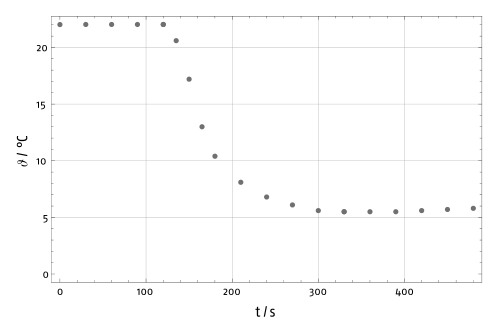 grafico temperatura acqua vs tempo raffreddamento
Topic: Newtonian Mechanics, Order-of-Magnitude Estimation Metodi: Physical Modeling, Dimensional Analysis, Free-Body Diagram Competenze: Estimation & Approximation, Physical Reasoning, Mathematical Modeling Objects: — Fonte: Testo (PDF) — p.2
Il problema 2 (9 punti) La lunghezza laterale di un quadrato di griglia corrisponde a 5,0 mm. 2012 Contatto Segretariato Lulu Hoffmeister Tel.: 04 31 / 8 80-53 87 Fax: 04 31 / 8 80-31 48 E-mail: segretariat@ipho.info Gestione della concorrenza Dr. Stefan Petersen Tel.: 04 31 / 8 80-51 20 E-mail: petersen@ipho.info IPN • Olshausenstr. 62 • D-24098 Kiel Di Mice and Men Quando un topo cade da un edificio alto, in molti casi “E’ una cosa che non si può fare”. lo stesso caso sarebbe fatale per un umano. Responsabile di questo La differenza è il comportamento delle leggi fisiche
- La scalpa. I topi e gli esseri umani sono, almeno in modo molto grosso Approximation, costruito allo stesso modo. Supponiamo che in a Le lunghezze umane sono allargate da un fattore di scalazione k. Considerate la caduta di un topo e di un umano da un grande altezza e determinare, usando semplici approssimative, come le forze che si verificano sull’impatto per il mouse e l’uomo confrontarsi tra loro. Le forze frenetico che possono essere esercitate al massimo dai muscoli e dalle ossa sono proporzionato alla loro area di sezione. Pertanto la massima forza di frenata dell’uomo è maggiore di un fattore k2. che quello del topo. Spiegate perché, nonostante questo, il topo ha comunque il migliori possibilità di sopravvivenza in caso di incidente.
grafico temperatura acqua vs tempo raffreddamento
Topic: Newtonian Mechanics, Order-of-Magnitude Estimation Metodi: Physical Modeling, Dimensional Analysis, Free-Body Diagram Competenze: Estimation & Approximation, Physical Reasoning, Mathematical Modeling Objects: — Fonte: Testo (PDF) — p.2
Problem 2 (9 points) The side length of one grid square corresponds to 5.0 mm. 2012 Contact Secretariat Lulu Hoffmeister Telephone number: 04 31 / 8 80-53 87 Fax: 04 31 / 8 80-31 48 The Commission has also adopted a number of measures to improve the quality of life of the European Union. Competition management Dr. The Commission shall adopt implementing acts in accordance with Article 21 of this Regulation. Telephone number: 04 31 / 8 80-51 20 The Commission has also adopted a number of recommendations. The Commission has also adopted a number of proposals for the implementation of the programme. The Commission has also adopted a number of proposals for the proposal. Of Mice and Men When a mouse falls from a tall building, in most cases It will get away with no more than a fear, whereas the The same thing would be fatal for a human. Responsible for this Difference is the behaviour of physical laws under The scaling. Mice and humans are, at least to a rough Approximation, built the same way. Assume that in a Human all lengths are enlarged by a scaling factor k. Consider the fall of a mouse and of a human from a Great height and determine, using simple approximations, how the forces arising on impact For the mouse and the human compare with each other. The braking forces that can be exerted at most by the muscles and bones are proportional to their cross-sectional area. Therefore the maximum braking force of the human is greater by a factor k2 than that of the mouse. Explain why, despite this, the mouse nevertheless has the Better chances of survival in the event.
The following table shows the results of the study:
Topic: Newtonian Mechanics, Order-of-Magnitude Estimation Metodi: Physical Modeling, Dimensional Analysis, Free-Body Diagram Competenze: Estimation & Approximation, Physical Reasoning, Mathematical Modeling Objects: — Fonte: Testo (PDF) — p.2
Problem 3 (13 points) The perfect throw A basketball player, throwing from a standing position, throws a ball at a basketball hoop whose centre is a horizontal distance of 5.0 m from the release point. The upper rim of the hoop is mounted at a height of 3.05 m and has a diameter of 45 cm. The circumference of the ball is 76 cm and it is released from a height of 2.10 m. The ball is thrown so that it falls through the centre of the hoop’s rim, without touching the rim or the backboard behind the hoop. State in which release directions and with which release speeds the basketball player may throw the ball for such a shot. For the analysis, neglect air resistance and assume that the ball does not rotate. While the ball falls through the hoop, its speed may be assumed to be approximately constant. Lead-break mishap The lead of a mechanical pencil has broken into two pieces. If the two pieces of lead are connected in series in an electrical circuit, the total resistance is 56.0 , whereas the total resistance for a parallel connection of the two pieces is only 12.7 . From these data, determine both the total length of the lead and the lengths of the individual pieces of lead. The lead has a diameter of 0.5 mm and is made of a material with a resistivity of 0.11 mm.
Topic: Newtonian Mechanics, Circuits Metodi: Kinematic Equations, Physical Modeling, Kirchhoff’s Laws Competenze: Mathematical Modeling, Physical Reasoning, Diagrammatic Reasoning Objects: Ball, Resistor, Wire Fonte: Testo (PDF) — p.3
Problema 3 (13 punti) Il lancio perfetto Un giocatore di basket, che lancia da una posizione in piedi, lancia una palla At a basketball hoop, il cui centro è a a horizontal distance of 5.0 m dal punto di rilascio. Il bordo superiore del hoop is mounted at a height of 3.05 m and ha un diametro di 45 cm. La circonferenza del La palla è di 76 cm ed è rilasciata da un’altezza di 2.10 m. La palla è lanciata in modo che Cade attraverso il centro del bordo del cerchio, senza toccare il rim o il backboard dietro l’hoop. State in which release directions and with which release speeds il giocatore di basket può E’ un’occasione per lanciare la palla. Per l’analisi, negligenza della resistenza all’aria E supponi che la palla non ruota. Mentre il Ball Falls Through the hoop, la sua velocità può si presume che sia approssimativamente costante. Lead break mishap Il lead di una matita meccanica si è spezzato in due pezzi. If i due pezzi di piombo sono collegati in serie in un circuito elettrico, la resistenza totale è di 56,0 , mentre la resistenza totale per una connessione parallela dei due pezzi è solo 12,7 . Da questi dati, determinare sia la durata totale del lead che Le lunghezze dei singoli pezzi di piombo. Il lead ha un diametro di 0,5 mm ed è fatto di a material with a resistivity of 0.11 mm.
Topic: Newtonian Mechanics, Circuits Metodi: Kinematic Equations, Physical Modeling, Kirchhoff’s Laws Competenze: Mathematical Modeling, Physical Reasoning, Diagrammatic Reasoning Objects: Ball, Resistor, Wire Fonte: Testo (PDF) — p.3
Problem 3 (13 points) The perfect throw A basketball player, throwing from a standing position, throws a ball At a basketball hoop whose center is a horizontal distance of 5.0 m from the release point. The upper rim of the hoop is mounted at a height of 3.05 m and has a diameter of 45 cm. The circumference of the Ball is 76 cm and it is released from a height of 2.10 m. The ball is thrown so that it Falls through the center of the hoop’s rim, without touching the Rim or the backboard behind the hoop. State in which release directions and with which release speeds the basketball player may Throw the ball for such a shot. For the analysis, neglect air resistance And assume that the ball doesn’t rotate. While the Ball falls through the hoop, its speed may be assumed to be approximately constant. Lead break mishap The lead of a mechanical pencil has broken into two pieces. If the two pieces of lead are connected in series in an electrical circuit, the total resistance is 56.0 , whereas The total resistance for a parallel connection of the two pieces is only 12.7 . From these data, determine both the total length of the lead and the The lengths of the individual pieces of lead. The lead has a diameter of 0.5 mm and is made of a material with a resistivity of 0,11 mm.
Topic: Newtonian Mechanics, Circuits Metodi: Kinematic Equations, Physical Modeling, Kirchhoff’s Laws Competenze: Mathematical Modeling, Physical Reasoning, Diagrammatic Reasoning Objects: Ball, Resistor, Wire Fonte: Testo (PDF) — p.3
Problem 4 (15 points) Junior problem (10 points) New! Register now at www.ipho.info for the competition! Round 1 When? From April 2011 onwards. Submission deadlines can be found on the IPhO website. Who? Anyone interested who in the 2011/2012 school year attends a general-education German school and was born after 30.06.1992. Where? The problems are solved as homework. You hand in your work to your subject teacher for correction. How? Four problems are to be solved from all areas of physics. The solutions may be written by hand or on a computer and should be comprehensible but not unnecessarily long. Textbooks may be used, provided the sources are cited. Formulas found in the standard textbooks need not be derived. Only individual work is permitted. Anyone who in the 2011/12 school year has not yet reached the second-to-last grade level can earn a points bonus with the junior problem. What can you win? All participants receive a certificate of participation or an award certificate. Round 2 When? September to October 2011. Who? The problems are sent to all prize winners of the first round. Where? You solve the problems again at home and send your work for correction, uncorrected, by 31 October 2011 to your state coordinator. It is later reviewed again at the IPN. How? Theoretical and experimental physics problems are to be worked on. These are more demanding than in the first round. Otherwise the same rules apply as for the first round. What can you win? All participants receive an award certificate with an assessment sheet. The roughly 50 best are invited to the third round. The state coordinators coordinate the running of the first two rounds in the individual federal states. They are your contact persons up to the third round. Round 3 When? 28 January - 03 February 2012. Who? The roughly 50 best of the second round. Where? The third round takes place as a one-week seminar at DLR Göttingen. How? The task now is to work on two theoretical and two experimental exams without reference material. In the afternoons there are problem seminars and excursions. What can you win? In addition to a book voucher and a subscription, all participants receive an award certificate with an assessment sheet. Young talents are offered the opportunity to take part in the European Science Olympiad (EUSO), a science team competition. Round 4 When? April 2012. Who? The 15 best of the third round. Where? For the fourth round, the participants are invited for a week to a research centre. How? Here again theoretical and experimental exams are on the programme. To prepare for the IPhO, problem seminars are held that are specifically geared to typical IPhO problems. What can you win? The five most successful not only make up the Olympiad team, but with this round they also go through the selection process for the German National Academic Foundation (Studienstiftung des deutschen Volkes). For the others there are, besides a cash prize of 500 euros, language-study trips and internships. In addition, the German Physical Society (Deutsche Physikalische Gesellschaft) awards its student prize to the team members. Baden-Württemberg OStR Fabian Bühler Schülerforschungszentrum Südwürttemberg Gutenbergstr. 18 88348 Bad Saulgau baden-wuerttemberg@ipho.info Bayern StD Richard Reindl Werdenfels-Gymnasium Wettersteinstraße 30 82467 Garmisch-Partenkirchen bayern@ipho.info Berlin StD Dr. Ingo Wilken Lise-Meitner-Schule Rudower Str. 184 12351 Berlin berlin@ipho.info Brandenburg StR Christian Kaspar Carl-Friedrich-Gauß-Gymnasium Friedrich-Ebert-Str. 52 15234 Frankfurt/Oder brandenburg@ipho.info Bremen OStR Peter Weinhold Lloyd Gymnasium Grazer Str. 61 27568 Bremerhaven bremen@ipho.info Hamburg Detlef Kaack Institut für Lehrerfortbildung und Schulentwicklung Felix-Dahn-Straße 3 20357 Hamburg hamburg@ipho.info Hessen StR Jörg Steiper Albert-Schweizer-Schule Schülerforschungszentrum Nordhessen Kölnische Str. 89 34119 Kassel hessen@ipho.info Mecklenburg-Vorpommern Prof. Dr. Heidi Reinholz Institut für Physik Universität Rostock Universitätsplatz 3 18051 Rostock mecklenburg-vorpommern@ipho.info Niedersachsen OStR Dirk Brockmann-Behnsen Krausenstraße 39 30171 Hannover und Prof. Dr. Gunnar Friege IDMP Universität Hannover Welfengarten 1 30167 Hannover niedersachsen@ipho.info NRW Arnsberg LRSD Hans Beinghaus Bezirksregierung Arnsberg Dezernat 43 Laurentiusstraße 1 59821 Arnsberg nrw-arnsberg@ipho.info NRW Detmold StD Peter Goldkuhle und StD Stefan Blumenthal Bezirksregierung Detmold Fachberatung Physik Leopoldstraße 13-15 32756 Detmold nrw-detmold@ipho.info NRW Düsseldorf LRSD Norbert Stirba Bezirksregierung Düsseldorf Am Bonneshof 35 40474 Düsseldorf nrw-duesseldorf@ipho.info NRW Köln StD Dieter Stauder Studienseminar für Lehrämter an Schulen Bonn Godesberger Allee 136 53175 Bonn nrw-koeln@ipho.info NRW Münster LRSD Klaus Dingemann und Reinhard Beer Albrecht-Thaer-Str. 9 Dezernat 48 48147 Münster nrw-muenster@ipho.info Rheinland-Pfalz StD’ Beate Schuster Sickingen-Gymnasium Landstuhl Philipp-Fauth-Straße 3 66849 Landstuhl rheinland-pfalz@ipho.info Saarland Dr. Doris Simon Theodor-Heuss-Gymnasium Quierschieder Weg 4 66280 Sulzbach saarland@ipho.info Sachsen Joachim Brucherseifer Wilhelm-Ostwald-Gymnasium Willi-Bredel-Str. 15 04279 Leipzig sachsen@ipho.info Sachsen-Anhalt Wolfgang Pannicke Georg-Cantor-Gymnasium Torstraße 13 06110 Halle sachsen-anhalt@ipho.info Schleswig-Holstein OStR Stefan Burzin Werner-Heisenberg-Gymnasium Rosenstraße 41 25746 Heide schleswig-holstein@ipho.info Thüringen SR Harald Ensslen Staatliches Studienseminar für Lehrerausbildung Außenstelle Jena Philosophenweg 26 07743 Jena thueringen@ipho.info Addresses of the state coordinators NEW! Starting this year, students and supervising teachers can register online for the competition at www.ipho.info. Information on the four selection rounds for the 43rd IPhO 2012
Topic: Geometric Optics Metodi: Ray Tracing, Snell’s Law, Thin Lens & Mirror Equation Competenze: Diagrammatic Reasoning, Physical Reasoning, Mathematical Modeling Objects: — Fonte: Testo (PDF) — p.3
Il problema 4 (15 punti) Problema minore (10 punti) Nuovo! Registrare ora a www.ipho.info Per la competizione! Rondo 1 Quando? Dall’aprile 2011 in poi. Le date di presentazione sono disponibili sul sito Internet dell’IPhO.
- Chi? Qualsiasi persona interessata 2011/2012 school year attends a general-education scuola tedesca e cosa nato dopo il 30 giugno 1992.
- Dove? I problemi sono risolti come
- I compiti. Tu ti impegni nel tuo lavoro a your subject teacher per
- La correzione. Come? Quattro problemi devono essere risolti da tutti gli ambiti della fisica. Il soluzioni possono essere scritte a mano o su un computer e dovrebbe essere comprensibile ma non troppo lungo. I libri di testo possono essere utilizzati, purché le fonti siano citate. Formulari found in the standard I libri di testo non devono essere derivati. Solo Il lavoro individuale è consentito. Qualsiasi persona che sia nel L’anno scolastico 2011/12 non ha ancora raggiunto il livello di grado second-to-last Can earn a points bonus with the junior problem. Cosa puoi vincere? Tutti partecipanti ricevere a Certificato di partecipazione o certificato di riconoscimento. Rondo 2 Quando? Settembre a ottobre 2011.
- Chi? I problemi sono inviati a Tutti i vincitori del primo round.
- Dove? Tu risolvi i problemi di nuovo a Home and send your work (a casa e mandare il lavoro) per correzione, non corretto, entro il 31 ottobre 2011 al coordinatore statale. È più tardi Reviewed again at the IPN. Come? I problemi di fisica teorica e sperimentale devono essere risolti. Questi sono più esigente di quanto non sia stato il primo
- Rondo. Altrimenti le stesse regole si applicano al primo round. Cosa puoi vincere? Tutti i partecipanti ricevono un certificato di riconoscimento con una scheda di valutazione. Il circa 50 Best sono invitati al terzo
- Rondo. I coordinatori statali coordinano il corso dei primi due round negli singoli stati federali. Sono le vostre persone di contatto fino al terzo round. Round 3 Quando? 28 gennaio - 3 febbraio 2012.
- Chi? Il 50° migliore del secondo round.
- Dove? Il terzo round si svolge come un seminario di una settimana presso la DLR Göttingen. Come? Il compito ora è di lavorare su due teorici e due sperimentale Examinamenti senza materiale di riferimento. # Nei pomeriggi # # Ci sono seminari di problemi e
- Escursioni. Cosa puoi vincere? In aggiunta a book voucher e un all’appuntamento, tutti i partecipanti ricevono un certificato di riconoscimento con una scheda di valutazione. Giovani talenti sono offerti l’opportunità di prendere parte al Il programma di ricerca scientifica (EUSO) scienza competizione di squadra. Round 4 Quando? Aprile 2012.
- Chi? Il 15° migliore del terzo round.
- Dove? Per il quarto round, il I partecipanti sono invitati a una settimana Centro di ricerca. Come? Qui di nuovo gli esami teorici ed sperimentali sono sul programma. To preparare l’IPhO, seminari di problemi sono erodi che sono specificamente orientati a problemi tipici di IPhO. Cosa puoi vincere? I cinque più riusciti non solo Ma con questo round, passano anche attraverso il processo di selezione. La Commissione ha adottato una proposta di regolamento (UE) n.
- Popoli. Per gli altri ci sono, oltre a un premio in contanti di 500 euro, • le attività di formazione professionale e di formazione professionale. Inoltre, la German Physical Society (German Physical Society) assegna il suo premio al suo studente ai membri del team. Baden-Württemberg OStR Fabian Bühler Centro di ricerca per studenti Sud-Württemberg
- Gutenbergstr. 18 88348 Bad Saulgau baden-wuerttemberg@ipho.info Baviera StD Richard Reindl La scuola superiore di Werdenfels Strada meteorologica 30 82467 Chiese di Partenza di Garmisch bayern@ipho.info Berlino
- Dott. Ingo Wilken Scuola di scuola superiore Rudower Str. 184 12351 Berlino berlin@ipho.info Brandenburg StR Christian Kaspar Carl-Friedrich-Gauß-Gymnasium Str. Friedrich-Ebert 52 15234 Francoforte/Oder Brandenburg@ipho.info Bremeno OStR Peter Weinhold Lloyd’s High School Strada Grazer . 61 27568 Bremerhaven Bremen@ipho.info L’Agenzia europea Detlef Kaack Istituto di formazione continua degli insegnanti e sviluppo scolastico Felix-Dahn-Straße 3 20357 Amburgo hamburg@ipho.info Hesse StR Jörg Steiper Scuola svizzera di Alberto Centro di ricerca per studenti di Nordhessen Str. Cologne 89 34119 Casella hessen@ipho.info Mecklenburg-Vorpommern Prof. Dr. Heidi legno di legno Istituzione di fisica Università di Rostock Piazza universitaria 3 18051 Rostock Mecklenburg-vorpommern@ipho.info La Germania OStR Dirk Brockmann-Behnsen Cammino di croce 30171 Hannover e il Prof. Dr. Gunnari Friege IDMP Università di Hannover Giardini balenici 1 30167 Hannover niedersachsen@ipho.info R.A. Arnsberg LRSD Hans Beinghaus Regione di Arnsberg Discriminazione 43 Laurentiusstraße 1 59821 Arnsberg nrw-arnsberg@ipho.info NRW Detmold StD Peter Goldschule e StD Stefan Blumenthal Comune di Detmold Consulenza fisica Via Leopold 13-15 32756 Detmold nrw-detmold@ipho.info NRW Düsseldorf LRSD Norbert Stirba Regione di Düsseldorf Al Bonneshof 35 40474 Düsseldorf nrw-duesseldorf@ipho.info Cologne, Repubblica federale di Germania StD Dieter Stauder Seminario di studio per gli insegnanti delle scuole di Bonn Allievo di Godesberger 136 53175 Bonn nrw-koeln@ipho.info Rinascimento LRSD Klaus Dingemann e Reinhard Beer Albrecht-Thaer Str. 9 Discriminazione 48 48147 campioni nrw-muenster@ipho.info Rinasco-Palce StD’ Beate Schuster Sickingen-Gymnasium Landstuhl Rue Philipp-Fauth 3 66849 poltrone Rheinland-pfalz@ipho.info Saarland Dr. Doris Simon La scuola di Teodor-Heuss Via di chieri 4 66280 Sulzbach
- il sito web di Internet Sassonia Gioias, il capo della Commissione La scuola superiore di Wilhelm-Ostwald Strada Willi-Bredel. 15 04279 Leipzig Sachsen@ipho.info Sassonia-Annault Wolfgang Pannicke Georg Cantor-Gymnasium Torstrasse 13 06110 Sala Sachsen-anhalt@ipho.info Schleswig-Holstein OStR Stefan Burzin La scuola superiore di Werner-Heisenberg Via Rosa 41 25746 Pagano Schleswig-holstein@ipho.info Turin S.r. Harald Ensslen Seminario di studio di Stato per la formazione degli insegnanti Via filosofica 26 07743 Jena thueringen@ipho.info Addresses of the state coordinators Nuovo! A partire da quest’anno, gli studenti e supervising teachers possono Registrarsi online per la competizione su www.ipho.info. Informazioni sui quattro round di selezione per il 43° IPhO 2012
Topic: Geometric Optics Metodi: Ray Tracing, Snell’s Law, Thin Lens & Mirror Equation Competenze: Diagrammatic Reasoning, Physical Reasoning, Mathematical Modeling Objects: — Fonte: Testo (PDF) — p.3
Problem 4 (15 points) The first is the ‘Junior Problem’ (10 points). New! Register now at The Commission has also adopted a proposal for a regulation on the protection of the environment. For the competition! Round 1 When? From April 2011 onwards. Submission deadlines can be found on the IPhO website. Who? Anyone interested who in the 2011/2012 school year attends a general education German school and what born after 30.06.1992. Where? The problems are solved as I’m going to do my homework. You hand in your work to your subject teacher for correction. How did you do that? Four problems to be solved From all areas of physics. The solutions may be written by hand or on a computer and should be comprehensible but not unnecessarily long. Textbooks may be used provided the sources are cited. Forms found in the standard textbooks need not be derived. Only Individual work is permitted. Anyone who in the The 2011/12 school year has not yet reached the second-to-last grade level can earn a points bonus with the junior problem. What can you win? All of them Participants receive a certificate of participation or an award certificate. Round two When? September to October 2011. Who? The problems are sent to All prize winners of the first round. Where? You solve the problems again at Home and send your work for correction, uncorrected, by 31 October 2011 to your state coordinator. It ‘s later . reviewed again at the IPN. How did you do that? Theoretical and experimental physics problems are to be worked on. These are More demanding than in the first Round. Otherwise, the same rules apply as for the first round. What can you win? All participants receive an award certificate with an assessment sheet. The roughly 50 best are invited to the third Round. The state coordinators coordinate the running of the first two rounds in the individual federal states. They’re your contact persons up to the third round. Round three When? 28 January to 03 February 2012. Who? The roughly 50 best of the second round. Where? The third round takes place as A one-week seminar at DLR Göttingen. How did you do that? The task now is to work on two theoretical and two experimental Exams without reference material. In the afternoons there are Problem seminars and Excursions. What can you win? In addition to a book voucher and a Subscription, all participants receive an award certificate with an assessment sheet. Young talents are offered the opportunity to take part in the European The European Union has also adopted a number of measures to combat the spread of the virus. science Team competition. Round four When? The Commission shall adopt implementing acts in accordance with Article 21 of this Regulation. Who? The 15 best of the third round. Where? For the fourth round, the Participants are invited for a week to a The research centre. How did you do that? Here again theoretical and experimental exams are on the programme. To prepare for the IPhO, Problem seminars Are you a hero? These are specifically geared to typical IPhO problems. What can you win? The five most successful not only make up the Olympic team, but with this round they also go through the selection process The German National Academic Foundation (German National Academic Foundation) is a German research and development organisation. People). For the others there are, besides a cash prize of 500 euros, Language study trips and internships. In addition, the German Physical Society awards its student prize to the team members. The Commission shall adopt implementing acts in accordance with Article 21 of this Regulation. The Commission shall adopt implementing acts in accordance with Article 21 of this Regulation. Student research centre The Commission shall adopt implementing acts in accordance with Article 21 of this Regulation. I’m not sure. 18 88348 Bad Saulgau The Commission has also adopted a proposal for a regulation on the protection of the environment. Bavaria The Commission shall adopt the following measures: The school is located in the town of Werdenfels. The following is the list of the following: 82467 Garmisch parish churches The Commission shall adopt implementing acts in accordance with Article 21 of this Regulation. The European Union I ‘m going to be a doctor . Ingo Wilken Secondary school The following is the list of the buildings and their contents: 184 12351 Berlin The Commission has decided to extend the period of validity of the application. The Commission shall adopt implementing acts. The Commission has also adopted a proposal for a regulation on the Carl Friedrich-Gauß High School The Commission shall adopt delegated acts in accordance with Article 21 of this Regulation. 52 15234 Frankfurt/Oder The Commission has also adopted a proposal for a regulation on the protection of the environment. The Commission shall adopt implementing acts. The Commission has also adopted a proposal for a Regulation (EC) No 1299/2008. Lloyd High School Grazer Street . 61 27568 Bremerhaven The Commission has decided to take the necessary measures to ensure that the measures are implemented in accordance with Article 107 (1) TFEU. The Commission Detlef Kaack Institute for teacher training and school development The following is the list of the official languages of the Union: 20357 Hamburg The Commission has decided to extend the period of validity of the aid. Hesse The Commission shall adopt the following measures: The Swiss School of Albert The student research centre in North Hesse Cologne Street 89 34119 Kassel The Commission has decided to extend the period of validity of the application. Mecklenburg and the former Pomerania The Commission is not responsible for the implementation of this Regulation. Dr. Heidi, wood Institute of physics The University of Rostock University campus 3 18051 Rostock The Commission has also adopted a proposal for a regulation on the protection of the environment. The Netherlands The Commission has also adopted a proposal for a directive on the protection of workers’ rights. Crossroads 39 30171 Hanover and Prof. Dr. The Commission shall adopt implementing acts in accordance with Article 21 of this Regulation. The following is a list of the institutions of the European Union: Whaling gardens 1 30167 Hanover The Commission has decided to extend the period of validity of the aid. The Commission shall adopt implementing acts in accordance with Article 21 of this Regulation. LRSD Hans Beinghaus The district government of Arnsberg Seedlings The following is the list of the main routes: 59821 Arnsberg The Commission shall adopt delegated acts in accordance with Article 21 of this Regulation. NRW Detmold The Commission has already adopted a proposal for a directive on the The Commission shall adopt implementing acts in accordance with Article 21 of this Regulation. Local government Detmold Specialist advice physics Leopold Street 13 to 15 32756 Detmold The Commission has also adopted a proposal for a regulation on the implementation of the common fisheries policy. The Commission shall adopt implementing acts in accordance with Article 21 of this Regulation. The Commission shall adopt delegated acts in accordance with Article 21 of this Regulation. Municipality of Düsseldorf At the Bonneshof 35 40474 Dusseldorf The Commission has also adopted a proposal for a regulation on the management of the financial sector. Cologne, N.R. The Commission shall adopt implementing acts in accordance with Article 21 of this Regulation. The study seminar for teachers in schools in Bonn The first of these is the “Godsberger Allee” 53175 Bonn The Commission has also adopted a proposal for a regulation on the protection of the environment. The following is the list of the countries of the European Union: The Commission has also adopted a proposal for a directive on the protection of workers’ rights. Reinhard Beer The Commission shall adopt delegated acts in accordance with Article 21 of this Regulation. 9 Harvested 48 48147 samples The Commission has also adopted a number of proposals for the implementation of the programme. The Commission shall adopt implementing acts in accordance with Article 21 of this Regulation. The Commission shall adopt implementing acts in accordance with Article 21 of this Regulation. Sickingen secondary school The following is the list of the buildings and their contents: 66849 Land chair The Commission has also adopted a proposal for a regulation on the protection of the environment. Saarland Dr. I ‘m not sure . Theodor Heuss High School The road to the sea 66280 Sulzbach The Commission has also adopted a proposal for a regulation on the implementation of the common fisheries policy. The Commission The Commission shall adopt implementing acts in accordance with Article 21 of the Financial Regulation. The first is the German language. The Commission shall adopt delegated acts in accordance with Article 21 of this Regulation. 15 The Commission shall adopt implementing acts in accordance with Article 21 of Regulation (EC) No 1224/2009. The Commission has also adopted a proposal for a regulation on the protection of the environment. The Commission shall adopt implementing acts in accordance with Article 21 of this Regulation. The Commission has also adopted a proposal for a regulation on the Georg Cantor High School The road to the gate 06110 Hall The Commission has also adopted a proposal for a regulation on the protection of the environment. The Commission shall adopt implementing acts in accordance with Article 21 of this Regulation. The Commission has also adopted a proposal for a Regulation (EC) No 1299/2006. Werner Heisenberg High School The road to Rosetta 41 25746 Heathen The Commission has also adopted a proposal for a regulation on the protection of the environment. The following is the list of the Member States: The Commission shall adopt implementing acts in accordance with Article 21 of this Regulation. State study seminar for teacher training Outside Jena The philosophical path 26 The Commission shall adopt implementing acts in accordance with Article 21 of this Regulation. The Commission has decided to extend the period of validity of the information provided. Addresses of the State Coordinators New! Starting this year, students and supervising teachers can Register online for the competition at www.ipho.info. Information on the four selection rounds for the 43rd IPhO 2012
Topic: Geometric Optics Metodi: Ray Tracing, Snell’s Law, Thin Lens & Mirror Equation Competenze: Diagrammatic Reasoning, Physical Reasoning, Mathematical Modeling Objects: — Fonte: Testo (PDF) — p.3