Domanda compulsoria, con brevi quesiti indipendenti:
- a) Come cambiano il numero di protoni e il numero di nucleoni di un nucleo in seguito a: (i) emissione di una particella alfa; (ii) emissione di una particella beta; (iii) fusione con un nucleo di deuterio?
- b) (i) Un camion si muove a velocità costante su una strada. Ha trazione sulle ruote posteriori. Disegnare un diagramma che mostri le forze esercitate dalla strada sulle ruote del veicolo. (ii) Un aereo a reazione, in volo livellato, vola a velocità costante. Disegnare un diagramma che indichi le forze agenti sull’aereo. Indicare la natura di queste forze e le loro relazioni.
- c) Nel triangolo rettangolo c’è una carica di in e una carica di in . , e . Qual è il modulo e la direzione del campo elettrico in ?
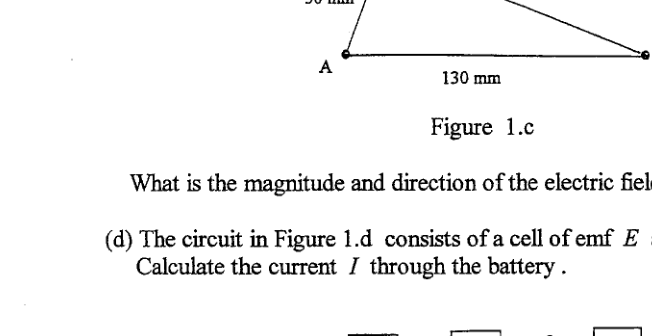 Figura 1.c — triangolo rettangolo con , , .
- d) Il circuito di Figura 1.d consiste di una cella di emf e resistori, ciascuno con resistenza . Calcolare la corrente attraverso la batteria.
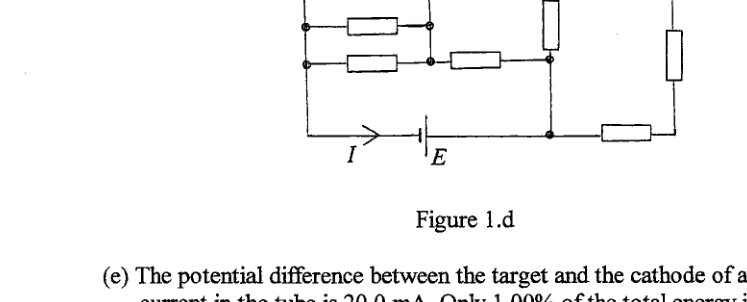 Figura 1.d — circuito con cella di emf e resistori di resistenza .
- e) La differenza di potenziale fra l’anodo e il catodo di un tubo a raggi X è . La corrente nel tubo è . Solo l’ dell’energia totale è emessa come raggi X. (i) Qual è la frequenza massima della radiazione emessa? (ii) A quale tasso deve essere rimosso il calore dall’anodo per mantenerlo a temperatura costante?
- f) Un proiettile di piombo a è fermato da una lastra d’acciaio in modo da raggiungere il suo punto di fusione e fondere completamente. Se l’ dell’energia cinetica del proiettile è convertito nella sua energia interna, calcolare la velocità con cui il proiettile colpì la lastra d’acciaio. Il calore specifico del piombo è e il calore latente specifico di fusione .
- g) Una roccia contenente uranio contiene atomi di uranio ogni atomi di elio. Assumendo che il processo di decadimento, che converte un atomo di uranio in un atomo di piombo, comporti l’emissione di particelle alfa, calcolare l’età della roccia. L’emivita dell’uranio è anni.
- h) Stimare, facendo assunzioni ragionevoli ove necessario: (i) l’eccesso di pressione in una bottiglia di champagne se il tappo può essere proiettato verticalmente di (assumere che il tappo subisca una forza costante per i primi del suo volo); (ii) lo spessore medio di uno strato di gomma lasciato sulla strada da un pneumatico che, durante di viaggio, perde di battistrada.
- j) Un grande serbatoio contiene acqua a una profondità di e poggia sul pavimento. L’acqua zampilla da un piccolo foro nel lato del serbatoio sotto il livello della superficie. Calcolare: (i) la velocità con cui l’acqua emerge dal foro; (ii) la distanza , misurata dalla base del serbatoio, alla quale l’acqua colpisce il pavimento; (iii) l’altezza , sopra il pavimento, alla quale dovrebbe essere praticato un secondo foro affinché l’acqua espulsa colpisca il pavimento nello stesso punto di (ii).
- k) Calcolare la massa di elettroni , in funzione della frazione della massa terrestre , che deve essere portata dalla Terra alla Luna per raddoppiare la forza di attrazione fra questi due corpi. Assumere molto minore di . La massa della Luna è .
- l) Quando luce monocromatica, lunghezza d’onda , è riflessa quasi normalmente da due lastre di vetro, una sopra l’altra con un piccolo angolo fra loro, si osservano frange di interferenza chiare e scure. (i) Spiegare come nascono queste frange. (ii) Come dipende la separazione delle frange da ? (iii) Qual è l’effetto di riempire d’acqua il volume fra le lastre?
- m) Una massa di è attaccata all’estremità inferiore di una molla elicoidale fissata all’estremità superiore. La molla verticale è allungata di in equilibrio. Determinare: (i) la variazione di energia potenziale gravitazionale della massa dovuta all’estensione della molla; (ii) l’energia elastica immagazzinata nella molla; (iii) perché i moduli di (i) e (ii) differiscono? La massa è tirata giù di altri e rilasciata. (iv) Qual è la sua energia cinetica al passaggio per la posizione di equilibrio? (v) Qual è il suo periodo di oscillazione? (vi) Se l’estremità superiore della molla è rilasciata, descrivere il moto della massa e della molla.
- n) Un pneumatico di bicicletta ha un volume di quando completamente gonfiato. La pompa per bicicletta ha un volume utile di . Quante pompate sono necessarie per gonfiare il pneumatico, inizialmente completamente sgonfio, fino a una pressione totale di ? La pressione atmosferica è . (Assumere che l’aria sia pompata lentamente in modo che la temperatura non cambi.) Spiegare perché, in pratica, la canna della pompa aumenta di temperatura quando il pompaggio non è lento.
- o) Una tavola uniforme , massa , di lunghezza è sostenuta a ciascuna estremità da forze verticali e rispettivamente. Un uomo di massa attraversa la tavola. Determinare e quando l’uomo è a distanza da . Tracciare, su un unico grafico, la variazione di e con .
Topic: Newtonian Mechanics, Nuclear & Particle Physics, Oscillations & Waves Metodi: Free-Body Diagram, Radioactive Decay Law, Ideal Gas Law, Photon Energy Relation, Bernoulli’s Equation, Simple Harmonic Motion Analysis, Torque & Angular Momentum Analysis, Order-of-Magnitude Estimation, Conservation of Energy Competenze: Diagrammatic Reasoning, Mathematical Modeling, Estimation & Approximation Objects: Point Charge, Battery, Resistor, Spring, Wheel Fonte: Testo (PDF) — p.2
Compulsory question, with brief independent sub-questions:
- a) How do the number of protons and the number of nucleons in a nucleus change following: (i) emission of an alpha particle; (ii) emission of a beta particle; (iii) fusion with a deuterium nucleus?
- b) (i) A truck moves at constant speed on a road. It has traction on the rear wheels. Draw a diagram showing the forces exerted by the road on the vehicle’s wheels. (ii) A jet airplane flies at constant speed in level flight. Draw a diagram indicating the forces acting on the airplane. Specify the nature of these forces and their relationships.
- c) In the right triangle , there is a charge of at and a charge of at . , and . What is the magnitude and direction of the electric field at ?
Figure 1.c — right triangle with , , .
- d) The circuit in Figure 1.d consists of a battery with electromotive force and resistors, each having resistance . Calculate the current through the battery.
Figure 1.d — circuit with battery of emf and resistors of resistance .
-
e) The potential difference between the anode and cathode of an X-ray tube is . The current in the tube is . Only of the total energy is emitted as X-rays. (i) What is the maximum frequency of the emitted radiation? (ii) At what rate must heat be removed from the anode to keep it at constant temperature?
-
f) A lead bullet of mass is stopped by a steel plate, reaching its melting point and completely melting. If of the bullet’s kinetic energy is converted into its internal energy, calculate the speed with which the bullet struck the steel plate. The specific heat capacity of lead is and its latent heat of fusion is .
-
g) A rock containing uranium has uranium atoms for every helium atoms. Assuming that the decay process, which converts one uranium atom into a lead atom, results in the emission of alpha particles, calculate the age of the rock. The half-life of uranium is years.
-
h) Estimate, making reasonable assumptions where necessary: (i) the excess pressure inside a champagne bottle if the cork can be projected vertically to a height of (assume that the cork experiences a constant force over the first of its motion); (ii) the average thickness of a rubber layer left on the road by a tire that, during of travel, loses of tread.
-
j) A large tank contains water to a depth of and rests on the floor. Water spurts out from a small hole in the side of the tank at below the surface level. Calculate: (i) the velocity with which water emerges from the hole; (ii) the distance , measured from the base of the tank, at which water strikes the floor; (iii) the height above the floor at which a second hole should be made so that water expelled from it strikes the floor at the same point as in (ii).
-
k) Calculate the mass of electrons , expressed as a function of the fraction of Earth’s mass , that must be transferred from Earth to the Moon in order to double the gravitational attraction between these two bodies. Assume much smaller than . The mass of the Moon is .
-
l) When monochromatic light with wavelength is reflected almost normally from two glass plates stacked one above the other with a small angle between them, clear interference fringes of bright and dark bands are observed. (i) Explain how these fringes arise. (ii) How does the fringe spacing depend on ? (iii) What is the effect of filling the space between the plates with water?
-
m) A mass of is attached to the lower end of a vertical helical spring fixed at its upper end. The vertical spring is stretched by in equilibrium. Determine: (i) the change in gravitational potential energy of the mass due to the spring’s extension; (ii) the elastic energy stored in the spring; (iii) why the magnitudes of (i) and (ii) differ? The mass is then pulled down an additional and released. (iv) What is its kinetic energy upon passing through the equilibrium position? (v) What is its oscillation period? (vi) If the upper end of the spring is released, describe the motion of the mass and the spring.
-
n) A bicycle tire has a volume of when fully inflated. The bicycle pump has an effective volume of . How many pump strokes are required to inflate the tire, initially completely deflated, up to a total pressure of ? The atmospheric pressure is . (Assume air is pumped in slowly so that the temperature remains constant.) Explain why, in practice, the pump hose heats up when pumping is not slow.
-
o) A uniform board of length , mass , has a weight of . It is supported at each end by vertical forces and respectively. A man of mass walks across the board. Determine and when the man is at a distance from . Plot, on a single graph, the variation of and as a function of .
Il circuito di Figura 2.1 ha correnti .. nei bracci indicati, dovute a una differenza di potenziale ai capi di . Ogni braccio ha un resistore di resistenza .
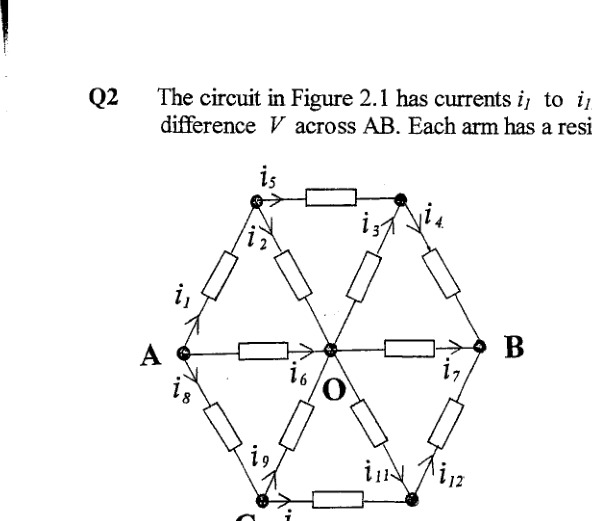 Figura 2.1 — rete esagonale resistiva con bracci .., vertici , , e centro .
a)
- (i) Dalla simmetria del circuito, dedurre le relazioni fra le correnti nei bracci inferiori e quelle nei bracci superiori.
- (ii) Se è invertita, cosa si può dedurre, usando la simmetria, su: (x) le direzioni delle correnti; (xi) i moduli delle correnti?
- (iii) Come cambiano le correnti nei bracci se le connessioni in sono alterate nel modo indicato in Figura 2.2?
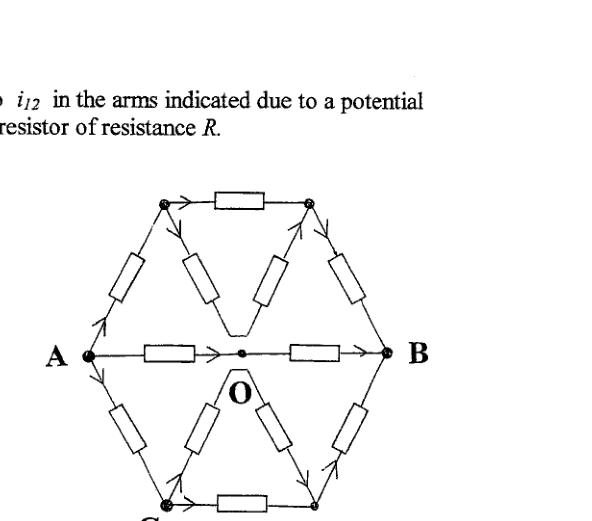 Figura 2.2 — rete esagonale con le connessioni al centro modificate.
- (iv) Dedurre la resistenza fra e .
b) Usando i metodi applicati in (a)(ii) e (a)(iii), determinare la resistenza fra e quando è applicata fra e .
Topic: Circuits Metodi: Symmetry Argument, Kirchhoff’s Laws, Equivalent Circuit Reduction Competenze: Diagrammatic Reasoning, Mathematical Modeling, Physical Reasoning Objects: Resistor Fonte: Testo (PDF) — p.5
The circuit in Figure 2.1 has currents .. in the indicated arms, due to a potential difference across . Each arm has a resistor of resistance .
Figure 2.1 — hexagonal resistive network with arms .., vertices , , and center .
a) (i) From the symmetry of the circuit, deduce the relations between currents in the lower arms and those in the upper arms. (ii) If is reversed, what can be deduced using symmetry regarding: (x) the directions of the currents; (xi) the magnitudes of the currents? (iii) How do the currents in the arms change if the connections at are altered as indicated in Figure 2.2?
Figure 2.2 — hexagonal network with center connections modified.
(iv) Deduce the resistance between and .
b) Using the methods applied in (a)(ii) and (a)(iii), determine the resistance between and when is applied between and .
Effetto Doppler (sorgente/osservatore in moto), osservatore in moto non direttamente verso la sorgente (analisi dati f-t)
a) Ricavare la frequenza rilevata da un osservatore da una sorgente sonora di frequenza , indicando se aumenta o diminuisce rispetto a , quando:
- (i) la sorgente è stazionaria e l’osservatore si muove con velocità direttamente verso di essa;
- (ii) la sorgente si muove con velocità direttamente verso l’osservatore stazionario;
- (iii) sorgente e osservatore si muovono l’uno verso l’altro, lungo la stessa linea retta, con velocità rispettive e . La velocità del suono è .
b) [Tabella 3.1] Una sorgente stazionaria emette una nota di frequenza . Un osservatore che si muove con velocità costante , in linea retta, inizialmente verso la sorgente ma non direttamente verso di essa, rileva una frequenza che varia con il tempo . La Tabella 3.1 dà le misure di contro . La velocità del suono è .
| /Hz | 210,4 | 210,4 | 210,0 | 208,0 | 199,5 | 185,8 | 182,1 | 181,6 | 181,6 |
|---|---|---|---|---|---|---|---|---|---|
| /s | 0 | 30,0 | 60,0 | 70,0 | 75,0 | 80,0 | 90,0 | 120,0 | 150,0 |
- (i) Perché la frequenza , in Tabella 3.1, diminuisce con ?
- (ii) Usando i dati a tempi grandi e piccoli, determinare e .
- (iii) Determinare l’istante in cui l’osservatore è più vicino alla sorgente.
Topic: Oscillations & Waves Metodi: Wave Equation, Experimental Data Analysis, Physical Modeling Competenze: Experimental Data Analysis, Graph Linearization, Mathematical Modeling Objects: — Fonte: Testo (PDF) — p.6
Doppler Effect (source/moving observer), moving observer not directly approaching the source (data analysis f-t)
a) Derive the frequency detected by an observer from a sound source of frequency , indicating whether it increases or decreases compared to , when:
- (i) the source is stationary and the observer moves with velocity directly toward it;
- (ii) the source moves with velocity directly toward a stationary observer;
- (iii) both source and observer move toward each other along the same straight line, with respective velocities and . The speed of sound is .
b) [Table 3.1] A stationary source emits a note of frequency . An observer moving with constant velocity along a straight line, initially toward the source but not directly toward it, detects a frequency that varies with time . Table 3.1 provides measurements of against . The speed of sound is .
| /Hz | 210,4 | 210,4 | 210,0 | 208,0 | 199,5 | 185,8 | 182,1 | 181,6 | 181,6 |
|---|---|---|---|---|---|---|---|---|---|
| /s | 0 | 30,0 | 60,0 | 70,0 | 75,0 | 80,0 | 90,0 | 120,0 | 150,0 |
- (i) Why does the frequency in Table 3.1 decrease with ?
- (ii) Using data at large and small times, determine and .
- (iii) Determine the instant when the observer is closest to the source.
Una sfera d’acciaio dura, massa , cade verticalmente per una distanza sulla superficie orizzontale di un’incudine d’acciaio tenera. Rimbalza per una distanza dopo aver prodotto una piccola indentazione circolare di diametro . Per piccoli la teoria prevede dove è una costante.
Esperimenti sono stati eseguiti con . I dati ottenuti sono nella Tabella 4.1. L’accuratezza delle misure è corretta all’ultima cifra significativa.
| /mm | /mm | /mm |
|---|---|---|
| 1000 | 290 | 1,22 |
| 500 | 162 | 1,01 |
| 100 | 41 | 0,64 |
| 2,0 | 1,3 |
- (i) Investigare graficamente l’intervallo di validità della teoria. Indicare le conclusioni.
- (ii) Qual è il valore e l’accuratezza di ?
- (iii) Disegnare un grafico della variazione del coefficiente di restituzione , rapporto della velocità di rimbalzo alla velocità d’impatto , in funzione di .
- (iv) Se una sfera è lasciata cadere da , quanto tempo trascorre prima del secondo rimbalzo?
- (v) Come è dissipata l’energia dalla sfera?
Topic: Newtonian Mechanics, Elasticity & Materials, Conservation of Energy Metodi: Energy Conservation Method, Graph Linearization, Stress-Strain Analysis, Experimental Data Analysis Competenze: Experimental Data Analysis, Graph Linearization, Error Propagation Objects: Sphere Fonte: Testo (PDF) — p.7
A hard steel sphere of mass falls vertically a distance onto the horizontal surface of a soft steel anvil. It rebounds to a height after producing a small circular indentation of diameter . For small, theory predicts where is a constant.
Experiments were carried out with . The obtained data are in Table 4.1. Measurement accuracy is correct to the last significant digit.
| /mm | /mm | /mm |
|---|---|---|
| 1000 | 290 | 1.22 |
| 500 | 162 | 1.01 |
| 100 | 41 | 0.64 |
| 2.0 | 1.3 |
(i) Investigate graphically the range of validity of the theory. State your conclusions.
(ii) What is the value and accuracy of ?
(iii) Draw a graph showing the variation of the coefficient of restitution , defined as the ratio of rebound velocity to impact velocity , as a function of .
(iv) If a sphere is released from height , how much time elapses before the second rebound?
(v) How is energy dissipated by the sphere?
a) Due condensatori scarichi e , con capacità e , sono collegati in serie con una batteria e un interruttore . Quando l’interruttore è chiuso c’è una carica su e su .
- (i) Qual è la relazione fra e ?
- (ii) Dare un’espressione per la differenza di potenziale ai capi di ciascun condensatore.
- (iii) Ricavare un’espressione per la capacità di un singolo condensatore equivalente a in serie con .
- (iv) Calcolare l’energia totale immagazzinata nei condensatori.
b) Una sorgente a.c. di tensione e frequenza è in serie con un diodo e un resistore di resistenza .
- (i) Disegnare un grafico della d.d.p. ai capi del resistore in funzione del tempo .
- (ii) I condensatori possono “livellare” tensioni a.c. raddrizzate. Un condensatore, capacità , è collegato in parallelo al resistore (Figura 5.1). Spiegare, con un grafico, come la d.d.p. modificata varia con .
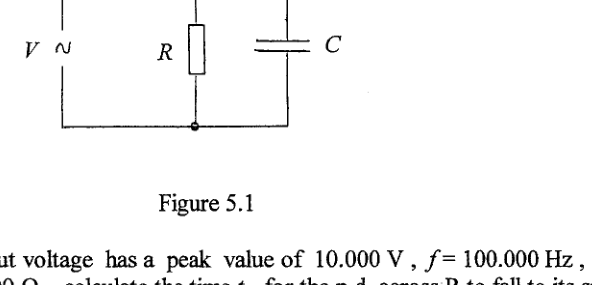 Figura 5.1 — sorgente a.c. , resistore e condensatore in parallelo.
- (iii) Se la tensione di ingresso ha valore di picco , , e , calcolare il tempo affinché la d.d.p. ai capi di scenda al suo valore minimo di .
- (iv) Verificare che, a quattro cifre significative, anche la tensione di ingresso abbia questo valore a quell’istante.
- (v) La tensione ai capi di può essere approssimata dalla somma di una componente d.c., , e una componente a.c. con ampiezza e frequenza . Stimare i valori di , e .
Topic: Circuits, Electrostatics Metodi: Kirchhoff’s Laws, Approximation & Series Expansion, Physical Modeling Competenze: Diagrammatic Reasoning, Mathematical Modeling, Physical Reasoning Objects: Capacitor, Battery, Switch, Resistor Fonte: Testo (PDF) — p.8
a) Two uncharged capacitors and , with capacitances and , are connected in series with a battery and a switch . When the switch is closed, there is a charge on and a charge on .
- (i) What is the relationship between and ?
- (ii) Provide an expression for the potential difference across each capacitor.
- (iii) Derive an expression for the equivalent capacitance of a single capacitor equivalent to connected in series with .
- (iv) Calculate the total energy stored in the capacitors.
b) An a.c. voltage source with voltage and frequency is connected in series with a diode and a resistor of resistance .
- (i) Draw a graph of the potential difference across the resistor as a function of time .
- (ii) Capacitors can “smooth” rectified a.c. voltages. A capacitor with capacitance is connected in parallel with the resistor (Figure 5.1). Explain, using a graph, how the modified potential difference varies with time .
Figure 5.1 — a.c. source , resistor and capacitor connected in parallel.
- (iii) If the input voltage has peak value , , and , calculate the time required for the potential difference across to decrease to its minimum value of .
- (iv) Verify that, to four significant figures, the input voltage also has this value at that instant.
- (v) The voltage across can be approximated as the sum of a d.c. component, , and an a.c. component with amplitude and frequency . Estimate the values of , and .
a) La legge di Faraday dell’induzione elettromagnetica può essere espressa come Spiegare i simboli e il significato del segno negativo.
b) L’apertura alare di un jumbo jet è , la sua lunghezza e la sua profondità . Stimare il modulo delle differenze di potenziale elettrico che esistono sulla superficie del jet quando vola orizzontalmente a : (i) sopra il Polo Nord; (ii) verso nord all’equatore; (iii) verso est lungo l’equatore; (iv) verso nord sopra Londra. La densità di flusso magnetico terrestre è all’equatore, sopra Londra e al Polo Nord. L’angolo fra l’orizzontale e il campo magnetico terrestre a Londra (angolo di inclinazione) è .
c) Una sbarra di rame di lunghezza è imperniata nel suo punto medio e ruota attorno a un asse orizzontale perpendicolare alla sua lunghezza, in un piano verticale, con frequenza angolare costante . Un campo magnetico uniforme di densità di flusso esiste parallelo all’asse. Qual è il modulo della f.e.m. sviluppata fra: (i) il centro e un’estremità della sbarra? (ii) le estremità della sbarra? (iii) le estremità della sbarra quando il perno è spostato in un punto a distanza da un’estremità?
Topic: Electromagnetic Induction, Magnetism Metodi: Faraday’s Law of Induction, Calculus-Integration, Vector Decomposition Competenze: Mathematical Modeling, Estimation & Approximation, Physical Reasoning Objects: Rod Fonte: Testo (PDF) — p.9
a) Faraday’s law of electromagnetic induction can be expressed as Explain the symbols and the meaning of the negative sign.
b) The wing span of a jumbo jet is , its length is and its depth is . Estimate the magnitude of the electric potential difference that exists across the surface of the jet when flying horizontally at : (i) above the North Pole; (ii) northward at the equator; (iii) eastward along the equator; (iv) northward above London. The magnetic flux density of Earth is at the equator, above London and at the North Pole. The angle between the horizontal and Earth’s magnetic field at London (dip angle) is .
c) A copper rod of length is pivoted at its midpoint and rotates about a horizontal axis perpendicular to its length, in a vertical plane, with constant angular frequency . A uniform magnetic field of flux density exists parallel to the axis. What is the magnitude of the electromotive force (e.m.f.) developed between: (i) the center and one end of the rod? (ii) the two ends of the rod? (iii) the two ends of the rod when the pivot is shifted to a point at distance from one end?
a) [Tabella 7.1] Assumendo che i pianeti siano in moto circolare attorno al Sole, con raggio e periodo , usare i dati della Tabella 7.1 per verificare, graficamente, l’ipotesi che sia proporzionale a , dove è una costante. Ottenere dal grafico: (i) un valore di e la sua accuratezza; (ii) la costante di proporzionalità in unità SI.
| PIANETA | / km | /giorni |
|---|---|---|
| Terra | 1,49 | 365 |
| Marte | 2,28 | 687 |
| Giove | 7,78 | 4333 |
| Urano | 28,7 | 30690 |
b)
- (i) Ricavare, usando la meccanica, la relazione fra e in funzione della massa del Sole .
- (ii) Determinare usando i dati di (a).
- (iii) La distanza della Luna dalla Terra è e il suo periodo è giorni. Dedurre il rapporto , dove è la massa della Terra.
Topic: Gravitation, Astrophysics Metodi: Kepler’s Laws, Newton’s Law of Gravitation, Graph Linearization Competenze: Graph Linearization, Mathematical Modeling, Experimental Data Analysis Objects: Planet, Star, Satellite Fonte: Testo (PDF) — p.10
a) [Table 7.1] Assuming that the planets move in circular orbits around the Sun, with radius and period , use the data from Table 7.1 to graphically verify the hypothesis that is proportional to , where is a constant. From the graph obtain: (i) a value of and its accuracy; (ii) the proportionality constant in SI units.
| PLANET | / km | /days |
|---|---|---|
| Earth | 1.49 | 365 |
| Mars | 2.28 | 687 |
| Jupiter | 7.78 | 4333 |
| Uranus | 28.7 | 30690 |
b) (i) Derive, using mechanics, the relation between and in terms of the mass of the Sun . (ii) Determine using the data from (a). (iii) The distance of the Moon from Earth is and its period is days. Deduce the ratio , where is the mass of Earth.