Domanda compulsoria, con brevi quesiti indipendenti:
- a) Un riscaldatore a immersione da è posto in di un liquido contenuto in un calorimetro di capacità termica . È acceso e dopo un certo tempo la temperatura del liquido raggiunge un valore costante. Il riscaldatore è spento e il tasso di calo di temperatura è . Qual è il calore specifico del liquido?
- b) Commentare le seguenti affermazioni: (i) i pianeti si muovono con velocità costante in cerchi attorno al Sole; (ii) la componente orizzontale dell’energia di una palla da tennis resta costante dopo essere stata colpita da una racchetta; (iii) la velocità di un punto luminoso prodotto su una parete lontana, da un laser rotante, può essere maggiore di ; (iv) il polo magnetico nord è vicino al polo geografico nord e l’estremità nord dell’ago di una bussola punta sempre al polo magnetico nord; (v) il calore specifico di un gas a volume costante differisce da quello a pressione costante; (vi) i gas si raffreddano quando si espandono rapidamente.
- c) Una corda di viola lunga è accordata su A, frequenza . (i) Quale variazione di lunghezza ne alzerebbe la frequenza a ? (ii) Se va fuori sintonia e vibra a , di quale frazione, e in che senso, deve essere variata la tensione della corda per riaccordarla?
- d) Un uomo va in bicicletta al lavoro, con il vento dietro, a e torna a casa, contro vento, a . Qual è la sua velocità media?
- e) Una mitragliatrice spara proiettili di massa a velocità . Se l’artigliere può esercitare una forza media fino a contro l’arma, calcolare il numero massimo di proiettili che può sparare al minuto. Disegnare un grafico forza-tempo del rinculo dell’arma sulla spalla dell’artigliere e mostrare, graficamente, cosa si intende per forza media.
- f) Una goccia d’olio è osservata fra le armature di un condensatore. (i) In un campo elettrico di si osserva una goccia stazionaria con un elettrone in eccesso. Qual è il peso della goccia? (ii) Questa goccia è poi osservata cadere con velocità limite di , indipendente dalla d.d.p. fra le armature. Spiegare questa osservazione.
- g) Spiegare qualitativamente come si formano gli anelli di interferenza di Newton usando una lastra ottica e una lente convessa.
- h) Un corpo, massa , poggia su un piatto di bilancia sostenuto da una molla. Il periodo di oscillazione del piatto è . Si osserva che quando l’ampiezza delle oscillazioni aumenta e supera un certo valore, la massa lascia il piatto. Spiegare. In quale punto del moto la massa lascia inizialmente il piatto?
- i)Un tubo capillare uniforme, chiuso a un’estremità, contiene aria intrappolata da un filo di mercurio lungo . Quando il tubo è tenuto orizzontale, la lunghezza della colonna d’aria è . Quando è tenuto verticale, con l’estremità chiusa in basso, la lunghezza è . Determinare la pressione atmosferica.
- j) Una tensione sinusoidale di frequenza è applicata alle placche Y di un oscilloscopio a raggi catodici (CRO). La traccia ottenuta è in Figura 1.j (deflessione ). Se un trasmettitore radar emette brevi impulsi e contemporaneamente si applica una tensione alle placche Y dell’oscilloscopio, con la stessa base dei tempi, la deflessione è prodotta. Un oggetto riflette l’impulso radar che, ricevuto al trasmettitore e amplificato, dà la deflessione . Qual è la distanza dell’oggetto dal trasmettitore?
- k) Rispondere alle seguenti domande con un esempio ove possibile: (i) Un corpo può accelerare mentre viaggia a velocità (modulo) costante? (ii) Un corpo può avere velocità (vettoriale) costante e modulo variabile? (iii) Se un corpo ha velocità nulla, può accelerare? (iv) Un corpo può accelerare in direzione opposta alla sua velocità?
- l) L’equazione rappresenta un’onda piana che viaggia lungo l’asse in un mezzo; è lo spostamento di un punto a posizione al tempo . , e sono costanti. Dedurre la direzione e la velocità dell’onda. Se , e , calcolare: (i) la velocità dell’onda; (ii) la velocità massima di una particella del mezzo dovuta all’onda.
- m) lampade elettriche identiche, ciascuna da , sono collegate in serie a una rete di alimentazione . La potenza totale consumata è . (i) Qual è la resistenza di ciascuna lampada? (ii) Se una lampada è cortocircuitata, qual è la potenza consumata? (iii) Quando una delle lampade è testata applicando una d.d.p. di , si misura una corrente di . Spiegare.
- n) L’energia cinetica massima dei fotoelettroni espulsi da una superficie di tungsteno, da luce di lunghezza d’onda , è . Qual è il lavoro di estrazione, in eV, del tungsteno?
- o) Un elettrone e un positrone si annichilano per produrre due raggi . Calcolare l’energia minima dei fotoni.
- p) Spiegare qualitativamente usando onde sonore come esempio, cosa si intende per: (i) effetto Doppler; (ii) fenomeno dei battimenti; (iii) onde stazionarie.
- q) Cos’è una linea di campo magnetico? Disegnare le linee di campo magnetico in un piano perpendicolare a: (i) una corrente in un filo rettilineo infinito; (ii) l’asse di un magnete a barra a un’estremità.
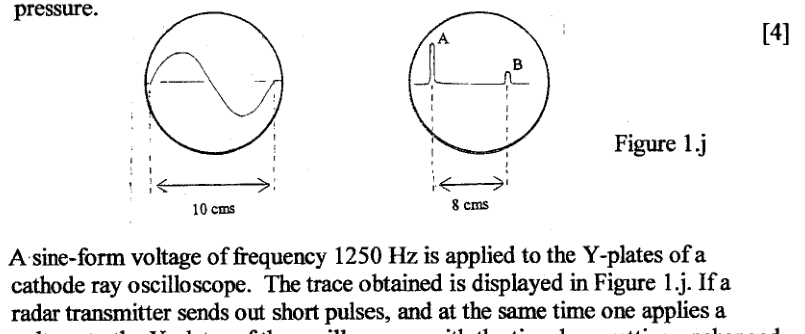 Tracce oscilloscopio con segnale radar
Topic: Newtonian Mechanics, Oscillations & Waves, Modern-Quantum Physics Metodi: Kinematic Equations, Simple Harmonic Motion Analysis, Photon Energy Relation Competenze: Physical Reasoning, Mathematical Modeling, Estimation & Approximation Objects: Calorimeter, Droplet, Lens, Spring, Capacitor Fonte: Testo (PDF) — p.2
Compulsory question, with brief independent sub-questions:
-
a) An immersion heater of power is placed in of a liquid contained in a calorimeter with heat capacity . It is turned on and after some time the liquid reaches a constant temperature. The heater is then switched off, and the rate of temperature decrease is . What is the specific heat capacity of the liquid?
-
b) Comment on the following statements: (i) Planets move with constant speed in circles around the Sun; (ii) The horizontal component of energy of a tennis ball remains constant after being hit by a racket; (iii) The speed of a light spot projected onto a distant wall by a rotating laser can exceed ; (iv) The north magnetic pole is near the geographic North Pole, and the north end of a compass needle always points toward the magnetic north pole; (v) The specific heat capacity of a gas at constant volume differs from that at constant pressure; (vi) Gases cool down when they expand rapidly.
-
c) A viola string of length is tuned to note A, frequency . (i) What change in length would raise the frequency to ? (ii) If it goes out of tune and vibrates at frequency , by what fractional amount, and in which direction, must the string tension be changed to retune it?
-
d) A man rides his bicycle to work with the wind behind him at , and returns home against the wind at . What is his average speed for the entire trip?
-
e) A machine gun fires bullets of mass at a velocity of . If the gunner can exert a maximum average force of against the weapon, calculate the maximum number of bullets that can be fired per minute. Draw a force-time graph for the recoil of the weapon on the gunner’s shoulder, and show graphically what is meant by average force.
-
f) An oil droplet is observed between the plates of a capacitor. (i) In an electric field of , a droplet is observed to be stationary with one excess electron. What is the weight of the droplet? (ii) The same droplet is then observed to fall with a terminal velocity of , independent of the potential difference between the plates. Explain this observation.
-
g) Qualitatively explain how Newton’s rings are formed using an optical flat and a convex lens.
-
h) A body of mass rests on the pan of a scale supported by a spring. The oscillation period of the pan is . It is observed that when the amplitude of oscillations increases beyond a certain value, the mass loses contact with the pan. Explain this phenomenon. At which point in the motion does the mass first lose contact with the pan?
-
i) A uniform capillary tube, closed at one end, contains trapped air sealed by a mercury thread of length . When the tube is held horizontally, the length of the air column is . When held vertically with the closed end down, the length becomes . Determine the atmospheric pressure.
-
j) A sinusoidal voltage of frequency is applied to the Y plates of a cathode ray oscilloscope (CRO). The resulting trace is shown in Figure 1.j (deflection ). If a radar transmitter emits short pulses and, simultaneously, a voltage is applied to the Y plates of the oscilloscope with the same time base, deflection is produced. An object reflects the radar pulse, which, upon reception at the transmitter and amplification, gives rise to deflection . What is the distance of the object from the transmitter?
-
k) Answer the following questions, providing an example where possible: (i) Can a body accelerate while moving at constant speed (magnitude)? (ii) Can a body have constant velocity (vector) but variable magnitude? (iii) If a body has zero velocity, can it still accelerate? (iv) Can a body accelerate in a direction opposite to its velocity?
-
l) The equation represents a plane wave traveling along the axis in a medium; is the displacement of a point at position at time . , and are constants. Deduce the direction and speed of the wave. If , and , calculate: (i) the wave speed; (ii) the maximum particle velocity in the medium due to the wave.
-
m) identical electric lamps, each rated at , are connected in series to a power supply network of . The total power consumed is . (i) What is the resistance of each lamp? (ii) If one lamp is short-circuited, what is the power consumed? (iii) When testing one of the lamps by applying a potential difference of , a current of is measured. Explain.
-
n) The maximum kinetic energy of photoelectrons emitted from a tungsten surface by light of wavelength is . What is the work function of tungsten, in eV?
-
o) An electron and a positron annihilate to produce two rays. Calculate the minimum energy of the photons.
-
p) Qualitatively explain using sound waves as an example: (i) Doppler effect; (ii) beat phenomenon; (iii) standing waves.
-
q) What is a magnetic field line? Draw the magnetic field lines in a plane perpendicular to: (i) a current flowing through an infinite straight wire; (ii) the axis of a bar magnet near one end.
Oscilloscope traces with radar signal
Una pietra sferica è lasciata cadere dalla cima di una rupe di altezza al tempo . Nello stesso istante un’altra pietra identica è lanciata verticalmente verso l’alto dal fondo della rupe con velocità positiva , sulla stessa verticale della prima pietra.
a)
- (i) Dopo quale tempo, , le pietre collidono?
- (ii) Se le pietre hanno velocità uguali (in modulo) alla collisione, quanto valgono e ?
- (iii) Se la collisione in (ii) è elastica, determinare l’intervallo di tempo fra gli impatti delle pietre sul suolo.
b)
- (i) Disegnare un grafico velocità-tempo completamente etichettato per il moto delle due pietre, sullo stesso grafico, usando una curva continua per la pietra lasciata cadere dalla cima e una curva tratteggiata per la pietra lanciata verso l’alto dal fondo.
- (ii) Disegnare un grafico altezza-tempo completamente etichettato per le due pietre usando la notazione specificata in (i).
Topic: Newtonian Mechanics, Conservation of Momentum, Conservation of Energy Metodi: Kinematic Equations, Conservation of Momentum, Conservation of Energy Competenze: Diagrammatic Reasoning, Mathematical Modeling, Physical Reasoning Objects: Ball, Projectile Fonte: Testo (PDF) — p.5
A spherical stone is released from the top of a cliff of height at time . At the same instant, another identical stone is thrown vertically upward from the base of the cliff with a positive velocity , along the same vertical line as the first stone.
a)
- (i) After what time, , do the stones collide?
- (ii) If the stones have equal speeds (in magnitude) at collision, what are the values of and ?
- (iii) If the collision in (ii) is elastic, determine the time interval between the impacts of the stones on the ground.
b)
- (i) Draw a completely labeled velocity-time graph for the motion of both stones on the same plot, using a solid curve for the stone released from the top and a dashed curve for the stone thrown upward from the base.
- (ii) Draw a completely labeled height-time graph for both stones using the notation specified in (i).
a) Un uomo di altezza e massa deve fare un salto col bungee da una piattaforma posta a un’altezza sopra un lago. Un’estremità di una corda elastica è attaccata al suo piede e l’altra estremità è fissata alla piattaforma. Cade verticalmente. La lunghezza a riposo della corda è e la sua costante elastica è . La corda è scelta in modo che la sua velocità si riduca a zero proprio nell’istante in cui la sua testa raggiunge la superficie dell’acqua. Quando è a riposo, in equilibrio, all’estremità della corda, la sua testa è a sopra l’acqua. Assumere che il centro di gravità dell’uomo sia a metà del suo corpo. Scrivere un’espressione algebrica per:
- (i) l’equazione dell’energia nel suo punto più basso;
- (ii) l’equazione delle forze all’equilibrio;
- (iii) determinare numericamente.
b) Determinare i valori massimi dell’uomo per: (i) la velocità; (ii) l’accelerazione.
Topic: Newtonian Mechanics, Conservation of Energy, Oscillations & Waves Metodi: Energy Conservation Method, Free-Body Diagram, Simple Harmonic Motion Analysis Competenze: Mathematical Modeling, Physical Reasoning, Diagrammatic Reasoning Objects: Spring Fonte: Testo (PDF) — p.6
a) An man of height and mass must perform a bungee jump from a platform located at height above a lake. One end of an elastic cord is attached to his foot, and the other end is fixed to the platform. He falls vertically downward. The natural (unstretched) length of the cord is , and its spring constant is . The cord is chosen so that his speed becomes zero exactly at the instant his head reaches the water surface. When at rest in equilibrium, with the cord fully extended, his head is located above the water surface. Assume that the man’s center of gravity lies at the midpoint of his body.
Write an algebraic expression for:
- (i) the energy equation at his lowest point;
- (ii) the force equilibrium equation;
- (iii) determine numerically.
b) Determine the maximum values for: (i) velocity; (ii) acceleration.
a)
- (i) Determinare la relazione fra la costante di decadimento e l’emivita di una sorgente radioattiva.
- (ii) Quanto tempo impiegherebbe l’ degli atomi di , con emivita di ore, a decadere?
b) Un piccolo volume di soluzione, contenente un isotopo radioattivo del sodio, ha un’attività di disintegrazioni al minuto quando iniettato nel flusso sanguigno di un paziente. Dopo ore l’attività di un campione di sangue di è disintegrazioni al minuto. Se l’emivita dell’isotopo di sodio è ore, determinare il volume di sangue nel corpo del paziente.
c) Una sorgente puntiforme di raggi ha emivita di minuti. Il tasso di conteggio iniziale, determinato da un contatore Geiger posto a dalla sorgente, è . La distanza fra il contatore e la sorgente è variata. Dopo minuti il tasso di conteggio è . Qual è la distanza fra la sorgente e il contatore?
Topic: Nuclear & Particle Physics Metodi: Radioactive Decay Law, Calculus-Integration, Physical Modeling Competenze: Mathematical Modeling, Physical Reasoning, Estimation & Approximation Objects: Nucleus Fonte: Testo (PDF) — p.7
a) (i) Determine the relationship between the decay constant and the half-life of a radioactive source. (ii) How long would it take for of the atoms of , with a half-life of hours, to decay?
b) A small volume of solution containing a radioactive isotope of sodium has an activity of disintegrations per minute when injected into the bloodstream of a patient. After hours, the activity of a blood sample of volume is disintegrations per minute. If the half-life of the sodium isotope is hours, determine the volume of blood in the patient’s body.
c) A point source of rays has a half-life of minutes. The initial count rate, measured by a Geiger counter placed at from the source, is . The distance between the counter and the source is changed. After minutes, the count rate is . What is the distance between the source and the counter?
a) Un disco uniforme, di raggio e densità superficiale , ha il suo centro nell’origine di un sistema di coordinate cartesiane. Sono rimossi un disco di raggio e centro , insieme a due dischi di raggio con centri in e .
- (i) Verificare che i tre fori circolari non si sovrappongono.
- (ii) Determinare il centro di gravità dell’oggetto rimanente.
b) Un’asta uniforme di lunghezza e massa è appoggiata con contro una parete verticale. è sul pavimento orizzontale, che ha coefficiente di attrito , in modo che formi un angolo con il pavimento.
- (i) Disegnare un diagramma inserendo tutte le forze, incluse le componenti orizzontali e in e rispettivamente. La componente verticale in è e quella in è .
- (ii) Scrivere le condizioni affinché le forze sull’asta siano in equilibrio.
- (iii) Ottenere un’espressione per in funzione di in (ii) se la parete è liscia.
- (iv) Dedurre il valore minimo di .
Topic: Newtonian Mechanics, Rigid Body Statics, Rotational Dynamics Metodi: Symmetry Argument, Free-Body Diagram, Torque & Angular Momentum Analysis Competenze: Diagrammatic Reasoning, Mathematical Modeling, Physical Reasoning Objects: Disk, Rod Fonte: Testo (PDF) — p.8
Figure
Figure
Figure
Figure
Figure
Figure
Figure
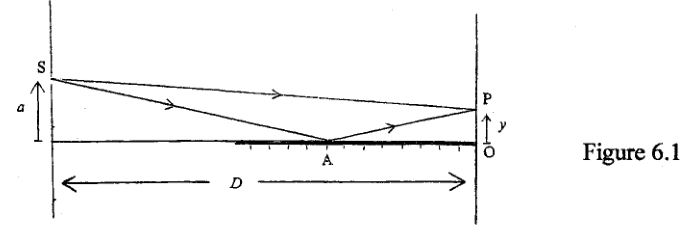
Quesito 6 — Schema interferenza con specchio piano
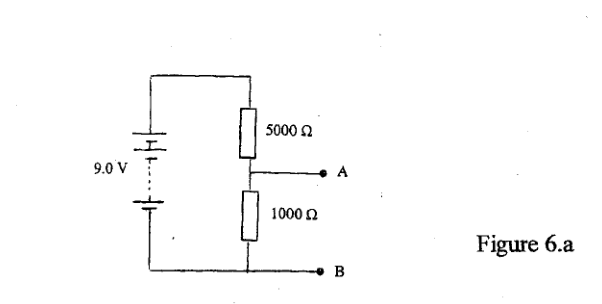
Quesito 7 — Circuito con batteria 9V e resistenze
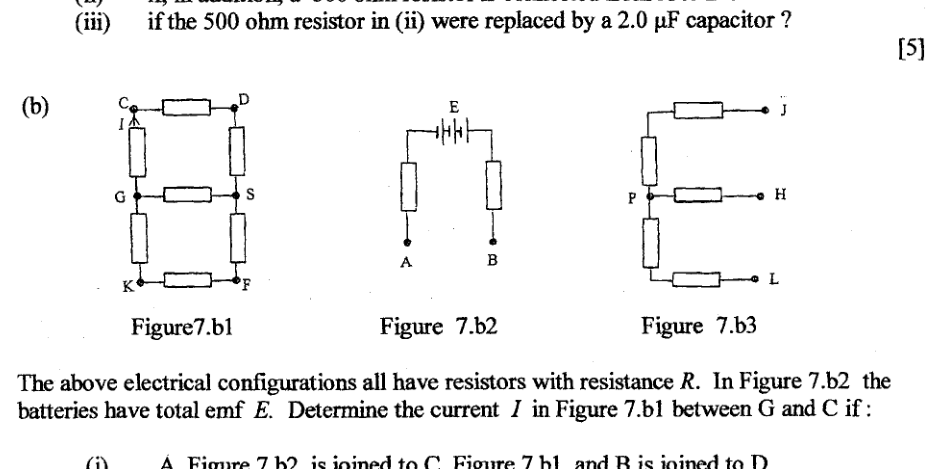
Quesito 7 — Tre configurazioni resistenze con batterie
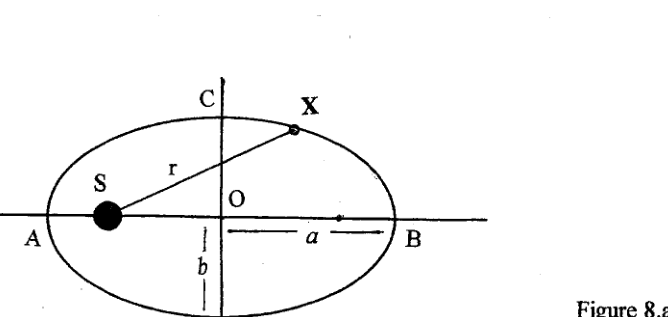
Quesito 8 — Orbita ellittica pianeta con fuoco S
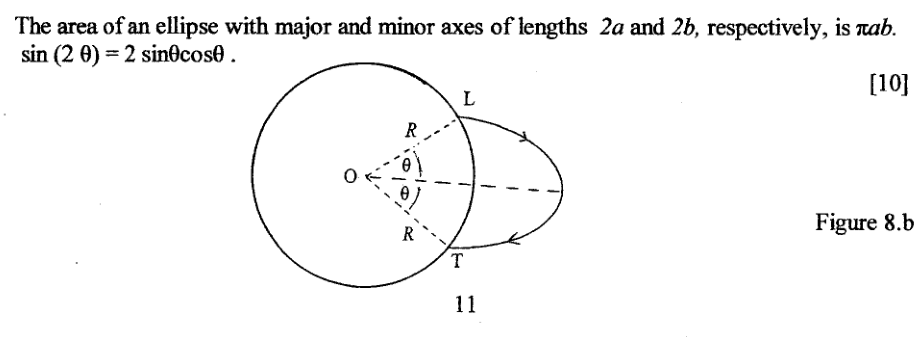
Quesito 8 — Trasferimento orbitale cerchio ed ellisse
a) A uniform disk of radius and surface density has its center located at the origin of a Cartesian coordinate system. A disk of radius and center has been removed, along with two disks of radius and centers at and .
- (i) Verify that the three circular holes do not overlap.
- (ii) Determine the center of gravity of the remaining object.
b) An uniform rod of length and mass is leaning with against a vertical wall. rests on a horizontal floor, which has coefficient of friction , so that forms an angle with the floor.
- (i) Draw a diagram including all forces, including horizontal components and at and respectively. The vertical component at is and that at is .
- (ii) Write the conditions for equilibrium of forces acting on the rod.
- (iii) Obtain an expression for in terms of from (ii), assuming the wall is frictionless.
- (iv) Deduce the minimum value of .
Figure
Figure
Figure
Figure
Figure
Figure
Figure
Problem 6 — Interference pattern with plane mirror
Problem 7 — Circuit with 9V battery and resistors
Problem 7 — Three resistor configurations with batteries
Problem 8 — Elliptical orbit of a planet with focus S
Problem 8 — Orbital transfer between circle and ellipse