Problema 1: Un regador nocturno para las vacaciones
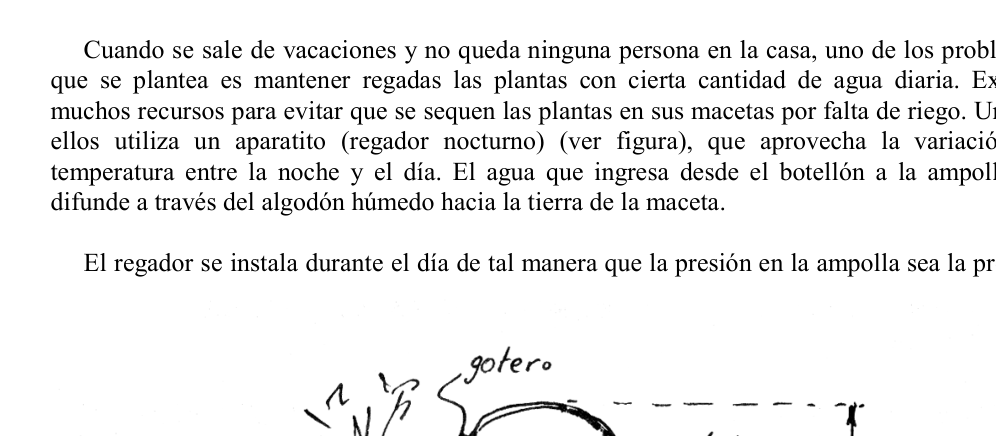
Cuando se sale de vacaciones y no queda ninguna persona en la casa, uno de los problemas que se plantea es mantener regadas las plantas con cierta cantidad de agua diaria. Existen muchos recursos para evitar que se sequen las plantas en sus macetas por falta de riego. Uno de ellos utiliza un aparato (regador nocturno) (ver figura), que aprovecha la variaci’on de temperatura entre la noche y el d’ia. El agua que ingresa desde el botell’on a la ampolla, se difunde a trav’es del algod’on h’umedo hacia la tierra de la maceta. (figura)
El regador se instala durante el d’ia de tal manera que la presi’on en la ampolla sea la presi’on atmosf’erica. En el extremo superior del algod’on h’umedo se forma un menisco de agua que, por tensi’on superficial, evita el ingreso de aire a la ampolla con la consiguiente disminuci’on de las variaciones de la temperatura.
Suponga que el volumen de la ampolla es lo suficientemente grande como para poder despreciar las variaciones de volumen de la masa gaseosa debido a las variaciones de la cantidad de agua dentro de la ampolla, o por el ascenso o descenso de la columna de agua en el tubo delgado. Adem’as, para simplificar los c’alculos, suponga que durante el d’ia la temperatura se mantiene constante e igual a 25 C, durante seis horas de la noche baja a 10 C y que la presi’on atmosf’erica permanece constante. Bajo estas condiciones calcule: a) La diferencia de altura m’axima para que el regador efectivamente riegue la planta durante seis horas nocturnas.
Suponga que el genero en el extremo del tubo delgado, que est’a en el interior de la ampolla, se ha preparado para suministrar, en promedio, una gota de 2mm de di’ametro cada 2s. b) Calcule la cantidad m’inima de agua que deber’a contener el botell’on a quienes aseguran un riego durante treinta d’ias.
Datos: Presi’on de vapor de agua saturado a 10 C es igual a 9,16 mmHg; ‘idem, a 25 C es igual a 23,55 mmHg. La presi’on atmosf’erica es equivalente a 760 mmHg ‘o a 10,33 m de una columna de agua.
Topic: Fluid Mechanics, Thermodynamics Metodi: Hydrostatic Equilibrium, Ideal Gas Law Competenze: Physical Reasoning Objects: Container, Droplet Fonte: Testo (PDF) — p.2
Problema 1: Un idragiatore notturno per le vacanze
Quando si va in vacanza e non c’è nessuno in casa, uno dei problemi che si pone è quello di regare le piante con una certa quantità di acqua ogni giorno. Esistono molte risorse per evitare che le piante si secchino nei loro vasoli per mancanza di irrigazione. Uno di essi utilizza un apparecchio (regatore notturno) (vedi figura), che sfrutta la variazione della temperatura tra la notte e il giorno. L’acqua che entra dal bottiglio alla lampadina, si diffonde attraverso il cotone umido verso la terra del vaso. (Figura)
L’irrigatore è installato durante il trattamento in modo tale che la pressione sulla lampadina sia la pressione atmosferica. L’acqua si forma in un menisco all’estremità superiore del cotone umido che, a causa della tensione superficiale, impedisce l’ingresso di aria nella lampadina, diminuendo le variazioni di temperatura.
Supponiamo che il volume della lampadina sia sufficientemente grande da poter disprezzare le variazioni di volume della massa gassosa dovute alle variazioni della quantità di acqua all’interno della lampadina, o al rialzo o al ribasso della colonna d’acqua nel tubo sottile. Adem’as, para simplificar los c’alculos, suponga que durante el d’ia la temperatura se mantiene constante e igual a 25 C, durante seis horas de la noche baja a 10 C y que la presi’on atmosf’erica permanece constante. In queste condizioni calcoli: a) La differenza di altezza è massima per irrigare effettivamente la pianta per sei ore notturne.
Supponiamo che il gendre alla fine del tubo sottile, che è all’interno del bifollo, sia pronto a fornire, in media, una goccia di 2 mm di diametro ogni 2 secondi. b) Calcolare la quantità minima di acqua che deve contenere la bottiglia a chi assicura un’irrigazione per 30 giorni.
Dati: pressure di vapore d’acqua saturo a 10 C è uguale a 9,16 mmHg; quindi, a 25 C è uguale a 23,55 mmHg. La pressione atmosferica è equivalente a 760 mmHg o a 10,33 m di una colonna d’acqua.
Topic: Fluid Mechanics, Thermodynamics Metodi: Hydrostatic Equilibrium, Ideal Gas Law Competenze: Physical Reasoning Objects: Container, Droplet Fonte: Testo (PDF) — p.2
Problema 1: Un regador nocturno para las vacaciones
When you leave on vacation and no one is left in the house, one of the problems you face is keeping plants watered with a certain amount of water each day. There are many resources to prevent plants from drying up in their pots due to lack of irrigation. One of them uses a device (night recorder) (see figure) which takes advantage of the temperature variation between night and day. The water that enters the bottle into the vial, diffuses through the wet cotton into the pot’s soil. (Figure)
The water softener is installed during the day in such a way that the pressure on the bottle is the atmospheric pressure. At the top of the hottest cotton is formed a water meniscus which, by surface tension, prevents air from entering the vial and consequently decreases the temperature variations.
Suppose the volume of the blister is large enough to be able to neglect the volume variations of the gaseous mass due to the variations in the amount of water inside the blister, or by the rise or fall of the water column in the thin tube. Adem’as, para simplificar los c’alculos, suponga que durante el d’ia la temperatura se mantiene constante e igual a 25 C, durante seis horas de la noche baja a 10 C y que la presi’on atmosf’erica permanece constante. Under these conditions calculate: (a) The maximum height difference is sufficient for the waterer to effectively water the plant for six hours at night.
Suppose the genus at the end of the thin tube, which is inside the blister, is prepared to supply, on average, a 2mm drop of diameter every 2 seconds. (b) Calculate the minimum amount of water that the bottle must contain for those who are insured for irrigation for 30 days.
Data: Pressure of saturated water vapor at 10 C is equal to 9.16 mmHg; and, in this case, at 25 C is equal to 23.55 mmHg. The atmospheric pressure is equivalent to 760 mmHg or 10.33 m from a column of water.
Topic: Fluid Mechanics, Thermodynamics Metodi: Hydrostatic Equilibrium, Ideal Gas Law Competenze: Physical Reasoning Objects: Container, Droplet Fonte: Testo (PDF) — p.2
Problema 2: Un problema en las vacaciones
En una parada para acampar y descansar, una familia en vacaciones descubre que a la casilla rodante que le hab’ian prestado, le faltaba la bater’ia. Deciden entonces usar la bater’ia de 12V del autom’ovil para alimentar la instalaci’on pero previamente tienen que hacer algunas modificaciones en el circuito debido a que las l’amparas disponibles son para 6V. Hay dos l’amparas de 25W y siete de 6W.
Se desea iluminar lo mejor posible la casa con un exterior frente a la casilla y proveer iluminaci’on m’inima detr’as de la misma y en su interior. a) Sabiendo que ninguna de las l’amparas soporta una sobre tensi’on mayor que 1V, proponga un circuito de conexi’on de las mismas que utilice necesariamente las dos l’amparas de 25W. b) En el supuesto caso que una de las l’amparas de 25W se deteriore, \u00bfc’omo modificar’ia Ud. el circuito para seguir usando la otra l’ampara de 25W?
Nota: En todos los casos resuelva los circuitos propuestos dando los valores de las corrientes que circulan en cada rama. La bater’ia es de 12V, 36 A.h y su resistencia es de 1/5. La resistencia interna de las bater’ias y las resistencias nominales de las l’amparas se suponen constantes.
Topic: Circuits Metodi: Kirchhoff’s Laws, Equivalent Circuit Reduction Competenze: Physical Reasoning Objects: Battery, Resistor Fonte: Testo (PDF) — p.2
Problema 2: Un problema durante le vacanze
In una sosta per campeggiare e riposare, una famiglia in vacanza scopre che la casella che gli erano state prestate mancava di batteria. Decidono quindi di utilizzare la batteria da 12V della macchina per alimentare l’impianto, ma devono prima apportare alcune modifiche al circuito perché le ampere disponibili sono a 6V. Ci sono due ampere da 25W e sette da 6W.
Si desidera illuminare il più possibile la casa con un’esterno di fronte alla casella e fornire illuminazione minima su di essa e all’interno. a) Sapendo che nessuna delle ampere supporta un overvoltage di tensione superiore a 1V, proponga un circuito di connessione delle stesse che utilizzi necessariamente le due ampere di 25W. b) Nel caso in cui uno dei 25W si deteriori, Il circuito per continuare a usare l’altra lampada da 25W?
Nota: In tutti i casi risolve i circuiti proposti dando i valori dei correnti che circolano in ogni ramo. La batteria è di 12 V, 36 A.h e la resistenza è di 1/5 . Le resistenze interne delle batterie e le resistenze nominali delle ampere sono presunte costanti.
Topic: Circuits Metodi: Kirchhoff’s Laws, Equivalent Circuit Reduction Competenze: Physical Reasoning Objects: Battery, Resistor Fonte: Testo (PDF) — p.2
Problem 2: A problem with the holiday
At a camping and rest stop, a family on vacation discovers that the wheelchair they’ve lent them was missing the battery. They then decide to use the car’s 12V battery to power the installation but they have to make some modifications to the circuit before because the available ampoules are for 6V. There are two 25W and seven 6W amps.
It is desirable to illuminate the house as best as possible with an exterior in front of the box and to provide the lighting of the interior and the interior. (a) Knowing that neither of the amps supports a voltage overlay greater than 1V, propose a circuit of the same type which necessarily uses both 25W amps. (b) In the event that one of the 25W enclosures deteriorates, you may modify it. The circuit to continue using the other 25W amp?
Note: In all cases, solve the proposed circuits by giving the values of the currents circulating in each branch. The battery is 12V, 36A.h and its resistance is 1/5. The internal resistance of the batteries and the nominal resistance of the amps are assumed to be constant.
Topic: Circuits Metodi: Kirchhoff’s Laws, Equivalent Circuit Reduction Competenze: Physical Reasoning Objects: Battery, Resistor Fonte: Testo (PDF) — p.2
Problema 3: Una balanza de resorte
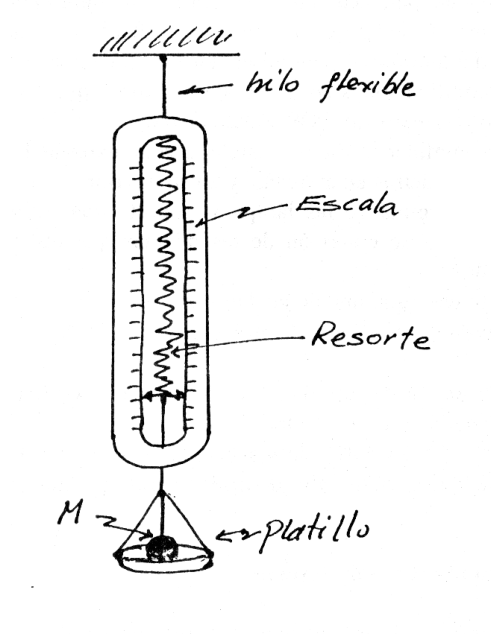
Una balanza de resorte es un dispositivo similar al esquematizado en la figura. Si se suspende un cuerpo de ella el resorte se estira y la fuerza que el mismo aplica al objeto suspendido es directamente proporcional a dicho estiramiento (, : fuerza ejercida por el resorte; : constante el’astica del resorte; : estiramiento del resorte). (figura)
Considere una balanza de resorte en la ciudad de C’ordoba ( de latitud sur), la longitud del resorte, cuando no hay ningun cuerpo colocado en su platillo, es y el valor de la constante el’astica es N/m. a) Si se cuelga del platillo de la balanza un cuerpo de masa y una vez alcanzado el equilibrio se observa que el estiramiento del resorte es de 10 cm. Se pide: a) Dibujar un diagrama vectorial con todas las fuerzas que act’uan sobre el cuerpo. b) Determinar el valor de a partir de la medici’on hecha con la balanza, expresando en kg. c) \u00bfEn cu’anto difiere el valor del peso del cuerpo, dado por la balanza, del producto ? \u00bfa qu’e se debe esta diferencia? Se coloca ahora en el platillo de la balanza un cuerpo de masa y una vez alcanzado el equilibrio se observa que el estiramiento del resorte es de 15s e) \u00bfCu’al es el valor del estiramiento del resorte en la segunda prueba? f) Si esa misma balanza se ubicara en el Polo, en cu’al de las dos pruebas ( ‘o ) el estiramiento del resorte ser’ia mayor que en C’ordoba. g) Ubique el o los lugares sobre la Tierra donde el peso indicado por la balanza ser’ia m’inimo (justifique su respuesta). g) Ubique el o los lugares sobre la Tierra donde el peso indicado por la balanza coincide con la direcci’on definida por el radio terrestre del lugar (justifique su respuesta).
Datos: Radio de la tierra= 6.400 km; m/s
Topic: Newtonian Mechanics, Gravitation Metodi: Hooke’s Law, Free-Body Diagram Competenze: Physical Reasoning Objects: Spring Fonte: Testo (PDF) — p.2
Problema 3: Una bilancia di scadenza
Una bilancia di primavera è un dispositivo simile a quello schematizzato nella figura. Se si sospende un corpo da esso, la molla si allontana e la forza che essa applica all’oggetto sospeso è direttamente proporzionale a tale allungamento (, : forza esercitata dalla molla; : costante l’astica della molla; : allungamento della molla). (Figura)
Considerate una bilancia di primavera nella città di Cordoba ( di latitudine sud), la lunghezza della primavera, quando non c’è alcun corpo posto sul suo piatto, è e il valore della costante el’stica è N/m. a) Se si appende dal piatto della bilancia un corpo di massa e si osserva che, una volta raggiunto l’equilibrio, la rettazione della molla è di 10 cm. Si chiede: a) Disegnare un diagramma vettoriale con tutte le forze che agiscono sul corpo. b) Determinare il valore di a partire dal bilanciamento, espresso in kg. c) Quale differenza c’è tra il valore del peso corporeo, dato dal bilanciatore, e il prodotto ? Che differenza c’è? Si mette ora sul piatto della bilancia un corpo di massa e una volta raggiunto l’equilibrio si osserva che l’estensione della molla è di 15s e) \u00bf’Qual è il valore del tratto di primavera nella seconda prova? f) Se la stessa bilancia fosse situata al Polo, in quale dei due test ( o ) l’estensione della molla sarebbe maggiore di quella di Cordoba. g) Localizza il (i) luogo (i) sulla Terra in cui il peso indicato dalla bilancia sia minimo (giustifica la tua risposta). g) Locare il (i) luogo (i) sulla Terra dove il peso indicato dalla bilancia coincide con la direzione definita dal raggio terrestre del luogo (giustificare la sua risposta).
Dati: Radius terrestre = 6.400 km; m/s
Topic: Newtonian Mechanics, Gravitation Metodi: Hooke’s Law, Free-Body Diagram Competenze: Physical Reasoning Objects: Spring Fonte: Testo (PDF) — p.2
Problema 3: Una balanza de resorte
A spring scale is a device similar to the one outlined in the figure. If a body is suspended from it, the spring is stretched and the force applied to the suspended object is directly proportional to the stretch (, : force exerted by the spring; : constant the spring’s static; : stretch of the spring). (Figure)
Consider a spring scale in the city of Cordoba ( of southern latitude), the length of the spring, when there is no body placed on its plate, is and the value of the steady constant is N/m. (a) If a body of mass is hung from the scale plate and the balance is reached, the spring stretch is observed to be 10 cm. It asks: (a) Draw a vector diagram with all the forces acting on the body. (b) Determine the value of from the measurement made with the scale, expressed in kg. (c) How much does the value of body weight, given on the scale, differ from the product ? What’s the difference? A mass body is now placed on the scale plate and once the balance is reached it is observed that the spring stretch is 15s e) \u00bf’What is the spring stretch value in the second test? f) Si esa misma balanza se ubicara en el Polo, en cu’al de las dos pruebas ( ‘o ) el estiramiento del resorte ser’ia mayor que en C’ordoba. (g) Locate the place (s) on the Earth where the weight indicated by the scale would be minimum (justify your answer). (g) Locate the place (s) on the Earth where the weight indicated by the scale matches the direction defined by the land radius of the place (justify your answer).
Data: Radius of the earth = 6,400 km; m/s
Topic: Newtonian Mechanics, Gravitation Metodi: Hooke’s Law, Free-Body Diagram Competenze: Physical Reasoning Objects: Spring Fonte: Testo (PDF) — p.2
Problema 4: Energ’ia de una pila com’un (Prueba experimental)
PRUEBA EXPERIMENTAL. AZUL Y VERDE.
Objetivo: Determinar la energ’ia entregada por una pila com’un a la resistencia dada, en uso ininterrumpido hasta agotar la pila. Con los elementos provistos que considere necesarios, dise~ne y arme un dispositivo experimental a tal fin.
Elementos:
- Una pila com’un.
- Una resistencia de alambre.
- Un term’os.
- Un termometro.
- Una probeta graduada.
- Un recipiente com’un.
- Conectores y cables.
- Papel milimetrado.
- Dos multimetros.
- Disponibilidad de agua a temperatura ambiente y a otras temperaturas.
Requerimientos: S’olo podr’a utilizar los elementos provistos, papel, l’apiz o bol’igrafo, regla y calculadora no programable. Al finalizar el trabajo deber’a entregar un informe que incluya los siguientes puntos:
- Diagrama del dispositivo experimental montado.
- Descripci’on y fundamentaci’on del dise~no experimental utilizado.
- Valores obtenidos en las mediciones realizadas.
- Resultado obtenido de la magnitud solicitada.
- Error del resultado.
- Comentarios que desee realizar.
NOTA: Si utiliza uno de los instrumentos como amper’imetro use la llave selectora en 10A y la conexi’on de 10A. Si usa como volt’imetro ponga la llave selectora en DCV - 2000m (hasta 2000 mV). No cambie la posici’on de la llave selectora con el instrumento conectado. Al terminar, desconecte el instrumento y ponga la llave selectora en OFF.
Topic: Circuits, Thermodynamics Metodi: Experimental Data Analysis, Error Propagation Competenze: Experimental Data Analysis, Physical Reasoning Objects: Battery, Resistor, Calorimeter Fonte: Testo (PDF) — p.2
Il problema 4: energia di una pila comune (prova sperimentale)
Prova sperimentale. Blu e verde.
Obiettivo: determinare l’energia fornita da una pila a una resistenza data, in uso continuativo fino a quando la pila non si esaurisce. Con gli elementi forniti che ritenga necessari, progettare e mettere a disposizione un dispositivo sperimentale per questo scopo.
Elementi:
- Una pila con un.
- Una resistenza di filo.
- Un ter’os.
- Un termometro.
- Una prova di laurea.
- Un contenitore con uno.
- Cable e connettori.
- Papero millimetrico.
- Due multimetri.
- Disponibilità di acqua a temperatura ambiente e a altre temperature.
Requisiti: potrà utilizzare gli elementi forniti, carta, carta o bol’igrafo, regola e calcolatore non programmabile. Al termine del lavoro deve presentare un rapporto che include i seguenti punti:
- Diagramma del dispositivo sperimentale montato.
- Descrizione e fondamento del design non sperimentale utilizzato.
- Valori ottenuti dalle misurazioni effettuate.
- Risultato ottenuto dalla grandezza richiesta.
- Errore di risultato.
- Commenti che vuoi fare.
NOTA: se si utilizza uno degli strumenti come ampere, si utilizza la chiave selezionatrice di 10A e la connessione di 10A. Se usi come volt’meter, metti la chiave selezionatrice a DCV - 2000m (fino a 2000 mV). Non cambiare la posizione della chiave selezionatrice con l’apparecchio collegato. Quando hai finito, spegni l’apparecchio e metti la chiave selezionatrice in OFF.
Topic: Circuits, Thermodynamics Metodi: Experimental Data Analysis, Error Propagation Competenze: Experimental Data Analysis, Physical Reasoning Objects: Battery, Resistor, Calorimeter Fonte: Testo (PDF) — p.2
Problem 4: Energy from a common battery (experimental test)
This is an experimental test. Blue and green.
Objective: To determine the energy delivered by a battery to a given resistance, in continuous use until the battery is exhausted. With the elements provided as you deem necessary, design and equip an experimental device for this purpose.
The following elements:
- A pile of one.
- A wire resistance.
- A term’os.
- A thermometer.
- A graduate test.
- A container with one.
- Connectors and wires.
- It’s a millimeter piece of paper.
- Two multimeters.
- Availability of water at room temperature and other temperatures.
Requirements: Only the items provided, paper, pen or pen, rule and non-programmable calculator can be used. At the end of the work, you must submit a report containing the following points:
- Diagram of the experimental device mounted.
- Describe and substantiate the non-experimental design used.
- Values obtained from the measurements made.
- Result obtained from the quantity requested.
- Error in the result.
- Any comments you want to make.
NOTE: If you use one of the instruments as an amp ‘meter use the selector key at 10A and the connector at 10A. If you use the voltmeter, put the selector key on DCV - 2000m (up to 2000 mV). Do not change the position of the selector key with the instrument connected. When finished, turn off the instrument and put the selector key in OFF.
Topic: Circuits, Thermodynamics Metodi: Experimental Data Analysis, Error Propagation Competenze: Experimental Data Analysis, Physical Reasoning Objects: Battery, Resistor, Calorimeter Fonte: Testo (PDF) — p.2
5. Santa Teresita, Buenos Aires, Verde
Una esfera y un cilindro, que tienen la misma masa M y el mismo radio R, bajan rodando por el mismo plano inclinado. a) \u00bfCu’al de los dos cuerpos llegar’a primero a la base del plano cuya inclinaci’on es y su longitud L? b) \u00bfCu’al es el m’aximo valor del coeficiente de rozamiento , para que ambos puedan rodar sin deslizar? Esfera: Cilindro:
Topic: Rotational Dynamics, Conservation of Energy Metodi: Energy Conservation Method, Torque & Angular Momentum Analysis Competenze: Physical Reasoning Objects: Sphere, Cylinder, Inclined Plane Fonte: Testo (PDF) — p.2
5. Santa Teresita, Buenos Aires, Verde
Una sfera e un cilindro, che hanno la stessa massa M e lo stesso raggio R, scendono ruotando nello stesso piano inclinato. a) Quale dei due corpi arriva prima alla base del piano la cui inclinazione è e la sua lunghezza L? b) \u00bf\Qual è il massimo valore del coefficiente di rottura , in modo che entrambi possano ruotare senza scivolare? Spalla: Cilindro:
Topic: Rotational Dynamics, Conservation of Energy Metodi: Energy Conservation Method, Torque & Angular Momentum Analysis Competenze: Physical Reasoning Objects: Sphere, Cylinder, Inclined Plane Fonte: Testo (PDF) — p.2
5. Santa Teresita, Buenos Aires, Verde
A sphere and a cylinder, having the same mass M and the same radius R, roll down the same sloping plane. (a) Which of the two bodies first reaches the base of the plane whose slope is and its length L? (b) \u00bf\What is the maximum value of the friction coefficient , so that both can roll without slipping? Esfera: Cilindro:
Topic: Rotational Dynamics, Conservation of Energy Metodi: Energy Conservation Method, Torque & Angular Momentum Analysis Competenze: Physical Reasoning Objects: Sphere, Cylinder, Inclined Plane Fonte: Testo (PDF) — p.2
6. Mendoza, Azul
Una carretilla de ruedas peque~nas y rodamientos bien lubricados, es soltada desde el reposo en el tiempo por la superficie de una pendiente como se muestra en la figura. La masa de la carretilla es 1,3 kg. Determinar: (figura) a) el m’odulo de la ejercida por la superficie sobre la carretilla. b) el m’odulo de la aceleraci’on de la carretilla. c) la velocidad de la carretilla en s d) la distancia que la carretilla ha viajado en ese tiempo.
Topic: Newtonian Mechanics Metodi: Free-Body Diagram, Kinematic Equations Competenze: Physical Reasoning Objects: Cart, Inclined Plane Fonte: Testo (PDF) — p.2
6. Mendoza, Azul
Un carrello di ruote piccole e di roditori ben lubrificati, viene rilasciato dal riposo nel tempo per la superficie di una pendenza come mostrato nella figura. Il peso del carrello è di 1,3 kg. Determinare: (figura) a) il modulo del esercitato dalla superficie sul carrello. b) il modulo di accelerazione del carrello. c) velocità del carrello in s d) la distanza percorsa dal carrello in quel periodo.
Topic: Newtonian Mechanics Metodi: Free-Body Diagram, Kinematic Equations Competenze: Physical Reasoning Objects: Cart, Inclined Plane Fonte: Testo (PDF) — p.2
**6. The Commission shall adopt delegated acts in accordance with Article 21 of this Regulation.
A trailer of small wheels and well-lubricated bearings is released from rest in time by the surface of a slope as shown in the figure. The weight of the truck is 1.3 kg. Determine: (Figure) (a) the mass of the exerted by the surface on the trailer. (b) the acceleration modulus of the trailer. (c) the speed of the trailer in s (d) the distance travelled by the trailer during that time.
Topic: Newtonian Mechanics Metodi: Free-Body Diagram, Kinematic Equations Competenze: Physical Reasoning Objects: Cart, Inclined Plane Fonte: Testo (PDF) — p.2
7. Capital Federal, Verde
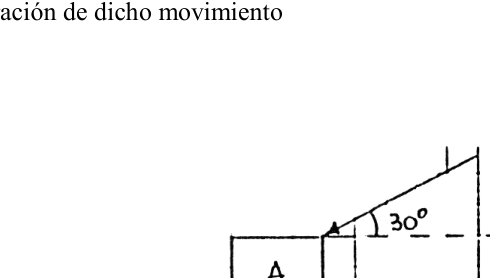
Dos cuerpos prism’aticos A y B se encuentran en reposo, apoyados en un plano horizontal. Sus masas son: kg ; kg y los coeficientes de rozamiento son: entre A y B y entre B y el plano . Sobre A act’ua una fuerza N como indica la figura. (figura) Determinar: a) Si se mueve A respecto de B o B respecto del bloque b) Calcular la aceleraci’on de dicho movimiento
Topic: Newtonian Mechanics Metodi: Free-Body Diagram, Vector Decomposition Competenze: Physical Reasoning Objects: Block, Inclined Plane Fonte: Testo (PDF) — p.2
7. Capitale federale, verde
Due prismatici A e B si trovano a riposo, appoggiati in un piano orizzontale. Le loro masse sono: kg; kg e i coefficienti di rottura sono: tra A e B e tra B e il piano . Su A si agisce una forza N come indicato nella figura. (Figura) Determinare: a) Se si muove rispetto a B o B rispetto al blocco b) Calcolare l’accelerazione di tale movimento
Topic: Newtonian Mechanics Metodi: Free-Body Diagram, Vector Decomposition Competenze: Physical Reasoning Objects: Block, Inclined Plane Fonte: Testo (PDF) — p.2
**7. The amount of the loan is EUR 10 million.
Two prism’s bodies A and B lie at rest, supported on a horizontal plane. Its masses are: kg; kg and the coefficients of friction are: between A and B and between B and the plane . A force N acts on A as shown in Figure 1. (Figure) Determine: (a) If it moves with respect to B or B with respect to the block (b) Calculate the acceleration of such a movement
Topic: Newtonian Mechanics Metodi: Free-Body Diagram, Vector Decomposition Competenze: Physical Reasoning Objects: Block, Inclined Plane Fonte: Testo (PDF) — p.2
8. El Palomar, Buenos Aires, Azul
Un autom’ovil parte desde Azul hacia Rawson a las 4 a.m. A las 7 a.m. parte otro autom’ovil desde Rawson hacia Azul, por el mismo camino, que es recto. Si la distancia entre las dos ciudades es de 1100 Km y las velocidades se consideran constantes desde el momento de partida, calcular en forma gr’afica y anal’itica las coordenadas del punto de encuentro. Km/h ; Km/h.
Topic: Newtonian Mechanics Metodi: Kinematic Equations Competenze: Physical Reasoning, Mathematical Modeling Objects: Cart Fonte: Testo (PDF) — p.2
8. Il Palomar, Buenos Aires, Azul
Un’auto parte da Azul verso Rawson alle 4 del mattino. Alle 7 del mattino. parte un’altra auto da Rawson verso Azul, sulla stessa strada, che è retta. Se la distanza tra le due città è di 1100 km e le velocità sono considerate costanti dal momento della partenza, calcolare in modo grafico e analizzando le coordinate del punto di incontro. Km/h ; Km/h.
Topic: Newtonian Mechanics Metodi: Kinematic Equations Competenze: Physical Reasoning, Mathematical Modeling Objects: Cart Fonte: Testo (PDF) — p.2
8. The Palomar, Buenos Aires, Azul
A car leaves from Blue for Rawson at 4 a.m. At 7 a.m. Part another car from Rawson to Blue, on the same road, which is straight. If the distance between the two cities is 1100 km and the speeds are considered constant from the time of departure, calculate the coordinates of the meeting point in a graphic and analytical manner. Km/h ; Km/h.
Topic: Newtonian Mechanics Metodi: Kinematic Equations Competenze: Physical Reasoning, Mathematical Modeling Objects: Cart Fonte: Testo (PDF) — p.2
9. C’ordoba, Verde
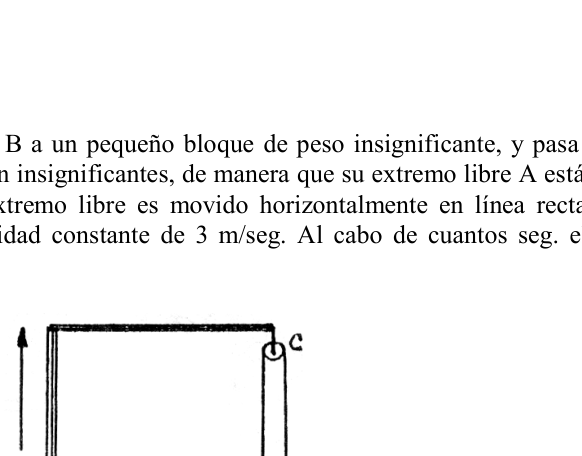
Una soga AB est’a atada en B a un peque~no bloque de peso insignificante, y pasa por una polea C de dimensiones tambi’en insignificantes, de manera que su extremo libre A est’a a 1,5m. del suelo (ver figura). Si el extremo libre es movido horizontalmente en l’inea recta por un hombre que camina con velocidad constante de 3 m/seg. Al cabo de cuantos seg. el bloque alcanzar’a a la polea, si m.? (figura)
Topic: Newtonian Mechanics Metodi: Kinematic Equations, Vector Decomposition Competenze: Physical Reasoning, Mathematical Modeling Objects: String, Pulley, Block Fonte: Testo (PDF) — p.2
9. C’ordoba, Verde
Una corda AB è legata in B a un piccolo blocco di peso insignificante, e passa attraverso una polea C di dimensioni anche insignificanti, così che la sua estremità libera A è a 1,5 m. La produzione di prodotti di base è stata ridotta. Se l’estremità libera è spostata orizzontalmente in linea retta da un uomo che cammina a velocità costante di 3 m/sec. Dopo qualche secondo. Il blocco raggiunge la polea, se m? (Figura)
Topic: Newtonian Mechanics Metodi: Kinematic Equations, Vector Decomposition Competenze: Physical Reasoning, Mathematical Modeling Objects: String, Pulley, Block Fonte: Testo (PDF) — p.2
**9. C ‘ordoba, Green
An AB rope is tied in B to a small non-negligible weight block, and it passes through a C pole of also negligible dimensions, so that its free end A is 1.5m away. the soil (see figure). If the free end is moved horizontally in a straight line by a man walking at a constant speed of 3 m/s. After a few seconds. The block reaches the pole, if m? (Figure)
Topic: Newtonian Mechanics Metodi: Kinematic Equations, Vector Decomposition Competenze: Physical Reasoning, Mathematical Modeling Objects: String, Pulley, Block Fonte: Testo (PDF) — p.2
10. La R’ioja, Azul
Tres rociadores A, B, y C est’an fijos en el suelo, adem’as est’an inclinados con respecto a la horizontal , y respectivamente. Los chorros de agua salen con id’entica velocidad. \u00bfCu’al es la relaci’on entre los alcances de los tres chorros?
Topic: Newtonian Mechanics Metodi: Kinematic Equations, Vector Decomposition Competenze: Physical Reasoning, Mathematical Modeling Objects: Projectile Fonte: Testo (PDF) — p.2
**10. La RIOJA, Azul
Tre spruzzatori A, B e C sono fissati sul suolo, e sono inclinati rispetto ai orizzonti , e rispettivamente. I getti d’acqua usciranno a velocità uguale. Qual è la relazione tra le portate dei tre jet?
Topic: Newtonian Mechanics Metodi: Kinematic Equations, Vector Decomposition Competenze: Physical Reasoning, Mathematical Modeling Objects: Projectile Fonte: Testo (PDF) — p.2
**10. The Red, Blue
Three sprayers A, B and C are fixed to the ground, and are tilted to the horizontal , and respectively. The water jets are coming out at the same speed. What is the relationship between the reaches of the three jets?
Topic: Newtonian Mechanics Metodi: Kinematic Equations, Vector Decomposition Competenze: Physical Reasoning, Mathematical Modeling Objects: Projectile Fonte: Testo (PDF) — p.2
11. Capital Federal, Verde
Un bloque de 1 kg choca contra un resorte horizontal sin peso cuya constante es 2 N/m. El bloque comprime al resorte deform’andolo 4m a partir de la posici’on de reposo. Siendo el coeficiente de rozamiento din’amico entre bloque y superficie horizontal . a) Hallar la velocidad del bloque en el instante del choque. b) Luego de comprimir el resorte, indicar si el bloque puede llegar hasta la posici’on 1 donde hay una pared, y de hacerlo con qu’e velocidad impactar’ia. (figura)
Topic: Conservation of Energy, Newtonian Mechanics Metodi: Energy Conservation Method, Hooke’s Law Competenze: Physical Reasoning Objects: Block, Spring Fonte: Testo (PDF) — p.2
11. Capitale federale, verde
Un blocco di 1 kg si schianta contro una sorgente orizzontale senza peso la cui costante è di 2 N/m. Il blocco si comprime sulla sorgente e si deforma a 4 metri dalla posizione di riposo. Essendo il coefficiente di ruggine dinamico fra blocco e superficie orizzontale . a) Calcolare la velocità del blocco all’istante dello scontro. b) Dopo aver compresso la sorgente, indicare se il blocco può raggiungere la posizione 1 dove c’è un muro, e farlo a che velocità colpirà. (Figura)
Topic: Conservation of Energy, Newtonian Mechanics Metodi: Energy Conservation Method, Hooke’s Law Competenze: Physical Reasoning Objects: Block, Spring Fonte: Testo (PDF) — p.2
**11. The amount of the loan is EUR 10 million.
A block of 1 kg collides with a horizontal spring without weight whose constant is 2 N/m. The block compresses the spring and deforms it 4m from the resting position. The dynamic friction coefficient between the block and the horizontal surface is . (a) Determine the block speed at the instant of impact. b) After compressing the spring, indicate whether the block can reach position 1 where there is a wall, and do so at what speed it will impact. (Figure)
Topic: Conservation of Energy, Newtonian Mechanics Metodi: Energy Conservation Method, Hooke’s Law Competenze: Physical Reasoning Objects: Block, Spring Fonte: Testo (PDF) — p.2
12. Bah’ia Blanca, Buenos Aires, Azul
Desde lo alto de un edificio de 40 m de altura se deja caer un cuerpo en el mismo instante en que desde la base del edificio se lanza arriba otro cuerpo. a) \u00bfQu’e condici’on debe darse para lograr que ambos lleguen simult’aneamente a la base del edificio? b) Para la situaci’on mencionada anteriormente, realiza una gr’afica para la posici’on de ambos cuerpos en funci’on del tiempo, tomando a la base del edificio como punto de referencia. (figura)
Topic: Newtonian Mechanics Metodi: Kinematic Equations Competenze: Physical Reasoning, Mathematical Modeling Objects: Projectile Fonte: Testo (PDF) — p.2
12. Bahía Blanca, Buenos Aires, Azul
Da un edificio alto 40 metri si fa cadere un corpo nello stesso istante in cui dal fondamento del edificio si lancia un altro corpo. a) Quali condizioni devono essere adottate per far sì che entrambi arriviano contemporaneamente alla base del edificio? b) Per la situazione sopra menzionata, esegue una grafica per la posizione di entrambi i corpi in funzione del tempo, prendendo come punto di riferimento la base del edificio. (Figura)
Topic: Newtonian Mechanics Metodi: Kinematic Equations Competenze: Physical Reasoning, Mathematical Modeling Objects: Projectile Fonte: Testo (PDF) — p.2
**12. The Commission has also adopted a proposal for a regulation on the protection of the environment.
From the top of a 40 m high building, a body is dropped at the same moment as another body is thrown up from the base of the building. (a) What conditions must be given to ensure that both arrive at the base of the building simultaneously? (b) For the above situation, make a graph for the position of both bodies in time, taking the base of the building as a reference point. (Figure)
Topic: Newtonian Mechanics Metodi: Kinematic Equations Competenze: Physical Reasoning, Mathematical Modeling Objects: Projectile Fonte: Testo (PDF) — p.2
13. Rosario, Santa Fe, Verde
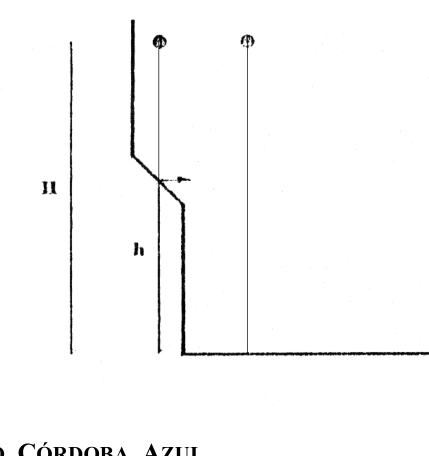
Dos bolitas se mueven desde una altura H=10m. Una de ellas se desv’ia al chocar con una saliente, a una altura h=4m,como muestra la figura. El choque es totalmente el’astico y la bolita tiene una velocidad horizontal inmediatamente despu’es del choque. a) Calcula el tiempo de ca’ida de cada una de las bolitas. b) Suponiendo que pudi’eramos cambiar el valor de la altura h, \u00bfpara qu’e valor de h el tiempo de ca’ida de la bolita ser’ia m’aximo? \u00bfcu’anto ser’ia ese tiempo? c) Halla la energ’ia cin’etica de cada bolita un instante antes de llegar al piso. (figura)
Topic: Newtonian Mechanics, Conservation of Energy Metodi: Kinematic Equations, Energy Conservation Method Competenze: Physical Reasoning Objects: Ball, Projectile Fonte: Testo (PDF) — p.2
13. Rosario, Santa Fe, Verde
Due palle si muovono da un’altezza H=10 m. Una di queste si svanisce colpendo un’uscita, ad un’altezza di h=4 m, come mostra la figura. L’impatto è totalmente sttico e la pallina ha una velocità orizzontale immediatamente dopo l’impatto. a) Calcola il tempo di caduta di ciascuna pallina. b) Supponendo che potessimo cambiare il valore dell’altezza h, per quale valore h il tempo di caduta della pallina sarà il massimo? Che cosa sarebbe quel tempo? c) Scopri l’energia cinetica di ogni pallotto un istante prima di arrivare al pavimento. (Figura)
Topic: Newtonian Mechanics, Conservation of Energy Metodi: Kinematic Equations, Energy Conservation Method Competenze: Physical Reasoning Objects: Ball, Projectile Fonte: Testo (PDF) — p.2
**13. The Commission shall adopt implementing acts in accordance with Article 21 of this Regulation.
Two balls move from a height of H=10 m. One of them goes off when it hits a spring, at a height of h=4m, as shown in the figure. The impact is fully static and the ball has a horizontal velocity immediately after the impact. (a) Calculate the time of fall of each ball. (b) Assuming we could change the value of the height h, what is the value of h the time of the fall of the ball being maximal? What would that be at that time? c) Find the kinetic energy of each ball a moment before you reach the floor. (Figure)
Topic: Newtonian Mechanics, Conservation of Energy Metodi: Kinematic Equations, Energy Conservation Method Competenze: Physical Reasoning Objects: Ball, Projectile Fonte: Testo (PDF) — p.2
14. R’io Cuarto, C’ordoba, Azul
Se dejan caer dos mu~necos de igual forma y tama~no, desde dos plataformas ubicadas en el do y el vo. piso de un edificio. Responda las siguientes preguntas, fundamentando su respuesta: a) \u00bfCu’al de los mu~necos se har’a m’as da~no al chocar contra el suelo? \u00bfPor qu’e? b) Si los dos mu~necos se dejan caer al mismo tiempo, \u00bfd’onde estar’a el del vo. piso cuando el del do. llega al suelo? \u00bfPor qu’e? c) Si el del do. piso se deja caer en el mismo instante en que pasa por all’i el que viene del vo,\u00bfllegan juntos al mismo tiempo al suelo o uno de ellos llegar’a primero? \u00bfPor qu’e?
Topic: Newtonian Mechanics Metodi: Kinematic Equations Competenze: Physical Reasoning Objects: Projectile Fonte: Testo (PDF) — p.2
14. R’io Cuarto, C’ordoba, Azul
Due colli identici e di dimensioni sono abbassati da due piattaforme situate sul do e sul vo. - Un piano di un edificio. Rispondere alle seguenti domande, fondando la tua risposta: A) Quale di questi colpi si farà male colpendo il pavimento? Perché? b) Si los dos mu~necos se dejan caer al mismo tiempo, \u00bfd’onde estar’a el del vo. il piano quando il do. - Si trova sul pavimento? Perché? c) Se il do. piso se deja caer en el mismo instante en que pasa por all’i el que viene del vo,\u00bfllegan juntos al mismo tiempo al suelo o uno de ellos llegar’a primero? Perché?
Topic: Newtonian Mechanics Metodi: Kinematic Equations Competenze: Physical Reasoning Objects: Projectile Fonte: Testo (PDF) — p.2
14. R’io Cuarto, C’ordoba, Azul
Se dejan caer dos mu~necos de igual forma y tama~no, desde dos plataformas ubicadas en el do y el vo. floor of a building. Answer the following questions, based on your answer: Which of the necks will be made of steel when it hits the ground? Why is that? b) Si los dos mu~necos se dejan caer al mismo tiempo, \u00bfd’onde estar’a el del vo. piso cuando el del do. Does it get to the ground? Why is that? (c) If the . piso se deja caer en el mismo instante en que pasa por all’i el que viene del vo,\u00bfllegan juntos al mismo tiempo al suelo o uno de ellos llegar’a primero? Why is that?
Topic: Newtonian Mechanics Metodi: Kinematic Equations Competenze: Physical Reasoning Objects: Projectile Fonte: Testo (PDF) — p.2
15. Capital Federal, Verde
Los juegos electr’onicos llamados flippers deben su nombre a las dos o m’as aletas (flapper, en ingl’es) con las que el jugador intenta mantener la bola en el juego. Precisamente, para evitar que la bola caiga en las profundidades situadas del interior de la m’aquina y, con el objeto de pegarle al bunquito que da un fooso da 1.000.000 puntos; un experimentado jugador golpea la bola violentamente. ‘Esta sale despedida con una velocidad de 5,5 m/s y sube por el plano del flipper en direcci’on al bunquito, que se halla a 1,5 metros sobre la altura inicial de la bola y sobre una superficie del juego inclinado un ‘angulo . Peso de la bola: 3 N. Altura de las aletas impulsoras respecto al piso: 1 metro. En base a las consideraciones energ’eticas responder: a) \u00bfLlega la bola a impactar sobre el bunquito? b) \u00bfCon qu’e velocidad llega de regreso a la aleta, si es que lo hace? c) \u00bfEn qu’e punto de su trayectoria de regreso tendr’a la bola la misma velocidad (en m’odulo) que la inicial?
Topic: Conservation of Energy, Newtonian Mechanics Metodi: Energy Conservation Method, Kinematic Equations Competenze: Physical Reasoning Objects: Ball, Inclined Plane Fonte: Testo (PDF) — p.2
15. Capitale federale, verde
I giochi elettronici chiamati flippers devono il nome alle due o più ali (flapper, in inglese) con cui il giocatore cerca di mantenere la palla in gioco. Esattamente, per evitare che la palla cadga nelle profondità situate all’interno della macchina e, per colpire il gruppo che dà un fooso dà 1.000.000 punti; un giocatore esperto colpisce violentemente la palla. “Questa si esce a una velocità di 5,5 m/s e sale per il piano del flipper in direzione del bunker, che si trova a 1,5 metri dall’altezza iniziale della palla e su una superficie di gioco inclinata un angolo . Peso della palla: 3 N. Altezza delle ali a impulso rispetto al pavimento: 1 metro. In base alle considerazioni energetiche, rispondere: a) La palla colpisce il bastone? Con quale velocità arriva indietro al filo, se lo fa? c) \u00bfA che punto del suo percorso di ritorno la palla avrà la stessa velocità (in modulo) della prima?
Topic: Conservation of Energy, Newtonian Mechanics Metodi: Energy Conservation Method, Kinematic Equations Competenze: Physical Reasoning Objects: Ball, Inclined Plane Fonte: Testo (PDF) — p.2
**15. The amount of the loan is EUR 10 million.
Electronic games called flippers owe their name to the two or more flippers (in English) with which the player attempts to keep the ball in play. To prevent the ball from falling into the depths of the inside of the machine and, in order to hit the bunch, a foos gives 1,000,000 points; an experienced player hits the ball violently. This one is fired at a speed of 5.5 m/s and climbs up the plane of the flipper towards the bunch, which is 1.5 m above the initial height of the ball and over a sloping game surface an angle . Weight of the ball: 3 N. Height of the propeller fins relative to the floor: 1 metre. Based on energy considerations, answer: Does the ball hit the bunch? b) \u00bfWith what speed does it get back to the fin, if it does? At what point in its return path will the ball have the same speed (in modulo) as the initial?
Topic: Conservation of Energy, Newtonian Mechanics Metodi: Energy Conservation Method, Kinematic Equations Competenze: Physical Reasoning Objects: Ball, Inclined Plane Fonte: Testo (PDF) — p.2
16. El Palomar, Buenos Aires, Azul
Se deja caer una piedra desde 160 m. Calcular, utilizando consideraciones energ’eticas: a) La velocidad a los 100m de altura b) La altura a la que se encuentra cuando la velocidad es 50 m/s c) La altura a la que se encuentra cuando la velocidad es 120 m/s. Alguno de los resultados te llama la atenci’on? \u00bfPor qu’e?
Topic: Conservation of Energy, Newtonian Mechanics Metodi: Energy Conservation Method, Kinematic Equations Competenze: Physical Reasoning Objects: Projectile Fonte: Testo (PDF) — p.2
16. Il Palomar, Buenos Aires, Azul
Si fa cadere una pietra da 160 metri. Calcolare, utilizzando considerazioni energetiche: a) La velocità a 100 m di altezza b) L’altezza a cui si trova quando la velocità è di 50 m/s c) L’altezza a cui si trova quando la velocità è di 120 m/s. Qualche risultato ti chiama “attenzione”? Perché?
Topic: Conservation of Energy, Newtonian Mechanics Metodi: Energy Conservation Method, Kinematic Equations Competenze: Physical Reasoning Objects: Projectile Fonte: Testo (PDF) — p.2
16. The Palomar, Buenos Aires, Azul
You drop a stone from 160 meters. Calculate, using energy considerations: (a) Speed at 100m altitude (b) The height at which it is at 50 m/s (c) The height at which it is at 120 m/s. Any of the results call you attention? Why is that?
Topic: Conservation of Energy, Newtonian Mechanics Metodi: Energy Conservation Method, Kinematic Equations Competenze: Physical Reasoning Objects: Projectile Fonte: Testo (PDF) — p.2
17. Provincia de Mendoza, Azul y Verde
Una barra gira en torno a un punto fijo S. En el otro extremo R se coloca en un platillo un cubo de aluminio de X cm de arista. A 10 cm del punto S se sujeta el conjunto con un dinam’ometro hasta que la barra quede horizontal. \u00bfCu’anto vale el dinam’ometro en este momento?
Luego se introduce el conjunto en un recipiente que contiene aceite, comprob’andose que el platillo tiene peso y volumen despreciable, \u00bfcu’al ser’a la marca del dinam’ometro en este momento? Justifica tu respuesta. Peso espec’ifico del aluminio: gr/cm Peso espec’ifico del aceite: gr/cm Longitud de la barra: m Peso de la barra: Kgf
Topic: Rigid Body Statics, Fluid Mechanics Metodi: Torque & Angular Momentum Analysis, Hydrostatic Equilibrium Competenze: Physical Reasoning Objects: Rod, Lever, Container Fonte: Testo (PDF) — p.2
17. Provincia di Mendoza, Azul e Verde
Una barra ruota intorno a un punto fisso S. All’altra estremità R viene inserito in un piatto un cubo di alluminio di X cm di bordo. A 10 cm dal punto S, il gruppo viene appeso con un dinamometro fino a che la barra non è orizzontale. Quanto vale il dinamometro al momento?
Poi si inserisce l’insieme in un contenitore contenente olio, verificando che il piatto ha un peso e un volume dispregiatibili, il che è il marchio del dinamometro in questo momento? giustifica la tua risposta. Peso specifico dell’alluminio: gr/cm Peso specifico dell’olio: gr/cm Longitud de la barra: m Peso della barra: Kgf
Topic: Rigid Body Statics, Fluid Mechanics Metodi: Torque & Angular Momentum Analysis, Hydrostatic Equilibrium Competenze: Physical Reasoning Objects: Rod, Lever, Container Fonte: Testo (PDF) — p.2
17. Province of Mendoza, Blue and Green
A bar rotates around a fixed point S. At the other end of the R plate is placed an aluminium cube of X cm of edge. At 10 cm from the S point, the assembly shall be held with a dynamometer until the bar is horizontal. How much is the dynamometer worth right now?
Then you put the set in a container containing oil, and you check that the plate has a despicable weight and volume, which is the dynamometer mark right now? Justify your answer. Specific weight of aluminium: gr/cm Specific weight of the oil: gr/cm The length of the bar: m The weight of the bar: Kgf
Topic: Rigid Body Statics, Fluid Mechanics Metodi: Torque & Angular Momentum Analysis, Hydrostatic Equilibrium Competenze: Physical Reasoning Objects: Rod, Lever, Container Fonte: Testo (PDF) — p.2
18. Ibarreta, Formosa, Azul
Aplicando una fuerza de 15 kgf, en la periferia de una rueda de 1,5m,de di’ametro, se puede elevar un cuerpo de 120 kgf, suspendido de una cuerda que va enrollada en su eje. Sabiendo que el di’ametro de este es de 15 cm, calcular la ventaja mec’anica real, la ideal y el rendimiento de la m’aquina utilizada. (figura)
Topic: Rigid Body Statics Metodi: Torque & Angular Momentum Analysis Competenze: Physical Reasoning Objects: Wheel, String Fonte: Testo (PDF) — p.2
18. Ibarretta, Formosa, Azul
Applicando una forza di 15 kgf, sulla periferia di una ruota di 1,5 m di diametro, si può sollevare un corpo di 120 kgf, sospeso da una corda che si rotola sul suo asse. Sapendo che il diametro di questo è di 15 cm, calcolare il vantaggio meccanico reale, l’ideale e le prestazioni della macchina utilizzata. (Figura)
Topic: Rigid Body Statics Metodi: Torque & Angular Momentum Analysis Competenze: Physical Reasoning Objects: Wheel, String Fonte: Testo (PDF) — p.2
**18. Other, including:
Applying a force of 15 kgf, on the periphery of a wheel of 1.5 m in diameter, a body of 120 kgf, suspended from a rope that rolls on its axis, can be lifted. Knowing that the diameter of this is 15 cm, calculate the actual mechanical advantage, ideal and performance of the machine used. (Figure)
Topic: Rigid Body Statics Metodi: Torque & Angular Momentum Analysis Competenze: Physical Reasoning Objects: Wheel, String Fonte: Testo (PDF) — p.2
19. Mendoza, Verde
Se abandona una pelota partiendo del reposo en la parte mas alta de un plano inclinado, donde se desprecian los rozamientos, de 18 m de longitud y alcanza la parte inferior 3 s despu’es. En el mismo instante en que se abandona la primera, una segunda pelota es lanzada hacia arriba a lo largo del plano, partiendo de la parte mas baja con cierta velocidad inicial. La segunda pelota ha de recorrer hacia arriba una parte del plano, detenerse y volver al punto de partida de modo que llegue al mismo tiempo que la primera. a) \u00bfCu’al ha de ser la velocidad inicial de la segunda pelota? b) \u00bfCu’al ha de ser la velocidad de la segunda pelota en el punto m’as alto de su trayectoria? d) Si suponemos que el piso del plano inclinado es de 5,5 m de profundidad, \u00bfentra pelotas llegan al fondo del pozo con la misma velocidad? e) Si en la base del mismo hay una plataforma de 0,5 m de altura, con un sistema de resorte y suponiendo que un nito sentado del pie del plano las pelotitas, las que caen sobre la plataforma empuj’andola hacia abajo una distancia maxima de 0,3 m por debajo de su posici’on inicial antes de rebotar. e.1) \u00bfCu’al es la velocidad de cada uno de las pelotitas en el instante en que la plataforma ha descendido 0,05 m (suponer que la experiencia se realiza en el vac’io y la masa de las pelotitas son de 0,5 y 1 Kg. respectivamente)? e.2) Si en lugar de caer, se apoyaran dichas pelotitas suavemente sobre la plataforma \u00bfcu’anto descender’ia la misma? NOTA:Considerar los valores de las masas de las pelotitas a partir del item e.
Topic: Conservation of Energy, Newtonian Mechanics Metodi: Energy Conservation Method, Kinematic Equations, Hooke’s Law Competenze: Physical Reasoning Objects: Ball, Inclined Plane, Spring Fonte: Testo (PDF) — p.2
19. Mendoza, Verde
Si lascia una palla dal riposo nella parte più alta di un piano inclinato, dove si disprezzano gli arrugamenti, di 18 m di lunghezza e raggiunge la parte inferiore 3 s’e’ dopo. Nel momento in cui si abbandona la prima, una seconda palla viene lanciata verso l’alto lungo il piano, partendo dalla parte inferiore con una certa velocità iniziale. La seconda palla deve passare verso l’alto in una parte del piano, fermarsi e tornare al punto di partenza in modo che arrivi al tempo stesso della prima. a) Quale deve essere la velocità iniziale della seconda palla? b) Qual è la velocità della seconda palla al punto più alto del suo percorso? d) Se supponiamo che il pavimento del piano inclinato sia di 5,5 m di profondità, le palle raggiungono il fondo del pozzo con la stessa velocità? e) Se alla base del piattaforma si trova una piattaforma di 0,5 m di altezza, con un sistema di resorte e supponendo che un nitto seduto dal piede del piano le palline, quelle che cadono sulla piattaforma la spingono e la spingono verso il basso una distanza massima di 0,3 m sotto la sua posizione iniziale prima di rimbalzare. e.1) \u00bf’Qual è la velocità di ciascuna palla nell’istante in cui la piattaforma è scesa 0,05 m (supponendo che l’esperienza si svolga in vaccio e che la massa delle palle sia di 0,5 e 1 Kg. rispettivamente)? e.2) Se invece di cadere, queste palle si appoggiassero delicatamente sulla piattaforma, cosa sarebbe la stessa discesa? NOTA:Considerare i valori delle masse delle palle a partire dall’articolo e.
Topic: Conservation of Energy, Newtonian Mechanics Metodi: Energy Conservation Method, Kinematic Equations, Hooke’s Law Competenze: Physical Reasoning Objects: Ball, Inclined Plane, Spring Fonte: Testo (PDF) — p.2
**19. The Commission shall adopt implementing acts in accordance with Article 21 of this Regulation.
A ball is left resting at the top of an inclined plane, where the 18 m long rubs are scorned, and reaches the bottom 3 s’ later. The moment the first ball is dropped, a second ball is thrown upward along the plane, starting from the lower part at a certain initial speed. The second ball must travel up a part of the plane, stop and return to the starting point so that it reaches at the same time as the first. What is the initial speed of the second ball? What is the speed of the second ball at the highest point of its path? (d) If we assume that the floor of the inclined plane is 5.5 m deep, do the balls reach the bottom of the well at the same speed? (e) If at the base of the platform there is a platform 0.5 m high, with a spring system and assuming a nest sitting at the foot of the plane the balls, which fall on the platform push it down a maximum distance of 0.3 m below its initial position before bouncing. e.1) \u00bf’which is the speed of each of the balls at the moment the platform has descended 0.05 m (assuming the experiment is performed in the vacuum and the mass of the balls is 0.5 and 1 Kg. (b) the following: e.2) If instead of falling, these balls were to be leaned gently on the platform, what would it be like to fall down? NOTE:Consider the values of the ball masses from item e.
Topic: Conservation of Energy, Newtonian Mechanics Metodi: Energy Conservation Method, Kinematic Equations, Hooke’s Law Competenze: Physical Reasoning Objects: Ball, Inclined Plane, Spring Fonte: Testo (PDF) — p.2
20. Corrientes, Azul
Dos personas salen simult’aneamente en sus veh’iculos a 60 km/h (A) y 80km/h (B). Se cruzan despu’es de 40 minutos. \u00bfA qu’e distancia? Si la persona del m’ovil B sale 30 minutos m’as tarde que A y en bicicleta a 20 km/h, \u00bfCu’ando se cruzan? Indique el tiempo transcurrido y la distancia a la que se cruzan. Resolver el problema anal’iticamente y gr’aficamente.
Topic: Newtonian Mechanics Metodi: Kinematic Equations Competenze: Physical Reasoning, Mathematical Modeling Objects: — Fonte: Testo (PDF) — p.2
20. Correnti, azzurro
Due persone usciranno contemporaneamente con i loro veicoli a 60 km/h (A) e 80 km/h (B). Si incrociano dopo 40 minuti. Che distanza c’è? Se la persona del “B” scende 30 minuti dopo A e si spinge in bicicletta a 20 km/h, quando si incrociano? Indicare il tempo trascorso e la distanza che si attraversa. Risolvere il problema analisicamente e efficacemente.
Topic: Newtonian Mechanics Metodi: Kinematic Equations Competenze: Physical Reasoning, Mathematical Modeling Objects: — Fonte: Testo (PDF) — p.2
20. Electrical power, Blue
Two people are leaving their cars simultaneously at 60 km/h (A) and 80 km/h (B). They cross after 40 minutes. What’s the distance? If the person in B’s vehicle leaves 30 minutes later than A and cycles at 20 km/h, when do they cross? Please indicate the time elapsed and the distance to which they cross. Solve the problem analytically and effectively.
Topic: Newtonian Mechanics Metodi: Kinematic Equations Competenze: Physical Reasoning, Mathematical Modeling Objects: — Fonte: Testo (PDF) — p.2
21. Las Heras, Mendoza, Verde
Un avi’on vuela a 500m de altura a una km/h. En un instante dado estando en el punto A deja caer una bolsa con v’iveres. Averiguar cu’antos metros mas adelante cae y cu’al es la velocidad que alcanza la bolsa a los 6s. (figura)
Topic: Newtonian Mechanics Metodi: Kinematic Equations, Vector Decomposition Competenze: Physical Reasoning Objects: Projectile Fonte: Testo (PDF) — p.2
21. Las Heras, Mendoza, Verde
Un avi’on vuela a 500m de altura a una km/h. In un istante dato, al punto A, lascia cadere un sacchetto di cibo. Scoprire quanti metri più avanti cade e quale velocità raggiunge la borsa a 6s. (Figura)
Topic: Newtonian Mechanics Metodi: Kinematic Equations, Vector Decomposition Competenze: Physical Reasoning Objects: Projectile Fonte: Testo (PDF) — p.2
21. Las Heras, Mendoza, Verde
Un avi’on vuela a 500m de altura a una km/h. In a given moment while at point A he drops a bag of food. Find out how many feet further down the line and what the speed the bag reaches at 6s. (Figure)
Topic: Newtonian Mechanics Metodi: Kinematic Equations, Vector Decomposition Competenze: Physical Reasoning Objects: Projectile Fonte: Testo (PDF) — p.2
22. Rauch, Buenos Aires, Azul
El bloque apoyado en la pendiente pesa 80 N, mientras que la masa del bloque colgado es 3 Kg. Si no existen fuerzas de rozamiento en la pendiente y en la polea, \u00bfel sistema est’a inicialmente en reposo, permanecer’a en reposo o comenzar’a a moverse?. Si se mueve, \u00bfhacia d’onde lo har’a y con qu’e aceleraci’on? (figura)
Topic: Newtonian Mechanics Metodi: Free-Body Diagram, Vector Decomposition Competenze: Physical Reasoning Objects: Block, Pulley, Inclined Plane Fonte: Testo (PDF) — p.2
22. Rauch, Buenos Aires, Azul
Il blocco appoggiato sulla pendenza pesa 80 N, mentre il blocco appeso pesa 3 Kg. Se non ci sono forze di ruggine nella pendenza e nella polea, il sistema è inizialmente a riposo, rimarrà a riposo o inizierà a muoversi? Se si muove, dove lo farà e con quale acceleratore? (Figura)
Topic: Newtonian Mechanics Metodi: Free-Body Diagram, Vector Decomposition Competenze: Physical Reasoning Objects: Block, Pulley, Inclined Plane Fonte: Testo (PDF) — p.2
**22. The Commission has also adopted a number of measures to combat the use of the ‘basic’ technology.
The block supported on the slope weighs 80 N, while the block suspended weighs 3 Kg. If there are no friction forces on the slope and pole, is the system initially resting, staying at rest or starting to move? If it moves, where will it go and how will it accelerate? (Figure)
Topic: Newtonian Mechanics Metodi: Free-Body Diagram, Vector Decomposition Competenze: Physical Reasoning Objects: Block, Pulley, Inclined Plane Fonte: Testo (PDF) — p.2
23. Capital Federal, Verde
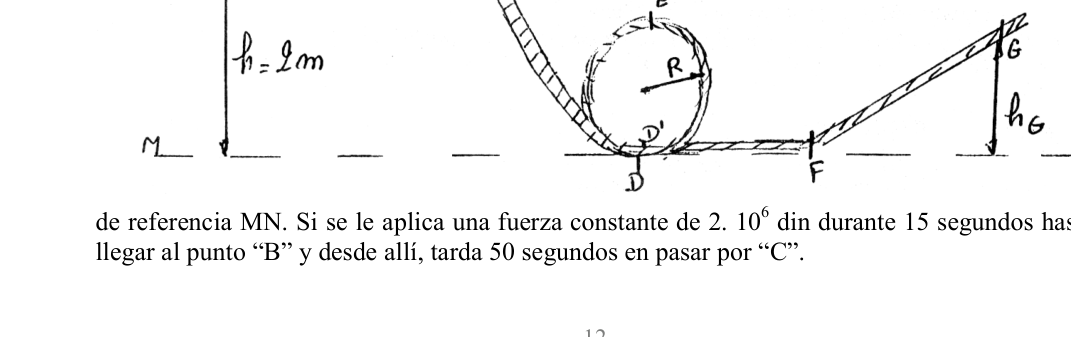
Un cuerpo de 20 kg se desliza por una pista sin rozamiento como se indica en la figura. Dicho cuerpo se encuentra en reposo en el punto “A” a 20 m de altura con respecto al plano de referencia MN. Si se le aplica una fuerza constante de 2.10 din durante 15 segundos hasta llegar al punto “B” y desde all’i, tarda 50 segundos en pasar por “C”. (figura) a) \u00bfCu’al es la altura que alcanza en la rampa (h)? b) \u00bfCu’al es la velocidad en el punto E?,\u00bfEl cuerpo recorre dicho r’io? c) \u00bfQu’e velocidad debe tener en la base de la rampa para subir 2o m de altura con respecto al plano de referencia? d) Si se quiere que el cuerpo salga en “A”, pase por “B”, “C”, “D”, “E”, “D” y se detenga en el punto “A”, \u00bfqu’e velocidad inicial deber’ia tener en el punto “A”? e) Si se le aplica una fuerza, en el punto “D” y a 6 m de altura por un nuevo movimiento. Si tarda 3 segundos en ir de “D” a “F” \u00bfcu’al es el coeficiente de rozamiento cin’etico?
Topic: Newtonian Mechanics, Conservation of Energy Metodi: Energy Conservation Method, Kinematic Equations Competenze: Physical Reasoning Objects: Block Fonte: Testo (PDF) — p.2
23. Capitale federale, verde
Un corpo di 20 kg si scivola su una pista senza rottura come indicato nella figura. Tale corpo si trova a riposo nel punto ‘A’ ad una altezza di 20 m rispetto al piano di riferimento MN. Se viene applicata una forza costante di 2,10 din per 15 secondi fino a raggiungere il punto “B” e da lì, ci vogliono 50 secondi per passare per “C”. (Figura) a) \u00bfQual è l’altezza raggiunta sul rampo (h)? b) Qual è la velocità al punto E? c) Quale velocità deve avere la base del rampo per salire 2 m di altezza rispetto al piano di riferimento? d) Se si vuole che il corpo esci in “A”, passi per “B”, “C”, “D”, “E”, “D” e si ferma al punto “A”, che velocità iniziale dovrebbe avere al punto “A”? e) Se viene applicata una forza, al punto “D” e ad un’altezza di 6 m per un nuovo movimento. Se ci vogliono 3 secondi per passare da “D” a “F” qual è il coefficiente di rottura cinetica?
Topic: Newtonian Mechanics, Conservation of Energy Metodi: Energy Conservation Method, Kinematic Equations Competenze: Physical Reasoning Objects: Block Fonte: Testo (PDF) — p.2
**23. The amount of the loan is EUR 10 million.
A 20 kg body slides along a track without a scratch as shown in the figure. Such body shall be resting at point ‘A’ at a height of 20 m from the reference plane MN. If you apply a constant force of 2.10 din for 15 seconds until you get to point “B” and from there, it takes 50 seconds to go through “C”. (Figure) (a) \u00bf’What is the height reached on the ramp (h)? b) \u00bf\u00bf\u00bf\u00bf\u00bf\u00bf\u00bf\u00bf\u00bf\u00bf\u00bf\u00bf\u00b\u00b\u00b\u00b\u00b\u00b\u00b\u00b\u00b\u00b\u00b\u00b\u00b\u00b\u00b\u00b\u00b\u00b\u00b\u00b\u00b\u00b\u00b\u00b\u00b\u00b\u00b\u00b\u00b\u00b\u00b\u00b\u00b\u00b\u00b\u00b\u00b\u00b\u00b\u00b\u00b\u00b\u00b\u00b\u00b\u00b\u00b\u00b\u00b and the body is the speed of the speed of the speed of the speed of the speed of the speed of the speed of the speed of the speed of the speed of the speed of the speed of the speed of the speed of the speed of the speed of the speed of the speed of the speed of the speed of the speed of the speed of the speed of the speed of the speed of the speed of the speed of the speed of the speed of the speed of the speed of the speed of the speed of the speed of the speed of the speed of the speed of the speed of the speed of the speed of the speed of the speed of the speed of the speed of the speed of the speed of the speed of the moving at the speed of the speed of the speed of the speed of the speed of the speed of the speed of the speed of the speed of the speed of the speed of the speed of the speed of the speed of the speed of the speed of the speed of the speed of the speed of the speed of the speed of the speed of the speed of the speed of the speed of the speed of the speed of the speed of the speed of the speed of the speed of the speed of the speed of the speed of the speed of (c) \u00bfWhat speed must you have at the base of the ramp to rise 2 m from the reference plane? d) If you want the body to go out on “A”, go through “B”, “C”, “D”, “E”, “D” and stop at the “A” point, what initial velocity should it have at the “A” point? (e) If force is applied, at the point ‘D’ and at a height of 6 m by a new movement. If it takes 3 seconds to go from “D” to “F” what is the kinetic friction coefficient?
Topic: Newtonian Mechanics, Conservation of Energy Metodi: Energy Conservation Method, Kinematic Equations Competenze: Physical Reasoning Objects: Block Fonte: Testo (PDF) — p.2
24. Mar del Plata, Buenos Aires, Azul y Verde
En el mismo instante se sueltan cuatro cuerpos desde las alturas a, b, c, d. \u00bfC’omo debe ser la relaci’on entre dichas alturas para que los cuerpos lleguen al suelo en instantes separados por intervalos iguales?
Topic: Newtonian Mechanics Metodi: Kinematic Equations Competenze: Physical Reasoning, Mathematical Modeling Objects: Projectile Fonte: Testo (PDF) — p.2
24. Mar del Plata, Buenos Aires, Azul e Verde
In un istante vengono rilasciati quattro corpi dalle altezze a, b, c, d. L’uomo deve essere il rapporto tra queste altezze per far arrivare i corpi al suolo in istanti separati da uguali intervalli?
Topic: Newtonian Mechanics Metodi: Kinematic Equations Competenze: Physical Reasoning, Mathematical Modeling Objects: Projectile Fonte: Testo (PDF) — p.2
**24. The Commission has also adopted a number of measures to combat the use of the ‘basket’ in the construction industry.
At the same moment four bodies are released from heights a, b, c, d. Should man be the relational between these heights so that bodies can reach the ground at equal intervals?
Topic: Newtonian Mechanics Metodi: Kinematic Equations Competenze: Physical Reasoning, Mathematical Modeling Objects: Projectile Fonte: Testo (PDF) — p.2
25. Cinco Salto, R’io Negro, Verde
Se lanza verticalmente hacia arriba una piedra con una velocidad inicial de 30m/seg. Calcular: a) El tiempo que est’a ascendiendo, b) La m’axima altura que alcanza, c) El tiempo que tarda desde que es lanzada hacia arriba hasta que regresa de nuevo al punto de partida. d) El tiempo que tarda, en subida, en alcanzar una velocidad de 25m/s, en bajada. e) La velocidad que adquiere al ser lanzada, que emplea en adquirir una velocidad de 25m/s. f) Realice las gr’aficas de , y
Topic: Newtonian Mechanics Metodi: Kinematic Equations Competenze: Physical Reasoning Objects: Projectile Fonte: Testo (PDF) — p.2
**25. Cinco Salto, Rio Negro, Verde
Si lancia verticalmente verso l’alto una pietra con una velocità iniziale di 30m/sec. Calcolo: a) Il tempo che sta ascendendo, b) L’altitudine massima raggiunta, c) Il tempo che ci vuole da quando viene lanciata verso l’alto fino a quando ritorna di nuovo al punto di partenza. d) Il tempo necessario per raggiungere una velocità di 25 m/s in salita, in discesa. e) La velocità che acquista al lancio, che utilizza per acquisire una velocità di 25m/s. f) Rendi le grafiche di , e
Topic: Newtonian Mechanics Metodi: Kinematic Equations Competenze: Physical Reasoning Objects: Projectile Fonte: Testo (PDF) — p.2
**25. Five jumps, black and green
A stone is thrown vertically upwards at an initial speed of 30m/sec. Calculation of the (a) The time it is ascending, (b) The maximum height it reaches, (c) The time it takes from when it is thrown upwards until it returns to the starting point. (d) The time it takes to reach a speed of 25 m/s on the climb, on the descent. (e) The speed it acquires when launched, which it uses to acquire a speed of 25m/s. (f) Perform the operations of , and
Topic: Newtonian Mechanics Metodi: Kinematic Equations Competenze: Physical Reasoning Objects: Projectile Fonte: Testo (PDF) — p.2
26. R’io Cuarto, C’ordoba, Azul
Un bloque de 2 N, se desliza por una superficie horizontal con una velocidad de 5m/s, luego comienza a descender por un plano, cuya inclinaci’on es de y una altura de 2,5m. Calcular el coeficiente de rozamiento entre el bloque y la superficie, si al final del plano posee una velocidad de 8,4m/s, sabiendo que tarda 2s en descender. (figura)
Topic: Newtonian Mechanics, Conservation of Energy Metodi: Energy Conservation Method, Kinematic Equations Competenze: Physical Reasoning Objects: Block, Inclined Plane Fonte: Testo (PDF) — p.2
**26. Río Cuarto, Cordoba, Azul
Un blocco di 2 N, si scivola su una superficie orizzontale a una velocità di 5 m/s, poi inizia a scendere per un piano, la cui inclinazione è di e un’altezza di 2,5 m. Calcolare il coefficiente di ruggine tra il blocco e la superficie, se alla fine del piano possiede una velocità di 8,4 m/s, sapendo che ci vogliono 2 secondi per scendere. (Figura)
Topic: Newtonian Mechanics, Conservation of Energy Metodi: Energy Conservation Method, Kinematic Equations Competenze: Physical Reasoning Objects: Block, Inclined Plane Fonte: Testo (PDF) — p.2
**26. The Commission has decided to take the necessary measures to ensure that the Commission is able to take all necessary measures to ensure that the measures are implemented in accordance with the objectives of the programme.
A block of 2 N, slides over a horizontal surface at a speed of 5 m/s, then begins to descend down a plane, whose slope is and a height of 2.5 m. Calculate the coefficient of friction between the block and the surface, if at the end of the plane it has a speed of 8,4m/s, knowing that it takes 2s to descend. (Figure)
Topic: Newtonian Mechanics, Conservation of Energy Metodi: Energy Conservation Method, Kinematic Equations Competenze: Physical Reasoning Objects: Block, Inclined Plane Fonte: Testo (PDF) — p.2
27. Mendoza, Verde
a) Si para mover un autom’ovil de 1200 Kg. sobre una carretera horizontal a 50 Km/h son necesarios 20 CV \u00bfCu’al es la fuerza total de resistencia (rozamiento, aire, etc.)? b) \u00bfQu’e potencia se precisa para que el coche suba a 50 Km/h una pendiente del 10 % (es decir que sube 10 m en vertical cada 100 m en horizontal? c) \u00bfQu’e potencia es necesaria para que el coche baje a 50 Km/h una pendiente del 2 %? d) \u00bfQu’e pendiente permitir’ia al coche bajar a 50 Km/h sin que funcionase el motor?
Topic: Newtonian Mechanics Metodi: Energy Conservation Method, Free-Body Diagram Competenze: Physical Reasoning Objects: Cart, Inclined Plane Fonte: Testo (PDF) — p.2
27. Mendoza, Verde
a) Se per spostare un’auto da 1200 Kg. Su una strada orizzontale a 50 Km/h sono necessari 20 CV b) Quale potenza è necessaria per far salire la vettura a 50 Km/h una pendenza del 10% (cioè, salire 10 m verticalmente ogni 100 m orizzontalmente? c) Quale potenza è necessaria per far scendere la macchina a 50 km/h a un’inclinazione del 2%? d) Che pendente permetterebbe alla macchina di scendere a 50 km/h senza che il motore funzioni?
Topic: Newtonian Mechanics Metodi: Energy Conservation Method, Free-Body Diagram Competenze: Physical Reasoning Objects: Cart, Inclined Plane Fonte: Testo (PDF) — p.2
**27. The Commission shall adopt implementing acts in accordance with Article 21 of this Regulation.
(a) If to move a 1200 kg car. On a horizontal road at 50 km/h 20 CV \u00bf \u00bf \u00bf \u00bf \u00bf What is the total resistance force (cracking, air, etc.)? b) \u00bfWhat power is needed to make the car go up to 50 km/h on a slope of 10% (i.e. go up 10 m vertically every 100 m horizontally? (c) What power is needed to bring the car down at 50 km/h on a 2% slope? d) \u00bfWhat pending would allow the car to descend at 50 km/h without the engine running?
Topic: Newtonian Mechanics Metodi: Energy Conservation Method, Free-Body Diagram Competenze: Physical Reasoning Objects: Cart, Inclined Plane Fonte: Testo (PDF) — p.2
28. Ucacha, C’ordoba, Azul
Se lanza verticalmente una piedra hacia arriba, con una velocidad inicial de 30m/s. Calcular: a) El tiempo que est’a ascendiendo b) La m’axima altura que alcanza c) El tiempo que tarda desde que es lanzada hacia arriba, hasta que regresa de nuevo al punto de partida d) El tiempo que tarda, en subida, en adquirir una velocidad de 25m/s e) El tiempo que tarda, en subida, en adquirir una velocidad de 25m/s, en bajada f) Determinar los movimientos descriptos g) Realice las gr’aficas de , y
Topic: Newtonian Mechanics Metodi: Kinematic Equations Competenze: Physical Reasoning Objects: Projectile Fonte: Testo (PDF) — p.2
**28. Ucca, Cordoba, Azzurro
Si lancia verticalmente una pietra verso l’alto, con una velocità iniziale di 30m/s. Calcolo: a) Il tempo che sta ascendendo b) L’altezza massima raggiunta c) Il tempo che ci vuole da quando viene lanciata verso l’alto fino a quando ritorna di nuovo al punto di partenza d) Il tempo necessario per raggiungere una velocità di 25 m/s in salita e) Il tempo necessario per ottenere una velocità di 25 m/s in salita, in discesa f) Determinare i movimenti descritti g) Rendi le statistiche di , e
Topic: Newtonian Mechanics Metodi: Kinematic Equations Competenze: Physical Reasoning Objects: Projectile Fonte: Testo (PDF) — p.2
**28. The Commission shall adopt delegated acts in accordance with Article 21 of Regulation (EC) No 1272/2009.
A stone is thrown vertically upwards, with an initial speed of 30m/s. Calculation of the a) Time is rising (b) The maximum height it reaches (c) The time it takes from when it is thrown upwards until it returns to the starting point (d) The time it takes to gain a speed of 25 m/s on a climb (e) The time it takes to gain a speed of 25m/s on the rise, on the fall (f) Determine the described movements (g) Perform the grades of , and
Topic: Newtonian Mechanics Metodi: Kinematic Equations Competenze: Physical Reasoning Objects: Projectile Fonte: Testo (PDF) — p.2
29. Provincia de Tierra del Fuego, Verde
Un veh’iculo parte de R’io Grande rumbo a Ushuaia a las 7hs.30min. con una velocidad de 80 km/h. Otro veh’iculo parte desde R’io Grande con el mismo rumbo a las 8.00hs. con una velocidad de 100 km/h. La distancia R’io Grande - Ushuaia es de 250 km. Se supone movimiento rectil’ineo uniforme. Calcular: a) \u00bfA qu’e hora llega el primer auto a Ushuaia? b) \u00bfA qu’e hora llega el segundo auto a Ushuaia? c) \u00bfSe cruzan los autos en el camino? d) Si es afirmativa la respuesta “c”, indicar lugar y hora. e) Si es negativa la respuesta “c”, justificar.
Topic: Newtonian Mechanics Metodi: Kinematic Equations Competenze: Physical Reasoning, Mathematical Modeling Objects: — Fonte: Testo (PDF) — p.2
29. Provincia di Terra del Fuoco, Verde
Un veicolo partendo da Rio Grande diretto a Ushuaia alle 7h30. con una velocità di 80 km/h. Un’altra vettura parte da Rio Grande nella stessa direzione alle 8.00h. con velocità di 100 km/h. La distanza Río Grande - Ushuaia è di 250 km. Si suppone un movimento rettilineo uniforme. Calcolo: a) A che ora arriva la prima auto a Ushuaia? b) A che ora arriva la seconda auto a Ushuaia? c) le auto si incrociano sulla strada? d) Se la risposta “c” è affermativa, indicare il luogo e l’ora. e) Se la risposta ‘c’ è negativa, giustificare.
Topic: Newtonian Mechanics Metodi: Kinematic Equations Competenze: Physical Reasoning, Mathematical Modeling Objects: — Fonte: Testo (PDF) — p.2
**29. Province of Tierra del Fuego, Green
A vehicle leaving Rio Grande is heading for Ushuaia at 7.30min. with a speed of 80 km/h. Another vehicle leaves from Rio Grande in the same direction at 8.00h. with a speed of 100 km/h. The distance from Rio Grande to Ushuaia is 250 km. It is assumed to be uniform straight linear motion. Calculation of the What time does the first car arrive in Ushuaia? b) What time does the second car arrive in Ushuaia? C) Do cars cross the road? (d) If answer ‘c’ is yes, indicate the place and time. (e) If answer ‘c’ is negative, justify.
Topic: Newtonian Mechanics Metodi: Kinematic Equations Competenze: Physical Reasoning, Mathematical Modeling Objects: — Fonte: Testo (PDF) — p.2
30. Provincia de Tucum’an, Azul
Un bloque de 10 Kg parte del reposo y se mueve de A hasta B por efectos de las fuerzas y . Se desplaza as’i 9 m, alcanzando una velocidad de 6 m/s en el punto B. All’i deja de actuar la fuerza y se mueve hacia C durante 1 seg. En ese punto deja de actuar y tarda 3 seg hasta llegar a D. La trayectoria es toda recta y sin roce. (figura) Calcular: a) Determinar el valor de . b) \u00bfCu’ales son las caracter’isticas principales de los movimientos en cada tramo. c) \u00bfCu’anto vale ? d) \u00bfCu’anto mide el trayecto CD? e) Haga una gr’afica de la velocidad y de la fuerza en funci’on del tiempo para todo el viaje.
Topic: Newtonian Mechanics Metodi: Kinematic Equations, Impulse-Momentum Theorem Competenze: Physical Reasoning Objects: Block Fonte: Testo (PDF) — p.2
30. Provincia di Tucumán, Azul
Un blocco di 10 Kg parte dal riposo e si muove da A a B per effetto delle forze e . Si muove a 9 m, raggiungendo una velocità di 6 m/s al punto B. All’i deja de actuar la fuerza y se mueve hacia C durante 1 seg. A quel punto smette di agire e ci vuole 3 secondi per arrivare a D. Il percorso è tutto retto e senza rotture. (Figura) Calcolo: a) Determinare il valore di . b) Le caratteristiche principali dei movimenti di ciascun tratto sono le seguenti: c) \u00bfCu’anto vale ? d) Quanti sono i volumi del percorso CD? e) Calcolare la velocità e la forza in funzione del tempo per tutto il viaggio.
Topic: Newtonian Mechanics Metodi: Kinematic Equations, Impulse-Momentum Theorem Competenze: Physical Reasoning Objects: Block Fonte: Testo (PDF) — p.2
30. Provincia de Tucum’an, Azul
A 10 Kg block is resting and moving from A to B by the forces and . It moves at 9 m, reaching a speed of 6 m/s at point B. All’i deja de actuar la fuerza y se mueve hacia C durante 1 seg. En ese punto deja de actuar y tarda 3 seg hasta llegar a D. The trajectory is all straight and unbroken. (Figure) Calculation of the (a) Determine the value of . (b) These are the main characteristics of the movements in each section. c) \u00bfCu’anto vale ? d) How much is the CD path? (e) Make a count of the speed and force in the time function for the entire journey.
Topic: Newtonian Mechanics Metodi: Kinematic Equations, Impulse-Momentum Theorem Competenze: Physical Reasoning Objects: Block Fonte: Testo (PDF) — p.2
31. Comodoro Rivadavia, Chubut, Verde
Calcular el valor de la Sumatoria de Momento con Respecto al Punto “O”. Realice todo los tipos de aplicaciones que considere necesario para la realizaci’on del ejercicio. (figura)
Topic: Rigid Body Statics Metodi: Torque & Angular Momentum Analysis Competenze: Physical Reasoning Objects: Beam Fonte: Testo (PDF) — p.2
31. Comodoro Rivadavia, Chubut, Verde
Calcolare il valore della sommatoria di momento rispetto al punto “O”. Realizza tutte le applicazioni che ritiene necessarie per realizzare l’esercizio. (Figura)
Topic: Rigid Body Statics Metodi: Torque & Angular Momentum Analysis Competenze: Physical Reasoning Objects: Beam Fonte: Testo (PDF) — p.2
**31. Comodoro Rivadavia, Chubut, Green and the other
Calculate the value of the Summary of Moment with respect to the Point “O”. Perform all types of applications which you consider necessary for the exercise. (Figure)
Topic: Rigid Body Statics Metodi: Torque & Angular Momentum Analysis Competenze: Physical Reasoning Objects: Beam Fonte: Testo (PDF) — p.2
32. El Palomar, Buenos Aires, Azul
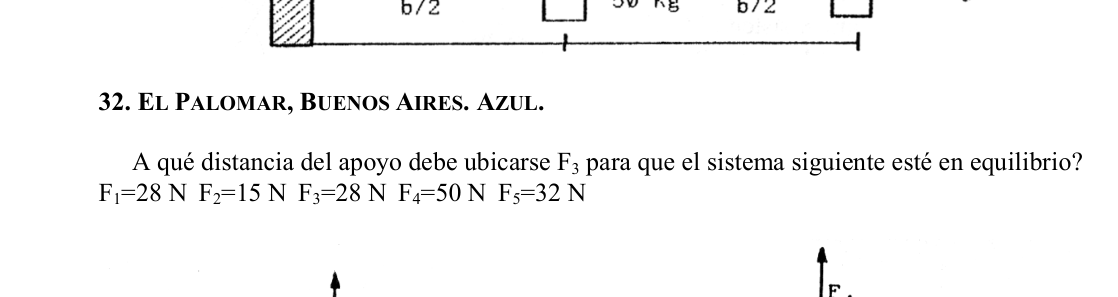
\u00bfA qu’e distancia del apoyo debe ubicarse para que el sistema siguiente est’e en equilibrio? N N N N N (figura)
Topic: Rigid Body Statics Metodi: Torque & Angular Momentum Analysis Competenze: Physical Reasoning Objects: Beam, Lever Fonte: Testo (PDF) — p.2
32. Il Palomar, Buenos Aires, Azul
\u00bfA qu’e distancia del apoyo debe ubicarse para que el sistema siguiente est’e en equilibrio? N N N N N N (figura)
Topic: Rigid Body Statics Metodi: Torque & Angular Momentum Analysis Competenze: Physical Reasoning Objects: Beam, Lever Fonte: Testo (PDF) — p.2
32. The Palomar, Buenos Aires, Azul
\u00bfA qu’e distancia del apoyo debe ubicarse para que el sistema siguiente est’e en equilibrio? N N N N N (figura)
Topic: Rigid Body Statics Metodi: Torque & Angular Momentum Analysis Competenze: Physical Reasoning Objects: Beam, Lever Fonte: Testo (PDF) — p.2
33. Capital Federal, Verde
Un nadador deja caer desde un trampol’in de 3 metros el bolso de un compa~nero, de 2 kg de masa que, casualmente, se moj’o. El bolso entra r’apidamente en el agua y llega a tocar el fondo, 1,8 metros por debajo del nivel del l’iquido. Como el nadador sabe F’isica c’alcula el espacio recorrido en el primer per’iodo transitorio en el que el bolso se introduce en el agua, trazar los diagramas de velocidad-tiempo y posici’on-tiempo para todo el movimiento. Considerar m/s.
Topic: Newtonian Mechanics, Fluid Mechanics Metodi: Kinematic Equations, Hydrostatic Equilibrium Competenze: Physical Reasoning Objects: Block Fonte: Testo (PDF) — p.2
33. Capitale federale, verde
Un nuotatore lascia cadere da un trampolino di 3 metri la borsa di un compagno di due chili di massa che, per caso, si bagna. Il sacchetto entra rapidamente nell’acqua e raggiunge il fondo, 1,8 metri sotto il livello del liquido. Come il nuotatore sa la fisica calcola lo spazio percorso nel primo periodo transitorio in cui la borsa si inserisce nell’acqua, traccia i diagrammi di velocità-tempo e posizioni-in-tempo per tutto il movimento. Considerare m/s.
Topic: Newtonian Mechanics, Fluid Mechanics Metodi: Kinematic Equations, Hydrostatic Equilibrium Competenze: Physical Reasoning Objects: Block Fonte: Testo (PDF) — p.2
33. Capital Federal, Verde
A swimmer dropped from a three-meter springboard the bag of a fellow, two-kilogram mass who, by chance, got wet. The bag quickly enters the water and reaches the bottom, 1.8 meters below the level of the liquid. As the swimmer knows physics, he calculates the space traveled in the first transitional period in which the bag is introduced into the water, plotting the speed-time and position-on-time diagrams for the entire movement. Considerar m/s.
Topic: Newtonian Mechanics, Fluid Mechanics Metodi: Kinematic Equations, Hydrostatic Equilibrium Competenze: Physical Reasoning Objects: Block Fonte: Testo (PDF) — p.2
34. Mar del Plata, Buenos Aires, Azul y Verde
En la grecia antigua de Arist’oteles se argumentaba que era imposible que la tierra estuviese en rotaci’on porque de ser as’i, un objeto lanzado desde la punta de una torre, no caer’ia al pie de la misma ya, durante el tiempo de ca’ida, la torre se habr’ia desplazado. Teniendo en cuenta que el ecuador tiene 40.000 Km. de longitud. (figura) a) Calcule a qu’e distancia del pie de una torre de 50 m. de alto caer’ia un objeto si el argumento mencionado fuese correcto (suponiendo la torre en el ecuador). b) Si la torre, en vez de estar en el ecuador, se encuentra a una latitud \u00bfcu’al ser’ia el factor de correcci’on a aplicar al resultado anterior? c) Hoy sabemos que la tierra si esta en rotaci’on y el experimento no muestra el desplazamiento predicho. \u00bfCu’al es el error del argumento mencionado?
Topic: Newtonian Mechanics, Earth & Environmental Science Metodi: Kinematic Equations, Order-of-Magnitude Estimation Competenze: Physical Reasoning Objects: Projectile, Planet Fonte: Testo (PDF) — p.2
34. Mar del Plata, Buenos Aires, Azul e Verde
Nell’antica Grecia di Aristotele si argomentava che era impossibile che la terra fosse in rotazione perché se fosse così, un oggetto lanciato dalla punta di una torre, non cadrebbe ai piedi della stessa e, durante il tempo di caduta, la torre si sarebbe spostata. Considerando che l’equatore ha 40.000 Km. di lunghezza. (Figura) a) Calcolare la distanza dal piede di una torre di 50 m. Un oggetto cadrebbe di alto se l’argomento citato fosse corretto (supponendo la torre all’equatore). b) Se la torre, invece di essere all’equatore, si trova ad una latitudine \u00bfc\n che sarebbe il fattore di correcczione da applicare al risultato precedente? c) Oggi sappiamo che la terra si rota e l’esperimento non mostra il spostamento previsto. Qual è l’errore dell’argomento citato?
Topic: Newtonian Mechanics, Earth & Environmental Science Metodi: Kinematic Equations, Order-of-Magnitude Estimation Competenze: Physical Reasoning Objects: Projectile, Planet Fonte: Testo (PDF) — p.2
**34. The Commission has also adopted a number of measures to combat the use of the ‘basket’ in the construction industry.
In ancient Greece, Aristotle argued that it was impossible for the earth to rotate because if an object thrown from the top of a tower did not fall at the foot of it, the tower would have moved. Considering that the equator is 40,000 km. of length. (Figure) (a) Calculate the distance from the foot of a 50 m tower. A high object would fall if the argument mentioned was correct (assuming the tower is at the equator). (b) If the tower, instead of being at the equator, is at a latitude \u00bfc\ which would be the correction factor to be applied to the previous result? c) Today we know that the earth is rotating and the experiment does not show the predicted displacement. What is the error of the aforementioned argument?
Topic: Newtonian Mechanics, Earth & Environmental Science Metodi: Kinematic Equations, Order-of-Magnitude Estimation Competenze: Physical Reasoning Objects: Projectile, Planet Fonte: Testo (PDF) — p.2
35. Maip’u, Mendoza, Verde
Dos cuerpos unidos por una cuerda, como muestra la figura, descansan sobre planos sin rozamiento. (figura) a) \u00bfEn qu’e sentido se deslizar’a el sistema? b) \u00bfCu’al es la aceleraci’on de cada bloque?
Topic: Newtonian Mechanics Metodi: Free-Body Diagram, Vector Decomposition Competenze: Physical Reasoning Objects: Block, String, Pulley, Inclined Plane Fonte: Testo (PDF) — p.2
35. Maip’u, Mendoza, Verde
Due corpi uniti da una corda, come mostra la figura, riposano su piani senza rughe. (Figura) a) In che senso il sistema si scivola? b) Qual è l’accelerazione di ogni blocco?
Topic: Newtonian Mechanics Metodi: Free-Body Diagram, Vector Decomposition Competenze: Physical Reasoning Objects: Block, String, Pulley, Inclined Plane Fonte: Testo (PDF) — p.2
**35. The Commission has also adopted a number of measures to combat fraud.
Two bodies connected by a rope, as shown in the figure, rest on flat, unrusted planes. (Figure) What does it mean to slide the system? b) \u00bf\What is the acceleration of each block?
Topic: Newtonian Mechanics Metodi: Free-Body Diagram, Vector Decomposition Competenze: Physical Reasoning Objects: Block, String, Pulley, Inclined Plane Fonte: Testo (PDF) — p.2
36. La R’ioja, Azul
Un patinador de masa 80 Kg aplica a otro de masa 50 Kg una fuerza de 25 Kg durante 0,5 segundos. \u00bfCu’al es la velocidad que adquiere el segundo y la de retroceso que adquiere el primero?
Topic: Conservation of Momentum Metodi: Impulse-Momentum Theorem, Conservation of Momentum Competenze: Physical Reasoning Objects: — Fonte: Testo (PDF) — p.2
36. La RIOJA, Azul
Un pattinatore di massa 80 Kg applica a un altro di massa 50 Kg una forza di 25 Kg per 0,5 secondi. Qual è la velocità che il secondo acquista e quella di retrocesso che acquista il primo?
Topic: Conservation of Momentum Metodi: Impulse-Momentum Theorem, Conservation of Momentum Competenze: Physical Reasoning Objects: — Fonte: Testo (PDF) — p.2
**36. The Red, Blue
A skater weighing 80 Kg applies a 25 Kg force to another 50 Kg for 0.5 seconds. What’s the speed the second one gets and the speed of the first one back?
Topic: Conservation of Momentum Metodi: Impulse-Momentum Theorem, Conservation of Momentum Competenze: Physical Reasoning Objects: — Fonte: Testo (PDF) — p.2
37. Mendoza, Verde
Calcular la tensi’on del cable y las fuerzas vertical y horizontal que act’uan sobre el gozne de la gr’ua de la figura N1 (figura)
Topic: Rigid Body Statics Metodi: Torque & Angular Momentum Analysis, Free-Body Diagram Competenze: Physical Reasoning Objects: Beam, String Fonte: Testo (PDF) — p.2
37. Mendoza, Verde
Calcolare la tensione del cavo e le forze verticali e orizzontali che agiscono sul giosso della grossa figura N1 (figura)
Topic: Rigid Body Statics Metodi: Torque & Angular Momentum Analysis, Free-Body Diagram Competenze: Physical Reasoning Objects: Beam, String Fonte: Testo (PDF) — p.2
**37. The Commission shall adopt implementing acts in accordance with Article 21 of this Regulation.
Calculate the cable tension and the vertical and horizontal forces acting on the shaft of the cable in figure N1 (figure)
Topic: Rigid Body Statics Metodi: Torque & Angular Momentum Analysis, Free-Body Diagram Competenze: Physical Reasoning Objects: Beam, String Fonte: Testo (PDF) — p.2
38. El Palomar, Buenos Aires, Azul
Sobre un tren que se est’a moviendo a una velocidad determinada se aplica una fuerza constante de 1500 N, en la direcci’on del movimiento, durante 4 segundos. Si el tren pesa en J’upiter 89000 N, la aceleraci’on de la gravedad all’i es 22,8 m/s, calcular: (figura) a) La masa del tren b) La aceleraci’on recibida c) La velocidad inicial si se mueve, si alcanz’o 50 m/s d) El espacio recorrido en el lapso indicado
Topic: Newtonian Mechanics, Gravitation Metodi: Impulse-Momentum Theorem, Kinematic Equations Competenze: Physical Reasoning Objects: — Fonte: Testo (PDF) — p.2
38. Il Palomar, Buenos Aires, Azul
Su un treno che si muove a una velocità determinata si applica una forza costante di 1500 N, nella direzione del movimento, per 4 secondi. Si el tren pesa en J’upiter 89000 N, la aceleraci’on de la gravedad all’i es 22,8 m/s, calcular: (figura) a) Massa del treno b) L’accelerazione ricevuta c) La velocità iniziale se si muove, se raggiunge 50 m/s d) Spazio percorso nel periodo indicato
Topic: Newtonian Mechanics, Gravitation Metodi: Impulse-Momentum Theorem, Kinematic Equations Competenze: Physical Reasoning Objects: — Fonte: Testo (PDF) — p.2
38. The Palomar, Buenos Aires, Azul
On a train moving at a given speed a constant force of 1500 N is applied in the direction of movement for 4 seconds. Si el tren pesa en J’upiter 89000 N, la aceleraci’on de la gravedad all’i es 22,8 m/s, calcular: (figura) (a) The mass of the train (b) The acceleration received (c) The initial speed if it moves, if it reaches 50 m/s (d) The space travelled within the indicated time frame
Topic: Newtonian Mechanics, Gravitation Metodi: Impulse-Momentum Theorem, Kinematic Equations Competenze: Physical Reasoning Objects: — Fonte: Testo (PDF) — p.2
39. Capital Federal, Verde
El bloque se encuentra inicialmente sobre un plano inclinado sin rozamiento que forma un ‘angulo de con la horizontal. Parte del reposo, desde una altura h=10m. Posteriormente, choca en forma totalmente el’astica con el bloque que se hallaba en reposo en la zona horizontal. Calcular: (figura) a) Velocidad del bloque 1 al llegar a la base del primer plano inclinado. b) Velocidad del bloque 2, luego de la colisi’on. c) Velocidad del bloque 2 al llegar al punto A (extremo superior del segundo plano inclinado, cuyo coeficiente de rozamiento cin’etico vale 0,2). d) Distancia d, medida desde el segundo plano inclinado, a la que cae el bloque 2. e) M’odulo y ‘angulo con la horizontal del vector velocidad del bloque 2 antes de que impacte contra el suelo. f) Tiempo transcurrido desde que se deja caer el bloque 1 hasta que el bloque 2 choca con el piso. g) Calcular la velocidad m’inima que debe tener en la parte m’as baja de su trayectoria una masa de 0,5 Kg que pende de un hilo de 0,5 m de longitud, para que la misma alcance la parte superior de la circunferencia con el hilo totalmente estirado. h) \u00bfQu’e velocidad debe tener el bloque 2 en el punto A para que, si choca en forma totalmente el’astica con la masa suspendida al alcanzar su altura m’axima, recorra lo descripto en el punto anterior? i) Indique las coordenadas x e y del punto al que se fija el hilo.
Topic: Conservation of Energy, Conservation of Momentum Metodi: Energy Conservation Method, Conservation of Momentum, Kinematic Equations Competenze: Physical Reasoning Objects: Block, Inclined Plane, Pendulum Fonte: Testo (PDF) — p.2
39. Capitale federale, verde
Il blocco si trova inizialmente su un piano inclinato senza ruggine che forma un angolo di con la orizzontale. Parte del riposo, da un’altezza h=10m. Successivamente, si scontrerà in forma totalmente astica con il blocco che si trovava a riposo nella zona orizzontale. Calcolo: (figura) a) velocità del blocco 1 all’arrivo alla base del primo piano inclinato. b) Velocità del blocco 2, dopo l’incontro. c) velocità del blocco 2 all’arrivo al punto A (l’estremità superiore del secondo piano inclinato, il cui coefficiente di rottura cinetica è di 0,2). d) Distanza d, misurata dal secondo piano inclinato, alla quale cade il blocco 2. e) M’odulo e’angolo con il vector di velocità del blocco 2 orizzontale prima di colpire il suolo. f) Tempo trascorso dal momento in cui il blocco 1 viene abbattuto fino a quando il blocco 2 colpisce il pavimento. g) Calcolare la velocità minima che deve avere nella parte inferiore del suo percorso una massa di 0,5 Kg appesa su un filo di 0,5 m di lunghezza, in modo che esso raggiunga la parte superiore della circonferenza con il filo completamente esteso. h) Quale velocità deve avere il blocco 2 al punto A in modo che, se colpisce totalmente l’astica con la massa sospesa raggiungendo la sua altezza massima, percorra ciò che è descritto nel punto precedente? (i) Indicare le coordinate x e y del punto di fissamento del filo.
Topic: Conservation of Energy, Conservation of Momentum Metodi: Energy Conservation Method, Conservation of Momentum, Kinematic Equations Competenze: Physical Reasoning Objects: Block, Inclined Plane, Pendulum Fonte: Testo (PDF) — p.2
39. Capital Federal, Verde
The block is initially located on an inclined plane without a scratch forming an angle of with the horizontal. Part of the rest, from a height h=10m. Posteriormente, choca en forma totalmente el’astica con el bloque que se hallaba en reposo en la zona horizontal. Calculation: (Figure) (a) Speed of block 1 when reaching the base of the slope of the foreground. (b) Block 2 speed after collision. (c) Speed of block 2 at point A (top end of the sloping second plane, with kinetic friction coefficient of 0.2). (d) Distance d, measured from the sloping second plane, to which block 2 falls. (e) M’odule and ” angle with the horizontal of the block 2 velocity vector before it impacts the ground. (f) Time elapsed from the time block 1 is dropped until block 2 hits the floor. (g) Calculate the minimum speed at which a 0.5 kg mass shall be carried on the lower part of its path by a thread of 0.5 m length, so that it reaches the top of the circumference with the thread fully stretched. h) \u00bf What velocity must block 2 have at point A so that, if it totally collides with the suspended mass at its maximum height, it goes through the described point above? (i) Indicate the x and y coordinates of the point at which the thread is fixed.
Topic: Conservation of Energy, Conservation of Momentum Metodi: Energy Conservation Method, Conservation of Momentum, Kinematic Equations Competenze: Physical Reasoning Objects: Block, Inclined Plane, Pendulum Fonte: Testo (PDF) — p.2
40. R’io Cuarto, C’ordoba, Azul
En un pozo de 600 m de profundidad cae una piedra, luego de 2 s, se arroja otra, que se va a encontrar con la primera cuando haya recorrido la mitad de la profundidad del pozo. \u00bfCon qu’e velocidad se arroja la segunda piedra? \u00bfEn que tiempo se encuentran?
Topic: Newtonian Mechanics Metodi: Kinematic Equations Competenze: Physical Reasoning Objects: Projectile Fonte: Testo (PDF) — p.2
**40. Río Cuarto, Cordoba, Azul
In un pozzo di 600 metri di profondità cade una pietra, dopo 2 secondi, viene gettata un’altra, che si incontrerà con la prima quando ha percorso la metà della profondità del pozzo. Con quale velocità si lancia la seconda pietra? Che ora si trovano?
Topic: Newtonian Mechanics Metodi: Kinematic Equations Competenze: Physical Reasoning Objects: Projectile Fonte: Testo (PDF) — p.2
**40. The Commission has decided to take the necessary measures to ensure that the Commission is able to take all necessary measures to ensure that the measures are implemented in accordance with the objectives of the programme.
In a 600-meter-deep well, a stone falls, after 2 seconds, another is thrown, which you’re going to meet with the first one when you’ve traveled half the depth of the well. How fast does the second stone fall? What time are you guys meeting?
Topic: Newtonian Mechanics Metodi: Kinematic Equations Competenze: Physical Reasoning Objects: Projectile Fonte: Testo (PDF) — p.2
41. Formosa, Azul
La figura que sigue representa el perfil de una superficie por la cual se desliza, sin roce, una esfera de 100 gramos si la rapidez de 5 m/s con que entra en el tramo AA’ es la estrictamente necesaria para que la esfera llega a determinarse en el punto C, entonces: a) \u00bfCu’al es la energ’ia total del sistema? b) \u00bfCu’al es la que tiene en B? c) que rapidez tiene al pasar por B (figura)
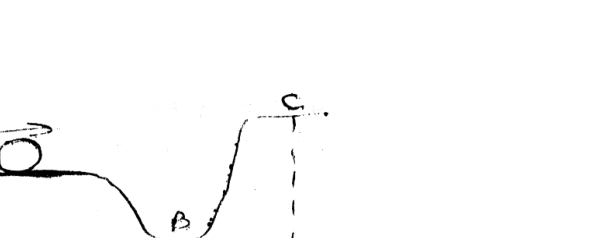
Topic: Conservation of Energy Metodi: Energy Conservation Method Competenze: Physical Reasoning Objects: Sphere Fonte: Testo (PDF) — p.2
41. Formosa, Azul
La figura seguente rappresenta il profilo di una superficie attraverso la quale si scivola senza rottura una sfera di 100 grammi se la velocità di 5 m/s con cui entra nel tratto AA’ è quella strettamente necessaria per determinare la sfera al punto C, allora: a) Quale è la totale energia del sistema? b) \u00bf\Qual è la che ha in B? c) la velocità di passaggio di B (figura)
Topic: Conservation of Energy Metodi: Energy Conservation Method Competenze: Physical Reasoning Objects: Sphere Fonte: Testo (PDF) — p.2
41. Formosa, Blue
The following figure shows the profile of a surface through which a 100 g sphere is sliding without touching if the speed of 5 m/s at which it enters the AA’ section is strictly necessary for the sphere to be determined at point C, then: What is the total energy of the system? (b) \u00bf\What is the you have in B? (c) the speed of the passing through B (figure)
Topic: Conservation of Energy Metodi: Energy Conservation Method Competenze: Physical Reasoning Objects: Sphere Fonte: Testo (PDF) — p.2
42. Provincia de Neuqu’en, Azul y Verde
Una persona de 80 kg. de masa se encuentra en un ascensor. El ascensor acelera hacia arriba desde el reposo durante dos segundos, el valor de la aceleraci’on es de 1 m/s. Despu’es, se mueve a la velocidad alcanzada durante 10 segundos, y ‘ultimo, desacelera a 1 m/s durante dos segundos. a) Cu’al es el trabajo realizado durante el trayecto completo por la fuerza normal que ejerce el suelo del ascensor sobre el pasajero? b) Cu’al es el trabajo realizado por el peso del pasajero? c) Qu’e potencia media suministra la fuerza normal durante los 14 segundos (suponer)?
Topic: Newtonian Mechanics Metodi: Free-Body Diagram, Energy Conservation Method Competenze: Physical Reasoning Objects: — Fonte: Testo (PDF) — p.2
42. Provincia di Neuqu’en, Blu e Verde
Una persona di 80 kg. la massa è in un ascensore. L’ascensore accelera verso l’alto dal riposo per due secondi, il valore dell’accelerazione è di 1 m/s. Poi si muove alla velocità raggiunta per 10 secondi, e poi, per ultimo, si rallenta a 1 m/s per due secondi. a) Qual è il lavoro svolto durante il percorso da una forza normale che esercita il suolo dell’ascensore sul passeggero? b) Qual è il lavoro svolto per il peso del passeggero? c) Qual è la potenza media che fornisce la forza normale per i 14 secondi (supponiamo)?
Topic: Newtonian Mechanics Metodi: Free-Body Diagram, Energy Conservation Method Competenze: Physical Reasoning Objects: — Fonte: Testo (PDF) — p.2
42. Province of Neuqu ‘en, Blue and Green
A person weighing 80 kg. The mass is in an elevator. The lift accelerates upwards from the resting position for two seconds, the acceleration value is 1 m/s. After that, it moves at the speed it reached for 10 seconds, and finally, it slows down to 1 m/s for two seconds. (a) What is the work done during the entire journey by the normal force exerted by the elevator floor on the passenger? (b) What is the work done by the passenger’s weight? (c) What is the mean power supply for normal force for 14 seconds (assuming)?
Topic: Newtonian Mechanics Metodi: Free-Body Diagram, Energy Conservation Method Competenze: Physical Reasoning Objects: — Fonte: Testo (PDF) — p.2
43. Cinco Salto, R’io Negro, Verde
Calcular aceleraci’on (a) y Tensi’on (T). kg=m Coeficiente de rozamiento Coeficiente de rozamiento (figura)
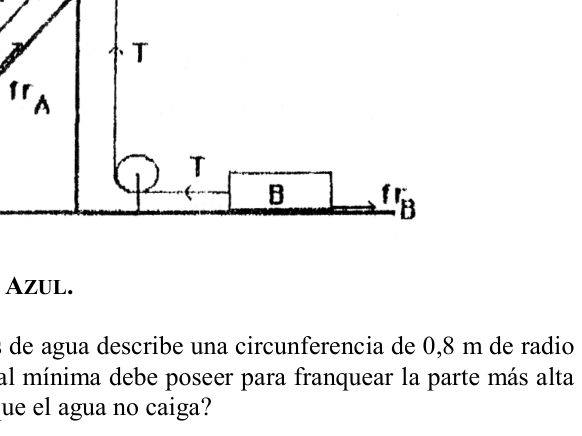
Topic: Newtonian Mechanics Metodi: Free-Body Diagram, Vector Decomposition Competenze: Physical Reasoning Objects: Block, String, Pulley, Inclined Plane Fonte: Testo (PDF) — p.2
**43. Cinco Salto, Rio Negro, Verde
Calcolare l’accelerazione a) e tensione t) kg=m Coefficiente di rottura Coefficiente di rottura (figura)
Topic: Newtonian Mechanics Metodi: Free-Body Diagram, Vector Decomposition Competenze: Physical Reasoning Objects: Block, String, Pulley, Inclined Plane Fonte: Testo (PDF) — p.2
43. Cinco Salto, R’io Negro, Verde
Calculate acceleration and Tensions. kg=m Coeficiente de rozamiento Coeficiente de rozamiento (figura)
Topic: Newtonian Mechanics Metodi: Free-Body Diagram, Vector Decomposition Competenze: Physical Reasoning Objects: Block, String, Pulley, Inclined Plane Fonte: Testo (PDF) — p.2
44. Bah’ia Blanca, Buenos Aires, Azul
Un recipiente que contiene 2 litros de agua gira en un plano vertical. Qu’e velocidad lineal m’inima debe poseer para franquear la parte m’as alta de la trayectoria boca abajo, de manera que el agua no caiga? El radio es de 0,8 m. (figura)
Topic: Newtonian Mechanics, Fluid Mechanics Metodi: Free-Body Diagram, Hydrostatic Equilibrium Competenze: Physical Reasoning Objects: Container Fonte: Testo (PDF) — p.2
44. Bahía Blanca, Buenos Aires, Azul
Un recipiente contenente 2 litri di acqua gira in piano verticale. Che velocità lineare deve possedere l’inimma per attraversare la parte superiore del percorso di testa in giù, in modo che l’acqua non scenda? Il raggio è di 0,8 m. (Figura)
Topic: Newtonian Mechanics, Fluid Mechanics Metodi: Free-Body Diagram, Hydrostatic Equilibrium Competenze: Physical Reasoning Objects: Container Fonte: Testo (PDF) — p.2
**44. The Commission has also adopted a proposal for a regulation on the protection of the environment.
A container containing 2 litres of water rotates vertically. What linear velocity must the minimum have to cross the upper part of the path upside down so that the water does not fall? The radius is 0.8 m. (Figure)
Topic: Newtonian Mechanics, Fluid Mechanics Metodi: Free-Body Diagram, Hydrostatic Equilibrium Competenze: Physical Reasoning Objects: Container Fonte: Testo (PDF) — p.2
45. San Nicol’as, Buenos Aires, Verde
Arrojo una piedra a un pozo de agua, 5 segundos despu’es escucho el chasquido. \u00bfQu’e profundidad tiene el pozo? m/s
Topic: Newtonian Mechanics, Oscillations & Waves Metodi: Kinematic Equations Competenze: Physical Reasoning Objects: Projectile Fonte: Testo (PDF) — p.2
**45. San Nicol’as, Buenos Aires, Verde
Ho gettato una pietra in un pozzo d’acqua, 5 secondi dopo aver sentito il clacson. Che profondità ha il pozzo? m/s
Topic: Newtonian Mechanics, Oscillations & Waves Metodi: Kinematic Equations Competenze: Physical Reasoning Objects: Projectile Fonte: Testo (PDF) — p.2
**45. The Commission has decided to extend the period of validity of the agreement.
I throw a stone into a water well, 5 seconds after I hear the bang. What depth does the well have? m/s
Topic: Newtonian Mechanics, Oscillations & Waves Metodi: Kinematic Equations Competenze: Physical Reasoning Objects: Projectile Fonte: Testo (PDF) — p.2
46. Provincia de Tierra del Fuego, Azul
Un cuerpo se mueve sobre una l’inea recta con la aceleraci’on indicada en el gr’afico. Determinar los gr’aficos de la velocidad y del desplazamiento en funci’on del tiempo, considerando la velocidad inicial igual a cero. (figura)
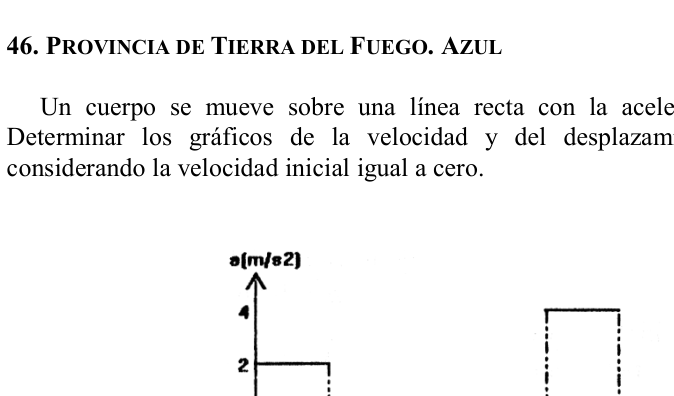
Topic: Newtonian Mechanics Metodi: Kinematic Equations, Calculus-Integration Competenze: Physical Reasoning, Mathematical Modeling Objects: — Fonte: Testo (PDF) — p.2
46. Provincia di Terra del Fuoco, Azul
Un corpo si muove su una linea retta con l’accelerazione indicata sul grafico. Determinare i grafici della velocità e del spostamento in funzione del tempo, considerando la velocità iniziale pari a zero. (Figura)
Topic: Newtonian Mechanics Metodi: Kinematic Equations, Calculus-Integration Competenze: Physical Reasoning, Mathematical Modeling Objects: — Fonte: Testo (PDF) — p.2
**46. Province of Tierra del Fuego, Azul
A body moves on a straight line at the acceleration indicated on the graph. Determine the graphs of speed and displacement in terms of time, considering the initial velocity equal to zero. (Figure)
Topic: Newtonian Mechanics Metodi: Kinematic Equations, Calculus-Integration Competenze: Physical Reasoning, Mathematical Modeling Objects: — Fonte: Testo (PDF) — p.2
47. Las Heras, Mendoza, Verde
Se desea conocer el peso espec’ifico de un l’iquido \u00bfC’omo hace para averiguarlo? Si para ello se cuenta con un cuerpo que en el aire pesa gf y sumergido en aceite gf (g/cm) y al sumergirlo en el l’iquido de desconocido su peso es g.
Topic: Fluid Mechanics Metodi: Hydrostatic Equilibrium Competenze: Physical Reasoning, Experimental Data Analysis Objects: Container Fonte: Testo (PDF) — p.2
**47. Las Heras, Mendoza, Verde
Vuoi sapere il peso specifico di un liquido che un uomo fa per scoprirlo? Se per questo si dispone di un corpo che pesa gf e immerso in olio gf (g/cm) e che viene immerso nel liquido di sconosciuto, il suo peso è g.
Topic: Fluid Mechanics Metodi: Hydrostatic Equilibrium Competenze: Physical Reasoning, Experimental Data Analysis Objects: Container Fonte: Testo (PDF) — p.2
**47. The Heras, Mendoza, Green
You want to know the specific weight of a liquid that a man makes to find out? If for this purpose a body weighing gf in air and immersed in oil gf (g/cm) and immersed in unknown liquid is weighed g.
Topic: Fluid Mechanics Metodi: Hydrostatic Equilibrium Competenze: Physical Reasoning, Experimental Data Analysis Objects: Container Fonte: Testo (PDF) — p.2
48. El Palomar, Buenos Aires, Azul
Una piedra es arrojada hacia arriba con una velocidad de 20m/s desde el borde de un pozo de 50 m de profundidad. Calcular: a) La altura m’axima que alcanza la piedra b) La velocidad a los 4 segundos c) La velocidad a los 30 segundos d) La velocidad a los 7 segundos e) La altura a los 10 segundos f) La altura a los 5 segundos Considerar | | m/ s . Alguno de los resultados obtenidos te llama la atenci’on? Porqu’e?
Topic: Newtonian Mechanics Metodi: Kinematic Equations Competenze: Physical Reasoning Objects: Projectile Fonte: Testo (PDF) — p.2
48. Il Palomar, Buenos Aires, Azul
Una pietra viene lanciata verso l’alto a una velocità di 20 m/s dal bordo di un pozzo di 50 m di profondità. Calcolo: a) L’altezza massima che raggiunge la pietra b) La velocità a 4 secondi c) La velocità a 30 secondi d) La velocità a 7 secondi e) L’altezza a 10 secondi f) L’altezza a 5 secondi Considerar | | m/ s . Qualche risultato che hai ottenuto ti chiama “attenzione”? Perché?
Topic: Newtonian Mechanics Metodi: Kinematic Equations Competenze: Physical Reasoning Objects: Projectile Fonte: Testo (PDF) — p.2
48. The Palomar, Buenos Aires, Azul
A stone is thrown upwards at a speed of 20m/s from the edge of a well 50m deep. Calculation of the (a) The highest height of the stone (b) Speed at 4 seconds (c) Speed at 30 seconds (d) Speed at 7 seconds e) Height at 10 seconds f) Height at 5 seconds Considerar | | m/ s . Any of the results you’ve got calling you attention? Why is that?
Topic: Newtonian Mechanics Metodi: Kinematic Equations Competenze: Physical Reasoning Objects: Projectile Fonte: Testo (PDF) — p.2
49. Santa Fe, Verde
El coche A est’a detenido frente a un sem’aforo. Se enciende la luz verde y A arranca. Al hacerlo, el coche B lo adelanta yendo a velocidad constante. Sus gr’aficas velocidad-tiempo son las siguientes: (figura) a) Cu’anto tardar’a A en alcanzar la velocidad de B? b) En dicho instante, \u00bfqu’e ventaja lleva B a A? c) Qu’e coche est’a adelantando y cu’anto al final de 0,010 hs.? d) En qu’e instante alcanza A a B? e) \u00bfQu’e distancia habr’an recorrido desde el sem’aforo al producirse el alcance?
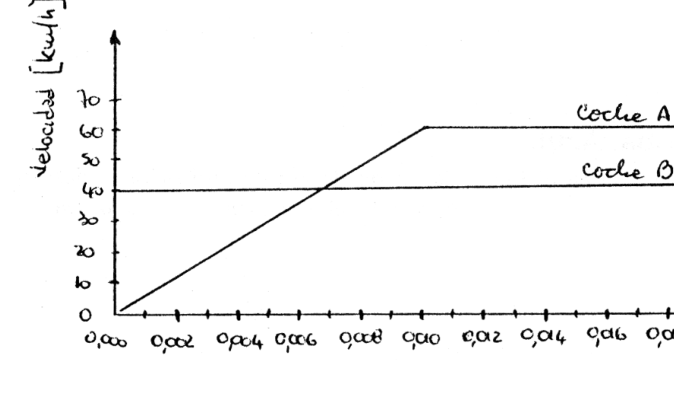
Topic: Newtonian Mechanics Metodi: Kinematic Equations, Graph Linearization Competenze: Physical Reasoning, Mathematical Modeling Objects: — Fonte: Testo (PDF) — p.2
49. Santa Fe, Verde
La macchina A è fermata davanti a un semaforo. Accende la luce verde e A parte. In questo modo, la macchina B lo supererà andando a velocità costante. Le sue velocità-tempo grafiche sono le seguenti: (figura) a) Quanto ci vuole per raggiungere la velocità di B? b) In quel momento, che vantaggio porta B a A? c) Quale macchina è in anticipo e quanto alla fine di 0,010 h? d) In che istante raggiunge A a B? e) Quale distanza hanno percorso dal semaporto quando si è verificato il raggiungimento?
Topic: Newtonian Mechanics Metodi: Kinematic Equations, Graph Linearization Competenze: Physical Reasoning, Mathematical Modeling Objects: — Fonte: Testo (PDF) — p.2
**49. The following is the list of the countries of the European Union:
Car A is stopped in front of a traffic light. The green light is turned on and A starts. In doing so, car B advances it at constant speed. Their time-speed graphs are as follows: (Figure) (a) How long does it take A to reach the speed of B? b) At that moment, what advantage does B lead to A? c) What car is advancing and how much at the end of 0.010 h? (d) In what moment does A reach B? (e) What distance have they travelled from the stop at the time the range was achieved?
Topic: Newtonian Mechanics Metodi: Kinematic Equations, Graph Linearization Competenze: Physical Reasoning, Mathematical Modeling Objects: — Fonte: Testo (PDF) — p.2
50. Ibarreta, Formosa, Azul
Un avi’on que vuela horizontalmente a una altura de 1.200 m sobre el suelo con una velocidad de 200km/h, deja caer una bomba sobre un blanco situado en tierra. Determinar el ‘angulo formado por la vertical y la l’inea que une el avi’on con el blanco en el instante en que se abandona la bomba.
Topic: Newtonian Mechanics Metodi: Kinematic Equations, Vector Decomposition Competenze: Physical Reasoning Objects: Projectile Fonte: Testo (PDF) — p.2
50. Ibarretta, Formosa, Azul
Un aereo che vola orizzontalmente a un’altezza di 1.200 metri sul suolo a una velocità di 200 km/h, fa cadere una bomba su un bersaglio in terra. Determinare l’angolo formato dalla verticale e dalla linea che unisce l’aereo al bersaglio nel momento in cui la bomba viene abbandonata.
Topic: Newtonian Mechanics Metodi: Kinematic Equations, Vector Decomposition Competenze: Physical Reasoning Objects: Projectile Fonte: Testo (PDF) — p.2
**50. Other, including:
An aircraft flying horizontally at a height of 1,200 m above the ground at a speed of 200 km/h, drops a bomb on a target on the ground. Determine the angle formed by the vertical and the line connecting the aircraft to the target the moment the bomb is dropped.
Topic: Newtonian Mechanics Metodi: Kinematic Equations, Vector Decomposition Competenze: Physical Reasoning Objects: Projectile Fonte: Testo (PDF) — p.2
51. Provincia de Jujuy, Azul
Una patrulla de polic’ia viaja a 80 km/h, cuando es superado por otro auto que va a 100 km/h. Justamente 1 s. despu’es de ser superado, el patrullero pisa el acelerador, si la aceleraci’on de la patrulla es 3 m/s \u00bfcu’ando tardar’a en alcanzar al infractor? (suponer que el auto contin’ua a una rapidez constante)
Topic: Newtonian Mechanics Metodi: Kinematic Equations Competenze: Physical Reasoning Objects: — Fonte: Testo (PDF) — p.2
51. Provincia di Jujuy, Azul
Una pattuglia di polizia viaggia a 80 km/h, quando viene superata da un’altra auto che va a 100 km/h. Proprio un secondo. Dopo essere stato superato, il patrullero scende sull’acceleratore, se la velocità della pattuglia è di 3 m/s \u00bfc\u00bf\u00b\u00b\u00b\u00b\u00b\u00b\u00b\u00b\u00b\u00b\u00b\u00b\u00b\u00b\u00b\u00b\u00b\u00b\u00b\u00b\u00b\u00b\u00b\u00b\u00b\u00b\u00b\u00b\u00b\u00b\u00b\u00b\u00b\u00b\u00b\u00b\u00b\u00b\u00b\u00b\u00b\u00b\u00b\u00b\u00b\u00b\u00b\u00b\u00b\u00b\u00b\u00b\u00b\u00b\u00b\u00b\u00b\u00b\u00b\u00b\u00b\u00b\u00b\u00b\u00b\u00b\u00b\u00b\u00b\u00b\u00b\u00b\u00 (supponiamo che la macchina continui a velocità costante)
Topic: Newtonian Mechanics Metodi: Kinematic Equations Competenze: Physical Reasoning Objects: — Fonte: Testo (PDF) — p.2
51. Province of Jujuy, Azul
A police patrol travels at 80 km/h, when it’s overtaken by another car that goes 100 km/h. Just 1 s. After being passed, the patrolman steps on the accelerator, if the patrol’s acceleration is 3 m/s \u00bfc\u00bf how long it takes to reach the offender? (assuming the car continues at a constant speed)
Topic: Newtonian Mechanics Metodi: Kinematic Equations Competenze: Physical Reasoning Objects: — Fonte: Testo (PDF) — p.2
52. Provincia de Mendoza, Azul y Verde
Mirando jugar unos ni~nos en la computadora con el juego Bomba, se ocurri’o proponer jugar en la computadora. Un ca~n’on con una bala dentro se dispara en la balanza en saltr 5 segundos \u00bfse cae’ria el ca~n’on al barranco en su movimiento de retroceso? Si la bala no da en el blanco \u00bfcaer’a en un cant’on que se encuentra a 5,6 km del ca~n’on? Datos: Masa del ca~n’on: 3000 kg. Masa de la bala: 2 Kg. g: 9,8 m/s Velocidad inicial de la bala: 850 m/s ‘Angulo de inclinaci’on del ca~n’on: Velocidad del avi’on: 700 m/s
Topic: Conservation of Momentum Metodi: Conservation of Momentum, Kinematic Equations Competenze: Physical Reasoning Objects: Projectile Fonte: Testo (PDF) — p.2
52. Provincia di Mendoza, Azul e Verde
Guardando un paio di bambini giocare al computer con il gioco Bomba, mi è venuto in mente o propone di giocare al computer. Un canon con una pallottola dentro si spara sulla bilancia in salto di 5 secondi se il canon cade nel canyon nel suo movimento di retrocesso?
Se la pallottola non colpisce il bersaglio, si trova in un cantone a circa 5,6 km da qui?
Dati:
Massa del ca ~ n ‘on: 3000 kg.
Massa della pallottola: 2 kg.
g: 9,8 m/s
Velocità iniziale della pallottola: 850 m/s
‘Angolo di inclinamento del ca ~ n ‘on:
Velocità dell’aereo: 700 m/s
Topic: Conservation of Momentum Metodi: Conservation of Momentum, Kinematic Equations Competenze: Physical Reasoning Objects: Projectile Fonte: Testo (PDF) — p.2
52. Province of Mendoza, Blue and Green
Watching a couple of kids play on the computer with the game Bomb, I thought I’d propose to play on the computer. A ca with a bullet inside fires into the balance in 5 seconds jumps if the ca falls into the ravine in its retrograde motion? If the bullet doesn’t hit the target, what if it hits a corner about 5 miles from the target? The data: Weight of the ca ~ n ‘on: 3000 kg. Bullet mass: two kilograms. g: 9,8 m/s Initial speed of the bullet: 850 m/s ‘Angle of inclination of the ca ~ n ‘on: The speed of the aircraft: 700 m/s
Topic: Conservation of Momentum Metodi: Conservation of Momentum, Kinematic Equations Competenze: Physical Reasoning Objects: Projectile Fonte: Testo (PDF) — p.2
53. Ucacha, C’ordoba, Azul
Una bomba sumergida en el fondo de un r’io de 4m de profundidad, descarga agua sobre la orilla a trav’es de una tuber’ia, siendo el volumen de agua descargada m en un determinado tiempo Si el Pz del agua es 1000 kg/ m y la velocidad con que descarga es de 60m/s Hallar: a) El peso de agua ascendida b) El trabajo realizado c) La potencia de la bomba
Topic: Fluid Mechanics, Conservation of Energy Metodi: Bernoulli’s Equation, Energy Conservation Method Competenze: Physical Reasoning Objects: Tube, Container Fonte: Testo (PDF) — p.2
53. Ucacha, C’ordoba, Azul
Una bomba sumergida en el fondo de un r’io de 4m de profundidad, descarga agua sobre la orilla a trav’es de una tuber’ia, siendo el volumen de agua descargada m en un determinado tiempo Se il Pz dell’acqua è 1000 kg/ m e la velocità di scarico è di 60 m/s Trovare: a) Peso di acqua ascesa b) Il lavoro svolto c) Potenza della bomba
Topic: Fluid Mechanics, Conservation of Energy Metodi: Bernoulli’s Equation, Energy Conservation Method Competenze: Physical Reasoning Objects: Tube, Container Fonte: Testo (PDF) — p.2
53. Ucacha, C’ordoba, Azul
Una bomba sumergida en el fondo de un r’io de 4m de profundidad, descarga agua sobre la orilla a trav’es de una tuber’ia, siendo el volumen de agua descargada m en un determinado tiempo If the Pz of water is 1000 kg/ m and the discharge rate is 60 m/ s Find out: (a) The weight of water raised (b) The work carried out (c) The power of the pump
Topic: Fluid Mechanics, Conservation of Energy Metodi: Bernoulli’s Equation, Energy Conservation Method Competenze: Physical Reasoning Objects: Tube, Container Fonte: Testo (PDF) — p.2
54. Provincia de Tucum’an, Verde
Un motociclista de 70 Kg se entrena para una carrera de motocross con una Kawasaki de 130 Kg. Inicialmente es empujado hasta soltarlo al pasar por el punto O que es la partida. All’i su velocidad es de 12 m/s y el trayecto hasta A es de 60 m de una superficie de hielo, sin roce. A partir de A el camino es pedregoso y ejerce una fuerza de roce cinetica de 100 N hasta hacerlo detener en el punto B. All’i se invierte el sentido del recorrido, aplicando ahora una fuerza constante mientras vuelve a pasar por A nuevamente, es donde apaga el motor en todo el trayecto con freno. Todos los tramos son rectos. Al pasar por O comienza una caida por un hado hasta el punto C situado a 10 m por debajo de O. (figura) a) D’e, justificando, las caracter’isticas principales de los movimientos en cada tramo. b) \u00bfCuanto recorre de A hasta B? c) \u00bfCu’anto vale F? d) \u00bfEl tiempo que tarda en recorrer el tramo OA a la ida es el mismo que el de la vuelta AO? Justifique. e) \u00bfCu’al es el valor de la velocidad al llegar a C? f) \u00bfQu’e fuerzas act’uan al caer de O hasta C? g) Haga una gr’afica de la velocidad y de la fuerza en funci’on para todo el viaje.
Topic: Newtonian Mechanics, Conservation of Energy Metodi: Energy Conservation Method, Kinematic Equations Competenze: Physical Reasoning Objects: — Fonte: Testo (PDF) — p.2
54. Provincia di Tucumán, Verde
Un motociclista di 70 Kg si addestra per una gara di motocross con un Kawasaki di 130 Kg. Inizialmente viene spinto fino a rilasciarlo passando per il punto O che è la partenza. La sua velocità è di 12 m/s e il percorso fino a A è di 60 m da una superficie di ghiaccio, senza rottura. A partire da A il percorso è roccioso ed esercita una forza di rottura cinetica di 100 N fino a fermarlo al punto B. Quando si inverte il senso del percorso, applicando ora una forza costante mentre si passa di nuovo per A, è dove si spegne il motore durante tutto il percorso con il freno. Tutti i tratti sono retti. Passando per O inizia un calo da un destino fino al punto C situato a 10 m sotto di O. (Figura) a) D’e, giustificando, le caratteristiche principali dei movimenti in ciascun tratto. b) \u00bfQuante strade percorre da A a B? C) Quale valore F? d) Il tempo necessario per percorrere il tramo OA in andata e andata è lo stesso di quello di ritorno AO? giustifica. e) \u00bf’Qual è il valore della velocità quando si arriva a C? f) Quale forza agisce quando si scende da O a C? g) Raccontare la velocità e la forza in funzione per tutto il viaggio.
Topic: Newtonian Mechanics, Conservation of Energy Metodi: Energy Conservation Method, Kinematic Equations Competenze: Physical Reasoning Objects: — Fonte: Testo (PDF) — p.2
**54. Province of Tucumán, Verde
A 70-kg motorcyclist is training for a motocross race with a 130kg Kawasaki. It is initially pushed until it is released by passing the point O which is the start. All’i speed is 12 m/s and the journey to A is 60 m from a surface of ice, no rubbing. From A the road is rocky and exerts a kinetic braking force of 100 N until it stops at point B. All’i reverses the direction of the path, applying now a constant force as it passes through A again, is where it turns off the engine throughout the entire path with brake. All sections are straight. When passing through O, a fall by a fado begins to the point C located 10 m below O. (Figure) (a) The main characteristics of the movements in each section shall be given, justifying them. (b) How far does it go from A to B? (c) \u00bf\u00bf How much is F? (d) \u00bfIs the time taken to travel the OA-to-go section the same as the AO-to-go? You justify it. e) \u00bf\What is the value of the velocity when you get to C? f) What forces act on falling from O to C? (g) Make a record of the speed and force in operation for the entire journey.
Topic: Newtonian Mechanics, Conservation of Energy Metodi: Energy Conservation Method, Kinematic Equations Competenze: Physical Reasoning Objects: — Fonte: Testo (PDF) — p.2
55. Capital Federal, Azul
Una bola de arcilla de masa 0,2 Kg. est’a en reposo sobre un poste de 5 metros de altura. Una bala de 10 g, desplaz’andose a una velocidad de 500 m/s, pasa horizontalmente por el medio de la bola. a) Si la bola alcanza el suelo a 20 m. del poste. \u00bfD’onde alcanza el suelo la bala? b) \u00bfQu’e porcentaje de la energ’ia cin’etica de la bala ha sido transferida en forma de calor a la bola? b) Si la bola hubiese sido de acero y el choque perfectamente el’astico: \u00bfD’onde hubiesen ca’ido la bala y la bola? c) Si el choque hubiese sido perfectamente inel’astico: \u00bfQu’e porcentaje de la energ’ia de la bala se hubiese perdido en calor?
Topic: Conservation of Momentum, Conservation of Energy Metodi: Conservation of Momentum, Energy Conservation Method, Kinematic Equations Competenze: Physical Reasoning Objects: Ball, Projectile Fonte: Testo (PDF) — p.2
55. Capitale federale, Azul
Una palla di argilla di massa di 0,2 Kg. Sta riposando su un palo alto 5 metri. Una pallottola da 10 grammi, che si muove a 500 m/s, passa orizzontalmente attraverso il centro della palla. a) Se la palla raggiunge il suolo a 20 m. dal palo. Dove raggiunge il suolo la pallottola? b) Quale percentuale dell’energia cinetica della pallina è stata trasferita in forma di calore alla pallina? b) Se la palla fosse stata di acciaio e il colpo fosse perfettamente fisico: Dove sono caduti il proiettile e la palla? c) Se il colpo fosse stato perfettamente inelastico: Che percentuale dell’energia della pallottola sarebbe stata persa in calore?
Topic: Conservation of Momentum, Conservation of Energy Metodi: Conservation of Momentum, Energy Conservation Method, Kinematic Equations Competenze: Physical Reasoning Objects: Ball, Projectile Fonte: Testo (PDF) — p.2
**55. The Commission has not yet decided whether the measures are compatible with the internal market.
A ball of clay weighing 0.2 kg. She’s resting on a 5-meter high pole. A 10 g bullet, moving at a speed of 500 m/s, passes horizontally through the middle of the ball. (a) If the ball reaches the ground at 20 m. from the post. Where does the bullet hit the ground? b) What percentage of the kinetic energy of the bullet has been transferred as heat to the ball? (b) If the ball had been made of steel and the impact perfectly static: Where would the bullet and the ball have fallen? (c) If the impact had been perfectly inelastic: What percentage of the energy of the bullet would have been lost in heat?
Topic: Conservation of Momentum, Conservation of Energy Metodi: Conservation of Momentum, Energy Conservation Method, Kinematic Equations Competenze: Physical Reasoning Objects: Ball, Projectile Fonte: Testo (PDF) — p.2
56. Comodoro Rivadavia, Chubut, Verde
Si una pelotita de Acero de masa 10kg est’a en reposo y al efectuarle una fuerza de 12 Nw se pone en movimiento calcular: Aceleraci’on, Tiempo Total del Recorrido, Espacio total Recorrido, Energ’ia Cin’etica, Trabajo Realizado, Potencia. (figura)
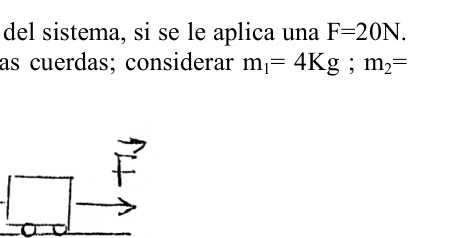
Topic: Newtonian Mechanics, Conservation of Energy Metodi: Kinematic Equations, Energy Conservation Method Competenze: Physical Reasoning Objects: Ball Fonte: Testo (PDF) — p.2
56. Comodoro Rivadavia, Chubut, Verde
Se una palla di acciaio di massa 10 kg è in riposo e quando si esercita una forza di 12 NW si mette in movimento si calcola: Accelerazione, Tempo totale del viaggio, Spazio totale del viaggio, Energia Cinetica, Lavoro realizzato, Potenza. (Figura)
Topic: Newtonian Mechanics, Conservation of Energy Metodi: Kinematic Equations, Energy Conservation Method Competenze: Physical Reasoning Objects: Ball Fonte: Testo (PDF) — p.2
**56. Comodoro Rivadavia, Chubut, Green and the other
If a 10 kg steel ball is at rest and a force of 12 NW is applied to it, it is moved to calculate: Acceleration, Total travel time, total travel space, kinetic energy, work performed, power. (Figure)
Topic: Newtonian Mechanics, Conservation of Energy Metodi: Kinematic Equations, Energy Conservation Method Competenze: Physical Reasoning Objects: Ball Fonte: Testo (PDF) — p.2
57. Provincia de Tierra del Fuego, Azul
\u00bfA qu’e distancia del punto de apoyo de la barra debo colocar un peso de 150 Kg para que el sistema se encuentre en equilibrio? (figura)
Topic: Rigid Body Statics Metodi: Torque & Angular Momentum Analysis Competenze: Physical Reasoning Objects: Beam, Pulley, Lever Fonte: Testo (PDF) — p.2
57. Provincia di Terra del Fuoco, Azul
Qual è la distanza dal supporto della barra devo mettere un peso di 150 kg per rendere il sistema in equilibrio? (Figura)
Topic: Rigid Body Statics Metodi: Torque & Angular Momentum Analysis Competenze: Physical Reasoning Objects: Beam, Pulley, Lever Fonte: Testo (PDF) — p.2
**57. Province of Tierra del Fuego, Azul
What’s the distance from the bar support I should place a 150 kg weight to get the system in balance? (Figure)
Topic: Rigid Body Statics Metodi: Torque & Angular Momentum Analysis Competenze: Physical Reasoning Objects: Beam, Pulley, Lever Fonte: Testo (PDF) — p.2
58. Mendoza, Verde
Un cuerpo que pesa 10 Kgf est’a vinculado a un rotor por una varilla que forma con el mismo. Este rotor, inicialmente en reposo comienza a girar con aceleraci’on constante de 1m/s. Calcular el tiempo necesario para que se corte la varilla despreciando su peso y estiramientos. Longitud de la varilla = 1m Di’ametro de la varilla = 10mm Resistencia de la varilla = 1000Kg/cm
Topic: Rotational Dynamics, Elasticity & Materials Metodi: Torque & Angular Momentum Analysis, Stress-Strain Analysis Competenze: Physical Reasoning Objects: Rod Fonte: Testo (PDF) — p.2
58. Mendoza, Verde
Un corpo di 10 Kgf è legato a un rotore da un bastone che forma con esso. Questo rotore, inizialmente a riposo, inizia a girare con un’accelerazione costante di 1m/s. Calcolare il tempo necessario per tagliare la bacchetta disprezzando il suo peso e le sue estensioni. Lunghezza della canna = 1m Diametro della canna = 10 mm Resistenza della canna = 1000Kg/cm
Topic: Rotational Dynamics, Elasticity & Materials Metodi: Torque & Angular Momentum Analysis, Stress-Strain Analysis Competenze: Physical Reasoning Objects: Rod Fonte: Testo (PDF) — p.2
**58. The Commission shall adopt implementing acts in accordance with Article 21 of this Regulation.
A body weighing 10 kgf is attached to a rotor by a rod forming with it. This rotor, initially at rest, starts to rotate at a constant acceleration of 1 m/s. Calculate the time it takes to cut the rod, disregarding its weight and stretch. The length of the rod = 1m The diameter of the rod is 10 mm The weight of the rod shall be equal to 1000 kg/cm
Topic: Rotational Dynamics, Elasticity & Materials Metodi: Torque & Angular Momentum Analysis, Stress-Strain Analysis Competenze: Physical Reasoning Objects: Rod Fonte: Testo (PDF) — p.2
59. Rauch, Buenos Aires, Azul
Calcular las tensiones de las cuerdas y la aceleraci’on del sistema, si se le aplica una N. Despreciar el rozamiento con el plano y las masas de las cuerdas, considerar kg ; Kg y 8Kg. (figura)
Topic: Newtonian Mechanics Metodi: Free-Body Diagram, Vector Decomposition Competenze: Physical Reasoning Objects: Block, String Fonte: Testo (PDF) — p.2
59. Rauch, Buenos Aires, Azul
Calcolare le tensioni delle corde e l’accelerazione del sistema, se viene applicata una N . Per disprezzare il raggio con il piano e le masse delle corde, considerare kg; Kg e 8Kg. (Figura)
Topic: Newtonian Mechanics Metodi: Free-Body Diagram, Vector Decomposition Competenze: Physical Reasoning Objects: Block, String Fonte: Testo (PDF) — p.2
**59. The Commission has also adopted a number of measures to combat the use of the ‘basic’ technology.
Calculate the stresses of the strings and the system acceleration, if a N is applied. To discount the flatness and mass of the strings, consider kg; Kg and 8Kg. (Figure)
Topic: Newtonian Mechanics Metodi: Free-Body Diagram, Vector Decomposition Competenze: Physical Reasoning Objects: Block, String Fonte: Testo (PDF) — p.2
60. Capital Federal, Verde
\u00bfQu’e distancia debe haber en el eje horizontal entre el ca~n’on y el tanque en el instante de disparo para que el proyectil impacte en el tanque? (usar m/s ) (figura)
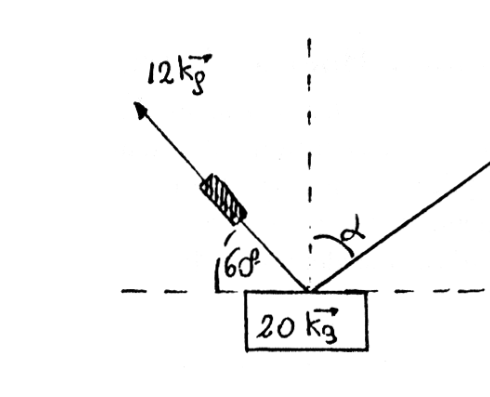
Topic: Newtonian Mechanics Metodi: Kinematic Equations, Vector Decomposition Competenze: Physical Reasoning Objects: Projectile Fonte: Testo (PDF) — p.2
60. Capitale federale, verde
Qual è la distanza che deve essere nell’asse orizzontale tra il ca~n’on e il tanco all’istante di lancio per il proiettile a colpire il tanco? (utilizzare m/s) (figura)
Topic: Newtonian Mechanics Metodi: Kinematic Equations, Vector Decomposition Competenze: Physical Reasoning Objects: Projectile Fonte: Testo (PDF) — p.2
**60. The amount of the loan is EUR 10 million.
What distance must be on the horizontal axis between the car and the tank at the moment of firing for the projectile to impact the tank? (use m/s) (Figure)
Topic: Newtonian Mechanics Metodi: Kinematic Equations, Vector Decomposition Competenze: Physical Reasoning Objects: Projectile Fonte: Testo (PDF) — p.2
61. El Palomar, Buenos Aires, Azul
En este problema encontrar’as cuatro situaciones de la vida diaria que vos pod’es contestar intuitivamente y justificar con tus conocimientos de F’isica. Hacelo en la forma que resulte m’as sencillo. a) Desde 10 m de altura se tiran dos bolitas de acero. Una pesa 10 g y la otra 1 kg. Cu’al de las dos llega primero al suelo? b) Una puerta pesada est’a entornada y la quiero abrir del todo empuj’andola con un solo dedo. \u00bfApoyo el dedo cerca de las bisagras o cerca de la cerradura para conseguir abrirla con mayor facilidad? c) Un padre que pesa 70 kg lleva a sus hijos Ezequiel (40 kg), Pablo (35kg), Sebastian (27kg) a la plaza. El padre, de un lado, y dos de los chicos juntos, del otro lado, se suben a un subybaja. El padre queda arriba, cu’al de los chicos llora despu’es de tantito quiere subir? d) Pedro y Juan viajan cada uno en trenes diferentes de la l’inea Retiro - Pilar y que van por una zona donde hay cuatro v’ias. Pedro va de Pilar hacia Retiro en uno de los trenes que se desplaza a 70 km/h. Pero por la ventanilla lo ve a Juan que va en el otro tren a 65 km/h y ambos se saludan alegremente. Es que sentido viaja Juan?
Topic: Newtonian Mechanics, Rigid Body Statics Metodi: Free-Body Diagram, Torque & Angular Momentum Analysis Competenze: Physical Reasoning Objects: Ball, Lever Fonte: Testo (PDF) — p.2
61. Il Palomar, Buenos Aires, Azul
In questo problema troviamo le quattro situazioni della vita quotidiana che puoi rispondere intuitivamente e giustificare con le tue conoscenze di fisica. Fate in modo che sia più semplice. a) Da una altezza di 10 m si gettano due palline di acciaio. Una pesa 10 grammi e l’altra 1 kg. Chi di voi arrivera’ prima a terra? b) Una porta pesante è stata spinta e voglio aprirla completamente e spingere con un solo dito. Appoggiare il dito vicino alle chiusure o vicino al lucchetto per aprirlo più facilmente? c) Un padre che pesa 70 kg porta i suoi figli Ezechiele (40 kg), Paolo (35 kg), Sebastian (27 kg) in piazza. Il padre, da una parte, e due dei ragazzi insieme, dall’altra, si arrampicano su un sotterraneo. Il padre è in alto, chi dei ragazzi che piange dopo che ha avuto la fame vuole salire? d) Pedro e Juan viaggiano ognuno su treni diversi della linea Retiro - Pilar e che vanno per un’area dove ci sono quattro vie. Pedro va da Pilar a Retiro in uno dei treni che si muove a 70 km/h. Ma dalla finestra vede Juan che sta andando con l’altro treno a 65 km/h e entrambi si salutano con gioia. Ha senso viaggiare Juan?
Topic: Newtonian Mechanics, Rigid Body Statics Metodi: Free-Body Diagram, Torque & Angular Momentum Analysis Competenze: Physical Reasoning Objects: Ball, Lever Fonte: Testo (PDF) — p.2
61. The Palomar, Buenos Aires, Azul
In this problem, find the four situations in everyday life that you can answer intuitively and justify with your knowledge of physics. Do it the way it’s easy. (a) Two steel balls are thrown from a height of 10 m. One weighs 10 g and the other 1 kg. Which one of you gets to the ground first? A heavy door is being thrown open and I want to open it completely and push it with one finger. Do I stick my finger near the hinges or near the lock to make it easier to open? c) A father weighing 70 kg takes his sons Ezekiel (40 kg), Paul (35 kg), Sebastian (27 kg) to the square. The father, on one side, and two of the boys together, on the other, climb a subjunct. The father stays upstairs, which one of the boys cries after grandma wants to go upstairs? d) Pedro and Juan travel each on different trains on the Retiro - Pilar line and they go through an area where there are four trains. Pedro goes from Pilar to Retiro on one of the trains that travels at 70 km/h. But out the window, he sees Juan on the other train, which is going at 65 km/h. They both greet each other cheerfully. Does it make sense to travel Juan?
Topic: Newtonian Mechanics, Rigid Body Statics Metodi: Free-Body Diagram, Torque & Angular Momentum Analysis Competenze: Physical Reasoning Objects: Ball, Lever Fonte: Testo (PDF) — p.2
62. R’io Cuarto, C’ordoba, Azul
Mediante dos dinam’ometros, se suspende un peso de 20 kg, tal como indica la figura. Uno de ellos marca 12 kg, y est’a inclinado respecto de la horizontal. Hallar la lectura del otro dinam’ometro y el ‘angulo que forma con la vertical. (figura)
Topic: Rigid Body Statics Metodi: Vector Decomposition, Free-Body Diagram Competenze: Physical Reasoning Objects: — Fonte: Testo (PDF) — p.2
62. R’io Cuarto, C’ordoba, Azul
Per mezzo di due dinamometri, si sospende un peso di 20 kg, come indicato nella figura. Uno de ellos marca 12 kg, y est’a inclinado respecto de la horizontal. Trovare la lettura dell’altro dinamometro e l’angolo che forma con la verticale. (Figura)
Topic: Rigid Body Statics Metodi: Vector Decomposition, Free-Body Diagram Competenze: Physical Reasoning Objects: — Fonte: Testo (PDF) — p.2
62. R’io Cuarto, C’ordoba, Azul
Two dynamometers suspend a weight of 20 kg, as shown in the figure. Uno de ellos marca 12 kg, y est’a inclinado respecto de la horizontal. Find the reading of the other dynamometer and the angle it forms with the vertical. (Figure)
Topic: Rigid Body Statics Metodi: Vector Decomposition, Free-Body Diagram Competenze: Physical Reasoning Objects: — Fonte: Testo (PDF) — p.2
63. Mar del Plata, Buenos Aires, Azul y Verde
Considere tres bloques de igual peso sobre una superficie plana sin fricci’on, en los dos casos que muestra la figura. Calcular la relaci’on entre las fuerzas necesaria para poner los cuerpos en movimiento. (figura)
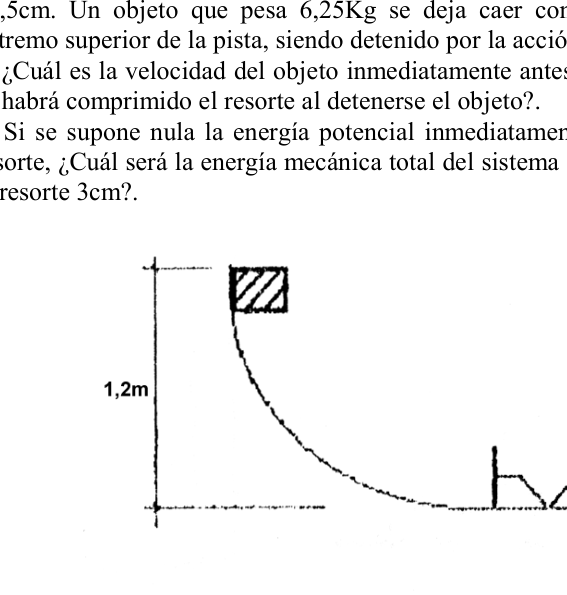
Topic: Newtonian Mechanics Metodi: Free-Body Diagram, Vector Decomposition Competenze: Physical Reasoning Objects: Block Fonte: Testo (PDF) — p.2
63. Mar del Plata, Buenos Aires, Azul e Verde
Considerate tre blocchi di uguale peso su una superficie piana senza attrito, nei due casi che la figura mostra. Calcolare il rapporto tra le forze necessarie per mettere i corpi in movimento. (Figura)
Topic: Newtonian Mechanics Metodi: Free-Body Diagram, Vector Decomposition Competenze: Physical Reasoning Objects: Block Fonte: Testo (PDF) — p.2
**63. The Commission has also adopted a number of measures to combat the use of the ‘basket’ in the construction industry.
Consider three blocks of equal weight on a flat surface without friction, in the two cases shown in the figure. Calculate the relationship between the forces needed to move the bodies. (Figure)
Topic: Newtonian Mechanics Metodi: Free-Body Diagram, Vector Decomposition Competenze: Physical Reasoning Objects: Block Fonte: Testo (PDF) — p.2
64. Provincia de Jujuy, Azul
Sobre un cuerpo de masa 2 kg. Que se encuentra en reposo en la base de un plano inclinado con respecto a la horizontal y de 8 m. De longitud, se aplica una fuerza de 19,6 N paralela al plano. El coeficiente de roce entre cuerpo y plano es 0,2. Cuando el cuerpo llega a la c’uspide del plano: a) \u00bfcu’anto trabajo realiza la fuerza aplicada? b) \u00bfqu’e parte de este trabajo se ocupo en vencer la fuerza peso? c) \u00bfcu’anto se necesito para vencer la fuerza de roce? d) \u00bfen que se convirti’o la energ’ia restante? e) \u00bfen que se convirti’o la energ’ia del bloque? f) \u00bfQu’e velocidad tiene el cuerpo cuando se encuentra en la c’uspide?
Topic: Conservation of Energy, Newtonian Mechanics Metodi: Energy Conservation Method, Free-Body Diagram Competenze: Physical Reasoning Objects: Block, Inclined Plane Fonte: Testo (PDF) — p.2
64. Provincia di Jujuy, Azul
Su un corpo di 2 kg di massa. che si trova a riposo alla base di un piano inclinato rispetto al orizzonte e di 8 m. Per lunghezza, si applica una forza di 19,6 N parallela al piano. Il coefficiente di rottura tra corpo e piano è di 0,2. Quando il corpo arriva alla spitta del piano: a) Qual è il lavoro che si svolge con la forza applicata? b) Qual è la parte del lavoro che si occupa di superare la forza del peso? c) “Cos’è necessario per superare la forza di rottura?” d) che l’energia residuo si trasforma? e) che l’energia del blocco si trasforma? F) Quale velocità ha il corpo quando si trova in spide?
Topic: Conservation of Energy, Newtonian Mechanics Metodi: Energy Conservation Method, Free-Body Diagram Competenze: Physical Reasoning Objects: Block, Inclined Plane Fonte: Testo (PDF) — p.2
64. Province of Jujuy, Azul
About a body of two kilograms. It is located at rest at the base of an inclined plane with respect to the horizontal and 8 m. In length, a force of 19,6 N is applied parallel to the plane. The friction coefficient between body and plane is 0.2. When the body reaches the horizon of the plane: (a) What work does the force applied? (b) What part of this work is concerned with overcoming weight? What is needed to overcome the force of friction? d) What is the remaining energy being converted into? e) What is the energy of the block? f) What speed does the body have when it is in the spide?
Topic: Conservation of Energy, Newtonian Mechanics Metodi: Energy Conservation Method, Free-Body Diagram Competenze: Physical Reasoning Objects: Block, Inclined Plane Fonte: Testo (PDF) — p.2
65. Cinco Saltos, R’io Negro, Verde
El esquema representa una pista sin rozamiento en forma de un cuarto de circunferencia de 1,20m de radio, que termina en un tramo horizontal sobre el que hay un resorte cuyo extremo libre coincide con el final de la curva circular. Una fuerza de 6000kg comprime este resorte 22,5cm. Un objeto que pesa 6,25Kg se deja caer sin roce, sin velocidad inicial, desde el extremo superior de la pista, siendo detenido por la acci’on del muelle. a) \u00bfCu’al es la velocidad del objeto inmediatamente antes de chocar contra el resorte?; \u00bfCu’anto se habr’a comprimido el resorte al detener el objeto?, b) Calcular la energ’ia potencial inmediatamente antes que el objeto tropiece con el resorte; \u00bfcu’al ser’ia la energ’ia mec’anica total del sistema si se sabe que el cuerpo ha comprimido el resorte 3cm? (figura)
Topic: Conservation of Energy Metodi: Energy Conservation Method, Hooke’s Law Competenze: Physical Reasoning Objects: Spring, Block Fonte: Testo (PDF) — p.2
**65. Cinque Salti, Rio Negro, Verde
Lo schema rappresenta una pista senza rottura in forma di un quarto di circonferenza di 1,20 m di radio, che termina in un tratto orizzontale su cui c’è una resorte il cui estremità libera coincide con la fine della curva circolare. Una forza di 6000 kg comprime questo spruzio di 22,5 cm. Un oggetto di 6,25 kg viene abbassato senza rottura, senza velocità iniziale, dall’estremità superiore della pista, essendo fermato dall’accio del molo. a) \u00bf’Qual è la velocità dell’oggetto immediatamente prima di colpire la molla? \u00bf’Quante volte la molla è stata compressa quando l’oggetto è stato fermato? b) Calcolare l’energia potenziale immediatamente prima che l’oggetto trattiene la sorgente; che sarebbe l’energia meccanica totale del sistema se si sa che il corpo ha compresso la sorgente di 3 cm? (Figura)
Topic: Conservation of Energy Metodi: Energy Conservation Method, Hooke’s Law Competenze: Physical Reasoning Objects: Spring, Block Fonte: Testo (PDF) — p.2
**65. Five leaps, black river, green
The scheme represents a roughly square-circle track of 1,20 m radius, ending in a horizontal section over which there is a spring whose free end coincides with the end of the circular curve. A force of 6000kg compresses this spring 22.5cm. An object weighing 6.25 kg is dropped without brushing, without initial speed, from the upper end of the runway, being stopped by the dock. (a) \u00bf\What is the speed of the object immediately before it hits the spring? \u00bf\u00bf\u00bf\u00bf\u00bf\u00bf\u00bf\u00bf\u00bf\u00bf\u00bf\u00bf\u00b\u00b\u00b\u00b\u00b\u00b\u00b\u00b\u00b\u00b\u00b\u00b\u00b\u00b\u00b\u00b\u00b\u00b\u00b\u00b\u00b\u00b\u00b\u00b\u00b\u00b\u00b\u00b\u00b\u00b\u00b\u00b\u00b\u00b\u00b\u00b\u00b and the speed of the spring when the object is stopped? (b) Calculate the potential energy immediately before the object stumbles upon the spring; what would be the total mechanical energy of the system if it is known that the body has compressed the spring 3cm? (Figure)
Topic: Conservation of Energy Metodi: Energy Conservation Method, Hooke’s Law Competenze: Physical Reasoning Objects: Spring, Block Fonte: Testo (PDF) — p.2
66. La R’ioja, Azul
Elabore un informe explicando como determinar’ia la densidad de un s’olido o un l’iquido empleando solo un resorte, una regla graduada y una probeta.
Topic: Fluid Mechanics Metodi: Hydrostatic Equilibrium, Hooke’s Law Competenze: Experimental Data Analysis, Physical Reasoning Objects: Spring Fonte: Testo (PDF) — p.2
**66. La RIOJA, Azul
Scrivi un rapporto che spieghi come determinare la densità di un liquido o di un olio utilizzando solo una sorgente, una regola graduata e una prova.
Topic: Fluid Mechanics Metodi: Hydrostatic Equilibrium, Hooke’s Law Competenze: Experimental Data Analysis, Physical Reasoning Objects: Spring Fonte: Testo (PDF) — p.2
**66. The Red, Blue
Develop a report explaining how to determine the density of a liquid or liquid using only a spring, a graduated rule and a sample.
Topic: Fluid Mechanics Metodi: Hydrostatic Equilibrium, Hooke’s Law Competenze: Experimental Data Analysis, Physical Reasoning Objects: Spring Fonte: Testo (PDF) — p.2
67. Provincia de Tierra del Fuego, Verde
Un cuerpo pende de una balanza de resorte suspendida a su vez del techo de un ascensor. a) Si se tiene una aceleraci’on hacia arriba de 4 pies/seg y la balanza indica 45 lb. \u00bfCu’al es el verdadero peso del cuerpo? b) \u00bfEn qu’e circunstancias indicar’ia la balanza 35 lb.? c) \u00bfCu’al ser’ia la indicaci’on de la balanza si se rompiera el cable del ascensor?
Topic: Newtonian Mechanics Metodi: Free-Body Diagram, Hooke’s Law Competenze: Physical Reasoning Objects: Spring Fonte: Testo (PDF) — p.2
67. Provincia di Terra del Fuoco, Verde
Un corpo appeso a una bilancia di primavera sospesa e a sua volta dal tetto di un ascensore. a) Se si ha un’accelerazione verso l’alto di 4 piedi/sec e la bilancia indica 45 lb. Qual è il vero peso del corpo? b) In quali circostanze indicherebbe il bilanciamento di 35 lb? c) Quale sarebbe l’indicazione della bilancia se il cavo dell’ascensore fosse rotto?
Topic: Newtonian Mechanics Metodi: Free-Body Diagram, Hooke’s Law Competenze: Physical Reasoning Objects: Spring Fonte: Testo (PDF) — p.2
**67. Province of Tierra del Fuego, Green
A body hangs from a spring scale suspended in turn from the ceiling of an elevator. (a) If you have an acceleration upwards of 4 ft/s and the scale indicates 45 lb. What’s the real body weight? (b) Under what circumstances would the 35 lb scale indicate? (c) What would be the scale’s indication if the lift cable was broken?
Topic: Newtonian Mechanics Metodi: Free-Body Diagram, Hooke’s Law Competenze: Physical Reasoning Objects: Spring Fonte: Testo (PDF) — p.2
68. Corrientes, Azul
Un bloque de 100 kg es empujado 30 m hacia arriba por la superficie de un plano inclinado sobre la horizontal por una fuerza constante F de 80 kg que act’ua paralelamente al plano. El coeficiente de rozamiento entre el bloque y el plano es 0,25. a) \u00bfcu’anto trabajo realiza la fuerza F? b) Calcular el incremento de energ’ia cin’etica que experiment’o el bloque. c) Hallese el incremento de energ’ia potencial del bloque. d) H’allese el trabajo efectuado contra las fuerzas de rozamiento. \u00bfEn qu’e se transforma este? e) \u00bfQu’e mejoras propondr’ias para realizar el traslado del bloque?
Topic: Conservation of Energy, Newtonian Mechanics Metodi: Energy Conservation Method, Free-Body Diagram Competenze: Physical Reasoning Objects: Block, Inclined Plane Fonte: Testo (PDF) — p.2
68. Correnti, azzurro
Un blocco di 100 kg è spinto 30 m verso l’alto dalla superficie di un piano inclinato sull’orizzontale da una forza costante F di 80 kg che agisce in parallelo al piano. Il coefficiente di rottura tra il blocco e il piano è di 0,25. a) Qual è il lavoro che fa la forza F? b) Calcolare l’aumento di energia cinetica che il blocco sperimenta. c) Trovare l’aumento di energia potenziale del blocco. d) il lavoro svolto contro le forze di rottura. In che cosa si trasforma questo? e) Quali miglioramenti proponi per effettuare il trasferimento del blocco?
Topic: Conservation of Energy, Newtonian Mechanics Metodi: Energy Conservation Method, Free-Body Diagram Competenze: Physical Reasoning Objects: Block, Inclined Plane Fonte: Testo (PDF) — p.2
68. Electrical power, Blue
A 100 kg block is pushed upwards by the surface of an inclined plane above the horizontal by a constant force F of 80 kg acting parallel to the plane. The coefficient of friction between the block and the plane is 0.25. a) What work does force F do? (b) Calculate the increase in kinetic energy experienced by the block. (c) Find the potential energy increase of the block. (d) Work carried out against the force of friction shall be completed. What is this one turning into? (e) What improvements would you propose to make to the block transfer?
Topic: Conservation of Energy, Newtonian Mechanics Metodi: Energy Conservation Method, Free-Body Diagram Competenze: Physical Reasoning Objects: Block, Inclined Plane Fonte: Testo (PDF) — p.2
69. Capital Federal, Verde
En una pared, se requieren hacer 3 agujeros separados 0.8 cm uno de otro. Para esto se dispone de un laser fijo, cuyo haz incide sobre la misma, y de una l’amina de caras paralelas. Si el ‘angulo de incidencia es de , y el ‘indice de refracci’on de la l’amina es . (figura) Calcular: a) El espesor de la misma. b) El desplazamiento lateral que sufre el rayo de luz cuando la atraviesa.
Topic: Geometric Optics Metodi: Snell’s Law, Ray Tracing Competenze: Physical Reasoning Objects: — Fonte: Testo (PDF) — p.2
69. Capitale federale, verde
In un muro, è necessario fare 3 buchi separati uno dagli altri di 0,8 cm. Per questo si dispone di un laser fisso, il cui raggio incide su di esso, e di una amica di facce parallele. Se l’angolo di incidenza è di , e l’indice di refraczione dell’amina è . (Figura) Calcolo: a) Il suo spessore. b) Il spostamento laterale che subisce il raggio di luce quando lo attraversa.
Topic: Geometric Optics Metodi: Snell’s Law, Ray Tracing Competenze: Physical Reasoning Objects: — Fonte: Testo (PDF) — p.2
**69. The amount of the loan is EUR 10 million.
On a wall, you need to make 3 holes 0.8 cm apart from each other. For this purpose a fixed laser is provided, the beam of which is applied to the same surface, and a line of parallel faces. If the angle of incidence is , and the refractive index of the amine is . (Figure) Calculation of the (a) The thickness of the same. (b) The lateral displacement of the light beam as it passes through it.
Topic: Geometric Optics Metodi: Snell’s Law, Ray Tracing Competenze: Physical Reasoning Objects: — Fonte: Testo (PDF) — p.2
70. C’ordoba, Azul
C’ordoba est’a a de Latitud sur. Los Tr’opicos de Capricornio y C’ancer est’an a Sur y Norte, respectivamente. El 21 de Diciembre los rayos inciden verticalmente sobre el tr’opico de Capricornio, el 21 de Junio lo hacen sobre el tr’opico de C’ancer. Una pantalla de un colector solar en C’ordoba, puesta en posici’on horizontal el 21 de Diciembre al mediod’ia. Supongamos que el valor de su iluminaci’on para esas condiciones es el 100%. Se pide: a) Si est’a horizontal, que iluminaci’on le corresponde el 21 de Junio : I. b) Si estuviera vertical, que iluminaci’on tendr’ia el 21 de Diciembre : I. Se supone: que todas las determinaciones se realizan al mediod’ia, que todo otro efecto de disminuci’on de la iluminaci’on es despreciable: distancia al sol, espesor de la atm’osfera atravesada, etc. (figura)
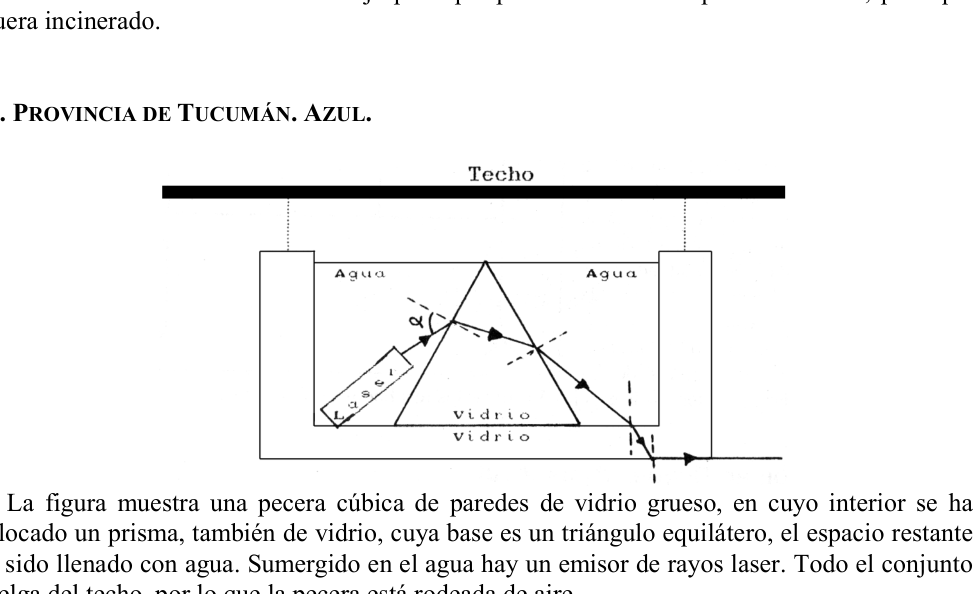
Topic: Geometric Optics, Earth & Environmental Science Metodi: Ray Tracing, Order-of-Magnitude Estimation Competenze: Physical Reasoning Objects: Screen Fonte: Testo (PDF) — p.2
70. C’ordoba, Azul
C’ordoba est’a a de Latitud sur. Los Tr’opicos de Capricornio y C’ancer est’an a Sur y Norte, respectivamente. Il 21 dicembre i raggi colpiscono verticalmente il tropeo di Capricorno, il 21 giugno lo fanno sul tropeo di Ancor. Uno schermo di un collettore solare a Cordoba, posizionato in posizione orizzontale il 21 dicembre a mezzogiorno. Supponiamo che il valore della sua illuminazione per queste condizioni sia del 100%. Si chiede: a) Si est’a horizontal, que iluminaci’on le corresponde el 21 de Junio : I. b) Si estuviera vertical, que iluminaci’on tendr’ia el 21 de Diciembre : I. Si suppone che tutte le determinazioni siano fatte nel medio, che ogni altro effetto di diminuzione dell’illuminazione sia sconsiderato: distanza dal sole, spessore dell’atmosfera attraversata, ecc. (Figura)
Topic: Geometric Optics, Earth & Environmental Science Metodi: Ray Tracing, Order-of-Magnitude Estimation Competenze: Physical Reasoning Objects: Screen Fonte: Testo (PDF) — p.2
70. C’ordoba, Azul
C’ordoba est’a a de Latitud sur. Los Tr’opicos de Capricornio y C’ancer est’an a Sur y Norte, respectivamente. On December 21, the rays strike vertically over the Tropic of Capricorn, on June 21, they do so over the Tropic of Cancer. A display of a solar collector in Cordoba, positioned horizontally on December 21 at noon. Suppose the value of your illumination for those conditions is 100%. It asks: a) Si est’a horizontal, que iluminaci’on le corresponde el 21 de Junio : I. b) Si estuviera vertical, que iluminaci’on tendr’ia el 21 de Diciembre : I. It is assumed that all determinations are made at the medium, that any other effect of dimming light is negligible: distance to the sun, thickness of the atmosphere traversed, etc. (Figure)
Topic: Geometric Optics, Earth & Environmental Science Metodi: Ray Tracing, Order-of-Magnitude Estimation Competenze: Physical Reasoning Objects: Screen Fonte: Testo (PDF) — p.2
71. Comodoro Rivadavia, Chubut, Verde
Un insecto camina sobre el eje principal de una lente convergente, cuando est’a a 30 cm de la lente, la imagen se forma a 10cm de la misma. Calcule la potencia de la lente y la distancia que deber’a caminar el insecto sobre el eje principal partiendo desde la posici’on inicial, para que muestra incaminado. (figura)
Topic: Geometric Optics Metodi: Thin Lens & Mirror Equation Competenze: Physical Reasoning Objects: Lens Fonte: Testo (PDF) — p.2
71. Comodoro Rivadavia, Chubut, Verde
Un insetto cammina sull’asse principale di una lente convergente, e quando si trova a 30 cm dalla lente, l’immagine si forma a 10 cm dalla stessa. Calcola la potenza della lente e la distanza che l’insetto deve percorrere sull’asse principale partendo dalla posizione iniziale, per mostrare il percorso. (Figura)
Topic: Geometric Optics Metodi: Thin Lens & Mirror Equation Competenze: Physical Reasoning Objects: Lens Fonte: Testo (PDF) — p.2
**71. Comodoro Rivadavia, Chubut, Green and the other
An insect walks on the main axis of a convergent lens, and when it’s 30 centimeters from the lens, the image forms 10 centimeters from it. Calculate the lens power and the distance the insect must walk on the main axis starting from the initial position, so that it shows direction. (Figure)
Topic: Geometric Optics Metodi: Thin Lens & Mirror Equation Competenze: Physical Reasoning Objects: Lens Fonte: Testo (PDF) — p.2
72. Provincia de Tucum’an, Azul
La figura muestra una pecera r’ustica de paredes de vidrio grueso, en cuyo interior se ha colocado un pez. La pared de vidrio, cuya base es un tri’angulo equil’atero, el espacio restante ha sido llenado con agua. Sumergido en el agua hay un emisor de rayos laser. Todo el conjunto cuelga del techo, por lo que la pecera est’a rodeada de aire. Calcule el ‘angulo con que debe incidir el rayo sobre el prisma para que el rayo emergente salga rozando la base de la pecera. El ‘indice de refracci’on del agua es de 1,33, el del vidrio 1,52 y el del aire 1. (figura)
Topic: Geometric Optics Metodi: Snell’s Law, Ray Tracing Competenze: Physical Reasoning Objects: Prism, Container Fonte: Testo (PDF) — p.2
72. Provincia di Tucumán, Azul
La figura mostra un pesce russo di pareti di vetro spessi, dentro del quale è stato messo un pesce. Il muro di vetro, la cui base è un triangolo equile, il resto dello spazio è stato riempito di acqua. Immerso nell’acqua c’è un’emittente laser. L’intero insieme è appeso al tetto, quindi il pesce è circondato da aria. Calcule el ‘angulo con que debe incidir el rayo sobre el prisma para que el rayo emergente salga rozando la base de la pecera. L’indice di refraczione dell’acqua è di 1,33, quello del vetro 1,52 e quello dell’aria 1. (Figura)
Topic: Geometric Optics Metodi: Snell’s Law, Ray Tracing Competenze: Physical Reasoning Objects: Prism, Container Fonte: Testo (PDF) — p.2
72. Provincia de Tucum’an, Azul
The figure shows a rustic fish tank of thick glass walls, inside which a fish has been placed. The glass wall, the base of which is an equilateral triangle, the remaining space has been filled with water. Submerged in the water is a laser beam emitter. The whole set hangs from the roof, so the fish tank is surrounded by air. Calcule el ‘angulo con que debe incidir el rayo sobre el prisma para que el rayo emergente salga rozando la base de la pecera. The refractive index of water is 1.33, that of glass 1.52, and that of air 1. (Figure)
Topic: Geometric Optics Metodi: Snell’s Law, Ray Tracing Competenze: Physical Reasoning Objects: Prism, Container Fonte: Testo (PDF) — p.2
73. Mar del Plata, Buenos Aires, Azul y Verde
Explique claramente porqu’e en verano hace normalmente calor y en invierno fr’io.
Topic: Earth & Environmental Science Metodi: Order-of-Magnitude Estimation Competenze: Physical Reasoning Objects: Planet Fonte: Testo (PDF) — p.2
73. Mar del Plata, Buenos Aires, Azul e Verde
Spiega chiaramente perché in estate è normalmente caldo e in inverno freddo.
Topic: Earth & Environmental Science Metodi: Order-of-Magnitude Estimation Competenze: Physical Reasoning Objects: Planet Fonte: Testo (PDF) — p.2
**73. The Commission has also adopted a number of measures to combat the use of the ‘basket’ in the construction industry.
Explain clearly why it’s usually hot in summer and cold in winter.
Topic: Earth & Environmental Science Metodi: Order-of-Magnitude Estimation Competenze: Physical Reasoning Objects: Planet Fonte: Testo (PDF) — p.2
74. Formosa, Azul
Un telescopio est’a formado por un lente de distancia focal cm y otro de cm, separados entre s’i 2 cm determinar: a) la imagen de un objeto muy distante b) la distancia focal de una sola lente que diera lugar a una imagen, de un objeto muy lejano, del mismo tama~no que la obtenida con el aparato.
Topic: Geometric Optics Metodi: Thin Lens & Mirror Equation Competenze: Physical Reasoning Objects: Lens Fonte: Testo (PDF) — p.2
74. Formosa, Azul
Un telescopio è formato da un obiettivo a distanza focale cm e un altro di cm, separati tra i 2 cm per determinare: a) l’immagine di un oggetto molto lontano b) la distanza focale di una sola lente che avrebbe dato luogo ad un’immagine di un oggetto molto lontano, della stessa dimensione che quella ottenuta con l’apparecchio.
Topic: Geometric Optics Metodi: Thin Lens & Mirror Equation Competenze: Physical Reasoning Objects: Lens Fonte: Testo (PDF) — p.2
74. Formosa, Blue
A telescope is made up of a lens with a focal length of cm and another of cm, separated by 2 cm to determine: (a) image of a very distant object (b) the focal length of a single lens giving rise to an image of a very distant object of the same size as that obtained with the apparatus.
Topic: Geometric Optics Metodi: Thin Lens & Mirror Equation Competenze: Physical Reasoning Objects: Lens Fonte: Testo (PDF) — p.2
75. Capital Federal, Verde
Se tiene un sistema ‘optico convergente y est’a indicado en la figura, donde los ejes principales son coincidentes. Entre ambas, perpendicularmente al eje principal, y apoyado en el, se coloca un alfiler de 10 cm de altura. Tanto la lente como el espejo tiene una distancia focal igual a 30 cm. La primera da una imagen situada a 25 cm de ella y el segundo, una imagen a 20 cm de ‘el. \u00bfCu’al es la distancia entre la lente y el espejo? \u00bfCu’al es la relaci’on entre los tama~nos de las im’agenes dadas por la lente y la espejo? Verificar los resultados gr’aficamente. (figura)
Topic: Geometric Optics Metodi: Thin Lens & Mirror Equation, Ray Tracing Competenze: Physical Reasoning Objects: Lens, Mirror Fonte: Testo (PDF) — p.2
75. Capitale federale, verde
Si ha un sistema optico convergente e viene indicato nella figura, dove gli assi principali sono coincidenze. Tra le due, perpendicolare all’asse principale, e appoggiata su di esso, si colloca una stiffa di 10 cm di altezza. Sia la lente che lo specchio hanno una distanza focale pari a 30 cm. La prima mostra un’immagine a 25 cm di distanza da essa e la seconda, un’immagine a 20 cm di distanza. Qual è la distanza tra l’obiettivo e lo specchio? Qual è la relazione tra le dimensioni degli agenti di immagini dati dalla lente e dallo specchio? Verificare i risultati in modo approfondito. (Figura)
Topic: Geometric Optics Metodi: Thin Lens & Mirror Equation, Ray Tracing Competenze: Physical Reasoning Objects: Lens, Mirror Fonte: Testo (PDF) — p.2
**75. The amount of the loan is EUR 10 million.
You have a convergent optical system and it’s shown in the figure where the main axes are matched. Between the two, perpendicular to the main axis, and supported on it, a 10 cm high pin is placed. Both the lens and the mirror have a focal length of 30 cm. The first gives an image located 25 cm from it and the second, an image 20 cm from it. What’s the distance between the lens and the mirror? What is the relationship between the dimensions of the images given by the lens and the mirror? Verify the results effectively. (Figure)
Topic: Geometric Optics Metodi: Thin Lens & Mirror Equation, Ray Tracing Competenze: Physical Reasoning Objects: Lens, Mirror Fonte: Testo (PDF) — p.2
76. El Palomar, Buenos Aires, Azul
Determinar en forma gr’afica y anal’itica la posici’on de la imagen correspondiente a la flecha de 1,5 cm de altura que se encuentra ubicada a 3 cm del v’ertice de un espejo c’oncavo cuyo radio de curvatura es de 8 cm. (figura)
Topic: Geometric Optics Metodi: Thin Lens & Mirror Equation, Ray Tracing Competenze: Physical Reasoning Objects: Mirror Fonte: Testo (PDF) — p.2
76. Il Palomar, Buenos Aires, Azul
Determinare in modo grafico e analitico la posizione dell’immagine corrispondente alla freccia di 1,5 cm di altezza che si trova a 3 cm dall’orizzonte di uno specchio con un raggio di curvatura di 8 cm. (Figura)
Topic: Geometric Optics Metodi: Thin Lens & Mirror Equation, Ray Tracing Competenze: Physical Reasoning Objects: Mirror Fonte: Testo (PDF) — p.2
76. The Palomar, Buenos Aires, Azul
Determine in a graphic and analytical way the position of the image corresponding to the 1.5 cm high arrow located 3 cm from the vertex of a mirror with a radius of curvature of 8 cm. (Figure)
Topic: Geometric Optics Metodi: Thin Lens & Mirror Equation, Ray Tracing Competenze: Physical Reasoning Objects: Mirror Fonte: Testo (PDF) — p.2
77. Comodoro Rivadavia, Chubut, Verde
Dos haces de Laser paralelos inciden sobre un cuerpo de Diamante con un ‘angulo de se refleja totalmente. Si el ‘angulo es menor esto no ocurre. Calcule el ‘indice de Refracci’on del Diamante.
Topic: Geometric Optics Metodi: Snell’s Law Competenze: Physical Reasoning Objects: Prism Fonte: Testo (PDF) — p.2
77. Comodoro Rivadavia, Chubut, Verde
Due fasci laser paralleli incidono su un corpo di diamante con un angolo di si riflette completamente. Se l’angolo è minore non succede. Calcola l’indice di refraccio del diamante.
Topic: Geometric Optics Metodi: Snell’s Law Competenze: Physical Reasoning Objects: Prism Fonte: Testo (PDF) — p.2
**77. Comodoro Rivadavia, Chubut, Green and the other
Two parallel laser beams impact a diamond body with an angle of fully reflected. If the angle is smaller this doesn’t happen. Calculate the Refraction Index of the Diamond.
Topic: Geometric Optics Metodi: Snell’s Law Competenze: Physical Reasoning Objects: Prism Fonte: Testo (PDF) — p.2
78. Corrientes, Azul
Una luz se refleja totalmente por el prisma de la figura. Determinar el correspondiente ‘indice de refracci’on m’inimo del prisma, siendo embebido en aire. \u00bfA qu’e distancia de la diapositiva se debe colocar una lente de 15 dioptr’ias para obtener una imagen aumentada cinco veces? \u00bfd’onde se proyecta la imagen? (figura)
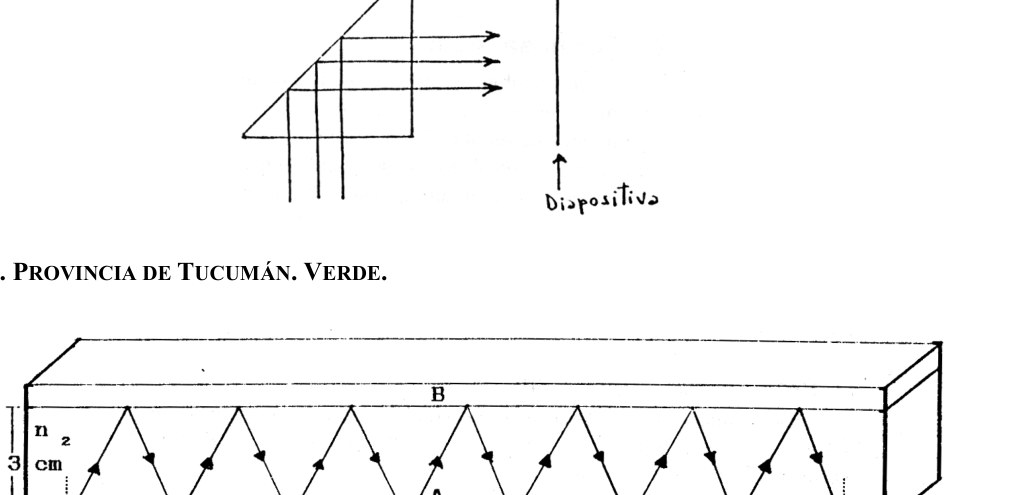
Topic: Geometric Optics Metodi: Snell’s Law, Thin Lens & Mirror Equation Competenze: Physical Reasoning Objects: Prism, Lens Fonte: Testo (PDF) — p.2
78. Correnti, azzurro
Una luce si riflette completamente attraverso il prisma della figura. Determinare il corrispondente indice di rifraczione del prisma, essendo immerso in aria. Qual è la distanza da quel diapositivo? Si deve posizionare un obiettivo di 15 dioptri per ottenere un’immagine aumentata di cinque volte? Dove viene proiettata l’immagine? (Figura)
Topic: Geometric Optics Metodi: Snell’s Law, Thin Lens & Mirror Equation Competenze: Physical Reasoning Objects: Prism, Lens Fonte: Testo (PDF) — p.2
78. Electrical power, Blue
A light is fully reflected through the prism of the figure. Determine the corresponding refractive index of the prism, being soaked in air. What distance from the slide should a lens of 15 diopters be placed to get a five-fold magnified image? Where is the image projected? (Figure)
Topic: Geometric Optics Metodi: Snell’s Law, Thin Lens & Mirror Equation Competenze: Physical Reasoning Objects: Prism, Lens Fonte: Testo (PDF) — p.2
79. Provincia de Tucum’an, Verde
El dispositivo que se muestra en la figura est’a formado por un prisma de cristal, A, de base cuadrada, cuyo ‘indice de refracci’on ; B y C son dos espejos cuyas caras reflectoras est’an adosadas a dos caras opuestas del prisma. El ancho del prisma es de 3 cm y la longitud de 3 m. Todo el dispositivo est’a sumergido en aire cuyo ‘indice de refracci’on es aproximadamente igual a 1 (). Se emite un pulso luminoso que incide, con un ‘angulo , sobre el prisma, y luego de sucesivas reflexiones en los espejos, emerge del prisma con un ‘angulo . Calcular: a) El tiempo transcurrido entre el momento en que el rayo incide y emerge del prisma, si el ‘angulo de incidencia es de . b) El valor del ‘angulo . (figura)
Topic: Geometric Optics Metodi: Snell’s Law, Ray Tracing Competenze: Physical Reasoning Objects: Prism, Mirror Fonte: Testo (PDF) — p.2
79. Provincia di Tucumán, Verde
Il dispositivo mostrato nella figura è costituito da un prisma di cristallo, A, a base quadrata, il cui indice di refraczione ; B e C sono due specchi le cui facce riflettenti sono attaccate a due facce opposte del prisma. La larghezza del prisma è di 3 cm e la lunghezza di 3 m. L’intero dispositivo è immerso in aria il cui indice di refraczione è approssimativamente uguale a 1 (). Si emette un pulso luminoso che incide, con un angolo , sulla prisma, e dopo successive riflessioni nei specchi, emerge dal prisma con un angolo . Calcolo: a) Il tempo trascorso tra il momento in cui il raggio incide e emerge dal prisma, se l’angolo di incidenza è . b) Il valore dell’angolo . (Figura)
Topic: Geometric Optics Metodi: Snell’s Law, Ray Tracing Competenze: Physical Reasoning Objects: Prism, Mirror Fonte: Testo (PDF) — p.2
79. Provincia de Tucum’an, Verde
El dispositivo que se muestra en la figura est’a formado por un prisma de cristal, A, de base cuadrada, cuyo ‘indice de refracci’on ; B y C son dos espejos cuyas caras reflectoras est’an adosadas a dos caras opuestas del prisma. The width of the prism is 3 cm and the length 3 m. The whole device is submerged in air whose refractive index is approximately equal to 1 (). A luminous pulse is emitted that hits, at an angle , over the prism, and after successive reflections in the mirrors, emerges from the prism at an angle . Calculation of the (a) The time elapsed between the time when the beam hits and emerges from the prism, if the angle of incidence is . (b) The value of the angle . (Figure)
Topic: Geometric Optics Metodi: Snell’s Law, Ray Tracing Competenze: Physical Reasoning Objects: Prism, Mirror Fonte: Testo (PDF) — p.2
80. Ucacha, C’ordoba, Azul
En la siguiente figura, la cara C es un espejo, el medio B es vidrio y A es aire. Calcula gr’afica y anal’iticamente la trayectoria del rayo. (figura)
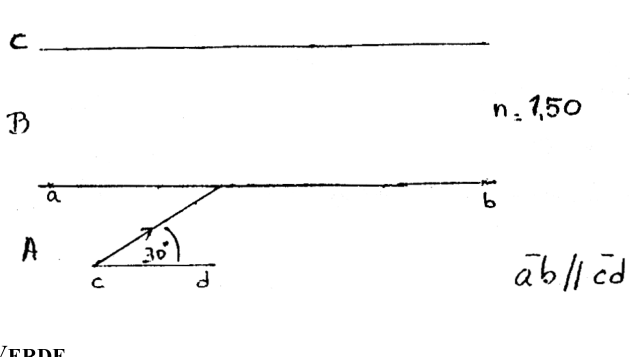
Topic: Geometric Optics Metodi: Snell’s Law, Ray Tracing Competenze: Physical Reasoning Objects: Mirror, Prism Fonte: Testo (PDF) — p.2
**80. Ucca, Cordoba, Azzurro
Nella figura seguente, la faccia C è uno specchio, il mezzo B è vetro e A è aria. Calcola in modo efficace e analitico il percorso del raggio. (Figura)
Topic: Geometric Optics Metodi: Snell’s Law, Ray Tracing Competenze: Physical Reasoning Objects: Mirror, Prism Fonte: Testo (PDF) — p.2
**80. The Commission shall adopt delegated acts in accordance with Article 21 of Regulation (EC) No 1290/2008.
In the following figure, face C is a mirror, middle B is glass and A is air. It calculates the path of the beam in a graphic and analytical way. (Figure)
Topic: Geometric Optics Metodi: Snell’s Law, Ray Tracing Competenze: Physical Reasoning Objects: Mirror, Prism Fonte: Testo (PDF) — p.2
81. Mendoza, Verde
Cuando un salvavidas, cuyo volumen es de m se sumerge en agua de mar (densidad relativa igual a 1,03) soporta justamente el peso de un hombre vestido de 80 Kgf. (densidad relativa 1,2) con el volumen de su cuerpo encima del agua. a) \u00bfCu’al es la masa por unidad de volumen del material del salvavidas? b) \u00bfCu’al deber’ia ser la densidad relativa del material del salvavidas para que se hundiera un 20 % mas con respecto al caso anterior? NOTA:Considerar que el 20 % es con respecto al volumen sumergido del Hombre.
Topic: Fluid Mechanics Metodi: Hydrostatic Equilibrium Competenze: Physical Reasoning Objects: — Fonte: Testo (PDF) — p.2
81. Mendoza, Verde
Quando un salvataggio, con un volume di m, si immerge in acqua di mare (densità relativa pari a 1,03) sopporta il peso di un uomo vestito di 80 Kgf. (densità relativa 1,2) con il volume del suo corpo sopra l’acqua. a) Quale è la massa per unità di volume del materiale del salvataggio? b) Quale dovrebbe essere la densità relativa del materiale del salvataggio per far affondare il 20% di più rispetto al precedente caso? NOTA:Considerare che il 20% sia rispetto al volume immerso dell’Uomo.
Topic: Fluid Mechanics Metodi: Hydrostatic Equilibrium Competenze: Physical Reasoning Objects: — Fonte: Testo (PDF) — p.2
**81. The Commission shall adopt implementing acts in accordance with Article 21 of this Regulation.
When a life-saving machine with a volume of m is submerged in seawater (relative density equal to 1.03) it can bear the weight of a man wearing 80 Kgf. (relative density 1.2) with its body volume above water. (a) What is the mass per unit volume of the life-saving material? (b) What should be the relative density of the life-saving material for the sinking to be 20% more than in the previous case? NOTE: Consider that 20% is with respect to the submerged volume of Man.
Topic: Fluid Mechanics Metodi: Hydrostatic Equilibrium Competenze: Physical Reasoning Objects: — Fonte: Testo (PDF) — p.2
82. Provincia de Jujuy, Azul
Un bloque de madera flota en el agua con la mitad de su volumen sumergido y si lo hace en aceite, la proporci’on de su volumen sumergido es 0,8. Encontrar las densidades de la madera y del aceite.
Topic: Fluid Mechanics Metodi: Hydrostatic Equilibrium Competenze: Physical Reasoning Objects: Block Fonte: Testo (PDF) — p.2
82. Provincia di Jujuy, Azul
Un blocco di legno galleggia nell’acqua con la metà del suo volume immerso e se lo fa in olio, il proporzionato del suo volume immerso è di 0,8. Trovare le densità del legno e dell’olio.
Topic: Fluid Mechanics Metodi: Hydrostatic Equilibrium Competenze: Physical Reasoning Objects: Block Fonte: Testo (PDF) — p.2
82. Province of Jujuy, Azul
A block of wood floats in water with half its volume submerged and if it does so in oil, the proportion of its volume submerged is 0.8. Find the densities of wood and oil.
Topic: Fluid Mechanics Metodi: Hydrostatic Equilibrium Competenze: Physical Reasoning Objects: Block Fonte: Testo (PDF) — p.2
83. San Nicol’as, Buenos Aires, Verde
Una esfera de 36 de radio flota en un tanque de aceite ().La esfera flota hasta la mitad. Determinar. a) El volumen de la esfera sumergida. b) El empuje que recibe. c)Por estar en equilibrio \u00bfcu’al es su peso? d)\u00bfCu’al es su densidad?
Topic: Fluid Mechanics Metodi: Hydrostatic Equilibrium Competenze: Physical Reasoning Objects: Sphere, Container Fonte: Testo (PDF) — p.2
**83. San Nicol’as, Buenos Aires, Verde
Una sfera di 36 radii galleggia in un serbatoio di olio (). Determinare. a) Il volume della sfera immersa. b) La spinta che riceve. c) Per essere in equilibrio, qual è il suo peso? D)\u00bfQual è la densità?
Topic: Fluid Mechanics Metodi: Hydrostatic Equilibrium Competenze: Physical Reasoning Objects: Sphere, Container Fonte: Testo (PDF) — p.2
**83. The Commission has decided to extend the period of validity of the agreement.
A 36-ray sphere floats in an oil tank (). The sphere floats to half. Determine what. (a) The volume of the submerged sphere. (b) The thrust it receives. (c) For being in balance what is your weight? d)\u00bf\What is its density?
Topic: Fluid Mechanics Metodi: Hydrostatic Equilibrium Competenze: Physical Reasoning Objects: Sphere, Container Fonte: Testo (PDF) — p.2
84. Capital Federal, Verde
Un cilindro de peso (P), de radio (r) y de altura (h), est’a suspendido de un resorte (k), cuyo extremo superior B est’a fijado; el cilindro est’a sumergido en el agua. En la posici’on de equilibrio, suponiendo que la constante el’astica del resorte es igual a “C” y que la acci’on del agua se reduce a una fuerza de Arqu’imedes adicional. Determinar la ecuaci’on del movimiento del cilindro alrededor de su posici’on de equilibrio, suponiendo que la constante el’astica del resorte es igual a “C” y la acci’on del agua se reduce a una fuerza de Arqu’imedes adicional. (figura) Considerar que el peso espec’ifico del agua es .
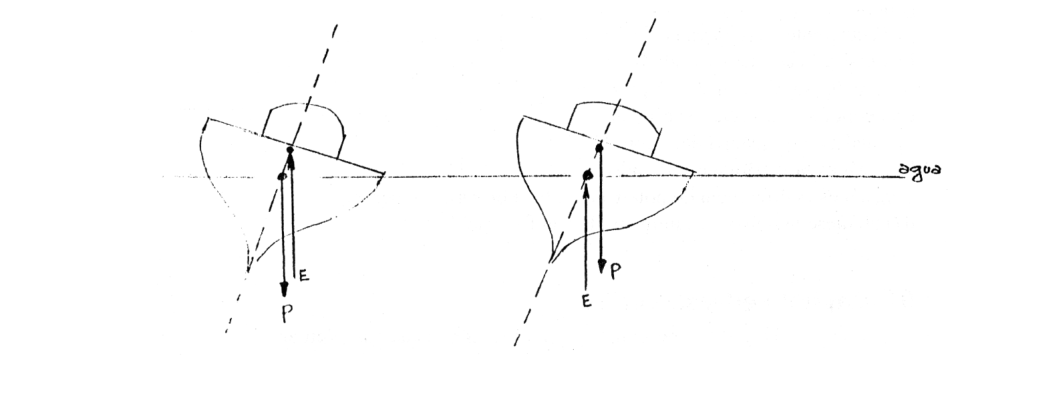
Topic: Fluid Mechanics, Oscillations & Waves Metodi: Hydrostatic Equilibrium, Hooke’s Law Competenze: Physical Reasoning Objects: Cylinder, Spring Fonte: Testo (PDF) — p.2
84. Capitale federale, verde
Un cilindro di peso (P), di raggio (r) e di altezza (h), è sospeso da una molla (k), la cui estremità superiore B è fissata; il cilindro è immerso nell’acqua. Nella posizione di equilibrio, supponendo che la costante esttica della sorgente sia uguale a “C” e che l’accio dell’acqua si riduca a un’ulteriore forza di Archimedes. Determinare l’equazione del movimento del cilindro attorno alla sua posizione di equilibrio, supponendo che la costante esttica della sorgente sia uguale a “C” e l’accio dell’acqua si riduca a un’ulteriore forza di Archimedes. (Figura) Considerare che il peso specifico dell’acqua è .
Topic: Fluid Mechanics, Oscillations & Waves Metodi: Hydrostatic Equilibrium, Hooke’s Law Competenze: Physical Reasoning Objects: Cylinder, Spring Fonte: Testo (PDF) — p.2
**84. The amount of the loan is EUR 10 million.
A cylinder of weight (P), radius (r) and height (h), is suspended from a spring (k), the upper end of which is fixed B; the cylinder is submerged in water. In the equilibrium position, assuming that the spring’s static constant is equal to “C” and that the water’s acceleration is reduced to an additional Archimedes force. Determine the equation of motion of the cylinder around its equilibrium position, assuming that the spring’s static constant is equal to “C” and the action of the water is reduced to an additional Archimedes force. (Figure) Consider that the specific weight of water is .
Topic: Fluid Mechanics, Oscillations & Waves Metodi: Hydrostatic Equilibrium, Hooke’s Law Competenze: Physical Reasoning Objects: Cylinder, Spring Fonte: Testo (PDF) — p.2
85. Santa Fe, Verde
Cu’al es el ‘area del menor bloque de hielo de 30 cm de espesor que soportar’a exactamente el peso de un hombre cuya masa es de 90 kg? La densidad relativa del hielo es 0,917 y est’a flotando en agua dulce.
Topic: Fluid Mechanics Metodi: Hydrostatic Equilibrium Competenze: Physical Reasoning Objects: Block Fonte: Testo (PDF) — p.2
85. Santa Fe, Verde
Qual è l’area del più piccolo blocco di ghiaccio di 30 cm di spessore che supporti esattamente il peso di un uomo di 90 kg di massa? La densità relativa del ghiaccio è di 0,917 e sta galleggiando in acqua dolce.
Topic: Fluid Mechanics Metodi: Hydrostatic Equilibrium Competenze: Physical Reasoning Objects: Block Fonte: Testo (PDF) — p.2
**85. The following is the list of the countries of the European Union:
What is the area of the smallest ice block 30 centimeters thick that can support exactly the weight of a man whose mass is 90 kg? The relative density of the ice is 0.917, and it’s floating in fresh water.
Topic: Fluid Mechanics Metodi: Hydrostatic Equilibrium Competenze: Physical Reasoning Objects: Block Fonte: Testo (PDF) — p.2
86. Provincia de Jujuy, Verde
Un trozo de fundici’on de hierro pesa 267 N. En el aire y 178 N. En el agua. \u00bfCu’al es el volumen de las cavidades en el trozo de hierro?.
Topic: Fluid Mechanics Metodi: Hydrostatic Equilibrium Competenze: Physical Reasoning Objects: — Fonte: Testo (PDF) — p.2
86. Provincia di Jujuy, Verde
Un pezzo di ferro pesante 267 N. In aria e 178 N. - In acqua. Qual è il volume delle cavità nel pezzo di ferro?
Topic: Fluid Mechanics Metodi: Hydrostatic Equilibrium Competenze: Physical Reasoning Objects: — Fonte: Testo (PDF) — p.2
86. Province of Jujuy, Verde
A piece of iron smelting weighs 267 N. In the air and 178 N. In the water. What is the volume of the cavities in the iron piece?
Topic: Fluid Mechanics Metodi: Hydrostatic Equilibrium Competenze: Physical Reasoning Objects: — Fonte: Testo (PDF) — p.2
87. Mendoza, Azul
Esperando en el muelle de un puerto muy importante, usted observa que se acercan dos barcos. En un momento determinado, ambos escoran levemente, mostr’andose en la figura de abajo, la situaci’on de cada uno en ese momento. Observe detenidamente los gr’aficos, en uno de ellos navegar resultar’ia MUY PELIGROSO. \u00bfEn qu’e barco se subir’ia usted?. Explique las razones f’isicas por las cuales tomar’ia esa decisi’on. (figura)
Topic: Fluid Mechanics Metodi: Hydrostatic Equilibrium Competenze: Physical Reasoning Objects: — Fonte: Testo (PDF) — p.2
87. Mendoza, Azul
Aspettando sul molo di un porto molto importante, si vedono due navi avvicinarsi. In un certo momento, entrambi scorrono leggermente, mostrandosi nella figura di seguito, la situazione di ciascuno in quel momento. Guardate attentamente i grafici, in uno di questi navigare sarebbe molto pericoloso. In quale nave saresti salito? Spiegate le ragioni fisiche per cui avete preso questa decisione. (Figura)
Topic: Fluid Mechanics Metodi: Hydrostatic Equilibrium Competenze: Physical Reasoning Objects: — Fonte: Testo (PDF) — p.2
**87. The Commission shall adopt delegated acts in accordance with Article 21 of this Regulation.
Waiting at the docks of a very important port, you notice two ships approaching. At a given moment, both scores slightly, showing in the figure below, each other’s situation at that moment. Look closely at the graphs, in one of them sailing would be very dangerous. What boat would you board? Explain the physical reasons for making that decision. (Figure)
Topic: Fluid Mechanics Metodi: Hydrostatic Equilibrium Competenze: Physical Reasoning Objects: — Fonte: Testo (PDF) — p.2
88. Mar del Plata, Buenos Aires, Azul y Verde
Un cuerpo cuelga, por medio de un resorte, en la posici’on de equilibrio A sumergido a una altura h en un l’iquido contenido en un recipiente cil’indrico de radio 2r. (Problema de balanza de resorte con cuerpo sumergido; ver figura.) (figura)
Topic: Fluid Mechanics Metodi: Hydrostatic Equilibrium, Hooke’s Law Competenze: Physical Reasoning Objects: Spring, Block Fonte: Testo (PDF) — p.2
88. Mar del Plata, Buenos Aires, Azul e Verde
Un corpo che si trova, attraverso una risorsa, in posizione di equilibrio A immerso ad un’altezza h in un liquido contenuto in un recipiente cilindrico di radio 2r. (Problema di bilancia di primavera con corpo immerso; vedere figura.) (figura)
Topic: Fluid Mechanics Metodi: Hydrostatic Equilibrium, Hooke’s Law Competenze: Physical Reasoning Objects: Spring, Block Fonte: Testo (PDF) — p.2
**88. The Commission has also adopted a number of measures to combat the use of the ‘basket’ in the construction industry.
A body hangs, by means of a spring, in the equilibrium position A submerged at a height h in a liquid contained in a cylindrical container of radius 2r. (Spring balance problem with submerged body; see figure.) (figure)
Topic: Fluid Mechanics Metodi: Hydrostatic Equilibrium, Hooke’s Law Competenze: Physical Reasoning Objects: Spring, Block Fonte: Testo (PDF) — p.2
89. Comodoro Rivadavia, Chubut, Verde
A una bater’ia de linterna de 1.5 Volt se le pueden extraer 0.5 Amp. durante 10 Horas. Si toda esa energ’ia se transforma en energ’ia potencial gravitatoria para un autom’ovil de 1000Kg de masa, calcular a qu’e altura lo podemos elevar. Resuelva el siguiente circuito. (figura)
Topic: Circuits Metodi: Equivalent Circuit Reduction, Energy Conservation Method Competenze: Physical Reasoning Objects: Battery, Resistor Fonte: Testo (PDF) — p.2
89. Comodoro Rivadavia, Chubut, Verde
Una batteria a lanterna da 1,5 volt può estrarre 0,5 Amp. per 10 ore. Se tutta questa energia si trasforma in energia potenziale gravitazionale per un’auto di 1000 kg di massa, calcoliamo a che altezza possiamo elevarla. Risolvi il circuito successivo. (Figura)
Topic: Circuits Metodi: Equivalent Circuit Reduction, Energy Conservation Method Competenze: Physical Reasoning Objects: Battery, Resistor Fonte: Testo (PDF) — p.2
**89. Comodoro Rivadavia, Chubut, Green and the other
A 1.5 volt flashlight battery can extract 0.5 Amps. for 10 hours. If all that energy is converted into potential gravitational energy for a 1,000-kilogram car, calculate how high we can raise it. Solve the next circuit. (Figure)
Topic: Circuits Metodi: Equivalent Circuit Reduction, Energy Conservation Method Competenze: Physical Reasoning Objects: Battery, Resistor Fonte: Testo (PDF) — p.2
90. Mendoza, Azul
La figura representa una central G productora de corriente continua, que suministra energ’ia a una factor’ia distante, mediante una l’inea de transporte. La diferencia de potencial , entre los bornes del generador es 230 V, y la intensidad de la corriente en la l’inea es de 50 A. Las resistencias de los hilos by y ad son de 0,1 cada una. El punto e est’a conectado a tierra. Averiguar: a) \u00bfcu’al es el potencial del punto b? b) \u00bfcu’al es la tensi’on en cada hilo? c) \u00bfcu’al es la diferencia de potencial en los bornes del receptor? d) calcular la potencia suministrada a la factor’ia? (figura)
Topic: Circuits Metodi: Kirchhoff’s Laws, Equivalent Circuit Reduction Competenze: Physical Reasoning Objects: Battery, Resistor, Wire Fonte: Testo (PDF) — p.2
90. Mendoza, Azul
La figura rappresenta una centrale G di produzione di corrente continua, che fornisce energia a un fattore distante, attraverso una linea di trasporto. La differenza di potenziale tra i terminali del generatore è di 230 V, e l’intensità di corrente sulla linea è di 50 A. Le resistenze dei fili by e ad sono di 0,1 ciascuno. Il punto e’ collegato a terra. Scopri: a) Qual è il potenziale del punto b? b) Qual è la tensione su ogni filo? c) Qual è la differenza di potenziale nei bordi del ricevitore? d) calcolare la potenza fornita al fattore? (Figura)
Topic: Circuits Metodi: Kirchhoff’s Laws, Equivalent Circuit Reduction Competenze: Physical Reasoning Objects: Battery, Resistor, Wire Fonte: Testo (PDF) — p.2
90. Mendoza, Azul
The figure represents a DC power station G, which supplies energy to a distant factor via a transport line. La diferencia de potencial , entre los bornes del generador es 230 V, y la intensidad de la corriente en la l’inea es de 50 A. The resistance of the by and ad threads is 0.1 each. The point is connected to the ground. Find out: a) What is the potential of point b? b) What is the tension on each thread? (c) What is the potential difference at the receiver terminals? (d) calculate the power supplied to the plant? (Figure)
Topic: Circuits Metodi: Kirchhoff’s Laws, Equivalent Circuit Reduction Competenze: Physical Reasoning Objects: Battery, Resistor, Wire Fonte: Testo (PDF) — p.2
91. Capital Federal, Verde
Para el circuito representado y para los valores dados, calcular: a) Las intensidades (cuando LL est’a cerrada y LL abierta. b) La diferencia de potencial en el caso a) c) El sentido de la intensidad en el galvan’ometro al cerrar LL. d) La distribuci’on de intensidades cuando LL y LL est’an cerradas. e) El valor de R, que anula la intensidad en el galv. Datos: V=30V ; =10V ; R=1000 ; R=5100 ; R=2500 ; R=R=11100 (figura)
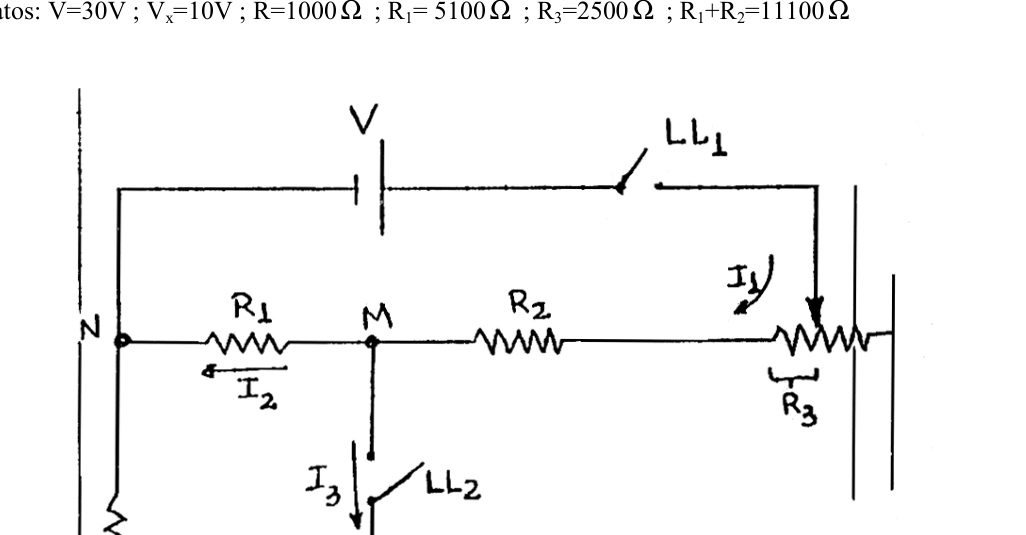
Topic: Circuits Metodi: Kirchhoff’s Laws, Equivalent Circuit Reduction Competenze: Physical Reasoning Objects: Battery, Resistor, Galvanometer, Switch Fonte: Testo (PDF) — p.2
91. Capitale federale, verde
Per il circuito rappresentato e per i valori dati, calcolare: a) Le intensità (quando LL è chiuso e LL è aperto. b) La differenza di potenziale in caso a) c) Il senso di intensità sul galvanometro quando si chiude LL. d) Distribuzione delle intensità quando LL e LL sono chiuse. e) Il valore di R, che annulla l’intensità sul galv. Data: V=30V; =10V; R=1000; R=5100; R=2500; R=R=11100 (figura)
Topic: Circuits Metodi: Kirchhoff’s Laws, Equivalent Circuit Reduction Competenze: Physical Reasoning Objects: Battery, Resistor, Galvanometer, Switch Fonte: Testo (PDF) — p.2
**91. The amount of the loan is EUR 10 million.
For the represented circuit and for the values given, calculate: (a) The intensities (when LL is closed and LL is open. (b) The potential difference in case a) (c) The intensity sensation in the galvanometer when closing LL. (d) Distribution of intensities when LL and LL are closed. (e) The value of R, which cancels the intensity in the galv. The data are: V=30V; =10V; R=1000; R=5100; R=2500; R=R=11100 (figure)
Topic: Circuits Metodi: Kirchhoff’s Laws, Equivalent Circuit Reduction Competenze: Physical Reasoning Objects: Battery, Resistor, Galvanometer, Switch Fonte: Testo (PDF) — p.2
92. Ibarreta, Formosa, Azul
Dos esferillas iguales e igualmente cargadas de 0,1 g. de masa se suspenden de un mismo punto mediante hilos de 13 cm. de longitud. Debido a su repulsi’on (entre ambas), las esferillas se separan 10 cm. Hallar la carga de cada una de ellas.
Topic: Electrostatics Metodi: Coulomb’s Law, Free-Body Diagram Competenze: Physical Reasoning Objects: Point Charge, String Fonte: Testo (PDF) — p.2
92. Ibarretta, Formosa, Azul
Due sfere uguali e uguali di 0,1 g. di massa sono sospesi da un punto stesso mediante fili di 13 cm. di lunghezza. A causa del loro respiro (tra i due), le sfere si separano 10 cm. Trovare il carico di ognuna di loro.
Topic: Electrostatics Metodi: Coulomb’s Law, Free-Body Diagram Competenze: Physical Reasoning Objects: Point Charge, String Fonte: Testo (PDF) — p.2
**92. Other, including:
Two equal and equal weight balls of 0,1 g. The mass shall be suspended from the same point by means of 13 cm thread. of length. Because of their repulsion (between the two), the balls are separated by 10 cm. Find the load on each of them.
Topic: Electrostatics Metodi: Coulomb’s Law, Free-Body Diagram Competenze: Physical Reasoning Objects: Point Charge, String Fonte: Testo (PDF) — p.2
93. Provincia de Neuqu’en, Azul y Verde
Unas bombitas fluorescentes compactas cuestan $20 cada uno y su per’iodo de vida se estima en 8000 horas. Estos tubos consumen 20 W de potencia, pero producen una iluminaci’on equivalente a la de las bombillas incandescentes de 75 W. Estas cuestan 50 centavos cada una y su per’iodo de vida se estima en 1200 horas. Si se mantiene por t’ermino medio una bombilla incandescente de 75 W constantemente encendida y la energ’ia cuesta 9 centavos por kilowatt-hora, cu’anto dinero se ahorrar’ia un consumidor cada a~no instalando en su lugar tubos fluorescentes?
Topic: Circuits, Order-of-Magnitude Estimation Metodi: Order-of-Magnitude Estimation, Energy Conservation Method Competenze: Physical Reasoning Objects: — Fonte: Testo (PDF) — p.2
93. Provincia di Neuqu’en, Blu e Verde
Le bombette fluorescenti compatte costano 20 dollari ciascuno e la loro durata è stimata in 8000 ore. Questi tubi consumano 20 W di potenza, ma producono un’illuminazione equivalente a quella delle lampadine incandescenti da 75 W. Questi costano 50 centesimi ciascuno e la loro durata è stimata in 1200 ore. Se si tiene per mezzo di un termino una lampada incandescente di 75 W costantemente accesa e l’energia costa 9 centesimi al kilowattora, quanti soldi si risparmierebbe a un consumatore ogni giorno installaendo tubi fluorescenti?
Topic: Circuits, Order-of-Magnitude Estimation Metodi: Order-of-Magnitude Estimation, Energy Conservation Method Competenze: Physical Reasoning Objects: — Fonte: Testo (PDF) — p.2
93. Province of Neuqu’en, Blue and Green
Compact fluorescent bulbs cost $20 each and their life span is estimated at 8,000 hours. These tubes consume 20 W of power, but produce illumination equivalent to that of 75 W incandescent bulbs. These cost 50 cents each and their life span is estimated at 1,200 hours. If you keep a 75 W incandescent bulb on constantly and the energy costs 9 cents per kilowatt-hour, how much money would a consumer save by not replacing fluorescent tubes?
Topic: Circuits, Order-of-Magnitude Estimation Metodi: Order-of-Magnitude Estimation, Energy Conservation Method Competenze: Physical Reasoning Objects: — Fonte: Testo (PDF) — p.2
94. Rosario, Santa Fe, Verde
La figura representa un circuito que tiene uno de sus tramos oculto dentro de una caja (tramo ab). Para determinar su contenido, se ha medido la corriente que circula a trav’es de la resistencia K para distintos valores de la fem , obteni’endose la gr’afica que se muestra. (figura) a) Determina cu’al de las 5 configuraciones de fuente y/o resistencia que se proponen est’an contenidas en la caja. b) Calcula el valor de la fem y/o la resistencia correspondiente.
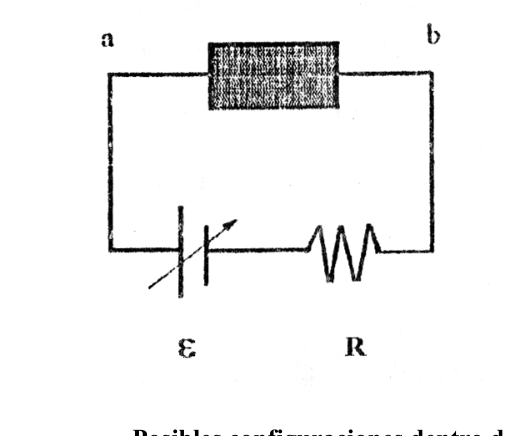
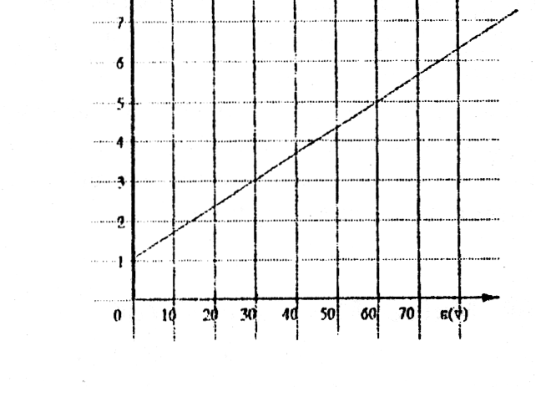
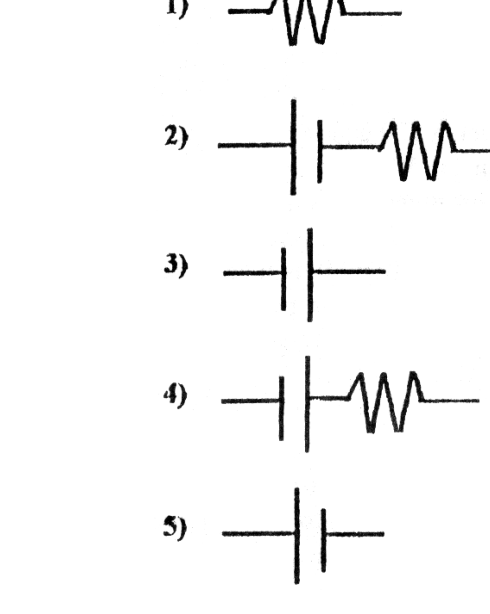
Topic: Circuits Metodi: Kirchhoff’s Laws, Graph Linearization Competenze: Physical Reasoning, Experimental Data Analysis Objects: Battery, Resistor Fonte: Testo (PDF) — p.2
94. Rosario, Santa Fe, Verde
La figura rappresenta un circuito che ha uno dei suoi tratti nascosti all’interno di una scatola (tramo ab). Per determinare il contenuto, si è misurata la corrente che circola attraverso la resistenza K per diversi valori della fem , ottenendo la grafica mostrata. (Figura) a) Determina quale delle 5 configurazioni di fonte e/o resistenza proposte è contenuta nella scatola. b) Calcola il valore della fem e/o la resistenza corrispondente.
Topic: Circuits Metodi: Kirchhoff’s Laws, Graph Linearization Competenze: Physical Reasoning, Experimental Data Analysis Objects: Battery, Resistor Fonte: Testo (PDF) — p.2
**94. The Commission shall adopt implementing acts in accordance with Article 21 of this Regulation.
The figure represents a circuit that has one of its sections hidden inside a box (section ab). To determine its content, the current circulating through the resistance K for different values of the fem has been measured, obtaining the graph shown. (Figure) (a) Determine which of the 5 proposed source and/or resistance configurations are contained in the box. (b) Calculate the value of the fem and/or the corresponding resistance.
Topic: Circuits Metodi: Kirchhoff’s Laws, Graph Linearization Competenze: Physical Reasoning, Experimental Data Analysis Objects: Battery, Resistor Fonte: Testo (PDF) — p.2
95. C’ordoba, Azul
Una peque~na central de Energ’ia entrega 6.600 Volt y 80 Amp. a una l’inea de transporte por dos cables a 18 Km, los cables son de 61,2 mm y son de Cobre (). Al final de esta l’inea hay un transformador del que salen 220V; y 2000A. Es evidente que habr’a algo de p’erdida de Energ’ia en la l’inea y en el transformador. Se pide: En un hora de funcionamiento: a) Calcular en Joule la energ’ia perdida en la l’inea. b) Calcular en Joule la Energ’ia perdida en el transformador. c) Si el transformador est’a rodeado por agua, cuantos litros hay, si en ese tiempo la temperatura se eleva en 20C?
Topic: Circuits, Thermodynamics Metodi: Equivalent Circuit Reduction, Energy Conservation Method Competenze: Physical Reasoning Objects: Wire, Container Fonte: Testo (PDF) — p.2
95. C’ordoba, Azul
Una piccola centrale energetica fornisce 6.600 volt e 80 amperi. a una linea di trasporto per due cavi a 18 km, i cavi sono di 61,2 mm e sono di rame (). Alla fine di questa linea c’è un trasformatore che uscirà da 220 V e 2000 A. C’è un certo perdito di energia nella linea e nel trasformatore. Si chiede: En un hora de funcionamiento: a) Calcular en Joule la energ’ia perdida en la l’inea. b) Calcolare in Joule l’energia persa nel trasformatore. c) Si el transformador est’a rodeado por agua, cuantos litros hay, si en ese tiempo la temperatura se eleva en 20C?
Topic: Circuits, Thermodynamics Metodi: Equivalent Circuit Reduction, Energy Conservation Method Competenze: Physical Reasoning Objects: Wire, Container Fonte: Testo (PDF) — p.2
95. C’ordoba, Azul
A small power plant delivers 6,600 volts and 80 Amps. The cables are of 61.2 mm and are of Copper (). At the end of this line is a transformer that comes out of 220V and 2000A. There’s obviously some energy loss in the line and the transformer. It asks: En un hora de funcionamiento: a) Calcular en Joule la energ’ia perdida en la l’inea. (b) Calculate in Joule the energy lost in the transformer. c) Si el transformador est’a rodeado por agua, cuantos litros hay, si en ese tiempo la temperatura se eleva en 20C?
Topic: Circuits, Thermodynamics Metodi: Equivalent Circuit Reduction, Energy Conservation Method Competenze: Physical Reasoning Objects: Wire, Container Fonte: Testo (PDF) — p.2
96. Maip’u, Mendoza, Verde
En el circuito del esquema circulan 4 A cuando se cierra el interruptor. Cuando se abre el mismo: Calcular: a) El valor que indica el amper’imetro. b) La potencia consumida por la resistencia de 7 ohms. c) Los Kw.h consumidos por el total de las resistencias en 1 h. (figura)
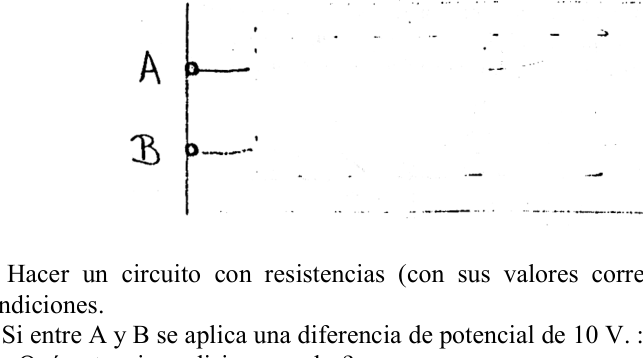
Topic: Circuits Metodi: Kirchhoff’s Laws, Equivalent Circuit Reduction Competenze: Physical Reasoning Objects: Resistor, Switch, Galvanometer Fonte: Testo (PDF) — p.2
96. Maip’u, Mendoza, Verde
Nel circuito dello schema circolano 4A quando si chiude il interruttore. Quando si apre la stessa: Calcolo: a) Il valore indicato dall’ampereimetro. b) Potenza consumata dalla resistenza di 7 ohms. c) Kw.h consumati per il totale delle resistenze in 1 ora. (Figura)
Topic: Circuits Metodi: Kirchhoff’s Laws, Equivalent Circuit Reduction Competenze: Physical Reasoning Objects: Resistor, Switch, Galvanometer Fonte: Testo (PDF) — p.2
**96. The Commission has decided to extend the period of validity of the proposal.
In the circuit of the scheme, 4A is circulated when the switch is closed. When it opens: Calculation of the (a) The value indicated by the ampere meter. (b) The power consumed by the resistance of 7 ohms. (c) Kw.h consumed by the total resistance in 1 h. (Figure)
Topic: Circuits Metodi: Kirchhoff’s Laws, Equivalent Circuit Reduction Competenze: Physical Reasoning Objects: Resistor, Switch, Galvanometer Fonte: Testo (PDF) — p.2
97. Capital Federal, Azul
La siguiente figura representa una caja negra con cuatro terminales ABCD. Se han detectado las siguientes observaciones:
- Entre A y B hay cierta resistencia.
- La resistencia entre A y C es el doble que la resistencia entre A y B.
- No hay resistencia apreciable entre B y D. a) Hacer un circuito con resistencias (con sus valores correspondientes) que cumpla estas condiciones. b) Si entre A y B se aplica una diferencia de potencial de 10 V. : \u00bfQu’e potencia se disipa en cada rama? c) \u00bfIdem (b) si esa diferencia de potencial se hubiese aplicado entre B y C? (figura)
Topic: Circuits Metodi: Equivalent Circuit Reduction, Kirchhoff’s Laws Competenze: Physical Reasoning Objects: Resistor Fonte: Testo (PDF) — p.2
97. Capitale federale, Azul
La figura seguente rappresenta una cassa nera con quattro terminali ABCD. Sono state rilevate le seguenti osservazioni:
- Tra A e B c’è una certa resistenza.
- La resistenza tra A e C è doppia rispetto alla resistenza tra A e B.
- Non c’è resistenza apprezzabile tra B e D. a) realizzare un circuito resistente (con i suoi valori corrispondenti) che soddisfi queste condizioni. b) Se si applica una differenza di potenziale di 10 V tra A e B. Che potenza si dissipa in ogni ramo? c) se tale differenza di potenziale fosse stata applicata tra B e C? (Figura)
Topic: Circuits Metodi: Equivalent Circuit Reduction, Kirchhoff’s Laws Competenze: Physical Reasoning Objects: Resistor Fonte: Testo (PDF) — p.2
**97. The Commission has not yet decided whether the measures will be implemented.
The following figure represents a black box with four ABCD terminals. The following observations have been detected:
- Between A and B, there’s some resistance.
- The resistance between A and C is twice as strong as the resistance between A and B.
- There is no appreciable resistance between B and D. (a) Make a resistance circuit (with its corresponding values) that meets these conditions. (b) If a potential difference of 10 V is applied between A and B. What power is dissipated in each branch? (c) If (b) if that potential difference had been applied between B and C? (Figure)
Topic: Circuits Metodi: Equivalent Circuit Reduction, Kirchhoff’s Laws Competenze: Physical Reasoning Objects: Resistor Fonte: Testo (PDF) — p.2
98. Mar del Plata, Buenos Aires, Azul y Verde
Sea un condensador de placas paralelas de capacidad C. Se introduce en el espacio entre las placas una plancha conductora como se muestra en la figura. Calcular en cada caso la capacidad resultante y decir se ‘esta es mayor o menor que C. (figura)
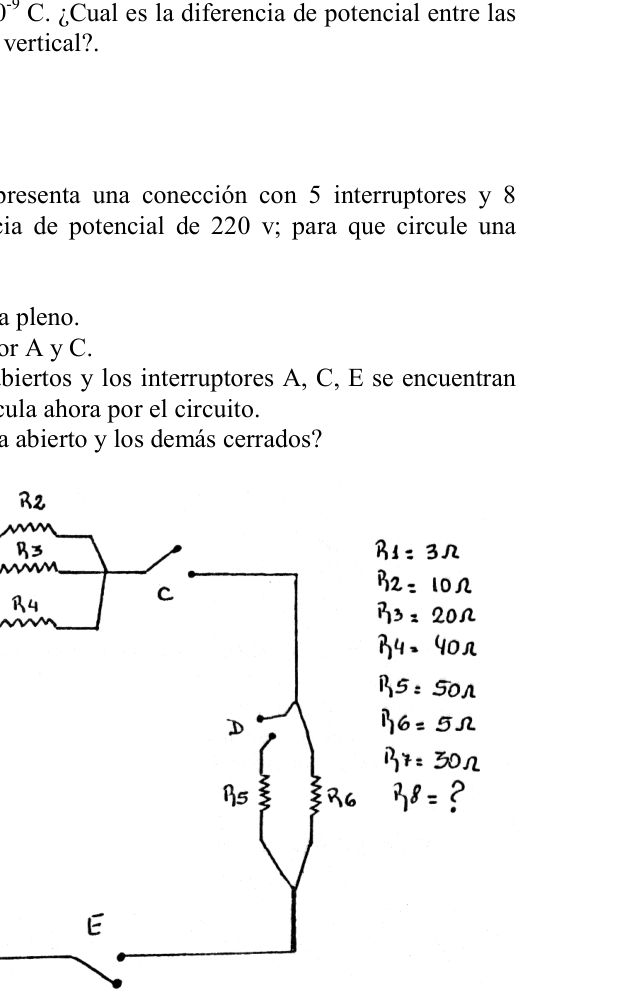
Topic: Electrostatics Metodi: Gauss’s Law, Electric Potential Method Competenze: Physical Reasoning Objects: Capacitor Fonte: Testo (PDF) — p.2
98. Mar del Plata, Buenos Aires, Azul e Verde
Essere un condensatore di piastre parallele di capacità C. Nel spazio tra le targhe viene inserita una lavagna di conduttore come mostrato nella figura. Calcolare in ogni caso la capacità risultante e dire se questa è maggiore o minore di C. (Figura)
Topic: Electrostatics Metodi: Gauss’s Law, Electric Potential Method Competenze: Physical Reasoning Objects: Capacitor Fonte: Testo (PDF) — p.2
**98. The Commission has also adopted a number of measures to combat the use of the ‘basket’ in the construction industry.
It shall be a C-capacity parallel plate capacitor. A conductive plate is inserted into the space between the plates as shown in the figure. Calculate the resulting capacity in each case and say whether this is greater or less than C. (Figure)
Topic: Electrostatics Metodi: Gauss’s Law, Electric Potential Method Competenze: Physical Reasoning Objects: Capacitor Fonte: Testo (PDF) — p.2
99. Provincia de Jujuy, Verde
Una peque~na esfera de 0,2 g. cuelga por medio de una cuerda entre dos placas paralelas separadas 5 cm. La carga la esfera es de 6. 10, \u00bfCu’al es la diferencia de potencial entre las placas si el hilo forma un ‘angulo de con la vertical? (figura)
Topic: Electrostatics Metodi: Coulomb’s Law, Free-Body Diagram Competenze: Physical Reasoning Objects: Capacitor, Point Charge, String Fonte: Testo (PDF) — p.2
99. Provincia di Jujuy, Verde
Una piccola sfera di 0,2 g. appeso con una corda tra due lastre parallele separate di 5 cm. La carica sulla sfera è di 6. 10, \u00bfCu’al es la diferencia de potencial entre las placas si el hilo forma un ‘angulo de con la vertical? (Figura)
Topic: Electrostatics Metodi: Coulomb’s Law, Free-Body Diagram Competenze: Physical Reasoning Objects: Capacitor, Point Charge, String Fonte: Testo (PDF) — p.2
99. Province of Jujuy, Verde
A small 0.2 g sphere. hangs by a rope between two parallel plates 5 cm apart. The charge on the sphere is 6. 10, \u00bfCu’al es la diferencia de potencial entre las placas si el hilo forma un ‘angulo de con la vertical? (Figure)
Topic: Electrostatics Metodi: Coulomb’s Law, Free-Body Diagram Competenze: Physical Reasoning Objects: Capacitor, Point Charge, String Fonte: Testo (PDF) — p.2
100. R’io Cuarto, C’ordoba, Azul
En el circuito de la siguiente figura se presenta una conexi’on con 5 interruptores y 8 resistencias, al que se le aplica una diferencia de potencial de 220 v; para que circule una corriente de 3,98 A, por R8 y R7. (figura) Calcular: a) El valor de R8, cuando el circuito funciona a pleno. b) La diferencia de potencial entre el interruptor S c) Si los interruptores A, C, E se encuentran cerrados, indicar que cantidad de corriente circula ahora por el circuito. d) \u00bfQu’e sucede si el interruptor E, se encuentra abierto y los dem’as cerrados?
Topic: Circuits Metodi: Kirchhoff’s Laws, Equivalent Circuit Reduction Competenze: Physical Reasoning Objects: Resistor, Switch, Battery Fonte: Testo (PDF) — p.2
**100. Río Cuarto, Cordoba, Azul
Il circuito di cui al seguente figura presenta un collegamento con 5 interruttori e 8 resistenze, al quale viene applicata una differenza di potenziale di 220 v; per circolare un corrente di 3,98 A, per R8 e R7. (Figura) Calcolo: a) Il valore di R8, quando il circuito è a pieno funzionamento. b) Differenza di potenziale tra il interruttore S c) Se gli interruttori A, C e E sono chiusi, indicare la quantità di corrente che circola ora nel circuito. d) \u00bfC’è che succede se il interruttore E è aperto e gli altri chiusi?
Topic: Circuits Metodi: Kirchhoff’s Laws, Equivalent Circuit Reduction Competenze: Physical Reasoning Objects: Resistor, Switch, Battery Fonte: Testo (PDF) — p.2
**100. The Commission has decided to take the necessary measures to ensure that the Commission is able to take all necessary measures to ensure that the measures are implemented in accordance with the objectives of the programme.
The circuit in the following figure presents a connection with 5 switches and 8 resistors, to which a potential difference of 220 v is applied, so that a current of 3.98 A is circulated, for R8 and R7. (Figure) Calculation of the (a) The value of R8 when the circuit is fully operational. (b) The potential difference between the switch S (c) If the switches A, C, E are closed, indicate the amount of current currently circulating through the circuit. d) \u00bfWhat happens if the switch E is open and the others are closed?
Topic: Circuits Metodi: Kirchhoff’s Laws, Equivalent Circuit Reduction Competenze: Physical Reasoning Objects: Resistor, Switch, Battery Fonte: Testo (PDF) — p.2
101. Santa Fe, Verde
Se tienen dos cargas q-q’ que se ubican a una distancia d y se observa que se rechazan con una fuerza F. a) si la carga q se triplica, la fuerza entre ambas vale: F; F.3; 3F; 9F b) mientras que si se triplican simult’aneamente ambas cargas, la fuerza vale: F; 3F; F/3; 9F c) si la distancia disminuye cuatro veces, la fuerza vale: F; 16F; F/4; F/16 d) si simult’aneamente se duplica una carga, se cuadruplica la otra y se duplica la distancia, la fuerza vale: F; 2F; F/2; F/4 . Justifica cada respuesta.
Topic: Electrostatics Metodi: Coulomb’s Law Competenze: Physical Reasoning Objects: Point Charge Fonte: Testo (PDF) — p.2
101. Santa Fe, Verde
Si hanno due cariche q-q’ che si trovano a distanza d e si osserva che si respingono con una forza F. a) se la carica q è triplicata, la forza tra le due è: F; F.3; 3F; 9F b) mentre se si triplicano simultaneamente le due cariche, la forza vale: F; 3F; F/3; 9F c) se la distanza diminuisce quattro volte, la forza vale: F; 16F; F/4; F/16 d) se simultaneamente si raddoppia una carica, si quadruplica l’altra e si raddoppia la distanza, la forza vale: F; 2F; F/2; F/4 . giustifica ogni risposta.
Topic: Electrostatics Metodi: Coulomb’s Law Competenze: Physical Reasoning Objects: Point Charge Fonte: Testo (PDF) — p.2
**101. The following is the list of the countries of the European Union:
Two q-q’ charges are placed at a distance d and are observed to be rejected with a force F. (a) if the load q is tripled, the force between the two is: F; F.3; 3F; 9F (b) whereas if both loads are tripled simultaneously, the force is: F; 3F; F/3; 9F (c) if the distance decreases four times, the force is: F; 16F; F/4; F/16 (d) if simultaneously one load is doubled, the other quadrupled and the distance doubled, the force is: F; 2F; F/2; F/4 . He justifies every answer.
Topic: Electrostatics Metodi: Coulomb’s Law Competenze: Physical Reasoning Objects: Point Charge Fonte: Testo (PDF) — p.2
102. Provincia de Mendoza, Azul y Verde
Julieta va a viajar a Francia y est’a muy preocupada, por saber cuanto tiempo le llevar’a arreglarse su cabello. Su angustia se debe a que en su equipo tiene una tijeras el’ectricas, cuya potencia es 1.146,6 cal y que en Francia la tensi’on de l’inea es de 110 v. \u00bfPodr’ia solucionarle el problema calculando el tiempo que le insumir’a ella?
Topic: Circuits Metodi: Energy Conservation Method Competenze: Physical Reasoning Objects: Resistor Fonte: Testo (PDF) — p.2
102. Provincia di Mendoza, Azul e Verde
Julieta è in viaggio in Francia e è molto preoccupata di sapere quanto tempo ci vorrà per ripulire i suoi capelli. La sua angoscia è dovuta al fatto che nella sua attrezzatura ha una scaglierina elettrica, la cui potenza è di 1.146,6 cal e che in Francia la tensione di linea è di 110 v. Potresti risolvere il problema calcolando il tempo che ti serve per farla entrare?
Topic: Circuits Metodi: Energy Conservation Method Competenze: Physical Reasoning Objects: Resistor Fonte: Testo (PDF) — p.2
102. Province of Mendoza, Blue and Green
Juliet is going to France and she’s very worried about how long it will take her to get her hair done. His distress is due to the fact that he has an electric scissor in his equipment, which has a power of 1.146.6 cal and that in France the line voltage is 110 v. Could you solve the problem by calculating the time you’ll spend on her?
Topic: Circuits Metodi: Energy Conservation Method Competenze: Physical Reasoning Objects: Resistor Fonte: Testo (PDF) — p.2
103. Capital Federal, Verde
Un motor de C.C. de 1 HP y rendimiento 84 % se conecta en paralelo con 5 l’amparas de 15 V 200 V, las cuales trabajan a la tensi’on nominal suministrada por un generador de f.e.m. de 250 V de resistencia interna ri. a) Dibujar el circuito b) \u00bfQu’e corriente circula por el circuito? c) \u00bfCu’al el rendimiento del sistema? d) \u00bfQu’e corriente circula por el motor? e) \u00bfQu’e corriente circula por cada l’ampara? f) \u00bfCu’al es la energ’ia absorbida por el motor en 20 minutos y cu’al es la entregada? g) Hallar el valor de la resistencia interna del generador. h) \u00bfCu’al es el costo de mantener las 5 l’amparas encendidas 3 horas?
Topic: Circuits Metodi: Kirchhoff’s Laws, Energy Conservation Method Competenze: Physical Reasoning Objects: Battery, Resistor Fonte: Testo (PDF) — p.2
103. Capitale federale, verde
Un motore di C.C. La capacità di un’acciaio di 1 HP e di un rendimento pari all’84% è collegata in parallelo a 5 ampere di 15 V 200 V, che funzionano alla tensione nominale fornita da un generatore di energia elettrica. di 250 V di resistenza interna. a) Disegnare il circuito b) Qual è il corrente che circola nel circuito? c) Quale è la performance del sistema? d) Qual è il corrente che circola attraverso il motore? e) Qual è il flusso che circola per ogni ampia parte? f) Quale energia viene assorbita dal motore in 20 minuti e quale è la consegnata? g) Determinare il valore della resistenza interna del generatore. h) Quale è il costo di mantenere le 5 camere accese per 3 ore?
Topic: Circuits Metodi: Kirchhoff’s Laws, Energy Conservation Method Competenze: Physical Reasoning Objects: Battery, Resistor Fonte: Testo (PDF) — p.2
**103. The amount of the loan is EUR 10 million.
A C.C. engine . The power output of the engine is 84% and is connected in parallel to 5 15 V 200 V amps, which operate at the rated voltage supplied by an electricity generator. 250 V of internal resistance (a) Draw the circuit (b) What current is circulating in the circuit? (c) What is the system performance? d) What current is flowing through the engine? (e) What is the current flowing through each chamber? What is the energy absorbed by the engine in 20 minutes and what is the energy delivered? (g) Determine the value of the internal resistance of the generator. h) \u00bf\u00bf What is the cost of keeping the 5 rooms on for 3 hours?
Topic: Circuits Metodi: Kirchhoff’s Laws, Energy Conservation Method Competenze: Physical Reasoning Objects: Battery, Resistor Fonte: Testo (PDF) — p.2
104. Provincia de Tucum’an, Azul
La figura 1 muestra la curva de la tensi’on en funci’on de la intensidad de la corriente el’ectrica, en dos resistencias. La curva (1) corresponde a y la recta (2) corresponde a . Calcular el tiempo que tendr’an que estar encendidas estas resistencias, conectadas como se muestra en la figura 2, para fundir 500 gr de hielo que se encuentra a una temperatura de 0C. El calor de fusi’on del hielo es de 80 cal/gr. La tensi’on V aplicada al circuito es de 220 v. Considere que no existe perdida de calor. (figura)
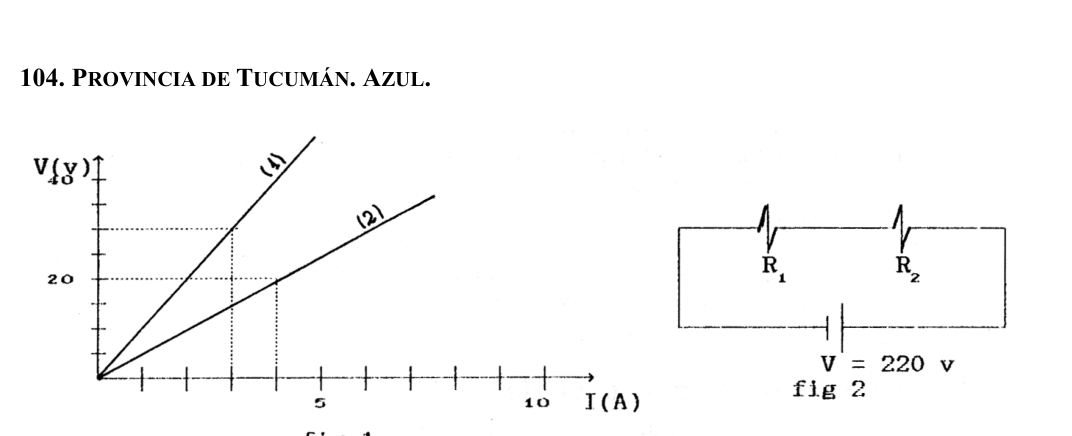
Topic: Circuits, Thermodynamics Metodi: Kirchhoff’s Laws, Graph Linearization Competenze: Physical Reasoning, Experimental Data Analysis Objects: Resistor Fonte: Testo (PDF) — p.2
104. Provincia di Tucumán, Azul
La figura 1 mostra la curva della tensione a seconda dell’intensità del corrente elettrica, in due resistenze. La curva (1) corrisponde a e la retta (2) corrisponde a . Calcolare il tempo necessario per accendere queste resistenze, collegate come mostrato in figura 2, per fondere 500 g di g di ghiaccio a una temperatura di 0C. Il calore di fusione del ghiaccio è di 80 cal/g. La tensione V applicata al circuito è di 220 v. Considera che non vi è perdita di calore. (Figura)
Topic: Circuits, Thermodynamics Metodi: Kirchhoff’s Laws, Graph Linearization Competenze: Physical Reasoning, Experimental Data Analysis Objects: Resistor Fonte: Testo (PDF) — p.2
**104. Province of Tucumán, Azul
Figure 1 shows the voltage curve in relation to the electric current intensity, in two resistors. The curve (1) is and the straight (2) is . Calculate how long these resistors, connected as shown in Figure 2, will have to be on to melt 500 grams of ice at a temperature of 0C. The heat of ice melting is 80 cal/g. The voltage applied to the circuit is 220 V. Consider that there is no heat loss. (Figure)
Topic: Circuits, Thermodynamics Metodi: Kirchhoff’s Laws, Graph Linearization Competenze: Physical Reasoning, Experimental Data Analysis Objects: Resistor Fonte: Testo (PDF) — p.2
105. Comodoro Rivadavia, Chubut, Verde
En el siguiente circuito calcule: a) La intensidad que circula. b) Ca’ida de tensi’on que produce cada elemento (R.L.C.) c) Factor de Potencia. d) Potencia. (figura)
Topic: Circuits Metodi: Equivalent Circuit Reduction, Differential Equations Competenze: Physical Reasoning Objects: Resistor, Inductor, Capacitor Fonte: Testo (PDF) — p.2
105. Comodoro Rivadavia, Chubut, Verde
Nel circuito seguente calcoli: a) L’intensità circolante. b) Causa di tensione che produce ogni elemento (R.L.C.) c) Factor di potenza. d) Potenza. (Figura)
Topic: Circuits Metodi: Equivalent Circuit Reduction, Differential Equations Competenze: Physical Reasoning Objects: Resistor, Inductor, Capacitor Fonte: Testo (PDF) — p.2
**105. Comodoro Rivadavia, Chubut, Green and the other
In the following circuit calculate: (a) The intensity of the circulation. (b) The voltage drop produced by each element (R.L.C.) (c) Power factor. (d) Power. (Figure)
Topic: Circuits Metodi: Equivalent Circuit Reduction, Differential Equations Competenze: Physical Reasoning Objects: Resistor, Inductor, Capacitor Fonte: Testo (PDF) — p.2
106. Capital Federal, Verde
Una caldera contiene Nitr’ogeno gaseoso (N) a una temperatura inicial de 8 C. Utiliza carb’on como combustible y s’olo el 70% del calor producido por su combusti’on es aprovechado para calentar el gas. El ‘embolo se encuentra inicialmente en equilibrio. La presi’on exterior es de 101300 Pa. Para el N : , . Masa molecular: M=28 R. Calcular: a) Presi’on inicial del gas. b) Densidad del nitr’ogeno en las condiciones iniciales. c) Masa del gas contenido en la caldera. d) Escribir la ecuaci’on que describe el aumento de la temperatura en funci’on de la masa de carb’on quemada. e) Escribir la ecuaci’on que describe la altura que sube el pist’on en funci’on del incremento de temperatura. f) Si para obtener la misma cantidad de calor es necesario quemar una masa de carb’on que pone a un interruptor, que pone a la caldera fuera de servicio, ubicado 2 m por encima de su posici’on inicial. (figura)
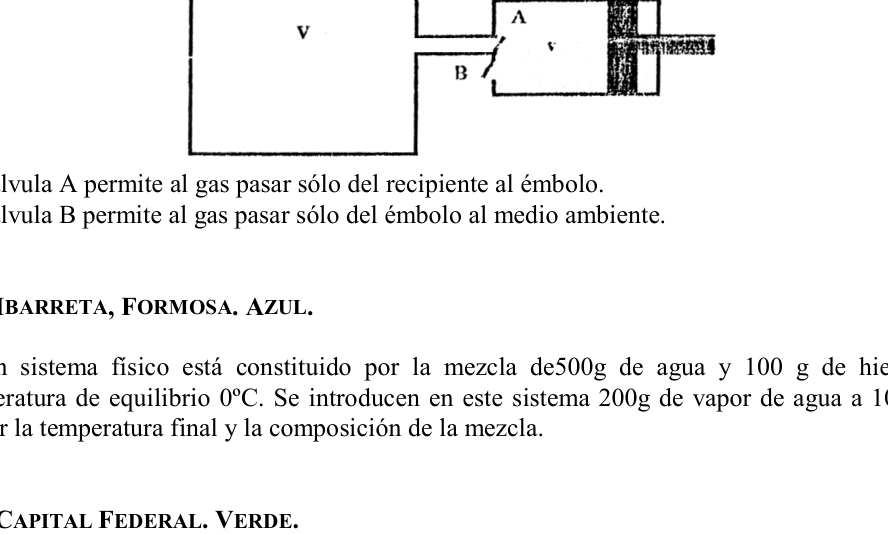
Topic: Thermodynamics Metodi: Ideal Gas Law, First Law of Thermodynamics Competenze: Physical Reasoning Objects: Gas, Cylinder, Piston Fonte: Testo (PDF) — p.2
106. Capitale federale, verde
Una caldaia contiene nitrogeno gassoso (N) a una temperatura iniziale di 8 C. Utilizzano carbone come combustibile e solo il 70% del calore prodotto dal loro combustione viene utilizzato per riscaldare il gas. L’embolo è inizialmente in equilibrio. La pressione esterna è di 101300 Pa. Per il N: , . Massa molecolare: M=28 R. Calcolo: a) Presione iniziale del gas. b) Densità del nitrogeno nelle condizioni iniziali. c) Massa del gas contenuto nella caldaia. d) Scrivere l’equazione che descrive l’aumento della temperatura in funzione della massa di carbone bruciata. e) Scrivere l’equazione che descrive l’altezza che il pistone sale a causa dell’aumento di temperatura. f) Se per ottenere la stessa quantità di calore è necessario bruciare una massa di carbone che mette un interruttore, che mette la caldaia fuori servizio, situata 2 m sopra la sua posizione iniziale. (Figura)
Topic: Thermodynamics Metodi: Ideal Gas Law, First Law of Thermodynamics Competenze: Physical Reasoning Objects: Gas, Cylinder, Piston Fonte: Testo (PDF) — p.2
**106. The amount of the loan is EUR 10 million.
A boiler contains nitrogen gas (N) at an initial temperature of 8 C. It uses coal as fuel and only 70% of the heat produced by its combustion is used to heat the gas. The embryo is initially in equilibrium. The external pressure is 101300 Pa. For the N: , . The molecular weight: M=28 R. Calculation of the (a) Initial pressure of the gas. (b) Density of nitrogen under initial conditions. (c) Mass of gas contained in the boiler. (d) Write the equation describing the increase in temperature in relation to the mass of burned coal. (e) Write the equation describing the height the piston rises to based on temperature increase. (f) If the same amount of heat is required to be burned, a mass of coal is burned by a switch, which puts the boiler out of service, 2 m above its initial position. (Figure)
Topic: Thermodynamics Metodi: Ideal Gas Law, First Law of Thermodynamics Competenze: Physical Reasoning Objects: Gas, Cylinder, Piston Fonte: Testo (PDF) — p.2
107. Rosario, Santa Fe, Verde
Un gas se encuentra dentro de un recipiente de volumen V=10 litros, a una presi’on p=4 atm. El gas es bombeado del recipiente con ayuda de una bomba cuya c’amara tiene un volumen v=3 litros (ver figura). a) Encuentra el n’umero m’inimo de recorridos del ‘embolo para que la presi’on del gas en el recipiente sea menor que dos atmosferas. b) Encuentra una f’ormula que exprese la presi’on en el recipiente cuando el ‘embolo haya dado un n’umero n cualquiera de recorridos. (figura) La v’alvula A permite al gas pasar s’olo del recipiente al ‘embolo. La v’alvula B permite al gas pasar s’olo del ‘embolo al medio ambiente.
Topic: Thermodynamics Metodi: Ideal Gas Law Competenze: Physical Reasoning Objects: Gas, Container, Piston Fonte: Testo (PDF) — p.2
107. Rosario, Santa Fe, Verde
Un gas si trova all’interno di un recipiente di volume V=10 litri, a una pressione p=4 atm. Il gas viene pompato dal recipiente con l’aiuto di una pompa il cui volume è di v=3 litri (vedi figura). a) Trova il numero minimo di percorsi dell’embolo in modo che la pressione del gas nel recipiente sia inferiore a due atmosfere. b) Trova una formula che esprima la pressione sul contenitore quando l’embolo ha dato un numero n di percorsi. (Figura) La valvola A consente al gas di passare da solo dal contenitore all’imbolo. La vena B consente al gas di passare da solo dall’embolio nell’ambiente.
Topic: Thermodynamics Metodi: Ideal Gas Law Competenze: Physical Reasoning Objects: Gas, Container, Piston Fonte: Testo (PDF) — p.2
**107. The Commission shall adopt delegated acts in accordance with Article 21 of this Regulation.
A gas is contained in a V = 10 litre volume container at a pressure of p = 4 atm. The gas is pumped from the container by means of a pump whose volume is v=3 litres (see figure). (a) Find the minimum number of embolus travels so that the gas pressure in the container is less than two atmospheres. (b) Find a formula to express the pressure on the container when the embolus has given a number n of any paths. (Figure) Valve A allows the gas to pass alone from the container to the embolus. Valve B allows gas to pass from the embolus alone into the environment.
Topic: Thermodynamics Metodi: Ideal Gas Law Competenze: Physical Reasoning Objects: Gas, Container, Piston Fonte: Testo (PDF) — p.2
108. Ibarreta, Formosa, Azul
Un sistema f’isico est’a constituido por la mezcla de 500g de agua y 100 g de hielo fundente a temperatura de equilibrio 0C. Se introduce en este sistema 200g de vapor de agua a 100C. Hallar la temperatura final y la composici’on de la mezcla.
Topic: Thermodynamics Metodi: First Law of Thermodynamics Competenze: Physical Reasoning Objects: Calorimeter Fonte: Testo (PDF) — p.2
108. Ibarretta, Formosa, Azzurro
Un sistema fisico è costituito da una miscela di 500 g di acqua e 100 g di ghiaccio fuso a temperatura di equilibrio 0C. In questo sistema vengono introdotti 200 g di vapore d’acqua a 100C. Trovare la temperatura finale e comporre la miscela.
Topic: Thermodynamics Metodi: First Law of Thermodynamics Competenze: Physical Reasoning Objects: Calorimeter Fonte: Testo (PDF) — p.2
**108. Other, including:
A physical system is made up of a mixture of 500 g of water and 100 g of melting ice at equilibrium temperature 0C. 200 g of water vapour at 100C is introduced into this system. Find the final temperature and make it into the mixture.
Topic: Thermodynamics Metodi: First Law of Thermodynamics Competenze: Physical Reasoning Objects: Calorimeter Fonte: Testo (PDF) — p.2
109. Capital Federal, Verde
Un calor’imetro de 200 g de lat’on (C=0,067 cal/gc), contiene 600 g de agua a 30c. Se introduce un objeto de cobre cuya masa es 50 g (Ce=0,093 cal/gc) a 120c. a) \u00bfCu’al es la temperatura final del equilibrio termico?
Topic: Thermodynamics Metodi: First Law of Thermodynamics Competenze: Physical Reasoning Objects: Calorimeter Fonte: Testo (PDF) — p.2
109. Capitale federale, verde
Un calore di 200 g di latte (C=0,067 cal/gc), contiene 600 g di acqua a 30c. Si introduce un oggetto di rame di massa 50 g (Ce=0,093 cal/gc) a 120c. a) Quale è la temperatura finale dell’equilibrio termico?
Topic: Thermodynamics Metodi: First Law of Thermodynamics Competenze: Physical Reasoning Objects: Calorimeter Fonte: Testo (PDF) — p.2
**109. The amount of the loan is EUR 10 million.
A heat meter of 200 g of laton (C=0,067 cal/gc) contains 600 g of water at 30c. A copper object with a mass of 50 g (Ce=0,093 cal/gc) to 120c is inserted. a) \u00bfWhat is the final temperature of the thermal equilibrium?
Topic: Thermodynamics Metodi: First Law of Thermodynamics Competenze: Physical Reasoning Objects: Calorimeter Fonte: Testo (PDF) — p.2
110. Santa Teresita, Buenos Aires, Verde
Se dispone del siguiente dispositivo: Datos: Potencia de motor: 1 HP Tiempo de funcionamiento: 1 hora kg Masa del aire : 1 Kg. Masa del agua : 50 litros (aire) Si la presi’on inicial del aire era de 1014Hpa y la temperatura interior de 20 C \u00bfcu’ales ser’an los valores de la temperatura del equilibrio interior y la presi’on del aire al cabo de 1 hora? (figura)
Topic: Thermodynamics Metodi: Ideal Gas Law, First Law of Thermodynamics Competenze: Physical Reasoning Objects: Gas, Container Fonte: Testo (PDF) — p.2
110. Santa Teresita, Buenos Aires, Verde
Dispone del dispositivo seguente: Dati: Potenza motrice: 1 HP Tempo di funzionamento: 1 ora kg Massa dell’aria: 1 Kg. Massa dell’acqua: 50 litri (aria) Si la presi’on inicial del aire era de 1014Hpa y la temperatura interior de 20 C \u00bfcu’ales ser’an los valores de la temperatura del equilibrio interior y la presi’on del aire al cabo de 1 hora? (Figura)
Topic: Thermodynamics Metodi: Ideal Gas Law, First Law of Thermodynamics Competenze: Physical Reasoning Objects: Gas, Container Fonte: Testo (PDF) — p.2
110. Santa Teresita, Buenos Aires, Verde
The following device is available: The data: Power of engine: 1 HP Operating time: 1 hour kg Air mass: 1 kg. Mass of water: 50 litres (aire) Si la presi’on inicial del aire era de 1014Hpa y la temperatura interior de 20 C \u00bfcu’ales ser’an los valores de la temperatura del equilibrio interior y la presi’on del aire al cabo de 1 hora? (Figure)
Topic: Thermodynamics Metodi: Ideal Gas Law, First Law of Thermodynamics Competenze: Physical Reasoning Objects: Gas, Container Fonte: Testo (PDF) — p.2
111. Provincia de Neuqu’en, Azul y Verde
Se realizan los siguientes pasos para preparar una mamadera: se coloca la leche en polvo y se completa hasta la mitad con agua hirviendo. Tapando el agujero de la tetina, se agita hasta que se incorpore el resto. Luego, se coloca agua fr’ia hasta completar. Se vuelve a tapar el agujero de la tetina y se agita nuevamente para homogeneizar la mezcla. Cuando se agit’a la mamadera con el agua caliente, al destapar el agujero de la tetina, se observa que sale vapor. Cuando se la agit’o, luego de colocar agua fr’ia, esto no ocurre. Haciendo las simplificaciones que considere necesarias, y usando conceptos de transmisi’on de calor, gases ideales, termodin’amica, explique las observaciones antes mencionadas.
Topic: Thermodynamics, Kinetic Theory Metodi: First Law of Thermodynamics, Ideal Gas Law Competenze: Physical Reasoning Objects: Container Fonte: Testo (PDF) — p.2
111. Provincia di Neuqu’en, Blu e Verde
Per preparare un mammifero si fanno i seguenti passi: si mette il latte in polvere e si completa fino alla metà con acqua bollente. Colpendo il buco della tetina, agita fino a che il resto non viene incorporato. Poi si mette acqua fredda fino a che non si completa. Il buco del tetino viene rivestito e agitato per omogeneizzare la miscela. Quando si agita la mammifera con acqua calda, quando si svelta il buco della tetina, si osserva che viene uscito vapore. Quando si agita, dopo aver messo l’acqua fredda, non succede. Semplificando le cose che ritiene necessarie, e usando concetti di trasmissione di calore, gas ideali, amichevole al calore, spieghi le osservazioni sopra menzionate.
Topic: Thermodynamics, Kinetic Theory Metodi: First Law of Thermodynamics, Ideal Gas Law Competenze: Physical Reasoning Objects: Container Fonte: Testo (PDF) — p.2
111. Province of Neuqu’en, Blue and Green
The following steps are taken to prepare a milkshake: Put the milk in powder and complete it up to half with boiling water. By closing the breast cavity, it is stirred until the rest is incorporated. Then, cold water is added until complete. The breast cavity is again closed and stirred again to homogeneise the mixture. When the mother is stirred with hot water, when the breastplate is uncovered, steam is seen coming out. When you stir it, after you put cold water in it, this doesn’t happen. By making any simplifications you deem necessary, and using concepts of heat transfer, ideal gases, thermodynamics, explain the above-mentioned observations.
Topic: Thermodynamics, Kinetic Theory Metodi: First Law of Thermodynamics, Ideal Gas Law Competenze: Physical Reasoning Objects: Container Fonte: Testo (PDF) — p.2
112. Capital Federal, Verde
En un tubo de vidrio de 1 cm de secci’on se deja una burbuja de aire de 10 cm y se colocan 10 cm de mercurio. Luego se lo pone cuidadosamente en posici’on vertical con el extremo abierto hacia arriba. \u00bfCu’al es el volumen de la burbuja en esta posici’on? (figura)
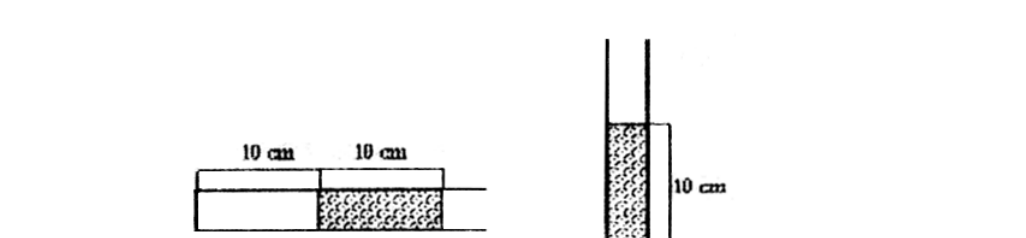
Topic: Thermodynamics Metodi: Ideal Gas Law, Hydrostatic Equilibrium Competenze: Physical Reasoning Objects: Gas, Tube, Bubble Fonte: Testo (PDF) — p.2
112. Capitale federale, verde
In un tubo di vetro di 1 cm di seccione viene lasciata una bolla d’aria di 10 cm e viene inserito 10 cm di mercurio. Poi lo metti con cura in posizione verticale con l’estremità aperta verso l’alto. Qual è il volume della bolla in questa posizione? (Figura)
Topic: Thermodynamics Metodi: Ideal Gas Law, Hydrostatic Equilibrium Competenze: Physical Reasoning Objects: Gas, Tube, Bubble Fonte: Testo (PDF) — p.2
112. Capital Federal, Verde
En un tubo de vidrio de 1 cm de secci’on se deja una burbuja de aire de 10 cm y se colocan 10 cm de mercurio. Then carefully position it vertically with the end open upwards. What’s the volume of the bubble at this position? (Figure)
Topic: Thermodynamics Metodi: Ideal Gas Law, Hydrostatic Equilibrium Competenze: Physical Reasoning Objects: Gas, Tube, Bubble Fonte: Testo (PDF) — p.2
113. Provincia de Tierra del Fuego, Verde
El coeficiente de dilataci’on de una varilla de cobre es de 17x10 exp (-6) 1/C. Sumergimos la varilla en un medio cuya temperatura tiene la distribuci’on que se indica en el gr’afico. Si la varilla inicialmente tiene 75 cm. de longitud y un extremo coincide con el origen de coordenadas; calcular: (figura) La longitud total y el volumen de la varilla luego de dilatarse, despreciando la curva en el origen de temperatura y el transporte de calor por la varilla.
Topic: Thermodynamics, Elasticity & Materials Metodi: First Law of Thermodynamics, Calculus-Integration Competenze: Physical Reasoning Objects: Rod Fonte: Testo (PDF) — p.2
113. Provincia di Terra del Fuoco, Verde
Il coefficiente di dilatazione di una canna di rame è di 17x10 exp (-6) 1/C. La vernice viene immersa in un mezzo la cui temperatura ha la distribuzione indicata sul grafico. Se la bacchetta iniziale ha 75 cm. di lunghezza e un’estremità corrisponde all’origine delle coordinate; calcolare: (figura) L’insieme della lunghezza e del volume del bastone dopo l’allungamento, disprezzando la curva di origine della temperatura e il trasporto del calore attraverso il bastone.
Topic: Thermodynamics, Elasticity & Materials Metodi: First Law of Thermodynamics, Calculus-Integration Competenze: Physical Reasoning Objects: Rod Fonte: Testo (PDF) — p.2
**113. Province of Tierra del Fuego, Green
The coefficient of dilatation of a copper rod is 17x10 exp (-6) 1/C. We submerge the rod in a medium whose temperature has the distribution indicated on the chart. If the rod is initially 75 cm. of length and one end corresponds to the origin of the coordinates; calculate: (figure) The total length and volume of the rod after dilating, neglecting the curve at the origin of temperature and heat transport by the rod.
Topic: Thermodynamics, Elasticity & Materials Metodi: First Law of Thermodynamics, Calculus-Integration Competenze: Physical Reasoning Objects: Rod Fonte: Testo (PDF) — p.2
114. Ucacha, C’ordoba, Azul
En un calor’imetro hay 250 g de agua a 17C. En’el se introducen 10g de cobre cuyo calor espec’ifico es 0,093 cal/gc, tambi’en a 80C; y una arandela de 1cm de di’ametro interior y 2 mm de espesor de hierro a C. La temperatura de equilibrio del sistema es de 17,67C. Calcular: a) La masa de hierro b) El di’ametro interior de la arandela cuando el sistema est’a en equilibrio Fe 1/C (Se aclar’o que en lugar del di’ametro interior trabajaran con el radio de la corona)
Topic: Thermodynamics Metodi: First Law of Thermodynamics Competenze: Physical Reasoning Objects: Calorimeter Fonte: Testo (PDF) — p.2
114. Ucacha, C’ordoba, Azul
En un calor’imetro hay 250 g de agua a 17C. In esso vengono introdotti 10 g di rame il cui calore specifico è di 0,093 cal/g c, anche a 80 C; e un’arenda di 1 cm di diametro interno e 2 mm di spessore di ferro a C. La temperatura di equilibrio del sistema è di 17,67C. Calcolo: a) Massa di ferro b) Il diametro interno della pinza quando il sistema è in equilibrio Fe 1/C (Riclarato che invece del diametro interno si lavorino con il raggio della corona)
Topic: Thermodynamics Metodi: First Law of Thermodynamics Competenze: Physical Reasoning Objects: Calorimeter Fonte: Testo (PDF) — p.2
114. Ucacha, C’ordoba, Azul
En un calor’imetro hay 250 g de agua a 17C. It is to be fitted with 10 g of copper with a specific heat of 0.093 cal/gc, also at 80C; and a 1 cm diameter inner ring and 2 mm thick iron ring at C. The system equilibrium temperature is 17.67C. Calculation of the (a) The iron mass (b) The inner diameter of the crankcase when the system is in equilibrium Fe 1/C (It is clarified that instead of the inner diameter work with the radius of the crown)
Topic: Thermodynamics Metodi: First Law of Thermodynamics Competenze: Physical Reasoning Objects: Calorimeter Fonte: Testo (PDF) — p.2
115. Capital Federal, Verde
Mezclo 1 Kg de agua hirviendo con 1 Kg de hielo a 0C. Despreciando las p’erdidas de calor con el medio ambiente: a) Calcular la temperatura final del sistema b) \u00bfCu’anto tiempo tardar’a en empezar a hervir usando un calentador que entrega 500cal/seg.?
Topic: Thermodynamics Metodi: First Law of Thermodynamics Competenze: Physical Reasoning Objects: Calorimeter Fonte: Testo (PDF) — p.2
115. Capitale federale, verde
Miscela 1 Kg di acqua bollente con 1 Kg di ghiaccio a 0C. Scommetto che il calore che si perde nell’ambiente: a) Calcolare la temperatura finale del sistema b) Quanto tempo ci vuole per iniziare a bollire utilizzando un riscaldatore che fornisce 500 cal/seg?
Topic: Thermodynamics Metodi: First Law of Thermodynamics Competenze: Physical Reasoning Objects: Calorimeter Fonte: Testo (PDF) — p.2
**115. The amount of the loan is EUR 10 million.
Mix 1 Kg of boiling water with 1 Kg of ice at 0C. Disregarding heat losses to the environment: (a) Calculate the final temperature of the system (b) \u00bfHow long does it take to start boiling using a heater that delivers 500 cal/seg?
Topic: Thermodynamics Metodi: First Law of Thermodynamics Competenze: Physical Reasoning Objects: Calorimeter Fonte: Testo (PDF) — p.2
116. San Nicol’as, Buenos Aires, Verde
Qu’e cantidad de calor necesit’o para elevar la temperatura de 104F a 644F la temperatura de un cubo de hierro de 10 cm de arista?
Topic: Thermodynamics Metodi: First Law of Thermodynamics Competenze: Physical Reasoning Objects: — Fonte: Testo (PDF) — p.2
116. San Nicol’as, Buenos Aires, Verde
Quale quantità di calore è necessaria per innalzare da 104F a 644F la temperatura di un cubo di ferro di 10 cm di spigolo?
Topic: Thermodynamics Metodi: First Law of Thermodynamics Competenze: Physical Reasoning Objects: — Fonte: Testo (PDF) — p.2
116. San Nicol’as, Buenos Aires, Verde
How much heat was required to raise the temperature of an iron cube with a 10 cm edge from 104F to 644F?
Topic: Thermodynamics Metodi: First Law of Thermodynamics Competenze: Physical Reasoning Objects: — Fonte: Testo (PDF) — p.2
117. Maip’u, Mendoza, Verde
En un campo el’ectrico uniforme, por un punto pasa con un m/s un n’ucleo de helio doblemente ionizado y por otro punto 50 cm m’as adelante con una m/s. a) \u00bfCu’al es la aceleraci’on de la part’icula? b) \u00bfCu’al es el m’odulo de la fuerza actuante? c) \u00bfQu’e valor tiene el campo el’ectrico? (m=6,68 . 10g; q=4 . 10c).
Topic: Electrostatics Metodi: Coulomb’s Law, Kinematic Equations Competenze: Physical Reasoning Objects: Nucleus, Point Charge Fonte: Testo (PDF) — p.2
117. Maip’u, Mendoza, Verde
In un campo elettrico uniforme, un punto passa con un m/s un nucleo di elio doppiamente ionizzato e un altro punto passa 50 cm avanti con un m/s. a) Quale è l’accelerazione della particella? b) Quale è il modulo della forza attiva? c) Quale valore ha il campo elettrico? (m=6,68 . 10g; q=4 . 10c).
Topic: Electrostatics Metodi: Coulomb’s Law, Kinematic Equations Competenze: Physical Reasoning Objects: Nucleus, Point Charge Fonte: Testo (PDF) — p.2
**117. The Commission has also adopted a number of measures to combat fraud.
In a uniform electric field, a doubly ionized helium nucleus passes through one point with a m/s and another point 50 cm ahead with a m/s. a) \u00bfWhat is the acceleration of the particles? b) What is the modulo of the acting force? (c) What value does the electric field have? (m=6,68 . 10g; q=4 . 10c).
Topic: Electrostatics Metodi: Coulomb’s Law, Kinematic Equations Competenze: Physical Reasoning Objects: Nucleus, Point Charge Fonte: Testo (PDF) — p.2
118. Las Heras, Mendoza, Verde
En un campo el’ectrico uniforme, por un punto A pasa con una velocidad de 30m/s un n’ucleo de helio doblemente ionizado y por otro punto B, 50 cm m’as adelante con una m/s. a) \u00bfCu’al es la aceleraci’on de la part’icula? b) \u00bfCu’al es el m’odulo de la fuerza actuante? c) \u00bfQu’e valor tiene el campo el’ectrico? (m=6,68x10g; q=1,6x10coul.).
Topic: Electrostatics Metodi: Coulomb’s Law, Kinematic Equations Competenze: Physical Reasoning Objects: Nucleus, Point Charge Fonte: Testo (PDF) — p.2
**118. Las Heras, Mendoza, Verde
In un campo elettrico uniforme, un punto A passa a una velocità di 30 m/s un nucleo di elio doppiamente ionizzato e un altro punto B passa 50 cm avanti con un m/s. a) Quale è l’accelerazione della particella? b) Quale è il modulo della forza attiva? c) Quale valore ha il campo elettrico? (m=6,68x10g; q=1,6x10coul.).
Topic: Electrostatics Metodi: Coulomb’s Law, Kinematic Equations Competenze: Physical Reasoning Objects: Nucleus, Point Charge Fonte: Testo (PDF) — p.2
118. Las Heras, Mendoza, Verde
In a uniform electric field, a point A passes at a speed of 30 m/s a nucleus of double ionized helium and another point B, 50 cm ahead at a m/s. a) \u00bfWhat is the acceleration of the particles? b) What is the modulo of the acting force? (c) What value does the electric field have? (m=6,68x10g; q=1,6x10coul.).
Topic: Electrostatics Metodi: Coulomb’s Law, Kinematic Equations Competenze: Physical Reasoning Objects: Nucleus, Point Charge Fonte: Testo (PDF) — p.2
119. Mendoza, Verde
La figura muestra una barra larga aislante, sin masa, de longitud l, pivoteada en su centro y balanceada por un peso W que se encuentra a una distancia x de su extremo izquierdo. En el extremo izquierdo de la barra se coloca una carga positiva q, y en el derecho otra de 2q. A una distancia h, directamente abajo de estas cargas, se colocan dos cargas positivas Q. (figura) a) Determinar la distancia x a la que debe estar el peso W para que la barra est’e en equilibrio b) \u00bfCu’al debe ser el valor de h para que la barra no ejerza fuerza vertical alguna sobre el cojinete al estar en equilibrio? Ignorar la interacci’on de las cargas de los extremos opuestos a la barra.
Topic: Electrostatics, Rigid Body Statics Metodi: Coulomb’s Law, Torque & Angular Momentum Analysis Competenze: Physical Reasoning Objects: Point Charge, Rod, Lever Fonte: Testo (PDF) — p.2
119. Mendoza, Verde
La figura mostra una barra lunga, isolante, senza massa, di lunghezza l, pivotata al centro e sbalzata da un peso W che si trova a una distanza x dal suo estremo sinistro. All’estremità sinistra della barra si colloca una carica positiva q, e alla destra un’altra di 2q. A distanza h, direttamente sotto queste cariche, vengono poste due cariche positive Q. (Figura) a) Determinare la distanza x a cui deve essere il peso W per rendere la barra in equilibrio b) Quale deve essere il valore di h per evitare che la barra eserciti alcuna forza verticale sul cuscinetto quando è in equilibrio? Ignorare l’interazione delle cariche delle estremità opposte alla barra.
Topic: Electrostatics, Rigid Body Statics Metodi: Coulomb’s Law, Torque & Angular Momentum Analysis Competenze: Physical Reasoning Objects: Point Charge, Rod, Lever Fonte: Testo (PDF) — p.2
**119. The Commission shall adopt implementing acts in accordance with Article 21 of this Regulation.
The figure shows an isolated, massless, long bar of length l, pivoted in its center and balanced by a weight W that lies at a distance x from its left end. At the left end of the bar is placed a positive charge q, and at the right another charge 2q. At a distance h, directly below these charges, two positive Q charges are placed. (Figure) a) Determine the distance x at which the weight W must be so that the bar is in equilibrium (b) \u00bf’What must be the value of h so that the bar does not exert any vertical force on the cushion when in balance? Ignore the interaction of the charges at opposite ends of the bar.
Topic: Electrostatics, Rigid Body Statics Metodi: Coulomb’s Law, Torque & Angular Momentum Analysis Competenze: Physical Reasoning Objects: Point Charge, Rod, Lever Fonte: Testo (PDF) — p.2
120. C’ordoba, Verde
Hoy es un d’ia de verano, con una temperatura de 38C; en un tablero de mando de E.P.E.C., un perno de hierro, por el cual circula una corriente el’ectrica de 90A, se ha aflojado de tal forma que en ‘el se est’a generando una resistencia de contacto de 0,05. Calcular: a) En V, la ca’ida de tensi’on en el perno de contacto. b) En watts, la potencia que en ese punto se genera por hacer fluir esa corriente. c) En cal, la cantidad de calor generada al cabo de 1 min.
Topic: Circuits, Thermodynamics Metodi: Equivalent Circuit Reduction, Energy Conservation Method Competenze: Physical Reasoning Objects: Resistor Fonte: Testo (PDF) — p.2
120. C’ordoba, Verde
Hoy es un d’ia de verano, con una temperatura de 38C; en un tablero de mando de E.P.E.C., un perno de hierro, por el cual circula una corriente el’ectrica de 90A, se ha aflojado de tal forma que en ‘el se est’a generando una resistencia de contacto de 0,05. Calcolo: a) In V, la caduta di tensione sul perno di contatto. b) In watts, la potenza generata a quel punto da far scorrere quel corrente. c) In cal, la quantità di calore generata dopo 1 min.
Topic: Circuits, Thermodynamics Metodi: Equivalent Circuit Reduction, Energy Conservation Method Competenze: Physical Reasoning Objects: Resistor Fonte: Testo (PDF) — p.2
120. C’ordoba, Verde
Hoy es un d’ia de verano, con una temperatura de 38C; en un tablero de mando de E.P.E.C., un perno de hierro, por el cual circula una corriente el’ectrica de 90A, se ha aflojado de tal forma que en ‘el se est’a generando una resistencia de contacto de 0,05. Calculation of the (a) In V, the drop of tension on the contact pin. (b) In watts, the power generated at that point by flowing that current. (c) In lime, the amount of heat generated after 1 min.
Topic: Circuits, Thermodynamics Metodi: Equivalent Circuit Reduction, Energy Conservation Method Competenze: Physical Reasoning Objects: Resistor Fonte: Testo (PDF) — p.2
121. Santa Teresita, Buenos Aires, Verde
Se construye un calentador el’ectrico “a resistencia”, con un alambre de 6 cm. de longitud; 0,3 mm de di’ametro, de un material cuya resistencia espec’ifica es y cuyo coeficiente de temperatura es . Esta resistencia est’a conectada a la l’inea de 220 V y puede suponerse que funcionar’a a 800 C. Se desea saber: a) \u00bfCu’al ser’a el valor de la resistencia en funcionamiento? b) \u00bfCu’al ser’a la intensidad que circula por la misma? c) \u00bfQu’e potencia disipa? Si con dicho calentador pretendemos calentar 1 litro de agua de 20C a 85C, sabiendo que la potencia perdida es del 40% y suponiendo que esa potencia se pierde por conducci’on, convecci’on y radiaci’on: y adem’as, que el 40 % del calor que produce se pierde por radiaci’on. d) \u00bfQu’e tiempo tarda en calentarse el agua?
Topic: Circuits, Thermodynamics Metodi: Equivalent Circuit Reduction, Energy Conservation Method Competenze: Physical Reasoning Objects: Resistor, Wire Fonte: Testo (PDF) — p.2
121. Santa Teresita, Buenos Aires, Verde
Si costruisce un riscaldatore elettrico “a resistenza”, con un filo di 6 cm. di lunghezza; di diametro 0,3 mm, di un materiale la cui resistenza specifica è e il cui coefficiente di temperatura è . Esta resistencia est’a conectada a la l’inea de 220 V y puede suponerse que funcionar’a a 800 C. Si desidera sapere: a) Quale è il valore della resistenza in funzione? b) Quale è l’intensità che circola in essa? c) Che potenza si dissipa? Si con dicho calentador pretendemos calentar 1 litro de agua de 20C a 85C, sabiendo que la potencia perdida es del 40% y suponiendo que esa potencia se pierde por conducci’on, convecci’on y radiaci’on: y adem’as, que el 40 % del calor que produce se pierde por radiaci’on. d) Quanto tempo ci vuole per riscaldare l’acqua?
Topic: Circuits, Thermodynamics Metodi: Equivalent Circuit Reduction, Energy Conservation Method Competenze: Physical Reasoning Objects: Resistor, Wire Fonte: Testo (PDF) — p.2
121. Santa Teresita, Buenos Aires, Verde
An electric ‘resistance’ heater is built with a 6 cm wire. of a length; 0,3 mm in diameter, of a material whose specific strength is and whose temperature coefficient is . Esta resistencia est’a conectada a la l’inea de 220 V y puede suponerse que funcionar’a a 800 C. You want to know: a) What is the value of the resistance in operation? (b) What is the intensity circulating through it? (c) What is the dissipative power? Si con dicho calentador pretendemos calentar 1 litro de agua de 20C a 85C, sabiendo que la potencia perdida es del 40% y suponiendo que esa potencia se pierde por conducci’on, convecci’on y radiaci’on: y adem’as, que el 40 % del calor que produce se pierde por radiaci’on. d) How long does it take to heat the water?
Topic: Circuits, Thermodynamics Metodi: Equivalent Circuit Reduction, Energy Conservation Method Competenze: Physical Reasoning Objects: Resistor, Wire Fonte: Testo (PDF) — p.2
122. Formosa, Azul
Un resistor de 2 r sumergido en 4 lt de H0 a 25C es sometido a una tensi’on de 10 V durante 10 min. Sabiendo que , kg / l y jJ/c. Determina la temperatura final del agua.
Topic: Circuits, Thermodynamics Metodi: Energy Conservation Method, First Law of Thermodynamics Competenze: Physical Reasoning Objects: Resistor, Container Fonte: Testo (PDF) — p.2
122. Formosa, Azul
Un resistore a 2 r immerso in 4 lt di H0 a 25C è sottoposto a una tensione di 10 V per 10 minuti. Sapendo che , kg / l e jJ/c. Determina la temperatura finale dell’acqua.
Topic: Circuits, Thermodynamics Metodi: Energy Conservation Method, First Law of Thermodynamics Competenze: Physical Reasoning Objects: Resistor, Container Fonte: Testo (PDF) — p.2
122. Formosa, Blue
A 2 r resistor immersed in 4 lt of H0 to 25C is subjected to a 10 V voltage for 10 min. Knowing that , kg / l and jJ/c. Determine the final temperature of the water.
Topic: Circuits, Thermodynamics Metodi: Energy Conservation Method, First Law of Thermodynamics Competenze: Physical Reasoning Objects: Resistor, Container Fonte: Testo (PDF) — p.2
123. Maip’u, Mendoza, Verde
Un calentador de agua de 480 watt, tiene una p’erdida de calor de 20%, si contiene 1 litro de agua a 15 C, hallar el tiempo requerido para hacer hervir y la intensidad de corriente cuando se lo conecta a 220 V.
Topic: Circuits, Thermodynamics Metodi: Energy Conservation Method, First Law of Thermodynamics Competenze: Physical Reasoning Objects: Resistor Fonte: Testo (PDF) — p.2
123. Maip’u, Mendoza, Verde
Un riscaldatore d’acqua da 480 watt, ha un’aria di perdita di calore del 20%, se contiene 1 litro di acqua a 15 C, trova il tempo necessario per far bollire e l’intensità di corrente quando si collega a 220 V.
Topic: Circuits, Thermodynamics Metodi: Energy Conservation Method, First Law of Thermodynamics Competenze: Physical Reasoning Objects: Resistor Fonte: Testo (PDF) — p.2
**123. The Commission has decided to extend the period of validity of the proposal.
A 480 watt water heater has a heat loss of 20%, if it contains 1 liter of water at 15 C, find the time required to boil and the current intensity when connected to 220 V.
Topic: Circuits, Thermodynamics Metodi: Energy Conservation Method, First Law of Thermodynamics Competenze: Physical Reasoning Objects: Resistor Fonte: Testo (PDF) — p.2
124. Provincia de Tucum’an, Verde
El esquema de la figura representa una m’aquina de caf’e express el’ectrica. Donde A es un dep’osito de 3 lts de agua, R y R son dos resistencias y V es la fuente de tensi’on domiciliaria (220 V). R tiene la funci’on de suministrar calor al dep’osito A y est’a hecha con un alambre de 12 de resistividad y 1 mm de secci’on. Por razones de construcci’on R trabaja a 180 V. (figura) Calcular: a) La longitud del alambre con que est’a construida R, para alcanzar, en 20 minutos, la temperatura de ebullici’on del agua contenida en el dep’osito A, si la temperatura inicial de la misma es de 25C. La perdida de calor es del 20 % () b) El valor de la resistencia R c) La intensidad de la corriente que circula por el circuito.
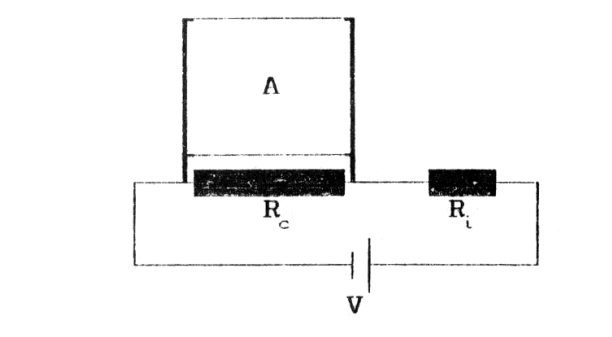
Topic: Circuits, Thermodynamics Metodi: Equivalent Circuit Reduction, Energy Conservation Method Competenze: Physical Reasoning Objects: Resistor, Container, Wire Fonte: Testo (PDF) — p.2
124. Provincia di Tucumán, Verde
Il diagramma della figura rappresenta una macchina di espresso elettrico. Dove A è un deposito di 3 litri di acqua, R e R sono due resistenze e V è la fonte di tensione domestica (220 V). R ha la funzione di fornire calore al deposito A ed è realizzato con un filo di 12 di resistività e 1 mm di sezionamento. Per motivi di costruzione R opera a 180 V. (Figura) Calcolo: a) La lunghezza del filo con cui è stato costruito R, per raggiungere, in 20 minuti, la temperatura di ebollizione dell’acqua contenuta nel deposito A, se la temperatura iniziale del deposito è di 25C. Per il calore, il perdite è del 20% () b) Valore della resistenza R c) L’intensità del corrente che circola nel circuito.
Topic: Circuits, Thermodynamics Metodi: Equivalent Circuit Reduction, Energy Conservation Method Competenze: Physical Reasoning Objects: Resistor, Container, Wire Fonte: Testo (PDF) — p.2
**124. Province of Tucumán, Verde
The diagram in the figure represents an electric express machine. Where A is a 3 litre water deposit, R and R are two resistors and V is the home voltage source (220 V). R has the function of supplying heat to deposit A and is made of a wire of 12 resistivity and 1 mm sectionality. For construction reasons R works at 180 V. (Figure) Calculation of the (a) The length of the wire with which it is constructed R, to reach, in 20 minutes, the boiling temperature of the water contained in deposit A, if the initial temperature of the deposit is 25C. The heat loss is 20% () (b) The resistance value R (c) The intensity of the current circulating through the circuit.
Topic: Circuits, Thermodynamics Metodi: Equivalent Circuit Reduction, Energy Conservation Method Competenze: Physical Reasoning Objects: Resistor, Container, Wire Fonte: Testo (PDF) — p.2
125. C’ordoba, Azul (Problema experimental)
INSTANCIAS LOCALES. PROBLEMA EXPERIMENTAL, LUGAR Y CATEGOR’IA. Objetivo: Medir el coeficiente de rozamiento entre dos superficies. Con los elementos provistos dise~ne una experiencia de laboratorio adecuada a tal fin. Elementos:
- Un dinam’ometro.
- Un taco de madera (de peso a medir).
- Una bolsa de arena (de peso a medir). Requerimientos: S’olo podr’a utilizar los elementos provistos, papel, l’apiz o bol’igrafo y calculadora no programable. Al finalizar deber’a entregar un informe que incluya los siguientes puntos:
- M’etodo experimental utilizado.
- Planteo anal’itico del problema.
- Valores obtenidos en las mediciones realizadas.
- Resultado final.
- Comentarios que desee realizar.
Topic: Newtonian Mechanics Metodi: Experimental Data Analysis, Free-Body Diagram Competenze: Experimental Data Analysis, Physical Reasoning Objects: Block Fonte: Testo (PDF) — p.2
**125. Cordoba, Azul (problema sperimentale)
- Instanze locali. Problema sperimentale, luogo e categoria. Obiettivo: Misurare il coefficiente di ruggine tra due superfici. Con gli elementi forniti, si deve progettare un’esperienza di laboratorio adeguata a tale scopo. Elementi:
- Un dinamometro.
- Un palo di legno.
- Un sacchetto di sabbia. Requisiti: può utilizzare gli elementi forniti, carta, carta o calcolatore non programmabile. Al termine dovrà presentare un rapporto che includa i seguenti punti:
- Il mio metodo sperimentale usato.
- La questione è analitica.
- Valori ottenuti dalle misurazioni effettuate.
- Risultato finale.
- Commenti che vorresti fare.
Topic: Newtonian Mechanics Metodi: Experimental Data Analysis, Free-Body Diagram Competenze: Experimental Data Analysis, Physical Reasoning Objects: Block Fonte: Testo (PDF) — p.2
**125. The Commission has also adopted a proposal for a regulation on the protection of the environment.
Local instances. Experimental problem, location and category. Objective: Measure the coefficient of friction between two surfaces. With the elements provided, design a laboratory experience appropriate for this purpose. The following elements:
- A dynamometer. - What is it?
- A wooden stick (weight to measure).
- A bag of sand. Requirements: Only the items provided, paper, pen or pen and non-programmable calculator can be used. At the end of the report, you must submit a report containing the following points:
- My experimental method used.
- Analytical analysis of the problem.
- Values obtained from the measurements made.
- Final result is the result.
- Any comments you’d like to make.
Topic: Newtonian Mechanics Metodi: Experimental Data Analysis, Free-Body Diagram Competenze: Experimental Data Analysis, Physical Reasoning Objects: Block Fonte: Testo (PDF) — p.2
126. Provincia de Tierra del Fuego, Verde (Problema experimental)
PROBLEMA EXPERIMENTAL. Calcular el volumen de un paralelep’ipedo de hierro. Materiales:
- Pipeta
- Recipiente plastico
- Probeta de 100 cc.
- Paralelep’ipedo de hierro
Topic: Fluid Mechanics Metodi: Experimental Data Analysis Competenze: Experimental Data Analysis, Physical Reasoning Objects: Container Fonte: Testo (PDF) — p.2
126. Provincia di Terra del Fuoco, Verde (problema sperimentale)
Problema sperimentale. Calcolare il volume di un parallelepedo di ferro. Materiali:
- Pipetta
- Cose di plastica
- Prova di 100 cc.
- Parallelepp’iped di ferro
Topic: Fluid Mechanics Metodi: Experimental Data Analysis Competenze: Experimental Data Analysis, Physical Reasoning Objects: Container Fonte: Testo (PDF) — p.2
**126. Province of Tierra del Fuego, Verde (Experimental problem)
This is an experimental problem. Calculate the volume of an iron iped parallel. Other materials:
- Pipeta .
- Plastic container
- It’s a 100 cc test.
- Parallel to an iron pedal
Topic: Fluid Mechanics Metodi: Experimental Data Analysis Competenze: Experimental Data Analysis, Physical Reasoning Objects: Container Fonte: Testo (PDF) — p.2
127. Mar del Plata, Buenos Aires, Azul y Verde (Problema experimental)
PROBLEMA EXPERIMENTAL. Dados los siguientes materiales: cuerda, pesas, reglas, cron’ometro, papel milimetrado. Mida la dependencia del periodo de oscilaci’on de un p’endulo en funci’on de su longitud para el caso de oscilaciones peque~nas y grandes. Grafique los datos teniendo en cuenta los errores experimentales estimados. Trace dos o tres funciones que describan lo mejor posible los datos experimentales. Saque conclusiones.
Topic: Oscillations & Waves Metodi: Simple Harmonic Motion Analysis, Curve Fitting Competenze: Experimental Data Analysis, Physical Reasoning Objects: Pendulum Fonte: Testo (PDF) — p.2
127. Mar del Plata, Buenos Aires, Azul e Verde (problema sperimentale)
Problema sperimentale. Date le seguenti materie: corda, pesi, regole, cronometro, carta millimetrica. Misura la dipendenza del periodo di oscillazione di un pendolo in funzione della sua lunghezza per i casi di oscillazioni piccole e grandi. Grafica i dati tenendo conto degli errori sperimentali stimati. Traccia due o tre funzioni che descrivono al meglio i dati sperimentali. Sconcludete.
Topic: Oscillations & Waves Metodi: Simple Harmonic Motion Analysis, Curve Fitting Competenze: Experimental Data Analysis, Physical Reasoning Objects: Pendulum Fonte: Testo (PDF) — p.2
**127. The Commission has also adopted a number of proposals for the extension of the Community’s financial contribution to the Community.
This is an experimental problem. The following materials are used: rope, weights, rules, timekeeper, paper in millimetres. Measure the dependence of the oscillation period of a pendulum on its length for small and large oscillations. Graph the data taking into account the estimated experimental errors. It traces two or three functions that best describe the experimental data. You draw conclusions.
Topic: Oscillations & Waves Metodi: Simple Harmonic Motion Analysis, Curve Fitting Competenze: Experimental Data Analysis, Physical Reasoning Objects: Pendulum Fonte: Testo (PDF) — p.2
128. Rauch, Buenos Aires, Azul (Problema experimental)
PROBLEMA EXPERIMENTAL. Dados:
- Una probeta graduada
- agua
- un objeto pesado Proponga un m’etodo para hallar el volumen del objeto y calcule el error cometido.
Topic: Fluid Mechanics Metodi: Experimental Data Analysis, Error Propagation Competenze: Experimental Data Analysis, Physical Reasoning Objects: Container Fonte: Testo (PDF) — p.2
**128. Rauch, Buenos Aires, Azul (problema sperimentale)
Problema sperimentale. Datati:
- Una prova graduata
- acqua
- un oggetto pesante Propone un metodo per trovare il volume dell’oggetto e calcolare l’errore commesso.
Topic: Fluid Mechanics Metodi: Experimental Data Analysis, Error Propagation Competenze: Experimental Data Analysis, Physical Reasoning Objects: Container Fonte: Testo (PDF) — p.2
**128. The Commission has also adopted a number of proposals for a new programme for the implementation of the programme.
This is an experimental problem. The data:
- A graduate test subject
- water
- a heavy object Propose a method to find the object’s volume and calculate the error made.
Topic: Fluid Mechanics Metodi: Experimental Data Analysis, Error Propagation Competenze: Experimental Data Analysis, Physical Reasoning Objects: Container Fonte: Testo (PDF) — p.2
129. Provincia de Jujuy, Verde (Problema experimental)
PROBLEMA EXPERIMENTAL. Objetivo: Calcular la densidad de un s’olido. Elementos:
- Base de soporte
- Dinam’ometro
- Hilo de seda
- Nuez doble.
- Probeta graduada de 100 cm3.
- Varilla de soporte.
- Balanza de Mohor.
- Tornillo micrometrico.
- Palmer.
- Balanza electronica. Requerimientos: S’olo podr’a utilizar los materiales ofrecidos, papel, l’apiz, calculadora. El informe debe constar de: a) planteo anal’itico del problema. b) M’etodo experimental usado. c) Valores obtenidos en las mediciones realizadas. d) Fuentes de error y an’alisis de c’omo influyen en el resultado. e) Resultado experimental.
Topic: Fluid Mechanics Metodi: Experimental Data Analysis, Error Propagation Competenze: Experimental Data Analysis, Physical Reasoning Objects: Spring Fonte: Testo (PDF) — p.2
129. Provincia di Jujuy, Verde (problema sperimentale)
Problema sperimentale. Obiettivo: Calcolare la densità di un olio. Elementi:
- Base di supporto
- Dinamometro
- Felli di seta
- Nove doppi.
- Proba graduata di 100 cm3.
- Un bastone di supporto.
- Scala di Mohor.
- Torno micrometrico.
- Palmer. - Cosa?
- Sbalzo elettronico. Requisiti: se può utilizzare i materiali offerti, carta, additivo, calcolatore. Il rapporto deve contenere: a) la questione analitica. b) I metodi sperimentali utilizzati. (c) Valori ottenuti dalle misurazioni effettuate. d) Le fonti di errore e le analisi di commo influenzano il risultato. e) Risultato sperimentale.
Topic: Fluid Mechanics Metodi: Experimental Data Analysis, Error Propagation Competenze: Experimental Data Analysis, Physical Reasoning Objects: Spring Fonte: Testo (PDF) — p.2
**129. Province of Jujuy, Verde (experimental problem)
This is an experimental problem. Objective: Calculate the density of a liquid. The following elements:
- Support base
- Dynamometer
- Silk thread
- Nine double.
- Graduated sample of 100 cm3.
- The support rod.
- The Mohor scale.
- Microscopic screw.
- Palmer, what’s going on?
- Electronic scale. Requirements: Only he can use the materials offered, paper, paper, calculator. The report shall contain: (a) the analytical approach to the problem. (b) The experimental method used. (c) Values obtained from measurements made. (d) Error sources and analysis of the results influence the outcome. (e) Experimental result.
Topic: Fluid Mechanics Metodi: Experimental Data Analysis, Error Propagation Competenze: Experimental Data Analysis, Physical Reasoning Objects: Spring Fonte: Testo (PDF) — p.2
130. Provincia de Neuqu’en, Azul y Verde (Problema experimental)
PROBLEMA EXPERIMENTAL. Se disponen de tres barras enumeradas 1,2 y 3. Las barras 1y2 son homogeneas mientras que la 3, est’a formada por secciones de las otras dos. El objetivo del presente laboratorio es obtener las proporciones de los materiales 1 y 2, que constituyen la barra 3. Para lograr este objetivo dispone de:
- Las barras 1, 2 y 3.
- Una probeta.
- Agua destilada.
- Un soporte.
- Una cinta m’etrica.
- Un juego de pesas.
- Papel milimetrado. Deber’a elaborar un informe, que contenga: a) Los fundamentos te’oricos empleados. b) La t’ecnica operativa. c) Los resultados y conclusiones obtenidos.
Topic: Fluid Mechanics Metodi: Experimental Data Analysis, Hydrostatic Equilibrium Competenze: Experimental Data Analysis, Physical Reasoning Objects: Rod, Container Fonte: Testo (PDF) — p.2
**130. Provincia di Neuqu’en, Blu e Verde (problema sperimentale)
Problema sperimentale. Sono disponibili tre barre di cui al punto 1.2 e 3. Le barre 1 e 2 sono omogenee mentre la 3, è costituita da sezioni delle altre due. L’obiettivo di questo laboratorio è quello di ottenere le proporzioni dei materiali 1 e 2, che costituiscono la barra 3. Per raggiungere questo obiettivo:
- Le barre 1, 2 e 3.
- Una prova.
- Acqua distillata.
- Un supporto.
- Un’altra cinta.
- Un gioco di pesi.
- Papero millimetrico. Deve redigere un rapporto contenente: a) I fondamenti teorici impiegati. b) tecnico operativo. c) I risultati e le conclusioni ottenute.
Topic: Fluid Mechanics Metodi: Experimental Data Analysis, Hydrostatic Equilibrium Competenze: Experimental Data Analysis, Physical Reasoning Objects: Rod, Container Fonte: Testo (PDF) — p.2
**130. Province of Neuqu’en, Blue and Green (Experimental problem)
This is an experimental problem. Three bars listed in 1.2 and 3 are available. The 1 and 2 bars are homogeneous while the 3 is made up of sections of the other two. The aim of this laboratory is to obtain the proportions of materials 1 and 2, which constitute bar 3. To achieve this objective, it shall:
- Bar one, two and three.
- A sample.
- Distilled water.
- A support.
- A tape tape.
- A game of weights.
- It’s a millimeter piece of paper. It shall draw up a report containing: (a) The theoretical foundations employed. (b) Operational technicians. (c) The results and conclusions obtained.
Topic: Fluid Mechanics Metodi: Experimental Data Analysis, Hydrostatic Equilibrium Competenze: Experimental Data Analysis, Physical Reasoning Objects: Rod, Container Fonte: Testo (PDF) — p.2
131. Provincia de Tierra del Fuego, Verde (Problema experimental)
PROBLEMA EXPERIMENTAL. Hallar el volumen s’olido de un trozo de ca~no. Materiales: Vernier Trozo de ca~no de PVC
Topic: Fluid Mechanics Metodi: Experimental Data Analysis Competenze: Experimental Data Analysis, Physical Reasoning Objects: Tube Fonte: Testo (PDF) — p.2
131. Provincia di Terra del Fuoco, Verde (problema sperimentale)
Problema sperimentale. Trovare il volume di un pezzo di ca. Materiali: Vernier Piatto di PVC
Topic: Fluid Mechanics Metodi: Experimental Data Analysis Competenze: Experimental Data Analysis, Physical Reasoning Objects: Tube Fonte: Testo (PDF) — p.2
**131. Province of Tierra del Fuego, Verde (Experimental problem)
This is an experimental problem. Find the volume of a piece of ca. Other materials: The Commission shall adopt implementing acts. Other, of a kind used for the manufacture of textile materials
Topic: Fluid Mechanics Metodi: Experimental Data Analysis Competenze: Experimental Data Analysis, Physical Reasoning Objects: Tube Fonte: Testo (PDF) — p.2
132. C’ordoba, Verde (Problema experimental)
PROBLEMA EXPERIMENTAL. Objetivo: a) Calibraci’on del dinam’ometro. b) Medir el coeficiente de rozamiento din’amico entre dos superficies. (mesa y taco de madera) Elementos:
- Un dinam’ometro.
- Un taco de madera.
- Una bolsa de arena.
- Pesas de valores conocidos Requerimientos: S’olo podr’a utilizar los elementos provistos, papel, l’apiz o bol’igrafo y calculadora no programable. Al finalizar deber’a entregar un informe que incluya los siguientes puntos:
- M’etodo experimental utilizado.
- Planteo anal’itico y gr’afico del problema.
- Valores obtenidos en las mediciones realizadas.
- Fuentes de error y an’alisis de c’omo influyen en el resultado final.
- Resultado final.
Topic: Newtonian Mechanics Metodi: Experimental Data Analysis, Free-Body Diagram Competenze: Experimental Data Analysis, Physical Reasoning Objects: Block Fonte: Testo (PDF) — p.2
**132. Cordoba, Verde (problema sperimentale)
Problema sperimentale. Obiettivo: a) Calibrazione del dinamometro. b) Misurare il coefficiente di ruggine dinamico tra due superfici. (tavola e tacco di legno) Elementi:
- Un dinamometro.
- Un palo di legno.
- Un sacchetto di sabbia.
- Pese di valori noti Requisiti: può utilizzare gli elementi forniti, carta, carta o calcolatore non programmabile. Al termine dovrà presentare un rapporto che includa i seguenti punti:
- Il mio metodo sperimentale usato.
- Un’analisi e un’analisi grafica del problema.
- Valori ottenuti dalle misurazioni effettuate.
- Fonti di errore e analisi di uomini influenzano il risultato finale.
- Risultato finale.
Topic: Newtonian Mechanics Metodi: Experimental Data Analysis, Free-Body Diagram Competenze: Experimental Data Analysis, Physical Reasoning Objects: Block Fonte: Testo (PDF) — p.2
**132. The Commission has also adopted a proposal for a regulation on the protection of the environment.
This is an experimental problem. The objective: (a) The dynamometer calibration. (b) Measure the coefficient of dynamic friction between two surfaces. (Wooden table and stand) The following elements:
- A dynamometer. - What is it?
- A wooden club.
- A bag of sand.
- Weights of known values Requirements: Only the items provided, paper, pen or pen and non-programmable calculator can be used. At the end of the report, you must submit a report containing the following points:
- My experimental method used.
- Analytical and graphically discussing the problem.
- Values obtained from the measurements made.
- Error sources and analysis of the man influence the final result.
- Final result is the result.
Topic: Newtonian Mechanics Metodi: Experimental Data Analysis, Free-Body Diagram Competenze: Experimental Data Analysis, Physical Reasoning Objects: Block Fonte: Testo (PDF) — p.2
133. Provincia de Mendoza, Azul y Verde (Problema experimental)
PROBLEMA EXPERIMENTAL. Objetivo: Hallar la dependencia de la fuerza centr’ipeta con la frecuencia, masa y radio de un objeto que se mueve describiendo una circunferencia. Material:
- Un tubo de vidrio
- Un tap’on de goma
- Un metro de hilo
- 10 arandelas
- Un broche
- Una pinza cocodrilo
- Un cron’ometro
Topic: Rotational Dynamics Metodi: Torque & Angular Momentum Analysis, Experimental Data Analysis Competenze: Experimental Data Analysis, Physical Reasoning Objects: Tube Fonte: Testo (PDF) — p.2
133. Provincia di Mendoza, Azul e Verde (problema sperimentale)
Problema sperimentale. Obiettivo: Trovare la dipendenza della forza centrifugata dalla frequenza, massa e raggio di un oggetto in movimento descrivendo una circonferenza. Materiale:
- Un tubo di vetro
- Un tap ‘on di gomma
- Un metro di filo
- 10 arandeli
- Un coltello
- Una pinza di coccodrillo
- Un cronometro
Topic: Rotational Dynamics Metodi: Torque & Angular Momentum Analysis, Experimental Data Analysis Competenze: Experimental Data Analysis, Physical Reasoning Objects: Tube Fonte: Testo (PDF) — p.2
**133. Province of Mendoza, Blue and Green (Experimental Problem)
This is an experimental problem. The objective: Find the dependence of the centripetal force on the frequency, mass and radius of an object moving by describing a circumference. The following:
- A glass tube .
- A rubber tap ‘on
- A meter of thread .
- 10 shrimps
- A brooch
- A crocodile clamp
- A timekeeper
Topic: Rotational Dynamics Metodi: Torque & Angular Momentum Analysis, Experimental Data Analysis Competenze: Experimental Data Analysis, Physical Reasoning Objects: Tube Fonte: Testo (PDF) — p.2
134. Bah’ia Blanca, Buenos Aires, Azul (Problema experimental)
PROBLEMA EXPERIMENTAL. Objetivo: Determinar el peso de una varilla de aluminio. Elementos: - una varilla de aluminio de p=2,8 g/cm.
- una hoja de papel milimetrado.
- un l’apiz. Al finalizar la experiencia deber’a entregar un informe que contenga: a) planteo anal’itico del problema. b) valores obtenidos en las mediciones efectuadas, indicando el error estimado. c) observaciones y conclusiones.
Topic: Rigid Body Statics Metodi: Torque & Angular Momentum Analysis, Experimental Data Analysis Competenze: Experimental Data Analysis, Physical Reasoning Objects: Rod, Lever Fonte: Testo (PDF) — p.2
**134. Bahía Blanca, Buenos Aires, Azul (problema sperimentale)
Problema sperimentale. Obiettivo: Determinare il peso di un bastone di alluminio.
- una canna di alluminio di p=2,8 g/cm.
- un foglio di carta millimetrica.
- un’apiccio. Al termine dell’esperienza dovrà presentare un rapporto contenente: a) la questione analitica. b) valori ottenuti dalle misurazioni effettuate, indicando l’errore stimato. c) osservazioni e conclusioni.
Topic: Rigid Body Statics Metodi: Torque & Angular Momentum Analysis, Experimental Data Analysis Competenze: Experimental Data Analysis, Physical Reasoning Objects: Rod, Lever Fonte: Testo (PDF) — p.2
**134. The Commission has also adopted a number of proposals for the establishment of a European Community-wide network of networks for the exchange of information and communication technologies.
This is an experimental problem. Objective: Determine the weight of an aluminium rod. Elements: - an aluminium rod of p=2.8 g/cm.
- a sheet of millimeter paper.
- a little bit. At the end of the experience you must submit a report containing: (a) the analytical approach to the problem. (b) values obtained from the measurements made, indicating the estimated error. (c) observations and conclusions.
Topic: Rigid Body Statics Metodi: Torque & Angular Momentum Analysis, Experimental Data Analysis Competenze: Experimental Data Analysis, Physical Reasoning Objects: Rod, Lever Fonte: Testo (PDF) — p.2
135. Santa Fe, Verde (Problema experimental)
PROBLEMA EXPERIMENTAL. Se desea saber el peso de un alambre cil’indrico doblado en forma de circunferencia. La densidad del material que lo constituye es de 6,8 g/cm3. Se dispone de :
- 1 hoja milimetrada
- 1 l’apiz Estimar el error cometido al determinar el peso.
Topic: Rigid Body Statics Metodi: Experimental Data Analysis, Error Propagation Competenze: Experimental Data Analysis, Physical Reasoning Objects: Wire Fonte: Testo (PDF) — p.2
135. Santa Fe, Verde (problema sperimentale)
Problema sperimentale. Si desidera sapere il peso di un filo cilindrico piegato in forma di circonferenza. La densità del materiale che lo costituisce è di 6,8 g/cm3. Dispone di:
- 1 foglio di millimetro
- 1 l’appice Estimare l’errore commesso nel determinare il peso.
Topic: Rigid Body Statics Metodi: Experimental Data Analysis, Error Propagation Competenze: Experimental Data Analysis, Physical Reasoning Objects: Wire Fonte: Testo (PDF) — p.2
**135. The Commission has also adopted a number of measures to combat the use of the ‘sustainable energy’ technology.
This is an experimental problem. The weight of a cylindrical wire bent in the shape of a circle is to be known. The density of the material constituting it is 6,8 g/cm3. It shall:
- 1 millimetre leaf
- 1 the top Estimate the error made in determining the weight.
Topic: Rigid Body Statics Metodi: Experimental Data Analysis, Error Propagation Competenze: Experimental Data Analysis, Physical Reasoning Objects: Wire Fonte: Testo (PDF) — p.2
136. Corrientes, Azul (Problema experimental)
PROBLEMA EXPERIMENTAL. Objetivo: C’alculo de la aceleraci’on de la gravedad Materiales:
- Esfera de madera perforada.
- Hilo.
- Soporte.
- Tijera.
- Cinta m’etrica.
- Reloj. Requerimientos: S’olo podr’a utilizar los elementos provistos, papel, l’apiz o bol’igrafo y calculadora. Al finalizar el trabajo deber’a entregar un informe que conste: a) Valores obtenidos en las mediciones realizadas. b) Resultado experimental de lo solicitado. c) Fuentes de error y an’alisis de c’omo influyen en el resultado final.
Topic: Oscillations & Waves Metodi: Simple Harmonic Motion Analysis, Experimental Data Analysis Competenze: Experimental Data Analysis, Physical Reasoning Objects: Pendulum Fonte: Testo (PDF) — p.2
136. Correnti, Azul (problema sperimentale)
Problema sperimentale. Obiettivo: Alcune delle accelerazioni della gravità Materiali:
- Una palla di legno perforata.
- Il filo.
- Supporto.
- Scaglierina.
- Cintura elettrica.
- Un orologio. Requisiti: può utilizzare gli elementi forniti, carta, bollettino o calcolatore. Al termine del lavoro dovrà presentare un rapporto che dice: a) Valori ottenuti dalle misurazioni effettuate. b) Risultato sperimentale della richiesta. c) Le fonti di errore e le analisi di commo influenzano il risultato finale.
Topic: Oscillations & Waves Metodi: Simple Harmonic Motion Analysis, Experimental Data Analysis Competenze: Experimental Data Analysis, Physical Reasoning Objects: Pendulum Fonte: Testo (PDF) — p.2
**136. Current, Blue (Experimental problem)
This is an experimental problem. Objective: Some of the acceleration of gravity Other materials:
- A punched wooden ball.
- I’m going to get it.
- Hold it up.
- Shearer.
- Electric tape.
- Watch the clock. Requirements: Only the items provided, paper, pen or pen and calculator can be used. At the end of the work, you must submit a report that says: (a) Values obtained from measurements made. (b) Experimental result of the requested product. (c) Sources of error and analysis of man influence the final result.
Topic: Oscillations & Waves Metodi: Simple Harmonic Motion Analysis, Experimental Data Analysis Competenze: Experimental Data Analysis, Physical Reasoning Objects: Pendulum Fonte: Testo (PDF) — p.2
137. Capital Federal, Verde (Problema experimental)
PROBLEMA EXPERIMENTAL. Objetivo: Encontrar la relaci’on que existe entre la fuerza aplicada sobre un cuerpo y la aceleraci’on que el mismo recibe. Material disponible:
- Regla milimetrada.
- Cron’ometro.
- Plano inclinado.
- Esferas de acero de diferentes diametros. Requerimientos: S’olo podr’a utilizar los materiales ofrecidos, papel, l’apiz, calculadora. El informe debe constar de: a) M’etodo experimental usado. b) Valores obtenidos en las mediciones realizadas. c) Fuentes de error y an’alisis de c’omo influyen en el resultado. d) Resultado experimental.
Topic: Newtonian Mechanics Metodi: Experimental Data Analysis, Kinematic Equations Competenze: Experimental Data Analysis, Physical Reasoning Objects: Sphere, Inclined Plane Fonte: Testo (PDF) — p.2
**137. Capitale federale, verde (problema sperimentale)
Problema sperimentale. Obiettivo: Trovare il rapporto tra la forza applicata su un corpo e l’accelerazione che esso riceve. Materiale disponibile:
- Regola di millimetro.
- Un cronometro.
- Piano inclinato.
- Sferie di acciaio di diversi diametri. Requisiti: se può utilizzare i materiali offerti, carta, additivo, calcolatore. Il rapporto deve contenere: a) Il metodo sperimentale usato. b) Valori ottenuti dalle misurazioni effettuate. c) Le fonti di errore e le analisi di commo influenzano il risultato. d) Risultato sperimentale.
Topic: Newtonian Mechanics Metodi: Experimental Data Analysis, Kinematic Equations Competenze: Experimental Data Analysis, Physical Reasoning Objects: Sphere, Inclined Plane Fonte: Testo (PDF) — p.2
**137. Federal Capital, Green (Experimental Problem)
This is an experimental problem. The objective: Find the relationship between the force applied to a body and the acceleration it receives. Material available:
- Millimeter rule.
- The time meter.
- It’s a flat one.
- Steel balls of different diameters. Requirements: Only he can use the materials offered, paper, paper, calculator. The report shall contain: (a) The experimental method used. (b) Values obtained from measurements made. (c) Sources of error and analysis of the man influence the result. (d) Experimental result.
Topic: Newtonian Mechanics Metodi: Experimental Data Analysis, Kinematic Equations Competenze: Experimental Data Analysis, Physical Reasoning Objects: Sphere, Inclined Plane Fonte: Testo (PDF) — p.2
138. Provincia de Jujuy, Azul (Problema experimental)
PROBLEMA EXPERIMENTAL. Objetivo: Determinar la velocidad de un cuerpo en la base de un plano inclinado. Elementos:
- Regla milimetrada.
- Cron’ometro.
- Plano inclinado.
- Esferas de acero de diferentes di’ametros. Requerimientos: S’olo podr’a utilizar los materiales ofrecidos, papel, l’apiz, calculadora. El informe debe constar de: b) M’etodo experimental usado. c) Valores obtenidos en las mediciones realizadas. d) Fuentes de error y an’alisis de c’omo influyen en el resultado. e) Resultado experimental.
Topic: Newtonian Mechanics Metodi: Experimental Data Analysis, Kinematic Equations Competenze: Experimental Data Analysis, Physical Reasoning Objects: Sphere, Inclined Plane Fonte: Testo (PDF) — p.2
138. Provincia di Jujuy, Azul (problema sperimentale)
Problema sperimentale. Obiettivo: Determinare la velocità di un corpo alla base di un piano inclinato. Elementi:
- Regola di millimetro.
- Un cronometro.
- Piano inclinato.
- Sferie di acciaio di diversi diametri. Requisiti: se può utilizzare i materiali offerti, carta, additivo, calcolatore. Il rapporto deve contenere: b) I metodi sperimentali utilizzati. (c) Valori ottenuti dalle misurazioni effettuate. d) Le fonti di errore e le analisi di commo influenzano il risultato. e) Risultato sperimentale.
Topic: Newtonian Mechanics Metodi: Experimental Data Analysis, Kinematic Equations Competenze: Experimental Data Analysis, Physical Reasoning Objects: Sphere, Inclined Plane Fonte: Testo (PDF) — p.2
**138. Province of Jujuy, Azul (Experimental Problem)
This is an experimental problem. Objective: Determine the speed of a body at the base of an inclined plane. The following elements:
- Millimeter rule.
- The time meter.
- It’s a flat one.
- Steel balls of different diameters. Requirements: Only he can use the materials offered, paper, paper, calculator. The report shall contain: (b) The experimental method used. (c) Values obtained from measurements made. (d) Sources of error and analysis of the man influence the result. (e) Experimental result.
Topic: Newtonian Mechanics Metodi: Experimental Data Analysis, Kinematic Equations Competenze: Experimental Data Analysis, Physical Reasoning Objects: Sphere, Inclined Plane Fonte: Testo (PDF) — p.2
139. Santa Teresita, Buenos Aires, Verde (Problema experimental)
PROBLEMA EXPERIMENTAL. Se quiere medir el ‘indice de refracci’on de ciertos materiales, disponiendo de los siguientes elementos:
- Una fuente luminosa monocrom’atica (luz de sodio) y un colimador que permite obtener un haz delgado de luz.
- Un trozo de fibra ‘optica “gigante” formado por: a) una varilla cil’indrica de vidrio de ‘indice de refracci’on conocido n, que oficia de n’ucleo; b) un “recubrimiento” del material cuyo ‘indice de refracci’on se desea medir n; c) un revestimiento que cumple la funci’on de protecci’on. Para medir el ‘indice de refracci’on de n: I) \u00bfC’omo debe ser su ‘indice con respecto del n’ucleo? II) Describir y justificar el m’etodo para determinar n. (figura)
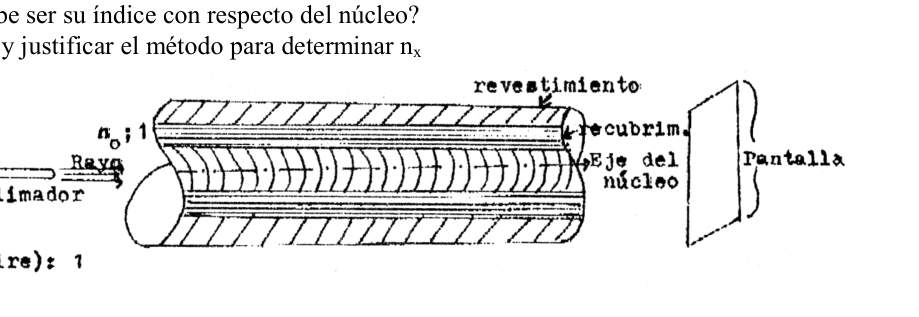
Topic: Geometric Optics Metodi: Snell’s Law, Experimental Data Analysis Competenze: Experimental Data Analysis, Physical Reasoning Objects: — Fonte: Testo (PDF) — p.2
139. Santa Teresita, Buenos Aires, Verde (Problema experimental)
Problema sperimentale. Si vuole misurare l’indice di refraczione di alcuni materiali, avendo i seguenti elementi:
- Una fonte di luce monocromatica (luce di sodio) e un collimatore che permette di ottenere un raggio di luce sottile.
- Un pezzo di fibra ottica “gigante” costituito da: a) una varilla cil’indrica de vidrio de ‘indice de refracci’on conocido n, que oficia de n’ucleo; b) un “coperto” del materiale il cui indice di refraczione è desiderato da misurare n; c) un rivestimento che soddisfa la funzione di protezione. Per misurare l’indice di refraczione di n: I) l’uomo deve essere il suo indice rispetto al nucleo? II) Descrivere e giustificare il metodo per determinare n. (Figura)
Topic: Geometric Optics Metodi: Snell’s Law, Experimental Data Analysis Competenze: Experimental Data Analysis, Physical Reasoning Objects: — Fonte: Testo (PDF) — p.2
139. Santa Teresita, Buenos Aires, Verde (Problema experimental)
This is an experimental problem. The refractive index of certain materials is to be measured by the following elements:
- A monochrome light source (sodium light) and a collimator to obtain a thin beam of light.
- A piece of “giant” optical fiber made up of: a) una varilla cil’indrica de vidrio de ‘indice de refracci’on conocido n, que oficia de n’ucleo; (b) a “coating” of the material for which the refractive index is to be measured n; (c) a coating which fulfils the function of protection. For measuring the refractive index of n: I) Should the man be your index with respect to the nucleus? (ii) Describe and justify the method for determining n. (Figure)
Topic: Geometric Optics Metodi: Snell’s Law, Experimental Data Analysis Competenze: Experimental Data Analysis, Physical Reasoning Objects: — Fonte: Testo (PDF) — p.2
140. Ucacha, C’ordoba, Azul (Problema experimental)
PROBLEMA EXPERIMENTAL. Objetivo: Determinar el peso espec’ifico de un cuerpo irregular. Material:
- Piedra
- Probeta graduada
- Balanza
- Pesas
- Agua
- Hilo Requerimientos: S’olo podr’a utilizar los elementos ofrecidos, papel, l’apiz y calculadora. Deber’a entregar un informe donde conste: a) M’etodo experimental utilizado. b) Valores obtenidos en las mediciones realizadas indicando el error estimado f) Resultado experimental de lo solicitado.
Topic: Fluid Mechanics Metodi: Hydrostatic Equilibrium, Experimental Data Analysis Competenze: Experimental Data Analysis, Physical Reasoning Objects: Container Fonte: Testo (PDF) — p.2
**140. Ucca, Cordoba, Azul (problema sperimentale)
Problema sperimentale. Obiettivo: determinare il peso specifico di un corpo irregolare. Materiale:
- Pietra
- Provata graduata
- Sbalzo
- Pese
- L’acqua
- Il filo Requisiti: può utilizzare gli elementi offerti, carta, additivo e calcolatore. Dovrà presentare un rapporto che dice: a) Il metodo sperimentale utilizzato. b) Valori ottenuti dalle misurazioni effettuate che indicano l’errore stimato f) Risultato sperimentale della richiesta.
Topic: Fluid Mechanics Metodi: Hydrostatic Equilibrium, Experimental Data Analysis Competenze: Experimental Data Analysis, Physical Reasoning Objects: Container Fonte: Testo (PDF) — p.2
**140. The Commission has also adopted a number of proposals for the establishment of a European Community framework for the development of the information society.
This is an experimental problem. Objective: Determine the specific weight of an irregular body. The following:
- Stone .
- Graduated test
- Weighing
- Weights
- Water
- The hole. Requirements: Only he can use the items offered, paper, the appendix and the calculator. You must submit a report stating: (a) The experimental method used. (b) Value obtained from measurements made indicating the estimated error (f) Experimental result of the requested product.
Topic: Fluid Mechanics Metodi: Hydrostatic Equilibrium, Experimental Data Analysis Competenze: Experimental Data Analysis, Physical Reasoning Objects: Container Fonte: Testo (PDF) — p.2
141. Provincia de Tucum’an, Verde (Problema experimental)
PROBLEMA EXPERIMENTAL. El problema consiste en encontrar experimentalmente la dependencia entre la tensi’on y la intensidad de la corriente el’ectrica para un dado conductor. a) La relaci’on entre la tensi’on y la corriente el’ectrica que circula por un conductor. b) La dependencia de la resistencia del conductor:
- con la longitud del conductor
- con la secci’on del conductor c) Experimentar el valor de la resistividad del conductor a una cota de error. d) \u00bfQu’e ocurr’ia con la resistencia del conductor si aumentara su temperatura del mismo? Explique. Material disponible: conductores el’ectricos fuentes amper’imetros de diferentes caracter’isticas volt’imetros de diferentes caracter’isticas cables de conexi’on
Topic: Circuits Metodi: Experimental Data Analysis, Graph Linearization Competenze: Experimental Data Analysis, Physical Reasoning Objects: Resistor, Wire Fonte: Testo (PDF) — p.2
**141. Provincia di Tucumán, Verde (problema sperimentale)
Problema sperimentale. Il problema consiste nel trovare sperimentalmente la dipendenza tra la tensione e l’intensità del corrente elettrica per un determinato conduttore. a) Relazione tra la tensione e il corrente elettrica circolante attraverso un conduttore. b) La dipendenza dalla resistenza del conducente:
- con la lunghezza del conducente
- con la taglia del conducente c) sperimentare il valore della resistenza del conducente ad un tasso di errore. d) Che cosa accadrebbe alla resistenza del conducente se la sua temperatura aumentasse di conseguenza? Spiegami. Materiale disponibile: Conductors elettrici fonti
- di diverse caratteristiche Voltometri di diverse caratteristiche Cable di connessione
Topic: Circuits Metodi: Experimental Data Analysis, Graph Linearization Competenze: Experimental Data Analysis, Physical Reasoning Objects: Resistor, Wire Fonte: Testo (PDF) — p.2
**141. Province of Tucumán, Verde (experimental problem)
This is an experimental problem. The problem is to experimentally find the dependence between the voltage and the intensity of the electric current for a given conductor. (a) The relationship between the voltage and the electric current circulating through a conductor. (b) The dependence on the driver’s resistance:
- with the length of the driver
- with the driver’s cut. (c) Experiment the value of the resistance of the driver to an error rate. d) What would happen to the resistance of the driver if his temperature increased from the same? - Explain that. Material available: Electrical conductors sources The number of meters of different characteristics Voltmeter of different characteristics Connecting wires
Topic: Circuits Metodi: Experimental Data Analysis, Graph Linearization Competenze: Experimental Data Analysis, Physical Reasoning Objects: Resistor, Wire Fonte: Testo (PDF) — p.2
142. Maip’u, Mendoza, Verde (Problema experimental)
PROBLEMA EXPERIMENTAL. Objetivo: Demostrar experimentalmente como var’ia R el’ectrica con la longitud y la secci’on. Elementos:
- hilos conductores.
- Puente de Wheatstone.
- Palmer. Requerimientos: S’olo podr’a utilizar los elementos provistos, papel, l’apiz o bol’igrafo y calculadora. Al finalizar deber’a: a) Explicar los pasos seguidos en la experiencia. b) Indicar conclusiones obtenidas. c) Indicar valores y comparar con los que te’oricamente deber’ian haberse obtenido. d) Determinar el error experimental.
Topic: Circuits Metodi: Experimental Data Analysis, Graph Linearization Competenze: Experimental Data Analysis, Physical Reasoning Objects: Resistor, Wire Fonte: Testo (PDF) — p.2
**142. Maip’u, Mendoza, Verde (problema sperimentale)
Problema sperimentale. Obiettivo: dimostrare sperimentalmente come variare R l’elettrico con la lunghezza e la sezione. Elementi:
- fili di conduttore.
- Il ponte di Wheatstone.
- Palmer. - Cosa? Requisiti: potrà utilizzare gli elementi forniti, carta, bollettino o calcolatore. Al termine del suo dovere: a) Esprimi i passaggi seguiti nell’esperienza. b) Indicare le conclusioni ottenute. c) Indicare valori e confrontarli con quelli che si sarebbero originariamente dovuti ottenere. d) Determinare l’errore sperimentale.
Topic: Circuits Metodi: Experimental Data Analysis, Graph Linearization Competenze: Experimental Data Analysis, Physical Reasoning Objects: Resistor, Wire Fonte: Testo (PDF) — p.2
**142. The Commission has also adopted a proposal for a regulation on the approximation of the laws of the Member States relating to the marketing of certain products.
This is an experimental problem. Objective: To demonstrate experimentally how electrical R varies with length and sectional. The following elements:
- the conducting wires.
- Wheatstone Bridge. - What is it?
- Palmer, what’s going on? Requirements: Only the items provided, paper, pen or pen and calculator can be used. At the end of the day , you must: (a) Explain the steps taken in the experience. (b) Indicate the conclusions reached. (c) Indicate values and compare them with those which should have been obtained. (d) Determine the experimental error.
Topic: Circuits Metodi: Experimental Data Analysis, Graph Linearization Competenze: Experimental Data Analysis, Physical Reasoning Objects: Resistor, Wire Fonte: Testo (PDF) — p.2
143. Provincia de Tucum’an, Azul (Problema experimental)
PROBLEMA EXPERIMENTAL. El problema consiste en encontrar experimentalmente la dependencia entre la tensi’on y la intensidad de la corriente el’ectrica para un dado conductor. Dise~ne y arme el circuito que crea conveniente. a) \u00bfEse conductor, cumple con la ley de Ohm? b) Encuentre el mayor valor de la resistencia del conductor. Estime los errores y aceite el valor. c) \u00bfCambiar’ias los resultados si usara otro elemento conductor? Explique. Material disponible: conductores el’ectricos fuentes amper’imetros de diferentes caracter’isticas volt’imetros de diferentes caracter’isticas cables de conexi’on
Topic: Circuits Metodi: Experimental Data Analysis, Graph Linearization Competenze: Experimental Data Analysis, Physical Reasoning Objects: Resistor, Wire Fonte: Testo (PDF) — p.2
**143. Provincia di Tucumán, Azul (problema sperimentale)
Problema sperimentale. Il problema consiste nel trovare sperimentalmente la dipendenza tra la tensione e l’intensità del corrente elettrica per un determinato conduttore. Disegni e disatta il circuito che ti pare conveniente. A) Il conducente rispetta la legge di Ohm? b) Trova il massimo valore di resistenza del conducente. Apprezza gli errori e accorda il valore. c) Cambierebbe i risultati se usasse un altro elemento di guida? Spiegami. Materiale disponibile: Conductors elettrici fonti
- di diverse caratteristiche Voltometri di diverse caratteristiche Cable di connessione
Topic: Circuits Metodi: Experimental Data Analysis, Graph Linearization Competenze: Experimental Data Analysis, Physical Reasoning Objects: Resistor, Wire Fonte: Testo (PDF) — p.2
**143. Province of Tucumán, Azul (Experimental Problem)
This is an experimental problem. The problem is to experimentally find the dependence between the voltage and the intensity of the electric current for a given conductor. Design and fire up the circuit you think is convenient. Does the driver comply with Ohm’s law? (b) Find the highest value of the driver’s resistance. You value mistakes and you value value value. Would you change the results if you used another driver? - Explain that. Material available: Electrical conductors sources The number of meters of different characteristics Voltmeter of different characteristics Connecting wires
Topic: Circuits Metodi: Experimental Data Analysis, Graph Linearization Competenze: Experimental Data Analysis, Physical Reasoning Objects: Resistor, Wire Fonte: Testo (PDF) — p.2
144. Las Heras, Mendoza, Verde (Problema experimental)
PROBLEMA EXPERIMENTAL. Objetivo: Conocer la potencia en watt de un calentador de agua, a partir del calor que es capaz de entregar. Elementos:
- 1 calentador
- 1 vaso graduado, con agua
- 1 term’ometro Estimar los errores cometidos al medir y cual es la fuente mayor de error. Detallar otro m’etodo pr’actico de resoluci’on del problema y estimar si tendr’ia mayor o menor fuentes de error.
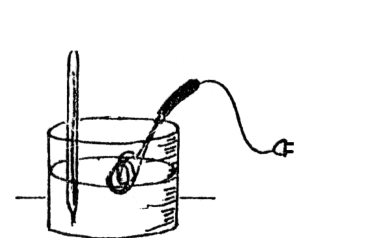
Topic: Thermodynamics Metodi: Experimental Data Analysis, First Law of Thermodynamics Competenze: Experimental Data Analysis, Physical Reasoning Objects: Calorimeter Fonte: Testo (PDF) — p.2
**144. Las Heras, Mendoza, Verde (problema sperimentale)
Problema sperimentale. Obiettivo: conoscere la potenza in watt di un riscaldatore d’acqua, a partire dal calore che è in grado di fornire. Elementi:
- 1 riscaldatore
- 1 bicchiere di acqua graduata
- 1 termometro Valutare gli errori commessi nel misurare e quale sia la principale fonte di errore. Dettagliare un’altra pratica di risoluzione del problema e stimare se ci saranno maggiori o minori fonti di errore.
Topic: Thermodynamics Metodi: Experimental Data Analysis, First Law of Thermodynamics Competenze: Experimental Data Analysis, Physical Reasoning Objects: Calorimeter Fonte: Testo (PDF) — p.2
**144. The following is the list of the countries of the European Union:
This is an experimental problem. Objective: To know the power in watts of a water heater, from the heat it is capable of delivering. The following elements:
- 1 heater
- 1 graduated glass, with water
- 1 thermometer Estimate measurement errors and the main source of error. Detail another practical method of problem solving and estimate whether there would be greater or lesser sources of error.
Topic: Thermodynamics Metodi: Experimental Data Analysis, First Law of Thermodynamics Competenze: Experimental Data Analysis, Physical Reasoning Objects: Calorimeter Fonte: Testo (PDF) — p.2
145. Rosario, Santa Fe, Verde (Problema experimental)
PROBLEMA EXPERIMENTAL. El calor de fusi’on de una sustancia es la cantidad de calor que se le debe entregar a la unidad de masa para que se convierta de s’olido a l’iquido. En este trabajo de laboratorio se le pide que determines experimentalmente el calor de fusi’on del hielo. Para ello dispones de:
- Termo
- Term’ometro
- Agua caliente y/o a temperatura ambiente
- Probetas graduadas
- Hielo
- Algo para revolver el agua Datos ‘utiles: calor espec’ifico del agua: 1 cal/g.C densidad del agua 1 g/cm Deber’as presentar un informe de tu trabajo en el cual describas lo m’as claramente posible todos los pasos que seguiste en el experimento, los c’alculos realizados y el resultado obtenido.
Topic: Thermodynamics Metodi: Experimental Data Analysis, First Law of Thermodynamics Competenze: Experimental Data Analysis, Physical Reasoning Objects: Calorimeter Fonte: Testo (PDF) — p.2
145. Rosario, Santa Fe, Verde (problema sperimentale)
Problema sperimentale. Il calore di fusione di una sostanza è la quantità di calore che deve essere consegnata all’unità di massa per trasformarla da solido a liquido. In questo lavoro di laboratorio, si chiede di determinare sperimentalmente il calore di fusione del ghiaccio. Per questo, dispone di:
- Termo
- Termometro
- Acqua calda e/o a temperatura ambiente
- Problemi di graduazione
- Ghiaccio
- Qualcosa per far girare l’acqua Dati utili: Calore specifico dell’acqua: 1 cal/g.C densità dell’acqua 1 g/cm Dovresti presentare un rapporto del tuo lavoro nel quale descrivi il più chiaramente possibile tutti i passaggi che hai seguito nell’esperimento, i calcoli effettuati e il risultato ottenuto.
Topic: Thermodynamics Metodi: Experimental Data Analysis, First Law of Thermodynamics Competenze: Experimental Data Analysis, Physical Reasoning Objects: Calorimeter Fonte: Testo (PDF) — p.2
145. Rosario, Santa Fe, Verde (Problema experimental)
This is an experimental problem. The heat of fusion of a substance is the amount of heat that must be delivered to the unit of mass to convert it from liquid to liquid. In this lab work you are asked to experimentally determine the heat of ice melting. You have:
- It ‘s over .
- Thermometer
- Hot water and/or at room temperature
- Graduate tests
- Ice
- Something to turn the water around. Useful data: calor espec’ifico del agua: 1 cal/g.C densidad del agua 1 g/cm You should present a report of your work in which you describe as clearly as possible all the steps you took in the experiment, the calculations you made and the result obtained.
Topic: Thermodynamics Metodi: Experimental Data Analysis, First Law of Thermodynamics Competenze: Experimental Data Analysis, Physical Reasoning Objects: Calorimeter Fonte: Testo (PDF) — p.2
146. Capital Federal, Verde (Problema experimental)
PROBLEMA EXPERIMENTAL. Se desea medir el calor espec’ifico de la vaselina. Para ello disponemos de los siguientes elementos:
- term’ometro
- calor’imetro
- probeta graduada
- alambre de n’icrome
- fuente regulada (m’aximo 60 Watts)
- amper’imetro
- volt’imetro
- vaso de precipitados
- cables
- balanza
- cron’ometro
- vaselina Representar claramente el esquema a utilizar para la medici’on. Armar el sistema f’isico teniendo en cuenta que la fuente tiene una potencia m’axima de 60 Watts, y realizar la medici’on detallando todos los valores obtenidos y c’alculos realizados y el resultado obtenido. Estimar los errores cometidos al medir y cu’al es la fuente mayor de error. Detallar otro m’etodo pr’actico de resoluci’on del problema y estimar si tendr’ia mayor o menor fuentes de error. Preguntas: a) Si los mares tuvieran fuentes de vaselina, habr’ia mayor o menor diferencia de temperatura entre el d’ia y la noche en las superficies de los oc’eanos? b) Considerando la pr’actica que realizaste, \u00bfcu’ales son las ventajas y desventajas de realizar el calentamiento lenta o r’apidamente?
Topic: Thermodynamics Metodi: Experimental Data Analysis, First Law of Thermodynamics Competenze: Experimental Data Analysis, Physical Reasoning Objects: Calorimeter, Resistor Fonte: Testo (PDF) — p.2
**146. Capitale federale, verde (problema sperimentale)
Problema sperimentale. Si desidera misurare la temperatura specifica della vaselina. Per questo abbiamo i seguenti elementi:
- termometro
- calore mitratore
- prova graduata
- filo di acro
- fonte regolata (max. 60 Watts)
- di un metro
- volt’metro
- un bicchiere di precipitati
- Cavi
- bilanciamento
- cronometro
- Vaselina Rappresentare chiaramente il schema da utilizzare per la cura. Armarsi il sistema fisico tenendo conto che la fonte ha una potenza massima di 60 watt, e effettuare la medizione dettagliando tutti i valori ottenuti e i calcoli effettuati e il risultato ottenuto. Valutare gli errori commessi nel misurare e quale sia la fonte principale di errore. Dettagliare un’altra pratica di risoluzione del problema e stimare se ci saranno maggiori o minori fonti di errore. Domande: a) Se i mari avessero fonti di vaselina, ci sarebbe una maggiore o minore differenza di temperatura tra il giorno e la notte sulle superfici degli oceani? b) Considerando la pratica che hai fatto, quali sono i vantaggi e gli svantaggi di effettuare il riscaldamento lento o rapido?
Topic: Thermodynamics Metodi: Experimental Data Analysis, First Law of Thermodynamics Competenze: Experimental Data Analysis, Physical Reasoning Objects: Calorimeter, Resistor Fonte: Testo (PDF) — p.2
**146. Federal Capital, Green (Experimental Problem)
This is an experimental problem. The specific heat of the vaseline is to be measured. We have the following elements at our disposal:
- thermometer
- heat meter
- graduated sample
- Wire of chrome
- regulated source (maximum 60 Watts)
- the meter amp
- volt ‘meter
- glass of precipitate
- cable
- weighing
- the time-meter
- Vaseline Clearly represent the scheme to be used for the medication. Arming the physical system taking into account that the source has a maximum power of 60 watts, and performing the measurement detailing all the values obtained and the calculations made and the result obtained. Estimate the measurement errors and the major source of error. Detail another practical method of problem solving and estimate whether there would be greater or lesser sources of error. Questions: (a) If the seas had sources of vaseline, would there be a greater or lesser difference in temperature between day and night on the surface of the oceans? (b) Considering the practice you have undertaken, what are the advantages and disadvantages of slow or rapid heating?
Topic: Thermodynamics Metodi: Experimental Data Analysis, First Law of Thermodynamics Competenze: Experimental Data Analysis, Physical Reasoning Objects: Calorimeter, Resistor Fonte: Testo (PDF) — p.2
147. Mendoza, Verde (Problema experimental)
PROBLEMA EXPERIMENTAL. En una Experiencia se desea obtener 1 Litro de Agua a la Temperatura de 35 C. Se dispone de 750 ml de agua a 68 F. a) Indicar a que temperatura es necesario agregar los 250 cm restantes para lograrlo. Considerar un C del Agua de 0,999
- Suponer que no existen perdidas (Caso Ideal) Planteo Anal’itico del Problema. Valores Obtenidos.
- Realizar la experiencia (Caso Real) Indicar como realiza la experiencia (Pasos) Valores Obtenidos.
- Indicar las causas de las diferencias (Si las hay) de los resultados entre 1 y 2. Elementos: Agua, Term’ometros, Mechero Bunsen, Erlenmeyer y Matriz, Calculadora, L’apiz, Papel. Si tomando el valor del calor experimental intercambiado, indicar que valor de R (Resistencia El’ectrica) es necesario tener para que al circular una intensidad de corriente de 2 Amp. durante 312 seg.; se obtenga dicho calor, e indicar cual ser’a el valor de Trabajo Mec’anico Equivalente.
Topic: Thermodynamics Metodi: Experimental Data Analysis, First Law of Thermodynamics Competenze: Experimental Data Analysis, Physical Reasoning Objects: Calorimeter Fonte: Testo (PDF) — p.2
**147. Mendoza, Verde (problema sperimentale)
Problema sperimentale. In un esperimento si desidera ottenere 1 litro di acqua a una temperatura di 35 C. 750 ml di acqua a 68 F. a) Indicare a che temperatura è necessario aggiungere i restanti 250 cm per raggiungere questo obiettivo. Considerare un C dell’acqua di 0,999
- Suppone che non esistano perdite (Caso ideale)
- La questione è analitica. Valori ottenuti.
- Realizzare l’esperienza (Real Case) Indicare come si svolge l’esperienza (passi) Valori ottenuti.
- Indicare le cause delle differenze (se esistenti) tra i risultati 1 e 2. Elementi: acqua, termometri, Mechero Bunsen, Erlenmeyer e Matrice, Calcolatrice, Lazzetta, carta. Se prendendo il valore del calore sperimentale scambiato, indicare quale valore di R (Resistenza Elettrica) è necessario avere per che quando si circola un’intensità di corrente di 2 Amp. Per 312 secondi, si ottiene tale calore, e si indica quale sarà il valore di lavoro meccanico equivalente.
Topic: Thermodynamics Metodi: Experimental Data Analysis, First Law of Thermodynamics Competenze: Experimental Data Analysis, Physical Reasoning Objects: Calorimeter Fonte: Testo (PDF) — p.2
**147. The Commission has also adopted a number of proposals for the establishment of a European Community framework for the development of the information society.
This is an experimental problem. In an Experiment 1 Litre of Water at 35 C is desired. 750 ml of water is available at 68 F. (a) Indicate the temperature at which the remaining 250 cm must be added to achieve this. Consider a C of the Water of 0,999
- Assuming that there are no losses (Ideal case) Analytical approach to the problem. Value obtained.
- The experience is to be carried out (Real case) Indicate how the experience is performed (steps) Value obtained.
- Indicate the causes of differences (if any) in results between 1 and 2. Elements: Water, thermometers, Mechero Bunsen, Erlenmeyer and the Matrix, Calculator, the spike, paper. If taking the value of the experimental heat exchanged, indicate which value of R (Electric Resistance) is required to have so that when a current intensity of 2 Amp is circulated. The heat is obtained and the value of the equivalent mechanical work is indicated.
Topic: Thermodynamics Metodi: Experimental Data Analysis, First Law of Thermodynamics Competenze: Experimental Data Analysis, Physical Reasoning Objects: Calorimeter Fonte: Testo (PDF) — p.2