Battery Array Maximum Lamp Current
Problema 1: Señal luminosa en isla desierta.
Usted se encuentra en una isla desierta y luego de recorrerla encuentra una lámpara, cuatro cajas conteniendo cada una 12 pilas y algunos cables. La lámpara es de 100 W con resistencia de 9 Ω y las pilas son de 6 V con resistencia interna de 3 Ω.
Con estos elementos decide armar un circuito para enviar señales luminosas cuando pase un avión o un barco cerca de la isla. Con el objeto de ser observado desde lo más lejos posible se debe lograr la mayor iluminación de la lámpara y para esto es necesario hacer circular la máxima corriente a través de la misma.
Con este objetivo Ud. arma un circuito de manera de tener M ramas en paralelo y en cada una de ellas N pilas en serie, de manera tal de utilizar todas las pilas encontradas (M*N=48).
a) Encuentre una expresión para la corriente que circula a través de la lámpara en términos de N y M
b) Encuentre los valores de M y N correspondientes al circuito con el cuál se logra hacer circular la máxima corriente a través de la lámpara.
c) Encuentre los valores de M y N con los cuales se logra la mayor iluminación sin quemar la lámpara
d) Sabiendo que la eficiencia lumínica de la lámpara es de 6 lum/W, y que la sensibilidad de los bastones del ojo humano es de 10-6 lum/m2 calcule la máxima distancia a la cual podrán ser observadas las señales.
Nota: Para los puntos a, b y c considere que la resistencia no cambia con la temperatura.
Ayuda: La expresión (ax+b/x), con x >0, toma un valor mínimo para x2 = b/a
Topic: Circuits Metodi: Kirchhoff’s Laws, Energy Conservation Method Competenze: Physical Reasoning, Mathematical Modeling Objects: Battery, Resistor Fonte: Testo (PDF) — p.3
Battery Array Maximum Lamp Current
Problema 1: segnale luminoso su un’isola deserta.
Sei su un’isola deserta e dopo averla percorsa trovi una lampada, quattro scatole contenenti ciascuno 12 batterie e alcuni cavi. La lampada è di… 100 W con resistenza di 9 Ω e le batterie sono di 6 V con resistenza interna di 3 Ω.
Con questi elementi decide di costruire un circuito per inviare segnali luminosi. quando un aereo o una barca passa vicino all’isola. Per l’osservazione dal E ’ necessario raggiungere il massimo livello di illuminazione della lampada. La massima corrente deve essere circolare attraverso la stessa.
Per questo scopo, Armata un circuito in modo da avere M rami in parallelo e in ciascuna di esse N batterie in serie, in modo da utilizzare tutte le batterie La presenza di un’aspetto di sicurezza non è sufficiente per evitare la presenza di un’aspetto di sicurezza.
a) Trova un’espressione per il corrente che circola attraverso la lampada in termini di N e M
b) Trova i valori di M e N corrispondenti al circuito con cui si riesce a fare circolare la corrente massima attraverso la lampada.
c) Trova i valori di M e N con cui si ottiene la massima illuminazione senza
- Accendere la lampada .
d) Sapendo che l’efficienza luminosa della lampada è di 6 lum/W, e che la La sensibilità dei bastoni dell’occhio umano è di 10-6 lum/m2 calcola il massimo Distanza a cui i segnali possono essere osservati.
Nota: per i punti a, b e c considera che la resistenza non cambia con la temperatura.
Aiuto: l’espressione (ax+b/x), con x >0, prende un valore minimo per x2 = b/a
Topic: Circuits Metodi: Kirchhoff’s Laws, Energy Conservation Method Competenze: Physical Reasoning, Mathematical Modeling Objects: Battery, Resistor Fonte: Testo (PDF) — p.3
The following information shall be provided:
Problem 1: Light signal on a desert island.
You’re on a desert island and after you’ve been there, you’ve found one. lamp, four boxes containing 12 batteries and some cables each. The lamp is from 100 W with resistance of 9 Ω and the batteries are 6 V with internal resistance of 3 Ω.
With these elements he decides to assemble a circuit to send out light signals. When a plane or boat passes near the island. For the purpose of observation from As far as possible, the greatest illumination of the lamp must be achieved. The maximum current must be circulated through it.
With this aim, you will be able to Arms a circuit so that M branches are parallel and In each of them N series batteries, so as to use all the batteries The following table shows the results of the studies:
(a) Find an expression for the current flowing through the lamp in terms of N and M
(b) Find the M and N values for the circuit with which it is possible to make Circulate the maximum current through the lamp.
(c) Find the values of M and N with which the greatest lighting is achieved without I ‘m gonna burn the lamp .
(d) Knowing that the luminous efficiency of the lamp is 6 lum/W, and that the The sensitivity of the human eye rods is 10-6 lum/m2 calculate the maximum distance from which the signals can be observed.
Note: For points a, b and c consider that the resistance does not change with the The temperature.
Help: The expression (ax+b/x), with x >0, takes a minimum value for x2 = b/a
Topic: Circuits Metodi: Kirchhoff’s Laws, Energy Conservation Method Competenze: Physical Reasoning, Mathematical Modeling Objects: Battery, Resistor Fonte: Testo (PDF) — p.3
Solar Radiation Oven Steady State
Problema 2: Horno por radiación.
Un sistema para calentar agua de piletas de natación aprovechando la radiación solar consiste de una cañería pintada de negro, por cuyo interior circula agua. Externamente los caños están rodeados de un espacio al vacío delimitado por un tubo de acrílico de baja conductividad térmica, evitando de esta manera los efectos de convección y conducción del calor con el exterior. Aprovechando esta idea, un inventor decide fabricar un horno que le permita calentar agua aprovechando la radiación solar. De esta manera diseña la tapa del horno con las características mostradas en la Figura
La lámina intermedia está pintada de plateado de un lado y de negro del otro, lo que permite reflejar o absorber la radiación que incide sobre ella regulando la temperatura del interior del horno. Esta tapa puede ser colocada con el lado negro o el plateado hacia fuera.
En un ambiente a temperatura de 20 ºC, se encuentra experimentalmente que cuando el sistema alcanza el estado estacionario (es decir todas las temperaturas se mantienen constantes) la temperatura en el interior del horno es de 80 ºC.
En estas condiciones y suponiendo que:
La tapa tiene un área de 1/2 m2
La radiación solar promedio por unidad de área es Ps = 1000 W/m2
La reflectividad del lado plateado es del 90% y del lado negro del 10%.
a) Encontrar una expresión para la potencia absorbida por la lámina en términos de los coeficientes de reflectividad interior (r) y exterior ( R)
b) Encontrar una expresión para la potencia irradiada por la lámina en función de r, R y su temperatura (TL).
c) Encontrar una expresión para la temperatura que adquiere la lámina.
d) ¿En que caso (con la cara plateada hacia fuera o hacia adentro) la temperatura que adquiere la lámina es mayor? Justifique.
Ti Text Horno Tapa Lámina pintada Vidrio Tapa Vacío
e) ¿En que caso la potencia irradiada por la lámina hacia el interior del horno es mayor? Justifique.
f) Calcule la potencia perdida por las paredes del horno en ambos casos.
AYUDA: Se sabe que la energía emitida por unidad de tiempo y por unidad de área por un objeto a temperatura T está dada por la ley de Stefan-Boltzmann
4 2 8 4 . 10 . 67 ,5 . . K m W T e E e −
= σ σ
donde σ es una constante universal y e es la emisividad. Un cuerpo en equilibrio con sus alrededores emite y absorbe la misma cantidad de energía en la unidad de tiempo, manteniendo su temperatura constante. Para un absorbedor ideal e = 1.
Los coeficiente de absorción A y de reflectividad R satisfacen A + R =1
La emisividad e es igual al coeficiente de absorción A.
Topic: Thermodynamics Metodi: First Law of Thermodynamics, Physical Modeling Competenze: Physical Reasoning, Mathematical Modeling Objects: Gas Fonte: Testo (PDF) — p.3
Solar Radiation Oven Steady State
Problema 2: Forno a radiazioni.
Un sistema per riscaldare l’acqua da bagno con la radiazione Il sistema solare consiste in un canale dipinto di nero, attraverso il quale circola acqua. Esternamente i tubi sono circondati da uno spazio a vuoto delimitato da un tubo. di acrilico a bassa conducibilità termico, evitando così gli effetti di convezione e conduzione del calore con l’esterno. Sfruttando questa idea, un inventore decide di costruire un forno che gli permetta di riscaldare l’acqua utilizzando la radiazione solare. In questo modo progetta la copertura del forno con le caratteristiche mostrate nella Figura
La lamina intermedia è dipinta di argento da un lato e di nero dall’altro, lo che permette di riflettere o assorbire la radiazione che incide su di essa regolamentando la temperatura all’interno del forno. Questa copertura può essere collocata con il lato nero o il Arricchito fuori.
In un ambiente a 20 oC si trova sperimentalmente che quando il sistema raggiunge lo stato stazionario (cioè tutte le temperature si La temperatura all’interno del forno è di 80 oC.
In queste condizioni, purché:
La copertura ha un’area di 1/2 m2. La radiazione solare media per unità di area è Ps = 1000 W/m2 La riflettività del lato argento è del 90% e del lato nero del 10%.
a) Trovare un’espressione per la potenza assorbita dalla lamina in termini di Coefficienti di riflettività interna (r) ed esterna (R)
b) Trovare un’espressione per la potenza irradiata dalla lamina in funzione di r, R e la sua temperatura (TL).
c) Trovare un’espressione per la temperatura che la lamina acquista.
d) In che caso (con la faccia argento verso l’esterno o verso l’interno) la temperatura che acquista la lamina è maggiore? giustifica.
Ti Text Forno
- Cappalo . Lamma dipinta
- Il vetro .
- Cappalo . Vaga
e) In che caso la potenza irradiata dalla lamina verso l’interno del forno è maggiore? giustifica.
f) Calcolare la potenza persa dalle pareti del forno in entrambi i casi.
Aiuto: è noto che l’energia emessa per unità di tempo e per unità di area per Un oggetto a temperatura T è dato dalla legge di Stefan-Boltzmann
4 2 8 4 . 10 . 67 ,5 . . K m W T e E e −
= σ σ
dove σ è una costante universale e e è l’emissività. Un corpo in equilibrio con i suoi dintorni emettono e assorbono la stessa quantità di energia nell’unità di tempo, mantenendo la temperatura costante. Per un assorbente ideale e = 1.
I coefficienti di assorbimento A e di riflettività R soddisfano A + R = 1
L’emissività e è pari al coefficiente di assorbimento A.
Topic: Thermodynamics Metodi: First Law of Thermodynamics, Physical Modeling Competenze: Physical Reasoning, Mathematical Modeling Objects: Gas Fonte: Testo (PDF) — p.3
The Commission shall adopt implementing acts in accordance with Article 21 of Regulation (EC) No 1290/2001.
Problem two: radiation furnace.
A system for heating swimming pool water using radiation The solar system consists of a black-painted pipeline through which water flows. Externally the pipes are surrounded by a gap bounded by a tube. low thermal conductivity acrylic, thereby avoiding the effects of heat convection and conduction with the outside. Taking advantage of this idea, an inventor He decides to make a furnace that heals water using solar radiation. This way he designs the oven lid with the characteristics shown in Figure
The middle sheet is painted silver on one side and black on the other, the It allows the radiation to be reflected or absorbed by regulating it. the temperature inside the furnace. This lid can be placed with the black side or the Silvered out.
In an environment at 20 oC, it is experimentally found that When the system reaches the steady state (i.e. all temperatures are The temperature inside the oven is 80 oC.
Under these conditions and assuming that:
The cover has an area of 1/2 m2 The average solar radiation per unit area is Ps = 1000 W/m2 The reflectivity on the silver side is 90% and the black side is 10%.
(a) Find an expression for the absorbed power of the sheet in terms of the Inner and outer reflectivity coefficients (r)
(b) Find an expression for the power radiated by the sheet in terms of r, R and its temperature (TL).
(c) Find an expression for the temperature acquired by the sheet.
(d) In which case (with the silver face facing outward or inward) the temperature that Does the sheet get bigger? You justify it.
Ti Text The oven . Cover it up . Painted sheet Glass . Cover it up . It ‘s empty .
(e) In which case is the power radiated by the sheet into the furnace greater? You justify it.
(f) Calculate the power lost by the furnace walls in both cases.
HELP: It is known that energy emitted per unit of time and per unit of area per An object at temperature T is given by Stefan-Boltzmann’s law.
4 2 8 4 . 10 . 67 ,5 . . K m W T e E e −
= σ σ
where σ is a universal constant and e is the emissivity. A body in balance with its surroundings emit and absorb the same amount of energy per unit time, Keeping its temperature constant. For an ideal absorber e = 1.
The absorption coefficients A and reflectivity R satisfy A + R = 1
The emissivity e is equal to the absorption coefficient A.
Topic: Thermodynamics Metodi: First Law of Thermodynamics, Physical Modeling Competenze: Physical Reasoning, Mathematical Modeling Objects: Gas Fonte: Testo (PDF) — p.3
Lunar Orbit and Laser Prism Refraction
Problema 3: Una sorpresa extraterrestre.
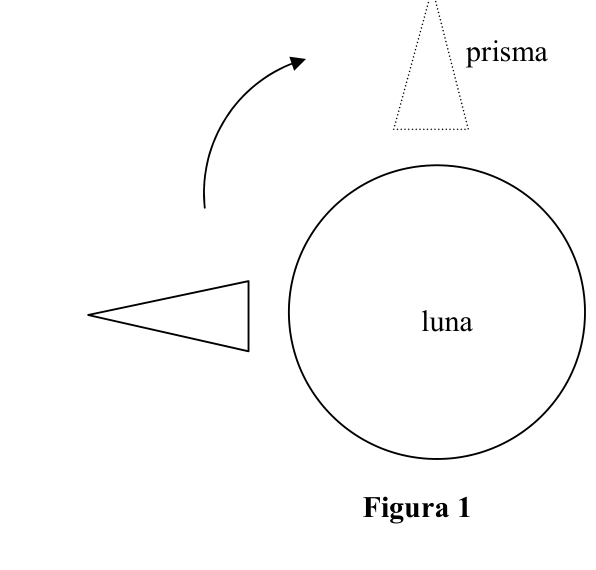
Una civilización proveniente de algún sistema planetario lejano, pone en órbita alrededor de la Luna un objeto en forma de prisma. Tan pronto como los humanos se enteran de su presencia, los científicos de la Tierra comienzan a estudiar las propiedades de ese extraño objeto. Las observaciones que realizaron indican que el objeto en su movimiento orbital, permanece siempre en el plano de la órbita Tierra – Luna, que realiza una órbita circular alrededor de la Luna, que la extensión de la bisectriz del prisma pasa en todo momento por el centro de la Luna (ver figura 1) y que su período de revolución es de 2 horas y 40 minutos. A partir de esta información,
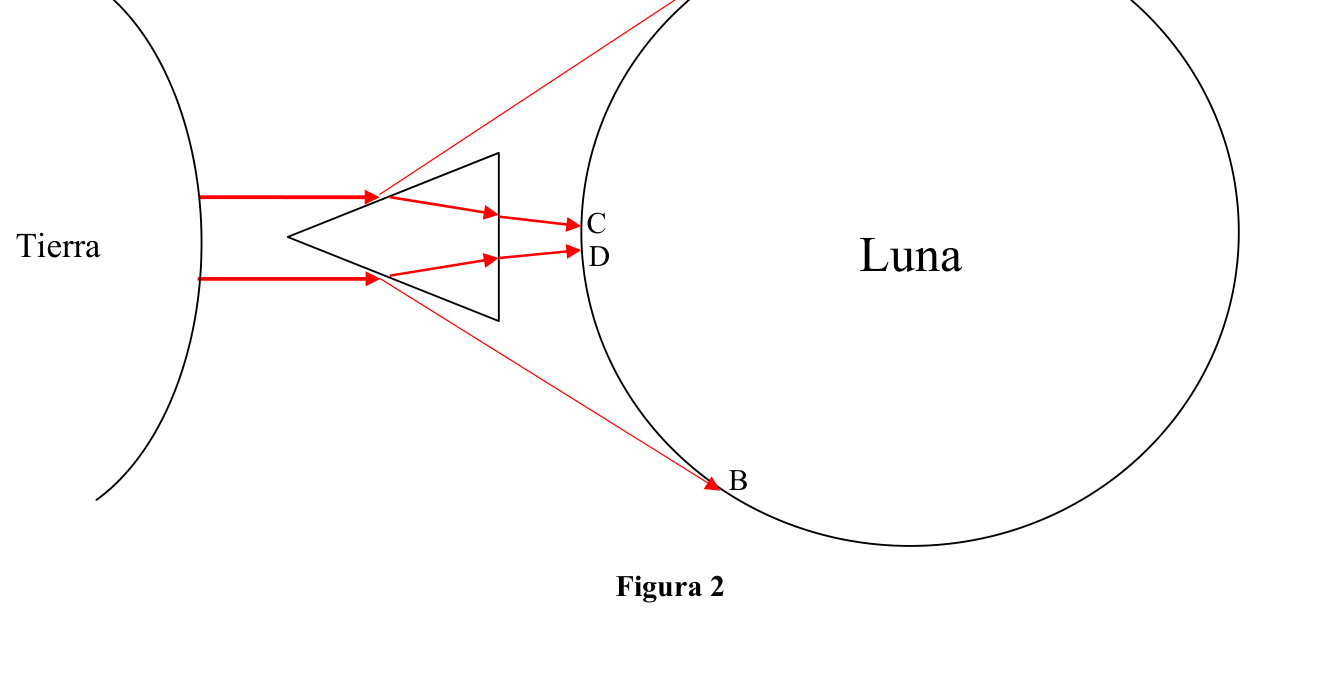
a) calcule la distancia Luna – prisma. Nota 1: Suponga que el efecto gravitatorio de la Tierra sobre el objeto es despreciable y que para describir su movimiento alrededor de la Luna lo pensamos como un cuerpo puntual. Para estudiar tanto las características geométricas como el material con el que se ha construido el prisma, los científicos planifican el siguiente experimento: cuando el objeto se encuentra en la posición indicada en la figura 2 (dibujo no a escala), se envían desde la Tierra dos poderosos rayos laser, paralelos al eje que pasa por el centro de la Tierra, el centro de la Luna y por el vértice del prisma. Esos rayos, al tocar la superficie del prisma, sufren tanto una reflexión como una refracción. Los rayos reflejados son captados por sensores ubicados sobre la superficie lunar que se encuentran separados entre si por una distancia dAB = 200 km medida sobre la superficie lunar. A partir de este dato:
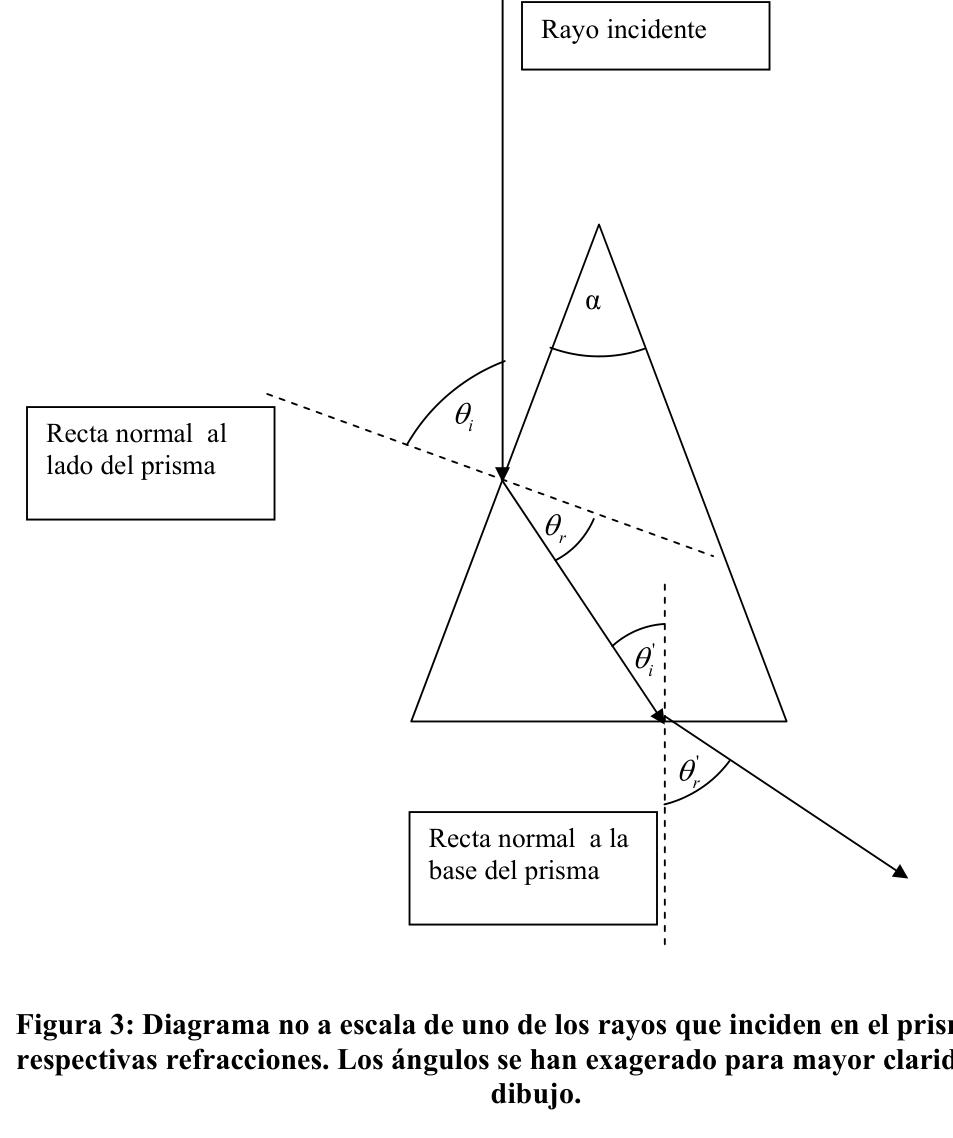
b) Calcule el ángulo de refringencia α del prisma (ver figura 3). Por otro lado, los rayos que se refractaron en el prisma, emergen del mismo por la cara más cercana a la luna, para luego ser detectados por sensores ubicados sobre la superficie lunar y separados por una distancia dCD = 100 km (ver figura 2). A partir de esta información.
c) Calcule el ángulo ’ rθ con que los rayos emergen del prisma luego de la segunda refracción (ver figura 3). d) Muestre que el índice de refracción del prisma está dado por las siguiente expresión:
( ) ( ) ( ) 2 ’ 2 2 sen 2 cos 2 cos 2 r sen n α θ α α ⎛ ⎞ + ⎜ ⎟
- ⎜ ⎟ ⎜ ⎟ ⎝ ⎠
e) Determine el índice de refracción n del prisma. Exprese el resultado con cuatro cifras significativas. Nota 2: En los puntos b) y c) considere que el prisma es lo suficientemente pequeño como para suponer que todos los rayos (tanto los reflejados como los refractados) emergen de un único punto interior al prisma.
Nota 3: Considere que la luz se propaga a velocidad infinita.
Nota 4: Para todos los cálculos trabaje con seis cifras significativas.
Figura 1
Figura 2
A B C D Tierra Luna prisma luna
Figura 3: Diagrama no a escala de uno de los rayos que inciden en el prisma y sus respectivas refracciones. Los ángulos se han exagerado para mayor claridad en el dibujo.
Datos necesarios:
- Radio de la Luna: 1737 km
- Índice de refracción del vacío: 1
- Masa de la Luna: 7,35 x 10²² kg
- Constante Universal de la Gravitación: 6,67 x 10‐11 m3kg‐1s‐2
Fórmulas útiles:
α
iθ
’ rθ
rθ
’ iθ
Recta normal al lado del prisma Recta normal a la base del prisma Rayo incidente
sen( ) sen( )cos( ) cos( )sen( ) cos( ) cos( )cos( ) sen( )sen( ) sen( / 2)cos( / 2) (1/ 2)sen( ) a b a b a b a b a b a b a a a ±
± ±
= m
Instancia Nacional Prueba Experimental
Instancias Locales Problemas Teóricos
Topic: Gravitation, Geometric Optics Metodi: Kepler’s Laws, Snell’s Law, Newton’s Law of Gravitation Competenze: Physical Reasoning, Mathematical Modeling Objects: Prism, Satellite Fonte: Testo (PDF) — p.3
Lunar Orbit and Laser Prism Refraction
Problema 3: Una sorpresa extraterrestre.
Una civiltà proveniente da qualche sistema planetario lontano, si mette in orbita. intorno alla Luna un oggetto in forma di prisma. Non appena gli umani si sentono Quando hanno saputo della sua presenza, gli scienziati della Terra iniziano a studiare le proprietà. di quell’oggetto strano. Le osservazioni che hanno fatto indicano che l’oggetto in movimento orbitale, rimane sempre sul piano dell’orbita della Terra Luna, che Il suo obiettivo è quello di creare un’orbita circolare intorno alla Luna, che si estende dalla bisectrice del Il prisma passa in ogni momento attraverso il centro della Luna (vedi figura 1) e il suo periodo La rivoluzione è di 2 ore e 40 minuti. Dalle informazioni,
a) Calcolare la distanza Luna prisma. Nota 1: Supponiamo che l’ effetto gravitazionale della Terra sull’ oggetto sia scarsa e che per descrivere il suo movimento attorno alla Luna lo pensiamo come un corpo. puntuale. Per studiare sia le caratteristiche geometriche che il materiale con cui si è Dopo aver costruito il prisma, gli scienziati hanno pianificato il seguente esperimento: oggetto si trova nella posizione indicata in figura 2 (disegno non a scala), sono inviati Da terra due potenti raggi laser, paralleli all’asse che attraversa il centro della Terra. Terra, centro della Luna e per la vertica del prisma. Quegli raggi, toccando la superficie La loro riflessione e la loro refraczione sono due elementi che possono essere osservati. I raggi riflessi sono rilevati da sensori sulla superficie lunare che si trovano separati tra loro per una distanza dAB = 200 km misurata sulla superficie lunare. A partire da questo dato:
b) Calcolare l’angolo di rifresco α del prisma (vedi figura 3). I raggi che si riflettono nel prisma, invece, si diffondono dal suo viso. più vicino alla luna, per poi essere rilevati da sensori posizionati sulla Terra. superficie lunare e separati da una distanza dCD = 100 km (vedere figura 2). A partire da
- questa informazione.
c) Calcolare l’ angolo ’ rθ con cui i raggi emergono dal prisma dopo la Se la seconda refraczione è stata effettuata (vedi figura 3). d) Mostra che l’indice di refraczione del prisma è dato da: espressione:
( ) ( ) ( ) 2 ’ 2 2 sen 2 cos 2 cos 2 r sen n α θ α α ⎛ ⎞ + ⎜ ⎟
- ⎜ ⎟ ⎜ ⎟ ⎝ ⎠
e) Determina l’indice di refraczione n del prisma. Esprimere il risultato con quattro cifre significative. Nota 2: ai punti b) e c) considera che il prisma è sufficientemente piccolo Come per supporre che tutti i raggi (tanto riflessi che refratti) emerge da un unico punto interno alla prisma.
Nota 3: Considera che la luce si diffonde a velocità infinite.
Nota 4: Per tutti i calcoli, lavora con sei cifre significative.
Figura 1
Figura 2
A B C D Terra . Luna prisma Luna
Figura 3: Diagramma non a scala di uno dei raggi che incidono sul prisma e sui suoi le rispettive refraczioni. Gli angoli sono stati esagerati per una maggiore chiarezza nel
- lo disegno.
Dati necessari:
- Radios della Luna: 1737 km
- Indice di refraczione del vuoto: 1
- Massa della Luna: 7,35 x 10²² kg
- Costante universale di gravità: 6,67 x 10⁻¹¹ m3kg-1s-2
Formulazioni utili:
α
iθ
’ rθ
rθ
’ iθ
Normalmente diretto al lato del prisma Normalmente diretto alla base del prisma Raggi incidente
sen( )
- (Signature) Cos(senza cos( ) Cos() cos()
- (Signorato) sen( / 2)cos( / 2) (1/ 2) senza a b a b a b a b a b a b a a a ± = ± ± = = m
Instanza nazionale Prova sperimentale
I servizi locali Problemi teorici
Topic: Gravitation, Geometric Optics Metodi: Kepler’s Laws, Snell’s Law, Newton’s Law of Gravitation Competenze: Physical Reasoning, Mathematical Modeling Objects: Prism, Satellite Fonte: Testo (PDF) — p.3
The following is the list of the main types of radiation exposure exposure exposure to radiation exposure:
Problem three: An alien surprise.
A civilization from some distant planetary system, puts it in orbit. Around the moon, a prism-shaped object. As soon as humans are When they learn of its presence, Earth scientists begin to study its properties. of that strange object. The observations made by them indicate that the object in its Orbital motion, always remains in the plane of Earth orbit Moon, which It orbits the Moon in a circular orbit, which is the extension of the bisector of the Moon. The prism passes at all times through the center of the Moon (see Figure 1) and its period The revolution is 2 hours and 40 minutes. From this information,
(a) calculate the distance Moon prism. Note 1: Suppose the Earth ‘s gravitational effect on the object is negligible and That to describe its motion around the moon we think of it as a body. I’m on time. To study both geometrical characteristics and the material with which it is made The prism is built, the scientists plan the following experiment: object is in the position indicated in Figure 2 (not-scale drawing), they are sent From Earth two powerful laser beams, parallel to the axis passing through the center of the Earth. Earth, the center of the Moon and by the tip of the prism. Those lightning strikes the surface. The prism is reflected and refracted. The reflected rays are Captured by sensors located on the lunar surface that are separate between each other by a distance dAB = 200 km measured over the lunar surface. From This data:
(b) Calculate the angle of refraction α of the prism (see Figure 3). On the other hand, the rays that were refracted in the prism emerge from the same through the face. closer to the moon, to be detected by sensors located above the moon. lunar surface and separated by a distance dCD = 100 km (see Figure 2). From This information.
(c) Calculate the angle ’ rθ with which the rays emerge from the prism after the The second refraction (see Figure 3). (d) Show that the refractive index of the prism is given by the following The expression:
( ) ( ) ( ) 2 ’ 2 2 Other 2 body 2 body 2 r Other n α θ α α ⎛ ⎞ + ⎜ ⎟
- ⎜ ⎟ ⎜ ⎟ ⎝ ⎠
(e) Determine the refractive index n of the prism. Express the result with Four significant numbers. Note 2: In points (b) and (c) consider that the prism is small enough As to assume that all rays (both reflected and refracted) emerge from a single point inside the prism.
Note 3: Consider that light is propagating at infinite speed.
Note 4: For all calculations work with six significant figures.
Figure 1
Figure 2
A B C D Earth . The moon . Prism The moon
Figure 3: Non-scale diagram of one of the rays that strike the prism and its the respective refractions. The angles have been exaggerated for greater clarity in the I draw.
Data required:
- Radius of the Moon: 1737 km
- The vacuum refractive index: 1
- The mass of the moon: 7.35 x 10²² kg
- The following is the list of the main characteristics of the method:
Useful formulas:
α
iθ
’ rθ
rθ
’ iθ
Straight to normal side of the prism Normal straight to the The base of the prism Incident lightning .
(I’m not sure) ) The following is the list of the countries of the European Union: The Commission shall adopt implementing acts in accordance with Article 21 of this Regulation. Cos( ) The Commission shall adopt implementing acts in accordance with Article 21 of this Regulation. The following is the list of the countries of the European Union: (S) / 2) coes (s) / 2) (1/ 2) without a b a b a b a b a b a b a a a ±
± ±
= m
The National Court Experimental test
Local authorities Theoretical problems
Topic: Gravitation, Geometric Optics Metodi: Kepler’s Laws, Snell’s Law, Newton’s Law of Gravitation Competenze: Physical Reasoning, Mathematical Modeling Objects: Prism, Satellite Fonte: Testo (PDF) — p.3
Heating Alien Substance Phase Graph
PT1. San Carlos de Bariloche, Río Negro. Azul. En el laboratorio se obtuvo luego de la experimentación los siguientes datos para una cierta sustancia traída de otro planeta.
A partir de ella se quiere saber que cantidad de calor será necesaria en el caso de que se posean 500 g de la misma sustancia para elevar su temperatura de 10 °C a 70 °C .
Topic: Thermodynamics Metodi: First Law of Thermodynamics, Experimental Data Analysis Competenze: Physical Reasoning Objects: — Fonte: Testo (PDF) — p.3
Heating Alien Substance Phase Graph
PT1. San Carlo di Bariloche, Rio Negro. Blu. In laboratorio, dopo l’esperimento, sono stati ottenuti i seguenti dati per una una sostanza proveniente da un altro pianeta.
La Commissione ha adottato una decisione che prevede che il sistema di controllo dei rifiuti sia stato applicato in modo da garantire che i rifiuti siano utilizzati. si dispone di 500 g della stessa sostanza per elevare la temperatura da 10 °C a 70 °C.
Topic: Thermodynamics Metodi: First Law of Thermodynamics, Experimental Data Analysis Competenze: Physical Reasoning Objects: — Fonte: Testo (PDF) — p.3
The following is the list of the countries of the European Union in which the number of active substances is estimated to be at least 5%:
PT1. St. Charles of Bariloche, Rio Negro. Blue, please. The following data were obtained after the experiment in the laboratory for a A certain substance brought from another planet.
It is then used to determine the amount of heat required in the event of a 500 g of the same substance are used to raise their temperature from 10 °C to 70 °C.
Topic: Thermodynamics Metodi: First Law of Thermodynamics, Experimental Data Analysis Competenze: Physical Reasoning Objects: — Fonte: Testo (PDF) — p.3
Ball Dropped from Building Velocity
PT2. San Carlos de Bariloche, Río Negro. Azul. Un nene que vive en el último piso del Bariloche Center (h = 30 m) se va a jugar al fútbol. Al llegar a la planta baja se da cuenta que no trajo su pelota (m = 400 g). Llama por celular a su padre para que le arroje la pelota por la ventana, que el la atajará como si fuera un penal. ¿Cuál es la velocidad de la pelota cuando llega al piso?
Topic: Newtonian Mechanics Metodi: Kinematic Equations, Free-Body Diagram Competenze: Physical Reasoning Objects: Ball Fonte: Testo (PDF) — p.3
Ball Dropped from Building Velocity
PT2. San Carlo di Bariloche, Rio Negro. Blu. Un bambino che vive sul piano superiore del Bariloche Center (h = 30 m) sta giocando al Calcio. Arrivata al piano terra si rende conto di non aver portato la sua palla (m = 400 g). Chiama il suo padre per il cellulare e gli dice di buttargli la palla fuori dalla finestra.
- Si’, si accosterà come un criminale. Qual è la velocità della palla quando arriva al
- Piano?
Topic: Newtonian Mechanics Metodi: Kinematic Equations, Free-Body Diagram Competenze: Physical Reasoning Objects: Ball Fonte: Testo (PDF) — p.3
Ball Dropped from Building Velocity
PT2. St. Charles of Bariloche, Rio Negro. Blue, please. A baby who lives on the top floor of the Bariloche Center (h = 30 m) is going to play at the football. When he gets to the ground floor he realizes he didn’t bring his ball (m = 400 g). He calls his father on his cell phone to throw the ball out the window, which he’s doing. He’ll be shrinking like a criminal. What’s the speed of the ball when it reaches the The floor?
Topic: Newtonian Mechanics Metodi: Kinematic Equations, Free-Body Diagram Competenze: Physical Reasoning Objects: Ball Fonte: Testo (PDF) — p.3
Truck-Car Elastic Collision Speed
PT3. San Carlos de Bariloche, Río Negro. Azul. Un camión cargado, con una masa total de 3000 kg, avanza por una ruta a una velocidad constante de v = 80 km/ h. Súbitamente el conductor divisa a un Fiat UNO, con una masa de 900 kg, detenido en la ruta. El camión aplica los frenos y logra disminuir su energía cinética en un 40% antes del impacto. Suponiendo que el camión se detiene completamente debido al impacto, calcule la velocidad final del Fiat UNO. Considere un choque elástico.
0 10 20 30 40 50 60 70 80 90 100 10 20 30 40 50 60 70 80 90 100 110 120 130 140 150 160 170 180 190 200 210 220 230 240 250 Temperatura ºC caloria / 100 g
sólido líquido gas
Topic: Conservation of Momentum Metodi: Conservation of Momentum, Conservation of Energy Competenze: Physical Reasoning Objects: Cart Fonte: Testo (PDF) — p.3
Truck-Car Elastic Collision Speed
PT3. San Carlo di Bariloche, Rio Negro. Blu. Un camion carico, con una massa totale di 3000 kg, si muove su una rotta verso un velocità costante v = 80 km/h. All’improvviso il conducente si è messo in un Fiat Uno, con una massa di 900 kg, fermata sul percorso. Il camion si appoggia ai freni e riesce. ridurre la sua energia cinetica del 40% prima dell’impatto. Supponiamo che il camion si ferma completamente a causa dell’impatto, calcola la velocità finale del Fiat UNO. Considera un colpo elastico.
0 10 20 30 40 50 60 70 80 90 100 10 20 30 40 50 60 70 80 90 100 110 120 130 140 150 160 170 180 190 200 210 220 230 240 250 Temperatura oC caloria / 100 g
solido liquido gas
Topic: Conservation of Momentum Metodi: Conservation of Momentum, Conservation of Energy Competenze: Physical Reasoning Objects: Cart Fonte: Testo (PDF) — p.3
The vehicle shall be equipped with a ‘Truck-Car Elastic Collision Speed’ (Truck-Car Elastic Collision Speed)
PT3. St. Charles of Bariloche, Rio Negro. Blue, please. A loaded truck, with a total mass of 3,000 kg, moves along a route to a The speed of the vehicle is not less than 50 km/h. Suddenly the driver switches to a Fiat UNO, With a mass of 900 kg, stopped on the route. The truck applies the brakes and it gets it . reduce its kinetic energy by 40% before impact. Assuming the truck It stops completely due to impact, calculate the final speed of the Fiat UNO. Consider an elastic shock.
0 10 20 30 40 50 60 70 80 90 100 10 20 30 40 50 60 70 80 90 100 110 120 130 140 150 160 170 180 190 200 210 220 230 240 250 Temperature of the product calories / 100 g
solid . liquid Gas
Topic: Conservation of Momentum Metodi: Conservation of Momentum, Conservation of Energy Competenze: Physical Reasoning Objects: Cart Fonte: Testo (PDF) — p.3
Heating Water for Mate Calorimetry
PT4. Dos de Mayo, Misiones. Azul.
Para tomar un buen mate algunos dicen que el agua debe estar a 85°C por eso
cuando Guillermo se dispuso a tomar un mate, puso a calentar 800 g de agua que se
encontraban inicialmente a 20°C.
a. ¿Qué cantidad de calorías debe absorber el agua para llegar a la temperatura
ideal para el mate de Guillermo?
b. ¿Qué potencia debe tener su sistema para calentar el agua que puso Guillermo
en 120 seg?
c. Resulta que cuando el agua estuvo caliente, justo a los 85°C, Guillermo se dio
cuenta que no tenía con quien compartir el mate. Por lo que decidió cambiar el
mate por un café con leche. Entonces colocó 100 g de agua y café en una taza
que para entonces ya estaba a 83°C y le agregó 28 g de leche en polvo que se
encontraba a 20°C. Calcula la temperatura final del café con leche de
Guillermo, suponiendo que no se perdió calor durante la preparación.
Datos: Calor específico del agua 1cal/g°C
Calor específico de la leche 0,45cal/g°C
1cal = 4,18 J
Topic: Thermodynamics Metodi: First Law of Thermodynamics Competenze: Physical Reasoning Objects: Calorimeter Fonte: Testo (PDF) — p.3
Heating Water for Mate Calorimetry
PT4. Due maggio, missioni. Blu. Per prendere un buon mate alcuni dicono che l’acqua deve essere a 85°C per questo Quando Guillaume si dispose a bere un mate, ha messo a riscaldare 800 g di acqua che si La loro temperatura iniziale era 20°C. a. Quante calorie deve assorbire l’acqua per raggiungere la temperatura? Ideale per il mate di Guillaume? b. Che potenza deve avere il suo sistema per riscaldare l’acqua che William ha messo? In 120 secondi? c. Risulta che quando l’acqua era calda, appena ai C, Guillermo si è dato. dice che non aveva nessuno con cui condividere il mate. Quindi ha deciso di cambiare il suo. uccide per un caffè al latte. Poi ha messo 100 grammi di acqua e caffè in una tazza che era già a 83°C e gli ha aggiunto 28 g di latte in polvere che si ha trovato 20°C. Calcola la temperatura finale del latte di William, supponiamo che non si sia perso il calore durante la preparazione. Dati: Calore specifico dell’acqua 1 cal/g°C Calore specifico del latte 0,45 cal/g°C 1 cal = 4,18 J
Topic: Thermodynamics Metodi: First Law of Thermodynamics Competenze: Physical Reasoning Objects: Calorimeter Fonte: Testo (PDF) — p.3
Heating Water for Mate Calorimetry
PT4. May 2nd, missions. Blue, please. To take a good mate some say the water must be at 85°C for that reason When William was ready to drink a mate, he heated up 800 g of water that was Initially they were 20°C. a. How many calories should water absorb to reach its temperature? Ideal for William’s mate? b. What power must your system have to heat the water William put in? In 120 seconds? c. Turns out when the water was hot, just at MSK0/>C, William gave up. She says she had no one to share the mate with. So he decided to change the I’m killing for a coffee with milk. Then he put 100 g of water and coffee in a cup . It was already at MSK0/>C and added 28 g of powdered milk to it. It was 20°C. Calculate the final temperature of coffee with milk from William, assuming there was no heat loss during the preparation. Data: Specific water heat 1 cal/g°C The specific heat of milk is 0,45 cal/g°C 1 cal = 4,18 J
Topic: Thermodynamics Metodi: First Law of Thermodynamics Competenze: Physical Reasoning Objects: Calorimeter Fonte: Testo (PDF) — p.3
Car Acceleration Kinematics and Power
PT5. Dos de Mayo, Misiones. Azul. Una fábrica debe construir un nuevo automóvil que debe tener una buena aceleración. Entonces deciden construir uno de 1200 Kg de masa, incluyendo el motor; que alcance una velocidad de 108 Km/h (30 m/s) en 6_segundos. a. Determina la aceleración que puede alcanzar el automóvil. b. ¿Cuál es el valor de la velocidad que alcanza a los 4 segundos después de haber partido del reposo? c. ¿Qué distancia recorre el automóvil hasta alcanzar los 108 Km/h? d. ¿Qué cantidad de energía cinética obtiene el automóvil a los 6 segundos? e. ¿Qué potencia debe desarrollar el motor del automóvil para cumplir con los requisitos del estudio de mercado? f. ¿Qué valor tiene la fuerza que actúa sobre el automóvil para producir tanta aceleración?
Topic: Newtonian Mechanics Metodi: Kinematic Equations, Free-Body Diagram, Energy Conservation Method Competenze: Physical Reasoning Objects: Cart Fonte: Testo (PDF) — p.3
Car Acceleration Kinematics and Power
PT5. Due maggio, missioni. Blu. Una fabbrica deve costruire una nuova auto che deve avere una buona accelerazione. Quindi decidono di costruire uno di 1200 Kg di massa, compreso il motore; che raggiungere una velocità di 108 Km/h (30 m/s) in 6 secondi. a. Determina la velocità che la macchina può raggiungere. b. Qual è il valore della velocità raggiunta 4 secondi dopo
- che abbia lasciato il riposo? c. Qual è la distanza percorsa dalla macchina fino a raggiungere i 108 Km/h? d. Quanto energia cinetica ottiene l’auto ogni sei secondi? e. Qual è la potenza che deve sviluppare il motore dell’automobile per soddisfare le esigenze? i requisiti dello studio di mercato? f. Che valore ha la forza che agisce sull’auto per produrre così tanto? Accelerazione?
Topic: Newtonian Mechanics Metodi: Kinematic Equations, Free-Body Diagram, Energy Conservation Method Competenze: Physical Reasoning Objects: Cart Fonte: Testo (PDF) — p.3
The following is the list of the types of vehicles that are included in the list:
PT5. May 2nd, missions. Blue, please. A factory must build a new car that must have good acceleration. So they decide to build one of 1200 kg of mass, including the engine; that’s what they’re doing. It can reach a speed of 108 Km/h (30 m/s) in 6 seconds. a. Determine the acceleration the car can achieve. b. What is the value of the speed that it reaches 4 seconds after Have you left the rest? c. What distance does the car travel to reach 108 km/h? d. How much kinetic energy does a car get every six seconds? e. What power must the car engine develop to meet the requirements? the requirements of the market study? f. What value has the force acting on the car to produce so much? What’s the acceleration?
Topic: Newtonian Mechanics Metodi: Kinematic Equations, Free-Body Diagram, Energy Conservation Method Competenze: Physical Reasoning Objects: Cart Fonte: Testo (PDF) — p.3
Box Sliding Down Inclined Plane Friction
PT6. Dos de Mayo, Misiones. Azul. Miguel, un niño de unos seis años descubrió que la gravedad le permite deslizar objetos por un plano inclinado. Como es un niño muy perspicaz se dio cuenta que la caja de té que usa solo se desliza si la rampa que armó tiene cierto ángulo de inclinación con respecto al piso. a. Calcula el peso en Newton de la caja con los saquitos de te cuya masa es de 0,055 kg b. Realiza un dibujo de la rampa con la caja en la parte superior e incluye todo el sistema de fuerzas que actúa sobre la caja. c. Calcula la fuerza normal sobre la rampa suponiendo que el ángulo de inclinación de esta es de 30° d. El coeficiente de rozamiento entre la caja y la rampa es ¿Qué valor tiene la fuerza de rozamiento? ¿Qué aceleración le produce a la caja? e. Si la rampa tiene 1,5 metros de longitud. ¿Qué cantidad de calor se produce durante el descenso?
Topic: Newtonian Mechanics Metodi: Free-Body Diagram, Kinematic Equations Competenze: Physical Reasoning Objects: Block, Inclined Plane Fonte: Testo (PDF) — p.3
Box Sliding Down Inclined Plane Friction
PT6. Due maggio, missioni. Blu. Miguel, un bambino di circa sei anni, ha scoperto che la gravità gli permette di scivolare. oggetti per un piano inclinato. Come un bambino molto perspicace si è reso conto che la La scatola di tè che usi solo scivola se la rampa che ha armato ha un certo angolo di inclinamento rispetto al pavimento. a. Calcola il peso in Newton della scatola con i sacchetti di tè la cui massa è di 0,055 kg b. Scava il rampo con la cassa in alto e include tutto. sistema di forze che agisce sulla cassa. c. Calcola la forza normale sul rampo supponendo che l’ angolo di inclinamento di questa è di 30° d. Il coefficiente di rottura tra la scatola e la rampa è Che valore! ha la forza di ruggire? Che accelerazione produce la scatola? e. Se la rampa è lunga 1,5 metri. Quanto calore si produce? durante la discesa?
Topic: Newtonian Mechanics Metodi: Free-Body Diagram, Kinematic Equations Competenze: Physical Reasoning Objects: Block, Inclined Plane Fonte: Testo (PDF) — p.3
The following table shows the number of aircraft in the list of aircraft:
PT6. May 2nd, missions. Blue, please. Miguel, a boy of about six, discovered that gravity allows him to slide. objects by an inclined plane. As a very insightful child he realized that the The tea box you use only slides if the ramp you set has a certain angle of inclination with respect to the floor. a. Calculate the Newton weight of the box with the tea bags whose mass is of 0,055 kg b. Draw a ramp with the box on top and include the whole The force system that acts on the box. c. Calculate the normal force on the ramp assuming that the angle of The slope of this is 30° d. The coefficient of friction between the box and the ramp is What value? Does it have the force of friction? What’s the acceleration that’s giving the box? e. If the ramp is 1.5 meters long. How much heat is produced? during the descent?
Topic: Newtonian Mechanics Metodi: Free-Body Diagram, Kinematic Equations Competenze: Physical Reasoning Objects: Block, Inclined Plane Fonte: Testo (PDF) — p.3
Motorboat Drag Force and Buoyancy
PT7. Mar del Plata, Buenos Aires. Azul.
Un viaje en Lancha
Una lancha Quicksilver 268, de 8 m de largo y 2,6 m de ancho, tiene una masa de
3.250 kg. Se encuentra en el puerto, inicialmente, en reposo.
Para probarla, su conductor acelera y alcanza 23 nudos en 10 s, manteniendo la aceleración constante. Se desplaza posteriormente un minuto más a velocidad constante, luego el piloto apaga sus motores. La fuerza resistente del agua es directamente proporcional a la velocidad: F = k.v, con k = 155 kg/s. Considera: 1 nudo = 1,8 km/h. a) Calcula la fuerza total que actúa sobre la embarcación mientras acelera en la primera parte. b) ¿Qué fuerza hace el motor para desplazar la lancha a velocidad constante? c) ¿Qué potencia desarrolla el motor en este caso? d) Grafica la velocidad de la lancha en función de la distancia, a partir de cuando apaga sus motores. e) ¿Cuántos metros recorre en total la lancha hasta detenerse? f) ¿Qué volumen de la lancha se encuentra sumergido cuando está en reposo? Puntaje: a) 1,5 b) 1,5 c) 1,5 d) 2 e) 2 f) 1,5
Topic: Newtonian Mechanics, Fluid Mechanics Metodi: Free-Body Diagram, Kinematic Equations, Hydrostatic Equilibrium Competenze: Physical Reasoning, Mathematical Modeling Objects: — Fonte: Testo (PDF) — p.3
Motorboat Drag Force and Buoyancy
PT7. Mar del Plata, Buenos Aires. Blu. Un viaggio in barca Una lancia Quicksilver 268, lunga 8 metri e larga 2,6 metri, ha una massa di 3.250 kg. Si trova al porto, inizialmente, a riposo.
Per provarla, il suo conducente accelera e raggiunge 23 nodi in 10 secondi, mantenendo l’accelerazione costante. Successivamente si spostano un minuto più a velocità costante, poi il pilota spegne i motori. La forza resistente dell’acqua è diretta. proporzionale alla velocità: F = k.v, con k = 155 kg/s. Considera: 1 nodo = 1,8 km/h. a) Calcola la forza totale che agisce sulla nave mentre accelera in la prima parte. b) Qual è la forza del motore per spostare la barca a velocità costante? c) Qual è la potenza che il motore sviluppa in questo caso? d) Grafica della velocità della barca in funzione della distanza, a partire da quando Spegni i motori. (e) Quanti metri in totale percorre la barca fino al momento di fermarsi? f) Qual è il volume della barca immersa quando è a riposo? Punteggio: a) 1,5 b) 1,5 c) 1,5 d) 2 e) 2 f) 1,5
Topic: Newtonian Mechanics, Fluid Mechanics Metodi: Free-Body Diagram, Kinematic Equations, Hydrostatic Equilibrium Competenze: Physical Reasoning, Mathematical Modeling Objects: — Fonte: Testo (PDF) — p.3
The following is the list of the aircraft types and their respective types of aircraft:
PT7. The city of Mar del Plata, Buenos Aires. Blue, please. A trip on the boat . A Quicksilver 268 boat, 8 m long and 2.6 m wide, has a mass of 3.250 kg. It is in the harbor, initially, at rest.
To test it, your driver speeds up and reaches. 23 knots in 10 seconds, keeping the acceleration. It’s constant. A subsequent move is made minute more at constant speed, then the Pilot, turn off your engines. The resistance of water is directly Proportional to speed: F = k.v, with k = 155 kg/s. Consider: 1 knot = 1,8 km/h. (a) Calculate the total force acting on the vessel as it accelerates in the Part one. (b) What force does the engine use to move the boat at constant speed? (c) What power does the engine develop in this case? (d) Graph the speed of the boat based on distance, starting from when Turn off your engines. (e) How many metres in total does the boat go to stop? (f) What volume of boat is submerged at rest? Score: a) 1,5 b) 1,5 c) 1,5 d) 2 e) 2 f) 1,5
Topic: Newtonian Mechanics, Fluid Mechanics Metodi: Free-Body Diagram, Kinematic Equations, Hydrostatic Equilibrium Competenze: Physical Reasoning, Mathematical Modeling Objects: — Fonte: Testo (PDF) — p.3
Gas Partition Oscillates as SHM
PT8. Mar del Plata, Buenos Aires. Azul.
Gases y M.A.S.
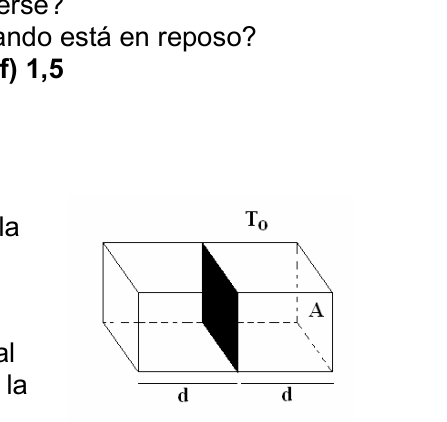
Un recipiente está dividido al medio (como se muestra en la
figura) por una lámina de 100 gr adiabática (no transmite
calor) que ajusta perfectamente en los bordes.
Considera para el recipiente: A = 0,25 m2 ; d = 1 m .
Se introduce gas en ambos lados de la lámina, de forma tal
que en los dos compartimentos la presión es de 0.8 atm y la
temperatura To = 20 ºC .
a) Si se aparta la lámina rápidamente de su posición de equilibrio
¿qué sucede con la temperatura en cada uno de los
compartimentos?
b) Si a uno de los compartimentos se lo calienta hasta llegar a Ti
= 80 ºC , halla la nueva posición de la lámina.
c) Calcula la presión en cada compartimiento si la lámina
se aparta (muy lentamente para que la temperatura de cada lado
no varíe) una distancia x = 1 cm de su posición de equilibrio inicial.
d) En las condiciones del inciso anterior determina la fuerza en magnitud, dirección y
sentido que actúa sobre la lámina en función de x.
e) Muestra que si x es muy pequeña comparada con d (es decir, x es despreciable
frente a d ), la lámina ejecutará un movimiento armónico simple, y determina su
período.
Puntaje:
a) 1,5 b) 2 c) 2 d) 2 e) 2,5
Topic: Thermodynamics, Oscillations & Waves Metodi: Ideal Gas Law, Simple Harmonic Motion Analysis, Small-Angle Approximation Competenze: Physical Reasoning, Mathematical Modeling Objects: Gas, Piston Fonte: Testo (PDF) — p.3
Gas Partition Oscillates as SHM
PT8. Mar del Plata, Buenos Aires. Blu. Gasi e M.A.S. Un contenitore è diviso a metà (come mostrato in figura) per una lamina adiabática di 100 g (non trasmette calore) che si adatta perfettamente ai bordi. Considera per il recipiente: A = 0,25 m2; d = 1 m . Si inserisce gas su entrambi i lati della lamina, in modo tale che nei due comparti la pressione è di 0,8 atm e la temperatura To = 20 oC . a) Se la lamina si allontana rapidamente dalla sua posizione di equilibrio che cosa succede alla temperatura in ognuno di questi Compianti? b) Se uno dei comparti viene riscaldato fino a Ti
- 80 oC, trova la nuova posizione della lamina. c) Calcola la pressione in ogni compartimento se la lamina si allontana (molto lentamente per far sì che la temperatura di ogni lato non varia) una distanza di x = 1 cm dalla sua posizione di equilibrio iniziale. d) In condizioni di cui al precedente punto determina la forza in termini di magnitudo, direzione e senso che agisce sulla lamina in funzione di x. e) Mostra che se x è molto piccolo rispetto a d (cioè x è sconsiderato) rispetto a d ), la lamina eseguirà un semplice movimento armonico, determinando il suo periodo. Punteggio:
a) 1,5 b) 2 c) 2 d) 2 e) 2,5
Topic: Thermodynamics, Oscillations & Waves Metodi: Ideal Gas Law, Simple Harmonic Motion Analysis, Small-Angle Approximation Competenze: Physical Reasoning, Mathematical Modeling Objects: Gas, Piston Fonte: Testo (PDF) — p.3
Gas Partition Oscillates as SHM
PT8. The city of Mar del Plata, Buenos Aires. Blue, please. Gas and M.A.S. A container is divided into the middle (as shown in the Figure 1) for a 100 g adiabatic sheet (not transmitting It fits perfectly on the edges. Consider for the container: A = 0.25 m2; d = 1 m . Gas is introduced on both sides of the sheet, so that The pressure in the two compartments is 0.8 atm and the pressure in the two compartments is 0.8 atm. The temperature is 20 oC . (a) If the sheet is quickly removed from its equilibrium position What happens to the temperature in each of them? compartments? (b) If one of the compartments is heated until it reaches Ti = 80°C, find the new position of the sheet. (c) Calculate the pressure in each compartment if the sheet It is moving away (very slowly so that the temperature on either side The distance of the vehicle from its initial equilibrium position is x = 1 cm. (d) Under the conditions of the preceding paragraph, the force shall be determined by magnitude, direction and sense acting on the sheet as a function of x. e) It shows that if x is very small compared to d (i.e., x is despicable The sheet will perform a simple harmonic movement, determining its period. Score:
a) 1,5 b) 2 c) 2 d) 2 e) 2,5
Topic: Thermodynamics, Oscillations & Waves Metodi: Ideal Gas Law, Simple Harmonic Motion Analysis, Small-Angle Approximation Competenze: Physical Reasoning, Mathematical Modeling Objects: Gas, Piston Fonte: Testo (PDF) — p.3
Black Body Radiation Astronaut Cube Voltmeter
PT9. Mar del Plata, Buenos Aires. Azul. El paseo del astronauta Radiación de cuerpo negro La ley de Stefan-Boltzmann establece que cuando un cuerpo está caliente emite energía en forma de radiación según la siguiente ecuación:
donde P es la potencia (energía irradiada por unidad de tiempo), A el área de emisión,
σ la constante de Stefan-Boltzmann, T la temperatura absoluta, y ε una constate
propia de la superficie ( 0 < ε < 1 ) .
P = = ε. σ. A. T4 [ P ] = W = σ = 5.67 . 10-8
∆E
∆T
__
s
J W m2. K4
Un cuerpo considerado “negro” es aquel que absorbe toda la radiación que le
llega emitiendo entonces sólo la que corresponde a su temperatura, al cual
corresponde ε = 1.
Un astronauta realiza un paseo por el espacio exterior, lleva con él un cubo de arista
a = 10 cm de un material considerado “negro”. El cubo tiene en su centro una
resistencia R = 2,5 kΩ y un termómetro que mide la temperatura del material T.
a) Para realizar una prueba, el astronauta arma un
circuito de forma tal que la resistencia R disipe 36 W.
Determina la temperatura final que alcanza el cubo.
El astronauta decide utilizar el aparato como voltímetro
(instrumento para medir diferencia de potencial). Cada
vez que desea medir el voltaje conecta las puntas A y B
del “voltímetro” en donde corresponde, y espera que la
temperatura se estabilice.
b) Supón que conecta las puntas del “voltímetro” a una
batería que suministra una diferencia de potencial V, desconocida. La corriente circula
y la temperatura del cubo aumenta. Cuando se estabiliza se anota la temperatura que
registra el termómetro. Deja expresado el valor de V en función de los datos
exclusivamente, sin hacer el cálculo.
c) Supón que T = 13,4 ºC . Ten en cuenta, además, que la temperatura medida tiene
una incerteza de 0,1 ºC y que la arista tiene una de 1
mm. Calcula el valor de V, con su error respectivo.
d) Si el astronauta arma el circuito de la figura,
determina la temperatura que registra el “voltímetro” y la
corriente que atraviesa cada resistencia.
Puntaje: a) 2 b) 3 c) 2,5
d) 2,5
Topic: Thermodynamics, Circuits Metodi: First Law of Thermodynamics, Kirchhoff’s Laws, Energy Conservation Method Competenze: Physical Reasoning, Mathematical Modeling Objects: Resistor, Capacitor Fonte: Testo (PDF) — p.3
Il mio corpo è stato ucciso.
PT9. Mar del Plata, Buenos Aires. Blu. Il giro dell’astronauta Radiamento di corpo nero La legge di Stefan-Boltzmann afferma che quando un corpo è caldo emette energia sotto forma di radiazioni secondo la seguente equazione:
dove P è la potenza (energia irradiata per unità di tempo), A l’area di emissione,
σ la costante di Stefan-Boltzmann, T la temperatura assoluta, e ε una constate
di superficie (0 < ε < 1).
P = = ε. σ. A. T4 [ P ] = W = σ = 5.67 . 10-8
∆E
∆T
__
s
J W m2. K4
Un corpo considerato nero è quello che assorbe tutta la radiazione che gli viene fornita. E’ quindi che emette solo quella che corrisponde alla sua temperatura, alla quale corrisponde a ε = 1. Un astronauta fa un giro nello spazio esterno, porta con sé un cubo di bordo. a = 10 cm di materiale considerato negro. Il cubo ha un centro resistenza R = 2,5 kΩ e termometro che misura la temperatura del materiale T. a) Per effettuare una prova, l’astronauta arma un circuito in modo tale che la resistenza R dissipi 36 W. Determina la temperatura finale che raggiunge il cubo. L’astronauta decide di usare l’apparecchio come voltometro. (strumento per misurare la differenza di potenziale). Ogni . Poiché si vuole misurare la tensione, si collegano i punti A e B. Il voltimetro dove si trova, e si aspetta che la la temperatura si stabilizza. b) Supponiamo che colleghi le punte del voltimetro a una una batteria che fornisce una differenza di potenziale V, sconosciuta. Il corrente circola e la temperatura del cubo aumenta. Quando si stabilizza si registra la temperatura che registra il termometro. Lascia espresso il valore di V in base ai dati esclusivamente, senza fare calcoli. c) Supponi che T = 13,4 oC . Si noti inoltre che la temperatura misurata ha un’incertezza di 0,1 oC e che l’arista ha un’incertezza di 1 mm. Calcola il valore di V, con il suo errore rispettivo. d) Se l’astronauta arma il circuito della figura, determina la temperatura registrata dal voltimetro e la temperatura corrente che attraversa ogni resistenza. Punteggio: a) 2 b) 3 c) 2,5 d) 2,5
Topic: Thermodynamics, Circuits Metodi: First Law of Thermodynamics, Kirchhoff’s Laws, Energy Conservation Method Competenze: Physical Reasoning, Mathematical Modeling Objects: Resistor, Capacitor Fonte: Testo (PDF) — p.3
The black body radiation astronaut cube voltmeter
PT9. The city of Mar del Plata, Buenos Aires. Blue, please. The astronaut ‘s walk . Black body radiation . Stefan-Boltzmann’s law states that when a body is hot it emits energy in the form of radiation according to the following equation:
where P is the power (radiated energy per unit time), A is the emission area,
σ the Stefan-Boltzmann constant, T the absolute temperature, and ε a constate
The surface area of the test vessel shall be determined by the following:
P = = ε. σ. A. T4 [ P ] = W = σ = 5.67 . 10-8
∆E
∆T
__
s
J W m2. K4
A body considered black is one that absorbs all the radiation that it receives. It then emits only the one that corresponds to its temperature, which is is equal to ε = 1. An astronaut takes a walk in outer space, carries a cube of edge. a = 10 cm of a material considered black. The cube has a center. resistance R = 2,5 kΩ and a thermometer measuring the temperature of the material T. (a) To perform a test, the astronaut arms a circuit such that the resistance R dissipates 36 W. Determine the final temperature that reaches the cube. The astronaut decides to use the apparatus as a voltmeter. (instrument for measuring potential difference). Each one . Since you want to measure the voltage connects the points A and B The current rate of return is the current rate of return of the The temperature is stabilizing. (b) Suppose that it connects the ends of the voltmeter to a battery that supplies an unknown V-potential difference. The current is circulating . And the temperature of the cube increases. When stabilized, the temperature is recorded as It’s recording the thermometer. It leaves V value expressed as a function of the data The Commission has not yet taken any further action. (c) Assume that T = 13.4 oC . Please note, furthermore, that the measured temperature has a uncertainty of 0.1 oC and the edge has a 1 mm. Calculate the value of V, with its respective error. (d) If the astronaut is arming the figure’s circuit, determines the temperature recorded by the voltimeter and the voltimeter current that runs through every resistance. Score: a) 2 b) 3 c) 2.5 d) 2,5
Topic: Thermodynamics, Circuits Metodi: First Law of Thermodynamics, Kirchhoff’s Laws, Energy Conservation Method Competenze: Physical Reasoning, Mathematical Modeling Objects: Resistor, Capacitor Fonte: Testo (PDF) — p.3
Hydrostatic Pressure Swimming Pool Floor
PT10. San Fernando del Valle de Catamarca. Azul. El clima predominante en la región catamarqueña es el árido serrano, con lluvias escasas en el verano, que disminuyen de norte a sur. El verano es caluroso y resulta conveniente a los lugareños construir piletas de natación. Si las dimensiones de una piscina rectangular son 25 m de largo, 12 m de ancho y 2 m de profundidad. Encontrar: a) La presión manométrica en el fondo de la piscina. b) La fuerza total en el fondo debida al agua que contiene. c) La presión absoluta en el fondo de la piscina en condiciones atmosféricas normales, al nivel del mar.
Topic: Fluid Mechanics Metodi: Hydrostatic Equilibrium Competenze: Physical Reasoning Objects: Container Fonte: Testo (PDF) — p.3
Hydrostatic Pressure Swimming Pool Floor
PT10. San Fernando della Valle di Catamarca. Blu. Il clima predominante nella regione catamarcana è l’arido serrano, con piogge Rari in estate, che diminuiscono da nord a sud. L’estate è calda e si fa conveniente per i locali costruire palline da nuoto. Se le dimensioni di una La piscina rettangolare è lunga 25 m, larga 12 m e profonda 2 m. Trovare: a) La pressione manometrica sul fondo della piscina. b) La forza totale sul fondo dovuta all’acqua contenuta. c) La pressione assoluta sul fondo della piscina in condizioni atmosferiche normali, al livello del mare.
Topic: Fluid Mechanics Metodi: Hydrostatic Equilibrium Competenze: Physical Reasoning Objects: Container Fonte: Testo (PDF) — p.3
The water pressure of the swimming pool floor
PT10. San Fernando of the Catamarca Valley. Blue, please. The predominant climate in the Catalan region is the arid Serrano, with rainfall They are scarce in summer, they decrease from north to south. Summer is hot and it works . It’s convenient for locals to build swimming pools. If the dimensions of a Rectangular swimming pool are 25 m long, 12 m wide and 2 m deep. Find: (a) The manometric pressure at the bottom of the pool. (b) The total force at the bottom due to the water it contains. (c) Absolute pressure at the bottom of the pool under normal atmospheric conditions, to sea level.
Topic: Fluid Mechanics Metodi: Hydrostatic Equilibrium Competenze: Physical Reasoning Objects: Container Fonte: Testo (PDF) — p.3
Block on Inclined Plane Friction Energy
PT11. San Fernando del Valle de Catamarca. Azul.
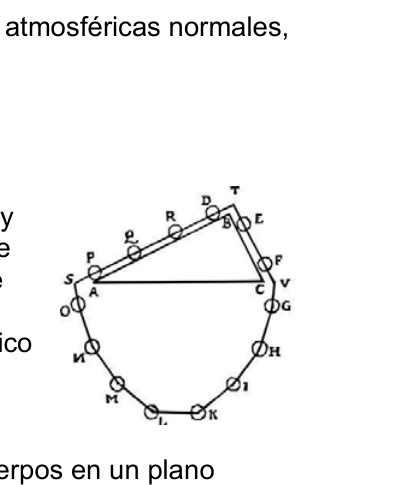
Simon Stevin (1548 - 1620), fue un matemático de origen
flamenco, ingeniero militar e hidraúlico, constructor de molinos y
de fortificaciones, semiólogo, contable e intendente. Fue uno de
los primeros científicos en distinguir entre el equilibrio estable e
inestable en problemas de flotación, y demostró el equilibrio de
un cuerpo en un plano inclinado. Para ello, usó un método gráfico
muy ingenioso e intuitivo, como el de la figura, en el que
empleaba una cuerda sobre un plano inclinado dividida en
intervalos uniformemente distribuidos.
De acuerdo a Las leyes que rigen el comportamiento de los cuerpos en un plano
inclinado enunciadas por primera vez por el gran matemático Stevin, en la segunda
mitad del siglo XVI, resuelva el siguiente problema: un bloque de 5 kg es lanzado
hacia arriba de un plano inclinado 30º con una velocidad de 9,8 m/s. Observamos que
recorre una distancia de 6 metros antes de detenerse y volver a la posición inicial. Calcular: a) La fuerza de rozamiento que actúa sobre el bloque. b) La velocidad con el que llega al punto de partida. c) El trabajo efectuado por la fuerza de roce d) La energía en el punto más alto del plano y la energía al volver a su posición inicial
Topic: Newtonian Mechanics Metodi: Free-Body Diagram, Energy Conservation Method, Kinematic Equations Competenze: Physical Reasoning Objects: Block, Inclined Plane Fonte: Testo (PDF) — p.3
Block on Inclined Plane Friction Energy
PT11. San Fernando della Valle di Catamarca. Blu. Simon Stevin (1548 - 1620), fu un matematico di origine
- il tedesco, ingegnere militare e idraulico, costruttore di mulini e di fortificazioni, semicoltore, contabile e intendente. Era uno di loro. I primi scienziati a distinguere tra equilibrio stabile e equilibrio Infatti, la sua capacità di funzionamento è stata determinata da un’esistenza di problemi di fluttuazione instabili e ha dimostrato l’equilibrio di un corpo in un piano inclinato. Per questo, ha usato un metodo grafico. molto ingegnoso e intuitivo, come quello della figura, in cui Usò una corda su un piano inclinato diviso in intervalli uniformemente distribuiti. Secondo le leggi che regolano il comportamento dei corpi in un piano inclinato state state state affermate per la prima volta dal grande matematico Stevin, nel secondo nel mezzo del XVI secolo, risolve il seguente problema: un blocco di 5 kg viene lanciato. verso l’alto di un piano inclinato a 30° a una velocità di 9,8 m/s. Si osserva che
percorre una distanza di 6 metri prima di fermarsi e tornare alla posizione iniziale. Calcolare: a) La forza di rottura che agisce sul blocco. b) La velocità con cui si arriva al punto di partenza. c) Il lavoro effettuato dalla forza di rottura d) L’energia al punto più alto del piano e l’energia al ritorno alla sua posizione iniziale
Topic: Newtonian Mechanics Metodi: Free-Body Diagram, Energy Conservation Method, Kinematic Equations Competenze: Physical Reasoning Objects: Block, Inclined Plane Fonte: Testo (PDF) — p.3
The Commission shall adopt delegated acts in accordance with Article 21 of Regulation (EC) No 1290/2006.
PT11. San Fernando of the Catamarca Valley. Blue, please. Simon Stevin (1548 - 1620), was a mathematician of origin. Flemish, military and hydraulic engineer, mill builder and of fortifications, semiologist, accountant and intendant. It was one of the The first scientists to distinguish between stable equilibrium and The resulting fluctuations in the fluctuations in the fluctuations in the fluctuations in the fluctuations in the fluctuations in the fluctuations in the fluctuations in the fluctuations in the fluctuations in the fluctuations in the fluctuations in the fluctuations in the fluctuations in the fluctuations in the fluctuations in the fluctuations in the fluctuations in the fluctuations in the fluctuations in the fluctuations in the fluctuations in the fluctuations in the fluctuations in the fluctuations in the fluctuations in the fluctuations in the fluctuations in the fluctuations in the fluctuations in the fluctuations in the fluctuations in the fluctuations in the fluctuations in the fluctuations in the fluctuations in the fluctuations in the fluctuations in the fluctuations in the fluctuations in the fluctuations in the fluctuations in the fluctuations in the fluctuations in the fluctuations in the fluctuations in the fluctuations in the fluctuations in the fluctuations in the fluctuations in the fluctuations in the fluctuations in the fluctuations in the fluctuations in the fluctuations in the fluctuations in the fluctuations in the fluctuations in the fluctuations in the fluctuations in the fluctuations in the fluctuations. A body on an inclined plane. For this, he used a graphical method. Very ingenious and intuitive, like the figure, in which It used a rope on an inclined plane divided into uniformly distributed intervals. According to the laws governing the behavior of bodies on a plane. inclined to first uttered by the great mathematician Stevin, in the second In the middle of the 16th century, it solves the following problem: a 5 kg block is thrown. upwards of a 30° inclined plane at a speed of 9,8 m/s. We notice that
It travels a distance of 6 metres before stopping and returning to the starting position. Calculation: (a) The frictional force acting on the block. (b) The speed at which it reaches the starting point. (c) Work performed by friction force (d) Energy at the highest point of the plane and energy returning to its initial position
Topic: Newtonian Mechanics Metodi: Free-Body Diagram, Energy Conservation Method, Kinematic Equations Competenze: Physical Reasoning Objects: Block, Inclined Plane Fonte: Testo (PDF) — p.3
Parallel Resistor Circuit Ammeters Voltmeter
PT12. San Fernando del Valle de Catamarca. Azul. Se puede afirmar que un circuito eléctrico es un conjunto de elementos correctamente interrelacionados, que permite el establecimiento de una corriente eléctrica y su transformación en energía utilizable para cada aplicación concreta. En el circuito de la figura, el amperímetro A2 marca una intensidad de 0,25 A. Calcular: a) La intensidad medida por los amperímetros A1 y A3. b) La caída de tensión medida por el voltímetro V. c) El valor de la resistencia r d) La resistencia equivalente del circuito
Topic: Circuits Metodi: Kirchhoff’s Laws, Equivalent Circuit Reduction Competenze: Physical Reasoning Objects: Resistor, Battery, Galvanometer Fonte: Testo (PDF) — p.3
Parallel Resistor Circuit Ammeters Voltmeter
PT12. San Fernando della Valle di Catamarca. Blu. Si può affermare che un circuito elettrico è un insieme di elementi correttamente La struttura di un’area di energia elettrica è interrelazionata, che consente di stabilire un flusso elettrico e di La trasformazione in energia utilizzabile per ogni applicazione concreta. En el circuito della figura, l’ampiecatore A2 ha un’intensità di 0,25 A. Calcolare: a) L’intensità misurata dai Amperometri A1 e A3. b) La caduta di tensione misurata dal Voltometro V. c) Il valore della resistenza r d) Resistenza equivalente del circuito
Topic: Circuits Metodi: Kirchhoff’s Laws, Equivalent Circuit Reduction Competenze: Physical Reasoning Objects: Resistor, Battery, Galvanometer Fonte: Testo (PDF) — p.3
The following table shows the number of units of the vehicle:
PT12. San Fernando of the Catamarca Valley. Blue, please. An electrical circuit can be said to be a set of elements correctly The two types of electrical current are interrelated, allowing the establishment of an electric current and its transformation into usable energy for each specific application. En el The figure circuit, the A2 ampere It shall have an intensity of 0,25 A. Calculation: (a) The intensity measured by the Ampheters A1 and A3. (b) The drop in voltage measured by the V voltmeter (c) The value of the resistance r (d) The equivalent resistance of the circuit
Topic: Circuits Metodi: Kirchhoff’s Laws, Equivalent Circuit Reduction Competenze: Physical Reasoning Objects: Resistor, Battery, Galvanometer Fonte: Testo (PDF) — p.3
Iceberg Buoyancy Mass and Weight
PT13. San Fernando del Valle de Catamarca. Verde.
Un iceberg (a veces iceburgo) o
témpano de hielo es un pedazo grande
de hielo dulce flotante desprendido de un
glaciar formado por nieve o de una
plataforma de hielo. Los iceberg son
arrastrados hacia latitudes más bajas, a
veces ayudados por las corrientes
marinas frías de origen ártico, como es el
caso de la Corriente del Labrador o de
Groenlandia. De un iceberg sobresale del agua sólo una octava parte de su volumen
total, por lo que estas masas gélidas constituyen un peligro para la navegación, ya que
pueden alcanzar dimensiones enormes.
Considere que un “iceberg”, con forma aproximada a la de un paralelepípedo, flota en
el fondo del mar de modo que la parte fuera del agua tiene 10m de altura y un área de
100 m2 (ver fig). La parte sumergida tiene una altura de 84 m e igual área. Calcule:
a) El volumen de la parte sumergida del iceberg.
b) La masa del agua desplazada por el volumen calculado en a).
c) El peso del agua desplazada por el iceberg.
d) ¿Qué valor tiene el empuje hidrostático ascendente sobre el iceberg?
(Considere g=10m/s2).
e) ¿Cuál es el valor del peso del iceberg? (Recuerde que el iceberg está flotando en
reposo)
Topic: Fluid Mechanics Metodi: Hydrostatic Equilibrium Competenze: Physical Reasoning Objects: — Fonte: Testo (PDF) — p.3
Iceberg Buoyancy Mass and Weight
PT13. San Fernando della Valle di Catamarca. Verde. Un iceberg (a volte un iceberg) o Il tenpo di ghiaccio è un pezzo grande di dolce ghiaccio galleggiante sceso da un ghiacciaio formato da neve o da una piattaforma di ghiaccio. Gli iceberg sono trascinati verso le latitudini più basse, a A volte aiutati dai correnti Marini freddi di origine artica, come il Il caso del Corrente del Labrador o di Groenlandia. Da un iceberg si esce dall’acqua solo un ottavo del suo volume La maggior parte delle persone che si trovano in questo paese, che si trovano in una zona di mare di mare di alta temperatura, sono i più feriti. possono raggiungere dimensioni enormi. Considera che un iceberg, con una forma approssimativa di un parallelepiedo, fluttuo in il fondo del mare in modo che la parte fuori dall’acqua ha 10 metri di altezza e un’area di 100 m2 (vedi figura). La parte immersa ha un’altezza di 84 m e pari area. Calcola: a) Il volume della parte sotterranea dell’iceberg. b) La massa dell’acqua spostata per il volume calcolato a) c) Il peso dell’acqua spostata dall’iceberg. d) Qual è il valore della spinta idrostatica ascendente sull’iceberg? (Considera g=10m/s2). e) Qual è il valore del peso dell’iceberg? (Ricorda che l’iceberg è galleggiante in riposo)
Topic: Fluid Mechanics Metodi: Hydrostatic Equilibrium Competenze: Physical Reasoning Objects: — Fonte: Testo (PDF) — p.3
The following table shows the total weight of the product:
PT13. San Fernando of the Catamarca Valley. Green, please. An iceberg (sometimes an iceberg) or The ice-cream is a big piece. of fresh floating ice detached from a glacier formed by snow or a ice shelf. The icebergs are Dragged to lower latitudes, to Sometimes helped by the currents Cold seas of arctic origin, such as the The case of the Labrador Current or of Greenland. From an iceberg rises water only one eighth of its volume The total amount of ice is therefore a danger to navigation, as They can reach enormous dimensions. Consider that an iceberg, with a shape approximating that of a parallel-pile, floats on a The bottom of the sea so that the outer part of the water is 10 meters high and an area of 100 m2 (see figure). The submerged part is 84 m high and has the same area. Calculate: (a) The volume of the submerged part of the iceberg. (b) The mass of water displaced by the volume calculated in (a). (c) The weight of water displaced by the iceberg. (d) What is the value of the upward hydrostatic thrust over the iceberg? (Consider g = 10m/s2). (e) What is the weight value of the iceberg? (Remember the iceberg is floating in rest)
Topic: Fluid Mechanics Metodi: Hydrostatic Equilibrium Competenze: Physical Reasoning Objects: — Fonte: Testo (PDF) — p.3
Block on Frictionless Table Moon vs Earth
PT14. San Fernando del Valle de Catamarca. Verde. La Luna es el único satélite natural de la Tierra. Es el cuerpo más cercano y el mejor conocido. La distancia media entre el centro de la Tierra y la Luna es de 384.400 km. Su diámetro (3.474 km) es de menos de un tercio del terrestre, su superficie es una catorceava parte (37.932.330 km2), y su volumen alrededor de una cincuentava parte
(21.860.000.000 km3). El estudio de la Luna ha tenido una enorme importancia a la hora de comprender y desarrollar la nueva teoría sobre la fuerza de gravedad. Suponga que bloque de masa 0.5kg se desplaza sin fricción sobre una mesa, por la acción de una fuerza horizontal de 2N. Imagine que este experimento se realizara en la Luna, con el mismo bloque impulsado por la misma fuerza y sobre la misma mesa. Considere, en la Tierra, g=9.8m/s2 y en la Luna g= 1.6m/s2. Entre las afirmaciones siguientes señale las que son correctas: a) En la Tierra, al ser impulsado sobre la mesa, adquiere una aceleración de 4m/s2. b) La masa del bloque, en la Luna, es igual a 0.5kg. c) En la Luna el bloque, al ser impulsado sobre la mesa, adquiere una aceleración de 4m/s2. d) El peso del bloque, en la Tierra, es de 5N. e) El peso del bloque, en la Luna, es de 0.80N.
Topic: Newtonian Mechanics Metodi: Free-Body Diagram, Kinematic Equations Competenze: Physical Reasoning Objects: Block Fonte: Testo (PDF) — p.3
Blocco su Frictionless Table Moon vs Earth
PT14. San Fernando della Valle di Catamarca. Verde. La Luna è l’unico satellite naturale della Terra. È il corpo più vicino e migliore . Conosciuto. La distanza media tra il centro della Terra e la Luna è di 384.400 km. Il suo diametro (3.474 km) è di meno di un terzo della superficie terrestre, la sua superficie è di un’immagine di circa un milione di metri. La sua superficie è di circa un cinquantesimo di superficie.
(21.860.000.000 km3). Lo studio della Luna ha avuto un’enorme importanza per la È ora di comprendere e sviluppare la nuova teoria della forza di gravità. Supponiamo che un blocco di massa di 0,5 kg si muova senza attrito su un tavolo, per la azione di una forza orizzontale di 2N. Immaginate che questo esperimento sia stato fatto in la Luna, con lo stesso blocco spinto dalla stessa forza e sulla stessa tavola. Considera, sulla Terra, g=9.8m/s2 e sulla Luna g=1.6m/s2. Tra le affermazioni indicare quali sono le corrette: a) Su Terra, quando viene spinta sul tavolo, acquisisce un’accelerazione di 4m/s2. b) La massa del blocco sulla Luna è pari a 0,5 kg. c) sulla luna il blocco, quando viene spinto sulla tavola, acquista un’accelerazione di 4m/s2. d) Il peso del blocco sulla Terra è di 5N. e) Il peso del blocco sulla Luna è di 0,80 N.
Topic: Newtonian Mechanics Metodi: Free-Body Diagram, Kinematic Equations Competenze: Physical Reasoning Objects: Block Fonte: Testo (PDF) — p.3
The first is the “Block on Frictionless Table Moon vs Earth”.
PT14. San Fernando of the Catamarca Valley. Green, please. The Moon is the only natural satellite on Earth. It ‘s the closest body and the best . I know you. The average distance between the Earth’s center and the Moon is 384,400 km. Its diameter (3,474 km) is less than one third of the land area, its surface is a The area covered by the project is approximately one-fifth of the total area of the project.
(21.860.000.000 km3). The study of the moon has been of enormous importance to the It’s time to understand and develop the new theory of gravity. Suppose a block of 0.5kg mass moves frictionlessly over a table, by the action of a horizontal force of 2N. Imagine this experiment being done in The Moon, with the same block pushed by the same force and on the same table. Consider, on Earth, g=9.8m/s2 and on the Moon g=1.6m/s2. Among the claims Please indicate the correct ones: (a) On Earth, when pushed over the table, it acquires an acceleration of 4m/s2. (b) The mass of the block on the Moon is equal to 0.5kg. (c) On the Moon, the block, when pushed over the table, gains an acceleration of 4m/s2. d) The weight of the block on Earth is 5N. (e) The weight of the block on the Moon is 0.80N.
Topic: Newtonian Mechanics Metodi: Free-Body Diagram, Kinematic Equations Competenze: Physical Reasoning Objects: Block Fonte: Testo (PDF) — p.3
Coulomb Force and Electron Orbital Speed
PT15. San Fernando del Valle de Catamarca. Verde. En un átomo de hidrógeno, el electrón gira alrededor del protón en una órbita circular cuyo radio vale aproximadamente 5x10-11 m. Considerando que la masa del electrón es de 9x10 -31 kg, calcule: a) La fuerza de atracción eléctrica entre el protón y el electrón (qp=qe= 1.6x10⁻¹⁹ C) b) La velocidad con la cual gira en torno al protón (recuerde que la fuerza centrípeta del electrón la proporciona la atracción eléctrica que el protón ejerce sobre él.
Topic: Electrostatics Metodi: Coulomb’s Law Competenze: Physical Reasoning Objects: Electron, Atom Fonte: Testo (PDF) — p.3
Coulomb Force and Electron Orbital Speed
PT15. San Fernando della Valle di Catamarca. Verde. In un atomo di idrogeno, l’elettrone gira intorno al protone in un’orbita circolare. il cui raggio è di circa 5x10-11 m. Considerando che la massa dell’elettrone è di 9x10 -31 kg, calcola: a) La forza di attrazione elettrica tra il protone e l’elettrone (qp=qe= 1.6x10⁻¹⁹ C) b) La velocità con cui gira intorno al protone (ricorda che la forza centripetata L’elettro viene da esso fornito dall’attrazione elettrica che il protone esercita su di esso.
Topic: Electrostatics Metodi: Coulomb’s Law Competenze: Physical Reasoning Objects: Electron, Atom Fonte: Testo (PDF) — p.3
The following information is provided for in the Annex to Regulation (EU) No 1303/2013.
PT15. San Fernando of the Catamarca Valley. Green, please. In a hydrogen atom, the electron rotates around the proton in a circular orbit. a radius of approximately 5 x 10-11 m. Considering that the mass of the electron is 9x10 -31 kg, calculate: (a) The electrical attraction force between the proton and the electron (qp=qe= 1.6x10⁻¹⁹ C) (b) The speed at which it rotates around the proton (remember that the centrifugal force The electron is given by the electrical attraction that the proton exerts on it.
Topic: Electrostatics Metodi: Coulomb’s Law Competenze: Physical Reasoning Objects: Electron, Atom Fonte: Testo (PDF) — p.3
Mirror Ball Rope Tension Equilibrium
PT16. Bryn Gwyn, Chubut. Verde.
Los alumnos de 3er año de polimodal preparan el salón de fiestas, para la entrega de
diplomas y posterior baile de fin de curso, entre todos fabricaron una enorme bola de
espejos de unos 5 kgf la que colgaran en el salón.
El mismo cuenta con columnas enfrentadas, de una altura aproximada de 4.50 m y
distante entre ellas 20 m.
Los alumnos pasan una cuerda de columna a columna y colocan en el medio la bola
de espejos, si el ángulo formado entre la cuerda y una de las columnas es de 82º:
- Esquematice la situación propuesta.
- Realice el diagrama de cuerpo aislado
- Calcule las tensiones de la cuerda que sostienen a la bola de espejos.
- Como son esas tensiones?
- Cual será la distancia que desciende la bola cuando fue colgada, con respecto a la horizontal si los ángulos con respecto a las columnas son de 85º
Topic: Rigid Body Statics Metodi: Free-Body Diagram, Vector Decomposition Competenze: Physical Reasoning Objects: String, Sphere Fonte: Testo (PDF) — p.3
Mirror Ball Rope Tension Equilibrium
PT16. Bryn Gwyn, Chubut. Verde. Gli studenti del 3° anno di polimodal preparano la sala feste, per la consegna di diplomi e poi balletto di fine anno, tra tutti hanno fatto una enorme palla di specchi di circa 5 kgf che appendere nel salotto. La stessa ha colonne di fronte, di una altezza approssimativa di 4.50 m e Distanza tra di loro 20 m. Gli studenti passano una corda colonna a colonna e mettono la palla in mezzo. di specchi, se l’angolo formato tra la corda e una delle colonne è di 82°:
- Scalda la situazione proposta.
- Fate il diagramma del corpo isolato.
- Calcola le tensioni della corda che sostiene la palla specchiata.
- Come sono quelle tensioni?
- Qual è la distanza che scende la palla quando è stata appesa, rispetto a orizzontale se gli angoli rispetto alle colonne sono di 85°
Topic: Rigid Body Statics Metodi: Free-Body Diagram, Vector Decomposition Competenze: Physical Reasoning Objects: String, Sphere Fonte: Testo (PDF) — p.3
The following table shows the results of the tests:
PT16. Bryn Gwyn, Chubut. Green, please. The 3rd year students of polymodal prepare the party hall for the delivery of diplomas and later prom, amongst all they made a huge ball of I’ll have some 5kg mirrors hanging in the living room. It has facing columns, of a height of approximately 4.50 m and distance between them 20 m. Students pass a string from column to column and place the ball in the middle. of mirrors, if the angle formed between the string and one of the columns is 82°:
- The proposed situation is sketched.
- Make the isolated body diagram .
- Calculate the tensions of the rope that holds the mirror ball.
- What’s with the tension?
- What distance will the ball go down when it was hung, relative to the horizontal if the angles with respect to the columns are 85o
Topic: Rigid Body Statics Metodi: Free-Body Diagram, Vector Decomposition Competenze: Physical Reasoning Objects: String, Sphere Fonte: Testo (PDF) — p.3
Car Down Incline Energy Conservation
PT17. Bryn Gwyn, Chubut. Verde. En la ciudad de Trelew, encontramos una interesante bajada…un hermoso plano inclinado! Ideal para confeccionar el problema que nos faltaba para presentarnos en las Olimpíadas de Física!, teodolito en mano determinamos la altura del plano que fue de 50 m arrojando un ángulo de 15ºcon respecto a la horizontal. Nos subimos a mi autito, un Ford Ka de peso máximo 1.265 kg y a jugar!!, nos lanzamos por el plano inclinado, en “punto muerto” y tardamos 10 segundos en bajar, considerando despreciable el rozamiento de las superficies y del aire determina:
- Energía mecánica del sistema (expresado en kilo joule)
- Energía cinética en la mitad del recorrido.
- Velocidad máxima alcanzada.
- Longitud del plano inclinado.
- La fuerza que impulsa al auto.
- La aceleración que adquirió el mismo.
Topic: Conservation of Energy Metodi: Energy Conservation Method, Kinematic Equations Competenze: Physical Reasoning Objects: Inclined Plane Fonte: Testo (PDF) — p.3
Car Down Incline Energy Conservation
PT17. Bryn Gwyn, Chubut. Verde. Nella città di Trelew, troviamo un interessante scalo. Inclinato! Ideale per creare il problema che ci mancava per presentarci in Le Olimpiadi di Fisica! Teodoto in mano determinato l’altezza del piano che era 50 m, con un angolo di 15° con riguardo al orizzontale. Siamo saliti sul mio autotopo, un Ford Ka di massimo 1.265 kg e giocare!!, noi lanciamo per il piano inclinato, in punto morto e ci vogliono 10 secondi per scendere. Considerando scarsa la ruggine delle superfici e dell’aria determina:
- Energia meccanica del sistema (espressa in kilo joule)
- Energia cinetica a metà percorso.
- Velocità massima raggiunta.
- Lunghezza del piano inclinato.
- La forza che spinge la macchina.
- L’accelerazione che ha acquisito lo stesso.
Topic: Conservation of Energy Metodi: Energy Conservation Method, Kinematic Equations Competenze: Physical Reasoning Objects: Inclined Plane Fonte: Testo (PDF) — p.3
The Commission has also adopted a number of measures to ensure that the Commission is able to take appropriate measures to ensure that the measures are implemented in accordance with the common position.
PT17. Bryn Gwyn, Chubut. Green, please. In the town of Trelew, we find an interesting descent. Bowed down! Ideal for making up the problem we were missing to present ourselves at The Olympics of Physics! Theodotus in hand we determined the height of the plane that was 50 m by throwing an angle of 15° with respect to the horizontal. We got on my car, a Ford Ka weighing a maximum of 1,265 kg and we went to play!!, we We’re throwing down the slope, at the dead end, and it takes us 10 seconds to get down. Considering the scratching of surfaces and air to be negligible, it determines:
- Mechanical energy of the system (expressed in kilo joule)
- Kinetic energy in the middle of the route.
- Maximum speed reached.
- Length of the inclined plane.
- The force that drives the car.
- The acceleration he acquired the same.
Topic: Conservation of Energy Metodi: Energy Conservation Method, Kinematic Equations Competenze: Physical Reasoning Objects: Inclined Plane Fonte: Testo (PDF) — p.3
Three Point Charges Forces and Field
PT18. Bryn Gwyn, Chubut. Verde. Dada la configuración de cargas que se observan en el dibujo adjunto, calcular
- la fuerza que actúa sobre cada una de las cargas.
- Calcule el valor de la intensidad de campo eléctrico que afectaría a la q3
q1= - 4 x 10⁻³ C. q2= - 2 x 10⁻⁴ C. q3=+5 x 10⁻⁴ C.
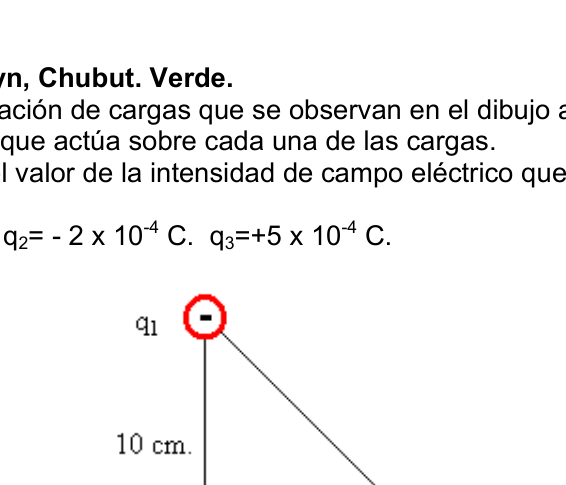
Topic: Electrostatics Metodi: Coulomb’s Law, Superposition Principle, Vector Decomposition Competenze: Physical Reasoning Objects: Point Charge Fonte: Testo (PDF) — p.3
Three Point Charges Forces and Field
PT18. Bryn Gwyn, Chubut. Verde. Data la configurazione delle cariche osservata nel disegno allegato, calcolare
- la forza che agisce su ciascuna delle cariche.
- Calcolare il valore dell’intensità del campo elettrico che influenzerebbe la q3
q1= - 4 x 10⁻³ C. q2= - 2 x 10⁻⁴ C. q3=+5 x 10⁻⁴ C.
Topic: Electrostatics Metodi: Coulomb’s Law, Superposition Principle, Vector Decomposition Competenze: Physical Reasoning Objects: Point Charge Fonte: Testo (PDF) — p.3
The Commission shall adopt delegated acts in accordance with Article 21 of this Regulation.
PT18. Bryn Gwyn, Chubut. Green, please. Given the configuration of loads as shown in the attached diagram, calculate
- the force acting on each of the charges.
- Calculate the value of the electric field intensity that would affect the q3
q1= - 4 x 10⁻³ C. q2= - 2 x 10⁻⁴ C. q3=+5 x 10⁻⁴ C.
Topic: Electrostatics Metodi: Coulomb’s Law, Superposition Principle, Vector Decomposition Competenze: Physical Reasoning Objects: Point Charge Fonte: Testo (PDF) — p.3
Piston Pulled by Dog Friction and Work
PT19. Ciudad de Buenos Aires. Verde. Un perro trabajador. Un perrito tira de una cuerda, vinculada a un pistón de plomo, que puede deslizar por el interior de un bloque de acero, a través de una cavidad cilíndrica. A la temperatura de 18°C, por efecto de la dilatación de ambos materiales, el pistón ejerce una presión sobre las paredes de la cavidad cilíndrica de 1000 Pa. Se desprecia el rozamiento entre la cuerda y la polea; el aire encerrado en la cavidad es evacuado hacia el exterior. Calcular: a) ¿Cuáles serán los valores máximo y minimo de la fuerza con la que debería tirar el perrito para que el bloque permanezca en reposo? b) ¿Cuál es la aceleración del sistema si el perro tira con una fuerza de 50 N? c) ¿Cuál es el trabajo realizado por el perro (tirando con 50N) en 1 segundo? (si el sistema se encontraba en reposo) d) Si estando el sistema en reposo, con el pistón ubicado a 50 cm del fondo de la cavidad, y la cuerda se rompe, ¿con qué velocidad llega el pistón al fondo?
Datos: Masa del pistón: 14,5 kg
Coeficientes de rozamiento acero-plomo: µ estático = 0,9
µ dinámico = 0,8
Dimensiones del pistón a 18°C: altura= 15,9 cm
radio= 5 cm
Considerar: aceleración de la gravedad: g= 10m/s2 Masa del pistón = 14,5 Kg.
Topic: Newtonian Mechanics Metodi: Free-Body Diagram, Energy Conservation Method, Kinematic Equations Competenze: Physical Reasoning, Mathematical Modeling Objects: Piston, String, Pulley, Block Fonte: Testo (PDF) — p.3
Piston Pulled by Dog Friction and Work
PT19. Città di Buenos Aires. Verde. Un cane da lavoro. Un cane tira una corda, legata a un pistone di piombo, che può scivolare per l’interno di un blocco di acciaio, attraverso una cavità cilindrica. Alla temperatura di 18°C, per effetto della dilatazione di entrambi i materiali, il pistone esercita una pressione sulle pareti della cavità cilindrica di 1000 Pa. Il taglio è disprezzato. tra la corda e la polea; l’aria chiusa nella cavità viene evacuata verso il all’esterno. Calcolare: a) Quali saranno i valori massimo e minimo di forza con cui dovrei buttare il cane. Per mantenere il blocco
- In riposo? b) Qual è l’accelerazione del sistema se il cane tira con una forza di 50 N? c) Qual è il lavoro svolto da Il cane (sparando con 50N) in 1 Secondo? (se il sistema si (Sono in riposo) d) Se il sistema è a riposo, con il pistone a 50 cm di distanza dal fondo della cavità, e la corda se si rompe, a che velocità il pistone arriva al fondo?
Data: Massa del pistone: 14,5 kg
Coefficienti di rasatura in acciaio-piombo: μ statico = 0,9
μ dinamico = 0,8
Dimensioni del pistone a 18°C: altezza= 15,9 cm
radio= 5 cm Considerare: accelerazione della gravità: g= 10m/s2 Massa del pistone = 14,5 kg.
Topic: Newtonian Mechanics Metodi: Free-Body Diagram, Energy Conservation Method, Kinematic Equations Competenze: Physical Reasoning, Mathematical Modeling Objects: Piston, String, Pulley, Block Fonte: Testo (PDF) — p.3
Piston Pulled by Dog Friction and Work
PT19. City of Buenos Aires. Green, please. A working dog. A puppy pulls a rope, tied to a lead piston, which can slide through it. inside a steel block, through a cylindrical cavity. At the temperature . The piston is pressurized by the dilation of both materials. over the walls of the 1000 Pa cylindrical cavity. He despises the grating . between the rope and the pulley; the air locked in the cavity is evacuated to the outside. Calculation: (a) What will be the values maximum and minimum strength I should throw the puppy away with . So the block stays. At rest? (b) What is the acceleration of the system if the dog throws with a force of 50 N? (c) What is the work done by The dog (shooting with 50N) in 1 Second? (if the system is I was at rest. (d) If the system is at rest, with the piston located 50 cm from the bottom of the cavity, and the rope breaks, how fast does the piston reach the bottom?
The weight of the piston: 14,5 kg
Lead-steel friction coefficients: The following table shows the following:
The following is the list of the following:
Piston dimensions to 18°C: height= 15,9 cm
radius = 5 cm Consider: acceleration of gravity: g= 10m/s2 The mass of the piston is 14.5 kg.
Topic: Newtonian Mechanics Metodi: Free-Body Diagram, Energy Conservation Method, Kinematic Equations Competenze: Physical Reasoning, Mathematical Modeling Objects: Piston, String, Pulley, Block Fonte: Testo (PDF) — p.3
Laser Refraction Through Quarter Cylinder Mirror
PT20. Ciudad de Buenos Aires. Verde. ¿Más rápido que un rayo? Un haz de luz laser incide verticalmente sobre un cuarto de cilindro, de índice de refracción n= 1,5, en el punto B que se encuentra en la tercera parte de la longitud del arco CA. Sobre la base del cuarto cilindro se encuentra un espejo E, cuyo eje (perpendicular a la base DA) se ubica en el punto de incidencia del rayo sobre la base DA. Determinar: a) ¿Cuál es el ángulo de incidencia del rayo sobre el cuarto de cilindro? b) ¿Con qué ángulo se refracta en el cuarto de cilindro? c) El ángulo α que debe girarse el espejo para que el rayo pase por el punto D, luego de reflejarse. d) ¿Cuál es la distancia total que recorre el rayo dentro del cuarto de cilindro? e) El tiempo que tarda el rayo en realizar su recorrido dentro del cuarto de cilindro Datos: C0= 300000 km/seg
AD = 1m
Topic: Geometric Optics Metodi: Snell’s Law, Ray Tracing Competenze: Physical Reasoning, Mathematical Modeling Objects: Prism, Mirror Fonte: Testo (PDF) — p.3
Laser Refraction Through Quarter Cylinder Mirror
PT20. Città di Buenos Aires. Verde. Più veloce di un fulmine? Un raggio di luce laser incide verticalmente su un quarto di cilindro, di indice di la rifrazione n= 1,5, nel punto B che si trova nella terza parte della lunghezza del arco CA. Sulla base del quarto cilindro si trova uno specchio E, il cui asse (perpendicolare alla base DA) si trova al punto di incidenza del raggio sulla base DA. Determinare: a) Qual è l’angolo di incidenza del raggio sul quarto cilindro? b) A quale angolo si rifracca il quarto cilindro? c) L’angolo α che deve essere girato per far passare il raggio dal punto D, dopo aver riflettuto. d) Qual è la distanza totale che il raggio percorre all’interno del quarto cilindro? e) Il tempo impiegato dal raggio per percorrersi all’interno del quarto cilindro Data: C0= 300000 km/sec
AD = 1m
Topic: Geometric Optics Metodi: Snell’s Law, Ray Tracing Competenze: Physical Reasoning, Mathematical Modeling Objects: Prism, Mirror Fonte: Testo (PDF) — p.3
The following is the list of the main components of the laser refraction system used in the manufacture of the laser:
PT20. City of Buenos Aires. Green, please. Faster than a lightning bolt? A laser beam of light hits vertically on a quarter cylinder, index of The reference value of the reference axis is the reference value of the reference axis. The CA arc. At the base of the fourth cylinder is an E mirror, whose axis (perpendicular to the DA base) is located at the beam impact point on the base DA. Determine: (a) What is the angle of impact of the beam over the cylinder quarter? (b) At what angle does the cylinder quarter fracture? (c) The angle α at which the mirror must be rotated to allow the beam to pass through point D, After reflecting. (d) What is the total distance travelled by the beam within the cylinder quarter? (e) The time it takes for lightning to travel within the cylinder compartment The data are: C0= 300000 km/second
AD = 1m
Topic: Geometric Optics Metodi: Snell’s Law, Ray Tracing Competenze: Physical Reasoning, Mathematical Modeling Objects: Prism, Mirror Fonte: Testo (PDF) — p.3
DC Motor and Lamps Parallel Circuit
PT21. Ciudad de Buenos Aires. Verde. Armando un circuito sencillo Un motor de corriente contínua entrega una potencia de 745 Watt a 220V, y tiene un rendimiento del 83%. Se conecta en paralelo con 4 lámparas de 50 Watt/ 220V , las cuales trabajan a tensión nominal, suministrada por un generador de V= 250 V y resistencia interna ri. a) Representar el circuito b) ¿Cuál es la potencia absorbida por el motor? c) ¿Qué corriente circula por el circuito y cuál es la carga que circula en ¼ de hora? d) ¿Qué corriente circula por cada lámpara? e) ¿Cuál es la energía entregada por el motor el ½ hora? f) ¿Cuál es la resistencia interna ri del generador?
Topic: Circuits Metodi: Kirchhoff’s Laws, Equivalent Circuit Reduction Competenze: Physical Reasoning Objects: Battery, Resistor Fonte: Testo (PDF) — p.3
DC Motor and Lamps Parallel Circuit
PT21. Città di Buenos Aires. Verde. Armatando un circuito semplice Un motore a corrente continua fornisce una potenza di 745 watt a 220V, e ha un Rendizioni dell’83% Si collega in parallelo con 4 lampade da 50 Watt / 220V , le che funzionano a tensione nominale, fornita da un generatore di V= 250 V e resistenza interna. a) Rappresentare il circuito b) Qual è la potenza assorbita dal motore? (c) Qual è il corrente che circola nel circuito e quale è la carica che circola in 1⁄4 di
- Ora? d) Che corrente circola per ogni lampada? e) Qual è l’energia fornita dal motore in mezzo ora? (f) Qual è la resistenza interna del generatore?
Topic: Circuits Metodi: Kirchhoff’s Laws, Equivalent Circuit Reduction Competenze: Physical Reasoning Objects: Battery, Resistor Fonte: Testo (PDF) — p.3
The following information is provided for in the Annex to Implementing Regulation (EU) No 1303/2013.
PT21. City of Buenos Aires. Green, please. By setting up a simple circuit. A DC motor delivers a power of 745 watts to 220V, and has a The rate of return is 83%. It is connected in parallel with 4 50 Watt/ 220 V lamps , the The power output of the engine is not less than 0,5% of the rated power output of the engine. The internal resistance is ri. (a) Representing the circuit (b) What is the power absorbed by the engine? (c) What current is circulating in the circuit and what is the load circulating in 1⁄4 of the circuit What time? (d) What current is flowing through each lamp? (e) What is the power delivered by the engine in 1⁄2 hour? (f) What is the internal resistance of the generator?
Topic: Circuits Metodi: Kirchhoff’s Laws, Equivalent Circuit Reduction Competenze: Physical Reasoning Objects: Battery, Resistor Fonte: Testo (PDF) — p.3
Fountain Projectile Rebounds and Atmospheric Refraction
PT22. Ciudad de Buenos Aires. Azul.
La fuente del conocimiento
Un paisajista le encarga a usted la siguiente tarea: determinar las dimensiones de un
cilindro que rodee a una fuente giratoria (altura y radio). Para determinar el radio (R)
se pide que el agua que sale de ella no salpique (o al menos no considerablemente)
las paredes de dicho recipiente. Para determinar el alto (H) se pide que la altura
máxima alcanzada por el fluido quede contenida en el mismo.
Usted comienza haciendo ciertas averiguaciones. La velocidad que se le imprime al
agua al salir de la fuente es v0, que puede ser orientada con un ángulo arbitrario
(0°< α < 90°). Pero además de la distancia que dicho elemento de fluido puede alcanzar a partir del impulso inicial, entregado por la fuente, debe considerar los posibles rebotes en la propia superficie del líquido. Para ello usted averigua que el choque que se produce entre una gotita y la superficie del líquido es inelástico, conservándose sólo una cuarta parte de la energía, y que la resistencia con el aire resulta despreciable en este caso.
Figura 1: Esquema de la fuente con el reservorio que lo alimenta y cilindro que contiene el conjunto. La rotación de la fuente es cuasi estacionaria (es decir se mueve muy lentamente).
Piense entonces: i)¿Cuántos rebotes cree necesario considerar y con qué criterio? ii)¿Qué distancia recorre en cada uno de ellos? iii)¿Qué altura alcanza la gota en las sucesivas caídas?
- Finalmente provéale al paisajista los datos necesarios para la construcción del
recipiente considerando que el agua puede ser dirigida en un ángulo arbitrario.
Halle una expresión de la altura (H) y el radio (R) en función de la mínima
cantidad de parámetros posibles.
NOTA: Considere que la velocidad a la que rota la fuente no introduce variaciones en la forma de la superficie del agua ni tampoco le agrega una componente tangencial en la velocidad de la partícula de fluido que deba ser considerada en los cálculos.
Figura 2: Vista lateral de la fuente con el reservorio. Se indican los datos requeridos (H y R).
Suponga que el agua que sale por el orificio se encontraba en un reservorio abierto que contiene una columna de agua de 1m de altura. De modo que al abrir la llave de paso, que alimenta dicha fuente, un elemento de fluido (de 1cm3 de volumen) que se encontraba en el fondo del recipiente (en reposo) es impulsado a través de una pequeña tubería de 0.1cm de radio y 20cm de largo.
- A partir de estos datos estime el valor de la velocidad con que salen las partículas de fluido del orificio (con α=30º).
DATOS QUE PUEDEN SER ÚTILES δH2O (densidad del agua) = 1kg/lt p0 (presión atmosférica) = 1013 HPa
Topic: Newtonian Mechanics, Geometric Optics Metodi: Kinematic Equations, Conservation of Energy, Snell’s Law Competenze: Physical Reasoning, Mathematical Modeling Objects: Droplet Fonte: Testo (PDF) — p.3
Fountain Projectile Rebounds and Atmospheric Refraction
PT22. Città di Buenos Aires. Blu. La fonte della conoscenza Un paesaggista ti incaricherà di determinare le dimensioni di un’area. cilindro che circonda una fonte rotante (altezza e raggio). Per determinare il radio (R) si chiede che l’acqua che ne esce non si spacchi (o almeno non notevolmente) i muri di tale contenitore. Per determinare l’altezza (H) si richiede che l’altezza la massima raggiunta dal fluido è contenuta nel liquido. Tu inizi a fare alcune ricerche. La velocità che viene stampata su L’acqua che esce dalla sorgente è v0, che può essere orientata con un angolo arbitrario.
(0°< α < 90°). Ma oltre alla distanza che tale elemento di fluido può L’obiettivo di questo progetto è quello di promuovere la crescita economica e sociale. eventuali rimbalzi sulla superficie del liquido. Per questo si scopre che il l’impatto che si verifica tra una goccia e la superficie del liquido è inelastico, conservando solo un quarto dell’energia, e che la resistenza con l’aria E’ disprezzabile in questo caso.
Figura 1: Schema della fonte con il serbatoio che la alimenta e cilindro che contiene l’insieme. La rotazione della sorgente è quasi stazionaria (cioè si muove) molto lentamente).
Pensate allora: i) Quanti rimbalzi pensate che siano necessari e con cosa
- Il criterio? (ii) Che distanza percorre in ciascuno di essi? iii)Quale altezza raggiunge? la goccia nelle successive cadute?
- Infine, fornisce al paesaggista i dati necessari per la costruzione del contenitore considerando che l’acqua può essere diretta all’angolo arbitrario. Trova un’espressione dell’altezza (H) e del raggio (R) in funzione del minimo numero di parametri possibili. NOTA: Considera che la velocità di rotazione della fonte non introduce variazioni in La forma della superficie dell’acqua non ne aggiunge un componente tangenziale. la velocità della particella di fluido da considerare nei calcoli.
Figura 2: Vista laterale della sorgente con il serbatoio. Indicare i dati richiesti (H y R).
Supponiamo che l’acqua che scorre dal buco sia in un serbatoio aperto. che contiene una colonna d’acqua alta 1 metro. Quindi aprendo la chiave di Il passaggio, che alimenta tale fonte, un elemento di fluido (di 1 cm3 di volume) che si Il contenitore è stato ripreso in un recipiente. piccolo tubo di 0,1 cm di raggio e 20 cm di lunghezza.
- Sulla base di questi dati, calcoli il valore della velocità con cui le particelle di fluido del foro (con α=30o).
Dati che possono essere utili δH2O (densità dell’acqua) = 1kg/lt P0 (pressione atmosferica) = 1013 HPa
Topic: Newtonian Mechanics, Geometric Optics Metodi: Kinematic Equations, Conservation of Energy, Snell’s Law Competenze: Physical Reasoning, Mathematical Modeling Objects: Droplet Fonte: Testo (PDF) — p.3
The following information is provided for in the Annex to Regulation (EU) No 1303/2013.
PT22. City of Buenos Aires. Blue, please. The source of knowledge A landscape designer will assign you the following task: to determine the dimensions of a cylinder surrounding a rotating source (height and radius). For the determination of radius (R) The water from the tank is not to splash (or at least not considerably) the walls of that container. To determine the height (H) the height is required The maximum reached by the fluid is contained in the same. You start by doing certain inquiries. The speed at which the print is printed Water coming out of the source is v0, which can be oriented at an arbitrary angle.
(0°< α < 90°). But in addition to the distance that such a fluid element can The Commission’s proposal for a directive on the protection of workers from the risks of the use of the environment and the environment is to be taken into account. possible booms on the surface of the liquid itself. For that you find out that the The impact between a droplet and the surface of the liquid is inelastic. conserving only a quarter of the energy, and that resistance to air. It’s despicable in this case.
Figure 1: Scheme of the source with the reservoir feeding it and cylinder that It contains the whole. The rotation of the source is quasi-stationary (i.e. it moves Very slowly).
Think then: i) How many rebounds do you think you need to consider and with what? The criteria? (ii) What distance does each travel? (iii) What height does it reach? The drop in successive falls?
- Finally, provide the landscape designer with the data necessary for the construction of the vessel considering that water can be directed at an arbitrary angle. Find an expression of height (H) and radius (R) as a function of minimum the number of possible parameters. NOTE: Consider that the speed at which the source rotates does not cause variations in The shape of the water surface does not add a tangential component to it either. the velocity of the fluid particle to be taken into account in the calculations.
Figure 2: Side view of the fountain with the reservoir. The data required are given (H y R).
Suppose the water coming out of the hole was in an open reservoir . which contains a column of water 1 m high. So when you open the key to The source of the fluid is a fluid element (volume 1 cm3) which is The container is located at the bottom of the container (at rest) and is driven through a small pipe with a radius of 0.1 cm and a length of 20 cm.
- From these data estimate the value of the speed at which the Particles of fluid in the hole (with α=30o).
Data That Can Be Useful δH2O (water density) = 1kg/lt The following conditions shall apply:
Topic: Newtonian Mechanics, Geometric Optics Metodi: Kinematic Equations, Conservation of Energy, Snell’s Law Competenze: Physical Reasoning, Mathematical Modeling Objects: Droplet Fonte: Testo (PDF) — p.3
Geostationary Satellite Orbit and Beam Refraction
PT23. Ciudad de Buenos Aires. Azul.
Puesta en órbita.
Una nave tiene como misión poner en órbita un satélite de comunicaciones. Si se
requiere que el satélite permanezca sobre un mismo punto del ecuador de la Tierra
describiendo una órbita circular calcule:
a) la altura a la que debe ubicarse para que esto sea posible;
b) la velocidad que posee.
Si dicha nave se encontraba originalmente en una órbita a 10000km de altura (medida
desde la superficie de la Tierra):
c) ¿cuál es, en porcentaje respecto de la inicial, la diferencia de energías potenciales?
Suponga que el satélite debe reflejar un haz que le es enviado desde el punto P en la
dirección normal. Pero es preciso tener en cuenta que la superficie reflectora forma
con la tangente a la órbita un ángulo de φ. Suponga que la atmósfera puede pensarse
como franjas de medios uniformes cuyos coeficientes se observan en la Fig. 3.
Figura 3: a) Variación del índice de refracción en función de la altura (medida desde la superficie). b) Esquema del punto P y la incidencia del haz sobre el satélite. El ángulo que forman la órbita y la orientación del satélite es φ.
d) Describa el comportamiento del haz desde que es emitido hasta que regresa a la superficie terrestre. ¿A qué distancia del punto P sobre la superficie de la Tierra sería necesario ubicar el receptor de dicho haz asumiendo que φ es muy pequeño? Exprese el resultado en función de φ. Si no fuese muy pequeño, ¿existiría alguna limitación para el valor de φ?
Figura 4: Representación de la incidencia de los rayos solares sobre los paneles del satélite. Asumimos que los paneles se encuentran perpendiculares a la dirección de la radiación.
El satélite cuenta con una fuente extra de energía: el calor que recibe por radiación proveniente de diversos cuerpos celestes. Sin embargo sólo consideraremos el calor del Sol ya que frente a éste los demás aportes resultan insignificantes. El calor que un cuerpo emite por radiación se calcula como: 4 Q A t T ε σ
⋅∆⋅⋅
⋅
donde ε es un
parámetro característico del cuerpo que indica cuán buen emisor resulta, σ es la
constante de Boltzmann, A es el área del emisor, t
∆ es el tiempo que está emitiendo
y T es la temperatura superficial. Suponga que el Sol es un emisor ideal (ε =1) e
isótropo y que su temperatura superficial es T = 5780K, y considerando: que la órbita
del satélite (vista desde el centro del Sol) es aproximadamente circular y con un radio
correspondiente a la distancia Tierra-Sol, que el área de los paneles (sobre los cuales
detecta la radiación) es de 13,5dm2, que se encuentran orientados perpendiculares a
los rayos solares y que éste logra convertir en trabajo útil un 20% del calor recibido,
calcule:
e) el porcentaje de energía, en forma de calor, que le llega al satélite y la cantidad de
joules de los que dispone diariamente gracias a este mecanismo.
DATOS QUE PUEDEN SER ÚTILES dST (distancia Sol-Tierra) = 150 millones de km MT (masa de la Tierra) = 5,97 x 1024kg RS (radio del Sol) = 6,96 x 10⁸ m G = 6,674 x 10-11 N.m2/kg2 σ (cte. de Boltzmann) = 5,67 x 10⁻⁸ W / (m2.K4) Superficie de la esfera: 4πR2 RT (radio terrestre) = 6300km
Topic: Gravitation, Geometric Optics Metodi: Kepler’s Laws, Newton’s Law of Gravitation, Snell’s Law Competenze: Physical Reasoning, Mathematical Modeling Objects: Satellite Fonte: Testo (PDF) — p.3
Geostationary Satellite Orbit and Beam Refraction
PT23. Città di Buenos Aires. Blu. In orbita. Una nave ha come missione mettere in orbita un satellite di comunicazione. Si se richiede che il satellite rimanga sullo stesso punto dell’equatore terrestre descrivendo un’orbita circolare calcola: a) l’altezza a cui deve essere situata per consentirlo; b) la velocità che possiede. Se tale nave si trovava originariamente in un’orbita ad un’altezza di 10000 km (misura dalla superficie della Terra): (c) qual è la differenza di potenziali energie in percentuale rispetto all’iniziativa? Supponiamo che il satellite debba riflettere un raggio che viene inviato dal punto P in Direzione normale. Ma bisogna tenere presente che la superficie riflettente forma con la tangente all’orbita un angolo di φ. Supponiamo che l’atmosfera possa essere pensata. come fasce di media uniforme i cui coefficienti sono osservati in Fig. 3.
Figura 3: (a) Variazione dell’indice di refraczione a seconda dell’altezza (misura dalla superficie). b) Schema del punto P e incidenza del fascio sul satellite. L’angolo che forma l’orbita e l’orientamento del satellite è φ.
d) Descrive il comportamento del fascio da quando viene emesso fino al momento in cui ritorna alla luce. superficie terrestre. A che distanza dal punto P sulla superficie terrestre sarebbe? È necessario individuare il ricevitore di tale fascia, supponendo che φ sia molto piccolo? Espresso il risultato in funzione di φ. Se non fosse troppo piccolo, ci sarebbe qualche limitazione? per il valore di φ?
Figura 4: Rappresentazione dell’incidenza dei raggi solari sui pannelli del
- satellite. Supponiamo che i pannelli siano perpendicolari alla direzione della
- La radiazione.
Il satellite ha una fonte di energia extra: il calore che riceve dalle radiazioni. provenienti da diversi corpi celesti. Tuttavia , consideriamo solo il calore . Il nostro obiettivo è quello di garantire che il nostro lavoro sia sempre più efficace. Il calore che un il corpo emette radiazioni è calcolato come: 4 Q A t T ε σ
⋅∆⋅⋅ ⋅ dove ε è un parametro caratteristico del corpo che indica quanto sia buono l’emissione, σ è il costante di Boltzmann, A è l’area dell’emittente, t ∆ è il tempo che sta emettendo e T è la temperatura superficiale. Supponiamo che il Sole sia un emissione ideale (ε =1) e l’isotropo e che la sua temperatura superficiale è T = 5780K, e considerando: che l’orbita Il satellite (visto dal centro del Sole) è circolare circa e con un raggio La superficie dei pannelli (di cui sopra) è pari alla distanza Terra-Solo. La radioterapia è di 13,5 dm2, orientati perpendicolare a Il nostro lavoro è quello di trasformare in lavoro utile il 20% del calore ricevuto. Calcola: e) la percentuale di energia, in forma di calore, che arriva al satellite e la quantità di energia La Commissione ha adottato un regolamento che stabilisce che le misure di sicurezza e di sicurezza devono essere adottate.
Dati che possono essere utili dST (distanza Sole-Terra) = 150 milioni di km MT (massa della Terra) = 5,97 x 1024kg RS (radio del Sole) = 6,96 x 10⁸ m G = 6,674 x 10-11 N.m2/kg2 (c) il numero di persone che hanno diritto a un’attività professionale di Boltzmann) = 5,67 x 10⁻⁸ W / (m2.K4) Superficie della sfera: 4πR2 RT (radio terrestre) = 6300km
Topic: Gravitation, Geometric Optics Metodi: Kepler’s Laws, Newton’s Law of Gravitation, Snell’s Law Competenze: Physical Reasoning, Mathematical Modeling Objects: Satellite Fonte: Testo (PDF) — p.3
The geostationary satellite orbit and beam refraction shall be measured in the following order:
PT23. City of Buenos Aires. Blue, please. Put into orbit. A ship’s mission is to put a communications satellite into orbit. Si se It requires the satellite to remain above the Earth’s equator. describing a circular orbit calculate: (a) the height at which it must be located to make this possible; (b) the speed at which it is operating. If the spacecraft was originally in an orbit at 10000km altitude (measure from the surface of the Earth): (c) What is the difference in potential energy as a percentage of the initial energy? Suppose the satellite must reflect a beam that is sent to it from point P in the Normal address. But it must be borne in mind that the reflecting surface forms with the tangent to the orbit an angle of φ. Suppose the atmosphere can be thought of . as uniform mean bands whose coefficients are shown in Figure 1. 3.
Figure 3: (a) Variation in the refractive index according to height (measurement from the surface). (b) Schema of the P-point and impact of the beam on the satellite. The angle forming the orbit and orientation of the satellite is φ.
(d) Describe the behaviour of the beam from the time it is emitted until it returns to the beam. surface of the earth. How far away from the point P above the Earth’s surface would it be? Is it necessary to locate the receiver of this beam assuming that φ is very small? Express The result is a function of φ. If it wasn’t too small, would there be any limitations? for the value of φ?
Figure 4: Representation of the impact of sunlight on the panels of the satellite. We assume that the panels are perpendicular to the direction of the The radiation.
The satellite has an extra source of energy: heat it receives from radiation. It comes from various heavenly bodies. However , we will only consider the heat . The Commission has already taken a number of steps to ensure that the Community’s financial resources are adequately used. The heat that a body radiation emissions are calculated as: 4 Q A t T ε σ
⋅∆⋅⋅ ⋅ where ε is a body characteristic parameter indicating how good the emitter is, σ is the Boltzmann constant, A is the area of the emitter, t ∆ is the time it’s emitting And T is the surface temperature. Suppose the Sun is an ideal emitter (ε =1) and isotropic and its surface temperature is T = 5780K, and considering: that orbit The satellite (seen from the center of the Sun) is approximately circular and has a radius of about 0. The area of the panels (over which The radiation detector (s) are 13.5dm2, oriented perpendicular to The first is that the energy of the sun is not only the energy of the sun but also the energy of the sun. Calculate: (e) the percentage of energy, in the form of heat, that reaches the satellite and the amount of energy The Commission has already adopted a number of proposals for a new directive.
Data That Can Be Useful The following is the list of the most commonly used methods of calculating the total distance between the Earth and the Sun: MT (mass of the Earth) = 5,97 x 1024kg RS (radius of the Sun) = 6.96 x 10⁸ m G = 6,674 x 10-11 N.m2/kg2 (c) the following: The value of the product is the sum of the values of the product values of the product type. The surface of the sphere: 4πR2 The following information shall be provided:
Topic: Gravitation, Geometric Optics Metodi: Kepler’s Laws, Newton’s Law of Gravitation, Snell’s Law Competenze: Physical Reasoning, Mathematical Modeling Objects: Satellite Fonte: Testo (PDF) — p.3
Thermal Cycling Device Resistive Circuit Cooling
PT24. Ciudad de Buenos Aires. Azul. Proyecto CONAE. Los dispositivos eléctricos que llevan los satélites espaciales se encuentran sujetos a condiciones muy desfavorables, por ejemplo están sometidos a radiación ionizante y, fundamentalmente, a bruscas variaciones de temperatura (considere la diferencia entre estar expuestos a los rayos solares y estar bajo la sombra que nuestro planeta les produce). Es por ello que es necesario realizar pruebas a los dispositivos antes de ser enviados al espacio. Para simular esas condiciones en los laboratorios de la CONAE (Comisión Nacional de Actividades Espaciales), que trabaja en colaboración con la NASA, se utilizan los denominados ciclados térmicos. Estos procesos consisten en analizar la respuesta eléctrica de los dispositivos mientras son mantenidos alrededor de una temperatura determinada. Para lograrlo se utiliza: un circuito calefactor y, para enfriar, se hace circular nitrógeno líquido (T = -200ºC aprox.). En la Fig. 5 pueden verse algunos de los componentes del dispositivo experimental.
Figura 5: Se observa un detalle de: el portamuestras, donde son ubicados los dispositivos; la serpentina, por el que se hace circular nitrógeno líquido (a T= -200ºC, aprox.); y el capuchón en el que se introduce la resistencia (alimentada por el circuito que muestra la Fig.6). El flujo de nitrógeno líquido tiene como función refrigerar mientras que la resistencia, calefacciona.
El circuito calefactor contiene una fuente que entrega una diferencia de potencial constante de 20V, un controlador de temperatura (Rint = 3Ω) y una resistencia de cartucho calefactora de 20 Ω, a temperatura ambiente (Ver la Fig. 6).
Figura 6: Circuito calefactor, alimenta la resistencia de cartucho (R=20Ω a temperatura ambiente considerándola a 25°C). El controlador posee una pequeña resistencia interna de 3Ω.
a) Suponga que usted trabaja en dicho laboratorio. Una de las principales medidas de seguridad tiene que ver con conocer el valor de corriente que circula. Averígüela. Cada dispositivo que se quiere estudiar es ubicado sobre el portamuestras (de cobre) de modo que se mantienen en contacto con la resistencia y con la serpentina. El controlador de temperatura posee dos posiciones: ACTIVADO y DESACTIVADO. Cuando se encuentra ACTIVADO, permite la circulación de corriente por el circuito calefactor, aumentando así la temperatura (notar que al circular corriente la resistencia calefactora disipa calor) e impidiendo el flujo de nitrógeno líquido. Mientras la resistencia esté calentando asumiremos que el dispositivo se encuentra en equilibrio térmico con ella. Cuando se encuentra DESACTIVADO, no permite la circulación de corriente (por el circuito de la Fig. 6) y abre la válvula para permitir la circulación de nitrógeno. De modo que ahora comienza a descender su temperatura (refrigeración). Para determinar cuándo se debe cambiar de posición hay una termocupla que constantemente sensa la temperatura sobre el circuito y maneja dichas posiciones. Al controlador se le ingresa un valor de temperatura fijo de modo que por encima de él permanece DESACTIVADO mientras que por debajo permanece ACTIVADO. La resistencia funciona básicamente disipando calor. El controlador está fijado en 900C pero el valor de la resistencia del cartucho calefactor se modifica con la temperatura como ( ) 0 1 R R T α
⋅ + ⋅∆ , donde ( ) 1 4 º 10 92 ,3 − − ⋅
C
α
y
0
R es el valor de
la resistencia a alguna temperatura
0
T conocida. Calcule:
b) la corriente que circula por el circuito justo antes de cortar el suministro.
Hasta aquí hemos hecho un análisis un tanto simplificado. Suponga que exactamente
a los 900C el circuito se encuentra funcionando y, a la vez, se produce circulación de
nitrógeno líquido. En ese caso se observan las mesetas (también llamadas plateaux)
de la Fig. 7. Durante ese plateau, calcule:
c) la potencia disipada por la resistencia y la energía entregada por la misma en forma
de calor.
La interpretación del plateau sería que todo el calor que la resistencia está disipando
está siendo absorbido por: la masa de nitrógeno que circula en ese intervalo de
tiempo, el portamuestras y el dispositivo. Un 75% de la potencia disipada es
consumida por el nitrógeno. El porcentaje restante es transmitido a través del
portamuestras al dispositivo. Supongamos que al cabo de un segundo han pasado por
la serpentina, estando en contacto con la resistencia calefactora, 7dl de nitrógeno. Y,
por otro lado, considere que el calor transmitido por conducción en una unidad de
tiempo se calcula como:
x
T
A
K
t
Q
∆
∆
⋅
⋅
siendo K la conductibilidad del material (del
que está hecho el portamuestras), A la sección del material que conduce y T ∆ la diferencia de temperaturas entre los extremos del material conductor que se encuentran separados por x ∆.
Figura 7: Dependencia de la temperatura con el tiempo. Se observan los plateaux de distintas duraciones.
d) la tasa de variación de la temperatura del nitrógeno por unidad de tiempo; e) la temperatura efectiva a la que se encuentra el dispositivo asumiendo que se encuentra sobre el portamuestras, de 5 x 10⁻⁵m2 de sección, pero a 15cm de la posición de la resistencia.
DATOS QUE PUEDEN SER ÚTILES KCu (conductividad del cobre) = 372,1 W / (m.K) CeN2 (calor específico del nitrógeno) = 29,12 J / (kg.K) δN2 (densidad del nitrógeno) = 1,251 gr / lt (lo tomaremos como constante aunque en realidad dependa de la presión y la temperatura)
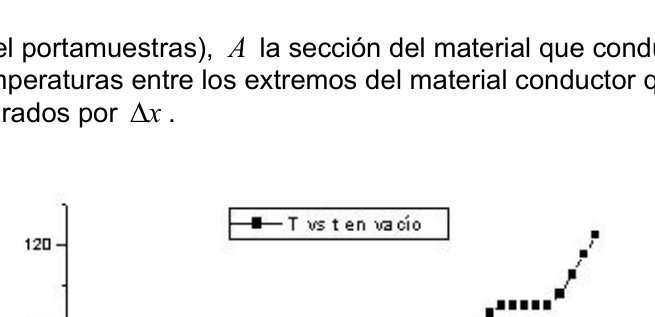
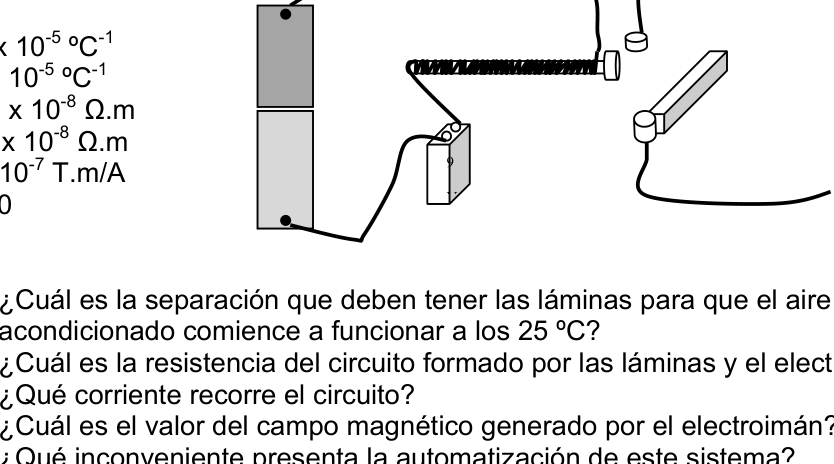
Topic: Thermodynamics, Circuits Metodi: First Law of Thermodynamics, Kirchhoff’s Laws, Energy Conservation Method Competenze: Physical Reasoning, Mathematical Modeling, Experimental Data Analysis Objects: Resistor, Gas, Tube Fonte: Testo (PDF) — p.3
Thermal Cycling Device Resistive Circuit Cooling
PT24. Città di Buenos Aires. Blu. Progetto CONAE. I dispositivi elettrici che trasportano i satelliti spaziali sono soggetti a condizioni molto sfavorevoli, ad esempio sono sottoposte a radiazioni ionizzanti e, La temperatura varia in modo sostanziale (considerare la differenza) tra essere esposti ai raggi solari e essere sotto l’ombra del nostro pianeta li produce). Per questo è necessario eseguire test sui dispositivi prima di essere inviati nello spazio. Per simulare queste condizioni nei laboratori della CONAE (Commissione nazionale per le attività spaziali), che lavora in collaborazione Con la NASA, vengono utilizzati i cosiddetti cicli termici. Questi processi sono: analizzare la risposta elettrica dei dispositivi mentre sono mantenuti intorno a una temperatura determinata. Per questo si utilizza un circuito: il caldaio e, per raffreddare, si circola nitrogeno liquido (T = -200oC circa). En la Fig. 5 si possono vedere alcuni dei componenti del dispositivo sperimentale.
Figura 5: Si osserva un dettaglio di: il portafoglio di campioni, dove i dispositivi sono localizzati; la serpentina, per cui si circola nitrogeno liquido (a T= -200oC, appros.); e il cappuccio in cui si introduce resistenza (forzata dal circuito che figura 6), Il flusso di L’ nitrogeno liquido ha come funzione di raffreddamento mentre resistenza, riscaldamento.
Il circuito di riscaldamento contiene una fonte che fornisce una differenza di potenziale. 20V costante, un controllore di temperatura (Rint = 3Ω) e una resistenza di Cartuccio di riscaldamento 20 Ω, a temperatura ambiente (vedi Fig. 6).
Figura 6: Circuito di riscaldamento, alimenta la resistenza del cartuccio (R=20Ω a temperatura ambiente considerata 25°C). Il controllore possiede una piccola resistenza interna di 3Ω.
a) Supponiamo che lavori in tale laboratorio. Una delle principali misure di La sicurezza è la conoscenza del valore del corrente che circola. Scopri. Ogni dispositivo che si vuole studiare è posizionato sul portafoglio di campioni (di rame). Quindi, si mantengono in contatto con la resistenza e la serpentina. El il controllore di temperatura ha due posizioni: ACTIVO e DISACTIVO. Quando è ACTIVATO, permette la circolazione di corrente attraverso il circuito. Il caldaio, aumentando così la temperatura (nota che quando si circola corrente la resistenza Il caldaio dissipa il calore) e impedisce il flusso di nitrogeno liquido. Mentre la resistenza sta riscaldando presumendo che il dispositivo sia in equilibrio
- Termica con lei. Quando è disattivato, non permette la circolazione di (per il circuito di Fig. 6) e apre la valvola per consentire la circolazione di
- L’azoto. Quindi ora inizia a scendere la sua temperatura (rifrigerazione). Per determinare quando cambiare posizione c’è una termopoppella che Senti la temperatura sul circuito e gestisce queste posizioni. Al il controller viene inserito un valore di temperatura fisso in modo che sopra di esso rimane ACTIVO mentre sotto rimane ACTIVO. La resistenza funziona fondamentalmente dissipando il calore. Il controller è fissato su 900C ma il valore di resistenza del cartuccio riscaldatore viene modificato con la temperatura come ( ) 0 1 R R T α = ⋅
⋅∆ , dove ( ) 1 4 º 10 92 ,3 − − ⋅
C α y 0 R è il valore di resistenza a una temperatura determinata 0 Non conosci. Calcola: b) il corrente che circola nel circuito appena prima di interrompere la fornitura. Finora abbiamo fatto un’analisi un po’ semplificata. Supponiamo che esattamente A 900 C il circuito è in funzione e, allo stesso tempo, si produce una circolazione di nitrogeno liquido. In questo caso si osservano le alte montagne (chiamate anche plateaux). della Fig. 7. Durante quel plateau, calcola: c) la potenza dissipata dalla resistenza e l’energia fornita dalla resistenza in forma di calore. L’interpretazione del plateau sarebbe che tutto il calore che la resistenza sta dissipando L’acqua viene assorbita da: la massa di nitrogeno che circola in questo intervallo di tempo, il portafoglio e il dispositivo. Il 75% della potenza dissipata è consumata dall’azoto. Il restante percento viene trasmesso attraverso il portatile del dispositivo. Supponiamo che dopo un secondo abbiano passato per la serpentina, in contatto con la resistenza al riscaldamento, 7dl di nitrogeno. Y, In altre parole, si consideri che il calore trasmesso da conduzione in un’unità di il tempo è calcolato come: x T A K t Q ∆ ∆ ⋅ ⋅
K è la conducibilità del materiale (del
che è fatto il campione), A la sezione del materiale che conduce e T ∆ la differenze di temperatura tra le estremità del materiale conduttore che si trovano separati da x ∆.
Figura 7: Dipendenza della temperatura nel tempo. Si osservano i piattaforme di diverse durate.
(d) il tasso di variazione della temperatura dell’azoto per unità di tempo; e) la temperatura effettiva al quale si trova il dispositivo, si trova sopra il portafoglio, di 5 x 10⁻⁵m2 di sezione, ma a 15 cm dalla posizione della resistenza.
Dati che possono essere utili KCu (conduttività del rame) = 372,1 W / (m.K) CeN2 (calore specifico dell’azoto) = 29,12 J/ (kg.K) δN2 (densità di nitrogeno) = 1.251 gr / lt (si prenderà come costante anche se in la realtà dipende dalla pressione e dalla temperatura)
Topic: Thermodynamics, Circuits Metodi: First Law of Thermodynamics, Kirchhoff’s Laws, Energy Conservation Method Competenze: Physical Reasoning, Mathematical Modeling, Experimental Data Analysis Objects: Resistor, Gas, Tube Fonte: Testo (PDF) — p.3
The following information shall be provided:
PT24. City of Buenos Aires. Blue, please. Project CONAE The electrical devices carried by space satellites are subject to very unfavorable conditions, for example, are subjected to ionizing radiation and, The main difference is that the temperature is very low. Between being exposed to the sun ‘s rays and being in the shadow of our planet . It produces them). This is why it is necessary to test the devices before to be sent into space. To simulate these conditions in the laboratories of the CONAE (National Space Activities Commission), which works in collaboration With NASA, what’s called thermal cycles are used. These processes consist of: in analysing the electrical response of devices while they are maintained around a certain temperature. To achieve this, a circuit is used. The heaters are heated and liquid nitrogen is circulated to cool (T = -200oC approx.). En la Fig. 5 some of the components of the experimental device can be seen.
Figure 5: A detail is noted of: the sample port, where the devices are located; The serpentine, by which it is It circulates liquid nitrogen (at T= -200oC, approx.); and the cap in which it is It introduces resistance. (powered by the circuit that Figure 6 shows. The flow of Liquid nitrogen has as cooling function while resistance, heating.
The heating circuit contains a source that delivers a potential difference The test results shall be presented in accordance with the following conditions: Heating cartridge of 20 Ω, at room temperature (see Fig. 6).
Figure 6: Heating circuit, feeding the cartridge resistance (R=20Ω to ) the ambient temperature is 25°C). The driver has a small one. The following conditions shall apply:
(a) Suppose you work in that laboratory. One of the main measures of Safety is about knowing the value of the current that’s circulating. Find out what it is. Each device to be studied is placed on the sample wallet (copper). So they stay in touch with the resistance and the serpentine. El The temperature controller has two positions: ON and OFF. When ON, it allows the flow of current through the circuit. The heating system is a heating system, thus increasing the temperature (note that when running current the resistance The heating system dissipates heat and prevents the flow of liquid nitrogen. While the resistance is heating we ‘ll assume the device is in balance thermal with it. When deactivated, it does not allow the circulation of The current (by the circuit of Fig. 6) and opens the valve to allow the circulation of nitrogen. So now it starts to drop its temperature (cooling). To determine when to change position there is a thermocouple which constantly sensing the temperature over the circuit and handling these positions. Al The controller is entered a fixed temperature value so that above it remains DEactivated while below remains ACTIVE. Resistance works basically by dissipating heat. The controller is fixed to 900C but the resistance value of the heating cartridge is modified with the temperature as ( ) 0 1 R R T α
⋅ + ⋅∆ , where ( ) 1 4 º 10 92 ,3 − − ⋅
C α y 0 R is the value of resistance to some temperature 0 You know. Calculate: (b) the current flowing through the circuit just before the supply is cut off. So far we have done a somewhat simplified analysis. Suppose that exactly At 900C the circuit is running and at the same time circulation is produced. liquid nitrogen. In this case, the plateaus (also called plateaux) are observed. of the Fig. 7. During that plateau, calculate: (c) the power dissipated by the resistance and the energy delivered by the resistance in the form of It’s hot. The plateau interpretation would be that all the heat that the resistance is dissipating It is being absorbed by: the mass of nitrogen circulating in that range of time, sample wallet and device. 75% of the power dissipated is It’s consumed by nitrogen. The remaining percentage is transmitted through the sample portfolios to the device. Let ‘s say after a second you ‘ve gone through The serpentine, in contact with the heating resistance, 7dl nitrogen. Y, On the other hand, consider that the heat transmitted by conduction in a unit of time is calculated as: x T A K t Q ∆ ∆ ⋅ ⋅
K being the material’s conductivity (of
The sample is made of the sample, A section of the material leading to and T ∆ la The difference in temperature between the ends of the conductive material is Find separated by x ∆.
Figure 7: Temperature dependence over time. The following are the results: Plateaux of different lengths.
(d) the rate of change in nitrogen temperature per unit of time; (e) the actual temperature at which the device is located assuming that it is The sample box is 5 x 10⁻⁵m2 but 15cm from the position of the resistance.
Data That Can Be Useful The value of the underlying assets shall be reported in the following column: The following is the list of the nitrogen-specific heat-treatment targets: δN2 (nitrogen density) = 1.251 gr/lt (we will take it as constant although in (reality depends on pressure and temperature)
Topic: Thermodynamics, Circuits Metodi: First Law of Thermodynamics, Kirchhoff’s Laws, Energy Conservation Method Competenze: Physical Reasoning, Mathematical Modeling, Experimental Data Analysis Objects: Resistor, Gas, Tube Fonte: Testo (PDF) — p.3
Bimetallic Strip Solenoid AC Control
PT25. General Alvear, Mendoza. Azul. ¡Que calor! En una noche cálida de verano, agobiado por el calor, Germán despertó y en un intento por encender el aire acondicionado golpeó el control remoto contra el piso inutilizándolo. Desesperado por su situación, recurrió a sus conocimientos de física para tratar solucionar provisoriamente su problema. En una visita a su taller encontró algunas herramientas y materiales que creyó que le serían útiles. Entre ellas láminas de distintos materiales, tornillos, clavos, alambres, maderas, etc. Después de meditar un rato decidió automatizar en encendido de su aire acondicionado, para ello tomó una lámina de cobre que encontró en el cajón de 0,2 cm de espesor, 3,0 cm de ancho y 10,0 cm de largo y la atornilló en una tabla fijándole un cable de cobre en el extremo (ver figura 1). Luego tomo otra lámina de aluminio de 0,2 cm de espesor, 3,0 cm de ancho y 14,0 cm de largo. A esta hora de la madrugada la temperatura ya era de 15 ºC. Luego eligió un clavo de 10,0 cm de hierro de su cajón y 15 m de alambre de cobre esmaltado de 0,4 mm2 de sección y envolvió el clavo con 400 vueltas de alambre como se muestra en la figura.
Datos: αCu= 1,7 x 10⁻⁵ ºC-1 αAl= 2,4 x 10⁻⁵ ºC-1 ρCu= 1,70 x 10⁻⁸ Ω.m ρAl= 2,82 x 10⁻⁸ Ω.m µ0= 4π x 10-7 T.m/A kFe = 1500
- ¿Cuál es la separación que deben tener las láminas para que el aire acondicionado comience a funcionar a los 25 ºC?
- ¿Cuál es la resistencia del circuito formado por las láminas y el electroimán?
- ¿Qué corriente recorre el circuito?
- ¿Cuál es el valor del campo magnético generado por el electroimán?
- ¿Qué inconveniente presenta la automatización de este sistema?
- Realiza una propuesta para solucionar dicho inconveniente, que tenga en cuenta los materiales existentes.
- Si el aire acondicionado posee una potencia de 3500 W y está conectado en una línea independiente (220 V). ¿Cuál es el valor de la llave térmica apropiada para este circuito?
Topic: Electromagnetism Metodi: Ampère’s Law, Physical Modeling Competenze: Physical Reasoning, Mathematical Modeling Objects: Solenoid, Wire, Coil Fonte: Testo (PDF) — p.3
Bimetalico Strip Solenoid AC Control
PT25. Generale Alvear, Mendoza. Blu. Che caldo! In una calda notte estiva, pesato dal caldo, Germán si svegliò e in un tentativo di accendere l’aria condizionata ha colpito il telecomando contro il pavimento
- Non lo utilizzando. Desesperato dalla sua situazione, si ricorse alle sue conoscenze di fisica. per cercare di risolvere provvisoriamente il suo problema. In una visita al suo laboratorio ha trovato alcuni strumenti e materiali che credeva che gli sarebbero stati utili. Tra le altre , foglie . di materiali diversi, di viti, di chiodi, di fili, di legno, ecc. Dopo aver meditato un po ’ ha deciso di automatizzare l’accensione dell’aria. Il suo lavoro è stato condotto in un’artiglieria di rame che ha trovato nel cassetto di 0,2 cm. spessa, larga 3,0 cm e lunga 10,0 cm e la ha incrociata su una tavola fissandola con un Cable di rame all’estremità (vedere figura 1). Poi ho preso un’altra lamina di alluminio di 0,2 di 1 cm di spessore, 3 cm di larghezza e 14 cm di lunghezza. A questa ora del mattino La temperatura era già di 15 oC. Poi ha scelto un chiodo di ferro di 10,0 cm dal suo cassetto e 15 m di filo di rame smaltato di 0,4 mm2 di sezione e avvolge il chiodo con 400 giri di filo come mostrato nella figura.
Datati: αCu= 1,7 x 10⁻⁵ oC-1 αAl= 2,4 x 10⁻⁵ oC-1 ρCu = 1,70 x 10⁻⁸ Ω.m ρAl = 2,82 x 10⁻⁸ Ω.m µ0= 4π x 10-7 T.m/A kFe = 1500
- Qual è la separazione che devono avere le foglie per permettere all’aria di Il sistema di controllo è stato modificato per la prima volta.
- Qual è la resistenza del circuito formato dalle lamiere e dall’elettromagnetico?
- Che corrente attraversa il circuito?
- Qual è il valore del campo magnetico generato dall’elettromagnetico?
- Qual è l’inconveniente dell’automazione di questo sistema?
- formula una proposta per risolvere tale inconveniente, che ha in conta i materiali esistenti.
- Se l’aria condizionata ha una potenza di 3500 W e è collegata a una linea indipendente (220 V). Qual è il valore della chiave termico? appropriata per questo circuito?
Topic: Electromagnetism Metodi: Ampère’s Law, Physical Modeling Competenze: Physical Reasoning, Mathematical Modeling Objects: Solenoid, Wire, Coil Fonte: Testo (PDF) — p.3
The following table shows the results of the tests:
PT25. General Alvear, Mendoza, please. Blue, please. It’s so hot! On a warm summer’s night, burdened by the heat, Germán woke up and in a I tried to turn on the air conditioner and hit the remote control against the floor. By putting it out of business. Desperate for his situation, he turned to his knowledge of physics. to try to temporarily solve your problem. On a visit to his workshop he found some tools and materials that he thought would be useful to him. Among them sheets . Other, of a kind used for the manufacture of goods of heading 8406 After some meditation he decided to automate on his air. He took a sheet of copper that he found in the 0.2-cm drawer. It was a three-inch-thick, three-inch-wide, four-inch-long, and he screw it up on a board and fixed it to a… Copper wire at the end (see Figure 1). Then I took another 0.2-inch sheet of aluminum. cm thick, 3,0 cm wide and 14,0 cm long. At this early hour of the morning The temperature was already 15 degrees. Then he picked a 10.0 cm iron nail from his drawer and 15 m of enamelled copper wire of 0.4 mm2 section and wrapped the nail with 400 turns of wire as shown in Figure 1.
The data: The value of the product shall be the same as that of the product concerned. αAl = 2.4 x 10⁻⁵ oC-1 The value of the product shall be the sum of the values of the products concerned. The following table shows the results of the calculations: µ0= 4π x 10-7 T.m/A The amount of the difference is EUR 1500.
- What is the separation that the sheets must have for the air to flow? Does the air conditioning system start working at 25 oC?
- What is the resistance of the circuit formed by the sheets and the electromagnet?
- What current is flowing through the circuit?
- What is the value of the magnetic field generated by the electromagnet?
- What is the disadvantage of automating this system?
- make a proposal to remedy this problem, which is the existing materials.
- If the air conditioner has a power of 3500 W and is connected to a separate line (220 V). What’s the value of the thermal key? appropriate for this circuit?
Topic: Electromagnetism Metodi: Ampère’s Law, Physical Modeling Competenze: Physical Reasoning, Mathematical Modeling Objects: Solenoid, Wire, Coil Fonte: Testo (PDF) — p.3
Cannon Projectile Parachute Terminal Velocity
PT26. General Alvear, Mendoza. Azul. ¡S.O.S.! Durante la segunda guerra mundial una ciudad francesa es sitiada por las fuerzas Nazis quedando totalmente incomunicada. Las fuerzas aliadas más próximas se encuentran a varios kilometros de distancia. Es sumamente necesario solicitar ayuda y enviar información para que la ciudad pueda ser liberada. Lamentablemente no existen palomas mensajeras en la ciudad. Un grupo de vecinos decide construir un dispositivo mediante el cual aprovechando la energía del viento podrán enviar la información necesaria. Dicho dispositivo será lanzado verticalmente hacia arriba utilizando un viejo cañón existente en la plaza de la ciudad y algo de pólvora que encuentran en un viejo galpón de una compañía minera. El cañón posee un largo de 80 cm y la pólvora es capaz de imprimirle al dispositivo una fuerza constante de 4 000 N. El dispositivo posee una masa de 800 g y tiene adosado en el extremo superior un pequeño paracaídas que solo se abre cuando el cuerpo comienza a caer. Suponiendo que no existe rozamiento con el aire durante el ascenso y que una vez abierto el paracaídas, el viento empuja al dispositivo con una velocidad constante de 20 km/h hacia el oeste. El dispositivo cae con aceleración igual a g hasta que adquiere una velocidad terminal constante de 30 km/h hacia abajo. Calcula:
- El trabajo realizado por la pólvora sobre el dispositivo.
- La velocidad inicial que adquiere el dispositivo justo a la salida del cañón.
- La altura máxima que adquirirá.
- El valor de la energía potencial en la altura máxima.
- Realiza una gráfica en la que se observe la trayectoria y los vectores velocidad y aceleración que actúan sobre el dispositivo en distintos momentos.
- Si la superficie es plana, ¿A qué distancia del lanzamiento llegará el dispositivo?
- ¿Qué tiempo empleará en llegar a destino?
- Explica porque motivos en la práctica se podría llevar a resultados distintos.
9
V
Topic: Newtonian Mechanics Metodi: Kinematic Equations, Free-Body Diagram, Energy Conservation Method Competenze: Physical Reasoning Objects: — Fonte: Testo (PDF) — p.3
Cannon Projectile Parachute Terminal Velocity
PT26. Generale Alvear, Mendoza. Blu. ¡S.O.S.! Durante la seconda guerra mondiale una città francese è stata assediata dalle forze Nazisti completamente incomunicati. Le forze alleate più vicine si sono si trovano a diversi chilometri di distanza. È indispensabile chiedere aiuto e inviare informazioni per liberare la città. Purtroppo non esistono. Dove messaggeri in città. Un gruppo di vicini decide di costruire un dispositivo. Il sistema di comunicazione e di comunicazione è stato sviluppato in modo che i sistemi di comunicazione e di comunicazione possano essere utilizzati per la trasmissione di informazioni. necessaria. Tale dispositivo verticalmente lanciato verso l’alto utilizzando un vecchio Cannon esistente nella piazza della città e qualche polvere che trovano in un vecchio lo scaffale di una società mineraria. Il cannone ha un lunghezza di 80 cm e la polvere è in grado di stampare sul dispositivo una forza costante di 4 000 N. Il dispositivo ha una massa di 800 g e ha un piccolo incasso all’estremità superiore Un paracadute che si apre solo quando il corpo inizia a cadere. Supponendo che non lo sia. c’è un’aria che si sgridisce durante l’ascensione e che una volta aperto il paracadute, il vento spinge il dispositivo a una velocità costante di 20 km/h verso ovest. Il dispositivo si abbassa con un’accelerazione uguale a g fino a raggiungere una velocità terminale. costante a 30 km/h verso il basso. Calcola:
- Il lavoro svolto dalla polvere sul dispositivo.
- La velocità iniziale che il dispositivo acquista appena all’uscita del cannone.
- L’altezza massima che acquisirà.
- Il valore dell’energia potenziale all’altezza massima.
- Realizza un grafico che osserva la traccia e i vettori velocità e accelerazione che agiscono sul dispositivo in diverse Momenti.
- Se la superficie è piana, a che distanza dal lancio arriverà il dispositivo?
- Quanto tempo ci vorrà per arrivare a destinazione?
- Spiega perché in pratica i motivi potrebbero portare a risultati diversi.
9
V
Topic: Newtonian Mechanics Metodi: Kinematic Equations, Free-Body Diagram, Energy Conservation Method Competenze: Physical Reasoning Objects: — Fonte: Testo (PDF) — p.3
The following is the list of aircraft in the list of aircraft types:
PT26. General Alvear, Mendoza, please. Blue, please. ¡S.O.S.! During World War II a French city is besieged by the forces. Nazis being completely uncommunicated. The closest Allied forces are They find it several miles away. It is essential to seek help and Send information so the city can be liberated. Unfortunately , they don ‘t exist . pigeons in the city. A group of neighbors decide to build a device. By using wind energy they can send information It is necessary. Such device shall be launched vertically upwards using an old There’s a cannon in the town square and some gunpowder found in an old one. A shed of a mining company. The cannon is 80 cm long and the gunpowder is capable of printing a constant force of 4 000 N on the device. The device It has a mass of 800 g and has a small adjoining at the top end. A parachute that only opens when the body starts falling. Assuming you didn ‘t . There is a rustling with the air during the ascent and that once you open the parachute, the wind pushes the device at a constant speed of 20 km/h westward. The device drops at g-equal acceleration until it reaches a terminal speed. constant 30 km/h downward. Calculate:
- The work done by the gunpowder on the device.
- The initial speed the device acquires just after the cannon is released.
- The maximum height it will gain.
- The value of the potential energy at the maximum height.
- Draw a graph showing trajectory and vectors speed and acceleration acting on the device in different ways moments.
- If the surface is flat, how far from the launch will the launch reach? device?
- How long will it take to reach your destination?
- Explain why reasons in practice could lead to different results.
9
V
Topic: Newtonian Mechanics Metodi: Kinematic Equations, Free-Body Diagram, Energy Conservation Method Competenze: Physical Reasoning Objects: — Fonte: Testo (PDF) — p.3
Submerged copper sculpture and balloon
PT27. General Alvear, Mendoza. Azul. ¡Siguiendo las pistas! Tras el hurto de la escultura medieval más preciada de la ciudad, construida en oro y conservada en la catedral durante siglos, Carmen San Diego y su grupo de malhechores decide ocultarla momentáneamente en un refugio seguro, eliminar todas las evidencias y para poner trabas a la posterior investigación realizan una réplica en cobre con igual volumen: 4,46 dm3. Sabiendo que pronto llegará la primavera y con ella un aumento en la temperatura deciden arrojar la réplica al lago, que posee una profundidad de 20 m, sujeta a un globo esférico de paredes impermeables (m=500 g), en el que vacían una garrafita de CO2 de 2 litros que se encuentra a 50 atmosferas de presión. La temperatura del agua en ese momento es de 10 ºC.
- Grafique las fuerzas que actúan sobre el sistema.
- ¿Cuál es la presión que actúa sobre la escultura?
- ¿Cuál es el peso del sistema escultura-globo?
- ¿Cuál es el valor de la fuerza de flotación existente sobre el sistema?
- ¿A qué temperatura del agua del lago flotará sobre la superficie la prueba del engaño?
- ¿Qué masa de oro posee la escultura real?
Datos:
Presión atmosférica: 750 mm Hg
R: 0,082 L.atm/ K. mol
ρCu= 8,96 g/cm3
ρAu= 19,30 g/cm3
ρagua del lago = 1008 kg/m3
Topic: Fluid Mechanics Metodi: Hydrostatic Equilibrium, Ideal Gas Law, Physical Modeling Competenze: Physical Reasoning, Mathematical Modeling Objects: Bubble, Gas, Container Fonte: Testo (PDF) — p.3
Submerged copper sculpture and balloon
PT27. Generale Alvear, Mendoza. Blu. Seguendo i segnali! Dopo il furto della scultura medievale più preziosa della città, costruita in oro e conservata nella cattedrale per secoli, Carmen San Diego e il suo gruppo di I malfattori decidono di nasconderla momentaneamente in un rifugio sicuro, eliminandole tutte. Le prove e per ostacolare la ricerca successiva si fanno una replica in Copro di uguale volume: 4,46 dm3. Sapendo che presto verrà la primavera e con lei un aumento della temperatura decidono di gettare la replica nel lago, che possiede un profondità di 20 m, sottoposto a un globo sferico di pareti impermeabili (m=500 g), In questo modo, si può vedere che il contenuto di un contenitore di CO2 di 2 litri si trova a 50 atmosfere di
- Presione. La temperatura dell’acqua a quel momento è di 10 oC.
- Graficare le forze che agiscono sul sistema.
- Qual è la pressione che agisce sulla scultura?
- Qual è il peso del sistema scultura-globale?
- Qual è il valore della forza di fluttuazione esistente sul sistema?
- A che temperatura dell’acqua del lago si spalancherà la prova sulla superficie del falso?
- Che massa d’oro possiede la scultura reale?
Datati: Pressione atmosferica: 750 mm Hg R: 0,082 L.atm/K. Mol ρCu = 8,96 g/cm3 ρAu= 19,30 g/cm3 L’acqua del lago = 1008 kg/m3
Topic: Fluid Mechanics Metodi: Hydrostatic Equilibrium, Ideal Gas Law, Physical Modeling Competenze: Physical Reasoning, Mathematical Modeling Objects: Bubble, Gas, Container Fonte: Testo (PDF) — p.3
Submerged copper sculpture and balloon
PT27. General Alvear, Mendoza, please. Blue, please. Following the tracks! After the theft of the city’s most prized medieval sculpture, built in gold and preserved in the cathedral for centuries, Carmen San Diego and her group of The evildoers decide to hide her momentarily in a safe haven, eliminate them all. The evidence and to put a stop to further investigation they perform a replication in Copper of equal volume: 4,46 dm3. Knowing that spring will soon come and with She’s a rising temperature decide to throw the replica into the lake, which possesses a 20 m depth, subjected to a spherical balloon of impermeable walls (m=500 g), The first is that the two-litre bottle of CO2 is found at 50 atmospheres of pressure. The temperature of the water at that time is 10 degrees Celsius.
- Graph the forces acting on the system.
- What pressure is there on the sculpture?
- What is the weight of the sculpture-glob system?
- What is the value of the existing floating force on the system?
- At what temperature of the lake water will the test float on the surface? of deception?
- What mass of gold does the royal sculpture possess?
The data: Air pressure: 750 mm Hg The following is the maximum amount of the product concerned: - What ? The value of the product shall be the value of the product concerned. The following table shows the results of the study: The water from the lake = 1008 kg/m3
Topic: Fluid Mechanics Metodi: Hydrostatic Equilibrium, Ideal Gas Law, Physical Modeling Competenze: Physical Reasoning, Mathematical Modeling Objects: Bubble, Gas, Container Fonte: Testo (PDF) — p.3
Bike trip kinematics and energy
PT28. Ciudad de Buenos Aires. Azul.
Al almacen en bici.
Julián y Paola quieren tomar la merienda, para eso tienen que ir a comprar leche al
almacén. Julián opta por el camino rojo, con pendiente en el tramo AB, mientras que
su hermanita Paola decide tomar el camino azul.
a) ¿Cuál es el tiempo que tardan en llegar Paola y Julián si parten con una velocidad
de 7,2 km/h, si Julián sale de la casa 2 segundos después y su velocidad luego de AB
es la misma que al comienzo?¿Cuándo debería haber salido Julián para llegar junto
con Paola?
Julián sabe que el camino de Paola es más y como quiere llegar al mismo tiempo que
su hermana al almacén, corre en el tramo AB.
b) ¿Cuánto acelera Julián en la bajada y con qué potencia lo hace?
c) ¿Cuál es la variación de energía mecánica que tiene Julián en las bajadas de a) y
b)?
En realidad, Julián no tiene ganas de ir caminando, por lo que decide ir en su bicicleta
nueva. Para poder doblar en las esquinas, Julián realiza una trayectoria semicircular:
dos cuartos de circunferencia que equivalen a la distancia en AB. Supongamos ahora
que el terreno no está inclinado, y que tiene rozamiento con la bicicleta.
d) Si la fuerza de roce con la bici es la que le permite a Julián doblar, ¿cuál es la
máxima velocidad a la que puede ir en dicho tramo?
Tenemos que considerar que la bici de Julián no es un punto material y que además
de acelerarse y rotar, la bici se inclina.
e) Realice un diagrama de las fuerzas aplicadas sobre la bicicleta, y calcule el torque
total que experimenta. Considere la masa de la bici ubicada sólo en las ruedas.
A simple vista, parece que los torques aplicados sobre la bici provocan que esta caiga.
Sin embargo, es gracias a ellos que Julián puede doblar, ya que la suma de los
torques sobre la bici son responsables de la variación de L. A saber, T=∆L/∆t.
f) Si también se puede escribir como L=Irueda.ωrueda, ¿cuánto se debe inclinar Julián para no caerse? (Sugerencia: piense a ∆θ como longitud de arco/radio y ayúdese con la figura) Ahora que Paola y Julián ya compraron, quieren volver a su casa. Sin embargo, Julián se siente con poca energía para emprender el regreso. Si un vaso de leche tiene 57 cal/g. g) ¿Cuántos vasos necesita tomar Julián para hacer el tramo AB en bici y volver a su casa? Considere la energía de rotación de las ruedas para este cálculo.
Datos:
g=9.8m/s2;
µe=0,25;
µd=0,1;
Mj=50kg;
Mbici=1,5kg;
Rrueda=0,3m;
Vvaso=250ml; δleche=1.034 g/cm3
Topic: Newtonian Mechanics Metodi: Kinematic Equations, Energy Conservation Method, Free-Body Diagram Competenze: Physical Reasoning, Mathematical Modeling Objects: Cart Fonte: Testo (PDF) — p.3
Bike trip kinematics and energy
PT28. Città di Buenos Aires. Blu. Al magazzino in bicicletta. Julian e Paola vogliono un merendino, quindi devono andare a comprare latte al
- Stoccaggio. Julian sceglie il sentiero rosso, con pendenza sul tratto AB, mentre sua sorellina Paola decide di prendere la strada blu. a) Quanto tempo ci vorrà per arrivare Paola e Julian se partono a velocità? di 7,2 km/h, se Julian esce dalla casa 2 secondi dopo e la sua velocità dopo AB Quando sarebbe dovuto uscire Julian per arrivare insieme? con Paola? Julian sa che il cammino di Paola è più e come vuole arrivare allo stesso tempo che sua sorella al magazzino, corre nel tratto AB. b) Quanto veloce è Julian in discesa e con quale potenza lo fa? (c) Qual è la variazione di energia meccanica che ha Julian nelle discese di (a) e (c) b)? In realtà, Julian non ha voglia di camminare, quindi decide di andare in bicicletta. nuovo. Per poter piegare nei angoli, Giuliano fa una traiettoria semicircolare: due quarti di circonferenza che corrispondono alla distanza in AB. Supponiamo che ora che il terreno non è inclinato e che ha un’arruzione con la bicicletta. d) Se la forza di frattura della bici è quella che permette a Julian di piegare, qual è la forza di frattura? la massima velocità a cui può andare in quel tratto? Dobbiamo considerare che la bici di Julian non è un punto materiale e che oltre se si accelera e si ruota, la bici si inclina. e) Sviluppa un diagramma delle forze applicate alla bicicletta e calcola la torsione il totale che prova. Considera la massa della bici che si trova solo sulle ruote. A prima vista, sembra che i torchi applicati sulla bici facciano cadere la bici. Tuttavia, è grazie a loro che Julian può raddoppiare, poiché la somma dei I torchi sulla bici sono responsabili della variazione di L. In particolare, T=∆L/∆t.
f) Se si può anche scrivere come L=Irueda.ωrueda, quanto deve inclinare Julian
- Per non cadere? (Suggerimento: pensate a ∆θ come lunghezza d’arco/radio e aiutatevi con (Figura 1) Ora che Paola e Julian hanno già comprato, vogliono tornare a casa loro. Ma Julian, si sente poco energizzato per intraprendere il ritorno. Se un bicchiere di latte ha 57 cal/g. g) Quanti bicchieri ha bisogno Julian per fare la parte AB in bicicletta e tornare al suo casa? Considera l’energia di rotazione delle ruote per questo calcolo.
Datati:
g=9.8m/s2;
µe=0,25;
µd=0,1;
Mj=50kg; Mbici=1,5 kg; Rondata = 0,3 m; Vvaso=250ml; δ latte=1.034 g/cm3
Topic: Newtonian Mechanics Metodi: Kinematic Equations, Energy Conservation Method, Free-Body Diagram Competenze: Physical Reasoning, Mathematical Modeling Objects: Cart Fonte: Testo (PDF) — p.3
The Commission has decided to extend the periodicity of the implementation of the programme to the following areas:
PT28. City of Buenos Aires. Blue, please. To the warehouse on a bike. Julian and Paola want to have a snack, so they have to go buy milk at the
- The warehouse. Julian opts for the red road, with slope on the AB stretch, while Her little sister Paola decides to take the blue path. (a) How long does it take for Paola and Julian to arrive if they leave at a speed? 7.2 km/h, if Julian leaves the house 2 seconds later and his speed after AB When should Julian have left to get together? with Paola? Julian knows that Paola ‘s path is more and more like he wants to get there at the same time as you . Her sister to the warehouse, runs on the AB stretch. (b) How fast does Julian accelerate downward and with what power does he do so? (c) What is the variation of mechanical energy that Julian has in the decreases of (a) and (c) b)? Julian doesn’t really want to walk, so he decides to ride his bike. It’s new. To be able to bend in the corners, Julian makes a semi-circular path: two quarters of a circle equal to the distance in AB. Let ‘s say now . That the terrain is not sloping, and that it has a rusty bicycle. d) If the force of friction with the bicycle is what allows Julian to bend, what is the force of friction with the bicycle? maximum speed at which you can go on that stretch? We have to consider that Julian ‘s bike is not a material point and that besides If you accelerate and spin, the bike will tilt. (e) Draw a diagram of the forces applied to the bicycle and calculate the torque The total that you experience. Consider the mass of the bicycle located only on the wheels. At first glance, it seems that the torque applied to the bike causes it to fall. However, it is thanks to them that Julian can double, since the sum of the torques on the bike are responsible for the L variation. That is, T=∆L/∆t.
f) If you can also write as L=Irueda.ωrueda, how much should Julian lean So you don’t fall? (Suggest: think of ∆θ as arc/radius length and help yourself with the figure) Now that Paola and Julian have bought, they want to go home. However, Julian He feels little energy to make his way back. If a glass of milk has 57 cal/g. g) How many glasses does Julian need to take to do the AB leg on his bike and back to his?
- The house? Consider the rotational energy of the wheels for this calculation.
The data:
g=9.8m/s2;
µe=0,25;
µd=0,1;
Mj=50kg; The amount of the aid shall be calculated on the basis of the following criteria: Wheel = 0.3m; Vvaso=250ml; δmilk=1.034 g/cm3
Topic: Newtonian Mechanics Metodi: Kinematic Equations, Energy Conservation Method, Free-Body Diagram Competenze: Physical Reasoning, Mathematical Modeling Objects: Cart Fonte: Testo (PDF) — p.3
Rocket projectile motion with wind
PT29. Ciudad de Buenos Aires. Azul.
El cohete.
Yuri quiere construir un cohete. Para eso empieza haciendo pruebas en el patio de su
casa con un modelo a escala. Primero prueba algo simple: lanza su modelo con una
velocidad inicial de 50,4km/h y un ángulo de 45º con la horizontal.
a) ¿Qué tan lejos llega el proyectil? ¿Qué tan alto?
Resulta que Yuri no tuvo en cuenta que había mucho viento (Vviento=36km/h) el día del
lanzamiento, formando un ángulo de 30º con la horizontal, por lo que el proyectil no
llegó ni tan alto ni tan lejos como se esperaba.
b) ¿Qué tan lejos llega el proyectil ahora? ¿Qué tan alto?
c) ¿Cuál es la cantidad de movimiento que tiene el proyectil en cada caso?
Después de estas pruebas, Yuri se dio cuenta que necesita alguna manera de
aumentar la velocidad del cohete en vuelo para ganarle a la pérdida de energía
cinética sufrida debido a la interacción gravitatoria. Por eso decide llenar al cohete con
combustible y tirarlo de a poco para aumentar la velocidad.
d) Calcule la variación en la cantidad de movimiento que experimenta el cohete. Para
realizar este cálculo, haga un diagrama del cohete en el instante inicial y en un
instante posterior inmediato en donde el
cohete perdió ∆M=-∆m (donde m=masa del
combustible y M=masa cohete)
Esta variación en la cantidad de movimiento es
la que provoca que el cohete pueda impulsarse
hacia arriba. Trabajando matemáticamente esa
expresión, suponiendo la velocidad relativa
entre el cohete y el combustible constante y
despreciando el término que contiene a dos
variaciones multiplicándose, se puede obtener
la siguiente formula: V=gt+Vrel.ln(M(t)/Mo)+Vo
e) Si la masa de combustible se expulsa a tasa
constante µ=15g/s y la velocidad inicial del
cohete es la del punto a), ¿Qué velocidad tiene
el cohete al cabo de 2 segundos? ¿Cuál es la
potencia del mismo? Desprecie la energía
Vista superior
potencial gravitatoria al realizar este cálculo, y considere que el cohete sólo se mueve verticalmente. Ahora, a Yuri le interesa saber qué rendimiento η tiene el cohete. Para ello, realiza el cociente entre la energía cinética del cohete, y la suma de la energía cinética del cohete y del combustible. f) ¿Cuál es el valor de η? ¿Cómo se podría mejorar este valor?
Datos:
g=9.8m/s;
Mproyectil=3,4kg;
Vrelativa=1m/s;
Topic: Newtonian Mechanics, Conservation of Momentum Metodi: Kinematic Equations, Vector Decomposition, Conservation of Momentum Competenze: Physical Reasoning, Mathematical Modeling Objects: Projectile Fonte: Testo (PDF) — p.3
Rocket projectile motion with wind
PT29. Città di Buenos Aires. Blu. Il razzo. Yuri vuole costruire un razzo. Per questo inizia a fare prove nel suo cortile. casa con un modello a scala. Prima prova qualcosa di semplice: lancia il tuo modello con una velocità iniziale di 50,4 km/h e un angolo di 45° con la linea orizzontale. a) Quanto lontano arriva il proiettile? Quanto alto? Si scopre che Yuri non ha tenuto conto che c’era molto vento (Vento=36km/h) il giorno del lancio, formando un angolo di 30° con la orizzontale, quindi il proiettile non Non è arrivato più alto o più lontano di quanto si aspettasse. b) Quanto lontano arriva il proiettile ora? Quanto alto? c) Qual è la quantità di movimento che il proiettile ha in ogni caso? Dopo questi test, Yuri si rese conto che aveva bisogno di un modo di… aumentare la velocità del razzo in volo per vincere la perdita di energia la cinetica subita da interazione gravitazionale. Quindi decide di riempire il razzo con Il combustibile e il gas si allontanano poco a poco per aumentare la velocità. d) Calcolare la variazione della quantità di movimento che il razzo prova. Per Per fare questo calcolo, fare un diagramma del razzo all’istante iniziale e in un istante immediato successivo in cui il Il razzo ha perso ∆M=-∆m (dove m=massa del Il combustibile e M= massa del razzo) Questa variazione nella quantità di movimento è che fa sì che il razzo possa andare avanti.
- Si’, su. Lavorando matematicamente su quella. Espressione, supponendo la velocità relativa tra il razzo e il combustibile costante e disprezzando il termine che contiene due Le variazioni moltiplicate possono essere ottenute la formula seguente: V=gt+Vrel.ln(M(t)/Mo)+Vo e) Se la massa di combustibile viene espulsa a ritmo La velocità iniziale di Il razzo è quello del punto a), che velocità ha Il razzo dopo due secondi? Qual è la Potenza di questo? Sprezzate l’energia. Vista superiore
Potenzialmente gravitatorio quando si fa questo calcolo, e si considera che il razzo si muove solo Verticalmente. Ora, Yuri è interessato a sapere che rendimento ha il razzo. Per questo, esegue il Il rapporto tra l’energia cinetica del razzo e la somma dell’energia cinetica del
- Il fucile e il combustibile. f) Qual è il valore di η? Come potremmo migliorare questo valore?
Datati:
g=9.8m/s;
Mprojectil=3,4 kg;
Vrelativa = 1 m/s;
Topic: Newtonian Mechanics, Conservation of Momentum Metodi: Kinematic Equations, Vector Decomposition, Conservation of Momentum Competenze: Physical Reasoning, Mathematical Modeling Objects: Projectile Fonte: Testo (PDF) — p.3
The Commission shall adopt delegated acts in accordance with Article 21 of this Regulation.
PT29. City of Buenos Aires. Blue, please. The rocket. Yuri wants to build a rocket. That ‘s why he starts testing in his yard . house with a scale model. First, try something simple: launch your model with a Initial speed of 50,4 km/h and a 45° angle with the horizontal. (a) How far does the projectile go? How high? Turns out Yuri didn’t take into account that there was a lot of wind (wind = 36km/h) on the day of the crash. The projectile is not designed to be fired at a 30° angle to the horizontal. He didn’t get as high or as far as he expected. (b) How far does the projectile go now? How high? (c) What is the amount of movement the projectile has in each case? After these tests, Yuri realized he needed some way to Increase the speed of the rocket in flight to beat the energy loss kinetics suffered due to gravitational interaction. So he decides to fill the rocket with Fuel and throw it off slowly to increase speed. (d) Calculate the variation in the amount of movement the rocket experiences. For If you want to do this calculation, make a diagram of the rocket at the initial moment and in a immediate subsequent instant where the The rocket lost ∆M=-∆m (where m=mass of (M = rocket mass) This variation in the amount of motion is which causes the rocket to be able to propel itself up. Mathematically working that. The expression, assuming the relative velocity between the rocket and the constant fuel and Disdain the term containing two The number of variations multiplied can be obtained. The following formula: V=gt+Vrel.ln(M(t)/Mo)+Vo (e) If the fuel mass is expelled at a rate The constant μ=15g/s and the initial speed of the The rocket is the one at point a), what is the speed of the rocket? The rocket in two seconds? What is the power of the same? He despises energy . Upper view
Gravitational potential when performing this calculation, and consider that the rocket only moves vertically. Now, Yuri is interested in knowing what performance the rocket has. For this purpose, he performs the The ratio of the kinetic energy of the rocket to the sum of the kinetic energy of the rocket. rocket and fuel. (f) What is the value of η? How could this value be improved?
The data:
g=9.8m/s;
The project cost is estimated at 3.4 kg.
Vrelative = 1m/s;
Topic: Newtonian Mechanics, Conservation of Momentum Metodi: Kinematic Equations, Vector Decomposition, Conservation of Momentum Competenze: Physical Reasoning, Mathematical Modeling Objects: Projectile Fonte: Testo (PDF) — p.3
Perpetual motion buoyancy and heat
PT30. Ciudad de Buenos Aires. Azul. ¿Movimiento perpetuo? Durante muchos años, muchos “inventores” soñaron con crear un móvil de movimiento perpetuo. Uno de ellos es el que se ve en la figura. Una torre de 20 m de altura está llena de agua. En las partes más alta y más baja de esta torre hay dos poleas unidas entre sí por un cable resistente que hace las veces de correa sin fin. A este cable van sujetos 14 bloques cúbicos. Estos bloques están hechos de chapas de hierro unidas con remaches y son herméticos. El espesor de las chapas es de 2mm y son de 1m x 1m. a) Calcule la masa de un cubo y su volumen. b) A partir de a) calcule el peso total del sistema y el empuje. Diga cuál es la fuerza neta y en qué dirección hará girar las poleas. c) Calcule el trabajo que es capaz de entregar el sistema en un ciclo, sin considerar fricción. El “inventor” quería utilizar este sistema para mover un motor que consume 1500J más por ciclo de lo que la máquina es capaz de entregar. Entonces, idea una muy extraña forma de generar más trabajo. Decide calentar los bloques justo antes de ingresar al agua de modo tal que su volumen sea mayor y en consecuencia su empuje. d) Calcule el volumen final del bloque si consigue calentarlos hasta 120ºC y la temperatura ambiente es de 20ºC. e) Calcule la temperatura final del agua si se supone la columna con los bloques en estado estacionario con una pérdida de calor de 75kcal/seg y un ciclo de 40seg. Aproximaremos la temperatura dentro de la columna de agua como T(h)=To-k.h con h la altura y k una constante, de manera tal que T(20m)=Tambiente. f) Calcule T(0) mínima para que la máquina de este loco inventor entregue el trabajo que él necesita. Ayuda: grafique F vs. ∆x para el item c) y para este caso, luego piense el trabajo como áreas delimitadas por estas gráficas y el eje horizontal. Si no se dieron cuenta hasta ahora, ¡esta máquina no puede funcionar! Hay que tener en cuenta que para que un cubo ingrese a la columna de agua se debe vencer a la presión que ejerce el agua. g) Calcule el trabajo necesario para hacer ingresar un bloque y explique por qué no es posible que esta máquina funcione. ¿Se podría modificar de algún modo para tener
movimiento perpetuo, o energía “gratis”? Si no está seguro de su respuesta, cuando llegue a casa repase el Segundo principio de la Termodinámica.
Datos: δagua = 1 g/cm3
λhierro = 12.10-6 1/ºC
δhierro = 7,86 g/cm3
chierro = 0,113 cal/gºC
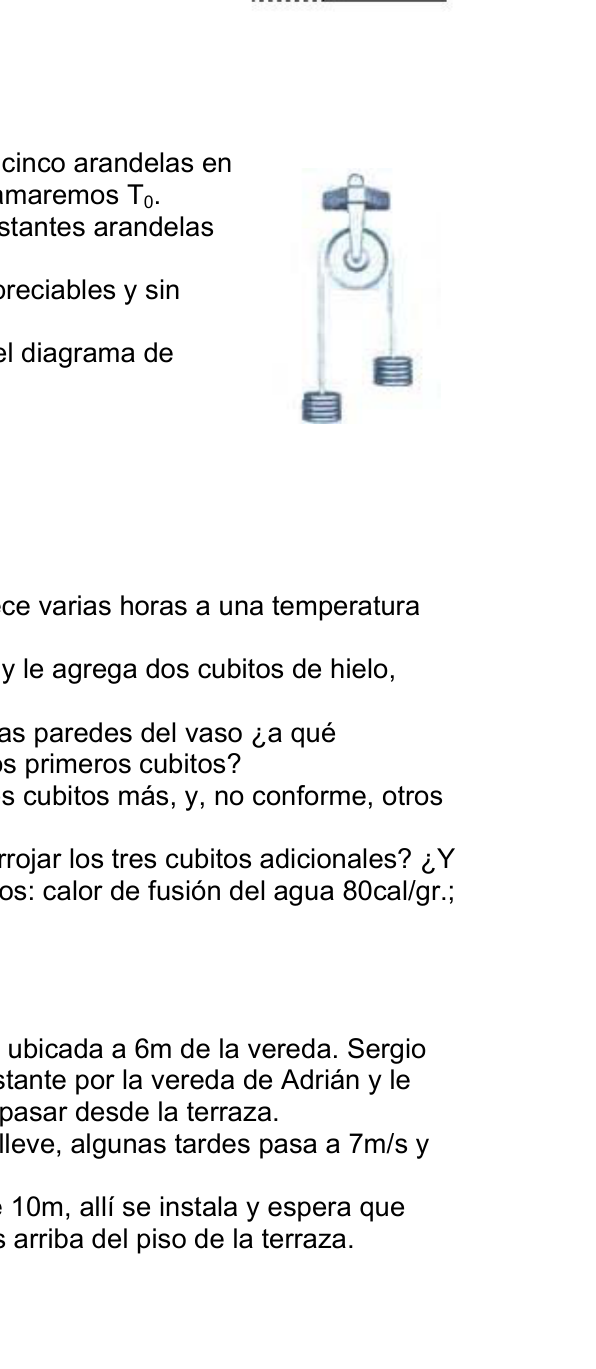
Topic: Fluid Mechanics, Thermodynamics Metodi: Hydrostatic Equilibrium, First Law of Thermodynamics, Physical Modeling Competenze: Physical Reasoning, Mathematical Modeling Objects: Block, Pulley, Container Fonte: Testo (PDF) — p.3
Perpetual motion buoyancy and heat
PT30. Città di Buenos Aires. Blu. Movimento perpetuo? Per molti anni, molti “inventori” hanno sognato di creare un mobile mobile. perpetuo. Uno di questi è quello che vedete nella figura. Una torre alta 20 metri è
- Pieno di acqua. Nella parte più alta e più bassa di questa torre ci sono due polea unite tra loro per un filo resistente che fa le tappe di corda senza fine. A questo cavo vanno 14 blocchi cubici. Questi blocchi sono fatti di lastre di ferro unite con rimorchi e sono a terra. Il spessore delle lastre è di 2 mm e sono di 1 m x 1m. a) Calcolare la massa e il volume di un cubo. b) a) calcolare il peso totale del sistema e il pulsante. Dici qual è la forza netta e in cosa La direzione farà girare le polemiche. c) Calcolare il lavoro che è in grado di fornire il sistema in un ciclo, senza considerare la frizione. L’inventore voleva usare questo sistema per spostare un motore che consuma 1500J in più per ciclo di quanto la macchina sia in grado di consegnare. Quindi, un’idea molto strana di generare
- Più lavoro. Decidi di riscaldare i blocchi giusto prima di entrare in acqua in modo tale che il suo Il volume è maggiore e quindi la sua spinta. d) Calcolare il volume finale del blocco se riesce riscaldare fino a 120°C e alla temperatura ambiente es de 20ºC. e) Calcolare la temperatura finale dell’acqua se si suppone la colonna con i blocchi in stato stazionario con una perdita di calore di 75 kcal/sec e un ciclo di 40 secondi. Approfondiremo la temperatura all’interno del colonna d’acqua come T(h)=To-k.h con h l’altezza e k una costante, in modo tale che T 20 m) = Ambiente. f) Calcolare T(0) minimo per che la macchina di Questo pazzo inventore consegna il lavoro che lui
- Ne ha bisogno. Aiuto: grafico F vs. ∆x per il punto (c) e Per questo caso, allora pensate al lavoro come aree delimitate da questi grafici e il a) il filo orizzontale. Se non si è accorta fino ad ora, questa macchina non può funzionare! - Si deve avere. considerando che per un cubo entrare nella colonna d’acqua deve essere superato il la pressione esercitata dall’acqua. g) Calcolare il lavoro necessario per far entrare un blocco e spiegare perché non è necessario Potrebbe funzionare. Potrebbe essere modificato in qualche modo per avere
movimento perpetuo, o energia gratuita? Se non sei sicuro della tua risposta, quando? Quando arrivi a casa, ripeti il secondo principio della termodinamica.
Datati: δacqua = 1 g/cm3
Il ferro = 12,10-6 1/oC
δ ferro = 7,86 g/cm3
Cereo = 0,113 cal/goC
Topic: Fluid Mechanics, Thermodynamics Metodi: Hydrostatic Equilibrium, First Law of Thermodynamics, Physical Modeling Competenze: Physical Reasoning, Mathematical Modeling Objects: Block, Pulley, Container Fonte: Testo (PDF) — p.3
The following table shows the results of the calculations:
PT30. City of Buenos Aires. Blue, please. Perpetual movement? For many years, many inventors dreamed of creating a mobile. It’s a perpetual one. One of them is the one you see in the figure. A 20-meter tower is there . It’s full of water. In the highest and lowest parts of this tower there are two pulleys joined together each other by a resilient wire that makes the straps endless. This cable goes . subjects 14 cubic blocks. These blocks are made of iron sheets bonded together. They’re tight and tight. The thickness of the plates is 2 mm and they are 1 m x 1m. (a) Calculate the mass and volume of a cube. (b) From (a) calculate the total system weight and the push. Tell me what the net force is and what it ‘s in . The direction will turn the pulleys. (c) Calculate the work that is capable of delivering the system in a cycle, without regard to friction. The inventor wanted to use this system to Move an engine that consumes 1500J more per cycle of what the machine is capable of delivering. So, idea a very strange way to generate More work. Decide to heat the blocks right . Before entering the water in such a way that your The volume is higher and therefore the thrust. (d) Calculate the final block volume if you can Heat them to 120°C and room temperature es de 20ºC. (e) Calculate the final water temperature if you Suppose the column with the blocks in state stationary with a heat loss of 75 kcal/sec and a 40-second cycle. We’ll approximate the temperature within the water column as T(h)=To-k.h with h height And k is a constant, so that T 20m) = Environment. (f) Calculate the minimum T(0) so that the machine of This crazy inventor delivers the work he does . You need it. Help: graph F vs. ∆x for item (c) and For this case, then think of the work as areas bounded by these graphs and the horizontal axis. If you didn’t realize it by now, this machine can’t work! You have to have it . Considering that for a cube to enter the water column it must be defeated by the pressure exerted by water. (g) Calculate the work required to get a block in and explain why it is not. It’s possible this machine will work. Could it be modified in some way to have
Perpetual motion, or free energy? If you’re not sure of your answer, when? I’m going home, I’m going to go over the second principle of thermodynamics.
The data: δwater = 1 g/cm3
The value of the product is the value of the product concerned.
The value of the product is calculated as follows:
The following table shows the results of the calculation:
Topic: Fluid Mechanics, Thermodynamics Metodi: Hydrostatic Equilibrium, First Law of Thermodynamics, Physical Modeling Competenze: Physical Reasoning, Mathematical Modeling Objects: Block, Pulley, Container Fonte: Testo (PDF) — p.3
Electron deflection between parallel plates
PT31. Quilmes, Buenos Aires. Azul. Dos placas planas paralelas de metal de longitud 12.0 cm cada una están separadas por una distancia de 1.5 cm como se muestra en la Figura 1.1.
Figura 1.1
El espacio entre las places es vacío y la diferencia de potencial entre las mismas es de 210 V. El campo eléctrico entre las placas se puede considerar uniforme y cero en la región afuera de ellas. La masa del electrón es me-=9.11 x 10⁻³¹kg y su carga q e-=1.67 x 10⁻¹⁹C. a. Calcule la magnitud del campo eléctrico entre las placas. [2] b. Un electrón inicialmente viaja paralelo a las places y en el medio de las mismas, como se muestra en la Figura 1.1. La rapidez del electrón es 5.0 × 10⁷ m s–1. Para el caso en que el electrón se encuentra entre las placas, i. muestre en la Figura 1.1 todas las fuerzas que están aplicadas sobre el electrón cuando este ingresa al espacio entre las placas paralelas de metal. [1] ii. determine la magnitud y dirección de la aceleración del electrón, [3] iii. calcule el tiempo que tarda el electrón en recorrer una distancia horizontal igual a la longitud de las placas de metal. [2] d. Utilice sus respuestas del punto c. para determinar si el electrón va a impactar sobre una de las placas o si va a salir entre las mismas. [2]
Topic: Electrostatics Metodi: Electric Potential Method, Free-Body Diagram, Kinematic Equations Competenze: Physical Reasoning, Mathematical Modeling Objects: Capacitor, Electron Fonte: Testo (PDF) — p.3
Electron deflection between parallel plates
PT31. Quilmes, Buenos Aires. Blu. Due piastre di metallo parallele di lunghezza di 12,0 cm sono separate. per una distanza di 1,5 cm come mostrato in Figura 1.1.
Figura 1.1
Lo spazio tra le piazze è vuoto e la differenza di potenziale tra le piazze è di 210 V. Il campo elettrico tra le plache può essere considerato uniforme e zero nel regione fuori di loro. La massa dell’elettrone è me-=9.11 x 10⁻³¹kg e il suo carico q e-=1.67 x 10⁻¹⁹C. a. Calcola la grandezza del campo elettrico tra le plache. [2] b. Un elettrone inizia a viaggiare parallelo ai posti e nel mezzo di essi. come mostrato in Figura 1.1. La velocità dell’elettrone è 5.0 × 10⁷ m s1. Per il caso in cui l’elettrone si trova tra le placche, i. mostrare in Figura 1.1 tutte le forze che sono applicate all’elettrone quando questo entra nello spazio tra le placche parallele di metallo. [1] ii. determinare la magnitudine e la direzione dell’accelerazione dell’elettrone, [3] iii. Calcola il tempo che l’elettrone deve percorrere una distanza orizzontale pari alla lunghezza delle lastre di metallo. [2] d. Usa le tue risposte al punto c. per determinare se l’elettrone colpirà su una delle targhe o se uscirà tra le stesse. [2]
Topic: Electrostatics Metodi: Electric Potential Method, Free-Body Diagram, Kinematic Equations Competenze: Physical Reasoning, Mathematical Modeling Objects: Capacitor, Electron Fonte: Testo (PDF) — p.3
The following shall be added to the list of the following:
PT31. Quilmes, Buenos Aires is where I am. Blue, please. Two parallel flat metal plates of length 12.0 cm each are separated for a distance of 1.5 cm as shown in Figure 1.1.
The following table shows the results of the study:
The space between the places is empty and the potential difference between them is 210 V. The electric field between the plates can be considered uniform and zero in the region outside of them. The mass of the electron is me-=9.11 x 10⁻³¹kg and its charge q e-=1.67 x 10⁻¹⁹C. a. Calculate the magnitude of the electric field between the plates. [2] b. An electron initially travels parallel to the places and in the middle of them. as shown in Figure 1.1. The electron speed is 5.0 × 10⁷ m s1. For the case where the electron is between the plates, i. In Figure 1.1 all the forces applied to the electron are shown. when it enters the space between the parallel plates of metal. [1] ii. determine the magnitude and direction of the acceleration of the electron, [3] (iii) the following: Calculate the time it takes the electron to travel a horizontal distance equal to length of metal plates. [2] d. Use your answers in point c. to determine if the electron is going to impact on one of the plates or if he’s going to come out between them. [2]
Topic: Electrostatics Metodi: Electric Potential Method, Free-Body Diagram, Kinematic Equations Competenze: Physical Reasoning, Mathematical Modeling Objects: Capacitor, Electron Fonte: Testo (PDF) — p.3
Car battery charging circuit
PT32. Quimes, Buenos Aires. Azul. La batería de un auto tiene una resistencia interna 0.060 Ω y es recargado con un cargador de batería que tiene una fuerza electromotriz (f.e.m) de 14 V y una resistencia interna de 0.10 Ω como se muestra en la Figura 2.1.
Figura 2.1
Velocidad del
electrón:
Cargador de
batería
Batería del auto
a. En el comienzo del proceso de recarga la corriente total del circuito es de 42 A y la f.e.m de la batería es E. i. Para el circuito de la Figura 2.1, mencione
- la resistencia total del circuito: [1]
- la f.e.m total del circuito en términos de E [1] ii. Use las respuestas del punto i. y los datos de la pregunta para calcular la f.e.m de la batería en el comienzo del proceso de recarga. [2] b. Durante la mayoría del tiempo de recarga de la batería del auto la f.e.m de la misma es de 12V y la corriente de recarga es de 12.5 A. La batería se carga con esta corriente durante 4 horas. Calcule para el tiempo de carga, i. la cantidad de carga que pasa por la batería, [2] ii. la energía proporcionada por el cargador de batería, [2] iii. la energía total disipada en la resistencia interna del cargador de batería y en la de la batería del auto. [2]
Topic: Circuits Metodi: Kirchhoff’s Laws, Equivalent Circuit Reduction Competenze: Physical Reasoning, Mathematical Modeling Objects: Battery, Resistor Fonte: Testo (PDF) — p.3
Circuito di carica della batteria della macchina
PT32. Quimes, Buenos Aires. Blu. La batteria di un’auto ha una resistenza interna di 0,060 Ω ed è ricaricata con un un caricatore di batteria che ha una forza elettromotrice (f.e.m) di 14 V e una resistenza interna di 0,10 Ω come mostrato in Figura 2.1.
Figura 2.1
Velocità di elettrone: Carriere di Batteria Batteria dell’auto
a. All’inizio del processo di ricarica il corrente totale del circuito è di 42 A e la L’e.m. della batteria è E. i. Per il circuito di Figura 2.1, menzionare
- resistenza totale del circuito: [1]
- il totale f.e.m del circuito in termini di E [1] ii. Usa le risposte del punto i. e i dati della domanda per calcolare l’ef.e.m della la batteria all’inizio del processo di ricarica. [2] b. Per la maggior parte del tempo di ricarica della batteria della macchina l’e.m. della stessa è di 12 V e il corrente di ricarica è di 12.5 A. La batteria si carica con questa . corrente per 4 ore. Calcola il tempo di carico, i. la quantità di carico che passa attraverso la batteria, [2] ii. l’energia fornita dal caricatore della batteria [2] iii. l’energia totale dissipata nella resistenza interna del caricatore della batteria e nella resistenza di la batteria della macchina. [2]
Topic: Circuits Metodi: Kirchhoff’s Laws, Equivalent Circuit Reduction Competenze: Physical Reasoning, Mathematical Modeling Objects: Battery, Resistor Fonte: Testo (PDF) — p.3
The following table shows the number of vehicles that are eligible for the subsidy:
PT32. I’m going to Quimes, Buenos Aires. Blue, please. A car’s battery has an internal resistance of 0.060 Ω and is charged with a a battery charger having an electromotive force (f.e.m) of 14 V and a internal resistance of 0.10 Ω as shown in Figure 2.1.
Figure 2.1
Speed of the electron: Loader of Battery Car battery .
a. At the beginning of the recharging process the total current of the circuit is 42 A and the The battery’s f.e.m. is E. i. For the circuit in Figure 2.1, mention
- the total resistance of the circuit: [1]
- the total f.e.m of the circuit in terms of E [1] ii. Use the answers in point i. and the data from the question to calculate the f.e.m of the battery at the beginning of the charging process. [2] b. During most of the time the car’s battery is charging the f.e.m. of the same It’s 12V and the charge current is 12.5A. The battery is charged with this . Power for four hours. Calculate for load time, i. the amount of charge passing through the battery, [2] ii. the energy provided by the battery charger [2] (iii) the following: the total energy dissipated in the internal resistance of the battery charger and in the the car battery. [2]
Topic: Circuits Metodi: Kirchhoff’s Laws, Equivalent Circuit Reduction Competenze: Physical Reasoning, Mathematical Modeling Objects: Battery, Resistor Fonte: Testo (PDF) — p.3
Aerodynamic drag and power on car
PT33. Quilmes, Buenos Aires. Azul. Un automóvil se desplaza por una carretera horizontal en línea recta a velocidad constante. a. Explique por qué la turbulencia en la parte posterior del automóvil aumenta el consumo de combustible. [1] b. El automóvil de superficie frontal A se mueve a través de aire en reposo de densidad ρ a una rapidez v. La fuerza de arrastre F que actúa sobre el auto está dada por la expresión
donde CD es una constante para el auto. i. Muestra que la potencia requerida por el motor del auto para superar la fuerza de arrastre está dada por: P = kv3, donde k es una constante. [3] ii. Un automóvil particular tiene un área A de 1.8 m2 y una constante CD de 0.34. La potencia disponible para superar a la fuerza de arrastre del aire en reposo de densidad 1.1 kg m-3 es de 84 kW. Calcule la rapidez vMAX del automóvil. [2] iii. El automóvil del punto ii. ahora se desplaza contra una corriente de aire que tiene una rapidez de 9.0 m s-1 relativa al suelo. La densidad del aire es de 1.1 kg m-3. Calcule [2] iv. Averigüe el coeficiente de rozamiento dinámico entre el automóvil y la carretera cuando éste se desplaza contra una corriente de aire que tiene una rapidez de 9.0 m s- 1 sabiendo que la masa del mismo es de 900 kg. [2]
Topic: Newtonian Mechanics, Fluid Mechanics Metodi: Dimensional Analysis, Physical Modeling, Free-Body Diagram Competenze: Physical Reasoning, Mathematical Modeling Objects: — Fonte: Testo (PDF) — p.3
Aerodinamica drag and power on car
PT33. Quilmes, Buenos Aires. Blu. Una macchina si muove su una strada orizzontale in linea retta a velocità costante. a. Spiega perché la turbolenza nella parte posteriore dell’auto aumenta il volume di consumo di carburante. [1] b. La macchina a superficie frontale A si muove attraverso l’aria a riposo di densità ρ a velocità v. La forza di trazione F che agisce sull’auto è data per l’espressione
dove il CD è una costante per la macchina. i. Mostra che la potenza richiesta dal motore della macchina per superare la forza di trascinare è dato da: P = kv3, dove k è una costante. [3] ii. Una macchina privata ha un’area A di 1,8 m2 e un CD costante di 0,34. La potenza disponibile per superare la forza di trascinamento dell’aria a riposo di densità 1.1 kg m-3 es de 84 kW. Calcola la velocità vMAX della macchina. [2] iii. Il veicolo di cui al punto ii. Ora si muove contro un flusso d’aria che ha. una velocità di 9,0 m s-1 rispetto al suolo. La densità dell’aria è di 1,1 kg m-3. Calcola [2] iv. Scopri il coefficiente di rottura dinamica tra l’auto e la strada quando si sposta contro un flusso d’aria che ha una velocità di 9,0 m/s 1 sapendo che la massa di questo è di 900 kg. [2]
Topic: Newtonian Mechanics, Fluid Mechanics Metodi: Dimensional Analysis, Physical Modeling, Free-Body Diagram Competenze: Physical Reasoning, Mathematical Modeling Objects: — Fonte: Testo (PDF) — p.3
Aerodynamic drag and power on car
PT33. Quilmes, Buenos Aires is where I am. Blue, please. A car is moving along a horizontal road in a straight line at a speed It’s constant. a. Explain why turbulence at the rear of the car increases the fuel consumption. [1] b. The front surface car A moves through air at rest from density ρ at a velocity v. The traction force F acting on the car is given by the expression
where CD is a constant for the car. i. It shows that the power required by the car engine to overcome the force of drag is given by: P = kv3, where k is a constant. [3] ii. A particular car has an area A of 1.8 m2 and a constant CD of 0.34. La Power available to overcome the drag force of air at rest density 1.1 kg m-3 es de 84 kW. Calculate the vMAX speed of the car. [2] (iii) the following: The vehicle referred to in point (ii). Now it’s moving against an airflow that it has. a speed of 9.0 m s-1 relative to the ground. The density of the air is 1.1 kg m-3. Calculate [2] iv. Find out the dynamic friction coefficient between the car and the road When the air is moving against a flow of air that has a speed of 9.0 m/s, the air is moving against a flow of air that is moving at a speed of 9.0 m/s. 1 knowing that the mass of the same is 900 kg. [2]
Topic: Newtonian Mechanics, Fluid Mechanics Metodi: Dimensional Analysis, Physical Modeling, Free-Body Diagram Competenze: Physical Reasoning, Mathematical Modeling Objects: — Fonte: Testo (PDF) — p.3
Ball trajectory: bounce, arc, incline
PT34. Ciudad de Santa Fe. Verde. Una pelota de goma es lanzada verticalmente hacia arriba desde un punto A con una velocidad de 30,0m/s. Luego de alcanzar su altura máxima, la pelota de goma, perfectamente elástica, cae libremente sobre el mismo punto A y rebota con un ángulo de inclinación de 50º hasta alcanzar el punto B (ver figura). Desde allí, atraviesa un cuarto de circunferencia de 10,0m de radio con la misma rapidez que tenía en B, la que mantiene constante en el trayecto BC (los puntos A, B y el cuarto de circunferencia están en un mismo plano). A partir del punto C desciende por un plano
inclinado 45º con la horizontal durante 5,00s y con una aceleración de 1m/s2, luego se desplaza por una superficie horizontal y se detiene después de recorrer 200m. Considerando que las superficies están perfectamente pulidas (rozamiento despreciable) entre los puntos A y D de la trayectoria, determinar: a) ai) La altura máxima que alcanza la pelota antes de rebotar en A aii) ¿Cuánto tiempo estuvo en el aire? b) ¿Qué distancia hay entre A y B? c) ci) ¿Cuánto tiempo tardó en ir de B a C? cii) ¿Cuál fue la velocidad angular? d) ¿Con qué velocidad llega a D? e) ei) ¿Cuál fue la aceleración media desde D hasta detenerse? eii) ¿Cuánto tiempo tardó en detenerse desde D?.
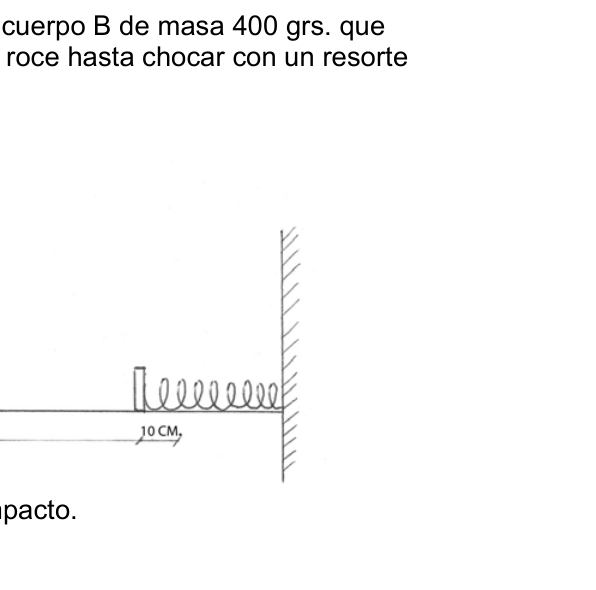
Topic: Newtonian Mechanics Metodi: Kinematic Equations, Energy Conservation Method, Vector Decomposition Competenze: Physical Reasoning, Mathematical Modeling Objects: Ball Fonte: Testo (PDF) — p.3
Ball trajectory: bounce, arc, incline
PT34. Città di Santa Fe. Verde. Una palla di gomma viene lanciata verticalmente verso l’alto da un punto A con una velocità di 30,0 m/s. Dopo aver raggiunto il massimo della sua altezza, la palla di gomma, perfettamente elastica, cade liberamente sullo stesso punto A e rimbalza con un angolo di inclinamento di 50° fino al punto B (vedi figura). Da lì, attraversa un’osta. Quarto di circonferenza di 10,0 m di raggio con la stessa velocità che aveva in B, la che si mantiene costante nel percorso BC (punti A, B e quarto di Circondaria sono nello stesso piano). Dal punto C scende per un piano
inclinato a 45° con il orizzonte per 5,00s e con un’accelerazione di 1m/s2, quindi si si sposta su una superficie orizzontale e si ferma dopo aver percorso 200m. Considerando che le superfici sono perfettamente pulite (rasatura)
- il numero di persone che hanno un’attività di lavoro di base, tracciato, determinare: a) ai) L’altezza massima che raggiunge la ballo prima di rimbalzare in A
- Quanto tempo è stato in onda? b) Qual è la distanza tra A e B? c) Ci) Quanto tempo ci è voluto per andare da B a C? Ci, qual è stata la velocità angolare? D) A che velocità arriva a D? (e) ei) Qual è stata l’accelerazione media da D fino a quando si ferma? Quanto tempo ci è voluto per fermarsi? D?
Topic: Newtonian Mechanics Metodi: Kinematic Equations, Energy Conservation Method, Vector Decomposition Competenze: Physical Reasoning, Mathematical Modeling Objects: Ball Fonte: Testo (PDF) — p.3
The ball trajectory: bounce, arc, incline
PT34. City of Santa Fe. Green, please. A rubber ball is thrown vertically up from point A with a speed of 30,0 m/s. After reaching its maximum height, the rubber ball, Perfectly elastic, falls freely over the same point A and bounces back at an angle. of a slope of 50° to the point B (see figure). From there, it goes through a quarter of a radius of 10.0m with the same speed as it had in B, the which keeps constant on the BC path (points A, B and the fourth of The circumference is on the same plane. From point C it descends on a plane.
tilted 45° with the horizontal for 5.00s and with an acceleration of 1m/s2, then it It travels on a horizontal surface and stops after 200m. Whereas the surfaces are perfectly polished (roasting) The Commission has already taken a number of measures to ensure that the trajectory, to determine: (a) (a) The maximum height of the ball before bouncing back on A How long was it on the air? (b) What is the distance between A and B? (c) (ci) How long did it take to go from B to C? (iii) What was the angular velocity? (d) How fast does it get to D? (e) ei) What was the average acceleration since D until you stop? (i) How long did it take to stop? from D?
Topic: Newtonian Mechanics Metodi: Kinematic Equations, Energy Conservation Method, Vector Decomposition Competenze: Physical Reasoning, Mathematical Modeling Objects: Ball Fonte: Testo (PDF) — p.3
Atwood machine with washers
PT35. Ciudad de Santa Fe. Verde. En una polea fija como la de la figura, se colocan cinco arandelas en cada extremo. La cuerda tiene una tensión que llamaremos T0. Si se quita una arandela del lado izquierdo, las restantes arandelas aceleran y la tensión disminuye en 0,25N. Considerando la cuerda y la polea de masas despreciables y sin tener en cuenta el rozamiento: a) Establecer un sistema de referencia y realizar el diagrama de fuerzas de las masas de las arandelas. b) Determina T0. c) Hallar la masa m de cada arandela. d) Determina la aceleración del sistema.
Topic: Newtonian Mechanics Metodi: Free-Body Diagram, Kinematic Equations Competenze: Physical Reasoning Objects: Pulley, String Fonte: Testo (PDF) — p.3
Machina ad albero con lavandini
PT35. Città di Santa Fe. Verde. In una polea fissa come quella della figura, si mettono cinque arandeli in ogni estremità. La corda ha una tensione che chiameremo T0. Se si toglie una ragglia dal lato sinistro, le altre ragglie Accelerazione e la tensione diminuisce di 0,25N. Considerando la corda e la polea di masse dispregiate e senza tenere conto del rasatura: a) stabilire un sistema di riferimento e realizzare il diagramma di le forze delle masse delle arende. b) Determina T0. c) Trovare la massa m di ogni scaglia. d) Determina l’accelerazione del sistema.
Topic: Newtonian Mechanics Metodi: Free-Body Diagram, Kinematic Equations Competenze: Physical Reasoning Objects: Pulley, String Fonte: Testo (PDF) — p.3
Atwood machine with washers
PT35. City of Santa Fe. Green, please. In a fixed pole like the figure, five arandelas are placed on the every end. The rope has a voltage that we’ll call T0. If you remove a claw from the left side, the remaining claws. accelerate and the voltage decreases by 0.25N. Considering the rope and pulley of despicable and unforgiving masses take into account the grinding: (a) Establish a reference system and draw up the diagram of The forces of the masses of the scum. (b) Determine T0. (c) Find the mass m of each claw. (d) Determine the system acceleration.
Topic: Newtonian Mechanics Metodi: Free-Body Diagram, Kinematic Equations Competenze: Physical Reasoning Objects: Pulley, String Fonte: Testo (PDF) — p.3
Ice cubes melting in warm water
PT36. Ciudad de Santa Fe. Verde. En un día de campo, una jarra con agua permanece varias horas a una temperatura de 35ºC sobre una mesa. Juan se sirve 250ml de agua en un vaso térmico, y le agrega dos cubitos de hielo, cada uno de 25g a 0ºC. a) Suponiendo que no hay pérdidas de calor por las paredes del vaso ¿a qué temperatura llegó el agua luego de agregar los dos primeros cubitos? b) En su afán de enfriar el agua, Juan le arroja tres cubitos más, y, no conforme, otros dos cubitos. ¿A qué temperatura final llegó el agua luego de arrojar los tres cubitos adicionales? ¿Y después de agregar los últimos dos cubitos? (Datos: calor de fusión del agua 80cal/gr.; Calor específico del agua 1cal/grºC).
Topic: Thermodynamics Metodi: First Law of Thermodynamics Competenze: Physical Reasoning Objects: Calorimeter Fonte: Testo (PDF) — p.3
Ice cubes melting in warm water
PT36. Città di Santa Fe. Verde. In un giorno di campagna, un vaso di acqua rimane per diverse ore a una temperatura. 35°C su un tavolo. Juan serve 250ml di acqua in un bicchiere termico, e gli aggiunge due cubetti di ghiaccio, a 25 grammo a 0°C. a) Supponendo che non ci siano perdite di calore per le pareti del bicchiere, a cosa? la temperatura è arrivata all’acqua dopo aver aggiunto i primi due cubetti? b) Nel suo sforzo di raffreddare l’acqua, Giovanni lancia altri tre cubetti, e, non conforme, altri due cubiti. A che temperatura finale è arrivata l’acqua dopo aver gettato i tre cubetti aggiuntivi? ¿Y dopo aver aggiunto gli ultimi due cubetti? (Dati: calore di fusione dell’acqua 80 cal/gr.; Calore specifico dell’acqua 1 cal/grC).
Topic: Thermodynamics Metodi: First Law of Thermodynamics Competenze: Physical Reasoning Objects: Calorimeter Fonte: Testo (PDF) — p.3
Ice cubes melting in warm water
PT36. City of Santa Fe. Green, please. On a field day, a jar of water stays for several hours at a temperature. 35 degrees on a table. Juan drinks 250ml of water in a hot glass, and he adds two cubes of ice, each 25g at 0oC. (a) Assuming there is no heat loss from the glass walls, what is the purpose of the glass? The temperature came to the water after adding the first two cubes? (b) In his eagerness to cool the water, John threw three more cubits at him, and, not complying, others. two cubits. What was the final temperature of the water after the three additional cubes were thrown? ¿Y After you add the last two cubes? (Data: water melting heat 80 cal/gr.; The specific water temperature is 1 cal/groC.
Topic: Thermodynamics Metodi: First Law of Thermodynamics Competenze: Physical Reasoning Objects: Calorimeter Fonte: Testo (PDF) — p.3
Falling key and running friend
PT37. Santa Rosa, La Pampa. Azul.
La casa de Adrián tiene dos plantas y una terraza ubicada a 6m de la vereda. Sergio
todas las tardes pasa trotando con velocidad constante por la vereda de Adrián y le
hace un saludo con la mano pues su amigo lo ve pasar desde la terraza.
La velocidad de Sergio varía según el ánimo que lleve, algunas tardes pasa a 7m/s y
otras sin sobrepasar los 12m/s.
La posición de Adrián respecto a la esquina es de 10m, allí se instala y espera que
Sergio pase apoyado en la baranda un metro más arriba del piso de la terraza.
Cierta tarde mientras ve a su amigo que venía trotando por la esquina, distraído, deja
caer una llave que tenía en la mano. Sergio vio que algo se le había caído a su amigo
y pudo atraparlo justo por encima de su cabeza y cuando pasaba por debajo de donde
estaba Adrián apoyado sin modificar su ritmo de trote.
a) Sergio mide 1,70m, responde ¿con qué velocidad estaba corriendo Sergio
esa tarde?
b) Explica la situación e indica los tipos de movimiento que estas teniendo en
cuenta, las trayectorias que siguen la llave y Sergio.
c) Si en vez de una llave hubiese tenido una pluma, Sergio ¿la hubiese
atrapado? ¿Por qué?
Topic: Newtonian Mechanics Metodi: Kinematic Equations, Physical Modeling Competenze: Physical Reasoning Objects: — Fonte: Testo (PDF) — p.3
Falling key and running friend
PT37. Santa Rosa, La Pampa. Blu. La casa di Adrián ha due piani e una terrazza a 6 metri dal vialetto. Sergio Ogni sera passa a trottere a velocità costante sul sentiero di Adriano e le Saluta con la mano perché il suo amico lo vede passare dal terrazzo. La velocità di Sergio varia a seconda del suo umore, alcuni pomeriggi passa a 7m/s e altri non oltre i 12 m/s. La posizione di Adriano rispetto all’angolo è di 10m, si installa lì e si aspetta che Sergio passa appoggiato sulla sbarraccia un metro più in alto del pavimento della terrazza.
Un pomeriggio, quando vede il suo amico che andava a trotteria, distratto, lascia. cadere una chiave che avevo in mano. Sergio ha visto che qualcosa era caduto sul suo amico. E riuscì a prenderlo proprio sopra la sua testa e quando passava sotto di dove Adriano era appoggiato senza modificare il suo ritmo di trote. a) Sergio è alto 1,70m, risponde a che velocità stava correndo Sergio
- Quel pomeriggio? b) Esprima la situazione e indica i tipi di movimento che stai avendo in Conti, tracce che seguono la chiave e Sergio. (c) Se invece di una chiave avesse una penna, Sergio la avrebbe
- In trappola? - Perché?
Topic: Newtonian Mechanics Metodi: Kinematic Equations, Physical Modeling Competenze: Physical Reasoning Objects: — Fonte: Testo (PDF) — p.3
Falling key and running friend
PT37. Santa Rosa, the Pampa. Blue, please. Adrian’s house has two floors and a terrace located 6m from the alley. Sergio . Every afternoon he trotted at constant speed along the Adrienne road and he He’s saying hello with his hand because his friend sees him passing from the terrace. Sergio’s speed varies according to his mood, some evenings he goes to 7m/s and other not exceeding 12 m/s. Adrian’s position with respect to the corner is 10m, there he sits and hopes that Sergio passes leaning on the balcony a meter above the terrace floor.
One afternoon, he sees his friend who was trotting around the corner, distracted, leaves. I dropped a key I had in my hand. Sergio saw something had fallen on his friend . And he could catch it right above his head and when it passed underneath where Adrian was backed up without changing his pitching pace. a) Sergio is 6’7”, responds how fast Sergio was running. That afternoon? (b) Explain the situation and indicate the types of movement you are having in Count, trajectories follow the key and Sergio. (c) If instead of a key he had a pen, would Sergio have it? Trapped? - Why? - I don’t know.
Topic: Newtonian Mechanics Metodi: Kinematic Equations, Physical Modeling Competenze: Physical Reasoning Objects: — Fonte: Testo (PDF) — p.3
Cooling hot tea with cold water
PT38. Santa Rosa, La Pampa. Azul.
Vas a tomar un té a “La Capital” y te lo sirven muy caliente, a 90ºC.
a) ¿Qué cantidad de agua a temperatura ambiente agregarás para poder
tomarlo sin azúcar y a 60ºC?
Considera que la taza que te sirven es de 200cm3, y el té ocupa las ¾ partes de ese
volumen,
b) ¿alcanzará con llenarla hasta el tope o tendrás que pedir una jarrita para
trasvasar la mezcla?
c) ¿Qué conceptos teóricos has utilizado para resolver la situación?
Topic: Thermodynamics Metodi: First Law of Thermodynamics Competenze: Physical Reasoning Objects: Calorimeter Fonte: Testo (PDF) — p.3
Cooling hot tea with cold water
PT38. Santa Rosa, La Pampa. Blu. Bevi un tè a La Capitale e ti servono molto caldo, a 90°C. a) Quanta acqua a temperatura ambiente aggiungerai per poter
- Non ci sono zuccheri e a 60°C? Considera che la tazza che ti serve è di 200 cm3, e il tè occupa le 3⁄4 di quella. volume, b) Riuscirà a riempirla fino al limite o dovrà richiedere un vassoio per
- Trasmettere il miscelato? c) Quali concetti teorici hai utilizzato per risolvere la situazione?
Topic: Thermodynamics Metodi: First Law of Thermodynamics Competenze: Physical Reasoning Objects: Calorimeter Fonte: Testo (PDF) — p.3
Cooling hot tea with cold water
PT38. Santa Rosa, the Pampa. Blue, please. You’re going to have a cup of tea in La Capital and they’re serving it very hot, at 90 degrees. (a) How much water at room temperature will you add to your power? Take it without sugar and at 60 degrees? Consider that the cup you serve is 200cm3, and the tea takes up 3⁄4 of that. volume, (b) will you be able to fill it to the top or will you have to order a vase for
- I’m going to get the mixture through. (c) What theoretical concepts have you used to solve the situation?
Topic: Thermodynamics Metodi: First Law of Thermodynamics Competenze: Physical Reasoning Objects: Calorimeter Fonte: Testo (PDF) — p.3
Pushing a box at constant velocity
PT39. Santa Rosa, La Pampa. Azul.
Una persona necesita mover una caja 700 N de peso sobre una superficie
horizontal
Si entre la superficie y la caja existe una fricción de 18 N.
a) calcular la fuerza necesaria que debe realizar la persona para deslizar
la caja sobre la superficie con una velocidad constante de 0,8 m/s.
b) calcular el trabajo realizado por la persona para desplazar la caja
desde el punto A hasta el punto B, distantes 15m .
c) determinar la energía mecánica de la caja en el punto medio del tramo
AB.
d) Haz un esquema que muestre la situación y las fuerzas que
intervienen en ella.
Topic: Newtonian Mechanics Metodi: Free-Body Diagram, Energy Conservation Method Competenze: Physical Reasoning Objects: Block Fonte: Testo (PDF) — p.3
Pushing a box at constant velocity
PT39. Santa Rosa, La Pampa. Blu. Una persona ha bisogno di spostare una scatola di 700 N di peso su una superficie. orizzontale Se tra la superficie e la scatola c’è una frizione di 18 N. a) calcolare la forza necessaria per gli spostamenti la scatola sulla superficie a velocità costante di 0,8 m/s. b) calcolare il lavoro svolto dalla persona per spostare la scatola dal punto A al punto B, distanti 15 m. (c) determinare l’energia meccanica della cassa nel punto medio del tratto AB. d) Disegnare un schema che mostri la situazione e le forze che intervenite.
Topic: Newtonian Mechanics Metodi: Free-Body Diagram, Energy Conservation Method Competenze: Physical Reasoning Objects: Block Fonte: Testo (PDF) — p.3
Pushing a box at constant speed
PT39. Santa Rosa, the Pampa. Blue, please. A person needs to move a 700 N box over a surface . horizontal If there is a friction between the surface and the box of 18 N. (a) calculate the force required to slide the box on the surface at a constant speed of 0,8 m/s. (b) calculate the work done by the person to move the box From point A to point B, 15m apart. (c) determine the mechanical energy of the box at the midpoint of the section AB. (d) Draw up a diagram showing the situation and the forces which are You can intervene.
Topic: Newtonian Mechanics Metodi: Free-Body Diagram, Energy Conservation Method Competenze: Physical Reasoning Objects: Block Fonte: Testo (PDF) — p.3
Two mobiles meeting: kinematics
PT40. Caleufú, La Pampa. Azul.
Desde un punto y al mismo tiempo y en sentido de abscisas crecientes parten dos
móviles.
Uno con velocidad inicial de 2m/s y una aceleración de 4 m/s2.
El otro responde a una ecuación horaria
Xf= 7t2 – 18t + 15 donde t (s) v ( m/s )
Calcular :
a- Gráfica y analíticamente posición y tiempo de encuentro.
b- Determinar expresión de la velocidad y aceleración del segundo móvil.
c- Calcular la velocidad de encuentro.
Topic: Newtonian Mechanics Metodi: Kinematic Equations Competenze: Physical Reasoning, Mathematical Modeling Objects: — Fonte: Testo (PDF) — p.3
Due mobiles meeting: kinematics
PT40. Calluffo, La Pampa. Blu. Da un punto e allo stesso tempo e in senso di ascese crescente partono due.
- I telefoni cellulari. Una velocità iniziale di 2 m/s e un’accelerazione di 4 m/s2. L’altro risponde ad un’equazione oraria. Xf=7t2 18t + 15 dove t (s) v (m/s) Calcolo: a- Grafica e analisi della posizione e del tempo di incontro. b- Determinare l’espressione della velocità e dell’accelerazione del secondo mobile. c- Calcolare la velocità di incontro.
Topic: Newtonian Mechanics Metodi: Kinematic Equations Competenze: Physical Reasoning, Mathematical Modeling Objects: — Fonte: Testo (PDF) — p.3
The Commission has also adopted a number of measures to combat the spread of the virus.
PT40. It’s the heat, the pumpkin. Blue, please. From one point and at the same time and in the sense of increasing abscesses two start. mobile devices. One with an initial speed of 2m/s and an acceleration of 4m/s2. The other one answers a time equation. Xf = 7t2 18t + 15 where t (s) v (m/s) Calculation of: a- Graphically and analytically position and meeting time. b- Determine the expression of the speed and acceleration of the second mobile. c- Calculate the speed of encounter.
Topic: Newtonian Mechanics Metodi: Kinematic Equations Competenze: Physical Reasoning, Mathematical Modeling Objects: — Fonte: Testo (PDF) — p.3
Pendulum rod hits block and spring
PT41. Caleufú, La Pampa. Azul. Una barra de peso despreciable puede rotar en torno a O . El largo de la misma es de 80 cm y en el otro extremo se encuentra una esfera de 200 grs. de masa que se encuentran inicialmente en reposo.
Al dejarla en libertad choca elásticamente con un cuerpo B de masa 400 grs. que puede deslizar sobre una superficie horizontal sin roce hasta chocar con un resorte produciendo una compresión de 10 cm..
a- Velocidad de la esfera en el instante de impacto. b- Velocidad de B. c- Constante elástica K. d- Tiempo que dura la compresión del resorte. e- Distancia X para que cuando B regrese al punto de partida justamente A vuelva a chocar. f- Velocidad de A y B luego del choque.
Topic: Newtonian Mechanics, Conservation of Energy Metodi: Conservation of Energy, Conservation of Momentum, Simple Harmonic Motion Analysis Competenze: Physical Reasoning, Mathematical Modeling Objects: Pendulum, Rod, Block, Spring Fonte: Testo (PDF) — p.3
Pendulum rod hits block and spring
PT41. Calluffo, La Pampa. Blu. Una barra di peso dispregiata può girare intorno a O . La lunghezza di questo è di 80 cm e all’altra estremità si trova una sfera di 200 grs. di massa che si inizialmente si trovano a riposo.
Quando la lasciano libera colpisce elasticamente un corpo B di massa 400 grs. che può scivolare su una superficie orizzontale senza rottura fino a colpire una primavera producendo una compressione di 10 cm.
a- velocità della sfera all’istante di impatto. b- Velocità di B. c- Costante elastica K. d- Tempo di compressione della stazione di scarico. e- Distanza X in modo che quando B ritorna al punto di partenza proprio A ritorna
- A colpire. F- Velocità di A e B dopo l’impatto.
Topic: Newtonian Mechanics, Conservation of Energy Metodi: Conservation of Energy, Conservation of Momentum, Simple Harmonic Motion Analysis Competenze: Physical Reasoning, Mathematical Modeling Objects: Pendulum, Rod, Block, Spring Fonte: Testo (PDF) — p.3
Pendulum rod hits block and spring
PT41. It’s the heat, the pumpkin. Blue, please. A scornful weight bar can spin around O . The length of the same is 80 cm and at the other end is a 200 grs sphere. mass that is They are initially resting.
When released, it collides elastically with a 400 grs B-body. That It can slide over a horizontal surface without rubbing until it collides with a spring. producing a compression of 10 cm.
a- The speed of the sphere at the instant of impact. B-Speed of B. The following conditions shall apply: d- The length of time the spring is compressed. e- Distance X so that when B returns to the starting point exactly A returns to crash. f- Speed of A and B after impact.
Topic: Newtonian Mechanics, Conservation of Energy Metodi: Conservation of Energy, Conservation of Momentum, Simple Harmonic Motion Analysis Competenze: Physical Reasoning, Mathematical Modeling Objects: Pendulum, Rod, Block, Spring Fonte: Testo (PDF) — p.3
RLC series-parallel AC circuit
PT42. Caleufú, La Pampa. Azul. Dado el siguiente circuito R-L-C:
Calcular: 1- Suponiendo L=C=0 a) Resistencia total del circuito. b) Corriente de cada rama. c) Caída de tensión en cada resistencia. d) Potencia disipada en cada resistencia. 2- Si L=25 mH y C=50 Micro Faradio ω =400 rad/seg a) Impedancia del circuito. b) Corriente en cada resistencia, bobina y capacitor.
Topic: Circuits Metodi: Kirchhoff’s Laws, Equivalent Circuit Reduction, Physical Modeling Competenze: Physical Reasoning, Mathematical Modeling Objects: Resistor, Inductor, Capacitor, Battery Fonte: Testo (PDF) — p.3
RLC serie-parallelo AC circuit
PT42. Calluffo, La Pampa. Blu. Dato il circuito R-L-C seguente:
Calcolare: 1- Supponendo L=C=0 a) Resistenza totale del circuito. b) corrente di ciascun ramo. c) Declino di tensione a ogni resistenza. d) Potenza dissipata a ogni resistenza. 2- Se L=25 mH e C=50 Micro Faradio ω =400 rad/seg a) Impedanza del circuito. b) Corrente in ogni resistenza, bobina e capacitore.
Topic: Circuits Metodi: Kirchhoff’s Laws, Equivalent Circuit Reduction, Physical Modeling Competenze: Physical Reasoning, Mathematical Modeling Objects: Resistor, Inductor, Capacitor, Battery Fonte: Testo (PDF) — p.3
The following table shows the following:
PT42. It’s the heat, the pumpkin. Blue, please. Given the following R-L-C circuit:
Calculation: 1- Suppose L=C=0 (a) Total resistance of the circuit. (b) Current of each branch. (c) Tensile drop at each resistance. (d) Dispersed power at each resistance. 2- If L=25 mH and C=50 Micro Faradio ω =400 rad/sec (a) Impedance of the circuit. (b) Current in each resistor, coil and capacitor.
Topic: Circuits Metodi: Kirchhoff’s Laws, Equivalent Circuit Reduction, Physical Modeling Competenze: Physical Reasoning, Mathematical Modeling Objects: Resistor, Inductor, Capacitor, Battery Fonte: Testo (PDF) — p.3
Two cars approaching: kinematics
PT43. General Acha, La Pampa. Verde. Dos automóviles salen al encuentro Dos automóviles separados entre sí por una distancia de 5,2 Km. viajan por una misma ruta en sentido contrario. El primero lo hace con una velocidad constante de 90
Km./h. El segundo parte del reposo 3 segundos mas tarde y alcanza una velocidad de
5 m/s en 10 s manteniendo constante su aceleración.
Responder las siguientes consignas:
a. Expresar todos los datos en el sistema internacional.
b. Calcular la aceleración del segundo automóvil.
c. Realice en un mismo sistema de ejes cartesianos la posición de cada
automóvil en función del tiempo
d. Represente en un mismo sistema de ejes cartesianos la velocidad en
función del tiempo para ambos automóvil.
e. ¿En qué momento tiene ambos automóvil la misma velocidad?
f. ¿Cuánto tiempo tardarán en encontrarse?
g. ¿Qué distancia habrá recorrido cada uno de ellos hasta encontrarse?
Topic: Newtonian Mechanics Metodi: Kinematic Equations Competenze: Physical Reasoning Objects: — Fonte: Testo (PDF) — p.3
Due auto in avvicinamento: kinematics
PT43. Generale Acha, La Pampa. Verde. Due auto si incontrano Due auto separate tra loro per un distante di 5,2 Km. Viaggiano per una . la stessa rotta in senso contrario. Il primo lo fa a velocità costante di 90 .
Km./h. La seconda parte del riposo è 3 secondi più tardi e raggiunge una velocità di 5 m/s in 10 s mantenendo costante la sua accelerazione. Rispondere ai seguenti consigli: a. Esprimere tutti i dati nel sistema internazionale. b. Calcolare l’accelerazione della seconda auto. c. Realizza in un stesso sistema di assi cartesiani la posizione di ciascun auto in base al tempo d. Rappresenta in un sistema di assi cartesiani lo stesso velocità in funzione del tempo per entrambe le auto. e. A che punto le due auto hanno la stessa velocità? f. Quanto tempo ci vorrà per incontrarsi? g. Quanto distanza ciascuno di loro ha percorso per incontrarsi?
Topic: Newtonian Mechanics Metodi: Kinematic Equations Competenze: Physical Reasoning Objects: — Fonte: Testo (PDF) — p.3
Two cars approaching: kinematics
PT43. General Acha, the Pampa. Green, please. Two cars are coming out to meet . Two cars separated by a distance of 5.2 km. They travel for a . same route in the opposite direction. The first one does it at a constant speed of 90 .
Km./h. The second part of the rest 3 seconds later and reaches a speed of 5 m/s in 10 s keeping its acceleration constant. Answer the following slogans: a. Express all data in the international system. b. Calculate the acceleration of the second car. c. Perform in the same Cartesian axis system the position of each Car based on time d. It represents in the same Cartesian axis system the velocity in time function for both cars. e. When do both cars have the same speed? f. How long will it take to meet? g. How far will each of them have traveled to meet?
Topic: Newtonian Mechanics Metodi: Kinematic Equations Competenze: Physical Reasoning Objects: — Fonte: Testo (PDF) — p.3
Piston compressing air in tube
PT44. General Acha, La Pampa. Verde.
Haciendo presión dentro de un tubo
En un tubo vertical lleno de aire y de 4 cm. de diámetro se coloca un émbolo que
ajusta perfectamente (sin rozamiento). Si el peso del émbolo es de 2,5 kgf. y la presión
exterior es de 735 mm. de Hg.
a. ¿Cuál es la presión del aire encerrado cuando el sistema aire-émbolo se encuentra
en equilibrio?
b. ¿Cuál será el volumen ocupado por el aire si la longitud del tubo es de 3 m?
c. ¿Cuanto seria la presión del aire encerrado si al embolo se le aplica una fuerza de 8
N. mas?
d. ¿Cual será el volumen del aire cuando se le aplica mas fuerza?
e. Si el tubo tuviese 4 m ¿el volumen seria el mismo?
Topic: Thermodynamics Metodi: Ideal Gas Law, Hydrostatic Equilibrium Competenze: Physical Reasoning Objects: Piston, Gas, Tube Fonte: Testo (PDF) — p.3
Piston compressante aria in tubo
PT44. Generale Acha, La Pampa. Verde. Presione all’interno di un tubo. In un tubo verticale pieno di aria e di 4 cm. di diametro si colloca un emblema che si adatta perfettamente (senza ruggine). Se il peso del cesto è di 2,5 kgf. e la pressione. l’esterno è di 735 mm. de Hg. a. Qual è la pressione dell’aria chiusa quando il sistema aria-imbolo si trova? in equilibrio? b. Qual è il volume dell’aria se la lunghezza del tubo è di 3 m? c. Quanto sarebbe la pressione dell’aria chiusa se l’embolo fosse colpito da una forza di 8? N. - Cosa? d. Qual è il volume dell’aria quando viene applicata più forza? e. Se il tubo fosse di 4 metri, il volume sarebbe lo stesso?
Topic: Thermodynamics Metodi: Ideal Gas Law, Hydrostatic Equilibrium Competenze: Physical Reasoning Objects: Piston, Gas, Tube Fonte: Testo (PDF) — p.3
The following table shows the results of the tests:
PT44. General Acha, the Pampa. Green, please. By pressuring inside a tube. In a vertical tube full of air and 4 cm. A diameter of a coil is placed which It fits perfectly (without rubbing). If the weight of the emballon is 2,5 kgf. and the pressure. The outside is 735 mm. de Hg. a. What is the air pressure in the enclosed air when the air-embellum system is located? in balance? b. What is the volume of air occupied if the length of the tube is 3 m? c. What would be the air pressure in the enclosure if the embolus was subjected to a force of 8? N. What more? d. What will the volume of air be when more force is applied? e. If the tube was 4 meters, would the volume be the same?
Topic: Thermodynamics Metodi: Ideal Gas Law, Hydrostatic Equilibrium Competenze: Physical Reasoning Objects: Piston, Gas, Tube Fonte: Testo (PDF) — p.3
DC resistor network with switches
PT45. General Acha, La Pampa. Verde. Circuito electrico De la siguiente figura determinar:
E= 12 V r 1= 3 Ohms r 2= 5 Ohms r 3= 2 Ohms r 4= 4 Ohms r 5= 1 Ohms r 6= 3 Ohms r 7= 2 Ohms L1 interruptor L2 interruptor
a) Calcula las corrientes del circuito con los interruptores cerrado b) Calcular la corriente del circuito, L1 abierto y L2 cerrado c) Calcular la corriente del circuito, L1 cerrado y L2 abierto d) Calcular potencia del circuito de cada uno de los puntos anteriores e) Calcular Vabcd con los interruptores cerrado
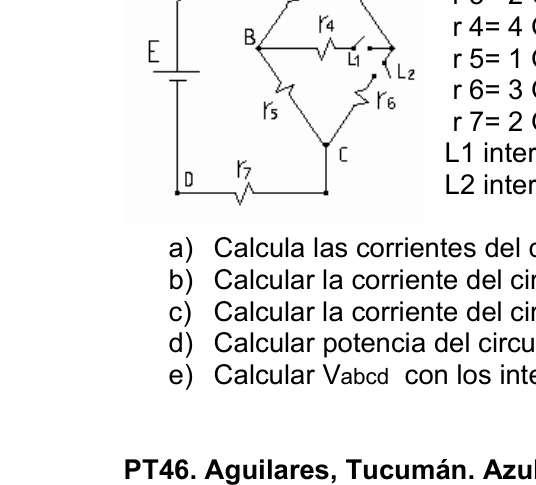
Topic: Circuits Metodi: Kirchhoff’s Laws, Equivalent Circuit Reduction Competenze: Physical Reasoning, Mathematical Modeling Objects: Resistor, Battery, Switch Fonte: Testo (PDF) — p.3
DC resistor network with switches
PT45. Generale Acha, La Pampa. Verde. Circuito elettrico Dal seguente dato si determina:
E= 12 V R 1 = 3 Ohms R 2= 5 Ohms r 3= 2 Ohms R 4= 4 Ohms r 5= 1 Ohms R 6 = 3 Ohms r 7= 2 Ohms L1 interruttore L2 interruttore
a) Calcola i correnti del circuito con gli interruttori chiusi b) Calcolare il corrente del circuito, L1 aperto e L2 chiuso c) Calcolare il corrente del circuito, L1 chiuso e L2 aperto d) Calcolare la potenza del circuito di ciascuno dei punti precedenti e) Calcolare Vabcd con gli interruttori chiusi
Topic: Circuits Metodi: Kirchhoff’s Laws, Equivalent Circuit Reduction Competenze: Physical Reasoning, Mathematical Modeling Objects: Resistor, Battery, Switch Fonte: Testo (PDF) — p.3
DC resistor network with switches
PT45. General Acha, the Pampa. Green, please. Electrical circuit From the following figure to determine:
E= 12 V R1 = 3 Ohms R2 = 5 Ohms R3 = 2 Ohms R4 = 4 Ohms R5 = 1 Ohms R 6 = 3 Ohms R7 = 2 Ohms L1 switch L2 switch
(a) Calculate the circuit currents with the switches closed (b) Calculate the current of the circuit, L1 open and L2 closed (c) Calculate the current of the circuit, L1 closed and L2 open (d) Calculate the power of the circuit at each of the above points e) Calculate Vabcd with the switches closed
Topic: Circuits Metodi: Kirchhoff’s Laws, Equivalent Circuit Reduction Competenze: Physical Reasoning, Mathematical Modeling Objects: Resistor, Battery, Switch Fonte: Testo (PDF) — p.3
Lamp filament resistivity and circuit
PT46. Aguilares, Tucumán. Azul. Según resultados reales en mediciones que Ud. realiza en laboratorio, al armar un circuito simple con una lámpara común de ciclomotores, se observa que las mediciones se sitúan en los siguientes valores standart: V = 5volt e I = 0,50A. Si tiene
en cuenta que el desarrollo (longitud) del filamento es de unos 3cm y una sección de
0,60mm2; el primer interrogante que se le plantea:
a) ¿Cuál es la resistencia específica ρ1, del material que compone el
filamento?
Si considera que el Tungsteno, del cual estaría fabricado el filamento de esa lámpara,
tiene una resistividad de ρ2 =5,6 . 10 -8 Ω.m, puede observar que hay una notoria
diferencia con el resultado anterior, lo que indicaría que los restantes alambres que
sostienen el filamento deben tener resistencia
b1) ¿Cuál es el valor de la resistencia del filamento, con el valor ρ2?
Si mantiene el valor intensidad de corriente, dado en la primera parte:
b2) ¿Cuál es el valor de diferencia de potencial, producida en este caso?
c) A continuación de dibujar el circuito y calcular R1 y R2. ()
() Se hace referencia en esta parte: al circuito de los conductores dentro de la
lámpara, debiendo designar con R1 al filamento de Tungsteno y con R2 los restantes
alambres que conducen la corriente dentro del foco.
En el instante que enciende la lámpara la temperatura del sistema es 20ºC por lo cual
sus resistencia es R0 y su intensidad de corriente I0; al cabo de cierto tiempo la
temperatura se triplica, si desprecia el cambio de longitud experimentado:
d1) ¿Cuál es el cambio relativo de la nueva resistencia? (α= 0,0045°C-1)
d2) ¿Cuál es el cambio relativo de la intensidad de corriente?
Los datos dados en el primer párrafo, se realizan en ocasión de que un grupo de
estudiantes tienen clase experimental; en dicha ocasión otro grupo dispone de un
alambre con una Resistencia RA y la jalan mecánicamente hasta alargarlo 1,25 veces
su longitud original:
e) ¿Encuentre el valor relativo de la nueva resistencia RB?
Topic: Circuits Metodi: Kirchhoff’s Laws, Physical Modeling Competenze: Physical Reasoning, Mathematical Modeling Objects: Resistor, Wire, Battery Fonte: Testo (PDF) — p.3
Lamp filament resistivity and circuit
PT46. Aguilar, Tucumán. Blu. Secondo i risultati reali delle misure che hai effettuato. La ricerca è stata condotta in laboratorio, Il sistema di controllo è stato sviluppato in modo che la tecnologia di controllo sia più efficace. Le misure sono situate nei seguenti valori standard: V = 5 volti e I = 0,50A. Se ha
considerando che la lunghezza del filamento è di circa 3 cm e una sezione di 0,60mm2; la prima domanda che gli viene posta: a) Qual è la resistenza specifica ρ1 del materiale che compone il Filamento? Se consideri che il tungsteno, di cui sarebbe stato fatto il filamento di quella lampada, ha una resistività di ρ2 = 5,6 . 10 -8 Ω.m, potete osservare che c’è una notorietà La differenza tra i risultati precedenti e quelli di cui sopra indica che i restanti fili che sostengono il filamento devono avere resistenza b) Qual è il valore della resistenza del filamento, con il valore ρ2? Se mantiene il valore di intensità di corrente, dato nella prima parte: b2) Qual è il valore della differenza di potenziale prodotta in questo caso? c) Poi disegnare il circuito e calcolare R1 e R2. () () Si riferisce a questa parte: il circuito dei conducenti all’interno della lampada, designando con R1 il filamento di tungsteno e con R2 gli altri fili che conducono il corrente all’interno del foco. L’ istante in cui accende la lampada la temperatura del sistema è di 20°C, quindi La resistenza è R0 e la sua intensità di corrente I0; dopo un certo tempo la la temperatura si triplica, se si disprezza il cambiamento di lunghezza sperimentato: d) Qual è il cambiamento relativo della nuova resistenza? (α= 0,0045°C-1) d2) Qual è il relativo cambiamento dell’intensità di corrente? I dati forniti nel primo comma sono fatti in occasione di una riunione di Gli studenti hanno una classe sperimentale; in questo caso un altro gruppo dispone di un il filo con una resistenza RA e tagliarlo meccanicamente fino a allungarlo 1,25 volte la sua lunghezza originale: e) Trova il valore relativo della nuova resistenza RB?
Topic: Circuits Metodi: Kirchhoff’s Laws, Physical Modeling Competenze: Physical Reasoning, Mathematical Modeling Objects: Resistor, Wire, Battery Fonte: Testo (PDF) — p.3
Lamp filament resistivity and circuit
PT46. The Eagles, Tucumán. Blue, please. Based on actual results in measurements that you’ve made. It’s done in the lab, by putting together a The same applies to the single circuit with a common motorcycle lamp. The measurements are set at the following standard values: V = 5 volts and I = 0,50A. If you have
Considering that the filament development (length) is about 3 cm and a section of The first question asked: (a) What is the specific resistance ρ1 of the material composing the The filament? If you consider that tungsten, which would have made the filament of that lamp, has a resistivity of ρ2 = 5,6 . 10 -8 Ω.m, you can see there’s a notoriety The result is different from the previous one, which would indicate that the remaining wires that They hold the filament . They must have resistance . (b1) What is the value of the filament resistance, with ρ2? If the current intensity value given in Part 1 is maintained: (b2) What is the value of the potential difference produced in this case? (c) Then draw the circuit and calculate R1 and R2. () () Reference herein is made to the conductor circuit within the lamp, the tungsten filament shall be designated by R1 and the remaining filament by R2. wires that conduct current within the focus. The instant the lamp is turned on the system temperature is 20oC so Its resistance is R0 and its current intensity I0; after some time the temperature is tripled, if you disregard the length change experienced: d) What is the relative change in the new resistance? (α= 0,0045°C-1) (d2) What is the relative change in current intensity? The data given in the first paragraph are taken on the occasion that a group of Students have an experimental class; in this case another group has an experimental class. Wire with an RA resistance and cut it mechanically until it is 1.25 times longer. its original length: (e) Find the relative value of the new RB resistance?
Topic: Circuits Metodi: Kirchhoff’s Laws, Physical Modeling Competenze: Physical Reasoning, Mathematical Modeling Objects: Resistor, Wire, Battery Fonte: Testo (PDF) — p.3
Thermal expansion and heat of metal cylinders
PT47. Aguilares, Tucumán. Azul.
Un fabricante de joyas y piezas de máquinas de taller para elaboración de éstas, tiene
a la vista una tabla de constantes físicas, que le son útiles en ocasiones. También
tiene un depósito de materiales, donde ubica los metales, que vienen en cilindros
macizos de unos 5cm de diámetro y 1m de largo. El depósito no está climatizado y en
invierno la temperatura puede bajar hasta los -3°C, mientras que en verano asciende
hasta los 40°C.
En base a lo expuesto y en vista de la tabla se le solicita responda los siguientes
interrogantes:
a) ¿Cuáles materiales experimentarán la mayor y menor
dilatación, ante los cambios de temperatura?
b) ¿Cuánto varía la longitud de los cilindros, entre el invierno y
verano, de los materiales que Ud. menciona en el punto
anterior?
c) ¿Cuáles materiales darán el mayor y menor peso?
d) ¿Cuánto pesan los cilindros de los materiales indicados por Ud.
en el punto anterior?
e) El Al tiene bajo punto de fusión, pero alto calor de fusión,
mientras que con el Pt ocurre lo contrario. Calcule si
alcanzarán la temperatura de fusión si se suministran 106
calorías a cada cilindro, partiendo de una temperatura inicial de
20ºC y cuál será su estado final.
Material
Símbolo Químico Calor espe- cífico (cal/gºC) Coeficiente de dilatación lineal (1/ºC) Calor latente de Fusión (cal/g) Punto de Fusión(ºC ) Densidad (kg/dm3) Aluminio Al 0,215 0,000024 77 659 2,7
Plata Ag 0,056 0,000017 21 961 10,5 Oro Au 0,031 0,000013 16 1063 19,3 Hierro Fe 0,110 0,000011 70 1535 7,86 Platino Pt 0,032 0,000009 27 1775 21,4
f) Realice un gráfico ilustrativo donde se observe la variación de temperatura en función del calor absorbido para todos los metales, considerando 100g de muestra da cada material, abarcando todo el rango en estado sólido. Suponga que temperatura inicial es de 20ºC. El fabricante tiene encargado un accesorio, para máquinas de taller, que consiste en un cilindro macizo de hierro de 5,05cm de diámetro y debe colocar un tope a presión en un extremo, para lo cual fabrica un anillo de aluminio de 5,00cm de diámetro interior. Teniendo en cuenta que ambas partes están a 20°C, se le solicita responda:
g) ¿Hasta que temperatura debe calentarse el anillo para que
pueda introducirse en el cilindro?
h) ¿A qué temperatura deben calentarse ambas partes en forma
simultánea, para que el anillo se introduzca en el cilindro?
i) Analice la factibilidad de cada método (el g ó h) para cumplir
con el objetivo.
Topic: Thermodynamics Metodi: First Law of Thermodynamics, Dimensional Analysis Competenze: Physical Reasoning, Mathematical Modeling Objects: Cylinder Fonte: Testo (PDF) — p.3
Thermal expansion and heat of metal cylinders
PT47. Aguilar, Tucumán. Blu. Un produttore di gioielli e pezzi di macchina di laboratorio per la loro fabbricazione ha a vista una tabella di costanti fisiche, che a volte ti sono utili. Anche io. ha un deposito di materiali, dove colloca i metalli, che vengono in cilindri. Massicci di circa 5 cm di diametro e 1 m di lunghezza. Il deposito non è climatizzato e in In inverno la temperatura può scendere fino a -3°C, mentre in estate sale fino a 40°C. In base a quanto precede e in vista del tabella, è richiesto di rispondere:
- Chiedete: a) Quali materiali sperimenteranno il maggior e il minor dilatazione, a causa dei cambiamenti di temperatura? b) Quanto varia la lunghezza dei cilindri, tra l’inverno e il
- l’estate, dei materiali che hai studiato. - Si tratta di un’operazione di cui si parla.
- Prima? c) Quali materiali avranno il maggior e il minor peso? d) Quanto pesano i cilindri dei materiali indicati da voi.
- al punto precedente? e) L’Al ha un basso punto di fusione, ma un elevato calore di fusione, mentre con il Pt si verifica il contrario. Calcola se raggiungono la temperatura di fusione se forniscono 106 calorie per cilindro, partendo da una temperatura iniziale di 20°C e che sarà il suo stato finale.
Materiale
Il simbolo Chimica Calore specifico
-
Cifico (cal/goC) Coefficiente di dilatazione lineare (1/oC) Calore latente di fusione (cal/g) Punto di Fusione ) Densità (kg/dm3) Alumini Al 0,215 0,000024 77 659 2,7
-
Silver Ag 0,056 0,000017 21 961 10,5 Oro . Au 0,031 0,000013 16 1063 19,3 Ferro Fe 0,110 0,000011 70 1535 7,86 Platino Pt 0,032 0,000009 27 1775 21,4
f) Realizzare un grafico illustrativo che rivelerà la variazione di Temperatura in funzione del calore assorbito per tutti Metalli, considerando 100g di campione da ogni materiale, che copre l’intero raggio in stato solido. Supponiamo che La temperatura iniziale è di 20°C. Il fabbricante ha in carico un accessorio per macchine da laboratorio, che consiste in: un cilindro di ferro massiccio di 5,05 cm di diametro e deve essere montato su un tappo a pressione in un’estremità, per la quale produce un anello di alluminio di 5,00 cm di diametro interno. Considerando che entrambe le parti sono 20°C, si chiede di rispondere:
g) A che temperatura deve essere riscaldato l’anello per
- Posso entrare nel cilindro? h) A che temperatura devono essere riscaldate le due parti in forma Simultaneamente, per far entrare l’anello nel cilindro? i) Analizzare la fattibilità di ciascun metodo (g o h) per soddisfare con l’obiettivo.
Topic: Thermodynamics Metodi: First Law of Thermodynamics, Dimensional Analysis Competenze: Physical Reasoning, Mathematical Modeling Objects: Cylinder Fonte: Testo (PDF) — p.3
Thermal expansion and heat of metal cylinders
PT47. The Eagles, Tucumán. Blue, please. A manufacturer of jewellery and parts of workshop machines for making these has You can see a table of physical constants, which you can use sometimes. I ‘m also . It has a material storage facility where it places the metals, which come in cylinders. Masses about 5 cm in diameter and 1 m in length. The tank is not air-conditioned and in In winter the temperature may drop to -3°C, while in summer it rises up to 40°C. Based on the above and in view of the table, you are asked to reply as follows: Questions: (a) What materials will experience the greatest and least Dilation, in the face of temperature changes? (b) How much does the length of the cylinders vary between winter and summer, of the materials you’ve been working on. He mentions in the point previously? (c) What materials will give the greatest and the least weight? (d) What is the weight of the cylinders of the materials you have indicated? In the previous point? (e) Al has a low melting point but high melting heat, The Commission has already adopted a number of amendments. Calculate if They will reach melting temperature if supplied 106 calories per cylinder, starting from an initial temperature of 20 degrees and what will be its final state.
Material
The symbol . Chemical Heat specification The Cypriot (cal/goC) Coefficient of Dilation Linear (1/oC) Latent heat . of merger (cal/g) Point of Fusion ) Density (kg/dm3) Aluminium Al 0,215 0,000024 77 659 2,7
Silver . Ag 0,056 0,000017 21 961 10,5 Gold . Au 0,031 0,000013 16 1063 19,3 Iron . Fe 0,110 0,000011 70 1535 7,86 Platinum . Pt 0,032 0,000009 27 1775 21,4
(f) Draw an illustrative chart showing the variation in the temperature based on the heat absorbed for all Metals, taking into account 100g of sample per material, covering the entire range in solid state. Suppose that The initial temperature is 20°C. The manufacturer has commissioned an accessory for workshop machines consisting of: a solid cylinder of iron with a diameter of 5,05 cm and must be fitted with a pressure top At one end, for which he makes an aluminium ring of 5,00 cm in diameter inside. Given that both parties are 20°C, please reply:
(g) To what temperature must the ring be heated so that Can it get into the cylinder? (h) What temperature should both parts be heated in form simultaneously, so that the ring can be inserted into the cylinder? (i) Analyze the feasibility of each method (g or h) to comply with the goal.
Topic: Thermodynamics Metodi: First Law of Thermodynamics, Dimensional Analysis Competenze: Physical Reasoning, Mathematical Modeling Objects: Cylinder Fonte: Testo (PDF) — p.3
Block on incline into spring loop
PT48. Aguilares, Tucumán. Azul.
Un cuerpo sólido, de gran densidad, está quieto en el punto A.
En un instante dado comienza a actuar la fuerza constante F = 20 N que le otorga una
aceleración a = 1,25 m/s2 , hasta el punto B, recorriendo una distancia e ab = 2,5 m ,
sin roce, µ1= 0. A continuación, el cuerpo recorre el plano descendente BC, de altura
hbc = 2,5 m, en el que µ2= 0,2 (no tener en cuenta el efecto de los codos B y C,
suponiendo que el codo B es recorrido sin que el cuerpo “vuele”.
El tramo horizontal CD de longitud e cd es tal que permite que por rozamiento (µ3=
0,25) la velocidad en D sea el 90% de la velocidad en C.
El cuerpo impacta finalmente contra el resorte comprimiéndolo 0,5 m, hasta la posición
E, siendo para este tramo, µ4= 0,3.
Calcular:
- La masa del cuerpo.
- Velocidad en B
- Energía mecánica en B
- Trabajo de rozamiento en el tramo BC
- Velocidad en C
- Espacio e cd
- Trabajo de rozamiento en el tramo DE
- Constante elástica del resorte K Por la elasticidad del resorte, el cuerpo es empujado hacia atrás, para este efecto, Calcular:
- e cd Velocidad con que pasa el cuerpo de nuevo por el punto D. Si al regresar, pasando por D, el cuerpo recorre una distancia (lisa) de 0,3 m, hasta F, en el que empieza a moverse hacia arriba por la parte interior de un carril circular vertical, de radio R=0,5 m. Allí experimenta una fuerza de rozamiento, mientras se desliza a lo largo del carril circular, constante de 7 N.
- ¿Alcanzará el cuerpo el punto más alto del carril o caerá antes de alcanzarlo? Justifique cuantitativamente la respuesta.
R= 0,5 m
F 0,3 m D
Topic: Newtonian Mechanics, Conservation of Energy Metodi: Energy Conservation Method, Free-Body Diagram, Kinematic Equations Competenze: Physical Reasoning, Mathematical Modeling Objects: Block, Spring, Inclined Plane Fonte: Testo (PDF) — p.3
Block on incline into spring loop
PT48. Aguilar, Tucumán. Blu. Un corpo solido, di grande densità, è fermo al punto A. In un istante dato inizia ad agire la forza costante F = 20 N che gli conferisce una Accelerazione a = 1,25 m/s2, fino al punto B, percorrendo una distanza e ab = 2,5 m , senza rottura, μ1 = 0. Poi il corpo percorre il piano discendente BC, di altezza hbc = 2,5 m, in cui μ2 = 0,2 (non si tiene conto dell’effetto degli angoli B e C, Supponiamo che l’anca B sia percorsa senza che il corpo volino. La trama orizzontale CD di lunghezza e cd è tale da consentire che per ruggine (μ3= 0,25) la velocità in D è il 90% della velocità in C. Il corpo impatta infine contro la resorgenza compresendola a 0,5 m, fino alla posizione E, essendo per questo tratto, μ4 = 0,3. Calcolare:
- La massa del corpo.
- Velocità in B
- Energia meccanica in B
- Lavoro di rasatura nel tratto BC
- Velocità in C
- Spazio e cd
- Lavorato di rasatura nel tratto DE
- Costante elastica della primavera K Per l’elasticità della primavera, il corpo viene spinto indietro, per questo scopo. Calcolare:
- e cd La velocità con cui il corpo passa di nuovo attraverso il punto D. Se, tornando, passando per D, il corpo percorre una distanza (lizza) di 0,3 m, fino a F, che inizia a muoversi verso l’alto attraverso l’interno di un circuito circolare. Verticale, di radio R=0,5 m. Lì si sperimenta una forza di ruggine, mentre si scivola lungo la corsia circolare, costante di 7 N.
- Il corpo raggiungerà il punto più alto della corsia o cadrà prima di raggiungerlo? Giustifica quantitativamente la risposta.
R= 0,5 m
F 0,3 m D
Topic: Newtonian Mechanics, Conservation of Energy Metodi: Energy Conservation Method, Free-Body Diagram, Kinematic Equations Competenze: Physical Reasoning, Mathematical Modeling Objects: Block, Spring, Inclined Plane Fonte: Testo (PDF) — p.3
The Commission shall adopt implementing acts in accordance with Article 21 of the Financial Regulation.
PT48. The Eagles, Tucumán. Blue, please. A solid body, of high density, is still at point A. At a given instant, the constant force F = 20 N begins to act, giving it a acceleration a = 1,25 m/s2 , to point B, travelling a distance and ab = 2,5 m , The value of the product shall be the sum of the values of the product concerned. Then the body runs down the descending plane BC, height hbc = 2,5 m, where μ2 = 0,2 (not taking into account the effect of angles B and C, Supposing that elbow B is passed without the body flying. The horizontal CD length and cd section is such that by friction (μ3= 0.25) the velocity in D is 90% of the velocity in C. The body finally impacts the spring by compressing it 0.5 m to the position E, being for this stretch, μ4 = 0.3. Calculation:
- The body mass.
- Speed in B
- Mechanical energy in B
- Work on the BC stretch
- Speed in C
- Space and cd
- The work of the DE section
- Elastic spring constant K Because of the elasticity of the spring, the body is pushed backwards, for this purpose, Calculation:
- and cd Speed at which the body passes back through point D. If on the return, passing through D, the body travels a distance (lis) of 0.3 m, up to F, where it starts moving upwards through the inside of a circular lane. a vertical radius of R=0,5 m. There he experiences a force of friction, while he is slide along the circular track constant 7 N.
- Will the body reach the highest point of the lane or fall before it reaches it? Justify the answer quantitatively.
R= 0,5 m
F 0,3 m D
Topic: Newtonian Mechanics, Conservation of Energy Metodi: Energy Conservation Method, Free-Body Diagram, Kinematic Equations Competenze: Physical Reasoning, Mathematical Modeling Objects: Block, Spring, Inclined Plane Fonte: Testo (PDF) — p.3
Car race uniformly accelerated motion
PT49. Ciudad de Formosa. Azul.
Carrera en el campo.
Contaba el abuelo que Ruperto, el hijo de don Crescencio, dueño de la estancia “La
Margarita, tomó la nueva camioneta de su padre una tarde de otoño y se lanzó a la
ruta para batirse a duelo en una carrera con Juan, quien había conseguido prestado
un viejo automóvil con motor reciclado. Ambos se encontraron en el cruce de los
caminos donde solían reunirse los muchachos, algunos de ellos los estaban
esperando.
Comenzaron el primer tramo con movimiento rectilíneo uniforme para calentar motores
hasta la marca de salida a 900 metros, lo hicieron en 3 minutos. Atanacio disparó el
arma hacia el monte señalando el momento de la salida y entonces ambos aceleraron
por el camino polvoriento. Ricardo tomó el tiempo y el primero en llegar tardó 46
segundos.
a) Realiza un esquema con los datos del ejercicio.
b) Calcula la velocidad del primer tramo.
c) Si la velocidad de llegada del primero es de 15 metros / seg., calcula su
aceleración considerando movimiento rectilíneo uniformemente acelerado.
d) Calcula la distancia entre la salida y la llegada.
e) Si Ruperto llegó dos segundos antes que Juan, ¿cuántos metros debió recorrer
Juan para alcanzar la misma velocidad que Ruperto?
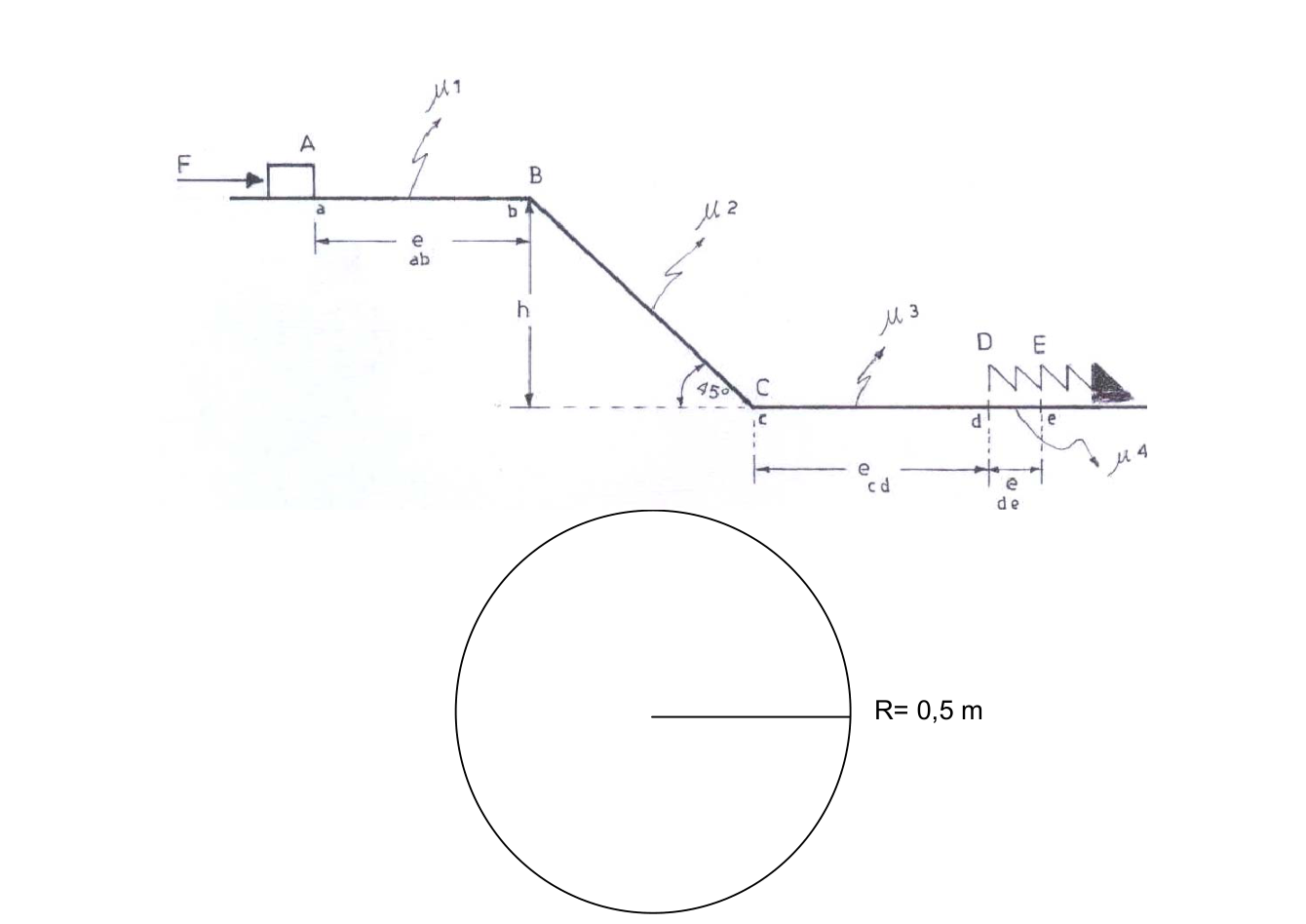
Topic: Newtonian Mechanics Metodi: Kinematic Equations Competenze: Physical Reasoning Objects: — Fonte: Testo (PDF) — p.3
Car race uniformly accelerated motion
PT49. Città di Formosa. Blu. La corsa in campo. Il nonno contava che Ruperto, figlio di don Crescencio, proprietario dell’alloggio La Margarita, ha preso il nuovo furgone di suo padre un pomeriggio d’autunno e si è lanciata in strada per battersi in duello in una gara con Juan, che aveva preso in prestito Una vecchia auto con motore riciclato. Entrambi si sono trovati all’incrocio dei strade dove i ragazzi si riunivano, alcuni di loro erano.
- Aspettando. Hanno iniziato il primo tratto con un movimento rettilineo uniforme per riscaldare i motori. fino al punto di partenza a 900 metri, lo hanno fatto in tre minuti. Atanacio ha sparato al Arma verso il monte indicando il momento di partenza e poi entrambi accelerarono sulla strada polverosa. Riccardo ha preso tempo e il primo a arrivare è stato 46
- Segondi. a) realizza un schema con i dati dell’esercizio. b) Calcola la velocità del primo tratto. c) Se la velocità di arrivo del primo è di 15 metri/sec, calcola il suo Accelerazione considerata un movimento rettilineo uniformemente accelerato. d) Calcola la distanza tra l’arrivo e la partenza. e) Se Ruperto è arrivato due secondi prima di Juan, quanti metri avrebbe dovuto percorrere? Juan per raggiungere la stessa velocità di Ruperto?
Topic: Newtonian Mechanics Metodi: Kinematic Equations Competenze: Physical Reasoning Objects: — Fonte: Testo (PDF) — p.3
Car race uniformly accelerated motion
PT49. The city of Formosa. Blue, please. Race in the country. He told the grandfather that Ruperto, son of don Crescencio, owner of the room La Margarita, she took her father’s new truck one fall afternoon and went to the route to beat him to a duel in a race with Juan, who had gotten borrowed An old car with a recycled engine. Both were found at the intersection of the The roads where the boys used to meet, some of them were. I’m waiting for you. They started the first stretch with uniform straight movement to heat engines. to the exit mark at 900 meters, they did it in three minutes. Atanacio shot the Weapon towards the mountain pointing out the time of departure and then both accelerated. down the dusty road. Richard took the time and the first to arrive took 46 Seconds. (a) draw up a scheme with the data for the year. (b) Calculate the speed of the first leg. (c) If the first arrival speed is 15 metres/second, calculate its acceleration considering uniformly accelerated straight line movement. (d) Calculate the distance between departure and arrival. e) If Rupert arrived two seconds before John, how many meters must he have gone? John to reach the same speed as Rupert?
Topic: Newtonian Mechanics Metodi: Kinematic Equations Competenze: Physical Reasoning Objects: — Fonte: Testo (PDF) — p.3
Simple machines at circus: forces
PT50. Ciudad de Formosa. Azul.
En el circo.
Joaquín, un equilibrista de circo que tiene una masa de 50 kg, intentando un nuevo
acto solicita ayuda de sus compañeros para montar un espectáculo utilizando distintas
máquinas simples de la siguiente manera:
Primero es lanzado hacia arriba por Aníbal, desde un sube y baja; y cae en una
especie de bandeja rectangular sostenida con una polea simple por Julio, que lo
levanta 3 metros. Seguidamente, Joaquín pega un salto y llega hasta un gran tobogán
cuya pendiente tiene 5 metros. Al llegar al suelo, cae boca abajo sobre una camilla
que es levantada por Nico con un torno cuyo r = 0,05 metros y R = 0,35 metros hasta 4
metros de altura y desde allí se lanza, da dos vueltas en el aire y cae sobre la caja de
una carretilla que es remolcada por Andrés hasta desaparecer detrás de las cortinas.
a) Realiza un esquema con los datos del ejercicio (considerando para el sube y
baja bP = bR = 1,50 metros; para la carretilla, bP = 2 metros y bR = 1 metro.)
b) Calcula la fuerza que debe realizar cada uno de los compañeros de Joaquín.
c) ¿Qué aceleración adquiere al final de la pendiente del tobogán si tarda 2
segundos en recorrerla?
Topic: Newtonian Mechanics Metodi: Free-Body Diagram, Torque & Angular Momentum Analysis Competenze: Physical Reasoning Objects: Pulley, Lever, Rod Fonte: Testo (PDF) — p.3
Simple machines at circus: forces
PT50. Città di Formosa. Blu.
- Al circo. Joaquin, un circo-balancerista che pesa 50 kg, sta cercando un nuovo
- Chiede aiuto ai suoi compagni per montare uno spettacolo usando diverse macchine semplici come segue: Prima viene lanciato verso l’alto da Annibal, da un ascesa e un discesa; e cade in un specie di piatto rettangolare sostenuto con una semplice polea da Giulio, che lo Alza i 3 metri. Poi Joaquin fa un salto e arriva su un grande slitto. il cui pendolo è di 5 metri. Arrivata sul pavimento, cade con il viso in giù su una camicia che è sollevata da Nico con un torno il cui r = 0,05 metri e R = 0,35 metri fino a 4 Da lì lancia, gira due volte in aria e cade sulla cassa di un carrello che Andrés trascina fino a scomparire dietro le tende. a) realizza un schema con i dati dell’esercizio (considerando l’aumento e l’aumento) bP = bR = 1,50 metri; per il carrello, bP = 2 metri e bR = 1 metro.) b) Calcola la forza che ciascuno dei compagni di Joaquín deve compiere. (c) Che accelerazione acquista alla fine della pendenza del slitto se tarda 2 Secondi per girare?
Topic: Newtonian Mechanics Metodi: Free-Body Diagram, Torque & Angular Momentum Analysis Competenze: Physical Reasoning Objects: Pulley, Lever, Rod Fonte: Testo (PDF) — p.3
The Commission has decided to extend the powers of the European Parliament and of the Council to the Member States.
PT50. The city of Formosa. Blue, please. In the circus. Joaquin, a circus balancer who weighs 50 kg, trying a new one. The act asks for the help of his peers to put together a show using different simple machines as follows: First he is thrown up by Hannibal, from a rise and fall; and falls into a A kind of rectangular tray held with a simple pole by July, which it He’s up three meters. Next, Joaquin takes a leap and reaches a large slide. whose slope is 5 meters. When he gets to the ground, he falls face down on a mattress. which is lifted by Nico with a twist whose r = 0.05 meters and R = 0.35 meters up to 4 He’s six feet tall and from there he throws, spins two times in the air and falls on the box. A wagon that is towed by Andrés until it disappears behind the curtains. (a) Draw up a scheme with the data for the year (considering the upside and low bP = bR = 1,50 metres; for the wagon, bP = 2 metres and bR = 1 metre.) (b) Calculate the strength each of Joaquin’s companions must perform. (c) What acceleration is gained at the end of the slope if it is delayed 2 seconds to go around it?
Topic: Newtonian Mechanics Metodi: Free-Body Diagram, Torque & Angular Momentum Analysis Competenze: Physical Reasoning Objects: Pulley, Lever, Rod Fonte: Testo (PDF) — p.3
Dolphin parallel and concurrent forces
PT51. Ciudad de Formosa. Azul.
Fuerza marina.
Anita fue a visitar un acuario y me contó que vio la actuación de dos delfines que
llevaban cargas, uno de 300 Newton y otro de 500 Newton, de forma paralela
separados 3 metros entre sí. Al cabo de un rato su entrenador acercó las cargas para
que sean una sola y los delfines se separaron un ángulo de 45º a cada lado para
llevarla.
a) Representa los sistemas de fuerzas.
b) Halla la gráfica y analíticamente la resultante del primer sistema y las distancias
correspondientes.
c) Halla gráficamente las componentes del sistema de fuerzas concurrentes.
Topic: Newtonian Mechanics Metodi: Vector Decomposition, Free-Body Diagram Competenze: Physical Reasoning Objects: — Fonte: Testo (PDF) — p.3
Dolphin parallel and concurrent forces
PT51. Città di Formosa. Blu. Forza Navale. Anita è andata a visitare un acquario e mi ha detto che ha visto due delfini che… Portavano cariche, una di 300 Newton e un’altra di 500 Newton, in parallelo. separati a 3 metri l’uno dall’altro. Dopo un po ’ il suo allenatore ha avvicinato le cariche per che siano una sola e i delfini si separano un angolo di 45° su ciascun lato per
- La porti. a) Rappresenta i sistemi di forze. b) Trova il grafico e analiticamente il risultato del primo sistema e le distanze corrispondenti. c) Scopri graficamente i componenti del sistema di forze concorrenti.
Topic: Newtonian Mechanics Metodi: Vector Decomposition, Free-Body Diagram Competenze: Physical Reasoning Objects: — Fonte: Testo (PDF) — p.3
The Commission shall adopt delegated acts in accordance with Article 21 of Regulation (EC) No 1272/2009.
PT51. The city of Formosa. Blue, please. The Navy. Anita went to visit an aquarium and told me she saw two dolphins performing They carried charges, one of 300 newtons and another of 500 newtons, in parallel. separated by 3 meters. After a while his coach brought the charges to The dolphins were separated at a 45 degree angle on each side to Take her. (a) It represents the systems of forces. (b) Find the graph and analytically the result of the first system and the distances the corresponding ones. (c) Graphically identify the components of the concurrent force system.
Topic: Newtonian Mechanics Metodi: Vector Decomposition, Free-Body Diagram Competenze: Physical Reasoning Objects: — Fonte: Testo (PDF) — p.3
Hammer falls off inclined roof
PT52. Rosario, Santa Fe. Verde. El Carpintero Distraído. Un carpintero se encuentra arreglando el techo de una casona de Fisherton. De repente se le cae un martillo de 4Kg. El coeficiente de roce entre el martillo y el techo es de 0.3, pero lamentablemente no impide que la herramienta se deslice vertiginosamente sobre el techo a dos aguas. Se sabe que el techo tiene una inclinación de 60 grados y una longitud de 8 metros.
- Calcular la velocidad que posee cuando abandona el techo Luego continua su trayectoria hacia el piso.
- Calcular a que distancia de la casa colisiona con el suelo si la base del techo se encuentra a 20 metros del piso. En el punto de contacto hay una colchoneta de constante elástica 500N/m .
- ¿Cuánto se comprimirá debido al impacto del bloque si existe un 25% de pérdida de energía total en el impacto? La colchoneta hace que el martillo rebote verticalmente.
- ¿Cuál es la altura máxima que alcanza si existe otra perdida de energía del 25% debido al roce de compresión? La colchoneta solo tiene efecto en el eje verticalmente, por lo que luego de rebotar el martillo colisiona nuevamente con el suelo.
- ¿A qué distancia de la casa colisiona por segunda vez y cuanto tiempo paso desde que el martillo comenzó su movimiento en la cima del techo? (Considerar 0.2 segundos en el rebote)
Consideraciones: • El martillo comienza su movimiento del reposo en la parte superior del techo • El techo sobresale 40 cm, medidos horizontalmente, de la pared. • La colchoneta está pensada para amortiguar el golpe en caso de que al carpintero corra con la suerte del martillo. • La colchoneta solo se comprime verticalmente y se encuentra a ras del suelo.
Topic: Newtonian Mechanics, Conservation of Energy Metodi: Kinematic Equations, Energy Conservation Method, Free-Body Diagram Competenze: Physical Reasoning, Mathematical Modeling Objects: Block, Spring Fonte: Testo (PDF) — p.3
Hammer falls off inclined roof
PT52. Rosario, Santa Fe. Verde. Il Carpentiere Distratto. Un carpenterino si trova a riparare il tetto di una casa di Fisherton. De E poi, all’improvviso, un martello da 4 kg gli cade. Il coefficiente di rottura tra il martello e il tetto E’ di 0.3, ma purtroppo non impedisce che lo strumento scivoli. Vertiginosamente sul tetto a due acque. Si sa che il tetto ha una inclinamento di 60 gradi e lunghezza di 8 metri.
- Calcolare la velocità che possiede quando lascia il tetto Poi continua il suo percorso verso il pavimento.
- Calcolare a che distanza dalla casa colpisce il pavimento se la base del tetto Si trova a 20 metri dal pavimento. Al punto di contatto c’ è un tappeto a costante 500 N/m .
- Quanto si comprimerà a causa dell’impatto del blocco se c’è un 25% di perdita di energia totale nell’impatto? Il tappeto fa rimbalzare verticalmente il martello.
- Qual è l’altezza massima raggiunta se vi è un’altra perdita di energia del Il 25% per effetto del compresso? Il tappeto ha effetto solo sull’asse verticalmente, quindi dopo aver rimbalzato il Il martello colpisce di nuovo il terreno.
- A che distanza dalla casa colpisce per la seconda volta e quanto tempo passa? Da quando il martello ha iniziato a muoversi sulla cima del tetto? (Considerare 0.2 secondi in rebote)
Considerazioni: • Il martello inizia il suo movimento di riposo in cima al tetto • Il tetto sale 40 cm, misurati orizzontalmente, dal muro. • Il tappeto è stato creato per ammortizzare il colpo nel caso in cui il Il macerato correre con il martello. • Il tappeto si compresse solo verticalmente e si trova a piatto del pavimento.
Topic: Newtonian Mechanics, Conservation of Energy Metodi: Kinematic Equations, Energy Conservation Method, Free-Body Diagram Competenze: Physical Reasoning, Mathematical Modeling Objects: Block, Spring Fonte: Testo (PDF) — p.3
Hammer falls off inclined roof
PT52. Rosario, Santa Fe. Green, please. The distracted carpenter. A carpenter is found fixing the roof of a Fisherton cottage. De Suddenly, a 4kg hammer falls to him. The friction coefficient between the hammer and the roof It’s 0.3, but unfortunately it doesn’t stop the tool from slipping. dizzyingly on the water-tight roof. You know the roof has a 60 degrees inclination and a length of 8 meters.
- Calculate the speed you have when you leave the roof . Then continue your path to the floor.
- Calculate how far away the house collided with the ground if the base of the roof It’s 20 meters from the floor. At the contact point there ‘s a constant elastic mattress of 500N/m .
- How much will be compressed due to the block impact if there is a 25% of Total energy loss in the impact? The mattress makes the hammer bounce vertically.
- What is the maximum height it reaches if there is another energy loss from the 25% from the compression brush? The mattress only has effect on the axis vertically, so after bouncing the Hammer collides with the ground again.
- How far from the house does it collide for the second time and how long does it take? Since the hammer started moving on top of the roof? (Consider 0.2 seconds in rebound)
Consideration: • The hammer begins its resting movement on the top of the roof. • The ceiling protrudes 40 cm, measured horizontally, from the wall. • The mattress is designed to cushion the blow in case the Carpenter runs with the luck of the hammer. • The mattress is only compressed vertically and is flat on the ground.
Topic: Newtonian Mechanics, Conservation of Energy Metodi: Kinematic Equations, Energy Conservation Method, Free-Body Diagram Competenze: Physical Reasoning, Mathematical Modeling Objects: Block, Spring Fonte: Testo (PDF) — p.3
Oil-rubber separation by heating
PT53. Rosario, Santa Fe. Verde. El Reciclaje. Una empresa que vende neumáticos de caucho para la industria automotriz utiliza una máquina cortadora que necesita aceite refrigerador permanentemente para su funcionamiento, esto es para poder mantener la misma a una temperatura acorde. Esta máquina consume demasiada cantidad de aceite por día y como representa un gran costo para la empresa, se decidió reutilizarla. El problema es que el aceite saliente de la maquina está contaminada con residuos de caucho y ambos tienen casi la misma densidad entonces para poder reutilizarlas se necesita un proceso de depuración, a saber la densidad del aceite es de 920 kg/m3 y la densidad del caucho es de 925 kg/m3 referidos a 27°C. El proceso de depuración se hace mediante flotación1 en un depósito cilíndrico de aluminio. La mezcla (aceite y caucho) que llega desde la máquina a 27°C se calienta hasta una temperatura determinada y luego se puede recolectar el aceite y el caucho por separado; esto es cuando la densidad del caucho es 1,5 veces la densidad del aceite. Ver esquema.
1 Parte: La Mezcla Un día de trabajo cotidiano se consumen 15 litros de aceite, que llegan al depósito en su totalidad y en el mismo se almacenan unos 20 litros de la mezcla. a) Calcule la masa de caucho que se desperdicia por día b) Calcule la temperatura a la cual debe calentarse la mezcla para poder realizar la separación. c) ¿Cuánto calor se le debe entregar al sistema, sabiendo que el deposito tiene una masa de 15kg? d) Una vez que el proceso de calentado culminó y los restos de caucho quedaron sobre el fondo del depósito se abre la válvula que permite la salida del aceite del mismo. Calcule la velocidad de salida del fluido a penas se abre la válvula sabiendo que h tiene un valor de 1,25 metros.
2 Parte: El Circuito El depósito debe ser calentado a través de una resistencia calefactora que forma parte de un circuito que ud debe diseñar. En el mismo se ha conectado en serie los siguientes elementos: la resistencia calefactora, una resistencia limitadora (que limita la corriente que circula en el circuito) y como fuente se utilizará la toma domiciliaria de 220V. La resistencia calefactora es de 15Ω y puede disipar una potencia máxima de 2200W.
1 El proceso de depuración por flotación radica en poder separar dos sustancias no miscibles por diferencia de densidad. Para cambiar la densidad de cada una de ellas se eleva la temperatura, y al cambiar el volumen, cambia la densidad. Esto se puede utilizar si ambas sustancias tienen diferentes coeficientes volumétricos de dilatación. salida aceite entrada mezcla restos caucho h
a) ¿Durante cuánto tiempo debe entregar calor la resistencia calefactora si funciona
a la potencia máxima para calentar el sistema según se ha calculado en la
primera parte?
b) Calcule la corriente necesaria para que la resistencia calefactora desarrolle la
potencia máxima.
Para construir el circuito se utilizan cables que soportan como máximo 8A de
corriente, teniendo en cuenta esta limitación:
c) ¿Cuánto debe valer la resistencia limitadora?
d) Calcule la potencia consumida por cada una de las resistencias que componen
al circuito, la potencia consumida de la red y la energía consumida en 1 hora,
expresada en kw-h
e) ¿Con esta nueva configuración del circuito cuanto tiempo tardaria la resistencia
calefactora en calentar al deposito?
Consideraciones:
• El calor que transmite la resistencia calefactora llega en su totalidad al depósito,
no existiendo ninguna pérdida.
• Coeficiente de dilatación lineal del caucho αCaucho=8 . 10-5 °C-1
Coeficiente de dilatación volumétrico del caucho βAceite=7,5 . 10-3 °C-1
Calor específico del aluminio cal=887 J/(kg °C)
Calor específico del aceite caceite=1674 J/(kg °C)
Calor específico del caucho ccaucho=2010 J/(kg °C)
Topic: Fluid Mechanics, Thermodynamics Metodi: Hydrostatic Equilibrium, Physical Modeling, First Law of Thermodynamics Competenze: Physical Reasoning, Mathematical Modeling Objects: Container Fonte: Testo (PDF) — p.3
Oil-rubber separation by heating
PT53. Rosario, Santa Fe. Verde. Il riciclo. Un’azienda che vende pneumatici di gomma per l’industria automobilistica usa una Una macchina da taglio che ha bisogno di olio refrigerante per sempre per il suo funzionamento, questo è per poterlo mantenere ad una temperatura accorda. Questa macchina consuma troppo olio al giorno e come rappresenta un E’ stato un costo enorme per l’azienda, e si è deciso di riutilizzarlo. Il problema è che l’olio La scarica della macchina è contaminata con residui di gomma e entrambi hanno quasi la stessa densità, quindi per poterli riutilizzare è necessario un processo di La capacità di depurazione, cioè la densità dell’olio è di 920 kg/m3 e la densità della gomma è di 925 kg/m3 per 27°C. Il processo di depurazione è effettuato mediante galleggiamento1 in un deposito cilindrico di
- L’alluminio. La miscela (olio e gomma) che arriva dalla macchina a 27°C viene riscaldata fino a una temperatura determinata e poi si possono raccogliere l’olio e la gomma separatamente; questo è quando la densità della gomma è 1,5 volte la densità della gomma. olio. Vedi lo schema.
Parte 1: La miscela Un giorno di lavoro giornaliero consuma 15 litri di olio, che arrivano al deposito in sono conservati nella totalità e nel suo interno circa 20 litri di miscela. a) Calcolare la massa di gomma che viene spreco di giorno in giorno b) Calcolare la temperatura alla quale deve essere riscaldare il miscela per poter realizzare la separazione. (c) Quanto calore deve essere consegnato al sistema, sapendo che il deposito ha una massa di 15 kg? d) Una volta che il processo di riscaldamento E ’ finita e i resti di gomma . Sono rimasti sul fondo del deposito. si apre la valvola che permette l’ uscita dell’olio di esso. Calcolare la velocità di uscita del fluido quando si apre la valvola sapendo che h ha un valore di 1,25 metri.
Parte 2: Il circuito Il deposito deve essere riscaldato attraverso una resistenza di riscaldamento che fa parte del di un circuito che devi progettare. In esso è stato collegato in serie i La resistenza di calore, la resistenza di limitazione (che limita la resistenza di calore) La corrente che circola nel circuito) e come fonte si utilizzerà la presa domiciliare di 220V. La resistenza al riscaldamento è di 15Ω e può dissipare una potenza massima di 2200W.
1 Il processo di depurazione da galleggiamento consiste nel poter separare due sostanze non miscibili per differenza di densità. Per cambiare la densità di ciascuna delle due, si alza la temperatura, e cambiando il volume, si cambia la densità. densità. Questo può essere utilizzato se entrambe le sostanze hanno coefficienti di dilatazione volumetrici diversi. uscita di olio Entrate miscele Resti di gomma h
a) Per quanto tempo deve essere fornito il calore dalla resistenza di riscaldamento se funziona al massimo di potenza per riscaldare il sistema calcolato in La prima parte? b) Calcolare il corrente necessario per far sviluppare la resistenza al riscaldamento
- Potenza massima. Per costruire il circuito si utilizzano cavi che supportano al massimo 8A di corrente, tenendo conto di questa limitazione: c) Quanto deve valere la resistenza di limitazione? d) Calcolare la potenza consumata da ciascuna delle resistenze che compongono al circuito, alla potenza consumata della rete e all’energia consumata in un’ora, espressa in kw-h e) Con questa nuova configurazione del circuito quanto tempo ci vorrebbe la resistenza? il riscaldatore in riscaldamento del deposito? Considerazioni: • Il calore trasmesso dalla resistenza al riscaldamento arriva in tutto al deposito, Non ci sono perdite. • Coefficiente di dilatazione lineare della gomma αCaucho=8 . 10-5 °C-1 Coefficiente di dilatazione volumetrica della gomma βAceite=7,5 . 10-3 °C-1 Calore specifico dell’alluminio cal=887 J/(kg °C) Calore specifico dell’olio di caceite=1674 J/(kg °C) Calore specifico del gomma ccaucho=2010 J/(kg °C)
Topic: Fluid Mechanics, Thermodynamics Metodi: Hydrostatic Equilibrium, Physical Modeling, First Law of Thermodynamics Competenze: Physical Reasoning, Mathematical Modeling Objects: Container Fonte: Testo (PDF) — p.3
Oil-rubber separation by heating
PT53. Rosario, Santa Fe. Green, please. Recycling. A company selling rubber tires for the automotive industry uses a A cutting machine that needs cooling oil permanently for its operation, this is to be able to keep it at a suitable temperature. This machine consumes too much oil per day and how does it represent a It was a big cost to the company, so it was decided to reuse it. The problem is that oil The outlet from the machine is contaminated with rubber waste and both have almost The same density then to be able to reuse them you need a process of The oil density is 920 kg/m3 and the rubber density is is 925 kg/m3 with reference to 27°C. The purification process is carried out by floating1 in a cylindrical tank of The aluminum. The mixture (oil and rubber) reaching 27°C from the machine is heated until a certain temperature and then the oil and rubber can be collected. This is when the density of the rubber is 1.5 times the density of the oil. See the pattern.
Part 1: The mixture A day’s work consumes 15 litres of oil, which reaches the tank in They are stored in their entirety and in the same place. about 20 liters of the mixture. (a) Calculate the mass of rubber used. Waste of time per day (b) Calculate the temperature at which it should be Heat the mixture so you can The separation is performed. (c) How much heat should be delivered to the system, knowing that the deposit has a weight of 15 kg? (d) Once the heating process is complete It ‘s over and the rubber remains . They were left on the bottom of the tank . The valve is opened to allow the exit of the oil of the same. Calculate the flow rate of the fluid at the point where the Valve knowing that h has a value of 1.25 meters.
Part 2: The Circuit The tank must be heated by a heating resistor that is part of the heating system. of a circuit you have to design. In the same it has been connected in series The following elements: heating resistance, limiting resistance (which limits the heat output of the heating system) The electricity supply to the electricity supply system is the electricity supply to the electricity supply system (the electricity supply system) and the electricity supply to the electricity supply system (the electricity supply system) is the electricity supply system (the electricity supply system) and the electricity supply system (the electricity supply system) is the electricity supply system (the electricity supply system) and the electricity supply system (the electricity supply system) is the electricity supply system (the electricity supply system) and the electricity supply system (the electricity supply system) is the electricity supply system (the electricity supply system) and the electricity supply system (the electricity supply system) are the electricity supply system (the electricity supply system) and the electricity supply system (the electricity supply system) are the electricity supply system (the electricity supply system) and the electricity supply system (the electricity supply system) are the electricity supply system (the electricity supply system) and the electricity supply system (the electricity supply system) are the main sources. 220V. The heating resistance is 15Ω and can dissipate a maximum power of 2200W.
1 The floatation purification process consists of the separation of two non-miscible substances by difference of density. To change the density of each of them, the temperature rises, and when you change the volume, you change the density. density. This may be used if both substances have different volumetric dilation coefficients. Oil output Mixed input Rubber remains h
(a) How long should the heating resistance deliver heat if it is working the maximum heating power of the system as calculated in the The first part? (b) Calculate the current required for the heating resistance to develop the heat resistance. maximum power. The circuit is constructed using cables that support a maximum of 8A of current, taking into account this limitation: (c) How much should the limiting resistance be worth? (d) Calculate the power consumed by each of the resistors that make up it. the circuit, the power consumed by the network and the energy consumed in 1 hour, expressed in kw-h (e) With this new circuit configuration how long would resistance take? heater in the warehouse heating? Consideration: • The heat transmitted by the heating resistance reaches the tank in full. There is no loss. • Linear rubber dilation coefficient of αCaucho=8 . 10-5 °C-1 The volume dilation coefficient of the rubber βAceite = 7.5 . 10-3 °C-1 The specific heat of the aluminium cal=887 J/(kg °C) The specific heat of the hemp oil=1674 J/(kg °C) The specific heat of the rubber ccaucho=2010 J/(kg °C)
Topic: Fluid Mechanics, Thermodynamics Metodi: Hydrostatic Equilibrium, Physical Modeling, First Law of Thermodynamics Competenze: Physical Reasoning, Mathematical Modeling Objects: Container Fonte: Testo (PDF) — p.3
Spear fishing: refraction aiming angle
PT54. Rosario, Santa Fe. Verde.
El Pescador.
Un pescador debe acertar con una lanza a un pez que se alimenta en el fondo de una
laguna de 0,5 de profundidad.
Cuando visualiza al pez a 3m de alcance horizontal, arroja la lanza al punto en que lo
está viendo.
a) ¿Acertará al pez, o se quedará corto o largo en el tiro? Justifique (considere que
la trayectoria de la lanza es recta)
b) ¿Con qué ángulo debería arrojar la lanza para acertar al pez? (mantener la
suposición de la trayectoria recta de la lanza)
c) Si decide arrojar la lanza en forma horizontal, ¿con que velocidad debería
hacerlo para acertar al pez? (suponer que la lanza al entrar al agua mantiene una
trayectoria recta)
Consideraciones:
• La altura de salida de la lanza es siempre 1,8m
• El pez es pequeño
• El índice del agua es 1,33
• El alcance se mide en el plano horizontal en el fondo de la laguna
Topic: Geometric Optics Metodi: Snell’s Law, Ray Tracing, Kinematic Equations Competenze: Physical Reasoning, Mathematical Modeling Objects: Projectile Fonte: Testo (PDF) — p.3
Spear fishing: refraction aiming angle
PT54. Rosario, Santa Fe. Verde. Il Pescatore. Un pescatore deve colpire con una lancia un pesce che si nutre sul fondo di una La laguna di 0,5 profondità. Quando visualizza il pesce a 3 metri di distanza, lancia il lancio al punto in cui lo raggiunge. sta guardando. a) Colpisce il pesce o si fa breve o lungo nel tiro? Raccontare che La traccia della lancia è retta) b) A che angolo dovrebbe lanciare la lancia per colpire il pesce? (rendere il Supposizione del percorso retto della lancia) c) Se decide di lanciare la lancia in modo orizzontale, a che velocità dovrebbe lanciare?
- Per colpire il pesce? (supponendo che la lancia, entrando in acqua, tenga una) (tragitto retto) Considerazioni: • L’altezza di uscita della lancia è sempre di 1,8m • Il pesce è piccolo • L’indice dell’acqua è di 1,33 • La portata è misurata in piano orizzontale sul fondo del lago
Topic: Geometric Optics Metodi: Snell’s Law, Ray Tracing, Kinematic Equations Competenze: Physical Reasoning, Mathematical Modeling Objects: Projectile Fonte: Testo (PDF) — p.3
Spear fishing: refraction aiming angle
PT54. Rosario, Santa Fe. Green, please. The Fisherman. A fisherman must strike a fish that feeds on the bottom of a fish with a spear. The depth gap is 0.5°. When you view the fish at 3m of horizontal range, throw the spear at the point where it is He’s watching. (a) Will it hit the fish, or will it be short or long in the shot? Justify (consider that The trajectory of the spear is straight) (b) At what angle should you throw the spear to hit the fish? (keep the (assumption of the straight path of the spear) (c) If you decide to throw the spear horizontally, at what speed should you? Do it to hit the fish? (assuming the spear enters the water and holds one) (Right track) Consideration: • The launch height of the spear is always 1.8m • The fish is small • Water ratio is 1.33 • The range is measured on the horizontal plane at the bottom of the gap
Topic: Geometric Optics Metodi: Snell’s Law, Ray Tracing, Kinematic Equations Competenze: Physical Reasoning, Mathematical Modeling Objects: Projectile Fonte: Testo (PDF) — p.3
Newton’s laws and stacked blocks friction
PT55. Ciudad de Córdoba. Azul. a) Enuncia y comenta las Leyes de Newton. b) Los bloques de la figura tienen masas de MA=3 kg y MB =1 kg. El coeficiente de rozamiento en los contactos B-A y A- suelo es µ=0,3. Sobre el bloque B actúa una fuerza F paralela al suelo. Calcula el máximo valor de F para que el sistema permanezca en reposo. Considera g=10 N/kg. c) En esta situación límite de equilibrio, indica detalladamente todas las fuerzas que actúan sobre cada uno de los dos bloques.
Topic: Newtonian Mechanics Metodi: Free-Body Diagram, Vector Decomposition Competenze: Physical Reasoning Objects: Block Fonte: Testo (PDF) — p.3
Le leggi di Newton e i blocchi a piattaforma di frottura
PT55. Città di Córdoba. Blu. a) Esprima e commenta le leggi di Newton. b) I blocchi della figura hanno masse de MA=3 kg y MB =1 kg. Il coefficiente di rottura dei i contatti B-A e A- suolo è μ=0,3. Su B , agisce . una forza F parallela al suolo. Calcola il massimo di F per mantenere il sistema a riposo. Considera g=10 N/kg. c) In questa situazione di limite di equilibrio, indica
- in dettaglio tutte le forze che agiscono su ogni uno dei due blocchi.
Topic: Newtonian Mechanics Metodi: Free-Body Diagram, Vector Decomposition Competenze: Physical Reasoning Objects: Block Fonte: Testo (PDF) — p.3
Newton’s laws and stacked blocks friction
PT55. The city of Cordoba. Blue, please. (a) Statement and commentary on Newton’s laws. (b) The blocks in the figure have masses de MA=3 kg y MB =1 kg. The coefficient of friction in the B-A and A- soil contacts is μ=0.3. On block B it acts . an F force parallel to the ground. Calculate the maximum value of F So the system stays at rest. Consider g = 10 N/kg. (c) In this equilibrium situation, it indicates The Commission shall, in particular, examine the various aspects of the implementation of the Directive. One of the two blocks.
Topic: Newtonian Mechanics Metodi: Free-Body Diagram, Vector Decomposition Competenze: Physical Reasoning Objects: Block Fonte: Testo (PDF) — p.3
Projectile Motion Full Analysis
PT56. Ciudad de Córdoba. Azul. A partir de la figura y teniendo en cuenta los siguientes datos: Velocidad inicial de 49m/s Angulo de de disparo de 53º. Calcular: a) La posición del proyectil y el valor de y dirección de de su velocidad para t=2.0 s. b) En que instante de tiempo el proyectil alcanza su máxima altura y su valor en este punto. c) Calcular la distancia horizontal en la cual el proyectil vuelve a alcanzar su altura inicial. d) En caso de no existir obstáculo, el proyectil continúa avanzando más allá de su alcance horizontal. Calcular la posición y velocidad 10 segundos después de iniciado el movimiento.
Topic: Newtonian Mechanics Metodi: Kinematic Equations, Vector Decomposition Competenze: Physical Reasoning, Mathematical Modeling Objects: Projectile Fonte: Testo (PDF) — p.3
Projectile Motion Full Analysis
PT56. Città di Córdoba. Blu. A partire dalla figura e tenendo conto dei seguenti dati: Velocità iniziale di 49 m/s Angolo di lancio di 53°. Calcolare: a) La posizione del proiettile e il valore e direzione della sua velocità per t=2.0 s. b) In che istante il proiettile raggiunge la sua altezza massima e il suo valore in questo punto. c) Calcolare la distanza orizzontale in cui il proiettile raggiunge la sua altezza.
- Inizialmente. d) In caso di non ostacolo, il proiettile continua ad avanzare oltre il suo limite. portata orizzontale. Calcolare la posizione e velocità 10 secondi dopo Iniziato il movimento.
Topic: Newtonian Mechanics Metodi: Kinematic Equations, Vector Decomposition Competenze: Physical Reasoning, Mathematical Modeling Objects: Projectile Fonte: Testo (PDF) — p.3
The Commission shall adopt delegated acts in accordance with Article 21 of this Regulation.
PT56. The city of Cordoba. Blue, please. From the figure and taking into account the following data: Initial speed of 49m/s 53° shooting angle. Calculation: (a) The position of the projectile and the value of and direction of its velocity for t=2.0 s. (b) In what moment of time the projectile reaches its maximum height and its value in This point. (c) Calculate the horizontal distance at which the projectile reaches its height again The initial. (d) If no obstacle exists, the projectile continues to advance beyond its range. horizontal range. Calculate position and speed 10 seconds after I started the movement.
Topic: Newtonian Mechanics Metodi: Kinematic Equations, Vector Decomposition Competenze: Physical Reasoning, Mathematical Modeling Objects: Projectile Fonte: Testo (PDF) — p.3
Two Converging Lenses Image
PT57. Ciudad de Córdoba. Azul. Sean dos lentes convergentes idénticas, con distancias focales de 20cm. y colocadas en el eje X en los puntos x=0 y x=80 cm. Un objeto se coloca a 40 cm a la izquierda de la primera lente. Se pide hallar gráficamente la posición de la imagen final y decir que tipo de imagen se trata (real, virtual, derecha, invertida).
Topic: Geometric Optics Metodi: Thin Lens & Mirror Equation, Ray Tracing Competenze: Physical Reasoning Objects: Lens Fonte: Testo (PDF) — p.3
Two Converging Lenses Image
PT57. Città di Córdoba. Blu. Due obiettivi convergenti identici, con distanze focali di 20 cm. e collocate L’aereo è stato utilizzato per la costruzione di un’aereo di tipo X. Un oggetto è posto a 40 cm a sinistra di la prima lente. Si chiede di trovare graficamente la posizione dell’immagine finale e di dire che tipo di immagine si La Commissione ha adottato una decisione che prevede che il regime di controllo dei dati sia stato applicato.
Topic: Geometric Optics Metodi: Thin Lens & Mirror Equation, Ray Tracing Competenze: Physical Reasoning Objects: Lens Fonte: Testo (PDF) — p.3
The following is the list of the main types of Lens used:
PT57. The city of Cordoba. Blue, please. Be two identical converging lenses, with focal lengths of 20 cm. and placed on the X-axis at the points x=0 and x=80 cm. An object is placed 40 cm to the left of The first lens. It is asked to find graphically the position of the final image and to say what type of image is The Commission has also adopted a number of proposals for the implementation of the programme.
Topic: Geometric Optics Metodi: Thin Lens & Mirror Equation, Ray Tracing Competenze: Physical Reasoning Objects: Lens Fonte: Testo (PDF) — p.3
Calorimetry and Electric Heater
PT58. Ciudad de Córdoba. Azul. En un recipiente cuya capacidad térmica es de 30 Cal/ ºC y se encuentra a 5 ºC, se colocan 200 g de agua a 5 ºC y otros 100 g de Hielo a 0 ºC. Se desea calentar el conjunto hasta llegar a 20 ºC. a) Calcular la Cantidad de Calor necesario, en Joules y Calorías. b) Si para lograrlo se utiliza un calentador eléctrico cuya resistencia es de 100 Ohm, conectado a la red domiciliaria, determinar la potencia del aparato. c) Calcular el tiempo necesario para realizar tal operación. Ce del agua =1 cal/g.ºC Calor de Fusión del hielo= 80 Cal/g
Topic: Thermodynamics, Circuits Metodi: First Law of Thermodynamics, Kirchhoff’s Laws Competenze: Physical Reasoning, Mathematical Modeling Objects: Resistor, Calorimeter Fonte: Testo (PDF) — p.3
Calorimetry and Electric Heater
PT58. Città di Córdoba. Blu. In un recipiente con una capacità termico di 30 Cal/ oC e a 5 oC, si mettono 200 g di acqua a 5 oC e altri 100 g di ghiaccio a 0 oC. Si desidera riscaldare l’insieme fino a 20 oC. a) Calcolare la quantità di calore necessaria, in Joule e Calorie. b) Se per questo si utilizza un riscaldatore elettrico di resistenza di 100 Ohm, connesso alla rete domestica, determinare la potenza del apparecchio. c) Calcolare il tempo necessario per effettuare tale operazione. Ce dell’acqua = 1 cal/g.oC Calore di fusione del ghiaccio = 80 Cal/g
Topic: Thermodynamics, Circuits Metodi: First Law of Thermodynamics, Kirchhoff’s Laws Competenze: Physical Reasoning, Mathematical Modeling Objects: Resistor, Calorimeter Fonte: Testo (PDF) — p.3
Calorimetry and Electric Heater
PT58. The city of Cordoba. Blue, please. In a container with a thermal capacity of 30 Cal/ oC and at 5 oC, They place 200 g of water at 5 oC and another 100 g of ice at 0 oC. The whole is to be heated to 20 oC. (a) Calculate the amount of heat required, in Joules and Calories. (b) If an electric heater with a resistance of 100 Ohm, connected to the home network, determine the power of the The device. (c) Calculate the time required to perform such an operation. The water content = 1 cal/g.oC Heat of melting ice = 80 Cal/g
Topic: Thermodynamics, Circuits Metodi: First Law of Thermodynamics, Kirchhoff’s Laws Competenze: Physical Reasoning, Mathematical Modeling Objects: Resistor, Calorimeter Fonte: Testo (PDF) — p.3
Cyclist on Surface and Ramp
PT59. Ciudad de Córdoba. Azul. Un ciclista cuya masa es de 60 kg, montado sobre una bicicleta de 20 kg, se desplaza en una superficie horizontal con 5 m/s, cuando comienza a acelerar con 2 m/s2 durante 5 seg. El coeficiente de rozamiento cinético es 0,2. a) Calcular la Fuerza resultante. b) Calcular la Fuerza total aplicada, teniendo en cuenta el rozamiento. c) Calcular la distancia recorrida. Si a partir de allí, comienza a subir una rampa de 20º, y deja de pedalear d) Calcular el tiempo empleado hasta detenerse e) Calcular la distancia recorrida sobre la rampa
f) Calcular la Energía disipada por rozamiento a lo largo de todo el recorrido.
Topic: Newtonian Mechanics Metodi: Free-Body Diagram, Kinematic Equations, Energy Conservation Method Competenze: Physical Reasoning, Mathematical Modeling Objects: Inclined Plane Fonte: Testo (PDF) — p.3
Cyclist on Surface and Ramp
PT59. Città di Córdoba. Blu. Un ciclista di 60 kg, su una bicicletta di 20 kg, si muove su una superficie orizzontale di 5 m/s, quando inizia ad accelerare di 2 m/s2 per 5 secondi. Il coefficiente di rottura cinetica è 0,2. a) Calcolare la forza risultante. b) Calcolare la forza totale applicata, tenendo conto del ruggine. c) Calcolare la distanza percorsa. Se da lì, inizia a salire un ramp di 20°, e smette di pedalare d) Calcolare il tempo impiegato per fermarsi e) Calcolare la distanza percorsa sul rampo
f) Calcolare l’energia dissipata da ruggine lungo tutto il ciclo di vita.
- Ho fatto un giro.
Topic: Newtonian Mechanics Metodi: Free-Body Diagram, Kinematic Equations, Energy Conservation Method Competenze: Physical Reasoning, Mathematical Modeling Objects: Inclined Plane Fonte: Testo (PDF) — p.3
Cyclist on Surface and Ramp
PT59. The city of Cordoba. Blue, please. A cyclist weighing 60 kg, riding a 20 kg bike, moves around on a horizontal surface of 5 m/s, when it starts accelerating at 2 m/s2 for 5 seconds. The kinetic friction coefficient is 0.2. (a) Calculate the resulting force. (b) Calculate the total force applied, taking into account the friction. (c) Calculate the distance travelled. If from there, start climbing a 20° ramp, and stop pedaling. (d) Calculate the time taken to stop (e) Calculate the distance travelled over the ramp
(f) Calculate the energy dissipated by friction throughout the whole process. I’ve been through.
Topic: Newtonian Mechanics Metodi: Free-Body Diagram, Kinematic Equations, Energy Conservation Method Competenze: Physical Reasoning, Mathematical Modeling Objects: Inclined Plane Fonte: Testo (PDF) — p.3
Sphere on String Circular Motion
PT60. Ciudad de Córdoba. Azul.
Una esfera de 500 g atada a una cuerda de 1 m de largo, es revoleada en un plano
horizontal, efectuando 10 vueltas en un minuto.
a) ¿Cuál es la velocidad angular?
b) ¿Y la tangencial?
c) ¿Qué fuerza centrípeta fue necesario aplicar?
Si en determinado momento se corta la cuerda,
d) Dibuje la trayectoria de la esfera hasta impactar un resorte, indicando
las fuerzas sobre la esfera antes de cortarse y luego de ello.
e) Calcule cuánto se comprimirá el resorte, luego que la esfera impacte
sobre él, si su constante es de 100 N/cm
Topic: Newtonian Mechanics Metodi: Free-Body Diagram, Kinematic Equations, Hooke’s Law Competenze: Physical Reasoning, Mathematical Modeling Objects: Sphere, String, Spring Fonte: Testo (PDF) — p.3
Sphere on String Circular Motion
PT60. Città di Córdoba. Blu. Una sfera di 500 g legata a una corda lunga 1 m, viene svolta in piano orizzontale, facendo 10 giri in un minuto. a) Qual è la velocità angolare? b) E il tangenziale? c) Quale forza centripeta è stata necessaria? Se a un certo punto la corda viene tagliata, d) Descrivere il percorso della sfera fino all’impatto di una primavera, indicando Le forze sulla sfera prima e dopo il taglio. e) Calcolare quanto si comprima la molla dopo che la sfera ha colpito su di esso, se la sua costante è di 100 N/cm
Topic: Newtonian Mechanics Metodi: Free-Body Diagram, Kinematic Equations, Hooke’s Law Competenze: Physical Reasoning, Mathematical Modeling Objects: Sphere, String, Spring Fonte: Testo (PDF) — p.3
The following is the list of the main types of electricity generated by the electricity generated by the electricity generated by the electricity generated by the electricity generated by the electricity generated by the electricity generated by the electricity generated by the electricity generated by the electricity generated by the electricity generated by the electricity generated by the electricity generated by the electricity generated by the electricity generated by the electricity generated by the electricity generated by the electricity generated by the electricity generated by the electricity generated by the electricity generated by the electricity generated by the electricity generated by the electricity generated by electricity generated by electricity.
PT60. The city of Cordoba. Blue, please. A 500 g sphere tied to a 1 m long rope, is rolled in a plane. horizontal, making 10 turns in a minute. (a) What is the angular velocity? (b) What about the tangential? (c) What centrifugal force was required? If at any given moment the rope is cut, (d) Draw the path of the sphere until it impacts a spring, indicating forces on the sphere before and after the cut. (e) Calculate how much the spring will compress after the sphere impacts above it, if its constant is 100 N/cm
Topic: Newtonian Mechanics Metodi: Free-Body Diagram, Kinematic Equations, Hooke’s Law Competenze: Physical Reasoning, Mathematical Modeling Objects: Sphere, String, Spring Fonte: Testo (PDF) — p.3
Pedestrian Chasing Accelerating Bus
PT61. Comodoro Rivadavia, Chubut. Verde. Un peatón está corriendo con una velocidad máxima de 6m/s, que es la máxima velocidad que este logra desarrollar y mantener constante, con el fin de alcanzar un colectivo que se encuentra detenido, cuando el joven que corre detrás del colectivo se encuentra a unos 25m del colectivo, este inicia su marcha con una aceleración constante de 1m/s2. Teniendo como referencia que el peatón corre en línea recta hacia el colectivo y además lo hace con la máxima velocidad que ha logrado desarrollar y mantener constante, demostrar y calcular: a) Demostrar que el peatón no alcanzara al colectivo. b) calcular la menor distancia a la que pudo acercarse al colectivo nuestro corredor.
Topic: Newtonian Mechanics Metodi: Kinematic Equations, Physical Modeling Competenze: Physical Reasoning, Mathematical Modeling Objects: — Fonte: Testo (PDF) — p.3
Pedestrian Chasing Accelerating Bus
PT61. Comodoro Rivadavia, Chubut. Verde. Un pedone sta correndo a una velocità massima di 6m/s, che è la massima velocità. La velocità che essa riesce a sviluppare e mantenere costante, al fine di raggiungere un collettivo che si trova arrestato, quando il giovane che corre dietro al collettivo si Si trova a circa 25 metri dal collettivo, il collettivo inizia la sua marcia con un’accelerazione. costante di 1 m/s2. Considerando che il pedone corre in linea retta verso Il collettivo e inoltre lo fa con la massima velocità che ha riuscito a sviluppare e mantenere costante, dimostrare e calcolare: a) dimostrare che il pedone non ha raggiunto il colletivo. b) calcolare la distanza più breve possibile da cui il nostro corridore si è avvicinato al gruppo.
Topic: Newtonian Mechanics Metodi: Kinematic Equations, Physical Modeling Competenze: Physical Reasoning, Mathematical Modeling Objects: — Fonte: Testo (PDF) — p.3
The following is the list of the categories of vehicles that are subject to the approval of the Commission:
PT61. Commodore Rivadavia, Chubut. Green, please. A pedestrian is running at a maximum speed of 6m/s, which is the maximum. The speed at which it manages to develop and maintain a constant, in order to achieve a The group is being held, when the young man running behind the group is He finds himself about 25m from the collective, he starts his march with an acceleration. constant of 1m/s2. Referring to the pedestrian running in a straight line towards The collective and also does it with the maximum speed it has managed to develop and maintain constant, demonstrate and calculate: (a) Demonstrate that the pedestrian did not reach the group. (b) calculate the shortest distance our runner could approach the collective.
Topic: Newtonian Mechanics Metodi: Kinematic Equations, Physical Modeling Competenze: Physical Reasoning, Mathematical Modeling Objects: — Fonte: Testo (PDF) — p.3
Two Masses Inclined Plane System
PT62. Comodoro Rivadavia, Chubut. Verde.
Considerando un cuerpo de masa m1=20kg y otro de masa m2=18kg en el sistema
representado en la figura considerando el coeficiente de rozamiento cinético µc=0,1 y
el ángulo de inclinación del plano igual a 30° y la longitud del plano igual a 80m.
Analizar las siguientes situaciones y determinar:
a) Realizar un, diagrama de cuerpo libre, para el sistema a estudiar.
b) Suponiendo que se suelta m2 y todo el sistema se mueve hacia la derecha
calcular la aceleración del sistema y la tensión de la cuerda que sostiene a m1 y
m2.
c) Imagínese que la masa dos llega a la
cima y en ese instante se suelta de la
cuerda (considere v0=0), provocando que
se deslice hacia abajo. Plantee la
ecuación de conservación de la energía y
determine la velocidad de la masa dos al
llegar al pie del plano inclinado.
Topic: Newtonian Mechanics, Conservation of Energy Metodi: Free-Body Diagram, Energy Conservation Method, Kinematic Equations Competenze: Physical Reasoning, Mathematical Modeling Objects: Block, String, Inclined Plane Fonte: Testo (PDF) — p.3
Two Masses Inclined Plane System
PT62. Comodoro Rivadavia, Chubut. Verde. Considerando che un corpo di massa m1=20kg e un altro di massa m2=18kg nel sistema rappresentato nella figura considerando il coefficiente di rottura cinetica μc=0,1 e l’angolo di inclinamento del piano pari a 30° e la lunghezza del piano pari a 80 m. Analizzare le seguenti situazioni e determinare: a) realizzare un diagramma di corpo libero per il sistema da studiare. b) Supponiamo che si rilasci m2 e l’intero sistema si muova a destra calcolare l’accelerazione del sistema e la tensione della corda che sostiene m1 e m2. c) Immaginate che la massa due raggiunga la La cima e in quel momento si libera dalla la corda (considerare v0=0), causando che scivola verso il basso. - Piantala l’equilibrio di conservazione dell’energia e determinare la velocità della massa 2 a raggiungere il piede del piano inclinato.
Topic: Newtonian Mechanics, Conservation of Energy Metodi: Free-Body Diagram, Energy Conservation Method, Kinematic Equations Competenze: Physical Reasoning, Mathematical Modeling Objects: Block, String, Inclined Plane Fonte: Testo (PDF) — p.3
The following is the list of the aircraft types and their respective types of aircraft:
PT62. Commodore Rivadavia, Chubut. Green, please. Considering one body of mass m1=20kg and another body of mass m2=18kg in the system represented in the figure, taking into account the kinetic friction coefficient μc=0,1 and the angle of inclination of the plane equal to 30° and the length of the plane equal to 80m. Analyze the following situations and determine: (a) To draw up a free-body diagram for the system to be studied. (b) Suppose m2 is released and the whole system moves to the right calculate the system acceleration and the tension of the rope holding m1 and m2. (c) Suppose mass two reaches the The top and then it ‘s released from the bottom . The value of the input is the sum of the values of the input values. It slides down. Plant the tree. Energy conservation equation and determine the mass velocity two to to reach the base of the inclined plane.
Topic: Newtonian Mechanics, Conservation of Energy Metodi: Free-Body Diagram, Energy Conservation Method, Kinematic Equations Competenze: Physical Reasoning, Mathematical Modeling Objects: Block, String, Inclined Plane Fonte: Testo (PDF) — p.3
Circuit Readings Power and Cost
PT63. Comodoro Rivadavia, Chubut. Verde. a) Observe la figura donde se han conectado instrumentos de medición. Sabiendo que estos están conectados correctamente identifique la lectura de cada uno y diga cuál será la lectura de cada uno de estos instrumentos.
b) Según la siguiente figura determinar: a) Cuáles serán las lecturas del A1, A2 y V. b) Potencia en la resistencia de 6Ω. c) Calor disipado por el circuito en ½ Hora. d) Costo de la energía consumida por todo el circuito en una semana, si solamente está en funcionamiento 3horas por día y los 480kw.h cuestan $100
Topic: Circuits Metodi: Kirchhoff’s Laws, Equivalent Circuit Reduction Competenze: Physical Reasoning, Mathematical Modeling Objects: Resistor, Battery, Galvanometer Fonte: Testo (PDF) — p.3
Circuit Readings Power and Cost
PT63. Comodoro Rivadavia, Chubut. Verde. a) Notate la figura in cui si sono collegati strumenti di misurazione. Sapendo che questi sono collegati correttamente identificare la lettura di e dite quale sarà la lettura di ciascuno di loro. questi strumenti.
b) Sulla base del seguente esempio: a) Quali saranno le letture A1, A2 e V. b) Potenza alla resistenza di 6Ω. c) Calore dissipato dal circuito in 1⁄2 ora. d) Costo dell’energia consumata per tutto Il circuito in una settimana, se solo È in funzione 3 ore al giorno e I 480kw.h costano 100 dollari.
Topic: Circuits Metodi: Kirchhoff’s Laws, Equivalent Circuit Reduction Competenze: Physical Reasoning, Mathematical Modeling Objects: Resistor, Battery, Galvanometer Fonte: Testo (PDF) — p.3
The following table shows the number of units of electricity used in the production of electricity:
PT63. Commodore Rivadavia, Chubut. Green, please. (a) Note the figure where they have connected measuring instruments. Knowing these are correctly connected identify the reading of Each and tell me what the reading of each of them will be. These instruments.
(b) According to the following figure determine: (a) What are the readings of A1, A2 and V? (b) Power at the resistance of 6Ω. (c) Heat dissipated by the circuit in 1⁄2 hour. (d) Cost of energy consumed by all The circuit in a week, if only It ‘s on for 3 hours a day . The 480kw.h costs $100.
Topic: Circuits Metodi: Kirchhoff’s Laws, Equivalent Circuit Reduction Competenze: Physical Reasoning, Mathematical Modeling Objects: Resistor, Battery, Galvanometer Fonte: Testo (PDF) — p.3
Ski Jump Ramp Height Energy
PT64. Ciudad de Mendoza. Azul.
En Las Leñas decidieron construir una rampa de salto de esquí, el diseñador le pidió a
un ingeniero, que calcule la altura vertical desde la puerta de salida hasta la base de
la rampa. El ingeniero hizo sus averiguaciones en otras pistas y en promedio calculó
que los esquiadores se empujan con una fuerza en la salida que les da
aproximadamente una velocidad inicial de 2 m/s , por cuestiones de seguridad los
esquiadores no deben llegar al final de la rampa con una velocidad que supere los 30
m/s. Suponiendo una masa promedio de 85 kg por esquiador y una fuerza de fricción
dada por el aire y el piso, genera aproximadamente una pérdida de energía de 4 000 J
durante el descenso, determinó el valor de altura.
a- Cuál es ese valor?
b- Es un valor máximo o mínimo?. Explique
Topic: Conservation of Energy Metodi: Energy Conservation Method, Physical Modeling Competenze: Physical Reasoning, Mathematical Modeling Objects: Inclined Plane Fonte: Testo (PDF) — p.3
La Commissione ha adottato una decisione che prevede che la Commissione non debba intervenire nel caso di un’impresa che non abbia effettuato una valutazione del rischio.
PT64. Città di Mendoza. Blu. A Las Leñas hanno deciso di costruire una pista di ski jumper, il progettista ha chiesto di un ingegnere, che calcoli l’altezza verticale dalla porta di uscita alla base di
- Il ramp. L’ ingegnere ha fatto le sue ricerche su altri tracciati e ha calcolato in media che gli sciatori si spingono con forza verso l’uscita che li dà circa una velocità iniziale di 2 m/s , per motivi di sicurezza i Gli sciatori non devono arrivare alla fine del ramp con una velocità superiore a 30 m/s. Supponendo una massa media di 85 kg per uno sciatore e una forza di attrito dato dall’aria e dal pavimento, genera una perdita di energia di circa 4 000 J Durante la discesa, ha determinato il valore di altezza. a- Qual è il valore? b- È un valore massimo o minimo? Spiega
Topic: Conservation of Energy Metodi: Energy Conservation Method, Physical Modeling Competenze: Physical Reasoning, Mathematical Modeling Objects: Inclined Plane Fonte: Testo (PDF) — p.3
The following is the list of the categories of vehicles that are subject to the approval of the Commission:
PT64. The city of Mendoza. Blue, please. In Las Leñas they decided to build a ski jump ramp, the designer asked him to. An engineer, calculating the vertical height from the exit gate to the base of the the ramp. The engineer did his research on other tracks and averaged the calculations . That skiers push themselves with a force on the way out. The speed of the vehicle is approximately 2 m/s , for safety reasons . Skiers must not reach the end of the ramp at a speed exceeding 30 m/s. Assuming an average mass of 85 kg per skier and a friction force The energy loss from the air and the floor is approximately 4 000 J. During the descent, he determined the height value. a- What’s that value? b- Is it a maximum or minimum value? Explain
Topic: Conservation of Energy Metodi: Energy Conservation Method, Physical Modeling Competenze: Physical Reasoning, Mathematical Modeling Objects: Inclined Plane Fonte: Testo (PDF) — p.3
Oil Sphere Buoyancy in Liquid Mixture
PT65. Ciudad de Mendoza. Azul. El aceite de oliva flota en el agua, pero se hunde en el alcohol. Por consiguiente, puede prepararse una mezcla de agua y alcohol, en la cual dicho aceite ni flote ni se hunda hasta el fondo. Si en esta mezcla se introduce un poco de aceite, valiéndose de una jeringa, veremos una cosa rara: el aceite se agrupa formando una gran gota esférica, que no sube a la superficie, ni baja al fondo, sino que permanece inmóvil como si estuviera suspendida. El experimento debe hacerse con calma y precaución, porque, de lo contrario, puede obtenerse, no una gota grande, sino varias esferitas más pequeñas. Pero incluso si ocurre así, el experimento no deja de ser interesante. Si en un laboratorio a 20 ºC, se realiza una experiencia y a un recipiente con una mezcla adecuada de agua y alcohol se le agrega 0,5 cm3 de aceite de oliva de 0,910 de densidad relativa, se forma una sola esfera. a) ¿Cuál es el radio de la esfera formada? b) ¿Cuál es el valor del empuje que recibe la esfera? c) Si el recipiente se llena hasta el mismo nivel que el anterior pero sólo con alcohol, ¿Cuál es el valor de la fuerza que hace el fondo del recipiente sobre la esfera cuando ésta toca el fondo?
Topic: Fluid Mechanics Metodi: Hydrostatic Equilibrium, Physical Modeling Competenze: Physical Reasoning, Mathematical Modeling Objects: Sphere, Droplet Fonte: Testo (PDF) — p.3
Oil Sphere Buoyancy in Liquid Mixture
PT65. Città di Mendoza. Blu. L’olio d’oliva flotta nell’acqua, ma si affonda nell’alcol. Di conseguenza, Si può preparare un mix di acqua e di alcol, in cui tale olio non si flotta né si dissolve.
- Sanguina fino in fondo. Se si introduce in questa miscela Un po’ di olio, usando una siringa, vedremo Una cosa rara: l’olio si aggrega formando una grande goccia sferica, che non salire sulla superficie, né scendere alla superficie. fondo, ma rimane immobile come se fosse
- Non ci sono. L’esperimento deve essere fatto con calma e cautela, Perché altrimenti si può ottenere, non una goccia grande, ma diverse sfere più piccole. Ma… Anche se questo accade, l’esperimento non finisce per essere.
- Interessante. Se in un laboratorio a 20 oC si fa un’esperienza e un recipiente con una un’adeguata miscela di acqua e alcol è aggiunta 0,5 cm3 di olio d’oliva di 0,910 La densità relativa di una sfera si forma in una sola sfera. a) Qual è il raggio della sfera formata? b) Qual è il valore del impulso che riceve la sfera? (c) se il contenitore è riempito fino allo stesso livello di quello precedente, ma solo con alcool, Qual è il valore della forza che fa il fondo del recipiente sulla sfera quando Questo tocca il fondo?
Topic: Fluid Mechanics Metodi: Hydrostatic Equilibrium, Physical Modeling Competenze: Physical Reasoning, Mathematical Modeling Objects: Sphere, Droplet Fonte: Testo (PDF) — p.3
The following table shows the results of the analysis of the results of the analysis.
PT65. The city of Mendoza. Blue, please. Olive oil floats in the water, but sinks in the alcohol. The Commission therefore considers that the A mixture of water and alcohol may be prepared, in which the oil does not float or melt. It sinks to the bottom. If you introduce it into this mixture A little oil, using a syringe, we’ll see. The oil is clustered into a large spherical drop, which does not rise to the surface or fall to the surface. The bottom, but it remains motionless as if it were. suspended. The experiment must be done calmly and carefully. Because otherwise, you can get it, not a drop. large, but several smaller spheres. But … Even if it happens, the experiment doesn’t stop being. It’s interesting. If in a laboratory at 20 oC, an experiment is carried out and a container with a an appropriate mixture of water and alcohol is added to it 0,5 cm3 of olive oil of 0,910 The density of the material is relatively small, and it forms a single sphere. (a) What is the radius of the sphere formed? (b) What is the value of the thrust the sphere receives? (c) If the container is filled to the same level as the previous one but only with alcohol, What is the value of the force that makes the bottom of the container above the sphere when This one touches the bottom?
Topic: Fluid Mechanics Metodi: Hydrostatic Equilibrium, Physical Modeling Competenze: Physical Reasoning, Mathematical Modeling Objects: Sphere, Droplet Fonte: Testo (PDF) — p.3
Steam Condensation Heats Water and Ice
PT66. Ciudad de Mendoza. Azul. Un recipiente con paredes térmicamente aisladas contiene 2,4 kg de agua y 0,45 kg de hielo todo a 0 ºC. El tubo de salida de una caldera en la que hierve agua a presión atmosférica se inserta en el agua del recipiente. ¿Cuántos gramos de vapor deben condensarse dentro del recipiente (que también está a presión atmosférica) para elevar la temperatura del sistema a 28 ºC, si se desprecia el calor transferido al recipiente?
Topic: Thermodynamics Metodi: First Law of Thermodynamics, Physical Modeling Competenze: Physical Reasoning, Mathematical Modeling Objects: Container, Gas Fonte: Testo (PDF) — p.3
Steam Condensation Heats Water and Ice
PT66. Città di Mendoza. Blu. Un recipiente con pareti termicamente isolate contiene 2,4 kg di acqua e 0,45 kg di tutto gelato a 0 oC. Il tubo di uscita di una caldaia in cui si bolle l’acqua a pressione La temperatura atmosferica è inserita nell’acqua del recipiente. Quanti grammi di vapore devono essere? condensare all’interno del recipiente (che è anche a pressione atmosferica) per aumentare la temperatura del sistema a 28 oC, se si disprezza il calore trasferito al contenitore?
Topic: Thermodynamics Metodi: First Law of Thermodynamics, Physical Modeling Competenze: Physical Reasoning, Mathematical Modeling Objects: Container, Gas Fonte: Testo (PDF) — p.3
The following table shows the results of the calculation of the energy efficiency of the steam condensation heats:
PT66. The city of Mendoza. Blue, please. A container with thermal insulated walls contains 2.4 kg of water and 0.45 kg of water. I’ll freeze everything at 0°C. The outlet pipe of a boiler in which water is boiling under pressure atmospheric is inserted into the water of the container. How many grams of steam do you have? Condensate inside the container (which is also at atmospheric pressure) for The system temperature should be raised to 28 oC if the heat transferred to the container?
Topic: Thermodynamics Metodi: First Law of Thermodynamics, Physical Modeling Competenze: Physical Reasoning, Mathematical Modeling Objects: Container, Gas Fonte: Testo (PDF) — p.3
Block Slides Ramp Then Off Steps
PT67. Ciudad de Santiago del Estero. Azul.
Partiendo del reposo, un cuerpo de 10kg se desliza sin fricción por el tramo AB
mostrado en la figura. Continúa deslizándose por el tramo horizontal BC, de 4,2m de
largo, el cual presenta un coeficiente de roce dinámico con el cuerpo igual a 0,55.
Suponemos nulo el rozamiento con el aire y tomamos el valor de = 9,81 m/s².
a) Representa usando diagramas las fuerzas que actúan sobre el cuerpo cuando
se desliza por el tramo AB, luego cuando se desplaza por el tramo horizontal
BC y finalmente cuando abandona el contacto con el tramo BC.
b) Calcula su rapidez al final del tramo horizontal y el trabajo de la fuerza de roce.
c) Determina que escalón golpeará primero el cuerpo cuando abandone el
contacto con el tramo horizontal, si cada escalón mide 15cm de alto y 15cm de
ancho.
d) Calcula la rapidez del cuerpo al impactar con el escalón.
Topic: Conservation of Energy, Newtonian Mechanics Metodi: Energy Conservation Method, Free-Body Diagram, Kinematic Equations Competenze: Physical Reasoning, Mathematical Modeling Objects: Block, Inclined Plane Fonte: Testo (PDF) — p.3
Block Slides Ramp Then Off Steps
PT67. Città di Santiago del Estero. Blu. Partendo dal riposo, un corpo di 10 kg si scivola senza attrito per il tratto AB come mostrato nella figura. Continua a scivolare lungo il tramo orizzontale BC, di 4,2 m di il cui coefficiente di rottura dinamica con il corpo è pari a 0,55. Supponiamo che il ruggine con l’aria sia nullo e prendiamo il valore di = 9,81 m/s2. a) Rappresenta con diagrammi le forze che agiscono sul corpo quando si scivola lungo il tratto AB, poi quando si scivola lungo il tratto orizzontale BC e infine quando abbandona il contatto con il tratto BC. b) Calcola la velocità alla fine del tratto orizzontale e il lavoro della forza di rottura. c) Determina quale scalino colpirà il corpo prima di lasciare il corpo. contatto con il tratto orizzontale, se ogni scalinata è alta 15 cm e alta 15 cm
- La mia. d) Calcola la velocità del corpo colpendo il piede.
Topic: Conservation of Energy, Newtonian Mechanics Metodi: Energy Conservation Method, Free-Body Diagram, Kinematic Equations Competenze: Physical Reasoning, Mathematical Modeling Objects: Block, Inclined Plane Fonte: Testo (PDF) — p.3
The following is the list of the official languages of the European Union.
PT67. The city of Santiago del Estero. Blue, please. Starting from rest, a 10kg body slides frictionlessly through the AB stretch. as shown in the figure. It continues to slide along the horizontal stretch BC, 4.2m from The length of the body is 0,55 mm. Let’s assume zero friction with the air and take the value of = 9.81 m/s2. (a) Using diagrams, it represents the forces acting on the body when slides along the AB section, then when it slides along the horizontal section BC and finally when you leave contact with the BC stretch. (b) Calculate its speed at the end of the horizontal stretch and the work of the brushing force. (c) Determine which step will first hit the body when it leaves the body. contact with the horizontal section if each step is 15 cm high and 15 cm wide wide. (d) Calculate the speed of the body when impacting the step.
Topic: Conservation of Energy, Newtonian Mechanics Metodi: Energy Conservation Method, Free-Body Diagram, Kinematic Equations Competenze: Physical Reasoning, Mathematical Modeling Objects: Block, Inclined Plane Fonte: Testo (PDF) — p.3
Measuring Static and Kinetic Friction
PT68. Ciudad de Santiago del Estero. Azul. Un estudiante quiere determinar el coeficiente de fricción estática y cinética entre una caja y un tablón. Coloca la caja sobre el tablón y levanta a éste gradualmente por uno de sus extremos. Cuando el ángulo alcanza los 30º la caja comienza a deslizarse, y resbala hacia abajo por el tablón recorriendo 4,0m en 4,0 segundos. a) Representa en un diagrama las fuerzas que actúan sobre el cuerpo ANTES de comenzar a moverse, y en otro diagrama las fuerzas actuantes DURANTE la etapa del movimiento. b) Calcula el coeficiente de roce estático. c) Determina el coeficiente de roce dinámico. d) Si la caja hubiera recorrido los 4.0m en 2.0 segundos ¿Se hubiera modificado el valor del coeficiente de roce cinético? Justifica tu respuesta.
Topic: Newtonian Mechanics Metodi: Free-Body Diagram, Kinematic Equations Competenze: Physical Reasoning, Mathematical Modeling Objects: Block, Inclined Plane Fonte: Testo (PDF) — p.3
Measuring Static and Kinetic Friction
PT68. Città di Santiago del Estero. Blu. Uno studente vuole determinare il coefficiente di attrito statico e cinetico tra una una scatola e un tabellone. Metti la scatola sul tavolo e solleva gradualmente il tavolo per una delle sue estremità. Quando l’angolo raggiunge i 30° la scatola inizia a scivolare, e scivola verso il basso. Per il tavolo, percorrendo i 4,0 metri in 4,0 secondi. a) Rappresenta in un diagramma le forze che agiscono sul corpo ANTES di iniziare a muoversi, e in un altro diagramma le forze attive durante il fase del movimento. b) Calcola il coefficiente di rottura statico. c) Determina il coefficiente di rottura dinamica. d) Se la cassa avesse percorso i 4.0 m in 2.0 secondi, sarebbe stata modificata il valore del coefficiente di rottura cinetica? giustifica la tua risposta.
Topic: Newtonian Mechanics Metodi: Free-Body Diagram, Kinematic Equations Competenze: Physical Reasoning, Mathematical Modeling Objects: Block, Inclined Plane Fonte: Testo (PDF) — p.3
The measurement of the measurement of the measurement of the measurement of the measurement of the measurement of the measurement of the measurement of the measurement of the measurement of the measurement of the measurement of the measurement of the measurement of the measurement of the measurement of the measurement of the measurement of the measurement of the measurement of the measurement of the measurement of the measurement of the measurement of the measurement of the measurement of the measurement of the measurement of the measurement of the measurement of the measurement of the measurement of the measurement of the measurement of the measurement of the measurement of the measurement of the measurement of the measurement of the measurement of the measurement of the measurement of the measurement of the measurement of the measurement of the measurement of the measurement of the measurement of the measurement of the measurement of the measurement of the measurement of the measurement of the measurement of the measurement of the measurement of the measurement of the measurement of the measurement of the measurement of the measurement of the measurement of the measurement of the measurement of the measurement of the measurement of the measurement of the measurement of the measurement of the measurement of the measurement of the measurement of the measurement of the measurement of the measurement of the measurement of the measurement of the measurement of the measurement of the measurement of the measurement of the measurement of the measurement of the measurement of the measurement of the measurement of the measurement of the measurement of the measurement of the measurement of the measurement of the measurement of the measurement of the measurement of the measurement of the measurement of the measurement of the measurement of the measurement of the measurement of the measurement of the measurement of the
PT68. The city of Santiago del Estero. Blue, please. A student wants to determine the static and kinetic friction coefficient between a box and a board. Place the box on the board and lift it up gradually at one end. When the angle reaches 30 degrees the box starts to slide, and it slides downwards. I’m going to go through the board, running 4 meters in 4 seconds. (a) It represents in a diagram the forces acting on the body BEFORE Start moving, and in another diagram the forces acting during the stage of movement. (b) Calculate the static friction coefficient. (c) Determine the dynamic brushing coefficient. (d) If the box had run the 4.0m in 2.0 seconds would it have been modified the value of the kinetic brushing coefficient? Justify your answer.
Topic: Newtonian Mechanics Metodi: Free-Body Diagram, Kinematic Equations Competenze: Physical Reasoning, Mathematical Modeling Objects: Block, Inclined Plane Fonte: Testo (PDF) — p.3
Two Aircraft Pursuit Kinematics
PT69. Ciudad de Santiago del Estero. Azul. Durante unos ejercicios militares, un avión de combate realiza un ataque simulado sobre una ciudad C, sobrevolándola en dirección a su portaaviones, el cual está ubicado en el punto P, a 20km de la ciudad. Para economizar combustible, vuela con velocidad constante de 810km/h, intentando alcanzar el buque y aterrizar en él. Treinta segundos antes de que este avión sobrevolara la ciudad, otro avión de combate sobrevolaba el aeropuerto A, dirigiéndose hacia la ciudad C con velocidad constante de 630km/h. La distancia entre la ciudad y el aeropuerto es de 12km. En el momento de pasar el primer avión sobre la ciudad, el piloto del segundo avión recibe la orden de perseguir y dar alcance al primer avión: para ello, el piloto del segundo avión incrementa su velocidad, manteniendo una aceleración constante de 20m/s2. Sabiendo que la ciudad, el aeropuerto y el portaaviones se encuentran sobre una misma línea recta y que la ciudad se encuentra entre el aeropuerto y el portaaviones, responda:
a) ¿Alcanzo el segundo avión al primero? Si lo hizo ¿cuanto tiempo le tomó hacerlo? b) Si ocurrió ¿a que distancia del portaaviones se produjo el encuentro? c) ¿Cuál era la velocidad del segundo avión al momento de interceptar al primero? d) Si después de interceptar al primer avión, la segunda aeronave continuara su movimiento acelerado, ¿en cuanto tiempo estaría sobrevolando al portaaviones?
Topic: Newtonian Mechanics Metodi: Kinematic Equations, Physical Modeling Competenze: Physical Reasoning, Mathematical Modeling Objects: — Fonte: Testo (PDF) — p.3
Two Aircraft Pursuit Kinematics
PT69. Città di Santiago del Estero. Blu. Durante un esercito militare, un aereo da combattimento fa un attacco simulato. sopra una città C, sopravolandola verso il suo vettore, che è Situato al punto P, a 20 km dalla città. Per risparmiare carburante, vola a velocità costante di 810km/h, cercando di raggiungere la nave e atterrare su di essa. Trenta secondi prima che questo aereo volava sopra la città, un altro aereo di Combatto che volava sopra l’aeroporto A, diretto verso la città C con velocità. costante di 630 km/h. La distanza tra la città e l’aeroporto è di 12 km. Al momento del passaggio del primo aereo sulla città, il pilota del secondo aereo Il pilota del primo aereo è stato ordinato di inseguire e raggiungere il primo aereo. Il secondo aereo aumenta la sua velocità, mantenendo un’accelerazione costante di 20m/s2. Sapendo che la città, l’aeroporto e il vettore sono situati su una la stessa linea retta e che la città sia tra l’aeroporto e il vettore, Rispondi:
a) Il secondo aereo raggiunge il primo? Se lo ha fatto, quanto tempo ci ha messo?
- Come? b) Se è avvenuto, a che distanza dal vettore si è verificato l’incontro? (c) Qual era la velocità del secondo aereo al momento di interceptare il
- Prima? d) Se dopo aver intercettato il primo aereo, il secondo aereo continua il suo
- In quanto tempo sarebbe stato sopravolando il
- Cattrici di aerei?
Topic: Newtonian Mechanics Metodi: Kinematic Equations, Physical Modeling Competenze: Physical Reasoning, Mathematical Modeling Objects: — Fonte: Testo (PDF) — p.3
The following is the list of aircraft and their aircraft types.
PT69. The city of Santiago del Estero. Blue, please. During military exercises, a fighter jet performs a simulated attack. over a city C, flying over it towards its aircraft carrier, which is Located at P, 20km from the city. To save fuel, fly at a constant speed of 810km/h, trying to reach the ship and land on it. Thirty seconds before this plane flew over town, another plane from Combat was flying over airport A, heading towards city C at high speed. The speed of the vehicle shall be determined by the following: The distance between the city and the airport is 12km. At the time of passing the first plane over the city, the pilot of the second plane The first aircraft is to be pursued and reached by the pilot of the aircraft. The second aircraft increases its speed, maintaining a constant acceleration of 20m/s2. Knowing that the city, the airport and the aircraft carrier are all on one. the same straight line and that the city is between the airport and the aircraft carrier, Answer:
(a) Do I reach the second plane to the first? If he did, how long did it take him? Do you? (b) If it occurred, at what distance from the aircraft carrier did the encounter occur? (c) What was the speed of the second aircraft at the time of intercepting the aircraft? First? (d) If after intercepting the first aircraft, the second aircraft continues its Accelerated motion, how long would it be flying over the
- Aircraft carriers?
Topic: Newtonian Mechanics Metodi: Kinematic Equations, Physical Modeling Competenze: Physical Reasoning, Mathematical Modeling Objects: — Fonte: Testo (PDF) — p.3
Ballistic Pendulum Momentum and Forces
PT70. Ciudad de Buenos Aires. Verde. Un péndulo balístico está formado por una varilla rígida de masa despreciable y longitud L, a cuyo extremo se une una masa M. Inicialmente el péndulo está en reposo, y se dispara una bala de masa m con velocidad horizontal v0. Se observa que cuando todo el sistema pasa por la posición en la cual la varilla está horizontal, la velocidad del mismo es ¼ de la que tenía justo después del impacto. Se pide: a) Calcular la velocidad inicial de la bala b) Determinar, si existen o no, posición/es para la/s cuales el peso es igual a la fuerza realizada por la varilla Datos: M= 1.5 kg; m=0.05 kg; L=1.2m
Topic: Conservation of Momentum, Conservation of Energy Metodi: Conservation of Momentum, Energy Conservation Method, Torque & Angular Momentum Analysis Competenze: Physical Reasoning, Mathematical Modeling Objects: Pendulum, Rod, Ball Fonte: Testo (PDF) — p.3
Ballistic Pendulum Momentum and Forces
PT70. Città di Buenos Aires. Verde. Un pendolo balistico è costituito da un duro bastone di massa disprezzabile e longitudine L, alla cui estremità si unisce una massa M. Inizialmente il pendolo è a riposo, e viene sparato un proiettile di massa m con velocità orizzontale v0. Si osserva che quando l’intero sistema passa attraverso la posizione in cui si trova la bacchetta L’impatto è stato molto veloce, la velocità di questo è 1⁄4 di quella che aveva subito dopo l’impatto. Si chiede: a) Calcolare la velocità iniziale della pallottola b) Determinare, se esistono o meno, le posizioni per le quali il peso è pari alla forza esercitata dal bastone Dati: M=1,5 kg; m=0,05 kg; L=1,2 m
Topic: Conservation of Momentum, Conservation of Energy Metodi: Conservation of Momentum, Energy Conservation Method, Torque & Angular Momentum Analysis Competenze: Physical Reasoning, Mathematical Modeling Objects: Pendulum, Rod, Ball Fonte: Testo (PDF) — p.3
The following is the list of the types of vehicles that are subject to the approval of the competent authority:
PT70. City of Buenos Aires. Green, please. A ballistic pendulum is made up of a rigid rod of despicable mass and length L, to the end of which a mass M is attached. Initially the pendulum is at rest, and a mass bullet is fired with m The speed of the horizontal axis is v0. It is observed that when the whole system passes through the position in which the rod is horizontal, the velocity of the same is 1⁄4 of what it had right after the impact. It asks: (a) Calculate the initial speed of the bullet (b) Determine, whether or not there are positions for which the weight is equal to the force applied by the rod Data: M=1.5 kg; m=0.05 kg; L=1.2m
Topic: Conservation of Momentum, Conservation of Energy Metodi: Conservation of Momentum, Energy Conservation Method, Torque & Angular Momentum Analysis Competenze: Physical Reasoning, Mathematical Modeling Objects: Pendulum, Rod, Ball Fonte: Testo (PDF) — p.3
Floating Cylinder with Iron Block
PT71. Ciudad de Buenos Aires. Verde. Un recipiente cilíndrico de radio 0,1 m flota en el agua. Cuando de su base cuelga un bloque de hierro de masa 15,6 kg (m), el cilindro emerge una altura de 0,1 m (h) de la superficie (figura 1). En cambio, si se ubica al bloque de hierro dentro de dicho recipiente, éste emerge de la superficie del agua una altura x (figura 2). Calcular la altura x
L M m v0 M+m h x Figura 2 Figura 1
Topic: Fluid Mechanics Metodi: Hydrostatic Equilibrium, Physical Modeling Competenze: Physical Reasoning, Mathematical Modeling Objects: Cylinder, Block Fonte: Testo (PDF) — p.3
Floating Cylinder with Iron Block
PT71. Città di Buenos Aires. Verde. Un contenitore cilindrico di 0,1 m di radio galleggia nell’acqua. Quando dalla sua base si appende un blocco di ferro di massa 15,6 kg (m), il cilindro emerge ad una altezza di 0,1 m (h) dal superficie (Figura 1). Se invece si trova il blocco di ferro all’interno di tale contenitore, esso emerge da la superficie dell’acqua ad una altezza x (figura 2). Calcolare l’altezza x
L M m v0 M+m h x Figura 2 Figura 1
Topic: Fluid Mechanics Metodi: Hydrostatic Equilibrium, Physical Modeling Competenze: Physical Reasoning, Mathematical Modeling Objects: Cylinder, Block Fonte: Testo (PDF) — p.3
The following table shows the number of cylinders in the cylinder:
PT71. City of Buenos Aires. Green, please. A cylindrical container with a radius of 0.1 m floats in the water. When you hang a from your base The cylinder is a metal block of 15,6 kg (m) mass, the cylinder emerges at a height of 0,1 m (h) from the surface area (Figure 1). However, if the block of iron is placed inside the container, it emerges from the the water surface a height x (Figure 2). Calculate the height x
L M m v0 M+m h x Figure 2 Figure 1
Topic: Fluid Mechanics Metodi: Hydrostatic Equilibrium, Physical Modeling Competenze: Physical Reasoning, Mathematical Modeling Objects: Cylinder, Block Fonte: Testo (PDF) — p.3
Electromagnetic Blood Flowmeter
PT72. Ciudad de Buenos Aires. Verde. Flujómetro electromagnético. Es un dispositivo usado en electromedicina consistente en la aplicación de un campo magnético al vaso sanguíneo. El método es ideal para pacientes sometidos a intervenciones quirúrgicas en corazón o arterias, ya que se adapta a flujo laminar o turbulento y no es necesario colocar una sonda En un modelo de este instrumento, se coloca alrededor de la arteria un manguito de metal bien ajustado para asegurar que su diámetro permanece constante. Una corriente en una espira de alambre produce un pequeño campo magnético que se alterna rápidamente para evitar la polarización, es decir, la formación de una capa aislante de gas (figura C). Los terminales del voltímetro se conectan a electrodos situados en puntos diametralmente opuestos del manguito metálico (figura B). El aparato se calibra efectuando medidas en una arteria con caudal conocido. Se aplica un campo magnético perpendicular al flujo de la sangre (ver figura B). La diferencia de potencial E asociada con la aplicación del mismo es captada por los electrodos, y leída en un voltímetro (figuras A y B). ¿Cuál sería el flujo sanguíneo registrado para un vaso cuando la sección del mismo es 0,05.10-5 m2, la distancia entre electrodos es 0,01 m y se le aplican 0,02 wb/m2
Topic: Electromagnetism Metodi: Lorentz Force Analysis, Physical Modeling Competenze: Physical Reasoning, Mathematical Modeling Objects: Wire, Magnet Fonte: Testo (PDF) — p.3
Electromagnetic Blood Flowmeter
PT72. Città di Buenos Aires. Verde.
- Fluido elettromagnetico. È un dispositivo usato in elettromedicina consistente nell’applicazione di un campo. magnetico nel vaso sanguigno. Il metodo è ideale per i pazienti che hanno subito interventi chirurgici cardiaci. O arterie, poiché si adatta al flusso laminare o turbolento e non è necessario inserire un sonda In un modello di questo strumento, si colloca intorno all’arteria un manico di Metallo ben fissato per assicurare che il suo diametro rimanga costante. Una . Il corrente in una spira di filo produce un piccolo campo magnetico che si Si alterna rapidamente per evitare la polarizzazione, cioè la formazione di uno strato. Isolatore a gas (Figura C). I terminali del voltometro sono collegano elettrodi situati in punti diametralmente opposti di manicotto metallico (Figura B). L’apparecchio viene calibrato effettuando misurazioni in un’ arteria con flusso Conosciuto. Applica un campo magnetico perpendicolare al flusso sanguigno (vedere figura B). La differenza di potenziale E La Commissione ha adottato una decisione che prevede che il regolamento (CE) n. viene catturata dagli elettrodi, e letta. in un voltometro (figure A e B). Qual è il flusso sanguigno? registrato per un bicchiere quando la La sezione di questo è di 0,05.10-5 m2, la Distanza tra elettrodi è di 0,01 m e viene applicato 0,02 wb/m2
Topic: Electromagnetism Metodi: Lorentz Force Analysis, Physical Modeling Competenze: Physical Reasoning, Mathematical Modeling Objects: Wire, Magnet Fonte: Testo (PDF) — p.3
The following table shows the results of the tests:
PT72. City of Buenos Aires. Green, please. It was an electromagnetic flow meter. It is a device used in electromedicine consistent with the application of a field. magnetic to the blood vessel. The method is ideal for patients undergoing heart surgery or arteries, as it adapts to laminar or turbulent flow and no need to place a The probe In a model of this instrument, a cuff is placed around the artery. metal well-fitted to ensure its diameter remains constant. One . Current in a wire spiral produces a small magnetic field that is It alternates rapidly to avoid polarization, i.e. formation of a layer. The gas insulator (Figure C). The terminals of the voltmeter are They connect to electrodes located at Diametrically opposite points of the The manufacturer shall provide the manufacturer with the following information: The device is calibrated by performing measured in a flowing artery I know you. A magnetic field is applied. perpendicular to blood flow (see the following table is inserted: The potential difference E The Commission has also adopted a number of proposals for the It’s picked up by the electrodes, and read. in a voltmeter (Figures A and B). What would be the blood flow? Registered for a glass when the The section of the same is 0.05.10-5 m2, the The distance between electrodes is 0,01 m and is applied to it 0,02 wb/m2
Topic: Electromagnetism Metodi: Lorentz Force Analysis, Physical Modeling Competenze: Physical Reasoning, Mathematical Modeling Objects: Wire, Magnet Fonte: Testo (PDF) — p.3
Mass Spectrometer Circular Trajectory
PT73. Ciudad de Buenos Aires. Azul. Espectrometría de Masas. Uno de los sistemas de medición de carga y masa nuclear por interacción con un campo magnético (B) es el espectrómetro de masas. El mismo permite analizar con gran precisión la composición de diferentes isótopos atómicos o productos de reacción nuclear, separando los núcleos atómicos en función de su relación masa-carga (m/Z). Para realizar dicha separación el espectrómetro proporciona un campo magnético uniforme durante toda la trayectoria que realiza el núcleo atómico en cuestión en su interior. La interacción entre el núcleo y el campo magnético produce que la trayectoria del núcleo dentro del espectrómetro sea circular como se muestra en la figura 1.
Radio de la trayectoria 1 Núcleos Ingresantes Trayectoria 1 Trayectoria 2 Núcleos Salientes Separados según m/Z Campo Magnético Uniforme Figura 1: Esquema de un espectrómetro con campo magnético uniforme saliente a la hoja y diferentes trayectorias circulares dependientes de la relación m/Z
a) Suponiendo que la velocidad de ingreso al espectrómetro (v), la masa (m) y la carga (q) de un determinado núcleo son conocidos, obtener una expresión para el radio de la trayectoria (radio de curvatura R) que permita calcular la posición de salida de dicho núcleo. Nota: considere que los núcleos están “desnudos” o sea que no poseen electrones en sus órbitas. En un experimento de reacciones nucleares se desea utilizar el espectrómetro para poder detectar y diferenciar los productos de la reacción. En particular, se realiza la reacción nuclear de 7Li (proyectil) contra 160 (blanco) y se detectan los siguientes productos de reacción:
El proyectil de 7Li se dispara con una energía de 5 MeV contra el blanco fijo de 16O y se coloca un colimador que no permite el paso de los productos de reacción salvo aquellos que tengan un determinado ángulo de dispersión (ϕ) como se muestra en la figura 2.
b) Supongamos que los productos de reacción no decaen (aun sabiendo que 5Li es radiactivo y de corta vida media), que el QReacción es la energía consumida (-) o liberada (+) en una reacción nuclear, que la interacción Coulombiana se puede despreciar y que la reacción se puede estudiar en forma clásica. Encuentre una expresión para la energía de los productos de reacción en función del ángulo de dispersión (ϕ) solamente para el plano de reacción de la figura 2. Aclaración: los productos de reacción que pasen el colimador pueden ser tanto los Li como los O.
En el experimento, los productos de reacción que superan al colimador ingresan al
espectrómetro y se separan según la relación m/Z. A la salida del espectrómetro se
coloca un detector que mide la posición de impacto de cada uno de los núcleos que
chocan contra su superficie.
c) Si el colimador esta colocado con un ángulo de dispersión ϕ = 12º, defina el
espectro de posición que se debe detectar en función del campo magnético
del espectrómetro.
Antes de la reacción
Después de la reacción
7Li
5,6,7Li
18,17,16O
θ
ϕ
Colimador
Figura 2: Esquema de la reacción nuclear tratada
clásicamente en el plano de reacción
16O
Generador RInt R Int1 C L A B Figura 3: Circuito R-L-C paralelo con generador y salidas A-B d) ¿Qué valor en Teslas de campo magnético debo colocar para obtener la mayor separación de los productos de reacción que me interesa observar si la superficie de impacto del detector tiene un ancho de 10 cm? Datos: 1 u.m.a. (unidad de masa Atómica) ≅ 1,66 x 10⁻²⁷Kg 1 MeV ≅ 1,6 x 10⁻¹³ Joule Masa del 5Li ≅ 5 u.m.a. Masa del 6Li ≅ 6 u.m.a. Masa del 7Li ≅ 7 u.m.a. Masa del 16O ≅ 16 u.m.a. Masa del 17O ≅ 17 u.m.a. Masa del 18O ≅ 18 u.m.a. Carga del electrón = Carga del protón ≅ 1,6 x 10⁻¹⁹ Coulomb 1 Tesla = 1 N.seg / m. Coulomb
Topic: Magnetism Metodi: Lorentz Force Analysis, Physical Modeling Competenze: Physical Reasoning, Mathematical Modeling Objects: Particle Beam, Nucleus Fonte: Testo (PDF) — p.3
Mass Spectrometer Circular Trajectory
PT73. Città di Buenos Aires. Blu. Spettometria di Massa. Uno dei sistemi di misurazione di carico e massa nucleare per interazione con un Il campo magnetico (B) è lo spettrometro di massa. La stessa cosa permette di analizzare con La composizione di isotopi atomici o prodotti di reazione nucleare, separando i nuclei atomici in base al loro rapporto massa-carica (m/Z). Per effettuare tale separazione lo spettrometro fornisce un campo magnetico La struttura nucleare in questione è uniforme per tutto il percorso che svolge il nucleo atomico in questione nel suo interno. L’interazione tra il nucleo e il campo magnetico produce che la traccia il nucleo all’interno dello spettometro sia circolare come mostrato in figura 1.
Radio della Tracciato 1 I nuclei Entranti Tracciato 1 Tracciato 2 Nuocli Esorbitanti Separati secondo m/Z Campo Magnetico Uniforme Figura 1: Schema di uno spettrometro con campo magnetico uniforme che sale dalla foglia e differenti percorsi circolari a seconda del rapporto m/Z
a) Supponendo che la velocità di ingresso allo spettrometro (v), la massa (m) e La carica (q) di un determinato nucleo sono note, ottenere un espressione per il raggio di percorso (raggio di curvatura R) che permette calcolare la posizione di uscita di tale nucleo. Nota: considera che I nuclei sono “nudi”, cioè non hanno elettroni nelle loro orbite. In un esperimento di reazioni nucleari si desidera utilizzare lo spettrometro per la capacità di rilevare e differenziare i prodotti della reazione. In particolare, si svolge la La reazione nucleare di 7Li (proiettolo) contro 160 (bianco) e sono rilevati i seguenti Prodotti di reazione:
Il proiettile 7Li viene sparato con un’energia di 5 MeV contro un bersaglio fisso di 16O e si inserisce un collimatore che non permette il passaggio dei prodotti da reazione se non i quali hanno un determinato angolo di dispersione (φ) come mostrato in Figura 2.
b) Supponiamo che i prodotti della reazione non decadano (anche sapendo che 5Li è radioattivo e di breve durata), che la QRreazione è l’energia Consumato (-) o rilasciato (+) in una reazione nucleare, che l’interazione La Coulombina può essere disprezzata e la reazione può essere studiata in
- La forma classica. Trova un’espressione per l’energia dei prodotti di reazione a base di angolo di dispersione (φ) solo per il piano di reazione di figura 2. Clarificazione: i prodotti di reazione che passano il Collimatore può essere sia Li che O.
Nell’esperimento, i prodotti di reazione che superano il collimatore entrano nel spectrometro e si separano secondo il rapporto m/Z. All’ uscita dello spettrometro si mette un rilevatore che misura la posizione di impatto di ciascuno dei nuclei che colpiscono la superficie. c) Se il collimatore è posizionato con un angolo di dispersione φ = 12o, definire il Spettro di posizione da rilevare in funzione del campo magnetico lo spettrometro. Prima della reazione Dopo la reazione 7Li 5,6,7Li 18,17,16O θ ϕ Collimatore Figura 2: Schema della reazione nucleare trattata Classicamente sul piano della reazione. 16O
Generatore Rint R Int1 C L A B Figura 3: Circuito R-L-C parallelo con generatore e uscite A-B d) Quale valore in Teslas di campo magnetico devo inserire per ottenere la La maggiore separazione dei prodotti di reazione che mi interessa osservare se La superficie di impatto del rilevatore ha un largo di 10 cm? Datati: 1 u.m.a. (unità di massa atomica) 1,66 x 10⁻²⁷Kg 1 MeV 1,6 x 10⁻¹³ Joule Massa del 5 Li 5 u.m.a. Massa del 6 Li 6 u.m.a. Massa del 7 Li 7 u.m.a. Massa del 16o 16 u.m.a. Massa del 17o 17 u.m.a. Massa del 18o 18 u.m.a. Carga dell’elettrone = Carga del protone 1,6 x 10⁻¹⁹ Coulomb 1 Tesla = 1 N.seg / m. Coulomb
Topic: Magnetism Metodi: Lorentz Force Analysis, Physical Modeling Competenze: Physical Reasoning, Mathematical Modeling Objects: Particle Beam, Nucleus Fonte: Testo (PDF) — p.3
The following information shall be provided:
PT73. City of Buenos Aires. Blue, please. Mass spectrometry. One of the nuclear load and mass measurement systems by interaction with a The magnetic field (B) is the mass spectrometer. It allows for analysis with high precision the composition of different atomic isotopes or reaction products nuclear, separating atomic nuclei according to their mass-to-charge ratio (m/Z). To achieve this separation the spectrometer provides a magnetic field The atomic nucleus in question is uniform throughout its trajectory. inside. The interaction between the core and the magnetic field results in the trajectory of the magnetic field. The core within the spectrometer is circular as shown in Figure 1.
Radio of the Trajectory 1 The core Income from the sale of goods Trajectory 1 Trajectory 2 Outgoing nuclei Separated according to m/Z Field . Magnetic . Uniforms Figure 1: Sketch of a spectrometer with a uniform magnetic field out of the sheet and different circular paths depending on the m/Z ratio
(a) Assuming that the spectrometer input speed (v), mass (m) and The charge (q) of a given nucleus is known, get a expression for the radius of trajectory (curvature radius R) that allows calculate the starting position of that core. Note: consider that the The nuclei are “naked” meaning they have no electrons in their orbits. In a nuclear reaction experiment, the spectrometer is used to The ability to detect and differentiate the products of the reaction. In particular, the The nuclear reaction of 7Li (projectile) versus 160 (white) and the following are detected reaction products:
The 7Li projectile fires at a power of 5 MeV against the fixed target of 16O and a collimator shall be placed which does not allow the passage of the reaction products except those having a certain angle of dispersion (φ) as shown in The following table shows the following:
(b) Suppose the reaction products do not decay (even if we know that 5Li is radioactive and has a short half-life), which is the energy consumed (-) or released (+) in a nuclear reaction, which interaction Coulombian can be scorned and that reaction can be studied in The classic form. Find an expression for the energy of the products of reaction at the angle of dispersion (φ) only for the plane of The reaction in Figure 2 Explanation: reaction products passing through the The coil can be both Li and O.
In the experiment, the reaction products that exceed the coil are introduced into the spectrometer and are separated by the m/Z ratio. At the spectrometer exit, the It places a detector that measures the impact position of each of the nuclei that They collide with its surface. (c) If the collimator is placed at a dispersion angle φ = 12o, define the position spectrum to be detected by magnetic field The spectrometer. Before the reaction. After the reaction 7Li 5,6,7Li 18,17,16O θ ϕ Colimator Figure 2: Scheme of the nuclear reaction treated Classically in the reaction plane. 16O
Generator . Rint R Int1 C L A B Figure 3: R-L-C parallel circuit with generator and A-B outputs (d) What value in magnetic field test I must place to obtain the I would like to see more separation of reaction products which I would like to observe if The impact surface of the detector is 10 cm wide? The data: 1 u.m.a. (Atomic mass unit) 1,66 x 10⁻²⁷Kg 1 MeV 1.6 x 10⁻¹³ Joule Mass of 5 Li 5 u.m.a. Mass of 6 Li 6 u.m.a. Mass of 7 Li 7 u.m.a. Mass of 16o 16 u.m.a. Mass of 17o 17 u.m.a. Mass of 18o 18 u.m.a. Electron charge = Proton charge 1.6 x 10⁻¹⁹ Coulomb 1 Tesla is 1 N.seg / m. Coulomb
Topic: Magnetism Metodi: Lorentz Force Analysis, Physical Modeling Competenze: Physical Reasoning, Mathematical Modeling Objects: Particle Beam, Nucleus Fonte: Testo (PDF) — p.3
Parallel RLC Circuit DC Steady State
PT74. Ciudad de Buenos Aires. Azul. Circuitos para modelizar Sistemas Biológicos. En este problema analizaremos el funcionamiento de un circuito R-L-C. Dichos circuitos se utilizan, además de ser utilizados típicamente como filtros de banda en electrónica, para modelizar y simular sistemas biológicos que responden a ecuaciones diferenciales similares. Por ejemplo, el modelo hemodinámico del flujo de sangre a través de la arteria aorta responde a ecuaciones similares a un circuito RLC en una larga línea de transmisión donde el voltaje es análogo a la presión, la corriente al flujo sanguíneo y la resistencia al flujo en la aorta a la impedancia. En nuestro caso, trataremos con un circuito R-L-C paralelo, como se muestra en la figura 3, y analizaremos su funcionamiento sin someternos a la difícil solución de las ecuaciones diferenciales correspondientes. El circuito consta de un generador de señales, cuya resistencia interna (RInt) es de 5 Ω, una resistencia (R) de 250 Ω, un capacitor (C) de 1 µF, un inductor (L) de 1 mH y un interruptor (Int1).
a) Considerando que el generador inserta en el circuito una señal continua de 12 V, mientras el interruptor permanece abierto, se requiere calcular la corriente total del circuito, la carga total acumulada por el capacitor y la potencia activa disipada por la resistencia R cuando el circuito se encuentra en régimen estacionario. El funcionamiento del circuito utilizando una señal continua dista de modelizar en el tiempo algún sistema biológico. Por lo tanto, cambiamos la señal que inserta el
generador en el circuito por una señal alterna del tipo senoidal con 24 V de tensión
pico a pico y frecuencia ω.
b) Manteniendo el interruptor abierto, se necesita calcular la impedancia del
circuito en función de ω. También se pide obtener la frecuencia de
resonancia del circuito.
Finalmente, utilizando la misma señal que en el punto anterior, cerramos el interruptor
adicionando el inductor al circuito. El comportamiento del circuito cambia ya que su
impedancia varía.
c) Es necesario recalcular el valor de la impedancia, la potencia activa y la
potencia reactiva en función de ω. ¿Cuál es la nueva frecuencia de
resonancia?
A partir de lo calculado sabemos las diferencias entre el circuito con el interruptor
abierto (circuito R-C) y el circuito con el interruptor cerrado (circuito RLC) en función de
ω. Pero es muy importante saber qué se puede conectar al mismo, en los bornes A-B,
para maximizar su funcionamiento.
d) Determinar que impedancia es necesario conectar al circuito RLC para
transformarlo en resistivo puro si la frecuencia de la señal es 50 Hz.
Topic: Circuits Metodi: Kirchhoff’s Laws, Equivalent Circuit Reduction, Physical Modeling Competenze: Physical Reasoning, Mathematical Modeling Objects: Resistor, Capacitor, Inductor, Switch Fonte: Testo (PDF) — p.3
Parallel RLC Circuit DC Steady State
PT74. Città di Buenos Aires. Blu. Circuiti per modellare sistemi biologici. In questo problema analizzeremo il funzionamento di un circuito R-L-C. - Si dice. I circuiti sono utilizzati, oltre ad essere tipicamente utilizzati come filtri di banda in La tecnologia elettronica, per modellare e simulare sistemi biologici che rispondono alle equazioni differenziali simili. Per esempio, il modello emodinamico del flusso sanguigno a attraverso l’arteria aorta risponde a equazioni simili a un circuito RLC in una lungo lineo di trasmissione dove la tensione è analoga alla pressione, il corrente al flusso resistenza al flusso sanguigno e all’impedenza aorta. Nel nostro caso, si tratta di un circuito parallelo R-L-C, come mostrato in La Commissione ha adottato una proposta di regolamento che prevede che le misure di sicurezza e di sicurezza siano adottate in modo da garantire che le misure adottate siano adeguate. le corrispondenti equazioni differenziali. Il circuito è costituito da un generatore di segnali, la cui resistenza interna (RInt) è di 5 Ω, una resistenza (R) di 250 Ω, un un conduttore (C) di 1 μF, un induttore (L) di 1 mH e un interruttore (Int1).
a) Considerando che il generatore inserisce nel circuito un segnale continuo di 12 V, finché il interruttore rimane aperto, calcolare la corrente totale del circuito, carico totale accumulato dal condensatore e Potenza attiva dissipata dalla resistenza R quando il circuito si trova in regime stazionario. Il funzionamento del circuito utilizzando un segnale continuo è da modellare nel tempo di qualche sistema biologico. Quindi, cambiamo il segnale che inserisce il
Generatore in circuito per un segnale alternativo di tipo senoidal con 24 V di tensione picco a picco e frequenza ω. b) Tenendo aperto il interruttore, è necessario calcolare l’impedenza del circuito a funzione di ω. Si chiede anche di ottenere la frequenza di risonanza del circuito. Infine, usando lo stesso segnale che abbiamo visto nel punto precedente, chiudiamo il interruttore. aggiungendo l’induttore al circuito. Il comportamento del circuito cambia a causa del suo l’impedenza varia. (c) È necessario ricalcolare il valore di impedenza, la potenza attiva e la potenza di potenza reattiva in funzione di ω. Qual è la nuova frequenza di risonanza? Dall’esame, sappiamo le differenze tra circuito e interruttore. il circuito con interruttore chiuso (circuito RLC) in funzione di ω. Ma è molto importante sapere cosa si può collegare al stesso, nei terminali A-B, per massimizzare il loro funzionamento. d) Determinare quale impedenza è necessaria per collegare il circuito RLC trasformarlo in resistente puro se la frequenza del segnale è di 50 Hz.
Topic: Circuits Metodi: Kirchhoff’s Laws, Equivalent Circuit Reduction, Physical Modeling Competenze: Physical Reasoning, Mathematical Modeling Objects: Resistor, Capacitor, Inductor, Switch Fonte: Testo (PDF) — p.3
The following information shall be provided:
PT74. City of Buenos Aires. Blue, please. Circuits for modeling biological systems. In this problem we will analyze the operation of an R-L-C circuit. That ‘s right . Circuits are used, in addition to being typically used as band filters in The first is the use of electronic data to model and simulate biological systems that respond to equations. the difference between the two. For example, the hemodynamic model of blood flow to through the aortic artery responds to equations similar to an RLC circuit in a Long transmission line where the voltage is analogous to the pressure, the current to the flow Blood flow and resistance to aortic impedance. In our case, we’ll deal with a parallel R-L-C circuit, as shown in the The Commission will also be able to take a decision on the following: the corresponding differential equations. The circuit consists of a generator of signals, the internal resistance (RInt) of which is 5 Ω, the resistance (R) of 250 Ω, a a capacitor (C) of 1 μF, an inductor (L) of 1 mH and a switch (Int1).
(a) Whereas the generator inserts a continuous signal of 12 V, as long as the switch remains open, the calculation of the The total current of the circuit, the total load accumulated by the capacitor and the Active power dissipated by resistance R when the circuit is located in a stationary mode. The operation of the circuit using a continuous signal is modelled at the distance time some biological system. So we change the signal that inserts the
Generator in the circuit by an alternating signal of the sine wave type with 24 V voltage peak to peak and frequency ω. (b) By keeping the switch open, the impedance of the circuit based on ω. The frequency of is also requested. the resonance of the circuit. Finally, using the same signal as in the previous point, we close the switch. Adding the inductor to the circuit. The circuit’s behavior changes as its The impedance varies. (c) It is necessary to recalculate the impedance value, the active power and the reactive power based on ω. What is the new frequency of What is the resonance? From the calculations we know the differences between the circuit and the switch. open (R-C circuit) and closed circuit (RLC circuit) according to ω. But it’s very important to know what you can connect to it, in the A-B terminals, to maximize its operation. (d) Determine which impedance is necessary to connect to the RLC circuit to transform it into pure resistive if the frequency of the signal is 50 Hz.
Topic: Circuits Metodi: Kirchhoff’s Laws, Equivalent Circuit Reduction, Physical Modeling Competenze: Physical Reasoning, Mathematical Modeling Objects: Resistor, Capacitor, Inductor, Switch Fonte: Testo (PDF) — p.3
Otto Cycle Engine Thermodynamics
PT75. Ciudad de Buenos Aires. Azul. Motor de Combustión Interna. Actualmente, principalmente en la industria automovilística, se utilizan en gran medida los motores de combustión interna que utilizan derivados del petróleo como combustible. Los automóviles poseen motores de dos tipos: motores Diesel y motores Otto. Los motores Otto se rigen básicamente por un ciclo denominado Otto, debido al nombre de su inventor “Nikolaus August Otto”, y pueden ser de dos tiempos (motocicletas, motosierras, etc) o de cuatro tiempos. Los motores Otto actuales pueden ser muy complejos pero nos interesa estudiar su comportamiento sencillo y utilizaremos en ciclo Otto ideal que se muestra en la figura 4.
El ciclo Otto teórico ideal esta compuesto por las siguientes transformaciones
termodinámicas:
0-1 ⇒ Carrera de Admisión: se introduce el fluido desde la atmósfera en el pistón sin
rozamiento y, por lo tanto, durante la carrera del pistón hacia en PMI, la presión
dentro del pistón se mantiene constante.
Figura 4: Ciclo Otto para un motor teórico
P
PAtm
V
1
2
3
4
0
PMS
PMI
1-2 ⇒ Compresión: se comprime el fluido realizando una transformación que se
supone tan rápidamente que el fluido no intercambia calor con el exterior (adiabática).
2-3 ⇒ Combustión: se introduce la chispa y se produce la combustión instantánea del
fluido. Se realiza tan rápidamente que se supone que el pistón no se desplaza y por lo
tanto se considera a volumen constante.
3-4 ⇒ Expansión: los gases quemados provocan una rápida expansión al hacer
retroceder al pistón. Este movimiento se supone tan rápido que impide que los gases
intercambien calor con el exterior (adiabática).
4-1 ⇒ Escape (Fase 1): instantáneamente se produce la abertura de la válvula de
escape con la consiguiente inmediata salida de gases al exterior del pistón y una
pérdida de calor que permite considerar la transformación a volumen constante.
1-0 ⇒ Escape (Fase 2): el pistón se traslada hacia el PMS provocando la extracción
de gases remanentes dentro del cilindro, supuestamente sin ofrecer resistencia para
salir a la atmósfera, manteniendo dentro del cilindro la presión constante e igual a la
atmosférica.
a) Hallar la cantidad de calor intercambiada en cada transformación. ¿Aportan
algo los procesos 0-1 y 1-0 al calcular la cantidad de calor total
intercambiada en el ciclo?
b) Calcular el rendimiento del ciclo Otto en función de las temperaturas.
En una transformación adiabática la relación entre volumen y temperatura responde a:
donde γ es la relación entre los calores específicos CP y CV.
Los motores Otto miden su rendimiento en función de la relación de compresión (ρ)
que es la relación entre el volumen de la cámara en el PMI y el PMS siendo:
c) Calcular el rendimiento del motor Otto en función de ρ y de γ. ¿Cuándo es mayor el rendimiento con γ constante?
Topic: Thermodynamics Metodi: Thermodynamic Cycle Analysis, First Law of Thermodynamics, Physical Modeling Competenze: Physical Reasoning, Mathematical Modeling Objects: Piston, Gas, Heat Engine Fonte: Testo (PDF) — p.3
Otto Cycle Engine Thermodynamics
PT75. Città di Buenos Aires. Blu. Motore a combustione interna. Attualmente, soprattutto nell’industria automobilistica, sono ampiamente utilizzati i motori a combustione interna che utilizzano derivati da petrolio come combustibile. Le auto hanno due tipi di motori: motori diesel e motori Otto, non è così. I motori Otto sono basicamente regiti da un ciclo chiamato Otto, a causa del Il nome del suo inventore è Nikolaus August Otto, e possono essere di due tempi. (motori, motoserie, ecc.) o a quattro tempi. Motori Otto attuali Potrebbero essere molto complessi, ma ci interessa studiare il loro comportamento semplice e… In questo caso, si può usare Otto ideale come mostrato in figura 4.
Il ciclo Otto teorico ideale è composto dalle seguenti trasformazioni Termodinamica: 0-1 ⇒ Corsa di ammissione: il fluido dall’atmosfera viene inserito nel pistone senza La pressione è aumentata in modo che il piston non si riempia di un’altra pressione. all’interno del pistone è costante. Figura 4: Ciclo Otto per un motore teorico P PATM V 1 2 3 4 0 PMS PMI
1-2 ⇒ Compressione: si comprime il fluido effettuando una trasformazione che si suppone così rapidamente che il fluido non scambi calore con l’esterno (adiabaticamente). 2-3 ⇒ Combustione: si introduce lo scintilla e si produce la combustione istantanea del fluido. Si fa così rapidamente che il pistone non si muove e quindi tanto si considera a volume costante. 3-4 ⇒ Espansione: i gas bruciati provocano una rapida espansione nel fare
- Ritorna al pistone. Questo movimento è supposto così veloce che impedisce ai gas di scambiano calore con l’esterno (adiabaticamente). 4-1 ⇒ Escape (Fase 1): si verifica immediatamente l’apertura della valvola di Esempio con il conseguente immediato rilascio di gas all’esterno del pistone e una Per quanto riguarda la perdita di calore, si può considerare la trasformazione a volume costante. 1-0 ⇒ Escape (Fase 2): il pistone si sposta verso il PMS provocando l’estrazione di gas rimasti all’interno del cilindro, presumibilmente senza fornire resistenza per Sotto il cilindro, la pressione è costante e pari alla pressione di
- Atmosferica. a) Indicare la quantità di calore scambiata in ogni trasformazione. - Portano? Qualche processo 0-1 e 1-0 per calcolare la quantità totale di calore scambiata nel ciclo? b) Calcolare il rendimento del ciclo Otto in base alle temperature. In una trasformazione adiabatica il rapporto volume-temperatura risponde a:
dove γ è il rapporto tra calori specifici CP e CV. I motori Otto misurano il loro rendimento in base al rapporto di compressione (ρ) che è il rapporto tra il volume della camera nel PMI e il PMS essendo:
c) Calcolare la performance del motore Otto in funzione di ρ e di γ. Quando è? maggiore rendimento con γ costante?
Topic: Thermodynamics Metodi: Thermodynamic Cycle Analysis, First Law of Thermodynamics, Physical Modeling Competenze: Physical Reasoning, Mathematical Modeling Objects: Piston, Gas, Heat Engine Fonte: Testo (PDF) — p.3
The following table shows the results of the tests:
PT75. City of Buenos Aires. Blue, please. Internal combustion engine. They are now widely used, mainly in the automotive industry. Internal combustion engines using petroleum derivatives such as Fuel. Cars have two types of engines: diesel engines and engines Otto, please. Otto engines are basically governed by a cycle called Otto, due to the named after its inventor Nikolaus August Otto, and may be of two times (motorcycles, motorcycles, etc.) or four-stroke. The current Otto engines They can be very complex but we ‘re interested in studying their simple behavior and We’ll use the Otto cycle ideal shown in Figure 4.
The ideal theoretical Otto cycle is composed of the following transformations The following conditions are met: 0-1 ⇒ Admission run: fluid from the atmosphere is introduced into the piston without The pressure is then reduced to a maximum of 10 mm. inside the piston is kept constant. Figure 4: Otto cycle for a theoretical engine P The Commission V 1 2 3 4 0 PMS PMI
1-2 ⇒ Compression: the fluid is compressed by a transformation which is It assumes that the fluid does not exchange heat with the outside (adiabatic). 2-3 ⇒ Combustion: the spark is introduced and the instantaneous combustion of the fuel is carried out. fluid. It is made so quickly that the piston is not supposed to move and so So it’s considered constant volume. 3-4 ⇒ Expansion: the burned gases cause a rapid expansion when making back to the piston. This movement is supposed to be so fast that it prevents the gases from coming in. heat exchangers with the outside (adiabatic). 4-1 ⇒ Escape (Phase 1): the instantaneous opening of the valve of the exhaust with the consequent immediate exhaust out of the piston and a heat loss that allows the conversion to a constant volume to be considered. 1-0 ⇒ Escape (Phase 2): the piston moves towards the PMS causing the extraction of gas remaining within the cylinder, supposedly without providing resistance to The pressure of the cylinder is constant and equal to the pressure of the cylinder. atmospheric. (a) Find the amount of heat exchanged in each transformation. Are you bringing Somehow the 0-1 and 1-0 processes when calculating the total heat quantity exchanged in the cycle? (b) Calculate the performance of the Otto cycle based on temperatures. In an adiabatic transformation the volume-temperature ratio is:
where γ is the ratio of the specific heat CP to CV. Otto engines measure their performance by the compression ratio (ρ) which is the ratio of the camera volume in the PMI to the PMS being:
(c) Calculate the performance of the Otto engine on the basis of ρ and γ. When is it? higher performance with constant γ?
Topic: Thermodynamics Metodi: Thermodynamic Cycle Analysis, First Law of Thermodynamics, Physical Modeling Competenze: Physical Reasoning, Mathematical Modeling Objects: Piston, Gas, Heat Engine Fonte: Testo (PDF) — p.3
Helium Balloons to Lift Elephant
PT76. San Miguel de Tucumán. Azul. Escuelas con Energía. Gonzalo es un profesor de física recién recibido que acaba de comenzar su nuevo trabajo como docente en una escuela de Tucumán. Su objetivo es conseguir una forma novedosa e interesante de enseñar física a sus alumnos, haciéndolos participar y conseguir que se maravillen por esta hermosa disciplina. Para ello decide emprender una serie de actividades didácticas con sus alumnos y demás niños de otras escuelas, jugando con los conceptos de movimiento, energía y fuerzas… Como primera actividad, Gonzalo propone a sus alumnos como actividad: a) Determinar en orden de magnitud, cuántos globos llenos de helio serían necesarios para levantar un elefante mediano. En su solución indique las cantidades físicas tomadas como datos y los valores estimados para ellas. 3 (7 1,29 ) He Aire kg m ρ ρ
=
Más tarde, a las 10:00 de la mañana del 26 de agosto de 2009, más de 1 millón de niños invitados por el profesor Gonzalo saltaron hacia arriba y hacia abajo durante un minuto. El objetivo de esta actividad llamada “El Salto Gigante” estaba centrado en terremotos, pero fue integrado con muchos otros tópicos, tales como la ejercitación, la geografía, cooperación, poner a prueba hipótesis, divertirse y batir records mundiales. Además, los niños construyeron sus propios sismógrafos, que repartieron por todo San Miguel de Tucumán para evaluar los efectos locales.
Asumiendo que 1 050 000 niños de masa media 40,0 kg dieron 15 saltos cada uno, levantando sus centros de masa por 25,0 centímetros cada vez, y descansando entre un salto y el siguiente: b) Encuentre la energía mecánica liberada en el experimento. (la aceleración de caída libre en Tucumán es 2 (9,79) g m s
. La mayoría de la energía se convierte muy rápidamente en energía interna dentro de los cuerpos de los niños y de los pisos de los edificios de las escuelas. De la energía que se propaga por tierra, la mayoría produce vibraciones de alta frecuencia en forma de “microtemblores” que se disipan rápidamente y no pueden viajar lejos. Asuma que el 0,05% de dicha energía es llevada por una onda sísmica de largo alcance. La magnitud de un terremoto en la Escala de Ritchter está dada por: log 4,8 1,5 E M −
Donde E es la energía de la onda sísmica en joules. De acuerdo a este modelo: c) ¿Cuál es la magnitud del terremoto? d) ¿Cuál sería la magnitud si en lugar de 1 millón de niños hubieran participado 10 millones? ¿y si fueran 1 millón de adultos de 80.0 kg de masa media? La siguiente idea del profesor Gonzalo consistió en integrar un poco los conceptos de la física y de la biología, analizando distintas rutinas de ejercicios y su relación con el metabolismo humano. Como sabemos, la energía se mide convencionalmente tanto en calorías como en joules. Una caloría en nutrición es una kilocaloría, definida como 1 kcal = 4186 J. Metabolizar un gramo de grasa puede liberar 9,00 kcal. Una estudiante de física intenta perder peso ejercitándose. Ella planea subir y bajar las escaleras del estadio de San Martín tan rápidamente como pueda y tantas veces como sea necesario. ¿Es esta en sí misma una manera práctica de perder el peso? Para evaluar la dieta, el profesor pide que suponga que ella corre por una escalera de 80 escalones, cada uno de 0,150 m de alto, en un tiempo de 65,0 s. Por simplicidad, desprecie la energía que ella utiliza en bajar las escaleras (que es pequeña en comparación a la utilizada en subir). Asuma que una eficiencia típica para los músculos humanos es 30%. Esto significa que cuando su cuerpo convierte 100 J de metabolizar la grasa, 20 J van a hacer el trabajo mecánico (subir las escaleras). El resto se consume como energía interna adicional. Si la masa de la estudiante es de 50,0kg: e) ¿Cuántas veces debe ella subir y bajar las escaleras para perder un kilogramo de grasa? f) ¿Cuál es su potencia media cuando ella está corriendo encima de las escaleras?
Topic: Order-of-Magnitude Estimation Metodi: Order-of-Magnitude Estimation, Hydrostatic Equilibrium Competenze: Physical Reasoning, Mathematical Modeling Objects: — Fonte: Testo (PDF) — p.3
Helium Balloons to Lift Elephant
PT76. San Michele di Tucumán. Blu. Scuole con energia. Gonzalo è un professore di fisica appena ricevuto che ha appena iniziato il suo nuovo lavoro come insegnante in una scuola di Tucumán. Il suo obiettivo è quello di ottenere una modo nuovo e interessante di insegnare la fisica ai propri studenti, facendoli partecipare e farli ammirare per questa bella disciplina. Per questo, decide di intraprendere una serie di attività didattiche con i suoi studenti e di altri bambini di altre scuole, giocando con i concetti di movimento, energia e Forze… Come prima attività, Gonzalo propone ai suoi studenti come attività: a) Determinare in ordine di magnitudo quanti globuli pieni di elio sarebbero necessari per sollevare un elefante medio. Nella sua soluzione indicare le quantità fisiche Le informazioni sono state prese come dati e i valori stimati per essi. 3 (7 1,29 ) He Air kg m ρ ρ
=
Più tardi, alle 10:00 del 26 agosto 2009, più di 1 milione di persone I bambini invitati dal professor Gonzalo hanno saltato su e giù per un
- Un minuto. L’obiettivo di questa attività chiamata “Il Salto Gigante” era quello di Terremoti, ma è stato integrato con molti altri argomenti, come l’esercizio fisico, la la geografia, la cooperazione, la prova delle ipotesi, il divertimento e il battere dei record mondiali. Inoltre, i bambini hanno costruito i loro stessi sismografi, che hanno distribuito in tutto San Miguel de Tucumán per valutare gli effetti locali.
Supponiamo che 1.050 000 bambini di peso medio di 40,0 kg abbiano fatto 15 salti ciascuno. sollevando i loro centri di massa per 25,0 centimetri a volta, e riposando tra un salto e il seguente: b) Trova l’energia meccanica rilasciata nell’esperimento. (accelerazione di caduta) Libero a Tucumán è 2 (9,79) g m s
. La maggior parte dell’energia si trasforma molto rapidamente in energia interna all’interno di i corpi dei bambini e i piani degli edifici delle scuole. L’energia che si diffonde sulla terra, la maggior parte produce vibrazioni ad alta frequenza in forma di microtemblori che si dissipano rapidamente e non possono viaggiare lontano. Supponi che il 0,05% di tale energia è trasportata da un’onda sismica di lunga portata. La La magnitudine di un terremoto sulla scala di Ritchter è data da: log 4,8 1,5 E M −
Dove E è l’energia dell’onda sismica in joule. Secondo questo modello: c) Qual è la magnitudo dell’impatto del terremoto? D) Qual sarebbe la dimensione se invece di 1 milione di bambini partecipassero 10 Milioni? E se fossero un milione di adulti di massa media di 80 kg? L’idea successiva del professore Gonzalo consisteva nel integrare un po’ i concetti di La ricerca ha contribuito a migliorare la qualità della vita e la qualità del lavoro. Il metabolismo umano. Come sappiamo, l’energia è conventionalmente misurata sia in calorie che in Joule. Una caloria in nutrizione è una kilocaloria, definita come 1 kcal = 4186 J. Metabolismo di un grammo di grasso può rilasciare 9,00 kcal. Una studentessa di fisica. cerca di perdere peso facendo esercizio. Lei.
- Si ’ . - Si ’ . Stadio San Martino così velocemente
Come posso e tante volte
necessaria. È questa in sé una un modo pratico per perdere peso? Per valutare la dieta, il professore chiede che Supponiamo che lei corra su una scala. di 80 gradini, ognuno di 0,150 m di alto, in un tempo di 65,0 secondi. Per La semplicità, disprezza l’energia che lei La scalone è utilizzata per scendere le scale (che è piccola rispetto a quella usata in
- Su . Supponi che un’efficienza tipica per i muscoli umani è il 30%. Questo. Significa che quando il suo corpo si trasforma 100 J di metabolizzazione del grasso, 20 J di metabolismo. fare il lavoro meccanico (scenare le scale). Il resto viene consumato come energia.
- l’additivo interno. Se la massa dello studente è di 50,0 kg: e) Quante volte deve salire e scendere le scale per perdere un chilo di peso? grassi? f) Qual è la sua potenza media quando sta correndo sopra le scale?
Topic: Order-of-Magnitude Estimation Metodi: Order-of-Magnitude Estimation, Hydrostatic Equilibrium Competenze: Physical Reasoning, Mathematical Modeling Objects: — Fonte: Testo (PDF) — p.3
The Commission shall adopt delegated acts in accordance with Article 21 of this Regulation.
PT76. St. Michael of Tucumán. Blue, please. Schools with energy. Gonzalo is a newly-received physics professor who has just started his new one. I work as a teacher at a school in Tucumán. Your goal is to get one. A new and interesting way to teach physics to your students, engaging them And get them to admire this beautiful discipline. To do this, he decided to start a series of teaching activities with his pupils and Other children from other schools, playing with the concepts of movement, energy and The following is the list of the main components of the vehicle: As a first activity, Gonzalo proposes to his students as an activity: (a) Determine in order of magnitude how many helium-filled balloons would be needed to lift a middle elephant. In your solution, indicate the physical quantities The data are taken as data and the estimated values for them. 3 (7 1,29 ) He Air kg m ρ ρ
=
Later, at 10:00 a.m. on August 26, 2009, more than 1 million people were Children invited by Professor Gonzalo jumped up and down for a
- What? The aim of this activity called The Giant Leap was to focus on The report also highlights the importance of the European Union’s efforts to combat earthquakes, but it was integrated with many other topics, such as exercise, the geography, cooperation, testing hypotheses, having fun and breaking world records. In addition, the children built their own seismographs, which they distributed throughout San Francisco. Miguel de Tucumán to assess the local effects.
Assuming that 1,050,000 children of average body weight of 40.0 kg did 15 jumps each, Raising their center of mass by 25.0 centimeters at a time, and resting between One jump and the next: (b) Find the mechanical energy released in the experiment. (the acceleration of falling) Free in Tucumán is 2 (9,79) g m s
. Most of the energy is converted very quickly into internal energy within the The bodies of children and the floors of school buildings. Of energy It spreads over the ground, most of it produces high frequency vibrations in the form of of microtemblores that dissipate quickly and cannot travel far. Assume that 0,05% of this energy is carried by a long-range seismic wave. La The magnitude of an earthquake on the Ritchter scale is given by: log 4,8 1,5 E M −
Where E is the seismic wave energy in joules. According to this model: (c) What is the magnitude of the earthquake? (d) What would be the size of the event if instead of 1 million children had participated 10 Millions of dollars? What if it was 1 million adults with a mean mass of 80.0 kg? Professor Gonzalo’s next idea was to integrate the concepts of The study of physics and biology, analysing different exercise routines and their relationship to the The human metabolism. As we know, energy is conventionally measured in both calories and in You know, joules. A calorie in nutrition is a kilocalorie, defined as 1 kcal = 4186 J. Metabolising one gram of fat can release 9.00 kcal. A physics student . He’s trying to lose weight by exercising. She ‘s … He plans to go up and down the stairs of the St. Martin’s Stadium so quickly As many times as I can and as many times as I can . It is necessary. Is this in itself a practical way to lose weight? To evaluate the diet, the professor asks that Suppose she runs up a ladder. 80 steps, each 0.150 m from High, in a time of 65.0 seconds. By simplicity, disregard the energy that she has It is used to lower the stairs (which is small compared to the one used in up). Assume that a typical efficiency For human muscles, it’s 30%. This one . It means that when your body turns 100 J of fat metabolism, 20 J of going to Do the mechanical work (climbing the stairs). The rest is consumed as energy. additional internal. If the student’s mass is 50.0 kg: (e) How many times does she have to go up and down stairs to lose a pound of weight?
- Fat? - What? (f) What is her average power when she is running up the stairs?
Topic: Order-of-Magnitude Estimation Metodi: Order-of-Magnitude Estimation, Hydrostatic Equilibrium Competenze: Physical Reasoning, Mathematical Modeling Objects: — Fonte: Testo (PDF) — p.3
Heating Cabin and Window Heat Loss
PT77. San Miguel de Tucumán. Azul. Problemas Térmicos. Alejado de la sociedad, en el medio de una distante montaña vive un físico en su cabaña. Todos los días debe afrontar diferentes retos, que van desde lograr conseguir alimentos, hasta el hecho de hallar un modo de cocinarlos… Pero el más grande de todos sus dramas radica en mantener su hogar calentito.
Suponga que las dimensiones de su cabaña son 5,00 m de alto, 8,00 m de ancho y 10,0 m de largo. a) ¿Cuánta energía en forma de calor debe entregarse al aire dentro de la cabaña para elevar su temperatura de 0ºC a 25ºC? b) Calcule el tiempo que demora en alcanzar dicha temperatura si utiliza una estufa cuya potencia efectiva es de 500W
Pasado el tiempo calculado anteriormente, el físico descubre que la temperatura en su casa todavía no es la deseada. Esto se debe a las pérdidas de energía por conducción térmica desde la cabaña hacia fuera a través de las ventanas. Sabiendo que la potencia de transferencia de energía por conducción entre dos ambientes a distintas temperaturas está dada por:
Siendo k una constante de conductividad térmica propia del materia, A el área de contacto entre los ambientes y L la longitud del aislante entre ambos. c) Calcular la potencia de pérdida de energía térmica a través de una ventana cuadrada de vidrio de 1,00 cm de espesor y 0,50 m de lado de la cabaña cuando ésta se encuentra a 25ºC si en el exterior la temperatura es de 6ºC. Considere 0,80 º VIDRIO W k m C
. d) Calcule nuevamente el tiempo empleado en calentar la habitación si la potencia efectiva de la estufa se ve reducida por la potencia de pérdida de energía por conducción térmica. Otro drama para el físico montañista es encontrar una forma de calentar el agua para tomar café por las mañanas. Aprovechando los intensos rayos de Sol por las mañanas, ideó un sistema de calentamiento basándose en la energía radiante de la luz solar. Dicho sistema consiste en una antena parabólica que permite concentrar los rayos solares en un punto determinado:
Suponiendo que la intensidad de radiación solar que llega a la Tierra en la montaña es de 2 600W m , y el calentador tiene un diámetro de 0,600 m. Considerando que el 40% de toda la energía incidente es transferida al agua en la tasa: e) ¿Cuánto demora en llevar al punto de ebullición (suponga 100ºC) 0,500 L de agua en la tasa, inicialmente a 15,0ºC? (despreciar la capacidad calórica de la taza)
Por último, si en la taza con agua a 100ºC se coloca un cubo de 50,0g de hielo
inicialmente a -10,0ºC.
f) Calcule la temperatura final del sistema
DATOS ÚTILES:
3
1,29
AIRE
kg
m
ρ
0,350 º AIRE cal ce g C
2 1 T T P kA L −
Topic: Thermodynamics Metodi: First Law of Thermodynamics, Physical Modeling Competenze: Physical Reasoning, Mathematical Modeling Objects: — Fonte: Testo (PDF) — p.3
Heating Cabin and Window Heat Loss
PT77. San Michele di Tucumán. Blu. Problemi termici. Distante dalla società, nel mezzo di una remota montagna vive un fisico nel suo Cotta. Ogni giorno deve affrontare sfide diverse, che vanno dal raggiungere il raggiungimento La maggior parte dei prodotti alimentari sono prodotti da un’azienda che ha un’attività di produzione di prodotti alimentari, fino a trovare un modo di cucinarli. Tutti i suoi drammatici sono nel mantenere la sua casa calda.
Supponiamo che le dimensioni del suo Cotta sono 5,00 m di altezza, 8,00 m di largo e lungo 10 metri. a) Quanta energia in calore deve essere rilasciata all’aria all’interno della La casa per alzare la temperatura di 0ºC a 25ºC? b) Calcolare il tempo di utilizzo raggiungere tale temperatura se si utilizza una stufa la cui potenza effettiva è di 500W
Dopo il tempo calcolato in precedenza, il fisico scopre che la temperatura al suo La casa non è ancora la desiderata. Questo è dovuto ai perditi di energia da guida. la temperatura dalla cabina verso l’esterno attraverso le finestre. Sapendo che la potenza di trasferimento di energia da conduzione tra due ambienti a diverse temperature è dato da:
Essendo k una costante di conducibilità termica propria della materia, A l’area di L’isolazione è la durata di un’isolazione. c) Calcolare la potenza di perdita di energia termica attraverso una finestra quadrato di vetro di 1,00 cm di spessore e 0,50 m sul lato della cabina quando questa si trova a 25°C se la temperatura estera è di 6°C. Considerate 0,80 º VISTO W k m C
. d) Calcolare di nuovo il tempo impiegato per riscaldare la stanza se la potenza L’effetto di caldaia è ridotto dal potere di perdita di energia di la conduzione termica. Un altro dramma per il fisico alpinista è trovare un modo per riscaldare l’acqua per prendere un caffè al mattino. Attraversando i raggi del sole per le Le mattine scorse, ha ideato un sistema di riscaldamento basato sull’energia radiante della Terra. luce solare. Il sistema consiste in un’antenna parabola che consente di concentrare i raggi solari a un determinato punto:
Supponiamo che l’intensità di radiazioni solari che raggiunge La terra in montagna è di 2 600W m , e il riscaldatore ha un diametro di 0,600 m. Considerando che il 40% dei l’energia incidente è trasferita all’acqua al tasso: e) Quanto tempo ci vuole per arrivare al punto di ebollizione (supponi 100°C) 0,500 litri di acqua al tasso, inizialmente a 15,0°C? (spregiare la capacità calorica della tazza)
Infine, se si mette in un bicchiere di acqua a 100°C un cubo di 50,0 g di ghiaccio inizialmente a -10,0oC. f) Calcolare la temperatura finale del sistema Dati utili: 3 1,29 AIRE kg m ρ
0,350 º AIRE cal ce g C
2 1 T T P kA L −
Topic: Thermodynamics Metodi: First Law of Thermodynamics, Physical Modeling Competenze: Physical Reasoning, Mathematical Modeling Objects: — Fonte: Testo (PDF) — p.3
Heating Cabin and Window Heat Loss
PT77. St. Michael of Tucumán. Blue, please. Heat problems. Away from society, in the middle of a distant mountain lives a physicist in his The cabin. Every day you have to face different challenges, ranging from achieving to achieving. The food is not so much a food as a way of cooking. All his dramas are about keeping his home warm.
Suppose the dimensions of your The cabin is 5.00 m high, 8.00 m high. wide and 10.0 m long. (a) How much energy in the form of heat It must be delivered to the air within the Cottage to raise its temperature by 0ºC a 25ºC? (b) Calculate the time it takes to reach this temperature if you use a The heat output of the heater is 500W
After the time calculated above, the physicist discovers that the temperature in his The house is not yet the desired. This is due to the energy losses from driving . Thermal from the cabin out through the windows. Knowing that the power transfer power by conduction between two Different temperature environments are given by:
Since k is a constant of thermal conductivity proper to matter, A is the area of contact between the environments and L the length of the insulator between them. (c) Calculate the loss of thermal energy through a window square glass of 1,00 cm thickness and 0,50 m on the side of the cabin when it is is 25°C if the outside temperature is 6°C. Consider 0,80 º Glass W k m C
. (d) Calculate again the time spent heating the room if the power is The efficiency of the stove is reduced by the energy loss potential of the the thermal conductivity. Another drama for the mountaineering physicist is finding a way to heat the water for coffee in the morning. Taking advantage of the intense sunlight for the In the morning, he devised a heating system based on the radiant energy of the the sunlight. The system consists of a parabolic antenna which allows the Sunlight at a given point:
Assuming the intensity of solar radiation reaches The earth on the mountain is of 2 600W m , and the heater It has a diameter of 0,600 m. Whereas 40% of the all incident energy is transferred to water at the rate: (e) How long does it take to reach the boiling point (assume 100°C) 0,500 litres of water at the rate, initially at 15.0°C? (depreciate the cup’s caloric capacity)
Finally, if a bucket of 50.0 g of ice is placed in a cup of water at 100 °C initially at −10.0oC. (f) Calculate the final temperature of the system The following information is provided: 3 1,29 The following is the list of airlines: kg m ρ
0,350 º The following is the list of airlines: Cal ce g C
2 1 T T P kA L −
Topic: Thermodynamics Metodi: First Law of Thermodynamics, Physical Modeling Competenze: Physical Reasoning, Mathematical Modeling Objects: — Fonte: Testo (PDF) — p.3
Radioactive Decay Law History
PT78. San Miguel de Tucumán. Azul. Detectives Radiactivos. En el año 1896 Henri Becquerel descubrió por accidente que los cristales de sulfato de potasio de uranilo emiten una radiación invisible que puede oscurecer una placa fotográfica cuando está protegida de la luz. Después de una serie de experimentos, llegó a la conclusión de que la radiación que emitían los cristales era de un nuevo tipo, que no requiere de estimulación externa y que era tan penetrante que podía oscurecer placas fotográficas protegidas e ionizar gases. Este proceso de la emisión espontánea de la radiación por el uranio pronto se conocería como radiactividad. El proceso de decaimiento de un material radiactivo es de naturaleza probabilística y es posible expresarlo mediante cálculos estadísticos en el caso de una sustancia macroscópica. Para grandes cantidades la rapidez a la cual se presenta un proceso particular de decaimiento en una muestra es proporcional al número de núcleos radiactivos presentes (es decir, al número de núcleos que aún no han decaído). Si N es el número de núcleos sin decaimiento radiactivos presentes en un momento determinado, la rapidez de cambio de N es: N N t λ ∆ = − ∆
Donde λ , conocida como la constante de decaimiento, es la probabilidad de decaimiento por cada núcleo por cada segundo. El signo negativo indica que N se va reduciendo con el transcurso del tiempo. De esta forma, podemos expresar al número de núcleos sin decaer como función del tiempo: 0 ( ) t N t N e λ −
Donde la constante 0 N representa la cantidad de núcleos radiactivos aún sin decaer en el instante t = 0s- La rapidez de decaimiento R, que representa el número de descomposiciones por cada segundo puede obtenerse de las expresiones anteriores y tiene la forma: 0 t N R N e t λ λ − ∆
= ∆
Esta rapidez de decaimiento R de una muestra se conoce con frecuencia como su
actividad radiactiva.
Otro parámetro de utilidad para la caracterización del decaimiento nuclear es la vida
media
12
T
:
“La vida media de una sustancia radiactiva es el tiempo durante el cual decae la
mitad de un número conocido de núcleos radiactivos”
Es decir, en un tiempo
12
t
T
el número de núcleos sin decaer será 0 2 N N = . Reemplazando en la ecuación ( ) N t tenemos: 12 0 1 0 2 ( ) 2 T N N T N e λ −
=
Al cancelar los factores en 0 N , calculando la inversa en ambos lados, y aplicando logaritmo natural, se obtiene: 12 ln 2 0,693 T λ λ
=
Una unidad de la actividad radiactiva R de uso frecuente es el curie (Ci), que se define como:
10 1 3,7 10 / Ci x descomposiciones s
La unidad SI de la actividad es el becquerel (Bq): 1 1 / Bq descomposiciones s
a) Una muestra de material radiactivo contiene
15
1,00 10
x
átomos y tiene una actividad
de
11
6,00 10
x
Bq ¿Cuál es su vida media?
b) Una muestra radiactiva que contiene 14C (masa molar 14 g
mol ) registra una
actividad de 1Ci. Sabiendo que la vida media del 14C es de 5570 años, calcule el
número de núcleos sin decaer en la muestra (en moles), y calcule la masa presente de
14C en gramos.
Los estudios del decaimiento radiactivo del 14C son de mucha utilidad en la
determinación de la antigüedad de restos arqueológicos. Todos los organismos vivos
poseen
12
1,3 10
x
−
átomos de 14C por cada átomo de 12C , la misma relación que en la
atmósfera. Al morir el organismo, la proporción de 14C comienza a disminuir debido a
que se transforma en 14 N por decaimiento.
En ciertas ruinas se encontró un trozo de carbón vegetal de 100g que exhibe una
actividad de 15 desintegraciones por segundo.
c) Encuentre la antigüedad de las ruinas
Topic: Nuclear & Particle Physics Metodi: Radioactive Decay Law, Differential Equations Competenze: Physical Reasoning, Mathematical Modeling Objects: Nucleus Fonte: Testo (PDF) — p.3
La Commissione ha adottato una decisione che non è stata adottata.
PT78. San Michele di Tucumán. Blu. Detti Radiativi. Nel 1896 Henri Becquerel scoprì accidentalmente che i cristalli di sulfato di Potassio di uranio emette una radiazione invisibile che può oscurare una placca. fotografica quando è protetta dalla luce. Dopo una serie di esperimenti, E’ arrivato alla conclusione che la radiazione emessa dai cristalli era di un nuovo tipo. che non richiedeva stimolazione esterna e che era così penetrante che poteva oscurare. plache fotografiche protette e ionizzare i gas. Questo processo di emissione spontanea La radiazione dell’uranio sarebbe presto conosciuta come radioattività. Il processo di decadenza di un materiale radioattivo è di natura probabile e È possibile esprimere questo con calcoli statistici nel caso di una sostanza macroscopica. Per grandi quantità, la velocità con cui un processo si presenta La particolare decadenza in un campione è proporzionale al numero di nuclei radioattivi presenti (cioè il numero di nuclei non decollati). Si N è il numero di nuclei radioattivi non decadenti presenti in un momento determinato, la velocità di cambio di N è: N N t λ ∆ = − ∆
Dove λ, nota come costante di decadimento, è la probabilità di decadimento per ogni nucleo per ogni secondo. Il segno negativo indica che N va via riducendo con il passare del tempo. In questo modo, possiamo esprimere il numero di nuclei non decadenti come funzione di tempo: 0 ( ) t N t N e λ −
Dove la costante 0 N rappresenta il numero di nuclei radioattivi non ancora decaduti in istante t = 0s- R, che rappresenta il numero di decomposizioni per ogni secondo può essere ottenuto dalle espressioni precedenti e ha la forma: 0 t N R N e t λ λ − ∆
= ∆
Questa rapidez di decadimento R di un campione è spesso nota come la sua velocità di decadimento. attività radioattiva. Un altro parametro di utilità per la caratterizzazione del decadimento nucleare è la vita. media 12 T : La media di vita di una sostanza radioattiva è il tempo di decadenza della sostanza radioattiva. metà di un numero noto di nuclei radioattivi Cioè, in un certo tempo. 12 t T
Il numero di nuclei non decaduti sarà 0 2 N N = . Rimpiazzando l’equazione ( ) N t abbiamo: 12 0 1 0 2 ( ) 2 T N N T N e λ −
=
Cancellare i fattori in 0 N, calcolando l’inverso su entrambi i lati, e applicando logaritmo naturale, si ottiene: 12 ln 2 0,693 T λ λ
=
Un’unità di frequente attività radioattiva R è il curie (Ci), definito come:
10 1 3,7 10 / Ci x S.
L’unità SI dell’attività è il becquerel (Bq): 1 1 / Bq S.
a) Un campione di materiale radioattivo contiene 15 1,00 10 x Atomi e ha un’attività. de 11 6,00 10 x Bq. Qual è la sua media vita? b) Un campione radioattivo contenente 14C (massa mollare 14 g) ) registra una 1Ci attività. Sapendo che la vita media del 14C è di 5570 anni, calcola il numero di nuclei non decaduti nel campione (in molli), e calcolare la massa presente di 14°C in grammo. Gli studi sulla decadenza radioattiva del 14C sono molto utili per la determinazione dell’antichità dei resti archeologici. Tutti gli organismi viventi possedono 12 1,3 10 x − 14 atomi di C per ogni atomo di 12 C , lo stesso rapporto che in l’atmosfera. Quando l’organismo muore, il rapporto di 14C inizia a diminuire a causa di che si trasforma in 14 N per decadimento. In alcune rovine è stato trovato un pezzo di carbone vegetale di 100g che mostra una attività di 15 decomposizioni al secondo. c) Trova l’antichità delle rovine
Topic: Nuclear & Particle Physics Metodi: Radioactive Decay Law, Differential Equations Competenze: Physical Reasoning, Mathematical Modeling Objects: Nucleus Fonte: Testo (PDF) — p.3
The Commission has also adopted a number of measures to combat the spread of the virus.
PT78. St. Michael of Tucumán. Blue, please. Radioactive detectives. In 1896 Henri Becquerel accidentally discovered that the sulfate crystals of Potassium uranyl emits an invisible radiation that can obscure a plate. photographic when it’s protected from light. After a series of experiments, He concluded that the radiation emitted by the crystals was of a new type. It required no external stimulation and was so penetrating it could obscure. Protected photographic plates and ionizing gases. This spontaneous emission process The radiation from uranium would soon be known as radioactivity. The decay process of a radioactive material is probabilistic in nature and It is possible to express this by statistical calculations in the case of a substance It’s a microscopic one. For large quantities the speed at which a process is presented The decay rate in a sample is proportional to the number of nuclei radioactive material present (i.e. the number of nuclei that have not yet decayed). Si N is the number of radioactive decay-free nuclei present at a time. The rate of change of N is: N N t λ ∆ = − ∆
Where λ, known as the decay constant, is the probability of decay by each nucleus by every second. The negative sign indicates that N is leaving reducing over time. So we can express the number of non-decayed nuclei as a function. of time: 0 ( ) t N t N e λ −
Where the constant 0 N represents the number of radioactive nuclei still undeclined in the instant t = 0s- The rate of decay R, representing the number of decompositions by Each second can be obtained from the above expressions and is shaped as: 0 t N R N e t λ λ − ∆
= ∆
This rate of decay R of a sample is often known as its radioactive activity. Another useful parameter for the characterization of nuclear decay is life. average 12 T : The half-life of a radioactive substance is the time during which the half of a known number of radioactive nuclei I mean, at some point. 12 t T
The number of undecayed nuclei will be 0 2 N N = . Replacing in the equation ( ) We have: 12 0 1 0 2 ( ) 2 T N N T N e λ −
=
By cancelling the factors in 0 N, calculating the inverse on both sides, and applying The natural logarithm, obtained: 12 ln 2 0,693 T λ λ
=
A unit of radioactive activity R in common use is the curie (Ci), which is defined as as follows:
10 1 3,7 10 / Ci x decompositions
The SI unit of activity is the becquerel (Bq): 1 1 / Bq decompositions
(a) A sample of radioactive material contains 15 1,00 10 x It has atoms and activity. de 11 6,00 10 x Bq What’s your half-life? (b) A radioactive sample containing 14C (molar mass 14 g) ) mol records a The activity of 1Ci. Knowing that the average life of 14C is 5,570 years, calculate the number of unbroken cores in the sample (in moles), and calculate the present mass of 14 degrees in grams. The studies of the radioactive decay of 14C are very useful in the field of biotechnology. determination of the age of archaeological remains. All living organisms . They own it . 12 1,3 10 x − 14C atoms for each 12C atom , the same ratio as in the atmosphere. When the organism dies, the proportion of 14C begins to decrease due to It’s converted to 14 N per decay. In some ruins a 100g piece of charcoal was found exhibiting a The activity is 15 disintegrations per second. c) Find the age of the ruins
Topic: Nuclear & Particle Physics Metodi: Radioactive Decay Law, Differential Equations Competenze: Physical Reasoning, Mathematical Modeling Objects: Nucleus Fonte: Testo (PDF) — p.3
Silver and Platinum Coins Phase Change
PT79. San Miguel de Tucumán. Azul. Una moneda de plata y otra de platino, ambas de masa igual a 100g, son calentadas, consultando la tabla responda:
sustancia Punto de fusión °C Calor de fusión Cal/°C Calor específico (cal/g°C) Coeficiente de dilatación 1/°C Platino 1775 27 0,035 0,000009 Plomo 327 5,8 0,031 0,000029 Plata 961 21 0,056 0,0000197 Azufre 119 13 0,175
a) ¿A qué temperatura comenzarán a cambiar de estado? b) Si al alcanzar dicha temperatura, el suministro de calor se interrumpe, ¿Se fundirán las monedas? c) Al llegar al punto de fusión, ¿Cuál de las dos monedas recibirá más cantidad de calor para fundirse totalmente? Justifique d) ¿Qué sucede con la temperatura durante la fusión , aumenta, disminuye o permanece constante? Justifique e) Una vez que ambas monedas funden totalmente, ¿qué temperatura alcanzarán ambas? f) Si ambas monedas se encuentran en un horno refractario cuya temperatura es de 1820°C, calcular el calor necesario entregado a cada una de ellas para alcanzar el equilibrio térmico luego de haber cambiado de estado. g) Si en un libro encuentra que el plomo funde a los 600°, ¿a qué escala termométrica se refiere? Justifique h) Ambas monedas sufren la misma variación de temperatura y se quiere saber si ambas recibieron la misma cantidad de calor, justifique. i) Las dos monedas tienen una superficie de 3,14 cm2 y ambas reciben una variación de temperatura de 25°K, calcule e indique si la dilatación de la moneda de plata es mayor, menor o igual a la de platino.
j) Un Calorímetro contiene 500g de agua a 0°C y se colocan ambas monedas justo antes de comenzar a fundir. Calcular la temperatura de equilibrio que alcanza el agua y las monedas dentro del calorímetro.
Topic: Thermodynamics Metodi: First Law of Thermodynamics, Physical Modeling Competenze: Physical Reasoning, Mathematical Modeling Objects: — Fonte: Testo (PDF) — p.3
Silver and Platinum Coins Phase Change
PT79. San Michele di Tucumán. Blu. Una moneta d’argento e un’altra di platino, entrambi di massa pari a 100 g, sono riscaldati. consultando il tabella risponde:
sostanza Punto di Fusione °C Calore di fusione Cal/°C Calore specifico (cal/g°C) Coefficiente di dilatazione 1/°C Platino 1775 27 0,035 0,000009 Pilo 327 5,8 0,031 0,000029
- Silver 961 21 0,056 0,0000197 Sulfuro 119 13 0,175
a) A che temperatura inizieranno a cambiare stato? b) Se, al raggiungimento di tale temperatura, l’approvvigionamento di calore viene interromputo, Fonderanno le monete? c) Al punto di fusione, quale delle due monete riceverà il maggior numero di calore per fondere completamente? Giustifica d) Che cosa accade alla temperatura durante la fusione, aumenta, diminuisce o rimane costante? Giustifica e) Una volta che le monete si fondono completamente, a che temperatura raggiungeranno
- Entrambi? f) Se entrambe le monete sono presenti in un forno refratto la cui temperatura è di 1820°C, calcolare il calore necessario fornito a ciascuna di esse per raggiungere l’equilibrio termico dopo aver cambiato stato. g) Se in un libro trovi che il piombo fonde 600°, a che scala Termodinamica, intende? Giustifica h) Entrambe le monete subiscono la stessa variazione di temperatura e si vuole sapere se Entrambi hanno ricevuto la stessa quantità di calore, giustifica. i) Le due monete hanno una superficie di 3,14 cm2 e entrambi ricevono una variazione di temperatura 25°K, calcolare e indicare se la dilatazione della moneta d’argento è maggiore, minore o uguale a quella di platino.
j) Un Calorimetro contiene 500 g di acqua a 0°C e si inseriscono entrambe le monete Proprio prima di iniziare a fondere. Calcolare la temperatura di equilibrio che raggiunge l’acqua e le monete all’interno del calometro.
Topic: Thermodynamics Metodi: First Law of Thermodynamics, Physical Modeling Competenze: Physical Reasoning, Mathematical Modeling Objects: — Fonte: Testo (PDF) — p.3
The following table shows the number of coins sold in the Union.
PT79. St. Michael of Tucumán. Blue, please. One silver coin and one platinum coin, both of 100g in weight, are heated. Seeing the table, he replies:
Substance Point of merger °C Heat of fusion The following table shows the results of the calculations: Heat . specific The following information shall be provided: Coefficient of Dilation 1/°C Platinum . 1775 27 0,035 0,000009 Lead 327 5,8 0,031 0,000029 Silver . 961 21 0,056 0,0000197 Sulphur . 119 13 0,175
(a) At what temperature will they start to change status? (b) If the heat supply is interrupted at that temperature, will they fuse the coins? (c) At the point of merger, which of the two currencies will receive the most amount Hot enough to melt completely? Justify it . (d) What happens to the temperature during melting, increases, decreases or is it constant? Justify it . (e) Once both coins have completely melted, what temperature will they reach? Both of them? (f) If both coins are in a refractory furnace with a temperature of of 1820°C, calculate the necessary heat delivered to each of them for The temperature of the water is the temperature of the water. (g) If in a book you find that lead melts 600°, at what scale thermometric means? Justify it . (h) Both currencies experience the same temperature variation and it is desirable to know whether Both received the same amount of heat, I justify it. i) The two coins have a surface area of 3.14 cm2 and both receive a temperature variation of 25°K, calculate and indicate whether the dilation of the Silver coin is greater, less or equal to platinum.
j) A Calorimeter contains 500g of water at 0°C and both coins are placed Just before it started to melt. Calculate the equilibrium temperature that It reaches the water and coins inside the calorimeter.
Topic: Thermodynamics Metodi: First Law of Thermodynamics, Physical Modeling Competenze: Physical Reasoning, Mathematical Modeling Objects: — Fonte: Testo (PDF) — p.3
Lemon Falling from Tree Energy
PT80. San Miguel de Tucumán. Azul.
La Argentina ocupa el primer puesto en el ranking mundial de cultivo de limón,
De la industrialización se obtienen jugo concentrado, aceite esencial, la cáscara
deshidratada y pulpa congelada. Los dos primeros derivados se destinan a la
exportación.
Tucumán concentra el 90 por ciento de esta actividad, que es la producción agrícola
más importante después de la azucarera.
A una Empacadora de la provincia de Tucumán, llegan camiones cargados con la fruta
para su selección, empaque y exportación. Antes de llegar al lugar, los empleados de
la recolección, cortan los mismos de las plantaciones, cuyos árboles tienen una altura
aproximada de 3,5m y una de las especies cultivada en la provincia tiene ramas
ubicadas desde el nivel del suelo hasta su máxima altura, de donde se extrae la fruta.
Considerando que la masa promedio de un limón de exportación es de 165g, se pide :
a) Indicar la variación de energía potencial gravitatoria que posee un limón que
se encuentra en la parte superior del árbol con respecto a los que están en
las ramas que tocan el suelo.
b) Si cae uno de ellos desde la altura máxima, ¿con qué velocidad llega al
suelo?
c) Si cada árbol produce aproximadamente130 limones, y los obreros por día
trabajan sobre un promedio de 8 árboles, calcular el peso total de limones
que cada obrero cosecha por día.
d) La cosecha se colocan en cajones de madera de 1m de ancho por 1m de
largo y 1,5m de alto. Si el volumen promedio de cada limón es de 170 cm3 ,
indicar cuantos limones entran en el cajón( considerar que entre los limones
queda un volumen sin ocupar del 42%).
e) Calcular la densidad de cada limón e indicar que ocurre con este si se lo
sumerge en agua,¿flota, se hunde o emerge?
Luego de cargar el camión (masa del camión 2400kg) con 30 cajones de los
mencionados anteriormente, lleno de limones, se dispone a partir y se traslada por la
ruta recorriendo 10 km hasta llegar a la empacadora. Los primeros 300m acelera y
luego se mantiene a velocidad constante.
f)
Calcular la fuerza que realiza el camión en el primer tramo para alcanzar una
aceleración de 0,5 m/s2, si el coeficiente de roce dinámico entre las ruedas y
el pavimento es de 0,04.
g) Calcular la velocidad que lleva el camión en el segundo tramo.
Al llegar a la empacadora se seleccionan los limones para la exportación y el resto va
para la industria. Los que van a exportación son colocados en cajas de cartón y se
trasladan a una cámara frigorífica ubicada a 2m de altura, a través de una cinta
transportadora de goma cuya inclinación es de 30° y lo hace a velocidad constante.
h) Encontrar la expresión de la fuerza que debe realizar la cinta en función de
la masa, para subir la caja si el coeficiente de roce dinámico es de 0,5.
i)
Calcular el trabajo que genera la fuerza de roce de la cinta para subir la caja
(considerar la masa de la nueva caja25Kg).
j)
Calcular la mínima energía que se debe emplear para subir la caja a la
cámara.
k) ¿Qué potencia posee la cinta si transporta 10 cajas en 6minutos.
Topic: Conservation of Energy Metodi: Energy Conservation Method, Kinematic Equations Competenze: Physical Reasoning Objects: — Fonte: Testo (PDF) — p.3
Lemon Falling from Tree Energy
PT80. San Michele di Tucumán. Blu. L’Argentina è al primo posto nel ranking mondiale della coltivazione del limone, L’industrializzazione produce succo concentrato, olio essenziale, pelle. la polpa è esaurita e congelata. I primi due derivati sono destinati alla
- l’esportazione. Tucumán concentra il 90 per cento di questa attività, che è la produzione agricola più importante dopo la zuccherina. A un imballatore della provincia di Tucumán arrivano camion carichi di frutta per la loro selezione, l’imballaggio e l’esportazione. Prima di arrivare al posto, gli impiegati di la raccolta, tagliano le stesse dalle piantagioni, i cui alberi hanno una altezza circa 3,5m e una delle specie coltivate nella provincia ha rami che si trovano dal livello del suolo fino alla massima altezza, da cui si estra il frutto. Considerando che la massa media di un limone da esportazione è di 165 g, si chiede: a) Indicare la variazione di potenza gravitazionale di un limone che Si trova in cima all’albero rispetto a quelli che sono in i rami che toccano il terreno. b) Se uno di loro cade dall’altezza massima, a che velocità arriva al
- Il pavimento? c) Se ogni albero produce circa 130 limoni, e i lavoratori al giorno Lavorano su una media di 8 alberi, calcolano il peso totale dei limoni. che ogni lavoratore raccoglie ogni giorno. d) La raccolta è posta in cassetti di legno di 1 m di larghezza per 1 m di lunghi e 1,5 metri di altezza. Se il volume medio di ogni limone è di 170 cm3 , Indicare quante limone entrano nel cassetto Il volume non occupato rimane del 42%. e) Calcolare la densità di ciascun limone e indicare che cosa accade se viene dato. Si immerge in acqua, si flotta, si affonda o si emerge? Dopo aver caricato il camion (massa del camion 2400 kg) con 30 cassonette di Le piante di cui sopra, ricche di limone, si dispongono di partire e si spostano per la percorso di 10 km fino al confezionatore. I primi 300 metri di velocità e Poi si mantiene a velocità costante. f) Calcolare la forza del camion nel primo tratto per raggiungere un 0,5 m/s2 di accelerazione, se il coefficiente di rottura dinamica tra le ruote e il pavimento è di 0,04. g) Calcolare la velocità del camion nel secondo tratto. Quando arrivano in imballaggio vengono selezionati i limoni per l’esportazione e il resto va per l’industria. Le esportazioni sono messe in scatole di cartone e vengono Trasferiscono in una camera frigorifera a 2 metri di altezza, attraverso una cinta. un trasportatore di gomma inclinato 30° a velocità costante. h) Trovare l’espressione della forza che la cinta deve compiere in funzione di la massa, per far salire la scatola se il coefficiente di rottura dinamico è di 0,5. i) Calcolare il lavoro che genera la forza di rottura della cinta per salire la scatola (considerare la massa della nuova scatola25 kg). j) Calcolare la minima energia da impiegare per portare la scatola al Camera. k) Qual è la potenza della cinta se trasporta 10 casse in 6 minuti.
Topic: Conservation of Energy Metodi: Energy Conservation Method, Kinematic Equations Competenze: Physical Reasoning Objects: — Fonte: Testo (PDF) — p.3
The Commission has decided to extend the period of validity of the measures to be taken to ensure that the Member States are able to take appropriate measures to ensure that the measures are implemented in accordance with Article 21 of the Treaty.
PT80. St. Michael of Tucumán. Blue, please. Argentina ranks first in the world lemon cultivation ranking, The industrial sector produces concentrated juice, essential oil, shell. dehydrated and frozen pulp. The first two derivatives are allocated to the The Commission will examine the situation. Tucumán accounts for 90 percent of this activity, which is agricultural production. It’s more important than the sugarcane. A packaging company in Tucumán province is being hit by trucks loaded with fruit. for its selection, packaging and export. Before arriving at the scene, the employees of The harvesting, they cut the same from the plantations, whose trees are tall. It is about 3.5m and one of the species grown in the province has branches The fruit is extracted from the ground level to the highest altitude. Whereas the average mass of an export lemon is 165 g, the following is required: (a) Indicate the variation in gravitational potential energy of a lemon which It’s at the top of the tree compared to the ones in it. the branches that touch the ground. (b) If one of them falls from the maximum height, how fast does it reach the The floor? (c) If each tree produces about 130 lemons, and the workers per day They work on an average of eight trees, calculate the total weight of lemons. that every labourer reaps for a day. (d) The harvest is placed in wooden drawers 1m wide by 1m wide. long and 1.5m high. If the average volume of each lemon is 170 cm3 , indicate how many lemons are in the drawer, consider that between the lemons The remaining unoccupied volume is 42%. (e) Calculate the density of each lemon and indicate what happens to it if given it. Soaked in water, floating, sinking or emerging? After loading the truck (mass of 2400kg) with 30 drawers of the The above mentioned, filled with lemons, is disposed of and moved by the route 10 km to the packing station. The first 300m accelerates and then it stays at a constant speed. f) Calculate the force the truck performs on the first leg to reach a acceleration of 0,5 m/s2, if the dynamic brake coefficient between the wheels and The pavement is 0.04. (g) Calculate the speed of the truck in the second leg. When the lemons arrive at the packaging , they are selected for export and the rest goes . for the industry. Those going for export are placed in cardboard boxes and are They move it to a refrigerated chamber located 2m high, through a tape. a rubber conveyor with a slope of 30° and at constant speed. (h) Find the expression of the force to be applied by the tape in relation to the mass, to lift the box if the dynamic brushing coefficient is 0,5. i) Calculate the work that the rubbing force of the tape generates to lift the box (consider the mass of the new box25 kg). j) Calculate the minimum energy to be used to lift the box to the camera. (k) What power is the tape if it carries 10 boxes in 6 minutes?
Topic: Conservation of Energy Metodi: Energy Conservation Method, Kinematic Equations Competenze: Physical Reasoning Objects: — Fonte: Testo (PDF) — p.3
Pool Pressure Refraction Total Reflection Mirror
PT81. San Miguel de Tucumán. Azul. Un niño cuya masa es de 30kg se sumerge en una piscina de 10m de largo y 4m de ancho, con una profundidad que varia de acuerdo a la figura.
                             H1=0.8

                                                                                                     H2=2.5
a) Calcular la variación de presión que siente el niño al nadar desde un extremo a otro de la piscina si se traslada sobre el fondo de la misma. El niño lleva en las antiparras una luz encendida y a mitad del camino se detiene y se pone de pie sobre el fondo de la piscina, levanta su cabeza y el rayo de luz atraviesa la superficie del agua perpendicularmente. b) ¿Qué ocurre con el rayo, se desvía? Justifique c) Estando el niño en el agua, se podría producir la reflexión total? Justifique d) Calcule el ángulo límite para el agua. e) El niño inclina la cabeza y logra observar una persona fuera del agua. El ángulo de refracción en el aire es de 32°, indicar bajo que ángulo está observando el niño a la persona. f) Luego sigue nadando y se encuentra con un juguete dentro de la piscina que tiene la forma de un casquete esférico convexo perfectamente pulido, si el centro de curvatura del mismo es de 70cm y el niño se ubica a 30cm de él, ¿qué tipo de imagen se formará? g) Calcule la distancia ala que se forma la imagen del espejo. h) ¿Se puede usar de aumento este espejo? justifique Presión atmosférica 101300N/m2 Densidad del agua 1000kg/m3 Indice de refracción del agua 1,33 Indice de refracción del aire 1
Topic: Fluid Mechanics, Geometric Optics Metodi: Hydrostatic Equilibrium, Snell’s Law, Ray Tracing Competenze: Physical Reasoning, Mathematical Modeling Objects: Lens, Mirror, Screen Fonte: Testo (PDF) — p.3
Pool Pressure Refraction Total Reflection Mirror
PT81. San Michele di Tucumán. Blu. Un bambino di 30 kg si immerge in una piscina lunga 10 metri e larga 4 metri La dimensione della superficie è ampia, con una profondità che varia a seconda della figura.
                             H1=0.8

                                                                                                     H2=2.5
a) Calcolare la variazione della pressione che il bambino prova quando nuota da un punto a un altro. un altro dalla piscina se si sposta sul fondo della stessa. Il bambino porta una luce accesa sui paragoni e nel mezzo del cammino si ferma e si allontana Si mette in piedi sul fondo della piscina, alza la testa e il raggio di luce passa attraverso di esso. la superficie dell’acqua perpendicolare. b) Che succede al raggio, si allontana? Giustifica c) Se il bambino è in acqua, potrebbe produrre la riflessione totale? Giustifica d) Calcolare l’angolo limite per l’acqua. e) Il bambino tende la testa e riesce a osservare una persona fuori dall’acqua. El l’angolo di rifrazione in aria è di 32°, indicare sotto quale angolo si trova osservando il bambino alla persona. f) Poi continua a nuotare e trova un giocattolo dentro la piscina che ha la forma di un cappello sfero convexo perfettamente lucidato, se il Il centro di curvatura del bambino è di 70 cm e il bambino si trova a 30 cm di distanza. che tipo di immagine si formera’? g) Calcolare la distanza da cui si forma l’immagine dello specchio. h) Si può usare in aumento questo specchio? giustifica Pressione atmosferica 101300N/m2 Densità dell’acqua 1000kg/m3 Indice di refraczione dell’acqua 1,33 Indice di refraczione dell’aria 1
Topic: Fluid Mechanics, Geometric Optics Metodi: Hydrostatic Equilibrium, Snell’s Law, Ray Tracing Competenze: Physical Reasoning, Mathematical Modeling Objects: Lens, Mirror, Screen Fonte: Testo (PDF) — p.3
The following is the list of the measurements of the total measurement of the measurement of the measurement.
PT81. St. Michael of Tucumán. Blue, please. A boy weighing 30kg is immersed in a 10m long and 4m deep pool. width, with a depth that varies according to the figure.
                             H1=0.8

                                                                                                     H2=2.5
(a) Calculate the variation in pressure felt by the child when swimming from one end to Another from the pool if you move over the bottom of it. The boy carries a light on the counter and in the middle of the road he stops and leaves. He stands on the bottom of the pool, raises his head and the lightning flashes through. the surface of the water perpendicularly. (b) What happens to lightning, it deviates? Justify it . (c) With the child in the water, could the full reflection be produced? Justify it . (d) Calculate the limit angle for water. e) The child bows his head and is able to observe a person outside the water. El the angle of refraction in air is 32°, indicating below which angle is Watching the child to the person. f) Then he goes swimming and finds a toy inside the pool that It is shaped like a perfectly polished convex spherical cap, if the The center of curvature of the same is 70 cm and the child is located 30 cm from it, What kind of image will it form? (g) Calculate the wing distance from which the mirror image is formed. (h) Can this mirror be used for magnification? justify it . Air pressure 101300N/m2 The following conditions are met: Water refractive index 1.33 Air refractive index 1
Topic: Fluid Mechanics, Geometric Optics Metodi: Hydrostatic Equilibrium, Snell’s Law, Ray Tracing Competenze: Physical Reasoning, Mathematical Modeling Objects: Lens, Mirror, Screen Fonte: Testo (PDF) — p.3
Sled Down Hill Friction Energy Ice
PT82. Yerba Buena, Tucumán. Azul. Perdidos en la Montaña. Julio y José son dos amigos acampantes que se encuentran perdidos en la montaña, en pleno invierno y sin muchas provisiones restantes. Deciden no dejarse derrotar por las adversidades y comienzan a caminar por un sendero cuando, de repente, se dan cuenta que están parados en la cima de una colina cubierta de nieve. Para poder descender, construyen un trineo con unos troncos de madera:
Si la masa total de los amigos y el trineo es 150 M kg
a) Determine la velocidad con la que llegan a la base de la colina si consideramos que ésta no ofrece resistencia por roce al trineo, su inclinación es de 30º α = y tiene una longitud 300 x m
b) Calcule la aceleración de descenso del trineo y demuestre que:
trineo a gsenα
Al llegar a la base continúa deslizando sobre el suelo hasta que finalmente el roce con los detiene. Si el coeficiente de roce dinámico entre el trineo y el suelo rocoso es 0,50 µ = : c) Calcule la distancia recorrida por el trineo con los campistas hasta detenerse por completo. A continuación suponga que toda la energía disipada por el rozamiento es utilizada para fundir hielo a 0ºC . d) Obtenga la masa de hielo que se fundiría con dicha energía. Cuando están detenidos, los amigos continúan caminando sin perder la esperanza, hasta llegar a una zona despejada sin árboles. Para alegría de sus corazones, en ese preciso momento divisan a lo lejos un avión de rescate. Cuando el piloto los distingue en la nieve, deja caer un paquete con medicamentos y algo de provisiones, y luego cambia su rumbo para buscar a todo el equipo de rescate y llevar a los viajeros a casa. Si el avión viaja a una altura de 500m y a una velocidad 150 x km v h
.
e) ¿A qué distancia x debe soltar la caja de provisiones para que ésta llegue a Julio y José? Con los ánimos renovados al saber que el rescate está próximo, deciden descansar un poco y relajarse jugando con su trineo. Julio, cuya masa es de 60kg corre a una velocidad 6,00m v s
y salta sobre el trineo de masa 30kg , inicialmente en reposo. Suponiendo que no existe movimiento relativo entre Julio y el trineo luego de que éste salta (no desliza sobre el trineo), y considerando despreciable el roce entre el trineo y el suelo: f) Determine el cambio del impulso lineal en el trineo, en el hombre y en el sistema trineo-hombre, y calcule la velocidad y energía cinética final del mismo.
Topic: Conservation of Energy, Thermodynamics Metodi: Energy Conservation Method, Kinematic Equations, First Law of Thermodynamics Competenze: Physical Reasoning, Mathematical Modeling Objects: Inclined Plane Fonte: Testo (PDF) — p.3
Sled Down Hill Friction Energy Ice
PT82. - Buona erba, Tucumán. Blu. Perdi in montagna. Julio e Giuseppe sono due amici che camminano e si trovano perduti in montagna. In pieno inverno e senza molte riserve rimanenti. Decidono di non lasciarsi sconfiggere dalle avversità e iniziano a camminare per un Il sentiero quando, all’improvviso, si rendono conto che sono in piedi sulla cima di una collina ricoperta di neve. Per poter scendere, costruiscono un bagliore con tronchi. di legno:
Se la massa totale degli amici e gli scivoli è 150 M kg
a) Determina la velocità con cui arrivano alla base della collina se consideriamo che non offre resistenza per rottura al schizzo, La sua inclinazione è di 30º α = e ha una lunghezza. 300 x m
b) Calcolare l’accelerazione di discesa del schizzo e dimostrare che:
trineo a Gsenα
Arrivata alla base continua a scivolare sul pavimento fino a quando non si spacca con li ferma. Se il coefficiente di rottura dinamica tra gli scivoli e il suolo roccioso è 0,50 µ = : (c) Calcolare la distanza percorsa dal bagliardo con i camper fino a fermarsi per Completamente. Supponi quindi che tutta l’energia dissipata dal fratturazione sia usata. per fondere il ghiaccio a 0 ° C . d) Ottieni la massa di ghiaccio che si fonderebbe con tale energia. Quando sono arrestati, gli amici continuano a camminare senza perdere la speranza. fino a raggiungere un’area arricchita senza alberi. Per la gioia dei loro cuori, in quel momento. In quel momento, un aereo di salvataggio si vede in lontananza. Quando il pilota li distingue nel neve, lascia cadere un pacchetto di medicine e qualche provvista, e poi cambia rotta per cercare tutta la squadra di soccorso e portare i viaggiatori a casa. Se l’aereo viaggia ad un’altezza di 500 metri e ad una velocità 150 x km v h
.
e) A che distanza x deve essere rilasciata la scatola di provviste per raggiungere luglio e
- José? Con il rinnovato spirito sapendo che il salvataggio è vicino, decidono di riposare un giorno. poco e rilassarsi giocando con il suo scivolo. Giulio, la cui massa è di 60 kg, corre a velocità. 6,00m v s = e salta sul bagliardo di massa di 30 kg, inizialmente a riposo. Supponendo che non ci sia movimento relativo tra luglio e il bagliore dopo che esso salta (non scivola sul bagliore), e Considerando scortese la collinazione tra gli scivoli e il suolo: f) Determina il cambiamento di impulso lineare in sciatto, in uomo e in sistema gli uomini e calcola la velocità e l’energia cinetica finale di questo.
Topic: Conservation of Energy, Thermodynamics Metodi: Energy Conservation Method, Kinematic Equations, First Law of Thermodynamics Competenze: Physical Reasoning, Mathematical Modeling Objects: Inclined Plane Fonte: Testo (PDF) — p.3
The following is the list of the Member States’ official data for the period from 1 January 2014 to 31 December 2015.
PT82. It’s good grass, Tucumán. Blue, please. Lost in the Mountain. Julio and Joseph are two camping friends who find themselves lost in the mountains. In the middle of winter and without much leftover supplies. They decide not to be defeated by adversity and begin to walk for a The path when, suddenly, they realize they’re standing on top of a A snow-covered hill. To get down, they build a sled with logs. of wood:
If the total mass of the friends and the sled is 150 M kg
(a) Determine the speed at which they reach the base of the hill. If we consider that this does not offer friction resistance to sliding, Its inclination is of 30º α = And it has a length 300 x m
(b) Calculate the downhill speed of the sled and demonstrate which:
Slinging a Other
When you reach the base, you keep slipping on the ground until you finally rub it with your fingers. It stops them. If the dynamic friction coefficient between the slide and the rocky ground is 0,50 µ = : (c) Calculate the distance travelled by the skis with the campers until they stop by It’s complete. Then assume that all the energy dissipated by the friction is used to melt ice at 0 ° C . (d) Obtain the mass of ice that would melt with that energy. When they’re detained, friends keep walking without losing hope. until we reach a cleared area without trees. To the joy of their hearts, in that At the moment, they see a rescue plane in the distance. When the pilot distinguishes them In the snow, drop a package of medicines and some supplies, and then He changes course to search for the entire rescue team and take the travelers home. If the plane travels at an altitude of 500 meters and at a speed 150 x km v h
.
(e) How far away must the supply box be released to reach July and
- What? With their spirits renewed, knowing that redemption is near, they decide to rest a day. Little and relax playing with his sled. July, whose mass is 60kg, runs at a speed. 6,00m v s = And jump on the sleigh. 30 kg mass, initially at rest. Assuming there is no relative motion between July and the slide after the slide jumps (not sliding over the slide), and Considering that the friction between the slide and the ground is negligible: (f) Determine the change in linear momentum in sledding, in man and in the system and calculate the final speed and kinetic energy of the same.
Topic: Conservation of Energy, Thermodynamics Metodi: Energy Conservation Method, Kinematic Equations, First Law of Thermodynamics Competenze: Physical Reasoning, Mathematical Modeling Objects: Inclined Plane Fonte: Testo (PDF) — p.3
Submarine Buoyancy Pressure Compression
PT83. Yerba Buena, Tucumán. Azul. 20.000 Leguas de Viaje Submarino.
Es todo un honor contar contigo como parte de la tripulación del Nautilus. Nuestro querido capitán Nemo te ha designado como el físico a cargo de que todo esté bien durante la increíble aventura que estamos por llevar a cabo: recorrer y desentrañar las maravillas del océano… Antes que nada es importante conocer este submarino que será nuestro hogar por mucho tiempo. Supongamos al Nautilus como un cascarón esférico de radio 10,0 R m
cuya masa total es 5 8,0 10 N M x kg
.
a) Calcule la densidad media del submarino y la presión a la que se encuentra sometido cuando se sumerge hasta una profundidad de 2500m en el mar. Para descender a los misterios del mar es necesario conseguir que el peso del submarino supere al empuje que recibe dentro del agua. Para ello, el Nautilus posee un mecanismo que permite que entre agua en determinados compartimientos y así reducir el volumen sumergido, haciendo que el empuje disminuya y lograr hundirse lo deseado. b) ¿Qué cantidad de agua es necesaria que entre al Nautilus para permitir que este flote dentro del océano (E=P)?
Al encontrarse a 2,5km de la superficie, las presiones sobre el submarino son muy intensas y, debido a esta “presión uniforme”, el Nautilus se comprime y experimenta un cambio en su volumen pero no en su forma. Si llamamos p ∆a la presión sobre el submarino, podemos definir la relación entre esta magnitud y la deformación mediante la siguiente ecuación:
0 V p B V ∆ ∆= −
Donde V ∆ representa el cambio en el volumen del submarino, 0 V es su volumen inicial, y el parámetro B representa una característica propia de los materiales denominada módulo volumétrico de compresión. Sabiendo que para el Nautilus 9 7,5 10 B x Pa
: c) Calcular el cambio en el volumen del submarino y su volumen final cuando es deformado por sobrepresión a una profundidad de 2500m.
¡Alerta! ¡Alerta! ¡El Krakken ataca!… El Krakken es una criatura milenaria que habita en las profundidades. Se creía que este ser sólo existía en historias de marineros o en la mitología, pero en este momento es muy real, y se lo ve furioso tratando de asestar al submarino con sus ataques de chorros de tinta. El gigantesco monstruo lanza un chorro de tinta de unos 1000kg a una velocidad de 50m s directamente hacia nosotros. Si nuestra nave viaja escapando del calamar a unos 20m s :
d) Calcule la fuerza del impacto del chorro de tinta en el submarino (para ello suponga que el tiempo de impacto es de 0,1s) Afortunadamente tú estás en este submarino, y se te ocurrió la brillante idea de liberar toda el agua que nos mantiene sumergidos, logrando un rápido ascenso a la superficie escapando finalmente de la maligna criatura. e) Determine la aceleración de ascenso al soltar toda el agua, la velocidad vertical en el momento de salir del agua luego de ascender los 2500m y finalmente calcule la altura a la que se eleva el Nautilus por sobre el nivel del mar. “mobilis in mobili” 3 1,2 aguaMar g cm ρ
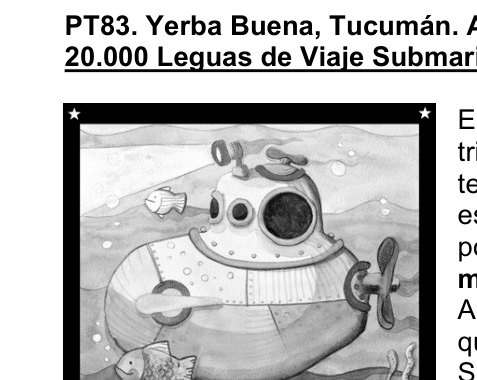
Topic: Fluid Mechanics, Elasticity & Materials Metodi: Hydrostatic Equilibrium, Stress-Strain Analysis, Physical Modeling Competenze: Physical Reasoning, Mathematical Modeling Objects: Sphere Fonte: Testo (PDF) — p.3
Submarine Buoyancy Pressure Compression
PT83. - Buona erba, Tucumán. Blu. 20.000 Pigeoni di Viaggio Submarino.
E ’ un onore avere te come parte della
- Gli uomini del Nautilus. Il nostro caro capitano Nemo . Ti ha designato come fisico in carica di tutto questo. che sia tutto a posto durante l’incredibile avventura che stiamo vivendo. Per il suo compito: Le meraviglie dell’oceano Prima di tutto è importante conoscere questo sottomarino . che sarà la nostra casa per molto tempo. Supponiamo che il Nautilus sia un guscio sferico. radio 10,0 R m = il cui totale è 5 8,0 10 N M x kg = .
a) Calcolare la densità media del sottomarino e la pressione a cui si trova subisce quando si immerge fino a 2500 metri di profondità nel mare. Per scendere ai misteri del mare è necessario ottenere il peso del il sottomarino supera la spinta che riceve nell’acqua. Per questo, il Nautilus possiede un meccanismo che permette di entrare acqua in determinati comparti e così via ridurre il volume immerso, riducendo la spinta e conseguendo un abbattimento Desiderato. b) Quanta acqua è necessaria per entrare nel Nautilus per consentirgli di fluttuare all’interno dell’oceano (E=P)?
Situato a 2,5 km dalla superficie, le pressioni su Il sottomarino è molto intenso e, a causa di questa pressione, Uniforme, il Nautilus si compila e prova un cambiamento di volume, ma non di forma. Se chiamiamo p
- Con la pressione sul sottomarino, possiamo. definire il rapporto tra questa magnitudine e la deformazione mediante l’equazione seguente:
0 V p B V ∆ ∆= −
Dove V ∆ rappresenta il cambiamento del volume del sottomarino, 0 V è il suo volume La misura B rappresenta una caratteristica dei materiali. denominato modulo volumetrico di compressione. Sapendo che per il Nautilus 9 7,5 10 B x Pa
: (c) Calcolare il cambiamento del volume del sottomarino e il suo volume finale quando è Deformato da sovraccarico a una profondità di 2500 m.
- Avvertimento! - Avvertimento! Il Krakken attacca! Il Krakken è una creatura millenaria che abita nelle profondità. Si pensava che Questo essere esisteva solo nelle storie dei marinai o nella mitologia, ma al momento E’ molto reale, e lo vede furioso cercando di assaggiare il sottomarino con i suoi attacchi di
- I getti di inchiostro. Il gigantesco mostro lancia un jet di inchiostro di circa 1000 kg a velocità di 50 metri di distanza direttamente verso di noi. Se la nostra nave viaggia sfuggendo al squalo, Circa 20 metri di distanza:
d) Calcolare la forza di impatto del jet di inchiostro sul sottomarino (per questo supporre che che il tempo di impatto è di 0,1 secondi) Fortunatamente sei in questo sottomarino, e ti è venuta in mente la brillante idea di liberare l’acqua che ci tiene immersi, raggiungendo la superficie velocemente. finalmente sfuggendo alla creatura maligna. e) Determina l’accelerazione di ascensione quando si libera tutta l’acqua, la velocità verticale in Il momento di uscire dall’acqua dopo aver salito i 2500m e finalmente calcolare la L’altezza alla quale il Nautilus si eleva al di sopra del livello del mare. “mobilis in mobili” 3 1,2 AcquaMar g cm ρ
Topic: Fluid Mechanics, Elasticity & Materials Metodi: Hydrostatic Equilibrium, Stress-Strain Analysis, Physical Modeling Competenze: Physical Reasoning, Mathematical Modeling Objects: Sphere Fonte: Testo (PDF) — p.3
The following is the list of the types of water heaters used:
PT83. It’s good grass, Tucumán. Blue, please. 20,000 feet of underwater travel.
It ‘s an honor to have you as part of the crew of the Nautilus. Our dear Captain Nemo . He ‘s appointed you as the physicist in charge of everything . Be well during the incredible adventure we ‘re having . The Commission is also working on a proposal for a directive on the protection of workers’ rights. The wonders of the ocean First of all , it ‘s important to know this submarine . It’s going to be our home for a long time. Suppose the Nautilus is a spherical shell. Radio 10,0 R m
whose total mass is 5 8,0 10 N M x kg
.
(a) Calculate the average density of the submarine and the pressure at which it is undergoing. Submitted when submerged to a depth of 2500m in the sea. To descend into the mysteries of the sea it is necessary to get that weight of the sea Submarine exceeds the thrust it receives in the water. For this purpose, the Nautilus possesses A mechanism that allows water to enter certain compartments and so on reduce the volume underwater, causing the thrust to decrease and allow the plunge to take place. I want to. (b) How much water is needed to enter the Nautilus to allow it to floating within the ocean (E=P)?
When it is 2.5km from the surface, the pressures on the surface are The submarine is very intense and, because of this pressure uniform, the Nautilus is compressed and experiences a change in volume but not in shape. If we call p ∆ by the pressure on the submarine, we can define the relationship between this magnitude and deformation by the following equation:
0 V p B V ∆ ∆= −
Where V ∆ It represents the change in the volume of the submarine, 0 V is its volume The initial value of the material is not the same as the initial value, and the parameter B represents a characteristic of the materials The volume of the compression module is the volume of the compression module. Knowing that for the Nautilus 9 7,5 10 B x Pa
: (c) Calculate the change in the volume of the submarine and its final volume when it is Deformed by overpressure at a depth of 2500m.
- Alert me now! - Alert me now! The Krakken is attacking! The Krakken is a millenary creature that lives in the deep. It was believed that This being only existed in seafarer stories or mythology, but at this moment. It’s very real, and it looks furious trying to seduce the submarine with its attacks from I’m not sure. The giant monster throws a 1000kg ink jet at a speed of 50s straight to us. If our ship is traveling escaping from the squid to About 20m s:
(d) Calculate the force of impact of the ink jet on the submarine (to do so assume that the impact force is The impact time is 0.1s. Fortunately you’re on this submarine, and you came up with the brilliant idea of freeing All the water that keeps us submerged, achieving a rapid rise to the surface. finally escaping the evil creature. (e) Determine the acceleration of ascent when all water is released, the vertical speed at The time to get out of the water after climbing the 2500m and finally calculate the The height at which the Nautilus rises above sea level. “mobilis in mobili” 3 1,2 Water and sea g cm ρ
Topic: Fluid Mechanics, Elasticity & Materials Metodi: Hydrostatic Equilibrium, Stress-Strain Analysis, Physical Modeling Competenze: Physical Reasoning, Mathematical Modeling Objects: Sphere Fonte: Testo (PDF) — p.3
Charged Spheres Coulomb Equilibrium
PT84. Yerba Buena, Tucumán. Azul. ¡Felíz Cumple Oersted! Hans Christian Ørsted nació en Rudkobing, Dinamarca un día 14 de agosto de 1777, y murió en Copenhague el 9 de marzo de 1851. Este físico y químico danés fue un gran estudioso del electromagnetismo y hoy festejamos su 232º cumpleaños. Su principal descubrimiento tuvo lugar en 1819, cuando junto con André-Marie Ampère descubrió la desviación de una aguja imantada al ser colocada en dirección perpendicular a un conductor eléctrico, por el que circula una corriente eléctrica. Este descubrimiento fue crucial en el desarrollo de la electricidad, ya que puso en evidencia la relación existente entre la electricidad y el magnetismo.
En su honor, vamos a hacerle un pequeño homenaje analizando el comportamiento de esta manifestación tan particular de la materia como lo es la carga eléctrica. Primero supongamos que dos esferas metálicas pequeñas, cada una de masa 0,2g , están suspendidas como péndulos por medio de hilos ligeros desde un punto común. Las esferas tienen la misma carga eléctrica, y se comprueba que las dos alcanzan el equilibrio cuando cada hilo forma un ángulo de 5,0º con respecto a la vertical. Si cada hilo tiene una longitud de 30,0cm :
a) ¿Cuál es la magnitud de la carga de cada esfera? A continuación se colocan cargas positivas en los tres vértices de un rectángulo.
b) Encontrar el campo eléctrico en el cuarto vértice Para complicar un poco más las cosas, supongamos que tres cargas positivas q están en las esquinas de un triángulo equilátero de lado a . Consideremos el campo eléctrico generado por esta distribución de cargas.
c) Encontrar un punto (distinto del ∞) donde el campo eléctrico sea nulo. (Consejo: dibujar las líneas de campo correspondientes a cada carga). d) ¿Cuál es la magnitud y dirección del campo eléctrico en P debido a las cargas de la base del triángulo? Dos esferas de 0,2g están suspendidas por cuerdas ligeras de 10,0cm de longitud. Se aplicó un campo eléctrico uniforme en la dirección x. Si las esferas tienen cargas de 8 6,0 10 x C − − y 8 6,0 10 x C − + :
e) Determine la intensidad del campo eléctrico que permite que las esferas estén en
equilibrio a
10º
θ =
.
Por último, se coloca una esfera de corcho cargada cuya masa es de 1,00g
suspendida en una cuerda ligera en presencia de un campo eléctrico uniforme.
Cuando el campo eléctrico tiene una componente x de
5
3,00 10 N
x
C y una componente
y de
5
5,00 10 N
x
C , la esfera está en equilibrio en
37,0º
θ =
.
f) Encontrar la carga sobre la esfera y la tensión en la cuerda.
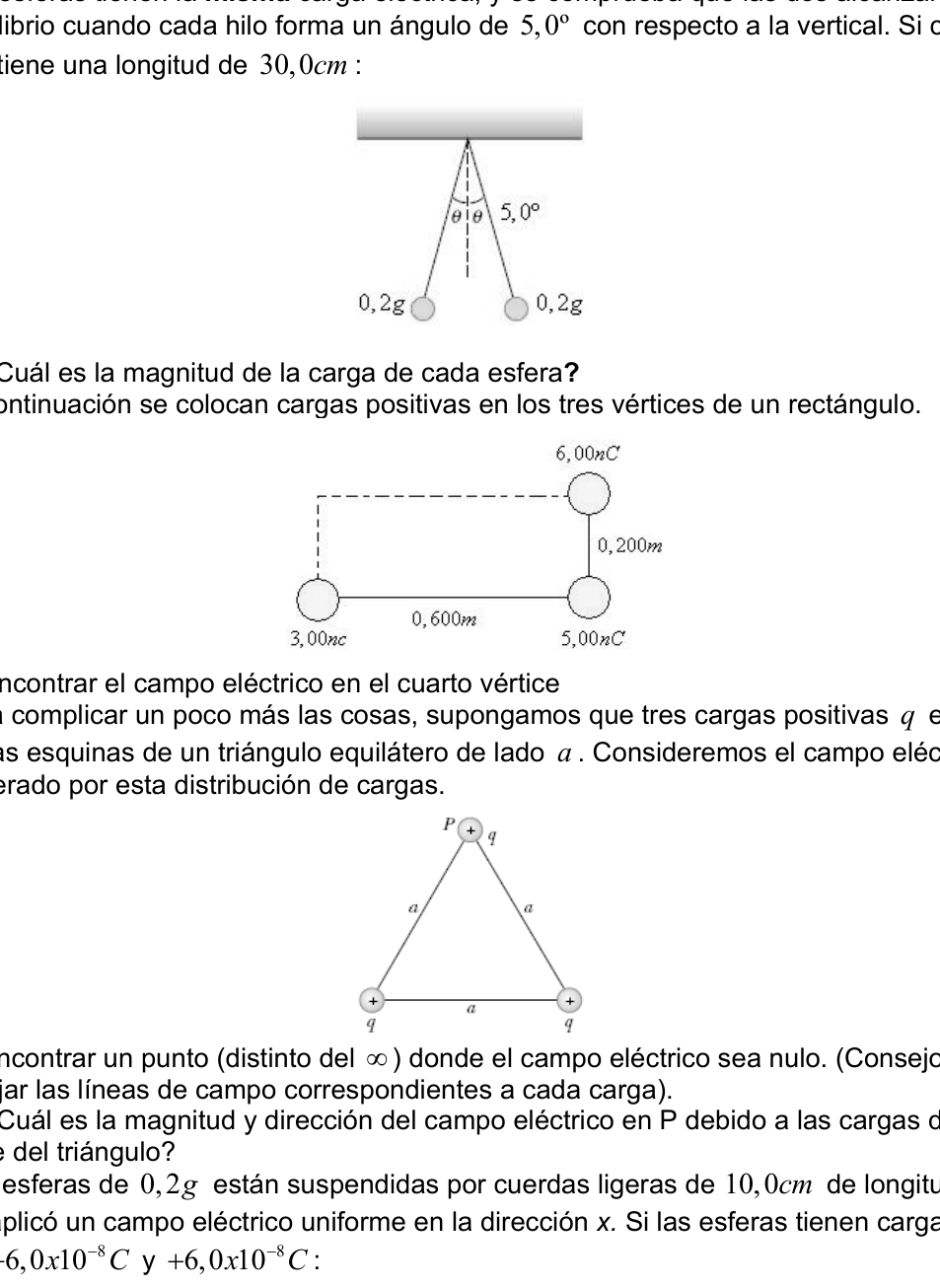
Topic: Electrostatics Metodi: Coulomb’s Law, Free-Body Diagram, Vector Decomposition Competenze: Physical Reasoning, Mathematical Modeling Objects: Conducting Sphere, Pendulum Fonte: Testo (PDF) — p.3
Charged Spheres Coulomb Equilibrium
PT84. - Buona erba, Tucumán. Blu. Felice Cumple Oersted! Hans Christian Ørsted è nato a Rudkobing, in Danimarca un giorno. 14 agosto 1777, e morì a Copenhagen il 9 marzo 1777. 1851. Questo fisico e chimico danese fu un grande studioso del E oggi festeggiamo il suo 232° compleanno. Su La scoperta principale avvenne nel 1819, quando insieme con André-Marie Ampère ha scoperto la deviazione di un ago Magnetico quando posizionato in direzione perpendicolare a un un conduttore elettrico, attraverso il quale circola un corrente elettrica. Questa scoperta fu cruciale nello sviluppo dell’elettricità, poiché ha messo in atto La relazione tra elettricità e magnetismo è stata evidenziata.
In suo onore, faremo un piccolo omaggio analizzando il comportamento di Questa manifestazione di materia è così particolare come la carica elettrica. Primo, supponiamo che due piccole sfere metalliche, ciascuna di massa 0,2 g, sono sospesi come pendoli con fili leggeri da un punto comune. Le sfere hanno la stessa carica elettrica, e si verifica che le due raggiungono il equilibrio quando ogni filo forma un angolo di 5,0° rispetto alla verticale. Se ogni il filo ha una lunghezza di 30,0 cm:
a) Qual è la grandezza del carico di ciascuna sfera? Successivamente si collocano cariche positive sui tre vertici di un rettangolo.
b) Trovare il campo elettrico al quarto vertice Per complicare un po’ di più le cose, supponiamo che ci siano tre cariche positive q. nei angoli di un triangolo equilaterale a. Considerate il campo elettrico. generato da questa distribuzione di carichi.
c) Trovare un punto (diverso dal ∞) in cui il campo elettrico è nullo. (Consego: il disegno delle linee di campo corrispondenti a ciascun carico). d) Qual è la magnitudine e la direzione del campo elettrico in P a causa delle cariche della base del triangolo? Due sfere di 0,2 g sono sospese da corde leggere di 10,0 cm di lunghezza. Un campo elettrico uniforme è stato applicato nella direzione x. Se le sfere hanno cariche de 8 6,0 10 x C − − y 8 6,0 10 x C − + :
e) Determina l’intensità del campo elettrico che permette alle sfere di essere in equilibrio a 10º θ = . Infine, si inserisce una sfera di cork carica di massa di 1,00 g sospeso su una corda leggera in presenza di un campo elettrico uniforme. Quando il campo elettrico ha un componente x di 5 3,00 10 N x C e un componente y de 5 5,00 10 N x C , la sfera è in equilibrio a 37,0º θ = .
f) Trovare la carica sulla sfera e la tensione nella corda.
Topic: Electrostatics Metodi: Coulomb’s Law, Free-Body Diagram, Vector Decomposition Competenze: Physical Reasoning, Mathematical Modeling Objects: Conducting Sphere, Pendulum Fonte: Testo (PDF) — p.3
The Commission shall adopt delegated acts in accordance with Article 21 of this Regulation.
PT84. It’s good grass, Tucumán. Blue, please. Happy Cumple Oersted! Hans Christian Ørsted was born in Rudkobing, Denmark one day. 14 August 1777, and died in Copenhagen on 9 March 1777. 1851. This Danish physicist and chemist was a great scholar of the electromagnetism and today we celebrate his 232nd birthday. Su The main discovery took place in 1819, when together with André-Marie Ampère discovered the deviation of a needle. Magnetized when placed in a direction perpendicular to a an electrical conductor through which an electric current flows. This discovery was crucial in the development of electricity, as it put in The new research shows the relationship between electricity and magnetism.
In his honor, let’s pay a small tribute by analyzing the behavior of This particular manifestation of matter is as particular as the electric charge. First let’s say that two small metal spheres, each 0.2g mass, They are suspended like pendants by means of light threads from a common point. The spheres have the same electrical charge, and it is shown that both reach the equilibrium when each strand forms an angle of 5.0° with respect to the vertical. If each The length of the thread is 30.0 cm:
(a) What is the magnitude of the load of each sphere? Positive loads are then placed on the three vertices of a rectangle.
(b) Find the electric field at the fourth vertex. To complicate things a little bit more, let’s say there are three positive charges q. in the corners of an equilateral triangle on the side a . Consider the electric field. The result of this distribution of charges.
(c) Find a point (other than ∞) where the electric field is zero. (Thanks: draw the field lines for each load). (d) What is the magnitude and direction of the electric field in P due to the loads of the base of the triangle? Two 0,2 g spheres are suspended by light strings of 10,0 cm in length. A uniform electric field was applied in the direction x. If the spheres have charges de 8 6,0 10 x C − − y 8 6,0 10 x C − + :
(e) Determine the intensity of the electric field that allows the spheres to be in Balance to 10º θ = . Finally, a loaded cork sphere with a mass of 1,00 g is placed suspended on a light wire in the presence of a uniform electric field. When the electric field has a component x of 5 3,00 10 N x C and a component y de 5 5,00 10 N x C , the sphere is in equilibrium at 37,0º θ = .
(f) Find the load on the sphere and the tension on the rope.
Topic: Electrostatics Metodi: Coulomb’s Law, Free-Body Diagram, Vector Decomposition Competenze: Physical Reasoning, Mathematical Modeling Objects: Conducting Sphere, Pendulum Fonte: Testo (PDF) — p.3
Hot Air Balloon Buoyancy and Ballast
PT85. Vicente López, Buenos Aires. Azul.
Un concurso aerostático.
Un globo aerostático, que participa en un concurso, pretende realizar una acrobacia
consistente en tocar el agua de un río en su descenso.
El globo tiene 12.000 m3 de volumen y una tara (masa del globo desinflado junto a la
barquilla y pasajeros) de 1000 kg.
Las condiciones atmosféricas medidas durante la prueba han dado una presión de
700 mmHg y una temperatura de 15 °C. El globo, que está descendiendo con
velocidad constante de 0,5 m/s, tiene que frenar su caída arrojando una cierta masa
de lastre cuando se encuentra justo a 20 m sobre la superficie del río.
a) Calcular el valor de la masa del aire desalojado por el globo en esas condiciones
(despreciamos el aire desplazado por la barquilla y los pilotos).
Nota 1: Recordemos que la ecuación de los gases ideales nos da la relación:
p.V =n.R.T = (m/ Mm).R.T y, de ésta, que la densidad de un gas está relacionada con
su presión y temperatura según:
densidad = m/V = p. Mm/(R.T) donde: Mm = 28,9 g/mol, la masa molar del aire;
R = 0,082 atm.litro / mol.K , la constante de los gases y donde las unidades de presión
y temperatura cumplen: 1 atm = 760 mmHg y 0 ºC = 273,15 K.
b) ¿Cuál debe ser el valor de la masa arrojada para que el globo toque justamente la
superficie del agua antes de volver a ascender? (Despreciando la resistencia del aire).
c) Determinar la temperatura que debe tener el aire del interior del globo en el
momento de iniciar la operación.
d) Supongamos ahora que el piloto del globo pretende realizar esta misma maniobra
manejando el quemador de gas. Con él debe elevar la temperatura del aire que está
en el interior del globo. Dado que el globo es un sistema abierto, ni la presión ni el
volumen del aire cambiarán sustancialmente, pero sí su densidad. Tomando como
referencia el valor obtenido en el punto anterior, ¿cuánto deberá aumentar la
temperatura del aire en el interior para que el globo pueda realizar la arriesgada
maniobra?
Topic: Fluid Mechanics, Newtonian Mechanics Metodi: Ideal Gas Law, Hydrostatic Equilibrium, Kinematic Equations Competenze: Physical Reasoning, Mathematical Modeling Objects: Gas Fonte: Testo (PDF) — p.3
Hot Air Balloon Buoyancy and Ballast
PT85. Vicente López, Buenos Aires. Blu. Un concorso aereo. Un pallone aereo, che partecipa a un concorso, intende fare un’acrobazia che consiste nel toccare l’acqua di un fiume in discesa. Il globo ha 12.000 m3 di volume e una massa del globo deflato accanto alla Barca e passeggeri) di 1000 kg. Le condizioni atmosferiche misurate durante la prova hanno dato una pressione di 700 mmHg e una temperatura di 15 °C. Il globo, che sta scendendo con velocità costante di 0,5 m/s, deve frenare la sua caduta lanciando una certa massa di lastre quando si trova a 20 m dalla superficie del fiume. a) Calcolare il valore della massa di aria sfuggita dal pallone in tali condizioni (disprezziamo l’aria spostata dalla barca e dai piloti). Nota 1: Ricordiamo che l’equazione dei gas ideali ci dà il rapporto: P.V = n.R.T = (m/ Mm).R.T e, di questa, che la densità di un gas è correlata a la loro pressione e temperatura in base a: densità = m/V = p. mm/(R.T) dove: mm = 28,9 g/mol, massa molare dell’aria; R = 0,082 atm.litro / mol.K , la costante dei gas e dove le unità di pressione e temperatura soddisfa: 1 atm = 760 mmHg e 0 oC = 273,15 K. b) Qual è il valore della massa lanciata per far toccare il globolo con precisione? la superficie dell’acqua prima di tornare in salita? (Spregando la resistenza dell’aria). c) Determinare la temperatura dell’aria dell’interno del pallone È il momento di iniziare l’operazione. d) Supponiamo che il pilota del globolo intenda fare la stessa manovra. Guidando il bruciatore di gas. Con esso deve elevare la temperatura dell’aria che sta all’interno del globo. Dal momento che il globo è un sistema aperto, né la pressione né il Il volume dell’aria cambierà sostanzialmente, ma la densità cambierà. Prendendo come
- il valore ottenuto nel punto precedente, quanto deve aumentare il valore temperatura dell’aria all’interno, in modo che il pallone possa fare il rischio. manovra?
Topic: Fluid Mechanics, Newtonian Mechanics Metodi: Ideal Gas Law, Hydrostatic Equilibrium, Kinematic Equations Competenze: Physical Reasoning, Mathematical Modeling Objects: Gas Fonte: Testo (PDF) — p.3
Hot Air Balloon Buoyancy and Ballast
PT85. Vicente Lopez, from Buenos Aires. Blue, please. A little air show. A balloon, which is participating in a competition, intends to perform an acrobatics. It’s like touching the water of a river as it descends. The balloon has 12,000 m3 of volume and a tara (mass of the deflated balloon next to the The Commission has not yet decided on the basis of the information provided by the Commission. The atmospheric conditions measured during the test have given a pressure of The temperature of the test chemical is 15 °C. The balloon, which is descending with It has a steady speed of 0.5 m/s, it has to slow its fall by throwing a certain mass of ballast when it is just 20 m above the river surface. (a) Calculate the value of the mass of air discharged by the balloon under those conditions (We disregard the air displaced by the boat and the pilots). Note 1: Remember that the ideal gas equation gives us the relation: p.V = n.R.T = (m/ Mm).R.T and, of this, that the density of a gas is related to its pressure and temperature according to: The value of the input data shall be the sum of the values of the input data. Mm/(R.T) where: Mm = 28,9 g/mol, molar mass of air; R = 0,082 atm.litre / mol.K , the gas constant and where the pressure units and the temperature is: 1 atm = 760 mmHg and 0 oC = 273,15 K. (b) What is the value of the mass thrown to the ball to strike the ball exactly? surface of the water before it rises again? (Disregarding air resistance). (c) Determine the temperature of the air inside the balloon at the It’s time to start the operation. (d) Now suppose the balloon pilot intends to perform this same maneuver. I’m using the gas burner. With it you must raise the temperature of the air that is inside the globe. Since the balloon is an open system, neither pressure nor the The volume of the air will change substantially, but its density will. Taking as The value obtained in the previous point is referenced, how much should the value be increased? The temperature of the air inside so that the balloon can take the risk Manoeuvre?
Topic: Fluid Mechanics, Newtonian Mechanics Metodi: Ideal Gas Law, Hydrostatic Equilibrium, Kinematic Equations Competenze: Physical Reasoning, Mathematical Modeling Objects: Gas Fonte: Testo (PDF) — p.3
Surface Tension Mercury Drops Insect
PT86. Vicente López, Buenos Aires. Azul. Un método original para pesar a un insecto. Una definición elemental de líquido es: Los líquidos, a diferencia de los sólidos, no tienen una forma definida, adoptan la del recipiente que los contiene. Sin embargo, existen múltiples observaciones que contradicen lo anterior. Por ejemplo, si sobre una superficie horizontal de vidrio limpio se depositan pequeñas cantidades de mercurio, se forman gotas como se muestra en la figura 1, y es fácil observar que son más esféricas cuanto más pequeñas. A medida que aumenta su tamaño se “aplanan”, pero sus bordes siempre están redondeados. Este ejemplo pone de manifiesto que existe una tendencia de los líquidos a adoptar la forma esférica a causa de fuerzas superficiales. A ellas se opone la fuerza de gravedad que tiende a “aplanar” las gotas. Otro ejemplo: cuando se introduce un líquido A en otro B que tenga la misma densidad pero que no sea miscible, el empuje de Arquímedes equilibra el peso, y el primer líquido A, que se encuentra en una condición de gravedad aparente nula, adopta una perfecta forma esférica (Figura 2). Estos y otros muchos ejemplos ponen de manifiesto que los líquidos adoptan la forma esférica “cuando se les deja”, esto es, cuando las fuerzas superficiales de cohesión (tensión superficial) predominan sobre las fuerzas de gravedad, lo que ocurre cuando el número de moléculas que ocupan la superficie es del mismo orden o mayor que el de moléculas que forman parte del volumen del líquido. Esto hace que la “escala” de los fenómenos superficiales o capilares sea pequeña en la superficie de la Tierra, donde la gravedad es g = 9,8m/s2 aproximadamente. El Análisis Dimensional nos proporciona la llamada longitud capilar, λc , que sirve para saber cuándo se deben considerar los efectos de la tensión superficial. Cuando una dimensión característica del problema sea mucho mayor que λc , podremos despreciar tranquilamente los efectos de dicha tensión superficial. La longitud capilar viene dada por la siguiente expresión:
donde σ es el coeficiente de tensión superficial del líquido, ρ su densidad y g la aceleración de la gravedad. Nota: Aunque más adelante se da una explicación intuitiva del concepto de tensión superficial, es conveniente indicar que en la superficie de separación de dos fases, generalmente fluidas, aparece una tensión debida a las fuerzas intermoleculares que son diferentes en cada fase. Suele expresarse como una fuerza por unidad de longitud que es equivalente a una energía por unidad de área, por lo que la superficie entre las fases tiende a ser mínima, es decir tiende a adoptar la forma esférica. En el caso de líquido-gas, la tensión superficial se considera como una propiedad del líquido, ya que un cambio en la naturaleza del gas no tiene efecto apreciable sobre ella. Depende de la temperatura y composición de las fases, es independiente de la gravedad y es muy sensible a la presencia de sustancias extrañas en el líquido (tenso activos). Apretando lentamente un cuentagotas lleno de alcohol conseguimos que se desprendan gotas y observaremos que, en promedio, su diámetro es de 2,5 mm aproximadamente. Este valor puede ser considerado como la longitud capilar de este fenómeno.
a) ¿Cuál sería el volumen V de la gota en un ambiente en el que existiese una gravedad residual 10−4 g? Es suficiente para justificar el hecho de que, en ambientes de aparente falta de gravedad como por ejemplo en el transbordador espacial (donde la gravedad aparenta estar anulada por el hecho de que el transbordador se encuentra en caída libre hacia la Tierra), una gota pueda ser suficiente para beber? Para comprender el significado de la tensión superficial un buen ejemplo es el de una cama elástica. Su comportamiento es parecido al de la superficie de los líquidos que se comportan como una membrana.
                  Figura 3a


 Figura 3b
En la figura 3a se representa una cama elástica rectangular sujeta a un bastidor rígido. Su superficie es prácticamente plana y horizontal. La cama está sometida a tensión, es decir el bastidor ejerce sobre la cama un conjunto de fuerzas como el representado en la figura 3a. En consecuencia, en cada lado de la cama, actúa una fuerza por unidad de longitud que denotamos por f . Por lo tanto, la resultante de las fuerzas que actúan sobre el lado AB, de longitud L, vendrá dada por F = f L. Naturalmente, si sobre la cama descansa un ciudadano, como se muestra en la figura 4b, la superficie deja de ser plana, presentará una concavidad en la región en la que está el ciudadano. Las fuerzas que sostienen la cama (las tensiones) cambiarán su dirección pero podemos suponer que su módulo no variará apreciablemente. Es importante observar que cuando la superficie de la cama es plana (Fig. 3a), la presión en la parte superior e inferior de ella es la misma: la atmosférica. Sin embargo, cuando la cama está cargada, en la parte inferior la presión es la atmosférica, pero en la superior, en la parte cóncava, la presión es la atmosférica más la que ejerce el peso del ciudadano. Por lo tanto, la presión es mayor en la parte cóncava que en la convexa. b) Suponga que la cama elástica es cuadrada de lado L, que la masa del ciudadano que está tumbado en ella es M, y que el ángulo que forman las tensiones con la horizontal es θ. Calcule la fuerza por unidad de longitud, f.
Figura 4a Figura 4b
Tras estas consideraciones, proponemos el siguiente experimento que fácilmente se puede realizar en casa. Consiste en depositar un alambre muy ligero sobre la superficie del agua contenida, por ejemplo, en un vaso como se muestra en la figura 4a. El alambre “descansa” sobre la superficie del agua como si esta fuese una membrana, de forma análoga al ciudadano de la cama elástica. Naturalmente, el alambre tiene que ser muy liviano, su longitud, l, de pocos milímetros y mucho mayor que su radio R. De acuerdo con la Nota anterior, esta fuerza por unidad de longitud es el coeficiente de tensión superficial que denotamos por σ. c) Cuando el alambre esté en equilibrio sobre la superficie, obtenga la expresión de su peso W en función de la fuerza por unidad de longitud (tensión superficial) σ , de la
longitud l y del ángulo de contacto θ que forma la superficie con la horizontal. (Figura 4b) Ya que el radio del alambre es R << l, se puede despreciar la acción de la tensión superficial en sus extremos. El gerris lacustris es un insecto muy abundante en charcas, lagunas y en general en aguas dulces remansadas, siendo su nombre vulgar zapatero. Estos animalejos “caminan” sobre el agua, no “nadan” en ella. Cuatro de sus seis patas terminan en una especie de pie en forma de cilindro que es el que se apoya horizontalmente sobre el agua, comportándose como el alambre del ejemplo anterior. Las dos patas delanteras las usa más como “manos” que como “pies”. En una foto, como la de la figura 6, puede apreciarse un zapatero sobre la superficie del agua, deformándola ligeramente en los apoyos, como si de una membrana se tratase.
Figura 5
Figura 6
Sobre la fotografía de la figura 5 se han indicado las dimensiones más relevantes del fenómeno: longitud de sus “pies”: l = 3,0mm ; anchura de la depresión que producen: D =1,5mm y “profundidad” de la depresión: h = 0,5mm . d) Con las aproximaciones que crea convenientes, haga una estimación de la masa m del zapatero. Ayúdese de la figura 6 en la que se muestra el pie visto de frente y considere que el coeficiente de tensión superficial del agua es σ = 7,28.10−2 N/m.
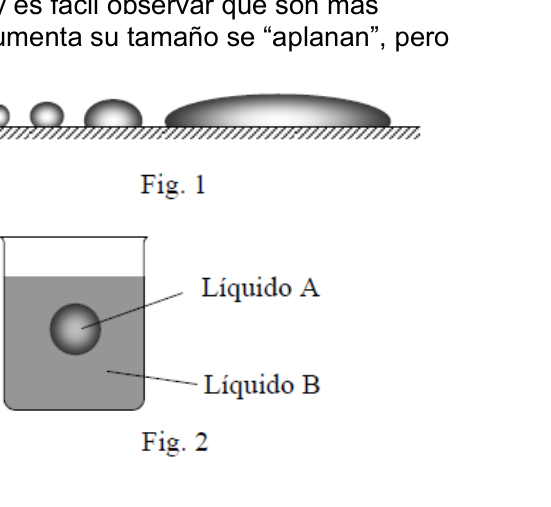
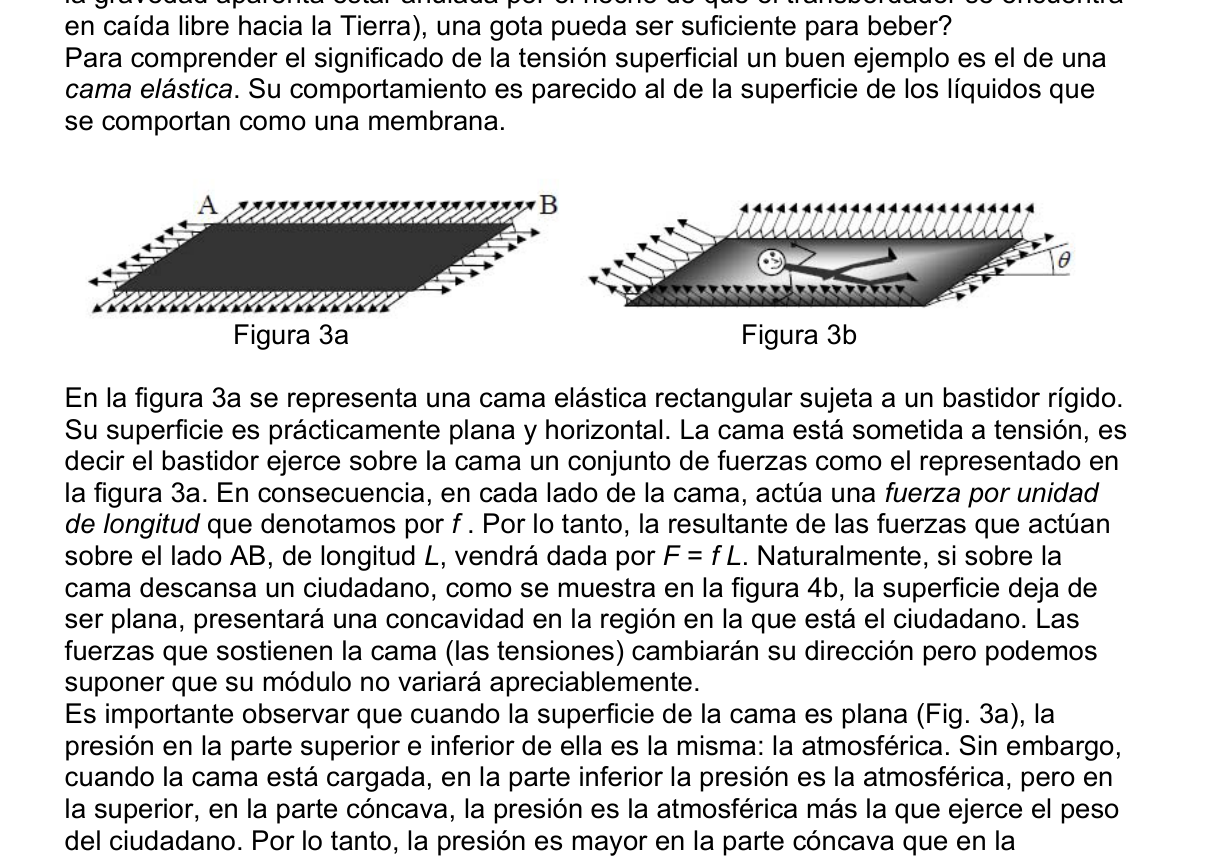
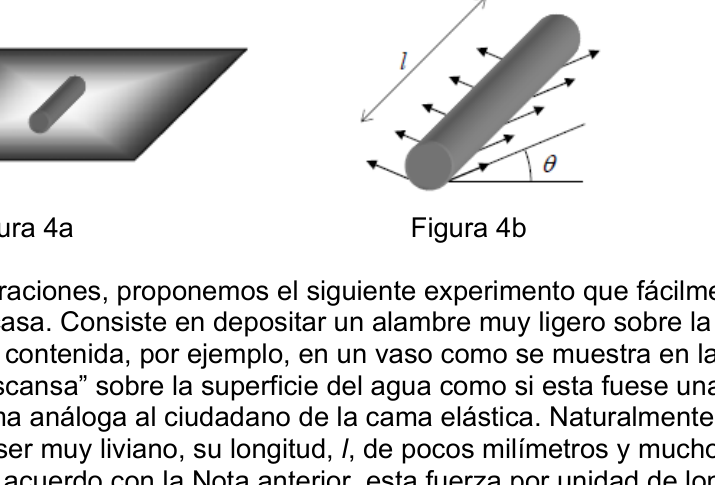
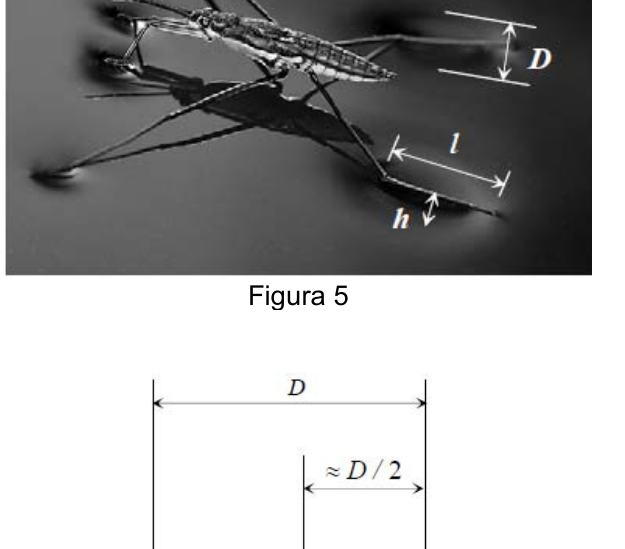
Topic: Fluid Mechanics Metodi: Physical Modeling, Free-Body Diagram Competenze: Physical Reasoning Objects: Droplet Fonte: Testo (PDF) — p.3
Surface Tension Mercury Drops Insect
PT86. Vicente López, Buenos Aires. Blu. Un metodo originale per pesare un insetto. Una definizione elementare di liquido è: i liquidi, a differenza dei solidi, non sono Hanno una forma definita, adottano quella del contenitore che li contiene. Tuttavia, La Commissione ha adottato una decisione che non è stata adottata. Per esempio, se su una La superficie orizzontale di vetro pulito si deposita in piccole quantità di mercurio, si formano gocce come mostrato nella figura 1, e è facile osservare che sono più le sfere più piccole. Quando cresce, si aplanisce, ma I suoi bordi sono sempre rotondi. Questo esempio evidenzia che La tendenza dei liquidi a adottare la forma sferica a causa di Forze superficiali. Si oppone a loro. la forza di gravità che tende a
- Pianificare le gocce. Un altro esempio: quando si introduce un liquido A in un altro B che ha lo stesso densità ma non miscibile, il La spinta di Archimede equilibra il peso, e il primo liquido A, che si si trova in una condizione di gravità apparente zero, adotta una Perfetto forma sferica (Figura 2). Questi e molti altri esempi dimostrano che i liquidi assumono la forma di quando si lasciano, cioè quando le forze superficiali di coesione (Tensione superficiale) dominano le forze di gravità, che si verifica quando il numero di molecole che occupano la superficie è uguale o superiore al di molecole che fanno parte del volume del liquido. Questo fa sì che la scala di i fenomeni superficiali o capillari sono piccoli sulla superficie terrestre, dove la gravità è g = circa 9,8 m/s2. L’analisi dimensionale ci fornisce la cosiddetta lunghezza capillare, λc, che serve per sapere quando si devono considerare gli effetti della tensione superficiale. Quando una Se la dimensione caratteristica del problema è molto maggiore di λc , possiamo disprezzarla . la tensione superficiale. La lunghezza capillare è data dalla seguente espressione:
dove σ è il coefficiente di tensione superficiale del liquido, ρ la sua densità e g la l’accelerazione della gravità. Nota: Anche se più avanti viene data una spiegazione intuitiva del concetto di tensione superficiale, è opportuno indicare che sulla superficie di separazione a due fasi, La tensione si verifica a causa delle forze intermolecolari che sono diverse in ogni fase. È spesso espressa come forza per unità di lunghezza. che è equivalente ad un’energia per unità di area, quindi la superficie tra le Le fasi tendono ad essere minime, cioè tendono ad assumere la forma sferica. Nel caso di liquido-gas, la tensione superficiale è considerata come una proprietà del La variazione della natura del gas non ha alcun effetto apprezzabile su
- Lei. Dipende dalla temperatura e dalla composizione delle fasi, è indipendente dalla gravità e è molto sensibile alla presenza di sostanze strane nel liquido (tenso attività). Prendendo lentamente un’alcolina di liquidi, riusciamo a farla uscire. si scatenano gocce e si noterà che, in media, il loro diametro è di 2,5 mm
- Circa. Questo valore può essere considerato come la lunghezza capillare di questo fenomeno.
a) Qual è il volume V della goccia in un ambiente in cui esiste una gravità residuale 10−4 g? È sufficiente a giustificare il fatto che, in ambienti La gravità è apparentemente insufficiente, come per esempio nel transbordatore spaziale (dove La gravità apparente sarà annullata dal fatto che la nave si trova in caduta libera verso la Terra), un goccio può essere sufficiente per bere? Per capire il significato della tensione superficiale un buon esempio è quello di una
- Un letto a legno. Il suo comportamento è simile a quello della superficie dei liquidi che si comportano come una membrana.
Figura 3a
Figura 3b
La figura 3a rappresenta un letto elastico rettangolare attaccato a una rigida cornice. La sua superficie è praticamente piana e orizzontale. Il letto è sottoposto a tensione, è dire che il corridoio esercita sul letto un insieme di forze come quello rappresentato in figura 3a. Di conseguenza, su ogni lato del letto, agisce una forza per unità di lunghezza che indichiamo per f . Quindi, la risultante delle forze che agiscono sul lato AB, di lunghezza L, sarà dato da F = f L. Naturalmente, se sulla Il letto riposa un cittadino, come mostrato nella figura 4b, la superficie lascia di Se il territorio è piatto, presenta una concavità nella regione in cui si trova il cittadino. Le Le forze che sostengono il letto (le tensioni) cambieranno direzione, ma possiamo. supporre che il modulo non varia appreziatamente. È importante notare che quando la superficie del letto è piana (Fig. 3a), la La pressione in cima e in basso è la stessa: atmosferica. Tuttavia, Quando il letto è carico, in fondo la pressione è atmosferica, ma in La pressione è l’atmosfera più il peso. del cittadino. La pressione è quindi maggiore nella parte concave che nella parte concave. convexa. b) Supponiamo che il letto a lattante sia quadrato sul lato L, che la massa del cittadino che è sdraiato su di essa è M, e che l’angolo che formano le tensioni con la orizzontale è θ. Calcola la forza per unità di lunghezza, f.
Figura 4a Figura 4b
Dopo queste considerazioni, proponiamo il seguente esperimento che può essere facilmente può farlo a casa. Consiste nel depositare un filo molto leggero sulla superficie dell’acqua contenuta, ad esempio, in un bicchiere come mostrato nella figura 4a. Il filo si riposerà sulla superficie dell’acqua come se fosse una La membrana, in modo analogo al cittadino del letto a legno. Naturalmente, il Il filo deve essere molto leggero, il suo lunghezza, l, di pochi millimetri e molto più grande. che la sua radio R. Secondo la nota precedente, questa forza per unità di lunghezza è il coefficiente di tensione superficiale indicato per σ. c) Quando il filo è in equilibrio sulla superficie, si ottiene l’espressione di peso W in funzione della forza per unità di lunghezza (tensione superficiale) σ , di
L’angolo di contatto θ che forma la superficie con l’orizzontale. (Figura 4b) Poiché il raggio del filo è R << l, si può disprezzare l’azione della tensione superficiale ai suoi estremi. Il gerris lacustris è un insetto molto ricco in laghi, laghi e in generale in Acque dolci rimandate, il suo nome è il calzatore. Questi animali piccoli Camminano sulle acque, non ne fanno nuoto. Quattro delle sue sei gambe finiscono in una. specie di piedi in forma di cilindro che è quello che si appoggia orizzontalmente sul l’acqua, comportandosi come il filo dell’esempio precedente. Le due zampe anteriori. Le usa più come mani che come piedi. In una foto, come quella di figura 6, si può La superficie dell’acqua è leggermente distorta. supporti, come se fosse una membrana.
Figura 5
Figura 6
La fotografia di cui alla figura 5 indica le dimensioni più rilevanti del fenomeno: lunghezza dei loro piedi: l = 3,0 mm; larghezza della depressione che producono: D = 1,5 mm e profondità della depressione: h = 0,5 mm . d) Con le approssimative che ritiene convenienti, effettuare una stima della massa m
- Il calzatore. Aiuta la figura 6 che mostra il piede visto di fronte e Considera che il coefficiente di tensione superficiale dell’acqua è σ = 7,28.10−2 N/m.
Topic: Fluid Mechanics Metodi: Physical Modeling, Free-Body Diagram Competenze: Physical Reasoning Objects: Droplet Fonte: Testo (PDF) — p.3
The following is the list of substances that are present in the foodstuffs:
PT86. Vicente Lopez, from Buenos Aires. Blue, please. An original method of weighing an insect. A basic definition of liquid is: Liquids, unlike solids, are not They have a definite shape, they take the shape of the container that contains them. However, There are many observations which contradict this. For example, if about a A clear glass surface is placed on which small amounts of mercury are deposited. They form droplets as shown in Figure 1, and it’s easy to see that they’re more. The smaller the spherical. As it grows in size it becomes more and more large, but Its edges are always rounded. This example shows that There is a tendency for liquids to The shape of the sphere is due to the surface forces. He opposes them . The force of gravity that tends to
- Plan the drops. Another example: when a liquid A in another B having the same density but not to be miscible, the Archimedes’ thrust balances the Weight, and the first liquid A, which is is in a condition of It’s a zero-gravity, and it adopts a The shape of the sphere is perfectly rounded (Figure 2). These and many other examples show that liquids take the form of spherical when left , that is, when the surface forces of cohesion (surface tension) dominate the forces of gravity, which happens when The number of molecules occupying the surface is of the same order or greater than the of molecules that form part of the volume of the liquid. This makes the scale of surface or capillary phenomena are small on the Earth’s surface, where gravity is g = approximately 9.8m/s2. Dimensional analysis gives us the so-called capillary length, λc, which serves to know when to consider the effects of surface tension. When a If the characteristic dimension of the problem is much greater than λc , we can disregard it . The effects of such surface tension are calm. The length of the capillary is given by the following expression:
where σ is the coefficient of surface tension of the liquid, ρ its density and g the acceleration of gravity. Note: Although an intuitive explanation of the concept of voltage is given later surface, it is appropriate to indicate that on the two-phase separation surface, The resulting stresses are usually fluid, and the stresses are due to intermolecular forces that They’re different at every stage. It is usually expressed as a force per unit length which is equivalent to one energy per unit area, so the surface between the two The phases tend to be minimal, i.e. they tend to take the spherical shape. In the case of liquid-gas, surface tension is considered as a property of the The effect of a change in the nature of the gas on the She’s the one. It depends on the temperature and composition of the phases, it is independent of the The presence of foreign substances in the liquid (tense) is very sensitive to the presence of foreign substances in the liquid. (including the assets). Slowly squeezing a dropper full of alcohol we get it. They drop droplets and we’ll see that on average, their diameter is 2.5 mm. about. This value can be considered as the capillary length of this It’s a phenomenon.
(a) What would be the volume V of the drop in an environment where there is a The residual gravity is 10−4 g. It is sufficient to justify the fact that, in environments The first is the fact that the space shuttle is not capable of carrying out any of the following tasks: The gravity seems to be cancelled by the fact that the shuttle is located. (in free fall to Earth), can a drop be enough to drink? To understand the meaning of surface tension a good example is that of a the elastic bed. Their behavior is similar to that of the surface of liquids that They act like a membrane.
Figure 3a
Figure 3b
In Figure 3a a rectangular elastic bed is represented attached to a rigid frame. Its surface is almost flat and horizontal. The bed is under stress, is it? Say the frame exerts on the bed a set of forces like the one represented in the figure 3a. Consequently, on each side of the bed, one force per unit acts. of length we denote by f . Therefore, the resulting forces acting on the AB side, of length L, shall be given by F = f L. Of course, if about the The bed rests a citizen, as shown in Figure 4b, the surface leaves If the area is flat, it will present a concave region in which the citizen is. The The forces that hold the bed (the tensions) will change direction but we can assuming that its module will not vary appreciably. It is important to note that when the surface of the bed is flat (Fig. 3a), la The pressure at the top and bottom of it is the same: atmospheric. However, When the bed is loaded, the bottom pressure is atmospheric, but in The upper part, the concave part, the pressure is the atmospheric plus the weight. The citizen. Therefore, the pressure is higher on the concave part than on the It’s convex. (b) Suppose the elastic bed is square on the L-side, that the mass of the citizen which lies on it is M, and that angle forming the tensions with the The horizontal is θ. Calculate the force per unit length, f.
Figure 4a Figure 4b
After these considerations, we propose the following experiment which can be easily done. You can do it at home. It consists of placing a very light wire over the surface of water contained, for example, in a glass as shown in Figure 4a. The wire rests on the surface of the water as if it were a wire. The length of the bed is equal to the length of the bed. Of course, the Wire has to be very light, its length, l, a few millimeters and much larger. That your radio R. According to the above Note, this force per unit length is The surface tension coefficient we denote by σ. (c) When the wire is in equilibrium on the surface, obtain the expression of its Weight W in terms of force per unit length (surface tension) σ , of the
length l and angle of contact θ forming the surface with the horizontal. (Figure 4b) Since the wire radius is R << l, the action of the voltage can be neglected. superficial at its ends. The gerris lacustris is a very abundant insect in ponds, lagoons and in general in fresh water, the common name of which is shoemaker. These little animals . They walk upon the waters, they swim not in it. Four of its six legs end in one. The cylinder-shaped foot is the one that rests horizontally on the The water, acting as the wire in the previous example. The two front legs . He uses them more like hands than feet. In a photo, like the one in Figure 6, you can The water surface is slightly warped by the shoe. supports, as if it were a membrane.
Figure 5
Figure 6
The most relevant dimensions of the image are shown in Figure 5. phenomenon: length of their legs: l = 3.0 mm; width of the depression they produce: D = 1.5mm and depth of depression: h = 0.5mm . (d) With the approximations you deem appropriate, estimate the mass m The shoemaker. Use Figure 6 to show the foot facing up and Consider that the surface tension coefficient of water is σ = 7,28.10−2 N/m.
Topic: Fluid Mechanics Metodi: Physical Modeling, Free-Body Diagram Competenze: Physical Reasoning Objects: Droplet Fonte: Testo (PDF) — p.3
Classical Atom Collapse Time Estimate
PT87. Vicente López, Buenos Aires. Azul. El fracaso del átomo clásico. En los albores de las investigaciones sobre el átomo, a principios del siglo XX, se pensaba que éste tenía una estructura similar a un sistema planetario con el núcleo en
el centro, muy pesado y cargado positivamente, y los ligeros electrones girando a su alrededor, ligados por la atracción coulombiana. Pronto se descubrió que las cosas no podían ser tan simples: las cargas eléctricas cuando se mueven con aceleración, como los electrones orbitando alrededor del núcleo, pierden energía en forma de radiación electromagnética, por lo que los electrones atómicos se precipitarían hacia el núcleo en un tiempo muy breve. Está claro que no sucede así, puesto que la materia normal es estable y ustedes están aquí. Este problema tiene por objeto hacer una estimación, clásica y no relativista, del tiempo que tardaría en aniquilarse un átomo de hidrógeno según las teorías clásicas de la mecánica y de la radiación, partiendo del hecho de que la energía de ionización de un átomo de hidrógeno en su estado fundamental o no excitado es Eioniz = 13,6 eV .
- Suponiendo que la órbita del electrón es circular de radio r, obtenga las expresiones de la energía total del electrón E, de su velocidad v, de su aceleración a y de su periodo de revolución T, en función de la energía total E0 del átomo de hidrógeno en el estado no excitado y del radio r0 de la órbita circular en dicho estado.
- Determine y calcule E0 y r0 así como la velocidad, la aceleración y el periodo en esta órbita, v0, a0, y T0, respectivamente. Cuando un electrón se mueve con aceleración a, la potencia radiante que emite viene dada por la fórmula de Larmor:
en la que k es la constante de Coulomb, c la velocidad de la luz y e la carga elemental 3) Al perder energía, el electrón irá describiendo órbitas de radio cada vez menor. Halle la expresión de la potencia emitida P en función del radio r de la órbita circular del electrón, de r0 y de E0. Puede comprobar que tanto E(r) como P(r) tienden a infinito cuando r tiende a 0. Este absurdo físico es consecuencia de que en las antiguas teorías se idealizaba al electrón y al protón considerándolos como partículas puntuales. Pasemos por alto estos inconvenientes y vayamos al objetivo de este ejercicio: 4) ¿Cuál es el tiempo τ que le costaría a un electrón “caer” sobre el núcleo desde la órbita del estado fundamental de radio r0? AYUDA: La potencia radiada por el electrón (fórmula de Larmor) tiene que ser igual a la variación (con signo negativo) de la energía mecánica del electrón por unidad de tiempo, −dE / dt . Esta variación representa una pérdida de energía, de ahí el signo negativo. Le resultarán útiles las siguientes expresiones:
El tiempo τ lo obtendrá integrando entre los valores inicial y final de t y de r. (La integral es inmediata). DATOS: 1 eV = 1,60.10−19 J; masa del electrón me = 9,11.10−31 kg ; constante de Coulomb k = 8,99.109 Nm2C−2 ; velocidad de la luz c = 3,00.108 ms-1 ; carga elemental e =1,60.10 −19 C. CONCLUSIÓN: Si ha llegado al final del problema comprobará que la vida de un átomo según la teoría clásica es muy corta. El modelo de átomo clásico fracasa. La teoría cuántica es la que describe correctamente la estabilidad de la materia, prediciendo además las propiedades de los átomos.
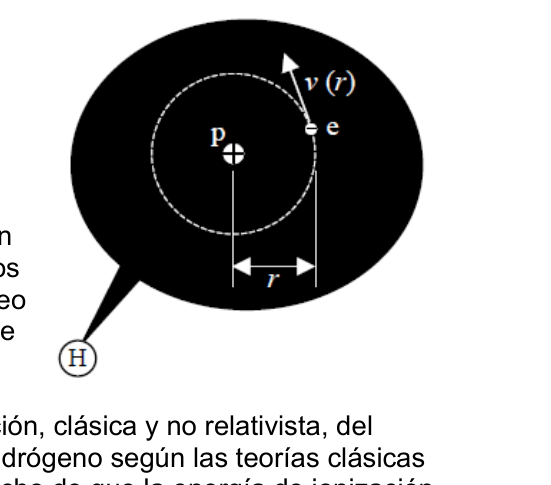
Topic: Modern-Quantum Physics Metodi: Coulomb’s Law, Energy Conservation Method, Order-of-Magnitude Estimation Competenze: Physical Reasoning, Mathematical Modeling Objects: Electron, Nucleus Fonte: Testo (PDF) — p.3
Il sistema di controllo è stato modificato in modo da consentire la verifica del tempo di decomposizione.
PT87. Vicente López, Buenos Aires. Blu. Il fallimento dell’atomo classico. All’inizio del XX secolo, all’inizio delle ricerche sull’atomo, si Pensavo che questo avesse una struttura simile a un sistema planetario con il nucleo in
il centro, molto pesante e carico positivamente, e i leggeri elettroni che ruotano intorno a loro, collegati all’attrazione colombiana. E presto si scoprì che le cose non potevano essere Le cariche elettriche quando si si muovono con l’accelerazione, come gli elettroni. Orbitando intorno al nucleo, perdono energia in La radioterapia è una forma di radiazione elettromagnetica, che Gli elettroni atomici sarebbero precipitati verso il nucleo. In un breve periodo di tempo. È chiaro che non succede. Quindi, visto che la materia normale è stabile e Voi siete qui. Il problema è quello di fare una stima classica e non relativistica del Il tempo che ci vorrebbe per annientare un atomo di idrogeno secondo le teorie classiche. La tecnologia di ionizzazione è un’ottica di ricerca e di ricerca. di un atomo di idrogeno nel suo stato fondamentale o non eccitato è Eioniz = 13,6 eV .
- Supponendo che l’orbita dell’elettrone sia circolare di radio r, si ottengono le espressioni di energia totale dell’elettrone E, della sua velocità v, della sua accelerazione a e della sua Il periodo di rivoluzione T, in funzione dell’energia totale E0 dell’atomo di idrogeno nel stato non eccitato e il radio r0 dell’orbita circolare in tale stato.
- Determina e calcola E0 e r0 e velocità, accelerazione e periodo in questo Orbita, v0, a0 e T0, rispettivamente. Quando un elettrone si muove con l’accelerazione a, la potenza radiante che emette viene data dalla formula di Larmor:
dove k è la costante di Coulomb, c la velocità della luce e e la carica elementare 3) Perdendo energia, l’elettrone descriverà orbite di radio sempre più ridotte. Trova l’espressione della potenza emessa P in funzione del raggio r dell’orbita circolare di r0 e di E0. Potete vedere che sia E (r) che P (r) tendono all’infinito quando r tende a 0. Questo . L’assurdità fisica è la conseguenza che nelle antiche teorie l’elettrone era idealizzato. e il protone considerandolo particelle puntate. Lasciate perdere queste. I risultati sono stati ottenuti con un’attenzione particolare. 4) Qual è il tempo τ che costerebbe un elettrone di cadere sul nucleo dal Orbita dello stato fondamentale di radio r0? Aiuto: la potenza irradiata dall’elettrone (formula di Larmor) deve essere uguale a la variazione (con segno negativo) dell’energia meccanica dell’elettrone per unità di tempo, −dE / dt. Questa variazione rappresenta una perdita di energia, quindi il segno Negativo. Le seguenti espressioni sono utili:
Il tempo τ lo si ottiene integrando tra i valori iniziali e finali di t e di r. (La integrale è immediato). DATI: 1 eV = 1,60.10−19 J; massa dell’elettrone me = 9,11.10−31 kg; costante di Coulomb k = 8,99,109 Nm2C−2; velocità di luce c = 3,00.108 ms-1; carico elementare e =1,60.10 −19 C. CONCLUSIONE: se si è arrivati alla fine del problema si verificerà che la vita di un Secondo la teoria classica l’atomo è molto breve. Il classico modello atomico fallisce. La teoria quantistica è quella che descrive La struttura della materia è stata corretta, prevedendo inoltre le proprietà dei Atomi.
Topic: Modern-Quantum Physics Metodi: Coulomb’s Law, Energy Conservation Method, Order-of-Magnitude Estimation Competenze: Physical Reasoning, Mathematical Modeling Objects: Electron, Nucleus Fonte: Testo (PDF) — p.3
The following is the list of the most commonly used methods of measuring the temperature of the atmosphere:
PT87. Vicente Lopez, from Buenos Aires. Blue, please. The failure of the classical atom. At the dawn of atomic research, in the early 20th century, the I thought this had a structure similar to a planetary system with the core in it.
the center, very heavy and positively charged, and the light electrons spinning around it, linked by the Colombian attraction. It soon became clear that things couldn ‘t be . The electrical charges when they are They move at acceleration, like electrons. orbiting the core, they lose energy in The electromagnetic radiation is the form of electromagnetic radiation, so the atomic electrons would rush into the nucleus. In a very short time. It ‘s obviously not happening . So since normal matter is stable and You’re here. This problem aims to make a classical, non-relativistic estimate of the It would take time for a hydrogen atom to annihilate according to classical theories. The first is the fact that the energy of ionization is not the same as the energy of the electron. of a hydrogen atom in its fundamental or unexcited state is Eionis = 13.6 eV .
- Assuming the electron’s orbit is circular with radius r, get the expressions of the total electron energy of the electron E, its velocity v, its acceleration to and from its The energy of the hydrogen atom in the hydrogen atom is the energy of the hydrogen atom in the hydrogen atom. The radius of the circular orbit in that state is not excited.
- Determine and calculate E0 and r0 as well as the speed, acceleration and period in this orbit, v0, a0, and T0, respectively. When an electron moves at acceleration to, the radiant power it emits comes. given by the Larmor formula:
where k is Coulomb’s constant, c is the speed of light and e is the elementary charge 3) As the electron loses energy, it will describe ever smaller radio orbits. Find the expression of the emitted power P in relation to the radius r of the circular orbit The electron, r0 and E0. You can see that both E(r) and P(r) tend to infinity when r tends to 0. This one . Physical absurdity is a consequence of the old theories idealizing the electron. And the proton, considering them as point particles. Let ‘s just skip these . The main objective of this exercise is to: 4) What is the time τ would cost an electron to fall over the nucleus from the orbit of the fundamental state of radio r0? HELP: The electron radiated power (Laurmor’s formula) has to be equal to The change (with negative sign) in the mechanical energy of the electron per unit of time, −dE / dt. This variation represents a loss of energy, hence the sign negative. The following expressions will be useful:
Time τ is obtained by integrating the initial and final values of t and r. (La The total is immediate). DATES: 1 eV = 1.60.10−19 J; mass of electron me = 9.11.10−31 kg; constant of Coulomb k = 8,99,109 Nm2C−2; speed of light c = 3,00.108 ms-1; elementary charge e =1,60.10 −19 C. CONCLUSION: If you have reached the end of the problem you will find that the life of a The atom according to classical theory is very short. The classical atomic model is failing. Quantum theory is what describes it . The main objective of the study is to determine the properties of the materials and their properties. The atomic number is 0.
Topic: Modern-Quantum Physics Metodi: Coulomb’s Law, Energy Conservation Method, Order-of-Magnitude Estimation Competenze: Physical Reasoning, Mathematical Modeling Objects: Electron, Nucleus Fonte: Testo (PDF) — p.3
Two Blocks on Inclined Plane Tension
PT88. Eduardo Castex, La Pampa. Azul.
Dos cuerpos M1= 10 Kg y M2= 5 Kg de diferentes materiales, caen por un plano
inclinado de ángulo α= 32º. Están unidos por una barra rígida de masa despreciable y
sus coeficientes cinemáticos de fricción con el plano son µ1= 0.2 y µ2= 0.5 (tomar g=
9.82 m/seg2.)
Resolver: a) La aceleración del conjunto
b) Realizar un diagrama de cuerpo aislado de c/u
c) La tensión en la barra, se comprime o tracciona.
Topic: Newtonian Mechanics Metodi: Free-Body Diagram, Kinematic Equations, Vector Decomposition Competenze: Physical Reasoning Objects: Block, Inclined Plane, Rod Fonte: Testo (PDF) — p.3
Two Blocks on Inclined Plane Tension
PT88. Eduardo Castex, La Pampa. Blu. Due corpi M1=10 Kg e M2=5 Kg di materiali diversi, cadono per un piano inclinato da α= 32°. Sono uniti da una rigida barra di massa disprezzabile e i suoi coefficienti cinematici di attrito a livello di piano sono μ1= 0.2 e μ2= 0.5 (prendere g= 9,82 m/sec2.) Risolvere: a) Accelerazione del complesso b) Realizzare un diagramma del corpo isolato di c/u c) La tensione sulla barra, compressa o tracciata.
Topic: Newtonian Mechanics Metodi: Free-Body Diagram, Kinematic Equations, Vector Decomposition Competenze: Physical Reasoning Objects: Block, Inclined Plane, Rod Fonte: Testo (PDF) — p.3
The Commission shall adopt delegated acts in accordance with Article 21 of this Regulation.
PT88. Eduardo Castex, the Pampa. Blue, please. Two bodies M1=10 Kg and M2=5 Kg of different materials, falling down a plane slope of angle α = 32o. They ‘re bound together by a rigid bar of despicable mass and The kinematic coefficients of friction with the plane are μ1=0.2 and μ2=0.5 (take g= The average of the time of the test is 9.82 m/s2.) Resolve: (a) Acceleration of the whole (b) Draw a body diagram of the insulated body of the c/u (c) The voltage on the bar is compressed or traced.
Topic: Newtonian Mechanics Metodi: Free-Body Diagram, Kinematic Equations, Vector Decomposition Competenze: Physical Reasoning Objects: Block, Inclined Plane, Rod Fonte: Testo (PDF) — p.3
Oil Cooling via Water Radiator
PT89. Eduardo Castex, La Pampa. Azul. Para bajarle la temperatura a 3 litros de aceite (δ= 0.95 grs./cm3) de una caja de engranajes que se encuentra a 90ºC inicialmente, se le intercala un radiador por el que circula agua(c= 1 cal/gr ºC.) En dicho radiador el agua ingresa por un caño de sección circular de R = 10 cm, con una velocidad uniforme v= 0.8 cm/seg. Saliendo con la misma velocidad en un tiempo de t= 10 seg, la temperatura de entrada del agua es Ti= 15 ºC y la de salida es de Tf= 85 ºC. Sabiendo el coeficiente de calor especifico del aceite es c= 0.85 cal/ grsºC determinar la temperatura final del aceite. La caja no intercambia calor con el exterior.
Ti= 15º
T f= 85º
Topic: Thermodynamics Metodi: First Law of Thermodynamics, Continuity Equation Competenze: Physical Reasoning, Mathematical Modeling Objects: Tube, Gas Fonte: Testo (PDF) — p.3
Oil Cooling via Water Radiator
PT89. Eduardo Castex, La Pampa. Blu. Per abbassare la temperatura a 3 litri di olio (δ= 0,95 grs./cm3) di una scatola di Se il sistema di controllo è stato utilizzato per la trasmissione di un’unità di controllo, il sistema di controllo è stato utilizzato per la trasmissione di un’unità di controllo. circolazione dell’acqua ((c= 1 cal/gr oC.) In tale radiatore l’acqua entra attraverso un tubo di sezione circolare di R = 10 cm, con una velocità uniforme v= 0,8 cm/sec. Uscendo alla stessa velocità in un tempo di t= 10 seg, la temperatura di entrata dell’acqua è Ti= 15 oC e quella di uscita è Tf= 85 ºC. Sapendo che il coefficiente specifico di calore dell’olio è c= 0.85 cal/ grsoC determinare la temperatura finale dell’olio. La scatola non scambia calore con l’esterno.
Ti= 15º
T f= 85º
Topic: Thermodynamics Metodi: First Law of Thermodynamics, Continuity Equation Competenze: Physical Reasoning, Mathematical Modeling Objects: Tube, Gas Fonte: Testo (PDF) — p.3
The following conditions shall apply:
PT89. Eduardo Castex, the Pampa. Blue, please. To lower the temperature to 3 litres of oil (δ= 0.95 grs./cm3) from a box of gears initially at 90°C, is interchanged with a radiator by which The water circulates ((c= 1 cal/gr oC.) In this radiator the water enters through a circular section tube of R = 10 cm, with a uniform speed v= 0.8 cm/s. Going out at the same speed at a time of t=10 sec, the water intake temperature is Ti=15 oC and the outlet temperature is Tf= 85 ºC. Knowing that the specific heat coefficient of the oil is c=0.85 cal/grsoC determine the final temperature of the oil. The box doesn’t exchange heat with the outside.
Ti= 15º
T f= 85º
Topic: Thermodynamics Metodi: First Law of Thermodynamics, Continuity Equation Competenze: Physical Reasoning, Mathematical Modeling Objects: Tube, Gas Fonte: Testo (PDF) — p.3
Winch Torque Equilibrium Force
PT90. Eduardo Castex, La Pampa. Azul. Sabiendo que P= 100Kg. la barra se encuentra en equilibrio, cuánto vale F, si el torno tiene un radio de r=0.3m y una manivela de L= 1.2m.
α
1
2
Topic: Rigid Body Statics Metodi: Torque & Angular Momentum Analysis, Free-Body Diagram Competenze: Physical Reasoning Objects: — Fonte: Testo (PDF) — p.3
Winch Torque Equilibrium Force
PT90. Eduardo Castex, La Pampa. Blu. Sapendo che P è pari a 100 kg. La barra è in equilibrio, quanto vale F, se il rotolo ha un raggio di r=0,3 m e una maniglia di L=1,2 m.
α
1
2
Topic: Rigid Body Statics Metodi: Torque & Angular Momentum Analysis, Free-Body Diagram Competenze: Physical Reasoning Objects: — Fonte: Testo (PDF) — p.3
The following shall be added to the list of the following:
PT90. Eduardo Castex, the Pampa. Blue, please. Knowing that P is 100kg. The bar is in equilibrium, how much is F, if the spindle It has a radius of r=0.3m and a crank of L=1.2m.
α
1
2
Topic: Rigid Body Statics Metodi: Torque & Angular Momentum Analysis, Free-Body Diagram Competenze: Physical Reasoning Objects: — Fonte: Testo (PDF) — p.3
Mass on Inclined Plane Friction Rope
PT91. Ciudad de San Luis. Azul. Una masa de 4 kg descansa en un plano inclinado que hace un ángulo de 30º con la horizontal. El coeficiente de fricción estática (cuando está quieto) entre la masa y el plano es de 0,64, y el coeficiente de fricción cinética (cuando está en movimiento) entre la masa y el plano es de 0,28. Ver figura. (a) Dibuje todas las fuerzas que actúan en la masa (b) ¿Resbalará esta masa por el plano bajo la acción de la gravedad? Explique (c) ¿Cuanto vale la fuerza de fricción estática que actúa sobre la masa?. (d) Se fijan cuerdas a la masa para que se pueda empujar hacia arriba o hacia abajo del plano inclinado (ver figura). ¿Cuál deberá ser la tensión en la cuerda para que la masa comience a moverse hacia arriba? (e) ¿Cuál deberá ser la tensión en la cuerda para que comience a moverse hacia abajo?. (f) Si la tensión en la cuerda que empuja la masa hacia abajo del plano es de 8 N. ¿Cuál es la aceleración de la masa? Se moverá la masa hacia arriba del plano si se da la misma tensión a la cuerda que la empuja hacia arriba?
Topic: Newtonian Mechanics Metodi: Free-Body Diagram, Vector Decomposition, Kinematic Equations Competenze: Physical Reasoning Objects: Block, Inclined Plane, String Fonte: Testo (PDF) — p.3
Mass on Inclined Plane Friction Rope
PT91. Città di San Luis. Blu. Una massa di 4 kg si trova in un piano inclinato che fa un angolo di 30 gradi con l’orizzontale. Il coefficiente di frizione statica (quando è fermo) tra la massa e Il piano è di 0,64, e il coefficiente di attrito cinetico. (quando è in movimento) tra massa e piano è de 0,28. Vedi la figura. (a) Disegna tutte le forze che agiscono nella massa (b) Questa massa scivolerà sul piano sotto l’azione della gravità? Spiegate. (c) Quanto vale la forza di attrito statica che agisce sulla massa? (d) Si fissano delle corde alla massa in modo che possa essere spinta verso l’alto o verso l’alto. Sotto il piano inclinato (vedi figura). Qual è la tensione che deve essere in una corda per far iniziare il movimento della massa verso l’alto? (e) Qual è la tensione che deve essere nella corda per iniziare a muoversi?
- Sotto. (f) Se la tensione nella corda che spinge la massa verso il basso del piano è di 8 N. Qual è l’accelerazione della massa? La massa si sposta verso l’alto. del piano se si dà la stessa tensione alla corda che la spinge verso l’alto?
Topic: Newtonian Mechanics Metodi: Free-Body Diagram, Vector Decomposition, Kinematic Equations Competenze: Physical Reasoning Objects: Block, Inclined Plane, String Fonte: Testo (PDF) — p.3
The following table shows the methodology used for the calculation of the total weight of the vehicle:
PT91. City of St. Louis. Blue, please. A 4 kg mass rests on an inclined plane that It makes a 30 degree angle with the horizontal. The coefficient of static friction (when still) between the mass and The plane is 0.64, and the kinetic friction coefficient. (when it is in motion) between mass and plane is de 0,28. See the figure. (a) Draw all the forces acting on the mass (b) Will this mass slide across the plane under the action of gravity? Explain . (c) What is the static friction force acting on the mass? (d) They attach ropes to the mass so that it can be pushed up or down. below the inclined plane (see figure). What should be the tension in the rope so the mass starts moving upwards? (e) What’s the tension on the rope to start moving? Down the hallway. (f) If the tension on the rope that pushes the mass down the plane is of 8 N. What’s the acceleration of the mass? The mass will move upwards. What if you give the same tension to the rope that pushes it up?
Topic: Newtonian Mechanics Metodi: Free-Body Diagram, Vector Decomposition, Kinematic Equations Competenze: Physical Reasoning Objects: Block, Inclined Plane, String Fonte: Testo (PDF) — p.3
Car Overtaking Truck Kinematics
PT92. Ciudad de San Luis. Azul.
Un automóvil que está parado en un semáforo acelera a 2,8 m/s2 al encenderse la luz
verde, 3,1 segundos después, un camión que se mueve a una velocidad constante de
80 km/h pasa al automóvil. El automóvil mantiene una aceleración constante hasta
llegar a la velocidad de 104 km/h y continúa entonces a esa velocidad.
(a)
Haga un dibujo de la situación planteada por el problema
(b)
¿Cuanto tiempo pasará hasta que el automóvil pase al camión?
(c)
En este momento ¿el automóvil estará todavía acelerado o se moverá a
velocidad constante?
(d)
¿A que distancia estarán los vehículos del semáforo al momento de
pasarse?
(e)
¿Como será la gráfica posición tiempo que representa la situación
planteada en el problema?
(f)
¿Cómo será la gráfica de velocidad-tiempo del problema planteado?
Topic: Newtonian Mechanics Metodi: Kinematic Equations, Physical Modeling Competenze: Physical Reasoning Objects: Cart Fonte: Testo (PDF) — p.3
Car Overtaking Truck Kinematics
PT92. Città di San Luis. Blu. Un’auto parcheggiata in un semaforo accelera a 2,8 m/s2 quando le luci accendono. verde, 3,1 secondi dopo, un camion che si muove a velocità costante di 80 km/h passa per la macchina. L’auto mantiene un’accelerazione costante fino a raggiungere la velocità di 104 km/h e poi continuare a quella velocità. (a) Disegna la situazione che il problema pone (b) Quanto tempo ci vorrà prima che l’auto passa al camion? (c) In questo momento la macchina sarà ancora accelerata o si muoverà a velocità costante? (d) A che distanza saranno i veicoli del semaforo al momento di
- Che succede? (e) Come sarà il grafico di posizione del tempo che rappresenta la situazione?
- Il problema? (f) Come sarà il grafico velocità-tempo del problema?
Topic: Newtonian Mechanics Metodi: Kinematic Equations, Physical Modeling Competenze: Physical Reasoning Objects: Cart Fonte: Testo (PDF) — p.3
The following is the list of the categories of vehicles used in the production of the product:
PT92. City of St. Louis. Blue, please. A car parked in a traffic light accelerates to 2.8 m/s2 when the lights go on Green, 3.1 seconds later, a truck moving at a constant speed of 80 km/h to the car. The car maintains a steady acceleration up to You get to the speed of 104 km/h and then you keep going at that speed. (a) Draw a picture of the situation posed by the problem (b) How long before the car goes over to the truck? (c) At this time, will the car still be accelerating or will it move to
- The constant speed? (d) How far away will traffic lights be at the time of the
- What? (e) How will the time position graph represent the situation The problem? (f) What will the time-speed graph of the problem be?
Topic: Newtonian Mechanics Metodi: Kinematic Equations, Physical Modeling Competenze: Physical Reasoning Objects: Cart Fonte: Testo (PDF) — p.3
Hydrodensitometry Body Fat Buoyancy
PT93. Ciudad de San Luis. Azul.
Un método para determinar el porcentaje de grasa corporal de una persona se llama
hidrodensitometría. Para usar este método, una persona es pesada en aire y luego
pesada mientras está completamente sumergida en agua. Se calcula la densidad de
la persona a partir de estos datos y luego se lo compara con el valor conocido de
densidad de un tejido corporal no graso y un tejido graso para determinar el porcentaje
de materia grasa en el cuerpo.
Se le mide el porcentaje de masa corporal grasa a Tamara usando hidrodensitometría.
Ella pesa en aire 638 N y en agua 44 N. Encontrar:
a)
El empuje sobre Tamara cuando está bajo el agua.
b)
La masa de agua desplazada
c)
El volumen de agua desplazada
d)
La densidad de Tamara.
Topic: Fluid Mechanics Metodi: Hydrostatic Equilibrium, Free-Body Diagram Competenze: Physical Reasoning, Mathematical Modeling Objects: — Fonte: Testo (PDF) — p.3
Hydrodensitometry Body Fat Buoyancy
PT93. Città di San Luis. Blu. Un metodo per determinare la percentuale di grasso corporeo di una persona si chiama
- l’idrodensitometria. Per usare questo metodo, una persona è pesante nell’aria e poi pesante mentre è completamente immersa in acqua. Si calcola la densità di la persona da questi dati e poi lo paragona al valore noto di densità di un tessuto corporeo non grassi e di un tessuto grassi per determinare la percentuale di grasso nel corpo. La percentuale di massa corporea grassa di Tamara viene misurata usando idrodensitometria. Pesano 638 N in aria e 44 N in acqua. Trovare: a) Il pulsante su Tamara quando è sotto l’acqua. b) La massa di acqua spostata c) Volume di acqua spostato d) La densità di Tamara.
Topic: Fluid Mechanics Metodi: Hydrostatic Equilibrium, Free-Body Diagram Competenze: Physical Reasoning, Mathematical Modeling Objects: — Fonte: Testo (PDF) — p.3
The following table shows the results of the studies:
PT93. City of St. Louis. Blue, please. A method for determining a person ‘s body fat percentage is called Hydrodensitometry. To use this method, a person is heavy in air and then heavy while completely submerged in water. The density of is calculated. The person from this data and then compares it to the known value of density of non-fat body tissue and fat tissue to determine the percentage of fat in the body. The percentage of body fat is measured to Tamara using hydrodensitometry. She weighs 638 N in air and 44 N in water. Find: a) The push on Tamara when she’s underwater. b) The displaced water mass c) The volume of water displaced d) The density of Tamara.
Topic: Fluid Mechanics Metodi: Hydrostatic Equilibrium, Free-Body Diagram Competenze: Physical Reasoning, Mathematical Modeling Objects: — Fonte: Testo (PDF) — p.3
Door Hinge Force Equilibrium
PT94. Comodoro Rivadavia, Chubut. Azul. Las bisagras A y B de una puerta de 500N de peso distan entre sí 2m y la anchura de la puerta es 1m (ver la figura). Sabiendo que todo el peso de la puerta lo soporta la
bisagra superior, se desean saber los valores de las fuerzas ejercidas sobre la puerta en sus bisagras.
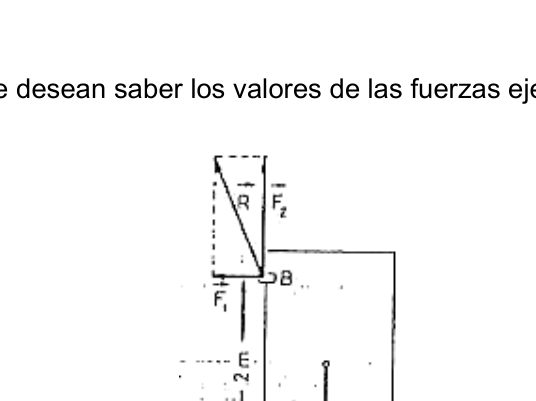
Topic: Rigid Body Statics Metodi: Torque & Angular Momentum Analysis, Free-Body Diagram, Vector Decomposition Competenze: Physical Reasoning Objects: — Fonte: Testo (PDF) — p.3
Door Hinge Force Equilibrium
PT94. Comodoro Rivadavia, Chubut. Blu. Gli anchovi A e B di una porta di peso 500 N sono distanti tra loro 2 m e la larghezza di La porta è di 1 m (vedi figura). Sapendo che tutto il peso della porta lo sopporta la
Velocità superiore, si desidera sapere i valori delle forze esercitate sulla porta nelle loro accise.
Topic: Rigid Body Statics Metodi: Torque & Angular Momentum Analysis, Free-Body Diagram, Vector Decomposition Competenze: Physical Reasoning Objects: — Fonte: Testo (PDF) — p.3
The following table shows the results of the tests:
PT94. Commodore Rivadavia, Chubut. Blue, please. The hinges A and B of a 500N-weight door are 2m apart and the width of The door is 1m (see figure). Knowing that all the weight of the door is borne by the
The upper hinge, you want to know the values of the forces exerted on the door. in their hinges.
Topic: Rigid Body Statics Metodi: Torque & Angular Momentum Analysis, Free-Body Diagram, Vector Decomposition Competenze: Physical Reasoning Objects: — Fonte: Testo (PDF) — p.3
Skier Ramp Energy Loss Projectile
PT95. Comodoro Rivadavia, Chubut. Azul. Un esquiador de 70Kg de masa se desliza por un trampolín de 200m de longitud. Durante ese trayecto, el esquiador pierde 90m de altura y sobre él actúa una fuerza de rozamiento con la nieve que suponemos constante y de 100N. La velocidad del esquiador, justo cuando pierde contacto con el trampolín y empieza a saltar, forma un ángulo de 20º respecto de la horizontal. El esquiador consigue hacer un salto de 120m de longitud. Suponiendo despreciable el rozamiento del esquiador con el aire, calcular:
- La energía perdida por rozamiento por el esquiador en el trampolín,
- El módulo y componentes del vector velocidad
- El desnivel y0 que hay entre el punto A, donde el esquiador empieza el vuelo, y la pista donde aterriza.
Topic: Conservation of Energy, Newtonian Mechanics Metodi: Energy Conservation Method, Kinematic Equations, Vector Decomposition Competenze: Physical Reasoning, Mathematical Modeling Objects: — Fonte: Testo (PDF) — p.3
Skier Ramp Energy Loss Projectile
PT95. Comodoro Rivadavia, Chubut. Blu. Uno sciatore di 70 kg di massa scivola su un trampolino di 200 metri di lunghezza. Durante quel percorso, lo sciatore perde 90 metri di altezza e sopra di lui agisce una forza di La neve che supponiamo sia costante e di 100 N. La velocità del sciatore, appena perde contatto con il trampolino e inizia a saltare, forma un angolo di 20° rispetto all’orizzontale. Lo sciatore riesce a fare un salto di 120 metri di lunghezza. Suppone sconsiderato il ruggimento dello sciatore con l’aria, calcolare:
- L’energia persa da un sciatore che si scivola sul trampolino di lancio.
- Modulo e componenti del vettore velocità
- L’incremento di y0 tra il punto A, dove lo sciatore inizia il volo, e la pista dove atterra.
Topic: Conservation of Energy, Newtonian Mechanics Metodi: Energy Conservation Method, Kinematic Equations, Vector Decomposition Competenze: Physical Reasoning, Mathematical Modeling Objects: — Fonte: Testo (PDF) — p.3
The Commission shall adopt delegated acts in accordance with Article 21 of this Regulation.
PT95. Commodore Rivadavia, Chubut. Blue, please. A 70kg skier slides on a 200m long trampoline. During that journey, the skier loses 90m of height and a force of The snow is roughly constant and 100N. The speed of the Just when he loses contact with the trampoline and starts jumping, he forms a angle of 20° with respect to the horizontal. The skier can make a 120m jump. of length. Assuming the skier’s rubbing with the air is despicable, calculate:
- The energy lost by the skier’s rubbing on the trampoline,
- The module and components of the velocity vector
- The y-level gap between point A, where the skier starts the flight, and the runway where it lands.
Topic: Conservation of Energy, Newtonian Mechanics Metodi: Energy Conservation Method, Kinematic Equations, Vector Decomposition Competenze: Physical Reasoning, Mathematical Modeling Objects: — Fonte: Testo (PDF) — p.3
Nitrogen Ideal Gas Thermodynamic Cycle
PT96. Comodoro Rivadavia, Chubut. Azul. 0,4 moles de nitrógeno N2 evolucionan según el ciclo de la figura. Si se comportan como gas ideal, calculen: ◦ las coordenadas de estado de los puntos A, B, C y D; ◦ el trabajo, el calor y la variación de la energía interna en cada evolución; ◦ el rendimiento del ciclo. Datos: pA=400kPa; pB=200kPa; VD=0,005m3; VC=0,015m3; CV=20,69 J/(mol . K); MAN=14; TB=160ºC
Topic: Thermodynamics Metodi: Ideal Gas Law, Thermodynamic Cycle Analysis, First Law of Thermodynamics Competenze: Physical Reasoning, Mathematical Modeling Objects: Gas, Piston Fonte: Testo (PDF) — p.3
Il ciclo di calcolo del gas idrico è il ciclo di calcolo del gas idrico idrico.
PT96. Comodoro Rivadavia, Chubut. Blu. 0,4 mole di N2 si evolvono secondo il ciclo della figura. Se si comportano come il gas Il calcolo ideale è: ◦ le coordinate di stato dei I punti A, B, C e D; ◦ La temperatura, il lavoro e la variazione di l’energia interna in ogni evoluzioni; ◦ il rendimento del ciclo. Datati: La Commissione ha adottato una decisione che prevede che il regime di cui all’articolo 1 del regolamento (UE) n. VC = 0,015m3; CV = 20,69 J/(mol . K); MAN=14; TB=160oC
Topic: Thermodynamics Metodi: Ideal Gas Law, Thermodynamic Cycle Analysis, First Law of Thermodynamics Competenze: Physical Reasoning, Mathematical Modeling Objects: Gas, Piston Fonte: Testo (PDF) — p.3
The following table shows the results of the calculations for the following categories:
PT96. Commodore Rivadavia, Chubut. Blue, please. 0.4 moles of N2 nitrogen evolve according to the the figure cycle. If they behave like gas Ideally, calculate: ◦ the state coordinates of the points A, B, C and D; ◦ The work, heat and variation of The internal energy in each the evolution of the situation; ◦ the performance of the cycle. The data: The following shall be reported in the table: The value of the product is the value of the product. The following conditions shall apply:
Topic: Thermodynamics Metodi: Ideal Gas Law, Thermodynamic Cycle Analysis, First Law of Thermodynamics Competenze: Physical Reasoning, Mathematical Modeling Objects: Gas, Piston Fonte: Testo (PDF) — p.3
RC Circuit Capacitors Switches Impedance
PT97. Ciudad de Buenos Aires. Azul. Los capacitores del circuito de la figura 1 están inicialmente descargados. El interruptor S4 se cierra primero, después se cierra el S3 y finalmente se cierra S1
Figura 1
a)¿Cuál es la corriente de la batería inmediatamente después de cerrar S1? b)¿Cuál es la corriente que entrega la fuente un largo tiempo depuse de cerrar los tres interruptores? c)¿Cuál es la tensión final en el capacitor C2? d)¿Cuál es la tensión final en el capacitor C1? Luego de un largo tiempo se abre el interruptor S4. e)Graficar la variación de la corriente en función del tiempo para la resistencia de 150Ω Finalmente se abre S1. Se cierra S3 y luego S2. S4 permanece abierta f) ¿Cuál es la impedancia total del circuito? g) ¿Cuál es la corriente eficaz? h) Calcular el ángulo de fase entre corriente y voltaje
Topic: Circuits Metodi: Kirchhoff’s Laws, Equivalent Circuit Reduction, Differential Equations Competenze: Physical Reasoning, Mathematical Modeling Objects: Capacitor, Resistor, Battery, Switch, Inductor Fonte: Testo (PDF) — p.3
RC Circuit Capacitors Switches Impedance
PT97. Città di Buenos Aires. Blu. I capacitori del circuito di figura 1 sono inizialmente scaricati. El S4 si chiude prima, poi si chiude S3 e finalmente si chiude S1
Figura 1
a) Qual è il corrente della batteria immediatamente dopo aver chiuso S1? b) Qual è il corrente che fornisce la fonte da molto tempo dopo aver chiuso tutti e tre?
- Gli interruttori? c) Qual è la tensione finale del condensatore C2? d) Qual è la tensione finale del condensatore C1? Dopo un lungo periodo si apre l’interruttore S4. e)Graficare la variazione del corrente in base al tempo per la resistenza di 150Ω Finalmente si apre S1. Si chiude S3 e poi S2. S4 rimane aperto f) Qual è l’impedenza totale del circuito? g) Qual è il corrente efficace? h) Calcolare l’angolo di fase tra corrente e tensione
Topic: Circuits Metodi: Kirchhoff’s Laws, Equivalent Circuit Reduction, Differential Equations Competenze: Physical Reasoning, Mathematical Modeling Objects: Capacitor, Resistor, Battery, Switch, Inductor Fonte: Testo (PDF) — p.3
The following information shall be provided:
PT97. City of Buenos Aires. Blue, please. The circuit capacitors in Figure 1 are initially discharged. El S4 switch is closed first, then S3 is closed and finally S1 is closed.
Figure 1
(a) What is the current of the battery immediately after shutting down S1? (b) What is the current that delivers the source long ago I put off closing all three What about switches? (c) What is the final voltage in the C2 capacitor? d) What is the final voltage in capacitor C1? After a long time the S4 switch opens. (e) Chart the current change over time for the resistance of 150Ω Finally S1 opens. S3 closes and then S2. S4 remains open (f) What is the total impedance of the circuit? (g) What is the effective current? (h) Calculate the phase angle between current and voltage
Topic: Circuits Metodi: Kirchhoff’s Laws, Equivalent Circuit Reduction, Differential Equations Competenze: Physical Reasoning, Mathematical Modeling Objects: Capacitor, Resistor, Battery, Switch, Inductor Fonte: Testo (PDF) — p.3
Block on Sliding Wedge Friction Force
PT98. Ciudad de Buenos Aires. Azul.
Se tiene un bloque de 0.5kg sobre una superficie inclinada de una cuña de 1kg de
masa. La inclinación de la cuña es de 30º con respecto al suelo Como indica la
figura 1.
Figura1
El bloque se encuentra a 40cm del vértice inferior de la cuña. El coeficiente de rozamiento entre el bloque y la cuña es µe = 0.5 y µd = 0.4 La cuña resbala sobre el piso sin rozamiento. Se realiza una fuerza F horizontal sobre la cuña hacia la derecha. 30º 1kg 0.5kg 1.8m
a) Determinar el valor mínimo y máximo de F para que el bloque no se deslice. Tomando como origen del sistema de referencia el punto del piso que coincide inicialmente con el vértice inferior izquierdo de la cuña y considerando que la fuerza F=10N b) ¿Con que velocidad llega el bloque al extremo superior derecho de la cuña? c) ¿Que distancia separa al bloque de la cuña una vez que el bloque llega al suelo? d) Calcular la posición del bloque luego de transcurridos 0.5seg de aplicada la fuerza F. Se elimina la fuerza F y el rozamiento entre el bloque y la cuña. Se suelta el bloque que se encuentra a 40cm de vértice inferior de la cuña e) Determinar la distancia recorrida por la cuña una vez que el bloque llego al suelo.
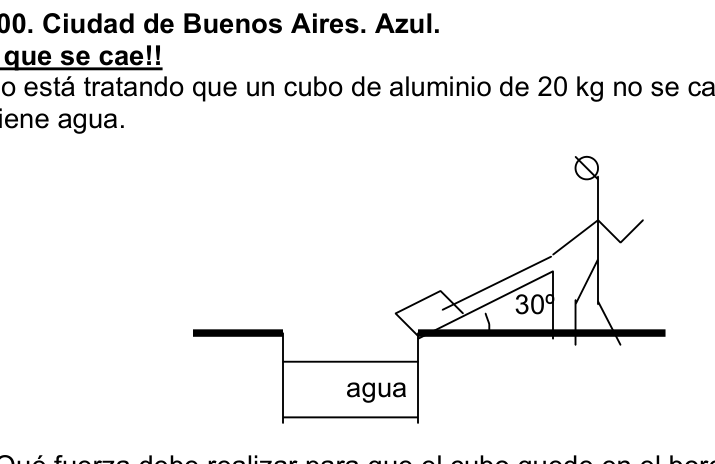
Topic: Newtonian Mechanics Metodi: Free-Body Diagram, Vector Decomposition, Kinematic Equations Competenze: Physical Reasoning, Mathematical Modeling Objects: Block, Wedge Fonte: Testo (PDF) — p.3
Block on Sliding Wedge Friction Force
PT98. Città di Buenos Aires. Blu. Si ha un blocco di 0,5 kg su una superficie inclinata di un cuoio di 1 kg di massa. L’inclinazione della cucina è di 30° rispetto al suolo come indicato dalla Figura 1.
Figura 1
Il blocco si trova a 40 cm dalla vertica inferiore della cucina. Il coefficiente di rottura tra il blocco e la cucina è μe = 0,5 e μd = 0,4 La cucina scivola sul pavimento senza rottura. Si effettua una forza F orizzontale sulla cucina verso destra. 30º 1kg 0.5kg 1.8m
a) Determinare il valore minimo e massimo di F per evitare che il blocco scivoli. Prendendo come origine il sistema di riferimento il punto di terra che corrisponde Inizialmente con la vertica inferiore sinistra della cucina e considerando che la forza F=10N b) A che velocità il blocco arriva alla punta superiore destra del cucino? c) Che distanza separa il blocco dalla cuva una volta che il blocco raggiunge il suolo? d) Calcolare la posizione del blocco dopo il passaggio di 0,5 secondi di forza applicata F. Si elimina la forza F e il ruggine tra il blocco e la cucina. Il blocco si solleva che si trova a 40 cm di verticale inferiore della cucina e) Determinare la distanza percorsa dalla cucina una volta che il blocco raggiunge il suolo.
Topic: Newtonian Mechanics Metodi: Free-Body Diagram, Vector Decomposition, Kinematic Equations Competenze: Physical Reasoning, Mathematical Modeling Objects: Block, Wedge Fonte: Testo (PDF) — p.3
The following is the list of the types of vehicles used in the manufacture of the products:
PT98. City of Buenos Aires. Blue, please. A block of 0.5kg is placed on an inclined surface of a 1kg wedge of Mass. The slope of the wedge is 30° with respect to the ground as indicated by the The following table shows the following:
Figure 1
The block is located 40cm from the lower tip of the wedge. The coefficient of friction between the block and the wedge is μe = 0.5 and μd = 0.4 The wedge slides over the floor without a scratch. A horizontal F force is applied over the wedge to the right. 30º 1kg 0.5kg 1.8m
(a) Determine the minimum and maximum value of F so that the block does not slip. Taking as a source the reference system the corresponding floor point Initially with the lower left vertex of the wedge and considering that force F=10N (b) How fast does the block reach the upper right end of the wedge? (c) What distance separates the wedge block once the block reaches the ground? (d) Calculate the position of the block after 0.5 seconds of force applied. F. The force F and friction between the block and the wedge are removed. The block is loosened. which is 40 cm below the tip of the wedge. (e) Determine the distance travelled by the wedge once the block reaches the ground.
Topic: Newtonian Mechanics Metodi: Free-Body Diagram, Vector Decomposition, Kinematic Equations Competenze: Physical Reasoning, Mathematical Modeling Objects: Block, Wedge Fonte: Testo (PDF) — p.3
Current Bar Magnetic Levitation Dynamics
PT99. Ciudad de Buenos Aires. Azul.
Se tiene una barra de sección cuadrada recta de 50cm de largo y 5mm de ancho
hecha de cobre. Ubicada de manera horizontal con respecto al suelo. La barra se
desliza por dos guias conductoras colocadas una en cada extremo de la barra,
permitiendo así que la misma se desplace libremente en forma vertical.
La barra se encuentra sumergida en un campo magnético uniforme y horizontal de
modulo 1,2 T que forma un ángulo de 30º con respecto a la barra.
Una llave conecta, a través de las guías, la barra con una batería.
a) ¿Qué corriente debe circular por la barra para que la misma quede suspendida
en el aire?
b) El rozamiento con el aire es de la forma c.v2 y la corriente sobre la barra es 7A
de tal manera que la barra comienza a ascender. Escribir la expresión de la
velocidad limite de la barra.
c) La barra se encuentra en el suelo y circula por la misma una corriente de 5A
durante 3s de manera que la barra se dispara hacia arriba.
a) ¿Cuál es la altura maxima que alcanza la barra?
b) ¿Cuánto tiempo tarda en caer nuevamente al suelo?
δcobre=8960kg/m3
Topic: Magnetism, Newtonian Mechanics Metodi: Lorentz Force Analysis, Free-Body Diagram, Impulse-Momentum Theorem Competenze: Physical Reasoning, Mathematical Modeling Objects: Wire, Battery, Magnet Fonte: Testo (PDF) — p.3
Current Bar Magnetic Levitation Dynamics
PT99. Città di Buenos Aires. Blu. Si ha una barra di sezione quadrata retta di 50 cm di lunghezza e 5 mm di larghezza fatto di rame. Situato in modo orizzontale rispetto al suolo. La barra si è scivola su due guide di guida posizionate una a ciascuna estremità della barra, Per questo, la nave si muove liberamente verticalmente. La barra è immersa in un campo magnetico uniforme e orizzontale di modulo 1,2 T che forma un angolo di 30° rispetto alla barra. Una chiave connette, attraverso le guide, la barra con una batteria. a) Che corrente deve circolare sulla barra per tenerla sospesa
- In aria? b) Il ruggine con l’aria è di forma c.v2 e il corrente sulla barra è 7A in modo tale che la barra inizia a salire. Scrivere l’espressione di velocità limite della barra. c) La barra si trova sul suolo e circola attraverso di esso un corrente di 5A per 3 secondi in modo che la barra si spara verso l’alto. a) Qual è la massima altezza raggiunta dalla barra? b) Quanto tempo ci vuole per tornare a terra? Δcobre=8960kg/m3
Topic: Magnetism, Newtonian Mechanics Metodi: Lorentz Force Analysis, Free-Body Diagram, Impulse-Momentum Theorem Competenze: Physical Reasoning, Mathematical Modeling Objects: Wire, Battery, Magnet Fonte: Testo (PDF) — p.3
The following table shows the current and current values of the current and current values of the current and current values of the current and current values of the current and current values of the current and future values of the current and future values of the current and future values of the current and future values of the current and future values of the current and future values of the current and future values of the current and future values of the current and future values of the current and future values of the current and future values of the current and future values of the current and future values of the current and future values of the current and future values of the current and future values of the current and future values of the current and future values of the current and future values of the current and future values of the current and future values of the current and future values of the current and future values of the current and future values of the current and future values of the current and future values of the current and future values of the current and future values of the current and future generations of the current values of the current and future generations of the current current current current and future generations of the current current current values of the current and future.
PT99. City of Buenos Aires. Blue, please. It has a straight square section bar 50cm long and 5mm wide made of copper. It is horizontally located with respect to the ground. The bar is slides through two driving directions one at each end of the bar, This allows the object to move freely vertically. The bar is immersed in a uniform and horizontal magnetic field of module 1,2 T forming an angle of 30° with respect to the bar. A key connects the bar with a battery through the guides. (a) What current must flow through the bar to keep it suspended in the air? (b) The air friction is of the form c.v2 and the current over the bar is 7A So the bar starts to rise. Write the expression of the the bar’s speed limit. (c) The bar is on the ground and a current of 5A circulates through it. For 3s so the bar shoots up. (a) What is the maximum height the bar reaches? (b) How long does it take to fall back to the ground? The following is the list of the products concerned:
Topic: Magnetism, Newtonian Mechanics Metodi: Lorentz Force Analysis, Free-Body Diagram, Impulse-Momentum Theorem Competenze: Physical Reasoning, Mathematical Modeling Objects: Wire, Battery, Magnet Fonte: Testo (PDF) — p.3
Aluminum Cube Buoyancy Water Mercury
PT100. Ciudad de Buenos Aires. Azul. Hay que se cae!! Pablo está tratando que un cubo de aluminio de 20 kg no se caiga en el recipiente que contiene agua.
a) ¿Qué fuerza debe realizar para que el cubo quede en el borde como se muestra en
la figura?
A pesar del esfuerzo de Pablo, el cubo cae y queda totalmente sumergido en el agua
b) ¿Qué empuje recibe?
c) ¿Cuál es el peso aparente del cubo sumergido?
Al caer el cubo, sube el nivel del agua.
d) ¿Cuál es el volumen de agua que asciende respecto al nivel inicial?
Si en lugar de agua el líquido fuera mercurio,
30º
agua
e) Determinar la posición de la cara superior del cubo respecto a la superficie libre
del líquido?
Datos: g = 10 m/s2
Pe agua = 1 gf/cm3
Pe aluminio = 2,7 gf/cm3
Pe mercurio = 13,6 gf/cm3
Topic: Fluid Mechanics Metodi: Hydrostatic Equilibrium, Free-Body Diagram Competenze: Physical Reasoning Objects: Container, Block Fonte: Testo (PDF) — p.3
Aluminum Cube Buoyancy Water Mercury
PT100. Città di Buenos Aires. Blu. Deve cadere!! Pablo sta cercando di evitare che un cubo di alluminio di 20 kg cadano nel recipiente che contiene acqua.
a) Che forza deve esercitare il cubo per rimanere sul bordo come mostrato in la figura? Nonostante l’esercizio di Paolo, il cubo cade e rimane completamente immerso nell’acqua. b) Che spinta riceve? c) Qual è il peso apparente del cubo immerso? Quando il cubo cade, il livello dell’acqua sale. d) Qual è il volume di acqua che aumenta rispetto al livello iniziale? Se invece di acqua il liquido fosse mercurio,
30º
acqua
e) Determinare la posizione della parte superiore del cubo rispetto alla superficie libera del liquido? Data: g = 10 m/s2 Pe acqua = 1 gf/cm3 Pe di alluminio = 2,7 gf/cm3 Pe mercurio = 13,6 gf/cm3
Topic: Fluid Mechanics Metodi: Hydrostatic Equilibrium, Free-Body Diagram Competenze: Physical Reasoning Objects: Container, Block Fonte: Testo (PDF) — p.3
The following table shows the results of the calculations:
PT100. City of Buenos Aires. Blue, please. It must fall! Paul is trying to keep a 20 kg aluminum bucket from falling into the container that you ‘re holding . It contains water.
(a) What force must be applied to keep the cube on the edge as shown in The figure? Despite Paul’s efforts, the cube falls and is completely submerged in the water. (b) What is the boost? (c) What is the apparent weight of the submerged cube? When the cube falls, the water level rises. (d) What is the volume of water rising from the initial level? If instead of water the liquid was mercury,
30º
Water
(e) Determine the position of the upper face of the cube relative to the free surface the liquid? Data: g = 10 m/s2 Pe water = 1 gf/cm3 The weight of the product shall be calculated as follows: Pe mercury = 13,6 gf/cm3
Topic: Fluid Mechanics Metodi: Hydrostatic Equilibrium, Free-Body Diagram Competenze: Physical Reasoning Objects: Container, Block Fonte: Testo (PDF) — p.3
Tea Milk Ice Calorimetry Heat Exchange
PT101. Ciudad de Buenos Aires. Azul.
Un desayuno con algo de física.
Una mañana, antes de ir a la escuela, Martín decide acompañar las tostadas de su
desayuno con una infusión de té. Toma una de las tazas de aluminio de la alacena, de
masa 70 g, que se encuentra a temperatura ambiente (20 °C). Vierte en ella 300 cm3
de dicha infusión, alcanzando el sistema una temperatura de equilibrio de 77 °C.
a) Calcule la temperatura inicial de la infusión.
Como a Martín se le estaba haciendo tarde y tratando de que el té no este tan
caliente, le agrega 100g de leche que saca de la heladera a 4 °C, logrando que el
sistema alcance una nueva temperatura de equilibrio de 60 °C.
b) Calcule el calor específico de la leche.
Como seguía estando el té con leche muy caliente y Martín no quería llegar tarde a la
escuela porque tenía evaluación de física, decide agregarle un cubito de hielo a – 4
°C, que al fundirse totalmente haría que la temperatura de equilibrio sea de 45 °C.
c) Calcule la masa del cubito de hielo.
d) Represente gráficamente Q = f ( T ) [cantidad de calor en función de la
temperatura]
Datos:
Calor específico del té = Calor específico del agua = 1 cal / g °C
Calor específico del hielo = 0,5 cal / g °C
Calor de fusión del hielo = 80 cal / g
Calor específico del aluminio = 0,22 cal / g °C
Nota: Considere que no hay intercambio de calor con el entorno
Topic: Thermodynamics Metodi: First Law of Thermodynamics, Energy Conservation Method Competenze: Physical Reasoning, Mathematical Modeling Objects: Calorimeter Fonte: Testo (PDF) — p.3
Tea Milk Ice Calorimetry Heat Exchange
PT101. Città di Buenos Aires. Blu. Una colazione con qualcosa di fisico. Un mattino, prima di andare a scuola, Martin decide di accompagnare i suoi tostate. colazione con una teppina di tè. Prendi una delle coppe di alluminio della lavanda, di massa 70 g, che si trova a temperatura ambiente (20 °C). Versalo 300 cm3 di tale infusione, raggiungendo al sistema una temperatura di equilibrio di 77 °C. a) Calcolare la temperatura iniziale dell’infusione. Come Martin si stava facendo tardi e cercando di far sì che il tè non fosse così. caldo, aggiunge 100 g di latte che viene estratto dal frigorifero a 4 °C, ottenendo che il il sistema raggiunge una nuova temperatura di equilibrio di 60 °C. b) Calcolare la temperatura specifica del latte. Come il tè con il latte era ancora molto caldo e Martin non voleva essere in ritardo alla La scuola, perché aveva una valutazione di fisica, decide di aggiungere un cubetto di ghiaccio a 4 °C, che se si fondesse completamente avrebbe la temperatura di equilibrio di 45 °C. c) Calcolare la massa del coperto di ghiaccio. d) Rappresenta graficamente Q = f (T) [cantiità di calore a seconda della temperatura] Datati: Calore specifico del tè = Calore specifico dell’acqua = 1 cal / g °C Calore specifico del ghiaccio = 0,5 cal / g °C Calore di fusione del ghiaccio = 80 cal / g Calore specifico dell’alluminio = 0,22 cal / g °C Nota: Considera che non c’è scambi di calore con l’ambiente
Topic: Thermodynamics Metodi: First Law of Thermodynamics, Energy Conservation Method Competenze: Physical Reasoning, Mathematical Modeling Objects: Calorimeter Fonte: Testo (PDF) — p.3
The following table shows the results of the tests:
PT101. City of Buenos Aires. Blue, please. A breakfast with some physics. One morning, before going to school, Martin decides to accompany his toast. breakfast with a tea infusion. Take one of the aluminum cups from the alacena, from 70 g mass, which is at room temperature (20 °C). Pour in 300 cm3 The system shall be capable of operating at a temperature of 77 °C. (a) Calculate the initial infusion temperature. Like Martin was getting late and trying to make tea less hot . Hot, add 100g of milk that you take out of the fridge at 4 °C, making the The system reaches a new equilibrium temperature of 60 °C. (b) Calculate the specific heat of the milk. As the tea with the milk was still very hot and Martin didn ‘t want to be late for the school because he had a physics assessment, he decides to add a cubit of ice to 4 °C, which when fully melted would cause the equilibrium temperature to be 45 °C. (c) Calculate the mass of the ice sheet. (d) Graphically represent Q = f (T) [heat quantity based on (Temperature) The data: The specific heat of the tea = The specific heat of the water = 1 cal / g °C The specific heat of the ice = 0,5 cal/g °C Heat of melting ice = 80 cal / g The specific heat of the aluminium = 0,22 cal / g °C Note: Consider that there is no heat exchange with the environment
Topic: Thermodynamics Metodi: First Law of Thermodynamics, Energy Conservation Method Competenze: Physical Reasoning, Mathematical Modeling Objects: Calorimeter Fonte: Testo (PDF) — p.3
Toolbox Sliding Roof Projectile Motion
PT102. Ciudad de Buenos Aires. Azul. Después del granizo. Cierto día, después de una tormenta de granizo, cuando se estaban reparando las filtraciones que se habían producido en el techo de la casa, la caja de herramientas de uno de los obreros se desliza por él (µ = 0,2).
                                                          La caja llega al borde del techo con una
                                                          velocidad de 3 m / s .


                                                              a) ¿Qué distancia recorrió hasta llegar
                 α    =  20 °                                    al borde del techo?
h b) ¿Cuánto tiempo tardó la caja en
recorrer el techo de la casa?
La distancia entre el extremo inferior del techo de la casa y el suelo es de 8 m.
c) ¿Cuál es la altura desde el extremo superior del techo y el suelo ( h ) ?
Un jardín de flores rodea la casa, cuyo ancho es de 2 m y una línea de álamos a 2 m
del jardín es la separación con las propiedades linderas.
d) Calcule
d-1) a qué distancia de la casa cae la caja de herramientas.
d-2) con qué velocidad llega la caja de herramientas al suelo.
e) ¿La caja de herramientas caerá sobre las flores? Justifique la respuesta.
Nota: Considere g = 10 m / s2 y desprecie el rozamiento del aire.
Topic: Newtonian Mechanics, Conservation of Energy Metodi: Kinematic Equations, Energy Conservation Method, Free-Body Diagram Competenze: Physical Reasoning Objects: Block Fonte: Testo (PDF) — p.3
Toolbox Sliding Roof Projectile Motion
PT102. Città di Buenos Aires. Blu. Dopo la nebbia. Un giorno, dopo una tempesta di nebbia, quando le macchine venivano riparate. Le filtrazioni che si erano verificate sul tetto della casa, la scatola degli strumenti di uno dei lavoratori si scivola sopra (μ = 0,2).
La scatola arriva al bordo del tetto con una velocità di 3 m / s .
a) Quante distanze ha percorso fino a raggiungere α = 20 ° al bordo del tetto?
h) Quanto tempo è durata la scatola?
- Per andare sul tetto della casa?
La distanza tra la parte inferiore del tetto della casa e il pavimento è di 8 m. c) Qual è l’altezza dall’estremità superiore del tetto e del pavimento (h) ? Un giardino di fiori circonda la casa, di 2 m di larghezza e una linea di albari a 2 m. Il giardino è la separazione con le proprietà lintere. d) Calcolare d-1) a che distanza dalla casa cade la scatola degli strumenti. d-2) con quale velocità la scatola di strumenti raggiunge il suolo. e) La scatola degli strumenti cadrà sui fiori? giustifica la risposta. Nota: Considera g = 10 m/s2 e disprezza il ruggine dell’aria.
Topic: Newtonian Mechanics, Conservation of Energy Metodi: Kinematic Equations, Energy Conservation Method, Free-Body Diagram Competenze: Physical Reasoning Objects: Block Fonte: Testo (PDF) — p.3
The following is the list of the types of equipment used in the manufacture of the product:
PT102. City of Buenos Aires. Blue, please. After the hail. One day, after a hailstorm, when the repair was underway. Leaks that had occurred on the roof of the house, the toolbox of One of the workers slips through it (μ = 0,2).
The box comes to the edge of the roof with a speed of 3 m / s .
(a) How far did you travel to get there? α = 20 ° at the edge of the ceiling?
(h) How long did the box take to Going up the roof?
The distance between the lower end of the roof of the house and the floor is 8 m. (c) What is the height from the upper end of the roof and the floor (h) ? A flower garden surrounds the house, which is 2 m wide and a line of reeds at 2 m. The garden is separated from the linder properties. (d) Calculate d-1) how far from the house the toolbox falls. (d-2) how fast the toolbox reaches the ground. (e) Will the toolbox fall on the flowers? Justify the answer. Note: Consider g = 10 m/s2 and disregard air friction.
Topic: Newtonian Mechanics, Conservation of Energy Metodi: Kinematic Equations, Energy Conservation Method, Free-Body Diagram Competenze: Physical Reasoning Objects: Block Fonte: Testo (PDF) — p.3
Bicycle Gear Ratio Torque Incline
PT103. Ciudad de Buenos Aires. Verde. Un paseo en bicicleta. Un ciclista debe realizar algunos cálculos que lo ayuden a decidir el recorrido que hará con su bicicleta durante el fin de semana. Las ruedas de su bicicleta tienen un diámetro 26” (1” 25,4 ) d mm
= y la palanca del pedal tiene una longitud 25 m l c
; la transmisión está conformada por un plato de 48 N = dientes y un piñón de 18 n = , unidos por una cadena que NO puede deslizar (ver figura 1). La masa total de la bicicleta es 12kg m = y la del ciclista 68kg M = . a) Halle una expresión en función de las variables , y d N n para la distancia recorrida por la bicicleta al realizar medio giro el plato. En una parte del trayecto, se debe ir cuesta arriba por una pendiente que forma un ángulo β con la horizontal. Por simplicidad, se asume que: i) la única fuerza que el ciclista puede aplicar sobre el pedal es su propio peso; ii) se desprecia toda pérdida por rozamiento. b) Halle una expresión en función de las variables , , , y d l m M β para el mínimo valor del cociente / n N que le permita subir dicha pendiente. c) Calcule numéricamente el máximo valor que puede tener β para que el ciclista pueda subir por dicha pendiente utilizando los datos provistos. Discuta la validez de las simplificaciones realizadas. Otra parte del recorrido debe realizarse sobre unas viejas vías muertas del ferrocarril. Conciente de que los sucesivos impactos contra los durmientes le dificultarán el avance, se propone un modelo simplificado para estimar cuánto le costará la tarea. Suponga despreciable el momento de inercia de las ruedas y que la distancia entre ejes de la bicicleta es el doble de la separación s entre puntos análogos de los durmientes (ver figura 2).
d) Argumente por qué es válido reemplazar la bicicleta por una sola rueda en cuyo eje se concentra la masa total para estudiar los impactos. Cada durmiente mide 23cm b = de ancho, y la separación es 55cm s = . Mientras la rueda apoya completamente sobre el durmiente, el ciclista mantiene una aceleración constante a , dejando de pedalear cuando llega al borde del mismo y hasta que sube completamente al siguiente. e) Haga un dibujo mostrando el vector velocidad en los instantes (i) al llegar al borde del durmiente, (ii) inmediatamente antes de impactar con el durmiente siguiente, (iii) inmediatamente después del impacto, (iv) al subir completamente al durmiente siguiente. f) Encuentre una expresión para la energía perdida al pasar de un durmiente al otro en función de la energía en el instante (i), 0 E , y de los datos del problema. g) ¿Cuánto debe valer a para que la velocidad media sobre los durmientes sea 2,5km/h ?
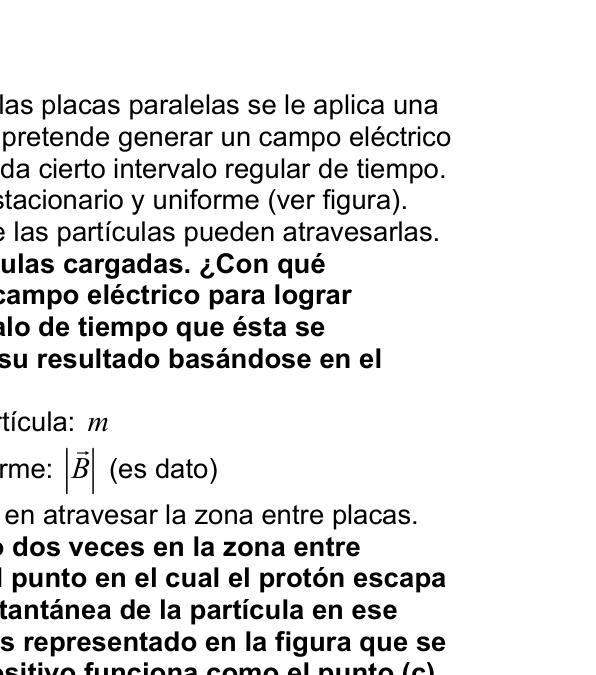
Topic: Rotational Dynamics, Newtonian Mechanics Metodi: Torque & Angular Momentum Analysis, Conservation of Energy, Vector Decomposition Competenze: Physical Reasoning, Mathematical Modeling Objects: Wheel, String Fonte: Testo (PDF) — p.3
Bicycle Gear Ratio Torque Incline
PT103. Città di Buenos Aires. Verde. Una gita in bicicletta. Un ciclista deve fare qualche calcolo che lo aiuti a decidere il percorso che farà. con la sua bicicletta durante la fine di settimana. Le ruote del suo La bicicletta ha un diametro. 26” (1” 25,4 ) d mm
= y la Le palle del pedal hanno una lunghezza 25 m l c
; la trasmissione è costituita da un piatto di 48 N = Denti e un pignone di 18 n = , uniti da una catena che non può scivolare (vedi Figura 1). La massa totale della La bicicletta è 12kg m = e quella del Ciclista 68kg M = . a) Trova un’ espressione in base alle variabili , y d N n per la distanza percorrere in bicicletta facendo mezzo giro del piatto. In una parte del percorso, si deve salire su una pendenza che forma un angolo β con l’orizzontale. Per semplicità, si assume che: il ciclista può applicare sul pedal è il suo peso; per il rastrello. b) Trova un’ espressione in base alle variabili , , y d l m M β per il minimo Valore del coefficiente / N che le permetta di salire la pendenza. c) Calcola numericamente il massimo valore che β può avere per il ciclista può salire su tale pendice utilizzando i dati forniti. Discussioni la validità delle semplificazioni effettuate. Un’altra parte del percorso deve essere effettuata su vecchi binari ferroviari morti. Conosciuto che i successivi gli impatti sui dormienti
- Non lo farò. Propone un modello semplificato per stimare Quanto ti costerà il compito. Supponi disprezzabile il momento di inerzia delle le ruote e che la distanza tra Gli assi della bicicletta sono doppi di separazione s tra punti analogi di sonniferi (vedi figura 2).
d) Argumentare perché è valido sostituire la bicicletta con una ruota sola in il cui asse concentra la massa totale per studiare gli impatti. Ogni dormiente misura 23cm b = di larghezza, e la separazione è 55cm s = . Mentre la La ruota si appoggia completamente sul dormitore, il ciclista mantiene un’accelerazione. Costante a , smettere di pedalare quando arriva al bordo di esso e fino a quando non sali . completamente al prossimo. e) Sviluppa un disegno che mostri il vettore velocità nei momenti (i) al momento di raggiungere il il bordo del dormitore, (ii) immediatamente prima di colpire il dormitore (iii) immediatamente dopo l’impatto, (iv) quando si è completamente alzati al sonnore successivo. f) Trova un’espressione per l’energia persa al passare da un sonno a un sonno. un altro in funzione dell’energia all’istante (i), 0 E, e dei dati del problema. g) Quanto deve valere per avere una velocità media su sognori 2,5km/h ?
Topic: Rotational Dynamics, Newtonian Mechanics Metodi: Torque & Angular Momentum Analysis, Conservation of Energy, Vector Decomposition Competenze: Physical Reasoning, Mathematical Modeling Objects: Wheel, String Fonte: Testo (PDF) — p.3
The vehicle is equipped with a ‘Bicycle Gear Ratio Torque Incline’ (MSK0/>)
PT103. City of Buenos Aires. Green, please. A bike ride. A cyclist must make some calculations to help him decide the route he will take. With his bicycle during the end of
- I’m going to be here for a week. The wheels of his Bicycles have a diameter. 26” (1” 25,4 ) d mm = = y la The pedal lever has a length 25 m l c = ; the transmission It is made up of a plate of 48 N = teeth and a pinch of 18 n = , bound together by a chain which cannot slide (see The following table shows the following: The total mass of the Bicycle is 12kg m = and the one from Cyclist 68kg M = . (a) Find an expression based on the variables , y d N n for distance The bicycle ride is done by half-turning the plate. On one part of the route, you have to climb up a slope that forms a angle β with the horizontal. For simplicity’s sake, it is assumed that: (ii) any loss is neglected by rubbing. (b) Find an expression based on the variables , , y d l m M β for the minimum value of the quotient / N allowing you to climb that slope. (c) Calculate numerically the maximum value that β can have so that The cyclist can climb the slope using the data provided. Discuss the validity of the simplifications made. Another part of the route must be made on old dead railway tracks. Given that the successive impacts on the sleeping person It will make it difficult for you to move forward. It proposes a model Simplified to estimate How much will the homework cost you? Suppose he is despicable . The moment of inertia of the wheels and that distance between The wheel of the bicycle is double of the s-separation between points analogues of sleeping ones (see figure 2).
(d) Argue why it is valid to replace the bicycle with a single wheel in The axis of which concentrates the total mass to study the impacts. Every sleeper is a measure . 23cm b = And the separation is 55cm s = . While the The wheel rests completely on the sleeper, the rider maintains an acceleration. constant to , stopping pedaling when you get to the edge of it and until it goes up . completely to the next. (e) Draw a drawing showing the velocity vector in the instants (i) when you reach the (ii) immediately before impacting the sleeper The following: (iii) immediately after impact, (iv) when fully lifted The next sleeper. f) Find an expression for the energy lost when moving from a sleeper to a sleeper. another depending on the energy in the instant (i), 0 E, and the data of the problem. (g) How much should the average speed on sleepers be? 2,5km/h ?
Topic: Rotational Dynamics, Newtonian Mechanics Metodi: Torque & Angular Momentum Analysis, Conservation of Energy, Vector Decomposition Competenze: Physical Reasoning, Mathematical Modeling Objects: Wheel, String Fonte: Testo (PDF) — p.3
Cyclotron Particle Circular Motion
PT104. Ciudad de Buenos Aires. Verde.
Acelerando partículas.
El ciclotrón
Es un dispositivo utilizado para acelerar partículas. Su funcionamiento se basa en la
acción conjunta de un campo eléctrico y un campo magnético. Este equipo consta
básicamente de dos placas paralelas a las cuales se le aplica una diferencia de
potencial variable con el tiempo. Las partículas cargadas que son aceleradas en la
zona entre placas pueden pasar a través de estas para entrar en otras zonas donde
hay un campo magnético uniforme y estacionario (Zona A y Zona B).
El objetivo es que interprete cual es el funcionamiento de este dispositivo utilizando las
leyes físicas que están involucradas en su descripción.
No debe incluir los efectos relativistas para resolver el problema.
a) Una partícula cargada ingresa con una rapidez vr en una zona del espacio donde el campo magnético es uniforme y estacionario. El vector velocidad instantánea es perpendicular al vector campo magnético. Demuestre que el radio de la trayectoria circular que ésta describe en dicha zona es:
m v R q B
r r
b) Demuestre que el tiempo que tarda la partícula del punto (a) en dar una vuelta completa a la circunferencia que describe como trayectoria es: 2 m T q B π
r
¿Encuentra algo relevante en este resultado?
En la descripción del dispositivo se explicó que a las placas paralelas se le aplica una
diferencia de potencial variable con el tiempo. Se pretende generar un campo eléctrico
en la zona entre placas que cambie de sentido cada cierto intervalo regular de tiempo.
En las zonas A y B existe un campo magnético estacionario y uniforme (ver figura).
Las placas están confeccionadas de forma tal que las partículas pueden atravesarlas.
c) El objetivo del dispositivo es acelerar partículas cargadas. ¿Con qué
frecuencia debe ser invertida la dirección del campo eléctrico para lograr
acelerar a una partícula durante todo el intervalo de tiempo que ésta se
encuentra en la zona entre placas? Justifique su resultado basándose en el
funcionamiento del dispositivo.
Datos: Carga de la partícula: q
Masa de la partícula: m
Módulo del campo magnético estacionario y uniforme: B
r
(es dato)
Ayuda: Desprecie el tiempo que tarda la partícula en atravesar la zona entre placas.
d) Se sabe que cuando un protón es acelerado dos veces en la zona entre
placas, éste escapa del ciclotrón. Encuentre el punto en el cual el protón escapa
de la Zona B y obtenga el vector velocidad instantánea de la partícula en ese
punto expresado en el sistema de coordenadas representado en la figura que se
muestra a continuación. Suponga que el dispositivo funciona como el punto (c)
lo indica (dispositivo sincronizado).
Datos: Posición inicial:
0
51cm
y = −
Velocidad inicial: 0 0m/s xv
Diferencia de potencial entre placas: 200V V ∆
Campo magnético: 4 40 10
Tesla B k B − ⎡⎤ = − ×
⎣⎦ r r (
Masa del protón: 27 1,67 10 kg m −
× Carga del protón: 19 1,60 10 C q −
×
Radio del ciclotrón: 80 C R cm
Ayuda: Ecuación de la circunferencia: 2 2 2 ( ) ( ) x a y b r − + −
donde (
)
,a b es el centro
de
la circunferencia y r es el radio de la misma.
Considere despreciable la separación entre placas.
El betatrón
Es otro dispositivo utilizado para acelerar partículas. Este fue desarrollado por Donald
Kerst en la universidad de Illinois en 1940.
Su funcionamiento se basa en la aceleración de partículas debido a un campo
eléctrico inducido por un campo magnético variable con el tiempo.
Una forma simple de estudiar como el dispositivo acelera partículas, es observar el
caso particular en el cual éstas describen trayectorias circulares.
e) Suponiendo que el dispositivo está configurado de forma tal que se dan las
condiciones físicas necesarias para que la partícula acelerada describa una
trayectoria circular, encuentre cual es la relación que existe entre la rapidez
instantánea de la partícula y el módulo del vector campo magnético.
Datos: El vector campo magnético para todo punto de la circunferencia que describe la
partícula como trayectoria es: ( ) ( ) r r B t B t k
r r (
Distancia respecto del centro del dispositivo: r
Masa de la partícula: m
Carga de la partícula: q
f) Ahora suponga que la variación temporal del módulo del campo magnético
para todo punto de la circunferencia que describe la partícula como trayectoria
es:
4
( )
40 10
(
)
( )
Tesla
r
r
B t
sen wt
B t
−
⎡
⎤
×
⎣ ⎦ r r
[ ] 1
2 s w w π ⎛ ⎞
= ⎜ ⎟ ⎝ ⎠
Encuentre un método gráfico para calcular aproximadamente la distancia que recorre un protón en el intervalo de tiempo (0s,1s) . Luego estime la cantidad de vueltas que la partícula recorre en ese mismo intervalo de tiempo. Datos: Distancia respecto del centro del dispositivo: 50cm r =
Masa del protón: 27 1,67 10 kg m −
× Carga del protón: 19 1,60 10 C q −
×
Velocidad inicial de la partícula: 0 0m/s v = r
Topic: Magnetism, Electrostatics Metodi: Lorentz Force Analysis, Electric Potential Method, Kinematic Equations Competenze: Physical Reasoning, Mathematical Modeling Objects: Particle Beam, Capacitor Fonte: Testo (PDF) — p.3
Cyclotron Particle Circular Motion
PT104. Città di Buenos Aires. Verde. Accelerando le particelle. Il ciclotrone È un dispositivo usato per accelerare le particelle. Il suo funzionamento si basa sulla l’azione congiunta di un campo elettrico e di un campo magnetico. Questo equipaggiamento è costituito basicamente di due schede parallele a cui si applica una differenza di Potenzialmente variabile nel tempo. Le particelle cariche che sono accelerate in zone tra le placche possono passare attraverso queste per entrare in altre zone dove c’è un campo magnetico uniforme e fisso (zona A e zona B). L’obiettivo è che interpreti il funzionamento di questo dispositivo utilizzando le le leggi fisiche che sono coinvolte nella descrizione. Non deve includere gli effetti relativistici per risolvere il problema.
a) Una particella carica entra rapidamente in una zona dello spazio dove il campo magnetico è uniforme e fisso. Il vettore velocità L’immagine è perpendicolare al vettore del campo magnetico. Dimostra che la radio La rotta circolare che essa descrive in tale zona è:
m v R q B
r r
b) Dimostra il tempo che la particella del punto (a) impiega per girare completa la circonferenza che descrive come traccia è: 2 m T q B π
r
Trovate qualcosa di rilevante in questo risultato?
La descrizione del dispositivo ha spiegato che alle schede parallele viene applicata una
differenze di potenziale variabili nel tempo. Si intende generare un campo elettrico
nella zona tra le placche che cambia di senso ogni certo intervallo di tempo regolare.
Le zone A e B hanno un campo magnetico uniforme e stazionario (vedi figura).
Le plache sono fatte in modo tale che le particelle possano attraversarle.
c) L’obiettivo del dispositivo è accelerare le particelle cariche. Con cosa?
Frequenza deve essere inversa la direzione del campo elettrico per ottenere
Accelerare una particella per tutto l’intervallo di tempo che essa si
- Si trova nella zona tra le targhe? Giustificare il risultato basandosi sul funzionamento del dispositivo. Data: carico della particella: q Massa della particella: m Modulo di campo magnetico stazionario e uniforme: B r (scritto) Aiuto: Scommetti il tempo che la particella impiega per attraversare la zona tra le placche. d) Quando un protone è accelerato due volte nella zona tra Le placche, questo sfugge dal ciclotron. Trova il punto in cui il protone scappa di zona B e ottieni il vettore di velocità istantanea della particella in quella zona. punto espresso nel sistema di coordinate rappresentato nella figura che segue mostra qui sotto. Supponiamo che il dispositivo funzioni come il punto (c) indica (dispositivo sincronizzato). Data: posizione iniziale: 0 51cm y = −
Velocità iniziale: 0 0m/s xv
Differenza di potenziale tra le schede: 200V V ∆
Campo magnetico: 4 40 10
Tesla B k B − ⎡⎤ = − ×
⎣⎦ r r (
Massa del protone: 27 1,67 10 kg m −
× Carga del protone: 19 1,60 10 C q −
×
Radio del ciclotrone: 80 C R cm
Aiuto: Equazione della circonferenza: 2 2 2 ( ) ( ) x a y b r − + −
dove (
)
,a b è il centro
de
la circonferenza e r è il suo raggio.
Considerate dispregiato il separamento tra le placche.
Il betatrone È un altro dispositivo usato per accelerare le particelle. Questo è stato sviluppato da Donald Kerst all’Università dell’Illinois nel 1940. Il suo funzionamento si basa sull’accelerazione delle particelle da un campo. elettrico indotto da un campo magnetico variabile nel tempo. Un modo semplice per studiare come il dispositivo accelera le particelle è osservare il Il caso particolare in cui queste descrivono percorsi circolari.
(e) Supponendo che il dispositivo sia configurato in modo tale da dare le seguenti caratteristiche: Le condizioni fisiche necessarie per descrivere una particella accelerata Traccia circolare, scopri quale sia la relazione tra velocità istantanea della particella e del modulo del vettore del campo magnetico. Data: il vettore del campo magnetico per ogni punto della circonferenza che descrive la
La traccia della particella è: ( ) ( ) r r B t B t k
r r (
Distanza dal centro del dispositivo: r
Massa della particella: m
Carga della particella: q
f) Supponiamo ora che la variazione temporale del modulo del campo magnetico
per ogni punto della circonferenza che descrive la traccia della particella
es:
4
( )
40 10
(
)
( )
Tesla
r
r
B t
Sen wt
B t
−
⎡
⎤
×
⎣ ⎦ r r
[ ] 1
2 s w w π ⎛ ⎞
= ⎜ ⎟ ⎝ ⎠
Trova un metodo grafico per calcolare approssimativamente la distanza che un protone percorre l’intervallo di tempo (0s,1s). Quindi calcola la quantità di si girano le rotte che la particella percorre nello stesso intervallo di tempo. Data: Distanza rispetto al centro del dispositivo: 50cm r =
Massa del protone: 27 1,67 10 kg m −
× Carga del protone: 19 1,60 10 C q −
×
Velocità iniziale della particella: 0 0m/s v = r
Topic: Magnetism, Electrostatics Metodi: Lorentz Force Analysis, Electric Potential Method, Kinematic Equations Competenze: Physical Reasoning, Mathematical Modeling Objects: Particle Beam, Capacitor Fonte: Testo (PDF) — p.3
The following information is provided for in the Annex to Implementing Regulation (EU) No 1095/2012:
PT104. City of Buenos Aires. Green, please. Accelerating particles. The cyclotron . It’s a device used to accelerate particles. Its operation is based on the The electric field and magnetic field are combined. This team consists of Basically two parallel plates to which a difference of The potential varies over time. Charged particles that are accelerated in the The area between plates can pass through these to enter other areas where there is a uniform and stationary magnetic field (Zone A and Zone B). The aim is to interpret how this device works using the physical laws that are involved in its description. It should not include relativistic effects to solve the problem.
(a) A charged particle enters a region of space at a rapid rate. where the magnetic field is uniform and stationary. The velocity vector The instantaneous field is perpendicular to the magnetic field vector. Prove that the radio The circular path described by this section is:
m v R q B
r r
(b) Show that the time it takes the particle at point (a) to turn completes the circumference which it describes as trajectory is: 2 m T q B π
r
Do you find anything relevant in this result?
The description of the device explained that parallel plates are subject to a
The difference in potential over time. It is intended to generate an electric field.
In the area between plates that changes direction at any given regular time interval.
In zones A and B there is a stationary and uniform magnetic field (see figure).
The plates are made in such a way that particles can pass through them.
(c) The purpose of the device is to accelerate charged particles. With what?
The frequency of the electric field must be reversed to achieve
accelerate a particle for the entire time interval that it is
Find it in the area between plates? Justify your result based on the
operation of the device.
Data: Particle load: q
Mass of the particle: m
Module of the stationary and uniform magnetic field: B
r
(It is given)
Help: Discount the time it takes the particle to cross the area between plates.
(d) It is known that when a proton is accelerated twice in the zone between
Plaques, this one escapes the cyclotron. Find the point where the proton escapes .
of Zone B and get the instantaneous velocity vector of the particle in that
point in the coordinate system shown in the figure below.
the following example. Suppose the device functions as point (c)
indicates it (synchronized device).
The following data are available:
0
51cm
y = −
The initial speed: 0 0m/s xv
Potential difference between plates: 200V V ∆
Magnetic field: 4 40 10
Tesla B k B − ⎡⎤ = − ×
⎣⎦ r r (
Proton mass: 27 1,67 10 kg m −
× Proton charge: 19 1,60 10 C q −
×
Radio of the cyclotron: 80 C R cm
Aid: Equation of circumference: 2 2 2 ( ) ( ) x a y b r − + −
where (
)
,a b is the center
de
the circumference and r is the radius of the same.
Consider the separation of plates despicable.
The betatrone . It’s another device used to accelerate particles. This one was developed by Donald. Kerst at the University of Illinois in 1940. Its operation is based on the acceleration of particles due to a field. Electrical induced by a magnetic field that changes over time. A simple way to study how the device accelerates particles is to observe the In particular, the following are described in the following cases:
(e) Assuming that the device is configured in such a way that the The physical conditions necessary for the accelerated particle to describe a Circular trajectory, find out what the relationship is between speed The particle’s instantaneous and the vector’s magnetic field module. Data: The magnetic field vector for each point of the circumference that describes the
Particle as trajectory is: ( ) ( ) r r B t B t k
r r (
Distance from the centre of the device: r
Mass of the particle: m
Particle load: q
(f) Now suppose that the time variation of the magnetic field module
For every point on the circumference that describes the particle as trajectory
es:
4
( )
40 10
(
)
( )
Tesla
r
r
B t
without wt
B t
−
⎡
⎤
×
⎣ ⎦ r r
[ ] 1
2 s w w π ⎛ ⎞
= ⎜ ⎟ ⎝ ⎠
Find a graphical method to calculate approximately the distance that It travels a proton in the time interval (0s,1s). Then estimate the amount of rotations that the particle travels in that same time interval. Data: Distance from the centre of the device: 50cm r =
Proton mass: 27 1,67 10 kg m −
× Proton charge: 19 1,60 10 C q −
×
Initial particle speed: 0 0m/s v = r
Topic: Magnetism, Electrostatics Metodi: Lorentz Force Analysis, Electric Potential Method, Kinematic Equations Competenze: Physical Reasoning, Mathematical Modeling Objects: Particle Beam, Capacitor Fonte: Testo (PDF) — p.3
Lens Focusing Sunlight Sensor Color
PT105. Ciudad de Buenos Aires. Verde. Coyotus Hambrientus. Una tarde soleada en un desierto norteamericano, el coyote se dispone, por enésima vez, a dar fin a su lucha por atrapar al veloz y escurridizo correcaminos. La idea del coyote es la siguiente: colocar un montículo de alpiste en la carretera para que su perseguido se detenga a merendar. Pero no es el deseo del coyote alimentar al correcaminos, sino conseguir su propia merienda. A tal fin compra una superlente giratoria marca ACME y la coloca en lo alto de una gran piedra. A continuación, cuelga
una jaula de un poste de luz mediante una cadena que tiene un explosivo (marca
ACME por supuesto). Una vez que el correcaminos se encuentre saboreando el
alpiste, el coyote debe posicionar la lente de modo tal que los rayos del sol se
concentren en el sensor que detona la carga. Cuando esto ocurra, la explosión liberará
la jaula y ésta dejará atrapado al correcaminos.
El explosivo se activa cuando el sensor que tiene incorporado manda una señal
eléctrica. Para que esto ocurra la luz que incide en el sensor debe ser azul.
Después de una larga preparación y una ansiosa espera, finalmente, a las 17 :30 , el
correcaminos llega a destino. Los rayos del Sol iluminan la escena y llegan formando
un ángulo
º
38
ψ con el suelo. La temperatura ambiente a esa hora es de 40ºC. El centro de la lente se encuentra a una altura 20m H = .
Si el eje principal de la lente permanece horizontal:
a) Determine el intervalo de distancia focal [
]
M
m f
f ;
de la lente, útil para la
activación del explosivo y expresarlo como una desigualdad para la magnitud
f .
b) Determine la mínima altura h a la cual el coyote podrá posicionar el explosivo
en la cadena.
El torpe coyote, sin querer, golpea la lente y ésta gira un ángulo
º
30
θ
en sentido
antihorario (visto en el gráfico). La lente se traba y ya no se puede mover sobre su eje.
Además, el sensor del explosivo se le cayó al suelo antes de colocarlo y ahora sólo se
activa cuando incide sobre él un haz de longitud de onda
600nm
S
λ =
.
c) Determine la distancia D (ver el gráfico) a la que debe posicionar el centro de
la lente para lograr activar el explosivo.
Nota: A partir de aquí, siguen valiendo las consideraciones que preceden al punto (c)
acerca de la posición inclinada de la lente y el nuevo λ de trabajo del sensor.
En un nuevo acto de torpeza, el coyote enciende un tanque de combustible (marca
ACME) y las llamas alcanzan la superlente. Cuando el fuego se extingue la
temperatura de la lente se encuentra en650ºC . Si en ese instante el correcaminos se
encontrase comiendo el alpiste:
d) ¿A qué altura h , medida desde el suelo, debería encontrarse el explosivo (el
sensor) para que la trampa funcionase?
La lente se encuentra a 650ºC y el ambiente a 40ºC. La temperatura ambiente del
desierto comienza a descender a razón de 1,5ºC cada 23 minutos y el coyote sabe
que el correcaminos tardará 4 minutos en llegar a la trampa.
e) ¿Cuánto valdrá la distancia focal de la lente en el instante en que llegue el
correcaminos?
Ahora suponga que la lente marca ACME no fuese delgada, sino que tuviese un
grosorδ . Suponga también que la lente se encuentra a una distancia D fija y con su
eje principal en posición horizontal. Si
Sr es el radio de curvatura de la superficie de la
lente sobre la que inciden los rayos del Sol, y
Er el de la superficie por la que dichos
rayos emergen de la lente:
f) Obtenga la relación
(
)
δ
;
E
S
r
f
r =
para que la lente pueda activar el sensor con
cualquiera de las dos longitudes de onda siguientes.
1
650nm
λ =
y
2
600nm
λ =
.
Determine el grosor de la lente necesaria para que esto ocurra y a partir del valor
obtenido analice la viabilidad de la construcción de la lente.
Información que le puede ser útil
Fórmula del constructor de lentes:
(
)
⎥
⎦
⎤
⎢
⎣
⎡
⎟⎟
⎠
⎞
⎜⎜
⎝
⎛⎟
⎠
⎞
⎜
⎝
⎛
−
+
−
−
2 1 2 1 1 1 1 1 1 1 r r n n r r n f δ
Donde f es la distancia focal, n es el índice de refracción (relativo al aire) del material refringente, δ es el grosor de la lente y 1r es el radio de curvatura de la superficie donde incide la luz.
Ley de enfriamiento de Newton:
( )
(
)
t
k
ambiente
i
ambiente
e
T
T
T
t
T
−
⋅
−
+
Aberración cromática:
Cuando la luz blanca (formada por todos los colores) incide sobre una superficie
refringente, los haces de cada color se refractan con diferentes ángulos. Por lo tanto,
la distancia focal de una lente depende de la longitud de onda del haz que la atraviesa.
Espectro visible:
Hoja de datos que viene dentro de la caja de la superlente:
Importante: La lente no presenta aberración esférica
SUPERLENTE MARCA ACME
Tipo de lente: equiconvexa
Radios de curvatura:
m
R
R
25
2
1
= [ ] C C º 60 º 20 −
Tipo de vidrio: flint pesado
Coeficiente de dilatación lineal:
K
/
1
10
2,9
6
−
×
γ
Coeficiente de rapidez de intercambio de calor: s k / 1 10 6,7 3 − ×
Índice de refracción en función de la longitud de onda:
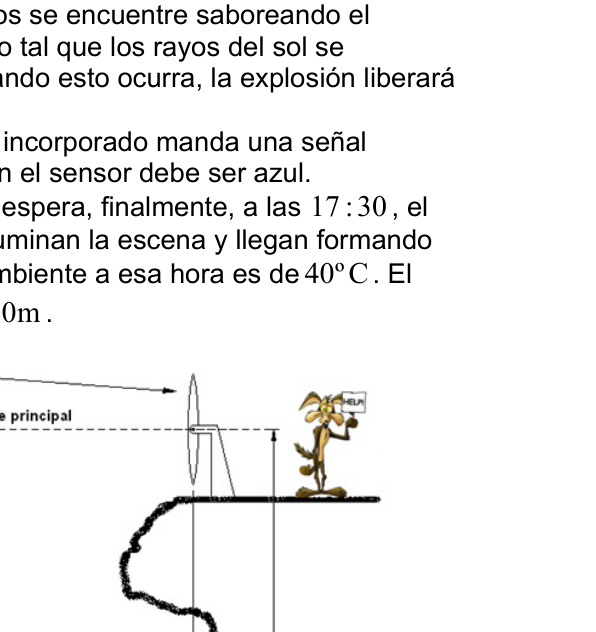
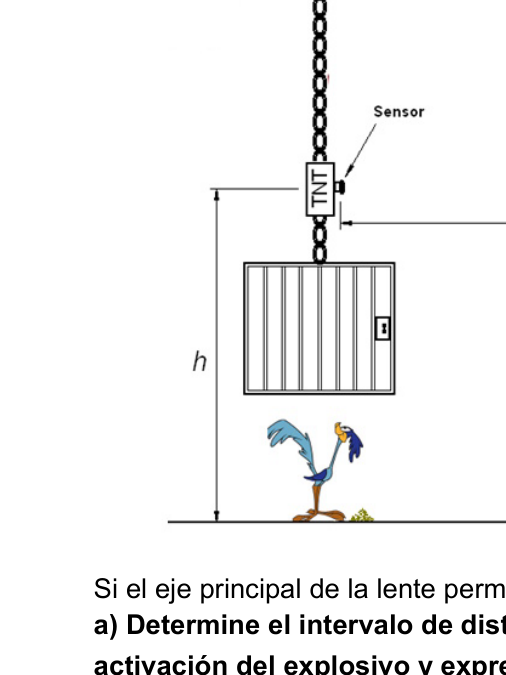
Topic: Geometric Optics Metodi: Ray Tracing, Thin Lens & Mirror Equation, Small-Angle Approximation Competenze: Physical Reasoning Objects: Lens Fonte: Testo (PDF) — p.3
Lens Focusing Sunlight Sensor Color
PT105. Città di Buenos Aires. Verde. Coyotus Hambrientus. Un pomeriggio di sole in un deserto nordamericano, il coyote si dispone, per enema. Un’altra volta, per mettere fine alla sua lotta per catturare il veloce e scoraggioso corridoio. L’idea del Il coyote è il seguente: mettere un monte di alpinismo sulla strada per fargli Perseguito, si ferma per mangiare. Ma non è il desiderio del coyote di nutrirlo.
- Non è un’idea. Per questo compra un superlente . La rotatoria segna ACME e la pone su una grande pietra. Poi appenda.
una gabbia di un poste di luce con una catena che contiene un esplosivo (marchio ACME, naturalmente). Una volta che il corriere si trova a assaporare il Alpiste, il coyote deve posizionare la lente in modo tale che i raggi del sole si concentratevi sul sensore che sta facendo esplodere la carica. Quando questo accade, l’esplosione rilascerà La gabbia e questa la farà prendere i sentieri. L’esplosivo si attiva quando il sensore incorporato manda un segnale. elettrica. Per farlo, la luce che incide sul sensore deve essere blu. Dopo una lunga preparazione e un’anticissima attesa, finalmente, alle 17:30 , il
- Il corridoio arriva a destinazione. I raggi del sole illuminano la scena e arrivano formando un angolo º 38 = ψ con il pavimento. La temperatura ambiente a quell’ora è di 40°C. El Il centro della lente si trova ad un’altezza 20m H = .
Se l’asse principale della lente rimane orizzontale: a) Determina l’intervallo di distanza focale [ ] M m f f ; di lente, utile per la l’espressione di una disuguaglianza di magnitudo f . b) Determina l’altezza minima h a cui il coyote può posizionare l’esplosivo
- La catena. Il coyote torpe, involontariamente, colpisce la lente e questa gira un angolo º 30 = θ in senso il tempo di lavoro (visto nel grafico). La lente si blocca e non può più muoversi sull’asse. Inoltre, il sensore dell’esplosivo è caduto sul pavimento prima di metterlo e ora è solo uscito. attiva quando si incide su di esso un raggio di lunghezza d’onda 600nm S λ = . c) Determina la distanza D (vedi grafico) a cui deve posizionare il centro di la lente per attivare l’esplosivo. Nota: Da qui in poi, continuano a valere le considerazioni precedenti al punto (c) La posizione inclinata della lente e il nuovo λ di funzionamento del sensore. In un nuovo atto di torpezza, il coyote accende un serbatoio di combustibile (marchio L’incendio raggiunge la superlente. Quando il fuoco si spegne la La temperatura della lente è di 650 ° C . Se in quel momento il corretto corretto si E poi mi sono trovato a mangiare l’alpiste: d) A che altezza h, misurata dal suolo, dovrebbe trovarsi l’esplosivo (il
- per far funzionare il trappo?
La lente si trova a 650°C e l’ambiente a 40°C. La temperatura ambiente del Il deserto inizia a scendere a un tasso di 1,5°C ogni 23 minuti e il coyote lo sa. che il corridoio ci vorrà 4 minuti per arrivare al trappo. (e) Quanto vale la distanza focale della lente all’atto dell’arrivo del
- Corretto? Supponiamo che il lente di marca ACME non fosse sottile, ma che avesse un grosorδ . Supponiamo anche che il lente sia a una distanza fissa D e con il suo il principale asse in posizione orizzontale. Si Il signor è il raggio di curvatura della superficie della L’obiettivo è quello che i raggi del sole incidono su di esso, e È la superficie per la quale si dice.
- I raggi emergono dalla lente: f) Ottieni la relazione ( ) δ ; E S r f r = per poter attivare il sensore con Qualsiasi delle due lunghezze d’onda seguenti. 1 650nm λ = y 2 600nm λ = . Determina il grosso della lente necessario per farlo e dal valore Il risultato è stato analizzato sulla fattibilità della costruzione del lentiglio. Informazioni che possono essere utili per lei Formula del costruttore di occhiali: ( ) ⎥ ⎦ ⎤ ⎢ ⎣ ⎡ ⎟⎟ ⎠ ⎞ ⎜⎜ ⎝ ⎛⎟ ⎠ ⎞ ⎜ ⎝ ⎛ −
− −
2 1 2 1 1 1 1 1 1 1 r r n n r r n f δ
Dove f è la distanza focale, n è l’indice di refraczione (relativo all’aria) del materiale refringente, δ è lo spessore della lente e 1r è il raggio di curvatura della superficie dove la luce colpisce.
Legge di Newton sul raffreddamento: ( ) ( ) t k ambiente i ambiente e T T T t T − ⋅ − +
Aberrazione cromatica: Quando la luce bianca (formata da tutti i colori) incide su una superficie e i fasci di ogni colore si refrattono a angoli diversi. Quindi, La distanza focale di una lente dipende dalla lunghezza d’onda del fascio che la attraversa. Spettro visibile:
Datasheet che viene dentro la casella della superlente:
Importante: la lente non presenta aberrazioni sferiche
SuperLente Marchio ACME Tipo di lente: equiconvexa Radi di curvatura: m R R 25 2 1
= [ ] C C º 60 º 20 −
Tipo di vetro: flint pesante Coefficiente di dilatazione lineare: K / 1 10 2,9 6 − ×
γ
Coefficiente di rapido scambio di calore: s k / 1 10 6,7 3 − ×
Indice di refraczione a seconda della lunghezza d’onda:
Topic: Geometric Optics Metodi: Ray Tracing, Thin Lens & Mirror Equation, Small-Angle Approximation Competenze: Physical Reasoning Objects: Lens Fonte: Testo (PDF) — p.3
The following table shows the results of the measurement of the measurement of the measurement of the measurement of the measurement of the measurement of the measurement of the measurement of the measurement of the measurement of the measurement of the measurement of the measurement of the measurement of the measurement of the measurement of the measurement of the measurement of the measurement of the measurement of the measurement of the measurement of the measurement of the measurement of the measurement of the measurement of the measurement of the measurement of the measurement of the measurement of the measurement of the measurement.
PT105. City of Buenos Aires. Green, please. Coyotes are hungry. On a sunny afternoon in a North American desert, the coyote is ready, for the first time. Once again, to end his struggle to catch the fast and elusive runway. The idea of the Coyote is like this: place a mountain mound on the road so that your The pursued stops to snack. But it ‘s not the coyote ‘s desire to feed the I’m not going to get you your own snack. To that end , buy a super lens . rotator marks ACME and places it on top of a large stone. Then hang it up.
a cage of a light pole by means of a chain containing an explosive (mark ACME of course). Once the coroner finds himself tasting the Alpine, the coyote must position the lens so that the sun’s rays are Focus on the sensor that detonates the charge. When this happens, the explosion will release. The cage and this one will get the trailers trapped. The explosive is activated when the sensor that it has built-in sends a signal. electrical. For this to happen, the light that hits the sensor must be blue. After a long preparation and anxious wait, at last, at 5:30 p.m., the The corridors are at their destination. The sun ‘s rays illuminate the scene and come forming . a corner º 38
ψ On the ground. The room temperature at that hour is 40 degrees. El The center of the lens is at a height 20m H = .
If the main axis of the lens remains horizontal: (a) Determine the focal length interval [ ] M m f f ; The lens is used for the Activation of the explosive and expressing it as an inequality for magnitude f . (b) Determine the minimum height h at which the coyote can position the explosive. on the chain. The clumsy coyote, unwittingly, hits the lens and it turns an angle. º 30
θ In this sense time (see chart). The lens gets jammed and can no longer move over its axis. Plus, the explosives sensor fell to the ground before we put it in and now it’s just gone. activates when a wavelength beam hits it 600nm S λ = . (c) Determine the distance D (see graph) at which the centre of the the lens to get the explosive to go off. Note: From here on, the considerations above point (c) continue to apply. about the tilt position of the lens and the new λ working of the sensor. In a new act of clumsiness, the coyote lights a fuel tank (mark ACME) and the flames reach the superlens. When the fire is extinguished the The temperature of the lens is 650 degrees Celsius . If at that moment the right-of-way is I found myself eating the alpiste: (d) How high h, measured from the ground, should the explosive be located (the So the trap works?
The lens is at 650oC and the environment is at 40oC. The ambient temperature of the The desert starts to drop at a rate of 1.5 degrees every 23 minutes and the coyote knows. The trail will take four minutes to reach the trap. (e) What is the focal length of the lens at the time the lens reaches
- What? Now suppose the ACME lens wasn’t thin, but had a
- It ‘s gross . Suppose the lens is at a fixed distance D and with its The main axis in horizontal position. Si The curvature radius of the surface of the lens on which the sun’s rays strike, and It ‘s the surface you ‘re talking about . Rays emerge from the lens: (f) Get the relationship ( ) δ ; E S r f r = So the lens can activate the sensor with any of the following two wavelengths. 1 650nm λ = y 2 600nm λ = . Determine the lens thickness needed to make this happen and from the value The results obtained analyze the feasibility of the lens construction. Information that may be useful to you Formula of the lens manufacturer: ( ) ⎥ ⎦ ⎤ ⎢ ⎣ ⎡ ⎟⎟ ⎠ ⎞ ⎜⎜ ⎝ ⎛⎟ ⎠ ⎞ ⎜ ⎝ ⎛ −
− −
2 1 2 1 1 1 1 1 1 1 r r n n r r n f δ
Where f is the focal length, n is the refractive index (relative to air) of the material refractive, δ is the thickness of the lens and 1r is the radius of curvature of the surface where the light hits.
Newton ‘s law of cooling: ( ) ( ) t k environment i environment e T T T t T − ⋅ − +
Chromatic aberration: When white light (formed by all colors) hits a surface refractory, the beams of each color refract at different angles. Therefore, The focal length of a lens depends on the wavelength of the beam that passes through it. The visible spectrum:
Data sheet that comes in the superlens box:
Important: The lens does not have spherical aberration
Supermarkets are on the way. Type of lens: equiconvex Radius of curvature: m R R 25 2 1
= [ ] C C º 60 º 20 −
Type of glass: heavy flint Linear dilation coefficient: K / 1 10 2,9 6 − ×
γ
Heat exchange rate coefficient: s k / 1 10 6,7 3 − ×
Refraction index according to wavelength:
Topic: Geometric Optics Metodi: Ray Tracing, Thin Lens & Mirror Equation, Small-Angle Approximation Competenze: Physical Reasoning Objects: Lens Fonte: Testo (PDF) — p.3
Cosmic Background Radiation Particle Interactions
PT106. San Miguel de Tucumán. Verde.
Radiaciones cósmicas de fondo.
La radiación cósmica de fondo es la energía remanente del Big Bang que dio origen al
universo. La predicción teórica de esta radiación fue realizada por el físico ruso
George Gamow y dos colegas suyos Robert C. Herman y Ralph A. Alpher en 1946.
La radiación cósmica de fondo fue detectada por primera vez por los radio astrónomos
Arno Penzias y Robert Wilson en 1964. Es interesante anotar que ya existía evidencia
de la RCF 30 años antes del experimento de Penzias y Wilson. Walter Adams y
Andrew McKellar habían observado las líneas de emisión resultantes de la excitación
producida por la RCF en radical CN que se encuentra en el medio interestelar. Los
autores Helge Kragh y Steven Weinberg explican el retardo en el descubrimiento de la
RCF resaltando el hecho de que por esos años la cosmología no era tomada en serio.
De hecho, los científicos que marginalmente tocaban el tema adoptaban el modelo del
Big Bang o el modelo rival cuasi-estacionario guiados no por resultados empíricos sino
por inclinación filosófica.
Se conoce que estos rayos por encima de cierto umbral de energía NO pueden
provenir de cuerpos cósmicos muy alejados. Esto se debe a que por encima de cierto
valor energético, estos rayos ultra energéticos pueden chocar con fotones de
radiaciones cósmicas de fondo, perdiendo parte de su energía al crearse nuevas
partículas.
La radiación cósmica de fondo es una energía en forma de fotón y su intensidad como
función de la longitud de onda de éste se ajusta a un cuerpo negro con temperatura T
= 2,7 K. La radiación de dicho cuerpo tiene la propiedad descripta en la ley de
desplazamiento de Wien, en la cuál su máxima emisión se produce a una longitud de
onda máxima establecida en dicha ley.
a) Suponga que los fotones de λMÁX son típicos de la radiación de cuerpo
negro de fondo y calcule esta longitud de onda.
b) Calcule la energía de un fotón típico de la radiación cósmica de fondo.
Colisiones entre protones ultra energéticos y fotones.
Suponga que el proceso de pérdida de energía es debido a que un protón (p) colisiona de frente con uno de los fotones (f) de dicha radiación, resultando de la colisión un protón (p) más un pión neutro (π0) p + f → p + π0
Recuerde que: h = 6,6 . 10-34 Js c = 3 . 108 ms-1 Recuerde que el momento inicial del protón es γmpv donde γ=
mp= 1,6 . 10-27 kg
m π0= 2,4 . 10-28 kg
σ = 5,67 . 10-8 Wm-2K-4
Suponga que la colisión es unidireccional y que el protón y el pión neutro se mueven
con la misma velocidad final vf después de la colisión. Según esto se determinará cuál
es la energía mínima que debe tener el protón para que pueda liberar al pión neutro.
c) Realice el análisis de la colisión según la conservación de la cantidad de
movimiento.
d) Determine la energía inicial del protón ultra energético. Dado que
→
e) Determine la energía del protón en Joules y en Electron-volts.
f) La relación de la energía de los fotones por unidad de volumen está
relacionada en forma directamente proporcional a la cuarta potencia de la
temperatura, donde la constante de proporcionalidad es
a= 7,6 . 10-16 Jm-3K-4. Determine dicha densidad δE.
g) Determine la densidad de fotones δF de la radiación cósmica de fondo.
h) Calcule la máxima potencia radiada.
i)
La sección eficaz para estas colisiones entre protones y fotones es
S = 2,0 . 10-32 m2. El camino libre medio está definido como la distancia
promedio que recorre una partícula entre una colisión y la siguiente, y
puede estimarse como la altura de un cubo cuya base es la sección eficaz,
y contiene un fotón en su volumen. Estime dicho camino libre x, de un
protón antes de sufrir una colisión con un fotón.
Topic: Nuclear & Particle Physics, Astrophysics Metodi: Relativistic Energy-Momentum, Conservation Laws, Order-of-Magnitude Estimation Competenze: Physical Reasoning, Mathematical Modeling Objects: Photon, Particle Beam Fonte: Testo (PDF) — p.3
Cosmic Background Radiation Particle Interactions
PT106. San Michele di Tucumán. Verde. Radiazioni cosmiche di fondo. La radiazione cosmica di fondo è l’energia rimasta del Big Bang che ha dato origine alla radiazione cosmica. l’universo. La previsione teorica di questa radiazione è stata fatta dal fisico russo. George Gamow e due suoi colleghi Robert C. Herman e Ralph A. Alpher nel 1946. La radiazione cosmica di fondo è stata rilevata per la prima volta da radio astronomi. Arno Penzias e Robert Wilson nel 1964. È interessante notare che c’erano già prove. della RCF 30 anni prima dell’esperimento di Penzias e Wilson. Walter Adams e Andrew McKellar aveva osservato le linee di emissione derivanti dall’ eccitazione. La radioattività di questa radioattività è la radioattività di una radioattività di radioattività. I Helge Kragh e Steven Weinberg spiegano il ritardo nella scoperta della RCF sottolineando il fatto che per quegli anni la cosmologia non era presa sul serio. Infatti, gli scienziati che hanno toccato il tema in modo marginale hanno adottato il modello di Il Big Bang o il modello rival quasi-stazionario guidato non da risultati empirici ma da per inclinazione filosofica. Si sa che questi raggi sopra un certo limite di energia non possono provenienti da corpi cosmici molto lontani. Questo è dovuto al fatto che sopra certo Per il valore energetico, questi raggi ultra-energetici possono colpire fotoni di radiazioni cosmiche di fondo, perdendo parte della sua energia creando nuove. particelle. La radiazione cosmica di fondo è un’energia in forma di fotone e la sua intensità come La funzione della lunghezza d’onda di questo si adatta a un corpo nero con temperatura T = 2,7 K. La radiazione di tale corpo ha la proprietà descritta nella legge di Il movimento di Wien, in cui la sua massima emissione si verifica a una lunghezza di La legge di cui all’articolo 6 del regolamento (CEE) n. a) Supponiamo che i fotoni di λMÁX siano tipici della radiazione del corpo. il fondo nero e calcola questa lunghezza d’onda. b) Calcolare l’energia di un fotone tipico della radiazione cosmica di fondo. Collizioni tra protoni ultra-energetici e fotoni.
Supponiamo che il processo di perdita di energia sia dovuto a un protone (p) che colpisce di fronte a uno dei fotoni (f) di tale radiazione, risultando dalla collisione un un protone (p) più un pone neutro (π0) p + f → p + π0
Ricordate che: h = 6,6 . 10-34 Js c = 3 . 108 ms-1 Ricordate che il momento iniziale del protone è γmpv dove γ=
mp= 1,6 . 10-27 kg m π0= 2,4 . 10-28 kg σ = 5,67 . 10-8 Wm-2K-4 Supponiamo che la collisione sia unidirezionale e che il protone e il pion neutro si muovano. con la stessa velocità finale vf dopo l’incontro. In base a questo si determinerà quale . è l’energia minima che il protone deve avere per liberare il ponio neutro. (c) effettuare l’analisi della collisione in base alla conservazione della quantità di movimento. d) Determina l’energia iniziale del protone ultra-energico. Dato che →
e) Determina l’energia del protone in Joules e in Electron-volts. f) Il rapporto di energia dei fotoni per unità di volume è Relata direttamente proporzionalmente alla quarta potenza della temperatura, dove la costante di proporzionalità è a= 7,6 . 10-16 Jm-3K-4. Determina tale densità δE. g) Determina la densità dei fotoni δF della radiazione cosmica di fondo. h) Calcolare la massima potenza irradiata. i) La sezione efficace per queste collisioni tra protoni e fotoni è S = 2,0 . 10-32 m2. La via libera media è definita come la distanza. media che attraversa una particella tra una collisione e la successiva, e può essere stimata come la altezza di un cubo la cui base è la sezione efficace, e contiene un fotone nel suo volume. Calcola questo libero x di un Protone prima di colpire un fotone.
Topic: Nuclear & Particle Physics, Astrophysics Metodi: Relativistic Energy-Momentum, Conservation Laws, Order-of-Magnitude Estimation Competenze: Physical Reasoning, Mathematical Modeling Objects: Photon, Particle Beam Fonte: Testo (PDF) — p.3
The following is the list of the most commonly used methods of measuring the radiation content of particles:
PT106. St. Michael of Tucumán. Green, please. Cosmic background radiation. The cosmic background radiation is the remaining energy from the Big Bang that gave rise to the The universe. The theoretical prediction of this radiation was made by the Russian physicist. George Gamow and two of his colleagues Robert C. Herman and Ralph A. Alpher in 1946. The cosmic background radiation was first detected by radio astronomers. Arno Penzias and Robert Wilson in 1964. It is interesting to note that evidence already existed . The RCF 30 years before the Penzias and Wilson experiment. Walter Adams and Andrew McKellar had observed the emission lines resulting from the excitement. It is produced by the RCF in CN radical found in the interstellar medium. The authors Helge Kragh and Steven Weinberg explain the delay in the discovery of the RCF highlighting the fact that for those years cosmology was not taken seriously. In fact, scientists who had a marginal impact on the subject adopted the model of the The Big Bang or the rival quasi-stationary model guided not by empirical results but by philosophical inclination. It is known that these rays above a certain threshold of energy cannot come from very distant cosmic bodies. This is because above certain In terms of energy value, these ultra-energetic rays can collide with photons of Cosmic background radiation, losing some of its energy by creating new ones. particles. The cosmic background radiation is a photon-shaped energy and its intensity as The wavelength function of this is adjusted to a black body with temperature T = 2,7 K. The radiation from such a body has the property described in the law of The most recent data from the study showed that the average emission rate of the gas is about 0. The maximum wave laid down in that law. (a) Suppose λMÁX photons are typical of body radiation So, you’re going to do this black background and you’re going to do this wavelength calculation. (b) Calculate the energy of a typical photon of background cosmic radiation. Collisions between ultra-energetic protons and photons.
Suppose the process of energy loss is due to a proton (p) colliding. The radiation is emitted by one of the photons (f) of the radiation, resulting in a collision. Proton (p) plus a neutral pion (π0) p + f → p + π0
Remember: h = 6,6 . 10-34 Js c = 3 . 108 ms-1 Remember that the proton’s initial momentum is γmpv where γ=
mp= 1,6 . 10-27 kg m π0= 2,4 . 10-28 kg σ = 5,67 . 10-8 Wm-2K-4 Suppose the collision is one-way and the proton and the neutral pion move. with the same final velocity vf after the collision. This will determine which . is the minimum energy the proton must have to release the neutral pion. (c) Carry out collision analysis based on the conservation of the quantity of The movement. (d) Determine the initial energy of the ultra-energetic proton. Since →
(e) Determine the energy of the proton in Joules and Electron-volts. (f) The ratio of the energy of photons per unit volume is The ratio of the power to the fourth power of the temperature, where the proportionality constant is a= 7,6 . 10-16 Jm-3K-4. Determine this density δE. (g) Determine the density of photons δF of the background cosmic radiation. (h) Calculate the maximum radiated power. i) The effective section for these proton-photon collisions is S = 2,0 . 10-32 m2. The mean free path is defined as the distance average of a particle’s travel between one collision and the next, and can be estimated as the height of a cube whose base is the effective section, And it contains a photon in its volume. Estimate that free path x, of a Proton before it collides with a photon.
Topic: Nuclear & Particle Physics, Astrophysics Metodi: Relativistic Energy-Momentum, Conservation Laws, Order-of-Magnitude Estimation Competenze: Physical Reasoning, Mathematical Modeling Objects: Photon, Particle Beam Fonte: Testo (PDF) — p.3
RC Circuit Capacitor Resistor Network
PT107. San Miguel de Tucumán. Verde. El proyecto capachero. Un alumno del Instituto Técnico, del último curso de la orientación Construcciones, recibe una tarea encomendada por unos fantasmas del establecimiento. Tal es así que
el alumno Giménez se asusta al ver a estos fantasmas, que con caras terroríficas y barbas blancas . Como pautas le dice que utilice algunos capacitores y resistencias de fácil obtención comercial. Giménez que conoce menos de fenómenos eléctricos que de las técnicas aplicadas en la ingeniería nuclear, se dirige en busca de ayuda al siempre bien ponderado taller de mecánica, donde San TME G A se ofrece a brindarle apoyo. Para ello le pide que en a la semana siguiente el alumno Giménez le presente los dibujos de su proyecto en formato A4 respetando las normas DIN. Cómo era de esperarse, el alumno Giménez no hizo las láminas, por lo que fue echado de dicho taller. Giménez entonces terminó haciendo algunas conexiones lindas y arquitectónicas pero poco prácticas debido a su desconocimiento en el tema y fue a consultar al Príncipe Bl de Electricidad, quien vagamente aceptó a ayudarlo. el circuito que diseñó Giménez era:
a) Encuentre un valor equivalente al sistema de resistencias que armó Giménez. b) Con la llave en la posición 1 determine la corriente máxima que puede circular por el circuito, cuándo ocurre esto? Indique el sentido de esta corriente. c) Al transcurrir cierto tiempo, el capacitor que se encontraba descargado se ha cargado completamente. Determinar los tiempos transcurridos para que el capacitor se cargue en un 25%, 50%, 75% y 100%. ¿Qué relaciones observa en estos valores? d) Encuentre una expresión de la corriente I en función del tiempo t, de la resistencia R y de la capacitancia C. e) Determine los valores de I para los tiempos determinados en el punto C. f) Para descargar el capacitor, se mueve la llave a la posición 2, calcule el tiempo de descarga y la corriente en dicho instante.
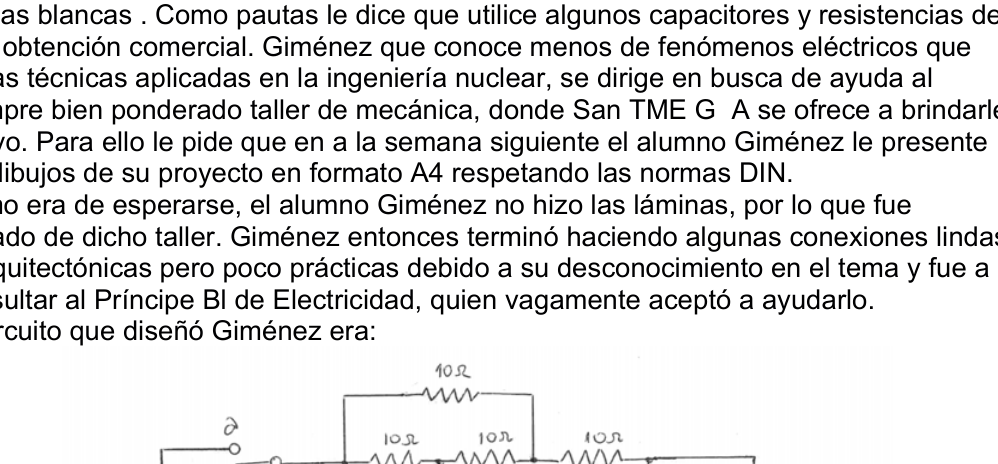
Topic: Circuits Metodi: Kirchhoff’s Laws, Equivalent Circuit Reduction Competenze: Physical Reasoning Objects: Capacitor, Resistor, Battery, Switch Fonte: Testo (PDF) — p.3
RC Circuit Capacitore Resistor Network
PT107. San Michele di Tucumán. Verde. Il progetto capchero. Un allievo dell’Istituto Tecnico, dell’ultimo corso di orientamento Construzioni, riceve un compito da un gruppo di fantasmi dell’edificio. Così è così.
Lo studente Giménez si spaventa a vedere questi fantasmi, che con volti terrificanti e
- Barbe bianche . Come indicazioni, ti dice di usare alcuni capacitori e resistenze di facile accesso commerciale. Giménez che conosce meno fenomeni elettrici che La Commissione ha adottato una proposta di direttiva che prevede che le tecniche di produzione nucleare siano utilizzate in modo da consentire l’uso di tecnologie nucleari. sempre ben ponderato workshop di meccanica, dove San TME G A si offre a darti
- Sono d’accordo. Per questo, chiede che la settimana successiva lo studente Giménez lo presenti. i disegni del suo progetto in formato A4 nel rispetto delle norme DIN. Come si aspettava, lo studente Giménez non fece le foglie, quindi fu E’ stato cacciato da quel laboratorio. Gimenez ha finito per fare dei bellissimi collegamenti. e architettoniche ma poco pratiche a causa della sua ignoranza sul tema e si è andato a consultare il Principe Bl di Electricità, che vagamente ha accettato di aiutarlo. Il circuito che Giménez ha progettato era:
a) Trova un valore equivalente al sistema di resistenza che Gimenez ha armato. b) Con la chiave in posizione 1 determina il massimo corrente che può circolare
- Quando succede? Indica il senso di questa corrente. c) Nel corso di un certo periodo, il capacitore discaricato è stato completamente carica. Determinare i tempi trascorsi per il il condensatore si carica a 25%, 50%, 75% e 100%. Quali relazioni osserva in questi valori? d) Trova un’espressione del flusso I in funzione del tempo t, della resistenza R e capacità C. e) Determina i valori di I per i tempi indicati al punto C. f) Per scaricare il capacitore, spostare la chiave alla posizione 2, calcolare il tempo di scarico e corrente in quel momento.
Topic: Circuits Metodi: Kirchhoff’s Laws, Equivalent Circuit Reduction Competenze: Physical Reasoning Objects: Capacitor, Resistor, Battery, Switch Fonte: Testo (PDF) — p.3
The following information shall be provided:
PT107. St. Michael of Tucumán. Green, please. The shovel project. A student of the Technical Institute, of the last year of the orientation Constructions, He gets a task from a ghost of the establishment. That ‘s how it is .
The student Giménez is scared to see these ghosts, who with terrifying faces and white beards . As guidelines tell you to use some capacitors and resistors to The Commission has already adopted a number of proposals. Gimenez who knows less about electrical phenomena than The Commission’s proposal for a directive on the protection of the environment in the field of nuclear engineering is to be adopted by the Council. Always well-weighted mechanics workshop, where San TME G A offers to give you I’m with you. For this he asks that in the next week the student Giménez present him drawings of your project in A4 format in compliance with DIN standards. As expected, student Gimenez didn’t make the sheets, so it was I was kicked out of that workshop. Gimenez then ended up making some nice connections. And architectural but impractical because of their ignorance of the subject and went to consult the Prince Bl of Electricity, who vaguely agreed to help him. The circuit that Giménez designed was:
(a) Find a value equivalent to the resistance system Gimenez put up. (b) With the key in position 1 determine the maximum current that can flow By the circuit, when does this happen? Indicate the direction of this current. (c) At the end of a certain period of time, the capacitor which was discharged has been It’s fully charged. Determine the time elapsed for the The capacitor is charged at 25%, 50%, 75% and 100%. What relationships do you see in these values? (d) Find an expression of current I in terms of time t, of the R resistance and C capacity. (e) Determine the values of I for the times specified in point C. f) To discharge the capacitor, move the key to position 2, calculate the time The electricity is discharged and the current is current at that moment.
Topic: Circuits Metodi: Kirchhoff’s Laws, Equivalent Circuit Reduction Competenze: Physical Reasoning Objects: Capacitor, Resistor, Battery, Switch Fonte: Testo (PDF) — p.3
Billiard Ball Sliding to Rolling Friction
PT108. San Miguel de Tucumán. Verde.
La mesa de billar.
Una madrugada de sábado, el winner y su pandilla, al salir del abasto, y de haberse
ganado muchas chicas en el boliche tucumano Inside, deciden ir a comprar unos
sándwiches de milanesa. Como eran las 5 am, y no había ningún comedor abierto,
decidieron llamar al Ingeniero FRD para realizarle la consulta. Al atender éste..con voz
de enojo, les tira la posta de donde ir.
Las opciones eran ir a los alrededores de hospitales, o ir a los Billares de la avenida
Alem, donde siempre tienen la cocina funcionando.
El winner dirige entonces a su pandilla a los billares. Al llegar, dos secuaces del winner
en estado de ebriedad se ponen a analizar un partido de billar en una servilleta y
entrometiéndose ante los jugadores diciendo que tenían la solución para jugar en la
mesa.
Una bola de masa M y radio R se lanza de tal modo que se desliza sobre la mesa con
velocidad v0= 2,5 m/s. El coeficiente de rozamiento con el que lo hace es µ=0,3. El
momento de inercia es I = 2/5 MR2. Considerar g=9,81 m/s2.
a) Determine el tiempo que transcurre durante el cual la bola desliza hasta que comienza a rodar. b) Determine la distancia recorrida en la que la bola sólo desliza. c) Determine la fuerza ejercida sobre la bola por el taco, para las condiciones anteriores para el único caso en que el impacto del taco es t=0,02 s y M=0,2 kg. d) Estudiando el golpe del taco en el plano, determine en qué punto debe darse el golpe para que la bola ruede sin deslizar. e) Al caer en una tronera, la bola cae por un plano inclinado, determine la aceleración de ésta en función del ángulo del plano inclinado. f) Exprese el coeficiente de roce estático cuando la bola rueda sin deslizar en función del ángulo del plano inclinado. g) Si dejamos rodar la bola desde un plano inclinado, qué altura debe tener éste para que la bola salga de él con la velocidad v= 3,5 m/s. El Winner ebrio le quita el taco a un hombre e intenta tirar, haciendo que la bola salga fuera de la mesa. h) ¿Se conserva la energía durante el choque contra el borde de la mesa? Explique para el caso de los billares de la avenida Alem. i) Determine en función de la altura del borde de la mesa, con qué velocidad debe haber impulsado la bola el winner, para que al rodar y chocar contra éste, eventualmente salte.
Topic: Rotational Dynamics Metodi: Torque & Angular Momentum Analysis, Impulse-Momentum Theorem, Kinematic Equations Competenze: Physical Reasoning, Mathematical Modeling Objects: Ball Fonte: Testo (PDF) — p.3
Il gioco è stato giocato da un uomo che ha un’idea di un uomo.
PT108. San Michele di Tucumán. Verde. Il tavolo da biliardo. Un sabato mattina, il vincitore e la sua banda, uscendo dal banco, e se c’è stato Dopo aver vinto molte ragazze al balletto Tucumano Inside, decidono di andare a comprarne alcune Sandowiks milanesi. Come era 5 di mattina, e non c’era nessun salotto aperto, hanno deciso di chiamare l’ingegnere FRD per fargli la consultazione. Attendendo questo… con voce In collera, li tira via. Le opzioni erano andare nei dintorni degli ospedali, o andare ai Billiards Avenue.
- Almeno, dove la cucina funziona sempre. Il vincitore dirige poi la sua banda ai biliardi. Arrivati, due seguaci del vincitore. E quando si è ubriachi si mette a guardare un gioco di biliardo su un tappeto e Interrompeva i giocatori dicendo che avevano la soluzione per giocare in
- Il tavolo. Una palla di massa M e radio R viene lanciata in modo tale da scivolare sul tavolo con V0 = 2,5 m/s. Il coefficiente di rottura con cui lo fa è μ=0,3. El momento di inerzia è I = 2/5 MR2. Considerare g = 9,81 m/s2.
a) Determina il tempo che passa per il quale la palla scivola fino a quando comincia a girare. b) Determina la distanza percorsa in cui la palla scivola solo. c) Determina la forza esercitata sulla palla dal taco, per le condizioni precedenti per il solo caso in cui l’impatto del taco è t=0,02 s e M=0,2 kg. d) Studiando il colpo del taco in piano, determina a che punto deve essere dato il colpo per far girare la palla senza scivolare. e) Quando si cade su un tronco, la palla cade per un piano inclinato, determinare la L’accelerazione di questa a seconda dell’angolo del piano inclinato. f) Esprimere il coefficiente di rottura statico quando la palla ruota senza scivolare in funzione dell’angolo del piano inclinato. g) Se lasciamo girare la palla da un piano inclinato, che altezza deve avere questa. per far uscire la palla da lui alla velocità v= 3,5 m/s. Il vincitore ubriaco toglie il tacco a un uomo e cerca di tirare, facendo uscire la palla.
- fuori dal tavolo. h) L’energia viene conservata durante l’impatto contro il bordo del tavolo? Spiegate. per il caso dei biliardi dell’Avenue Alem. i) Determina, in base all’altezza del bordo del tavolo, con quale velocità devi aver spinto la palla al vincitore, così che quando ruota e colpisce contro di esso,
- E poi salti.
Topic: Rotational Dynamics Metodi: Torque & Angular Momentum Analysis, Impulse-Momentum Theorem, Kinematic Equations Competenze: Physical Reasoning, Mathematical Modeling Objects: Ball Fonte: Testo (PDF) — p.3
The following is the list of the official languages of the European Union.
PT108. St. Michael of Tucumán. Green, please. The pool table. One Saturday morning, the winner and his gang, coming out of the closet, and if there were. Won many girls at the Tucumán indoor ball, decide to go buy some. Milanese sandwiches. Since it was 5 am, and there was no dining room open, They decided to call the FRD Engineer to do the consultation. By answering this one… with voice In anger, he throws the postcard. The options were to go around hospitals, or go to the Billiards Avenue. Alem, where they always have the kitchen running. The winner then leads his gang to the pool. On arrival, two of the winner’s henchmen When drunk , they sit down to analyze a pool game on a napkin . He’s getting in the way of the players saying they had the solution to play in the game. The table. A ball of mass M and radius R is thrown in such a way that it slides over the table with The speed v0 = 2,5 m/s. The coefficient of friction with which it does this is μ=0.3. El moment of inertia is I = 2/5 MR2. Consider g = 9.81 m/s2.
(a) Determine the time elapsed during which the ball slides until It starts rolling. (b) Determine the distance travelled by the ball only sliding. (c) Determine the force exerted on the ball by the heel, for the conditions previously for the only case where the impact of the taco is t=0,02 s and M=0,2 kg. (d) By studying the taco stroke in the plane, determine at which point the taco stroke should be given. hit the ball to spin without slipping. (e) When the ball falls on a trolley, it falls on an inclined plane, determining the The acceleration of the plane is determined by the angle of inclination. (f) Express the static brake coefficient when the ball rolls without slipping in. the angle of inclination of the plane. g) If we let the ball roll from a sloping plane, what height should it be? So the ball gets out of it at v=3.5 m/s. The drunk Winner takes a man’s heel off and tries to throw, making the ball come out. out of the table. (h) Is the energy conserved during the impact against the edge of the table? Explain . For the case of the Alem Avenue billiards. i) Determine, based on the height of the table edge, how fast you should go Having pushed the ball the winner, so that when rolling and hitting this one, You might eventually jump.
Topic: Rotational Dynamics Metodi: Torque & Angular Momentum Analysis, Impulse-Momentum Theorem, Kinematic Equations Competenze: Physical Reasoning, Mathematical Modeling Objects: Ball Fonte: Testo (PDF) — p.3
Spring-Launched Body Multi-Friction Looping
PT109. Monteros, Tucumán. Azul.
El cuerpo de masa m = 10 kg , comprime un resorte 1 metro, y al soltarlo, sigue el
camino con zonas de rozamientos variables, para caer en un tanque con agua.
El trayecto AB es horizontal, con µAB = 0,2; luego asciende por el plano BC con
µBC = 0,1 , para ejecutar el tiro oblicuo sorteando el valle y caer suavemente sobre el
plano descendente DE , µDE = 0,25 , para llegar al tramo horizontal EF , muy mal
pulido, con µEF = 0,4 ; que luego de recorrerlo, la velocidad que tiene el cuerpo en el
punto F, es la mínima necesaria para efectuar el “looping” sin caerse. La superficie del
“looping” es lo suficientemente pulida como para despreciar el rozamiento.
El tramo FG tiene µFG = 0, 075.
Calcular:
- Velocidad total en el punto D.
- K del resorte.
- Velocidad en el punto superior del looping.
- Energía mecánica en el punto superior del looping.
- F máx de compresión aplicada al resorte.
- Distancia d a la pared del tanque.
- Inclinación con que el cuerpo impacta contra el agua.
- Calor total producido por el rozamiento.-
Topic: Conservation of Energy, Newtonian Mechanics Metodi: Energy Conservation Method, Kinematic Equations, Hooke’s Law Competenze: Physical Reasoning, Mathematical Modeling Objects: Spring, Block, Container Fonte: Testo (PDF) — p.3
Spring-Launched Body Multi-Friction Looping
PT109. Monteros, Tucumán. Blu. Il corpo di massa m = 10 kg, compresse un’uscita di 1 metro, e rilasciandolo, segue il Cammina con zone di ruggine variabili, per cadere in un serbatoio di acqua. Il percorso AB è orizzontale, con μAB = 0,2; poi sale per il piano BC con μBC = 0,1 , per eseguire il tiro oblicuo tirando fuori la valle e cadendo dolcemente sul piano discendente DE , μDE = 0,25 , per arrivare alla trama orizzontale EF , molto male La velocità di velocità del corpo in punto F, è il minimo necessario per effettuare il loop senza cadere. La superficie del looping è abbastanza pulita da disprezzare il ruggine. Il tratto FG ha μFG = 0,075. Calcolare:
- Velocità totale al punto D.
- K della primavera.
- Velocità al punto superiore del looping.
- Energia meccanica al punto superiore del looping.
- F massima compressione applicata alla stazione di resorgenza.
- Distanza d al muro del serbatoio.
- Inclinazione con cui il corpo colpisce l’acqua.
- Calore totale prodotto dal fratturazione.
Topic: Conservation of Energy, Newtonian Mechanics Metodi: Energy Conservation Method, Kinematic Equations, Hooke’s Law Competenze: Physical Reasoning, Mathematical Modeling Objects: Spring, Block, Container Fonte: Testo (PDF) — p.3
The following is the list of the types of loops used:
PT109. Monteros, Tucumán. What is it? Blue, please. The mass body m = 10 kg, compresses a spring 1 meter, and when released, follows the I’m going to have to go through different areas of rubbing, to fall into a tank with water. The path AB is horizontal, with μAB = 0.2; then ascends the plane BC with μBC = 0.1 , to execute the oblique shot by drawing the valley and falling gently over the valley . The downward plane of DE , μDE = 0.25 , to reach the horizontal EF section , very bad polished, with μEF = 0.4; that after running through it, the speed that the body has at the F point is the minimum necessary to perform the loop without falling. The surface of the looping is polished enough to disdain the grating. The FG tranche has μFG = 0.075. Calculation:
- Total speed at point D.
- K of the spring.
- Speed at the top of the looping.
- Mechanical energy at the top of the looping.
- F maximum compression applied to the spring.
- Distance d to the wall of the tank.
- The inclination with which the body impacts water.
- Total heat produced by the grinding.
Topic: Conservation of Energy, Newtonian Mechanics Metodi: Energy Conservation Method, Kinematic Equations, Hooke’s Law Competenze: Physical Reasoning, Mathematical Modeling Objects: Spring, Block, Container Fonte: Testo (PDF) — p.3
Adiabatic Cylinder Piston Gas Heating
PT110. Monteros, Tucumán. Azul.
Un cilindro con paredes adiabáticas, cerrado por ambos extremos, se divide en dos
volúmenes por medio de un pistón sin fricción, el cual está, también, térmicamente
aislado. Inicialmente, en el lado derecho hay 4 moles del gas gA a una temperatura
tiA = 20º C y en el izquierdo, hay 12 moles del gas gB a una temperatura tiB = 40º C .
Se utiliza una resistencia eléctrica R = 20 Ω, por donde circula una corriente i = 1 A ,
para calentar el gas gA , hasta que alcanza una temperatura de 30ºC, de ese modo se
produce el desplazamiento del pistón.
Diámetro interno del cilindro Ø = 0,4 m y su longitud interna L = 1,2 m. Espesor del
pistón e = 0,1 m.
Calcular:
-
Masa del gas B si su M = 44 g
-
Volumen inicial del gas A
-
Presión inicial del gas B.
-
volumen final del gas A
-
Presión final del gas B.
-
Trabajo de expansión producido por la corriente eléctrica.
-
Tiempo que circuló la corriente para producir la expansión.
Topic: Thermodynamics Metodi: Ideal Gas Law, First Law of Thermodynamics, Energy Conservation Method Competenze: Physical Reasoning, Mathematical Modeling Objects: Gas, Piston, Cylinder Fonte: Testo (PDF) — p.3
Adiabatic Cylinder Piston Gas Heating
PT110. Monteros, Tucumán. Blu. Un cilindro con pareti adiabatiche, chiuso da entrambe le estremità, si divide in due. Volumi utilizzati da un pistone senza frizione, che è, anche, termicamente isolato. Inizialmente, sul lato destro ci sono 4 molli di gas gA a una temperatura. tiA = 20°C e sulla sinistra, ci sono 12 molli di gas gB a una temperatura tiB = 40°C. Si utilizza una resistenza elettrica R = 20 Ω, attraverso la quale si circola un corrente i = 1 A , per riscaldare il gas gA fino a raggiungere una temperatura di 30°C, in tal modo si produce lo spostamento del pistone. Il diametro interno del cilindro Ø = 0,4 m e la sua lunghezza interna L = 1,2 m. Spessore del Piston e = 0,1 m. Calcolare:
-
Massa del gas B se il suo M = 44 g
-
Volume iniziale del gas A
-
Presione iniziale del gas B.
-
Volume finale del gas A
-
Presione finale del gas B.
-
Lavorato di espansione prodotta dal corrente elettrica.
-
Tempo che ha circolato la corrente per produrre l’espansione.
Topic: Thermodynamics Metodi: Ideal Gas Law, First Law of Thermodynamics, Energy Conservation Method Competenze: Physical Reasoning, Mathematical Modeling Objects: Gas, Piston, Cylinder Fonte: Testo (PDF) — p.3
The following table shows the manufacturer’s performance performance.
PT110. Monteros, Tucumán. What is it? Blue, please. A cylinder with adiabatic walls, closed at both ends, is divided into two. Volumes by means of a frictionless piston, which is, also, thermal isolated. Initially, on the right side there are 4 moles of gA gas at a temperature. tiA = 20°C and on the left, there are 12 moles of gB gas at a temperature tiB = 40°C. An electrical resistance R = 20 Ω is used, where a current i = 1 A circulates, The gas is heated to a temperature of 30°C, thus The piston is displaced. The internal diameter of the cylinder Ø = 0,4 m and its internal length L = 1,2 m. The thickness of the piston e = 0,1 m. Calculation:
-
Mass of gas B if its M = 44 g
-
The initial volume of gas A
-
Initial pressure of the B gas.
-
The final volume of gas A
-
Final pressure of the B gas.
-
Expansion work produced by electric current.
-
Time that the current circulated to produce the expansion.
Topic: Thermodynamics Metodi: Ideal Gas Law, First Law of Thermodynamics, Energy Conservation Method Competenze: Physical Reasoning, Mathematical Modeling Objects: Gas, Piston, Cylinder Fonte: Testo (PDF) — p.3
Two Spheres String Buoyancy Equilibrium
PT111. Monteros, Tucumán. Azul. Se tiene dos esferas de igual volumen ( V = 50 cm3 ) unidas por una cuerda delgada, de masa despreciable ; se las introduce en un recipiente con agua. Una de las esferas queda totalmente sumergida, ya que tiene una masa cuatro veces mayor que la que flota en la superficie, sumergida a medias en el agua. Se pide :
- Diagrama con todas las fuerzas que actúan en cada cuerpo.
- Calcular la densidad de la esfera superior.
- Calcular la tensión de la cuerda. Suponiendo que ambas esferas unidas por la cuerda, se introducen en un recipiente con aceite, calcular:
- El volumen sumergido de la esfera superior.
- La tensión de la cuerda.
Topic: Fluid Mechanics Metodi: Hydrostatic Equilibrium, Free-Body Diagram Competenze: Physical Reasoning, Mathematical Modeling Objects: Sphere, String, Container Fonte: Testo (PDF) — p.3
Two Spheres String Buoyancy Equilibrium
PT111. Monteros, Tucumán. Blu. Si hanno due sfere di uguale volume (V = 50 cm3) unite da una corda sottile, di massa scarsa; si inseriscono in un recipiente con acqua. Una delle sfere è completamente immersa, poiché ha una massa quattro volte superiore. più grande di quella che galleggia sulla superficie, immersa a metà nell’acqua. Si chiede:
- Diagrama con tutte le forze che agiscono in ogni corpo.
- Calcolare la densità della sfera superiore.
- Calcolare la tensione della corda. Supponiamo che entrambe le sfere, unite dalla corda, siano inserite in un recipiente. con olio, calcolare:
- Il volume immerso della sfera superiore.
- La tensione della corda.
Topic: Fluid Mechanics Metodi: Hydrostatic Equilibrium, Free-Body Diagram Competenze: Physical Reasoning, Mathematical Modeling Objects: Sphere, String, Container Fonte: Testo (PDF) — p.3
The following is the list of the main components of the manufacturer’s technical documentation:
PT111. Monteros, Tucumán. What is it? Blue, please. Two spheres of equal volume (V = 50 cm3) are joined by a thin rope, of a despicable mass; they are placed in a container with water. One of the spheres is completely submerged, as it has a mass four times larger than that floating on the surface, half-submerged in water. It is asked:
- It’s a diagram of all the forces acting on each body.
- Calculate the density of the upper sphere.
- Calculate the tension of the rope. Assuming both spheres are connected by the rope, they are introduced into a container with oil, calculate:
- The submerged volume of the upper sphere.
- The tension of the rope.
Topic: Fluid Mechanics Metodi: Hydrostatic Equilibrium, Free-Body Diagram Competenze: Physical Reasoning, Mathematical Modeling Objects: Sphere, String, Container Fonte: Testo (PDF) — p.3
Spacecraft Launch Moon Orbital Mechanics
PT112. Ciudad de Salta. Azul.
Las vicisitudes del Sr. Cliff en Maelstrom II de A. Clarke.
En un genial cuento de A .Clarke el protagonista Cliff Leyland está condenado a la
muerte por las leyes de la naturaleza en un intento de despegar de la Luna en su nave
espacial.
Vamos al cuento
El altavoz de la cabina anuncio : “T más cinco segundos “” velocidad a 8,94 X 10⁴ m/s,
apenas podía creerlo. Esa velocidad en cinco segundos desde una posición en
reposo y aún faltaban siete segundos, mientras los generadores vomitaban
violentamente sus chorros de fuerza en el lanzador. Cliff guiaba esa centella por la faz
de la luna, pero a los siete segundos la centella vaciló.
Aún protegido por esa especie de seno materno que lo constituía su nave pudo notar
que había ocurrido algo. Ya la habían advertido que los doce primeros segundos
serían muy difíciles y la cápsula alcanzaría una gran aceleración al recorrer el carril de
1,61 X 10⁴ m , del que saldría disparado para alejarse de la Luna.
Una voz del espacio exterior dice:
Hola Cliff. Hemos descubierto lo que ha sucedido. Los interruptores del circuito se han
disparado al atravesar el sector siete de la pista. Tu velocidad de despegue se ha
reducido a 3,20 X 10² m/s . De modo que regresaras luego de unas cuantas horas,
.pero no te preocupes tus propulsores de corrección de rumbo pueden situarse en una
órbita estable. Te avisaremos cuándo debas encenderlos.
Claro está que nuestro personaje entró en pánico al no tener la velocidad adecuada no
podía escapar a la atracción gravitatoria lunar y junto con su nave se convertirían en
un satélite de la luna tal como lo indica la figura 1.
Un momento después nuestro personaje escucha:
“Leyland, creemos haber encontrado una solución. Es una posibilidad muy remota
pero es la única que existe para Ud., una vez en el apogeo, la capsula no irá tan
rápidamente y no necesitará más que dar un salto para cambiar de orbita. Lo que
permitirá que se salve si la nave se estrella con un accidente geográfico antes de
llegar al punto de iniciar la travesía
Datos:
G= 6,67 X 10⁻¹¹ N. m2 kg-2
ML=masa luna = 7,33 X 10²² kg
RL= radio luna = 1,7 X 10⁶ m
Además:
Tercera Ley de Kepler
= k donde k =
a-En el carril de lanzamiento
1-¿Qué aceleración le imprimió para alcanzar una velocidad de 8,94 X 10² m/s en
cinco segundos?
2-¿Qué velocidad hubiera alcanzado la cápsula si no hubiera habido fallos, teniendo
en cuenta que el carril de lanzamiento tiene una longitud de 1,61 x 10 4 m/s
3-¿Cuánto tiempo debería haber permanecido en el carril de lanzamiento?
4-Como la velocidad se redujo a 3,20 X 10² m/s ¿Cuál ha sido la velocidad de
despegue alcanzada por la capsula?
5-¿Cuánto tiempo duró el fallo de los motores de impulsión?
6- ¿Cuánto tiempo real permaneció la nave en el carril?
b-La trayectoria de la cápsula
1-¿Cuál será la velocidad en el momento del salto en el apogeo?
2-¿Cuánto tiempo emplearía el sistema en volver al punto de partida?
c-El salto de Cliff 1-¿Tiene alguna influencia el salto de Cliff en la trayectoria de la capsula? Justifique con los cálculos correspondientes. Justo antes de llegar al final de la travesía hay una montaña de 3,6 x 10³ m de la superficie lunar. 2-¿Cuáles serían los valores de la velocidad y la distancia al centro de la Luna en el perigeo de la nueva órbita que va describiendo Cliff en solitario? ¿Chocará con la montaña? LUNA Órbita astronauta Órbita nave Rl h Ra LUN c b a RL Figura 1. Trayectoria que describiría el sistema al no alcanzarse la velocidad de escape.
representa el apogeo lunar, la distancia del apogeo al centro de la Luna y , la altura en el apogeo. Figura 2. El sistema describe una elipse con el centro de la Luna en uno de sus focos. es el semieje mayor, es el menor y la distancia entre el centro de la Luna y el punto de intersección de los ejes. Figura 3. La trayectoria de Cliff es exterior a la de la nave. Ambas, sin embargo, tienen un punto en común: el apogeo, lugar donde se produjo el salto.
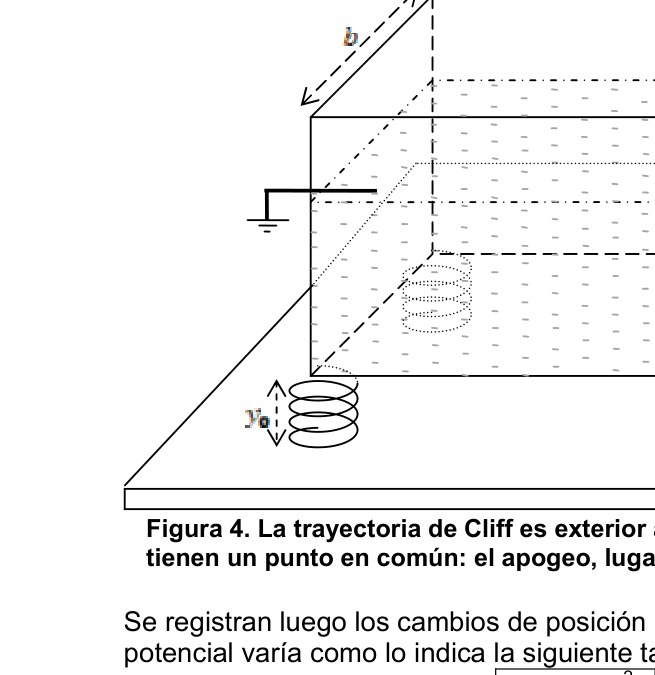
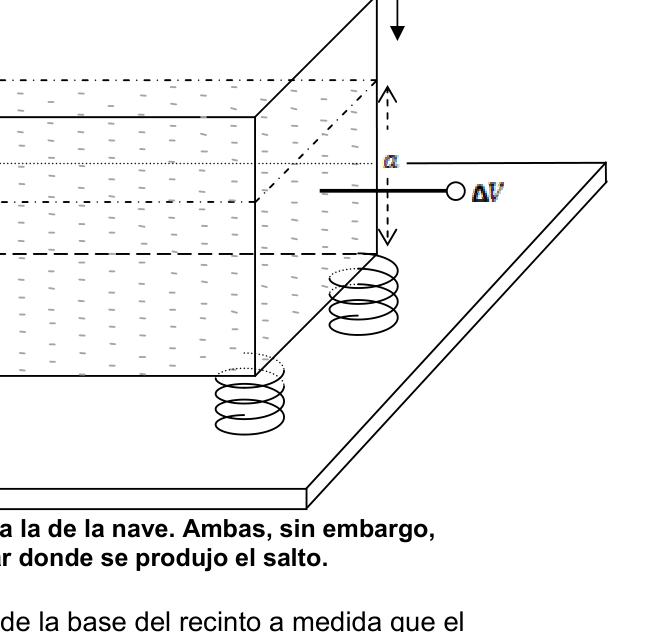
Topic: Gravitation, Newtonian Mechanics Metodi: Kinematic Equations, Newton’s Law of Gravitation, Kepler’s Laws Competenze: Physical Reasoning, Mathematical Modeling Objects: Satellite Fonte: Testo (PDF) — p.3
La NASA ha lanciato un’astronave, la NASA ha lanciato un’astronave, la NASA ha lanciato un’astronave, la NASA ha lanciato un’astronave, la NASA ha lanciato un’astronave, la NASA ha lanciato un’astronave, la NASA ha lanciato un’astronave, la NASA ha lanciato un’astronave, la NASA ha lanciato un’astronave, la NASA ha lanciato un’astronave, la NASA ha lanciato un’astronave e la NASA ha lanciato un’astronave.
PT112. Città di Salta. Blu. Le vicissitudini del signor Cliff in Maelstrom II di A. Clarke. È tutto qui. In un grande racconto di A.Clarke il protagonista Cliff Leyland è condannato alla morte. Morto per legge della natura nel tentativo di decollare dalla luna sulla sua nave. spaziale. Andiamo alla storia. La portavoce della cabina annuncia: T più cinque secondi velocità a 8,94 X 10⁴ m/s, Non ci credevo. Questa velocità in cinque secondi da una posizione in Riposo e ancora sette secondi, mentre i generatori vomitavano. violentemente i suoi jet di forza sul lanciatore. Cliff guidava quella scintilla per la faccia . La luna, ma a sette secondi la centella si è oscillata. Ancora protetto da quella specie di seno materno che lo costituisce la sua nave potrebbe notare che qualcosa fosse successo. Le avverto che i primi dodici secondi sarebbero molto difficili e la capsula raggiungerebbe un’accelerazione enorme nel percorso del binario di 1,61 x 10⁴ metri, da cui uscirebbe sparato per allontanarsi dalla Luna. Una voce dallo spazio di fuori dice: Ciao Cliff. Abbiamo scoperto cosa è successo. I interruttori del circuito sono spariti. Fu sparato mentre attraversava il settorino sette della pista. La tua velocità di decollo è finita ridotto a 3,20 x 10² m/s . Quindi tornerai dopo qualche ora, .ma non preoccuparti .I tuoi propulsori di correzione di rotta possono essere posizionati in una Orbita stabile. Ti avviseremo quando devi accenderli. Naturalmente il nostro personaggio è andato in panico non avendo la velocità giusta. Potrebbe sfuggire all’attrazione gravitazionale lunare e insieme alla sua nave diventerebbero un satellite lunare come indicato nella figura 1. Un momento dopo il nostro personaggio sente:
- Leyland, crediamo di aver trovato una soluzione. E ’ una possibilità molto remota . Ma è l’unica che esiste per te, una volta al culmine, la capsula non andrà così. velocemente e non avrà bisogno di altro che un salto per cambiare orbita. Che cosa? Per salvare la nave , se si schianta con un incidente geografico prima di Arrivare al punto di iniziare il viaggio Datati: G= 6,67 X 10⁻¹¹ N. m2 kg-2
ML=massa lunare = 7,33 X 10²² kg RL= radio luna = 1,7 x 10⁶ m Inoltre: La Terza Legge di Kepler = k dove k =
a-In pista di lancio 1-Che velocità ha impresso per raggiungere una velocità di 8,94 x 10² m/s in Cinque secondi? 2- Che velocità avrebbe raggiunto la capsula se non ci fossero stati errori, avendo considerando che la pista di lancio ha una lunghezza di 1,61 x 10 4 m/s 3- Quanto tempo avrebbe dovuto rimanere nella pista di lancio? 4-Come la velocità è stata ridotta a 3,20 x 10² m/s
- Il decollo raggiunto dalla capsula? 5- Quanto tempo è durata la mancanza dei motori di impulso? 6- Quanto tempo reale è rimasta la nave in corsia? b-Il percorso della capsula 1-Qual sarà la velocità al momento del salto in cima? 2- Quanto tempo ci vorrebbe per il sistema per tornare al punto di partenza?
C-Il salto di Cliff 1-Ha qualche influenza il salto di Cliff?
- sul percorso della capsula? Giustifica con i relativi calcoli. Giusto prima di arrivare alla fine del viaggio. C’è una montagna di 3,6 x 10³ metri dalla superficie lunare. 2- Quali sarebbero i valori della velocità e distanza al centro della Luna nel perigeo della nuova orbita Che descrive Cliff da solo? Colpiscerà la montagna? LUNA Orbita astronauta Orbita della nave Rl h Ra LUN c b a RL Figura
Tracciato che descriverebbe il sistema al non raggiungersi la velocità de
- Escapare.
Rappresenta el l’apoggio lunare, Distanza dell’apoggio al centro della Luna y , l’altezza al culmine. Figura 2 Il sistema descrive una Elisse con il centro della Luna in uno dei suoi foci. E ’ il semicampo maggiore, è il più piccolo e la Distanza tra il centro della Luna e il punto di intersezione degli assi. Figura 3 Il percorso di Cliff è esterno a quello della nave. Entrambi, tuttavia, hanno un punto in comune: il culmine, luogo in cui è avvenuto il salto.
Topic: Gravitation, Newtonian Mechanics Metodi: Kinematic Equations, Newton’s Law of Gravitation, Kepler’s Laws Competenze: Physical Reasoning, Mathematical Modeling Objects: Satellite Fonte: Testo (PDF) — p.3
The first is the Spacecraft Launch Moon Orbital Mechanics.
PT112. Salt City. Blue, please. The vicissitudes of Mr. Cliff on Maelstrom II from A. Clarke, please. In a great A.C. Clarke story , the protagonist Cliff Leyland is doomed to death . Death by the laws of nature in an attempt to take off from the moon on his ship. space. Let ‘s get to the story . The cabin speaker announcement: T plus five seconds speed at 8.94 X 10⁴ m/s, I could barely believe it. That speed in five seconds from a position at I rested and there were still seven seconds left, while the generators were vomiting. violently his force jets into the thrower. Cliff was guiding that spark through his face . The moon, but at seven seconds, the spark faltered. Still protected by that kind of mother ‘s breast that constituted it , his ship could see . I thought something had happened. She had already been warned that the first twelve seconds The capsule would reach a great acceleration as it traveled through the lane of the 1.61 x 10⁴ m, from which he would be shot out to get away from the moon. A voice from outer space says: Hey, Cliff. We’ve found out what happened. Circuit switches are off. Shot while crossing section seven of the runway. Your takeoff speed is gone . reduced to 3.20 x 10² m/s . So you’ll be back in a few hours, .but don’t worry your directional correction thrusters can be located in a . orbit is stable. We’ll let you know when you should turn them on. Of course our character panicked not having the proper speed . They could escape the gravitational pull of the moon and together with their ship would become a moon satellite as shown in Figure 1. A moment later our character hears: -Leyland, we think we’ve found a solution. It ‘s a very remote possibility . But it’s the only one that exists for you, once at its peak, the capsule won’t go that far. quickly and will need only to make a jump to change orbit. What ? It will save you if the ship crashes in a geographic accident before to get to the point of beginning the journey The data: G= 6,67 X 10⁻¹¹ N. m2 kg-2
ML=moon mass = 7.33 X 10²² kg RL = moon radius = 1.7 x 10⁶ m In addition: Kepler ‘s third law . = k where k =
a-In the launch lane 1-What acceleration imprinted it to reach a speed of 8.94 x 10² m/s in Five seconds? 2- What speed would the capsule have reached if there had been no failures, having Whereas the launch track has a length of 1,61 x 10 4 m/s 3-How long should he have remained in the launch lane? 4-How did the speed drop to 3.20 x 10² m/s? Takeoff reached by the capsule? 5-How long did the thrust engine failure last? 6- How long did the ship actually stay in the lane? b-The trajectory of the capsule 1-What will be the speed at the time of the high jump? 2-How long would it take the system to get back to the starting point?
C-The Cliff jump Does Cliff’s jump have any influence? In the trajectory of the capsule? Justify it . with the corresponding calculations. Just before we get to the end of the crossing . There ‘s a mountain . the lunar surface. 2-What would be the values of the speed and distance to the centre of the Moon in the perigee of the new orbit What’s Cliff doing alone? Will it hit the mountain? The Moon Orbiting I ‘m an astronaut . Orbiting ship Rl h Ra The Moon c b a RL Figure 1. Trajectory which I would describe the system as not reaching out la speed de Get out of here.
It represents el Moon peak, the distance The peak at the center of the Moon y , the height at its peak. Figure two. The system describes a Ellipse with the center of the Moon at One of his focuses. It ‘s the halfway point . major, It ‘s the smallest and la The distance between the center of the Moon and the intersection point of the axles. Figure 3 is shown below. Cliff’s trajectory is outside the range of the ship. Both, however, have a point in Common: the height, the place where the jump occurred.
Topic: Gravitation, Newtonian Mechanics Metodi: Kinematic Equations, Newton’s Law of Gravitation, Kepler’s Laws Competenze: Physical Reasoning, Mathematical Modeling Objects: Satellite Fonte: Testo (PDF) — p.3
Electrolyte Magnetic Force Spring Compression
PT113. Ciudad de Salta. Azul. Los olímpicos visitan un laboratorio de magnetismo. Un investigador necesita realizar la medición de la conductividad de una sustancia electrolítica de masa que se encuentra ubicada en un recinto metálico de masa
y de orientado en la dirección NE. En los cuatro extremos inferiores se encuentran ubicados pequeños resortes que hacen de apoyo al recinto, sirviendo de vínculo entre el recipiente y la superficie donde este se encuentra alojado. La altura del resorte es . Al aplicar una diferencia de potencial en las paredes opuestas (ver figura) se observa un leve descenso del recipiente a medida de que el potencial va aumentando.
Se registran luego los cambios de posición de la base del recinto a medida que el potencial varía como lo indica la siguiente tabla: Y(m)X10-2 ∆V(Voltio) 4,9 0 4,8 100 4,7 200 4,6 300 4,5 400
1-Graficar los datos obtenidos y encontrar una relación funcional entre ellos. 2-Explicar a qué se debe el descenso del recipiente y la compresión del resorte. 3-Tome el sistema “sustancia electrolítica” e identifique las fuerzas que sobre el actúa, indicando la naturaleza de cada una. Realizar el diagrama de fuerzas correspondiente. 4-Tome el sistema “ base del recinto” y repita lo solicitado en el diagrama anterior. 5-A partir de los puntos anteriores, encontrar una relación entre la coordenada “y” y el voltaje aplicado (∆V), involucrando todos los parámetros físicos asociados a los fenómenos que se presentan en el hecho bajo observación. 6-Con la relación funcional obtenida en el punto 1 y lo obtenido en el punto 5 calcular los valores de la conductividad y la constante de los resortes que soportan el recinto.
Figura 4. La trayectoria de Cliff es exterior a la de la nave. Ambas, sin embargo, tienen un punto en común: el apogeo, lugar donde se produjo el salto.
Luego de realizar esta experiencia el recinto que contiene la sustancia electrolítica se
lo orienta en la dirección NS y se lo somete a un intenso campo magnético B en
dirección hacia abajo, observándose que la sustancia alcanza un desnivel ∆h.
7-Dibujar el desnivel en el recinto y calcularlo. En términos de los parámetros físicos
que caracterizan el fenómeno.
Datos:
Masa sustancia electrolítica-Ms=10kg
Masa del recinto metálico-m= 5 kg
g = 10 m/seg2
Campo Magnético terrestre Bt=3,46 X 10⁻⁵ T
Altura del inicial del resorte: yo= 5 cm
Largo del recinto b=60 cm
Altura vertical de sustancia electrolítica a=20 cm
Ancho c= 30 cm
Topic: Electromagnetism Metodi: Lorentz Force Analysis, Experimental Data Analysis, Graph Linearization Competenze: Physical Reasoning, Experimental Data Analysis Objects: Spring, Coil Fonte: Testo (PDF) — p.3
Electrolyte Magnetic Force Spring Compression
PT113. Città di Salta. Blu. Gli olimpici visitano un laboratorio di magnetismo. Un ricercatore deve effettuare la misurazione della conductività. di una sostanza elettrolitico di massa che si trova in un recinto metallico di massa
e di orientamento verso il sud. Le quattro estremità inferiori sono situate in piccole sorgenti che La struttura è stata costruita in modo da permettere al recipiente di essere utilizzato come supporto per il recinto, servendo di legame tra il recipiente e la superficie dove Questo è alloggiato. L’altezza della primavera è . Applicando una differenza di potenziale Le pareti opposte (vedi figura) si osserva un lieve calo del contenitore a mano a mano che il potenziale aumenta.
I cambiamenti di posizione della base del recinto vengono quindi registrati a seconda che il Potenziale variabile come indicato nella tabella seguente: Y(m)X10-2 ∆V(Voltio) 4,9 0 4,8 100 4,7 200 4,6 300 4,5 400
1-Graficare i dati ottenuti e trovare un rapporto funzionale tra di loro. 2-Esplorare la causa della discesa del recipiente e della compressione della scarica. 3-Prenditi il sistema sostanza elettrolitica e identifica le forze che agiscono su di esso, Indicando la natura di ciascuna. Realizzare il diagramma delle forze corrispondente. 4-Prendete il sistema base del recinto e ripetete ciò che è stato richiesto nel diagramma precedente. 5-Sulla base dei punti precedenti, trovare un rapporto tra la coordinata y e la voltage applicato (∆V), che coinvolge tutti i parametri fisici associati ai I fenomeni che si presentano nel fatto sotto osservazione. 6-Ricoltare il rapporto funzionale ottenuto dal punto 1 al punto 5. i valori di conduzione e di costanza delle sorgenti che supportano l’area.
Figura 4 Il percorso di Cliff è all’esterno di quello della nave. Entrambi, tuttavia, Hanno un punto in comune: l’apoggio, il luogo in cui è avvenuto il salto.
Dopo aver effettuato questa esperienza l’ambiente contenente la sostanza elettrolitica si è Lo orienta nella direzione NS e lo sommette ad un intenso campo magnetico B in direzione verso il basso, osservando che la sostanza raggiunge un svantaggio ∆h. 7-Disegnare il livello di squilibrio in campo e calcolare. In termini di parametri fisici che caratterizzano il fenomeno. Datati: Massa di sostanza elettrolitica-Ms=10kg Massa del recinto metallico-m= 5 kg g = 10 m/sec2 Campo magnetico terrestre Bt=3,46 X 10⁻⁵ T Altezza dell’inizio della primavera: io= 5 cm Lunghezza del recinto b=60 cm Altezza verticale della sostanza elettrolitica a=20 cm Larghezza c= 30 cm
Topic: Electromagnetism Metodi: Lorentz Force Analysis, Experimental Data Analysis, Graph Linearization Competenze: Physical Reasoning, Experimental Data Analysis Objects: Spring, Coil Fonte: Testo (PDF) — p.3
The following table shows the results of the tests:
PT113. Salt City. Blue, please. The Olympians are visiting a magnetism lab. A researcher needs to measure conductivity. of a substance The mass electrolyte which is located in a metallic mass enclosure
and oriented in the NE direction. At the four lower ends are small springs which are located They support the enclosure, serving as a link between the container and the surface where they are used. This one’s staying. The height of the spring is . By applying a potential difference In the opposite walls (see figure) are observes a slight decrease in the container as the potential increases.
The change in position of the base of the enclosure is then recorded as the The potential varies as shown in the following table: Y(m)X10-2 The value of the underlying assets 4,9 0 4,8 100 4,7 200 4,6 300 4,5 400
1-Charting the data obtained and finding a functional relationship between them. 2-Explain the cause of the vessel’s descent and spring compression. 3-Take the system electrolytic substance and identify the forces acting on it, Indicating the nature of each. To draw up the corresponding force diagram. 4-Take the system base of the enclosure and repeat what was requested in the diagram above. 5-From the above points, find a relationship between the coordinate y and the The voltage applied (∆V), involving all physical parameters associated with the The Commission has not yet taken any further action. 6-By the functional ratio obtained in point 1 and the result obtained in point 5 calculate the values of the conductivity and the constant of the springs supporting the enclosure.
Figure 4 is shown. Cliff’s trajectory is outside the ship’s. Both, however, They have one thing in common: the climax, the place where the jump happened.
After this experiment the compound containing the electrolytic substance is It directs it in the NS direction and subjectes it to an intense magnetic field B in direction downwards, observing that the substance reaches a ∆h level. 7- Draw the level gap in the premises and calculate it. In terms of physical parameters The phenomenon is characterized by the presence of a number of factors. The data: Mass of electrolytic substance-Ms=10kg The weight of the metal enclosure-m= 5 kg The following is the list of the following: Earth magnetic field Bt=3.46 X 10⁻⁵ T Height of the spring start: i= 5 cm Length of enclosure b=60 cm Vertical height of electrolytic substance a=20 cm Width c= 30 cm
Topic: Electromagnetism Metodi: Lorentz Force Analysis, Experimental Data Analysis, Graph Linearization Competenze: Physical Reasoning, Experimental Data Analysis Objects: Spring, Coil Fonte: Testo (PDF) — p.3
Sonoluminescence Bubble Compression Model
PT114. Ciudad de Salta. Azul. Un fenomeno muy particular. Cuando las ondas sonoras se propagan en un medio, un observador en un punto determinado del medio sentiria aumentos y disminuciones de presión a medida que se suceden los frentes de onda. Si tuvieramos una pequeña burbuja de gas en un medio prácticamente incompresible (como agua) la burbujita sufriria compresiones y descompresiones periódicas. Cuando la intensidad de la onda sonora es suficientemente grande pasa algo muy curioso y digno de ser visto: la burbuja emite un destello de luz. A este fenómeno se le llama sonoluminescencia. Hoy por hoy se han hecho muchos estudios pero no está del todo claro como es que sucede. Lo más llamativo es la temperatura que alcanza el gas. Se sabe que la temperatura dentro de la burbuja es muy, muy alta (del orden de 103 grados Kelvin al menos). En un estudio en particular concluyeron que la temperatura alcanzada en el nucleo de una burbuja de argón sumergida en ácido sulfúrico era de 20000 oK. Hay varios modelos propuestos para explicar este comportamiento, nosotros vamos a tratar de construir uno muy burdo y básico. ¿Qué sucede en la sonoluminescencia? Pensémoslo de la siguiente manera: • Comenzamos con la burbuja dentro del líquido incompresible. • Hacemos que la presión del medio salte a una presión controlada y que se mantendrá constante. • La burbuja se comprime, supondremos que el proceso es adiabático. • La burbuja alcanza el estado final de equilibrio bajo la presión del líquido. • La presión se cambia nuevamente al valor original y el ciclo empieza de nuevo. Tenemos una burbuja de n moles de gas en un medio líquido incompresible, inicialmente todo a presión atmosférica (P0) y temperatura ambiente (T0). La densidad del líquido es ρ. Como contamos con un laboratorio muy bien equipado usamos un dispositivo que nos permite cambiar la presión dentro del líquido de forma totalmente arbitraria. Lo programamos para que en cada ciclo la presión sea de P0 la mitad del tiempo y tenga el valor P el resto del ciclo. Hay que tomar en cuenta que no queremos que la burbuja se nos escape, tenemos que controlar la densidad promedio del gas para que éste no se hunda ni flote. Para este modelo vamos a usar un gas ficticio, el luminógeno. Los valores que vas a nesesitar están al final. Encendemos el dispositivo y el líquido adquiere una presión P; el gas se comprime a presión constante muy rápidamente. Cuando llega un estado de equilibrio su volumen es Vf y su temperatura es Tf.
- ¿Cuál debe ser la densidad final (δf) de la burbuja cuando esté comprimida, para que quede en equilibrio en el líquido?
La energía interna (U) de un gas es una magnitud asociada a la energía mecánica que poseen las partículas que lo componen. Si el gas es ideal la energía interna depende exclusivamente de la temperatura del gas. Como es muy difícil medirla muchas veces tiene más sentido trabajar con cambios en la energía interna (∆U). Para un gas ideal se cumple la relación:
(a) Donde Q es el calor intercambiado con el medio y –P∆V es el trabajo hecho sobre el gas a presión constante (como es el caso del fenómeno que estamos analizando). Como dijimos antes, pensamos la compresion como adiabática (no hay intercambio de calor). 2. Partiendo de la ecuación anterior y usando las relaciones que creas conveniente demostrar que el volumen final (Vf) que alcanza depende de la presión según:
(b)
Donde:
T0: temperatura inicial del gas.
R: constante general de los gases.
n: número de moles dentro de la burbuja.
Mm: masa molar del gas.
Cp: capacidad calórica del gas.
P0: presión inicial del gas.
Como todos los coeficientes son constantes exepto P, podemos reducir la ecuación a:
donde se aprecia la relación de proporcionalidad inversa entre el
volumen final alcanzado y la presión del líquido.
3. Calcular los valores de α, β y
con sus respectivas unidades.
4. Con la expresión anterior ¿cuál debe ser el valor de P tal que la burbuja
permanezca en equilibrio hidrostático?
5. Calcular la variación de volumen (∆V) entre el estado inicial y el estado
comprimido en equilibrio.
Datos:
Número de moles de luminógeno:
n=1
Temperatura inicial:
T0=293 oK Presión inicial:
P0=101325 N/m2
Constante de los gases ideales:
R=8.31 J/mol.oK
Masa molar del gas:
Mm=5 Kg/mol Capacidad calórica del luminógeno: Cp=10000 J/Kg.oK Número de Avogadro:
NA=6.022x10²³ mol-1
Densidad del medio líquido:
δl=500 Kg/m3
Fórmulas útiles:
Topic: Thermodynamics, Oscillations & Waves Metodi: Ideal Gas Law, First Law of Thermodynamics, Physical Modeling Competenze: Physical Reasoning, Mathematical Modeling Objects: Bubble, Gas Fonte: Testo (PDF) — p.3
Sonoluminescence Bubble Compression Model
PT114. Città di Salta. Blu. Un fenomeno molto particolare. Quando le onde sonore si diffondono in un mezzo, un osservatore in un punto La pressione del corpo si eleva e diminuisce con la crescita. Succedono i fronti d’onda. Se avessimo una piccola bolla di gas in mezzo La piccola bolla, praticamente incompressibile (come l’acqua), subisce compressioni e decompressioni periodiche. Quando l’intensità dell’onda sonora è Una cosa molto curiosa e degna di visione arriva: la bolla emette un un lampo di luce. Questo fenomeno è chiamato sonoluminescenza. Per oggi sono finiti Ho fatto molti studi, ma non è del tutto chiaro come succede. - La maggior parte . La temperatura che raggiunge il gas è sorprendente. Si sa che la temperatura all’interno di La bolla è molto, molto alta (almeno 103 gradi Kelvin). In uno studio In particolare, hanno concluso che la temperatura raggiunta nel nucleo di una bolla L’argone immerso in acido solforico era di 20000 oK. Ci sono diversi modelli. Proposte per spiegare questo comportamento, cercheremo di costruire uno molto grosso e semplice. Che succede nella sonoluminescenza? Pensateci così: • Iniziamo con la bolla all’interno del liquido incompressibile. • Facciamo saltare la pressione mediana a una pressione controllata e si resterà costante. • Se la bolla si comprime, supponiamo che il processo sia adiabatico. • La bolla raggiunge lo stato finale di equilibrio sotto la pressione del liquido. • La pressione viene ridimensionata al valore originale e il ciclo ricomincia. Abbiamo una bolla di n mole di gas in un mezzo liquido incompressibile. inizialmente tutto a pressione atmosferica (P0) e temperatura ambiente (T0). La densità del liquido è ρ. Poiché abbiamo un laboratorio ben attrezzato, usiamo un’altra. dispositivo che ci permette di cambiare la pressione all’interno del liquido in modo totale
- E’ arbitrario. Lo programmiamo in modo che in ogni ciclo la pressione sia di P0 metà di P0 tempo e il valore P per il resto del ciclo. Dobbiamo tenere presente che non vogliamo Se la bolla si esce, dobbiamo controllare la densità media del gas. affinché non affonda e non galleggi. Per questo modello useremo un gas immaginario, il luminogen. I valori che state cercando di Non c’è bisogno di loro. Accendiamo il dispositivo e il liquido acquista una pressione P; il gas viene compresso a pressione costante molto velocemente. Quando arriva uno stato di equilibrio il suo volume è Vf e la sua temperatura è Tf.
- Qual è la densità finale (δf) della bolla quando è
- per mantenere il liquido in equilibrio?
L’energia interna (U) di un gas è una magnitudine associata all’energia meccanica che possiedono le particelle che lo compongono. Se il gas è ideale l’energia interna dipende esclusivamente della temperatura del gas. Come è molto difficile misurarla molte volte È più utile lavorare con cambiamenti nell’energia interna (∆U). Per un gas ideale . si soddisfa il rapporto:
(a) Dove Q è il calore scambiato con il mezzo e P∆V è il lavoro fatto sul gas a pressione costante (come è il caso del fenomeno che stiamo analizzando). Come abbiamo detto prima, pensiamo alla compressione come adiabita (non c’è scambio di ). calore). 2. Partendo dall’equazione precedente e usando le relazioni che crei È opportuno dimostrare che il volume finale (Vf) raggiunto dipende dalla pressione secondo:
(b) Dove: T0: temperatura iniziale del gas. R: costante generale dei gas. n: numero di molli all’interno della bolla. Mm: massa mollare del gas. Cp: capacità calorica del gas. P0: pressione iniziale del gas. Poiché tutti i coefficienti sono costanti esemplato P, possiamo ridurre l’equazione a: che valuta il rapporto di proporzionalità inversa tra il volume finale raggiunto e pressione del liquido. 3. Calcolare i valori di α, β e con le rispettive unità. 4. Con l’espressione precedente, qual è il valore di P in modo tale che la bolla rimane in equilibrio idrostatico? 5. Calcolare la variazione di volume (∆V) tra stato iniziale e stato compressa in equilibrio. Datati: Numero di molli di luminogeno: n=1 Temperatura iniziale:
T0=293 oK Presione iniziale:
P0=101325 N/m2 Costante dei gas ideali: R=8,31 J/mol.oK Massa mollare del gas:
mm=5 Kg/mol Capacità calorico del luminogeno: Cp=10000 J/Kg.oK Numero di Avogadro:
NA=6.022x10²³ mol-1 Densità del liquido medio: δl=500 Kg/m3 Formulazioni utili:
Topic: Thermodynamics, Oscillations & Waves Metodi: Ideal Gas Law, First Law of Thermodynamics, Physical Modeling Competenze: Physical Reasoning, Mathematical Modeling Objects: Bubble, Gas Fonte: Testo (PDF) — p.3
The manufacturer shall provide the manufacturer with the information necessary to ensure that the manufacturer is able to use the product in a timely manner.
PT114. Salt City. Blue, please. A very particular phenomenon. When sound waves propagate through a medium, an observer at a point. The pressure of the air is increased and decreased as the air is The wavefronts are happening. If we had a small gas bubble in a medium The bubble would be almost incompressible (like water) and would be compressed. periodic decompression. When the intensity of the sound wave is Something very curious and worth seeing happens: the bubble emits a A flash of light. This phenomenon is called sonoluminescence. Today for today they ‘ve gone . I’ve done a lot of research, but it’s not entirely clear how this happens. Mostly The temperature of the gas is striking. It is known that the temperature inside The bubble is very, very high (on the order of 103 degrees Kelvin at least). In a study . In particular, they concluded that the temperature reached in the core of a bubble The amount of argon submerged in sulfuric acid was 20000 oK. There are several models proposed to explain this behavior, we’re going to try to build A very raw and basic one. What happens in the sonoluminescence? Let’s think about it this way: • Start with the bubble inside the incompressible liquid. • We cause the pressure of the medium to jump to a controlled pressure and it is It will remain constant. • The bubble is compressed, we will assume that the process is adiabatic. • The bubble reaches the final equilibrium state under the pressure of the liquid. • The pressure is changed back to the original value and the cycle starts again. We have a bubble of n moles of gas in an incompressible liquid medium. initially all at atmospheric pressure (P0) and ambient temperature (T0). The density of the liquid is ρ. As we have a well-equipped laboratory we use a A device that allows us to change the pressure inside the liquid completely. It’s arbitrary. We programmed it so that in each cycle the pressure is P0 half the pressure of the Time and have the P value for the rest of the cycle. We must take into account that we do not want to If the bubble escapes, we have to control the average density of the gas. So that it shall not sink or float. For this model, we’re going to use a fictitious gas, luminogen. The values you ‘re going to They’re at the end of the line. We turn on the device and the liquid takes on a P pressure; the gas is compressed to constant pressure very quickly. When a state of equilibrium is reached its volume is Vf and its temperature is Tf.
- What should be the final density (δf) of the bubble when it is tablet, so it stays in balance in the liquid?
The internal energy (U) of a gas is a magnitude associated with the mechanical energy that is They have the particles that make it up. If the gas is ideal the internal energy depends exclusively of the gas temperature. It ‘s so hard to measure it many times . It makes more sense to work with changes in internal energy (∆U). For an ideal gas . the following relationship is fulfilled:
(a) Where Q is the heat exchanged with the medium and P∆V is the work done on the gas at constant pressure (as is the case with the phenomenon we are analysing). As we said before, we think of compression as adiabatic (no exchange of heat). 2. Starting from the above equation and using the relationships you create It is appropriate to demonstrate that the final volume (Vf) it reaches depends on the pressure according to:
(b) Where: T0: initial temperature of the gas. A: General gas constant. n: number of moles inside the bubble. Mm: molar mass of the gas. Cp: the heat capacity of the gas. P0: initial pressure of the gas. Since all coefficients are constant except P, we can reduce the equation to: where the ratio of reverse proportionality between the The final volume and pressure of the liquid are reached. 3. Calculate the values of α, β and with their respective units. 4. With the expression above, what should be the value of P such that the bubble remains in hydrostatic equilibrium? 5. Calculate the volume variation (∆V) between the initial state and the state The tablets are balanced. The data: Number of moles of luminogen: n=1 Initial temperature:
T0=293 oK Initial pressure:
P0=101325 N/m2 Constant of ideal gases: The following is the list of the products concerned: Molar mass of the gas:
The following table shows the following: The luminous gas shall be heated to a temperature of at least 0,05 °C. Avogadro number:
The following is the list of the products concerned: Density of the liquid medium: δl=500 Kg/m3 Useful formulas:
Topic: Thermodynamics, Oscillations & Waves Metodi: Ideal Gas Law, First Law of Thermodynamics, Physical Modeling Competenze: Physical Reasoning, Mathematical Modeling Objects: Bubble, Gas Fonte: Testo (PDF) — p.3
Truck and Motorcycle Meeting Point
PT115. Ciudad de Formosa. Azul. Una camioneta sale desde Formosa a las 10 de la mañana a 60 km/h. A las 12 hs parte una motocicleta parte también desde allí a 100 km/h. suponiendo que la ruta 81 (destacada en el centro del mapa), es una recta y que ambos medios de movilidad se trasladan a la misma velocidad, determinar a) ¿A qué hora pasa por Pirané cada uno de los móviles?
b) ¿En qué punto del recorrido se encuentran?
c) ¿A qué hora?
d) Representar gráficamente la distancia
recorrida en función del tiempo.
Topic: Newtonian Mechanics Metodi: Kinematic Equations Competenze: Physical Reasoning Objects: — Fonte: Testo (PDF) — p.3
Truck and Motorcycle Meeting Point
PT115. Città di Formosa. Blu. Un furgone parte da Formosa alle 10 di oggi domani a 60 km/h. A mezzogiorno parte una . La moto parte anche da lì a 100 km/h. Supponiamo che la strada 81 (indicata al centro) La linea di riferimento è un’altra linea di riferimento. la mobilità si muove alla stessa velocità, determinare a) A che ora passa ognuno di noi per Pirano dei cellulari?
b) A che punto del percorso si trovano? c) A che ora? d) Rappresentare graficamente la distanza Il tempo di viaggio.
Topic: Newtonian Mechanics Metodi: Kinematic Equations Competenze: Physical Reasoning Objects: — Fonte: Testo (PDF) — p.3
The Commission shall adopt delegated acts in accordance with Article 21 of Regulation (EC) No 1272/2009.
PT115. The city of Formosa. Blue, please. A pickup truck leaves from Formosa at 10 a.m. It’s going to be 60 miles an hour tomorrow. At 12 o ‘clock , a The motorcycle also leaves from there at 100 km/h. Assuming that route 81 (marked in the centre The map is a straight line and the two mediums of Mobility moving at the same speed, determining (a) What time does each pass through Pirané? from cell phones?
(b) At what point of the route are they? (c) What time? (d) Graphically represent the distance The time travel.
Topic: Newtonian Mechanics Metodi: Kinematic Equations Competenze: Physical Reasoning Objects: — Fonte: Testo (PDF) — p.3
Hydraulic Lift Pascal Principle
PT116. Ciudad de Formosa. Azul. La base de un elevador hidráulico de automóviles posee un cilindro de 1.10 m de diámetro conectado a un pistón de fuerza de 15 cm de diámetro. ¿Qué fuerza deberá ejercer sobre el pistón para sostener un automóvil de 13000 N? ¿Qué presión transmite el líquido? ¿La prensa hidráulica es aplicación de que principio físico?
Topic: Fluid Mechanics Metodi: Hydrostatic Equilibrium Competenze: Physical Reasoning Objects: Piston, Cylinder Fonte: Testo (PDF) — p.3
Il principio di sicurezza è stato definito in base al principio di sicurezza.
PT116. Città di Formosa. Blu. La base di un ascensore idraulico per automobili ha un cilindro di 1.10 m di diametro collegato a un pistone di forza di 15 cm di diametro. Che forza deve avere? esercitare sul pistone per sostenere una macchina da 13000 N? Che pressione! trasmette il liquido? La stampa idraulica è applicazione di che principio fisico?
Topic: Fluid Mechanics Metodi: Hydrostatic Equilibrium Competenze: Physical Reasoning Objects: Piston, Cylinder Fonte: Testo (PDF) — p.3
The following is the list of the types of electricity generated by the electricity generated by the electricity generated by the electricity generated by the electricity generated by the electricity generated by the electricity generated by the electricity generated by the electricity generated by the electricity generated by the electricity generated by the electricity generated by the electricity generated by the electricity generated by the electricity generated by the electricity generated by the electricity generated by the electricity generated by the electricity generated by the electricity generated by the electricity generated by the electricity generated by the electricity generated by the electricity generated electricity generated by the electricity generated electricity generated by electricity generated from the electricity generated electricity generated by electricity generated electricity.
PT116. The city of Formosa. Blue, please. The base of an automotive hydraulic lift has a 1.10 m cylinder of diameter connected to a 15 cm diameter force piston. What force will it have? Exercise on the piston to hold a 13000 N car? What pressure. transmits the fluid? Hydraulic press is an application of what physical principle?
Topic: Fluid Mechanics Metodi: Hydrostatic Equilibrium Competenze: Physical Reasoning Objects: Piston, Cylinder Fonte: Testo (PDF) — p.3
Athlete on Parallel Bars Force Balance
PT117. Ciudad de Formosa. Azul.
Observar el atleta suspendido de las barras paralelas.
a) Realizar un diagrama que represente las fuerzas detectadas.
b) El peso del atleta, ¿es la resultante o la equilibrante del
sistema? Justificar.
c) Si el atleta pes 50 kgf y sus brazos forman entre sí 45 º; ¿Qué
fuerza realiza cada brazo?
Topic: Rigid Body Statics Metodi: Free-Body Diagram, Vector Decomposition Competenze: Physical Reasoning Objects: — Fonte: Testo (PDF) — p.3
Athlete on Parallel Bars Force Balance
PT117. Città di Formosa. Blu. Guardare l’atleta sospeso dalle barre parallele. a) realizzare un diagramma che rappresenti le forze rilevate. b) Il peso dell’atleta è il risultante o il bilanciante del sistema? Giustificare. c) Se l’atleta pesa 50 kgf e le sue braccia formano 45 o; La forza fa ogni braccio?
Topic: Rigid Body Statics Metodi: Free-Body Diagram, Vector Decomposition Competenze: Physical Reasoning Objects: — Fonte: Testo (PDF) — p.3
Athlete on Parallel Bars Force Balance
PT117. The city of Formosa. Blue, please. Watch the athlete hanging from the parallel bars. (a) Draw a diagram representing the forces detected. (b) The weight of the athlete is the result or the balance of the The system? Justify it. (c) If the athlete weighs 50 kgf and his arms form 45 or; force does each arm?
Topic: Rigid Body Statics Metodi: Free-Body Diagram, Vector Decomposition Competenze: Physical Reasoning Objects: — Fonte: Testo (PDF) — p.3
Heating Water in Sealed Can
PT118. San Miguel de Tucumán. Azul.
Estamos calentando un bote de conserva cerrado y lleno de agua (radio de la base
r= 5 cm h= 12,7 cm) tratando de pasar su temperatura de 20º a 90º C. El plato
calefactor más pequeño de nuestra cocina tiene justo el diámetro del bote y sus
1800 W de potencia se aprovechan por entero para el calentamiento (Supón que las
paredes están bien aisladas)
a) ¿Cual es el volumen del agua que contiene el bote? ¿Y la masa?
b) ¿Qué calor absorbe el agua?
c) ¿Cuál es el tiempo que dura el calentamiento?
d) ¿Y si hay que calentar otro bote cuyas dimensiones son justo la mitad? (Si solo
se aprovecha la energía que penetra por el fondo) ¿Hay despilfarro energético?
¿Porque?
e) Si decidieras vender agua caliente en bote ¿lo harías en botes grandes o botes
chicos? ¿Cuál es más lucrativo? Si el costo del el KWh es de $ 1,20
Topic: Thermodynamics Metodi: First Law of Thermodynamics, Dimensional Analysis Competenze: Physical Reasoning Objects: Cylinder, Gas Fonte: Testo (PDF) — p.3
Heating Water in Sealed Can
PT118. San Michele di Tucumán. Blu. Stiamo riscaldando un barattolo di conserve chiuso e pieno di acqua (radio base) r=5 cm h=12,7 cm) cercando di passare la temperatura da 20o a 90o C. Il piatto Il più piccolo riscaldatore della nostra cucina ha il diametro del vascello e il suo. La capacità di riscaldamento totale di 1800 W è utilizzata per il riscaldamento (supponiamo che le I muri sono ben isolati) a) Qual è il volume di acqua contenuto nel bote? E la massa? b) Che calore assorbe l’acqua? c) Quanto tempo dura il riscaldamento? d) E se dovesse riscaldare un’altra barca di dimensioni pari alla metà? (Se solo) (Stocca) C’è spreco di energia?
- Perché? e) Se decidessi di vendere acqua calda in barca, lo faresti in barche grandi o barche.
- Ragazzi? Qual è il più redditizio? Se il costo del KWh è di $ 1,20
Topic: Thermodynamics Metodi: First Law of Thermodynamics, Dimensional Analysis Competenze: Physical Reasoning Objects: Cylinder, Gas Fonte: Testo (PDF) — p.3
Heating Water in Sealed Can
PT118. St. Michael of Tucumán. Blue, please. We ‘re heating a sealed canister full of water . r=5 cm h=12.7 cm) trying to move its temperature from 20° to 90°C. The dish . The smallest heater in our kitchen has just the diameter of the jar and its The total heating capacity of 1800 W is used (assuming the The walls are well insulated. (a) What is the volume of water contained in the boat? What about the dough? (b) What heat does water absorb? (c) How long does heating last? (d) What if another boat is to be heated whose dimensions are just half? (If only) (Laughter) Is there any energy wasted?
- Why? - I don’t know. e) If you decided to sell hot water in a boat, would you do it in big boats or boats? What are you guys doing? Which one’s more lucrative? If the cost of the KWh is $1.20
Topic: Thermodynamics Metodi: First Law of Thermodynamics, Dimensional Analysis Competenze: Physical Reasoning Objects: Cylinder, Gas Fonte: Testo (PDF) — p.3
Blood Flow Aorta to Capillaries
PT119. San Miguel de Tucumán. Azul. La sangre es bombardeada desde el corazón y sale del mismo a través de la aorta, cuyo diámetro interior es de aproximadamente dA = 18 x 10 -3m. En un adulto que se encuentra en reposo la sangre sale con una velocidad de 0,33 m/s. La aorta se ramifica en 32 arterias principales que tienen aproximadamente el mismo valor de diámetro interior da = 4 x 10⁻³ m. Las ramas mas pequeñas son los capilares de diámetro aproximado dc = 8 x 10⁻⁶ m Densidad de la sangre 1,060 g/cm3 a) ¡Cuál es el caudal de sangre para este adulto? b) ¿Cuál es la velocidad de la sangre por cada arteria¿ c) ¿Qué señalaría un medidor de presión (Presión cinética ) si pudieras colocarlo en la aorta? ¿Y en las arterias? ¿Aumenta o disminuye?. ¿Por qué?. Exprese la Presión cinética en mmHg (los médicos la miden en esa unidad o en dmHg)
Topic: Fluid Mechanics Metodi: Continuity Equation, Bernoulli’s Equation Competenze: Physical Reasoning, Mathematical Modeling Objects: Tube Fonte: Testo (PDF) — p.3
Blood Flow Aorta to Capillaries
PT119. San Michele di Tucumán. Blu. Il sangue viene bombardato dal cuore e viene fuori dal cuore attraverso l’aorta. il cui diametro interno è di circa dA = 18 x 10 -3m. In un adulto che si Quando si trova a riposo, il sangue scende a una velocità di 0,33 m/s. L’ aorta si è La concentrazione di ammonio di ammonio di ammonio di ammonio di ammonio di ammonio di ammonio di ammonio di ammonio di ammonio di ammonio di ammonio di ammonio di ammonio di ammonio di ammonio di ammonio di ammonio di ammonio di ammonio di ammonio di ammonio di ammonio di ammonio di ammonio di ammonio di ammonio di ammonio di ammonio di ammonio di ammonio di ammonio di ammonio di ammonio di ammonio di ammonio di ammonio di ammonio di ammonio di ammonio di ammonio di ammonio di ammonio di ammonio di ammonio di ammonio di ammonio di ammonio di ammonio di ammonio di ammonio di ammonio di ammonio di ammonio di ammonio di ammonio di ammonio di ammonio di ammonio di ammonio di ammonio di ammonio di ammonio di ammonio di ammonio di ammonio di ammonio di ammonio di ammonio di ammonio di ammonio di ammonio di ammonio di ammonio di ammonio di ammonio di ammonio di ammonio di ammonio di ammonio di ammonio di ammonio di ammonio di ammonio di ammonio di ammonio di ammonio di ammonio di ammonio di ammonio di ammonio di ammonio di ammonio di ammonio di ammonio di ammonio di ammonio di ammonio di ammonio di ammonio di ammonio di ammonio di ammonio di ammonio di ammonio di ammonio di ammonio di ammonio di ammonio di ammonio di ammonio di ammonio di ammonio di ammonio di ammonio di ammonio di ammonio di ammonio di ammonio di ammonio di ammonio di ammonio di ammonio di ammonio di ammonio di ammonio di ammonio diametro interno da = 4 x 10⁻³ m. I rami più piccoli sono i capillari di diametro approssimativo dc = 8 x 10⁻⁶ m Densità del sangue: 1,060 g/cm3 a) Qual è il flusso sanguigno per quest’adulto? b) Qual è la velocità del sangue per ogni arteria? c) Cosa indicherebbe un pressurometro (pressione cinetica) se potessi posizionarlo
- nell’aorta? E nelle arterie? Aumenta o diminuisce? - Perché? Espresso la pressione cinetica in mmHg (i medici la misurano in quella unità o in dmHg)
Topic: Fluid Mechanics Metodi: Continuity Equation, Bernoulli’s Equation Competenze: Physical Reasoning, Mathematical Modeling Objects: Tube Fonte: Testo (PDF) — p.3
Blood flow to aorta to capillaries
PT119. St. Michael of Tucumán. Blue, please. Blood is pumped from the heart and out of it through the aorta. The inner diameter of the cylinder is approximately dA = 18 x 10 -3m. In an adult who is If he finds himself at rest, the blood is flowing out at a rate of 0.33 m/s. The aorta is se It branches into 32 major arteries that have approximately the same value as The internal diameter is 4 x 10⁻³ m. The smallest branches are the capillaries of the The following is the list of the following: Blood density 1.060 g/cm3 (a) What is the blood flow for this adult? (b) What is the blood speed per artery? (c) What would a pressure gauge (Kinetic Pressure) indicate if you could place it in the aorta? What about the arteries? Does it increase or decrease? Why? Why? Express Kinetic pressure in mmHg (medicine measured in that unit or in dmHg)
Topic: Fluid Mechanics Metodi: Continuity Equation, Bernoulli’s Equation Competenze: Physical Reasoning, Mathematical Modeling Objects: Tube Fonte: Testo (PDF) — p.3
Resistor Circuit Power and Resistance
PT120. San Miguel de Tucumán. Azul. En la figura se muestra un circuito de varios resistores (Se desprecia la resistencia interna del generador) a) R1 y R2 estan construidos de un alambre de cobre de la misma longitud ¿Cuál es la relación entre sus diámetros? b) ¿Cuál es la lectura de los instrumentos (1) y (2) ¿de qué instrumentos se trata? c) Si a este conjunto de resistencias se agrega otro alambre de cobre de 0,50 cm de longitud 1 mm de diámetro, en serie con R1 y R2 ¿la Corriente total por el circuito aumenta, disminuye o permanece igual? d) R3 es un calentador de inmersión ¿qué potencia disipa? Datos: R1 = 40 Ω R2 = 20 Ω R3 = 10 Ω R4 = 10 Ω ρCu = 1,7 x 10⁻⁸ Ω mm2 / m
Topic: Circuits Metodi: Kirchhoff’s Laws, Equivalent Circuit Reduction Competenze: Physical Reasoning Objects: Resistor, Wire, Battery Fonte: Testo (PDF) — p.3
Resistor Circuit Power and Resistance
PT120. San Michele di Tucumán. Blu. La figura mostra un circuito di resistori diversi (La resistenza è disprezzata) interno del generatore) a) R1 e R2 sono costruite con un filo di rame della stessa lunghezza? è il rapporto tra i suoi diametri? b) Quali sono le letture degli strumenti (1) e (2) quali sono gli strumenti? c) Se a questo insieme di resistenze viene aggiunto un altro filo di rame di 0,50 cm di lunghezza di 1 mm di diametro, in serie con R1 e R2 il corrente totale per il Il circuito aumenta, diminuisce o rimane uguale? D) R3 è un riscaldatore di immersione. Che potenza dissipa? Datati: R1 = 40 Ω R2 = 20 Ω R3 = 10 Ω R4 = 10 Ω ρCu = 1,7 x 10⁻⁸ Ω mm2 / m
Topic: Circuits Metodi: Kirchhoff’s Laws, Equivalent Circuit Reduction Competenze: Physical Reasoning Objects: Resistor, Wire, Battery Fonte: Testo (PDF) — p.3
The following is the list of the components of the engine:
PT120. St. Michael of Tucumán. Blue, please. The figure shows a circuit of several resistors (Resistance is neglected) internal generator) (a) R1 and R2 are constructed from a copper wire of the same length. is the ratio of its diameters? (b) What is the reading of instruments (1) and (2) which instruments are involved? (c) If another copper wire of 0,50 cm is added to this resistance set 1 mm in diameter, in series with R1 and R2 the total current by the Circuit increases, decreases or remains the same? (d) R3 is a dipping heater. What power does it dissipate? The data: R1 = 40 Ω R2 = 20 Ω R3 = 10 Ω R4 = 10 Ω The following conditions shall apply:
Topic: Circuits Metodi: Kirchhoff’s Laws, Equivalent Circuit Reduction Competenze: Physical Reasoning Objects: Resistor, Wire, Battery Fonte: Testo (PDF) — p.3
Two Children Push on Ice Momentum
PT121. Navarro, Buenos Aires. Azul. En un lago congelado hay dos niños: Juan, de 40 kg, y Fernando, de 30 kg, que están patinando. En cierto instante en que están detenidos Juan empuja a Fernando quien, debido al envión, recorre 10 m en 4 s. Suponiendo que el movimiento de Fernando es MRUV, a) ¿Con qué aceleración se mueve? b) ¿Qué fuerza se ejerció sobre Fernando? c) Con respecto a Juan, ¿qué fuerza se ejerció sobre él? ¿permanece en reposo?
Topic: Conservation of Momentum Metodi: Conservation of Momentum, Impulse-Momentum Theorem, Kinematic Equations Competenze: Physical Reasoning Objects: — Fonte: Testo (PDF) — p.3
Due bambini spingono su ghiaccio
PT121. Navarro, Buenos Aires. Blu. In un lago congelato ci sono due bambini: Juan, di 40 kg, e Fernando, di 30 kg, che sono scivolo. In un certo momento in cui sono arrestati Juan spinge Fernando che, a causa del suo spedizione, percorre 10 metri in 4 secondi. Supponendo che il movimento di Fernando sia MRUV, a) A che velocità si muove? b) Quale forza fu esercitata su Fernando? (c) In relazione a Giovanni, quale forza fu esercitata su di lui? - Rimane a riposo?
Topic: Conservation of Momentum Metodi: Conservation of Momentum, Impulse-Momentum Theorem, Kinematic Equations Competenze: Physical Reasoning Objects: — Fonte: Testo (PDF) — p.3
Two Children Push on Ice Momentum
PT121. I’m from Navarro, Buenos Aires. Blue, please. In a frozen lake there are two children: Juan, 40 kg, and Fernando, 30 kg, who are I’m going skating. At a certain moment when they are detained Juan pushes Fernando who, Because of the shipment, it’s 10 meters in 4 seconds. Assuming Fernando’s movement is MRUV, (a) What is the speed of the vehicle? (b) What force was exercised on Fernando? (c) With regard to John, what force was exercised upon him? Are you still at rest?
Topic: Conservation of Momentum Metodi: Conservation of Momentum, Impulse-Momentum Theorem, Kinematic Equations Competenze: Physical Reasoning Objects: — Fonte: Testo (PDF) — p.3
Blood Speed Aorta and Capillaries
PT122. Navarro, Buenos Aires. Azul. a) Calculen la rapidez promedio de la sangre en la arteria aorta (r = 0,012 m) si el caudal de sangre estándar es de 8.10-5 m3/s (80 cm3/s). b) Si se considera que este mismo caudal pasa luego por todos los capilares, cuya área total es de 0,06 m2, ¿cuál es la rapidez promedio de la sangre en los capilares?
Topic: Fluid Mechanics Metodi: Continuity Equation Competenze: Physical Reasoning Objects: Tube Fonte: Testo (PDF) — p.3
Blood Speed Aorta e capillari
PT122. Navarro, Buenos Aires. Blu. a) Calcolare la velocità media del sangue nell’ aorta (r = 0,012 m) se il il flusso di sangue standard è di 8,10-5 m3/s (80 cm3/s). b) Se si considera che lo stesso flusso passa poi attraverso tutti i capillari, La superficie totale è di 0,06 m2, qual è la velocità media del sangue nei capillari?
Topic: Fluid Mechanics Metodi: Continuity Equation Competenze: Physical Reasoning Objects: Tube Fonte: Testo (PDF) — p.3
Blood Speed Aorta and Capillaries
PT122. I’m from Navarro, Buenos Aires. Blue, please. (a) Calculate the average velocity of blood in the aortic artery (r = 0.012 m) if the blood pressure is standard blood flow rate is 8.10-5 m3/s (80 cm3/s). (b) If the same flow is considered to pass through all capillaries, Total area is 0.06 m2, what is the average velocity of blood in the capillaries?
Topic: Fluid Mechanics Metodi: Continuity Equation Competenze: Physical Reasoning Objects: Tube Fonte: Testo (PDF) — p.3
Bouncing Ball Impulse and Momentum
PT123. Navarro, Buenos Aires. Azul. Una pelota de 50 g de masa que cae desde una altura h1 = 1,5 m, rebota en el piso y sube hasta una altura h2 = 1 m. a) ¿Cuál es la cantidad de movimiento en el instante en que choca con el piso? b) ¿Cuál es la cantidad de movimiento cuando comienza a subir? c) ¿Qué fuerza media ejerció el piso sobre la pelota si el contacto entre el piso y la pelota duró 0,1 s?
Instancias Locales Problemas Experimentales
Topic: Conservation of Momentum Metodi: Conservation of Momentum, Impulse-Momentum Theorem, Kinematic Equations Competenze: Physical Reasoning Objects: Ball Fonte: Testo (PDF) — p.3
Bouncing Ball Impulse and Momentum
PT123. Navarro, Buenos Aires. Blu. Una palla di massa di 50 g che cade da un’altezza h1 = 1,5 m, rimbalza sul pavimento e salire fino ad un’altezza h2 = 1 m. a) Qual è la quantità di movimento che si fa quando si sbatte con il pavimento? b) Qual è la quantità di movimento quando inizia a salire? c) Qual è la forza media esercitata dal pavimento sulla palla se il contatto tra il pavimento e la palla è stato la palla durò 0,1 secondi?
I servizi locali Problemi sperimentali
Topic: Conservation of Momentum Metodi: Conservation of Momentum, Impulse-Momentum Theorem, Kinematic Equations Competenze: Physical Reasoning Objects: Ball Fonte: Testo (PDF) — p.3
The bouncing ball Impulse and Momentum
PT123. I’m from Navarro, Buenos Aires. Blue, please. A 50 g ball of mass falling from a height h1 = 1.5 m, bounces on the floor and It rises to a height of h2 = 1 m. (a) What is the amount of movement in the instant it hits the floor? (b) How much movement does it take when it starts to rise? (c) What mean force was applied by the floor on the ball if contact between the floor and the ball was Ball lasted 0.1 seconds?
Local authorities Experimental problems
Topic: Conservation of Momentum Metodi: Conservation of Momentum, Impulse-Momentum Theorem, Kinematic Equations Competenze: Physical Reasoning Objects: Ball Fonte: Testo (PDF) — p.3
Refractive Index Glass Laser Experiment
PE1. San Carlos de Bariloche, Río Negro. Azul. Elementos Se lista seguidamente los materiales y aparatos experimentales disponibles para la realización del experimento.
- Fuente de luz (láser).
- Pequeña pieza de vidrio transparente.
- Papel blanco.
- Transportador
- Escuadra.
- Calculadora científica.
Determinacion del Índice de Refracción de una pieza óptica
Consideraciones teóricas
Ley de Snell
Esta importante ley, llamada así en honor del matemático holandés Willebrord van
Roijen Snell, afirma que:
El producto del índice de refracción del primer medio y el seno del ángulo de
incidencia de un rayo es igual al producto del índice de refracción del segundo medio y
el seno del ángulo de refracción.
El rayo incidente, el rayo refractado y la normal a la superficie de separación de los
medios en el punto de incidencia están en un mismo plano.
En general, el índice de refracción de una sustancia transparente más densa es mayor que el de un material menos denso, es decir, la velocidad de la luz es menor en la sustancia de mayor densidad. Por tanto, si un rayo incide de forma oblicua sobre un medio con un índice de refracción mayor, se desviará hacia la normal, mientras que si incide sobre un medio con un índice de refracción menor, se desviará alejándose de ella. Los rayos que inciden en la dirección de la normal son reflejados y refractados en esa misma dirección.
Trabajo Experimental Se propone determinar el índice de refracción de la pieza de vidrio entregada, debiéndose incluir en el informe los siguientes ítems:
- Una descripción del procedimiento experimental.
- Tabla de los valores de las magnitudes medidas
- Valor obtenido del índice.
- Errores y sus causas.
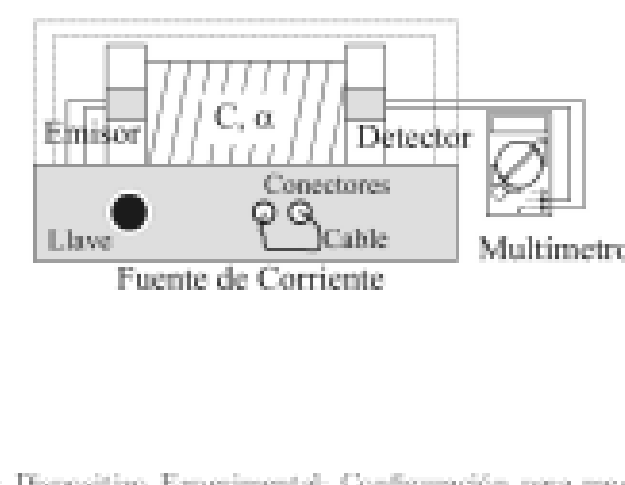
Topic: Geometric Optics Metodi: Snell’s Law, Experimental Data Analysis, Graph Linearization Competenze: Physical Reasoning, Experimental Data Analysis Objects: Prism, Screen Fonte: Testo (PDF) — p.3
La prova di laser di cristallo
PE1. San Carlo di Bariloche, Rio Negro. Blu. Elementi Le seguenti sono le materie e gli apparecchiature sperimentali disponibili per la ricerca: realizzazione dell’esperimento.
- Fonte di luce (laser).
- Piccolo pezzo di vetro trasparente.
- Papero bianco.
- Trasportatore
- Squadra.
- Calcolatrice scientifica.
Determinazione dell’indice di refrazione di un pezzo ottico Considerazioni teoriche Legge di Snell Questa importante legge, chiamata così in onore del matematico olandese Willebrord van Roijen Snell, afferma che:
Il prodotto dell’indice di refraczione del primo mezzo e del seno dell’angolo di l’incidenza di un raggio è pari al prodotto dell’indice di refraczione del secondo mezzo e il seno dell’angolo di rifrazione. Il raggio incidente, il raggio refrattato e la normale superficie di separazione dei I mezzi del punto di incidenza sono nello stesso piano.
In generale, l’indice di refraczione di una sostanza trasparente più densa è maggiore che quella di un materiale meno denso, cioè la velocità della luce è inferiore a quella di sostanza di maggiore densità. Quindi, se un raggio colpisce in modo obbvio un Se si avvia verso la normalità, il tasso di refraczione è maggiore. se incide su un mezzo con un indice di refraczione inferiore, si allontana da
- Lei. I raggi che incidono nella direzione della normalità sono riflessi e refrattati in
- Proprio quella direzione.
Lavorato sperimentale Si propone di determinare l’indice di refraczione della parte di vetro consegnata, La relazione dovrebbe includere i seguenti elementi:
- Una descrizione del procedimento sperimentale.
- Tabella dei valori delle dimensioni misurate
- Valore ottenuto dall’indice.
- Errori e loro cause.
Topic: Geometric Optics Metodi: Snell’s Law, Experimental Data Analysis, Graph Linearization Competenze: Physical Reasoning, Experimental Data Analysis Objects: Prism, Screen Fonte: Testo (PDF) — p.3
The following is a list of the most common types of laser laser laser laser.
PE1. St. Charles of Bariloche, Rio Negro. Blue, please. Elements The following is a list of the experimental materials and equipment available for the The experiment was carried out.
- The light source (laser).
- A small piece of clear glass.
- White paper.
-
- Carrier .
- Squad.
- It’s a scientific calculator.
Determination of the refractive index of an optical part Theoretical considerations Snell ‘s law . This important law, named after the Dutch mathematician Willebrord van Roijen Snell, claims that:
The product of the refractive index of the first medium and the sine of the angle of The incidence of a ray is equal to the product of the refractive index of the second medium and the breast of the angle of refraction. The incident beam, refracted beam and normal to the separation surface of the The means at the point of impact are on the same plane.
In general, the refractive index of a denser transparent substance is higher That’s the speed of light is less than that of a less dense material, which is, the speed of light is less than that of a light. higher density substance. Therefore, if a ray is oblique on a The average refractive index will be higher, deviating to normal, while the average refractive index will be higher. If the vehicle is affected by a lower refractive index, it will deviate from the She’s the one. Rays that strike in the normal direction are reflected and refracted in That same address.
Experimental work The refractive index of the delivered glass part is to be determined, The following items should be included in the report:
- A description of the experimental procedure.
- Table of values of the measured quantities
- Value obtained from the index.
- Errors and their causes.
Topic: Geometric Optics Metodi: Snell’s Law, Experimental Data Analysis, Graph Linearization Competenze: Physical Reasoning, Experimental Data Analysis Objects: Prism, Screen Fonte: Testo (PDF) — p.3
Density Unknown Substance by Graphing
PE2. Dos de Mayo, Misiones. Azul. Objetivo: Determinar la densidad a temperatura ambiente de una sustancia desconocida Materiales: Objetos de distintos volúmenes de un mismo material. 1 2 ˆ. ˆ. n n r sen i sen
i r N Rayo incidente Rayo refractado n1 Superficie de separación n2
Balanza electrónica
Probeta graduada
Escuadra
Hojas de Papel
Un recipiente con agua.
Desarrollo:
- Mide la masa de uno o varios objetos y determina su volumen utilizando el agua y la probeta (considerando los errores). Repite la operación con distintas masas.
- Con los datos obtenidos construye un gráfico cartesiano
- Mediante la pendiente de la recta determina la densidad del material con su respectivo error.
- Presenta un informe de lo realizado.
Topic: Newtonian Mechanics Metodi: Graph Linearization, Experimental Data Analysis, Error Propagation Competenze: Physical Reasoning, Experimental Data Analysis Objects: Container Fonte: Testo (PDF) — p.3
Density Unknown Substance by Graphing
PE2. Due maggio, missioni. Blu. Obiettivo: Determinare la densità a temperatura ambiente di una sostanza sconosciuta Materiali: Oggetti di diversi volumi di un stesso materiale. 1 2 ˆ. ˆ. n n r sen i sen
i r N Raggione Incidente Raggione rifractato n1 Superficie di separazione n2
Balance elettronica Provetta graduata Squadra Pagine di carta Un recipiente con acqua.
Sviluppo:
- Misura la massa di uno o più oggetti e determina il loro volume utilizzando l’acqua e il test (contiendo gli errori). Ripeti l’operazione con diverse masse.
- Con i dati ottenuti costruisce un grafico cartesiano
- L’inclinazione della retta determina la densità del materiale con il suo
- l’errore rispettivo.
- Presenta un rapporto di quanto si è svolto.
Topic: Newtonian Mechanics Metodi: Graph Linearization, Experimental Data Analysis, Error Propagation Competenze: Physical Reasoning, Experimental Data Analysis Objects: Container Fonte: Testo (PDF) — p.3
Density Unknown Substance by Graphing
PE2. May 2nd, missions. Blue, please. Objective: Determine the density at room temperature of a substance Unknown Materials: Objects of different volumes of the same material. 1 2 ˆ. ˆ. n n r Other i Other
i r N Lightning . incident Lightning . Refracted n1 Separation area n2
Electronic balance sheet Graduated test Squad . Sheets of paper A container of water.
Development of the Community:
- It measures the mass of one or more objects and determines their volume using water and the proof (taking into account errors). Repeat the operation with different masses.
- Using the data obtained , he constructs a Cartesian graph .
- The slope of the straight line determines the density of the material with its The Commission’s proposal for a regulation on the
- Report what has been done.
Topic: Newtonian Mechanics Metodi: Graph Linearization, Experimental Data Analysis, Error Propagation Competenze: Physical Reasoning, Experimental Data Analysis Objects: Container Fonte: Testo (PDF) — p.3
Surface Tension Water Measurement
PE3. Mar del Plata, Buenos Aires. Azul. Objetivo: Determinar la tensión superficial del agua
Introducción: Si alguna vez viste un insecto caminar sobre el agua, eso se debe a la
tensión superficial; también es debido a este fenómeno que un alfiler puede flotar
sobre el agua. A simple vista parece existir una membrana elástica lo suficientemente
resistente para soportar el peso de un insecto o de un alfiler.
Esta membrana se forma debido a las fuerzas intermoleculares del agua. Las
moléculas de agua están entrelazadas entre sí: extremos positivos con extremos
negativos. De esta forma en el interior del líquido las fuerzas de atracción en
promedio se anulan - Figura A - . Sin embargo, en la superficie hay una fuerza neta
hacia el interior del líquido y están bien equilibradas las componentes en el plano
horizontal, de manera que unas moléculas están “agarradas” a las otras como lo
estaría un puente colgante sujeto por cuerdas; esto produce cierta fuerza de contacto
que se opone a la rotura de la superficie. A este efecto se le llama tensión superficial
y es ésta la fuerza que hace flotar a nuestro alfiler. La tensión superficial está
presente en mayor o menor medida en todos los líquidos.
La llamada tensión superficial se representará mediante la letra γ (gamma); es la
fuerza por unidad de longitud que la membrana del liquido es capaz de ejercer sobre
un objeto puesto en contacto. Esta constante tiene las unidades N/m .
Para entender mejor esta fuerza imaginemos un alfiler o un alambre de longitud l en
equilibrio sobre una membrana de agua - Figura B - . Primero te mostraremos el
diagrama de cuerpo aislado que corresponde para este caso; las fuerzas
involucradas son el peso y la fuerza de contacto con la membrana - Figura C - .
Veamos los detalles:
-
La fuerza de contacto actúa de forma doble; es decir, una fuerza por cada cara del alfiler en contacto con la membrana. Figura A Figura B Figura C
-
Cuanto mayor sea la longitud l del alfiler, más puntos de contacto habrá con el líquido y mayor será la fuerza ejercida por la membrana. Por lo que esta fuerza depende de la longitud de la siguiente forma matemática:
Fuerza de contacto =
γ⋅l
• Si el alfiler es más pesado, la superficie se deforma modificando el ángulo α de esta fuerza, como se ve en la Figura D. Pero a diferencia de otras superficies elásticas (por ejemplo un colchón elástico) el módulo de la fuerza se mantiene constante. En el límite de la rotura de la membrana podemos asegurar que el ángulo α vale cero.
Sabemos que en el eje vertical el alambre está en equilibrio, por lo que se tiene que verificar la siguiente ecuación:
P l
α γ cos . ..2 (1)
En el experimento de hoy no utilizaremos un alambre recto sino que usaremos un aro
como el de la Figura E, con una parte de su longitud l en contacto con el agua y otra
parte X fuera del agua. El alambre utilizado para la construcción del aro tiene una
longitud total que llamaremos L.
Lo bueno de esta nueva estructura es que a
pesar de haber cambiado la forma sigue
valiendo la expresión (1) , siempre que el
alambre se encuentre en equilibrio.
El peso se puede escribir como
g
m
P
.
,
donde m es la masa y g es la gravedad.
Además, la masa puede ser reemplazada
por la definición de densidad:
V
m
.
δ
, y el
volumen del alambre es el de un cilindro:
L
r
V
.
.
2
π
, donde r es el radio del alambre y L es el largo total del alambre. Finalmente la expresión queda:
g L r l … . cos . ..2 2 π δ α γ
(2)
Resulta una relación de proporcionalidad entre el largo l del alambre en contacto con el agua y el largo total L del alambre. De esta expresión podemos calcular el valor de la tensión superficial, conociendo el valor del resto de las variables. Alguna de ellas se dan al final del práctico. Materiales: Regla rígida - Envase de plástico con agua - 5 alambres de aluminio de distintos largos
Procedimiento experimental (EN EL LABORATORIO)
a- Medir con la regla la longitud total L de los alambres entregados.
Figura E
Figura D
b- Tomar el alambre más pequeño y darle la forma aproximada de la Figura E.
Luego colocarlo con cuidado sobre el agua para que no se hunda. Si se hunde,
modificar su forma aumentando la longitud l hasta lograr que flote. Si flota en el primer
intento, comenzar a disminuir su longitud l hasta que se hunda. Se le debe dar la
forma justa para que se encuentre aproximadamente en el límite de rotura de la
membrana. Repetir este paso con todos los alambres.
c- Medir la longitud X de cada aro que haya pasado la prueba del paso b- .
Actividades (EN EL AULA) a- Construir una tabla de datos donde se puedan observar las mediciones realizadas de L y X, con su correspondiente unidad de medida y error. b- Agregar a la tabla construida anteriormente la longitud en contacto con el agua l , con su error. c- Graficar en un par de ejes cartesianos L en función de l. d- Despejar l de la expresión (2) , en función de L. e- Ajustar los datos graficados en el inciso c- con una recta de mejor ajuste y calcular su pendiente con su error. f- Calcular la tensión superficial del agua con su error. g- Analizar las fuentes de error del experimento.
Datos: Densidad del aluminio = 2700 ± 100 Kg/m3 ; Gravedad = 9,81 ± 0.01 m/s2 ; Radio del alambre = 0,50 ± 0,05 mm Puntaje:
a) 3 b) 2,5 c) 3 d) 2,5 e) 3 f) 3 g) 3
Topic: Fluid Mechanics Metodi: Experimental Data Analysis, Physical Modeling Competenze: Physical Reasoning, Experimental Data Analysis Objects: Droplet Fonte: Testo (PDF) — p.3
Surface Tension Water Measurement
PE3. Mar del Plata, Buenos Aires. Blu. Obiettivo: Determinare la tensione superficiale dell’acqua
Introduzione: Se hai mai visto un insetto camminare sull’acqua, è per via della sua presenza. La tensione superficiale è anche dovuta a questo fenomeno che un pin può fluttuare sull’acqua. A prima vista sembra che ci sia una membrana sufficientemente elastica. resistente al peso di un insetto o di un stiletto. Questa membrana si forma a causa delle forze intermolecolari dell’acqua. Le Le molecole d’acqua sono intrecciate tra loro: estremità positive con estremità. Negativi. In questo modo all’interno del liquido le forze di attrazione in
- Figura A - . Tuttavia, sulla superficie c’è una forza netta all’interno del liquido e i componenti sono ben equilibrati sul piano L’obiettivo è quello di creare un’organica che sia più o meno orizzontale, in modo che alcune molecole siano “grappate” alle altre come lo è. Sarebbe un ponte appeso soggetto a corda; questo produce una certa forza di contatto. che si oppone alla rottura della superficie. Questo effetto è chiamato tensione superficiale. ed è questa la forza che fa fluttuare il nostro pin. La tensione superficiale è più o meno presente in tutti i liquidi. La tensione superficiale denominata è rappresentata dalla lettera γ (gamma); è la forza per unità di lunghezza che la membrana del liquido è in grado di esercitare su un oggetto in contatto. Questa costante ha le unità N/m . Per comprendere meglio questa forza immaginiamo un pin o un filo di lunghezza l in equilibrio su una membrana d’ acqua - Figura B - . Prima ti mostreremo il Diagramma di corpo isolato corrispondente per questo caso; coinvolti sono il peso e la forza di contatto con la membrana - Figura C - .
Vediamo i dettagli:
-
La forza di contatto agisce in doppia maniera, cioè una forza per ogni lato del la pinza in contatto con la membrana. Figura A Figura B Figura C
-
Più è lunga la pinna, più punti di contatto con il liquido e maggiore sarà la forza esercitata dalla membrana. Per questo forza dipende dalla lunghezza della seguente forma matematica:
Forza di contatto = γ⋅l
• Se il pinno è più pesante, la superficie si deforma modificando l’angolo α di questo forza, come si vede in figura D. Ma a differenza di altre superfici elastiche (ad esempio un tappeto elastico) il modulo di forza è mantenuto costante. En el limite di rottura della membrana possiamo assicurarci che l’angolo α sia pari a zero.
Sappiamo che nell’asse verticale il filo è in equilibrio, quindi dobbiamo verificare la seguente equazione:
P l
α (c) . ..2 (1)
L’esperimento di oggi non è quello di usare un filo retto, ma un anello. Come quello di Figura E, con una parte della sua lunghezza l in contatto con l’acqua e un’altra parte X fuori dall’acqua. Il filo utilizzato per costruire l’arco ha un L’intera lunghezza che chiameremo L. La cosa buona di questa nuova struttura è che a Nonostante il cambiamento della forma continua valido l’espressione (1) , sempre che il il filo è in equilibrio. Il peso può essere scritto come g m P .
, dove m è la massa e g è la gravità. Inoltre, la massa può essere sostituita. per la definizione di densità: V m . δ
, y el Il volume del filo è quello di un cilindro: L r V . . 2 π
, dove r è il raggio di il filo e L è la lunghezza totale del filo. Infine, la frase è:
g L r l … . cos . ..2 2 π δ α γ
(2)
Si verifica un rapporto di proporzionalità tra la lunghezza del filo in contatto con l’acqua e la lunghezza totale L del filo. Da questa espressione possiamo calcolare il valore di la tensione superficiale, conoscendo il valore delle altre variabili. Alcune di esse sono state che si svolgono alla fine del corso. Materiali: Regolamento rigido - Imballaggio in plastica con acqua - 5 fili di alluminio di diverse lunghezze
Procedura sperimentale (IN LABORATorio) a- Misurare con la regola la lunghezza totale L dei fili consegnati. Figura E Figura D
b- Prendere il filo più piccolo e dargli la forma approssimativa della Figura E. Poi mettilo attentamente sull’acqua per non affondare. Se affonda, modificare la sua forma aumentando la lunghezza l fino a farla fluttuare. Se flotta sul primo Provo, inizia a ridurne la lunghezza fino a quando non affonda. - Dovrebbe essere dato il il modello giusto per essere situato circa al limite di rottura della membrana. Ripetere questo passo con tutti i fili. c- Misurare la lunghezza X di ogni anello che ha superato la prova del passo b- .
Attività (NELLA CLASSE) a- Costruire una tabella di dati in cui si possono osservare le misurazioni effettuate di L e X, con la loro unità di misura e di errore corrispondenti. b- Aggiungere alla tabella precedentemente costruita la lunghezza in contatto con l’ acqua , con il suo errore. c- Graficare su un paio di assi cartesiani L in funzione di l. d- Sbarazzare l dell’espressione (2) , in funzione di L. e- Aggiustare i dati di cui al punto c- con una linea di miglioramento e calcolare il suo pendente con il suo errore. f- Calcolare la tensione superficiale dell’acqua con il suo errore. g- Analizzare le fonti di errore dell’esperimento.
Datati: Densità dell’alluminio = 2700 ± 100 Kg/m3; Gravità = 9,81 ± 0,01 m/s2; Radio di filo = 0,50 ± 0,05 mm Punteggio:
a) 3 b) 2,5 c) 3 d) 2,5 e) 3 f) 3 g) 3
Topic: Fluid Mechanics Metodi: Experimental Data Analysis, Physical Modeling Competenze: Physical Reasoning, Experimental Data Analysis Objects: Droplet Fonte: Testo (PDF) — p.3
The following information is provided for in the Annex to Implementing Regulation (EU) No 1095/2012:
PE3. The city of Mar del Plata, Buenos Aires. Blue, please. Objective: Determine the surface water tension
Introduction: If you ever saw an insect walk on water, that’s because of the insect. surface tension; it is also due to this phenomenon that a pin can float over the water. At first glance there seems to be enough elastic membrane. resistant to the weight of an insect or a pin. This membrane is formed due to the intermolecular forces of water. The Water molecules are intertwined: positive ends with positive ends. negative ones. This way inside the liquid the forces of attraction in Average is cancelled - Figure A - . However, on the surface there is a net force The fluid is in the water and the components are well balanced in the plane. The two molecules are then placed horizontally, so that some molecules are “clinging” to each other like this. It would be a suspension bridge that is tied to a rope; this produces some contact force. It’s a surface that’s resistant to rupture. This effect is called surface tension. And this is the force that drives our pin to float. The surface tension is . It is present to a greater or lesser extent in all liquids. The so-called surface tension is represented by the letter γ (gamma); it is the force per unit length that the liquid membrane is capable of exerting on an object in contact. This constant has units of N/m . To understand this force better, imagine a pin or wire of length l in The balance over a membrane of water - Figure B - . First we ‘ll show you the The following is the case of the single body diagram corresponding to this case; The weight and contact force of the membrane are involved - Figure C - .
Let’s see the details:
-
The contact force acts in a double manner; that is, one force per side of the the pin in contact with the membrane. Figure A Figure B Figure C
-
The longer the pin length, the more points of contact there will be with the The force exerted by the membrane is greater than the force exerted by the membrane. So this force depends on the length of the following mathematical form:
Contact force = γ⋅l
• If the pin is heavier, the surface is deformed by changing the angle α of the pin. force, as shown in Figure D. But unlike other elastic surfaces (e.g. an elastic mattress) the force module is kept constant. En el The boundary of the membrane rupture can be assured that the angle α is zero.
We know that on the vertical axis the wire is in equilibrium, so you have to verify the following equation:
P l
α G. Cos . ..2 (1)
In today’s experiment we’re not going to use a straight wire, we’re going to use a ring. As in Figure E, with one part of its length l in contact with water and another X part out of the water. The wire used to build the ring has a Total length we’ll call L. The good thing about this new structure is that a Despite having changed the form it still is The following terms shall be used: The wire is in balance. Weight can be written as g m P .
, where m is mass and g is gravity. In addition, the mass can be replaced by the definition of density: V m . δ
, y el The volume of the wire is that of a cylinder: L r V . . 2 π
, where r is the radius of wire and L is the total length of the wire. Finally the expression remains:
g L r l … . body . ..2 2 π δ α γ
(2)
A proportionality ratio is found between the length of the wire in contact with water and the total length L of the wire. From this expression we can calculate the value of surface tension, knowing the value of the other variables. Some of them are. They’re at the end of the practice. Material: rigid rule - Plastic water-filled packaging - 5 aluminium wire different lengths
Experimental procedure (in the laboratory) a- Measure with the rule the total length L of the wire delivered. Figure E Figure D
b- Take the smaller wire and give it the approximate shape of Figure E. Then carefully place it over the water so it doesn’t sink. If it sinks, modify its shape by increasing the length l until it floats. If it floats on the first one I try, start shrinking its length until it sinks. You must be given the The shape is fair enough to be approximately at the break-off limit of the membrane. Repeat this step with all the wires. c- Measure the length of X of each ring that has passed the step test b- .
Activities (in the classroom) a- Build a data table where measurements can be observed of L and X, with their corresponding unit of measurement and error. b- Add to the table previously constructed the length in contact with water l , with his mistake. c- Graphing on a pair of Cartesian L axes in relation to l. d- Clear l from the expression (2) , according to L. e- Adjust the data in subparagraph c- with a better-adjusted straight line and calculate His ring with his mistake. f- Calculate the surface tension of the water with its error. g- Analyze the sources of error in the experiment.
The data: The weight of the aluminium alloy is not less than 0,01 m/s2; The value of the wire is 0,50 ± 0,05 mm Score:
a) 3 b) 2,5 c) 3 d) 2,5 e) 3 f) 3 g) 3
Topic: Fluid Mechanics Metodi: Experimental Data Analysis, Physical Modeling Competenze: Physical Reasoning, Experimental Data Analysis Objects: Droplet Fonte: Testo (PDF) — p.3
Density Regular Solid Measurement
PE4. San Fernando del Valle de Catamarca. Azul y Verde.
Cálculo del peso específico y la densidad de un cuerpo de forma regular
Objetivos:
• Calcular el volumen de un cuerpo de forma regular
• Calcular el peso específico y la densidad de un cuerpo de forma regular
Lista de materiales:
• 1 cuerpo sólido de forma regular.
• Regla, calibre.
• Dinamómetro.
• Balanza
• Soporte universal
• Nueces
Procedimiento:
1- Elija un cuerpo y calcule su volumen.
Recuerde las ecuaciones:
Donde r= radio y h= altura
2- Mida el peso del cuerpo usando el dinamómetro. 3- Mida la masa del cuerpo. 4- Calcule el peso específico del cuerpo y la densidad del mismo. Requerimientos: • Sólo podrá utilizar los útiles de escritura y calculadora no programable, además de los materiales de la prueba. • Al finalizar la experiencia deberá entregar un informe escrito con letra clara, que conste de : • Planteo del problema • Valores obtenidos en las mediciones, tablas, gráficos. • Fuentes de error • Resultado experimental de lo solicitado. • Conclusiones • Comentarios que desee realizar referidos dificultades relacionadas a la realización de la experiencia.
Topic: Newtonian Mechanics Metodi: Experimental Data Analysis, Physical Modeling Competenze: Physical Reasoning, Experimental Data Analysis Objects: Cylinder Fonte: Testo (PDF) — p.3
Density Regular Solid Measurement
PE4. San Fernando della Valle di Catamarca. Blu e verde. Calcolo del peso specifico e della densità di un corpo in modo regolare Obiettivi: • Calcolare il volume di un corpo in modo regolare • Calcolare regolarmente il peso specifico e la densità di un corpo Lista dei materiali: • 1 corpo solido in modo regolare. • regola, calibro. • Dinamometro. • Balance • Supporto universale • Nuci Procedura: 1- Scegli un corpo e calcola il suo volume. Ricordate le equazioni: Dove r= radio e h= altezza
2- Misura il peso corporeo usando il dinamometro. 3- Misura la massa del corpo. 4- Calcola il peso specifico del corpo e la densità del corpo. Requisiti: • Potrà utilizzare solo i dispositivi di scrittura e calcolatore non programmabili, oltre a i materiali della prova. • Al termine dell’esperienza, deve presentare un rapporto scritto in chiaro, che Consiste di: • La presentazione del problema • Valori ottenuti in misurazioni, tabelle, grafici. • Fonti di errore • Risultato sperimentale della richiesta. • Conclusioni • Commenti che desiderino fare riguardo alle difficoltà di cui trattasi realizzazione dell’esperienza.
Topic: Newtonian Mechanics Metodi: Experimental Data Analysis, Physical Modeling Competenze: Physical Reasoning, Experimental Data Analysis Objects: Cylinder Fonte: Testo (PDF) — p.3
The following information shall be provided:
PE4. San Fernando of the Catamarca Valley. Blue and Green. Calculation of the specific weight and density of a body on a regular basis Objectives: • Calculate the volume of a body on a regular basis • Calculate the specific weight and density of a body on a regular basis List of materials: • 1 solid body on a regular basis. • Rule, caliber. • Dynamometer • Balance • Universal support • Nuts The procedure: 1- Choose a body and calculate its volume. Remember the equations: Where r = radius and h = height
2- Measure body weight using the dynamometer. 3- Measure body mass. 4- Calculate the specific weight of the body and its density. Requirements: • You can only use non-programmable writing and calculating tools, in addition to the test materials. • At the end of the training you must submit a written report in clear writing, which consists of: • The problem is raised • Values obtained in measurements, tables, charts. • Sources of error • Experimental result of the requested product. • Conclusions • comments on the difficulties related to the The Commission will be consulted on the following points:
Topic: Newtonian Mechanics Metodi: Experimental Data Analysis, Physical Modeling Competenze: Physical Reasoning, Experimental Data Analysis Objects: Cylinder Fonte: Testo (PDF) — p.3
Spring Calibration Hooke Law Experiment
PE5. San Fernando del Valle de Catamarca. Azul y Verde.
Calibración de un resorte
Objetivo:
• Calibrar un resorte por el método estático.
Lista de materiales:
• Resorte
• Porta pesas
• Pesas
• Soporte universal
• Regla
Procedimiento:
1-Suspenda el resorte y agregue sucesivamente masas (figura 1).
2-Anote el alargamiento (y) del resorte respecto a su longitud original, a medida que se
van agregando las masas (m). Para realizar las mediciones de longitud se debe
esperar a que el sistema masa-resorte se encuentre en situación de equilibrio.
3- Con los datos de masa ( en g) y alargamiento (en cm ), construya el gráfico de
peso (en gf ) en función del alargamiento ( en cm ). Para ello complete la siguiente
tabla:
Nº medición Masa (g) Alargamiento (mm) Alargamiento (cm) 1
2
3
4
5
4- Ajuste la gráfica obtenida (dibuje la recta que mejor represente todos los puntos), el
resultado deberá ser una línea recta (experimentalmente puede que se desvíe un poco
del paso por el origen de coordenadas). Esto indica que el resorte obedece la ley de
Hooke (F=ky) y por lo tanto la pendiente de dicha recta será la constante de rigidez
k del resorte.
5-Calcule la pendiente de la recta.
Requerimientos:
•
Sólo podrá utilizar los útiles de escritura y calculadora no programable,
además de los materiales de la prueba.
• Al finalizar la experiencia deberá entregar un informe escrito con letra clara, que conste de : • Planteo del problema • Valores obtenidos en las mediciones, tablas, gráficos. • Fuentes de error • Resultado experimental de lo solicitado. • Conclusiones • Comentarios que desee realizar referidos dificultades relacionadas a la realización de la experiencia.
Topic: Elasticity & Materials Metodi: Hooke’s Law, Graph Linearization, Experimental Data Analysis Competenze: Physical Reasoning, Experimental Data Analysis Objects: Spring Fonte: Testo (PDF) — p.3
Spring Calibration Hooke Law Experiment
PE5. San Fernando della Valle di Catamarca. Blu e verde. Calibrazione di una sorgente Obiettivo: • Calibrazione di una sorgente con il metodo statico. Lista dei materiali: • Risorsa • Porta pesanti • Pese • Supporto universale • Regolamento Procedura: 1-Sospendere la primavera e successivamente aggiungere masse (Figura 1). 2-Ricorda l’allungamento (e) della primavera rispetto alla sua lunghezza originale, si aggiungono le masse (m). Per effettuare le misure di lunghezza è necessario aspettare che il sistema massa-risorsa sia in equilibrio. 3- Con i dati di massa (in g) e di lunghezza (in cm ), costruire il grafico di peso (in gf) in funzione dell’allungamento (in cm). Per questo, completa il seguente tabella:
Non misurazione Massa (g) L’allungamento (mm) L’allungamento (cm) 1
2
3
4
5
4- Aggiusta il grafico ottenuto (sfoglia la retta che meglio rappresenta tutti i punti), il Il risultato deve essere una linea retta (per esperienza può deviare un po’ di passaggio per l’origine delle coordinate). Questo indica che la primavera obbedisce alla legge di Hooke (F=ky) e quindi la pendenza di tale retta sarà la costante di rigidità k della primavera. 5-Calcolare la pendenza della retta. Requisiti: • Potrà utilizzare solo strumenti di scrittura e calcolatore non programmabili, oltre ai materiali della prova.
• Al termine dell’esperienza, deve presentare un rapporto scritto in chiaro, che consiste in: • La questione è stata sollevata. • Valori ottenuti in misurazioni, tabelle, grafici. • Fonti di errore • Risultato sperimentale della richiesta. • Conclusioni • Commenti che desiderate fare riguardo alle difficoltà realizzazione dell’esperienza.
Topic: Elasticity & Materials Metodi: Hooke’s Law, Graph Linearization, Experimental Data Analysis Competenze: Physical Reasoning, Experimental Data Analysis Objects: Spring Fonte: Testo (PDF) — p.3
The Commission has decided to adopt a decision on the basis of Article 21 of the Financial Regulation.
PE5. San Fernando of the Catamarca Valley. Blue and Green. Calibration of a spring The objective: • Calibrate a spring by the static method. List of materials: • Results • Carries weights • Weights • Universal support • Rule The procedure: 1-Suspend the spring and add masses successively (Figure 1). 2-Note the lengthening of the spring from its original length as it is They are adding masses (m). For length measurements, the following steps are required: Wait for the mass-resort system to be in equilibrium. 3- Using the mass (in g) and elongation (in cm) data, construct the graph of weight (in gf) by length (in cm). For this, please complete the following Table:
No measurement Mass (g) Enlargement (mm) Enlargement (cm) 1
2
3
4
5
4- Adjust the graph obtained (draw the straight line that best represents all points), the The result should be a straight line (experimentally it may deviate a little The coordinates are then passed through the originator. This indicates that the spring obeys the law of Hooke (F=ky) and therefore the slope of this straight will be the constant of rigidity k of the spring. 5-Calculate the slope of the straight line. Requirements: • You may only use non-programmable writing and calculating tools, In addition to the test materials.
• At the end of the experience, you must submit a written report in clear writing, consisting of: • The problem is being raised. • Value obtained in measurements, tables, graphs. • Sources of error • Experimental result of the requested. • Conclusions • Comments you wish to make on these difficulties related to the The Commission will be consulted on the following points:
Topic: Elasticity & Materials Metodi: Hooke’s Law, Graph Linearization, Experimental Data Analysis Competenze: Physical Reasoning, Experimental Data Analysis Objects: Spring Fonte: Testo (PDF) — p.3
Focal Length Converging Lens Experiment
PE6. San Fernando del Valle de Catamarca. Azul y Verde.
Determinacion de la distancia focal de una lente convergente
Objetivo:
• Determinar la distancia focal de una lente convergente
Lista de materiales:
• Lente biconvexa
• Fuente de luz blanca
• Banco óptico
• Rendija
• Regla
• Papel milimetrado
Procedimiento:
1- Armar el dispositivo de acuerdo a la indicación del docente
2- Colocar la rendija delante de la fuente de luz blanca a fin de obtener un haz
de rayos paralelos
3- Interponga la lente en el haz de luz, ¿Qué observa?
4- Mida la distancia focal, utilice papel milimetrado.
Requerimientos:
•
Sólo podrá utilizar los útiles de escritura y calculadora no programable,
además de los materiales de la prueba.
•
Al finalizar la experiencia deberá entregar un informe escrito con letra clara,
que conste de :
•
Planteo del problema
•
Valores obtenidos en las mediciones, tablas, gráficos.
•
Fuentes de error
• Resultado experimental de lo solicitado. • Conclusiones • Comentarios que desee realizar referidos dificultades relacionadas a la realización de la experiencia.
Topic: Geometric Optics Metodi: Thin Lens & Mirror Equation, Experimental Data Analysis, Ray Tracing Competenze: Physical Reasoning, Experimental Data Analysis Objects: Lens, Screen, Slit Fonte: Testo (PDF) — p.3
Focal Length Converging Lens Experiment
PE6. San Fernando della Valle di Catamarca. Blu e verde. Determinazione della distanza focale di una lente convergente Obiettivo: • Determinare la distanza focale di un obiettivo convergente Lista dei materiali: • Biconvexa • Fonte di luce bianca • Banco ottico • Rendige • Regolamento • carta millimetrica Procedura: 1- Armarlo secondo le indicazioni del docente 2- Mettere la spazia davanti alla fonte di luce bianca per ottenere un raggio di raggi paralleli 3- Interponi la lente nel raggio di luce, cosa osserva? 4- Misurare la distanza focale, utilizzare carta millimetrica. Requisiti: • Potrà utilizzare solo strumenti di scrittura e calcolatore non programmabili, oltre ai materiali della prova. • Al termine dell’esperienza, deve presentare un rapporto scritto in chiaro, che consiste in: • La questione è stata sollevata. • Valori ottenuti in misurazioni, tabelle, grafici. • Fonti di errore
• Risultato sperimentale della richiesta. • Conclusioni • Commenti che desiderate fare riguardo alle difficoltà realizzazione dell’esperienza.
Topic: Geometric Optics Metodi: Thin Lens & Mirror Equation, Experimental Data Analysis, Ray Tracing Competenze: Physical Reasoning, Experimental Data Analysis Objects: Lens, Screen, Slit Fonte: Testo (PDF) — p.3
The following information is provided for in Part A of Annex I to Regulation (EC) No 1907/2006:
PE6. San Fernando of the Catamarca Valley. Blue and Green. Determination of the focal length of a converging lens The objective: • Determine the focal length of a converging lens List of materials: • Biconvex lens • White light source • Optical bank • Rendige • Rule • Millimeter paper The procedure: 1- Arming the device according to the instructor’s instructions 2- Place the cleft in front of the white light source to obtain a beam of parallel rays 3- Interpose the lens in the light beam, what do you observe? 4- Measure the focal length, use millimeter paper. Requirements: • You may only use non-programmable writing and calculating tools, In addition to the test materials. • At the end of the experience, you must submit a written report in clear writing, consisting of: • The problem is being raised. • Value obtained in measurements, tables, graphs. • Sources of error
• Experimental result of the requested. • Conclusions • Comments you wish to make on these difficulties related to the The Commission will be consulted on the following points:
Topic: Geometric Optics Metodi: Thin Lens & Mirror Equation, Experimental Data Analysis, Ray Tracing Competenze: Physical Reasoning, Experimental Data Analysis Objects: Lens, Screen, Slit Fonte: Testo (PDF) — p.3
Archimedes Principle Solution Density
PE7. Bryn Gwyn, Chubut. Verde. Experiencia: “Determinación de la densidad de una solución de concentración desconocida, utilizando el Principio de Arquímedes” El Sr Romano, profesor de Física llevó a sus alumnos al laboratorio, allí preparó una solución de concentración desconocida llevando a un volumen final de 250 ml y solicitó a sus alumnos que utilicen el principio de Arquímedes para determinar la densidad de la misma. Para ello los alumnos deben adaptar un recipiente y armar el equipo de trabajo según el siguiente esquema:
Y luego introducir un cuerpo de madera, para recoger simultáneamente en la probeta
el líquido desplazado por éste, finalmente apelando a los conocimientos de sus
alumnos sobre este principio, determinarán la concentración de ambas soluciones.
Materiales
•
1 recipiente
•
10 cm de manguera cristalina
•
1 probeta de 50 ± 0.5 ml
•
Soluto sólido
•
Balanza (precisión 0.1g)
•
Agua
Mediciones
Vol
1
Peso
1
Vol
2
Peso
2
Vol
3
Peso
3
Volumen
promedio
Peso
promedio
Empuje
Solución
A
Después de cada medición es necesario enrasar nuevamente el recipiente al mismo nivel y repetir el procedimiento tantas veces como mediciones haga.
1 kgf = 9.8 N 1 ml = 1 cm3 = 0.001 dm3 = 0.001 litro g = 9.8 m/s2
Hoja de cálculos:
Topic: Fluid Mechanics Metodi: Hydrostatic Equilibrium, Experimental Data Analysis, Error Propagation Competenze: Physical Reasoning, Experimental Data Analysis Objects: Container Fonte: Testo (PDF) — p.3
Archimidi principali Solution Density
PE7. Bryn Gwyn, Chubut. Verde. Esperienza: Determinare la densità di una soluzione di concentrazione sconosciuta, usando il Principio di Archimede Il signor Romano, professore di fisica, ha portato i suoi studenti al laboratorio, dove ha preparato una soluzione di concentrazione sconosciuta portando a un volume finale di 250 ml e richiesto I suoi studenti che utilizzano il principio di Archimede per determinare la densità di
- La stessa. Per questo gli studenti devono adattare un recipiente e armarne il team di lavoro in base a il seguente schema:
E poi inserire un corpo di legno, per raccogliere contemporaneamente nella prova. La sua capacità di traslocare il liquido è stata determinata dal suo I risultati della ricerca sono stati ottenuti con la ricerca di un’efficacia di un’azione di ricerca. Materiali • 1 contenitore • 10 cm di tubo cristallino • 1 campione di 50 ± 0,5 ml • Soluto solido • Sbalzo (precisione 0,1 g) • Acqua
Misure
Vol 1 Peso 1 Vol 2 Peso 2 Vol 3 Peso 3 Volume media Peso media Spingete. Soluzione A
Dopo ogni misurazione è necessario ricostituire il recipiente nello stesso modo. livello e ripetere la procedura tante volte che le misure fanno.
1 kgf = 9,8 N 1 ml = 1 cm3 = 0,001 dm3 = 0,001 litro g = 9.8 m/s2
Calcolo:
Topic: Fluid Mechanics Metodi: Hydrostatic Equilibrium, Experimental Data Analysis, Error Propagation Competenze: Physical Reasoning, Experimental Data Analysis Objects: Container Fonte: Testo (PDF) — p.3
The following is the list of the main types of chemical substances used in the preparation of the product:
PE7. Bryn Gwyn, Chubut. Green, please. Experience: Determination of the density of a concentration solution Unknown, using the Archimedes Principle Mr. Romano, a physics professor, took his students to the lab, where he prepared a Unknown concentration solution leading to a final volume of 250 ml and requested The first is that the number of students who use the Archimedes principle to determine the density of The same. To do this, students must adapt a container and equip the work equipment accordingly. the following scheme:
And then you insert a wooden body, to collect simultaneously in the sample. The fluid displaced by it, finally appealing to the knowledge of its The first is that the two solutions are not the same. Materials • 1 container • 10 cm of crystalline hose • 1 sample of 50 ± 0.5 ml • Solid solution • Weight (precision 0.1g) • Water
Measurements
Flying 1 Weight 1 Flying 2 Weight 2 Flying 3 Weight 3 The volume Average Weight Average Push it . The solution A
After each measurement, the container must be re-tailed to the same size. level and repeat the procedure as many times as measurements do.
1 kgf = 9.8 N The amount of the product shall be calculated on the basis of the following data: g = 9.8 m/s2
Calculation sheet:
Topic: Fluid Mechanics Metodi: Hydrostatic Equilibrium, Experimental Data Analysis, Error Propagation Competenze: Physical Reasoning, Experimental Data Analysis Objects: Container Fonte: Testo (PDF) — p.3
Alcohol Water Mixture Volume Contraction
PE8. Ciudad de Buenos Aires. Verde. Determinar la contracción de una mezla de alcohol - agua y calcular el error cometido. Elementos utilizados: Alcohol etílico Agua destilada Densímetro Probeta de 250 cm3 Introducción: Es sabido que en una mezcla, los volúmenes no son aditivos, ya que las moléculas se reordenan originándose fuerzas de atracción intermoleculares de mayor intensidad, y en consecuencia la mezcla se contrae. Se define al volumen específico ω0 como el volumen de la unidad de masa, es decir, es la inversa de la densidad. ω0 = 1/ δ En CGS, la unidad es cm3/g Procedimiento: a) Utilizando la probeta, mezclar 100 cm3 de alcohol con 100 cm3 de agua destilada, agitar suavemente la mezcla y con el densímetro medir la densidad de la misma . Expresar el valor obtenido con su error. b) Calcular, con su error, el volumen específico: ω0 = 1/δ
Este valor se lo compara con un volumen específico “ideal” ω0*, que no tiene en cuenta la contracción de la mezla , es decir, supone que el volumen de la mezcla es la suma de los volúmenes mezclados:
Vol mezcla
ω0*
o sea:
Masa mezcla
Vagua + V alcohol
ω0*
magua + malcohol Recordando que : δ = M/V y siendo: Densidad del alcohol: δ = 0,79 g/cm3 ! 0,01 g/cm3 Densidad del agua destilada: δ = 1,00 g/cm3 ! 0,01 g/cm3 V agua y V alcohol : Valores medidos con la probeta (Tener en cuenta la apreciación de la probeta para expresar el error).
c) Calcular ω0* con su error. (Calcular previamente las masas con sus errores) d) Calcular, con su error , la contracción de la mezcla:
<ω = ω0* - ω0 e) Calcular, con su error, cuánto se contraen 5 litros de esa mezcla.
Topic: Fluid Mechanics Metodi: Error Propagation, Experimental Data Analysis, Physical Modeling Competenze: Physical Reasoning, Experimental Data Analysis Objects: — Fonte: Testo (PDF) — p.3
Alcohol Water Mixture Volume Contraction
PE8. Città di Buenos Aires. Verde. Determinare la contrazione di un mix di alcol - acqua e calcolare l’errore commesso. Elementi utilizzati: Alcol etilico Acqua distillata Densitario 250 cm3 di prova Introduzione: è noto che in una miscela i volumi non sono additivi, poiché Le molecole si riordinano, ottenendo forze di attrazione intermolecolare da La concentrazione di ammonio è aumentata e la miscela si contrae. Il volume specifico ω0 è definito come il volume dell’unità di massa, cioè è l’inverso della densità. ω0 = 1/ δ In CGS, l’unità è cm3/g Procedura: a) Miscela con la prova 100 cm3 di alcol con 100 cm3 di acqua distillato, agita il miscela con delicatezza e con il densimetro misura la densità di lei . Esprimere il valore ottenuto con il suo errore. b) Calcolare, con errore, il volume specifico: ω0 = 1/δ
Questo valore viene confrontato con un volume specifico ideal ω0*, che non ha in si conta la contrazione del miscela, cioè si suppone che il volume del miscela sia il somma dei volumi miscelati:
Vol mix
ω0*
che è:
Massa miscela
Vagua + V alcool
ω0*
Magua + alcol Ricordando che: δ = M/V e essendo: Densità dell’alcol: δ = 0,79 g/cm3 ! 0,01 g/cm3 Densità dell’acqua distillata: δ = 1,00 g/cm3 ! 0,01 g/cm3 V acqua e V alcool: valori misurati con il campione (Tenga in considerazione l’approvazione di prova per esprimere l’errore).
c) Calcolare ω0* con il suo errore. (Calcolare in anticipo le masse con i loro errori) d) Calcolare, con errore, la contrazione della miscela:
<ω = ω0* - ω0 e) Calcolare, erroneamente, quanto si contraggono 5 litri di tale miscela.
Topic: Fluid Mechanics Metodi: Error Propagation, Experimental Data Analysis, Physical Modeling Competenze: Physical Reasoning, Experimental Data Analysis Objects: — Fonte: Testo (PDF) — p.3
The following table shows the results of the calculation of the total volume of the product:
PE8. City of Buenos Aires. Green, please. Determine the contraction of an alcohol-water mixture and calculate the error made. Elements used: Ethyl alcohol Distilled water Density 250 cm3 sample Introduction: It is known that in a mixture, the volumes are not additives, since The molecules are rearranged by intermolecular attraction forces of The concentration of the mixture is increased, and the mixture is contracted. The specific volume ω0 is defined as the volume of the unit of mass, i.e. It’s the inverse of density. ω0 = 1/ δ In CGS, the unit is cm3/g The procedure: (a) Using the sample, mix 100 cm3 of alcohol with 100 cm3 of water Distilled, gently stir the mixture and use the densometer to measure the density of the same . Express the value obtained by your mistake. (b) Calculate, by its error, the specific volume: ω0 = 1/δ
This value is compared to a specific volume ideal ω0*, which has no It counts the contraction of the mixture, i.e. it assumes that the volume of the mixture is the sum of mixed volumes:
Fly mixed .
ω0*
i.e.
Mixed mass
Vague + V alcohol
ω0*
Magua + alcohol Remembering that: δ = M/V and being: Density of the alcohol: δ = 0.79 g/cm3 ! 0,01 g/cm3 Density of distilled water: δ = 1,00 g/cm3 ! 0,01 g/cm3 V water and V alcohol: values measured with the sample (Take into account the estimate The test is to be used to express the error.
(c) Calculate ω0* with its error. (Calculate the masses with their errors in advance) (d) Calculate, by its error, the contraction of the mixture:
<ω = ω0* - ω0 (e) Calculate, by mistake, how much 5 litres of that mixture contract.
Topic: Fluid Mechanics Metodi: Error Propagation, Experimental Data Analysis, Physical Modeling Competenze: Physical Reasoning, Experimental Data Analysis Objects: — Fonte: Testo (PDF) — p.3
Impact Sensor Threshold Parameter Study
PE9. Ciudad de Buenos Aires. Azul. Sensores de impacto Los sensores de impacto (shock watch) son etiquetas que se adhieren a los embalajes en los que se transporta instrumental altamente sensible y, consecuentemente, muy costoso. Existen de distinto tipo, por cómo funcionan y por el esfuerzo que soportan. En la fotografía puede verse uno de ellos. Las etiquetas se clasifican por el impacto que soportan (ver figura 1). El modo de funcionamiento es diverso pero en esta práctica le proponemos que construya uno (un tanto macroscópico!!!) disponiendo de los siguientes materiales: • resortes • esferas del mismo radio, de madera y de plomo • papel de diario, servilletas, hojas A4 (superficies) • cilindro de aluminio (que hará las veces de bastidor para las superficies)
• soportes: pie, doble nuez, varilla • otros: cinta adhesiva y banditas elásticas • instrumentos de medición: cinta métrica y balanza
Figura 1: Fotografía de un sensor de impacto.
El objetivo de esta práctica es que pueda, a partir del dispositivo de impacto propuesto (ver figura 2), determinar los parámetros característicos para que al ser dejado caer (íntegro) desde una altura mayor a 5cm (H) se deteriore. Por deterioro se entiende que la masa sujeta al resorte suspendida sobre la membrana a una altura L0 la rompa evidenciándose el impacto recibido. Para determinar los materiales y valores adecuados deberá hacer un análisis previo que le permita averiguar distintas cantidades.
Figura 2: Esquema del sensor de impacto propuesto.
Breve descripción del sensor de impacto propuesto. El sensor de impacto consiste en un soporte rígido con una base sobre la que se apoya un cilindro que posee una membrana. Dicha membrana se rompe al entregarle cierta energía (diseñe un experimento para medirla con los materiales disponibles). Por lo tanto, si se cambia el material de la membrana o la cantidad de capas que la componen, la energía de ruptura se modificará. El resorte posee una masa colgando desde un extremo. Se da la opción de elegir entre dos masas diferentes, justificando dicha elección. Además se introduce una varilla que permite que, al dejar en libertad el sistema, el resorte no se comprima, pudiéndose considerar que todos los elementos componentes del sensor de impacto caen en caída libre (calcule dicha energía inicial). Al impactar contra el suelo, el soporte deja de moverse, pero la pelotita continúa moviéndose hacia abajo. La altura L0, que separa la
pelotita colgando del resorte en equilibrio de la membrana, es regulable mediante un
zócalo de madera pasante a las varillas laterales del soporte.
Por el tipo de material que se transporta, se quiere detectar si el dispositivo sufrió un
impacto equivalente al de una caída desde una altura de 5cm Esto significa que una
vez que usted determine L0, la masa que va a utilizar y el tipo de membrana (a
partir de un balance energético), se tiene que poder probar que desde una altura
H<5cm la membrana no se rompe. Por el contrario, para una altura H>5cm, la
membrana debe romperse. Debido a la configuración experimental utilizada, debe
estimar una incerteza asociada, que permita asegurar que se ha recibido un impacto
de al menos 5cmy no menor.
SEA CUIDADOSO AL ESTIMAR LAS CANTIDADES CONSIDERANDO LAS INCERTEZAS CORRESPONDIENTES.
NOTA: Avise al docente cuando termine de leer la prueba, éste hará una demostración del funcionamiento del dispositivo experimental (sensor de impacto).

Topic: Conservation of Energy Metodi: Conservation of Energy, Experimental Data Analysis, Physical Modeling Competenze: Physical Reasoning, Experimental Data Analysis Objects: Spring, Sphere, Membrane Fonte: Testo (PDF) — p.3
Impact Sensor Threshold Parameter Study
PE9. Città di Buenos Aires. Blu. Sensori d’impatto I sensori di impatto (shock watch) sono etichette che si attaccano alle confezioni In questo caso, la maggior parte delle persone che si trovano in questo settore sono molto costoso. Esistono di tipo diverso, per il modo in cui funzionano e per lo sforzo che sopportano. Nella fotografia si può vedere uno di loro. Le etichette sono classificate per impatto che supportano (vedi figura 1). Il modo di funzionare è diverso, ma in questa pratica proponiamo che costruire uno (un po’ macroscopico!!!) con i seguenti materiali: • le fonti • sfere di uguale raggio, di legno e di piombo • carta giornaliera, serbatoi, fogli A4 (superfici) • cilindro in alluminio (che farà le tappe di telaio per le superfici)
• supporti: piede, doppio ortaggio, bastone • altri: nastri adesivi e banditi elastici • strumenti di misura: nastro metrico e bilancia
Figura 1: Foto di un sensore di impatto.
L’obiettivo di questa pratica è che possa, a partire dal dispositivo di impatto proposto (vedi figura 2), determinare i parametri caratteristici per la caduta (integro) da un’altezza superiore a 5 cm (H) si deteriora. Per deterioramento si intende che la massa soggetta alla primavera sospesa sulla membrana ad un’ altezza L0 la spezza L’impatto che si è ricevuto è evidente. Per determinare i materiali e i valori appropriati, è necessario effettuare un’analisi preliminare che ti permetterà di scoprire diverse quantità.
Figura 2: Schema del sensore d’impatto proposto.
Breve descrizione del sensore d’impatto proposto. Il sensore di impatto consiste in un supporto rigido con una base su cui si supporta un cilindro con una membrana. La membrana si rompe quando viene consegnata. un’energia (disegna un esperimento per misurarla con i materiali) (disponibili). Quindi, se si cambia il materiale della membrana o la quantità di Le strati che la compongono, l’energia di rottura sarà modificata. La primavera ha una massa appesa da un’estremità. Si dà la possibilità di scegliere tra due masse La Commissione ha adottato una decisione che giustifica la scelta. Inoltre viene inserito un bastone che permette che, quando si libera il sistema, la risorsa non si comprime, se si può considerare che tutti gli elementi componenti del sensore di impatto cadano in caduta libera (calcola tale energia iniziale). Quando si impatta sul suolo, il supporto si ferma. si muove, ma la palla continua a muoversi verso il basso. L’altezza L0, che separa la
la pelletita appesa alla sorgente in equilibrio della membrana, è regolabile mediante un contiglio di legno che si attacca ai bastoni laterali del supporto. Per il tipo di materiale trasportato, si vuole individuare se il dispositivo ha subito un Un impatto equivalente a quello di una caduta da un’altezza di 5 cm. Se si determina L0, la massa che si sta utilizzando e il tipo di membrana (a La prima è che si debba provare che da un’altezza H< 5 cm la membrana non si rompe. Al contrario, per un’altezza H> 5 cm, la La membrana deve essere rotta. A causa della configurazione sperimentale utilizzata, deve
- l’evoluzione delle condizioni di lavoro, di almeno 5 cm non inferiore.
Attenzione all’apertura delle quantità considerate. Incertezza corrispondente.
NOTA: Avvisa il docente quando avrà finito di leggere il test, il docente farà una dimostrazione il funzionamento del dispositivo sperimentale (sensore di impatto).
Topic: Conservation of Energy Metodi: Conservation of Energy, Experimental Data Analysis, Physical Modeling Competenze: Physical Reasoning, Experimental Data Analysis Objects: Spring, Sphere, Membrane Fonte: Testo (PDF) — p.3
The following information is provided by the Commission in the field of information technology:
PE9. City of Buenos Aires. Blue, please. Impact sensors Shock watch sensors are labels that stick to packaging. In the case of the transport of highly sensitive instruments and therefore very sensitive instruments, the It’s expensive. They exist in different kinds, because of how they work and the effort they put in. You can see one of them in the photo. Labels are ranked by impact the number of people who are suffering (see Figure 1). The way it works is diverse but in practice we propose that I’m going to build one (a bit macroscopic!!!) using the following materials: • sources • the same radius, wood and lead spheres • newspaper, napkins, A4 sheets (surfaces) • aluminium cylinder (which will make the surface shell folds)
• supports: foot, double nut, rod • other: adhesive tape and elastic bandits • measuring instruments: tape measure and scale
Figure 1: Photograph of an impact sensor.
The aim of this practice is that it can, from the proposed impact device (see Figure 2), determine the characteristic parameters for the drop. (integer) from a height greater than 5 cm (H) deteriorates. By deterioration it is understood that The mass subjected to spring suspended over the membrane at a height L0 breaks it The impact received is evident. To determine the appropriate materials and values, a prior analysis should be carried out. It’s a great way to find out different amounts.
Figure 2: Schematic of the proposed impact sensor.
Brief description of the proposed impact sensor. The impact sensor consists of a rigid support with a base on which the impact sensor is It supports a cylinder with a membrane. That membrane breaks when you deliver it . a certain energy (design an experiment to measure it with the materials (including the Therefore, if the material of the membrane is changed or the amount of the layers that make up it, the breakdown energy will be modified. The spring has a mass hanging from one end. You get to choose between two masses The Commission has already taken a number of measures to ensure that the Commission is able to take the necessary measures to ensure that the measures are implemented in a manner that is compatible with the common market. In addition, a rod is inserted that allows for The system is not compressed when the spring is released, so that it can be considered as All components of the impact sensor fall into free fall. (calculate that initial energy). When it hits the ground, the support stops. It moves, but the ball keeps moving down. The height L0, which separates the
The ball hanging from the spring in balance of the membrane, is adjustable by a a wooden socket attached to the side rods of the support. The type of material being transported will determine whether the device suffered a This means that a fall from a height of 5cm Since you determine L0, the mass you’re going to use and the type of membrane (a The energy balance of the system is based on the energy balance of the system. H< 5 cm the membrane is not broken. In contrast, for a height of H> 5 cm, the The membrane must be broken. Due to the experimental configuration used, it should estimate an associated uncertainty, which allows assurance that an impact has been received of at least 5 cm not less.
Be careful of estimating the quantities by considering them. The Commission has not yet taken any further action.
NOTE: Notify the teacher when he finishes reading the test, he will demonstrate. the operation of the experimental device (impact sensor).
Topic: Conservation of Energy Metodi: Conservation of Energy, Experimental Data Analysis, Physical Modeling Competenze: Physical Reasoning, Experimental Data Analysis Objects: Spring, Sphere, Membrane Fonte: Testo (PDF) — p.3
Resistance vs Temperature Thermotester
PE10. General Alvear, Mendoza. Azul.
Termotester artesanal
La resistencia eléctrica de un conductor determinado es directamente proporcional a la
longitud del mismo y a la resistividad específica, e inversamente proporcional a la
sección. Es sabido que cambios en la temperatura del los materiales afectan la
resistencia de los mismos, de modo que en los metales la resistencia aumenta cuando
aumenta la temperatura y en los no metales la resistencia disminuye con el aumento
de la temperatura.
La relación que existe entre la temperatura y la resistencia se expresa mediante las
siguientes ecuaciones:
El coeficiente de variación de resistencia de un conductor cuando se eleva su
temperatura de 20 °C hasta t °C, representa la variación que experimenta la
resistencia por unidad de resistencia inicial y por cada grado de variación de
temperatura.
Materiales provistos
Multímetro. Vasos de precipitado. Termómetro. Cinta métrica. Calibre. Trípode. Tela
de amianto. Parafina. Alambre de cobre esmaltado. Hojas milimetradas. Hojas
blancas. Broches. Papel absorbente.
Datos útiles:
Coeficiente de resistividad-temperatura (20 ºC) del cobre:
α = 3,93 x 10⁻³ 1/ºC
Resistividad específica del cobre (20 ºC):
ρ = 1,70 x 10⁻⁸ Ω-m
Coeficiente de expansión lineal
αCu= 1,7 x 10⁻⁵ ºC-1
Procedimiento
- Determine el valor de la resistencia del alambre de cobre esmaltado midiendo con la cinta métrica y el calibre su longitud total y su diámetro. Tenga en cuenta los errores cometidos en las mediciones. α = Rt – R0 R0. ∆T α = coeficiente de variación de la resistencia con la temperatura;
Rt = resistencia del conductor a t °C; R0 = resistencia del conductor
a 20 ºC
∆T = variación de la temperatura. Rt – R0 = α. R0. ∆T
-
Determine la resistencia eléctrica del alambre utilizando el multímetro. Tenga en cuenta que debe quitar el esmalte en los extremos para poder realizar las conexiones correctamente. Utilice los broches para fijar el alambre a los terminales del multímetro. Tenga en cuenta la temperatura a la que realiza la medición. Tenga en cuenta el error sistemático que posee el multímetro debido a la resistencia propia de los terminales. Compare los valores obtenidos.
-
Agregue agua destilada en el vaso de precipitado provisto e introduzca el alambre de cobre. Caliente el dispositivo sobre un trípode con tela de amianto y registre la resistencia eléctrica para al menos 10 valores de temperatura. Registre los datos en una tabla Temperatura ºC Resistencia Ω
-
Realice la grafica con los datos de la tabla anterior. Analice los datos obtenidos.
-
Determine el valor de α para cada una de las temperaturas registradas.
-
Realice la grafica de α en función de la temperatura. Analice los datos obtenidos.
-
Calcule la variación de la longitud y de la sección del alambre de cobre para alguno de los valores medidos. Determine el efecto de estos cambios sobre la resistencia.
-
Determine el cambio en la resistividad específica para la temperatura indicada en el punto anterior.
-
Utilizando el dispositivo armado determine la temperatura de fusión de la sustancia entregada.
Topic: Circuits Metodi: Experimental Data Analysis, Graph Linearization, Error Propagation Competenze: Physical Reasoning, Experimental Data Analysis Objects: Resistor, Wire Fonte: Testo (PDF) — p.3
Resistance vs Temperature Thermotester
PE10. Generale Alvear, Mendoza. Blu. Termotestro artigianale La resistenza elettrica di un determinato conduttore è direttamente proporzionale alla resistenza elettrica di un determinato conduttore. La resistenza è proporzionale alla resistenza di un’altra parte. sezione. È noto che i cambiamenti di temperatura dei materiali influenzano la La resistenza dei metalli aumenta quando La temperatura aumenta e nei non metalli la resistenza diminuisce con l’ aumento della temperatura. Il rapporto tra temperatura e resistenza è espresso mediante le seguenti equazioni:
Il coefficiente di variazione della resistenza di un conducente quando il suo La temperatura di 20 °C a t °C rappresenta la variazione che la temperatura di resistenza per unità di resistenza iniziale e per ogni grado di variazione di temperatura. Materiali forniti
- Multimetro. Vaso di precipitazione. Termodinamica. Cintura metrica. Calibro. Tripiede. Tela di amianto. Parafina. Cable di rame smaltato. Foglie millimetriche. Foli bianchi. - I brocchi. Papero assorbente. Informazioni utili: Coefficiente resistività-temperatura (20 oC) del rame: α = 3,93 x 10⁻³ 1/ºC Resistenza specifica del rame (20 oC): ρ = 1,70 x 10⁻⁸ Ω-m Coefficiente di espansione lineare αCu= 1,7 x 10⁻⁵ oC-1 Procedura
- Determina il valore della resistenza del filo di rame smaltato misurando con la cinta metrica e il calibro, la sua lunghezza totale e il suo diametro. - Tieni in . conti gli errori commessi nelle misurazioni. α = Rt – R0 R0. ∆T α = coefficiente di variazione della resistenza a temperatura;
Rt = resistenza del conducente a t °C; R0 = resistenza del conducente a 20 ºC
∆T = variazione della temperatura. Rt – R0 = α. R0. ∆T
-
Determina la resistenza elettrica del filo utilizzando il multimetro. - Prendila . considerando che è necessario togliere l’ammaltamento dalle estremità per poter effettuare le connessioni correttamente. Utilizzare le pinze per fissare il filo alle terminal del multimetro. Si deve tenere conto della temperatura a cui si effettua la misurazione. Si noti che il multimetro è sistematicamente errato. a causa della resistenza dei terminali. Confronta i valori ottenute.
-
Aggiungere acqua distillata nel bicchiere di precipitazione fornito e introdurre il filo di rame. Riscaldare il dispositivo su un tripod con tela di Asmento e registra la resistenza elettrica per almeno 10 valori di temperatura. Registra i dati in una tabella Temperatura oC Resistenza Ω
-
Sfruttare i dati della tabella precedente. Analizzare i dati ottenute.
-
Determina il valore di α per ciascuna delle temperature registrate.
-
Sviluppa il grafico di α in funzione della temperatura. Analizzare i dati ottenute.
-
Calcolare la variazione della lunghezza e della sezione del filo di rame per uno dei valori misurati. Determina l’effetto di questi cambiamenti su la resistenza.
-
Determina il cambiamento nella resistenza specifica per la temperatura il punto precedente.
-
Determina la temperatura di fusione della sostanza consegnata.
Topic: Circuits Metodi: Experimental Data Analysis, Graph Linearization, Error Propagation Competenze: Physical Reasoning, Experimental Data Analysis Objects: Resistor, Wire Fonte: Testo (PDF) — p.3
The following table shows the results of the tests:
PE10. General Alvear, Mendoza, please. Blue, please. The term ‘sotherm’ is used to describe the thermal test. The electrical resistance of a given driver is directly proportional to the The length of the same and the specific resistivity, and inversely proportional to the section. It is known that changes in the temperature of materials affect the The resistance of the metals increases when they are The temperature increases and in nonmetals the resistance decreases with the increase. The temperature. The relationship between temperature and resistance is expressed by the the following equations:
The coefficient of variation of a driver’s resistance when he is raised temperature from 20 °C to t °C, represents the variation experienced by the resistance per unit of initial resistance and per degree of variation of The temperature. Materials provided Multi-meter, you know. - It’s a cold drink. I got a thermometer. It’s a tape measure. It’s a caliber. Tripod. She ‘s a wuss . of asbestos. It’s a paraffin. The copper wire is smalted. Millimeter leaves. Sheets white. The brooches. It’s absorbent paper. Useful data: Copper resistance to temperature coefficient (20 oC): α = 3,93 x 10⁻³ 1/ºC Specific copper resistance (20 oC): ρ = 1,70 x 10⁻⁸ Ω-m Linear expansion coefficient The value of the product shall be the same as that of the product concerned. The procedure
- Determine the strength value of the enamelled copper wire by measuring with the metric tape and the caliber its total length and its diameter. Have it in . the measurement errors are counted. α = Rt – R0 R0. ∆T α = coefficient of change of resistance to temperature;
Rt = resistance of the driver to t °C; R0 = resistance of the driver a 20 ºC
∆T = temperature change. Rt – R0 = α. R0. ∆T
-
Determine the electrical resistance of the wire using the multimeter. Have it . The resulting stainless steel is a fine powder with a high strength of up to 20 g/m2. connections correctly. Use the pins to attach the wire to the the multi-meter terminals. Take into account the temperature at which the measurement. Please note the systematic error of the multimeter Because of the terminal’s own resistance. Compare the values obtained.
-
Add distilled water to the provided precipitating glass and introduce the copper wire. Heat the device on a tripod with fabric of asbestos and record the electrical resistance for at least 10 values of The temperature. Record the data in a table Temperature of the product Resistance Ω
-
Draw the graph using the data in the table above. Analyze the data obtained.
-
Determine the value of α for each temperature recorded.
-
Draw the graph of α according to temperature. Analyze the data obtained.
-
Calculate the variation in the length and section of the copper wire for any of the measured values. Determine the effect of these changes on The resistance.
-
Determine the change in specific temperature resistance the one referred to in the previous point.
-
Using the armed device determine the melting temperature of the Substance delivered.
Topic: Circuits Metodi: Experimental Data Analysis, Graph Linearization, Error Propagation Competenze: Physical Reasoning, Experimental Data Analysis Objects: Resistor, Wire Fonte: Testo (PDF) — p.3
Avogadro Number Oil Film Estimation
PE11. Ciudad de Buenos Aires. Azul. Medir sin ver. Estimación del número de Avogadro Objetivo: Calcularemos, bajo ciertas aproximaciones, las dimensiones de una molécula de aceite. Comenzaremos haciendo una experiencia equivalente con granos de arroz para aplicarla finalmente al sistema de interés. El objetivo de este experimento es obtener un valor aproximado del Número de Avogadro utilizando un líquido molecular, habiendo obtenido previamente una estimación de las dimensiones de una molécula individual.
Lista de materiales: • Probeta graduada • Arroz • Cinta métrica
• Balanza • Gotero • Aceite • Bandeja con agua y maicena
Comentarios generales:
- Antes de comenzar lea todas las instrucciones
- Agregue en el informe los comentarios que aclaren el procedimiento exacto que utilizó en cada paso. En lo posible incluya también un dibujo aclaratorio.
- Escriba en tablas los datos obtenidos en las mediciones junto con sus errores.
- Aclare cualquier cambio o desvío respecto de las instrucciones, junto con una breve explicación de su motivo.
- Trate de ser prolijo. k.a Figura 1 Esquema aproximado de las dimensiones de un grano de arroz.
Introducción teórica: En la figura 1 vemos el esquema de un grano de arroz y sus dimensiones. Si se aproxima su forma a la de un paralelepípedo, se cumple que su área es A=k.a2, y su volumen V=k.a3. donde k~3, dependiendo del arroz que compremos. Con esta aproximación V= a.A. Por otro lado, cuando se deja caer una gota de aceite (compuesto por ácido y oléico 0,2%v/v en alcohol)sobre agua espolvoreada con maicena, este líquido se extiende rápidamente quedando una capa que suponemos monomolecular. Las partículas de maicena son empujadas lateralmente por la gota que extienden formando un área más o menos uniforme. Se puede realizar una analogía con el caso del arroz y pensar que cada molécula de aceite es un cubo de lado b, para obtener una estimación de su tamaño y de la cantidad presente en una gota. Si se aproxima el área total del aceite a un círculo como en la figura, se obtiene que: A = πr2 = N.b2, y V= N.b3 con r el radio aproximado de la figura 2 y N el número de moléculas en la gota. Entonces, dado que el número de Avogadro NA es el número de moléculas por mol de una sustancia: NA =N/n, donde n es el número de moles presentes en la gota. n = Mg/Mr, yMr=(282±5)g/moles la masa molar del aceite.
Parte 1: Arroz
- Llene la probeta con granos de arroz y mida su volumen
- Extienda esos mismos granos sobre la mesa. Diseñe una forma de medir el área que cubren.
- Repita las mediciones para al menos 10 cantidades distintas de granos.
- Grafique los resultados obtenidos como Volumen vs. Área, realice un ajuste adecuado con los puntos experimentales y obtenga aarroz.
- Ahora puede ud. determinar la cantidad de granos de arroz que utilizó en cada una de las 10 medicones a partir del volumen del grano. Informe estos valores sin contar los granos.
Parte 2: Aceite
- Llene un gotero con aceite y cuente la cantidad de gotas que tiene en ese
volumen.
Determine el volumen de una gota y calcule su peso pesando el gotero vacío y lleno. Encuentre el número de moles n presentes en una gota. - Vierta una gota de aceite sobre el agua con maicena, y mida el área aproximada de la figura obtenida.
- Repita las mediciones para al menos 10 gotas distintas y así poder aplicar estadística.
- Obtenga b y el volumen de una molécula de aceite b3.
- Obtenga el número de moléculas N que tiene la gota y determine si puede a partir de las fórmulas propuestas el número de Avogadro.Estime el error cometido en los cálculos realizados.
- Realice un análisis de las aproximaciones y errores que comete al hacer las mediciones de los volúmenes y las áreas. ¿Son mediciones directas o indirectas? ¿Podría determinarse experimentalmente la constante de Avogador de forma directa? ¿Por qué? ¿Qué instrumento utilizaría?
Parte 3: Confección de un informe (téngalo en cuenta al realizar la parte 1 y 2) Escriba un informe de la experiencia realizada que posea la siguiente información: Figura 2 Esquema de la gota de aceite esparcida sobre el agua con maicena. La forma es como un círculo de radio r.
• Título • Introducción (breve) • Hipótesis • Descripción del dispositivo experimental (texto y dibujo) • Detalles acerca de cómo se realizaron las mediciones (texto y dibujo) • Mediciones / Tablas • Gráficos (en hoja milimetrada) • Cálculos • Cálculos de errores • Resultados obtenidos • Comentarios finales • Conclusiones Y cualquier información que considere relevante
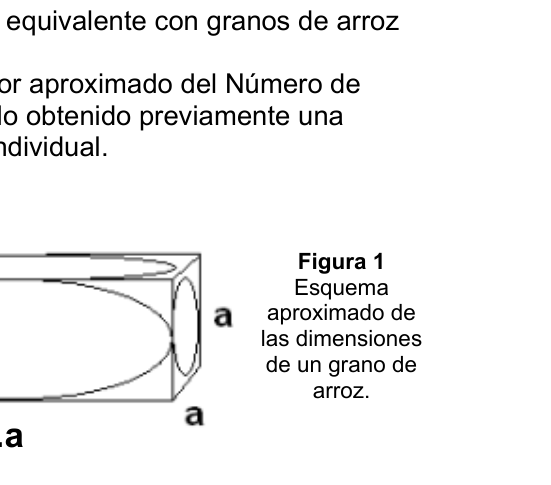
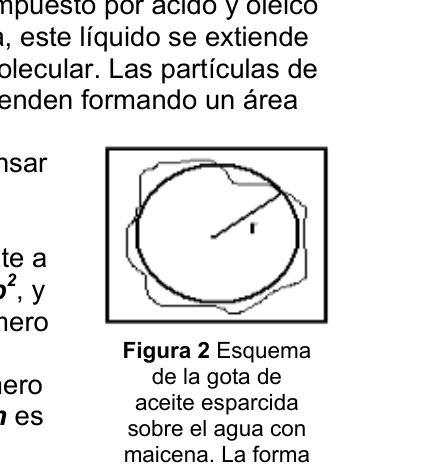
Topic: Order-of-Magnitude Estimation Metodi: Order-of-Magnitude Estimation, Experimental Data Analysis, Physical Modeling Competenze: Physical Reasoning, Experimental Data Analysis Objects: — Fonte: Testo (PDF) — p.3
Avogadro Number Oil Film Estimation
PE11. Città di Buenos Aires. Blu. Misurare senza vedere. Estimamento del numero di Avogadro Obiettivo: Calcoliamo, sotto alcuni approcci, le dimensioni di una molecola di olio. Iniziamo con un’esperienza equivalente con i grani di riso. per applicarla finalmente al sistema di interesse. L’obiettivo di questo esperimento è ottenere un valore approssimativo del numero di Avogadro utilizza un liquido molecolare, avendo ottenuto in precedenza un la stima delle dimensioni di una singola molecola.
Lista dei materiali: • Provetta graduata • Riso • Cintura metrica
• Balance • Gettero • olio • Bandega con acqua e maicena
Commenti generali:
- Prima di iniziare, leggi tutte le istruzioni
- Aggiungere alla relazione le osservazioni che chiariscano l’esatta procedura che ha usato in ogni passo. Se possibile, includere anche un disegno chiaritorio.
- Scrivere in tabella i dati ottenuti dalle misurazioni insieme ai loro errori.
- Accertare qualsiasi modifica o deviazione rispetto alle istruzioni, con un’indicazione breve spiegazione del suo motivo.
- Cerca di essere prolico. k.a Figura 1 Schema approssimativamente le dimensioni di un granello di
- Riso.
Introduzione teorica: Nella figura 1 vediamo lo schema di un grano di riso e le sue dimensioni. Si se si avvicina la sua forma a quella di un parallelepiedo, si ottiene che la sua area è A=k.a2, e la sua volume V=k.a3. dove k~3, a seconda del riso che comprate. Con questa . Approximato V= a.A. D’altra parte, quando si lascia cadere un goccio di olio (composto da acido e oleico 0,2% v/v in alcool) su acqua spruzzata con maicena, questo liquido si estende E’ così che si crea un livello che si suppone sia mono molecolare. Le particelle di Maicene sono spinte lateralmente dalla goccia che si estendono formando un’area.
- Più o meno uniforme. Si può fare un’analogia con il caso del riso e pensare che ogni molecola di olio è un cubo a lato b, per ottenere una stima della loro dimensione e quantità presente in una goccia. Se si avvicina l’ area totale dell’ olio a un cerchio come nella figura, si ottiene che: A = πr2 = N.b2, e V= N.b3 con r il raggio approssimativo della figura 2 e N il numero di molecole nella goccia. Quindi, dato che il numero di Avogadro NA è il numero di molecole per mol di una sostanza: NA =N/n, dove n è il numero di mole presenti nella goccia. n = Mg/Mr, eMr=282±5) g/mole la massa mollare dell’olio.
Parte 1: Riso
- Riempire il campione di granelli di riso e misurare il volume
- Stendere quei stessi grani sul tavolo. Progettare un modo per misurare l’area che coprono.
- Ripetere le misure per almeno 10 quantità diverse di cereali.
- Graficare i risultati ottenuti come Volumen vs. Area, eseguire un aggiustamento. La Commissione ha adottato una decisione che prevede che il programma di ricerca e di sviluppo europeo sia adeguato ai punti di prova e che si possa ottenere un’orizzonte.
- Ora puoi. determinare la quantità di grano di riso utilizzato in ciascuna uno dei 10 farmaci a partire dal volume del grano. Rapporti questi valori Senza contare i grani.
Parte 2: olio
- Riempi un goccio di olio e conti il numero di gocce che hai in quel goccio volume. Determina il volume di una goccia e calcola il peso pesando la goccia vuota e
- pieno. Trova il numero di mole presenti in una goccia.
- Versare un goccio di olio sull’acqua con macchia e misurare l’area Approximativa della figura ottenuta.
- Ripetere le misure per almeno 10 gocce diverse in modo da poter applicare
- Statistiche.
- Ottieni b e il volume di una molecola di olio b3.
- Ottieni il numero di molecole N che ha la goccia e determina se può
- Si tratta di un numero di Avogadro. La Commissione ha adottato una decisione che non prevedeva che il regime di pagamento fosse stato applicato.
- Fare un’analisi degli approcci e degli errori che commette nel fare le misurazioni dei volumi e delle aree. Sono misure dirette o indirettamente? Potrebbe essere determinata sperimentalmente la costante di Avvocato di persona? - Perché? Che strumento avrebbe usato?
Parte 3: Preparare un rapporto (tenete conto di questo quando si eseguono le parti 1 e 2) Scrivi un rapporto sull’esperienza svolta che contiene le seguenti informazioni: Figura 2 Schema della goccia di olio spargito sull’acqua con Maicena. La forma È come un cerchio radio r.
• Titolo • Introduzione (breve) • Ipotesi • Descrizione del dispositivo sperimentale (testo e disegno) • Dettagli su come le misure sono state effettuate (testo e disegno) • Misure / tabelle • Grafici (in foglio in millimetri) • Calcoli • Calcoli errori • Risultati ottenuti • Commenti conclusivi • Conclusioni E qualsiasi informazione che ritenga rilevante
Topic: Order-of-Magnitude Estimation Metodi: Order-of-Magnitude Estimation, Experimental Data Analysis, Physical Modeling Competenze: Physical Reasoning, Experimental Data Analysis Objects: — Fonte: Testo (PDF) — p.3
The Commission shall adopt implementing acts in accordance with Article 21 of Regulation (EC) No 1272/2009.
PE11. City of Buenos Aires. Blue, please. Measure without seeing. Estimate of Avogadro number The objective: We’ll calculate, under certain approximations, the dimensions of a molecule of oil. We ‘ll start by doing an equivalent experience with rice grains . The Commission has already decided to apply the new rules to the interest system. The objective of this experiment is to obtain an approximate value of the number of Avogadro using a molecular fluid, having previously obtained a estimate the dimensions of an individual molecule.
List of materials: • Graduated test • Rice • Metric tape
• Balance • Getting up • Oil • Water and maize banquet
General comments:
- Before you start read all the instructions
- Add to the report comments clarifying the exact procedure He used it every step of the way. If possible, include a clarifying drawing.
- Write in tables the data obtained from measurements together with their errors.
- Please specify any changes or deviations from the instructions, together with a A brief explanation of why.
- Try to be prolific. k.a Figure 1 Schedule approximate of the dimensions of a grain of rice.
Theoretical introduction: Figure 1 shows the diagram of a grain of rice and its dimensions. Si se Its shape approximates that of a parallel-piped, its area is A=k.a2, and its volume V = k.a3. where k~3, depending on the rice we buy. With this one . Approximation V = a.A. On the other hand, when a drop of oil (composed of acid and oleic) is dropped 0.2% v/v in alcohol) on water sprayed with maicene, this liquid is spread And it’s going to quickly become a layer that we assume is monomolecular. The particles of The maicene is pushed laterally by the gout that extends forming an area. It’s more or less uniform. You can make an analogy with the case of rice and think. That each oil molecule is a side cube b, for Get an estimate of its size and quantity present in a drop. If the total area of the oil approaches A circle as in the figure, we get that: A = πr2 = N.b2, and V= N.b3 with r the approximate radius of Figure 2 and N the number of molecules in the droplet. So since Avogadro’s number NA is the number of molecules per mol of a substance: NA =N/n, where n is the number of moles present in the gout. n = Mg/Mr, andMr=282±5) g/moles the molar mass of the oil.
Part 1: Rice
- Fill the sample with rice grains and measure the volume
- Spread those same grains over the table. Design a way to measure the area. They cover.
- Repeat the measurements for at least 10 different quantities of grain.
- Graph the results obtained as Volume vs. Area, make an adjustment. The test results are correct and the rice is obtained.
- Now you can. determine the amount of rice grains you used in each One of the 10 medications from the grain volume. Report these values Not counting the grains.
Part 2: Oil
- Fill a dropper with oil and count the number of drops you have in that. volume of the device. Determine the volume of a droplet and calculate its weight by weighing the empty droplet and It’s full. Find the number of moles n present in a droplet.
- Pour a drop of oil over the water with maicene, and measure the area approximate to the figure obtained.
- Repeat the measurements for at least 10 different drops so that you can apply The report is not yet available.
- Get b and the volume of an oil molecule b3.
- Get the number of N molecules that the drop has and determine if it can From the proposed formulas, the Avogadro number. Estimate the error. The Commission shall adopt implementing acts in accordance with Article 21 of Regulation (EC) No 1272/2009.
- Make an analysis of the approximations and errors you make in making the measurements of volumes and areas. Are they direct measurements or indirect? Could the constant of be determined experimentally? Directly counsel? - Why? - I don’t know. What instrument would he use?
Part 3: Preparation of a report (take this into account when making Part 1 and 2) Write a report of the experience that contains the following information: Figure 2 Scheme of the drop of Oil scattered over water with I’m not a big fan. The form It ‘s like a circle . of radio r.
• Title • The Commission has also adopted a number of proposals for the • Hypothesis • Description of the experimental device (text and drawing) • Details of how the measurements were made (text and drawing) • Measurements / Tables • Graphics (in millimetre sheet) • Calculations • Calculation of errors • Results obtained • The Commission has also adopted a number of proposals. • Conclusions And any information you deem relevant
Topic: Order-of-Magnitude Estimation Metodi: Order-of-Magnitude Estimation, Experimental Data Analysis, Physical Modeling Competenze: Physical Reasoning, Experimental Data Analysis Objects: — Fonte: Testo (PDF) — p.3
Unknown Resistance Voltage Divider Graph
PE12. Quilmes, Buenos Aires. Azul.
En este experimento se determinará el valor de una resistencia desconocida Q.
Los materiales disponibles son: una batería de 1.5 V; un voltímetro; una resistencia de
1.5 KΩ; una resistencia de 2.2 KΩ; una resistencia de 3.9 KΩ; una resistencia de
desconocida identificada como Q; y una tarjeta con el valor de la resistencia interna del
voltímetro.
- Conecte el circuito de la figura en donde E (f.e.m.) representa la batería, R la resistencia de 1.5 KΩ y V el voltímetro.
Registre el valor del voltímetro V: [1]
2. Repita 1. con valores de resistencia R que resulten de:
i. todas las posibles combinaciones de las tres resistencias individuales o en serie;
ii. la conexión en paralelo entre las resistencias de 3.9 KΩ y 1.5 KΩ.
Registre todos los valores posibles de la diferencia de potencial V y de la resistencia
R. [3]
3. Para cada uno de los valores de R, calcule el valor del producto V×R.
4. Realice una tabla con cada una de las mediciones y resultados. [4]
5. Realice un gráfico V×R vs. V.
El rango de la escala del eje horizontal debe ser entre 0 V y 2 V y la del eje vertical
entre 0 VΩ y 3000 VΩ. [3]
6. La teoría sugiere que:
V×R = - k×V + k×E;
siendo E la f.e.m. de la batería y k una constante de proporcionalidad.
A partir del gráfico realizado en 5., determine el valor de k. [4]
7. El valor de k está dado por:
V
Q
V
Q
R
R
R
R
k
+
×
−
; en donde RQ es la resistencia Q y RV es la resistencia interna del voltímetro.
Use el valor proporcionado de RV para calcular el valor de RQ. RQ = [2] 8. Determine la intersección del gráfico con el eje horizontal. [1] 9. Comente el significado de este valor. [2]
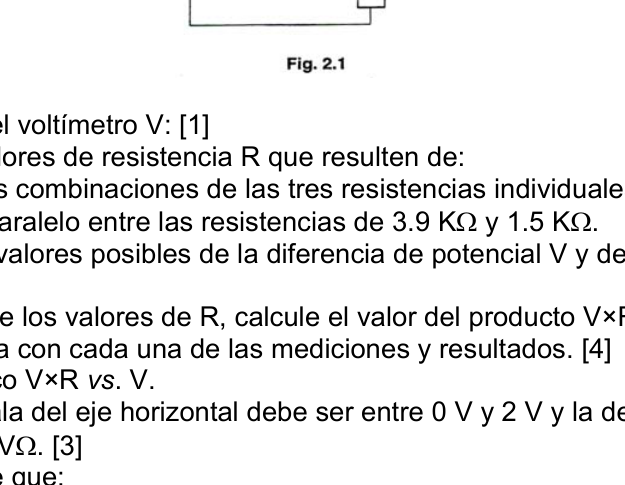
Topic: Circuits Metodi: Kirchhoff’s Laws, Graph Linearization, Experimental Data Analysis Competenze: Physical Reasoning, Experimental Data Analysis Objects: Resistor, Battery Fonte: Testo (PDF) — p.3
Unknown Resistance Voltage Divider Graph
PE12. Quilmes, Buenos Aires. Blu. In questo esperimento si determina il valore di una resistenza sconosciuta Q. I materiali disponibili sono: una batteria da 1,5 V; un voltimetro; una resistenza di 1,5 KΩ; resistenza di 2,2 KΩ; resistenza di 3,9 KΩ; resistenza di Un’espressione di un’espressione di un’espressione di un’espressione di un’espressione di un’espressione di un’espressione di un’espressione di un’espressione di un’espressione di un’espressione di un’espressione di un’espressione di un’espressione di un’espressione di un’espressione di un’espressione di un’espressione di un’espressione di un’espressione di un’espressione di un’espressione di un’espressione di un’espressione di un’espressione di un’espressione di un’espressione di un’espressione di un’espressione di un’espressione di un’espressione di un’espressione di un’espressione di un’espressione di un’espressione di un’espressione di un’espressione di un’espressione di un’espressione di un’espressione di un’espressione di un’espressione di un’espressione di un’espressione di un’espressione di un’espressione di un’espressione di un’espressione di un’espressione di un’espressione di un’essione di un’espressione di un’espressione di un’essione di un’espressione di un’espressione di un’essione di un’espressione di un’espressione di un’essione di un’espressione di un’espressione di un’essione di un’essione di un’essione di un’essione di un’espressione di un’espressione di un’espressione di un’espressione di un’espressione di un’essione di un’essione di un’essione di un’essione di un’espressione di un’espressione di un’essione di un’ Voltometro.
- Connettere il circuito della figura in cui E (f.e.m.) rappresenta la batteria, R la resistenza di 1,5 KΩ e V il voltometro.
Registra il valore del voltímetro V: [1] 2. Ripeti 1. con valori di resistenza R risultanti da: i. tutte le possibili combinazioni delle tre resistenze singole o in serie; ii. la connessione parallela tra le resistenze di 3,9 KΩ e 1,5 KΩ. Registra tutti i possibili valori di differenza di potenziale V e resistenza R. [3] 3. Per ciascun valore di R, calcolare il valore del prodotto V×R. 4. Fate una tabella con ogni misurazione e risultato. [4] 5. Rendi un grafico V×R vs. V. La gamma di scala dell’asse orizzontale deve essere compresa tra 0 V e 2 V e quella dell’asse verticale tra 0 VΩ e 3000 VΩ. [3] 6. La teoria suggerisce che: V×R = - k×V + k×E;
E’ l’e.e.m. di batteria e k una costante proporzionalità. A partire dal grafico 5., determina il valore di k. [4] 7. Il valore di k è dato da: V Q V Q R R R R k + × −
; dove RQ è la resistenza Q e RV è la resistenza interna del voltometro.
Utilizzare il valore proporzionato di VR per calcolare il valore di RQ. RQ = [2] 8. Determina l’intersezione del grafico con l’asse orizzontale. [1] 9. Commenta il significato di questo valore. [2]
Topic: Circuits Metodi: Kirchhoff’s Laws, Graph Linearization, Experimental Data Analysis Competenze: Physical Reasoning, Experimental Data Analysis Objects: Resistor, Battery Fonte: Testo (PDF) — p.3
The following is the list of the types of voltage dividers used:
PE12. Quilmes, Buenos Aires is where I am. Blue, please. In this experiment, the value of an unknown resistance Q will be determined. The materials available are: a 1.5 V battery; a voltmeter; a resistance of The following conditions are met: Unknown identified as Q; and a card with the internal resistance value of The voltmeter.
- Connect the circuit in the figure where E (f.e.m.) represents the battery, R the resistance of 1.5 KΩ and V the voltmeter.
Record the value of the V voltmeter: [1] 2. Repeat one. with R resistance values resulting from: i. any possible combination of the three individual or series resistors; ii. the parallel connection between the resistors of 3.9 KΩ and 1.5 KΩ. Record all possible values of the potential V difference and resistance R. [3] 3. For each of the R values, calculate the product value V×R. 4. Make a table with each of the measurements and results. [4] 5. Make a graph V×R vs. V. The range of the horizontal axle scale shall be between 0 V and 2 V and that of the vertical axle between 0 VΩ and 3000 VΩ. [3] 6. The theory suggests that: V×R = - k×V + k×E;
being E the f.e.m. The battery and k are proportional. From the graph in 5, determine the value of k. [4] 7. The value of k is given by: V Q V Q R R R R k + × −
; where RQ is the resistance Q and RV is the internal resistance of the voltmeter.
Use the proportional value of VR to calculate the value of RQ. RQ = [2] 8. Determine the intersection of the graph with the horizontal axis. [1] 9. Comment on the meaning of this value. [2]
Topic: Circuits Metodi: Kirchhoff’s Laws, Graph Linearization, Experimental Data Analysis Competenze: Physical Reasoning, Experimental Data Analysis Objects: Resistor, Battery Fonte: Testo (PDF) — p.3
Falling Balloon Air Friction Energy Loss
PE13. Ciudad de Santa Fe. Verde.
- Objetivo: Determinación práctica de la Energía perdida por rozamiento “Er” durante la caída de un globo.
- Lista de materiales:
- 1 globo
- Cinta métrica
- Cronómetro
- Papel milimetrado
- Teoría: Como bien comprobó Galileo desde lo alto de la Torre de Pisa, cuando se dejan caer dos cuerpos sólidos de masas diferentes pero forma parecida, estos llegan al suelo al mismo tiempo. Sin embargo, ¿qué ocurre cuando se deja en caída libre un cuerpo de escasa densidad y gran área?. En este caso empieza a jugar un papel importante la Fuerza de fricción “Fr” del aire, que hace que el objeto caiga más despacio.
- Procedimiento experimental: Con el cronómetro proporcionado deberá medir el tiempo de caída vertical del globo desde la cantidad de alturas que crea conveniente (por lo menos tres). Recuerde realizar varias mediciones de los tiempos de caída para cada altura cada altura de manera de minimizar errores. Confeccione una tabla de valores.
- Consignas:
a- Realice el diagrama de cuerpo libre. Considere la fuerza de fricción constante.
b- A partir de las ecuaciones de movimiento uniformemente acelerado plantee una
expresión de la velocidad.
c- Confeccione un gráfico de velocidad con respecto al tiempo. Trace curva de
tendencia y fundamente si es válida la aproximación de Fuerza de fricción constante
hecha en un principio. Indique con qué parámetro guarda estrecha relación la tangente
de la curva.
d- Mediante el método que prefiera, dé el valor de la aceleración durante la caída.
e- Mediante el método que prefiera, dé el valor de la Energía perdida por rozamiento
durante una caída de 1m.
f- Suponiendo que el 7% de la Energía de fricción calculada en el punto anterior se transforma en calor, calcule el cambio de temperatura del globo. - Datos
- Gravedad g = 9,8[m/s2].
- Masa del globo m = …………[gr] (el globo fue pesado para cada alumno)
- Calor específico del globo Cp=1,03[kJ/Kg ºK].
Topic: Conservation of Energy Metodi: Free-Body Diagram, Conservation of Energy, Experimental Data Analysis Competenze: Physical Reasoning, Experimental Data Analysis Objects: — Fonte: Testo (PDF) — p.3
Falling Balloon Air Friction Energy Loss
PE13. Città di Santa Fe. Verde.
- Obiettivo: Determinazione pratica dell’energia persa da rottura durante il periodo di la caduta di un pallone.
- Lista dei materiali:
- Un pallone .
- Cintura metrica .
- Cronometro .
- Papero millimetrico .
- Teoria: Come Galileo ha dimostrato dall’alto della Torre di Pisa, quando si lasci cadere. Due solidi corpi di massa diversa ma forma simile, arrivano al suolo al
- lo stesso tempo. Ma cosa succede quando un corpo di La densità è bassa e la superficie è grande. In questo caso la politica di sicurezza inizia a svolgere un ruolo importante. Forza di attrito dell’aria, che fa cadere l’oggetto più lentamente.
- Procedura sperimentale: Con il cronometro proporzionato dovrà misurare il tempo di caduta verticale del pallone da quanto di altezza ritiene conveniente (almeno tre). Ricordate. effettuare diverse misurazioni dei tempi di caduta per ogni altitudine ogni altitudine di come ridurre al minimo gli errori. Configuri una tabella di valori.
- Consigni: a- Realizzare il diagramma di corpo libero. Considera la forza di costante attrito. b- Sulla base delle equazioni di movimento uniformemente accelerato si propone una espressione della velocità. c- Configgere un grafico di velocità rispetto al tempo. Tracciare la curva di Tendenza e fondamentalmente se è valida l’approccio di forza di costante attrito fatto all’inizio. Indicare con quale parametro la tangenza è strettamente correlata della curva. d- Con il metodo che preferisce, indicare il valore dell’accelerazione durante il declino. e- Con il metodo che preferisce, date il valore dell’energia persa per rottura durante un calo di 1 metro. f- Supponendo che il 7% dell’energia di attrito calcolato nel punto precedente sia si trasforma in calore, calcola il cambiamento di temperatura del globo.
- Datos
- Gravità g = 9,8[m/s2].
- Massa del pallone m = …………[gr] (il pallone è stato pesante per ogni allievo)
- Calore specifico del globo Cp=1,03 [kJ/Kg oK].
Topic: Conservation of Energy Metodi: Free-Body Diagram, Conservation of Energy, Experimental Data Analysis Competenze: Physical Reasoning, Experimental Data Analysis Objects: — Fonte: Testo (PDF) — p.3
The following is the list of the air conditioning systems used for the calculation of the total energy loss:
PE13. City of Santa Fe. Green, please.
- Objective: Practical determination of the energy lost by friction during the process The fall of a balloon.
- List of materials:
- One balloon .
- Metric tape .
- The chronometer .
- Millimeter paper .
- Theory: As Galileo well proved from the top of the Tower of Pisa, when they fall. Two solid bodies of different masses but similar shape, these reach the ground at the At the same time. However, what happens when you leave a body of Low density and large area. In this case, the Commission is beginning to play an important role. Air friction force, which causes the object to fall more slowly.
- Experimental procedure: The timekeeper shall measure the vertical fall time of the balloon. from the height you think is appropriate (at least three). Remember that . The following information is provided by the Technical Service: It’s a way to minimize mistakes. Make a chart of values.
- The following is the list of winners: a- Make the free body diagram. Consider the constant friction force. b- From the equations of uniformly accelerated motion, we propose a The expression of speed. c- Construct a speed chart with respect to time. Draw a curve of The trend and fundamentally if the constant friction force approximation is valid made in the beginning. Indicate the parameter with which the tangent is closely related of the curve. d- Give the acceleration value during the fall by the method you prefer. e- Give the energy lost by friction using your preferred method During a 1m fall. f- Assuming that 7% of the friction energy calculated in the previous point is It turns into heat, calculates the temperature change in the balloon.
- Data from the report
- Gravity g = 9.8[m/s2].
- Ball mass m = …………[gr] (the balloon was heavy for each student)
- Specific heat of the balloon Cp=1.03 [kJ/Kg oK].
Topic: Conservation of Energy Metodi: Free-Body Diagram, Conservation of Energy, Experimental Data Analysis Competenze: Physical Reasoning, Experimental Data Analysis Objects: — Fonte: Testo (PDF) — p.3
Ball Rolling Down Ramp Kinematics
PE14. Santa Rosa, La Pampa. Azul.
Materiales entregados:
Varilla en ángulo- bolita de vidrio-tiza o fibrón-Libros-cronómetro-hoja milimetrada-
hojas rayadas
Actividades : Antes de comenzar responde
a) ¿Qué tipo de trayectoria seguirá la bolita cuando caigan por la rampa?
b) ¿Qué tipo de movimiento tendrá?
c) ¿Cómo esperas que sean los cambios de velocidad respecto a los cambios del
tiempo?
d) ¿Y los cambios de posición, cómo serán?
e) Si cambias la inclinación de la rampa ¿Te parece que se modificarán tus
respuestas? ¿Cuáles?
f) Si cambias el objeto que cae (siempre pensando en algo que ruede sobre la
varilla) ¿cambiarán tus respuestas? Qué precaución deberás tomar al elegir el
objeto que rodará?
Ahora a trabajar…..
Hazle marcas cada 25cm a la varilla.
Con una cierta cantidad de libros y la varilla fabrica una rampa.
Deja rodar la bolita y con el cronómetro mides los tiempos que tarda en pasar por las
marcas. Sugerencia: toma los tiempos por lo menos tres veces y haz un promedio.
g) Confecciona una tabla como esta
Posición (cm)
Tiempo (S) Tp1 Tp2 Tp3 (Tp1+Tp2+Tp3)/3 0 0 0 0 T i=0 25
T1= 50
75
h) Representa los datos tabulados en un gráfico cartesiano poniendo en el eje
horizontal el tiempo transcurrido y en el vertical las posiciones.
i) ¿Qué tipo de gráfico ha quedado?
j) ¿Qué te está mostrando esta gráfica?
Se puede estimar la velocidad del móvil en cualquier posición (por ejemplo la cuarta),
calculando la velocidad media en el intervalo comprendido entre la posición anterior y
la posterior(o sea la tercera y la quinta). Entonces podrías saber que
3
5
3
5
4
t
t
x
x
Vm
−
−
k) Completa la tabla T(s) V(cm/s) 0 0 T1 Vm1=
l)
Representa los datos tabulados ubicando en el eje horizontal el tiempo
transcurrido y, en el vertical, la velocidad.
m) ¿Qué tipo de gráfico se obtiene?
n) ¿Podrías determinar cómo es la dependencia de la velocidad con respecto al
tiempo?
Analizando tus respuestas, o) ¿Te será posible estimar la aceleración de la bolita? p)
Cómo lo harás?
q) Ahora aumenta la pendiente de tu rampa y realiza una nueva gráfica x= x(t) y
expresa alguna conclusión.
r) Compara tu respuesta con la dada en e)
Topic: Newtonian Mechanics Metodi: Kinematic Equations, Graph Linearization, Experimental Data Analysis Competenze: Physical Reasoning, Experimental Data Analysis Objects: Ball, Inclined Plane Fonte: Testo (PDF) — p.3
Il programma di ricerca è stato sviluppato in modo da migliorare la qualità delle attività di ricerca e di sviluppo.
PE14. Santa Rosa, La Pampa. Blu. Materiali consegnati: Barella a angolo - palla di vetro-tesa o fibrono - Libri - cronometro - foglio di millimetro - foglie rigide Attività: Prima di iniziare risponde a) Che tipo di percorso seguirà la pallina quando cadranno dal ramp? b) Che tipo di movimento avrà? c) Come si prevede che i cambiamenti di velocità siano rispetto ai cambiamenti del sistema di trasporto? tempo? D) E i cambiamenti di posizione, come saranno?
e) Se cambi la pendenza della rampa, ti sembra che cambieranno le tue risposte? - Quali? f) Se cambi l’oggetto che cade (pensando sempre a qualcosa che ruota sulla
- Le tue risposte cambieranno? Che precauzione si deve prendere nel scegliere il oggetto che girerà?
Ora al lavoro. Fai segni ogni 25 centimetri sul bastone. Con una certa quantità di libri e la bacchetta, fa un ramp. Lascia girare la pallina e con il cronometro misura i tempi che ci vogliono per passare le ore.
- I segni. Suggerimento: prendi i tempi almeno tre volte e fai una media. g) Confezionare una tabella come questa Posizione (cm)
Tempo (S) Tp1 Tp2 Tp3 (Tp1+Tp2+Tp3)/3 0 0 0 0 T i=0 25
T1= 50
75
h) Rappresenta i dati tabellati in un grafico cartesiano mettendo sull’asse Le posizioni sono orizzontali nel tempo trascorso e verticali. I) Che tipo di grafico è rimasto? j) Cosa ti mostra questo grafico? La velocità del cellulare può essere stimata in qualsiasi posizione (ad esempio la quarta), calcolando la velocità media nell’intervallo tra la posizione precedente e la seconda (o la terza e la quinta). Allora potresti sapere che 3 5 3 5 4 t t x x Vm − −
k) Completa la tabella T(s) V(cm/s) 0 0 T1 Vm1=
l) Rappresenta i dati tabellati posizionando il tempo sull’asse orizzontale La velocità è la velocità del tempo. m) Che tipo di grafico si ottiene? n) Potresti determinare come sia la dipendenza della velocità rispetto al tempo? Analizzando le tue risposte, o… Potrai stimare l’accelerazione della pallina? p) Come lo farai? Q) Ora aumentate la pendice del vostro ramp e fate un nuovo grafico x= x(t) e esprime qualche conclusione. r) Compare la tua risposta con quella di e)
Topic: Newtonian Mechanics Metodi: Kinematic Equations, Graph Linearization, Experimental Data Analysis Competenze: Physical Reasoning, Experimental Data Analysis Objects: Ball, Inclined Plane Fonte: Testo (PDF) — p.3
The following is the list of the categories of the categories of the categories of the categories of the categories of the categories of the categories of the categories of categories of the categories of categories of the categories of categories of the categories of categories of categories of the categories of categories of categories of categories of the categories of categories of categories of categories of categories of categories of categories of categories of categories of categories of categories of categories of categories of categories of categories of categories of categories of categories of categories of categories of categories of categories of categories of categories of categories of categories of categories of categories of categories of categories of categories of categories of categories of categories of categories of categories of categories of categories of categories of categories of categories of categories of categories of categories of categories of categories of categories of categories of categories of categories of categories of categories of categories of categories of categories of categories of categories of categories of categories of category of category of category of category of category of category of category of category of category of category of category of category of category of category of category of category of category of category of category of category of category of category of category of category of category of category of category of category of category of category of category of category of category of category of category of category of category of category of category of category of category of category of category of category of category of category of category of category:
PE14. Santa Rosa, the Pampa. Blue, please. Materials delivered: Angle-bill of glass-clay or fibron-Books-chronometer-millimeter sheet- stripped leaves Activities: Before we start reply (a) What path will the ball take when they fall off the ramp? (b) What kind of movement will he have? (c) How do you expect the changes in speed to be compared with the changes in the What time? (d) What about the change of position?
e) If you change the slope of the ramp do you think your slope will change? answers? What kind of a thing? f) If you change the object that falls (always thinking about something that rolls over the Will your answers change? What precautions should you take when choosing the object to shoot?
Now to work. Make marks every 25 centimeters on the rod. With a certain amount of books and the stick, he makes a ramp. Let the ball roll and with the timer measure the time it takes to pass through the The markings. Tip: Take the times at least three times and make an average. (g) Make a table like this Position (cm)
Time (s) Tp1 Tp2 Tp3 (Tp1+Tp2+Tp3)/3 0 0 0 0 T i=0 25
T1= 50
75
(h) Represents the data tabulated on a Cartesian graph by placing it on the axis The position is horizontal over time and vertical. (i) What kind of chart is left? j) What is this chart showing you? The speed of the mobile can be estimated at any position (e.g. the fourth), calculating the average speed in the interval between the previous position and the latter (i.e. the third and fifth). Then you might know that 3 5 3 5 4 t t x x Vm − −
(k) Complete the table T(s) V(cm/s) 0 0 T1 Vm1=
l) It represents the tabulated data by placing time on the horizontal axis the speed of the vehicle and, in the vertical, the speed. (m) What type of chart is obtained? (n) Could you determine what speed dependence is with respect to the What time? By analyzing your answers, or will you be able to estimate the ball’s acceleration? p) How are you gonna do that? q) Now increase the slope of your ramp and make a new graph x= x(t) and It expresses some conclusion. (r) Compare your answer to the one given in e)
Topic: Newtonian Mechanics Metodi: Kinematic Equations, Graph Linearization, Experimental Data Analysis Competenze: Physical Reasoning, Experimental Data Analysis Objects: Ball, Inclined Plane Fonte: Testo (PDF) — p.3
Free Fall Air Resistance Energy
PE15. General Acha, La Pampa. Verde. CAIDA LIBRE MATERIALES ENTREGADOS HOJAS DE PAPEL BOLA DE ACERO CRONOMETRO DINAMOMETRO CINTA METRICA
Consigna
- Arrojar desde determinada altura (máx. 3 metros) los elementos tales como bolillas de acero y hoja de papel en distintas formas tomando el tiempo de caída en seg.
- Con los datos obtenidos. Determinar los siguientes objetivos: a. Calcular el rozamiento del aire b. Coeficiente de rozamiento c. Energía potencial máxima d. Energía cinética máxima e. Energía cinética y potencial a la mitad del recorrido f. Velocidad final de cada objeto g. Determinar el margen de error obtenido
Topic: Conservation of Energy Metodi: Conservation of Energy, Free-Body Diagram, Experimental Data Analysis Competenze: Physical Reasoning, Experimental Data Analysis Objects: Ball Fonte: Testo (PDF) — p.3
La capacità di produzione di energia aerea è di circa un milione di tonnellate.
PE15. Generale Acha, La Pampa. Verde.
- GRAVE CALTA I materiali interessati
- Pagine di carta .
- Ballina di acciaio . Cronometro DINAMOMETRO CINTA METRICA
Consigna
- Gettare da una certa altezza (max. 3 metri) elementi quali le palline di acciaio e foglio di carta in diverse forme prendendo il tempo di caduta in Seg.
- Con i dati ottenuti. Determinare gli obiettivi seguenti: a. Calcolare il ruggine dell’aria b. Coefficiente di rasatura c. Energia potenziale massima d. Energia cinetica massima e. Energia cinetica e potenziale a metà percorso f. La velocità finale di ogni oggetto g. Determinare il margine di errore ottenuto
Topic: Conservation of Energy Metodi: Conservation of Energy, Free-Body Diagram, Experimental Data Analysis Competenze: Physical Reasoning, Experimental Data Analysis Objects: Ball Fonte: Testo (PDF) — p.3
The following is the list of airborne diseases:
PE15. General Acha, the Pampa. Green, please. Fall free . I ‘m not sure . Sheets of paper . Ball of steel . The chronometer . The dynamometer . I ‘m going to tell you .
I ‘m giving it away .
- Throw from a given height (max. 3 metres) such as Balls of steel and sheet of paper in different shapes taking the time to fall in The following is the list of the categories of products:
- With the data we’ve got. Determine the following objectives: a. Calculate the air friction b. The coefficient of friction c. Maximum potential energy d. Maximum kinetic energy e. Kinetic energy and potential halfway through f. The final speed of each object g. Determine the margin of error obtained
Topic: Conservation of Energy Metodi: Conservation of Energy, Free-Body Diagram, Experimental Data Analysis Competenze: Physical Reasoning, Experimental Data Analysis Objects: Ball Fonte: Testo (PDF) — p.3
Nichrome Wire Resistivity Measurement
PE16. Aguilares, Tucumán. Azul.
Se desea determinar la resistividad del nicrome ρ.
Para ello se le proveen los siguientes elementos:
¾ Una escuadra de 60cm.
¾ Dos multímetros (tester).
¾ Cables con conectores (4).
¾ Pinzas de cocodrilo (2).
¾ Tornillo Palmer.
¾ Una fuente de 7 VCC.
¾ Alambre de nicrome (aprox. 50cm). (extendido sobre base de madera)
¾ Papel milimetrado.
¾ Una lámpara 15w/6V.
Marco Teórico
La resistividad es una característica de cada sustancia y representa la resistencia de
un conductor por unidad de longitud y de sección.
La resistencia depende de: las dimensiones del conductor y el material, sin considerar
la temperatura; en esas condiciones se tiene:
R = ρ . l . s-1 de donde queda:
ρ = R . (1)
s l
Recuerda que:
• En un proceso isotérmico la resistencia es directamente a la diferencia de
potencial entre sus extremos e inversamente la intensidad de corriente que circula por
él.
R = V . I-1 (2)
• Sección de un círculo: S = π /4 d2 (3)
METODO SUGERIDO
Arme el circuito de la figura y enciéndalo. (La disposición de la lámpara –en serie- es a
los efectos de evitar sobrecalentamientos en el nicrome; pero si lo desea puede
trabajar sin conectar la misma).
¾ Haga variar la longitud de la resistencia variable (nicrome) y anote los valores
de: Longitud, diferencia de potencial e intensidad de corriente.
¾ Realice el cálculo de la Resistencia, para cada longitud, utilizando la expresión
(2).
¾ Grafique resistencia en función de longitud y obtenga la mejor recta. Esto le
dará el resultado del segundo miembro de la expresión (1).
¾ Aplicando la expresión (3) determine la sección (utilice el tornillo Palmer).
Ahora sólo resta determinar el valor de la resistividad solicitado; consignando el
resultado en unidades del sistema MKS.
En el informe respectivo (breve pero claro) indique las dificultades encontradas,
supuestos realizados. Tenga en cuenta que en todos los casos deben expresarse los
errores de medición.
Topic: Circuits Metodi: Experimental Data Analysis, Graph Linearization, Kirchhoff’s Laws Competenze: Physical Reasoning, Experimental Data Analysis Objects: Resistor, Wire, Battery Fonte: Testo (PDF) — p.3
Nichrome Wire Resistivity Measurement
PE16. Aguilar, Tucumán. Blu. Si desidera determinare la resistività del nichrome ρ. Per questo è fornito il seguente: Un quadrato di 60 centimetri. Due millimetri (tester). 3⁄4 Cavi con connettori (4). 3⁄4 pinze di coccodrillo (2). 3⁄4 Tornillo Palmer. Una fonte di 7 VCC. 3⁄4 Filo di nicromo (circa. 50cm). (Stiene a base di legno) 3⁄4 di carta millimetrica. Una lampada 15W/6V. Marco Teorico La resistenza è una caratteristica di ogni sostanza e rappresenta la resistenza di un conduttore per unità di lunghezza e sezione. La resistenza dipende da: dimensioni del conduttore e materiale, senza considerare la temperatura; in tali condizioni si ottiene:
R = ρ . l . s-1 di cui:
ρ = R . (1)
s l
Ricorda che:
• In un processo isotermico la resistenza è direttamente a differenza di
Potenzialmente, il potenziale tra le loro estremità e viceversa è l’intensità di corrente che circola per
él.
R = V . I-1 (2)
• Sezione di un cerchio: S = π /4 d2 (3)
METTO SEGNATO
Armati il circuito della figura e accendi. (La disposizione della lampada in serie è di:
gli effetti di prevenzione di sovraccarichi nel nichrome; se si desidera, è possibile
La tecnologia è stata inventata per il lavoro senza collegare la stessa.
3⁄4 Variare la lunghezza della resistenza variabile (nicroma) e annotare i valori di: lunghezza, differenza di potenziale e intensità di corrente. 3⁄4 Calcolare la resistenza per ogni lunghezza usando l’espressione (2). 3⁄4 Grafica la resistenza a seconda della lunghezza e ottieni la migliore retta. Questo le dà il risultato del secondo membro dell’espressione (1). 3⁄4 Applicando l’espressione (3) determinare la sezione (utilizza lo scheggio Palmer). Ora resta solo determinare il valore della resistenza richiesta; risultato in unità del sistema MKS. In questo rapporto (breve ma chiaro) indichi le difficoltà incontrate, I presupposti fatti. Si noti che in tutti i casi si devono esprimere le errori di misurazione.
Topic: Circuits Metodi: Experimental Data Analysis, Graph Linearization, Kirchhoff’s Laws Competenze: Physical Reasoning, Experimental Data Analysis Objects: Resistor, Wire, Battery Fonte: Testo (PDF) — p.3
The following information shall be provided:
PE16. The Eagles, Tucumán. Blue, please. The resistivity of nicrome ρ is to be determined. The following elements are provided for this purpose: Three quarters of a square. Two millimeters (tester). 3⁄4 Cables with connectors (4). 3⁄4 crocodile pinches (2). 3⁄4 of a Palmer Tornado. A 7 VCC source. 3⁄4 Nickrome wire (approx. 50cm). (Extended on wood) 3⁄4mm paper. 3⁄4 A 15w/6V lamp. Theoretical Mark Resistivity is a characteristic of each substance and represents the resistance of a driver per unit length and section. The resistance depends on: the dimensions of the conductor and the material, regardless the temperature; under these conditions:
R = ρ . l . s-1 where it stands:
ρ = R . (1)
s l
Remember:
• In an isothermal process the resistance is directly to the difference of
The potential between its ends and the inverse current intensity circulating by
él.
R = V . I-1 (2)
• Section of a circle: S = π /4 d2 (3)
The method suggested
Arm the circuit of the figure and turn it on. (The lamp layout is in series- is a
The effects of preventing overheating on the nicroma; however, if you wish you can
work without connecting it).
3⁄4 Change the length of the variable resistance (nichrome) and write down the values of: Length, potential difference and current intensity. 3⁄4 Calculate the resistance for each length using the expression (2). 3⁄4 Graph resistance by length and get the best straight. This is him . shall give the result of the second member of the expression (1). 3⁄4 Using the expression (3) determine the section (use the Palmer screw). Now it is only necessary to determine the value of the resistance requested; resulting in units of the MKS system. In the report (short but clear) indicate the difficulties encountered. the assumptions made. Please note that in all cases the terms of reference must be expressed in the following words: measurement errors.
Topic: Circuits Metodi: Experimental Data Analysis, Graph Linearization, Kirchhoff’s Laws Competenze: Physical Reasoning, Experimental Data Analysis Objects: Resistor, Wire, Battery Fonte: Testo (PDF) — p.3
Water Heating Temperature Error Analysis
PE17. Ciudad de Formosa. Azul.
Cuando el agua tiene calor.
OBJETIVO:
Medir temperaturas del agua durante el proceso de calentamiento de
la misma.
MATERIALES:
1Trípode
1Tela de amianto
1Mechero
1Base para elevar el mechero
1Vaso de precipitados
1Termómetro
1Encendedor
1Lápiz y papel
1Reloj o cronómetro
Procedimiento:
- Construye el dispositivo.
- Realiza un croquis del dispositivo armado.
- Realiza 10 mediciones.
- Halla los errores absoluto, relativo y porcentual de cada medición.
- Escribe el valor de medición incluyendo el error cometido.
- Elabora una tabla de valores para volcar los datos y resultados obtenidos.
Topic: Thermodynamics Metodi: Experimental Data Analysis, First Law of Thermodynamics, Error Propagation Competenze: Physical Reasoning, Experimental Data Analysis Objects: — Fonte: Testo (PDF) — p.3
Water Heating Temperature Error Analysis
PE17. Città di Formosa. Blu. Quando l’acqua è calda. L’obiettivo: Misurare le temperature dell’acqua durante il processo di riscaldamento di
- La stessa. I materiali: 1Tripoda 1Tela di amianto 1Mechero 1Base per alzare il macchiaio 1Vaso di precipitati 1Termometro 1Incendiatore 1Penace e carta 1Rillocchio o cronometro Procedura:
- Costruisce il dispositivo.
- Sviluppa uno schizzo del dispositivo armato.
- Fa 10 misure.
- Trova gli errori assoluti, relativi e percentuali di ogni misurazione.
- Scrivi il valore di misurazione compreso l’errore commesso.
- Stabilirà una tabella di valori per rovesciare i dati e i risultati ottenuti.
Topic: Thermodynamics Metodi: Experimental Data Analysis, First Law of Thermodynamics, Error Propagation Competenze: Physical Reasoning, Experimental Data Analysis Objects: — Fonte: Testo (PDF) — p.3
The following information is provided for in Part A of Annex I to Regulation (EC) No 1907/2006:
PE17. The city of Formosa. Blue, please. When the water is hot. The Commission has decided to take the necessary measures to ensure that the measures are implemented. Measuring water temperatures during the heating process of The same. The following is a list of the official languages of the European Union: 1Tripod 1Asbestos cloth 1Mechero 1Base to raise the straw 1Glass of precipitate 1Thermometer 1Fire-burner 1Penix and paper 1Clock or chronometer The procedure:
- Build the device.
- Make a sketch of the armed device.
- Do 10 measurements.
- Find the absolute, relative and percentage errors of each measurement.
- Write the measurement value including the error committed.
- Develop a table of values to overturn the data and results obtained.
Topic: Thermodynamics Metodi: Experimental Data Analysis, First Law of Thermodynamics, Error Propagation Competenze: Physical Reasoning, Experimental Data Analysis Objects: — Fonte: Testo (PDF) — p.3
Dynamometer Force Measurement with Masses
PE18. Ciudad de Formosa. Azul.
Haciendo fuerza con la masa:
OBJETIVO:
Medir fuerzas en un dinamómetro agregando distintas masas.
MATERIALES:
1Base soporte
1Varilla soporte roscada
1Nuez doble
1Varilla soporte de 250 mm 1Dinamómetro de 5 N 9 Pesas de 10 gr. 1 Pesa de 100 gr. 1Lápiz y papel 1Portapesas Procedimiento:
- Construye el dispositivo.
- Realiza un croquis del dispositivo armado.
- Realiza 10 mediciones.
- Halla los errores absoluto, relativo y porcentual de cada medición.
- Escribe el valor de medición incluyendo el error cometido.
- Elabora una tabla de valores para volcar los datos y resultados obtenidos.
Topic: Newtonian Mechanics Metodi: Free-Body Diagram, Experimental Data Analysis Competenze: Physical Reasoning, Experimental Data Analysis Objects: — Fonte: Testo (PDF) — p.3
Dynamometer Force Measurement with Masses
PE18. Città di Formosa. Blu. Facendo forza con la massa: L’obiettivo: Misurare le forze in un dinamometro aggiungendo diverse masse. I materiali: 1Base di supporto 1Stoccetto di supporto a rottura 1Doppia nuoca
1Stoccetto di 250 mm 1Dinamometro di 5 N 9 Pesi di 10 grammi. 1 peso di 100 g. 1Penace e carta 1 Portate Procedura:
- Costruisce il dispositivo.
- Sviluppa uno schizzo del dispositivo armato.
- Fa 10 misure.
- Trova gli errori assoluti, relativi e percentuali di ogni misurazione.
- Scrivi il valore di misurazione compreso l’errore commesso.
- Stabilirà una tabella di valori per rovesciare i dati e i risultati ottenuti.
Topic: Newtonian Mechanics Metodi: Free-Body Diagram, Experimental Data Analysis Competenze: Physical Reasoning, Experimental Data Analysis Objects: — Fonte: Testo (PDF) — p.3
The following table shows the number of units of measurement used in the measurement:
PE18. The city of Formosa. Blue, please. Making strength with mass: The Commission has decided to take the necessary measures to ensure that the measures are implemented. Measuring forces in a dynamometer by adding different masses. The following is a list of the official languages of the European Union: 1Base support 1Treaded support rod 1Double news
1 250 mm support rod 1Dynamometer of 5 N 9 Weights of 10 grams 1 weight of 100 grams 1Penix and paper 1Working bags The procedure:
- Build the device.
- Make a sketch of the armed device.
- Do 10 measurements.
- Find the absolute, relative and percentage errors of each measurement.
- Write the measurement value including the error committed.
- Develop a table of values to overturn the data and results obtained.
Topic: Newtonian Mechanics Metodi: Free-Body Diagram, Experimental Data Analysis Competenze: Physical Reasoning, Experimental Data Analysis Objects: — Fonte: Testo (PDF) — p.3
Magnet Force Dynamometer Unknown Mass
PE19. Ciudad de Formosa. Azul.
Haciendo fuerza con imanes.
OBJETIVO:
Medir fuerzas en un dinamómetro agregando pequeños cuerpos
imantados sin conocer su masa.
MATERIALES:
1Varilla soporte de 700 mm
1Tornillo de mesa
1Nuez doble
1Varilla soporte de 250 mm
1Dinamómetro de 2,5 N
10Objetos imantados de masa desconocida
1Portapesas
1Lápiz y papel
Procedimiento:
- Construye el dispositivo.
- Realiza un croquis del dispositivo armado.
- Realiza 10 mediciones.
- Halla los errores absoluto, relativo y porcentual de cada medición.
- Escribe el valor de medición incluyendo el error cometido.
- Elabora una tabla de valores para volcar los datos y resultados obtenidos.
Topic: Magnetism Metodi: Experimental Data Analysis, Free-Body Diagram Competenze: Physical Reasoning, Experimental Data Analysis Objects: Magnet Fonte: Testo (PDF) — p.3
Magnet Force Dynamometer Unknown Mass
PE19. Città di Formosa. Blu. Facendo forza con i magneti. L’obiettivo: Misurare le forze in un dinamometro aggiungendo piccoli corpi Magnati senza conoscere la loro massa. I materiali: 1Stoccetto di 700 mm 1 Torni di tavolo 1Doppia nuoca 1Stoccetto di 250 mm 1Dinamometro di 2,5 N 10Oggetti magnetici di massa sconosciuta 1 Portate 1Penace e carta Procedura:
- Costruisce il dispositivo.
- Sviluppa uno schizzo del dispositivo armato.
- Fa 10 misure.
- Trova gli errori assoluti, relativi e percentuali di ogni misurazione.
- Scrivi il valore di misurazione compreso l’errore commesso.
- Stabilirà una tabella di valori per rovesciare i dati e i risultati ottenuti.
Topic: Magnetism Metodi: Experimental Data Analysis, Free-Body Diagram Competenze: Physical Reasoning, Experimental Data Analysis Objects: Magnet Fonte: Testo (PDF) — p.3
The following table shows the number of units of the engine:
PE19. The city of Formosa. Blue, please. Making strength with magnets. The Commission has decided to take the necessary measures to ensure that the measures are implemented. Measuring forces on a dynamometer by adding small bodies Magnetized without knowing their mass. The following is a list of the official languages of the European Union: 1Both support rods of 700 mm 1 Table tower 1Double news 1 250 mm support rod 1Dynamometer of 2,5 N 10Magnetic objects of unknown mass 1Working bags 1Penix and paper The procedure:
- Build the device.
- Make a sketch of the armed device.
- Do 10 measurements.
- Find the absolute, relative and percentage errors of each measurement.
- Write the measurement value including the error committed.
- Develop a table of values to overturn the data and results obtained.
Topic: Magnetism Metodi: Experimental Data Analysis, Free-Body Diagram Competenze: Physical Reasoning, Experimental Data Analysis Objects: Magnet Fonte: Testo (PDF) — p.3
Density Measurement Vinegar Water
PE20. Ciudad de Formosa. Azul.
Y si agrego vinagre, ¿se hace más denso?
OBJETIVO:
Medir fuerzas en un dinamómetro agregando distintas masas.
MATERIALES:
1 Vaso de precipitados
1 Probeta
1 Litro de vinagre
Agua según se necesite
1 Densímetro
1Lápiz y papel
Procedimiento:
- Construye el dispositivo.
- Realiza un croquis del dispositivo armado.
- Realiza 10 mediciones.
- Halla los errores absoluto, relativo y porcentual de cada medición.
- Escribe el valor de medición incluyendo el error cometido.
- Elabora una tabla de valores para volcar los datos y resultados obtenidos.
Topic: Fluid Mechanics Metodi: Hydrostatic Equilibrium, Error Propagation, Experimental Data Analysis Competenze: Physical Reasoning, Experimental Data Analysis Objects: Container, Manometer Fonte: Testo (PDF) — p.3
Density Measurement Vinegar Water
PE20. Città di Formosa. Blu. E se aggiungo un po’ di vinicolo, diventa più denso? L’obiettivo: Misurare le forze in un dinamometro aggiungendo diverse masse. I materiali: 1 Vaso di precipitati 1 Provetta 1 litro di vinicolo Acqua a seconda dei bisogni 1 diametro 1Penace e carta Procedura:
- Costruisce il dispositivo.
- Sviluppa uno schizzo del dispositivo armato.
- Fa 10 misure.
- Trova gli errori assoluti, relativi e percentuali di ogni misurazione.
- Scrivi il valore di misurazione compreso l’errore commesso.
- Stabilirà una tabella di valori per rovesciare i dati e i risultati ottenuti.
Topic: Fluid Mechanics Metodi: Hydrostatic Equilibrium, Error Propagation, Experimental Data Analysis Competenze: Physical Reasoning, Experimental Data Analysis Objects: Container, Manometer Fonte: Testo (PDF) — p.3
The following table shows the results of the test:
PE20. The city of Formosa. Blue, please. And if I add vinegar, does it get thicker? The Commission has decided to take the necessary measures to ensure that the measures are implemented. Measuring forces in a dynamometer by adding different masses. The following is a list of the official languages of the European Union: 1 glass of precipitate 1 Test 1 litre of vinegar Water as needed 1 Density 1Penix and paper The procedure:
- Build the device.
- Make a sketch of the armed device.
- Do 10 measurements.
- Find the absolute, relative and percentage errors of each measurement.
- Write the measurement value including the error committed.
- Develop a table of values to overturn the data and results obtained.
Topic: Fluid Mechanics Metodi: Hydrostatic Equilibrium, Error Propagation, Experimental Data Analysis Competenze: Physical Reasoning, Experimental Data Analysis Objects: Container, Manometer Fonte: Testo (PDF) — p.3
Mass Measurement with Balance
PE21. Ciudad de Formosa. Azul.
Balanza, balanza.
OBJETIVO:
Medir masas utilizando una balanza.
MATERIALES:
1 Balanza desarmada
10 objetos pequeños
1Lápiz y papel
Procedimiento:
- Construye el dispositivo.
- Realiza un croquis del dispositivo armado.
- Realiza 10 mediciones.
- Halla los errores absoluto, relativo y porcentual de cada medición.
- Escribe el valor de medición incluyendo el error cometido.
- Elabora una tabla de valores para volcar los datos y resultados obtenidos.
Topic: Newtonian Mechanics Metodi: Free-Body Diagram, Error Propagation, Experimental Data Analysis Competenze: Physical Reasoning, Experimental Data Analysis Objects: — Fonte: Testo (PDF) — p.3
Mass Measurement with Balance
PE21. Città di Formosa. Blu. Sbalza, sbalza. L’obiettivo: Misurare le masse utilizzando una bilancia. I materiali: 1 Balance disarmata 10 piccoli oggetti 1Penace e carta Procedura:
- Costruisce il dispositivo.
- Sviluppa uno schizzo del dispositivo armato.
- Fa 10 misure.
- Trova gli errori assoluti, relativi e percentuali di ogni misurazione.
- Scrivi il valore di misurazione compreso l’errore commesso.
- Stabilirà una tabella di valori per rovesciare i dati e i risultati ottenuti.
Topic: Newtonian Mechanics Metodi: Free-Body Diagram, Error Propagation, Experimental Data Analysis Competenze: Physical Reasoning, Experimental Data Analysis Objects: — Fonte: Testo (PDF) — p.3
The following table shows the results of the measurement of the mass measurement with balance:
PE21. The city of Formosa. Blue, please. Weigh in, weigh in. The Commission has decided to take the necessary measures to ensure that the measures are implemented. Measure masses using a scale. The following is a list of the official languages of the European Union: 1 Unarmed Balance 10 small objects 1Penix and paper The procedure:
- Build the device.
- Make a sketch of the armed device.
- Do 10 measurements.
- Find the absolute, relative and percentage errors of each measurement.
- Write the measurement value including the error committed.
- Develop a table of values to overturn the data and results obtained.
Topic: Newtonian Mechanics Metodi: Free-Body Diagram, Error Propagation, Experimental Data Analysis Competenze: Physical Reasoning, Experimental Data Analysis Objects: — Fonte: Testo (PDF) — p.3
Capacitance Measurement RC Circuit
PE22. Rosario, Santa Fe. Verde. Titulo: “Medición de la capacidad de un elemento circuital”
Objetivo: i. Medir la capacidad (C) del capacitor que se encuentra en paralelo con una resistencia (ver figura 1). ii. Expresar todas las mediciones realizadas con su correspondiente error. iii. Calcular la incerteza total (∆C).
Desarrollo Teórico Consideremos un circuito compuesto por tres elementos conectados en serie: una fuente de tensión, un resistor, y un tercer elemento que consta de una resistencia y un capacitor en paralelo de la figura 1. Dependiendo de la forma de onda de la tensión (voltaje) de alimentación, las magnitudes que caracterizan al circuito se comportaran de una manera diferente; es decir, la forma de energizar al circuito (ya sea tensión continua o tensión alterna) determinarán distintos valores de corriente y diferencia de potencial en cada elemento y además las impedancias2 de los elementos del circuito tendrán valores diferentes.
Tensión Continua Si la fuente provee una tensión continua la corriente que se establece en el circuito también ha ser continua, con la característica de que todo efecto capacitivo (luego de un tiempo prudente) desaparece esto quiere decir, que la impedancia del circuito es puramente resistiva. Esto ocurre porque una vez cargado un capacitor hasta su tensión pico, no circula mas corriente por él. Ahora bien dado que el paralelo también presenta efectos resistivos, estos seguirán estando presentes; por lo tanto la relación entre la tensión de fuente del circuito y la corriente que circula por el mismo no es mas que la ley de ohm, es decir: I = V RTotal (1)
2 La palabra impedancia (representada por la letra Z) indica la oposición general del circuito al paso de corriente. Las palabras reactancia y resistencia se reservarán para la oposición de los elementos individuales, es decir para los capacitores y resistores respectivamente. Figura 1
Donde RTotal representa la resistencia total que presenta el circuito.
Tensión Alterna
Cuando la fuente de tensión provee una onda alterna, la situación es diferente. Si bien
la corriente del circuito mantiene la misma frecuencia y la forma de onda que la
tensión, presenta un defasaje con respecto a la tensión de fuente y su modulo
dependerá de los parámetros del circuito. La relación de fases entre la corriente y el
voltaje es distinta para cada elemento del circuito y depende de su impedancia. En
consecuencia, se necesita un método gráfico especial para
determinar la oposición general a la corriente en el circuito.
El método emplea un diagrama de fase, como el que se
puede ver en la figura. Para un elemento dado a la
componente resistiva y reactiva se le atribuyen propiedades
semejantes a los vectores, y sus magnitudes se representan
mediante flechas llamadas fasores. Sea un conjunto de ejes
cartesianos x-y, la impedancia de la resistencia se grafica en
el eje x positivo (esto es a 0°), ya que la diferencia de fases
entre voltaje y corriente para un resistor es cero. Y la
impedancia que presenta el capacitor (llamada reactancia capacitiva) se grafica a lo
largo del eje y negativo, y refleja una diferencia de -90° en la fases, ya que para un
capacitor el voltaje se retrasa respecto a la corriente por un cuarto de ciclo.
En concordancia con lo anterior podemos escribir la impedancias de los siguientes
elementos:
• Resistencia: Z = R y ϕR = 0°
• Capacitor: Z = 1ωC y ϕC = −90° (Reactancia capacitiva y denotada como Xc)
En otras ocasiones tenemos una interconexión (serie o
paralelo) de dos en un circuito y se desea calcular el
módulo de la impedancia equivalente de la
interconexión, entonces utilizamos la misma regla que
para las resistencia esto es:
• Conexión en serie: Zeq =
Z1
2 + Z2
2
• Conexión en paralelo: 1
Zeq
1 Z1 2 + 1 Z 2 2 (2)
Esto se debe hacer cuidadosamente porque dichas sumas fasoriales (que representa
la oposición efectiva, o neta, a la corriente de la interconexión) deben sumarse de la
misma manera que los vectores, porque los efectos del resistor y el condensador no
están en fase.
Luego podremos utilizar la generalización de la ley de Ohm para circuitos en régimen
alterno:
Vrms = IrmsZ
Donde el sufijo rms indica que son valores eficaces de tensión y corriente, y es lo que
nos arroja cualquier multímetro digital en una medición de tensión o corriente alterna.
Materiales
• Fuente de tensión continua 6V y 12V
• Fuente de tensión alterna 20V
• 2 Multímetros, a utilizar como Voltímetros.
• Cables conectores.
• Plaqueta con el circuito donde se encuentra el dispositivo a medir:
Representación fasorial de una
impedancia serie compuesta por
una resistencia y un capacitor.
Procedimiento
Antes de energizar al circuito llame a un docente para que verifique sus conexiones.
La impedancia del paralelo que comprende al capacitor C con la resistencia RP, según
con la ecuación (2) resulta ser:
1
ZP
1 RP 2 + 1 (1/ωC)2 1 ZP
1 RP 2 + (ωC)2 = Ieq Veq (3) Si de alguna forma podemos medir la corriente que atraviesa el paralelo y su tensión, podríamos determinar la impedancia del paralelo, pero para calcular el valor de la capacidad tenemos que conocer cuanto vale la resistencia RP. Como debemos medir dos tensiones, en lugar de una tensión y una corriente, se medirá la tensión en bornes de una resistencia adicional (en serie con la impedancia paralela) y luego podremos calcular la corriente. Ensayo a tensión continua Con este ensayo podremos calcular cuando vale la resistencia RP ya que, como dijimos en la introducción teórica, no hay efectos capacitivos. (Notar en la expresión 3 que ω = 0 al tratarse de una tensión continua) Recordando la formula de la tensión sobre una resistencia de un divisor resistivo y despejando se obtiene que: RP = Rad . VP Vad
Donde VP es la tensión de la impedancia, Vad la tensión que cae en la resistencia adicional y Rad es una resistencia adicional que ud debe agregar al paralelo. Puede optar por 4 resistencias adicionales y debe elegir criteriosamente para reducir el error total de la medición.
Conexionado:
Resistencias
adicionales
Ensayo a tensión alterna Como segunda instancia debe medirse la impedancia utilizando una fuente de tensión alterna. Una vez obtenida esta puede despejarse el valor de la capacidad utilizando la formula (3). De la misma forma que en el ensayo a tensión continua, y recordando la fórmula del divisor de tensión tenemos que: ZP = Zad . VZ Vad ZP = Rad . VZ Vad
Con los valores de resistencia e impedancia del paralelo, se puede despejar de (3) el valor de la capacidad que deseamos obtener.
Conexionado:
Consideraciones Importantes: • Configure correctamente el multímetro para la medición que desea realizar (tensión alterna o continua) • Detalle claramente todas las expresiones usadas y los cálculos realizados. • Recuerde ser ordenado en el cálculo de los errores. • Llame al docente responsable antes de enchufar cualquier conexión a una funte de tensión.
Especificación Técnica de los instrumentos: • Rango medición tensión continua 200V, 20V, 2000mV, 200mV • Rango medición tensión alterna 750V, 200V • El error del multimetro se expresa como un porcentaje de la lectura más número de dígitos menos significativos. Para los intrumentos suministrados considerar (e = 1%.lectura + 2 dig)
Especificación Técnica de las resistencias: • Todas las resistencias tienen una tolerancia del 1% Conclusiones Elaborar una memoria sobre el desarrollo del trabajo practico identificando las mayores fuentes de error y como podría mejorarse; e indicar hipótesis y consideraciones usadas.
Topic: Circuits Metodi: Equivalent Circuit Reduction, Experimental Data Analysis, Error Propagation Competenze: Physical Reasoning, Experimental Data Analysis, Mathematical Modeling Objects: Capacitor, Resistor, Battery Fonte: Testo (PDF) — p.3
Capacitance Measurement RC Circuit
PE22. Rosario, Santa Fe. Verde. Titolo: Messa della capacità di un elemento di circuito
Obiettivo: i. Misurare la capacità (C) del condensatore che si trova in parallelo con una resistenza (vedere figura 1). ii. Esprimere tutte le misurazioni effettuate con il suo errore corrispondente. iii. Calcolare l’incertezza totale (∆C).
Sviluppo teorico Consideriamo un circuito composto da tre elementi collegati in serie: una fonte di tensione, una resistenza, e un terzo elemento che consiste in una resistenza e un Capacitore parallelo di figura 1. A seconda della forma dell’onda di tensione (voltaggio) di alimentazione, le magnitudini che caratterizzano il circuito si comportano In un modo diverso, cioè il modo di energizzare il circuito (sia tensione (continua o a volta all’alternata) determinano differenti valori di corrente e di differenza di Potenziali in ogni elemento e impedanze2 degli elementi del circuito avranno valori diversi.
Tensione continua Se la fonte fornisce una tensione continua il corrente che si stabilisce nel circuito deve essere anche continuo, con la caratteristica che tutto L’effetto capacitivo (dopo un tempo prudente) scompare Questo significa che l’impedenza del circuito è puramente resistente. Questo accade perché una volta caricato un capacitore fino al suo picco di tensione, non circola più corrente attraverso di esso. Ora
- visto che il parallelo presenta anche effetti resistenti, La relazione è stata pubblicata nel corso del periodo di due anni. tra la tensione di sorgente del circuito e il corrente che circola per questo è solo la legge di Ohm, cioè: I = V RTtotal (1)
2 L’impedenza (representata dalla lettera Z) indica l’opposizione generale del circuito al passo corrente. Le Le parole reattività e resistenza si riserveranno all’opposizione degli elementi individuali, cioè ai Capacitatori e resistori rispettivamente. Figura 1
In cui RTotal rappresenta la resistenza totale del circuito. Voltaggio alternato Quando la fonte di tensione fornisce un’onda alternata, la situazione è diversa. - Si ’ , certo . Il corrente del circuito mantiene la stessa frequenza e forma d’onda che la corrente. tensione, presenta un defasaggio rispetto alla tensione sorgente e al suo modulo dipenderà dai parametri del circuito. Il rapporto di fase tra corrente e La voltazione è diversa per ogni elemento del circuito e dipende dalla sua impedenza. En In questo modo, è necessario un metodo grafico speciale per determinare l’opposizione generale al corrente nel circuito. Il metodo utilizza un diagramma di fase, come quello che viene illustrato in come si vede nella figura. Per un elemento dato alla Componente resistente e reagente sono attribuite proprietà simili ai vettori, e le loro magnitudine sono rappresentate con frecce chiamate fasore. Essere un insieme di assi Cartesiani x-y, l’impedenza della resistenza è graficata in l’asse x positivo (questo è a 0°), poiché la differenza di fasi tra voltage e corrente per una resistenza è zero. Y la L’impedenza presentata dal capacitore (chiamata reazione capacitiva) è graficata al lungo l’asse e negativo, e riflette una differenza di -90° nelle fasi, poiché per un Capacitore la tensione è ritardata rispetto al corrente per un quarto di ciclo. In base a quanto precede possiamo scrivere le impedanze di: elementi: • Resistenza: Z = R e φR = 0° • Capacitore: Z = 1ωC e φC = −90° (Reazione capacitiva e denominata come Xc)
Altre volte abbiamo un’interconnessione (serie o
parallelo) di due in un circuito e si desidera calcolare il
modulo di impedenza equivalente della
Interconnessione, quindi usiamo la stessa regola che
per le resistenze questo è:
• Connessione in serie: Zeq =
Z1
2 + Z2
2
• Connessione parallela: 1
Zeq
1 Z1 2 + 1 Z 2 2 (2)
Questo deve essere fatto con attenzione perché tali somme fasoriali (che rappresenta La resistenza effettiva, o netta, al flusso di interconnessione) devono essere aggiunte alla lo stesso modo che i vettori, perché gli effetti della resistenza e del condensatore non sono in fase. Poi possiamo usare la generalizzazione della legge di Ohm per i circuiti in regime. Alterna: VRS = IRMSZ Dove il suffizio rms indica che sono valori efficaci di tensione e corrente, e che è ci getta qualsiasi multimetro digitale in una misurazione di tensione o corrente alternata. Materiali • Fonte di tensione continua 6V e 12V • Fonte di tensione alternativa 20V • 2 multimetro, da usare come voltimetri. • Cable di connessione. • Placca con il circuito in cui si trova il dispositivo da misurare: Rappresentazione facciale di una Impedenza serie composta da una resistenza e un capacitore.
Procedura Prima di accendere il circuito, chiami un insegnante per verificare le connessioni. L’impedenza parallela che comprende il condensatore C con la resistenza RP, secondo con l’equazione (2) si rivela che: 1 ZP
1 RP 2 + 1 (1/ωC)2 1 ZP
1 RP 2 + (ωC) 2 = Ieq Veq (3) Se in qualche modo possiamo misurare il corrente che attraversa il parallelo e la sua tensione, Potremmo determinare l’impedenza del parallelo, ma per calcolare il valore di La capacità di questo tipo di resistenza è che dobbiamo sapere quanto vale la resistenza RP. Come dobbiamo misurare La tensione è di un’unità di tensione di un’unità di tensione di un’unità di tensione di un’unità di tensione di un’unità di tensione di un’unità di tensione di un’unità di tensione di un’unità di tensione di un’unità di tensione di un’unità di tensione di un’unità di tensione di un’unità di tensione di un’unità di tensione di un’unità di tensione di un’unità di tensione di un’unità di tensione di un’unità di tensione di un’unità di tensione di un’unità di tensione di un’unità di tensione di tensione di un’unità di tensione di tensione di un’unità di tensione di tensione di un’unità di tensione di tensione di un’unità di tensione di tensione di un’unità di tensione di tensione di tensione di un tensione di tensione di tensione di un tensione di tensione di tensione di tensione di un tensione di tensione di tensione di tensione di tensione di tensione di un tensione di tensione di tensione di tensione di tensione di tensione di tensione di tensione di tensione di un tensione di tensione di tensione di tensione di tensione di tensione di tensione di tensione di tensione di tensione di tensione di tensione di tensione di tensione di tensione di tensione di tensione di tensione di tensione di tensione di tensione di tensione di tensione di tensione di tensione di tensione di tensione di tensione di tensione di tensione di tensione di tensione di tensione di tensione di tensione di tensione di tensione di tensione di tensione di tensione di tensione di tensione di tensione di tensione di tensione di tensione di tensione di tensione di tensione di tensione di tensione di tensione di tensione di tensione di tensione di tensione di tensione di tensione di tensione di tensione di tensione di tensione di tensione di tensione di tensione di tensione di tensione di tensione di tensione di tensione di tensione di tensione di tensione di tensione di tensione di tensione di tensione di tensione di tensione di tensione di una resistenza aggiuntiva (in serie con l’impedenza parallela) e poi possiamo Calcolare la corrente. Prova a tensione continua Con questo test possiamo calcolare quando vale la resistenza RP poiché, come Come abbiamo detto nell’introduzione teorica, non ci sono effetti capacitivi. (Nota nell’espressione 3 che ω = 0 in quanto tensione continua) Ricordando la formula della tensione su una resistenza di un divisore resistente e la chiusura ottiene che: RP = Rad . VP Vad
Dove VP è la tensione di impedenza, Vad la tensione che cade nella resistenza Rad è un’ulteriore resistenza che si deve aggiungere al parallelo. Potrebbe Oggettare 4 resistenze aggiuntive e scegliere con discrezione per ridurre l’errore totale della misurazione.
Connesso:
Resistenze ulteriori
Prova a tensione alternativa In secondo luogo, l’impedenza deve essere misurata utilizzando una fonte di tensione
- Si alterna. Una volta ottenuto, si può chiarire il valore della capacità utilizzando formula (3). Proprio come nel test a tensione continua, e ricordando la formula di divisore di tensione abbiamo: ZP = Zad . VZ Vad ZP = Rad . VZ Vad
Con i valori di resistenza e impedenza parallele, si può eliminare (3) il il valore della capacità che vogliamo ottenere.
Connesso:
Principali considerazioni: • Configura correttamente il multimetro per la misura che desideri realizzare (tensione continua o alternativa) • Dettalia chiaramente tutte le espressioni usate e i calcoli realizzati. • Ricordate di essere ordinati nel calcolo degli errori. • Chiama l’insegnante responsabile prima di collegare qualsiasi collegamento a una fonte di tensione.
Specificamento tecnico degli strumenti: • Rango di misurazione di tensione continua 200V, 20V, 2000mV, 200mV • Rango di misurazione di tensione alternativa 750V, 200V • L’errore del multimetro è espresso come percentuale di lettura più numeri meno significativi. Per gli strumenti I dati di cui sono stati forniti considerano (e = 1%. lettura + 2 dig)
Specifica tecnica delle resistenze: • Tutte le resistenze hanno un’ampia tolleranza dell’1% Conclusioni Elaborare un memorandum sullo sviluppo del lavoro pratico identificando le le maggiori fonti di errore e come potesse essere migliorato;
- le considerazioni usate.
Topic: Circuits Metodi: Equivalent Circuit Reduction, Experimental Data Analysis, Error Propagation Competenze: Physical Reasoning, Experimental Data Analysis, Mathematical Modeling Objects: Capacitor, Resistor, Battery Fonte: Testo (PDF) — p.3
The following information is provided by the Commission in the Official Journal of the European Union:
PE22. Rosario, Santa Fe. Green, please. Title: Measurement of the capacity of a circuit element
The objective: i. Measure the capacitor capacity (C) which It is parallel to a The following conditions are met: ii. Express all measurements made with its corresponding error. (iii) the following: Calculate the total uncertainty (∆C).
Theoretical development Consider a circuit composed of three connected elements in series: a The power supply, a resistor, and a third element consisting of a resistor and a The power output of the engine shall be calculated by the following formula: Depending on the voltage waveform (voltage) of power, the magnitude characterizing the circuit would behave The electrical energy is generated by the electrical energy (i.e. the voltage) of the electrical circuit. The current and difference values of the current and the difference between the current and the current will be determined by the The potential of each element and the impedance of the elements of the circuit They’ll have different values.
Continuous tension If the source provides a continuous voltage the current is set in the circuit It’s also going to be continuous, with the characteristic that everything The capacitive effect (after a reasonable time) disappears This means that the impedance of the circuit is purely Resistant. This happens because once a capacitor is loaded until its peak voltage, no current circulates through it. Now . As the parallel also has resistive effects, These will continue to be present; therefore the relationship between the circuit’s source voltage and the current circulating So it’s just the law of ohm, which is: I = V RTtotal (1)
2 The word impedance (represented by the letter Z) indicates the general opposition of the circuit to the current flow. The The words reactance and resistance are reserved for the opposition of the individual elements, i.e. for the capacitors and resistors respectively. Figure 1
Where RTotal represents the total resistance presented by the circuit. Alternating voltage When the voltage source provides an alternating wave, the situation is different. Well , I ‘m not . The current in the circuit maintains the same frequency and waveform as the current in the circuit. The voltage of the source voltage and its modulation are not as high as the current. It will depend on the parameters of the circuit. The phase relationship between current and the The voltage is different for each circuit element and depends on its impedance. En Consequently, a special graphic method is needed for determine the general current resistance in the circuit. The method uses a phase diagram, such as the one below. You can see it in the figure. For an element given to the Resistive and reactive components are attributed properties They’re like vectors, and their magnitudes are represented. by arrows called razors. Be a set of axes Cartesian x-y, the impedance of the resistance is plotted in the positive x-axis (this is 0°), since the phase difference The voltage and current between a resistor is zero. Y la The capacitor impedance (called capacitive reactance) is plotted at the The axis length and negative, and reflects a difference of -90° in phases, since for a capacitor voltage is delayed relative to current by a quarter cycle. In accordance with the above we can write the impedances of the following The following elements: • Resistance: Z = R and φR = 0° • Capacitor: Z = 1ωC and φC = −90° (Capacitory response and denoted as Xc)
Other times we have an interconnection (series or
parallel) of two in a circuit and the calculation of the
The module of the equivalent impedance of the
Interconnection, then we use the same rule as
For resistance this is:
• Serial connection: Zeq =
Z1
2 + Z2
2
• Parallel connection: 1
Zeq
1 Z1 2 + 1 Z 2 2 (2)
This must be done carefully because these fasorial sums (which represent The actual or net opposition to the current of interconnection) must be added to the The same way as vectors, because the resistor and capacitor effects do not They’re in phase. Then we can use the generalization of Ohm’s law for regulated circuits. Other: The value of the underlying assets is the sum of the underlying assets. Where the suffix rms indicates that they are effective voltage and current values, and is what It throws us any digital multimeter into a voltage or alternating current measurement. Materials • Continuous voltage source 6V and 12V • 20V alternating current source • 2 Multi-meters, to be used as Voltimeters. • Connecting cables. • Plate with the circuit where the measuring device is located: Factor representation of a series impedance composed of a resistance and a capacitor.
The procedure Before you power the circuit, call a teacher to check your connections. The impedance of the parallel comprising the capacitor C with the RP resistance, according to with equation (2) it is: 1 ZP
1 RP 2 + 1 (1/ωC)2 1 ZP
1 RP The following is the list of the following: The age of the child (3) If we can somehow measure the current that runs through the parallel and its voltage, We could determine the impedance of the parallel, but to calculate the value of the We need to know what RP resistance is worth. How should we measure Two voltages, instead of one voltage and one current, the voltage shall be measured in boards of an additional resistance (in series with the parallel impedance) and then we can Calculate the current. Continuous voltage test With this test we can calculate when the RP resistance is worth since, as We said in the theoretical introduction, there are no capacitive effects. (Note in the expression 3 where ω = 0 is a continuous voltage) Recalling the voltage formula over a resistance of a resistance divider and cleaning results in: RP = Rad . VP Vad
Where VP is the impedance voltage, Vad is the voltage that falls on the resistance. Rad is an additional resistance that you must add to the parallel. You can . You must choose 4 additional resistors and choose carefully to reduce the error. total of the measurement.
Connected:
Resistance . additional
Alternate voltage test In the second instance, the impedance must be measured using a voltage source alternate. Once this is achieved, the value of the capacity can be cleared using the The following formula is used: In the same way as in the continuous voltage test, and recalling the formula of The voltage divider we have to: ZP = Zad . VZ Vad ZP = Rad . VZ Vad
With the parallel resistance and impedance values, it is possible to clear (3) the the value of the capacity we want to gain.
Connected:
Important considerations: • Correctly set the multimeter for the measurement you want The following conditions shall apply: • It clearly details all the expressions used and calculations The Commission has already taken a decision. • Remember to be orderly in calculating errors. • Call the teacher responsible before plugging any connections into the a voltage supply.
Technical specification of the instruments: • The following shall be reported in the following table: • Range measurement of alternating voltage 750V, 200V • The multimeter error is expressed as a percentage of the reading more numbers of less significant digits. For the instruments . The following table shows the data of the European Union:
Technical specification of resistors: • All resistors have a tolerance of 1%. Conclusions Develop a memorandum on the development of practical work by identifying the the major sources of error and how it could be improved; and to indicate hypotheses and the considerations used.
Topic: Circuits Metodi: Equivalent Circuit Reduction, Experimental Data Analysis, Error Propagation Competenze: Physical Reasoning, Experimental Data Analysis, Mathematical Modeling Objects: Capacitor, Resistor, Battery Fonte: Testo (PDF) — p.3
Projectile Motion Experimental Study
PE23. Ciudad de Córdoba. Azul. OBJETIVO: Estudiar el movimiento parabólico de un proyectil
Equipo Necesario Cantidad Módulo de disparo parabólico 1 Papel carbónico 1 Regla graduada o metro 1
FUNDAMENTO TEÓRICO: El movimiento de vuelo libre de un proyectil se estudia en términos de sus componentes rectangulares, dado que la aceleración del proyectil siempre actúa en dirección vertical. Para el análisis del movimiento se hacen dos suposiciones: - La aceleración de caída libre (aceleración de la gravedad: g = 9.81 m/s2) es constante en todo el intervalo de movimiento y está dirigida hacia abajo, El efecto de la resistencia del aire puede ignorarse, la única fuerza que actúa es el propio peso del proyectil. Con estas suposiciones, encontramos que la curva que describe un proyectil, que se denomina trayectoria, siempre es una parábola. La trayectoria se define en el plano x-y de manera que la velocidad inicial: VO tenga componentes V OX y Voy en los respectivos ejes. Además, las componentes de la aceleración: ax = O y ay = -g. Movimiento de un proyectil
Aplicando las ecuaciones cinemáticas en cada eje Movimiento Horizontal. Debido a que ax=0, se tiene que Vx=constante
PROCEDIMIENTO A Monte el sistema mostrado en la figura. Introduzca la bola en el tubo de metal y realice el disparo.
Soltar el móvil desde una altura h y medir el desplazamiento x obtenido. Para ello coloque un papel carbónico en el área donde se espera que se produzca el impacto. A partir de los datos obtenidos llene la siguiente tabla.
Posición del resorte
Posición 1 Posición 2 Posición 3 Lanzamiento 1
Lanzamiento 2
Lanzamiento 3
Promedio
Hallar la velocidad de lanzamiento del proyectil , fundamente su respuesta.
PROCEDIMIENTO B Cambie el ángulo de lanzamiento y observe como varia el alcance para diferentes ángulos de disparo.
Comprobar experimentalmente el mayor alcance de un proyectil, para ello, llene la siguiente tabla.
Alcance Ángulo de tiro Lanzamiento 1 Lanzamiento 2 Lanzamiento 3 Promedio 10°,
20°,
30°,
40°,
50°,
60°
70°
80°
90°
- Grafique ángulo de tiro vs. El alcance promedio, analice la gráfica y compare con lo esperado teóricamente.
- Hallar la relación entre el ángulo de lanzamiento y el alcance.
- Hallar la altura máxima del proyectil.
Topic: Newtonian Mechanics Metodi: Kinematic Equations, Free-Body Diagram, Experimental Data Analysis Competenze: Physical Reasoning, Experimental Data Analysis Objects: Projectile Fonte: Testo (PDF) — p.3
Studio esperimental progettuale di mozione
PE23. Città di Córdoba. Blu. L’obiettivo: Studiare il movimento parabolico di un proiettile
Equipaggiamento necessario Quantità Modulo di sparo parabolico 1 Carta carbonica 1 Regola graduata o metro 1
Fondamento teorico: Il movimento di volo libero di un proiettile è studiato in termini di Componenti rettangolari, dato che l’accelerazione del proiettile agisce sempre in direzione verticale. Per l’analisi del movimento si fanno due supposizioni: l’accelerazione di caduta libera (accelerazione gravità: g = 9,81 m/s2) è costante in tutto il suo intervallo di movimento e si dirige verso il basso, L’effetto della resistenza dell’aria può essere ignorato, l’unica forza che agisce è la il peso del proiettile. Con queste ipotesi, troviamo che la curva che descrive un proiettile, che è chiama percorso, è sempre una parabola. La traccia è definita sul piano x-y in modo che la velocità iniziale: VO abbia Componenti V OX e Go sui rispettivi assi. Inoltre, i componenti della Accelerazione: ax = O e ay = -g. Movimento di un proiettile
Applicando le equazioni cinematografiche su ogni asse Movimento orizzontale. Poiché ax=0, Vx=constante
Procedura A Monta il sistema mostrato nella figura. Intra la palla nel tubo di metallo e fai il tiro.
Smettere il mobile da un’altezza h e misurare il spostamento x ottenuto. Per Questo pone un ruolo di carbonio nell’area in cui si prevede che si produrrà l’inquinamento.
- Impatto. Sulla base dei dati ottenuti, compila la tabella seguente.
Posizione della sorgente
Posizione 1 Posizione 2 Posizione 3 Lancio 1
Lancio 2
Lancio 3
Medio
Trovare la velocità di lancio del proiettile, fondamentalmente la sua risposta.
Procedura B Cambiare l’angolo di lancio e osservare come il raggio varia per diversi angoli di tiro.
Per questo, si deve verificare sperimentalmente la massima portata di un proiettile. la tabella seguente.
Portata Angolo di lancio Lancio 1 Lancio 2 Lancio 3 Medio 10°,
20°,
30°,
40°,
50°,
60°
70°
80°
90°
- Grafica angolo di tiro vs. La portata media, analizzare il grafico e
- e che si confronta con l’aspettato teoricamente.
- Trovare il rapporto tra angolo di lancio e portata.
- Determinare l’altezza massima del proiettile.
Topic: Newtonian Mechanics Metodi: Kinematic Equations, Free-Body Diagram, Experimental Data Analysis Competenze: Physical Reasoning, Experimental Data Analysis Objects: Projectile Fonte: Testo (PDF) — p.3
The project is designed to provide a high level of information and to provide a high level of information and communication technology.
PE23. The city of Cordoba. Blue, please. The Commission has decided to take the necessary measures to ensure that the measures are implemented. Studying the parabolic movement of a projectile
Equipment needed . Amount Parabolic firing module 1 Carbon paper 1 Graduate rule or meter 1
Theoretical foundation: The free-flying motion of a projectile is studied in terms of its The projectile acceleration always acts on the the vertical direction. For the analysis of movement two assumptions are made: The acceleration of free fall (g = 9.81 m/s2) is constant It’s all the way down the range and it’s downward. The effect of air resistance can be ignored, the only force acting is the The weight of the projectile. With these assumptions, we find that the curve that describes a projectile, which is It’s always a parable. The path is defined in the x-y plane so that the initial velocity: VO has V OX and I components on the respective axes. In addition, the components of the Acceleration: ax = O and ay = -g. Movement of a projectile
Applying kinematic equations to each axis Horizontal movement. Because ax=0, you have to have Vx=constant
The Commission shall adopt a decision on the application of this Regulation. Install the system shown in the figure. Put the ball in the metal tube and shoot.
Release the mobile from a height h and measure the resulting x-shift. For This puts a carbon footprint in the area where the The impact. From the data obtained, fill in the following table.
The position of the spring
Position 1 Position 2 Position 3 Launch 1
Launch 2
Launch 3
Average
Find the launch velocity of the projectile, basically its response.
The Commission shall adopt implementing acts in accordance with Article 21 of this Regulation. Change the angle of launch and see how the range varies for different angles of fire.
Experimentally test the maximum range of a projectile, for this purpose, fill the following table.
Scope Angle of shooting Launch 1 Launching 2 Launch 3 Average 10°,
20°,
30°,
40°,
50°,
60°
70°
80°
90°
- Draw angle of shooting vs. The average range, analyze the graph and It’s theoretically in line with expectations.
- Find the relationship between the angle of launch and the range.
- Determine the maximum height of the projectile.
Topic: Newtonian Mechanics Metodi: Kinematic Equations, Free-Body Diagram, Experimental Data Analysis Competenze: Physical Reasoning, Experimental Data Analysis Objects: Projectile Fonte: Testo (PDF) — p.3
Buoyancy Force and Liquid Density
PE24. Ciudad de Córdoba. Azul.
Objetivo:
• Medir el Empuje que un líquido incógnita ejerce cobre un cuerpo metálico
macizo, completamente sumergido.
• Medir la densidad de ese líquido.
Elementos:
• 1 vaso de precipitado de 250 ml aforado
• 1 vaso de precipitado de 100 ml aforado, con hilo pegado para poder colgarlo
• 1 soporte universal con una nuez con agarradera metálica
• 1 dinamómetro (0-2.5)N
• 500 ml líquido incógnita
• 1 taco de madera
• 1 cuerpo metálico macizo con un gancho
Requerimientos:
Solo podrá utilizar los elementos provistos, papel, lapicera y calculadora no
programable.
Al finalizar el trabajo deberá presentar un informe que incluya los siguientes puntos:
• Esquema de los dispositivos experimentales utilizados
• Descripción y fundamentación del diseño utilizado
• Diagrama de cuerpo libre del cuerpo metálico macizo completamente
sumergido en el líquido.
• Cuadro de valores de las mediciones realizadas
• Resultados obtenidos con sus correspondientes errores
• Tanto para la determinación del Empuje como de la Densidad buscada: De
todas las mediciones directas realizadas, ¿cuál es el factor que, de hacer esta
experiencia nuevamente, ud. se preocuparía de medir con menor error la
próxima vez? Justifique.
• Respuesta justificada a la pregunta: ¿Es posible que el líquido incógnita sea
agua?
• Comentarios
Datos:
• La densidad del agua es (1,00 ± 0,03)g / cm3
• En Córdoba, la aceleración de la gravedad es (9,79 ± 0,01)m / s2
Topic: Fluid Mechanics Metodi: Hydrostatic Equilibrium, Free-Body Diagram, Error Propagation Competenze: Physical Reasoning, Experimental Data Analysis Objects: Container, Block Fonte: Testo (PDF) — p.3
Buoyancy Force and Liquid Density
PE24. Città di Córdoba. Blu. Obiettivo: • Misurare la spinta che un liquido incognito esercita copre un corpo metallico massiccia, completamente immersa. • Misurare la densità di tale liquido. Elementi: • 1 bicchiere di precipitato di 250 ml di risparmio • 1 bicchiere di precipitazione di 100 ml risparmiato, con filo attaccato per poterlo appendere • 1 supporto universale con un’aria di noce con un aggancio metallico • 1 dinamometro (0-2.5) N • 500 ml di liquido incognito • 1 tacco di legno • 1 corpo metallico massiccio con un gancio Requisiti: Non potrà utilizzare altro che i materiali forniti, carta, lapislatura e calcolatore. programmabile. Al termine del lavoro, deve presentare un rapporto che include i seguenti punti: • Schema dei dispositivi sperimentali utilizzati • Descrizione e motivazione del design utilizzato • Diagramma di corpo libero del corpo metallico massiccio completamente immerso nel liquido. • Tabella dei valori delle misurazioni effettuate • Risultati ottenuti con i propri errori • Per determinare sia la spinta che la densità desiderata: tutte le misure dirette effettuate, qual è il fattore che, di fare questo
- Ricominciamo a sperimentare, Ud. si preoccuparebbe di misurare con meno errore la
- La prossima volta? giustifica. • Risposta giustificata alla domanda: è possibile che il liquido incognito sia acqua? • Commenti Datati: • La densità dell’acqua è (1,00 ± 0,03) g/cm3 • A Córdoba, l’accelerazione della gravità è (9,79 ± 0,01) m/s2
Topic: Fluid Mechanics Metodi: Hydrostatic Equilibrium, Free-Body Diagram, Error Propagation Competenze: Physical Reasoning, Experimental Data Analysis Objects: Container, Block Fonte: Testo (PDF) — p.3
The following table shows the results of the calculations:
PE24. The city of Cordoba. Blue, please. The objective: • Measuring the thrust of an unknown liquid covers a metal body solid, completely submerged. • Measure the density of that liquid. The following elements: • 1 glass of 250 ml of precipitated savings • 1 cup of 100 ml of precipitate saved, with thread attached to the suspension • 1 universal support with a nut with a metal grip • 1 dynamometer (0-2.5) N • 500 ml of fluid unknown • 1 wooden stick • 1 solid metal body with a hook Requirements: You may only use the items provided, paper, pencil and calculator not It’s programmable. At the end of the work, a report shall be submitted, including the following: • Schedule of experimental devices used • Description and justification of the design used • Full free-body diagram of the solid metal body submerged in the liquid. • Table of values of measurements carried out • Results obtained with their corresponding errors • For both the determination of the thrust and the density sought: All the direct measurements made, what is the factor that, if you do this experience again, you know. It would worry about measuring the error rate less than the Next time? You justify it. • Justified answer to the question: Is it possible that the unknown liquid is
- What? • Comments The data: • The density of water is (1,00 ± 0.03) g/cm3 • In Cordoba, the acceleration of gravity is (9,79 ± 0.01 m/s2
Topic: Fluid Mechanics Metodi: Hydrostatic Equilibrium, Free-Body Diagram, Error Propagation Competenze: Physical Reasoning, Experimental Data Analysis Objects: Container, Block Fonte: Testo (PDF) — p.3
Thermal Equilibrium Calorimetry Zinc
PE25. Comodoro Rivadavia, Chubut. Verde.
Objetivos.
¾ Determinar la temperatura de Equilibrio en un sistema aislado.
¾ Demostrar la conservación de la energía a partir del calor entregado y el calor
recibido.
Materiales.
Un calorímetro.
75 gramos de granallas de zinc.
150cm3 de H2o a temperatura ambiente.
2 termómetros.
Platillo reloj.
Cronometro.
Probeta de 300cm3.
Balanza.
Mechero.
Cuba de hierro con mango.
Armado del equipo experimental.
Verifique el estado del calorímetro y mantenga uno de los termómetros dentro de la
tapa del mismo junto al agitador. Por otro lado encienda el mechero y dispóngase a
realizar la experiencia.
Procedimiento.
- Mida 150cm3 de H2O y deposítelos en el vaso del calorímetro registre su temperatura y prepare la tapa del calorímetro con el mesclador y el termómetro en la misma. Luego mida 75gr de granallas de cinc y coloque las mismas en la cuba de hierro provista, verifique que esta, este perfectamente sujeta al mango o sostén, coloque esta parte de su sistema sobre la llama del mechero y caliente durante 10 minutos.
- Al finalizar el tiempo de 10 minutos deposite las granallas en el vaso del calorímetro y rápidamente cierre y aísle el sistema.
- Registre la temperatura del sistema, en un periodo de un periodo de un minuto, cada 20 segundos.
- Construya una tabla con los datos obtenidos y luego grafique Temp(t). (Temperatura en función del tiempo)
- De acuerdo a la ecuación de la conservación de la energía calórica:
Q entregado = Q recibido calcule que el calor perdido es igual al calor ganado
desprecie el calor ganado por el vaso del calorímetro y el termómetro.
Recuerde. Q=m.c.∆t
Datos. Calores específicos. CH2O= 1cal/g°C Czinc=0,092cal/g°C Observaciones mantenga el calorímetro cerca de donde se está calentando las granallas, para evitar cualquier inconveniente. - Redactar las distintas observaciones y conclusiones al terminar la experiencia
Topic: Thermodynamics Metodi: First Law of Thermodynamics, Experimental Data Analysis, Error Propagation Competenze: Physical Reasoning, Experimental Data Analysis Objects: Calorimeter, Gas Fonte: Testo (PDF) — p.3
Thermal Equilibrium Calorimetry Zinc
PE25. Comodoro Rivadavia, Chubut. Verde. Obiettivi. Determinare la temperatura di equilibrio in un sistema isolato. 3⁄4 dimostrare la conservazione dell’energia dal calore fornito e dal calore
- Si’, ho ricevuto. Materiali. Un calometro. 75 grammi di granule di zinco. 150 cm3 di H2o a temperatura ambiente. 2 termometri.
- Ristorante.
- Un cronometro. Prova di 300 cm3.
- Sbalza.
- Mechero. Cubo di ferro con manico. Armato dalla squadra sperimentale. Controlla lo stato del caloriometro e mantenga uno dei termometri all’interno del copre di esso vicino all’agitatore. Invece accendi il lampadino e ti metti a posto realizzare l’esperienza. Procedura.
- Misura 150 cm3 di H2O e mettila nel bicchiere del calometro per registrare il suo temperatura e preparare la copertura del caloriometro con il miscelatore e il termometro
- In quella stessa. Poi misurare 75g di granule di zinco e mettere le stesse in Cabba di ferro fornita, controlla che questa, questa si attacca perfettamente al mango o Sostenete, mettete questa parte del vostro sistema sulla fiamma del macchinario e calde. per 10 minuti.
- Al termine del tempo di 10 minuti, depone le granule nel bicchiere del Calorimetro e chiudi rapidamente e isola il sistema.
- Registrare la temperatura del sistema, in un periodo di un minuto, ogni 20 secondi.
- Costruire una tabella con i dati ottenuti e poi graficare Temp(t). (Temperatura in funzione del tempo)
- Secondo l’equazione della conservazione dell’energia calorica:
Q consegnato = Q ricevuto calcola che il calore perso è uguale al calore guadagnato
disprezza il calore ottenuto dal calometro e dal termometro.
Ricordati. Q=m.c.∆t
Datati. Calore specifico. CINC=0,092 cal/g°C Osservazioni: mantenere il calometro vicino al punto di riscaldamento Granule, per evitare qualsiasi inconveniente. - Esprimere le diverse osservazioni e conclusioni al termine dell’esperienza
Topic: Thermodynamics Metodi: First Law of Thermodynamics, Experimental Data Analysis, Error Propagation Competenze: Physical Reasoning, Experimental Data Analysis Objects: Calorimeter, Gas Fonte: Testo (PDF) — p.3
The following table shows the methodology used for the calculation of the value of the product:
PE25. Commodore Rivadavia, Chubut. Green, please. Goals. Determine the equilibrium temperature in an isolated system. 3⁄4 Demonstrate energy conservation from heat delivered and heat received. It’s materials. A thermometer. 75 grams of zinc pellets. 150 cm3 of H2o at room temperature. Two thermometers. ♪ Clock plate. ♪ Timer, please. 300cm3 sample. ♪ Weigh it. ♪ Mechero. ♪ ♪ Iron cube with mango. Armed with the experimental equipment. Check the condition of the thermometer and keep one of the thermometers inside the thermometer . It’s the same thing next to the stirrer. On the other hand , turn on the lighter and get ready to to carry out the experiment. The procedure.
- Measure 150cm3 of H2O and deposit them in the heat meter glass and record their temperature and prepare the heat meter lid with the blender and thermometer In the same. Then measure 75g of zinc pellets and place them in the Iron cup supplied, check that this one, this one is perfectly attached to the handle or Hold, place this part of your system on the fire of the fireplace and warm. for 10 minutes.
- At the end of the 10 minute time, deposit the granules in the glass of the heat meter and quickly close and isolate the system.
- Record the temperature of the system, over a period of one minute, every 20 seconds.
- Build a table with the data obtained and then plot Temp(t). (Temperature according to time)
- According to the calorie conservation equation:
Q delivered = Q received calculate that the heat lost is equal to the heat gained
You despise the heat gained by the heat meter glass and the thermometer.
Remember that. Q=m.c.∆t
The data. Specific heat. The following table shows the results of the calculations: Observations Keep the calorimeter close to where you ‘re heating up . The Commission has decided to take the necessary measures to ensure that the Commission is able to take all necessary measures to ensure that the measures taken are not distorted. - To draw up the various observations and conclusions at the end of the experience
Topic: Thermodynamics Metodi: First Law of Thermodynamics, Experimental Data Analysis, Error Propagation Competenze: Physical Reasoning, Experimental Data Analysis Objects: Calorimeter, Gas Fonte: Testo (PDF) — p.3
Battery Internal Resistance Measurement
PE26. Ciudad de Mendoza. Azul. Determinación de la resistencia interna de una pila.
- Introducción Una batería es considerada normalmente como una fuente de voltaje ideal, es decir una fuente que no consume potencia o que tiene resistencia interna igual a cero, sin embargo, ella presenta una resistencia interna Rint que es medible. Un esquema que ilustra el funcionamiento real de una batería se muestra en la Fig.
Figura 1. Representación esquemática del experimento. E es la f.e.m producida por la batería. RL es la resistencia de un reostato, Rint es la resistencia interna de la batería que se va a estudiar La Rint no es constante en el tiempo ya que la batería se va descargando con el tiempo. El conocimiento de su valor permite determinar el llamado límite inferior de impedancia (o resistencia) óptima para una batería sin uso, el cual debiera estar por debajo de los 0.05 Ohms. La Rint de un componente también es conocida como impedancia de salida. Este concepto es importante en determinadas aplicaciones relacionadas con artículos electrónicos (radios, teléfonos celulares, etc.) y en electrodomésticos. 2. Teoría Considerando que el voltímetro tiene resistencia interna infinita, se puede simplificar el circuito del experimento como se muestra en la Fig. 2 para el caso en que se ha cerrado el interruptor. Figura 2. Diagrama del circuito. E es la f.e.m producida por la batería. RL es la resistencia de carga que en nuestro caso corresponde al reóstato, Rint es la resistencia interna de la batería que es diferente en baterías de distintos fabricantes e i es la corriente que circula por todas las componentes. Para poder encontrar una expresión para determinar la resistencia interna de la batería debemos usar las Leyes de Kirkhoff que a continuación se enuncian:
- La suma de las corrientes que entran en una unión es igual a la suma de las corrientes que salen de la unión
- La suma de las diferencias de potencial a través de todos los elementos de un circuito cerrado debe ser cero.
Por la ley de Ohm
Reemplazando nos queda
Esta fórmula se utiliza para determinar la resistencia interna de la pila Elementos Se lista seguidamente los materiales y aparatos experimentales disponibles para la realización del experimento.
- tester digital
- 5 Resistencias de distintos valores
- Batería de 9V.
- cables
- Calculadora científica. Trabajo Experimental Se propone determinar el valor de la resistencia interna de la batería, debiéndose incluir en el informe los siguientes ítems:
- Una descripción del procedimiento experimental.
- Tabla de los valores de las magnitudes medidas
- Valor obtenido de la resistencia.
- Errores y sus causas. PRECAUCION: Para resistencias menores que 1 Ohm la corriente es mayor que 1.5 A, con lo que se empieza a consumir muy rápidamente la batería y puede calentarse y gastarse. USTED DEBE MEDIR RAPIDO PARA QUE ESTO NO SUCEDA Y LA MEDICION NO SE VEA ALTERADA. L R i R i . . int + = ε L L R i V . = ⎟⎟ ⎠ ⎞ ⎜⎜ ⎝ ⎛ − = 1 . int L L V R R ε
Topic: Circuits Metodi: Kirchhoff’s Laws, Graph Linearization, Experimental Data Analysis Competenze: Physical Reasoning, Experimental Data Analysis, Mathematical Modeling Objects: Battery, Resistor, Galvanometer Fonte: Testo (PDF) — p.3
Battery Internal Resistance Measurement
PE26. Città di Mendoza. Blu. Determinazione della resistenza interna di una pila.
- Introduzione Una batteria è normalmente considerata come una fonte di tensione ideale, cioè una fonte che non consuma potenza o ha resistenza. interno pari a zero, tuttavia, presenta una resistenza interna Rint che è misurabile. Un schema che illustra il funzionamento reale di una batteria è mostrata nella figura.
Figura 1. Rappresentazione schematica dell’esperimento. E’ l’e.m. prodotto dalla Batteria. RL è la resistenza di un reostato, Rint. è la resistenza interna della batteria che viene a Studiare la Rint non è costante nel tempo più che la batteria si scarica con il tempo. El La conoscenza del suo valore permette di determinare il il limite inferiore di impedenza (o resistenza) ottimale per una batteria senza uso, il che dovrebbe essere sotto gli 0,05 Ohms. La Rint di un componente è anche nota. come impedimento di uscita. Questo concetto è importante in determinate applicazioni Relati agli articoli elettronici (radios, La Commissione ha adottato una decisione che prevede che il sistema di controllo dei dati sia stato adottato in base alle informazioni disponibili. 2. Teoria Considerando che il voltímetro ha una resistenza interna infinita, si può semplificare il Il circuito dell’esperimento come mostrato in Figura 1. 2 per il caso in cui si è Ho chiuso il interruttore. Figura 2 Diagramma del circuito. E’ l’e.M. prodotto dalla batteria. RL es la La resistenza di carico che nel nostro caso corrisponde al reostato, Rint è la resistenza di carico che corrisponde al reostato. resistenza interna della batteria che è diversa nelle batterie di diversi produttori e i è il corrente che circola attraverso tutti i componenti. Per poter trovare una. Per determinare la resistenza interna della batteria dobbiamo usare le leggi. di Kirkhoff che sono state riportate di seguito:
- La somma delle correnti che entrano in un’unione è pari alla somma delle correnti che usciranno dall’unione
- La somma delle differenze di potenziale attraverso tutti gli elementi di un circuito chiuso deve essere zero.
Per legge di Ohm
Rimpiazzando ci resta
Questa formula è usata per determinare la resistenza interna della pila Elementi Le seguenti sono le materie e gli apparecchiature sperimentali disponibili per la ricerca: realizzazione dell’esperimento.
- Tester digitale
- 5 Risistenti di valori diversi
- Batteria a 9V.
- Cavi
- Calcolatrice scientifica. Lavorato sperimentale Si propone di determinare il valore della resistenza interna della batteria, in quanto includere nel rapporto:
- Una descrizione del procedimento sperimentale.
- Tabella dei valori delle dimensioni misurate
- Valore ottenuto dalla resistenza.
- Errori e loro cause. Precauzione: per resistenze inferiori a 1 Ohm la corrente è superiore a 1.5 A, con questo si inizia a consumare la batteria molto rapidamente e può riscaldarsi e
- Si spende. Tu devi fare una misura rapida per evitare che questo accada e la La medicina non viene alterata. L R i R i . . int + = ε L L R i V . = ⎟⎟ ⎠ ⎞ ⎜⎜ ⎝ ⎛ − = 1 . int L L V R R ε
Topic: Circuits Metodi: Kirchhoff’s Laws, Graph Linearization, Experimental Data Analysis Competenze: Physical Reasoning, Experimental Data Analysis, Mathematical Modeling Objects: Battery, Resistor, Galvanometer Fonte: Testo (PDF) — p.3
The following information shall be provided:
PE26. The city of Mendoza. Blue, please. Determination of the internal resistance of a pile.
- The first is the introduction. A battery is normally considered as an ideal voltage source, i.e. a source It ‘s not power consuming or resistant . Internal equal to zero, however, she presents an internal Rint resistance that is measurable. Un The scheme illustrates the actual operation of A battery is shown in Fig.
Figure 1 is shown. A schematic representation of the experiment. And that’s the f.e.m. produced by the I’m going to use the battery. RL is the resistance of a reostate, Rint. is the internal resistance of the battery that goes into Studying the Rint is not constant in time anymore The battery is going to be discharged over time. El The value of the data is known. The lower impedance limit (or The maximum resistance for a battery without use is: Which should be below 0.05 Ohms. The Rint of a component is also known as an impedance to exit. This concept is important in certain applications The Commission has also adopted a proposal for a regulation on the protection of the environment. The Commission has also adopted a number of amendments to the Directive. 2. The theory . Considering that the voltmeter has infinite internal resistance, the The experimental circuit as shown in Fig. 2 for the case in which it has been I shut the switch. Figure two. Circuit diagram. And that’s the f.e.m. produced by the battery. RL es la The resistance of the load in this case corresponds to the reostate, Rint is the internal resistance of the battery which is different in batteries of different manufacturers and i It’s the current that’s flowing through all the components. So I can find one. To determine the internal resistance of the battery we must use the laws. The following are the statements by Kirkhoff:
- The sum of the currents entering a union is equal to the sum of the currents coming out of the union
- The sum of the potential differences across all elements of a closed circuit must be zero.
By Ohm ‘s law .
We ‘re just replacing it .
This formula is used to determine the internal resistance of the battery Elements The following is a list of the experimental materials and equipment available for the The experiment was carried out.
- The digital tester
- 5 Resistance of different values
- 9V battery.
- The cable
- It’s a scientific calculator. Experimental work The value of the internal resistance of the battery is proposed to be determined, as include the following items in the report:
- A description of the experimental procedure.
- Table of values of the measured quantities
- Value gained from resistance.
- Errors and their causes. PRECAUCION: For resistors less than 1 Ohm the current is greater than 1.5 A, so you start to consume the battery very quickly and it can heat up and I’m going to wear it. You must act fast to prevent this from happening and the Medication is not altered. L R i R i . . int + = ε L L R i V . = ⎟⎟ ⎠ ⎞ ⎜⎜ ⎝ ⎛ − = 1 . int L L V R R ε
Topic: Circuits Metodi: Kirchhoff’s Laws, Graph Linearization, Experimental Data Analysis Competenze: Physical Reasoning, Experimental Data Analysis, Mathematical Modeling Objects: Battery, Resistor, Galvanometer Fonte: Testo (PDF) — p.3
Static Friction Coefficient Measurement
PE27. Ciudad de Santiago del Estero. Azul. Tema: Coeficiente de roce estático. Objetivo: Determinar el coeficiente estático. Materiales: - Mesa de madera
- Regla de plástico
- Transportador
- Hilo fino
- Plomada
- Chinches
- Cinta adhesiva
- Cilindros de madera
- Hojas y útiles de escritura
- Hoja de papel milimetrado
- Calculadora Procedimientos: a) Fije el transportador y el alfiler (que servirá de soporte al hilo con la plomada) a un extremo de la regla, empleando cinta adhesiva. b) Ubique la regla sobre el borde de la mesa en forma paralela a ésta, fije el extremo libre de la regla a la mesa usando cinta adhesiva. c) Asegure la porción de cinta pegada a la mesa con dos o más chinches, las cuales servirán también de apoyo al extremo de la regla. d) Con la regla apoyada sobre la mesa, coloque sobre ella el cuerpo 1 y eleve lentamente el extremo de la regla, hasta que el cuerpo se ponga en movimiento: determine en ese instante el ángulo de inclinación de la regla. Repita la determinación del ángulo de inclinación de la regla 5 veces, consignando los valores obtenidos en la Tabla 1. Posteriormente, obtenga el valor más probable del ángulo (α), acotando su error (E), y complete la Tabla 2. e) Repita los pasos del apartado d), para los cuerpos 2 y 3
Tabla 1 CUERPO MASA (g) α1 α2 α3 α4 α5 1
2
3
Tabla 2 CUERPO α E α ± E 1
2
3
f) Calcule el coeficiente de roce estático entre cada uno de los cuerpos y la regla, y complete la Tabla 3.
Tabla 3 CUERPO µe = tan α 1
2
3
g) Justifique analíticamente el uso de la expresión µe = tan α para el cálculo del coeficiente de roce estático.
h) ¿Puede concluir que el coeficiente de roce estático entre la madera y el plástico es el promedio de los 3 valores consignados en la Tabla 3? Justifique. i) Represente gráficamente α = f(masa) y µe = f(masa). j) Enuncie alguna conclusión a partir del análisis de los resultados obtenidos en la experiencia. k) Mencione fuentes de error que, según su opinión, influyeron en el resultado de la determinación del coeficiente de roce estático.
Topic: Newtonian Mechanics Metodi: Free-Body Diagram, Error Propagation, Experimental Data Analysis Competenze: Physical Reasoning, Experimental Data Analysis Objects: Block, Inclined Plane Fonte: Testo (PDF) — p.3
Static Friction Coefficient Measurement
PE27. Città di Santiago del Estero. Blu. Tema: Coefficiente di rottura statica. Obiettivo: Determinare il coefficiente statico. Materiali: - Tavola in legno
- Regola di plastica.
- Trasportatore .
- Felle finte .
- Plomato .
- Cichoni .
- Fascia adesiva
- Cillindri di legno
- fogli e strumenti di scrittura
- Carta di carta di millimetro
- Calcolatore . Procedure: a) fissare il trasportatore e il pin (che servirà di supporto al filo con la piuma) a un’estremità della regola, usando una cinta adesiva. b) Metti la regola sul bordo del tavolo in forma parallela a questo, fissare il l’estremità libera della regola al tavolo usando la cinta adesiva. c) Assicurare la porzione di cinta attaccata al tavolo con due o più zanzare, che serviranno anche a sostenere l’estremità della regola. d) Con la regola appoggiata sul tavolo, posizionare su di essa il corpo 1 e sollevare lentamente l’estremità della regola, fino a quando il corpo si mette in movimento: determinare in quel momento l’angolo di inclinazione della regola. Ripete la determinazione dell’angolo di inclinazione della regola 5 volte, consignendo i valori ottenuti in Tabella 1. Successivamente, ottieni il valore più probabile dell’angolo (α), abbatendo il tuo errore (E), e completare la tabella 2. e) Ripetere le fasi di cui al paragrafo d) per i corpi 2 e 3.
Tabella 1 Corpo . MASA (g) α1 α2 α3 α4 α5 1
2
3
Tabella 2 Corpo . α E α ± E 1
2
3
f) Calcolare il coefficiente di rottura statico tra ciascun corpo e la regola, e completa la tabella 3.
Tabella 3 Corpo . μe = così α 1
2
3
g) giustificare analiticamente l’uso dell’espressione μe = so α per il calcolo del coefficiente di rottura statico.
h) Si può concludere che il coefficiente di rottura statico tra il legno e il La plastica è la media dei 3 valori riportati nella tabella 3? giustifica. i) Rappresenta graficamente α = f(massa) e μe = f(massa). j) Infine, da un’analisi dei risultati ottenuti in l’esperienza. k) Indicare le fonti di errore che, a suo parere, hanno influenzato il risultato di la determinazione del coefficiente di rottura statico.
Topic: Newtonian Mechanics Metodi: Free-Body Diagram, Error Propagation, Experimental Data Analysis Competenze: Physical Reasoning, Experimental Data Analysis Objects: Block, Inclined Plane Fonte: Testo (PDF) — p.3
The following shall be reported in the table:
PE27. The city of Santiago del Estero. Blue, please. Subject: Static friction coefficient Objective: Determine the static coefficient.
- Wood table
- Plastic rule .
- The transporter .
- Fine wool .
- Pluming .
- Chinches .
- The adhesive tape
- Wood cylinders
- Sheets and writing tools
- Millimeter sheet of paper
- Calculator . The following procedures: (a) Fix the conveyor and the pin (which shall be used as a support for the wire with the plumbing) to one end of the rule, using tape. (b) Place the rule on the edge of the table parallel to it, and set the Free end of the rule to the table using tape. (c) Secure the tape portion attached to the table with two or more bed bugs, the The Commission will also be able to take the necessary steps to ensure that the rules are implemented in a timely manner. d) With the rule resting on the table, place the body 1 on it and lift it Slowly the end of the rule, until the body gets on. motion: determine at that instant the angle of inclination of the rule. Repeat the determination of the angle of inclination of the rule 5 times, the values obtained in Table 1 are recorded. Then get the most likely value of the angle (α), by shortening your error (E), and complete Table 2. (e) Repeat the steps in paragraph (d) for bodies 2 and 3.
Table 1 Body . The following points shall be added: α1 α2 α3 α4 α5 1
2
3
Table 2 Body . α E α ± E 1
2
3
(f) Calculate the static friction coefficient between each body and the rule, and complete Table 3.
Table 3 Body . μe = as α 1
2
3
(g) Analytically justify the use of the expression μe = so α for the calculation of the the static brushing coefficient.
(h) Can it be concluded that the static friction coefficient between wood and wood is plastic is the average of the 3 values listed in Table 3? You justify it. i) Graphically represent α = f(mass) and μe = f(mass). j) Please state some conclusions from the analysis of the results obtained in The experience. (k) Name the sources of error which, in your opinion, influenced the outcome of the the determination of the static friction coefficient.
Topic: Newtonian Mechanics Metodi: Free-Body Diagram, Error Propagation, Experimental Data Analysis Competenze: Physical Reasoning, Experimental Data Analysis Objects: Block, Inclined Plane Fonte: Testo (PDF) — p.3
Independence of Motions Inclined Plane
PE28. Ciudad de Buenos Aires. Verde.
Objetivo: Verificar el principio de independencia de los movimientos.
Materiales:
¾ Plano de Packard.
¾ Bolilla de acero.
¾ Papel carbónico.
¾ Hoja milimetrada.
¾ Regla.
¾ Nivel.
Procedimiento:
El plano de Packard es un plano inclinado nivelado cuya superficie se cubre con una
hoja milimetrada sobre la cual, a su vez, se coloca un papel carbónico. La bolilla de
acero se lanza desde
uno de los vértices
superiores del plano
inclinado con una
cierta velocidad
horizontal
(entendiéndose como
tal la dirección
paralela al piso).
A partir de la
trayectoria marcada
por la esfera sobre el
papel milimetrado
trazar
convenientemente un
par de ejes
cartesianos.
Teniendo en cuenta el ángulo que forma el plano inclinado con la mesa de trabajo y
que se desprecia la fuerza de rozamiento de la bolilla con el papel, hallar la expresión
de la aceleración de la esfera realizando un esquema que contenga las fuerzas que
actúan sobre la esfera de acero.
A partir de las ecuaciones del movimiento rectilíneo uniforme y uniformemente variado,
deducir las expresiones de las componentes de la velocidad en función de las
coordenadas de un punto cualquiera de la trayectoria.
La verificación del principio de independencia de los movimientos se habrá logrado si y
solo si cualquier punto (x;y) de la curva puede ser obtenido como solución de la
expresión correspondiente con un error aceptable.
Presentar un informe que contenga:
•
Deducción y cálculo de la aceleración que adquiere la bolilla con su
correspondiente error.
•
Deducción de la expresión de la ecuación de la trayectoria de la bolilla.
•
Verificación de la ecuación planteada para “y” en el punto anterior, tomando al
menos 5 puntos de la trayectoria y armando una tabla de valores con los
errores correspondientes.
α
Figura 1: Diagrama de cuerpo libre FEólica FRoz. P
Topic: Newtonian Mechanics Metodi: Kinematic Equations, Free-Body Diagram, Experimental Data Analysis Competenze: Physical Reasoning, Experimental Data Analysis Objects: Ball, Inclined Plane Fonte: Testo (PDF) — p.3
Il programma è stato pubblicato su Facebook.
PE28. Città di Buenos Aires. Verde. Obiettivo: Verificare il principio di indipendenza dei movimenti. Materiali: Piano Packard. 3⁄4 bottiglia di acciaio. Papero carbonio. 3⁄4 di una foglia millimetrica. Regola di tre quarti. Quarto livello. Procedura: Il piano di Packard è un piano inclinato e nivelato la cui superficie è coperta da una la foglia di millimetro su cui si pone un foglio di carbonio. La vasca di l’acciaio viene lanciato da uno dei vertici Alti di piano inclinato con una una certa velocità orizzontale (entendendo come tale l’indirizzo parallelo al pavimento). A partire dal Tracciato per la sfera sul carta millimetrica tracciare convenientemente un Un paio di assi Cartesiani. Considerando l’angolo che forma il piano inclinato con il tavolo di lavoro e che disprezza la forza di rasatura della ciotola con il carta, trovare l’espressione L’accelerazione della sfera realizzando un schema contenente le forze che Agiscono sulla sfera di acciaio. Basandosi sulle equazioni del movimento rettilineo uniforme e uniformemente variabile, dedurre le espressioni dei componenti della velocità in base alle coordinate di un punto del percorso. La verifica del principio di indipendenza dei movimenti sarà stata effettuata se e solo se qualsiasi punto (x;y) della curva può essere ottenuto come soluzione della espressione corrispondente con errore accettabile. Presentare una relazione contenente: • Detrazione e calcolo dell’accelerazione che la boccetta acquista con il suo corrispondente errore. • Deduzione dell’espressione dell’equazione del percorso della ciotola. • Verificare l’equazione proposta per y nel punto precedente, prendendo il
- 5 punti di percorso e armando una tabella di valori con i errori corrispondenti. α
Figura 1: Diagramma di corpo libero
- Felice .
- Frosso. P
Topic: Newtonian Mechanics Metodi: Kinematic Equations, Free-Body Diagram, Experimental Data Analysis Competenze: Physical Reasoning, Experimental Data Analysis Objects: Ball, Inclined Plane Fonte: Testo (PDF) — p.3
The Commission has also adopted a number of measures to ensure that the Commission is able to take appropriate action to address the situation in the Member States.
PE28. City of Buenos Aires. Green, please. Objective: To verify the principle of independence of movements. Materials: Packard’s plan is three-quarters. 3⁄4 of a steel bucket. Carbon paper. 3⁄4 of a millimeter sheet. Rule of thumb. Three quarters of a degree. The procedure: Packard’s plane is a level tilted plane whose surface is covered with a a millimetre sheet on which, in turn, carbon paper is placed. The bowl of Steel is thrown from One of the peaks . above the plane Tilt with a A certain speed . horizontal (understood as Such is the address parallel to the floor). From the Trajectory marked by the sphere over the Millimeter paper
- I ‘m gonna draw . The Commission should therefore take the necessary measures to ensure that the A pair of axles The Cartesian. Taking into account the angle formed by the plane tilted to the work table and You despise the force of the bowl’s rubbing with paper, find the expression The acceleration of the sphere by making a diagram containing the forces that They act on the steel sphere. From the equations of uniform and uniformly varied right-hand motion, The speed components are expressed in terms of the coordinates of any point on the trajectory. The verification of the principle of independence of movement will have been achieved if and only if any point (x;y) of the curve can be obtained as a solution of the the corresponding expression with an acceptable error. To submit a report containing: • Deduction and calculation of the acceleration acquired by the bowl with its the corresponding error. • Deduction of the expression of the equation of the path of the bowl. • Verification of the equation for y in the previous point, taking the minus 5 points of the trajectory and arming a value table with the the corresponding errors. α
Figure 1: Free body diagram
- It ‘s a feisty one . It’s cold. P
Topic: Newtonian Mechanics Metodi: Kinematic Equations, Free-Body Diagram, Experimental Data Analysis Competenze: Physical Reasoning, Experimental Data Analysis Objects: Ball, Inclined Plane Fonte: Testo (PDF) — p.3
Wind Brake Cart Dynamics
PE29. Ciudad de Buenos Aires. Azul. Freno Eólico. Objetivo El objetivo de la experiencia es estudiar la dinámica del frenado eólico. Al agregar un ventilador en la parte superior de un carrito de metal se provoca una desaceleración del mismo. Como resultado del flujo de aire que genera el ventilador se produce una fuerza, en sentido opuesto al movimiento del carrito y de magnitud constante, que se comporta como una fuerza de rozamiento adicional. Introducción Al colocar un móvil de masa sobre un plano inclinado con ángulo α, la fuerza normal deja de contrarrestar al peso provocando que adquiera una aceleración. Mediante la 2da Ley de Newton obtenemos que la aceleración es igual a . Si consideramos que la superficie de contacto presenta rozamiento con el carrito, ahora la aceleración es igual a
que es claramente menor al caso anterior.
Además, si el ventilador colocado sobre el
carrito emana un flujo de aire en sentido
contrario al movimiento produce una fuerza
eólica de frenado opuesta al movimiento
del carrito y de magnitud constante. El
diagrama de cuerpo libre que incluye todas
las fuerzas aplicadas sobre el móvil se
muestra en la figura 1.
Si se define la fuerza eólica como
obtenemos que la aceleración es igual a
La velocidad final o máxima que alcanza un cuerpo, antes de terminar su recorrido por la rampa, que se mueve bajo la acción de una fuerza constante responde a la siguiente ecuación:
Dada una posición inicial Sf , una posición inicial Si y partiendo del reposo se puede expresar la ecuación (2) como
Lista de Materiales • Cronómetro. • Pie Universal. • Pinza sujetadora para pie universal. • Carrito de metal con ruedas y Ventilador de CPU. • Batería de 12 V.
• Cinta Métrica. • Rampa de aluminio. • Nivel. • Hojas en blanco y hojas milimetradas. Procedimiento Experimental Parte A: Caracterización de la constante de rozamiento del móvil a) Para reducir el rozamiento estático del dispositivo experimental se deberá:
¾ Limpiar muy bien la rampa de aluminio y la superficie deslizante del carrito, tomando la precaución que se encuentren bien secos antes de comenzar la experiencia. ¾ Nivelar el riel en ambas direcciones. b) Arme el siguiente dispositivo experimental para obtener la constante de rozamiento dinámico del carrito con la rampa para tres ángulos diferentes.
c) Utilice el cronómetro para determinar el tiempo de caída por el plano inclinado,
dada una distancia fija, en función del ángulo que forma el plano inclinado con
la mesa.
d) Determine la constante µ de rozamiento dinámico.
Figura 3: Foto del carrito con ventilador
Caracterización de la constante de fuerza eólica Utilizando el dispositivo experimental anterior, mediremos la constante b de la fuerza eólica. e) Conecte la batería al ventilador poniéndolo en funcionamiento. f) Determine la aceleración del carrito en función del ángulo. g) Determine la constante b de la fuerza eólica. Aclaración: Cuantifique en todos los casos las incertezas en las mediciones.
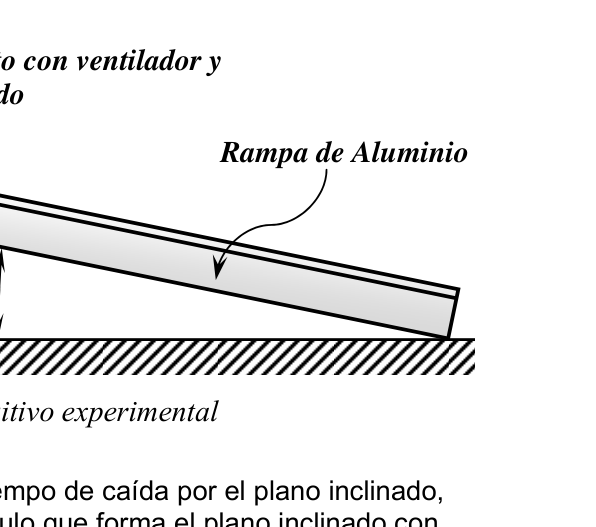
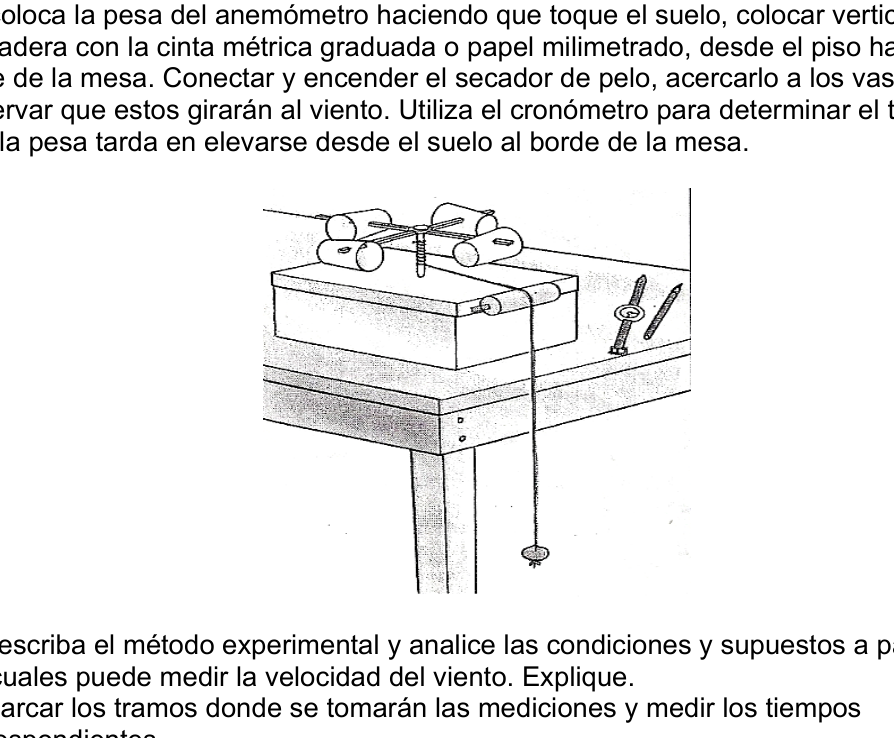
Topic: Newtonian Mechanics Metodi: Free-Body Diagram, Kinematic Equations, Experimental Data Analysis Competenze: Physical Reasoning, Experimental Data Analysis Objects: Cart, Inclined Plane Fonte: Testo (PDF) — p.3
Wind Brake Cart Dynamics
PE29. Città di Buenos Aires. Blu. Freno eolico. Obiettivo L’obiettivo dell’esperienza è studiare la dinamica del frenaggio eolico. Aggiungendo un Il ventilatore sulla parte superiore di un carrello metallico provoca un rallentamento di quello stesso. Come risultato del flusso d’aria generato dal ventilatore si produce una La forza, in senso opposto al movimento del carrello e di grandezza costante, che si comporta come un ulteriore forza di ruggine. Introduzione Quando si colloca un mobile di massa su un piano inclinato con angolo α, forza normale smette di controbilanciare il peso che lo fa accelerare. La seconda legge di Newton ci dà che l’accelerazione è uguale a . Si la superficie di contatto presenta un’arrestazione con il carrello, ora la Accelerazione è uguale a
che è chiaramente inferiore al caso precedente. Inoltre, se il ventilatore è posto su Il carrello emette un flusso d’aria in senso Opposto al movimento produce una forza ventilazione a frenata opposta al movimento di grandezza costante. El Diagramma di corpo libero che include tutti. Le forze applicate sul cellulare si mostra la figura 1. Se si definisce la forza eolica come
Ottieniamo che l’accelerazione è uguale a
La velocità finale o massima raggiunta da un corpo, prima di terminare il suo percorso da la rampa, che si muove sotto l’azione di una forza costante risponde alla l’equazione seguente:
Data una posizione iniziale Sf , una posizione iniziale Si e partendo dal riposo si può Esprimere l’equazione (2) come
Lista dei materiali • Un cronometro. • Piede Universale. • Pinta per il piede universale. • Carro di metallo con ruote e ventilatore CPU. • Batteria da 12 V.
•
- Cintura metrica. • Rampetta di alluminio. •
- Il livello. • Foglie bianche e foglie millimetriche. Procedura sperimentale Parte A: Caratterizzazione della costante di ruggine del cellulare a) Per ridurre il rotturazione statica del dispositivo sperimentale:
3⁄4 Pulisci bene la rampa in alluminio e la superficie scivolante del Carro, prendendo la precauzione di trovarsi ben secchi prima di Iniziare l’esperienza. 3⁄4 a livello del binario in entrambe le direzioni. b) Armati il seguente dispositivo sperimentale per ottenere la costante di Rottura dinamica del carrello con rampa per tre angoli diversi.
c) Utilizzare il cronometro per determinare il tempo di caduta per il piano inclinato, dato una distanza fissa, a seconda dell’angolo che forma il piano inclinato con
- Il tavolo. d) Determina la costante μ di ruggine dinamica.
Figura 3: Foto del carrello con ventilatore
Caratterizzazione della costante forza eolica Usando il dispositivo sperimentale precedente, misureremo la costante b della forza eolica. e) Collegare la batteria al ventilatore per metterla in funzione. f) Determina l’accelerazione del carrello in funzione dell’angolo. g) Determina la costante b della forza eolica. Clarificazione: quantificare in ogni caso le incertezze delle misure.
Topic: Newtonian Mechanics Metodi: Free-Body Diagram, Kinematic Equations, Experimental Data Analysis Competenze: Physical Reasoning, Experimental Data Analysis Objects: Cart, Inclined Plane Fonte: Testo (PDF) — p.3
The following table shows the number of units of the vehicle:
PE29. City of Buenos Aires. Blue, please. Wind brake. The objective The purpose of the experiment is to study the dynamics of wind braking. By adding a The fan on the top of a metal cart causes a slowdown. of the same. As a result of the airflow generated by the fan, a The force, in the opposite direction to the motion of the cart and of constant magnitude, which is It acts as an additional friction force. The first is the introduction. When you put a mass cell phone in about a slanted plane at angle α, force Normal stops countering weight. causing it to gain acceleration. By Newton ‘s second law we get That the acceleration is equal to . Si We consider the contact surface to be It’s a carriage-based wrinkle. acceleration is equal to
which is clearly less than the previous case. In addition, if the fan is placed on the The cart emits a directional airflow. The opposite of motion produces a force. Wind braking opposite to movement The value of the vehicle is constant. El Free body diagram that includes all The force applied on the mobile is the sample in Figure 1. If you define wind power as
We get that acceleration is equal to
The final or maximum speed at which a body reaches its destination before completing its journey. The ramp, which moves under the action of a constant force, responds to the The following equation:
Given an initial position Sf , an initial position If and starting from the rest can be to express the equation (2) as
List of Materials • It’s a timekeeper. • Universal foot. • Universal foot bracelet. • Wheeled metal cart and CPU fan. • Battery of 12 V.
• It’s a metric tape. • It’s an aluminum ramp. • Level of the game. • White leaves and millimeter leaves. Experimental procedure Part A: Characterization of the constant of friction of the mobile device (a) To reduce static friction of the experimental device:
3⁄4 Very clean the aluminium ramp and the sliding surface of the Carriage, taking care that they are well dry before Start the experience. Level the rails in both directions. (b) Arming the following experimental device to obtain the constant of dynamic friction of the cart with the ramp for three different angles.
(c) Use the chronometer to determine the time of fall for the sloping plane, given a fixed distance, depending on the angle that the plane inclined with The table. (d) Determine the dynamic friction constant μ.
Figure 3: Photo of the fan cart
Characterization of the wind force constant Using the previous experimental device, we’ll measure the force constant b. wind power. (e) Connect the battery to the fan by starting it. (f) Determine the acceleration of the cart according to the angle. (g) Determine the wind force constant b. Clarification: In all cases quantify the uncertainties in measurements.
Topic: Newtonian Mechanics Metodi: Free-Body Diagram, Kinematic Equations, Experimental Data Analysis Competenze: Physical Reasoning, Experimental Data Analysis Objects: Cart, Inclined Plane Fonte: Testo (PDF) — p.3
Wind Speed Anemometer Measurement
PE30. San Miguel de Tucumán. Azul.
Objetivo:
“Determinar la velocidad del viento”
Materiales:
- anemómetro
- secador de pelo -Cronómetro
- cinta métrica -Papel milimetrado α Carrito con ventilador y embudo Rampa de Aluminio Pie Metálico Figura 2: Esquema del dispositivo experimental
Procedimiento: Se coloca la pesa del anemómetro haciendo que toque el suelo, colocar verticalmente la madera con la cinta métrica graduada o papel milimetrado, desde el piso hasta la base de la mesa. Conectar y encender el secador de pelo, acercarlo a los vasos y observar que estos girarán al viento. Utiliza el cronómetro para determinar el tiempo que la pesa tarda en elevarse desde el suelo al borde de la mesa.
- Describa el método experimental y analice las condiciones y supuestos a partir de los cuales puede medir la velocidad del viento. Explique.
- Marcar los tramos donde se tomarán las mediciones y medir los tiempos correspondientes.
- calcular la aceleración con la que sube la pesa, con su error correspondiente.
- Calcular la velocidad del viento con su error correspondiente.
- Elaborar un informe donde incluya los pasos seguidos, los gráficos, los cálculos,
los posibles errores cometidos y las conclusiones.
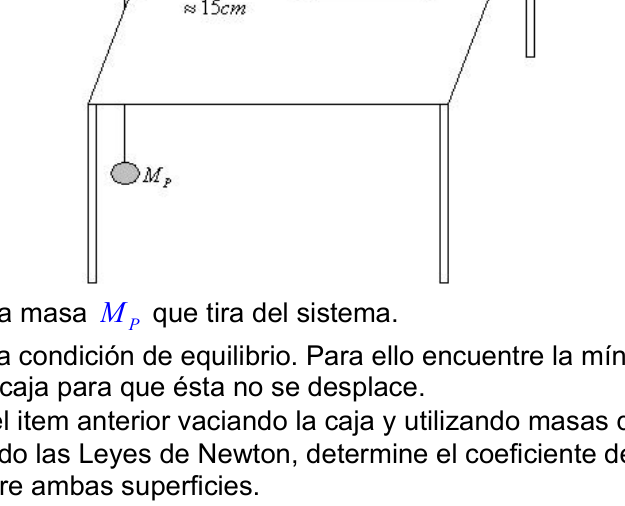
Topic: Fluid Mechanics, Newtonian Mechanics Metodi: Kinematic Equations, Error Propagation, Experimental Data Analysis Competenze: Physical Reasoning, Experimental Data Analysis Objects: — Fonte: Testo (PDF) — p.3
**Massurement anemometer wind speed **
PE30. San Michele di Tucumán. Blu. Obiettivo: Determinare la velocità del vento Materiali:
- Anemometro .
- secchiatori di capelli
- Cronometro.
- Cintura metrica
- Papero di millimetro. α Carro con ventilatore e funile Rampa di alluminio Piede Metallico Figura 2: Schema del dispositivo sperimentale
Procedura: Si pone il peso dell’anemometro facendoli toccare il pavimento, posizionandolo verticalmente. il legno con la cinta metrica graduata o carta millimetrica, dal pavimento alla base del tavolo. Accendere e accendere il secatore, avvicinarlo ai vasi e osservare che questi si girano al vento. Usa il cronometro per determinare il tempo che il peso non si eleva dal pavimento al bordo del tavolo.
- Descrive il metodo sperimentale e analizza le condizioni e le ipotesi a partire da che possono misurare la velocità del vento. Spiegami.
- Indicare i tratti in cui si effettueranno le misure e i tempi di misurazione corrispondenti.
- calcolare l’accelerazione del peso, con il relativo errore.
- Calcolare la velocità del vento con il suo errore corrispondente.
- elaborare un rapporto che includa i passaggi seguiti, i grafici, i calcoli, le eventuali errori commesse e le conclusioni.
Topic: Fluid Mechanics, Newtonian Mechanics Metodi: Kinematic Equations, Error Propagation, Experimental Data Analysis Competenze: Physical Reasoning, Experimental Data Analysis Objects: — Fonte: Testo (PDF) — p.3
The following information shall be provided:
PE30. St. Michael of Tucumán. Blue, please. The objective: Determining wind speed Materials:
- Anemometer .
- hair dryer
- Chronometer.
- Metric tape .
- Millimeter paper. α Carriage with fan and Fork of the line Aluminum ramp Metal foot Figure 2: Schematic of the experimental device
The procedure: You put the anemometer weight on the ground, you put it up vertically. wood with grade-metric tape or millimeter paper, from the floor to the base of the table. Connect and turn on the hair dryer, bring it closer to the glasses and See these winds rolling. Use the time timer to determine the time The weight takes a long time to rise from the floor to the table edge.
- Describe the experimental method and analyse the conditions and assumptions from which can measure wind speed. - Explain that.
- Marking the sections where measurements will be taken and measuring times the corresponding ones.
- calculate the acceleration of the weight with its corresponding error.
- Calculate wind speed with its corresponding error.
- Develop a report that includes steps, charts, calculations, the possible errors made and conclusions.
Topic: Fluid Mechanics, Newtonian Mechanics Metodi: Kinematic Equations, Error Propagation, Experimental Data Analysis Competenze: Physical Reasoning, Experimental Data Analysis Objects: — Fonte: Testo (PDF) — p.3
Static Friction Between Surfaces
PE31. Yerba Buena, Tucumán. Azul. Cajas Deslizantes. Determinación del coeficiente de roce estático máximo entre dos superficies.
Objetivo: • Determinar el coeficiente de roce estático máximo entre dos superficies utilizando las condiciones de equilibrio dinámico establecido por las Leyes de Newton. • Comparar los resultados para distintas superficies en contacto. Materiales Disponibles: • Balanza • Masas de diferentes denominaciones • Lápices cilíndricos • Una caja • Hilo piolín • Plastilina
Instrucciones:
- Describa el método experimental y analice las condiciones y supuestos a partir de los cuales puede encontrar el coeficiente de roce estático máximo entre las superficies.
- Encuentre la condición de equilibrio estático utilizando Leyes de Newton. Una vez desarrollado el marco teórico, arme el dispositivo experimental.
•
Determine la masa
P
M que tira del sistema.
•
Encuentre la condición de equilibrio. Para ello encuentre la mínima cantidad de
masa en la caja para que ésta no se desplace.
•
Corrobore el item anterior vaciando la caja y utilizando masas distintas.
•
Considerando las Leyes de Newton, determine el coeficiente de roce estático
máximo entre ambas superficies.
Parte 2: cambiando las superficies:
A continuación coloque los lápices entre ambas superficies como lo indica la figura. A simple vista, ¿Cambian los resultados obtenidos? Explicar por qué • Determine nuevamente la masa necesaria para encontrar el equilibrio y determine el coeficiente de roce estático máximo entre estas nuevas superficies. • Redacte un informe experimental transmitiendo sus resultados, análisis de errores, conclusiones y todo lo que considere relevante en el mismo.
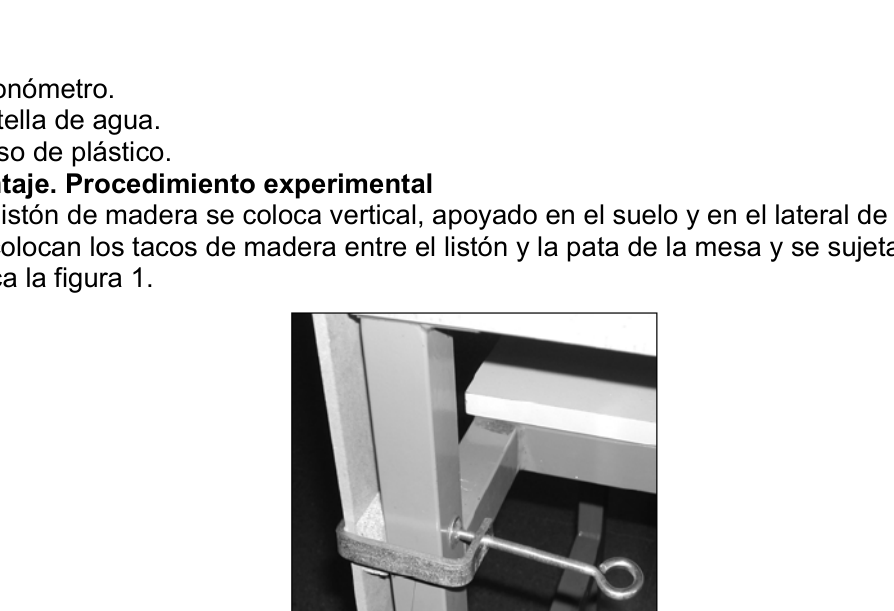
Topic: Newtonian Mechanics Metodi: Free-Body Diagram, Conservation Laws, Experimental Data Analysis Competenze: Physical Reasoning, Experimental Data Analysis Objects: Block, String Fonte: Testo (PDF) — p.3
Static Friction Between Surfaces
PE31. - Buona erba, Tucumán. Blu. Scatole scivolanti. Determinazione del coefficiente di rottura statica massimo tra due superfici.
Obiettivo: • Determinare il coefficiente di rottura statica massimo tra due superfici La Commissione ha adottato una decisione del Consiglio che prevede che il regime di controllo dei dati sia stato applicato in conformità con le disposizioni del regolamento (CE) n. Newton. - Non è vero. • confrontare i risultati per le diverse superfici di contatto. Materiali disponibili: • Sbalzo • Masse di denominazioni diverse • Labbra cilindriche • Una scatola • Fello di pioglia • Plastici
Instruzioni:
- Descrivere il metodo sperimentale e analizzare le condizioni e le ipotesi a partire da di cui si può trovare il coefficiente di rottura statico massimo tra le superfici.
- Trova la condizione di equilibrio statico usando le leggi di Newton. Una volta sviluppato il quadro teorico, armate il dispositivo sperimentale.
• Determina la massa P M che tira fuori dal sistema. • Trova la condizione di equilibrio. Per questo, cerca la minima quantità di massa nella scatola per non spostarla. • Raggiustare l’articolo precedente svuotando la scatola e usando masse diverse. • Considerando le leggi di Newton, determina il coefficiente di rottura statico massimo tra le due superfici.
Parte 2: cambiare le superfici:
Poi metti le matite tra Le due superfici, come indicato nella figura. A prima vista, i risultati cambiano.
- Le cose che ho ottenuto? Spiegare il motivo • Ridetermine la massa necessaria per trovare il equilibrio e determina il coefficiente di rottura massima statica tra queste nuove superfici. • Scrivere un rapporto sperimentale trasmettere i risultati, analisi degli errori, conclusioni e Tutto ciò che ritiene rilevante in
- Lo stesso.
Topic: Newtonian Mechanics Metodi: Free-Body Diagram, Conservation Laws, Experimental Data Analysis Competenze: Physical Reasoning, Experimental Data Analysis Objects: Block, String Fonte: Testo (PDF) — p.3
The following table shows the results of the calculation of the total value of the underlying assets.
PE31. It’s good grass, Tucumán. Blue, please. Sliding boxes. Determination of maximum static friction coefficient between two surfaces.
The objective: • Determine the maximum static friction coefficient between two surfaces using the dynamic equilibrium conditions established by the Laws of Newton, you know. • Comparison of results for different contact surfaces. Materials Available: • Weighing • Masses of different denominations • The following table summarizes the results of the calculations: • A box . • I ‘m a little bit of a dick . • Plastic .
Instructions:
- Describe the experimental method and analyse the conditions and assumptions from of which you can find the maximum static friction coefficient between the the surface.
- Find the static equilibrium condition using Newton’s laws. Once the theoretical framework is developed, arm the experimental device.
• Determine the mass P M pulling out of the system. • Find the equilibrium condition. For this, find the minimum amount of mass in the box so that it does not move. • Corroborate the previous item by emptying the box and using different masses. • Considering Newton’s laws, determine the static friction coefficient. maximum between the two surfaces.
Part 2: Changing the surfaces:
Then place the pencils between both surfaces as shown in the figure. In simple terms, do the results change? obtained? Explain why . • Determine the mass again necessary to find the balance and determine the coefficient Maximum static brushing between These new surfaces. • Write an experimental report By transmitting their results, The Commission will examine the results of the evaluation. Anything you consider relevant in The same one.
Topic: Newtonian Mechanics Metodi: Free-Body Diagram, Conservation Laws, Experimental Data Analysis Competenze: Physical Reasoning, Experimental Data Analysis Objects: Block, String Fonte: Testo (PDF) — p.3
U-Tube Water Column Oscillations
PE32. Vicente López, Buenos Aires. Azul. Objetivos Se van a estudiar experimentalmente las oscilaciones de la columna de agua contenida en un tubo cilíndrico, doblado en forma de U. Debido a la fricción del agua con las paredes del tubo, esta oscilación es amortiguada y al cabo de unas pocas oscilaciones se alcanza el equilibrio. En concreto, se van a determinar experimentalmente el radio efectivo del tubo y el coeficiente de amortiguamiento. Materiales
-
Tubo de goma de 170 cm de longitud.
-
Listón de madera.
-
Tacos de madera para sujetar el listón a la pata de la mesa.
-
4 pinzas para sujetar el tubo al listón.
-
Cinta adhesiva y tijeras.
-
Jeringa graduada de 60 cm3.
-
Cinta métrica.
-
Cronómetro.
-
Botella de agua.
-
Vaso de plástico. Montaje. Procedimiento experimental • El listón de madera se coloca vertical, apoyado en el suelo y en el lateral de la mesa. Se colocan los tacos de madera entre el listón y la pata de la mesa y se sujetan, como indica la figura 1.
• El tubo se sujeta al listón mediante las pinzas, como se indica en la figura 2. Si es necesario, se puede emplear cinta adhesiva para terminar de sujetar el tubo y darle la forma deseada en U.
• Debe procurarse que el tubo mantenga su sección circular, es decir que no se doble en la parte inferior curvada ni se aplaste con las pinzas. Además, los dos laterales del tubo deben quedar verticales. • Es necesario que quede un trozo de tubo libre en la parte superior de los dos lados, uno de ellos suficientemente largo para poder soplar por él. • El volumen deseado de agua se introduce en el tubo mediante una jeringa graduada. Deben evitarse en lo posible las burbujas de aire dentro de la jeringa y en la columna de agua dentro del tubo. • Para forzar la oscilación de la columna de agua, soplar por un extremo del tubo hasta que el agua alcance el nivel deseado y tapar con un dedo el otro extremo. Al quitar el dedo que cierra el tubo comienza la oscilación de la columna de agua. El desplazamiento inicial del agua debe ser suficiente para que puedan observarse cuatro oscilaciones completas antes de que el sistema alcance el equilibrio.
• Atención: cuando se sopla por un extremo del tubo, debe evitarse que el agua rebose por el otro. Si ocurriese esto, sería necesario vaciar el tubo y volver a empezar la medida pues se desconocería el volumen de agua que queda dentro del tubo. • Antes de realizar medidas es conveniente adquirir práctica con el método de forzar la oscilación del agua y con el manejo del cronómetro.
Modelo teórico
En equilibrio, el nivel de agua en los dos lados del tubo es el mismo (figura 3.a).
Cuando se sopla por un extremo del tubo el sistema se desequilibra (figura 3.b) y, al
liberar el sistema, el nivel x del agua oscila en torno al de equilibrio.
No es difícil demostrar que, en ausencia de fricción, esta oscilación es armónica, es decir x = A cosω0t (1) con periodo de oscilación T0 = 2π /ω 0 dado por
donde g es la aceleración de la gravedad, R el radio del tubo y V el volumen de agua. En ausencia de fricción, la amplitud de oscilación, A, sería constante en el tiempo. Un tratamiento más realista debe tener en cuenta la fricción del agua con las paredes del tubo. Si se considera una fuerza de fricción proporcional a la velocidad del agua, se obtiene x = A0 e −γ t.cosωt (3) donde γ es el llamado coeficiente de amortiguamiento. El resultado (3) representa una oscilación armónica con frecuencia angular ω = 2π /T y amplitud A exponencialmente decreciente (figura 4)
A = A0 e −γ t 0 (4)
En particular, la amplitud al cabo de n oscilaciones completas, es decir
en t n = nT , es (figura 4)
An = A0e−γ.tn (5)
Si el amortiguamiento es débil (γ <<ω 0 ), como es nuestro caso, la frecuencia ω
coincide aproximadamente con la frecuencia ω 0 en ausencia de amortiguamiento, de
forma que la expresión (2) para el periodo de oscilación sigue siendo
aproximadamente válida.
Pero, debido también a la fricción del agua con las paredes, la columna de agua no
oscila “en bloque”, es decir como un todo (La capa de agua en contacto con las
paredes prácticamente no se mueve). Como consecuencia, el radio efectivo del tubo
es inferior al real, y por tanto el periodo de oscilación es mayor que el previsto en
ausencia de fricción, de forma que
(6)
con Ref < R , y T > T0 .
En la primera parte de esta prueba experimental se van a realizar una serie de
medidas para determinar los radios efectivo, Ref , y real, R, del tubo. En nuestro
montaje, estos dos radios son claramente diferentes, es decir la diferencia entre
ambos es mayor que sus incertidumbres experimentales. En la segunda parte se
obtendrá el coeficiente de amortiguamiento γ.
Medidas y preguntas
1ª parte. Determinación de Ref y R.
1.a) Mediante la jeringa graduada, añade agua dentro del tubo de forma que el
volumen de agua sea sucesivamente
V = 30, 40, 50 …100 cm3. En cada uno de estos casos:
• Mide con el cronómetro el periodo de oscilación del agua en torno a su nivel de
equilibrio. Sugerencia: mide cuatro veces el tiempo de cuatro oscilaciones completas
(4T1, 4T2, 4T3 y 4T4) y deduce el periodo T promediando los resultados.
• Para cada V, marca con birome en los dos lados del tubo la posición del nivel de
agua en equilibrio. La distancia entre estas dos marcas, que se medirá más tarde
cuando se vacíe y estire el tubo, permitirá determinar su radio R. Ten cuidado de que
estas marcas no se borren.
1.b) Representa gráficamente en un papel milimetrado los puntos experimentales T 2
(en ordenadas) frente a V (en abscisas).
1.c) Obtén la pendiente de la recta que mejor se ajusta a estos puntos.
1.d) Deduce el valor del radio efectivo del tubo, Ref .
1.e) Haz una estimación de la incertidumbre del radio efectivo, ∆Ref .
1.f) Desmonta con cuidado un lado del tubo y vacía el agua en un vaso. Desmonta
completamente el tubo y estíralo sobre la mesa, mide la distancia L entre las marcas
simétricas que has hecho para cada V y deduce en cada caso el radio R del tubo.
1.g) Calcula el valor medio de R y haz una estimación de su incertidumbre.
2ª parte. Determinación de γ.
Vuelve a sujetar el tubo en U al listón de madera. Introduce 60 cm3 de agua y marca
en el listón el nivel de agua en equilibrio. Haz otra marca unos 20 cm por encima. Ésta
será la posición inicial del nivel de agua, A0, en todas las medidas posteriores. Antes
de medir debes adquirir práctica en conseguir enrasar el nivel de agua con esta marca,
soplando por el otro lado hasta alcanzar un nivel un poco más alto, tapando el tubo
con el dedo y dejando entrar un poco de aire hasta que el nivel alcance la marca.
2.a) Mide las amplitudes A1, A2 y A3 al cabo de una, dos y tres oscilaciones completas,
respectivamente, es decir en
t1 = T, t2 = 2T y t3 = 3T (el periodo T para este volumen de agua ya ha sido medido
previamente).
Repite la observación de la oscilación amortiguada todas las veces que sea necesario
para, mediante aproximaciones y marcas sucesivas, determinar estas amplitudes con
suficiente precisión.
2.b) Transforma la expresión (4) para obtener una relación lineal entre una función de
la amplitud, F(A), y el tiempo t.
2.c) Representa gráficamente los puntos experimentales correspondientes, F(A) en
función de t. Ajusta estos puntos a una línea recta.
2.d) Deduce el coeficiente de amortiguamiento, γ.
Topic: Oscillations & Waves Metodi: Simple Harmonic Motion Analysis, Experimental Data Analysis, Error Propagation Competenze: Physical Reasoning, Experimental Data Analysis, Mathematical Modeling Objects: Tube Fonte: Testo (PDF) — p.3
U-Tube Water Column Oscillations
PE32. Vicente López, Buenos Aires. Blu. Obiettivi Si studieranno sperimentalmente le oscillazioni della colonna d’acqua contenuto in un tubo cilindrico, piegato in U. A causa della friczione dell’acqua. Con le pareti del tubo, questa oscillazione viene ammortizzata e dopo pochi minuti. Le oscillazioni raggiungono l’equilibrio. In particolare, si verrà determinato la radius effettiva del tubo e il coefficiente di ammortizzazione. Materiali
-
Un tubo di gomma lungo 170 centimetri.
-
Un barattolo di legno.
-
Bastoni di legno per appoggiare la lamina alla tavola.
-
4 pinze per attaccare il tubo alla lastra.
-
Fascia adesiva e forbici.
-
Seringa graduata di 60 cm3.
-
Cintura metrica.
-
Un cronometro.
-
Boccetta d’acqua.
-
Un bicchiere di plastica. Montaggio. Procedura sperimentale • La lavagna di legno è posizionata verticalmente, appoggiata al pavimento e sul lato del tavolo. Si mettono i tacchi di legno tra la lastra e la gamba del tavolo e si attaccano, come indica la figura 1.
• Il tubo è attaccato alla lastra con le pinze, come indicato in figura 2. Se necessario, si può usare una cinta adesiva per finire di tenere il tubo e
- In U.
• Si deve assicurare che il tubo mantenga la sua sezione circolare, cioè non si piega la parte inferiore curva, non si schiacciano con le pinze. Inoltre, i due lati del i tubi devono restare verticali. • Bisogna lasciare un pezzo di tubo libero in cima ai due lati, Uno di loro abbastanza lungo da poterne soffiare. • Il volume d’acqua desiderato viene inserito nel tubo mediante una siringa graduata. Se possibile, evitare le bolle d’ aria all’ interno della siringa e della colonna vertebrale. dell’acqua nel tubo. • Per forzare l’oscillazione della colonna d’acqua, soffiare da un’altra parte del tubo fino a che l’acqua raggiunga il livello desiderato e copra con un dito l’altra estremità. Togliendo il Il dito che chiude il tubo inizia l’oscillazione della colonna d’acqua. El L’inizio del movimento dell’acqua deve essere sufficiente per poter essere osservato. quattro oscillazioni complete prima che il sistema raggiunga l’equilibrio.
• Attenzione: quando si soffia da un’altra parte del tubo, si deve evitare che l’acqua si allontana. Mi sono arrossato per l’altro. Se questo accadesse, sarebbe necessario svuotare il tubo e ricominciare. La misura, infatti, non si sa quale volume di acqua rimanga all’interno del tubo. • Prima di prendere misure, è opportuno acquisire la pratica del metodo di forza. l’oscillazione dell’acqua e la gestione del cronometro.
Modello teorico In equilibrio, il livello di acqua su entrambi i lati del tubo è lo stesso (Figura 3.a). Quando si soffia da un’altra parte del tubo il sistema si sbilanci (Figura 3.b) e, al Se si libera il sistema, il livello x dell’acqua oscilla intorno al livello di equilibrio.
Non è difficile dimostrare che, in assenza di attrito, questa oscillazione è armonica, è dire x = A cosω0t (1) con periodo di oscillazione T0 = 2π /ω 0 dato da
dove g è l’accelerazione della gravità, R il raggio del tubo e V il volume dell’acqua. In assenza di attrito, l’ampiezza di oscillazione, A, sarebbe costante nel tempo. Un Il trattamento più realistico deve tenere conto della friczione dell’acqua con i muri del tubo. Se si considera una forza di attrito proporzionale alla velocità dell’acqua, si
- Si ’ , si ’ . x = A0 e −γ t.cosωt (3) dove γ è il cosiddetto coefficiente di ammortizzazione. Il risultato (3) rappresenta un oscillazione armonica con frequenza angolare ω = 2π /T e amplitudine A esponenzialmente (Figura 4)
A = A0 e −γ t 0 (4) In particolare, l’ampiezza dopo n oscillazioni complete, cioè in t n = nT , è (figura 4) An = A0e−γ.tn (5) Se l’ammortizzazione è debole (γ <<ω 0 ), come nel nostro caso, la frequenza ω corrisponde approssimativamente alla frequenza ω 0 in assenza di amortizzazione, di modo che l’espressione (2) per il periodo di oscillazione rimanga approssimativamente valida. Ma, anche a causa della friczione dell’acqua con i muri, la colonna d’acqua non oscilla “in blocco”, cioè come un tutto (la strata d’acqua in contatto con le (Muri praticamente non si muovono). Di conseguenza, il raggio effettivo del tubo La variazione del periodo di oscillazione è inferiore alla reale, e quindi più grande di quanto previsto in non c’è friczione, in modo che (6) con Ref < R , e T > T0 . Nella prima parte di questo test sperimentale si svolgeranno una serie di misura per determinare i raggi effettivi, Ref , e reali, R, del tubo. - Al nostro . La montaggio, questi due raggi sono chiaramente diversi, cioè la differenza tra entrambi sono più grandi delle loro incertezze sperimentali. Nella seconda parte si si ottiene il coefficiente di ammortizzazione γ.
Misure e domande Parte uno. Determinazione di Ref e R.
- (a) Aggiungi acqua all’interno del tubo mediante la siringa graduata in modo che il volume di acqua successivamente V = 30, 40, 50 …100 cm3. In ciascun caso: • Misura con il cronometro il periodo di oscillazione dell’acqua intorno al suo livello di equilibrio. Suggerimento: misura quattro volte il tempo di quattro oscillazioni complete (4T1, 4T2, 4T3 e 4T4) e deduce il periodo T mediando i risultati. • Per ogni V, segna con un biroma su entrambi i lati del tubo la posizione del livello di acqua in equilibrio. La distanza tra questi due segni, che verrà misurata più tardi quando viene svuotato e esteso il tubo, permetterà di determinare il suo raggio R. - Si ’ , si ’ . queste macchie non si cancella. 1.b) Rappresenta graficamente su carta millimetrica i punti sperimentali T 2 (in ordinati) contro V (in abscissi). 1.c) Ottieni la pendenza della retta che meglio si adatta a questi punti. 1.d) Deduce il valore del raggio effettivo del tubo, Ref. 1.e) Fare un’estimazione dell’incertezza del radio effettivo, ∆Ref.
- (f) Scaccia con cura un lato del tubo e svuota l’acqua in un bicchiere. Scacciate . Completamente il tubo e stendilo sul tavolo, misura la distanza L tra le marcature che hai fatto per ogni V e dedurre in ogni caso il raggio R del tubo. 1.g) Calcola il valore medio di R e fai un’estimazione dell’incertezza. Parte due. Determinazione di γ. Riattacca il tubo in U al bastone di legno. Inserisce 60 cm3 di acqua e marca sul riquadro il livello dell’acqua in equilibrio. Fai un altro marchio, circa 20 centimetri sopra. Questa. sarà la posizione iniziale del livello dell’acqua, A0, in tutte le misure successive. Prima Per misurare, devi imparare a fare il punto di questo marchio. Soffiando dall’altra parte fino a raggiungere un livello un po’ più alto, coprendo il tubo. con il dito e lasciando entrare un po’ di aria fino a quando il livello raggiunge il marchio. 2.a) Misura le amplitudini A1, A2 e A3 dopo una, due e tre oscillazioni complete, rispettivamente, cioè in t1 = T, t2 = 2T e t3 = 3T (il periodo T per questo volume d’acqua è stato già misurato precedentemente).
Ripetere l’ osservazione dell’ oscillazione amortizzata ogni volta che è necessario. per determinare queste ampiezza con sufficiente precisione. 2.b) Trasforma l’espressione (4) per ottenere un rapporto lineare tra una funzione di la larghezza, F(A), e il tempo t. 2.c) Rappresenta graficamente i punti sperimentali corrispondenti, F(A) in funzione di t. Aggiusta questi punti in una linea retta. 2.d) Deduce il coefficiente di ammortizzazione, γ.
Topic: Oscillations & Waves Metodi: Simple Harmonic Motion Analysis, Experimental Data Analysis, Error Propagation Competenze: Physical Reasoning, Experimental Data Analysis, Mathematical Modeling Objects: Tube Fonte: Testo (PDF) — p.3
The following is the list of the Member States’ official data protection authorities:
PE32. Vicente Lopez, from Buenos Aires. Blue, please. Objectives They are going to experimentally study the oscillations of the water column . contained in a cylindrical tube, folded in the shape of a U. Because of the water friction. With the walls of the tube, this oscillation is cushioned and after a few seconds. The oscillations are balanced. In particular, they will be determined The test shall be carried out on the effective tube radius and the buffer coefficient. Materials
-
A rubber tube, about two inches long.
-
A wooden bar.
-
Wooden sticks to hold the bar to the table’s leg.
-
Four clamps to hold the tube to the barrel.
-
Glue tape and scissors.
-
Graduated syringe of 60 cm3.
-
It’s a tape recorder.
-
It’s a timekeeper.
-
A bottle of water.
-
Plastic glass. I’m going to get it assembled. Experimental procedure • The wooden plank is placed vertically, leaning on the floor and on the side of the table. The wooden sticks are placed between the bar and the table leg and are held together, as indicates the figure 1.
• The tube is attached to the rack by means of the tweezers, as shown in Figure 2. If necessary, adhesive tape may be used to finish the tube and Give it the shape you want in U.
• The tube must be kept circular, i.e. not to bend the bottom is curved and not crushed with the tweezers. In addition, the two sides of the pipes should be kept vertical. • A piece of tube should be left free on the top of both sides, One of them long enough to blow for it. • The desired volume of water is introduced into the tube by a graduated syringe. Air bubbles inside the syringe and spine should be avoided as much as possible. of water inside the tube. • To force the water column oscillation, blow through one end of the tube up to the water reaches the desired level and covers the other end with one finger. By removing the The finger that closes the tube begins the oscillation of the water column. El The initial water displacement should be sufficient for observation Four complete oscillations before the system reaches equilibrium.
• Attention: when blowing through one end of the tube, water should be avoided. I’m just bouncing over the other one. If this happens, it would be necessary to empty the tube and start again. The measurement would be unknown as to the volume of water remaining inside the tube. • Before taking action, it is appropriate to acquire practice with the method of enforcing the water oscillation and the running of the chronometer.
Theoretical model In equilibrium, the water level on both sides of the tube is the same (Figure 3.a). When one end of the tube is blown the system becomes unbalanced (Figure 3.b) and, at the If the system is released, the water level x oscillates around the equilibrium level.
It’s not hard to prove that, in the absence of friction, this oscillation is harmonic, it’s I mean , x = A cosω0t (1) with oscillation period T0 = 2π /ω 0 given by
where g is the acceleration of gravity, R is the radius of the tube and V is the volume of water. In the absence of friction, the oscillation amplitude, A, would be constant over time. Un The most realistic treatment should take into account the friction of water with the walls of the building. pipe. If a force of friction is considered to be proportional to the speed of water, it is You get it . x = A0 and −γ t.cosωt (3) where γ is the so-called buffer coefficient. The result (3) is a Harmonic oscillation with angular frequency ω = 2π /T and amplitude A exponentially The decrease in the rate of change in the rate of change of the rate of change in the rate of change of the rate of change in the rate of change of the rate of change in the rate of change of the rate of change in the rate of change of the rate of change of change in the rate of change of change in the rate of change of change of the rate of change in the rate of change of change of change of the rate of change of change in the rate of change of change of the rate of change of change of change in the rate of change of change of change of the rate of change of change of change of the rate of change of change of change of the rate of change of change of change of change of the rate of change of change of change of change of change of the rate of change of change of change of change of change of the rate of change of change of change of change of change of change of the rate of change of change of change of change of change of change of the rate of change of change of change of change of change of change of change of change of the rate of change of change of change of change of change of change of change of change of the rate of change of change of change of change of change of change of change of the rate of change of change of change of change of change of the rate of change of change of change of change of change of change of change of the rate of change of change of change of change of change of change of change of the rate of change of change of change of change of change of change of change of change of change of the rate of change of change of change of change of the rate of change of change of change of change of change of the rate of the rate of change of change of change of change of change of change of change of change of change of change of change of the rate of change of change of change of change of the change of change of the rate of change of change of change of change of change of the change of the change of the change of the rate of the change of the change of the change of the change of the change of the rate of the change of the change of the change of the change of the change of the change of the change of the change of the change of the change of the rate of the change of the change of the change of the change of the change of the change of the change of the change of the change of the rate of the change of the change of the
A = A0 e −γ t 0 (4) In particular, the amplitude after n complete oscillations, i.e. where n = nT , is (Figure 4) An = A0e−γ.tn (5) If the buffer is weak (γ <<ω 0 ), as in our case, the frequency ω approximately corresponds to the frequency ω 0 in the absence of cushioning, of so that the expression (2) for the oscillation period remains approximately valid. But, also because of the friction of water with the walls, the water column does not The water layer in contact with the water is the The walls are practically unmoving. As a consequence, the effective radius of the tube The average rate of change in the rate of change of the current oscillation is less than the actual, and therefore the period of change is longer than the expected in the the absence of friction, so that (6) with Ref < R , and T > T0 . In the first part of this experimental test a series of measurements to determine the effective radii, Ref , and real, R, of the tube. In our . assembly, these two radii are clearly different, that is, the difference between Both are greater than their experimental uncertainties. In the second part it is The buffer coefficient γ shall be obtained.
Measures and questions Part one. Determination of Ref and R.
- (a) By means of the graduated syringe, add water to the tube so that the Water volume is successively V = 30, 40, 50 …100 cm3. In each of these cases: • Measures the period of water oscillation around its level with the chronometer. The balance. Suggestion: Measure four times the time of four complete oscillations (4T1, 4T2, 4T3 and 4T4) and deduces the period T by averaging the results. • For each V, mark with a birome on both sides of the tube the position of the level of water in balance. The distance between these two marks, which will be measured later When the tube is emptied and stretched, it will allow its R radius to be determined. Be careful not to . These marks don’t fade.
- (b) Graphically depicts the experimental points T 2 on a millimeter paper. (in order) versus V (in abscesses).
- (c) Get the slope of the straight line that best fits these points.
- (d) Subtract the value of the effective radius of the tube, Ref.
- (e) Estimate the uncertainty of the effective radius, ∆Ref.
- (f) Carefully disassemble one side of the pipe and empty the water in a glass. Disassemble . You can completely stretch the tube and put it on the table, measure the distance L between the marks. The symmetrical ones you made for each V and deduces in each case the radius R of the tube. 1.g) Calculate the mean value of R and estimate its uncertainty. Part two. Determination of γ. Reattach the U tube to the wooden bar. Enter 60 cm3 of water and mark the water level in the barrel is in equilibrium. Make another mark about 20 centimeters above. This one . the starting water level position, A0, for all subsequent measurements. Before . You have to get practice in getting water level to be level with this mark. blowing the other side up to a slightly higher level, covering the tube. With your finger and letting in some air until the level reaches the mark.
- (a) Measures the amplitudes A1, A2 and A3 after one, two and three complete oscillations, The Commission has already adopted a proposal for a regulation on the t1 = T, t2 = 2T and t3 = 3T (the T period for this water volume has already been measured previously).
Repeat the observation of the cushioning oscillation as often as necessary to determine these amplitudes by successive approximations and markings with It’s just accurate enough. 2.b) Transforms the expression (4) to obtain a linear relationship between a function of the width, F(A), and the time t. 2.c) Graphically represents the corresponding experimental points, F(A) in function of t. Adjust these points to a straight line. 2.d) Subtract the buffer coefficient, γ.
Topic: Oscillations & Waves Metodi: Simple Harmonic Motion Analysis, Experimental Data Analysis, Error Propagation Competenze: Physical Reasoning, Experimental Data Analysis, Mathematical Modeling Objects: Tube Fonte: Testo (PDF) — p.3
Spring Constant Measurement Hooke
PE33. Eduardo Castex, La Pampa. Azul.
Primera parte
Tema: Resortes, su comportamiento.
OBJETIVO: Calculo de la constante K (Dinas/cm) de un resorte.
Desarrollo teórico: Comportamiento de un resorte
Los resortes son dispositivos mecánicos que hacen uso de la capacidad elástica de los
materiales como hierro, gomas, plásticos etc.
Cada resorte tiene una característica propia de responder frente a una deformación de
su posición inicial. De forma tal que al alejarlo una distancia X (cm.) sentimos que el
resorte ejerce una fuerza contraria que depende proporcionalmente de la distancia X y
de su propia constante K.
La fórmula que representa este fenómeno físico es muy sencilla: para resolver la
fuerza que realiza el resorte, siempre contraria al desplazamiento es:
F (dinas) = K (Dinas / cm). X (cm)
Calculo de K (Dinas / cm) ACTIVIDAD: Investiga cómo se comporta un resorte, que suspendido del extremo superior, se lo carga con distintos pesos crecientes sufriendo una deformación X (cm.). Medimos sin pesos la longitud inicial linic, y al cargarlo se toma X como la resta del largo total menos la longitud inicial X= l final – l inicial Se toman los datos de deformación para cada carga que se agrega, usando los mismos en la carga de pesos y tomando también en la descarga de los mismos, llevándolos a una tabla. Carga de pesas De la balanza saco los pesos en gramos fuerza, para pasarlos a dinas simplemente los multiplico por la gravedad en el CGS g= 981 cm/seg2 y obtengo el peso en Dinas Pesas En Dinas
Deformación
X= Lfin-lini
centímetros
Descarga de pesas
Voy retirando pesas y vuelvo a medir la deformación
Pesas
En Dinas
Deformación
X= Lfin-lini
centímetros
Construcción del Grafico: Grafico: Con los datos de la tabla armar en escalas convenientes, en el eje x las deformaciones en centímetros y en el eje y las fuerzas en dinas.
Volcar los puntos y analizar a qué función se la puede aproximar. Tener en cuenta la
formula de los resortes antes vista (recta que pasa por el origen) evaluar los errores en
las determinaciones.
CALCULO DE LA CONSTANTE k DEL RESORTE
Con los datos del grafico se puede determinar el valor de K, dividendo un segmento de
las pesas por su escala dinas, por su correspondiente de las deformaciones X (cm) en
su escala también:
K = Segmento de pesos / segmento de deformaciones Estimar errores
Segunda parte
Verificacion de K mediante un pendulo elastico.
Desarrollo teórico: La ley que marca el periodo T (seg) de un péndulo elástico está en
función de la masa del cuerpo que cuelga del mismo y de la constante K de este
resorte.
T = 2 . π .
( m / K )
De esta ley se puede despejar la constante K para su cálculo y constatación con la parte I del ensayo, teniendo como datos la masa m y el periodo T medidos con balanza y cronometro respectivamente. PUNTO1. Armar el dispositivo de péndulo ELASTICO con una masa m1. Apartar la masa de la posición vertical y medir 2 amplitudes y luego sacar el periodo T promedio para calcular por la formula el valor de K. Repetimos el procedimiento con otras masas m2 y m3. Armar la tabla siguiente
Masas(gramos) Periodo T 1(seg) Periodo T 2(seg) T Promedio(seg) Valores de K masa 1=
masa 2 =
masa 3=
Escribir de los instrumentos que usó, su precisión. Estimar errores, cuantos decimales le puso a π ? CONCLUSIONES FINALES: Contrastar los resultados de K de la parte I con la segunda parte y concluir los errores de cada caso, cual le resulta más preciso?.
Topic: Elasticity & Materials Metodi: Hooke’s Law, Graph Linearization, Experimental Data Analysis Competenze: Physical Reasoning, Experimental Data Analysis Objects: Spring Fonte: Testo (PDF) — p.3
Spring Constant Measurement Hooke
PE33. Eduardo Castex, La Pampa. Blu. Parte I Tema: Resort, il suo comportamento. OBJETtivo: Calcolo della costante K (Dinas/cm) di una primavera. Sviluppo teorico: comportamento di una primavera Le sorgenti sono dispositivi meccanici che fanno uso della capacità elastica dei materiali come ferro, gomma, plastica ecc. Ogni primavera ha la sua caratteristica di rispondere a una deformazione di la sua posizione iniziale. Così che quando lo distanziamo da X sentiamo che il la forza di resorte esercita una forza contraria che dipende proporzionalmente dalla distanza X e della sua costante K. La formula che rappresenta questo fenomeno fisico è molto semplice: per risolvere il problema la forza che fa resorgere, sempre contro il spostamento, è:
F (dinas) = K (dinas / cm). X (cm)
Calcolo di K (Dinas / cm) ACTIVITÀ: Indagina su come si comporta una primavera, che sospende dall’estremità La struttura è in grado di essere più elevata, con un peso crescente di circa un centímetro. Misurando senza pesare la lunghezza iniziale lineare, e quando lo carichiamo si prende X come il restante di lunghezza totale meno lunghezza iniziale X=l finale l iniziale I dati di deformazione sono prelevati per ogni carico che viene aggiunto, usando i e portando i pesi e portandoli anche nel loro scarico. portandoli a un tavolo. Carga di peso Dalla bilancia tirando fuori i pesi in grammo di forza, per passare a dinas semplicemente Le moltiplico per gravità al CGS g= 981 cm/sec2 e ottengo il peso in Dinas Pese A Dinas
Deformazione X = Lfin-lini centimetri
Discarico di pesi Sto riprendendo i pesi e ri misura la deformazione. Pese A Dinas
Deformazione X = Lfin-lini centimetri
Costruzione del grafico: Grafico: Con i dati della tabella organizzare in scale convenienti, sull’asse x le Deformazioni in centimetri e in asse e forze in dinasi.
Invertire i punti e analizzare quale funzione si può avvicinare. Tenere conto della formula delle fonti precedentemente viste (rigita che passa per l’origine) valutare gli errori in le determinazioni. Calcolo della costante k del RESORTO Con i dati del grafico si può determinare il valore di K, dividendo un segmento di i pesi per la loro scala diina, per i loro corrispondenti deformazioni X (cm) in la sua scala:
K = Segmento di pesce / segmento di deformazioni Valutare gli errori
Parte II Verifica di K con un pendolo elastico. Sviluppo teorico: la legge che segna il periodo T (seg) di un pendolo elastico è in funzione della massa del corpo che pende da esso e della costante K di questo Primavera. T = 2 . π . ( m / K )
Da questa legge si può chiarire la costante K per il suo calcolo e la sua constatazione con la Parte I del test, tenendo come dati la massa m e il periodo T misurati con Sbalzo e cronometro rispettivamente. Punto uno. Armarsi il dispositivo di pendolo Elastico con una massa m1. Separare la massa dalla posizione verticale e misurare 2 amplitudini e poi togliere il periodo T media per calcolare con la formula il valore di K. Ripetiamo il procedimento con altre masse m2 e m3. Arrangere la tabella seguente
Masse (grammi) Periodo T 1 (seg) Periodo T 2 (seg) T Medio Valori di K massa 1=
massa 2 =
massa 3=
Scrivere degli strumenti che ha usato, la sua precisione. Valutare errori, quanti decimali
- Ha messo il π? CONCLUSIONI FINALLE: Contrastare i risultati di K della parte I con quelli della parte II e concludere gli errori In ogni caso, quale è più preciso?
Topic: Elasticity & Materials Metodi: Hooke’s Law, Graph Linearization, Experimental Data Analysis Competenze: Physical Reasoning, Experimental Data Analysis Objects: Spring Fonte: Testo (PDF) — p.3
The following table shows the results of the measurement of the measurement of the measurement of the measurement of the measurement of the measurement of the measurement of the measurement of the measurement of the measurement of the measurement of the measurement of the measurement of the measurement of the measurement of the measurement of the measurement of the measurement of the measurement of the measurement of the measurement of the measurement of the measurement of the measurement of the measurement of the measurement of the measurement of the measurement of the measurement of the measurement of the measurement of the measurement of the measurement of the measurement of the measurement of the measurement of the measurement of the measurement of the measurement of the measurement of the measurement of the measurement of the measurement of the measurement of the measurement of the measurement of the measurement of the measurement of the measurement of the measurement of the measurement of the measurement of the measurement of the measurement of the measurement of the measurement of the measurement of the measurement of the measurement of the measurement.
PE33. Eduardo Castex, the Pampa. Blue, please. Part one Subject: Resorts, their behaviour. OBJECTIVE: Calculation of the constant K (Dinas/cm) of a spring. Theoretical development: behaviour of a spring Springs are mechanical devices that make use of the elastic capacity of the materials such as iron, rubber, plastics etc. Each spring has its own characteristic of responding to a deformation of its initial position. So that when we get a distance X (cm) away from it we feel that the spring exerts a counter force that depends proportionally on the distance X and of its own constant K. The formula for this physical phenomenon is very simple: to solve the problem of The force exerted by the spring, always opposite to the displacement, is:
F (dines) = K (dines / cm). X (cm)
Calculation of K (Dinas / cm) Activity: Investigates how a spring behaves, which hangs from the tip The top of the head is loaded with different increasing weights and has an X-deformation (cm). We measure the linear initial length without weights, and when we load it, we take X as the subtraction of Total length minus the starting length X=l end l starting The deformation data is taken for each load that is added, using the Weighing and unloading weights, Taking them to a table. Weighted From the scale I pull the weights out in grams of force, to pass them to dinas simply I multiply them by gravity in the CGS g= 981 cm/sec2 and I get the weight in Dinas Weights In Dinas
Deformation X = Lfin-lini Inches
Weight discharge I ‘m going to remove weights and measure the deformation again . Weights In Dinas
Deformation X = Lfin-lini Inches
The construction of the chart: Graph: With the data in the table arranged in convenient scales, on the x-axis the deformations in centimetres and in axis and forces in dinas.
Turn the dots over and analyze what function you can approach. Consideration should be given to the The formula for the sources previously seen (right passing through the source) evaluate errors in The determinations. Calculation of the constant k of the RESORT The graph data can be used to determine the value of K by dividing a segment of Weights by their dinas scale, by their corresponding X (cm) deformities in its scale also:
K = Weight segment / deformation segment Estimate errors
Part two Verification of K by means of an elastic pendulum. Theoretical development: The law marking the period T (seg) of an elastic pendulum is in function of the mass of the body hanging from it and the constant K of this spring. T = 2 . π . ( m / K )
From this law the constant K can be cleared for its calculation and determination with the Part I of the test, having as data mass m and period T measured with the scale and timing respectively. Point one. Arming the Elastic Pendulum Device with a mass of m1. Take the mass away from the vertical position and measure 2 amplitudes and then take the period T average for calculating the value of K by the formula. We repeat the procedure with Other masses m2 and m3. Arranging the following table
(Mass) Period T 1 (second) Period T 2 (second) T Average Value of K mass 1 =
mass 2 =
mass 3=
Write about the instruments he used, their accuracy. Estimate errors, how many decimal places He put it in MSK0? The Commission has also adopted a number of proposals for the Compare the results of Part I to Part II and conclude errors In each case, which is more accurate?
Topic: Elasticity & Materials Metodi: Hooke’s Law, Graph Linearization, Experimental Data Analysis Competenze: Physical Reasoning, Experimental Data Analysis Objects: Spring Fonte: Testo (PDF) — p.3
Spring Oscillation Period and Constant
PE34. Ciudad de San Luis. Azul. Objetivos
- Estudio de la dependencia del período de oscilación del resorte con la masa.
- Determinación de la constante de fuerza de un resorte
Materiales
Un soporte
Un resorte Un cronómetro Una regla graduada Un juego de pesas Introducción teórica Ley de Hooke Todos los cuerpos son en mayor o menor grado deformables, solo algunos fácilmente deformables, vuelven a su forma original cuando cesa la acción que produce la
deformación y otros quedan deformados en forma permanente. Cuando se estira una
liga (o elastiquín), ella vuelve a su tamaño al dejar de aplicar la fuerza que produce el
estiramiento; salvo que la fuerza sea tal que la liga se corte. Estos efectos se pueden
apreciar no solamente en una liga, sino en otros cuerpos tales como un trozo de
caucho, una varilla metálica o un hilo de nylon. Ahora estamos interesados en aquel
efecto que vuelve el cuerpo a su forma inicial sin haber quedado deformado. En este
caso se dice que el cuerpo se estudia en su rango elástico.
R. Hooke estudió este fenómeno y estableció una Ley que hoy lleva su nombre Ley de
Hooke, que dice que cuando un cuerpo es deformado dentro de su rango elástico, la
deformación es proporcional a la fuerza que la produce.
Es decir cuando se cuelga una masa m en un resorte, éste se alarga (se deforma) y el
alargamiento está relacionado con la fuerza aplicada (peso que se cuelga) según:
Peso=-k . x
Es decir la condición de equilibrio es mg = k x donde k se le llama constante de fuerza
y cuyas unidades de medida en el sistema MKS son N/m.
Dicha Ley significa que en el rango elástico, a mayor fuerza aplicada, mayor es la
deformación en la misma proporción. La constante de fuerza es diferente para los
diferentes materiales. Así, es alta para el acero y baja para una liga. Pero
no solamente depende de la naturaleza de cuerpo, sino también de su
sección transversal. En el caso de un resorte dependerá del material, del
diámetro del alambre y del diámetro del resorte.
El periodo de un movimiento oscilatorio es el tiempo que demora en
completar una oscilación completa. Ver figura. Desde A hasta B pasando
por x=0 y regresando a A.
Procedimiento
•
Armar el péndulo con los elementos entregados
•
Realizar las mediciones que crea conveniente para lograr los
objetivos planteados
•
Redactar un informe escrito con letra clara que contenga:
¾ Título
¾ Introducción
¾ Descripción del dispositivo experimental (texto y dibujo)
¾ Detalles acerca de cómo se realizaron las mediciones
¾ Mediciones / Tablas
¾ Gráficos (en hoja milimetrada)
¾ Análisis de errores
¾ Resultados obtenidos
¾ Conclusiones
Topic: Oscillations & Waves Metodi: Simple Harmonic Motion Analysis, Hooke’s Law, Experimental Data Analysis Competenze: Physical Reasoning, Experimental Data Analysis Objects: Spring Fonte: Testo (PDF) — p.3
Spring Oscillation Period and Constant
PE34. Città di San Luis. Blu. Obiettivi
- Studi sulla dipendenza del periodo di oscillazione della primavera dalla massa.
- Determinazione della costante di forza di una resorte Materiali Un supporto Una sorgente Un cronometro . Una regola graduale . Un gioco di pesi. Introduzione teorica Legge di Hooke Tutti i corpi sono più o meno deformabili, solo alcuni facilmente. Le parti di questo processo sono deformabili, tornano alla loro forma originale quando l’azione che produce la
La struttura è alterata, e le altre sono permanentemente alterate. Quando si estende una Legatura (o elastica), si riporta al suo taglio cessando di applicare la forza che produce il allungamento; salvo se la forza è tale che la lega si taglia. Questi effetti possono essere Non solo in una lega, ma in altri corpi come un pezzo di gomma, una canna metallica o un filo di nylon. Ora siamo interessati a quello. che rende il corpo nella sua forma iniziale senza essere stato deformato. In questo . Se il corpo si studia nel suo raggio elastico. R. Hooke studiò questo fenomeno e stabilì una legge che oggi porta il suo nome Legge di Hooke, che dice che quando un corpo è deformato all’interno del suo raggio elastico, la La deformazione è proporzionale alla forza che la produce. Cioè, quando si appende una massa m in una resorte, questa si allunga (si deforma) e la massa m si allunga. L’allungamento è correlato alla forza applicata (peso appeso) secondo: Peso =-k . x Cioè, la condizione di equilibrio è mg = k x dove k è chiamata costante di forza e le cui unità di misura in MKS sono N/m. La legge di cui sopra significa che nel campo elastico, a maggiore forza applicata, maggiore è la la deformazione nella stessa proporzione. La costante di forza è diversa per i diversi materiali. Così, è alta per l’acciaio e bassa per una lega. Ma… Non dipende solo dalla natura del corpo, ma anche dal suo. sezione trasversale. In caso di resorgenza, dipenderà dal materiale, dal il diametro del filo e il diametro della sorgente. Il periodo di un movimento oscilante è il tempo che dura in completare una completa oscillazione. Vedi la figura. Da A a B passando per x=0 e ritornando a A. Procedura • Armarsi il pendolo con gli elementi consegnati • Realizzare le misure che ritiene conveniente per ottenere i risultati obiettivi proposti • Preparare una relazione scritta in chiaro contenente: Titolo 3⁄4 Introduzione 3⁄4 Descrizione del dispositivo sperimentale (testo e disegno) 3⁄4 Dettagli su come le misure sono state effettuate 3⁄4 Messioni / Tabelle 3⁄4 Grafici (in foglio in millimetri) 3⁄4 Analisi degli errori 3⁄4 Ricoltati 3⁄4 Conclusioni
Topic: Oscillations & Waves Metodi: Simple Harmonic Motion Analysis, Hooke’s Law, Experimental Data Analysis Competenze: Physical Reasoning, Experimental Data Analysis Objects: Spring Fonte: Testo (PDF) — p.3
The following information is provided for in Part A of Annex II to Regulation (EU) No 1303/2013.
PE34. City of St. Louis. Blue, please. Objectives
- Study of the spring oscillation period’s dependence on mass.
- Determination of the force constant of a spring Materials A support . A spring . A timekeeper . A gradual rule . A game of weights . Theoretical introduction Hooke ‘s Law . All bodies are more or less deformable, only some easily. The deformed parts of the body are deformed and return to their original shape when the action of the deformed parts ceases.
The Commission has already adopted a proposal for a regulation on the protection of the environment. When you stretch one The force applied to the surface of the material is called the force applied to the surface of the material. Stretching, unless the force is such that the lig is cut. These effects can be The first is that the body is not only a league but also a body. rubber, a metal rod or a nylon thread. Now we ‘re interested in that . The effect is to restore the body to its original shape without being deformed. In this one . The body is said to be studied in its elastic range. R. Hooke studied this phenomenon and established a law that today bears his name Law of Hooke, who says that when a body is deformed within its elastic range, the The deformation is proportional to the force that produces it. That is, when you hang a mass m in a spring, it stretches (deforms) and the mass m is the same as the mass m. length is related to the applied force (weight being hung) according to: Weight is k . x That is, the equilibrium condition is mg = k x where k is called the force constant. and whose units of measurement in the MKS system are N/m. This law means that in the elastic range, at the highest applied force, the greater the The deformation is the same. The force constant is different for the different materials. So, it’s high for steel and low for a league. But … It depends not only on the nature of the body, but also on its cross section. In the case of a spring it will depend on the material, the diameter of the wire and diameter of the spring. The period of an oscillatory motion is the time it takes to complete a complete oscillation. See the figure. From A to B passing x is equal to 0 and going back to A. The procedure • Arming the pendulum with the items delivered • Make the measurements you deem appropriate to achieve the Objectives set • Draft a written report in clear writing containing: Title The Commission will take the necessary steps to ensure that the Commission is able to take the necessary measures to ensure that the 3⁄4 Description of the experimental device (text and drawing) 3⁄4 Details of how the measurements were made Measurements / Tables 3⁄4 Graphics (in millimetre sheet) Error analysis 3⁄4 Results obtained The Commission has also adopted a number of proposals.
Topic: Oscillations & Waves Metodi: Simple Harmonic Motion Analysis, Hooke’s Law, Experimental Data Analysis Competenze: Physical Reasoning, Experimental Data Analysis Objects: Spring Fonte: Testo (PDF) — p.3
Thermal Equilibrium Water Alcohol
PE35. Comodoro Rivadavia, Chubut. Azul. Equilibrio Térmico. En la presente prueba experimental estudiaremos cómo es la transmisión de calor entre dos sustancias en contacto térmico y la evolución de la temperatura de cada una de ellas hasta que se alcanza el equilibrio. El experimento que realizaremos consistirá en colocar en contacto térmico (pero no físico) agua y alcohol, inicialmente a diferente temperatura, y ver cómo se modifica la temperatura de cada uno de estos líquidos a medida que transcurre el tiempo. Para llevar a cabo este experimento utilizaremos un recipiente cerrado de telgopor, cuyo interior se encuentra dividido en dos cavidades mediante una lámina de aluminio. Se utiliza un recipiente de telgopor debido a que este material es un buen aislante térmico, con lo cual, teniendo en cuenta la duración del experimento, se podría considerar que el intercambio de calor entre el interior y el exterior del recipiente es despreciable, es decir que podríamos considerarlo adiabático.
Por otra parte, consideramos que ambas cavidades se hallan en contacto térmico ya que la lámina que las separa es delgada y de aluminio, el cual es un buen conductor térmico. En una de estas cavidades colocaremos una cierta masa de agua y en la otra, alcohol a diferente temperatura que el agua. Determinaremos la masa de líquido que pondremos en cada cavidad midiendo su volumen con una probeta graduada, siendo conocidas las densidades tanto del agua como del alcohol (ver “Datos útiles”). En cada cavidad introduciremos un termómetro con el fin de medir la temperatura de cada uno de los líquidos y poder así registrar cómo cambia con el transcurso del tiempo. Efectuaremos mediciones de la temperatura a intervalos regulares de tiempo (este último lo mediremos utilizando un cronómetro) hasta que el sistema alcance el equilibrio. Tengan en cuenta que será necesario definir un criterio, basándose en lo discutido más arriba, según el cual se decidirá si el sistema ha alcanzado el equilibrio o no. Sin embargo, es necesario tener en cuenta que ninguno de los líquidos presentará una temperatura uniforme en toda su extensión. Debido a características de la transmisión del calor, el líquido que inicialmente esté a mayor temperatura se enfriará más rápido en las cercanías de la lámina de aluminio, y más lentamente a medida que aumenta la distancia a ésta. Recíprocamente, el otro líquido se calentará más rápidamente en la zona en contacto con la lámina. Para poder considerar un único valor que sea representativo de la temperatura del fluido utilizaremos un agitador, que consiste simplemente en dos pequeñas paletas sumergidas una en cada líquido. Éstas, al ponerse en movimiento, revuelven cada uno de los líquidos logrando de esta forma que se homogenice la temperatura de los mismos. Como el uso del agitador y el movimiento que éste produce en el fluido podrían influir en la evolución del sistema hacia el equilibrio, mantendremos el proceso de agitación en forma continua a lo largo de toda la experiencia en lugar de accionarlo y detenerlo al momento de efectuar cada medición. Dada la fragilidad del dispositivo, se debe tener mucho cuidado en su manipulación. El recipiente utilizado en la experiencia se puede considerar adiabático si para cualquier proceso que se lleve a cabo en el mismo, ΣQi=0 donde Qi es la cantidad de calor intercambiado por cada uno de los cuerpos que se encuentran en el interior del dispositivo. Cabe tener en cuenta que, además de los líquidos, tanto las paredes internas del envase como todo material presente (el agitador, la lámina de aluminio,…) intercambian calor con todo elemento que se halle en el recipiente. Si definimos Qrec como la cantidad de calor que intercambia el recipiente y sus elementos, entonces podremos decir que el dispositivo es adiabático si se cumple que:
-complete:
(hipótesis 1)
Considerando el Qrec despreciable frente a las otras magnitudes (hipótesis 2), son sólo evaluar los calores intercambiados por el agua y el alcohol, podríamos verificar si el recipiente se comportó de manera adiabática.
-complete:
(hipótesis 2)
Confeccionen una tabla (Tabla 1) en la que figuren los resultados de sus mediciones y sus respectivas incertezas. Calculen la cantidad de calor intercambiada durante todo el proceso por cada uno de los líquidos, estimen su incerteza y compárenlas. A partir de esta comparación, ¿creen que fue correcto considerar el recipiente como si fuese adiabático? ¿Por qué? Si la determinación experimental demuestra que la hipótesis 2 no se cumple, ¿pueden afirmar que el recipiente no es adiabático? Realicen en una misma hoja milimetrada y a partir de sus mediciones un gráfico de temperatura en función del tiempo tanto para el agua como para el alcohol. Diferencien, por ejemplo utilizando colores distintos, los puntos del gráfico que
corresponden a cada líquido. Analicen cualitativamente dicho gráfico. A partir del mismo, ¿cómo dirían que tienen que ser las temperaturas de los líquidos para que el sistema se halle en equilibrio? Luego de analizar el gráfico obtenido: ¿hay momentos en los que el intercambio de calor es más rápido que en otros? ¿Cómo llegaron a dicha conclusión? Para poder realizar un análisis cuantitativo, calculen la cantidad de calor intercambiada por los líquidos durante cada intervalo de un minuto (es decir, entre t=0 min y t=1 min; entre t=1 min y t=2 min;…). Utilicen, para efectuar estos cálculos, los valores obtenidos para el alcohol ya que debido a que posee menor calor específico y densidad presenta mayores variaciones de temperatura que las del agua, para una misma cantidad de calor intercambiada. Vuelquen los datos obtenidos en la Tabla 2. El cambio que se observa en la cantidad de calor intercambiado en cada intervalo de un minuto ¿de qué magnitud dependerá? A partir de las mediciones realizadas, obtengan un valor representativo de dicha magnitud para cada uno de los intervalos ξ de un minuto y su incerteza. Completen con los mismos, las dos columnas restantes de Tabla 2. Realicen otro gráfico para poder estudiar la relación entre esta magnitud y el calor intercambiado en cada intervalo de tiempo. Datos útiles: Densidades de los líquidos: δagua=1,00 g/cm3 δal=0,79 g/cm3 Calores específicos de los líquidos: cagua=1,00 cal/(g ºC) cal=0,58 cal/(g ºC) Fórmula de propagación de incertezas para la cantidad de calor (Q) intercambiada por cada líquido. ∆Q=m.c.(Tf - Ti). ∆m/m + m.c.( ∆Tf + ∆Ti)
Tabla 1 t(min) ∆t(min) Tagua(ºC) ∆Tagua(ºC) Talc(ºC) ∆Talc(ºC) 0.0
0.5
1.0
…
Tabla 2 Intervalo ξ ξ Talc (ºC) Incerteza de Talc(ºC) Qalc(cal) Incerteza de Qalc(cal) 0 min – 1 min
1 min – 2 min
…
Topic: Thermodynamics Metodi: First Law of Thermodynamics, Experimental Data Analysis, Error Propagation Competenze: Physical Reasoning, Experimental Data Analysis Objects: Calorimeter Fonte: Testo (PDF) — p.3
Thermal Equilibrium Water Alcohol
PE35. Comodoro Rivadavia, Chubut. Blu. Equilibrio termico. In questo test sperimentale, si esaminerà come si trasmette il calore. tra due sostanze in contatto termico e l’evoluzione della temperatura di ciascuna di loro fino a che non si raggiunge il giusto equilibrio. L’esperimento che faremo sarà quello di mettere in contatto termico (ma non La temperatura del liquido (acqua e alcol) inizia a una temperatura diversa, e vediamo come si modifica la temperatura. la temperatura di ciascun di questi liquidi nel tempo. Per fare questo esperimento, useremo un contenitore chiuso di telgopor. il cui interno è diviso in due cavità mediante una lamina di alluminio. Si utilizza un recipiente di telgopor perché questo materiale è un buon isolante La durata dell’esperimento potrebbe essere Considerare che lo scambio di calore tra l’interno e l’esterno del recipiente è che è dispregiato, cioè che potrebbe essere considerato adiabatico.
Inoltre, riteniamo che entrambe le cavità siano già in contatto termico. che la lamina che li separa è sottile ed alluminio, che è un buon conduttore.
- Termica. In una di queste cavità metteremo una certa massa d’acqua e nell’altra, Alcol a temperature diverse da quelle dell’acqua. Determineremo la massa di liquido che Metteremo in ogni cavità misurando il suo volume con una prova graduata, essendo Le densità di acqua e di alcol sono note (vedi Dati utili). In ogni cavità, inseriremo un termometro per misurare la temperatura di e in questo modo poter registrare come cambia nel corso del tempo. tempo. Faremo misurazioni della temperatura a intervalli regolari di tempo (l’ultimo lo misureremo con un cronometro) fino a che il sistema non raggiunga il equilibrio. Si noti che sarà necessario definire un criterio, basandosi su Il sistema è stato stabilito e il sistema è stato stabilito. o no. Tuttavia, occorre tenere presente che nessuno dei liquidi presenta una temperatura uniforme in tutta la sua estensione. A causa delle caratteristiche della trasmissione Il liquido che è inizialmente più alto di quanto caldo, si raffredderà più velocemente. nei prossimi anni della lamiera d’alluminio, e più lentamente come aumenta la Distanza da questa. In reciproca, l’altro liquido si riscalderà più rapidamente nella zona in contatto con la lamina. Per poter considerare un singolo valore che sia rappresentativo della temperatura del il fluido utilizzeremo un agitatore, che consiste semplicemente in due piccole pallette immergete uno in ogni liquido. Queste, quando si muovono, si svolgono a tutti. La temperatura dei liquidi è così omogenea.
- E’ proprio loro. Come l’uso dell’agitatore e il movimento che produce nel fluido Potrebbero influenzare l’evoluzione del sistema verso l’equilibrio, manteneremo il processo di agitazione continua nel corso dell’intera esperienza invece di agitare e fermarlo al momento di effettuare ogni misurazione. Considerando la fragilità del dispositivo, si deve essere molto attenti nel manipolarlo. Il recipiente utilizzato nell’esperienza può essere considerato adiabatico se per Qualsiasi processo che si svolge nella stessa, ΣQi=0 dove Qi è la quantità di Il calore scambiato da ciascuno dei corpi che si trovano all’interno del dispositivo. Si deve tenere presente che, oltre ai liquidi, sia le pareti interno della confezione come qualsiasi materiale presente (agitatore, lamina di alluminio, …) scambiano calore con ogni elemento presente nel recipiente. Se definiamo Qrec come la quantità di calore che il recipiente e i suoi contenitori scambiano elementi, allora possiamo dire che il dispositivo è adiabatico se:
-completo:
(ipotesi 1)
Considerando il Qrec disprezzabile rispetto alle altre magnitudini (ipotesi 2), sono solo Per valutare il calore scambiato da acqua e alcol, potremmo verificare se il Il recipiente si è comportato in modo adiabatico.
-completo:
(ipotesi 2)
Confezionate un tabella (Tabella 1) che descriva i risultati delle vostre misurazioni e Le loro rispettive incertezze. Calcolare la quantità di calore scambiata durante l’intero processo da ciascuno di i liquidi, valutare l’incertezza e confrontarli. Dato questo confronto, pensate? che era giusto considerare il recipiente come adiabatico? - Perché? Si la La determinazione sperimentale dimostra che l’ipotesi 2 non si adempie, si può? affermare che il recipiente non è adiabatico? Si eseguono su un’unica foglia millimetrica e dalle loro misurazioni si ottiene un grafico di temperatura in funzione del tempo per l’acqua e l’alcol. Per esempio, utilizzando colori diversi, differenziare i punti del grafico che
corrispondono a ogni liquido. Analizzate qualitativamente questo grafico. A partire dal Come dire che le temperature dei liquidi devono essere quelle che il Il sistema è in equilibrio? Dopo aver analizzato il grafico ottenuto: ci sono momenti in cui lo scambio di Il calore è più veloce di altri? Come sono arrivati a questa conclusione? Per poter La temperatura di un’acqua di base è di circa un milione di metri. liquidi durante ogni intervallo di un minuto (cioè tra t=0 min e t=1 min; tra t=1 min e t=2 min;…). Per effettuare tali calcoli, utilizzare i valori ottenuti per l’alcol, poiché La temperatura del fiore è inferiore a quella del fiore specifico e la densità varia di più. di temperatura rispetto a quella dell’acqua, per la stessa quantità di calore scambiata. Ritorna i dati ottenuti nella tabella 2. Il cambiamento osservato nella quantità di calore scambiata in ogni intervallo di Un minuto, a che misura dipenderà? Sulla base delle misure effettuate, ottenere un valore rappresentativo di tale magnitudo per ciascun intervallo ξ di un minuto e la sua incertezza. Completa con le stesse, le due colonne restanti di Tabella 2. Fate un altro grafico per studiare la relazione tra queste. La grandezza e il calore scambiati in ogni intervallo di tempo. Informazioni utili: Densità dei liquidi: L’acqua = 1,00 g/cm3 δal=0,79 g/cm3 Calori specifici dei liquidi: acqua=1,00 cal/(g oC) Cal=0,58 cal/(g oC) Formula di diffusione di incertezze per la quantità di calore (Q) scambiata per ogni liquido. ∆Q=m.c.(Tf - Ti). ∆m/m + m.c.( ∆Tf + ∆Ti)
Tabella 1 t(min) ∆t(min) Tagua(oC) ∆Tagua(oC) Talc(oC) ∆Talc(oC) 0.0
0.5
1.0
…
Tabella 2 Intervallo ξ ξ Talc (oC) Incertezza di Talc(oC) Il numero di persone che hanno ricevuto il diploma è stato calcolato. Incertezza di Il numero di persone che hanno ricevuto il diploma è stato calcolato. 0 min 1 min
1 min 2 min
…
Topic: Thermodynamics Metodi: First Law of Thermodynamics, Experimental Data Analysis, Error Propagation Competenze: Physical Reasoning, Experimental Data Analysis Objects: Calorimeter Fonte: Testo (PDF) — p.3
The following table shows the results of the tests:
PE35. Commodore Rivadavia, Chubut. Blue, please. Thermal balance. In this experimental test we will study how heat transmission is. between two substances in thermal contact and the temperature evolution of each of them until balance is reached. The experiment we will be conducting will consist of heat contact (but not heat contact). The first is the water and alcohol, initially at different temperatures, and see how the temperature changes. The temperature of each of these liquids as time goes on. To carry out this experiment we will use a closed telgopor container, The inside of the glass is divided into two cavities by an aluminium sheet. A telgopor container is used because this material is a good insulator The first is the thermal effect, which, given the duration of the experiment, could be consider that the heat exchange between the inside and outside of the container is It’s despicable, which means we could consider it adiabatic.
Furthermore, we consider that both cavities are already in thermal contact. The sheet that separates them is thin and aluminum, which is a good conductor. heat. In one of these cavities we’ll place a certain mass of water and in the other, alcohol at a different temperature than water. We ‘ll determine the mass of liquid that We’ll put in each cavity measuring its volume with a graduated probe, being The densities of both water and alcohol are known (see Useful data). In each cavity we will insert a thermometer to measure the temperature of the Each of the fluids and to be able to record how it changes over the course of the time. We will make temperature measurements at regular time intervals. (the latter will be measured using a timekeeper) until the system reaches the The balance. Please note that a criterion will be necessary based on the The system will be determined on the basis of the above-mentioned method, which will determine whether the system has reached equilibrium. o no. However, it is necessary to note that none of the liquids will present a uniform temperature throughout its range. Due to transmission characteristics The heat, the liquid that is initially at a higher temperature will cool faster. In the vicinity of the aluminum foil, and more slowly as the distance to this one. The other liquid will heat up more quickly in the area in contact with the sheet. To be able to consider a single value that is representative of the temperature of the fluid we’ll use a shaker, which simply consists of two small pallets Soak one in each liquid. These, as they move, turn each one upside down. The temperature of the fluids is thus homogenized. They’re themselves. As the use of the agitator and the movement it produces in the fluid If we can’t keep the system moving towards balance, we’ll keep the process going. of continuous agitation throughout the whole experience rather than activating it. and stop it at the time of each measurement. Given the fragility of the device, You have to be very careful with your handling. The container used in the experiment can be considered adiabatic if it is Any process that takes place in the same, ΣQi=0 where Qi is the sum of heat exchanged by each of the bodies inside the device. It should be noted that, in addition to liquids, both the walls The packaging is made of a material of a kind used in the manufacture of the product. heat exchanged with any element in the container. If we define Qrec as the amount of heat exchanged by the container and its elements, then we can say that the device is adiabatic if:
- complete:
(hypothesis 1)
Considering the Qrec despicable in comparison to the other magnitudes (hypothesis 2), they are only If we evaluate the heat exchanged by water and alcohol, we could check whether the The container behaved adiabatically.
- complete:
(hypothesis 2)
Make a table (Table 1) showing the results of your measurements and their respective uncertainties. Calculate the amount of heat exchanged throughout the process by each of the fluids, estimate their uncertainty and compare them. From this comparison, do you think? That it was right to consider the container as adiabatic? - Why? - I don’t know. Si la Experimental determination shows that hypothesis 2 is not met, can you to state that the container is not adiabatic? They make a single millimeter sheet and from their measurements a graph of temperature depending on the weather for both water and alcohol. They differentiate, for example, using different colours, the points on the graph that
They correspond to each liquid. Qualitatively analyze that chart. From the How would you say that you have to be the temperature of the fluids to make the The system is in balance? After analyzing the graph obtained: are there times when the exchange of heat is faster than others? How did they come to that conclusion? To be able to The amount of heat exchanged by the two fluids during each one-minute interval (i.e. between t=0 min and t=1 min; between The following is the list of the following: Use the figures for alcohol for these calculations, as Because it has less specific heat and density it has greater variations The temperature of the water is the same as the heat exchanged. Returns the data obtained in Table 2. The change in the amount of heat exchanged at each interval of One minute, how big will it depend? From the measurements made, obtain a representative value of this magnitude for each of the intervals ξ of a minute and its uncertainty. Fill in the same, the two columns the remaining items in Table 2. They’re doing another chart to study the relationship between this. The amount of heat exchanged at each time interval. Useful data: Density of liquids: The following table shows the results of the evaluation: Specific heat of liquids: The following table shows the results of the calculations: The following table shows the results of the calculations: The formula for the spread of uncertainties for the amount of heat (Q) exchanged for every liquid. ∆Q=m.c.(Tf - Ti). ∆m/m + m.c.( ∆Tf + ∆Ti)
Table 1 The Commission shall adopt implementing acts. ∆t(min) The Commission shall adopt implementing acts in accordance with Article 21 of this Regulation. ∆Tagua(oC) The Commission shall adopt implementing acts in accordance with Article 21 of this Regulation. ∆Talc(oC) 0.0
0.5
1.0
…
Table 2 The time interval ξ The following table shows the following: Uncertainty of The Commission shall adopt implementing acts in accordance with Article 21 of this Regulation. The Commission shall adopt implementing acts in accordance with Article 21 of this Regulation. Uncertainty of The Commission shall adopt implementing acts in accordance with Article 21 of this Regulation. 0 min 1 min
1 min 2 min
…
Topic: Thermodynamics Metodi: First Law of Thermodynamics, Experimental Data Analysis, Error Propagation Competenze: Physical Reasoning, Experimental Data Analysis Objects: Calorimeter Fonte: Testo (PDF) — p.3
Earth Magnetic Field Measurement
PE36. Ciudad de Buenos Aires. Azul. Objetivo: El objetivo de esta práctica es la determinación de la intensidad del campo magnético terrestre. El campo magnético terrestre es un fenómeno natural originado por los movimientos de metáles líquidos en el núcleo del planeta. Rsulta de gran utilidad para la orientación de las personas mediante brújulas.
Una brújula apunta en la dirección Sur-Norte por tratarse de una aguja imantada inmersa en el campo magnético terrestre: desde este punto de vista, la Tierra se comporta como un imán gigantesco y tiene polos magnéticos, los cuales, en la actualidad, no coinciden con los polos geográficos. El Polo Norte Magnético se encuentra a 1800 kilómetros del Polo Norte Geográfico. En consecuencia, una brújula no apunta exactamente hacia el Norte geográfico. Un campo magnético puede también estar generado por un imán o por una bobina. El campo generado por una bobina puede variar su intensidad en función de algunos parámetros como, por ejemplo: la intensidad de la corriente, el número de vueltas y el radio de la bobina. La relación matemática que los vincula es la siguiente:
Donde:
µ
: es una constante que vale 10-7 Tesla ⋅ metros / Ampere
N
: número de vueltas de la bobina
I
: corriente eléctrica que circula en Ampere
Rb
: radio de la bobina en metros
B
: Intensidad de campo magnético en Tesla
Para medir la intensidad del campo magnético terrestre se utilizara un campo
magnético generado por una bobina. Orientados de manera tal que formen una ángulo
de 90° entre si. Y se utilizara una brujula para medir el angulo que forma el campo
magnetico resultante con respeco al campo magnetico terrestre. Como indica la
figura 2
B
B tierra
bobina
ϕ
orientación de la brújula
Figura 2: Orientación de los campos magnéticos. El sentido del campo magnético generado por la bobina puede estar en sentido contrario al que marca la figura 2. Para generar el campo magnético de la bobina se construirá un circuito serie con la bobina, una resistencia, un amperímetro y una fuente de tensión variable como indica la figura 3
Figura 3: Circuito serie para generar el campo magnético de la bobina Bb = µ⋅2⋅π ⋅N ⋅ I Rb A B b Resistencias
A Resistencia Fuente de Tensión variable
Lista de materiales
• 1 Multímetro (en modo amperímetro 20A)
• Dispositivo de medición (bobina con una brújula centrada en su interior (figura
1))
• Fuente de tensión variable
• 1 Resistencia de 47Ω (10W)
• 1 Resistencia de 22Ω (10W)
• Cables banana-banana
• Lupa
• Regla
Instrucciones
Comentarios Generales:
- Antes de comenzar lea todas la instrucciones.
- Agregue en el informe los comentarios que aclaren el procedimiento exacto que utilizó en cada paso. En lo posible incluya también un esquema aclaratorio.
- Escriba en tablas los datos obtenidos en las mediciones.
- Aclare cualquier cambio o desvío respecto de las instrucciones, junto con una breve explicación de su motivo.
- Trate de ser prolijo.
- IMPORTANTE: no olvide alejar cualquier objeto metálico de la bobina.
Parte 1: Desarrollo de la experiencia:
- Oriente el dispositivo experimental de tal manera de tal manera que la brújula indique la dirección norte. De esta manera, estando la brújula en centro de la bobina, los cables de la bobina estarán orientados en la dirección sur-norte.
- Construya el circuito de la figura 3 utilizando inicialmente la resistencia de 22Ω. El amperímetro debe estar en el modo de medición para 20A.
- Prenda la fuente seleccionando 12V de tensión y mida la corriente que circula y el ángulo que indica en la brújula con respecto a la dirección norte (0° de la brújula). Importante: espere a que el indicador de la brújula este quieto para medir el ángulo. Si necesita utiliza la lupa para observar el angulo.
- Repita el punto 3) pero seleccionando en la fuente de tensión 9V, 6V, y 3V respectivamente. Apague la fuente para cambiar la tensión de salida y vuelva a encenderla una vez
- Apague la fuente y cambie la resistencia de 22Ω por la resistencia de 47Ω y repita los puntos 3) y 4)
- Mida el radio (R) y el numero de vueltas (N) de la bobina.
- Con los valores obtenidos de corriente y ángulo (φ) y las mediciones del punto 6) a) Construya un grafico de Bbobina en función de la tg φ. Y trace la las rectas máxima, minima y media b) Del ultimo grafico obtenga un valor para el campo magnetico terrestre y estime su error.
Parte 2: Realización de un informe. Escriba un informe de la experiencia realizada que posea la siguiente información: • Título • Introducción (breve) • Descripción del dispositivo experimental (texto y dibujo) • Detalles acerca de cómo se realizaron las mediciones (texto y dibujo) • Mediciones / Tablas • Gráficos (En hoja milimetrada) • Cálculos • Cálculos de errores
• Resultados obtenidos • Comentarios finales • Conclusiones Y cualquier otra información que considere relevante.
Topic: Magnetism Metodi: Biot-Savart Law, Experimental Data Analysis, Error Propagation Competenze: Physical Reasoning, Experimental Data Analysis, Mathematical Modeling Objects: Coil, Magnet Fonte: Testo (PDF) — p.3
Earth Magnetic Field Measurement
PE36. Città di Buenos Aires. Blu. Obiettivo: L’obiettivo di questa pratica è quello di determinare l’intensità del campo magnetico terrestre. Il campo magnetico terrestre è un fenomeno naturale originato dai movimenti. di metalli liquidi nel nucleo del pianeta. Risulta molto utile per l’orientamento di persone con compasse.
Una compassa punta in direzione Sud-Nord. Per essere un’agile magnetica immersa. nel campo magnetico terrestre: da questo dal punto di vista della Terra si comporta come Un magnete gigante e a poli. La Commissione ha adottato una decisione che non prevede che il sistema di controllo dei dati sia stato modificato. coincidono con i poli geografici. Il Polo Magnetico Nord si trova a 1800 chilometri dal Polo Nord Geografico. Di conseguenza, una compassa non punta.
- E’ esattamente verso il Nord geografico. Un campo magnetico può anche essere generato da un magnete o da una bobina. Il campo generato da una bobina può La temperatura varia in base a parametri quali: l’intensità della corrente, il numero di giri e il raggio della bobina. La relazione La matematica che li lega è la seguente:
Dove:
µ
: è una costante che vale 10-7 Tesla ⋅ metri / Ampere
N
: numero di giri della bobina
I
: corrente elettrica che circola in Ampere
Rb
: radius della bobina in metri
B
: Intensità del campo magnetico in Tesla
Per misurare l’intensità del campo magnetico terrestre si userebbe un campo. magnetico generato da una bobina. Orientati in modo da formare un angolo di 90° tra loro. E usate un’artiglieria per misurare l’angolo che forma il campo. Magnetico risultante rispetto al campo magnetico terrestre. Come indicato dalla figura 2 B B terra coniuga ϕ orientamento della compassa
Figura 2: Orientazione dei campi magnetici. Il senso del campo magnetico il senso generato dalla bobina può essere contrario a quello indicato nella figura 2. Per generare il campo magnetico della bobina si costruirà un circuito serie con la bobina, resistenza, ampiezza e fonte di tensione variabile come indicato figura 3
Figura 3: Circuito serie per generare il campo magnetico della bobina Bb = µ⋅2⋅π ⋅N ⋅ I Rb A B b Resistenze
A Resistenza Fonte: Voltaggio variabile
Lista dei materiali • 1 Multimetro (in modalità ampere 20A) • Dispositivo di misura (bobina con compasso centrato all’interno) 1)) • Fonte di tensione variabile • 1 Resistenza di 47Ω (10W) • 1 Resistenza di 22Ω (10W) • Cable banano-banano • Lupa • Regolamento Instruzioni Commenti generali:
- Prima di iniziare, leggi tutte le istruzioni.
- Aggiungere alla relazione le osservazioni che chiariscono l’esatta procedura che ha usato a ogni passo. Se possibile, includere anche uno schema di chiarimento.
- Scrivi in tavola i dati ottenuti dalle misurazioni.
- Acclarare qualsiasi modifica o deviazione rispetto alle istruzioni, con una breve nota spiegazione del suo motivo.
- Cerca di essere prolico.
- IMPORTANTE: non dimenticate di allontanarvi ogni oggetto metallico dalla bobina.
Parte 1: Sviluppo dell’esperienza:
- Orientare il dispositivo sperimentale in modo tale che la compassa Indica la direzione nord. In questo modo, la compassa è al centro della bobina, i cavi della bobina devono essere orientati verso sud-nord.
- Costruire il circuito di figura 3 utilizzando inizialmente la resistenza di 22Ω. El l’ampiezzatore deve essere in modalità di misura per 20A.
- Accendi la fonte selezionando 12V di tensione e misura il corrente che circola e il angolo indicato nella compassa rispetto alla direzione nord (0° della compassa). Importante: aspettate che l’indicatore della compassa sia fermo per misurare l’angolo. Si ha bisogno di usare il lucchetto per osservare l’angolo.
- Ripetere il punto 3) ma selezionando nella fonte di tensione 9V, 6V, e 3V rispettivamente. Spegni la sorgente per cambiare la tensione di uscita e torna a Accendilo una volta
- Spegni la fonte e cambia la resistenza di 22Ω per la resistenza di 47Ω e ripeti i punti 3 e 4)
- Misura il raggio (R) e il numero di giri (N) della bobina.
- Con i valori ottenuti da corrente e angolo (φ) e le misure del punto 6) a) Costruire un grafico di Bbobina in base al tg φ. E traccia le linee rette. massimo, minimo e medio b) Prendi dal grafico ultimo un valore per il campo magnetico terrestre e stima il suo errore.
Parte 2: Realizzazione di un rapporto. Scrivi un rapporto sull’esperienza svolta che contiene le seguenti informazioni: • Titolo • Introduzione (breve) • Descrizione del dispositivo sperimentale (testo e disegno) • Dettagli su come le misure sono state effettuate (testo e disegno) • Misure / tabelle • Grafica (in foglio in millimetri) • Calcoli • Calcoli errori
• Risultati ottenuti • Commenti conclusivi • Conclusioni E qualsiasi altra informazione che ritenga rilevante.
Topic: Magnetism Metodi: Biot-Savart Law, Experimental Data Analysis, Error Propagation Competenze: Physical Reasoning, Experimental Data Analysis, Mathematical Modeling Objects: Coil, Magnet Fonte: Testo (PDF) — p.3
The following shall be added to the list of the following:
PE36. City of Buenos Aires. Blue, please. Objective: The objective of this practice is to determine the intensity of the field Earth magnetic field. The Earth’s magnetic field is a natural phenomenon caused by motion. of liquid metals in the core of the planet. It is very useful for guidance of people using compasses.
A compass points in the South-North direction. For being a magnetic needle immersed . In the Earth’s magnetic field: from this From a point of view, Earth behaves like A giant magnet with poles. The Commission has already adopted a proposal for a regulation on the They match the geographic poles. The North Magnetic Pole is at 1,800 kilometers from the geographic North Pole. Consequently, a compass does not point. Exactly to the geographic north. A magnetic field can also be. generated by a magnet or a coil. The field generated by a coil can The intensity of the test can vary according to some parameters, such as: the current intensity, the number of turns and the radius of the coil. The relationship The mathematics that links them is as follows:
Where:
µ
: is a constant that is worth 10-7 Tesla ⋅ meters / Ampere
N
: number of turns of the coil
I
: electric current circulating in Ampere
Rb
: coil radius in metres
B
: Magnetic field intensity in Tesla
To measure the intensity of the Earth’s magnetic field, a field was used. magnetic generated by a coil. Oriented in such a way as to form an angle of 90° to each other. And you used a magic wand to measure the angle that makes up the field. The resulting magnetic field with respect to the Earth’s magnetic field. As indicated by the Figure 2 B B land Other, not further worked than hot-rolled ϕ orientation of the compass
Figure 2: Magnetic field orientation. The sense of the magnetic field The coil generated by the coil may be in the opposite direction to the one shown in Figure 2. To generate the magnetic field of the coil a serial circuit with the coil, resistance, ampere and variable voltage source as indicated the figure 3
Figure 3: Series circuit to generate the magnetic field of the coil Bb = µ⋅2⋅π ⋅N ⋅ I Rb A B b Resistance
A Resistance Source of Variable voltage
List of materials • 1 Multi-meter (in 20A amperage mode) • Measuring device (coil with compass centered inside) (Figure 1)) • Variable voltage source • 1 Resistance of 47Ω (10W) • 1 Resistance of 22Ω (10W) • Banana-banana cables • The Lupa • Rule Instructions for the General comments:
- Read all the instructions before you start.
- Add to the report the comments clarifying the exact procedure that He used it . every step of the way. If possible, include a clarification scheme.
- Write down the data obtained from the measurements in tables.
- Please explain any changes or deviations from the instructions, together with a brief explanation of his motive.
- Try to be prolific.
- IMPORTANT: Do not forget to remove any metal objects from the coil.
Part 1: Developing experience:
- Orient the experimental device in such a way that the compass indicate the northern direction. This way, with the compass at the center of the coil, The wires of the coil shall be oriented in a south-north direction.
- Build the circuit in Figure 3 using the initial resistance of 22Ω. El The ampere shall be in the measuring mode for 20A.
- Turn on the source by selecting 12V voltage and measure the current circulating and the current flowing through the source. angle indicated in the compass with respect to the north direction (0° of the compass). Important: wait for the compass indicator to be still to measure the angle. Si You need to use the magnifying glass to look at the angle.
- Repeat point 3) but select in the voltage source 9V, 6V, and 3V the Commission. Turn off the source to change the output voltage and return to Turn it on once .
- Turn off the source and change the resistance from 22Ω to 47Ω and repeat points (3) and (4)
- Measure the radius (R) and number of turns (N) of the coil.
- With the values obtained from current and angle (φ) and the measurements in point 6) (a) Build a Bbobina graph based on the tg φ. And draw the straight lines . maximum, minimum and average (b) From the last graph, get a value for the Earth’s magnetic field and estimate It’s your mistake.
Part 2: Preparation of a report. Write a report of the experience that contains the following information: • Title • The Commission has also adopted a number of proposals for the • Description of the experimental device (text and drawing) • Details of how the measurements were made (text and drawing) • Measurements / Tables • Graphics (in millimetre sheet) • Calculations • Calculation of errors
• Results obtained • The Commission has also adopted a number of proposals. • Conclusions And any other information you consider relevant.
Topic: Magnetism Metodi: Biot-Savart Law, Experimental Data Analysis, Error Propagation Competenze: Physical Reasoning, Experimental Data Analysis, Mathematical Modeling Objects: Coil, Magnet Fonte: Testo (PDF) — p.3
Pendulum Period vs Length
PE37. Ciudad de Buenos Aires. Azul.
Objetivo:
Determinar la relación que existe entre el período y la longitud de un péndulo
Materiales:
•
Soporte universal
•
Hilo
•
Pesa de 50 gf
•
Cronómetro
•
Regla
•
Papel milimetrado
Para lograr el objetivo debe seguir la siguiente secuencia:
1- Plantee una hipótesis
2- Arme un sistema con los elementos que se le entregó
3- Realice una experiencia
4- Redacte el informe correspondiente
5- Conteste las siguientes preguntas
a) ¿Cuáles pueden haber sido las causas de las incertezas presentes en el
trabajo que realizó?
b) ¿Puede determinar el valor de g con la menor incerteza experimental?
Justifique la respuesta.
Topic: Oscillations & Waves Metodi: Simple Harmonic Motion Analysis, Graph Linearization, Experimental Data Analysis Competenze: Physical Reasoning, Experimental Data Analysis Objects: Pendulum, String Fonte: Testo (PDF) — p.3
Pendulum Period vs Length
PE37. Città di Buenos Aires. Blu. Obiettivo: Determinare il rapporto tra il periodo e la lunghezza di un pendolo Materiali: • Supporto universale • Il filo • Peso di 50 gf • Cronometro • Regola • Papero millimetrico Per raggiungere l’obiettivo, si deve seguire la seguente sequenza: 1- Smettila di ipotizzare 2- Armati un sistema con gli elementi che ti sono stati consegnati 3- Fare un’esperienza 4- Scrivi il rapporto di riferimento 5- Rispondi alle seguenti domande a) Quali potrebbero essere le cause delle incertezze presenti nel
- Il lavoro che ha fatto? b) Può determinare il valore di g con la minima incertezza sperimentale? giustifica la risposta.
Topic: Oscillations & Waves Metodi: Simple Harmonic Motion Analysis, Graph Linearization, Experimental Data Analysis Competenze: Physical Reasoning, Experimental Data Analysis Objects: Pendulum, String Fonte: Testo (PDF) — p.3
The following table shows the results of the calculations:
PE37. City of Buenos Aires. Blue, please. The objective: Determine the relationship between the period and length of a pendulum Materials: • Universal support • I ‘m not . • Weighing 50 gf • The time-meter . • Rule • Millimeter paper To achieve the objective, the following sequence must be followed: 1-Propose a hypothesis 2- Arming a system with the elements that were delivered to it 3- Do an experiment 4- Draft the relevant report 5- Answer the following questions (a) What may have been the causes of the uncertainties present in the work you did? (b) Can you determine the value of g with the least experimental uncertainty? Justify the answer.
Topic: Oscillations & Waves Metodi: Simple Harmonic Motion Analysis, Graph Linearization, Experimental Data Analysis Competenze: Physical Reasoning, Experimental Data Analysis Objects: Pendulum, String Fonte: Testo (PDF) — p.3
CD Track Spacing Diffraction
PE38. Ciudad de Buenos Aires. Verde. Objetivo Determinar el paso de la pista en espiral de un CD. Introducción Teórica En un disco compacto (CD) la información se graba sobre una pista con forma de espiral construida sobre un material espejado. Con cada vuelta, la pista se aleja una misma distancia del centro. Esta cantidad se denomina el paso de la espiral. Si se observa una pequeña región de dimensiones mucho menores que el radio de curvatura de la espiral en dicho punto, la pista se ve como un conjunto de líneas paralelas y equidistantes. Cuando un haz de luz incide sobre una rejilla reflectante de líneas paralelas, las ondas que llegan a cada línea de la rejilla se dispersan interfiriendo con las ondas dispersadas por las líneas vecinas y cancelándose entre sí, excepto en determinadas direcciones en las que la interferencia es constructiva y se observa un máximo de intensidad. Si el haz incidente está contenido en un plano perpendicular a las líneas de la rejilla, los ángulos de reflexión para los cuales esto ocurre están dados por
d (sen θi – sen θr,m) = m λ
donde θi y θr,m se miden según se muestra en la figura 1, d es la distancia entre líneas de la rejilla, m es el orden del máximo y λ es la longitud de onda de la luz utilizada. En la figura 2 se muestra la correspondencia con los órdenes, de acuerdo con la convención utilizada para medir los ángulos. Note que el orden m = 0 corresponde a la reflexión especular (θi = θr,0 ).
Equipo Experimental
Dispone de los siguientes elementos:
z Un disco CD-R virgen.
z Puntero láser de longitud de onda λ = (650±30)nm
z Una hoja de cartulina montada sobre soportes.
z Regla de papel autoadhesiva.
z Dos tacos de madera
z Un rollo de cinta adhesiva
z Clavo
z Papel milimetrado
Procedimiento
No hay indicaciones estrictas sobre el método a emplear. Sin embargo, considere las
siguientes recomendaciones:
i.
Aproveche los primeros minutos de luz para planificar sus mediciones y
preparar las tablas necesarias.
ii. Primero haga incidir el haz perpendicularmente y tome ésta posición como
referencia. Le será útil para determinar los demás ángulos.
iii. Varíe el ángulo de incidencia y registre las posiciones de los máximos de
orden 0 y -1. Repítalo para no menos de seis ángulos diferentes.
iv. Analice cuidadosamente la relación entre los ángulos que se midieron y los
mencionados en la introducción, θi y θr,-1.
Se pide que:
a) Realice un esquema del dispositivo a utilizar indicando los detalles del
armado que considere importantes.
b) Describa el procedimiento empleado para realizar las mediciones.
c) Confeccione una tabla con los valores de los ángulos medidos y sus
respectivas incertezas. Indique en un dibujo cuáles son dichos ángulos.
d) Confeccione una tabla con los valores de los senos de los ángulos θi y
θr,-1 obtenidos.
e) Grafique el cociente sen θi /sen θr,-1 en función de 1/sen θr,-1 para los
datos correspondientes a m = -1.
f) Trace la recta que mejor se ajuste a los puntos obtenidos. A partir de la
pendiente, obtenga el paso de la espiral.
Algunas expresiones útiles
Para un triángulo rectángulo de catetos x e y, siendo a el ángulo que forma x con la
hipotenusa, se tiene:
sen a = y / (x2 + y2)1/2 cos a = x / (x2 + y2)1/2 tan a = y / x
Algunas fórmulas de propagación poco comunes:
∆(sen a) = ∆a × cos a ∆(arctan z) = ∆z / (1 + z2) ∆( z p) = p ∆z zp-1
Justifique todos sus argumentos, incluyendo razonamientos, hipótesis y conclusiones en las hojas a entregar.
Topic: Wave Optics Metodi: Interference & Diffraction Analysis, Experimental Data Analysis, Error Propagation Competenze: Physical Reasoning, Experimental Data Analysis, Mathematical Modeling Objects: Diffraction Grating, Screen Fonte: Testo (PDF) — p.3
CD Track Spacing Diffraction
PE38. Città di Buenos Aires. Verde. Obiettivo Determinare il passo della pista in spirale di un CD. Introduzione teorica Su un CD l’informazione viene registrata su un tracciato in forma di spirale costruita su materiale specchiato. Con ogni giro, la pista si allontana un’altra volta. la stessa distanza dal centro. Questa quantità è chiamata passaggio della spirale. Si se osserva una piccola regione di dimensioni molto minori rispetto al raggio di Curvatura della spirale in quel punto, la pista è vista come un insieme di linee parallele e equidistanti. Quando un raggio di luce incide su una rete riflettente di linee parallele, le onde che arrivano a ogni linea della rete si disperdono interferendo con le onde. dispersi sulle linee vicine e cancellati tra loro, eccetto in determinate Direzioni in cui l’interferenza è costruttiva e si osserva un massimo di intensità. Se il fascio incidente è contenuto in un piano perpendicolare alle linee di la rete, gli angoli di riflessione per i quali questo accade sono dati da
d (sen θi sen θr,m) = m λ
dove θi e θr,m sono misurati come mostrato nella figura 1, d è la distanza tra linee di rete, m è l’ordine del massimo e λ è la lunghezza d’onda della luce utilizzata. En La figura 2 mostra la corrispondenza con gli ordini, secondo la convenzione utilizzata per misurare gli angoli. Nota che l’ordine m = 0 corrisponde alla riflessione speculare (θi = θr,0).
Equipe sperimentale Dispone dei seguenti elementi: Un disco CD-R vergine. z puntatore laser a lunghezza d’onda λ = (650±30) nm Z una foglia di cartolina montata su supporti. Z Regola di carta autoadesiva. Z Due tacchi di legno Un rollo di nastri adesivi Z Chiodo Z Carta millimetrica Procedura Non ci sono indicazioni rigorose sul metodo da usare. Tuttavia, considerate le le seguenti raccomandazioni: i. Prenditi i primi minuti di luce per pianificare le tue misurazioni e preparare le tabelle necessarie. ii. Prima fai incidere il fascio perpendicolare e prendi questa posizione come riferimento. Ti servirà per determinare gli altri angoli. iii. Varia l’ angolo di incidenza e registra le posizioni dei massimi di ordinamento 0 e -1. Ripeti per almeno sei angoli diversi. iv. Analizzare attentamente il rapporto tra gli angoli misurati e i di cui all’introduzione, θi e θr,-1. Si chiede che: a) Sviluppa un schema del dispositivo da utilizzare indicando i dettagli del dispositivo. Armata che ritiene importante. b) Descriva la procedura utilizzata per effettuare le misure. c) Confezionare una tabella con i valori degli angoli misurati e i loro valori. La Commissione ha adottato una decisione che non è stata adottata. Indicare su un disegno quali sono tali angoli. d) Configgere una tabella con i valori dei seni degli angoli θi e θr,-1 ottenuti. e) Graficare il coefficiente sen θi /sen θr,-1 in funzione di 1/sen θr,-1 per i dati corrispondenti a m = -1. f) Tracciare la linea che meglio si adatta ai punti ottenuti. A partire dal pendente, ottieni il passo della spirale. Alcune espressioni utili Per un triangolo rettangolo di catetti x e y, essendo l’angolo che forma x con la ipotenusa, si ottiene: sen a = y / (x2 + y2) 1/2 cos a = x / (x2 + y2) 1/2 così a = y / x Alcune rare formule di diffusione: ∆(sen a) = ∆a × cos a ∆(arctan z) = ∆z / (1 + z2) ∆(z p) = p ∆z zp-1
Giustificare tutti i suoi argomenti, compresi i ragionamenti, le ipotesi e le conclusioni sui fogli da consegnare.
Topic: Wave Optics Metodi: Interference & Diffraction Analysis, Experimental Data Analysis, Error Propagation Competenze: Physical Reasoning, Experimental Data Analysis, Mathematical Modeling Objects: Diffraction Grating, Screen Fonte: Testo (PDF) — p.3
The following information is provided for in the Annex to Regulation (EU) No 1303/2013.
PE38. City of Buenos Aires. Green, please. The objective Determine the passage of a CD’s spiral track. Theoretical introduction On a compact disc (CD) information is recorded onto a track in the form of a Spiral built on a mirrored material. With each lap, the track moves one way. same distance from the center. This amount is called the spiral passage. Si se It observes a small region of much smaller dimensions than the radius of curvature of the spiral at that point, the track looks like a set of lines parallel and equidistant. When a beam of light hits a reflective grid of parallel lines, the waves They reach each line of the grid and disperse interfering with the waves. dispersed along the neighbouring lines and canceling each other out except in certain cases Directions in which interference is constructive and a maximum of The intensity. If the incident beam is contained in a plane perpendicular to the lines of The grid, the reflection angles for which this happens are given by
The following table shows the results of the calculation:
where θi and θr,m are measured as shown in Figure 1, d is the distance between lines In the grid, m is the order of maximum and λ is the wavelength of the light used. En Figure 2 shows the correspondence with the orders, according to the convention used to measure angles. Note that the order m = 0 corresponds to The following is the list of the types of energy sources used:
Experimental team It shall have the following elements: It’s a virgin CD-R. The laser pointer of wavelength λ = (650±30) nm A sheet of cardboard mounted on supports. Self-adhesive paper rule. Two wooden sticks A roll of adhesive tape The key Millimeter paper The procedure There are no strict instructions on the method to be used. However, consider the following: the following recommendations: i. Take advantage of the first few minutes of light to plan your measurements and prepare the necessary tables. ii. First make the beam incline perpendicularly and take this position as reference. It’ll be useful to you to determine the other angles. (iii) the following: Change the angle of incidence and record the positions of the maximum of order 0 and -1. Repeat it at least six different angles. iv. Carefully analyse the relationship between the measured angles and the The following table shows the number of units of the vehicle: It is requested that: (a) Draw a diagram of the device to be used, indicating the details of the device. armed as he sees fit. (b) Describe the procedure used to perform the measurements. (c) Make a table with the values of the measured angles and their values. the uncertainties involved. Indicate in a drawing what those angles are. (d) Make a table with the values of the breasts at the angles θi and θr,-1 obtained. (e) Graph the coefficient sen θi /sen θr,-1 as a function of 1/sen θr,-1 for the data corresponding to m = -1. (f) Draw the straight line which best fits the points obtained. From the pending, get the spiral pass. Some useful expressions For a right triangle of cathetes x e y, being the angle that forms x with the hypotenuse, you have: If a = y / (x2 + y2) 1/2 cos a = x / (x2 + y2) 1/2 so a = y / x Some uncommon spreading formulae: ∆(less a) = ∆a × cos a ∆(arctan z) = ∆z / (1 + z2) ∆(z p) = p ∆z zp-1
Justify all your arguments, including reasoning, hypotheses and conclusions on the sheets to be delivered.
Topic: Wave Optics Metodi: Interference & Diffraction Analysis, Experimental Data Analysis, Error Propagation Competenze: Physical Reasoning, Experimental Data Analysis, Mathematical Modeling Objects: Diffraction Grating, Screen Fonte: Testo (PDF) — p.3
Refractive Index Liquid Snell Law
PE39. San Miguel de Tucumán. Verde. Determinación del indice de refracción de un líquido.
-
Utilizando la ley de Snell determine el índice de refracción de un líquido (agua, aceite, etc), confeccionando usted un método para la determinación.
-
Confeccione un informe de datos en el cual conste la justificación de cada paso realizado.
-
Confeccione un análisis de error. Lista de elementos a utilizar.
-
Puntero láser.
-
Regla, escuadra.
-
Papel milimetrado o cuadriculado.
-
Cinta de enmascarar.
-
Recipiente cilíndrico transparente. Nota teórica. La ley de Snell es una fórmula simple utilizada para calcular el ángulo de refracción de la luz al atravesar la superficie de separación entre dos medios de propagación de la luz (o cualquier onda electromagnética) con índice de refracción distinto. El nombre proviene de su descubridor, el matemático holandés Willebrord Snel van Royen (1580- 1626). Le pusieron “Snell” debido a su apellido pero le pusieron dos “l” por su nombre Willebrord el cual lleva dos “l”. La ley de snell es muy utilizada en muchos casos. La misma afirma que el producto del índice de refracción por el seno del ángulo de incidencia es constante para cualquier rayo de luz incidiendo sobre la superficie separatriz de dos medios. Aunque la ley de Snell fue formulada para explicar los fenómenos de refracción de la luz se puede aplicar a todo tipo de ondas atravesando una superficie de separación entre dos medios en los que la velocidad de propagación de la onda varíe. Descripción óptica. Consideremos dos medios caracterizados por índices de refracción y separados por una superficie S. Los rayos de luz que atraviesen los dos medios se refractarán en la superficie variando su dirección de propagación dependiendo del radio entre los índices de refracción y . Para un rayo luminoso con un ángulo de incidencia sobre el primer medio, ángulo entre la normal a la superficie y la dirección de propagación del rayo, tendremos que el rayo se propaga en el segundo medio con un ángulo de refracción cuyo valor se obtiene por medio de la ley de Snell.
Obsérvese que para el caso de
(rayos incidentes de forma perpendicular a la
superficie) los rayos refractados emergen con un ángulo
para cualquier
y
.
La simetría de la ley de Snell implica que las trayectorias de los rayos de luz son
reversibles. Es decir, si un rayo incidente sobre la superficie de separación con un
ángulo de incidencia
se refracta sobre el medio con un ángulo de refracción
,
entonces un rayo incidente en la dirección opuesta desde el medio 2 con un ángulo de
incidencia
se refracta sobre el medio 1 con un ángulo
.
Una regla cualitativa para determinar la dirección de la refracción es que el rayo en el
medio de mayor índice de refracción se acerca siempre a la dirección de la normal a la
superficie. La velocidad de la luz en el medio de mayor índice de refracción es siempre
menor.
La ley de Snell se puede derivar a partir del principio de Fermat, que indica que la
trayectoria de la luz es aquella en la que los rayos de luz necesitan menos tiempo para
ir de un punto a otro. En una analogía clásica
propuesta por el físico Richard Feynman, el
área de un índice de refracción más bajo es
substituida por una playa, el área de un índice
de refracción más alto por el mar, y la manera
más rápida para un socorrista en la playa de
rescatar a una persona que se ahoga en el mar
es recorrer su camino hasta ésta a través de
una trayectoria que verifique la ley de Snell, es
decir, recorriendo mayor espacio por el medio
más rápido y menor en el medio más lento
girando su trayectoria en la intersección entre
ambos.
Considere el índice de refracción del aire de
nuestro laboratorio de n = 1,000 ±0,001
Ayuda:
Exprese el índice de refracción del líquido en función de longitudes que usted puede
medir.
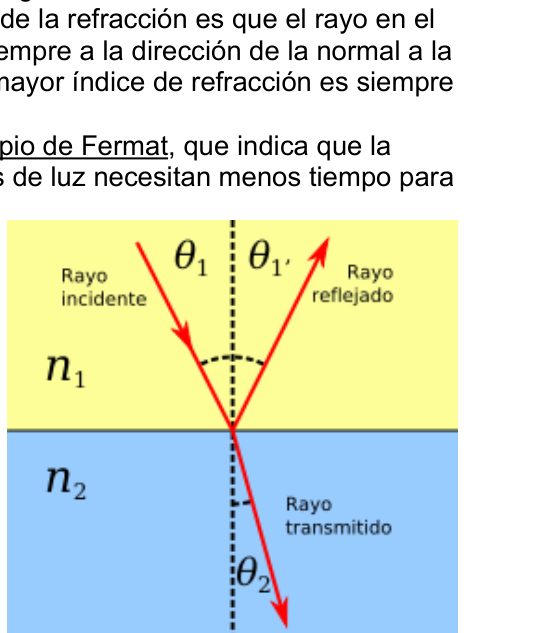
Topic: Geometric Optics Metodi: Snell’s Law, Graph Linearization, Experimental Data Analysis Competenze: Physical Reasoning, Experimental Data Analysis Objects: Lens Fonte: Testo (PDF) — p.3
Refractive Index Liquid Snell Law
PE39. San Michele di Tucumán. Verde. Determinazione dell’indice di refraczione di un liquido.
-
L’uso della legge di Snell determina l’indice di refraczione di un liquido (acqua, Il metodo di determinazione è stato elaborato.
-
Preparare un rapporto di dati che giustifichi ogni passo
-
il progetto di bilancio.
-
Configuri un’analisi di errore. Lista degli elementi da utilizzare.
-
Punteggiatore laser.
-
Regola, squadra.
-
Papero millimetrico o quadrato.
-
Cintura da mascherare.
-
Cisterna cilindrica trasparente. Nota teorica. La legge di Snell è una formula semplice usata per calcolare l’angolo di rifrazione. La luce che attraversa la superficie di separazione tra due mezzi di diffusione di la luce (o qualsiasi onda elettromagnetica) con un indice di refraczione diverso. Il nome La sua origine è stata data dal suo scopritore, il matematico olandese Willebrord Snel van Royen (1580- 1626). Gli hanno dato “Snell” per il suo cognome, ma gli hanno dato due “l” per il suo nome. Willebrord, che porta due “l”. La legge di snell è molto usata in molti casi. La La stessa afferma che il prodotto dell’indice di refraczione per il seno dell’angolo di L’incidenza è costante per qualsiasi raggio di luce che colpisca la superficie.
-
la separazione tra due mezzi. Anche se la legge di Snell è stata formulata per spiegare i I fenomeni di refraczione della luce possono essere applicati a tutti i tipi di onde che attraversano una superficie di separazione tra due mezzi in cui la velocità di diffusione di onde variabili. Descrizione ottica. Considerate due mezzi caratterizzati da indici di refraczione y separati per una superficie S. I raggi di luce che attraversano i due media si refraggeranno in La superficie varia la sua direzione di diffusione a seconda del raggio tra i indici di rifrazione y . Per un raggio luminoso con un angolo di incidenza sul primo mezzo, angolo Tra la normale a superficie e la direzione di diffusione del raggio, avremo il Il raggio si diffonde nel secondo mezzo con un angolo di refraczione il cui valore è che si ottiene attraverso la legge di Snell.
Si noti che per il caso di (radios incidenti perpendicolare alla La superficie) i raggi refratti emergono con un angolo per qualsiasi y . La simmetria della legge di Snell implica che le tracce dei raggi di luce sono
- sono reversibili. Cioè, se un raggio incidente sulla superficie di separazione con un angolo di incidenza si rifracca sul mezzo con un angolo di rifrazione , allora un raggio incidente nella direzione opposta dal mezzo 2 con un angolo di incidenza si rifracta sul mezzo 1 con un angolo . Una regola qualitativa per determinare la direzione della refraczione è che il raggio in Il tasso di rifrazione medio più elevato si avvicina sempre alla direzione della normalità alla superficie. La velocità della luce in mezzo al più alto indice di refraczione è sempre
- Piu’ piccolo. La legge di Snell può essere derivata dal principio di Fermat, che indica che la La traccia della luce è quella in cui i raggi della luce hanno bisogno di meno tempo per andare da un punto all’altro. In una classica analogia Proposto dal fisico Richard Feynman, il L’area di un indice di refraczione più basso è sostituito da una spiaggia, l’area di un indice di più alta refraczione per il mare, e il modo Più veloce per un soccorritore sulla spiaggia di Salvare una persona che si annegano in mare È percorrere il suo cammino fino a questa attraverso Un percorso che verifica la legge di Snell, è Cioè, percorrendo più spazio in mezzo. più veloce e più piccolo nel mezzo più lento girando il suo percorso all’intersezione tra
- Entrambi. Considerare l’indice di refraczione dell’aria di il nostro laboratorio di n = 1,000 ±0,001 Aiuto: Esprimete il tasso di refraczione del liquido in base alle lunghezze che potete
- Misurare.
Topic: Geometric Optics Metodi: Snell’s Law, Graph Linearization, Experimental Data Analysis Competenze: Physical Reasoning, Experimental Data Analysis Objects: Lens Fonte: Testo (PDF) — p.3
The following is the list of the countries of the European Union in which the Union is represented by:
PE39. St. Michael of Tucumán. Green, please. Determination of the refractive index of a liquid.
-
Using Snell’s law determine the refractive index of a liquid (water, oil, etc.), you create a method for determining.
-
Make a data report stating the justification for each step The Commission has already taken a decision.
-
Make an error test. List of items to be used.
-
Laser pointer. - What?
-
Right, squad.
-
Millimeter paper or square.
-
It’s a masking tape.
-
Clear cylindrical container. Theoretical note. Snell’s law is a simple formula used to calculate the angle of refraction. The light is transmitted by the light through the separation surface between two propagating media of the light (or any electromagnetic wave) with a different refractive index. The name . It comes from its discoverer, the Dutch mathematician Willebrord Snel van Royen (1580- 1626). They named him “Snell” because of his last name but they put two “l”s for his name. Willebrord, which has two “l”. The law of snell is widely used in many cases. La It states that the product of the refractive index at the Incidence is constant for any beam of light hitting the surface. The Commission’s proposal for a directive on the approximation of the laws of the Member States on the approximation of the laws of the Member States on the approximation of the laws of the Member States on the approximation of the laws of the Member States on the approximation of the laws of the Member States on the approximation of the laws of the Member States on the approximation of the laws of the Member States on the approximation of the laws of the Member States on the approximation of the laws of the Member States on the approximation of the laws of the Member States on the approximation of the laws of the Member States on the approximation of the laws of the Member States on the approximation of the laws of the Member States on the approximation of the laws of the law of the Member States on the approximation of the laws of the law of the Member States on the approximation of the law of the law of the law of the Member States on the approximation of the law of the law of the law of the law of the Member States on the Although Snell’s law was formulated to explain the The phenomena of refractive light can be applied to all types of waves travelling through a separation surface between two media in which the rate of propagation The wave varies. Optical description. Consider two means characterized by refractive indices y separate for a surface S. The light rays passing through the two media will refract in The surface varies in its direction of propagation depending on the radius between the refractive index y . For a light beam with an angle of incidence on the first half, angle Between the normal to the surface and the direction of lightning propagation, we’ll have the The lightning is propagated in the second medium at a refractive angle. the value of which is You get it by Snell’s law.
Note that for (incident rays perpendicular to the surface) the refracted rays emerge at an angle for any y . The symmetry of Snell’s law implies that the paths of light rays are The Commission has not yet adopted a proposal for a regulation. That is, if an incident ray over the separation surface with a angle of incidence It is refracted over the medium at an angle of refraction , Then an incident lightning in the opposite direction from the middle 2 with an angle of The impact of the It refracts over the median 1 at an angle . A qualitative rule for determining the direction of refraction is that the beam at the The average higher refractive index is always closer to the direction of normal to the surface. The speed of light in the medium with the highest refractive index is always The minor. Snell’s law can be derived from Fermat’s principle, which states that the The path of light is one where light rays take less time to travel. Going from one point to another. In a classic analogy The new methodology is based on the principles of the area of a lower refractive index is replaced by a beach, the area of an index of higher refraction by sea, and the way faster for a lifeguard on the beach Rescuing a drowning person in the sea It’s going to be a journey to this one through. A path that verifies Snell’s law, is I mean, traveling through more space in between. faster and smaller in the slower medium Turning its trajectory at the intersection between Both of them. Consider the refractive index of air in Our laboratory of n = 1,000 ±0,001 Help: Express the refractive index of the liquid according to the lengths you can measuring.
Topic: Geometric Optics Metodi: Snell’s Law, Graph Linearization, Experimental Data Analysis Competenze: Physical Reasoning, Experimental Data Analysis Objects: Lens Fonte: Testo (PDF) — p.3
Electrical Equivalent of Calorie
PE40. Monteros, Tucumán. Azul. Equivalente eléctrico de la caloría. Introducción: El objetivo de esta práctica es calcular la capacidad térmica de un calorímetro y determinar el equivalente eléctrico de la caloría, a través del principio de conservación de la energía. Materiales: • Un calentador pequeño (potencia aproximada de 1200 W) • Un vaso de telgopor. • Un termómetro de mercurio. • Un vaso de plástico graduado. Procedimiento: Coloque 200 ml de agua en el calorímetro (vaso de telgopor), agítelo suavemente y mida la temperatura inicial del agua (Ti). Introduzca el calentador en el calorímetro y enciéndalo durante aproximadamente 1 minuto ( puede ser más tiempo) . Agite levemente el calorímetro y mida la temperatura final (Tf). PASO 1: Escriba las expresiones matemáticas que relacionan: a. Capacidad térmica, calor y variación de la temperatura. b. Calor específico, capacidad térmica y masa. c. Potencia, energía y variación del tiempo. PASO 2: Utilizando las expresiones anteriores, calcule: a. El calor recibido por el agua (Q), durante el tiempo en el que el calentador permanece encendido, b. La energía gastada por el calentador ( E en Joules) durante el intervalo de tiempo Desprecie la capacidad térmica del calorímetro y la pérdida de calor hacia el ambiente, y suponga que todo el calor generado por el calentador sirvió para calentar el agua. Utilizando el principo de la conservación de la energía, determine cuántos joules corresponden a una caloría, en otras palabras, determine el equivalente eléctrico de la caloría (J). PASO 3: tire el agua del Calorímetro y séquelo. Coloque 100 ml de agua en el calorímetro, y deje otros 50 ml en el vaso de plástico. Agite levemente el agua del vaso y mida su temperatura. Utilizando el calentador, caliente el agua del calorímetro hasta aproximadamente 50º C. Vierta el agua del vaso plástico en el calorímetro, agítelo suavemente y mida la temperatura de equilibrio. Utilizando las expresiones del PASO 1: a. Calcule el calor cedido por el agua caliente. b. Calcule el calor recibido por el agua fría. c. Escriba la expresión para el calor cedido por el calorímetro. Despreciando la pérdida de calor hacia el ambiente, considere el intercambio de calor entre el agua caliente, el agua fría y el calorímetro, y calcule la capacidad térmica (C ) del calorímetro. Para obtener un valor más preciso, puede repetir la experiencia por lo menos tres veces y calcular el valor promedio. PASO 4: Retome los datos del PASO 2 y calcule el calor recibido por el agua y por el calorímetro, durante los 2 minutos de calentamiento. Considere, ahora, que la energía gastada por el calentador sirvió para calentar el agua y también el calorímetro , y calcule nuevamente el equivalente eléctrico de la caloría. PASO 5: Considere el valor para el equivalente eléctrico de la caloría como 4,18 J. Calcule el error porcentual entre el valor esperado y el resultado obtenido, en los PASOS 2 Y 4. Redacte un informe de su experiencia donde consigne: • Objetivos de su trabajo – Planteo analítico. • Experiencia realizada – Diseño experimental utilizado.
• Valores, tablas obtenidos. • Fuentes de errores y análisis de cómo influyen en los resultados finales acotados. • Consideraciones y supuestos que haya realizado. • Todo aquello que considere relevante para su informe.
Topic: Thermodynamics, Circuits Metodi: First Law of Thermodynamics, Experimental Data Analysis, Energy Conservation Method Competenze: Physical Reasoning, Experimental Data Analysis, Mathematical Modeling Objects: Calorimeter, Resistor Fonte: Testo (PDF) — p.3
Elektrico equivalente di calorie
PE40. Monteros, Tucumán. Blu. L’equivalente elettrico della caloria. Introduzione: L’obiettivo di questa pratica è calcolare la capacità termico di un calometro e determinare l’equivalente elettrico della caloria, mediante il principio di conservazione dell’energia. Materiali: • Un piccolo riscaldatore (potenza approssimativa di 1200 W) • Un bicchiere di telgopor. • Un termometro di mercurio. • Un bicchiere di plastica graduato. Procedura: Metti 200 ml di acqua nel caloriometro (vaso di telgopor), agita il caloriometro con delicatezza e misura la temperatura iniziale dell’acqua (Ti). Inserisci il riscaldatore nel caloriometro e accenderlo per circa 1 minuto (può essere più a lungo). Agita . leggero il caloriometro e misurare la temperatura finale (Tf). PASSO 1: Scrivi le espressioni matematiche che ti collegano: a. Capacità termica, calore e variazione della temperatura. b. Calore specifico, capacità termico e massa. c. Potenza, energia e variazione del tempo. STAP 2: Usando le espressioni precedenti, calcola: a. Calore ricevuto dall’acqua (Q), durante il periodo in cui il il riscaldatore rimane acceso, b. L’energia utilizzata dal riscaldatore (E in Joule) durante l’intervallo di tempo Scommette la capacità termico del caloriometro e la perdita di calore nell’ambiente. e supponiamo che tutto il calore generato dal riscaldatore sia stato utilizzato per riscaldare l’acqua. Usando il principio della conservazione dell’energia, determinare quanti joule In altre parole, determinare l’equivalente elettrico della calorie (J). PASSO 3: togliere l’acqua dal Calorimetro e asciugare. Metti 100 ml di acqua nel caloriometro, e poi lasciate altri 50 ml nel bicchiere di plastica. Agita leggermente l ’ acqua del bicchiere e misurare la temperatura. Utilizzando il riscaldatore, scaldate l’acqua del calometro fino a circa 50°C. Versare l’acqua del bicchiere di plastica nel calometro, agitare Calcolare la temperatura di equilibrio. Usando le espressioni di PASSO 1: a. Calcola il calore ceduto dall’acqua calda. b. Calcola il calore che riceve l’acqua fredda. c. Scrivi l’espressione per il calore ceduto dal calometro. Scommettere la perdita di calore verso l’ambiente, considera lo scambio di calore tra acqua calda, acqua fredda e calometro, e calcolare la capacità termico (C) il calorilitore. Per un valore più preciso, si può ripetere l’esperienza almeno tre volte. volte e calcolare il valore medio. PASSO 4: riprendere i dati di PASSO 2 e calcolare il calore ricevuto dall’acqua e dal calorimetro, durante il riscaldamento di 2 minuti. Considerate, ora, che l’energia Usato per il riscaldatore , ha scaldato l’ acqua e anche il calometro , e Calcola di nuovo l’equivalente elettrico della caloria. PASSO 5: Considerare il valore per l’equivalente elettrico della caloria come 4,18 J. Calcola l’errore percentuale tra il valore atteso e il risultato ottenuto, in PASSI 2 e 4. Scrivi un rapporto sull’esperienza che contiene: • Obiettivi del suo lavoro Piantagione analitica. • Esperienza realizzata Disegno sperimentale utilizzato.
• Valori, tabelle ottenute. • Fonti di errore e analisi di come influenzano i risultati finali
- Sotto le spalle. • Considerazioni e supposizioni che abbia fatto. • Tutto ciò che ritiene rilevante per il suo rapporto.
Topic: Thermodynamics, Circuits Metodi: First Law of Thermodynamics, Experimental Data Analysis, Energy Conservation Method Competenze: Physical Reasoning, Experimental Data Analysis, Mathematical Modeling Objects: Calorimeter, Resistor Fonte: Testo (PDF) — p.3
The following table shows the number of calories in the calorie sub-category:
PE40. Monteros, Tucumán. What is it? Blue, please. Electrical equivalent of calories. The Commission has also adopted a proposal for a directive on the protection of workers’ rights. The purpose of this practice is to calculate the thermal capacity of a calorimeter and to calculate the thermal capacity of a heat meter. determining the electrical equivalent of the calorie, using the conservation principle of energy. Materials: • A small heater (approximately 1200 W) • A glass of telgopor. • A mercury thermometer. • A graduated plastic glass. The procedure: Place 200 ml of water in the calorimeter (telgopor glass), gently stir it and measurement of the initial water temperature (Ti). Insert the heater into the calorimeter and Turn on for about 1 minute (may be longer). Shake it . lightly the thermometer and measure the final temperature (Tf). STEP 1: Write the mathematical expressions that relate to: a. Heat capacity, heat and temperature variation. b. Specific heat, thermal capacity and mass. c. Power, energy and time variation. Step 2: Using the above expressions, calculate: a. The heat received by the water (Q), during the time in which the water is the heater remains on, b. The energy expended by the heater (E in Joules) during the interval of time It ignores the heat capacity of the thermometer and the heat loss to the environment. And suppose all the heat generated by the heater was used to heat the water. Using the principle of energy conservation, determine how many joules The electrical equivalent of the energy from the calorie (J). Step 3: Remove the water from the Calorimeter and dry it. Place 100 ml of water in the heat meter, and leave another 50 ml in the plastic glass. Swing the water from the glass gently and measure its temperature. Using the heater, heat the water from the calorimeter up to approximately 50°C. Pour the water from the plastic glass into the thermometer, shake it. gently and measure the equilibrium temperature. Using the expressions in step 1: a. Calculate the heat released by the hot water. b. Calculate the heat received by the cold water. c. Write the expression for the heat given off by the calorimeter. Despite the loss of heat to the environment, consider heat exchange. between hot water, cold water and the calorimeter, and calculate the thermal capacity (C) The heat meter. For a more accurate value, you can repeat the experience at least three times times and calculate the mean. STEP 4: Retake the data from STEP 2 and calculate the heat received by the water and by the water. heat meter, during the 2 minutes of heating. Consider, now, that energy used by the heater to heat the water and also the calorimeter , and Calculate the electrical equivalent of the calorie again. STEP 5: Consider the value for the electrical equivalent of the calorie as 4,18 J. Calculate the percentage error between the expected value and the result obtained in the Steps 2 and 4. Write a report of your experience where you say: • Objectives of his work Analytical planting. • Experience achieved Experimental design used.
• Values, tables obtained. • Sources of errors and analysis of how they influence the final results
- I’m not going to. • Considerations and assumptions you have made. • Anything you consider relevant to your report.
Topic: Thermodynamics, Circuits Metodi: First Law of Thermodynamics, Experimental Data Analysis, Energy Conservation Method Competenze: Physical Reasoning, Experimental Data Analysis, Mathematical Modeling Objects: Calorimeter, Resistor Fonte: Testo (PDF) — p.3
Torricelli Bernoulli Fluid Outflow
PE41. Ciudad de Salta. Azul. Experimental I La realidad tiene la última palabra… Introducción A fin de explicar fenómenos que ocurren en la realidad, la física construye modelos bajo ciertas suposiciones y consideraciones. Recordemos que uno de los objetivos de un modelo en física es predecir el valor de una magnitud física. Cuando un fluido escapa por un orificio practicado en un recipiente, la velocidad con que sale del mismo se puede calcular fácilmente en términos de la altura que se encuentra inicialmente el agua. Por otra parte si se conoce la altura de donde sale el agua con respecto a la base del recipiente y la distancia horizontal que recorre el chorro se puede calcular también sin problema la velocidad de salida. Sin embargo, estas velocidades no coinciden en la realidad. Objetivo El objetivo de la práctica es encontrar la razón de estas dos velocidades que discrepan. Material disponible
- Un contenedor cilíndrico plástico con orificios equidistantes y escalados.
- Agua.
- Una Manguera.
- Un clavo.
- Cinta adhesiva.
- Regla
Actividad experimental De un contenedor con agua se deja salir un chorro horizontal. De acuerdo a la ecuación de Bernoulli, se cumpliría que:
donde y son las presiones en los puntos 1 y 2 respectivamente, , , y y son las velocidades en los puntos 1 y 2 respectivamente. Por otro lado, el movimiento bidimensional de una partícula líquida perteneciente a un chorro líquido (agua) se regiría acertadamente por las siguientes ecuaciones:
En un caso ideal, los resultados de las velocidades obtenidos usando cualquiera de los modelos deberían ser iguales entre sí, sin embargo, este no es el caso. La discrepancia en las velocidades podría medirse en la forma de un cociente:
donde es la velocidad predicha por las ecuaciones de cinemática, y la velocidad predicha por la ecuación de Bernoulli. Procedimiento experimental 1- Proponga una explicación a la discrepancia entre y , relacionada con las propiedades del líquido en cuestión. 2- Haciendo uso de las consideraciones y simplificaciones pertinentes demostrar:
3-
Mida
y
todas las veces que crea conveniente, para distintos
valores de
, y con los errores correspondientes.
4-
Calcule
con su respectivo error.
Experimental II
Oootra forma de medir el índice de refracción del agua.
Objetivo
Medir el índice de refracción del agua.
Material disponible
- Recipiente transparente con agua, que tiene un par de caras paralelas, y otro par de caras no paralelas.
- Un puntero de láser de He_Ne.
- Una pantalla.
- Pequeño espejo para alinear.
- Cinta métrica. Procedimiento experimental
- Se deberá ubicar el recipiente, el láser y la pantalla como lo indica la Fig. 1, procurando que: a. El haz de luz y la cara de entrada en el recipiente sean perpendiculares: Como sabemos, al incidir el rayo de luz sobre vidrio parte de la luz se refleja y parte se refracta. Al hacer que el haz de láser reflejado en la cara SALIDA
coincida con el haz incidente nos aseguramos de que la superficie y el rayo láser serán perpendiculares. b. El haz de láser y la pantalla sean perpendiculares: Se puede usar el mismo procedimiento de más arriba sosteniendo un espejo o pieza de vidrio contra la pantalla. Lo que se recomienda es dejar ubicado primero el láser respecto a la pantalla. Para ello colocamos la pantalla en posición (pegada a una pared, por ejemplo) y sostenemos temporalmente un espejo contra ella. Encendemos el láser y lo fijamos tal que el haz reflejado sobre el espejo coincida con el incidente. Hecho ésto colocamos el recipiente en posición entre el láser y la pantalla mediante el mismo principio (ver Figura 1). Cuando tengamos todo en posición marcamos en la pantalla el punto (P) de incidencia del láser. Lean el resto del texto, no se apuren todavía a llenar con agua el recipiente.
Haz de láser Recipiente con líquido Pantalla θ θ β L d θ P Normal Haz de Recipient Pantalla 90o
90o
Figura 5. Disposición inicial vista desde arriba. Figura 6. Marcha de rayos para cuando tenemos el recipiente lleno de líquido.
Cuando llenemos el recipiente con líquido la situación sería como muestra la Figura 2.
La pared de vidrio desplaza al láser de su recorrido, y al ser delgada podemos
considerar que este desplazamiento es despreciable. Cuando el láser (cuando sale del
recipiente) pasa del agua al aire, el ángulo de incidencia es
y el ángulo de
refracción es
.
Tomamos al índice de refracción del aire como igual a 1 y según la ley de Snell:
Donde n es el índice de refracción del líquido, y:
Y a su vez
Donde
es la distancia entre el punto por donde el láser sale del recipiente y la
pantalla;
es la distancia entre el punto
marcado inicialmente y el nuevo lugar
donde incide el láser.
Parece que con conocer
,
y
calcular
es pan comido. Es fácil medir
y
,
se lo puede hacer directamente. El quid de la cuestión es conocer
, el ángulo entre
las caras del recipiente.
Para medir
vamos a usar el recipiente sin líquido (es más práctico hacer esta
medición antes de llenarlo de agua). La marcha de rayos se muestra en la figura 3.
Fácilmente vemos que se cumple la relación:
Por la que podemos calcular fácilmente . OBTENCIÓN DE
Con la medida de calcular con su correspondiente error. Haz de láser Recipiente Pantalla θ 2θ L t θ P 2θ s e Figura 7. Marcha de rayos para cuando tenemos el recipiente sin líquido.
Experimental I
Experimental II
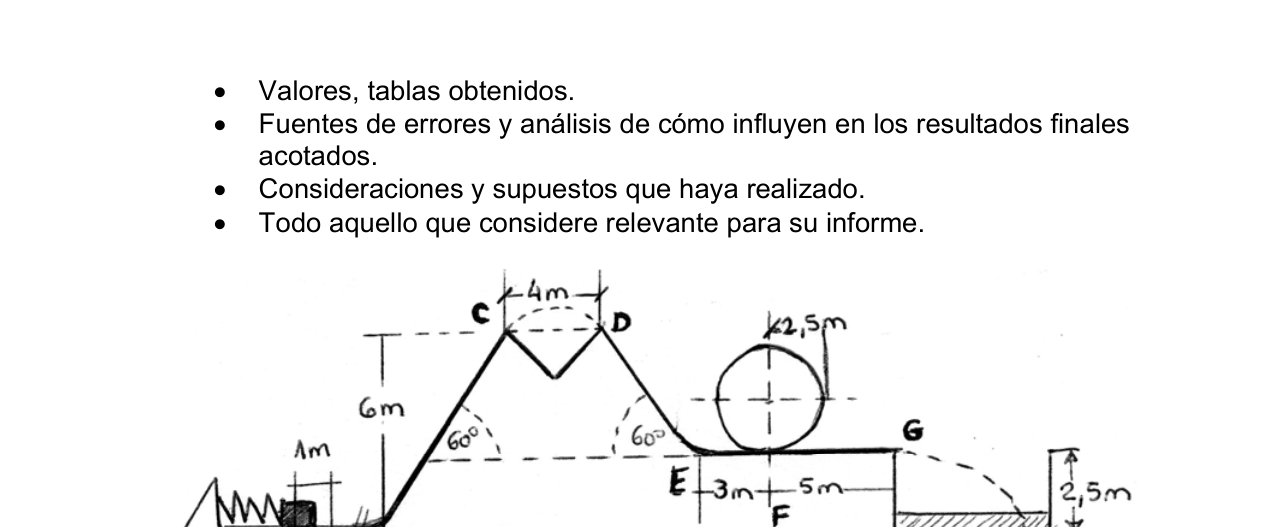
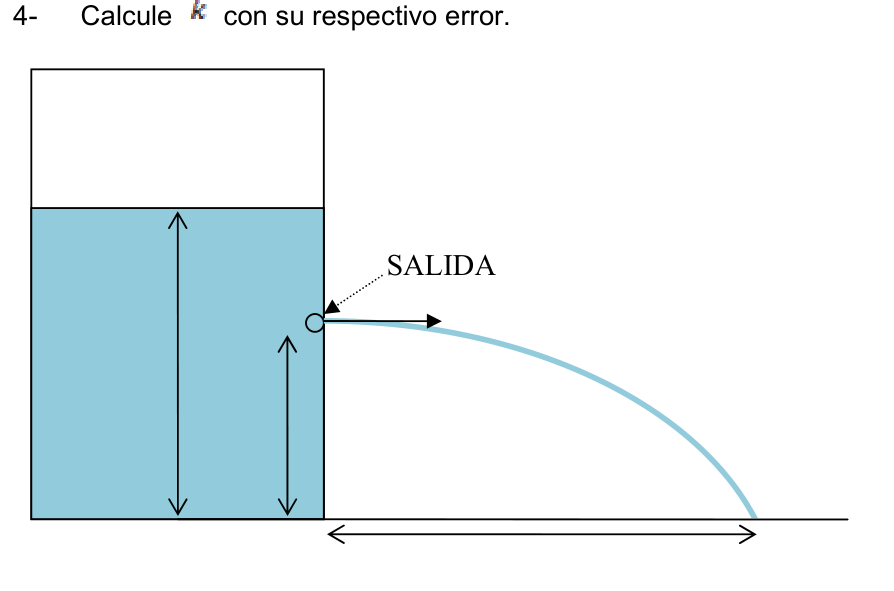
Topic: Fluid Mechanics Metodi: Bernoulli’s Equation, Kinematic Equations, Experimental Data Analysis Competenze: Physical Reasoning, Experimental Data Analysis, Mathematical Modeling Objects: Container, Tube Fonte: Testo (PDF) — p.3
Torricelli Bernoulli Fluid Outflow
PE41. Città di Salta. Blu. Sperimentale I La realtà ha l’ultima parola. Introduzione Per spiegare i fenomeni che accadono nella realtà, la fisica costruisce modelli. In questo caso, la Commissione ha deciso di non intervenire. Ricordiamo che uno degli obiettivi di Un modello in fisica è quello di prevedere il valore di una grandezza fisica. Quando un fluido scorre attraverso un foro praticato in un recipiente, la velocità con che ne uscirà è facilmente calcolabile in termini di altezza che si iniziale trova l’acqua. Se si conosce l’altezza da cui sale il acqua rispetto alla base del recipiente e alla distanza orizzontale che attraversa il recipiente La velocità di uscita è anche facilmente calcolabile. Tuttavia, queste velocità non coincidono nella realtà. Obiettivo L’obiettivo della pratica è trovare la ragione di queste due velocità che
- Non sono d’accordo. Materiale disponibile
- Un contenitore cilindrico in plastica con fori equidistanti e scalati.
- L’acqua.
- Una Mangera.
- Un chiodo.
- Cintura adesiva.
- Regola . Attività sperimentale Da un contenitore di acqua viene uscita una jet orizzontale. Secondo la L’equazione di Bernoulli, si sarebbe riunito che:
dove y sono le pressioni dei punti 1 e 2, rispettivamente, , , y y sono le velocità rispettivamente ai punti 1 e 2. D’altra parte, il movimento bidimensionale di una particella liquida appartenente a un il gorgho liquido (acqua) sarebbe regolato correttamente dalle seguenti equazioni:
In un caso ideale, i risultati delle velocità ottenute utilizzando uno qualsiasi di questi I modelli dovrebbero essere uguali tra loro, tuttavia, questo non è il caso. La discrepanza delle velocità potrebbe essere misurata sotto forma di un coefficiente:
dove è la velocità prevista dalle equazioni cinematiche, e la velocità predetta dall’equazione di Bernoulli. Procedura sperimentale 1- Propone una spiegazione della discrepanza tra y , relativa a le proprietà del liquido in questione. 2- Usando le pertinenti considerazioni e semplificazioni dimostrare:
3-
- Mida . y Ogni volta che lo ritiene conveniente, per diversi Valori di , e con gli errori corrispondenti. 4- Calcola con il loro errore.
Sperimentale II Un altro modo di misurare l’indice di refraczione dell’acqua. Obiettivo Misurare l’indice di refraczione dell’acqua. Materiale disponibile
- recipiente trasparente con acqua, che ha un paio di facce parallele, e un altro paio di facce non parallele.
- Un laser di He_Ne.
- Un schermo.
- Un piccolo specchio per allineare.
- Cintura metrica. Procedura sperimentale
- Lo spazio del recipiente, del laser e dello schermo deve essere indicato in Figura 1. 1, cercando di: a. Il fascio di luce e la faccia di entrata nel recipiente siano perpendicolari: Come sappiamo, quando il raggio di luce incide sul vetro parte della luce viene riflette e parte si refracta. Facendo riflettere il laser sul viso SEGNERE
coincide con il raggio incidente ci assicuriamo che la superficie e il raggio laser saranno perpendicolari. b. Il laser e lo schermo siano perpendicolari: si può usare lo stesso Procedura di sopra sostenendo uno specchio o pezzo di vetro contro lo schermo. La cosa consigliata è lasciare prima il laser rispetto allo schermo. Per questo abbiamo messo la schermo in posizione (Stoccata a un muro, per l’esempio) e sostenere temporaneamente uno specchio contro di lei. Accendiamo il laser e lo fissare così che il Hai riflettuto sul specchio coincide con il Incidente. Facciamo questo. mettiamo il recipiente in posizione tra il laser e la schermo attraverso il stesso Principio (vedi Figura 1). Quando abbiamo tutto in posizione, segniamo sullo schermo. il punto (P) di incidenza del laser. Leggete il resto del testo, non state ancora in fretta di riempire l’acqua nel contenitore.
Fai il laser . Raccogliente con liquido Scattoli θ θ β L d θ P Normalmente . Fai come Ricevente Scattoli 90o
90o
Figura 5 Disposizione iniziale vista dall’alto. Figura 6. Un’orbita di fulmine per quando avremo il contenitore pieno di liquido.
Quando riempiamo il recipiente con liquido la situazione sarebbe come mostra la Figura 2. Il muro di vetro sposta il laser dal suo percorso, e essendo sottile possiamo Considerare questo spostamento disprezzabile. Quando il laser (quando esce dal contenitore) passa dall’acqua all’aria, l’angolo di incidenza è e l’angolo di La rifrazione è . Prendiamo l’indice di refraczione dell’aria come uguale a 1 e secondo la legge di Snell:
dove n è l’indice di refraczione del liquido, e:
E a sua volta
Dove? è la distanza tra il punto da cui il laser esce dal recipiente e il schermo; è la distanza tra il punto Inizialmente segnalato e il nuovo posto dove il laser colpisce. Sembra che con conoscenza , y Calcolare è pane da mangiare. È facile misurare. y , e si può farlo direttamente. Il punto è conoscere. , l’ angolo tra i volti del recipiente. Per misurare Useremo il recipiente senza liquido (è più pratico fare questo misurazione prima di riempirla di acqua). La marcia dei raggi è mostrata nella figura 3. E ’ facile vedere che si compie la relazione:
Per cui possiamo calcolare facilmente. . RICORDO DI
Con la misura di Calcolare con il suo errore corrispondente. Fai laser Raccogliente Scattoli θ 2θ L t θ P 2θ s e Figura 7. Marcia di fulmine per quando avremo il recipiente senza liquido.
Sperimentale I
Sperimentale II
Topic: Fluid Mechanics Metodi: Bernoulli’s Equation, Kinematic Equations, Experimental Data Analysis Competenze: Physical Reasoning, Experimental Data Analysis, Mathematical Modeling Objects: Container, Tube Fonte: Testo (PDF) — p.3
The Commission shall adopt delegated acts in accordance with Article 21 of Regulation (EC) No 1290/2005.
PE41. Salt City. Blue, please. Experimental I Reality has the last word. The first is the introduction. To explain phenomena that occur in reality, physics builds models. The Commission has already taken the necessary steps to ensure that the Commission is able to take the necessary measures to ensure that the Commission is able to take the necessary measures. Let us remember that one of the objectives of the A model in physics is to predict the value of a physical quantity. When a fluid escapes through a hole in a vessel, the speed with The height of the building is calculated in terms of the height of the building. initially finds water. On the other hand, if the height from which the water with respect to the bottom of the container and the horizontal distance travelled by the vessel. The output speed can also be calculated without any problem. However, These speeds don’t match in reality. The objective The aim of practice is to find the reason for these two velocities which They disagree. Available material
- A plastic cylindrical container with equidistant and escalated holes.
- It’s water.
- A Manguera.
- A nail.
- It’s the tape.
- Rule . Experimental activity A horizontal jet is released from a water container. According to the Bernoulli’s equation, it would be fulfilled that:
Where y are the pressures in points 1 and 2 respectively, , , y y are the speeds at points 1 and 2 respectively. On the other hand, the two-dimensional motion of a liquid particle belonging to a liquid jet (water) would be correctly governed by the following equations:
In an ideal case, the results of the speeds obtained using any of the models should be equal to each other, however, this is not the case. The discrepancy in speeds could be measured in the form of a coefficient:
Where is the velocity predicted by the kinematics equations, and la speed predicted by the Bernoulli equation. Experimental procedure 1- Propose an explanation for the discrepancy between y , related to the properties of the liquid in question. 2- Using the relevant considerations and simplifications demonstrate:
3- I ‘m going to . y Every time you think it’s convenient, for different people. Value of , and the corresponding errors. 4- Calculate with their respective mistakes.
Experimental II Another way to measure the refractive index of water. The objective Measure the refractive index of water. Available material
- Water-coated transparent vessel, which has a pair of parallel faces, and another pair with unparalleled faces.
- A laser pointer from He_Ne.
- A screen.
- Small mirror to align.
- It’s a tape recorder. Experimental procedure
- The container, laser and display shall be located as indicated in Fig. 1, by ensuring that: a. The beam of light and the entrance face of the container shall be perpendicular: As we know, when the light beam hits the glass part of the light is reflects and part refracts. By making the laser beam reflected on the face Get out of here .
We ‘ll make sure the surface and the lightning match the incident beam . The laser will be perpendicular. b. The laser beam and the display are perpendicular: the same can be used above procedure holding a mirror or piece of glass against the screen. What is recommended is Leave the location first laser with respect to the screen. For this we put the screen in position (stick to a wall, by (e.g. in the case of the temporarily a mirror. against her. Let ‘s turn on the . laser and we fixed it like the You ‘ve reflected on the mirror matches the The incident. I made this . We put the container in position between the laser and the screen by the same The Commission has already adopted a number of proposals. When we have everything in position we mark it on the screen. the point (P) of impact of the laser. Read the rest of the text, don’t rush to fill the container with water yet.
Make a laser . Receiving with liquid Screen θ θ β L d θ P
-
It ‘s normal . Do it . Receiving Screen 90o
90o Figure 5 is shown. Initial layout seen from above. Figure 6 is shown. Lightning march for when we have the container full of liquid.
When we fill the container with liquid the situation would be as shown in Figure 2. The glass wall displaces the laser from its path, and being thin we can. consider this displacement to be despicable. When the laser (when it comes out of the The water is transferred from the water to the air, the angle of incidence is and the angle of Refraction is . We take the air refractive index as equal to 1 and according to Snell’s law:
Where n is the refractive index of the liquid, and:
And in turn .
Where ? is the distance between the point where the laser is exiting the container and the screen; is the distance between the point Initially marked and the new location where the laser hits. It seems to me that with knowing , y calculate It’s bread eaten. It ‘s easy to measure . y , You can do it directly. The point is to know. , the angle between the faces of the container. To measure We’re going to use the liquid-free container (it’s more practical to do this) measurement before filling it with water). The speed of lightning is shown in Figure 3. We can easily see that the relationship is fulfilled:
Which we can easily calculate . The Commission has already adopted a proposal for a directive on the protection of workers’ rights.
With the measure of calculate with its corresponding error. Make a laser Receiving Screen θ 2θ L t θ P 2θ s e Figure 7 is shown. Lightning march for when we have the liquid-free container.
Experimental I
The Commission shall adopt the following implementing acts:
Topic: Fluid Mechanics Metodi: Bernoulli’s Equation, Kinematic Equations, Experimental Data Analysis Competenze: Physical Reasoning, Experimental Data Analysis, Mathematical Modeling Objects: Container, Tube Fonte: Testo (PDF) — p.3
Diameter Measurement Washer Caliper
PE42. Ciudad de Formosa. Azul. Objetivo: Determinar el diámetro exterior de una arandela Materiales: Una arandela metálica y un calibre. Procedimiento: Armar una tabla en la que figuren las mediciones, el valor más probable y los desvíos. Calcular el error cuadrático medio y explicar su significado.
Topic: Newtonian Mechanics Metodi: Error Propagation, Experimental Data Analysis, Statistical Averaging Competenze: Physical Reasoning, Experimental Data Analysis Objects: — Fonte: Testo (PDF) — p.3
Diameter Measurement Washer Caliper
PE42. Città di Formosa. Blu. Obiettivo: Determinare il diametro esterno di una scatola Materiali: una catena metallica e un calibro. Procedura: Arrangere una tabella che contiene le misure, il valore più probabile e gli deviazioni. Calcolare l’errore quadratico medio e spiegare il suo significato.
Topic: Newtonian Mechanics Metodi: Error Propagation, Experimental Data Analysis, Statistical Averaging Competenze: Physical Reasoning, Experimental Data Analysis Objects: — Fonte: Testo (PDF) — p.3
The measurement of the measurement of the measurement of the measurement of the measurement of the measurement of the measurement of the measurement of the measurement of the measurement of the measurement of the measurement of the measurement of the measurement of the measurement of the measurement of the measurement of the measurement of the measurement of the measurement of the measurement of the measurement of the measurement of the measurement of the measurement of the measurement of the measurement of the measurement of the measurement of the measurement of the measurement of the measurement of the measurement of the measurement of the measurement of the measurement of the measurement of the measurement of the measurement of the measurement of the measurement of the measurement of the measurement of the measurement of the measurement of the measurement of the measurement of the measurement of the measurement of the measurement of the measurement of the measurement of the measurement of the measurement of the measurement of the measurement of the measurement of the measurement of the measurement of the measurement of the measurement of the measurement of the measurement of the measurement of the measurement of the measurement of the measurement of the measurement of the measurement of the measurement of the measurement of the measurement of the measurement of the measurement of the measurement of the measurement of the measurement of the measurement of the measurement of the measurement of the measurement of the measurement of the measurement of the measurement of the measurement of the measurement of the measurement of the measurement of the measurement of the measurement of the measurement of the measurement of the measurement of the measurement of the measurement of the measurement of the measurement of the measurement of the measurement of the measurement of the measurement of the measurement of the
PE42. The city of Formosa. Blue, please. Objective: Determine the outer diameter of a screw Materials: A metal claw and a caliber. Procedure: Arranging a table showing the measurements, the value plus Probably and the deviations. Calculate the average quadratic error and explain its meaning.
Topic: Newtonian Mechanics Metodi: Error Propagation, Experimental Data Analysis, Statistical Averaging Competenze: Physical Reasoning, Experimental Data Analysis Objects: — Fonte: Testo (PDF) — p.3
Specific Weight of Liquids
PE43. San Miguel de Tucumán. Azul. Objetivo: Determinación de los Pesos específicos de distintos líquidos De que sustancias se trata Materiales.
- Cuerpos de masa conocida
- Dinamómetro
- Probetas graduadas
- 3 sustancias Determinar: con el menor error posible los pesos específicos de las distintas sustancias. 1- Proponga un método experimental que le permita medir con el menor error Describa claramente los pasos a seguir y los instrumentos a utilizar. Justifique cuantitativamente. 2- Con los elementos que se le provee, seleccione el método y los instrumentos más adecuados. Justifique cuantitativamente. 3- Dé el valor acotado de los pesos específicos 4- Realice un análisis de los errores sistemáticos de su sistema experimental.
5- Busque los valores de literatura. ¿Qué puede concluir?
Topic: Fluid Mechanics Metodi: Hydrostatic Equilibrium, Error Propagation, Experimental Data Analysis Competenze: Physical Reasoning, Experimental Data Analysis Objects: Container Fonte: Testo (PDF) — p.3
Specific Weight of Liquids
PE43. San Michele di Tucumán. Blu. Obiettivo: Determinare i Pesi specifici di diversi liquidi La sostanza è Materiali.
- Corpi di massa nota.
- Dinamometro .
- Problemi di graduazione
- 3 sostanze Determinare: con il minor errore possibile i pesi specifici delle varie categorie sostanze. 1- Propone un metodo sperimentale che ti permetta di misurare con il minor errore Descrivi la definizione dei passi da seguire e degli strumenti da utilizzare. Giustifica
- in termini quantitativi. 2- Selezionare il metodo e gli strumenti più utilizzati con gli elementi forniti
- Le persone adatte. Giustifica quantitativamente. 3- Indicare il valore di riferimento dei pesci specifici 4- Fare un’analisi degli errori sistematici del suo sistema sperimentale.
5- Cercate i valori della letteratura. Cosa può concludere?
Topic: Fluid Mechanics Metodi: Hydrostatic Equilibrium, Error Propagation, Experimental Data Analysis Competenze: Physical Reasoning, Experimental Data Analysis Objects: Container Fonte: Testo (PDF) — p.3
The following table shows the weight of the liquid:
PE43. St. Michael of Tucumán. Blue, please. Objective: Determination of the specific Weights of different liquids Substances are concerned It’s materials.
- Bodies of known mass .
- Dynamometer .
- Graduate tests .
- 3 substances Determine: with the least possible error the specific weights of the different substances. 1- Propose an experimental method that allows you to measure with the least error the steps to be taken and the instruments to be used. Justify it . the quantity. 2- With the elements provided, select the method and instruments most The right ones. Justify it quantitatively. 3- Give the approximate value of the specific weights 4- Carry out an analysis of systematic errors in your experimental system.
5- Seek the values of literature. What can you conclude?
Topic: Fluid Mechanics Metodi: Hydrostatic Equilibrium, Error Propagation, Experimental Data Analysis Competenze: Physical Reasoning, Experimental Data Analysis Objects: Container Fonte: Testo (PDF) — p.3
Pendulum Laws and Gravity Measurement
PE44. Navarro, Buenos Aires. Azul. Objeto: 1- Verificar las tres primeras leyes del péndulo.
2- Determinar el valor de la aceleración de la gravedad del lugar.
Materiales: - soporte
-
hilo
-
esfera de madera
-
esfera de hierro
-
cronómetro Desarrollo. 1 – A Ley del isocronismo. Construyamos un péndulo de 1 m de largo. Apartamos el péndulo unos 10 cm de su posición de equilibrio. A la amplitud lograda la llamamos amplitud I. Soltamos el péndulo dejándolo oscilar. Tomamos el tiempo empleado en cumplir 10 oscilaciones dobles. Llevamos este tiempo al cuadro y calculamos el período correspondiente. Repetimos las lecturas de tiempo para amplitudes correspondientes a separaciones del péndulo igual a 6 cm y 3 cm, volcando los resultados en el cuadro.
Tiempo 10 oscilaciones Período (T) Amplitud s s I
II
III
Longitud del péndulo: …………………….m
Teniendo en cuenta los errores experimentales, ¿cómo resultan los períodos para distintas amplitudes? ¿Por qué tomamos en cada caso el tiempo de 10 oscilaciones en lugar de medir directamente el período? 1 – B Ley de las masas Construyamos dos péndulos de igual longitud, uno de madera y otro de hierro. Dejamos oscilar libremente ambos péndulos. Medimos el tiempo que emplean en cumplir 10 oscilaciones dobles y volcando los resultados en el cuadro determinamos el período para cada péndulo.
Tiempo 10 oscilaciones Período (T) Cuerpo s s
¿Cómo resultan los períodos de péndulos de distinta masa? 1 – C 3ª ley del péndulo T = f(º) Con hilo y la bolita de hierro construimos sucesivamente péndulos de distintas longitudes, por ejemplo 1 m, 0,50 m y 0,25 m. En cada caso medimos el tiempo de 10 oscilaciones dobles y completamos el cuadro siguiente.
l
l
10 . T
T
l
T
1 m
0,50 m
0,25 m
¿Se verifica que T y l son directamente proporcionales? ¿Por qué?
- Determinación de la aceleración de la gravedad del lugar.
De la expresión matemática del período del péndulo despejamos la aceleración de la
gravedad (g).
Siendo:
g l T ⋅ Π ⋅ = 2
elevando al cuadrado ambos miembros: g l T ⋅ Π ⋅
2 2 4
despejando g 2 2 4 T l g ⋅ Π ⋅
Volcamos los resultados obtenidos en el primer cuadro al siguiente, calculando g.
T T2 2 2 4 T l g ⋅ Π ⋅
Lectura
s
s2
2s
m
I
II
III
Hallamos el valor más probable de la aceleración de la gravedad 2 3 2 . … 3 s m g g g g I
=
Topic: Oscillations & Waves Metodi: Simple Harmonic Motion Analysis, Experimental Data Analysis, Error Propagation Competenze: Physical Reasoning, Experimental Data Analysis Objects: Pendulum, String, Sphere Fonte: Testo (PDF) — p.3
Pendulum Laws and Gravity Measurement
PE44. Navarro, Buenos Aires. Blu. Oggetto: 1- Verificare le prime tre leggi del pendolo.
2- Determinare il valore dell’accelerazione della gravità del luogo. Materiali: - supporto
-
filo .
-
sfera di legno
-
sfera di ferro
-
cronometro Sviluppo. 1 La legge dell’isocronismo. Costruimmo un pendolo lungo un metro. Abbiamo allontanato il pendolo circa 10 cm dalla sua posizione di equilibrio. L’ampiezza raggiunta Chiamiamo amplitudine I. Lasciamo andare il pendolo lasciandolo oscillare. Prendiamo il tempo impiegato per raggiungere i 10 oscillazioni doppie. Prendiamo questo tempo e calcoliamo il periodo. corrispondente. Ripetiamo le letture di tempo per le amplitudini corrispondenti alle separazioni. di 6 cm e 3 cm, rivolgendo i risultati nel quadro.
Tempo 10 oscillazioni Periodo (T) Ampiezza s s I
II
III
Lunghezza del pendolo: …………………….m
Considerando gli errori sperimentali, come risultano i periodi per di ampiezza diversa? Perché prendiamo in ogni caso il tempo di 10 oscillazioni invece di misurare? direttamente il periodo? 1 B Legge delle masse Abbiamo costruito due pendoli di uguale lunghezza, uno di legno e uno di ferro. Lasciamo oscillare liberamente entrambi i pendoli. Misurando il tempo che impiegano in Per raggiungere i risultati, si deve compiere 10 oscillazioni doppie e, per rovesciare i risultati, determinare il periodo per ogni pendolo.
Tempo 10 oscillazioni Periodo (T) Corpo . s s
Come risultano i periodi di pendoli di massa diversa? 1 C 3a legge del pendolo T = f(o) Con il filo e la pallina di ferro costruiamo successivamente pendoli di diverse lunghezze, ad esempio 1 m, 0,50 m e 0,25 m. In ogni caso misuriamo il tempo di 10 E’ possibile che il sistema di oscillazione sia stato modificato in modo da ridurre il numero di oscillazioni.
l
l
10 . T
T
l
T
1 m
0,50 m
0,25 m
Si verifica che T e l siano direttamente proporzionali? - Perché?
- Determinazione dell’accelerazione della gravità del luogo. Dall’espressione matematica del periodo del pendolo, abbiamo chiarito l’accelerazione del gravità (g). Essendo: g l T ⋅ Π ⋅ = 2
alzando a quadrato entrambi i membri: g l T ⋅ Π ⋅
2 2 4
- E ’ un’idea di un’altra cosa . 2 2 4 T l g ⋅ Π ⋅ =
Riportiamo i risultati ottenuti nel primo tabella al seguente, calcolando g.
T T2 2 2 4 T l g ⋅ Π ⋅
Leggere
s
s2
2s
m
I
II
III
Abbiamo trovato il valore più probabile dell’accelerazione della gravità. 2 3 2 . … 3 s m g g g g I
=
Topic: Oscillations & Waves Metodi: Simple Harmonic Motion Analysis, Experimental Data Analysis, Error Propagation Competenze: Physical Reasoning, Experimental Data Analysis Objects: Pendulum, String, Sphere Fonte: Testo (PDF) — p.3
The following is the list of the Member States’ official data protection authorities.
PE44. I’m from Navarro, Buenos Aires. Blue, please. Objective: 1- Verify the first three laws of the pendulum.
2- Determine the value of the acceleration of the place’s gravity.
-
support
-
I ‘m not .
-
a wooden sphere .
-
iron sphere
-
the chronometer . I’m going to develop. 1 The Law of Isochronism. We built a pendulum about a meter long. We’ve moved the pendulum about 10 centimeters from its equilibrium position. The extent achieved We call it amplitude I. We let the pendulum go and let it swing. We take the time spent to reach 10 The two-dimensional oscillations. Let ‘s take this time into the picture and calculate the period . the corresponding. We repeat the time readings for amplitudes corresponding to separations. The pendulum is equal to 6 cm and 3 cm, and the results are reversed in the table.
Time 10 oscillations Period (T) Amplitude s s I
II
The Commission
The length of the pendulum: …………………….m
Given the experimental errors, how do the periods for different amplitudes? Why do we take the time of each of these 10 oscillations instead of measuring? directly to the period? 1 B Law of the masses We built two pendulums of equal length, one made of wood and one made of iron. We let both pendulums swing freely. We measure the time they spend on The resulting results are then multiplied by the resulting values. period for each pendulum.
Time 10 oscillations Period (T) Body . s s
How do pendulum periods of different mass come about? 1 C 3a law of the pendulum T = f(o) With thread and iron ball we build successive pendulums of different types. lengths, e.g. 1 m, 0,50 m and 0,25 m. In each case we measure the time of 10 And we’re going to do the following chart.
l
l
10 . T
T
l
T
1 m
0,50 m
0,25 m
Is it verified that T and l are directly proportional? - Why? - I don’t know.
- Determination of the acceleration of the place’s gravity. From the mathematical expression of the period of the pendulum we clear the acceleration of the the gravity (g). Being: g l T ⋅ Π ⋅ = 2
squaring both members: g l T ⋅ Π ⋅
2 2 4
clearing g 2 2 4 T l g ⋅ Π ⋅
We turn the results from the first table over to the next, calculating g.
T T2 2 2 4 T l g ⋅ Π ⋅
Reading
s
s2
2s
m
I
II
The Commission
We found the most likely value of gravitational acceleration . 2 3 2 . … 3 s m g g g g I
=
Topic: Oscillations & Waves Metodi: Simple Harmonic Motion Analysis, Experimental Data Analysis, Error Propagation Competenze: Physical Reasoning, Experimental Data Analysis Objects: Pendulum, String, Sphere Fonte: Testo (PDF) — p.3