Vientos Fuertes (Nivel 1)
Problema 1
Vientos Fuertes!!!
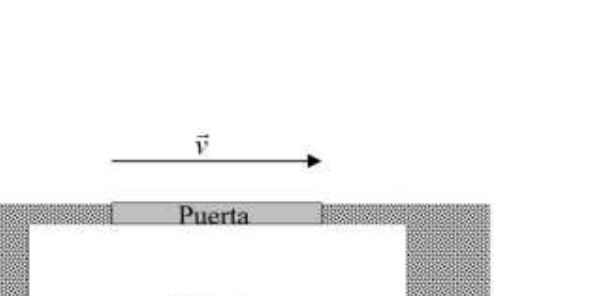
Un refugio contra tornados consiste en una habitación subterránea con una puerta de hierro horizontal, como se muestra esquemáticamente en la figura. La habitación cuenta, además, con un sistema de presurización que mantiene constante la presión interior 𝑃𝑖 = 1 𝑎𝑡𝑚. El área de la puerta es de 1m2 y su espesor de 10 cm.
Durante el paso de un tornado, los vientos horizontales a nivel de tierra realizan un movimiento circular antihorario, cuya magnitud depende de la distancia al centro del tornado de acuerdo a la siguiente ecuación 𝑣(𝑟) = 𝑣0 −𝛾𝑟
Un cazador de tornados, ubicado a una distancia de 260 m del centro del tornado en cuestión, mide que la velocidad horizontal del viento a nivel de tierra es de 100 km/h; cuando este intrépido científico se desplaza a una distancia de 310 m del centro, encuentra que el aire está quieto.
a) Determine los valores de 𝒗𝟎 y de𝜸.
b) Determine la velocidad horizontal del viento a nivel de tierra en la puerta del refugio sabiendo que el mismo se encuentra a una distancia de 185 m del centro del tornado.
c) ¿Cuánto debe pesar la puerta, como mínimo, para que no sea abierta por el tornado? Asuma que adentro del refugio y afuera del mismo la densidad del aire es 1.225 kg m-3.
Nota: Asuma 𝑔= 10 𝑚 𝑠−2 y 1 𝑎𝑡𝑚= 101325 𝑃𝑎
Topic: Fluid Mechanics, Newtonian Mechanics Metodi: Bernoulli’s Equation, Free-Body Diagram, Kinematic Equations Competenze: Physical Reasoning, Mathematical Modeling Objects: Gas Fonte: Testo (PDF) — p.5
**Venti forti (livello 1) **
Problema 1 Venti forti!!!
Un rifugio contro i tornadi consiste in: Una stanza sotterranea con una Porta di ferro orizzontale, come si mostrato schematicamente nella figura. La stanza ha anche un sistema di presurizzazione che mantiene la pressione interna Pi = 1 atm è costante. L’area della porta è di 1m2 e il suo spessore di 10 cm.
Durante il passaggio di un tornado, i venti orizzontali a livello di terra fanno un movimento circolare antiorario, la cui magnitudine dipende dalla distanza al centro del Tornado secondo la seguente equazione 𝑣(𝑟) = 𝑣0 −𝛾𝑟
Un cacciatore di tornado, situato a 260 m dal centro del tornado in La domanda, che misura che la velocità del vento orizzontale a livello terrestre è di 100 km/h; quando questo scienziato intrepidissimo si muove a 310 m dal centro, trova che l’aria è quieta.
a) Determina i valori di v0 e deγ.
b) Determina la velocità del vento orizzontale a livello di terra alla porta del Rifugio sapendo che si trova a 185 m da centro del tornado.
c) Quanto deve pesare la porta, come minimo, per non essere aperta dal Tornado? Supponi che all’interno e all’esterno del rifugio la densità dell’aria è di 1.225 kg m-3.
Nota: Assumi g= 10 m s−2 e 1 atm= 101325 Pa
Topic: Fluid Mechanics, Newtonian Mechanics Metodi: Bernoulli’s Equation, Free-Body Diagram, Kinematic Equations Competenze: Physical Reasoning, Mathematical Modeling Objects: Gas Fonte: Testo (PDF) — p.5
The following is the list of the airports in the European Union:
Problem 1 is Strong winds!!!
A storm shelter consists of An underground room with a horizontal iron door, as it were It’s shown schematically in the figure. The room also has a The pressure system that maintains The internal pressure Pi = 1 atm is constant. The area of the gate is 1m2 and its thickness of 10 cm.
During the passage of a tornado, horizontal winds at ground level make a The time-lapse of the movement is the distance to the centre of the circle. Tornado according to the following equation 𝑣(𝑟) = 𝑣0 −𝛾𝑟
A tornado hunter, located at a distance of 260 m from the center of the tornado in Question, it measures that the horizontal wind speed at land level is 100 km/h; When this intrepid scientist moves 310 m from the centre, He finds the air is still.
(a) Determine the values of v0 and deγ.
(b) Determine the horizontal wind speed at ground level at the gate of the The refuge knowing that it is at a distance of 185 m from the center of the tornado.
(c) How much should the door weigh at least so that it is not opened by the door? What, a tornado? Assume that inside and outside the shelter density The air is 1.225 kg m-3.
Note: Assume g=10 m s−2 and 1 atm=101325 Pa
Topic: Fluid Mechanics, Newtonian Mechanics Metodi: Bernoulli’s Equation, Free-Body Diagram, Kinematic Equations Competenze: Physical Reasoning, Mathematical Modeling Objects: Gas Fonte: Testo (PDF) — p.5
Campo electrico atmosferico (Nivel 1)
Problema 2 Campo eléctrico atmosférico.
Durante un día de buen tiempo, en la atmósfera se establece un campo eléctrico que está dirigido hacia la Tierra. Este campo eléctrico, junto con otros fenómenos eléctricos presentes en la atmósfera, tales como rayos, relámpagos, etc., forma parte del circuito eléctrico que rodea al planeta Tierra.
Si bien para determinar la magnitud del campo eléctrico atmosférico, usualmente, se utiliza un dispositivo denominado “molino de campo”, en esta oportunidad estudiaremos otro dispositivo para medirlo.
6 - OAF 2018 Nociones de campo eléctrico y cargas inducidas. En un material conductor, ubicado en una región en la cual existe un campo eléctrico, se redistribuyen sus cargas eléctricas de tal manera que en su superficie “aparecen cargas eléctricas inducidas”. El signo y la magnitud de esas cargas eléctricas inducidas dependerán del campo eléctrico con el cual está interaccionando el conductor. Las líneas de campo nacen en cargas positivas y terminan en cargas negativas, igualmente el sentido del campo es desde las cargas positivas hacia las negativas. La magnitud de la carga inducida sobre un conductor y el flujo de campo eléctrico que “llega” al conductor, son directamente proporcionales (la permitividad o constante dieléctrica del vacío y0 es la constante de proporcionalidad). El flujo de un campo eléctrico uniforme de magnitud E a través de un área A (perpendicular al vector campo E), está dado por: donde es el módulo del campo E. Si el flujo “llega” al conductor inducirá cargas negativas; esto es, si el campo apunta hacia el conductor las cargas inducidas son negativas.
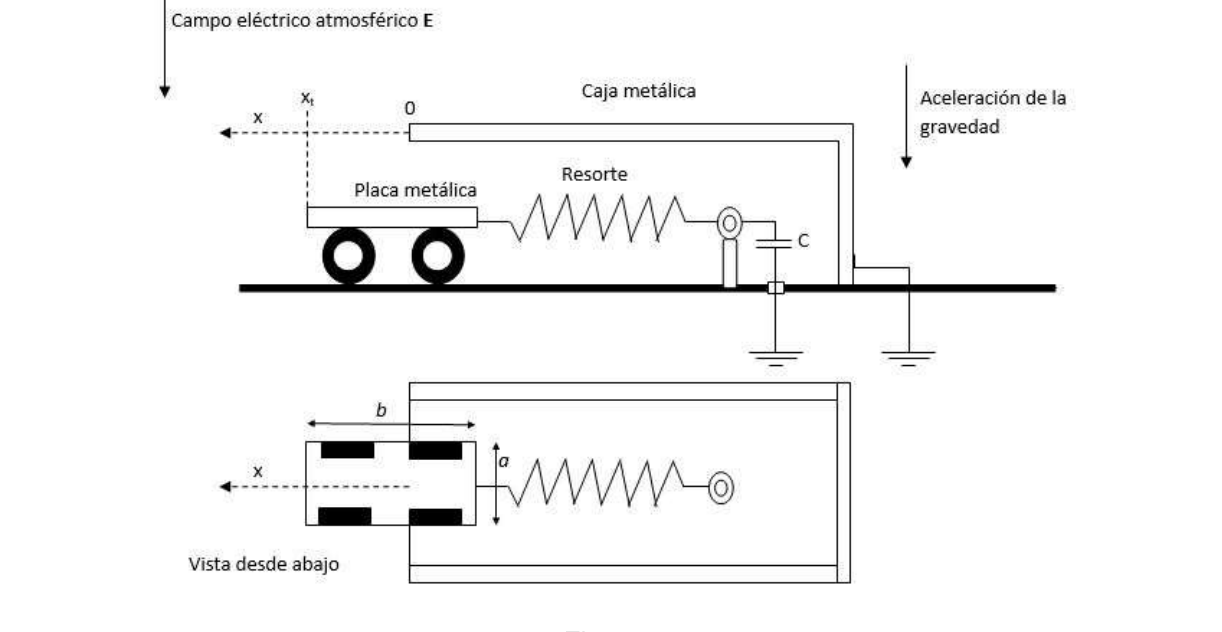
Medidor de campo. Considere un carrito de masa M, el cual consiste en una plancha rectangular metálica de lados a y b con ruedas aislantes. A la plancha metálica se suelda el extremo de un resorte de alambre, de constante k, perfectamente conductor. El otro extremo del resorte se une a un gancho, también conductor, que está soportado sobre una varilla de material aislante.
El sistema está dentro de una caja metálica perfectamente conductora de la que puede “entrar y salir” por una cara lateral. Mediante el resorte conductor y el gancho, el carrito está conectado a un condensador de capacidad C, tal como se muestra en la Figura 1. La caja y uno de los bornes del condensador están conectados a tierra.
Figura 1
Datos y dimensiones.
a = 0,20 m
b = 0,30 m
M = 0,20 kg
k = 7,9 kg s-2
C= 40
pF= 40 10-12F 0 = 8,85 10-12 C2 N-1·m-2.
OAF 2018 - 7 En la posición de equilibrio el carrito tiene su extremo izquierdo justo por debajo del borde abierto de la caja.
a) Haga un diagrama de cuerpo aislado para el carrito y escriba la ecuación de movimiento del mismo.
Suponga que se aparta al carrito de su posición de equilibrio hasta que el extremo izquierdo del mismo está en la posición x0 y en el tiempo t=0 se lo suelta, por lo que comienza a oscilar. Sabiendo que la función de movimiento de un punto del extremo izquierdo del carrito está dada por: xt = A cos t + B sen t y que la velocidad está dada por vt= -A sen t+ B cos t.
b) Determine los valores de A y de B.
Recordando que la aceleración está dada por at= - xt.
c) De una expresión de en función de la masa del carrito y de la constante k del resorte.
d) Determine el signo de la carga eléctrica inducida sobre la superficie del carrito.
e) Calcule la magnitud de la carga eléctrica inducida sobre la superficie del carrito en función de la longitud expuesta al campo atmosférico E. Para esto, considere que el extremo izquierdo del carrito está a una distancia xt del borde de la caja. Realice los cálculos numéricos considerando xt= 15cm y un campo eléctrico atmosférico “de tiempo bueno”; esto es: Vm-1 y dirigido hacia la tierra.
f) Determine el signo y la magnitud de la carga presente en la placa superior del condensador C, cuando el carrito está ubicado en la posición del ítem anterior.
g) Calcule la diferencia de potencial eléctrico Vc entre las placas del condensador C, cuando el carrito está en la posición del ítem c).
h) Obtenga una expresión para el voltaje sobre el condensador en función del tiempo.
Si en una dada situación se detecta que el voltaje en el capacitor cambió de signo (se invirtió) y que la magnitud del valor máximo se incrementó hasta 100 V.
i) Determine el módulo, la dirección y el sentido del campo eléctrico atmosférico.
Topic: Electrostatics, Oscillations & Waves Metodi: Gauss’s Law, Simple Harmonic Motion Analysis, Free-Body Diagram Competenze: Physical Reasoning, Mathematical Modeling Objects: Capacitor, Spring, Cart Fonte: Testo (PDF) — p.5
Campo elettrico atmosferico (livello 1)
Problema 2 Campo elettrico atmosferico.
Durante un giorno di buon tempo, nell’atmosfera si crea un campo elettrico che è diretto verso la Terra. Questo campo elettrico, insieme ad altri fenomeni elettrici presente nell’atmosfera, come raggi, fulmini, ecc., fa parte del circuito elettrico che circonda il pianeta Terra.
Se per determinare la magnitudine del campo elettrico atmosferico, si utilizza un dispositivo chiamato “molino di campo”, in questo caso si studierà un altro dispositivo per misurarlo.
6 - OAF 2018 Nozioni di campo elettrico e cariche indotte. In un materiale conduttore, situato in una regione in cui esiste un campo elettrico, si ripartizione delle loro cariche elettriche in modo tale che si presentino cariche sulla loro superficie elettrici indotte. Il segno e la magnitudo di tali cariche elettriche indotte dipenderanno dal campo. elettrico con cui il conducente sta interagendo. Le linee di campo nascono in Le cariche positive e le cariche negative, lo stesso senso del campo è Da cariche positive a cariche negative. La grandezza della carica indotta su un conducente e il flusso di campo elettrico che arriva al conducente, sono direttamente Proporzionali (la permitività o costante dielettrica del vuoto y0 è la costante di Proporzionalità). Il flusso di un campo elettrico uniforme di magnitudo E attraverso un area A (perpendicolare al vettore campo E), è data da: dove es il modulo di campo E. Se il flusso arriva al conducente induce cariche negative; cioè, se il campo di riferimento verso il conducente le cariche indotte sono negative.
Misuratore di campo. Considerate un carrello di massa M, che consiste in una piastra metallica rettangolare di i lati a e b con ruote isolanti. La lamiera metallica è sollata con l’estremità di un Sotto il filo, di costante k, perfettamente conduttore. L’altra estremità della primavera si attacca a un gancio, anche conduttore, che è sostenuto su un bastone di materiale isolato.
Il sistema è all’interno di una cassa metallica perfettamente conduttiva da cui si può Entrare e uscire da un lato. Attraverso la presa di guida e l’incrocio, il carrello è collegato a un condensatore di capacità C, come mostrato in Figura 1. La la cassa e uno dei terminali del condensatore sono collegati a terra.
Figura 1
Dati e dimensioni.
a = 0,20 m
b = 0,30 m
M = 0,20 kg
k = 7,9 kg s-2
C= 40
pF= 40 10-12F 0 = 8,85 10-12 C2 N-1·m-2.
OAF 2018 - 7 Nella posizione di equilibrio il carrello ha la sua estremità sinistra appena sotto il bordo. aperto dalla scatola.
a) Fare un diagramma di corpo isolato per il carrello e scrivere l’equazione di movimento di esso.
Supponiamo che si allontani dal carrello dalla sua posizione di equilibrio fino all’estremità La sinistra della stessa è nella posizione x0 e nel tempo t=0 viene rilasciata, quindi comincia a oscillare. Sapendo che la funzione di movimento di un punto di estremità Sinistra del carrello è dato da: xt = A cos t + B senza t e che la velocità è data per vt= -A senza t+ B cos t.
b) Determina i valori di A e di B.
Ricordando che l’accelerazione è data da at= - xt.
c) di un’espressione di a funzione della massa del carrello e della costante k della primavera.
d) Determina il segno della carica elettrica indotta sulla superficie del
- Cagnolino.
e) Calcolare la grandezza del carico elettrico indotto sulla superficie del Carro in funzione della lunghezza esposta al campo atmosferico E. Per Questo, supponiamo che l’estremità sinistra del carrello sia a una distanza xt dal bordo della scatola. Fate i calcoli numerici considerando xt=15cm e un campo elettrico atmosferico di buon tempo; questo è: Vm-1 e diretto verso la terra.
f) Determina il segno e la grandezza della carica presente sulla targa superiore del condensatore C, quando il carrello è posizionato nella posizione dell’oggetto precedente.
g) Calcolare la differenza di potenziale elettrico Vc tra le schede di condensatore C, quando il carrello è nella posizione dell’oggetto c).
h) Ottieni un’espressione per la tensione sul condensatore in funzione del tempo.
Se in una determinata situazione si rileva che la tensione nel capacitore è cambiata di segno (se La Commissione ha inoltre deciso di aumentare la portata del valore massimo fino a 100 V.
i) Determina il modulo, la direzione e il senso del campo elettrico atmosferica.
Topic: Electrostatics, Oscillations & Waves Metodi: Gauss’s Law, Simple Harmonic Motion Analysis, Free-Body Diagram Competenze: Physical Reasoning, Mathematical Modeling Objects: Capacitor, Spring, Cart Fonte: Testo (PDF) — p.5
The following shall be added to the list of the following:
Problem two . Atmospheric electric field.
On a good day, an electric field is set in the atmosphere that is directed toward the Earth. This electric field, along with other electrical phenomena present in the atmosphere, such as lightning, lightning, etc., is part of the circuit The electrical system that surrounds planet Earth.
While to determine the magnitude of the atmospheric electric field, usually, you It uses a device called a field mill, which we will study here. another device to measure it.
The Commission shall adopt delegated acts in accordance with Article 21 of this Regulation. Electric field notions and induced charges. In a conductive material, located in a region where an electric field exists, it is They redistribute their electrical charges in such a way that they appear on their surface. induced electrical energy. The sign and magnitude of these induced electric charges will depend on the field. electrical device with which the driver is interacting. The field lines are born in positive charges and end in negative charges, equally the direction of the field is From the positive to the negative. The magnitude of the induced load on a conductor and the flow of electric field which connects to the conductor, are directly Proportional (the permittivity or dielectric constant of the vacuum y0 is the constant of The Commission will examine the The flow of a uniform electric field of magnitude E through a area A (perpendicular to field vector E), is given by: where es the module of field E. If the flow reaches the driver it will induce negative loads; that is, if the The induced charges are negative.
Field gauge. Consider an M-mass cart, which consists of a rectangular metal sheet of sides a and b with insulating wheels. The metal sheet is soldered to the end of a Wire spring, constant k, perfectly conductive. The other end of the spring. It is attached to a hook, also conductor, which is supported on a material rod. I’m isolating myself.
The system is inside a perfectly conductive metal box from which you can Enter and exit through a side face. By means of the driver spring and hook, the cart is connected to a C-capacity capacitor as shown in Figure 1. La The box and one of the capacitor terminals are grounded.
Figure 1
Data and dimensions.
a = 0,20 m
b = 0,30 m
M = 0,20 kg
k = 7,9 kg s-2
C= 40
pF= 40 10-12F 0 = 8,85 10-12 C2 N-1·m-2.
The Commission shall adopt delegated acts in accordance with Article 21 of the Financial Regulation. In the equilibrium position the cart has its left end just below the edge. open from the box.
(a) Make an isolated body diagram for the cart and write the equation of movement of the same.
Suppose you move away from the cart from its equilibrium position until the end. So the left side of it is in the x0 position and in time t=0 you let it go, so It starts to oscillate. Knowing that the motion function of an endpoint left of the cart is given by: xt = A cos t + B without t and that speed is given The value of the input data is the sum of the values of the input data.
(b) Determine the values of A and B.
Remembering that acceleration is given by at= - xt.
(c) Of an expression of depending on the mass of the cart and the constant k of the spring.
(d) Determine the sign of the induced electrical charge on the surface of the
- The cart.
(e) Calculate the magnitude of the electrical charge induced on the surface of the cart based on the length of exposure to atmospheric field E. For This, consider that the left end of the cart is at a distance xt from the edge of the box. Do the numerical calculations by considering xt=15cm and an atmospheric electric field of good weather; that is: Vm-1 and directed toward the earth.
(f) Determine the sign and magnitude of the load present on the upper plate of capacitor C, when the cart is in the position of the item previously.
(g) Calculate the difference in electric potential Vc between the plates of the Condenser C, when the cart is in the position of item c).
(h) Get an expression for the voltage over the capacitor based on the time.
If in a given situation the voltage in the capacitor is detected to have changed sign (if The maximum value was increased to 100 V.
(i) Determine the module, direction and direction of the electric field atmospheric.
Topic: Electrostatics, Oscillations & Waves Metodi: Gauss’s Law, Simple Harmonic Motion Analysis, Free-Body Diagram Competenze: Physical Reasoning, Mathematical Modeling Objects: Capacitor, Spring, Cart Fonte: Testo (PDF) — p.5
Agujeros Negros y Enanas Blancas (Nivel 1)
Problema 3 Agujeros Negros y Enanas Blancas
PARTE A. Agujeros negros Los Agujeros Negros, una de las predicciones más fascinantes de la teoría de la Relatividad General de Einstein, son objetos extremadamente densos, tanto, que si algo cae al agujero: ya no puede escapar, ni siquiera la luz!!! Están caracterizados por un horizonte de eventos (el ”borde” del
8 - OAF 2018 agujero negro) que delimita la zona desde la cual no se puede salir. Afuera del horizonte de eventos, el campo gravitatorio es similar al producido por un objeto material ordinario.
El objetivo, de esta parte del problema, es encontrar la relación entre la masa y el radio de un agujero negro. Para lograrlo, combinaremos ideas de física Newtoniana y Relatividad y, si bien los resultados serán estimativos, la relación que obtendremos de esta forma es idéntica a la predicha por la Teoría de la Relatividad General.
Los conceptos relevantes a tener en cuenta son:
• Velocidad de escape: es la mínima velocidad con la que se tiene que lanzar una partícula desde la superficie de un objeto, para que se aleje infinitamente del cuerpo (es decir, la distancia r al centro del objeto se hace infinita: 𝑟→∞).
• Postulado de la Teoría de la Relatividad: nada puede moverse más rápido que la luz.
A1. Calcule la velocidad de escape 𝒗𝒆𝒔𝒄 desde un objeto esférico de masa 𝑴 y radio 𝑹.
Ahora, buscaremos la relación que deben tener 𝑀 y 𝑅 para que este objeto represente a un agujero negro, es decir, para que ninguna partícula, ni siquiera la luz, pueda escapar desde su horizonte de eventos. Para esto puede ser conveniente pensar a la luz como compuesta por partículas que se mueven a velocidad 𝑐.
A2. Suponiendo que podemos utilizar la expresión de 𝒗𝒆𝒔𝒄 (hallada en el item anterior) para sistemas relativistas, encuentre la cota superior más pequeña para el radio 𝑹 del horizonte de eventos de un agujero negro de masa 𝑴.
Nota:
- Los sistemas relativistas son aquellos que involucran velocidades próximas a la de la luz y/o campos gravitatorios muy intensos.
- Una cota superior para una cantidad 𝑓 es un valor 𝑓𝑠𝑢𝑝 que es mayor o igual a 𝑓.
PARTE B. Enanas blancas Las estrellas se mantienen en equilibrio hidrostático debido al balance entre la atracción gravitatoria (hacia adentro) y la presión térmica que resulta de los procesos nucleares (hacia afuera).
Cuando el combustible nuclear se agota, la atracción gravitatoria domina y la estrella comienza a colapsar. Sin embargo, si la masa de la estrella es menor que cierto valor crítico, llamado Masa de Chandrasekhar, existe otro proceso, puramente cuántico, que es capaz de detener el colapso gravitatorio. Ese proceso se basa en el principio de exclusión de Pauli, que dice que no puede haber dos electrones en el mismo estado cuántico en una cierta región. Cuando la estrella se contrae, los electrones son forzados a ocupar estados de mayor energía, generando una presión (presión de degeneración) que balancea esta contracción si la masa de la estrella es menor que la Masa de Chandrasekhar; este sistema en equilibrio se conoce como Enana Blanca. Si la masa de la estrella es mayor que la Masa de Chandrasekhar, la presión de degeneración es insuficiente para detener el colapso y el estado final, mucho más denso, puede ser una estrella de neutrones o un agujero negro.
OAF 2018 - 9 El objetivo de esta parte del problema es estimar la energía cinética de los átomos que componen la enana blanca.
Para simplificar las expresiones, puede despreciar los números como 2,3,5, π, etc. que aparezcan en la resolución de los items siguientes. NO desprecie los valores de las constantes físicas presentadas en la hoja de respuestas.
Considere que una estrella es una bola de átomos de hidrógeno (constituidos por un electrón y un protón), de densidad uniforme, masa 𝑀 y radio 𝑅.
B1. Escriba el número de átomos por unidad de volumen, 𝒏, en términos de la masa total de la estrella 𝑴, el radio de la estrella 𝑹 y la masa del protón 𝒎𝒑.
Nota:
- Tenga en cuenta que la masa 𝑚𝑒 de los electrones es mucho menor que la masa 𝑚𝑝 de los protones (𝑚𝑒≪𝑚𝑝).
B2. Encuentre la relación entre el número de átomos por unidad de volumen, 𝒏, y el número de electrones por unidad de volumen, 𝒏𝒆.
Suponiendo que la energía cinética promedio de los átomos en la estrella es 𝐸𝑎𝑡,
B3. Escriba la energía cinética 𝑬𝑲 del conjunto de todos los átomos de la estrella, en términos de 𝒏, 𝑬𝒂𝒕 y 𝑹.
Para electrones ultra relativistas (con velocidades próximas a 𝑐) la energía promedio de los átomos se puede aproximar de la siguiente manera
𝐸𝑎𝑡≈𝑝𝑒𝑐 (1)
donde 𝑝𝑒 es el impulso lineal promedio de los electrones.
Suponga que hay un electrón en cada volumen cúbico de lado 𝜆 donde
𝜆= ħ 𝑝𝑒 (2)
B4. Escriba el impulso lineal 𝒑𝒆 en términos del número de electrones por unidad de volumen, 𝒏𝒆 y de ħ.
B5. A partir de lo encontrado en los items anteriores, y usando la ecuación (1) escriba la energía cinética 𝑬𝑲 en términos de ħ, 𝒎𝒑, 𝑹 y 𝑴. Exprésela en la forma 𝑬𝑲= 𝜷 𝑹 e identifique el valor de 𝜷, independiente de 𝑹.
Prueba Experimental - Nivel 1
Flotabilidad de un cuerpo hueco
Introducción Cuando a un cuerpo se lo sumerge en el seno de un líquido, si su densidad media es menor a la del líquido, flotará. Cualquier cuerpo que flota está sujeto a dos fuerzas verticales y opuestas: una es el peso del cuerpo 𝑃̅ que está dirigida hacia abajo y otra es el empuje 𝐸̅ (peso del líquido desalojado) dirigida hacia arriba.
10 - OAF 2018 Si se trata de un cuerpo rígido, el peso actúa en el centro de masa (CM) y el empuje en el centro de masa del volumen del líquido desalojado, conocido como centro de empuje (CE). 𝑃̅ y 𝐸̅ son siempre iguales en módulo y, si son colineales, el cuerpo permanecerá en posición vertical como se muestra en la figura 1.
Figura 1
Sin embargo, el cuerpo puede inclinarse por muchas causas exógenas (como viento, la acción de las olas, etc.) provocando que el centro de empuje se desplace a una nueva posición CE’ como se muestra en la figura 2a y 2b. Esto provoca que las fuerzas que actúan sobre el cuerpo generen un torque sobre el mismo.
Figura 2a Figura 2b
Si el punto Q, definido por la intersección del eje del cuerpo y la línea de acción del empuje, está por encima del CM (figura 2a), 𝑃̅ y 𝐸̅ producirán un momento en sentido antihorario que hará que el cuerpo retorne a la posición neutral o de equilibrio, de este modo el equilibrio del cuerpo es estable. Si Q está por debajo de CM (figura 2b), el cuerpo se vuelve inestable debido al momento de sentido horario generado por 𝑃̅ y 𝐸̅ y el equilibrio del cuerpo resulta inestable. Suponga que sumerge un cilindro hueco de aluminio de masa M y de sección uniforme A, en un líquido. Lo que se observa es que el mismo tiende a darse vuelta, indicando que el CM se encuentra debajo del punto Q (equilibrio inestable). Para bajar la posición del centro de masa hay que aumentar la masa del cilindro. Esto se logra, por ejemplo, agregando masas de peso uniforme m hasta lograr que el cilindro flote derecho como se muestra en la figura 3. En esta condición, el volumen sumergido 𝑉𝑠 verifica la ecuación:
𝑀𝑡𝑔= 𝛿𝑙𝑖𝑞𝑉𝑠𝑔= 𝛿𝑙𝑖𝑞 A ℎ𝑠𝑔 (1)
OAF 2018 - 11 donde 𝑀𝑡 es la masa total del cuerpo, 𝛿𝑙𝑖𝑞 es la densidad del líquido y 𝐴 es el área transversal. Si n es el número de masas agregadas, se cumple que:
(𝑀+ 𝑛 𝑚)𝑔 = 𝛿𝑙𝑖𝑞 𝐴ℎ𝑠𝑔 (2) De tal manera que: ℎ𝑠= 1 𝛿𝑙𝑖𝑞 𝐴(𝑀+ 𝑛 𝑚) (3)
Objetivos
- Determinar experimentalmente el valor de la masa M del cilindro de aluminio y la masa m de una tuerca.
Elementos disponibles
- 55 tuercas de masa m
- 1 recipiente con líquido sobre una base de madera.
- 1 cilindro hueco de aluminio con una escala graduada en su exterior.
- 1 cronómetro
- 1 regla.
Procedimiento
- Monte el dispositivo y determine el número mínimo no de tuercas que deben introducirse en el tubo de aluminio para que flote verticalmente. Tenga especial cuidado en que no entre líquido en el cilindro.
- A partir de ahí agregue tuercas en el interior del cilindro cuidadosamente y una vez alcanzado el equilibrio mida la profundidad de inmersión hs.
Consignas
- Dé el valor de n0.
- Haga una tabla con los valores de hs y n.
- Grafique hs vs n.
- Ajuste los datos por una recta y determine el valor de la pendiente.
- Determine el valor de la ordenada al origen de dicha recta.
- Determine el valor de M
- Determine el valor de m.
Dato: 𝛿𝑙𝑖𝑞= 1 𝑔/𝑐𝑚3
Prueba Teórica - Nivel 2
Topic: Astrophysics, Gravitation Metodi: Newton’s Law of Gravitation, Energy Conservation Method, Order-of-Magnitude Estimation Competenze: Physical Reasoning, Mathematical Modeling Objects: Star, Black Hole, Electron Fonte: Testo (PDF) — p.5
**Agenate nere e nani bianchi (livello 1) **
Problema 3
- I buchi neri e le nana bianche.
Parte A.
- I buchi neri. I buchi neri, una delle previsioni più affascinanti del mondo. La teoria della relatività generale di Einstein, sono oggetti. estremamente densi, tanto che se qualcosa cade nel buco: non più Non può scappare, nemmeno la luce!!! Sono caratterizzati da un orizzonte di eventi (il “borda” del
8 - OAF 2018 Il sistema di controllo del traffico di merci (TPS) è un sistema di controllo che limita l’area da cui non si può uscire. Fuori dall’orizzonte In questo caso, il campo gravitazionale è simile a quello prodotto da un oggetto materiale ordinario.
L’obiettivo, in questa parte del problema, è trovare il rapporto tra massa e massa. radio di un buco nero. Per farlo, combineremo idee di fisica newtonica e Relatività e, sebbene i risultati siano stimativi, il rapporto che otterremo da Questa forma è identica a quella prevista dalla teoria della relatività generale.
I concetti rilevanti da tenere in considerazione sono:
• velocità di uscita: è la velocità minima con cui si deve lanciare una particella dalla superficie di un oggetto, per allontanarsi infinitamente da esso. corpo (cioè la distanza r dal centro dell’oggetto diventa infinita: r→∞).
• Dipendente della teoria della relatività: nulla può muoversi più velocemente di la luce.
A1. Calcola la velocità di scarico vesc da un oggetto sferico di massa M e radio R.
Ora, cercheremo il rapporto che devono avere M e R per questo oggetto rappresentare un buco nero, cioè, in modo che nessuna particella, nemmeno la luce, possa sfuggire. dal suo orizzonte di eventi. Per questo può essere conveniente pensare alla luce come composto da particelle che si muovono a velocità c.
A2. Supponiamo che possiamo usare l’espressione vesc (trovata nell’articolo Per i sistemi relativistici, si trova la quota superiore più piccola per il raggio R dell’orizzonte di eventi di un buco nero di massa M.
Nota:
- I sistemi relativistici sono quelli che coinvolgono velocità vicine alla velocità di velocità. di luce e/o campi gravitazionali molto intensi.
- Un quota superiore per un quantitativo f è un valore fsup superiore o uguale a f.
Parte B. Nani bianchi Le stelle sono tenute in equilibrio idrostatico a causa dell’equilibrio tra l’attrazione. gravità (in) e la pressione termica derivante dai processi nucleari (avanti).
Quando il combustibile nucleare si esaurisce, la gravità domina e la stella comincia a crollare. Tuttavia, se la massa della stella è inferiore a un certo valore Il critico, chiamato Masa di Chandrasekhar, esiste un altro processo, puramente quantistico, che è in grado di fermare il collasso gravitazionale. Questo processo si basa sul principio di Pauli’s exclusion, che dice che non possono esserci due elettroni nello stesso stato. Quantistico in una determinata regione. Quando la stella si contrae, gli elettroni sono costretti ad occupare stati maggiori. La pressione di degenerazione che oscilla questa energia contrazione se la massa della stella è inferiore alla massa di Chandrasekhar; questo Il sistema in equilibrio è conosciuto come la nanna bianca. Se la massa della stella è maggiore della massa di Chandrasekhar, la pressione di La degenerazione è insufficiente per fermare il collasso e lo stato finale, molto più denso, Potrebbe essere una stella di neutroni o un buco nero.
OAF 2018 - 9 L’obiettivo di questa parte del problema è stimare l’energia cinetica degli atomi. che compongono il nano bianco.
Per semplificare le espressioni, si possono disprezzare i numeri come 2,3,5, π, ecc. che sono riportate nella risoluzione dei seguenti punti. Non disprezzare i valori delle le costanti fisiche presentate nella scheda delle risposte.
Considera che una stella è una sfera di atomi di idrogeno (consistenti in un di massa M e di radiazione R.
B1. Scrivi il numero di atomi per unità di volume, n, in termini di la massa totale della stella M, il raggio della stella R e la massa del protone mp.
Nota:
- Si noti che la massa dei me elettroni è molto inferiore alla massa mp dei protoni (me≪mp).
B2. Trova il rapporto tra il numero di atomi per unità di volume, n, e il numero di elettroni per unità di volume, ne.
Supponendo che l’energia cinetica media degli atomi in una stella sia Eat,
B3. Scrivi l’energia cinetica EK del insieme di tutti gli atomi della stella, in termini di n, Eat e R.
Per gli elettroni ultra-relativisti (a velocità vicine a c) l’energia media di Gli atomi possono essere avvicinati come segue
E’ un’operazione di grande importanza.
dove pe è la media dell’impulso lineare degli elettroni.
Supponiamo che ci sia un elettrone in ogni volume cubo di lato λ dove
𝜆= ħ 𝑝𝑒 (2)
B4. Scrivi il pulso lineare pe in termini di numero di elettroni per unità di volume, ne e ħ.
B5. A partire da quello che si trova nei precedenti articoli, e usando l’equazione (1) Scrivi l’energia cinetica EK in termini di ħ, mp, R e M. Esprimete la parola in Forma EK= 𝜷 R e identifica il valore di β indipendente da R.
Prova sperimentale - Livello 1
Flotabilità di un corpo vuoto
Introduzione Quando un corpo viene immerso nel seno di un liquido, se la densità media è inferiore a quella del liquido, fluttuerà. Ogni corpo che galleggia è soggetto a due forze. Verticali e opposti: uno è il peso del corpo P̅ che è rivolto verso il basso e l’altro è la spinta E̅ (peso del liquido sfogliato) rivolta verso l’alto.
10 - OAF 2018 Se si tratta di un corpo rigido, il peso agisce al centro di massa (CM) e la spinta al centro. centro di massa del volume del liquido sfogliato, noto come centro di spinta (CE). P̅ e E̅ sono sempre uguali in modulo e, se sono colineali, il corpo rimarrà in posizione verticale come mostrato in figura 1.
Figura 1
Tuttavia, il corpo può inclinarsi per molte cause esogeniche (come il vento, la L’azione delle onde, ecc.) causando il centro di spinta a spostarsi su una nuova Posizione CE’ come illustrato in figure 2a e 2b. Ciò provoca che le forze che agiscono sul corpo generano una torsione sul corpo.
Figura 2a Figura 2b
Se il punto Q, definito dall’intersezione dell’asse del corpo e della linea di azione del P̅ e E̅ produrranno un momento in senso Il corpo deve tornare alla posizione di equilibrio o neutrale. Il corpo è stabile. Se Q è inferiore a CM (Figura 2b), il Il corpo diventa instabile a causa del tempo di senso orario generato da P̅ e E̅ e il l’equilibrio corporeo è instabile. Supponiamo che si immerga un cilindro vuoto di alluminio di massa M e sezione uniforme A, in un liquido. Ciò che si osserva è che il corpo tende a girare, indicando che il Il CM è situato sotto il punto Q (equilibrio instabile). Per abbassare la posizione del centro di massa, bisogna aumentare la massa del cilindro. Questo è stato ottenuto, per esempio, Aggiungendo masse di peso uniforme m fino a far fluttuare il cilindro dritto come si mostra la figura 3. In questa condizione, il volume immerso Vs verifica l’equazione:
Mtg= δliqVsg= δliq A hsg (1)
OAF 2018 - 11 dove Mt è la massa totale del corpo, δliq è la densità del liquido e A è l’area trasversale. Si n è il numero di masse aggregate, si compie che:
(M+ n m) g = δliq Ahsg (2) In modo tale che: ℎ𝑠= 1 δliq A(M+ n m) (3)
Obiettivi
- Determinare sperimentalmente il valore di massa M del cilindro di alluminio e la massa m di un’orticaria.
Elementi disponibili
- 55 noci di massa m
- 1 contenitore di liquido su base di legno.
- 1 cilindro vuoto di alluminio con scala graduata all’esterno.
- Un cronometro .
- Una regola.
Procedura
- Metti il dispositivo e determina il numero minimo di non-nuccio che devono essere inserire il tubo in alluminio per farli fluttuare verticalmente. - Si ’ , si ’ . Attenzione a non far entrare liquido nel cilindro.
- Da lì, aggiungi le noci all’interno del cilindro con attenzione e una Una volta raggiunto l’equilibrio si misura la profondità di immersione hs.
Consigne
- Datemi il valore di n.
- Fai una tabella con i valori di hs e n.
- Grafico hs vs n.
- Aggiusta i dati per un’artigliatura e determina il valore dell’inclinazione.
- Determina il valore dell’ordinato alla provenienza di tale rettitudine.
- Determina il valore di M
- Determina il valore di m.
Data: δliq= 1 g/cm3
Prova teorica - Livello 2
Topic: Astrophysics, Gravitation Metodi: Newton’s Law of Gravitation, Energy Conservation Method, Order-of-Magnitude Estimation Competenze: Physical Reasoning, Mathematical Modeling Objects: Star, Black Hole, Electron Fonte: Testo (PDF) — p.5
The following information is provided for in the Annex to Implementing Regulation (EU) No 1308/2013:
Problem three . Black Holes and White Dwarfs
The following is the list of the categories of products: Black holes . The Black Holes, one of the most fascinating predictions of the world. Einstein’s theory of general relativity, they are objects. Extremely dense, so much so, that if something falls into the hole: no more It can escape, not even the light!!! They are characterized by an event horizon (the “brink” of the
The Commission shall adopt delegated acts in accordance with Article 21 of this Regulation. The black hole) which delimits the area from which you cannot leave. Outside the horizon In the event of an event, the gravitational field is similar to that produced by an ordinary material object.
The objective of this part of the problem is to find the relationship between mass and the radio of a black hole. To do this, we’ll combine ideas from Newtonian physics and Relativity and, while the results will be estimates, the ratio we will get from This form is identical to the one predicted by the theory of general relativity.
The relevant concepts to be taken into account are:
• Exhaust speed: the minimum speed at which a launch is to be made a particle from the surface of an object, so that it moves infinitely far from the body (i.e. the distance r to the center of the object becomes infinite: r→∞).
• Postgraduate in the theory of relativity: nothing can move faster than The light.
A1. Calculate the velocity of vesc escape from a spherical object of mass M and radio R.
Now, we’re going to look for the relationship that M and R must have for this object to represent A black hole, that is, so that no particles, not even light, can escape. from their event horizon. For this it may be convenient to think of light as composed of particles moving at speed c.
A2. Suppose we can use the expression vesc (found in item For relativistic systems, find the smallest upper quota for the radius R of the event horizon of a black hole of mass M.
Note:
- Relativistic systems are those involving speeds close to the of light and/or very intense gravitational fields.
- A higher quota for a quantity f is an fsup value greater than or equal to f.
The following information shall be provided: White dwarfs . Stars are kept in hydrostatic equilibrium due to the balance between attraction. gravitational (inward) and thermal pressure resulting from nuclear processes (outwardly).
When the nuclear fuel runs out, gravitational pull dominates and the star is It’s starting to collapse. However, if the mass of the star is less than a certain value Critical, called Chandrasekhar’s Mass, there is another process, purely quantum, that It’s capable of stopping gravitational collapse. This process is based on the principle of Pauli exclusion, which says there can’t be two electrons in the same state. quantum in a certain region. When the star shrinks, the electrons are forced to occupy higher states. energy, generating a pressure (degeneration pressure) which balances this pressure. contraction if the mass of the star is less than the mass of Chandrasekhar; this The equilibrium system is known as the White Dwarf. If the mass of the star is greater than the mass of Chandrasekhar, the pressure of degeneration is insufficient to stop the collapse and the final state, much denser, It could be a neutron star or a black hole.
The Commission shall adopt implementing acts in accordance with Article 21 of the Financial Regulation. The goal of this part of the problem is to estimate the kinetic energy of atoms. which make up the white dwarf.
To simplify the expressions, you can disregard numbers like 2,3,5, π, etc. That appear in the resolution of the following items. Do not underestimate the values of the physical constants presented on the answer sheet.
Consider that a star is a ball of hydrogen atoms (consisting of a electron and a proton), uniform density, mass M and radius R.
B1. Write the number of atoms per unit volume, n, in terms of The total mass of the star M, the radius of the star R and the mass of the proton mp.
Note:
- Please note that the mass of the electrons is much smaller than the mass MP of protons (me≪mp).
B2. Find the ratio of the number of atoms per unit volume, n, and The number of electrons per unit volume, ne.
Assuming the average kinetic energy of atoms in a star is Eat,
B3. Write the kinetic energy EK of the set of all atoms in the star, in terms of n, Eat and R.
For ultra-relativistic electrons (with speeds close to c) the average energy of The atoms can be approximated as follows
The Commission shall adopt implementing acts in accordance with Article 21 of this Regulation.
where p is the average linear pulse of the electrons.
Suppose there is an electron in each cubic volume on the λ-side where
𝜆= ħ 𝑝𝑒 (2)
B4. Write the linear momentum pe in terms of the number of electrons per unit. of volume, ne and ħ.
B5. From what we found in the previous items, and using the equation (1) Write the kinetic energy EK in terms of ħ, mp, R and M. Express it in the EK form= 𝜷 R and identify the value of β independent of R.
The following is the list of the types of tests:
Flotability of hollow body
The first is the introduction. When a body is immersed in the breast of a liquid, its average density is smaller than the liquid, it will float. Any body that floats is subject to two forces . verticals and opposites: one is the body weight P̅ which is directed downwards and another is the E̅ (weight of displaced liquid) thrust directed upwards.
10 - OAF 2018 If it is a rigid body, the weight acts at the centre of mass (CM) and the thrust at the centre of the mass. mass centre of volume of discharged liquid, known as centre of thrust (CE). P̅ and E̅ are always the same in modulus and, if they are colinear, the body will remain in vertical position as shown in Figure 1.
Figure 1
However, the body can tilt for many exogenous causes (such as wind, wind, and wind). The wave action, etc.) causing the centre of thrust to shift to a new one. EC position’ as shown in Figures 2a and 2b. This causes the forces that They act on the body, they generate torque on the body.
Figure 2a Figure 2b
If the point Q, defined by the intersection of the body axis and the line of action of the P̅ and E̅ will produce a moment in the direction anti-clockwise which will cause the body to return to the neutral or equilibrium position of this So the body balance is stable. If Q is below CM (Figure 2b), the body becomes unstable due to the timing generated by P̅ and E̅ and the The balance of the body is unstable. Suppose you submerge a hollow aluminium cylinder of mass M and uniform section A, in a liquid. What is observed is that it tends to turn around, indicating that the CM is below the point Q (unstable equilibrium). To lower the position of the The mass center is the mass of the cylinder. This is achieved, for example, Adding uniform mass m to the cylinder to float straight as it is the sample in Figure 3. In this condition, the volume submerged Vs verifies the equation:
The Commission shall adopt delegated acts in accordance with Article 21 of this Regulation. (1)
The Commission shall adopt delegated acts in accordance with Article 21 of the Financial Regulation. where Mt is the total mass of the body, δliq is the density of the liquid and A is the cross-sectional area. Si n is the number of masses added, it is fulfilled which:
(M+ n m) g = δliq Ahsg (2) In such a way that: ℎ𝑠= 1 The following table shows the results of the evaluation:
Objectives
- To experimentally determine the mass value of the aluminium cylinder M and the mass of the aluminium cylinder mass m of a nut.
Available items
- 55 nuts of mastic
- 1 container with liquid on a wooden base.
- 1 hollow aluminium cylinder with a graduated scale on its outside.
- One timepiece .
- One rule.
The procedure
- Mount the device and determine the minimum number of no nuts you need. to be inserted into the aluminium tube so that it floats vertically. Have a special . be careful not to let fluid into the cylinder.
- From there, add nuts to the inside of the cylinder carefully and a Once the equilibrium is reached, the depth of immersion is measured hs.
Consigns
- Give the value of n0.
- Make a table with the values of hs and n.
- Graph hs vs n
- Adjust the data by a straight line and determine the slope value.
- Determine the value of the order at the origin of that line.
- Determine the value of M
- Determine the value of m.
Date: δliq = 1 g/cm3
Theoretical proof - Level 2
Topic: Astrophysics, Gravitation Metodi: Newton’s Law of Gravitation, Energy Conservation Method, Order-of-Magnitude Estimation Competenze: Physical Reasoning, Mathematical Modeling Objects: Star, Black Hole, Electron Fonte: Testo (PDF) — p.5
Vientos Fuertes (Nivel 2)
Problema 1
Vientos Fuertes!!!
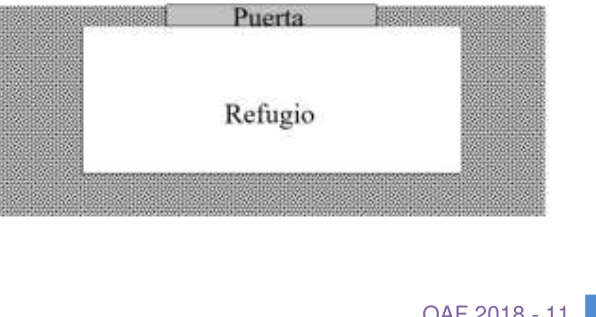
Un refugio contra tornados consiste en una habitación subterránea con una puerta de hierro horizontal, como se muestra esquemáticamente en la figura. La habitación cuenta, además, con un sistema de presurización que mantiene constante la presión interior 𝑃𝑖 = 1 𝑎𝑡𝑚. El área de la puerta es de 1m2 y su espesor de 10 cm.
12 - OAF 2018 Durante el paso de un tornado, los vientos horizontales a nivel de tierra realizan un movimiento circular antihorario, cuya magnitud depende de la distancia al centro del tornado de acuerdo a la siguiente ecuación 𝑣(𝑟) = 𝑣0 −𝛾𝑟
Un cazador de tornados, ubicado a una distancia de 260 m del centro del tornado en cuestión, mide que la velocidad horizontal del viento a nivel de tierra es de 100 km/h; cuando este intrépido científico se desplaza a una distancia de 310 m del centro, encuentra que el aire está quieto.
a) Determine los valores de 𝒗𝟎 y de𝜸.
b) Determine la velocidad horizontal del viento a nivel de tierra en la puerta del refugio sabiendo que el mismo se encuentra a una distancia de 185 m del centro del tornado.
c) ¿Cuánto debe pesar la puerta, como mínimo, para que no sea abierta por el tornado? Asuma que adentro del refugio y afuera del mismo la densidad del aire es 1.225 kg m-3.
d) Si la densidad del hierro es 7874 kg m-3:¿cuál es la mínima distancia a la que se puede encontrar el centro del tornado, del refugio, para que la puerta no sea abierta?
Consideremos ahora un segundo refugio, idéntico al anterior, pero situado a una distancia de 200 m del centro del tornado y 100m más arriba del primer refugio, separado del primero por un terreno en suave pendiente.
e) ¿Cuánto debe pesar la puerta del segundo refugio, como mínimo, para que no sea abierta por el tornado? Asuma que adentro del refugio y afuera del mismo la densidad del aire es 1.225 kg m-3.
Nota: Asuma 𝑔= 10 𝑚 𝑠−2 y 1 𝑎𝑡𝑚= 101325 𝑃𝑎
Topic: Fluid Mechanics, Newtonian Mechanics Metodi: Bernoulli’s Equation, Free-Body Diagram, Kinematic Equations Competenze: Physical Reasoning, Mathematical Modeling Objects: Gas Fonte: Testo (PDF) — p.5
**Venti forti (livello 2) **
Problema 1 Venti forti!!!
Un rifugio contro i tornadi è un rifugio contro i tornadi. camera sotterranea con una porta di ferro orizzontale, Come se mostra schematicamente nella figura. La stanza ha anche un sistema di presurizzazione che mantiene la pressione interna Pi = 1 atm è costante. El L’area della porta è di 1 m2 e il suo spessore di 10 cm.
12 - OAF 2018 Durante il passaggio di un tornado, i venti orizzontali a livello di terra fanno un movimento circolare antiorario, la cui magnitudine dipende dalla distanza al centro del Tornado secondo la seguente equazione 𝑣(𝑟) = 𝑣0 −𝛾𝑟
Un cacciatore di tornado, situato a 260 m dal centro del tornado in La domanda, che misura che la velocità del vento orizzontale a livello terrestre è di 100 km/h; quando questo scienziato intrepidissimo si muove a 310 m dal centro, trova che l’aria è quieta.
a) Determina i valori di v0 e deγ.
b) Determina la velocità del vento orizzontale a livello di terra alla porta del Rifugio sapendo che si trova a 185 m da centro del tornado.
c) Quanto deve pesare la porta, come minimo, per non essere aperta dal Tornado? Supponi che all’interno e all’esterno del rifugio la densità dell’aria è di 1.225 kg m-3.
d) Se la densità del ferro è di 7874 kg m-3: qual è la distanza minima a che si può trovare il centro del tornado, il rifugio, per la La porta non è aperta?
Consideramo ora un secondo rifugio, identico al precedente, ma situato a distanza. 200 metri dal centro del tornado e 100 metri sopra il primo rifugio, separato dal prima per un terreno a molle pendizioni.
e) Quanto deve pesare la porta del secondo rifugio, come minimo, per non è aperta dal tornado? Supponi che dentro il rifugio e fuori il rifugio La densità dell’aria è di 1.225 kg m-3.
Nota: Assumi g= 10 m s−2 e 1 atm= 101325 Pa
Topic: Fluid Mechanics, Newtonian Mechanics Metodi: Bernoulli’s Equation, Free-Body Diagram, Kinematic Equations Competenze: Physical Reasoning, Mathematical Modeling Objects: Gas Fonte: Testo (PDF) — p.5
The following is the list of the airports in the European Union:
Problem 1 is Strong winds!!!
A storm shelter consists of a Underground room with a door . iron horizontal, How se sample schematically in the figure. The room also has a The pressure system that maintains The internal pressure Pi = 1 atm is constant. El The area of the door is 1 m2 and its thickness of 10 cm.
The Commission shall adopt implementing acts in accordance with Article 21 of this Regulation. During the passage of a tornado, horizontal winds at ground level make a The time-lapse of the movement is the distance to the centre of the circle. Tornado according to the following equation 𝑣(𝑟) = 𝑣0 −𝛾𝑟
A tornado hunter, located at a distance of 260 m from the center of the tornado in Question, it measures that the horizontal wind speed at land level is 100 km/h; When this intrepid scientist moves 310 m from the centre, He finds the air is still.
(a) Determine the values of v0 and deγ.
(b) Determine the horizontal wind speed at ground level at the gate of the The refuge knowing that it is at a distance of 185 m from the center of the tornado.
(c) How much should the door weigh at least so that it is not opened by the door? What, a tornado? Assume that inside and outside the shelter density The air is 1.225 kg m-3.
(d) If the density of iron is 7874 kg m-3: what is the minimum distance to the You can find the center of the tornado, the refuge, so that the The door is not open?
Consider now a second shelter, identical to the previous one, but located at a distance. 200 m above the center of the tornado and 100 m above the first shelter, separated from the First, by a gently sloping terrain.
(e) How much should the second shelter door weigh, at least, to Not open by the tornado? Assume that inside the shelter and outside the shelter The density of the air itself is 1.225 kg m-3.
Note: Assume g=10 m s−2 and 1 atm=101325 Pa
Topic: Fluid Mechanics, Newtonian Mechanics Metodi: Bernoulli’s Equation, Free-Body Diagram, Kinematic Equations Competenze: Physical Reasoning, Mathematical Modeling Objects: Gas Fonte: Testo (PDF) — p.5
Campo electrico atmosferico (Nivel 2)
Problema 2: Campo eléctrico atmosférico.
Durante un día de buen tiempo, en la atmósfera se establece un campo eléctrico que está dirigido hacia la Tierra. Este campo eléctrico, junto con otros fenómenos eléctricos presentes en la atmósfera, tales como rayos, relámpagos, etc., forma parte del circuito eléctrico que rodea al planeta Tierra.
Si bien para determinar la magnitud del campo eléctrico atmosférico, usualmente, se utiliza un dispositivo denominado “molino de campo”, en esta oportunidad estudiaremos otro dispositivo para medirlo.
Nociones de campo eléctrico y cargas inducidas. En un material conductor, ubicado en una región en la cual existe un campo eléctrico, se redistribuyen sus cargas eléctricas de tal manera que en su superficie “aparecen cargas eléctricas inducidas”. El signo y la magnitud de esas cargas eléctricas inducidas dependerán del campo eléctrico con el cual está interaccionando el conductor. Las líneas de campo nacen en cargas positivas y terminan en cargas negativas, igualmente el sentido del campo es desde las cargas positivas hacia las negativas. La magnitud de la carga inducida sobre un conductor y el flujo de campo eléctrico que “llega” al conductor, son directamente proporcionales (la permitividad o constante dieléctrica del vacío 0 es la constante de
OAF 2018 - 13 proporcionalidad). El flujo de un campo eléctrico uniforme de magnitud E a través de un área A (perpendicular al vector campo E), está dado por: donde es el módulo del campo E. Si el flujo “llega” al conductor inducirá cargas negativas; esto es, si el campo apunta hacia el conductor las cargas inducidas son negativas.
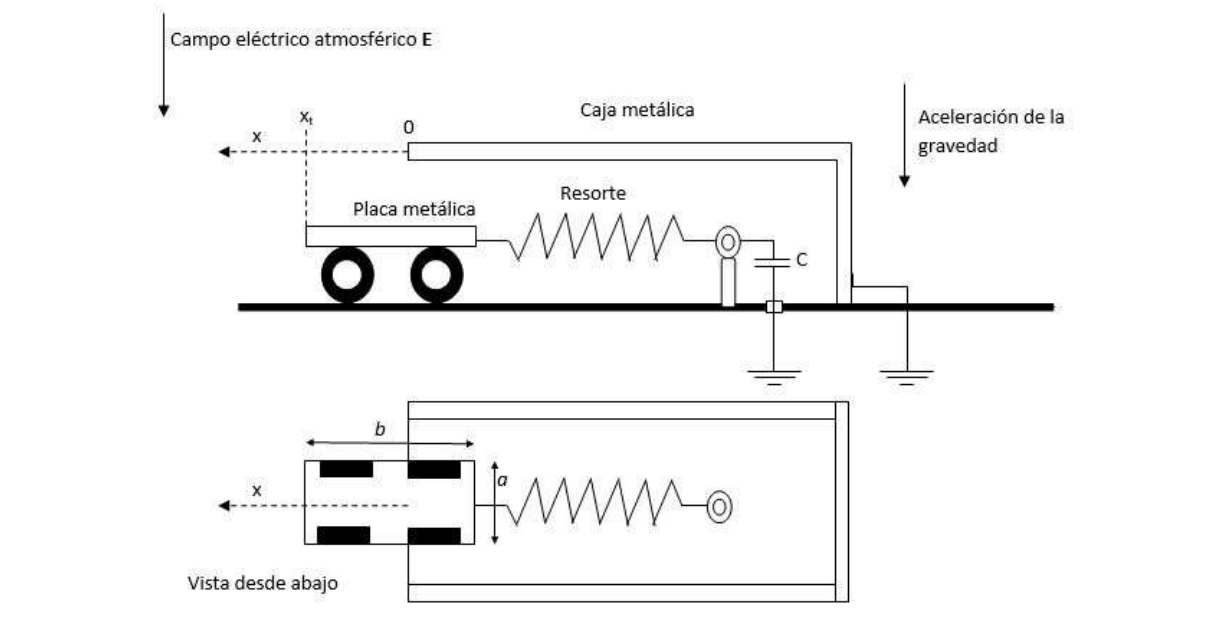
Medidor de campo. Considere un carrito de masa M, el cual consiste en una plancha rectangular metálica de lados a y b con ruedas aislantes. A la plancha metálica se suelda el extremo de un resorte de alambre, de constante k, perfectamente conductor. El otro extremo del resorte se une a un gancho, también conductor, que está soportado sobre una varilla de material aislante.
El sistema está dentro de una caja metálica perfectamente conductora de la que puede “entrar y a salir” por una cara lateral. Mediante el resorte conductor y el gancho, el carrito está conectado a un condensador de capacidad C, tal como se muestra en la Figura 1. La caja y uno de los bornes del condensador están conectados a tierra.
Figura 1
Datos y dimensiones.
a = 0,20 m
b = 0,30 m
M = 0,20 kg
k = 7,9 kg s-2
C= 40
pF= 40 10-12F 0 = 8,85 10-12 C2 N-1·m-2.
En la posición de equilibrio el carrito tiene su extremo izquierdo justo por debajo del borde abierto de la caja.
j) Haga un diagrama de cuerpo aislado para el carrito y escriba la ecuación de movimiento del mismo.
Suponga que se aparta al carrito de su posición de equilibrio hasta que el extremo izquierdo del mismo está en la posición x0 y en el tiempo t=0 se lo suelta, por lo que comienza a oscilar. Sabiendo que la función de movimiento de un punto del extremo izquierdo del carrito está dada por: xt = A cos t + B sen t y que la velocidad está dada por vt= -A sen t+ B cos t.
14 - OAF 2018 k) Determine los valores de A y de B.
Recordando que la aceleración está dada por at= - xt.
l) De una expresión de en función de la masa del carrito y de la constante k del resorte.
m) Determine el signo de la carga eléctrica inducida sobre la superficie del carrito.
n) Calcule la magnitud de la carga eléctrica inducida sobre la superficie del carrito en función de la longitud expuesta al campo atmosférico E. Para esto, considere que el extremo izquierdo del carrito está a una distancia xt del borde de la caja. Realice los cálculos numéricos considerando xt= 15cm y un campo eléctrico atmosférico “de tiempo bueno”; esto es: Vm-1 y está dirigido hacia la tierra.
o) Determine el signo y la magnitud de la carga presente en la placa superior del condensador C, cuando el carrito está ubicado en la posición del ítem anterior.
p) Calcule la diferencia de potencial eléctrico Vc entre las placas del condensador C, cuando el carrito está en la posición del ítem c).
q) Obtenga una expresión para el voltaje sobre el condensador en función del tiempo.
Si en una dada situación se detecta que el voltaje en el capacitor cambió de signo (se invirtió) y que la magnitud del valor máximo se incrementó hasta 100 V.
r) Determine el módulo, la dirección y el sentido del campo eléctrico atmosférico.
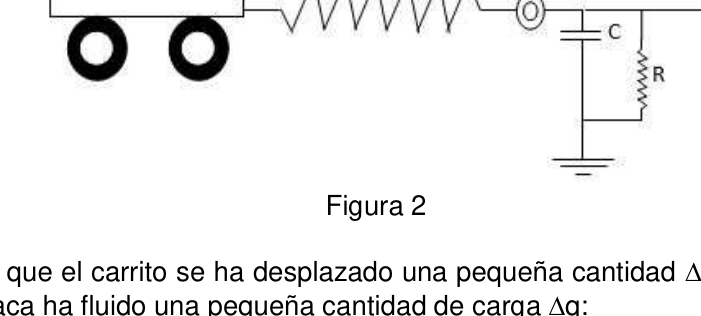
Ahora, suponga que se conecta una resistencia R en paralelo al condensador (ver Figura 2),
Figura 2
Considerando que el carrito se ha desplazado una pequeña cantidad x en un tiempo t, y que de la placa ha fluido una pequeña cantidad de carga q:
s) Escriba una ecuación de balance para la carga eléctrica, considerando también las cargas que ingresan al condensador qc y las que fluyen por la resistencia dando lugar a una corriente eléctrica ir.
OAF 2018 - 15 Sabiendo que el ingreso de una cantidad de carga qc en el condensador produce una variaciónVc de la diferencia de potencial entre sus placas y recordando que la resistencia y el condensador están conectados en paralelo:
t) Reescriba la ecuación presentada en j) de tal forma que aparezcan en ella t, Vc y Vc.
u) Escriba Vc en términos del módulo del campo eléctrico atmosférico E.
Topic: Electrostatics, Circuits Metodi: Gauss’s Law, Simple Harmonic Motion Analysis, Differential Equations Competenze: Physical Reasoning, Mathematical Modeling Objects: Capacitor, Spring, Resistor Fonte: Testo (PDF) — p.5
**Campo elettrico atmosferico (livello 2) **
Problema 2: Campo elettrico atmosferico.
Durante un giorno di buon tempo, nell’atmosfera si crea un campo elettrico che è diretto verso la Terra. Questo campo elettrico, insieme ad altri fenomeni elettrici presente nell’atmosfera, come raggi, fulmini, ecc., fa parte del circuito elettrico che circonda il pianeta Terra.
Se per determinare la magnitudine del campo elettrico atmosferico, si utilizza un dispositivo chiamato “molino di campo”, in questo caso si studierà un altro dispositivo per misurarlo.
Nozioni di campo elettrico e cariche indotte. In un materiale conduttore, situato in una regione in cui esiste un campo elettrico, si ripartizione delle loro cariche elettriche in modo tale che si presentino cariche sulla loro superficie elettrici indotte. Il segno e la magnitudo di tali cariche elettriche indotte dipenderanno dal campo. elettrico con cui il conducente sta interagendo. Le linee di campo nascono in Le cariche positive e le cariche negative, lo stesso senso del campo è Da cariche positive a cariche negative. La grandezza della carica indotta su un conducente e il flusso di campo elettrico che arriva al conducente, sono direttamente proporzionali (la permitività o costante dielettrica del vuoto 0 è la costante di 0
OAF 2018 - 13 Proporzionalità). Il flusso di un campo elettrico uniforme di magnitudo E attraverso un area A (perpendicolare al vettore campo E), è data da: dove es il modulo di campo E. Se il flusso arriva al conducente induce cariche negative; cioè, se il campo di riferimento verso il conducente le cariche indotte sono negative.
Misuratore di campo. Considerate un carrello di massa M, che consiste in una piastra metallica rettangolare di i lati a e b con ruote isolanti. La lamiera metallica è sollata con l’estremità di un Sotto il filo, di costante k, perfettamente conduttore. L’altra estremità della primavera si attacca a un gancio, anche conduttore, che è sostenuto su un bastone di materiale isolato.
Il sistema è all’interno di una cassa metallica perfettamente conduttiva da cui si può Entrare e uscire da un lato. Attraverso la presa di guida e l’incrocio, il carrello è collegato a un condensatore di capacità C, come mostrato in Figura 1. La la cassa e uno dei terminali del condensatore sono collegati a terra.
Figura 1
Dati e dimensioni.
a = 0,20 m
b = 0,30 m
M = 0,20 kg
k = 7,9 kg s-2
C= 40
pF= 40 10-12F 0 = 8,85 10-12 C2 N-1·m-2.
Nella posizione di equilibrio il carrello ha la sua estremità sinistra appena sotto il bordo. aperto dalla scatola.
j) Fare un diagramma di corpo isolato per il carrello e scrivere l’equazione di movimento di esso.
Supponiamo che si allontani dal carrello dalla sua posizione di equilibrio fino all’estremità La sinistra della stessa è nella posizione x0 e nel tempo t=0 viene rilasciata, quindi comincia a oscillare. Sapendo che la funzione di movimento di un punto di estremità Sinistra del carrello è dato da: xt = A cos t + B senza t e che la velocità è data per vt= -A senza t+ B cos t.
14 - OAF 2018 k) Determina i valori di A e di B.
Ricordando che l’accelerazione è data da at= - xt.
l) di un’espressione di a funzione della massa del carrello e della costante k della primavera.
(m) Determina il segno della carica elettrica indotta sulla superficie del
- Cagnolino.
n) Calcolare la grandezza del carico elettrico indotto sulla superficie del Carro in funzione della lunghezza esposta al campo atmosferico E. Per Questo, supponiamo che l’estremità sinistra del carrello sia a una distanza xt dal bordo della scatola. Fate i calcoli numerici considerando xt=15cm e un campo elettrico atmosferico di buon tempo; cioè: Vm-1 e è diretto verso la terra.
o) Determina il segno e la grandezza del carico presente sulla targa superiore del condensatore C, quando il carrello è posizionato nella posizione dell’oggetto precedente.
(p) Calcolare la differenza di potenziale elettrico Vc tra le schede di condensatore C, quando il carrello è nella posizione dell’oggetto c).
q) Ottieni un’espressione per la tensione sul condensatore in funzione di tempo.
Se in una determinata situazione si rileva che la tensione nel condensatore è cambiata di segno (se La Commissione ha inoltre deciso di aumentare la portata del valore massimo fino a 100 V.
r) Determina il modulo, la direzione e il senso del campo elettrico atmosferica.
Ora, supponiamo che si stia collegando una resistenza R in parallelo al condensatore (vedi Figura 2),
Figura 2
Considerando che il carrello si è spostato un piccolo numero di x in un tempo t, e che dalla placca è fluita una piccola quantità di carico q:
s) Scrivere un’equazione di bilanciamento per la carica elettrica, considerando anche le cariche che entrano nel condensatore qc e quelle che fluiscono attraverso la resistenza che porta ad un corrente elettrica andare.
OAF 2018 - 15 Sapendo che l’ingresso di una quantità di carico qc nel condensatore produce una La variazione Vc della differenza di potenziale tra le loro plache e ricordando che resistenza e condensatore sono collegati in parallelo:
t) Riscrivere l’equazione presentata in j) in modo che appaiano in essa t, Vc y Vc.
u) Scrivere Vc in termini di modulo del campo elettrico atmosferico E.
Topic: Electrostatics, Circuits Metodi: Gauss’s Law, Simple Harmonic Motion Analysis, Differential Equations Competenze: Physical Reasoning, Mathematical Modeling Objects: Capacitor, Spring, Resistor Fonte: Testo (PDF) — p.5
The following information shall be provided:
Problem two: atmospheric electric field.
On a good day, an electric field is set in the atmosphere that is directed toward the Earth. This electric field, along with other electrical phenomena present in the atmosphere, such as lightning, lightning, etc., is part of the circuit The electrical system that surrounds planet Earth.
While to determine the magnitude of the atmospheric electric field, usually, you It uses a device called a field mill, which we will study here. another device to measure it.
Electric field notions and induced charges. In a conductive material, located in a region where an electric field exists, it is They redistribute their electrical charges in such a way that they appear on their surface. induced electrical energy. The sign and magnitude of these induced electric charges will depend on the field. electrical device with which the driver is interacting. The field lines are born in positive charges and end in negative charges, equally the direction of the field is From the positive to the negative. The magnitude of the induced load on a conductor and the flow of electric field which connects to the conductor, are directly proportional (the dielectric permittivity or constant of the vacuum 0 is the constant of 0
The Commission shall adopt implementing acts in accordance with Article 21 of the Financial Regulation. The Commission will examine the The flow of a uniform electric field of magnitude E through a area A (perpendicular to the field vector E), is given by: where es the module of field E. If the flow reaches the driver it will induce negative loads; that is, if the The induced charges are negative.
Field gauge. Consider an M-mass cart, which consists of a rectangular metal sheet of sides a and b with insulating wheels. The metal sheet is soldered to the end of a Wire spring, constant k, perfectly conductive. The other end of the spring. It is attached to a hook, also conductor, which is supported on a material rod. I’m isolating myself.
The system is inside a perfectly conductive metal box from which you can “In and out” by a side face. By means of the driver spring and hook, the cart is connected to a C-capacity capacitor as shown in Figure 1. La The box and one of the capacitor terminals are grounded.
Figure 1
Data and dimensions.
a = 0,20 m
b = 0,30 m
M = 0,20 kg
k = 7,9 kg s-2
C= 40
pF= 40 10-12F 0 = 8,85 10-12 C2 N-1·m-2.
In the equilibrium position the cart has its left end just below the edge. open from the box.
j) Make an isolated body diagram for the cart and write the equation of movement of the same.
Suppose you move away from the cart from its equilibrium position until the end. So the left side of it is in the x0 position and in time t=0 you let it go, so It starts to oscillate. Knowing that the motion function of an endpoint left of the cart is given by: xt = A cos t + B without t and that speed is given The value of the input data is the sum of the values of the input data.
The Commission shall adopt delegated acts in accordance with Article 21 of this Regulation. (k) Determine the values of A and B.
Remembering that acceleration is given by at= - xt.
(l) Of an expression of depending on the mass of the cart and the constant k of the spring.
(m) Determine the sign of the electrical charge induced on the surface of the
- The cart.
(n) Calculate the magnitude of the electrical charge induced on the surface of the cart based on the length of exposure to atmospheric field E. For This, consider that the left end of the cart is at a distance xt from the edge of the box. Do the numerical calculations by considering xt=15cm and an atmospheric electric field of good weather; that is: Vm-1 and It’s headed toward the ground.
(o) Determine the sign and magnitude of the load present on the upper plate of capacitor C, when the cart is in the position of the item previously.
(p) Calculate the difference in electric potential Vc between the plates of the Condenser C, when the cart is in the position of item c).
q) Get an expression for the voltage over the capacitor based on time.
If in a given situation the voltage in the capacitor is detected to have changed sign (if The maximum value was increased to 100 V.
(r) Determine the module, direction and direction of the electric field atmospheric.
Now, suppose you connect a resistor R parallel to the capacitor (see Figure 2),
Figure 2
Considering that the cart has moved a small amount x in a time t, and that a small amount of charge has flowed from the plate q:
(s) Write a balance equation for the electrical charge, considering also the loads entering the condenser qc and those flowing through the qc resistance giving rise to an electric current going.
The Commission shall adopt delegated acts in accordance with Article 21 of the Financial Regulation. Knowing that the input of a quantity of charge qc into the capacitor produces a The difference in the potential difference between the plates is resistance and capacitor are connected in parallel:
(t) Rewrite the equation presented in (j) so that they appear in it t, Vc y Vc.
(u) Write Vc in terms of the atmospheric electric field module E.
Topic: Electrostatics, Circuits Metodi: Gauss’s Law, Simple Harmonic Motion Analysis, Differential Equations Competenze: Physical Reasoning, Mathematical Modeling Objects: Capacitor, Spring, Resistor Fonte: Testo (PDF) — p.5
Agujeros Negros y Enanas Blancas (Nivel 2)
Problema 3: Agujeros Negros y Enanas Blancas
PARTE A. Agujeros negros Los Agujeros Negros, una de las predicciones más fascinantes de la teoría de la Relatividad General de Einstein, son objetos extremadamente densos, tanto, que si algo cae al agujero: ya no puede escapar, ni siquiera la luz!!! Están caracterizados por un horizonte de eventos (el ”borde” del agujero negro) que delimita la zona desde la cual no se puede salir. Afuera del horizonte de eventos, el campo gravitatorio es similar al producido por un objeto material ordinario.
El objetivo, de esta parte del problema, es encontrar la relación entre la masa y el radio de un agujero negro. Para lograrlo, combinaremos ideas de física Newtoniana y Relatividad y, si bien los resultados serán estimativos, la relación que obtendremos de esta forma es idéntica a la predicha por la Teoría de la Relatividad General.
Los conceptos relevantes a tener en cuenta son:
• Velocidad de escape: es la mínima velocidad con la que se tiene que lanzar una partícula desde la superficie de un objeto, para que se aleje infinitamente del cuerpo (es decir, la distancia r al centro del objeto se hace infinita: 𝑟→∞).
• Postulado de la Teoría de la Relatividad: nada puede moverse más rápido que la luz.
A1. Calcule la velocidad de escape 𝒗𝒆𝒔𝒄 desde un objeto esférico de masa 𝑴 y radio 𝑹.
Ahora, buscaremos la relación que deben tener 𝑀 y 𝑅 para que este objeto represente a un agujero negro, es decir, para que ninguna partícula, ni siquiera la luz, pueda escapar desde su horizonte de eventos. Para esto puede ser conveniente pensar a la luz como compuesta por partículas que se mueven a velocidad 𝑐.
A2. Suponiendo que podemos utilizar la expresión de 𝒗𝒆𝒔𝒄 (hallada en el item anterior) para sistemas relativistas, encuentre la cota superior más pequeña para el radio 𝑹 del horizonte de eventos de un agujero negro de masa 𝑴.
Nota:
-
Los sistemas relativistas son aquellos que involucran velocidades próximas a la de la luz y/o campos gravitatorios muy intensos.
-
Una cota superior para una cantidad 𝑓 es un valor 𝑓𝑠𝑢𝑝 que es mayor o igual a 𝑓.
16 - OAF 2018 PARTE B. Enanas blancas Las estrellas se mantienen en equilibrio hidrostático debido al balance entre la atracción gravitatoria (hacia adentro) y la presión térmica que resulta de los procesos nucleares (hacia afuera).
Cuando el combustible nuclear se agota, la atracción gravitatoria domina y la estrella comienza a colapsar. Sin embargo, si la masa de la estrella es menor que cierto valor crítico, llamado Masa de Chandrasekhar, existe otro proceso, puramente cuántico, que es capaz de detener el colapso gravitatorio. Ese proceso se basa en el principio de exclusión de Pauli, que dice que no puede haber dos electrones en el mismo estado cuántico en una cierta región. Cuando la estrella se contrae, los electrones son forzados a ocupar estados de mayor energía, generando una presión (presión de degeneración) que balancea esta contracción si la masa de la estrella es menor que la Masa de Chandrasekhar; este sistema en equilibrio se conoce como Enana Blanca. Si la masa de la estrella es mayor que la Masa de Chandrasekhar, la presión de degeneración es insuficiente para detener el colapso y el estado final, mucho más denso, puede ser una estrella de neutrones o un agujero negro.
El objetivo de esta parte del problema es estimar la Masa de Chandrasekhar.
Para simplificar las expresiones, puede despreciar los números como 2,3,5, π, etc. que aparezcan en la resolución de los items siguientes. NO desprecie los valores de las constantes físicas presentadas al final del enunciado.
Considere que una estrella es una bola de átomos de hidrógeno (constituidos por un electrón y un protón), de densidad uniforme, masa 𝑀 y radio 𝑅.
B1. Escriba el número de átomos por unidad de volumen, 𝒏, en términos de la masa total de la estrella 𝑴, el radio de la estrella 𝑹 y la masa del protón 𝒎𝒑.
Nota:
- Tenga en cuenta que la masa 𝑚𝑒 de los electrones es mucho menor que la masa 𝑚𝑝 de los protones (𝑚𝑒≪𝑚𝑝).
B2. Encuentre la relación entre el número de átomos por unidad de volumen, 𝒏, y el número de electrones por unidad de volumen, 𝒏𝒆.
Suponiendo que la energía cinética promedio de los átomos en la estrella es 𝐸𝑎𝑡,
B3. Escriba la energía cinética 𝑬𝑲 del conjunto de todos los átomos de la estrella, en términos de 𝒏, 𝑬𝒂𝒕 y 𝑹.
Para electrones ultra relativistas (con velocidades próximas a 𝑐) la energía promedio de los átomos se puede aproximar de la siguiente manera
𝐸𝑎𝑡≈𝑝𝑒𝑐 (1)
donde 𝑝𝑒 es el impulso lineal promedio de los electrones.
Suponga que hay un electrón en cada volumen cúbico de lado 𝜆 donde
𝜆= ħ 𝑝𝑒 2)
OAF 2018 - 17 B4. Escriba el impulso lineal 𝒑𝒆 en términos del número de electrones por unidad de volumen, 𝒏𝒆 y de ħ.
B5. A partir de lo encontrado en los items anteriores, y usando la ecuación (1) escriba la energía cinética 𝑬𝑲 en términos de ħ, 𝒎𝒑, 𝑹 y 𝑴. Exprésela en la forma 𝑬𝑲= 𝜷 𝑹 e identifique el valor de 𝜷, independiente de 𝑹.
Considere que la energía total de la estrella se puede aproximar por la suma de la energía de formación gravitatoria 𝐸𝐺 y la energía cinética 𝐸𝐾, esto es
𝐸𝑡𝑜𝑡𝑎𝑙= 𝐸𝐺+ 𝐸𝐾 (3)
Para una estrella esférica y uniforme, la energía de formación es
𝐸𝐺= − 𝛼 𝑅 (4) con 𝛼= 3 5 𝐺𝑀2 (5)
Usando las ecuaciones (3), (4), (5) y lo presentado en el ítem B5, la energía total de la estrella toma la forma
𝐸𝑡𝑜𝑡𝑎𝑙= −𝛼+𝛽 𝑅 (6)
B6. Considerando que los sistemas evolucionan minimizando su energía total, indique cual sería el comportamiento del radio 𝑹 de la estrella en la evolución. Es decir:¿el radio tiende a disminuir?, ¿se mantiene constante?, ¿tiende a aumentar? Analice esta situación en los siguientes casos:
-
𝜶> 𝛽
-
𝜶= 𝜷
-
𝜶< 𝛽
donde 𝜶 y 𝜷 son las cantidades que aparecen en la fórmula de la energía total (6).
B7. A partir de la configuración de equilibrio identificada en el item anterior, determine la Masa de Chandrasekhar 𝑴𝑪. Exprésela en términos de ħ, 𝑮, 𝒄 y 𝒎𝒑.
Usando los valores de las cantidades físicas presentadas al final del enunciando:
B8. Calcule el valor numérico del cociente 𝑴𝑪 𝑴𝒔𝒐𝒍. Expréselo con una cifra significativa.
Se sabe que el radio 𝑅𝑒𝑛𝑎𝑛𝑎 de una enana blanca es proporcional al producto de ħ𝑗,
(𝐺𝑐)𝑘 y (𝑚𝑒𝑚𝑝)
ℓ, donde 𝑗, 𝑘, ℓ son constantes a determinar.
B9. Utilizando análisis dimensional, encuentre 𝒋, 𝒌, 𝓵 y escriba la forma funcional de 𝑹𝒆𝒏𝒂𝒏𝒂 en términos de ħ, 𝒄, 𝑮, 𝒎𝒑 y 𝒎𝒆.
18 - OAF 2018
Constantes Físicas
•
Masa solar 𝑀𝑠𝑜𝑙= 2 × 1030 𝑘𝑔.
•
Constante de la gravitación de Newton 𝐺= 6.67 × 10⁻¹¹ 𝑁 𝑚−2𝑘𝑔−2.
•
Masa del protón 𝑚𝑝= 1.67 × 10⁻²⁷ 𝑘𝑔.
•
Masa del electrón 𝑚𝑒= 9.1 × 10⁻³¹ 𝑘𝑔.
•
Constante de Planck reducida ħ = 1.05 × 10⁻³⁴ 𝐽 𝑠.
•
Velocidad de la luz 𝑐= 3 × 10⁸ 𝑚 𝑠−1.
Prueba Experimental - Nivel 2
Flotabilidad de un cuerpo hueco
Introducción Cuando a un cuerpo se lo sumerge en el seno de un líquido, si su densidad media es menor a la del líquido, flotará. Cualquier cuerpo que flota está sujeto a dos fuerzas verticales y opuestas: una es el peso del cuerpo 𝑃̅ que está dirigida hacia abajo y otra es el empuje 𝐸̅ (peso del líquido desalojado) dirigida hacia arriba. Si se trata de un cuerpo rígido, el peso actúa en el centro de masa (CM) y el empuje en el centro de masa del volumen del líquido desalojado, conocido como centro de empuje (CE). 𝑃̅ y 𝐸̅ son siempre iguales en módulo y, si son colineales, el cuerpo permanecerá en posición vertical como se muestra en la figura 1.
Figura 1
Sin embargo, el cuerpo puede inclinarse por muchas causas exógenas (como viento, la acción de las olas, etc.) provocando que el centro de empuje se desplace a una nueva posición CE’ como se muestra en la figura 2a y 2b. Esto provoca que las fuerzas que actúan sobre el cuerpo generen un torque sobre el mismo.
Figura 2a Figura 2b
OAF 2018 - 19 Si el punto Q, definido por la intersección del eje del cuerpo y la línea de acción del empuje, está por encima del CM (figura 2a), 𝑃̅ y 𝐸̅ producirán un momento en sentido antihorario que hará que el cuerpo retorne a la posición neutral o de equilibrio, de este modo el equilibrio del cuerpo es estable. Si Q está por debajo de CM (figura 2b), el cuerpo se vuelve inestable debido al momento de sentido horario generado por 𝑃̅ y 𝐸̅ y el equilibrio del cuerpo resulta inestable. Suponga que sumerge un cilindro hueco de aluminio de masa M y de sección uniforme A, en un líquido. Lo que se observa es que el mismo tiende a darse vuelta, indicando que el CM se encuentra debajo del punto Q (equilibrio inestable). Para bajar la posición del centro de masa hay que aumentar la masa del cilindro. Esto se logra, por ejemplo, agregando masas de peso uniforme m hasta lograr que el cilindro flote derecho como se muestra en la figura 3. En esta condición, el volumen sumergido 𝑉𝑠 verifica la ecuación:
𝑀𝑡𝑔= 𝛿𝑙𝑖𝑞𝑉𝑠𝑔= 𝛿𝑙𝑖𝑞 A ℎ𝑠𝑔 (1)
donde 𝑀𝑡 es la masa total del cuerpo, 𝛿𝑙𝑖𝑞 es la densidad del líquido y 𝐴 es el área transversal.
Si se saca al cuerpo de su posición de equilibrio (elevándolo o hundiéndolo una longitud x respecto a dicha posición) como se muestra en la figura 4 y luego se lo libera, sobre el cuerpo actuará una fuerza neta cuyo módulo es igual a la variación de empuje que ha sufrido y en sentido opuesto al desplazamiento, además de la fuerza de fricción del cuerpo con el líquido. Estas fuerzas darán lugar a un movimiento oscilatorio amortiguado. Sin embargo, despreciando la fricción en las primeras oscilaciones, se cumplirá que:
𝑀𝑡𝑎= 𝛿𝑙𝑖𝑞 Ax𝑔 (2)
De tal manera que la solución a esta ecuación es
𝑥(𝑡) = X cos(𝑡) con un período de oscilación dado por:
𝑇= 2𝜋√ 𝑀𝑡 𝛿𝑙𝑖𝑞 A𝑔= 2𝜋√𝑀𝑡 K (3)
Objetivos
- Determinar experimentalmente el valor de la masa M del cilindro de aluminio y la masa m de una tuerca.
- Determinar experimentalmente el valor de K
Elementos disponibles
-
55 tuercas de masa m
-
1 recipiente con líquido sobre una base de madera.
-
1 cilindro hueco de aluminio con una escala graduada en su exterior.
-
1 cronómetro
-
1 regla.
20 - OAF 2018 Procedimiento
- Monte el dispositivo y determine el número mínimo no de tuercas que deben introducirse en el tubo de aluminio para que flote verticalmente. Tenga especial cuidado en que no entre líquido en el cilindro.
- A partir de ahí agregue tuercas en el interior del cilindro cuidadosamente y una vez alcanzado el equilibrio mida la profundidad de inmersión hs.
- Para cada valor de n mida el período de una oscilación. Esta medición es muy difícil. Deberá desarrollar un método y un criterio para hacerlo. Consignas
- Dé el valor de n0.
- Haga una tabla con los valores de hs y n.
- Grafique hs vs n.
- Ajuste los datos por una recta y determine el valor de la pendiente.
- Determine el valor de la ordenada al origen de dicha recta.
- Determine el valor de M
- Determine el valor de m.
- Haga una tabla con los valores de T y n.
- A partir de la ecuación (3) encuentre una manera de graficar estos datos de tal forma que la relación sea lineal. De una expresión.
- Grafique.
- Ajuste la recta y determine el valor de la pendiente.
- Determine el valor de K y compárelo con el teórico.
Dato: 𝛿𝑙𝑖𝑞= 1 𝑔/𝑐𝑚3
OAF 2018 - 21 Pruebas Preparatorias
Primer Prueba Preparatoria: Mecánica
Problema Teórico 1 El piloto de un avión quiere ir en línea recta entre dos ciudades (A y B). Las ciudades distan 100 km una de otra y se encuentran sobre el mismo meridiano. La ciudad desde donde parte el avión (ciudad A) está al norte de la ciudad de destino (ciudad B).
El avión tiene una velocidad, respecto al aire en calma, de 200 km/h. Al momento del despegue, se le informa al piloto que existe un fuerte viento de 50 km/h en dirección este- oeste.
a) Realice un diagrama de la situación planteada. En el mismo indique el sistema de coordenadas a utilizar, la ubicación de las ciudades A y B, la velocidad del viento y la velocidad del avión respecto a tierra.
b) Escriba una expresión para la velocidad del avión respecto de tierra en función de la velocidad del avión respecto del aire y de la velocidad del viento.
c) ¿Cuál es la dirección en que el piloto debe apuntar el avión a fin que pueda realizar el viaje como lo desea?
d) ¿Cuánto tarda en realizar el viaje entre ambas ciudades?
Problema Teórico 2 Dos resortes idénticos, ambos de constante k = 200 N/m y longitud natural l0,están fijos en los extremos opuestos de una pista plana como se muestra en la figura.
Se empuja un bloque de 5 kg contra el resorte izquierdo comprimiéndolo 0,15 m. El bloque, inicialmente en reposo, se suelta.
La pista no tiene fricción, excepto en el tramo AB. Si el coeficiente de fricción dinámico es μ = 0,08 y la longitud AB es 0,25 m, encuentre:
a) la velocidad del bloque en A. b) la velocidad del bloque en B. c) la compresión máxima del resorte de la derecha.
Luego de comprimir el resorte de la derecha, el bloque vuelve a pasar por el tramo AB y rebota en el resorte de la izquierda,
d) ¿Cuánto tiempo tarda en detenerse desde que empieza a transitar el tramo AB por tercera vez? e) Respecto del punto A, ¿dónde se detiene el bloque?
Considere g = 10 m/s2
22 - OAF 2018 Problema Teórico 3 Un bloque A de 20 kg se conecta a otro bloque B de 30 kg por medio de una cuerda inextensible sin masa. La cuerda pasa por una polea sin fricción como se muestra en la figura.
El bloque B está conectado a un resorte que tiene una masa despreciable, una longitud natural de 20 cm y una constante de fuerza de 250 N/m. El plano sobre el cual está apoyado el bloque A no presenta fricción. Inicialmente el bloque B está en reposo a 40 cm del piso. Cuando el bloque B es liberado, ambos bloques comienzan a oscilar.
a) Haga un diagrama aislado de fuerzas para cada bloque.
b) Plantee las ecuaciones de movimiento.
c) Calcule la velocidad de los bloques cuando el bloque B se encuentra a 20 cm del
piso (es decir, cuando el resorte no está deformado).
Considere g = 10 m/s2
Problema Experimental.
Radio de giro. La energía cinética de un cuerpo rígido se puede escribir como
𝐾= 1 2 𝑚𝑣2 + 1 2 𝐼𝐶𝑀𝜔2
(1)
donde 𝑣 es la velocidad del centro de masa, es la velocidad angular y 𝑚 e 𝐼𝐶𝑀 son la masa y el momento de inercia respecto del centro de masa del cuerpo, respectivamente.
Considere un cilindro de radio 𝑟 y masa 𝑚 ubicado sobre un plano inclinado (ver la figura). Suponga que inicialmente el cuerpo está en reposo en la posición que se indica en la figura.
Si se libera al cilindro, permitiendo que descienda “rodando sin deslizar” ( 𝑣= 𝑟 𝜔 ) por el plano inclinado, la conservación de la energía mecánica se puede escribir de la forma:
OAF 2018 - 23 𝑚𝑔[ℎ+ 𝑟𝑐𝑜𝑠(𝜃)] = 1 2 (𝑚𝑔𝑟)2 (𝐼𝐶𝑀+𝑚𝑟2) ℎ2 𝑑2 𝑡2 + 𝑚𝑔𝑟𝑐𝑜𝑠(𝜃)
(2)
donde 𝑔 es la aceleración de la gravedad, ℎ es la altura que se indica en la figura y 𝑡 el tiempo en el que el cilindro recorre la distancia 𝑑. Luego, se puede escribir, ℎ= 2𝑑2 𝑔( 𝑟𝑔2 𝑟2 + 1) 1 𝑡2
(3) donde 𝑟𝑔= √𝐼𝐶𝑀 𝑚 es el radio de giro.
Objetivo Determinar el radio de giro 𝑟𝑔 de un cuerpo cilíndrico
Materiales
- Cuerpo cilíndrico (lata vacía -de durazno, atún-, pila, etc.).
- Plano inclinado (madera, carpeta rígida, etc.).
- Cronómetro.
- Regla.
- Papel.
Procedimiento
- Determine el perímetro 𝑝 del cuerpo cilíndrico.
- En el plano inclinado, marque una distancia 𝑑 (mayor o igual a 2 𝑝 ).
- Para la altura ℎ (ver figura), mida el tiempo 𝑡 en el cual el cuerpo cilíndrico recorre la distancia 𝑑. Repita la medición al menos 5 (cinco) veces.
- Repita el punto c) para, al menos, 5 (cinco) valores diferentes de ℎ.
Consignas a) A partir de la medición de 𝑝, determine 𝑟. b) Reporte las mediciones realizadas en una tabla. c) A partir de las magnitudes medidas y de la ecuación 3, elija dos variables (𝑥 e 𝑦) de manera tal de obtener una relación lineal entre las mismas. Realice un gráfico de las variables elegidas. d) Haga un ajuste lineal de los puntos graficados, y determine la pendiente y la ordenada al origen. e) A partir de la ecuación 3 y de los valores obtenidos del ajuste, determine el radio de giro 𝑟𝑔 del cuerpo cilíndrico.
Segunda Prueba Preparatoria: Termodinámica, Electricidad y Magnetismo
Problema Teórico 1 Una esfera de hierro de 890 g tiene un diámetro de 6 cm y es 0.05 mm más grande que el diámetro de un agujero que se encuentra en una placa de cobre de 89 g. Ambas masas están a una temperatura de 30 ºC.
Si el sistema esfera-placa se introduce en un recipiente adiabático con 280 g de agua a 60 º C a) ¿Cuál es la temperatura final de equilibrio? b) ¿Pasará la esfera a través del agujero cuando el sistema llegue al equilibrio? c) ¿Qué temperatura final de equilibrio se requiere para que la esfera pase por el agujero?
Datos útiles: Coeficiente de dilatación del cobre: αcu= 1.7 10-5 ºC-1
24 - OAF 2018 Coeficiente de dilatación del hiero: αfe = 1.2 10-5 ºC-1 Calor específico del cobre: ccu = 390 J/(kg K) Calor específico del hierro: cfe = 450 J/(kg K) Calor específico del agua: cagua = 4180 J/(kg K)
Problema Teórico 2 Considere el circuito de la figura y encuentre: a) La corriente que entrega la fuente. b) La diferencia de potencial entre los puntos a y b. c) La corriente que circula por la resistencia de 20
Problema Teórico 3
Considere el sistema de la figura que consiste de una cámara dividida en dos partes por
medio de un pistón de masa despreciable. La cámara de la derecha contiene 5 moles de
un gas ideal monoatómico a 348 ºC. La longitud de la cámara es L = 1my su sección
transversal es A = 0,25 m2. La cámara de la izquierda se encuentra abierta y posee un
resorte (sujeto únicamente a la pared) de longitud natural Lo = 0.5 m y constante
k = 10000 kg/s2. No existe fricción entre el pistón y la cámara.
a) Encuentre la posición de equilibrio inicial del pistón.
Si ahora el extremo derecho de la cámara se pone en contacto con una fuente a temperatura T1
b) ¿Cuál tiene que ser esta temperatura, para que en el estado de equilibrio el resorte tenga su longitud natural?
a
OAF 2018 - 25 Posteriormente un agente externo comprime aún más el gas cuasiestáticamente hasta alcanzar una presión igual a la presión de equilibrio del inciso a) (Pa), siguiendo la recta: P = αV + 2.105Pa
c) Calcule la variación de energía interna del gas en este proceso.
Finalmente se expande cuasiestáticamente el gas desde la posición de equilibrio del inciso b) hasta el volumen de equilibrio del inciso a) (Va) a presión constante.
d) Determine el calor intercambiado en este último proceso, indicando explícitamente si es absorbido o entregado.
e) Grafique el ciclo descripto en los pasos b-d.
Datos útiles: Presión atmosférica Po = 1,013 105Pa
Constante de los gases R = 8,31 J/(mol K)
Problema Experimental.
Determinación de la densidad del aire Cuando un cuerpo cae en un fluido, el mismo sufre una fuerza de fricción 𝐹𝐷 que se opone al movimiento y que depende de la velocidad del cuerpo. Si el cuerpo cae por acción de la gravedad, esta fuerza puede igualar al peso del cuerpo, y éste alcanza una velocidad constante (hemos despreciado a la fuerza debido al empuje) denominada velocidad terminal. Esta situación se puede describir mediante la siguiente ecuación:
𝐹𝐷= 1 2 𝐶𝐷𝜌𝑎𝐴𝑣2 = 𝑀𝑔
(1)
donde 𝜌𝑎 es la densidad del aire, 𝐴 y 𝑀 son el área que el cuerpo le ofrece al fluido (sección máxima del cuerpo transversal al movimiento) y su masa, respectivamente, 𝐶𝐷 el coeficiente de arrastre, 𝑣 es la velocidad terminal y 𝑔 la aceleración de la gravedad.
Objetivo: Determinar la densidad del aire (𝜌𝑎)
Elementos:
Hojas de papel A4 de gramaje conocido.
Cronómetro
Regla
Transportador
Compás
Cinta adhesiva
Tijera
Cinta métrica (uso común)
Procedimiento
Armado de los conos de papel:
En una hoja de papel de gramaje conocido, dibuje un círculo de radio 𝑟 = 10 𝑐𝑚. Sobre
este círculo, dibuje un ángulo 𝛽 como se muestra en el panel izquierdo de la figura.
Corte el dibujo realizado y pegue con cinta adhesiva los segmentos OA con OB para formar un cono como el mostrado en el panel derecho de la figura. Ponga atención al unir los extremos para que no queden espacios abiertos.
26 - OAF 2018 Arme dos conos para cada uno de los siguientes ángulos, 𝛽= 330°, 300°, 270° 𝑦 240°.
Mediciones: Coloque los conos de igual 𝛽 uno dentro del otro, ubicándolos de manera tal que las uniones estén contrapuestas. Deje caer los conos desde la altura máxima que alcance su brazo y mida el tiempo 𝑡𝛽 que tardan los conos en caer desde la altura de sus ojos hasta el piso. Trate de dejar caer el cono siempre de la misma altura y mantenga la cabeza lo más derecha posible. Repita esta medición al menos 10 veces para cada par de conos. Determine la altura ℎ de sus ojos utilizando la cinta métrica de uso común.
Análisis teórico
La masa de cada cono puede determinarse a partir del gramaje de las hojas (𝜌𝑝,
densidad superficial) y del área que se usó para formar el cono (𝐴𝑝),
𝑚= 𝜌𝑝𝐴𝑝= 𝜌𝑝𝛽𝑟2
2
donde 𝛽 es el ángulo expresado en radianes.
El área que el cuerpo le ofrece al fluido (aire) es 𝐴= 𝜋𝑅2
Como se puede ver en las figuras, se cumple:
2𝜋𝑅= 𝛽𝑟
Luego,
𝐴= 𝑟2
4𝜋𝛽2
De la ecuación (1), podemos escribir
𝐶𝐷𝑣2 = 2 𝑔 𝜌𝑎 𝑀 𝐴= 2 𝑔 𝜌𝑎 2𝑚 𝐴= 4 𝑔 𝜌𝑎 2𝜋𝜌𝑝 𝛽
Para las condiciones de medición 𝐶𝐷= 𝐵 𝑣 donde 𝐵= 1 𝑚 𝑠 y 𝑣= ℎ 𝑡𝛽 ̅̅̅ Reescribiendo, 𝑡𝛽̅ = 𝜌𝑎ℎ𝐵 8𝜋𝑔𝜌𝑝𝛽
(2)
A partir de las mediciones realizadas, confeccione un gráfico de 𝑡𝛽̅ en función de 𝛽 y ajuste los puntos graficados con una recta. Determine la pendiente y la ordenada de la recta de ajuste. A partir de los resultados anteriores y utilizando la ecuación (2), determine la densidad del aire 𝜌𝑎.
Considere 𝑔= 10 𝑚 𝑠2.
OAF 2018 - 27 Instancias Locales
Problemas Teóricos
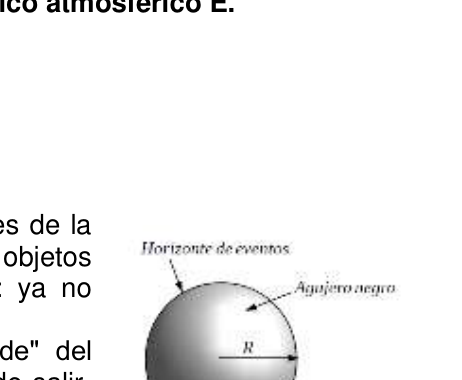
Topic: Astrophysics, Modern-Quantum Physics Metodi: Newton’s Law of Gravitation, Dimensional Analysis, Order-of-Magnitude Estimation Competenze: Physical Reasoning, Mathematical Modeling Objects: Star, Black Hole, Electron Fonte: Testo (PDF) — p.5
**Agenate nere e nani bianchi (livello 2) **
Problema 3: buchi neri e nani bianchi
Parte A.
- I buchi neri. I buchi neri, una delle previsioni più affascinanti del mondo. La teoria della relatività generale di Einstein, sono oggetti. estremamente densi, tanto che se qualcosa cade nel buco: non più Non può scappare, nemmeno la luce!!! Sono caratterizzati da un orizzonte di eventi (il “borda” del Il sistema di sicurezza è stato creato per la sicurezza dei veicoli. Fuori dall’orizzonte degli eventi, il campo gravitazionale è simile a prodotto da un oggetto di materia ordinaria.
L’obiettivo, in questa parte del problema, è trovare il rapporto tra massa e massa. radio di un buco nero. Per farlo, combineremo idee di fisica newtonica e Relatività e, sebbene i risultati siano stimativi, il rapporto che otterremo da Questa forma è identica a quella prevista dalla teoria della relatività generale.
I concetti rilevanti da tenere in considerazione sono:
• velocità di uscita: è la velocità minima con cui si deve lanciare una particella dalla superficie di un oggetto, per allontanarsi infinitamente da esso. corpo (cioè la distanza r dal centro dell’oggetto diventa infinita: r→∞).
• Dipendente della teoria della relatività: nulla può muoversi più velocemente di la luce.
A1. Calcola la velocità di scarico vesc da un oggetto sferico di massa M e radio R.
Ora, cercheremo il rapporto che devono avere M e R per questo oggetto rappresentare un buco nero, cioè, in modo che nessuna particella, nemmeno la luce, possa sfuggire. dal suo orizzonte di eventi. Per questo può essere conveniente pensare alla luce come composto da particelle che si muovono a velocità c.
A2. Supponiamo che possiamo usare l’espressione vesc (trovata nell’articolo Per i sistemi relativistici, si trova la quota superiore più piccola per il raggio R dell’orizzonte di eventi di un buco nero di massa M.
Nota:
- I sistemi relativistici sono quelli che coinvolgono velocità vicine alla velocità di velocità. di luce e/o campi gravitazionali molto intensi.
- Un quota superiore per un quantitativo f è un valore fsup superiore o uguale a f.
16 - OAF 2018 Parte B. Nani bianchi Le stelle sono tenute in equilibrio idrostatico a causa dell’equilibrio tra l’attrazione. gravità (in) e la pressione termica derivante dai processi nucleari (avanti).
Quando il combustibile nucleare si esaurisce, la gravità domina e la stella comincia a crollare. Tuttavia, se la massa della stella è inferiore a un certo valore Il critico, chiamato Masa di Chandrasekhar, esiste un altro processo, puramente quantistico, che è in grado di fermare il collasso gravitazionale. Questo processo si basa sul principio di Pauli’s exclusion, che dice che non possono esserci due elettroni nello stesso stato. Quantistico in una determinata regione. Quando la stella si contrae, gli elettroni sono costretti ad occupare stati maggiori. La pressione di degenerazione che oscilla questa energia contrazione se la massa della stella è inferiore alla massa di Chandrasekhar; questo Il sistema in equilibrio è conosciuto come la nanna bianca. Se la massa della stella è maggiore della massa di Chandrasekhar, la pressione di La degenerazione è insufficiente per fermare il collasso e lo stato finale, molto più denso, Potrebbe essere una stella di neutroni o un buco nero.
L’obiettivo di questa parte del problema è stimare la massa di Chandrasekhar.
Per semplificare le espressioni, si possono disprezzare i numeri come 2,3,5, π, ecc. che sono riportate nella risoluzione dei seguenti punti. Non disprezzare i valori delle le costanti fisiche presentate alla fine della frase.
Considera che una stella è una sfera di atomi di idrogeno (consistenti in un di massa M e di radiazione R.
B1. Scrivi il numero di atomi per unità di volume, n, in termini di la massa totale della stella M, il raggio della stella R e la massa del protone mp.
Nota:
- Si noti che la massa dei me elettroni è molto inferiore alla massa mp dei protoni (me≪mp).
B2. Trova il rapporto tra il numero di atomi per unità di volume, n, e il numero di elettroni per unità di volume, ne.
Supponendo che l’energia cinetica media degli atomi in una stella sia Eat,
B3. Scrivi l’energia cinetica EK del insieme di tutti gli atomi della stella, in termini di n, Eat e R.
Per gli elettroni ultra-relativisti (a velocità vicine a c) l’energia media di Gli atomi possono essere avvicinati come segue
E’ un’operazione di grande importanza.
dove pe è la media dell’impulso lineare degli elettroni.
Supponiamo che ci sia un elettrone in ogni volume cubo di lato λ dove
𝜆= ħ 𝑝𝑒 2)
OAF 2018 - 17 B4. Scrivi il pulso lineare pe in termini di numero di elettroni per unità di volume, ne e ħ.
B5. A partire da quello che si trova nei precedenti articoli, e usando l’equazione (1) Scrivi l’energia cinetica EK in termini di ħ, mp, R e M. Esprimete la parola in Forma EK= 𝜷 R e identifica il valore di β indipendente da R.
Considera che l’energia totale della stella può essere approssimata dalla somma di energia di formazione gravitazionale EG e energia cinetica EK, cioè
Total = EG+ EK (3)
Per una stella sferica e uniforme, l’energia di formazione è
𝐸𝐺= − 𝛼 𝑅 (4) con 𝛼= 3 5 𝐺𝑀2 (5)
Usando le equazioni (3), (4), (5) e l’articolo B5, l’energia totale della La stella prende forma
Total= −𝛼+𝛽 𝑅 (6)
B6. Considerando che i sistemi si evolvono riducendo al minimo la loro energia totale, Indica quale sarebbe il comportamento del raggio R della stella in evoluzione. Cioè, la radio tende a diminuire, si mantiene costante? tende ad aumentare? Analizzare questa situazione nei seguenti casi:
-
𝜶> 𝛽
-
𝜶= 𝜷
-
𝜶< 𝛽
dove α e β sono le quantità che appaiono nella formula di energia totale (6).
B7. A partire dalla configurazione di equilibrio identificata nell’articolo precedente, determina la massa del Chandrasekhar MC. Esprimilo in termini di ħ, G, c e 𝒎𝒑.
Usando i valori delle quantità fisiche presentati alla fine della frase:
B8. Calcola il valore numerico del coefficiente 𝑴𝑪
- Oh, mio Dio. Esprimelo con un numero. significativi.
Si sa che il raggio di Renano di un nano bianco è proporzionale al prodotto di ħj, (Gc) k e (memp) l, dove j, k, l sono costanti da determinare.
B9. Usando l’analisi dimensionale, trova j, k, l e scrivi la forma funzionale di Renana in termini di ħ, c, G, mp e me.
18 - OAF 2018 Costanti fisiche • Massaggio solare Msol= 2 × 1030 kg. • Costante di gravitazione di Newton G= 6.67 × 10⁻¹¹ N m−2kg−2. • Massa del protone mp = 1.67 × 10⁻²⁷ kg. • Massa dell’elettrone me = 9.1 × 10⁻³¹ kg. • Costante di Planck ridotta ħ = 1.05 × 10⁻³⁴ J s. • Velocità della luce c= 3 × 10⁸ m s−1.
Prova sperimentale - Livello 2
Flotabilità di un corpo vuoto
Introduzione Quando un corpo viene immerso nel seno di un liquido, se la densità media è inferiore a quella del liquido, fluttuerà. Ogni corpo che galleggia è soggetto a due forze. Verticali e opposti: uno è il peso del corpo P̅ che è rivolto verso il basso e l’altro è la spinta E̅ (peso del liquido sfogliato) rivolta verso l’alto. Se si tratta di un corpo rigido, il peso agisce al centro di massa (CM) e la spinta al centro. centro di massa del volume del liquido sfogliato, noto come centro di spinta (CE). P̅ e E̅ sono sempre uguali in modulo e, se sono colineali, il corpo rimarrà in posizione verticale come mostrato in figura 1.
Figura 1
Tuttavia, il corpo può inclinarsi per molte cause esogeniche (come il vento, la L’azione delle onde, ecc.) causando il centro di spinta a spostarsi su una nuova Posizione CE’ come illustrato in figure 2a e 2b. Ciò provoca che le forze che agiscono sul corpo generano una torsione sul corpo.
Figura 2a Figura 2b
OAF 2018 - 19 Se il punto Q, definito dall’intersezione dell’asse del corpo e della linea di azione del P̅ e E̅ produrranno un momento in senso Il corpo deve tornare alla posizione di equilibrio o neutrale. Il corpo è stabile. Se Q è inferiore a CM (Figura 2b), il Il corpo diventa instabile a causa del tempo di senso orario generato da P̅ e E̅ e il l’equilibrio corporeo è instabile. Supponiamo che tu stia immergendo un cilindro vuoto di di massa M e di sezione uniforme A, in un liquido. Quello che si osserva è che lo stesso tende. a girare, indicando che il CM si trova sotto il punto Q (equilibrio instabile). Per scendere La posizione del centro di massa deve essere aumentata massa del cilindro. Questo è stato ottenuto, per esempio, aggiungendo masse di peso uniforme m fino a raggiungere che il cilindro fluttuasse a destra come mostrato nella figura 3. In questa condizione, il volume immerso V. verifica l’equazione:
Mtg= δliqVsg= δliq A hsg (1)
dove Mt è la massa totale del corpo, δliq è la densità del liquido e A è l’area trasversale.
Se si toglie il corpo dalla sua posizione di equilibrio (risalendo o immergendo un’altezza x rispetto a la posizione) come mostrato in figura 4 e poi Se lo rilasci, sul corpo agirà una forza netta. il cui modulo è uguale alla variazione di spinta che ha La situazione è stata molto difficile, ma non è stato possibile. della forza di attrito del corpo con il liquido. - Sono queste. Le forze danno luogo a un movimento oscilante. ammortizzato. Tuttavia, disprezzando la frizione in le prime oscillazioni, si soddisferanno che:
Mta= δliq Axg (2)
Così la soluzione a questa equazione è x(t) = X cos(t) con un periodo di oscillazione dato da:
𝑇= 2𝜋√ 𝑀𝑡 δliq Ag= 2π√Mt K (3)
Obiettivi
- Determinare sperimentalmente il valore di massa M del cilindro di alluminio e la massa m di un’orticaria.
- Determinare sperimentalmente il valore di K
Elementi disponibili
- 55 noci di massa m
- 1 contenitore di liquido su base di legno.
- 1 cilindro vuoto di alluminio con scala graduata all’esterno.
- Un cronometro .
- Una regola.
20 - OAF 2018 Procedura
- Metti il dispositivo e determina il numero minimo di non-nuccio che devono essere inserire il tubo in alluminio per farli fluttuare verticalmente. - Si ’ , si ’ . Attenzione a non far entrare liquido nel cilindro.
- Da lì, aggiungi le noci all’interno del cilindro con attenzione e una Una volta raggiunto l’equilibrio si misura la profondità di immersione hs.
- Per ogni valore di n si misura il periodo di oscillazione. Questa misura è molto difficile. Dovrà sviluppare un metodo e un criterio per farlo. Consigne
- Datemi il valore di n.
- Fai una tabella con i valori di hs e n.
- Grafico hs vs n.
- Aggiusta i dati per un’artigliatura e determina il valore dell’inclinazione.
- Determina il valore dell’ordinato alla provenienza di tale rettitudine.
- Determina il valore di M
- Determina il valore di m.
- Fai una tabella con i valori di T e n.
- In base all’equazione (3) troverete un modo per graficare questi dati di tale tipo. Il rapporto è lineare. - D’una espressione.
- Grafica.
- Aggiusta la retta e determina il valore dell’inclinazione.
- Determina il valore di K e confronta con il teorico.
Data: δliq= 1 g/cm3
OAF 2018 - 21 Prove preliminari
Primo test preparatorio: meccanica
Problema teorico 1 Il pilota di un aereo vuole andare in linea retta tra due città (A e B). Le città Sono a 100 km l’uno dall’altro e si trovano sul medesimo meridiano. La città da dove parte l’aeroplano (città A) è a nord della città di destinazione (città B).
L’aereo ha una velocità, rispetto all’aria calma, di 200 km/h. Al momento del quando il volo è in partenza, il pilota è informato che vi sono forti venti di 50 km/h in direzione est-
- A ovest.
a) Sviluppa un diagramma della situazione. Indicare il sistema Le coordinate da utilizzare, la posizione delle città A e B, la velocità di vento e velocità dell’aereo rispetto alla terra.
b) Scrivi un’espressione per la velocità dell’aereo rispetto alla terra in funzione la velocità dell’aereo rispetto all’aria e la velocità del vento.
(c) Qual è la direzione in cui il pilota deve puntare l’aereo per poterlo fare? fare il viaggio come vuoi?
d) Quanto tempo ci vuole per fare il viaggio tra le due città?
Problema teorico 2 Due sorgenti identiche, entrambi di costante k = 200 N/m e lunghezza naturale l0, sono fisse le estremità opposte di una pista piana come mostrato nella figura.
Si spinge un blocco di 5 kg contro la molla sinistra compresso 0,15 m. El blocco, inizialmente a riposo, si rilascia.
La pista non ha attrito, tranne che nel tratto AB. Se il coefficiente di attrito dinamico è μ = 0,08 e la lunghezza AB è 0,25 m, trova:
a) velocità del blocco in A. b) velocità del blocco in B. c) la compressione massima della molla destra.
Dopo aver compresso la sorgente a destra, il blocco passa di nuovo attraverso il tratto AB e Ribotta nella primavera di sinistra,
d) Quanto tempo ci vuole per fermarsi dopo che il tratto AB inizia a passare Per la terza volta? e) Per quanto riguarda il punto A, dove si ferma il blocco?
Considera g = 10 m/s2
22 - OAF 2018 Problema teorico 3 Un blocco A di 20 kg si collega a un altro blocco B di 30 kg tramite una corda inextensible senza massa. La corda passa attraverso un polea senza attrito come mostrato nella
- Figura.
Il blocco B è collegato ad una sorgente che ha una massa dispregiata, una lunghezza. di 20 cm e una costante di forza di 250 N/m. Il piano su cui è supporto del blocco A non presenta attrito. Inizialmente il blocco B è a 40 ore di riposo. centimetri dal pavimento. Quando il blocco B viene rilasciato, entrambi i blocchi iniziano a oscillare.
a) Sviluppa un diagramma isolato delle forze per ogni blocco. b) Sullacciate le equazioni di movimento. c) Calcolare la velocità dei blocchi quando il blocco B si trova a 20 cm da Piano (cioè quando la molla non è deformata).
Considera g = 10 m/s2
Problema sperimentale.
Radiosciamolo di rotazione. L’energia cinetica di un corpo rigido può essere scritta come
𝐾= 1 2 𝑚𝑣2 + 1 2 ICMω2
(1)
dove v è la velocità del centro di massa, è la velocità angolare e m e ICM sono la massa e momento di inerzia rispetto al centro di massa del corpo, rispettivamente.
Considerate un cilindro di radius r e massa m situato su un piano inclinato (vedi (Figura 1). Supponiamo che inizialmente il corpo sia a riposo nella posizione indicata. nella figura.
Se si libera il cilindro, permettendo di scendere rotando senza scivolare (v=r ω) per il In un piano inclinato, la conservazione dell’energia meccanica può essere scritta come:
OAF 2018 - 23 mg[h+ rcos(θ)] = 1 2 (mgr) 2 (ICM+mr2) ℎ2 d2 t2 + mgrcos(θ)
(2)
dove g è l’accelerazione della gravità, h è l’altezza indicata nella figura e t l’altitudine tempo in cui il cilindro percorre la distanza d. Poi si può scrivere, ℎ= 2𝑑2 𝑔( 𝑟𝑔2 𝑟2 + 1) 1 𝑡2
(3) in cui rg= √ICM m è il raggio di rotazione.
Obiettivo Determinare il raggio di rotazione di un corpo cilindrico
Materiali
- corpo cilindrico (lattina vuota - di durazzo, tonno, pila, ecc.).
- Piano inclinato (legno, cartellone rigido, ecc.).
- Un cronometro.
- Regola.
- Papero.
Procedura
- Determina il perimetro p del corpo cilindrico.
- Nel piano inclinato, segna una distanza d (più o pari a 2 p.).
- Per l’altezza h (vedi figura), misurare il tempo t in cui il corpo cilindrico percorre la distanza d. Ripettere la misurazione almeno 5 volte.
- Ripetere il punto c) per almeno 5 (cinque) valori diversi da h.
Consigne a) Dalla misurazione di p, determinare r. b) Segnalare le misure effettuate in una tabella. c) Sulla base delle dimensioni misurate e dell’equazione 3, scegli due variabili (x e y) di La relazione tra le due parti è stata definita in modo lineare. Fate un grafico di le variabili scelte. (d) Aggiusta linealmente i punti graficati, determinando la pendenza e la ordinato all’origine. e) A partire dall’equazione 3 e dai valori ottenuti dall’aggiustamento, determinare il raggio di Rg giro del corpo cilindrico.
Secondo test preparatorio: Termodinamica, elettricità e magnetismo
Problema teorico 1 Una sfera di ferro di 890 g ha un diametro di 6 cm ed è di 0,05 mm più grande di il diametro di un buco che si trova in una piastra di rame di 89 g. Entrambi . le masse sono a 30 oC.
Se il sistema sfera-placca viene inserito in un recipiente adiabatico con 280 g di acqua a 60 º C a) Qual è la temperatura di equilibrio finale? b) La sfera passerà attraverso il buco quando il sistema raggiungerà l’equilibrio? (c) Quale temperatura di equilibrio finale è richiesta per far passare la sfera attraverso il
- Un buco?
Informazioni utili: Coefficiente di dilatazione del rame: αcu= 1,7 10-5 oC-1
24 - OAF 2018 Coefficiente di dilatazione del cervo: αfe = 1.2 10-5 oC-1 Calore specifico del rame: ccu = 390 J/(kg K) Calore specifico del ferro: cfe = 450 J/(kg K) Calore specifico dell’acqua: acqua = 4180 J/(kg K)
Problema teorico 2 Considerate il circuito della figura e trovate: a) Il corrente che fornisce la fonte. b) La differenza di potenziale tra i punti a e b. c) Corrente che circola per resistenza di 20
Problema teorico 3
Considerate il sistema della figura che consiste in una camera divisa in due parti per mezzo di un pistone di massa disprezzo. La camera a destra contiene 5 molli di un gas ideale monoatomo a 348 oC. La lunghezza della camera è L = 1 mio la sua sezione transversale è A = 0,25 m2. La camera sinistra è aperta e possiede un Resorte (solo soggetto al muro) di lunghezza naturale Lo = 0,5 m e costante k = 10000 kg/s2. Non c’è friczione tra il pistone e la camera.
a) Trova la posizione di equilibrio iniziale del pistone.
Se ora l’estremità destra della camera si mette in contatto con una fonte a T1
b) Qual è la temperatura necessaria per far sì che, nello stato di equilibrio, la risorsa ha la sua lunghezza naturale?
a
OAF 2018 - 25 Successivamente un agente esterno compressa ulteriormente il gas quasi staticamente. fino a raggiungere una pressione pari alla pressione di equilibrio di cui al punto (a) (Pa), seguendo la retta linea: P = αV + 2.105Pa
c) Calcolare la variazione di energia interna del gas in questo processo.
Infine si espandono quasi staticamente il gas dalla posizione di equilibrio del Se il punto (b) è raggiunto, il volume di equilibrio di (a) (Va) è a pressione costante.
d) Determina il calore scambiato in quest’ultimo processo, indicando esplicitamente se viene assorbito o consegnato.
e) Grafici il ciclo descritto nei passaggi b-d.
Dati utili: Pressione atmosferica Po = 1,013 105Pa
Costante dei gas R = 8,31 J/(mol K)
Problema sperimentale.
Determinazione della densità dell’aria Quando un corpo cade in un fluido, subisce una forza di attrito FD che si Oppone al movimento e dipende dalla velocità del corpo. Se il corpo cade per L’azione della gravità, questa forza può essere uguale al peso del corpo, e questo raggiunge un velocità costante (abbiamo disprezzato la forza a causa della spinta) denominata velocità terminale. Questa situazione può essere descritta con la seguente equazione:
𝐹𝐷= 1 2 CDρaAv2 = Mg
(1)
dove ρa è la densità dell’aria, A e M sono l’area che il corpo offre al fluido (sezione massima del corpo trasversale al movimento) e la sua massa, rispettivamente, CD l Coefficiente di trascinamento, v è la velocità terminale e g l’accelerazione della gravità.
Obiettivo: Determinare la densità dell’aria (ρa)
Elementi:
Foli di carta A4 di grammatica nota.
Cronometro
Regola
Trasportatore
Compassione .
Cose di adesivo
Scialdo
Cintura metrica (uso comune)
Procedura Armatato con i coni di carta: Su un foglio di carta di grammaggio conosciuto, disegna un cerchio di radius r = 10 cm. - Su Questo cerchio, disegna un angolo β come mostrato nel pannello a sinistra della figura.
Taglia il disegno realizzato e incolla con la cinta adesiva i segmenti OA con OB per formare un cono come mostrato nel pannello destro della figura. # Attento a unire # le estremità per non lasciare spazi aperti.
26 - OAF 2018 Armi di due coni per ciascuno dei seguenti angoli, β= 330°, 300°, 270° e 240°.
Misure: Metti i coni di uguale β all’interno di uno dell’altro, posizionandoli in modo tale che i coni di uguale β siano le unioni sono opposte. Lascia cadere i coni dalla massima altezza che raggiunge il suo Il braccio e misura il tempo che i coni prendono per cadere dalla altezza degli occhi fino a Il pavimento. Cerca di abbassare il cono sempre alla stessa altezza e mantenga la testa al sicuro più a destra possibile. Ripeti questa misurazione almeno 10 volte per ogni coppia di coni. Determina l’altezza h dei tuoi occhi usando la cinta metrica di uso comune.
Analisi teorica La massa di ogni cono può essere determinata dal grasso delle foglie (ρp, La densità superficiale (D) e l’area che è stata utilizzata per formare il cono (Ap), M= ρpAp= ρpβr2 2
dove β è l’angolo espresso in radiani.
L’area che il corpo offre al fluido (aria) è 𝐴= 𝜋𝑅2
Come si può vedere nelle figure, si realizza: 2𝜋𝑅= 𝛽𝑟 Poi, 𝐴= 𝑟2 4𝜋𝛽2
Dall’equazione (1), possiamo scrivere
CDv2 = 2 g 𝜌𝑎 𝑀 𝐴= 2 𝑔 𝜌𝑎 2𝑚 𝐴= 4 𝑔 𝜌𝑎 2πρp 𝛽
Per le condizioni di misurazione CD= 𝐵 v dove B=1 𝑚 𝑠 y 𝑣= ℎ 𝑡𝛽 ̅̅̅ Ritornando, 𝑡𝛽̅ = Raccento 8πgρpβ
(2)
Sulla base delle misure effettuate, realizzare un grafico di tβ̅ in base a β e regola i punti grafici con una retta. Determina la pendenza e l’ordine della
- Un’aria di regolazione. Sulla base dei risultati precedenti e utilizzando l’equazione (2), determinare la densità di aria.
Considera g=10 𝑚 𝑠2.
OAF 2018 - 27 I servizi locali
Problemi teorici
Topic: Astrophysics, Modern-Quantum Physics Metodi: Newton’s Law of Gravitation, Dimensional Analysis, Order-of-Magnitude Estimation Competenze: Physical Reasoning, Mathematical Modeling Objects: Star, Black Hole, Electron Fonte: Testo (PDF) — p.5
The following table shows the results of the evaluation:
Problem 3: Black Holes and White Dwarfs
The following is the list of the categories of products: Black holes . The Black Holes, one of the most fascinating predictions of the world. Einstein’s theory of general relativity, they are objects. Extremely dense, so much so, that if something falls into the hole: no more It can escape, not even the light!!! They are characterized by an event horizon (the “brink” of the The black hole) which delimits the area from which you cannot leave. Outside the event horizon, the gravitational field is similar to the produced by an ordinary material object.
The objective of this part of the problem is to find the relationship between mass and the radio of a black hole. To do this, we’ll combine ideas from Newtonian physics and Relativity and, while the results will be estimates, the ratio we will get from This form is identical to the one predicted by the theory of general relativity.
The relevant concepts to be taken into account are:
• Exhaust speed: the minimum speed at which a launch is to be made a particle from the surface of an object, so that it moves infinitely far from the body (i.e. the distance r to the center of the object becomes infinite: r→∞).
• Postgraduate in the theory of relativity: nothing can move faster than The light.
A1. Calculate the velocity of vesc escape from a spherical object of mass M and radio R.
Now, we’re going to look for the relationship that M and R must have for this object to represent A black hole, that is, so that no particles, not even light, can escape. from their event horizon. For this it may be convenient to think of light as composed of particles moving at speed c.
A2. Suppose we can use the expression vesc (found in item For relativistic systems, find the smallest upper quota for the radius R of the event horizon of a black hole of mass M.
Note:
- Relativistic systems are those involving speeds close to the of light and/or very intense gravitational fields.
- A higher quota for a quantity f is an fsup value greater than or equal to f.
16 - OAF 2018 The following information shall be provided: White dwarfs . Stars are kept in hydrostatic equilibrium due to the balance between attraction. gravitational (inward) and thermal pressure resulting from nuclear processes (outwardly).
When the nuclear fuel runs out, gravitational pull dominates and the star is It’s starting to collapse. However, if the mass of the star is less than a certain value Critical, called Chandrasekhar’s Mass, there is another process, purely quantum, that It’s capable of stopping gravitational collapse. This process is based on the principle of Pauli exclusion, which says there can’t be two electrons in the same state. quantum in a certain region. When the star shrinks, the electrons are forced to occupy higher states. energy, generating a pressure (degeneration pressure) which balances this pressure. contraction if the mass of the star is less than the mass of Chandrasekhar; this The equilibrium system is known as the White Dwarf. If the mass of the star is greater than the mass of Chandrasekhar, the pressure of degeneration is insufficient to stop the collapse and the final state, much denser, It could be a neutron star or a black hole.
The goal of this part of the problem is to estimate Chandrasekhar’s mass.
To simplify the expressions, you can disregard numbers like 2,3,5, π, etc. That appear in the resolution of the following items. Do not underestimate the values of the physical constants presented at the end of the sentence.
Consider that a star is a ball of hydrogen atoms (consisting of a electron and a proton), uniform density, mass M and radius R.
B1. Write the number of atoms per unit volume, n, in terms of The total mass of the star M, the radius of the star R and the mass of the proton mp.
Note:
- Please note that the mass of the electrons is much smaller than the mass MP of protons (me≪mp).
B2. Find the ratio of the number of atoms per unit volume, n, and The number of electrons per unit volume, ne.
Assuming the average kinetic energy of atoms in a star is Eat,
B3. Write the kinetic energy EK of the set of all atoms in the star, in terms of n, Eat and R.
For ultra-relativistic electrons (with speeds close to c) the average energy of The atoms can be approximated as follows
The Commission shall adopt implementing acts in accordance with Article 21 of this Regulation.
where p is the average linear pulse of the electrons.
Suppose there is an electron in each cubic volume on the λ-side where
𝜆= ħ 𝑝𝑒 2)
The Commission shall adopt delegated acts in accordance with Article 21 of the Financial Regulation. B4. Write the linear momentum pe in terms of the number of electrons per unit. of volume, ne and ħ.
B5. From what we found in the previous items, and using the equation (1) Write the kinetic energy EK in terms of ħ, mp, R and M. Express it in the EK form= 𝜷 R and identify the value of β independent of R.
Consider that the total energy of the star can be approximated by the sum of the The gravitational force EG and the kinetic energy EK, that is
Total = EG+ EK (3)
For a spherical, uniform star, the formation energy is
𝐸𝐺= − 𝛼 𝑅 (4) with 𝛼= 3 5 𝐺𝑀2 (5)
Using equations (3), (4), (5) and presented in item B5, the total energy of the Star takes shape
Total of the total −𝛼+𝛽 𝑅 (6)
B6. Considering that systems evolve by minimizing their total energy, Indicates what the behavior of the star ‘s radius R would be in the The evolution of the world. I mean, does the radio tend to decrease, does it stay constant? Does it tend to increase? Consider the following:
-
𝜶> 𝛽
-
𝜶= 𝜷
-
𝜶< 𝛽
where α and β are the quantities that appear in the energy formula total (6).
B7. From the equilibrium configuration identified in the previous item, determines the mass of Chandrasekhar MC. Express it in terms of ħ, G, c and 𝒎𝒑.
Using the values of the physical quantities presented at the end of the statement:
B8. Calculate the numerical value of the quotient 𝑴𝑪 I’m not sure. Express it with a figure It’s meaningful.
It is known that the renal radius of a white dwarf is proportional to the product of ħj, (Gc) k and (memp) l, where j, k, l are constants to determine.
B9. Using dimensional analysis, find j, k, l and write the functional form of Renana in terms of ħ, c, G, mp and me.
The Commission shall adopt delegated acts in accordance with Article 21 of this Regulation. Physical constants • The mass of the solar mass Msol = 2 × 1030 kg. • Newton’s gravitational constant G = 6.67 × 10⁻¹¹ N m−2kg−2. • The mass of the proton mp = 1.67 × 10⁻²⁷ kg. • The mass of the electron me = 9.1 × 10⁻³¹ kg. • The reduced Planck constant ħ = 1.05 × 10⁻³⁴ J s. • The speed of light c= 3 × 10⁸ m s−1.
The following is the list of the types of tests:
Flotability of hollow body
The first is the introduction. When a body is immersed in the breast of a liquid, its average density is smaller than the liquid, it will float. Any body that floats is subject to two forces . verticals and opposites: one is the body weight P̅ which is directed downwards and another is the E̅ (weight of displaced liquid) thrust directed upwards. If it is a rigid body, the weight acts at the centre of mass (CM) and the thrust at the centre of the mass. mass centre of volume of discharged liquid, known as centre of thrust (CE). P̅ and E̅ are always the same in modulus and, if they are colinear, the body will remain in vertical position as shown in Figure 1.
Figure 1
However, the body can tilt for many exogenous causes (such as wind, wind, and wind). The wave action, etc.) causing the centre of thrust to shift to a new one. EC position’ as shown in Figures 2a and 2b. This causes the forces that They act on the body, they generate torque on the body.
Figure 2a Figure 2b
The Commission shall adopt delegated acts in accordance with Article 21 of the Financial Regulation. If the point Q, defined by the intersection of the body axis and the line of action of the P̅ and E̅ will produce a moment in the direction anti-clockwise which will cause the body to return to the neutral or equilibrium position of this So the body balance is stable. If Q is below CM (Figure 2b), the body becomes unstable due to the timing generated by P̅ and E̅ and the The balance of the body is unstable. Suppose you submerge a hollow cylinder of Aluminium of a mass of M and of a uniform section A, in a liquid. What you see is that he tends the same way . to turn around, indicating that the CM is in below the point Q (unstable equilibrium). To get down The position of the center of mass must be increased mass of the cylinder. This is achieved, for example, Adding uniform mass m to achieve The cylinder floats straight as shown in the figure. The following table shows the following: In this condition, the volume submerged Vs verify the equation:
The Commission shall adopt delegated acts in accordance with Article 21 of this Regulation. (1)
where Mt is the total mass of the body, δliq is the density of the liquid and A is the area cross-sectional.
If you pull the body out of its equilibrium position (raising or lowering it a length x relative to the position) as shown in Figure 4 and then If you release it, a net force will act on the body. whose modulus is equal to the change in thrust it has The Commission has also adopted a number of measures to combat the spread of the disease. The force of friction of the body with the liquid. These are forces will give rise to oscillatory movement.
- It’s a shock. However, scorning the friction in the first oscillations, it shall be complied with that:
The following table shows the results of the evaluation:
So the solution to this equation is x(t) = X cos(t) with a period of oscillation given by:
𝑇= 2𝜋√ 𝑀𝑡 The following table shows the results of the evaluation: K (3)
Objectives
- To experimentally determine the mass value of the aluminium cylinder M and the mass of the aluminium cylinder mass m of a nut.
- To experimentally determine the value of K
Available items
- 55 nuts of mastic
- 1 container with liquid on a wooden base.
- 1 hollow aluminium cylinder with a graduated scale on its outside.
- One timepiece .
- One rule.
The Commission shall adopt delegated acts in accordance with Article 21 of this Regulation. The procedure
- Mount the device and determine the minimum number of no nuts you need. to be inserted into the aluminium tube so that it floats vertically. Have a special . be careful not to let fluid into the cylinder.
- From there, add nuts to the inside of the cylinder carefully and a Once the equilibrium is reached, the depth of immersion is measured hs.
- For each value of n measured the period of an oscillation. This measurement is very It’s hard to do. You’ll have to develop a method and a criterion to do that. Consigns
- Give the value of n0.
- Make a table with the values of hs and n.
- Graph hs vs n
- Adjust the data by a straight line and determine the slope value.
- Determine the value of the order at the origin of that line.
- Determine the value of M
- Determine the value of m.
- Make a table with the values of T and n.
- From equation (3) find a way to chart these data from such a So the relationship is linear. From an expression.
- I’ll draw it.
- Adjust the straight and determine the value of the slope.
- Determine the value of K and compare it to the theorist.
Date: δliq = 1 g/cm3
The Commission shall adopt delegated acts in accordance with Article 21 of the Financial Regulation. Preparatory tests
First Preparatory Test: Mechanics
Theoretical problem 1 The pilot of an airplane wants to go in a straight line between two cities (A and B). The cities They’re 100 km apart and they’re on the same meridian. The city since where the aircraft departs (city A) is north of the destination city (city B).
The plane has a speed, relative to calm air, of 200 km/h. At the time of the take-off, the pilot is informed that there is a strong wind of 50 km/h in the east- West.
(a) Draw a diagram of the situation. In it , indicate the system . The coordinates to be used, the location of cities A and B, the speed of the wind and the plane’s speed relative to land.
(b) Write an expression for the plane’s speed relative to the ground as a function the speed of the aircraft relative to the air and the speed of the wind.
(c) What direction should the pilot aim the aircraft in order to be able to Do you want to make the trip as you wish?
(d) How long does it take to travel between the two cities?
Theoretical problem 2 Two identical springs, both of constant k = 200 N/m and natural length l0, are fixed on opposite ends of a flat track as shown in the figure.
A block of 5 kg is pushed against the left spring by compressing it 0.15 m. El block, initially at rest, is released.
The track has no friction except on the AB section. If the dynamic friction coefficient is μ = 0,08 and the length AB is 0,25 m, find:
(a) the block speed in A. (b) the block speed in B. (c) the maximum compression of the right spring.
After compressing the spring on the right, the block goes back through the AB and bounces off the spring on the left,
(d) How long does it take to stop after the AB section starts to transit For the third time? (e) With regard to point A, where does the block stop?
Consider g = 10 m/s2
The Commission shall adopt delegated acts in accordance with Article 22 of the Financial Regulation. Theoretical problem 3 A block of 20 kg is connected to another block of 30 kg by a rope Unattainable without mass. The rope passes through a frictionless pulley as shown in the It’s a figure.
Block B is connected to a spring that has a despicable mass, a length. Natural 20 cm and a force constant of 250 N/m. The plane on which it is . The supporting block A has no friction. Initially block B is at rest at 40 .
- One inch from the floor. When block B is released, both blocks begin to oscillate.
(a) Draw an isolated force diagram for each block. (b) Consider the equations of motion. (c) Calculate the block speed when block B is 20 cm from the floor (i.e. when the spring is not deformed).
Consider g = 10 m/s2
It’s an experimental problem.
Turn radio. The kinetic energy of a rigid body can be written as
𝐾= 1 2 𝑚𝑣2 + 1 2 ICMω2
(1)
where v is the velocity of the center of mass, is the angular velocity and m and ICM are the mass and moment of inertia relative to the body’s centre of mass, respectively.
Consider a cylinder of radius r and mass m located on an inclined plane (see the (Figure 1). Suppose that initially the body is at rest in the position indicated. In the figure.
If it is released into the cylinder, allowing it to descend by rolling without sliding (v=r ω) through the cylinder. In the slope plane, the conservation of mechanical energy can be written as:
The Commission shall adopt implementing acts in accordance with Article 21 of the Financial Regulation. The following table shows the following: 1 2 (mgr) 2 (ICM+mr2) ℎ2 The following table shows the results of the evaluation:
(2)
where g is the acceleration of gravity, h is the height indicated in the figure and t is the time in which the cylinder travels distance d. Then you can write, ℎ= 2𝑑2 𝑔( 𝑟𝑔2 𝑟2 + 1) 1 𝑡2
(3) where rg= √ICM m is the radius of spin.
The objective Determine the radius of rotation of a cylindrical body
Materials
- cylindrical body (empty - of hardwood, tuna, pile, etc.)
- The slope of the plane (wood, rigid folder, etc.).
- It’s a timekeeper.
- It’s a rule.
- Paper. - What?
The procedure
- Determine the perimeter p of the cylindrical body.
- On the slope, mark a distance d (greater than or equal to 2 p.).
- For height h (see figure), measure the time t in which the cylindrical body travels the distance d. Repeat the measurement at least 5 (five) times.
- Repeat point (c) for at least 5 (five) different values of h.
Consigns (a) From the measurement of p, determine r. (b) Report the measurements made in a table. (c) From the measured magnitudes and equation 3, choose two variables (x e y) of The method of deriving a linear relationship between the two is as follows: Make a graph of the variables chosen. (d) Linearly adjust the points graphed, and determine the slope and the angle of the slope. ordered to origin. (e) From equation 3 and the values obtained from the adjustment, determine the radius of The cylindrical body rotation.
Second Preparatory Test: Thermodynamics, Electricity and Magnetism
Theoretical problem 1 An 890 g iron sphere has a diameter of 6 cm and is 0.05 mm larger than the diameter of a hole in an 89 g copper plate. Both of them . mass is at a temperature of 30 oC.
If the sphere-plate system is inserted into an adiabatic container with 280 g of water 60 º C (a) What is the final equilibrium temperature? (b) Will the sphere pass through the hole when the system reaches equilibrium? (c) What final equilibrium temperature is required for the sphere to pass through the What’s the hole?
Useful data: Coefficient of dilation of copper: αcu= 1.7 10-5 oC-1
The Commission shall adopt delegated acts in accordance with Article 21 of the Financial Regulation. The mean dilation coefficient: αfe = 1.2 10-5 oC-1 The specific heat of copper: ccu = 390 J/(kg K) The specific heat of the iron: cfe = 450 J/(kg K) The water temperature is specified by the water: water = 4180 J/(kg K)
Theoretical problem 2 Consider the circuit of the figure and find: (a) The current delivered by the source. (b) The potential difference between points (a) and (b). (c) Current circulating at resistance of 20
Theoretical problem 3
Consider the system of the figure consisting of a chamber divided into two parts by half a piston of despicable mass. The camera on the right contains 5 moles of a monoatomic ideal gas at 348 oC. The length of the chamber is L = 1my its section The cross section is A = 0.25 m2. The chamber on the left is open and has a spring (wall only) of natural length Lo = 0.5 m and constant k = 10000 kg/s2. There is no friction between the piston and the camera.
(a) Find the starting equilibrium position of the piston.
If now the right end of the camera is in contact with a source to T1
(b) What is the temperature required to be the spring in equilibrium? have its natural length?
a
The Commission shall adopt delegated acts in accordance with Article 21 of the Financial Regulation. Subsequently an external agent further compresses the gas quasi-statically until a pressure equal to the equilibrium pressure of paragraph (a) (Pa) is reached, Following the straight line: P = αV + 2.105Pa
c) Calculate the variation in the internal energy of the gas in this process.
Finally, the gas is almost statically expanded from the equilibrium position of the the amount of the test chemical used to perform the test shall be the sum of the test chemical concentrations and the test chemical concentrations.
(d) Determine the heat exchanged in the latter process, explicitly indicating whether It’s absorbed or delivered.
(e) Draw the cycle described in steps (b) to (d).
Useful data: atmospheric pressure Po = 1,013 105Pa
The gas constant R = 8,31 J/(mol K)
It’s an experimental problem.
Determination of air density When a body falls into a fluid, it suffers an FD friction force that is It’s opposite to movement and it’s dependent on body speed. If the body falls by gravity, this force can equal the weight of the body, and it reaches a constant speed (we have disregarded force due to thrust) called terminal speed. This situation can be described by the following equation:
𝐹𝐷= 1 2 CDρaAv2 = Mg
(1)
where ρa is the density of air, A and M are the area the body provides to the fluid. (maximum cross-sectional body to movement) and its mass, respectively, CD the drag coefficient, v is the terminal velocity and g is the acceleration of gravity.
Objective: Determine the density of air (ρa)
The following elements:
Sheets of A4 paper of known grammatical form.
The time-meter .
Rule
- Carrier .
Compassion .
Other, not further worked than hot-rolled
Scaffolding
Metric tape (common use)
The procedure Armed with paper cones: On a known sheet of grass paper, draw a circle radius r = 10 cm. About . This circle, draw an angle β as shown in the left panel of the figure.
Cut the drawing and paste OA segments with OB to the tape. form a cone like the one shown in the right panel of the figure. Pay attention to the unit . the ends so that no open spaces remain.
The Commission shall adopt delegated acts in accordance with Article 21 of this Regulation. Arms two cones for each of the following angles, β= 330°, 300°, 270° and 240°.
Measurements: Place the cones of equal β degree one inside the other, placing them in such a way that the cones are The union is opposite. Let the cones fall from the maximum height they reach . Arm and measure the time it takes cones to fall from the height of their eyes to the The floor. Try to drop the cone at the same height and keep your head down. as far right as possible. Repeat this measurement at least 10 times for each pair of cones. Determine the height h of your eyes using the standard metric tape.
Theoretical analysis The mass of each cone can be determined from the grass of the leaves (ρp, surface density) and the area used to form the cone (Ap), The following shall be added to the list of the following: 2
where β is the angle expressed in radians.
The area the body provides to the fluid (air) is 𝐴= 𝜋𝑅2
As you can see in the figures, it is fulfilled: 2𝜋𝑅= 𝛽𝑟 Then, 𝐴= 𝑟2 4𝜋𝛽2
From equation (1), we can write
CDv2 = 2 g 𝜌𝑎 𝑀 𝐴= 2 𝑔 𝜌𝑎 2𝑚 𝐴= 4 𝑔 𝜌𝑎 2πρp 𝛽
For measuring conditions CD= 𝐵 v where B=1 𝑚 𝑠 y 𝑣= ℎ 𝑡𝛽 ̅̅̅ Rewriting, 𝑡𝛽̅ = Other 8πgρpβ
(2)
From the measurements made, draw up a graph of tβ̅ based on β and adjust the points graphed with a straight line. Determine the slope and order of the the adjustment line. From the above results and using the equation (2), determine the density of the Air.
Consider g = 10 𝑚 𝑠2.
The Commission shall adopt delegated acts in accordance with Article 21 of the Financial Regulation. Local authorities
Theoretical problems
Topic: Astrophysics, Modern-Quantum Physics Metodi: Newton’s Law of Gravitation, Dimensional Analysis, Order-of-Magnitude Estimation Competenze: Physical Reasoning, Mathematical Modeling Objects: Star, Black Hole, Electron Fonte: Testo (PDF) — p.5
PT1. Escuela Secundaria N° 2 Clara J. Amstrong - ENET N° 1 Prof. Vicente Aguilera
- Colegio del Carmen y San José - Escuela Secundaria N° 3 Gustavo G. Levene - Colegio Padre Ramón de la Quintana - Instituto Pía Didoménico - Instituto Superior FASTA Catamarca - EPET N° 7 Alsina Alcobert - Escuela PreUniversitaria Fray Mamerto Esquiu. San Fernando del Valle de Catamarca.
Un grupo de jóvenes exploradores sale de campamento y se instala en las cercanías del
Río El Tala en la Provincia de Catamarca. El joven Pablo, integrante del grupo y jefe de
su patrulla, es el encargado de buscar el mejor lugar para asentar la carpa e instalar todo
lo necesario para la supervivencia de su tropa.
Es el momento de desayunar y Pablo extrae del baúl de utensilios y herramientas de su
patrulla además de la hornalla de campamento, un jarro de cobre de 1 litro de capacidad
y 1,3 kg de masa y un bidón con agua, ambos a temperatura ambiente. En ese momento
observa su termómetro y ve que marca 68 °F.
a) Exprese el valor de temperatura ambiente en °C. b) ¿Cuál es la expansión volumétrica del jarro de cobre al ser utilizado para hervir el agua? Exprese en cm3. c) ¿Cuál es la expansión volumétrica de 1 litro de agua en su proceso de hervor? Exprese en cm3. d) Si Pablo quisiera no derramar agua ¿Qué volumen máximo de agua deberá verter en el jarro de cobre para no sobrepasar su nivel? Exprese en cm3. e) Suponga que Pablo ha tenido la precaución de utilizar la cantidad justa exacta de agua de manera que una vez alcanzado el punto de hervor el nivel de la superficie de agua quede rasante con el borde del jarro de cobre. ¿Cuántos Joules de calor serán necesarios para hervir el agua en dicho jarro?
Datos necesarios para resolver el problema
Coeficiente de expansión volumétrica del agua=0,00021 °C–1
Coeficiente de expansión volumétrica del cobre = 5,1 10–5 °C–1
Calor específico del agua = 1 cal g–1 °C–1
Calor específico del cobre = 0,092 cal g–1 °C–1
1litro = 1000 cm3
1 cal = 4,182 J
Temperatura de hervor del agua = 100°C
Densidad del agua = 1 g/ cm3
Topic: Thermodynamics Metodi: Ideal Gas Law, First Law of Thermodynamics Competenze: Physical Reasoning, Mathematical Modeling Objects: Container Fonte: Testo (PDF) — p.5
PT1. Scuola secondaria N° 2 Clara J. Amstrong - ENET N° 1 Prof. Vicente Aguilera
- Colegio del Carmen e San José - Scuola secondaria N° 3 Gustavo G. Levene - Colegio Padre Ramón de la Quintana - Istituto Pía Didomenico - Istituzione superiore FASTA Catamarca - EPET N° 7 Alsina Alcobert - Scuola Preuniversitaria Fray Mamerto Esquiu. San Fernando della Valle di Catamarca.
Un gruppo di giovani esploratori si stabilirà nei pressi del campo. Río El Tala nella provincia di Catamarca. Il giovane Pablo, membro del gruppo e capo di La sua pattuglia, è incaricato di trovare il posto migliore per installare la tenda e installare tutto.
- Il necessario per la sopravvivenza della sua truppa. È ora di fare colazione e Paolo tira fuori dal suo bagagliaio i suoi utensili e gli strumenti. Pattuglia oltre all’oficio di campo, un vassoio di rame di 1 litro di capacità e 1,3 kg di massa e un barattolo di acqua, entrambi a temperatura ambiente. In quel momento Guarda il termometro e vedi che 68 °F.
a) Indicare il valore di temperatura ambiente in °C. b) Qual è l’espansione volumetrica del vassoio di rame quando viene utilizzato per il cotturaggio l’acqua? Esprimete in cm3. (c) Qual è l’espansione volumetrica di un litro di acqua nel suo processo di rottura? Esprimete in cm3. d) Se Paolo non vuole versare acqua, quale volume massimo di acqua deve avere? Verter nel vasetto di rame per non superare il suo livello? Esprimete in cm3. e) Supponiamo che Paolo abbia avuto la precauzione di usare l’esatta quantità giusta L’acqua è così di un punto di rifornimento che una volta raggiunto il livello di la superficie dell’acqua rimane rasata con il bordo del vasetto di rame. Quanti? Ci vorranno giuli di calore per far bollire l’acqua in quel vasetto?
Dati necessari per risolvere il problema Coefficiente di espansione volumetrica dell’acqua=0,00021 °C1 Coefficiente di espansione volumetrica del rame = 5,1 105 °C1 Calore specifico dell’acqua = 1 cal g1 °C1 Calore specifico del rame = 0,092 cal g1 °C1 1 litro = 1000 cm3 1 cal = 4.182 J Temperatura di gonfiore dell’acqua = 100°C Densità dell’acqua = 1 g/cm3
Topic: Thermodynamics Metodi: Ideal Gas Law, First Law of Thermodynamics Competenze: Physical Reasoning, Mathematical Modeling Objects: Container Fonte: Testo (PDF) — p.5
PT1. Secondary School N° 2 Clara J. The Commission has also adopted a number of proposals for the establishment of a new European network of networks. Vicente Aguilera is a great man .
- College of Carmen and San José - Secondary School N° 3 Gustavo G. Levene - Father Ramón de la Quintana College - The Pius Didomenic Institute - The following is a list of the institutions of higher education in Spain: Pre-university Fray Mamerto Esquiu. San Fernando of the Catamarca Valley.
A group of young explorers leave the camp and settle near the River El Tala in the province of Catamarca. The young Pablo, member of the group and head of the Your patrol, you’re in charge of finding the best place to set up the tent and install everything. necessary for the survival of his troops. It ‘s breakfast time and Paul pulls out the trunk of tools and tools from his . In addition to the camping oven, a copper jar of 1 litre capacity and a pound of dough and a can of water, both at room temperature. At that moment . You look at your thermometer and you see it’s 68 °F.
(a) Express the ambient temperature value in °C. (b) What is the volumetric expansion of the copper jar when used for boiling? the water? Express in cm3. (c) What is the volumetric expansion of 1 litre of water in its boiling process? Express in cm3. (d) If Paul wanted to avoid spilling water, what maximum volume of water should he have? pouring into the copper jar so it doesn’t exceed its level? Express in cm3. (e) Suppose Paul had the care to use the exact right amount The water level is so high that once the water level is reached the water level is The surface of the water is flat with the edge of the copper jar. How many? Will Joules of heat be needed to boil the water in that jar?
Data needed to solve the problem The water volume expansion coefficient is 0,00021 °C1 The copper volume expansion coefficient is 5,1 105 °C1 The specific heat of the water = 1 cal g1 °C1 The specific heat of copper = 0,092 cal g1 °C1 1 litre = 1000 cm3 1 cal = 4,182 J The water boiling temperature is 100°C Density of water = 1 g/cm3
Topic: Thermodynamics Metodi: Ideal Gas Law, First Law of Thermodynamics Competenze: Physical Reasoning, Mathematical Modeling Objects: Container Fonte: Testo (PDF) — p.5
PT2. Escuela Secundaria N° 2 Clara J. Amstrong - ENET N° 1 Prof. Vicente Aguilera
- Colegio del Carmen y San José - Escuela Secundaria N° 3 Gustavo G. Levene - Colegio Padre Ramón de la Quintana - Instituto Pía Didoménico - Instituto Superior FASTA Catamarca - EPET N° 7 Alsina Alcobert - Escuela PreUniversitaria Fray Mamerto Esquiu. San Fernando del Valle de Catamarca.
Luego de una exploración de la región, Pablo y su tropa concluyen que el mejor sitio para establecer su rincón de patrulla es un claro rodeado por 5 árboles que guardan una distancia de 5 metros aproximadamente entre uno y otro; allí dejarán depositados el baúl de utensilios y el bolso con los 30 kg de alimentos que serán necesarios durante la estadía en el campamento. Pablo asigna a los integrantes de la patrulla las tareas
28 - OAF 2018 correspondientes a recolección de lo necesario para la delimitación y el aseo del lugar y para el encendido del clásico fogón, quedando él solo a cargo de resguardar el bolso de alimentos en las ramas más altas de los árboles que circundan el rincón y así evitar que cualquier animal potencialmente peligroso llegue a él. Teniendo en cuenta el peso del bolso y la cuerda que posee decide que lo mejor será ayudarse de una rampa que él mismo puede elaborar con algunos troncos del lugar, la lona de su carpa canadiense y algunas de las cuerdas con las que cuenta la patrulla. De esta manera reduce al máximo el roce entre la cuerda y la rama del árbol (desprecie los efectos del contacto entre la cuerda y el árbol). Pablo decide dejar registrada su maniobra en el “diario de la patrulla”, un cuaderno donde se asientan todas las eventualidades por las que atraviesa el grupo; allí realiza el siguiente esquema:
a) Si la rampa, construida firmemente, tiene 4 metros de largo y su base está a 2 metros de la base del árbol ¿Cuál es la altura a la que se encuentra la rama? ¿Cuál es el ángulo de inclinación de la rampa? b) Realice un diagrama de cuerpo libre del bolso y establezca todas las fuerzas que actúan sobre él. Considere que la superficie de la rampa es rugosa. c) Calcule las componentes del vector que representa el peso del bolso. d) El bolso se desplaza a velocidad constante. Pablo estima que la fuerza que está aplicando sobre la cuerda es la misma que utiliza en el gimnasio para levantar pesas de 35 kg con sus piernas. ¿Cuál es el coeficiente de rozamiento entre el bolso y la lona que constituye la rampa? e) Calcule la potencia desarrollada por Pablo si el bolso sube por la rampa en 4 segundos. f) Obtenga la velocidad a la que el bolso se desplaza por la rampa. g) Si Pablo contara con una polea que le permita subir el bolso de manera vertical, sin la ayuda de la rampa, ¿en cuánto tiempo lograría subir el bolso si desarrolla la potencia calculada en el inciso e.? Desprecie el roce entre la cuerda y la polea.
Topic: Newtonian Mechanics Metodi: Free-Body Diagram, Vector Decomposition Competenze: Physical Reasoning, Mathematical Modeling Objects: Inclined Plane, Pulley, String Fonte: Testo (PDF) — p.5
PT2. Scuola secondaria N° 2 Clara J. Amstrong - ENET N° 1 Prof. Vicente Aguilera
- Colegio del Carmen e San José - Scuola secondaria N° 3 Gustavo G. Levene - Colegio Padre Ramón de la Quintana - Istituto Pía Didomenico - Istituzione superiore FASTA Catamarca - EPET N° 7 Alsina Alcobert - Scuola Preuniversitaria Fray Mamerto Esquiu. San Fernando della Valle di Catamarca.
Dopo un’esplorazione della regione, Paolo e la sua truppa concludono che il posto migliore per Stabilire il suo angolo di pattuglia è un chiaro circondato da 5 alberi che custodiscono una Distanza di circa 5 metri tra uno e l’altro; lì si lascia il baule depositato La spesa di lavoro è composta da 30 kg di cibo e utensili. Era al campo. Paolo assegna ai membri della pattuglia le attività
28 - OAF 2018
- il raccolto di ciò che è necessario per il delimitamento e il riposare del luogo; per accendere il classico forno, restando lui solo in carica di custodire il sacchetto di La produzione di alimenti in rami più alti degli alberi che circondano il angolo e quindi impedire che qualsiasi animale potenzialmente pericoloso arrivi a lui. Considerando il peso del Il sacchetto e la corda che possiede decide che il meglio sarà aiutare da un ramp che lui. Lui stesso può fare con alcuni tronchi del luogo, il panno della sua tenda canadese e
- alcune delle corde che la pattuglia ha. In questo modo si riducono al massimo il rottura tra la corda e il ramo dell’albero (disprezza gli effetti del contatto tra la la corda e l’albero). Paolo decide di lasciare registrato il suo manovra nel diario della pattuglia. un libretto che descrive tutte le eventualità che il gruppo deve affrontare; qui esegue il seguente schema:
a) Se la rampa, costruita con forza, è lunga 4 metri e la sua base è a 2 a metri dalla base dell’albero. Qual è l’altezza del ramo? Qual è l’angolo di inclinazione del ramp? b) Sviluppa un diagramma del corpo libero dal sacchetto e stabilisce tutte le forze che Agiscono su di lui. Considera che la superficie del ramp è rugosa. c) Calcolare i componenti del vettore che rappresenta il peso del sacchetto. d) Il sacchetto si muove a velocità costante. Paolo stima la forza che è Applicando sulla corda è la stessa che usa in palestra per sollevare pesano 35 kg con le gambe. Qual è il coefficiente di rottura tra il la borsa e il panno che costituisce la rampa? e) Calcola la potenza sviluppata da Paolo se il sacchetto sale per il ramp 4
- Segondi. f) Ottieni la velocità con cui la borsa si muove sul rampo. g) Se Paolo avesse una polla che gli permetterebbe di sollevare il sacchetto verticalmente, Senza l’aiuto della rampa, in quanto tempo riusciresti a sollevare il sacchetto se sviluppa la potenza calcolata in punto e.? Scommette il frattura tra la corda e la corda.
- La polla.
Topic: Newtonian Mechanics Metodi: Free-Body Diagram, Vector Decomposition Competenze: Physical Reasoning, Mathematical Modeling Objects: Inclined Plane, Pulley, String Fonte: Testo (PDF) — p.5
PT2. Secondary School N° 2 Clara J. The Commission has also adopted a number of proposals for the establishment of a new European network of networks. Vicente Aguilera is a great man .
- College of Carmen and San José - Secondary School N° 3 Gustavo G. Levene - Father Ramón de la Quintana College - The Pius Didomenic Institute - The following is a list of the institutions of higher education in Spain: Pre-university Fray Mamerto Esquiu. San Fernando of the Catamarca Valley.
After exploring the region, Paul and his troops conclude that the best place to Establish your patrol corner is a clear surrounded by 5 trees that guard one A distance of approximately 5 metres between each other; there they will leave the trunk deposited. The Commission will also be responsible for the preparation of the foodstuffs and the bag containing 30 kg of foodstuffs which will be needed during the period of the He was in the camp. Paul assigns the patrol to the task force
The Commission shall adopt implementing acts in accordance with Article 21 of this Regulation. The Commission shall adopt delegated acts in accordance with Article 21 of the Treaty establishing the European Community and in accordance with Article 21 of the Treaty establishing the European Community. For the lighting of the classic stove, leaving him alone in charge of guarding the bag of food on the highest branches of the trees surrounding the corner and thus preventing Any potentially dangerous animal gets to him. Given the weight of the The bag and rope he owns decides it ‘s best to help himself out of a ramp that he ‘s got . He can make it with some local logs, the canvas of his Canadian tent and Some of the ropes the patrol has on it. This way it reduces to the maximum. The rope and branch of the tree are rubbed (disregarding the effects of contact between the rope and the branch). The rope and the tree. Paul decides to record his maneuver in the daily of the patrol. a notebook setting out all the eventualities the group is going through; There he performs the following scheme:
(a) If the ramp, built firmly, is 4 metres long and its base is 2 metres What is the height of the branch? What is the slope of the ramp? (b) Draw a body diagram of the bag free and establish all forces that are act on it. Consider that the surface of the ramp is rough. (c) Calculate the components of the vector representing the weight of the bag. (d) The bag moves at a constant speed. Paul estimates the force that is Applying over the rope is the same as you use in the gym to lift. Weighs 35 kg with her legs. What is the coefficient of friction between the the bag and the canvas that makes up the ramp? (e) Calculate the power developed by Paul if the bag goes up the ramp at 4 Seconds. (f) Get the speed at which the bag moves through the ramp. (g) If Paul had a pole that would allow him to lift the bag vertically, Without the help of the ramp, how long would it take to get the bag up if it develops? the power calculated in point (e)? Disdain the friction between the rope and the string . I’m going to poke.
Topic: Newtonian Mechanics Metodi: Free-Body Diagram, Vector Decomposition Competenze: Physical Reasoning, Mathematical Modeling Objects: Inclined Plane, Pulley, String Fonte: Testo (PDF) — p.5
PT3. Escuela Secundaria N° 2 Clara J. Amstrong - ENET N° 1 Prof. Vicente Aguilera
- Colegio del Carmen y San José - Escuela Secundaria N° 3 Gustavo G. Levene - Colegio Padre Ramón de la Quintana - Instituto Pía Didoménico - Instituto Superior FASTA Catamarca - EPET N° 7 Alsina Alcobert - Escuela PreUniversitaria Fray Mamerto Esquiu. San Fernando del Valle de Catamarca.
Llegada la noche, Pablo y su tropa deciden alumbrar el rincón de patrulla. En el baúl de utensilios cuentan con cable de constantán, lámparas de alta intensidad y bajo consumo (cada una montada en su portalámparas) y un generador de tensión continua de 18V y 150W de potencia nominal. La idea es colgar una lámpara en cada uno de los 5 árboles que delimitan el rincón de patrulla, de manera que el lugar estará iluminado por 5 lámparas conectadas entre sí, conectadas a su vez al generador. Quedan de acuerdo que la manera en la que obtendrán mayor luminosidad será al realizar la conexión de las
OAF 2018 - 29 5 lámparas en paralelo. Para plantear el problema deciden esquematizar la situación en el “diario de la patrulla” registrando el siguiente dibujo:
Antes de realizar la conexión, la tropa prefiere realizar unos cálculos preliminares. Para ello grafican el circuito de lámparas a montar de la siguiente manera:
a) Calcule la resistencia del cable de constantán para cada uno de las ramas del circuito (en cada rama del circuito se utilizan 10 metros de cable). b) Calcule la resistencia de cada una de las ramas del circuito. c) Calcule la resistencia total del circuito. d) Obtenga la corriente total del circuito y la corriente en cada una de las ramas. e) Determine la caída de potencial en cada una de las lámparas. f) Obtenga el valor de la potencia eléctrica que se aprovecha en las lámparas y se desperdicia en el cable. Diga si el generador sobrepasa o no su potencia nominal de trabajo.
Datos necesarios para resolver el problema
Resistividad del constantán = 49 10–8 m
Sección transversal del cable de constantán = 8,20 10–7 m2
Resistencia de cada lámpara = 10
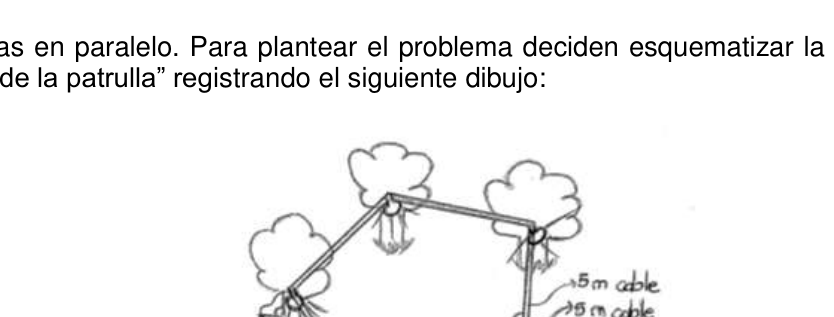
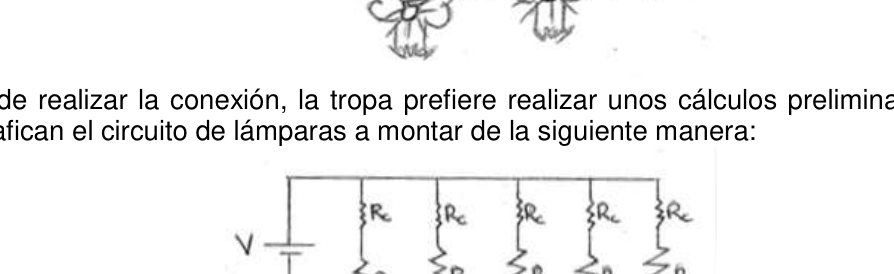
Topic: Circuits Metodi: Kirchhoff’s Laws, Equivalent Circuit Reduction Competenze: Physical Reasoning, Mathematical Modeling Objects: Resistor, Battery, Wire Fonte: Testo (PDF) — p.5
PT3. Scuola secondaria N° 2 Clara J. Amstrong - ENET N° 1 Prof. Vicente Aguilera
- Colegio del Carmen e San José - Scuola secondaria N° 3 Gustavo G. Levene - Colegio Padre Ramón de la Quintana - Istituto Pía Didomenico - Istituzione superiore FASTA Catamarca - EPET N° 7 Alsina Alcobert - Scuola Preuniversitaria Fray Mamerto Esquiu. San Fernando della Valle di Catamarca.
Quando arriva la notte, Paolo e la sua truppa decidono di illuminare il cantone di pattuglia. Nel bagagliaio di I utensili sono dotati di cavo di costante, lampade ad alta intensità e a basso consumo (ogni volta montata sul suo portello lampadario) e un generatore di tensione continua di 18V e 150W di potenza nominale. L’idea è di appendere una lampada a ciascuno dei cinque alberi che delimitano l’angolo di pattuglia, in modo che il posto sia illuminato da 5 lampade collegate tra loro, collegate al generatore. Sono d’accordo. che il modo in cui otterranno maggiore luminosità sarà quando realizzeranno la connessione delle
OAF 2018 - 29 Cinque lampade in parallelo. Per porre il problema decidono di schematizzare la situazione in il diario della pattuglia, registrando il seguente disegno:
Prima di connettersi, la truppa preferisce fare calcoli preliminari. Per il circuito delle lampade da montare è così:
a) Calcolare la resistenza del cavo di costante per ciascun ramo del circuito (in ogni ramo del circuito vengono utilizzati 10 metri di cavo). b) Calcolare la resistenza di ciascun ramo del circuito. c) Calcolare la resistenza totale del circuito. d) Ottenere il corrente totale del circuito e il corrente in ciascuna delle rami. e) Determina la caduta di potenziale di ciascuna lampada. (f) Ottieni il valore della potenza elettrica utilizzata nelle lampade e spreco di cavo. Dimmi se il generatore supera o meno la sua potenza nominale di lavoro.
Dati necessari per risolvere il problema Resistenza del costante = 49 108 m Sezione trasversale del cavo di costante = 8,20 107 m2 Resistenza di ciascuna lampada = 10
Topic: Circuits Metodi: Kirchhoff’s Laws, Equivalent Circuit Reduction Competenze: Physical Reasoning, Mathematical Modeling Objects: Resistor, Battery, Wire Fonte: Testo (PDF) — p.5
PT3. Secondary School N° 2 Clara J. The Commission has also adopted a number of proposals for the establishment of a new European network of networks. Vicente Aguilera is a great man .
- College of Carmen and San José - Secondary School N° 3 Gustavo G. Levene - Father Ramón de la Quintana College - The Pius Didomenic Institute - The following is a list of the institutions of higher education in Spain: Pre-university Fray Mamerto Esquiu. San Fernando of the Catamarca Valley.
When night came, Paul and his troops decided to light the patrol corner. In the trunk of the The use of the equipment is limited to the use of constantane cable, high-intensity and low-power lamps. (each mounted on its gate lamps) and a continuous voltage generator of 18V and 150W of rated power. The idea is to hang a lamp on each of the five trees. They’re bounding the patrol corner, so the place is lit by 5 lamps connected to each other, connected in turn to the generator. They agree. The way they’ll get the most luminosity is by connecting the
The Commission shall adopt implementing acts in accordance with Article 21 of the Financial Regulation. Five lamps in parallel. To raise the problem they decide to outline the situation in the diary of the patrol recording the following drawing:
Before making the connection, the troop prefers to make some preliminary calculations. For The following diagrams of the lamp circuit to be assembled:
(a) Calculate the resistance of the constantane cable for each of the branches of the circuit (in each branch of the circuit 10 metres of cable are used). (b) Calculate the resistance of each of the branches of the circuit. (c) Calculate the total resistance of the circuit. (d) Get the total current of the circuit and the current in each of the branches. (e) Determine the potential drop in each lamp. (f) Gives the value of the electrical power used in the lamps and is Waste on the cable. Tell me if the generator is overpowering or not . the nominal amount of work.
Data needed to solve the problem Resistance of the constantane = 49 108 m Cross section of the constantane cable = 8,20 107 m2 The resistance of each lamp = 10
Topic: Circuits Metodi: Kirchhoff’s Laws, Equivalent Circuit Reduction Competenze: Physical Reasoning, Mathematical Modeling Objects: Resistor, Battery, Wire Fonte: Testo (PDF) — p.5
PT4. Colegio Juan Humberto Morán. Eduardo Castex, La Pampa.
Problema1: Un tanque de gran dimensión y otro mas pequeño ambos con agua, en un tiempo incial To=0 seg, las alturas eran H1=0.5m H2= 0,7m H3= 0,6m H4= 0,2m y H5=0,8 m. Durante un tiempo Tf= 15 minutos se abren las válvulas de cada caño y se enciende la bomba B cuyo caudal de erogación es Qb = 20000 litros/hora. Siendo R1=R2=R3= 1 cm.
Hallar: a) Las velocidades de salida en 1, 2 y 3 b) Los caudales en cada uno. c) La altura del agua en el segundo tanque al final del tiempo Tf.
Despreciar la velocidad en la superficie del tanque grande. Tomar g= 10 m/seg2
30 - OAF 2018
Topic: Fluid Mechanics Metodi: Bernoulli’s Equation, Continuity Equation Competenze: Physical Reasoning, Mathematical Modeling Objects: Container, Tube Fonte: Testo (PDF) — p.5
PT4. - La scuola Juan Humberto Morán. Eduardo Castex, La Pampa.
Problema 1: un serbatoio di grandi dimensioni e un serbatoio di piccole dimensioni, entrambi con acqua, in un tempo iniziale To=0 seg, le altezze erano H1=0.5m H2=0.7m H3=0.6m H4=0.2m e H5=0,8 m. Per un tempo Tf= 15 minuti le valvole di ciascun tubo vengono aperte e si accende la pompa B il cui flusso di scarico è Qb = 20000 litri/ora. Essendo R1=R2=R3= 1 cm.
Trovare: a) Le velocità di uscita in 1, 2 e 3 b) I flussi in ciascuno. c) L’altezza dell’acqua nel secondo serbatoio alla fine del tempo Tf.
Sminuire la velocità sulla superficie del grande serbatoio. Prendere g= 10 m/sec2.
30 - OAF 2018
Topic: Fluid Mechanics Metodi: Bernoulli’s Equation, Continuity Equation Competenze: Physical Reasoning, Mathematical Modeling Objects: Container, Tube Fonte: Testo (PDF) — p.5
PT4. The school is Juan Humberto Morán. Eduardo Castex, the Pampa.
Problem 1: A large tank and a smaller one both with water, in a The heights were H1=0.5m H2=0.7m H3=0.6m H4=0.2m and H5=0,8 m. For a period of time Tf= 15 minutes the valves of each tube are opened and the The pump B with a discharge flow of Qb = 20000 litres/hour is switched on. Being R1=R2=R3= 1 cm.
Find out: (a) The output speeds at 1, 2 and 3 (b) The flows in each. (c) The water height in the second tank at the end of time Tf.
Discount the speed on the surface of the large tank. Take g= 10 m/s2
30 - OAF 2018
Topic: Fluid Mechanics Metodi: Bernoulli’s Equation, Continuity Equation Competenze: Physical Reasoning, Mathematical Modeling Objects: Container, Tube Fonte: Testo (PDF) — p.5
PT5. Colegio Juan Humberto Morán. Eduardo Castex, La Pampa.
Dos cuerpos de masas m1= 40Kg y m2= 20Kg están unidos por una cuerda, el cuerpo
1 está apoyado sobre una superficie con fricción y luego llega a otra sin fricción. En la
primera se desliza con velocidad constante y al llegar a la segunda se acelera.
Tomar g= 10 m/seg2.
Determinar: a) La tensión en la cuerda en la pista con fricción mediante diagrama de cuerpo libre b) El valor del coeficiente de fricción μ. c) La aceleración en la pista sin fricción. d) El valor de la tensión en la cuerda ahora.
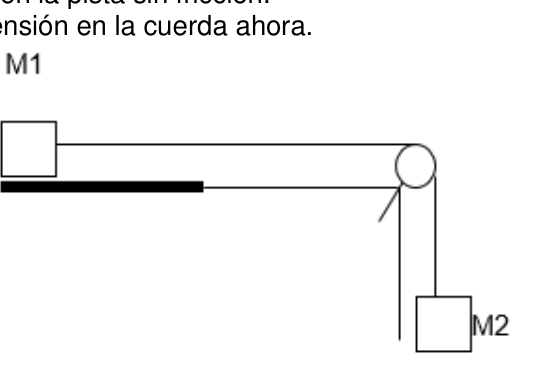
Topic: Newtonian Mechanics Metodi: Free-Body Diagram, Vector Decomposition Competenze: Physical Reasoning, Mathematical Modeling Objects: Block, String Fonte: Testo (PDF) — p.5
PT5. - La scuola Juan Humberto Morán. Eduardo Castex, La Pampa.
Due corpi di massa m1=40Kg e m2=20Kg sono uniti da una corda, il corpo. 1 è appoggiato su una superficie con frizione e poi arriva ad un’altra senza frizione. En la La prima scivola a velocità costante e quando arriva alla seconda si accelera. Prendere g = 10 m/sec2.
Determinare: a) La tensione della corda in pista con friczione mediante diagramma di corpo Libero b) Il valore del coefficiente di attrito μ. c) L’accelerazione sulla pista senza frizione. d) Il valore della tensione nella corda ora.
Topic: Newtonian Mechanics Metodi: Free-Body Diagram, Vector Decomposition Competenze: Physical Reasoning, Mathematical Modeling Objects: Block, String Fonte: Testo (PDF) — p.5
PT5. The school is Juan Humberto Morán. Eduardo Castex, the Pampa.
Two bodies of mass m1=40kg and m2=20kg are connected by a rope, the body 1 is leaning on one surface with friction and then it comes to another without friction. En la The first one slides at a constant speed and when it reaches the second one it accelerates. Take g is equal to 10 m/s2.
Determine: (a) The tension on the rope on the track with friction by body diagram Free . (b) The value of the friction coefficient μ. (c) Acceleration on the track without friction. d) The value of the voltage on the rope now.
Topic: Newtonian Mechanics Metodi: Free-Body Diagram, Vector Decomposition Competenze: Physical Reasoning, Mathematical Modeling Objects: Block, String Fonte: Testo (PDF) — p.5
PT6. Colegio Juan Humberto Morán. Eduardo Castex, La Pampa.
Se colocan 40 grs de hielo a una temperatura inicial de Ti= (-10) C° en un calorímetro
junto con 95 cc de agua a 30 C°. Indicar a que temperatura termina la mezcla y en qué
estado.
Cesp del agua = 1 cal /grs c° Cesphielo= 0.53 cal/grs c° cf =334000 j/Kgr
OAF 2018 - 31
Topic: Thermodynamics Metodi: First Law of Thermodynamics Competenze: Physical Reasoning, Mathematical Modeling Objects: Calorimeter Fonte: Testo (PDF) — p.5
PT6. - La scuola Juan Humberto Morán. Eduardo Castex, La Pampa.
Si mettono 40 g di ghiaccio ad una temperatura iniziale di Ti= (-10) C° in un calometro con 95 cc di acqua a 30 C°. Indicare a che temperatura la miscela finisce e a che punto stato. Cesp dell’acqua = 1 cal /grs c° Cespil = 0,53 cal/grs c° cf = 334000 j/Kgr
OAF 2018 - 31
Topic: Thermodynamics Metodi: First Law of Thermodynamics Competenze: Physical Reasoning, Mathematical Modeling Objects: Calorimeter Fonte: Testo (PDF) — p.5
PT6. The school is Juan Humberto Morán. Eduardo Castex, the Pampa.
40 g of ice at an initial temperature of Ti= (-10) C° is placed on a calorimeter together with 95 cc of water at 30 C°. Indicate at what temperature the mixture ends and at what I’ve been here. The water residue = 1 cal /grs c° Grain residue = 0.53 cal/grs c° cf = 334000 j/Kgr
The Commission shall adopt delegated acts in accordance with Article 21 of Regulation (EU) No 1303/2013.
Topic: Thermodynamics Metodi: First Law of Thermodynamics Competenze: Physical Reasoning, Mathematical Modeling Objects: Calorimeter Fonte: Testo (PDF) — p.5
PT7. Colegio Nacional Dr. Arturo U. Illia - Instituto Albert Einstein Instituto Santísima Trinidad. Mar del Plata, Buenos Aires.
¿Cuánto salta una rana? Según el Libro Guinness de los récords el mayor salto de rana de la historia corresponde a Santjie, una rana de nariz puntiaguda, Ptychadena oxyrhynchus, que alcanzó a desplazarse horizontalmente 10,3 m durante un concurso celebrado en Pietermaritzburg (Sudáfrica), en 1977. Este tipo de rana tiene una masa aproximado de 20 g, y en ese salto llegó a una altura máxima de 1,3 metros. a) Calcule la velocidad inicial con la que se impulsó Santjie y el ángulo respecto del piso. Al realizar un segundo salto, con velocidad inicial y ángulo idéntico al primero, en el momento exacto que la rana se encuentra en su altura máxima decide comerse una libélula de 4g que viaja a 54 km/h paralela al piso en dirección opuesta a Santjie (como se muestra en la figura).
b) Calcule la distancia horizontal x que recorre la rana en este caso. c) Calcule el cambio de energía cinética que se produce en el choque. d) Si la rana al caer, lo hace sobre una hoja cilíndrica de nenúfar de 10 cm de diámetro que flota en el agua, indique la altura que se hunde la hoja, cuando la rana queda en reposo. (𝛿agua= 1.000 kg/m3)
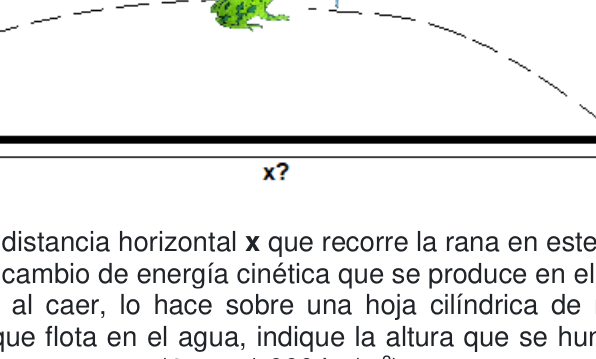
Topic: Newtonian Mechanics, Conservation of Momentum Metodi: Kinematic Equations, Conservation of Momentum Competenze: Physical Reasoning, Mathematical Modeling Objects: Projectile Fonte: Testo (PDF) — p.5
PT7. Il Dr. Arturo U. Illia - Istituto Albert Einstein
- Il Santissimo Trinity Institute. Mar del Plata, Buenos Aires.
Quanto salta una rana? Secondo il Guinness Book of Records il più grande salto di rana della storia corrisponde Santjie, una rana a naso puntato, Ptychadena oxyrhynchus, che raggiunse spostarsi orizzontale 10,3 m durante un Concorso celebrato en Pietermaritzburg (Sud Africa), nel 1977. Questo tipo di rana ha una massa approssimativa di 20 g, e in quel salto raggiunse un’altezza massima di 1,3 metri. a) Calcolare la velocità iniziale con cui Santjie è stato spinto e l’angolo rispetto al
- Piano. Per un secondo salto, con velocità iniziale e angolo identico al primo, il salto è effettuato in Quando la rana si trova al massimo della sua altezza decide di mangiare una 4g dragonfly che viaggia a 54 km/h parallelo al pavimento in direzione opposta a Santjie (come si fa) (spettacolo nella figura).
b) Calcolare la distanza orizzontale x percorruta dalla rana in questo caso. c) Calcolare il cambiamento di energia cinetica che si verifica nel colpo. d) Se il rana cade, lo fa su una foglia cilindrica di nufo di 10 cm di altezza. diametro che galleggia nell’acqua, indica l’altezza in cui la foglia si affaccia, quando la la rana si riposa. (δacqua = 1.000 kg/m3)
Topic: Newtonian Mechanics, Conservation of Momentum Metodi: Kinematic Equations, Conservation of Momentum Competenze: Physical Reasoning, Mathematical Modeling Objects: Projectile Fonte: Testo (PDF) — p.5
PT7. National College Dr. - Arthur U. The first is the study of the human brain. Holy Trinity Institute. The city of Mar del Plata, Buenos Aires.
How much does a frog jump? According to the Guinness Book of Records the largest frog jump in history is to Santjie, a pointed-nosed frog, Ptychadena oxyrhynchus, which reached moving around horizontally 10,3 m during un Competition celebrated en The Commission has decided to extend the period of validity of the agreement. This type of frog has an approximate mass of 20 g, and in that jump he reached a maximum height of 1.3 meters. (a) Calculate the initial speed at which Santjie was propelled and the angle with respect to the The floor. When making a second jump, with the initial speed and angle identical to the first, in the Exactly when the frog is at its maximum height it decides to eat one . 4g dragonfly travelling at 54 km/h parallel to the floor in the opposite direction to Santjie (as it is (see figure).
(b) Calculate the horizontal distance x travelled by the frog in this case. (c) Calculate the change in kinetic energy that occurs in the impact. (d) If the frog falls, do so on a 10 cm cylindrical sheet of neophore. Water-floating diameter indicates the height at which the leaf sinks, when the frog is resting. (water = 1000 kg/m3)
Topic: Newtonian Mechanics, Conservation of Momentum Metodi: Kinematic Equations, Conservation of Momentum Competenze: Physical Reasoning, Mathematical Modeling Objects: Projectile Fonte: Testo (PDF) — p.5
PT8. Colegio Nacional Dr. Arturo U. Illia - Instituto Albert Einstein Instituto Santísima Trinidad. Mar del Plata, Buenos Aires.
Un tranvía eléctrico renovado El principal objetivo del tranvía es garantizar el transporte urbano en las condiciones más respetuosas posibles con el ambiente. A la vez, constituye una alternativa interesante para los usuarios y una apuesta decidida por el transporte público, claramente en la línea de los criterios de fomento de la economía en el entorno urbano. Los nuevos tranvías, gracias a la aplicación de los avances tecnológicos, se han convertido en un nuevo medio de transporte público con un alto nivel de prestaciones por
32 - OAF 2018
su accesibilidad, baja acústica, rapidez, regularidad, comodidad y ecología. Varios
modelos poseen línea aérea de alimentación que transmite energía eléctrica a las
locomotoras. Estas utilizan motores eléctricos que le permiten movilizarse a diferentes
velocidades.
Una línea de tranvía (ver figura) de 10 km de longitud tiene al principio de la misma
(punto E) un generador de tensión continua de 1000 V y resistencia interna 5 Ω. Los
cables que transportan la corriente tienen una resistencia equivalente de 0,1 Ω/km. El
tranvía presenta una cierta resistencia equivalente, Re, y absorbe una intensidad de 100
A en la mitad de su recorrido.
a) Determine la resistencia equivalente del tranvía.
b) La diferencia de potencial VAB de alimentación del tranvía, entre los puntos A y B
del gráfico, en función de la distancia x recorrida
c) La variación de potencia que sufre el tranvía en todo su recorrido.
d) Si en otro extremo F de la línea se coloca otra fuente idéntica a la primera, realice un esquema de la nueva situación y explique cómo cambian sus respuestas en los incisos anteriores.
Topic: Circuits Metodi: Kirchhoff’s Laws, Equivalent Circuit Reduction Competenze: Physical Reasoning, Mathematical Modeling Objects: Resistor, Battery, Wire Fonte: Testo (PDF) — p.5
PT8. Il Dr. Arturo U. Illia - Istituto Albert Einstein
- Il Santissimo Trinity Institute. Mar del Plata, Buenos Aires.
Un tram elettrico rinnovato L’obiettivo principale del tram è quello di garantire il trasporto urbano in condizioni più e rispettosi dell’ambiente. E’ anche un’alternativa interessante. per gli utenti e un’imposta decisa sui trasporti pubblici, chiaramente in linea La Commissione ha adottato una proposta di regolamento (CE) n. I nuovi tram, grazie all’applicazione di progressi tecnologici, sono stati La Commissione ha adottato una proposta di direttiva che prevede che il trasporto pubblico sia un mezzo di trasporto pubblico con un elevato livello di prestazioni.
32 - OAF 2018 la sua accessibilità, bassa acustica, velocità, regolarità, comodità e ecologia. Diversi I modelli hanno una linea aerea di alimentazione che trasmette energia elettrica alle
- Locomotive. Questi utilizzano motori elettrici che consentono di muoversi a diverse velocità. velocità. Una linea di tram (vedi figura) di 10 km di lunghezza ha all’inizio la stessa linea. (punto E) un generatore di tensione continua di 1000 V e resistenza interna di 5 Ω. I i cavi che trasportano la corrente hanno una resistenza equivalente di 0,1 Ω/km. El Il tram presenta una certa resistenza equivalente, Re, e assorbe un’intensità di 100 A, a metà strada. a) Determina la resistenza equivalente del tram. b) La differenza di potenziale VAB di alimentazione del tram tra i punti A e B del grafico, in base alla distanza x percorsa c) La variazione di potenza che il tram subisce durante il suo percorso.
d) Se all’altra estremità F della linea si inserisce un’altra fonte identica alla prima,
- fare un schema della nuova situazione e spiegare come cambiano le loro condizioni di vita. Le risposte sono state riportate nelle sezioni precedenti.
Topic: Circuits Metodi: Kirchhoff’s Laws, Equivalent Circuit Reduction Competenze: Physical Reasoning, Mathematical Modeling Objects: Resistor, Battery, Wire Fonte: Testo (PDF) — p.5
PT8. National College Dr. - Arthur U. The first is the study of the human brain. Holy Trinity Institute. The city of Mar del Plata, Buenos Aires.
A renovated electric tram . The main objective of the tram is to ensure urban transport in the most favourable conditions. The Commission will be able to take the necessary measures to ensure that the measures are as environmentally friendly as possible. At the same time, it is an interesting alternative. for users and a decided bet on public transport, clearly on the line The Commission has also adopted a number of proposals for the establishment of a European Community framework for the promotion of the economy in urban areas. The new trams, thanks to the application of technological advances, have been The new system of public transport is being developed to provide a high level of service by
The Commission shall adopt delegated acts in accordance with Article 21 of this Regulation. The Commission has also adopted a number of measures to ensure that the Commission is able to take appropriate measures to ensure that the measures are implemented in a timely manner. Several . models have an airline power supply that transmits electrical energy to the locomotives. These use electric motors that allow you to move around differently. speed. A tram line (see figure) of 10 km length has at the beginning of it (point E) a continuous voltage generator of 1000 V and internal resistance of 5 Ω. The The current-carrying cables have an equivalent resistance of 0,1 Ω/km. El The tram has a certain equivalent resistance, Re, and absorbs an intensity of 100 A in the middle of his tour. (a) Determine the equivalent resistance of the tram. (b) The difference in the VAB power potential of the tram between points A and B of the graph, based on distance x travelled (c) The variation in power of the tramway throughout its journey.
(d) If at the other end of the line F another source identical to the first is placed, Make a sketch of the new situation and explain how it changes. The Commission has not yet taken any further action.
Topic: Circuits Metodi: Kirchhoff’s Laws, Equivalent Circuit Reduction Competenze: Physical Reasoning, Mathematical Modeling Objects: Resistor, Battery, Wire Fonte: Testo (PDF) — p.5
PT9. Colegio Nacional Dr. Arturo U. Illia - Instituto Albert Einstein Instituto Santísima Trinidad. Mar del Plata, Buenos Aires.
Un túnel de congelado
La industria pesquera es uno de los principales focos industriales de la ciudad de Mar del
Plata. Existe una gran variedad de productos que se fabrican, como conservas, harina de
pescado, aceite, etc. Sin embargo la mayoría del volumen exportado lo constituye los filet
de pescado entero.
La fábrica recibe el pescado fresco que se lava, eviscera, limpia y luego se filetea
manualmente. Los filets se colocan en cajones que ingresan a un túnel de congelado. El
objetivo es congelar rápidamente el pescado para evitar su descomposición, por este
motivo los túneles de congelado deben tener una gran capacidad para descender la
temperatura del pescado.
En una fábrica se dispone de un túnel de congelado. El mismo puede modelarse como un
cilindro horizontal perfecto de 15 metros de longitud y 1.5 metros de diámetro. Dentro del
mismo se hace circular aire a Ti=-25°C, una cinta transportadora introduce los cajones de
pescado por una cara del cilindro y los mismos salen congelados por el otro extremo.
OAF 2018 - 33 El cilindro debe revestirse con una capa de poliuretano expandido (conductividad térmica 0.031W/m.K) para aislarlo del exterior que se encuentra a Te=15°C. El ingreso de calor por las caras no aisladas del cilindro se estima en 3 W/m2.°C.
a) Calcule el espesor de poliuretano necesario para que el ingreso total de calor al túnel cuando no se encuentra congelando pescado sea inferior a 2000 W.
El túnel debe ser capaz de congelar 15 Kg/minuto de pescado que ingresa a 15°C hasta - 18°C. En una primera aproximación considere que el pescado es como el agua, tiene un Cpl=4.18 J/g°C, congela a 0°C con un calor de fusión de 333 J/g y tiene un Cps= 2.09 J/g°C.
b) calcule el calor total, en J, que debe retirarse de 1 kg de pescado a 15°C para llegar a -18°C. c) Calcule la cantidad de calor por unidad de tiempo que debe extraer el sistema de refrigeración del túnel de congelado para poder congelar los 15 kg/min de pescado.
La aproximación que utilizó para calcular el calor del inciso (b) no es del todo acertada, dado que el pescado es en realidad una mezcla de proteínas, grasa y minerales en agua. Para mejorar la estimación se ha enviado a ensayar una muestra de filet de pescado por calorimetría diferencial de barrido (DSC), el gráfico a continuación muestra la cantidad de calor total que ha absorbido la muestra en función de la temperatura (se ha tomado la referencia Q=0 en -25°C).
d) Utilice el gráfico anterior para mejorar su estimación del inciso (b).
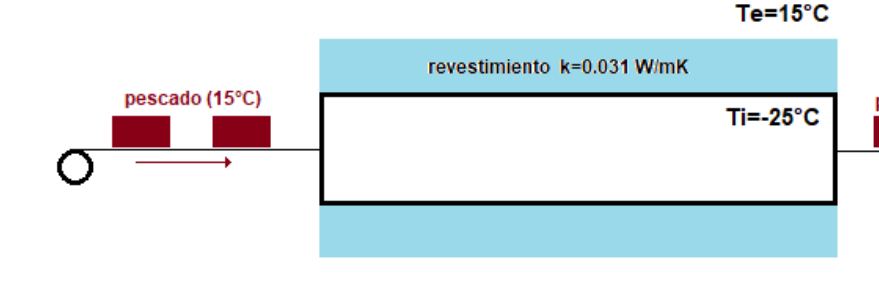
Topic: Thermodynamics Metodi: First Law of Thermodynamics, Experimental Data Analysis Competenze: Physical Reasoning, Mathematical Modeling Objects: Cylinder, Calorimeter Fonte: Testo (PDF) — p.5
PT9. Il Dr. Arturo U. Illia - Istituto Albert Einstein
- Il Santissimo Trinity Institute. Mar del Plata, Buenos Aires.
Un tunnel di gelato . L’industria della pesca è uno dei principali foci industriali della città del Mar del
- Silver. La produzione di farine di legno è molto diversa. pesce, olio, ecc. Tuttavia, la maggior parte del volume esportato è costituita da filett di pesce intero. La fabbrica riceve il pesce fresco che viene lavato, viscerato, pulito e poi fileto manualmente. I fileti vengono messi in scatole che entrano in un tunnel di congelatore. El L’obiettivo è quello di congelare rapidamente il pesce per evitare che si decompone, per questo Il motivo per cui i tunnel di congelazione devono avere una grande capacità di scendere temperatura del pesce. In una fabbrica si dispone di un tunnel di gelato. Lo stesso può essere modellato come un cilindro orizzontale perfetto, lungo 15 metri e di diametro 1,5 metri. All’interno del La stessa circolazione di aria a Ti=-25°C, una cinta trasportatrice introduce i cassonetti di e le stesse uscivano congelate dall’altra parte.
OAF 2018 - 33 Il cilindro deve essere rivestito con una strata di poliuretano estesa (conduttività termico 0,031W/m.K) per isolarlo dall’esterno che si trova a Te=15°C. Il calore di entrata per le facce non isolate del cilindro è stimato 3 W/m2.°C.
a) Calcolare il spessore di poliuretano necessario per ottenere l’ intasso totale di calore al tunnel quando non si trova congelato il pesce è inferiore a 2000 W.
Il tunnel deve essere in grado di congelare 15 Kg/minuto di pesce che entra a 15°C fino a - 18°C. In un primo approccio consideri che il pesce è come l’acqua, ha un Cpl=4.18 J/g°C, congela 0°C a una temperatura di fusione di 333 J/g e ha un Cps=2.09 J/g°C.
b) calcolare il calore totale, in J, da estrarre da 1 kg di pesce a 15°C per raggiungere -18°C. c) Calcolare la quantità di calore per unità di tempo che il sistema deve estrarre raffreddamento del tunnel di congelatore per congelare i 15 kg/min di pesce.
Il suo approccio per calcolare la calore di (b) non è del tutto corretto, visto che il pesce è in realtà un misto di proteine, grassi e minerali in acqua. Per migliorare la stima è stato inviato un campione di filet di pesce per la prova. Calorimetria differenziale di scansione (DSC), il grafico seguente mostra la quantità di calore totale assorbito dal campione a seconda della temperatura (si è presa la riferimento Q=0 in -25°C).
d) Utilizzare il grafico precedente per migliorare la stima del punto (b).
Topic: Thermodynamics Metodi: First Law of Thermodynamics, Experimental Data Analysis Competenze: Physical Reasoning, Mathematical Modeling Objects: Cylinder, Calorimeter Fonte: Testo (PDF) — p.5
PT9. National College Dr. - Arthur U. The first is the study of the human brain. Holy Trinity Institute. The city of Mar del Plata, Buenos Aires.
A freeze tunnel . The fishing industry is one of the main industrial focuses of the city of Mar del Silver. There is a wide variety of products which are made, such as canned, flour from fish, oil, etc. However, most of the volume exported is made up of filets. whole fish. The factory receives the fresh fish that is washed, eviscerated, cleaned and then filleted. manually. The fillets are placed in drawers that enter a freeze tunnel. El The aim is to freeze the fish quickly to prevent its decomposition. The reason for this is that the freezing tunnels must have a high capacity to descend the sea. the temperature of the fish. In a factory, there’s a freeze tunnel. It can be modeled as a Perfect horizontal cylinder 15 metres long and 1.5 metres in diameter. Inside the . The air is then circulated to Ti=-25°C, a conveyor belt enters the drawers of Fish caught on one side of the cylinder and they freeze to the other end.
The Commission shall adopt delegated acts in accordance with Article 21 of the Financial Regulation. The cylinder shall be coated with an expanded layer of polyurethane (thermal conductivity 0.031W/m.K) to isolate it from the outside at Te=15°C. The heat input for the non-insulated sides of the cylinder is estimated at 3 W/m2.°C.
(a) Calculate the thickness of polyurethane required to allow total heat input to be tunnel when no fish is frozen is less than 2000 W.
The tunnel shall be capable of freezing 15 Kg/min of fish entering 15°C up to - 18°C. In a first approximation consider fish is like water, it has a Cpl=4.18 J/g°C, freezes to 0°C with a melting heat of 333 J/g and has a Cps=2.09 J/g°C.
(b) calculate the total heat, in J, to be withdrawn from 1 kg of fish to 15°C for to reach -18°C. (c) Calculate the amount of heat per unit of time to be extracted by the system from The freezing of the freezing tunnel to freeze the 15 kg/min of fish.
The approximation used to calculate the heat in subparagraph (b) is not entirely correct, Since fish is actually a mixture of protein, fat and minerals in water. To improve the estimate a sample of fish fillet has been sent to test by The following graph shows the amount of Total heat absorbed by the sample based on temperature (the sample has been taken) reference Q=0 in -25°C).
(d) Use the chart above to improve your estimate of subparagraph (b).
Topic: Thermodynamics Metodi: First Law of Thermodynamics, Experimental Data Analysis Competenze: Physical Reasoning, Mathematical Modeling Objects: Cylinder, Calorimeter Fonte: Testo (PDF) — p.5
PT10. IPET N° 266 General Savio. Río Tercero, Córdoba.
Calcular el paso y el radio de un positrón que ingresa a un campo magnético de 0,2 T con un ángulo de 55° a una velocidad de 5.105 m/s.
a) Graficar en R3 versores unitarios, el vector
y descompuesto.
b) Cálculo del paso.
c) Cálculo del radio.
34 - OAF 2018
Topic: Magnetism Metodi: Lorentz Force Analysis, Vector Decomposition Competenze: Physical Reasoning, Mathematical Modeling Objects: Particle Beam Fonte: Testo (PDF) — p.5
PT10. IMPET N° 266 Generale Savio. Rio Tercero, Córdoba.
Calcolare il passo e il raggio di un positron che entra in un campo magnetico di 0,2 T con un angolo di 55° a una velocità di 5,105 m/s.
a) Grafica in R3 versori unitari, il vettore e decomposto. b) Calcolo del passo. c) Calcolo della radio.
34 - OAF 2018
Topic: Magnetism Metodi: Lorentz Force Analysis, Vector Decomposition Competenze: Physical Reasoning, Mathematical Modeling Objects: Particle Beam Fonte: Testo (PDF) — p.5
PT10. The following information is provided by the Commission: The third river, Cordoba.
Calculate the step and radius of a positron that enters a 0.2 T magnetic field with a angle of 55° at a speed of 5,105 m/s.
(a) Graphing in R3 unit vertices, the vector and decomposed. (b) Calculation of the passage. (c) Calculation of the radio.
The following is the list of the countries of the European Union:
Topic: Magnetism Metodi: Lorentz Force Analysis, Vector Decomposition Competenze: Physical Reasoning, Mathematical Modeling Objects: Particle Beam Fonte: Testo (PDF) — p.5
PT11. IPET N° 266 General Savio. Río Tercero, Córdoba.
Se dispone de un cilindro adiabático con pistón, inicialmente vacío, y de un péndulo dispuestos según la figura. El volumen del cilindro es de un litro y en la zona bloqueada por una membrana de 0,1 litro, se inyecta aire. Cuando la presión llega a 10 atm, a una temperatura de 15 °C, la membrana se rompe y el pistón desplaza la esfera (cuya masa es 10 kg) un ángulo de 30°, siendo la longitud del péndulo, 1 m. Suponiendo rozamiento nulo e impacto elástico, determinar: a) El Trabajo realizado. b) La masa inicial del aire inyectado. c) La temperatura al final del proceso. d) La presión al final del proceso.
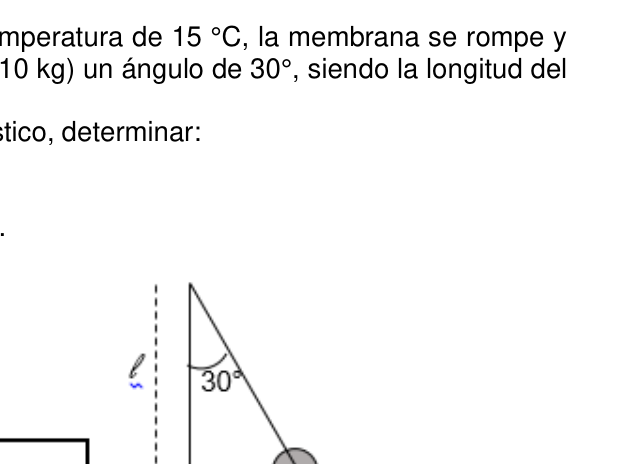
Topic: Thermodynamics Metodi: Ideal Gas Law, Conservation of Energy Competenze: Physical Reasoning, Mathematical Modeling Objects: Piston, Pendulum, Gas Fonte: Testo (PDF) — p.5
PT11. IMPET N° 266 Generale Savio. Rio Tercero, Córdoba.
Dispone di un cilindro adiabatico con pistone, inizialmente vuoto, e di un pendolo. Le parti sono disposte secondo la figura. Il volume del cilindro è di un litro e nella zona bloccata da una membrana di 0,1 Litro, si iniezza aria. Quando la pressione raggiunge 10 atm, a una temperatura di 15 °C, la membrana si rompe e il pistone spostare la sfera (che ha una massa di 10 kg) ad un angolo di 30°, la lunghezza di pendolo, 1 m. Supponiendo che il ruggine sia nullo e l’impatto è elastico, determinare: a) Il lavoro svolto. b) La massa iniziale dell’aria iniezionata. c) La temperatura alla fine del processo. d) La pressione alla fine del processo.
Topic: Thermodynamics Metodi: Ideal Gas Law, Conservation of Energy Competenze: Physical Reasoning, Mathematical Modeling Objects: Piston, Pendulum, Gas Fonte: Testo (PDF) — p.5
PT11. The following information is provided by the Commission: The third river, Cordoba.
It has an adiabatic cylinder with a piston, initially empty, and a pendulum. The following table shows the number of units in the table: The volume of the cylinder is one litre and in the area blocked by a 0.1 membrane
- A liter, you inject air. When the pressure reaches 10 atm, at a temperature of 15 °C, the membrane breaks and The piston displaces the sphere (which has a mass of 10 kg) at an angle of 30°, the length of the pendulum, 1 m. Assuming zero friction and elastic impact, determine: (a) The work carried out. (b) The initial mass of the injected air. (c) The temperature at the end of the process. (d) The pressure at the end of the process.
Topic: Thermodynamics Metodi: Ideal Gas Law, Conservation of Energy Competenze: Physical Reasoning, Mathematical Modeling Objects: Piston, Pendulum, Gas Fonte: Testo (PDF) — p.5
PT12. IPET N° 266 General Savio. Río Tercero, Córdoba.
Cuatro pasajeros con una masa total de 300 kg observan que, al entrar al automóvil, los amortiguadores se comprimen 5 cm. Si la carga total que soportan los amortiguadores es de 900 kg, hállese:
a) La constante de elasticidad de los amortiguadores. b) El período de oscilación del automóvil cargado. c) Graficar Δx en función del tiempo y señalar en el gráfico el período de oscilación.
Topic: Oscillations & Waves Metodi: Simple Harmonic Motion Analysis, Hooke’s Law Competenze: Physical Reasoning, Mathematical Modeling Objects: Spring Fonte: Testo (PDF) — p.5
PT12. IMPET N° 266 Generale Savio. Rio Tercero, Córdoba.
Quattro passeggeri con un peso totale di 300 kg osservano che, entrando in auto, i gli ammortizzatori si comprimono per 5 cm. Se il carico totale degli ammortizzatori è di 900 kg, si deve:
a) La costante elasticità degli ammortizzatori. b) Il periodo di oscillazione della vettura carica. c) Graficare Δx in funzione del tempo e indicare sul grafico il periodo di oscillazione.
Topic: Oscillations & Waves Metodi: Simple Harmonic Motion Analysis, Hooke’s Law Competenze: Physical Reasoning, Mathematical Modeling Objects: Spring Fonte: Testo (PDF) — p.5
PT12. The following information is provided by the Commission: The third river, Cordoba.
Four passengers with a total mass of 300 kg observe that, upon entering the car, the The buffers are compressed by 5 cm. If the total load carried by the shock absorbers is 900 kg, please:
(a) The elasticity constant of the shock absorbers. (b) The period of oscillation of the loaded car. (c) Graph Δx in terms of time and indicate the period of oscillation on the graph.
Topic: Oscillations & Waves Metodi: Simple Harmonic Motion Analysis, Hooke’s Law Competenze: Physical Reasoning, Mathematical Modeling Objects: Spring Fonte: Testo (PDF) — p.5
PT13. EES N° 75 Julio Cortázar1 - UEGP N° 16 José Manuel Estrada1 - EES N° 1492. 1Resistencia - 2Puerto Vilelas, Chaco.
Calorimetría Se introduce una cuchara de aluminio de 0,05 kg a una temperatura de 150ºC en un calorímetro con 0.3 Kg de agua a una temperatura de 28ºC. Sabiendo que el calor específico de aluminio es de 234 𝐽 𝐾𝑔º𝐶 y el del agua es de 4186 𝐽 𝐾𝑔º𝐶 calcular:
a) La temperatura final de la mezcla.
Luego de esto se introduce en el mismo calorímetro un trozo de hierro de 0,08 Kg a una temperatura de 180ºC. Teniendo en cuenta que el calor específico del hierro es de 448 𝐽 𝐾𝑔º𝐶 y la nueva temperatura de equilibrio es de 35ºC
b) Determine el calor intercambiado por el trozo de hierro.
OAF 2018 - 35
Topic: Thermodynamics Metodi: First Law of Thermodynamics Competenze: Physical Reasoning, Mathematical Modeling Objects: Calorimeter Fonte: Testo (PDF) — p.5
PT13. CES N° 75 Giulio Cortázar1 - UEGP N° 16 José Manuel Estrada1 - CES N° 1492. 1Resistenza - 2Puerto Vilelas, Chaco.
Calorimetria Si inserisce una cucchiaio di alluminio di 0,05 kg a una temperatura di 150°C in un calorimetro con 0,3 Kg di acqua a 28°C. Sapendo che il calore specifico di alluminio è di 234 𝐽 KgoC e quello dell’acqua è di 4186 𝐽 KgoC calcolare:
a) La temperatura finale della miscela.
Quindi viene inserito nello stesso caloriometro un pezzo di ferro di 0,08 kg a una temperatura di 180°C. Considerando che il calore specifico del ferro è di 448 𝐽 KgoC e la nuova temperatura di equilibrio è di 35°C
b) Determina il calore scambiato per il pezzo di ferro.
OAF 2018 - 35
Topic: Thermodynamics Metodi: First Law of Thermodynamics Competenze: Physical Reasoning, Mathematical Modeling Objects: Calorimeter Fonte: Testo (PDF) — p.5
PT13. The Commission has also adopted a number of proposals for the establishment of a European Community-wide network of networks for the exchange of information on the European Union’s external borders. 1Resistance - 2Puerto Vilelas, Chaco.
Calorimetry A 0.05 kg aluminium spoon is inserted at a temperature of 150°C in a heat meter with 0.3 kg of water at 28°C. Knowing the heat specific aluminium is 234 𝐽 KgoC and water is 4186 𝐽 KgoC calculate:
(a) The final temperature of the mixture.
Then a piece of iron of 0.08 kg is inserted into the same calorimeter. temperature of 180°C. Given that the specific heat of the iron is from 448 𝐽 KgoC and the new equilibrium temperature is 35°C
(b) Determine the heat exchanged by the iron piece.
The Commission shall adopt delegated acts in accordance with Article 21 of Regulation (EU) No 1303/2013.
Topic: Thermodynamics Metodi: First Law of Thermodynamics Competenze: Physical Reasoning, Mathematical Modeling Objects: Calorimeter Fonte: Testo (PDF) — p.5
PT14. EES N° 75 Julio Cortázar1 - UEGP N° 16 José Manuel Estrada1 - EES N° 1492. 1Resistencia - 2Puerto Vilelas, Chaco.
Leyes de Newton Un cuerpo con una masa de 8 Kg está apoyado sobre un plano inclinado de 30º y sostenido por un resorte. Sabiendo que el resorte esta estirado 0,03m y sin considerar el rozamiento.
a) Confeccione el diagrama de cuerpo libre. b) Calcule PX y N. c) Calcule la fuerza elástica y la constante del resorte.
En un momento el resorte se corta y la masa se desliza por el plano inclinado.
d) Calcule la aceleración que adquiere.
Topic: Newtonian Mechanics Metodi: Free-Body Diagram, Hooke’s Law Competenze: Physical Reasoning, Mathematical Modeling Objects: Inclined Plane, Spring, Block Fonte: Testo (PDF) — p.5
PT14. CES N° 75 Giulio Cortázar1 - UEGP N° 16 José Manuel Estrada1 - CES N° 1492. 1Resistenza - 2Puerto Vilelas, Chaco.
Leggi di Newton Un corpo di 8 kg è appoggiato su un piano inclinato di 30° e sostenuto da un Primavera. Sapendo che la primavera è estesa a 0,03m e senza considerare il rasare.
a) Confezionare il diagramma del corpo libero. b) Calcolare PX e N. c) Calcolare la forza e la costante di Primavera.
In un istante la primavera si taglia e la massa scivola per il piano inclinato.
d) Calcolare l’accelerazione che acquista.
Topic: Newtonian Mechanics Metodi: Free-Body Diagram, Hooke’s Law Competenze: Physical Reasoning, Mathematical Modeling Objects: Inclined Plane, Spring, Block Fonte: Testo (PDF) — p.5
PT14. The Commission has also adopted a number of proposals for the establishment of a European Community-wide network of networks for the exchange of information on the European Union’s external borders. 1Resistance - 2Puerto Vilelas, Chaco.
Newton ‘s laws . A body weighing 8 kg is supported . on a 30° slope and held by a spring. Knowing the spring is stretched 0.03m And not to mention the grating.
(a) Make the free body diagram. (b) Calculate PX and N. (c) Calculate the elastic strength and the constant of the spring.
In a moment the spring is cut and the mass slides along the sloping plane.
(d) Calculate the acceleration it acquires.
Topic: Newtonian Mechanics Metodi: Free-Body Diagram, Hooke’s Law Competenze: Physical Reasoning, Mathematical Modeling Objects: Inclined Plane, Spring, Block Fonte: Testo (PDF) — p.5
PT15. EES N° 75 Julio Cortázar1 - UEGP N° 16 José Manuel Estrada1 - EES N° 1492. 1Resistencia - 2Puerto Vilelas, Chaco.
Circuitos eléctricos Sea el circuito de la siguiente figura:
a) Calcule la resistencia equivalente para R1 y R2. b) Calcule la resistencia equivalente del circuito. c) Calcule la intensidad de corriente que atraviesa el circuito. d) Calcule la diferencia de potencial en cada una de las resistencias y el valor de la intensidad que las atraviesa.
Datos: R1=8 Ω R2=12 Ω R3=8 Ω R4=7 Ω V= 12v
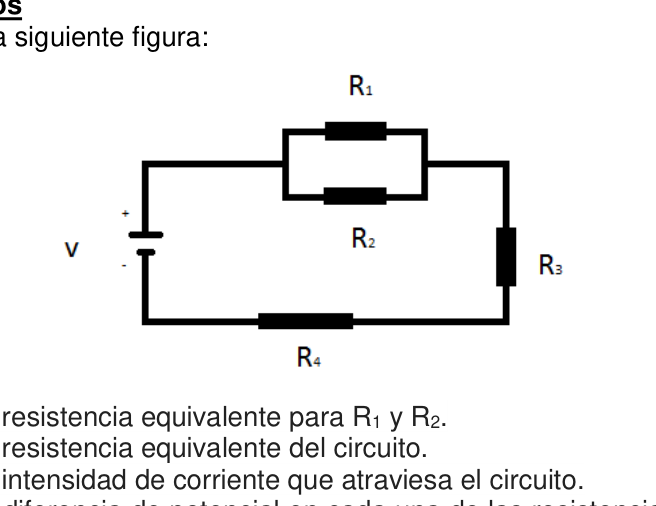
Topic: Circuits Metodi: Kirchhoff’s Laws, Equivalent Circuit Reduction Competenze: Physical Reasoning, Mathematical Modeling Objects: Resistor, Battery Fonte: Testo (PDF) — p.5
PT15. CES N° 75 Giulio Cortázar1 - UEGP N° 16 José Manuel Estrada1 - CES N° 1492. 1Resistenza - 2Puerto Vilelas, Chaco.
Circuiti elettrici Il circuito deve essere il seguente:
a) Calcolare la resistenza equivalente per R1 e R2. b) Calcolare la resistenza equivalente del circuito. c) Calcolare l’intensità di corrente che attraversa il circuito. d) Calcolare la differenza di potenziale in ciascuna resistenza e il valore di l’intensità che li attraversa.
Datati: R1=8 Ω R2=12 Ω R3=8 Ω R4=7 Ω V= 12v
Topic: Circuits Metodi: Kirchhoff’s Laws, Equivalent Circuit Reduction Competenze: Physical Reasoning, Mathematical Modeling Objects: Resistor, Battery Fonte: Testo (PDF) — p.5
PT15. The Commission has also adopted a number of proposals for the establishment of a European Community-wide network of networks for the exchange of information on the European Union’s external borders. 1Resistance - 2Puerto Vilelas, Chaco.
Electrical circuits The circuit shall be the following figure:
(a) Calculate the equivalent resistance for R1 and R2. (b) Calculate the equivalent resistance of the circuit. (c) Calculate the current intensity running through the circuit. (d) Calculate the potential difference in each resistance and the value of the resistance. The intensity that runs through them.
The data: R1=8 Ω R2=12 Ω R3=8 Ω R4=7 Ω V= 12v
Topic: Circuits Metodi: Kirchhoff’s Laws, Equivalent Circuit Reduction Competenze: Physical Reasoning, Mathematical Modeling Objects: Resistor, Battery Fonte: Testo (PDF) — p.5
PT16. ET N° 27 Hipólito Yrigoyen. Ciudad Autónoma de Buenos Aires.
Ciclo de un gas Una masa formada por 10 moles de un gas biatómico evoluciona según el ciclo de la figura. a) Hallar los parámetros de cada estado.
36 - OAF 2018 b) Calcular la cantidad de calor Q, la variación de energía interna DU y el trabajo L en cada evolución c) Calcular el rendimiento del ciclo
Datos: R= 8,31 J/mol.K
ϰ = 1,4
Topic: Thermodynamics Metodi: Thermodynamic Cycle Analysis, First Law of Thermodynamics Competenze: Physical Reasoning, Mathematical Modeling Objects: Gas Fonte: Testo (PDF) — p.5
PT16. E.T. N° 27 Hipólito Yrigoyen. Città autonoma di Buenos Aires.
Ciclo di un gas Una massa costituita da 10 moli di gas biatomo si evolve secondo il ciclo di
- Figura. a) Trovare i parametri di ciascun stato.
36 - OAF 2018 b) Calcolare la quantità di calore Q, la variazione di energia interna DU e il lavoro L in ogni evoluzione (c) Calcolare il rendimento del ciclo
Dati: R= 8,31 J/mol.K
ϰ = 1,4
Topic: Thermodynamics Metodi: Thermodynamic Cycle Analysis, First Law of Thermodynamics Competenze: Physical Reasoning, Mathematical Modeling Objects: Gas Fonte: Testo (PDF) — p.5
PT16. The Commission has not yet decided whether the measures to be taken should be repealed. The Autonomous City of Buenos Aires.
Gas cycle A mass of 10 moles of a biatomic gas evolves according to the cycle of the It’s a figure. (a) Find the parameters for each state.
The Commission shall adopt delegated acts in accordance with Article 21 of this Regulation. (b) Calculate the amount of heat Q, the variation in internal energy DU and the work L In every evolution (c) Calculate the cycle performance
The data are: R= 8,31 J/mol.K
ϰ = 1,4
Topic: Thermodynamics Metodi: Thermodynamic Cycle Analysis, First Law of Thermodynamics Competenze: Physical Reasoning, Mathematical Modeling Objects: Gas Fonte: Testo (PDF) — p.5
PT17. ET N° 27 Hipólito Yrigoyen. Ciudad Autónoma de Buenos Aires.
Sobre conductores rectilineos La figura 1 muestra dos conductores infinitos, separados por una distancia “d”. Las corrientes que circulan son i1 e i2, siendo i2= ni1, donde n puede ser ˃ 0 o ˂ 0 (es decir, i2 puede tener igual o distinto sentido que i1)
a) Hallar los puntos donde se anula el campo magnético (B = 0) en función de “n”. b) Analizar las situaciones y calcular la fuerza entre los conductores para los siguientes casos:
1º) Para n = 1
2º) Para n = -1
3º) Para n = 2
4º) Para n = -2
c) Otra situación corresponde a la figura 2, donde se encuentran 2 conductores
colocados horizontalmente, uno encima del otro. El de abajo está firmemente
vinculado, inmóvil, y conduce una corriente i1 = 20 A. El de arriba es un alambre
delgado de peso por metro 0,5 N/m por donde circula i2 = 5A.
c -1) En qué sentido deben circular las corrientes para que se repelan
magnéticamente? Justificar
c - 2) ¿A qué altura h sobre el conductor inferior habrá que colocar al superior
para que se pueda soportar por repulsión magnética? Dato: μ0 = 4π10-7
N/A2
OAF 2018 - 37
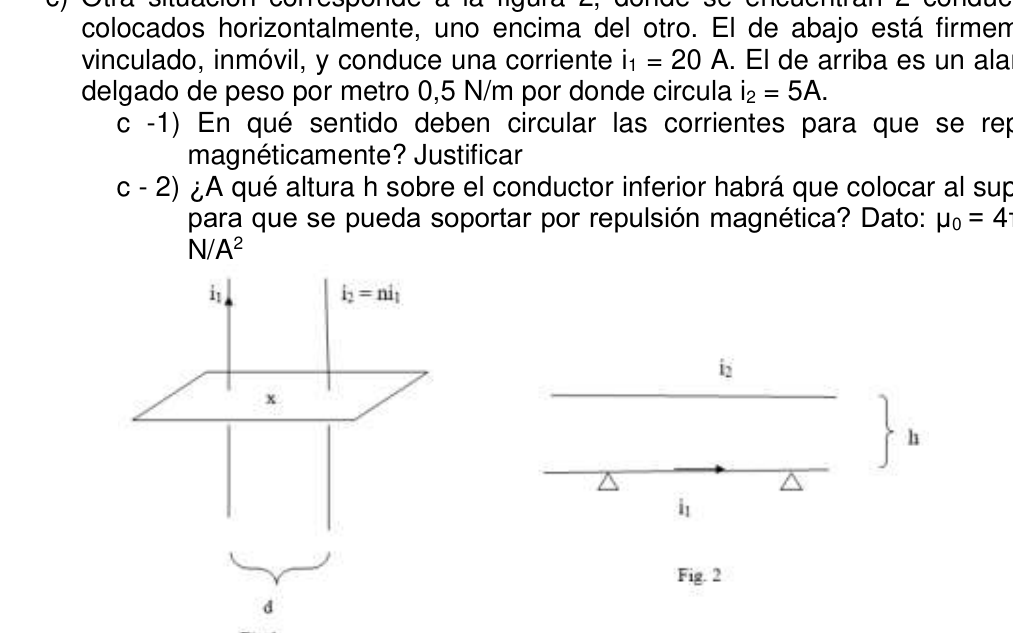
Topic: Magnetism Metodi: Ampère’s Law, Biot-Savart Law Competenze: Physical Reasoning, Mathematical Modeling Objects: Wire Fonte: Testo (PDF) — p.5
PT17. E.T. N° 27 Hipólito Yrigoyen. Città autonoma di Buenos Aires.
Su conducenti rettilineari La figura 1 mostra due conduttori infiniti, separati da una distanza “d”. Le i1 e i2, i2 = ni1, dove n può essere 0 o 0 (cioè i2 può avere un significato uguale o diverso da quello di i1)
a) Trovare i punti in cui viene annullato il campo magnetico (B = 0) in funzione di “n”. b) Analizzare le situazioni e calcolare la forza tra i conducenti per i i seguenti casi:
1o) Per n = 1
2o) Per n = -1
3o) Per n = 2
4o) Per n = -2 c) Un’altra situazione corrisponde a figura 2, dove si trovano 2 conducenti posizionati orizzontalmente, uno sopra l’altro. Il basso è saldamente collegato, immobile, e conduce un corrente i1 = 20 A. Quello di sopra è un filo . magro di peso per metro 0,5 N/m per il quale i2 = 5A circola. c -1) In che direzione devono circolare le correnti per essere respinte Magneticamente? Giustificare c - 2) A che altezza h deve essere posto il conducente superiore? Per poter sopportare la repulsione magnetica? Data: μ0 = 4π10-7 N/A2
OAF 2018 - 37
Topic: Magnetism Metodi: Ampère’s Law, Biot-Savart Law Competenze: Physical Reasoning, Mathematical Modeling Objects: Wire Fonte: Testo (PDF) — p.5
PT17. The Commission has not yet decided whether the measures to be taken should be repealed. The Autonomous City of Buenos Aires.
About straight drivers Figure 1 shows two infinite conductors, separated by a distance “d”. The The current circulating are i1 and i2, i2 being ni1, where n can be 0 or 0 (i.e. i2 may have the same or different meaning than i1)
(a) Find the points where the magnetic field is cancelled (B = 0) by ‘n’. (b) Analyze the situations and calculate the force between the drivers for the the following cases:
1o) For n = 1
2o) For n = -1
3o) For n = 2
4o) For n = -2 (c) Another situation corresponds to Figure 2, where there are 2 drivers They’re placed horizontally, one on top of the other. The one below is firmly fixed . It is connected, stationary, and conducts a current i1 = 20 A. The one above is a wire . thin per metre 0,5 N/m where i2 = 5A is circulated. (c -1) In which direction should currents circulate to repel them magnetically? Justify it . c - 2) How high above the lower driver should the upper be placed? So you can withstand magnetic repulsion? The following table shows the data of the manufacturer’s data: N/A2
The Commission shall adopt implementing acts in accordance with Article 21 of Regulation (EU) No 1303/2013.
Topic: Magnetism Metodi: Ampère’s Law, Biot-Savart Law Competenze: Physical Reasoning, Mathematical Modeling Objects: Wire Fonte: Testo (PDF) — p.5
PT18. ET N° 27 Hipólito Yrigoyen. Ciudad Autónoma de Buenos Aires.
Una dura competencia
Un vehículo de 900 kgf de peso circula con velocidad constante a 90 km/h, participando
de una carrera de destreza. El reglamento de la competencia indica que los vehículos
deben mantener su velocidad constante en todos los tramos. Un sector de la pista tiene
una rampa ascendente (α = 15º). Luego la pista presenta un quiebre, con un salto de 1m
de altura, continuando horizontalmente.
A continuación pasa por una loma, cuyo radio en el punto más alto es r = 80m y
finalmente ingresa en una curva peraltada, con θ = 5º.
El coeficiente de rozamiento estático entre los neumáticos y la pista es μ = 0,7; gravedad
g = 9,8 m/s2
a) ¿Qué fuerza debe implementar el vehículo a través de su conjunto motor- transmisión para mantener su velocidad constante en el ascenso por la rampa? b) ¿A qué distancia “d” del quiebre vuelve a tocar la pista? c) Calcular la compresión vertical que ejerce el vehículo sobre la pista, cuando pasa por el punto más alto de la loma. d) ¿Cuál debería ser el radio mínimo de la loma para que el vehículo, circulando a 90 km/h, no se despegue de la pista al pasar por ese punto? e) Hallar una expresión que permita calcular el radio R de la curva peraltada, teniendo en cuenta el ángulo del peralte θ, el coeficiente de rozamiento μ y la velocidad del vehículo. Para los valores conocidos en esta situación, ¿cuál sería el radio?
Topic: Newtonian Mechanics Metodi: Free-Body Diagram, Kinematic Equations Competenze: Physical Reasoning, Mathematical Modeling Objects: Projectile Fonte: Testo (PDF) — p.5
PT18. E.T. N° 27 Hipólito Yrigoyen. Città autonoma di Buenos Aires.
Una dura competizione . Un veicolo di 900 kgf circola a velocità costante di 90 km/h, partecipando di una gara di destrezza. Il regolamento sulla concorrenza indica che i veicoli devono mantenere la loro velocità costante in tutti i tratti. Un settore della pista ha una rampa ascendente (α = 15o). Poi la pista presenta una rottura, con un salto di 1m di altezza, continuando orizzontalmente. Successivamente passa attraverso una loma, il cui raggio al punto più alto è r = 80m e infine entra in una curva perlata, con θ = 5o. Il coefficiente di rottura statica tra le gomme e la pista è μ = 0,7; gravità g = 9,8 m/s2
a) Che forza deve essere impostata dal veicolo attraverso il suo insieme motore trasmissione per mantenere la sua velocità costante nell’ascesa attraverso il ramp? b) A che distanza dalla rottura la pista è riattaccata? (c) Calcolare la compressione verticale che il veicolo esercita sul circuito, quando passa per il punto più alto della loma. d) Qual è il minimo raggio di rotola per il veicolo, circolando a 90 km/h, non decolla dalla pista passando da quel punto? e) Trovare un’espressione che permetta di calcolare il raggio R della curva perlata, considerando l’angolo della peralta θ, il coefficiente di rottura μ e la velocità del veicolo. Per i valori conosciuti in questa situazione, quale sarebbe? la radio?
Topic: Newtonian Mechanics Metodi: Free-Body Diagram, Kinematic Equations Competenze: Physical Reasoning, Mathematical Modeling Objects: Projectile Fonte: Testo (PDF) — p.5
PT18. The Commission has not yet decided whether the measures to be taken should be repealed. The Autonomous City of Buenos Aires.
A tough competition . A vehicle weighing 900 kgf is travelling at a constant speed of 90 km/h, participating of a career of skill. The competition rules state that vehicles are They must maintain their speed constant throughout the whole stretch. One sector of the track has a ramp up (α = 15o). Then the track presents a break, with a jump of 1m The height of the beam, continuing horizontally. It then passes through a ridge, whose radius at the highest point is r = 80m and Finally enters a pearly curve, with θ = 5o. The static friction coefficient between the tyres and the track is μ = 0,7; gravity g = 9,8 m/s2
(a) What force must the vehicle impose through its engine assembly? transmission to keep its speed constant on the ramp ascent? (b) How far from the break does ‘d’ hit the track again? (c) Calculate the vertical compression exerted by the vehicle on the track when it passes by the highest point of the ridge. (d) What should be the minimum radius of the rim for the vehicle to circulate at 90 km/h, doesn’t take off from the runway when you pass that point? (e) Find an expression that allows the radius R of the pearly curve to be calculated. taking into account the angle of the bead θ, the coefficient of friction μ and the speed of the vehicle. For the known values in this situation, what would it be? the radio?
Topic: Newtonian Mechanics Metodi: Free-Body Diagram, Kinematic Equations Competenze: Physical Reasoning, Mathematical Modeling Objects: Projectile Fonte: Testo (PDF) — p.5
PT19. Colegio N° 4-016 Ingeniero Antonio Marcelo Arboit. Junín, Mendoza.
El dispositivo que se muestra en la figura, consiste en un tubo cilíndrico de radio r= 80 mm y longitud total de 80 cm. Dentro del tubo hay una tapa móvil que tiene una masa M de 4 kg y que se desliza sin fricción, y mediante un pequeño anillo que se encuentra a 20 cm de la base de cilindro funciona como soporte para la tapa.
Al accionar el interruptor comienza a circular una corriente i que al pasar por la resistencia comienza a trasmitir calor (muy lentamente) al aire encerrado entre la tapa y el fondo del recipiente (Se considera que las paredes son totalmente aislantes). Suponer que inicialmente el interior y exterior del tubo la presión es la atmosférica.
38 - OAF 2018 a) Calcula la masa de aire entre la tapa y el fondo del cilindro si consideras que se comporta como un gas perfectamente diatómico (=1.29 kg/m3). b) Calcula la presión necesaria para comenzar a elevar la tapa. c) Calcula la temperatura necesaria para que el gas comience a elevar la tapa (Considera que al ser un proceso muy lento se lo puede considerar isocórico). d) Calcula la energía que trasmitió la resistencia al gas. e) Calcula el tiempo que debe estar circulando la corriente por la resistencia para aportar esa energía.
Información útil Calores específicos molares para gases diatómicos: cp=7/2 R
cv=5/2 R
Topic: Thermodynamics Metodi: Ideal Gas Law, First Law of Thermodynamics Competenze: Physical Reasoning, Mathematical Modeling Objects: Cylinder, Piston, Gas Fonte: Testo (PDF) — p.5
PT19. Colegio N° 4-016 Ingegnere Antonio Marcelo Arboit. Junín, Mendoza.
Il dispositivo mostrato nella figura, è costituito da un tubo cilindrico di radio r= 80 mm e lunghezza totale di 80 cm. All’interno del tubo c’è una copertura mobile che ha una massa M di 4 kg e che si scivola senza attrito, e attraverso un piccolo anello che si trova a 20 cm dalla base del cilindro, funziona come supporto per la copertura.
Quando si attiva l’interruttore inizia a circolare un corrente i che al Passando attraverso la resistenza inizia a trasmettere calore (molto lentamente) all’aria chiusa tra la copertura e il fondo del recipiente (Se considera che i muri siano completamente isolanti). Supponiamo che Inizialmente l’interno e l’esterno del tubo la pressione è la
- Atmosferica.
38 - OAF 2018 a) Calcolare la massa di aria tra la copertura e il fondo del cilindro se si ritiene che si si comporta come un gas perfettamente diatomico (=1.29 kg/m3). b) Calcola la pressione necessaria per iniziare a sollevare la copertura. c) Calcola la temperatura necessaria per far salire il tappo. (Considera che essendo un processo molto lento si possa considerarlo isocorico). d) Calcola l’energia trasmessa dalla resistenza al gas. e) Calcola il tempo che la resistenza deve essere in circolazione per il corrente per e di fornire quell’energia.
Informazioni utili Calori specifici molari per i gas diatomici: cp=7/2 R
cv=5/2 R
Topic: Thermodynamics Metodi: Ideal Gas Law, First Law of Thermodynamics Competenze: Physical Reasoning, Mathematical Modeling Objects: Cylinder, Piston, Gas Fonte: Testo (PDF) — p.5
PT19. The first is the study of the human genome. Junín, Mendoza, you know what?
The device shown in the figure consists of a tube a cylindrical radius of r= 80 mm and a total length of 80 cm. Inside the . There ‘s a moving lid that has a mass of M of 4 kg and that ‘s It slides without friction, and through a small ring that is located 20 cm from the cylinder base, it acts as a support for the lid.
When the switch is turned on, a current starts to circulate. passing through the resistance begins to transmit heat (very slowly) the air enclosed between the lid and the bottom of the container (Se The Commission considers that the walls are completely insulating. Suppose that Initially the inside and outside of the tube the pressure is the atmospheric.
The Commission shall adopt delegated acts in accordance with Article 21 of this Regulation. (a) Calculate the air mass between the lid and the bottom of the cylinder if you consider that it is It behaves as a perfectly diatomic gas (=1.29 kg/m3). (b) Calculate the pressure needed to start lifting the lid. (c) Calculate the temperature necessary for the gas to begin to raise the lid (He considers that since it is a very slow process it can be considered isocoric). (d) Calculate the energy transmitted by the gas resistance. (e) Calculate the time the current must be circulating by the resistance to to bring that energy.
Useful information Specific molar heat for diatomic gases: cp=7/2 R
cv=5/2 R
Topic: Thermodynamics Metodi: Ideal Gas Law, First Law of Thermodynamics Competenze: Physical Reasoning, Mathematical Modeling Objects: Cylinder, Piston, Gas Fonte: Testo (PDF) — p.5
PT20. Colegio N° 4-016 Ingeniero Antonio Marcelo Arboit. Junín, Mendoza.
En un pequeño pueblo existe una rueda de molino de agua que funciona debido a un río que pasa por debajo del molino haciendo que gire como se indica la figura. La rueda tiene 2 metros de diámetro y se puede considerar para realizar los cálculos que la masa de 150 kg está distribuida en la periferia.
Calcular: a) El trabajo necesario para que la rueda alcance una velocidad de 15 rpm partiendo del reposo. b) La distancia de una pequeña piedra atrapada por la rueda que se libera justo cuando está en la posición más alta de la misma (observe la figura). c) La velocidad a la que debería girar la rueda para que la piedra cuando pase por el punto más alto sienta el efecto de ingravidez.
Topic: Rotational Dynamics Metodi: Torque & Angular Momentum Analysis, Conservation of Energy Competenze: Physical Reasoning, Mathematical Modeling Objects: Wheel Fonte: Testo (PDF) — p.5
PT20. Colegio N° 4-016 Ingegnere Antonio Marcelo Arboit. Junín, Mendoza.
In un piccolo villaggio c’è una ruota di Un mulino d’acqua che funziona a causa di un fiume che passa sotto il mulino facendo che girare come indicato nella figura. La ruota ha due Metri di diametro e può essere considerato Per effettuare i calcoli che la massa di 150 kg è distribuito nella periferia.
Calcolare: a) Il lavoro necessario per ottenere una velocità di 15 rpm partendo dal riposo. b) La distanza di una piccola pietra intrappolata dalla ruota che si libera proprio quando si trova nella posizione più alta di esso (vedi figura). c) La velocità a cui la ruota dovrebbe girare per far passare la pietra. Il punto più alto prova l’effetto di gravità.
Topic: Rotational Dynamics Metodi: Torque & Angular Momentum Analysis, Conservation of Energy Competenze: Physical Reasoning, Mathematical Modeling Objects: Wheel Fonte: Testo (PDF) — p.5
PT20. The first is the study of the human genome. Junín, Mendoza, you know what?
In a small town there is a wheel of A water mill running due to a river. It goes under the mill making it rotate as shown in the figure. The wheel has two. meters in diameter and can be considered to perform the calculations that the mass of 150 kg is distributed on the periphery.
Calculation: (a) The work required to achieve a speed of 15 rpm Starting from the rest. b) The distance of a small stone trapped by the wheel that is released just when it is at its highest position (see figure). (c) The speed at which the wheel should turn so that the stone when it passes through The highest point feels the effect of weightlessness.
Topic: Rotational Dynamics Metodi: Torque & Angular Momentum Analysis, Conservation of Energy Competenze: Physical Reasoning, Mathematical Modeling Objects: Wheel Fonte: Testo (PDF) — p.5
PT21. Colegio N° 4-016 Ingeniero Antonio Marcelo Arboit. Junín, Mendoza.
Un haz de luz que proviene desde el aire incide sobre un bloque de vidrio como se muestra en la figura. a) Determine la expresión del máximo ángulo de incidencia(β) para el que ocurre reflexión interna total en la cara vertical. Considere que el aire tiene un índice de refracción igual a 1 y el índice de refracción del vidrio es n=1,52. Tal como se observa en la figura a la izquierda del bloque de vidrio existe un bloque de otro material con índice de refracción de n=1,16. b) La velocidad con que viaja la luz en el bloque de vidrio. c) Si el haz de luz tiene la longitud de onda de color verde (=540 nm), con que longitud de onda viaja por el bloque de vidrio. d) Determine la frecuencia del haz luz.
OAF 2018 - 39
Topic: Geometric Optics Metodi: Snell’s Law Competenze: Physical Reasoning, Mathematical Modeling Objects: Prism Fonte: Testo (PDF) — p.5
PT21. Colegio N° 4-016 Ingegnere Antonio Marcelo Arboit. Junín, Mendoza.
Un raggio di luce che viene dall’aria incide . su un blocco di vetro come mostrato in
- Figura. a) Determina l’espressione dell’angolo massimo di incidenza (β) per il quale si verifica riflessione interna totale sulla faccia verticale. Considera che l’aria ha un indice di rifrazione pari a 1 e indice di la refraczione del vetro è n=1,52. Come … si osserva nella figura a sinistra del Blocco di vetro esiste un blocco di un altro materiale con un indice di rifrazione di n=1,16. b) La velocità con cui la luce viaggia in blocco di vetro. c) Se il fascio di luce ha la lunghezza d’onda verde (=540 nm), con cui L’onda di lunghezza viaggia attraverso il blocco di vetro. d) Determina la frequenza del fascio luminoso.
OAF 2018 - 39
Topic: Geometric Optics Metodi: Snell’s Law Competenze: Physical Reasoning, Mathematical Modeling Objects: Prism Fonte: Testo (PDF) — p.5
PT21. The first is the new school, which is now a private school. Junín, Mendoza, you know what?
A beam of light coming from the air is affecting . on a block of glass as shown in the figure It’s a figure. (a) Determine the expression of the maximum angle (b) for which it occurs total internal reflection on the vertical face. Consider that the air has an index of refraction equal to 1 and the index of glass refraction is n=1.52. Just like is shown in the figure to the left of There ‘s a block of glass . material with a refractive index of n=1,16. (b) The speed at which light travels in the glass block. (c) If the beam has the green wavelength (=540 nm), with which Wavelength travels through the glass block. (d) Determine the frequency of the beam.
The Commission shall adopt delegated acts in accordance with Article 21 of the Financial Regulation.
Topic: Geometric Optics Metodi: Snell’s Law Competenze: Physical Reasoning, Mathematical Modeling Objects: Prism Fonte: Testo (PDF) — p.5
PT22. Instituto Santa Catalina Labouré. Clorinda, Formosa.
Jugando al Futbol Un arquero se dispone a patear la pelota desde el borde de su área chica en un “saque desde el arco”. Su objetivo es que la reciba uno de los delanteros de su equipo situado 40 m más adelante. Se sabe que la velocidad de salida de la pelota es de 15 m/s y que forma un ángulo de 45° respecto del suelo. Considerando la aceleración de la gravedad 𝑔= 10 𝑚/𝑠2 y despreciando la resistencia del viento a) Determine si es posible que el delantero reciba la pelota directamente. b) Determine la velocidad mínima con la que debe tirar la pelota, teniendo el mismo ángulo de inclinación, para que llegue a los pies del delantero. c) Teniendo en cuenta la velocidad hallada en el punto anterior: i. Calcule el tiempo que la pelota está en el aire. ii. Calcule la altura máxima que alcanza.
Topic: Newtonian Mechanics Metodi: Kinematic Equations Competenze: Physical Reasoning, Mathematical Modeling Objects: Projectile Fonte: Testo (PDF) — p.5
PT22. - Il lavoro di Santa Catalina. Clorina, Formosa.
Giocando a football Un arciere si dispone a calpestare la palla dal bordo della sua piccola area in un sacchetto. dall’arco. Il suo obiettivo è che venga ricevuta da uno dei frontman della sua squadra situata 40
- Più avanti. Si sa che la velocità di uscita della palla è di 15 m/s e che formano un angolo di 45° rispetto al suolo. Considerando l’accelerazione della gravità G= 10 m/s2 e disprezzo la resistenza del vento a) Determina se è possibile che l’attaccante riceva la palla direttamente. b) Determina la velocità minima con cui devi tirare la palla, tenendo la stessa velocità angolo di inclinamento, per raggiungere i piedi del davanti. c) Considerando la velocità riportata al punto precedente: i. Calcola il tempo che la palla è in aria. ii. Calcola la massima altezza che raggiunge.
Topic: Newtonian Mechanics Metodi: Kinematic Equations Competenze: Physical Reasoning, Mathematical Modeling Objects: Projectile Fonte: Testo (PDF) — p.5
PT22. The Spanish Ministry of Foreign Affairs has been working on the proposal. Clorinda, the Formosa.
Playing football . An archer sets out to kick the ball from the edge of his little area in a sack. From the bow. Your goal is to get it from one of the frontmen on your team . I’ll see you later. The speed of the ball’s output is known to be 15 m/s and that form an angle of 45° with respect to the ground. Considering the acceleration of gravity g= 10 m/s2 and disregarding wind resistance (a) Determine whether the forward can receive the ball directly. (b) Determine the minimum speed at which you should throw the ball, having the same angle of inclination, so that it reaches the front foot. (c) Taking into account the speed found in the previous point: i. Calculate how long the ball is in the air. ii. Calculate the maximum height you can reach.
Topic: Newtonian Mechanics Metodi: Kinematic Equations Competenze: Physical Reasoning, Mathematical Modeling Objects: Projectile Fonte: Testo (PDF) — p.5
PT23. Instituto Santa Catalina Labouré. Clorinda, Formosa.
Cargas eléctricas Se tienen tres cargas puntuales 𝑞1, 𝑞2, 𝑞3, como muestra la figura
a) Determine la Fuerza Electrostática Total que se ejerce sobre la carga 𝑞3. b) Determine el Campo Eléctrico Resultante sobre la carga 𝑞3, su modulo, dirección y sentido.
Topic: Electrostatics Metodi: Coulomb’s Law, Superposition Principle Competenze: Physical Reasoning, Mathematical Modeling Objects: Point Charge Fonte: Testo (PDF) — p.5
PT23. - Il lavoro di Santa Catalina. Clorina, Formosa.
Carghe elettriche Ci sono tre cariche puntate q1, q2, q3, come mostra la figura
a) Determina la Forza elettrostatica totale esercitata sulla carica q3. b) Determina il Campo Elettrico risultante sulla carica q3, il modulo, la direzione e senso.
Topic: Electrostatics Metodi: Coulomb’s Law, Superposition Principle Competenze: Physical Reasoning, Mathematical Modeling Objects: Point Charge Fonte: Testo (PDF) — p.5
PT23. The Spanish Ministry of Foreign Affairs has been working on the proposal. Clorinda, the Formosa.
Electrical charges There are three point loads q1, q2, q3, as shown in Figure
(a) Determine the Total Electrostatic Force exerted on the q3 load. (b) Determine the resulting electric field on the charge q3, its module, direction And sense.
Topic: Electrostatics Metodi: Coulomb’s Law, Superposition Principle Competenze: Physical Reasoning, Mathematical Modeling Objects: Point Charge Fonte: Testo (PDF) — p.5
PT24. Instituto Santa Catalina Labouré. Clorinda, Formosa.
Expansión de un gas ideal El siguiente gráfico muestra el proceso de expansión de 1 mol de gas ideal realizado a temperatura constante
a) ¿Qué volumen ocupa el gas cuando la presión es 2 atm? ¿Y cuando la presión es de 6 atm?
40 - OAF 2018 b) ¿Qué presión tiene el gas cuando el volumen es 4 litros? ¿Y cuando el volumen es de medio litro? c) ¿A qué temperatura ocurre la expansión del gas?
Datos Útiles:
- Constante Universal de los Gases Ideales: 𝑅= 0,082 𝑎𝑡𝑚 .𝑙 𝑚𝑜𝑙.°𝐾
Topic: Thermodynamics Metodi: Ideal Gas Law Competenze: Physical Reasoning, Mathematical Modeling Objects: Gas Fonte: Testo (PDF) — p.5
PT24. - Il lavoro di Santa Catalina. Clorina, Formosa.
Espansione di un gas ideale Il grafico seguente mostra il processo di espansione di 1 mol di gas ideale effettuato a temperatura costante
a) Qual è il volume del gas quando la pressione è di 2 atm? E quando la pressione
- È di 6 atm?
40 - OAF 2018 b) Qual è la pressione del gas quando il volume è di 4 litri? E quando il volume
- E’ di mezzo litro? c) A che temperatura si sviluppa l’espansione del gas?
Informazioni utili:
- Costante universale dei gas ideali: R= 0,082
- L’ha fatto . Mol.°K
Topic: Thermodynamics Metodi: Ideal Gas Law Competenze: Physical Reasoning, Mathematical Modeling Objects: Gas Fonte: Testo (PDF) — p.5
PT24. The Spanish Ministry of Foreign Affairs has been working on the proposal. Clorinda, the Formosa.
Expansion of an ideal gas The following graph shows the expansion process of 1 mol of ideal gas carried out to constant temperature
(a) What volume occupies the gas when the pressure is 2 atm? And when the pressure is it six atoms?
The Commission shall adopt delegated acts in accordance with Article 21 of this Regulation. (b) What is the pressure of the gas when the volume is 4 litres? And when the volume is it a half liter? (c) At what temperature does the gas expand?
Useful data:
- Universal constant of ideal gases: R= 0,082 I ‘m not . The following table shows the results of the evaluation:
Topic: Thermodynamics Metodi: Ideal Gas Law Competenze: Physical Reasoning, Mathematical Modeling Objects: Gas Fonte: Testo (PDF) — p.5
PT25. ET N° 28 República Francesa. Ciudad Autónoma de Buenos Aires.
Una empresa diseña un sistema de resortes (muelles) para cargar bloques de hielo en un camión. El bloque de hielo se coloca en un soporte H delante del resorte y un motor eléctrico comprime el resorte empujando H hacia la izquierda. Al soltar el resorte, el bloque de hielo sale acelerado hacia la rampa ABC. Cuando el resorte se descomprime totalmente, el bloque de hielo pierde contacto con el resorte en A. La masa del bloque de hielo es de 55Kg.
Suponga que la superficie de la rampa no tiene rozamiento y que las masas del resorte y el soporte son despreciables en comparación con la masa del bloque de hielo.
a) Si el bloque llega a C con una rapidez de 0,90 𝑚 𝑠. Muestre que la energía elástica almacenada en el resorte es de 670J. b) Calcule la rapidez del bloque en A. c) Describa el movimiento del bloque: i. De A a B, refiriéndose a la primera ley de Newton. ii. De B a C, refiriéndose a la segunda ley de Newton. d) Sobre los ejes, dibuje aproximadamente una gráfica que muestre como varía el desplazamiento del bloque de A a C frente al tiempo. (No poner números en los ejes).
e) La descompresión del resorte lleva 0,42s. Determine la fuerza media que ejerce el resorte sobre el bloque. f) Se conecta el motor eléctrico a una fuente de potencial de 120V y se forma una corriente de 6,8A. Si el motor tarda 1,5s en comprimir el resorte, estime el rendimiento del motor.
OAF 2018 - 41
Topic: Conservation of Energy Metodi: Conservation of Energy, Hooke’s Law Competenze: Physical Reasoning, Mathematical Modeling Objects: Spring, Block, Inclined Plane Fonte: Testo (PDF) — p.5
PT25. E.T. N° 28 Repubblica francese. Città autonoma di Buenos Aires.
Un’azienda progetta un sistema di stagni (dove) per caricare blocchi di ghiaccio in un
- Un camion. Il blocco di ghiaccio viene posizionato su un supporto H davanti alla molla e un motore la corrente elettrica comprime la sorgente spingendo H verso sinistra. Smetendosi di scendere, il Blocco di ghiaccio si accelera verso il ramp ABC. Quando la primavera si decomprime Tutto il blocco di ghiaccio perde contatto con la stagione A. La massa del blocco di Il ghiaccio è di 55 kg.
Supponiamo che la superficie del ramp non abbia lacerazione e che le masse della primavera e I supporti sono scarsa rispetto al massa del blocco di ghiaccio.
a) Se il blocco arriva a C con una velocità di 0,90 𝑚 𝑠. Mostra che l’energia elastica stoccata nella primavera è di 670J. b) Calcolare la velocità del blocco in A. c) Descriva il movimento del blocco: i. Da A a B, riferendosi alla prima legge di Newton. ii. Da B a C, riferendosi alla seconda legge di Newton. d) Sull’asse, disegnare un grafico che mostri circa la variazione del spostamento del blocco da A a C rispetto al tempo. (Non mettere numeri sui (acci)
e) La decompressione della molla dura 0,42 secondi. Determina la forza media che esercita la primavera sul blocco. f) Il motore elettrico è collegato a una fonte di potenza di 120 V e si forma una corrente di 6,8A. Se il motore impiega 1,5 secondi per comprimere la sorgente, calcola il performance del motore.
OAF 2018 - 41
Topic: Conservation of Energy Metodi: Conservation of Energy, Hooke’s Law Competenze: Physical Reasoning, Mathematical Modeling Objects: Spring, Block, Inclined Plane Fonte: Testo (PDF) — p.5
PT25. The Commission shall adopt implementing acts in accordance with Article 21 of Regulation (EC) No 1272/2009. The Autonomous City of Buenos Aires.
A company designs a spring (port) system to load blocks of ice into a The truck. The ice block is placed on an H-support in front of the spring and an engine. electrical compresses the spring by pushing H to the left. When the spring is released, the Block of ice is accelerating out towards ramp ABC. When the spring decompresses totally, the ice block loses contact with the spring at A. The mass of the block of ice is 55kg.
Suppose the surface of the ramp has no rust and the spring masses and The support is negligible compared to the mass of the ice block.
(a) If the block reaches C at a speed of 0.90 𝑚 𝑠. Show that the elastic energy stored in the spring is 670J. (b) Calculate the block speed in A. (c) Describe the movement of the block: i. From A to B, referring to Newton’s first law. ii. From B to C, referring to Newton’s second law. (d) On the axles draw approximately a graph showing how the axis varies. the movement of the block from A to C over time. (Do not put numbers in the axes).
(e) The spring decompression takes 0,42 seconds. Determine the mean force you ‘re exercising . spring over the block. (f) The electric motor is connected to a 120V potential source and a current of 6.8A. If the engine takes 1.5 seconds to compress the spring, estimate the engine performance.
The Commission shall adopt delegated acts in accordance with Article 21 of Regulation (EU) No 182/2011.’
Topic: Conservation of Energy Metodi: Conservation of Energy, Hooke’s Law Competenze: Physical Reasoning, Mathematical Modeling Objects: Spring, Block, Inclined Plane Fonte: Testo (PDF) — p.5
PT26. ET N° 28 República Francesa. Ciudad Autónoma de Buenos Aires.
En un experimento para determinar el calor latente específico de fusión del hielo, se deja caer un cubo de hielo en agua que está en un calorímetro bien aislado con calor específico despreciable. Se dispone de los siguientes datos:
a) Utilizando los datos, estime el calor latente específico de fusión del hielo. b) Se repite el experimento utilizando la misma masa de hielo machacado. Sugiera el efecto, si lo hay, que machacar el hielo tiene sobre: i. La temperatura final del agua. ii. El tiempo que lleva al agua alcanzar su temperatura final.
Topic: Thermodynamics Metodi: First Law of Thermodynamics, Experimental Data Analysis Competenze: Physical Reasoning, Mathematical Modeling Objects: Calorimeter Fonte: Testo (PDF) — p.5
PT26. E.T. N° 28 Repubblica francese. Città autonoma di Buenos Aires.
In un esperimento per determinare il calore latente specifico della fusione del ghiaccio, si lascia cadere un cubo di ghiaccio in acqua che è in un calometro ben isolato dal calore specifico disprezzabile. I seguenti dati sono disponibili:
a) Sfruttando i dati, stima il calore latente specifico della fusione di ghiaccio. b) Ripeti l’esperimento utilizzando la stessa massa di ghiaccio stampato. Suggerisce l’effetto, se esiste, che spaccare il ghiaccio ha su: i. La temperatura finale dell’acqua. ii. Il tempo che ci vuole per raggiungere la temperatura finale.
Topic: Thermodynamics Metodi: First Law of Thermodynamics, Experimental Data Analysis Competenze: Physical Reasoning, Mathematical Modeling Objects: Calorimeter Fonte: Testo (PDF) — p.5
PT26. The Commission shall adopt implementing acts in accordance with Article 21 of Regulation (EC) No 1272/2009. The Autonomous City of Buenos Aires.
In an experiment to determine the specific latent heat of ice melting, it is left Falling a bucket of ice into water that is in a heat-insulated heat meter specifically despicable. The following data are available:
(a) Using the data, estimate the specific latent heat of melting ice. (b) Repeat the experiment using the same mass of crushed ice. Suggest the effect, if any, that crushing ice has on: i. The final temperature of the water. ii. The time it takes for the water to reach its final temperature.
Topic: Thermodynamics Metodi: First Law of Thermodynamics, Experimental Data Analysis Competenze: Physical Reasoning, Mathematical Modeling Objects: Calorimeter Fonte: Testo (PDF) — p.5
PT27. ET N° 28 República Francesa. Ciudad Autónoma de Buenos Aires.
En un experimento, un alumno construye el circuito mostrado en el diagrama. Se supone que el amperímetro y el voltímetro son ideales.
a) El alumno ajusta la resistencia variable y toma lecturas del amperímetro y del voltímetro. En la gráfica se muestra la variación de la lectura del voltímetro V frente a la del amperímetro I.
42 - OAF 2018
Utilice la gráfica para determinar:
i. La fuerza electromotriz (f.e.m.) de la celda.
ii. La resistencia interna de la celda.
b) Un cable conector del circuito tiene un radio de 1,2mm y la corriente en él es de
3,5 A. El número de electrones por unidad de volumen del cable es de
2,4. 1028𝑚−3.
Muestre que la velocidad de desplazamiento de los electrones en el cable es de
2,0. 10−4 𝑚
𝑠.
c) El diagrama muestra una sección transversal del cable conector de (b).
Se coloca el cable, que lleva una corriente de 3,5A dirigida hacia dentro de la
página, en una región de campo magnético uniforme con una densidad de flujo
de 0,25T.
El campo está orientado formando un ángulo recto con el cable.
Determine la magnitud (módulo) y dirección y sentido de la fuerza magnética
sobre uno de los portadores de carga del cable.
Topic: Circuits Metodi: Kirchhoff’s Laws, Graph Linearization Competenze: Physical Reasoning, Mathematical Modeling Objects: Battery, Resistor, Wire Fonte: Testo (PDF) — p.5
PT27. E.T. N° 28 Repubblica francese. Città autonoma di Buenos Aires.
In un esperimento, uno studente costruisce il circuito mostrato nel diagramma. - Dovrebbe essere . che l’amperiometro e il voltometro sono ideali.
a) L’allievo regola la resistenza variabile e prende le letture dell’ampievere e del Voltometro. Il grafico mostra la variazione della lettura del voltímetro V rispetto a quella dell’ampiezza I.
42 - OAF 2018 Utilizzare il grafico per determinare: i. La forza elettromotrice (f.e.m.) della cella. ii. La resistenza interna della cella. b) Un cavo di connessione del circuito ha un raggio di 1,2 mm e il corrente in esso è di 3,5 A. Il numero di elettroni per unità di volume del cavo è di 2,4. 1028𝑚−3. Mostra che la velocità di spostamento degli elettroni nel cavo è di 2,0. 10−4 𝑚 𝑠. c) Il diagramma mostra una sezione trasversale del cavo di connessione di (b).
Si colloca il cavo, che porta un corrente di 3,5A diretto all’interno della Pagina, in una regione di campo magnetico uniforme con una densità di flusso de 0,25T. Il campo è orientato formando un angolo retto con il cavo. Determina la magnitudo (modulo) e la direzione e il senso della forza magnetica su uno dei portatori di carico del cavo.
Topic: Circuits Metodi: Kirchhoff’s Laws, Graph Linearization Competenze: Physical Reasoning, Mathematical Modeling Objects: Battery, Resistor, Wire Fonte: Testo (PDF) — p.5
PT27. The Commission shall adopt implementing acts in accordance with Article 21 of Regulation (EC) No 1272/2009. The Autonomous City of Buenos Aires.
In an experiment, a student constructs the circuit shown on the diagram. It ‘s supposed to be I’m pretty sure the amp and voltmeter are ideal.
(a) The student adjusts the variable resistance and takes readings of the amp and the The voltmeter. The graph shows the variation in the readings of the V voltmeter compared to the ampere I.
The Commission shall adopt delegated acts in accordance with Article 21 of this Regulation. Use the graph to determine: i. The electromotive force (f.e.m.) of the cell. ii. The internal resistance of the cell. (b) A circuit connecting cable has a radius of 1.2 mm and the current in it is of 3,5 A. The number of electrons per unit volume of the cable is 2,4. 1028𝑚−3. Show that the electron travel speed in the cable is 2,0. 10−4 𝑚 𝑠. (c) The diagram shows a cross section of the connecting cable of (b).
The cable is placed, which carries a 3.5A current directed into the The surface of the magnetic field is a region of uniform magnetic field with a flow density. de 0,25T. The field is oriented forming a right angle with the cable. Determine the magnitude (module) and direction and direction of the magnetic force on one of the cable’s load carriers.
Topic: Circuits Metodi: Kirchhoff’s Laws, Graph Linearization Competenze: Physical Reasoning, Mathematical Modeling Objects: Battery, Resistor, Wire Fonte: Testo (PDF) — p.5
PT28. EET N° 1 Coronel Manuel Álvarez Prado. San Pedro, Jujuy.
Los integrantes de una familia viven en ciudades distintas,(San Pedro de Jujuy y San Salvador de Jujuy) pero pueden visitarse recorriendo una misma ruta (autopista), que es rectilínea. Deciden encontrarse en algún punto intermedio de la ruta. El hijo se dirige hacia San Pedro de Jujuy a una velocidad constante de 70 km/h y los padres se dirigen hacia San Salvador de Jujuy a una velocidad constante de 60 km/h. Los dos autos parten a la misma hora y la distancia entre las dos ciudades es 130 km. a) Realiza un gráfico posición-tiempo b) Plantee las ecuaciones correspondientes c) ¿Cuántos minutos después de que salieron se encuentran? d) ¿A cuántos km de la ciudad donde vive el hijo se encuentran? e) Cuando se encuentran deciden recorrer 20 km, en un mismo auto, hacia San Pedro para almorzar. Si marchan a 50 km/h. ¿Cuánto tardan en llegar?
Topic: Newtonian Mechanics Metodi: Kinematic Equations Competenze: Physical Reasoning, Mathematical Modeling Objects: — Fonte: Testo (PDF) — p.5
PT28. EET N° 1 Colonnello Manuel Álvarez Prado. San Pietro, Jujuy.
I membri di una famiglia vivono in città diverse, Salvador de Jujuy) ma possono essere visitati percorrendo lo stesso percorso (autostrada), che è
- Rettilinea. Decidono di incontrarsi in un punto intermedio del percorso. Il figlio si dirige verso San Pedro de Jujuy a una velocità costante di 70 km/h e i genitori si dirigono verso San Salvador de Jujuy a velocità costante di 60 km/h. Le due auto partono. La distanza tra le due città è di 130 km. a) Realizza un grafico di posizione-tempo b) Sulla base delle corrispondenti equazioni c) Quanti minuti dopo che sono usciti, si incontrano? d) A quante chilometri dalla città in cui vive il figlio? e) Quando si incontrano decidono di percorrere 20 km, in una stessa auto, verso San Peter per pranzo. Se camminano a 50 km/h. Quanto ci vorrà per arrivare?
Topic: Newtonian Mechanics Metodi: Kinematic Equations Competenze: Physical Reasoning, Mathematical Modeling Objects: — Fonte: Testo (PDF) — p.5
PT28. The Commission has not yet been informed of the progress of the report. St. Peter, Jujuy.
The members of a family live in different cities, Salvador de Jujuy) but can be visited by following the same route (highway), which is straight line. They decide to meet somewhere in between. The son is heading . towards San Pedro de Jujuy at a constant speed of 70 km/h and the parents are heading towards San Salvador de Jujuy at a constant speed of 60 km/h. Both cars leave . At the same time, the distance between the two cities is 130 km. (a) Perform a position-time chart (b) Set the corresponding equations (c) How many minutes after they left are they meeting? (d) How many kilometres from the child’s town are they? (e) When they meet, they decide to travel 20 km, in the same car, to San Peter for lunch. If they’re going 50 miles an hour. How long before they arrive?
Topic: Newtonian Mechanics Metodi: Kinematic Equations Competenze: Physical Reasoning, Mathematical Modeling Objects: — Fonte: Testo (PDF) — p.5
PT29. EET N° 1 Coronel Manuel Álvarez Prado. San Pedro, Jujuy.
Una lámpara de arco ha de funcionar con una intensidad de corriente i = 10 A y a una tensión ε1 = 40 v. Para empalmarla a una red a ε = 220 v, se le añade en serie una resistencia R. Calcular: a) La caída de tensión V en la resistencia. b) El valor R de ésta. c) La energía desarrollada por hora en la lámpara. d) La potencia desarrollada en la resistencia. e) El rendimiento η.
OAF 2018 - 43
Topic: Circuits Metodi: Kirchhoff’s Laws Competenze: Physical Reasoning, Mathematical Modeling Objects: Resistor, Battery Fonte: Testo (PDF) — p.5
PT29. EET N° 1 Colonnello Manuel Álvarez Prado. San Pietro, Jujuy.
Una lampada a arco deve funzionare con una intensità di corrente i = 10 A e una tensione ε1 = 40 v. Per inserirla in una rete a ε = 220 v, viene aggiunta in serie una resistenza R. Calcolare: a) Il calo della tensione V nella resistenza. b) Il valore R di tale valore. c) L’energia sviluppata per ora nella lampada. d) Potenza sviluppata nella resistenza. e) La performance η.
OAF 2018 - 43
Topic: Circuits Metodi: Kirchhoff’s Laws Competenze: Physical Reasoning, Mathematical Modeling Objects: Resistor, Battery Fonte: Testo (PDF) — p.5
PT29. The Commission has not yet been informed of the progress of the report. St. Peter, Jujuy.
A bow lamp shall operate at a current intensity i = 10 A and a The voltage ε1 = 40 v. To wrap it up to a network at ε = 220 v, a serial number is added R resistance Calculation: (a) The V voltage drop in resistance. (b) The R value of the latter. (c) The energy developed per hour in the lamp. (d) The power developed in the resistance. (e) The performance η.
The Commission shall adopt delegated acts in accordance with Article 21 of Regulation (EU) No 1303/2013.
Topic: Circuits Metodi: Kirchhoff’s Laws Competenze: Physical Reasoning, Mathematical Modeling Objects: Resistor, Battery Fonte: Testo (PDF) — p.5
PT30. EET N° 1 Coronel Manuel Álvarez Prado. San Pedro, Jujuy.
Un espejo esférico produce una imagen a una distancia de 4 cm por detrás del espejo cuando el objeto de 3 cm de altura se encuentra a 6 cm frente al espejo. a) Determinar la naturaleza de este espejo. b) Calcular el radio de curvatura del espejo. c) ¿Cuál será la altura de la imagen?
Topic: Geometric Optics Metodi: Thin Lens & Mirror Equation Competenze: Physical Reasoning, Mathematical Modeling Objects: Mirror Fonte: Testo (PDF) — p.5
PT30. EET N° 1 Colonnello Manuel Álvarez Prado. San Pietro, Jujuy.
Uno specchio sferico produce un’immagine a 4 cm di distanza da dietro lo specchio. quando l’oggetto di 3 cm di altezza si trova a 6 cm di fronte allo specchio. a) Determinare la natura di questo specchio. b) Calcolare il raggio di curvatura dello specchio. c) Qual è l’altezza dell’immagine?
Topic: Geometric Optics Metodi: Thin Lens & Mirror Equation Competenze: Physical Reasoning, Mathematical Modeling Objects: Mirror Fonte: Testo (PDF) — p.5
PT30. The Commission has not yet been informed of the progress of the report. St. Peter, Jujuy.
A spherical mirror produces an image at a distance of 4 cm behind the mirror. when the object of 3 cm in height is 6 cm in front of the mirror. (a) Determine the nature of this mirror. (b) Calculate the radius of curvature of the mirror. (c) What will be the height of the image?
Topic: Geometric Optics Metodi: Thin Lens & Mirror Equation Competenze: Physical Reasoning, Mathematical Modeling Objects: Mirror Fonte: Testo (PDF) — p.5
PT31. Escuela Técnica ORT N° 2. Ciudad Autónoma de Buenos Aires.
En la actualidad, la energía eólica es utilizada principalmente para producir electricidad
mediante aerogeneradores conectados a las grandes redes de distribución de energía
eléctrica. Los parques eólicos construidos en tierra suponen una fuente de energía cada
vez más barata y competitiva. El aerogenerador transforma energía cinética del viento en
energía mecánica y luego esta energía mecánica se transforma en energía eléctrica.
a) Si las aspas de un generador tienen una longitud de 30m, calcule el área barren
cuando giran.
b) Si suponemos la velocidad del viento como constante y de 30km/h. ¿cuál es el
volumen de aire pasa a través de el área que forman las aspas en una hora?
c) Sabiendo que la densidad del aire es de 1,2kg/m³, y que la eficiencia del
aerogenerador para transformar energía eólica en mecánica es del 35%.
Calcule la potencia que logrará producir el generador.
d) Calcule velocidad del viento en la parte posterior del generador.
Topic: Fluid Mechanics Metodi: Continuity Equation, Conservation of Energy Competenze: Physical Reasoning, Mathematical Modeling Objects: — Fonte: Testo (PDF) — p.5
PT31. Scuola tecnica ORT N° 2. Città autonoma di Buenos Aires.
Attualmente l’energia eolica è utilizzata principalmente per produrre elettricità. mediante aerei collegati alle grandi reti di distribuzione dell’energia elettrica. I parchi eolici costruiti su terra sono una fonte di energia per ogni sempre più economico e competitivo. Il generatore di vento trasforma l’energia cinetica del vento in energia meccanica e poi questa energia meccanica viene trasformata in energia elettrica. a) Se le foglie di un generatore hanno una lunghezza di 30 m, calcolare l’area di scarico quando girano. b) Supponiamo la velocità del vento come costante e di 30 km/h. - Che cos’è? Volume di aria passa attraverso l’area che forma le aspe in un’ora? c) Sapendo che la densità dell’aria è di 1,2 kg/m3, e che l’efficienza del Il 35 per cento è il gas aereo per trasformare l’energia eolica in meccanica. Calcola la potenza che il generatore può produrre. d) Calcolare la velocità del vento nella parte posteriore del generatore.
Topic: Fluid Mechanics Metodi: Continuity Equation, Conservation of Energy Competenze: Physical Reasoning, Mathematical Modeling Objects: — Fonte: Testo (PDF) — p.5
PT31. Technical School ORT N° 2. The Autonomous City of Buenos Aires.
Wind power is now mainly used to produce electricity. by wind turbines connected to large energy distribution networks electrical. Land-based wind farms are a source of energy for each It’s getting cheaper and more competitive. The wind turbine converts the kinetic energy of the wind into mechanical energy and then this mechanical energy is transformed into electrical energy. (a) If the generators have a length of 30 m, calculate the area of the sweep. when they turn. b) If we assume the wind speed as constant and 30km/h. What is it? Volume of air passes through the area that forms the scales in an hour? (c) Knowing that the density of air is 1.2 kg/m3, and that the efficiency of the wind turbine to turn wind power into mechanics is 35%. Calculate the power the generator will produce. (d) Calculate wind speed at the rear of the generator.
Topic: Fluid Mechanics Metodi: Continuity Equation, Conservation of Energy Competenze: Physical Reasoning, Mathematical Modeling Objects: — Fonte: Testo (PDF) — p.5
PT32. Escuela Técnica ORT N° 2. Ciudad Autónoma de Buenos Aires.
Se quiere calcular el tiempo y el costo de de calentar agua para cocinar. Se llena un
recipiente con 20 litros de agua a 20ºC y se sumerge en ella un calentador eléctrico
conectado a 220 V. Como se desea calentar el agua hasta una temperatura de 85ºC
exactamente, se calcula el tiempo necesario para alcanzarla, para lo se mide la
resistencia del calentador sumergido en el agua y obtuvo R=28Ω.
a) Calcule la corriente que circula por el calentador, cuando se lo conecta a 220 V.
b) Calcule cuánta energía debe suministrar el calefactor al agua. Sabiendo que el
recipiente utilizado pierde el 20 % de la energía que se le entrega, ¿Cuánto
tiempo debe dejarse el calentador conectado a la línea de 220 V para que la
temperatura del agua llegue a los 85ºC deseados? (El calor específico del agua
es Cagua=1cal/gºC)
d) Si el precio del kWh es de 60 centavos, cuánto cuesta calentar el agua según el
cálculo de c)
e) ¿Cómo sería su respuesta para el inciso anterior si el calefactor se conecta a 110
V?
f) Grande fue la sorpresa cuando al cabo del tiempo calculado se comprobó que la
temperatura del agua era menor que 85ºC. Pensó que había cometido algún
error en la determinación de la resistencia del calentador. Midió entonces nueva
mente R con el calentador sumergido en el agua caliente y comprobó que ésta
había aumentado. Para mejorar sus cálculos midió nuevamente la resistencia del
calentador a tres temperaturas diferentes y en base a esas mediciones supuso
que entre 20ºC y 40ºC, R=28Ω; entre 40ºC y 60ºC, R=34Ω y entre 60ºC y 85ºC,
R=50Ω, y recalculó el tiempo necesario que debía dejar sumergido el calentador
para elevar el agua de 20ºC a 80ºC. Calcule el nuevo tiempo.
DATOS: δagua = 1 g/cm3 (constante) 1 cal = 4.2 J
44 - OAF 2018
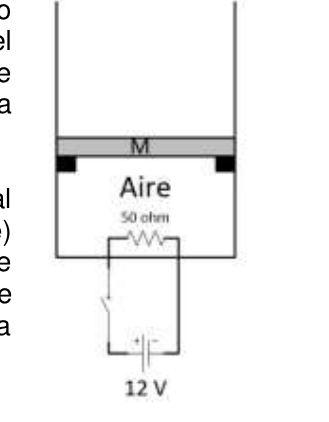
Topic: Circuits, Thermodynamics Metodi: First Law of Thermodynamics, Experimental Data Analysis Competenze: Physical Reasoning, Mathematical Modeling Objects: Resistor Fonte: Testo (PDF) — p.5
PT32. Scuola tecnica ORT N° 2. Città autonoma di Buenos Aires.
Si vuole calcolare il tempo e il costo di riscaldare l’acqua per cucinare. Si riempie un contenitore con 20 litri di acqua a 20°C e un riscaldatore elettrico viene immerso in esso collegato a 220 V. Come si desidera riscaldare l’acqua a una temperatura di 85°C La misurazione di un’aumento di velocità di velocità è un’ottica di velocità di velocità di velocità di velocità di velocità di velocità di velocità di velocità di velocità di velocità di velocità di velocità di velocità di velocità di velocità di velocità di velocità di velocità di velocità di velocità di velocità di velocità di velocità di velocità di velocità di velocità di velocità di velocità di velocità di velocità di velocità di velocità di velocità di velocità di velocità di velocità di velocità di velocità di velocità di velocità di velocità di velocità di velocità di velocità di velocità di velocità di velocità di velocità di velocità di velocità di velocità di velocità di velocità di velocità di velocità di velocità di velocità di velocità di velocità di velocità di velocità di velocità di velocità di velocità di velocità di velocità di velocità di velocità di velocità di velocità di velocità di velocità di velocità di velocità di velocità di velocità di velocità di velocità di velocità di velocità di velocità di velocità di velocità di velocità di velocità di velocità di velocità di velocità di velocità di velocità di velocità di velocità di velocità di velocità di velocità di velocità di velocità di velocità di velocità di velocità di velocità di velocità di velocità di velocità di velocità di velocità di velocità di velocità di velocità di velocità di velocità di velocità di velocità di velocità di velocità di velocità di velocità di velocità di velocità di velocità di velocità di velocità di velocità di velocità di velocità di velocità di velocità di velocità di velocità di velocità di velocità di velocità di velocità di velocità di velocità di velocità di velocità di velocità di velocità di velocità di velocità di velocità di velocità di velocità di velocità di velocità di velocità di velocità di velocità di velocità di velocità di velocità di velocità di velocità di velocità di velocità di velocità di velocità di velocità di velocità di velocità di velocità di velocità di velocità resistenza del riscaldatore immerso nell’acqua e ottenuto R=28Ω. a) Calcolare il corrente che circola attraverso il riscaldatore quando viene collegato a 220 V. b) Calcolare la quantità di energia che il riscaldatore deve fornire all’acqua. Sapendo che il Il recipiente utilizzato perde il 20% dell’energia che viene fornita, quanto Il riscaldatore deve essere lasciato connesso alla linea di 220 V per consentire la la temperatura dell’acqua raggiunge i 85°C desiderati? (Il calore specifico dell’acqua) è Cagua=1 cal/goC) d) Se il prezzo del kWh è di 60 centesimi, quanto costa riscaldare l’acqua secondo il calcolo di c) e) Come risponde al punto precedente se il riscaldatore si collega a 110? V? f) Grande è stata la sorpresa quando, dopo il tempo calcolato, si è verificato che la La temperatura dell’acqua era inferiore a 85°C. Pensava di aver commesso qualcosa. errore nel determinare la resistenza del riscaldatore. Ha misurato allora nuovo R mente con il riscaldatore immerso nell’acqua calda e ha verificato che questa era aumentato. Per migliorare i suoi calcoli ha ripreso la resistenza del Il caldaio a tre temperature diverse e basato su queste misurazioni ha ipotizzato che tra 20oC e 40oC, R=28Ω; tra 40oC e 60oC, R=34Ω e tra 60oC e 85oC, R=50Ω, e ha ricalcolato il tempo necessario per lasciare il riscaldatore immerso per far salire l’acqua da 20°C a 80°C. Calcola il nuovo tempo. DATOS: δacqua = 1 g/cm3 (constante) 1 cal = 4.2 J
44 - OAF 2018
Topic: Circuits, Thermodynamics Metodi: First Law of Thermodynamics, Experimental Data Analysis Competenze: Physical Reasoning, Mathematical Modeling Objects: Resistor Fonte: Testo (PDF) — p.5
PT32. Technical School ORT N° 2. The Autonomous City of Buenos Aires.
You want to calculate the time and cost of heating water for cooking. It fills a . 20 litres of water at 20°C and an electric heater is immersed in it connected to 220 V. How to heat water to a temperature of 85°C The time taken to reach it is calculated, for which the The heater resistance was submerged in water and obtained R=28Ω. (a) Calculate the current flowing through the heater when connected to 220 V. (b) Calculate how much energy the heater should supply to the water. Knowing that he The container used loses 20% of the energy delivered to it, how much The heater must be left connected to the 220 V line for the time being. Does the water temperature reach the desired 85°C? (Specific water heat is Cagua=1cal/goC) (d) If the price of kWh is 60 cents, how much does it cost to heat the water according to the calculation of (c) (e) What would be your answer to the previous paragraph if the heater is connected to 110? V? (f) Great was the surprise when after the calculated time it was found that the The water temperature was below 85°C. He thought he had committed some kind of crime . error in determining the heater resistance. He measured then new R lies with the heater immersed in hot water and found that this It had increased. To improve his calculations he again measured the resistance of the Heater at three different temperatures and based on those measurements assumed a temperature of between 20oC and 40oC, R=28Ω; between 40oC and 60oC, R=34Ω and between 60oC and 85oC, R=50Ω, and recalculated the time required to submerge the heater. to raise the water from 20°C to 80°C. Calculate the new time. DATES: δwater = 1 g/cm3 (constant) 1 cal = 4.2 J
The following points shall be added:
Topic: Circuits, Thermodynamics Metodi: First Law of Thermodynamics, Experimental Data Analysis Competenze: Physical Reasoning, Mathematical Modeling Objects: Resistor Fonte: Testo (PDF) — p.5
PT33. Escuela Técnica ORT N° 2. Ciudad Autónoma de Buenos Aires.
Un paquete de 2 kg se suelta en una pendiente de 53° a 4 m de un resorte largo, cuya constante de fuerza es de 120 N/m y está sujeto a la base de la pendiente. El coeficiente de fricción entre el paquete y la pendiente vale 0,5. La masa del resorte es despreciable.
a) ¿Qué rapidez tiene el paquete justo antes de llegar al resorte? b) ¿Cuál es lacompresión máxima del resorte? c) Al rebotar el paquete hacia arriba, ¿qué tanto se acerca a su posición inicial?
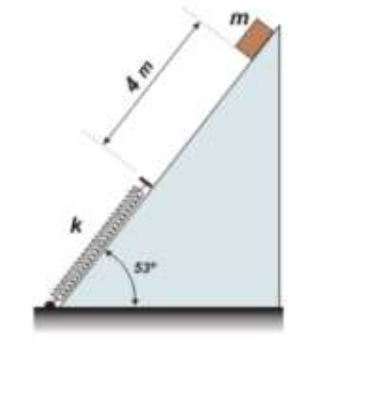
Topic: Conservation of Energy Metodi: Conservation of Energy, Hooke’s Law Competenze: Physical Reasoning, Mathematical Modeling Objects: Spring, Block, Inclined Plane Fonte: Testo (PDF) — p.5
PT33. Scuola tecnica ORT N° 2. Città autonoma di Buenos Aires.
Un pacchetto di 2 kg viene rilasciato su una pendenza di 53° a 4 m di una fonte lunga, la cui costante forza è di 120 N/m e è soggetto alla base dell’inclinazione. Il coefficiente di attrito tra il pacco e l’anello vale 0,5. La massa della primavera è disprezzabile.
a) Che velocità ha il pacco appena prima di arrivare al Primavera? b) Qual è la massima compressione della sorgente? c) Quando si rimbalza il pacchetto verso l’alto, quanto si Si avvicina alla sua posizione iniziale?
Topic: Conservation of Energy Metodi: Conservation of Energy, Hooke’s Law Competenze: Physical Reasoning, Mathematical Modeling Objects: Spring, Block, Inclined Plane Fonte: Testo (PDF) — p.5
PT33. Technical School ORT N° 2. The Autonomous City of Buenos Aires.
A 2 kg package is released on a slope of 53° to 4 m of a long spring, the force constant of which is 120 N/m and It’s attached to the base of the slope. The friction coefficient Between the package and the ring is 0.5. The mass of the spring It’s despicable.
(a) How fast is the package just before it reaches the spring? (b) What is the maximum spring compression? (c) When bouncing the package upwards, how much is it You’re getting closer to your starting position?
Topic: Conservation of Energy Metodi: Conservation of Energy, Hooke’s Law Competenze: Physical Reasoning, Mathematical Modeling Objects: Spring, Block, Inclined Plane Fonte: Testo (PDF) — p.5
PT34. Instituto María Auxiliadora. Santa Rosa, La Pampa.
Un electrón de 9,1 .10-31 kg tiene una velocidad inicial de 300000 m/s. Viaja en línea
recta y su velocidad aumenta a 700000m/ en una distancia de 5cm. Si consideras que su
aceleración es uniforme,
a) ¿Qué tipo de movimiento posee el electrón?
b) Realiza la gráfica v-t y a-t correspondientes a ese tramo.
c) ¿Cuál es la fuerza que actúa sobre el electrón?
d) Compara esta fuerza con su peso.
e) ¿Cuál es el cambio de la energía cinética en ese tramo?
f) ¿Cuál es el trabajo desarrollado? Expresa el resultado en eV, sabiendo que
1eV=1,6 . 10-19 J
Topic: Newtonian Mechanics Metodi: Kinematic Equations, Conservation of Energy Competenze: Physical Reasoning, Mathematical Modeling Objects: Electron Fonte: Testo (PDF) — p.5
PT34. Istituto Maria Assidiora. Santa Rosa, La Pampa.
Un elettrone di 9,1 .10-31 kg ha una velocità iniziale di 300000 m/s. Viaggia online La velocità di un’onda di velocità di 5 cm aumenta a 700000 m/h. Se consideri che il suo L’accelerazione è uniforme, a) Che tipo di movimento ha l’elettrone? b) Realizza il grafico v-t e a-t corrispondenti a tale tratto. c) Qual è la forza che agisce sull’elettrone? d) Confronta questa forza con il suo peso. e) Qual è il cambiamento di energia cinetica in quel tratto? f) Qual è il lavoro svolto? Esprime il risultato in eV, sapendo che 1eV=1,6 . 10-19 J
Topic: Newtonian Mechanics Metodi: Kinematic Equations, Conservation of Energy Competenze: Physical Reasoning, Mathematical Modeling Objects: Electron Fonte: Testo (PDF) — p.5
PT34. The Institute of Mary Help of Christians. Santa Rosa, the Pampa.
An electron of 9.1 .10-31 kg has an initial velocity of 300000 m/s. Travel online The speed of the vehicle increases to 700000m/h at a distance of 5cm. If you consider that his Acceleration is uniform, (a) What kind of motion does the electron have? (b) Draw the graph v-t and a-t for that stretch. (c) What is the force acting on the electron? (d) Compare this force to its weight. (e) What is the change in kinetic energy in that stretch? (f) What work has been done? Express the result in eV, knowing that 1eV=1,6 . 10-19 J
Topic: Newtonian Mechanics Metodi: Kinematic Equations, Conservation of Energy Competenze: Physical Reasoning, Mathematical Modeling Objects: Electron Fonte: Testo (PDF) — p.5
PT35. Instituto María Auxiliadora. Santa Rosa, La Pampa.
Dado el siguiente circuito, responde: a) ¿Cuál es la intensidad de corriente sobre la R3? b) ¿Cuál es la caída de tensión en R2? c) ¿Qué potencia disipa la R1? d) ¿Cuál es la intensidad de corriente que circula por R6? Sabes que : R1= 8Ω R2= 7Ω R3= 2Ω R4= 3Ω R5= 6Ω R6= 5Ω V= 120v
Topic: Circuits Metodi: Kirchhoff’s Laws, Equivalent Circuit Reduction Competenze: Physical Reasoning, Mathematical Modeling Objects: Resistor, Battery Fonte: Testo (PDF) — p.5
PT35. Istituto Maria Assidiora. Santa Rosa, La Pampa.
Dato il circuito seguente, risponde: a) Qual è l’intensità di corrente su R3? b) Qual è la flessione di tensione in R2? c) Qual è la potenza di dissipazione di R1? d) Qual è l’intensità di corrente che circola per R6? Sapete che: R1 = 8Ω R2 = 7Ω R3 = 2Ω R4 = 3Ω R5 = 6Ω R6 = 5Ω V= 120v
Topic: Circuits Metodi: Kirchhoff’s Laws, Equivalent Circuit Reduction Competenze: Physical Reasoning, Mathematical Modeling Objects: Resistor, Battery Fonte: Testo (PDF) — p.5
PT35. The Institute of Mary Help of Christians. Santa Rosa, the Pampa.
Given the following circuit, it answers: (a) What is the current intensity over the R3? (b) What is the voltage drop in R2? (c) What power is dissipated by R1? (d) What is the current intensity that circulating on R6? You know that: R1=8Ω R2=7Ω R3=2Ω R4=3Ω R5=6Ω R6=5Ω V= 120v
Topic: Circuits Metodi: Kirchhoff’s Laws, Equivalent Circuit Reduction Competenze: Physical Reasoning, Mathematical Modeling Objects: Resistor, Battery Fonte: Testo (PDF) — p.5
PT36. Instituto María Auxiliadora. Santa Rosa, La Pampa.
Dos cuerpos de 30kg cada uno se encuentran unidos por
una cuerda que pasa por una polea sin rozamiento como
se indica en la figura.
Si el coeficiente de rozamiento es de 0,2:
a) Realiza el diagrama de cuerpo libre para cada
masa.
b) Calcula la tensión que soporta la cuerda.
c) Determina hacia donde se mueve el sistema y su aceleración.
OAF 2018 - 45
Topic: Newtonian Mechanics Metodi: Free-Body Diagram, Conservation Laws Competenze: Physical Reasoning, Mathematical Modeling Objects: Block, Pulley, String Fonte: Testo (PDF) — p.5
PT36. Istituto Maria Assidiora. Santa Rosa, La Pampa.
Due corpi di 30 kg sono uniti da una corda che passa attraverso un pollo senza rassi come si indica nella figura. Se il coefficiente di rottura è di 0,2: a) Realizza il diagramma di corpo libero per ciascuna massa. b) Calcola la tensione che la corda sopporta. c) Determina dove si muove il sistema e la sua accelerazione.
OAF 2018 - 45
Topic: Newtonian Mechanics Metodi: Free-Body Diagram, Conservation Laws Competenze: Physical Reasoning, Mathematical Modeling Objects: Block, Pulley, String Fonte: Testo (PDF) — p.5
PT36. The Institute of Mary Help of Christians. Santa Rosa, the Pampa.
Two bodies weighing 30kg each are joined by A rope that passes through a pulley without a razor like is shown in the figure. If the coefficient of friction is 0,2: (a) Perform the free body diagram for each Mass. (b) Calculate the stress that the rope is able to withstand. (c) Determine where the system is moving and its acceleration.
The Commission shall adopt delegated acts in accordance with Article 21 of the Financial Regulation.
Topic: Newtonian Mechanics Metodi: Free-Body Diagram, Conservation Laws Competenze: Physical Reasoning, Mathematical Modeling Objects: Block, Pulley, String Fonte: Testo (PDF) — p.5
PT37. Escuela Municipal Paula Albarracín de Sarmiento. Olivos, Buenos Aires.
Una persona empuja un paquete de 10 Kg a lo largo de un plano inclinado, con rozamiento, de 2 m de longitud. Para ello le aplica una fuerza constante y paralela al plano; en consecuencia, el paquete, que estaba inicialmente en reposo en el punto A, abandona el plano en el punto B con una velocidad de 1,8 m/s, e impacta en el punto C. El dibujo no está a escala. Las consignas son:
a) Realizar los diagramas de cuerpo libre para los tramos AB y BC. b) Hallar el trabajo de la fuerza que aplica la persona. c) Calcular la altura máxima del paquete y el módulo de su velocidad al llegar al piso, utilizando consideraciones energéticas. d) Calcular el trabajo realizado por la fuerza peso en el tramo AB.
µ = 0,1
β = 37º
g = 10 m/s2
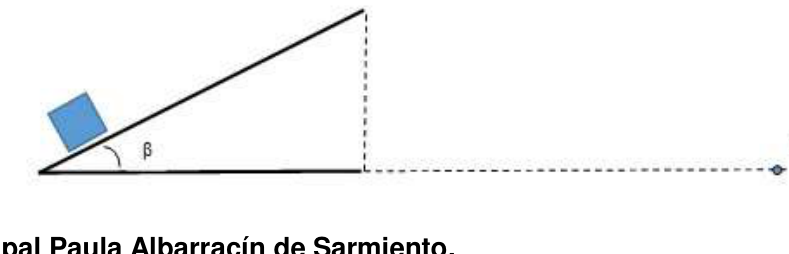
Topic: Newtonian Mechanics, Conservation of Energy Metodi: Free-Body Diagram, Conservation of Energy Competenze: Physical Reasoning, Mathematical Modeling Objects: Inclined Plane, Block, Projectile Fonte: Testo (PDF) — p.5
PT37. Scuola Comunale Paula Albarracín di Sarmiento. Olivos, Buenos Aires.
Una persona spinge un pacchetto di 10 kg lungo un piano inclinato, con di 2 m di lunghezza. Per questo viene applicata una forza costante e parallela alla piano; di conseguenza, il pacco, che era inizialmente a riposo al punto A, abbandona il piano al punto B a velocità di 1,8 m/s e colpisce il punto C. Il disegno non è a scala. I consigli sono:
a) Realizzare i diagrammi di corpo libero per gli strati AB e BC. b) Trovare il lavoro della forza che la persona applica. (c) Calcolare l’altezza massima del pacco e il modulo di velocità al raggiungimento del La Commissione ha adottato una decisione del Consiglio che prevede che il sistema di controllo dei trasporti sia stato adottato in base a un’azione di controllo. d) Calcolare il lavoro effettuato dalla forza peso nel tramo AB.
µ = 0,1
β = 37º
g = 10 m/s2
Topic: Newtonian Mechanics, Conservation of Energy Metodi: Free-Body Diagram, Conservation of Energy Competenze: Physical Reasoning, Mathematical Modeling Objects: Inclined Plane, Block, Projectile Fonte: Testo (PDF) — p.5
PT37. Paula Albarracín Municipal School of Sarmiento. Olive trees, from Buenos Aires.
A person pushes a 10 kg package along an inclined plane, with a grating of 2 m in length. For this purpose, it applies a constant force parallel to the flat; consequently, the package, which was initially resting at point A, It leaves the plane at point B at a speed of 1,8 m/s and impacts at point C. The drawing is not scale. The slogans are:
(a) To draw the free-body diagrams for sections AB and BC. (b) Find the force employed by the person. (c) Calculate the maximum height of the package and the speed module when it reaches the The Commission has already decided to adopt a proposal for a regulation on the use of energy. (d) Calculate the work performed by force-weight in the AB section.
µ = 0,1
β = 37º
g = 10 m/s2
Topic: Newtonian Mechanics, Conservation of Energy Metodi: Free-Body Diagram, Conservation of Energy Competenze: Physical Reasoning, Mathematical Modeling Objects: Inclined Plane, Block, Projectile Fonte: Testo (PDF) — p.5
PT38. Escuela Municipal Paula Albarracín de Sarmiento. Olivos, Buenos Aires.
-
Al desplazarse en ascensor de un piso a otro de un edificio, una persona experimenta en su oído una fuerza neta hacia afuera debido a una disminución de la presión externa (suponiendo constante la presión detrás del tímpano). Dicha fuerza vale 0,025 N y el tímpano tiene un área de 0,5 cm2. Suponiendo que el aire es un fluido incomprensible, cuya densidad es de 1,2 g/lt, determinar la distancia recorrida por el ascensor y el sentido del movimiento.
g = 10 m/s2 -
La aorta se ramifica en arterias que se van haciendo cada vez más finas hasta convertirse en arteriolas que finalmente conducen la sangre a los capilares. Sabiendo que el caudal sanguíneo es, para una persona en reposo, de 5lt/min y los radios disminuyen desde 10 mm para la aorta a 0,008 mm para los capilares y la sección total de los capilares es de aproximadamente 2000 cm2. Determinar en sistema cgs: a) El número de capilares y el caudal de cada uno de ellos. b) La velocidad de la sangre en la aorta. c) La velocidad en cada uno de los capilares.
Topic: Fluid Mechanics Metodi: Continuity Equation, Hydrostatic Equilibrium Competenze: Physical Reasoning, Mathematical Modeling Objects: Tube Fonte: Testo (PDF) — p.5
PT38. Scuola Comunale Paula Albarracín di Sarmiento. Olivos, Buenos Aires.
-
Quando si muove in ascensore da un piano a un altro di un edificio, una persona Il suo orecchio prova una forza netta verso l’esterno a causa di una diminuzione. di pressione esterna (supponendo una pressione costante dietro l’orecchio). Questa forza è di 0,025 N e l’orticolo ha un’area di 0,5 cm2. Supponiamo che che l’aria è un fluido incomprensibile, la cui densità è di 1,2 g/l, determinare la distanza percorsa dall’ascensore e il senso del movimento. g = 10 m/s2
-
L’ aorta si ramifica in arterie che si fanno sempre più sottili fino a diventano arteriole che portano il sangue ai capelli. Sapendo che il flusso sanguigno è, per una persona a riposo, di 5 lit/min e i raggi diminuiscono da 10 mm per l’aorta a 0,008 mm per i capillari e la sezione totale dei capillari è di circa 2000 cm2. Determinare in sistema cgs: a) Il numero di capillari e il flusso di ciascuna di essi. b) La velocità del sangue nell’aorta. c) La velocità in ciascun capillario.
Topic: Fluid Mechanics Metodi: Continuity Equation, Hydrostatic Equilibrium Competenze: Physical Reasoning, Mathematical Modeling Objects: Tube Fonte: Testo (PDF) — p.5
PT38. Paula Albarracín Municipal School of Sarmiento. Olive trees, from Buenos Aires.
-
When moving from one floor to another in a building by elevator, a person It experiences a net force outward in its ear due to a decrease. the external pressure (assuming the pressure behind the eardrum is constant). This force is 0,025 N and the eardrum has an area of 0,5 cm2. Assuming that that air is an incomprehensible fluid, with a density of 1,2 g/l, determine the distance travelled by the lift and the direction of movement. g = 10 m/s2
-
The aorta branches into arteries that become thinner and thinner until They become arteries that eventually lead blood to the capillaries. Knowing that blood flow is, for a resting person, 5lt/min and radii decrease from 10 mm for the aorta to 0,008 mm for the capillaries and the total section of the capillaries is approximately 2000 cm2. Determine in the cgs system: (a) The number of capillaries and the flow rate of each capillary. (b) The rate of blood flow in the aorta. (c) The velocity in each capillary.
Topic: Fluid Mechanics Metodi: Continuity Equation, Hydrostatic Equilibrium Competenze: Physical Reasoning, Mathematical Modeling Objects: Tube Fonte: Testo (PDF) — p.5
PT39. Escuela Municipal Paula Albarracín de Sarmiento. Olivos, Buenos Aires.
- En un recipiente adiabático que contiene 550 g de agua a 22ºC, se echan 300 g de plomo fundido (líquido) a 327ºC. Puede despreciarse la capacidad calórica del recipiente. Consulte los datos que necesite de la tabla adjunta y determine: a) La temperatura del agua cuando finaliza la solidificación del plomo. b) La temperatura de equilibrio del sistema agua-plomo.
46 - OAF 2018
Sustancia Calor esp. del sólido (cal/g ºC) Calor latente de fusión (cal/g) Calor esp. del líquido (cal/g ºC) Temp. de fusión/solid. (ºC) Plomo 0,031 5,5 Sin dato 327 Agua 0,5 80 1 0
- Si se calientan 200 g de estaño sólido, inicialmente a 82ºC, su temperatura varía con el calor entregado como se indica en el gráfico adjunto. Calcule: a) El calor específico del estaño sólido y su calor latente de fusión. b) ¿Cuál es el estado del estaño cuando se le han entregado 3000 cal? ¿Cuál es la masa respectiva en dicho caso en estado sólido y en estado líquido?
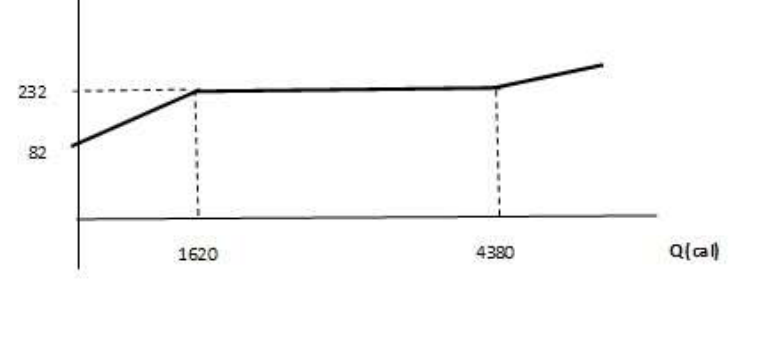
Topic: Thermodynamics Metodi: First Law of Thermodynamics, Experimental Data Analysis Competenze: Physical Reasoning, Mathematical Modeling Objects: Calorimeter Fonte: Testo (PDF) — p.5
PT39. Scuola Comunale Paula Albarracín di Sarmiento. Olivos, Buenos Aires.
- In un recipiente adiabatico contenente 550 g di acqua a 22°C, si gettano 300 g di piombo fuso (liquido) a 327 °C. La capacità calorica può essere disprezzata. del contenitore. Consulta i dati che ti servono nella tabella allegata e determina: a) La temperatura dell’acqua quando il piombo è finito di solidificarsi. b) Temperatura di equilibrio del sistema acqua-piombo.
46 - OAF 2018
sostanza Calore esp. di cui al solido (cal/g oC) Calore latente di fusione (cal/g) Calore esp. di cui al liquido (cal/g oC) Temp. de fusione/solidità. (ºC) Pilo 0,031 5,5 Nessun dato 327 Acqua 0,5 80 1 0
- Se si riscaldano 200 g di scatola solida, inizialmente a 82°C, la temperatura varia con il calore fornito come indicato nel grafico allegato. Calcola: a) Il calore specifico della stagno solido e il suo calore latente di fusione. b) Qual è lo stato della canna quando le sono stati consegnati 3000 cal? - Che cosa? è la massa in tale caso in stato solido e in stato liquido?
Topic: Thermodynamics Metodi: First Law of Thermodynamics, Experimental Data Analysis Competenze: Physical Reasoning, Mathematical Modeling Objects: Calorimeter Fonte: Testo (PDF) — p.5
PT39. Paula Albarracín Municipal School of Sarmiento. Olive trees, from Buenos Aires.
- In an adiabatic container containing 550 g of water at 22oC, 300 g are discharged. of a thickness of not more than 20 mm but less than 30 mm Caloric capacity can be underestimated from the container. See the data you need from the table below and determine: (a) The temperature of the water when the lead is solidified. (b) The water-lead system equilibrium temperature.
The Commission shall adopt delegated acts in accordance with Article 21 of this Regulation.
Substance It ‘s hot . of the solid . (cal/g oC) Heat . latent of merger (cal/g) It ‘s hot . of the liquid (cal/g oC) Temp. de The following is the list of the products concerned: (ºC) Lead 0,031 5,5 No data . 327 Water 0,5 80 1 0
- If 200 g of solid tin is heated, initially at 82°C, its temperature varies with the heat delivered as indicated in the attached graph. Calculate: (a) The specific heat of the solid tin and its latent melting heat. (b) What is the status of the tin when 3000 cal have been delivered? What? is the respective mass in this case in solid and liquid?
Topic: Thermodynamics Metodi: First Law of Thermodynamics, Experimental Data Analysis Competenze: Physical Reasoning, Mathematical Modeling Objects: Calorimeter Fonte: Testo (PDF) — p.5
PT40. Instituto de Enseñanza San Jorge1 - ET N° 3 Ing. Santiago Maradona1 Colegio Hermano Hermas de Bruijn1 - Escuela Big Ben School1 Centro Educativo Bernardino Rivadavia2 - ET N° 6 Cmte. Manuel Besares2. 1Santiago del Estero - 2La Banda, Santiago del Estero.
Una pareja de recién casados, decidieron ir de luna de miel a las Termas de Rio Hondo. En uno de los paseos fueron hasta el dique frontal y desde la parte superior, mientras observaban salir el agua por los compuertas, lanzaron una moneda para pedir un deseo. Al cabo de 2 segundos escucharon el sonido del impacto de la moneda contra el agua. Sabiendo que la moneda fue lanzada verticalmente hacia abajo con una velocidad de 1,5 m/s y que la velocidad del sonido es de 340m/s, realiza lo siguiente:
a) Construye un croquis (gráfico) que te permita esquematizar la situación. b) Identifica los tipos de movimiento intervinientes en el problema. c) Calcula el tiempo que la moneda tarda en llegar al agua. d) Calcula la altura desde donde fue lanzada la moneda. e) Construye las graficas de la velocidad y el espacio recorrido en función del tiempo para el sistema moneda sonido.
Nota: Considera g= 10 m/s2
Topic: Newtonian Mechanics Metodi: Kinematic Equations Competenze: Physical Reasoning, Mathematical Modeling Objects: Projectile Fonte: Testo (PDF) — p.5
PT40. Istituzione di istruzione San Jorge1 - ET N° 3 Ing. Santiago Maradona1 Bruges Brothers School - Scuola Big Ben School Centro Educativo Bernardino Rivadavia2 - ET N° 6 Cmte. Manuel Besares2. 1Santiago del Estero - 2La Banda, Santiago del Estero.
Una coppia di sposi appena sposati, ha deciso di andare a luna di miele ai Termi di Rio Hondo. In una delle passeggiate sono andati fino al ponte frontale e dall’alto, mentre Guardavano l’acqua uscire dalle porte, lanciavano una moneta per chiedere un desiderio. Dopo due secondi hanno sentito il suono dell’impatto della moneta sull’acqua. Sapendo che la moneta è stata lanciata verticalmente verso il basso a una velocità di 1,5 m/s e che la velocità del suono è di 340m/s, esegue quanto segue:
a) Costruire un schizzo (grafico) che ti permette di schematizzare la situazione. b) Indica i tipi di movimento che intervenono nel problema. c) Calcola il tempo che la moneta impiega per arrivare in acqua. d) Calcola la quota da cui è stata lanciata la moneta. e) Costruisce i grafici della velocità e dello spazio percorso in base al tempo per il sistema di valuta sonora.
Nota: Considera g= 10 m/s2
Topic: Newtonian Mechanics Metodi: Kinematic Equations Competenze: Physical Reasoning, Mathematical Modeling Objects: Projectile Fonte: Testo (PDF) — p.5
PT40. The following is a list of the institutions of the European Union: The Spanish national team Brother Brother School of Bruijn1 - Big Ben School1 The school is located in the centre of the town of Rivadavia. Manuel Besares2. The first is the first of the two.
A newlywed couple decided to go on their honeymoon to the Rio Hondo Spa. On one of the rides they went up to the front deck and from the top, while They watched the water come out of the gates, threw a coin to ask for a wish. After 2 seconds they heard the sound of the coin impacting the water. Knowing that the coin was thrown vertically down at a speed of 1.5 m/s and the speed of sound is 340m/s, perform the following:
a) Build a sketch (graph) that allows you to outline the situation. (b) Identify the types of movements involved in the problem. (c) Calculate the time it takes the currency to reach the water. (d) Calculate the height from which the coin was tossed. (e) Builds the graphs of the speed and space travelled according to the time for the sound currency system.
Note: Consider g = 10 m/s2
Topic: Newtonian Mechanics Metodi: Kinematic Equations Competenze: Physical Reasoning, Mathematical Modeling Objects: Projectile Fonte: Testo (PDF) — p.5
PT41. Instituto de Enseñanza San Jorge1 - ET N° 3 Ing. Santiago Maradona1 Colegio Hermano Hermas de Bruijn1 - Escuela Big Ben School1 Centro Educativo Bernardino Rivadavia2 - ET N° 6 Cmte. Manuel Besares2. 1Santiago del Estero - 2La Banda, Santiago del Estero.
El Tren del Desarrollo que une Santiago con La Banda, tiene un vagón impulsor
(m1 = 2500 kg) que tira al segundo vagón de masa m2 = 2000 kg. Sale cada 1 hora desde
la estación del Forum. El coeficiente de fricción entre las ruedas y las vías es uc =0,60.
OAF 2018 - 47 Teniendo en cuenta estos datos:
a) Esquematice la situación y realice el diagrama de cuerpo libre de cada vagón. (Suponiendo el tren en movimiento). b) ¿Qué fuerza ejerce el vagón impulsor, si logra desplazar el tren con una aceleración de 1 m/ s2 en un tramo sin inclinación? c) En el primer tramo del recorrido las vías tienen una pendiente ascendente de 30º. Para recorrerlo con la misma aceleración, el tren realizó un trabajo de 416.700 Nm, ¿Qué longitud tiene la vía en ese tramo? d) ¿Cuál es la energía Cinética que posee el tren a los 3 s de partir con la aceleración mencionada? e) ¿Se modifica la energía Potencial en ese tiempo? Justifique. f) ¿Qué cantidad de calor se disipa por el rozamiento entre las ruedas y las vías?
Nota: Considera que las ruedan deslizan en lugar de girar. g= 10 m/s2
Topic: Newtonian Mechanics, Conservation of Energy Metodi: Free-Body Diagram, Conservation of Energy Competenze: Physical Reasoning, Mathematical Modeling Objects: Cart, Inclined Plane Fonte: Testo (PDF) — p.5
PT41. Istituzione di istruzione San Jorge1 - ET N° 3 Ing. Santiago Maradona1 Bruges Brothers School - Scuola Big Ben School Centro Educativo Bernardino Rivadavia2 - ET N° 6 Cmte. Manuel Besares2. 1Santiago del Estero - 2La Banda, Santiago del Estero.
Il Treno dello Sviluppo che collega Santiago con La Banda, ha un vagone impulsor (m1 = 2500 kg) che tira al secondo vagone di massa m2 = 2000 kg. Esce ogni un’ora dal la stazione del Forum. Il coefficiente di attrito tra le ruote e le piste è uc = 0,60.
OAF 2018 - 47 Tenendo conto di questi dati:
a) Squamatizzare la situazione e realizzare il diagramma del corpo libero di ogni vagone. (Suppone il treno in movimento). b) Qual è la forza esercitata dal vagone motore se riesce a spostare il treno con una Accelerazione di 1 m/ s2 in un tratto senza inclinamento? c) Nella prima parte del percorso le vie hanno una pendenza ascendente di 30º. Per percorrerlo con la stessa accelerazione, il treno ha fatto un lavoro di 416.700 Nm, che lunghezza ha la via in quel tratto? d) Qual è l’energia cinetica del treno a 3 secondi dalla partenza con il treno? l’accelerazione di cui sopra? e) La potenza energetica viene modificata in quel tempo? giustifica. f) Quanto calore viene dissipato dal ruggimento tra ruote e piste?
Nota: Considera che le ruote scivolano invece che girare. g= 10 m/s2
Topic: Newtonian Mechanics, Conservation of Energy Metodi: Free-Body Diagram, Conservation of Energy Competenze: Physical Reasoning, Mathematical Modeling Objects: Cart, Inclined Plane Fonte: Testo (PDF) — p.5
PT41. The following is a list of the institutions of the European Union: The Spanish national team Brother Brother School of Bruijn1 - Big Ben School1 The school is located in the centre of the town of Rivadavia. Manuel Besares2. The first is the first of the two.
The Development Train that connects Santiago with La Banda, has a powertrain. (m1 = 2500 kg) pulling the second carriage with mass m2 = 2000 kg. He ‘s been out every hour since . The Forum station. The friction coefficient between the wheels and the track is uc = 0.60.
The Commission shall adopt delegated acts in accordance with Article 21 of the Financial Regulation. Taking into account the following data:
(a) Sketch the situation and draw the free body diagram of each wagon. (Supposing the train moving). (b) What force is exercised by the push carriage if it is able to move the train with a acceleration of 1 m/ s2 in an uninclined section? (c) In the first section of the route the tracks have an upward slope of 30º. To travel at the same speed, the train did a job of 416,700 Nm, what is the length of the trail in that stretch? (d) What is the kinetic energy of the train 3 s after departure from the train? the acceleration mentioned? (e) Is the potential energy changed at that time? You justify it. (f) How much heat is dissipated by friction between wheels and tracks?
Note: Consider that the wheels slide instead of rotating. g= 10 m/s2
Topic: Newtonian Mechanics, Conservation of Energy Metodi: Free-Body Diagram, Conservation of Energy Competenze: Physical Reasoning, Mathematical Modeling Objects: Cart, Inclined Plane Fonte: Testo (PDF) — p.5
PT42. Instituto de Enseñanza San Jorge1 - ET N° 3 Ing. Santiago Maradona1 Colegio Hermano Hermas de Bruijn1 - Escuela Big Ben School1 Centro Educativo Bernardino Rivadavia2 - ET N° 6 Cmte. Manuel Besares2. 1Santiago del Estero - 2La Banda, Santiago del Estero.
Mientras estudiabas para esta prueba, pusiste a calentar agua en un jarro, para tomar mate. Sin darte cuenta, dentro del jarro estaba la bombilla del mate que tiene una masa de 25 g. Luego de hervir el agua durante 5 minutos (algo que no se debe hacer para tomar un buen mate), observaste que la bombilla estaba dentro y la sacaste del jarro dejándola caer dentro de una olla (no lavada desde el almuerzo) que contenía 0,0907 kg de agua a 20ºC. Luego de varios minutos, la bombilla y el agua de la olla estabilizaron su temperatura en 22ºC.
Considera que el jarro y la olla tienen masas despreciables y que idealmente la bombilla, el jarro, el agua y la olla, no intercambian calor con el ambiente o con cualquier otro material (Por ejemplo restos de ravioles de la olla). Suponiendo además que utilizaste el “poder de la fuerza” pasa sacar la bombilla del jarro y colocarla en la olla (como el maestro yoda), responde:
a) ¿Cuántos grados descendió la temperatura de la bombilla al enfriarse en la olla?
b) ¿Qué cantidad de calor entregó el agua de la olla a la bombilla?
c) En base a tus cálculos determina de qué material está hecha la bombilla. Ver la
tabla de Calores Específicos.
d) Si la temperatura de la bombilla al caer en la olla era de 70ºC ¿Cuál hubiera sido
la temperatura final alcanzada por el agua de la olla y la bombilla?
e) Solucionado este percance, cargaste 1 litro de agua a temperatura ambiente
(20ºC) en una jarra eléctrica y la conectaste a la red domiciliaria. ¿Cuál es el
valor de la resistencia eléctrica de la jarra si el agua alcanzó los 63ºC en 30s?
Datos Calor especifico del Agua: CeH2O = 1cal/g°C Calor latente de vaporización del Agua: LV-H2O = 540 cal/g Densidad del Agua: 1 g/cm3 1 cal = 4,18 J
48 - OAF 2018 Tabla de calores Específicos
Topic: Thermodynamics, Circuits Metodi: First Law of Thermodynamics Competenze: Physical Reasoning, Mathematical Modeling Objects: Calorimeter, Resistor Fonte: Testo (PDF) — p.5
PT42. Istituzione di istruzione San Jorge1 - ET N° 3 Ing. Santiago Maradona1 Bruges Brothers School - Scuola Big Ben School Centro Educativo Bernardino Rivadavia2 - ET N° 6 Cmte. Manuel Besares2. 1Santiago del Estero - 2La Banda, Santiago del Estero.
Mentre studiavi per questo test, hai messo l’acqua in un vaso per scaldarla.
- Matte. Senza che tu lo sapessi, dentro il vaso c’era la lampada del mate che ha una massa. de 25 g. Dopo aver bollito l’ acqua per 5 minuti (qualcosa che non si deve fare per
- Si ’ , si ’ . - Si ’ . - Si ’ . lasciandola cadere in una pentola (non lavata dopo il pranzo) contenente 0,0907 kg di acqua a 20°C. Dopo diversi minuti, la lampada e l’acqua del vaso stabilizzarono il suo temperatura a 22°C.
Considera che il vaso e la pentola hanno masse dispregiate e che idealmente la lampada, il vassoio, l’acqua e il vaso, non scambiano calore con l’ambiente o con qualsiasi altro. materiale (ad esempio, resti di raviole della pentola). Supponendo inoltre che tu abbia usato il potere della forza passa a prendere la lampada dal vaso e metterla nel vaso (come il Maestro yoda), risponde:
a) Quanti gradi di temperatura è diminuita la lampada quando si raffreddò in una cottura? b) Quanta calore ha consegnato l’acqua dal vaso alla lampada? c) Sulla base dei suoi calcoli determina di che materiale sia fatta la lampadina. Vedi la tabella di calori specifici. d) Se la temperatura della lampada caduta nel vaso fosse di 70 °C, quale sarebbe stato il livello di temperatura? la temperatura finale raggiunta dall’acqua del pozzo e dalla lampada? e) Risolto questo problema, carica 1 litro di acqua a temperatura ambiente
- 20°C in un vassoio elettrico e l’hai collegata alla rete domestica. Qual è il suo? Valore della resistenza elettrica del vassoio se l’acqua raggiunge i 63°C nel 30s?
Datos Calore specifico dell’acqua: CeH2O = 1 cal/g°C Calore latente di vaporizzazione dell’acqua: LV-H2O = 540 cal/g Densità dell’acqua: 1 g/cm3 1 cal = 4,18 J
48 - OAF 2018 Tabella di calori specifici
Topic: Thermodynamics, Circuits Metodi: First Law of Thermodynamics Competenze: Physical Reasoning, Mathematical Modeling Objects: Calorimeter, Resistor Fonte: Testo (PDF) — p.5
PT42. The following is a list of the institutions of the European Union: The Spanish national team Brother Brother School of Bruijn1 - Big Ben School1 The school is located in the centre of the town of Rivadavia. Manuel Besares2. The first is the first of the two.
While you were studying for this test, you put water in a bowl to heat, to drink. I’m going to kill you. Unbeknownst to you, inside the jar was the matte bulb that has a mass. de 25 g. After boiling water for 5 minutes (something you should not do to You noticed the light bulb was inside and you took it out of the jar . dropping it into a pot (not washed since lunch) containing 0,0907 kg water at 20°C. After several minutes, the bulb and the pot water stabilized his temperature at 22oC.
He considers that the pot and pot have despicable masses and that ideally the bulb, The pot, the water and the pot, they do not exchange heat with the environment or any other. material (e.g. residue from the pot raviol). Suppose you also used the power of force takes the bulb out of the jar and places it in the pot (like the Master yoda), he answers:
(a) How much did the temperature of the bulb drop when it cooled in the pot? (b) How much heat did the water from the pot deliver to the light bulb? (c) Based on your calculations, determine what material the bulb is made of. See the The temperature of the product shall be determined by the following formula: (d) If the temperature of the light bulb when it fell into the pot was 70 °C, what would it have been? the final temperature reached by the pot water and the light bulb? (e) Once this breakdown is resolved, load 1 liter of water at room temperature. 20 degrees in an electrical jar and you plugged it into the home network. What is it? The value of the electrical resistance of the jar if the water reached 63°C in 30s?
Data from the report The specific heat of the water: CeH2O = 1cal/g°C The water vaporization latent heat: LV-H2O = 540 cal/g Density of water: 1 g/cm3 1 cal = 4,18 J
48 - OAF 2018 Table of specific heat
Topic: Thermodynamics, Circuits Metodi: First Law of Thermodynamics Competenze: Physical Reasoning, Mathematical Modeling Objects: Calorimeter, Resistor Fonte: Testo (PDF) — p.5
PT43. IPETAyM N° 65 Juan Antonio de Mena. Vicuña Mackenna, Córdoba.
El problema de las baterías… A mediados de noviembre del año 2017,desaparecio el submarino ARA San Juan (S-42) con cuarenta y cuatro tripulantes a bordo, cuando se trasladaba desde la ciudad de Ushuaia hacia la base de Mar del Plata, a la altura del Golfo de San Jorge (en la provincia de Chubut). Las causas del naufragio de la nave todavía son desconocidas y sobre ellas han circulado diferentes versiones. El submarino contaba con un propulsor eléctrico, alimentado por 960 baterías de plomo- acido, que proveían su energía a un motor eléctrico de 6400 kW, que a su vez era el encargado de mover la hélice del submarino. Para la carga de las baterías, el submarino contaba con cuatro motores diésel de 16 cilindros en V (con una temperatura de trabajo de 700°C) y 1200 kW de potencia cada uno. Un inconveniente que tiene este tipo de submarinos, como el ARA San Juan es que cuando las baterías eran cargadas emiten gases peligrosos, como por ejemplo hidrogeno, que deben ser ventilados hacia el exterior de la nave. Teniendo en cuenta estos datos técnicos, que ahora conoces del submarino, se pide que averigües: a) ¿Qué tiempo podrá funcionar el submarino, si desde la base donde partió por última vez, se le cargaron 1250 litros de gas oíl marítimo a una temperatura de 25°C? b) Teniendo en cuenta que el voltaje que entrega cada una de las baterías de la nave es de 1,9 v, ¿Encontrar cuál será la intensidad de corriente que llega al motor eléctrico que impulsa al submarino? c) Suponga que en uno de los compartimientos del ARA San Juan se tiene una instalación eléctrica como lo muestra la siguiente figura:
Lo valores de las resistencias (en este caso, lámparas) son: R1= 3Ω, R2 y R4= 1,3Ω, R7 y R5= 2,6 Ω, R3= 1,7 Ω, R6= 2 Ω. ¿Qué diferencia de potencial habrá en el circuito eléctrico, si por el circula una corriente eléctrica de 1,3 A?
OAF 2018 - 49
Topic: Circuits Metodi: Kirchhoff’s Laws, First Law of Thermodynamics Competenze: Physical Reasoning, Mathematical Modeling Objects: Resistor, Battery Fonte: Testo (PDF) — p.5
PT43. IMPETAyM N° 65 Giovanni Antonio di Mena. Vicina Mackenna, Cordoba.
Il problema delle batterie… A metà novembre del 2017, il sottomarino ARA San Juan (S-42) è scomparso. con quarant’quattro uomini a bordo, quando si trasferisce dalla città di Ushuaia verso la base del Mar del Plata, all’altezza del Golfo di San Jorge (in provincia di Chubut). Le cause del naufragio della nave sono ancora sconosciute e su di esse. Le versioni sono state diffuse. Il sottomarino aveva un propulsore elettrico, alimentato da 960 batterie di piombo. L’acido, che forniva la sua energia a un motore elettrico di 6400 kW, che a sua volta era il incaricato di spostare l’elice del sottomarino. Per caricare le batterie, il sottomarino aveva quattro motori diesel di 16 cilindri in V (con una temperatura di lavoro 700°C) e 1200 kW di potenza ciascuna Uno. Un inconveniente che ha questo tipo di sottomarini, come l’ARA San Juan è che quando le batterie erano cariche emettono gas pericolosi, come ad esempio l’idrogeno, che deve essere ventilato verso l’esterno della nave. Considerando questi dati tecnici, che ora conosci del sottomarino, ti chiediamo Scopri: a) Quanto tempo potrà funzionare il sottomarino, se da dove è partito? L’ultima volta, 1250 litri di gas o olio marittimo sono stati caricati a una temperatura di 25°C? b) Considerando che la voltazione che ogni batteria fornisce alla La nave è di 1,9 V, troverete qual sarà l’intensità di corrente che arriva al Un motore elettrico che spinge il sottomarino? c) Supponiamo che in uno dei comparti dell’ARA San Juan si abbia una installazione elettrica come illustrato dalla seguente figura:
I valori delle resistenze (in questo caso lampadine) sono: R1=3Ω, R2 e R4= 1,3Ω, R7 y R5= 2,6 Ω, R3= 1,7 Ω, R6= 2 Ω. Che differenza di potenziale ci sarà nel circuito elettrico, se per il circuito si circola una corrente elettrica di 1,3 A?
OAF 2018 - 49
Topic: Circuits Metodi: Kirchhoff’s Laws, First Law of Thermodynamics Competenze: Physical Reasoning, Mathematical Modeling Objects: Resistor, Battery Fonte: Testo (PDF) — p.5
PT43. The Commission has not yet adopted a proposal for a regulation on the protection of the environment. Vicina Mackenna, from Cordoba.
The problem with the batteries… In mid-November 2017, the ARA San Juan (S-42) submarine disappeared. With forty-four crew members on board, when moving from the city of Ushuaia towards the base of the Mar del Plata, at the height of the Gulf of San Jorge (in the province from Chubut). The causes of the shipwreck are still unknown and about them. There have been many different versions. The submarine had an electric propulsion, powered by 960 lead-acid batteries. The electric motor was powered by a 6400 kW electric motor which was the In charge of moving the propeller of the submarine. For the battery load, the submarine had four 16 hp diesel engines. V cylinders (with a working temperature of 700°C) and 1200 kW of power each One of them. One drawback to having this type of submarine, like the ARA San Juan, is that When the batteries were charged they emit dangerous gases, like hydrogen, which must be vented outwards. Given these technical data, which you now know about the submarine, it is requested that Find out: (a) How long will the submarine be able to operate, if from the base from which it departed? Last time, it was loaded with 1250 litres of marine oil gas at a temperature of 25°C? (b) Whereas the voltage delivered by each of the batteries of the The ship is 1.9 V, find out what the current intensity will be that reaches the electric motor that powers the submarine? (c) Suppose that in one of the compartments of the ARA San Juan there is a electrical installation as shown in the following figure:
The resistance values (in this case, lamps) are: R1=3Ω, R2 and R4= 1,3Ω, R7 y R5= 2,6 Ω, R3= 1,7 Ω, R6= 2 Ω. What difference in potential will there be in the electrical circuit if a circuit is running through it? electrical current of 1.3 A?
The Commission shall adopt implementing acts in accordance with Article 21 of the Financial Regulation.
Topic: Circuits Metodi: Kirchhoff’s Laws, First Law of Thermodynamics Competenze: Physical Reasoning, Mathematical Modeling Objects: Resistor, Battery Fonte: Testo (PDF) — p.5
PT44. IPETAyM N° 65 Juan Antonio de Mena. Vicuña Mackenna, Córdoba.
Los trabajos que realizaba el submarino
El submarino ARA San Juan (veterano de la guerra de Malvinas) cumplía misiones de
patrullaje e intercepción en aguas Argentinas, donde principalmente debía controlar que
no hubiese barcos pesqueros ilegales en todo el mar argentino. La tarea no era destruir y
hundir barcos, sino la de reducir las operaciones de pesca o contrabando sin permiso y
detener sus tripulaciones.
Un componente vital para el funcionamiento de un submarino es el dispositivo óptico,
llamado periscopio, que es un arreglo de espejos y lentes o prismas, que permite a la
tripulación del submarino observar naves que se encuentran en la superficie del mar.
Personal de tripulación, se encuentra observando por el periscopio a un barco que se
encuentra pescando sin permiso, la imagen del barco se refleja en dos espejos que tiene
en su interior el periscopio.
a) ¿Cuál es la ley de reflexión? Los rayos de luz llegan luego de reflejarse en los
espejos a una lente convergente (n=1,5), sabiendo que la luz llega al ojo del
marino con un ángulo de 5° ¿Averiguar el ángulo con el que llega la luz a la
lente?
b) Luego de divisar la embarcación que está pescando de forma ilegal, el
submarino recibe la orden de interceptar el barco, que según el radar está a 16
km del submarino.
También se conoce la velocidad con la que se mueve el barco y es de 10,8
nudos, como el submarino está sumergido, pone curso hacia el barco a máxima
velocidad, 25 nudos. ¿Cuánto tardara el submarino en alcanzar al barco?
c) ¿Qué distancia recorrerá el submarino para alcanzar al barco?
d) El desplazamiento (Δ) de un barco es una medida de su peso, ya que indica el
volumen de agua que desaloja. ¿Qué principio físico se utiliza para justificar este
dato técnico? El submarino ARA San Juan tiene un desplazamiento sumergido
de 2336 tn y de 2140 tn cuando está en superficie, teniendo en cuenta que la
velocidad del submarino cuando está en la superficie es de 15 nudos y cuando
se sumerge puede alcanzar 25 nudos. ¿Cuál será la variación de energía
cinética que experimenta el submarino cuando pasa de estar en la superficie a la
inmersión?
Topic: Geometric Optics, Newtonian Mechanics Metodi: Snell’s Law, Kinematic Equations Competenze: Physical Reasoning, Mathematical Modeling Objects: Mirror, Lens Fonte: Testo (PDF) — p.5
PT44. IMPETAyM N° 65 Giovanni Antonio di Mena. Vicina Mackenna, Cordoba.
I lavori che faceva il sottomarino Il sottomarino ARA San Juan (veteran di guerra di Malvinas) compie missioni di Il governo ha deciso di limitare il numero di persone che hanno diritto a un’intervento di polizia. Non ci sarebbero barche illegali in tutto il mare argentino. Il compito non era distruggere e… La Commissione ha adottato una decisione che prevede che le misure di pesca non siano state adottate per il trasporto di pesci senza permesso. fermare i suoi equipaggi. Un componente vitale per il funzionamento di un sottomarino è il dispositivo ottico, chiamato periscopio, che è un’arrangimento di specchi e lenti o prismi, che permette di Il personale del sottomarino osserva le navi che si trovano sulla superficie del mare. Personale di bordo, si trova osservando per il periscopio una nave che si sta Quando si trova a pescare senza permesso, l’immagine della nave si riflette in due specchi che ha. all’interno del periscopio. a) Qual è la legge della riflessione? I raggi di luce arrivano dopo essere stati riflessi nei specchiare una lente convergente (n=1,5), sapendo che la luce arriva all’occhio del Avanti, avanti, verso il lato di fondo, verso l’angolo di raggiungimento della luce. Lenti? b) Dopo aver visto la barca che sta pescando illegalmente, il Il sottomarino riceve l’ordine di intercettare la nave, che secondo il radar è a 16°.
- km dal sottomarino. Si conosce anche la velocità con cui la nave si muove e è di 10,8 I nodi, come il sottomarino è sommerso, fa corso verso la nave al massimo. velocità, 25 nodi. Quanto tempo ci vorrà per il sottomarino per raggiungere la nave? c) Quante distanze percorrerebbe il sottomarino per raggiungere la nave? d) Il spostamento (Δ) di una nave è una misura del suo peso, poiché indica il volume di acqua che si allontana. Che principio fisico viene utilizzato per giustificare questo? dati tecnici? L’ARA San Juan ha un spostamento sottomarino. 2336 tonnellate e 2140 tonnellate quando si trova a superficie, considerando che La velocità del sottomarino quando è sulla superficie è di 15 nodi e quando se si immerge può raggiungere 25 nodi. Qual è la variazione di energia? La cinetica che il sottomarino prova quando passa dalla superficie alla superficie
- Immersione?
Topic: Geometric Optics, Newtonian Mechanics Metodi: Snell’s Law, Kinematic Equations Competenze: Physical Reasoning, Mathematical Modeling Objects: Mirror, Lens Fonte: Testo (PDF) — p.5
PT44. The Commission has not yet adopted a proposal for a regulation on the protection of the environment. Vicina Mackenna, from Cordoba.
The work the submarine was doing . The ARA San Juan (Malvinas war veteran) was serving missions in the Pacific. The Commission’s task was to monitor the situation in the Argentine waters. There would be no illegal fishing boats in the whole Argentine sea. The task was not to destroy and The Commission has also proposed that the Commission should be able to take action to reduce the number of illegal fishing activities. Stop your crews. A vital component for the operation of a submarine is the optical device. called a periscope, which is an arrangement of mirrors and lenses or prisms, which allows the The submarine crew observes ships that are on the sea surface. Crew personnel, are watching from the periscope a ship that is If you find yourself fishing without permission, the image of the boat is reflected in two mirrors you have. inside the periscope. (a) What is the law of reflection? The light rays come after they are reflected in the mirrors to a convergent lens (n=1.5), knowing that light reaches the eye of the eye. Marine with an angle of 5° To adjust the angle at which the light reaches the The lens? (b) After detecting the vessel fishing illegally, the Submarine receives an order to intercept the ship, which according to radar is 16 Miles from the submarine. The speed at which the ship moves is also known and is 10.8 Knots, as the submarine is submerged, sets course towards the ship at maximum. speed, 25 knots. How long will it take the submarine to reach the ship? (c) How far will the submarine travel to reach the ship? (d) The displacement (Δ) of a ship is a measure of its weight, since it indicates the volume of water discharged. What physical principle is used to justify this? technical data? The ARA San Juan has a submerged displacement. 2336 tonnes and 2140 tonnes when it is on the surface, taking into account that the The speed of the submarine when it is on the surface is 15 knots and when If you dive, you can reach 25 knots. What will be the energy variation The kinetics that a submarine experiences when it moves from surface to the surface.
- What?
Topic: Geometric Optics, Newtonian Mechanics Metodi: Snell’s Law, Kinematic Equations Competenze: Physical Reasoning, Mathematical Modeling Objects: Mirror, Lens Fonte: Testo (PDF) — p.5
PT45. IPETAyM N° 65 Juan Antonio de Mena. Vicuña Mackenna, Córdoba.
El final del ARA San Juan Entre las diversas versiones que se barajaron acerca del destino que pudo haber tenido el submarino ARA San Juan, es que haya ocurrido una implosión, por causa de una avería en el sistema de propulsión (diésel-eléctrico). Un submarino siempre tiene la tendencia a hundirse, por eso es que siempre debe estar propulsado, no puede prescindir en ningún momento de su motor. Una de las versiones que más sustento tiene, es que hubo un fallo en las baterías, esto es que durante el proceso de carga, hubo una acumulación de hidrogeno, que no fue ventilado al exterior de la nave (por un tubo llamado snorkel) provocando una explosión en uno de los compartimientos de baterías, provocando la detención del motor eléctrico y por ende de la nave. Se conoce que el ARA San Juan podía operar hasta una profundidad máxima de 250 m, luego de la cual, la estructura del casco de la nave sufre daños que pueden ser irreversibles y colapsar. En la siguiente figura se presentan datos de la variación de la profundidad con la distancia a la costa Argentina:
50 - OAF 2018
a) Calcule la presión máxima, en atmosferas, que puede soportar la estructura del
casco del submarino ARA San Juan.
b) Teniendo en cuenta, el desplazamiento (Δ), dato técnico de suma utilidad en una
embarcación (observe el problema anterior, para recordar que indica), este se
puede expresar matemáticamente como:
Δ = Vsumergido . δagua de mar
Encuentre el volumen del submarino del submarino.
c) ¿Qué ocurrió, en el submarino, si como se dice en una de las versiones más
fuertes, naufrago a 460 m de la costa y fue arrastrado por las corrientes marinas
hasta unos 1000 km de la costa? ¿Puede haber ocurrido la implosión en el
submarino? Justifique su respuesta con los cálculos.
d) Realice los diagramas de cuerpo libre cuando el submarino se encuentra
sumergido y cuando se encuentra en la superficie.
Datos
δgas oíl= 832 Kg/m3 Cgas oil= 10200 Kcal/kg.°C
1m3 = 1000 l 1 atmosfera = 101325 Pa.
1 nudo = 1,852 km/h
δagua de mar = 1027 Kg/m3
Patmosferica = 101325 Pa.
ηdiesel = 46%
Topic: Fluid Mechanics Metodi: Hydrostatic Equilibrium, Conservation Laws Competenze: Physical Reasoning, Mathematical Modeling Objects: Container Fonte: Testo (PDF) — p.5
PT45. IMPETAyM N° 65 Giovanni Antonio di Mena. Vicina Mackenna, Cordoba.
La fine dell’ARA San Juan Tra le varie versioni che si sono messe su come avrebbe potuto essere destinato Il sottomarino ARA San Juan, è che si è verificato un’implosione, a causa di un
- il sistema di propulsione (diesel-elettrico) si rovinerebbe. Un sottomarino ha sempre la E’ il punto di partenza. Non ha mai avuto il suo motore. Una delle versioni più sostanziali è che c’è stato un guasto nelle batterie, questo. E’ che durante il processo di carica, c’è stata una build-up di idrogeno, che non è stato. ventilato all’esterno della nave (per un tubo chiamato snorkel) provocando un’esplosione in uno dei comparti di batterie, causando l’interruzione del motore elettrico e Quindi la nave. Si sa che l’ARA San Juan poteva operare fino a una profondità massima di 250 m, In seguito alla quale la struttura del casco della nave subisce danni che possono essere irreversibili e collassano. La seguente figura mostra i dati relativi alla variazione della profondità con la Distanza verso la costa argentina:
50 - OAF 2018
a) Calcolare la pressione massima, in atmosfere, che la struttura può supportare. casco del sottomarino ARA San Juan. b) Considerando il spostamento (Δ), dato tecnico di grande utilità in un La navigazione (vedi il problema precedente, per ricordare che indica), questo è può essere espresso matematicamente come: Δ = Vossumergito . D’acqua di mare Trova il volume del sottomarino del sottomarino. (c) Che cosa è successo, nel sottomarino, se come si dice in una delle versioni più forte, affondato a 460 metri dalla costa e trascinato dalle correnti marine. fino a circa 1000 km dalla costa? Può esserci stata un’implosione nel
- Un sottomarino? giustifica la tua risposta con i calcoli. d) Realizzare i diagrammi di corpo libero quando il sottomarino si trova immerso e quando si trova sulla superficie.
Datos L’olio di gas è 832 Kg/m3 1 m3 = 1000 l 1 atmosfera = 101325 Pa. 1 nodo = 1,852 km/h δacqua di mare = 1027 Kg/m3 Patmosfera = 101325 Pa. ηdiesel = 46%
Topic: Fluid Mechanics Metodi: Hydrostatic Equilibrium, Conservation Laws Competenze: Physical Reasoning, Mathematical Modeling Objects: Container Fonte: Testo (PDF) — p.5
PT45. The Commission has not yet adopted a proposal for a regulation on the protection of the environment. Vicina Mackenna, from Cordoba.
The end of the ARA San Juan Among the various versions that have been mixed up about the fate he may have had The ARA San Juan submarine, is that there was an implosion, because of a The engine will fail in the propulsion system (diesel-electric). A submarine always has the It tends to sink, which is why it must always be propelled, it cannot do without. No time on his engine. One of the versions that I’m most suspicious of is that there was a battery failure, this. It’s that during the loading process, there was a buildup of hydrogen, which it wasn’t. ventilated outwards from the ship (by a tube called a snorkel) causing an explosion In one of the battery compartments, causing the electric motor to stop and So the ship. It is known that the ARA San Juan could operate to a maximum depth of 250 m, After which, the hull structure of the ship suffers damage which may be irreversible and collapse. The following figure shows data on the variation in depth with the distance to the coast of Argentina:
50 - OAF 2018
(a) Calculate the maximum pressure, in atmospheres, that the structure of the The hull of the ARA San Juan submarine. (b) Considering the displacement (Δ), a technical data of utmost utility in a The first is the ‘Bird’ (see above, to recall that it indicates), the second is the ‘Bird’ (see above). It can be expressed mathematically as: Δ is submerged . Sea water Find the volume of the submarine’s submarine. (c) What happened on the submarine, if as one of the versions above says? Strong, shipwrecked 460 m from shore and was swept away by sea currents. up to about 1,000 kilometers from the coast? Could the implosion have occurred in the
- Submarine? Justify your answer with the calculations. (d) Draw free-body diagrams when the submarine is in position. submerged and when it is on the surface.
Data from the report The Commission has decided to extend the period of validity of the measures to be taken in order to ensure that the measures are implemented in accordance with Article 107 (1) TFEU. 1m3 = 1000 l 1 atmosphere = 101325 Pa. 1 knot = 1,852 km/h Sea water = 1027 Kg/m3 The patmospheric equals 101325 Pa. The Commission shall adopt implementing acts in accordance with Article 21 of this Regulation.
Topic: Fluid Mechanics Metodi: Hydrostatic Equilibrium, Conservation Laws Competenze: Physical Reasoning, Mathematical Modeling Objects: Container Fonte: Testo (PDF) — p.5
PT46. Escuela Técnica N° 9 Ing. Luis A. Huergo. Ciudad Autónoma de Buenos Aires.
De gira por la naturaleza… Un grupo de biólogos que investiga al venado pampeano, decide trasladarse a su hábitat natural, para estudiar sus movimientos característicos a diferentes horas del día. El lugar elegido es un parque nacional, que tiene la particularidad de ser plano y no poseer obstáculos notables, y en él se desplazan a campo través en un vehículo todo terreno.
a) Se observa un venado ubicado exactamente a 45 metros frente al vehículo detenido. Se decide disparar un dardo adormecedor para poder aproximarse y fijar un inofensivo sensor al animal, que permitirá luego obtener su posición geográfica. El venado, temeroso al descubrir la presencia humana, decide huir, en la recta de dirección que tenía el vehículo, con v = 12 ms-1. El dardo se lanza en ese instante desde 1 metro de altura y hacia el animal, con velocidad 60 ms-1 formando un ángulo de 30º con la horizontal. Buscar las posiciones del dardo y el animal respecto del vehículo al momento en que el dardo impacta el suelo.
b) Luego de un intento “no exitoso”, se idea una nueva estrategia, que consiste en acercarse lentamente y detenerse al observar al venado. Se observa uno a 80
OAF 2018 - 51 metros, formando un ángulo de 25º con la dirección del vehículo, que se desplaza en dirección paralela y sentido contrario con v = 2ms-1. La velocidad del animal se mantiene invariable, mientras el auto se ha detenido. Una vez en el aire, la única fuerza que actúa sobre el dardo es su peso, y se sabe que mientras menor es la distancia de vuelo, mayor es la probabilidad de dar en el blanco. Se hace un disparo horizontal, y para controlar que el dardo impacte a la altura correcta de 0,5 metros, se eleva la posición desde la cual se dispara. Hallar los parámetros de disparo para tener la mayor probabilidad de éxito. Explicar este “intento” con detalle haciendo uso de gráficos. La velocidad del dardo es de nuevo 60 ms-1.
c) Cansados de fracasar -otra vez- buscan alternativas, y ante el pacifismo del
animal, un biólogo decide ir a fijar el sensor “cuerpo a cuerpo”, e inicia una
persecución en moto, a una velocidad constante de 20 ms-1. El “biólogo
motorizado” arranca al momento en que un venado se encuentra exactamente a
75 metros frente a él. Otra vez, el ágil animal, huye… esta vez en dirección
perpendicular a la de la moto, con v = 8 ms-1. Calcular el tiempo que tardará en
interceptar al animal, y la dirección que debe elegir el biólogo para encontrarse
con el venado, que no se detiene, y escapa <
d) Para que la jornada dure más, llevan una heladerita de camping con bebidas, entre las que ubican bloques de hielo. Un termómetro indica la temperatura interior de la heladera, la cuál, en caso de superar los 0 ºC, es señal de que ha finalizado una larga jornada. Calcular el mínimo calor que debe ingresar en la heladera desde que su temperatura interior asciende a 0ºC, para que apenas comience a elevarse otra vez esa temperatura. La masa de hielo es m = 8 kg.
e) Calcular el tiempo que lleva el ingreso de esa cantidad de calor, siendo conocidas las características de la heladera, que tiene forma de paralelepípedo recto de lados 40, 45 y 50 cm y está construida de una capa de material aislante de 3 cm de espesor. Siendo Texterior = 20 ºC, se puede considerar que todo el calor se transmite por conducción.
f) Ante el frío de la noche que se avecina, y antes de volver a la ciudad, parece necesario hervir 3 litros de agua para un amargo mate de despedida. Para esto se utiliza un calentador eléctrico en la casa del cuidador del parque, que lleva el agua desde 10 hasta 80 ºC. El calentador tiene 20 Ω de resistencia y funciona perfecto, durante 30 minutos, con 120 V de tensión continua, proveídos por acumuladores de una instalación de luz solar. Calcular el calor generado por el calentador y calor mínimo que tuvo que recibir el agua.
Se puede destacar que ningún animal salió lastimado, a la vez que los biólogos disfrutaron del improductivo día…
Datos g = 9,81 ms-2 λheladera = 0,05 cal m-1 s-1 K-1 Ce_agua = 1 kcal kg-1 K-1 Ce_hielo =0,54 kcal kg-1 K-1 Clatente_hielo = 80 kcal kg-1
52 - OAF 2018
Topic: Newtonian Mechanics, Fluid Mechanics Metodi: Kinematic Equations, Thermodynamic Cycle Analysis Competenze: Physical Reasoning, Mathematical Modeling Objects: Projectile, Calorimeter Fonte: Testo (PDF) — p.5
PT46. Scuola tecnica N° 9 Ing. Luis A. Ho urgo. Città autonoma di Buenos Aires.
- Un tour in natura… Un gruppo di biologi che studiano il veneto pompeano decide di trasferirsi nel suo habitat. Naturalmente, per studiare i suoi movimenti caratteristici a diverse ore del giorno. Il luogo Il parco nazionale è un parco nazionale che ha la caratteristica di essere piatto e non possedere. I veicoli che si spostano in un’area di terra sono molto difficili da vedere.
a) Si osserva un venato situato esattamente a 45 metri di fronte al veicolo.
- Sono stato arrestato. Si decide di sparare un dard addormentatore per poter avvicinarsi e fissare un sensore innocuo all’animale, che permetterà di ottenere la sua posizione. geografica. Il veneto, spaventato dalla presenza umana, decide di fuggire. nella retta direzione del veicolo, con v = 12 ms-1. Il dardo viene lanciato In quel momento, da un metro di altezza, verso l’animale, con velocità di 60 ms-1 formando un angolo di 30° con l’orizzontale. Cercare le posizioni del dardo e l’animale rispetto al veicolo al momento in cui la spilla colpisce il suolo.
b) Dopo un tentativo “insuccesso” viene ideata una nuova strategia, che consiste in avvicinarsi lentamente e fermarsi osservando il veneto. Si osserva uno a 80.
OAF 2018 - 51 metri, formando un angolo di 25° con la direzione del veicolo, che si si spostano in direzione parallela e in senso contrario con v = 2ms-1. La velocità del l’animale rimane invariato, finché la macchina si è fermata. Una volta in l’unica forza che agisce sul dard è il suo peso, e si sa che Più piccola è la distanza di volo, più grande è la probabilità di ottenere in bianco. Si fa un tiro orizzontale, e per controllare che il dard colpisca la Altizza corretta di 0,5 metri, alza la posizione da cui si spara. Trovare i parametri di tiro per avere la maggior probabilità di successo. Esprimi questo “intento” in dettaglio usando grafici. La velocità del Dardo è di nuovo 60 ms-1.
c) Stanchi di fallire - ancora una volta - cercano alternative, e di fronte al pacifismo del mondo Animali, un biologico decide di andare a fissare il sensore “corpo a corpo”, e inizia una Perseguizione in moto, a velocità costante di 20 ms-1. Il “biologo” “motorizzato” si avvia quando un veneto si trova esattamente a 75 metri di fronte a lui. Ancora una volta, l’animale agile, fugge… Questa volta in direzione. perpendicolare a quella della moto, con v = 8 ms-1. Calcolare il tempo che ci vorrà interceptare l’animale, e la direzione che il biologico deve scegliere per trovarlo. con il venato, che non si ferma, e scappa “solo” senza cambiare il suo velocità. Representarne le tracce in un grafico.
d) Per far durare la giornata, portate un gelato da campeggio con bevande, tra cui blocchi di ghiaccio. Un termometro indica la temperatura. il quale, in caso di superamento di 0 oC, indica che ha Ho finito una lunga giornata. Calcolare il minimo calore che deve entrare nella La temperatura interna è di 0 °C, quindi è appena Comincia a salire di nuovo quella temperatura. La massa di ghiaccio è m = 8 kg.
e) Calcolare il tempo che dura l’ingresso di tale quantità di calore, essendo Le caratteristiche del frigorifero, che ha la forma di un parallelepipedo, sono note. Retta di 40, 45 e 50 cm e costruita con un strato di materiale isolante di 3 cm di spessore. Essendo il testo = 20 oC, si può considerare che l’intero il calore viene trasmesso tramite la conduzione.
f) In vista del freddo della notte che si avvicina, e prima di tornare in città, sembra Bisogna far bollire 3 litri di acqua per un matto amaro di addio. Per questo. Si utilizza un riscaldatore elettrico nella casa del gardero del parco, che porta il acqua da 10 a 80 oC. Il riscaldatore ha 20 Ω di resistenza e funziona. Perfetto, per 30 minuti, con 120 V di tensione continua, forniti da accumulatori di un impianto di luce solare. Calcolare il calore generato dal il riscaldatore e il minimo calore che l’acqua ha dovuto ricevere.
Si può sottolineare che nessun animale è stato ferito, e anche i biologi. godono di una giornata improduttiva…
Datos g = 9,81 ms-2 L’esistenza di una calce di calcio = 0,05 cal m-1 s-1 K-1 Ce_acqua = 1 kcal kg-1 K-1 Il calcio è di 0,54 kcal kg-1 K-1 Calore di ghiaccio = 80 kcal kg-1
52 - OAF 2018
Topic: Newtonian Mechanics, Fluid Mechanics Metodi: Kinematic Equations, Thermodynamic Cycle Analysis Competenze: Physical Reasoning, Mathematical Modeling Objects: Projectile, Calorimeter Fonte: Testo (PDF) — p.5
PT46. Technical School N° 9 Ing. Louis A. I’m going to be a little late. The Autonomous City of Buenos Aires.
A nature tour… A group of biologists who are researching the Pampano deer, decide to move to their habitat. It’s natural to study their characteristic movements at different times of day. The place . The chosen national park is a national park, which has the particularity of being flat and not possessing. The first is the large number of vehicles that are in the field.
(a) A deer is seen exactly 45 metres in front of the vehicle. I’m being held. He decides to shoot a dormant dart so he can get closer and Fix a harmless sensor to the animal, which will then allow you to get your position geographically. The deer, afraid to discover the human presence, decides to flee, in the direction of the vehicle, with v = 12 ms-1. The dart is thrown . At that instant from a height of 1 meter and towards the animal, at a speed of 60 ms-1 forming a 30° angle with the horizontal. Search for the dart positions and the animal with respect to the vehicle at the time the dart hits the ground.
(b) After an ‘unsuccessful’ attempt, a new strategy is devised, which consists of: approaching slowly and stopping while watching the deer. One to eighty.
The Commission shall adopt delegated acts in accordance with Article 21 of the Financial Regulation. metres, forming a 25° angle with the direction of the vehicle, which is It moves in parallel and opposite direction with v = 2ms-1. The speed of the animal remains unchanged while the car has stopped. Once in the Air, the only force acting on the dart is its weight, and it’s known that The smaller the flight distance, the greater the probability of getting in the white. A horizontal shot is made, and to control that the dart impacts the The correct height of 0.5 metres, raise the position from which the shot is fired. Find the firing parameters for the highest probability of success. Explain this “intent” in detail using graphs. The speed of the Dardo is back 60 ms-1.
(c) Tired of failing - again - they look for alternatives, and in the face of the pacifism of the animal, a biologist decides to go and fix the body-to-body sensor, and it starts a Motorcycle chase, at a constant speed of 20 ms-1. The “biologist” ‘motorised’ starts when a deer is exactly at 75 meters in front of him. Again, the agile animal, fleeing… This time in direction. perpendicular to that of the motorcycle, with v = 8 ms-1. Calculate the time it will take to Intercept the animal, and the direction the biologist must choose to find it. with the deer, which does not stop, and escapes “localized” without changing its speed. Representing trajectories in a graph.
(d) To make the day longer, carry a small ice cream with drinks. And they’re putting ice blocks in the middle of it. A thermometer indicates the temperature . The temperature of the refrigerator inside the refrigerator, which, if above 0 °C, is a sign that it has I’ve finished a long day. Calculate the minimum heat to enter the freezing from the point at which the temperature inside the room rises to 0°C, so that it is barely It’s starting to rise again. The mass of ice is m = 8 kg.
(e) Calculate the time taken for the input of that amount of heat, being The characteristics of the freezer, which is parallel-piped, are known. rectangular side, 40, 45 and 50 cm and is constructed of an insulating material layer 3 cm thick. Since Texterior = 20 oC, it can be considered that all the heat is transmitted by conduction.
f) In the cold of the coming night, and before returning to the city, it seems It’s necessary to boil 3 liters of water for a bitter farewell mate. For this . An electric heater is used in the park ranger’s house, which carries the water from 10 to 80 oC. The heater has 20 Ω of resistance and is running. Perfect, for 30 minutes, with 120 V continuous voltage, provided by accumulators from a solar installation. Calculate the heat generated by the Heater and the minimum heat that water had to receive.
It can be noted that no animals were harmed, as well as biologists. They enjoyed the unproductive day…
Data from the report g = 9,81 ms-2 The value of the product shall be the value of the product concerned. The water is 1 kcal kg-1 K-1 The amount of the product is calculated as follows: The amount of the product shall be calculated in accordance with the following formula:
The following points shall be added:
Topic: Newtonian Mechanics, Fluid Mechanics Metodi: Kinematic Equations, Thermodynamic Cycle Analysis Competenze: Physical Reasoning, Mathematical Modeling Objects: Projectile, Calorimeter Fonte: Testo (PDF) — p.5
PT47. Escuela Técnica N° 9 Ing. Luis A. Huergo. Ciudad Autónoma de Buenos Aires.
Misterios en la profundidad… Un buque en busca de tesoros en el mar, analiza un objeto detectado en el fondo. Luego de comprobar sus dimensiones se identifica que es un antiguo y valioso cañón, de aproximadamente 540 kg, sumergido a 500 metros, lo que hará de la tarea de extracción un gran desafío. El cañón está hecho de hierro e increíblemente ha resistido la corrosión.
a) Para izar el cañón se lo une a un flotador de volumen variable, que una vez listo, permite inflar con aire comprimido, contenido en un tanque interior, al balón expansible que le permitirá flotar. Este equipo tiene una masa de 1400 kg, un volumen mínimo de 1,25 m3, y el balón está hecho de un material súper elástico que se deforma con fuerzas despreciables. Calcular la presión a la que se debe llenar ese volumen variable para conseguir la mínima condición de flotabilidad. Ese día, la temperatura del mar es, extrañamente, la misma a cualquier profundidad, 15 ºC.
b) El equipo se vincula con el cañón, a 500 metros de profundidad, y debe ascender a superficie. Si se mantiene la misma masa de gas que lo hacía flotar en el fondo, calcular el volumen final que alcanzará el balón al emerger. Se conoce que el máximo volumen que puede tener el gas interior del balón, para que este no explote, está limitado a 20 m3. Calcular si es posible izar el cañón utilizando este dispositivo flotante. En caso de que pudiera fallar, indicar a que profundidad.
c) Luego de una mejora al flotador, se le incorpora al balón un regulador de presión. Expresar la cantidad de masa gaseosa que es necesario evacuar, en función de la profundidad del objeto, para obtener flotabilidad ascendente sin que el balón explote y en lo posible conservando una flotabilidad casi neutra.
Por si el sistema anterior no funcionara, se estudia maniobrar un robot que permita vincular el cañón al cabrestante de cubierta por medio de un cable. El cabrestante, cuyo principal uso es mover las anclas, consta de un tambor giratorio de eje vertical, al que se le pueden insertar barras en un plano perpendicular a su eje, las que permiten hacer fuerza y así tirar de cabos o cables.
d) Un robot submarino desciende a las profundidades y ata el cañón a un cable -de masa despreciable- vinculado a un sistema de poleas, que termina en el cabrestante manual de la cubierta, cuyo tambor es quien hace la fuerza. Calcular la tensión del cable para sostener el cañón al estar este, i) bajo la superficie del agua, y ii) al costado del buque esperando su traslado a cubierta. Efectuar un diagrama de cuerpo libre del cuerpo bajo el agua y al costado del buque.
e) Cuatro marineros suben el cañón con el cabrestante manual. Calcular la mínima fuerza necesaria total y, considerando que cualquier marinero hace la misma fuerza, efectuar un diagrama de las fuerzas que hacen rotar al cabrestante. El diámetro del tambor es de 60 centímetros, y la longitud de las barras que se insertan en él, en el extremo de las cuales se hace la fuerza, es de 80 centímetros hasta el eje de giro.
f) El barco es remolcado luego de grave avería en motores. Si la fuerza de tiro del remolcador es 15 kN calcular: i) el área de sección del cable de acero para no superar la tensión admisible; ii) el alargamiento del cable, de 600 metros de longitud inicial; iii) la energía elástica absorbida por el cable.
OAF 2018 - 53 Datos Ecuación Gral. de los gases: PV = nRT Módulo de Young o de elasticidad longitudinal: Y = E = (F/A)/(ΔL/L0) σadmisible_acero = 20 MPa Eacero = 200 GPa R = 8,31 J mol-1 K-1 Maire = 28,9 g mol-1 g = 9,81 ms-2 δfe = 7850 kg m-3 δagua_salada = 1025 kg m-3 δagua_dulce = 1000 kg m-3 1 atm = 101325 Pa
Topic: Fluid Mechanics, Elasticity & Materials Metodi: Hydrostatic Equilibrium, Stress-Strain Analysis Competenze: Physical Reasoning, Mathematical Modeling Objects: Container, Pulley, String Fonte: Testo (PDF) — p.5
PT47. Scuola tecnica N° 9 Ing. Luis A. Ho urgo. Città autonoma di Buenos Aires.
Misteri nella profondità… Una nave in cerca di tesori in mare, analizza un oggetto rilevato in fondo. Poi La sua dimensione è stata verificata, è stato identificato come un antico e prezioso cannone, circa 540 kg, immersi a 500 metri, che farà il lavoro di estrazione Una grande sfida. Il cannone è fatto di ferro e ha resistito alla corrosione.
a) Per sollevare il cannone si attacca a un flotatore a volume variabile, che una volta pronto, consente di gonfiare con aria compressa, contenuta in un serbatoio interno, la palla espandente che le permetterà di fluttuare. Questo equipaggiamento ha una massa di 1400 kg, un volume minimo di 1,25 m3, e la palla è fatta di materiale superelastico che si distorsi con forze disprezzabili. Calcolare la pressione a cui è dovuto riempire quel volume variabile per ottenere la minima condizione di flottabilità. Quel giorno, la temperatura del mare è, stranamente, la stessa di qualsiasi altra. profondità, 15 oC.
b) L’equipaggiamento si collega al cannone, a 500 metri di profondità, e deve salire alla superficie. Se si mantiene la stessa massa di gas che lo faceva fluttuare nel fondo, calcolare il volume finale che raggiungerà la palla quando emergerà. Si conosce. che il massimo volume che il gas può avere all’interno della palla, per questo Non esplodere, è limitato a 20 m3. Calcolare se è possibile sollevare il cannone utilizzando Questo dispositivo galleggiante. In caso di fallimento, indicare a che profondità.
c) Dopo un miglioramento del flotante, un regolatore di pressione viene inserito nella palla. Esprimere la quantità di massa gassosa che deve essere evacuata, in funzione la profondità dell’oggetto, per ottenere flottabilità ascendente senza che la palla La Commissione ha adottato una decisione che prevede che le misure adottate in materia di sicurezza e di sicurezza siano state adottate in modo da garantire che le misure adottate siano adeguate.
Se il sistema precedente non funzionasse, si sta studiando come manipolare un robot che permetta di collegare il cannone al capostello di copertura con un cavo. Il capriccio, il cui L’uso principale è quello di spostare le ancore, è costituito da un tamburo rotativo a asse verticale, al quale si Potete inserire delle barre in un piano perpendicolare al suo asse, che consentono di fare la forza e così tirare via i cavi o i cavi.
d) Un robot sottomarino scende nelle profondità e attacca il cannone a un cavo -de La massa scarsa è legata a un sistema di polea, che termina nel La forza è fatta dal tamburo. Calcolare la tensione del cavo per sostenere il cannone mentre si trova a est, i) sotto la superficie del (ii) sul lato della nave in attesa di essere trasferita a terra. Fare un’operazione Diagramma di corpo libero sotto l’acqua e sul lato della nave.
e) Quattro marinai saliono il cannone con il manuale cabrettante. Calcolare il minimo La forza necessaria totale e, considerando che qualsiasi marino fa lo stesso La forza, effettuare un diagramma delle forze che fanno rotare il pendolo. El Il diametro del tamburo è di 60 centimetri, e la lunghezza delle barre che si inserire in esso, alla cui estremità si fa la forza, è di 80 centimetri fino all’asse di rotazione.
f) La nave viene rimorchiata dopo un grave guasto motore. Se la forza di tiro del il rimorchio è 15 kN per calcolare: i) l’area di sezione del cavo in acciaio per non (ii) allungamento del cavo, di 600 metri di distanza. (iii) l’energia elastica assorbita dal cavo.
OAF 2018 - 53 Datos Equazione Gral. di gas: PV = nRT Modulo di Young o di elasticità longitudinale: Y = E = (F/A)/ΔL/L0) Scalda di ferro = 20 MPa Acciaio = 200 GPa R = 8,31 J mol-1 K-1 Maire = 28,9 g mol-1 g = 9,81 ms-2 δfe = 7850 kg m-3 δacqua_salata = 1025 kg m-3 δacqua_dolce = 1000 kg m-3 1 atm = 101325 Pa
Topic: Fluid Mechanics, Elasticity & Materials Metodi: Hydrostatic Equilibrium, Stress-Strain Analysis Competenze: Physical Reasoning, Mathematical Modeling Objects: Container, Pulley, String Fonte: Testo (PDF) — p.5
PT47. Technical School N° 9 Ing. Louis A. I’m going to be a little late. The Autonomous City of Buenos Aires.
Mysteries in the depths… A treasure-hunting ship at sea, analyzing an object detected at the bottom. Then . The old cannon is a valuable cannon. approximately 540 kg, submerged at 500 meters, which will do the extraction task It’s a big challenge. The cannon is made of iron and incredibly resistant to corrosion.
(a) To raise the cannon, it is attached to a variable-volume float, which, once ready, It allows the ball to be inflated with compressed air, contained in an inner tank. Expandable that will allow you to float. This equipment has a mass of 1400 kg, a minimum volume of 1.25 m3, and the ball is made of a super elastic material which is distorted by despicable forces. Calculate the pressure due fill that variable volume to achieve the minimum buoyancy condition. On that day, the temperature of the sea is, strangely, the same as any other day. depth, 15 oC.
(b) The equipment is linked to the canyon, at a depth of 500 meters, and must ascend to the surface. If you keep the same mass of gas that made you float in the bottom, calculate the final volume that the ball will reach when it emerges. You know him . That’s the maximum volume that the gas inside the ball can have, so that this is It’s not exploding, it’s limited to 20 m3. Calculate whether it is possible to raise the cannon using This floating device. In case it could fail, indicate how deep.
(c) After an improvement of the float, a pressure regulator is added to the ball. Express the amount of gaseous mass that needs to be evacuated, based on The depth of the object, to obtain upward buoyancy without the ball The Commission shall adopt implementing acts in accordance with Article 21 of Regulation (EC) No 1272/2001.
If the previous system failed, a robot is being studied to maneuver it. attach the gun to the deck handle by means of a cable. The hairdresser, whose The main use is to move the anchors, consisting of a rotating vertical shaft drum, to which is You can insert bars in a plane perpendicular to your axis, which allows you to do this. force and thus pull out cables or cables.
d) An underwater robot descends to the depths and ties the cannon to a -de cable. The Commission has already adopted a proposal for a regulation on the approximation of the laws of the Member States relating to the use of the pulleys. The manual sliding of the deck, whose drum is the force maker. Calculate The voltage of the cable to support the barrel when it is east, i) below the surface of the barrel. water, and (ii) at the side of the ship waiting for its transfer to shore. To perform a free body diagram of the body underwater and on the side of the ship.
(e) Four sailors climb the canyon with the manual sliding. Calculate the minimum The Commission has already taken a number of measures to ensure that the Community’s financial resources are used to finance the implementation of the Community’s common agricultural policy. The force of the rotating force is calculated by drawing a diagram of the forces that cause the rotating force to rotate. El The diameter of the drum is 60 centimeters, and the length of the bars that are Insert into it, at the end of which force is made, is 80 centimeters to the axis of rotation.
(f) The vessel is towed after a serious engine failure. If the force of fire of the Towing gear is 15 kN to calculate: (i) the section area of the steel wire for not (ii) the length of the cable, of 600 metres from (iii) the elastic energy absorbed by the cable.
The Commission shall adopt delegated acts in accordance with Article 21 of the Financial Regulation. Data from the report The graph equation. of gases: PV = nRT Young or longitudinal elasticity module: Y = E = (F/A) /ΔL/L0) The value of the product shall be the sum of the values of the product concerned. Steel = 200 GPa R = 8,31 J mol-1 K-1 Maire = 28,9 g mol-1 g = 9,81 ms-2 The following table shows the following: The following table shows the total quantity of water: The amount of water is 1000 kg m-3 1 atm = 101325 Pa
Topic: Fluid Mechanics, Elasticity & Materials Metodi: Hydrostatic Equilibrium, Stress-Strain Analysis Competenze: Physical Reasoning, Mathematical Modeling Objects: Container, Pulley, String Fonte: Testo (PDF) — p.5
PT48. Escuela Técnica N° 9 Ing. Luis A. Huergo. Ciudad Autónoma de Buenos Aires.
Dilemas electro lumínicos Se tiene una fuente de tensión de 20 V e infinidad de lamparitas que funcionan con 2 V y 0,2 A. Se quiere lograr la mayor iluminación posible, y para ello hace falta idear un circuito para que las lamparitas funcionen con los valores especificados. La máxima potencia suministrada por la fuente de tensión continua es 60 W. a) Calcular la potencia disipada por cada lamparita. b) Explicar el posible circuito, formado solo por lamparitas, para conseguir el objetivo. c) Calcular la resistencia equivalente de cada rama que parte de un terminal de la fuente de tensión y Req del circuito.
La resistencia puede calcularse, para un conductor de área uniforme, con R = ρ L A-1, siendo A el valor constante de área de su sección y L su longitud. La resistividad de los metales disponibles es: i) cobre ρcu = 1,72 . 10-8 Ωm; ii) plata ρag = 1,59 . 10-8 Ωm; iii) aluminio ρal = 2,65 . 10-8 Ωm. Elegir el mejor material para el cable del circuito tal que con la misma resistencia se pueda: d) conseguir el menor volumen posible de metal; e) lograr un cable con la menor masa, siendo δcu = 8940 kg m-3, δag = 10500 kg m-3 y δal = 2710 kg m-3.
Para celebrar los 42 años de existencia, la extraña empresa automotriz, en la que trabaja el «lunático» del circuito anterior, decide organizar un espectáculo de rayos láser. La idea es representar en gran tamaño el número de años, por medio de tramos de luz, en el aire viciado de humo de un enorme salón de fiestas. Para ello se utiliza un láser para cada dígito, y por medio de espejos se reflejan los rayos de forma que sus trayectorias los describan. f) Calcular la disposición del sistema óptico de láser y espejos, para describir la trayectoria de cada dígito, con la geometría elegida, con el menor número de reflejos.
Topic: Circuits, Geometric Optics Metodi: Equivalent Circuit Reduction, Ray Tracing Competenze: Physical Reasoning, Mathematical Modeling Objects: Resistor, Mirror, Wire Fonte: Testo (PDF) — p.5
PT48. Scuola tecnica N° 9 Ing. Luis A. Ho urgo. Città autonoma di Buenos Aires.
Dilemma elettro-luminoso Si ha una fonte di tensione di 20 V e infinite lampade che funzionano con 2 V e 0,2 A. Si vuole ottenere la massima illuminazione possibile, e per farlo occorre ideare un circuito. per far funzionare le lampadine con i valori specificati. La massima potenza fornita dalla fonte di tensione continua è di 60 W. a) Calcolare la potenza dissipata per ogni lamparetta. b) Esplorare il possibile circuito, formato solo da lampariti, per ottenere il obiettivo. c) Calcolare la resistenza equivalente di ogni ramo che parte da un terminal della fonte di tensione e Req del circuito.
La resistenza può essere calcolata, per un conduttore di superficie uniforme, con R = ρ L A-1, A essere il valore costante dell’area della sua sezione e L della sua lunghezza. La resistenza dei i) copro ρcu = 1,72 . 10-8 Ωm; ii) argento ρag = 1,59 . 10-8 Ωm; alluminio ρal = 2,65 . 10-8 Ωm. Selezionare il materiale migliore per il cavo del circuito in modo che con la stessa resistenza può essere: d) ottenere il minor volume possibile di metallo; e) realizzare un cavo con la massissima, essendo δcu = 8940 kg m-3, δag = 10500 kg m-3 e δal = 2710 kg m-3.
Per celebrare i 42 anni di esistenza, la strana azienda automobilistica in cui lavora Il lunatico del circuito precedente decide di organizzare uno spettacolo di raggi laser. L’idea è rappresentare in grande misura il numero di anni, attraverso tratti di luce, nell’aria. il fumo di un enorme salone di festa. Per questo viene utilizzato un laser per ogni I raggi sono riflessi attraverso specchi, in modo che i loro percorsi siano descrivono. f) Calcolare la disposizione del sistema ottico laser e specchi, per descrivere la La traccia di ogni cifra, con la geometria scelta, con il minor numero di riflessi.
Topic: Circuits, Geometric Optics Metodi: Equivalent Circuit Reduction, Ray Tracing Competenze: Physical Reasoning, Mathematical Modeling Objects: Resistor, Mirror, Wire Fonte: Testo (PDF) — p.5
PT48. Technical School N° 9 Ing. Louis A. I’m going to be a little late. The Autonomous City of Buenos Aires.
Electro-luminous issues It has a 20 V voltage source and infinite lamps running at 2 V and 0,2 A. We want to achieve the greatest possible lighting, and for that we need to design a circuit. so that the lamps operate at the specified values. Maximum power Supplied by the continuous voltage source is 60 W. (a) Calculate the power dissipated by each lamp. (b) Explain the possible circuit, consisting only of lamps, to obtain the The target. (c) Calculate the equivalent strength of each branch starting from a terminal of the The voltage source and circuit req.
The resistance can be calculated, for a conductor of uniform area, with R = ρ L A-1, being the constant value of the area of its section and L its length. The resistance of the available metals is: i) copper ρcu = 1.72 . (ii) silver ρag = 1.59 . (iii) the following points are added: Aluminium ρal = 2.65 . 10-8 Ωm. Choose the best material for the circuit cable so that with the same resistance can be: (d) obtain the lowest possible volume of metal; (e) achieve a cable with the lowest mass, where δcu = 8940 kg m-3, δag = 10500 kg m-3 and δal = 2710 kg m-3.
To celebrate 42 years of existence, the strange automotive company he works for. The lunatic from the previous circuit, decides to organize a laser beam show. The idea . It’s a large representation of the number of years, by means of light stretches, in the air. Smoke from a huge party room. For this purpose a laser is used for each The lightning is reflected through mirrors so that its trajectories are reflected. They describe. (f) Calculate the arrangement of the optical laser and mirror system to describe the Each digit’s path, with the chosen geometry, with the smallest number of The reflections.
Topic: Circuits, Geometric Optics Metodi: Equivalent Circuit Reduction, Ray Tracing Competenze: Physical Reasoning, Mathematical Modeling Objects: Resistor, Mirror, Wire Fonte: Testo (PDF) — p.5
PT49. UEGP N° 55 Don Orione. Presidencia Roque Sáenz Peña, Chaco.
Intercambio de productos Las ciudad de Resistencia dista 550 Km en línea recta de la ciudad de Santa Fe. Un camión con cereales parte a las 10 a.m desde la ciudad Resistencia hacia Santa Fe a una Velocidad constante de 60 Km/h. Al mismo tiempo desde Santa Fe parte otro camión con frutillas hacia Resistencia, y debido al alto tránsito, éste se desplaza los primeros 10
54 - OAF 2018
Km a una velocidad constante de 20Km/h, luego aumenta su velocidad con aceleración
constante de 2m/s2 hasta alcanzar una velocidad de 80 Km/h, continuando a esa
velocidad hasta Resistencia.
a) Realice un esquema de la situación planteada.
b) Determine a cuantos kilómetros de Resistencia se cruzaron y a qué hora.
c) Determine a qué hora llego cada camión a la ciudad destino.
Topic: Newtonian Mechanics Metodi: Kinematic Equations Competenze: Physical Reasoning, Mathematical Modeling Objects: — Fonte: Testo (PDF) — p.5
PT49. UEGP N° 55 Don Orione. Presidente. - Signor Presidente, la commissione per la protezione dell’ambiente ha votato per una risoluzione del Parlamento europeo e del Consiglio.
Scambio di prodotti La città di Resistenza è a 550 Km in linea retta dalla città di Santa Fe. Un Un camion di cereali parte alle 10 di mattina dalla città di Resistencia verso Santa Fe una velocità costante di 60 Km/h. Al tempo stesso da Santa Fe parte un altro camion . Con frutti verso la Resistance, e a causa del traffico elevato, questa si sposta tra le prime 10
54 - OAF 2018 Km a una velocità costante di 20Km/h, poi aumenta la sua velocità con l’accelerazione 2 m/s2 fino a raggiungere una velocità di 80 Km/h, continuando a quella velocità fino alla resistenza. a) Sviluppa un schema della situazione. b) Determina quanti chilometri di Resistenza si sono attraversati e a che ora. c) Determina l’ora in cui ogni camion arriva alla città di destinazione.
Topic: Newtonian Mechanics Metodi: Kinematic Equations Competenze: Physical Reasoning, Mathematical Modeling Objects: — Fonte: Testo (PDF) — p.5
PT49. The following information is provided by the Commission: The Commission has also adopted a number of proposals for a new directive.
Exchange of products The city of Resistance is 550 Km in a straight line from the city of Santa Fe. Un A truck with cereal leaves at 10 a.m. from Resistance City to Santa Fe. a constant speed of 60 Km/h. At the same time another truck leaves from Santa Fe . With fruit heading for Resistance, and due to high traffic, it moves the first 10
The Commission shall adopt delegated acts in accordance with Article 21 of this Regulation. Km at a constant speed of 20Km/h, then increase your speed with acceleration constant of 2m/s2 until a speed of 80 Km/h is reached, continuing at that Speed to resistance. (a) draw up a sketch of the situation. (b) Determine how many kilometers of Resistance they crossed and at what time. (c) Determine the time at which each truck arrives in the destination city.
Topic: Newtonian Mechanics Metodi: Kinematic Equations Competenze: Physical Reasoning, Mathematical Modeling Objects: — Fonte: Testo (PDF) — p.5
PT50. UEGP N° 55 Don Orione. Presidencia Roque Sáenz Peña, Chaco.
El desafío de los infantes Tu hermanito intenta subir su autito de plástico por la bajada de un tobogán; mientras tú debes esperarlo en la parte superior del mismo. La masa del autito es de 500g; y el coeficiente de rozamiento del tobogán es 0,20. Al empujar el autito, éste adquiere una velocidad de 3 m/s. a) Realice un esquema con la situación planteada. b) Realiza un diagrama de cuerpo libre para la situación planteada. c) Si se considera que el tobogán presenta un ángulo de inclinación de 30°. Determina ¿cuál será la distancia máxima que va a adquirir el autito y cuánto tiempo le llevará? ¿Llegará hasta donde te encuentras para que puedas atraparlo si la distancia a la que te encuentras es de 2,5m en línea recta? d) Si no logra llegar, ¿Con qué velocidad necesitará empujar el autito para llegar a la cima?
Topic: Newtonian Mechanics Metodi: Free-Body Diagram, Kinematic Equations Competenze: Physical Reasoning, Mathematical Modeling Objects: Inclined Plane, Cart Fonte: Testo (PDF) — p.5
PT50. UEGP N° 55 Don Orione. Presidente. - Signor Presidente, la commissione per la protezione dell’ambiente ha votato per una risoluzione del Parlamento europeo e del Consiglio.
La sfida dei bambini Tuo fratello piccolo cerca di salire il suo autostop in plastica per il slitto di un toboggan , mentre tu Dovresti aspettarlo in cima. La massa dell’autito è di 500 g; e il il coefficiente di ruggine dello scivolo è 0,20. Spingendo l’autito, quest’ultimo acquista una velocità di 3 m/s. a) Sviluppa un schema con la situazione in questione. b) realizza un diagramma di corpo libero per la situazione. c) Se il toboggan è considerato ad avere un angolo di inclinamento 30°. Determina quale sarà la distanza massima che l’autito acquisterà e quanto. Ci vorrà tempo? Arriverà fino a dove sei, così potrai. Se la distanza che si trova è di 2,5 metri in linea retta? d) Se non riesce a raggiungere, a che velocità dovrà spingere l’autista per raggiungere
- Il picco?
Topic: Newtonian Mechanics Metodi: Free-Body Diagram, Kinematic Equations Competenze: Physical Reasoning, Mathematical Modeling Objects: Inclined Plane, Cart Fonte: Testo (PDF) — p.5
PT50. The following information is provided by the Commission: The Commission has also adopted a number of proposals for a new directive.
The challenge of children Your little brother tries to climb his plastic car through the slide down a slide while you You should wait for him at the top of it. The mass of the carriage is 500 g; and the The friction coefficient of the slide is 0,20. When you push the car, it acquires a speed of 3 m/s. (a) Draw up a scheme with the situation in question. (b) Draw a free-body diagram for the situation. (c) If the slide is considered to have an angle of inclination of 30°. Determine what the maximum distance the vehicle will take and how much. Will it take you long? Will it go as far as you can so you can? Catch him if the distance you’re standing at is 2.5 meters in a straight line? (d) If he fails to reach the vehicle, how fast will he need to push the vehicle to reach the vehicle? The top?
Topic: Newtonian Mechanics Metodi: Free-Body Diagram, Kinematic Equations Competenze: Physical Reasoning, Mathematical Modeling Objects: Inclined Plane, Cart Fonte: Testo (PDF) — p.5
PT51. UEGP N° 55 Don Orione. Presidencia Roque Sáenz Peña, Chaco.
Llegó la Primavera El 20 de septiembre se reúnen junto a tus amigos en tu casa para esperar el día del estudiante; y a uno de tus amigos se le ocurre una idea; ¿y si partimos mañana bien temprano de camping!!? Y todos dijeron Siiií! muy buena idea!!!! Inmediatamente comienzan a organizar para comprar bebidas y preparar comida. Pero se encuentran con un problema, no encuentran ningún supermercado cerca abierto para comprar bebidas, entonces recuerdas que tiene unos sobres de jugos en polvo y uno de tus amigos consigue hielo y una gran conservadora. La conservadora tiene una capacidad para almacenar 25l. en botellas; entonces deciden colocar 2 botellas de 1,5l. 2 botellas de 2,5l. y 7 botellas de 1l. todas llenas con agua líquida, a una temperatura de 30°C, y 4 botellas de hielo de 2,5l. a (-10°C). Si consideramos la conservadora como un sistema adiabático y despreciable el plástico de las botellas; determina: a) La temperatura final de equilibrio. b) ¿Qué cantidad de calor absorbieron las botellas de hielo para llegar a 0°C? c) ¿Cuántos litros de jugo podrán preparar?
Datos útiles:
Calor especifico del Agua (Ce H2O): 1cal/g.°C
Calor especifico del Hielo (Ce Hielo): 0.5 cal/g.°C
Calor latente de fusión del Hielo (Lf Hielo): 80 cal/g
Densidad del Agua: 1 g/cm3
Densidad del Hielo: 0,92 g/cm3
Calor específico del agua: 1 cal/g.°C
OAF 2018 - 55
Topic: Thermodynamics Metodi: First Law of Thermodynamics Competenze: Physical Reasoning, Mathematical Modeling Objects: Calorimeter Fonte: Testo (PDF) — p.5
PT51. UEGP N° 55 Don Orione. Presidente. - Signor Presidente, la commissione per la protezione dell’ambiente ha votato per una risoluzione del Parlamento europeo e del Consiglio.
È arrivato il primavera Il 20 settembre si riuniscono con i tuoi amici a casa tua per aspettare il giorno del studente; e uno dei tuoi amici viene ad avere un’idea; e se partissimo domani bene Campeggio presto!!? E tutti hanno detto Siii! Molto buona idea!!!! Immediatamente. iniziano a organizzarsi per comprare bevande e preparare cibo. Ma si incontrano con Un problema, non trovano nessun supermercato vicino aperto per comprare bevande, Allora ti ricordi che ha un paio di ombrelli di succhi di polvere e uno dei tuoi amici. E’ un’altra grande conservatrice. La conservatrice ha una capacità di 25 litre. in bottiglie; quindi decidono. 2 bottiglie da 1,5 l. 2 bottiglie di 2,5 litre. e 7 bottiglie da 1l. tutte piene d’acqua liquido, a una temperatura di 30°C, e 4 bottiglie di ghiaccio da 2,5 l. a (-10°C). Se consideriamo la conservatrice come un sistema adiabatico e dispregiato il plastica di bottiglie; determina: a) La temperatura di equilibrio finale. b) Quanta calore hanno assorbito le bottiglie di ghiaccio per raggiungere 0°C? (c) Quanti litri di succo possono essere preparati?
Informazioni utili: Calore specifico dell’acqua (Ce H2O): 1 cal/g.°C Calore specifico del ghiaccio (Ce ghiaccio): 0,5 cal/g.°C Calore latente di fusione del ghiaccio (Lf ghiaccio): 80 cal/g Densità dell’acqua: 1 g/cm3 Densità del ghiaccio: 0,92 g/cm3 Calore specifico dell’acqua: 1 cal/g.°C
OAF 2018 - 55
Topic: Thermodynamics Metodi: First Law of Thermodynamics Competenze: Physical Reasoning, Mathematical Modeling Objects: Calorimeter Fonte: Testo (PDF) — p.5
PT51. The following information is provided by the Commission: The Commission has also adopted a number of proposals for a new directive.
Spring has come . On September 20th , gather with your friends at your house to wait for the day of the student; and one of your friends comes up with an idea; and if we leave tomorrow well Early camping!!? And they all said “Siihi!” That’s a good idea!!!! Immediately . They start organizing to buy drinks and prepare food. But they meet with One problem, they can’t find any supermarket nearby open to buy drinks, Then you remember he has a few powdered juice envelopes and one of your friends. I get ice and a great conservative. The preservative has a storage capacity of 25 litres. In bottles; then decide Place 2 1.5l bottles. Two two-ounce bottles. And seven 1l bottles. All filled with water . liquid, at a temperature of 30°C, and 4 bottles of 2,5l ice. a (-10°C). If we consider the conservative as an adiabatic and despicable system, plastic. of the bottles; determines: (a) The final equilibrium temperature. (b) How much heat did the ice bottles absorb to reach 0°C? (c) How many litres of juice can be prepared?
Useful data: The specific heat of the water (Ce H2O): 1 cal/g.°C Specific heat of the ice (Ce Ice): 0.5 cal/g.°C Latent heat of ice melting (Lf Ice): 80 cal/g Density of water: 1 g/cm3 The following is the list of the following: The water specific heat: 1 cal/g.°C
The Commission shall adopt delegated acts in accordance with Article 21 of the Financial Regulation.
Topic: Thermodynamics Metodi: First Law of Thermodynamics Competenze: Physical Reasoning, Mathematical Modeling Objects: Calorimeter Fonte: Testo (PDF) — p.5
PT52. Escuela Politécnica N° 701 Francisco Gilardoni. Esquel, Chubut.
En el circuito que se muestra en la figura, el amperímetro mide una corriente de 4 A cuando se cierra el interruptor. a) ¿Cuál es el valor de la intensidad de corriente eléctrica, por esa rama, cuando se abre el interruptor? b) ¿Cual es el valor de la intensidad de corriente eléctrica total que sale de la fuente cuando el interruptor está abierto? c) ¿Cuál es la corriente que circula por la resistencia de 6Ω cuando el interruptor está abierto?¿y si está cerrado?
Topic: Circuits Metodi: Kirchhoff’s Laws, Equivalent Circuit Reduction Competenze: Physical Reasoning, Mathematical Modeling Objects: Resistor, Battery, Switch Fonte: Testo (PDF) — p.5
PT52. Scuola Politetnica N° 701 Francisco Gilardoni. Che cosa, Chubut.
Nel circuito mostrato nella figura, l’ampiecatore misura un corrente di 4 A quando si chiude il interruttore. a) Qual è il valore dell’intensità di corrente elettrica per quel ramo, quando si
- Sballo? b) Qual è il valore dell’intensità totale di corrente elettrica uscita dalla fonte quando il interruttore è aperto? c) Qual è il corrente che circola per la resistenza di 6Ω quando il interruttore E se è chiuso?
Topic: Circuits Metodi: Kirchhoff’s Laws, Equivalent Circuit Reduction Competenze: Physical Reasoning, Mathematical Modeling Objects: Resistor, Battery, Switch Fonte: Testo (PDF) — p.5
PT52. The school is located in the centre of the city. That one, Chubut.
In the circuit shown in the figure, the ampmeter measures a current of 4 A when the switch is turned off. (a) What is the value of the electric current intensity, for that branch, when
- You turn on the switch? (b) What is the value of the total electric current intensity coming out of the source When the switch is on? (c) What is the current circulating at the resistance of 6Ω when the switch Is it open? What if it’s closed?
Topic: Circuits Metodi: Kirchhoff’s Laws, Equivalent Circuit Reduction Competenze: Physical Reasoning, Mathematical Modeling Objects: Resistor, Battery, Switch Fonte: Testo (PDF) — p.5
PT53. Escuela Politécnica N° 701 Francisco Gilardoni. Esquel, Chubut.
Una piedra de 76kg de masa está rodando horizontalmente hacia el borde de un acantilado que está a 20m por encima de la superficie de un lago. La parte superior de la cara vertical del paredón de la represa está a 100m del acantilado, al nivel de la superficie del lago. a) ¿Qué velocidad mínima debe tener la piedra al perder contacto con el acantilado para llegar hasta la llanura sin golpear el paredón de la represa? b) ¿A qué distancia del pie de la represa caerá la piedra en la llanura?
Topic: Newtonian Mechanics Metodi: Kinematic Equations Competenze: Physical Reasoning, Mathematical Modeling Objects: Projectile Fonte: Testo (PDF) — p.5
PT53. Scuola Politetnica N° 701 Francisco Gilardoni. Che cosa, Chubut.
Una pietra di 76 kg di massa sta girando orizzontalmente verso il bordo di un roccia che si trova a 20 metri sopra la superficie di un lago. La parte superiore della La faccia verticale del muro del recinto è a 100 m dal crinale, al livello della superficie del lago. a) Che velocità minima deve avere la pietra quando si perde il contatto Con il crinale per arrivare fino a La pianura senza colpire il muro
- La presa? b) A che distanza dal piede della La roccia cadrà sulla presa pianura?
Topic: Newtonian Mechanics Metodi: Kinematic Equations Competenze: Physical Reasoning, Mathematical Modeling Objects: Projectile Fonte: Testo (PDF) — p.5
PT53. The school is located in the centre of the city. That one, Chubut.
A 76kg stone is rolling horizontally towards the edge of a cliff that’s 20 meters above the surface of a lake. The upper part of the The vertical face of the dam wall is 100m from the cliff, at the level of the surface of the lake. (a) What minimum speed should it be? You have the stone when you lose contact. With the cliff to get to The plain without hitting the wall . from the dam? (b) How far from the foot of the The dam will drop the stone into the The plain?
Topic: Newtonian Mechanics Metodi: Kinematic Equations Competenze: Physical Reasoning, Mathematical Modeling Objects: Projectile Fonte: Testo (PDF) — p.5
PT54. Escuela Politécnica N° 701 Francisco Gilardoni. Esquel, Chubut.
Un bloque de 2kg de masa se empuja
contra un resorte de masa despreciable
y constante k=400N/m, comprimiéndolo
0,22m. Al soltarse el bloque, se mueve
por una superficie sin fricción que
primero es horizontal y luego sube a 35°
de inclinación.
a) ¿Qué velocidad tiene el bloque al deslizarse por la superficie horizontal después
de separarse del resorte?
b) ¿Qué distancia sobre el plano inclinado alcanza el bloque antes de detenerse?
2 10 5 5 6 A V
56 - OAF 2018
Topic: Conservation of Energy Metodi: Conservation of Energy, Hooke’s Law Competenze: Physical Reasoning, Mathematical Modeling Objects: Spring, Block, Inclined Plane Fonte: Testo (PDF) — p.5
PT54. Scuola Politetnica N° 701 Francisco Gilardoni. Che cosa, Chubut.
Un blocco di 2 kg di massa viene spinto contro una scarsa massa di acqua. e costante k=400N/m, compresendolo 0,22m. Quando si solleva il blocco, si muove. per una superficie senza attrito che prima è orizzontale e poi sale a 35° di inclinazione. a) Che velocità ha il blocco quando si scivola sulla superficie orizzontale dopo di separarsi dalla primavera? b) Che distanza sul piano inclinato raggiunge il blocco prima di fermarsi?
2 10 5 5 6 A V
56 - OAF 2018
Topic: Conservation of Energy Metodi: Conservation of Energy, Hooke’s Law Competenze: Physical Reasoning, Mathematical Modeling Objects: Spring, Block, Inclined Plane Fonte: Testo (PDF) — p.5
PT54. The school is located in the centre of the city. That one, Chubut.
A block of 2kg mass is pushed against a despicable mass spring . and constant k=400N/m, compressing it 0,22m. When the block is released, it moves. For a frictionless surface that first it’s horizontal and then it goes up to 35° of inclination. (a) What is the speed of the block as it slides over the horizontal surface afterwards? To separate from the spring? (b) What distance on the slope does the block reach before stopping?
2 10 5 5 6 A V
56 - OAF 2018
Topic: Conservation of Energy Metodi: Conservation of Energy, Hooke’s Law Competenze: Physical Reasoning, Mathematical Modeling Objects: Spring, Block, Inclined Plane Fonte: Testo (PDF) — p.5
PT55. Colegio Crucero General Belgrano. General Campos, La Pampa.
Quienes son apasionados por el mundo de los drones, desde hace cerca de un año han
visto cómo ganan popularidad los vuelos y competiciones de carreras drones. Los drones
de carreras o ‘drone racing’, son un nuevo pasatiempo que se está convirtiendo en
deporte de alto rendimiento, y que debido a su preparación, técnica, equipos y
competencias, se empieza a perfilar como uno de los deportes del futuro. El colegio
Crucero Gral. Belgrano tiene un drone y quiere participar de una competencia de 15
minutos que el municipio está organizando para el día del estudiante. El drone tiene un
motor de que es alimentado por 3 baterías de 3,7 VOLT y 0,5 AMPER HORA conectadas
en serie que no pueden ser recargadas durante la competencia.
a) ¿Cuál es la corriente y la tensión que alimenta al motor?
b) Si el rendimiento del drone es óptimo, ¿Qué corriente debería ir consumiendo
para llegar al final de la competencia?
c) Si el drone consume 0.8 AMPER HORA, ¿Llegara al final de la competencia?
d) La potencia del motor es de 150 WATT ¿cuál sería la resistencia que produce el
motor en cada caso anterior?
Topic: Circuits Metodi: Conservation of Energy, Kirchhoff’s Laws, Dimensional Analysis Competenze: Physical Reasoning Objects: Battery, Resistor Fonte: Testo (PDF) — p.5
PT55. - Scuola di Crociera Generale di Belgrano. Generale Campos, La Pampa.
Chi è appassionato del mondo dei droni, da quasi un anno ha visto come i voli e le gare di droni diventano popolari. I droni La corsa o il drone, è un nuovo passatempo che sta diventando La maggior parte dei giovani sono giovani, ma sono anche giovani. Le competizioni, iniziano a essere definite uno dei sport del futuro. La scuola Crociera Gral. Belgrano ha un drone e vuole partecipare a un concorso di 15 anni minuti che il Comune sta organizzando per la giornata dello studente. Il drone ha un… motore alimentato da 3 batterie di 3,7 Volt e 0,5 AMPER HORA collegate in serie che non possono essere ricaricate durante la gara. a) Qual è la corrente e la tensione che alimentano il motore? b) Se il rendimento del drone è ottimale, che corrente dovrebbe consumare per arrivare alla fine della gara? c) Se il drone consuma 0,8 AMPER HORA, arriverà alla fine della competizione? d) La potenza del motore è di 150 WATT. motore in ogni precedente caso?
Topic: Circuits Metodi: Conservation of Energy, Kirchhoff’s Laws, Dimensional Analysis Competenze: Physical Reasoning Objects: Battery, Resistor Fonte: Testo (PDF) — p.5
PT55. The Belgrano General Cruising College. General Campos, the Pampa.
Those who are passionate about the world of drones, for about a year now have been I’ve seen the popularity of drone flights and racing. The drones . Racing or drone racing, is a new hobby that is becoming The main objective of the programme is to promote the development of a high-performance sport, which, due to its preparation, technique, equipment and Competitions, it’s starting to be profiled as one of the sports of the future. The school . The Grail Cruiser. Belgrano has a drone and wants to participate in a 15-day competition. minutes that the city is organizing for Student Day. The drone has a . engine powered by 3 connected 3,7 Volt and 0,5 AMPER HORA batteries in series which cannot be recharged during the competition. (a) What is the current and voltage that feed the engine? (b) If the performance of the drone is optimal, what current should it be consuming To get to the end of the competition? c) If the drone consumes 0.8 AMPER HOR, will it reach the end of the competition? (d) The engine power is 150 WATT. What would be the resistance produced by the engine? engine in each of the previous cases?
Topic: Circuits Metodi: Conservation of Energy, Kirchhoff’s Laws, Dimensional Analysis Competenze: Physical Reasoning Objects: Battery, Resistor Fonte: Testo (PDF) — p.5
PT56. Colegio Crucero General Belgrano. General Campos, La Pampa.
Dos drones llegaron a la final de la competencia. Uno de los drone llega en 5 segundos a
su velocidad máxima que es de 2,5 m/s. El otro tarda 4,5 segundos en llegar a su
velocidad máxima de 2,45 m/s. Una vez alcanzada su velocidad máxima siguen con
velocidad constante hasta el final.
a) ¿Qué aceleración tiene cada uno de los drones al empezar la competencia?
b) ¿Qué distancia necesitan para alcanzar su máxima velocidad?
c) La meta se encuentra a 500 metros del lugar de salida, ¿Qué drone gana la
competencia?
d) ¿Cuánto debería medir la pista para que haya un empate?
e) Realizar un gráfico.
Topic: Newtonian Mechanics Metodi: Kinematic Equations Competenze: Physical Reasoning, Mathematical Modeling Objects: — Fonte: Testo (PDF) — p.5
PT56. - Scuola di Crociera Generale di Belgrano. Generale Campos, La Pampa.
Due droni sono arrivati alla fine della competizione. Uno dei droni arriva in 5 secondi a la sua velocità massima che è di 2,5 m/s. L’altro ci vuole 4,5 secondi per arrivare al suo velocità massima di 2,45 m/s. Una volta raggiunto il loro massimo velocità continuano con velocità costante fino alla fine. a) Qual è l’accelerazione di ciascun drone all’inizio della gara? b) Che distanza hanno bisogno per raggiungere la loro massima velocità? c) L’obiettivo è a 500 metri dal punto di partenza, che drone guadagna la La concorrenza? d) Quanto dovrebbe essere pesato il tracciato per ottenere un pareggio? e) realizzare un grafico.
Topic: Newtonian Mechanics Metodi: Kinematic Equations Competenze: Physical Reasoning, Mathematical Modeling Objects: — Fonte: Testo (PDF) — p.5
PT56. The Belgrano General Cruising College. General Campos, the Pampa.
Two drones made it to the finals of the competition. One of the drones will arrive in 5 seconds . its maximum speed which is 2,5 m/s. The other takes 4.5 seconds to get to his. The maximum speed of 2,45 m/s. Once their maximum speed is reached they continue with constant speed to the end. (a) What is the acceleration of each drone at the start of the competition? (b) What distance do they need to reach their maximum speed? (c) The target is 500 metres from the starting point, which drone wins the race? competition? (d) How much should the track be for a draw? (e) Draw a graph.
Topic: Newtonian Mechanics Metodi: Kinematic Equations Competenze: Physical Reasoning, Mathematical Modeling Objects: — Fonte: Testo (PDF) — p.5
PT57. Colegio Crucero General Belgrano. General Campos, La Pampa.
El aire en la rama cerrada de un barómetro a presión normal, alcanza a un volumen que equivale a 65 cm. ¿cuál será el nuevo nivel si la presión ejercida fuera de 40 kgf/cm² y cuánto se elevará el hg (mercurio)?
Topic: Thermodynamics, Fluid Mechanics Metodi: Ideal Gas Law, Hydrostatic Equilibrium Competenze: Physical Reasoning Objects: Manometer, Gas Fonte: Testo (PDF) — p.5
PT57. - Scuola di Crociera Generale di Belgrano. Generale Campos, La Pampa.
L’aria nel ramo chiuso di un barometro a pressione normale, raggiunge un volume che pari a 65 cm. Qual è il nuovo livello se la pressione esercitata è superiore a 40 kgf/cm2 e quanto salire l’hg (mercurio)?
Topic: Thermodynamics, Fluid Mechanics Metodi: Ideal Gas Law, Hydrostatic Equilibrium Competenze: Physical Reasoning Objects: Manometer, Gas Fonte: Testo (PDF) — p.5
PT57. The Belgrano General Cruising College. General Campos, the Pampa.
The air in the closed branch of a normal pressure barometer reaches a volume of is equal to 65 cm. What will be the new level if the pressure exerted is outside 40 kgf/cm2 and How much will hg (mercury) rise?
Topic: Thermodynamics, Fluid Mechanics Metodi: Ideal Gas Law, Hydrostatic Equilibrium Competenze: Physical Reasoning Objects: Manometer, Gas Fonte: Testo (PDF) — p.5
PT58. Instituto Politécnico Superior General San Martín. Rosario, Santa Fe.
Solo la punta del iceberg… Los Icebergs son enormes masas de hielo que flotan en el mar. Seguro has escuchado hablar de ellos. Por ejemplo, la colisión del Titanic con un iceberg en abril de 1912 desencadenó el hundimiento del famoso transatlántico. Cuando se sospecha que lo que sabemos de un tema, por ejemplo de un escándalo público, es mucho menos de lo que aún ignoramos, se suele decir que esto es sólo la punta del Iceberg. ¿Cuál es el origen de esta expresión? En este problema averiguaremos eso y algunas cosas más sobre estos colosos. Lo primero que hay que saber, es que los icebergs provienen de los glaciares. ¿Eso quiere decir que están formados por agua dulce y flotan en agua salada? Así es. Cuando
OAF 2018 - 57 un glaciar en contacto con el mar es sometido a tensiones, mientras sufre los embates de las olas y las mareas, puede sufrir desprendimientos de hielo. Si estas piezas que se desprenden alcanzan los 5 m de altura sobre el nivel del mar, ahí es cuando los llamamos Icebergs.
- Se sabe que la densidad del agua de mar es 1025 kg/m3, mientras que la del hielo es, aproximadamente 920 kg/m3. Mientras flota en aguas calmas, ¿qué porcentaje del iceberg se encuentra sumergido? Considere para todos los cálculos de este problema que 𝑔= 10m/s².
Centro de gravedad y centro de flotación: Cuando un iceberg flota, están en equilibrio las fuerzas de gravedad y el empuje. Suponiendo un iceberg con forma de prisma rectangular (como una caja de zapatos) homogéneo, para que este esté en equilibrio, ambas fuerzas deben actuar sobre la misma recta. Podemos suponer que el peso actúa justo en un punto llamado centro de gravedad, ubicado en el centro geométrico del prisma, mientras que el empuje actúa en el centro de flotación, que se encuentra en el centro geométrico de la parte sumergida del mismo. Si por acción de las olas y el viento (sucundún…), nuestro iceberg tambalea, las dos fuerzas ya no actuarán sobre la misma recta de acción, y el torque producido por ellas ¡hará que el iceberg se tumbe!
Llamamos línea de flotación a la intersección de la superficie del agua con las paredes del hielo. En palabras más simples, la línea de flotación sería el nivel del mar en el instante estudiado. Consideremos que nuestro iceberg con forma de caja de zapatos tiene una altura total 𝐻= 100m. El ancho del iceberg es 𝐴= 𝛼𝐻, en donde 0 < 𝛼< 1. La tercera dimensión, la longitud 𝑙, no es importante en nuestro análisis, siempre y cuando se cumpla que 𝐻> 𝑙> 𝐴. Al flotar en la forma de la Figura 1, 2. ¿A qué profundidad, por debajo de la línea de flotación, se encuentra el centro de gravedad del iceberg? 3. Si el iceberg se tumba, como muestra la Figura 2, ¿A qué profundidad se encontrará ahora el centro de gravedad? Escríbelo en función de 𝛼. 4. Calcula, en función de 𝛼, el trabajo que realiza el peso dividido por la dimensión 𝑙, es decir, el trabajo del peso por unidad de longitud, para elevar el centro de gravedad desde la posición de la Figura 1 a la de la Figura 2.
Después de tumbarse, se ha producido un aumento de la energía potencial gravitatoria del iceberg. Este trabajo en contra de la gravedad es ejercido por el agua que desciende a llenar el espacio dejado por el hielo al subir. Una forma de calcular la energía transferida es suponer que la variación de altura del agua desplazada es igual a la variación de altura del centro de flotación del iceberg. Además, hay que suponer que el volumen de agua desalojada coincide con el volumen sumergido inicial. 5. Calcula la variación de energía potencial gravitatoria por unidad de longitud del fluido desplazado en función de 𝛼.
58 - OAF 2018 6. Calcula 𝛥𝐸𝑙, la diferencia entre las variaciones de energía potencial gravitatoria por unidad de longitud del iceberg y del agua, como una función de 𝛼. 7. Esboza una gráfica de 𝛥𝐸𝑙 en función de 𝛼. ¿Para qué valor de 𝛼 esta diferencia de energía es máxima? Ayuda: conviene factorizar el polinomio en 𝛼 obtenido para sacar sus raíces. 8. Calcula la máxima diferencia de energía 𝑙· 𝛥𝐸𝑙, suponiendo que el largo del iceberg es 𝑙= 60m.
Comentarios finales La diferencia de energía 𝑙· 𝛥𝐸𝑙 se suele disipar en forma de sonido en el aire y en grandes olas en el mar. Esta energía disipada es proporcional al cubo de la altura 𝐻, por lo que un iceberg dos veces más alto que el de este problema disipará una energía 8 veces mayor. Un iceberg típico, de los que se encuentran cerca de la Antártida puede llegar a medir 1200 m de altura total. Si uno de estos colosos de hielo se tumbara, podría producir un tsunami con una energía de 120TJ, lo que equivale a la energía de 2 explosiones nucleares como la de Hiroshima.
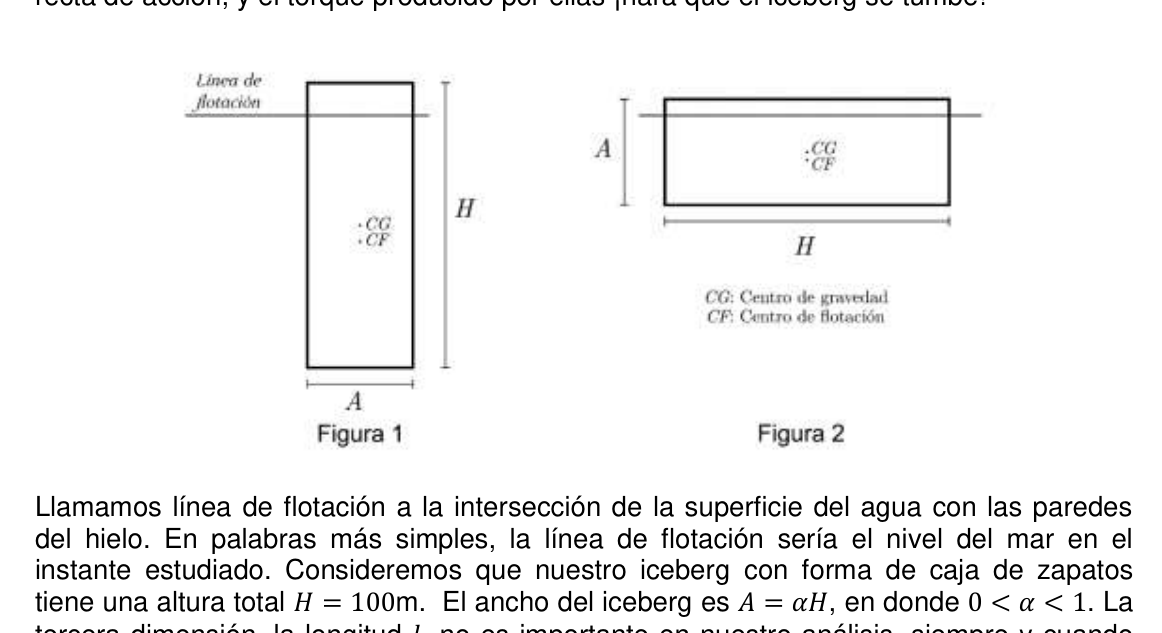
Topic: Fluid Mechanics, Conservation of Energy Metodi: Hydrostatic Equilibrium, Energy Conservation Method, Torque & Angular Momentum Analysis Competenze: Physical Reasoning, Mathematical Modeling Objects: — Fonte: Testo (PDF) — p.5
PT58. Istituto Politetnico Superiore Generale San Martín. Rosario, Santa Fe.
Solo la punta dell’iceberg Gli Iceberg sono enormi masse di ghiaccio che galleggiano nel mare. - Certo che l’hai sentito. Parlare di loro. Per esempio, il Titanic colpisse un iceberg nell’aprile del 1912 ha scatenato il coagulo del famoso transatlantico. Quando si sospetta che Sappiamo di un argomento, per esempio di uno scandalo pubblico, è molto meno di quanto E’ stato detto che questa è solo la punta dell’iceberg. Qual è l’origine? di questa espressione? In questo problema, scopriamo tutto questo e alcune altre cose. questi colossi. La prima cosa da sapere è che gli iceberg provengono dai ghiacciai. - Che cosa? Significa che sono formate da acqua dolce e galleggiano in acqua salata? - Sì, è vero. Quando
OAF 2018 - 57 Un ghiacciaio in contatto con il mare è sottoposto a tensioni mentre subisce gli impatti di le onde e le maree, può subire crolli di ghiaccio. Se questi pezzi che sono Quando si spalancano raggiungono i 5 metri di altezza, è quando i Ci chiamiamo Iceberg.
- La densità dell’acqua di mare è nota per essere di 1025 kg/m3, mentre quella del mare è di 1025 kg/m3. il ghiaccio è di circa 920 kg/m3. Mentre galleggia in acque calme, cosa? Percentaggio dell’iceberg è immerso? Considerate tutti Calcoli di questo problema che g=10m/s2.
Centro di gravità e centro di fluttuazione: quando un iceberg galleggia, sono in equilibrio la forza di gravità e la spinta. Supponendo un iceberg a forma di prisma rettangolare (come una scatola di scarpe) omogeneo, per farlo essere in equilibrio, Le due forze devono agire sulla stessa linea. Possiamo supporre che il peso agisca. Proprio in un punto chiamato centro di gravità, situato nel centro geometrico del La forza di pressione è la pressione di un’altra parte del corpo. centro geometrico della parte sotterranea della stessa. Se per l’azione delle onde e del vento (MSK0/>), il nostro iceberg si sta vacillare, le due forze non agiranno più sulla stessa La torsione prodotta da queste due macchine farà crollare l’iceberg!
Chiamiamo linea di galleggia l’intersezione della superficie dell’acqua con i muri. del ghiaccio. In parole più semplici, la linea di galleggiamento sarebbe il livello del mare nel istante studiato. Consideriamo che il nostro iceberg con forma di scatola di scarpe ha un’altezza totale H= 100 m. La larghezza dell’iceberg è A= αH, dove 0 < α< 1. La La terza dimensione, la lunghezza l, non è importante nella nostra analisi, purché si riempie che H> l> A. Flotando in forma di Figura 1, 2. A che profondità, sotto la linea di fluttuazione, si trova il centro? della gravità dell’iceberg? 3. Se l’iceberg si sepolge, come mostra la figura 2, a che profondità si sepolge? Troverà il centro di gravità ora? Scrivete in funzione di α. 4. Calcola, in base a α, il lavoro svolto dal peso diviso per dimensione L, cioè il lavoro del peso per unità di lunghezza, per alzare il centro di gravità dalla posizione di Figura 1 a quella di Figura 2.
Dopo il suo crollo, si è verificata un aumento dell’energia potenziale gravitazionale. dell’iceberg. Questo lavoro contro la gravità è esercitato dall’acqua che scende. per riempire lo spazio lasciato dal ghiaccio quando si sale. Un modo per calcolare l’energia. La variazione dell’altezza dell’acqua spostata è pari alla variazione dell’altezza dell’acqua spostata. variazione di altezza del centro di fluttuazione dell’iceberg. Inoltre, si deve supporre che il volume di acqua smontata corrisponde al volume di immersione iniziale. 5. Calcola la variazione di energia potenzialmente gravitazionale per unità di lunghezza di fluido spostato in funzione di α.
58 - OAF 2018 6. Calcola ΔEl, la differenza tra le variazioni di energia potenzialmente gravitazionale per unità di lunghezza dell’iceberg e dell’acqua, come funzione di α. 7. Sbocciate un grafico di ΔEl in funzione di α. Per quale valore di α è questa differenza? energia è massima? Aiuto: è opportuno factorizzare il polinomio in α ottenuto per estrarre le sue radici. 8. Calcola la differenza massima di energia l· ΔEl, supponendo che il lungo di l’iceberg è l=60m.
Commenti conclusivi La differenza di energia l· ΔE è di solito dissipata in forma di suono in aria e in le grandi onde in mare. Questa energia dissipata è proporzionale al cubo di altezza H, per che un iceberg due volte più alto di quello di questo problema dissiperà un’energia 8 volte più grande. Un tipico iceberg, di quelli che si trovano vicino all’Antartide può fino a raggiungere i 1200 metri di altezza totale. Se uno di questi colossi di ghiaccio si riposasse, potrebbe produrre uno tsunami con un’energia di 120 TJ, che equivale all’energia di 2 esplosioni nucleari come quella di Hiroshima.
Topic: Fluid Mechanics, Conservation of Energy Metodi: Hydrostatic Equilibrium, Energy Conservation Method, Torque & Angular Momentum Analysis Competenze: Physical Reasoning, Mathematical Modeling Objects: — Fonte: Testo (PDF) — p.5
PT58. The French authorities have also been involved in the investigation. Rosario, Santa Fe.
Just the tip of the iceberg. The Icebergs are huge ice masses floating in the sea. I ‘m sure you ‘ve heard . I’m not talking about them. For example, the Titanic collided with an iceberg in April 1912. It triggered the sinking of the famous transatlantic. When you suspect that what you We know about a subject, for example a public scandal, is much less than what we know. We still don’t know, it’s often said that this is just the tip of the iceberg. What is the origin? of this expression? In this problem we’ll find out that and a few more things about it. These giants. The first thing you need to know is that icebergs come from glaciers. That’s it. You mean they’re made of fresh water and float in salt water? That’s right, you’re right. When
The Commission shall adopt implementing acts in accordance with Article 21 of Regulation (EC) No 1272/2009. A glacier in contact with the sea is subjected to stress while undergoing the impacts of the waves and tides, it can suffer ice breaks. If these pieces are They’re about five metres above sea level, that’s when they come out. We call it the Icebergs.
- The density of seawater is known to be 1025 kg/m3, while that of ice is approximately 920 kg/m3. While floating in calm waters, what? percentage of the iceberg is submerged? Consider for all calculations of this problem that g=10m/s2.
Center of gravity and center of floatation: When an iceberg floats, they’re in balance. the forces of gravity and the thrust. Supposing an iceberg with a prism shape rectangular (like a shoe box) homogeneous, so that it is in balance, The two forces must act on the same lines. We can assume that the weight acts . Right at a point called the center of gravity, located in the geometric center of the Earth. The pressure is measured in the direction of the rotation of the lens, while the thrust acts at the center of the float, which is at the the geometric center of the submerged part of the same. If by the action of the waves and the wind (MSK0/>), our iceberg is wobbling, the two forces will no longer act on the same The torque produced by them will cause the iceberg to fall!
We call a floating line the intersection of the surface of the water with the walls. of the ice. In simpler terms, the floating line would be sea level in the instantly studied. Let ‘s consider our iceberg shaped like a shoe box . has a total height of H= 100 m. The width of the iceberg is A= αH, where 0 < α< 1. La The third dimension, length l, is not important in our analysis, as long as H>l>A is fulfilled. Floating in the shape of Figure 1, 2. At what depth, below the floating line, is the center? The gravity of the iceberg? 3. If the iceberg is buried, as shown in Figure 2, how deep is it? Will he find the center of gravity now? Write it in terms of α. 4. Calculates, based on α, the work done by the weight divided by the dimension l, i.e. the work of the weight per unit length, to raise the centre of gravity from the position of Figure 1 to that of Figure 2.
After falling, there has been an increase in gravitational potential energy. from the iceberg. This work against gravity is done by the water descending. to fill the space left by the ice when you climb. A way to calculate energy. The transferred water is assumed to be equal to the height change of the displaced water. variation in altitude of the center of iceberg float. In addition, it must be assumed that the The volume of water discharged is equal to the initial volume of submerged water. 5. Calculates the variation in gravitational potential energy per unit length of the fluid displaced by α.
The Commission shall adopt delegated acts in accordance with Article 21 of this Regulation. 6. Calculate ΔEl, the difference between gravitational potential energy variations per unit length of iceberg and water, as a function of α. 7. Draw a graph of ΔEl as a function of α. What value of α is this difference The energy is maximum? Help: factorization of the polynomial in α obtained to extract its roots is useful. 8. Calculates the maximum energy difference l· ΔEl, assuming that the length of the iceberg is l=60m.
The Commission has also adopted a number of proposals. The energy difference l· ΔE is usually dissipated in the form of sound in the air and in the big waves in the sea. This dissipated energy is proportional to the height cube H, by What an iceberg twice as high as that of this problem will dissipate an energy 8 times as big. A typical iceberg, of which you can find near Antarctica. reaching a total height of 1200 m. If one of these ice giants were to lie down, it could. It’s the same thing as a tsunami with a 120TJ energy. nuclear explosions like the one in Hiroshima.
Topic: Fluid Mechanics, Conservation of Energy Metodi: Hydrostatic Equilibrium, Energy Conservation Method, Torque & Angular Momentum Analysis Competenze: Physical Reasoning, Mathematical Modeling Objects: — Fonte: Testo (PDF) — p.5
PT59. Instituto Politécnico Superior General San Martín. Rosario, Santa Fe.
Das Beste oder nichts Gottlieb Daimler y Wilhelm Maybach abandonaron la empresa de Nikolaus Otto, Deutz AG, a mediados de 1870 por problemas personales, pero se llevaron con ellos el valioso conocimiento del primer motor de cuatro tiempos, el motor de Otto. Juntos fundaron la Daimler Motoren Gesellschaft (DMG), empresa que en 1900, tras la muerte de Daimler, empezó a producir coches de carrera financiados por Emil Jellinek, quien impuso a la línea de vehículos el nombre de su hija Mercedes. La aparición de los coches Mercedes de DMG le quitó el monopolio de los automóviles deportivos a Benz & Cie., fundada por Karl Benz (quien patentara el primer automóvil en 1886). A pesar de su rivalidad, con la crisis económica alemana de la posguerra, la única salida que encontraron DMG y Benz & Cie. para subsistir fue fusionarse dando origen a Daimler-Benz, empresa que fabricaría el primer Mercedes Benz en 1926. El ciclo termodinámico utilizado en el motor Otto que sirvió a Daimler y Maybach para desarrollar el motor de los Mercedes consiste en las siguientes evoluciones: 0 → 1 (carrera de compresión): compresión adiabática desde (p0,V0,T0) hasta (p1,V1,T1) 1 → 2 (combustión): evolución a volumen constante desde (p1,V1,T1) hasta (p2,V2,T2) 2 → 3 (carrera de expansión): expansión adiabática desde (p2,V2,T2) hasta (p3,V3,T3) 3 → 0 (expulsión de calor): evolución a volumen constante desde (p3,V3,T3) hasta (p0,V0,T0) Las condiciones iniciales del ciclo son: p0=100 kPa, V0=500 cm3 y T0=20°C. La tasa de compresión del motor es rc=V1/V0=1/9. La carrera de expansión finaliza a una temperatura T3=800 K. La mezcla de aire y combustible utilizada por el motor puede ser pensada como un gas diatómico ideal con las siguientes características: cp = 29.1 J/(mol.K), cv=20.8J/(mol.K) y γ=1.4.
- Representa en un diagrama pV el ciclo Otto.
- Determina el número de moles de aire que se utilizan en el ciclo.
- Determina el trabajo efectuado por el motor en todo el ciclo.
Se denomina presión media efectiva (pm) a la presión que debería tener un gas que evoluciona isobáricamente entre los volúmenes de trabajo del motor y que desarrolla el mismo trabajo. 4. Determina la pm del motor.
OAF 2018 - 59 El rendimiento de un motor es la relación entre el trabajo realizado y el calor que ingresa al mismo:
-
Demuestra que el rendimiento del ciclo Otto viene dado por:
-
Demuestra que el rendimiento del ciclo Otto solo depende de la tasa de compresión del motor:
-
Esboza una gráfica de rendimiento en función de la tasa de compresión, para la misma mezcla de aire y combustible.
El trabajo generado por el motor se utiliza para mover un sistema pistón-biela-manivela como el mostrado en la Figura. Cuando el motor funciona a un número determinado de revoluciones por minuto, la manivela gira describiendo un movimiento circular uniforme. No obstante, dadas las características geométricas del sistema, el desplazamiento del pistón sigue una evolución que es función de la longitud de la biela (L) y el radio de la manivela (R). Nótese que la carrera de expansión del pistón se produce cuando θ va de 0° a 180° y la carrera de compresión, cuando θ va de 180° a 360°.
Supongamos que el motor gira a 2000 rpm, que L=15.24 cm y que R=4.57 cm. 8. Determina el período T del movimiento de rotación y encuentra la potencia P desarrollada por el motor. 9. Encuentra la velocidad media del pistón (vm) en la carrera de expansión (debes pensar: ¿qué distancia recorre el pistón en la carrera de expansión?)
En la Figura siguiente se muestran las gráficas de la velocidad y la aceleración del pistón en función del tiempo.
60 - OAF 2018 10. ¿Qué ángulo lleva girada la manivela cuando el pistón alcanza su velocidad máxima? 11. Estima qué porcentaje de la carrera de expansión recorrió el pistón cuando alcanza su velocidad máxima. Explica el procedimiento que utilizaste.
Algunos datos más: R = 8.31 J/(mol.K) En una evolución adiabática se cumple:
El trabajo en una evolución adiabática viene dado por:
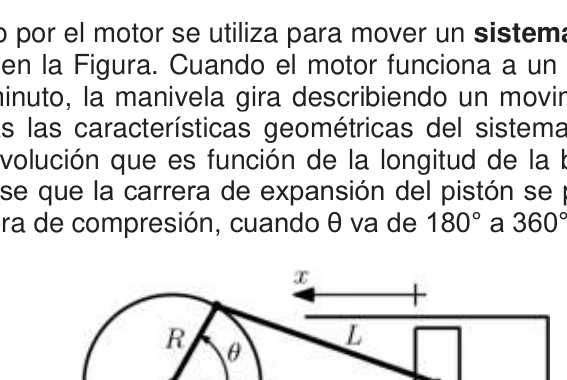
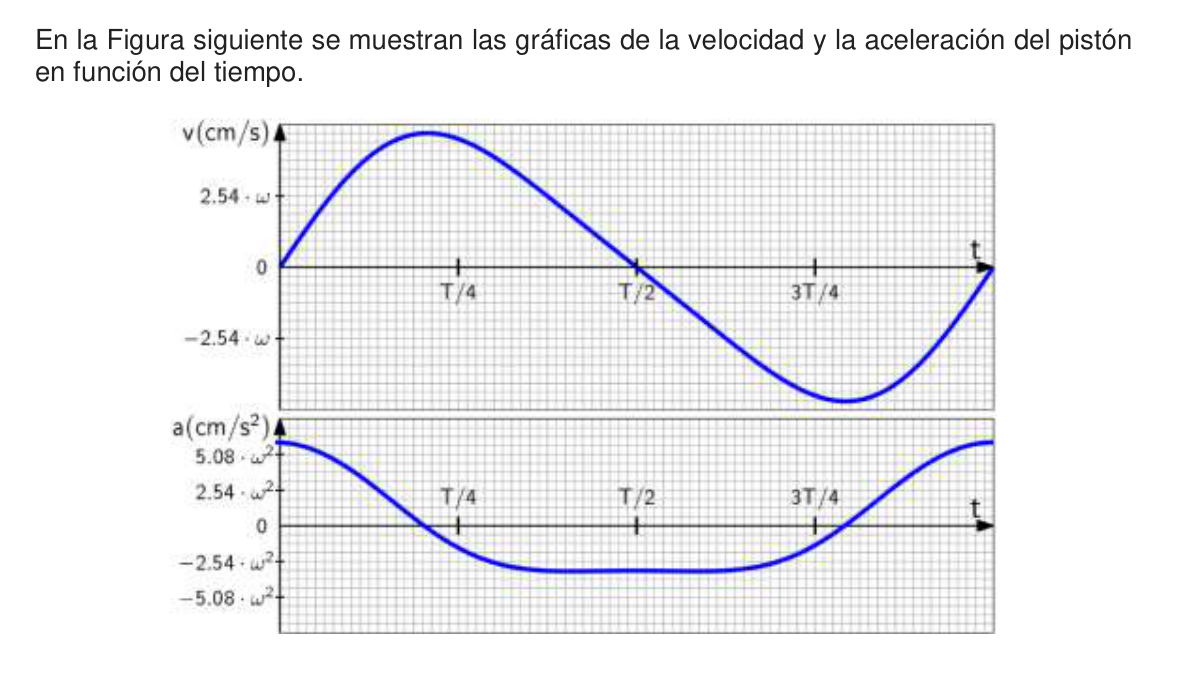
Topic: Thermodynamics, Rotational Dynamics Metodi: Thermodynamic Cycle Analysis, Ideal Gas Law, Kinematic Equations Competenze: Physical Reasoning, Mathematical Modeling Objects: Piston, Gas, Heat Engine Fonte: Testo (PDF) — p.5
PT59. Istituto Politetnico Superiore Generale San Martín. Rosario, Santa Fe.
Das Beste oder nichts . Gottlieb Daimler e Wilhelm Maybach hanno lasciato la società di Nikolaus Otto, Deutz AG, nel mezzo del 1870 per problemi personali, ma si sono portati con loro il prezioso conoscenza del primo motore a quattro tempi, il motore di Otto. Insieme fondarono la Daimler Motoren Gesellschaft (DMG), società che nel 1900, dopo la morte di Daimler, ha iniziato a produrre vetture da corsa finanziate da Emil Jellinek, che ha imposto la linea di veicoli il nome della sua figlia Mercedes. L’apparizione delle auto Mercedes di DMG gli ha tolto il monopolio sulle auto. La società di sport Benz & Cie., fondata da Karl Benz (che aveva brevettato la prima auto nel 1943). 1886). Nonostante la sua rivalità, con la crisi economica tedesca postbellica, l’unica La soluzione che hanno trovato DMG e Benz & Cie. Per sopravvivere fu fuso, dando origine a Daimler-Benz, azienda che avrebbe prodotto il primo Mercedes Benz nel 1926. Il ciclo termodinammico utilizzato nel motore Otto che serviva a Daimler e Maybach per La progettazione del motore di Mercedes consiste nelle seguenti evoluzioni: 0 → 1 (corso di compressione): compressione adiabita da (p0,V0,T0) a (p1,V1,T1) 1 → 2 (combustione): evoluzione a volume costante da (p1,V1,T1) a (p2,V2,T2) 2 → 3 (corsa di espansione): espansione adiabita da (p2,V2,T2) a (p3,V3,T3) 3 → 0 (esclusione del calore): evoluzione a volume costante da (p3,V3,T3) a (p0,V0,T0) Le condizioni iniziali del ciclo sono: p0=100 kPa, V0=500 cm3 e T0=20°C. Il tasso di la compressione del motore è rc=V1/V0=1/9. La corsa di espansione si conclude a una temperatura. T3=800 K. Il mix di aria e combustibile utilizzato dal motore può essere pensato. come gas diatomico ideale con le seguenti caratteristiche: cp = 29,1 J/(mol.K), cv=20.8J/(mol.K) e γ=1.4.
- Rappresenta in un diagramma pV il ciclo Otto.
- Determina il numero di molli d’aria utilizzati nel ciclo.
- Determina il lavoro svolto dall’motore durante l’intero ciclo.
La pressione media effettiva (pm) è chiamata la pressione che dovrebbe avere un gas che La velocità di movimento del motore si sviluppa isobaricamente tra i volumi di lavoro del motore e che sviluppa il lo stesso lavoro. 4. Determina il PM del motore.
OAF 2018 - 59 La performance di un motore è il rapporto tra il lavoro svolto e il calore che entra. Al medesimo:
-
Dimostra che il rendimento del ciclo Otto viene dato da:
-
Dimostra che il rendimento del ciclo Otto dipende solo dal tasso di compressione del motore:
-
Sfoglia un grafico di rendimento in base al tasso di compressione, per la la stessa miscela di aria e combustibile.
Il lavoro generato dal motore viene utilizzato per spostare un sistema pistone-bicia-manicola. come la figura. Quando il motore funziona ad un determinato numero di le rotazioni al minuto, la manivela gira descrivendo un movimento circolare uniforme. Tuttavia, date le caratteristiche geometriche del sistema, il spostamento del sistema è Il pistone segue un’evoluzione che è una funzione della lunghezza della biola (L) e del raggio della manivelle (R). Nota che la corsa di espansione del pistone si verifica quando θ va da 0° a 180° e la corsa di compressione, quando θ va da 180° a 360°.
Supponiamo che il motore ruota a 2000 giri al minuto, che L è pari a 15,24 cm e che R è pari a 4,57 cm. 8. Determina il periodo T del movimento di rotazione e trova la potenza P sviluppato dal motore. 9. Trova la velocità media del pistone (vm) nella corsa di espansione (dovresti pensare: che distanza percorre il pistone nella corsa di espansione?)
La figura seguente mostra i grafici della velocità e dell’accelerazione del pistone
- A seconda del tempo.
60 - OAF 2018 10. Quale angolo gira la maniglia quando il pistone raggiunge la sua velocità?
- Massimo?
Calcola il percentuale della corsa di espansione che ha attraversato il pistone quando raggiunge la sua velocità massima. Spiega la procedura che hai usato.
Altri dati: R = 8,31 J/(mol.K) In una evoluzione adiabatica si ottengono:
Il lavoro in un’evoluzione adiabatica è dato da:
Topic: Thermodynamics, Rotational Dynamics Metodi: Thermodynamic Cycle Analysis, Ideal Gas Law, Kinematic Equations Competenze: Physical Reasoning, Mathematical Modeling Objects: Piston, Gas, Heat Engine Fonte: Testo (PDF) — p.5
PT59. The French authorities have also been involved in the investigation. Rosario, Santa Fe.
The Best or Nothing Gottlieb Daimler and Wilhelm Maybach left Nikolaus Otto’s company, Deutz. AG, in the mid-1870s for personal problems, but they took with them the valuable knowledge of the first four-stroke engine, the Otto engine. Together they founded the Daimler Motoren Gesellschaft (DMG), a company which in 1900, after the death of Daimler, He started producing racing cars financed by Emil Jellinek, who imposed the Vehicle line named after his daughter Mercedes. The emergence of DMG’s Mercedes cars took away the monopoly on cars. The company was founded by Karl Benz (who patented the first car in 1943). 1886). Despite its rivalry, with the postwar German economic crisis, the only The output found by DMG and Benz & Cie. To survive was to merge giving rise to Daimler-Benz, the company that would produce the first Mercedes-Benz in 1926. The thermodynamic cycle used in the Otto engine that served Daimler and Maybach for The development of the Mercedes engine consists of the following developments: 0 → 1 (compression course): adiabatic compression from (p0,V0,T0) to (p1,V1,T1) 1 → 2 (combustion): evolution at constant volume from (p1,V1,T1) to (p2,V2,T2) 2 → 3 (expansion course): adiabatic expansion from (p2,V2,T2) to (p3,V3,T3) 3 → 0 (heat ejection): constant volume evolution from (p3,V3,T3) to (p0,V0,T0) The initial cycle conditions are: p0=100 kPa, V0=500 cm3 and T0=20°C. The rate of The engine pressure is rc=V1/V0=1/9. The expansion race ends at a temperature. T3=800 K. The mix of air and fuel used by the engine can be thought of as an ideal diatomic gas with the following characteristics: cp = 29.1 J/(mol.K), The following table shows the results of the calculations:
- It represents the Otto cycle in a pV diagram.
- Determine the number of air springs used in the cycle.
- It determines the work performed by the engine throughout the cycle.
The mean effective pressure (pm) is the pressure that a gas should have. The engine is isobarically evolving between the engine work volumes and the engine develops a Same job. 4. Determine the PM of the engine.
The Commission shall adopt delegated acts in accordance with Article 21 of the Financial Regulation. The performance of an engine is the ratio of the work done to the heat input the same:
-
It shows that the Otto cycle yield is given by:
-
It shows that the performance of the Otto cycle depends only on the rate of Compression of the engine:
-
Draw a performance graph based on the compression rate, for the The same mixture of air and fuel.
The engine-generated work is used to move a piston-wheel-handled system Like the one shown in the figure. When the engine is running at a certain number of rotations per minute, the crank rotates describing a uniform circular motion. However, given the geometric characteristics of the system, the displacement of the system is not The piston follows an evolution which is a function of the beam length (L) and the radius of the beam. the crankcase (R). Note that the piston expansion run occurs when θ goes from 0° to 180° and the compression run, when θ ranges from 180° to 360°.
Let’s say the engine spins at 2000 rpm, that L is 15.24 cm and R is 4.57 cm. 8. Determines the period T of the rotation movement and finds the power P developed by the engine. 9. Find the average piston speed (vm) in the expansion run. (you must think: how far does the piston travel in the expansion race?)
The following figure shows the graphs of the piston’s speed and acceleration. Depending on the weather.
The Commission shall adopt delegated acts in accordance with Article 21 of this Regulation. 10. What angle does the crank rotate when the piston reaches its speed? What’s the maximum? 11. Estimate what percentage of the expansion run the piston went through when reaches its maximum speed. Explain the procedure you used.
Some more details: The following is the list of the products of the Union. In adiabatic evolution, the following is achieved:
The work in adiabatic evolution is given by:
Topic: Thermodynamics, Rotational Dynamics Metodi: Thermodynamic Cycle Analysis, Ideal Gas Law, Kinematic Equations Competenze: Physical Reasoning, Mathematical Modeling Objects: Piston, Gas, Heat Engine Fonte: Testo (PDF) — p.5
PT60. Instituto Politécnico Superior General San Martín. Rosario, Santa Fe.
Tormenta Solar, ¿el fin?
Año 2022: Por causas que aún no entendemos, nuestro campo magnético terrestre ha desaparecido. Las aves vuelan sin dirección, y confundidas chocan contra árboles y ventanas. Los aviones pierden parte del sistema de navegación. El mundo cae frente al pánico, y nadie da explicaciones. Mientras tanto, científicos de todo el mundo se ponen a trabajar en soluciones con la poca información que se tiene. Y se decide hacer lo único que se puede hacer en tiempos de crisis, si no se puede atacar a las causas, se enfrenta a las consecuencias. Así que se decide construir dos enormes bobinas, de 600 km de radio, en cada polo para reemplazar al perdido campo magnético. Las dificultades logísticas y técnicas son enormes. Y queda poco tiempo, en cualquier momento una Tormenta Solar puede llegar a la Tierra y sin la magnetosfera estamos indefensos. Estudiando los sistemas eléctricos aún en funcionamiento, con la energía disponible en todas las centrales eléctricas, calculan que se podrá lograr una corriente de 1 000 000 A. Y dado el escaso tiempo para hacer soluciones más innovadoras, van a utilizar un cable de cobre con una sección de 50 cm2.
- ¿Cuántos kilogramos de cobre necesitarán para hacer una vuelta?
- ¿Cuánta resistencia eléctrica tendrá una vuelta de cable?
- Al ponerlo en funcionamiento, ¿cuánta energía disipará en una vuelta de cable?
- ¿A qué diferencia de potencial se deberá someter a los extremos del cable?
Así, sumado a todos los problemas que tiene la población, toda la energía eléctrica se redirecciona a los polos en un intento de generar artificialmente el campo magnético terrestre, dejando la Tierra en oscuridad (cuando es de noche, si no está el Sol). Después de cálculos realizados por científicos de la NASA, encontraron que una bobina, ubicada como en la figura de la izquierda, en un punto del plano xy, genera un campo magnético de aproximadamente:
OAF 2018 - 61
Donde μ0 es la permeabilidad magnética del vacío, I la corriente por el conductor (definida positiva en el sentido de la flecha de la imagen), n la cantidad de vueltas del cable, a el radio de la bobina (no del cable!). En resumen, como se observa en la siguiente Figura, los científicos quieren pasar de lo que había antes del accidente (izquierda) a un campo generado por las dos bobinas (derecha).
- ¿Qué dirección tendrá que tener la corriente en las bobinas para que el campo magnético generado tenga el mismo sentido que el de la Tierra? Justifique brevemente.
- Para hacer las pruebas de la validez del sistema, deciden medir el campo magnético en el ecuador (punto E de la imagen). Calcular el campo magnético generado por las dos espiras (asumiendo que hay una sola vuelta del cable en cada polo).
- ¿Cuántas vueltas del cable son necesarias para lograr que en el ecuador el módulo del campo magnético sea de 25 μT?
Nota: a pesar de tomar ciertos datos reales, este problema está plagado de licencias creativas de los autores, carentes de exactitud científica. Hacer el cálculo correcto hubiese sido de una complejidad mayor a la deseada para este problema.
Algunos datos más: δCu=8930 kg/m3 ρCu=1,71 10-8 Ω.m RT=6,36 106 m μ0=4π 10-7 N/A2
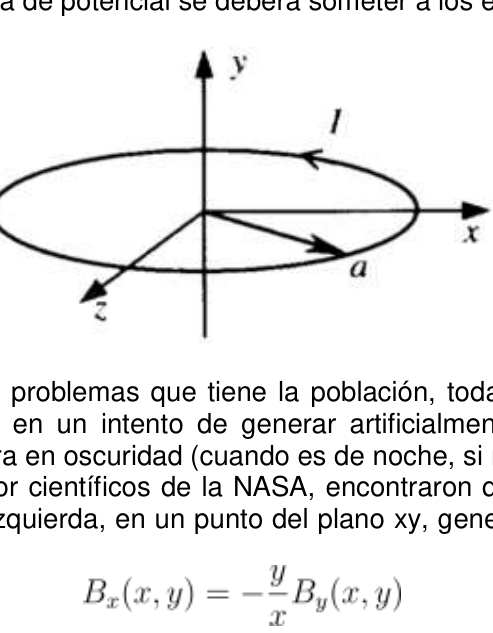
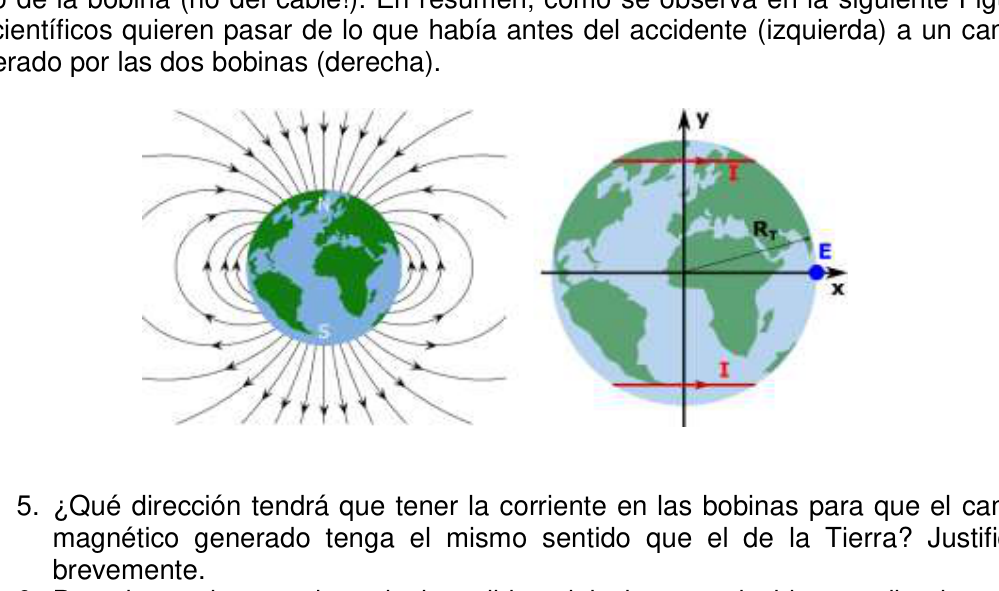
Topic: Magnetism, Circuits Metodi: Biot-Savart Law, Superposition Principle Competenze: Physical Reasoning, Mathematical Modeling Objects: Coil, Wire Fonte: Testo (PDF) — p.5
PT60. Istituto Politetnico Superiore Generale San Martín. Rosario, Santa Fe.
Tormenta solare, fine?
2022: Per cause che non ancora capiamo, il nostro campo magnetico terrestre ha
- E’ scomparso. Gli uccelli volano senza direzione, e confusi si sbatte contro gli alberi e finestre. Gli aerei perdono parte del sistema di navigazione. Il mondo cade davanti a noi Panoramica, e nessuno spiega. Nel frattempo, scienziati di tutto il mondo si mettono a lavorare su soluzioni con la scarsa informazione che si ha. E decide di fare l’unica cosa. che si può fare in tempi di crisi, se non si può attaccare le cause, si affronta alle conseguenze. Quindi si decide di costruire due enormi bobine, di 600 km di distanza. radio, a ogni polo per sostituire il campo magnetico perso. Le difficoltà logistica e tecnica sono enormi. E rimane poco tempo, in qualsiasi momento una Un temporale solare può raggiungere la Terra e senza la magnetosfera siamo indefensivi. Studiando i sistemi elettrici ancora in funzione, con l’energia disponibile in La Commissione ha inoltre adottato una proposta di direttiva che prevede che le reti elettriche di cui trattasi possano essere utilizzate per la produzione di energia elettrica possano essere utilizzate per la produzione di energia elettrica. E dato il scarso tempo per creare soluzioni più innovative, useranno un cavo. di rame con un sezione di 50 cm2.
- Quanti chili di rame avrete bisogno per fare un giro?
- Quanta resistenza elettrica avrà un giro di cavo?
- Quando lo metti in funzione, quanta energia dissiperà in un giro di cavo?
- Qual è la differenza di potenziale che deve essere sottoposta alle estremità del cavo?
Così, aggiunto a tutti i problemi che la popolazione ha, tutta l’energia elettrica è Riindirizza i poli nel tentativo di generare artificiale il campo magnetico la terra, lasciando la terra oscurata (quando è notte, se non c’è il sole). - Dopo . I ricercatori della NASA hanno scoperto che una bobina, collocata Come nella figura a sinistra, in un punto del piano xy, genera un campo magnetico. di circa:
OAF 2018 - 61
Dove μ0 è la permeabilità magnetica del vuoto, i corrente dal conduttore (definita N la quantità di giri del cavo, a radio della bobina (non del cavo!). In sintesi, come si vede nella figura seguente, Gli scienziati vogliono passare da quello che c’era prima dell’incidente (a sinistra) a un campo generato dalle due bobine (destra).
- Che direzione avrà bisogno di avere il corrente nei bobine per fare il campo Il magnetismo generato ha lo stesso senso di quello della Terra? Giustifica
- In breve.
- Per testare la validità del sistema, decidono di misurare il campo. magnetico all’equatore (punto E dell’immagine). Calcolare il campo magnetico generato dalle due spirale (assumendo che ci sia un solo giro del cavo in ogni polo).
- Quanti giri di cavo sono necessari per ottenere che l’equatore modulo del campo magnetico è di 25 μT?
Nota: nonostante il fatto di prendere alcuni dati reali, questo problema è pieno di licenze I risultati sono stati molto positivi, ma non sono stati accurati. Fare il calcolo giusto sarebbe stata di una complessità superiore a quella desiderata per questo problema.
Altri dati: δCu=8930 kg/m3 ρCu=1,71 10-8 Ω.m RT=6,36 106 m μ0=4π 10-7 N/A2
Topic: Magnetism, Circuits Metodi: Biot-Savart Law, Superposition Principle Competenze: Physical Reasoning, Mathematical Modeling Objects: Coil, Wire Fonte: Testo (PDF) — p.5
PT60. The French authorities have also been involved in the investigation. Rosario, Santa Fe.
Solar Storm, the end?
Year 2022: For reasons we still don’t understand, our Earth’s magnetic field has He disappeared. Birds fly aimlessly, and confused they bump into trees and windows. The planes lose some of their navigation system. The world is falling before panic, and no one gives an explanation. Meanwhile, scientists from around the world are getting into it. work on solutions with the little information you have. And he decides to do the only thing . What can be done in times of crisis, if you can’t attack the causes, you face to the consequences. So he decided to build two huge coils, 600 km long. radio, at each pole to replace the lost magnetic field. The difficulties logistics and techniques are huge. And there’s not much time left, anytime a Solar storm can reach Earth and without the magnetosphere we’re defenseless. Studying electrical systems still in operation, with energy available in The Commission has already established a number of measures to ensure that the current in the electricity sector is maintained. And given the limited time to make more innovative solutions, they’re going to use a cable. a width of not more than 50 cm2,
- How many kilos of copper will you need to make a spin?
- How much electrical resistance will a wire loop have?
- When you put it in operation, how much energy will you dissipate in a single spin of cable?
- What potential difference should be made at the ends of the cable?
So, in addition to all the problems the population has, all the electricity is being It redirects the poles in an attempt to artificially generate the magnetic field. And the earth is darkened, and the sun is not there. Afterwards . From calculations by NASA scientists, they found that a coil, located in the As in the figure on the left, at a point on the xy plane, it generates a magnetic field. of approximately:
The Commission shall adopt implementing acts in accordance with Article 21 of the Financial Regulation.
Where μ0 is the magnetic permeability of the vacuum, I the current through the conductor (defined The number of turns of the wire, the number of turns of the wire, the number of turns of the wire, the number of turns of the wire, the number of turns of the wire, the number of turns of the wire, the number of turns of the wire, the number of turns of the wire, the number of turns of the wire, the number of turns of the wire, the number of turns of the wire, the number of turns of the wire, the number of turns of the wire, the number of turns of the wire, the number of turns of the wire, the number of turns of the wire, the number of turns of the wire, the number of turns of the wire, the number of turns of the wire, the number of turns of the wire, the number of turns of the wire, the number of turns of the wire, the number of the number of wire, the number of the number of wire, the number of the number of wire, the number of the number of wire, the number of the number of the number of the number of wire, the number of the number of the number of wire, the number of the number of the number of the number of wire, the number of the number of the number of the number of wire, the number of the number of the number of the number of the number of the number of wire, the number of the number of the number of the number of the number of the number of the number of the number of the number of wire, the number of the number of the number of which is the coil radius (not the cable!). In short, as shown in the following Figure, Scientists want to move from what was there before the accident (left) to a field. generated by the two coils (right).
- What direction will the current have to be in the coils to make the field Does the magnetic field generated make the same sense as the Earth? Justify it . I’ll be back shortly.
- To test the validity of the system, they decide to measure the field. magnetic at the equator (point E of the image). Calculate the magnetic field generated by the two spirals (assuming there is only one spin of the wire in each pole).
- How many turns of wire are needed to get the equator to the the magnetic field module is 25 μT?
Note: despite taking some actual data, this problem is plagued by licensing. The authors’ creativity, lack scientific accuracy. Make the right calculation It would have been more complex than desired for this problem.
Some more details: The following table shows the following: The following table shows the results of the calculations: RT=6,36 106 m μ0=4π 10-7 N/A2
Topic: Magnetism, Circuits Metodi: Biot-Savart Law, Superposition Principle Competenze: Physical Reasoning, Mathematical Modeling Objects: Coil, Wire Fonte: Testo (PDF) — p.5
PT61. Instituto Jesús María. Ciudad de Córdoba.
En un recipiente de aluminio recubierto de material aislante en su exterior, cuyo volumen
es de 400 cm3, se colocan 300 g de agua a temperatura ambiente, que es de 20 ºC.
Luego se colocan 20 g de hielo a 0 ºC y se tapa el recipiente.
La temperatura de equilibrio luego de cierto tiempo es de 15 ºC.
a) Calcule la capacidad térmica del recipiente.
b) Determine el volumen final de toda el agua a la temperatura de equilibrio.
c) Determine el volumen del recipiente a la temperatura de equilibrio.
d) Calcule la variación de presión del aire interior. Suponga la misma temperatura.
e) Si luego se deja la mezcla un tiempo mucho mayor, con el recipiente destapado.
¿Cuál será el nuevo volumen de la misma?
62 - OAF 2018
Ce del agua = 1 cal/g.ºC
Calor de Fusión del hielo = 80 cal/g
Coef dilatación del agua = 0,001 ºC-1
Coef dilatación lineal del aluminio = 2,3 x 10⁻⁵ ºC-1
Densidad del agua a 4 ºC = 1 g/cm3
Topic: Thermodynamics Metodi: First Law of Thermodynamics, Ideal Gas Law Competenze: Physical Reasoning Objects: Calorimeter, Gas Fonte: Testo (PDF) — p.5
PT61. Istituto Gesù Maria. Città di Córdoba.
In un recipiente di alluminio ricoperto di materiale isolante all’esterno, il cui volume 400 cm3, 300 g di acqua a temperatura ambiente, che è di 20 oC. Poi si inseriscono 20 g di ghiaccio a 0 oC e si copre il recipiente. La temperatura di equilibrio dopo un certo periodo è di 15 oC. a) Calcolare la capacità termico del recipiente. b) Determina il volume finale di tutta l’acqua a temperatura di equilibrio. c) Determina il volume del recipiente alla temperatura di equilibrio. d) Calcolare la variazione della pressione dell’aria interna. Supponiamo la stessa temperatura. e) Se poi la miscela viene lasciata per un tempo molto più lungo, con il recipiente scalcato. Qual è il nuovo volume di questa?
62 - OAF 2018
C dell’acqua = 1 cal/g.oC Calore di fusione del ghiaccio = 80 cal/g Coef dilatazione dell’acqua = 0,001 oC-1 Coef lineare dilatazione dell’alluminio = 2,3 x 10⁻⁵ oC-1 Densità dell’acqua a 4 oC = 1 g/cm3
Topic: Thermodynamics Metodi: First Law of Thermodynamics, Ideal Gas Law Competenze: Physical Reasoning Objects: Calorimeter, Gas Fonte: Testo (PDF) — p.5
PT61. Jesus Mary Institute. The city of Cordoba.
In an aluminium container with an insulating material on the outside, the volume of which is 400 cm3, 300 g of water is placed at room temperature, which is 20 oC. Then 20 g of ice at 0 oC is placed and the container is sealed. The equilibrium temperature after a certain time is 15 oC. (a) Calculate the thermal capacity of the container. (b) Determine the final volume of all water at equilibrium temperature. (c) Determine the volume of the container at the equilibrium temperature. (d) Calculate the variation in indoor air pressure. Suppose the same temperature. (e) If the mixture is then left for a much longer time, with the container uncovered. What will be the new volume of it?
The Commission shall adopt delegated acts in accordance with Article 21 of this Regulation.
The water content is 1 cal/g.oC Heat of ice melting = 80 cal/g Coefficient of water dilation = 0,001 oC-1 Coef linear dilation of aluminium = 2.3 x 10⁻⁵ oC-1 Density of water at 4 oC = 1 g/cm3
Topic: Thermodynamics Metodi: First Law of Thermodynamics, Ideal Gas Law Competenze: Physical Reasoning Objects: Calorimeter, Gas Fonte: Testo (PDF) — p.5
PT62. Instituto Jesús María. Ciudad de Córdoba.
Una esfera rígida, cuyo volumen es 100 cm3 y está confeccionada con un material cuya densidad es 0,80 g/cm3, se encuentra sumergida completamente en un tanque de agua a 20,00 m de profundidad, atada al fondo. Se la suelta. Desprecie las fuerzas de fricción y considere que no varía la temperatura. Adopte 1 g/cm3 como densidad del agua. a) Realice el diagrama de cuerpo libre antes y después de soltarla. b) Calcule la presión hidrostática en el fondo del recipiente. c) Determine el valor del empuje del agua sobre la esfera. d) Determine el valor del peso de la esfera. e) Determine el valor de la fuerza resultante sobre la esfera después que es soltada. f) Determine cuál es la dirección, sentido y magnitud de la aceleración que la esfera adquiere. Dicha aceleración, ¿irá variando a medida que la esfera asciende? Justifique. g) Determine el valor de la energía cinética de la esfera al llegar su extremo superior a la superficie. h) Halle una expresión para calcular el tiempo de ascenso, relacionando distancia, densidad del cuerpo, densidad del líquido y g.
Topic: Fluid Mechanics, Newtonian Mechanics Metodi: Hydrostatic Equilibrium, Free-Body Diagram, Energy Conservation Method Competenze: Physical Reasoning Objects: Sphere, Container Fonte: Testo (PDF) — p.5
PT62. Istituto Gesù Maria. Città di Córdoba.
Una sfera rigida, di 100 cm3 di volume, confezionata con un materiale di cui densità è di 0,80 g/cm3, è completamente immersa in un serbatoio di acqua a 20 mila metri di profondità, legata al fondo. La lascia andare. Spregiate le forze di attrito e Considera che la temperatura non varia. Adotta 1 g/cm3 come densità dell’acqua. a) Realizzare il diagramma del corpo libero prima e dopo il rilascio. b) Calcolare la pressione idrostatica sul fondo del recipiente. c) Determina il valore della spinta dell’acqua sulla sfera. d) Determina il valore del peso della sfera. e) Determina il valore della forza risultante sulla sfera dopo che è
- Smettila. f) Determina la direzione, il senso e la magnitudine dell’accelerazione che la l’esfera acquisisce. Questa accelerazione, sarà variabile a seconda del campo.
- Si alza? giustifica. g) Determina il valore dell’energia cinetica della sfera al suo estremo punto. superiore alla superficie. h) Trova un’espressione per calcolare il tempo di ascensione, collegando la distanza, densità del corpo, densità del liquido e g.
Topic: Fluid Mechanics, Newtonian Mechanics Metodi: Hydrostatic Equilibrium, Free-Body Diagram, Energy Conservation Method Competenze: Physical Reasoning Objects: Sphere, Container Fonte: Testo (PDF) — p.5
PT62. Jesus Mary Institute. The city of Cordoba.
A rigid sphere, 100 cm3 in volume, made of a material whose density is 0.80 g/cm3, it is completely submerged in a water tank at 20,00 m deep, tied to the bottom. She’s letting go. Disregard the forces of friction and consider that the temperature does not change. It takes 1 g/cm3 as the density of the water. (a) Draw the free body diagram before and after release. (b) Calculate the hydrostatic pressure at the bottom of the container. (c) Determine the value of the water push on the sphere. (d) Determine the value of the weight of the sphere. (e) Determine the value of the resulting force on the sphere after it is Let go. (f) Determine the direction, direction and magnitude of the acceleration that the vehicle is going to take. The sphere acquires. Such acceleration, will it vary as the sphere is he going up? You justify it. (g) Determine the kinetic energy value of the sphere at its end. above the surface. h) Find an expression to calculate the climb time by relating distance, body density, fluid density and g.
Topic: Fluid Mechanics, Newtonian Mechanics Metodi: Hydrostatic Equilibrium, Free-Body Diagram, Energy Conservation Method Competenze: Physical Reasoning Objects: Sphere, Container Fonte: Testo (PDF) — p.5
PT63. Instituto Jesús María. Ciudad de Córdoba.
Un cuerpo fijo A posee una carga de 5 µC y se encuentra a 1 m del suelo.
A su alrededor gira con rapidez constante en un plano horizontal, un cuerpo B cuya masa
es de 1 g y posee una carga de -1 µC, en el vacío, a una distancia de 10 cm.
a) Realice el diagrama de cuerpo libre.
b) Determine la fuerza eléctrica entre ambas.
c) Calcule la aceleración centrípeta de B.
d) Calcule la velocidad angular.
e) Calcule la velocidad tangencial.
Si repentinamente el cuerpo fijo pierde su carga: f) Dibuje la trayectoria del cuerpo B hasta llegar al suelo. Fundamente su respuesta. g) Calcule el tiempo en llegar al suelo.
Topic: Electrostatics, Newtonian Mechanics Metodi: Coulomb’s Law, Free-Body Diagram, Kinematic Equations Competenze: Physical Reasoning Objects: Point Charge Fonte: Testo (PDF) — p.5
PT63. Istituto Gesù Maria. Città di Córdoba.
Un corpo fisso A ha un carico di 5 μC e si trova a 1 m dal suolo. Attorno a essa gira a velocità costante in un piano orizzontale, un corpo B la cui massa è di 1 g e possiede un carico di -1 μC, nel vuoto, a una distanza di 10 cm. a) Realizzare il diagramma del corpo libero. b) Determina la forza elettrica tra le due. c) Calcolare l’accelerazione centripeta di B. d) Calcolare la velocità angolare. e) Calcolare la velocità tangenziale.
Se il corpo fisso improvvisamente perde la sua carica: f) Desegnare il percorso del corpo B fino al suolo. Fondamentalmente il suo
- Risposta. g) Calcolare il tempo di arrivo al suolo.
Topic: Electrostatics, Newtonian Mechanics Metodi: Coulomb’s Law, Free-Body Diagram, Kinematic Equations Competenze: Physical Reasoning Objects: Point Charge Fonte: Testo (PDF) — p.5
PT63. Jesus Mary Institute. The city of Cordoba.
A fixed body A has a load of 5 μC and is located 1 m from the ground. It revolves around it at a constant speed in a horizontal plane, a body B whose mass It is 1 g and has a charge of -1 μC, in the vacuum, at a distance of 10 cm. (a) Draw the free body diagram. (b) Determine the electrical force between the two. (c) Calculate the centrifugal acceleration of B. (d) Calculate the angular velocity. (e) Calculate the tangential velocity.
If the fixed body suddenly loses its charge: (f) Draw the trajectory of body B until it reaches the ground. Basically his . The answer. (g) Calculate the time taken to reach the ground.
Topic: Electrostatics, Newtonian Mechanics Metodi: Coulomb’s Law, Free-Body Diagram, Kinematic Equations Competenze: Physical Reasoning Objects: Point Charge Fonte: Testo (PDF) — p.5
PT64. Escuela Técnica Alfredo Carlos Passera. Mocoretá, Corrientes.
Un recipiente de 1,5 de capacidad contiene 0,075 moles de hidrogeno a 27°C.
Calcular:
a) la presión a que se encuentra el gas.
OAF 2018 - 63
b) Se abre el recipiente y parte del gas se escapa a la atmosfera; en ese caso
determinar la masa de hidrogeno que queda en dicho recipiente, si la presión
exterior es de una atmosfera;
c) ¿A que temperatura habrá que calentar el gas que ha quedado encerrado en el
recipiente para recobre el valor que tenía en las condiciones iniciales?
Topic: Thermodynamics Metodi: Ideal Gas Law Competenze: Physical Reasoning Objects: Gas, Container Fonte: Testo (PDF) — p.5
PT64. Scuola tecnica Alfredo Carlos Passera. Mocoretá, Corrientes.
Un recipiente di capacità 1,5 contiene 0,075 moli di idrogeno a 27°C. Calcolare: a) la pressione del gas.
OAF 2018 - 63 b) si apre il recipiente e parte del gas si sfugge nell’atmosfera; in tal caso determinare la massa di idrogeno rimasta in tale recipiente, se la pressione l’esterno è di un’atmosfera; (c) A che temperatura deve essere riscaldato il gas che è stato bloccato nel Contenitore per recuperare il valore che aveva nelle condizioni iniziali?
Topic: Thermodynamics Metodi: Ideal Gas Law Competenze: Physical Reasoning Objects: Gas, Container Fonte: Testo (PDF) — p.5
PT64. The school is called Alfredo Carlos Passera. It’s a mockery, currents.
A container of 1,5 capacity contains 0,075 moles of hydrogen at 27°C. Calculation: (a) the pressure of the gas.
The Commission shall adopt delegated acts in accordance with Article 21 of the Financial Regulation. (b) The container is opened and some of the gas escapes into the atmosphere; in this case determine the mass of hydrogen remaining in the container if the pressure The outside is of an atmosphere. (c) What temperature will the gas that has been trapped in the container to recover the value it had in the initial condition?
Topic: Thermodynamics Metodi: Ideal Gas Law Competenze: Physical Reasoning Objects: Gas, Container Fonte: Testo (PDF) — p.5
PT65. Escuela Técnica Alfredo Carlos Passera. Mocoretá, Corrientes.
Una caja de roble de 30kg descansa sobre una superficie también de roble como muestra en la figura. Determinar: A) la fuerza mínima que es preciso ejercer para ponerla en movimiento µ=0,5. B) La fuerza que debe aplicarse a dicha caja para que adquiera una aceleración de 1m/s² (µ cin=0,20).
Topic: Newtonian Mechanics Metodi: Free-Body Diagram Competenze: Physical Reasoning Objects: Block Fonte: Testo (PDF) — p.5
PT65. Scuola tecnica Alfredo Carlos Passera. Mocoretá, Corrientes.
Una scatola di robino di 30 kg si posa su una superficie di robino come campione. nella figura. Determinare: a) la forza minima da esercitare per metterla in movimento μ=0,5. B) La forza che deve essere applicata a tale cassa per ottenere una Accelerazione di 1 m/s2 (μ cin=0,20).
Topic: Newtonian Mechanics Metodi: Free-Body Diagram Competenze: Physical Reasoning Objects: Block Fonte: Testo (PDF) — p.5
PT65. The school is called Alfredo Carlos Passera. It’s a mockery, currents.
A 30kg oak box rests on a surface also of oak as a sample. In the figure. Determine: (a) the minimum force to be applied to put it into The following is the mean of the values of the values of the values of the values of the values of the values of the values of the values of the values of the values of the values of the values of the values of the values of the values of the values of the values of the values of the values of the values of the values of the values of the values of the values of the values of the values of the values of the values of the values of the values of the values of the values of the values of the values of the values of the values of the values of the values of the values of the values of the values of the values of the values of the values of the values of the values of the values of the values of the values of the values of the values of the values of the values of the values of the values of the values of the values of the values of the values of the values of the values of the values of the values of the values of the values of the values of the values of the values of the values of the values of the values of the values of the values of the values of the values of the values of the values of the values of the values of the values of the values of the values of the values of the values of the values of the values of the values of the values of the values of the values of the values of the values of the values of the values of the values of the values of the values of the values of the values of the values of the values of the values of the first values of the values of the values of the values of the values of the first values of the first values of the values of the first values of the values of the values of the first values of the first values of the first values of the first values of the first values of the first of the first of the first of the first of the first of the first of the first of the first of the first of the first of the first of the first of the first of the first of the first of the first of the first of the first of the first of the first of the first of the first of the first of the first of the first of the first of the first of the two: (b) The force to be applied to the box in order to acquire a The acceleration of 1m/s2 (μ cin=0,20).
Topic: Newtonian Mechanics Metodi: Free-Body Diagram Competenze: Physical Reasoning Objects: Block Fonte: Testo (PDF) — p.5
PT66. Escuela Técnica Alfredo Carlos Passera. Mocoretá, Corrientes.
Un circuito R.L.C. está formado por una resistencia de 0,4 KΩ, una bobina de 400 µH y
un capacitor de 25µF conectados en serie a una fuente de alimentación alterna de 230V,
50Hz. Calcular:
a) Reactancia del circuito,
b) Impedancia total del circuito,
c) Corriente total del circuito,
d) Ángulo de desfase entre la tensión y la intensidad,
e) Potencia Activa, Reactiva y Aparente del circuito,
f) Factor de potencia del circuito.
Topic: Circuits Metodi: Equivalent Circuit Reduction Competenze: Physical Reasoning, Mathematical Modeling Objects: Resistor, Inductor, Capacitor Fonte: Testo (PDF) — p.5
PT66. Scuola tecnica Alfredo Carlos Passera. Mocoretá, Corrientes.
Un circuito R.L.C. è costituito da una resistenza di 0,4 KΩ, una bobina di 400 μH e un condensatore da 25μF collegato in serie ad una fonte di alimentazione alternativa da 230 V, 50Hz. Calcolare: a) Reattitudine del circuito, b) Impedanza totale del circuito, (c) corrente totale del circuito, d) Angolo di svantaggio tra tensione e intensità, e) Potenza attiva, reativa e apparente del circuito, f) fattore di potenza del circuito.
Topic: Circuits Metodi: Equivalent Circuit Reduction Competenze: Physical Reasoning, Mathematical Modeling Objects: Resistor, Inductor, Capacitor Fonte: Testo (PDF) — p.5
PT66. The school is called Alfredo Carlos Passera. It’s a mockery, currents.
A R.L.C. circuit . It consists of a resistance of 0,4 KΩ, a coil of 400 μH and a 25μF capacitor connected in series to a 230V alternating power supply, 50Hz. Calculation: (a) Reactance of the circuit, (b) Total impedance of the circuit, (c) Total current of the circuit, (d) Angle of deflection between voltage and intensity, (e) Active, Reactive and Appearing power of the circuit, (f) Power factor of the circuit.
Topic: Circuits Metodi: Equivalent Circuit Reduction Competenze: Physical Reasoning, Mathematical Modeling Objects: Resistor, Inductor, Capacitor Fonte: Testo (PDF) — p.5
PT67. Colegio Inmaculada Concepción. Frías, Santiago del Estero.
Un joven que se encuentra a 20 m de un perro (dogo argentino) enfurecido arranca con una rapidez constante de 36 Km/h,alejandose en linea recta del animal,que esta inicialmente detenido.El perro tarda 2 segundos en reaccionar cuando empieza a perseguir al joven con una aceleracion de 4m/s2 ,,siempre en linea recta hacia el joven, que huye hacia una tapia que se encuentra mas adelante en la misma recta. a) Hacer un esquema ilustrativo de la situación. b) ¿A qué distancia se encuentra el joven del perro cuando este reacciona? c) ¿Cuál debe ser la máxima distancia a la que debe estar la tapia para que el joven pueda subirse justo antes de que el perro lo alcance y lo muerda? d) ¿Con que rapidez llega el perro a la tapia?
Topic: Newtonian Mechanics Metodi: Kinematic Equations Competenze: Physical Reasoning, Mathematical Modeling Objects: — Fonte: Testo (PDF) — p.5
PT67. La Concepzione Immacolata. Frie, Santiago del Estero.
Un giovane che si trova a 20 m da un cane (dogo argentino) arrabbiato scappa con Una velocità costante di 36 Km/h, allontanandosi in linea retta dall’animale che sta Inizialmente fermo. Il cane ha bisogno di 2 secondi per reagire quando inizia a Persegui il giovane con un’accelerazione di 4m/s2, sempre in linea retta verso il giovane, che fugge verso un tappo che si trova più avanti nella stessa retta. a) Descrivere il quadro illustrativo della situazione. b) A che distanza si trova il cane quando reagisce? c) Qual è la distanza massima che deve essere raggiunta dal tappo per il giovane? Potrebbe salire prima che il cane lo raggiunga e lo mordi? d) Quanto velocemente arriva il cane al tappeto?
Topic: Newtonian Mechanics Metodi: Kinematic Equations Competenze: Physical Reasoning, Mathematical Modeling Objects: — Fonte: Testo (PDF) — p.5
PT67. Immaculate Conception College. It’s cold, Santiago del Estero.
A young man who is 20 m from an angry dog (Argentine dog) starts with A constant speed of 36 km/h, moving in a straight line from the animal, which is Initially stopped. The dog takes 2 seconds to react when it starts to chasing the young man at a speed of 4m/s2, always in a straight line towards the young man, which flies to a tapestry that lies further down the same straight. (a) Draw an illustrative outline of the situation. (b) How far away is the dog’s young when it reacts? (c) What is the maximum distance at which the tap should be to the young person? Can you get up just before the dog reaches you and bites you? (d) How quickly does the dog reach the tapestry?
Topic: Newtonian Mechanics Metodi: Kinematic Equations Competenze: Physical Reasoning, Mathematical Modeling Objects: — Fonte: Testo (PDF) — p.5
PT68. Colegio Inmaculada Concepción. Frías, Santiago del Estero.
En el circuito de la figura la R2 es atravesada por una intensidad de corriente de 20 A.
64 - OAF 2018
Sabiendo que las resistencias eléctricas presentan los
siguientes valores:
R1=10Ω R2=5Ω R3=20Ω R4=5Ω R5=20Ω
R6=30Ω
a) ¿Cuál es la diferencia de potencial en los bornes de la batería? b) ¿Cuál es valor de la resistencia equivalente para el circuito? c) ¿Cuál es la intensidad de corriente total que atraviesa el circuito?
Topic: Circuits Metodi: Kirchhoff’s Laws, Equivalent Circuit Reduction Competenze: Physical Reasoning Objects: Resistor, Battery Fonte: Testo (PDF) — p.5
PT68. La Concepzione Immacolata. Frie, Santiago del Estero.
Nel circuito della figura R2 è attraversata da un’intensità di corrente di 20 A.
64 - OAF 2018
Sapendo che le resistenze elettriche presentano i
i seguenti valori:
R1=10Ω R2=5Ω R3=20Ω R4=5Ω R5=20Ω
R6=30Ω
(a) Qual è la differenza di potenziale tra i
- Le porte della batteria? b) Qual è il valore della resistenza equivalente per il circuito? (c) Qual è l’intensità di corrente totale che
- C’è un’altra volta?
Topic: Circuits Metodi: Kirchhoff’s Laws, Equivalent Circuit Reduction Competenze: Physical Reasoning Objects: Resistor, Battery Fonte: Testo (PDF) — p.5
PT68. Immaculate Conception College. It’s cold, Santiago del Estero.
In the circuit in the figure R2 is traversed by a current intensity of 20 A.
The Commission shall adopt delegated acts in accordance with Article 21 of this Regulation.
Knowing that electrical resistance presents the
the following values:
R1=10Ω R2=5Ω R3=20Ω R4=5Ω R5=20Ω
R6=30Ω
(a) What is the difference in potential in the Battery terminals? (b) What is the value of the equivalent resistance for the circuit? (c) What is the total current intensity that
- Goes through the circuit?
Topic: Circuits Metodi: Kirchhoff’s Laws, Equivalent Circuit Reduction Competenze: Physical Reasoning Objects: Resistor, Battery Fonte: Testo (PDF) — p.5
PT69. Colegio Inmaculada Concepción. Frías, Santiago del Estero.
Se tiene una bola hueca de hierro a 20° C , tiene un radio interior de 12 mm y un radio exterior de 15mm,siendo la densidad del hierro a esta temperatura 7.874 kg/m3 y su coeficiente de dilatación lineal es de 11,8.10-6 1/K (α) Se eleva la temperatura de la bola a 50 °C. Determine: a) Los nuevos radios interiores y exteriores de la bola. b) El incremento en el volumen ocupado por el hierro. c) La densidad del hierro a 50°C d) Si la bola de hierro esta llena de aire que inicialmente tiene una presión de 100 KPa ¿Cuál será la presión del gas cuando la esfera este a 50°C?
Topic: Thermodynamics Metodi: Ideal Gas Law Competenze: Physical Reasoning Objects: Sphere, Gas Fonte: Testo (PDF) — p.5
PT69. La Concepzione Immacolata. Frie, Santiago del Estero.
Si ha una palla di ferro vuota a 20° C , ha un raggio interno di 12 mm e un raggio La densità del ferro a questa temperatura è di 7.874 kg/m3 e il suo il coefficiente di dilatazione lineare è di 11,8.10-6 1/K (α) La temperatura della palla è elevata a 50 °C. Determina: a) Le nuove radio interne ed esterne della palla. b) L’aumento del volume occupato dal ferro. c) Densità del ferro a 50°C d) Se la palla di ferro è piena di aria che ha inizialmente una pressione di 100 KPa Qual è la pressione del gas quando la sfera è 50°C?
Topic: Thermodynamics Metodi: Ideal Gas Law Competenze: Physical Reasoning Objects: Sphere, Gas Fonte: Testo (PDF) — p.5
PT69. Immaculate Conception College. It’s cold, Santiago del Estero.
It has a hollow iron ball at 20° C , has an inner radius of 12 mm and a radius The iron density at this temperature is 7.874 kg/m3 and its The coefficient of linear dilation is 11,8.10-6 1/K (α) The ball temperature is raised to 50 °C. Determine: (a) The new internal and external radii of the ball. (b) The increase in the volume of iron. (c) The iron density at 50°C (d) If the iron ball is filled with air that initially has a pressure of 100 KPa What will be the gas pressure when the sphere is 50°C?
Topic: Thermodynamics Metodi: Ideal Gas Law Competenze: Physical Reasoning Objects: Sphere, Gas Fonte: Testo (PDF) — p.5
PT70. Escuela Modelo de San Juan Secundaria. Ciudad de San Juan.
En el dibujo se indican las velocidades de cuatro cuerpos que se dejaron caer con anterioridad. Averigüe cuál de ellos se dejó caer de una altura mayor. Nota: entre las líneas punteadas hay un metro de separación; use g = 10 m/s2
Topic: Newtonian Mechanics Metodi: Kinematic Equations Competenze: Physical Reasoning Objects: — Fonte: Testo (PDF) — p.5
PT70. Scuola Modello San Giovanni. Città di San Giovanni.
Il disegno indica le velocità di quattro corpi che sono stati abbattuti con
- La precedenza. Scopri chi di loro è caduto da un’altezza maggiore. Nota: tra le linee puntate c’è un metro di separazione; use g = 10 m/s2
Topic: Newtonian Mechanics Metodi: Kinematic Equations Competenze: Physical Reasoning Objects: — Fonte: Testo (PDF) — p.5
PT70. St. John’s High School model. City of San Juan.
The drawing shows the speeds of four bodies that were dropped with The previous one. Find out which one of them dropped off a higher elevation. Note: between the pointed lines there is one metre of separation; use g = 10 m/s2
Topic: Newtonian Mechanics Metodi: Kinematic Equations Competenze: Physical Reasoning Objects: — Fonte: Testo (PDF) — p.5
PT71. Escuela Modelo de San Juan Secundaria. Ciudad de San Juan.
Los frenos de un camión de masa (m) fallan al bajar por una carretera helada con un ángulo de inclinación 𝛼= 30° hacia abajo. Inicialmente, el camión baja con rapidez 𝑣0 = 15 𝑚/𝑠. Después de bajar una distancia L= 20m con fricción despreciable, el conductor guía el camión desbocado hacia una rampa de seguridad con ángulo 𝛽= 20° hacia arriba. La rampa tiene una superficie arenosa blanda donde el coeficiente de fricción cinético es µ = 0,5. a)¿Qué velocidad tiene el camión en la base de la rampa?. b) ¿Qué desaceleración tiene el camión al subir la rampa?. c) ¿Qué distancia sube el camión por
OAF 2018 - 65 la rampa hasta detenerse? Use g = 10 m/s2. Nota: ¿Necesita la masa del camión?. Supóngala.
Topic: Newtonian Mechanics, Conservation of Energy Metodi: Kinematic Equations, Energy Conservation Method, Free-Body Diagram Competenze: Physical Reasoning Objects: Inclined Plane, Block Fonte: Testo (PDF) — p.5
PT71. Scuola Modello San Giovanni. Città di San Giovanni.
I freni di un camion di massa (m) falliscono quando scende su una strada ghiacciata con un angolo di inclinazione α= 30° verso il basso. Inizialmente, il camion scende a velocità v0 = 15 𝑚/𝑠. Dopo aver fatto un passo L=20 m con scarsa frizione, il conducente guida il camion sbocciato verso un rampo di sicurezza con angolo β= 20° verso
- Su. La rampa ha una superficie sabbia morbida dove il coefficiente di attrito cinetico è μ = 0,5. a) Qual è la velocità del camion alla base del rampo? b) Cosa
- Il camion si rallenta al rallentamento. c) Quanta distanza il camion percorre per
OAF 2018 - 65 la rampa fino a quando si ferma? Utilizzare g = 10 m/s2. Nota: ha bisogno della massa del camion? Supponi.
Topic: Newtonian Mechanics, Conservation of Energy Metodi: Kinematic Equations, Energy Conservation Method, Free-Body Diagram Competenze: Physical Reasoning Objects: Inclined Plane, Block Fonte: Testo (PDF) — p.5
PT71. St. John’s High School model. City of San Juan.
The brakes on a mass truck (m) fail when descending on an icy road with a The angle of inclination α = 30° downward. Initially, the truck comes down at v0 = 15 𝑚/𝑠. After descending a distance of L= 20 m with despicable friction, the driver guides the off-road truck to a safety ramp with angle β= 20° towards Up there. The ramp has a soft sandy surface where the friction coefficient kinetic is μ = 0.5. (a) What speed is the truck at the base of the ramp? (b) What The truck has slowed down as it climbed the ramp. (c) How far up the truck goes by
The Commission shall adopt delegated acts in accordance with Article 21 of the Financial Regulation. the ramp until it stops? Use g = 10 m/s2. Note: Do you need the truck’s mass? Suppose it is.
Topic: Newtonian Mechanics, Conservation of Energy Metodi: Kinematic Equations, Energy Conservation Method, Free-Body Diagram Competenze: Physical Reasoning Objects: Inclined Plane, Block Fonte: Testo (PDF) — p.5
PT72. Escuela Modelo de San Juan Secundaria. Ciudad de San Juan.
Usted es un profesional especializado en circuitos electrónicos de todo tipo y se le
presenta la siguiente dificultad:
Un cliente le lleva un dispositivo electrónico que tiene un componente que se ha
quemado (condensador N°3 en el esquema) y por ello no se pueden leer las
especificaciones del mismo (su capacitancia y voltaje), afortunadamente se conoce la
capacitancia equivalente de dicho circuito (𝐶𝐸= 1,6 𝜇𝐹) y el voltaje total aplicado al
mismo ( 𝑉= 12𝑉). Demuestre que es un profesional competente y obtenga:
a) La capacitancia (𝐶3) y el voltaje entre sus placas ( 𝑉3)
b) El voltaje y la carga de todos los condensadores del circuito.
¡¡¡El cliente confía en usted, buena suerte y no lo defraude!!!
Topic: Circuits, Electrostatics Metodi: Equivalent Circuit Reduction, Electric Potential Method Competenze: Physical Reasoning Objects: Capacitor Fonte: Testo (PDF) — p.5
PT72. Scuola Modello San Giovanni. Città di San Giovanni.
Sei un professionista specializzato in circuiti elettronici di ogni tipo e ti viene dato presenta la seguente difficoltà: Un cliente porta un dispositivo elettronico che ha un componente che è stato (condensatore N°3 nel schema) e non possono quindi essere lette le La capacità e la tensione di questo sistema sono note. la capacità equivalente di tale circuito (CE= 1,6 μF) e la volta totale applicata al La temperatura del sistema di calore è di circa 10 °C. Dimostra che sei un professionista competente e ottiene: a) Capacità (C3) e tensione tra le loro schede (V3) b) La tensione e la carica di tutti i condensatori del circuito.
Il cliente ti crede, buona fortuna e non lo delude!!!
Topic: Circuits, Electrostatics Metodi: Equivalent Circuit Reduction, Electric Potential Method Competenze: Physical Reasoning Objects: Capacitor Fonte: Testo (PDF) — p.5
PT72. St. John’s High School model. City of San Juan.
You ‘re a professional who specializes in electronic circuits of all kinds and you ‘re being It presents the following difficulty: A customer brings you an electronic device that has a component that has been The resulting data is not available for the first time. The main features of the system are the capacity and voltage, which is known as the The electrical power output of the circuit shall be the same as the electrical power output of the circuit. The value of the product is the same as the value of the product. Demonstrate that you are a competent professional and obtain: (a) Capacity (C3) and voltage between its plates (V3) (b) The voltage and load of all capacitors in the circuit.
The customer trusts you, good luck and don’t let him down!!!
Topic: Circuits, Electrostatics Metodi: Equivalent Circuit Reduction, Electric Potential Method Competenze: Physical Reasoning Objects: Capacitor Fonte: Testo (PDF) — p.5
PT73. EPET N° 3. Pirané, Formosa.
Tres cargas puntuales negativas están sobre una línea, como se ilustra en la figura. Encuentre la magnitud y la dirección del campo eléctrico que produce esta combinación de cargas en el punto P, que está a 6.00 cm de la carga de - 2.00 𝜇C medida en forma perpendicular a la línea que conecta las tres cargas.
66 - OAF 2018
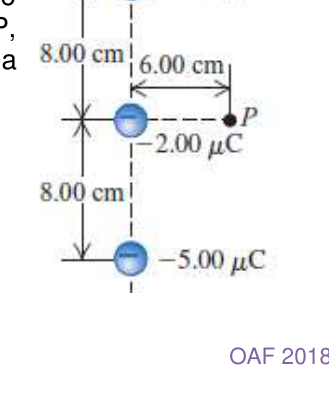
Topic: Electrostatics Metodi: Coulomb’s Law, Superposition Principle, Vector Decomposition Competenze: Physical Reasoning Objects: Point Charge Fonte: Testo (PDF) — p.5
PT73. La durata di un’operazione è di circa un milione di anni.
- Io faro’ il pirano, Formosa.
Tre cariche punteggiate negative sono sopra una linea, come si Il quadro ne mostra. Trova la magnitudo e la direzione del campo elettrico che produce questa combinazione di cariche al punto P, che è a 6,00 cm dal carico di - 2,00 μC misurato in forma perpendicolare alla linea che collega le tre cariche.
66 - OAF 2018
Topic: Electrostatics Metodi: Coulomb’s Law, Superposition Principle, Vector Decomposition Competenze: Physical Reasoning Objects: Point Charge Fonte: Testo (PDF) — p.5
PT73. The following information is provided by the manufacturer: I’ll be right there, Formosa.
Three negative spot loads are over a line, as you are This is illustrated in the figure. Find the magnitude and direction of the field . electrical product that produces this charge combination at point P, which is 6.00 cm from the load of - 2.00 μC measured in shape perpendicular to the line connecting the three charges.
66 - OAF 2018
Topic: Electrostatics Metodi: Coulomb’s Law, Superposition Principle, Vector Decomposition Competenze: Physical Reasoning Objects: Point Charge Fonte: Testo (PDF) — p.5
PT74. EPET N° 3. Pirané, Formosa.
Imagine que usted lanza una pelota verticalmente hacia arriba desde la azotea de un
edificio. La pelota sale de la mano, en un punto a la altura del barandal de la azotea, con
rapidez ascendente de 15.0 m/s, quedando luego en caída libre. Al bajar, la pelota libra
apenas el barandal. En este lugar, g = 9.8 m/s2.
Obtenga:
a) la posición y velocidad de la pelota 1.00 s y 4.00 s después de soltarla
b) la velocidad cuando la pelota está 5.00 m sobre el barandal;
c) la altura máxima alcanzada y el instante en que se alcanza;
d) la aceleración de la pelota en su altura máxima.
Topic: Newtonian Mechanics Metodi: Kinematic Equations Competenze: Physical Reasoning Objects: Ball Fonte: Testo (PDF) — p.5
PT74. La durata di un’operazione è di circa un milione di anni.
- Io faro’ il pirano, Formosa.
Immaginate di lanciare una palla verticalmente verso l’alto dal tetto di un edificio. La palla viene fuori dalla mano, in un punto al di sopra del barandello del tetto, con velocità ascendente di 15,0 m/s, poi in caduta libera. Scendiamo, la palla scende.
- Non è che il barandello. In questo luogo, g = 9,8 m/s2. Ottenere: a) la posizione e la velocità della palla 1.00 s e 4.00 s dopo il rilascio b) velocità quando la palla è a 5,00 m sopra il balcone; c) l’altezza massima raggiunta e l’istante in cui si raggiunge; d) l’accelerazione della palla alla massima altezza.
Topic: Newtonian Mechanics Metodi: Kinematic Equations Competenze: Physical Reasoning Objects: Ball Fonte: Testo (PDF) — p.5
PT74. The following information is provided by the manufacturer: I’ll be right there, Formosa.
Imagine you throw a ball vertically up from the roof of a building. building. The ball comes out of the hand, at a point at the height of the roof railing, with upward speed of 15.0 m/s, then falling freely. As he descends, the ball weighs Just the railing. In this place, g is 9.8 m/s2. Get this: (a) the position and speed of the ball 1.00 s and 4.00 s after release (b) speed when the ball is 5.00 m above the railing; (c) the maximum height reached and the moment it is reached; (d) the acceleration of the ball at its maximum height.
Topic: Newtonian Mechanics Metodi: Kinematic Equations Competenze: Physical Reasoning Objects: Ball Fonte: Testo (PDF) — p.5
PT75. EPET N° 3. Pirané, Formosa.
Un plano inclinado tiene 2m de altura y
forma un ángulo de 30° con el plano
horizontal. Desde el extremo más alto
se suelta un bloque que tiene 1 Kg de
masa. El coeficiente de rozamiento
entre el plano inclinado y el bloque es
0,173. Al final del plano el bloque
continúa su movimiento sobre una
superficie horizontal sin rozamiento, hasta que se detiene comprimiendo 10 cm el resorte
que se muestra en la figura, que está sujeto a una pared.
a) Realizar el diagrama de cuerpo libre del bloque cuando se encuentra sobre el
plano inclinado.
b) Hallar el valor de la fuerza de rozamiento cuando se desliza sobre el mismo.
c) Determinar la aceleración del bloque cuando resbala sobre la rampa.
d) Planteando conservación de la energía determinar la velocidad del bloque al
llegar al punto inferior.
e) Calcular el valor de la constante elástica del resorte que lo detiene.
Nota: Considerar que la aceleración de la gravedad es de 10 m/s2.
Topic: Newtonian Mechanics, Conservation of Energy Metodi: Free-Body Diagram, Energy Conservation Method, Hooke’s Law Competenze: Physical Reasoning Objects: Inclined Plane, Block, Spring Fonte: Testo (PDF) — p.5
PT75. La durata di un’operazione è di circa un milione di anni.
- Io faro’ il pirano, Formosa.
Un piano inclinato è alto 2 metri e forma un angolo di 30° con il piano
- L’orizzontale. Dall’estremità più alta. si rilascia un blocco che ha 1 Kg di massa. Il coefficiente di rottura tra il piano inclinato e il blocco è 0,173. Alla fine del piano il blocco continua il suo movimento su una superficie orizzontale senza rottura, fino a quando non si ferma compresendo il molle di 10 cm che è mostrato nella figura, che è soggetto a un muro. a) Realizzare il diagramma del corpo libero del blocco quando si trova sopra il piano inclinato. b) Calcolare il valore della forza di ruggine quando si scivola sopra. c) Determinare l’accelerazione del blocco quando si scivola sul rampo. d) Sulla base della conservazione dell’energia, determinare la velocità del blocco al arrivare al punto inferiore. e) Calcolare il valore della costante elastica della sorgente che la detiene.
Nota: Considerare che l’accelerazione della gravità è di 10 m/s2.
Topic: Newtonian Mechanics, Conservation of Energy Metodi: Free-Body Diagram, Energy Conservation Method, Hooke’s Law Competenze: Physical Reasoning Objects: Inclined Plane, Block, Spring Fonte: Testo (PDF) — p.5
PT75. The following information is provided by the manufacturer: I’ll be right there, Formosa.
A sloping plane is 2m high and a shape angle of 30° with the plane horizontal. From the highest end . a block of 1 kg of Mass. The coefficient of friction Between the slope and the block is 0,173. At the end of the plan the block Continues its movement over a horizontal surface without grinding, until the spring is stopped by compressing 10 cm It’s attached to a wall. (a) Draw the free-body diagram of the block when it is above the slanted plane. (b) Find the value of the friction force when sliding over it. (c) Determine the acceleration of the block when it slides over the ramp. (d) By considering energy conservation, determine the block speed to to the bottom. (e) Calculate the value of the elastic constant of the spring that holds it.
Note: Consider that the acceleration of gravity is 10 m/s2.
Topic: Newtonian Mechanics, Conservation of Energy Metodi: Free-Body Diagram, Energy Conservation Method, Hooke’s Law Competenze: Physical Reasoning Objects: Inclined Plane, Block, Spring Fonte: Testo (PDF) — p.5
PT76. Escuela Tomás Godoy Cruz - Departamento de Aplicación Docente Liceo Agrícola y Enológico Domingo Faustino Sarmiento. Ciudad de Mendoza.
Un bloque de hielo de 30 cm de espesor debe soportar el peso de un hombre de 90 Kg de masa, estando el hielo flotando sobre agua dulce.
a) Exprese la condición de flotabilidad para esta situación. b) Si suponemos que el bloque de hielo es de forma cúbica, ¿cuál será la masa del mismo? c) ¿Cuál ha de ser el área del menor bloque de hielo que lo pueda soportar?
La densidad del agua es 1g/cm3 y la del hielo 0,92 g/cm3.
OAF 2018 - 67
Topic: Fluid Mechanics Metodi: Hydrostatic Equilibrium Competenze: Physical Reasoning Objects: Block Fonte: Testo (PDF) — p.5
PT76. Scuola Tomás Godoy Cruz - Dipartimento di Applicazione Docente Liceo Agricolo e Enologico Domingo Faustino Sarmiento. Città di Mendoza.
Un blocco di ghiaccio di 30 cm di spessore deve sopportare il peso di un uomo di 90 Kg. di massa, mentre il ghiaccio galleggia sull’acqua dolce.
(a) Indicare la condizione di navigabilità per questa situazione. b) Se supponiamo che il blocco di ghiaccio sia cubico, qual è la massa di
- Proprio? c) Qual è l’area del blocco di ghiaccio più piccolo che possa supportarlo?
La densità dell’acqua è di 1 g/cm3 e quella del ghiaccio di 0,92 g/cm3.
OAF 2018 - 67
Topic: Fluid Mechanics Metodi: Hydrostatic Equilibrium Competenze: Physical Reasoning Objects: Block Fonte: Testo (PDF) — p.5
PT76. Tomás Godoy Cruz School - Teacher Application Department Spanish language and literature. The city of Mendoza.
A 30 cm thick block of ice must support the weight of a man of 90 kg. The ice is floating on fresh water.
(a) State the condition of buoyancy for this situation. (b) If we assume that the ice block is cubic, what will the mass of the ice block be?
- You know? (c) What should be the area of the smallest ice block that can withstand it?
The density of water is 1 g/cm3 and that of ice is 0,92 g/cm3.
The Commission shall adopt delegated acts in accordance with Article 21 of this Regulation.
Topic: Fluid Mechanics Metodi: Hydrostatic Equilibrium Competenze: Physical Reasoning Objects: Block Fonte: Testo (PDF) — p.5
PT77. Escuela Tomás Godoy Cruz - Departamento de Aplicación Docente Liceo Agrícola y Enológico Domingo Faustino Sarmiento. Ciudad de Mendoza.
Dos veloces balas de plomo cada una de 5g de masa, y a una temperatura de 20 °C chocan de frente a una rapidez de 500m/s cada una. Se supone una colisión perfectamente inelástica y no hay pérdida de energía, por calor a la atmósfera. a) Calcular la cantidad de calor que se produce en el choque b) Si el punto de fusión del plomo es 327°C, ¿cuál será la cantidad de calor necesaria para lograr esa temperatura? c) ¿Qué ocurrirá con las dos balas en el momento de producirse el choque? d) ¿Qué cantidad de calor será necesaria para que dicho suceso se complete? e) Si asumimos que el plomo líquido tiene igual calor específico que el plomo sólido, cuál es la temperatura final del sistema?
C Po=128 J/kg °C L f Po = 2,45 104 J/kg
Topic: Thermodynamics, Conservation of Energy Metodi: Conservation of Energy, First Law of Thermodynamics Competenze: Physical Reasoning Objects: Projectile Fonte: Testo (PDF) — p.5
PT77. Scuola Tomás Godoy Cruz - Dipartimento di Applicazione Docente Liceo Agricolo e Enologico Domingo Faustino Sarmiento. Città di Mendoza.
Due veloci proiettili di piombo di massa di 5 g ciascuno, e a una temperatura di 20 °C Colpiscono di fronte a velocità di 500m/s ciascuno. Si suppone un incidente. perfettamente inelastica e non c’è perdita di energia, dal calore nell’atmosfera. a) Calcolare la quantità di calore che si produce nel colpo b) Se il punto di fusione del piombo è 327°C, quale sarà la quantità di calore necessario per raggiungere quella temperatura? c) Cosa accadrà alle due pallottole al momento dell’impatto? d) Quanta calore sarà necessario per completare tale evento? e) Supponiamo che il piombo liquido abbia la stessa calore specifica del piombo solido, qual è la temperatura finale del sistema?
C Po=128 J/kg °C L f Po = 2,45 104 J/kg
Topic: Thermodynamics, Conservation of Energy Metodi: Conservation of Energy, First Law of Thermodynamics Competenze: Physical Reasoning Objects: Projectile Fonte: Testo (PDF) — p.5
PT77. Tomás Godoy Cruz School - Teacher Application Department Spanish language and literature. The city of Mendoza.
Two fast lead bullets each 5g mass, and at a temperature of 20 °C They collide head-on at a speed of 500m/s each. It ‘s supposed to be a collision . perfectly inelastic and no energy loss from heat to the atmosphere. (a) Calculate the amount of heat produced in the shock. (b) If the melting point of lead is 327°C, what is the amount of heat necessary to achieve that temperature? (c) What will happen to the two bullets at the time of the impact? (d) How much heat will be needed to complete this event? e) Assuming that liquid lead has the same specific heat as lead So what’s the final temperature of the system?
C Po=128 J/kg °C L f Po = 2,45 104 J/kg
Topic: Thermodynamics, Conservation of Energy Metodi: Conservation of Energy, First Law of Thermodynamics Competenze: Physical Reasoning Objects: Projectile Fonte: Testo (PDF) — p.5
PT78. Escuela Tomás Godoy Cruz - Departamento de Aplicación Docente Liceo Agrícola y Enológico Domingo Faustino Sarmiento. Ciudad de Mendoza.
Una lámpara tiene un filamento cuya resistencia R0= 6Ω a un voltaje V0 = 6V. Se conecta a una batería de resistencia interna despreciable y fuerza electromotriz V= 8 V mediante un reóstato de cursor que funciona como potenciómetro. Se desea que la eficiencia 𝒆= 𝑷𝒐𝒕𝒆𝒏𝒄𝒊𝒂 𝒄𝒐𝒏𝒔𝒖𝒎𝒊𝒅𝒂 𝒆𝒏 𝒍𝒂 𝒍á𝒎𝒑𝒂𝒓𝒂 𝑷𝒐𝒕𝒆𝒏𝒄𝒊𝒂 𝒕𝒐𝒕𝒂𝒍 𝒅𝒆 𝒍𝒂 𝒃𝒂𝒕𝒆𝒓í𝒂
no sea menor que 0,6. a) Calcular el valor de la resistencia del reóstato b) ¿Cuál es la máxima eficiencia posible? c) En la situación del punto b) ¿Cómo se debe conectar la lámpara?
Figura 1
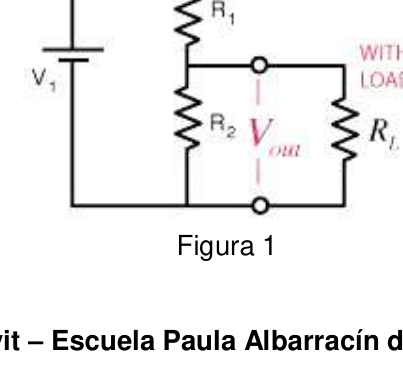
Topic: Circuits Metodi: Kirchhoff’s Laws, Equivalent Circuit Reduction Competenze: Physical Reasoning Objects: Resistor, Battery Fonte: Testo (PDF) — p.5
PT78. Scuola Tomás Godoy Cruz - Dipartimento di Applicazione Docente Liceo Agricolo e Enologico Domingo Faustino Sarmiento. Città di Mendoza.
Una lampada ha un filamento la cui resistenza R0=6Ω ad una tensione V0=6V. Se connesse a una batteria di resistenza interna scarsa e forza elettromotrice V= 8 V con un reostato di cursore che funziona come potenziometro. È desiderato che efficienza e= Potenza consumata nella lampada Potenza totale della batteria
non inferiore a 0,6. a) Calcolare il valore della resistenza del reostato b) Qual è la massima efficienza possibile? c) In caso di punto b) Come si deve collegare la lampada?
Figura 1
Topic: Circuits Metodi: Kirchhoff’s Laws, Equivalent Circuit Reduction Competenze: Physical Reasoning Objects: Resistor, Battery Fonte: Testo (PDF) — p.5
PT78. Tomás Godoy Cruz School - Teacher Application Department Spanish language and literature. The city of Mendoza.
A lamp has a filament whose resistance R0 = 6Ω at a voltage V0 = 6V. Se It connects to a battery of negligible internal resistance and electromotive force V= 8 V using a cursor reostate that functions as a potentiometer. It is desirable that the Efficiency e= Power consumed in the lamp Total battery power
not less than 0,6. (a) Calculate the resistance value of the reostat (b) What is the maximum possible efficiency? (c) In the situation of point (b) How should the lamp be connected?
Figure 1
Topic: Circuits Metodi: Kirchhoff’s Laws, Equivalent Circuit Reduction Competenze: Physical Reasoning Objects: Resistor, Battery Fonte: Testo (PDF) — p.5
PT79. Escuela Emilio Civit – Escuela Paula Albarracín de Sarmiento. Maipú, Mendoza.
Un cuerpo de masa m=1kg es empujado por una fuerza horizontal F de módulo 15 N, desde el pie de un plano inclinado en 37° respecto a la horizontal y cuyo coeficiente de rozamiento cinético es 0,2. La fuerza F actúa durante tres segundos solamente. a) Realice el diagrama del cuerpo libre b) Calcule la aceleración del objeto mientras actúa la fuerza y la aceleración del cuerpo luego que la fuerza dejó de actuar c) Determine la distancia recorrida y la velocidad que adquiere a los 3 segundos.
68 - OAF 2018 d) Escriba las ecuaciones del movimiento para el trayecto en que ya no actúa la fuerza F. e) ¿Cuánto tiempo más sigue subiendo mientras no actúa la fuerza F? f) Determine la distancia total que alcanza a subir por el plano g) Calcule la aceleración de bajada. h) Indique en qué tiempo se inicia la bajada. i) El tiempo que demora en volver al punto de partida. Utilice g= 10m/s2
Topic: Newtonian Mechanics Metodi: Free-Body Diagram, Kinematic Equations, Vector Decomposition Competenze: Physical Reasoning Objects: Inclined Plane, Block Fonte: Testo (PDF) — p.5
PT79. Scuola Emilio Civit Scuola Paula Albarracín di Sarmiento. Maipú, Mendoza.
Un corpo di massa m=1kg è spinto da una forza orizzontale F del modulo 15 N, dal piede di un piano inclinato a 37° rispetto al orizzonte e il cui coefficiente di il rottura cinetica è di 0,2. La forza F è attiva per tre secondi solo. a) Realizza il diagramma del corpo libero b) Calcolare l’accelerazione dell’oggetto mentre agisce la forza e l’accelerazione dell’oggetto. corpo dopo che la forza ha smesso di agire c) Determina la distanza percorsa e la velocità che acquista a 3 secondi.
68 - OAF 2018 d) Scrivi le equazioni del movimento per il percorso in cui la forza F non agisce più. e) Quanto Tempo Più Continua Sull’ aria finché non agisce la forza F? f) Determina la distanza totale che raggiunge salire in piano g) Calcolare l’accelerazione di scesa. h) Indicare l’ora di inizio della discesa. i) Il tempo necessario per tornare al punto di partita. Utilizzare g= 10m/s2
Topic: Newtonian Mechanics Metodi: Free-Body Diagram, Kinematic Equations, Vector Decomposition Competenze: Physical Reasoning Objects: Inclined Plane, Block Fonte: Testo (PDF) — p.5
PT79. School Emilio Civit School Paula Albarracín of Sarmiento. Maipu, Mendoza. What is it?
A body of mass m=1kg is pushed by a horizontal force F of module 15 N, from the foot of a plane inclined at 37° with respect to the horizontal and whose coefficient of kinetic friction is 0.2. The F force acts for only three seconds. (a) Draw the free body diagram. (b) Calculate the acceleration of the object while the force and acceleration of the object are acting. body after the force stopped acting (c) Determine the distance travelled and the speed gained in 3 seconds.
The Commission shall adopt delegated acts in accordance with Article 21 of this Regulation. (d) Write the equations of motion for The path on which force F no longer acts. (e) How much Time . More Go on . Going up . while the F-force is not at work? (f) Determine the total distance to Go up the plane. (g) Calculate the downward acceleration. (h) Indicate the time at which the decline begins. (i) The time it takes to get back to the point of I’m going to start. Use g= 10m/s2
Topic: Newtonian Mechanics Metodi: Free-Body Diagram, Kinematic Equations, Vector Decomposition Competenze: Physical Reasoning Objects: Inclined Plane, Block Fonte: Testo (PDF) — p.5
PT80. Escuela Emilio Civit – Escuela Paula Albarracín de Sarmiento. Maipú, Mendoza.
Una estatua de oro sólido de 15 kg de masa está siendo levantada de un barco hundido.
a) Realiza el diagrama del cuerpo libre
b) ¿Qué tensión hay en el cable cuando la estatua está en reposo y totalmente
sumergida?
c) ¿Qué tensión hay en el cable cuando la estatua en reposo y fuera del agua?
d) ¿Cuál es el porcentaje que representa la diferencia entre el peso de la estatua
sumergida en el agua y el peso real de la estatua?
Tener en cuenta
Densidad del oro: 19,3 x 10³ kg/m3
Densidad del agua: 1,03 x 10³ kg/m3
Aceleración de la gravedad g= 9,8m/s2
Topic: Fluid Mechanics, Newtonian Mechanics Metodi: Hydrostatic Equilibrium, Free-Body Diagram Competenze: Physical Reasoning Objects: String Fonte: Testo (PDF) — p.5
PT80. Scuola Emilio Civit Scuola Paula Albarracín di Sarmiento. Maipú, Mendoza.
Una solida statua d’oro di 15 kg di massa viene sollevata da una nave affondata. a) Realizza il diagramma del corpo libero b) Qual è la tensione del cavo quando la statua è a riposo e completamente
- Suttomergimento? c) Qual è la tensione del cavo quando la statua è in riposo e fuori dall’acqua? d) Qual è il percentuale che rappresenta la differenza tra il peso della statua immersa nell’acqua e il peso reale della statua?
Tenere conto Densità dell’oro: 19,3 x 10³ kg/m3 Densità dell’acqua: 1,03 x 10³ kg/m3 Accelerazione della gravità g= 9,8m/s2
Topic: Fluid Mechanics, Newtonian Mechanics Metodi: Hydrostatic Equilibrium, Free-Body Diagram Competenze: Physical Reasoning Objects: String Fonte: Testo (PDF) — p.5
PT80. School Emilio Civit School Paula Albarracín of Sarmiento. Maipu, Mendoza. What is it?
A solid gold statue weighing 15 kg is being lifted from a sunken ship. (a) Draw the free body diagram. (b) What is the voltage on the cable when the statue is at rest and fully
- Submerged? (c) What is the tension on the cable when the statue is at rest and out of the water? (d) What is the percentage of the difference between the weight of the statue Soaked in water and the actual weight of the statue?
Consideration The following table shows the results of the calculations: The following is the list of the water density: The acceleration of gravity g = 9,8m/s2
Topic: Fluid Mechanics, Newtonian Mechanics Metodi: Hydrostatic Equilibrium, Free-Body Diagram Competenze: Physical Reasoning Objects: String Fonte: Testo (PDF) — p.5
PT81. Escuela Emilio Civit – Escuela Paula Albarracín de Sarmiento. Maipú, Mendoza.
Ud. necesita una resistencia de 45Ω pero el negocio de electricidad sólo tiene
resistencias de 20Ω y 50Ω.
a) ¿De qué manera puede conseguirse la resistencia deseada? Esquematice.
b) Si se aplica a la conexión una diferencia de potencial de 15V. ¿Cuál es el valor
de la corriente total en el circuito?
c) ¿Qué valor de diferencia de potencial existe en los extremos de cada
resistencia?
d) ¿Qué corriente circula por cada resistencia?
e) ¿Qué potencia eléctrica disipa cada resistencia?
Topic: Circuits Metodi: Equivalent Circuit Reduction, Kirchhoff’s Laws Competenze: Physical Reasoning Objects: Resistor Fonte: Testo (PDF) — p.5
PT81. Scuola Emilio Civit Scuola Paula Albarracín di Sarmiento. Maipú, Mendoza.
Ud. Ha bisogno di una resistenza di 45Ω, ma il business elettrico ha solo resistenza di 20Ω e 50Ω. a) Come si può ottenere la resistenza desiderata? - Scalza. b) Se si applica alla connessione una differenza di potenziale di 15 V. Qual è il valore? del corrente totale nel circuito? (c) Qual è il valore di differenza di potenziale che esiste alle estremità di ciascuna resistenza? d) Che corrente circola per ogni resistenza? e) Quale potenza elettrica dissipa ogni resistenza?
Topic: Circuits Metodi: Equivalent Circuit Reduction, Kirchhoff’s Laws Competenze: Physical Reasoning Objects: Resistor Fonte: Testo (PDF) — p.5
PT81. School Emilio Civit School Paula Albarracín of Sarmiento. Maipu, Mendoza. What is it?
Ud. You need a 45Ω resistance but the electrical business only has 20Ω and 50Ω resistors. (a) How can the desired resistance be achieved? It’s a squeeze. (b) If a 15V potential difference is applied to the connection. What’s the value of the total current in the circuit? (c) What is the potential difference value at each end of the resistance? (d) What current is flowing through each resistor? (e) What electrical power dissipates each resistance?
Topic: Circuits Metodi: Equivalent Circuit Reduction, Kirchhoff’s Laws Competenze: Physical Reasoning Objects: Resistor Fonte: Testo (PDF) — p.5
PT82. IPET N° 89 Paula Albarracín. Devoto, Córdoba.
Una nave espacial aterriza en un planeta desconocido y uno de sus tripulantes hace las
siguientes mediciones: (1) una piedra de 2,5 kg lanzada hacia arriba desde el suelo con
una velocidad inicial de 12 m/s vuelve al suelo al cabo de 8 s. (2) el perímetro del planeta
es de 2×10⁵ km. (3) el planeta carece de atmósfera.
a) Calcula la masa del planeta.
b) Si la nave se coloca en una órbita circular a 30000 km sobre la superficie del
planeta, ¿cuántas horas tardará en dar una vuelta alrededor del mismo?
Dato: G = 6,67×10⁻¹¹ N⋅m 2 ⋅kg-2.
OAF 2018 - 69
Topic: Gravitation Metodi: Kinematic Equations, Newton’s Law of Gravitation, Kepler’s Laws Competenze: Physical Reasoning, Mathematical Modeling Objects: Planet, Satellite Fonte: Testo (PDF) — p.5
PT82. IPET N° 89 Paula Albarracín. Devote, Cordoba.
Una nave spaziale atterra su un pianeta sconosciuto e uno dei suoi membri fa le sue operazioni. Le seguenti misure: (1) una pietra di 2,5 kg lanciata in alto dal suolo con una velocità iniziale di 12 m/s torna al suolo dopo 8 s. (2) il perimetro del pianeta es de 2×10⁵ km. (3) il pianeta non ha atmosfera. a) Calcola la massa del pianeta. b) Se la nave è posta in orbita circolare a 30000 km dalla superficie del pianeta, quante ore ci vorranno per girare intorno a esso?
Data: G = 6,67×10⁻¹¹ N⋅m 2 ⋅kg-2.
OAF 2018 - 69
Topic: Gravitation Metodi: Kinematic Equations, Newton’s Law of Gravitation, Kepler’s Laws Competenze: Physical Reasoning, Mathematical Modeling Objects: Planet, Satellite Fonte: Testo (PDF) — p.5
PT82. The Commission has not yet adopted a proposal for a regulation on the protection of the environment. I’m a devoted man, Cordoba.
A spacecraft lands on an unknown planet and one of its crew makes the first of its kind. The following measurements: (1) a 2.5 kg stone thrown up from the ground with an initial speed of 12 m/s returns to the ground after 8 s. (2) the perimeter of the planet es de 2×10⁵ km. (3) the planet lacks an atmosphere. (a) Calculate the mass of the planet. (b) If the craft is placed in a circular orbit at 30000 km above the surface of the Earth. planet, how many hours will it take to go around it?
Date: G = 6,67×10⁻¹¹ N⋅m 2 ⋅kg-2.
The Commission shall adopt delegated acts in accordance with Article 21 of the Financial Regulation.
Topic: Gravitation Metodi: Kinematic Equations, Newton’s Law of Gravitation, Kepler’s Laws Competenze: Physical Reasoning, Mathematical Modeling Objects: Planet, Satellite Fonte: Testo (PDF) — p.5
PT83. IPET N° 89 Paula Albarracín. Devoto, Córdoba.
Un objeto de forma cilíndrica, con radio mucho mayor que su ancho, flota en la Mar Muerto de forma que está hundido justo hasta su mitad (fig. 1). Se observa que al colocar encima una masa de 70 kg, el objeto se hunde justo en su totalidad (fig. 2). ¿Cuál es la densidad del agua del Mar Muerto? Dato: el objeto tiene un volumen de 113 litros. Fig 1 y Fig 2.
Topic: Fluid Mechanics Metodi: Hydrostatic Equilibrium Competenze: Physical Reasoning Objects: Cylinder Fonte: Testo (PDF) — p.5
PT83. IPET N° 89 Paula Albarracín. Devote, Cordoba.
Un oggetto cilindrico, con un raggio molto più grande della sua larghezza, galleggia nel mare. Morto in modo che sia immerso fino alla metà (fig. 1). Si osserva che quando si colloca Infatti, se l’oggetto è pesante 70 kg, esso si immerge completamente (fig. 2). Qual è la densità dell’acqua del Mar Morto? Data: l’oggetto ha un volume di 113 litri. Fig. 1 e Fig. 2.
Topic: Fluid Mechanics Metodi: Hydrostatic Equilibrium Competenze: Physical Reasoning Objects: Cylinder Fonte: Testo (PDF) — p.5
PT83. The Commission has not yet adopted a proposal for a regulation on the protection of the environment. I’m a devoted man, Cordoba.
A cylindrical object, with a radius much larger than its width, floats in the sea. Dead so that it is sunk right to its half (fig. 1). It is noted that by placing The object is sunk in its entirety (fig. 1). 2). What is the The density of the Dead Sea water? Date: the object has a volume of 113 litres. Figure 1 and Figure 2 is shown below.
Topic: Fluid Mechanics Metodi: Hydrostatic Equilibrium Competenze: Physical Reasoning Objects: Cylinder Fonte: Testo (PDF) — p.5
PT84. IPET N° 89 Paula Albarracín. Devoto, Córdoba.
Una esfera de 0,5 g de masa, cargada eléctricamente, es repelida por una lámina
cargada positivamente. La esfera cuelga de un hilo tal y como se muestra en la figura.
Debido a la repulsión, el hilo forma un ángulo de 45° con la vertical.
a) Dibuja un diagrama con las fuerzas que actúan sobre la
esfera cuando se encuentra en equilibrio.
b) Calcula el módulo de la fuerza eléctrica que actúa sobre
la esfera.
c) Calcula la carga de la esfera sabiendo que el campo
eléctrico en las proximidades de ésta es uniforme, tiene
dirección horizontal y su módulo es 2000 V⋅m -1. ¿De
qué signo es dicha carga?
d) Si duplicamos la carga de la esfera, ¿cuál será ahora el
ángulo que formará con la vertical el hilo del que está
suspendida?
Topic: Electrostatics, Newtonian Mechanics Metodi: Free-Body Diagram, Coulomb’s Law, Vector Decomposition Competenze: Physical Reasoning Objects: Sphere, String Fonte: Testo (PDF) — p.5
PT84. IPET N° 89 Paula Albarracín. Devote, Cordoba.
Una sfera di 0,5 g di massa, carica elettricamente, viene respinta da una lamina carica positivamente. La sfera si appende a un filo come mostrato nella figura. A causa della repulsione, il filo forma un angolo di 45° con la verticale. a) Disegna un diagramma con le forze che agiscono sulla quando si trova in equilibrio. b) Calcola il modulo di forza elettrica che agisce su la sfera. c) Calcola il carico della sfera sapendo che il campo L’elettricità nelle vicinanze di questa è uniforme, ha direzione orizzontale e il modulo è di 2000 V⋅m -1. ¿De Che segno è questo carico? d) Se raddoppiamo il carico della sfera, quale sarà ora il angolo che con la verticale formerà il filo di cui è
- Sospeso?
Topic: Electrostatics, Newtonian Mechanics Metodi: Free-Body Diagram, Coulomb’s Law, Vector Decomposition Competenze: Physical Reasoning Objects: Sphere, String Fonte: Testo (PDF) — p.5
PT84. The Commission has not yet adopted a proposal for a regulation on the protection of the environment. I’m a devoted man, Cordoba.
A 0,5 g mass ball, electrically charged, is repelled by a sheet It’s positively charged. The sphere hangs from a thread as shown in the figure. Because of the repulsion, the thread forms an angle of 45° with the vertical. (a) Draw a diagram with the forces acting on the The sphere when it’s in balance. (b) Calculates the module of the electrical force acting on The sphere. (c) Calculate the charge of the sphere knowing that the field The electrical system in the vicinity of this is uniform, has horizontal direction and its module is 2000 V⋅m -1. ¿De What sign is that charge? d) If we double the charge of the sphere, what will the angle that will form with the vertical the thread from which it is suspended?
Topic: Electrostatics, Newtonian Mechanics Metodi: Free-Body Diagram, Coulomb’s Law, Vector Decomposition Competenze: Physical Reasoning Objects: Sphere, String Fonte: Testo (PDF) — p.5
PT85. Instituto Industrial Luis A. Huergo. Ciudad Autónoma de Buenos Aires.
Se tiene un hilo de masa despreciable de 5𝑚 de longitud, con un extremo fijado a 10𝑚 de
altura. En su otro extremo se encuentra atada una masa de 200𝑘𝑔 y densidad 400 𝑘𝑔/𝑚3.
A 3𝑚 de distancia del punto P se encuentra la orilla de un recipiente con agua líquida en
su interior.
a) Inicialmente el cuerpo tiene
una velocidad de 4 m/s
perpendicular al hilo, siendo,
en ese instante, el ángulo
que forma el hilo con la
vertical θ = 30º (posición
mostrada en la figura). Si se
considera al sistema como
un péndulo simple, calcular
la
altura
máxima
que
alcanzará la masa.
b) Si se corta el hilo cuando la
masa se encuentra en su
menor altura, y avanzando
hacia la derecha. Calcular a
70 - OAF 2018 que distancia de la orilla del recipiente caerá la masa y cuál es su velocidad al momento de tocar el agua (modulo dirección y sentido). c) ¿Una vez alcanzada la situación de equilibrio. ¿Flota o se hunde? i) Si flota ¿Qué porcentaje del volumen de la esfera quedará sumergido? ii) Si se hunde ¿Cuál es su peso aparente?
Datos
𝑔= 10
𝑚
𝑠2
𝜌ℎ20 = 1000
𝑘𝑔
𝑚3
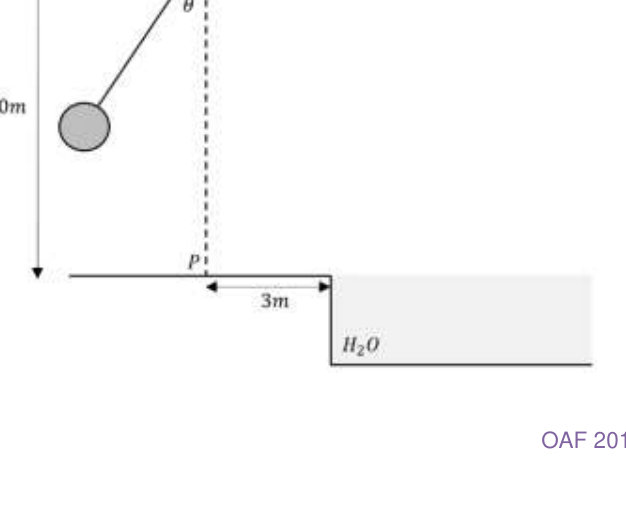
Topic: Oscillations & Waves, Fluid Mechanics Metodi: Energy Conservation Method, Kinematic Equations, Hydrostatic Equilibrium Competenze: Physical Reasoning, Mathematical Modeling Objects: Pendulum, String, Sphere Fonte: Testo (PDF) — p.5
PT85. Istituto industriale Luis A. Ho urgo. Città autonoma di Buenos Aires.
Ha un filo di massa disprezzabile di 5m di lunghezza, con un’estremità fissata a 10m di altezza. Al suo lato è legato un’insieme di 200 kg e una densità di 400 kg/m3. A 3 m dal punto P si trova il bordo di un recipiente di acqua liquida in il suo interno. a) Inizialmente il corpo ha una velocità di 4 m/s perpendicolare al filo, essendo: In quel momento, l’angolo che forma il filo con la Verticale θ = 30o (posizione (Sotto il profilo di un’azienda) Si se considera il sistema come un semplice pendolo, calcolare la altezza massimo che raggiungerà la massa. b) Se il filo viene tagliato quando la La massa si trova nel suo
- Piu’ in alto, e avanzando.
- A destra. Calcolare a
70 - OAF 2018 Qual è la distanza dal bordo del recipiente che la massa cade e qual è la sua velocità al momento di toccare l’acqua (modulo direzione e senso). c) Una volta raggiunto il punto di equilibrio. Flotta o si affonda? (i) Se il mare naviga, quale percentuale del volume della sfera sarà sommersa? (ii) Se affonda, qual è il suo peso apparente?
Datos
𝑔= 10
𝑚
𝑠2
𝜌ℎ20 = 1000
𝑘𝑔
𝑚3
Topic: Oscillations & Waves, Fluid Mechanics Metodi: Energy Conservation Method, Kinematic Equations, Hydrostatic Equilibrium Competenze: Physical Reasoning, Mathematical Modeling Objects: Pendulum, String, Sphere Fonte: Testo (PDF) — p.5
PT85. The Spanish Ministry of Foreign Affairs I’m going to be a little late. The Autonomous City of Buenos Aires.
It has a 5m long scornful mass thread, with a fixed end at 10m of Height. At its other end is a mass of 200 kg and density of 400 kg/m3 tied. 3 m from point P is the edge of a vessel with liquid water in It’s inside of you. Initially the body has a speed of 4 m/s perpendicular to the yarn, being, In that instant, the angle which forms the thread with the The following shall be added to the list of the following: (see Figure 1). Si se Consider the system as A simple pendulum, calculating la Height Maximum That It’ll reach the mass. (b) If the yarn is cut when the Mass is in your lower height, and advancing Right. Calculate a
The Commission shall adopt implementing acts in accordance with Article 21 of this Regulation. What distance from the edge of the container will the mass fall and what is its speed at time to touch the water (direction and direction module). (c) Once the equilibrium situation has been reached. Floats or sinks? (i) If floating, what percentage of the volume of the sphere will be submerged? (ii) If it sinks, what is its apparent weight?
Data from the report
𝑔= 10
𝑚
𝑠2
𝜌ℎ20 = 1000
𝑘𝑔
𝑚3
Topic: Oscillations & Waves, Fluid Mechanics Metodi: Energy Conservation Method, Kinematic Equations, Hydrostatic Equilibrium Competenze: Physical Reasoning, Mathematical Modeling Objects: Pendulum, String, Sphere Fonte: Testo (PDF) — p.5
PT86. Instituto Industrial Luis A. Huergo. Ciudad Autónoma de Buenos Aires.
Un electrón, que viaja con velocidad inicial 𝑣𝑖⃗⃗⃗ de módulo 10 𝑚/𝑠 entra en una región del espacio de donde existe un campo eléctrico 𝐸⃗ uniforme de modulo desconocido, siendo su dirección y sentido los que se muestran en la figura. El electrón incide en la región formando un ángulo 𝜃= 45° con la horizontal. Se desprecian los efectos de la gravedad.
a) Calcular el modulo del campo eléctrico y la distancia L si se sabe que el electrón sale de la región a través del punto A y lo hace con velocidad horizontal (dirección X).
Luego de atravesar el punto A, el electrón recorre una distancia de 0,2 𝑚 en la que no hay campo eléctrico, para luego ingresar en una nueva región del espacio de 1,5 𝑚 de ancho donde existe un campo magnético 𝐵⃗ uniforme de modulo 2. 10−11 𝑇, según se muestra en la figura. b) Determine la distancia vertical al punto B a la cual el electrón logra salir del campo magnético. c) ¿Cuál es el valor mínimo de 𝐵⃗ para el cual el electrón no lograría atravesar el campo magnético?
Datos | 𝑞𝑒 𝑚𝑒| = 1,76 . 1011 𝐶 𝑘𝑔 (relación carga-masa del electrón)
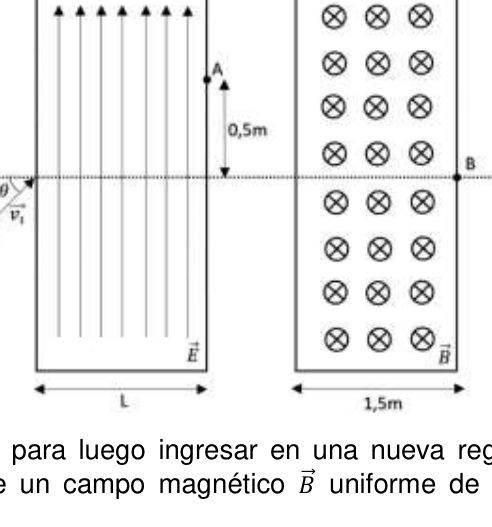
Topic: Electromagnetism, Magnetism Metodi: Lorentz Force Analysis, Kinematic Equations Competenze: Physical Reasoning, Mathematical Modeling Objects: Electron Fonte: Testo (PDF) — p.5
PT86. Istituto industriale Luis A. Ho urgo. Città autonoma di Buenos Aires.
Un elettrone, che viaggia a velocità iniziale vi di modulo 10 m/s entra in una regione del spazio di cui esiste un campo elettrico uniforme E modulo sconosciuto, essendo la sua direzione e il suo senso sono quelli mostrati nella figura. L’elettrone incide sulla regione formando un angolo θ= 45° con la
- L’orizzontale. Gli effetti della gravità.
a) Calcolare el modulo di cui al campo elettrico e distanza L se si sa che l’elettrone Esce dalla regione attraverso il Il punto A e lo fa con velocità orizzontale (indirizzo X).
Dopo aver attraversato il punto A, il L’elettrone percorre una distanza di 0,2 m in cui non c’è campo elettrico, per poi entrare in una nuova regione del Spazio di 1,5 m di larghezza in cui esiste un campo magnetico B modulo uniforme 2. 10−11 T, come mostrato nella figura. b) Determina la distanza verticale al punto B da cui l’elettrone riesce a uscire dal campo magnetico. c) Qual è il valore minimo di B per il quale l’elettrone non riuscirà a attraversare il Il campo magnetico?
Datos | 𝑞𝑒 𝑚𝑒| = 1,76 . 1011 𝐶 kg (relazione carico-massa dell’elettrone)
Topic: Electromagnetism, Magnetism Metodi: Lorentz Force Analysis, Kinematic Equations Competenze: Physical Reasoning, Mathematical Modeling Objects: Electron Fonte: Testo (PDF) — p.5
PT86. The Spanish Ministry of Foreign Affairs I’m going to be a little late. The Autonomous City of Buenos Aires.
An electron traveling at initial velocity vi of module 10 m/s enters a region of the space from which an electric field E uniform module is unknown, being The direction and meaning of the image. The electron affects the region forming an angle θ= 45° with the horizontal. The effects of the gravity.
(a) Calculate el the module of the electric field and distance I know that electron It leaves the region through the Point A and does it with speed horizontal (Address X).
After crossing point A, the electron travels a distance of 0.2 m in which there is no electric field, then enter a new region of the a space of 1.5 m wide where a magnetic field exists B uniform module 2. 10−11 T, as shown in Figure 1. (b) Determine the vertical distance to point B at which the electron is able to exit the magnetic field. (c) What is the minimum value of B for which the electron would not be able to pass through the The magnetic field?
Data from the report | 𝑞𝑒 𝑚𝑒| = 1,76 . 1011 𝐶 The mass of the electron is less than or equal to the mass of the electron.
Topic: Electromagnetism, Magnetism Metodi: Lorentz Force Analysis, Kinematic Equations Competenze: Physical Reasoning, Mathematical Modeling Objects: Electron Fonte: Testo (PDF) — p.5
PT87. Instituto Industrial Luis A. Huergo. Ciudad Autónoma de Buenos Aires.
Un cilindro con un embolo móvil contiene oxígeno a una presión de 2 𝑎𝑡𝑚 y 300 𝐾. En
estas condiciones su volumen es de 4 𝐿. Suponga que el 𝑂2 se puede tratar como gas
ideal, y que se somete a los siguientes procesos:
i) Calentar a presión constante del estado inicial (estado 1) al estado 2, donde 𝑇=
450 𝐾.
ii) Enfriar a volumen constante a 250 𝐾 (estado 3).
iii) Comprimir a temperatura constante a un volumen de 4 𝐿 (estado 4).
iv) Calentar a volumen constante a 300 𝐾, regresando el sistema al estado 1.
OAF 2018 - 71
a) Muestre estos cuatro procesos en un diagrama 𝑝𝑉, dando los valores numéricos
de 𝑝 y 𝑉 en cada estado.
b) Calcule 𝑄 y 𝑊 para cada proceso.
c) Calcule el trabajo neto efectuado por el 𝑂2.
d) Determine la eficiencia de este dispositivo como máquina térmica.
Datos
𝑅= 0,082
𝑎𝑡𝑚 . 𝐿
𝑚𝑜𝑙 . 𝐾
Para el 𝑂2: 𝐶𝑣= 20,85
𝐽
𝑚𝑜𝑙 . 𝐾 𝐶𝑝= 29,17
𝐽
𝑚𝑜𝑙 . 𝐾
Topic: Thermodynamics Metodi: Thermodynamic Cycle Analysis, First Law of Thermodynamics, Ideal Gas Law Competenze: Physical Reasoning Objects: Piston, Gas, Heat Engine Fonte: Testo (PDF) — p.5
PT87. Istituto industriale Luis A. Ho urgo. Città autonoma di Buenos Aires.
Un cilindro con un embols mobile contiene ossigeno a una pressione di 2 atm e 300 K. En in queste condizioni il suo volume è di 4 litri. Supponiamo che l’O2 possa essere trattato come un gas. Il sistema di controllo è stato adottato in base alle seguenti procedure: i) riscaldamento a pressione costante dallo stato iniziale (stato 1) allo stato 2, dove T= 450 𝐾. (ii) raffreddare a volume costante a 250 K (stato 3). iii) Comprimere a temperatura costante a un volume di 4 L (stato 4). iv) riscaldare a volume costante a 300 K, riportando il sistema a stato 1.
OAF 2018 - 71
a) Mostra questi quattro processi in un diagramma PV, dando i valori numerici di p e V in ogni stato. b) Calcolare Q e W per ogni processo. c) Calcola il lavoro netto effettuato dall’O2. d) Determina l’efficienza di questo dispositivo come macchina termico.
Datos 𝑅= 0,082
- ATM . 𝐿
Mol . 𝐾
Per l’O2: Cv= 20,85 𝐽 Mol . 𝐾 𝐶𝑝= 29,17 𝐽 Mol . 𝐾
Topic: Thermodynamics Metodi: Thermodynamic Cycle Analysis, First Law of Thermodynamics, Ideal Gas Law Competenze: Physical Reasoning Objects: Piston, Gas, Heat Engine Fonte: Testo (PDF) — p.5
PT87. The Spanish Ministry of Foreign Affairs I’m going to be a little late. The Autonomous City of Buenos Aires.
A cylinder with a moving embol contains oxygen at a pressure of 2 atm and 300 K. En These conditions its volume is 4 L. Suppose that O2 can be treated as gas. The following processes are carried out: (i) Heating at constant pressure from the initial state (state 1) to state 2, where T= 450 𝐾. (ii) Cooling at a constant volume of 250 K (state 3). (iii) Compress at constant temperature to a volume of 4 L (state 4). (iv) Heat at a constant volume to 300 K, returning the system to state 1.
The Commission shall adopt delegated acts in accordance with Article 21 of the Financial Regulation.
(a) Show these four processes in a PV diagram, giving the numerical values of p and V in each state. (b) Calculate Q and W for each process. (c) Calculate the net work done by O2. (d) Determine the efficiency of this device as a heat engine.
Data from the report 𝑅= 0,082
- It ‘s the ATM . 𝐿
- What ? 𝐾
For O2: Cv = 20,85 𝐽 - What ? 𝐾 𝐶𝑝= 29,17 𝐽
- What ? 𝐾
Topic: Thermodynamics Metodi: Thermodynamic Cycle Analysis, First Law of Thermodynamics, Ideal Gas Law Competenze: Physical Reasoning Objects: Piston, Gas, Heat Engine Fonte: Testo (PDF) — p.5
PT88. Instituto Atlético Pilar. Pilar, Buenos Aires.
“Yacyretita” (área principal: electricidad- área integrada: mecánica)
Una
represa
hidroeléctrica
utiliza
la
energía
mecánica del agua para generar energía eléctrica.
En general se aprovecha de la energía potencial que
posee la masa de agua de un río, dada por un
desnivel natural. Si con el desnivel no alcanza, se
construye una pared en el curso del río para
aumentar esa energía potencial, que es la que
determina la capacidad de ese sistema para realizar trabajo. Por ejemplo, en la represa
de Yacyretá Apipé (sobre el río Paraná) se elevó hace algunos años la altura de la caída
del agua de 15 a 21 metros (en un proyecto que generó polémicas por el impacto
ambiental, ya que el embalse de la represa está separado de los esteros por apenas
unos centenares de metros.)
Cierto salto de agua tiene un caudal de 6m3/s y una altura de 25 metros.
a) Calcular la potencia del salto en kW y CV
Este salto acciona una turbina cuyo rendimiento es del 80%, y esta turbina mueve un
dínamo con 83%de rendimiento. La corriente producida por el dínamo se transporta a un
lugar distante 6 km. La tensión entre los bornes del dínamo es de 10000V.
b) Calcular la potencia disponible en los bornes del dínamo.
c) Calcular la intensidad de corriente en el circuito
d) ¿Cuál es la resistencia interna del dínamo?
e) ¿Qué medida deberá tener el diámetro del hilo de cobre que debe utilizarse
para el transporte, sabiendo que la potencia disipada en la línea no debe ser
superior al 10% de la potencia disponible en los bornes de la turbina
f) Calcular el peso de cobre empleado en la línea. (datos: resistividad del cobre:
1,6x10⁻⁶ Ω.cm; peso específico del cobre 8,9 g/cm3
Topic: Fluid Mechanics, Circuits Metodi: Energy Conservation Method, Conservation of Energy Competenze: Physical Reasoning Objects: Wire Fonte: Testo (PDF) — p.5
PT88. Istituto Atletico Pilar. Pilar, Buenos Aires.
Yacyretita (area principale: elettricità-area integrata: meccanica) Una . ripresa idroelettrica utilizza la energia la meccanica dell’acqua per generare energia elettrica. In generale si sfrutta l’energia potenziale che possiede la massa di acqua di un fiume, data da un
- Non è un’incremento naturale. Se non si raggiunge con il snivel, si Costruisce un muro nel corso del fiume per aumentare quella energia potenziale, che è quella che determina la capacità di eseguire il lavoro di quel sistema. Per esempio, nel recinto di Yacyretá Apipé (sul fiume Paraná) è salito alcuni anni fa l’altezza della caduta La Commissione ha inoltre esaminato la situazione in cui si trovavano i paesi in via di sviluppo. La ripresa è separata dai rifiuti da poco. circa centinaia di metri.) Un certo salto d’acqua ha un flusso di 6m3/s e un’altezza di 25 metri. a) Calcolare la potenza di salto in kW e CV
Questo salto fa funzionare un turbine che ha un rendimento dell’80%, e questa turbina muove un Dynamo con un rendimento dell’83% Il corrente prodotta dal dinamico viene trasportato a un luogo distante 6 km. La tensione tra i bordi del dinamo è di 10000 V. b) Calcolare la potenza disponibile nei bordi del dinamico. c) Calcolare l’intensità di corrente nel circuito d) Qual è la resistenza interna del dinamo? e) Qual è la misura del diametro del filo di rame da utilizzare? per il trasporto, sapendo che la potenza dissipata sulla linea non deve essere più del 10% della potenza disponibile nei bordi della turbina f) Calcolare il peso del rame impiegato nella linea. (dati: resistenza del rame: 1,6x10⁻⁶ Ω.cm; peso specifico del rame 8,9 g/cm3
Topic: Fluid Mechanics, Circuits Metodi: Energy Conservation Method, Conservation of Energy Competenze: Physical Reasoning Objects: Wire Fonte: Testo (PDF) — p.5
PT88. The Pilar Athletic Institute. Pilar, Buenos Aires. What is it?
Yacyretite (main area: electricity- integrated area: mechanics) One . dam Hydroelectric power uses la Energy water mechanics to generate electrical energy. In general, the potential energy used is It has the mass of water of a river, given by a The rate of change is natural. If the level rise doesn’t go well, you’re gonna get it. He builds a wall in the river for increase that potential energy, which is what determines the ability of that system to perform work. For example, at the dam The height of the fall was raised a few years ago. The project has generated controversy over the impact of the water from 15 to 21 metres (in a project that generated controversy over the impact of the water from the water from the water from the water from the water to the water from the water from the water from the water from the water from the water to the water from the water from the water from the water from the water from the water to the water from the water from the water from the water from the water from the water to the water from the water from the water from the water from the water from the water to the water from the water from the water from the water from the water from the water to the water from the water from the water from the water from the water from the water to the water from the water from the water from the water from the water to the water from the water from the water from the water from the water to the water from the water from the water from the water from the water to the water from the water from the water from the water to the water. The dam is only separated from the waste by a few steps. (A few hundred meters.) A certain waterfall has a flow rate of 6 m3/s and a height of 25 meters. (a) Calculate the power of the jump in kW and CV
This jump drives a turbine with 80 percent efficiency, and this turbine moves a Dynamo with 83% yield. The current produced by the dynamo is transported to a Somewhere six kilometers away. The voltage between the dynamo terminals is 10000V. (b) Calculate the available power at the end of the dynamo. (c) Calculate the current intensity in the circuit (d) What is the internal resistance of the dynamo? (e) What size shall the diameter of the copper thread be used? For transport, knowing that the power dissipated on the line should not be more than 10% of the power available at the turbine terminals (f) Calculate the weight of copper used on the line. (data: copper resistivity: 1,60 × 10⁻⁶ Ω.cm; specific weight of copper 8,9 g/cm3
Topic: Fluid Mechanics, Circuits Metodi: Energy Conservation Method, Conservation of Energy Competenze: Physical Reasoning Objects: Wire Fonte: Testo (PDF) — p.5
PT89. Instituto Atlético Pilar. Pilar, Buenos Aires.
“Física en tiempos de ajuste” (área principal: termodinámica) Una jubilada que se cuida de los tarifazos, decide ser obediente a los tips para ahorrar. En el frío invierno realiza sus trabajos de costura en una piecita sin encender la calefacción. Sin embargo, al fondo, a la izquierda, arriba y abajo viven vecino que sí encienden la calefacción (utilizando gas natural como combustible). Se puede comprobar experimentalmente que, en una situación como esta, la energía en forma de calor “fluirá” de manera que, en algún momento dejará de modificar las temperaturas de las paredes;
72 - OAF 2018 simplemente pasará a través de ellas. Cuando el calor que “fluye” a través de un sólido que, como en este caso, hace de “puente” entre el interior y el exterior, y ya no eleva su temperatura al ser “atravesado”, estamos en presencia del llamado régimen estacionario de calor. Es posible calcular el flujo en función de las magnitudes implicadas en el proceso. En la situación del problema, el área total de las paredes que transmiten “calor” es de 44m2 y tales paredes son de ladrillo hueco de 12cm de espesor. a) Calcular la energía transferida mediante calor, cada segundo, sabiendo que la diferencia media de temperatura es de 10°C b) Suponiendo que trabaja unas 12 horas por día, ¿En cuánto dinero perjudica la señora a sus vecinos durante todo el invierno (90 días)? (El precio del metro cúbico de gas natural es de $5,75). Discutir sobre los órdenes de magnitudes. ¿Es razonable interpretar la situación del problema como real? c) Indicar como afectarían a los valores del problema los siguientes cambios de condiciones: i. Las paredes son otro material: ladrillo macizo en lugar de ladrillo hueco. ii. Los vecinos se calefaccionan utilizando carbón como combustible. iii. El espesor de las paredes es con ladrillos de 8 centímetros de espesor.
Tablas con valores útiles
Topic: Thermodynamics Metodi: First Law of Thermodynamics, Order-of-Magnitude Estimation Competenze: Physical Reasoning Objects: — Fonte: Testo (PDF) — p.5
PT89. Istituto Atletico Pilar. Pilar, Buenos Aires.
Fisica a tempi di regolazione (area principale: termodinamica) Una pensionata che si occupa dei tassi, decide di obbedire ai consigli per risparmiare. In inverno freddo, fa il suo lavoro di cucito in un pezzo senza accendere la luce. il riscaldamento. Tuttavia, in fondo, a sinistra, su e giù vivono vicini che accendono la luce. il riscaldamento (utilizzo di gas naturale come combustibile). Si può verificare. sperimentalmente che, in una situazione come questa, l’energia in forma di calore fluirà che, a un certo punto, smetterà di modificare le temperature dei muri;
72 - OAF 2018 passera’ semplicemente attraverso di loro. Quando il calore che fluisce attraverso un solido che, come in questo caso, è un ponte tra l’interno e l’esterno, e non alza più il suo La temperatura è in transito, siamo in presenza del cosiddetto regime. stazionario di calore. È possibile calcolare il flusso in base alle magnitudini coinvolte nel processo. In questo caso, l’area totale dei muri che La temperatura di trasmissione è di 44 m2 e i muri sono di mattoni vuoti di 12 cm di spessore. a) Calcolare l’energia trasferita dal calore, ogni secondo, sapendo che il calore è La differenza media di temperatura è di 10°C b) Supponendo di lavorare circa 12 ore al giorno, in quanto denaro si riscuote la signora ai suoi vicini durante tutto l’inverno (90 giorni)? (Il prezzo del metro il cubo di gas naturale è di $5,75). Discutere degli ordini di grandezza. È ragionevole interpretare la situazione del problema come reale? c) Indicare come i seguenti cambiamenti di Condizioni: i. I muri sono un altro materiale: mattoni massicci invece di mattoni vuoti. ii. I vicini si riscaldano utilizzando carbone come combustibile. iii. Il spessore dei muri è di mattoni di 8 centimetri di spessore.
Tabelle con valori utili
Topic: Thermodynamics Metodi: First Law of Thermodynamics, Order-of-Magnitude Estimation Competenze: Physical Reasoning Objects: — Fonte: Testo (PDF) — p.5
PT89. The Pilar Athletic Institute. Pilar, Buenos Aires. What is it?
Physics at adjustment times (main area: thermodynamics) A retired woman who takes care of the fees, decides to obey tips to save. In the cold winter , she does her sewing work in a small piece without lighting the fire . Heating. However, in the background, left, up and down live neighbors who do turn on the light. Heating (using natural gas as fuel). You can check it . The experimental evidence is that in a situation like this, heat energy will flow. So at some point, it will stop changing the temperature of the walls.
The Commission shall adopt delegated acts in accordance with Article 21 of this Regulation. It’ll just pass through them. When heat flows through a solid It is a bridge between the inside and the outside, and no longer raises its temperature being crossed, we are in the presence of the so-called regime Heat stationary. It is possible to calculate the flow by the magnitude involved in the process. In the problem situation, the total area of the walls that The heat transmitter is 44 m2 and the walls are 12 cm thick hollow brick. (a) Calculate the heat transferred energy every second, knowing that the energy The mean temperature difference is 10°C (b) Assuming you work about 12 hours a day, how much money does it hurt your business? Mrs. To your neighbors all winter (90 days)? (The price of the subway cubic of natural gas is $5.75). Discuss the orders of magnitude. Is it reasonable to interpret the situation of the problem as real? (c) Indicate how the following changes in the conditions: i. The walls are another material: solid brick instead of hollow brick. ii. The neighbors heat themselves using coal as fuel. (iii) the following: The thickness of the walls is of brick, eight centimeters thick.
Table with useful values
Topic: Thermodynamics Metodi: First Law of Thermodynamics, Order-of-Magnitude Estimation Competenze: Physical Reasoning Objects: — Fonte: Testo (PDF) — p.5
PT90. Instituto Atlético Pilar. Pilar, Buenos Aires.
“Hicieron calentar al proyectil” (área principal: mecánica- área integrada: termodinámica) Un bloque de 230 g de masa se suelta desde el extremo “A” de una rampa hasta llegar al punto B. A partir de allí, su movimiento continúa en un arco de circunferencia (radio = 5m). Sale por “D” y describe una trayectoria parabólica. Finalmente impacta en punto E, sobre un plano que está inclinado a 30° respecto a la horizontal. Excepto en el arco de circunferencia, existe rozamiento en el resto del trayecto (coeficiente μ=0.5)
a) Calcular la altura del punto A
b) Calcular la longitud del tramo AB
c) Calcular el ángulo de inclinación de la rampa AB
d) Calcular la altura del punto C
e) Calcular la velocidad de la partícula en el punto más bajo C de su trayectoria
circular.
f) Calcular la Normal en dicho punto.
g) Determinar el punto (x;y) de impacto del proyectil sobre el plano inclinado DE,
y las componentes de la velocidad en el punto de impacto.
OAF 2018 - 73 h) Si al llegar al suelo, toda la energía se “convierte en calor”, del cual el 60% se emplea en calentar el proyectil, averiguar cuánto aumentará su temperatura si su calor específico es de 0.25 cal/g.°C
Topic: Newtonian Mechanics, Thermodynamics Metodi: Energy Conservation Method, Kinematic Equations, Free-Body Diagram Competenze: Physical Reasoning, Mathematical Modeling Objects: Block, Projectile Fonte: Testo (PDF) — p.5
PT90. Istituto Atletico Pilar. Pilar, Buenos Aires.
Hanno riscaldato il proiettile (area principale: meccanica- area integrata: (Termodinamico) Un blocco di 230 g di massa si rilascia dall’estremità di una rampa fino al punto B. Da lì, il suo movimento continua in un arco di Circumferenza (radio = 5m). - Esce per la strada . “D” y descrive Una . La traccia
- per parabola. Infine, ha un impatto su punto E, su un piano che è inclinato a 30°
- rispetto a la
- L’orizzontale. - Ma non in arco. Circondaria, c’è un’arrestazione nel il resto del percorso (coefficiente μ=0,5)
a) Calcolare l’altezza del punto A b) Calcolare la lunghezza del tratto AB c) Calcolare l’angolo di inclinamento della rampa AB d) Calcolare l’altezza del punto C e) Calcolare la velocità della particella al punto più basso C del suo percorso circolare. f) Calcolare la norma in tale punto. g) Determinare il punto (x;y) di impatto del proiettile sul piano inclinato DE, e i componenti della velocità al punto di impatto.
OAF 2018 - 73 h) Se, quando si raggiunge il suolo, tutta l’energia viene convertita in calore, il 60% di cui viene utilizza per riscaldare il proiettile, per capire quanto aumenterà la sua temperatura se il suo calore specifico è di 0,25 cal/g.°C
Topic: Newtonian Mechanics, Thermodynamics Metodi: Energy Conservation Method, Kinematic Equations, Free-Body Diagram Competenze: Physical Reasoning, Mathematical Modeling Objects: Block, Projectile Fonte: Testo (PDF) — p.5
PT90. The Pilar Athletic Institute. Pilar, Buenos Aires. What is it?
Heated the projectile (main area: mechanical- integrated area: (other than the thermodynamic) A block of 230 g mass is released . from the end of a ramp. until point B. From there, Its motion continues in a bow of The following shall be added to the list of the following: He ‘s coming out . “D” y Describe One . Trajectory The parabolic. It finally impacts on point E, on a plane that is Tilted a 30° In relation to a la horizontal. Except in the arc of Circumference, there is friction in the The remainder of the journey (coefficient μ=0.5)
(a) Calculate the height of point A (b) Calculate the length of the AB section (c) Calculate the angle of inclination of the ramp AB (d) Calculate the height of point C (e) Calculate the velocity of the particle at the lowest point C of its path circulate. (f) Calculate the normal at that point. (g) Determine the point (x;y) of impact of the projectile on the slope of the DE, and the components of the velocity at the point of impact.
The Commission shall adopt delegated acts in accordance with Article 21 of the Financial Regulation. (h) If all energy is converted to heat when it reaches the ground, 60% of it is converted to heat. Use it to heat the projectile, figure out how much its temperature will rise if Its specific heat is 0.25 cal/g.°C
Topic: Newtonian Mechanics, Thermodynamics Metodi: Energy Conservation Method, Kinematic Equations, Free-Body Diagram Competenze: Physical Reasoning, Mathematical Modeling Objects: Block, Projectile Fonte: Testo (PDF) — p.5
PT91. Instituto Privado Rivadavia. Alderetes, Tucumán.
Dos pequeñas esferas idénticas cargadas, cada una con 4.5 x10⁻² kg de masa, cuelgan en equilibrio como se indica en la figura. La longitud de cada cuerda es de 0,15 m y el ángulo entre ellas es de 10 grados.
a) Realiza el diagrama de cuerpo libre para la esfera de la
izquierda.
b) Encuentre el valor y signo de las cargas.
c) Calcule el valor del campo eléctrico en un punto situado a
1/3 de la distancia de la carga de la izquierda.
Topic: Electrostatics Metodi: Coulomb’s Law, Free-Body Diagram Competenze: Physical Reasoning Objects: Sphere, String Fonte: Testo (PDF) — p.5
PT91. - Rivadavia, istituto privato. Alderetes, Tucumán.
Due piccole sfere identiche cariche, ognuna con 4,5 x 10⁻². kg di massa, appesi in equilibrio come indicato nella figura. La La lunghezza di ciascuna corda è di 0,15 m e l’angolo tra le due è di 10 gradi.
a) Realizza il diagramma di corpo libero per la sfera della
- A sinistra. b) Trova il valore e il segno delle cariche. (c) Calcolare il valore del campo elettrico a un punto situato a 1/3 della distanza della carica sinistra.
Topic: Electrostatics Metodi: Coulomb’s Law, Free-Body Diagram Competenze: Physical Reasoning Objects: Sphere, String Fonte: Testo (PDF) — p.5
PT91. Rivadavia Private Institute is a private institution. You are a fool, Tucuman.
Two identical small charged spheres, each with 4.5 x 10⁻² In the case of a mass of kg, they are suspended in equilibrium as shown in the figure. La The length of each string is 0.15 m and the angle between them is 10 degrees.
(a) Perform the free-body diagram for the sphere of the
- To the left. (b) Find the value and sign of the loads. (c) Calculate the value of the electric field at a point located at 1/3 of the left-hand load distance.
Topic: Electrostatics Metodi: Coulomb’s Law, Free-Body Diagram Competenze: Physical Reasoning Objects: Sphere, String Fonte: Testo (PDF) — p.5
PT92. Instituto Privado Rivadavia. Alderetes, Tucumán.
El siguiente grafico representa la velocidad de una masa de 150 g unida a un resorte que
se mueve con un movimiento armónico simple (M.A.S)
a) Calcula la energía potencial elástica
(Ek) y la cinética (Ec) del sistema
cuando el resorte se encuentra en su
máxima elongación.
b) Escriba la ecuación de la posición en
función del tiempo para éste sistema
.x = 𝐴cos(𝜔. 𝑡+ ∅)
c) ¿Cuál es la aceleración a los 6
segundos?
Topic: Oscillations & Waves Metodi: Simple Harmonic Motion Analysis, Conservation of Energy Competenze: Physical Reasoning Objects: Spring Fonte: Testo (PDF) — p.5
PT92. - Rivadavia, istituto privato. Alderetes, Tucumán.
Il grafico seguente rappresenta la velocità di una massa di 150 g unita a una resorte che si muove con un semplice movimento armonico (M.A.S.) a) Calcola l’energia potenziale elastica (Ek) e la cinetica (Ec) del sistema Quando la primavera è nel suo il massimo allungamento. b) Scrivi l’equazione della posizione in funzione del tempo per questo sistema .x = Acos(ω. 𝑡+ ∅) (c) Qual è l’accelerazione a 6
- Secondi?
Topic: Oscillations & Waves Metodi: Simple Harmonic Motion Analysis, Conservation of Energy Competenze: Physical Reasoning Objects: Spring Fonte: Testo (PDF) — p.5
PT92. Rivadavia Private Institute is a private institution. You are a fool, Tucuman.
The following graph shows the velocity of a mass of 150 g bound to a spring that moves with a simple harmonic movement (M.A.S.) (a) Calculate the elastic potential energy (Ek) and the kinetics (Ec) of the system When the spring is in its maximum length. (b) Write the equation of position in time function for this system .x = Acos(ω. 𝑡+ ∅) (c) What is the acceleration at 6? Seconds?
Topic: Oscillations & Waves Metodi: Simple Harmonic Motion Analysis, Conservation of Energy Competenze: Physical Reasoning Objects: Spring Fonte: Testo (PDF) — p.5
PT93. Instituto Privado Rivadavia. Alderetes, Tucumán.
Dos cuerpos que tienen masas m1 = 10 kg. m2 = 8 kg. cuelgan de una polea
sin fricción, como se muestra en la figura
a) Calcular la aceleración del sistema.
b) ¿Cuál es el trabajo total realizado por cada cuerpo, incluido el
efectuado por la fuerza de la cuerda cuando la de 10 kg. de masa se
desplaza 0,5 metros hacia abajo.
c) Determine el trabajo realizado por la fuerza de gravedad sobre cada
bola por separado.
Topic: Newtonian Mechanics Metodi: Free-Body Diagram, Conservation of Energy Competenze: Physical Reasoning Objects: Pulley, String, Block Fonte: Testo (PDF) — p.5
PT93. - Rivadavia, istituto privato. Alderetes, Tucumán.
Due corpi che hanno una massa m1 = 10 kg. m2 = 8 kg. Appendono a un pollice senza attrito, come mostrato nella figura a) Calcolare l’accelerazione del sistema. b) Qual è il lavoro totale svolto da ciascun corpo, compreso il lavoro svolto da ciascun corpo? effettuato dalla forza della corda quando è di 10 kg. di massa si si sposta a 0,5 metri in basso. c) Determina il lavoro svolto dalla forza di gravità su ciascuna palla separata.
Topic: Newtonian Mechanics Metodi: Free-Body Diagram, Conservation of Energy Competenze: Physical Reasoning Objects: Pulley, String, Block Fonte: Testo (PDF) — p.5
PT93. Rivadavia Private Institute is a private institution. You are a fool, Tucuman.
Two bodies with m1 mass equal to 10 kg. m2 = 8 kg. They hang from a pole. without friction, as shown in Figure (a) Calculate the acceleration of the system. (b) What is the total work done by each body, including the made by the force of the rope when the rope is 10 kg. The mass is It moves 0.5 meters down. (c) Determine the work done by the force of gravity on each ball separately.
Topic: Newtonian Mechanics Metodi: Free-Body Diagram, Conservation of Energy Competenze: Physical Reasoning Objects: Pulley, String, Block Fonte: Testo (PDF) — p.5
PT94. Escuela Normal de Bella Vista. Bella Vista, Corrientes.
Determinar la velocidad de traslación de la Tierra alrededor del Sol, suponiendo que su trayectoria sea circular con velocidad uniforme y la distancia radial es de 1,5 𝑥 108𝐾𝑚, tardando 365 días en realizar una vuelta completa.
74 - OAF 2018
Topic: Gravitation Metodi: Kinematic Equations, Newton’s Law of Gravitation Competenze: Physical Reasoning Objects: Planet Fonte: Testo (PDF) — p.5
PT94. La scuola normale di Bella Vista. Bella Vista, Corrent.
Determinare la velocità di traslazione della Terra attorno al Sole, supponendo che il suo La rotta è circolare a velocità uniforme e la distanza radial è di 1,5 x 10⁸Km, Ci vogliono 365 giorni per fare un giro completo.
74 - OAF 2018
Topic: Gravitation Metodi: Kinematic Equations, Newton’s Law of Gravitation Competenze: Physical Reasoning Objects: Planet Fonte: Testo (PDF) — p.5
PT94. The Bella Vista Normal School. It’s a beautiful view, the currents.
Determine the speed of Earth’s transition around the Sun, assuming that its trajectory is circular at uniform speed and the radial distance is 1.5 x 10⁸Km, It takes 365 days to complete a full lap.
The following points shall be added:
Topic: Gravitation Metodi: Kinematic Equations, Newton’s Law of Gravitation Competenze: Physical Reasoning Objects: Planet Fonte: Testo (PDF) — p.5
PT95. Escuela Normal de Bella Vista. Bella Vista, Corrientes.
Un cuerpo de masa M, que se encuentra inicialmente en reposo a una altura H,
desciende por la superficie curva mostrada en la Figura. Todos los movimientos se
realizan en el plano vertical. Considere que la pista está libre de rozamiento, salvo en la
zona marcada de longitud d. Suponga que la masa M es puntual.
a) Haga el diagrama de cuerpo aislado al pasar por los puntos A y B.
b) En esos puntos el vector aceleración total es ¿igual o diferente de cero?
c) Dibuje un vector aceleración total posible cuando pasa por A.
d) Suponga que la masa M llegó al punto C ¿Cuánto vale el trabajo realizado por la
fuerza de rozamiento sobre la masa M?
e) ¿Cuánto comprime la masa M al resorte?
Datos
M = 1 kg
H = 5 m
c = 0,1 (coeficiente de rozamiento dinámico)
d = 30 m
g = 9,8
𝑚
𝑠𝑒𝑔2 (aceleración de la gravedad)
k = 784
𝑁
𝑚 (constante elástica del resorte)
Topic: Conservation of Energy, Newtonian Mechanics Metodi: Energy Conservation Method, Free-Body Diagram, Hooke’s Law Competenze: Physical Reasoning Objects: Spring, Block Fonte: Testo (PDF) — p.5
PT95. La scuola normale di Bella Vista. Bella Vista, Corrent.
Un corpo di massa M, che si trova inizialmente a riposo ad un’altezza H, scende per la superficie curva mostrata nella Figura. Tutti i movimenti sono che si realizzano a piano verticale. Considera che la pista è libera da macchie, eccetto in zona segnata di lunghezza d. Supponiamo che la massa M sia puntuale. a) Sviluppa il diagramma del corpo isolato passando per i punti A e B. b) In quei punti il vettore di accelerazione totale è uguale o diverso da zero? c) Disegna un vettore di accelerazione totale possibile quando passa per A. d) Supponiamo che la massa M sia arrivata al punto C. forza di ruggine sulla massa M? e) Quanto compressa la massa M alla primavera?
Datos
M = 1 kg
H = 5 m
c = 0,1 (coefficiente di rasatura dinamica)
d = 30 m
g = 9,8
𝑚
Seg2 (accelerazione della gravità)
k = 784
𝑁
m (constante elastica della sorgente)
Topic: Conservation of Energy, Newtonian Mechanics Metodi: Energy Conservation Method, Free-Body Diagram, Hooke’s Law Competenze: Physical Reasoning Objects: Spring, Block Fonte: Testo (PDF) — p.5
PT95. The Bella Vista Normal School. It’s a beautiful view, the currents.
An M-mass body, which is initially resting at a height of H, descends down the curved surface shown in Figure 1. All moves are They do it on the vertical plane. Consider that the track is free of friction except on the the marked area of length d. Suppose the mass M is pointed. (a) Draw the isolated body diagram by passing through points A and B. (b) At those points is the total acceleration vector equal to or different from zero? (c) Draw a total acceleration vector as possible when passing through A. (d) Suppose that mass M reached point C. force of friction over mass M? (e) How much does mass M compress at spring?
Data from the report
M = 1 kg
H = 5 m
c = 0,1 (dynamic friction coefficient)
d = 30 m
g = 9,8
𝑚
The following is the list of the following:
k = 784
𝑁
The following is the list of the types of products used:
Topic: Conservation of Energy, Newtonian Mechanics Metodi: Energy Conservation Method, Free-Body Diagram, Hooke’s Law Competenze: Physical Reasoning Objects: Spring, Block Fonte: Testo (PDF) — p.5
PT96. Escuela Normal de Bella Vista. Bella Vista, Corrientes.
¿Cuál es la corriente en el circuito de la figura? Sabiendo que la fem y los resistores poseen los siguiente valores: 𝜀1 = 2,1𝑉, 𝜀2 = 4,4𝑉, 𝑟1 = 1,8Ω, 𝑟2 = 2,3Ω, 𝑅= 5,5Ω
OAF 2018 - 75
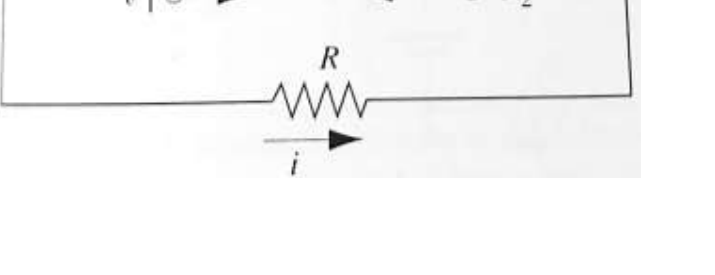
Topic: Circuits Metodi: Kirchhoff’s Laws Competenze: Physical Reasoning Objects: Resistor, Battery Fonte: Testo (PDF) — p.5
PT96. La scuola normale di Bella Vista. Bella Vista, Corrent.
Qual è la corrente nel circuito della figura? Sapendo che la fem e i resistori hanno i seguenti valori: ε1 = 2,1V, ε2 = 4,4V, r1 = 1,8Ω, r2 = 2,3Ω, 𝑅= 5,5Ω
OAF 2018 - 75
Topic: Circuits Metodi: Kirchhoff’s Laws Competenze: Physical Reasoning Objects: Resistor, Battery Fonte: Testo (PDF) — p.5
PT96. The Bella Vista Normal School. It’s a beautiful view, the currents.
What’s the current in the figure’s circuit? Knowing that fem and the resistors have the following values: ε1 = 2,1V, ε2 = 4,4V, r1 = 1,8Ω, r2 = 2,3Ω, 𝑅= 5,5Ω
The Commission shall adopt delegated acts in accordance with Article 21 of this Regulation.
Topic: Circuits Metodi: Kirchhoff’s Laws Competenze: Physical Reasoning Objects: Resistor, Battery Fonte: Testo (PDF) — p.5
PT97. ESETP N° 703 José Toschke. Puerto Madryn, Chubut.
Un cuerpo de 10 kg es impulsado con un resorte de constante elástica k= 1600 N/m por una pista con rozamiento despreciable, salvo en el tramo AB (4 metros de longitud y µd = 0.4). La compresión inicial del resorte es de 0.5 m. El cuerpo viaja por la pista hasta alcanzar una altura máxima de H y regresa. Calcular
a) El valor de la altura h.
b) La velocidad con la cual el bloque sale despedido por el resorte
c) Considerando que el bloque se detiene definitivamente al pasar por la zona de
rozamiento, obtener la distancia del punto B a la cual queda el cuerpo detenido.
Si consideramos que el bloque supera la zona de rozamiento, cual debería ser el valor
mínimo de H para lograr que esto ocurra.
Topic: Conservation of Energy, Newtonian Mechanics Metodi: Energy Conservation Method, Hooke’s Law Competenze: Physical Reasoning Objects: Spring, Block Fonte: Testo (PDF) — p.5
PT97. ESETP N° 703 José Toschke. Port Madryn, Chubut.
Un corpo di 10 kg è propulso con una sorgente di costante elastica k= 1600 N/m per un pista con scarsa ruggine, tranne nel tratto AB (4 metri di lunghezza e μd = 0.4). La compressione iniziale della sorgente è di 0,5 m. Il corpo viaggia lungo la pista fino a raggiungere un massimo di H e tornare indietro. Calcolare
a) Il valore dell’altezza h. b) La velocità con cui il blocco si sposta dal resortimento (c) considerando che il blocco si ferma definitivamente quando passa per la zona di Raggiustare, ottenere la distanza dal punto B a cui rimane il corpo detenuto. Se consideriamo che il blocco supera la zona di ruggine, quale dovrebbe essere il valore minimo di H per far sì che questo accada.
Topic: Conservation of Energy, Newtonian Mechanics Metodi: Energy Conservation Method, Hooke’s Law Competenze: Physical Reasoning Objects: Spring, Block Fonte: Testo (PDF) — p.5
PT97. The Commission has also adopted a proposal for a Regulation (EC) No 1233/2006. Port Madryn, Chubut.
A 10 kg body is propelled with a spring of constant elasticity k= 1600 N/m per a track with a slightly roughing, except in the AB section (4 metres long and μd = 0.4). The initial spring compression is 0.5 m. The body travels down the track to reach a maximum height of H and return. Calculate
(a) The value of height h. (b) The speed at which the block is discharged by the spring (c) Whereas the block stops permanently when it passes through the zone of The distance from point B to which the body is resting. If we consider that the block exceeds the friction zone, what should be the value minimum of H to make this happen.
Topic: Conservation of Energy, Newtonian Mechanics Metodi: Energy Conservation Method, Hooke’s Law Competenze: Physical Reasoning Objects: Spring, Block Fonte: Testo (PDF) — p.5
PT98. ESETP N° 703 José Toschke. Puerto Madryn, Chubut.
La grafica pV de la siguiente figura muestra una serie de procesos termodinámicos. En el proceso ab, se agregan 150J de calor al sistema, en el proceso bd se agregan 600J.
Calcule
a) El cambio de energía interna del proceso ab.
b) El cambio de energía interna en el proceso abd.
c) El calor total agregado en el proceso acd.
d) El trabajo neto realizado por el gas.
e) Que estados pertenecen al proceso isocorico.
f) Teniendo en cuenta el calor involucrado en el proceso bdc. ¿El gas absorbe o
entrega calor?
76 - OAF 2018
Topic: Thermodynamics Metodi: First Law of Thermodynamics, Thermodynamic Cycle Analysis Competenze: Physical Reasoning Objects: Gas Fonte: Testo (PDF) — p.5
PT98. ESETP N° 703 José Toschke. Port Madryn, Chubut.
Il grafico pV della figura seguente mostra una serie di processi termodinamici. En el Il processo ab, si aggiungono 150J di calore al sistema, nel processo bd si aggiungono 600J.
Calcola a) Cambiamento di energia interna del processo ab. b) Cambiamento di energia interna nel processo abd. c) Il calore totale aggregato nel processo acd. d) Il lavoro netto del gas. e) che gli Stati appartengono al processo isocorico. f) Tenendo conto del calore coinvolto nel processo bdc. Il gas assorbe o
- Fornisce calore?
76 - OAF 2018
Topic: Thermodynamics Metodi: First Law of Thermodynamics, Thermodynamic Cycle Analysis Competenze: Physical Reasoning Objects: Gas Fonte: Testo (PDF) — p.5
PT98. The Commission has also adopted a proposal for a Regulation (EC) No 1233/2006. Port Madryn, Chubut.
The pV graph in the following figure shows a series of thermodynamic processes. En el process ab, 150J of heat is added to the system, in process bd 600J is added.
Calculate (a) The change in internal energy of the ab process. (b) The change in internal energy in the process abd. (c) Total heat added in the process acd. (d) Net work carried out by gas. (e) States belonging to the isocoric process. (f) Taking into account the heat involved in the bdc process. Does the gas absorb or Deliver heat?
The following points shall be added:
Topic: Thermodynamics Metodi: First Law of Thermodynamics, Thermodynamic Cycle Analysis Competenze: Physical Reasoning Objects: Gas Fonte: Testo (PDF) — p.5
PT99. ESETP N° 703 José Toschke. Puerto Madryn, Chubut.
Para el circuito de la figura, en el cual todos los elementos del mismo son conocidos
salvo la resistencia R, se pide realice los siguientes cálculos:
a) El valor de R que provoca que la potencia consumida por la resistencia sea la
máxima posible.
b) La potencia que disipa la misma bajo las condiciones anteriores.
c) Corrientes en cada una de las ramas del circuito.
Topic: Circuits Metodi: Kirchhoff’s Laws, Equivalent Circuit Reduction Competenze: Physical Reasoning Objects: Resistor, Battery Fonte: Testo (PDF) — p.5
PT99. ESETP N° 703 José Toschke. Port Madryn, Chubut.
Per il circuito della figura, in cui tutti gli elementi della stessa sono noti se non è la resistenza R, è richiesto di effettuare i seguenti calcoli: a) Il valore di R che provoca la potenza consumata dalla resistenza è il
- Il massimo possibile. b) Potenza che la stessa si dissipe alle condizioni precedenti. c) Correnti in ciascun ramo del circuito.
Topic: Circuits Metodi: Kirchhoff’s Laws, Equivalent Circuit Reduction Competenze: Physical Reasoning Objects: Resistor, Battery Fonte: Testo (PDF) — p.5
PT99. The Commission has also adopted a proposal for a Regulation (EC) No 1233/2006. Port Madryn, Chubut.
For the circuit of the figure, in which all the elements of the same are known Other than resistance R, the following calculations are required: (a) The R value that causes the power consumed by the resistance to be the maximum possible. (b) The power which dissipates it under the above conditions. (c) Current in each of the branches of the circuit.
Topic: Circuits Metodi: Kirchhoff’s Laws, Equivalent Circuit Reduction Competenze: Physical Reasoning Objects: Resistor, Battery Fonte: Testo (PDF) — p.5
PT100. Instituto Salesiano Pío XI. Ciudad de Corrientes.
Un marinero cae desde el mástil de un
barco que navega con una cierta velocidad
uniforme. El mástil tiene 8 m de altura. Se
ha grabado en video la caída del marinero,
pero la cámara se ha movido un poco y
sólo sabemos que la trayectoria está
comprendida entre las dos mostradas en la
figura inferior. Haz las medidas que
necesites con la regla sobre la figura.
a) ¿Qué distancia horizontal recorre el
marinero (o el barco) durante su
caída?
b) Estima la velocidad que lleva el
barco. Expresa el resultado en
nudos (1 nudo = 1.852 km/h).
c) Indica también la incertidumbre (en
km/h) de dicha velocidad.
d) Calcula el valor de la componente
vertical de la velocidad cuando el marinero toca el suelo del barco.
OAF 2018 - 77
Topic: Newtonian Mechanics Metodi: Kinematic Equations, Error Propagation Competenze: Physical Reasoning, Mathematical Modeling Objects: Projectile Fonte: Testo (PDF) — p.5
PT100. Istituto salesiano di Pio XI. Città dei Corrienti.
Un marinaio cade dal mastello di un Un’imbarcazione che naviga a una certa velocità . Uniforme. Il mastello è alto 8 metri. Se Ha filmato il caduto del marinesso. Ma la telecamera si è mossa un po ’ e Sappiamo solo che la traccia è compresa tra le due mostrate nella figura inferiore. Prendi le misure necessarie. Hai bisogno della regola sulla figura. a) Che distanza orizzontale percorre il il marittimo (o la nave) durante il suo
- E’ caduto? b) Calcola la velocità di movimento del
- Un’altra barca. Esprima il risultato in I punti di riferimento sono quelli di cui al punto 1. (c) Indica anche l’incertezza (in a km/h) di tale velocità. d) Calcola il valore del componente Verticale della velocità quando il marittimo tocca il suolo della nave.
OAF 2018 - 77
Topic: Newtonian Mechanics Metodi: Kinematic Equations, Error Propagation Competenze: Physical Reasoning, Mathematical Modeling Objects: Projectile Fonte: Testo (PDF) — p.5
PT100. The Salesian Institute of Pius XI. City of currents.
A sailor falls from the mast of a ship . A ship sailing at a certain speed . uniform. The mast is 8 meters high. Se He’s videotaped the sailor’s fall. But the camera has moved a little bit and We only know that the trajectory is The two figures shown in the table below are: the lower figure. Take the measures you can . You need the rule on the figure. (a) What horizontal distance does the Seaman (or ship) during his
- What? (b) Estimate the speed of the ship. Express the result in The following conditions shall apply: (c) It also indicates uncertainty (in km/h) of that speed. (d) Calculate the value of the component vertical speed when the seaman touches the bottom of the ship.
The Commission shall adopt delegated acts in accordance with Article 21 of the Financial Regulation.
Topic: Newtonian Mechanics Metodi: Kinematic Equations, Error Propagation Competenze: Physical Reasoning, Mathematical Modeling Objects: Projectile Fonte: Testo (PDF) — p.5
PT101. Instituto Salesiano Pío XI. Ciudad de Corrientes.
En el circuito de la figura, la bombilla
B consume 50 W, el amperímetro A,
de resistencia despreciable, marca
0,5 A y la resistencia R3 desprende
calor a razón de 209 J.s-1. Calcular:
a) La intensidad que pasa por
cada rama.
b) La resistencia equivalente.
c) La potencia total consumida
por el circuito.
Topic: Circuits Metodi: Kirchhoff’s Laws, Equivalent Circuit Reduction Competenze: Physical Reasoning Objects: Resistor Fonte: Testo (PDF) — p.5
PT101. Istituto salesiano di Pio XI. Città dei Corrienti.
Nel circuito della figura, la lampadina B consuma 50 W, l’ampiecatore A, di resistenza dispregiata, marca 0,5 A e la resistenza R3 si espone calore a rapporto di 209 J.s-1. Calcolare: a) L’intensità che passa attraverso ogni ramo. b) resistenza equivalente. c) Potenza totale consumata
- Il circuito.
Topic: Circuits Metodi: Kirchhoff’s Laws, Equivalent Circuit Reduction Competenze: Physical Reasoning Objects: Resistor Fonte: Testo (PDF) — p.5
PT101. The Salesian Institute of Pius XI. City of currents.
In the figure circuit, the bulb B consumes 50 W, the amp A, of despicable strength, mark 0.5 A and resistance R3 is given heat at a ratio of 209 J.s-1. Calculation: (a) The intensity it passes through every branch. (b) The equivalent strength. (c) Total power consumed through the circuit.
Topic: Circuits Metodi: Kirchhoff’s Laws, Equivalent Circuit Reduction Competenze: Physical Reasoning Objects: Resistor Fonte: Testo (PDF) — p.5
PT102. EPET N° 13 Gral. José de San Martín - ES N° 11 Abel Acosta. San José, Catamarca.
Suponga una partícula que se desplaza una distancia x= 500m, describiendo una trayectoria rectilínea en un tiempo t=60s. a) Esquematice la situación propuesta. b) Determine la velocidad media de la partícula al realizar dicho desplazamiento. c) Si tuviese, la partícula, un velocímetro de moto, qué velocidad indicaría la aguja del velocímetro (km/h) d) realice un grafico de x(t) y de v(t)
Topic: Newtonian Mechanics Metodi: Kinematic Equations Competenze: Physical Reasoning Objects: — Fonte: Testo (PDF) — p.5
PT102. EPET N° 13 gr. José de San Martín - ES N° 11 Abel Acosta. San José, Catamarca.
Supponiamo che una particella si muova a una distanza di x=500m, descrivendo una traccia rettilinea in un tempo t=60s. a) Squamatizzare la situazione proposta. b) Determina la velocità media della particella nel effettuare tale spostamento. c) Se la particella avesse un velocimetro di moto, quale velocità indicherebbe la spilla di velocità (km/h) d) eseguire un grafico di x(t) e di v(t)
Topic: Newtonian Mechanics Metodi: Kinematic Equations Competenze: Physical Reasoning Objects: — Fonte: Testo (PDF) — p.5
PT102. The following table shows the number of samples taken: The Commission has also adopted a number of proposals for the establishment of a European Parliament and Council meeting on the subject of the European Parliament’s proposal for a Council Directive on the protection of workers’ rights. San Jose, Catamarca. What is it?
Suppose a particle travels a distance of x=500m, describing a The following is the list of the values of the values of the values of the values of the values of the values of the values of the values of the values of the values of the values of the values of the values of the values of the values of the values of the values of the values of the values of the values of the values of the values of the values of the values of the values of the values of the values of the values of the values of the values of the values of the values of the values of the values of the values of the values of the values of the values of the values of the values of the values of the values of the values of the values of the values of the values of the values of the values of the values of the values of the values of the values of the values of the values of the values of the values of the values of the values of the values of the values of the values of the values of the values of the values of the values of the values of the values of the values of the values of the values of the values of the values of the values of the values of the values of the values of the values of the values of the values of the values of the values of the values of the values of the values of the values of the values of the values of the values of the values of the values of the values of the values of the values of the values of the values of the values of the values of the values of the values of the values of the values of the values of the values of the values of the values of the values of the values of the values of the values of the values of the values of the values of the values of the values of the values of the values of the values of the values of the values of the values of the values of the values of the values of the values of the values of the values of the values of the values of the values of the values of the values of the values of the values of the values of the values of the values of the values of the values of the values of the values of the values of the values of the values of the values of the values of the values of the values of the values of the values of the values of the values of the values of the values of the values of the values of the values of the values of the values of the values of the values of the values of the values of the values of the values of the values of the values of the values of the values of the (a) It outlines the proposed situation. (b) Determine the average particle speed when making such a displacement. (c) If the particle had a motorcycle speedometer, what speed would the needle indicate the speedometer (km/h) d) draw a graph of x(t) and v(t)
Topic: Newtonian Mechanics Metodi: Kinematic Equations Competenze: Physical Reasoning Objects: — Fonte: Testo (PDF) — p.5
PT103. EPET N° 13 Gral. José de San Martín - ES N° 11 Abel Acosta. San José, Catamarca.
Un auto se queda varado en el rio de Santa María al cruzar por la calle del matadero de la ciudad, van al rescate tres automóviles A (Camioneta hilux), B (Camioneta Land Rover) de los bomberos voluntarios del lugar y un Renault Duster. Según la grafica tiran del auto en diferentes direcciones y tensiones a) Calcular las componentes de cada fuerza que hacen los automóviles. b) Calcular la resultante total del sistema. c) Ubicar gráficamente la resultante utilizando el mejor método d) Cuál de los métodos es mejor a la hora de graficar la resultante.
Topic: Newtonian Mechanics Metodi: Vector Decomposition, Free-Body Diagram Competenze: Physical Reasoning Objects: — Fonte: Testo (PDF) — p.5
PT103. EPET N° 13 gr. José de San Martín - ES N° 11 Abel Acosta. San José, Catamarca.
Una macchina è rimasta bloccata nel fiume Santa Maria al Attraversando la strada del macello della città, vanno alla Raccogliere tre auto A (Camioneta hilux), B (Land Rover) dei volontari pompieri
- E un Renault Duster. Secondo il grafico tirano della macchina in diverse direzioni e tensioni a) Calcolare i componenti di ogni forza che fanno le auto. b) Calcolare il risultato totale del sistema. c) Localizzare graficamente il risultato utilizzando migliore metodo d) Quale metodo è meglio per il momento di graficare il risultato.
Topic: Newtonian Mechanics Metodi: Vector Decomposition, Free-Body Diagram Competenze: Physical Reasoning Objects: — Fonte: Testo (PDF) — p.5
PT103. The following table shows the number of samples taken: The Commission has also adopted a number of proposals for the establishment of a European Parliament and Council meeting on the subject of the European Parliament’s proposal for a Council Directive on the protection of workers’ rights. San Jose, Catamarca. What is it?
A car is stranded in the Santa Maria River at the Cross the street of the town slaughterhouse, go to the rescue three cars A (Camioneta hilux), B (Land Rover truck) of volunteer firefighters The place and a Renault Duster. According to the drawing , The car is moving in different directions and at different stresses. (a) Calculate the components of each force that They make cars. (b) Calculate the total result of the system. (c) Graphically locate the result using the Best method (d) Which method is best for the graph the result.
Topic: Newtonian Mechanics Metodi: Vector Decomposition, Free-Body Diagram Competenze: Physical Reasoning Objects: — Fonte: Testo (PDF) — p.5
PT104. EPET N° 13 Gral. José de San Martín - ES N° 11 Abel Acosta. San José, Catamarca.
Los bloques de la figura están conectados por medio de una cuerda sin masa que pasa por poleas sin fricción. La aceleración del sistema es 2.0 m/s2 hacia la izquierda y la superficie sobre la que apoya el bloque de masa m2 es rugosa. a) Realice el diagrama de cuerpo aislado de cada uno de los bloques indicando
78 - OAF 2018 claramente las fuerzas que actúan sobre los mismos. b) Escriba las ecuaciones de movimiento de los bloques. c) Determine la tensión en la cuerda.
Nota: Considerar que la aceleración de la gravedad es 10 m/s2.
Topic: Newtonian Mechanics Metodi: Free-Body Diagram, Vector Decomposition Competenze: Physical Reasoning Objects: Block, Pulley, String Fonte: Testo (PDF) — p.5
PT104. EPET N° 13 gr. José de San Martín - ES N° 11 Abel Acosta. San José, Catamarca.
I blocchi della figura sono collegati da mezzo di una corda senza massa che passa attraverso pollici senza attrito. L’accelerazione del sistema è di 2.0 m/s2 verso sinistra e verso la superficie su cui si appoggia il blocco di massa m2 è
- Rossa. a) Realizzare il diagramma del corpo isolato di ciascun blocco indicando
78 - OAF 2018 e chiaramente le forze che agiscono su di loro. b) Scrivi le equazioni di movimento dei blocchi. c) Determina la tensione della corda.
Nota: Considera che l’accelerazione della gravità è di 10 m/s2.
Topic: Newtonian Mechanics Metodi: Free-Body Diagram, Vector Decomposition Competenze: Physical Reasoning Objects: Block, Pulley, String Fonte: Testo (PDF) — p.5
PT104. The following table shows the number of samples taken: The Commission has also adopted a number of proposals for the establishment of a European Parliament and Council meeting on the subject of the European Parliament’s proposal for a Council Directive on the protection of workers’ rights. San Jose, Catamarca. What is it?
The blocks in the figure are connected by By means of a massless rope passing through The pulleys are frictionless. The acceleration of the system It’s 2.0 m/s2 to the left and the surface. The mass block on which m2 rests is It’s rough. (a) Perform the isolated body diagram of each block indicating
The Commission shall adopt delegated acts in accordance with Article 21 of this Regulation. The Commission has already made a number of proposals. (b) Write the equations of motion of the blocks. (c) Determine the tension on the rope.
Note: Consider that the acceleration of gravity is 10 m/s2.
Topic: Newtonian Mechanics Metodi: Free-Body Diagram, Vector Decomposition Competenze: Physical Reasoning Objects: Block, Pulley, String Fonte: Testo (PDF) — p.5
PT105. Escuela de Agricultura. General Alvear, Mendoza.
Un cuerpo de masa M, que se encuentra inicialmente en reposo a una altura H,
desciende por la superficie curva mostrada en la Figura 2. Todos los movimientos se
realizan en el plano vertical. Considere que la pista está libre de rozamiento, salvo en la
zonas marcadas de longitud d. Suponga que la masa M es puntual.
a) Dibuje un vector aceleración total posible cuando pasa por A.
b) Calcule el vector aceleración total en el punto B.
c) Suponga que la masa M llegó al punto D ¿Cuánto vale el trabajo realizado por la
fuerza de rozamiento sobre la masa M?
d) ¿Cuál es la velocidad en el punto D?
e) ¿Cuánto comprime la masa M al resorte?
f) ¿Hasta dónde llega la masa M luego de dejar el resorte?
Datos
M = 1 kg
H = 5 m
μ 1= 0,1 (coeficiente de rozamiento dinámico)
μ 2= 0,3(coeficiente de rozamiento dinámico)
d = 1,5m
g = 9,8 m/s2 (aceleración de la gravedad)
k = 784 N/m. (constante elástica del resorte)
Topic: Conservation of Energy, Newtonian Mechanics Metodi: Energy Conservation Method, Free-Body Diagram, Hooke’s Law Competenze: Physical Reasoning Objects: Spring, Block Fonte: Testo (PDF) — p.5
PT105. Scuola di Agricoltura. Generale Alvear, Mendoza.
Un corpo di massa M, che si trova inizialmente a riposo ad un’altezza H, scende per la superficie curva mostrata in Figura 2. Tutti i movimenti sono che si realizzano a piano verticale. Considera che la pista è libera da macchie, eccetto in zone segnate di lunghezza d. Supponiamo che la massa M sia puntuale. a) Disegna un vettore di accelerazione totale possibile quando passa per A. b) Calcolare il vettore di accelerazione totale al punto B.
c) Supponiamo che la massa M sia arrivata al punto D. forza di ruggine sulla massa M? d) Qual è la velocità al punto D? e) Quanto compressa la massa M alla primavera? f) Quanto raggiunge la massa M dopo aver lasciato la primavera?
Datos
M = 1 kg
H = 5 m
μ 1= 0,1 (coefficiente di ruggine dinamico)
μ 2= 0,3 ((coefficiente di fratturazione dinamica)
d = 1,5m
g = 9,8 m/s2 (accelerazione della gravità)
k = 784 N/m. (constante elastica della primavera)
Topic: Conservation of Energy, Newtonian Mechanics Metodi: Energy Conservation Method, Free-Body Diagram, Hooke’s Law Competenze: Physical Reasoning Objects: Spring, Block Fonte: Testo (PDF) — p.5
PT105. School of Agriculture. General Alvear, Mendoza, please.
An M-mass body, which is initially resting at a height of H, decreases by the curved surface shown in Figure 2. All moves are They do it on the vertical plane. Consider that the track is free of friction except on the marked areas of length d. Suppose the mass M is pointed. (a) Draw a possible total acceleration vector when passing through A. (b) Calculate the total acceleration vector at point B.
(c) Suppose that mass M reached point D. force of friction over mass M? d) What is the speed at point D? (e) How much does mass M compress at spring? (f) How far does mass M go after leaving the spring?
Data from the report
M = 1 kg
H = 5 m
The following table shows the results of the calculation of the weighted average weight of the product:
The following is the list of the types of products used:
d = 1,5m
The following shall be added to the list of the following:
k = 784 N/m. (spring elastic constant)
Topic: Conservation of Energy, Newtonian Mechanics Metodi: Energy Conservation Method, Free-Body Diagram, Hooke’s Law Competenze: Physical Reasoning Objects: Spring, Block Fonte: Testo (PDF) — p.5
PT106. Escuela de Agricultura. General Alvear, Mendoza.
Una muestra de gas que consta de 0,29 mol se comprime de un volumen de 5m3 a 1m3 mientras su presión aumenta de 10 Pa a 40 Pa. Compare el trabajo de efectuado a lo largo (desde b hasta a) de las tres trayectorias diferentes que muestran en la figura.
En base a los resultados obtenidos elabore una conclusión y represente (en el grafico P vs V) el trabajo efectuado en cada proceso.
OAF 2018 - 79
Topic: Thermodynamics Metodi: First Law of Thermodynamics, Calculus-Integration Competenze: Physical Reasoning Objects: Gas Fonte: Testo (PDF) — p.5
PT106. Scuola di Agricoltura. Generale Alvear, Mendoza.
Un campione di gas di 0,29 mol viene compresso di un volume di 5m3 a 1m3 mentre la sua pressione aumenta da 10 Pa a 40 Pa. Compare il lavoro di La Commissione ha adottato una decisione che prevede che il programma di formazione professionale sia stato adottato nel corso di tre settimane. Le tracce differenti mostrate nella figura.
Sulla base dei risultati ottenuti, elabora una Conclusione e rappresentazione (in grafico P vs V) La Commissione ha adottato una decisione che non è stata adottata.
OAF 2018 - 79
Topic: Thermodynamics Metodi: First Law of Thermodynamics, Calculus-Integration Competenze: Physical Reasoning Objects: Gas Fonte: Testo (PDF) — p.5
PT106. School of Agriculture. General Alvear, Mendoza, please.
A gas sample consisting of 0.29 mol is compressed of a volume of 5m3 to 1m3 while its pressure increases from 10 Pa to 40 Pa. Compare the work of The first is the first. The different trajectories shown in the figure.
Based on the results obtained, draw up a The result is the result of the work. The Commission’s proposal for a regulation on the
The Commission shall adopt delegated acts in accordance with Article 21 of the Financial Regulation.
Topic: Thermodynamics Metodi: First Law of Thermodynamics, Calculus-Integration Competenze: Physical Reasoning Objects: Gas Fonte: Testo (PDF) — p.5
PT107. Escuela de Agricultura. General Alvear, Mendoza.
La siguiente figura muestra un circuito en el cual la
R4 está sumergida en un recipiente que contiene
0,88kg de agua dulce a 20°C. Determina:
a) La corriente en cada rama
b) La caída de tensión en cada resistencia
c) La temperatura que alcanza el agua luego
de 2 minutos.
d) ¿Qué valor de corriente sería necesario
para que el agua comience a evaporarse
en ese tiempo
R1= 22Ω / R3= 11Ω / R4= 12Ω / R5= 12Ω / R6= 18Ω / r = 1Ω (resistencia interna)
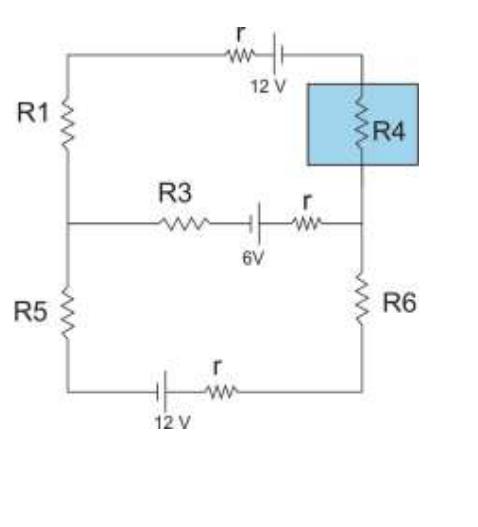
Topic: Circuits, Thermodynamics Metodi: Kirchhoff’s Laws, First Law of Thermodynamics Competenze: Physical Reasoning Objects: Resistor, Calorimeter, Battery Fonte: Testo (PDF) — p.5
PT107. Scuola di Agricoltura. Generale Alvear, Mendoza.
La figura seguente mostra un circuito in cui la R4 è immerso in un contenitore contenente 0,88 kg di acqua dolce a 20°C. Determina: a) Il corrente in ogni ramo b) La caduta di tensione ad ogni resistenza c) La temperatura che raggiunge l’acqua dopo
- Due minuti. d) Che valore di corrente sarebbe necessario Per far iniziare a evaporare l’acqua A quel tempo
R1= 22Ω / R3= 11Ω / R4= 12Ω / R5= 12Ω / R6= 18Ω / r = 1Ω (resistenza interna)
Topic: Circuits, Thermodynamics Metodi: Kirchhoff’s Laws, First Law of Thermodynamics Competenze: Physical Reasoning Objects: Resistor, Calorimeter, Battery Fonte: Testo (PDF) — p.5
PT107. School of Agriculture. General Alvear, Mendoza, please.
The following figure shows a circuit in which the R4 is submerged in a container containing 0,88 kg of fresh water at 20°C. Determine: (a) The current in each branch (b) The drop in voltage at each resistance (c) The temperature that reaches the water afterwards. Two minutes. (d) What current value would be needed So the water starts to evaporate. At that time
R1= 22Ω / R3= 11Ω / R4= 12Ω / R5= 12Ω / R6= The following shall be added to the list of the following:
Topic: Circuits, Thermodynamics Metodi: Kirchhoff’s Laws, First Law of Thermodynamics Competenze: Physical Reasoning Objects: Resistor, Calorimeter, Battery Fonte: Testo (PDF) — p.5
PT108. Escuela de Agricultura. General Alvear, Mendoza.
Un protón que se desplaza con una rapidez de v = 2,5.105 m/s en una región sin campos, entra en una región que tiene un campo magnético B = 1,3 T. si el protón entra al campo magnético con un ángulo de 30°, como se indica la figura:
a) ¿Qué fuerza magnética se ejerce sobre el protón? b) ¿con que ángulo sale de la región? c) ¿a qué distancia d saldrá de dicho campo B?
Topic: Magnetism, Electromagnetism Metodi: Lorentz Force Analysis Competenze: Physical Reasoning Objects: Particle Beam Fonte: Testo (PDF) — p.5
PT108. Scuola di Agricoltura. Generale Alvear, Mendoza.
Un protone che si muove a velocità di v = 2,5.105 m/s in una regione senza campi, entra in una regione che ha un campo magnetico B = 1,3 T. se il protone entra nel campo Magnetico ad angolo 30°, come indicato nella figura:
a) Quale forza magnetica si esercita sul protone? b) da quale angolo esce dalla regione? c) a che distanza d si esce da tale campo B?
Topic: Magnetism, Electromagnetism Metodi: Lorentz Force Analysis Competenze: Physical Reasoning Objects: Particle Beam Fonte: Testo (PDF) — p.5
PT108. School of Agriculture. General Alvear, Mendoza, please.
A proton moving at a speed of v = 2,5.105 m/s in a region without fields, enters a region that has a magnetic field B = 1,3 T. If the proton enters the field Magnetic with an angle of 30°, as shown in Figure:
(a) What magnetic force is exerted on the proton? (b) which angle does it exit the region at? (c) how far d will depart from that field B?
Topic: Magnetism, Electromagnetism Metodi: Lorentz Force Analysis Competenze: Physical Reasoning Objects: Particle Beam Fonte: Testo (PDF) — p.5
PT109. Escuela de Agricultura. General Alvear, Mendoza.
En la siguiente figura dos bloques están unidos por una cuerda
de masa despreciable. El bloque A tiene un peso de 8 kg y el
bloque B tiene un peso de 2,5 kg. Teniendo en cuenta que el
coeficiente de fricción estática es de 0,5 y el coeficiente cinético
es de 0,31 y que el plano tiene un ángulo de 47° con la
superficie horizontal determina:
a) La aceleración del sistema si al inicio B esta en reposo.
b) La aceleración si B sube por el plano.
c) La aceleración si B baja por el plano.
d) Realiza un diagrama de cuerpo libre da cada bloque.
80 - OAF 2018
Topic: Newtonian Mechanics Metodi: Free-Body Diagram, Vector Decomposition Competenze: Physical Reasoning Objects: Block, Inclined Plane, String Fonte: Testo (PDF) — p.5
PT109. Scuola di Agricoltura. Generale Alvear, Mendoza.
Nella figura seguente due blocchi sono uniti da una corda. di massa dispregiata. Blocco A pesa 8 kg e il blocco A pesa 8 kg. Blocco B pesa 2,5 kg. Considerando che il Il coefficiente di attrito statico è di 0,5 e il coefficiente cinetico è di 0,31 e che il piano ha un angolo di 47° con la superficie orizzontale determina: a) Accelerazione del sistema se all’inizio B è a riposo. b) L’accelerazione se B sale per piano. c) L’accelerazione se B scende per piano. d) Realizza un diagramma di corpo libero da ogni blocco.
80 - OAF 2018
Topic: Newtonian Mechanics Metodi: Free-Body Diagram, Vector Decomposition Competenze: Physical Reasoning Objects: Block, Inclined Plane, String Fonte: Testo (PDF) — p.5
PT109. School of Agriculture. General Alvear, Mendoza, please.
In the following figure two blocks are joined by a rope of despicable mass. Block A weighs 8 kg and the Block B weighs 2.5 kg. Given that the The static friction coefficient is 0.5 and the kinetic coefficient is 0.31 and the plane has an angle of 47° with the The horizontal surface determines: (a) The system acceleration if at start B is at rest. (b) Acceleration if B goes up the plane. (c) Acceleration if B is down the plane. (d) Draw a free-body diagram of each block.
The following is the list of the countries of the European Union:
Topic: Newtonian Mechanics Metodi: Free-Body Diagram, Vector Decomposition Competenze: Physical Reasoning Objects: Block, Inclined Plane, String Fonte: Testo (PDF) — p.5
PT110. Escuela de Agricultura. General Alvear, Mendoza.
Dos resistores y dos capacitores no cargados están conectados como indica la figura. Al aplicarse una diferencia de potencial de 24 V a través de la siguiente combinación, como se muestra en la figura: a) ¿Cuál es el potencial en el punto a con el interruptor abierto? b) ¿Cuál es el potencial en el punto b con el interruptor abierto? c) Cuando el interruptor se cierra ¿Cuál es el potencial final en el punto b? d) ¿Cuánta carga fluye a través del interruptor después de que se cierra?
Donde R1=9,2 Ω / R2=5,2 Ω / C1=0,52 μF / C=0,23 μF
Topic: Circuits, Electrostatics Metodi: Equivalent Circuit Reduction, Electric Potential Method Competenze: Physical Reasoning Objects: Resistor, Capacitor, Switch Fonte: Testo (PDF) — p.5
PT110. Scuola di Agricoltura. Generale Alvear, Mendoza.
Due resistori e due capacitori non carichi sono collegati come indicato nella figura. Al applicare una differenza di potenziale di 24 V attraverso la seguente combinazione, come è indicato nella figura: a) Qual è il potenziale al punto a con il interruttore aperto? b) Qual è il potenziale al punto b con il interruttore aperto? c) Quando si chiude il interruttore, qual è il potenziale finale del punto b? d) Quanta carica passa attraverso il interruttore dopo che viene chiuso?
In cui R1=9,2 Ω / R2=5,2 Ω / C1=0,52 μF / C=0,23 μF
Topic: Circuits, Electrostatics Metodi: Equivalent Circuit Reduction, Electric Potential Method Competenze: Physical Reasoning Objects: Resistor, Capacitor, Switch Fonte: Testo (PDF) — p.5
PT110. School of Agriculture. General Alvear, Mendoza, please.
Two resistors and two uncharged capacitors are connected as shown in the figure. Al a 24 V potential difference is applied by the following combination, as is shown in the figure: (a) What is the potential at point a with the switch open? (b) What is the potential at point (b) with the switch open? (c) When the switch is closed, what is the final potential in point (b)? (d) How much charge flows through the switch after it closes?
Where R1=9,2 Ω / R2=5,2 Ω / C1=0,52 μF / C=0,23 μF
Topic: Circuits, Electrostatics Metodi: Equivalent Circuit Reduction, Electric Potential Method Competenze: Physical Reasoning Objects: Resistor, Capacitor, Switch Fonte: Testo (PDF) — p.5
PT111. Colegio Emaús. El Palomar, Buenos Aires.
Desde la superficie de la tierra se lanza una piedra verticalmente hacia arriba con una velocidad de 20m/s. Un segundo después de lanzada la piedra, se deja caer (con una velocidad inicial cero) un pequeño bloque de acero desde una altura de 20m sobre la superficie de la tierra. Los cuerpos se mueven a lo largo de trayectorias paralelas. a) Elija un sistema de referencia y plantee las ecuaciones para la posición y la velocidad de la piedra y del bloque en función del tiempo. b) Calcule el tiempo transcurrido hasta que los dos cuerpos se encuentren a la misma altura ¿Cuál es esta altura? c) Grafique posición en función del tiempo de los 2 cuerpos (en un mismo gráfico) e indique en el gráfico el punto de cruce.
Topic: Newtonian Mechanics Metodi: Kinematic Equations Competenze: Physical Reasoning, Mathematical Modeling Objects: Block Fonte: Testo (PDF) — p.5
PT111. - Scuola Emmaus. Il Palomar, Buenos Aires.
Dalla superficie della terra si lancia una pietra verticalmente verso l’alto con una velocità di 20 m/s. Un secondo dopo il lancio della pietra, si lascia cadere (con una velocità iniziale zero) un piccolo blocco di acciaio da un’altezza di 20m sopra la la superficie della terra. I corpi si muovono lungo percorsi paralleli. a) Scegli un sistema di riferimento e formula le equazioni per la posizione e la velocità della pietra e del blocco in funzione del tempo. b) Calcolare il tempo trascorso fino a quando i due corpi si incontrano.
- E’ la stessa altezza. - Qual è questa altezza? c) Graficare la posizione in funzione del tempo dei due corpi (sulla stessa grafica) e Indicare sul grafico il punto di attraversamento.
Topic: Newtonian Mechanics Metodi: Kinematic Equations Competenze: Physical Reasoning, Mathematical Modeling Objects: Block Fonte: Testo (PDF) — p.5
PT111. Emmaus College. The Palomar, Buenos Aires.
From the surface of the earth a stone is thrown vertically upwards with a speed of 20m/s. A second after the stone is thrown, it is dropped (with a Initial speed zero) a small block of steel from a height of 20m above the surface of the earth. Bodies move along parallel paths. (a) Choose a reference system and propose the equations for the position and the The speed of the stone and the block depends on the time. (b) Calculate the time elapsed until both bodies meet at the What is this height? (c) Graph position based on the time of the two bodies (on the same graph) and indicate the point of intersection on the graph.
Topic: Newtonian Mechanics Metodi: Kinematic Equations Competenze: Physical Reasoning, Mathematical Modeling Objects: Block Fonte: Testo (PDF) — p.5
PT112. Colegio Emaús. El Palomar, Buenos Aires.
Un bloque de masa m=1kg parte desde el reposo y desliza una distancia d hacia abajo por un plano inclinado en donde choca con un resorte de constante elástica k=400N/m. El bloque desliza 20cm antes de llegar al reposo momentáneamente comprimiendo el resorte. No hay rozamiento entre el bloque y el plano. La inclinación del plano es de 30°. a) Determine la distancia d. b) Determine la velocidad del bloque en el momento en que choca contra el resorte.
d m 30
OAF 2018 - 81
Topic: Conservation of Energy, Newtonian Mechanics Metodi: Energy Conservation Method, Hooke’s Law Competenze: Physical Reasoning Objects: Spring, Block, Inclined Plane Fonte: Testo (PDF) — p.5
PT112. - Scuola Emmaus. Il Palomar, Buenos Aires.
Un blocco di massa m=1kg parte dal riposo e scivola una distanza d verso il basso per un piano inclinato dove colpisce con una sorgente di costante elastica k=400N/m. El Blocco scivola 20 cm prima di arrivare al riposo momentaneamente compresso il Primavera. Non c’è lacerazione tra il blocco e il piano. L’inclinazione del piano è di 30°. a) Determina la distanza d. b) Determina la velocità del blocco al momento in cui colpisce la sorgente.
d m 30
OAF 2018 - 81
Topic: Conservation of Energy, Newtonian Mechanics Metodi: Energy Conservation Method, Hooke’s Law Competenze: Physical Reasoning Objects: Spring, Block, Inclined Plane Fonte: Testo (PDF) — p.5
PT112. Emmaus College. The Palomar, Buenos Aires.
A block of mass m=1kg starts from the rest and slides a distance d downwards by an inclined plane where it collides with a spring of constant elasticity k=400N/m. El Block slides 20cm before reaching rest momentarily compressing the spring. There’s no friction between the block and the plane. The slope of the plane is 30°. (a) Determine the distance d. (b) Determine the speed of the block at the time it hits the spring.
d m 30
The Commission shall adopt delegated acts in accordance with Article 21 of Regulation (EU) No 1303/2013.
Topic: Conservation of Energy, Newtonian Mechanics Metodi: Energy Conservation Method, Hooke’s Law Competenze: Physical Reasoning Objects: Spring, Block, Inclined Plane Fonte: Testo (PDF) — p.5
PT113. Colegio Emaús. El Palomar, Buenos Aires.
Se tienen tres lámparas de 10 Ω cada una.
a) Dibujar todas las formas posibles de conectarlas.
b) Calcular la resistencia total de cada uno de los circuitos creados en el punto a.
c) Elegir uno de los circuitos creados en el punto a, y calcularle la caída de tensión
y la intensidad de corriente que lo atraviesa en dos puntos que vos elijas del
circuito (márcalos en el circuito elegido), suponiendo que la alimentación del
circuito es de 120V.
Topic: Circuits Metodi: Equivalent Circuit Reduction, Kirchhoff’s Laws Competenze: Physical Reasoning Objects: Resistor Fonte: Testo (PDF) — p.5
PT113. - Scuola Emmaus. Il Palomar, Buenos Aires.
Ci sono tre lampade di 10 Ω ciascuna. a) Disegnare tutti i possibili modi di collegarli. b) Calcolare la resistenza totale di ciascun circuito creato al punto a. c) Selezionare uno dei circuiti creati al punto a e calcolare la sua caduta di tensione e l’intensità del corrente che lo attraversa in due punti che scegliete Il circuito (marchi nel circuito scelto), supponendo che l’alimentazione del Il circuito è di 120 V.
Topic: Circuits Metodi: Equivalent Circuit Reduction, Kirchhoff’s Laws Competenze: Physical Reasoning Objects: Resistor Fonte: Testo (PDF) — p.5
PT113. Emmaus College. The Palomar, Buenos Aires.
You have three 10-o-meter lamps each. (a) Draw all possible ways of connecting them. (b) Calculate the total resistance of each of the circuits created in point (a). (c) Select one of the circuits created at point (a) and calculate the voltage drop And the current intensity that goes through it at two points you choose from. The power supply of the electricity is the electricity supply of the electricity supply. The circuit is 120V.
Topic: Circuits Metodi: Equivalent Circuit Reduction, Kirchhoff’s Laws Competenze: Physical Reasoning Objects: Resistor Fonte: Testo (PDF) — p.5
PT114. Escuela Nueva Juan Mantovani. Argüello, Córdoba.
Se coloca una bolita de 200g de masa en el extremo superior A del dispositivo que se
muestra en la figura, cuyo plano inclinado tiene un ángulo constante de 30°.
Considerando despreciable el rozamiento del aire y teniendo en cuenta que el coeficiente
de rozamiento de la superficie ABC con la bolita es de µd = 0,15.
a) Hallar una expresión que permita calcular la velocidad de la bolita en el punto C.
b) Calcular:
I.
El punto de impacto en el suelo.
II.
La altura H si el punto de impacto fuera de 0,45m.
III. El trabajo neto realizado sobre la bolita en el tramo AC. ¿Quién ejerce ese
trabajo?.
IV. La velocidad de impacto en el suelo, respetando las condiciones iniciales
del problema.
c) Calcular cuánto debería valer la distancia BC para que la bolita caiga
exactamente en el recipiente que se encuentra en el punto F de la figura.
Datos
H = 1m
h = 0,5m
BC = 0,2m
DF = 0,6 m
Topic: Newtonian Mechanics, Conservation of Energy Metodi: Energy Conservation Method, Kinematic Equations, Free-Body Diagram Competenze: Physical Reasoning, Mathematical Modeling Objects: Ball, Inclined Plane, Projectile Fonte: Testo (PDF) — p.5
PT114. Scuola Nuova Juan Mantovani. Argüello, Cordoba.
Si colloca una pallina di 200 g di massa nella parte superiore A del dispositivo che si mostra nella figura, il cui piano inclinato ha un angolo costante di 30°. Considerando disprezzabile il ruggine dell’aria e considerando che il coefficiente di rottura della superficie ABC con la pallina è di μd = 0,15. a) Trovare un’espressione che permetta di calcolare la velocità della pallina al punto C. b) Calcolare: I. Il punto di impatto sul suolo. II. Altezza H se il punto di impatto era di 0,45 m. III. Il lavoro netto effettuato sulla bolletta nel tratto AC. Chi esercita questo? lavoro? IV. La velocità di impatto sul suolo, rispettando le condizioni iniziali Il problema. c) Calcolare quanto la distanza BC dovrebbe essere utile per far cadere la palla in un recipiente che si trova nel punto F della figura.
Datos
H = 1m
h = 0,5m
BC = 0,2m
DF = 0,6 m
Topic: Newtonian Mechanics, Conservation of Energy Metodi: Energy Conservation Method, Kinematic Equations, Free-Body Diagram Competenze: Physical Reasoning, Mathematical Modeling Objects: Ball, Inclined Plane, Projectile Fonte: Testo (PDF) — p.5
PT114. The New Juan Mantovani School. Argüello, Cordoba. I know.
A ball of 200 g of mass is placed on the upper end A of the device which is being used. The following table shows the slope of the slope of the slope of the slope of the slope of the slope of the slope of the slope of the slope of the slope of the slope of the slope of the slope of the slope of the slope of the slope of the slope of the slope of the slope of the slope of the slope of the slope of the slope of the slope of the slope of the slope of the slope of the slope of the slope of the slope of the slope of the slope of the slope of the slope of the slope of the slope of the slope of the slope of the slope of the slope of the slope of the slope of the slope of the slope of the slope of the slope of the slope of the slope of the slope of the slope of the slope of the slope of the slope of the slope of the slope of the slope of the slope of the slope of the slope of the slope of the slope of the slope of the slope of the slope of the slope of the slope of the slope of the slope of the slope of the slope of the slope of the slope of the slope of the slope of the slope of the slope of the slope of the slope of the slope of the slope of the slope of the slope of the slope of the slope of the slope of the slope of the slope of the slope. Considering the air friction despicable and taking into account that the coefficient The surface ABC of the ball is rubbed by μd = 0,15. (a) Find an expression that allows the ball’s velocity to be calculated at point C. (b) Calculate: I. The impact point on the ground. II. Height H if the point of impact was 0.45m. The Commission shall adopt the following: Net work on the ticket in the AC section. Who exercises that? I’m working. IV. The impact velocity on the ground, respecting the initial conditions The problem. (c) Calculate how much distance BC should be worth for the ball to fall. the container in point F of the figure.
Data from the report
H = 1m
h = 0,5m
BC = 0,2m
DF = 0,6 m
Topic: Newtonian Mechanics, Conservation of Energy Metodi: Energy Conservation Method, Kinematic Equations, Free-Body Diagram Competenze: Physical Reasoning, Mathematical Modeling Objects: Ball, Inclined Plane, Projectile Fonte: Testo (PDF) — p.5
PT115. Escuela Nueva Juan Mantovani. Argüello, Córdoba.
El circuito de la figura es alimentado por una batería de
24v, de resistencia interna despreciable, y 45Ah de
carga. Todas las resistencias son de 12Ω y su valor es
constante.
Calcular:
a) Las intensidades de corriente que circulan por
cada resistencia, al estar las 2 llaves cerradas,
al estar L1 cerrada (con L2 abierta), y al estar L2
cerrada (con L1 abierto). Sacar conclusiones.
82 - OAF 2018 b) El tiempo de duración de la batería estando ambas llaves cerradas. c) Si la potencia máxima que puede disipar cada resistencia es de 1,5 W, verificar si todas las resistencias pueden quedar conectadas, de lo contrario, indicar justificando en qué combinación deben quedar las llaves. d) Por un defecto del material, se quemaron las resistencias R2 y R3 y se deben reemplazar, pero sólo se cuenta con presupuesto para comprar una sola. ¿de cuántos ohms deberá ser esta nueva resistencia para no modificar la resistencia total del circuito?
Ayuda
Un “Ah” significa Ampere-hora, y es una magnitud que indica la cantidad de carga
eléctrica que pasa por los terminales de un dispositivo de almacenamiento de energía
eléctrica cuando este proporciona una corriente eléctrica de 1 amperio durante 1 hora.
Por ejemplo, 45Ah significa que la batería puede emitir hasta agotarse 45A en una hora,
o 1A durante 45hs, ó 0,1A durante 450hs, etc.
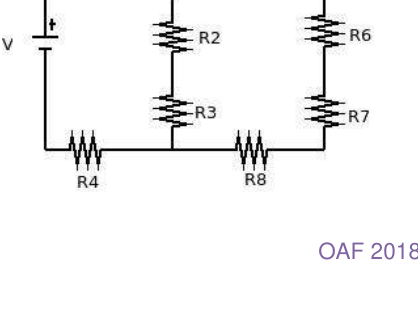
Topic: Circuits Metodi: Kirchhoff’s Laws, Equivalent Circuit Reduction Competenze: Physical Reasoning, Mathematical Modeling Objects: Battery, Resistor, Switch Fonte: Testo (PDF) — p.5
PT115. Scuola Nuova Juan Mantovani. Argüello, Cordoba.
Il circuito della figura è alimentato da una batteria di 24V, di disprezzabile resistenza interna, e 45Ah di carica. Tutte le resistenze sono di 12Ω e il loro valore è costante. Calcolare: a) Le intensità di corrente che circolano per ogni resistenza, con le due chiavi chiuse, quando L1 è chiuso (con L2 aperto), e quando L2 è aperto chiuso (con L1 aperto). - Per concludere.
82 - OAF 2018 b) La durata della batteria con entrambe le chiavi chiuse. c) Se la potenza massima che può dissipare ogni resistenza è di 1,5 W, verificare se tutte le resistenze possono essere collegate, altrimenti indicare giustificando in che combinazione devono restare le chiavi. d) A causa di un difetto del materiale, le resistenze R2 e R3 sono state bruciate e devono essere sostituire, ma si ha il budget per comprarne solo una. ¿de Quanti ohms deve essere questa nuova resistenza per non modificare la resistenza totale del circuito?
Aiuto . Un Ah significa Ampere-ora, ed è una magnitudo che indica la quantità di carico elettrico che passa attraverso i terminali di un dispositivo di stoccaggio di energia elettrica quando essa fornisce un corrente elettrica di 1 ampere per 1 ora. Per esempio, 45Ah significa che la batteria può emettere fino a esaurirsi 45A in un’ora. o 1A per 45 ore, o 0,1A per 450 ore, ecc.
Topic: Circuits Metodi: Kirchhoff’s Laws, Equivalent Circuit Reduction Competenze: Physical Reasoning, Mathematical Modeling Objects: Battery, Resistor, Switch Fonte: Testo (PDF) — p.5
PT115. The New Juan Mantovani School. Argüello, Cordoba. It is a city.
The circuit in the figure is powered by a battery of 24v, of negligible internal resistance, and 45Ah of load. All resistors are 12Ω and their value is It’s constant. Calculation: (a) The current intensities circulating by Each resistance, with the two keys locked, when L1 is closed (with L2 open), and when L2 is closed (with L1 open). I’m going to draw conclusions.
82 - OAF 2018 (b) The battery life of both keys closed. (c) If the maximum power that can dissipate each resistance is 1.5 W, check whether All resistors can be connected otherwise indicate justifying the combination of the keys. (d) Due to a material defect, the resistors R2 and R3 were burned and must be replace, but you only have the budget to buy one. ¿de How many ohms should this new resistance be to not modify the resistance the entire circuit?
Help . A Ah means Ampere-hour, and is a magnitude that indicates the amount of charge electrical current passing through the terminals of an energy storage device electrical power when it provides an electric current of 1 ampere for 1 hour. For example, 45Ah means the battery can emit until it runs out 45A in an hour. or 1A for 45h, or 0,1A for 450h, etc.
Topic: Circuits Metodi: Kirchhoff’s Laws, Equivalent Circuit Reduction Competenze: Physical Reasoning, Mathematical Modeling Objects: Battery, Resistor, Switch Fonte: Testo (PDF) — p.5
PT116. Escuela Nueva Juan Mantovani. Argüello, Córdoba.
Un gas ideal se encuentra inicialmente en el estado A, a una presión P0, en un volumen V0 y a una temperatura T0, se somete al ciclo ABCDEA que se describe en la figura, donde el tramo CD es una isotérmica. Determine: a) El trabajo neto realizado por el gas en función de P0 y V0 y T0 b) ¿Cuál es el calor neto que se aporta al sistema en cada ciclo? c) Obtenga un valor numérico para el trabajo neto realizado cuando se tiene 1 mol de gas a una temperatura inicial de T0 = 0°C, P0 = 1atm; V0 = 2 l
Datos
Topic: Thermodynamics Metodi: Thermodynamic Cycle Analysis, First Law of Thermodynamics, Ideal Gas Law Competenze: Physical Reasoning, Mathematical Modeling Objects: Gas Fonte: Testo (PDF) — p.5
PT116. Scuola Nuova Juan Mantovani. Argüello, Cordoba.
Un gas ideale si trova Inizialmente allo stato A, a una P0, a un volume V0 e a una temperatura T0, si sommette al ciclo ABCDEA descritto in figura, dove il tratto CD è un Isotermico. Determina: a) Il lavoro netto svolto da gas in funzione di P0 e V0 y T0 b) Qual è il calore netto che viene fornito al sistema in ogni ciclo? (c) Ottieni un valore numerico per il lavoro netto svolto quando hai 1 mol di gas a una temperatura iniziale di T0 = 0°C, P0 = 1atm; V0 = 2 l
Datossegna
Topic: Thermodynamics Metodi: Thermodynamic Cycle Analysis, First Law of Thermodynamics, Ideal Gas Law Competenze: Physical Reasoning, Mathematical Modeling Objects: Gas Fonte: Testo (PDF) — p.5
PT116. The New Juan Mantovani School. Argüello, Cordoba. It is a city.
An ideal gas is found. Initially in state A, to a P0 pressure, in a volume V0 and a a temperature of T0, it is subjected to The ABCDEA cycle described in the Figure, where the CD section is a isothermal. Determine: (a) Net work carried out by the gas in terms of P0 and V0 y T0 (b) What is the net heat supplied to the system in each cycle? (c) Obtain a numerical value for the net work performed when 1 mol is taken The following is the list of the gases used in the manufacture of the product:
The data
Topic: Thermodynamics Metodi: Thermodynamic Cycle Analysis, First Law of Thermodynamics, Ideal Gas Law Competenze: Physical Reasoning, Mathematical Modeling Objects: Gas Fonte: Testo (PDF) — p.5
PT117. Escuelas Técnicas Raggio. Ciudad Autónoma de Buenos Aires.
Un paquete de 2 kg se suelta en una pendiente de 53° a 4 m de un
resorte largo, cuya constante de fuerza es de 120 N/m y está sujeto a
la base de la pendiente. El coeficiente de fricción entre el paquete y la
pendiente vale 0,5. La masa del resorte es despreciable.
a) ¿Qué rapidez tiene el paquete justo antes de llegar al
resorte? b) ¿Cuál es la compresión máxima del resorte? c) Al
rebotar el paquete hacia arriba, ¿qué tanto se acerca a su
posición inicial?
OAF 2018 - 83
Topic: Conservation of Energy, Newtonian Mechanics Metodi: Energy Conservation Method, Hooke’s Law, Free-Body Diagram Competenze: Physical Reasoning, Mathematical Modeling Objects: Block, Spring, Inclined Plane Fonte: Testo (PDF) — p.5
PT117. Scuole tecniche Raggio. Città autonoma di Buenos Aires.
Un pacchetto di 2 kg viene rilasciato su una pendenza di 53° a 4 m da un una resorte lunga, la cui costante di forza è di 120 N/m e è soggetta a la base dell’inclinazione. Il coefficiente di attrito tra il pacchetto e la Pendenze vale 0,5. La massa della primavera è dispregiata. a) Che velocità ha il pacco appena prima di arrivare al Primavera? b) Qual è la compressione massima della scorsa? c) Al Ripostare il pacchetto verso l’alto, quanto si avvicina al suo posizione iniziale?
OAF 2018 - 83
Topic: Conservation of Energy, Newtonian Mechanics Metodi: Energy Conservation Method, Hooke’s Law, Free-Body Diagram Competenze: Physical Reasoning, Mathematical Modeling Objects: Block, Spring, Inclined Plane Fonte: Testo (PDF) — p.5
PT117. Raggio Technical Schools. The Autonomous City of Buenos Aires.
A 2 kg package is released on a slope of 53° at 4 m from a Long spring, the force constant of which is 120 N/m and is subject to the base of the slope. The friction coefficient between the package and the The slope is 0.5. The mass of the spring is despicable. (a) How fast is the package just before it reaches the spring? (b) What is the maximum spring compression? c) Al Bounce the package up, how close you get to it. The starting position?
The Commission shall adopt delegated acts in accordance with Article 21 of Regulation (EU) No 1303/2013.
Topic: Conservation of Energy, Newtonian Mechanics Metodi: Energy Conservation Method, Hooke’s Law, Free-Body Diagram Competenze: Physical Reasoning, Mathematical Modeling Objects: Block, Spring, Inclined Plane Fonte: Testo (PDF) — p.5
PT118. Escuelas Técnicas Raggio. Ciudad Autónoma de Buenos Aires.
Con el motor retirado, la masa del automóvil es de 1.100 kg y su centro de gravedad está en C. (a) Se quiere situar el motor de 220 kg cuyo centro de gravedad denominamos E, de manera que el centro de gravedad del conjunto quede a mitad de distancia entre las ruedas delanteras, A, y traseras, B. ¿Qué valor debe tener b? (b) Si el automóvil se estaciona sobre una pendiente de subida de 15º ¿qué valor tiene la fuerza de apoyo sobre las ruedas?
Topic: Rigid Body Statics Metodi: Torque & Angular Momentum Analysis, Free-Body Diagram Competenze: Physical Reasoning, Mathematical Modeling Objects: Block, Inclined Plane Fonte: Testo (PDF) — p.5
PT118. Scuole tecniche Raggio. Città autonoma di Buenos Aires.
Con il motore rimosso, la massa dell’auto è di 1.100 kg e il suo centro di gravità è en C. (a) Si vuole posizionare il motore da 220 kg il cui centro di gravità è denominato E, In questo modo il centro di gravità del gruppo si trova a metà distanza tra le due. le ruote anteriori, A, e le ruote posteriori, B. Qual è il valore di b? (b) Se l’auto è Stazionato su una pendice di salita di 15°, che valore ha la forza di supporto sulle ruote?
Topic: Rigid Body Statics Metodi: Torque & Angular Momentum Analysis, Free-Body Diagram Competenze: Physical Reasoning, Mathematical Modeling Objects: Block, Inclined Plane Fonte: Testo (PDF) — p.5
PT118. Raggio Technical Schools. The Autonomous City of Buenos Aires.
With the engine removed, the mass of the car is 1,100 kg and its center of gravity is en C. (a) The 220 kg engine, whose centre of gravity we call E, is to be located. So the center of gravity of the set is halfway between the two. front wheels, A, and rear wheels, B. What should b be? (b) If the car is It’s parked on a 15° rise slope. What’s the value of the supporting force? on the wheels?
Topic: Rigid Body Statics Metodi: Torque & Angular Momentum Analysis, Free-Body Diagram Competenze: Physical Reasoning, Mathematical Modeling Objects: Block, Inclined Plane Fonte: Testo (PDF) — p.5
PT119. Escuelas Técnicas Raggio. Ciudad Autónoma de Buenos Aires.
El gráfico muestra cómo varía la temperatura de una muestra de un kilogramo de un material X que se encuentra en estado sólido a medida que intercambia calor con el medio exterior. A continuación se coloca esa muestra X a 200°C junto con un kilogramo de otro material Y a 150°C en estado sólido. Al llegar al equilibrio ambos materiales son sólidos y se encuentran a 190°C. a) ¿Cuál es el calor específico del material Y? b) Luego se colocan en otro calorímetro un kilo de sólido X a 300°C y un kilo de sólido Y a la temperatura de fusión (250°C). Al llegar al equilibrio se fundió la mitad del material Y. Determinar el calor latente de fusión de Y.
Topic: Thermodynamics Metodi: Conservation of Energy, Experimental Data Analysis Competenze: Physical Reasoning, Mathematical Modeling Objects: Calorimeter Fonte: Testo (PDF) — p.5
PT119. Scuole tecniche Raggio. Città autonoma di Buenos Aires.
Il grafico mostra come varia la temperatura di un campione di un chilo di materiale X che si trova in stato solido in quanto si scambia calore con il medio all’esterno. In seguito, il campione X è posto a 200°C con un chilo di altro materiale Y a 150°C in stato solido. Al raggiungimento dell’equilibrio entrambi i materiali sono solidi e sono situati a 190°C. a) Qual è la specificità di calore del materiale Y? b) Poi si inserisce in un altro calometro un chilo di solido X a 300°C e un chilo di solido Y a temperatura di fusione (250°C). Al raggiungimento del equilibrio fu fonduto la metà del materiale Y. Determinare il calore latente di fusione di Y.
Topic: Thermodynamics Metodi: Conservation of Energy, Experimental Data Analysis Competenze: Physical Reasoning, Mathematical Modeling Objects: Calorimeter Fonte: Testo (PDF) — p.5
PT119. Raggio Technical Schools. The Autonomous City of Buenos Aires.
The graph shows how the temperature of a sample varies of a kilogram of material X found in solid state as it exchanges heat with the medium outside. Then that sample X is placed at 200°C together with one kilogram of other material Y to 150°C in state solid. When the balance is reached both materials are solid and are located at 190°C. (a) What is the specific heat of material Y? (b) Then put in another calorimeter a kilogram of solid X to 300°C and one kilogram of solid Y to The following conditions shall apply: When the balance was reached, half of the material and. Determine the latent heat of fusion of Y.
Topic: Thermodynamics Metodi: Conservation of Energy, Experimental Data Analysis Competenze: Physical Reasoning, Mathematical Modeling Objects: Calorimeter Fonte: Testo (PDF) — p.5
PT120. Escuela Superior de Comercio Carlos Pellegrini Escuela de Comercio N° 31 Naciones Unidas. Ciudad Autónoma de Buenos Aires.
La calle y los semáforos Durante la noche, la avenida Córdoba, que es mano hacia el oeste, tiene una onda verde que avanza a 45 km/h. Los semáforos cambian de luz cada 40 segundos y la distancia entre cuadras es de 100 metros. En el instante 𝑡= 0, el semáforo en la encrucijada con la avenida Callao cambia a verde: decimos que la onda verde pasó por Callao. a) A partir de que un semáforo cambia de luz, calcule cuánto tiempo pasa hasta que el semáforo de la cuadra siguiente cambia de luz.
En 𝑡= 0, una moto cruza Callao a 16 m/s y sigue con esa velocidad hasta llegar a 30 m del siguiente semáforo. En ese momento aplica los frenos, desacelerando uniformemente de manera de llegar al cruce con Riobamba justo cuando el semáforo cambia a verde.
84 - OAF 2018 b) Hallar la aceleración con la que frena el motociclista y con qué velocidad llega al semáforo. c) Su compañera, algo más prudente, iba en otra moto a la misma velocidad pero empieza a aplicar los frenos a mitad de cuadra y también llega a Riobamba justo cuando cambia el semáforo. ¿Con qué velocidad llega? d) Calcular qué aceleración debería tener cada uno para alcanzar el tercer semáforo con rapidez de 45 km/h.
En 𝑡= 40 𝑠, pasa la onda roja por Callao y a 𝑡= 80 𝑠 estará pasando una segunda onda verde. e) ¿A qué distancia está una onda roja de la siguiente onda verde? ¿Qué distancia hay entre dos ondas verdes consecutivas? Llamaremos a este último valor longitud de onda. f) Proponer un sistema de referencia y escribir la ecuación horaria de posición de la primera onda verde, la primera onda roja, la segunda onda verde y la segunda onda roja. Usted va en bicicleta pedaleando por Córdoba con todas sus fuerzas a 27 km/h y cruza Callao en 𝑡= 0. g) ¿Cuántas cuadras podrá avanzar hasta encontrarse con un semáforo en rojo? h) Suponga que usted espera detenide en el semáforo hasta que cambia a verde y entonces inmediatamente vuelve a moverse con la velocidad anterior. Así, el ciclo se repite. ¿Cuál es, entonces, la velocidad media de su viaje? Si tiene que recorrer 4 km sobre Córdoba, ¿cuánto tiempo le llevará?
Su amigo, en cambio, debe caminar unas cuadras (también por Córdoba) para tomar el colectivo. Sin embargo, no le gusta quedarse esperando en las esquinas de noche a que cambie la luz del semáforo. i) Si en 𝑡= 0 su amigo también está cruzando Callao, diga cuatro posibles velocidades a las que puede caminar de manera de llegar a la cuadra siguiente justo cuando la luz cambia a verde.
Topic: Newtonian Mechanics, Oscillations & Waves Metodi: Kinematic Equations Competenze: Physical Reasoning, Mathematical Modeling Objects: — Fonte: Testo (PDF) — p.5
PT120. Scuola superiore di commercio Carlos Pellegrini Scuola di Commercio N° 31 Nazioni Unite. Città autonoma di Buenos Aires.
La strada e i semafori Durante la notte, l’Avenue Córdoba, che è mano a ovest, ha un’onda verde. che avanza a 45 km/h. I semafori cambiano di luce ogni 40 secondi e la distanza. tra quadri è di 100 metri. All’istante t=0, il semaforo al punto di incrocio con l’Avenue Callao cambia di colore: Diciamo che l’onda verde è passata da Callao. a) Dopo che un semaforo cambia di luce, calcola quanto tempo passa fino a che Il semaforo del quartiere successivo cambia luce.
A t=0, una moto attraversa Callao a 16 m/s e continua a quella velocità fino a raggiungere 30 m. dal prossimo semaforo. Applica i freni, rallentando uniformemente Per arrivare al punto di intersezione con Riobamba proprio quando il semaforo diventa verde.
84 - OAF 2018 b) Indicare l’accelerazione con cui il motociclista frenano e la velocità con cui raggiunge il punto di partenza. semaforo. c) La sua compagna, un po’ più prudente, andava su un’altra moto alla stessa velocità, ma Comincia a frenare a metà strada e arriva anche a Riobamba Quando cambia il semaforo. A che velocità arriva? d) Calcolare l’accelerazione che ciascuno dovrebbe avere per raggiungere il terzo semaforo a 45 km/h.
A t=40 s, passa l’onda rossa per Callao e a t=80 s passa una seconda onda. verde. e) A che distanza si trova un’onda rossa dalla prossima onda verde? Che distanza c’è tra due onde verdi consecutive? Chiameremo questo ultimo valore lunghezza d’onda. f) Proporre un sistema di riferimento e scrivere l’equazione oraria della posizione della La prima onda verde, la prima onda rossa, la seconda onda verde e la seconda. onda rossa. Tu vai in bicicletta pedalando in Cordoba con tutte le tue forze a 27 km/h e attraversa Silenzio a t=0. g) Quante strade può percorrere per incontrare un semaforo rosso? h) Supponiamo che tu stia aspettando che il semaforo si accendi fino a quando non diventa verde e Quindi, immediatamente, si muove di nuovo alla velocità precedente. Così, il ciclo si ripete. Qual è, allora, la velocità media del suo viaggio? Se dovesse. Per un viaggio di 4 km su Cordoba, quanto tempo ci vorrà?
Il suo amico, invece, deve camminare qualche chilometro (anche per Cordoba) per prendere il collettiva. Tuttavia, non gli piace stare in attesa nei canali di notte per che Cambiare la luce del semaforo. i) Se in t=0 il tuo amico sta anche attraversando Callao, digli quattro possibili velocità a cui può camminare per arrivare al prossimo quartiere Proprio quando la luce diventa verde.
Topic: Newtonian Mechanics, Oscillations & Waves Metodi: Kinematic Equations Competenze: Physical Reasoning, Mathematical Modeling Objects: — Fonte: Testo (PDF) — p.5
PT120. The Carlos Pellegrini School of Commerce School of Commerce N° 31 United Nations. The Autonomous City of Buenos Aires.
The street and the traffic lights. At night, the avenue Cordoba, which is handy westward, has a green wave. It’s moving at 45 km/h. The traffic lights change every 40 seconds and the distance . It’s 100 meters between blocks. In the instant t=0, the traffic light at the intersection with Callao Avenue turns green: We say the green wave passed through Callao. (a) Once a traffic light switches on, calculate how long it takes until it is The traffic light on the next block turns on.
At t=0, a motorcycle crosses Callao at 16 m/s and continues at that speed until it reaches 30 m. From the next traffic light. At that moment apply the brakes, slowing down evenly So we can get to the Riobamba junction right when the traffic light turns green.
The Commission shall adopt delegated acts in accordance with Article 21 of this Regulation. (b) Find the acceleration at which the rider brakes and at what speed he reaches the
- The traffic light. c) His companion, somewhat more cautious, was riding another motorcycle at the same speed but He starts to apply the brakes in the middle of the block and also gets to Riobamba right When the traffic light changes. How fast does it get? (d) Calculate what acceleration each should have to reach the third. traffic lights at a speed of 45 km/h.
At t=40s, the red wave passes through Callao and at t=80s it’s going to be passing a second wave. Green. (e) How far is a red wave from the next green wave? What distance? Is there between two consecutive green waves? We ‘ll call this last value . Wavelength. (f) Propose a reference system and write the time equation for the position of the First green wave, first red wave, second green wave and second wave. Red wave. You ride your bike through Cordoba with all your might at 27 km/h and cross. I’m silent on t is equal to 0. (g) How many blocks can you go forward to encounter a red traffic light? h) Suppose you wait for the traffic light to turn green and Then it immediately moves back at the previous speed. So, the cycle repeats. What is the average speed of your journey, then? If you have to . 4 km over Cordoba, how long will it take you?
His friend, on the other hand, must walk a few blocks (also through Cordoba) to take the collective. However, he doesn’t like to sit around in the corner at night waiting for that. Change the traffic light. i) If in t=0 your friend is also crossing Callao, say four possible speeds at which you can walk to the next block Just when the light turns green.
Topic: Newtonian Mechanics, Oscillations & Waves Metodi: Kinematic Equations Competenze: Physical Reasoning, Mathematical Modeling Objects: — Fonte: Testo (PDF) — p.5
PT121. Escuela Superior de Comercio Carlos Pellegrini Escuela de Comercio N° 31 Naciones Unidas. Ciudad Autónoma de Buenos Aires.
Termómetros de gas La termometría se basa en identificar propiedades de sistemas relacionadas con la temperatura, cuya medición sea accesible experimentalmente. El principio de funcionamiento de los termómetros clásicos es el de la dilatación volumétrica: los cambios de temperatura producen cambios en el volumen de un sistema (o, equivalentemente, de la densidad). En este problema se propone estudiar con cierto detalle la dilatación térmica de los gases. Un termómetro de gas muy elemental es como el que se muestra en la figura derecha. Se tiene un gas adentro de un balón de volumen 80 cm³ separado del ambiente por un tapón móvil muy liviano en el tubo, de diámetro 5 mm. La presión atmosférica se mantiene constante. Como el tapón es libre de moverse, la presión del gas en el interior es igual a la exterior. a) Si la altura del tapón a los 20°C es de 5 cm, calcule el volumen del gas a esta temperatura. b) Calcule el volumen del gas a los 22,5°C, a los 25°C y a los 100°C, y hallar la altura del tapón a cada temperatura. c) ¿Es lineal este termómetro? Es decir: el aumento de la altura del tapón ¿es proporcional al aumento de temperatura? Justifique su respuesta.
OAF 2018 - 85 Este termómetro, si bien es de los más sencillos de analizar teóricamente, no es el más fácil de armar de forma casera. Como diseño alternativo se propone usar un frasco cerrado rígido de 500 cm³ de capacidad que contiene en su interior un gas (aire, digamos) que no puede salir del frasco y alcohol que puede ascender por una columna (un sorbete, digamos). Cuando el gas se calienta, varía su presión y por lo tanto la altura de la columna de fluido. El aire en el exterior, en cambio, se mantiene a presión atmosférica igual a 1013 hPa. d) Halle la presión del gas en el interior del frasco si a los 20°C la altura de la columna es ℎ1 = 8 𝑐𝑚. e) Calcule el número de moles de gas en el interior del frasco si, en esas mismas condiciones, el nivel de líquido en el frasco es ℎ2 = 5 𝑐𝑚. f) Haciendo la suposición de que el volumen del gas se mantiene constante, calcule la altura de la columna si el gas se calienta hasta una temperatura T. Verifique su resultado reemplazando T = 20°C.
En realidad, esta última suposición no puede ser completamente correcta. g) Suponga que el alcohol sube una altura x por la columna. ¿Cuánto varía el nivel de líquido en el frasco? ¿Y el volumen del gas? h) Repita el cálculo hecho en f) si tenemos en cuenta que el volumen del gas varía.
Hay más complicaciones: en lo hecho anteriormente, no consideramos que el líquido también puede dilatarse al variar la temperatura. i) ¿Cuánto varía el volumen del alcohol si se calienta a 25°C? Teniendo en cuenta el resultado del cálculo hecho en h), justifique si considera despreciable o no esta variación.
Datos 1 Pa = 1 N/m² 𝐴1 = 0.03 𝑐𝑚2 𝐴2 = 30 𝑐𝑚2 𝑅= 8.314 × 10⁷ 𝑔 𝑐𝑚2/(𝑚𝑜𝑙 𝐾 𝑠2) Densidad del alcohol a 20°C: 0,789 g/cm³ Coeficiente de dilatación térmica en volumen del alcohol a 20°C: 1,09 × 10⁻³ K−1
Topic: Thermodynamics Metodi: Ideal Gas Law, Hydrostatic Equilibrium Competenze: Physical Reasoning, Mathematical Modeling Objects: Gas, Tube, Piston Fonte: Testo (PDF) — p.5
PT121. Scuola superiore di commercio Carlos Pellegrini Scuola di Commercio N° 31 Nazioni Unite. Città autonoma di Buenos Aires.
Termodinamici a gas La termometria si basa sull’identificazione delle proprietà dei sistemi Relati alla temperatura, la cui misurazione è accessibile sperimentalmente. El Principio de funzionamento de Le Il termometro classico è quello della dilatazione volumetrica: i cambiamenti La temperatura di un sistema varia a seconda del volume (o, di densità). In questo problema si propone studiare in un certo dettaglio la dilatazione termica dei gas. Un termometro di gas molto elementare è come quello mostrato in la figura a destra. C’è un gas dentro un pallone di volume. 80 cm3 separati dall’ambiente da un tappo mobile molto leggero tubo, di diametro di 5 mm. La pressione atmosferica è mantenuta costante. Poiché il tappo è libero di muoversi, la pressione del gas all’interno è uguale a l’esterno. a) Se la altezza del tappo a 20°C è di 5 cm, calcolare il volume del gas a questo temperatura. b) Calcolare il volume del gas a 22,5°C, a 25°C e a 100°C, e trovare la altezza della tappa a ogni temperatura. c) Questo termometro è lineare? Cioè, l’aumento della altezza del tappo è proporzionale all’aumento della temperatura? giustifica la tua risposta.
OAF 2018 - 85 Questo termometro, sebbene sia uno dei più semplici da analizzare. In teoria, non è il più facile da costruire a casa. Come design alternativo si propone di utilizzare un frasco chiuso rigido di 500 cm3 di capacità contenente all’interno un gas (per esempio aria) che non può uscire dal frasco e alcol che può salire per una colonna (un sorbetto, diciamo). Quando il gas si riscaldano, la pressione varia e quindi la temperatura varia. altezza della colonna fluida. L’aria all’esterno, invece, si mantiene a pressione atmosferica pari a 1013 hPa. d) Calcolare la pressione del gas all’interno del flacone se le 20°C l’altezza della colonna è h1 = 8 cm. e) Calcolare il numero di molli di gas all’interno del La capacità di produzione di il liquido nel frasco è h2 = 5 cm. f) Supponendo che il volume del gas sia mantenuto costante, calcolare l’altezza della colonna se il gas si riscalda a una temperatura di T. Controlla il suo risultato sostituito da T = 20°C.
In realtà, questa ultima ipotesi non può essere completamente corretta. g) Supponiamo che l’alcol sia alzato x per la colonna vertebrale. Quanto varia il livello? di liquido nel frasco? E il volume del gas? h) Ripete il calcolo fatto in f) se si tiene conto che il volume del gas varia.
Ci sono altre complicazioni: nel fatto precedente, non consideriamo il liquido può anche dilatarsi a variazioni di temperatura. (i) Quanto varia il volume dell’alcol se riscaldato a 25°C? Considerando che il risultato del calcolo fatto in h), giustifica se ritiene dispregiato o no questa variazione.
Datos 1 Pa = 1 N/m² 𝐴1 = 0.03 𝑐𝑚2 𝐴2 = 30 𝑐𝑚2 R= 8.314 × 10⁷ g cm2/(mol K s2) Densità di alcol a 20°C: 0,789 g/cm3 Coefficiente di dilatazione termico al volume di alcool a 20°C: 1,09 × 10⁻³ K−1
Topic: Thermodynamics Metodi: Ideal Gas Law, Hydrostatic Equilibrium Competenze: Physical Reasoning, Mathematical Modeling Objects: Gas, Tube, Piston Fonte: Testo (PDF) — p.5
PT121. The Carlos Pellegrini School of Commerce School of Commerce N° 31 United Nations. The Autonomous City of Buenos Aires.
Gas thermometers Thermometry is based on identifying system properties temperature related, measurement of which is accessible experimentally. El Principle de operation de The The classical thermometer is the volumetric dilation: the changes The temperature changes the volume of a system (or, The same is true for the density. In this problem it is proposed The Commission has already decided to take the necessary measures to ensure that the Commission is able to take the necessary measures to ensure that the measures are implemented in a timely manner. A very elementary gas thermometer is like the one shown in the figure on the right. You have a gas inside a volume balloon . 80 cm3 separated from the environment by a very light mobile cap on the a diameter of 5 mm. The atmospheric pressure remains. It’s constant. Since the cap is free to move, the gas pressure inside is equal to The outside. (a) If the height of the cap at 20°C is 5 cm, calculate the volume of the gas at this height The temperature. (b) Calculate the gas volume at 22,5°C, 25°C and 100°C, and find the the height of the cap at each temperature. (c) Is this thermometer linear? I mean, the increase in the height of the cap is proportional to the increase in temperature? Justify your answer.
The Commission shall adopt delegated acts in accordance with Article 21 of the Financial Regulation. This thermometer, though one of the simplest to analyze Theoretically, it’s not the easiest to build at home. An alternative design is to use a closed vial. 500 cm3 rigid contained inside a gas (air, say) that can’t come out of the bottle and alcohol that can’t It can climb up a column (a sorbet, say). When the gas is heated, its pressure varies and therefore the the height of the fluid column. The air outside, on the other hand, maintains at atmospheric pressure equal to 1013 hPa. (d) Find the gas pressure inside the vial if the The column height is h1 = 8 cm. (e) Calculate the number of gas moles inside the The Commission will also be able to take the necessary measures to ensure that the The liquid in the vial is h2 = 5 cm. (f) Assuming that the volume of gas remains constant, calculate the height of the column if the gas is heated to a temperature of T. Check it out . its result replacing T = 20°C.
In fact, this last assumption cannot be completely correct. g) Suppose the alcohol rises a height x over the spine. How much does the level vary? of liquid in the jar? What about the volume of the gas? (h) Repeat the calculation made in (f) if we consider that the volume of the gas varies.
There are more complications: in the above, we don’t consider liquid It can also expand by changing the temperature. (i) How much does the volume of alcohol vary if heated to 25°C? Considering that the result of the calculation made in h), justify whether or not it considers it despicable This variation.
Data from the report 1 Pa = 1 N/m² 𝐴1 = 0.03 𝑐𝑚2 𝐴2 = 30 𝑐𝑚2 The following table shows the results of the calculation of the weight of the product: Density of alcohol to 20°C: 0,789 g/cm3 The thermal dilation coefficient of the alcohol by volume to 20°C: 1,09 × 10⁻³ K−1
Topic: Thermodynamics Metodi: Ideal Gas Law, Hydrostatic Equilibrium Competenze: Physical Reasoning, Mathematical Modeling Objects: Gas, Tube, Piston Fonte: Testo (PDF) — p.5
PT122. Escuela Superior de Comercio Carlos Pellegrini Escuela de Comercio N° 31 Naciones Unidas. Ciudad Autónoma de Buenos Aires.
Espectroscopía de lente térmica En general, un rayo de luz se desvía o se curva si a lo largo de su camino cambia el índice de refracción del medio por donde se propaga. Este es el principio detrás de los espejismos: como el índice de refracción depende de la temperatura, en un día caluroso, el aire cercano al suelo estará más caliente, y por lo tanto tendrá un índice de refracción menor que las capas
86 - OAF 2018 de aire superiores. Entonces, al atravesar dichas capas de aire, un rayo de luz encuentra cambios en el índice de refracción y por lo tanto se curva, generando imágenes virtuales que nos pueden generar la ilusión de un oasis. En este hecho (la dependencia del índice de refracción con la temperatura) se basa el fenómeno de lente térmica, descubierto poco tiempo después de la invención del láser. Cuando un objeto transparente (como ser, un líquido en una cubeta C con un poco de colorante) es alcanzado por un haz de luz HE (por haz de excitación), puede absorber parte de la energía lumínica y convertirla en energía térmica, provocando un calentamiento alrededor del punto de incidencia. Este gradiente G de temperatura da lugar a un gradiente de índice de refracción y, por lo tanto, puede generar desviaciones en la trayectoria de la luz. En esta situación decimos que se ha generado una lente térmica en G. Intentaremos investigar en qué se parece el comportamiento de una lente térmica al de una lente tradicional para deducir sus propiedades de deflexión de la luz. Llamamos camino óptico s de una trayectoria a la distancia recorrida multiplicada por el índice de refracción del medio en que se recorre. a) En la figura de la izquierda se ve un bloque de vidrio de lado L = 5 cm con índice de refracción n’ = 1,5 rodeado de aire (n = 1). Calcular el camino óptico s de los segmentos AB y A’B’. ¿Cuál es la diferencia de camino óptico entre las dos trayectorias?
Consideremos ahora una lente tradicional semicircular de vidrio y un conjunto de líneas paralelas (0, 1, 2…) como se ve en la figura de la derecha. El radio del círculo es R = 4 cm, la línea 0 coincide con el eje óptico y las líneas 1 y 2 están a distancias 𝑦1 = 𝑅 / 2 e 𝑦2 = 𝑅 respectivamente del eje óptico. b) Para cada línea (0, 1 y 2), hallar el camino óptico s comprendido entre las líneas punteadas. c) Repita el cálculo para una línea 3 con 𝑦3 = 1 𝑚𝑚.
En el ejemplo anterior, el camino óptico varía con y ya que, al aumentar y, queda una parte mayor de la trayectoria dentro del vidrio (y menos afuera). Para trayectorias muy cercanas al eje óptico, es decir cuando 𝑦 ≪𝑅, se tiene la siguiente expresión para el camino óptico en función de la distancia y del haz al eje óptico: 𝑠= 𝑛−𝑛´ 2 𝑅 𝑦2 + 𝑐𝑜𝑛𝑠𝑡𝑎𝑛𝑡𝑒
(1)
donde n’ es el índice de refracción en el interior de la lente, n el índice de refracción exterior y R el radio de curvatura de la superficie de la lente. d) Usando que, en este caso, la constante vale 𝑛´ 𝑅, calcule los valores de s arrojados por (1) para las líneas consideradas en los ítems b) y c). Compare con los resultados obtenidos en b) y c), calculando el porcentaje de error en cada caso.
OAF 2018 - 87 El siguiente gráfico muestra un caso típico, simulado por computadora, del gradiente de índice de refracción en una muestra de agua (n = 1,333) con un contaminante violeta que se excita con un láser verde que incide en y = 0.
e) Si el espesor de la muestra es L = 4 mm, calcular el camino óptico de dos segmentos: uno con y = 0 y otro con y = 5 cm. f) En la región donde y es muy cercano a cero, el gráfico de n en función de y se puede aproximar como una parábola. Encuentre la ecuación de esta parábola.
Si decimos que la muestra excitada se comporta como una lente, entonces el camino óptico en función de y debería regirse por la ecuación (1) para valores pequeños de y. g) Si queremos pensar a este sistema como equivalente a una lente ¿cuáles serían los valores de R y n’?
Falta considerar el problema de cómo darnos cuenta
de que se formó una lente. Una manera sencilla
consiste en incidir con un haz de rayos de luz paralelos
(llamado haz de prueba HP) y medir cómo se desvía.
En la figura se muestra tal arreglo, donde la lente
térmica LT ha sido reemplazada por una superficie
esférica equivalente con radio de curvatura R.
h) Sabiendo que un rayo incide a una distancia
del eje óptico, hallar los ángulos α, β y δ
(desviación) que se indican en la figura.
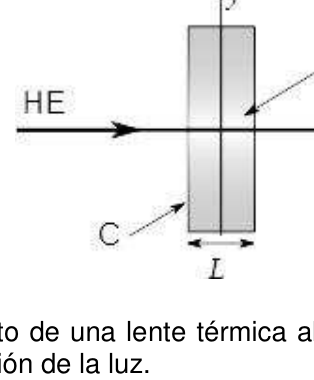
Topic: Geometric Optics Metodi: Snell’s Law, Approximation & Series Expansion Competenze: Physical Reasoning, Mathematical Modeling Objects: Lens, Prism Fonte: Testo (PDF) — p.5
PT122. Scuola superiore di commercio Carlos Pellegrini Scuola di Commercio N° 31 Nazioni Unite. Città autonoma di Buenos Aires.
Spectroscopia a lente termico In generale, un raggio di luce si si allontana o si curva se lungo La sua strada cambia l’indice di refraczione del mezzo per dove si diffonde. Questo è il Principio
- Dietro. de Le I miragi: come l’indice di rifrazione Dipende de la temperatura, en un giorno Caldo, aria vicino al Il suolo sarà più caldo, e avrete quindi un indice di
- Riefrazione inferiore ai livelli
86 - OAF 2018 di aria superiore. Quindi, attraversando tali strati d’aria, un raggio di luce trova variazioni nell’indice di refraczione e quindi si curva, generando immagini virtuali che possono generare l’illusione di un’oasi. In questo caso (la dipendenza dell’indice di refraczione dalla temperatura) si basa l’ fenomeno di lente termiche, scoperto poco tempo fa dopo l’invenzione del laser. Quando un oggetto trasparente (come essere, un liquido in un bacino C con un poco colorante) è raggiunto da un raggio di luce HE (per (Faccia di eccitazione), può assorbire parte dell’ energia. La luce e la conversione in energia termica, provocando un il riscaldamento intorno al punto di incidenza. Questo . gradiente G di temperatura dà luogo a un gradiente di Indice di refraczione e quindi può generare deviamenti nel percorso della luce. In questa situazione diciamo che si è generata una lente termico in G. Cercheremo di capire in che modo il comportamento di una lente termico assomiglia a quello di una lente termico. una lente tradizionale per dedurre le sue proprietà di deflezione dalla luce. Chiamiamo percorso ottico s di un percorso alla distanza percorsa moltiplicata per il indice di refraczione del mezzo in cui si percorre. a) Nella figura a sinistra si vede un blocco di vetro laterale L = 5 cm con indice di refraczione n = 1,5 circondato da aria (n = 1). Calcolare il percorso ottico dei segmenti AB e AB. Qual è la differenza di percorso ottico tra i due?
- Tracce?
Ora consideriamo un obiettivo tradizionale in vetro semicircolare e un insieme di linee. per i paralleli (0, 1, 2…) come si vede nella figura a destra. Il raggio del cerchio è R = 4 cm, la linea 0 coincide con l’asse ottico e le linee 1 e 2 sono a distanza e1 = R / 2 e y2 = R rispettivamente dell’asse ottico. b) Per ogni linea (0, 1 e 2), trovare il percorso ottico compreso tra le linee Punteggiati. c) Ripetere il calcolo per una linea 3 con y3 = 1 mm.
Nell’esempio precedente, il percorso ottico varia con e poiché, aumentando e, resta una più di un’intera parte del percorso dentro il vetro (e meno fuori). Per i percorsi molto quando e ≪R, si ha la seguente espressione per percorso ottico in funzione della distanza e del fascio all’asse ottico: 𝑠= 𝑛−𝑛´ 2 R y2 + costante
(1)
dove n è l’indice di refraczione all’interno della lente, n l’indice di refraczione L’interferenza tra le parti di superficie e le parti di superficie è di tipo di tipo di tipo di interferenza tra le parti di superficie e il campo di curvatura tra le parti di superficie e le parti di superficie. d) Usando, in questo caso, la costante n’ R, si calcolano i valori di s le lettere “e” e “e” sono state inserite in un codice di carattere specifico. Confronta con i risultati ottenuti in (b) e (c), calcolando il tasso di errore in ciascuna
- Il caso.
OAF 2018 - 87 Il grafico seguente mostra un caso tipico, simulato da computer, del gradiente di indice di refraczione in un campione di acqua (n = 1,333) con un contaminante viola che si eccita con un laser verde che incide su y = 0.
e) Se lo spessore del campione è L = 4 mm, calcolare il percorso ottico di due Segmenti: uno con y = 0 e un altro con y = 5 cm. f) Nella regione dove y è molto vicino a zero, il grafico di n in funzione di y se può avvicinarsi come una parabola. Trova l’equazione di questa parabola.
Se diciamo che il campione eccitato si comporta come una lente, allora il modo L’ottica di base di e dovrebbe essere regolata dall’equazione (1) per i valori piccoli di y. g) Se vogliamo pensare a questo sistema come equivalente a una lente, quali sarebbero? i valori di R e n?
Il problema di come farci notare è da considerare. che si è formato un’ottica. Un modo semplice. consiste nel incidere con un raggio di raggi di luce paralleli. (chiamato fascia di prova HP) e misurare come si allontana. La figura mostra un’organizzazione in cui il lente la temperatura LT è stata sostituita da una superficie di una radius di curvatura R equivalente a sfera. h) Sapendo che un raggio incide su una distanza di un’axe ottica, trovare gli angoli α, β e δ (sviamento) che sono indicati nella figura.
Topic: Geometric Optics Metodi: Snell’s Law, Approximation & Series Expansion Competenze: Physical Reasoning, Mathematical Modeling Objects: Lens, Prism Fonte: Testo (PDF) — p.5
PT122. The Carlos Pellegrini School of Commerce School of Commerce N° 31 United Nations. The Autonomous City of Buenos Aires.
Heat lens spectroscopy In general, a beam of light is It bends or bends if along the way The rate of change of the path . The average of the two samples is 0. where it spreads. This is the one . Principle behind you. de The mirage: as the index of refraction It depends . de la temperature, en un day Hot, air close to the Soil will be warmer, and Therefore, it will have an index of lower than the layers
The Commission shall adopt delegated acts in accordance with Article 86 of the Financial Regulation. of upper air. Then, as you pass through these layers of air, a ray of light finds changes in the refractive index and therefore curves, generating virtual images They can give us the illusion of an oasis. In this case (dependence of refractive index with temperature) the The phenomenon of thermal lensing, discovered shortly after. After the invention of the laser. When an object transparent (as in being, a liquid in a C bucket with a The colour is not as colourful as the colour is. The excitation beam can absorb some of the energy. The energy from the light source is converted into heat energy, which causes a Heating around the point of impact. This one . temperature gradient G gives rise to a gradient of refractive index and therefore can generate deviations in the path of light. In this situation We say that a thermal lens has been generated in G. We will try to investigate what the behavior of a thermal lens looks like in the A traditional lens to deduce its deflection properties from light. We call the optical path s of a path to the distance traveled multiplied by the refractive index of the medium in which it is used. (a) In the figure on the left you can see a block of side glass L = 5 cm with index a refractive index of n = 1,5 surrounded by air (n = 1). Calculate the optical paths of the segments AB and AB. What is the optical path difference between the two trajectories?
Now let’s consider a traditional semi-circular glass lens and a set of lines. parallels (0, 1, 2…) as shown in the figure to the right. The radius of the circle is R = 4 In cm, line 0 matches the optical axis and lines 1 and 2 are at distances y1 = R / 2 e and2 = R respectively of the optical axis. (b) For each line (0, 1 and 2), find the optical path s between the lines It’s pointed. (c) Repeat the calculation for a line 3 with y3 = 1 mm.
In the example above, the optical path varies with y since, as y increases, a greater part of the trajectory inside the glass (and less outside). For very trajectory near the optical axis, i.e. when and ≪R, the following expression is given for Optical path based on distance and beam to the optical axis: 𝑠= 𝑛−𝑛´ 2 R y2 + constant
(1)
where n is the refractive index inside the lens, n is the refractive index The surface of the lens is curved at the outside and R the radius of curvature of the surface of the lens. (d) Using the constant n ‘R, in this case, to calculate the values of s are given by (1) for the lines in points (b) and (c). Compare with The results obtained in (b) and (c) are calculated by calculating the percentage of error in each case.
The Commission shall adopt delegated acts in accordance with Article 21 of the Financial Regulation. The following graph shows a typical computer simulated case of the gradient of refractive index in a water sample (n = 1,333) with a purple pollutant that It’s excited with a green laser that hits y = 0.
(e) If the sample thickness is L = 4 mm, calculate the optical path of two segments: one with y = 0 and another with y = 5 cm. (f) In the region where y is very close to zero, the graph of n as a function of y is It can be approached like a parable. Find the equation of this parable.
If we say that the excited sample behaves like a lens, then the pathway Optical function of y should be governed by equation (1) for small values of y. g) If we want to think of this system as equivalent to a lens, what would it be? the values of R and n?
The problem of how to realize ourselves is to be considered. It was a lens. A simple way . It consists of striking with a beam of parallel light rays. (called HP test beam) and measure how it deviates. The figure shows such an arrangement, where the lens thermal LT has been replaced by a surface a spherical equivalent to a radius of curvature R. h) Knowing that a ray is affecting a distance of the optical axis, find the angles α, β and δ (deviation) as shown in the figure.
Topic: Geometric Optics Metodi: Snell’s Law, Approximation & Series Expansion Competenze: Physical Reasoning, Mathematical Modeling Objects: Lens, Prism Fonte: Testo (PDF) — p.5
PT123. Colegio N° 3 Mariano Moreno. Ciudad Autónoma de Buenos Aires.
Para medir la intensidad del campo magnético terrestre local, se cuenta con lo siguiente:
-
Una bobina de 20 vueltas, como la de la figura, de 40 cm de diámetro. En su centro tiene una aguja magnética sobre un cuadrante en el que puede medirse el ángulo de declinación.
-
Una fuente de f.e.m. de 12 V.
-
Una resistencia variable.
-
Un amperímetro. Cuando circula corriente, la aguja se desvía hasta alcanzar la dirección del campo magnético resultante entre el terrestre local 𝐻⃗ y el inducido por la bobina 𝐵⃗ . La gráfica muestra cómo varía el ángulo de declinación 𝛿̂ con la intensidad de corriente cuando el plano de la Bobina circular con aguja magnética en el centro
88 - OAF 2018 bobina está orientado en dirección Norte-Sur. a) Haga un esquema del circuito necesario. b) Indique con otro esquema los vectores 𝐵⃗ ,𝐻⃗ y el resultante con la orientación de la bobina descripta anteriormente, indicando además el sentido de circulación de la corriente. c) Encuentre la expresión que relaciona al ángulo𝛿̂con la intensidad de corriente en la bobina. d) Tomando valores confiables de la gráfica, calcule la intensidad del campo magnético terrestre local. Indique qué orientación debe darse a la bobina, calcule la intensidad de corriente e indique su sentido, para que la aguja magnética no tome ninguna orientación definida.
Topic: Magnetism Metodi: Biot-Savart Law, Experimental Data Analysis Competenze: Physical Reasoning, Mathematical Modeling Objects: Coil, Magnet Fonte: Testo (PDF) — p.5
PT123. Scuola N° 3 Mariano Moreno. Città autonoma di Buenos Aires.
Per misurare l’intensità del campo magnetico terrestre locale, si compone di:
- Una bobina a 20 giri, come quella della figura, di 40 cm di diametro. Nel suo centro ha una Aglio magnetico su un quadrante in cui l’angolo di declinazione può essere misurato.
- Una fonte di f.e.m. de 12 V.
- Resistenza variabile.
- Un amperimetro. Quando si circola corrente, l’ago si allontana fino a raggiungere la direzione del campo magnetico risultante tra il terrestro locale H e quello indotto dalla bobina B . La grafico mostra come varia l’angolo di declinazione δ̂ con l’intensità di corrente quando il piano di Coil circolare con ago Magnetismo al centro
88 - OAF 2018 Il coil è orientato verso nord-sud. a) Sviluppa un schema del circuito necessario. b) Indicare con un altro schema i vettori B ,H e il risultante con l’orientamento di il coil sopra descritto, indicando inoltre il senso di circolazione di
- Il corrente. c) Trova l’espressione che relaziona l’angoloδ̂̂ con l’intensità di corrente
- nel coil. d) Prendendo valori affidabili dal grafico, calcola l’intensità del campo magnetico terrestre locale. Indicare quale orientamento deve essere dato alla bobina, calcolare l’intensità di corrente e Indicare il senso, in modo che l’ago magnetico non abbia alcuna orientamento definito.
Topic: Magnetism Metodi: Biot-Savart Law, Experimental Data Analysis Competenze: Physical Reasoning, Mathematical Modeling Objects: Coil, Magnet Fonte: Testo (PDF) — p.5
PT123. School N° 3 Mariano Moreno. The Autonomous City of Buenos Aires.
To measure the intensity of the Earth ‘s magnetic field . local, it has the following:
- A 20-spin coil, like the one in the figure, of a diameter of 40 cm. In its center there is a magnetic needle on a quadrant in which the angle of declination can be measured.
- A source of f.e.m. de 12 V.
- Variable resistance.
- It’s an amp. When current circulates, the needle diverts up to reach the direction of the resulting magnetic field between the local terrestrial H and the coil-induced B . La Graph shows how the angle of declination δ̂ varies with current intensity when the plane of the Circular coil with needle magnetic in the center
The Commission shall adopt delegated acts in accordance with Article 21 of this Regulation. The coil is oriented north-south. (a) Draw a diagram of the necessary circuit. (b) Indicate the vectors B ,H and the resulting vector with the orientation of the coil described above, further indicating the direction of movement of the current. (c) Find the expression that relates the angle to the current intensity. in the coil. (d) By taking reliable values from the graph, calculate the field intensity local magnetic field. Indicate the orientation of the coil, calculate the current intensity and indicate its direction, so that the magnetic needle does not take any defined orientation.
Topic: Magnetism Metodi: Biot-Savart Law, Experimental Data Analysis Competenze: Physical Reasoning, Mathematical Modeling Objects: Coil, Magnet Fonte: Testo (PDF) — p.5
PT124. Colegio N° 3 Mariano Moreno. Ciudad Autónoma de Buenos Aires.
Se prepara una habitación de unos 9 m de largo y casi 5 m de altura para hacer una demostración de mecánica. Se pretende lanzar un resorte de tracción en vuelo parabólico desde un lanzador ubicado en el suelo. El resorte se calza en el vástago del lanzador y se traba en su extremo superior. Al hacer fuerza hacia abajo el resorte se estira y al soltarlo sale disparado en la dirección que define el vástago. Debe atravesar un aro cuando alcanza su máxima altura y embocar en otro aro al que se le agregó una red. Todo esto aprovechando al máximo el espacio disponible en la habitación. Por razones de simplificación, el extremo del lanzador debe quedar a la altura del segundo aro. a) A partir de las dimensiones de la habitación, elija un sistema de referencia, defina una trayectoria1 y escriba su ecuación2. Grafique la trayectoria en el sistema de referencia elegido. b) Derive la ecuación de la trayectoria y calcule el ángulo respecto de la horizontal que debe dársele al lanzador. c) Obtenga el módulo de la velocidad de lanzamiento haciendo consideraciones energéticas y trigonométricas. d) Encuentre una expresión que relacione el estiramiento del resorte con la velocidad de lanzamiento.
Se cuenta con tres resortes para la demostración. Sus características están en la tabla de al lado. El estiramiento se mide sobre el vástago del lanzador con una cinta métrica, y el 0 0,5 1 1,5 2 0 10 20 30 40 50 60 70 80 90 i (A) δ (°)
OAF 2018 - 89 procedimiento es bastante incómodo. Esto lleva a cometer errores de uno o dos milímetros al estirar el resorte. Teniendo en cuenta esto: e) Elija el resorte con el que considere que hay menos probabilidades de marrar a los aros. Justifique su elección. f) Calcule el estiramiento necesario para que el resorte elegido siga la trayectoria elegida.
1Elija valores fáciles (del orden del metro) para simplificar los cálculos. 2Si para todas las cantidades involucradas se usan unidades del Sistema Internacional (S.I.) pueden omitirse las unidades en la ecuación.
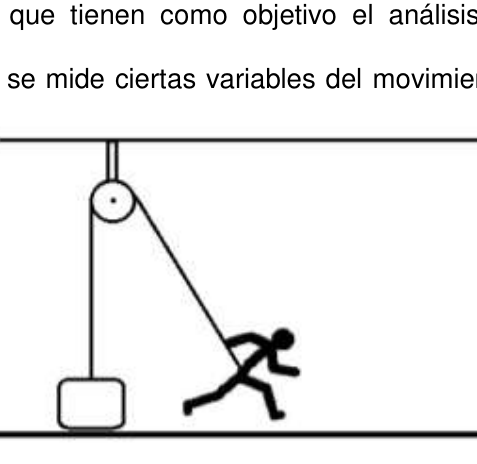
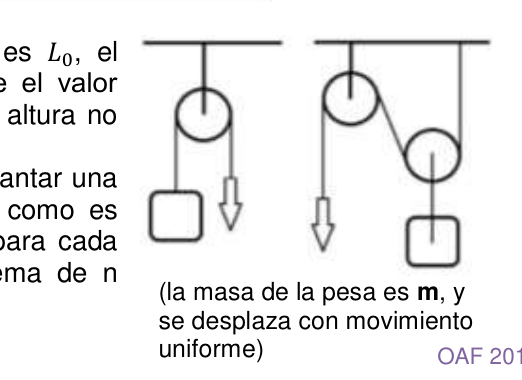
Topic: Newtonian Mechanics, Conservation of Energy Metodi: Kinematic Equations, Energy Conservation Method, Hooke’s Law Competenze: Physical Reasoning, Mathematical Modeling Objects: Spring, Projectile Fonte: Testo (PDF) — p.5
PT124. Scuola N° 3 Mariano Moreno. Città autonoma di Buenos Aires.
Si prepara una stanza lunga circa 9 metri e alta quasi 5 metri per fare una dimostrazione di meccanica. Si prevede di lanciare un spring trazione in volo parabola da un lanciatore che si trova sul pavimento. La primavera si calza sul tronco del lanciatore e si lavora alla sua estremità superiore. Facendo forza verso il basso la primavera si allunga e al Se lo lasciamo andare, viene sparato nella direzione che definisce il tronco. Deve attraversare un cerchio quando raggiunge la sua altezza massima e si avvicina ad un altro anello al quale è stata aggiunta una rete. Tutto questo sfruttando al massimo lo spazio disponibile nella stanza. Per ragioni per semplificazione, l’estremità del lanciatore deve essere a quota del secondo anello. a) Sulla base delle dimensioni della stanza, scegli un sistema di riferimento, definire un percorso1 e scrivere la sua equazione2. Grafica il percorso in sistema di riferimento scelto. b) Deriva l’equazione di percorso e calcola l’angolo rispetto alla orizzontale che deve essere dato al lanciatore. (c) Ottenere il modulo della velocità di lancio facendo considerazioni La Commissione ha adottato una decisione che prevede che il sistema di controllo dei dati sia stato adottato. d) Trova un’espressione che relaziona l’estensione della primavera con l’espressione velocità di lancio.
Ha tre sorgenti per la dimostrazione. Le sue caratteristiche sono nella tabella di
- Al fianco. L’estensione è misurata sul tronco del lanciatore con una cinta metrica, e il 0 0,5 1 1,5 2 0 10 20 30 40 50 60 70 80 90 i (A) δ (°)
OAF 2018 - 89 La procedura è piuttosto scomodo. Questo porta a commettere errori di uno o due millimetri all’altezza della molla. Considerando questo: e) Scegli la primavera con cui Considera che ci sono meno probabilità di arrivare a Le ring. Giustifica su
- La scelta. f) Calcolare el allungamento La primavera è necessaria per la ripresa.
- scelto Continua la La traccia scelto.
1Scelta valori facili (dall’ordine del metro) per semplificare i calcoli. 2Se per tutte le quantità coinvolte si utilizzano unità del Sistema Internazionale (S.I.) le unità nell’equazione possono essere omesse.
Topic: Newtonian Mechanics, Conservation of Energy Metodi: Kinematic Equations, Energy Conservation Method, Hooke’s Law Competenze: Physical Reasoning, Mathematical Modeling Objects: Spring, Projectile Fonte: Testo (PDF) — p.5
PT124. School N° 3 Mariano Moreno. The Autonomous City of Buenos Aires.
A room about 9 m long and almost 5 m high is being prepared to make one. demonstration of mechanics. A traction spring in parabolic flight is planned to be launched From a pitcher on the ground. The spring is glued to the shooter ‘s stem and It’s working on its upper end. By making force downwards the spring stretches and the Release it, it goes off in the direction that defines the stem. It must go through a ring . When it reaches its maximum height, and plunges into another ring to which a net has been added. All of this by making the most of the space available in the room. For reasons For the purposes of simplification, the end of the launcher shall be at the height of the second ring. (a) From the dimensions of the room, choose a reference system, define a path1 and write its equation2. Draw the trajectory in the the reference system chosen. (b) Derive the equation of the path and calculate the angle with respect to the horizontal which must be given to the pitcher. (c) Get the launch speed module by considering The Commission will examine the following questions: (d) Find an expression that relates the spring stretch to the launch speed.
It has three springs for the demonstration. Its characteristics are in the table of next door. The stretch is measured over the shooter’s stem with a metric tape, and the 0 0,5 1 1,5 2 0 10 20 30 40 50 60 70 80 90 i (A) δ (°)
The Commission shall adopt delegated acts in accordance with Article 21 of the Financial Regulation. procedure is quite uncomfortable. This leads to one or more mistakes. two millimeters when stretching the spring. Given this: (e) Choose the spring with which Consider there is less odds of going to The rings. Justify it . su The choice. (f) Calculate el stretching necessary for the spring to come out chosen Keep going . la Trajectory
- The one chosen.
1Choose easy values (in the order of the meter) to simplify the calculations. 2If International System units are used for all the quantities involved (S.I.) units in the equation can be omitted.
Topic: Newtonian Mechanics, Conservation of Energy Metodi: Kinematic Equations, Energy Conservation Method, Hooke’s Law Competenze: Physical Reasoning, Mathematical Modeling Objects: Spring, Projectile Fonte: Testo (PDF) — p.5
PT125. Colegio N° 3 Mariano Moreno. Ciudad Autónoma de Buenos Aires.
Lea el siguiente texto: “…Y yo pensaba que sabía de electricidad… En una de esas tardes de domingo en la colimba, ya de soldados viejos, en la primavera de Río Gallegos, nos juntamos a tomar unos mates al solcito. Conseguimos mate, bombilla, pava, yerba y azúcar, pero el que tenía que conseguir el mechero nos falló. Estábamos discutiendo qué hacer cuando apareció Muñoz. - Uuh, déjenme a mí- dijo, y se metió en el galponcito de atrás de la cocina. Al ratito salió con dos cables y un clavo. Empalmó un cable en la punta del clavo y el otro en la cabeza. Metió el clavo en la pava con agua y, cuando encaró con las otras dos puntas de los cables hacia el enchufe le grité : -¡Pará! ¡Vas a hacer un tremendo corto! ¡Vas a hacer volar todos los tapones de la base!¡Vamos a terminar todos presos! - Muñoz me miró sonriendo y mandó los cables al enchufe… y no voló nada. Al toque el clavo se puso rojo haciendo un ruido de vibración. - No vayan a tocar la pava- nos advirtió. Y a los cinco minutos el agua estaba lista para el mate. Claro, si yo hubiera sabido lo que sé hoy… Que cuando pasa corriente por un cuerpo, este se calienta. Y que la resistencia aumenta con la temperatura, no me hubiera asustado tanto. ”
a) Recordando que la red eléctrica provee corriente alterna y que la tensión máxima es de 220V , obtenga una expresión que relacione a la resistencia R del clavo cuando está calentando el agua, con el aumento de temperatura ΔT que se le quiere provocar, la masa m de agua que se quiere calentar, y el tiempo Δt que tarda en calentarse. b) Haciendo las estimaciones necesarias, calcule la resistencia del clavo cuando por él circula corriente mientras está sumergido. c) Suponga que la longitud L del clavo es de 15 cm y que su diámetro Φ es de 3 mm, y calcule la resistividad ρ del hierro a esa temperatura. d) Calcule la temperatura que alcanza el clavo sabiendo que la resistividad del hierro a temperatura ambiente ρ0 =10 x 10⁻⁸ Ω m, y que su resistividad crece exponencialmente y casi se cuadruplica al llegar cerca de los 280 °C.
Referencias L: Longitud. Φ: Diámetro. m: Masa. k: Constante elástica
90 - OAF 2018
Topic: Circuits, Thermodynamics Metodi: Conservation of Energy, Dimensional Analysis Competenze: Physical Reasoning, Mathematical Modeling Objects: Resistor Fonte: Testo (PDF) — p.5
PT125. Scuola N° 3 Mariano Moreno. Città autonoma di Buenos Aires.
Leggi il testo seguente: E io pensavo sapesse dell’elettricità… In una di quelle domenica pomeriggio in collomba, già soldati vecchi, in Primavera del Rio Gallegos, ci riuniremo per prendere un paio di matte al sole. Abbiamo ottenuto mate, lampada, paparazzi, erba e zucchero, ma quello che dovevo ottenere Il macchinista ha fallito. Stavamo discutendo di cosa fare quando Muñoz è apparso. - Uuh, lasciatemi… ha detto, e si è messo nel galleggiatore dietro la cucina. Al piccolo . E’ uscito con due cavi e un chiodo. Ha incastrato un cavo alla punta del chiodo e l’altro in la testa. Ha messo il chiodo nella paga con l’acqua e, quando si è affrontato con le altre due Ho urlato: “Stai fermo! - Farete un tremendo.
- Corto! - Farete saltare tutti i tappi della base! Preso! - Muñoz mi ha guardato sorridendo e ha mandato i cavi al connettore e non ha volato. Niente di tutto. Quando toccò il clavo, si rossì facendo un rumore di vibrazione. - Non andate. Toccare la pava ci ha avvertito. E dopo cinque minuti l’acqua era pronta per il mate. Certo, se avessi saputo quello che so oggi che quando passa corrente per un corpo, questo si riscalda. E che la resistenza aumenta con la temperatura, non mi Avrebbe spaventato tanto. ”
a) Ricordando che la rete elettrica fornisce corrente alternata e che la tensione La massima è di 220 V , ottieni un’ espressione che si riferisce alla resistenza R del quando si sta riscaldando l’acqua, con l’aumento di temperatura ΔT che si vuole provocare, la massa m di acqua che si vuole riscaldare, e il tempo Δt che non si riscalda più. b) Calcolare la resistenza della chiusa, facendo le necessarie stime, quando per lui si muove corrente mentre è immerso. c) Supponiamo che la lunghezza L del chiodo sia di 15 cm e che il suo diametro Φ sia di 3 mm, e calcola la resistenza ρ del ferro a quella temperatura. d) Calcolare la temperatura che raggiunge il chiodo sapendo che la resistenza del ferro a temperatura ambiente ρ0 =10 x 10−8 Ω m, e che la sua resistenza cresca L’esistenza di una crescita di circa un milione di metri di superficie è aumentata esponenzialmente e quasi quadruplicata quando si avvicina ai 280 °C.
Referenze L: Lungo. Φ: Diametro. M: Massa. k: costante elastica
90 - OAF 2018
Topic: Circuits, Thermodynamics Metodi: Conservation of Energy, Dimensional Analysis Competenze: Physical Reasoning, Mathematical Modeling Objects: Resistor Fonte: Testo (PDF) — p.5
PT125. School N° 3 Mariano Moreno. The Autonomous City of Buenos Aires.
Read the following text: And I thought you knew about electricity… On one of those Sunday afternoons in the colomba, already old soldiers, in the Spring of Rio Gallegos, we gathered for a few matches in the sunset. We got mate, bulb, pea, weed and sugar, but the one I had to get. The mechanic failed us. We were discussing what to do when Muñoz showed up. - Uuh, let me— he said, and he went into the back gallows of the kitchen. To the little one . He came out with two wires and a nail. He wrapped one wire on the tip of the nail and the other on the tip of the nail. The head. He put the nail in the water-filled pave and, when he faced the other two, I shouted at him, “Stop! You’re going to make a tremendous one.
- Shut up! You’re gonna blow up all the base caps! Prisoners! - Muñoz looked at me smiling and sent the wires to the plug and didn’t fly. I’m not doing anything. When I touched the nail, it turned red, making a vibrational noise. - Don ‘t go to the touching the pav- warned us. And five minutes later the water was ready for the mate. Sure, if I’d known what I know today that when current passes through a body, this one warms up. And that resistance increases with temperature, I don’t. I would have been so scared. ”
(a) Recalling that the electricity grid provides alternating current and that the voltage is Maximum is 220V , get an expression that relates to the resistance R of the Nail when heating water, with temperature rise ΔT that The amount of water you want to heat, and the time Δt It takes a while to warm up. (b) Calculate the strength of the nail when making the necessary estimates. It’s a stream flowing through it while it’s submerged. (c) Suppose that the length L of the nail is 15 cm and its diameter Φ is 3 mm, and calculate the resistance ρ of the iron to that temperature. (d) Calculate the temperature at which the nail reaches, knowing that the resistance of the nail is iron at room temperature ρ0 =10 x 10−8 Ω m, and its resistance increases It is growing exponentially and almost quadrupling as it approaches 280 °C.
References L: Length. Φ: Diameters. M: Mass. The following is the list of the following:
The following points shall be added:
Topic: Circuits, Thermodynamics Metodi: Conservation of Energy, Dimensional Analysis Competenze: Physical Reasoning, Mathematical Modeling Objects: Resistor Fonte: Testo (PDF) — p.5
PT126. EESOPI N° 8053 Santísimo Rosario. Rosario, Santa Fe.
Un deporte de invierno: los saltos de esquí.
En esta espectacular modalidad deportiva, los espectadores se mantienen en vilo desde
que el atleta inicia el descenso por la pista hacia el trampolín hasta que, tras saltar al
“vacío”, realiza un estético vuelo, aterriza suavemente, frena y se detiene. Este atleta,
mediante un largo y duro entrenamiento, ha adquirido la suficiente destreza para lograr
que la física esté de su parte permitiéndole mejorar sus marcas.
El perfil de la pista de saltos, mostrado en la figura 1, presenta cuatro partes: la primera
es la zona de aceleración, en la que los saltadores que han partido de alguna de las
salidas escalonadas, sin velocidad inicial, descienden por una pronunciada pendiente
hasta el trampolín, en el que la pendiente se reduce hasta un ángulo α. En el borde S del
trampolín, el saltador inicia el vuelo sobre la zona de salto, que tiene forma
aproximadamente parabólica y una longitud L característica de la instalación: se habla así
de pistas de 50, 80 ó 90 m.
La tercera zona, P - K, es la de aterrizaje, de longitud M y pendiente constante de ángulo
β. A partir del límite K de esta región, el denominado punto crítico, se inicia la cuarta
zona, de frenado, en la que no debe producirse el aterrizaje pues disminuye rápidamente
la pendiente y el impacto sería peligroso. Según sean las condiciones meteorológicas, el
estado de la pista y la calidad de los competidores, los jueces deciden el punto de partida
adecuado (una de las salidas escalonadas) para conseguir que el aterrizaje se realice
siempre en la zona adecuada, y no en la de frenado. En concreto, los jueces fijan la altura
h0 del punto de salida respecto al borde S del trampolín.
Los principales parámetros de un gran trampolín, ( L ≈ 90 m ), se encuentran indicados
en el cuadro de datos de la figura 1.
a) Suponiendo que en el descenso por la zona de aceleración (desde la salida
hasta el punto S), el rozamiento con el suelo y el aire disipan una energía Q que
es igual al 20 % de la energía mecánica inicial, determine y calcule el módulo de
la velocidad de despegue del saltador, v0, sabiendo que ha iniciado el descenso,
sin velocidad inicial, desde una salida con la altura h0 dada en el cuadro de
valores.
OAF 2018 - 91
A pesar de que el trampolín tiene una pendiente final descendente α , la velocidad real de
salida del saltador, vs, es prácticamente horizontal, pues se da un impulso perpendicular
a la pista justo antes de iniciar el vuelo. Para ello, el saltador desciende con las piernas
flexionadas y las extiende en el extremo final del trampolín, haciendo un gesto similar al
de un salto, sin carrerilla, perpendicular al suelo. Así, además de descender en una
postura más aerodinámica, consigue imprimirse una velocidad vn perpendicular al
trampolín y alargar el salto. (Observa el diagrama vectorial indicado en la figura 1).
b) Calcule cuál debe ser el valor de la velocidad vn y compruebe si podrá
conseguirla un atleta capaz de realizar un salto vertical de altura he = 0,60 m ,
¡sin carrerilla!
Suponga que la velocidad de salida es exactamente horizontal y no tenga en cuenta los efectos de la fuerza de fricción con el aire ni los de sustentación debidos a la aerodinámica del saltador. (En la práctica el segundo efecto domina sobre el primero, de forma que los saltos reales son algo más largos que los idealizados parabólicos). c) Obtenga la ecuación de la trayectoria que hipotéticamente describirá el saltador, referida al sistema de coordenadas OXY indicado en la figura 2 .
En dicha figura se representa también el perfil de la pista (sombreado), desde el punto de
salida S del trampolín hasta el punto crítico K.
d) Sobre la figura 2, haga una representación gráfica de la trayectoria y determine
aproximadamente el punto C de aterrizaje, con sus correspondientes
coordenadas xc e yc .
e) Determine las componentes de la velocidad vf del saltador cuando toca la pista
en la zona de aterrizaje. Calcule el ángulo ϕ que forma la velocidad con el eje
OX.
f) Determine y calcule el ángulo, φ , que forma la velocidad final vf con la pista.
92 - OAF 2018
Topic: Newtonian Mechanics, Conservation of Energy Metodi: Kinematic Equations, Energy Conservation Method, Vector Decomposition Competenze: Physical Reasoning, Mathematical Modeling Objects: Projectile Fonte: Testo (PDF) — p.5
PT126. EOSOPI N° 8053 Santissimo Rosario. Rosario, Santa Fe.
Uno sport invernale: gli sci. In questa spettacolare modalità sportiva, gli spettatori si sono tenuti in vita da che l’atleta inizia la discesa per la pista verso il trampolino di lancio fino a che, dopo aver saltato al “vazio”, fa un volo estetico, atterra con calma, frenata e ferma. Questo atleta, E’ stato un’esperienza che ha portato a un’esperienza di successo. che la fisica sia al suo fianco, permettendole di migliorare le sue marche. Il profilo del pista di salto, mostrato in figura 1, presenta quattro parti: la prima è la zona di accelerazione, in cui i saltatori che hanno lasciato una delle Esciate a tappe, senza velocità iniziale, scendono per una pendice pronunciata fino al trampolino, in cui la pendenza si riduce ad un angolo α. Al bordo S del trampolino, il saltatore inizia il volo sopra la zona di salto, che ha forma Circa perbolica e una lunghezza L caratteristica dell’impianto: si parla così di piste di 50, 80 o 90 m. La terza zona, P - K, è quella di atterraggio, con lunghezza M e pendenza costante di angolo β. Dal limite K di questa regione, il punto critico, inizia il quarto zona frenata in cui non deve avvenire l’atterraggio, poiché si riduce rapidamente l’inclinazione e l’impatto sarebbero pericolosi. A seconda delle condizioni meteorologiche, il La qualità della pista e la qualità dei concorrenti, i giudici decidono il punto di partenza adeguato (una delle uscite a tappe) per ottenere l’atterraggio sempre nella zona giusta, non nella zona di frenata. In particolare, i giudici fissano l’altezza. h0 del punto di partenza rispetto al bordo S del trampolino. I principali parametri di un grande trampolino, (L ≈ 90 m ), sono indicati nella tabella di dati di figura 1. a) Supponendo che in discesa per la zona di accelerazione (dall’uscita) fino al punto S), il ruggine con il suolo e l’aria dissipa un’energia Q che è pari al 20% dell’energia meccanica iniziale, determina e calcola il modulo di la velocità di decollo del saltatore, v0, sapendo di aver iniziato la discesa, senza velocità iniziale, da un’uscita con l’altezza h0 data nel quadro di Valori.
OAF 2018 - 91 Anche se il trampolino ha una pendenza finale discendente α , la velocità reale di L’esito del saltatore, vs, è praticamente orizzontale, dato che si dà un impulso perpendicolare
- Al pistone, appena prima di partire. Per questo, il saltatore scende con le gambe. Le spalle sono flessibili e le estende sul trampolino di lancio, facendo un gesto simile a quello di di un salto, senza corsia, perpendicolare al pavimento. Così, oltre a scendere in un Una postura più aerodinamica, si ottiene una velocità vn perpendicolare al trampolino e allungare il salto. (Ricorda il diagramma vettoriale riportato in figura 1). b) Calcolare il valore della velocità vn e verificare se è possibile Un atleta che possa fare un salto verticale di altezza di 0,60 m , Senza carriera!
Supponiamo che la velocità di uscita sia esattamente orizzontale e non si tenga conto dei Gli effetti della forza di attrito con l’aria e dei sostentamenti dovuti alla aerodinamica del saltatore. (In pratica il secondo effetto domina il primo, di In questo modo i salti reali sono un po’ più lunghi di quelli per paraboliche idealizzati). c) Ottieni l’equazione di percorso che ipoteticamente descriverà il saltatore, riferito al sistema di coordinate OXY indicato in figura 2 .
La figura mostra anche il profilo della pista (sombratura) dal punto di S uscita dal trampolino fino al punto critico K. d) Sulla figura 2, fare una rappresentazione grafica del percorso e determinare circa il punto di atterraggio C, con i relativi coordinate xc e yc . e) Determina i componenti della velocità vf del saltatore quando tocca la pista nella zona di atterraggio. Calcola l’angolo φ che forma la velocità con l’asse OX. f) Determina e calcola l’angolo, φ , che forma la velocità finale vf con la pista.
92 - OAF 2018
Topic: Newtonian Mechanics, Conservation of Energy Metodi: Kinematic Equations, Energy Conservation Method, Vector Decomposition Competenze: Physical Reasoning, Mathematical Modeling Objects: Projectile Fonte: Testo (PDF) — p.5
PT126. The most holy Rosary. Rosario, Santa Fe.
A winter sport: ski jumping. In this spectacular sporting event, spectators have been keeping pace since The athlete starts the descent down the track towards the trampoline until, after jumping to the “empty”, performs an aesthetic flight, lands smoothly, brakes and stops. This athlete, Through long and hard training, he has acquired enough skill to achieve That physics is on your side, allowing you to improve your marks. The profile of the jumping track, shown in Figure 1, has four parts: the first is the acceleration zone, in which the jumpers who have left one of the Staged exits, without initial speed, descend down a steep slope to the trampoline, where the slope is reduced to an angle α. On the S-edge of the The springboard, the jumper starts the flight over the jump zone, which has a shape approximately parabolic and a characteristic length L of the installation: it is spoken as of 50, 80 or 90 m track length. The third zone, P - K, is the landing zone, with length M and steady angle slope β. From the K boundary of this region, the so-called critical point, the fourth begins The braking zone is the area where landing must not take place as it decreases rapidly The slope and impact would be dangerous. Depending on the weather conditions, the The race track status and the quality of the competitors, the judges decide the starting point suitable (one of the staged exits) to make the landing possible Always in the right area, not the braking area. Specifically, the judges set the height. h0 of the starting point with respect to the S-rope of the trampoline. The main parameters of a large trampoline (L ≈ 90 m) are shown below. in the data table in Figure 1. (a) Assuming that on descent through the acceleration zone (from the exit) The ground and air friction dissolve a Q energy which is is equal to 20% of the initial mechanical energy, determine and calculate the module of the jumpper’s takeoff speed, v0, knowing that he has started the descent, without initial speed, from an output with the height h0 given in the table of values.
The Commission shall adopt delegated acts in accordance with Article 21 of the Financial Regulation. Even though the trampoline has a descending end slope α , the actual speed of The output of the jumper, vs, is practically horizontal, as it gives a perpendicular impulse. to the runway just before the flight begins. For that, the jumper descends with his legs. bending them and stretching them out on the end of the trampoline, making a gesture similar to of a jump, no railing, perpendicular to the ground. So, besides going down on a The speed of the engine is at the same speed as the speed of the engine. trampoline and lengthen the jump. (See the vector diagram shown in Figure 1). (b) Calculate the value of the velocity vn and check whether you can A high-altitude athlete can make a vertical jump of 0.60 m . No running!
Suppose the output speed is exactly horizontal and not take into account the effects of air friction force or of supporting force due to the the aerodynamics of the jumper. (In practice the second effect prevails over the first, of So the real jumps are a little bit longer than the ideal parabolic ones.) (c) Obtain the path equation that hypothetically describes the jumper, referred to the OXY coordinate system shown in Figure 2 .
The figure also shows the track profile (shaded) from the point of S exit from the trampoline to critical point K. (d) On Figure 2, make a graphical representation of the trajectory and determine approximately landing point C, with its corresponding points coordinates xc and yc . (e) Determine the components of the speed vf of the jumper when touching the track in the landing zone. Calculate the angle φ forming the velocity with the axis OX. (f) Determine and calculate the angle, φ , which forms the final velocity vf with the track.
The following points shall be added:
Topic: Newtonian Mechanics, Conservation of Energy Metodi: Kinematic Equations, Energy Conservation Method, Vector Decomposition Competenze: Physical Reasoning, Mathematical Modeling Objects: Projectile Fonte: Testo (PDF) — p.5
PT127. EESOPI N° 8053 Santísimo Rosario. Rosario, Santa Fe.
Criostato para bajas temperaturas
Un sistema simple para controlar la temperatura de una muestra entre 77 K y 300 K
consiste en sumergir el recipiente que la contiene en un baño de nitrógeno líquido (NL)
contenido en un termo de vidrio.
En nuestro caso, el recipiente que contiene la muestra es un cilindro de 5 cm de radio
conectado con el exterior por medio de un tubo cilíndrico de 1 cm de radio. Las paredes
laterales del cilindro y del tubo son adiabáticas (aislantes térmicos). La temperatura de la
muestra en el interior del cilindro se mantiene a 100 K mediante un sistema que regula la
corriente que pasa por una resistencia. Un
esquema simplificado de dicho sistema es
mostrado en la figura 1.
Las
tapas
del
cilindro
interior
están
compuestas de dos materiales, cobre y
alúmina (óxido de aluminio), siendo de cobre
la parte externa. El cobre tiene un espesor de
1 cm y la alúmina 3 cm. A 77 K las
conductividades térmicas del cobre y la
alúmina son kcu = 600 W/m K y kA = 26 W/m K
respectivamente.
Experimentalmente se encuentra que, en
condiciones de régimen estacionario, el flujo
de calor, es decir, la cantidad de calor por
unidad de tiempo y por unidad de área, que
pasa a través de una pared plana de espesor
e y coeficiente de conducción térmica k, está
dado por:
1
𝐴
∆𝑄
∆𝑡= 𝑘∆𝑇
𝑒
donde ∆T es la diferencia de temperatura existente entre las caras de la pared de espesor e y área A. Obtenga la expresión y calcule: a) La temperatura en la interfase entre el cobre y la alúmina. b) La cantidad de calor que por unidad de tiempo atraviesa las dos tapas del cilindro interior.
El radio interior del termo que contiene el nitrógeno líquido es de 15 cm. Las paredes y tapa del termo son adiabáticas. En la tapa del termo existe un dispositivo que permite mantener la presión en su interior igual a la atmosférica, pa.
Obtenga la expresión y calcule:
c) La masa de nitrógeno líquido que se vaporiza por unidad de tiempo.
d) El cambio del nivel de nitrógeno líquido por unidad de tiempo.
e) El número de moles de gas que salen por unidad de tiempo a través del
dispositivo.
Otros datos útiles
- Temperatura de ebullición del nitrógeno líquido a presión atmosférica es 77 K
- Calor de vaporización del NL: λv = 198.38 kJ/kg
- Densidad del nitrógeno líquido: δL = 808.61 kg/m3
- Densidad del nitrógeno gaseoso a 77 K: δG = 4.61 kg/m3
- Masa molecular del nitrógeno gaseoso: mN = 28.01 g/mol
- Constante de los gases: R= 8.31 J/(mol K)
- Presión atmosférica: pa= 1.01 x 10⁵ Pa
OAF 2018 - 93
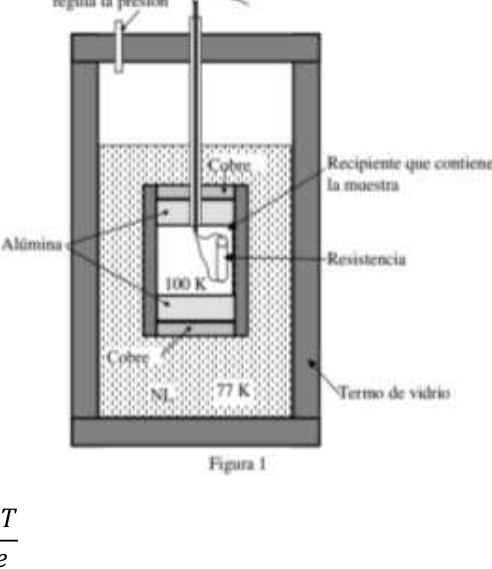
Topic: Thermodynamics Metodi: Conservation of Energy, Ideal Gas Law Competenze: Physical Reasoning, Mathematical Modeling Objects: Cylinder, Container, Gas Fonte: Testo (PDF) — p.5
PT127. EOSOPI N° 8053 Santissimo Rosario. Rosario, Santa Fe.
Crostato a bassa temperatura Un semplice sistema per controllare la temperatura di un campione tra 77 K e 300 K consiste nel immergere il contenitore in un bagno di nitrogeno liquido (NL). contenuto in un termo di vetro. Nel nostro caso, il contenitore che contiene il campione è un cilindro di 5 cm di raggio. collegato all’esterno mediante un tubo cilindrico di 1 cm di raggio. I muri i lati del cilindro e del tubo sono adiabatici (isolazioni termiche). La temperatura della Il campione all’interno del cilindro viene mantenuto a 100 K mediante un sistema che regola la temperatura. corrente che attraversa una resistenza. Un Un schema semplificato di tale sistema è mostrato nella figura 1. Le Tape di cui al cilindro interno Sono qui . composti da due materiali: rame e allumino (ossido di alluminio), essendo di rame la parte esterna. Il rame ha un spessore di 1 cm e l’alumina 3 cm. A 77 K la conductividades térmicas del cobre y la Alumina sono kcu = 600 W/m K e kA = 26 W/m K rispettivamente. Si trova sperimentalmente che, in condizioni di regime stazionario, il flusso di calore, cioè la quantità di calore per unità di tempo e per unità di area, che passa attraverso un muro piatto di spessore e e e coefficiente di conduzione termico k, è dato da: 1 𝐴 ∆𝑄 ∆𝑡= 𝑘∆𝑇 𝑒
dove ∆T è la differenza di temperatura esistente tra le facce del muro di spessore e e area A. Prendi l’espressione e calcola: a) La temperatura all’interfase tra il rame e l’allumino. b) La quantità di calore che attraversa per unità di tempo le due tappe del cilindro interno.
Il raggio interno del termo contenente l’azoto liquido è di 15 cm. Le pareti e Il cappuccio termico è adiabatico. Sul coperchio del termo c’è un dispositivo che permette mantenere la pressione interna uguale alla pressione atmosferica, pa.
Prendi l’espressione e calcola: c) La massa di nitrogeno liquido che viene vaporizzata per unità di tempo. d) Cambiamento del livello di nitrogeno liquido per unità di tempo. e) Il numero di molli di gas che usciranno per unità di tempo attraverso il dispositivo.
Altri dati utili
- Temperatura di ebollizione dell’azoto liquido a pressione atmosferica è di 77 K
- Calore di vaporizzazione del NL: λv = 198,38 kJ/kg
- Densità dell’azoto liquido: δL = 808,61 kg/m3
- Densità di nitrogeno gassoso a 77 K: δG = 4,61 kg/m3
- Massa molecolare del gasosotto: mN = 28,01 g/mol
- Costante dei gas: R= 8,31 J/(mol K)
- Pressione atmosferica: pa= 1,01 x 10⁵ Pa
OAF 2018 - 93
Topic: Thermodynamics Metodi: Conservation of Energy, Ideal Gas Law Competenze: Physical Reasoning, Mathematical Modeling Objects: Cylinder, Container, Gas Fonte: Testo (PDF) — p.5
PT127. The most holy Rosary. Rosario, Santa Fe.
Cryostate for low temperatures A simple system for controlling the temperature of a sample between 77 K and 300 K It consists of dipping the container in a liquid nitrogen (NL) bath. contained in a glass thermos. In our case, the container containing the sample is a cylinder with a radius of 5 cm. connected to the outside by a cylindrical tube of 1 cm radius. The walls . The cylinder and tube sides are adiabatic (thermal insulators). The temperature of the The sample inside the cylinder is kept at 100 K by a system regulating the current passing through a resistance. Un The simplified scheme of such a system is The following is shown in Figure 1. The
- The cover . of the cylinder Interior They ‘re here . Composed of two materials, copper and Aluminium oxide, whether or not copper the outer part. Copper has a thickness of 1 cm and the alumina 3 cm. 77 K the The thermal conductivity of copper and the The resulting quantities of alumina are kcu = 600 W/m K and kA = 26 W/m K the Commission. Experimentally it is found that, in The following conditions are met: heat, that is, the amount of heat per unit of time and per unit of area, which It goes through a thick flat wall . e and thermal conduction coefficient k, is given by: 1 𝐴 ∆𝑄 ∆𝑡= 𝑘∆𝑇 𝑒
where ∆T is the temperature difference between the sides of the wall of thickness e and area A. Get the expression and calculate: (a) The temperature at the interface between copper and alumina. (b) The amount of heat per unit of time passing through the two covers of the The cylinder inside.
The inner radius of the thermos containing liquid nitrogen is 15 cm. The walls and the The thermal caps are adiabatic. On the thermos cover there is a device that allows Keep the pressure inside it equal to the atmospheric, Pa.
Get the expression and calculate: (c) The mass of liquid nitrogen vaporized per unit time. (d) Change in the level of liquid nitrogen per unit of time. (e) The number of gas moles exiting per unit time through the device.
Other useful data
- Boiling temperature of liquid nitrogen at atmospheric pressure is 77 K
- NL evaporation heat: λv = 198.38 kJ/kg
- Density of liquid nitrogen: δL = 808.61 kg/m3
- Gas nitrogen density at 77 K: δG = 4.61 kg/m3
- Molecular mass of gas nitrogen: mN = 28.01 g/mol
- Gas constant: R= 8.31 J/mol K)
- Air pressure: pa= 1.01 x 10⁵ pa
The Commission shall adopt delegated acts in accordance with Article 21 of Regulation (EU) No 1303/2013.
Topic: Thermodynamics Metodi: Conservation of Energy, Ideal Gas Law Competenze: Physical Reasoning, Mathematical Modeling Objects: Cylinder, Container, Gas Fonte: Testo (PDF) — p.5
PT128. EESOPI N° 8053 Santísimo Rosario. Rosario, Santa Fe.
Ondas gravitacionales El 11 de febrero de 2016 la colaboración ALIGO (advanced Laser Interferometer Gravitational-wave Observatory) anunció al mundo la primera detección directa de ondas gravitacionales, predichas desde hace un siglo por la Teoría de la Relatividad General de Einstein. La señal con el código GW150914 (figura 1) se había detectado el 14 de septiembre de 2015 en los observatorios de Hanford y Livingston como una oscilación de unos 40 Hz de frecuencia inicial, que aumentó hasta unos 250 Hz en menos de 20 ms. El análisis de la señal, que llevó varios meses, permitió deducir que la onda se había producido a más de mil millones de años luz de la Tierra durante el proceso de fusión de dos agujeros negros moviéndose en órbitas espirales, es decir de radio decreciente, debido precisamente a la pérdida de energía por la emisión de una potente onda gravitacional (figura 2), hasta que el sistema colapsó en un único agujero negro de masa apreciablemente inferior a la suma de las masas de los dos agujeros negros originales.
Como sabrá, un agujero negro es un objeto de enorme masa que crea en su entorno un campo gravitatorio tan intenso que ninguna partícula, incluido un fotón que viaja a la velocidad de la luz c, puede escapar a su atracción si se encuentra a una distancia de su centro inferior a Rs (radio de Schwarzschild). En primera aproximación, podemos imaginar el agujero negro como una esfera masiva de radio Rs . a) Planteando que la velocidad de escape desde la distancia Rs es c, demuestre que el radio de Schwarzschild de un agujero negro de masa M es Rs = 2GM /c2, donde G es la constante de gravitación universal.
Estudiaremos a continuación el movimiento orbital de dos agujeros negros de igual masa M que interaccionan gravitatoriamente. Suponga que ambos describen una trayectoria circular en torno al centro geométrico O del sistema (centro de masas), siendo R la distancia entre sus centros (figura 3). b) Determine la velocidad angular con que giran ambos cuerpos, en función de G, M y R.
Vamos a hacer algunos cálculos aproximados, cuando los agujeros negros están próximos a tocarse, es decir cuando la distancia entre sus centros es un poco superior a 2 Rs . Considere en concreto Rs 3Rs . La frecuencia de la señal oscilante detectada en la Tierra( Tenga en cuenta que en cada revolución completa del sistema binario se emiten dos crestas de ondas gravitatorias, de forma que la frecuencia de la señal
94 - OAF 2018
detectada en la Tierra es el doble de la frecuencia de la órbita de los agujeros negros); en
estas circunstancias fue fseñal 200 Hz (situación en t ≈ 0,42 ms en la escala de la figura
1).
c) Obtenga una expresión para en este caso, en función de G, M y c.
d) Calcule la masa M de cada agujero negro. Exprese su resultado en kg y en
masas del Sol
La Teoría de la Relatividad General permite determinar la potencia P emitida en forma de ondas gravitacionales por un sistema de dos masas orbitando bajo la atracción gravitatoria mutua, como el que estamos considerando. Suponiendo que las dos masas son iguales y que la órbita es circular, se obtiene:
𝑃= 64 5 𝐺4 𝐶5 𝑀5 𝑅5
La órbita real es espiral, con radio decreciente, pero pueden hacerse cálculos estimativos
considerando la misma órbita circular con R = 3Rs de los apartados anteriores. En la
figura 1 se observa que la onda gravitatoria se emitió principalmente durante un breve
intervalo de tiempo, del orden de t = 10 ms.
e) Suponiendo que toda la energía emitida durante el proceso de interacción y
colapso de los agujeros negros se traduce en una pérdida de masa del sistema,
haga una estimación de esta pérdida, M. Exprese su resultado en kg y en
masas del Sol
Vamos a hablar ahora del sistema de detección. Se ha empleado un interferómetro de Michelson, que se esquematiza en la figura 4. Un haz de luz láser, de longitud de onda , incide a 45º sobre una lámina semiespejada (divisor de haz, D) donde se divide en dos haces, 1 y 2, que viajan en direcciones perpendiculares. Cada haz se refleja normalmente en un espejo plano, E1 y E2, y vuelve hacia D. Parte del haz 1 se refleja y parte del 2 se transmite, de forma que en el haz 3 se superponen (interfieren) las ondas luminosas 1 y 2 que han ido y vuelto por cada uno de los brazos del interferómetro. La intensidad de la onda resultante depende de la diferencia de fase, , entre estas dos ondas. Por ejemplo, si se superponen en contrafase (= ) la intensidad resultante I3 es nula (mínimo interferencial). Cualquier pequeña variación en la longitud de los brazos produce un cambio en el estado interferencial y por tanto en I3 , que se mide con un fotodetector, F.
Siguiendo con el ejemplo anterior, si partiendo de un mínimo interferencial la longitud de uno de los brazos aumenta en /4, el camino total recorrido por la luz en ese brazo (ida y vuelta) aumenta en /2, de forma que las ondas pasan a interferir en fase y se tiene un máximo interferencial. Si el aumento de longitud fuese /2 se alcanzaría un nuevo mínimo nulo, en el orden interferencial siguiente al inicial. En el interferómetro del observatorio de Livingston los dos brazos tienen la misma longitud L0 = 4,0 km. En la figura 5 se esquematiza, de forma muy exagerada, lo que ocurre cuando una onda gravitacional alcanza la superficie de la Tierra. Estas ondas acortan y alargan periódicamente la fábrica del espacio tiempo de forma que la longitud L de los brazos del interferómetro oscila entre L0 A y L0 A, con la particularidad de que estas oscilaciones están en contrafase, es decir cuando el brazo 1 alcanza su longitud máxima L0 A, el brazo 2 tiene la mínima, L0 A, y viceversa.
OAF 2018 - 95
Suele trabajarse en función de la deformación unitaria (“strain” en inglés) definida como
h= L/L0 , donde L es la diferencia entre las longitudes de los dos brazos. Esta magnitud
adimensional h es la que aparece en ordenadas de la gráfica de la figura 1, en la que se
observan claramente las oscilaciones de h producidas por la llegada de la onda
gravitacional. La amplitud de esta oscilación llega a alcanzar el valor hmax 10-21 cuando
los agujeros negros empiezan a fusionarse.
f) Haga una estimación de la máxima amplitud de oscilación de los brazos del
interferómetro de Livingston, Amax , cuando recibió esta señal. Compare su
resultado con el radio de un protón.
La deformación a detectar es en la práctica tan pequeña que han sido necesarios extraordinarios esfuerzos técnicos para impedir que quede enmascarada por el “ruido” producido por microsismos o pequeñas variaciones térmicas.
Para poder detectar ondas muy débiles conviene que L0 sea lo mayor posible. Pero la longitud antes indicada, L0 = 4,0 km, no sería suficiente en la práctica para poder detectar las ondas producidas por la mayoría de los sucesos cósmicos previsibles. Para aumentar la longitud, se ha recurrido a situar otro espejo dentro de cada brazo, entre el divisor de haz y el espejo original del Michelson (figura 6). Estos espejos tiene una pequeña transmitancia, de forma que, en promedio, la luz realiza unos N 280 viajes de ida y vuelta entre los dos espejos enfrentados antes de volver a alcanzar el divisor de haz y contribuir a la interferencia en el haz 3. Con este procedimiento se consigue aumentar la longitud efectiva de los brazos del Michelson hasta
L ef = NL0 1100 km.
Para terminar, vamos a caracterizar la extraordinaria sensibilidad del aparato.
Observando la gráfica de la figura 1, se deduce que el sistema es capaz de detectar
deformaciones, no enmascaradas por el ruido, con una amplitud mínima h min 10-22 .
g) Exprese la sensibilidad del instrumento en fracciones de orden interferencial(
cada nuevo orden interferencial corresponde aun cambio de 2π en la diferencia
de fase entre las dos ondas que e superponen en el haz 3) , min /2 .
Datos
Constante de gravitación universal, G= 6,67 10-11 Nm2 / kg2
Velocidad de la luz en el vacío, c= 3,0 108 m/s
Masa del Sol, MSol 2,0 1030 kg
Radio de un protón, rp 0,88 10-15 m
Longitud de onda de la luz láser (Nd-YAG): 1,06 μm
96 - OAF 2018
Topic: Gravitation, Astrophysics Metodi: Newton’s Law of Gravitation, Conservation of Energy, Interference & Diffraction Analysis Competenze: Physical Reasoning, Mathematical Modeling Objects: Black Hole, Mirror Fonte: Testo (PDF) — p.5
PT128. EOSOPI N° 8053 Santissimo Rosario. Rosario, Santa Fe.
onde gravitazionali L’11 febbraio 2016 la collaborazione ALIGO (advanced Laser Interferometer Gravitational-wave Observatory) ha annunciato al mondo il primo rilevamento diretto di onde. Le gravitazioni, predite da un secolo dalla teoria della relatività generale di Einstein. Il segnale con il codice GW150914 (Figura 1) era stato rilevato il 14 di settembre 2015 negli osservatori di Hanford e Livingston come un’oscillazione di circa 40 Hz di frequenza iniziale, che è aumentata a circa 250 Hz in meno di 20 secondi. El L’analisi del segnale, che durò diversi mesi, ha permesso di dedurre che l’onda era stata prodotta a oltre un miliardo di anni luce dalla Terra durante il processo di fusione di due buchi neri che si muovono in orbite spirali, cioè di radio decrescente, Proprio a causa della perdita di energia da un’emissione di un’onda potente. gravità (Figura 2), fino a quando il sistema si è crollato in un unico buco nero di massa. significativamente inferiore alla somma delle masse dei due buchi neri originali.
Come saprai, un buco nero è un oggetto di massa enorme che crea in suo ambiente un Un campo gravitazionale così intenso che nessuna particella, incluso un fotone, viaggia verso la Terra. velocità della luce c, può sfuggire alla sua attrazione se si trova a una distanza da sua centro inferiore a Rs (radio di Schwarzschild). In primo piano, possiamo Immaginate il buco nero come una sfera di radio massiccia Rs. a) Sosteniamo che la velocità di fuga dalla distanza Rs è c, dimostri che il raggio di Schwarzschild di un buco nero di massa M è Rs = 2GM /c2, dove G è la costante di gravità universale.
In seguito, studiamo il movimento orbitale di due. buchi neri di massa uguale a M che interagiscono gravità. Supponiamo che entrambi descrivano una trayectoria circular en torno al centro geométrico O del sistema (centro di massa), R essendo la distanza tra i suoi Centri (Figura 3). b) Determina la velocità angolare con cui ruotano entrambi i corpi, in funzione di G, M e R.
Facciamo qualche calcolo approssimativo, quando i buchi neri sono vicino a toccarsi, quando la distanza tra i loro centri è un po’ superiore a 2 Rs . Considerate in particolare Rs 3Rs . Frequenza del segnale oscilante rilevato in La Terra, si noti che in ogni completa rivoluzione del sistema binario si Emettere due crest di onde gravitazionali, in modo che la frequenza del segnale
94 - OAF 2018 La frequenza di orbita dei buchi neri è due volte superiore a quella che si rileva sulla Terra. La situazione in t ≈ 0,42 ms sulla scala della figura 1). c) Ottieni un’espressione per in questo caso, in funzione di G, M e c. d) Calcolare la massa M di ogni buco nero. Esprimere il risultato in kg e in mass di Sole
La teoria della relatività generale permette di determinare la potenza P emessa in forma di onde gravitazionali da un sistema a due masse orbitando sotto l’attrazione gravità reciproca, come quello che stiamo considerando. Supponendo che le due masse sono uguali e che l’orbita è circolare, si ottiene:
𝑃= 64 5 𝐺4 𝐶5 𝑀5 𝑅5
L’orbita reale è spirale, con raggio diminuente, ma si possono fare calcoli stimativi. considerando la stessa orbita circolare con R = 3Rs dei paragrafi precedenti. En la La gravità è stata emessa principalmente per un breve periodo. intervallo di tempo, dell’ordine di t = 10 ms. e) Supponendo che l’energia emessa durante il processo di interazione e Il collasso dei buchi neri si traduce in una perdita di massa del sistema, Fa’ un’estimazione di questa perdita, M. Esprimere il risultato in kg e in mass di Sole
Ora parliamo del sistema di rilevamento. Si è utilizzato un interferometro Michelson, che è illustrato nella figura 4. Un raggio di luce. laser, a lunghezza d’onda , incide a 45° su una lamina semi-spegata (divisore di fascia, D) dove si divide in due fasce, 1 e 2, che viaggiano in direzioni perpendicolari. Ogni fascia è riflette normalmente in uno specchio piatto, E1 e E2, e torna verso D. Parte del fascio 1 si riflette e La parte 2 viene trasmessa, in modo che il fascio 3 se Si superponono (interferendo) Le onde 1 e 2 luminosi che sono andati e tornati per ogni uno degli bracci dell’interferometro. La L’intensità dell’onda risultante dipende dalla differenza di fase, , tra queste due onde. Per esempio, se si superponono in contrfase (=) l’intensità risultante I3 è zero (minimo interferenza). Qualsiasi piccola variazione nella lunghezza degli braccia. produce un cambiamento nello stato interferenziale e quindi in I3 , misurato con un
- Foto-detettore, F.
Seguendo l’esempio precedente, se partendo da un minimo interferenziale la lunghezza di uno degli bracci aumenta di /4, il percorso totale percorso dalla luce in quel braccio (ida e ) La volta di rotazione (torno) aumenta di /2, in modo che le onde entrino a interferire in fase e si ha un massimo interferenza. Se l’aumento di lunghezza fosse di /2, si raggiungerebbe un nuovo minimo Nulo, nell’ordine di interferenza successivo all’iniziale. L’interferometro dell’osservatorio di Livingston le due braccia hanno la stessa lunghezza L0 = 4,0 km. In figura 5 si è schematizza, in modo eccessivo, ciò che accade quando un’onda gravitazionale raggiunge la superficie terrestre. Queste onde abbreviano e allungano periodicamente la fabbrica di spazio-tempo in modo che la lunghezza L degli bracci dell’interferometro oscilla tra L0 A e L0 A, con la particolarità che queste oscillazioni sono in contrafase, è dire che quando l’armo 1 raggiunge la sua lunghezza massima L0 A, l’armo 2 ha la minima, L0 A, e viceversa.
OAF 2018 - 95
Si lavora solitamente in base alla deformazione unitaria (strain in inglese) definita come h= L/L0, dove L è la differenza tra le lunghezze dei due braccia. Questa grandezza la dimensione h è quella che appare in ordine del grafico di figura 1, in cui si osservano chiaramente le oscillazioni di h prodotte dall’arrivo dell’onda. gravità. L’ampiezza di questa oscillazione raggiunge il valore hmax 10-21 quando i buchi neri iniziano a fondere. f) Calcolare l’ampiezza massima di oscillazione degli braccia del L’interferometro di Livingston, Amax, quando ha ricevuto questo segnale. Confronta il suo Il risultato è il raggio di un protone.
La deformazione da individuare è in pratica così piccola che sono state necessarie. straordinari sforzi tecnici per impedire che sia mascherata dal rumore La temperatura del sistema di calore è inferiore a 10 °C.
Per poter rilevare onde molto deboli è necessario che L0 è il più grande possibile. Ma la lunghezza prima L0 = 4,0 km, non sarebbe sufficiente in pratica per poter rilevare le onde prodotte dalla la maggior parte degli eventi cosmici prevedibili. Per Aumentare la lunghezza, si è rivolto a localizzare un altro specchio all’interno di ogni braccio, tra il divisore di fasce e Il mirror originale di Michelson (Figura 6). Questi . I specchi hanno una piccola trasmissione, in modo che, in media, la luce fa circa N 280 viaggi Di ritorno e ritorno tra i due specchi di fronte. prima di raggiungere il divisore di raggio e contribuire all’interferenza nel raggio 3. Con questo La procedura si ottiene aumentare la lunghezza E ’ efficace dai braccia del Michelson fino a
L ef = NL0 1100 km.
Per concludere, descriveremo l’eccezionale sensibilità dell’apparecchio. Guardando il grafico di figura 1, si deduce che il sistema è in grado di rilevare distorsioni non mascherate dal rumore, con un’ampiezza minima h min 10-22 . g) Esprimere la sensibilità dell’instrumento in frazioni di ordine interferenziale ogni nuovo ordine interferenziale corrisponde anche a un cambiamento di 2π nella differenza di fase tra le due onde che si superponono nel fascio 3) , min /2 .
Datos Costante di gravità universale, G=6,67 10-11 Nm2 / kg2 Velocità della luce in vuoto, c= 3,0 108 m/s Massa del Sole, MSol 2,0 1030 kg Radios di un protone, rp 0,88 10-15 m L’aumento della luminosità di una luce laser (Nd-YAG): 1,06 μm
96 - OAF 2018
Topic: Gravitation, Astrophysics Metodi: Newton’s Law of Gravitation, Conservation of Energy, Interference & Diffraction Analysis Competenze: Physical Reasoning, Mathematical Modeling Objects: Black Hole, Mirror Fonte: Testo (PDF) — p.5
PT128. The most holy Rosary. Rosario, Santa Fe.
Gravitational waves . On 11 February 2016 the collaboration ALIGO (advanced Laser Interferometer) was launched. Gravitational-wave Observatory) announced the world’s first direct wave detection. Gravitational forces, predicted a century ago by the General Theory of Relativity of Einstein. What is it? The signal with the code GW150914 (Figure 1) was detected on 14 December September 2015 at the Hanford and Livingston Observatories as a oscillation of about 40 Hz of initial frequency, which increased to about 250 Hz in less than 20 seconds. El The analysis of the signal, which took several months, led to the conclusion that the wave had been produced over a billion light-years from Earth during the fusion process of Two black holes moving in spiral orbits, that is, of decreasing radius. This is precisely due to the loss of energy from the emission of a powerful wave. gravitational (Figure 2), until the system collapsed into a single black hole of mass. The mass of the two original black holes is appreciably less than the sum of the masses.
As you know, a black hole is a massive object that creates in its environment a gravitational field so intense that no particle, including a photon traveling to Earth speed of light c, you can escape its attraction if it is at a distance from its centre less than Rs (Radio Schwarzschild). In the first approximation, we can Imagine the black hole as a massive sphere of Rs. (a) Proving that the escape velocity from the distance Rs is c, prove that the Schwarzschild radius of a black hole of mass M is Rs = 2GM /c2, where G is the universal gravitational constant.
We will then study the orbital motion of two black holes of equal mass M interacting It’s gravitationally. Suppose they both describe a Circular path around the geometric centre O of the system (mass center), where R is the distance between its The Commission has already adopted a number of proposals. (b) Determine the angular speed at which they turn both bodies, based on G, M and R.
Let’s do some approximate calculations, when the black holes are. close to touch, i.e. when the distance between their centers is slightly greater than 2 Rs . Consider specifically Rs 3Rs . The frequency of the oscillating signal detected at Earth. Note that in every complete revolution of the binary system, They emit two crests of gravitational waves, so that the frequency of the signal
The Commission shall adopt delegated acts in accordance with Article 21 of this Regulation. detected on Earth is twice the frequency of the black hole’s orbit; These circumstances were signalled at 200 Hz (situation at t ≈ 0.42 ms on the scale of the figure 1). (c) Get an expression for in this case, based on G, M and c. (d) Calculate the mass M of each black hole. Express your result in kg and in Masses of the Sun
The general theory of relativity allows the determination of the power P emitted in the form of Gravitational waves by a two-mass system orbiting under gravity. We’re looking at the same gravitational pull as we’re looking at. Assuming the two masses are equal and that the orbit is circular, you get:
𝑃= 64 5 𝐺4 𝐶5 𝑀5 𝑅5
The actual orbit is spiral, with a decreasing radius, but estimates can be made. Considering the same circular orbit with R = 3Rs of the previous paragraphs. En la Figure 1 shows that the gravitational wave was mainly emitted for a brief period. time interval, of the order t = 10 ms. (e) Assuming that all energy emitted during the interaction process and The collapse of black holes results in a loss of mass in the system. Make an estimate of this loss, M. Express your result in kg and in Masses of the Sun
Let’s talk about the detection system now. A Michelson interferometer has been used. which is outlined in Figure 4. A beam of light . laser, wavelength , inclines at 45o over a semi-split sheet (beam divider, D) where it divides into two beams, 1 and 2, that travel in perpendicular directions. Every beam is . normally reflects in a flat mirror, E1 and E2, and back to D. Part of beam 1 is reflected and Part 2 is transmitted, so that in the beam 3 se overlap (interfering) The Waves luminous 1 and 2 that have gone back and forth for each One of the arms of the interferometer. La The intensity of the resulting wave depends on the phase difference between these two. Waves. For example, if they overlap in the counterphase (=) the resulting intensity I3 is The following is the list of the relevant technical specifications: Any slight variation in arm length It produces a change in the interferential state and therefore in I3 , which is measured with a The photo-detector, F.
Following the example above, if starting from an interferential minimum the length of One arm increases by /4, the total path taken by light in that arm (i.e. The waveforms are then added to the waveforms, which then increase by /2, so that the waves interfere in phase and you have a The maximum interference. If the length increase were /2, a new minimum would be reached Null, in the interference order following the initial. In the interferometer of the observatory of Livingston the two arms have the same length L0 = 4.0 km. In Figure 5 it is He sketches, very exaggeratedly, what happens when a gravitational wave It reaches the Earth’s surface. These waves periodically shorten and lengthen the factory . The length of the interferometer’s arms is between L0 A and L0 A, with the particularity that these oscillations are in contrast, is So when arm 1 reaches its maximum length L0 A, arm 2 has its minimum, L0 A, and vice versa.
The Commission shall adopt implementing acts in accordance with Article 21 of the Financial Regulation.
It is usually worked on the basis of the unit deformation (strain in English) defined as h= L/L0, where L is the difference between the lengths of the two arms. This magnitude . The dimension h is the one shown in the order of the graph in Figure 1, in which it is They clearly observe the h-spacing produced by the wave ‘s arrival . It’s gravitational. The amplitude of this oscillation reaches the hmax value 10-21 when The black holes begin to merge. (f) Estimate the maximum range of oscillation of the arms of the Livingston’s interferometer, Amax, when you received this signal. Compare your The result is the radius of a proton.
The deformation to be detected is in practice so small that it has been necessary extraordinary technical efforts to prevent it from being masked by noise produced by microsisms or small thermal variations.
To detect very faint waves it is necessary to It’s as big as possible. But the length before The Commission has already decided to adopt a proposal for a directive on the approximation of the laws of the Member States relating to the use of the electricity sector. to detect the waves produced by the Most of the predictable cosmic events. For The Commission has therefore decided to extend the period of time for the implementation of the programme. mirror inside each arm, between the beam divider and The original mirror of Michelson (Figure 6). These . mirrors have a small transmittance, like That, on average, light makes about N 280 trips Back and forth between the two mirrors facing . before you reach the beam divider again and contribute to interference in beam 3. With this one . The procedure is achieved by increasing the length Effective from the arms of Michelson up to
L ef = NL0 1100 km.
Finally, we will characterize the extraordinary sensitivity of the apparatus. The system is capable of detecting the deformations, not masked by noise, with a minimum amplitude of 10-22 h min. (g) Express the sensitivity of the instrument in fractions of interferential order Each new interference order corresponds to even a change of 2π in the difference phase between the two waves that overlap in beam 3) , min /2 .
Data from the report Universal gravity constant, G=6.67 10-11 Nm2 / kg2 The speed of light in vacuum, c= 3,0 108 m/s Mass of the Sun, MSol 2,0 1030 kg Radius of a proton, rp 0.88 10-15 m Wavelength of laser light (Nd-YAG): 1,06 μm
The following is the list of the countries of the European Union:
Topic: Gravitation, Astrophysics Metodi: Newton’s Law of Gravitation, Conservation of Energy, Interference & Diffraction Analysis Competenze: Physical Reasoning, Mathematical Modeling Objects: Black Hole, Mirror Fonte: Testo (PDF) — p.5
PT129. Colegio Del Cerro - Instituto parroquial San Alfonso - Colegio de Jesús
Colegio Dante Alighieri - Instituto de Educación Media Dr. Arturo Oñativia
Escuela de Educación Técnica n°3141 Ciudad del Milagro.
Ciudad de Salta.
El siguiente circuito es una parte de un entramado electrónico para detectar alumnos dormilones del taller de física, pero no funciona bien, asi que debemos encontrar los componentes más óptimos para hacerlo funcionar.
En donde: R1=10 Ω R3=8 Ω R4=4 Ω R5=4 Ω R6=8 Ω R7=2 Ω R8=4 Ω V=80V
a) Calcular las resistencias R2 y R9, si sabemos que R2 está constituido de plata
(ρ=1,59x10⁻⁸ Ωm con una forma circular, de radio igual a 0,1m y una longitud de
25m, y R6 es un conductor de cobre (ρ=1,7x 10⁻⁸ Ωm) y una sección de
2,55 x 10⁻⁷ m² y una longitud de 30m.
b) Pensando en el circuito planteado, y considerando que hay que minimizar la
potencia disipada. ¿ubicaría las resistencias del inciso anterior como están en el
dibujo? ¿o las invertiría de lugar?
c) Un alambre está a 20ºC y tiene una resistencia de 40 Ω. Cuando la temperatura
aumenta 10ºC la resistencia aumenta en 4 Ω. Calcular el coeficiente de la
temperatura
Topic: Circuits Metodi: Equivalent Circuit Reduction, Kirchhoff’s Laws Competenze: Physical Reasoning, Mathematical Modeling Objects: Resistor, Wire Fonte: Testo (PDF) — p.5
PT129. Colegio Del Cerro - Istituto parrocchiale San Alfonso - Colegio di Gesù Colegio Dante Alighieri - Istituto di Educazione Medica Dr. Arturo Oñativia Scuola di Educazione Tecnica n°3141 Città del Milagro. Città di Salta.
Il circuito seguente è parte di un circuito elettronico per rilevare gli studenti. I sonni del laboratorio di fisica, ma non funziona bene, quindi dobbiamo trovare i componenti più ottimali per farlo funzionare.
Dove: R1=10 Ω R3=8 Ω R4=4 Ω R5=4 Ω R6=8 Ω R7=2 Ω R8=4 Ω V=80V
a) Calcolare le resistenze R2 e R9, se sappiamo che R2 è costituito da argento (ρ=1,59x10⁻⁸ Ωm con una forma circolare, di radio pari a 0,1 m e di lunghezza di 25 m, e R6 è un conduttore di rame (ρ=1,7x 10⁻⁸ Ωm) e una sezione di 2,55 x 10⁻⁷ m2 e una lunghezza di 30 m. b) Considerando il circuito proposto, e considerando che la potenza dissipata. La Commissione ha adottato una decisione che prevede che le misure di cui all’articolo 1 del regolamento (CE) n.
- di disegno? o li investiresti in luogo? c) Un filo è a 20 °C e ha una resistenza di 40 Ω. Quando la temperatura 10°C aumenta la resistenza aumenta di 4 Ω. Calcolare il coefficiente di Temperatura
Topic: Circuits Metodi: Equivalent Circuit Reduction, Kirchhoff’s Laws Competenze: Physical Reasoning, Mathematical Modeling Objects: Resistor, Wire Fonte: Testo (PDF) — p.5
PT129. College of the Cerro - Parish Institute of San Alfonso - College of Jesus Dante Alighieri College - Institute of Middle Education Dr. Arturo Oñativia is a great writer. School of Technical Education n°3141 Miracle City. Salt City.
The following circuit is part of an electronic network to detect students We’re sleeping in the physics workshop, but it doesn’t work well, so we need to find the ones. the most optimal components to make it work.
Where: R1=10 Ω R3=8 Ω R4=4 Ω R5=4 Ω R6=8 Ω R7=2 Ω R8=4 Ω V=80V
(a) Calculate the resistance R2 and R9, if we know that R2 is made of silver (ρ=1,59x10⁻⁸ Ωm with a circular shape, of a radius equal to 0,1m and a length of 25m, and R6 is a copper conductor (ρ=1.7x10⁻⁸ Ωm) and a section of 2.55 x 10⁻⁷ m2 and a length of 30 m. (b) Considering the proposed circuit, and considering that the power is dissipated. would you locate the resistance of the previous incisors as they are in the I draw? Or would you invest them instead? (c) A wire is at 20 °C and has a resistance of 40 Ω. When the temperature is 10°C increases the resistance increases by 4 Ω. Calculate the coefficient of the temperature
Topic: Circuits Metodi: Equivalent Circuit Reduction, Kirchhoff’s Laws Competenze: Physical Reasoning, Mathematical Modeling Objects: Resistor, Wire Fonte: Testo (PDF) — p.5
PT130. Colegio Del Cerro - Instituto parroquial San Alfonso - Colegio de Jesús
Colegio Dante Alighieri - Instituto de Educación Media Dr. Arturo Oñativia
Escuela de Educación Técnica n°3141 Ciudad del Milagro.
Ciudad de Salta.
Sabemos que a medida que han pasado los años, campeonatos mundiales y locales, se ha ido acentuando la presencia de la metodología científica en el entrenamiento físico de los atletas, en prácticamente todas sus disciplinas. Una en particular donde más se ve este fenómeno, es el football, o futbol. En esto se considera hasta el más mínimo detalle de todo lo que realiza el deportista, sus descansos, elongaciones, rendimientos máximos, las películas que mira, de todo.
OAF 2018 - 97 Para este problema consideraremos algunas situaciones a las que se somete a los pobres jugadores, que tienen como objetivo el análisis de rendimiento y mejora del mismo. En la primera fase se mide ciertas variables del movimiento del deportista. Considere la imagen:
El Jugador se encuentra atado, soga mediante, a un objeto de m; con una polea alta fija. El atleta corre, alejándose de la polea y de la pesa, en línea recta, partiendo del reposo, desplazándose en un movimiento rectilíneo uniformemente variado. a) Calcule la aceleración que alcanza, sabiendo que recorre una distancia X, y logra una velocidad V b) Encuentre la altura a la que llega la pesa, cuando el deportista finaliza el movimiento dicho. Considere que la soga se encuentra atada a su cadera (altura h) y tiene una longitud total L c) Calcule la energía total transferida a la pesa. d) Encuentre la potencia total entregada por el deportista.
La siguiente fase involucra la precisión que debe desarrollar el atleta.
e) Se le da al atleta una pelota y realiza tiros oblicuos. Calcule el ángulo que le
debe impartir a un balón al patearlo, para que este alcance una altura máxima de
𝐇𝐦𝐚𝐱.
f) Luego de cansarlo un poco, se le agrega al ejercicio una rampa. Considerando la
siguiente gráfica, encuentre el ángulo del plano inclinado.
la distancia del atleta a la base de la rampa es 𝐿0, el
ángulo de patada es α, la altura H y recuerde el valor
obtenido en el tercer inciso. (tanto ángulo como altura no
son los mismo que el inciso anterior)
g) Suponiendo que al atleta se le exige levantar una
pesa, con una polea alta (o sistema), como es
mostrado. Calcule la fuerza requerida para cada
caso planteado. ¿y si tuviese un sistema de n
cantidad de poleas?
(la masa de la pesa es m, y
se desplaza con movimiento
uniforme)
98 - OAF 2018
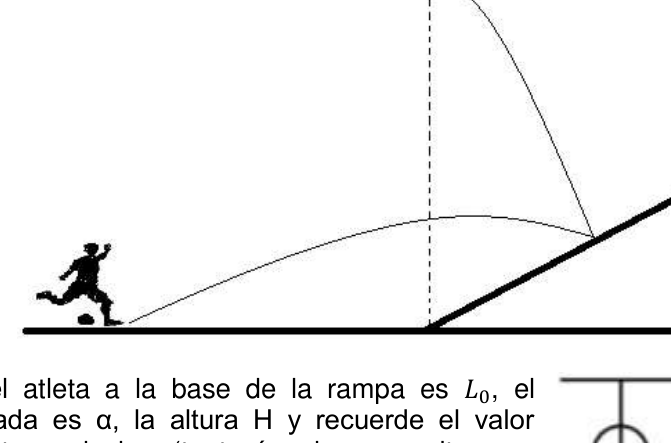
Topic: Newtonian Mechanics, Conservation of Energy Metodi: Kinematic Equations, Free-Body Diagram, Energy Conservation Method Competenze: Physical Reasoning, Mathematical Modeling Objects: Pulley, String, Projectile Fonte: Testo (PDF) — p.5
PT130. Colegio Del Cerro - Istituto parrocchiale San Alfonso - Colegio di Gesù Colegio Dante Alighieri - Istituto di Educazione Medica Dr. Arturo Oñativia Scuola di Educazione Tecnica n°3141 Città del Milagro. Città di Salta.
Sappiamo che, con gli anni, campionati locali e mondiali, si La presenza della metodologia scientifica nel training fisico di gli atleti, in quasi tutte le loro discipline. Una in particolare dove si vede di più. Questo fenomeno, è il calcio, o calcio. In questo si considera fino al minimo dettaglio di tutto ciò che l’atleta fa, i suoi Pausi, prolungamenti, rendimenti massimi, film che guarda, tutto.
OAF 2018 - 97 Per questo problema consideriamo alcune situazioni alle quali si subiscono le I giovani giovani che hanno scelto di lavorare per il mercato del lavoro sono i più poveri.
- Proprio così. Nella prima fase si misurano alcune variabili del movimento dello sportivo. Considerate la Immagine:
Il giocatore è legato, attaccato con la corda, ad un oggetto di m; con una polea alta fissa. L’atleta corre, allontanandosi dalla polea e dalla pesatura, in linea retta, partendo dal riposo, spostandosi in un movimento rettilineo uniformemente variabile. a) Calcolare l’accelerazione raggiunta sapendo che percorre una distanza X, e raggiunge una velocità V b) Trova la altezza di cui arriva il peso, quando l’atleta termina il movimento detto. Considera che la corda sia legata alla sua anca (altezza h) e ha una lunghezza totale L c) Calcolare l’energia totale trasferita al peso. d) Trova la potenza totale fornita dall’atleta.
La fase successiva riguarda la precisione che l’atleta deve sviluppare. e) Si dà all’atleta una palla e si esegue un tiro oblico. Calcola l’ angolo che ti dà deve dare a una palla quando la calcia, per raggiungere un’altezza massima di Hmax. f) Dopo un po’ di stanchezza, si aggiunge un rampa all’esercizio. Considerando la Il seguente grafico, trova l’angolo del piano inclinato.
La distanza dell’atleta dalla base della rampa è L0, il angolo di calcio è α, altezza H e ricordate il valore Il primo punto della direttiva è il seguente: (angolo e altezza non sono le stesse di quanto precede) g) Supponendo che l’atleta sia tenuto a sollevare una pesa, con un polo alto (o sistema), come è
- Non è vero. Calcola la forza richiesta per ciascuna caso presentato. E se avessi un sistema di n? quante polemiche? (la massa del peso è m, e si muove in movimento Uniforme)
98 - OAF 2018
Topic: Newtonian Mechanics, Conservation of Energy Metodi: Kinematic Equations, Free-Body Diagram, Energy Conservation Method Competenze: Physical Reasoning, Mathematical Modeling Objects: Pulley, String, Projectile Fonte: Testo (PDF) — p.5
PT130. College of the Cerro - Parish Institute of San Alfonso - College of Jesus Dante Alighieri College - Institute of Middle Education Dr. Arturo Oñativia is a great writer. School of Technical Education n°3141 Miracle City. Salt City.
We know that as the years have passed, world and local championships, we’ve been The scientific methodology in physical training has been increasingly used in the training of young people. Athletes, in virtually all their disciplines. One in particular where you see more of it . This phenomenon, it’s football, or football. In this regard, even the smallest detail of everything the athlete does is considered, his breaks, stretches, maximum yields, the movies you watch, everything.
The Commission shall adopt delegated acts in accordance with Article 21 of the Financial Regulation. For this problem we will consider some situations in which the The aim of the programme is to improve the performance of the I’m not. In the first phase, certain variables of the athlete’s movement are measured. Consider the The picture is:
The Player is tied, rope through, to an object of m; with a fixed high pole. The athlete runs, moving away from the pole and the weighing, in a straight line, starting from rest, moving in a uniformly varying straight linear motion. (a) Calculate the acceleration it achieves, knowing that it is travelling a distance X, and It reaches a speed of V (b) Find the height the weighing reaches when the athlete finishes the motion said. Consider that the rope is tied to your hip (height (h) and has a total length L (c) Calculate the total energy transferred to the weight. (d) Find the total power delivered by the athlete.
The next phase involves the accuracy that the athlete must develop. (e) The athlete is given a ball and makes oblique shots. Calculate the angle that you ‘re going to get . You must pass a ball when you kick it, so that it reaches a maximum height of Hmax. (f) After a little tired, a ramp is added to the exercise. Considering the Next graph, find the angle of the inclined plane.
The distance of the athlete to the base of the ramp is L0, the Kick angle is α, height H and remember the value The Commission shall adopt implementing acts in accordance with Article 21 of the Treaty. (both angle and height not are the same as in the previous paragraph) (g) Suppose that the athlete is required to lift a Weighs, with a high pulley (or system), as it is I’m not sure. Calculate the force required for each The case brought. What if I had a n-system? How many pulleys? (the mass of the weighing is m, and It moves with motion (including uniforms)
The following is the list of the countries of the European Union:
Topic: Newtonian Mechanics, Conservation of Energy Metodi: Kinematic Equations, Free-Body Diagram, Energy Conservation Method Competenze: Physical Reasoning, Mathematical Modeling Objects: Pulley, String, Projectile Fonte: Testo (PDF) — p.5
PT131. Colegio Del Cerro - Instituto parroquial San Alfonso - Colegio de Jesús
Colegio Dante Alighieri - Instituto de Educación Media Dr. Arturo Oñativia
Escuela de Educación Técnica n°3141 Ciudad del Milagro.
Ciudad de Salta.
Depredador quiere practicar puntería con su arma con mira láser, la cual tiene que dominar en diferentes entornos en cualquier parte de los distintos planetas que este visite. Para ello dispone de cierta configuración de práctica. Primero el rayo (considérelo como una fuente puntual) se refleja en un espejo plano dispuesto a 45º con respecto de la vertical, luego incide verticalmente sobre una lente que a su vez desvía este rayo hacia un vaso cilíndrico lleno con agua de coeficiente de refracción 𝑛𝑎, índice de expansión térmica 𝛼, calor especifico 𝐶𝑝 y masa 𝑚. El vaso, de diámetro 𝐷, se llena hasta una altura ℎ. Considere 𝐻 la distancia entre la lente y el suelo. Depredador nota que el láser luego de desviarse por la lente incide justo en la mitad del vaso visto horizontalmente y se refracta en el agua llegando a tocar el vértice inferior del vaso como se muestra en la figura.
a) ¿Para que se cumplan estas condiciones que tipo de lente debería usar Depredador? b) Calcule la distancia 𝑥 a la que debería estar el vaso en esta configuración de práctica. Considere al índice de refracción del aire como 1. c) Cazando un alien, Depredador se da cuenta que este le había roto el espejo plano por lo que decide usar un espejo esférico. ¿Cree que puede usarlo y conseguir los mismos resultados? De ser así, ¿Cómo y en qué posición lo pondría para reemplazar el espejo plano? Ayúdese con un esquema. d) Está claro que en no todos los planetas las condiciones de presión y temperatura son las mismas. Para lidiar con ello Depredador aumenta la temperatura del agua contenida en el vaso desde 𝑇1 a 𝑇2, consiguiendo aumentar el volumen del agua en el vaso. Esto causa que el rayo ya no incide a la mitad del diámetro, sino que sufre un desplazamiento 𝑑. ¿Dónde incide ahora el rayo al final del vaso? e) Todo este experimento agotó física y mentalmente a Depredador que ahora tiene sed, así que quita el vaso de la configuración y se dispone a tomar el agua que está caliente. Para no quemarse coloca un cubo de hielo de masa 𝑚𝐻. Determine la temperatura de equilibrio cuando el hielo se haya fundido por completo en el agua. f) Si el contenido del vaso en vez de agua hubiera sido cualquier otra sustancia. Sin hacer cálculos ¿Cree usted que Depredador hubiera conseguido mantener la distancia 𝑥 calculada en el inciso b)? ¿Por qué?
OAF 2018 - 99
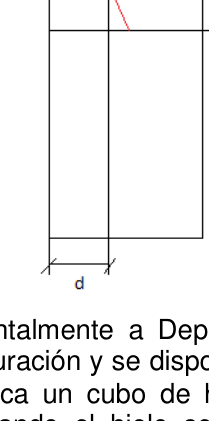
Topic: Geometric Optics, Thermodynamics Metodi: Snell’s Law, Ray Tracing, Conservation of Energy Competenze: Physical Reasoning, Mathematical Modeling Objects: Lens, Mirror, Container Fonte: Testo (PDF) — p.5
PT131. Colegio Del Cerro - Istituto parrocchiale San Alfonso - Colegio di Gesù Colegio Dante Alighieri - Istituto di Educazione Medica Dr. Arturo Oñativia Scuola di Educazione Tecnica n°3141 Città del Milagro. Città di Salta.
Il predatore vuole praticare il puntare con la sua arma. con uno sguardo laser, che deve dominare in Diversi ambienti in qualsiasi parte dei diversi pianeti che egli visita. Per questo è disponibile. La Commissione ha adottato una decisione che prevede che la Commissione non deve adottare misure per l’esercizio di tale funzione. Prima il fulmine (consideralo come una fonte puntuale) si riflette in uno specchio piano a 45° rispetto a di verticale, poi incide verticalmente su una L’obiettivo che a sua volta devia questo raggio verso un bicchiere cilindrico pieno di acqua di coefficiente di rifrazione na, indice di espansione termico α, calore specifico Cp e massa m. Il bicchiere, di diametro D, si riempie fino a un’altezza h. Considerare H la distanza tra la lente e il pavimento. Il predatore nota che il Il laser dopo aver deviato dalla lente incide proprio La parte centrale del vaso è vista orizzontalmente e si Si rifracca nell’acqua, raggiungendo il vertice. inferiore del vaso come mostrato nella figura.
a) Per soddisfare le condizioni di cui sopra che tipo de L’ occhiali Dovrebbe essere Usare
- Un predatore? b) Calcolare la distanza x a cui il vaso dovrebbe essere in questa configurazione di pratica. Considera il tasso di refraczione dell’aria come 1. C) In cerca di un alieno, il Predatore si rende conto che l’alieno gli aveva rotto lo specchio. piano, quindi decide di usare uno specchio. spherico. - Pensi di poterlo usare? ottenere gli stessi risultati? Se si è Quindi, come e in che posizione lo metterò? per sostituire lo specchio piatto? Aiutami . con uno schema. d) È chiaro che non su tutti i pianeti le condizioni di pressione e temperatura Sono le stesse. Per affrontare questo problema. Predatore aumenta la temperatura del acqua contenuta nel vaso da T1 a T2, La Commissione ha inoltre adottato una proposta di regolamento (CE) n. acqua nel bicchiere. Questo causa il fulmine Non è più di metà diametro, ma che subisce un spostamento d. Dove? Ora il fulmine colpisce la fine del bicchiere? e) Tutto questo esperimento ha esaurito fisicamente e mentalmente Predator che ora Ha sete, quindi toglie il bicchiere dalla configurazione e ti prepari per bere l’acqua. che è caldo. Per non bruciare, mette un cubo di ghiaccio di massa mH. Determina la temperatura di equilibrio quando il ghiaccio si è fonduto per completamente immersa nell’acqua. f) Se il contenuto del bicchiere invece di acqua fosse stato qualsiasi altra sostanza. Senza fare calcoli, credi che Predator sia riuscito a mantenere la Distanza x calcolata in punto b)? - Perché?
OAF 2018 - 99
Topic: Geometric Optics, Thermodynamics Metodi: Snell’s Law, Ray Tracing, Conservation of Energy Competenze: Physical Reasoning, Mathematical Modeling Objects: Lens, Mirror, Container Fonte: Testo (PDF) — p.5
PT131. College of the Cerro - Parish Institute of San Alfonso - College of Jesus Dante Alighieri College - Institute of Middle Education Dr. Arturo Oñativia is a great writer. School of Technical Education n°3141 Miracle City. Salt City.
Predator wants to practice aiming with his gun . With laser sights, which has to dominate in Different environments anywhere in the world different planets that he visits. For that purpose, he has The Commission has already adopted a number of proposals. First the lightning. (consider it a point source) reflects in a flat mirror set at 45° with respect to of the vertical, then it hits vertically on a lens that in turn deflects this beam into a glass a cylindrical water-filled coefficient of The following conditions are met: specific Cp and mass m. The glass, with a diameter of D, is It ‘s full to a height of h . Consider H the distance between the lens and the floor. Predator notes that the The laser after deflecting through the lens just hits . In the middle of the glass, the glass is seen horizontally and is It refracts in the water reaching the summit. The bottom of the glass as shown in the figure.
(a) To fulfil these conditions That
- What ? de Lens I should . Use it What about predators? (b) Calculate the distance x to which the glass should be in this configuration of The practice. Consider the air refractive index as 1. (c) Hunting an alien, Predator realizes that he’s broken his mirror. So he decides to use a mirror. It’s spherical. Do you think you can use it and? get the same results? If it is So, how and in what position would I put him? to replace the flat mirror? Help yourself . with a scheme. d) It is clear that not all planets pressure and temperature conditions They’re the same. To deal with it . Predator increases the temperature of the Earth’s atmosphere. water contained in the glass from T1 to T2, The Commission has also taken the view that the Water in the glass. This causes the lightning to strike. It’s not half the diameter anymore, but the person is displaced d. Where? Does the lightning strike the end of the glass now? (e) This whole experiment physically and mentally exhausted the Predator that now He’s thirsty, so he takes the glass off the setup and sets out to drink the water. It’s hot. To avoid burning, put a cube of mH mass ice. Determine the equilibrium temperature when the ice has melted by It’s all in the water. (f) If the contents of the glass instead of water were any other substance. Without doing any calculations, do you think Predator would have managed to maintain the distance x calculated in subparagraph (b)? - Why? - I don’t know.
The Commission shall adopt delegated acts in accordance with Article 21 of this Regulation.
Topic: Geometric Optics, Thermodynamics Metodi: Snell’s Law, Ray Tracing, Conservation of Energy Competenze: Physical Reasoning, Mathematical Modeling Objects: Lens, Mirror, Container Fonte: Testo (PDF) — p.5
PT132. Escuela Escocesa San Andrés. Olivos, Buenos Aires.
Esta pregunta se refiere a las colisiones.
a)
En un experimento, una escopeta
de aire pellet se dispara en un bloque
de plastilina que se apoya en una mesa.
La
escopeta
de
aire
sedimento
permanece en el interior del bloque de
la arcilla después del impacto.
Como resultado de la colisión, el bloque
de arcilla se desliza a lo largo de la
mesa en una línea recta y la hora de descanso. Otros datos relativos a la experimento se
dan a continuación.
Masa de aire rifle pellet = 2,0 g
Masa del bloque de arcilla = 56 g
La velocidad de impacto del aire rifle pellet = 140 ms-1
La distancia de frenado de bloque de arcilla = 2,8 m
i) Demostrar que la velocidad inicial del bloque de arcilla después de que el aire
golpea rifle pellet es 4.8 ms-1.
ii) Calcular la fuerza de fricción promedio que la superficie de la mesa ejerce sobre
el bloque de arcilla, mientras que el bloque de la arcilla se está moviendo.
b) El experimento se repite con el bloque de
arcilla colocado en el borde de la mesa de
manera que se dispara fuera de la mesa. La
velocidad inicial del bloque de arcilla es de
4,3 ms-1 horizontalmente. La superficie de la
mesa es de 0,85 m por encima del suelo.
i) Haciendo caso omiso de la resistencia
del aire, calcular la distancia horizontal
recorrida por el bloque de arcilla antes de que toque el suelo.
ii) El diagrama en (b) muestra la trayectoria de la secuencia de arcilla despreciando
la resistencia del aire. En el diagrama, dibujar la forma aproximada de la ruta que
el bloque de arcilla se llevará a suponer que los actos de resistencia de aire en el
bloque de arcilla.
Topic: Conservation of Momentum, Newtonian Mechanics Metodi: Conservation of Momentum, Kinematic Equations, Impulse-Momentum Theorem Competenze: Physical Reasoning, Mathematical Modeling Objects: Block, Projectile Fonte: Testo (PDF) — p.5
PT132. Scuola scozzese di San Andrés. Olivos, Buenos Aires.
Questa domanda riguarda le collisioni. a) In un esperimento, una fucile. Il pellet di aria viene sparato in un blocco di plastilina appoggiata su un tavolo. La
- Fucile . de aria sedimento rimane all’interno del blocco di l’argilla dopo l’impatto. Come risultato della collisione, il blocco di argilla si scivola lungo la un tavolo in linea retta e l’ora di riposo. Altri dati relativi all’esperimento sono stati
- E’ il risultato. Massa di aria del fucile pellet = 2,0 g Massa del blocco di argilla = 56 g La velocità di impatto del fucile aereo pellet = 140 ms-1 Distanza di frenata del blocco di argilla = 2,8 m i) Dimostra che la velocità iniziale del blocco di argilla dopo che l’aria Colpisce il fucile pellet è 4.8 ms-1. (ii) Calcolare la forza di attrito media esercitata dalla superficie del tavolo su di esso. il blocco di argilla, mentre il blocco di argilla si sta muovendo.
b) Si ripete l’esperimento con il blocco di Argile posta sul bordo del tavolo di in modo che si spara fuori dal tavolo. La La velocità iniziale del blocco di argilla è di 4,3 ms-1 orizzontalmente. La superficie della La tavola è a 0,85 metri dal suolo. i) Ignorando la resistenza di aria, calcolare la distanza orizzontale percorre il blocco di argilla prima di toccare il suolo. (ii) Il diagramma di (b) mostra il percorso del sequenza di argilla scartando la resistenza dell’aria. Nel diagramma, disegnare la forma approssimativa del percorso che La struttura di un blocco di argilla è stata rilevata come un elemento di resistenza all’aria. blocco di argilla.
Topic: Conservation of Momentum, Newtonian Mechanics Metodi: Conservation of Momentum, Kinematic Equations, Impulse-Momentum Theorem Competenze: Physical Reasoning, Mathematical Modeling Objects: Block, Projectile Fonte: Testo (PDF) — p.5
PT132. St. Andrew’s Scottish School. Olive trees, from Buenos Aires.
This question concerns collisions. a) In an experiment, a rifle. The pellet is fired into a block . of plasticine that rests on a table. La
- The shotgun . de Air . sediment remains inside the block of the clay after impact. As a result of the collision, the block The clay is sliding along the table in a straight line and rest time. Other data relating to the experiment are They’re going on. Air mass of the pellet rifle = 2.0 g The mass of the clay block = 56 g The impact velocity of the air rifle pellet = 140 ms-1 The braking distance of the clay block = 2,8 m (i) Demonstrate that the initial clay block velocity after air is Pellets rifle is hitting 4.8 ms-1. (ii) Calculate the average frictional force exerted by the table surface on The clay block, while the clay block is moving.
(b) The experiment is repeated with the block of clay placed on the edge of the table way that you shoot off the table. La The initial speed of the clay block is 4,3 ms-1 horizontally. The surface of the table is 0.85 m above the ground. (i) By ignoring the resistance the air, calculate the horizontal distance It runs through the clay block before it touches the ground. (ii) The diagram in (b) shows the trajectory of the scorned clay sequence the air resistance. In the diagram, draw the approximate shape of the route that The clay block will be assumed to act as air resistance in the a block of clay.
Topic: Conservation of Momentum, Newtonian Mechanics Metodi: Conservation of Momentum, Kinematic Equations, Impulse-Momentum Theorem Competenze: Physical Reasoning, Mathematical Modeling Objects: Block, Projectile Fonte: Testo (PDF) — p.5
PT133. Escuela Escocesa San Andrés. Olivos, Buenos Aires.
Esta pregunta se refiere a los impulsos.
a) Una
bola
de
masa
de
0.0750
kg
se
desplaza
horizontalmente con una velocidad de 2.20 ms-1. Afecta a una
pared vertical y horizontal rebotes.
Debido a la colisión con la pared, 20% de la energía cinética
inicial de la pelota se disipa.
i) Encontrar la velocidad de la pelota rebota en la pared.
ii) Demostrar que el impulso dado a la pelota junto a la
pared es de 0.313 N s.
b) La pelota golpea la pared en el momento t = 0 y deja la pared en el momento t = T. El esquema gráfico muestra cómo la fuerza F que ejerce la pared sobre la pelota se supone que varía con el tiempo t.
100 - OAF 2018
El tiempo T se mide electrónicamente a la igualdad de 0,0894 s. Usa el impulso dado en (b) (ii) para estimar el valor promedio de F.
Topic: Conservation of Momentum Metodi: Impulse-Momentum Theorem, Conservation of Energy Competenze: Physical Reasoning, Mathematical Modeling Objects: Ball Fonte: Testo (PDF) — p.5
PT133. Scuola scozzese di San Andrés. Olivos, Buenos Aires.
Questa domanda riguarda gli impulsi. a) Una
- Ballone . de massa de 0.0750 kg se
- spostare orizzontale con una velocità di 2,20 ms-1. - Si tratta di una . parete verticali e ribaltamenti orizzontali. A causa della collisione con il muro, il 20% dell’energia cinetica iniziale della palla si dissipa. i) Trovare la velocità della palla che rimbalza sul muro. (ii) dimostrare che la spinta data alla palla vicino alla Il muro è di 0.313 N s.
b) La palla colpisce il muro al momento t = 0 e lascia il muro al momento t = T. Il grafico mostra come la forza F che esercita il muro sulla palla si suppone che varia con il tempo t.
100 - OAF 2018
Il tempo T viene misurato elettronicamente a 0,0894 s. Utilizzare il pulso di (b) (ii) per stimare il valore medio di F.
Topic: Conservation of Momentum Metodi: Impulse-Momentum Theorem, Conservation of Energy Competenze: Physical Reasoning, Mathematical Modeling Objects: Ball Fonte: Testo (PDF) — p.5
PT133. St. Andrew’s Scottish School. Olive trees, from Buenos Aires.
This question is about impulses. (a) One Ball . de Mass de 0.0750 kg se It moves . horizontally with a speed of 2.20 ms-1. It affects one . vertical and horizontal wall bounces. Because of the collision with the wall, 20% of the kinetic energy. The initial ball is dissipated. i) Find the speed of the bounce ball on the wall. (ii) To demonstrate that the momentum given to the ball next to the ball is wall is 0.313 N s.
(b) The ball hits the wall at the time t = 0 and leaves the wall at the time t = T. The graph shows how the F-force that the wall exerts on the ball is It’s supposed to vary with time t.
100 - OAF 2018
Time T is measured electronically at the equal of 0,0894 s. Use the momentum given in (b) (ii) to estimate the average value of F.
Topic: Conservation of Momentum Metodi: Impulse-Momentum Theorem, Conservation of Energy Competenze: Physical Reasoning, Mathematical Modeling Objects: Ball Fonte: Testo (PDF) — p.5
PT134. Escuela Escocesa San Andrés. Olivos, Buenos Aires.
a) Una partícula cargada de masa m y carga +q viaja con velocidad v en el vacío. Ingresa en una región de campo magnético uniforme con densidad de flujo B, como se muestra en Fig. T3.1. región de campo magnético camino de la partícula cargada
Fig. T3.1
El campo magnético es normal a la dirección de movimiento de la partícula. El camino de la partícula en el campo es un arco de radio r. i) Explique por qué el camino de la particular en el campo es el arco de un círculo. ii) Muestre que el radio r está dado por la expresión: r =mv/Bq
b) Se coloca una fina placa de metal en el campo magnético de (a). Una segunda carga ingresa en la región del campo magnético. Pierde energía cinética cuando pasa por la placa. La partícula sigue el camino mostrado en Fig. T3.2. región de campo magnético uniforme
Fig. T3.2
i) En Fig. 5.2, marque con una flecha la dirección de movimiento de la partícula. ii) El camino de la partícula tiene radios diferentes en cada lado de la placa, de 7.4 cm y 5.7 cm. Determine el cociente: Cantidad movimiento final de la partícula / Cantidad de movimiento inicial de la partícula Para la partícula cuando pasa por la placa. Cociente = ……
OAF 2018 - 101
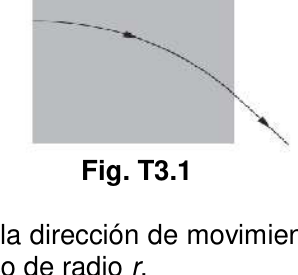
Topic: Magnetism Metodi: Lorentz Force Analysis Competenze: Physical Reasoning, Mathematical Modeling Objects: Particle Beam Fonte: Testo (PDF) — p.5
PT134. Scuola scozzese di San Andrés. Olivos, Buenos Aires.
a) Una particella carica di massa m e carica +q viaggia a velocità v nel vuoto. Entrate in una regione di campo magnetico uniforme con densità di flusso B, come mostrato in Fig. T3.1. Regione di campo magnetico via della particella carica
Fig. T3.1
Il campo magnetico è normale nella direzione del movimento della particella. Il cammino di la particella nel campo è un arco di radio r. (i) Spiegare perché il percorso del privato nel campo è l’arco di un cerchio. (ii) Mostra che il radio r è dato dalla espressione: r =mv/Bq
b) Si inserisce una fine placca di metallo nel campo magnetico di (a). Una seconda carica entra nella regione del campo magnetico. Perdono energia cinetica. quando passa attraverso la targa. La particella segue il percorso mostrato in Figura. T3.2. Regione di campo magnetico uniforme
Fig. T3.2
(i) In Fig. 5.2, segna con un’arcia la direzione di movimento della particella. (ii) Il percorso della particella ha radii diversi su ogni lato della targa, di 7.4 cm y 5.7 cm. Determina il coefficiente: Quantità di movimento finale della particella / Quantità di movimento iniziale della particella Per la particella quando passa attraverso la targa. Il tasso di cambio è pari a:
OAF 2018 - 101
Topic: Magnetism Metodi: Lorentz Force Analysis Competenze: Physical Reasoning, Mathematical Modeling Objects: Particle Beam Fonte: Testo (PDF) — p.5
PT134. St. Andrew’s Scottish School. Olive trees, from Buenos Aires.
(a) A charged particle of mass m and charge +q travels at velocity v in vacuum. Come on in . In a region of uniform magnetic field with flow density B, as shown in Fig. T3.1. magnetic field region path of the charged particle
Fig. T3.1
The magnetic field is normal to the direction of the particle’s motion. The way of The particle in the field is a radio arc r. (i) Explain why the individual’s path in the field is the arc of a circle. (ii) Show that the radius r is given by the expression: r =mv/Bq
(b) A thin metal plate is placed in the magnetic field of (a). A second charge enters the magnetic field region. It loses kinetic energy . when it goes through the plate. The particle follows the path shown in Fig. T3.2. region of Uniform magnetic field
Fig. T3.2
(i) In Fig. 5.2, mark with an arrow the direction of motion of the particle. (ii) The particle path has different radii on each side of the plate, of 7.4 cm y 5.7 cm. Determine the coefficient: Final particle motion quantity / Initial motion quantity of the Particle For the particle when it passes through the plate. The amount of the aid shall be calculated on the basis of the following:
The Commission shall adopt delegated acts in accordance with Article 21 of this Regulation.
Topic: Magnetism Metodi: Lorentz Force Analysis Competenze: Physical Reasoning, Mathematical Modeling Objects: Particle Beam Fonte: Testo (PDF) — p.5
PT135. Escuela Escocesa San Andrés. Olivos, Buenos Aires.
Esta pregunta se refiere a una descarga de rayo. a) Una nube de tormenta puede ser modelado como una placa cargada negativamente que es paralelo al suelo. La magnitud de la carga en la placa aumenta debido a los procesos en la atmósfera. Finalmente, una corriente descargas de la nube de tormenta al suelo.
b) La magnitud de la intensidad de campo eléctrico E entre dos placas infinitos cargadas paralelas está dada por la expresión E = σ/ε0 donde σ es la carga por unidad de área en una de las placas. Una nube de tormenta lleva una carga de magnitud 35 C repartidos en su base. El área de la base es 1,2 × 10⁷ m2 i) Determinar la magnitud del campo eléctrico entre la base de la nube de tormenta y el suelo. ii) Cuando las descargas nube tormentosa, la corriente promedio de descarga es de 1,8 kA. Estimar el tiempo de descarga. iv) La diferencia de potencial entre la nube de tormenta y el suelo antes de la descarga es de 2,5 × 10⁸ V. Determinar la energía liberada en la descarga.
Topic: Electrostatics Metodi: Gauss’s Law, Conservation of Energy Competenze: Physical Reasoning, Mathematical Modeling Objects: Capacitor Fonte: Testo (PDF) — p.5
PT135. Scuola scozzese di San Andrés. Olivos, Buenos Aires.
Questa domanda riguarda un’esposizione di fulmine. a) Un nuvo di tempesta può essere modellato Come Una .
- La scheda carica Negativamente, è parallelo al suolo. La grandezza della carica sulla scheda La crescita delle attività di ricerca è aumentata a causa dei processi in l’atmosfera. Finalmente, Una . corrente scarichi di nuvola di tempesta sul pavimento.
b) L’intensità di campo elettrico E tra Due . Le placche infiniti . carichi paralleli è dato dalla espressione E = σ/ε0 dove σ è la carica per unità di area su una delle piastre. Una nuvola di tempesta porta un carico di 35 C distribuiti alla sua base. L’area di base è 1,2 × 10⁷ m2 i) Determinare la magnitudine del campo elettrico tra la base del nube di tempesta e il pavimento. (ii) Quando i discarichi sono in nuvola tempestale, il corrente medio di scarico è di 1,8 kA. Estimare il tempo di scarico. (iv) La differenza di potenziale tra nuvola di tempesta e terreno prima della il discarico è di 2,5 × 10⁸ V. Determinare l’energia rilasciata durante lo scarico.
Topic: Electrostatics Metodi: Gauss’s Law, Conservation of Energy Competenze: Physical Reasoning, Mathematical Modeling Objects: Capacitor Fonte: Testo (PDF) — p.5
PT135. St. Andrew’s Scottish School. Olive trees, from Buenos Aires.
This question concerns a lightning strike. A storm cloud may be Modelled How One .
- The plaque . loaded It’s negative that it’s parallel to the ground. The magnitude of the load on the plate The number of people in the EU is increasing due to the processes in the atmosphere. Finally, One . current The storm cloud discharges to the ground.
(b) The magnitude of the field intensity Electrical and between Two . plates infinite . parallel charges is given by the The expression E = σ/ε0 where σ is the charge per unit area on one of the plates. A storm cloud carries a 35 C burden spread at its base. The area of base is 1,2 × 10⁷ m2 (i) Determine the magnitude of the electric field between the base of the storm cloud And the ground. (ii) When cloud discharges are stormy, the average discharge current is 1,8 kA. Estimate the time of discharge. (iv) The potential difference between the storm cloud and the ground before the storm. The discharge is 2,5 × 10⁸ V. Determine the energy released at discharge.
Topic: Electrostatics Metodi: Gauss’s Law, Conservation of Energy Competenze: Physical Reasoning, Mathematical Modeling Objects: Capacitor Fonte: Testo (PDF) — p.5
PT136. Escuela Escocesa San Andrés. Olivos, Buenos Aires.
Esta pregunta es sobre el calentamiento de un líquido. a) Sugiera por qué, en términos de un modelo molecular, la energía asociada al derretimiento es menor que la asociada a la ebullición.
b) Se caliente leche usando vapor de agua en un vaso hasta que hierve. Mientras se enfría, algo de la leche se evapora. i) Distinga entre evaporación y ebullición. ii) El vaso contiene 0.30 kg de leche a una temperatura inicial de 18 °C. Estime la mínima masa de vapor necesaria para calentar la lecha a 80 °C. Calor latente de vaporización del agua= 2.3 × 10⁶ J kg-1 Calor específico del agua = 4200 J kg-1 K-1 Calor específico de la leche = 3800 J kg-1 K-1
Topic: Thermodynamics Metodi: Conservation of Energy Competenze: Physical Reasoning, Mathematical Modeling Objects: Calorimeter Fonte: Testo (PDF) — p.5
PT136. Scuola scozzese di San Andrés. Olivos, Buenos Aires.
Questa domanda riguarda il riscaldamento di un liquido. a) Suggerisce perché, in termini di modello molecolare, l’energia associata al La fusione è inferiore a quella associata all’evoluzione.
b) Il latte viene riscaldato con vapore d’acqua in un bicchiere fino a che non si ferve. Mentre si Fa freddo, un po’ del latte evapora. i) Distingue l’evaporazione da quella che si ebolli. (ii) Il bicchiere contiene 0,30 kg di latte ad una temperatura iniziale di 18 °C. Valutate la la massa minima di vapore necessaria per riscaldare il latte a 80 °C. Calore latente di vaporizzazione dell’acqua= 2.3 × 10⁶ J kg-1 Calore specifico dell’acqua = 4200 J kg-1 K-1 Calore specifico del latte = 3800 J kg-1 K-1
Topic: Thermodynamics Metodi: Conservation of Energy Competenze: Physical Reasoning, Mathematical Modeling Objects: Calorimeter Fonte: Testo (PDF) — p.5
PT136. St. Andrew’s Scottish School. Olive trees, from Buenos Aires.
This question is about the heating of a liquid. (a) Suggest why, in terms of a molecular model, the energy associated with the melting is less than that associated with boiling.
(b) Heat milk using water vapor in a glass until it boils. As long as you are It’s cold, some of the milk evaporates. (i) Distinguish between evaporation and boiling. (ii) The glass contains 0.30 kg of milk at an initial temperature of 18 °C. Estimate the minimum mass of steam required to heat milk to 80 °C. The water vaporization latent heat = 2.3 × 10⁶ J kg-1 The specific heat of the water = 4200 J kg-1 K-1 The milk specific heat = 3800 J kg-1 K-1
Topic: Thermodynamics Metodi: Conservation of Energy Competenze: Physical Reasoning, Mathematical Modeling Objects: Calorimeter Fonte: Testo (PDF) — p.5
PT137. Escuela Escocesa San Andrés. Olivos, Buenos Aires.
Esta pregunta se refiere a la energía interna, el calor y los gases ideales. a) La energía interna de una pieza de cobre se incrementa por calentamiento. i) La pieza de cobre tiene una masa de 0,25 kg. El aumento de la energía interna del cobre es de 1,2 × 10³ J y su aumento de la temperatura es 20 K. estimar la capacidad de calor específico del cobre.
102 - OAF 2018
Topic: Thermodynamics Metodi: Conservation of Energy Competenze: Physical Reasoning Objects: — Fonte: Testo (PDF) — p.5
PT137. Scuola scozzese di San Andrés. Olivos, Buenos Aires.
Questa domanda riguarda l’energia interna, il calore e i gas ideali. a) L’energia interna di un pezzo di rame è aumentata dal riscaldamento. (i) La coppa è di 0,25 kg di massa. L’aumento dell’energia interna La temperatura del rame è 1,2 × 10³ J e il suo aumento di temperatura è di 20 K. estimar la capacità termica specifica del rame.
102 - OAF 2018
Topic: Thermodynamics Metodi: Conservation of Energy Competenze: Physical Reasoning Objects: — Fonte: Testo (PDF) — p.5
PT137. St. Andrew’s Scottish School. Olive trees, from Buenos Aires.
This question concerns internal energy, heat and ideal gases. (a) The internal energy of a copper piece is increased by heating. (i) The copper part has a mass of 0,25 kg. Increased internal energy The temperature of the copper is 1,2 × 10³ J and its temperature rise is 20 K. estimate the specific heat capacity of copper.
The following points shall be added:
Topic: Thermodynamics Metodi: Conservation of Energy Competenze: Physical Reasoning Objects: — Fonte: Testo (PDF) — p.5
PT138. Escuela Escocesa San Andrés. Olivos, Buenos Aires.
Esta pregunta se refiere a la transferencia de energía térmica. a) Una pieza de cobre se lleva a cabo en una llama hasta que se alcanza el equilibrio térmico. El tiempo que tarda en alcanzar el equilibrio térmico dependerá de la capacidad térmica de la pieza de cobre.
b) La pieza de cobre se transfiere rápidamente a un vaso de plástico que contiene
agua. La capacidad térmica de la copa es insignificante. Se dispone de los siguientes
datos.
Masa de cobre = 0,12 kg
Masa de agua = 0,45 kg
Aumento de la temperatura del agua = 30 K
Temperatura final del cobre = 308 K
Capacidad de calor específico del cobre = 390 J kg K-1
Capacidad de calor específico del agua = 4200 J kg-1 K
i) Usa los datos para calcular la temperatura de la llama.
ii) Explique si la temperatura de la llama es probable que sea mayor o menor que su
respuesta a (b) (i).
Topic: Thermodynamics Metodi: Conservation of Energy Competenze: Physical Reasoning, Mathematical Modeling Objects: Calorimeter Fonte: Testo (PDF) — p.5
PT138. Scuola scozzese di San Andrés. Olivos, Buenos Aires.
Questa domanda riguarda il trasferimento di energia termica. a) Un pezzo di rame si svolge in una fiamma fino a raggiungere l’equilibrio
- Termica. Il tempo necessario per raggiungere l’equilibrio termico dipenderà dalla capacità. la temperatura del pezzo di rame.
b) Il pezzo di rame viene rapidamente trasferito in un vaso di plastica contenente acqua. La capacità termica del calice è insignificante. Le seguenti informazioni sono disponibili: dati. Massa di rame = 0,12 kg Massa d’acqua = 0,45 kg Aumento della temperatura dell’acqua = 30 K Temperatura finale del rame = 308 K Capacità di calore specifica del rame = 390 J kg K-1 Capacità di calore specifica dell’acqua = 4200 J kg-1 K i) Usa i dati per calcolare la temperatura della fiamma. (ii) Spiegare se la temperatura della fiamma è probabile che sia superiore o inferiore a quella della fiamma. risposta a (b) (i).
Topic: Thermodynamics Metodi: Conservation of Energy Competenze: Physical Reasoning, Mathematical Modeling Objects: Calorimeter Fonte: Testo (PDF) — p.5
PT138. St. Andrew’s Scottish School. Olive trees, from Buenos Aires.
This question concerns the transfer of thermal energy. (a) A piece of copper is held in a flame until equilibrium is reached. heat. The time it takes to reach thermal equilibrium will depend on the capacity the thermal properties of the copper part.
(b) The copper piece is quickly transferred to a plastic glass containing
- What? The thermal capacity of the cup is insignificant. The following are available data. The mass of copper = 0,12 kg Water mass = 0,45 kg Increase in water temperature = 30 K The final temperature of the copper = 308 K The specific heat capacity of copper = 390 J kg K-1 The specific heat capacity of the water = 4200 J kg-1 K (i) Use the data to calculate the flame temperature. (ii) Explain whether the flame temperature is likely to be higher or lower than its temperature. answer to (b) (i).
Topic: Thermodynamics Metodi: Conservation of Energy Competenze: Physical Reasoning, Mathematical Modeling Objects: Calorimeter Fonte: Testo (PDF) — p.5
PT139. Colegio Nicolás Avellaneda. Aguilares, Tucumán.
Dos amigos: Isaías y Jorge, están experimentando en el laboratorio de Física y desean
elevar la temperatura de 1,584 kg de un líquido (ce = 4180 J/kg °K, desde los 20°C hasta
los 60°C, armando un circuito con dos resistencias que ellos disponen, que cuando se
conectan en serie, a una fuente de 110V, dan una resistencia equivalente de 27,5 Ω.
El primer interrogante que se les plantea es:
a) ¿En qué tiempo se logra ese cambio de temperatura?
Las resistencias conectadas en serie son las siguientes: Isaías aporta una barra circular de longitud L y sección constante que previamente había conectado en el laboratorio a una fuente de 36V y midió una corriente de 2A (con ello determina R, P, ….), pero luego la corta en tres pedazos iguales que conecta extremo con extremo para formar una nueva barra cuya longitud es igual a una tercera parte de lo longitud original y por lo tanto su sección es el triple. Esta nueva barra así formada es la que se utilizó como una de las resistencias en el punto anterior. b) ¿Cuál es el valor de la resistencia que aporta Isaías?
La otra resistencia, aportada por Jorge, es una barra de sección cuadrada de 3mm de lado, hecha de dos materiales (como lo indica la figura); el primer material tiene una longitud de 25 cm y una resistividad de 5,4. 10 -5 Ωm, mientras que el segundo material tiene una longitud de 36cm. Esta barra, tal como se describe, es la segunda resistencia indicada en la primera parte del problema. c) ¿Cuánto vale la resistividad del segundo material de la barra de Jorge?
Pero ahora aparece su compañero Seba que les dice: mi papá calienta en menos tiempo el agua; él tiene dos resistencias y en un registro anotó que cuando las conecta en serie, a cierta fuente, disipan 225W con una corriente total de 5A y cuando las conecta en paralelo para la misma corriente total, disipan 50W. ¿Tendrá razón Seba? d) ¿Cuánto valen las resistencias del papá de Seba?
OAF 2018 - 103
Topic: Circuits, Thermodynamics Metodi: Equivalent Circuit Reduction, Conservation of Energy Competenze: Physical Reasoning, Mathematical Modeling Objects: Resistor, Battery Fonte: Testo (PDF) — p.5
PT139. Scuola Nicola Avellaneda. Aguilar, Tucumán.
Due amici: Isaia e Jorge, stanno sperimentando nel laboratorio di fisica e desiderano aumenti di temperatura di un liquido di 1,584 kg (ce = 4180 J/kg °K, da 20°C a La maggior parte dei sistemi di controllo di controllo è stata effettuata con un’azione di controllo di controllo. collegano in serie a una fonte di 110 V, danno una resistenza equivalente a 27,5 Ω. Il primo interrogativo che vi viene posto è: a) In che tempo si ottiene tale cambiamento di temperatura?
Le resistenze collegate in serie sono le seguenti: Isaia fornisce una barra circolare L’aereo è stato utilizzato per la costruzione di una rete di telecamere di lunghezza L e di sezione costante che aveva precedentemente collegato in laboratorio a una fonte di 36V e ha misurato un corrente di 2A (con questo determina R, P, ….), ma poi il taglio in tre pezzi uguali che collega l’estremità con l’estremità per formare una nuova la barra la cui lunghezza è pari a un terzo della lunghezza originale e quindi la sua Sezione è il triplo. Questa nuova barra così formata è quella che è stata usata come una delle resistenza al punto precedente. b) Qual è il valore della resistenza di Isaia?
L’altra resistenza, fornita da Jorge, è una barra di sezione quadrata di 3 mm di lato, fatto di due materiali (come indicato nella figura); il primo materiale ha una lunghezza di 25 cm e resistenza di 5,4. 10 -5 Ωm, mentre il secondo materiale ha una lunghezza di 36cm. Questa barra, come descritta, è la seconda resistenza indicata nella prima parte del problema. c) Quanto vale la resistenza del secondo materiale della barra di Jorge?
Ma ora arriva il suo compagno Seba che dice loro: “Mio padre si sta riscaldando in meno tempo”. l’acqua; ha due resistenze e in un registro ha notato che quando li collega in serie, a una certa fonte, si dissipano 225W con un corrente totale di 5A e quando si collegano in parallelo per la stessa corrente totale, dissipare 50W. - Seba ha ragione? D) Quanto vale la resistenza del padre di Seba?
OAF 2018 - 103
Topic: Circuits, Thermodynamics Metodi: Equivalent Circuit Reduction, Conservation of Energy Competenze: Physical Reasoning, Mathematical Modeling Objects: Resistor, Battery Fonte: Testo (PDF) — p.5
PT139. Nicholas Avellaneda College. He was a student. The Eagles, Tucumán.
Two friends, Isaiah and George, are experimenting in the physics lab and they want to. The temperature of a liquid (ce = 4180 J/kg °K, from 20°C to The MSK0/>C, arming a circuit with two resistors they have, which when They connect in series to a 110V source, giving an equivalent resistance of 27.5 Ω. The first question that comes to them is: (a) When is this temperature change achieved?
The resistors connected in series are as follows: Isaiah provides a circular bar The L-length and constant section that I had previously connected in the lab to a 36V source and measured a current of 2A (thus determining R, P, …), but then The cut into three equal pieces that connect end to end to form a new one. a bar whose length is one third of the original length and therefore its Section is triple. This new bar thus formed is the one used as one of the resistance at the previous point. (b) What value does Isaiah’s endurance have?
The other resistance, provided by Jorge, is a 3mm square section bar of side, made of two materials (as shown in figure); the first material has a a length of 25 cm and a resistivity of 5,4. 10 -5 Ωm, whereas the second material has a length of 36cm. This bar, as described, is the second. The resistance indicated in the first part of the problem. (c) What is the resistance of the second material of the Jorge bar?
But now their partner Seba shows up and says, “My dad’s getting hot in less time”. He has two resistors and in a log he noted that when he connects them in series, At a certain source, they dissipate 225W with a total current of 5A and when you connect them to parallel to the same total current, dissipate 50W. Is Seba right? (d) How much are the resistance of Seba’s father worth?
The Commission shall adopt delegated acts in accordance with Article 21 of Regulation (EU) No 1303/2013.
Topic: Circuits, Thermodynamics Metodi: Equivalent Circuit Reduction, Conservation of Energy Competenze: Physical Reasoning, Mathematical Modeling Objects: Resistor, Battery Fonte: Testo (PDF) — p.5
PT140. Colegio Nicolás Avellaneda. Aguilares, Tucumán.
¡A cargar combustible urgente! Ante la crisis actual por el aumento del dólar y por ende de la nafta, en una estación de servicio, un agricultor temeroso de los aumentos, deja su cisterna para que se la llenen de combustible. La cisterna vacía tiene una masa de 300 kg; es de forma cilíndrica de 0,8m de radio y 2m de largo. La manguera que utiliza el playero arroja combustible a razón de 180 litros por minuto –con una velocidad de salida horizontal de 25m/s-, y cuya densidad es de 800kg/m3. Se le solicita que calcule: a) Peso del combustible, cuando la Cisterna está llena. b) Tiempo de llenado. c) Fuerza horizontal que debe realizar el playero, cuando el combustible sale – también en forma horizontal- de la manguera, mientras llena la cisterna.
Una vez llena la cisterna, desde la parte superior de un camión estacionado a 1,50m de distancia, otro operario -de 80 kg de masa- toma una velocidad de 4m/s para saltar sobre la cisterna, con la intención que con su propio “impulso” (al decir del operario) pueda desplazarla lo suficiente para que no entorpezca el estacionado de otros vehículos, con este planteo y los datos de la figura 2, se le solicita responda: d) el punto A de impacto, donde del operario toca la cisterna (consigna la distancia desde el extremo izquierdo). e) la velocidad con que sale la cisterna a partir de que el operario se posa en ella.
Desprecie la resistencia del aire y el pequeño desplazamiento que pueda tener este
hombre a partir del punto de impacto A.
f) Si considera un coeficiente de fricción entre la cisterna y el suelo de 0,10,
¿Cuánto se desplaza antes de detenerse?
Como de esta manera, no es posible cumplir el objetivo, se optó por enganchar con un cable –que forma un ángulo 𝜃 con respecto a la horizontal- accionado por un motor que lo desplaza a velocidad constante, tal como se muestra en la figura; considerando todas las variables anteriores, se le solicita: g) Encuentre una expresión en función de (𝜇, m, g, l, h) para la tensión del cable.
Figura 2
Topic: Newtonian Mechanics, Conservation of Momentum Metodi: Conservation of Momentum, Kinematic Equations, Free-Body Diagram Competenze: Physical Reasoning, Mathematical Modeling Objects: Cylinder, Container Fonte: Testo (PDF) — p.5
PT140. Scuola Nicola Avellaneda. Aguilar, Tucumán.
Carica di carburante urgente! In vista della crisi attuale dovuta all’aumento del dollaro e quindi della nafta, in una stazione di Servizio, un agricoltore temente degli aumenti, lascia il suo serbatoio per essere riempito di combustibile. Il cisterna vuota ha una massa di 300 kg; è cilindrico di 0,8 m di raggio e 2 m di lunghezza. Il tubo che utilizza la spiaggia getta il carburante a a una velocità di uscita orizzontale di 25 m/s, di 180 litri al minuto, e la densità è di 800 kg/m3. Vi viene chiesto di calcolare: a) Peso del carburante, quando il serbatoio è pieno. b) Tempo di riempimento. c) Forza orizzontale che deve esercitare il peschereccio quando il combustibile esce anche in forma orizzontale - del tubo, mentre riempie il cisterna.
Una volta riempito il serbatoio, dalla parte superiore di un camion parcheggiato a 1,50 m da La distanza, un altro operatore -80 kg di massa- prende una velocità di 4m/s per saltare sopra Il gruppo di lavoro ha deciso di avviare un’azione di ricerca e di sviluppo per la costruzione di una nuova struttura di produzione. spostare il veicolo in modo tale da non ostacolare il parcheggio di altri veicoli, con la domanda e i dati di cui alla figura 2, è richiesta la risposta: d) il punto A di impatto, dove l’operatore tocca il cisterna (consegna la distanza dall’estremo sinistro). e) la velocità con cui il cisterna esce dopo che l’operatore si è appeso a essa.
Scommetti la resistenza dell’aria e il piccolo spostamento che questo può avere. uomo dal punto di impatto A. f) Considerando un coefficiente di frizione tra il cisterna e il suolo di 0,10, Quanto si muove prima di fermarsi?
Come in questo modo, non è possibile raggiungere l’obiettivo, ha scelto di attaccarsi con un Cavi che formano un angolo θ rispetto alla orizzontale- azionati da un motore che lo La velocità di spostamento è costante, come mostrato nella figura. Le variabili precedenti sono: g) Trova un’espressione in funzione di (μ, m, g, l, h) per la tensione del cavo.
Figura 2
Topic: Newtonian Mechanics, Conservation of Momentum Metodi: Conservation of Momentum, Kinematic Equations, Free-Body Diagram Competenze: Physical Reasoning, Mathematical Modeling Objects: Cylinder, Container Fonte: Testo (PDF) — p.5
PT140. Nicholas Avellaneda College. He was a student. The Eagles, Tucumán.
On to emergency fuel! In the face of the current crisis caused by the rise of the dollar and therefore of the naphtha, in a station of Service, a farmer afraid of increases, leaves his tank to be filled Fuel. The empty tank has a mass of 300 kg; it is cylindrical in shape. 0.8m in radius and 2m in length. The hose used by the beachman throws fuel at the Ratio of 180 litres per minute with a horizontal output speed of 25m/s-, and whose density is 800 kg/m3. You are asked to calculate: (a) Weight of fuel when the tank is full. (b) Time of filling. (c) The horizontal force to be applied by the shore when the fuel is released The water tank is also horizontally-shaped, while the tank is filled.
Once you fill the tank, from the top of a truck parked at 1.50m from distance, another operator -80 kg of mass- takes a speed of 4m/s to jump over The purpose of the tank is to enable the operator to use his own impulse to Move it around enough so that it does not obstruct other vehicles’ parking, with This question and the data in Figure 2 are asked to answer: (d) the point A of impact, where the operator touches the tank (consigns the distance from the far left). (e) the speed at which the tank exits after the operator has landed on it.
Disregard the air resistance and the small displacement this may have. Man from impact point A. (f) If a coefficient of friction between the tank and the ground is 0,10, How far does it go before it stops?
As this way, it is not possible to meet the objective, he chose to hook up with a cable which forms an angle θ with respect to the horizontal- powered by a motor that moves at a constant speed, as shown in Figure 1. the above variables, you are asked to: g) Find an expression based on (μ, m, g, l, h) for the cable voltage.
Figure 2
Topic: Newtonian Mechanics, Conservation of Momentum Metodi: Conservation of Momentum, Kinematic Equations, Free-Body Diagram Competenze: Physical Reasoning, Mathematical Modeling Objects: Cylinder, Container Fonte: Testo (PDF) — p.5
PT141. Colegio Nicolás Avellaneda. Aguilares, Tucumán.
Se colocan en un calorímetro 300 cm3 de agua pura (𝛿= 1g/cm3) a 12,7°C y luego se introduce un cuerpo de hierro de 250 g extraído de otro recipiente con agua en ebullición (en condiciones normales); si supone que no hay intercambio de calor con el ambiente en ningún momento y considera que el calor específico para el agua y el hierro valen: 1cal/g°C y 0,11cal/g °C, respectivamente: a) ¿Cuál es la temperatura final de la mezcla?
104 - OAF 2018
La mencionada pieza de metal es un alambre de sección circular de 2mm de diámetro,
enrollado en forma de bobina, cuya densidad a 20°C es: 𝛿 = 7,86g/cm3
b) ¿Cuál es el largo total del alambre?
Teniendo en cuenta la variación de temperatura que experimentó el hierro y que el coeficiente de expansión lineal es: 𝜆 = 1,1 . 10-5 1/°C c) ¿Qué variación de longitud experimentó?
En realidad, en el calorímetro indicado en el primer párrafo, a más de esas condiciones, hay 100gr de hielo a -5°C. Teniendo en cuenta que para el hielo el calor especifico es 0,5cal/g °C y el calor latente de fusión 80 cal/gr. d) ¿Cuáles son las condiciones finales de la mezcla?
Mientras Ud. resuelve estas cuestiones dejó agua caliente, para que al terminar tome unos mates. El recipiente es de forma cúbica de 10cm de lado (interior), hecho de vidrio pírex de 3mm de espesor en sus 6 caras, cuyo coeficiente de conductividad térmica es 1,09 watt/m °C. El agua –que llena totalmente el recipiente- se coloca a 80°C y no debe enfriarse por debajo de los 50°C. Teniendo en cuenta: (el marco teórico que se da al pie), que la temperatura ambiente en ese momento es de 20°C y en el supuesto que se considere que el calor del agua se transfiera en forma instantánea a las paredes del recipiente: e) Obtenga un tiempo “razonable”, en alcanzar los 50°C.
No se haga problema, tendrá tiempo para todo, pues si considera la conductividad térmica del agua (0,611), este tiempo prácticamente se le triplicará.
La conduccion de calor Si los extremos de un sólido se encuentran a distintas temperaturas, el calor fluirá desde el extremo de mayor temperatura a la de menor, a través del mismo. En un régimen estacionario, donde la temperatura de los extremos se mantiene constante, la cantidad de calor que pasa hacia el exterior en un cierto tiempo, está dada por la Ley de Fourier: Q = k. A. t. 𝚫T/e Dónde: K es el coeficiente de conductividad térmica; A: área transversal de las paredes; t: tiempo; ΔT: diferencia de temperatura entre el interior y el exterior; e: espesor de la pared.
Topic: Thermodynamics Metodi: Conservation of Energy Competenze: Physical Reasoning, Mathematical Modeling Objects: Calorimeter, Wire Fonte: Testo (PDF) — p.5
PT141. Scuola Nicola Avellaneda. Aguilar, Tucumán.
Si inseriscono in un calometro di 300 cm3 di acqua pura (δ= 1g/cm3) a 12,7°C e poi si introduce un corpo di ferro di 250 g estratto da un altro recipiente con acqua in fiore (in condizioni normali); se si presume che non vi sia scambi di calore con l’ambiente in non è stato dato alcun momento e considera che il calore specifico per l’acqua e il ferro valga: 1 cal/g°C e 0,11 cal/g °C, rispettivamente: a) Qual è la temperatura finale del miscelato?
104 - OAF 2018 La parte di metallo di cui sopra è un filo di sezione circolare di 2 mm di diametro, laminato in forma di coil, la cui densità a 20°C è: δ = 7,86g/cm3 b) Qual è la lunghezza totale del filo?
Considerando la variazione di temperatura che ha sperimentato il ferro e che il Il coefficiente di espansione lineare è: λ = 1,1 . 10-5 1/°C c) Quali variazioni di lunghezza ha sperimentato?
In realtà, al calometro indicato nel primo comma, a più di queste condizioni, ci sono 100 gr di ghiaccio a -5°C. Considerando che per il ghiaccio il calore specifico è 0,5 cal/g °C e il calore latente di fusione 80 cal/g. d) Quali sono le condizioni finali della miscela?
Mentre tu… Solleva questi problemi lasciando acqua calda, così che al termine si prenda
- Un paio di matte. Il recipiente è cubico di 10 cm laterale (interno), fatto di vetro pierex di 3 mm di spessore sui suoi 6 lati, il cui coefficiente di conduzione termico è 1,09 watt/m °C. L’acqua che riempie completamente il contenitore deve essere messa a 80°C e non deve essere Raggiungere i livelli di temperatura di 50°C. Considerando: (il quadro teorico che si dà al piede), che la temperatura ambiente La temperatura del fiore è di 20°C e se si considera che il calore dell’acqua sia di trasferire immediatamente ai muri del recipiente: (e) Ottenere un tempo ragionevole per raggiungere i 50°C.
Non preoccuparti, avrai tempo per tutto, perché se consideri la conducibilità La temperatura dell’acqua (0,611), questo tempo sarà praticamente triplicato.
Il conduzione del calore Se le estremità di un solido si trovano a diverse temperature, il calore fluirà da l’estremità più alta a quella più bassa, attraverso di esso. In regime La temperatura delle estremità è costante, la quantità di Il calore che passa verso l’esterno in un certo periodo di tempo, è dato dalla legge di Fourier: Q = k. A. t. 𝚫T/e Dove: K è il coefficiente di conduzione termica; A: area trasversale delle pareti; t: tempo; ΔT: differenza di temperatura tra l’interno e l’esterno; e: spessore del muro.
Topic: Thermodynamics Metodi: Conservation of Energy Competenze: Physical Reasoning, Mathematical Modeling Objects: Calorimeter, Wire Fonte: Testo (PDF) — p.5
PT141. Nicholas Avellaneda College. He was a student. The Eagles, Tucumán.
They are placed in a 300 cm3 heat meter of pure water (δ= 1 g/cm3) at 12,7°C and then they are It introduces a 250 g body of iron extracted from another vessel with boiling water. (under normal conditions); if there is no heat exchange with the environment in No time and considers that the specific heat for water and iron is worth: 1 cal/g°C and 0,11 cal/g °C, respectively: (a) What is the final temperature of the mixture?
The Commission shall adopt delegated acts in accordance with Article 21 of this Regulation. The mentioned metal piece is a circular section wire of 2 mm diameter, wrapped in coil form, density at 20°C: δ = 7,86g/cm3 (b) What is the total length of the wire?
Taking into account the temperature variation experienced by the iron and the Linear expansion coefficient is: λ = 1.1 . 10-5 1/°C (c) What variation in length did you experience?
In fact, at the calorimeter indicated in the first paragraph, at more than these conditions, There is 100 grams of ice at -5°C. Considering that for ice the specific heat is 0,5 cal/g °C and the latent heat of fusion 80 cal/g. (d) What are the final conditions of the mixture?
While you do. He solves these issues left hot water, so that when he’s done he takes it. A few mates. The container is cubic in shape with a side of 10 cm (interior) made of glass. 3 mm thick pyrethroids on their 6 faces, the thermal conductivity coefficient of which is The following conditions shall apply: The water that fills the container fully is placed at 80°C and should not be The temperature of the product shall be kept at a temperature below the temperature of the product. Given that the temperature of the room is the same as the temperature of the atmosphere, the temperature of the atmosphere is the same as the temperature of the atmosphere. At that time it is 20°C and assuming that the water heat is considered to be instantly transfer to the walls of the container: (e) Get a reasonable time to reach 50°C.
Don’t worry, you’ll have time for everything, because if you consider conductivity. The temperature of the water (0.611), this time will almost triple it.
Heat conduction If the ends of a solid are at different temperatures, heat will flow from the higher temperature end to the lower temperature, through it. In a regime The temperature of the ends is constant, the amount of heat that passes outward in a certain time, is given by Fourier’s Law: Q = k. A. t. 𝚫T/e Where: K is the thermal conductivity coefficient; A: cross-sectional area of the walls; t: time; ΔT: temperature difference between the inside and outside; e: wall thickness.
Topic: Thermodynamics Metodi: Conservation of Energy Competenze: Physical Reasoning, Mathematical Modeling Objects: Calorimeter, Wire Fonte: Testo (PDF) — p.5
PT142. Escuela Philips. Ciudad Autónoma de Buenos Aires.
Satélites en Júpiter Entre 1609 y 1618 el astrónomo y matemático alemán Johannes Kepler formuló tres importantísimas leyes sobre el movimiento planetario. Por ese entonces, el también astrónomo y matemático (pero italiano) Galileo Galilei venía trabajando sobre observaciones con sus telescopios y sumando, junto con Kepler y otros, a las ideas de Copérnico y a la construcción de la ciencia tal y como la conocemos hoy en día. En el campo de la astronomía, ambos Kepler y Galileo sentaban por esos años las bases científicas del heliocentrismo. Seguramente haya oído hablar de Galileo, pero tal vez no sepa que en 1612 utilizó un telescopio para descubrir cuatro lunas orbitando Júpiter. Estas lunas, llamadas Io, Europa, Ganimedes y Calisto, tienen los radios orbitales y períodos orbitales en torno a Júpiter que se muestran en la figura 1. Teniendo en cuenta que en su tercera ley, Kepler estableció la relación:
OAF 2018 - 105 𝑇2 = (4𝜋2 𝐺𝑀) 𝐷3 donde 𝑇 es el período orbital de un cuerpo que orbite otro de masa 𝑀, 𝐷 es el radio orbital o distancia promedio entre los dos cuerpos y 𝐺= 6,67 × 10⁻¹¹𝑁𝑚2/𝑘𝑔2 es la constante de gravitación universal, a) Linealice apropiadamente la tercera ley de Kepler y represente la línea de tendencia correspondiente a los primeros tres valores de la tabla. b) Determine la masa de Júpiter (en kg) a partir de la línea de tendencia
Ya es un hecho que la ley de gravitación universal de Newton aplica a todos los planetas
de nuestro sistema solar. Según esta ley, la fuerza gravitatoria que mutuamente se
ejercen un planeta y un cuerpo que lo orbite viene dada por:
𝐹= 𝐺𝑀𝑚
𝑟2
Donde 𝑀 y 𝑚 son las masas del planeta y del cuerpo que orbita, respectivamente, y 𝑟 la
distancia entre sus centros de masa.
Como parte de una misión a Júpiter, se quiere colocar en órbita geoestacionaria un
satélite que sirva a futuro para la transmisión de información. La órbita geoestacionaria
implica una trayectoria circular de modo que el satélite complete una revolución en un
período equivalente al “día sideral” de Júpiter.
A partir de aquí considere la masa de Júpiter como 𝑀𝐽= 1,89 × 1027𝑘𝑔.
c) Determine la altitud (en km) a la que debe orbitar el satélite sobre la superficie de
Júpiter
d) Determine la rapidez (en km/s) que debe tener el satélite a lo largo de su
trayectoria
La misión ya tiene en Io, una de la las lunas de Júpiter, un satélite de reconocimiento que
orbita en trayectoria circular de radio 𝑅𝐴= 2200𝑘𝑚.
Se lo quiere transferir a una órbita de menor radio,
𝑅𝐵= 2080𝑘𝑚 para que pueda tomar mejores
fotografías de dicha luna. Para lograrlo, primero se
conduce el satélite a través de una trayectoria
elíptica AB y a tal fin se reduce su rapidez en 25𝑚/𝑠
cuando pasa por el punto A. Sabiendo que la masa
de la luna Io es de 8,9 × 10²²𝑘𝑔,
e) Calcule la rapidez (en m/s) del satélite
cuando se acerque al punto B sobre la
trayectoria elíptica
f) Calcule en qué cantidad ∆𝑣 (en m/s) debe
reducirse la rapidez del satélite llegando al
punto B, para que ingrese en la nueva
trayectoria circular.
Datos utiles Radio Terrestre 𝑅𝑇= 6400𝑘𝑚 Masa de la Tierra 𝑀𝑇= 5,97 × 1024𝑘𝑔 Distancia Tierra-Sol 𝐷𝑇𝑆= 1,5 × 10¹¹𝑚 Aceleración gravitatoria de la Tierra 𝑔𝑇= 9,8𝑚/𝑠2 Día sideral de la Tierra 𝑑𝑇= 24ℎ Período orbital de la Tierra en torno al Sol 𝑇𝑇𝑆= 1 𝑎ñ𝑜 Radio de Júpiter 𝑅𝐽= 69900𝑘𝑚 Distancia Júpiter-Sol 𝐷𝐽𝑆= 7,8 × 10¹¹𝑚 Aceleración gravitatoria de Júpiter 𝑔𝐽= 24,8𝑚/𝑠2 Día sideral de Júpiter 𝑑𝑇= 9ℎ 56𝑚𝑖𝑛 Período orbital de Júpiter en torno al Sol 𝑇𝐽𝑆= 12𝑎ñ𝑜𝑠
106 - OAF 2018
Topic: Gravitation Metodi: Kepler’s Laws, Newton’s Law of Gravitation, Graph Linearization Competenze: Physical Reasoning, Mathematical Modeling Objects: Satellite, Planet Fonte: Testo (PDF) — p.5
PT142. La Philips School. Città autonoma di Buenos Aires.
Sateliti su Giove Tra il 1609 e il 1618 l’astronomo e matematico tedesco Johannes Kepler formulò tre Le leggi sulla mozione planetaria sono molto importanti. A quel tempo, anche lui. Galileo Galilei, astronomo e matematico (ma italiano) stava lavorando su Le osservazioni con i suoi telescopi e aggiungendo, insieme a Kepler e altri, alle idee di Copernico e la costruzione della scienza come la conosciamo oggi. En el Nel campo dell’astronomia, Kepler e Galileo hanno gettato le basi per quegli anni. scienziati dell’eliocentrismo. Sicuramente avete sentito parlare di Galileo, ma così Non sa che nel 1612 usò un telescopio. per scoprire quattro lune orbitanti intorno a Giove. Queste lune, chiamate Io, Europa, Ganimedes e Calisto, hanno i raggi orbitali e i periodi. Orbitali attorno a Giove che si mostrano in Figura 1. Considerando che nella sua terza legge, Kepler ha stabilito il rapporto:
OAF 2018 - 105 𝑇2 = (4𝜋2 𝐺𝑀) 𝐷3 dove T è il periodo orbitale di un corpo che orbita un altro di massa M, D è il radio L’orbita o la distanza media tra i due corpi e G= 6,67 × 10⁻¹¹Nm2/kg2 è la costante di gravità universale, a) Linealizza adeguatamente la terza legge di Kepler e rappresenta la linea di la tendenza corrispondente ai primi tre valori della tabella. b) Determina la massa di Giove (in kg) a partire dalla linea di tendenza
E ’ un fatto che la legge di gravitazione universale di Newton si applica a tutti i pianeti.
del nostro sistema solare. Secondo questa legge, la forza gravitazionale che si interagisce
esercitano un pianeta e un corpo che lo orbita è dato da:
F= GMm
𝑟2
Dove M e m sono le masse del pianeta e del corpo che orbita, rispettivamente, e r la
Distanza tra i loro centri di massa.
Come parte di una missione a Giove, si vuole mettere in orbita geoestazionaria un
un satellite che servirà in futuro per la trasmissione di informazioni. L’orbita geostationaria
Il satellite ha un percorso circolare che compie una rivoluzione in un’orbita di circa un milione di metri.
periodo equivalente al giorno sideral di Giove.
Da qui, considera la massa di Giove come MJ= 1,89 × 1027kg.
c) Determina l’altitudine (in km) a cui deve orbitare il satellite sulla superficie di
Giove
d) Determina la velocità (in km/s) che il satellite deve avere lungo il suo percorso.
La traccia
La missione ha già su Io, una delle lune di Giove, un satellite di riconoscimento che Orbita in rotta circolare di radio RA= 2200km. Vuole essere trasferito in un’orbita a radio minore. RB = 2080km per poter prendere migliori Foto di quella luna. Per farlo, prima si guida il satellite attraverso un percorso Il sistema di controllo è il sistema di controllo del controllo del controllo del controllo del controllo del controllo del controllo del controllo del controllo del controllo del controllo del controllo del controllo del controllo del controllo del controllo del controllo del controllo del controllo del controllo del controllo del controllo del controllo del controllo del controllo del controllo del controllo del controllo del controllo del controllo del controllo del controllo del controllo del controllo del controllo del controllo del controllo del controllo del controllo del controllo del controllo del controllo del controllo del controllo del controllo del controllo del controllo del controllo del controllo del controllo del controllo del controllo del controllo del controllo del controllo del controllo del controllo del controllo del controllo del controllo del controllo del controllo del controllo del controllo del controllo del controllo del controllo del controllo del controllo del controllo del controllo del controllo del controllo del controllo del controllo del controllo del controllo del controllo del controllo del controllo del controllo del controllo del controllo del controllo del controllo del controllo del controllo del controllo del controllo del controllo del controllo del controllo del controllo del controllo del controllo del controllo del controllo del controllo. quando passa attraverso il punto A. Sapendo che la massa La luna è 8,9 × 10²² kg, e) Calcolare la velocità (in m/s) del satellite quando si avvicina al punto B sulla Traccia elliptica f) Calcolare la quantità di ∆v (in m/s) ridurre la velocità del satellite fino al punto B, per entrare nella nuova traccia circolare.
Informazioni utili Radio Terra RT= 6400km Massa terrestre MT= 5,97 × 1024kg Distanza Terra-Sol DTS= 1,5 × 10¹¹m Accelerazione gravitazionale della Terra gT= 9,8m/s2 Giornata sideral della Terra dT= 24h Periodo orbitale della Terra attorno al Sole TTS = 1 anno Radio di Giove RJ = 69900km Distanza Giove-Sol DJS= 7,8 × 10¹¹m Accelerazione gravitazionale di Giove gJ= 24,8m/s2 Giove siderale dT=9h 56min Periodo orbitale di Giove attorno al Sole TJS= 12 anni
106 - OAF 2018
Topic: Gravitation Metodi: Kepler’s Laws, Newton’s Law of Gravitation, Graph Linearization Competenze: Physical Reasoning, Mathematical Modeling Objects: Satellite, Planet Fonte: Testo (PDF) — p.5
PT142. Philips school. The Autonomous City of Buenos Aires.
Satellites on Jupiter Between 1609 and 1618, the German astronomer and mathematician Johannes Kepler formulated three very important laws about planetary motion. By then, he too. astronomer and mathematician (but Italian) Galileo Galilei was working on observations with their telescopes and adding, together with Kepler and others, to the ideas of The European Union has a very strong commitment to the development of the European Union. En el In the field of astronomy, both Kepler and Galileo laid the foundations for those years. The scientific community is the world’s largest scientific community. You’ve probably heard of Galileo, but such I don ‘t know that in 1612 he used a telescope . to discover four moons orbiting Jupiter. These moons, called Io, Europa, Ganymede and Calisthenics, they have orbital radii and periods. orbitals around Jupiter that are shown in the The following table shows the following: Considering that in its third law, Kepler established the relationship:
The Commission shall adopt delegated acts in accordance with Article 21 of the Financial Regulation. 𝑇2 = (4𝜋2 𝐺𝑀) 𝐷3 where T is the orbital period of a body orbiting another body of mass M, D is the radius The orbital or average distance between the two bodies and G= 6,67 × 10⁻¹¹Nm2/kg2 is the The universal gravitational constant is the (a) Linearise Kepler’s third law properly and represent the line of The trend corresponds to the first three values of the table. (b) Determine the mass of Jupiter (in kg) from the trendline
It ‘s a fact that Newton ‘s law of universal gravitation applies to all planets .
from our solar system. According to this law, the gravitational force that mutually binds
They have a planet and a body orbiting it is given by:
F = GMm
𝑟2
Where M and m are the masses of the planet and the body orbiting it, respectively, and r is the mass of the planet.
distance between their mass centers.
As part of a mission to Jupiter, we want to place in geostationary orbit a
satellite to be used in the future for the transmission of information. The geostationary orbit
It involves a circular path so that the satellite completes a revolution in a
period equivalent to the sidereal day of Jupiter.
From here on, consider the mass of Jupiter as MJ= 1,89 × 1027kg.
(c) Determine the altitude (in km) at which the satellite must orbit over the surface of
Jupiter .
(d) Determine the speed (in km/s) the satellite must have throughout its journey
Trajectory
The mission already has on Io, one of Jupiter’s moons, a reconnaissance satellite that orbit in a circular path of radius RA= 2200km. You want to transfer it to a lower-radio orbit, RB=2080km so I can take better photographs of that moon. To achieve this, first we must It leads the satellite through a trajectory. The speed of the motor is reduced by 25 m/s. When it passes through point A. Knowing that the mass The moon’s mass is 8,9 × 10²² kg, (e) Calculate the speed (in m/s) of the satellite When you get close to point B on the Elliptical trajectory (f) Calculate how much ∆v (in m/s) should be The satellite’s speed will be reduced by reaching the point B, to enter the new The rotation of the vehicle is not possible.
Useful data The radio is transmitted by the radio. The mass of the Earth MT= 5,97 × 1024kg The distance between Earth and Sun DTS= 1,5 × 10¹¹m The gravitational acceleration of the Earth gT= 9.8m/s2 Earth’s sidereal day dT= 24h Earth’s orbital period around the Sun TTS = 1 year The radius of Jupiter RJ = 69900 km The distance from Jupiter to the Sun DJS= 7,8 × 10¹¹m The gravitational acceleration of Jupiter gJ = 24.8m/s2 Jupiter’s sidereal day dT = 9h 56min Jupiter’s orbital period around the Sun TJS= 12 years
The following is the list of the countries of the European Union:
Topic: Gravitation Metodi: Kepler’s Laws, Newton’s Law of Gravitation, Graph Linearization Competenze: Physical Reasoning, Mathematical Modeling Objects: Satellite, Planet Fonte: Testo (PDF) — p.5
PT143. Escuela Philips. Ciudad Autónoma de Buenos Aires.
Globos en el cumpleaños El payaso Jabulani se dedica a animar cumpleaños y es un experto en globos. Asiste a los eventos con sus propios tanques para inflar globos frente a los niños y esto genera en los infantes gran asombro. A un particular evento, Jabulani asiste con dos tanques, uno de aire y otro de helio. Con este segundo, la idea es no solo inflar globos para que se eleven en el aire “desafiando” a la gravedad, sino también maravillar y hacer reír con el típico “truco” de inhalar helio y hablar con una voz graciosa de caricatura. La fiesta transcurre en un ambiente climatizado con temperatura constante de 26℃ y los tanques llevados por Jabulani son cilindros de 40𝑐𝑚 de diámetro y 90𝑐𝑚 de altura. El tanque de aire tiene incorporado un manómetro de tubo cerrado que utiliza mercurio como líquido indicador de desnivel. El tanque de helio tiene incorporado un manómetro de tubo abierto también con mercurio como liquido indicador. Los brazos de los tubos de ambos manómetros son de vidrio transparente y…¡¡¡¡ tienen 1,5𝑚 de longitud vertical para que los niños puedan ver el desnivel de mercurio y asombrarse aún más!!!! Si inicialmente los tanques contienen 0,25𝑘𝑔 de gas el de aire y 0,04𝑘𝑔 de gas el de helio (considerados ambos ideales), a) ¿Qué desnivel ∆ℎ (en 𝑐𝑚) indica el manómetro de cada tanque antes de comenzar a utilizarlos?
Es hora de inflar los globos. Jabulani comienza inflando 2 globos con aire y otros 2 con
helio. Cada globo se infla hasta que queda como una esfera perfecta de 40𝑐𝑚 de
diámetro y una presión absoluta interna de 1,035𝑎𝑡𝑚. Finalizado este proceso,
b) ¿Qué masa de gas contiene cada globo de aire y cada globo de helio?
c) ¿En qué porcentaje ha cambiado el desnivel ∆ℎ en el manómetro de cada
tanque?
Supongamos ahora que tanto el tanque como el látex de los globos son materiales
aislantes térmicos perfectos. Ya que estamos, supongamos despreciables la presencia
del manómetro y la energía elástica que se acumula en el látex del globo. Suponiendo
que el inflado se lleva a cabo muy pero muy lentamente,
d) ¿qué variación de energía interna experimenta el sistema que corresponde al
inflado del primer globo de aire?
Eliminemos ahora la suposición de que los materiales mencionados son aislantes
térmicos perfectos.
e) ¿Cuál es ahora el cambio en la energía interna del sistema propuesto?
Consideremos ahora un globo de aire inflado según las condiciones ya mencionadas de presión interna y diámetro. El globo se encuentra ya atado y supuesto de forma esférica. El padre (amante de la física) de uno de los niños presentes observa el globo e inmediatamente recuerda las leyes de Youg-Laplace para fluidos. No puede ver el globo sin asociarlo a una masa fluida esférica, tal vez una gota, tal vez una burbuja, o tal vez una pompa. Este padre sabe que Young-Laplace establecen que la presión diferencial interior-exterior viene dada por: ∆𝑝= 2𝛾/𝑅 (gotas y burbujas) y ∆𝑝= 4𝛾/𝑅 (pompas) Donde 𝑅 es el radio de la esfera de fluido y 𝛾 la tensión superficial de la interfase interior- exterior. f) Determine la fuerza por unidad de longitud a la que se encuentra tensionado el látex de un globo de aire
OAF 2018 - 107
Luego de inflar un globo con helio y atarlo, Jabulani se lo entrega a un niño. Este lo sujeta
feliz pero en un descuido se le escapa. Sabiendo que la masa de latex del globo es de
25𝑔 y, despreciando los efectos viscosos del aire del salón,
g) ¿qué rapidez posee el globo luego de haber ascendido 50𝑐𝑚?
En una mejor aproximación, queremos tener en cuenta los efectos dinámicos sobre el globo dada la viscosidad del aire. Para ello, podemos utilizar la siguiente ley que nos da la fuerza viscosa que experimenta un cuerpo moviéndose en aire sin vientos:
𝑓𝑉= 0,235 ∙𝜌∙𝐴∙𝑣2
Donde 𝜌 es la densidad del aire, 𝑣 la rapidez instantánea del objeto relativa al aire y 𝐴 el
área proyectada del objeto en un plano perpendicular a la dirección instantánea del
movimiento relativo al aire.
h) Determine la rapidez terminal o límite del globo en su ascenso.
i) Recalcule (con la mejor aproximación posible) la rapidez del globo luego de
haber ascendido 50𝑐𝑚. Para evaluar lo bueno de su aproximación tenga en
cuenta que el valor teórico esperado es de 1,50𝑚/𝑠. Su valor aproximado no
debe diferir en más del 10% respecto de dicho valor y ¡ser menor que la
velocidad terminal!
Datos 𝑝𝑎𝑡𝑚= 1𝑎𝑡𝑚= 101325 𝑃𝑎 𝑅= 8,31 𝐽/𝑚𝑜𝑙 𝐾 𝑀𝑎𝑖𝑟𝑒= 29 𝑔/𝑚𝑜𝑙
𝑀ℎ𝑒𝑙𝑖𝑜= 4 𝑔/𝑚𝑜𝑙 𝑔= 9,8 𝑚/𝑠2
𝜌𝐻𝑔= 13600 𝑘𝑔/𝑚3 𝑉𝑒𝑠𝑓= 4𝜋𝑅3/3 𝑉𝑐𝑖𝑙= 𝐴𝑏𝑎𝑠𝑒∙𝐻
Topic: Thermodynamics, Fluid Mechanics Metodi: Ideal Gas Law, Hydrostatic Equilibrium, First Law of Thermodynamics Competenze: Physical Reasoning, Mathematical Modeling Objects: Gas, Manometer, Bubble Fonte: Testo (PDF) — p.5
PT143. La Philips School. Città autonoma di Buenos Aires.
Baloni di compleanno Il clown Jabulani è dedicato a animare i compleanni ed è un esperto di palloni. Asisti a Gli eventi con i propri serbatoi per gonfiare i palloncini davanti ai bambini e questo genera in I bambini sono stupiti. In un evento particolare, Jabulani partecipa con due serbatoi, uno aereo e l’altro di elio. Con La seconda è che l’idea non è solo di gonfiare i palloncini per farli salire in aria sfidando La gravità, ma anche meravigliarsi e far ridere con il tipico trucco di inalazione di elio e parlare con una voce cartoonistica divertente. La festa si svolge in un ambiente. Il sistema è stato climatizzato a temperature costanti di 26°C e i serbatoi trasportati da Jabulani sono cilindri di 40 cm di diametro e 90 cm di altezza. Il serbatoio d’aria ha un’aria incorporata. manometro a tubo chiuso che utilizza mercurio come liquido indicativo di svantaggio. El Il serbatoio di elio ha un manometro a tubo aperto incorporato anche con mercurio. come liquido indicativo. Le braccia dei tubi di entrambi i manometri sono di vetro . Le dimensioni di un’area di luce sono trasparenti e … hanno una lunghezza verticale di 1,5 m in modo che i bambini possano vedere il Sbalorditi di mercurio e stupirsi ancora di più!!!! Se inizialmente i serbatoi contengono 0,25 kg di gas per aria e 0,04 kg di gas per aria Helio (considerati entrambi ideali), a) Che livello ∆h (in cm) indica il manometro di ciascun serbatoio prima di iniziare a usarle?
È ora di gonfiare i palloni. Jabulani inizia inflando 2 palloni con aria e altri 2 con
- Elio. Ogni pallone si gonfia fino a rimanere come una sfera perfetta di 40 cm di distanza. diametro e pressione interna assoluta di 1,035 atm. Finito questo processo, b) Che massa di gas contiene ogni pallone d’aria e ogni pallone di elio? c) Per quale percentuale è cambiato il svantaggio ∆h sul manometro di ciascuna
- Un carro armato?
Supponiamo che sia il serbatoio che il latex dei globuli siano materiali. perfetti isolanti termici. Dato che siamo, supponiamo dispregiata la presenza Il manometro e l’energia elastica che si accumula nel latex del globo. Supponiamo che che l’inflazione si svolge molto ma molto lentamente, (d) quali variazioni di energia interna si verificano nel sistema che corrisponde al
- l’inflazione del primo pallone d’aria?
Eliminamo ora l’ipotesi che i materiali menzionati siano isolanti. perfetti termico. e) Qual è ora il cambiamento nell’energia interna del sistema proposto?
Consideramo ora un pallone d’aria gonfiato secondo le condizioni già menzionate di pressione interna e diametro. Il globo è già legato e supposto in forma sferica. Il padre (amante della fisica) di uno dei bambini presenti osserva il globo e E’ immediatamente ricordato le leggi di Youg-Laplace per i fluidi. Non riesce a vedere il globo senza associarlo ad una massa fluida sferica, forse una goccia, forse una bolla, o forse una pompa. Questo padre sa che Young-Laplace stabiliscono che la pressione differenziale interno-esterno viene dato da: ∆p= 2γ/R (gocce e bolle) e ∆p= 4γ/R (pompe) Dove R è il raggio della sfera di fluido e γ la tensione superficiale dell’interfaccia interna all’esterno. f) Determina la forza per unità di lunghezza a cui è tenso il dispositivo. L’aereo è un’aereo.
OAF 2018 - 107 Dopo aver gonfiato un pallone di elio e averlo legato, Jabulani lo consegna a un bambino. Questo lo tiene. felice, ma in un’incoscienza gli sfugge. Sapendo che la massa di latex del globo è di 25g e, disprezzando gli effetti viscosissimi dell’aria del salone, g) che velocità ha il pallone dopo aver salito 50 cm?
In un approccio più accurato, vogliamo tenere conto degli effetti dinamici sulla il globo dato il viscosità dell’aria. Per questo, possiamo usare la seguente legge che ci dà la forza viscosa che un corpo prova muovendosi in aria senza venti:
𝑓𝑉= 0,235 ∙𝜌∙𝐴∙𝑣2
Dove ρ è la densità dell’aria, v la velocità istantanea dell’oggetto relativa all’aria e A l’aria. area proiettata dell’oggetto in un piano perpendicolare alla direzione istantanea del movimento relativo all’aria. h) Determina la velocità terminale o il limite di rallentamento del pallone. i) Calcolare (con il miglior approccio possibile) la velocità del globolo dopo aver salito 50 cm. Per valutare il bene del suo approccio, si deve si stima che il valore teorico previsto sia di 1,50 m/s. Il suo valore approssimativo non è deve differire di oltre il 10% rispetto a tale valore e essere inferiore a velocità terminale!
Datos Il numero di persone che hanno ricevuto un’assistenza tecnica è stato di circa 15 milioni di persone.
Melio = 4 g/mol g= 9,8 m/s2
R2 = 13600 kg/m3 Vesf= 4πR3/3 Vcil= Abase∙H
Topic: Thermodynamics, Fluid Mechanics Metodi: Ideal Gas Law, Hydrostatic Equilibrium, First Law of Thermodynamics Competenze: Physical Reasoning, Mathematical Modeling Objects: Gas, Manometer, Bubble Fonte: Testo (PDF) — p.5
PT143. Philips school. The Autonomous City of Buenos Aires.
Balls on your birthday . The Jabulani clown is dedicated to cheering birthdays and is an expert on balloons. You ‘re assisting . The events with their own tanks to inflate balloons in front of the children and this generates in The children are astonished. At a particular event, Jabulani attends with two tanks, one air and one helium. With This second one, the idea is not just to inflate balloons so they rise up in the air, challenging Gravity, but also marvel and make fun of the typical helium inhaler trick. Talk to me with a funny cartoon voice. The party takes place in an atmosphere. The tank is equipped with a constant temperature of 26°C and the tanks carried by Jabulani are cylinders of 40 cm in diameter and 90 cm in height. The air tank has a built-in a closed-tube manometer using mercury as a level indicator liquid. El The helium tank has an open-tube manometer built in, also with mercury. as an indicator liquid. The pipe arms of both manometers are glass . The measurements are transparent and … have a vertical length of 1.5m so that children can see the The mercury level is low and you’re even more amazed!!!! If the tanks initially contain 0,25 kg of gas for air and 0,04 kg of gas for air, Helium (both considered ideal), (a) What is the manometer of each tank before ∆h (in cm) indicates? start using them?
It’s time to inflate the balloons. Jabulani starts inflating 2 balloons with air and another 2 with Helium. Each balloon inflates until it becomes a perfect sphere 40cm from the surface. diameter and an absolute internal pressure of 1,035 atm. This process is complete. (b) What mass of gas does each balloon of air and each balloon of helium contain? (c) How much has the ∆h change in the manometer of each What about the tank?
Now suppose that both the tank and the balloon latex are material. Perfect heat insulators. Since we are, let us assume the presence of contemptible The manometer and the elastic energy that accumulates in the latex of the balloon. Assuming that That inflation is taking place very but very slowly, (d) what variation of internal energy is experienced by the system corresponding to the The first balloon inflation?
Let us now remove the assumption that the materials mentioned are insulating. The heat is perfect. (e) What is the change in internal energy of the proposed system now?
Consider now an inflated balloon under the conditions already mentioned in internal pressure and diameter. The balloon is already tied and assumed spherically. The father (a lover of physics) of one of the children present is looking at the balloon and immediately remembers the Youg-Laplace laws for fluids. He can ‘t see the balloon . without associating it with a spherical fluid mass, maybe a drop, maybe a bubble, or maybe a pump. This father knows that Young-Laplace establishes that the differential pressure Inner-external is given by: ∆p= 2γ/R (drops and bubbles) and ∆p= 4γ/R (pumps) Where R is the radius of the fluid sphere and γ the surface tension of the inner interface outside. (f) Determine the force per unit length at which the stress is applied. Latex from an air balloon.
The Commission shall adopt delegated acts in accordance with Article 21 of Regulation (EU) No 1303/2013. After inflating a balloon with helium and tying it, Jabulani hands it to a child. This one ‘s holding you . Happy but in a carelessness escapes him. Knowing the mass of the latex in the balloon is from 25g and, disregarding the viscous effects of the living room air, (g) how fast does the balloon travel after 50 cm?
In a better approach, we want to take into account the dynamic effects on the balloon given the viscosity of the air. For this, we can use the following law that gives us The viscous force a body experiences moving in air without winds:
𝑓𝑉= 0,235 ∙𝜌∙𝐴∙𝑣2
Where ρ is the density of air, v the instantaneous velocity of the object relative to air and A is the The projected area of the object in a plane perpendicular to the instantaneous direction of the air movement. (h) Determine the terminal speed or limit of the balloon in its ascent. (i) Calculate (with the best possible approximation) the speed of the balloon after I’ve been up 50 centimeters. To assess the good of its approach, please consider the The expected theoretical value is 1.50 m/s. Its approximate value is not must differ by more than 10% from that value and be less than the value of the End speed!
Data from the report The Commission has decided to take the necessary measures to ensure that the Community’s financial resources are not used to finance the implementation of the programme.
The amount of the product concerned is calculated as follows:
The value of the product shall be the sum of the values of the product concerned.
Topic: Thermodynamics, Fluid Mechanics Metodi: Ideal Gas Law, Hydrostatic Equilibrium, First Law of Thermodynamics Competenze: Physical Reasoning, Mathematical Modeling Objects: Gas, Manometer, Bubble Fonte: Testo (PDF) — p.5
PT144. Escuela Philips. Ciudad Autónoma de Buenos Aires.
Tiro parabólico con campos electromagnéticos La levitación electromagnética es un campo de la física muy estudiado por científicos hoy en día. Con las tecnologías actuales es posible el manejo de campos electromagnéticos para el estudio de todo tipo de movimientos tanto de partículas elementales como de pequeños objetos. Un grupo de científicos trabaja para desarrollar un cañón de bolitas cargadas impulsadas por campos eléctricos y magnéticos, que creen podría tener grandes aplicaciones para el transporte de pequeños objetos, una vez bien desarrollada la tecnología. Decidieron hacer un prototipo a escala para probar sus cálculos teóricos, donde una bolita de masa m es cagada con a una carga q con un nuevo método diseñado por los científicos. La bolita pasa por un tubo, donde su movimiento es influenciado por una combinación de campos para luego caer en un tiro parabólico. Se propone entonces analizar el prototipo y repetir los cálculos hechos por los científicos.
Parte A: Rapidez La primera parte del sistema consiste en la aceleración de las bolitas por medio de un campo eléctrico. Para esto se colocan dos placas cargadas perpendiculares al tubo por donde pasan las bolitas, separadas una distancia L. Adicionalmente, se colocan otras dos placas cargadas paralelas al tubo para mantener las bolitas en una trayectoria recta. En ambos casos, el área de las placas es mucho mayor a la distancia entre ellas. El sistema se representa en la siguiente figura. Las dos pares de placas están conectadas en serie a una fuente de tensión Uc como se ve en el circuito de la figura 1.
108 - OAF 2018
a) Calcule la d.d.p entre las placas paralelas al tubo de manera que cancele completamente el efecto de la gravedad. b) Calcule la aceleración de la bolita al pasar por el tubo. c) Determinar la rapidez 𝑣 de la bolita una vez que sale de la influencia del campo eléctrico.
Parte B: Ángulo Para cambiar el ángulo de la trayectoria de la bolita se la sumerge a esta en un campo magnético uniforme una vez sale del campo eléctrico de la parte anterior. Este campo magnético produce una rotación, donde al salir del campo, la velocidad de la bolita forma un ángulo 𝜶 con la horizontal. El campo magnético es generado por un solenoide de diámetro Ø𝑆 y 𝑁 espiras arrolladas en una sola capa a lo largo de la longitud 𝐿 del solenoide. Las espiras son de alambre de cobre (resistividad 𝜌) de diámetro Ø𝐸 , y el núcleo del solenoide es de hierro (permeabilidad absoluta 𝜇𝐻). El solenoide está conectado a una fuente de tensión UL como se muestra en el circuito. (Ver datos al final del problema). Despreciando el efecto de la gravedad, d) calcule la inducción magnética 𝐵 generada por el solenoide, supuesto ideal.
Suponiendo
que
se
ajustan
las
condiciones
del
experimento de modo que 𝐵= 8𝑇 (campo uniforme) y
𝑣= 3,5 𝑚/𝑠,
e) calcule el radio de giro 𝑅 de la bolita.
f) Determinar el ángulo 𝛼 respecto a la horizontal
con el que sale la bolita de la región de campo magnético.
Parte C: Tiro parabólico
Una vez que la bolita adquirió una velocidad 𝑣 a un
ángulo 𝛼, esta pasa a un cuarto de tiro separado
donde sale del tubo y recorre una trayectoria
parabólica hasta chocar con el piso, a una altura igual
a la que empezó. El recorrido como se muestra en la
figura 6. Suponiendo un ángulo inicial de salida
𝛼= 25°,
g) calcular la distancia ∆𝑋 desde la pared hasta
el punto de impacto de la bolita con el piso.
OAF 2018 - 109 Sin embargo, al realizar la experiencia, la bolita cayo a una distancia ∆𝑿𝑷= ∆𝑿+ 𝟏𝒎. Como estaban muy seguros de sus cálculos, empezaron a buscar algún problema dentro del equipo y encontraron que la pared (de área A) que separaba el equipo del cuarto de tiro, que estaba recubierta con una fina lámina metálica, estaba ligeramente cargada. Esto generaba que la bolita sea acelerada horizontalmente durante el trayecto del tiro parabólico. h) Determine el valor de la carga Q con la que estaba cargada la pared (considere que en toda la distancia del tiro parabólico, el área de la pared es suficientemente grande como para considerar el campo eléctrico constante y puramente horizontal).
Datos e información útil
𝑈𝐶= 250 𝑉 𝑈𝐿 = 9𝑉 𝑚= 10𝑔 𝑞= 20𝑚𝐶 𝑑= 3𝑐𝑚 𝐿= 20𝑐𝑚
Ø𝑆 = 10𝑐𝑚 Ø𝐸 = 1,5𝑚𝑚 𝜌 = 1,71 × 10⁻⁸ Ω ∙𝑚 𝑁= 300
𝜇0 = 4𝜋× 10−7𝑁/𝐴2 𝜇𝐻= 1000𝜇0 𝐴 = 10𝑚2 𝑔= 9,8 𝑚/𝑠2
- Teorema del coseno: para un triángulo de lados A, B y C y ángulos a, b, c (con letras correspondientes al lado opuesto al ángulo): C2 = A2 + B2 – 2AB cos(c)
- El ángulo que forma la tangente de un círculo en un punto con la horizontal es igual al ángulo barrido del círculo desde la vertical hasta este punto (como se ve en la figura con los ángulos 𝛼).
- Desprecie en todo momento el rozamiento con el aire.
- Considere que las placas y el solenoide ya pasaron por su estado transitorio.
Topic: Electromagnetism, Newtonian Mechanics Metodi: Lorentz Force Analysis, Kinematic Equations, Coulomb’s Law Competenze: Physical Reasoning, Mathematical Modeling Objects: Solenoid, Capacitor, Projectile Fonte: Testo (PDF) — p.5
PT144. La Philips School. Città autonoma di Buenos Aires.
Tiro parabolico con campi elettromagnetici La levitazione elettromagnetica è un campo di fisica molto studiato da scienziati oggi.
- In un giorno. Con le tecnologie attuali è possibile gestire campi elettromagnetici La ricerca è stata condotta in modo da consentire l’esame di tutti i movimenti di particelle elementari e di piccoli oggetti. Un gruppo di scienziati sta lavorando per sviluppare un cannone di pallottole cariche alimentate da campi elettrici e magnetici, che credono possano avere Applicazioni di grande portata per piccoli oggetti, una volta ben sviluppate la tecnologia. Hanno deciso di fare un prototipo su scala per provare i loro calcoli teorici. dove una palla di massa m viene scartata con un carico q con un nuovo metodo progettato dagli scienziati. La palla passa attraverso un tubo, dove il suo movimento è influenzato da una combinazione di campi per poi cadere in un tiro parabolico. Se Propone quindi di analizzare il prototipo e di ripetere i calcoli fatti dagli scienziati.
Parte A: Rapidità La prima parte del sistema consiste nell’accelerazione delle le palline attraverso un campo elettrico. Per questo si mettono. due placche cariche perpendicolare al tubo attraverso il quale passano le palline, separate da una distanza L. Inoltre, si mettono altre due tavole cariche parallele al tubo per mantenere le palline in un percorso retto. In entrambi i casi, l’area delle placche è molto maggiore alla distanza tra loro. Il sistema è rappresentato nella figura seguente. Le due coppie. Le piastre sono collegate in serie a una fonte di tensione Uc come si vede nel circuito della figura 1.
108 - OAF 2018
a) Calcolare il D.D.P tra le schede parallele al tubo in modo da cancellare l’effetto della gravità. b) Calcolare l’accelerazione della pallina passando attraverso il tubo. c) Determinare la velocità v della pallina una volta che esce dall’influenza del campo elettrico.
Parte B: Angolo Per cambiare l’angolo del percorso della pallina si fa la Immerge questa in un campo magnetico uniforme una volta usce dal campo elettrico della parte anteriore. Questo campo Magnetico produce una rotazione, dove uscendo dal campo, la velocità della palla forma un angolo α con la
- L’orizzontale. Il campo magnetico è generato da un Solenoide di diametro ØS e N spirale arrotondate su una sola strata lungo la lunghezza L del solenoide. Le Spirale di copro (resistività ρ) di Il diametro è ØE , e il nucleo del solenoide è di ferro . (permeabilità assoluta μH). Il solenoide è collegato. a una fonte di tensione UL come mostrato nel circuito. (Vedere dati alla fine del problema). Scommettiamo l’effetto della gravità. d) calcolare l’indurrezione magnetica B generata dal solenoide, ovviamente ideale.
Supponiamo che che se
- Si adattano.
Le
Condizioni
di cui al
L’esperimento è stato eseguito in modo che B=8T (campo uniforme) e
𝑣= 3,5 𝑚/𝑠,
e) calcolare il radius di rotazione R della pallina. f) Determinare l’angolo α rispetto alla orizzontale con cui uscirà la palla della regione del campo magnetico.
Parte C: Tiro parabolico Una volta che la pallina ha acquisito una velocità v a un angolo α, questo passa a un quarto di tiro separato dove usce dal tubo e percorre un percorso Parabola fino a colpire il pavimento, a un’altezza uguale.
- l’unica che ha iniziato. Il percorso come mostrato in Figura 6. Supponendo un angolo iniziale di uscita 𝛼= 25°, g) calcolare la distanza ∆X dal muro fino a ∆X il punto di colpimento della pallina con il pavimento.
OAF 2018 - 109 Tuttavia, nel fare l’esperimento, la pallina cade a una distanza ∆XP= ∆X+ 1m. Siccome erano sicuri dei loro calcoli, iniziarono a cercare qualche problema dentro. E hanno scoperto che il muro (della zona A) che separava l’equipaggio dalla stanza di la pistola, che era ricoperta di una sottile lamina di metallo, era leggermente carica. Questo ha generato che la pallina sia accelerata orizzontalmente durante il tragitto del tiro.
- Paraparabolo. h) Determina il valore del carico Q con cui il muro era caricato (considerare che a tutta la distanza del colpo parabolico, l’area del muro è sufficientemente grande da considerare il campo elettrico costante e puramente orizzontale).
Data e informazioni utili
𝑈𝐶= 250 𝑉 𝑈𝐿 = 9𝑉 𝑚= 10𝑔 𝑞= 20𝑚𝐶 𝑑= 3𝑐𝑚 𝐿= 20𝑐𝑚
Ø𝑆 = 10𝑐𝑚 Ø𝐸 = 1,5𝑚𝑚 𝜌 = 1,71 × 10⁻⁸ Ω ∙𝑚 𝑁= 300
𝜇0 = 4𝜋× 10−7𝑁/𝐴2 𝜇𝐻= 1000𝜇0 𝐴 = 10𝑚2 𝑔= 9,8 𝑚/𝑠2
- Teorema del coseno: per un triangolo di lati A, B e C e angoli a, b, c (con lettere corrispondenti al lato opposto all’angolo): C2 = A2 + B2 2AB cos(c)
- L’angolo che forma la tangenza di un cerchio in un punto con la orizzontale è pari all’angolo spazzato del cerchio dal verticale a questo punto (come si vede nella figura con gli angoli α).
- Scommetti sempre il ruggine con l’aria.
- Considera che le placche e il solenoide sono già passati per il suo stato.
- Transizione.
Topic: Electromagnetism, Newtonian Mechanics Metodi: Lorentz Force Analysis, Kinematic Equations, Coulomb’s Law Competenze: Physical Reasoning, Mathematical Modeling Objects: Solenoid, Capacitor, Projectile Fonte: Testo (PDF) — p.5
PT144. Philips school. The Autonomous City of Buenos Aires.
Parabolic firing with electromagnetic fields Electromagnetic levitation is a field of physics widely studied by scientists today. In the day. With current technologies, it is possible to handle electromagnetic fields. The study of all kinds of movements of both elementary and small objects. A group of scientists are working on developing a ball cannon . Charges driven by electric and magnetic fields, which they think could have large applications for the transport of small objects, once well developed The technology. They decided to make a prototype on a scale to test their theoretical calculations. where a ball of mass m is shitted with a charge q with a new method Designed by scientists. The ball passes through a tube, where its motion is influenced by a combination of fields and then falling into a parabolic shot. Se He then proposes to analyze the prototype and repeat the calculations made by the scientists.
Part A: Speed The first part of the system consists of accelerating the balls through an electric field. That ‘s what they ‘re for . two charged plates perpendicular to the tube through which they pass the balls, separated by a distance L. In addition, they are They place two other plates loaded parallel to the tube for Keep the balls on a straight path. In both cases, The area of the plates is much larger at the distance between them. The system is shown in the following figure. Both pairs . The plates are serial connected to a voltage source. Uc as seen in the circuit in Figure 1.
The Commission shall adopt implementing acts in accordance with Article 21 of Regulation (EC) No 1069/2009.
(a) Calculate the D.D.P. between the plates parallel to the tube so that it cancels The effect of gravity. (b) Calculate the acceleration of the ball as it passes through the tube. (c) Determine the velocity v of the ball once it exits the field influence electrical.
Part B: Angle To change the angle of the ball’s trajectory, it is the Soak this in a uniform magnetic field once. It’s coming out of the electric field in the front part. This field . The magnetic field produces a rotation, where as it exits the field, the velocity of the ball forms an angle α with the horizontal. The magnetic field is generated by a Solenoid with diameter ØS and N spiral rolls in a a single layer along the L-length of the solenoid. The Spires are of copper wire (resistivity ρ) of ØE diameter , and the core of the solenoid is iron . (absolute permeability μH). The solenoid is connected. to a UL voltage source as shown in the circuit. (See data at the end of the problem). Disregarding the effect of gravity, (d) calculate the magnetic induction B generated by the So-noid, ideal of course.
Assuming that
That
se
They fit .
The
conditions
of the
The experiment is so that B=8T (uniform field) and
𝑣= 3,5 𝑚/𝑠,
(e) calculate the radius of rotation R of the ball.
(f) Determine the angle α with respect to the horizontal
The magnetic field region is the ball that comes out of the magnetic field region.
Part C: Parabolic firing Once the ball acquired a velocity v to a angle α, this goes to a separate shooting room where it comes out of the pipe and goes down a path. Parabolic to hit the floor, at equal height. The one he started. The route as shown in the The following table shows the following: Supposing an initial angle of exit 𝛼= 25°, (g) calculate the distance ∆X from the wall to ∆X The point of impact of the ball with the floor.
The Commission shall adopt delegated acts in accordance with Article 21 of Regulation (EC) No 1295/2008. However, when performing the experiment, the ball falls at a distance ∆XP= ∆X+ 1m. Because they were so sure of their calculations, they started looking for some problem inside. And they found that the wall (of area A) that separated the equipment from the room The bullet, which was covered with a thin sheet of metal, was slightly charged. This resulted in the ball being accelerated horizontally during the course of the shot. The parabolic. (h) Determine the value of the load Q with which the wall was loaded (see That at the entire distance of the parabolic shot, the area of the wall is Large enough to consider the constant electric field and (purely horizontal).
Useful data and information
𝑈𝐶= 250 𝑉 𝑈𝐿 = 9𝑉 𝑚= 10𝑔 𝑞= 20𝑚𝐶 𝑑= 3𝑐𝑚 𝐿= 20𝑐𝑚
Ø𝑆 = 10𝑐𝑚 Ø𝐸 = 1,5𝑚𝑚 𝜌 = 1,71 × 10⁻⁸ Ω ∙𝑚 𝑁= 300
𝜇0 = 4𝜋× 10−7𝑁/𝐴2 𝜇𝐻= 1000𝜇0 𝐴 = 10𝑚2 𝑔= 9,8 𝑚/𝑠2
- Cosine theorem: for a triangle of sides A, B and C and angles a, b, c (with corresponding letters on the side opposite the angle): C2 = A2 + B2 2AB cos(c)
- The angle that forms the tangent of a circle at a point with the horizontal is equal to the angle swept from the vertical to this point of the circle (as seen in the figure with the angles α).
- Always despise the air friction.
- Consider that the plates and the solenoid have already passed through their state . The Commission has not yet adopted a proposal.
Topic: Electromagnetism, Newtonian Mechanics Metodi: Lorentz Force Analysis, Kinematic Equations, Coulomb’s Law Competenze: Physical Reasoning, Mathematical Modeling Objects: Solenoid, Capacitor, Projectile Fonte: Testo (PDF) — p.5
PT145. Instituto Lasalle Florida. Florida, Buenos Aires.
La cuerda del Alpinista Las cuerdas de montaña, compañeras inseparables de los escaladores, esconden tras su aparente sencillez unas características extraordinarias logradas con una avanzada tecnología en la que la Física, como de costumbre, es la estrella invitada. Estas cuerdas deben soportar elevadas cargas, ser ligeras y flexibles, resistentes a los roces y cortes, estables con la temperatura… y tienen que ser elásticas, es decir extensibles. En este ejercicio vamos a estudiar esta última propiedad y sus límites. Comencemos con una descripción del uso de la cuerda como elemento protector ante posibles caídas. En la figura 1 se muestra a un escalador que ha llegado al punto C de una pared tras completar un largo de su cuerda. Ha tenido la fundamental precaución de atar firmemente un extremo de la cuerda a la fijación A y pasarla por una anilla (mosquetón) colocada en otra fijación en B. Las distancias entre B y C y entre A y B son respectivamente l1 y l2. La longitud activa de la cuerda es L = l1 y l2. Si, alcanzado el punto C, el escalador tiene la mala pata de caerse, el recorrido de su vuelo será h = 2 l1 y el tirón que sufra cuando la cuerda lo frene será menor que el que sufriría si no hubiese puesto el mosquetón en B, ya que entonces el recorrido hubiese sido 2L, mayor que h.
110 - OAF 2018
En la jerga montañera se define el factor de caída, f = h/L
Este factor, que puede tomar valores entre 0 y 2, es un concepto muy importante en
escalada ya que representa una medida de la “dureza” de las caídas: f < 1: caída
relativamente suave (el escalador estaba cercano a la fijación B),
f = 1: caída dura (B está a mitad del largo),
f > 1: caída muy dura (el escalador estaba lejos de B),
f = 2: la peor caída posible (sin fijación entre el escalador y el punto A de reunión).
Se deben evitar a toda costa. Son muy peligrosas para el escalador y afectan a la
durabilidad de la cuerda y de las fijaciones.
La protección que la cuerda brinda al escalador consiste en frenar su caída, es decir,
convertir su energía mecánica en elástica, alargándose la cuerda una cierta longitud x,
como si de un resorte se tratase. Este modelo físico cuerda ≡ resorte es válido siempre
que el alargamiento x esté comprendido en el intervalo 0 ≤ x ≤ xe donde xe es el llamado
límite elástico. La Unión Internacional de Asociaciones de Alpinismo (UIAA) exige a los
fabricantes de cuerdas que, como máximo, xe / L = 0,08 , es decir xe no debe superar el
8% de L. Para alargamientos superiores a xe el modelo cuerda ≡ resorte deja de
funcionar. La tensión no es proporcional al alargamiento sino que toma un valor máximo,
Fm, que se mantiene casi constante hasta que, para alargamientos del orden del 50%, la
cuerda se rompe (límite de rotura, xr ≈ 0,5 L). El valor de esta tensión máxima, Fm,
también lo impone la UIAA: no debe exceder los 1200 daN para cuerdas estándar
(1daN = 10N). Todo este proceso se resume en la gráfica de la figura 2, donde se
representa, de forma idealizada, la tensión de una cuerda estándar en función de su
alargamiento unitario, x / l.
En el intervalo de alargamientos xe ≤ x ≤ xr el comportamiento de la cuerda tiene una
importante peculiaridad: su deformación no es elástica sino plástica, es decir, la
deformación alcanzada dentro de este intervalo es permanente, no desaparece al cesar
la tensión. Por ejemplo, en la figura 3 se representa la gráfica correspondiente a una
caída que supera el límite elástico, llegando hasta x / L = 0,2. Cuando la cuerda se relaje
(cuando se anule la tensión) no recuperará la longitud inicial L sino que quedará con un
alargamiento permanente del 12%. Este proceso de deformación plástica acorta la vida
de la cuerda, y puede llegar a acortar dramáticamente la vida del escalador, ya que los
alargamientos permanentes se van acumulando en sucesivas caídas, acercándose al
fatídico límite de rotura. Después de estas explicaciones, consideremos el caso de un
escalador de masa M que sufre una caída de factor f. En el punto más bajo de la caída el
alargamiento unitario de la cuerda es x / l y su tensión es F.
a) En el intervalo de validez del modelo elástico, es decir x ≤ xe , obtenga la
expresión del alargamiento unitario x / L en función de M, g, F y f.
Suponga en lo que sigue que un montañero de 80 kg usa una cuerda que puede soportar
una tensión máxima Fm = 1200 daN y cuyo límites elástico y de rotura son xe / L = 0,08
y xr / L = 0,5.
b) ¿Cuál es el mayor factor f de las caídas que puede sufrir sin que su cuerda se
deforme plásticamente?
OAF 2018 - 111
c) ¿Cuál será la deformación plástica unitaria de la cuerda en una caída de factor
f=2?
d) ¿Cuántas caídas de tipo f = 2 podrá soportar la cuerda sin romperse?
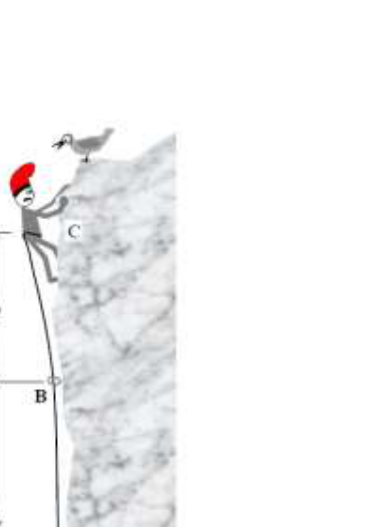
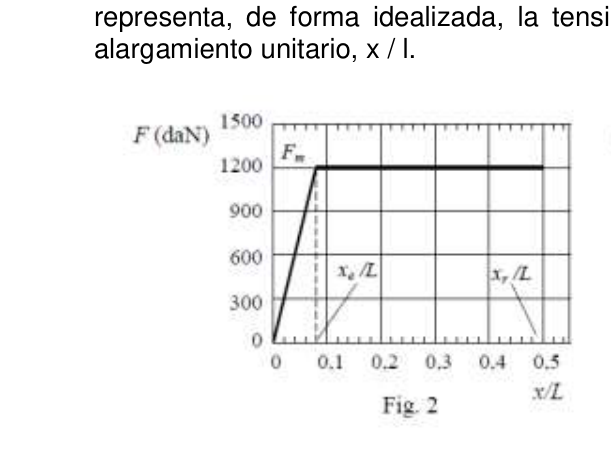
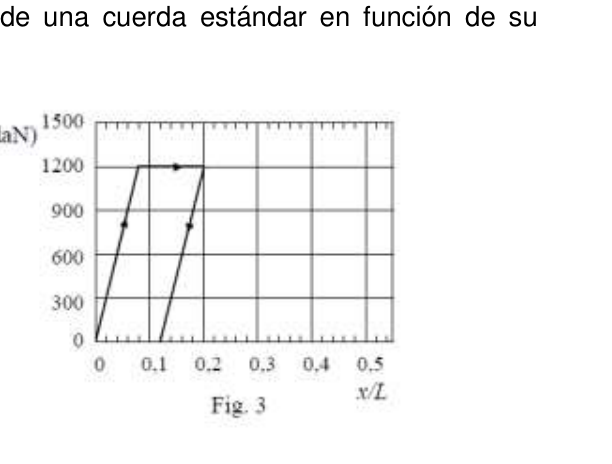
Topic: Elasticity & Materials, Conservation of Energy Metodi: Hooke’s Law, Energy Conservation Method, Stress-Strain Analysis Competenze: Physical Reasoning, Mathematical Modeling Objects: String, Spring Fonte: Testo (PDF) — p.5
PT145. - L’Istituto Lasalle in Florida. Florida, Buenos Aires.
La corda dell’Alpinista Le corde di montagna, compagni inseparabili dei Gli scalatori, nascondono dietro la loro apparente semplicità alcune Le caratteristiche straordinarie ottenute con un avanzato tecnologia in cui la fisica, come di solito, è la star invitata. Queste corde devono sopportare le altezza. carichi, essere leggeri e flessibili, resistenti a rotture e tagli, Stabili alla temperatura… e devono essere elastica, è dire estensibili. In questo esercizio, studieremo questa. Ultima proprietà e i suoi limiti. Iniziamo con una. descrizione dell’uso della corda come elemento protettivo possibili in caso di caduta. In figura 1 viene mostrato un scalatore che è arrivato al punto C di un muro dopo aver completato un lungo la sua corda. Ha avuto la precauzione fondamentale di legare saldamente un’estremità della corda al fissaggio A e passarla attraverso un anello (mosquetone) posto in un altro fissaggio en B. Le distanze tra B e C e tra A e B sono L1 e l2 rispettivamente. La lunghezza attiva della corda è L = l1 y l2. Si, raggiunto il punto C, l’ascendente ha la gamba brutta. Se cade, il suo volo sarà h = 2 l1 e il tiraggio che Quando soffre la corda che lo frena , sarà meno di quello che soffrirebbe . Se non avessi messo il moschetto in B, perché allora il se il percorso fosse stato 2L, superiore a h.
110 - OAF 2018 Nella gerga montana si definisce il fattore di caduta, f = h/L Questo fattore, che può prendere valori tra 0 e 2, è un concetto molto importante in Escalada in quanto rappresenta una misura della rigidità delle cascate: f < 1: cascata relativamente morbido (il scalatore era vicino al fissaggio B), f = 1: caduta dura (B è a metà della lunghezza), f > 1: caduta molto dura (l’ascaldatore era lontano da B), f = 2: peggiore possibile caduta (senza fissaggio tra la scala e il punto di incontro A). Dovranno essere evitati a tutti i costi. Sono molto pericolosi per gli scalatori e colpiscono la durata della corda e delle fissature. La protezione che la corda fornisce al scalatore consiste nel frenare il suo cadere, cioè: trasformare la sua energia meccanica in elastica, allungando la corda una certa lunghezza x, Come se fosse una primavera. Questo modello fisico cordone è sempre valido. che l’allungamento x sia compreso nell’intervallo 0 ≤ x ≤ xe dove xe è il denominato limite elastico. L’Unione internazionale delle associazioni di alpinismo (UIAA) chiede che i giovani alpinisti fabbricanti di fili che, al massimo, xe / L = 0,08 , cioè xe non deve superare il 8% de L. Per estensioni superiori a xe il modello corda resorte lascia di funzionare. La tensione non è proporzionale all’allungamento ma assume un valore massimo, Fm, che rimane quasi costante fino a che, per estensioni dell’ordine del 50%, la la corda si rompe (limite di rottura, xr ≈ 0,5 L). Il valore di questa tensione massima, Fm, Anche l’UIAA lo impone: non deve superare i 1200 daN per le corde standard 1daN = 10N. Tutto questo processo si riassume nel grafico di figura 2, dove si Il valore di una corda standard è il valore di una corda standard. allungamento unitario, x / l.
Nell’intervallo di lunghezza xe ≤ x ≤ xr il comportamento della corda ha un La sua deformazione non è elastica ma plastica, cioè la La deformazione raggiunta entro questo intervallo è permanente, non scompare con la cessazione. la tensione. Per esempio, la figura 3 mostra il grafico di una caduta che supera il limite elastico, fino a x / L = 0,2. Quando la corda si rilassa (quando viene annullato il tensione) non recupererà la lunghezza iniziale L ma avrà un il 12% di allungamento permanente. Questo processo di deformazione plastica riduce la vita. La vita di un scalatore può essere ridotta drasticamente, poiché i Le riduzioni di peso sono sempre più elevate.
- Il limite di rottura è fatidico. Dopo queste spiegazioni, consideriamo il caso di un scalare di massa M che subisce un calo del fattore f. Al punto più basso della caduta il L’allungamento unitario della corda è x / l e la sua tensione è F. a) Nell’intervallo di validità del modello elastico, cioè x ≤ xe, si ottiene la espressione dell’allungamento unitario x / L in funzione di M, g, F e f.
Supponiamo che un alpinista di 80 kg usi una corda che può sopportare. una tensione massima Fm = 1200 daN e i cui limiti di rottura e di rottura sono xe / L = 0,08 y xr / L = 0,5. b) Qual è il più grande fattore f dei caduti che può subire senza che la sua corda si spalanchi?
- Plasticamente deformato?
OAF 2018 - 111 (c) Qual è la deformazione plastica unitaria della corda in una caduta di fattore f=2? d) Quante cascate di tipo f = 2 può sopportare la corda senza rompersi?
Topic: Elasticity & Materials, Conservation of Energy Metodi: Hooke’s Law, Energy Conservation Method, Stress-Strain Analysis Competenze: Physical Reasoning, Mathematical Modeling Objects: String, Spring Fonte: Testo (PDF) — p.5
PT145. The Lasalle Institute in Florida. I’m going to Florida, Buenos Aires.
The Alpinist ‘s rope . The mountain ropes, inseparable companions of the climbers, hide behind their seeming simplicity some The most extraordinary features achieved with an advanced The technology in which physics, as usual, is the guest star. These ropes must withstand high . load, be light and flexible, resistant to rust and cutting, stable with temperature… And they have to be elastic, it’s I mean extensible. In this exercise we will study this. Last property and its limits. Let’s start with one. description of the use of the rope as a protective element possible in the event of a fall. Figure 1 shows a climber that has reached the C-point of a wall after completing a long of his rope. You ‘ve taken the fundamental precautions of tie tightly one end of the rope to the fastener A and pass it through a ring (musketon) placed on another fixation en B. The distances between B and C and between A and B are L1 and L2 respectively. The active length of the rope is L = l1 y l2. Yeah, at C, the climber has a bad foot. If you fall, your flight path will be h = 2 l1 and the pull that you He suffers when the rope brakes him will be less than he would suffer If I hadn’t put the mosquito on B, then the the distance travelled would have been 2L, greater than h.
The Commission shall adopt delegated acts in accordance with Article 21 of this Regulation. In mountain slang the drop factor is defined, f = h/L This factor, which can take values between 0 and 2, is a very important concept in As a measure of the hardness of the falls, the scale is: f < 1: fall relatively soft (the climber was close to fixation B), f = 1: hard fall (B is halfway down), f > 1: very hard fall (the climber was far from B), f = 2: worst possible fall (no fixation between the climber and meeting point A). They must be avoided at all costs. They are very dangerous for climbers and affect the climber . durability of the rope and fasteners. The rope provides protection for the climber by holding him back from falling, i.e. Turn your mechanical energy into elastic, lengthening the rope a certain length x, It’s like a spring. This stringed physical model spring is always valid where x is the so-called the elastic limit. The International Union of Alpine Associations (UIAA) calls on all Alpine climbers to The maximum value of the rope manufacturers is xe/L = 0.08 i.e. xe must not exceed the value of the rope manufacturer’s rope. 8% de L. For elongations greater than x the string model spring stops It works. The voltage is not proportional to the lengthening but takes a maximum value, The Commission’s proposal for a regulation on the approximation of the laws of the Member States on the approximation of the laws of the Member States on the approximation of the laws of the Member States on the approximation of the laws of the Member States on the approximation of the laws of the Member States on the approximation of the laws of the Member States on the approximation of the laws of the Member States on the approximation of the laws of the Member States on the approximation of the laws of the Member States on the approximation of the laws of the Member States on the approximation of the laws of the Member States on the approximation of the laws of the Member States on the approximation of the laws of the Member States on the approximation of the laws of the Member States on the approximation of the laws of the The rope is broken (breaking limit, xr ≈ 0,5 L). The value of this maximum voltage, Fm, The UIAA also requires that the standard cord should not exceed 1200 daN. The value of the input data shall be the same as the input data. The whole process is summarized in the graph in Figure 2, where It ideally represents the tension of a standard string based on its unit length, x / l.
In the range of x ≤ x ≤ xr the behavior of the string has a The main feature is that the deformation is not elastic but plastic, i.e. the Deformation achieved within this interval is permanent, not disappearing at cessation. The tension. For example, in Figure 3 the graph for a falling above the elastic limit, reaching x/L = 0.2. When the rope relaxes (when the voltage is cancelled) will not recover the initial length L but will be left with a permanent extension of 12%. This plastic deformation process shortened life. The rope, and can even dramatically shorten the life of the climber, as the The number of permanent elongations is accumulating in successive declines, approaching the The final break-off limit. After these explanations, let us consider the case of a a mass scalar M that suffers from a fall in f-factor. At the lowest point of the fall the The unit length of the string is x / l and its voltage is F. (a) In the validity range of the elastic model, i.e. x ≤ xe, obtain the expression of the unit length x / L in relation to M, g, F and f.
Suppose in the following a 40 pound mountaineer uses a rope he can hold. a maximum voltage Fm = 1200 daN and whose elastic and break limits are xe / L = 0,08 y xr / L = 0,5. (b) What is the greatest factor f of the falls you can suffer without your rope being worn? plastically deformed?
The Commission shall adopt delegated acts in accordance with Article 21 of the Financial Regulation. (c) What will be the unitary plastic deformation of the rope in a factor drop f=2? (d) How many f = 2 falls can the rope withstand without breaking?
Topic: Elasticity & Materials, Conservation of Energy Metodi: Hooke’s Law, Energy Conservation Method, Stress-Strain Analysis Competenze: Physical Reasoning, Mathematical Modeling Objects: String, Spring Fonte: Testo (PDF) — p.5
PT146. Instituto Lasalle Florida. Florida, Buenos Aires.
Electrólisis Para que circule una corriente eléctrica por un medio cualquiera, tiene que contener partículas cargadas libres para desplazarse. En concreto, si el medio es un líquido, dichas partículas pueden ser:
- Electrones, como es el caso del mercurio (elemento metálico)
- Iones, cuando se trata de una sustancia con enlace iónico. En este caso se pueden dar dos situaciones: que la sustancia esté fundida, o que esté disuelta en agua. En ambos casos, los iones que la constituyen pueden desplazarse libremente. Hay que notar que en la conducción iónica participan iones de distinto signo: aniones (−) y cationes (+).
La figura 1 muestra un esquema de una vasija en la que se produce una corriente eléctrica en un líquido. Las barritas son los electrodos, que reciben el nombre de cátodo (−) y ánodo (+). Cuando están conectadas a una batería de diferencia de potencial ΔV, crean un campo eléctrico que es el responsable del movimiento de las partículas cargadas en el interior del líquido. Mediante un amperímetro A puede medirse la intensidad I de la corriente eléctrica que circula. La conducción eléctrica en líquidos iónicos provoca efectos químicos, ya que cada ión, al alcanzar su electrodo, cede o toma de éste los electrones de más o de menos que tiene, y se convierte en átomo o molécula, que se desprende (si es gas), se deposita (si es sólido) o reacciona con el propio medio conductor. En definitiva, la sustancia compuesta original ha quedado separada en sus componentes, cada uno junto a un electrodo. A este proceso de conducción, se le conoce como electrólisis. Sirva de ejemplo la electrólisis de una disolución de cloruro de plata, AgCl. Los cationes Ag+ toman un electrón en el cátodo y se forma plata metálica que se deposita sobre este electrodo. Los aniones Cl− ceden un electrón en el ánodo y se forma cloro gaseoso, que se desprende. La constante de Faraday, F, es la carga que libera, junto a un electrodo, un mol de sustancia monovalente en una disolución electrolítica. Teniendo en cuenta que la carga elemental es 1,602 10−19 C y que el número de Avogadro es NA = 6,02 1023 partículas/mol, a) Calcule el valor de la constante F, en Coulombs.
Por una disolución iónica de AgCl se hace pasar una corriente I1 = 10 A. Sabiendo que la
masas moleculares del Cl y de la Ag son respectivamente, MCl = 35,453g/mol y
MAg = 107,87 g/mol,
b) Calcule la masa de cloro desprendida mCl y la de plata depositada, mAg en un
tiempo t1 = 1h.
La galvanoplastia es la técnica que utiliza el depósito electrolítico para recubrir de metal
un cuerpo sólido colocado como cátodo. Se desea platear una esferita de cobre de radio
r = 10,0 mm con una capa de plata de espesor d = 0,10mm, para lo cual la esferita se
introduce como cátodo en una disolución de AgCl.
112 - OAF 2018 c) Si la corriente es I2 = 1,00A , y la densidad de la plata es ρAg = 10,5 ×10³ kg/m3 ¿Cuánto tiempo t2 durará el proceso? (el área de la esfera es 4 π r2)
Cuando, a partir de cero, se aumenta progresivamente el
voltaje entre los electrodos, la corriente que circula es muy
débil hasta un cierto valor ΔV0. Después aumenta de forma
prácticamente lineal, como se muestra en la gráfica de la
figura 2, que corresponde a una disolución de AgCl. El
valor ΔV0, que marca el principio de la electrólisis
propiamente dicha, tiene que ver con el estado superficial
de los electrodos (polarización). En consecuencia,
depende de la naturaleza del cátodo y del ánodo e incluso
de la del electrolito
d.1) ¿Cuál es, en este caso, la diferencia de potencial ΔV0 ?
d.2) Calcule a partir de la gráfica, la resistencia eléctrica de la disolución, R, para
ΔV > ΔV0 .
d3) En esas condiciones, determine y calcule la energía consumida, w, en el
proceso por cada mol de sustancia liberada en los electrodos.
d4) Si se aplica entre los electrodos una diferencia de potencial ΔV′ = 4,5V,
determine y calcule la potencia invertida en la disociación del cloruro de plata,
Pdisoc, y la disipada por efecto Joule, Pdisip.
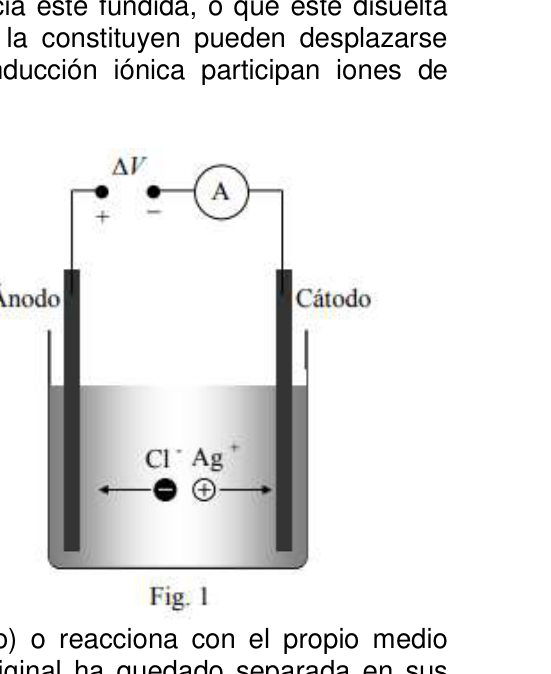
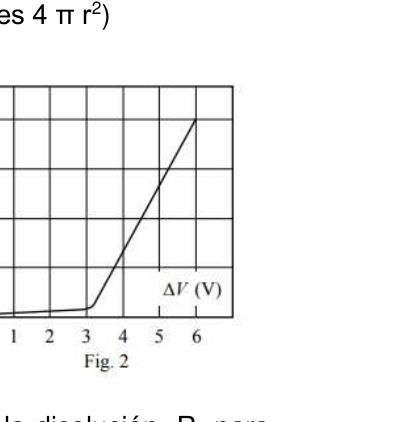
Topic: Chemistry, Circuits Metodi: Conservation of Energy, Dimensional Analysis Competenze: Physical Reasoning, Mathematical Modeling Objects: Battery, Resistor Fonte: Testo (PDF) — p.5
PT146. - L’Istituto Lasalle in Florida. Florida, Buenos Aires.
Elettroliesi Per circolare un flusso elettrico in qualsiasi mezzo, deve contenere particelle cariche libere da spostare. In particolare, se il mezzo è un liquido, tali particelle possono essere:
- elettroni, come il mercurio (elemento metallico)
- Ioni, quando si tratta di una sostanza con legame ionico. In questo caso si è La sostanza può essere fonduta o dissoluta.
- In acqua. In entrambi i casi, gli ioni che la costituiscono possono spostarsi.
- Libero. Si deve notare che nella conduzione ionica sono coinvolti gli ioni di segno distinto: anioni (−) e cationes (+).
La figura 1 mostra un schema di un vaso. in cui si produce un corrente elettrica in un liquido. Le barrite sono gli elettrodi, che sono designati come catodi (−) e anodi (+). Quando sono collegate a una batteria di Differenza di potenziale ΔV, crei un campo elettrico che è responsabile del movimento di particelle caricate all’interno del liquido. Con un amperimetro A può Misurare l’intensità I del corrente elettrica che circola. Conducere elettrico in liquidi Ionici provoca effetti chimici, poiché ogni Ioni, raggiungendo il loro elettrodo, cedono o prendono Questo è l’elettrone di più o meno di ha, e diventa un atomo o una molecola, che si scarica (se gas), si deposita (se solido) o si rientra nel mezzo stesso
- Conduzione. In definitiva, la sostanza composta originale è stata separata nei suoi componenti, ognuno vicino ad un elettrodo. Questo processo di guida è noto. come l’elettrolisi. L’elettrolizzazione di una soluzione di cloruro d’argento serve come esempio. AgCl. I cationesi Ag+ prendono un elettrone nel catoda e si forma argento metallico che si si deposita su questo elettrodo. Gli anioni Cl− cedono un elettrone all’anodo e si formano. Chlorone gassoso, che si sbricia. La costante di Faraday, F, è la carica che rilascia, un mol di sostanza monovalente in una soluzione elettrolitica, Considerando che la carica elementare è di 1.602 10−19 C e che il numero di Avogadro è NA = 6,02 1023 particelle/mol, a) Calcola il valore della costante F, a Coulombs.
Per una dissoluzione ionica di AgCl viene trasmesso un corrente I1 = 10 A. Sapendo che la Le masse molecolari di Cl e Ag sono rispettivamente, MCl = 35,453 g/mol e Maggiore di contenuto: b) Calcolare la massa di cloro scartata mCl e quella di argento depositata, mAg in un tempo t1 = 1 ora.
La galvanoplastia è la tecnica che utilizza il deposito elettrico per rivestire metallo. un corpo solido, posto come un catodo. Si desidera piantare una sfera di rame radio r = 10,0 mm con uno strato di argento di spessore d = 0,10 mm, per il quale la sfera è introduce come catoda in una soluzione di AgCl.
112 - OAF 2018 c) Se il corrente è I2 = 1,00A , e la densità dell’argento è ρAg = 10,5 ×10³ kg/m3 Quanto tempo durerà il processo t2? (l’area della sfera è 4 π r2)
Quando, a partire da zero, si aumenta progressivamente il voltage tra gli elettrodi, il corrente che circola è molto di un valore di ΔV0. Poi aumenta di forma. La linea di riferimento è quasi lineare, come mostrato dal grafico di figura 2, che corrisponde a una soluzione di AgCl. El valore ΔV0, che segna il principio di elettrolizia Proprio detto, ha a che fare con lo stato superficiale. di elettrodi (polarizzazione). Di conseguenza, Dipende dalla natura del catodo e dell’anodo e anche di quella dell’ elettrolito d.1) Qual è, in questo caso, la differenza di potenziale ΔV0? d.2) Calcolare, a partire dal grafico, la resistenza elettrica della soluzione, R, per ΔV > ΔV0 . d3) In queste condizioni, determinare e calcolare l’energia consumata, processo per ogni mol di sostanza rilasciata negli elettrodi. d4) Se si applica tra gli elettrodi una differenza di potenziale ΔV′ = 4,5V, determinare e calcolare la potenza inversa nella dissociazione del cloruro d’argento, Pdisoc, e la dissipazione per effetto Joule, Pdisip.
Topic: Chemistry, Circuits Metodi: Conservation of Energy, Dimensional Analysis Competenze: Physical Reasoning, Mathematical Modeling Objects: Battery, Resistor Fonte: Testo (PDF) — p.5
PT146. The Lasalle Institute of Florida. I’m going to Florida, Buenos Aires.
Electrolysis For an electric current to circulate through any medium, it must contain charged particles free to move. Specifically, if the medium is a liquid, such particles may be:
- electrons, as in the case of mercury (metallic element)
- Ions, when it’s an ion-bonded substance. In this case, it is The substance can be either melted or dissolved. in water. In both cases, the ions that make up it can be displaced freely. It should be noted that ionic conduction is involved in the Other sign: anions (−) and cations (+).
Figure 1 shows a diagram of a vessel where an electric current is produced in a liquid. The barritas are the electrodes, which They are named cathode (−) and anode (+). When they ‘re connected to a battery of The difference in potential ΔV, create a field The electrical system that is responsible for the movement of the particles loaded inside the liquid. By means of an ampere A can Measure the electric current intensity I It’s circulating. Electrical conduction in liquids The chemical effects of ionic compounds are very high, since each ion, upon reaching its electrode, yields or takes This is the electron of more or less than It has, and it becomes an atom or molecule, which It is either released (if it is gas), deposited (if it is solid) or reacts with the medium itself
- The driver. In the end, the original compound substance has been separated in its components, each next to an electrode. This driving process is known as like electrolysis. An example is the electrolysis of a solution of silver chloride. AgCl. Ag+ cations take an electron from the cathode and form metallic silver which is deposits on this electrode. Cl− anions give off an electron in the anode and form chlorine gas, which is released. Faraday’s constant, F, is the charge it releases, next to an electrode, a mole of monovalent substance in an electrolytic solution. Considering that the elementary charge is 1.602 10−19 C and that the number of Avogadro is NA = 6.02 1023 particles/mol, (a) Calculate the value of the constant F, in Coulombs.
For an ionic dissolving of AgCl a current I1 = 10 A is passed. Knowing that she The molecular masses of Cl and Ag are respectively, MCl = 35,453g/mol and The following table shows the results of the calculations: (b) Calculate the mass of chlorine taken from mCl and the mass of silver deposited, mAg in a time t1 = 1h.
Galvanoplasty is the technique of coating metal with an electrolytic reservoir. A solid body placed like a cathode. You want to flatten a radius copper sphere . R = 10,0 mm with a silver layer of d = 0,10 mm thickness, for which the sphere is It is introduced as a cathode in a solution of AgCl.
The Commission shall adopt delegated acts in accordance with Article 21 of this Regulation. (c) If the current is I2 = 1.00A , and the silver density is ρAg = 10,5 ×10³ kg/m3 How long will t2 process take? (the area of the sphere is 4 π r2)
When, from zero, the voltage between the electrodes, the current circulating is very weak to a certain value ΔV0. Then it increases in shape. The resulting linearity is shown in the graph of the Figure 2, which corresponds to a dissolved AgCl. El value ΔV0, which marks the beginning of the electrolysis Properly speaking, it has to do with the surface state. The electrodes (polarization) Consequently, It depends on the nature of the cathode and the anode and even of the electrolyte. d.1) What is the potential difference ΔV0 in this case? d.2) Calculate from the graph the electrical resistance of the solution, R, for ΔV > ΔV0 . (d3) Under these conditions, determine and calculate the energy consumed, w, in the process for each mole of substance released in the electrodes. If a potential difference ΔV′ = 4,5V is applied between the electrodes, determine and calculate the power reversed in the dissociation of silver chloride, Pdisoc, and dissolved by Joule effect, Pdisip.
Topic: Chemistry, Circuits Metodi: Conservation of Energy, Dimensional Analysis Competenze: Physical Reasoning, Mathematical Modeling Objects: Battery, Resistor Fonte: Testo (PDF) — p.5
PT147. Instituto Lasalle Florida. Florida, Buenos Aires.
Cumpleaños del Sol La formación del Sol comenzó a partir de una nube muy grande de gas y polvo que debido a los efectos gravitacionales se ha comprimido hasta tener las dimensiones actuales. El Sol puede considerarse como una esfera de gas con un radio actual de RS = 6,95 x 10⁵ km y una densidad de masa ρs = 1,4 x 10³ kg/m3. La energía gravitacional de una esfera de masa M y radio R está dada por la siguiente expresión: Ug = - 3/5 G M2/R (1)
donde G = 6,67 10-11 N m2 / kg2 es la constante gravitacional.
La ley de Stefan-Boltzmann establece que la potencia por unidad de área que radia un
cuerpo negro depende de la temperatura a la que se encuentra el cuerpo y está dada por
la siguiente expresión:
H = σT4 (2)
donde H es la potencia por unidad de área que emite el cuerpo negro,
σ = 5,67 10-8 W /m2K4 es la constante de Stefan-Boltzmann y T la temperatura.
a) Si el radio del Sol en su etapa inicial cuando se estaba formando era muy grande
comparado con su radio actual, calcula el cambio de su energía gravitacional
debido a esta contracción. Sugerencia: Considere que el radio inicial del Sol era
tan grande, comparado con el actual, que puede tomarse como infinito.
Sobre la superficie terrestre se han hecho mediciones de la cantidad de energía que recibe del Sol en forma de radiación. La constante solar K que es la potencia por unidad de área recibida del Sol sobre la superficie terrestre tiene el valor: K = 1366 W / m2
b) Calcule el valor de la potencia total emitida por el Sol. Tenga en cuenta que la energía emitida por el Sol no tiene una dirección preferente y cuando llega a la Tierra (que podemos considerar puntual) se habrá repartido de forma equitativa
OAF 2018 - 113 por todos los puntos del espacio situados a 150 millones de kilómetros del Sol (radio de la órbita terrestre), es decir, el frente de onda tendrá forma esférica. c) Considerando que la energía que radia el Sol se debe solamente a la contracción gravitacional, y suponiendo que la energía por unidad de tiempo que ha estado radiando desde su inició es constante, calcule la edad del Sol y exprésela en años (terrestres).* d) Si el Sol se considera como un cuerpo negro, estime la temperatura del Sol.
- Esta estimación fue planteada por Hermann von Helmholtz a mediados del siglo 19 y da como resultado un valor muy inferior al que actualmente consideramos válido que es del orden de los 4500 millones de años. Los otros cálculos propuestos en este problema dan valores muy similares a los reales.
Topic: Astrophysics, Gravitation Metodi: Newton’s Law of Gravitation, Conservation of Energy Competenze: Physical Reasoning, Mathematical Modeling Objects: Star Fonte: Testo (PDF) — p.5
PT147. - L’Istituto Lasalle in Florida. Florida, Buenos Aires.
Anni di compleanno del sole La formazione del Sole è iniziata da una nube molto grande di gas e polvere che A causa dell’effetto gravitazionale si è compresso fino a raggiungere le dimensioni.
- attuali. Il Sole può essere considerato come una sfera di gas con un raggio corrente di RS = 6,95 x 10⁵ km e una densità di massa ρs = 1,4 x 10³ kg/m3. L’energia gravitazionale di una sfera di massa M e di raggio R è data dal seguente espressione: Ug = - 3/5 G M2/R (1)
dove G = 6,67 10-11 N m2 / kg2 è la costante gravitazionale. La legge di Stefan-Boltzmann stabilisce che la potenza per unità di area che irradia un Il corpo nero dipende dalla temperatura al quale si trova il corpo e è dato da l’espressione seguente: H = σT4 (2) dove H è la potenza per unità di area emessa dal corpo nero, σ = 5,67 10-8 W / m2K4 è la costante di Stefan-Boltzmann e T la temperatura. a) Se il raggio del Sole nella sua fase iniziale quando si stava formando era molto grande Rispetto al suo raggio attuale, calcola il cambiamento della sua energia gravitazionale a causa di questa contrazione. Suggerimento: Considera che il primo raggio del Sole era così grande, rispetto al presente, che può essere considerato infinito.
La superficie terrestre è stata misurata con misurazioni della quantità di energia che riceve dal Sole sotto forma di radiazioni. La costante solare K che è la potenza per unità di superficie ricevuta dal Sole sulla superficie terrestre ha il valore: K = 1366 W / m2
b) Calcola il valore della potenza totale emessa dal Sole. Si noti che L’energia emessa dal Sole non ha una direzione preferita e quando arriva al La terra (che possiamo considerare puntuale) sarà stata distribuita in modo equo.
OAF 2018 - 113 Per tutti i punti dello spazio situati a 150 milioni di chilometri dal Sole (radio dell’orbita terrestre), cioè il fronte d’onda avrà forma sferica. (c) considerando che l’energia che il sole emette è derivata soltanto da la contrazione gravitazionale, e supponendo che l’energia per unità di tempo che E’ stato radiante fin dall’inizio. E’ costante. Calcola l’età del Sole e… la si esprime in anni (terrestri).* d) Se il Sole è considerato un corpo nero, calcola la temperatura del Sole. Questa stima è stata presentata da Hermann von Helmholtz nel mezzo del XIX secolo e dà Il risultato è un valore molto inferiore a quello che attualmente riteniamo valido che è di l’ordine di 4.500 miliardi di anni. Gli altri calcoli proposti in questo problema dan Valori molto simili ai reali.
Topic: Astrophysics, Gravitation Metodi: Newton’s Law of Gravitation, Conservation of Energy Competenze: Physical Reasoning, Mathematical Modeling Objects: Star Fonte: Testo (PDF) — p.5
PT147. The Lasalle Institute in Florida. I’m going to Florida, Buenos Aires.
Birthdays of the Sun The formation of the Sun began from a very large cloud of gas and dust that Because of gravitational effects it has been compressed to the dimensions. The current ones. The Sun can be considered as a gas sphere with a current radius of RS = 6,95 x 10⁵ km and a mass density ρs = 1,4 x 10³ kg/m3. The gravitational energy of a sphere of mass M and radius R is given by the following The expression: Ug = - 3/5 G M2/R (1)
where G = 6.67 10-11 N m2 / kg2 is the gravitational constant. Stefan-Boltzmann’s law states that the power per unit area radiating a Black body depends on the temperature at which the body is located and is given by the following expression: H = σT4 (2) where H is the power per unit area emitted by the black body. σ = 5.67 10-8 W /m2K4 is the Stefan-Boltzmann constant and T the temperature. (a) If the sun ‘s radius in its initial stage when it was forming was very large Compared to its current radius, it calculates the change in its gravitational energy. Because of this contraction. Tip: Consider that the initial radius of the Sun was So big, compared to today, that it can be taken as infinite.
Measurements have been made on the surface of the earth of the amount of energy that is It gets from the sun in the form of radiation. The solar constant K is the power per unit. of the area received from the Sun above the Earth’s surface has the value: K = 1366 W / m2
(b) Calculate the value of the total power emitted by the Sun. Please note that The energy emitted by the sun has no preferred direction and when it reaches the Earth (which we can consider pointed) will have been divided equally
The Commission shall adopt delegated acts in accordance with Article 21 of Regulation (EC) No 1272/2009. by all points in space 150 million kilometers from the Sun . (radio of Earth orbit), that is, the wave front will be spherical. (c) Whereas the energy radiated by the sun is due solely to the gravitational contraction, and assuming that energy per unit time that It’s been radiating since its beginning. It’s constant. Calculate the age of the sun and… The value of the data is the sum of the values of the data set. d) If the Sun is considered a black body, estimate the temperature of the Sun. This estimate was put forward by Hermann von Helmholtz in the mid-19th century and gives As a result, a value much lower than what we currently consider valid is the value of the The order of 4.5 billion years. The other calculations proposed in this problem give values very similar to real ones.
Topic: Astrophysics, Gravitation Metodi: Newton’s Law of Gravitation, Conservation of Energy Competenze: Physical Reasoning, Mathematical Modeling Objects: Star Fonte: Testo (PDF) — p.5
PT148. Colegio Nacional de Buenos Aires. Ciudad Autónoma de Buenos Aires.
Se dispara una granada con velocidad inicial v0 y ángulo inicial respecto de un terreno
horizontal como indica la Figura 1. En el punto más alto de su trayectoria explota y se
divide en dos fragmentos de igual masa. Uno de los fragmentos posee la componente
horizontal del vector velocidad igual a la que tenía la granada justo antes de la explosión
y la componente vertical (hacia arriba) igual a un valor v1.
a) Determine la ubicación de los puntos de impacto de los fragmentos con el suelo,
respecto del punto de lanzamiento de la granada.
b) Determine la ubicación de los puntos de impacto de los fragmentos con el suelo,
respecto del punto donde hubiera impactado la granada sin explotar.
c) Calcular la energía liberada durante la explosión
Datos
g = 10 m/s2 , = 37°, v0 = 40 m/s, v1 = 100 m/s.
Considere que la granada se dispara desde el nivel del terreno
Topic: Conservation of Momentum, Conservation of Energy Metodi: Conservation of Momentum, Kinematic Equations, Conservation of Energy Competenze: Physical Reasoning, Mathematical Modeling Objects: Projectile Fonte: Testo (PDF) — p.5
PT148. Il Collegio Nazionale di Buenos Aires. Città autonoma di Buenos Aires.
Si lancia una granata con velocità iniziale v0 e angolo iniziale rispetto a un terreno orizzontale come indicato in figura 1. Al culmine della sua traccia esplode e si dividendoli in due pezzi di massa uguale. Uno dei frammenti possiede la componente Vettore di velocità pari a quella della granata prima dell’esplosione. e la componente verticale (più in alto) pari a un valore v1. a) Determina la posizione dei punti di impatto dei frammenti con il suolo, per quanto riguarda il punto di lancio della granata. b) Determina la posizione dei punti di impatto dei frammenti con il suolo,
- rispetto al punto in cui la granata non è esplosa. (c) Calcolare l’energia rilasciata durante l’esplosione
Datos g = 10 m/s2 , = 37°, v0 = 40 m/s, v1 = 100 m/s. Considera che la granata si spara dal livello del terreno
Topic: Conservation of Momentum, Conservation of Energy Metodi: Conservation of Momentum, Kinematic Equations, Conservation of Energy Competenze: Physical Reasoning, Mathematical Modeling Objects: Projectile Fonte: Testo (PDF) — p.5
PT148. National College of Buenos Aires. The Autonomous City of Buenos Aires.
A grenade is fired at initial velocity v0 and initial angle with respect to a terrain horizontal as shown in Figure 1. At the peak of its trajectory it explodes and is divides into two equal-mass fragments. One of the fragments has the component horizontal velocity vector equal to the grenade had just before the explosion and the vertical component (upwards) equal to a value v1. (a) Determine the location of the impact points of the fragments with the soil, with respect to the point of launch of the grenade. (b) Determine the location of the impact points of the fragments with the soil, The point where the grenade would have hit without exploding. (c) Calculate the energy released during the explosion
Data from the report g = 10 m/s2 , = 37°, v0 = 40 m/s, v1 = 100 m/s. Consider the grenade firing from the ground level.
Topic: Conservation of Momentum, Conservation of Energy Metodi: Conservation of Momentum, Kinematic Equations, Conservation of Energy Competenze: Physical Reasoning, Mathematical Modeling Objects: Projectile Fonte: Testo (PDF) — p.5
PT149. Colegio Nacional de Buenos Aires. Ciudad Autónoma de Buenos Aires.
El circuito de la figura 2 se llama puente de
Wheatstone y se usa para medir el valor de una
resistencia X desconocida. Se dice que el puente
se encuentra en balance o en equilibrio, cuando la
intensidad de corriente por el galvanómetro G es
nula.
Considerando que el interruptor está cerrado:
a) Hallar la relación matemática entre las
resistencias X, M, L y N para que el puente
esté en equilibrio
b) Sabiendo que las resistencias L, M y N
valen 3 Ω, 2 Ω y 10Ωrespectivamente.
114 - OAF 2018
Cuál es el valor de X?
c) Si la tensión V0 es de 6 V, y los valores de las resistencias son los del inciso b,
hallar la intensidad de corriente en cada resistencia
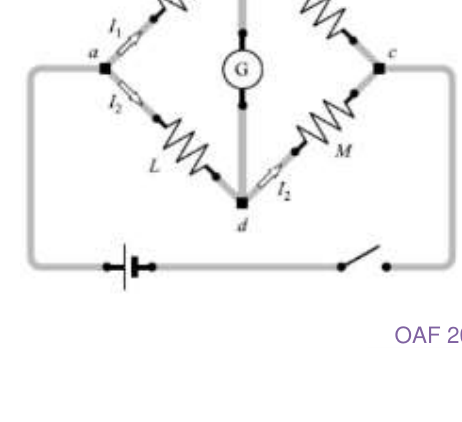
Topic: Circuits Metodi: Kirchhoff’s Laws, Equivalent Circuit Reduction Competenze: Physical Reasoning, Mathematical Modeling Objects: Resistor, Galvanometer, Battery Fonte: Testo (PDF) — p.5
PT149. Il Collegio Nazionale di Buenos Aires. Città autonoma di Buenos Aires.
Il circuito di figura 2 è chiamato ponte di Wheatstone e viene usato per misurare il valore di una resistenza X sconosciuta. Si dice che il ponte è in equilibrio o in equilibrio, quando la L’intensità di corrente per il galvanometro G è
- Niente. Considerando che il interruttore è chiuso: a) Trovare la relazione matematica tra le resistenze X, M, L e N per il ponte È in equilibrio. b) Sapendo che le resistenze L, M e N sono rispettivamente di 3 Ω, 2 Ω e 10Ω.
114 - OAF 2018 Qual è il valore di X? c) Se la tensione V0 è di 6 V e i valori delle resistenze sono quelli di cui al punto (b), trovare l’intensità di corrente in ogni resistenza
Topic: Circuits Metodi: Kirchhoff’s Laws, Equivalent Circuit Reduction Competenze: Physical Reasoning, Mathematical Modeling Objects: Resistor, Galvanometer, Battery Fonte: Testo (PDF) — p.5
PT149. National College of Buenos Aires. The Autonomous City of Buenos Aires.
The circuit in Figure 2 is called the bridge of Wheatstone and is used to measure the value of a X resistance unknown. It is said that the bridge is in balance or in equilibrium, when the current intensity by the galvanometer G is
- No, not at all. Considering the switch is closed: (a) Find the mathematical relationship between the X, M, L and N resistors for that bridge It ‘s in balance . (b) Knowing that resistance L, M and N They are 3 Ω, 2 Ω and 10Ω respectively.
The Commission shall adopt delegated acts in accordance with Article 21 of this Regulation. What’s the value of X? (c) If the V0 voltage is 6 V, and the resistance values are those of subparagraph (b), Find the current intensity at each resistance
Topic: Circuits Metodi: Kirchhoff’s Laws, Equivalent Circuit Reduction Competenze: Physical Reasoning, Mathematical Modeling Objects: Resistor, Galvanometer, Battery Fonte: Testo (PDF) — p.5
PT150. Colegio Nacional de Buenos Aires. Ciudad Autónoma de Buenos Aires.
Una partícula de masa m y carga q entra en una región donde existe un campo
magnético uniforme B a lo largo del eje x. La velocidad inicial de la partícula es v0
Sin tener en cuenta el peso de la partícula y despreciando todo tipo de rozamiento:
a) Describir la trayectoria de la partícula si v0= (vox;0;0)
b) Describir la trayectoria de la partícula si v0= (0; voy;0)
c) Describir la trayectoria de la partícula si v0= (vox;voy;0)
d) Para el caso de movimiento circular, calcular el radio de la misma en función de
vo, m, B y q
Topic: Magnetism Metodi: Lorentz Force Analysis, Vector Decomposition Competenze: Physical Reasoning, Mathematical Modeling Objects: Particle Beam Fonte: Testo (PDF) — p.5
PT150. Il Collegio Nazionale di Buenos Aires. Città autonoma di Buenos Aires.
Una particella di massa m e carica q entra in una regione in cui esiste un campo magnetico uniforme B lungo l’asse x. La velocità iniziale della particella è v0 Senza considerare il peso della particella e disprezzando ogni tipo di ruggine: a) Descrivere il percorso della particella se v0= (vox;0;0) b) Descrivere il percorso della particella se v0= (0; va;0) c) Descrivere il percorso della particella se v0= (vox;voy;0) d) Per il caso di movimento circolare, calcolare il suo raggio in base a vo, m, B y q
Topic: Magnetism Metodi: Lorentz Force Analysis, Vector Decomposition Competenze: Physical Reasoning, Mathematical Modeling Objects: Particle Beam Fonte: Testo (PDF) — p.5
PT150. National College of Buenos Aires. The Autonomous City of Buenos Aires.
A particle of mass m and charge q enters a region where a field exists. uniform magnetic B along the x-axis. The initial velocity of the particle is v0 . Without considering the particle’s weight and disregarding all kinds of friction: (a) Describe the path of the particle if v0= (vox;0;0) (b) Describe the path of the particle if v0= (0; go;0) (c) Describe the path of the particle if v0= (vox;voy;0) (d) For circular motion, calculate its radius according to vo, m, B y q
Topic: Magnetism Metodi: Lorentz Force Analysis, Vector Decomposition Competenze: Physical Reasoning, Mathematical Modeling Objects: Particle Beam Fonte: Testo (PDF) — p.5
PT151. Instituto Primo Capraro - Colegio San Patricio. San Carlos de Bariloche, Río Negro.
Todo lo que sube baja, (menos los precios): Un bloque de masa M = 0,5 kg desliza sobre una superficie horizontal sin fricción y enfrenta una rampa de 30º de inclinación con la horizontal, moviéndose con una velocidad de 28,8 km/h. Mientras sube por la rampa se ve afectado por una fuerza de rozamiento. El coeficiente de fricción entre el bloque y la rampa es = 0,15:
a) Representar los diagramas de cuerpo libre del bloque mientras asciende por la rampa y mientras desciende por la misma b) Calcular la fuerza de fricción entre el bloque y la rampa. c) Calcular la distancia que recorrerá el bloque sobre el plano inclinado antes de detenerse y la altura máxima sobre la horizontal que alcanzará. Utilizar conceptos de cinemática y dinámica d) Determinar la rapidez del bloque al regresar a la base de la rampa. Utilizar conceptos de cinemática y dinámica e) Encontrar en cuánto tiempo realizará el viaje de ida y vuelta sobre la rampa. f) Utilizando conceptos energéticos, verificar la altura máxima y la rapidez con que regresó a la base del plano inclinado.
µ Hmáxima V 30º
OAF 2018 - 115
Topic: Newtonian Mechanics, Conservation of Energy Metodi: Free-Body Diagram, Kinematic Equations, Energy Conservation Method Competenze: Physical Reasoning, Mathematical Modeling Objects: Block, Inclined Plane Fonte: Testo (PDF) — p.5
PT151. Istituto Primo Capraro - Colegio San Patrizio. San Carlo di Bariloche, Rio Negro.
Tutto quello che sale scende, (meno i prezzi): Un blocco di massa M = 0,5 kg scivola su una superficie orizzontale senza attrito e si affaccia su una rampa a 30° di pendenza con la linea orizzontale, muovendosi con una velocità di 28,8 km/h. Mentre sale sul rampo viene colpito da una forza di
- Raggiudicazione. Il coefficiente di attrito tra il blocco e la rampa è = 0,15:
a) Rappresentare i diagrammi di corpo libero del blocco mentre sale per la Ramp e mentre scende per la stessa b) Calcolare la forza di frizione tra il blocco e la rampa. c) Calcolare la distanza che il blocco percorrerà sul piano inclinato prima di fermarsi e raggiungere la massima altezza sull’orizzonte. Utilizzare Concetti di kinematica e dinamica d) Determinare la velocità del blocco al ritorno alla base del rampa. Utilizzare Concetti di kinematica e dinamica e) Indicare quanto tempo per il viaggio di andata e ritorno sul rampo. f) Con i concetti energetici, verificare l’altezza massima e la velocità con cui e ritornò alla base del piano inclinato.
µ
- Maximo V 30º
OAF 2018 - 115
Topic: Newtonian Mechanics, Conservation of Energy Metodi: Free-Body Diagram, Kinematic Equations, Energy Conservation Method Competenze: Physical Reasoning, Mathematical Modeling Objects: Block, Inclined Plane Fonte: Testo (PDF) — p.5
PT151. The first is the Capraro Institute - St. Patrick’s College. St. Charles of Bariloche, Rio Negro.
Everything that goes up goes down, (less prices): A block of mass M = 0.5 kg slides over a horizontal surface without friction and faces a 30° ramp with a horizontal tilt, moving with a speed of 28,8 km/h. As he climbs up the ramp he is hit by a force of The roasting. The coefficient of friction between the block and the ramp is = 0,15:
(a) Representing free-body diagrams of the block as it ascends through the ramp and as it descends down the same (b) Calculate the frictional force between the block and the ramp. (c) Calculate the distance the block will travel over the slope before stop and the maximum height over the horizontal it will reach. Use Concepts of kinematics and dynamics (d) Determine the speed of the block when returning to the ramp base. Use Concepts of kinematics and dynamics (e) Find out how long it will take to make the round trip on the ramp. (f) Using energy concepts, verify the maximum height and speed at which the energy is being used. He returned to the base of the inclined plane.
µ Maximum V 30º
The Commission shall adopt implementing acts in accordance with Article 21 of Regulation (EU) No 1303/2013.
Topic: Newtonian Mechanics, Conservation of Energy Metodi: Free-Body Diagram, Kinematic Equations, Energy Conservation Method Competenze: Physical Reasoning, Mathematical Modeling Objects: Block, Inclined Plane Fonte: Testo (PDF) — p.5
PT152. Instituto Primo Capraro - Colegio San Patricio. San Carlos de Bariloche, Río Negro.
Colisiones nucleares
Para realizar el estudio de
átomos y partículas subatómicas
se realizan colisiones de dichas
partículas dentro de una cámara
de niebla, donde se observan
las
trazas
dejadas
por
las
partículas y de esta forma
conocer más sobre las mismas.
En nuestro caso, un neutrón
cuya velocidad es v0 = 5 105 m/s
en la dirección +x y su masa
m = 1 u (unidad atómica de masa), choca con un núcleo de helio cuya V0 = 3.75 105 m/s
en la dirección -y y M = 4 u, como lo muestra la figura, que es una vista superior de la
colisión. Si la velocidad del neutrón después de la colisión es de 5 105 m/s y se mueve en
la dirección indicada, hallar:
a) El módulo de la velocidad (v´) y la dirección del movimiento del núcleo de helio
(𝜃) después de la colisión.
b) El impulso (módulo y dirección) que el neutrón ejerció sobre el helio.
c) El impulso (módulo y dirección) que el helio ejerció sobre el neutrón.
d) Verificar si el choque es elástico. Caso contrario determinar la energía
transformada en calor o deformación.
Nota: La unidad de masa atómica unificada o Dalton es una unidad estándar de masa cuya equivalencia es: 1 u = 1.66 10-27 kg
Topic: Conservation of Momentum Metodi: Conservation of Momentum, Impulse-Momentum Theorem, Conservation of Energy Competenze: Physical Reasoning, Mathematical Modeling Objects: Particle Beam, Nucleus Fonte: Testo (PDF) — p.5
PT152. Istituto Primo Capraro - Colegio San Patrizio. San Carlo di Bariloche, Rio Negro.
Collizioni nucleari Per effettuare lo studio di Atomi e particelle subatomiche si effettuano collisioni di tali particelle all’interno di una camera. di nebbia, dove si osservano Le Tracce
- lasciati Per Le Particelle e così via
- E’ un’idea che ci vuole. Nel nostro caso, un neutrone. di cui la velocità v0 = 5 105 m/s in direzione +x e massa m = 1 u (unità atomica di massa), colpisce un nucleo di elio il cui V0 = 3,75 105 m/s in direzione -y e M = 4 u, come mostra la figura, che è una vista superiore di colpissione. Se la velocità del neutrone dopo la collisione è di 5 105 m/s e si muove a l’indirizzo indicato, trovare: a) Il modulo di velocità (v ́) e la direzione di movimento del nucleo di elio (θ) dopo l’incidente. b) L’impulso (modulo e direzione) che il neutrone ha esercitato sul helium. c) L’impulso (modulo e direzione) che l’elio ha esercitato sul neutrone. d) Verificare se la collisione è elastica. Altrimenti determinare l’energia trasformata in calore o deformazione.
Nota: l’unità di massa atomica unificata o Dalton è una unità standard di massa equivalente a: 1 u = 1,66 10-27 kg
Topic: Conservation of Momentum Metodi: Conservation of Momentum, Impulse-Momentum Theorem, Conservation of Energy Competenze: Physical Reasoning, Mathematical Modeling Objects: Particle Beam, Nucleus Fonte: Testo (PDF) — p.5
PT152. The first is the Capraro Institute - the San Patricio College. St. Charles of Bariloche, Rio Negro.
Nuclear collisions To carry out the study of Atoms and subatomic particles collisions are made. particles inside a chamber . of fog, where they are observed. The Traces of the Leftovers by The particles and thus I’m going to learn more about them. In our case, a neutron. a speed of v0 = 5 105 m/s in the direction +x and its mass m = 1 u (atomic unit of mass), collides with a helium core whose V0 = 3.75 105 m/s In the direction -y and M = 4 u, as shown in the figure, which is an upper view of the The collision. If the neutron’s velocity after the collision is 5 105 m/s and moves at the address indicated, find: (a) The speed module (v’) and the direction of movement of the helium core (θ) after the collision. (b) The momentum (module and direction) exerted by the neutron on the helium. (c) The momentum (module and direction) that helium exerted on the neutron. (d) Check whether the impact is elastic. Otherwise determine the energy transformed into heat or deformation.
Note: The unit of atomic mass unified or Dalton is a standard unit of mass of which the equivalent is: 1 u = 1,66 10-27 kg
Topic: Conservation of Momentum Metodi: Conservation of Momentum, Impulse-Momentum Theorem, Conservation of Energy Competenze: Physical Reasoning, Mathematical Modeling Objects: Particle Beam, Nucleus Fonte: Testo (PDF) — p.5
PT153. Instituto Primo Capraro - Colegio San Patricio. San Carlos de Bariloche, Río Negro.
De geólogos y profundidades. Al final va con onda En sus tareas cotidianas muchas veces los geólogos deben internarse en las profundidades de las cavernas o en pozos muy profundos para estudiar la conformación geológica de las rocas. Nuestro geólogo amigo se encuentra ubicado en la profundidad de un pozo vertical y su ayudante se encuentra en la superficie. Para llevar las muestras de roca hasta la superficie cuentan con una soga de la cual cuelga un balde. En la superficie, la soga se encuentra unida a un mecanismo de polea, acoplada a un motor el cual por medio de un embrague le permite al ayudante subir el balde con las muestras y bajar el balde vacío. La profundidad del pozo es de 80 m y la masa de la cuerda es de 2 kg. El balde vacío tiene una masa de 2 kg y la carga de minerales es de 18 kg.
El geólogo cargó el balde con los minerales y el mecanismo eleva la carga con velocidad constante. a) Dibuja el diagrama de cuerpo libre de la carga mientras es elevada a velocidad constante. b) Despreciando la masa de la cuerda, determinar la potencia necesaria para elevar la carga en un tiempo de 10 s.
116 - OAF 2018 Si consideramos la masa de la soga: c) Representar en un gráfico cartesiano la fuerza que debe realizar la polea sobre la soga, en función de la distancia de elevación de la carga medida desde el fondo, para elevar la carga desde el fondo del pozo hasta la superficie. d) Encontrar la función matemática que representa dicha fuerza en función de la distancia. e) Encontrar el trabajo total realizado por la fuerza de la polea sobre la soga en todo el recorrido f) Calcular la potencia media necesaria en este caso para elevar la carga en 10 s.
Cuando el geólogo tiene el balde cargado con los minerales (el balde siempre queda colgado y no se apoya en el fondo) tiene que comunicarle a su ayudante para que lo comience a subir. Para ello, el geólogo que está en el fondo, envía señales a su colega de arriba, tirando lateralmente de la cuerda lo que origina una onda transversal. En toda cuerda, la fuerza que realiza la misma (llamada tensión T) está relacionada con la rapidez de propagación de la onda (𝑣) y con la masa por unidad de longitud de la cuerda (𝜇), con la siguiente expresión: 𝑇= 𝜇𝑣2
g) Calcular la velocidad de propagación de la onda sin tener en cuenta la variación de tensión a lo largo de la cuerda causada por su peso. h) Si a un punto de la cuerda se le imparte un movimiento armónico simple transversal con frecuencia de 2 Hz, ¿qué longitud de onda tendrá la onda?
Topic: Newtonian Mechanics, Oscillations & Waves Metodi: Free-Body Diagram, Wave Equation, Conservation of Energy Competenze: Physical Reasoning, Mathematical Modeling Objects: Pulley, String Fonte: Testo (PDF) — p.5
PT153. Istituto Primo Capraro - Colegio San Patrizio. San Carlo di Bariloche, Rio Negro.
Di geologi e profondità. Alla fine si fa un’onda Nel loro lavoro quotidiano, spesso i geologi devono essere coinvolti nelle profondità delle caverne o in pozzi molto profondi per studiare la formazione la geologia delle rocce. Il nostro amico geologo si è trova situato nella profondità di un pozzo Verticale e il suo assistente si trova sulla superficie. Per portare i campioni di roccia alla superficie hanno una corda con una vasca appesa. En la La corda è legata a un meccanismo. di polla, collegata ad un motore che, mediante un Clutch permette all’assistente di salire il bacino con le mostra e scendi il bidone vuoto. La profondità del Il pozzo è di 80 metri e la massa della corda è di 2 kg. El la vasca vuota ha una massa di 2 kg e il carico di minerali è di 18 kg.
Il geologo ha caricato il vascello con i minerali e il meccanismo che alza la carica a velocità costante. a) Disegna il diagramma del corpo libero da carico mentre è elevato a velocità costante. b) Disprezzando la massa de la
- La corda, determinare la potenza necessaria per sollevare carica in 10 secondi.
116 - OAF 2018 Se consideriamo la massa della corda: c) Rappresentare in un grafico cartesiano la forza che deve esercitare il pollice su la corda, in funzione della distanza di sollevamento della carica misurata dal fondo, per sollevare il carico dal fondo del pozzo alla superficie. d) Trovare la funzione matematica che rappresenta tale forza in funzione della Distanza. e) Trovare il lavoro totale svolto dalla forza della pullea sulla corda in Tutto il percorso f) Calcolare la potenza media necessaria in questo caso per elevare il carico in 10 secondi.
Quando il geologo ha il vassoio carico di minerali (il vassoio rimane sempre) appeso e non appoggiato al fondo) deve comunicare al suo assistente in modo che lo Comincia a salire. Per questo, il geologo che è in fondo, invia segnali al suo collega. dall’alto, tirando lateralmente la corda che produce un’onda transversale. In tutto la forza che la stessa forza (chiamata tensione T) è correlata alla velocità di diffusione dell’onda (v) e con massa per unità di lunghezza della corda (μ), con l’espressione seguente: 𝑇= 𝜇𝑣2
g) Calcolare la velocità di diffusione dell’onda senza tener conto della variazione di tensione lungo la corda causata dal suo peso. h) Se un punto della corda è impartito un semplice movimento armonico Se la frequenza di 2 Hz è trasversale, che lunghezza d’onda avrà l’onda?
Topic: Newtonian Mechanics, Oscillations & Waves Metodi: Free-Body Diagram, Wave Equation, Conservation of Energy Competenze: Physical Reasoning, Mathematical Modeling Objects: Pulley, String Fonte: Testo (PDF) — p.5
PT153. The first is the Capraro Institute - the San Patricio College. St. Charles of Bariloche, Rio Negro.
From geologists and depths. It ‘s finally going to be a wave . In their daily tasks, geologists often have to intervene in the depths of caves or in very deep wells to study the formation The geological rocks. Our geologist friend is It ‘s located deep in a well . The vertical and its auxiliary is on the surface. To take the rock samples to the surface. They have a rope from which a bucket hangs. En la surface, the rope is attached to a mechanism A pulley, connected to a motor which by means of a clutch allows the helper to lift the bucket with the Show them and drop the empty bucket. The depth of the Well is 80 m and the mass of the rope is 2 kg. El The empty bucket has a mass of 2 kg and the load of Minerals is 18 kg.
The geologist loaded the bucket with the minerals and the The mechanism lifts the load at a constant speed. (a) Draw the load-free body diagram while it is raised at constant speed. (b) By disregarding la Mass de la The rope, Determine the power required to lift The load in 10 seconds.
The Commission shall adopt implementing acts in accordance with Article 21 of Regulation (EU) No 1303/2013. If we consider the mass of the rope: (c) To represent in a Cartesian graph the force to be applied by the pulley on the rope, depending on the lifting distance of the load measured from the bottom, to lift the load from the bottom of the well to the surface. (d) Find the mathematical function representing that force in terms of the distance. (e) Find the total work done by the pulley force on the rope in The whole route . (f) Calculate the average power required in this case to lift the load by 10 s.
When the geologist has the bucket loaded with minerals (the bucket always stays) You have to tell your assistant that you are not relying on the bottom. Start to climb. To do this, the geologist at the bottom sends signals to his colleague. from above, pulling the rope laterally which causes a transverse wave. In all The force that it performs (called T-tension) is related to the speed. with wave propagation (v) and with mass per unit length of the string (μ), with the following expression: 𝑇= 𝜇𝑣2
(g) Calculate the wave propagation rate without taking into account the variation of tension along the rope caused by its weight. (h) If a point on the string is given a simple harmonic movement cross-sectional frequency of 2 Hz, what wavelength will the wave have?
Topic: Newtonian Mechanics, Oscillations & Waves Metodi: Free-Body Diagram, Wave Equation, Conservation of Energy Competenze: Physical Reasoning, Mathematical Modeling Objects: Pulley, String Fonte: Testo (PDF) — p.5
PT154. Instituto Eduardo L. Holmberg. Quilmes, Buenos Aires.
Un colectivo está listo para comenzar su recorrido pero aún se encuentra detenido. Su conductor se llama Jaime y es un científico aficionado que ya fue despedido de numerosos empleos anteriores. En esta ocasión decidió colgar del techo del colectivo un pequeño cuerpo a modo de péndulo y analizar su comportamiento mientras circula. Lo primero que notó es que al acelerar iniciando su marcha, el péndulo se corrió hacia atrás con un ángulo de 18º con respecto a la vertical. a) Trazar un diagrama de cuerpo libre del péndulo mientras acelera el colectivo. b) Determinar el valor de la aceleración del colectivo. c) Una vez que el colectivo alcanzó una velocidad de 80 km/h, Jaime siguió conduciendo pero sin acelerar y vio que el péndulo adoptaba cierta posición especial. Mostrar cuál es esa posición con un dibujo y trazar el diagrama de cuerpo libre sobre el péndulo. d) Jaime seguía conduciendo sin variar el valor de su velocidad pero ahora el camino toma una curva circular. El péndulo se corre un ángulo igual al anterior pero esta vez en dirección perpendicular a su trayectoria. Determinar el radio de la curva. e) El camino volvió a ser recto y el valor de la velocidad sigue sin cambiar. Jaime manejaba tan distraído que no vio que se había salido del camino y chocó violentamente contra una pared, de manera que el vehículo se detuvo de manera instantánea. El hilo que sostenía al péndulo se cortó en ese momento y el cuerpo salió proyectado horizontalmente hacia adelante. La altura del cuerpo era de 1,8 m y la altura de la cabeza de Jaime era 1,3 m. Milagrosamente Jaime
OAF 2018 - 117 no se lastimó en el choque pero el cuerpo le pegó en la cabeza. Averiguar a qué distancia horizontal Δx estaba el cuerpo. f) Si bien el cuerpo comenzó su vuelo en dirección horizontal, al momento de golpear la cabeza de Jaime el vector velocidad tenía cierto ángulo por debajo de la horizontal. Determinar el valor de ese ángulo. g) “Podría haber frenado en menos de 50 m si no me distraía”, pensaba Jaime. Como el piso era resbaloso por la humedad el coeficiente de fricción entre las ruedas del colectivo y el piso es solo de 0,22. Averiguar si Jaime hubiera logrado detenerse en esa distancia.
Topic: Newtonian Mechanics Metodi: Free-Body Diagram, Kinematic Equations, Vector Decomposition Competenze: Physical Reasoning, Mathematical Modeling Objects: Pendulum Fonte: Testo (PDF) — p.5
PT154. Istituto Eduardo L. Holmberg. Quilmes, Buenos Aires.
Un colletivo è pronto per Iniziare il suo percorso ma ancora se Trova
- Sono stato arrestato. Su Il conducente si chiama Jaime ed è un Scienziato di hobby che è già stato
- Dimenticato de numerosi Lavoratori precedenti. En Questa è la mia . l’occasione ha deciso di appendere dal tetto . Il gruppo di lavoro si è formato da un piccolo corpo a pendolo e analizza il suo comportamento. mentre circola. La prima cosa che ha notato è che accelerando iniziando la sua marcia, il pendolo è corso verso a un angolo di 18° rispetto alla verticale. a) Tracciare un diagramma di corpo libero del pendolo mentre accelera il collettivo. b) Determinare il valore dell’accelerazione del gruppo. c) Una volta che il collettivo raggiunse una velocità di 80 km/h, Jaime continuò guidando ma senza accelerare e vide che il pendolo si stava posizionando in una certa posizione speciale. Mostrare quale sia quella posizione con un disegno e tracciare il diagramma di corpo libero sul pendolo. d) Jaime continuava a guidare senza cambiare il suo valore di velocità ma ora il La strada si snoda in una curva circolare. Il pendolo si sposta all’angolo pari al precedente. ma questa volta in direzione perpendicolare al suo percorso. Determinare il raggio di la curva. e) La strada è tornata dritta e il valore della velocità è rimasto invariato. Jaime Era così distratto che non si accorse di aver smesso di camminare e si è schiantato. violentemente contro un muro, in modo che il veicolo si sia fermato da In modo istantaneo. Il filo che sosteneva il pendolo si tagliò in quel momento e Il corpo è uscito proiettato orizzontalmente in avanti. - La altezza del corpo . Era di 1,8 metri e la testa di Jaime era di 1,3 metri. Miracolosamente Jaime
OAF 2018 - 117 Non è stato ferito nel colpo, ma il corpo ha colpito la testa. Scoprire cosa . Distanza orizzontale Δx era il corpo. f) Mentre il corpo ha iniziato il suo volo in direzione orizzontale, al momento di colpire la testa di Jaime il vettore di velocità aveva un certo angolo sotto la linea orizzontale. Determinare il valore di quell’angolo. G) Potrei aver frenato a meno di 50 metri se non mi distrai, pensava Jaime. Poiché il pavimento era scivoloso dall’umidità il coefficiente di attrito tra le due fuoricampie ruote del collettivo e il pavimento è solo di 0,22. Scoprire se Jaime avrebbe fatto di tutto . fermarsi a quella distanza.
Topic: Newtonian Mechanics Metodi: Free-Body Diagram, Kinematic Equations, Vector Decomposition Competenze: Physical Reasoning, Mathematical Modeling Objects: Pendulum Fonte: Testo (PDF) — p.5
PT154. The Institute Eduardo L. I’m going to Holmberg. Quilmes, Buenos Aires is where I am.
A collective is ready for Start your journey but still se Find him . I’m being held. Su Driver ‘s name is Jaime and he ‘s a Amateur scientist who was already fired . de Many Employment previously. En This one . He decided to hang it from the ceiling . The group’s small body as a pendulum and analyze its behavior. while it’s moving. The first thing he noticed was that as he accelerated starting his march, the pendulum ran towards him. backwards at an angle of 18° with respect to the vertical. (a) Draw a free body diagram of the pendulum while accelerating the collective. (b) Determine the value of the acceleration of the collective. (c) Once the team reached a speed of 80 km/h, Jaime continued Driving but not accelerating and saw that the pendulum was taking a certain position It’s special. Show what that position is with a drawing and draw the diagram of Free body on the pendulum. (d) Jaime continued to drive without changing the value of his speed but now the The path takes a circular curve. The pendulum runs at the same angle as the previous one. But this time in a direction perpendicular to its trajectory. Determine the radius of the curve. (e) The road was re-straight and the value of the speed remains unchanged. Jaime . He was driving so distracted he didn ‘t see he ‘d gotten out of the way and crashed . Violently against a wall, so the vehicle stopped from In an instant. The thread that held the pendulum was cut at that moment and The body came out horizontally projected forward. Body height . He was six feet tall and Jaime’s head was six feet tall. Miraculously Jaime.
The Commission shall adopt delegated acts in accordance with Article 21 of the Financial Regulation. He was not injured in the crash but the body hit him in the head. Find out what The horizontal distance Δx was the body. (f) While the body started its flight in a horizontal direction, at the time of Hit Jaime ‘s head the velocity vector had a certain angle below the horizontal. Determine the value of that angle. g) I could have brake less than 50 m if I hadn’t been distracted, Jaime thought. As the floor was slippery with moisture the friction coefficient between the two The wheels of the collective and the floor is only 0.22. Find out if Jaime would have made it . Stop at that distance.
Topic: Newtonian Mechanics Metodi: Free-Body Diagram, Kinematic Equations, Vector Decomposition Competenze: Physical Reasoning, Mathematical Modeling Objects: Pendulum Fonte: Testo (PDF) — p.5
PT155. Instituto Eduardo L. Holmberg. Quilmes, Buenos Aires.
Con motivo del golpe en la cabeza Jaime tiene un fuerte dolor. Entonces pensó en
ponerse hielo. Consiguió un trozo de 250 g con una temperatura de -5 °C que
estaba dentro de un jarró de aluminio de 70 g. Jaime apoyó este jarro sobre la
tapa del motor del colectivo que aún estaba caliente y tardó 2 minutos en ir a
buscar ese trozo de hielo. Cuando fue, solo quedaba la mitad de hielo.
a) Determinar la potencia desarrollada por el motor del colectivo al fundir la mitad
de aquel trozo de hielo.
b) Jaime vio que tenía mitad hielo y mitad agua. Volvió a apoyar el recipiente sobre
el motor y se puso a pensar si le serviría o no para su dolor de cabeza. Tardó 3
minutos más pensando y cuando volvió a tomar el jarro solo tenía agua líquida.
Suponiendo que la potencia térmica del motor se mantuvo constante, determinar
la temperatura final del agua y del jarro.
c) El jarro de aluminio tiene una capacidad de 330 cm3. Jaime lo llenó al ras de
agua a 8 °C y lo volvió a apoyar sobre el motor aún caliente del colectivo. Al
cabo de unos minutos observó que un poco de agua se derramaba por
dilatación. Averiguar el volumen de agua derramada cuando la temperatura llegó
a 35 °C.
d) ¿Cuánto tiempo tuvo que dejar apoyado el jarro con agua al ras sobre el motor
para que sufra la dilatación calculada en el punto anterior? La potencia original
se mantiene.
e) Cuando ya se le calmó el dolor de cabeza, Jaime se puso a pensar en otro
accidente de auto que tuvo hace tiempo, también por estar distraído. Aquella vez
se cayó con su auto al fondo de un lago, a 8 m de profundidad, donde el agua
tenía una temperatura de 6 °C. Tratando de pedir ayuda, infló globos con 500
cm3 de aire y logró dejarlos salir del auto sin que entrara mucha agua. Los
globos llevaban notas pidiendo auxilio pero solo podían resistir un volumen
máximo de 1000 cm3; luego reventaban. ¿Jaime logró pedir ayuda con los
globos o se reventaron antes de llegar a la superficie? Determinar el volumen
que tendrían esos globos al llegar a la superficie, donde la temperatura era de
27 °C.
Datos (usar solo los que sean necesarios)
chielo = 2090 J/kg.°C cagua = 4186 J/kg.°C LF (agua) = 3,34 × 10⁵ J/kg
LV (agua) = 2,26 × 10⁵ J/kg cAl = 921 J/kg.°C Al = 2,4 × 10⁻⁵ °C-1 βagua = 2,1 × 10⁻⁴ °C-1
P.A.N = 101325 Pa
118 - OAF 2018
Topic: Thermodynamics Metodi: Conservation of Energy, Ideal Gas Law Competenze: Physical Reasoning, Mathematical Modeling Objects: Calorimeter, Bubble Fonte: Testo (PDF) — p.5
PT155. Istituto Eduardo L. Holmberg. Quilmes, Buenos Aires.
Per il colpo alla testa Jaime ha un forte dolore. Allora pensò:
- Si inghiottono. Ha ottenuto un pezzo di 250 g con una temperatura di -5 °C che Era dentro un vaso di alluminio di 70 grammi. Jaime appoggiò questo vassoio sulla Il cappuccio del motore del gruppo era ancora caldo e ci volle 2 minuti per arrivare. Cercare quel pezzo di ghiaccio. Quando è andato, c’era solo metà ghiaccio. a) Determinare la potenza sviluppata dal motore del gruppo nel fondere la metà di quel pezzo di ghiaccio. b) Jaime vide che aveva mezzo ghiaccio e mezzo acqua. Ha ripreso il contenitore su il motore e si è messo a pensare se sarebbe stato utile o meno per il suo mal di testa. - E ’ tardi . Un altro minuto di riflessione e quando ha ripreso il vaso, c’era solo acqua liquida. Supponendo che la potenza termico del motore sia stata mantenuta costante, determinare la temperatura finale dell’acqua e del vassoio. c) Il vassoio di alluminio ha una capacità di 330 cm3. Jaime lo ha riempito a ras di l’acqua a 8 °C e lo ha riappoggiato sul motore ancora caldo del gruppo. Al Dopo pochi minuti ha notato che un po ’ di acqua si stava versando per dilatazione. Scoprire il volume di acqua versata quando la temperatura è arrivata a 35 °C. d) Quanto tempo ha dovuto tenere appoggiato il vasello di acqua a rasso sopra il motore? per farla soffrire della dilatazione calcolata nel punto precedente? Potenza originale
- Si ferma. e) Quando il suo mal di testa si è calmato, Jaime ha pensato a un altro. Un incidente d’auto che ha avuto un po’ di tempo fa, anche per essere stato distratto. Quella volta. Ha caduto con la sua macchina al fondo di un lago, a 8 metri di profondità, dove l’acqua ha avuto una temperatura di 6 °C. Cercando di chiedere aiuto, ha inflato 500 palloni. Ha fatto uscire la gente dalla macchina senza che entrino molte acque. I I globuli portavano note chiedendo aiuto ma potevano solo resistere a un volume.
- di più di 1000 cm3; poi rivenduto. Jaime ha potuto chiedere aiuto con i suoi… Baloni o si sono scoppiati prima di arrivare alla superficie? Determinare il volume che avrebbero avuto quei globuli quando arrivarono alla superficie, dove la temperatura era di 27 °C.
Datos (utilizzare solo quelli necessari)
Il peso di un’acqua di calcio di calcio di calcio di calcio di calcio di calcio di calcio di calcio di calcio di calcio di calcio di calcio di calcio di calcio di calcio di calcio di calcio di calcio di calcio di calcio di calcio di calcio di calcio di calcio di calcio di calcio di calcio di calcio di calcio di calcio di calcio di calcio di calcio di calcio di calcio di calcio di calcio di calcio di calcio di calcio di calcio di calcio di calcio di calcio di calcio di calcio di calcio di calcio di calcio di calcio di calcio di calcio di calcio di calcio di calcio di calcio di calcio di calcio di calcio di calcio di calcio di calcio di calcio di calcio di calcio di calcio di calcio di calcio di calcio di calcio di calcio di calcio di calcio di calcio di calcio di calcio di calcio di calcio di calcio di calcio di calcio di calcio di calcio di calcio di calcio di calcio di calcio di calcio di calcio di calcio di calcio di calcio di calcio di calcio di calcio di calcio di calcio di calcio di calcio di calcio di calcio di calcio di calcio di calcio di calcio di calcio di calcio di calcio di calcio di calcio di calcio di calcio di calcio di calcio di calcio di calcio di calcio di calcio di calcio di calcio di calcio di calcio di calcio di calcio di calcio di calcio di calcio di calcio di calcio di calcio di calcio di calcio di calcio di calcio di calcio di calcio di calcio di calcio di calcio di calcio di calcio di calcio di calcio di calcio di calcio di calcio di calcio di calcio di calcio di calcio di calcio di calcio di calcio di calcio di calcio di calcio di calcio di calcio di calcio di calcio di calcio di calcio di calcio di cal di calcio di calcio di calcio di calcio di cal acqua = 4186 J/kg.°C LF (acqua) = 3,34 × 10⁵ J/kg
LV (acqua) = 2,26 × 10⁵ J/kg cAl = 921 J/kg.°C Al = 2,4 × 10⁻⁵ °C-1
- il calcolo della temperatura del sistema di calcolo
P.A.N = 101325 Pa
118 - OAF 2018
Topic: Thermodynamics Metodi: Conservation of Energy, Ideal Gas Law Competenze: Physical Reasoning, Mathematical Modeling Objects: Calorimeter, Bubble Fonte: Testo (PDF) — p.5
PT155. The Institute Eduardo L. I’m going to Holmberg. Quilmes, Buenos Aires is where I am.
Jaime is in a lot of pain from the blow to the head. So he thought about it. I’m going to get ice. He got a piece of 250 g with a temperature of -5 °C that It was inside a 70g aluminum jar. Jaime held this jar over the The motor cover of the collective was still hot and it took 2 minutes to get to I’m looking for that piece of ice. When he left, there was only half the ice left. (a) Determine the power developed by the motor of the collective by melting the half of that piece of ice. (b) Jaime saw that it had half ice and half water. He restored the container to the top . The engine and he started to think about whether or not it would help his headache. It ‘s been 3 hours . Another minute of thinking and when he took the jar again, all he had was liquid water. Assuming that the thermal power of the engine was kept constant, determine the final temperature of the water and the jar. (c) The aluminium jar has a capacity of 330 cm3. Jaime filled it to the brim . water to 8 °C and restored it to the still hot motor of the collective. Al Within minutes he noticed that some water was pouring through. dilation. Find out the volume of water spilled when the temperature reached a 35 °C. (d) How long did he have to leave the water jars above the engine? to suffer the dilation calculated in the previous point? The original power . It’s holding. (e) When the headache had calmed down, Jaime thought of something else. A car accident he had a long time ago, also because he was distracted. That time . He drove his car to the bottom of a lake, eight meters deep, where the water It had a temperature of 6 °C. Trying to call for help, he inflated balloons with 500. He got a foot of air and he managed to let them out of the car without much water coming in. The balloons carried notes crying for help but could only withstand a volume They were then resold. Did Jaime manage to get help with the balloons or burst before they reached the surface? Determine the volume They’d have those balloons when they hit the surface, where the temperature was about 27 °C.
Data from the report (use only those that are necessary)
The following table shows the results of the calculation of the weight of the product: The water level is 4186 J/kg. The following is the list of the following:
The following table shows the results of the calculation: The following table shows the results of the calculations: Al = 2,4 × 10⁻⁵ °C-1 The following table shows the results of the evaluation:
P.A.N = 101325 Pa
The Commission shall adopt delegated acts in accordance with Article 21 of this Regulation.
Topic: Thermodynamics Metodi: Conservation of Energy, Ideal Gas Law Competenze: Physical Reasoning, Mathematical Modeling Objects: Calorimeter, Bubble Fonte: Testo (PDF) — p.5
PT156. Instituto Eduardo L. Holmberg. Quilmes, Buenos Aires.
Jaime se quedó pensando en la forma de calentar agua con electricidad ya que finalmente el motor de su colectivo se había enfriado. Encontró un trozo de alambre de acero ( = 10 10-8 Ωm) de 1 mm de diámetro y decidió conectarlo a la batería de 12 V del colectivo, para que funcionara como una resistencia que produce calor. a) ¿Cuál debería ser la longitud del alambre para que el calentador tenga una potencia de 300 w? b) Jaime se entusiasmó fabricando resistencias de alambre, entonces hizo 4 resistencias y las conectó como se ve en el diagrama de al lado. Determinar la resistencia equivalente del circuito, la diferencia de potencial en los extremos de cada resistencia, la corriente que circula por cada resistencia y la potencia disipada en cada resistencia. c) Jaime volvió a pensar en el cuerpo que golpeó su cabeza y se dio cuenta que fue un caso de movimiento parabólico. Recordó que si una partícula cargada se mueve dentro de un campo eléctrico puede estar sometida a una situación similar. Entonces decidió experimentar sobre eso y construyó el siguiente dispositivo.
Una partícula alfa (2 protones y 2 neutrones) se mueve a velocidad v entre dos placas cargadas. La diferencia de potencial entre las placas es 300 v y están separadas 3 cm. Calcular y dibujar la fuerza que recibe la partícula. d) Averiguar la aceleración de la partícula debida a la acción del campo eléctrico. Jaime creía que sería parecida a la de la gravedad, ¿tenía razón? e) En la dirección perpendicular a las placas, ¿qué velocidad alcanzaría esta partícula si recorriera los 3 cm de distancia? La velocidad inicial en esa dirección es cero.
Topic: Circuits, Electrostatics Metodi: Equivalent Circuit Reduction, Conservation of Energy, Kinematic Equations Competenze: Physical Reasoning, Mathematical Modeling Objects: Resistor, Wire, Capacitor Fonte: Testo (PDF) — p.5
PT156. Istituto Eduardo L. Holmberg. Quilmes, Buenos Aires.
Jaime si è messo a pensare a come riscaldare l’acqua con l’elettricità, dato che Finalmente il motore del suo gruppo si era raffreddato. Ha trovato un pezzo di filo di di 1 mm di diametro e ha deciso di collegarlo alla batteria da 12 V Il gruppo, per funzionare come una resistenza che produce calore. a) Qual è la lunghezza del filo per il riscaldatore? Potenza di 300 W? b) Jaime se
- E ’ stato entusiasmante. fabbricando resistenza del filo, quindi ha fatto 4 resistenze e li ha collegati come si vede in il diagramma di fianco. Determinare la resistenza equivalente del circuito, la differenziazione di potenziale nelle estremità di ogni resistenza, il corrente che circola per ogni resistenza e potenza si dissipa in ogni resistenza. (c) Jaime si è ripreso a pensare al corpo che gli ha colpito la testa e si è reso conto che era un caso di movimento parabolico. Ricorda che se una particella carica si si muove all’interno di un campo elettrico può essere sottoposto a una situazione simile. Quindi ha deciso di sperimentare su questo e ha costruito il prossimo. dispositivo.
Una particella alfa (2 protoni e 2 neutroni) si muove a velocità v tra due placche carica. La differenza di potenziale tra le plache è di 300 v e sono separate di 3 cm. Calcolare e disegnare la forza che riceve la particella. d) Scoprire l’accelerazione della particella dovuta all’azione del campo elettrico. Jaime pensava che sarebbe stata simile a quella della gravità, giusto? (e) In direzione perpendicolare alle plache, che velocità raggiungerebbe questa velocità? Se fosse stato a tre centimetri di distanza? La velocità iniziale in quella direzione
- E’ zero.
Topic: Circuits, Electrostatics Metodi: Equivalent Circuit Reduction, Conservation of Energy, Kinematic Equations Competenze: Physical Reasoning, Mathematical Modeling Objects: Resistor, Wire, Capacitor Fonte: Testo (PDF) — p.5
PT156. The Institute Eduardo L. I’m going to Holmberg. Quilmes, Buenos Aires is where I am.
Jaime was thinking about how to heat water with electricity since Finally the engine of his collective had cooled. He found a piece of wire from steel ( = 10 10-8 Ωm) of 1 mm diameter and decided to connect it to the 12 V battery So it worked like a resistance that produces heat. (a) What should be the length of the wire for the heater to have a Power of 300 W? (b) Jaime se He was excited . manufacturing Wire resistance, then made 4 resistance and connected them as seen in the diagram next to it. Determine the equivalent circuit resistance, the potential difference at the ends For every resistance, the current that It circulates for every resistance and power . Disappeared in every resistance. (c) Jaime thought again of the body that hit his head and realized that It was a case of parabolic motion. He remembered that if a charged particle were It moves within an electric field. It can be subjected to a situation. similar. So he decided to experiment on that and built the next one. device.
An alpha particle (2 protons and 2 neutrons) moves at v speed between two plates loaded. The potential difference between the plates is 300 v and they are separated by 3 cm. Calculate and draw the force the particle receives. (d) Find the acceleration of the particle due to the action of the electric field. Jaime thought it would be like gravity, right? (e) In the direction perpendicular to the plates, what speed would this be attained Particle if it traveled 3 cm? The initial speed in that direction It’s zero.
Topic: Circuits, Electrostatics Metodi: Equivalent Circuit Reduction, Conservation of Energy, Kinematic Equations Competenze: Physical Reasoning, Mathematical Modeling Objects: Resistor, Wire, Capacitor Fonte: Testo (PDF) — p.5
PT157. Colegio Santísimo Rosario. Monteros, Tucumán.
Un cilindro horizontal cerrado en un extremo y en el otro extremo con un pistón muy ligero de superficie S, tiene un mol de gas ideal a una temperatura T= 20ºC y una presión P= 1atm. La presión externa es constante e igual a P. Por medio de una resistencia R= 10 Ω, una cantidad de calor Q es transferida lentamente al gas. El gas se calienta, y en consecuencia a cierta presión que llamaremos “critica”, Pcrit el pistón se mueve. La fuerza de fricción F entre el pistón y las paredes del cilindro es constante; la mitad del calor generado por la fricción se transmite al gas. Se considera que tanto las paredes del cilindro como el pistón están aisladas térmicamente, y se desprecia la capacidad calorífica de ambas. Se pide: a) Calcule la presión critica (Pcrit) en función de la fuerza de fricción. b) Calcule la temperatura critica (Tcrit) correspondiente. Llamamos temperatura “critica” a aquella para la cual el pistón comienza a moverse.
OAF 2018 - 119
c) Suponiendo que la capacidad térmica del gas por mol C=∆Q/∆T es una
constante, calcule la cantidad de calor transferido (Qcrit) para que el pistón se
mueva.
d) Calcule la cantidad de calor Qfr que se transmite al gas por fricción.
e) Calcule la cantidad de calor total transferido en ambos procesos.
f) Si la resistencia R está conectada a una fuente de fem de E= 220 voltios,
¿cuánto tiempo deberá estar conectada la fuente para que empiece a moverse
el pistón?
g) Suponga que en el gas del sistema anterior se calienta con tres resistencias R =
10 Ω en paralelo, hasta que comience a moverse el pistón en 5 minutos. ¿En
cuánto tiempo moverán el pistón las diferentes conexiones indicadas a
continuación? Todas las resistencias son iguales.
h) Haga una gráfica cualitativa de la temperatura T en función de Q para todo el
proceso, esto es, antes y después de que el pistón se mueva.
Topic: Thermodynamics, Circuits Metodi: First Law of Thermodynamics, Ideal Gas Law, Equivalent Circuit Reduction Competenze: Physical Reasoning, Mathematical Modeling Objects: Gas, Piston, Resistor Fonte: Testo (PDF) — p.5
PT157. - Scuola Santissimo Rosario. Monteros, Tucumán.
Un cilindro orizzontale chiuso da un lato e dall’altro con un pistone molto leggero. di superficie S, ha un mol di gas ideale a una temperatura T= 20oC e una pressione P= 1 atm. La pressione esterna è costante ed è pari a P. Per mezzo di una resistenza R= 10 Ω, una quantità di calore Q viene trasferita lentamente al gas. Il gas si riscalda, e di conseguenza a una certa pressione che chiameremo “critica”, Il pistone si muove. La forza di attrito F tra il pistone e le pareti del cilindro è costante; metà del calore generato dalla frizione viene trasmesso al gas. Si ritiene che sia le pareti del cilindro che il pistone siano isolate. La capacità calorica di entrambi è sconsiderata. Si chiede: a) Calcolare la pressione critica (Pcrit) in base alla forza di attrito. b) Calcolare la temperatura critica (Tcrit) corrispondente. Chiamiamo temperatura. “critico” a quella per la quale il pistone inizia a muoversi.
OAF 2018 - 119 c) Supponendo che la capacità termico del gas per mol C=∆Q/∆T sia una Calcolare la quantità di calore trasferita (Qcrit) per far sì che il pistone si
- Muovetevi. d) Calcolare la quantità di calore Qfr che viene trasmessa al gas per frizione. e) Calcolare la quantità totale di calore trasferita in entrambi i processi. f) Se la resistenza R è collegata a una fonte di fem di E= 220 volt, Quanto tempo la fonte deve essere connessa per iniziare a muoversi? il pistone? g) Supponiamo che il gas del sistema precedente si riscaldasse con tre resistenze R = 10 Ω in parallelo, fino a quando il pistone inizia a muoversi in 5 minuti. ¿En Quanto tempo il pistone si muoverà le diverse connessioni indicate a
- Continuare? Tutte le resistenze sono uguali. h) Fare un grafico qualitativo della temperatura T in funzione di Q per tutto il processo, cioè prima e dopo che il pistone si muove.
Topic: Thermodynamics, Circuits Metodi: First Law of Thermodynamics, Ideal Gas Law, Equivalent Circuit Reduction Competenze: Physical Reasoning, Mathematical Modeling Objects: Gas, Piston, Resistor Fonte: Testo (PDF) — p.5
PT157. Holy Rosary College. Monteros, Tucumán. What is it?
A horizontal cylinder closed at one end and at the other end with a very light piston. surface S, has an ideal gas mole at a temperature T=20oC and a pressure P= One atm. The external pressure is constant and equal to P. By means of a resistance R=10 Ω, a quantity of heat Q is transferred slowly to the gas. The gas is heating up, and consequently at a certain pressure which we will call “critical”, Pcrit the piston is moving. The friction force F between the piston and the cylinder walls is constant; half of the heat generated by friction is transmitted to the gas. Both the cylinder and the piston walls are considered to be insulated. thermal, and the heat capacity of both is underestimated. It asks: (a) Calculate the critical pressure (Pcrit) based on the friction force. (b) Calculate the relevant critical temperature (Tcrit). We call it temperature. “critic” to the one for which the piston starts to move.
The Commission shall adopt implementing acts in accordance with Article 21 of the Financial Regulation. (c) Assuming that the thermal capacity of the gas per mol C=∆Q/∆T is a constant, calculate the amount of heat transferred (Qcrit) so that the piston is Move it up. (d) Calculate the amount of Qfr heat transmitted to the gas by friction. (e) Calculate the total amount of heat transferred in both processes. (f) If the resistance R is connected to a fem source of E= 220 volts, How long does the source have to be connected to start moving? The piston? g) Suppose that the gas in the previous system is heated with three resistors R = 10 Ω in parallel, until the piston starts moving in 5 minutes. ¿En How long will the piston be moving the different connections indicated to What’s next? All resistance is the same. h) Make a qualitative chart of the temperature T as a function of Q for the whole process, that is, before and after the piston moves.
Topic: Thermodynamics, Circuits Metodi: First Law of Thermodynamics, Ideal Gas Law, Equivalent Circuit Reduction Competenze: Physical Reasoning, Mathematical Modeling Objects: Gas, Piston, Resistor Fonte: Testo (PDF) — p.5
PT158. Colegio Santísimo Rosario. Monteros, Tucumán.
Un cuerpo sólido, de gran densidad, está quieto en el punto A.
En un instante dado comienza a actuar la fuerza constante F = 20 N que le otorga una
aceleración a = 1,25 m/s2 , hasta el punto B, recorriendo una distancia e ab = 2,5 m , sin
roce, μ1= 0. A continuación, el cuerpo recorre el plano descendente BC, de altura
hbc = 2,5 m, en el que μ2= 0,2 (no tener en cuenta el efecto de los codos B y C,
suponiendo que el codo B es recorrido sin que el cuerpo “vuele”.
El tramo horizontal CD de longitud e cd es tal que permite que por rozamiento (μ3= 0,25)
la velocidad en D sea el 90% de la velocidad en C.
El cuerpo impacta finalmente contra el resorte comprimiéndolo 0,5 m, hasta la posición E,
siendo para este tramo, μ4= 0,3.
Calcular:
La masa del cuerpo.
a) Velocidad en B
b) Energía mecánica en B
c) Trabajo de rozamiento en el tramo BC
d) Velocidad en C
e) Espacio e cd
f) Trabajo de rozamiento en el tramo DE
g) Constante elástica del resorte K
h) Por la elasticidad del resorte, el cuerpo es empujado hacia atrás, para este
efecto,
Calcular:
i) Velocidad con que pasa el cuerpo de nuevo por el punto D.
j) Si al regresar, pasando por D, el cuerpo recorre una distancia (lisa) de 0,3 m,
hasta F, en el que empieza a moverse hacia arriba por la parte interior de un
carril circular vertical, de radio R=05 m. Allí experimenta una fuerza de
rozamiento, mientras se desliza a lo largo del carril circular, constante de 7 N.
k) ¿Alcanzará el cuerpo el punto más alto del carril o caerá antes de alcanzarlo?
l) ¿Cuál será la velocidad del cuerpo en el punto más alta del carril circular?
Topic: Conservation of Energy, Newtonian Mechanics Metodi: Energy Conservation Method, Free-Body Diagram, Hooke’s Law Competenze: Physical Reasoning, Mathematical Modeling Objects: Block, Spring, Inclined Plane Fonte: Testo (PDF) — p.5
PT158. - Scuola Santissimo Rosario. Monteros, Tucumán.
Un corpo solido, di grande densità, è fermo al punto A. In un istante dato inizia ad agire la forza costante F = 20 N che gli conferisce una Accelerazione a = 1,25 m/s2, fino al punto B, percorrendo una distanza e ab = 2,5 m , senza Rottura, μ1 = 0. Poi il corpo percorre il piano discendente BC, di altezza hbc = 2,5 m, in cui μ2 = 0,2 (non tener conto dell’effetto degli angoli B e C, Supponiamo che l’albero B sia percorso senza che il corpo volga. Il tratto orizzontale CD di lunghezza e cd è tale da consentire che per ruggine (μ3= 0,25) La velocità in D è il 90% della velocità in C. Il corpo impatta infine contro la molla compressa 0,5 m, fino alla posizione E, per questo tratto, μ4 = 0,3. Calcolare: La massa del corpo. a) Velocità in B b) Meccanica in B c) Lavoro di rasatura nel tratto BC d) Velocità in C e) Spazio e cd f) Lavoro di rasatura nel tratto DE g) Costante elastica della sorgente K h) Per l’elasticità della primavera, il corpo viene spinto indietro, per questo effetto, Calcolare: i) velocità con cui il corpo passa di nuovo attraverso il punto D. j) Se, quando ritorna, passando per D, il corpo percorre una distanza (lis) di 0,3 m, fino a F, in cui inizia a muoversi verso l’alto attraverso l’interno di un linea circolare verticale, di radio R=05 m. Lì si sperimenta una forza di Rottura, mentre si scivola lungo la corsia circolare, costante di 7 N. k) Il corpo raggiungerà il punto più alto della corsia o cadrà prima di raggiungerla? l) Qual è la velocità del corpo al punto più alto del binario circolare?
Topic: Conservation of Energy, Newtonian Mechanics Metodi: Energy Conservation Method, Free-Body Diagram, Hooke’s Law Competenze: Physical Reasoning, Mathematical Modeling Objects: Block, Spring, Inclined Plane Fonte: Testo (PDF) — p.5
PT158. Holy Rosary College. Monteros, Tucumán. What is it?
A solid body, of high density, is still at point A. At a given instant, the constant force F = 20 N begins to act, giving it a acceleration a = 1,25 m/s2 , to point B, travelling a distance and ab = 2,5 m , without Brush, μ1 = 0. Then the body runs down the descending plane BC, height hbc = 2,5 m, where μ2 = 0,2 (not taking into account the effect of angles B and C, Supposing that elbow B is passed without the body flying. The horizontal CD length and cd section is such that by friction (μ3= 0,25) The speed in D is 90% of the speed in C. The body finally impacts the spring by compressing it 0.5 m, to the E position, for this section, μ4 = 0,3. Calculation: The body mass. (a) Speed in B (b) Mechanical energy in B (c) Grinding work in the BC section (d) Speed in C (e) Space and cd (f) Grinding work in the DE section (g) The spring elastic constant K (h) Because of the elasticity of the spring, the body is pushed backwards, for this purpose. effect, Calculation: (i) The speed at which the body passes again through point D. (j) If, on return, passing through D, the body travels a distance (lizzard) of 0,3 m, up to F, where it starts moving upwards through the inside of a a vertical circular track, with a radius of R=05 m. There he experiences a force of friction, while sliding along the circular track, constant 7 N. (k) Will the body reach the highest point of the lane or fall before it reaches it? (l) What will be the speed of the body at the highest point of the circular track?
Topic: Conservation of Energy, Newtonian Mechanics Metodi: Energy Conservation Method, Free-Body Diagram, Hooke’s Law Competenze: Physical Reasoning, Mathematical Modeling Objects: Block, Spring, Inclined Plane Fonte: Testo (PDF) — p.5
PT159. Colegio Santísimo Rosario. Monteros, Tucumán.
Se tiene dos esferas de igual volumen ( V = 50 cm3 ) unidas por una cuerda delgada, de masa despreciable ; se las introduce en un recipiente con agua.
120 - OAF 2018 Una de las esferas queda totalmente sumergida, ya que tiene una masa cuatro veces mayor que la que flota en la superficie, sumergida a medias en el agua. Se pide: a) Diagrama con todas las fuerzas que actúan en cada cuerpo. b) Calcular la densidad de la esfera superior. c) Calcular la tensión de la cuerda.
Suponiendo que ambas esferas unidas por la cuerda, se introducen en un recipiente con
aceite,
Calcular:
d) El volumen sumergido de la esfera superior.
e) La tensión de la cuerda.
Topic: Fluid Mechanics Metodi: Hydrostatic Equilibrium, Free-Body Diagram Competenze: Physical Reasoning, Mathematical Modeling Objects: Sphere, String Fonte: Testo (PDF) — p.5
PT159. - Scuola Santissimo Rosario. Monteros, Tucumán.
Si hanno due sfere di uguale volume (V = 50 cm3) unite da una corda sottile, di massa scarsa; si inseriscono in un recipiente con acqua.
120 - OAF 2018 Una delle sfere è completamente immersa, poiché ha una massa quattro volte superiore. più grande di quella che galleggia sulla superficie, immersa a metà nell’acqua. Si chiede: a) Diagrama con tutte le forze che agiscono in ogni corpo. b) Calcolare la densità della sfera superiore. c) Calcolare la tensione della corda.
Supponiamo che entrambe le sfere collegate dalla corda, si inseriscano in un recipiente con olio, Calcolare: d) Il volume immerso della sfera superiore. e) La tensione della corda.
Topic: Fluid Mechanics Metodi: Hydrostatic Equilibrium, Free-Body Diagram Competenze: Physical Reasoning, Mathematical Modeling Objects: Sphere, String Fonte: Testo (PDF) — p.5
PT159. Holy Rosary College. Monteros, Tucumán. What is it?
Two spheres of equal volume (V = 50 cm3) connected by a thin string of a scanty mass; they are placed in a water container.
The Commission shall adopt delegated acts in accordance with Article 21 of this Regulation. One of the spheres is completely submerged, as it has a mass four times larger than that floating on the surface, half-submerged in water. It asks: (a) A diagram of all the forces acting in each body. (b) Calculate the density of the upper sphere. (c) Calculate the tension of the rope.
Assuming that both spheres are connected by rope, they are inserted into a container with oil, Calculation: (d) The submerged volume of the upper sphere. (e) The tension of the rope.
Topic: Fluid Mechanics Metodi: Hydrostatic Equilibrium, Free-Body Diagram Competenze: Physical Reasoning, Mathematical Modeling Objects: Sphere, String Fonte: Testo (PDF) — p.5
PT160. Escuela Industrial Superior. Ciudad de Santa Fe.
Un montacargas de 1.500 [kg] se encuentra inicialmente en reposo en planta baja, parte hacia arriba con una aceleración de 0,50 [m/s²] y a los 12 [s] del ascenso se corta el cable que lo eleva. a) Calcular el tiempo que tarda en alcanzar el piso desde el momento en que se corta el cable. b) Realizar los gráficos v-t y a-t desde el momento inicial. c) Hallar la energía cinética justo antes de impactar en el piso. d) Calcular el trabajo de la cuerda en el ascenso y relacionarlo con la energía cinética del item c.
Topic: Newtonian Mechanics, Conservation of Energy Metodi: Kinematic Equations, Energy Conservation Method Competenze: Physical Reasoning, Mathematical Modeling Objects: Block Fonte: Testo (PDF) — p.5
PT160. Scuola superiore industriale. Città di Santa Fe.
Un’elettricità di 1.500 [kg] è inizialmente in riposata al piano terra, parte verso l’alto con un’accelerazione di 0,50 [m/s2] e alla 12 [s] dell’ascesa si taglia il cavo che lo elevi. a) Calcolare il tempo necessario per raggiungere il pavimento dal momento in cui si è Taglia il cavo. b) realizzare i grafici v-t e a-t dal momento iniziale. c) Trovare l’energia cinetica appena prima di colpire il pavimento. d) Calcolare il lavoro della corda in ascesa e associarlo all’energia la cinetica dell’articolo c.
Topic: Newtonian Mechanics, Conservation of Energy Metodi: Kinematic Equations, Energy Conservation Method Competenze: Physical Reasoning, Mathematical Modeling Objects: Block Fonte: Testo (PDF) — p.5
PT160. High School of Industrial. City of Santa Fe.
A 1,500-kg lift is initially resting on the ground floor, part upwards at an acceleration of 0,50 [m/s2] and at 12 [s] of the lift the cable is cut It’s a great thing to lift him up. (a) Calculate the time it takes to reach the floor from the moment you are Cut the cable. (b) To make the graphs v-t and a-t from the initial moment. (c) Find the kinetic energy just before impacting the floor. (d) Calculate the work of the rope in the lift and relate it to the energy the kinetics of item c.
Topic: Newtonian Mechanics, Conservation of Energy Metodi: Kinematic Equations, Energy Conservation Method Competenze: Physical Reasoning, Mathematical Modeling Objects: Block Fonte: Testo (PDF) — p.5
PT161. Escuela Industrial Superior. Ciudad de Santa Fe.
En la figura se observa una esfera unida, mediante una cuerda
inextensible y de masa despreciable, a un cilindro sumergido
flotando dentro de un recipiente lleno de líquido.
La esfera tiene sumergida la mitad de su volumen.
El líquido tiene una densidad = 1,04 [g/cm³].
El volumen de la esfera es V1 = 0,5 [m³] y su densidad es
120 [kg/m³]. El cilindro tiene una densidad de 3.040 [kg/m³]
a) Realizar un diagrama de fuerzas de cada cuerpo. b) Calcular el volumen V2 del cilindro. c) Calcular la tensión de la cuerda.
Topic: Fluid Mechanics Metodi: Hydrostatic Equilibrium, Free-Body Diagram Competenze: Physical Reasoning, Mathematical Modeling Objects: Sphere, Cylinder, String Fonte: Testo (PDF) — p.5
PT161. Scuola superiore industriale. Città di Santa Fe.
La figura mostra una sfera unita, con una corda Inestensibile e di massa scarsa, a un cilindro immerso fluttuando dentro un recipiente pieno di liquido. La sfera ha la metà del suo volume immersa. Il liquido ha una densità = 1,04 [g/cm3]. Il volume della sfera è V1 = 0,5 [m3] e la densità è 120 [kg/m³]. Il cilindro ha una densità di 3.040 [kg/m3]
a) realizzare un diagramma delle forze di ciascun corpo. b) Calcolare il volume V2 del cilindro. c) Calcolare la tensione della corda.
Topic: Fluid Mechanics Metodi: Hydrostatic Equilibrium, Free-Body Diagram Competenze: Physical Reasoning, Mathematical Modeling Objects: Sphere, Cylinder, String Fonte: Testo (PDF) — p.5
PT161. High School of Industrial. City of Santa Fe.
In the figure a joined sphere is seen, by means of a rope Unextractable and of despicable mass, to a submerged cylinder floating inside a container full of liquid. The sphere has half its volume submerged. The density of the liquid is 1.04 [g/cm3]. The volume of the sphere is V1 = 0.5 [m3] and its density is 120 [kg/m³]. The cylinder has a density of 3,040 [kg/m3]
(a) Draw a diagram of the forces of each body. (b) Calculate the V2 volume of the cylinder. (c) Calculate the tension of the rope.
Topic: Fluid Mechanics Metodi: Hydrostatic Equilibrium, Free-Body Diagram Competenze: Physical Reasoning, Mathematical Modeling Objects: Sphere, Cylinder, String Fonte: Testo (PDF) — p.5
PT162. Escuela Industrial Superior. Ciudad de Santa Fe.
En un recipiente adiabático ideal que contiene agua a 30 [ºC] se introducen 250 [g] de un metal fundido que se encuentra a 200 [ºC]. La evolución de la temperatura del metal en función del calor cedido (en módulo) se encuentra en la figura. La temperatura de equilibrio del sistema agua-metal es 50[ºC]. a) Calcular LF al calor latente de fusión del metal.
OAF 2018 - 121 b) Calcular cp a su calor específico del metal en estado sólido. c) Calcular la masa de agua dentro del recipiente. d) Qué solución/es daría si se solicita que la temperatura de equilibrio se de 40 [ºC].
Topic: Thermodynamics Metodi: Conservation of Energy, Experimental Data Analysis Competenze: Physical Reasoning, Mathematical Modeling Objects: Calorimeter Fonte: Testo (PDF) — p.5
PT162. Scuola superiore industriale. Città di Santa Fe.
In un contenitore adiabatico ideale contenente acqua a 30 [oC] vengono introdotti 250 [g] di un metallo Fuso a 200 [oC]. L’evoluzione di temperatura del metallo a seconda del calore Il modulo di riferimento è riportato nella figura. La temperatura di equilibrio del sistema acqua-metallo es 50[ºC]. a) Calcolare l’LF al calore latente della fusione di metallo.
OAF 2018 - 121 b) Calcolare il cp al suo calore specifico del metallo in stato solido. c) Calcolare la massa dell’acqua all’interno del recipiente. d) Che soluzione/soluzione si potrebbe dare se si richiede una temperatura di equilibrio di 40 [oC].
Topic: Thermodynamics Metodi: Conservation of Energy, Experimental Data Analysis Competenze: Physical Reasoning, Mathematical Modeling Objects: Calorimeter Fonte: Testo (PDF) — p.5
PT162. High School of Industrial. City of Santa Fe.
In an ideal adiabatic container containing Water at 30 °C is introduced 250 °C from a metal The following is the list of the types of waste and scrap of waste and scrap of waste and scrap of waste and scrap of waste and scrap of waste and scrap of waste and scrap of waste and scrap of waste and scrap of waste and scrap of waste and scrap of waste and scrap of waste and scrap of waste and scrap of waste and scrap of waste and scrap of waste and scrap of waste and scrap of waste and scrap of waste and scrap of waste and scrap of waste and scrap of waste and scrap of waste and scrap of waste and scrap of waste and scrap of waste and scrap of waste and scrap of waste: The evolution The temperature of the metal depends on the heat. The following table shows the number of units of the unit. La The water-metal system balance temperature es 50[ºC]. (a) Calculate LF at latent fusion heat of the metal.
The Commission shall adopt delegated acts in accordance with Article 21 of the Financial Regulation. (b) Calculate the cp at its specific heat of the metal in solid state. (c) Calculate the mass of water inside the container. (d) What solution/s would be given if the equilibrium temperature is requested to be 40 [oC].
Topic: Thermodynamics Metodi: Conservation of Energy, Experimental Data Analysis Competenze: Physical Reasoning, Mathematical Modeling Objects: Calorimeter Fonte: Testo (PDF) — p.5
PT163. Colegio Pablo Apóstol1 - Colegio del Sol2. 1Yerba Buena - 2San Miguel de Tucumán.
Fútbol Electromagnético La selección tucumana de físicos llegó a la final de la copa de fútbol y luego de 90 minutos sin goles todo se define desde el punto de penal. Ni lentos ni perezosos los físicos idearon un plan tramposo para ganar: la pelota no es una pelota normal sino una esfera cargada con 0C 1 Q y cada vez que un rival patea un penal activan un campo eléctrico que desvía la pelota lejos del arco. El campo eléctrico aplicado está orientado de derecha a izquierda en forma horizontal como se muestra en la Figura. Suponiendo que el punto de penal está a 11m del arco cuyas dimensiones son 7.0m de largo y 2.0m de alto, que la masa de la pelota es de 445g y que los rivales patean la pelota con una velocidad promedio de 97.2km/h se pide: a) Graficar la trayectoria de la pelota al activarse el campo eléctrico. b) Calcular el valor mínimo del campo eléctrico necesario para que la pelota salga por los costados del arco.
Al percatarse de la trampa, los rivales van en busca de un imán con el objetivo de generar una fuerza magnética que anule los efectos del campo eléctrico de los físicos tramposos. Sabiendo que una carga eléctrica con velocidad en presencia de un campo magnético perpendicular a la velocidad experimenta una fuerza magnética cuyo módulo está dado por M F qvB , y su dirección y sentido están dadas por la “regla de la mano derecha” c) Dibujar cómo deben orientar el campo magnético para que la fuerza magnética se oponga a la eléctrica. d) Calcular el valor del campo magnético necesario para anular la fuerza eléctrica.
Dicho campo magnético lo generan con un electroimán que responde a la relación B K I donde 0.185 Tesla A K y I es la corriente que circula por el mismo. Si la resistencia del electroimán es de 150: e) Calcular la corriente necesaria para generar el campo magnético del punto d) f) Calcular la potencia disipada por el electroimán.
122 - OAF 2018
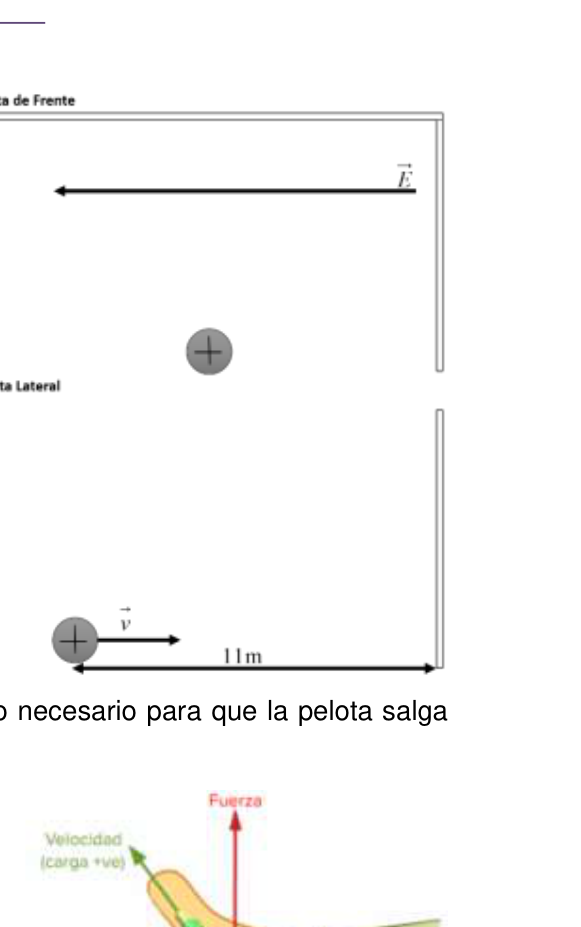
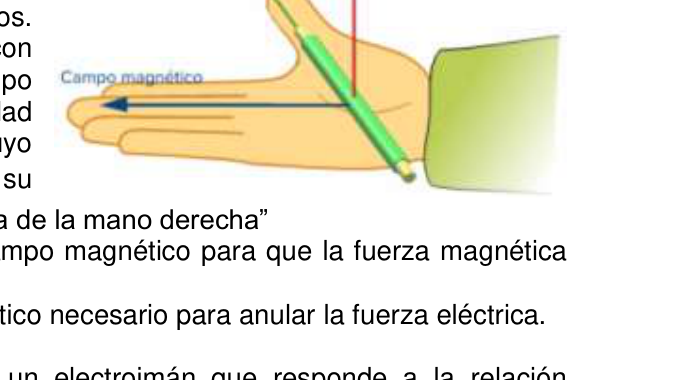
Topic: Electromagnetism, Circuits Metodi: Lorentz Force Analysis, Coulomb’s Law, Kinematic Equations Competenze: Physical Reasoning, Mathematical Modeling Objects: Ball, Magnet Fonte: Testo (PDF) — p.5
PT163. Colegio Paolo Apóstol1 - Colegio del Sol2. 1Yerba Buena - 2San Miguel de Tucumán.
Calcio elettromagnetico La selezione umana di fisici è arrivata alla La finale della Coppa di Calcio e dopo 90 minuti senza gol tutto si definisce dal punto di vista di
- Criminal. Non sono né lenti né pigri i fisici . Hanno creato un piano ingannevole per vincere: il pallone. Non è una palla normale , ma una sfera . carica di 0C 1 Q e ogni volta che un rivale Un’altra volta, un’altra volta, un’altra volta, un’altra volta, un’altra volta, un’altra volta, un’altra volta, un’altra volta, un’altra volta, un’altra volta, un’altra volta, un’altra volta, un’altra volta, un’altra volta, un’altra volta, un’altra volta, un’altra volta, un’altra volta, un’altra volta, un’altra volta, un’altra volta, un’altra volta, un’altra volta, un’altra volta, un’altra volta, un’altra volta, un’altra volta, un’altra volta, un’altra volta, un’altra volta, un’altra volta, un’altra volta, un’altra volta, un’altra volta, un’altra volta, un’altra volta, un’altra volta, un’altra volta, un’altra volta, un’altra volta, un’altra volta, un’altra volta, un’altra volta, un’altro, un’altro, un’altro, un’altro, un’altro, un’altro, un’altro, un’altro, un’altro, un’altro, un’altro, un’altro, un’altro, un’altro, un’altro, un’altro, un’altro, un’altro, un’altro, un’altro, un’altro, un’altro, un’altro, un’altro, un’altro, un’altro, un’altro, un’altro, un’altro, un’altro, un’altro, un’altro, un’altro, un altro, un altro, un’altro, un altro, un’altro, un’altro, un altro, un altro, un altro, un altro, un altro, un altro, un altro, un altro, un’altro, un’altro, un altro, un’altro, un’altro, un altro, un altro, un altro, un altro, un’altro, un altro, un’altro, un altro, un altro, un altro, un’altro, un altro, un’altro, un altro, un altro, un’altro, un altro, un altro, un altro, un altro, un’altro, un altro, un’altro, un altro, un’altro, un altro, un altro, Sposta la palla lontano dall’arco. Il campo elettrico applicato è orientato a di destra a sinistra in forma orizzontale come è mostrato nella Figura. Supponiamo che il punto penale sia a 11m. dell’arco, le cui dimensioni sono di 7.0 m di lunghezza. e 2.0m di altezza, che la massa della palla è di 445g e che i rivali calciano il pallone con una velocità media di 97,2 km/h richiesto: a) Graficare il percorso della palla al attivare il campo elettrico. b) Calcolare il valore minimo del campo elettrico necessario per far uscire la palla per i lati dell’arco.
Quando si accorge della trappola, i rivali vanno in cerca un magnete con l’obiettivo di generare una forza magnetica che annulla gli effetti Il campo elettrico dei fisici truffatori. Sapendo che un carico elettrico con velocità en Presenza de un campo Magnetico perpendicolare alla velocità sperimenta una forza magnetica che modulo è dato da M F QvB , y su Direzione e senso sono dati dalla regola della mano destra (c) Disegnare come devono orientare il campo magnetico per far sì che la forza magnetica Oppone all’elettricità. d) Calcolare il valore del campo magnetico necessario per annullare la forza elettrica.
Questo campo magnetico viene generato da un elettromagneto che risponde alla relazione. B K I dove 0,185 Tesla A K e I è la corrente che circola attraverso di esso. Si la resistenza dell’elettromagnetico è di 150: e) Calcolare il corrente necessario a generare il campo magnetico del punto d) f) Calcolare la potenza dissipata dall’elettromagnetico.
122 - OAF 2018
Topic: Electromagnetism, Circuits Metodi: Lorentz Force Analysis, Coulomb’s Law, Kinematic Equations Competenze: Physical Reasoning, Mathematical Modeling Objects: Ball, Magnet Fonte: Testo (PDF) — p.5
PT163. The school is located in the city of San Juan. 1Yerba Buena - 2San Miguel de Tucumán.
Electromagnetic football . The Tucuman selection of physicists reached the The football cup final and after 90 minutes Without goals everything is defined from the point of The penalties. Not slow or lazy physicists . They devised a tricky plan to win: the ball. It ‘s not a normal ball , it ‘s a sphere . loaded with 0C 1 Q And every time a rival You kick a criminal , you activate an electric field that He’s deflecting the ball away from the bow. The applied electric field is oriented to Right to left in horizontal form as This is shown in Figure 1. Assuming the penalty spot is 11m away. The length of the arc is 7.0 m. And 2.0m high, which is the mass of the ball is of 445g and the rivals kick the ball with a average speed of 97.2km/h is required: (a) Graph the trajectory of the ball to the the electric field is activated. (b) Calculate the minimum value of the electric field needed to get the ball out. by the sides of the bow.
When the trap is discovered, the rivals go in. Looking for a magnet to generate A magnetic force that cancels the effects The electric field of the cheating physicists. Knowing that an electrical charge with speed en presence de un field magnetic perpendicular to the velocity It experiences a magnetic force whose module is given by M F QvB , y su direction and direction are given by the right hand rule (c) Draw how the magnetic field must be oriented so that the magnetic force It’s against electricity. (d) Calculate the value of the magnetic field required to cancel the electric force.
This magnetic field is generated by an electromagnet that responds to the relationship. B K I Where The following table shows the number of vehicles: A K And I is the current that’s flowing through it. Si la The resistance of the electromagnet is 150: (e) Calculate the current required to generate the magnetic field of point (d) (f) Calculate the power dissipated by the electromagnet.
The Commission shall adopt delegated acts in accordance with Article 21 of this Regulation.
Topic: Electromagnetism, Circuits Metodi: Lorentz Force Analysis, Coulomb’s Law, Kinematic Equations Competenze: Physical Reasoning, Mathematical Modeling Objects: Ball, Magnet Fonte: Testo (PDF) — p.5
PT164. Colegio Pablo Apóstol1 - Colegio del Sol2. 1Yerba Buena - 2San Miguel de Tucumán.
Arquímedes Newton ven en mi ayuda
Un recipiente cilíndrico de 10cm de radio y 70cm de altura contiene un líquido cuya masa
es de 20kg y alcanza una altura de 50cm en el recipiente. El líquido se encuentra
inicialmente a 10ºC. En el seno del líquido se libera un cubo de masa 150g y 5.0cm de
lado, cuya temperatura inicial es de 1500ºC. Si Celiquido = 0.22 cal/gºC y Cecubo= .85cal/gºC
a) Calcular la temperatura final de equilibrio.
b) Determinar el empuje que recibe el cuerpo.
c) Despreciando la viscosidad del líquido, determinar la aceleración que adquiere el
cuerpo al ser liberado.
Como el cubo no se mantenía en equilibrio se colocó un resorte en el fondo del recipiente unido al cuerpo de manera vertical. El resorte tiene constante elástica k = 7.0 N/m, masa despreciable y longitud sin estirar de 20cm. d) Calcular el estiramiento del resorte.
Finalmente, el recipiente junto con el cubo unido al resorte son acelerados hacia arriba
por una plataforma móvil con una aceleración vertical constante de 15 m/s2
e) Calcular el estiramiento del resorte bajo estas condiciones.
Topic: Fluid Mechanics, Thermodynamics Metodi: Hydrostatic Equilibrium, Conservation of Energy, Hooke’s Law Competenze: Physical Reasoning, Mathematical Modeling Objects: Block, Spring, Container Fonte: Testo (PDF) — p.5
PT164. Colegio Paolo Apóstol1 - Colegio del Sol2. 1Yerba Buena - 2San Miguel de Tucumán.
Archimede Newton vede il mio aiuto. Un recipiente cilindrico di 10 cm di raggio e 70 cm di altezza contiene un liquido di massa è di 20 kg e raggiunge un’altezza di 50 cm nel contenitore. Il liquido è presente. Inizialmente a 10°C. Nel seno del liquido viene rilasciato un cubo di massa di 150 g e 5.0 cm di lato, la cui temperatura iniziale è di 1500 °C. Se Celiquido = 0,22 cal/goC e Cecubo = 0,85 cal/goC a) Calcolare la temperatura di equilibrio finale. b) Determina la spinta che il corpo riceve. c) Indicare l’accelerazione che il liquido acquista, a disprezzo della viscosità del liquido. corpo quando viene liberato.
Poiché il cubo non si stava mantenendo in equilibrio, si è posto una risorsa sul fondo del recipiente. legato al corpo in modo verticale. La molla ha costante elastica k = 7,0 N/m, massa dispregiata e lunghezza senza estendere di 20 cm. d) Calcolare l’estensione della stazione di resorgenza.
Infine, il recipiente insieme al cubo attaccato alla resorsa sono accelerati verso l’alto. per una piattaforma mobile con una velocità verticale costante di 15 m/s2 e) Calcolare l’estensione della sorgente in queste condizioni.
Topic: Fluid Mechanics, Thermodynamics Metodi: Hydrostatic Equilibrium, Conservation of Energy, Hooke’s Law Competenze: Physical Reasoning, Mathematical Modeling Objects: Block, Spring, Container Fonte: Testo (PDF) — p.5
PT164. The school is located in the centre of the city. 1Yerba Buena - 2San Miguel de Tucumán.
Archimedes Newton sees in my help. A cylindrical container 10 cm in radius and 70 cm in height contains a liquid whose mass It is 20 kg and reaches a height of 50 cm in the container. The liquid is found. initially at 10°C. A 150 g and 5.0 cm mass cube is released into the breast of the liquid. side, the initial temperature of which is 1500°C. If Celiquide = 0.22 cal/goC and Cecube = .85 cal/goC (a) Calculate the final equilibrium temperature. (b) Determine the thrust the body receives. (c) Determine the acceleration of the fluid by discounting the viscosity of the fluid. body when it’s released.
Since the cube was not kept in balance a spring was placed at the bottom of the container attached to the body vertically. The spring has an elastic constant k = 7.0 N/m, mass The length of the test is not stretched. (d) Calculate the stretch of the spring.
Finally, the container together with the spring-attached cube are accelerated upwards. by a mobile platform with a constant vertical acceleration of 15 m/s2 (e) Calculate the spring stretch under these conditions.
Topic: Fluid Mechanics, Thermodynamics Metodi: Hydrostatic Equilibrium, Conservation of Energy, Hooke’s Law Competenze: Physical Reasoning, Mathematical Modeling Objects: Block, Spring, Container Fonte: Testo (PDF) — p.5
PT165. Colegio Pablo Apóstol1 - Colegio del Sol2. 1Yerba Buena - 2San Miguel de Tucumán.
La física del epostracismo… o ¿por qué rebotan las piedras en el agua? Casi todos alguna vez hemos tratado de tirar una piedra en un lago y contar el número de veces que rebota antes de hundirse (lo que comúnmente llamamos “hacer sapito”). A primera instancia la mayoría de la gente piensa que el factor más importante para que la piedra rebote con la superficie del agua es la velocidad de la piedra y su forma, pero los factores más importantes son el ángulo de choque respecto de la superficie del agua, además del giro de la piedra y la posición en el momento del choque. Si bien es cierto que con cualquier ángulo de contacto inferior a 45º es posible que la piedra rebote, el ángulo con el cuál se consiguen mejores resultados (denominado ángulo mágico) es 20º con respecto a la superficie, ángulo con el cuál la piedra alcanza una mayor distancia. Con respecto al giro y a la posición de choque, a mayor velocidad de giro mejor, y la posición basta con que la parte posterior esté ligeramente más abajo que la parte anterior de la piedra. Teniendo en cuenta todo esto, en el momento de choque de una piedra lanzada contra la superficie del agua, la parte posterior de la piedra está ligeramente sumergida en el agua. Eso hace que la parte posterior de la piedra arrastre el agua por debajo de la piedra, consiguiendo al final hacer rebotar la piedra sobre la superficie del agua. Lo lejos que llegue dependerá de todos los factores de influencia, entre los que se encuentran además de los tres importantes mencionados, la velocidad de la piedra en sí, y por supuesto la forma y la masa de la misma. En su artículo “The physics of Stone skipping” el físico francés Lydéric Bocquet encontró algunos resultados interesantes, como ser que la velocidad crítica necesaria para que una piedra circular rebote sobre la superficie del agua debe ser:
OAF 2018 - 123 2 2 3 16 8 tan sin( ( ) 1 ) c Mg V M D D
Siendo M la masa de la piedra, g la aceleración de la gravedad, la densidad del líquido, D el diámetro de la piedra y el ángulo de contacto entre la piedra y el agua. Si una persona en la orilla de un lago lanza horizontalmente una piedra circular de 0.1kg y 10cm de diámetro desde una altura de 70cm de tal forma que rebota sobre agua con un ángulo de 20º y con velocidad crítica horizontal. a) Calcular la distancia a la cual la piedra hace su primer rebote.
Luego del i-ésimo rebote la piedra tiene una cantidad de energía dada por la relación 0 2 i i E E siendo 0 E la energía inicial de la piedra antes del primer rebote. b) Graficar Energía en función del número de choques para una piedra que rebota 5 veces antes de detenerse. c) Calcular hasta qué distancia llega esta piedra si luego de cada rebote la distancia recorrida tiene la misma relación funcional que la energía 0 2 i i x x
Lydéric Bocquet además calculó que el número c N de rebotes que da la piedra antes de hundirse depende de la velocidad angular con la que está girando antes de golpear contra la superficie del agua, según la relación 2 39.2 c R N g
d) Calcular la velocidad angular necesaria para obtener el record mundial de ¡51 rebotes! sobre agua (conseguido por Russell Byars en Julio de 2007). Determinar la aceleración centrípeta de la piedra y la velocidad tangencial.
Topic: Fluid Mechanics, Newtonian Mechanics Metodi: Kinematic Equations, Conservation of Energy Competenze: Physical Reasoning, Mathematical Modeling Objects: Disk Fonte: Testo (PDF) — p.5
PT165. Colegio Paolo Apóstol1 - Colegio del Sol2. 1Yerba Buena - 2San Miguel de Tucumán.
La fisica dell’epoca o perché le pietre si ribaltano in acqua? Quasi tutti abbiamo mai cercato di gettare una pietra in un lago e contare il numero di volte che rimbalza prima di affondare (come si chiama comunemente) fare sapito). In primo luogo la La maggior parte delle persone pensa che il fattore più importante per il ribasso della pietra con la superficie dell’acqua è la velocità della pietra e della sua forma, ma i fattori più importanti sono gli angoli di colpo per quanto riguarda la superficie dell’acqua, inoltre La pietra si sposta e la posizione è in momento dello scontro. Se è vero che con un angolo di contatto inferiore a 45° È possibile che la pietra rimbalzi, l’angolo con cui si ottengono risultati migliori. (chiamato angolo magico) è 20° rispetto alla superficie, angolo con cui la La pietra raggiunge una distanza maggiore. Per quanto riguarda il giro e la posizione di colpo, a Più velocità di rotazione migliore, e la posizione è sufficiente per la parte posteriore è leggermente più in basso rispetto alla parte anteriore della pietra. Considerando tutto questo, al momento dell’impatto di una pietra lanciata contro la superficie dell’acqua, la parte La pietra posteriore è leggermente immersa nell’acqua. Questo fa parte La pietra trascina l’acqua sotto la pietra, ottenendo alla fine di fare Sballare la pietra sulla superficie dell’acqua. Quanto lontano arrivi dipenderà da tutti. fattori di influenza, tra cui, oltre ai tre principali Le dimensioni di questa pietra sono le seguenti:
- Sì, è lei stessa. Nel suo articolo The physics of Stone skipping il fisico francese Lydéric Bocquet ha scoperto alcuni risultati interessanti, come essere che la velocità critica necessaria per una pietra circolare che si ribalta sulla superficie dell’acqua deve essere:
OAF 2018 - 123 2 2 3 16 8 così senza ( ) 1 ) c Mg V M D D
Se M è la massa della pietra, g l’accelerazione della gravità, la densità della liquido, D il diametro della pietra e l’angolo di contatto tra la pietra e l’acqua. Se una persona sul bordo di un lago lancia orizzontalmente una pietra circolare di 0,1 kg e 10 cm di diametro da un’altezza di 70 cm in modo tale da rimbalzare sull’acqua con un angolo di 20° e con velocità critica orizzontale. a) Calcolare la distanza a cui la pietra fa il suo primo ribasso.
Dopo l’esimo ribasso la pietra ha una quantità di energia data dal rapporto. 0 2 i i E E essendo 0 E l’energia iniziale della pietra prima del primo rimbalzo. b) Grafica di energia in base al numero di colpi per una pietra che ribalta Cinque volte prima di fermarsi. c) Calcolare la distanza che raggiunge la pietra se dopo ogni rimbalzo la pietra si Distanza percorsa ha lo stesso rapporto funzionale che l’energia 0 2 i i x x
Lydéric Bocquet ha calcolato che il numero di c N di rimbalzi che dà la pietra prima di Se si affonda dipende dalla velocità angolare con cui si sta girando prima di colpire contro la superficie dell’acqua, secondo il rapporto 2 39.2 c R N g
d) Calcolare la velocità angolare necessaria per ottenere il record mondiale del 51
- Ripuntate! sull’acqua (costruito da Russell Byars nel luglio 2007). Determinare l’accelerazione centripeta della pietra e la velocità tangenziale.
Topic: Fluid Mechanics, Newtonian Mechanics Metodi: Kinematic Equations, Conservation of Energy Competenze: Physical Reasoning, Mathematical Modeling Objects: Disk Fonte: Testo (PDF) — p.5
PT165. The school is located in the centre of the city. 1Yerba Buena - 2San Miguel de Tucumán.
The physics of epostrasis or why do rocks bounce in water? Almost all of us have ever tried to Throw a stone in a lake and count the Number of times it bounces before sinking (what we commonly call it) to make a sapito). In the first instance the Most people think the factor is More important for the stone to bounce back With the surface of the water is the speed. of the stone and its shape, but the factors The most important are the angle of impact. with regard to the water surface, in addition The stone’s rotation and position in the moment of shock. While it is true that with any contact angle less than 45° It’s possible that the stone bounces, the angle at which you get the best results. (called the magic angle) is 20° with respect to the surface, angle with which the stone reaches a greater distance. With regard to the turn and the impact position, a The higher the spin speed, the better, and the position is enough for the rear to be slightly lower than the front of the stone. Given all this, At the time of impact of a stone thrown against the water surface, the part The back of the stone is slightly submerged in the water. That makes the part The stone’s posterior pulls the water under the stone, eventually getting to do bounce the stone over the surface of the water. How far you go will depend on everyone . The main factors of influence, including the three main factors The speed of the stone itself, and of course the shape and mass of the stone. I’m not. In his article The physics of Stone skipping the French physicist Lydéric Bocquet found Some interesting results, like being that critical speed needed to make it a circular stone bouncing over the water surface shall be:
The Commission shall adopt delegated acts in accordance with Article 21 of the Financial Regulation. 2 2 3 16 8 So much without ( ) 1 ) c Mg V M D D
Being M the mass of the stone, g the acceleration of gravity, the density of liquid, D the diameter of the stone and the angle of contact between the stone and the water. If a person on the shore of a lake throws a circular stone of 0.1kg horizontally and 10cm in diameter from a height of 70cm so that it bounces over water with a angle of 20° and with critical horizontal speed. (a) Calculate the distance to which the stone makes its first bounce.
After the i-th rebound the stone has an amount of energy given by the ratio 0 2 i i E E being 0 And the initial energy of the stone before the first bounce. (b) Charting Energy based on the number of impacts for a bouncing stone Five times before he stopped. (c) Calculate the distance to which this stone reaches if after each rebound the stone is The distance travelled has the same functional relationship as the energy. 0 2 i i x x
Lydéric Bocquet further calculated that the number of c N of rebounds that gives the stone before sinking depends on the angular speed at which you are spinning before hitting against the water surface, according to the ratio 2 39.2 c R N g
(d) Calculate the angular velocity needed to obtain the world record of 51. You bounce! on water (acquired by Russell Byars in July 2007). Determine the centrifugal acceleration of the stone and the tangential velocity.
Topic: Fluid Mechanics, Newtonian Mechanics Metodi: Kinematic Equations, Conservation of Energy Competenze: Physical Reasoning, Mathematical Modeling Objects: Disk Fonte: Testo (PDF) — p.5
PT166. Colegio Provincial N° 1 Joaquín V. González. Ciudad de La Rioja.
Óptica Geométrica Un prisma de sección recta-triangular se encuentra inmerso en el agua. Sobre una de sus caras incide un rayo de luz, con un ángulo de incidencia de 15º, tal como se indica en la figura adjunta. Si el índice de refracción del prisma es 1,5 y del agua es 1,3. Determinar: a) El valor del ángulo I2; b) Dado la forma del prisma: ¿se dará reflexión total interna? Fundamentar.
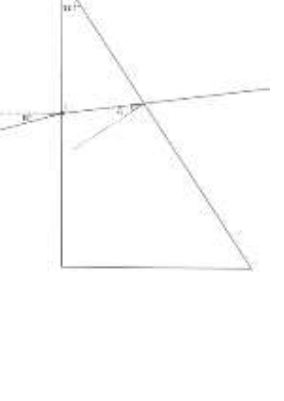
Topic: Geometric Optics Metodi: Snell’s Law Competenze: Physical Reasoning, Mathematical Modeling Objects: Prism Fonte: Testo (PDF) — p.5
PT166. Colegio Provinciale N° 1 Joaquín V. Gonzalez. Città di La Rioja.
L’ottica geometrica Un prisma di sezione retto-triangolare è immerso in l’acqua. Su uno dei loro volti incide un raggio di luce, con un angolo di incidenza di 15°, come indicato nella figura
- Il suo nome è il suo nome. Se il tasso di refraczione del prisma è di 1,5 e dell’acqua es 1,3. Determinare: a) Il valore dell’angolo I2; b) Dato il formato del prisma: si darà riflessione totale interno? Fondamento.
Topic: Geometric Optics Metodi: Snell’s Law Competenze: Physical Reasoning, Mathematical Modeling Objects: Prism Fonte: Testo (PDF) — p.5
PT166. Provincial school N° 1 Joaquín V. Gonzalez, you know. City of La Rioja.
Geometric optics A right-angled prism is immersed in the the water. On one of their faces a ray of light hits, with a angle of incidence of 15°, as shown in Figure
- The second one. If the refractive index of the prism is 1.5 and the water es 1,3. Determine: (a) The value of the angle I2; (b) Given the shape of the prism: will full reflection be given?
- What? I’m going to have to.
Topic: Geometric Optics Metodi: Snell’s Law Competenze: Physical Reasoning, Mathematical Modeling Objects: Prism Fonte: Testo (PDF) — p.5
PT167. Colegio Provincial N° 1 Joaquín V. González. Ciudad de La Rioja.
Estática de Fluidos Un experimentador desea determinar la densidad de una muestra de aceite que ha extraído de una planta. A un tubo de vidrio en U abierto en ambos extremos llena un poco de agua con colorante (para la visibilidad). Después vierte sobre el agua una pequeña
124 - OAF 2018
cantidad de la muestra del aceite en un lado del tubo y mide las alturas h1 y h2, según
como se muestra en la figura.
a) ¿Cuál es la densidad del aceite en
términos de la densidad del agua y de
h1 y de h2?
b) Si el tubo utilizado tiene una sección de
6cm2, y vuelve a realizar el experimento
esta vez colocando mercurio en una de
las ramas hasta h1: 2cm, mientras que
en la otra rama coloca un líquido de
densidad desconocida hasta h2: 10cm.
Hallar:
- Densidad del líquido desconocido.
- Peso del líquido desconocido.
- Graficar la situación dada.
c) Luego,
el
mismo
experimentador quiso colocar
en dos vasos comunicantes
agua y mercurio. La diferencia
de alturas de los niveles del
mercurio en los vasos es h = 1
cm. Utilizando ahora aceite de
lino, calcular la altura de este
aceite que se debe añadir por la
rama de mercurio para que el
nivel de éste en los dos casos
sea el mismo.
d) ¿De qué parámetros depende la densidad de un líquido? ¿De qué parámetros depende la densidad de un sólido?
Datos
Densidad del mercurio = 13,6 g/cm3.
Densidad del aceite de lino = 0,9 g/cm3
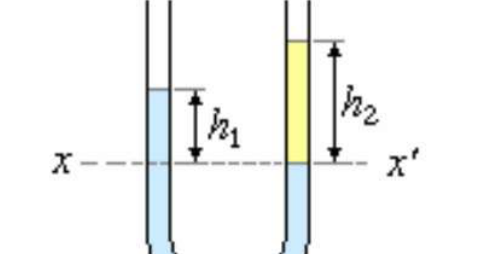
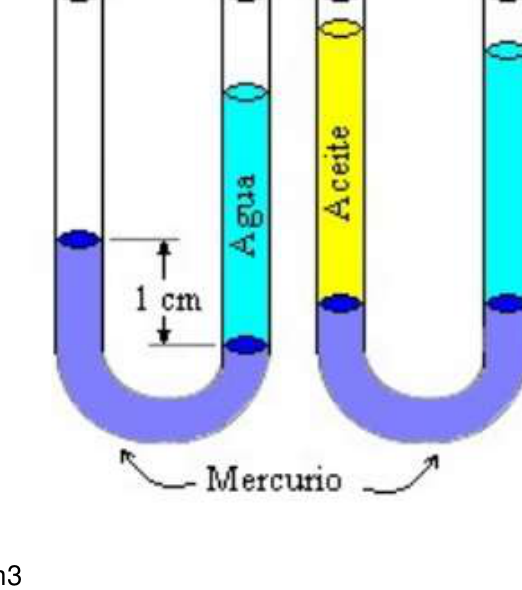
Topic: Fluid Mechanics Metodi: Hydrostatic Equilibrium Competenze: Physical Reasoning, Mathematical Modeling Objects: Manometer, Tube Fonte: Testo (PDF) — p.5
PT167. Colegio Provinciale N° 1 Joaquín V. Gonzalez. Città di La Rioja.
Statica dei Fluidi Un esperimentatore vuole determinare la densità di un campione di olio che ha estratto da una pianta. Un tubo di vetro in U aperto su entrambi gli estremi riempie un po ’ di acqua colorata (per la visibilità). Poi versate su un po ’ d’ acqua.
124 - OAF 2018 quantità di campione di olio su un lato del tubo e misura le altezza h1 e h2, secondo come viene mostrato nella figura. a) Qual è la densità dell’olio in termini di densità dell’acqua e di h1 y de h2? b) Se il tubo utilizzato ha una sezione di 6 cm2, e riparte l’esperimento. Questa volta mettendo mercurio in una di le rampe fino a h1: 2 cm, mentre sull’altra branca si pone un liquido di densità sconosciuta fino a h2: 10 cm. Trovare:
- Densità del liquido sconosciuta.
- Peso del liquido sconosciuto.
- Graficare la situazione data. c) Poi, el
- Io stesso . l’esperimentatore voleva mettere in due vasi comunicanti. acqua e mercurio. La differenza Alti livelli di Il mercurio nei vasi è h = 1 cm. Ora usando olio di lino, calcolare l’altezza di questo olio da aggiungere per la rami di mercurio per il La Commissione ha adottato una decisione che prevede che il livello di questo livello sia in entrambi i casi
- Non lo so. d) Su quali parametri dipende la densità di un liquido? ¿De quali parametri dipendono da densità di un solido?
Datos Densità del mercurio = 13,6 g/cm3. Densità dell’olio di lino = 0,9 g/cm3
Topic: Fluid Mechanics Metodi: Hydrostatic Equilibrium Competenze: Physical Reasoning, Mathematical Modeling Objects: Manometer, Tube Fonte: Testo (PDF) — p.5
PT167. Provincial school N° 1 Joaquín V. Gonzalez, you know. City of La Rioja.
Fluid static An experimenter wants to determine the density of an oil sample that has extracted from a plant. A glass tube in U open at both ends fills a little bit of colour-coded water (for visibility). Then pour a little over the water .
The Commission shall adopt delegated acts in accordance with Article 21 of the Financial Regulation. The amount of the oil sample on one side of the tube and measuring the heights h1 and h2, according to As shown in the figure. (a) What is the density of the oil in The water density and the water density h1 y de h2? (b) If the tube used has a section of 6cm2, and then run the experiment again. This time by putting mercury in one of branches up to h1: 2cm, while In the other branch, place a liquid of Unknown density up to h2: 10 cm. Find out:
- Density of the fluid unknown.
- Weight of unknown liquid.
- Graph the situation. (c) Then, el
- I ‘m not . The experimenter wanted to place In two communicating vessels water and mercury. The difference . The average level of the Mercury in the glasses is h = 1 cm. Using now oil from line, calculate the height of this oil to be added by the The mercury branch to the The level of this in both cases It’s the same. (d) What parameters are the density of a liquid? ¿De What parameters are the density of a solid?
Data from the report The density of mercury is 13,6 g/cm3. Density of flaxseed oil = 0,9 g/cm3
Topic: Fluid Mechanics Metodi: Hydrostatic Equilibrium Competenze: Physical Reasoning, Mathematical Modeling Objects: Manometer, Tube Fonte: Testo (PDF) — p.5
PT168. Colegio Provincial N° 1 Joaquín V. González. Ciudad de La Rioja.
Mecánica celeste Un satélite artificial, de masa M, describe una órbita circular a una altura h sobre la superficie de la Tierra. Para que un satélite conserve su trayectoria en órbita circular, se debe cumplir que:
Donde a es la aceleración entre ambos cuerpos, v la velocidad que requiere para la órbita y R la distancia hasta el centro de la tierra. a) Deduce la expresión del módulo de la velocidad del satélite, V1 y calcula su valor, así como el de su periodo de revolución, T.
La órbita de la Luna es la trayectoria que sigue ésta en
OAF 2018 - 125 su movimiento alrededor de la Tierra. Esta trayectoria se describe como una elipse de baja excentricidad que discurre a una distancia media de 384 402 km de esta y que se recorre de oeste a este, es decir, en sentido antihorario. Debido a su muy baja excentricidad (0,05), consideraremos su órbita como circular, en donde su periodo de rotación alrededor de la Tierra es de 27.322 días; b) Conociendo estos datos, dar una estimación de la velocidad de la luna. c) Suponga que el sol creciera en tamaño, y su masa fuera la misma. Si su volumen fuera 10 veces mayor al volumen original, ¿Cuál sería su actual densidad, con respecto a la densidad original?
Datos Radio de la Tierra: 6,37. 106 m Aceleración de la gravedad: g = 9,81 m/s2 Altura del satélite en el inicio del cambio de órbita: 2,80 x 10⁵ m
Masa de la tierra: 5,972 x 1024
Topic: Gravitation Metodi: Newton’s Law of Gravitation, Kepler’s Laws Competenze: Physical Reasoning, Mathematical Modeling Objects: Satellite, Planet Fonte: Testo (PDF) — p.5
PT168. Colegio Provinciale N° 1 Joaquín V. Gonzalez. Città di La Rioja.
Meccanica celeste Un satellite artificiale, di massa M, descrive un’orbita circolare ad un’altezza h sopra la la superficie terrestre. Per mantenere un satellite in orbita circolare, si deve soddisfare:
Dove a è l’accelerazione tra i due corpi, v la velocità richiesta per l’orbita e R la distanza fino al centro della terra. a) Deduce l’espressione del modulo di velocità V1 e calcola il suo valore, così come il valore di Il suo periodo di rivoluzione, T.
L’orbita della Luna è la traiettoria che segue questa in
OAF 2018 - 125 il suo movimento intorno alla Terra. Questa traccia è descritta come un’ellipse di La sua eccentricità è bassa, si trova a una distanza media di 384 402 km da essa. si svolge da ovest a est, cioè in senso antiorario. A causa della sua bassa . L’orbita della Terra è circolare, dove il suo periodo di La rotazione intorno alla Terra è di 27.322 giorni. b) Conoscendo questi dati, dare una stima della velocità della luna. c) Supponiamo che il sole crescesse in dimensioni e avesse la stessa massa. Si su Il volume era 10 volte maggiore del volume originale, qual sarebbe il suo attuale densità rispetto alla densità originale?
Datos Radio Terra: 6,37. 106 m Accelerazione della gravità: g = 9,81 m/s2 Altezza del satellite all’inizio del cambio di orbita: 2,80 x 10⁵ m
Massa della terra: 5.972 x 1024
Topic: Gravitation Metodi: Newton’s Law of Gravitation, Kepler’s Laws Competenze: Physical Reasoning, Mathematical Modeling Objects: Satellite, Planet Fonte: Testo (PDF) — p.5
PT168. Provincial school N° 1 Joaquín V. Gonzalez, you know. City of La Rioja.
Celestial mechanics . An M-mass artificial satellite describes a circular orbit at a height h above the Earth’s surface. surface of the Earth. For a satellite to maintain its orbit in a circular orbit, it is must meet the following requirements:
Where a is the acceleration between the two bodies, v is the speed required for orbit and R distance to the center of the earth. (a) It reduces the expression of the speed module The value of the satellite, V1 and calculate its value, as well as that of His period of revolution, T.
The orbit of the moon is the trajectory that this one follows in
The Commission shall adopt delegated acts in accordance with Article 21 of the Financial Regulation. its movement around the Earth. This trajectory is described as an ellipse of low eccentricity running at an average distance of 384 402 km from the It runs west to east, that is, counter-clockwise. Because of its very low. The orbit of the planet is circular, where its period of Earth’s rotation is 27,322 days. (b) Knowing this data, give an estimate of the speed of the moon. (c) Suppose the sun grew in size, and its mass was the same. Si su volume was 10 times greater than the original volume, what would be its current volume? density, compared to the original density?
Data from the report Earth’s radio: 6.37 106 m The acceleration of gravity: g = 9,81 m/s2 Satellite altitude at the start of the change of orbit: 2,80 x 10⁵ m
The mass of the earth: 5,972 x 1024
Topic: Gravitation Metodi: Newton’s Law of Gravitation, Kepler’s Laws Competenze: Physical Reasoning, Mathematical Modeling Objects: Satellite, Planet Fonte: Testo (PDF) — p.5
PT169. Escuela Normal Juan Pascual Pringles. Ciudad de San Luis.
Paseando por su barrio observa a dos niños que se entretienen jugando con dos cubos y
una rampa, como si fuera una pista con dos autos que se mueven por ella. Por los
materiales que observa puede deducir que la pista se compone de un plano inclinado sin
fricción, que está a una altura de 0,5 m, y una sección horizontal con un coeficiente de
fricción cinética de 0,02. En un momento, observa que se libera el primer “autito” o más
bien el Bloque A, cuya masa es de unos 1,5 kg, de la parte superior del plano inclinado,
se desliza hacia abajo y choca
instantáneamente y de manera
inelástica
con
el
Bloque
idéntico B en el punto más
bajo. Los dos bloques se
mueven hacia la derecha a lo
largo la sección rugosa de la
pista hasta que se detienen.
Llega a su casa y su fanatismo
por la Física lo pone a realizar
los siguientes cálculos
a) Determinar la energía de potencial inicial del bloque A.
b) Calcular la energía cinética del bloque A en el punto más bajo, justo antes de la
colisión.
c) Determinar la velocidad de los dos bloques justo después de la colisión.
d) Hallar la energía cinética de los dos bloques justo después de la colisión.
e) ¿Qué tan lejos llegarán los dos bloques en la sección rugosa de la pista?
f) ¿Cuánto trabajo hará la fuerza de fricción durante este tiempo?
Topic: Conservation of Energy, Conservation of Momentum Metodi: Energy Conservation Method, Conservation of Momentum Competenze: Physical Reasoning, Mathematical Modeling Objects: Block, Inclined Plane Fonte: Testo (PDF) — p.5
PT169. Scuola Normale Juan Pascual Pringles. Città di San Luis.
Passeggiando per il suo quartiere osserva due bambini che si divertono giocando con due cubbi e una pista, come se fosse una pista con due auto che si muovono su di essa. Per i materiali che osserva può dedurre che la pista è composta da un piano inclinato senza La struttura è costituita da un’area di frattura che è a 0,5 m di altezza e da una sezione orizzontale con un coefficiente di la frizione cinetica di 0,02. In un momento, osserva che viene rilasciato il primo autito o più o il Blocco A, di massa di circa 1,5 kg, sulla parte superiore del piano inclinato, si scivola verso il basso e colpisce In un istante e in modo inelastica con el Blocco identico B al punto più basso. I due blocchi sono Si muovono a destra verso il lungo la sezione rugosa della Un tracciato fino a quando non si fermano. Arrivo a casa sua e il suo fanatismo La fisica lo fa fare. i seguenti calcoli a) Determinare l’energia di potenziale iniziale del blocco A. b) Calcolare l’energia cinetica del blocco A al punto più basso, appena prima della colpissione. c) Determinare la velocità dei due blocchi subito dopo l’impatto. d) Trovare l’energia cinetica dei due blocchi subito dopo la collisione. e) Quanto lontano si raggiungeranno i due blocchi nella sezione rugosa del tracciato? f) Quanto lavoro farà la forza di attrito durante questo tempo?
Topic: Conservation of Energy, Conservation of Momentum Metodi: Energy Conservation Method, Conservation of Momentum Competenze: Physical Reasoning, Mathematical Modeling Objects: Block, Inclined Plane Fonte: Testo (PDF) — p.5
PT169. The school is called Juan Pascual Pringles. City of St. Louis.
Walking around his neighborhood he watches two kids playing with two cubes and A ramp, like a track with two cars moving through it. By the The material you observe can infer that the track is composed of an inclined plane without friction, which is at a height of 0,5 m, and a horizontal section with a coefficient of kinetic friction of 0,02. At one point, you notice that the first autito or more is released. either Block A, which weighs about 1.5 kg, on the upper side of the slope, It slides down and crashes . instantly and in a manner Inelastic with el Block it . identical B at the point plus
- It’s low. The two blocks are Move right to the left. Long the rough section of the
- I’ll keep track of them until they stop. He comes to your house and his bigotry . Physics makes it so . the following calculations (a) Determine the initial potential energy of block A. (b) Calculate the kinetic energy of block A at the lowest point, just before the The collision. (c) Determine the speed of the two blocks immediately after the collision. (d) Find the kinetic energy of the two blocks immediately after the collision. (e) How far will the two blocks go in the rough section of the track? (f) How much work will the friction force do during this time?
Topic: Conservation of Energy, Conservation of Momentum Metodi: Energy Conservation Method, Conservation of Momentum Competenze: Physical Reasoning, Mathematical Modeling Objects: Block, Inclined Plane Fonte: Testo (PDF) — p.5
PT170. Escuela Normal Juan Pascual Pringles. Ciudad de San Luis.
Un protón con una masa de 1,67x10 -27 kg y una carga de 1,6x10 -19 C se acelera desde el reposo en el plano de la hoja a través de una diferencia de potencial de 220 V entre dos placas paralelas, como se muestra abajo.
126 - OAF 2018 La partícula se inyecta a través de un agujero en la placa de la mano derecha en una región del espacio que contiene un campo magnético uniforme con una magnitud de 50 T orientado de forma perpendicular al plano de la página. La trayectoria de la partícula se curva en una trayectoria semicircular e impacta a un detector. Desestima los efectos relativistas en este problema. a) Indica hacia dónde apunta el campo magnético. b) Determina la rapidez del protón cuando ingresa en la región del campo magnético B c) Halla la fuerza ejercida sobre la partícula cargada por el campo magnético B d) Encuentra la distancia desde el punto de inyección al detector
Topic: Magnetism, Electrostatics Metodi: Lorentz Force Analysis, Conservation of Energy Competenze: Physical Reasoning, Mathematical Modeling Objects: Capacitor, Particle Beam Fonte: Testo (PDF) — p.5
PT170. Scuola Normale Juan Pascual Pringles. Città di San Luis.
Un protone con una massa di 1,67x10 -27 kg e una carica di 1,6x10 -19 C si accelera da il riposo sul piano della foglia attraverso una differenza di potenziale di 220 V tra due placche parallele, come mostrato di seguito.
126 - OAF 2018 La particella viene injectata attraverso un buco nella placca della La mano destra in una regione dello spazio che contiene un campo magnetico uniforme di magnitudo 50 T orientato perpendicularmente al piano della pagina. La La traccia della particella si curva in una traccia semicircolare e colpisce un rilevatore. - Sconosce gli effetti. Relativisti in questo problema. a) Indica dove punta il campo magnetico. b) Determina la velocità del protone quando entra in Regione del campo magnetico B c) Indicare la forza esercitata sulla particella caricata da il campo magnetico B d) Indicare la distanza dal punto di iniezione al rilevatore
Topic: Magnetism, Electrostatics Metodi: Lorentz Force Analysis, Conservation of Energy Competenze: Physical Reasoning, Mathematical Modeling Objects: Capacitor, Particle Beam Fonte: Testo (PDF) — p.5
PT170. The school is called Juan Pascual Pringles. City of St. Louis.
A proton with a mass of 1.67x10 -27 kg and a charge of 1.6x10 -19 C accelerates from The resting on the leaf plane through a potential difference of 220 V between two parallel plates, as shown below.
The Commission shall adopt delegated acts in accordance with Article 126 of the Financial Regulation. The particle is injected through a hole in the plate of the Right hand on a region of space containing a a uniform magnetic field with a magnitude of 50 T oriented perpendicular to the plane of the page. La The path of the particle is curved in a path. It’s semi-circular and impacts a detector. It disregards the effects . Relativists on this issue. (a) Indicates where the magnetic field is pointing. (b) Determines the speed of the proton when it enters the magnetic field region B (c) Find the force exerted on the particle charged by the magnetic field B (d) Find the distance from the injection point to the detector
Topic: Magnetism, Electrostatics Metodi: Lorentz Force Analysis, Conservation of Energy Competenze: Physical Reasoning, Mathematical Modeling Objects: Capacitor, Particle Beam Fonte: Testo (PDF) — p.5
PT171. Escuela Normal Juan Pascual Pringles. Ciudad de San Luis.
Un grupo de alumnos de nivel medio asisten al Museo Interactivo de la Universidad pública de su ciudad y allí les muestran diferentes experiencias de Física, días más tarde, uno de ellos que quedó impactado con todo lo que pudo aprender vuelve a preguntar sobre una experiencia que, curioseando por internet, vio y no entendió. El mismo consistía en el diseño de un aparato de doble rendija, como se muestra abajo, en el cuál se hacía incidir una luz monocromática. La separación entre las rendijas era de 0,3 mm. Como consecuencia de la difracción un patrón de interferencia se producía en la segunda pantalla a 4,5 m de distancia. Entonces, Usted que es la encargada del Museo Interactivo revisa la experiencia y le propone que vuelva en una semana para poder reproducir en vivo la misma y salvar las dudas más importantes, de manera que entienda lo básico de lo que está sucediendo en la misma. Para ello, debe responder a las siguientes cuestiones: a) ¿Qué propiedad de la luz demuestra este experimento? b) ¿A qué velocidad se mueve la luz? c) Encontrar la longitud de onda de la luz incidente basada en el patrón de interferencia.
Si el aparato de doble rendija se sumerge en el agua (n = 1,33) d) ¿Cuál es la frecuencia de la luz en el agua? e) ¿Cuál es la longitud de onda de la luz en el agua? f) ¿Qué sucede con la distancia entre dos franjas adyacentes en el agua?
OAF 2018 - 127
Topic: Wave Optics Metodi: Interference & Diffraction Analysis, Snell’s Law Competenze: Physical Reasoning, Mathematical Modeling Objects: Slit, Screen Fonte: Testo (PDF) — p.5
PT171. Scuola Normale Juan Pascual Pringles. Città di San Luis.
Un gruppo di studenti di livello medio frequenta il Museo Interattivo dell’Università e lì vengono mostrati diversi esperimenti di fisica, giorni dopo, Uno di loro, colpito da tutto ciò che ha imparato, chiede di nuovo. su Una . Esperienza che, Curioso di guardare su internet, ha visto e non ha visto.
- Ha capito. Il suo compito era di progettazione di un doppio apparecchio Scavo, come mostrato di seguito, in che si accendeva una luce. monocromatica. La separazione tra Le scintille erano di 0,3 mm. Come La diffrazione di un Il modello di interferenza si verificava. sul secondo schermo a 4,5 m di distanza Distanza. Allora, tu sei la responsabile del Museo Interattivo Rivedere l’esperienza e proporre Torna in una settimana per
- E’ possibile riprodurla in diretta. Salvare i dubbi più importanti, Così capisce le basi. di quello che sta succedendo in
- Sì, è lei stessa. Per questo, deve rispondere a: le seguenti questioni: a) Che proprietà della luce dimostra questo esperimento? b) A che velocità si muove la luce? c) Trovare la lunghezza d’onda della luce incidente basata sul modello di interferenza.
Se l’apparecchio a doppia fessura si immerge nell’acqua (n = 1,33) d) Qual è la frequenza della luce nell’acqua? e) Qual è la lunghezza d’onda della luce nell’acqua? f) Che cosa succede alla distanza tra due strisce adiacenti nell’acqua?
OAF 2018 - 127
Topic: Wave Optics Metodi: Interference & Diffraction Analysis, Snell’s Law Competenze: Physical Reasoning, Mathematical Modeling Objects: Slit, Screen Fonte: Testo (PDF) — p.5
PT171. The school is called Juan Pascual Pringles. City of St. Louis.
A group of middle-level students attend the University’s Interactive Museum They’re showing them different physics experiences, days later. One of them who was shocked by everything he could learn asks again on One . Experience which, I was curious about the internet, and I saw it and I didn’t. He understood. The same was true of the design of a double apparatus The gap, as shown below, in The one who was getting a light on. It’s monochromatic. The separation between The slits were 0.3 mm. Like The result of diffraction is a interference pattern occurred On the second screen at 4.5 m from distance. So, you’re the one In charge of the Interactive Museum You can review your experience and propose. I ‘ll be back in a week for I can play it live and To save the most important doubts, So you understand the basics. of what’s happening in the I’m not. To do this, you must answer the following issues: (a) What property of light does this experiment demonstrate? (b) How fast does light travel? (c) Find the wavelength of incident light based on the pattern of interference.
If the double-slit device is submerged in water (n = 1,33) (d) What is the frequency of light in water? (e) What is the wavelength of light in water? (f) What happens to the distance between two adjacent strips in the water?
The Commission shall adopt delegated acts in accordance with Article 21 of Regulation (EU) No 1303/2013.
Topic: Wave Optics Metodi: Interference & Diffraction Analysis, Snell’s Law Competenze: Physical Reasoning, Mathematical Modeling Objects: Slit, Screen Fonte: Testo (PDF) — p.5
PT172. Escuela ORT - Sede Almagro. Ciudad Autónoma de Buenos Aires.
Angry Spark La competencia a Rovio sacó un (¿nuevo?) juego llamado Angry Spark, donde se aplica un potencial muy intenso y repentino a un pájaro catiónico, el cual adquiere una velocidad inicial con cierto ángulo respecto de la dirección que llamaremos horizontal (dado que al no haber gravedad en el juego resulta difícil definir un abajo). El pájaro, que tiene la característica de que su cociente carga-masa es uno, entra inmediatamente en un campo eléctrico uniforme de E = 9.82 V/m. Dicho campo apunta en dirección perpendicular a la definida dirección horizontal, y el objetivo es tratar de destruir ciertas estructuras atómicas inestables que se ubican a unos 10 metros de donde se ubica la fuente de potencial, en esta dirección que llamamos horizontal.
a) En caso de obtener una velocidad inicial de 20 m/s y un ángulo de inclinación de
45 grados respecto de la horizontal definida, calcular la distancia máxima que
alcanza el Angry Spark con la línea horizontal.
b) Determinar si el Angry Spark arrojado de esta manera alcanza a desestabilizar la
estructura atómica objetivo. En caso de no hacerlo, indicar si se pasa o si le falta
para alcanzarlo.
c) Si arrojar al pájaro con un ángulo lo separa de la línea horizontal trazada entre la
fuente de potencial que lo expulsa y la estructura atómica inestable, hallar los
dos ángulos que le posibilitan al pájaro a volver a cruzar esa línea 5m más
adelante, si la velocidad inicial dada por ese potencial es la anterior.
d) Si dado cualquier ángulo y cualquier velocidad inicial se tiene un alcance x,
determinar de cuánto será el alcance respecto de este último si el cociente
carga-masa fuera de un tercio.
Topic: Electrostatics, Newtonian Mechanics Metodi: Coulomb’s Law, Kinematic Equations, Vector Decomposition Competenze: Physical Reasoning, Mathematical Modeling Objects: Point Charge, Projectile Fonte: Testo (PDF) — p.5
PT172. Scuola ORT - Sede Almagro. Città autonoma di Buenos Aires.
Angry Spark La concorrenza a Rovio ha prodotto un (nuovo?) gioco chiamato Angry Spark, dove si applica un potenziale molto intenso e improvviso a un uccello cationico, che acquisisce una velocità La direzione che si chiama orizzontale (dato che il Non c’è gravità in gioco, è difficile definire un sotto). L’uccello, che ha la caratteristica che il suo coefficiente carico-massa è uno, entra immediatamente in un campo elettrico uniforme di E = 9,82 V/m. Il campo indica in direzione perpendicolare alla La direzione orizzontale è definita, e l’obiettivo è cercare di distruggere certe strutture atomiche. Infatti, la Commissione ha adottato una decisione che prevede che le misure di cui all’articolo 1 del regolamento (UE) n. Questa direzione che chiamiamo orizzontale.
a) Se si ottiene una velocità iniziale di 20 m/s e un angolo di inclinamento di 45 gradi rispetto all’orizzonte definito, calcolare la distanza massima che raggiunge l’Angry Spark con la linea orizzontale. b) Determinare se l’Angry Spark così lanciato riesce a destabilizzare la struttura atomica mirata. Se non lo fai, indica se ti manca o se ti passa. per raggiungerlo. (c) Se il uccello viene gettato con un angolo che lo separa dalla linea orizzontale tra il La fonte di potenziale che lo espelle e la struttura atomica instabile, trovare i due angoli che consentono al uccello di attraversare di nuovo quella linea di 5 metri più E poi, se la velocità iniziale data da quel potenziale è la velocità precedente. d) Se, dato qualsiasi angolo e qualsiasi velocità iniziale, si ha un raggio x, determinare quanto sarà il campo di applicazione rispetto all’ultimo se il coefficiente
- Mass-charge fuori di un terzo.
Topic: Electrostatics, Newtonian Mechanics Metodi: Coulomb’s Law, Kinematic Equations, Vector Decomposition Competenze: Physical Reasoning, Mathematical Modeling Objects: Point Charge, Projectile Fonte: Testo (PDF) — p.5
PT172. The following is the list of the activities of the Regional Development Fund: The Autonomous City of Buenos Aires.
Angry Spark . Competition to Rovio released a (new?) game called Angry Spark, where it applies A very intense and sudden potential to a cationic bird, which acquires a speed. The initial angle is at a certain angle to the direction we will call horizontal (since the angle is at the There’s no gravity in the game, so it’s hard to define a down). The bird, who has the characteristic that its load-mass ratio is one, immediately enters a field uniform electrical power of E = 9.82 V/m. This field points in a direction perpendicular to the The goal is to try to destroy certain atomic structures. Unstable ones located about 10 meters from where the potential source is located, in This direction we call horizontal.
(a) If an initial speed of 20 m/s and an inclination angle of 45 degrees from the defined horizontal, calculate the maximum distance that reaches the Angry Spark with the horizontal line. (b) Determine whether the Angry Spark cast in this way is able to destabilize the The target atomic structure. If you do not, indicate whether you are passing or missing it to catch up with him. (c) If you throw the bird at an angle separating it from the horizontal line drawn between the The source of potential that drives it out and the unstable atomic structure, find the Two angles allowing the bird to cross that line again 5m further Go ahead, if the initial velocity given by that potential is the previous one. (d) If given any angle and any initial velocity, there is a range x, determining the extent of the range for the latter if the coefficient load-mass out of a third.
Topic: Electrostatics, Newtonian Mechanics Metodi: Coulomb’s Law, Kinematic Equations, Vector Decomposition Competenze: Physical Reasoning, Mathematical Modeling Objects: Point Charge, Projectile Fonte: Testo (PDF) — p.5
PT173. Escuela ORT - Sede Almagro. Ciudad Autónoma de Buenos Aires.
Impacto galáctico: un final de película En una de las escenas más espectaculares de Los Últimos Jedi, la desconocida vicealmirante Holdo decide usar su nave como una flecha y trazar un hueco en la nave de los villanos de la película: la Primera Orden. En una maniobra nunca antes vista, la nave de Holdo choca de frente con la nave de la Primera Orden, quedando quieta al terminar de hacer el agujero. La nave de la vicealmirante Holdo, a partir de ahora, será conocida en toda la galaxia como la flecha.
a) Considerando que la velocidad final de la masa desplazada es igual a la velocidad inicial de la flecha, y usando la conservación de la cantidad de movimiento, muestre que la masa desplazada es igual a la masa de la flecha. b) Calcule la profundidad de impacto D en función de las densidades 𝜌1 y 𝜌2 de la flecha y la nave de los malos respectivamente, y el largo L de la flecha (aproxime el área transversal A de la flecha por una constante). c) Mariana, una fan de Star Wars, analizó videos de la película y llegó a la conclusión de que la nave de la Primera Orden mide aproximadamente 13,2km, mientras que la flecha tiene un largo de unos 3,5km. Si la nave de la Primera Orden está hecha de una aleación metálica de densidad 7000kg/m3, y sólo el 10% de ella es sólida, ¿qué densidad tiene la flecha? (Tener en cuenta que la imagen no está a escala)
128 - OAF 2018
Topic: Conservation of Momentum Metodi: Conservation of Momentum, Dimensional Analysis Competenze: Physical Reasoning, Mathematical Modeling Objects: — Fonte: Testo (PDF) — p.5
PT173. Scuola ORT - Sede Almagro. Città autonoma di Buenos Aires.
L’impatto galattico: un finale di film In una delle scene più spettacolari di The Last Jedi, l’ignorante Il vice ammiraglio Holdo decide di usare la sua nave come un’arcia e di tracciare un buco nella nave di I cattivi del film: Il primo ordine. In una manovra mai vista prima, la nave De Holdo si schianta di fronte alla nave del Primo Ordine, rimanendo fermo al termine. di fare il buco. La nave del vice ammiraglio Holdo, da ora in poi, sarà nota. in tutta la galassia come un’arcia.
a) Considerando che la velocità finale della massa spostata è pari a velocità iniziale dell’arcia, e usando la conservazione della quantità di movimento, mostra che la massa spostata è uguale alla massa della freccia. b) Calcolare la profondità di impatto D in base alle densità ρ1 e ρ2 della Arrow e nave dei malvagi rispettivamente, e la lunghezza L della freccia (circa l’area trasversale A della freccia per una costante). c) Mariana, una fan di Star Wars, ha analizzato i video del film e ha raggiunto il Conclusione che la nave del primo ordine misura circa 13,2 km, mentre l’arcia ha una lunghezza di circa 3,5 chilometri. Se la nave della Prima Orden è costituito da un’allea metallica di densità 7000 kg/m3, e solo il Il 10% è solido, che densità ha la freccia? (Teni presente che la immagine non è a scala)
128 - OAF 2018
Topic: Conservation of Momentum Metodi: Conservation of Momentum, Dimensional Analysis Competenze: Physical Reasoning, Mathematical Modeling Objects: — Fonte: Testo (PDF) — p.5
PT173. The following is the list of the activities of the Regional Development Fund: The Autonomous City of Buenos Aires.
Galactic impact: a film ending In one of the most spectacular scenes of The Last Jedi, the unknown Vice Admiral Holdo decides to use his ship as an arrow and plot a hole in the ship of The villains of the movie: The First Order. In a maneuver never seen before, the ship Holdo’s ship collided head-on with the First Order, remaining still at the end. I’m not going to make the hole. Vice Admiral Holdo’s ship, from now on, will be known. across the galaxy like an arrow.
(a) Whereas the final velocity of the displaced mass is equal to The initial speed of the arrow, and using the conservation of the amount of motion, show that the displaced mass is equal to the mass of the arrow. (b) Calculate the impact depth D based on the densities ρ1 and ρ2 of the arrow and the ship of the bad guys respectively, and the long L of the arrow (approx the cross area A of the arrow by a constant). (c) Mariana, a Star Wars fan, analyzed the film’s videos and came to the The first order ship is approximately 13.2km long. While the arrow is about 3.5km long. If the ship of the First Orden is made of a metal alloy of 7000 kg/m3 density, and only the Ten percent of it is solid, what density is the arrow? (Note that the image is not on scale)
The Commission shall adopt delegated acts in accordance with Article 21 of this Regulation.
Topic: Conservation of Momentum Metodi: Conservation of Momentum, Dimensional Analysis Competenze: Physical Reasoning, Mathematical Modeling Objects: — Fonte: Testo (PDF) — p.5
PT174. Escuela ORT - Sede Almagro. Ciudad Autónoma de Buenos Aires.
Clepsidra
La clepsidra es una forma antigua de medir el tiempo. El sistema consiste en dos vasijas
de cualquier material a diferentes alturas, donde la que más alto se encuentra tiene un
pequeño orificio. La vasija se llena de agua y por el orificio empieza a escapar, cayendo
en la vasija de al lado, como se observa en la figura. Usualmente, tenían marcas en sus
paredes para poder medir tiempos parciales. Los atenienses lo utilizaban para controlar el
tiempo de sus oradores en sus espacios de discusión política.
Bernoulópulos, nuestro joven protagonista estudiante de trabajos manuales, diseña una
clepsidra con una vasija cilíndrica de cerámica de 50cm de radio, y llena con 2000 litros
su interior para hacerle unas pruebas. Luego, deja un orificio de 2cm de diámetro.
a) Calcular la velocidad de salida del chorro de agua que cae a la segunda vasija.
b) Para calibrar sus marcas internas, Bernoulópulos tiene que saber cuánto tiempo
pasó si se evacuó el 10% del agua que colocó. ¿Qué tiempo en segundos
pondrá en esa marca?
c) Hallar una expresión para el volumen de la primera vasija en función del tiempo,
dejando implícita la dependencia de la altura con el tiempo.
Daniel Bernoulli, tátara-tátara-(…)-tátara-tátara nieto de Bernoulópulos, hace una apuesta más fuerte, y halla una expresión matemática para la altura de la superficie del líquido en función del tiempo. ¿A qué expresión llega?
OAF 2018 - 129 Problemas Experimentales
Topic: Fluid Mechanics Metodi: Bernoulli’s Equation, Continuity Equation, Differential Equations Competenze: Physical Reasoning, Mathematical Modeling Objects: Container Fonte: Testo (PDF) — p.5
PT174. Scuola ORT - Sede Almagro. Città autonoma di Buenos Aires.
Clepsidra La clepsidra è un’antica misura del tempo. Il sistema consiste in due vasi. di qualsiasi materiale a diverse altezze, dove la più alta si trova ha un piccolo orizzonte. Il vaso si riempie di acqua e il foro inizia a scappare, cadendo. nel vasso di fianco, come si vede nella figura. Di solito, avevano le macchie sui loro per poter misurare i tempi parziali. Gli Ateniani lo usavano per controllare il Il tempo dei suoi oratori nei loro spazi di discussione politica. Bernoulopoulos, il nostro giovane protagonista studente di lavori manuali, progetta una clepsidra con un vassoio cilindrico di ceramica di 50 cm di radio, e riempito di 2000 litri
- l’interno per fargli dei test. Poi lascia un buco di 2 cm di diametro. a) Calcolare la velocità di uscita del jet d’acqua che cade nel secondo recipiente. b) Per calibrare le sue marche interne, Bernoulopulos deve sapere quanto tempo E’ successo se il 10% dell’acqua che ha messo è stata evacuata. Che tempo in secondi
- Lo metterà in quel marchio? c) Trovare un’espressione per il volume del primo vaso in funzione del tempo, lasciando implicita la dipendenza dall’altezza nel tempo.
Daniel Bernoulli, tatara-tatara-(…)-tatara-tatara nipote di Bernoulopulos, fa una scommessa più forte, e trova un’espressione matematica per l’altezza della superficie del liquido in funzione del tempo. Che espressione ha?
OAF 2018 - 129 Problemi sperimentali
Topic: Fluid Mechanics Metodi: Bernoulli’s Equation, Continuity Equation, Differential Equations Competenze: Physical Reasoning, Mathematical Modeling Objects: Container Fonte: Testo (PDF) — p.5
PT174. The following is the list of the activities of the Regional Development Fund: The Autonomous City of Buenos Aires.
Clepsidra Clepsid is an ancient way of measuring time. The system consists of two vessels of any material at different heights, where the highest one is a It’s a small hole. The vessel fills with water and through the hole it starts to escape, falling. In the next vessel, as shown in the figure. Usually, they had marks on their hands. walls so you can measure part-time. The Athenians used it to control the The Commission has also been able to provide a number of information on the situation in the Member States. Bernoulopoulos, our young student in the field of manual work, designs a Clepsidra with a 50 cm diameter ceramic cylindrical vessel, and filled with 2000 litres inside to test him. Then it leaves a hole 2cm in diameter. (a) Calculate the exit speed of the water jet falling into the second vessel. (b) To calibrate its internal marks, Bernoulopulos has to know how long It happened if 10% of the water you put in was evacuated. What time in seconds? You’re gonna put it on that mark? (c) Find an expression for the volume of the first vessel in terms of time, It’s a very simple thing to do, but it’s not a simple thing to do.
Daniel Bernoulli, father-father-father-father-father-father-father-father-father-father-father of Bernoulopulos, makes a bet stronger, and find a mathematical expression for the height of the surface of the liquid in function of time. What expression does he get?
The Commission shall adopt delegated acts in accordance with Article 21 of the Financial Regulation. Experimental problems
Topic: Fluid Mechanics Metodi: Bernoulli’s Equation, Continuity Equation, Differential Equations Competenze: Physical Reasoning, Mathematical Modeling Objects: Container Fonte: Testo (PDF) — p.5
PE1. Escuela Secundaria N° 2 Clara J. Amstrong - ENET N° 1 Prof. Vicente Aguilera
- Colegio del Carmen y San José - Escuela Secundaria N° 3 Gustavo G. Levene - Colegio Padre Ramón de la Quintana - Instituto Pía Didoménico - Instituto Superior FASTA Catamarca - EPET N° 7 Alsina Alcobert - Escuela PreUniversitaria Fray Mamerto Esquiu. San Fernando del Valle de Catamarca.
DETERMINACION DE LA DENSIDAD DE UNA MONEDA
Fundamento teórico Las diferentes sustancias que existen en la naturaleza se caracterizan porque la unidad de volumen (m3 o cm3) tiene diferente masa. Por ejemplo la masa de un centímetro cubico de hierro es de 7,8 g, mientras que el mismo volumen de glicerina tiene una masa de 1,26g. La densidad absoluta de una sustancia homogénea se define como el cociente entre la masa y el volumen de dicha sustancia. Si una masa m ocupa un volumen V, la densidad es igual a:
𝒅=
𝒎
𝑽
(1)
Objetivos
- Utilizar adecuadamente instrumentos de medición.
- Calcular volumen.
- Determinar la densidad de un cuerpo regular.
Materiales necesarios
- 4 monedas
- Regla
- Balanza de precisión.
Procedimiento experimental
a) Para determinar el volumen de la moneda recuerde que ésta tiene forma de cilindro, por lo que se debe medir su diametro y su espesor (grosor) que corresponde a la altura (h) del cilindro. Para facilitar esta medición puede colocar las cuatro monedas en forma de torre y medir su altura; luego aplicar la ecuación (2):
Fig 1
𝐕= 𝛑 𝐫𝟐 𝐡 (2)
Donde: π= 3,14
r = D/2 = radio de la moneda
h= espesor (grosor) de la monda.
b) Anote los valores en la tabla 1:
130 - OAF 2018
Moneda
Diámetro(cm)
radio =diámetro /2
(cm)
Altura (h)
cm
Volumen(cm3 )
1
2
3
4
Tabla 1: Registro de datos geometricos
c) Pese cada moneda y determine su masa( recuerde que 1gf es equivalente numéricamente a 1 g masa) y coloque el valor medido en gramos en la tabla 2. d) Calcule la densidad de cada moneda completando la tabla 2:
Moneda Masa (g) Volumen (cm3 ) Densidad(g/ cm3 ) 1
2
3
4
Tabla 2: Determinación de densidad
Requerimientos Al finalizar la experiencia deberá entregar un informe escrito con letra clara, que conste de: a) Planteo del problema b) Valores obtenidos en las mediciones, tablas, gráficos. c) Fuentes de error y análisis de cómo influyen en el resultado final. d) Resultado experimental de lo solicitado. e) Conclusiones. f) Comentarios que desee realizar referidos dificultades relacionadas a la realización de la experiencia.
Topic: Order-of-Magnitude Estimation Metodi: Experimental Data Analysis, Error Propagation Competenze: Physical Reasoning, Experimental Data Analysis Objects: Disk Fonte: Testo (PDF) — p.5
PE1. Scuola secondaria N° 2 Clara J. Amstrong - ENET N° 1 Prof. Vicente Aguilera
- Colegio del Carmen e San José - Scuola secondaria N° 3 Gustavo G. Levene - Colegio Padre Ramón de la Quintana - Istituto Pía Didomenico - Istituzione superiore FASTA Catamarca - EPET N° 7 Alsina Alcobert - Scuola Preuniversitaria Fray Mamerto Esquiu. San Fernando della Valle di Catamarca.
DETERMINATION DEL DENSITÀ D’UNA MONETTA
Fondamento teorico Le sostanze presenti in natura sono caratterizzate da un’unità di volume (m3 o cm3) ha una massa diversa. Per esempio, la massa di un centimetro Il cubo di ferro è di 7,8 g, mentre lo stesso volume di glicerina ha una massa. de 1,26g. La densità assoluta di una sostanza omogenea è definita come il coefficiente tra la densità di una sostanza omogenea e la densità di una sostanza omogenea. massa e volume della sostanza. Se una massa m occupa un volume V, la densità è uguale a:
𝒅=
𝒎
𝑽
(1)
Obiettivi
- Utilizzare adeguatamente gli strumenti di misurazione.
- Calcolare il volume.
- Determinare la densità di un corpo regolare.
Materiali necessari
- 4 monete .
- Regola .
- Sbalzo di precisione.
Procedura sperimentale
a) Per determinare il volume della moneta, ricordate che essa è in forma di cilindro, quindi il diametro e lo spessore devono essere misurati che corrisponde all’altezza (h) del cilindro. Per facilitare la misurazione si possono collocare le quattro monete in forma di torre e misurare la sua altezza; quindi applicare l’equazione (2):
Fig. 1
𝐕= 𝛑 𝐫𝟐 𝐡 (2)
In cui: π= 3,14
r = D/2 = radius della moneta
h= spessore della scatola.
b) Notare i valori in tabella 1:
130 - OAF 2018 Moneta Diametro (mm) radio = diametro /2 (cm) Altezza (h) cm Volume (cm3) 1
2
3
4
Tabella 1: Registrazione dei dati geometrici
c) Pesate ogni moneta e determinate la massa di essa, ricordate che 1gf è equivalente Numericamente a 1 g di massa) e inserire il valore misurato in grammo nella tabella 2. d) Calcolare la densità di ciascuna moneta completando il tabella 2:
Moneta Massa (g) Volume (cm3) Densità (g/ cm3) 1
2
3
4
Tabella 2: Determinazione della densità
Richieste Al termine dell’esperienza dovrà presentare un rapporto scritto in chiaro, che è costituito da: a) La presentazione del problema b) Valori ottenuti nelle misurazioni, nelle tabelle, nei grafici. c) Fonti di errore e analisi di come influenzano il risultato finale. d) Risultato sperimentale della richiesta. e) Conclusioni. f) Commenti che desiderano fare riguardo alle difficoltà relative alla realizzazione dell’esperienza.
Topic: Order-of-Magnitude Estimation Metodi: Experimental Data Analysis, Error Propagation Competenze: Physical Reasoning, Experimental Data Analysis Objects: Disk Fonte: Testo (PDF) — p.5
PE1. Secondary School N° 2 Clara J. The Commission has also adopted a number of proposals for the establishment of a new European network of networks. Vicente Aguilera is a great man .
- College of Carmen and San José - Secondary School N° 3 Gustavo G. Levene - Father Ramón de la Quintana College - The Pius Didomenic Institute - The following is a list of the institutions of higher education in Spain: Pre-university Fray Mamerto Esquiu. San Fernando of the Catamarca Valley.
DETERMINATION of the density of a currency
Theoretical basis The different substances that exist in nature are characterised by the fact that the unit The mass of the product is different. For example, the mass of one centimeter. Iron cube is 7.8 g, while the same volume of glycerin has a mass de 1,26g. The absolute density of a homogeneous substance is defined as the ratio of the mass and volume of the substance. If a mass m occupies a volume V, the density is equal to:
𝒅=
𝒎
𝑽
(1)
Objectives
- Use measuring instruments appropriately.
- Calculate the volume.
- Determine the density of a regular body.
Materials needed
- Four coins .
- Rule .
- Precision scale.
Experimental procedure
(a) To determine the volume of the currency, remember that it is in the form of a cylinder, so its diameter and thickness (thickness) must be measured as is the height (h) of the cylinder. To facilitate this measurement you can place the four coins in the shape of a tower and measure its height; then apply the equation (2):
Figure 1
𝐕= 𝛑 𝐫𝟐 𝐡 (2)
Where: π= 3,14
R = D/2 = radius of the currency
h= thickness of the mould.
(b) Write down the values in Table 1:
The Commission shall adopt delegated acts in accordance with Article 21 of this Regulation. Currency The diameter of the vehicle radius = diameter /2 (cm) Height (h) cm The following table shows the results of the study: 1
2
3
4
Table 1: Register of geometric data
(c) Weigh each coin and determine its mass. (numerically to 1 g mass) and place the value measured in grams in Table 2. (d) Calculate the density of each coin by completing Table 2:
Currency Mass (g) The volume (cm3) The following table shows the results of the calculation: 1
2
3
4
Table 2: Density determination
Requirements At the end of the experience, you must submit a written report in clear writing, which consist of: (a) The problem is raised (b) Value obtained in measurements, tables, graphs. (c) Sources of error and analysis of how they influence the final result. (d) Experimental result of the requested product. (e) Conclusions. (f) comments which you wish to make on these difficulties relating to the The Commission will be consulted on the following points:
Topic: Order-of-Magnitude Estimation Metodi: Experimental Data Analysis, Error Propagation Competenze: Physical Reasoning, Experimental Data Analysis Objects: Disk Fonte: Testo (PDF) — p.5
PE2. Escuela Secundaria N° 2 Clara J. Amstrong - ENET N° 1 Prof. Vicente Aguilera
- Colegio del Carmen y San José - Escuela Secundaria N° 3 Gustavo G. Levene - Colegio Padre Ramón de la Quintana - Instituto Pía Didoménico - Instituto Superior FASTA Catamarca - EPET N° 7 Alsina Alcobert - Escuela PreUniversitaria Fray Mamerto Esquiu. San Fernando del Valle de Catamarca.
Objetivo:
- Medir el ascenso capilar de un líquido.
- Calcular el radio de poro del material absorbente.
Fundamentación El ascenso capilar de un fluido por las paredes de un tubo capilar o por canal angosto es inversamente proporcional al radio del tubo (ancho del canal). Esto significa que cuanto más fino es el capilar (o más angosto el canal) mayor es la altura alcanzada por el líquido. El mismo comportamiento se visualiza en el ascenso vertical de un líquido por un papel absorbente debido al fenómeno de capilaridad. La altura final que alcanza el líquido
OAF 2018 - 131 (frente del fluido) depende de varios factores, entre ellos, de la porosidad del material. El modelo que explica este comportamiento físico esta dado por la expresión matemática: ℎ= 2𝛾 𝛿 𝑅 𝑔
Ecuación 1
Los parámetros de la ecuación 1 son: ℎ es la altura que asciende el nivel del liquido en el papel absorbente; 𝛾 es la tensión superficial del liquido [𝛾𝑎𝑔𝑢𝑎 = 73−3 𝑁 𝑚]; 𝛿, densidad del liquido [𝛿𝑎𝑔𝑢𝑎 = 1000 𝑘𝑔 𝑚3] ; 𝑅 es el radio del poro del papel; 𝑔 es la aceleración de la gravedad [𝑔= (9,78 ± 0,01) 𝑚 𝑠2]
Metodología de Trabajo
Material de Laboratorio
- Soporte universal
- Papel absorbente
- Agua destilada
- Caja de Petri
- Regla plástica calibrada en milímetros
- Cronómetro (Apreciación: 0,01 s)
Desarrollo Experimental
a) Se sostiene verticalmente uno de los extremos de la tira de papel absorbente en la
abrazadera del soporte universal.
b) Colocar el agua destilada en la caja de Petri.
c) Sumergir el extremo libre de la tira del papel absorbente de modo tal que toque unos
pocos milímetros el agua destilada.
d) Mida el tiempo una vez introducida la tira en el líquido, tomando lecturas a intervalos
de 1 minuto durante 30 minutos en total.
e) Vuelque los datos en una tabla
f)
ℎ± ∆ℎ
𝑡± ∆𝑡
g) Realizar la gráfica de altura en función del tiempo.
h) Describir de modo detallado qué sucede en el ascenso del líquido y los fundamentos
físicos de lo observado en la gráfica generada en el ítem 7-.
i) Con la altura del frente del fluido, calcular el radio de poro R del papel, valiéndose de
la ecuación 1.
Requerimentos para la redacción del informe Al finalizar la experiencia deberá entregar un informe escrito con letra clara, que conste de:
-
Planteamiento del problema
-
Valores obtenidos en las mediciones, tablas, gráficos. Todos ellos referenciados.
-
Fuentes de error y análisis de cómo influyen en el resultado final.
-
Resultado experimental acorde a lo solicitado.
-
Conclusiones.
-
Comentarios que desee realizar referidos dificultades relacionadas a la realización de la experiencia.
132 - OAF 2018
Topic: Fluid Mechanics Metodi: Experimental Data Analysis, Curve Fitting, Error Propagation Competenze: Physical Reasoning, Experimental Data Analysis, Mathematical Modeling Objects: Tube Fonte: Testo (PDF) — p.5
PE2. Scuola secondaria N° 2 Clara J. Amstrong - ENET N° 1 Prof. Vicente Aguilera
- Colegio del Carmen e San José - Scuola secondaria N° 3 Gustavo G. Levene - Colegio Padre Ramón de la Quintana - Istituto Pía Didomenico - Istituzione superiore FASTA Catamarca - EPET N° 7 Alsina Alcobert - Scuola Preuniversitaria Fray Mamerto Esquiu. San Fernando della Valle di Catamarca.
Obiettivo:
- Misurare l’aumento capillare di un liquido.
- Calcolare il raggio di poro del materiale assorbente.
Fondamento L’ascesa capillare di un fluido attraverso i muri di un tubo capillare o attraverso un canale stretto è inverso proporzionale al raggio del tubo (larghezza del canale). Questo significa che quanto più sottile è il capillario (o più stretto è il canale) più grande è l’altezza raggiunta dal liquido. Lo stesso comportamento si visualizza nell’ascesa verticale di un liquido da un La presenza di capelli può essere determinata da un effetto di assorbimento. L’altezza finale che raggiunge il liquido
OAF 2018 - 131 (fronte al fluido) dipende da diversi fattori, tra cui la porosità del materiale. El Il modello che spiega questo comportamento fisico è dato dall’espressione matematica: ℎ= 2𝛾 𝛿 𝑅 𝑔
Equatoria 1
I parametri dell’equazione 1 sono: h è l’altezza che alza il livello del liquido in carta assorbitrice; γ è la tensione superficiale del liquido [γagua = 73−3 N] m]; δ, densità di liquido [δacqua = 1000] 𝑘𝑔 m3]; R è il raggio del poro della carta; g è l’accelerazione della gravità [g= (9,78 ± 0,01) m 𝑠2]
Metodologia del lavoro Materiale di laboratorio
- Supporto universale
- Papero assorbente
- Distillata .
- Cassa di Petri
- Regola plastica calibrata in millimetri
- Cronometro (Valutazione: 0,01 s)
Sviluppo sperimentale
a) Si supporta verticalmente una delle estremità della fascia di carta assorbente nella
abbracciatore di supporto universale.
b) Mettere l’acqua distillata nella scatola di Petri.
c) Immergere l’estremità libera della fascia di carta assorbente in modo tale da toccare alcuni
pochi millimetri di acqua distillata.
d) Misura il tempo dopo aver inserito la striscia nel liquido, facendo le letture a intervalli
di un minuto per un totale di 30 minuti.
e) Rimuovere i dati in una tabella
f)
ℎ± ∆ℎ
𝑡± ∆𝑡
g) Realizzare il grafico di altezza in base al tempo. h) Descrivere in dettaglio cosa accade nell’ascesa del liquido e i fondamenti I risultati sono stati ottenuti con un’analisi fisica di quanto osservato nel grafico generato nell’articolo 7- (i) Con l’altezza del fronte del fluido, calcolare il raggio di poro R del foglio, utilizzando
- l’equazione 1.
Requisiti per la redazione del rapporto Al termine dell’esperienza, deve presentare un rapporto scritto in chiaro, che contiene: de:
- Sulla base del problema
- Valori ottenuti dalle misure, dalle tabelle, dai grafici. Tutti riferiti.
- Fonti di errore e analisi di come influenzano il risultato finale.
- Risultato sperimentale, come richiesto.
- Conclusioni.
- Commenti che desiderino fare riguardo alle difficoltà relative alla realizzazione dell’esperienza.
132 - OAF 2018
Topic: Fluid Mechanics Metodi: Experimental Data Analysis, Curve Fitting, Error Propagation Competenze: Physical Reasoning, Experimental Data Analysis, Mathematical Modeling Objects: Tube Fonte: Testo (PDF) — p.5
PE2. Secondary School N° 2 Clara J. The Commission has also adopted a number of proposals for the establishment of a new European network of networks. Vicente Aguilera is a great man .
- College of Carmen and San José - Secondary School N° 3 Gustavo G. Levene - Father Ramón de la Quintana College - The Pius Didomenic Institute - The following is a list of the institutions of higher education in Spain: Pre-university Fray Mamerto Esquiu. San Fernando of the Catamarca Valley.
The objective:
- Measuring the hair growth of a liquid.
- Calculate the pore radius of the absorbent material.
Fundamentals The capillary rise of a fluid through the walls of a capillary tube or through a narrow channel is Inversionally proportional to the tube radius (channel width). This means how much The thinner the capillary (or narrower the canal) the higher the height reached by the liquid. The same behavior is seen in the vertical rise of a liquid by a absorbent paper due to the phenomenon of capillarity. The final height to which the liquid reaches
The Commission shall adopt delegated acts in accordance with Article 21 of the Financial Regulation. (Fluid front) depends on several factors, including material porosity. El The model that explains this physical behavior is given by the mathematical expression: ℎ= 2𝛾 𝛿 𝑅 𝑔
Equation 1
The parameters of equation 1 are: h is the height above the liquid level in the absorbent paper; γ is the surface tension of the liquid [γwater = 73−3 N m]; δ, density of liquid [δwater = 1000 𝑘𝑔 m3]; R is the radius of the paper pore; g is the acceleration of the paper pore. The following shall be reported: 𝑠2]
The methodology of work Laboratory material
- Universal support
- Paper absorber .
- Distilled water .
- Petri ‘s box .
- Plastic rule calibrated in millimetres
- Chronometer (Price: 0.01 s)
Experimental development
(a) One end of the absorbent strip of paper is held vertically in the
The universal support clutch.
(b) Place the distilled water in the Petri casing.
(c) Soak the free end of the absorbent strip of paper so that it touches some of the
A few millimeters of distilled water.
(d) Measure the time once the strip is injected into the liquid, taking readings at intervals
1 minute for 30 minutes in total.
(e) Turn the data into a table
f)
ℎ± ∆ℎ
𝑡± ∆𝑡
(g) To draw up the height chart based on time. (h) Detailed description of what happens in the rise of the liquid and the foundations The physical characteristics of the graph generated in item 7- (i) With the height of the fluid front, calculate the paper’s R pore radius using The equation is 1.
Requirements for the drafting of the report At the end of the experience, you must submit a written report in clear writing, which shall read de:
- Problem-solving
- Values obtained in measurements, tables, graphs. All of them referenced.
- Error sources and analysis of how they influence the final result.
- Experimental result as requested.
- I’m going to draw conclusions.
- comments you wish to make on these difficulties relating to the The Commission will be consulted on the following points:
The following is the list of the countries of the European Union:
Topic: Fluid Mechanics Metodi: Experimental Data Analysis, Curve Fitting, Error Propagation Competenze: Physical Reasoning, Experimental Data Analysis, Mathematical Modeling Objects: Tube Fonte: Testo (PDF) — p.5
PE3. Escuela Secundaria N° 2 Clara J. Amstrong - ENET N° 1 Prof. Vicente Aguilera
- Colegio del Carmen y San José - Escuela Secundaria N° 3 Gustavo G. Levene - Colegio Padre Ramón de la Quintana - Instituto Pía Didoménico - Instituto Superior FASTA Catamarca - EPET N° 7 Alsina Alcobert - Escuela PreUniversitaria Fray Mamerto Esquiu. San Fernando del Valle de Catamarca.
Determinacion del índice de refracción en el agua
Fundamento teórico La óptica geométrica considera la propagación de la luz en un medio, prescindiendo de su naturaleza ondulatoria. Supone que un haz de luz que se propaga en un medio homogéneo e isótropo recorre un camino rectilíneo, sin difractarse. Introduce el concepto de rayo de luz, como una línea perpendicular a los frentes de onda que indica la dirección de propagación. Al atravesar una superficie plana que limita dos medios de distinta naturaleza (distintos índices de refracción), parte del haz se refleja (reflexión) sobre el mismo medio y otra parte del haz se transmite en el segundo medio sufriendo un cambio de dirección (refracción). Analizando experimentalmente la trayectoria de los rayos incidente, reflejado y refractado, se puede demostrar que: “Los rayos incidente, reflejado y refractado, así como la normal a la superficie, yacen todos en el mismo plano”. El ángulo de reflexión θt (que es el ángulo que forma el haz reflejado con la normal a la superficie), es igual al “ángulo de incidencia” , para todas las longitudes de onda y para cualquier par de materiales. La trayectoria del haz transmitido en el segundo medio, “ángulo refractado” , queda descripto por la Ley de Snell o de refracción.
Objetivos
- Observar la trayectoria de la luz en la frontera de dos medios de diferentes características.
- Verificar experimentalmente las leyes de reflexión y refracción.
- Aplicar estas leyes en la determinación del índice de refracción del agua.
Materiales necesarios Transportador con soporte: 1 Broche con tubo plástico: 1 Lapicera de color rojo: 1 Regla y escuadra: 1 Cinta adhesiva transparente: 1 Hojas tamaño A4: 2 Recipiente de plástico transparente: 1 Calculadora: 1 Agua: 1
Fundamento teorico de la experiencia En el experimento, la fuente de luz es la línea roja (L) dibujada sobre la hoja de papel, que tendrá que atravesar primero la cubeta con agua (medio A) y luego el aire (medio B) a los efectos de ser visualizada por el observador a través del tubo de plástico. El transportador construido servirá para medir el ángulo β de refracción de la luz al atravesar el tubo, mientras que el ángulo α de incidencia se calculara midiendo los parámetros geométricos H y X relacionados con la línea roja (fuente de luz) según se ilustra en la figura 1. Calculado el ángulo de incidencia α y medido el de refracción β se podrá aplicar la formulación matemática de la ley de Snell: 𝑛𝐴sen ∝= 𝑛𝐵𝑠𝑒𝑛 β
OAF 2018 - 133 , siendo: ∝ = arctan ( 𝑥 𝐻) y β el ángulo de refracción medido en forma directa sobre el transportador de cartón especialmente construido.
Figura 1
Disposicion de los elementos En la fotografía 1 se puede observar la disposición de los elementos para realizar la experiencia.
Fotografía 1
Procedimiento experimental
Procedimientos Actividades
- Colocar la hoja de papel en la que se dibujó la línea roja sobre la mesa y sujetarla a la mesa de trabajo con cinta adhesiva. A. Registrar los valores medidos de x, H y .
- Ubicar el transportador con soporte paralelo al margen mayor de la hoja con el punto 0 coincidiendo con la línea roja trazada sobre la hoja. B. Calcular los valores de a partir de la definición de tangente con los valores H y x para cada ángulo medido.
- Colocar el recipiente vacío sobre la línea roja de la hoja, junto al transportador. C. Confeccionar la Tabla 2 con los valores obtenidos en los ítems A) y B).
- Llenar el recipiente con agua hasta la línea
horizontal de 90° del transportador con soporte. D. Calcular el índice de refracción del agua, considerando naire=1
134 - OAF 2018 Tabla 1
Rayo H x (°) (°) sen sen n Rayo 1
Rayo 2
Rayo 3
Rayo 4
Rayo 5
Tabla 2 Verificar el cumplimiento de las Leyes de Refracción.
Requerimentos Al finalizar la experiencia deberá entregar un informe escrito con letra clara, que conste de : a) Planteo del problema b) Valores obtenidos en las mediciones, tablas, gráficos. c) Fuentes de error y análisis de cómo influyen en el resultado final. d) Resultado experimental de lo solicitado. e) Conclusiones. f) Comentarios que desee realizar referidos dificultades relacionadas a la realización de la experiencia.
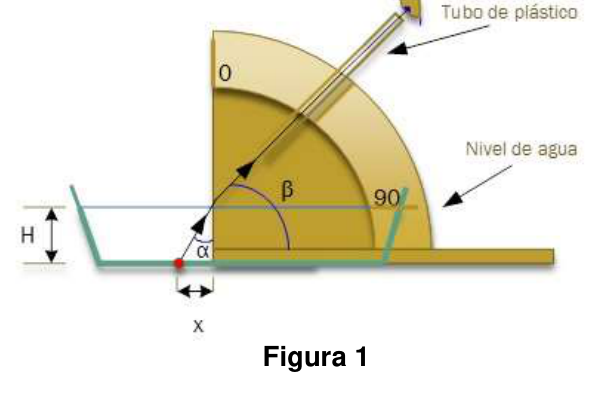
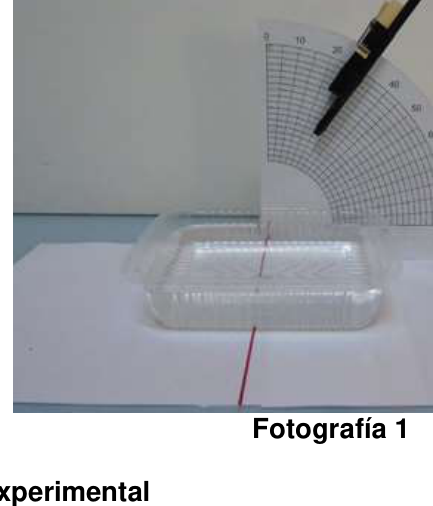
Topic: Geometric Optics Metodi: Experimental Data Analysis, Snell’s Law, Error Propagation Competenze: Physical Reasoning, Experimental Data Analysis Objects: Container Fonte: Testo (PDF) — p.5
PE3. Scuola secondaria N° 2 Clara J. Amstrong - ENET N° 1 Prof. Vicente Aguilera
- Colegio del Carmen e San José - Scuola secondaria N° 3 Gustavo G. Levene - Colegio Padre Ramón de la Quintana - Istituto Pía Didomenico - Istituzione superiore FASTA Catamarca - EPET N° 7 Alsina Alcobert - Scuola Preuniversitaria Fray Mamerto Esquiu. San Fernando della Valle di Catamarca.
Determinazione dell’indice di refraczione in acqua
Fondamento teorico L’ottica geometrica considera la diffusione della luce in un mezzo, indipendentemente da la sua natura ondulatrice. Suppone che un raggio di luce si diffonda in un mezzo l’isotropo percorre un percorso rettilineo, senza difrazione. Introduce il concetto di un raggio di luce, come una linea perpendicolare ai frunti d’onda che indica la direzione di diffusione. Attraversando una superficie piana che confina due mezzi di natura diversa (diverse) I dati relativi ai dati relativi ai dati relativi ai dati relativi ai dati relativi ai dati relativi ai dati relativi ai dati relativi ai dati relativi ai dati relativi ai dati relativi ai dati relativi ai dati relativi ai dati relativi ai dati relativi ai dati relativi ai dati relativi ai dati relativi ai dati relativi ai dati relativi ai dati relativi ai dati relativi ai dati relativi ai dati relativi ai dati relativi ai dati relativi ai dati relativi ai dati relativi ai dati relativi ai dati relativi ai dati relativi ai dati relativi ai dati relativi ai dati relativi ai dati relativi ai dati relativi ai dati relativi ai dati relativi ai dati relativi ai dati relativi ai dati relativi ai dati relativi ai dati relativi ai dati relativi ai dati relativi ai dati relativi ai dati relativi ai dati relativi ai dati relativi ai dati relativi ai dati relativi ai dati relativi ai dati relativi ai dati relativi ai dati relativi ai dati relativi ai dati relativi ai dati relativi ai dati relativi ai dati relativi ai dati relativi ai dati relativi ai dati relativi al periodo di riferimento sono stati rilevati. parte del raggio si trasmette nel secondo mezzo subendo un cambio di direzione (rifrazione) Analizzando sperimentalmente il percorso dei raggi incidente, riflessi e refratti, può essere dimostrato che: I raggi incidenti, riflessi e refratti, come pure i normali a superficie, si trovano Tutti sullo stesso piano. L’angolo di riflessione θt (che è l’angolo che forma il fascio riflesso con la norma a la superficie), è uguale all’angolo di incidenza, per tutte le lunghezze d’onda e per qualsiasi coppia di materiali. Il percorso del fascio trasmesso nel secondo mezzo, angolo refrattato, resta descritto dalla legge di Snell o di rifrazione.
Obiettivi
- osservare il percorso della luce al confine di due mezzi diversi caratteristiche.
- Verificare sperimentalmente le leggi della riflessione e della refraczione.
- Applicare queste leggi nel determinare l’indice di refraczione dell’acqua.
Materiali necessari Trasportatore con supporto: 1 Fragliatura con tubo di plastica: 1 Lacci rosso: 1 Regola e squadra: 1 Cose di gomma trasparente: 1 Pagine di dimensione A4: 2 Cassa di plastica trasparente: 1 Calcolatore: 1 Acqua: 1
Fondamento teorico dell’esperienza Nell’esperimento, la fonte di luce è la linea rossa (L) disegnata sulla foglia di carta. che deve attraversare prima il bacino con acqua (medio A) e poi l’aria (medio B) per essere visualizzata dall’osservatore attraverso il tubo di plastica. El il trasportatore costruito servirà a misurare l’angolo di refraczione β della luce durante il passaggio il tubo, mentre l’angolo α di incidenza è calcolato misurando i parametri Le geometrie H e X relative alla linea rossa (fonte di luce) come illustrato in Figura 1. Calcolato l’angolo di incidenza α e misurato l’angolo di refraczione β, si può applicare la formulazione matematica della legge di Snell: nAsen = nBsen β
OAF 2018 - 133 , essendo: = arctan ( 𝑥 H) e β l’angolo di rifrazione misurato direttamente sul trasporti in cartone appositamente costruiti.
Figura 1
Disposizione degli elementi La figura 1 mostra l’ordine degli elementi per realizzare il esperienza.
Foto 1
Procedura sperimentale
Procedure Attività
- Mettere il foglio di carta su cui è stato disegnato il una linea rossa sul tavolo e appoggiarla al tavolo di lavoro con nastri adesivi. A. Registrare i valori misurati di x, H e .
- Localizzare il trasportatore con supporto parallelo al margine maggiore della foglia con il punto 0 coincide con la linea rossa tracciata sulla foglio. B. Calcolare i valori di a partire da definizione di tangente con valori H e x per ogni angolo misurato.
- Metti il recipiente vuoto sopra la linea rossa di un foglio, vicino al trasportatore. C. Configurarne il tabella 2 con i valori ottenuti in lettere A) e B).
- Riempire il contenitore con acqua fino alla linea orizzontale di 90° del trasportatore con
- Sosteniamoli. D. Calcolare l’indice di refraczione dell’acqua, considerando naire=1
134 - OAF 2018 Tabella 1
Raggione
H
x
(°)
(°)
Sen
Sen
n
Raggio 1
Raggione 2
- Raggio 3 .
Raggio 4
Raggio 5
Tabella 2 Verificare il rispetto delle leggi di rifrazione.
Richieste Al termine dell’esperienza dovrà presentare un rapporto scritto in chiaro, che Consiste di: a) La presentazione del problema b) Valori ottenuti nelle misurazioni, nelle tabelle, nei grafici. c) Fonti di errore e analisi di come influenzano il risultato finale. d) Risultato sperimentale della richiesta. e) Conclusioni. f) Commenti che desiderano fare riguardo alle difficoltà di cui trattasi realizzazione dell’esperienza.
Topic: Geometric Optics Metodi: Experimental Data Analysis, Snell’s Law, Error Propagation Competenze: Physical Reasoning, Experimental Data Analysis Objects: Container Fonte: Testo (PDF) — p.5
PE3. Secondary School N° 2 Clara J. The Commission has also adopted a number of proposals for the establishment of a new European network of networks. Vicente Aguilera is a great man .
- College of Carmen and San José - Secondary School N° 3 Gustavo G. Levene - Father Ramón de la Quintana College - The Pius Didomenic Institute - The following is a list of the institutions of higher education in Spain: Pre-university Fray Mamerto Esquiu. San Fernando of the Catamarca Valley.
Determination of refractive index in water
Theoretical basis Geometric optics considers the propagation of light in a medium, regardless of the Its wave nature. Suppose a beam of light spreading in a medium homogeneous and isotropic paths along a straight path, without diffraction. Introduce the concept of a light beam, as a line perpendicular to the wavefronts indicating the direction The Commission has not yet adopted a proposal. When crossing a flat surface that borders two means of different nature (different The reflection is reflected (reflection) on the same medium and on another. Some of the beam is transmitted in the second medium undergoing a change of direction. (fraction) Experimentally analyzing the trajectory of incident, reflected and refracted rays, it can be shown that: Incident, reflected and refracted rays, as well as normal to the surface, lie All on the same plane. The angle of reflection θt (which is the angle that the beam reflects with normal to surface), is equal to the angle of incidence, for all wavelengths and for any pair of materials. The path of the beam transmitted in the second medium, angle refracted , remains described by Snell’s law or refraction.
Objectives
- Observe the path of light at the boundary of two different media characteristics.
- Experimentally verify the laws of reflection and refraction.
- Apply these laws to the determination of the refractive index of water.
Materials needed Carrier with support: 1 Pork with plastic tube: 1 Red pencil: 1 Rule and squad: 1 Transparent adhesive tape: 1 Sheets of size A4: 2 Transparent plastic container: 1 Calculator: 1 Water: 1
Theoretical basis of experience In the experiment, the light source is the red line (L) drawn on the sheet of paper. which will have to pass through the bucket with water (medium A) first and then air (medium B) for the purpose of being viewed by the observer through the plastic tube. El The conveyor built will be used to measure the angle β of refraction of light as it passes through the tube, while the angle α of incidence is calculated by measuring the parameters geometric H and X related to the red line (light source) as illustrated in The following table shows the following: Calculated angle of incidence α and measured angle of refraction β can be applied The mathematical formulation of Snell’s law: nAsen = nBsen β
The Commission shall adopt delegated acts in accordance with Article 21 of this Regulation. , being: = arctan ( 𝑥 H) and β the angle of refraction measured directly over the specially constructed cardboard conveyor.
Figure 1
The arrangements of the elements In Figure 1 you can see the arrangement of the elements to make the experience.
Photo 1
Experimental procedure
The procedure Activities
- Put the sheet of paper on which the drawing was made. Red line on the table and hold it to the table. The Commission has decided to adopt a new proposal. A. Record the measured values of x, H and .
- Locate the conveyor with parallel support to the Larger margin of the sheet with the point 0 matching the red line drawn over the the leaf. B. Calculate the values of from Definition of tangent with values H and x for each measured angle.
- Place the empty container over the red line From the leaf, next to the transporter. C. Constructing Table 2 with values obtained from items A) and B).
- Fill the container with water to the line. horizontal 90° of the conveyor with
- Hold it up. D. Calculate the refractive index of water, Whereas the net present value of the net present value is not less than EUR 1
The Commission shall adopt delegated acts in accordance with Article 21 of this Regulation. Table 1
Lightning .
H
x
(°)
(°)
without
without
n
Lightning 1
Lightning 2
Lightning 3
Lightning 4
Lightning 5
Table 2 Verify compliance with the Refraction Laws.
Requirements At the end of the experience, you must submit a written report in clear writing, which consists of: (a) The problem is raised (b) Value obtained in measurements, tables, graphs. (c) Sources of error and analysis of how they influence the final result. (d) Experimental result of the requested product. (e) Conclusions. (f) comments which you wish to make on the difficulties relating to the The Commission will take the necessary steps to ensure that the results of the evaluation are achieved.
Topic: Geometric Optics Metodi: Experimental Data Analysis, Snell’s Law, Error Propagation Competenze: Physical Reasoning, Experimental Data Analysis Objects: Container Fonte: Testo (PDF) — p.5
PE4. Colegio Juan Humberto Morán. Eduardo Castex, La Pampa.
Determinación de la Viscosidad de fluidos: Detergente
Introduccion
La Viscosidad es un parámetro de los fluidos que tiene importancia en sus diversas
aplicaciones industriales, particularmente en el desempeño de los lubricantes usados en
máquinas y mecanismos. La viscosidad de las sustancias puras varía de forma
importante con la temperatura y en menor grado con la presión. La facilidad con que
un líquido se escurre es una pauta de su viscosidad.
Se define la viscosidad como la propiedad que tienen los fluidos de ofrecer resistencia al
movimiento relativo de sus moléculas. También se suele definir la viscosidad como una
propiedad de los fluidos que causa fricción, esto da origen a la perdida de energía en el
flujo fluido.
5. Medir la altura H del agua.
E. Estimar un valor para el error cometido en
el cálculo del índice de refracción.
6. Colocar el broche con el tubo en un ángulo
de 70°, manteniendo el tubo radial al centro 0.
-
Desplazar el transportador hasta observar la línea roja por el tubo.
-
Medir la distancia x, entre la línea roja y el punto 0 del transportador y tabular el valor medido.
-
Repetir desde el punto 6 hasta el 8 por lo menos cinco veces disminuyendo el ángulo .
OAF 2018 - 135 La importancia de la fricción en las situaciones físicas depende del tipo de fluido y de la configuración física o patrón. Si la fricción es despreciable, se considera el flujo como ideal.
Unidades de medición En el Sistema Internacional se mide en Pascales segundo, pero la unidad más utilizada es el centipoise (cps), equivalente a 1 mPa seg. La viscosidad cinemática es el cociente entre viscosidad dinámica y densidad, y se mide en centistokes. También se utiliza en el CGS el Poise = dina . s /cm2 o el centipoise.
Ecuación de Stokes
El fluido alrededor de una esfera ha sido estudiado por Stokes. Su aplicación es de gran
utilidad en la resolución de problemas tales como los del sedimento de partículas de
polvo. Stokes encontró que la fuerza de fricción Fr (fuerza ejercida sobre la esfera por el
flujo de un fluido alrededor de ella) vale:
Fr = 6.π.R. μ. Vlim
Siendo: R= el radio de la esfera Vlim= la velocidad de caída constante de la esfera
μ =Viscosidad del fluido.
Para encontrar la velocidad final de una esfera que cae en un fluido en reposo, debe
tenerse en cuenta que: Fuerza de empuje hidrostático E+ fuerza de Fricción FR = Peso.
Para el análisis de la viscosidad de algún líquido se estudian los movimientos de la
‘esfera’ en dichos fluidos haciendo uso del balance de fuerzas de la segunda Ley de
Newton.
En este caso el cuerpo ha llegado a su velocidad terminal Vlim, no se encuentra
acelerado:
Fuerza de empuje hidrostático+ Fuerza de Fricción – Peso= 0
Debido a que hay una ‘fuerza viscosa’ que se opone al peso, tenemos que
Fuerza de empuje hidrostático+ Fuerza Fricción FR - Peso= 0
.Matemáticamente lo expresamos así: ΣF = E +Fviscosa + (−mg) = 0
Sean δesfera, δliquido las densidades de la esfera y del fluido tenemos lo siguiente:
(4/3) π.r3. δliquido .g - (4/3)π.r3. δesfera. g + 6π.r. μ. Vlim = 0
Despejando. μ. obtenemos
μ = 2.r2.g.( δesfera- δliquido) (formula principal)
(9. Vlim)
donde: μ= la viscosidad del líquido r= radio de la esfera, g= 981 cm/seg2 gravedad
δesfera = densidad de la esfera, δliquido = densidad del líquido Vlim = velocidad, que es
igual a: h/ t, t= tiempo de caída de la esfera en un marco de referencia h= longitud del
tubo en el mismo marco de referencia
136 - OAF 2018
Que se utilizará en la experiencia de laboratorio.
Unidades μ = dina.s/cm2=1 Poise
En la ecuación principal
μ = (2) (r2) (g) (ρesfera- ρliquido) / (9)(h/t)
(cm2) (cm/s2) (grs/cm3) / (cm/s)
μ = Dina . seg / (cm2)= Poise
Procedimiento experimental Elementos a utilizar
- Tubo de vidrio graduado, esferas de diferentes radios.
- Cronometro, calibre de medición del radio de las esferas.
- Fluidos: detergente.
- Balanza.
Procedimiento para determinar la viscosidad a la temperatura ambiente del laboratorio
-
Determinación de las densidades del fluido (analizar los errores) Tara (grs) Bruto (grs) Masa Neto (grs) Volumen (cm3) Densidad δ
(grs/cm3) -
Determinación de la densidad de las esferas (analizar los ecrrores)
Masa (grs) Radio (cm) Volumen (cm3) Densidad (grs/cm3) Esfera 1
Esfera 2
Esfera 3
Esfera 4
Esfera 5
Esfera 6
- Medición de los tiempos de caída de cada esfera en el fluido en los tubos (analizar los errores)
- Calculo de la velocidad límite de cada uno (analizar los errores)
Tiempo caída (seg)
Altura h (cm) Velocidad limite Vlim h/t (cm/seg) Esfera 1
Esfera 2
Esfera 3
Esfera 4
Esfera 5
Esfera 6
- Determinación desde la formula principal de la viscosidad μ. (analizar los errores) μ = 2.r2.g.( δesfera- δliquido) (formula principal) (9. Vlim)
Esfera 1 Esfera 2 Esfera 3 Esfera 4 Esfera 5 Esfera 6 Viscosidad μ (Dinas seg/cm2)
OAF 2018 - 137
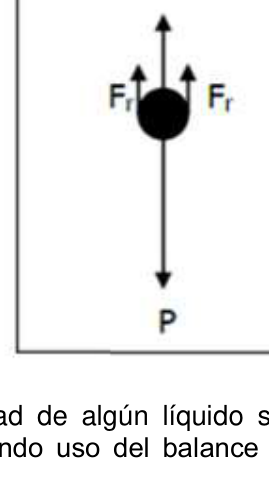
Topic: Fluid Mechanics Metodi: Experimental Data Analysis, Error Propagation, Free-Body Diagram Competenze: Physical Reasoning, Experimental Data Analysis, Mathematical Modeling Objects: Sphere, Tube Fonte: Testo (PDF) — p.5
PE4. - La scuola Juan Humberto Morán. Eduardo Castex, La Pampa.
Determinazione della viscosità dei fluidi: detergente
Introduzione
La viscosità è un parametro dei fluidi che è importante nelle loro diverse
Applicazioni industriali, in particolare nel rendimento dei lubrificanti utilizzati in
macchine e meccanismi. La viscosità delle sostanze pure varia in modo diverso.
La temperatura è importante e la pressione è minore. La facilità con cui
un liquido che si scorre è un modello della sua viscosità.
La viscosità è definita come la proprietà che i fluidi hanno di offrire resistenza al
il movimento relativo delle loro molecole. La viscosità è anche definita come una viscosità.
Proporzione dei fluidi che causa attrito, che provoca la perdita di energia nel
fluido.
5. Misurare l’altezza H dell’acqua.
E. Valutare un valore per l’errore commesso in
il calcolo dell’indice di refraczione.
6. Mettere la pinza con il tubo ad un angolo
di 70°, mantenendo il tubo radial al centro 0.
-
spostare il trasportatore fino a vedere la linea rossa per il tubo.
-
Misurare la distanza x, tra la linea rossa e il punto 0 del trasportatore e tabellare il valore
- Mezzo.
- Ripetere dal punto 6 all’8 per Minuto 5 volte diminuendo l’angolo .
OAF 2018 - 135 L’importanza della friczione nelle situazioni fisiche dipende dal tipo di fluido e dalla configurazione fisica o schema. Se la friczione è scarsa, il flusso è considerato come Ideale.
Unità di misurazione Nel Sistema Internazionale si misura in Pascale secondo, ma l’unità più utilizzata è il centipoise (cps), equivalente a 1 mPa seg. La viscosità cinematica è il coefficiente tra viscosità dinamica e densità, e viene misurata in centistokes. È anche usato nel CGS il Poise = dina . S/cm2 o il centipoise.
L’ equazione di Stokes Il fluido intorno a una sfera è stato studiato da Stokes. La sua applicazione è grande. La tecnologia è utilizzata per risolvere problemi come i sedimenti di particelle di polvere. Stokes ha scoperto che la forza di attrito Fr (forza esercitata sulla sfera da flusso di un fluido attorno a essa) vale: Fr = 6.π.R. μ. Vlim Essendo: R= il raggio della sfera Vlim= la velocità di caduta costante della sfera μ =Viscosità del fluido. Per trovare la velocità finale di una sfera che cade in un fluido in riposo, bisogna Non è necessario che il sistema di controllo sia stato utilizzato per la verifica della presenza di una fonte di controllo.
Per l’analisi della viscosità di un liquido si studiano i movimenti della sfera in tali fluidi utilizzando il bilancio delle forze della seconda legge di Newton. - Non è vero. In questo caso il corpo ha raggiunto la sua velocità terminale Vlim, non si trova Accelerato: Forza di spinta idrostatica+ Forza di frizione Peso= 0 Poiché c’è una forza viscosa che si oppone al peso, dobbiamo Forza di spinta idrostatica+ Forza di frizione FR - Peso= 0 .Mathematicamente lo esprimiamo così: ΣF = E + Fviscosa + (−mg) = 0 Se la sfera, se la densità della sfera e del fluido è liquida, abbiamo il seguente: (4/3) π.r3. L’acqua di cui al punto 4.3.3 è stata utilizzata per la produzione di acqua di cui al punto 4.3.3. - La sfera. g + 6π.r. μ. Vlim = 0
- Sgomberando. μ. - Ok, allora… μ = 2.r2.g.( δesfera- δliquido) (formula principale) (9. Vlim) dove: μ= viscosità del liquido r= raggio della sfera, g= 981 cm/seg2 gravità δesfera = densità della sfera, δliquido = densità del liquido Vlim = velocità, che è pari a: h/t, t= tempo di caduta della sfera in un quadro di riferimento h= lunghezza del tubo nello stesso quadro di riferimento
136 - OAF 2018 Che sarà usato nell’esperienza di laboratorio. Unità μ = dina.s/cm2=1 Poise Nella equazione principale (r2) (g) (ρesfera- ρliquido) / (9)(h/t) (cm2) (cm/s2) (grs/cm3) / (cm/s) μ = Dina . Seg / (cm2) = Poise
Procedura sperimentale Elementi da utilizzare
- Tubo di vetro graduato, sfere di diversi raggi.
- Cronometro, calibro di misurazione del raggio delle sfere.
- Fluido: detergente.
- Sbalza.
Procedura per determinare la viscosità a temperatura ambiente di laboratorio
-
Determinazione delle densità del fluido (analisi degli errori) Tara (grs) Brutto (grs) Massa Neto (grs) Volume (cm3) Densità δ
(grs/cm3) -
Determinazione della densità delle sfere (analisi dei crollori)
Massa (grs) Radio (cm) Volume (cm3) Densità (grs/cm3) Sfera 1
Sfera 2
Sfera 3
Sfera 4
Sfera 5
Sfera 6
- Misura dei tempi di caduta di ogni sfera nel fluido nei tubi (Analisi degli errori)
- Calcolo della velocità limite di ciascuna (analisi degli errori)
Tempo di caduta (seg)
Altezza h (cm) Vlim limite di velocità h/t (cm/sec) Sfera 1
Sfera 2
Sfera 3
Sfera 4
Sfera 5
Sfera 6
- Determinazione dalla formula principale della viscosità μ. (Analisi degli errori) μ = 2.r2.g.( δesfera- δliquido) (formula principale) (9. Vlim)
Sfera 1 Sfera 2 Sfera 3 Sfera 4 Sfera 5 Sfera 6 Viscosità μ (Dinas seg/cm2)
OAF 2018 - 137
Topic: Fluid Mechanics Metodi: Experimental Data Analysis, Error Propagation, Free-Body Diagram Competenze: Physical Reasoning, Experimental Data Analysis, Mathematical Modeling Objects: Sphere, Tube Fonte: Testo (PDF) — p.5
PE4. The school is Juan Humberto Morán. Eduardo Castex, the Pampa.
Determination of fluid viscosity: Detergent
The Commission has also adopted a proposal for a regulation on the
Viscosity is a fluid parameter that is important in its various
Industrial applications, particularly in the performance of lubricants used in
machines and mechanisms. The viscosity of pure substances varies according to the form
The Commission has already established a number of measures to be taken to ensure that the Community’s financial resources are used in the light of the current situation. The ease with which
a liquid is draining is a pattern of its viscosity.
Viscosity is defined as the property of fluids to offer resistance to
the relative motion of its molecules. Viscosity is also often defined as a
The properties of the fluids that cause friction, this causes the loss of energy in the
fluid flow.
5. Measure the water height H.
E. Estimate a value for the error in
calculation of the refractive index.
6. Place the brush with the tube at an angle
The radial tube shall be kept at the centre of 0.
-
Move the transporter until you see the Red line through the tube.
-
Measure the distance x, between the red line and the point 0 of the conveyor and tabulate the value measured.
-
Repeat from 6 to 8 for minus five times by decreasing the angle .
The Commission shall adopt delegated acts in accordance with Article 21 of the Financial Regulation. The importance of friction in physical situations depends on the type of fluid and the physical configuration or pattern. If the friction is negligible, the flow is considered as It’s perfect.
Measurement units In the International System it is measured in second Pascal, but the unit most used is the centipoise (cps), equivalent to 1 mPa seg. Kinematic viscosity is the coefficient between dynamic viscosity and density, and measured in centistokes. It is also used in the CGS the Poise = Dina . s/cm2 or the centipoise.
The Stokes equation The fluid around a sphere has been studied by Stokes. Its application is great Useful in solving problems such as the sediment of particulate matter The dust. Stokes found that the frictional force Fr (force exerted on the sphere by the flow of a fluid around it) is: Fr = 6.π.R. μ. Vlim Being: R= the radius of the Vlim sphere= the constant drop velocity of the sphere μ = Viscosity of the fluid. To find the final velocity of a sphere falling into a resting fluid, you must Note that: Hydrostatic thrust force E+ Friction force FR = Weight.
The viscosity analysis of a liquid is carried out by studying the movements of the sphere in such fluids using the force balance of the second law of Newton, you know. In this case the body has reached its Vlim terminal speed, not found. Accelerated: Hydrostatic thrust force + Friction force Weight= 0 Because there is a viscous force that opposes weight, we have to Hydrostatic thrust force + FR friction force - Weight = 0 .Mathematically we express it like this: ΣF = E + Fviscosa + (−mg) = 0 So if we’re spherical, if we’re solving the densities of the sphere and the fluid, we have the following: (4/3) π.r3. The following is the list of the following: The sphere. g + 6π.r. μ. Vlim = 0 I’m clearing up. μ. We get it . The following table shows the values of the values of the values of the values of the values of the values of the values of the values of the values of the values of the values of the values of the values of the values of the values of the values of the values of the values of the values of the values of the values of the values of the values of the values of the values of the values of the values of the values of the values of the values of the values of the values of the values of the values of the values of the values of the values of the values of the values of the values of the values of the values of the values of the values of the values of the values of the values of the values of the values of the values of the values of the values of the values of the values of the values of the values of the values of the values of the values of the values of the values of the values of the values of the values of the values of the values of the values of the values of the values of the values of the values of the values of the values of the values of the values of the values of the values of the values of the values of the values of the values of the values of the values of the values of the values of the values of the values of the values of the values of the values of the values of the values of the values of the values of the values of the values of the first paragraph. (9. Vlim) where: μ= the viscosity of the liquid r= the radius of the sphere, g= 981 cm/sec2 gravity δesphere = density of the sphere, δliquid = density of the liquid Vlim = speed, which is equal to a: h/t, t= fall time of the sphere in a reference frame h= length of tube in the same reference frame
The Commission shall adopt delegated acts in accordance with Article 21 of this Regulation. Which will be used in the lab experiment. The following table shows the total number of units: In the main equation The following is the list of the following: The following information shall be provided: μ is Dina . The following is the list of the countries of the European Union:
Experimental procedure Elements to be used
- Grade glass tube, spheres of different radii.
- Timestamp, caliber for measuring the radius of the spheres.
- Fluids: detergent.
- Weigh it.
Procedure for determining the viscosity at room temperature of the Laboratory .
-
Determination of fluid densities (analysis of errors) Tara (grs) Gross (grs) Net mass (grs) The following table shows the results of the calculation: Density δ
(grs/cm3) -
Determination of spherical density (analysis of the spheres)
Mass (grs) Radio (cm) The following table shows the results of the calculation: Density (grs/cm3) Sphere 1
Sphere 2
Sphere 3
Sphere 4
Sphere 5
Sphere 6
- Measurement of the fall times of each sphere in the fluid in the tubes (to analyze the errors)
- Calculation of the speed limit of each (analysis of errors)
Fall time (seg)
Height h (cm) Speed limit Vlim The following conditions shall apply: Sphere 1
Sphere 2
Sphere 3
Sphere 4
Sphere 5
Sphere 6
- Determination from the main viscosity formula μ. (to analyze the errors) The following table shows the values of the values of the values of the values of the values of the values of the values of the values of the values of the values of the values of the values of the values of the values of the values of the values of the values of the values of the values of the values of the values of the values of the values of the values of the values of the values of the values of the values of the values of the values of the values of the values of the values of the values of the values of the values of the values of the values of the values of the values of the values of the values of the values of the values of the values of the values of the values of the values of the values of the values of the values of the values of the values of the values of the values of the values of the values of the values of the values of the values of the values of the values of the values of the values of the values of the values of the values of the values of the values of the values of the values of the values of the values of the values of the values of the values of the values of the values of the values of the values of the values of the values of the values of the values of the values of the values of the values of the values of the values of the values of the values of the values of the values of the values of the values of the values of the values of the values of the first paragraphs. (9. Vlim)
Sphere 1 Sphere 2 Sphere 3 Sphere 4 Sphere 5 Sphere 6 Viscosity μ (Dinas) The following table shows the following:
The Commission shall adopt delegated acts in accordance with Article 21 of Regulation (EU) No 1303/2013.
Topic: Fluid Mechanics Metodi: Experimental Data Analysis, Error Propagation, Free-Body Diagram Competenze: Physical Reasoning, Experimental Data Analysis, Mathematical Modeling Objects: Sphere, Tube Fonte: Testo (PDF) — p.5
PE5. Colegio Nacional Dr. Arturo U. Illia - Instituto Albert Einstein Instituto Santísima Trinidad. Mar del Plata, Buenos Aires.
Determinación del módulo de corte de un alambre mediante un péndulo de torsión Introducción y fundamentos En este práctico usted utilizará un péndulo de torsión para hallar el módulo de corte de un alambre. El arreglo consiste en un alambre en cuyo extremo se fija un disco. El extremo superior del alambre se encuentra vinculado al soporte y el inferior al disco. Si se desplaza levemente el disco un ángulo θ respecto de su posición de reposo (plano radial) el esfuerzo de torsión transmitido al alambre da origen a una cupla restituyente (dentro del comportamiento elástico) y el sistema comienza a oscilar. El período T está dado por la siguiente expresión:
Donde:
M es la masa del disco
R su radio.
L, r y G son la longitud, el radio y el módulo de corte del alambre respectivamente.
Deberá medir 5 péndulos similares de longitudes diferentes y sus períodos
correspondientes.
Procedimiento Dispone de 5 péndulos ubicados en diferentes estaciones, cada uno de ellos de diferente longitud Li. Mida el tiempo ti de 10 oscilaciones de Ti de cada uno de ellos. No olvide registrar los errores de L y T. En otra estación cuenta con el material necesario para medir M, R y el espesor del alambre, anote estos valores con sus errores.
Se pide:
a) Complete la tabla con los valores de ti, T, L, sus errores, agregue además los
datos de las dos columnas en donde aparecen los valores de T2 y su error.
b) Construya un gráfico de T2 vs L en hoja milimetrada.
c) Halle la pendiente del gráfico y utilícela para hallar G con su error.
d) Calcule qué pendiente tendría el gráfico si los discos de madera fueran del doble
de radio.
e) Aunque usted no lo haya notado, el alambre está barnizado con una fina capa de
polímero. Qué error introduce esto en sus resultados si el módulo G del polímero
es mucho menor al del alambre. Justifique.
f) Eventualmente puede ocurrir que los extremos desde donde medir L no estén del
todo claros. Ya sea por la inexactitud de donde comienza el hilo, donde se
encuentra fijo, cómo está adherido al disco, etc. Diga cómo podría darse cuenta
con su gráfico si los valores de L están medidos sistemáticamente de manera
incorrecta, justifique.
4 2 2 r G L MR T
138 - OAF 2018
ti ti Ti Ti L L Ti2 Ti2 1
2
3
4
5
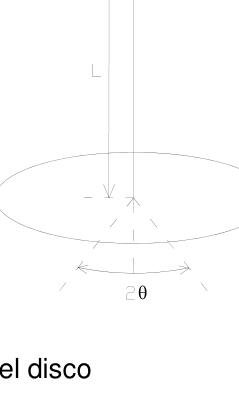
Topic: Elasticity & Materials, Oscillations & Waves Metodi: Experimental Data Analysis, Graph Linearization, Curve Fitting Competenze: Physical Reasoning, Experimental Data Analysis, Mathematical Modeling Objects: Disk, Wire, Pendulum Fonte: Testo (PDF) — p.5
PE5. Il Dr. Arturo U. Illia - Istituto Albert Einstein
- Il Santissimo Trinity Institute. Mar del Plata, Buenos Aires.
Determinazione del modulo di taglio di un filo mediante un pendolo di torsione Introduzione e fondamenti In questo modo si utilizza un pendolo torsivo per trovare il modulo di taglio di un
- Il filo. Il sistema consiste in un filo al quale viene fissato un disco. L’estremità il capo del filo è legato al supporto e il basso al disco. Si se spostare leggermente il disco ad un angolo θ rispetto alla sua posizione di riposo (piano radial) La forza di torsione trasmessa al filo dà origine a una coppia restituente (dentro Il sistema inizia a oscillare. Il periodo T è dato da l’espressione seguente:
Dove: M è la massa del disco R la sua radio. L, r e G sono la lunghezza, il raggio e il modulo di taglio del filo rispettivamente. Dovrà misurare 5 pendoli simili di lunghezze diverse e i loro periodi corrispondenti.
Procedura Dispone di 5 pendoli posizionati in diverse stazioni, ognuno di loro di una diversa natura. L’intervallo di tempo Misura il tempo di te di 10 oscillazioni di ti di ognuno di loro. Non dimenticare registrare gli errori di L e T. In un’altra stazione ha il materiale necessario per Misurare M, R e spessore del filo, annotare questi valori con i loro errori.
Si chiede: a) Completa la tabella con i valori di ti, T, L, i suoi errori, aggiungi anche i dati delle due colonne in cui i valori di T2 e il loro errore sono riportati. b) Costruire un grafico di T2 vs L in foglio millimetrico. c) Trova la pendenza del grafico e usala per trovare G con il suo errore. d) Calcolare quale pendice avrebbe il grafico se i dischi di legno fossero doppi
- La radio. e) Anche se non lo hai notato, il filo è ricoperto di una sottile strata di polymero. Che errore introduce questo nei suoi risultati se il modulo G del polimero E’ molto più piccolo del filo. giustifica. f) Eventualmente può verificarsi che le estremità da cui misurare L non siano di Tutto chiaro. Sia per l’inexactità di dove inizia il filo, dove si fa. trova fisso, come è attaccato al disco, ecc. Dici come potrebbe esserlo. con il suo grafico se i valori di L sono misurati sistematicamente in modo sbagliato, giustifica.
4 2 2 r G L MR T
138 - OAF 2018
ti ti Ti Ti L L Ti2 Ti2 1
2
3
4
5
Topic: Elasticity & Materials, Oscillations & Waves Metodi: Experimental Data Analysis, Graph Linearization, Curve Fitting Competenze: Physical Reasoning, Experimental Data Analysis, Mathematical Modeling Objects: Disk, Wire, Pendulum Fonte: Testo (PDF) — p.5
PE5. National College Dr. - Arthur U. The first is the study of the human brain. Holy Trinity Institute. The city of Mar del Plata, Buenos Aires.
Determination of the cutting module of a wire by a torsion pendulum Introduction and foundations In this practical you will use a torsion pendulum to find the cutting module of a Wire. The arrangement consists of a wire on the end of which a disc is fixed. The end . The top of the wire is attached to the support and the bottom to the disc. Si se The disc moves slightly at an angle θ from its resting position (radial plane) The torque applied to the wire gives rise to a torque-return coupling (within And the system starts to oscillate. The period T is given by the following expression:
Where: M is the mass of the disk. R your radio. L, r and G are the length, radius and cutting module of the wire respectively. You must measure 5 similar pendulums of different lengths and their periods the corresponding ones.
The procedure It has 5 pendulums located in different stations, each of them different length Li. Measure the time you’ve got of 10 Ti oscillations of each of them. Don ‘t forget . record the errors of L and T. At another station it has the necessary material for measure M, R and wire thickness, write these values down with their errors.
It asks: (a) Complete the table with the values of you, T, L, their errors, add the values of the values of the values of the values of T, T, L, and L. data from the two columns where the values of T2 and their error appear. (b) Build a T2 vs L chart in millimetre sheet. (c) Find the slope of the graph and use it to find G with its error. (d) Calculate what slope the graph would have if the wood discs were doubled
- I’m not on the radio. (e) Even if you haven’t noticed, the wire is coated with a thin layer of Polymer. What error does this put into your results if the polymer module G It’s much smaller than the wire. You justify it. (f) It may be possible that the ends from which L is measured are not of the All clear. Whether it’s the inaccuracy of where the thread starts, where it’s going to start. Finds fixed, how it’s attached to the disk, etc. Tell me how you might notice . with its graph if the values of L are measured systematically in a way wrong, justify.
4 2 2 r G L MR T
The Commission shall adopt implementing acts in accordance with Article 21 of the Financial Regulation.
ti ti Ti Ti L L Ti2 Ti2 1
2
3
4
5
Topic: Elasticity & Materials, Oscillations & Waves Metodi: Experimental Data Analysis, Graph Linearization, Curve Fitting Competenze: Physical Reasoning, Experimental Data Analysis, Mathematical Modeling Objects: Disk, Wire, Pendulum Fonte: Testo (PDF) — p.5
PE6. IPET N° 266 General Savio. Río Tercero, Córdoba.
Variación del coeficiente de Resistencia
Como sabemos el efecto del calor y del frío afecta a todos los materiales. Por ejemplo, en un metal el calor hace que se dilate mientras que el frío provoca el efecto contrario, es decir, que se contraiga. En las resistencias la variación de temperatura hace que ésta aumente o disminuya su valor. Esta variación de resistencia puede ser calculada mediante una fórmula. Todos los materiales, en mayor o menor grado y dependiendo de su naturaleza, de sus características o del medio en el que vayan a trabajar, ofrecen una resistencia al paso de la corriente Es por esto que cuando se diseña un circuito hay que tener en cuenta las condiciones anteriores de forma que se garantice su correcto funcionamiento. La propiedad específica de resistencia eléctrica de cada sustancia se denomina resistividad, que se define como la resistencia que ofrece un material de 1 metro de largo y una sección de 1 m2 al paso de la corriente. Su unidad en el Sistema Internacional es Ω x m. La resistividad de cualquier material no es constante, depende de la temperatura (esto se debe a que los iones del conductor vibran con diferente amplitud, lo cual hace más probable que un electrón en movimiento choque con un ion, esto impide el arrastre de los electrones por el conductor y, por tanto, también la corriente) y de otras circunstancias como las impurezas o los campos magnéticos a los que está sometido.
En esta experiencia mediremos la resistencia de distintos materiales a diferentes temperaturas para hallar la relación entre la temperatura y la resistencia. Mediante este experimento logramos determinar el valor del coeficiente α de resistencia de un material en función de la temperatura. A través del dispositivo experimental, mediremos la temperatura de un medio líquido no conductor a intervalos de tiempo y la resistencia del material. Repitiendo este procedimiento a diferentes temperaturas, luego se traduce la información en un gráfico para luego analizar, interpretar y calcular el coeficiente antes mencionado.
𝑹= 𝑹𝟎 . ( 𝟏+ 𝜶 . ∆𝒕 ) de donde 𝜶= 𝑹− 𝑹𝟎 𝑹𝟎.(𝒕−𝒕𝟎)
Objetivo: Encontrar de forma práctica la relación entre la resistencia y la temperatura de un material, para luego determinar el coeficiente de resistividad del material.
Materiales:
- 1 bobina de contactor de 24 V
- Agua destilada
- alambre Nicrom de 0,2 mm de diámetro
- 4 cables de conexión (cada uno con ficha banana en un extremo y pinza cocodrilo en el otro extremo)
OAF 2018 - 139
- 1 termómetro (multímetro con sensor de temperatura)
- 1 óhmetro (multímetro con terminales conectados a una resistencia)
- Recipiente plástico.
Actividades Armado del dispositivo: a) Para armar el dispositivo de la figura colocar la resistencia (una bobina de cobre de accionamiento de un contactor conectada al multímetro) en un medio líquido no conductor (agua destilada previamente calentada a 70 °C) que se halla dentro de un recipiente plástico. b) Colocar también un multímetro con sensor de temperatura en el mismo recipiente.
Desarrollo de la experiencia: a) Tomar la lectura de la temperatura y la resistencia para 10 valores diferentes de temperatura. b) Repetir el procedimiento tres veces. c) Construir una tabla de valores (temperatura en °K y resistencia en Ω) d) Graficar y ajustar una recta. e) Calcular la pendiente de dicha recta y determinar la ordenada al origen. f) Calcular el valor de α. g) Repetir la experiencia con alambre Nicrom de 0,2 mm de diámetro y 1 m de longitud. Redacte conclusiones del trabajo realizado.
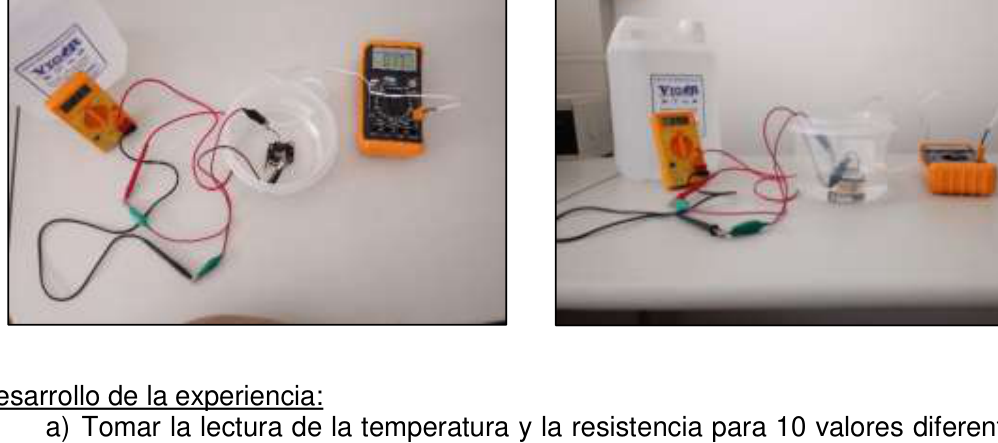
Topic: Circuits Metodi: Experimental Data Analysis, Graph Linearization, Curve Fitting Competenze: Physical Reasoning, Experimental Data Analysis, Mathematical Modeling Objects: Resistor, Coil Fonte: Testo (PDF) — p.5
PE6. IMPET N° 266 Generale Savio. Rio Tercero, Córdoba.
Variazione del coefficiente di resistenza
Come sappiamo, l’effetto del caldo e del freddo colpisce tutti i materiali. Per esempio, in Un metallo il calore lo fa dilatare mentre il freddo provoca l’effetto opposto, è dire che si contrae. Le resistenze sono le seguenti:
- Il valore. Questa variazione della resistenza può essere calcolata con una formula. Tutti i materiali, più o meno, a seconda della loro natura, dei loro Le caratteristiche o l’ambiente in cui lavorano offrono resistenza al passaggio di La corrente Per questo, quando si progetta un circuito, si devono tenere conto delle condizioni. Le misure previste in materia di sicurezza e di sicurezza sono state adottate in modo da garantire il corretto funzionamento delle misure. La proprietà specifica di resistenza elettrica di ciascuna sostanza è denominata resistenza, che è definita come la resistenza offerta da un materiale lungo 1 metro e un’area di 1 m2 al passo del corrente. La sua unità nel Sistema Internazionale è Ω x m. La resistenza di qualsiasi materiale non è costante, dipende dalla temperatura (si Questo è dovuto al fatto che gli ioni del conduttore vibranti con diverse amplitudini, che fa più. probabile che un elettrone in movimento colpisca un ione, impedendo così la trascinata dei L’elettrononeroneroneroneroneroneroneroneroneroneroneroneroneroneroneroneroneroneroneroneroneroneronenononeroneronenoneroneneroneneroneneroneneroneneroneneronenenoneroneneroneneneroneneneronenenererenererenerenerenerenerenerenerenerenerenenerenenenerenenerenerenenenenenerenenenerenenenenenenenerenenenenenenenenenenenerenenenenenenenerenenenenenenenenenenenenenenenenenenenenenenenenenenenenenenenenenenenenenenenenenenenenenenenenenenenenenenenenenenenenenenenenenenenenenenenenenenenenenenenenenenenenenenenenene come le impurità o i campi magnetici a cui è sottoposto.
In questa esperienza misureremo la resistenza di diversi materiali a diversi tipi di temperature per determinare il rapporto tra temperatura e resistenza. Con questo esperimento siamo riusciti a determinare il valore del coefficiente di resistenza α di un materiale a temperatura. Attraverso il dispositivo sperimentale, La temperatura di un mezzo liquido non conduttore è misurata a intervalli di tempo e la temperatura di un mezzo liquido non conduttore è misurata a intervalli di tempo. resistenza del materiale. Ripetendo questa procedura a temperature diverse, poi La trasformazione delle informazioni in un grafico è poi analizzata, interpretata e calcolata. il coefficiente di cui sopra.
𝑹= 𝑹𝟎 . ( 𝟏+ 𝜶 . ∆t) dove α= 𝑹− 𝑹𝟎 𝑹𝟎.(𝒕−𝒕𝟎)
Obiettivo: trovare in modo pratico il rapporto tra resistenza e temperatura di un materiale, per determinare il coefficiente di resistività del materiale.
Materiali:
- 1 coil di contatto di 24 V
- Distillata .
- filo Nicrom di 0,2 mm di diametro
- 4 cavi di connessione (ogni una con fiocco di banana in un’estremità e pinza crocodrillo all’altra estremità)
OAF 2018 - 139
- 1 termometro (multimetro con sensore di temperatura)
- 1 o’metro (multimetro con terminali collegati a una resistenza)
- Un recipiente di plastica.
Attività Dispositivo equipaggiato: a) Per montare il dispositivo della figura posizionare la resistenza (una bobina di rame di funzionamento di un contattore collegato al multimetro) in un mezzo liquido non conduttore (acqua distillata pre-calda a 70 °C) che si trova all’interno di un contenitore in plastica. b) Mettere anche un multimetro con sensore di temperatura in esso contenitore.
Sviluppo dell’esperienza: a) Prendere la lettura della temperatura e della resistenza per 10 valori diversi da temperatura. b) Ripetere la procedura tre volte. c) Costruire una tabella di valori (temperatura in °K e resistenza in Ω) d) Grafici e regolazioni di una retta. e) Calcolare la pendice di tale linea e determinare la pendice di origine. f) Calcolare il valore di α. g) Ripetere l’esperienza con il filo Nicrom di 0,2 mm di diametro e 1 m di diametro. lunghezza. Scrivi conclusioni del lavoro svolto.
Topic: Circuits Metodi: Experimental Data Analysis, Graph Linearization, Curve Fitting Competenze: Physical Reasoning, Experimental Data Analysis, Mathematical Modeling Objects: Resistor, Coil Fonte: Testo (PDF) — p.5
PE6. The following information is provided by the Commission: The third river, Cordoba.
Change in the resistance coefficient
As we know the effect of heat and cold affects all materials. For example, in heat causes a metal to dilate while cold causes the opposite effect, is I mean, it shrinks. In resistors, temperature variation causes the resistance to increase or decrease. The courage. This variation in resistance can be calculated using a formula. All materials, to a greater or lesser extent and depending on their nature, their characteristics or the environment in which they are going to work, offer resistance to the passage of The current . That is why when designing a circuit you have to take into account the conditions. the previous ones in order to ensure their proper functioning. The specific electrical resistance property of each substance is called Resistivity, defined as the resistance of a 1 meter long material And a 1 m2 section at the current. Its unit in the International System is Ω x m. The resistivity of any material is not constant, it depends on temperature (this is the It’s because the conductor ions vibrate at different amplitudes, which makes more. It’s likely that an electron in motion will collide with an ion, which prevents the traction of the electrons. electrons by the conductor and therefore also by the current) and other circumstances Like the impurities or the magnetic fields that you’re subjected to.
In this experiment we will measure the resistance of different materials to different materials. temperature to find the relationship between temperature and resistance. This experiment has allowed us to determine the value of the coefficient of resistance α. of a material based on temperature. Through the experimental device, We will measure the temperature of a non-conductive liquid medium at time intervals and the temperature of the liquid medium will be measured at the temperature of the liquid medium. the material’s resistance. Repeating this procedure at different temperatures, then The information is translated into a graph and then analyzed, interpreted and calculated. the aforementioned coefficient.
𝑹= 𝑹𝟎 . ( 𝟏+ 𝜶 . ∆t) where α= 𝑹− 𝑹𝟎 𝑹𝟎.(𝒕−𝒕𝟎)
Objective: To find the relationship between resistance and temperature in a practical way. a material, then to determine the coefficient of resistivity of the material.
Materials:
- 1 24 V contact coil
- Distilled water .
- Nicrom wire of 0,2 mm diameter
- 4 connecting cables (each with banana chip on one end and a pinch crocodile at the other end)
The Commission shall adopt implementing acts in accordance with Article 21 of the Financial Regulation.
- 1 thermometer (multimeter with temperature sensor)
- 1 ohm (multimeter with terminals connected to a resistor)
- It’s a plastic container.
Activities Armed device: (a) To assemble the device in the figure, place the resistance (a copper coil) The operation of a contactor connected to the multimeter) in a liquid medium non-conducting (previously distilled water heated to 70 °C) contained within of a plastic container. (b) Also install a temperature sensor multimeter on the same. container.
Development of experience: (a) Take the temperature and resistance reading for 10 different values of The temperature. (b) Repeat the procedure three times. (c) Construct a table of values (temperature in °K and resistance in Ω) (d) Draw and adjust a straight line. (e) Calculate the slope of the line and determine the slope of the origin. (f) Calculate the value of α. (g) Repeat the experiment with 0.2 mm diameter and 1 m diameter Nicrom wire. length. Write down conclusions from the work done.
Topic: Circuits Metodi: Experimental Data Analysis, Graph Linearization, Curve Fitting Competenze: Physical Reasoning, Experimental Data Analysis, Mathematical Modeling Objects: Resistor, Coil Fonte: Testo (PDF) — p.5
PE7. EES N° 75 Julio Cortázar1 - UEGP N° 16 José Manuel Estrada1 - EES N° 1492. 1Resistencia - 2Puerto Vilelas, Chaco.
Ley de Hooke. Determinación de la Constante de restitución de un resorte
Introducción Un resorte tiene la característica de ser elástico, es decir de variar su longitud (aumenta si es estirado y disminuye si es comprimido) y luego recuperar su longitud inicial. Dentro de ciertos márgenes, estas variaciones de longitud son proporcionales a las fuerzas aplicadas. Esta afirmación constituye la ley de Hooke que se expresa matemáticamente como 𝐹𝑟= 𝑘. 𝑥, siendo 𝐹𝑟 la magnitud de la fuerza que se debe aplicar para producir una variación de su longitud dada por 𝑥 y 𝑘 una constante que indica la rigidez del resorte.
Supongamos un experimento donde suspendemos una masa 𝑚 en un resorte de constante 𝑘, debido a lo cual éste experimenta un alargamiento 𝑥. La expresión del equilibrio de las fuerzas elástica del resorte y gravitatoria del peso suspendido será:
140 - OAF 2018 𝑚. 𝑔= 𝑘. 𝑥
Donde 𝑔 es la aceleración de la gravedad en el lugar donde está instalado.
Objetivo Determinar la constante de restitución de un resorte.
Materiales
- Resorte.
- Cinta métrica o regla.
- Masas de diferente valor.
- Balanza.
Procedimiento
a) Realice el montaje del equipo experimental.
b) Mida el valor de una de las masas con la balanza.
c) Cuelgue dicha masa del resorte y mida la longitud 𝑥 de estiramiento del resorte.
d) Repita el mismo procedimiento para las demás masas.
Consignas a) Construya una tabla donde consigne los valores medidos para la masa, la longitud de estiramiento y la fuerza del peso suspendido. b) Calcule la constante de restitución 𝑘 para cada una de las mediciones. c) Represente gráficamente La fuerza del Peso suspendido en función de la longitud de estiramiento 𝑥. d) Determine el valor de 𝑘 con su correspondiente incertidumbre. e) Presente todo lo pedido en los puntos anteriores de forma escrita.
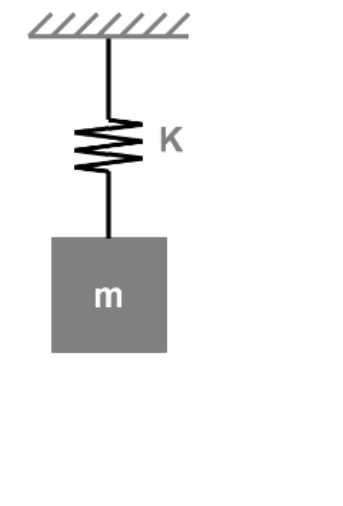
Topic: Elasticity & Materials Metodi: Experimental Data Analysis, Hooke’s Law, Graph Linearization Competenze: Physical Reasoning, Experimental Data Analysis Objects: Spring Fonte: Testo (PDF) — p.5
PE7. CES N° 75 Giulio Cortázar1 - UEGP N° 16 José Manuel Estrada1 - CES N° 1492. 1Resistenza - 2Puerto Vilelas, Chaco.
Legge di Hooke. Determinazione della costante di restituzione di una resorsa
Introduzione Una primavera ha la caratteristica di essere elastica, cioè di variare la sua lunghezza (aumenta se è esteso e diminuisce se compresso) e poi riprendersi la sua lunghezza iniziale. - All’interno . In alcuni margini, queste variazioni di lunghezza sono proporzionali alle forze. applicate. Questa affermazione costituisce la legge di Hooke che si esprime matematicamente. come Fr=k. X, essendo Fr la forza che deve essere applicata per produrre una variazione della sua lunghezza data da x e k una costante che indica la rigidità della primavera.
Supponiamo un esperimento in cui sospendiamo una massa m in una sorgente di Questa è la costante k, e questo è il motivo per cui questa prova un allungamento x. L’espressione di equilibrio delle forze elastica di resorgenza e gravità del peso sospeso sarà:
140 - OAF 2018 𝑚. 𝑔= 𝑘. 𝑥
Dove g è l’accelerazione della gravità al punto dove è installato.
Obiettivo Determinare la costante di restituzione di una primavera.
Materiali
- Resorte.
- Cintura metrica o regola.
- Masse di diverso valore.
- Sbalza.
Procedura a) Realizzare l’assemblaggio dell’equipaggiamento sperimentale. b) Misura il valore di una delle masse con la bilancia. c) Colpisce tale massa della molla e misura la lunghezza x di estensione della molla. (d) Ripetere la stessa procedura per le altre masse.
Consigne a) Costruire una tabella che contiene i valori misurati per massa, lunghezza di estensione e forza del peso sospeso. b) Calcolare la costante di restituzione k per ciascuna misurazione. (c) Rappresenta graficamente la forza del peso sospeso in funzione della lunghezza di estensione x. d) Determina il valore di k con la relativa incertezza. e) Presentare tutte le richieste in precedenza in forma scritta.
Topic: Elasticity & Materials Metodi: Experimental Data Analysis, Hooke’s Law, Graph Linearization Competenze: Physical Reasoning, Experimental Data Analysis Objects: Spring Fonte: Testo (PDF) — p.5
PE7. The Commission has also adopted a number of proposals for the establishment of a European Community-wide network of networks for the exchange of information on the European Union’s external borders. 1Resistance - 2Puerto Vilelas, Chaco.
Hooke’s law. Determination of the return constant of a spring
The first is the introduction. A spring has the characteristic of being elastic, i.e. varying its length (increases If the length of the test is stretched and decreases if compressed) and then recover its initial length. In there . At certain margins, these variations in length are proportional to the forces. the application. This statement constitutes Hooke’s law which is expressed mathematically. as Fr=k. x, where Fr is the magnitude of the force to be applied to produce a variation in its length given by x and k a constant indicating the spring rigidity.
Let’s say we have an experiment where we suspend a mass m in a spring of k constant, which is why this one experiences an x-length. The expression of the The balance of the spring elastic forces and the gravitational force of the suspended weight shall be:
The Commission shall adopt delegated acts in accordance with Article 21 of this Regulation. 𝑚. 𝑔= 𝑘. 𝑥
Where g is the acceleration of gravity at the point where It’s installed.
The objective Determine the return constant of a spring.
Materials
- Spring. - What is it?
- Metric tape or rule.
- Masses of different value.
- Weigh it.
The procedure (a) Install the experimental equipment. (b) Measure the value of one of the masses with the scale. (c) Hang this mass from the spring and measure the length x of the spring stretch. (d) Repeat the same procedure for the other masses.
Consigns (a) Construct a table where you record the measured values for the mass, the length of stretch and weight strength suspended. (b) Calculate the restitution constant k for each measurement. (c) Graphically represents the weight force suspended in relation to the length of stretch x. (d) Determine the value of k with its corresponding uncertainty. (e) submit all the request in the above points in writing.
Topic: Elasticity & Materials Metodi: Experimental Data Analysis, Hooke’s Law, Graph Linearization Competenze: Physical Reasoning, Experimental Data Analysis Objects: Spring Fonte: Testo (PDF) — p.5
PE8. ET N° 27 Hipólito Yrigoyen. Ciudad Autónoma de Buenos Aires.
… A contar gotas!!!
Determinación de la tensión superficial del etanol por el método del cuentagotas
Elementos utilizados Pipeta graduada Agua destilada Etanol (Alcohol etílico) Vasos de precipitados - Probetas
Introducción La superficie de los líquidos tiene un comportamiento similar al de una membrana en estado de tensión. Esto hace que si se quiere atravesar la superficie de un líquido deben vencerse las fuerzas contenidas en el plano de dicha superficie, definidas como tensión superficial (g) y que se distribuyen a lo largo del perímetro ó longitud de corte realizado a esa superficie. Es decir que: g = F/L siendo F: resultante de las fuerzas g L: Longitud de corte de la superficie del líquido
Si se hace escurrir un líquido a través de un conducto (pipeta), dejándolo gotear, la gota que se forma va aumentando su tamaño hasta que su peso supera a las fuerzas de tensión superficial, distribuidas en el contorno del conducto; así la gota cae.
OAF 2018 - 141
El método es comparativo:
1- Se hace escurrir a través del conducto
(pipeta) un volumen “V” conocido de
agua destilada y se cuentan el número
de gotas que caen “n”.
2- Se hace escurrir por el mismo
conducto igual volumen “V” del líquido
cuya tensión superficial se quiere
determinar, contando el número de
gotas que caen “n’ ”
Para obtener la expresión de cálculo, se plantea:
Para una gota de agua destilada: P = F siendo v el volumen de una sola gota de agua destilada, Pe :peso específico; δ densidad Peagua.v= γagua.L δagua.g.v = γagua.L
Para “n” gotas de agua destilada, multiplicamos la expresión anterior por “n” en ambos miembros δagua.g.v.n = γagua.L.n
Como v.n = V (es el volumen total escurrido): δagua.g.V= γagua.L.n
De la misma forma para el etanol:
δetanol.g.V= γetanol.L.n’
Dividiendo miembro a miembro a las 2 últimas ecuaciones y simplificando::
δagua δetanol = γagua. n γetanol. n′ Despejando:
γ etanol = δetanol γagua. n δagua. n′
Datos δagua = (1,00 ± 0,01) g/cm3 δetanol = (0,80 ± 0,01) g/cm3 γagua= (73 ± 2) dinas/cm
Desarrollo Utilizando siempre la misma pipeta: a) Hacer escurrir 5 volúmenes diferentes de agua destilada contando el número de gotas “n” (repetir la medición 3 veces para cada volumen y estimar el error del número de gotas “n”, observando que los valores de “n” no sean muy diferentes entre sí). Estos volúmenes serán: 1,2 ml; 1ml; 0,8 ml; 0,6 ml y 0,4 ml b) Enjuagar la pipeta con 3 ml de etanol y descartar esa muestra (no volverla al frasco de alcohol) c) Hacer escurrir los mismos 5 volúmenes de etanol, contando las gotas n’. (repetir la medición 3 veces para cada volumen y estimar el error de n’). d) Confeccionar las siguientes tablas para cada uno de los volúmenes:
142 - OAF 2018 Agua destilada
n1 n2 n3 n±Dn V= 1,2 ml
V = 1,0 ml
V = 0,8 ml
V = 0,6 ml
V = 0,4 ml
Etanol
n’1 n’2 n’3 n’±Dn’ V= 1,2 ml
V = 1,0 ml
V = 0,8 ml
V = 0,6 ml
V = 0,4 ml
e) Confeccionar la tabla siguiente y construir el gráfico n= f(n’)
n±Dn n’±Dn’ V= 1,2 ml
V = 1,0 ml
V = 0,8 ml
V = 0,6 ml
V = 0,4 ml
f) Determinar la pendiente del gráfico n = f(n’) cn su error g) Determinar γ etanol con su error.
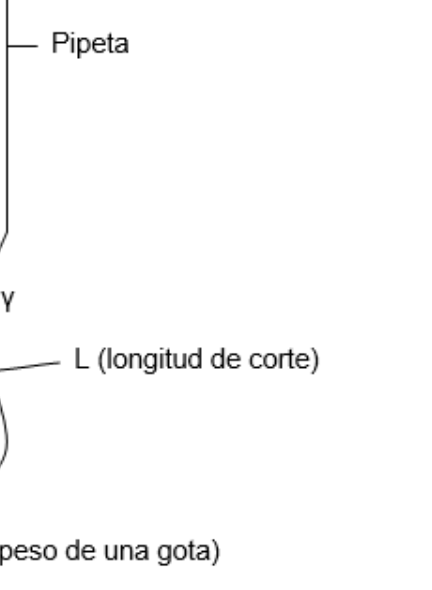
Topic: Fluid Mechanics Metodi: Experimental Data Analysis, Curve Fitting, Error Propagation Competenze: Physical Reasoning, Experimental Data Analysis Objects: Droplet Fonte: Testo (PDF) — p.5
PE8. E.T. N° 27 Hipólito Yrigoyen. Città autonoma di Buenos Aires.
… A contare le gocce!!!
Determinazione della tensione superficiale dell’etanolo con il metodo del contatore di gocce
Elementi utilizzati Pipetta graduata Acqua distillata Alcol etilico Vaso di precipitazione - Provette
Introduzione La superficie dei liquidi ha un comportamento simile a quello di una membrana in stato di tensione. Questo significa che se si vuole attraversare la superficie di un liquido devono superare le forze contenute nel piano di tale superficie, definite come tensione (g) e che si distribuiscono lungo il perimetro o la lunghezza di taglio effettuato a quella superficie. In altre parole: g = F/L essendo F: risultante delle forze g L: Lunghezza di taglio della superficie del liquido
Se un liquido viene scorruto attraverso un tubo (pipeta), lasciandolo gocciolare, la goccia che si forma aumenta di dimensioni fino a quando il peso supera le forze di la tensione superficiale, distribuita sul contorno del condotto; così la goccia cade.
OAF 2018 - 141 Il metodo è comparativo: 1- Si fa scorrere attraverso il tubo (pietta) un volume “V” conosciuto di Distillate e si conta il numero di gocce che cadono “n”. 2- Si fa scorrere per il stesso condotto uguale volume “V” del liquido la cui tensione superficiale è desiderata determinare, contando il numero di gocce che cadono “n’”
Per ottenere l’espressione di calcolo, si
- Si tratta di:
Per una goccia di acqua distillata: P = F v è il volume di una singola goccia di acqua Distillato, Pe: peso specifico; δ densità Peagua.v= γagua.L δagua.g.v = γagua.L
Per “n” gocce di acqua distillata, moltiplicare l’espressione precedente per “n” in entrambi. membri δagua.g.v.n = γagua.L.n
Come v.n = V (è il volume totale scaricato): δagua.g.V= γagua.L.n
Lo stesso per l’etanolo: Detanolo.g.V= γetanolo.L.n’
Dividendo membro per membro alle ultime due equazioni e semplificando:
acqua δetanolo = acido di gomma. n Getanolo. n′
- Sgomberando:
g etanolo = Detanolo di acido. n
- D’acqua. n′
Datos δacqua = (1,00 ± 0,01) g/cm3 Detanolo = (0,80 ± 0,01) g/cm3 (73 ± 2) dinas/cm
Sviluppo Usando sempre la stessa pipetta: a) Sorgere 5 volumi diversi di acqua distillata contando il numero di gocce “n” (ripetere la misura 3 volte per ogni volume e stimare l’errore di numero di gocce “n”, osservando che i valori di “n” non sono molto diversi tra loro). Questi volumi saranno: 1,2 ml; 1 ml; 0,8 ml; 0,6 ml e 0,4 ml b) Rinaugura la pipetta con 3 ml di etanolo e scarica quel campione (non riporre il campione al bottiglia di alcol) (c) Scalziare gli stessi 5 volumi di etanolo, contando le gocce n. (ripetendo) la misurazione 3 volte per ogni volume e la stima dell’errore di n’). d) Confezionare le tabelle seguenti per ciascun volume:
142 - OAF 2018 Acqua distillata
n1 n2 n3 N±Dn V= 1,2 ml
V = 1,0 ml
V = 0,8 ml
V = 0,6 ml
V = 0,4 ml
Etanolo
n’1 n’2 n’3 n’±Dn’ V= 1,2 ml
V = 1,0 ml
V = 0,8 ml
V = 0,6 ml
V = 0,4 ml
e) Confezionare la tabella seguente e costruire il grafico n= f(n’)
N±Dn n’±Dn’ V= 1,2 ml
V = 1,0 ml
V = 0,8 ml
V = 0,6 ml
V = 0,4 ml
f) Determinare la pendenza del grafico n = f(n’) con il suo errore g) Determinare l’etanolo con il suo errore.
Topic: Fluid Mechanics Metodi: Experimental Data Analysis, Curve Fitting, Error Propagation Competenze: Physical Reasoning, Experimental Data Analysis Objects: Droplet Fonte: Testo (PDF) — p.5
PE8. The Commission has not yet decided whether the measures to be taken should be repealed. The Autonomous City of Buenos Aires.
… I’m counting the drops!
Determination of ethanol surface tension by the method of the droplet count
Elements used Graduated pipe . Distilled water Other, of a kind used for the manufacture of textile materials The following table shows the methodology used for the calculation of the net loss of the net loss of the net loss of the net loss of the net loss of net loss of net loss of net loss of net loss of net loss of net loss of net loss of net loss of net loss of net loss of net loss of net loss of net loss of net loss of net loss of net loss of net loss of net loss of net loss of net loss of net loss of net loss of net loss of net loss of net loss of net loss of net loss of net loss of net loss of net loss of net loss of net loss of net loss of net loss of net loss of net loss of net loss of net loss of net loss of net loss of net loss of net loss of net loss of net loss of net loss of net loss of net loss of net loss of net loss of net loss of net loss of net loss of net loss of net loss of net loss of net loss of net loss of net loss of net loss of net loss of net loss of net loss of net loss of net loss of net loss of net loss of net loss of net loss of net loss of net loss of net loss of net loss of net loss of net loss of net loss of net loss of net loss of net loss of net loss of net loss of net loss of net loss of net loss of net loss of net loss of net loss of net loss of net loss of net loss of net profit of net loss of net profit of net profit of net profit of net profit of net
The first is the introduction. The surface of the fluids behaves similarly to that of a membrane in the The stress state. This means that if you want to cross the surface of a liquid you must The force contained in the plane of that surface, defined as the voltage, is exceeded. surface (g) and distributed along the cutting perimeter or length to That surface. I mean: g = F/L being F: resulting from the forces g L: Cutting length of the liquid surface
If a liquid is drained through a pipe, leaving it to drip, the drop It grows in size until its weight exceeds the forces of surface tension, distributed along the outline of the duct; thus the drop falls.
The Commission shall adopt implementing acts in accordance with Article 21 of the Financial Regulation. The method is comparative: 1- It is drained through the duct (pipe) a volume “V” known from Distilled water and count the number of drops falling “n”. 2- It gets slid by the same the volume of the liquid is equal to the volume “V” of the liquid whose surface tension is desired determine, by counting the number of drops falling “n’”
For the expression of the calculation, see It asks:
For a drop of distilled water: P = F v being the volume of a single drop of water Distilled, Pe: specific weight; δ density The following is the list of the countries of the European Union: The following is the list of the categories of products:
For “n” drops of distilled water, we multiply the above expression by “n” on both. Members The following is the list of the countries of the European Union:
As v.n = V (is the total volume drained): The following is the list of the countries of the European Union:
In the same way for ethanol: The following table shows the results of the evaluation:
Dividing member by member into the last 2 equations and simplifying::
Water Detanol = water. n Gethenol. n′ Clearing:
G isotope Dethyl ethanol and its salts n I’m going to get some water. n′
Data from the report The following table shows the results of the calculation of the risk of the risk: The following table shows the results of the test: The following table shows the results of the calculation of the weighted average weight of the product:
Development Always using the same pipette: (a) Pour 5 different volumes of distilled water by counting the number of drops “n” (repeat measurement 3 times for each volume and estimate the error of the number of drops “n”, noting that the values of “n” are not very different each other). These volumes shall be: 1.2 ml; 1 ml; 0.8 ml; 0.6 ml and 0.4 ml (b) Rinse the pipette with 3 ml of ethanol and discard that sample (do not return it to the bottle of alcohol) (c) Squeeze the same 5 volumes of ethanol, counting the drops n. (repeat) The measurement shall be made 3 times for each volume and the error of n’ shall be estimated. (d) Make the following tables for each volume:
The Commission shall adopt delegated acts in accordance with Article 14 of this Regulation. Distilled water
n1 n2 n3 The following information is provided: V= 1,2 ml
V = 1,0 ml
V = 0,8 ml
V = 0,6 ml
V = 0,4 ml
It is not a solvent.
n’1 n’2 n’3 n’±Dn’ V= 1,2 ml
V = 1,0 ml
V = 0,8 ml
V = 0,6 ml
V = 0,4 ml
e) Construct the following table and construct the graph n= f(n’)
The following information is provided: n’±Dn’ V= 1,2 ml
V = 1,0 ml
V = 0,8 ml
V = 0,6 ml
V = 0,4 ml
(f) Determine the slope of the graph n = f(n’) by its error (g) Determine the ethanol with its error.
Topic: Fluid Mechanics Metodi: Experimental Data Analysis, Curve Fitting, Error Propagation Competenze: Physical Reasoning, Experimental Data Analysis Objects: Droplet Fonte: Testo (PDF) — p.5
PE10. Colegio N° 4-016 Ingeniero Antonio Marcelo Arboit. Junín, Mendoza.
Determinación del módulo de rigidez del cobre
Materiales Cable de cobre de radio conocido de longitud de 70 cm Calibre Cinta métrica Cronómetro Palito de madera tipo brochett Broche del tipo aprieta papel con ojal. Cinta adhesiva. Tijera Arandela de aproximadamente 10 g
Experimento El módulo de rigidez (también llamado de corte, de cizalladura o de elasticidad transversal) es una constante de cada material elástico que caracteriza la deformación que sufre el material cuando se somete a un esfuerzo de corte, es decir aplicado en dirección tangente a la superficie sobre la que actúa. El principal objetivo de esta prueba es determinar experimentalmente el módulo de cizalladura del cobre a partir de medidas
OAF 2018 - 143 del periodo de oscilación de un péndulo de torsión, formado por un hilo cilíndrico de cobre del que se suspende una arandela metálica. Se demuestra que, para pequeñas deformaciones torsionales del hilo, el periodo de oscilación de un péndulo de torsión, T, viene dado por
T2=(8IL)/(GR4)
donde L es la longitud del hilo, R el radio de su sección, G el módulo de cizalladura del material del hilo e I el momento de inercia de la arandela respecto a un eje diametral.
Supuesto que el grosor de la arandela es pequeño comparado con sus radios, I viene dado por
I=0,25M(r21 + r22)
donde M es la masa de la arandela, y r1 y r2 son sus radios interior y exterior.
Fije sobre la mesa el metro de papel, con cinta adhesiva. Fije también sobre la mesa el palito de madera, de forma que sobresalga unos centímetros del borde. Con un pequeño nudo, ate la arandela en un extremo del hilo de cobre. El nudo debe quedar lo más cerca posible del borde de la arandela. Asegúrese de que, al suspender la arandela del hilo, ésta queda en un plano vertical. Sujete el hilo con la pinza y cuelgue el péndulo, pasando el palito por los orificios de la pinza. Ajuste la longitud de hilo, L, al valor máximo que permita la altura de la mesa, sin que la arandela toque el suelo. Extienda el péndulo sobre el metro y mida la longitud del hilo, L.
Consignas a) Mida con el calibre los diámetros interior y exterior de la arandela, utilice la balanza para determinar masa de la arandela. Calcule su momento de inercia. b) Haga una estimación de la incertidumbre del momento de inercia. c) Mida el periodo T de las oscilaciones torsionales del péndulo. Repita el proceso para valores de L decrecientes, hasta unos 25 cm. Presente sus resultados en una tabla. d) Represente gráficamente en un papel milimetrado los puntos correspondientes a esta dependencia (se espera una dependencia lineal entre T2y L). e) Determine la pendiente, p, de la recta que mejor se ajusta a esos puntos. f) Deduzca el valor del módulo de cizalladura del cobre.
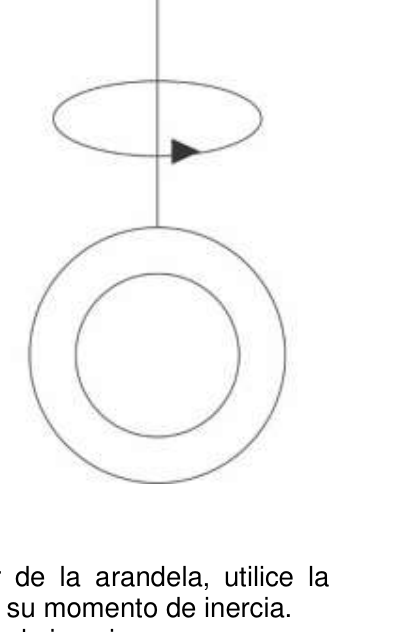
Topic: Elasticity & Materials, Oscillations & Waves Metodi: Experimental Data Analysis, Graph Linearization, Curve Fitting Competenze: Physical Reasoning, Experimental Data Analysis, Mathematical Modeling Objects: Wire, Pendulum Fonte: Testo (PDF) — p.5
PE10. Colegio N° 4-016 Ingegnere Antonio Marcelo Arboit. Junín, Mendoza.
Determinazione del modulo di rigidità del rame
Materiali Cable di rame radio conosciuto di lunghezza di 70 cm Calibro Cintura metrica Cronometro Pali di legno tipo brochett Una brocca che si stringe con la carta.
- Cintura adesiva. Scialdo Arandela di circa 10 g
Esperimento Il modulo di rigidità (anche chiamato taglio, taglio o elasticità transversale) è una costante di ogni materiale elastico che caratterizza la deformazione che il materiale subisce quando viene sottoposto a uno sforzo di taglio, cioè applicato in direzione tangente alla superficie su cui agisce. L’obiettivo principale di questa prova è La misurazione del modulo di taglio del rame è stata effettuata in base a misure.
OAF 2018 - 143 di un periodo di oscillazione di un pendolo di torsione, formato da un filo cilindrico di rame di cui si sospende una catena metallica. Per le piccole deformazioni torsionali del filo, il periodo di Oscillazione di un pendolo di torsione, T, viene data da
T2=(8IL)/(GR4)
dove L è la lunghezza del filo, R il raggio della sua sezione, G il modulo di taglio del filo. il materiale del filo e I il momento di inerzia della pinza rispetto ad un asse diametrale.
Suppongo che il grosso della pinza sia piccolo Rispetto ai suoi radii, I viene dato da
I=0,25M(r21 + r22)
dove M è la massa della catena, e r1 e r2 sono i suoi raggi. interno ed esterno.
Ho fissato sul tavolo il metro di carta, con la cinta adesiva. Ho anche fissato sul tavolo il bastone di legno, in modo che si estende a pochi centimetri dal bordo. Con un piccolo nodo, attacca la catena ad un’estremità del filo di copro. Il nodo deve restare il più vicino possibile al bordo. della catena. Assicurati che, quando si sospende la catena del filo, questo rimane in un piano verticale. Sosteni il filo con la Appiccica e appenda il pendolo, passando il palito attraverso i fori. della pinza. Adatta la lunghezza del filo, L, al massimo che Permettere l’altezza della tavola senza che la cravatta tocchi il tavolo
- No, non è così. Estende il pendolo sul metro e misura la lunghezza del filo, L.
Consigne a) Misura con il calibro i diametri interni ed esterni della pinza, utilizzando la Scala per determinare la massa della scatola. Calcola il suo momento di inerzia. b) Estimare l’incertezza del momento di inerzia. c) Misura il periodo T delle oscillazioni torsionali del pendolo. Ripeti il processo. per valori L in calo, fino a circa 25 cm. Presenta i risultati in una tavola. d) Rappresenta graficamente su una carta di millimetro i punti corrispondenti a Questa dipendenza (si prevede una dipendenza lineare tra T2 e L). e) Determina la pendice, p, della retta che meglio si adatta a tali punti. f) Detrazione del valore del modulo di taglio del rame.
Topic: Elasticity & Materials, Oscillations & Waves Metodi: Experimental Data Analysis, Graph Linearization, Curve Fitting Competenze: Physical Reasoning, Experimental Data Analysis, Mathematical Modeling Objects: Wire, Pendulum Fonte: Testo (PDF) — p.5
PE10. The first is the new school, which is now a private school. Junín, Mendoza, you know what?
Determination of the copper rigidity module
Materials Known radius copper cable length 70 cm Caliber Metric tape . The time-meter . Brochett wooden stick Brooch like a paper-clutch type. It’s a tape. Scaffolding Orange of approximately 10 g
Experiment . The rigidity module (also called cutting, shearing or elasticity module The transverse (transverse) is a constant of each elastic material that characterizes the deformation. The material is subjected to a cutting stress, i.e. applied in tangent direction to the surface on which it acts. The main objective of this test is to The experimental determination of the copper cutting module is based on measurements
The Commission shall adopt delegated acts in accordance with Article 21 of the Financial Regulation. The torsion pendulum, formed by a copper cylindrical wire, has a period of oscillation of The metal claw is suspended from the claw. It is shown that for small torsional deformations of the yarn, the period of oscillation of a torsion pendulum, T, is given by
T2=(8IL)/(GR4)
where L is the length of the thread, R the radius of its section, G the shear modulus of the thread. The material of the thread and I the moment of inertia of the crankcase with respect to a diameter axis.
I assume the thickness of the cork is small. Compared to its radii, I is given by
I=0,25M(r21 + r22)
where M is the mass of the claw, and r1 and r2 are its radii. inside and out.
I fixed the paper meter on the table, with tape. I also fixed the wooden stick on the table, so It’s a few inches out of the edge. With a Little knot, tie the claw at one end of the thread. copper. The knot should be kept as close to the edge as possible. from the cork. Make sure that, by hanging up the apron The thread is on a vertical plane. Hold the thread with the Glue and hang the pendulum, passing the stick through the holes. of the clamp. Adjust the length of the thread, L, to the maximum value that Allow the table height, without the screw touching the table. I’m going to the ground. Spread the pendulum over the meter and measure the length. The thread, L.
Consigns (a) Measure the internal and external diameters of the screw with the caliber, using the The weight of the screw shall be determined by the scale. Calculate its moment of inertia. (b) Estimate the uncertainty of the moment of inertia. (c) Measure the period T of the torsional oscillations of the pendulum. Repeat the process for decreasing L values, up to about 25 cm. Present your results in a board. (d) Graphically represent the points corresponding to This dependence (a linear dependence between T2 and L is expected). (e) Determine the slope, p, of the straight line that best fits those points. (f) Subtract the value of the copper cutting module.
Topic: Elasticity & Materials, Oscillations & Waves Metodi: Experimental Data Analysis, Graph Linearization, Curve Fitting Competenze: Physical Reasoning, Experimental Data Analysis, Mathematical Modeling Objects: Wire, Pendulum Fonte: Testo (PDF) — p.5
PE11. Instituto Santa Catalina Labouré. Clorinda, Formosa.
Péndulo Simple. Determinación de la aceleración de la gravedad
Introducción Se denomina péndulo simple o péndulo matemático a un punto material suspendido de un hilo inextensible y sin peso, que puede oscilar en torno a una posición de equilibrio. La distancia del punto pesado al punto de suspensión se denomina longitud del péndulo simple. Nótese que un péndulo simple no tiene existencia real, ya que los puntos materiales y los hilos sin masa son entes abstractos. En la práctica se considera un
144 - OAF 2018 péndulo simple un cuerpo de reducidas dimensiones suspendido de un hilo inextensible y de masa despreciable comparada con la del cuerpo. El péndulo matemático describe un movimiento armónico simple en torno a su posición de equilibrio, y su periodo de oscilación alrededor de dicha posición está dado por la ecuación siguiente: 𝑇= 2𝜋√𝐿 𝑔
donde 𝐿 representa la longitud medida desde el punto de suspensión hasta la masa puntual y 𝑔 es la aceleración de la gravedad en el lugar donde está instalado.
Objetivo Determinar la aceleración de la gravedad a partir del periodo de un péndulo simple.
Materiales
- Péndulo simple.
- Cinta métrica o regla.
- Cronometro.
Procedimiento
a) Separar el péndulo de la posición vertical un ángulo pequeño (menor de 10º) y
dejarlo oscilar libremente, teniendo cuidado de verificar que la oscilación se
produce en un plano vertical.
b) Se pone en marcha el cronómetro y se cuentan 𝑁 oscilaciones completas a partir
de la máxima separación del equilibrio (se aconseja tomar a partir de 𝑁= 20,
bien entendido que una oscilación completa dura el tiempo de ida y vuelta hasta
la posición donde se tomó el origen de tiempos). El periodo del péndulo es igual
al tiempo medido dividido por N.
c) Se repite la medida anterior con distintas longitudes para el péndulo.
Consignas a) Mida la longitud del péndulo. b) Preparar una tabla de tres columnas, en donde se deben anotar el número de oscilaciones, el tiempo medido, el periodo del péndulo correspondiente a dicha medición. c) Realice un gráfico L vs T2. d) Determine el valor de 𝑔 con su correspondiente incertidumbre. e) Presentar todo lo pedido en los puntos anteriores de forma escrita.
Topic: Oscillations & Waves Metodi: Experimental Data Analysis, Simple Harmonic Motion Analysis, Graph Linearization Competenze: Physical Reasoning, Experimental Data Analysis Objects: Pendulum Fonte: Testo (PDF) — p.5
PE11. - Il lavoro di Santa Catalina. Clorina, Formosa.
Pendolo semplice. Determinazione dell’accelerazione della gravità
Introduzione Si chiama pendolo semplice o pendolo matematico a un punto materiale sospeso di un filo inestensibile e senza peso, che può oscillare attorno a una posizione di equilibrio. La La distanza dal punto pesante al punto di sospensione è denominata lunghezza del pendolo
- semplice. Si noti che un semplice pendolo non ha una reale esistenza, poiché i punti i materiali e i fili senza massa sono entità astratte. In pratica si considera un
144 - OAF 2018 un pendolo semplice un corpo di dimensioni ridotte sospeso da un filo inestensibile e di massa scarsa rispetto a quella del corpo. Il pendolo matematico descrive un semplice movimento armonico intorno alla sua posizione. La posizione di equilibrio è di Equazione seguente: 𝑇= 2𝜋√𝐿 𝑔
dove L rappresenta la lunghezza misurata dal punto di sospensione alla massa e g è l’accelerazione della gravità nel luogo in cui è installato.
Obiettivo Determinare l’accelerazione della gravità a partire dal periodo di un semplice pendolo.
Materiali
- Un semplice pendolo.
- Cintura metrica o regola.
- Un cronometro.
Procedura a) Separare il pendolo dalla posizione verticale ad un angolo piccolo (meno di 10°) e lasciarlo oscillare liberamente, facendo attenzione a verificare che l’oscillazione sia produce in piano verticale. b) Si avvia il cronometro e si contano N oscillazioni complete a partire da La massima separazione da equilibrio (si consiglia di prendere da N= 20, Si sa bene che una completa oscillazione dura il tempo di andata e ritorno fino a la posizione in cui è stata presa l’origine dei tempi). Il periodo del pendolo è uguale al tempo misurato diviso per N. c) Ripetere la misura precedente con diverse lunghezze per il pendolo.
Consigne a) Misura la lunghezza del pendolo. b) Preparare una tabella di tre colonne in cui si annoterà il numero di oscillazioni, tempo misurato, periodo del pendolo corrispondente a tale oscillazione misurazione. c) Rendi un grafico L vs T2. d) Determina il valore di g con la relativa incertezza. e) Presentare tutte le richieste in precedenza in forma scritta.
Topic: Oscillations & Waves Metodi: Experimental Data Analysis, Simple Harmonic Motion Analysis, Graph Linearization Competenze: Physical Reasoning, Experimental Data Analysis Objects: Pendulum Fonte: Testo (PDF) — p.5
PE11. The Spanish Ministry of Foreign Affairs has been working on the proposal. Clorinda, the Formosa.
Simple pendulum. Determination of acceleration of gravity
The first is the introduction. It is called a simple pendulum or mathematical pendulum to a material suspended point of a weightless, elongated thread, which can swing around a position of balance. La The distance from the heavy point to the suspension point is called the length of the pendulum It’s simple. Note that a simple pendulum has no real existence, since the dots materials and massless threads are abstract entities. In practice it is considered a
The Commission shall adopt delegated acts in accordance with Article 21 of this Regulation. A simple pendulum a small body suspended from an unextended thread and of a despicable mass compared to that of the body. The mathematical pendulum describes a simple harmonic movement around its position. The position of the equation is given by the The following equation: 𝑇= 2𝜋√𝐿 𝑔
where L represents the length measured from the point of suspension to the mass And g is the acceleration of gravity at the place where it’s installed.
The objective Determine the acceleration of gravity from the period of a simple pendulum.
Materials
- Simple pendulum. - What is it?
- Metric tape or rule.
- The time.
The procedure (a) Separate the pendulum from the vertical position at a small angle (less than 10°) and Let it oscillate freely, carefully verifying that the oscillation is produces on a vertical plane. (b) The chronometer is set in motion and N full oscillations are counted from The maximum separation of the balance (it is recommended to take from N= 20, Well understood that a complete oscillation lasts the round trip time up to The position in which the origin of time was taken). The period of the pendulum is the same. the time measured divided by N. (c) Repeat the previous measurement with different lengths for the pendulum.
Consigns (a) Measure the length of the pendulum. (b) Prepare a three-column table, in which the number of The time measured, the period of pendulum corresponding to the pendulum measurement. (c) Draw a graph L vs T2. (d) Determine the value of g with its corresponding uncertainty. (e) submit all the request in the above points in writing.
Topic: Oscillations & Waves Metodi: Experimental Data Analysis, Simple Harmonic Motion Analysis, Graph Linearization Competenze: Physical Reasoning, Experimental Data Analysis Objects: Pendulum Fonte: Testo (PDF) — p.5
PE12. ET N° 28 República Francesa. Ciudad Autónoma de Buenos Aires.
Determinar la aceleración de la gravedad
Un péndulo simple es un modelo idealizado que consiste en una masa puntual suspendida de un hilo sin masa e inextensible.
La trayectoria de la masa puntual no es una recta, sino el arco de un círculo de radio L igual a largo del hilo. Se produce un movimiento armónico simple (MAS) cuando el ángulo inicial (ϴ) es pequeño (menores a 10°) y se dicha condición el periodo del péndulo está dato por:
OAF 2018 - 145 𝑇= 2𝜋 √ 𝐿 𝑔
Ecuación 1
Objetivo Determinar la aceleración de la gravedad (g) mediante un péndulo simple.
Materiales
- Soporte universal, nuez y varilla
- 1 m de hilo fino de coser.
- Tapón de goma
- Regla de 1 m
Procedimientos a) Armar el dispositivo de la figura 1. b) Elegir un ángulo menor a 10° (este ángulo será el mismo para todas las mediciones) c) Medir la distancia L del largo del hilo (sugerencia 90 cm) y a continuación atar el tapón de goma d) Medir el tiempo de 10 oscilaciones y luego dividir el valor obtenido por 10 para determinar el periodo de la oscilación. e) Repetir el ítem anterior otras 2 veces (en total 3) f) Repetir los ítem 3, 4 y 5 para 6 longitudes de hilo distintas (se recomienda que las mismas sean equidistantes) g) Volcar las mediciones en una tabla de datos. h) A partir de las magnitudes medidas y de la ecuación 1, elija dos variables (x e y) de manera tal de obtener una relación lineal entre las mismas. Realice un gráfico de las variables elegidas. i) Haga un ajuste lineal de los puntos graficados, y determine la pendiente y la ordenada al origen
A partir de la ecuación 1 y de los valores obtenidos del ajuste lineal, determine la aceleración de la gravedad.
Topic: Oscillations & Waves Metodi: Experimental Data Analysis, Simple Harmonic Motion Analysis, Graph Linearization Competenze: Physical Reasoning, Experimental Data Analysis Objects: Pendulum Fonte: Testo (PDF) — p.5
PE12. E.T. N° 28 Repubblica francese. Città autonoma di Buenos Aires.
Determinare l’accelerazione della gravità
Un semplice pendolo è un modello idealizzato che consiste in una massa puntuale sospesa da un filo senza massa e
- Non è possibile.
Il percorso della massa puntuale non è un’arretta, ma il arcone di un cerchio di radio L uguale lungo il filo. Se produce un movimento armonico semplice (MAS) quando il l’angolo iniziale (Θ) è piccolo (meno di 10°) e si dice condizione il periodo del pendolo è dato da:
OAF 2018 - 145 𝑇= 2𝜋 √ 𝐿 𝑔
Equatoria 1
Obiettivo Determinare l’accelerazione della gravità (g) con un semplice pendolo.
Materiali
- Supporto universale, noci e bastone
- Un metro di filo da cucire.
- Tappo di gomma .
- Regola di 1 m
Procedure a) Armatura del dispositivo di figura 1. b) Selezionare un angolo inferiore a 10° (questo angolo sarà lo stesso per tutte le misurazioni) (c) Misurare la distanza L dalla lunghezza del filo (sugerenza 90 cm) e poi attaccare il filo.
- Cappello di gomma d) Misurare il tempo di 10 oscillazioni e poi dividere il valore ottenuto per 10 per determinare il periodo di oscillazione. e) Ripetere l’articolo precedente altre 2 volte (in totale 3) f) Ripetere le voci 3, 4 e 5 per 6 diverse lunghezze di filo (si consiglia di: che siano uguali). g) Rivolgere le misure in una tabella di dati. h) Sulla base delle magnitudini misurate e dell’equazione 1, scegli due variabili (x e y) La relazione tra le due parti è stata definita in modo tale da ottenere un rapporto lineare tra le due parti. Fai un grafico. di variabili scelte. (i) Aggiusta linealmente i punti graficati, determinando la pendenza e la ordinato all’origine
A partire dall’equazione 1 e dai valori ottenuti dal regolamento lineare, determinare la l’accelerazione della gravità.
Topic: Oscillations & Waves Metodi: Experimental Data Analysis, Simple Harmonic Motion Analysis, Graph Linearization Competenze: Physical Reasoning, Experimental Data Analysis Objects: Pendulum Fonte: Testo (PDF) — p.5
PE12. The Commission shall adopt implementing acts in accordance with Article 21 of Regulation (EC) No 1272/2009. The Autonomous City of Buenos Aires.
Determine the acceleration of gravity
A simple pendulum is an idealized model that consists of in a point mass suspended from a massless thread and It’s not possible.
The path of the point mass is not a straight line, but the arc of an L-radius circle equal to the length of the wire. Se It produces a simple harmonic movement (SMA) when the The starting angle (Θ) is small (less than 10°) and is said condition the period of the pendulum is given by:
The Commission shall adopt implementing acts in accordance with Article 21 of the Financial Regulation. 𝑇= 2𝜋 √ 𝐿 𝑔
Equation 1
The objective Determine the acceleration of gravity (g) by a simple pendulum.
Materials
- Universal support, nut and rod
- One meter of fine sewing thread.
- Rubber cap .
- Rule of one metre
The procedure (a) Arming the device in Figure 1. (b) Choose an angle less than 10° (this angle will be the same for all measurements) (c) Measure the distance L from the length of the thread (suggested 90 cm) and then tie the thread. Rubber cap (d) Measure the time of 10 oscillations and then divide the result by 10 for determine the period of oscillation. (e) Repeat the previous item 2 more times (total 3) (f) Repeat items 3, 4 and 5 for 6 different thread lengths (it is recommended that (they shall be equidistant) (g) Turn the measurements into a data table. h) From the measured magnitudes and equation 1, choose two variables (x e y) The resulting linear relationship between the two is obtained. Make a chart . of the variables chosen. (i) Linearly adjust the points charted, and determine the slope and the angle of the slope. ordered to origin
From equation 1 and the values obtained from the linear adjustment, determine the acceleration of gravity.
Topic: Oscillations & Waves Metodi: Experimental Data Analysis, Simple Harmonic Motion Analysis, Graph Linearization Competenze: Physical Reasoning, Experimental Data Analysis Objects: Pendulum Fonte: Testo (PDF) — p.5
PE13. EET N° 1 Coronel Manuel Álvarez Prado. San Pedro, Jujuy.
Introducción teórica Se denomina densidad d a la relación entre la masa m y el volumen V de un cuerpo. En el SI se expresa en kg/m3, pero es bastante frecuente expresarla en g/cm3:
d = m/V
En esta práctica van a determinar la densidad de una goma de borrar; la masa se medirá con una balanza y el volumen con una probeta. Además, a partir de la sensibilidad de los aparatos de medida utilizados, llevarán a cabo una estimación del error cometido en la medida de la masa y del volumen. Para estimar el error en la densidad tendremos en cuenta que al realizar una división (o una multiplicación), el número de cifras significativas del resultado no puede ser mayor que el número de cifras del dato que menos tenga.
Objetivos
-
Determinar la densidad de un cuerpo.
-
Expresar las medidas con el número de cifras adecuado.
-
Estimar la calidad de una medida.
146 - OAF 2018 Materiales
-
Probeta de 100 ml.
-
Balanza.
-
Tres gomas de borrar del mismo material pero de diferentes tamaños.
Trabajo a realizar en el laboratorio
Para determinar la densidad de las gomas de borrar procede como sigue:
- Coloca una goma sobre la balanza y observa la lectura que se obtiene:
¿En qué unidades mide? ¿Cuál es su sensibilidad? justificación
- Mide la masa de las tres gomas. Anota en la tabla siguiente las masas de cada goma e indica el número de cifras significativas con que expresas cada una de las medidas.
Goma grande Número de cifras significativas Goma mediana Número de cifras significativas Goma pequeña Número de cifras significativas
- Como ya sabemos, siempre que hacemos una medida se comete un error. Vamos a considerar que en las medidas anteriores se comete como mínimo un error igual a la sensibilidad de la balanza. De acuerdo con esto calcula el error relativo er en cada una de las medidas anteriores. Recuerda que el error relativo se expresa normalmente sin cifras decimales.
er en la goma grande er en la goma mediana er en la goma pequeña
-
De acuerdo con el resultado anterior, ¿cuál de las tres medidas tiene mayor exactitud? ¿Cuál tiene menor exactitudd?
-
A continuación usaremos una probeta con agua para medir el volumen de cada una de las gomas.
OAF 2018 - 147
Vagua sin la goma Vagua con la goma V de la goma Grande
Mediana
Pequeña
Análisis de los resultados obtenidos Anota en la tabla siguiente los resultados finales obtenidos para la masa m y el volumen V de cada goma.
m (g) Número cifras significativas V (cm3) Número cifras significativas Grande
Mediana
Pequeña
A partir de la definición de densidad, (d = m/V), calcula la densidad de cada goma. Expresa el resultado con el número de cifras adecuado, esto es, ten en cuenta que el resultado de una división no puede tener más cifras significativas que el dato que menos cifras tenga.
m (g) V (cm3) d = m(g) / V (cm3) Justificación Grande
Mediana
Pequeña
En teoría, las tres gomas que has utilizado deberían presentar la misma densidad: ¿por qué? ¿por qué obtenemos resultados diferentes en la práctica?
De todos los valores que has obtenido para la densidad… … ¿cuál podemos esperar que tenga mayor error? Justificación
De acuerdo con todo lo anterior, ¿qué valor darías para la densidad de la goma?
Justifica tu respuesta por medio de un informe que describa los objetivos del trabajo
realizado en el laboratorio así como el análisis de los datos obtenidos.
Topic: Order-of-Magnitude Estimation Metodi: Experimental Data Analysis, Error Propagation Competenze: Physical Reasoning, Experimental Data Analysis Objects: Container Fonte: Testo (PDF) — p.5
PE13. EET N° 1 Colonnello Manuel Álvarez Prado. San Pietro, Jujuy.
Introduzione teorica Si chiama densità d il rapporto tra la massa m e il volume V di un corpo. En il SI è espresso in kg/m3, ma è piuttosto frequente in g/cm3:
d = m/V
In questa pratica si determinerà la densità di una gomma da cancellare; la massa si misurerà con una bilancia e il volume con una prova. Inoltre, a partire dalla sensibilità dei I dispositivi di misura utilizzati effettueranno una stima dell’errore commesso in misurazione della massa e del volume. Per stimare l’errore di densità avremo in si ritiene che quando si effettua una divisione (o una moltiplicazione), il numero di cifre significative il numero di cifre del risultato non può essere superiore al numero di cifre del dato meno contenuto.
Obiettivi
- Determinare la densità di un corpo.
- Esprimere le misure con il numero di cifre adeguato.
- Valutare la qualità di una misura.
146 - OAF 2018 Materiali
- Probetta di 100 ml.
- Sbalza.
- Tre gommi da cancellare dello stesso materiale ma di diverse dimensioni.
Lavoro da fare in laboratorio Per determinare la densità dei gommi da cancellare si procede:
- Metti una gomma sulla bilancia e osserva la lettura che si ottiene:
In quali unità misura?
-
Che cosa? es su sensibilità? giustificazione
-
Misura la massa delle tre gomme. Nota nella tabella seguente le masse di ciascuna e indica il numero di cifre significative con cui esprimere ciascuna di le misure.
Goma grande Numero di
-
cifre significativi Goma media Numero di
-
cifre significativi Goma piccola . Numero di
-
cifre significativi
-
Come sappiamo, ogni volta che facciamo una misura si commette un errore. Considerando che le misure precedenti hanno comportato almeno un’azione errore pari alla sensibilità della bilancia. In base a questo calcola l’errore. La Commissione ha adottato una decisione relativa a ciascuna delle misure precedenti. Ricorda che l’errore relativo si esprime normalmente senza cifre decimali.
Er in gomma grande Er nella gomma media Er in gomma piccola
-
Secondo il risultato precedente, quale delle tre misure ha il maggior valore?
-
Esattezza? Qual è il meno preciso?
-
Poi useremo un campione con acqua per misurare il volume di ciascuna una delle gomme.
OAF 2018 - 147
Vaga senza gomma Vaga con la gomma V della gomma Grande .
Mediana
Piccolo .
Analisi dei risultati ottenuti Nota nel tabella seguente i risultati definitivi ottenuti per la massa m e il volume V di ogni gomma.
m (g) Numero di cifre significativi V (cm3) Numero di cifre significativi Grande .
Mediana
Piccolo .
Sulla base della definizione di densità, (d = m/V), calcola la densità di ciascuna gomma. Esprimere il risultato con il numero di cifre adeguato, cioè, si tenga conto che Il risultato di una divisione non può avere numeri più significativi del dato che meno
- Ci sono dei numeri.
m (g) V (cm3) d = m(g) / V (cm3) Giustificazione Grande .
Mediana
Piccolo .
In teoria, i tre gommi che hai usato dovrebbero avere la stessa densità:
- Perché?
- Per il che? Cosa ?
- Ok, allora… Risultati Diverso in pratica?
Di tutti i valori ottenuti per densità…
- Cosa possiamo aspettarci di avere?
- Un errore maggiore? Giustificazione
Secondo tutto ciò, che valore darebbe per la densità della gomma? giustifica la tua risposta con un rapporto che descriva gli obiettivi del lavoro la valutazione dei risultati ottenuti e l’analisi dei dati ottenuti.
Topic: Order-of-Magnitude Estimation Metodi: Experimental Data Analysis, Error Propagation Competenze: Physical Reasoning, Experimental Data Analysis Objects: Container Fonte: Testo (PDF) — p.5
PE13. The Commission has not yet been informed of the progress of the report. St. Peter, Jujuy.
Theoretical introduction Density d is the ratio of mass m to volume V of a body. En the SI is expressed in kg/m3, but is quite frequently expressed in g/cm3:
d = m/V
In this practice they will determine the density of a rubber to be erased; the mass will be measured With a scale and volume with a probe. In addition, from the sensitivity of the The measuring instruments used shall carry out an estimate of the error in the measurement of mass and volume. To estimate the error in density we have in The number of significant figures is calculated by dividing (or multiplying) the number of significant figures. The result of the data shall not be greater than the number of digits of the data that has the least.
Objectives
- Determine the density of a body.
- Express the measures with the appropriate number of figures.
- Estimate the quality of a measure.
The Commission shall adopt delegated acts in accordance with Article 21 of this Regulation. Materials
- 100 ml sample.
- Weigh it.
- Three erasers of the same material but different sizes.
I ‘m working in the lab . The density of the rubber to be erased is determined as follows:
- Place a rubber on the scale and observe the reading:
What units does it measure? What? es su sensitivity? justification
- Measure the mass of the three gums. Write down the masses of each in the following table The number of significant digits you use to express each of the the measures.
Goma Big . Number of Figures significantly Goma median Number of Figures significantly Goma Little girl . Number of Figures significantly
- As we know, every time we take a measure, a mistake is made. We shall consider that in the above measures at least one action is taken. error equal to the sensitivity of the scale. According to this calculates the error The Commission has also adopted a number of proposals for the new rules. Remember that the relative error is normally expressed without decimal digits.
Er in the big rubber. It ‘s in the middle rubber . Er in the little rubber.
-
According to the previous result, which of the three measures has the greatest
-
Exactly what? Which one is less accurate?
-
We will then use a water sample to measure the volume of each One of the gums.
The Commission shall adopt delegated acts in accordance with Article 21 of the Financial Regulation.
- It ‘s rubber free . Rubber on the floor . V of rubber Great .
Median
Small .
Analysis of the results obtained Note in the following table the final results obtained for mass m and volume V of each rubber.
m (g) Number of numbers significantly V (cm3) Number of numbers significantly Great .
Median
Small .
From the density definition, (d = m/V), calculate the density of each rubber. Express the result with the appropriate number of figures, i.e. The result of a split cannot have more significant figures than the data that less numbers have.
m (g) V (cm3) d = m(g) / V (cm3) Justification Great .
Median
Small .
In theory, the three rubbers you’ve used should have the same density: Why? Why?
- What ? What We get it . Results different in practice?
Of all the values you’ve got for the density… Which one can we expect to have? What’s the biggest mistake? Justification
According to all of the above, what value would you give for the density of the rubber? Justify your answer by a report describing the objectives of the work the laboratory and the analysis of the data obtained.
Topic: Order-of-Magnitude Estimation Metodi: Experimental Data Analysis, Error Propagation Competenze: Physical Reasoning, Experimental Data Analysis Objects: Container Fonte: Testo (PDF) — p.5
PE14. Escuela Técnica ORT N° 2. Ciudad Autónoma de Buenos Aires.
Determinación de la constante de elasticidad de un resorte
Objetivos Determinar, dentro de los errores experimentales, el valor de constante de elasticidad de un resorte a través de la ley de Hooke.
Introducción Cuando se aplica una fuerza a un objeto, este puede alargarse, comprimirse, flexionarse o torcerse. Las fuerzas internas entre los átomos del objeto se resisten a estos cambios. Dichas fuerzas se vuelven más grandes a medida que los átomos son desplazados más lejos con respecto a sus posiciones originales. Cuando la fuerza exterior cesa, esas fuerzas hacen que el objeto recupere su forma original. Si la fuerza exterior es demasiado grande, puede vencer las fuerzas de resistencia y hacer que el objeto se deforme
148 - OAF 2018 permanentemente. La cantidad mínima de alargamiento, compresión o torsión necesaria para causar eso se llama límite elástico. La ley de Hooke se refiere a los cambios que se producen antes de llegar al límite elástico; establece que la magnitud del alargamiento o de la comprensión es directamente proporcional a la fuerza aplicada. La constante de proporcionalidad se conoce constante del resorte, k. La ley de Hooke se expresa como F = kx, donde x es el desplazamiento (alargamiento o compresión). Un resorte rígido tiene una constante de resorte alta, y un resorte débil tiene una constante de resorte pequeña.
Materiales
- Soporte universal de Bunsen.
- Nuez y agarradera.
- Cinta adhesiva.
- Regla de un metro o centímetro.
- Juego de pesas con ranuras y porta pesas.
- Resorte.
- Balanza.
- Papel milimetrado.
Procedimiento a) Coloque mediante la nuez, la agarradera al soporte universal de Bunsen. b) Cuelgue el resorte a la agarradera. c) Con la ayuda de cinta adhesiva, sujeta el centímetro desde la agarradera hasta la base del soporte universal de Bunsen. d) Marca con un trozo de cinta en la escala del centímetro, la parte inferior del resorte. e) Cuelgue el porta pesas (previamente pesado) al resorte. Ver figura 1. f) Coloca diferentes masas en el porta pesas y observa con detenimiento la parte inferior de este. El alargamiento en cada caso es la diferencia entre las posiciones del porta pesas cargado y cuando no hay carga alguna sobre él. g) Repite la acción del ítem f, las veces que creas necesario.
Resultados
1 - Armado del equipo experimental.
2 - Confeccione una tabla con las magnitudes de masa, peso y alargamiento con
sus respectivas incertezas asociadas.
3 - Traza en el papel milimetrado una gráfica de fuerza (eje y) versus alargamiento
(eje x), utilizando los datos de la tabla.
4 - Realice un ajuste lineal de la gráfica y encuentre el valor de la pendiente.
5 - Determine el valor de k con su correspondiente incerteza.
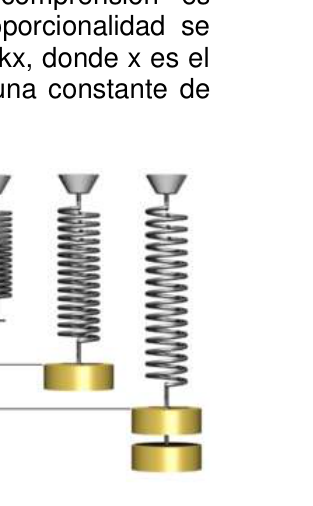
Topic: Elasticity & Materials Metodi: Experimental Data Analysis, Hooke’s Law, Graph Linearization Competenze: Physical Reasoning, Experimental Data Analysis Objects: Spring Fonte: Testo (PDF) — p.5
PE14. Scuola tecnica ORT N° 2. Città autonoma di Buenos Aires.
Determinazione della costante di elasticità di una stagione
Obiettivi Determinare, all’interno degli errori sperimentali, il valore di costante di elasticità di una primavera attraverso la legge di Hooke.
Introduzione Quando si applica una forza ad un oggetto, esso può allungarsi, comprimere, fleccarsi. o si torcerà. Le forze interne tra gli atomi dell’oggetto resistono a questi cambiamenti. Queste forze diventano più grandi man mano che gli atomi si spostano di più. lontano dalle sue posizioni originali. Quando la forza esterna cessa, quelle… Le forze che fanno ritornare l’oggetto alla sua forma originale. Se la forza esterna è troppo grande, può sconfiggere le forze di resistenza e far distorsione l’oggetto.
148 - OAF 2018
- In modo permanente. La quantità minima di allungamento, compressione o torsione necessaria Per causare questo si chiama limite elastico. La legge di Hooke riguarda i cambiamenti che si verificano prima di raggiungere il limite. Il sistema di misurazione è il sistema di misurazione del volume di misurazione. direttamente proporzionale alla forza applicata. La costante proporzionalità è Conosce la costante del resortimento, k. La legge di Hooke si esprime come F = kx, dove x è il spostamento (allungamento o compressione). Una sorgente rigida ha una costante di alta primavera, e una primavera debole ha una costante di piccola primavera.
Materiali
- Supporto universale di Bunsen.
- Nuda e stretta.
- Cintura adesiva.
- Regola di un metro o centimetro.
- Gioco di pesanti con le fessure e porta pesanti.
- Resorte.
- Sbalza.
- Papero millimetrico.
Procedura a) Metti con l’oro il grilletto al supporto universale di Bunsen. b) Colpisce la spruzza al fascicolo. c) Con l’aiuto di una cinta adesiva, appoggia il centimetro dal grilletto fino alla base di supporto universale di Bunsen. d) Marchio con un pezzo di cinta sulla scala centimetrica, la parte inferiore del Primavera. e) Colpisce il portafoglio pesante (precedentemente pesante) alla molla. Vede figura 1. f) Metti diverse masse nel portace e osserva attentamente la parte inferiore a questo. L’allungamento in ogni caso è la differenza tra le due posizioni del portacargo pesante carica e quando non c’è alcun carico su di esso. g) Ripeti l’azione dell’oggetto f, tutte le volte che riteni necessario.
Risultati 1 - Armatura dell’equipaggio sperimentale. 2 - Confezionare una tabella con le dimensioni di massa, peso e lunghezza con le loro relative incertezze associate. 3 - Traccia su carta millimetrica un grafico di forza (asse e) versus allungamento (asse x), utilizzando i dati della tabella. 4 - Aggiusta il grafico in modo lineare e trova il valore della pendenza. 5 - Determina il valore di k con la relativa incertezza.
Topic: Elasticity & Materials Metodi: Experimental Data Analysis, Hooke’s Law, Graph Linearization Competenze: Physical Reasoning, Experimental Data Analysis Objects: Spring Fonte: Testo (PDF) — p.5
PE14. Technical School ORT N° 2. The Autonomous City of Buenos Aires.
Determination of the elasticity constant of a spring
Objectives Determine, within experimental errors, the elasticity constant value of a spring through Hooke’s law.
The first is the introduction. When force is applied to an object, it can lengthen, compress, bend. Or twisting. The internal forces between the atoms of the object resist these changes. These forces become larger as the atoms move more. far from their original positions. When the outside force stops, those are forces cause the object to regain its original shape. If the outside force is too much It’s big enough to overcome the forces of resistance and cause the object to deform.
The Commission shall adopt delegated acts in accordance with Article 148. permanently. The minimum amount of elongation, compression or torsion required To cause that is called elastic limit. Hooke’s law refers to changes that occur before the limit is reached. The length of the extension or comprehension is directly proportional to the force applied. The proportionality constant is knows the spring constant, k. Hooke’s law is expressed as F = kx, where x is the displacement (widening or compressing). A rigid spring has a constant of High spring, and a weak spring has a small spring constant.
Materials
- Universal support from Bunsen.
- Naked and classy.
- It’s the tape.
- A meter or an inch rule.
- I play weights with slots and carry weights.
- Spring. - What is it?
- Weigh it.
- It’s a millimeter piece of paper.
The procedure (a) Place the nut handle on the Bunsen universal support. (b) Hang the spring to the handle. (c) With the help of adhesive tape, hold the centimeter from the handle to the handle. The basic universal support of Bunsen. (d) Mark with a piece of tape on the centimetre scale, the bottom of the spring. (e) Hang the heavy (previously heavy) door to the spring. See figure 1. f) Place different masses on the heavy duty door and observe the part closely lower than this one. The length in each case is the difference between the two. positions of the heavy loaded door and when there is no load on it. (g) Repeat the action of item f as many times as you think necessary.
Results 1 - Armed with experimental equipment. 2 - Make a table with mass, weight and length sizes with the uncertainties associated with them. 3 - Draw on millimeter paper a graph of strength (y-axis) versus elongation (x axis), using the data in the table. 4 - Make a linear adjustment of the graph and find the value of the slope. 5 - Determine the value of k with its corresponding uncertainty.
Topic: Elasticity & Materials Metodi: Experimental Data Analysis, Hooke’s Law, Graph Linearization Competenze: Physical Reasoning, Experimental Data Analysis Objects: Spring Fonte: Testo (PDF) — p.5
PE15. Instituto María Auxiliadora. Santa Rosa, La Pampa.
Propósito de la actividad Realizar observaciones para determinar el punto de fusión y de solidificación de la naftalina. Materiales
- Naftalina molida
- Vaso de precipitado
- Tubo de ensayo delgado
- Un mechero y su trípode
- Una malla metálica
- Pie con nuez
- Un termómetro
OAF 2018 - 149 Desarrollo de la experiencia a) Llena, hasta la mitad aprox., el tubo de ensayo con la naftalina b) Coloca el termómetro en el tubo de manera que el bulbo quede en la parte media del tubo rodeado con el polvo de la naftalina. c) Coloca el tubo a “baño María” y comienza a calentar. d) Registra la variación de temperatura según intervalos de tiempo que determines (cada minuto, por ejemplo) e) Tabula en una tabla, como la que te muestro más abajo, los valores de temperatura. Tiempo (en s o m) 0 1 2 … Temperatura °C
… … …
f) Vuelca los datos en un plano cartesiano Temperatura en función del tiempo y halla las ecuaciones de los tramos.
Análisis de la experiencia
a) Observando el gráfico que realizaste, determina la temperatura de fusión de la
naftalina y escribe su valor.
b) ¿Es este valor dependiente de la masa de naftalina usada? Explicate
c) Serviría este dispositivo para determinar el punto de fusión del plomo? ¿Por qué?
d) ¿Que describe cada una de las partes del gráfico?
e) ¿Qué harías para determinar la temperatura de solidificación de la naftalina?
Topic: Thermodynamics Metodi: Experimental Data Analysis, Graph Linearization Competenze: Physical Reasoning, Experimental Data Analysis Objects: Calorimeter Fonte: Testo (PDF) — p.5
PE15. Istituto Maria Assidiora. Santa Rosa, La Pampa.
Scopo dell’attività Per determinare il punto di fusione e di solidificazione della Naftalina. Materiali
- Naftalina mollata
- Un bicchiere di precipitazione .
- Tubo di prova sottile
- Un macchiaio e il suo tripod.
- Una maglia metallica .
- Piede con l’oro .
- Un termometro .
OAF 2018 - 149 Sviluppo dell’esperienza a) Riempire, fino a circa la metà, il tubo di prova con la naftalina b) Metti il termometro nel tubo in modo che il bulbo rimanga nella parte media del tubo circondato dalla polvere di naftalina. c) Metti il tubo in banno Maria e inizia a riscaldarsi. d) Registra la variazione della temperatura a intervalli di tempo che determinate (ogni minuto, per esempio) e) Tavola in una tabella, come quella che vi mostro di seguito, i valori di temperatura. Tempo (s o m) 0 1 2 … Temperatura °C
… … …
f) Rende i dati in un piano cartesiano Temperatura in funzione del tempo e trova le equazioni dei tratti.
Analisi dell’esperienza a) Guardando il grafico che hai fatto, determina la temperatura di fusione della Naftalina e scrivi il suo valore. b) È questo valore dipendente dalla massa di naftalina utilizzata? Spiega. c) Questo dispositivo potrebbe essere utilizzato per determinare il punto di fusione del piombo? - Perché? d) Cosa descrive ciascuna delle parti del grafico? e) Cosa faresti per determinare la temperatura di solidificazione della naftalina?
Topic: Thermodynamics Metodi: Experimental Data Analysis, Graph Linearization Competenze: Physical Reasoning, Experimental Data Analysis Objects: Calorimeter Fonte: Testo (PDF) — p.5
PE15. The Institute of Mary Help of Christians. Santa Rosa, the Pampa.
Purpose of the activity Observations to determine the melting and solidification point of the
- It’s not a napkin. Materials
- Milling of naphthalene
- A glass of precipitate .
- Thin test tube .
- A caterpillar and his tripod .
- A metal mesh .
- Foot with walnut .
- A thermometer .
The Commission shall adopt delegated acts in accordance with Article 14 of Regulation (EC) No 1272/2009. Experience development (a) Fill the test tube with naphthalene up to about half the time (b) Place the thermometer in the tube so that the bulb is in the middle. the tube surrounded by the naphthalene powder. c) Place the tube in the bathroom and start to heat. (d) Record the temperature change at the time intervals you determine (every minute, for example) e) Table in a table, like the one I’m showing you below, the values of The temperature. Time (in s or m) 0 1 2 … The temperature of the product shall be:
… … …
f) Turn the data in a Cartesian plane Temperature based on time and Find the equations of the sections.
Experience analysis (a) By looking at the graph you made, determine the melting temperature of the Naphthalene and write its value. (b) Is this value dependent on the naphthalene mass used? Explain . (c) Would this device be used to determine the melting point of lead? - Why? - I don’t know. (d) What does each of the parts of the chart describe? (e) What would you do to determine the solidification temperature of the naphthalene?
Topic: Thermodynamics Metodi: Experimental Data Analysis, Graph Linearization Competenze: Physical Reasoning, Experimental Data Analysis Objects: Calorimeter Fonte: Testo (PDF) — p.5
PE16. Escuela Municipal Paula Albarracín de Sarmiento. Olivos, Buenos Aires.
Principio de Arquímedes
Un cuerpo total o parcialmente sumergido en un fluido sufre una fuerza externa denominada empuje, vertical y con sentido hacia arriba, igual al peso del fluido desplazado por dicho cuerpo. De tal forma:
𝐸= 𝜌𝑓𝑙 . 𝑉𝑐𝑠 . 𝑔
donde ”𝐸” es la fuerza empuje, ”𝜌𝑓𝑙 . 𝑉𝑐𝑠” es la masa del fluido desplazado representado respectivamente por la densidad del fluido (𝜌𝑓𝑙) y el volumen del cuerpo de la parte sumergida (𝑉𝑐𝑠) que es igual al volumen de fluido desplazado.
Para un cuerpo equilibrado sumergido en el fluido, la fuerza empuje es igual al peso de dicho cuerpo.
Objetivo Determinar la densidad de un líquido.
Materiales
-
Cuerpos de madera en forma de prisma con diferentes masas (y alturas).
-
Recipiente con el líquido.
-
Balanza.
-
Regla.
-
Lapicera.
-
Paño para secar.
150 - OAF 2018 Desarrollo del experimento Mida la masa del cuerpo y el volumen del cuerpo de la parte sumergida, de la manera más conveniente, para por lo menos cinco cuerpos diferentes.
Consignas a) Reporte las mediciones realizadas en una tabla. b) Realice el gráfico de la relación lineal entre ellas. c) Haga un ajuste lineal de los puntos graficados, y determine la pendiente y la ordenada al origen. d) A partir del Principio de Arquímedes, el equilibrio de fuerzas y los valores obtenidos en el ajuste, determine la densidad del líquido expresada en g/cm3.
Topic: Fluid Mechanics Metodi: Experimental Data Analysis, Graph Linearization, Hydrostatic Equilibrium Competenze: Physical Reasoning, Experimental Data Analysis, Mathematical Modeling Objects: Container Fonte: Testo (PDF) — p.5
PE16. Scuola Comunale Paula Albarracín di Sarmiento. Olivos, Buenos Aires.
Principio di Archimede
Un corpo completamente o parzialmente immerso in un fluido subisce una forza esterna. denominata spinta, verticale e verso l’alto, pari al peso del fluido spostato da quel corpo. In questo modo:
E = ρfl . Vcs . 𝑔
dove “E” è la forza di spinta, “ρfl. Vcs” è la massa del fluido spostato rappresentato rispettivamente per la densità del fluido (ρfl) e il volume del corpo della parte di immersione (Vcs) pari al volume di fluido spostato.
Per un corpo equilibrato immerso nel fluido, la forza di spinta è uguale al peso di quel corpo.
Obiettivo Determinare la densità di un liquido.
Materiali
- Corpi di legno in forma di prisma con diverse masse (e altezza).
- Un recipiente con il liquido.
- Sbalza.
- Regola.
- Lazzerini.
- Lavatura per asciugare.
150 - OAF 2018 Sviluppo dell’esperimento Misura la massa del corpo e il volume del corpo della parte immersa, in questo modo più conveniente, per almeno cinque corpi diversi.
Consigne a) Segnalare le misure effettuate in una tabella. b) Rendi il grafico della relazione lineare tra di loro. c) Aggiusta linealmente i punti graficati e determina la pendenza e la ordinato all’origine. d) Sulla base del principio di Archimede, l’equilibrio di forze e valori La densità del liquido espressa in g/cm3 è determinata dal sistema di regolazione.
Topic: Fluid Mechanics Metodi: Experimental Data Analysis, Graph Linearization, Hydrostatic Equilibrium Competenze: Physical Reasoning, Experimental Data Analysis, Mathematical Modeling Objects: Container Fonte: Testo (PDF) — p.5
PE16. Paula Albarracín Municipal School of Sarmiento. Olive trees, from Buenos Aires.
The principle of Archimedes
A body totally or partially submerged in a fluid is subjected to an external force. the pressure is called the vertical upward push, equal to the weight of the fluid displaced by that body. In this way:
E = ρfl . Vcs . 𝑔
where “E” is the force of thrust, “ρfl. Vcs” is the mass of the displaced fluid represented. respectively by the fluid density (ρfl) and body volume of the part submerged (Vcs) which is equal to the volume of displaced fluid.
For a balanced body submerged in the fluid, the force of thrust is equal to the weight of the That body.
The objective Determine the density of a liquid.
Materials
- Prism-shaped wooden bodies with different masses (and heights).
- It’s a container with the liquid.
- Weigh it.
- It’s a rule.
- The pencil.
- Drying clothes.
The Commission shall adopt delegated acts in accordance with Article 21 of this Regulation. Development of the experiment Measure the body mass and body volume of the submerged part, in the manner more convenient, for at least five different bodies.
Consigns (a) Report the measurements made in a table. (b) Draw the graph of the linear relationship between them. (c) Linear adjustment of the graphed points, and determination of slope and slope ordered to origin. (d) Based on the Archimedes Principle, the balance of forces and values obtained in the adjustment, determine the density of the liquid expressed in g/cm3.
Topic: Fluid Mechanics Metodi: Experimental Data Analysis, Graph Linearization, Hydrostatic Equilibrium Competenze: Physical Reasoning, Experimental Data Analysis, Mathematical Modeling Objects: Container Fonte: Testo (PDF) — p.5
PE17. Instituto de Enseñanza San Jorge1 - ET N° 3 Ing. Santiago Maradona1 Colegio Hermano Hermas de Bruijn1 - Escuela Big Ben School1 Centro Educativo Bernardino Rivadavia2 - ET N° 6 Cmte. Manuel Besares2. 1Santiago del Estero - 2La Banda, Santiago del Estero.
Objetivo Determinar el módulo de Young, E, de un material plástico.
Lista de Materiales
- Papel milimetrado
- Hilo piolín, cinta de papel
- 2 Reglas
- Vaso descartable
- Jeringas
Descripción
“Una viga empotrada por uno sus extremos y en voladizo, experimenta esfuerzos que
producen su flexión; esto es, la viga se
arquea, se deforma. Si la viga soporta,
además de su propio peso, una carga
extra, la flexión que experimenta se
incrementa. Los esfuerzos aplicados
deforman la viga, según sea su
geometría
y
el
material
que
la
compone, pero si son tales que las
deformaciones son elásticas (limite
elástico), entonces cuando cesan la
viga retoma su forma original.
Supongamos una viga “sin peso” de
sección rectangular y longitud L,
empotrada, a la que se le aplica en el
extremo libre una fuerza F (ver figuras
1 y 2). La viga se deforma, perdiendo
su horizontalidad, y su extremo libre
desciende una cantidad z. Se puede
demostrar que:
𝑧= 𝐿3
3 𝐸 𝐼 𝐹
con 𝐼= 𝑎 𝑏3 12 donde “a” y “b” son las dimensiones de la sección de la viga y “E” es el módulo de Young correspondiente al material del cual está compuesta la viga.”1
OAF 2018 - 151 Procedimiento
- Montar un dispositivo similar al de la imagen utilizando como viga una regla plástica de al menos 30 cm de longitud y un vaso descartable como recipiente donde agregar el agua (Fuerza).
- Colocar un volumen determinado de agua en el vaso para someter la regla a una fuerza que provoque su deformación.
- Registrar en una tabla los valores de masa de agua y la longitud z, que se desplazó el extremo libre de la regla al agregar agua.
- Repetir el paso 2 y 3 agregando diferentes cantidades de agua hasta obtener al menos 10 mediciones de cada magnitud. Corroborar en cada medición que la regla haya vuelto a su posición inicial, es decir que no se haya deformado permanentemente.
- Completar la tabla calculando la fuerza correspondiente a cada medición.
- Trazar una gráfica de Fuerza en función de z (longitud de la deformación).
- Aproximar los puntos graficados a una recta y calcular su pendiente para obtener el módulo de Young E. Informar estos valores con su correspondiente incerteza.
Requerimientos a) Montaje de la experiencia en forma correcta, prolija y ordenada minimizando las posibles causas de errores. b) Tabla de mediciones incluyendo: Masa, Fuerza y Longitud de deformación con sus correspondientes incertezas. c) Gráfico de Fuerza en función de la longitud de deformación z, empleando los datos de la tabla, seleccionando las unidades y escalas adecuadas. Ajuste de puntos a una recta. d) Determinación del valor del módulo de Young del plástico con el que está hecha la regla, con su correspondiente incerteza.
Nota: Todas las mediciones deben expresarse con su unidad y realizar la propagación de errores adecuada, analizando las fuentes de incertezas que tienen mayor incidencia en el resultado obtenido.
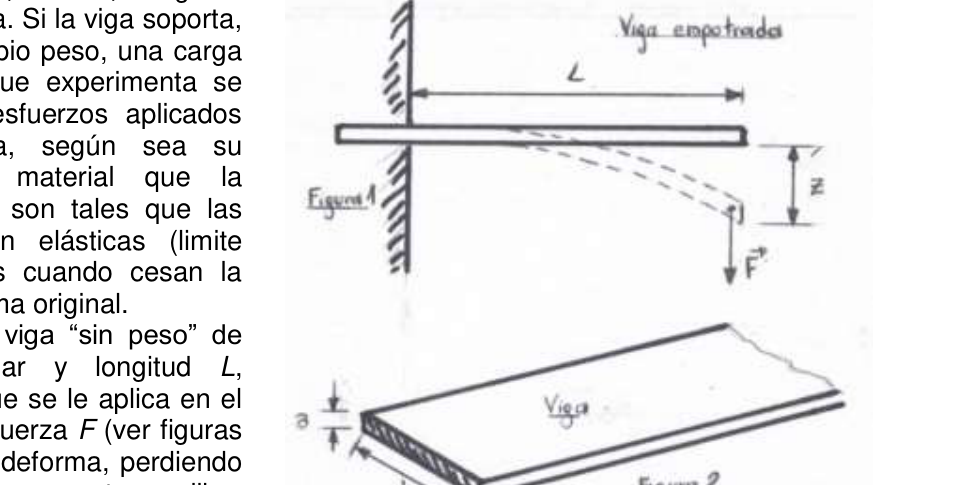
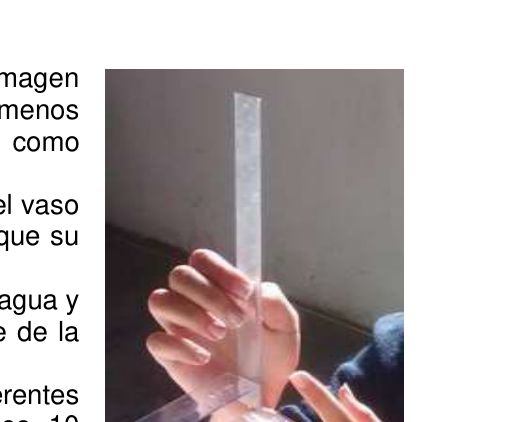
Topic: Elasticity & Materials Metodi: Experimental Data Analysis, Graph Linearization, Stress-Strain Analysis Competenze: Physical Reasoning, Experimental Data Analysis, Mathematical Modeling Objects: Beam Fonte: Testo (PDF) — p.5
PE17. Istituzione di istruzione San Jorge1 - ET N° 3 Ing. Santiago Maradona1 Bruges Brothers School - Scuola Big Ben School Centro Educativo Bernardino Rivadavia2 - ET N° 6 Cmte. Manuel Besares2. 1Santiago del Estero - 2La Banda, Santiago del Estero.
Obiettivo Determinare il modulo di Young, E, di un materiale plastico.
Lista dei materiali
- Papero millimetrico .
- Felle di pioli, striscia di carta.
- Due regole .
- Vaso da scaricare .
- Seringhi .
Descrizione Un vigno inserito da uno le sue estremità e in volantismo, sperimenta sforzi che La struttura è in grado di essere in grado di essere riposta in modo che la struttura possa essere riposta in modo che la struttura possa essere riposta in modo adeguato. Arca, si distorsiona. Se il vigno sopporta, oltre al proprio peso, un carico La flessione che si prova è extra.
- Si, aumenta. Gli sforzi compiuti distortano il viglio, a seconda della sua Geometria y el materiale che la compone, ma se sono tali che Le deformazioni sono elastiche (limitate) Elastico), quindi quando si cessa la Il filo riprende la sua forma originale. Supponiamo che un viglio non abbia peso di sezione rettangolare e lunghezza L,
- il quale è applicato in Un’estremità libera una forza F (vedi figure 1 y 2). Il vigno si distorsi, perdendo la sua orizzontalità, e il suo estremo libero scende una quantità z. Si può dimostrare che: 𝑧= 𝐿3 3 𝐸 𝐼 𝐹
con I= 𝑎 𝑏3 12 dove a e b sono le dimensioni della sezione del vigno e E è il modulo Young corrispondente al materiale di cui è composta la viglia.1
OAF 2018 - 151 Procedura
- montare un dispositivo simile a quello illustrato utilizzando come vigia una regola di plastica di almeno 30 cm di lunghezza e un bicchiere da scaricare come contenitore per l’aggiunta dell’acqua (forza).
- Metti un determinato volume di acqua nel bicchiere per sottoporre la regola a una forza che provochi il suo la deformazione.
- Registrare su una tabella i valori di massa dell’acqua e la lunghezza z, che ha spostato l’estremità libera della regola per l’aggiunta di acqua.
- Ripetere i passaggi 2 e 3 aggiungendo diversi quantità di acqua fino a ottenere almeno 10 misurazioni di ogni magnitudo. Confirmare in ogni misura che la regola è tornata in posizione iniziale, cioè non si è distorta
- In modo permanente.
- Completare la tabella Calcolatore la forza corrispondente a ciascuna misurazione.
- Tracciare un grafico di Forza in funzione di z (Lunghezza della deformazione).
- Approcciare i punti grafici a una retta e calcolare la loro pendenza per ottenere il modulo Young E. Informare questi valori con la loro corrispondente incertezza.
Richieste a) Montaggio dell’esperienza in modo corretto, prolifico e ordinato minimizzando le le possibili cause di errori. b) Tabella di misurazioni inclusa: Massa, Forza e Lunghezza di deformazione con le relative incertezze. c) Grafico di forza a seconda della lunghezza di deformazione z, utilizzando i dati della tabella, selezionando le unità e le scale appropriate. Adeguamento di punti verso una linea retta. d) Determinazione del valore del modulo Young della plastica con cui è fatto La regola, con la sua corrispondente incertezza.
Nota: tutte le misure devono essere espresse in unità e effettuare la diffusione di L’obiettivo è quello di garantire che gli errori di cui si tratta siano adeguati, analizzando le fonti di incertezza che hanno maggiore incidenza sullo sviluppo di un’economia di mercato. risultato ottenuto.
Topic: Elasticity & Materials Metodi: Experimental Data Analysis, Graph Linearization, Stress-Strain Analysis Competenze: Physical Reasoning, Experimental Data Analysis, Mathematical Modeling Objects: Beam Fonte: Testo (PDF) — p.5
PE17. The following is a list of the institutions of the European Union: The Spanish national team Brother Brother School of Bruijn1 - Big Ben School1 The school is located in the centre of the town of Rivadavia. Manuel Besares2. The first is the first of the two.
The objective Determine Young’s module, E, from a plastic material.
List of Materials
- Millimeter paper .
- Hair, hair, paper tape.
- Two rules .
- Disposable glass .
- The syringes .
The description A beam embedded by one’s ends and in flight, experiences efforts that The beam is flexed, that is, the beam is flexed. The archaea, it deforms. If the beam holds, Besides its own weight, a burden Extra, the bending you experience is It’s going up. The efforts made Deform the beam, depending on its shape. geometry y el The following is the list of the products: That la composed, but if they are such that the The deformation is elastic (limit elastic), then when they stop the The beam is returning to its original shape. Let’s say a weightless beam of rectangular section and L length, The Commission shall adopt implementing acts in accordance with Article 21 of the Treaty establishing the European Community. Free end a force F (see Figures 1 y 2). The beam is warping, losing. Its horizontality, and its free end. It’s going down to a quantity z. You can . demonstrate that: 𝑧= 𝐿3 3 𝐸 𝐼 𝐹
with I= 𝑎 𝑏3 12 where a and b are the dimensions of the beam section and E is the Young module corresponding to the material of which the beam is composed.1
The Commission shall adopt delegated acts in accordance with Article 21 of the Financial Regulation. The procedure
- Install a device similar to the one in the picture using as beam a plastic rule of at least 30 cm long and a disposable glass like container where water is added (force).
- Put a certain volume of water in the glass To subject the rule to a force that provokes its The deformation.
- Record the water mass values in a table and the length z, which moved the free end of the rule when adding water.
- Repeat steps 2 and 3 by adding different water quantities until at least 10 measurements of each magnitude. Corroborate each measurement that the rule has returned to its position Initial, i.e. it has not deformed permanently.
- Complete la Table Calculating la Force corresponding to each measurement.
- Draw a graph of Force based on z (distance of deformation)
- Approach the points graphed to a straight line and calculate their slope to obtain The Young E module. Report these values with their corresponding uncertainty.
Requirements (a) The assembly of experience in a correct, prolific and orderly manner, minimizing the possible causes of errors. (b) Measurement table including: Mass, Strength and Length of deformation with the uncertainties involved. (c) Force graph based on the length of deformation z, using the Table data, selecting the appropriate units and scales. Adjustment of points to a straight line. (d) Determination of the value of the Young module of the plastic from which it is made The rule, with its corresponding uncertainty.
Note: All measurements must be expressed in units and spread by The Commission’s proposal for a regulation on the protection of workers from the risks of uncertainty is based on the following: result obtained.
Topic: Elasticity & Materials Metodi: Experimental Data Analysis, Graph Linearization, Stress-Strain Analysis Competenze: Physical Reasoning, Experimental Data Analysis, Mathematical Modeling Objects: Beam Fonte: Testo (PDF) — p.5
PE18. IPETAyM N° 65 Juan Antonio de Mena. Vicuña Mackenna, Córdoba.
Determinación experimental del módulo de elasticidad o módulo de young (e) de un material
Objetivos Encontrar experimentalmente el módulo de elasticidad o de Young (E), de una lámina plástica en forma sencilla.
Introducción El científico Tomas Young, fue el primero en proponer su medición experimental, y básicamente expresa el comportamiento de cualquier material elástico, frente a esfuerzos de tracción o compresión. La importancia de saber el valor del módulo de Young o módulo de elasticidad de un determinado material, es conocer su límite elástico.
152 - OAF 2018 Se define como límite elástico al valor máximo de esfuerzo que soporta un material sin sufrir deformaciones permanentes, luego de superado este parámetro, todos los materiales sufren deformaciones plásticas y posteriormente roturas. Entonces suponga que se quiere construir o reparar la estructura de un submarino, como el ARA San Juan y para ello siempre debemos conocer las características del material a utilizar, como así también las condiciones de esfuerzo a las cuales será sometido en las operaciones cotidianas de la nave, por eso resulta indispensable saber el módulo de elasticidad.
Teniendo en cuenta que I, se calcula con las dimensiones de la regla, a (largo total de la regla), b (espesor de la regla), L es la longitud de la regla desde donde esta empotrada hasta el lugar en el que fue aplicada la fuerza, puede o no coincidir con a.
I = a.b3 12
Materiales
- 2 Reglas pasticas de 30 cm.
- Cinta métrica.
- 5 trozos de hilo de 50 cm. cada uno.
- Cinta adhesiva.
- Probeta de 100 ml.
- Contrapesos para sujetar las reglas.
- 5 vasos plásticos de 300 ml.
- Marcador indeleble.
- Agua.
Procedimiento
a) Montar en una mesa, un dispositivo como el de la figura, colocando ambas
reglas, una al lado de la otra, separadas por un centímetro entre ellas. Las dos
reglas deben quedar al mismo nivel (importante).
b) Pegar un trozo de hilo a ambos lados de la boca del vaso de 300 ml, con cinta
adhesiva, de tal manera que los vasos puedan ser colgados sobre la viga (en
este caso regla). Rotularlos del 1 al 5. Repetir esta acción cinco veces.
c) Medir los siguientes volúmenes de agua con la probeta y colocarlos según la
siguiente tabla:
Vaso # Volumen de agua [ml.]
1
50
2
100
3
150
4
200
5
250
d) Colgar el vaso 1, en el extremo libre de la regla y medir la longitud z con respecto
a la regla libre. Repetir este procedimiento para todos los vasos. (δagua=1 kg/l)
OAF 2018 - 153 Resultados 1- Armado del equipo experimental. 2- Completar la siguiente tabla con los datos obtenidos experimentalmente:
3- Traza en un papel milimetrado un gráfico de Fuerza aplicada (F) (eje y) versus longitud de esfuerzo (z) (eje x). 4- Realice un ajuste lineal de la gráfica y encuentre el valor de la pendiente. 5- Determine el valor del módulo de Young (E) con su correspondiente incerteza, indicando sus unidades de medida. Reflexione sobre lo hecho durante la experiencia, mencionando los errores cometidos y sus posibles correcciones.
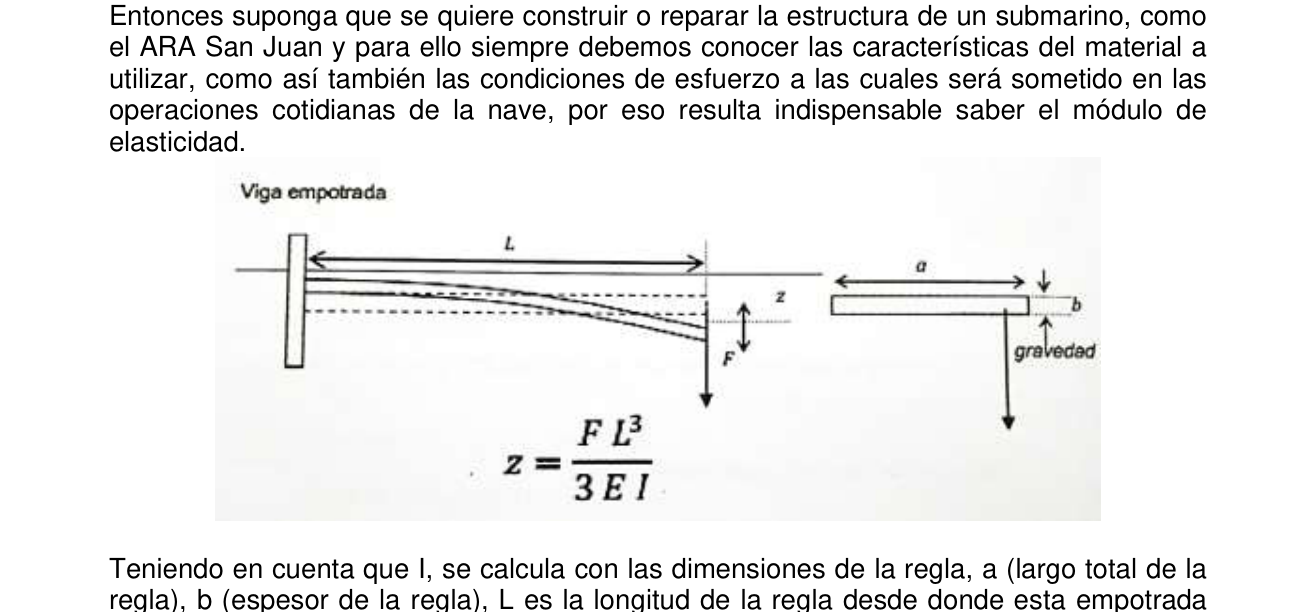
Topic: Elasticity & Materials Metodi: Experimental Data Analysis, Graph Linearization, Stress-Strain Analysis Competenze: Physical Reasoning, Experimental Data Analysis, Mathematical Modeling Objects: Beam Fonte: Testo (PDF) — p.5
PE18. I.P.T.A.M. N° 65 Giovanni Antonio di Mena. Vicina Mackenna, Cordoba.
Determinazione sperimentale del modulo di elasticità o modulo di young (e) di un materiale
Obiettivi Trovare sperimentalmente il modulo di elasticità o di Young (E), di una lamina plastica in una forma semplice.
Introduzione Lo scienziato Tomas Young, fu il primo a proporre la sua misurazione sperimentale, e Esprime il comportamento di qualsiasi materiale elastico, rispetto agli sforzi. di trazione o compressione. L’importanza di conoscere il valore del modulo di Young o modulo di elasticità di un determinato materiale, è conoscere il suo limite elastico.
152 - OAF 2018 Si definisce come limite elastico al massimo valore di tensione supportato da un materiale senza La presenza di deformazioni permanenti, dopo aver superato questo parametro, I materiali subiscono deformazioni plastiche e successivamente rotture. Quindi supponiamo che vogliamo costruire o riparare la struttura di un sottomarino, come La nostra esperienza di lavoro è stata molto importante per il nostro lavoro. La Commissione ha adottato una proposta di direttiva che prevede che le condizioni di lavoro di cui si dispone siano adeguate. La Commissione ha adottato una decisione che prevede che le operazioni quotidiane della nave siano effettuate in modo da consentire ai cittadini di conoscere il modulo di navigazione. l’elasticità.
Considerando che I, viene calcolato con le dimensioni della regola, a (lenghezza totale della regola), b (spessore della regola), L è la lunghezza della regola da dove viene inserita fino al punto in cui è stata applicata la forza, può o non corrispondere a.
I = a.b3 12
Materiali
- Due regole di 30 cm.
- Cintura metrica.
- 5 pezzi di filo di 50 centimetri. - Tutti.
- Cintura adesiva.
- Probetta di 100 ml.
- Contravalute per rispettare le regole.
- 5 bicchieri di plastica da 300 ml.
- Un marcatore indelebile.
- L’acqua.
Procedura a) Montare su un tavolo un dispositivo come quello illustrato, ponendo entrambi regole, una accanto all’altra, separate da un centimetro tra di loro. - Le due . Le regole devono rimanere allo stesso livello (importante). b) Collare un pezzo di filo su entrambi i lati della bocca del bicchiere da 300 ml, con cinta adesivo, in modo che i vasi possano essere appesi sul filo (in
- Questo è il caso regolare. - Dichiarazione da 1 a 5. Ripetere questa azione cinque volte. c) Misurare i seguenti volumi di acqua con la prova e posizionarli secondo la tabella seguente: Vaso # Volume d’acqua [ml.] 1 50 2 100 3 150 4 200 5 250 d) Accendere il vaso 1, all’estremità libera della regola e misurare la lunghezza z rispetto alla regola libera. Ripetere questa procedura per tutti i vasi. (δacqua=1 kg/l)
OAF 2018 - 153 Risultati 1- Armatura dell’equipaggio sperimentale. 2- Completare la tabella seguente con i dati ottenuti sperimentalmente:
3- Traccia su un foglio di millimetro un grafico di Forza applicata (F) (asse y) versus lunghezza di sforzo (z) (asse x). 4- Fare un regolazione lineare del grafico e trovare il valore della pendenza. 5- Determina il valore del modulo di Young (E) con la sua corrispondente incertezza, indicando le unità di misura. Rifletti su ciò che hai fatto durante la L’esperienza, menzionando gli errori commessi e le possibili correzioni.
Topic: Elasticity & Materials Metodi: Experimental Data Analysis, Graph Linearization, Stress-Strain Analysis Competenze: Physical Reasoning, Experimental Data Analysis, Mathematical Modeling Objects: Beam Fonte: Testo (PDF) — p.5
PE18. The Commission has not yet adopted a proposal for a regulation on the protection of the environment. Vicina Mackenna, from Cordoba.
Experimental determination of the elasticity module or young (e) module of a The following is the list of the products:
Objectives Find the elasticity module or Young (E) on a sheet. plastic in a simple way.
The first is the introduction. Scientist Tomas Young, was the first to propose his experimental measurement, and Basically expresses the behavior of any elastic material, against stress. of traction or compression. The importance of knowing the value of the Young or The elasticity of a material is known as its elastic limit.
The Commission shall adopt implementing acts in accordance with Article 21 of the Financial Regulation. It is defined as the elastic limit to the maximum stress value that a material without a stress can withstand. If the test is performed on a sample of the sample, the test results shall be given. The material is deformed and then broken. So suppose you want to build or repair the structure of a submarine, like The ARA San Juan and for this we must always know the characteristics of the material to The Commission will be able to take the necessary steps to ensure that the The day-to-day operations of the ship are therefore essential to know the module the elasticity.
Given that I, is calculated with the dimensions of the rule, a (total length of the Rule), b (rule thickness), L is the length of the rule from which it is embedded the place where the force was applied, may or may not match a.
I = a.b3 12
Materials
- Two 30 cm plastic rules.
- It’s a tape recorder.
- 5 pieces of yarn 50 cm. every single one of them.
- It’s the tape.
- 100 ml sample.
- Weights to keep the rules.
- 5 300ml plastic cups.
- It’s an indelible marker.
- It’s water.
The procedure (a) Set up a table, a device such as that in the figure, placing both Rules, one next to the other, separated by an inch. Both of them . The rules should remain at the same level (important). (b) Stick a piece of thread to both sides of the mouth of the 300 ml glass, with tape The glass is then glued to the beam (in the case of a glass beam) and the glass is then glued to the beam. This case rule). Label them 1 to 5. Repeat this action five times. (c) Measure the following water volumes with the sample and place them according to the following: the following table: Glass # Volume of water [ml.] 1 50 2 100 3 150 4 200 5 250 (d) Hang the glass 1, at the free end of the rule and measure the length z with respect to it. to the free rule. Repeat this procedure for all vessels. (δwater=1 kg/l)
The Commission shall adopt delegated acts in accordance with Article 21 of the Financial Regulation. Results 1- Armed with experimental equipment. 2- Complete the following table with experimental data:
3- Draw on a millimeter paper a graph of the applied force (F) (y axis) versus The following shall be reported: 4- Make a linear adjustment of the graph and find the value of the slope. 5- Determine the value of the Young (E) module with its corresponding uncertainty, indicating their units of measurement. Think about what you did during the experience, mentioning errors made and possible corrections.
Topic: Elasticity & Materials Metodi: Experimental Data Analysis, Graph Linearization, Stress-Strain Analysis Competenze: Physical Reasoning, Experimental Data Analysis, Mathematical Modeling Objects: Beam Fonte: Testo (PDF) — p.5
PE19. Escuela Técnica N° 9 Ing. Luis A. Huergo. Ciudad Autónoma de Buenos Aires.
Un Arco Iris Sonoro
Investigación de la velocidad del sonido por resonancia a distintas frecuencias, en tubos abiertos, o cerrados en un extremo.
La figura es la representación de una onda, donde la separación de C respecto del eje es la amplitud, relacionada con la intensidad, y el segmento AB, entre dos puntos contiguos que tienen la misma fase, es una longitud de onda.
En A y B, donde la onda cruza el eje, y la amplitud es nula, se dice que hay nodos; en C, donde la amplitud es máxima, se tiene un anti-nodo. La frecuencia, cuya unidad es Hertz (Hz), es la cantidad de ciclos por segundo, o la cantidad de longitudes de onda de propagación cada segundo. La velocidad de la onda es, según lo anterior:
𝑣= 𝜆 𝑓 𝑣 : velocidad : longitud de onda 𝑓: frecuencia
El sonido es una perturbación de presión en el medio elástico por el que se propaga. La energía de la onda sonora varía entre energías potencial de compresión elástica y cinética por la velocidad de las partículas del medio. Vaso # Masa [kg.] Fuerza aplicada [N] Longitud de esfuerzo [m] 1
2
3
4
5
154 - OAF 2018 Una onda sonora estacionaria es aquella que oscila en el tiempo pero cuyo perfil de presiones no cambia para ciertas posiciones. En un tubo cerrado en un extremo, las ondas sonoras se propagan en ambos sentidos, desde el parlante hacia el fondo, y se reflejan en el fondo hacia el parlante. Por la geometría del tubo, las ondas en ambos sentidos de propagación interfieren de forma constructiva. Existe resonancia si la longitud de onda está en determinada relación con la velocidad de propagación y las características geométricas del medio, que en esta experiencia son la longitud del tubo por el que se propaga y, en menor medida, su diámetro. La longitud resonante no es la del tubo exacta; puede observarse resonancia sin estar el parlante en contacto con el borde del tubo, sino a cierta distancia. Se usa parlante y generador de ondas para crear resonancia. Se varían las condiciones de la experiencia -frecuencia del sonido y características geométricas del tubo-. Se estudia la relación entre longitud y frecuencia para obtener la velocidad del sonido. La longitud de onda -lambda- se determina con la longitud del tubo, y la frecuencia con el generador.
Un tubo que resuena, abierto en un extremo y cerrado en el otro, tendrá un nodo en el extremo cerrado y un anti-nodo en el abierto. Un nodo representa un punto en el que la velocidad del aire es mínima, y el anti-nodo representa el punto donde la velocidad del aire es máxima. Es máxima en el extremo abierto porque en él se genera el sonido, es mínima en la cara cerrada, porque es una parte inmóvil del tubo, y las partículas en el límite con él tienen velocidad nula. Los gráficos representan la velocidad promedio de las partículas en cada posición del tubo; puede efectuarse un gráfico similar de presiones en función de la posición. El desplazamiento de las partículas y la presión del aire son dos variables que oscilan. Al existir resonancia, por interferencia constructiva, el sonido se hace intenso, y se atenúa en otro caso. El aire húmedo, la temperatura, y la presión, son factores que pueden influir en la velocidad del sonido.
Para tubos cerrados son posibles los armónicos 𝜆= 4 𝐿 2 𝑛−1 con n = 1, 2, 3, 4, …
Considerando la corrección de longitud del tubo, la longitud efectiva de resonancia puede ser: Lef = L + 0,4 D
Para tubos abiertos son posibles los armónicos 𝜆= 2 𝐿 𝑛 con n = 1, 2, 3, 4, …
O considerando la corrección de longitud del tubo, por el ajuste hecho en dos extremos, sería Lef = L + 0,8 D
y la fórmula para calcular longitud de onda queda 𝜆= 2 (𝐿+0,8𝐷) 𝑛 para los mismo valores de n
Posibles pasos de la experiencia para un tubo con un extremo cerrado 1- Para una longitud del tubo inicial nula, elegir una frecuencia a emitir por el parlante. 2- Alargar la longitud de aire en el interior del tubo, y manteniendo la misma frecuencia en el parlante, registrar con la mayor exactitud, cada longitud del tubo en resonancia. 3- Determinar la conveniencia de ajustar la longitud según el diámetro D del tubo. 4- Calcular la velocidad del sonido; puede ser calculando la distancia entre nodos, o considerando la relación entre y la longitud del tubo. Se puede evaluar la aplicación de la corrección por longitud efectiva. 5- Repetir lo anterior con otra/s frecuencia/s.
OAF 2018 - 155 6- Obtener el valor mas exacto posible de la velocidad del sonido explicando el método elegido. 7- Entre tres resonancias, se pueden medir dos medias longitudes de onda, promediar, y calcular la velocidad con tal valor de ½ . En caso de haber sido aplicado este método en el punto 6, buscar otro alternativo. 8- Explicar el mejor método, a su consideración, para determinar el valor de la velocidad del sonido, con las varias velocidades obtenidas por resonancia.
La velocidad de propagación del sonido en el aire se puede obtener, teniendo la temperatura en ºC, con la fórmula 𝑣= 331,4 𝑚/𝑠 + 0,6 𝑇𝑐
Para distintos gases o para aire, una aproximación mejor puede obtenerse con la siguiente fórmula, originada en la teoría y probada empíricamente 𝑣= √𝛾 𝑅 𝑇 𝑀 : constante adiabática R: constante universal de los gases M: masa molar del gas T: temperatura en Kelvin Para el aire, 𝛾= 1,4 R = 8,314 J mol-1 K-1 M = 28,97 g mol-1 -aire seco-
9- Comparar la velocidad obtenida de forma experimental con la calculada.
Tubo resonante con extremos abiertos En resonancia tendrá un anti-nodo en cada extremo, y al menos un nodo interior. El número de nodos se relaciona con la longitud de onda y el numero de armónico. El primer armónico -fundamental-, tiene un nodo, el segundo armónico dos, etc.
10- Obtener resonancia para distintas frecuencias en varios tubos abiertos en ambos extremos de longitud fija. 11- Calcular la frecuencia de resonancia, para tubos cerrados en un extremo, de la misma longitud que el tubo abierto, y comparar frecuencias y longitud. 12- Calcular la velocidad del sonido con tubos abiertos.
Desplazamiento promedio de las partículas, en un tubo cerrado en un extremo, con una onda en resonancia
1er. armónico o frecuencia fundamental L = 1/4
1er. armónico o frecuencia fundamental L = 1/4 f = f1
156 - OAF 2018 3er. armónico L = 3/4
3er. Armónico L = 3/4 f = 3 . f1
5to. armónico L = 5/4
5to. armónico L = 5/4 f = 5 . f1
7mo. armónico L = 7/4
7mo. armónico L = 7/4 f = 7 . f1
Desplazamiento promedio de las partículas en un tubo abierto en resonancia
1er. armónico o frecuencia fundamental L = 1/2
1er. armónico o frecuencia fundamental L = 1/2 f = f1
OAF 2018 - 157 2do. armónico L = 1
2do. armónico L=1 f = 2 . f1
3er. armónico L = 1,5
3er. armónico L = 1,5 f = 3 . f1
4to. armónico L = 2
4to. armónico L = 2 f = 4 . f1
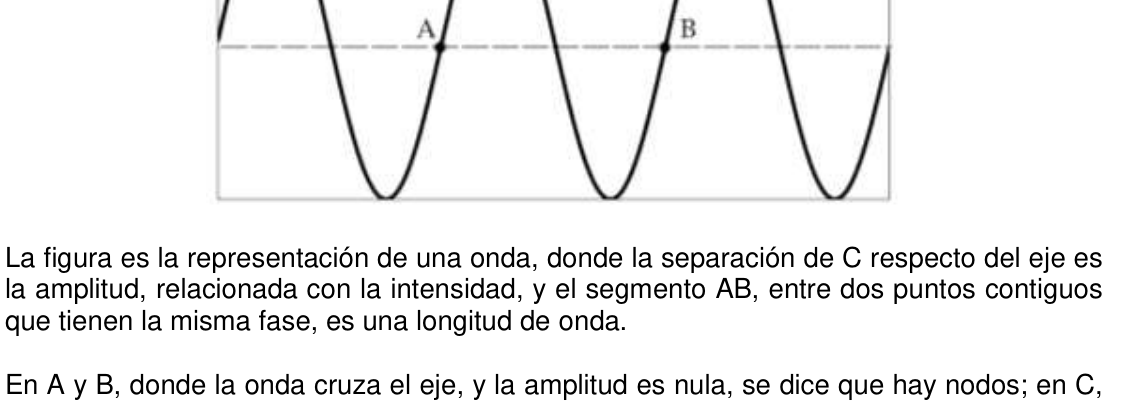
Topic: Oscillations & Waves Metodi: Experimental Data Analysis, Wave Equation, Graph Linearization Competenze: Physical Reasoning, Experimental Data Analysis, Mathematical Modeling Objects: Tube Fonte: Testo (PDF) — p.5
PE19. Scuola tecnica N° 9 Ing. Luis A. Ho urgo. Città autonoma di Buenos Aires.
Un Rainbow Sonoro
Indagine sulla velocità del suono per risonanza a diverse frequenze, in tubi aperte o chiuse all’estremità.
La figura è la rappresentazione di un’onda, dove la separazione di C rispetto all’asse è l’ampiezza, correlata all’intensità, e il segmento AB, tra due punti contiguti che hanno la stessa fase, è una lunghezza d’onda.
In A e B, dove l’onda attraversa l’asse, e l’ampiezza è zero, si dice che ci sono nodi; in C, dove l’ampiezza è massima, si ha un anti-nodo. La frequenza, la cui unità è Hertz (Hz), è il numero di cicli al secondo, o il numero di lunghezze d’onda di diffusione ogni secondo. La velocità dell’onda è, secondo quanto sopra:
𝑣= 𝜆 𝑓 V: velocità : lunghezza d’onda f: frequenza
Il suono è una perturbazione della pressione nel mezzo elastico attraverso il quale si diffonde. La L’energia dell’onda sonora varia tra le energie potenziali di compressione e l’energia di compressione. Cinetica per la velocità delle particelle del mezzo. Vaso # Massa [kg.] Forza applicata [N] Lunghezza di sforzo [m] 1
2
3
4
5
154 - OAF 2018 Un’onda sonora stazionaria è quella che oscilla nel tempo ma il cui profilo di Le pressioni non cambiano per alcune posizioni. In un tubo chiuso a un’estremità, le Le onde sonore si diffondono in entrambi i sensi, dal parlante verso il fondo, e si riflettono in fondo verso il parlante. Per la geometria del tubo, le onde in entrambi i lati. i sensi di diffusione interagiscono in modo costruttivo. La risonanza è possibile se la lunghezza La velocità di diffusione è determinata e la velocità di diffusione è determinata. Le caratteristiche geometriche del mezzo, che in questa esperienza sono la lunghezza del tubo che si diffonde e, in misura minore, il suo diametro. La lunghezza risonante non è la La risonanza può essere osservata senza che il parlante sia in contatto con il il bordo del tubo, ma a una certa distanza. Si usa un parlante e un generatore di onde per creare risonanza. Le condizioni variano. La frequenza del suono e le caratteristiche geometriche del tubo. Se studia la relazione tra lunghezza e frequenza per ottenere la velocità del suono. La L’onda di lunghezza -lambda- è determinata dalla lunghezza del tubo e dalla frequenza con il
- Generatore.
Un tubo che risuona, aperto ad una estremità e chiuso all’altra, avrà un nodo all’interno Un’estremità chiusa e un’anti-nodo all’aperto. Un nodo rappresenta un punto in cui la La velocità dell’aria è minima, e l’anticnodo rappresenta il punto in cui la velocità del L’aria è massima. È massima all’estremità aperta perché in essa viene generato il suono, è minima sul volto chiuso, perché è una parte immobile del tubo, e le particelle nel limite con lui hanno velocità zero. I grafici rappresentano la velocità media delle Le particolatori in ogni posizione del tubo; un grafico di pressione simile può essere effettuato in funzione della posizione. Il movimento delle particelle e la pressione dell’aria sono due. variabili che oscilano. Quando c’è una risonanza, per interferenza costruttiva, il suono diventa intenso, e si attenua. In un altro caso. L’aria umida, la temperatura e la pressione, sono fattori che possono influenzare. nella velocità del suono.
Per tubi chiusi sono possibili gli armonici λ= 4 𝐿 2 n−1 con n = 1, 2, 3, 4, …
Considerando la correzione della lunghezza del tubo, la lunghezza effettiva di risonanza può essere essere: Lef = L + 0,4 D
Per tubi aperti sono possibili gli armonici λ= 2 𝐿 n con n = 1, 2, 3, 4, …
O considerando la correzione della lunghezza del tubo, per il regolamento fatto a due estremità, Sarebbe Lef = L + 0,8 D
e la formula per calcolare la lunghezza d’onda rimane λ= 2 (𝐿+0,8𝐷) 𝑛 per gli stessi valori di n
Possibili passi da esperienza per un tubo con un’estremità chiusa 1- Per una lunghezza di tubo iniziale zero, scegliere una frequenza da emettere per il Parlare. 2- allargare la lunghezza dell’aria all’interno del tubo, mantenendola stessa frequenza sullo speaker, registrare con maggiore precisione ogni lunghezza del tubo in risonanza. 3- Determinare se è opportuno regolare la lunghezza secondo il diametro D del tubo. 4- Calcolare la velocità del suono; può essere calcolare la distanza tra i nodi, o considerando il rapporto tra e la lunghezza del tubo. Si può valutare la l’applicazione della correzione per la lunghezza effettiva. 5- Ripetere il precedente con una/s altra frequenza/s.
OAF 2018 - 155 6- Ottenere il valore più preciso possibile della velocità del suono spiegando il metodo scelto. 7- Tra tre risonanti, si possono misurare due medie lunghezze d’onda, per aver media, e calcolare la velocità con tale valore di 1⁄2 . In caso di essere stato Se si applica tale metodo al punto 6, si deve cercare un’altra alternativa. 8- Esprimi il metodo migliore, a tua disposizione, per determinare il valore della velocità del suono, con le varie velocità ottenute da risonanza.
La velocità di diffusione del suono nell’aria può essere ottenuta, avendo la velocità di diffusione del suono nell’aria. temperatura in oC, con la formula 𝑣= 331,4 𝑚/𝑠 + 0,6 𝑇𝑐
Per diversi gas o per aria, un approccio migliore può essere ottenuto con la La seguente formula, originata dalla teoria e provata empiricamente 𝑣= √𝛾 𝑅 𝑇 𝑀 : costante adiabática R: costante universale dei gas M: massa mollare del gas T: temperatura in Kelvin Per l’aria, 𝛾= 1,4 R = 8,314 J mol-1 K-1 M = 28,97 g mol-1 -aria secca-
9- Confronta la velocità ottenuta sperimentalmente con quella calcolata.
Tubo risonante con le estremità aperte In risonanza avrà un anti-nodo a ciascuna estremità, e almeno un nodo interno. El Il numero di nodi è correlato alla lunghezza d’onda e al numero di armonici. Il primo l’armonico - fondamentale-, ha un nodo, il secondo armonico due, ecc.
10- Ottenere risonanza per diverse frequenze in diversi tubi aperti in entrambe le estremità di lunghezza fissa. 11- Calcolare la frequenza di risonanza, per tubi chiusi a un’estremità, della la stessa lunghezza del tubo aperto, e confrontare frequenze e lunghezza. 12- Calcolare la velocità del suono con tubi aperti.
Movimento medio delle particelle, in un tubo chiuso a un’estremità, con Un’onda in risonanza.
1er. L = 1/4
1er. armonica o frequenza fondamentale L = 1/4 f = f1
156 - OAF 2018 3er. L = 3/4
3er. Armonica L = 3/4 f = 3 . f1
5to. L = 5/4
5to. Armonica L = 5/4 f = 5 . f1
7mo. L = 7/4
7mo. Armonica L = 7/4 f = 7 . f1
Movimento medio delle particelle in un tubo aperto in risonanza
1er. L = 1/2
1er. armonica o frequenza fondamentale L = 1/2 f = f1
OAF 2018 - 157 2do. L = 1
2do. Armonica L=1 f = 2 . f1
3er. L = 1,5
3er. Armonica L = 1,5 f = 3 . f1
4to. L = 2
4to. Armonica L = 2 f = 4 . f1
Topic: Oscillations & Waves Metodi: Experimental Data Analysis, Wave Equation, Graph Linearization Competenze: Physical Reasoning, Experimental Data Analysis, Mathematical Modeling Objects: Tube Fonte: Testo (PDF) — p.5
PE19. Technical School N° 9 Ing. Louis A. I’m going to be a little late. The Autonomous City of Buenos Aires.
A Sounding Rainbow
Research of sound speed by resonance at different frequencies, in tubes Open or closed at one end.
The figure is the representation of a wave, where the separation of C from the axis is the width, related to intensity, and the AB segment, between two adjacent points It’s a wavelength.
In A and B, where the wave crosses the axis, and the amplitude is zero, we say there are nodes; in C, where the width is maximum, you have an anti-knot. The frequency, whose unit is Hertz (Hz), is the number of cycles per second, or the number of wavelengths of spread every second. The wave velocity is, as above:
𝑣= 𝜆 𝑓 v: speed : wavelength f: frequency
Sound is a pressure disturbance in the elastic medium through which it propagates. La The sound wave energy varies between the potential energies of elastic compression and the potential energy of the sound wave. kinetics by the velocity of the particles in the medium. Vessel # Mass [kg.] Applied force [N] Strength length [m] 1
2
3
4
5
The Commission shall adopt delegated acts in accordance with Article 21 of this Regulation. A stationary sound wave is one that oscillates in time but whose profile of sound is not known. Pressures do not change for certain positions. In a closed tube at one end, the Sound waves are propagated in both directions, from the speaker to the bottom, and they are They reflect back to the speaker. By the geometry of the tube, the waves in both senses of propagation interfere constructively. There is resonance if the length The wave is in a certain relation to the rate of propagation and the The geometric characteristics of the medium, which in this experiment are the length of the tube The Commission shall adopt the following measures: The resonant length is not the The sound is not directly visible from the speaker’ s mouth. the edge of the tube, but at a certain distance. It uses a speaker and wave generator to create resonance. The conditions vary. The first is the use of the ‘scale’ of the ‘scale’. Se It studies the relationship between length and frequency to get the speed of sound. La The wavelength -lambda- is determined by the length of the tube, and the frequency by the The generator.
A resonating tube, open at one end and closed at the other, will have a node at the The end is closed and the anti-node is open. A node represents a point at which the The air velocity is minimal, and the anti-knot represents the point where the velocity of the Air is maximum. It’s maximum at the open end because it generates sound, it’s The small particles in the closed face, because it’s a stationary part of the tube, and the particles in the limit with it have zero speed. The graphs represent the average speed of the Particles in each position of the tube; a similar pressure graph can be made in the position function. The movement of particles and the air pressure are two things. variables that oscillate. When there is resonance, by constructive interference, the sound becomes intense, and it is attenuated. In another case. Humidity, temperature, and pressure, are factors that can influence in the speed of sound.
For closed tubes harmonics λ= are possible 4 𝐿 2 n−1 with n = 1, 2, 3, 4, …
Considering the correction of tube length, the effective resonance length can be be: Lef = L + 0,4 D
For open tubes harmonics λ= are possible 2 𝐿 n with n = 1, 2, 3, 4, …
Or considering the correction of the length of the tube, by the adjustment made at two ends, If we were to do this, we would be Lef = L + 0.8 D
and the formula for calculating wavelength is λ= 2 (𝐿+0,8𝐷) 𝑛 for the same values as n
Possible steps of experience for a closed end tube 1- For a zero initial tube length, choose a frequency to be emitted by the I’m not talking. 2- Extend the length of air inside the tube, and keep it the same Frequency in the speaker, recording with the greatest accuracy, each length of the tube In resonance. 3- Determine whether the length should be adjusted according to the diameter D of the tube. 4- Calculate the speed of sound; it can be by calculating the distance between nodes, or Considering the ratio of to the length of the tube. The evaluation of the the application of the correction for effective length. 5- Repeat the above with a different frequency.
The Commission shall adopt implementing acts in accordance with Article 21 of the Financial Regulation. 6- Get the most accurate possible value of the speed of sound by explaining the method chosen. 7- Between three resonances, two half wavelengths can be measured. average, and calculate the velocity with such a value of 1⁄2 . In case it was . If this method is applied in point 6, look for another alternative. 8- Explain the best method, at your discretion, for determining the value of the the speed of sound, with the various speeds obtained by resonance.
The speed of propagation of sound in the air can be obtained by having the temperature in oC, with the formula 𝑣= 331,4 𝑚/𝑠 + 0,6 𝑇𝑐
For different gases or for air, a better approximation can be obtained by using the The following formula, originating in the theory and proven empirically 𝑣= √𝛾 𝑅 𝑇 𝑀 : adiabatic constant A: Universal gas constant M: molar mass of gas T: temperature in Kelvin For the air, 𝛾= 1,4 R = 8,314 J mol-1 K-1 M = 28,97 g mol-1 - dry air
9- Compare the experimental speed with the calculated speed.
Resonant tube with open ends. In resonance, you’ll have an anti-node at each end, and at least one inner node. El The number of nodes is related to the wavelength and the number of harmonics. The first one . The second harmonic is two, and so on.
10- Get resonance for different frequencies in several open tubes in both ends of a fixed length. 11- Calculate the resonance frequency for tubes closed at one end of the tube. The length of the tube is the same as the open tube, and compare frequencies and length. 12- Calculate the speed of sound with open tubes.
Average movement of particles, in a closed tube at one end, with A wave in resonance.
1er. Harmonic or fundamental frequency L = 1/4
1er. Harmonic or fundamental frequency L = 1/4 f = f1
The Commission shall adopt delegated acts in accordance with Article 21 of this Regulation. 3er. Harmonic L = 3/4
3er. Harmonious . L = 3/4 f = 3 . f1
5to. Harmonic L = 5/4
5to. harmonious L = 5/4 f = 5 . f1
7mo. Harmonic L = 7/4
7mo. harmonious L = 7/4 f = 7 . f1
Average movement of particles in an open tube in resonance
1er. Harmonic or fundamental frequency L = 1/2
1er. Harmonic or fundamental frequency L = 1/2 f = f1
The Commission shall adopt delegated acts in accordance with Article 21 of the Financial Regulation. 2do. Harmonic L = 1
2do. harmonious L=1 f = 2 . f1
3er. L = 1,5
3er. harmonious L = 1,5 f = 3 . f1
4to. Harmonic L = 2
4to. harmonious L = 2 f = 4 . f1
Topic: Oscillations & Waves Metodi: Experimental Data Analysis, Wave Equation, Graph Linearization Competenze: Physical Reasoning, Experimental Data Analysis, Mathematical Modeling Objects: Tube Fonte: Testo (PDF) — p.5
PE20. UEGP N° 55 Don Orione. Presidencia Roque Sáenz Peña, Chaco.
Determinación del coeficiente de conducción térmica del vidrio
La conductividad térmica es una propiedad física de los materiales que mide la capacidad de conducción de calor. En otras palabras, la conductividad térmica es también la capacidad de una sustancia de transferir la energía cinética de sus moléculas a otras adyacentes o a sustancias con las que está en contacto. En el Sistema Internacional de Unidades la conductividad térmica se mide en W/(m·K) (equivalente a J/(m·s·K) o en unidades de cal/(s.cm.°C))
La determinación de la constante de conductividad térmica de materiales depende de la medición del flujo de calor que pasa a través de la muestra, de la diferencia de temperatura entre las dos caras y del espesor de la placa. En este experimento la cantidad de calor que pasa a través del recipiente de vidrio se determina a partir del flujo de calor que logra pasar al interior del recipiente y llegar al centro del mismo por unidad de tiempo.
158 - OAF 2018 En la figura se muestra una imagen del recipiente a utilizar para tomar las temperaturas que va tomando el agua en función del tiempo.
La ecuación que representa el flujo de calor por unidad de tiempo a través de la placa está dada por:
∆𝑄 ∆𝑡= 𝐾. 𝐴. ∆𝑇 𝑒
𝑒𝑛 𝑢𝑛𝑖𝑑𝑎𝑑𝑒𝑠 𝑑𝑒: [𝑐𝑎𝑙 𝑠= 𝑐𝑎𝑙 𝑠. 𝑐𝑚. °𝐶. 𝑐𝑚2. °𝐶 𝑐𝑚 ]
Donde ∆𝑄 es la cantidad de calor, 𝑘 coeficiente de conducción térmica del material, A y e son el área y espesor respectivamente, ∆𝑇 variación de temperatura, y ∆𝑡 el tiempo.
Por lo que la constante de conductividad térmica, K, queda representada como:
𝑘= 𝑒.∆𝑄 ∆𝑡 𝐴.∆𝑇 𝑒𝑛 𝑢𝑛𝑖𝑑𝑎𝑑𝑒𝑠 𝑑𝑒: [ 𝑐𝑚.𝑐𝑎𝑙 𝑠 𝑐𝑚2.°𝐶]
Excepto ∆𝑄/∆t que se determina indirectamente a través de la masa de agua, su calor específico y la diferencia de temperaturas, por unidad de tiempo; cada uno de los parámetros de la ecuación se pueden medir directamente: el espesor de la placa 𝑒, la diferencia de temperatura entre las dos caras de la placa, ∆𝑇= Ti-Tf, y el área del recipiente A.
Objetivo Determinar el coeficiente de conducción térmica del vidrio
Materiales
- Recipientes de vidrio.
- Termómetro.
- Termómetro de ambiente
- Cronómetro.
- Regla.
- Calibre.
- Recipiente graduado.
- Agua a baja temperatura.
- Calculadora.
OAF 2018 - 159 Procedimiento
-
Con una regla mida todas las caras del recipiente, a manera de obtener el área en contacto con el agua.
-
Utilice un calibre y mida el espesor del vidrio.
-
Coloque agua hasta llenar el recipiente; luego pase el agua a un recipiente graduado; para poder medir el volumen del mismo y obtener la masa a partir de la densidad del agua. 𝜌= 1𝑔/𝑐𝑚3
-
Luego coloque agua a baja temperatura hasta llenar el recipiente.
-
Mida la temperatura a la que se encuentra el agua en ese instante y tape el recipiente.
-
Controle la hora en la que realiza la primera medición y accione el cronómetro.
-
Controle la Temperatura ambiente en ese momento.
-
Registre en una tabla la Temperatura del agua cada 5 minutos.
-
Con los datos de temperatura y el tiempo valla determinando el flujo de calor, considerando que el valor de Calor especifico del agua 𝐶𝑒= 1𝑐𝑎𝑙 𝑔.°𝐶 .
∆𝑄 ∆𝑡= 𝑚. 𝐶𝑒. ∆𝑇 ∆𝑡
Luego de obtener el flujo de calor por unidad de tiempo, determine 𝑘 del vidrio, mediante la ecuación: 𝑘= 𝑒. ∆𝑄 ∆𝑡 𝐴. ∆𝑇
Observe Todos los valores de temperatura obtenidos a medida que se acercaba al equilibrio térmico; analice los mismos junto con el valor de 𝑘 y luego compárelo con el de la tabla de coeficientes del vidrio. No olvide que se debe tener en cuenta que 𝑘 del agua = 0,0014 𝑐𝑎𝑙 𝑠.𝑐𝑚.°𝐶 al momento de analizar sus conclusiones.
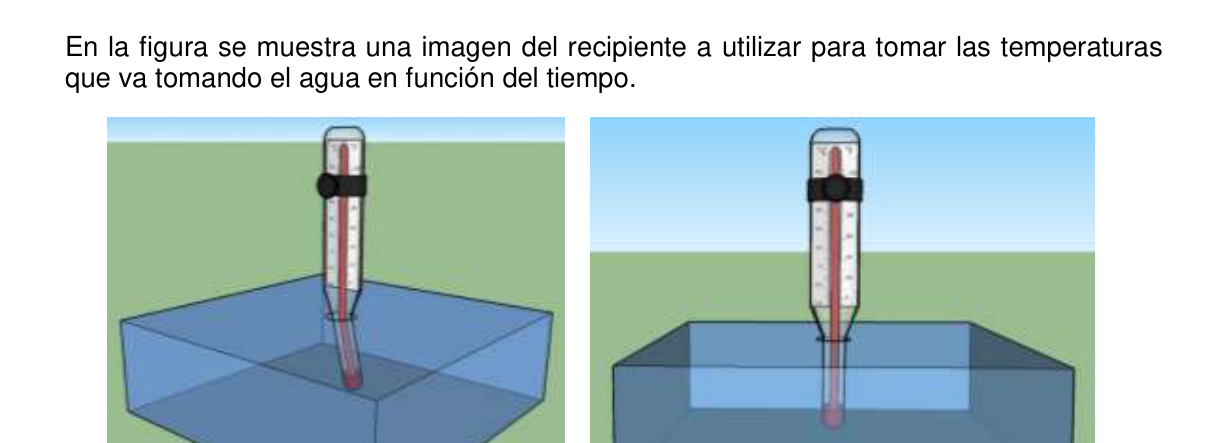
Topic: Thermodynamics Metodi: Experimental Data Analysis, Graph Linearization, Error Propagation Competenze: Physical Reasoning, Experimental Data Analysis, Mathematical Modeling Objects: Container, Calorimeter Fonte: Testo (PDF) — p.5
PE20. UEGP N° 55 Don Orione. Presidente. - Signor Presidente, la commissione per la protezione dell’ambiente ha votato per una risoluzione del Parlamento europeo e del Consiglio.
Determinazione del coefficiente di conduzione termico del vetro
La conducibilità termica è una proprietà fisica dei materiali che misura la capacità di conduzione del calore. In altre parole, la conducibilità termico è anche la La capacità di una sostanza di trasferire l’energia cinetica delle sue molecole ad altre adiacenti o sostanze con cui è in contatto. Nel Sistema internazionale di Unità la conducibilità termico è misurata in W/(m·K) (equivalente a J/(m·s·K) o in unità di cal/(s.cm.°C))
La determinazione della costante di conducibilità termica dei materiali dipende dalla misurazione del flusso di calore che passa attraverso il campione, della differenza di temperatura tra le due facce e lo spessore della placca. In questo esperimento la La quantità di calore che passa attraverso il recipiente di vetro è determinata dal flusso. di calore che riesce a passare all’interno del recipiente e raggiungere il centro del recipiente per unità.
- Il tempo.
158 - OAF 2018 La figura mostra un’immagine del recipiente da usare per prendere le temperature che prende l’acqua in funzione del tempo.
L’equazione che rappresenta il flusso di calore per unità di tempo attraverso la placca è dato da:
∆𝑄 ∆𝑡= 𝐾. 𝐴. ∆𝑇 𝑒
in unità di: [cal 𝑠= cal 𝑠. 𝑐𝑚. °𝐶. 𝑐𝑚2. °𝐶 𝑐𝑚 ]
Dove ∆Q è la quantità di calore, k coefficiente di conduzione termica del materiale, A e e sono rispettivamente area e spessore, ∆T variazione di temperatura e ∆t tempo.
Quindi la costante di conducibilità termica, K, è rappresentata come:
𝑘= 𝑒.∆𝑄 ∆𝑡 A.∆T in unità di: [ cm.cal 𝑠 𝑐𝑚2.°𝐶]
Ad eccezione di ∆Q/∆t determinato indirettamente dalla massa dell’acqua, la sua calore La differenza di temperatura e di specificità, per unità di tempo, è determinata da: I parametri dell’equazione possono essere misurati direttamente: differenza di temperatura tra le due facce della scheda, ∆T=Ti-Tf, e l’area della scheda contenitore A.
Obiettivo Determinare il coefficiente di conduzione termica del vetro
Materiali
- Cose di vetro.
- Termodinamica.
- Termodermico ambientale
- Un cronometro.
- Regola.
- Calibro.
- Ricevitore di laurea.
- Acqua a bassa temperatura.
- Calcolatrice.
OAF 2018 - 159 Procedura
-
Con una regola misurato tutti i volti del contenitore, in modo da ottenere l’area in contatto con l’acqua.
-
Usa un calibro e misura lo spessore del vetro.
-
Metti l’ acqua fino a quando il recipiente è pieno; poi passa l’ acqua in un recipiente La massa di questo materiale è di circa la densità dell’acqua. 𝜌= 1𝑔/𝑐𝑚3
-
Poi mettete l’acqua a bassa temperatura fino a riempire il recipiente.
-
Misurare la temperatura dell’acqua in quel momento e tappe il contenitore.
-
Controllare l’ora in cui si fa la prima misura e accendere il cronometro.
-
Controllare la temperatura ambiente in quel momento.
-
Registrare su una tabella la temperatura dell’acqua ogni 5 minuti.
-
Con i dati di temperatura e tempo vallata determinando il flusso di calore, considerando che il valore specifico di calore dell’acqua Ce= 1 cal 𝑔.°𝐶 . ∆𝑄 ∆𝑡= 𝑚. 𝐶𝑒. ∆𝑇 ∆𝑡
Dopo aver ottenuto il flusso di calore per unità di tempo, determinare k del vetro, mediante l’equazione: 𝑘= 𝑒. ∆𝑄 ∆𝑡 𝐴. ∆𝑇
Observa tutti i valori di temperatura ottenuti in misura di si avvicinava all’equilibrio termico; analizzarli insieme al valore di k e poi compararlo con quello della tabella dei coefficienti del vetro. Non dimenticare che è necessario. si deve tenere presente che k dell’acqua = 0,0014 cal La Commissione ha adottato una decisione che prevede che il sistema di controllo dei dati sia stato modificato. Conclusioni.
Topic: Thermodynamics Metodi: Experimental Data Analysis, Graph Linearization, Error Propagation Competenze: Physical Reasoning, Experimental Data Analysis, Mathematical Modeling Objects: Container, Calorimeter Fonte: Testo (PDF) — p.5
PE20. The following information is provided by the Commission: The Commission has also adopted a number of proposals for a new directive.
Determination of the thermal conduction coefficient of the glass
Thermal conductivity is a physical property of materials that measures the capacity of heat conduction. In other words, thermal conductivity is also the The ability of a substance to transfer kinetic energy from its molecules to other substances adjoining substances or substances with which it is in contact. In the International System of Units thermal conductivity is measured in W/(m·K) (equivalent to J/(m·s·K) or in The following table shows the total number of units of cal/(s.cm.°C))
The determination of the thermal conductivity constant of materials depends on the measurement of the heat flow through the sample, of the difference of temperature between the two sides and the thickness of the plate. In this experiment, the The amount of heat passing through the glass vessel is determined from the flow. The heat can pass inside the container and reach the center of the container per unit. I’m not going to be late.
The Commission shall adopt delegated acts in accordance with Article 21 of this Regulation. The figure shows an image of the container to be used to take the temperatures It’s taking up water depending on the weather.
The equation that represents the flow of heat per unit time through the plate is given by:
∆𝑄 ∆𝑡= 𝐾. 𝐴. ∆𝑇 𝑒
in units of: [cal 𝑠= Cal 𝑠. 𝑐𝑚. °𝐶. 𝑐𝑚2. °𝐶 𝑐𝑚 ]
Where ∆Q is the amount of heat, k the thermal conduction coefficient of the material, A and e are the area and thickness respectively, ∆T temperature variation, and ∆t time.
So the thermal conductivity constant, K, is represented as:
𝑘= 𝑒.∆𝑄 ∆𝑡 A.∆T in units of: [ Cm.cal 𝑠 𝑐𝑚2.°𝐶]
Except ∆Q/∆t which is determined indirectly by the water mass, its heat The temperature difference is defined as the difference between the specific and the temperature difference per unit time. The parameters of the equation can be measured directly: the thickness of the plate and the temperature difference between the two sides of the plate, ∆T=Ti-Tf, and the area of the plate container A.
The objective Determine the thermal conduction coefficient of the glass
Materials
- Glass receivers.
- I got a thermometer.
- The ambient thermometer .
- It’s a timekeeper.
- It’s a rule.
- It’s a caliber.
- Graduate receiver.
- Water at low temperature.
- Calculator.
The Commission shall adopt delegated acts in accordance with Article 21 of the Financial Regulation. The procedure
-
With a rule measuring all the faces of the container, so as to get the area contact with water.
-
Use a caliber and measure the thickness of the glass.
-
Place water until the container is full; then pass the water to a container The resulting mass is the mass of the sample. the density of the water. 𝜌= 1𝑔/𝑐𝑚3
-
Then place water at a low temperature until the container is filled.
-
Measure the temperature at which the water is at that instant and tap the water. container.
-
Check the time of the first measurement and turn on the chronometer.
-
Control the ambient temperature at that time.
-
Record the water temperature on a table every 5 minutes.
-
With temperature and weather data the fence determining heat flow, Whereas the specific heat value of water Ce= 1 cal 𝑔.°𝐶 . ∆𝑄 ∆𝑡= 𝑚. 𝐶𝑒. ∆𝑇 ∆𝑡
After obtaining the heat flow per unit time, determine k of glass, by the equation: 𝑘= 𝑒. ∆𝑄 ∆𝑡 𝐴. ∆𝑇
Note All temperature values obtained as you approached thermal equilibrium; analyze them together with the value of k and then compare it with the coefficient table in the glass. Don ‘t forget you have to . take into account that k of water = 0,0014 Cal The Commission has also adopted a number of recommendations for the implementation of the programme. The Commission has already taken a number of decisions.
Topic: Thermodynamics Metodi: Experimental Data Analysis, Graph Linearization, Error Propagation Competenze: Physical Reasoning, Experimental Data Analysis, Mathematical Modeling Objects: Container, Calorimeter Fonte: Testo (PDF) — p.5
PE21. Escuela Politécnica N° 701 Francisco Gilardoni. Esquel, Chubut.
Determinación de la constante elástica de un resorte
El módulo de la fuerza aplicada por un resorte es proporcional al cambio de longitud del mismo, es decir F=k.l
Donde k es la constante elástica del resorte, y l es la diferencia entre la longitud inicial y la longitud final del resorte l-l0.
Elementos
- Resorte
- Regla
- Soporte
- Pesas y porta pesas
Procedimiento
-
Cargar el resorte con distintos pesos Pi y medir las longitudes correspondientes. Realizar varias mediciones de este tipo.
-
Graficar los valores obtenidos en un sistema de ejes cartesianos.
160 - OAF 2018
-
Ajustar los puntos graficados con una recta. Determinar la pendiente y la ordenada de la recta de ajuste.
-
Trazar en el gráfico la recta de ajuste.
-
A partir de los parámetros de la recta de ajuste, determinar el valor de la constante elástica del resorte con su correspondiente error.
Topic: Elasticity & Materials Metodi: Experimental Data Analysis, Hooke’s Law, Graph Linearization Competenze: Physical Reasoning, Experimental Data Analysis Objects: Spring Fonte: Testo (PDF) — p.5
PE21. Scuola Politetnica N° 701 Francisco Gilardoni. Che cosa, Chubut.
Determinazione della costante elastica di una primavera
Il modulo di forza applicato da una resorte è proporzionale al cambiamento di lunghezza del Proprio, cioè F=k.l
Dove k è la costante elastica della resorte, e l è la differenza tra la lunghezza iniziale e la lunghezza finale della sorgente l-l0.
Elementi
- Resorte
- Regola .
- Supporto .
- Pese e porta pesi
Procedura
- Caricare la stagione con diversi pesi Pi e misurare le lunghezze corrispondenti. Fare diverse misurazioni di questo tipo.
- Grafica dei valori ottenuti in un sistema di assi cartesiani.
160 - OAF 2018
- Aggiustare i punti graficati con una retta. Determinare la pendenza e l’ordinato della linea di regolazione.
- Tracciare la linea di regolazione sul grafico.
- Sulla base dei parametri della retta di regolazione, determinare il valore della costante l’elastico della primavera con il suo errore corrispondente.
Topic: Elasticity & Materials Metodi: Experimental Data Analysis, Hooke’s Law, Graph Linearization Competenze: Physical Reasoning, Experimental Data Analysis Objects: Spring Fonte: Testo (PDF) — p.5
PE21. The school is located in the centre of the city. That one, Chubut.
Determination of the elastic constant of a spring
The force modulus applied by a spring is proportional to the change in length of the spring. I mean, it’s the same thing. F=k.l
Where k is the spring elastic constant, and l is the difference between the initial length and the final length of the spring l-l0.
Elements
- Spring .
- Rule .
- Support .
- Weights and carry weights
The procedure
- Charge the spring with different Pi weights and measure the corresponding lengths. Performing several such measurements.
- Graph the values obtained in a Cartesian axis system.
The Commission shall adopt delegated acts in accordance with Article 21 of Regulation (EC) No 1605/2008.
- Adjust the graphed points with a straight. Determine the slope and the orderly of the adjustment line.
- To chart the adjustment line.
- From the parameters of the adjustment line, determine the value of the constant spring elasticity with its corresponding error.
Topic: Elasticity & Materials Metodi: Experimental Data Analysis, Hooke’s Law, Graph Linearization Competenze: Physical Reasoning, Experimental Data Analysis Objects: Spring Fonte: Testo (PDF) — p.5
PE22. Colegio Crucero General Belgrano. General Campos, La Pampa.
Caídas en la escuela
En esta localidad este año las lluvias han sido muchas y abundante, por ese motivo a ocurrido que la entrada de la escuela tiene subidas con una inclinación de 300 con un piso de cerámicos y se pone muy resbaloso por ese motivo se esta pensando en hacer un cambio en ese piso como pintarlo o colocar algo arriba (goma, madera o otros materiales).
Materiales necesarios
- 3 planos inclinados regulables con el plano pintado con una pintura normal, otro con pintura antideslizante y el ultimo con una goma pegada
- tres cuerpos de forma regular de distintos materiales adheridos que se usa en los zapatos
- cronometro
- una cinta métrica
- una balanza
- un recipiente con agua
a) armar un plano inclinado con angulo de 300
b) dejar caer cada uno de cuerpos en seco y húmedo
c) tomar los tiempos de caída de cada uno
- Con estos datos y todos los que sean necesario determinar el coeficiente de rozamiento en cada uno de los casos.
- Velocidad con la que llega al final del plano inclinado
- Potencia con la que llega
- Energia cinetica
- Que considera mejor para realizar la reforma en la entrada
Topic: Newtonian Mechanics, Conservation of Energy Metodi: Experimental Data Analysis, Free-Body Diagram, Kinematic Equations Competenze: Physical Reasoning, Experimental Data Analysis Objects: Inclined Plane, Block Fonte: Testo (PDF) — p.5
PE22. - Scuola di Crociera Generale di Belgrano. Generale Campos, La Pampa.
- Sono caduta a scuola.
In questa località quest’anno le piogge sono state molte e abbondanti, per questo motivo E’ successo che l’ingresso della scuola ha un’ascesa con un’inclinazione di 300 con un piano. E ’ molto scivolante. E’ per questo che sta pensando di fare un’altra. cambiamento in quel pavimento come dipingere o mettere qualcosa sopra (gomma, legno o altri materiali).
Materiali necessari
- 3 piani inclinati regolabili con il piano dipinto con un normale dipinto, un altro con vernice anti-slip e l’ultimo con una gomma incollata
- tre corpi di forma regolare di diversi materiali adesivi utilizzati in Le scarpe
- cronometro
- un nastro metrico .
- una bilancia .
- un contenitore con acqua
a) montare un piano inclinato con angolo di 300 b) cadere cadaveri secchi e umidi. c) prendere i tempi di caduta di ciascuno
- Con questi dati e con tutti quelli necessari, si determina il coefficiente di il rottura in ogni caso.
- La velocità con cui arriva alla fine del piano inclinato
- Potenza con cui arriva
- Energia cinetica
- Che considera meglio per realizzare la riforma all’ingresso
Topic: Newtonian Mechanics, Conservation of Energy Metodi: Experimental Data Analysis, Free-Body Diagram, Kinematic Equations Competenze: Physical Reasoning, Experimental Data Analysis Objects: Inclined Plane, Block Fonte: Testo (PDF) — p.5
PE22. The Belgrano General Cruising College. General Campos, the Pampa.
Falling in school .
In this town this year the rains have been heavy and abundant, for that reason It happened that the entrance to the school has a 300-square-foot slope with a single floor. It’s getting really slippery, so he’s thinking about making one. I change that floor like paint it or put something on top (rubber, wood or other) (including materials).
Materials needed
- 3 adjustable inclined planes with the plane painted with a normal paint, another With anti-slip paint and the last one with a rubber patch .
- three regularly formed bodies of different adherent materials used in The shoes .
- the timepiece .
- a tape measure .
- a scale .
- a container with water
(a) set up an inclined plane with an angle of 300 (b) drop each body in dry and wet. (c) take each fall time
- With these data and all the necessary data, the coefficient of The Commission has not yet taken any further action.
- Speed at which it reaches the end of the inclined plane
- The power he comes with
- Kinetic energy
- Which considers best to carry out the reform at the entrance
Topic: Newtonian Mechanics, Conservation of Energy Metodi: Experimental Data Analysis, Free-Body Diagram, Kinematic Equations Competenze: Physical Reasoning, Experimental Data Analysis Objects: Inclined Plane, Block Fonte: Testo (PDF) — p.5
PE23. Instituto Politécnico Superior General San Martín. Rosario, Santa Fe.
Magneto puede volar Los imanes son una parte esencial de nuestras vidas; almacenan información, nos acercan los teléfonos de un delivery desde la heladera, etc. Cómo interactúan los imanes entre sí, depende de muchos factores como la geometría del mismo y el proceso de construcción. Sin embargo, nos resulta fácil saber que al acercar dos imanes, o se atraen o se repelen, según como los ubique. Nuestro trabajo ahora será estudiar exactamente esa relación. En términos generales, se espera que, si no se cambia la geometría, lo cual incluye que no haya rotaciones entre ellos, el comportamiento estará descripto por una ley del tipo
𝐹𝑚𝑎𝑔(𝑟) = 𝛽1 𝑟𝜒
OAF 2018 - 161 Donde r es la distancia y 𝜒 un exponente que depende de la geometría (para dos dipolos magnéticos por ejemplo, 𝜒 =4). Para este experimento se propone utilizar 𝜒= 1 2. Otro problema de los imanes es que, por el principio de funcionamiento de las balanzas electrónicas, medir su masa en las mismas puede generar dificultades; quitándonos información relevante para resolver nuestros problemas.
Objetivos a) Estudiar la interacción entre dos imanes. b) Calcular la masa del imán.
Materiales
- 2 imanes toroidales
- Regla
- Soporte vertical
- Arandelas
- Balanza
- Dinamómetro
Consigna
- Monta el dispositivo en sintonía con la imagen.
- Prepara las arandelas que se usarán como peso.
- Realiza una tabla con tres columnas: cantidad de arandelas (n), masa de las arandelas (mn) y distancia entre los imanes (rn).
- Grafica la masa de las arandelas en función de la distancia entre imanes.
- Realiza una tabla de 𝑚𝑛 en función de 1 √𝑟𝑛 ⁄ .
- Grafica los datos de la tabla anterior y ajusta los datos.
- Encuentra la expresión analítica para obtener la masa del imán a partir del ajuste realizado. Ayuda: te puede ser de utilidad hacer el diagrama de cuerpo libre y recordar que 𝐹𝑚𝑎𝑔(𝑟) = 𝛽 1 √𝑟.
- Mida la masa del imán y compara con la expresión obtenida de la gráfica.
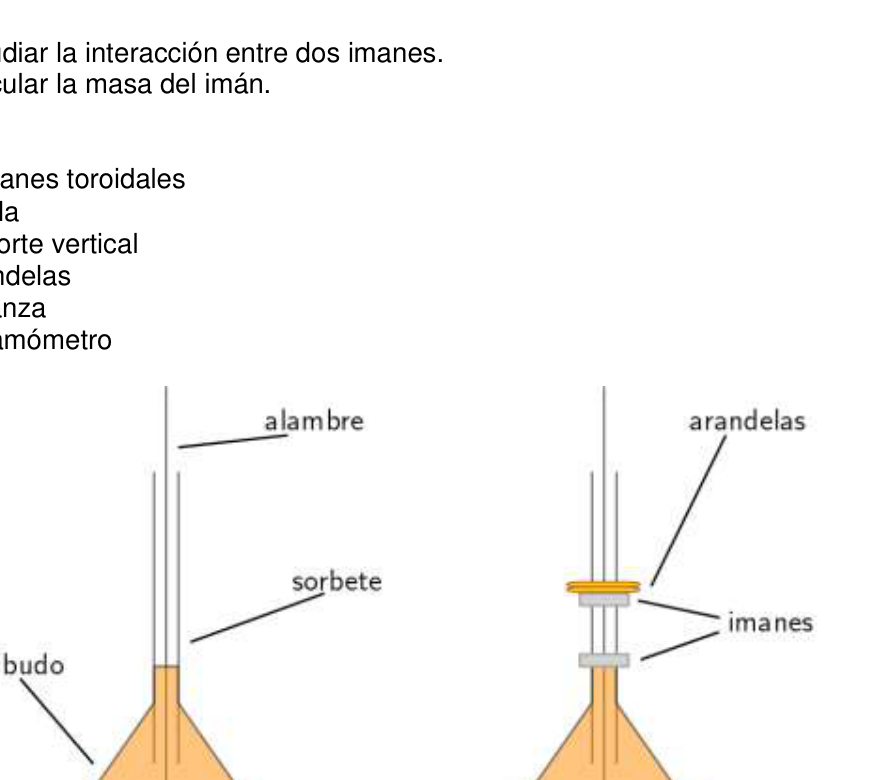
Topic: Magnetism Metodi: Experimental Data Analysis, Graph Linearization, Free-Body Diagram Competenze: Physical Reasoning, Experimental Data Analysis, Mathematical Modeling Objects: Magnet, Magnetic Dipole Fonte: Testo (PDF) — p.5
PE23. Istituto Politetnico Superiore Generale San Martín. Rosario, Santa Fe.
Magneto può volare I magneti sono una parte essenziale della nostra vita; memorizzano informazioni, ci si avvicinano i telefoni di un distributore dal frigorifero, ecc. Come interagiscono i magneti La geometria del sistema e il processo di costruzione. Tuttavia, è facile sapere che quando due magneti si avvicinano, o si attraggono. o si ripudiano, a seconda del luogo in cui li trovi. Il nostro lavoro ora sarà studiare esattamente
- quella relazione. Generalmente, si prevede che, se non si cambia la geometria, che include Non ci sono rotazioni tra loro, il comportamento sarà descritto da una legge del tipo
Fmag(r) = β1 𝑟𝜒
OAF 2018 - 161 Dove r è la distanza e χ un esponente che dipende dalla geometria (per due dipoli Magnetico, per esempio, χ =4). Per questo esperimento si propone di utilizzare χ= 1 2. Un altro problema dei magneti è che, per il principio di funzionamento delle balance La nostra capacità di misurare la massa elettronica può generare difficoltà. informazioni pertinenti per risolvere i nostri problemi.
Obiettivi a) Studiare l’interazione tra due magneti. b) Calcolare la massa dell’immagine.
Materiali
- Due magneti toroidali .
- Regola .
- Supporto verticale
- Taglia le palle .
- Sbalzo .
- Dinamometro .
Consigna
- Metta il dispositivo in sintonia con l’immagine.
- Preparate le arende da usare come peso.
- Realizza una tabella con tre colonne: numero di arandela (n), massa delle le arandele (mn) e la distanza tra i magneti (rn).
- Grafica la massa delle arende in base alla distanza tra i magneti.
- Realizza una tabella di mn in base a 1 √rn ⁄ .
- Grafica i dati della tabella precedente e regola i dati.
- Trova l’espressione analitica per ottenere la massa del magnete dal regolare
- il progetto di bilancio. Aiuto: può essere utile fare il diagramma del corpo libero e Ricordare che Fmag(r) = β 1 √𝑟.
- Misura la massa del magnete e confronta con l’espressione ottenuta dal grafico.
Topic: Magnetism Metodi: Experimental Data Analysis, Graph Linearization, Free-Body Diagram Competenze: Physical Reasoning, Experimental Data Analysis, Mathematical Modeling Objects: Magnet, Magnetic Dipole Fonte: Testo (PDF) — p.5
PE23. The French authorities have also been involved in the investigation. Rosario, Santa Fe.
Magneto can fly . Magnets are an essential part of our lives; they store information, we They’re bringing in a delivery phone from the fridge, etc. How magnets interact with each other It depends on many factors, such as its geometry and the process of The construction. However, it’s easy to know that when two magnets come close, they either attract each other. Or they’ll be repelled, depending on where you’re located. Our job now will be to study exactly That relationship. Generally speaking, it is expected that, if the geometry is not changed, which includes that There are no rotations between them, the behavior will be described by a law of the kind.
Fmag(r) = β1 𝑟𝜒
The Commission shall adopt delegated acts in accordance with Article 21 of this Regulation. Where r is the distance and χ is an exponent that depends on geometry (for two dipoles magnetic, for example, χ =4). For this experiment it is proposed to use χ= 1 2. Another problem with magnets is that, by the principle of the functioning of scales The fact that the mass of the electrons is measured in the same way can cause difficulties. relevant information to solve our problems.
Objectives (a) Study the interaction between two magnets. (b) Calculate the mass of the magnet.
Materials
- Two torus magnets .
- Rule .
- Upright support
- Cut them .
- Weigh it .
- Dynamometer .
I ‘m giving it away .
- Set the device in line with the image.
- Prepare the scales to be used as a weight.
- Make a table with three columns: number of arandelas (n), mass of the arandelas The magnetic field is the magnetic field.
- Graph the mass of the arandelas based on the distance between magnets.
- Perform a table of mn based on 1 √rn ⁄ .
- Graph the data from the table above and adjust the data.
- Find the analytical expression to obtain the mass of the magnet from the adjustment. The Commission has already taken a decision. Help: you may be useful in making the free body diagram and Remember that Fmag(r) = β 1 √𝑟.
- Measure the mass of the magnet and compare it to the expression obtained from the graph.
Topic: Magnetism Metodi: Experimental Data Analysis, Graph Linearization, Free-Body Diagram Competenze: Physical Reasoning, Experimental Data Analysis, Mathematical Modeling Objects: Magnet, Magnetic Dipole Fonte: Testo (PDF) — p.5
PE24. Instituto Jesús María. Ciudad de Córdoba.
Y dale con la pelotita…
Como usted habrá observado en una colisión, todos los cuerpos sufren una pequeña deformación y por tanto liberan energía en forma de calor. La facilidad con que un cuerpo recobra su forma original después de un choque, es la medida de su elasticidad. Se debe
162 - OAF 2018 tener en cuenta que tanto la cantidad de movimiento como la energía se conservan en los choques. En el caso de un cuerpo duro, es posible considerar que su energía cinética prácticamente se conserva. Cuando se trata de cuerpos suaves o que puedan rebotar más lentamente, registra una pérdida de su energía cinética. Si la energía cinética se conserva después del choque, se dice que este ha sido perfectamente elástico. Si los cuerpos que chocan entre sí, permanecen juntos luego del mismo, se dice que es perfectamente inelástico. La mayor parte de los choques varían entre estos dos extremos. Una forma de medir la elasticidad de un choque, es relacionando las velocidades relativas de los cuerpos antes y después del mismo. La pérdida de energía cinética se puede representar por e , la fracción entre la velocidad relativa final de ambos cuerpos y la velocidad relativa inicial, o sea : ( v1f – v2f ) = - e . ( v1i – v2i) (1)
Por lo que, despejando : e = – (v1f – v2f) x (v1i – v2i)-1 (2)
Donde: v1i ; v1f, son las velocidades de la pelota antes del choque y después del choque.
V2i; v2f, son las velocidades de la superficie (tierra) antes y después del choque.
Como v2i = v2f = 0, reemplazando en (2), se tiene
e = - v1f / v1i (3)
Para choques perfectamente elásticos, e = 1 Para choques perfectamente inelásticos, e = 0 Aplicando las ecuaciones del movimiento uniformemente variado, y suponiendo nulo el rozamiento, se obtiene Vf2 = Vo2 +/- 2.g.h
Donde si V0 = 0, queda Vf = - (2.g.h0)1/2 (5)
Si a esa velocidad final de caída la denominamos V1i, es decir, la velocidad del cuerpo inmediatamente antes de chocar con la superficie desde una altura h0, se obtiene V1i = - (2.g.h0)1/2 (6)
Igualmente se obtiene V1f = (2.g.h1)1/2 (7), al tratarse de la velocidad con que el cuer-po comienza a ascender luego de chocar con la superficie, en sentido contrario a V1i. Reemplazando en el coeficiente de restitución, se tiene e = (2.g.h1)1/2x (2.g.h0)-1/2
Simplificando e = (h1/h0)1/2 (8)
Si se deseara obtener la altura de un segundo rebote, se tendría h2 = e2. h1 (9)
Y así sucesivamente.
Objetivo Determinar el Coeficiente de Restitución (e) de una pelota de ping-pong. (Fórmula también conocida como relación HUYGENS-NEWTON).
Elementos Pelotita de ping-pong – Cinta métrica
Requerimientos Sólo podrá utilizar los elementos provistos, papel, lapicera, calculadora. Al finalizar el trabajo, deberá presentar un informe que incluya los siguientes puntos:
- Esquema del dispositivo experimental montado.
OAF 2018 - 163
- Diagramas de cuerpo libre en distintas posiciones de la pelotita; antes de tocar la superficie, en el instante que la toca y mientras asciende.
- Descripción y fundamentación del procedimiento utilizado.
- Cuadros de valores de las mediciones realizadas, al menos 5 series con distintas alturas iniciales.
- Determine el coeficiente de restitución para cada altura inicial, con su error.
- Determine el coeficiente de restitución medio, con su error.
- Grafique h1 (X) h0
- Determine la pendiente de gráfica y explique qué representa.
- A partir de dicha pendiente, obtenga el valor de e, con su error.
- Analice las fuentes de error y diga qué modificaciones haría para disminuirlas
- A partir de los datos de la primera altura inicial, calcular el número de rebotes hasta que la pelotita sólo ascienda 1 cm.
RECUERDE: si rompe la pelotita terminó su experimental…..
Topic: Conservation of Energy, Conservation of Momentum Metodi: Experimental Data Analysis, Graph Linearization, Energy Conservation Method Competenze: Physical Reasoning, Experimental Data Analysis, Mathematical Modeling Objects: Ball Fonte: Testo (PDF) — p.5
PE24. Istituto Gesù Maria. Città di Córdoba.
E poi, colpisci la palla.
Come avrete notato in una collisione, tutti i corpi soffrono un piccolo La loro forma di deformazione è la loro stessa, e quindi rilasciano energia sotto forma di calore. La facilità con cui un corpo La sua forma originale dopo un colpo, è la misura della sua elasticità. - Dovrebbe essere
162 - OAF 2018 La quantità di movimento e l’energia sono conservate nei
- Gli scontri. Nel caso di un corpo duro, si può considerare che la sua energia cinetica praticamente si conserva. Quando si tratta di corpi morbidi o che possono ribaltare più lentamente, registra una perdita di energia cinetica. Se l’energia cinetica viene conservata dopo lo scontro, si dice che questo è stato perfettamente elastica. Se i corpi che si scontrano restano insieme dopo il E’ anche, si dice, perfettamente inelastico. La maggior parte dei colpi varia. tra queste due estremità. Un modo per misurare l’elasticità di un colpo è correlare le velocità. Relative ai corpi prima e dopo. La perdita di energia cinetica può essere rappresentata da e , la frazione tra velocità . La velocità relativa iniziale di entrambi i corpi è: ( v1f – v2f ) = - e . ( v1i – v2i) (1)
Quindi, chiarisce: e = (v1f v2f) x (v1i v2i) - 1 (2)
Dove: v1i; v1f, sono le velocità della palla prima e dopo il colpo. V2i; v2f, sono le velocità della superficie (terra) prima e dopo lo scontro. Come v2i = v2f = 0, sostituendo in (2), si ha e = - v1f / v1i (3)
Per le collisioni perfettamente elastica, e = 1 Per gli scosse perfettamente inelasche, e = 0 Applicando le equazioni di movimento uniformemente variata, e supponendo che il Raggiustare, si ottiene Vf2 = Vo2 +/- 2.g.h
In cui se V0 = 0, resta Vf = - (2.g.h0)1/2 (5)
Se questa velocità di caduta finale la chiamiamo V1i, cioè la velocità del corpo. immediatamente prima di colpire la superficie da un’altezza h0, si ottiene V1i = - (2.g.h0)1/2 (6)
V1f = (2.g.h1) 1/2 (7), in quanto rapido comincia a salire dopo aver colpito la superficie, in senso contrario a V1i. Rimpiazzando il coefficiente di restituzione, si ottiene e = (2.g.h1)1/2x (2.g.h0)-1/2
Semplificando e = (h1/h0)1/2 (8)
Se si desidera ottenere la altezza di un secondo rimbalzo, si avrebbero h2 = e2. h1 (9)
E così via.
Obiettivo Determinare il Coefficiente di restituzione (e) di una palla di ping-pong. (Formula (anche conosciuta come rapporto HUYGENS-NEWTON).
Elementi Palla di ping-pong Cintura metrica
Richieste Può utilizzare solo gli elementi forniti, carta, lapislatura, calcolatore. Al termine del lavoro, deve presentare una relazione che include i seguenti punti:
- Schema del dispositivo sperimentale montato.
OAF 2018 - 163
- Diagrammi di corpo libero in diverse posizioni della palla; prima di toccare la la superficie, all’istante in cui la tocca e mentre si alza.
- descrizione e motivazione della procedura utilizzata.
- quadri di valori delle misure effettuate, almeno 5 serie con diverse Altezze iniziali.
- Determina il coefficiente di restituzione per ogni altitudine iniziale, con il suo errore.
- Determina il coefficiente di restituzione medio, con il tuo errore.
- Grafico h1 (X) h0
- Determina la pendenza grafica e spiega cosa rappresenta.
- Da questa pendenza, ottieni il valore di e, con il tuo errore.
- Analizzare le fonti di errore e dire quali modifiche farebbe per ridurle
- Sulla base dei dati della prima altitudine iniziale, calcolare il numero di rimbalzi finché la palla non salta più di un centimetro.
RICORDO: se rompe la palla ha finito il suo esperimento.
Topic: Conservation of Energy, Conservation of Momentum Metodi: Experimental Data Analysis, Graph Linearization, Energy Conservation Method Competenze: Physical Reasoning, Experimental Data Analysis, Mathematical Modeling Objects: Ball Fonte: Testo (PDF) — p.5
PE24. Jesus Mary Institute. The city of Cordoba.
And hit him with the ball.
As you may have observed in a collision, all bodies suffer a small one. They deform and thus release energy in the form of heat. The ease with which a body It’s the measure of its elasticity. It must be
The Commission shall adopt delegated acts in accordance with Article 162. The amount of movement and energy are stored in the The crashes. In the case of a hard body, it is possible to consider that its kinetic energy It’s practically preserved. When it comes to soft bodies or those that can bounce . slower, it records a loss of its kinetic energy. If kinetic energy is retained after the impact, it is said that this has been It’s perfectly elastic. If the bodies collide with each other, they stay together after the It’s said to be perfectly inelastic. Most of the shocks vary. between these two extremes. One way to measure the elasticity of a shock is by relating the velocities. The Commission has not yet taken a decision on the basis of the information provided by the Member States. The loss of kinetic energy can be represented by e , the fraction between the velocity The relative end of both bodies and the relative initial speed, i.e.: ( v1f – v2f ) = - e . ( v1i – v2i) (1)
So, clearing out: e = (v1f v2f) x (v1i v2i) - 1 (2)
Where: v1i; v1f, are the ball speeds before and after the impact. V2i; v2f, are the velocities of the surface (earth) before and after the impact. As v2i = v2f = 0, replacing in (2), we have e = - v1f / v1i (3)
For perfectly elastic shocks, e = 1 For perfectly inelastic shocks, e = 0 Applying equations of uniformly varying motion, and assuming the null The result is a very good result. Vf2 = Vo2 +/- 2.g.h
Where if V0 = 0, then Vf = - (2.g.h0)1/2 (5)
If we call that final velocity of fall V1i, that is, the velocity of the body. immediately before impacting the surface from a height of h0, it is obtained V1i = - (2.g.h0)1/2 (6)
V1f = (2.g.h1) 1/2 (7), is also obtained as the velocity at which the body-po It starts to ascend after colliding with the surface, in the opposite direction to V1i. By replacing the rate of return, you have e = (2.g.h1)1/2x (2.g.h0)-1/2
Simplifying e = (h1/h0)1/2 (8)
If you wanted to get the height of a second bounce, you would have h2 = e2. h1 (9)
And so on and so forth.
The objective Determine the Return Coefficient (s) of a ping-pong ball. (Formulation also known as the HUYGENS-NEWTON ratio).
Elements Ping-pong ball Metric tape
Requirements You can only use the items provided, paper, pencil, calculator. At the end of the work, you must submit a report which includes the following points:
- Sketch of the experimental device mounted.
The Commission shall adopt delegated acts in accordance with Article 21 of the Financial Regulation.
- Free-body diagrams in different positions of the ball; before touching the ball surface, the moment you touch it and as it rises.
- description and justification of the procedure used.
- Value boards of measurements made, at least 5 series with different initial heights.
- Determine the restitution coefficient for each initial height, with your error.
- Determine the average rate of return, with your error.
- Graph h1 (X) h0
- Determine the slope of the graph and explain what it represents.
- From that slope, get the value of e, with your error.
- Analyze the sources of error and tell me what modifications you would make to reduce them.
- From the data from the first initial height, calculate the number of bouts until the ball only rises 1 cm.
RECOMMEND: if you break the ball, you’ve finished your experiment.
Topic: Conservation of Energy, Conservation of Momentum Metodi: Experimental Data Analysis, Graph Linearization, Energy Conservation Method Competenze: Physical Reasoning, Experimental Data Analysis, Mathematical Modeling Objects: Ball Fonte: Testo (PDF) — p.5
PE25. Escuela Técnica Alfredo Carlos Passera. Mocoretá, Corrientes.
Aplicación ley de ohm
Los conocimientos de la Ley de Ohm se llevaran a la práctica y se observara cómo la Ley se cumple perfectamente, siempre que las conexiones y mediciones sean hechas correctamente. Se realizaran mediciones de voltajes, resistencias y corrientes eléctricas y a establecer relaciones entre estos valores en base al tipo de conexión con la que se esté trabajando, que puede ser en serie, paralelo y serie paralelo.
Objetivo Comprobar, que la corriente es la misma en cualquier elemento conectado en serie, como así también lograr el armado de diferentes tipos de circuitos y comprobar dichas mediciones tanto teóricas como experimentales.
Elementos
- Resistencia de diferentes valores
- Alambre #24
- Tester análogos o digitales
- Fuente de voltaje
Circuito Cuando un grupo de resistencias se conecta, figura 1, por todas ellas fluye la misma corriente.
Figura 1
164 - OAF 2018 Procedimiento
- Alambrar el circuito de la figura.
- Tomar lecturas de voltaje y resistencia, anotándolas en la tabla.
- Explicar el proceso por el cual fue resuelto.
- Calcular teóricamente el voltaje y la corriente en cada elemento del circuito.
- ¿Cómo son entre si los valores de la corriente en los diferentes elementos de un circuito en serie?
- ¿Cómo se calcula la caída de potencial en una resistencia de forma teórica y experimental?
Datos R1 R2 R3 Re V1 V2 V3 E I1 I2 I3 I Teóricos 5600 1500 470
Experi- mentales
Procedimiento
- Alambrar el circuito de la figura.
- Tomar lecturas de voltaje y resistencia, anotándolas en la tabla.
- Calcular el voltaje y la corriente en cada elemento del circuito.
Figura 4
Datos R1 R2 R3 Re V1 V2 V3 E I1 I2 I3 I Teóricos 5600 1500 470
Experimentales
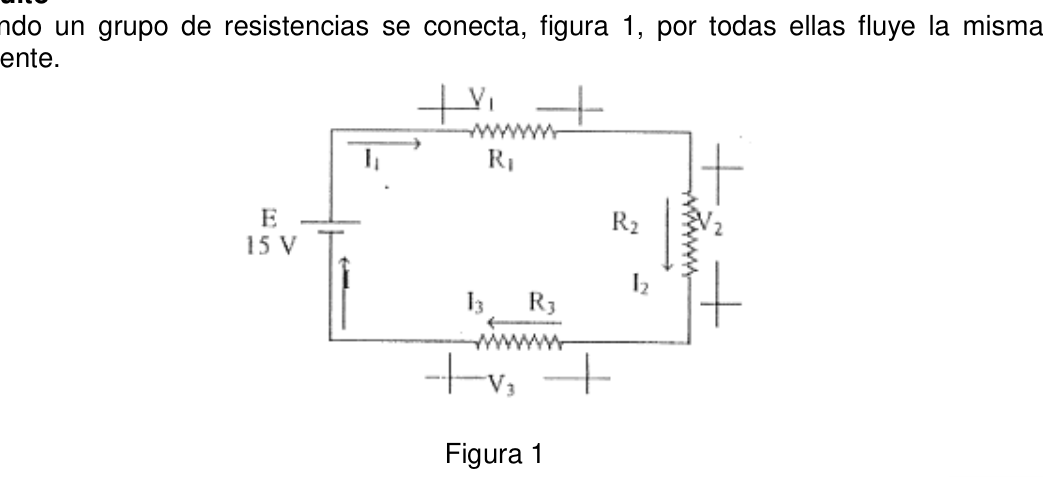
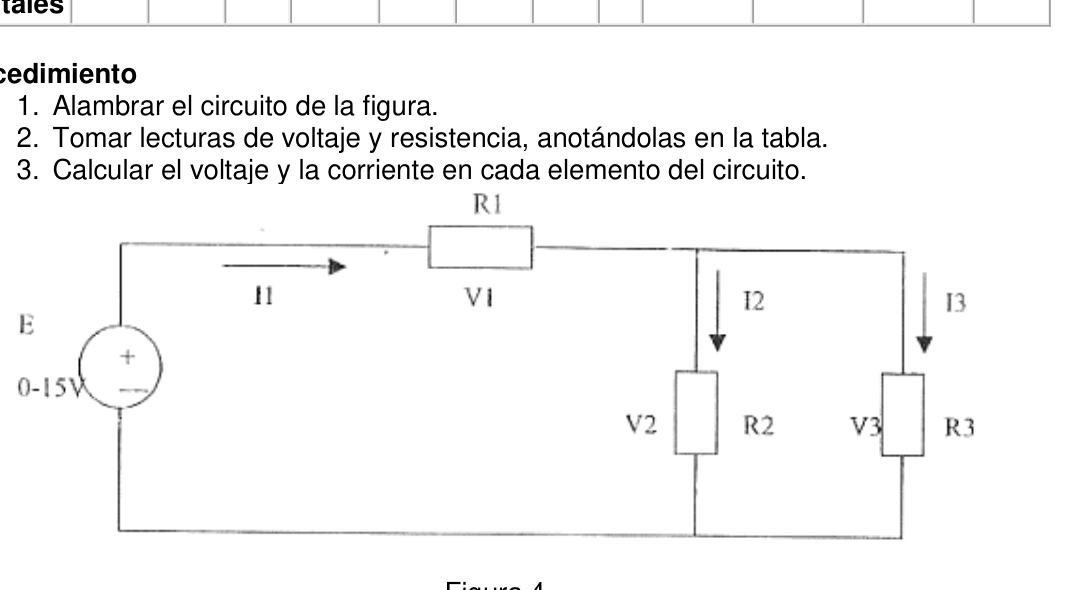
Topic: Circuits Metodi: Experimental Data Analysis, Kirchhoff’s Laws, Equivalent Circuit Reduction Competenze: Physical Reasoning, Experimental Data Analysis Objects: Resistor, Battery Fonte: Testo (PDF) — p.5
PE25. Scuola tecnica Alfredo Carlos Passera. Mocoretá, Corrientes.
Applicazione di legge ohm
La conoscenza della legge di Ohm sarebbe stata portata in pratica e si sarebbe osservato come la legge si compie perfettamente, purché siano effettuate le connessioni e le misurazioni.
- Sì, è giusto. Si effettueranno misure di tensioni, resistenze e correnti elettriche e si stabiliranno le condizioni di utilizzo di tali Relazioni tra questi valori in base al tipo di connessione con cui si sta lavorando, che può essere in serie, parallelo e in serie parallela.
Obiettivo Verificare che la corrente è la stessa in qualsiasi elemento collegato in serie, come Per questo, si può anche realizzare l’armatura di diversi tipi di circuiti e verificarli. Le misure sono state effettuate sia teoricamente che sperimentalmente.
Elementi
- resistenza di valori diversi
- Cintura numero 24.
- Test analoghi o digitali
- Fonte di tensione
Circuito Quando un gruppo di resistenze si collega, figura 1, per tutte esse scorre la stessa corrente. corrente.
Figura 1
164 - OAF 2018 Procedura
- Fibriare il circuito della figura.
- Prendere le letture di tensione e resistenza, annotandole sulla tabella.
- Spiegare il processo per cui è stato risolto.
- Calcolare teoricamente la tensione e la corrente in ogni elemento del circuito.
- Come sono tra di loro i valori di corrente nei diversi elementi di un circuito in serie?
- Come calcolare la caduta di potenziale in una resistenza teoricamente e
- Sperimentale?
Datos R1 R2 R3 Re V1 V2 V3 E I1 I2 I3 I Teoretici 5600 1500 470
Esperienza
- mentalmente.
Procedura
- Fibriare il circuito della figura.
- Prendere le letture di tensione e resistenza, annotandole sulla tabella.
- Calcolare la tensione e la corrente in ogni elemento del circuito.
Figura 4
Datos R1 R2 R3 Re V1 V2 V3 E I1 I2 I3 I I teorici 5600 1500 470
I prodotti di prova
Topic: Circuits Metodi: Experimental Data Analysis, Kirchhoff’s Laws, Equivalent Circuit Reduction Competenze: Physical Reasoning, Experimental Data Analysis Objects: Resistor, Battery Fonte: Testo (PDF) — p.5
PE25. The school is called Alfredo Carlos Passera. It’s a mockery, currents.
Application of Ohm law
Knowledge of Ohm’s Law would be put into practice and observed how the Law It is perfectly fulfilled, provided that connections and measurements are made. Right. Voltage, resistance and electric current measurements will be made and established. Relationships between these values based on the type of connection being worked on, which can be in series, parallel and parallel series.
The objective Check, that the current is the same in any serial connected element, like This is also the way to achieve the arming of different types of circuits and to check them. Theoretical and experimental measurements.
Elements
- Resistance of different values
- Wire #24
- Analog or digital test
- Power supply .
Circuit When a group of resistors is connected, figure 1 shows the same flow through them all. current.
Figure 1
The Commission shall adopt delegated acts in accordance with Article 21 of this Regulation. The procedure
- Wire the figure’s circuit.
- Take readings of voltage and resistance, noting them on the chart.
- Explain the process by which it was resolved.
- Theoretically calculate the voltage and current in each circuit element.
- How are the current values in the different elements of a What’s the series circuit?
- How is the potential fall in a resistance theoretically calculated and experimental?
Data from the report R1 R2 R3 Re V1 V2 V3 E I1 I2 I3 I Theoretical 5600 1500 470
The experience mentally
The procedure
- Wire the figure’s circuit.
- Take readings of voltage and resistance, noting them on the chart.
- Calculate the voltage and current in each circuit element.
Figure 4
Data from the report R1 R2 R3 Re V1 V2 V3 E I1 I2 I3 I Theorists 5600 1500 470
Experimental
Topic: Circuits Metodi: Experimental Data Analysis, Kirchhoff’s Laws, Equivalent Circuit Reduction Competenze: Physical Reasoning, Experimental Data Analysis Objects: Resistor, Battery Fonte: Testo (PDF) — p.5
PE26. Colegio Inmaculada Concepción. Frías, Santiago del Estero.
Objetivo Determinar el volumen de un cilindro hueco mediante medidas directas e indirectas. Comparar los resultados.
En toda medición intervienen: La magnitud física que se quiere medir, el instrumento con el que se mide el método de medición y el experimentador. La experiencia nos demuestra que cuando se repite una medición se pueden obtener distintos valores aunque no exista ninguna equivocación por parte del experimentador. La variación en los resultados de cada medición pone de manifiesto la incerteza en la
OAF 2018 - 165 determinación del resultado de la medición. Las incertezas pueden deberse tanto al instrumento o a los procesos de medición como al experimentador. También pueden aparecer fluctuaciones cuando la magnitud a medir no es exactamente estable o no está perfectamente determinada. Suponiendo que la magnitud a medir está perfectamente determinada y no varía durante el proceso de medición, las incertezas se deberán en general tanto al instrumento de medición como al experimentador.
Pasos a seguir Se calculará el volumen de un cilindro hueco utilizando diversos instrumentos de medida indirecta y directa.
- Con regla (medición indirecta) a) Medir 6 veces la altura, los diámetros externos y diámetros externos del cilindro.
altura d inter d exter 1
2
3
4
5
6
a) Determinar el valor de la h y los d (externos e internos) con sus respectivos errores.
h ± ∆h = dext ± ∆dext = dint ± ∆dint =
b) Determinar el valor representativo del volumen del cilindro V con su error. V = π.h.(dext 2- dint 2) /4
-
Cálculo del volumen con probeta graduada (medición directa de volumen) a) Se llena una probeta graduada hasta un cierto nivel X1; luego se introduce el cilindro y se lee el nuevo nivel alcanzado X2.
X 1 X 2
1
2
3
4
5
6
b) Determinar el valor de X1 y los X2 con sus respectivos errores. X1 = X1 ± ∆X1 = X2 = X2 ± ∆X2 = c) Determinar el valor representativo del volumen del cilindro V con su error.
El volumen queda determinado por la diferencia de esas dos lecturas (volumen del líquido desplazado). V = X2 - X1 = Determinar V± ∆V =
- Teniendo en cuenta los resultados obtenidos elabora una conclusión.
166 - OAF 2018
Topic: Order-of-Magnitude Estimation Metodi: Experimental Data Analysis, Error Propagation Competenze: Physical Reasoning, Experimental Data Analysis Objects: Cylinder Fonte: Testo (PDF) — p.5
PE26. La Concepzione Immacolata. Frie, Santiago del Estero.
Obiettivo Determinare il volume di un cilindro vuoto mediante misure dirette e indirette. Confrontare i risultati.
In ogni misurazione sono coinvolti: la grandezza fisica da misurare, l’istrumento con Il metodo di misurazione e l’esperimentatore. L’esperienza dimostra che quando si ripete una misurazione si può ottenere I risultati sono stati ottenuti con un’analisi di un’analisi di un’analisi di un’analisi di un’analisi di un’analisi di un’analisi di un’analisi di un’analisi di un’analisi di un’analisi di un’analisi di un’analisi di un’analisi di un’analisi di un’analisi di un’analisi di un’analisi di un’analisi di un’analisi di un’analisi di un’analisi di un’analisi di un’analisi di un’analisi di un’analisi di un’analisi di un’analisi di un’analisi di un’analisi di un’analisi di un’analisi di un’analisi di un’analisi di un’analisi di un’analisi di un’analisi di un’analisi di un’analisi di un’analisi di un’analisi di un’analisi di un’analisi di un’analisi di un’analisi di un’analisi di un’analisi di un’analisi di un’analisi di un’analisi di un’analisi di un’analisi di un’analisi di un’analisi di un’analisi. La La variazione dei risultati di ogni misurazione rivela l’incertezza in termini di
OAF 2018 - 165 determinazione del risultato della misurazione. Le incertezze possono derivare tanto da L’esame di un’unità di misurazione è un’attività di misurazione. Potete anche Le fluttuazioni si manifestano quando la magnitudine da misurare non è esattamente stabile o non è perfettamente determinata. Supponiamo che la grandezza da misurare sia perfettamente La misurazione è determinata e non varia durante il processo di misurazione, le incertezze devono essere La misurazione è un’operazione che si svolge con un’unità di misurazione.
I passi da seguire Il volume di un cilindro vuoto sarà calcolato utilizzando diversi strumenti di misura indiretta e diretta.
- Con regola (misura indiretta) a) Misurare 6 volte la altezza, i diametri esterni e i diametri esterni del cilindro.
Altezza d inter d esterno 1
2
3
4
5
6
a) Determinare il valore di h e d (esterni e interni) con i rispettivi errori.
h ± ∆h = dext ± ∆dext = dint ± ∆dint =
b) Determinare il valore rappresentativo del volume del cilindro V con il suo errore. V = π.h.(dext 2- dint 2) /4
-
Calcolo del volume con prova graduata (misura diretta del volume) a) Si riempie un campione graduato fino a un certo livello X1; Il cilindro e si legge il nuovo livello raggiunto X2.
X 1 X 2
1
2
3
4
5
6
b) Determinare il valore di X1 e X2 con i loro rispettivi errori. X1 = X1 ± ∆X1 = X2 = X2 ± ∆X2 = c) Determinare il valore rappresentativo del volume del cilindro V con il suo errore.
Il volume è determinato dalla differenza tra queste due letture (volume del liquido) (dislocato). V = X2 - X1 = Determinare V± ∆V =
- Considerando i risultati ottenuti, elabora una conclusione.
166 - OAF 2018
Topic: Order-of-Magnitude Estimation Metodi: Experimental Data Analysis, Error Propagation Competenze: Physical Reasoning, Experimental Data Analysis Objects: Cylinder Fonte: Testo (PDF) — p.5
PE26. Immaculate Conception College. It’s cold, Santiago del Estero.
The objective Determine the volume of a hollow cylinder by direct and indirect measurements. Compare the results.
In all measurements, they involve: the physical magnitude to be measured, the instrument with The measurement method is measured and the experimenter is measured. Experience shows that when a measurement is repeated, it can be obtained. The results of the experiment are not necessarily the same as the results of the experiment. La The variation in the results of each measurement shows the uncertainty in the
The Commission shall adopt delegated acts in accordance with Article 21 of the Financial Regulation. determination of the measurement result. Uncertainties can be so much due to the The measurement process is the same as the experimenter. You can too. fluctuations appear when the magnitude to be measured is not exactly stable or is not perfectly determined. Assuming the magnitude to be measured is perfectly The uncertainties should be determined and not varied during the measurement process. The measuring instrument and the experimenter are the same.
The next step . The volume of a hollow cylinder shall be calculated using various measuring instruments indirect and direct.
- By rule (indirect measurement) (a) Measure 6 times the height, the outer diameter and the outer diameter of the cylinder.
Height of the external 1
2
3
4
5
6
(a) Determine the value of the h and d (external and internal) with their respective values I’m not sure.
The following table shows the number of units of the vehicle:
(b) Determine the representative value of the volume of the V cylinder with its error. The following table shows the results of the evaluation:
-
Calculation of volume with a graduated sample (direct measurement of volume) (a) A graduated sample is filled to a certain level X1; then the The cylinder is read to the new level reached by X2.
X 1 X 2
1
2
3
4
5
6
(b) Determine the value of X1 and X2 with their respective errors. X1 = X1 ± ∆X1 = X2 = X2 ± ∆X2 = (c) Determine the representative value of the volume of the V cylinder with its error.
The volume is determined by the difference between these two readings (liquid volume (displaced) V = X2 - X1 = Determine V± ∆V =
- Taking into account the results obtained, draw a conclusion.
The following points shall be added:
Topic: Order-of-Magnitude Estimation Metodi: Experimental Data Analysis, Error Propagation Competenze: Physical Reasoning, Experimental Data Analysis Objects: Cylinder Fonte: Testo (PDF) — p.5
PE27. Escuela Modelo de San Juan Secundaria. Ciudad de San Juan.
Objetivo Determinar la aceleración de la gravedad utilizando la cinemática bidimensional
Breve descripción
Analizaremos el movimiento de un proyectil (esfera) lanzado desde la mesada del
laboratorio. Este tipo de movimiento se analiza partiendo de dos suposiciones: 1)La
aceleración de caída libre (g) es constante y dirigida hacia abajo. 2)Los efectos de fricción
con el fluido (aire) son despreciables. Con estas suposiciones se tiene que la trayectoria
que sigue el cuerpo es de tipo parabólica, como muestra la figura 1:
En estas condiciones, las ecuaciones de movimiento según los ejes de referencia serán: 𝑦= 𝑦𝑖+ 𝑣𝑦𝑖. 𝑡− 1 2 𝑔. 𝑡2 (1) 𝑥= 𝑥𝑖+ 𝑣𝑥 . 𝑡 (2)
Llamemos (h) a la altura inicial y consideremos: 𝑥𝑖= 0 ; 𝑦𝑓= 0 . De modo que:
Montaje Experimental
Elementos necesarios
- Soporte universal
OAF 2018 - 167
- Péndulo físico
- Una esfera metálica o similar
- cinta métrica
- PC con programa audacity o similar
- hojas de papel A4 con carbónico
Desarrollo del experimento Arme el péndulo sobre el soporte y asegúrese de que este golpeará a la esfera, este péndulo servirá de lanzador para la esfera (IMPORTANTE: mantenga el mismo ángulo de salida del péndulo), cuyo movimiento analizaremos. Para registrar los tiempos utilizaremos el programa audacity que analizará la señal de sonido proveniente del impacto del péndulo con la esfera (salida) y el impacto de la esfera con el piso (llegada). Debe colocar la cinta métrica en el piso de manera que pueda registrar el alcance de la esfera, para ello coloque junto a ella las hojas de papel con carbónico, que serán las encargadas de dejar la huella del golpe de la esfera en el piso.
Consignas a) Mida el tiempo de caída de la esfera (5 a 10 mediciones). Registre los alcances para cada caso. b) Determine la velocidad de salida de la esfera y la altura inicial del movimiento (h) c) Con los datos anteriores (promedios) construya la gráfica Y(x) para el movimiento de la esfera. d) Determine el valor de la aceleración de la gravedad.
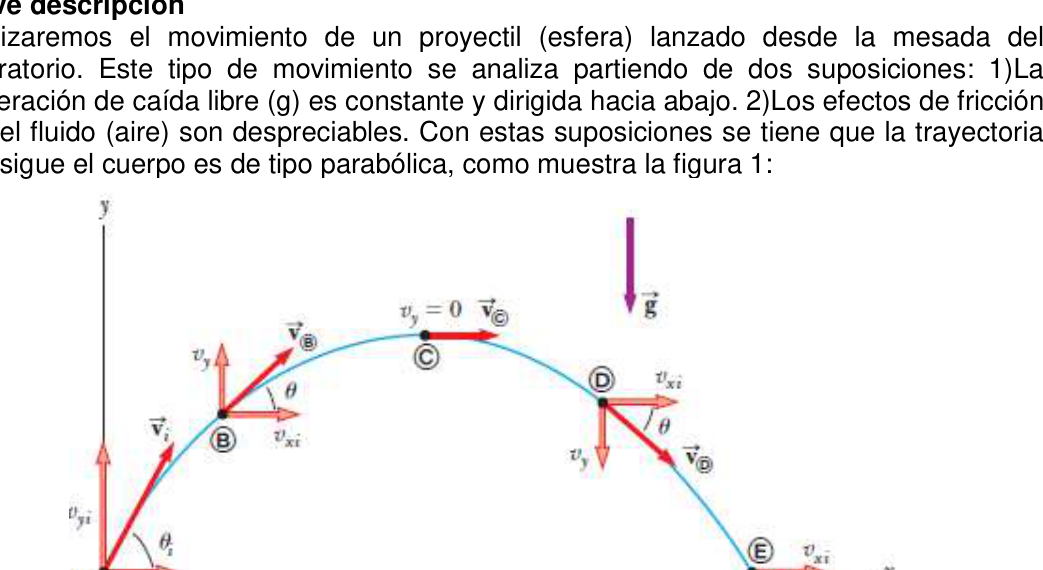
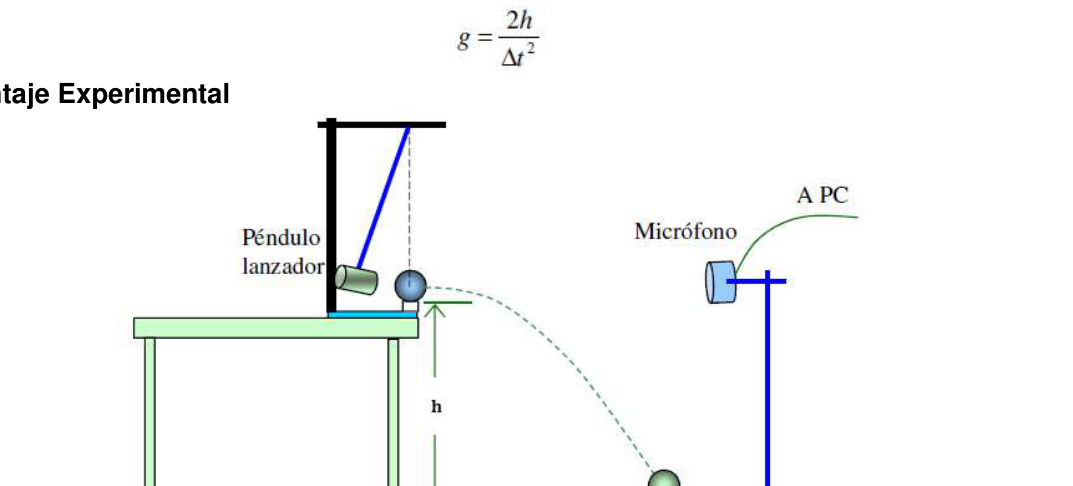
Topic: Newtonian Mechanics Metodi: Experimental Data Analysis, Kinematic Equations, Graph Linearization Competenze: Physical Reasoning, Experimental Data Analysis, Mathematical Modeling Objects: Projectile, Pendulum Fonte: Testo (PDF) — p.5
PE27. Scuola Modello San Giovanni. Città di San Giovanni.
Obiettivo Determinare l’accelerazione della gravità usando la cinematica bidimensionale
Breve descrizione Analizzeremo il movimento di un proiettile lanciato dal mesedo del laboratorio. Questo tipo di movimento viene analizzato partendo da due ipotesi: l’accelerazione di caduta libera (g) è costante e diretta verso il basso. 2)Effetti di frizione con il liquido (aria) sono sconsiderati. Con queste ipotesi si deve avere la traccia il corpo è di tipo parabolico, come mostra la figura 1:
In queste condizioni, le equazioni di movimento per gli assi di riferimento saranno: e= yi+ vyi. 𝑡− 1 2 𝑔. 𝑡2 (1) 𝑥= 𝑥𝑖+ 𝑣𝑥 . 𝑡 (2)
Chiamiamo (h) all’ altitudine iniziale e consideriamo: xi = 0; yf = 0 . Quindi:
Montaggio sperimentale
Elementi necessari
- Supporto universale
OAF 2018 - 167
- Pendolo fisico .
- Una sfera metallica o simile.
- Cintura metrica
- PC con programma audacity o simile
- fogli di carta A4 con carbonio
Sviluppo dell’esperimento Armati il pendolo sul supporto e assicurati che questo colpisca la sfera, questo. Il pendolo servirà come lanciatore per la sfera (INPORTANTE: mantenere lo stesso angolo La velocità di movimento del pendolo è molto elevata. Per registrare i tempi Useremo il programma audacity che analizzerà il segnale audio proveniente dal l’impatto del pendolo con la sfera (uscita) e l’impatto della sfera con il pavimento (arrivo). Deve posizionare la cinta di misura sul pavimento in modo da poter registrare la portata della La spalla, per questo, mette accanto a essa le foglie di carta con carbonio, che saranno le incaricate di lasciare l’impronta del colpo della sfera sul pavimento.
Consigne a) Misurare il tempo di caduta della sfera (5-10 misure). Registra i raggi per ogni caso. b) Determina la velocità di uscita della sfera e l’altezza iniziale del movimento (h) c) Con i dati precedenti (medie) costruire il grafico Y(x) per il movimento della sfera. d) Determina il valore dell’accelerazione della gravità.
Topic: Newtonian Mechanics Metodi: Experimental Data Analysis, Kinematic Equations, Graph Linearization Competenze: Physical Reasoning, Experimental Data Analysis, Mathematical Modeling Objects: Projectile, Pendulum Fonte: Testo (PDF) — p.5
PE27. St. John’s High School model. City of San Juan.
The objective Determine the acceleration of gravity using two-dimensional kinematics
Brief description We will analyze the movement of a projectile (sphere) launched from the mesade of the The lab. This type of movement is analysed on the basis of two assumptions: The free fall acceleration (g) is constant and directed downwards. 2)The effects of friction With the fluid (air) they are despicable. With these assumptions you have to trace the trajectory The body is parabolic, as shown in Figure 1:
Under these conditions, the equations of motion along the reference axes shall be: and = yi+yi. 𝑡− 1 2 𝑔. 𝑡2 (1) 𝑥= 𝑥𝑖+ 𝑣𝑥 . 𝑡 (2)
Let ‘s call (h) at the initial height and consider: xi = 0; yf = 0 . So:
Experimental assembly
The necessary elements
- Universal support
The Commission shall adopt delegated acts in accordance with Article 21 of this Regulation.
- A physical pendulum .
- A metal sphere or similar.
- Metric tape .
- PCs with audacity or similar programming
- carbonated A4 sheets
Development of the experiment Put the pendulum over the support and make sure it hits the sphere, this one. The pendulum will serve as the pitcher for the sphere (IMPORTANT: keep the same angle The motion of the pendulum is analysed. To record the times We will use the audacity program to analyze the sound signal coming from the impact of the pendulum with the sphere (exit) and impact of the sphere with the floor (arrival). You should place the tape on the floor so that you can record the range of the The first is the carbon paper, which is the carbon paper. They’re responsible for leaving the ball’s impact on the floor.
Consigns (a) Measure the time of fall of the sphere (5 to 10 measurements). Record the reaches . for each case. (b) Determine the output speed of the sphere and the initial height of the movement (h) (c) Using the above data (measures) construct the graph Y(x) for the motion of the sphere. (d) Determine the value of the acceleration of gravity.
Topic: Newtonian Mechanics Metodi: Experimental Data Analysis, Kinematic Equations, Graph Linearization Competenze: Physical Reasoning, Experimental Data Analysis, Mathematical Modeling Objects: Projectile, Pendulum Fonte: Testo (PDF) — p.5
PE28. EPET N° 3. Pirané, Formosa.
Determinación del valor de g en la ciudad de Pirané mediante un péndulo simple
Introducción En un péndulo simple, la composición de las fuerzas que actúan da como resultante una fuerza F tangente a la trayectoria, que tiende a restituirlo a su posición de equilibrio y que es proporcional al desplazamiento con signo negativo; por lo tanto el movimiento del péndulo se asemeja al movimiento armónico simple. Para pequeñas amplitudes la longitud del arco s sobre la trayectoria del péndulo se asemeja a la distancia d y el período se puede calcular a partir de la expresión:
que relaciona al período T con la longitud l del péndulo.
Objetivos Determinar el valor de g en la ciudad de Pirané
Lista de materiales
- Soporte
- Esfera de madera o metal
- Cronómetro
- Transportador
- Cinta métrica
Procedimiento a) Arme el dispositivo convenientemente
168 - OAF 2018
b) Mida el período de oscilación del péndulo. (Para reducir error tome el tiempo que
el péndulo realiza 10 oscilaciones y divida el resultado en 10)
c) Complete la siguiente tabla:
Requerimientos Al finalizar la experiencia deberá entregar un informe escrito con letra clara, que conste de:
- Planteo del problema
- Valores obtenidos en las mediciones, tablas, gráficos.
- Fuentes de error y análisis de cómo influyen en el resultado final.
- Resultado experimental de lo solicitado.
- Conclusiones.
- Comentarios que desee realizar referidos a la realización de la experiencia.
Topic: Oscillations & Waves Metodi: Experimental Data Analysis, Simple Harmonic Motion Analysis, Graph Linearization Competenze: Physical Reasoning, Experimental Data Analysis Objects: Pendulum Fonte: Testo (PDF) — p.5
PE28. La durata di un’operazione è di circa un milione di anni.
- Io faro’ il pirano, Formosa.
Determinazione del valore di g nella città di Pirané con un semplice pendolo
Introduzione In un semplice pendolo, la composizione delle forze che agiscono dà come risultato una La forza F tangente alla traccia, che tende a riportarla alla sua posizione di equilibrio e che La velocità di movimento del il pendolo assomiglia al semplice movimento armonico. Per piccole amplitudini la La lunghezza dell’arco s sul percorso del pendolo si somiglia alla distanza d e il periodo può essere calcolato a partire dall’espressione:
che correla il periodo T con la lunghezza l del pendolo.
Obiettivi Determinare il valore di g nella città di Pirané
Lista dei materiali
- Supporto .
- Una sfera di legno o metallo
- Cronometro .
- Trasportatore .
- Cintura metrica .
Procedura a) Armati il dispositivo in modo appropriato
168 - OAF 2018 b) Misura il periodo di oscillazione del pendolo. (Per ridurre l’errore, prendete il tempo necessario per il pendolo fa 10 oscillazioni e divide il risultato in 10) c) Completa la tabella seguente:
Richieste Al termine dell’esperienza dovrà presentare un rapporto scritto in chiaro, che è costituito da:
- La questione è stata sollevata.
- Valori ottenuti dalle misure, dalle tabelle, dai grafici.
- Fonti di errore e analisi di come influenzano il risultato finale.
- Risultato sperimentale della richiesta.
- Conclusioni.
- Commenti che desiderate fare sull’esecuzione dell’esperienza.
Topic: Oscillations & Waves Metodi: Experimental Data Analysis, Simple Harmonic Motion Analysis, Graph Linearization Competenze: Physical Reasoning, Experimental Data Analysis Objects: Pendulum Fonte: Testo (PDF) — p.5
PE28. The following information is provided by the manufacturer: I’ll be right there, Formosa.
Determination of the value of g in the city of Pirané by a simple pendulum
The first is the introduction. In a simple pendulum, the composition of the acting forces results in a The force F tangent to the trajectory, which tends to restore it to its equilibrium position and which The motion of the axis of the vehicle is proportional to the negative sign shift. The pendulum resembles the simple harmonic movement. For small amplitudes the The length of the s-arc over the pendulum’s path is similar to the distance d and the period can be calculated from the expression:
which relates the period T to the length l of the pendulum.
Objectives Determining the value of g in the city of Pirané
List of materials
- Support .
- A wooden or metal sphere
- The chronometer .
- The transporter .
- Metric tape .
The procedure (a) Arming the device appropriately
The Commission shall adopt delegated acts in accordance with Article 168 of the Financial Regulation. (b) Measure the period of oscillation of the pendulum. (To reduce error take the time that The pendulum makes 10 oscillations and divides the result by 10) (c) Complete the following table:
Requirements At the end of the experience, you must submit a written report in clear writing, which consist of:
- The problem is being raised .
- Values obtained in measurements, tables, graphs.
- Error sources and analysis of how they influence the final result.
- Experimental result of the requested.
- I’m going to draw conclusions.
- comments you wish to make on the experience.
Topic: Oscillations & Waves Metodi: Experimental Data Analysis, Simple Harmonic Motion Analysis, Graph Linearization Competenze: Physical Reasoning, Experimental Data Analysis Objects: Pendulum Fonte: Testo (PDF) — p.5
PE29. Escuela Tomás Godoy Cruz1 - Departamento de Aplicación Docente1 Liceo Agrícola y Enológico Domingo Faustino Sarmiento1 Escuela Emilio Civit2 - Escuela Paula Albarracín de Sarmiento2. 1Ciudad de Mendoza - 2Maipú, Mendoza.
Objetivo Verificar si el comportamiento del módulos del campo magnético de inducción magnética producido por un dipolo magnético sobre el eje del mismo, responde a una ley del tipo 1 𝑥3
Breve descripción
Un electro imán es un dispositivo mediante el cual se obtiene un campo de inducción
magnética B. Una configuración usual consiste en un clavo de hierro (o algún material
ferromagnético) sobre el cual se ha bobinado algún número de vueltas de alambre de
cobre.
Cuando la bobina se conecta a una fuente de tensión, la corriente eléctrica que circula
por ella produce un campo de inducción magnética. El campo B que se consigue
mediante un electroimán depende de la configuración geométrica utilizada; en el caso del
descripto arriba (clavo y bobina) es similar al de un dipolo magnético.
FIGURA 1
El módulo del campo de inducción magnética, B, producido por un dipolo magnético de módulo Pm a lo largo de la dirección de eje del dipolo y a una distancia x, está dado por:
OAF 2018 - 169 𝐵= 𝜇0𝑃𝑚 2𝜋 1 𝑥3
La dirección del vector campo magnético en ese caso es la del eje x. Una brújula es un instrumento mediante el cual se puede determinar la dirección norte- sur (N-S) sobre la superficie terrestre; en general, se puede usar para determinar la dirección, en un punto determinado, de un campo de inducción magnética cualquiera. Consiste de una aguja imantada que puede girar libremente, por lo que se orienta en la dirección del campo de inducción magnético.
FIGURA 2
La experiencia consiste en verificar que el módulo del campo de inducción magnética B a lo largo del eje del electroimán varía con la distancia como el de un dipolo magnético, esto es: 𝐵∝1 𝑥3 Elementos
- Brújula
- Electroimán
- Hojas en blanco
- Papel milimetrado
- Regla
- Pila AA
Para realizar la verificación ubique el eje del electro imán perpendicular al campo magnético terrestre y sobre un plano paralelo a la superficie terrestre. De esta manera, la presencia del campo del electroimán sumado vectorialmente al terrestre producirá una desviación de la aguja magnética producido por el electroimán y la aguja de la brújula.
170 - OAF 2018
Procedimiento sugerido
a) Apoye la brújula sobre un extremo de una hoja de tal manera que el lado corto
quede alineado con la dirección N-S. Pegue, con cinta adhesiva, la hoja a la
mesa y marque sobre la hoja el contorno de la carcasa de la brújula.
b) Marque una recta que “contenga” a la aguja y una recta perpendicular que pase
por el centro de la aguja y sea paralela al lado largo de la hoja (dirección E-O). El
punto de intersección es el origen del sistema de coordenadas que se utilizará.
c) Apoye el electro imán sobre la línea sobre la línea E-O, a una distancia x del
centro de la aguja y enciéndalo. Verifique que la aguja se orienta y marque la
posición del electro imán.
d) Observe y anote el ángulo que se mueve la aguja de la brújula con respecto a la
dirección N-S
e) Consigne en una tabla los valores de 𝛼 y de x correspondientes.
Repita el procedimiento de c), d) , e) y f para diferentes posiciones x del electro imán. f) Construya una nueva tabla en la que se consigne los valores de 1 𝑥3 y de 𝑡𝑔 𝛼. g) Haga un gráfico 1 𝑥3 vs 𝑡𝑔 𝛼. Verifique si el comportamiento es lineal, en tal caso ajuste una recta.
Recomendaciones
- Para determinar la dirección de la aguja utilice la regla como guía y trace la recta que “contiene” a la aguja de la brújula sobre el papel base.
- Mida las distancias desde la cabeza del clavo hasta el centro de la aguja de la brújula y déjelas asentadas en el papel base.
- Mantenga la pila alejada de la brújula durante todo el experimento.
- Desconecte la pila luego de cada medición.
- Luego de cada medición verifique que la aguja de la brújula esté en la posición original (con el centro en el origen de coordenadas)
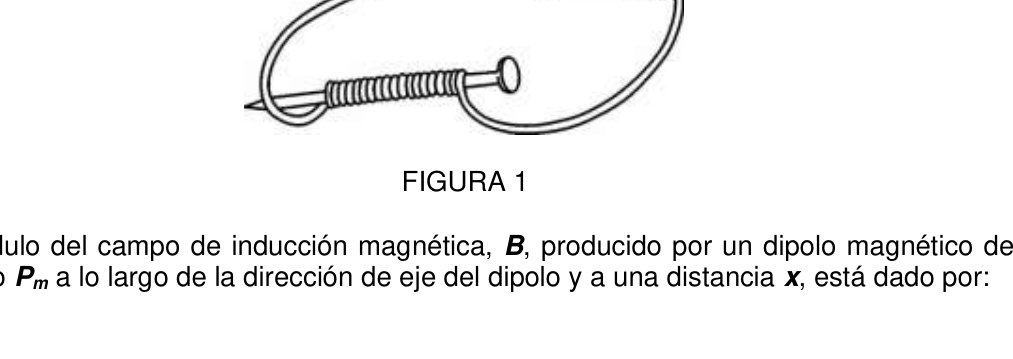
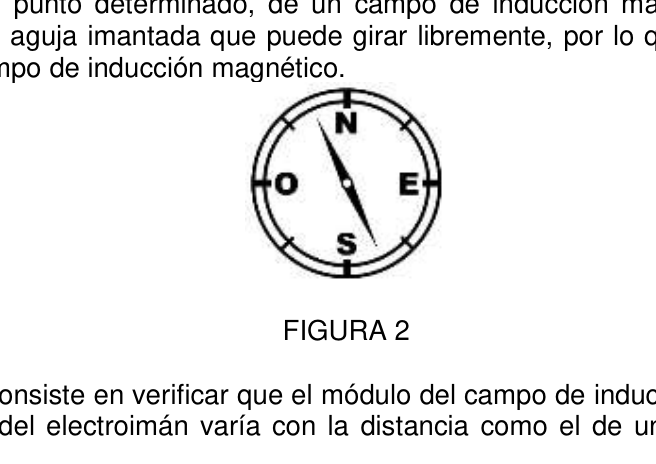
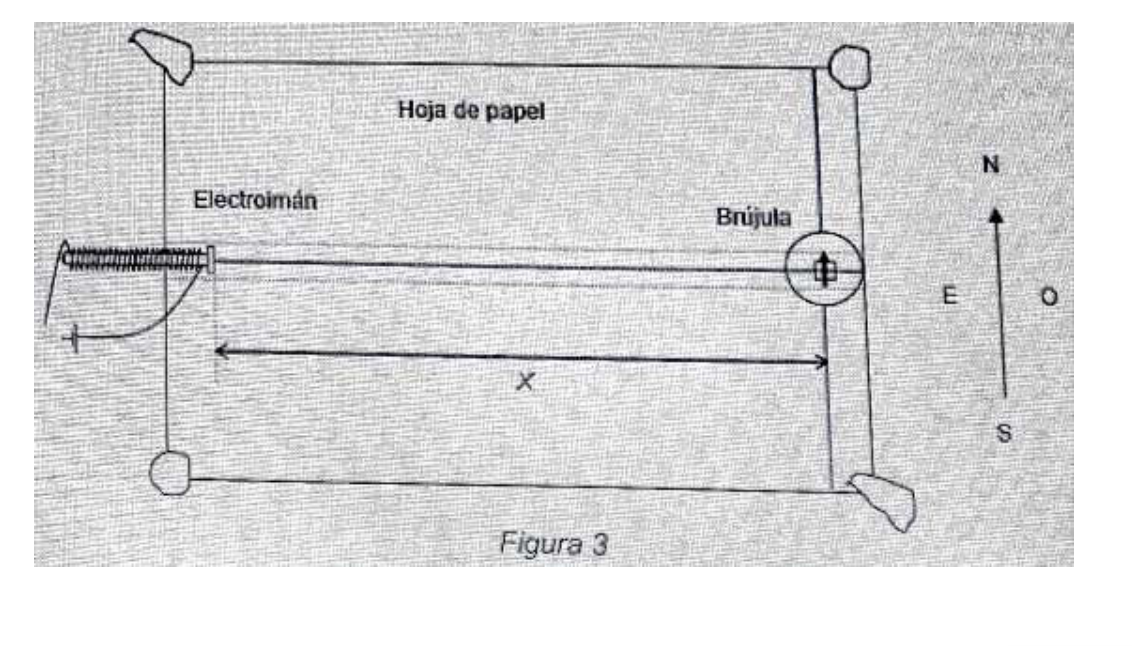
Topic: Magnetism Metodi: Experimental Data Analysis, Graph Linearization, Biot-Savart Law Competenze: Physical Reasoning, Experimental Data Analysis, Mathematical Modeling Objects: Magnetic Dipole, Solenoid, Battery Fonte: Testo (PDF) — p.5
PE29. Scuola Tomás Godoy Cruz1 - Dipartimento di Applicazione Docente1 Liceo Agricolo e Enologico Domingo Faustino Sarmiento1 Scuola Emilio Civit2 - Scuola Paula Albarracín di Sarmiento2. 1Città di Mendoza - 2Maipú, Mendoza.
Obiettivo Verificare se il comportamento dei moduli del campo magnetico di induzione magnetica prodotto da un dipolo magnetico sull’asse di esso, risponde a una legge del tipo 1 𝑥3
Breve descrizione Un elettromagneto è un dispositivo con il quale si ottiene un campo di induzione. Magnetico B. Una configurazione comune consiste in un clavo di ferro (o in un materiale) Ferromagnetico) su cui sono stati ripiegati un certo numero di giri di filo di copro. Quando la bobina è collegata a una fonte di tensione, il corrente elettrica che circola che produce un campo di induzione magnetica. Il campo B che si ottiene La configurazione geometrica utilizzata è determinata dal metodo di un elettromagnetico. Il dispositivo descritto sopra (chiodo e bobina) è simile a quello di un dipolo magnetico.
Figura 1
Il modulo del campo di induzione magnetica, B, prodotto da un dipolo magnetico di modulo Pm lungo la direzione dell’asse del dipolo e a una distanza x, è dato da:
OAF 2018 - 169 𝐵= 𝜇0𝑃𝑚 2𝜋 1 𝑥3
La direzione del vettore del campo magnetico in questo caso è quella dell’asse x. Una compassa è uno strumento per determinare la direzione nord- sud (N-S) sulla superficie terrestre; in generale, può essere usato per determinare la direzione, a un determinato punto, di un campo di induzione magnetica qualsiasi. Consiste in un ago magneto che può girare liberamente, quindi si orienta in direzione del campo di induzione magnetica.
Figura 2
L’esperienza consiste nel verificare che il modulo del campo di induzione magnetica B a L’asse dell’elettromagnetico varia con la distanza di un dipolo magnetico. Questo è: 𝐵∝1 𝑥3 Elementi
- Brugola .
- Un elettromane .
- fogli bianchi
- Papero millimetrico .
- Regola .
- Pila AA
Per verificare , localizza l’ asce dell’ elettromagnetico perpendicolare al campo . Magnetico terrestre e su un piano parallelo alla superficie terrestre. In questo modo, la La presenza di un campo elettromagnetico di cui la presenza è di un campo elettromagnetico di cui la presenza è di un campo elettromagnetico di cui la presenza è di un campo elettromagnetico di cui la presenza è di un campo elettromagnetico di cui la presenza è di un campo elettromagnetico di cui la presenza è di un campo elettromagnetico di cui la presenza è di un campo elettromagnetico di cui la presenza è di un campo elettromagnetico di cui la presenza è di un campo elettromagnetico di cui la presenza è di un campo elettromagnetico di cui la presenza è di un campo elettromagnetico di cui la presenza è di un campo elettromagnetico di cui la presenza è di un campo elettromagnetico di cui la presenza è di un campo elettromagnetico di cui la presenza è di un campo elettromagnetico di cui la presenza è di un campo elettromagnetico di cui la presenza è di un campo elettromagnetico di cui la presenza è di un campo elettromagnetico di cui la presenza è di un campo di un campo di un campo elettromagnetico di cui il campo elettromagnetico di cui il campo è di un campo di un campo di cui il campo è un campo di un campo di cui il campo è un campo di un campo di un campo di riferimento è il campo di un campo di un’eletromagnetico di cui il campo di un’eletromagnetico di cui il campo di un campo di cui il campo è un campo di un campo di un campo di un’eletromagnetico è un’eletronica è un campo di un’eletronica. la deviazione del ago magnetico prodotta dall’elettromagneto e dal ago della compassa.
170 - OAF 2018 Procedura suggerita a) appoggi la compassa su un’estremità di una foglia in modo tale che il lato corto essere allineato all’indirizzo N-S. Collante, con nastri adesivi, la foglia alla tabella e segna sul foglio il contorno della cassa della compassa. b) Segna un retto che contiene l’ago e un retto perpendicolare che passa per il centro dell’ago e sia parallelo al lato lungo della foglia (indirizzo E-O). El punto di intersezione è l’origine del sistema di coordinate da utilizzare. c) appoggia l’elettromagneto sulla linea sulla linea E-O, a una distanza x di centro dell’ago e accenderlo. Verificare che l’ ago si orienti e segnalare la posizione dell’elettromagneto. d) Notare e osservare l’ angolo di movimento dell’ ago della compassa rispetto alla indirizzo N-S e) Contiene in una tabella i valori di α e di x corrispondenti.
Ripeti la procedura di c), d), e) e f per le diverse posizioni x dell’elettromagneto. f) Costruire una nuova tabella che annotare i valori di 1 𝑥3 y de 𝑡𝑔 𝛼. g) Fare un grafico 1 𝑥3 vs 𝑡𝑔 𝛼. Verificare se il comportamento è lineare, in tal caso
- Aggiusta un tratto.
Raccomandazioni
- Per determinare la direzione dell’ ago, usa la regola come guida e traccia la retta che contiene l’ago della compassa sulla base.
- Misura le distanze dalla testa del chiodo al centro della ago della spilla la compassa e lasciateli appoggiati sul basso.
- Tieni la pila lontana dalla compassa per tutto l’esperimento.
- Smettila di attaccare la pila dopo ogni misurazione.
- Dopo ogni misura, verificate che l’ago della compassa sia in posizione. originale (con il centro alla fonte delle coordinate)
Topic: Magnetism Metodi: Experimental Data Analysis, Graph Linearization, Biot-Savart Law Competenze: Physical Reasoning, Experimental Data Analysis, Mathematical Modeling Objects: Magnetic Dipole, Solenoid, Battery Fonte: Testo (PDF) — p.5
PE29. The school Tomás Godoy Cruz1 - Department of Teacher Application1 Spanish language and literature Emilio Civit School2 - Paula Albarracín School of Sarmiento2. 1City of Mendoza - 2Maipú, Mendoza.
The objective Check whether the magnetic induction magnetic field modules behave produced by a magnetic dipole on its axis, responds to a law of the kind 1 𝑥3
Brief description An electromagnet is a device by which an induction field is obtained. magnetic B. A typical configuration consists of an iron nail (or some material) Ferromagnetic) over which a number of wire turns of copper. When the coil is connected to a voltage source, the electric current circulating It produces a magnetic induction field. The field B that you get The use of an electromagnet depends on the geometric configuration used. The above (key and coil) is similar to that of a magnetic dipole.
The Commission shall adopt implementing acts in accordance with Article 21 of this Regulation.
The magnetic induction field module, B, produced by a magnetic dipole of module Pm along the axis direction of the dipole and at a distance x, is given by:
The Commission shall adopt delegated acts in accordance with Article 21 of the Financial Regulation. 𝐵= 𝜇0𝑃𝑚 2𝜋 1 𝑥3
The direction of the magnetic field vector in this case is that of the x-axis. A compass is an instrument by which the northern direction can be determined. south (N-S) over the land surface; generally, it can be used to determine the direction, at a given point, of any magnetic induction field. It consists of a magnetic needle that can rotate freely, so it is oriented at the direction of the magnetic induction field.
The Commission shall adopt implementing acts in accordance with Article 21 of this Regulation.
The experiment consists of verifying that the magnetic induction field module B to The length of the electromagnet’s axis varies with the distance as that of a magnetic dipole. This is: 𝐵∝1 𝑥3 Elements
- Broujula .
- The electromagnet .
- White leaves .
- Millimeter paper .
- Rule .
- Stack of AA
To verify the position of the electromagnetic axis perpendicular to the field. The magnetic field is the magnetic field of the Earth and is on a plane parallel to the Earth’s surface. In this way, the The presence of the electromagnetic field vectorally added to the ground will produce a the magnetic needle deviation produced by the electromagnet and the compass needle.
The Commission shall adopt delegated acts in accordance with Article 21 of this Regulation. Suggested procedure (a) Hold the compass over one end of a sheet in such a way that the short side be aligned with the address N-S. Glue, with adhesive tape, the sheet to the table and mark on the sheet the outline of the compass case. (b) Mark a straight line containing the needle and a perpendicular straight line passing through it. by the centre of the needle and be parallel to the long side of the leaf (E-O direction). El The intersection point is the origin of the coordinate system to be used. (c) Supports the electromagnet over the line over the E-O line, at a distance x from center of the needle and turn it on. Check that the needle is oriented and mark the position of the electromagnet. (d) Observe and note the angle at which the needle of the compass moves with respect to the address N-S (e) Enter the corresponding values of α and x in a table.
Repeat the procedure of c, d, e and f for different positions x of the electromagnet. (f) Build a new table that records the values of 1 𝑥3 y de 𝑡𝑔 𝛼. (g) Draw a chart 1 𝑥3 vs 𝑡𝑔 𝛼. Check if the behavior is linear, in which case You just set a straight.
Recommendations for the future
- To determine the direction of the needle use the rule as a guide and draw the straight line which contains the needle of the compass on the base paper.
- Measure the distances from the nail head to the centre of the needle compass and leave them settled on the base paper.
- Keep the stack away from the compass for the entire experiment.
- Disconnect the battery after each measurement.
- After each measurement check that the compass needle is in position. original (with the centre at the origin of coordinates)
Topic: Magnetism Metodi: Experimental Data Analysis, Graph Linearization, Biot-Savart Law Competenze: Physical Reasoning, Experimental Data Analysis, Mathematical Modeling Objects: Magnetic Dipole, Solenoid, Battery Fonte: Testo (PDF) — p.5
PE30. IPET N° 89 Paula Albarracín. Devoto, Córdoba.
Seguramente has observado cómo el agua se acumula en el extremo de una canilla, formando gotas que caen sucesivamente. Inicialmente, puede observarse una pequeña superficie ovalada. Después, a medida que el agua se acumula, esta superficie va tomando forma esférica y finalmente cae. También podemos ver que las gotas siempre caen cuando alcanzan un determinado volumen. Es decir, no caen a veces gotas pequeñas y luego gotas grandes. Si el flujo de agua se mantiene constante, las gotas que se desprenden tienen siempre el mismo tamaño. Sin embargo, si en vez de agua, saliera alcohol, las gotas se desprenderían en otro momento y su volumen sería diferente. La explicación del hecho de que líquidos diferentes generen gotas de distinto tamaño, reside en el mismo principio que justifica que algunos insectos puedan “caminar” sobre la superficie del agua y que puedas usar servilletas de papel para absorber agua, y la que igualmente explica porque la sabia asciende desde las raíces hasta las hojas y porqué el detergente sirve para lavar. La explicación de todos estos fenómenos reside en una propiedad que tienen todas las sustancias que presentan un límite en su extensión, una frontera que la separe de otra fase diferente. Esta propiedad se denomina tensión superficial, y corresponde a la fuerza de cohesión por unidad de longitud que un líquido ejerce sobre la frontera que lo separa de otro material. Entonces podemos pensar que, en el momento en que una gota se desprende de un gotero, el peso de la gota se equilibra con la fuerza de cohesión. En este problema experimental analizaremos este hecho.
OAF 2018 - 171 Material
- Bandeja de trabajo (úsala para evitar que accidentalmente se mojen tus hojas de trabajo)
- Botella de agua
- Botella de alcohol (CUIDADO: este alcohol NO es ingerible)
- 2 jeringas de 3 ml cada una. Usa una para el alcohol y otra para el agua. Ponles una pequeña marca con las etiquetas para que no las confundas
- 1 frasco. Usa este frasco para preparar las soluciones de alcohol en agua.
- 1 Piceta. Llena la piceta de agua y úsala para enjuagar el frasco antes de preparar una nueva solución.
- Toallas de papel. Úsalas para secar el frasco después de enjuagarlo.
- Un gotero con una marca. La marca corresponde a un volumen que deberás determinar. Si no puedes ver claramente la marca, resáltala con lápiz.
- Papel milimétrico, hojas blancas, etiquetas, lápiz y regla.
- Recipiente de desperdicio, úsalo para vaciar la solución que hayas usado y no te sirva.
La parte experimental consiste en preparar soluciones de alcohol en agua a diferente concentración volumétrica (φ):
La concentración volumétrica φ de alcohol en agua, se define como el volumen del
alcohol dividido entre la suma del volumen del alcohol y el volumen del agua.
Para cada solución, llenarás el gotero hasta la marca establecida y contarás el número de
gotas que se obtienen al vaciar dicho volumen.
Pregunta 1
Prepara soluciones volumétricas desde φ = 0.0 hasta φ = 1.0, de 0.1 en 0.1. Para
cada solución llena el gotero hasta la marca y cuenta el número de gotas que
vacían el gotero. Repite cada medición de número de gotas tres veces y calcula el
promedio. Reporta tus resultados en la tabla.
SUGERENCIA: Usa un volumen total de la solución de 10 ml.
Pregunta 2
Mide el volumen del líquido en el gotero hasta la marca,
denótalo como Vt y escríbelo en la hoja de la tabla. Calcula
el volumen de las gotas de cada solución y escríbelo en la
tabla. Llama v al volumen de las gotas. Te sugerimos
reportar tres cifras significativas. Para este ejercicio utiliza la
fotografía que se muestra en la IMAGEN 3 (Fotografía digital
de la boquilla del gotero, vista de frente y de lado.
CUIDADO: La fotografía está amplificada de manera
arbitraria. Sin embargo, las líneas corresponden a una
escala de 300 pixeles por pulgada. Nota, también, que las
líneas blancas y negras tienen un pixel de ancho cada una
de ellas). Indica claramente las unidades que uses.
Pregunta 3
Haz una gráfica del volumen v de las gotas como función de la concentración φ.
Pregunta 4 Un buen ajuste de la gráfica anterior es de la forma: con α = 4. Por medio de un análisis gráfico calcula el valor de A y de B.
172 - OAF 2018
Pregunta 5
La fuerza de cohesión entre la gota que cuelga y la boquilla del gotero esta dada
por: Fcohesion = γL, donde γ es la tensión superficial del líquido y L la longitud de la
línea de contacto entre la gota y la boquilla. Obtiene el valor de L.
Dado que la tensión superficial de un líquido corresponde a la fuerza de cohesión
por unidad de longitud, podemos pensar que, en el momento en que la gota se
desprende del gotero, el peso de la gota se equilibra con la fuerza de cohesión. De
acuerdo con lo anterior, expresa la tensión superficial en términos de las cantidades
conocidas. Denota como ρOH a la densidad del alcohol y ρH2O a la del agua.
Recuerda entregar todas las hojas donde hayas realizado tus cálculos.
TABLA
Ø Nº de gotas Nº de gotas Nº de gotas Promedio Ν 0.0
0.1
0.2
0.3
0.4
0.5
0.6
0.7
0.8
0.9
1.0
Topic: Fluid Mechanics Metodi: Experimental Data Analysis, Curve Fitting, Graph Linearization Competenze: Physical Reasoning, Experimental Data Analysis, Mathematical Modeling Objects: Droplet Fonte: Testo (PDF) — p.5
PE30. IPET N° 89 Paula Albarracín. Devote, Cordoba.
Sicuramente avete visto come l’acqua si accumula all’estremità di una cannila. formando gocce che cadono successivamente. Inizialmente, si può osservare una piccola superficie ovale. Poi, mentre l’acqua si accumula, questa superficie va Si fa sferica e alla fine cade. Possiamo anche vedere che le gocce sempre cadono quando raggiungono un certo volume. Cioè, non cadono a volte le gocce. piccole e poi grosse gocce. Se il flusso d’acqua si mantiene costante, le gocce che Le spalle sono sempre uguali. Tuttavia, se invece di acqua, uscirebbe Alcol, le gocce si sarebbero sganciate in un altro momento e il loro volume sarebbe diverso. La spiegazione del fatto che liquidi diversi generano gocce di dimensioni diverse, risiede Il principio che giustifica che alcuni insetti possano camminare sulla terra la superficie dell’acqua e che si possono usare padiglioni di carta per assorbire l’acqua, e che spiega anche perché la saggezza sale dalle radici alle foglie e perché il La detergente è per lavarsi. L’esposizione di tutti questi fenomeni è un’idea. Proporzione che hanno tutte le sostanze che presentano un limite di estensione, una che la separa da un’altra fase diversa. Questa proprietà è chiamata tensione superficiale, e corrisponde alla forza di coesione per unità di lunghezza di un liquido esercita sul confine che lo separa da altri materiali. Quindi possiamo pensare che, in Il momento in cui una goccia si sgancia da una goccia, il peso della goccia si equilibra. con la forza di coesione. In questo problema sperimentale analizzeremo questo fatto.
OAF 2018 - 171 Materiale
- Bandeggi di lavoro (utilizza per evitare che le foglie di lavoro si bagnino accidentalmente) lavoro)
- Boccetta d’acqua.
- Bottiglia di alcol (attenzione: questo alcol non è ingeribbile)
- 2 siringhe di 3 ml ciascuna. Usa una per l’alcol e un’altra per l’acqua. Mettili . Un piccolo marchio con le etichette, per non confondere.
- Un frasco. Usa questo frascicolo per preparare le soluzioni di alcol in acqua.
- Un picchetto. Riempire il picco d’acqua e usare per lavare il frasco prima di preparare una nuova soluzione.
- Toalete di carta. Usalo per asciugare il frasco dopo averlo lavato.
- Un goccia con un marchio. Il marchio corrisponde a un volume che dovrai
- Per determinare. Se non riesci a vedere chiaramente il marchio, rivella con una matita.
- Carta millimetrica, fogli bianchi, etichette, matita e regola.
- Treno di scarto, usa per svuotare la soluzione che hai usato e non ti Serve.
La parte sperimentale consiste nel preparare soluzioni di alcol in acqua a diverse concentrazione volumetrica (φ):
La concentrazione volumetrica φ di alcol in acqua, è definita come il volume di Alcol diviso tra la somma del volume di alcol e del volume di acqua. Per ogni soluzione, riempire il goccio fino al marchio stabilito e contare il numero di le gocce ottenute svuotando il volume.
Domanda 1 Prepara soluzioni volumetriche da φ = 0,0 a φ = 1,0, da 0,1 a 0,1 Per Ogni soluzione riempie il goccio fino al marchio e conta il numero di gocce che
- Si scaricava la goccia. Ripeti ogni misurazione del numero di gocce tre volte e calcola il
- La media. Segna i risultati sulla tabella. SEGNERIA: Usa un volume totale di 10 ml di soluzione.
Domanda 2 Misura il volume del liquido nel gocciolo fino al marchio, Indicare come Vt e scriverlo sul foglio della tavola. Calcola il volume delle gocce di ogni soluzione e scrivete il volume di ogni goccia di ogni soluzione e scrivete il volume di ogni goccia di ogni goccia di ogni goccia di ogni goccia di ogni goccia di ogni goccia di ogni goccia di ogni goccia di ogni goccia di ogni goccia di ogni goccia di ogni goccia di ogni goccia di ogni goccia di ogni goccia di ogni goccia di ogni goccia di ogni goccia di ogni goccia di ogni goccia di ogni goccia di ogni goccia di ogni goccia di ogni goccia di ogni goccia di ogni goccia di ogni goccia di ogni goccia di ogni goccia di ogni goccia di ogni goccia di ogni goccia di ogni goccia di ogni goccia di ogni goccia di ogni goccia di ogni goccia di ogni goccia di ogni goccia di ogni goccia di ogni goccia di ogni goccia di ogni goccia di ogni goccia di ogni goccia di ogni goccia di goccia di ogni goccia di ogni goccia di ogni goccia di ogni goccia di ogni goccia di ogni goccia di ogni goccia di ogni goccia di ogni goccia di ogni goccia di ogni goccia di ogni goccia di ogni goccia di ogni goccia di ogni goccia di ogni goccia di ogni goccia di ogni goccia di ogni goccia di ogni goccia di ogni goccia di ogni goccia di ogni goccia di ogni goccia di ogni goccia di ogni goccia di ogni goccia di ogni goccia di ogni goccia di ogni goccia di ogni goccia di ogni goccia di ogni goccia di ogni goccia di ogni goccia di ogni goccia di ogni goccia di ogni goccia di ogni goccia di ogni goccia di ogni goccia di ogni goccia di ogni goccia di ogni goccia di ogni goccia di ogni goccia di ogni goccia di ogni goccia di ogni goccia di ogni goccia di ogni goccia di ogni goccia di ogni goccia di ogni goccia di ogni goccia di ogni goccia di ogni goccia di ogni goccia di ogni goccia di ogni goccia di ogni goccia di ogni goccia di ogni goccia di ogni goccia di ogni goccia di ogni goccia di ogni goccia di ogni goccia di ogni goccia di ogni goccia di ogni goccia di ogni goccia di ogni goccia di ogni goccia di ogni go
- La tavola. Chiama v al volume delle gocce. Ti suggeriamo riportare tre numeri significativi. Per questo esercizio utilizza la Foto mostrata in IMAGEN 3 (Foto digitale dalla bocca del gocciaio, vista davanti e da lato. ATTENZIONE: La fotografia è amplificata in modo che
- E’ arbitrario. Tuttavia, le linee corrispondono a una scala di 300 pixel all’inch. Si noti, inoltre, che le linee bianche e nere hanno pixel di larghezza ognuna di queste). Indica chiaramente le unità che usi.
Domanda 3 Fai un grafico del volume v delle gocce a funzione della concentrazione φ.
Domanda 4 Un buon aggiustamento del grafico precedente è così: con α = 4. Con un’analisi grafica si calcola il valore di A e di B.
172 - OAF 2018 Domanda 5 La forza di coesione tra la goccia che pende e la bocca del goccia è data per: Fcohesion = γL, dove γ è la tensione superficiale del liquido e L la lunghezza della linea di contatto tra goccia e bocca. Ottieni il valore di L. Poiché la tensione superficiale di un liquido corrisponde alla forza di coesione Per unità di lunghezza, possiamo pensare che, al momento in cui la goccia si Se si esce dalla goccia, il peso della goccia si bilancia con la forza di coesione. De In base a quanto precede, esprime la tensione superficiale in termini di quantità Conosciute. Denota come ρOH alla densità dell’alcol e ρH2O a quella dell’acqua.
Ricorda di consegnare tutti i fogli dove hai fatto i tuoi calcoli.
TABELLA
Ø Non di gocce . Non di gocce . Non di gocce . Medio Ν 0.0
0.1
0.2
0.3
0.4
0.5
0.6
0.7
0.8
0.9
1.0
Topic: Fluid Mechanics Metodi: Experimental Data Analysis, Curve Fitting, Graph Linearization Competenze: Physical Reasoning, Experimental Data Analysis, Mathematical Modeling Objects: Droplet Fonte: Testo (PDF) — p.5
PE30. The Commission has not yet adopted a proposal for a regulation on the protection of the environment. I’m a devoted man, Cordoba.
You’ve probably seen how water builds up at the end of a ditch. forming droplets that fall down one after another. Initially, a small one can be observed. oval surface. Then, as the water builds up, this surface goes It’s going to take a spherical shape and finally fall. We can also see that drops always They fall when they reach a certain volume. I mean, don’t drop drops sometimes. small drops and then big drops. If the water flow is kept constant, the droplets that They’re always the same size. However, if instead of water, it would come out alcohol, the drops would be released at another time and their volume would be different. La The explanation for the fact that different liquids generate droplets of different sizes lies The same principle that justifies some insects being able to walk on the ground The water surface and you can use paper towels to absorb water, and the water surface. It also explains why the wise woman ascends from the roots to the leaves and why the wise woman ascends from the roots to the leaves. The detergent is for washing. The explanation for all these phenomena lies in one Property that all substances with a limit in their extent have a A border that separates it from another phase. This property is called tension. surface, and corresponds to the cohesion force per unit length of a liquid It exerts over the boundary that separates it from other material. So we can think that, in The moment a drop comes out of a drop, the drop’s weight is balanced. with the force of cohesion. In this experimental problem we will analyze this fact.
The Commission shall adopt delegated acts in accordance with Article 21 of the Financial Regulation. Material
- Work strap (use it to prevent accidental wetness of your leaves) work)
- Bottle of water .
- Bottle of alcohol (Caution: this alcohol is NOT edible)
- Two 3 ml syringes each. Use one for alcohol and one for water. Put them on . A little mark with the labels so you don ‘t confuse them .
- One bottle. Use this vial to prepare the alcohol solutions in water.
- One pickle. Fill the water pin and use it to rinse the vial before The Commission will take the necessary steps to prepare a new solution.
- Paper towels. Use them to dry the jar after rinsing.
- A leak with a mark. The mark corresponds to a volume you must to determine. If you can’t see the mark clearly, pin it down with a pencil.
- Millimeter paper, white papers, labels, pencil and rule.
- Waste container, use it to empty the solution you have used and not you It’s good.
The experimental part is to prepare alcohol solutions in water to different The following is the list of the following:
The volumetric concentration φ of alcohol in water is defined as the volume of the alcohol divided by the sum of the volume of alcohol and the volume of water. For each solution, fill the droplet to the established mark and count the number of the droplets obtained by emptying the volume.
Question 1 Prepare volumetric solutions from φ = 0.0 to φ = 1.0, from 0.1 to 0.1. For Each solution fills the droplet to the mark and counts the number of drops that it drops. They were draining the leak. Repeat each drop count measurement three times and calculate the average. Report your results on the chart. SUMMARY: Use a total volume of the solution of 10 ml.
Question 2 Measure the volume of liquid in the drip to the mark, mark it as Vt and write it on the sheet of the table. Calculate The volume of the drops in each solution and write it in the The board. Call v to the volume of the drops. We suggest you . report three significant figures. For this exercise, the The image shown in the image 3 (Digital photography from the mouth of the drip, facing and facing. The photograph is amplified in a way that It’s arbitrary. However, the lines correspond to a It’s a scale of 300 pixels per inch. It should also be noted that the Black and white lines have a pixel in width each. of them). Clearly indicate the units you use.
Question No 3 Make a graph of the volume v of the drops as a function of the concentration φ.
Question 4 A good fit of the above graph is this: with α = 4. Using a graph analysis, calculate the value of A and B.
The Commission shall adopt delegated acts in accordance with Article 21 of this Regulation. Question 5 The force of cohesion between the droplet hanging and the mouth of the drip is given by: Fcohesion = γL, where γ is the surface tension of the liquid and L the length of the contact line between the droplet and the mouthpiece. You get the value of L. Since the surface tension of a liquid is the cohesion force per unit length, we can think that, at the moment the drop is If the droplet is removed, the droplet weight is balanced with the cohesion force. De In accordance with the above, it expresses the surface tension in terms of quantities I know you. Denotes as ρOH at the density of alcohol and ρH2O at that of water.
Remember to deliver all the sheets where you’ve done your calculations.
Table
Ø Not drops . Not drops . Not drops . Average Ν 0.0
0.1
0.2
0.3
0.4
0.5
0.6
0.7
0.8
0.9
1.0
Topic: Fluid Mechanics Metodi: Experimental Data Analysis, Curve Fitting, Graph Linearization Competenze: Physical Reasoning, Experimental Data Analysis, Mathematical Modeling Objects: Droplet Fonte: Testo (PDF) — p.5
PE31. Instituto Industrial Luis A. Huergo. Ciudad Autónoma de Buenos Aires.
Refracción de la luz
Objetivos a) Determinar el índice de refracción del par acrílico/aire. b) Determinar el ángulo crítico de reflexión total del acrílico.
Marco teórico Al incidir un haz de luz sobre una superficie transparente se produce un cambio en su velocidad. Este fenómeno se denomina refracción de la luz. Dicho cambio en la velocidad de la luz se hace visible en un cambio en su trayectoria (si la luz llega a la superficie con un cierto ángulo diferente a 90º).
Al incidir el rayo con un determinado ángulo de incidencia i sobre la superficie, al refractarse, lo hace con un ángulo de refracción diferente r. Estos ángulos son medidos respecto de la recta normal a la superficie.
La relación existente entre el ángulo incidente y el refractado viene dada por la Ley de Snell, cuya expresión matemática es:
n1 sen i = n2 sen r
donde n1 es el índice de refracción del medio de donde se mide el ángulo incidente y n2 es el índice de refracción donde se mide el ángulo refractado.
OAF 2018 - 173 Se define ángulo crítico de reflexión total al mínimo ángulo de incidencia para el cual no se produce la refracción, y todo el haz de luz es reflejado con dirección paralela a la superficie.
Materiales
- Disco de Hartl.
- Fuente de luz.
- Semicírculo de acrílico.
- Tablero soporte.
Procedimiento Realiza las mediciones que permitan llegar a los objetivos propuestos y expresar el valor con el correspondiente error experimental, a partir del dispositivo entregado (ver figura)
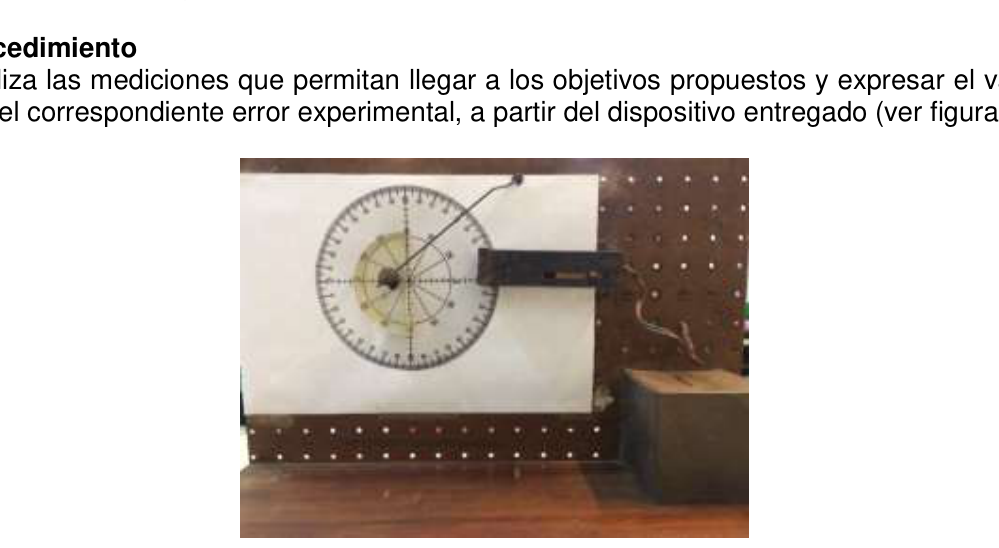
Topic: Geometric Optics Metodi: Experimental Data Analysis, Snell’s Law, Error Propagation Competenze: Physical Reasoning, Experimental Data Analysis Objects: Prism Fonte: Testo (PDF) — p.5
PE31. Istituto industriale Luis A. Ho urgo. Città autonoma di Buenos Aires.
Rifrazione della luce
Obiettivi a) Determinare l’indice di refraczione del par acrilico/aria. b) Determinare l’angolo critico di riflessione totale dell’acrilico.
Marco teorico Quando un fascio di luce incide su una superficie trasparente si verifica un cambiamento nella sua luminosità. velocità. Questo fenomeno è chiamato refraczione della luce. Tale cambiamento di velocità La luce si rende visibile in un cambiamento di percorso (se la luce arriva alla superficie con un certo angolo diverso da 90°).
Quando il raggio incide con un determinato angolo di incidenza i sulla superficie, il rifraggere, lo fa con un angolo di rifrazione diverso r. Questi angoli sono misurati. rispetto alla normale rettilineo alla superficie.
Il rapporto tra angolo incidente e angolo refratto è dato dalla Legge di Snell, la cui espressione matematica è:
n1 sen i = n2 sen r
dove n1 è l’indice di refraczione del mezzo da cui si misura l’angolo incidente e n2 è l’indice di refraczione in cui si misura l’angolo refrattato.
OAF 2018 - 173 Si definisce angolo critico di riflessione totale all’angolo minimo di incidenza per il quale non è si verifica la refraczione, e tutto il fascio di luce è riflesso in direzione parallela alla superficie.
Materiali
- Disco di Hartl.
- Fonte di luce.
- Un semicircolo di acrilico.
- Controllo di supporto.
Procedura Realizza le misure che consentono di raggiungere gli obiettivi proposti e di esprimere il valore con il corrispondente errore sperimentale, a partire dal dispositivo consegnato (vedere figura)
Topic: Geometric Optics Metodi: Experimental Data Analysis, Snell’s Law, Error Propagation Competenze: Physical Reasoning, Experimental Data Analysis Objects: Prism Fonte: Testo (PDF) — p.5
PE31. The Spanish Ministry of Foreign Affairs I’m going to be a little late. The Autonomous City of Buenos Aires.
Light refraction
Objectives (a) Determine the refractive index of acrylic/air torque. (b) Determine the critical angle of total reflection of the acrylic.
Theoretical framework When a beam of light hits a transparent surface, a change in its speed. This phenomenon is called refraction of light. That change in speed The light is visible at a change in its path (if the light reaches the surface with a certain angle other than 90°).
When the beam is struck at a certain angle of incidence i over the surface, the refract, it does so with a different refractive angle r. These angles are measured. relative to the normal straight line to the surface.
The relationship between the incident angle and the refractate is given by the Law of Snell, whose mathematical expression is:
n1 without i = n2 without r
where n1 is the refractive index of the medium from which the incident angle is measured and n2 is the refractive index where the refractive angle is measured.
The Commission shall adopt delegated acts in accordance with Article 21 of the Financial Regulation. Defines critical angle of total reflection at the minimum angle of incidence for which no The refraction occurs, and the entire beam of light is reflected in a direction parallel to the surface.
Materials
- It’s Hartl’s record.
- The light source.
- Acrylic half circle.
- The support board.
The procedure It performs measurements that allow the proposed targets to be achieved and the value expressed with the corresponding experimental error, from the delivered device (see figure)
Topic: Geometric Optics Metodi: Experimental Data Analysis, Snell’s Law, Error Propagation Competenze: Physical Reasoning, Experimental Data Analysis Objects: Prism Fonte: Testo (PDF) — p.5
PE32. Instituto Atlético Pilar. Pilar, Buenos Aires.
“Reaccionando a tiempo”
OBJETIVOS
- Calcular el tiempo de reacción ante un estímulo visual y analizar su efecto en otras de mediciones.
- Medir magnitudes. Determinar errores/incertidumbres. Interpretar y presentar resultados.
Materiales
- Regla de 30 cm
- Cronómetro
- Celular con aplicación Timer Plus (Es para realizar ejercicio físico. Entre otras cosas, emite pulsos lumínicos a través de la cámara del teléfono, a intervalos programables)
Introducción Un arquero de fútbol detecta los movimientos de un jugador del equipo contrario que patea un penal, sabe qué pretende hacer y reacciona de manera rápida y precisa. Ataja el disparo. Las personas presentes en un evento son víctimas de un incendio, pero no pasa a mayores gracias a alguien que apenas detecta el fuego corre por el extintor más cercano. Un conductor frena a tiempo y logra no chocar a un imprudente peatón que se le cruza de repente. Estos son ejemplos en los que cobra especial protagonismo el tiempo de reacción. La respuesta de una persona ante un estímulo es un proceso automático pero complejo. Un sensor lo percibe, se transmite al cerebro para generar respuesta. Luego, el cerebro
174 - OAF 2018 envía comandos de acción a las partes del cuerpo, que reaccionan. Todo esto produce un retraso desde que se da el estímulo hasta que se responde. Es a ello que se le da el nombre de tiempo de reacción. Cuando se miden intervalos de tiempos cortos, el tiempo de reacción puede ser una fuente de error, y debe considerarse al analizar los resultados. Si quien activa el cronómetro lo hace de la misma manera al inicio que al final del intervalo, el tiempo de retraso en apretar el cronómetro se “cancela”. Pero ¿qué sucede con la propagación de errores en este tipo de medida? El error en la medida del intervalo se calcula como: ∆𝑇𝑖→𝑓= ∆𝑇𝑓+ ∆𝑇𝑖 Y bajo ciertas suposiciones (discutir cuáles), los errores ∆𝑇𝑓 y ∆𝑇𝑖 son iguales al error en la determinación del tiempo de reacción ∆𝑇𝑟. Por lo tanto, resulta: ∆𝑇𝑖→𝑓 ≈2. ∆𝑇𝑟 Por lo cual, aunque la medida del intervalo no está afectada por el tiempo de reacción, el error de dicha medida sí lo está.
Procedimiento La experiencia consiste inicialmente en determinar la distancia de caída libre de una regla si intentamos detenerla apenas se inicia la caída. Con ese dato puede calcularse el tiempo de reacción. Luego, se trata de determinar la duración del intervalo de tiempo que transcurre entre dos destellos sucesivos emitidos por la cámara del celular. La actividad debe realizarse necesariamente en parejas:
- Un estudiante sostiene verticalmente la regla, por su parte superior. El otro se prepara alineando su mano con un punto inferior de la regla, con los dedos abiertos (la regla queda libre)
- Sin avisar, el primero suelta la regla y el segundo intenta sujetarla apenas se inicia la caída
- Repetir este proceso 20 veces. (todas las veces tener la misma referencia en la regla. La mano debe permanecer horizontal.) construir una tabla como la siguiente para el registro de las mediciones y futuros cálculos: I Xi Xi- 𝑋 (Xi − 𝑋)2 1
……..
20
𝑋̅ =
σ= 4. Repetir todo el procedimiento intercambiando las funciones de los estudiantes. 5. Usando la tabla de valores de las mediciones (una por cada miembro), calcular: La distancia media de caída de la regla. Escribir su correspondiente error ΔX La desviación estándar correspondiente a dicha distancia. 6. Calcular el tiempo de reacción. (ayuda: utilice la ecuación de posición para un MRUV. Valor para g aquí en Buenos Aires 9.797 m/s2) 7. Registrar los tiempos de reacción de todos los participantes de esta prueba. Calcular el valor medio y el error correspondiente. 8. Abrir la aplicación Timer Plus (instalación previamente solicitada)
En la configuración
- Desactivar las opciones asistente de voz y vibración.
- Mantener activadas las opciones de linterna y flash de pantalla
En Tabata Configurar:
- Prepárate: 00min 03seg
- Entrenar: (Es el intervalo de tiempo que habrá entre los destellos. Es conveniente que sólo el estudiante que configura la aplicación sepa el valor del dato)
OAF 2018 - 175
- Descansar: (Es de elección libre, pero debe ser el tiempo suficiente para que un alumno reinicie el cronómetro y el otro registe en la tabla)
- Rondas: 20 o más.
- Un estudiante activa la aplicación que dará lugar a sucesivos destellos de luz a intervalos regulares y apoya el celular sobre la mesa. El otro estudiante medirá el tiempo que transcurre entre dos encendidos. Conviene que apriete los botones necesarios, pero sin mirar el cronómetro. Es muy importante no tratar de anticiparse o adivinar cuándo ocurrirá el encendido.
Repetir la experiencia 20 veces (si se eligió un tiempo de descanso adecuado, no es necesario reiniciar la aplicación, sino más bien usar las rondas programadas). Construir para el registro una tabla como la siguiente: 𝑇𝑓→𝑖
𝑇−𝑇̅ (𝑇−𝑇̅)2 1
…
20
𝑇𝑓→𝑖 ̅̅̅̅̅̅̅̅̅
σ=
11.
Repetir todo el procedimiento anterior intercambiando los roles.
12.
Con la tabla de valores (una por cada alumno),
Calcular El tiempo medio entre los destellos y en el error en la media
correspondiente, de este intervalo.
13.
Comparar el valor obtenido con el real (el otro estudiante revelará el tiempo
exacto de programación)
Conclusiones Pueden guiarse con preguntas como las siguientes:
- ¿Qué factores pueden influir en el tiempo de reacción de una persona?
- ¿Cuáles son las posibles fuentes de error en la determinación de la caída de la regla?
- ¿cómo influye la apreciación del cronómetro comparado con el tiempo de reacción?
- ¿Cómo podría medirse el tiempo de reacción ante un estímulo auditivo? Dicho tiempo ¿Sería menor o mayor que el visual? ¿Por qué?
Topic: Newtonian Mechanics Metodi: Experimental Data Analysis, Error Propagation, Kinematic Equations Competenze: Physical Reasoning, Experimental Data Analysis, Mathematical Modeling Objects: Rod Fonte: Testo (PDF) — p.5
PE32. Istituto Atletico Pilar. Pilar, Buenos Aires.
Razzo in tempo
Obiettivi
- Calcolare il tempo di reazione a un stimolato visivo e analizzare il suo effetto su altre misure.
- Misurare le dimensioni. Determinare errori/incertezza. Interpretare e presentare risultati.
Materiali
- Regola di 30 cm
- Cronometro .
- Cellulare con app Timer Plus (È per fare esercizio fisico. Tra le altre E’ un’operazione di radio, che trasmette impulsi luminosi attraverso la telecamera del telefono, a intervalli. programmabili)
Introduzione Un arciere di calcio rileva i movimenti di un giocatore della squadra opposta Se una persona calza un criminale, sa cosa vuole fare e reagisce in modo rapido e preciso. Taglio il colpo. Le persone presenti in un evento sono vittime di un incendio, ma non Si passa a grandi grazie a qualcuno che appena rileva il fuoco corre per lo stermitore più
- Non è che vicino. Un autista frena in tempo e riesce a non colpire un pedone imprudente che si sta prendendo
- Si incrocia all’improvviso. Questi sono esempi in cui il tempo prende una particolare importanza. di reazione. La risposta di una persona a uno stimolo è un processo automatico ma complesso. Un sensore lo percepisce, lo trasmette al cervello per generare una risposta. Poi il cervello.
174 - OAF 2018 Invia comandi di azione alle parti del corpo che reagiscono. Tutto questo produce un ritardo dal momento in cui viene dato lo stimolo fino a quando non viene risposto. È questo che si dà il nome. nome del tempo di reazione. Quando si misurano intervalli di tempo brevi, il tempo di reazione può essere un La fonte di errore è la fonte di errore, e deve essere considerata quando si analizzano i risultati. Se chi attiva il cronometro lo fa allo stesso modo all’inizio che alla fine dell’intervallo, il tempo di Il ritardo di premura del cronometro è cancellato. Ma che succede alla diffusione di errori in questo tipo di misurazione? L’errore di misurazione dell’intervallo è calcolato come: ∆Ti→f= ∆Tf+ ∆Ti E sotto alcune ipotesi (discutere quali), gli errori ∆Tf e ∆Ti sono uguali all’errore in ∆Tf e ∆Ti sono uguali all’errore in ∆Tf e ∆Ti sono uguali all’errore in ∆Tf e ∆Ti sono uguali all’errore in ∆Tf e ∆Ti sono uguali all’errore in ∆Tf e ∆Ti sono uguali all’errore in ∆Tf e ∆Ti sono uguali all’errore in ∆Tf. la determinazione del tempo di reazione ∆Tr. Quindi, si ottiene: ∆Ti→f ≈2. ∆𝑇𝑟 La misura dell’intervallo non è quindi influenzata dal tempo di reazione, Il problema è che la misura non è stata adottata.
Procedura L’esperienza consiste inizialmente nel determinare la distanza di caduta libera di una regola. Se cerchiamo di fermarla, la caduta comincia appena. Con questo dato si può calcolare il tempo di reazione. Poi si tratta di determinare la durata dell’intervallo di tempo tra due. scintillanti successivi emessi dalla fotocamera del cellulare. L’attività deve necessariamente essere svolta in coppie:
- Uno studente sostiene la regola verticalmente, per la sua parte superiore. L’altro si è Preparare allineando la mano con un punto inferiore della regola, con le dita aperti (la regola rimane libera)
- Senza avvertirlo, il primo lascia la regola e il secondo cerca di tenerla ferma appena si sente. Inizia il caduto
- Ripetere questo processo 20 volte. (sempre avere lo stesso riferimento nella regola. La mano deve rimanere orizzontale.) costruire una tavola come la per il registro delle misure e dei futuri calcoli: I Xi Xi- 𝑋 (Xi − 𝑋)2 1
……..
20
𝑋̅ =
σ= 4. Ripetere l’intera procedura scambiando le funzioni degli studenti. 5. Usando il tabella dei valori delle misurazioni (uno per ogni membro), calcolare: La distanza media di caduta della regola. Scrivere il proprio errore ΔX La deviazione standard corrispondente a tale distanza. 6. Calcolare il tempo di reazione. (aiuto: utilizzare l’equazione di posizione per un MRUV. Valore per g qui a Buenos Aires 9.797 m/s2) 7. Registrare i tempi di reazione di tutti i partecipanti a questa prova. Calcolare il valore medio e l’errore corrispondente. 8. Aprire l’applicazione Timer Plus (installazione pre-domandata)
In configurazione
- Disattivare le opzioni assistente vocale e vibrazione.
- Tenere attivate le opzioni di torcia e flash dello schermo
In Tabata Configurazione:
- Preparati: 00min 03second
- Allenamento: (Questo è l’intervallo di tempo che ci sarà tra i fulmini. Es È opportuno che solo lo studente che configura l’applicazione sappia il valore di data)
OAF 2018 - 175
- Riposare: (È di libera scelta, ma deve essere abbastanza tempo per un Allievo riavviare il cronometro e l’altro registrare sulla tabella)
- Ronde: 20 o più.
- Uno studente attiva l’applicazione che darà luogo a successivi lampioni di luce a a intervalli regolari e appoggi il cellulare sul tavolo. L’altro studente misurerà il tempo che passa tra due accese. - Dovrebbe essere meglio se li stringe. i pulsanti necessari, ma senza guardare il cronometro. È molto importante non cercare di anticipare o indovinare quando si accenderà l’incendio.
Ripetere l’esperienza 20 volte (se è stato scelto un tempo di riposo) Se è appropriato, non è necessario riavviare l’applicazione, ma piuttosto usare i round
- il programma di lavoro. Costruire per il registro una tabella come segue: Tf→i
𝑇−𝑇̅ (𝑇−𝑇̅)2 1
…
20
Tf→i ̅̅̅̅̅̅̅̅̅
σ= 11. Ripetere l’intera procedura precedente scambiando i ruoli. 12. Con il tabellone di valori (uno per ogni allievo), Calcolare il tempo medio tra i flash e l’ errore in media di questo intervallo. 13. Confrontare il valore ottenuto con quello reale (l’altro studente rivelerà il tempo
- precisione di programmazione)
Conclusioni Potete chiedervi:
- Quali fattori influenzano il tempo di reazione di una persona?
- Quali sono le possibili fonti di errore nel determinare la caduta della
- La regola?
- come influisce l’apprezzamento del cronometro rispetto al tempo di Reazione?
- Come si può misurare il tempo di reazione ad un stimolato uditivo? - Si ’ , si ’ . Il tempo sarebbe più piccolo o più grande del visivo? - Perché?
Topic: Newtonian Mechanics Metodi: Experimental Data Analysis, Error Propagation, Kinematic Equations Competenze: Physical Reasoning, Experimental Data Analysis, Mathematical Modeling Objects: Rod Fonte: Testo (PDF) — p.5
PE32. The Pilar Athletic Institute. Pilar, Buenos Aires. What is it?
Reacting in a timely manner
Objectives
- Calculate the reaction time to a visual stimulus and analyze its effect on other measurements.
- Measure the magnitude. Determine errors/uncertainties. Interpret and present The results.
Materials
- The 30 cm rule .
- The chronometer .
- Cell phone with Timer Plus app (It is for exercise. Among other things Things, it emits light pulses through the phone’s camera, at intervals. Programmable)
The first is the introduction. A football archer detects the movements of a player on the opposing team . He kicks a criminal, knows what he’s up to and reacts quickly and accurately. - Shortening . the shot. People at an event are victims of a fire, but they’re not. It’s passed to the elderly thanks to someone who barely detects the fire running for the fire extinguisher. close. A driver brakes on time and manages not to hit an unwise pedestrian who gets into it. It’s just crossed out. These are examples where time takes on a special role. The Commission has already adopted a proposal. A person’s response to a stimulus is an automatic but complex process. A sensor senses it, transmits it to the brain to generate a response. Then the brain.
The Commission shall adopt delegated acts in accordance with Article 21 of this Regulation. It sends action commands to the body parts, which react. All this produces a delay from the moment the stimulus is given until it is responded to. That ‘s what it ‘s called . name of reaction time. When measuring short time intervals, reaction time can be a The results of the analysis are not exhaustive. If whoever activates the The time timer does it the same way at the beginning as at the end of the interval, the time of delay in pressing the timer is cancelled. But what about the spread of errors in this type of measurement? The error in the measurement of the interval is calculated as: The following table shows the results of the evaluation: And under certain assumptions (discuss which ones), the errors ∆Tf and ∆Ti are equal to the error in ∆Tf. the determination of reaction time ∆Tr. The result is therefore: The following is the list of the following: ∆𝑇𝑟 Thus, although the measure of the interval is not affected by the reaction time, the The error of that measure is indeed.
The procedure The experiment initially involves determining the free fall distance of a rule. If we try to stop it, it’s just beginning to fall. With this data the reaction time. Then it is a question of determining the length of the time interval between two. successive flashes emitted by the cell phone’s camera. The activity must necessarily be carried out in couples:
- A student holds the rule vertically, on top. The other one is . Prepare by aligning your hand with a lower point of the rule, with your fingers. Open (the rule remains free)
- Without warning, the first one releases the rule and the second one tries to hold it as soon as it is. It starts the fall.
- Repeat this process 20 times. (all times have the same reference in the The rule. The hand must remain horizontal.) build a table like the for the recording of measurements and future calculations: I Xi Xi- 𝑋 (Xi − 𝑋)2 1
……..
20
𝑋̅ =
σ= 4. Repeat the whole procedure by exchanging student functions. 5. Using the measurement table (one for each member), calculate: The mean drop distance of the rule. Write your corresponding error ΔX The standard deviation corresponding to that distance. 6. Calculate the reaction time. (Help: use the position equation for a MRUV. Value for g here in Buenos Aires 9.797 m/s2) 7. Record the reaction times of all participants in this test. Calculate the mean value and the corresponding error. 8. Open the Timer Plus app (previously requested installation)
In the configuration
- Disable the voice and vibration assistant options.
- Keep the flashlight and screen flash options on.
In Tabata Set up:
- Get ready: 00min 03second
- Training: (It’s the time interval between flashes. Es It is appropriate that only the student who is setting up the application knows the value of the (d)
The Commission shall adopt delegated acts in accordance with Article 21 of the Financial Regulation.
- Rest: (It’s a free choice, but it should be enough time for a Student restart the timer and the other registers on the table)
- Rounds: 20 or more.
- A student activates the app which will result in successive flashes of light to regular intervals and hold the cell phone on the table. The other student will measure . The time between two fires. It ‘s best if you squeeze them . Button needed, but without looking at the chronometer. It ‘s very important not to try . to anticipate or to guess when the ignition will occur.
Repeat the experiment 20 times (if a break time is chosen) If you’re right, you don’t need to restart the app, you just need to use the rounds. (including the following) Build a table for the record as follows: The following information is provided:
𝑇−𝑇̅ (𝑇−𝑇̅)2 1
…
20
The following information shall be provided: ̅̅̅̅̅̅̅̅̅
σ= 11. Repeat the entire previous procedure by exchanging roles. 12. With the scoreboard (one for each student), Calculate the average time between flashes and error in the mean The corresponding, of this interval. 13. Compare the value obtained with the real (the other student will reveal the time (e.g. the exact schedule)
Conclusions You can ask yourself questions such as:
- What factors can influence a person’s reaction time?
- What are the possible sources of error in determining the fall of the The rule?
- how does the time-to-time estimate of the chronometer influence What’s the reaction?
- How could the reaction time to an auditory stimulus be measured? That said . Would it be smaller or larger than the visual? - Why? - I don’t know.
Topic: Newtonian Mechanics Metodi: Experimental Data Analysis, Error Propagation, Kinematic Equations Competenze: Physical Reasoning, Experimental Data Analysis, Mathematical Modeling Objects: Rod Fonte: Testo (PDF) — p.5
PE33. Instituto Privado Rivadavia. Alderetes, Tucumán.
Medicion de la aceleracion de la gravedad La aceleración causada por la gravedad, denominada aceleración gravitacional, varía de un lugar a otro en la Tierra pues depende de la altitud. La gravitación es la fuerza de atracción entre cualesquiera dos objetos que tienen masa. El valor de aceleración gravitacional se determina por los valores de la masa del cuerpo y de la Tierra en este caso. El movimiento armónico simple es aquél que describe un péndulo en ausencia de fricción. Es un movimiento periódico y oscilatorio. El periodo del movimiento armónico de un péndulo simple (en aproximación de pequeñas oscilaciones) es T= 𝟐𝝅√ 𝒍 𝒈
Siendo L:longitud del péndulo g:aceleración de la gravedad local T:periodo del movimiento para pequeñas oscilaciones Despejando g obtenemos: 𝒈= 𝟒𝝅𝟐𝒍 𝑻𝟐
176 - OAF 2018 Utilizando esta expresión se podría calcular el valor de g determinando para un péndulo dado, la longitud y el periodo. Para obtener mayor precisión, se suelen medir los periodos correspondientes a varias longitudes de péndulo.
Objetivo El objetivo de ésta experiencia es emplear correctamente los conocimientos sobre movimiento armónico simple y de teoría de errores que nos permitan determinar la aceleración de gravedad a través de los datos obtenidos en el funcionamiento de un péndulo simple.
1° Parte.
Armar el dispositivo de la siguiente forma con los materiales.
Lista de materiales
-
Soporte
-
Esfera de metal.
-
Cronómetro
-
Transportador
-
Regla.
-
Hilo
-
Material pegante.
2° parte.
Medir 4 veces el tiempo de 10 oscilaciones completas de la esfera para una longitud
determinada del hilo, hacer esto hasta obtener 4 datos confiables con 5 longitudes
diferentes del hilo con una variación de 5 cm.
Se recomienda practicar algunas veces con el sistema antes de iniciar la toma de datos,
(es necesario tener cuidado de que el nudo del péndulo no se mueva mientras el péndulo
oscila y que el ángulo de apertura sea siempre el mismo).
3° Parte. Una vez terminada la fase de mediciones.
- Se determina el periodo correspondiente a los 4 tiempos medidos con la longitud L1, calcular los periodos para esos tiempos, dividiendo el tiempo medido para las 10 oscilaciones completas (t) entre el número de oscilaciones.
- Hacer lo mismo para las otras 5 longitudes.
- Determinar una expresión que muestre una dependencia lineal entre L y T.
- Representar en papel milimetrado la relación lineal entre L y T, trazar la recta que mejor aproxime los cinco puntos experimentales.
- Determinar la ecuación de dicha recta con los cálculos de las incertidumbres correspondientes.
- Obtenga el valor de g y de su incertidumbre.
- Compare el valor de g con el valor de g de bibliografía.
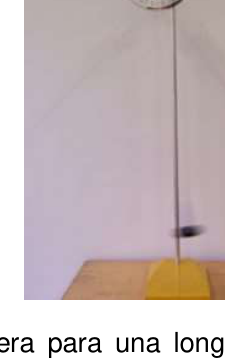
Topic: Oscillations & Waves Metodi: Experimental Data Analysis, Graph Linearization, Simple Harmonic Motion Analysis Competenze: Physical Reasoning, Experimental Data Analysis, Mathematical Modeling Objects: Pendulum, Sphere Fonte: Testo (PDF) — p.5
PE33. - Rivadavia, istituto privato. Alderetes, Tucumán.
Misurazione dell’accelerazione della gravità L’accelerazione causata dalla gravità, denominata accelerazione gravitazionale, varia da da un luogo all’altro sulla Terra, perché dipende dall’altitudine. La gravità è la forza di attrazione tra due oggetti che hanno massa. Valore di accelerazione La gravità è determinata dai valori di massa del corpo e della Terra in questo
- Il caso. Il movimento armonico semplice è quello che descrive un pendolo in assenza di attrito. È un movimento periodico e oscilante. Il periodo del movimento armonico di un Pendale semplice (in approssimativa di piccole oscillazioni) è T= 𝟐𝝅√ 𝒍 𝒈
Essendo L:lunghezza del pendolo g:accelerazione della gravità locale T:periodo di Movimento per piccole oscillazioni Sconfiggendo g otteniamo: 𝒈= 𝟒𝝅𝟐𝒍 𝑻𝟐
176 - OAF 2018 Usando questa espressione si potrebbe calcolare il valore di g determinando per un pendolo dato, lunghezza e periodo. Per ottenere maggiore precisione, si misurano di solito i periodi di lunghezza di pendolo diversa.
Obiettivo L’obiettivo di questa esperienza è quello di utilizzare correttamente le conoscenze Il movimento armonico semplice e la teoria degli errori che ci permettono di determinare la Accelerazione della gravità attraverso i dati ottenuti nel funzionamento di un un semplice pendolo.
1° Parte. Armarsi il dispositivo con i materiali come segue. Lista dei materiali
-
Supporto
-
Sfera di metallo.
-
Cronometro
-
Trasportatore
-
Regola.
-
Il filo
-
Materiale adesivo.
2° parte. Misurare 4 volte il tempo di 10 oscillazioni complete della sfera per una lunghezza determinato dal filo, fare questo fino a ottenere 4 dati affidabili con 5 lunghezze. diversi dal filo con una variazione di 5 cm. Si consiglia di praticare qualche volta con il sistema prima di iniziare la presa di dati. (è necessario fare attenzione che il nodo del pendolo non si muova mentre il pendolo (cfr. punto 1.6.1 del regolamento (UE) n.
3° Parte. Una volta terminata la fase di misurazione.
- Si determina il periodo corrispondente ai 4 tempi misurati con la lunghezza L1, calcolare i periodi per quei tempi, dividendo il tempo misurato per i 10 oscillazioni complete (t) tra il numero di oscillazioni.
- Fate lo stesso per le altre 5 lunghezze.
- Determinare un’espressione che mostri una dipendenza lineare tra L e T.
- Rendere conto del rapporto lineare tra L e T su carta in millimetri, tracciare la linea retta che si avvicinino al meglio ai cinque punti di sperimentazione.
- Determinare l’equazione di tale retta con calcoli di incertezze corrispondenti.
- Ottieni il valore di g e la sua incertezza.
- Confronta il valore di g con il valore di g di bibliografia.
Topic: Oscillations & Waves Metodi: Experimental Data Analysis, Graph Linearization, Simple Harmonic Motion Analysis Competenze: Physical Reasoning, Experimental Data Analysis, Mathematical Modeling Objects: Pendulum, Sphere Fonte: Testo (PDF) — p.5
PE33. Rivadavia Private Institute is a private institution. You are a fool, Tucuman.
Measurement of the acceleration of gravity The acceleration caused by gravity, called gravitational acceleration, varies from One place to another on Earth because it depends on altitude. Gravity is the force of gravity. attraction between any two objects that have mass. The acceleration value Gravitational is determined by the values of the mass of the body and the Earth in this case. The simple harmonic motion is one that describes a pendulum in the absence of friction. It’s a periodic and oscillatory movement. The period of the harmonic movement of a The simple pendulum (approximately small oscillations) is T= 𝟐𝝅√ 𝒍 𝒈
If L:length of the pendulum g:acceleration of local gravity T:period of the pendulum Movement for small oscillations Clearing g we get: 𝒈= 𝟒𝝅𝟐𝒍 𝑻𝟐
The Commission shall adopt delegated acts in accordance with Article 21 of this Regulation. Using this expression you could calculate the value of g by determining for a pendulum given, length and period. For greater accuracy, periods are usually measured corresponding to various pendulum lengths.
The objective The aim of this experience is to make good use of the knowledge of The simple harmonic movement and error theory allow us to determine the The acceleration of gravity through the data obtained in the operation of a a simple pendulum.
The following is the list of the countries of the European Union: Arming the device as follows with the materials. List of materials
-
Support
-
It’s a metal ball.
-
The time-meter .
-
- Carrier .
-
It’s a rule.
-
I ‘m not .
-
It’s a sticky material.
The following table shows the following: Measure 4 times the time of 10 complete oscillations of the sphere for a length determined from the thread, do this until you get 4 reliable data with 5 lengths. different from the thread with a variation of 5 cm. It is recommended to practice the system sometimes before starting data collection, (be careful not to move the pendulum knot while the pendulum is in motion) The angle of opening shall be the same.
The following is the list of the countries of the European Union: Once the measurement phase is completed.
- The period corresponding to the 4 times measured by length is determined. L1, calculate the periods for those times, dividing the time measured for the 10 complete oscillations (t) between the number of oscillations.
- Do the same for the other 5 lengths.
- Determine an expression that shows a linear dependence between L and T.
- Representing the linear relationship between L and T on millimeter paper, tracing the straight line I’m going to try to get closer to the five experimental points.
- Determine the equation of this line with calculations of uncertainties the corresponding ones.
- Get the value of g and its uncertainty.
- Compare the g value with the g value of the bibliography.
Topic: Oscillations & Waves Metodi: Experimental Data Analysis, Graph Linearization, Simple Harmonic Motion Analysis Competenze: Physical Reasoning, Experimental Data Analysis, Mathematical Modeling Objects: Pendulum, Sphere Fonte: Testo (PDF) — p.5
PE34. Escuela Normal de Bella Vista. Bella Vista, Corrientes.
Experiencias reales con equipo básico Llamamos péndulo simple a un ente ideal constituido por una masa puntual suspendido de un hilo inextensible y sin peso, capaz de oscilar libremente en el vacío y sin rozamiento. Al separar la masa de su posición de equilibrio, oscila a ambos lados de dicha posición, realizando un movimiento armónico simple. En la posición de uno de los extremos se produce un equilibrio de fuerzas. El peso de la bola se descompone en dos componentes: una primera componente que se equilibra con la tensión del hilo, de manera que: 𝑇= 𝑚𝑔 cos 𝜃
OAF 2018 - 177
A segunda componente, perpendicular a la anterior, es la que origina el movimiento
oscilante: 𝐹= −𝑚𝑔 sin𝜃
Sin embargo, para oscilaciones de valores de ángulos pequeños, se cumple:sin𝜃≅𝜃
Por consiguiente, podremos escribir, teniendo en cuenta, el valor del seno del ángulo:
𝐹= −𝑚𝑔
sin 𝜃= −𝑚𝑔 𝜃= −𝑚𝑔 Χ
𝜆
𝐹= −𝑚𝜛2𝑥 𝐹= −𝑚𝑔
Χ
𝜆
Con la ecuación obtenida anteriormente vemos que: 𝜛2 =
𝑔
𝜆 y teniendo en cuenta:
𝜛=
2𝜋
𝑇
Donde T es el período, es decir el tiempo utilizado en realizar una oscilación completa,
así llegamos a: 𝑇= 2𝜋√
𝜆
𝑔
O lo que para nuestra situación
𝑔= (2 𝜋
𝑇)
2
. 𝑙
Materiales
- metro
- masa de péndulo
- hilo
- una hoja de papel
- cronometro.
Desarrollo
-
Instale el hilo con la masa conocida para formar un péndulo, controle que no exista nada que obstruya el recorrido del cuerpo.
-
Una vez preparada la escena, iniciar la experiencia sin empujar el cuerpo, anotando los datos en la tabla (cada renglón son datos distintos de masa o longitud o distancia. No promediar entre renglones) l(m) m(g) X (m) (θ) oscilaciones t (seg) Periodo T 𝑔= (2 𝜋 𝑇) 2 . 𝑙
-
Completada la fase de mediciones, se representa, en papel milimetrado, g en función de l, se traza la recta que mejor aproxime los seis puntos experimentales y se mide la pendiente de dicha recta. Como se ha representado
178 - OAF 2018
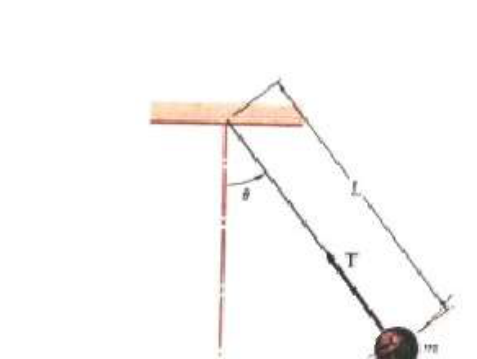
Topic: Oscillations & Waves Metodi: Experimental Data Analysis, Graph Linearization, Simple Harmonic Motion Analysis Competenze: Physical Reasoning, Experimental Data Analysis, Mathematical Modeling Objects: Pendulum Fonte: Testo (PDF) — p.5
PE34. La scuola normale di Bella Vista. Bella Vista, Corrent.
Esperienze reali con equipaggiamento di base Chiamiamo un semplice pendolo un ente ideale costituito da una massa puntuale sospesa. di un filo inestensibile e senza peso, capace di oscillare liberamente nel vuoto e senza
- Raggiudicazione. Separando la massa dalla sua posizione di equilibrio, oscilla su entrambi i lati di la posizione, realizzando un semplice movimento armonico. In posizione di uno dei L’equilibrio delle forze si verifica. Il peso della palla si divide in due componenti: un primo componente che si che si bilancia con la tensione del filo, in modo che: T= mg cos θ
OAF 2018 - 177
Un secondo componente, perpendicolare all’altro, è quello che produce il movimento
oscilante: F= −mg sinθ
Tuttavia, per oscillazioni di valori a piccoli angoli, si compie:sinθθ
Quindi possiamo scrivere, tenendo conto del valore del seno dell’angolo:
𝐹= −𝑚𝑔
senza θ= −mg θ= −mg Χ
𝜆
𝐹= −𝑚𝜛2𝑥 𝐹= −𝑚𝑔
Χ
𝜆
Con l’equazione ottenuta prima vediamo che π2 =
𝑔
λ e tenendo conto:
𝜛=
2𝜋
𝑇
Dove T è il periodo, cioè il tempo impiegato per effettuare un oscillazione completa,
Quindi arriviamo a T=2π√
𝜆
𝑔
O cosa per la nostra situazione
𝑔= (2 𝜋
𝑇)
2
. 𝑙
Materiali
- metro
- massa di pendolo
- filo .
- un foglio di carta
- Un cronometro.
Sviluppo
-
Installa il filo con la massa conosciuta per formare un pendolo, controlla che non non c’è nulla che ostruisca il percorso del corpo.
-
Una volta che la scena è pronta, iniziare l’esperienza senza spingere il corpo, annotando i dati nella tabella (ogni elemento è dato a massa diversa o lunghezza o distanza. Non avergiare tra i rangloni) l(m) m(g) X (m) (θ) oscillazioni t (seg) Periodo T 𝑔= (2 𝜋 𝑇) 2 . 𝑙
-
La fase di misurazione completata è rappresentata, su carta millimetrica, La funzione di l è quella di tracciare la retta che si avvicina meglio ai sei punti sperimentali. e si misura l’inclinazione di tale retta. Come si è rappresentato
178 - OAF 2018
Topic: Oscillations & Waves Metodi: Experimental Data Analysis, Graph Linearization, Simple Harmonic Motion Analysis Competenze: Physical Reasoning, Experimental Data Analysis, Mathematical Modeling Objects: Pendulum Fonte: Testo (PDF) — p.5
PE34. The Bella Vista Normal School. It’s a beautiful view, the currents.
Real experiences with basic equipment We call a simple pendulum an ideal entity consisting of a suspended point mass. of an unstretchable and weightless thread, capable of swinging freely in the void and without The roasting. By separating the mass from its equilibrium position, it oscillates on both sides of The position of the body is to be positioned in a simple harmonic motion. In the position of one of the Extremes are a balance of forces. The weight of the ball is broken down into two components: a first component which is Balances with the tension of the thread, so that: T=mg cos θ
The Commission shall adopt delegated acts in accordance with Article 21 of the Financial Regulation.
A second component, perpendicular to the previous one, is the one that causes the movement.
The following is the list of the following:
However, for small-angle value oscillations, the following is fulfilled:sinθθ
Therefore, we can write, taking into account the sine of the angle:
𝐹= −𝑚𝑔
with θ= −mg θ= −mg Χ
𝜆
𝐹= −𝑚𝜛2𝑥 𝐹= −𝑚𝑔
Χ
𝜆
With the equation we got above we see that: π2 =
𝑔
λ and taking into account:
𝜛=
2𝜋
𝑇
Where T is the period, i.e. the time used to perform a complete oscillation,
So we get to: T=2π√
𝜆
𝑔
Or what for our situation
𝑔= (2 𝜋
𝑇)
2
. 𝑙
Materials
- metro .
- pendulum mass
- I ‘m not .
- a sheet of paper .
- The timepiece.
Development
-
Install the thread with the known mass to form a pendulum, check that it does not There’s nothing that’s blocking the body’s path.
-
Once the scene is ready, start the experience without pushing the body, Noting the data in the table (each row is separate mass data or length or distance. Not averaging between ranges) l(m) m(g) X (m) (θ) The following shall be reported: Period T 𝑔= (2 𝜋 𝑇) 2 . 𝑙
-
When the measurement phase is complete, g is represented on millimeter paper. The function of l is to draw the straight line closest to the six experimental points. and the slope of that straight line is measured. As it has been represented
The following is the list of the countries of the European Union:
Topic: Oscillations & Waves Metodi: Experimental Data Analysis, Graph Linearization, Simple Harmonic Motion Analysis Competenze: Physical Reasoning, Experimental Data Analysis, Mathematical Modeling Objects: Pendulum Fonte: Testo (PDF) — p.5
PE35. ESETP N° 703 José Toschke. Puerto Madryn, Chubut.
Objetivos
Determinar la aceleración de un móvil que viaja por un plano inclinado. (Plano de Galileo)
Introducción El desplazamiento de un móvil sobre un plano inclinado es una de las formas más sencillas de reproducir un Movimiento Rectilíneo Uniforme Variado. (de aquí en adelante MRUV). Esta práctica fue empleada por Galileo para estudiar la dependencia temporal de la distancia recorrida por el móvil. En un movimiento acelerado uniformemente ya el móvil no recorre distancias iguales en tiempos iguales, lo que si ocurre es en tiempos iguales, adquiere iguales incrementos de rapidez”.
Si llamamos v(t) a la coordenada de la velocidad del móvil en la vía recta para un instante
t, v0 a la velocidad inicial que dicho móvil tiene en el momento t0, en el cual empezamos a
estudiar el problema, y a es su aceleración, puede describirse el movimiento de dicho
móvil mediante la ecuación horaria (Sears et al., 2009):
𝑣(𝑡) = 𝑣0 + 𝑎 (𝑡− 𝑡0) (1)
Si tomamos t0=0 la ecuación (1) queda: 𝑣(𝑡) = 𝑣0 + 𝑎 𝑡 (2)
Por lo tanto la ecuación (2) matemáticamente puede modelarse con una función lineal del tipo: t m b t f (3)
Donde b es la ordenada al origen (velocidad inicial del móvil) y m la pendiente (velocidad del móvil)
Materiales
- Dispositivo para generar MRUV: consta de un plano inclinado con un riel de aproximadamente 74 cm de largo a que puede voltearse en torno a una base pivote.
- Cronómetro digital.
Figura 1: Esquema de la vista lateral (arriba) y superior (abajo) del dispositivo para generar MRUV.
OAF 2018 - 179 Observando la Figura 1 puede deducirse que al instante en que se voltea el dispositivo se produce el descenso de la bolilla que circula de izquierda a derecha del esquema.
Procedimiento. Estimación de las velocidades.
- Sobre la cinta métrica ubicada a lo largo de la madera marcar 10 posiciones separadas cada 5 cm.
¿Qué consecuencia tendrá en el experimento marcar una mayor cantidad de posiciones? ¿Y marcar una menor cantidad de posiciones?
- Posicione la bolilla en el extremo derecho del dispositivo tubo (ver Figura 1 vista lateral)
- Con cronómetro en mano voltee rápidamente el dispositivo (haciendo pivotear la tabla sobre su base) y accione el cronómetro cuando la bollilla comience a moverse.
- Mida los tiempos en que el la bolilla pasa por cada una de las marcas realizadas en la cinta.
- Repita este procedimiento al menos 5 veces y tome como valor medido de tiempo para cada posición el promedio de los tiempos obtenidos en cada repetición.
¿Qué consecuencia tendrá en el experimento iniciar el cronómetro simultáneamente al momento de que la bolilla comience moverse? ¿Qué puede decir de la velocidad de la bolilla en los primeros instantes del movimiento?
- Registre los datos confeccionando una tabla similar a la Tabla 1 (8)
x (cm) t1 (s) t2 (s) t3 (s) t4 (s) t5 (s) tprom (s) 0 0 0 0 0 0 0 5
10
..
Tabla 1: Tabla ejemplo de posiciones de la bollillas y tiempos medidos.
- Con los datos obtenidos estime la velocidad y escriba la ecuación horaria de posición. (3)
- Realice el grafico de la velocidad en función del tiempo. (1)
- Confeccione un grafico de la posición en función del tiempo y realice una recta de ajuste. (3).
- Determine el valor de la pendiente y de la ordenada de dicha recta. (2)
- Analice los datos (ver Apéndice) y calcular la aceleración. (3)
Bibliografía Sears, F.W., Zemansky, M.Z., y Young H.D. (2009). Física Universitaria. Volumen 1, Decimosegunda edición, Pearson Educación, México.
Apéndice Método de los mínimos cuadrados Supongamos que al realizar un experimento se obtienen los siguientes pares de valores para las variables xi e yi x1;y2 x2;y2 :: :: xn;yn
180 - OAF 2018 y supongamos también que existe una relación lineal entre estas variables. Sea y = mx + b la ecuación de la recta que mejor se ajusta a este conjunto de puntos.
Figura 1.2: Determinación gráfica de los parámetros m y b de la recta que relaciona las variables x e y.
Veamos ahora qué pasos han de seguirse para hallar una ecuación que nos permita calcular m y b de forma analítica. Sean: 𝑦𝑖= 𝑚𝑥𝑖+ 𝑏 𝑦𝑖, = 𝑚𝑥𝑖+ 𝑏 los valores experimentales obtenidos y sean los valores que se obtienen en los puntos de abscisa xi utilizando la recta de ajuste. La diferencia nos dará una idea de la calidad del ajuste. Si esta diferencia es pequeña el ajuste será bueno mientras que si esta diferencia es grande, los valores calculados mediante la recta diferirán mucho de los resultados experimentales y el ajuste será malo. Pues bien, los parámetros m y b para la recta de ajuste mediante el método de mínimos cuadrados se obtiene exigiendo que el error cuadrático medio definido como: ∑𝑟2𝑖 𝑛 𝑖=1 = ∑[𝑦𝑖 – (𝑚 𝑥𝑖+ 𝑏)]2 𝑛 𝑖=1
sea mínimo. Para ello, debe cumplirse que: 𝜕𝑟𝑖 𝜕𝑚= 0 𝜕𝑟𝑖 𝜕𝑏= 0 lo que proporciona las siguientes ecuaciones para el cálculo de los parámetros m y b de la recta de ajuste por mínimos cuadrados: 𝑚= 𝑛∑𝑥𝑖𝑦𝑖−∑𝑥𝑖∑𝑦𝑖 𝑛∑𝑥2𝑖−(∑𝑥𝑖) 2
𝑏= ∑𝑥2𝑖 ∑𝑦𝑖−∑𝑥𝑖∑𝑥𝑖𝑦𝑖 𝑛∑𝑥2𝑖− (∑𝑥𝑖)2
El error en la determinación de los parámetros m y b, m y b, respectivamente, puede determinarse mediante las siguientes ecuaciones: 𝜎𝑚= √∑(𝑦𝑖−(𝑚𝑥𝑖+ 𝑏)) 2 𝑛−2
𝑛 𝑛∑𝑥𝑖2 − (∑𝑥𝑖)2
𝜎𝑚= √∑(𝑦𝑖− (𝑚𝑥𝑖+ 𝑏)) 2 𝑛−2
∑𝑥𝑖2 𝑛∑𝑥𝑖2 −(∑𝑥𝑖)2 Finalmente, es conveniente tener algún parámetro que nos informe si los valores obtenidos experimentalmente están alineados o no sin que sea necesario representarlos.
OAF 2018 - 181 Existe un parámetro denominado coeficiente de regresión r de Pearson, cuya expresión viene dada por: 𝑟= 𝑛∑𝑥𝑖𝑦𝑖−∑𝑥𝑖∑𝑦𝑖 √[𝑛∑𝑥2𝑖 − (∑𝑥𝑖)2] [𝑛∑𝑦2 𝑖−(∑𝑦𝑖)2]
y que nos informa acerca de lo bueno que es el ajuste. Para un conjunto de puntos perfectamente alineados, el módulo de este coeficiente valdrá uno. A medida que los puntos se alejan de la línea recta, el módulo de este coeficiente disminuye. Por lo tanto, este coeficiente de regresión nos permite cuantificar lo buena que es la recta de regresión. Cuanto más próximo a la unidad esté el módulo de este coeficiente, tanto más alineados estarán los puntos representados y mayor será la validez de la recta de regresión de mínimos cuadrados.
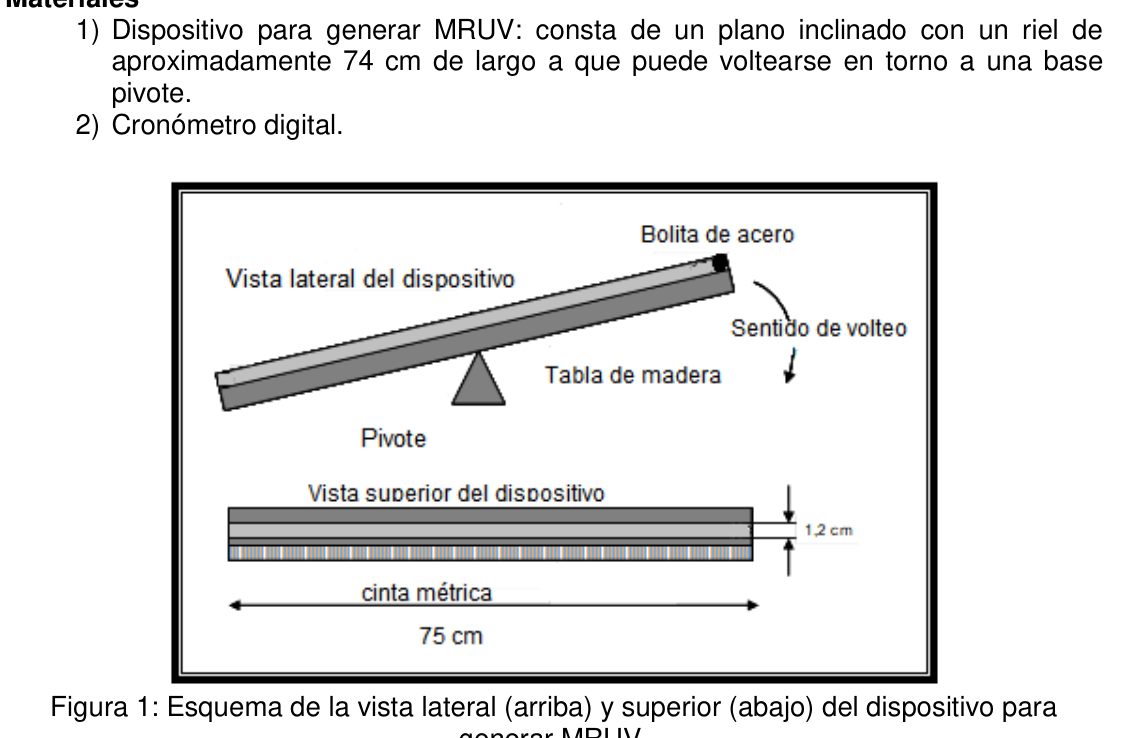
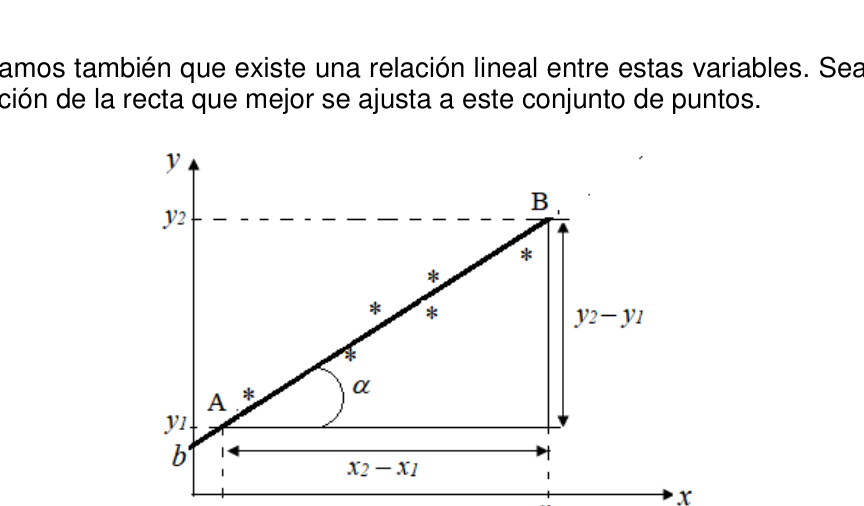
Topic: Newtonian Mechanics Metodi: Experimental Data Analysis, Graph Linearization, Curve Fitting Competenze: Physical Reasoning, Experimental Data Analysis, Mathematical Modeling Objects: Inclined Plane, Ball Fonte: Testo (PDF) — p.5
PE35. ESETP N° 703 José Toschke. Port Madryn, Chubut.
Obiettivi Determinare l’accelerazione di un mobile che viaggia in un piano inclinato. (Piano di Galileo)
Introduzione Il spostamento di un cellulare su un piano inclinato è uno dei modi più semplici per riprodurre un Movimento Rettile Uniforme Variabile. (da qui in poi) MRUV). Questa pratica è stata utilizzata da Galileo per studiare la dipendenza temporale da la distanza percorsa dal cellulare. In un movimento accelerato uniformemente il mobile non percorre le stesse distanze nello stesso tempo, e se succede lo fa allo stesso tempo. si ottiene uguale incremento di velocità.
Se chiamiamo v(t) la coordinata della velocità del cellulare in rotta retta per un istante t, v0 alla velocità iniziale che questo cellulare ha al momento t0, in cui iniziamo a studiare il problema, e a è la sua accelerazione, si può descrivere il movimento di detto La Commissione ha adottato una decisione che prevede che il programma di lavoro sia stato adottato in base alle informazioni disponibili. 𝑣(𝑡) = 𝑣0 + 𝑎 (𝑡− 𝑡0) (1)
Se prendiamo t0=0 l’equazione (1) rimane: 𝑣(𝑡) = 𝑣0 + 𝑎 𝑡 (2)
L’equazione (2) può quindi essere matematicamente modellata con una funzione lineare di tipo: t m b t f (3)
Dove b è ordinata all’origine (velocità iniziale del cellulare) e m la pendenza (velocità del cellulare)
Materiali
- Dispositivo per generare MRUV: è costituito da un piano inclinato con un riel di circa 74 cm di lunghezza che può essere girata attorno a una base
- Piovete.
- Cronometro digitale.
Figura 1: Schema della vista laterale (alto) e superiore (basso) del dispositivo per generare MRUV.
OAF 2018 - 179 La figura 1 mostra che il momento in cui si gira il dispositivo si produce la discesa della ciotola che si muove da sinistra a destra dello schema.
Procedura.
- Velocità stimata.
- Sul nastro metrico lungo il legno segnare 10 posizioni. separati ogni 5 cm.
Che conseguenza avrà l’esperimento di segnare un maggior numero di posizioni? E segnare un minor numero di posizioni?
- Posizionare il bollo alla fine destra del dispositivo tubo (vedere figura 1 vista (laterale)
- Con cronometro in mano, girare rapidamente il dispositivo (facendo piovare la La pianta è sulla base della pianta e accende il cronometro quando la bolla inizia a
- Si muove.
- Misura i tempi in cui la boccetta passa per ogni marchio realizzato
- sul nastro.
- Ripeti questa procedura almeno 5 volte e prendi come valore misurato di tempo per ogni posizione la media dei tempi ottenuti in ogni posizione Ripetizione.
Che conseguenza avrà l’esperimento di avviare il cronometro contemporaneamente al Quando la ciotola comincia a muoversi? Cosa può dire della velocità della Boiling nei primi istanti del movimento?
- Registrare i dati con una tabella simile a quella di Tabella 1 (8)
x (cm) t1 (s) t2 (s) t3 (s) t4 (s) t5 (s) tprom (s) 0 0 0 0 0 0 0 5
10
..
Tabella 1: Esempio di posizioni delle palline e tempi misurati.
- Con i dati ottenuti, stima la velocità e scrivi l’equazione oraria di posizione. (3)
- Fa’ il grafico della velocità in base al tempo. (1)
- Configgere un grafico della posizione in base al tempo e fare una retta di regolazione. (3).
- Determina il valore della pendenza e dell’ordine di tale retta. (2)
- Analizzare i dati (vedi Appendice) e calcolare l’accelerazione. (3)
Bibliografia Sears, F.W., Zemansky, M.Z., e Young H.D. (2009). - Fisica universitaria. Volume 1, Decimo-seconda edizione, Pearson Education, Messico.
Appendice Metodo dei minimi quadrati Supponiamo che quando si fa un esperimento si ottengano le seguenti coppie di valori per le variabili xi e yi x1;y2 x2;y2 :: :: xn;yn
180 - OAF 2018 E supponiamo anche che ci sia una relazione lineare tra queste variabili. Se e = mx + b l’equazione della retta che meglio si adatta a questo insieme di punti.
Figura 1.2: Determinazione grafica dei parametri m e b della retta che collega le variabili x e y.
Vediamo ora quali passi devono essere presi per trovare un’equazione che ci permette di Calcolare m e b in modo analitico. Sean: gi= mxi+ b ci, = mxi+ b i valori sperimentali ottenuti e sono i valori ottenuti nei punti di abcissa xi usando la retta di regolazione. La differenza ci darà un’idea della qualità dell’adattamento. Se questa differenza è piccola, Il corretto sarà buono mentre se questa differenza è grande, i valori calcolati La correzione è molto diversa dai risultati sperimentali e l’aggiustamento è scadente. I parametri m e b per la retta di regolazione utilizzando il metodo dei minimi quadrati si ottiene richiedendo che l’errore quadratico medio definito come: ∑𝑟2𝑖 𝑛 𝑖=1 = ∑[𝑦𝑖 – (𝑚 𝑥𝑖+ 𝑏)]2 𝑛 𝑖=1
- Non è così. Per questo, è necessario che: 𝜕𝑟𝑖 𝜕𝑚= 0 𝜕𝑟𝑖 𝜕𝑏= 0 che fornisce le seguenti equazioni per il calcolo dei parametri m e b di il retto di regolazione per minimi quadrati: m= nxiyi−xiyi 𝑛∑𝑥2𝑖−(∑𝑥𝑖) 2
b= x2i yi−xixiyi 𝑛∑𝑥2𝑖− (∑𝑥𝑖)2
L’errore nel determinare i parametri m e b, m e b, rispettivamente, può essere determinare mediante le seguenti equazioni: (sm= √(yi−(mxi+ b)) 2 𝑛−2
𝑛 𝑛∑𝑥𝑖2 − (∑𝑥𝑖)2
(mxi+ b)) 2 𝑛−2
∑𝑥𝑖2 𝑛∑𝑥𝑖2 −(∑𝑥𝑖)2 Infine, è opportuno avere un parametro che ci informi se i valori le prove ottenute sperimentalmente sono allineate o meno senza essere necessariamente rappresentate.
OAF 2018 - 181 C’è un parametro chiamato coefficiente di regressione di Pearson r, la cui espressione viene data da: 𝑟=
- il numero di persone che hanno il diritto di partecipare √[𝑛∑𝑥2𝑖 − (∑𝑥𝑖)2] [𝑛∑𝑦2 𝑖−(∑𝑦𝑖)2]
e ci informa di quanto sia bello l’adeguamento. Per un insieme di punti Perfetto allineato, il modulo di questo coefficiente valerà uno. Come i Se i punti si allontanano dalla linea retta, il modulo di questo coefficiente diminuisce. Quindi, Questo coefficiente di regressione ci permette di quantificare quanto sia buona la retta di Regressione. Più vicino all’unità è il modulo di questo coefficiente, più i punti rappresentati saranno allineati e maggiore sarà la validità della retta di Regressione di minimi quadrati.
Topic: Newtonian Mechanics Metodi: Experimental Data Analysis, Graph Linearization, Curve Fitting Competenze: Physical Reasoning, Experimental Data Analysis, Mathematical Modeling Objects: Inclined Plane, Ball Fonte: Testo (PDF) — p.5
PE35. The Commission has also adopted a proposal for a Regulation (EC) No 1233/2006. Port Madryn, Chubut.
Objectives Determine the acceleration of a mobile moving on an inclined plane. (Galileo’s plan)
The first is the introduction. Moving a mobile phone over an inclined plane is one of the most common ways to move a mobile phone. simple to reproduce a varied uniform rectal motion. (from now on MRUV). This practice was used by Galileo to study the temporal dependence of the distance travelled by the mobile phone. In a uniformly accelerated motion the mobile It doesn’t travel the same distances at the same time, which if it does, it’s at the same time. The rate of change in the speed of the vehicle is equal to the rate of change in the speed of the vehicle.
If we call v(t) the coordinate of the mobile’s speed in the straight line for an instant t, v0 to the initial speed that that mobile has at the time t0, at which we start to The problem is a, and a is its acceleration, and the motion of the problem can be described. The following table shows the results of the study: 𝑣(𝑡) = 𝑣0 + 𝑎 (𝑡− 𝑡0) (1)
If we take t0=0, the equation (1) is: 𝑣(𝑡) = 𝑣0 + 𝑎 𝑡 (2)
Thus the equation (2) can be mathematically modeled with a linear function of type: t m b t f (3)
Where b is the ordered at the origin (mobile’s initial speed) and m the slope (speed) (from the mobile phone)
Materials
- MRUV generating device: consists of an inclined plane with a rail of approximately 74 cm long which can be turned around a base I’m going to spin. The number of days of the year is fixed.
Figure 1: Sketch of the side view (top) and upper (bottom) of the device for The vehicle is capable of generating MRUVs.
The Commission shall adopt implementing acts in accordance with Article 21 of the Financial Regulation. From the figure 1 it can be inferred that the moment the device is turned it is It produces the descent of the bowl that circulates from left to right of the diagram.
The procedure. Estimate of the speeds.
- On the metric tape located along the wood mark 10 positions separated every 5 cm.
What will be the effect of the experiment on the number of positions? And score a smaller number of positions?
- Place the bowl on the right end of the tube device (see Figure 1 view side)
- With a chronometer in hand turn the device quickly (turning the table on its base) and turn on the timer when the bubble starts to move.
- Measure the times the bucket passes through each of the marks made on the tape.
- Repeat this procedure at least 5 times and take as a measured value time for each position the average of the times obtained in each Repeat.
What will be the consequence of the experiment in starting the chronometer simultaneously with the the moment the bowl starts moving? What can you tell us about the speed of the Boiling in the first moments of the movement?
- Record the data by making a table similar to Table 1 (8)
x (cm) t1 (s) t2 (s) t3 (s) t4 (s) t5 (s) tprom (s) 0 0 0 0 0 0 0 5
10
..
Table 1: Give an example of the positions of the balls and the times measured.
- With the data obtained, estimate the speed and write the time equation of position. (3)
- Make the speed chart based on time. (1)
- Make a chart of the position based on time and make a straight line of adjustment. (3).
- Determine the value of the slope and the order of that straight. (2)
- Analyze the data (see Appendix) and calculate the acceleration. (3)
The bibliography Sears, F.W., Zemansky, M.Z., and Young H.D. (2009). I’m a college physics major. The following is the list of the countries of the European Union: The twelfth edition, Pearson Education, Mexico.
Appendix to the The method of least squares Suppose that by performing an experiment you get the following value pairs for variables xi and yi x1;y2 x2;y2 :: :: xn;yn
The Commission shall adopt delegated acts in accordance with Article 21 of this Regulation. And let’s also assume that there’s a linear relationship between these variables. If y = mx + b the equation of the straight line that best fits this set of points.
Figure 1.2: Graphical determination of parameters m and b of the straight line relating the variables x and y.
Let’s see now what steps we have to take to find an equation that allows us to do this. calculate m and b analytically. Sean: Yi = mxi+ b Yi, = mxi+ b The experimental values obtained and the values obtained at the points of The following table shows the number of the following: The difference will give us an idea of the quality of the fit. If this difference is small the Adjustment will be good while if this difference is large, the calculated values The results of the experiment will differ greatly from those of the experimental results and the adjustment will be poor. Well, the parameters m and b for the adjustment line using the minimum method squares is obtained by requiring the mean square error defined as: ∑𝑟2𝑖 𝑛 𝑖=1 = ∑[𝑦𝑖 – (𝑚 𝑥𝑖+ 𝑏)]2 𝑛 𝑖=1
It’s minimal. To this end, it must be complied with that: 𝜕𝑟𝑖 𝜕𝑚= 0 𝜕𝑟𝑖 𝜕𝑏= 0 which provides the following equations for calculating parameters m and b of the adjustment line by minimum squares: The following is the list of the countries of the European Union: 𝑛∑𝑥2𝑖−(∑𝑥𝑖) 2
The following is the list of the countries of the European Union: 𝑛∑𝑥2𝑖− (∑𝑥𝑖)2
The error in determining the parameters m and b, m and b, respectively, can be be determined by the following equations: The following table shows the results of the evaluation: 2 𝑛−2
𝑛 𝑛∑𝑥𝑖2 − (∑𝑥𝑖)2
The following table shows the results of the evaluation: 2 𝑛−2
∑𝑥𝑖2 𝑛∑𝑥𝑖2 −(∑𝑥𝑖)2 Finally, it is useful to have some parameter that tells us whether the values The results of the experiment are either aligned or not without the need to represent them.
The Commission shall adopt delegated acts in accordance with Article 21 of the Financial Regulation. There is a parameter called Pearson’s regression coefficient r, whose expression is given by: 𝑟= The Commission shall adopt implementing acts in accordance with Article 21 of this Regulation. √[𝑛∑𝑥2𝑖 − (∑𝑥𝑖)2] [𝑛∑𝑦2 𝑖−(∑𝑦𝑖)2]
And it tells us about how good the fit is. For a set of points If you’re perfectly aligned, the module of this coefficient will be one. As they points are removed from the straight line, the modulus of this coefficient decreases. Therefore, This regression coefficient allows us to quantify how good the straight line is. The rate of regression. The closer the module of this coefficient is to the unit, the more The points represented are aligned and the greater the validity of the straight line. The number of times the number of times the number of times the number of times the number of times the number of times the number of times the number of times the number of times the number of times the number of times the number of times the number of times the number of times the number of times the number of times the number of times the number of times the number of times the number of times the number of times the number of times the number of times the number of times the number of times the number of times the number of times the number of times the number of times the number of times the number of times the number of times the number of times the number of times the number of times the number of times the number of times the number of times the number of times the number of times the number of times the number of times the number of times the number of times the number of times the number of times the number of times the number of times the number of times the number of times the number of times the number of times the number of times the number of times the number of times the number of times the number of times the number of times the number of times the number of times the number of times the number of times the number of times the number of times the number of times the number of times the number of times the number of times the number of times the number of times the number of times the number of times the number of times the number of times the number of times the number of times the number of times the number of times the number of times the number of times the number of times the number of times the number of times the number of times the number of times the number of times the number of times the number of times the number of times the number of times the number of times the number of times the number of times the number of times the number of times the number of times the number of times the number of times the number of times the number of times the number of times the number of times the number of times the number of times the number of times the number of times the number of times the number of times the number of times the number of times the number of times the number of times the number of times the number of times the number of times the number of times the number of
Topic: Newtonian Mechanics Metodi: Experimental Data Analysis, Graph Linearization, Curve Fitting Competenze: Physical Reasoning, Experimental Data Analysis, Mathematical Modeling Objects: Inclined Plane, Ball Fonte: Testo (PDF) — p.5
PE36. Instituto Salesiano Pío XI. Ciudad de Corrientes.
Determinación de la Gravedad con un Péndulo Simple
Objetivo Determinar la gravedad.
El siguiente sistema que vamos a considerar es el péndulo simple. Idealmente consiste en una masa m suspendida de un punto mediante una cuerda inextensible y de masa despreciable. Cuando la masa se desplaza un pequeño ángulo respecto de la vertical, la masa oscila periódicamente, es decir, regresa a la posición de partida al cabo de un tiempo T en cada oscilación que no cambia durante el movimiento. Para que esto se cumpla, es necesario que la amplitud de las oscilaciones sea pequeña. Este tiempo, denominado período, depende de la longitud L de la cuerda según la expresión: 2𝜋 𝑇= √ 𝑔 𝐿 (1)
Esta expresión permite relacionar dos magnitudes medibles de manera directa como son la longitud de la cuerda y el período de oscilación.
Elementos
- Hilo de pesca.
- Plomada.
- Soporte universal.
- Cinta métrica.
- Cronómetro
Consignas del trabajo:
- A partir de la expresión (1), obtener una ecuación que relacione linealmente la longitud de la cuerda y el período de oscilación.
- Con los elementos disponibles en el laboratorio confeccionar un péndulo y realizar las mediciones del periodo T para cuatro longitudes distintas.
Se recomienda tomar el tiempo de 10 oscilaciones completas y dividirlo por 10. Y realizar esa medición al menos 5 veces para cada longitud.
182 - OAF 2018 3) Confeccionar una tabla de valores de L y T2, y obtener una gráfica. 4) Obtener el valor de gravedad a partir de la pendiente de la recta del gráfico y compararlo con el valor teórico g = 9,81 m/s2.
Topic: Oscillations & Waves Metodi: Experimental Data Analysis, Graph Linearization, Simple Harmonic Motion Analysis Competenze: Physical Reasoning, Experimental Data Analysis, Mathematical Modeling Objects: Pendulum Fonte: Testo (PDF) — p.5
PE36. Istituto salesiano di Pio XI. Città dei Corrienti.
Determinazione della gravità con un semplice pendolo
Obiettivo Determina la gravità.
Il sistema successivo che consideriamo è il pendolo.
- semplice. Idealmente consiste in una massa m sospesa di un punto con una corda inestensibile e di massa
- Desprezioso. Quando la massa si sposta un piccolo angolo
- rispetto de la Verticale, la massa oscilla periodicamente, cioè torna alla posizione di partenza al Dopo un tempo T in ogni oscillazione che non cambia durante il movimento. Per realizzare questo, è La portata delle oscillazioni è necessaria. Questo tempo, chiamato periodo, dipende dalla lunghezza L della corda secondo l’espressione: 2𝜋 𝑇= √ 𝑔 𝐿 (1)
Questa è la mia . espressione
- Permette Relazionare Due . Maggiorità La misurazione di un’altezza di un’altezza di la corda e il periodo di oscillazione.
Elementi
- Fino a pesca.
- Plomato.
- Supporto universale.
- Cintura metrica.
- Cronometro .
Consegni del lavoro:
- L’espressione (1) dà un’equazione che relaziona linealmente la la lunghezza della corda e il periodo di oscillazione.
- Con gli elementi disponibili in laboratorio, costruire un pendolo e effettuare le misurazioni del periodo T per quattro lunghezze diverse.
Si consiglia di prendere il tempo di 10 oscillazioni complete e dividerlo per 10. Y effettuare tale misurazione almeno 5 volte per ogni lunghezza.
182 - OAF 2018 3) Confezionare una tabella di valori di L e T2, e ottenere un grafico. 4) Ottenere il valore di gravità dal pendio della retta del grafico e La differenza tra i valori di riferimento e i valori di riferimento è la differenza tra i valori di riferimento e i valori di riferimento.
Topic: Oscillations & Waves Metodi: Experimental Data Analysis, Graph Linearization, Simple Harmonic Motion Analysis Competenze: Physical Reasoning, Experimental Data Analysis, Mathematical Modeling Objects: Pendulum Fonte: Testo (PDF) — p.5
PE36. The Salesian Institute of Pius XI. City of currents.
Determining Gravity with a Simple Pendulum
The objective Determine the gravity.
The next system we ‘re going to consider is the pendulum . It’s simple. Ideally consists of a suspended mass of m a point by an unextended rope and mass I’m not a big fan of this. When the mass moves a small angle In relation to de la vertical, la Mass It ‘s oscillating . periodically, i.e. return to the starting position at After a time T at each oscillation that does not change during the movement. For this to be fulfilled, it is The frequency of the oscillations must be small. This time, called the period, depends on the length L of the string according to the expression: 2𝜋 𝑇= √ 𝑔 𝐿 (1)
This one . The expression It allows . Relating Two . The magnitude of the The length of the string and oscillation period.
Elements
- Fishing thread.
- It’s a plow.
- Universal support.
- It’s a tape recorder.
- The chronometer .
Work results:
- From the expression (1), obtain an equation that relates linearly to the the length of the rope and the period of oscillation.
- With the materials available in the laboratory make a pendulum and The T-period measurements shall be carried out for four different lengths.
It is recommended to take the time of 10 complete oscillations and divide it by 10. Y The measurement shall be made at least 5 times for each length.
The Commission shall adopt delegated acts in accordance with Article 182 of the Treaty. 3) Make a table of values of L and T2, and get a graph. 4) Get the gravity value from the slope of the graph’s straight line and This is theoretical value of g = 9,81 m/s2.
Topic: Oscillations & Waves Metodi: Experimental Data Analysis, Graph Linearization, Simple Harmonic Motion Analysis Competenze: Physical Reasoning, Experimental Data Analysis, Mathematical Modeling Objects: Pendulum Fonte: Testo (PDF) — p.5
PE37. Escuela de Agricultura. General Alvear, Mendoza.
Efecto fotoelectrico ”Planck”
Objetivos
- Relacionar el efecto fotoeléctrico con diodos y determinar la constante de Planck”
- Cálculo de errores.
Material
- 5 Diodos LED de distinto color
- 2 Multímetro
- Resistencias 220Ω/470Ω /1000Ω
- Fuente de C.C. (variable)
- Protoboard
Introducción
Los diodos LED son semiconductores los cuales
emiten luz monocromática ya que su longitud de onda
tiene aproximadamente valores definidos. Cuando las
zonas P y N del semiconductor se unen se emite un
fotón. La diferencia de potencial que se aplica en la
unión P-N es llamado potencial de arranque, el cual
es la diferencia de potencial mínima para que circule
corriente a través de él. Los semiconductores pueden
ser de distintos materiales, lo que provoca que la
emisión de luz sea de distinta longitud de onda y por
lo tanto distintos colores.
La energía con que se emite un fotón en un LED,
viene dada por la ecuación de Einstein- Planck E= ℎ.
donde ℎ es la constante de Planck y 𝑣 la frecuencia.
Teniendo en cuenta que E= 𝑞𝑉𝑜, donde 𝑞 es la carga
del electrón y 𝑉O es el voltaje que excita al LED sería de esperar que se cumpliese la
Igualdad 𝑞𝑉𝑜 = ℎ𝑣.
La constante de Planck representa al cuanto elemental de acción, es decir la relación
entre la cantidad de energía y la frecuencia, ambas asociadas a un cuanto o a una
partícula, por lo que desempeña un papel central en la teoría de la mecánica cuántica. El
valor determinado de la constante es el siguiente
ℎ = 6,62606957.10-34 J.s
𝐋𝐄𝐃 𝝀(𝒏𝒎) 𝒗(× 𝟏𝟎𝟏𝟒𝐇𝐳)
Infrarrojo 938 3,198
Rojo 632 4,746
Naranja 605 4,958
Amarillo 593 5,059
Verde 532 5,639
Azul 464 6,465
Violeta 405 7,407
OAF 2018 - 183
Consigna 1
En primer lugar debemos realizar la correspondiente conexión de los elementos en la
protoboard, la misma debe ser un circuito que consta de un LED (recuerde que el ánodo
tiene mayor longitud que el cátodo y debe estar conectado al terminal positivo de la
fuente) y la resistencia en serie. Ambos se deben conectar a la fuente de c.c.
a) Realice la conexión en la protoboard
b) Conecte un voltímetro y un amperímetro que permita medir la diferencia de
tensión y la corriente en le LED
c) Realice un esquema del circuito.
Consigna 2
d) Mide la tensión y corriente para el LED seleccionado con su correspondiente
incerteza verificando el funcionamiento del circuito indicado.
e) Comenzando con una diferencia de potencial cero aumente la misma hasta que
el LED comience a emitir luz. Además mide la corriente en dicho instante las
mediciones deben realizarse cada 0,05 V.
f) Realice e) para cada LED de distinto color. ( al menos 5 mediciones )
g) Registre los valores medidos para cada LED en una tabla.
h) Grafica la corriente en función de la diferencia de tensión para cada LED
Consigna 3
Considere el valor de la velocidad de la luz (c) y el valor de la carga (e). Teniendo en
cuenta que 𝑣 = c / λ
i) Utilizando los datos de la tabla, confecciona un gráfico de voltaje de arranque
(cuando comienza a emitir luz el LED) en función de la frecuencia que tiene cada
LED. Realice para cada color de LED
j) Realiza el ajuste correspondiente.
k) Realice una interpretación de lo obtenido
l) Considerando la relación Einstein- Planck determina el valor de la constante de
Planck con su incerteza correspondiente.
m) Interpreta el obtenido en la gráfica con la ecuación que relaciona Einstein-
Planck.
n) Obtenga el valor más probable con su incerteza
o) De acuerdo con los resultados obtenidos para cada color ¿son similares al
aceptado de la constante de Planck?
Topic: Modern-Quantum Physics, Circuits Metodi: Experimental Data Analysis, Photon Energy Relation, Curve Fitting Competenze: Physical Reasoning, Experimental Data Analysis, Mathematical Modeling Objects: Resistor, Battery Fonte: Testo (PDF) — p.5
PE37. Scuola di Agricoltura. Generale Alvear, Mendoza.
Effetto fotoelettrico Planck
Obiettivi
- Relazionare l’effetto fotoelettrico con i diodi e determinare la costante di Planck
- Calcolo degli errori.
Materiale
- 5 diodi LED di colore diverso
- 2 multimetro
- Resistenze 220Ω/470Ω /1000Ω
- Fonte C.C. (variabile)
- Protoboard
Introduzione I diodi LED sono semiconduttori che Emette luce monocromatica in quanto la loro lunghezza d’onda ha valori approssimativamente definiti. Quando le le zone P e N del semiconduttore si uniscono, emette un fotone. La differenza di potenziale applicata alla Un’unione P-N è chiamata potenziale di avvio, che è la differenza di potenziale minima per la circolazione corrente attraverso di esso. I semiconduttori possono La struttura è composta da materiali diversi, che causano la l’emissione di luce è di diversa lunghezza d’onda e per Diversi colori. L’energia con cui un fotone emette un LED, E’ data dall’equazione di Einstein-Planck E=h. dove h è la costante di Planck e v la frequenza. Considerando che E=qVo, dove q è la carica L’elettrone e il VO sono le tensioni che eccitano il LED. Equità qVo = hv. La costante di Planck rappresenta il quantum elementare di azione, cioè la relazione tra la quantità di energia e la frequenza, entrambi associati a un quantum o a un La teoria della meccanica quantistica è molto importante. El Il valore determinato della costante è il seguente ℎ = 6,62606957.10-34 J.s
L’indice di cui al punto 1.2.1 è il seguente: Infrarossi 938 3.198 Rossa 632 4.746 Articoli di cui al capitolo 6 Giallo 593 5.059 Verde 532 5,639 Blu 464 6.465 Violeta 405 7.407
OAF 2018 - 183 Consigna 1 In primo luogo dobbiamo connettere i componenti della Il protoboard deve essere un circuito che è costituito da un LED (ricordate che l’anodo ha una lunghezza superiore a quella del catodo e deve essere collegata al terminale positivo della La resistenza in serie. Entrambi devono essere collegati alla fonte di c.c. a) Connettere il collegamento sul protoboard b) Connettere un voltometro e un ampere che permettano di misurare la differenza di tensione e corrente in LED c) Sviluppa un schema del circuito.
Consigna 2 d) Misura la tensione e corrente per il LED selezionato con il suo corrispondente l’incertezza verificando il funzionamento del circuito indicato. e) Iniziando con una differenza di potenziale zero aumentare la stessa fino a Il LED inizia a emettere luce. Inoltre, il corrente di corrente misura i livelli di corrente di corrente. le misurazioni devono essere effettuate ogni 0,05 V. f) eseguire e) per ogni LED di colore diverso. (almeno 5 misure) g) Registra i valori misurati per ogni LED in una tabella. h) Grafica del corrente in base alla differenza di tensione per ogni LED
Consegna 3 Considerare il valore della velocità della luce (c) e il valore della carica (e). Avendo in conta che v = c / λ i) Utilizzo dei dati della tabella, realizza un grafico di tensione di avvio (quando il LED inizia a emettere luce) a seconda della frequenza che ha ogni LED LED. Fate per ogni colore di LED j) effettuare il corrispondente adeguamento. k) Fa’ un’interpretazione del risultato l) Considerando la relazione Einstein-Planck determina il valore della costante di Planck con la sua corrispondente incertezza. m) Interpreta il risultato del grafico con l’equazione che relaziona Einstein- Planck. n) Ottieni il valore più probabile con l’ incertezza o) Secondo i risultati ottenuti per ogni colore sono simili al accettato dalla costante di Planck?
Topic: Modern-Quantum Physics, Circuits Metodi: Experimental Data Analysis, Photon Energy Relation, Curve Fitting Competenze: Physical Reasoning, Experimental Data Analysis, Mathematical Modeling Objects: Resistor, Battery Fonte: Testo (PDF) — p.5
PE37. School of Agriculture. General Alvear, Mendoza, please.
Photoelectric effect Planck
Objectives
- Relate the photoelectric effect to diodes and determine the constant of Planck
- Calculating the errors.
Material
- 5 different color LEDs
- 2 multi-meter .
- Resistance of 220Ω/470Ω /1000Ω
- Source from C.C. (variable)
- Protoboard .
The first is the introduction. LED diodes are semiconductors which They emit monochrome light because their wavelength has approximately defined values. When the The P and N zones of the semiconductor are joined and a The photon. The potential difference applied in the P-N bond is called the start potential, which is the difference in the minimum potential for it to circulate flowing through it. Semiconductors can The Commission has already adopted a proposal for a directive on the protection of workers’ rights. The light emitted is of different wavelengths and by So different colors. The energy a photon emits in an LED, It’s given by the Einstein-Planck equation E=h. where h is Planck’s constant and v is the frequency. Considering that E=qVo, where q is the charge The voltage that excites the LED would be expected to meet the Equation qVo = hv. The Planck constant represents the elementary quantum of action, i.e. the relation between the amount of energy and frequency, both associated with a quantum or a It is a fundamental part of quantum mechanics. El The given value of the constant is as follows ℎ = 6,62606957.10-34 J.s
The following conditions shall apply: Infrared 938 3,198 Red 632 4,746 The number of days of the week Yellow 593 5,059 Green 532 5,639 Blue 464 6,465 Violet 405 7,407
The Commission shall adopt delegated acts in accordance with Article 21 of the Financial Regulation. Consigna 1 The first is to make the corresponding connection between the elements in the The protoboard must be a circuit consisting of a LED (remember that the anode is It is longer than the cathode and must be connected to the positive terminal of the The resulting strength is the same as the resulting strength. Both must be connected to the source of c.c. (a) Connect to the protoboard (b) Connect a voltmeter and an ampere to measure the difference between voltage and current in the LED (c) Draw a circuit diagram.
Consigna 2 (d) Measures the voltage and current for the selected LED with its corresponding uncertainty by verifying the operation of the indicated circuit. (e) Starting with a potential difference of zero increase the same until The LED starts to emit light. In addition, the current at that instant is measured by the measurements shall be made every 0,05 V. (f) Perform (e) for each LED of a different colour. (at least 5 measurements) (g) Record the measured values for each LED in a table. h) Graph the current according to the voltage difference for each LED
Consigna 3 Consider the value of the speed of light (c) and the charge value (e). Having in It counts that v = c / λ (i) Using the data in the table, create a charts of the starting voltage (when the LED starts to emit light) based on the frequency of each I’m going to get it. Make it for every LED color (j) make the corresponding adjustment. (k) Make an interpretation of the result l) Considering the Einstein-Planck relation determines the value of the constant of Planck with his corresponding uncertainty. (m) Interpret the result in the graph with the equation relating Einstein- Planck, please. (n) Get the most likely value with your uncertainty (o) According to the results obtained for each colour are they similar to the colour of the colour? accepted from Planck’s constant?
Topic: Modern-Quantum Physics, Circuits Metodi: Experimental Data Analysis, Photon Energy Relation, Curve Fitting Competenze: Physical Reasoning, Experimental Data Analysis, Mathematical Modeling Objects: Resistor, Battery Fonte: Testo (PDF) — p.5
PE38. Colegio Emaús. El Palomar, Buenos Aires.
Objetivo Obtener la densidad de una substancia.
Materiales
- juego de tuercas de distintos tamaños
- vaso y agua
- hilo de coser.
Instrumental y equipo
-
Regla milimetrada
-
calibre
-
balanza de precisión digital 0,1g – 500,0g
-
probeta graduada
184 - OAF 2018 Introducción Si medimos las masas y el volumen de cada tuerca, podemos analizar por medio de un gráfico en ejes cartesianos la relación entre dichas magnitudes.
Para ello utilizamos la balanza para medir las masas. Para el caso del volumen podemos utilizar dos caminos: a) Medición directa: por medio de la probeta. b) Medición indirecta: por medio de una propiedad, ley o principio de la naturaleza. En nuestro caso recurrimos al principio de Arquímedes cuya relación expresa: 𝐸= 𝜌. 𝑉 (1)
Donde el empuje E resulta del producto entre el peso específico 𝜌 por el volumen V.
Dado que el agua tiene un peso específico de 1
𝑔→
𝑐𝑚3 por medio de una balanza digital
podemos medir el empuje al sumergir completamente el volumen de cada tuerca y
deducir de la ecuación (1) el volumen correspondiente.
a) Confeccionar una tabla con las mediciones y valores obtenidos para cada tuerca.
Masa ( 𝑔)
Empuje ( 𝑔→ )
Volumen(𝑐𝑚3)
La constante de proporcionalidad entre la masa M y el volumen V para una misma
sustancia es lo que se denomina densidad 𝛿.
𝑀= 𝛿. 𝑉
(2)
Donde 𝛿 es la densidad del material o sustancia con que están hechas las tuercas, que
se corresponde con la pendiente de la relación lineal (2).
b) Usando regresión lineal obtenga la gráfica de la masa en función del volumen y
a partir de la pendiente determine la medida de la densidad con su incerteza
correspondiente.
Topic: Fluid Mechanics Metodi: Experimental Data Analysis, Curve Fitting, Error Propagation Competenze: Physical Reasoning, Experimental Data Analysis, Mathematical Modeling Objects: Container Fonte: Testo (PDF) — p.5
PE38. - Scuola Emmaus. Il Palomar, Buenos Aires.
Obiettivo Ottenere la densità di una sostanza.
Materiali
- un gioco di noci di diverse dimensioni
- un bicchiere e un po ’ d’ acqua .
- filo da cucire.
Strumentale e attrezzatura
- Regola di millimetro .
- calibro
- bilancia di precisione digitale 0,1 g 500,0 g
- prova graduata
184 - OAF 2018 Introduzione Se misuriamo il peso e il volume di ogni noci, possiamo analizzare con un Grafico in assi cartesiani il rapporto tra queste dimensioni. Per questo usiamo la bilancia per misurare la massa. Per il volume, possiamo utilizzare due vie: a) Misura diretta: con la prova. b) Misura indiretta: mediante proprietà, legge o principio di natura. Nel nostro caso, ci riferiamo al principio di Archimede il cui rapporto esprime: 𝐸= 𝜌. 𝑉 (1)
In cui la spinta E è il risultato del prodotto tra il peso specifico ρ per il volume V. Dato che l’acqua ha un peso specifico di 1 𝑔→ cm3 mediante una bilancia digitale Possiamo misurare la spinta immergendo completamente il volume di ogni noci e dedurre dall’equazione (1) il volume corrispondente. a) Confezionare una tabella con le misure e i valori ottenuti per ogni noci. Massa (g) Push (g→) Volume (cm3)
La costante proporzionalità tra massa M e volume V per una stessa La sostanza è quella che si chiama densità δ. 𝑀= 𝛿. 𝑉 (2) Dove δ è la densità del materiale o della sostanza con cui sono fatte le noci, che corrisponde alla pendenza della relazione lineare (2). b) Usando la regressione lineare si ottiene il grafico della massa in funzione del volume e a partire dalla pendenza determina la misura della densità con la sua incertezza corrispondente.
Topic: Fluid Mechanics Metodi: Experimental Data Analysis, Curve Fitting, Error Propagation Competenze: Physical Reasoning, Experimental Data Analysis, Mathematical Modeling Objects: Container Fonte: Testo (PDF) — p.5
PE38. Emmaus College. The Palomar, Buenos Aires.
The objective Get the density of a substance.
Materials
- a set of nuts of different sizes
- glass and water
- sewing thread.
Instrumental and equipment
- Millimeter rule .
- caliber
- digital precision scale of 0,1 g 500,0 g
- graduated test
The Commission shall adopt implementing acts in accordance with Article 21 of the Financial Regulation. The first is the introduction. If we measure the mass and volume of each nut, we can analyze it by using a The graph on Cartesian axes shows the relationship between these magnitudes. For this we use the scale to measure the masses. For the volume case we can Use two ways: (a) Direct measurement: by means of the probe. (b) Indirect measurement: by means of a property, law or principle of nature. In our case we are referring to the principle of Archimedes, whose relation expresses: 𝐸= 𝜌. 𝑉 (1)
Where the E-push is the product between the specific weight ρ by volume V. Since water has a specific weight of 1 𝑔→ cm3 by means of a digital scale We can measure the thrust by completely submerging the volume of each nut and The value of the product is calculated as the sum of the values of the product weighted average of the product weighted average. (a) Make a table with the measurements and values obtained for each nut. Mass (g) The pressure of the vehicle shall be measured at the speed of the vehicle. The following table shows the results of the calculation:
The proportionality constant between mass M and volume V for a same substance is what is called density δ. 𝑀= 𝛿. 𝑉 (2) Where δ is the density of the material or substance the nuts are made of, which The slope of the linear relationship (2) is the slope of the linear relationship. (b) Using linear regression, obtain the mass graph based on volume and From the slope determine the density measurement with its uncertainty the corresponding.
Topic: Fluid Mechanics Metodi: Experimental Data Analysis, Curve Fitting, Error Propagation Competenze: Physical Reasoning, Experimental Data Analysis, Mathematical Modeling Objects: Container Fonte: Testo (PDF) — p.5
PE39. Escuela Nueva Juan Mantovani. Argüello, Córdoba.
Objetivo Determinación experimental del calor específico del alcohol etílico.
Materiales
- Agua caliente
- Alcohol etílico
- 1 vaso térmico con tapa
- 1 probeta
- 1 balanza
- 2 termómetros
Introducción En esta experiencia se utilizará un calorímetro de mezclas casero para determinar el calor específico del alcohol: Cal Cuando se ponen en contacto dos sustancias que tienen diferentes temperaturas, se establece un flujo de energía térmica desde el cuerpo de mayor temperatura hacia el de
OAF 2018 - 185
menor. Este intercambio depende de las masas, calores específicos y variaciones de
temperatura en juego.
En este caso mezclaremos masas de agua y alcohol (ma y mal), de modo que la
expresión que gobierna el intercambio térmico es la siguiente:
−𝑄𝑎= 𝑄𝑎𝑙
𝑚𝑎𝐶𝑎 (𝑇𝑓− 𝑇𝑎) = 𝑚𝑎𝑙𝐶𝑎𝑙 (𝑇𝑓− 𝑇𝑎𝑙)
(1)
Midiendo las masas de agua y alcohol y sus temperaturas iniciales y finales (Ta, Tal, Tf) se podrá conocer el calor específico del alcohol. Esto se logra estableciendo la relación lineal: −𝑚𝑎𝐶𝑎 (𝑇𝑓− 𝑇𝑎) vs. 𝑚𝑎𝑙 (𝑇𝑓− 𝑇𝑎𝑙), en donde Cal sería la pendiente de dicha recta.
Procedimiento y Actividades
- Colocar una masa ma = 200 g de agua caliente (a más de 80 ºC) en el vaso térmico, taparlo y colocar el termómetro para medir la temperatura, la cual se medirá en el punto 3.
- Medir con la probeta 10 cm³ de alcohol (Val) y medir su temperatura Tal, la cual seguramente coincidirá con la ambiente.
- Medir la temperatura del agua caliente (Ta) cuando ésta se estabilice.
- Colocar rápidamente el alcohol dentro del vaso térmico con agua y tapar. Esperar un minuto a que se estabilice la temperatura de la mezcla.
- Medir la temperatura Tf de la mezcla y luego de esto descarte la misma.
- Realice los pasos 1 al 5, modificando cada vez el volumen de alcohol Val , y la temperatura inicial del agua caliente Ta. Usar los volúmenes 10, 20, 40, 60, 80 y 100 cm³ de alcohol, de modo de obtener 6 puntos experimentales para hacer las rectas de ajuste.
- Confeccionar una tabla con las magnitudes medidas y su correspondiente error de medición o propagado, con los siguientes datos: masa de agua ma, volumen de alcohol Val, masa de alcohol mal , temperatura inicial del agua Ta y del alcohol Tal, temperatura final de la mezcla Tf .
- Graficar
los
puntos
experimentales
dada
la
relación
relación
lineal:
−𝑚𝑎𝐶𝑎 (𝑇𝑓− 𝑇𝑎) vs. 𝑚𝑎𝑙 (𝑇𝑓− 𝑇𝑎𝑙) - Obtener las rectas de ajuste, con pendientes máxima, media y mínima para calcular Cal.
Importante Recordar que en la tabla deben estar indicadas las unidades correspondientes a cada medición y que por cada columna de mediciones, debe haber otra con los errores de éstas.
Datos
δagua = 1g/cm3
δalcohol = 0,79 g/cm3
Topic: Thermodynamics Metodi: Experimental Data Analysis, Graph Linearization, Curve Fitting Competenze: Physical Reasoning, Experimental Data Analysis, Mathematical Modeling Objects: Calorimeter Fonte: Testo (PDF) — p.5
PE39. Scuola Nuova Juan Mantovani. Argüello, Cordoba.
Obiettivo Determinazione sperimentale del calore specifico dell’alcol etilico.
Materiali
- Acqua calda .
- Alcol etilico
- 1 bicchiere termico con copertura
- 1 prova.
- 1 bilancia .
- Due termometri .
Introduzione In questo esperimento si utilizzerà un calometro di miscele domestico per determinare il calore specifico dell’alcol: Cal Quando due sostanze che hanno temperature diverse entrano in contatto, si Il corpo più alto di temperatura si trova in una zona di temperatura superiore.
OAF 2018 - 185
- Piu’ piccolo. Questo scambio dipende dalle masse, calori specifici e variazioni di temperatura in gioco. In questo caso, mescoleremo masse di acqua e di alcol (ma e male), in modo che la l’espressione che governa lo scambio termico è la seguente: -Qa= Qal MaCa (Tf− Ta) = malCal (Tf− Tal) (1)
Misurando le masse di acqua e di alcol e le loro temperature iniziali e finali (Ta, Tal, Tf) si potrà conoscere il calore specifico dell’alcol. Questo è raggiunto stabilendo il rapporto Lineale: −maCa (Tf− Ta) vs. Mal (Tf− Tal), dove Cal sarebbe la pendenza di tale
- Si’, e’ dritto.
Procedura e attività
- Mettere una massa ma = 200 g di acqua calda (più di 80 oC) nel bicchiere Il termometro è stato messo per misurare la temperatura. si misura al punto 3.
- Misurare con il campione 10 cm3 di alcol (Val) e misurare la sua temperatura Tal, che e sicuramente coinciderà con l’ambiente.
- Misurare la temperatura dell’acqua calda (Ta) quando essa si stabilizza.
- Mettete rapidamente l’alcol dentro il bicchiere termico con acqua e coprite. Aspettare un minuto per stabilizzare la temperatura del miscelato.
- Misurare la temperatura Tf della miscela e poi scartarla.
- Fate i passi 1 a 5, modificando ogni volta il volume di alcol Val , e il volume di alcol Val. temperatura iniziale dell’acqua calda Ta. Usare i volumi 10, 20, 40, 60, 80 e 100 cm3 di alcol, per ottenere 6 punti sperimentali per fare le linee di regolazione.
- Confezionare un tabella con le dimensioni misurate e il loro errore corrispondente di misurazione o di diffusione, con i seguenti dati: massa d’acqua, volume Alcol Val, massa di alcol cattivo, temperatura iniziale dell’acqua Ta e del Alcol Tal, temperatura finale della miscela Tf.
- Grafica Le punti
- I risultati sono stati data la Relazione Relazione Lineare: -maCa (Tf− Ta) vs. - il numero di persone che hanno un’attività di lavoro
- Ottenere le righe di regolazione, con pendenti massimi, medie e minime per Calcolare.
Importante . Ricordate che la tabella deve indicare le unità di ciascuna unità. La misurazione è una delle principali caratteristiche di un sistema di misurazione.
- Questi.
Datos δacqua = 1g/cm3 δalcol = 0,79 g/cm3
Topic: Thermodynamics Metodi: Experimental Data Analysis, Graph Linearization, Curve Fitting Competenze: Physical Reasoning, Experimental Data Analysis, Mathematical Modeling Objects: Calorimeter Fonte: Testo (PDF) — p.5
PE39. The New Juan Mantovani School. Argüello, Cordoba. I know.
The objective Experimental determination of the specific heat of ethyl alcohol.
Materials
- Hot water .
- Ethyl alcohol
- 1 glass of heat with lid
- One sample .
- One swing .
- Two thermometers .
The first is the introduction. In this experiment a homemade blend calorimeter will be used to determine the specific heat of the alcohol: Cal When two substances with different temperatures come into contact, they are It establishes a flow of thermal energy from the higher temperature body to the body of the body.
The Commission has decided to extend the period of validity of the agreement. The minor. This exchange depends on the masses, specific heat and variations in the temperature is at stake. In this case we will mix masses of water and alcohol (good and bad), so that the The term governing heat exchange is as follows: -Qa=Qal The following table shows the following: (1)
Measuring water and alcohol masses and their initial and final temperatures (Ta, Tal, Tf) You can know the specific heat of the alcohol. This is achieved by establishing the relationship Linear: −maCa (Tf− Ta) vs. (Tf−Tal), where Cal would be the slope of the given It’s straight.
Procedures and Activities
- Place a mass ma = 200 g of hot water (more than 80 oC) in the glass The thermometer is then placed to measure the temperature. shall be measured at point 3.
- Measure with the 10 cm3 alcohol (Val) sample and measure its temperature Tal, which is It’ll probably match the atmosphere.
- Measure the temperature of the hot water (Ta) when it stabilizes.
- Quickly place the alcohol inside the hot water glass and cover it. Wait a minute for the mixture to stabilize.
- Measure the Tf temperature of the mixture and then discard it.
- Perform steps 1 to 5, changing the volume of alcohol Val , and the The initial temperature of the hot water is Ta. Use the volumes 10, 20, 40, 60, 80 and 100 cm3 of alcohol, so that 6 experimental points are obtained to make the the adjustment lines.
- Make a table with the measured magnitude and its corresponding error measurement or propagation, with the following data: water mass, volume Val, poor alcohol mass, initial water temperature and Alcohol such as, final temperature of the mixture Tf.
- Graphically The points The Commission will examine the results of the evaluation. given la Relationship Relationship Linear: -maCa (Tf− Ta) vs. The following is the list of the following:
- Get the adjustment straights, with maximum, medium and minimum slopes for Calculate the cal.
Important . Please note that the table should show the units for each The first is that the measurement is not a measurement, and that for each column of measurements, there must be another with the errors of These.
Data from the report δwater = 1 g/cm3 Drying of the product
Topic: Thermodynamics Metodi: Experimental Data Analysis, Graph Linearization, Curve Fitting Competenze: Physical Reasoning, Experimental Data Analysis, Mathematical Modeling Objects: Calorimeter Fonte: Testo (PDF) — p.5
PE40. Escuelas Técnicas Raggio. Ciudad Autónoma de Buenos Aires.
Objetivo Medir el Empuje que un líquido incógnita ejerce cobre un cuerpo metálico macizo, completamente sumergido. Medir la densidad de ese líquido.
Elementos
-
1 vaso de precipitado de 250 ml aforado
186 - OAF 2018
-
1 vaso de precipitado de 100 ml aforado, con hilo pegado para poder colgarlo
-
1 soporte universal con una nuez con agarradera metálica
-
1 dinamómetro (0-2.5) N
-
500 ml líquido incógnita
-
1 taco de madera
-
1 cuerpo metálico macizo con un gancho
Requerimientos Solo podrá utilizar los elementos provistos, papel, lapicera y calculadora no programable. Al finalizar el trabajo deberá presentar un informe que incluya los siguientes puntos:
- Esquema de los dispositivos experimentales utilizados
- Descripción y fundamentación del diseño utilizado
- Diagrama de cuerpo libre del cuerpo metálico macizo completamente sumergido en el líquido.
- Cuadro de valores de las mediciones realizadas
- Resultados obtenidos con sus correspondientes errores
- Respuesta justificada a la pregunta: ¿Es posible que el líquido incógnita sea agua?
- Tanto para la determinación el Empuje como la de la Densidad buscada: De todas las mediciones directas realizadas, ¿cuál es el factor que, de hacer esta experiencia nuevamente, ud. se preocuparía de medir con menor error la próxima vez? Justifique
Datos
- La densidad del agua es (1,00 ± 0,03)g / cm3
- La aceleración de la gravedad es (9,80 ± 0,01) m / s2
Topic: Fluid Mechanics Metodi: Experimental Data Analysis, Hydrostatic Equilibrium, Error Propagation Competenze: Physical Reasoning, Experimental Data Analysis Objects: Container Fonte: Testo (PDF) — p.5
PE40. Scuole tecniche Raggio. Città autonoma di Buenos Aires.
Obiettivo Misurare la spinta che un liquido incognito esercita copre un corpo metallico massiccio, completamente immerso. Misurare la densità di quel liquido.
Elementi
- 1 bicchiere di precipitato di 250 ml risparmiato
186 - OAF 2018
- 1 bicchiere di precipitazione di 100 ml risparmiato, con filo attaccato per poterlo appendere
- 1 supporto universale con un’aria a legno con una colla metallica
- 1 dinamometro (0-2.5) N
- 500 ml di liquido incognito
- 1 palo di legno
- 1 corpo metallico massiccio con un gancio
Richieste Può utilizzare solo gli elementi forniti, carta, lapislatura e calcolatore non programmabile. Al termine del lavoro, deve presentare un rapporto che include i seguenti punti:
- Schema dei dispositivi sperimentali utilizzati
- Descrizione e motivazione del design utilizzato
- Diagramma di corpo libero del corpo metallico massiccio completamente immerso nel liquido.
- Tabella dei valori delle misurazioni effettuate
- Risultati ottenuti con i propri errori
- Risposta giustificata alla domanda: è possibile che il liquido incognito sia acqua?
- Per determinare sia la spinta che la densità desiderata: tutte le misure dirette effettuate, qual è il fattore che, di fare questo
- Ricominciamo a sperimentare, Ud. si preoccuparebbe di misurare con meno errore la
- La prossima volta? Giustifica
Datos
- La densità dell’acqua è (1,00 ± 0,03) g/cm3
- L’accelerazione della gravità è (9,80 ± 0,01) m/s2
Topic: Fluid Mechanics Metodi: Experimental Data Analysis, Hydrostatic Equilibrium, Error Propagation Competenze: Physical Reasoning, Experimental Data Analysis Objects: Container Fonte: Testo (PDF) — p.5
PE40. Raggio Technical Schools. The Autonomous City of Buenos Aires.
The objective Measure the thrust that an unknown liquid exert covers a solid metal body, completely submerged. Measure the density of that liquid.
Elements
- 1 glass of 250 ml of precipitated savings
186 - OAF 2018
- 1 glass of 100 ml of precipitated water saved, with thread attached so that it can be hung
- 1 universal support with a nut with a metal handle
- 1 dynamometer (0-2.5) N
- 500 ml of unknown liquid
- One wooden stick .
- 1 solid metal body with a hook
Requirements You may only use the items provided, paper, pencil and non-programmable calculator. At the end of the work, a report shall be submitted, including the following:
- Schedule of experimental devices used
- Description and justification of the design used
- Free-body diagram of the fully submerged solid metal body in the liquid.
- Table of values of measurements carried out
- Results obtained with their corresponding errors
- Justified answer to the question: Is it possible that the unknown liquid is
- What?
- For both the determination of the thrust and the density sought: All the direct measurements made, what is the factor that, if you do this experience again, you know. It would worry about measuring the error rate less than the Next time? Justify it .
Data from the report
- The density of water is (1,00 ± 0.03) g/cm3
- The acceleration of gravity is (9,80 ± 0.01) m/s2
Topic: Fluid Mechanics Metodi: Experimental Data Analysis, Hydrostatic Equilibrium, Error Propagation Competenze: Physical Reasoning, Experimental Data Analysis Objects: Container Fonte: Testo (PDF) — p.5
PE41. Escuela Superior de Comercio Carlos Pellegrini Escuela de Comercio N° 31 Naciones Unidas. Ciudad Autónoma de Buenos Aires.
Difracción en un disco compacto
Introducción La óptica geométrica es el modelo que explica la propagación de la luz pensándola como rayos que parten de fuentes luminosas y se propagan de forma rectilínea por el espacio y por medios materiales transparentes. Esta teoría fue muy exitosa pues logra explicar la formación de imágenes en objetos como lentes, telescopios e incluso el ojo humano. Sin embargo, a medida que pasó el tiempo se sumó evidencia experimental de comportamientos propagatorios de la luz que eran imposibles de explicar por un modelo de rayos. El más famoso es el experimento de las dos rendijas de Young (1803), que demuestra interferencia entre dos fuentes de luz. Los fenómenos que se habían empezado a estudiar fueron explicados con un nuevo modelo propuesto principalmente por Huygens y Fresnel que hoy llamamos óptica física: consiste en pensar la luz como ondas que se propagan de manera análoga a las que se pueden generar en un estanque de agua perturbando su superficie libre (ver figura izquierda).
OAF 2018 - 187 Además de la interferencia, uno de los fenómenos de la luz que explica la óptica física es la difracción (del latín diffringĕre, ‘hacerse añicos’). En términos elementales, la difracción consiste en el hecho de que las ondas tienden a “desparramarse” un poco alrededor de obstáculos opacos. Esto es algo imposible de explicar si se piensa la luz como rayos que se propagan de forma rectilínea. El primer caso paradigmático es cuando el obstáculo es una rendija muy angosta (ver figura derecha): allí se observa que el haz de luz que incide desde la izquierda “se desparrama” en todas direcciones al atravesar la rendija y en cada dirección lo hace con una intensidad distinta, lo que da lugar al llamado patrón de difracción. Otro ejemplo de difracción consiste en la llamada red de difracción por transmisión, que consiste en una serie de obstáculos equiespaciados (que pueden ser múltiples rendijas aunque no necesaria-mente). Su característica notable es que dan un patrón de difracción con franjas luminosas muy nítidas en ciertas direcciones, llamadas máximos de intensidad, como se ve en la figura.
La ecuación de la red indica cuáles son los ángulos de los máximos de intensidad:
𝑛 𝜆= 𝑑 𝑠𝑖𝑛 𝜃
(1)
donde d es la distancia entre los obstáculos de la red y n es un número entero (0,1,2…) y λ es la longitud de onda del haz. Para cada valor de n hay un máximo de intensidad y n se llama el orden del máximo. El máximo central es de orden cero, los primeros que aparecen a sus lados son de orden 1, etcétera. Por otro lado, la longitud de onda se relaciona con el color de la luz. El espectro visible por el ojo humano consiste en la luz que tiene longitudes de onda aproximadamente entre los 400 nm (azul) y los 700 nm (rojo). Así, de acuerdo con la ecuación (1), cada longitud de onda distinta se desvía en un ángulos diferentes, lo que permite separar el espectro si la luz incidente tiene mezcla de colores (por ejemplo, la luz blanca). La superficie de un disco compacto (CD) posee un surco espiralado de manera que a lo largo de cada uno de sus radios se tiene una red de difracción por reflexión con distancia entre pistas de d = 1,6 μm. El principio de funcionamiento es el mismo que el de una red de difracción por reflexión, sólo que la luz difractada, en lugar de emerger del “otro lado” de la red, lo hace “del mismo lado” que el haz incidente. El objetivo de este experimento es observar la difracción de un haz láser generada por un CD y realizar mediciones para obtener la longitud de onda de aquél.
Materiales
− Puntero láser de cotillón − CD con cajita − Papel, cartón, libros − Cinta métrica − Cinta adhesiva y tijera − Alfiler − Soportes, barras y nueces − Regla y escuadra − Papel milimetrado
188 - OAF 2018 Comentarios generales
- Antes de comenzar, lea todas las instrucciones.
- Agregue en el informe comentarios que aclaren el procedimiento exacto que utilizó en cada paso, aclarando cualquier cambio o desvío respecto de las instrucciones. En lo posible incluya también un dibujo aclaratorio.
- Escriba directamente en tablas los datos obtenidos en las mediciones junto con sus incertezas.
- Al hacer cálculos, use un número razonable de cifras significativas.
- Trate de ser prolijo.
Experimento Advertencia de seguridad La radiación láser, por ser altamente direccional, presenta intensidades luminosas muy altas. La ex-posición directa del ojo a la luz del láser puede provocar daños oculares permanentes. Antes de encender el láser, recójase el cabello y asegúrese de que no trae puestos objetos (como ser anillos, brazaletes, cadenas) que puedan reflejar la luz del láser y de que ningún haz difractado por el CD pueda alcanzar a otra persona en el laboratorio.
-
Con un marcador fino, marque uno de los radios del CD. Oriente el CD de manera que este radio permanezca horizontal.
-
Con los materiales disponibles, fije el láser en una posición de manera que el haz incida normalmente sobre la línea marcada en el CD más o menos cerca del borde exterior. (¿Cómo se asegura de que la incidencia es normal?). Este paso puede llevar su tiempo. Antes de prender el láser, asegúrese de que las reflexiones del CD no puedan alcanzar a otras personas del laboratorio.
-
Con los materiales disponibles, construya una pantalla y ubíquela como indica la figura.
-
Practique un orificio sobre la pantalla que permita el paso del haz incidente. Tenga en cuenta que la distancia L debe poder ser variable. (¿Cómo se asegura de que la pantalla es perpendicular al haz incidente?).
-
Para distintos valores de L, observar los máximos de intensidad y registrar sus posiciones y (la distancia al máximo central, como se indica en la figura) junto con el orden n. Emplee por lo menos 10 valores distintos de L y observe por lo menos un máximo de orden dos.
-
Aplicando trigonometría y el teorema de Pitágoras a la ecuación de la red (1) resulta 𝑛 √𝐿2 + 𝑦2 = 𝑑 𝜆 𝑦
(2)
OAF 2018 - 189 Para cada medición realizada, obtenga el valor de la variable 𝑛 √𝐿2 + 𝑦2. ¿Cómo estimaría la incerteza de esta variable? 7. Realice un gráfico de los datos experimentales de la variable 𝑛 √𝐿2 + 𝑦2 en función de 𝑦. De acuerdo con la ecuación (2), ¿qué forma debería tener este gráfico? 8. A partir del análisis del gráfico, determine la longitud de onda λ del láser con su incerteza. 9. Tome un DVD y realice una única medición para determinar su distancia entre pistas d. ¿Es igual a la del CD?
Confección de un informe Escriba un informe de la experiencia realizada que posea la siguiente información:
- Título
- Introducción (breve)
- Descripción del dispositivo experimental (texto y dibujo)
- Detalles acerca de cómo se realizaron las mediciones (texto y dibujo)
- Mediciones / Tablas con incertezas
- Justificación de las incertezas
- Gráficos (cada uno en una hoja milimetrada)
- Resultados obtenidos
- Comentarios finales
- Conclusiones
- Y cualquier información que considere relevante
Topic: Wave Optics Metodi: Experimental Data Analysis, Interference & Diffraction Analysis, Graph Linearization Competenze: Physical Reasoning, Experimental Data Analysis, Mathematical Modeling Objects: Diffraction Grating, Screen Fonte: Testo (PDF) — p.5
PE41. Scuola superiore di commercio Carlos Pellegrini Scuola di Commercio N° 31 Nazioni Unite. Città autonoma di Buenos Aires.
Difrazione su un disco compatto
Introduzione L’ottica geometrica è il modello che spiega la diffusione della luce pensando a essa. Come i raggi che partono da fonti luminose e si diffondono rettamente attraverso il La Commissione ha adottato una decisione che prevede che il programma di ricerca e di sviluppo europeo sia stato adottato in base a una proposta di regolamento del Consiglio. Questa teoria è stata molto efficace perché riesce. spiegare la formazione di immagini su oggetti come lenti, telescopi e persino l’occhio
- Un uomo. Tuttavia, nel corso del tempo, si sono aggiunte prove sperimentali di comportamenti propagatori della luce che erano impossibili da spiegare da un modello di fulmini. Il più famoso è l’esperimento delle due scintille di Young (1803), che dimostra interferenza tra due fonti di luce. I fenomeni che erano stati studiati sono stati spiegati con un nuovo metodo. Modello proposto principalmente da Huygens e Fresnel che oggi chiamiamo ottica fisica: Consiste nel pensare alla luce come a onde che si diffondono in modo analogo a quelle che si diffondono. La capacità di generare in un stagno di acqua può essere alterata dalla superficie libera (vedi figura a sinistra).
OAF 2018 - 187 Oltre all’interferenza, uno dei fenomeni della luce che spiega l’ottica fisica è diffrazione (dal latino diffringĕre, “farsi spezzare”). In termini elementari, la La diffrazione consiste nel fatto che le onde tendono a disperdere un po’ intorno a ostacoli opaci. Questo è qualcosa che non si può spiegare se si pensa alla luce. come raggi che si diffondono in modo rettilineo. Il primo caso paradigmatico è quando l’ostacolo è un’insorgenza molto stretta (vedi Figura destra): si osserva che il fascio di luce che incide da sinistra se Si sparge in tutte le direzioni attraverso la spazia e in ogni direzione lo fa con un’intensità diversa, che dà luogo al cosiddetto modello di diffrazione. Un altro esempio di diffrazione è la cosiddetta rete di diffrazione tramite trasmissione. che consiste in una serie di ostacoli spaziati (che possono essere multipli (Sono in grado di farle diventare più veloci e più veloci). La caratteristica notevole è che danno un modello di diffrazione con strisce luminose molto nitide in determinate direzioni, chiamate massime di intensità, come si vede nella figura.
L’equazione della rete indica gli angoli dei massimi di intensità:
n λ= d senza θ
(1)
dove d è la distanza tra gli ostacoli della rete e n è un intero (0,1,2…) e λ è la lunghezza d’onda del fascio. Per ogni valore di n c’ è un massimo di intensità e n si chiama l’ordine massimo. Il massimo centrale è di ordine zero, i primi che Appare ai loro lati, sono di ordine 1, eccetera. D’altra parte, la lunghezza d’onda è correlata al colore della luce. Lo spettro visibile Per l’occhio umano, la luce consiste in lunghezze d’onda di circa i 400 nm (blu) e i 700 nm (rosso). Quindi, secondo l’equazione (1), ogni lunghezza La luce di una onda diversa si allontana da angoli diversi, consentendo di separare lo spettro se la luce incidente ha un mix di colori (ad esempio, la luce bianca). La superficie di un CD ha un’arco a spirale in modo che il lungo ogni radius si ha una rete di diffrazione per riflessione con Distanza tra piste di d = 1,6 μm. Il principio di funzionamento è lo stesso di quello di una rete di diffrazione da riflessione, solo che la luce diffratta, invece di emergere dal L’altro lato della rete, lo fa, lo fa, lo fa, lo fa, lo fa incidentalmente. L’obiettivo di questo esperimento è osservare la diffrazione di un raggio laser generato da un Cd e effettuare le misurazioni per ottenere la lunghezza d’onda di quel.
Materiali
- Punte laser di scatto
- CD con scatola
- Carta, cartone, libri
- Cintura metrica
- Fascia adesiva e scaglie
- Scavatrice − Pugli, barre e noci
- Regola e squadra
- Papero in millimetri
188 - OAF 2018 Commenti generali
- Prima di iniziare, leggi tutte le istruzioni.
- Aggiungere alla relazione commenti che chiariscano l’esatta procedura che L’impiego di un’informazione di base è stato effettuato in ogni passo, chiarendo ogni cambiamento o deviazione rispetto alle istruzioni. Se possibile, includere anche un disegno chiaritorio.
- Scrivere direttamente in tabelle i dati ottenuti dalle misurazioni insieme a le loro incertezze.
- Quando si fanno i calcoli, si utilizzano un numero ragionevole di cifre significative.
- Cerca di essere prolico.
Esperimento Avvertimento di sicurezza Il laser, essendo altamente direttivo, presenta intensità luminose molto Alti. L’esposta diretta dell’occhio alla luce laser può causare danni agli occhi.
- Permanenti. Prima di accendere il laser, tagliare i capelli e assicurarsi che non porti.
- mettere oggetti (come anelli, braccialetti, catene) che possano riflettere la luce del che nessun raggio diffratto dal CD possa raggiungere un’altra persona laboratorio.
- Con un segnale fino, segna uno dei radio del CD. Oriente il CD di in modo che questo raggio rimanga orizzontale.
- Con i materiali disponibili, fissare il laser in una posizione in modo che il La linea del CD è più o meno vicino al borda esterna. (Come si assicura che l’incidenza sia normale?) Questo passo
- Potrebbe richiedere tempo. Prima di accendere il laser, assicurati che le le riflessioni del CD non possono raggiungere altre persone del laboratorio.
- Con i materiali disponibili, costruisci uno schermo e un’ubiquela come indicato dalla
- Figura.
-
Praticare un orizzonte sullo schermo che permetta il passaggio del fascio incidente. Si noti che la distanza L deve essere variabile. (Come si assicura che la schermata è perpendicolare al fascio incidente?).
-
Per vari valori di L, osservare i massimi di intensità e registrare i loro valori. Le posizioni e (la distanza al massimo centrale, come indicato nella figura) insieme con l’ordine n. Inserisci almeno 10 valori diversi da L e osserva per quale meno un massimo di due.
-
Applicando trigonometria e teorema di Pitagora all’equazione della rete (1)
- E ’ vero . 𝑛 √𝐿2 + 𝑦2 = 𝑑 𝜆 𝑦
(2)
OAF 2018 - 189 Per ogni misurazione effettuata, si ottiene il valore della variabile n √L2 + y2. Come stimare l’incertezza di questa variabile? 7. Rendi un grafico dei dati sperimentali della variabile n √L2 + y2 in funzione di y. Secondo l’equazione (2), quale forma dovrebbe avere questo
- Grafico?
- Sulla base dell’analisi del grafico, determinare la lunghezza d’onda λ del laser con il suo
- l’incertitudine.
- Prendi un DVD e fai una singola misura per determinare la distanza tra Punto d. E’ uguale a quella del CD?
La preparazione di un rapporto Scrivi un rapporto sull’esperienza svolta che contiene le seguenti informazioni:
- Titolo .
- Introduzione (breve)
- Descrizione del dispositivo sperimentale (testo e disegno)
- Dettagli su come sono state effettuate le misure (testo e disegno)
- Misure / tabelle con incertezze
- giustificazione delle incertezze
- Grafica (ogni una in un foglio di millimetro)
- Risultati ottenuti
- Commenti conclusivi
- Conclusioni
- E qualsiasi informazione che ritenga rilevante.
Topic: Wave Optics Metodi: Experimental Data Analysis, Interference & Diffraction Analysis, Graph Linearization Competenze: Physical Reasoning, Experimental Data Analysis, Mathematical Modeling Objects: Diffraction Grating, Screen Fonte: Testo (PDF) — p.5
PE41. The Carlos Pellegrini School of Commerce School of Commerce N° 31 United Nations. The Autonomous City of Buenos Aires.
Diffraction on a compact disc
The first is the introduction. Geometric optics is the model that explains the propagation of light by thinking about it. Like lightning that starts from light sources and spreads straight through the sky. The Commission has already adopted a number of proposals for a new directive. This theory was very successful because it does . explain the formation of images in objects such as lenses, telescopes and even the eye human. However, as time went on, experimental evidence of Light propagating behaviors that were impossible to explain by a model. I’m not a lightning rod. The most famous is Young’s experiment of the two slits (1803), which The light source is the same as the light source. The phenomena that had been studied were explained by a new method. The model proposed primarily by Huygens and Fresnel which we today call physical optics: It’s about thinking of light as waves that propagate in a way similar to what we do. They can generate in a pool of water by disturbing its free surface (see figure left).
The Commission shall adopt delegated acts in accordance with Article 21 of this Regulation. In addition to interference, one of the phenomena of light that explains physical optics is diffraction (from Latin diffringĕre, to be broken). In basic terms, the Diffraction is the fact that the waves tend to spread out a little bit. around opaque obstacles. This is something impossible to explain if you think of light. Like lightning that spreads straight. The first paradigm case is when the obstacle is a very narrow gap (see Figure right): there you see that the beam of light that hits from the left se se It spreads in all directions as it crosses the cleft and in each direction it does so with a different intensity, which gives rise to the so-called diffraction pattern. Another example of diffraction is the so-called transmission diffraction network. This is a series of obstacles which are spaced out (which can be multiple) (Though not necessarily). Their remarkable feature is that they give a pattern of diffraction with very sharp light bands in certain directions, called maximum The intensity of the reaction, as shown in the figure.
The grid equation indicates the angles of the maximum intensities:
n λ= d without θ
(1)
where d is the distance between the network obstacles and n is an integer (0,1,2…) and λ is the wavelength of the beam. For each value of n there is a maximum of intensity and n It’s called the order of maximum. The central maximum is of the order zero, the first ones that They appear on their sides, they’re order 1, and so on. On the other hand, wavelength is related to the color of light. The visible spectrum For the human eye, it consists of light that has wavelengths of approximately between The values of the values of the values of the values of the values of the values of the values of the values of the values of the values of the values of the values of the values of the values of the values of the values of the values of the values of the values of the values of the values of the values of the values of the values of the values of the values of the values of the values of the values of the values of the values of the values of the values of the values of the values of the values of the values of the values of the values of the values of the values of the values of the values of the values of the values of the values of the values of the values of the values of the values of the values of the values of the values of the values of the values of the values of the values of the values of the values of the values of the values of the values of the values of the values of the values of the values of the values of the values of the values of the values of the values of the values of the values of the values of the values of the values of the values of the values of the values of the values of the values of the values of the values of the values of the values of the values of the values of the values of the values of the values of the values of the values of the values of the values of the values of the values of the values of the values of the values of the values of the values of the values of the values of the values of the values of the values of the values of the values of the values of the values of the values of the values of the values of the values of the values of the values of the values of the values of the values of the values of the values of the values of the values of the values of the values of the values of the values of the values of the values of the first of the values of the first of the values of the values of the first of the values of the first of the values of the values of the first of the first of the first of the first of the first of the first of the first of the first of the first of the first of the first of the first of the first of the first of the first of the first of the first of the first of the first of the first of the first of the first of the first of the first of the two are shall be. So, according to equation (1), each length The different wave is deflected at different angles, allowing the spectrum to be separated if the incident light has a color mix (e.g. white light). The surface of a compact disc (CD) has a spiral groove so that the surface of the disc is not The length of each of its radii is a reflection diffraction net with distance between tracks of d = 1,6 μm. The principle of operation is the same as that of a reflection diffraction net, only diffracted light, instead of emerging from the On the other side of the net, he does it on the same side as the incident. The purpose of this experiment is to observe the diffraction of a laser beam generated by a CD and make measurements to get the wavelength of that.
Materials
− Laser pointer for the brush − CD with box − Paper, cardboard, books
- Metric tape − Tape and scissors
- A shredder − Stakes, bars and nuts
- Rule and squad − Millimeter paper
The Commission shall adopt delegated acts in accordance with Article 21 of this Regulation. General comments
- Before you start, read all the instructions.
- Add to the report comments clarifying the exact procedure that The Commission has also adopted a proposal for a directive on the protection of workers’ rights and the rights of workers. instructions. If possible, include a clarifying drawing.
- Write directly on tables the data obtained from measurements together with their uncertainties.
- When calculating, use a reasonable number of significant figures.
- Try to be prolific.
Experiment . Security warning Laser radiation, being highly directional, exhibits very high light intensities. high. Ex-direct exposure of the eye to laser light can cause eye damage. The Commission has not yet adopted a proposal. Before you light the laser, trim your hair and make sure it doesn’t bring it. The use of the same means of transport is not limited to the use of the same means of transport. The laser and that no beam diffracted by the CD can reach another person on the The lab.
-
With a fine marker, mark one of the radios on the CD. The CD is from so that this radius remains horizontal.
-
With the materials available, fix the laser in a position so that the The CD is usually placed on the line marked on the CD near the The outer edge. (How do you ensure that the incidence is normal?) This step . It can take your time. Before you turn on the laser, make sure that the The CD reflections cannot reach other people in the lab.
-
With the materials available, build a screen and a canopy as indicated by the It’s a figure.
-
Practice a hole on the screen that allows the incident beam to pass. Please note that the distance L must be variable. (How is it secured? of the screen being perpendicular to the incident beam?).
-
For different L values, observe the maximum intensity and record their positions and (the distance to the centre maximum as shown in Figure) together with order n. Use at least 10 values other than L and observe for minus a maximum of order two.
-
Applying trigonometry and Pythagorean theorem to the network equation (1) It ‘s a good thing . 𝑛 √𝐿2 + 𝑦2 = 𝑑 𝜆 𝑦
(2)
The Commission has decided to extend the period of validity of the agreement. For each measurement, obtain the value of the variable n √L2 + y2. How would you estimate the uncertainty of this variable? 7. Draw a graph of the experimental data of the variable n √L2 + y2 in function of y. According to equation (2), what shape should this have What’s the chart? 8. From the graph analysis, determine the laser wavelength λ with its Uncertainty. 9. Take a DVD and take a single measurement to determine its distance between the following points are added: Is it the same as the CD?
Preparation of a report Write a report of the experience that contains the following information:
- Title
- Introduction (short)
- Description of the experimental device (text and drawing)
- Details of how the measurements were made (text and drawing)
- Measurements / Tables with uncertainties
- Justification of uncertainties
- Graphics (each in a millimetre sheet)
- Results obtained
- Final comments
- Conclusions
- And any information you consider relevant
Topic: Wave Optics Metodi: Experimental Data Analysis, Interference & Diffraction Analysis, Graph Linearization Competenze: Physical Reasoning, Experimental Data Analysis, Mathematical Modeling Objects: Diffraction Grating, Screen Fonte: Testo (PDF) — p.5
PE42. Colegio N° 3 Mariano Moreno. Ciudad Autónoma de Buenos Aires.
Objetivo Medir el momento de inercia de un giróscopo.
Dispositivo experimental, materiales y software
- Giróscopo.
- Guía de pendiente variable.
- Cinta métrica.
- Cronómetro.
- Balanza.
- Calibre.
- Teléfono inteligente.
- Netbook. Software
- Hoja de cálculo.
- Aplicación: nivel de burbuja.
Marco teórico: El Momento de Inercia Así como la masa 𝑚de un cuerpo es una medida de su inercia, o sea, de lo que el cuerpo se opone a ser acelerado linealmente, el momento de inercia𝐼es una medida de la oposición de un cuerpo a adquirir aceleración angular cuando gira con respecto a un eje determinado. El momento de inercia es una propiedad intrínseca del cuerpo, una constante, y depende de su masa pero también de cómo ésta está distribuída alrededor del eje de rotación. Si cuando el cuerpo se desplaza a una velocidad 𝑣 su energía cinética de traslación es 𝐸𝐶𝑇= 1 2 𝑚𝑣2 , si gira con una velocidad angular𝜔⃗ , por analogía, su energía cinética de rotación es
190 - OAF 2018 𝐸𝐶𝑅= 1 2 𝐼𝜔2 El giróscopo de la figura baja por una guía que está inclinada un ángulo𝛼̂respecto de la horizontal. Al liberarlo, convierte paulatinamente su energía potencial inicial en energía cinética. Pero no solo de traslación, también de rotación alrededor de su eje central. Esto se manifiesta en que la aceleración𝑎 con la que baja, es notablemente menor a la que se observaría si solo se desplazara sin rozamiento sobre la guía. La aceleración aumenta con𝛼̂, pero se ve disminuida porque el momento de inercia “retiene” energía en la rotación. Si se encuentra la forma en que la aceleración varía con el ángulo de inclinación, se sabrá cómo influye el momento de inercia en el movimiento. Se busca entonces la función 𝑎= 𝑓(𝛼̂)
Figura 1- Giróscopo en la guía de inclinación variable
Después de rodar sobre el eje central hasta una posición posterior cualquiera, el giróscopo habrá bajado una altura Δℎy el cambio de su energía potencial será
Δ𝐸𝑃= 𝑚𝑔Δℎ
Si se desprecia cualquier acción exterior, la energía se conserva. Entonces es correcto escribir Δ𝐸𝑃= 𝐸𝐶𝑇+ 𝐸𝐶𝑅
Reemplazando las ecuaciones anteriores en esta última, queda
𝑚𝑔Δℎ= 1 2 𝑚𝑣2 + 1 2 𝐼𝜔2(1)
Como el eje central está rodando sobre la guía, la velocidad de traslación del giróscopo es igual a la velocidad tangencial del eje. Si𝑟es el radio del eje central, entonces 𝜔= 𝑣 𝑟 por lo que la (1) queda 𝑚𝑔Δℎ= 1 2 𝑚𝑣2 + 1 2 𝐼𝑣2 𝑟2
Sacando factores comunes en el segundo miembro y cancelando la masa 𝑔Δℎ= 1 2 𝑣2(1 + 𝐼 𝑚𝑟2)(2). Pero según la figura
OAF 2018 - 191 Δℎ= Δ𝑥. 𝑠𝑒𝑛𝛼̂
Donde Δ𝑥 es la distancia recorrida por el giróscopo. La (2) queda entonces así
𝑔. Δ𝑥. 𝑠𝑒𝑛𝛼̂ = 1 2 𝑣2(1 + 𝐼 𝑚𝑟2)(3)
Pero como Δ𝑥= 1 2 𝑎𝑡2(4)
y 𝑣= 𝑎. 𝑡 en la (3) 𝑔. 1 2 𝑎𝑡²𝑠𝑒𝑛𝛼̂ = 1 2 . 𝑎². 𝑡2(1 + 𝐼 𝑚𝑟2) Cancelando 𝑔𝑠𝑒𝑛𝛼̂ = 𝑎. (1 + 𝐼 𝑚𝑟2) Despejando𝑎 𝑎= 𝑔 (1+ 𝐼 𝑚𝑟2) . 𝑠𝑒𝑛𝛼̂(5)
que es la función buscada.
Procedimiento
- Marque sobre la guía una distancia Δ𝑥que le resulte conveniente.
- En una hoja de cálculo confeccione una tabla de valores del tiempo 𝑡(𝑠)que tarda el giróscopo en recorrer Δ𝑥contra el ángulo𝛼̂(°)de inclinación de la guía.
- Mida la masa del giróscopo y regístrela en al hoja de cálculo.
- Mida el radio del eje del giróscopo y regístrelo en la hoja de cálculo.
- Elija una posición del aparato, mida el ángulo𝛼̂ y anótelo en la tabla de valores.
- Mida el tiempo𝑡(𝑠)para esa configuración y regístrelo en la tabla.
- Repita estos dos últimos pasos hasta obtener al menos 10 pares de valores.
- Considerando las ecuaciones (4) y (5) del marco teórico, elija las variables adecuadas para que al graficar se obtenga una recta.
- Agregue a la tabla anterior las columnas correspondientes a las variables elejidas y complételas usando las fórmulas adecuadas.
- A partir de estas dos últimas columnas, inserte una gráfica de dispersión (sin línea) agregando una línea de tendencia con su correspondiente ecuación y el coeficiente R².
- Extraiga la pendiente de la ecuación de la línea de tendencia.
- Calcule a partir de la pendiente obtenida y de las mediciones anteriores el valor del momento de inercia 𝐼del giróscopo.
- A partir de los valores obtenidos obtenga un intervalo de indeterminación para 𝐼.
- Escriba sus consideraciones con respecto a la calidad de su medición.
Datos Considere𝑔= 9,8 𝑚 𝑠²
192 - OAF 2018
Topic: Rotational Dynamics Metodi: Experimental Data Analysis, Conservation of Energy, Graph Linearization Competenze: Physical Reasoning, Experimental Data Analysis, Mathematical Modeling Objects: Inclined Plane Fonte: Testo (PDF) — p.5
PE42. Scuola N° 3 Mariano Moreno. Città autonoma di Buenos Aires.
Obiettivo Misurare il momento di inerzia di un giroscopo.
Dispositivo sperimentale, materiali e software
- Giroscopo.
- Guida di pendenza variabile.
- Cintura metrica.
- Un cronometro.
- Sbalza.
- Calibro.
- Un cellulare.
- Netbook. Software
- Calcolo.
- Applicazione: livello di bolla.
Marco teorico: il momento di inerzia Così come la massa m di un corpo è una misura della sua inerzia, cioè di ciò che il corpo Il momento di inerzia è una misura della velocità di velocità. Opposizione di un corpo ad acquistare accelerazione angolare quando si gira rispetto ad un asse determinato. Il momento di inerzia è una proprietà intrinseca del corpo, una E dipende dalla massa, ma anche da come essa è distribuita intorno. dell’asse di rotazione. Se quando il corpo si muove a velocità v la sua energia cinetica di traslazione è ECT = 1 2 𝑚𝑣2 , se gira a velocità angolareω , per analogia, la sua energia cinetica di rotazione è
190 - OAF 2018 ECR = 1 2 𝐼𝜔2 Il giroscopio della figura si affaccia su una guida che è inclinata un angolo rispetto alla
- L’orizzontale. Liberandolo, si converte gradualmente la sua energia potenziale iniziale in energia. Cinetica. Ma non solo di trasformazione, ma anche di rotazione attorno al suo asse centrale. Questo. L’accelerazione con cui si scende è notevolmente inferiore a quella con cui si scende. osserverebbe se solo si muoveva senza scoraggiare sulla guida. L’accelerazione aumenta. Conα̂, ma viene ridotto perché il momento di inerzia rtenene energia nella rotazione. Se si trova la forma in cui l’accelerazione varia all’angolo di se si è in tilt, si saprà come il momento di inerzia influisce sul movimento. - Si cerca . allora la funzione 𝑎= 𝑓(𝛼̂)
Figura 1 - Giroscopo nella guida di inclinazione variabile
Dopo aver girato sull’asse centrale fino ad una posizione posteriore qualsiasi, il Il giroscopo sarà stato abbassato a una altezza Δhy il cambiamento della sua energia potenziale sarà
ΔEP= mgΔh
Se si disprezza qualsiasi azione esterna, l’energia viene conservata. Allora è giusto. scrivere ΔEP= ECT+ ECR
Rimpiazzando le equazioni precedenti con quelle di quest’ultima, resta
mgΔh= 1 2 𝑚𝑣2 + 1 2 𝐼𝜔2(1)
Poiché l’asse centrale sta girando sulla guida, la velocità di traslazione del giroscopio è uguale alla velocità tangenziale dell’asse. Siate il raggio dell’asse centrale, allora 𝜔= 𝑣 𝑟 per quanto riguarda il (1) restante mgΔh = 1 2 𝑚𝑣2 + 1 2 𝐼𝑣2 𝑟2
Sottoprendere fattori comuni nel secondo membro e cancellare la massa gΔh= 1 2 𝑣2(1 + 𝐼 𝑚𝑟2)(2). Ma secondo la figura
OAF 2018 - 191 Δℎ= Δ𝑥. - Sì, signore.
Dove Δx è la distanza percorsa dal giroscopio. La (2) rimane così.
𝑔. Δ𝑥. senα̂ = 1 2 𝑣2(1 + 𝐼 𝑚𝑟2)(3)
Ma come? Δ𝑥= 1 2 𝑎𝑡2(4)
y 𝑣= 𝑎. 𝑡 en la (3) 𝑔. 1 2 at2senα̂ = 1 2 . 𝑎². 𝑡2(1 + 𝐼 𝑚𝑟2) Cancellare gsenα̂ = a. (1 + 𝐼 𝑚𝑟2)
- La chiamo. 𝑎= 𝑔 (1+ 𝐼 𝑚𝑟2) . (SENα̂(5)
che è la funzione che si cerca.
Procedura
- Segna sulla guida una distanza Δx che ti pare conveniente.
- In una scheda di calcolo, si deve creare una tabella di valori del tempo t(s) che Il giroscopo deve percorrere Δx contro l’angolo d’inclinazione della guida.
- Misura la massa del giroscopio e registrala sulla scheda calcolatrice.
- Misura il raggio dell’asse del giroscopo e registra su una scheda calcolatrice.
- Scegli una posizione dell’apparecchio, misura l’angolo e annotalo nella tabella di valori.
- Misura il tempo per la configurazione e registrala nella tabella.
- Ripeta questi ultimi due passi fino a ottenere almeno 10 coppie di valori.
- Considerando le equazioni (4) e (5) del quadro teorico, scegli le variabili I dati di cui sopra sono sufficienti per ottenere una linea retta.
- Aggiungi alle tabelle precedenti le colonne corrispondenti alle variabili le scelte e le complete utilizzando le formule appropriate.
- A partire da queste ultime due colonne inserite un grafico di dispersione (senza L’equilibrio tra le linee di tendenza e le linee di tendenza è stato definito in base alla linea di tendenza. il coefficiente R2.
- Scaccia l’inclinazione dell’equazione della linea di tendenza.
- Calcolare il valore a partire dalla pendenza ottenuta e dalle misure precedenti Il momento di inerzia del giroscopo.
- Si ottiene un intervallo di indeterminatezza per I.
- Scrivi le considerazioni relative alla qualità della misurazione.
Datos Considereg = 9,8 𝑚 𝑠²
192 - OAF 2018
Topic: Rotational Dynamics Metodi: Experimental Data Analysis, Conservation of Energy, Graph Linearization Competenze: Physical Reasoning, Experimental Data Analysis, Mathematical Modeling Objects: Inclined Plane Fonte: Testo (PDF) — p.5
PE42. School N° 3 Mariano Moreno. The Autonomous City of Buenos Aires.
The objective Measure the moment of inertia of a gyroscope.
Experimental device, materials and software
- I got a gyroscope.
- Variable slope guide.
- It’s a tape recorder.
- It’s a timekeeper.
- Weigh it.
- It’s a caliber.
- It’s a smart phone.
- The netbook. Software
- Calculation sheet.
- Application: bubble level.
Theoretical framework: The moment of inertia Just as the mass of a body is a measure of its inertia, that is, of what the body is. The moment of inertia is a measure of the The object of a body to gain angular acceleration when it rotates with respect to an axis. determined. Momentum of inertia is an intrinsic property of the body, a It’s constant, and it depends on its mass but also how it’s distributed around. the rotating axis. If when the body moves at a speed v its kinetic energy of translation is ECT = 1 2 𝑚𝑣2 , if it spins at an angular velocityω , by analogy, its kinetic energy of rotation is
The Commission shall adopt delegated acts in accordance with Article 21 of this Regulation. ECR = 1 2 𝐼𝜔2 The gyroscope of the figure is lowered by a guide which is tilted at an angle to the horizontal. By releasing it, it gradually converts its initial potential energy into energy. It’s kinetic. But not just of translation, but also of rotation around its central axis. This one . The acceleration at which it descends is noticeably lower than that at which it is descending. I’d observe if it just moved without a scratch on the guide. The acceleration is increasing Conα̂, but it is reduced because the moment of inertia retains energy in the rotation. If the shape of the acceleration varies with the angle of inclination, you’ll know how momentum influences motion. He ‘s wanted . Then the function 𝑎= 𝑓(𝛼̂)
Figure 1- Giroscope in the variable inclination guide
After rolling over the centre axle to any posterior position, the The gyroscope will have dropped a height Δhy the change in its potential energy will be
The following is the list of the following:
If you despise any external action, energy is conserved. Then it ‘s right . writing The following is the list of the main factors:
Replacing the previous equations with the latter, we get
The following is the list of the following: 1 2 𝑚𝑣2 + 1 2 𝐼𝜔2(1)
As the central axis is rotating over the guide, the gyroscope’s transition speed is equal to the tangential velocity of the axis. You’re the radius of the center axis, then. 𝜔= 𝑣 𝑟 so that (1) remains The following is the list of the following: 2 𝑚𝑣2 + 1 2 𝐼𝑣2 𝑟2
Removing common factors in the second limb and canceling the mass gΔh= 1 2 𝑣2(1 + 𝐼 𝑚𝑟2)(2). But according to the figure
The Commission shall adopt delegated acts in accordance with Article 21 of the Financial Regulation. Δℎ= Δ𝑥. The Commission shall adopt implementing acts.
Where Δx is the distance travelled by the gyroscope. The (2) is then like this.
𝑔. Δ𝑥. (including 1 2 𝑣2(1 + 𝐼 𝑚𝑟2)(3)
But how ? Δ𝑥= 1 2 𝑎𝑡2(4)
y 𝑣= 𝑎. 𝑡 en la (3) 𝑔. 1 2 at2senα̂ = 1 2 . 𝑎². 𝑡2(1 + 𝐼 𝑚𝑟2) Cancelling Gsenα̂ = a. (1 + 𝐼 𝑚𝑟2) Clearing it . 𝑎= 𝑔 (1+ 𝐼 𝑚𝑟2) . The following is the list of the countries of the European Union:
which is the function you’re looking for.
The procedure
- Mark on the guide a distance Δx as convenient.
- In a spreadsheet make a table of values of the time t(s) that It takes the gyroscope to travel Δx against the angle of inclination of the guide.
- Measure the mass of the gyroscope and record it on the spreadsheet.
- Measure the radius of the gyroscope axis and record it on the spreadsheet.
- Choose a position of the device, measure the angle and write it down in the value table.
- Measure the time for that setup and record it in the table.
- Repeat these last two steps until you get at least 10 pairs of values.
- Considering the theoretical framework equations (4) and (5) choose the variables The following table shows the results of the calculations.
- Add the columns for the variables to the table above selected and completed using the appropriate formulas.
- From these last two columns, insert a dispersion graph (without line) by adding a trendline with its corresponding equation and the R2 coefficient.
- Extract the slope from the trend line equation.
- Calculate the value from the slope obtained and the previous measurements The moment of inertia of the gyroscope.
- From the values obtained, you get an indeterminate interval for I.
- Write down your considerations regarding the quality of your measurement.
Data from the report Considereg = 9.8 𝑚 𝑠²
The Commission shall adopt delegated acts in accordance with Article 21 of this Regulation.
Topic: Rotational Dynamics Metodi: Experimental Data Analysis, Conservation of Energy, Graph Linearization Competenze: Physical Reasoning, Experimental Data Analysis, Mathematical Modeling Objects: Inclined Plane Fonte: Testo (PDF) — p.5
PE43. Colegio Del Cerro - Instituto parroquial San Alfonso - Colegio Dante Alighieri Instituto de Educación Media Dr. Arturo Oñativia - Colegio de Jesus Escuela de Educación Técnica n°3141 Ciudad del Milagro. Ciudad de Salta.
Mediciones de densidades. Introducción La densidad es una magnitud intrínseca de cada objeto. Para obtenerla, lo mas usual es, conociendo la masa de cuerpo, dividirla por el espacio o volumen de este. La densidad da una idea de cuan compactada está la materia en un cuerpo o sustancia. Existen sustancias de altas densidades, como son algunos metales, tales como el oro o el mercurio; y otras de muy baja densidad, donde se puede incluir el aire, y otros gases.
Objetivos El presente examen tiene como objetivo la familiarización con el proceso de medición de una variable de forma directa e indirecta Se recurrirá a planteos de la rama de hidrostática para alcanzar la densidad de una sustancia desconocida. Junto con herramientas sencillas para
Desarrollo Dada la situación planteada en la figura, se llegará a la densidad de la sustancia en el recipiente B, a través de otros datos que se deberán medir.
Junto con cada manguerita que ingresa en sendos contenedores, se encuentre una regla que servirá para medir variaciones de altura de cada fluido.
Posición de inicio
La jeringa es lo ultimo que debe ser puesto en el sistema. En ambos recipientes, la
manguera debe estar sumergida algunos centímetros, con el liquido nivelado dentro y
fuera de la manguera.
La llave de corte debe estar abierta, permitiendo el paso de aire. Se conecta la jeringa a
la manguera como muestra la figura. La jeringa debe estar con el embolo totalmente
inserto en ella
Procedimiento La primera densidad, será tomada con un densímetro, aparato que brinda directamente la magnitud. Se succiona con la jeringa, creando leve vacío en la red de mangueras, ocasionando que por ambas ramas ascienda cierta cantidad de fluido.
OAF 2018 - 193 Dado que la presión atmosférica es simétrica para cada rama, puede ser ignorada en los cálculos.
- Obtener la densidad de la sustancia del recipiente A, expresándolo con su correspondiente error.
- Realice un gráfico mostrando la situación de los contenedores, con el liquido habiendo subido por ambos lados.
Considerando que en la superficie de cada liquido la presión atmosférica es igual, la presión generada por cada columna de fluido es equivalentes. 3) Calcule la presión en ambos lados, igualándolas, y despejando la densidad del líquido B 4) Realice una tabla de mediciones para diferentes “succiones” de la jeringa, con sus correspondientes valores de alturas. 5) En la hoja milimetrada, realice un gráfico lineal de ℎ𝐵 en función de ℎ𝐴 6) Habiendo linealizado el gráfico anterior, calcule el valor de la pendiente. 7) Calcule el valor de la densidad de la sustancia misteriosa en el contendor B
Material disponible
- Manguera en cantidad
- Dos recipientes grandes
- Jeringa grande
- Llave de corte
- Cinta
- Dos reglas de 20 cm
- Hojas milimetradas
Sugerencias Es conveniente, antes de realizar las medidas, asegurarse de lo que se debe medir, bajo qué condiciones. Para ello, lea todo el examen antes de iniciar. Reléalo varias veces, de ser necesario. La revisión es fundamental para detectar y corregir errores. Revise cálculos, mediciones, valores, gráficos, todo lo que se haya hecho.
¡que las cuatro fuerzas fundamentales te acompañen!
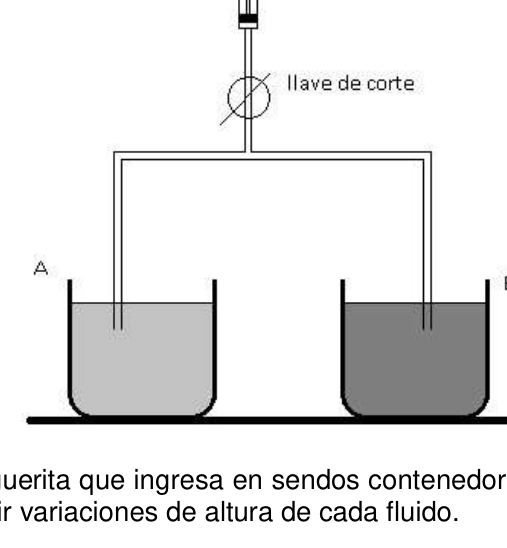
Topic: Fluid Mechanics Metodi: Experimental Data Analysis, Hydrostatic Equilibrium, Error Propagation Competenze: Physical Reasoning, Experimental Data Analysis Objects: Manometer, Container Fonte: Testo (PDF) — p.5
PE43. Colegio Del Cerro - Istituto parrocchiale San Alfonso - Colegio Dante Alighieri Istituto di media educazione Dr. Arturo Oñativia - Collegio di Gesù Scuola di Educazione Tecnica n°3141 Città del Milagro. Città di Salta.
Misure di densità. Introduzione La densità è una grandezza intrinseca di ogni oggetto. Per ottenere la sua, la cosa più comune è, conoscendo la massa del corpo, dividendola per lo spazio o il volume del corpo. La densità dà un’idea di quanto sia compatta la materia in un corpo o sostanza. Esistono sostanze ad alta densità, come alcuni metalli, come l’oro o il mercurio; e altri di bassa densità, dove può essere incluso l’aria, e altri gas.
Obiettivi La presente valutazione ha come obiettivo la conoscenza del processo di misurazione di una variabile direttamente e indirettamente Si ricorreranno a approcci del ramo dell’idrostatica per raggiungere la densità di una sostanza sconosciuta. Insieme a semplici strumenti per
Sviluppo Considerato il dato illustrato, si raggiungerà la densità della sostanza in contenitore B, attraverso altri dati da misurare.
Accanto a ogni mangia che entra in un contenitore, trovi una regola. che servirà a misurare variazioni di altezza di ogni fluido.
Posizione di partenza La siringa è l’ultima cosa che deve essere messa nel sistema. In entrambi i recipienti, la Il tubo deve essere immerso a pochi centimetri, con il liquido livellato dentro e fuori dal tubo. La chiave di taglio deve essere aperta, consentendo l’aria di passare. Si collega la siringa a il tubo come mostra la figura. La siringa deve essere con l’embolo completamente. inserito in esso
Procedura La prima densità, sarà presa con un densimetro, apparecchio che fornisce direttamente la Magnitude. Si succhia con la siringa, creando un leggero vuoto nella rete di maniche, causando che Da entrambi i rami, si eleva una certa quantità di fluido.
OAF 2018 - 193 Poiché la pressione atmosferica è simmetrica per ogni ramo, può essere ignorata nei Calcoli.
- Ottenere la densità della sostanza del contenitore A, esprimendola con il suo corrispondente errore.
- Sviluppa un grafico che mostra la situazione dei contenitori, con il liquido E’ salito da entrambi i lati.
Considerando che la pressione atmosferica sulla superficie di ogni liquido è uguale, la la pressione generata da ciascuna colonna di fluido è equivalente. 3) Calcolare la pressione su entrambi i lati, equalizziandole e chiarendo la densità del liquido B 4) eseguire un tabella di misura per diverse suczioni della siringa, con i loro valori di altezza corrispondenti. 5) Nella foglia millimetrica, eseguire un grafico lineare di hB in funzione di hA 6) Dopo aver linealizzato il grafico precedente, calcola il valore della pendenza. 7) Calcolare il valore della densità della sostanza misteriosa nel contenitore B
Materiale disponibile
- Mangia in quantità
- Due grandi recipienti .
- Grande siringa .
- Chiudi la chiave .
- Cante .
- Due regole di 20 cm.
- Foli millimetrici
Suggerimenti È opportuno, prima di effettuare le misure, assicurarsi di ciò che deve essere misurato, sotto il Che condizioni. Per questo, prima di iniziare, leggi l’intero esame. Lo rilevare più volte, se necessario. La revisione è fondamentale per rilevare e correggere gli errori. Controlla i calcoli, le misure, valori, grafici, tutto ciò che è stato fatto.
Che le quattro forze fondamentali ti accompagnino!
Topic: Fluid Mechanics Metodi: Experimental Data Analysis, Hydrostatic Equilibrium, Error Propagation Competenze: Physical Reasoning, Experimental Data Analysis Objects: Manometer, Container Fonte: Testo (PDF) — p.5
PE43. The school is located in the village of Del Cerro, in the parish of San Alfonso, in the municipality of Dante Alighieri. The Institute of Middle Education Dr. Arturo Oñativia - College of Jesus School of Technical Education n°3141 Miracle City. Salt City.
Density measurements. The first is the introduction. Density is an intrinsic magnitude of each object. To get it, the usual thing is, Knowing the mass of the body, dividing it by its space or volume. The density gives an idea of how compact the matter is in a body or substance. There are substances of high density, such as some metals, such as gold or mercury; and other very low density ones, where air can be included, and other gases.
Objectives The purpose of this examination is to familiarize you with the process of measuring the a variable directly and indirectly Approaches to the hydrostatic branch will be used to achieve a density of Unknown substance. Along with simple tools for
Development Given the situation in the figure, the density of the substance in the Container B, through other data to be measured.
Along with every hose that enters container paths, find a rule. The measurement of the height variations of each fluid.
Starting position The syringe is the last thing to be put in the system. In both containers, the The hose should be submerged a few centimeters, with the liquid leveling inside and out of the hose. The cut-off key must be open, allowing air to pass through. The syringe is connected to The hose as shown in the figure. The syringe must be fully embedded. Inserted into it
The procedure The first density, will be taken with a densometer, a device that provides directly the The magnitude. It is sucked with the syringe, creating a slight vacuum in the hose network, causing A certain amount of fluid rises from both branches.
The Commission has adopted a number of proposals for the financial year. Since atmospheric pressure is symmetrical for each branch, it can be ignored in the The calculations.
- Obtain the density of the substance in container A, expressing it with its the corresponding error.
- Draw a graph showing the position of the containers, with the liquid having climbed up from both sides.
Whereas the atmospheric pressure on the surface of each liquid is the same, the The pressure generated by each fluid column is equivalent. 3) Calculate the pressure on both sides, equating them, and clearing the density of the liquid B 4) Make a measurement table for different suctions of the syringe, with the corresponding height values. 5) On the millimeter sheet, make a linear graph of hB as a function of hA 6) After linearising the above graph, calculate the slope value. 7) Calculate the density value of the mysterious substance in container B
Available material
- Eat in quantity
- Two large containers .
- Big syringe .
- Cut key .
- Tape .
- Two 20-centimeter rules .
- Millimeter sheets .
Suggestions It is appropriate to ensure that, before taking measures, what is to be measured is under What conditions. For this, read the entire exam before you start. Relay it several times, if necessary. Review is essential to detect and correct errors. Check the calculations, the measurements, values, graphics, everything that’s been done.
May the four fundamental forces accompany you!
Topic: Fluid Mechanics Metodi: Experimental Data Analysis, Hydrostatic Equilibrium, Error Propagation Competenze: Physical Reasoning, Experimental Data Analysis Objects: Manometer, Container Fonte: Testo (PDF) — p.5
PE44. Escuela Escocesa San Andrés. Olivos, Buenos Aires.
Cuando objeto cae en el aire, experimenta una fuerza de arrastre que se opone al movimiento. Objetos más grandes experiementan fuerzas más grandes. En este experiment, investigarán cómo la velocidad terminal de un cono de papel cayendo en el aire depende del diámetro del cono. a) Corte un sector de un círculo de filtro de papel, como se muestra en Fig. P1.1. b) i) Encinte los bordes rectos del papel para producir un cono, como se muestra en Fig. P1.2. ii) Mida y registre el diámetro del cono. d= …cm c) i) Monte una regal en forma vertical como se muestra a continuación.
194 - OAF 2018 ii) Suelte el cono desde una distancia cercana por encima de la regal, Fig. P1.3. Haga y registre mediciones para determinar el tiempo que el le toma al cono caer la distancia desde la punta superior de la regla. h = …cm t = …s d) Estime el porcentaje de incerteza en t, mostrando su trabajo Incerteza porcentual en t = … e) Calcule la velocidad terminal del cono. v = …cm s–1 f) i) Saque la cinta del papel y corte un sector más grande. ii) Repita (b), (c)(ii) y (e) cinco veces, registrando sus resultados d, h, t and v en una tabla: g) Se sugiere que v es inversamente proporcional a d. Los resultados de sus mediciones apoyan esta sugerencia? Explique su razonamiento claramente, y realice un gráfico en el papel adjunto. h) i) Sugiera 4 fuentes de error o limitaciones del procedimiento realizado. ii) Sugiera 4 mejoras que se podrían hacer al experimento. Puede sugerir otros instrumentos o procedimientos.
Topic: Newtonian Mechanics Metodi: Experimental Data Analysis, Graph Linearization, Error Propagation Competenze: Physical Reasoning, Experimental Data Analysis, Mathematical Modeling Objects: — Fonte: Testo (PDF) — p.5
PE44. Scuola scozzese di San Andrés. Olivos, Buenos Aires.
Quando un oggetto cade in aria, si sente un’intensità di trascinare che si oppone al movimento. Oggetti più grandi sperimentano forze più grandi. In questo esperimento,
- Cercheranno come la velocità terminale di un cono di carta cadendo in aria dipende dal diametro del cono. a) Taglia un settore di un cerchio di filtro di carta, come mostrato in Figura 1. P1.1. b) (i) Incoraggiare i bordi retti della carta per produrre un cono, come mostrato in Figura 1. P1.2. (ii) Misurare e registrare il diametro del cono. d= …cm c) i) Metti un regalo verticalmente come mostrato
- E’ il prossimo.
194 - OAF 2018 (ii) Sgancia il cono da una distanza vicina.
- Sopra il regalo, Fig. P1.3. Fai e registra le misurazioni per determinare Il tempo che ci vuole per il cono a cadere la Distanza dalla punta superiore della regola. h = …cm t = …s d) Estima la percentuale di incertezza in t, mostrando il suo lavoro Incertezza percentuale su t = … e) Calcolare la velocità terminale del cono. v = …cm s–1 f) (i) Togliere la cinta dalla carta e tagliare un settore più grande. (ii) Ripetere (b), (c) (ii) e (e) cinque volte, registrando i risultati (d), (h), (t) e (v) in una tabella: g) Si suggerisce che v sia inversamente proporzionale a d. I risultati dei loro lavori Le misure supportano questa suggestione? Spiegate chiaramente il vostro ragionamento, e esegue un grafico sul foglio di supporto. h) i) Suggerisce 4 fonti di errore o di limitazioni del procedimento eseguito. (ii) Suggerire 4 miglioramenti che si potrebbero fare all’esperimento. Potrebbe suggerire altri strumenti o procedure.
Topic: Newtonian Mechanics Metodi: Experimental Data Analysis, Graph Linearization, Error Propagation Competenze: Physical Reasoning, Experimental Data Analysis, Mathematical Modeling Objects: — Fonte: Testo (PDF) — p.5
PE44. St. Andrew’s Scottish School. Olive trees, from Buenos Aires.
When an object falls into the air, it experiences a force of drag that opposes the motion. Larger objects They’re experiencing greater forces. In this experiment, They ‘ll investigate how the terminal velocity of a paper cone . falling into the air depends on the diameter of the cone. (a) Cut a section of a paper filter circle, as shown in Fig. P1.1. b) (i) Fence the straight edges of the paper for The resulting cone is a cone, as shown in Fig. P1.2. (ii) Measure and record the diameter of the cone. d= …cm c) (i) Mount a gift in vertical form as shown Then.
The Commission shall adopt delegated acts in accordance with Article 21 of this Regulation. (ii) Release the cone from a close distance above the gift, Fig. P1.3. Make and record measurements to determine The time it takes the cone to fall down the distance from the top of the The rule. h = …cm t = …s (d) Estimate the uncertainty percentage in t, showing Your job . The following is the list of the types of insurance and reinsurance undertakings: (e) Calculate the terminal velocity of the cone. v = …cm s–1 f) (i) Remove the tape from the paper and cut a larger section. (ii) Repeat (b), (c) and (e) five times, recording their results d, h, t and v In a table: (g) It is suggested that v is inversely proportional to d. The results of their work Do measurements support this suggestion? Explain your reasoning clearly, and I’ll draw a graph on the attached paper. h) (i) Suggest 4 sources of error or limitations of the procedure carried out. (ii) Suggest 4 improvements that could be made to the experiment. You may suggest other instruments or procedures.
Topic: Newtonian Mechanics Metodi: Experimental Data Analysis, Graph Linearization, Error Propagation Competenze: Physical Reasoning, Experimental Data Analysis, Mathematical Modeling Objects: — Fonte: Testo (PDF) — p.5
PE45. Escuela Escocesa San Andrés. Olivos, Buenos Aires.
Una atracción de feria transporta pasajeros en sillas que están unidas por varillas de metal a un polo central de rotación, como se muestra en la Fig. B2.1. Cuando el polo gira con velocidad angularω, las varillas hacer un ángulo θ con la vertical.
Figura P 2.1
Se sugiere que cos θ es inversamente proporcional a ω 2. Diseñar un experimento de laboratorio, usando un pequeño objeto para representar una silla ocupada, a probar la relación entre θ y ω. Yo u debe dibujar un diagrama, en la página 3, que muestra el disposición de su equipo. En su cuenta se debe prestar especial atención a a) el procedimiento que ha de seguirse, b) las medidas que deben adoptarse,
OAF 2018 - 195 c) el control de las variables, d) el análisis de los datos, e) que se tomen las medidas de seguridad.
Topic: Rotational Dynamics Metodi: Experimental Data Analysis, Free-Body Diagram, Graph Linearization Competenze: Physical Reasoning, Experimental Data Analysis Objects: Rod Fonte: Testo (PDF) — p.5
PE45. Scuola scozzese di San Andrés. Olivos, Buenos Aires.
Un’attrazione fiera trasporta passeggeri in sedie che sono legate da bastoni di metallo a un polo centrale di rotazione, come mostrato in Fig. B2.1. Quando il polo gira con velocità angolareω, le bacche fanno un angolo θ con la verticale.
Figura P 2.1
Si suggerisce che cos θ sia inversamente proporzionale a ω 2. Progettare un esperimento di laboratorio, usando un piccolo oggetto per rappresentare un a sedere occupata, per provare il rapporto tra θ e ω. Io o devo disegnare un diagramma, in pagina 3, che mostra la disposizione del suo equipaggio. Il suo conto deve essere prestato in particolare Attenzione a) la procedura da seguire, b) le misure da adottare;
OAF 2018 - 195 (c) il controllo delle variabili; (d) l’analisi dei dati; e) che siano prese misure di sicurezza.
Topic: Rotational Dynamics Metodi: Experimental Data Analysis, Free-Body Diagram, Graph Linearization Competenze: Physical Reasoning, Experimental Data Analysis Objects: Rod Fonte: Testo (PDF) — p.5
PE45. St. Andrew’s Scottish School. Olive trees, from Buenos Aires.
A fairground attraction carries passengers in chairs that are joined by rods of metal to a central rotation pole, as shown in Fig. B2.1. When the pole turns With angular velocityω, the rods make an angle θ with the vertical.
Figure P 2.1
It is suggested that cos θ is inversely proportional to ω 2. Design a lab experiment, using a small object to represent a occupied chair, to test the relation between θ and ω. I ought to draw a diagram, in the Page 3, showing the layout of your equipment. Special credit shall be paid on your account. Attention to (a) the procedure to be followed, (b) the measures to be taken;
The Commission has also adopted a number of proposals for the financial year. (c) the control of variables; (d) data analysis, (e) security measures are taken.
Topic: Rotational Dynamics Metodi: Experimental Data Analysis, Free-Body Diagram, Graph Linearization Competenze: Physical Reasoning, Experimental Data Analysis Objects: Rod Fonte: Testo (PDF) — p.5
PE46. Colegio Nicolás Avellaneda. Aguilares, Tucumán.
Se desea determinar el coeficiente de viscosidad “a la temperatura ambiente” de un líquido.
Para ello se le proveen los siguientes elementos:
- Una probeta graduada.
- Un frasco con líquido viscoso.
- Esferas de vidrio.
- Cronómetro.
- Regla.
- Balanza.
- Calibre.
- Papel milimetrado.
Marco teorico La viscosidad es una propiedad de los fluidos. En los líquidos se debe a las fuerzas de cohesión intermoleculares y en los gases a las colisiones entre las moléculas de un gas. La viscosidad de un fluido se expresa cuantitativamente mediante el coeficiente de viscosidad , que es propio de cada fluido. Este coeficiente varía con el aumento de la temperatura, disminuyendo en los líquidos y aumentando en los gases. La ley de Stokes, establece que, durante la caída de una esfera dentro de un fluido, esta interactúa con el campo gravitatorio terrestre, con las capas del fluido, de manera que las fuerzas que se ejercen sobre ella son el peso P, el empuje E y la fuerza viscosa F (véase figura). Este movimiento es inicialmente acelerado, hasta que las tres fuerzas se equilibran y la esfera continúa cayendo con velocidad constante, llamada velocidad limite o de régimen. Cuando la esfera alcanza esta velocidad (si consideramos los módulos) se verifica: P = F + E (1) y la intensidad de la fuerza viscosa en el movimiento de una esfera dentro de un fluido viscoso, mientras no hay turbulencias, se puede calcular mediante la Ley de Stokes, cuya expresión es: F = 6 r v (2)
Donde es el coeficiente de viscosidad, r es el radio de la esfera y v el valor de la velocidad de régimen.
- Aceleración de la gravedad en Aguilares g = (9,79 + 0,01) m/s2.
- volumen de una esfera: V = 4/3 π r3
Metodo sugerido
En la figura la esfera se encuentra en velocidad de régimen dentro del
líquido.
De la expresión (1) resulta F = P – E
De la expresión (2) resulta = F .
6 r v
a) Para determinar la fuerza viscosa F, se le sugiere determinar: a) el peso del cuerpo, para ello dispone de la balanza donde puede obtener la masa de la esfera y luego calcular el peso con la conocida P = m . g.
196 - OAF 2018 b) El empuje: Para ello necesitas calcular el volumen, previamente mides el diámetro con el calibre. También necesitas la densidad del líquido; en este punto se sugiere colocar en la probeta (cuya masa mide previamente) un volumen V del líquido viscoso y determinar la masa. El marco teórico le dice el resto. c) Para determinar la velocidad de régimen: se sugiere: colocar una gran cantidad de líquido en la probeta (por encima de la marca de graduación superior de la probeta), luego dejar caer la esfera dentro del líquido y cuando haya desplazado entre uno o dos centímetros (o lo que estime necesario) ya estaría en velocidad de régimen. A partir de ese instante medir distintos espacios recorridos con sus respectivos tiempos para poder determinar la velocidad. Estos espacios pueden ser la misma graduación de la probeta, que luego puedes relacionar con una escala métrica con la regla. d) A continuación, graficar espacio en función del tiempo y obtener la mejor recta; sabiendo que su pendiente es la velocidad de régimen. Ahora sólo resta determinar el valor del coeficiente de viscosidad solicitado; consignando el resultado en unidades del sistema MKS.
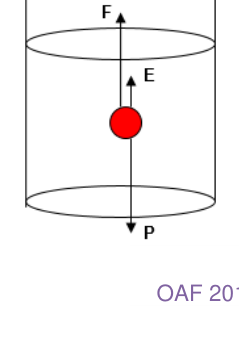
Topic: Fluid Mechanics Metodi: Experimental Data Analysis, Graph Linearization, Error Propagation Competenze: Physical Reasoning, Experimental Data Analysis Objects: Sphere, Container Fonte: Testo (PDF) — p.5
PE46. Scuola Nicola Avellaneda. Aguilar, Tucumán.
Si desidera determinare il coefficiente di viscosità a temperatura ambiente di un liquido.
Per questo è fornito il seguente:
- Una prova di laurea.
- Un vaso di liquido viscoso.
- Sferie di vetro.
- Un cronometro.
- Regola.
- Sbalza.
- Calibro.
- Papero millimetrico.
Marco teorico La viscosità è una proprietà dei fluidi. In liquidi è dovuto alle forze di La coesione intermolecolare e dei gas alle collisioni tra le molecole di un gas. La viscosità di un fluido è espressa quantitativamente con il coefficiente di viscosità , che è caratteristica di ogni fluido. Questo coefficiente varia con l’aumento della La temperatura, diminuendo nei liquidi e aumentando nei gas. La legge di Stokes, stabilisce che, durante il cadimento di una sfera dentro un fluido, interagisce con il campo gravitazionale terrestre, con le strati del fluido, in modo che le Le forze che si esercitano su di essa sono il peso P, la spinta E e la forza viscosa F (vedi (Figura 1). Questo movimento è inizialmente accelerato, fino a quando le tre forze sono E la sfera continua a cadere a velocità costante, chiamata velocità limite. o di regime. Quando la sfera raggiunge questa velocità (se consideriamo i moduli) si verifica: P = F + E (1) e l’intensità della forza viscosa nel movimento di una sfera all’interno di un fluido La velocità di calcolo della velocità di velocità è molto elevata, se non ci sono turbolenze, si può calcolare con la legge di Stokes, la cui espressione è: F = 6 r v (2)
Dove è il coefficiente di viscosità, r è il raggio della sfera e v il valore di velocità di regime.
- Accelerazione della gravità in Aguilares g = (9,79 + 0,01) m/s2.
- volume di una sfera: V = 4/3 π r3
Metodo suggerito Nella figura la sfera si trova a velocità di regime all’interno del liquido. L’espressione (1) dà F = P E L’ espressione (2) dà il risultato = F . 6 r v
a) Per determinare la forza viscosissima F, si suggerisce di determinare: a) il peso corporeo, per cui dispone della bilancia dove Potete ottenere la massa della sfera e poi calcolare il peso. con la nota P = m . g.
196 - OAF 2018 b) Push: per questo è necessario calcolare il volume, misurando in anticipo il volume. diametro con il calibro. E’ anche necessario avere la densità del liquido; a questo punto Si consiglia di inserire sul campione (che ha una massa di misura precedente) un volume V di liquido viscoso e determinare la massa. Il quadro teorico dice il resto. c) Per determinare la velocità di regime: si suggerisce di inserire una quantità elevata di liquido nella prova (sopra il marchio di graduazione superiore della La prova), poi lasciare cadere la sfera dentro il liquido e quando si è spostata. tra uno o due centimetri (o quello che ritengo necessario) sarebbe già in velocità di regime. Da quel momento in poi misurare spazi percorsi diversi con i loro i rispettivi tempi per determinare la velocità. Questi spazi possono essere la stessa graduazione della prova, che poi si può collegare a una scala metrica con la regola. d) Poi graficare lo spazio in base al tempo e ottenere la migliore linea retta; sapendo che la sua pendenza è la velocità di regime. Ora resta solo determinare il valore del coefficiente di viscosità richiesto; registrando il risultato in unità del sistema MKS.
Topic: Fluid Mechanics Metodi: Experimental Data Analysis, Graph Linearization, Error Propagation Competenze: Physical Reasoning, Experimental Data Analysis Objects: Sphere, Container Fonte: Testo (PDF) — p.5
PE46. Nicholas Avellaneda College. He was a student. The Eagles, Tucumán.
The viscosity coefficient to room temperature of a liquid.
The following elements are provided for this purpose:
- A graduate test.
- A bottle of viscous liquid.
- Glass spheres.
- It’s a timekeeper.
- It’s a rule.
- Weigh it.
- It’s a caliber.
- It’s a millimeter piece of paper.
Theoretical framework Viscosity is a property of fluids. In liquids it is due to the forces of The resulting gas is a gas that is not a gas. The viscosity of a fluid is expressed quantitatively by the coefficient of viscosity , which is characteristic of each fluid. This coefficient varies with the increase in the temperature, decreasing in liquids and increasing in gases. Stokes’ law states that, during the fall of a sphere into a fluid, it is It interacts with the Earth’s gravitational field, with the fluid layers, so that the The forces exerted on it are the weight P, the thrust E and the viscous force F (see (Figure 1). This movement is initially accelerated, until all three forces are They balance and the sphere continues to fall at a constant speed, called the limit speed. or regimen. When the sphere reaches this velocity (if we consider the modules) it is verifies: P = F + E (1) and the intensity of the viscous force in the movement of a sphere within a fluid. viscous, as long as there is no turbulence, can be calculated by Stokes’ Law, whose The expression is: F = 6 r v (2)
Where is the viscosity coefficient, r is the radius of the sphere and v is the value of the speed of the regimen.
- Gravity acceleration in the crankshaft g = (9.79 + 0.01) m/s2.
- volume of a sphere: V = 4/3 π r3
Suggested method In the figure the sphere is at the speed of the regime within the liquid. From the expression (1) it is F = P E The expression (2) results in = F . 6 r v
(a) To determine viscous force F, it is suggested to determine: (a) body weight, for which the balance is available where You can get the mass of the sphere and then calculate the weight. with the known P = m . g.
The Commission shall adopt delegated acts in accordance with Article 21 of this Regulation. b) Push: To do this, you need to calculate the volume, first measuring the diameter with the caliber. You also need the density of the liquid; at this point It is suggested that a volume V be placed on the sample (which has previously measured its mass). the viscous liquid and determine the mass. The theoretical framework tells you the rest. (c) To determine the speed of the regimen: it is suggested to place a large quantity The test chemical is a liquid in the sample (above the upper grade mark of the test chemical) The test is then dropped into the liquid and when it has moved. between one or two centimeters (or whatever I deem necessary) would be at speed. The Commission has not yet adopted a regulation. From that moment on, measure different spaces travelled with their the time to determine the speed. These spaces can be the same grade of the test, which you can then relate to a Metric scale with the rule. (d) Then chart space based on time and get the best straight line; Knowing that your slope is the speed of the regime. Now it is only necessary to determine the value of the viscosity coefficient requested. recording the result in units of the MKS system.
Topic: Fluid Mechanics Metodi: Experimental Data Analysis, Graph Linearization, Error Propagation Competenze: Physical Reasoning, Experimental Data Analysis Objects: Sphere, Container Fonte: Testo (PDF) — p.5
PE47. Escuela Philips. Ciudad Autónoma de Buenos Aires.
Objetivo Análisis del vaciado de un recipiente abierto
Introducción Cuando un recipiente abierto a la atmosfera contiene un líquido y se practica un pequeño orificio en la parte inferior, pueden utilizarse las ecuaciones de continuidad y Bernoulli para demostrar que el tiempo de vaciado del recipiente verifica la siguiente ecuación: 𝑡= 1 𝐾 √(𝐴 𝑎) 2 −1 ∙√2𝐻 𝑔
Donde 𝐴 es la sección del recipiente (supuesta uniforme), 𝑎 la sección del orificio inferior, 𝐻 el nivel inicial de líquido respecto del orificio, 𝑔 la aceleración gravitatoria y 𝐾 un coeficiente de ajuste que depende de las formas (cuadrada, circular, etc) de las secciones transversales del tanque y del orificio inferior.
Materiales
- Recipiente transparente
- Agua
- Regla
- Cronómetro
- Cinta adhesiva
Primera parte: simplificación de la ecuación
Por simplicidad queremos despreciar el factor unidad que resta dentro del primer radical.
Nuestra condición experimental para poder hacerlo es que
(𝐴
𝑎)
2
𝑦 [(𝐴
𝑎)
2
−1]
OAF 2018 - 197 no difieran en más del 0,5%
- Mida el diámetro 𝐷 del recipiente y determine el máximo valor que puede tener el diámetro 𝑑 del orificio.
Segunda parte: determinación de la aceleración de la gravedad
En este experimento el orificio inferior tiene un diámetro 𝑑= (3,00 ± 0,05)𝑚𝑚 y el uso de
la simplificación está garantizado. Para el recipiente dado y su orificio inferior se tiene 𝐾=
0,625
Se pretende utilizar la ecuación presentada para determinar la aceleración de la gravedad
en CABA.
a) Describa brevemente un método para determinar la aceleración gravitatoria a
partir de la ecuación simplificada.
b) Linealice apropiadamente la ecuación simplificada de acuerdo a las magnitudes
a medir
c) Mida las magnitudes que haya considerado y presente los valores en una tabla
d) Confeccione un gráfico a partir de los valores medidos y trace la línea de
tendencia
e) Presente la ecuación correspondiente a la línea de tendencia
f) Determine el valor de 𝑔 con su respectiva incertidumbre
Topic: Fluid Mechanics Metodi: Experimental Data Analysis, Bernoulli’s Equation, Graph Linearization Competenze: Physical Reasoning, Experimental Data Analysis, Mathematical Modeling Objects: Container Fonte: Testo (PDF) — p.5
PE47. La Philips School. Città autonoma di Buenos Aires.
Obiettivo Analisi dello svuotamento di un recipiente aperto
Introduzione Quando un recipiente si apre all’atmosfera contiene un liquido e si pratica un piccolo La parte inferiore del foro può essere utilizzata. Le equazioni di continuità e Bernoulli per dimostrare che il tempo di svuotamento del contenitore verifica la seguente equazione: 𝑡= 1 𝐾 √(𝐴 𝑎) 2 −1 ∙√2𝐻 𝑔
Dove A è la sezione del contenitore (supposizione Uniforme), alla sezione del buco inferiore, H il livello iniziale di liquido rispetto al foro, g la l’accelerazione gravitazionale e K un coefficiente di Adjustamento che dipende dalle forme (quadrato, La circolazione, ecc.) delle sezioni trasversali del il serbatoio e il buco inferiore.
Materiali
- Corsetta trasparente
- Acqua .
- Regola .
- Cronometro .
- Fascia adesiva
Parte 1: semplificazione dell’equazione Per semplicità vogliamo disprezzare il fattore di unità che resta all’interno del primo radicale. La nostra condizione sperimentale per poterlo fare è che (𝐴 𝑎) 2 𝑦 [(𝐴 𝑎) 2 −1]
OAF 2018 - 197 non differiscono di più dello 0,5%
- Misura il diametro D del recipiente e determina il massimo valore che il recipiente può avere diametro d del foro.
Parte 2: determinazione dell’accelerazione della gravità In questo esperimento il foro inferiore ha un diametro d= (3,00 ± 0,05) mm e l’uso di La semplificazione è garantita. Per il recipiente dato e il suo orizzonte inferiore si ha K= 0,625 L’equazione presentata è destinata ad essere utilizzata per determinare l’accelerazione della gravità
- in CABA. a) Descrive brevemente un metodo per determinare l’accelerazione gravitazionale a a partire dall’equazione semplificata. b) Linealizzare adeguatamente l’equazione semplificata in base alle dimensioni a misurare c) Misura le dimensioni che hai considerato e presenta i valori in una tabella d) Configgere un grafico a partire dai valori misurati e tracciare la linea di Tendenza e) Presenta l’equazione corrispondente alla linea di tendenza f) Determina il valore di g con la sua relativa incertezza
Topic: Fluid Mechanics Metodi: Experimental Data Analysis, Bernoulli’s Equation, Graph Linearization Competenze: Physical Reasoning, Experimental Data Analysis, Mathematical Modeling Objects: Container Fonte: Testo (PDF) — p.5
PE47. Philips school. The Autonomous City of Buenos Aires.
The objective Analysis of the emptying of an open container
The first is the introduction. When a container opens up to the atmosphere It contains a liquid and you practice a little. The bottom hole can be used. Continuity and Bernoulli equations for to demonstrate that the time of emptying of the the container verifies the following equation: 𝑡= 1 𝐾 √(𝐴 𝑎) 2 −1 ∙√2𝐻 𝑔
Where A is the section of the container (assumption The same is true for the lower hole section, H the Initial level of liquid relative to the hole, g the gravitational acceleration and K a coefficient of The adjustment depends on the shapes (square, The following is a list of the main features of the transverse sections of the tank and bottom hole.
Materials
- Transparent receiver
- Water .
- Rule .
- The chronometer .
- The adhesive tape
Part one: simplification of the equation We want to disregard the unity factor that lies within the first radical. Our experimental condition for doing so is that (𝐴 𝑎) 2 𝑦 [(𝐴 𝑎) 2 −1]
The Commission shall adopt implementing acts in accordance with Article 21 of the Financial Regulation. not differ by more than 0,5%
- Measure the diameter of the container D and determine the maximum value that the container can have. diameter d of the hole.
Part two: determining the acceleration of gravity In this experiment the bottom hole has a diameter of d= (3,00 ± 0.05) mm and the use of The simplification is guaranteed. For the given container and its bottom hole K= 0,625 The proposed equation is intended to be used to determine the acceleration of gravity in CABA. (a) Briefly describe a method for determining gravitational acceleration to Starting with the simplified equation. (b) Linearise the simplified equation according to the magnitude. to measure (c) Measure the quantities you have considered and present the values in a table (d) Draw a graph from the measured values and draw the line of The trend (e) Present the equation for the trendline (f) Determine the value of g with its uncertainty
Topic: Fluid Mechanics Metodi: Experimental Data Analysis, Bernoulli’s Equation, Graph Linearization Competenze: Physical Reasoning, Experimental Data Analysis, Mathematical Modeling Objects: Container Fonte: Testo (PDF) — p.5
PE48. Instituto Lasalle Florida. Florida, Buenos Aires.
Objetivos Se va a estudiar experimentalmente el proceso de carga de un condensador a través de una resistencia, y se deducirá la capacidad del condensador.
Materiales.
- Condensador electrolítico
- Batería 9V
- Resistencia eléctrica.
- Multímetro con dos sondas y dos pinzas de conexión (cocodrilos).
- Dos cables con pinzas.
- Cronómetro.
Modelo teórico. Un condensador es un dispositivo que sirve para almacenar carga eléctrica. La principal característica de un condensador es su capacidad, C, cociente entre la carga que almacena y la diferencia de potencial entre sus terminales. En este experimento se va a cargar un condensador inicialmente descargado a través de una resistencia, R, alimentando el circuito con una pila eléctrica, como se esquematiza en la figura 1. Tras cerrar el circuito, la corriente que circula empieza a cargar el condensador, de forma que aumenta la diferencia de potencial entre sus terminales. Por tanto, la caída de potencial en la resistencia y la corriente que circula por ella van disminuyendo. En concreto, puede demostrarse que la corriente disminuye exponencialmente con el tiempo, t, en la forma
I=I0 e –(t/RC)
donde I0 es la corriente inicial, cuando se cierra el circuito en t = 0 .
198 - OAF 2018 Procedimiento experimental
- Mida con el multímetro el valor de la resistencia R.
- Con los componentes eléctricos de que dispone construya el circuito eléctrico, dejando inicialmente abierta una de las conexiones a la pila. Tenga en cuenta que:
- El condensador electrolítico tiene una polaridad eléctrica definida (ver figuras). Si no se respeta esta polaridad, el condensador se estropeará al cerrar el circuito y las medidas no serán correctas.
- El polímetro se usa como miliamperímetro, en la escala de 2 mA. Antes de cerrar el circuito, asegúrese de que las conexiones de este instrumento son correctas.
- El condensador debe estar inicialmente descargado. Para conseguirlo, basta cortocircuitar sus dos terminales con uno de los cables.
- Cierre el circuito y, simultáneamente, ponga en marcha el cronómetro. Anote el valor de la corriente I que circula a intervalos regulares de 5 segundos, hasta un valor máximo de 60 s. La lectura del polímetro no es instantánea, por lo que no debe tener en cuenta para cálculos posteriores la medida en el instante inicial, I ( t = 0 ). Presente las medidas de I en una tabla (primer columna tiempo, segunda columna I).
- Transforme la ecuación (1) para obtener una dependencia lineal entre alguna función de I y el tiempo t. Anote en la tercera columna de la tabla anterior los valores de esta función de I.
- Represente gráficamente en el papel milimetrado los puntos correspondientes a esta dependencia lineal.
- Determine la pendiente, p, y la ordenada en el origen, c, de la recta que mejor se ajusta a estos puntos.
- A partir de los valores de p y c obtenidos en 6) y del valor de R medido en 1), determine los valores de la corriente inicial, I0, y de la capacidad del condensador, C.
- Suponga que la principal fuente de error en este experimento es la medida de la corriente I, y que la incertidumbre de cada medida es ± una unidad en el último dígito presentado en la pantalla del polímetro.
Haga una estimación de las incertidumbres de I0 y de C.
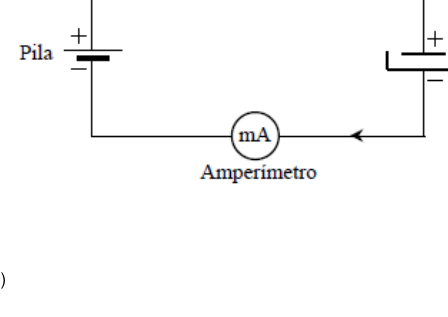
Topic: Circuits Metodi: Experimental Data Analysis, Graph Linearization, Differential Equations Competenze: Physical Reasoning, Experimental Data Analysis, Mathematical Modeling Objects: Capacitor, Resistor, Battery Fonte: Testo (PDF) — p.5
PE48. - L’Istituto Lasalle in Florida. Florida, Buenos Aires.
Obiettivi Si studierà sperimentalmente il processo di carica di un condensatore attraverso una resistenza, e si deduce la capacità del condensatore.
Materiali.
- Condensatore elettrolitico
- Batteria 9V
- Resistenza elettrica.
- Multimetro con due sonde e due pinze di connessione (coccodrilli).
- Due fili con pinze.
- Un cronometro.
Modello teorico. Un condensatore è un dispositivo che serve per memorizzare una carica elettrica. La principale . La caratteristica di un condensatore è la sua capacità, C, coefficiente tra il carico che la differenza di potenziale tra i loro terminali. In questo esperimento, si sta caricando un condensatore inizialmente scaricato attraverso una resistenza, R, alimentando il circuito con una pila elettrica, come schematizzato in Figura 1. Dopo aver chiuso il circuito, la corrente che Il circuito inizia a caricare il condensatore, di modo che aumenta la differenza di potenziale tra i loro terminali. Pertanto, la caduta di Potenzialmente, la resistenza e il corrente che La circolazione per lei sta diminuendo. In particolare, si può dimostrare che il corrente diminuisce esponenzialmente con il tempo, t, in forma
I=I0 e –(t/RC)
dove I0 è il corrente iniziale, quando si chiude il circuito a t = 0.
198 - OAF 2018 Procedura sperimentale
- Misura con il multimetro il valore della resistenza R.
- Con i componenti elettrici che ha a disposizione costruisce il circuito elettrico, lasciando aperta inizialmente una delle connessioni alla pila. - Tieni in . conta che:
- Il condensatore elettrolitico ha una polarità elettrica definita (vedi (figure). Se non si rispetta questa polarità, il condensatore si rovinerà al chiudere il circuito e le misure non saranno corrette.
- Il polimetro è usato come millimetro, su scala di 2 mA. Prima di chiudere il circuito, assicurarsi che le connessioni di questo strumento siano
- Sì, è vero.
- Il condensatore deve essere inizialmente scaricato. Per farlo, basta. abbreviare i due terminali con uno dei cavi.
- Chiudere il circuito e, contemporaneamente, avviare il cronometro. - Nota il giorno Valore del corrente I che circola a intervalli regolari di 5 secondi, fino a un valore massimo di 60 s. La lettura del polimetro non è istantanea, quindi non deve tener conto, per i successivi calcoli, della misura all’inizio, t = 0 ). Presenta le misure di I in una tabella (prima colonna tempo, seconda colonna I).
- Trasforma l’equazione (1) per ottenere una dipendenza lineare tra alcuni funzione di I e tempo t. Nota nei valori di questa funzione di I nella terza colonna della tabella precedente.
- Rappresenta graficamente su carta millimetrica i punti corrispondenti a questa dipendenza lineare.
- Determina la pendice, p, e l’ordine all’origine, c, della retta che si si adatta a questi punti.
- A partire dai valori di p e c ottenuti in 6) e dal valore di R misurato in 1), determina i valori di corrente iniziale, I0, e di capacità del C. C.
- Supponiamo che la principale fonte di errore in questo esperimento sia la misurazione della corrente I, e che l’incertezza di ogni misura è ± un’unità nell’ultima Digito presentato sullo schermo del polimetro.
Stima le incertezze di I0 e C.
Topic: Circuits Metodi: Experimental Data Analysis, Graph Linearization, Differential Equations Competenze: Physical Reasoning, Experimental Data Analysis, Mathematical Modeling Objects: Capacitor, Resistor, Battery Fonte: Testo (PDF) — p.5
PE48. The Lasalle Institute of Florida. I’m going to Florida, Buenos Aires.
Objectives The process of charging a capacitor through a a resistance, and the capacitor capacity is deduced.
It’s materials.
- Electrolytic capacitor
- 9V battery .
- Electrical resistance.
- Multi-meter with two probes and two connecting pins (crocodiles).
- Two wire with tweezers.
- It’s a timekeeper.
Theoretical model. A capacitor is a device used to store electrical charge. The main one . The characteristic of a capacitor is its capacity, C, the ratio of the load that it The data is stored and the potential difference between the terminals. In this experiment, you’re going to charge a capacitor initially discharged through the A resistor, R, powering the circuit with A battery, as outlined in the The following table shows the following: After closing the circuit, the current that The circulation starts to charge the capacitor, from The potential difference increases. between their terminals. Therefore, the fall of The potential in resistance and current that circulation around it is decreasing. In particular, It can be shown that the current is decreasing exponentially over time, t, in the form
I=I0 e –(t/RC)
where I0 is the starting current, when the circuit is closed at t = 0.
The Commission shall adopt delegated acts in accordance with Article 21 of this Regulation. Experimental procedure
- Measure with the multimeter the resistance value R.
- With the electrical components at your disposal build the electrical circuit, initially leaving one of the stack connections open. Have it in . It is estimated that:
- The electrolytic capacitor has a defined electrical polarity (see (see Figures). If this polarity is not respected, the capacitor will break down to shut the circuit and the measurements will not be correct.
- The polymer is used as a millimeter, on the 2 mA scale. Before Close the circuit, make sure the connections to this instrument are You’re right.
- The capacitor must be initially discharged. To get it, that’s enough. Shorten your two terminals with one of the cables.
- Close the circuit and start the chronometer at the same time. Write down the date. The value of current I circulating at regular intervals of 5 seconds up to a maximum value of 60 s. The polymer reading is not instantaneous, so it’s not. For subsequent calculations, the measure at the initial stage must be taken into account. t = 0 ). Present the measurements of I in a table (first time column, second the following column (I).
- Transform the equation (1) to get a linear dependence between some function of I and time t. Write down the values of this function of I in the third column of the table above.
- Graphically represent the points corresponding to This linear dependence.
- Determine the slope, p, and the order at the origin, c, of the straight line that is best It fits these points.
- From the values of p and c obtained in 6) and the value of R measured in 1), determines the values of the initial current, I0, and the capacity of the The following is the list of the products concerned:
- Suppose the main source of error in this experiment is the measurement of the current I, and that the uncertainty of each measurement is ± one unit in the last The digit shown on the polymer screen.
Estimate the uncertainties of I0 and C.
Topic: Circuits Metodi: Experimental Data Analysis, Graph Linearization, Differential Equations Competenze: Physical Reasoning, Experimental Data Analysis, Mathematical Modeling Objects: Capacitor, Resistor, Battery Fonte: Testo (PDF) — p.5
PE49. Colegio Nacional de Buenos Aires. Ciudad Autónoma de Buenos Aires.
En el enunciado de la prueba experimental no aparece la densidad del alcohol ni su calor específico como datos. Los mismos fueron anotados en el pizarrón durante el examen.
Calorimetría
Introducción Diferentes sustancias requieren diferentes cantidades de calor Q para producir un cambio dado en su temperatura. Por ejemplo, para incrementar la temperatura de de agua en una cantidad de temperatura se requiere alrededor de 10 veces más calor que para incrementar en esta misma cantidad la temperatura de de cobre. Este comportamiento de los materiales es caracterizado cuantitativamente por el calor específico, que es la cantidad de calor necesaria para incrementar la temperatura de de sustancia en 1°C. Así, el agua tiene un calor específico de mayor valor que el cobre. El calor específico de un material es característico para cada sustancia y depende de su estructura interna. Como puede ser visto de la definición, el calor específico de una sustancia dada puede ser determinado mediante la entrega de una cantidad de calor
OAF 2018 - 199
conocida a una cantidad de masa determinada de la sustancia y con un apropiado
registro del cambio en su temperatura.
La cantidad de calor Q de una masa m con calor específico ce, cuando su temperatura ha
variado T se define como:
Q=m.ce.T Ecuación 1
Donde el calor específico es la cantidad de calor (en calorías) necesaria para incrementar
la temperatura de 1 gramo de sustancia en 1 grado Celsius.
De hecho, la caloría es la unidad de calor definida como la cantidad de calor requerido
para incrementar la temperatura de
de agua en 1°C. Por definición, el agua tiene un
calor específico de
.
Si se colocan en contacto térmico (pero no físico) agua y alcohol, inicialmente a
diferentes temperaturas, es posible ver cómo se modifica la temperatura de cada uno de
estos líquidos a medida que transcurre el tiempo.
Considérese un recipiente adiabático con dos compartimentos, separados por una lámina
delgada de material aluminio (Fig 1)
Figura 1: Dos vistas esquemáticas del dispositivo experimental
En todo proceso de intercambio de calor se cumple que ∑ = 0 Qi donde Qi es la cantidad
de calor intercambiado por cada uno de los cuerpos que intervienen en el proceso.
Aplicando este principio al sistema constituido por agua y alcohol en cada compartimento
del recipiente, resulta:
0 = Qagua + Qalcohol + Qrecipiente + Qmedio
Donde Qagua y Qalcohol son los calores intercambiados por cada fluido, Qmedio es el
calor intercambiado por el medio exterior al recipiente y Qrecipiente es la cantidad de
calor que intercambian los demás elementos presentes en el interior del recipiente (las
superficies internas del envase, el agitador, la lámina de aluminio, etc.)
Si se formula como primera hipótesis que, para la duración de este experimento, el
recipiente es adiabático (es decir, que el intercambio de calor con el medio exterior
resulta despreciable frente a los demás), la expresión anterior se reduce a:
0 = Qagua + Qalcohol + Qrecipiente
Si se considera como segunda hipótesis que el Qrecipiente también resulta despreciable,
se tiene:
0 = Qagua + Qalcohol Ecuación 2
Objetivo Determinar experimentalmente el calor específico del agua
Materiales 2 Probetas- Alcohol- Agua- 2 Termómetros- Cronómetro-Agitadores-Lámina de lata de gaseosa- Regla-Calibre- Recipientes de telgopor con tapa- Goma espuma
200 - OAF 2018 Procedimiento
- Armar el dispositivo que se muestra en la Figura 1.
- Con dos probetas distintas, medir 100 ml de alcohol y de agua, respectivamente. Vaciarlas en los distintos compartimentos
- Cada medio minuto, y durante 10 minutos, medir las temperaturas del agua y del alcohol, sin dejar de mover los agitadores
Consignas a) Completar la tabla 1 con las mediciones realizadas b) Completar la Tabla 2, calculando el calor absorbido por alcohol en cada intervalo de 30 segundos de acuerdo a la Ecuación 1, y para cada uno de los 10 minutos en los que se midió b) Completar la Tabla 2, calculando la diferencia de temperaturas del agua entre una medición y la inmediatamente anterior, para cada uno de los 10 minutos en los que se midió c) Graficar los datos de la tabla 2 y realizar un ajuste lineal d) Calcular la pendiente del gráfico del inciso anterior y obtener el calor específico del agua con su error.
t (min) εt (min) Tagua (°C) εTagua (°C) Talcohol (°C) εTalcohol (°C) 0-0.5
0.5-1
1-1.5
1.5-2
2-2.5
2.5-3
3-3.5
3.5-4
4-4.5
5-5.5
5.5-6
6-6.5
6.5-7
7-7.5
7.5-8
8-8.5
8.5-9
9-9.5
9.5-10
Tabla 1
OAF 2018 - 201 Q Alcohol (Q Alcohol) Tagua,i-Tagua,i-1 (Tagua,i-Tagua,i-1)
Tabla 2
Topic: Thermodynamics Metodi: Experimental Data Analysis, Graph Linearization, Curve Fitting Competenze: Physical Reasoning, Experimental Data Analysis, Mathematical Modeling Objects: Calorimeter Fonte: Testo (PDF) — p.5
PE49. Il Collegio Nazionale di Buenos Aires. Città autonoma di Buenos Aires.
La dichiarazione del test sperimentale non indica la densità dell’alcol né la sua calore. specifici come dati. Questi dati sono stati annotati sullo schedino durante l’esame.
Calorimetria
Introduzione Diverse sostanze richiedono diverse quantità di calore Q per produrre un cambiamento dato la sua temperatura. Per esempio, per aumentare la temperatura di di acqua in quantità La temperatura è circa 10 volte più calda di quella di per aumentare di questa stessa quantità la temperatura di di rame. Questo . Il comportamento dei materiali è quantitativamente caratterizzato dal calore La temperatura di un’area di temperatura di un’area di temperatura di un’area di temperatura di un’area di temperatura di un’area di temperatura di un’area di temperatura di un’area di temperatura di un’area di un’area di temperatura di un’area di un’area di temperatura di un’area di un’area di temperatura di un’area di un’area di temperatura di un’area di un’area di temperatura di un’area di un’area di un’area di temperatura di un’area di un’area di una temperatura di un’area di un’area di un’area di temperatura di un’area di un’area di un’area di un’area di temperatura di un’area di un’area di un’area di un’area di un’area di un’area di un’area di temperatura di un’area di un’area di un’area di un’area di un’area di una di una temperatura di una di una di un’altra di un’area di un’aria di un’aria di un’aria di un’aria di un’aria di un’aria di un’aria di una di un’aria di un’aria di un’aria di un’aria di un’aria di un’aria di un’aria di un’aria di un’aria di una di un’aria di un’aria di un’aria di una di una di una di una di una di una di una di una di una di una di una di una di una di una di una di una di una di una di una di una di una di una di una di una di una di una di una di una di una di una di una di una di una di una di una di una di una di una di una di una di una di una di una di una di una di una di una di una di una di una di una di una di una di una di una di una di una di una di una di una di una di una di una di di una di di una di una di una di una di una di di una di una di una di di una di una di. di sostanza in 1°C. L’acqua ha un calore specifico di maggiore valore del rame. Il calore specifico di un materiale è caratteristico di ciascuna sostanza e dipende dalla sua struttura interna. Come si può vedere dalla definizione, il calore specifico di una Una sostanza data può essere determinata con la consegna di una quantità di calore.
OAF 2018 - 199 Conosciuto ad una determinata quantità di massa della sostanza e con un adeguato registrazione del cambiamento di temperatura. La quantità di calore Q di una massa m con calore specifico ce, quando la sua temperatura ha variabile T è definito come: Q=m.ce.T Equation 1 In cui il calore specifico è la quantità di calore necessaria per aumentare la temperatura di un grammo di sostanza a 1°C. Infatti, la caloria è l’unità di calore definita come la quantità di calore richiesta. per aumentare la temperatura di di acqua in 1°C. Per definizione, l’acqua ha un calore specifico di . Se vengono messe in contatto termico (ma non fisico) acqua e alcol, inizialmente a Le temperature sono diverse, è possibile vedere come si modifica la temperatura di ciascuna di questi liquidi nel tempo. Considera un contenitore adiabatico con due comparti, separati da una lamina Sottile di materiale in alluminio (Fig. 1)
Figura 1: Due panoramiche schematiche del dispositivo sperimentale
In ogni processo di scambio di calore si ottiene che = 0 Qi dove Qi è la quantità di calore scambiato da ciascuno dei corpi che partecipano al processo. Applicando questo principio al sistema costituito da acqua e alcol in ogni comparto di contenitore, si ottiene: 0 = Qagua + Alcol + Qrecipiente + Qmedio
Dove Qagua e Qalcohol sono i calori scambiati per ogni fluido, Qmedio è il Il calore scambiato dal mezzo esterno al recipiente e dal recipiente è la quantità di calore scambiato dagli altri elementi presenti all’interno del recipiente ( superfici interne dell’imballaggio, agitatore, lamina di alluminio, ecc.) Se si formula come prima ipotesi che, per la durata di questo esperimento, il contenitore è adiabatico (cioè che lo scambio di calore con l’ambiente esterno che è disprezzabile agli altri), l’espressione precedente si riduce a: 0 = Qagua + Alcol + Qrecipiente Se si considera come seconda ipotesi che il Qrecipiente sia anche sconsiderato, si ha: 0 = Qagua + Qalcohol Equation 2
Obiettivo Determinare sperimentalmente il calore specifico dell’acqua
Materiali 2 Probe- Alcol-Acqua- 2 Termometri- Cronometro-Agitatori-Lamma di scatola di caldo Gasosa- Regola- Calibro- Tellegofor ricevitori con copertura- Gomma schiuma
200 - OAF 2018 Procedura
- Armarsi il dispositivo mostrato in Figura 1.
- Con due campioni diversi misurare 100 ml di alcol e acqua, rispettivamente. Vaga le parti in ogni compartimento.
- Ogni mezzo minuto e per 10 minuti misurare le temperature dell’acqua e del Alcol, senza smettere di muovere gli agitatori.
Consigne a) Completare il tabella 1 con le misure effettuate b) Completare la tabella 2, calcolando il calore assorbito dall’alcol in ogni intervallo 30 secondi secondo l’Equazione 1, e per ogni 10 minuti. in cui si misurano b) Completare il tabella 2, calcolando la differenza di temperature dell’acqua tra una misurazione e la precedente immediatamente, per ciascuno dei 10 minuti in che sono state misurate c) Graficare i dati di tabella 2 e fare un aggiustamento lineare d) Calcolare la penetrazione del grafico di cui al punto precedente e ottenere la calore specifica dell’acqua con il suo errore.
t (min) εt (min) Tagua (°C) (°C) Alcol (°C) Alcol (°C) 0-0.5
0.5-1
1-1.5
1.5-2
2-2.5
2.5-3
3-3.5
3.5-4
4-4.5
5-5.5
5.5-6
6-6.5
6.5-7
7-7.5
7.5-8
8-8.5
8.5-9
9-9.5
9.5-10
Tabella 1
OAF 2018 - 201 Q Alcol Alcol) Tagua,i-Tagua,i-1 (Tagua,i-Tagua,i-1)
Tabella 2
Topic: Thermodynamics Metodi: Experimental Data Analysis, Graph Linearization, Curve Fitting Competenze: Physical Reasoning, Experimental Data Analysis, Mathematical Modeling Objects: Calorimeter Fonte: Testo (PDF) — p.5
PE49. National College of Buenos Aires. The Autonomous City of Buenos Aires.
The statements in the experimental test do not indicate the alcohol density or its heat. specific as data. The same were noted on the board during the exam.
Calorimetry
The first is the introduction. Different substances require different amounts of heat Q to produce a change given its temperature. For example, to increase the temperature of water in a quantity The temperature is about 10 times as hot as to increase by this same amount the temperature of of copper. This one . The behaviour of materials is quantitatively characterized by heat specific, which is the amount of heat needed to increase the temperature of of a substance in 1°C. So water has a specific heat of greater value than copper. The specific heat of a material is characteristic of each substance and depends on its internal structure. As can be seen from the definition, the specific heat of a A given substance can be determined by delivering a quantity of heat
The Commission shall adopt implementing acts in accordance with Article 21 of the Financial Regulation. known to a given mass of the substance and with an appropriate recording the change in its temperature. The quantity of heat Q of a mass m with specific heat ce, when its temperature has variable T is defined as: Q=m.ce.T Equation 1 Where specific heat is the amount of heat (in calories) needed to increase the temperature of 1 gram of substance at 1 degree Celsius. In fact, calorie is the unit of heat defined as the amount of heat required. to increase the temperature of water at 1°C. By definition, water has a specific heat of . If water and alcohol are placed in thermal (but not physical) contact, initially The temperature of each of these is different. These fluids as time goes on. Consider an adiabatic container with two compartments, separated by a sheet The following table shows the results of the calculation of the weight of the product:
Figure 1: Two schematic views of the experimental device
In every heat exchange process it is accomplished that = 0 Qi where Qi is the quantity heat exchanged by each of the bodies involved in the process. Applying this principle to the water and alcohol system in each compartment the container, it is: 0 = Qagua + Alcohol + Qrecipient + Qmedium
Where Qagua and Qalcohol are the heat exchanged by each fluid, Qmedio is the heat exchanged by the outer medium of the container and the Qrecipient is the amount of heat exchanged by the other elements inside the container (the internal surfaces of the packaging, the shaker, the aluminium foil, etc.) If it is formulated as a first hypothesis that, for the duration of this experiment, the The container is adiabatic (i.e. heat exchange with the external medium (a) the above expression is reduced to: 0 = water + alcohol + water If it is considered as a second hypothesis that the Qrecipient is also despicable, the following is given: 0 = water + alcohol Equation 2
The objective Determine the specific heat of the water experimentally
Materials 2 Proofs - Alcohol - Water - 2 Thermometers - Timers - Agitators - Tin foil Gas- Regula-Calibre- Teldor receivers with cap- Gum foam
The Commission shall adopt delegated acts in accordance with Article 21 of this Regulation. The procedure
- Arming the device shown in Figure 1.
- Using two separate samples, measure 100 ml of alcohol and water, respectively. Empty them in the separate compartments
- Every half minute, and for 10 minutes, measure the water and water temperatures. Alcohol, without stopping to move the agitators.
Consigns (a) Complete Table 1 with the measurements made (b) Complete Table 2, calculating the heat absorbed by alcohol at each interval 30 seconds according to Equation 1, and for each of the 10 minutes in which it was measured . (b) Complete Table 2, calculating the difference in water temperatures between a measurement and the immediately preceding one, for each of the 10 minutes in The ones that were measured (c) Graph the data in Table 2 and make a linear adjustment (d) Calculate the slope of the graph in the previous section and obtain the specific heat of water with his mistake.
t (min) εt (min) The following table shows the following: The following table shows the results of the evaluation: Alcohol (°C) The following table shows the results of the evaluation: 0-0.5
0.5-1
1-1.5
1.5-2
2-2.5
2.5-3
3-3.5
3.5-4
4-4.5
5-5.5
5.5-6
6-6.5
6.5-7
7-7.5
7.5-8
8-8.5
8.5-9
9-9.5
9.5-10
Table 1
The Commission shall adopt implementing acts in accordance with Article 21 of the Financial Regulation. Q Alcohol (Q Alcohol) Tagua,i-Tagua,i-1 (Tagua,i-Tagua,i-1)
The following table shows the following:
Topic: Thermodynamics Metodi: Experimental Data Analysis, Graph Linearization, Curve Fitting Competenze: Physical Reasoning, Experimental Data Analysis, Mathematical Modeling Objects: Calorimeter Fonte: Testo (PDF) — p.5
PE50. Instituto Primo Capraro - Colegio San Patricio. San Carlos de Bariloche, Río Negro.
Arquímedes y la densidad de una solución
Objetivo En esta experiencia determinaremos la densidad de una solución de agua y alcohol etílico utilizando los conceptos del principio de Arquímedes, y estimaremos la proporción en volumen de ambos líquidos presentes en la solución.
Breve descripción y modelo teórico La densidad se define como la masa por unidad de volumen y es una propiedad intensiva de los cuerpos, a saber, que no depende de la cantidad de materia de los mismos. Cada elemento de la naturaleza tiene una densidad que le es característica y única. 𝛿𝑐𝑢𝑒𝑟𝑝𝑜= 𝑚𝑐𝑢𝑒𝑟𝑝𝑜 𝑉𝑐𝑢𝑒𝑟𝑝𝑜
Por otro lado, Arquímedes buscando descubrir una forma de medir la densidad de los cuerpos descubrió el siguiente principio: “Todo cuerpo sumergido en el seno de un fluido, sufre una fuerza ascendente (empuje) cuyo valor es igual al peso del fluido desalojado por el cuerpo.” Precisamente al sumergir un cuerpo en un recipiente que contiene un líquido, este líquido ejercerá un empuje sobre el cuerpo. Si recordamos la tercera ley de Newton (acción y reacción) podremos determinar que entonces el cuerpo reaccionará sobre el agua con idéntica fuerza y sentido contrario. Si colocamos el recipiente que contiene un líquido sobre una balanza y luego introducimos un cuerpo que se encuentra colgado de un soporte, podremos medir la mE (que llamaremos masa del empuje) y que es un exceso de masa que la balanza registra, cuando se introduce el cuerpo en el agua.
202 - OAF 2018 Aprovechando esta fuerza de reacción a la fuerza de empuje trataremos de encontrar la densidad de una solución de agua y alcohol etílico. Para realizar las mediciones utilizamos una balanza electrónica, sobre ella colocamos un recipiente que contiene la solución e introducimos un cuerpo de volumen conocido en la solución. La densidad de dicha solución será: 𝛿𝑠𝑜𝑙𝑢𝑐𝑖ó𝑛= 𝑚𝑠𝑜𝑙𝑢𝑐𝑖ó𝑛 𝑉𝑠𝑜𝑙𝑢𝑐𝑖ó𝑛
En nuestro caso la masa del líquido desalojado equivale a la mE y el volumen del líquido desalojado al volumen del cuerpo que se introduce en el líquido. El cuerpo que utilizaremos para introducirlo en la solución es un cuerpo de forma regular, un cilindro, que como sabemos para determinar su volumen podemos hacerlo utilizando: 𝑉𝑐𝑖𝑙𝑖𝑛𝑑𝑟𝑜= 𝜋𝑅2ℎ
Donde: R es el radio de la base del cilindro y h su altura. Por lo tanto nos queda para determinar la densidad de la solución: 𝛿𝑠𝑜𝑙𝑢𝑐𝑖ó𝑛= 𝑚𝐸 𝜋𝑅2ℎ (𝑒𝑐𝑢𝑎𝑐𝑖ó𝑛 1)
Elementos necesarios
- Recipiente con solución preparada y desconocida de agua y alcohol etílico.
- Cilindro con gancho superior para poder colgarlo
- Balanza digital
- Soporte universal
- Regla graduada
- Hoja de papel milimetrado
- Lápiz negro
- Cinta de papel
- Hilo
Desarrollo del experimento:
a) Medir el diámetro de la base del cilindro y Calcular su radio. Expresar con la
incerteza correspondiente.
b) Utilizando el lápiz de carbono, marcar sobre el cilindro 10 líneas paralelas a la
base del mismo y separadas cada 1,5 cm, comenzando a medir desde la base.
c) Armar el dispositivo con el soporte universal y colgar el cilindro de forma que
quede lo más vertical posible.
d) Colocar sobre la balanza el recipiente que contiene la solución y tarar la balanza.
e) Introducir el cilindro en la solución hasta la primera marca y registrar la mE que
indica la balanza, con su incerteza correspondiente.
f) Repetir el último paso introduciendo el cilindro hasta cada una de las marcas
realizadas.
g) Confeccionar una tabla donde se indica la altura introducida y la mE.
h) Representar en un gráfico cartesiano la mE en función de la altura h.
i) Despejar y rearmar la ecuación 1, de acuerdo a lo graficado, transformándola en
una función lineal, para que la pendiente de la recta permita determinar la
densidad de la solución.
j) Encontrar la incerteza de la densidad obtenida en la experiencia.
k) Conociendo los valores de densidad teórica del agua y del alcohol etílico,
aproximar y determinar la proporción en porcentaje de volumen de la solución de
cada uno de los líquidos.
Datos Densidad del agua: 𝛿𝑎𝑔𝑢𝑎= 1000 𝑘𝑔 𝑚3 Densidad del alcohol etílico: 𝛿𝑎𝑙𝑐𝑜ℎ𝑜𝑙 𝑒𝑡í𝑙𝑖𝑐𝑜= 789 𝑘𝑔 𝑚3
OAF 2018 - 203
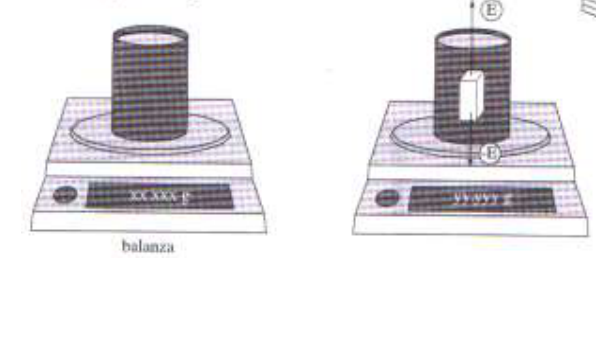
Topic: Fluid Mechanics Metodi: Experimental Data Analysis, Hydrostatic Equilibrium, Graph Linearization Competenze: Physical Reasoning, Experimental Data Analysis, Mathematical Modeling Objects: Cylinder, Container Fonte: Testo (PDF) — p.5
PE50. Istituto Primo Capraro - Colegio San Patrizio. San Carlo di Bariloche, Rio Negro.
Archimede e la densità di una soluzione
Obiettivo In questa esperienza determineremo la densità di una soluzione di acqua e di alcol. E’ un metodo etilico che utilizza i concetti del principio di Archimede, e stimeremo la proporzione per volume di entrambi i liquidi presenti nella soluzione.
Breve descrizione e modello teorico La densità è definita come massa per unità di volume ed è una proprietà intensiva di corpi, cioè che non dipende dalla quantità di materia dei corpi. Ogni . L’elemento della natura ha una densità che è caratteristica e unica. δcorpo= mcorpo Vcorpo
D’altra parte, Archimede cercava di scoprire un modo per misurare la densità dei Corpi scoprì il seguente principio: Tutto il corpo immerso nel seno di un fluido, subisce una forza ascendente (push) il cui valore è uguale al peso del fluido sfrattato Per il corpo. Proprio quando immergi un corpo in un recipiente che contiene un liquido, questo liquido eserciterà un impulso sul corpo. Se ricordiamo la terza legge di Newton (azione e La reazione) possiamo determinare che il corpo reagirà sull’acqua con identica forza e senso contrario. Se mettiamo il contenitore contenente un liquido su una bilancia e poi introduciamo un corpo che si trova appeso a un supporto, possiamo misurare il mE (che chiameremo massa di spinta) e che è un eccesso di massa che la bilancia registra quando il corpo viene inserito nell’acqua.
202 - OAF 2018 Attraverso questa forza di reazione alla forza di spinta, cercheremo di trovare la densità di una soluzione di acqua e alcol etilico. Per effettuare le misure Usando una bilancia elettronica, ci mettiamo sopra un contenitore che contiene il La soluzione è un corpo di volume conosciuto. La densità di tale soluzione sarà: δsoluzione= msoluzione Risoluzione
Nel nostro caso la massa del liquido dislocato è pari al mE e al volume del liquido dislocato al volume del corpo che viene inserito nel liquido. Il corpo che useremo per inserirlo nella soluzione è un corpo regolare. un cilindro, che come sappiamo per determinare il suo volume possiamo fare usando: Vcilindro = πR2h
Dove: R è il raggio della base del cilindro e h la sua altezza. Quindi, per determinare la densità della soluzione, rimane: δsoluzione= mE πR2h (equazione 1)
Elementi necessari
- recipiente con soluzione preparata e sconosciuta di acqua e alcol etilico.
- Caccia con il gancio superiore per poterlo appendere.
- Balance digitale
- Supporto universale
- Regola graduata .
- Carta di carta di millimetro
- Una penna nera .
- Stampo di carta
- Il filo .
Sviluppo dell’esperimento: a) Misurare il diametro della base del cilindro e calcolare il suo raggio. Esprimere con la l’incertezza corrispondente. b) Utilizzando la penna di carbonio, segna sul cilindro 10 linee parallele alla La base della stessa e separati ogni 1,5 cm, iniziando a misurare dalla base. c) Armarsi con il supporto universale e appendere il cilindro in modo che rimanga il più verticale possibile. d) Mettere sul bilanciatore il contenitore della soluzione e fissare il bilanciatore. e) Introdurre il cilindro nella soluzione fino al primo marchio e registrare il mE che indica il bilancio, con la relativa incertezza. f) Ripetere l’ultimo passo inserendo il cilindro fino a ciascuna delle marcature realizzate. g) Preparare una tabella che indichi l’altezza inserita e il mE. h) Presentare in un grafico cartesiano l’EM in funzione dell’altezza h. (i) Sbarazzare e riassemblare l’equazione 1, secondo quanto graficato, trasformandola in una funzione lineare, in modo che la pendenza della retta permetta di determinare la densità della soluzione. j) Trovare l’incertezza della densità ottenuta nell’esperienza. k) Conoscendo i valori di densità teorica dell’acqua e dell’alcol etilico, approssimare e determinare il rapporto in percentuale di volume della soluzione di ogni liquido.
Datos Densità dell’acqua: δacqua= 1000 𝑘𝑔 𝑚3 Densità di alcol etilico: δalcol etilico= 789 𝑘𝑔 𝑚3
OAF 2018 - 203
Topic: Fluid Mechanics Metodi: Experimental Data Analysis, Hydrostatic Equilibrium, Graph Linearization Competenze: Physical Reasoning, Experimental Data Analysis, Mathematical Modeling Objects: Cylinder, Container Fonte: Testo (PDF) — p.5
PE50. The first is the Capraro Institute - St. Patrick’s College. St. Charles of Bariloche, Rio Negro.
Archimedes and the density of a solution
The objective In this experiment we will determine the density of a solution of water and alcohol. The first is the ethylic formula, which is based on the concepts of Archimedes’ principle, and we estimate the ratio. volume of both liquids present in the solution.
Brief description and theoretical model Density is defined as mass per unit volume and is an intensive property. The body is not dependent on the amount of matter in it. Each one . The element of nature has a density that is characteristic and unique. D body = body The body
On the other hand, Archimedes was looking to discover a way to measure the density of the bodies discovered the following principle: Every body immersed in the breast of a fluid, The pressure of the liquid is equal to the weight of the displaced fluid. For the body. Just by dipping a body in a container containing a liquid, this liquid It’ll push the body. If we remember Newton ‘s third law of motion and We can determine that then the body will react on the water with identical force and opposite sense. If we put the container that contains a liquid We put a body on a scale and then we put a body that is hanging from a We can measure the mE (which we’ll call the thrust mass) and that’s an excess. The mass recorded by the scale when the body is placed in the water.
The Commission shall adopt delegated acts in accordance with Article 21 of this Regulation. Using this force of reaction to the force of thrust we will try to find the density of a solution of water and ethyl alcohol. To perform the measurements We use an electronic scale, we put a container on top of it that contains the And we’re going to put a known volume body in the solution. The density of such solution shall be: D = solution The following is a list of the
In our case the mass of the displaced liquid is equal to the mE and the volume of the liquid displaced to the body volume being introduced into the liquid. The body we’re going to use to introduce it into the solution is a regular body. A cylinder, which we know to determine its volume we can do using: Vcilinder = πR2h
Where: R is the radius of the cylinder base and h its height. So we have to determine the density of the solution: The following is the list of the following: πR2h (equation 1)
The necessary elements
- Container with prepared and unknown solution of water and ethyl alcohol.
- Cylinder with top hook so you can hang it .
- Digital balance sheet
- Universal support
- Gradual rule .
- Millimeter sheet of paper
- Black pencil .
- Paper tape .
- I ‘m not .
Development of the experiment: (a) Measure the diameter of the cylinder base and calculate its radius. Express with the the corresponding uncertainty. (b) Using the carbon pencil, mark 10 lines parallel to the cylinder. The base of the same and separated every 1.5 cm, starting to measure from the base. (c) Arming the device with the universal support and hanging the cylinder so that Stay as vertical as possible. (d) Place the container containing the solution on the scale and hold the scale. (e) Introduce the cylinder into the solution until the first mark and register the mE which is indicates the balance sheet, with its corresponding uncertainty. (f) Repeat the last step by inserting the cylinder to each of the marks. The Commission has already taken a number of measures. (g) Make a table indicating the height and the mE entered. (h) To represent the mE in a Cartesian graph with respect to height h. (i) Clear and rearrange equation 1, according to the graph, transforming it into a linear function, so that the slope of the straight line can determine the the density of the solution. (j) Find the uncertainty of the density obtained in the experience. (k) Knowing the theoretical density values of water and ethyl alcohol, approximate and determine the ratio as a percentage of volume of the solution every liquid.
Data from the report Density of water: δwater= 1000 𝑘𝑔 𝑚3 Density of ethyl alcohol: δethyl alcohol= 789 𝑘𝑔 𝑚3
The following is the list of the Member States’ financial statements:
Topic: Fluid Mechanics Metodi: Experimental Data Analysis, Hydrostatic Equilibrium, Graph Linearization Competenze: Physical Reasoning, Experimental Data Analysis, Mathematical Modeling Objects: Cylinder, Container Fonte: Testo (PDF) — p.5
PE51. Instituto Eduardo L. Holmberg. Quilmes, Buenos Aires.
El objetivo de este trabajo práctico es la determinación de la relación, si existe, entre el tiempo de vaciado de un recipiente y el área total del orificio de descarga. Inicialmente se medirá el tiempo de vaciado con un orificio de área A en la base del vaso. Luego se hará un segundo orificio igual al anterior, por lo que el área será ahora 2A. El recipiente considerado en este trabajo será un vaso de telgopor al que se le irán haciendo los orificios en la parte inferior. El nivel de agua deberá ser constante en todas las mediciones.
Procedimiento (leer completo este procedimiento antes de comenzar):
- Con el vaso vacío, hacer un orificio en la base utilizando el instrumento provisto.
- Con el vaso apoyado en la mesada al borde de la pileta, cargarlo con agua usando el vaso de precipitado provisto. Al hacerlo, sostener firmemente el vaso de manera que no pierda agua por la base. El nivel inicial de agua en el vaso deberá ser siempre el mismo, por lo que se recomienda hacer alguna clase de marca como referencia.
- Moviendo el vaso hacia la pileta (sin salpicar por la parte superior!!!) con una mano, activar el cronómetro con la otra mano, y así registrar el tiempo que tarda en descargarse completamente el vaso. Es decir, parar el cronómetro cuando el vaso quede vacío.
- Registrar en una tabla el tiempo. Repetir esta medición al menos 2 veces.
- Hacer un nuevo orificio en la base de vaso y repetir todo el procedimiento hasta lograr la mayor cantidad de mediciones posible (10 < Nº < 20).
- Al finalizar las mediciones, confeccionar un gráfico de tiempo en función del área total de descarga (papel cuadriculado es suficiente).
- Analizar el gráfico para producir una conclusión que responda qué relación existe entre el tiempo de descarga y el valor del área total de descarga del agua para un recipiente determinado y un volumen de agua determinado. Incluir en la conclusión un comentario sobre las fuentes de incertidumbre del procedimiento.
Nota: no es necesario medir el valor del área de los orificios. Como todos los orificios tendrán áreas iguales, un orificio tendrá área A, dos orificios tendrán área 2A y así siguiendo.
Topic: Fluid Mechanics Metodi: Experimental Data Analysis, Curve Fitting, Continuity Equation Competenze: Physical Reasoning, Experimental Data Analysis Objects: Container Fonte: Testo (PDF) — p.5
PE51. Istituto Eduardo L. Holmberg. Quilmes, Buenos Aires.
L’obiettivo di questo lavoro pratico è quello di determinare il rapporto, se esistente, tra il tempo di svuotamento di un contenitore e l’area totale del buco di scarico. Inizialmente si misurerà il tempo di svuotamento con un orificio di zona A alla base del vaso. Poi si farà un secondo foro uguale al precedente, quindi l’area sarà ora 2A. Il recipiente considerato in questo lavoro sarà un vaso di telgopor che verrà portato facendo i buchi in fondo. Il livello dell’acqua deve essere costante in tutte le zone. le misure.
Procedura (leggere la procedura prima di iniziare):
- Con il bicchiere vuoto, fare un foro nella base utilizzando l’istumento fornito.
- Con il bicchiere appoggiato sulla mensa al bordo della pila, carica con acqua usando il bicchiere di precipitazione fornito. In tal modo, tenete il bicchiere forte. per non perdere acqua per la base. Il livello iniziale di acqua nel bicchiere La struttura deve essere sempre la stessa, quindi si consiglia di fare qualche tipo di il marchio come riferimento.
- Movendo il bicchiere verso la pila (senza spazzarsi sulla parte superiore!!!) con una con l’altra mano, attivare il cronometro con l’altra mano, e così registrare il tempo che ci vuole.
- E’ il momento di scaricare completamente il bicchiere. Cioè, fermare il cronometro quando il il bicchiere rimane vuoto.
- Registrare il tempo su una tabella. Ripetere questa misurazione almeno due volte.
- Fare un nuovo foro nella base del vaso e ripetere l’intero procedimento fino a ottenere il maggior numero possibile di misurazioni (10 < No < 20).
- Al termine delle misure, realizzare un grafico di tempo in base all’area totale di scarico (quadratura sufficiente).
- Analizzare il grafico per produrre una conclusione che risponda a quale rapporto esiste tra il tempo di scarico e il valore dell’area totale di scarico dell’acqua per un determinato contenitore e per un determinato volume d’acqua. Includere nella La Commissione ha concluso un commento sulle fonti di incertezza del procedimento.
Nota: non è necessario misurare il valore dell’area dei buchi. Come tutti i buchi . avranno aree uguali, un foro avrà area A, due foro avranno area 2A e così via. Continuando.
Topic: Fluid Mechanics Metodi: Experimental Data Analysis, Curve Fitting, Continuity Equation Competenze: Physical Reasoning, Experimental Data Analysis Objects: Container Fonte: Testo (PDF) — p.5
PE51. The Institute Eduardo L. I’m going to Holmberg. Quilmes, Buenos Aires is where I am.
The aim of this practical work is to determine the relationship, if any, between the the empty time of a container and the total area of the discharge hole. Initially, the emptying time shall be measured with a hole in area A at the base of the glass. Then a second hole will be made equal to the previous one, so the area will now be 2A. The container considered in this work will be a telgopor glass to which they will be taken. I’m just making the holes at the bottom. The water level must be constant at all times the measurements.
The procedure (read this procedure before you start):
- With the empty glass, make a hole in the base using the provided instrument.
- With the glass leaning on the table at the edge of the pile, load it with water using the glass of precipitation provided. In doing so, hold the glass firmly So it doesn’t lose water at the base. The initial water level in the glass It should always be the same, so it is recommended to do some kind of mark as a reference.
- Moving the glass towards the pile (without spitting on top!!!) with a hand, turn on the timer with the other hand, and record the time it takes. I’m not going to let you get out of the glass. That is, stop the timer when the I’ll leave the glass empty.
- Record time on a chart. Repeat this measurement at least 2 times.
- Make a new hole in the glass base and repeat the entire procedure until achieve as many measurements as possible (10 < No < 20).
- At the end of the measurements, make a time chart based on the area total discharge (quadriculated paper is sufficient).
- Analyze the graph to produce a conclusion that answers what relationship is between discharge time and the total discharge area value of the water. for a given container and a given volume of water. Included in the The Commission has also concluded that the Commission is not prepared to take any further action.
Note: it is not necessary to measure the value of the area of the holes. Like all the holes . They’ll have equal areas, one hole will have area A, two holes will have area 2A and so on. Keep going.
Topic: Fluid Mechanics Metodi: Experimental Data Analysis, Curve Fitting, Continuity Equation Competenze: Physical Reasoning, Experimental Data Analysis Objects: Container Fonte: Testo (PDF) — p.5
PE52. Colegio Santísimo Rosario. Monteros, Tucumán.
Equivalente eléctrico de la caloría
Introducción El objetivo de esta práctica es calcular la capacidad térmica de un calorímetro y determinar el equivalente eléctrico de la caloría, a través del principio de conservación de la energía.
Materiales
-
Un calentador pequeño (potencia aproximada de 1200 W)
-
Un vaso de telgopor.
-
Un termómetro de mercurio.
-
Un vaso de plástico graduado.
204 - OAF 2018 Procedimiento Coloque 200 ml de agua en el calorímetro (vaso de telgopor), agítelo suavemente y mida la temperatura inicial del agua (Ti). Introduzca el calentador en el calorímetro y enciéndalo durante aproximadamente 1 minuto (puede ser más tiempo). Agite levemente el calorímetro y mida la temperatura final (Tf).
Paso 1 Escriba las expresiones matemáticas que relacionan: a) Capacidad térmica, calor y variación de la temperatura. b) Calor específico, capacidad térmica y masa. c) Potencia, energía y variación del tiempo.
Paso 2 Utilizando las expresiones anteriores, calcule: d) El calor recibido por el agua (Q), durante el tiempo en el que el calentador permanece encendido, e) La energía gastada por el calentador ( E en Joules) durante el intervalo de tiempo Desprecie la capacidad térmica del calorímetro y la pérdida de calor hacia el ambiente, y suponga que todo el calor generado por el calentador sirvió para calentar el agua. Utilizando el principo de la conservación de la energía, determine cuántos joules corresponden a una caloría, en otras palabras, determine el equivalente eléctrico de la caloría (J).
Paso 3 Tire el agua del Calorímetro y séquelo. Coloque 100 ml de agua en el calorímetro, y deje otros 50 ml en el vaso de plástico. Agite levemente el agua del vaso y mida su temperatura. Utilizando el calentador, caliente el agua del calorímetro hasta aproximadamente 50º C. Vierta el agua del vaso plástico en el calorímetro, agítelo suavemente y mida la temperatura de equilibrio. Utilizando las expresiones del PASO 1: a) Calcule el calor cedido por el agua caliente. b) Calcule el calor recibido por el agua fría. c) Escriba la expresión para el calor cedido por el calorímetro.
Despreciando la pérdida de calor hacia el ambiente, considere el intercambio de calor entre el agua caliente, el agua fría y el calorímetro, y calcule la capacidad térmica (C) del calorímetro. Para obtener un valor más preciso, puede repetir la experiencia por lo menos tres veces y calcular el valor promedio.
Paso 4 Retome los datos del PASO 2 y calcule el calor recibido por el agua y por el calorímetro, durante los 2 minutos de calentamiento. Considere, ahora, que la energía gastada por el calentador sirvió para calentar el agua y también el calorímetro, y calcule nuevamente el equivalente eléctrico de la caloría.
Paso 5 Considere el valor para el equivalente eléctrico de la caloría como 4,18 J. Calcule el error porcentual entre el valor esperado y el resultado obtenido, en los PASOS 2 Y 4.
Redacte un informe de su experiencia donde consigne:
- Objetivos de su trabajo – Planteo analítico.
- Experiencia realizada – Diseño experimental utilizado.
- Valores, tablas obtenidos.
OAF 2018 - 205
- Fuentes de errores y análisis de cómo influyen en los resultados finales acotados.
- Consideraciones y supuestos que haya realizado.
- Todo aquello que considere relevante para su informe.-
Topic: Thermodynamics Metodi: Experimental Data Analysis, First Law of Thermodynamics, Conservation of Energy Competenze: Physical Reasoning, Experimental Data Analysis Objects: Calorimeter Fonte: Testo (PDF) — p.5
PE52. - Scuola Santissimo Rosario. Monteros, Tucumán.
Calorico equivalente elettrico
Introduzione L’obiettivo di questa pratica è calcolare la capacità termico di un calometro e
- determinare l’equivalente elettrico della caloria, mediante il principio di conservazione di l’energia.
Materiali
- Un piccolo riscaldatore (potenza approssimativa di 1200 W)
- Un bicchiere di telgopor.
- Un termometro di mercurio.
- Un bicchiere di plastica graduato.
204 - OAF 2018 Procedura Metti 200 ml di acqua nel caloriometro (vaso di telgopor), agita il calorifero con delicatezza e misura la temperatura iniziale dell’acqua (Ti). Inserisci il riscaldatore nel caloriometro e accenderlo per circa 1 minuto (può essere più a lungo). Agita leggero il caloriometro e la misura della temperatura finale (Tf).
Passo 1 Scrivi le espressioni matematiche che ti collegano: a) Capacità termico, calore e variazione della temperatura. b) Calore specifico, capacità termico e massa. c) Potenza, energia e variazione del tempo.
Passo 2 Usando le espressioni precedenti, calcola: d) Calore ricevuto dall’acqua (Q), durante il tempo in cui il riscaldatore rimane acceso, e) L’energia consumata dal riscaldatore (E in Joules) durante l’intervallo di Tempo Scommette la capacità termico del caloriometro e la perdita di calore nell’ambiente, e suppone che tutto il calore generato dal riscaldatore sia stato utilizzato per riscaldare l’acqua. Usando il principio della conservazione dell’energia, determinare quanti joule In altre parole, determinare l’equivalente elettrico della calorie (J).
Passo 3 Prendi l’acqua dal Calorimetro e secca. Metti 100 ml di acqua nel calometro e lascia altri 50 ml nel bicchiere di plastica. Agita leggermente l ’ acqua del bicchiere e misurata. temperatura. Utilizzando il riscaldatore, scaldate l’acqua del calometro fino a circa 50°C. Versare l’acqua del bicchiere di plastica nel calometro, agitare Calcolare la temperatura di equilibrio. Usando le espressioni di PASSO 1: a) Calcolare il calore ceduto dall’acqua calda. b) Calcolare il calore ricevuto dall’acqua fredda. c) Scrivi l’espressione per il calore ceduto dal calometro.
Scommettere la perdita di calore verso l’ambiente, considera lo scambio di calore tra acqua calda, acqua fredda e calometro, e calcolare la capacità termico (C) del caloriometro. Per ottenere un valore più preciso, si può ripetere l’esperienza almeno tre volte e calcolare il valore medio.
Passo 4 Ritorna i dati di PASO 2 e calcola il calore ricevuto dall’acqua e dal calometro. durante i due minuti di riscaldamento. Considera, ora, che l’energia spesa dal Il caldaio è stato utilizzato per riscaldare l’acqua e anche il caloriometro, e calcolare di nuovo il equivalente elettrico della caloria.
Passo 5 Considerare il valore per l’equivalente elettrico della caloria come 4,18 J. Calcola l’errore Percentuale tra il valore atteso e il risultato ottenuto, in PASS 2 e 4.
Scrivi un rapporto sull’esperienza che contiene:
- Obiettivi del suo lavoro Piantaggio analitico.
- Esperienza realizzata Disegno sperimentale utilizzato.
- Valori, tabelle ottenute.
OAF 2018 - 205
- Fonti di errore e analisi di come influenzano i risultati finali
- Sotto le spalle.
- Considerazioni e supposizioni che abbia fatto.
- Tutto ciò che ritiene rilevante per il suo rapporto.
Topic: Thermodynamics Metodi: Experimental Data Analysis, First Law of Thermodynamics, Conservation of Energy Competenze: Physical Reasoning, Experimental Data Analysis Objects: Calorimeter Fonte: Testo (PDF) — p.5
PE52. Holy Rosary College. Monteros, Tucumán. What is it?
Electrical equivalent of calories
The first is the introduction. The purpose of this practice is to calculate the thermal capacity of a calorimeter and to calculate the thermal capacity of a heat meter. The electrical equivalent of the calorie is determined by the conservation principle of the energy.
Materials
- A small heater (approximately 1200 W)
- A glass of telgopor.
- A mercury thermometer.
- A graduated plastic glass.
The Commission shall adopt delegated acts in accordance with Article 21 of this Regulation. The procedure Place 200 ml of water in the calorimeter (telgopor glass), gently shake it and measure it. the initial water temperature (Ti). Insert the heater into the calorimeter and If you are not able to do this, you should start the machine by lighting it for about 1 minute (may be longer). Shake it gently . the thermometer and the final temperature (Tf).
Step one . Write the mathematical expressions that relate: (a) Heat capacity, heat and temperature variation. (b) Specific heat, thermal capacity and mass. (c) Power, energy and time variation.
Step two . Using the above expressions, calculate: (d) The heat received by the water (Q), during the time the heater is heated. It stays on, (e) The energy expended by the heater (E in Joules) during the interval of Time . It ignores the heat capacity of the thermometer and the heat loss to the environment, and Suppose that all the heat generated by the heater was used to heat the water. Using the principle of energy conservation, determine how many joules The electrical equivalent of the energy from the calorie (J).
Step three Take the water out of the calorimeter and dry it. Put 100 ml of water in the calorimeter, and leave it. another 50 ml in the plastic glass. Swing the water in the glass gently and measure its volume . The temperature. Using the heater, heat the water from the calorimeter up to approximately 50°C. Pour the water from the plastic glass into the thermometer, shake it. gently and measure the equilibrium temperature. Using the expressions in step 1: (a) Calculate the heat released by the hot water. (b) Calculate the heat received by the cold water. (c) Write the expression for the heat given by the calorimeter.
Despite the loss of heat to the environment, consider heat exchange. between hot water, cold water and the calorimeter, and calculate the thermal capacity (C) of the The heat meter. For a more accurate value, you can repeat the experience at least three times and calculate the average value.
Step four . Take the data from step 2 and calculate the heat received by the water and the thermometer. during the 2 minutes of heating. Consider, now, that the energy spent by the Heater used to heat water and also the calorimeter, and again calculate the electrical equivalent of calories.
Step five . Consider the value for the electrical equivalent of the calorie as 4,18 J. Calculate the error. The percentage of expected value to result in steps 2 and 4.
Write a report of your experience where you say:
- Objectives of his work Analytical planting.
- Experience achieved Experimental design used.
- Values, tables obtained.
The Commission shall adopt delegated acts in accordance with Article 21 of Regulation (EC) No 1272/2009.
- sources of errors and analysis of how they influence the final results
- I’m not going to.
- Considerations and assumptions you made.
- Anything you consider relevant to your report.
Topic: Thermodynamics Metodi: Experimental Data Analysis, First Law of Thermodynamics, Conservation of Energy Competenze: Physical Reasoning, Experimental Data Analysis Objects: Calorimeter Fonte: Testo (PDF) — p.5
PE53. Colegio Pablo Apóstol1 - Colegio del Sol2. 1Yerba Buena - 2San Miguel de Tucumán.
Objetivo
- Encontrar la relación entre la densidad y la temperatura de la glicerina.
- Calcular el coeficiente de dilatación de la glicerina
Materiales
- Un recipiente de telgopor
- Probeta , jeringa o tubo de ensayo
- balanza
- Papel milimetrado
- glicerina
- agua
- pava eléctrica
- Termómetro y agitador
Procedimiento
- Se toma un volumen de glicerina a temperatura ambiente y se mide la masa, la temperatura y el volumen con su error
- calcular la densidad de la sustancia a temperatura ambiente. Acotar y cotejar con tabla
- se coloca en el recipiente de telgopor la probeta con el volumen medido de glicerina y se coloca entre ambos recipientes un termómetro, un agitador y agua hirviente.
- Se toman los valores de volumen para diferentes temperaturas a medida que esta se enfría.
- Construir una tabla de valores con las mediciones y errores correspondientes de volúmenes y temperaturas.
- Calcular la densidad con su error para cada temperatura
- Graficar densidad en función de la temperatura.
- Linealizar la función, si es posible e indicar intervalo, pendiente y ordenada al origen.
- Concluir sobre la relación d=f(T)
- Graficar variación de volumen en función de la variación de temperatura.
- Determinar la pendiente y la ordenada al origen con su error.
- Calcular el coeficiente de dilatación de la glicerina con su error, acotar y cotejar resultados.
- Elaborar conclusiones.
Topic: Thermodynamics Metodi: Experimental Data Analysis, Graph Linearization, Error Propagation Competenze: Physical Reasoning, Experimental Data Analysis, Mathematical Modeling Objects: Container Fonte: Testo (PDF) — p.5
PE53. Colegio Paolo Apóstol1 - Colegio del Sol2. 1Yerba Buena - 2San Miguel de Tucumán.
Obiettivo
- Trovare il rapporto tra densità e temperatura della glicerina.
- Calcolare il coefficiente di dilatazione della glicerina
Materiali
- Un recipiente di telgopor
- Proba , siringa o tubo di prova
- Sbalzo
- Papero millimetrico .
- Glicerina
- acqua
- la piattaforma elettrica
- Termodermico e agitatore.
Procedura
- Si prende un volume di glicerina a temperatura ambiente e si misura la massa, temperatura e volume con il suo errore
- calcolare la densità della sostanza a temperatura ambiente. Accostare e contrastare con tabella
- si inserisce nel recipiente telgopor la prova con il volume misurato di si mette tra i due recipienti un termometro, un agitatore e acqua
- Fabbricante.
- I valori di volume sono presi per diverse temperature a seconda della temperatura. Si raffredda.
- Costruire un tabella di valori con le misure e gli errori corrispondenti di i volumi e le temperature.
- Calcolare la densità con il suo errore per ogni temperatura
- Graficare la densità in base alla temperatura.
- Linealizzare la funzione, se possibile, e indicare intervallo, pendente e ordinato al origine.
- Conclude sul rapporto d=f(T)
- Grafica variazione del volume in funzione della variazione della temperatura.
- Determinare la pendenza e la ordinata all’origine con il suo errore.
- Calcolare il coefficiente di dilatazione della glicerina con il suo errore, abbassare e comparire risultati.
- Esprimere conclusioni.
Topic: Thermodynamics Metodi: Experimental Data Analysis, Graph Linearization, Error Propagation Competenze: Physical Reasoning, Experimental Data Analysis, Mathematical Modeling Objects: Container Fonte: Testo (PDF) — p.5
PE53. The school is located in the centre of the city. 1Yerba Buena - 2San Miguel de Tucumán.
The objective
- Find the relationship between the density and temperature of the glycerin.
- Calculate the glycerin dilation coefficient
Materials
- A container of telgopor
- Sample , syringe or test tube
- the balance
- Millimeter paper .
- glycerin .
- water .
- electrical power
- Thermometer and agitator .
The procedure
- A volume of glycerin is taken at room temperature and the mass measured. temperature and volume with its error
- calculate the density of the substance at room temperature. Shake and shake with Table
- the sample with the measured volume of The glycerin is then placed between the two containers a thermometer, a shaker and water. It’s boiling.
- Volume values are taken for different temperatures as it is It’s getting cold.
- Build a table of values with the corresponding measurements and errors of volume and temperature.
- Calculate the density with its error for each temperature
- Graph density based on temperature.
- Linearise the function, if possible, and indicate the interval, pending and ordered to origin.
- Conclusion on the relation d=f(T)
- Graphing volume variation based on temperature variation.
- Determine the slope and the order to origin with its error.
- Calculate the glycerin dilation coefficient with its error, shorten and compare The results.
- Drawing conclusions.
Topic: Thermodynamics Metodi: Experimental Data Analysis, Graph Linearization, Error Propagation Competenze: Physical Reasoning, Experimental Data Analysis, Mathematical Modeling Objects: Container Fonte: Testo (PDF) — p.5
PE54. Colegio Provincial N° 1 Joaquín V. González. Ciudad de La Rioja.
Objetivo: Determinación de la distancia focal f de una lente y del índice de refracción n del vidrio del que está hecha. Desde que se inventaron las lentes hace ya cinco siglos, han sido utilizadas tanto para observar objetos muy lejanos (Astronomía) como para observar objetos muy pequeños (Microscopía).
206 - OAF 2018 En esta prueba experimental se propone comprobar la denominada ley de las lentes y determinar las características fundamentales de una lupa (lente convergente).
Materiales 3 lentes convergentes. (dos con distancia focal conocida, una desconocida) 1 foco luminoso (vela, led) 2 soportes, o trípodes de laboratorio. Pantalla de cartulina Cinta métrica e instrumentos de medición.
Primer experimento: Comprobación experimental de la ley de las lentes Desde muy pronto, físicos como Galileo y Newton descubrieron una ley que se verifica en las lentes, consecuencia de la ley de la refracción de laluz:
“Cuando se forma la imagen de un objeto en una pantalla a través de una lente, la suma de las inversas de la distancia objeto, s, y de la distancia imagen, s’, es una cantidad constante, característica de dicha lente”.
Para lentes delgadas, la distancia focal puede ser calculada como:
1 𝑓= 1 𝑠+ 1 𝑠´
Siendo s1la distancia entre la lente y el objeto, s´la distancia entre la lente y la pantalla (donde está la imagen) y f la distancia focal imagen de la lente (lupa). De la anterior ecuación se deduce: 𝑓= 1 1 𝑠+ 1 𝑠´
Una cámara fotográfica esta conformada por un objetivo con una distancia focal f, como se indica en la figura, la imagen “pasa” por el objetivo y se invierte, tal como haría un lente convexo. Figura 0: Lente de distancia focal regulable desde 18 hasta 55 mm
OAF 2018 - 207 Al aumentar la distancia focal, aumenta el “zoom”, ¿Por qué esto ocurre? ¿Por qué un lente de cámara es mas caro que una lupa convencional con la misma distancia focal?
El experimento planteado permite entender y comprender la definición de distancia focal, aumento e índice de curvatura.
EnlaFigura1seindicaelesquemadelmontajeexperimentalqueproponemos,asícomolas distancias s ys’. Figura 1: Esquema del montaje experimental.
Operaciones a realizar
I) Montaje experimental
1- Colocar el foco luminoso, el lente y la pantalla en soportes o trípodes para una
mayor movilidad.
2- Situar la lente entre la pantalla y el foco luminoso como se muestra en la figura
1.
3- Procurar que la luz del laboratorio sea menor a la luz de nuestra fuente
luminosa, en caso contrario apagar las luces o disminuirlos hasta que la luz sea
claramente visible.
4- En caso de tener un lente muy grande: Distanciar mas los objetos de manera
que sea visible por la pantalla.
II) Procedimiento
- Situar el lente, el foco luminoso y la pantalla hasta obtener en la pantalla una imagen precisa y delineada mayor al foco luminoso.
- Medir la distancia del foco luminoso al lente (denominado s) y la distancia entre el lente y la pantalla (s´).
- Repetir a lo menos cinco veces los pasos anteriores. Anote sus mediciones en una tabla.
- Hacer una representación gráfica en papel milimetrado de 1/ s’ frente a 1/s , y determinar la pendiente de la recta y la ordenada en el origen.
Tabla 1
- A partir de la ordenada en el origen, determinar el valor de la distancia focal f’ de la lupa.
- Estimar el error tanto en la pendiente de la recta como en la ordenada en el origen y en la distancia focal, indicando el método seguido paraello.
-
Utilizando el segundo lente, de distancia focal conocida (f= -200mm) determinar s, y s’ para la formación de imágenes.
-
¿A qué se debe que la imagen no se pueda formar? Justificar. s (cm) s’ (cm) 1/s (cm-1) 1/s’ (cm-1)
208 - OAF 2018 Figura 2: Esquema geométrico para el cálculo de R. Segundo experimento Determinación de la distancia focal por el método de Bessel Bessel ideó un procedimiento para determinar la distancia focal de una lente de manera más precisa, que consiste en lo siguiente: conocido un valor aproximado de la distancia focal (determinado, por ejemplo, por el método anterior), se fijan el foco y la pantalla a una distancia L mayor que cuatro veces la distancia focal. En estas condiciones, existen dos posiciones de la lente para las cuales se obtiene una imagen nítida del foco, una de ellas de mayor tamaño que el objeto y otra de menor tamaño. Si llamamos D a la distancia que media entre estas dos posiciones, la distancia focal f’ se determina mediante la siguiente fórmula: 𝑓= 𝐿2 −𝐷4 4𝐿
Operaciones a realizar
- Elegir la distancia L entre el foco y la pantalla. Determinar la distancia D entre las dos posiciones de la lente antes mencionadas con el mayor cuidado posible. Determinar con ayuda de la fórmula anterior el valor def’.
Tabla 2 L (cm) D(cm) f’ (cm)
- Calcular el error enf’.
Tercer experimento Determinación del índice de refracción n del vidrio Los constructores de lentes podían diseñarlas con la distancia focal deseada para la aplicación concreta. Se valían para ello de una fórmula, deducida también a partir de la ley de la refracción de la luz, que tiene en cuenta los radios de curvatura de sus superficies, así como del índice de refracción del material transparente del que están hechas. En el caso que nos ocupa, la fórmula del constructor de lentes se reduce a:
1 𝑓= (𝑛−1)2 𝑅
donde R es el radio de curvatura de las superficies esféricas que constituyen las caras de la lente.
Operaciones a realizar
-
Con ayuda de la Figura 2 y sus conocimientos previos de trigonometría, determinar la expresión de R en función de las variables indicadas en la Figura 2.
-
Para la determinación experimental de h, e y eo, desmontar la
OAF 2018 - 209 lente desenroscando con cuidado el mango de la lupa y utilizar el calibre. Consignarlos resultados en las tres primeras columnas de la Tabla 3. A partir de estos valores, determinar el valor de R, indicando suincertidumbre.
Tabla 3 h (cm) e(cm) eo(cm) R (cm)
- Aplicando la fórmula del constructor de lentes, determinar n, indicando también suincertidumbre.
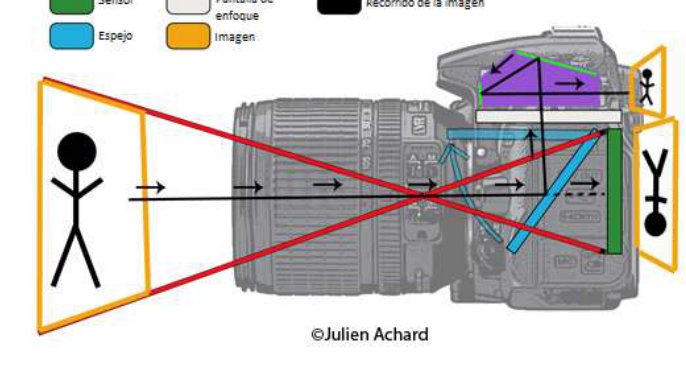
Topic: Geometric Optics Metodi: Experimental Data Analysis, Thin Lens & Mirror Equation, Graph Linearization Competenze: Physical Reasoning, Experimental Data Analysis, Mathematical Modeling Objects: Lens, Screen Fonte: Testo (PDF) — p.5
PE54. Colegio Provinciale N° 1 Joaquín V. Gonzalez. Città di La Rioja.
Obiettivo: Determinare la distanza focale f di un obiettivo e l’indice di refraczione n del vetro di cui è fatta. Da quando sono state inventate cinque secoli fa, sono state usate per tanto osservare oggetti molto lontani (astronomia) come osservare oggetti molto piccoli (Microscopia)
206 - OAF 2018 In questa prova sperimentale si propone di verificare la cosiddetta legge dei lenti e determinare le caratteristiche fondamentali di una lente (lente convergente).
Materiali 3 lenti convergenti. (due con distanza focale nota, un sconosciuto) 1 foco luminoso (vela, led) 2 supporti, o tripiedi di laboratorio. Disegno di cartolina Cintura e strumenti di misura.
Il primo esperimento: prova sperimentale della legge dei lenti Molto presto, fisici come Galileo e Newton hanno scoperto una legge che si verifica in le lenti, conseguente alla legge della refraczione di laluz:
Quando si forma un’immagine di un oggetto su uno schermo attraverso un lente, la La somma delle inverse della distanza oggetto, s, e della distanza immagine, s, è una quantità costante, caratteristica di tale lente.
Per lenti sottili, la distanza focale può essere calcolata come:
1 𝑓= 1 𝑠+ 1 𝑠´
Essendo la distanza tra l’obiettivo e l’oggetto, è la distanza tra l’obiettivo e lo schermo (dove è l’immagine) e f la distanza focale dell’immagine del lente (lupo). Dalla precedente equazione si deduce: 𝑓= 1 1 𝑠+ 1 𝑠´
Una fotocamera è costituita da un obiettivo con una distanza focale f, come viene indicato nella figura, l’immagine passa per l’obiettivo e si inverte, come farebbe un lente convexa. Figura 0: Lente a distanza focale regolabile da 18 a 55 mm
OAF 2018 - 207 Aumentando la distanza focale, aumenta il zoom, perché succede? Perché un obiettivo da fotocamera è più costoso di un’occhiata con la stessa fotocamera? Distanza focale?
L’esperimento proposto permette di comprendere e comprendere la definizione di distanza focale, aumento e indice di curvatura.
La figura1indica che sono stati fatti i monti sperimentali che proponiamo, come le altre. Distanze. Figura 1: schema di montaggio sperimentale.
Operazioni da svolgere I) Montaggio sperimentale 1- Mettere il foco luminoso, il lente e lo schermo su supporti o tripiedi per una maggiore mobilità. 2- posizionare il lente tra lo schermo e il foco luminoso come mostrato nella figura 1. 3- Far sì che la luce del laboratorio sia inferiore alla luce della nostra fonte luminosa, altrimenti spegnere le luci o dimagrire fino a quando non si illumina visibile. 4- In caso di un obiettivo molto grande: Distanza gli oggetti in modo che che sia visibile sullo schermo.
II) Procedura
- Posizionare il lente, il foco luminoso e lo schermo fino a ottenere sullo schermo una immagine precisa e delineata maggiore al foco luminoso.
- Misurare la distanza da foco luminoso al lente (denominato s) e la distanza tra l’obiettivo e lo schermo (s).
- Ripetere almeno cinque volte i passaggi precedenti. Nota le tue misurazioni in una tavola.
- Fare una rappresentazione grafica su carta millimetrica di 1/s rispetto a 1/s , e determinare la pendice della retta e quella ordinata all’origine.
Tabella 1
- A partire dalla data di origine, determinare il valore della distanza focale f di la luccia.
- Valutare l’errore sia nella pendenza della retta che nella pendenza ordinata La data di partenza e la distanza focale indicando il metodo seguito in parallelo.
- utilizzando la seconda lente, a distanza focale nota (f= -200mm) determinare S, e s per la formazione di immagini.
- Perché l’immagine non si può formare? Giustificare. s (cm) s’ (cm) 1/s (cm-1) 1/s’ (cm-1)
208 - OAF 2018 Figura 2: Schema geometrico per il calcolo di R. Secondo esperimento Determinazione della distanza focale con il metodo di Bessel Bessel ha ideato un procedimento per determinare la distanza focale di un obiettivo in modo che più preciso, che consiste nel seguente: conosciuto un valore approssimativo della distanza Il foco e lo schermo sono fissati a una distanza L superiore a quattro volte la distanza focale. In queste condizioni, esistono. due posizioni della lente per ottenere un’immagine chiara del foco, una di Le dimensioni sono più grandi dell’oggetto e le dimensioni sono più piccole. Se chiamiamo D alla Distanza media tra queste due posizioni, la distanza focale f viene determinata mediante la seguente formula: 𝑓= 𝐿2 −𝐷4 4𝐿
Operazioni da svolgere
- Scegliere la distanza L tra il foco e lo schermo. Determinare la distanza D tra i le due posizioni del lentiglio sopra menzionate con la massima attenzione possibile. Determinare con la formula precedente il valore def.
Tabella 2 L (cm) D(cm) f’ (cm)
- Calcolare l’errore inf.
Terzo esperimento Determinazione dell’indice di refraczione n del vetro I costruttori di lenti potevano progettare con la distanza focale desiderata per la
- la realizzazione concreta. Per questo si utilizzò una formula, dedotta anche dal Legge della rifrazione della luce, che tiene conto dei raggi di curvatura dei suoi La superficie e l’indice di refraczione del materiale trasparente di cui sono
- Si’, sono fatti. Nel caso che ci riguarda, la formula del costruttore di lenti si riduce a:
1 𝑓= (𝑛−1)2 𝑅
dove R è il raggio di curvatura delle superfici sferiche che costituiscono le facce di la lente.
Operazioni da svolgere
- Con l’aiuto della Figura 2 y
- I suoi . conoscenze precedenti de trigonometria, determinare la espressione di R in Funzione de Le variabili indicati in Figura 2.
- Per la determinazione di h, e e eo, smontare la
OAF 2018 - 209 L’obiettivo è aprire con attenzione il manico della lucetta e usare il calibro. Consigliare i risultati nelle prime tre colonne della tabella 3. A partire da I valori di R sono stati determinati, indicando la loro incertezza.
Tabella 3 h (cm) e(cm) eo(cm) R (cm)
- Applicando la formula del costruttore di lenti, determinare n, indicando anche
- La sua incertezza.
Topic: Geometric Optics Metodi: Experimental Data Analysis, Thin Lens & Mirror Equation, Graph Linearization Competenze: Physical Reasoning, Experimental Data Analysis, Mathematical Modeling Objects: Lens, Screen Fonte: Testo (PDF) — p.5
PE54. Provincial school N° 1 Joaquín V. Gonzalez, you know. City of La Rioja.
Objective: Determination of the focal length f of a lens and refractive index n The glass from which it is made. Since the lens was invented five centuries ago, it’s been used for both Observing objects as far away as observing very small objects. (Microscopy)
The Commission shall adopt delegated acts in accordance with Article 21 of this Regulation. In this experimental test it is proposed to test the so-called law of lenses and determine the fundamental characteristics of a magnifying glass (convergent lens).
Materials 3 converging lenses. (two with known focal length, one unknown) 1 light fixture (candle, led) 2 supports, or laboratory tripod. Cardboard screen Metric tape and measuring instruments.
First experiment: experimental testing of the law of the lens Very early on, physicists like Galileo and Newton discovered a law that is verified in lenses, as a consequence of the law of refraction of the lens:
When an image of an object on a screen is formed through a lens, the The sum of the inverse of the distance object, s, and the distance image, s, is a The quantity of the lens is constant.
For thin lenses, the focal length can be calculated as:
1 𝑓= 1 𝑠+ 1 𝑠´
Being the distance between the lens and the object, being the distance between the lens and the screen (where the image is) and f the focal length of the lens image (loup). From the above equation it is deduced: 𝑓= 1 1 𝑠+ 1 𝑠´
A camera is made up of a lens with a focal length f, such as The image is shown in the figure, the image passes through the target and is reversed, just as a The lens is convex. Figure 0: Adjustable focal length lens from 18 to 55 mm
The Commission shall adopt delegated acts in accordance with Article 21 of this Regulation. When you increase the focal length, you increase the zoom, why does this happen? Why is a camera lens more expensive than a conventional lens with the same lens? The focal length?
The experiment proposed allows us to understand and understand the definition of focal length, increase and curvature rate.
Figure1 indicates the experimental montage we propose, as well as the distance is. Figure 1: Scheme of the experimental assembly.
Operations to be carried out I) Experimental assembly 1- Place the light focus, lens and screen on supports or tripodes for a increased mobility. 2- Place the lens between the screen and the light focus as shown in Figure 1. 3- Make sure the lab light is less than the light from our source Otherwise turn off the lights or turn them down until the light is out. clearly visible. 4- If you have a very large lens: Move objects further away in a way that It’s visible on the screen.
(ii) Procedure
- Place the lens, the light focus and the screen until you get on the screen a A clear, well-defined image greater than the focus of light.
- Measure the distance from the focal length to the lens (called s) and the distance between the lens and the display (s).
- Repeat the previous steps at least five times. Write down your measurements in a board.
- Make a graphic representation on millimeter paper of 1/s versus 1/s , and determine the slope of the straight line and the slope of the origin.
Table 1
- From the order at the source, determine the value of the focal length f of The magnifying glass.
- Estimate the error both in the slope of the straight line and in the ordered one in the The reference shall be made to the reference number of the reference number.
- Using the second lens, known focal length (f= -200mm) to determine The Commission has also adopted a proposal for a regulation on the use of the Community’s external borders.
- Why can’t the image form? Justify it. s (cm) s’ (cm) 1/s (cm-1) 1/s’ (cm-1)
The Commission shall adopt implementing acts in accordance with Article 21 of Regulation (EC) No 207/2009. Figure 2: Geometric scheme for the calculation of R. Second experiment . Determination of the focal length by the Bessel method Bessel devised a procedure for determining the focal length of a lens in such a way that More precisely, which consists of the following: known an approximate value of the distance The focal length (determined, for example, by the above method) is fixed to a distance L greater than four times the focal length. Under these conditions, there are Two positions of the lens for which a clear image of the focus is obtained, one of The size of the object is larger than the object and the size of the object is smaller. If we call D to the The distance that mediates between these two positions, the focal length f is determined by the following formula: 𝑓= 𝐿2 −𝐷4 4𝐿
Operations to be carried out
- Choose the distance L between the focus and the screen. Determine the distance D between the the two aforementioned lens positions with the greatest possible care. Determine the def value using the above formula.
Table 2 L (cm) D(cm) f’ (cm)
- Calculate the error in the inf.
Third experiment . Determination of the refractive index of the glass Lens manufacturers could design them with the focal length desired for the lens. The Commission has already adopted a proposal for a directive. The results of the study were based on a formula, which was also derived from the law of refraction of light, which takes into account the radii of curvature of its The surface area and the refractive index of the transparent material from which they are made. I’m not going to do it. In the case we’re dealing with, the formula for the lens manufacturer is reduced to:
1 𝑓= (𝑛−1)2 𝑅
where R is the radius of curvature of the spherical surfaces that constitute the faces of the lens.
Operations to be carried out
-
With the help of the Figure 2 y Your . knowledge Previously de The following table shows the results of the calculations: determining la expression of R in function de The Indicated variables In Figure 2, the following is the figure:
-
For la The Commission will take the necessary measures to ensure that the experimental of h, e and eo, dismantle the
The Commission shall adopt implementing acts in accordance with Article 21 of the Financial Regulation. Carefully unwrap the lens handle and use the caliber. To assign results to the first three columns of Table 3. From The value of R is determined by the following values:
Table 3 h (cm) e(cm) eo(cm) R (cm)
- Using the formula of the lens manufacturer, determine n, also indicating I’m not sure.
Topic: Geometric Optics Metodi: Experimental Data Analysis, Thin Lens & Mirror Equation, Graph Linearization Competenze: Physical Reasoning, Experimental Data Analysis, Mathematical Modeling Objects: Lens, Screen Fonte: Testo (PDF) — p.5
PE55. Escuela Normal Juan Pascual Pringles. Ciudad de San Luis.
Fuerza Centrípeta
Teoría
Si ninguna fuerza neta actúa sobre un objeto, éste viajará en una línea recta sin cambio
de velocidad. Para provocar que un objeto se mueva en trayectoria circular, una fuerza
constantemente perpendicular a la dirección del movimiento debe actuar sobre el objeto.
Esta fuerza, llamada fuerza centrípeta, estará por lo tanto siempre dirigida hacia el centro
del círculo.
En esta investigación, vas a determinar la relación entre la fuerza centrípeta que actúa
sobre el objeto y la velocidad del objeto mientras viaja por una trayectoria circular cuando
el radio de la trayectoria circular que sigue el objeto se mantiene siempre constante.
Materiales Un tubo plástico de 10 a 20 cm de largo, y de aproximadamente 1 cm de diámetro (el tubo debe estar pulido en sus dos extremos), cordón de nylon (más o menos 1 a 1,5 metros), un tapón de goma, 25 arandelas de metal, cronómetro, clips para papel, gafas protectoras.
Procedimiento
- Atar el tapón de goma a un extremo del cordón. Sosteniendo el cordón con la mano a unos 50 cm del tapón, tratar de hacer girar el cordón por encima de la cabeza en una trayectoria circular horizontal. Comprobarás que cuando haces girar el tapón más rápidamente, necesitarás sostener el cordón con más fuerza. En consecuencia, la fuerza (tensión) en el cordón debe incrementar junto con la velocidad del tapón.
- Pasar el extremo libre del cordón por el tubo plástico y atar a un clip. Doblar el clip de manera que pueda sostener arandelas. Colocar cinco arandelas en el extremo del cordón. Ajustar el cordón de forma que el radio de la trayectoria circular del tapón sea entre 75 y 100 cm. Marcar esto con un clip como se muestra en el diagrama.
- Practicar hacer girar el tapón en una trayectoria circular horizontal sobre tu cabeza. El tapón está viajando a la velocidad deseada cuando el peso de las arandelas sólo provee la fuerza centrípeta necesaria para que el tapón
210 - OAF 2018
mantenga su trayectoria circular de radio R. Esto está indicado por el clip que
usas como marcador. El clip debe quedar sólo un poco por debajo del tubo
plástico. Si el clip se mueve hacia arriba, contra el tubo, es porque estás
haciendo girar el tapón demasiado rápido. Si el clip se baja, estás haciendo girar
el tapón muy lentamente.
4. Cuando el tapón se mueve a la velocidad de rotación deseada, pídele a un
compañero use el cronómetro para medir el tiempo que toma el tapón para
completar 20 vueltas.
5. Calcular el tiempo de una vuelta del tapón.
6. Calcular la circunferencia de la trayectoria circular del tapón L = 2πR
7. A partir de esta información, determinar la velocidad del tapón en metros por
segundo. Registrar todos los números en la Tabla 1.
8. Agregar cinco arandelas más y repetir los pasos 4 a 7.
9. Repetir el procedimiento tres veces más, cada vez agregando 5 arandelas hasta
que el peso total es el de 25 arandelas. La fuerza centrípeta ejercida por las
arandelas sobre el tapón es proporcional al número de arandelas usadas porque
todas las arandelas pesan más o menos lo mismo. En consecuencia, podemos
usar el número de arandelas para representar la unidad de fuerza centrípeta.
Pruebas Fuerza (número de arandelas) Tiempo para 20 vueltas (s) Tiempo para una vuelta (s) Circunferencia (m) Velocidad (m/s) (Velocidad)2
1
2
3
4
5
Cálculos
- Calcular el tiempo para una revolución t = ttotal/Número de revoluciones
- Calcular la circunferencia L = 2πR. (π=3,14)
- Calcular la velocidad del tapón v = L/t
- Calcular la rapidez2.
- Graficar la fuerza centrípeta versus la rapidez (trazar la fuerza en el eje vertical y la velocidad en el eje horizontal).
- Graficar la fuerza centrípeta versus la rapidez2
Conclusión
- Explicar el significado del gráfico de la fuerza versus la velocidad.
- Explicar el significado del gráfico de la fuerza versus la velocidad2.
- Derivar la ecuación para la fuerza centrípeta en este problema. Los resultados de tu investigación, ¿corroboran esta ecuación? Explica.
Topic: Newtonian Mechanics Metodi: Experimental Data Analysis, Graph Linearization, Curve Fitting Competenze: Physical Reasoning, Experimental Data Analysis, Mathematical Modeling Objects: String, Tube Fonte: Testo (PDF) — p.5
PE55. Scuola Normale Juan Pascual Pringles. Città di San Luis.
Forza Centripetta
Teoria Se nessuna forza netta agisce su un oggetto, esso viaggierà in linea retta senza cambiamento. di velocità. Per far muovere un oggetto in rotta circolare, una forza La velocità di movimento deve essere costantemente perpendicolare alla direzione del movimento. Questa forza, chiamata forza centripetal, sarà quindi sempre diretta verso il centro. del cerchio. In questa ricerca, determinerai il rapporto tra la forza centripetal che agisce. sull’oggetto e sulla velocità dell’oggetto mentre viaggia su un percorso circolare quando il raggio di percorso circolare che segue l’oggetto è sempre costante.
Materiali Un tubo di plastica lungo 10 a 20 cm e di circa 1 cm di diametro (il Il tubo deve essere lucidato alle sue due estremità), il cordone di nylon (circa 1 a 1,5 metri), un tappo di gomma, 25 arandeli di metallo, cronometro, clip per carta, occhiali
- Proteggenti.
Procedura
- Legare il tappo di gomma ad un’altra estremità del
- Cordo. Sostenendo il cordone con la mano a circa 50 cm dal tappo, cercare di Rendere il cordone girare sopra la
- Capere en Una . La traccia circolare
- L’orizzontale. Vedrai che quando fai girare il tappione più velocemente, Dovrai sostenere il cordone con più. forza. En conseguenze, la forza (tensione) nel cordone deve aumentare insieme alla velocità del tappo.
- Passare l’estremità libera del cordone attraverso il tubo di plastica e attaccarlo a un clip. Ripigliare il clip in modo che possa sostenere le forchette. Mettere cinque arandeli nel l’estremità del cordone. Aggiustare il cordone in modo che il raggio di percorso il tappo deve essere circolare tra 75 e 100 cm. Marcare questo con un clip come si mostra sul diagramma.
- Praticare il giro del tappo in un percorso orizzontale circolare su di te
- La testa. Il tappo è in movimento alla velocità desiderata quando il peso delle Le arandele forniscono solo la forza centripetal necessaria per il tappo.
210 - OAF 2018 mantenere il suo percorso radiocircolare R. Questo è indicato dal clip che lo usi come marcatore. Il clip deve restare solo un po ’ sotto il tubo .
- La plastica. Se il clip si muove verso l’alto, contro il tubo, è perché sei facendo girare il tappo troppo velocemente. Se il clip scende, stai girando. il tappo molto lentamente.
- Quando il tappo si muove alla velocità di rotazione desiderata, chiedi a un Compagno, usa il cronometro per misurare il tempo che il tappo richiede per completare 20 giri.
- Calcolare il tempo di un giro del tappo.
- Calcolare la circonferenza del percorso circolare del tappo L = 2πR
- A partire da queste informazioni, determinare la velocità del tappo in metri per
- Secondo. Registrare tutti i numeri nella Tabella 1.
- Aggiungi altri cinque arandeli e ripeti i passaggi 4 a 7.
- Ripetere la procedura tre volte di più, aggiungendo ogni volta 5 arandele fino a che il peso totale è di 25 arandelas. La forza centripetata esercitata dalle Le arandela sul tappo sono proporzionali al numero di arandela usate perché tutte le arende pesano più o meno la stessa cosa. Di conseguenza, possiamo usare il numero di scarponi per rappresentare l’unità di forza centripeta.
Provate Forza (numero de (cfr. Tempo per 20
- Ritorni (s) Tempo Per una
- Torna (s) Circonferenza (m) Velocità (m/s) (Velocità) 2
1
2
3
4
5
Calcoli
- Calcolare il tempo per una rivoluzione t = ttotal/Numero di rivoluzioni
- Calcolare la circonferenza L = 2πR. (π=3,14)
- Calcolare la velocità del tappo v = L/t
- Calcolare la velocità2.
- Grafica della forza centripetal contro velocità (grafica della forza sull’asse verticale e la velocità sull’asse orizzontale).
- Grafica della forza centripeta contro la velocità2
Conclusione
- Spiegare il significato del grafico della forza contro la velocità.
- Spiegare il significato del grafico della forza contro la velocità2.
- Derivare l’equazione per la forza centripeta in questo problema. I risultati della tua ricerca, corroborano questa equazione? Spiega.
Topic: Newtonian Mechanics Metodi: Experimental Data Analysis, Graph Linearization, Curve Fitting Competenze: Physical Reasoning, Experimental Data Analysis, Mathematical Modeling Objects: String, Tube Fonte: Testo (PDF) — p.5
PE55. The school is called Juan Pascual Pringles. City of St. Louis.
Centrifugal force
The theory . If no net force acts on an object, it will travel in a straight line unchanged. I’m not going to be able to get any speed. To cause an object to move in a circular path, a force The object must be constantly perpendicular to the direction of motion. This force, called the centrifugal force, will therefore always be directed towards the center. of the circle. In this research, you’re going to determine the relationship between the centrifugal force acting. on the object and the speed of the object as it travels along a circular path when The radius of the circular path that follows the object is always constant.
Materials A plastic tube 10 to 20 cm long, and approximately 1 cm in diameter (the The tube should be polished at both ends, nylon cord (about 1 to 1.5 Meters), a rubber cap, 25 metal shovels, timekeeper, paper clips, glasses Protective.
The procedure
- Tie the rubber stopper to one end of the The cord. Holding the cord with the hand about 50 cm from the cap, try to Make the cord spin over the top of the rope. Head . en One . Trajectory circulating horizontal. You ‘ll see when You turn the plug faster, You ‘ll need to hold the cord with more .
- I’m going to force it. En Consequently, la Force (tension) in the cord must increase along with the shutter speed.
- Pass the free end of the cord through the plastic tube and tie it to a clip. Double the clip so that you can hold the forandelas. Put five shovels on the end of the cord. Adjust the cord so that the radius of the trajectory The cover shall be circular between 75 and 100 cm. Mark this with a clip like that. The diagram shows.
- Practice turning the cap in a circular horizontal path over your head. head. The plug is traveling at the desired speed when the weight of the The arandelas only provide the centrifugal force needed to make the cap
The Commission shall adopt delegated acts in accordance with Article 21 of this Regulation. maintain its circular path of R-ray. This is indicated by the clip that You use it as a marker. The clip should be just a little under the tube. plastic. If the clip moves upwards, against the tube, it’s because you’re I’m just making the plug spin too fast. If the clip goes down, you’re spinning. the plug very slowly. 4. When the plug moves at the desired rotational speed, ask a Comrade use the time meter to measure the time the cap takes to complete 20 laps. 5. Calculate the time of a turn of the plug. 6. Calculate the circumference of the circular path of the cap L = 2πR 7. From this information, determine the speed of the cap in metres per Second. Record all numbers in Table 1. 8. Add five more spindles and repeat steps 4 to 7. 9. Repeat the procedure three more times, each time adding 5 cranes up to That the total weight is 25 chandeliers. The centrifugal force exerted by the The number of screws on the cap is proportional to the number of screws used because All the shrimp weighs about the same. Consequently, we can use the number of arends to represent the centrifugal force unit.
Tests Force . (number de (From the beginning of the year) Time is running out . for 20 Turn around . (s) Time is running out . For one . Turn around (s) Circumference (m) Speed (m/s) (Speed) 2
1
2
3
4
5
Calculations
- Calculate the time for a revolution t = ttotal/Number of revolutions
- Calculate the circumference L = 2πR. (π=3,14)
- Calculate the speed of the plug v = L/t
- Calculate the speed2.
- Graph the centrifugal force versus velocity (trace the force on the vertical axis and the speed on the horizontal axis).
- Graph the centrifugal force versus the velocity2
The conclusion
- Explain the meaning of the force versus speed graph.
- Explain the meaning of the force versus speed graph.
- Derive the equation for the centrifugal force in this problem. The results Of your research, do they support this equation? - Explain that.
Topic: Newtonian Mechanics Metodi: Experimental Data Analysis, Graph Linearization, Curve Fitting Competenze: Physical Reasoning, Experimental Data Analysis, Mathematical Modeling Objects: String, Tube Fonte: Testo (PDF) — p.5
PE56. Escuela ORT - Sede Almagro. Ciudad Autónoma de Buenos Aires.
La mancha de petróleo Los derrames de petróleo son uno de las peores catástrofes marinas que pueden ocurrir. Esto se debe no solo a los serios daños ambientales que ocurren, tanto en la fauna como en la flora del océano, sino que en general es muy difícil manejar la situación de difusión de la mancha de petróleo, aparte de que es difícil maniobrar el compuesto para quitarlo de la superficie. A esto hay que sumarle las olas que no ayudan tampoco.
OAF 2018 - 211
La Física puede hacer un pequeño aporte a la solución de este problema. Considerando
que el petróleo tiene una densidad menor a la del agua salina del mar, la mancha se
ubica sobre la superficie, y si quitamos el efecto de las olas y el viento, esto se vuelve un
problema de difusión en dos dimensiones.
La ley de Fick se vuelve una herramienta útil para este problema, ya que da una relación
entre la concentración del compuesto y la ubicación espacial y temporal de dicha
concentración.
De la ley de Fick se deduce que, bajo ciertas aproximaciones, la concentración en función
del tiempo y de la distancia al centro de una mancha en difusión tiene la forma de una
campana gaussiana de la siguiente forma
𝑛(𝑥, 𝑡) = 𝐴. 𝑒
−𝑥2
4𝐷𝑡
donde D es la difusividad de ese soluto en ese solvente, que depende de la viscosidad del solvente y de la temperatura, entre otras cosas. Para manejar los extremos del derrame, nos importará el borde de la mancha, donde podemos suponer que la concentración es un valor fijo, que avanza en el espacio. Es decir, tomamos 𝑛(𝑥, 𝑡) = 𝑛0. De eso se deduce que el cociente que está en la exponencial debe mantenerse constante a medida que pasa el tiempo. De ahí que podemos sospechar que la relación del radio en función del tiempo sea del tipo
𝑥𝑟𝑎𝑑𝑖𝑜(𝑡) ≈ √𝑡
Nuestro objetivo será ver si la dependencia del radio con el tiempo sigue esta tendencia.
Materiales
- Cápsula de Petri
- Agua
- Hoja milimetrada
- Cronómetro
- Pinza
- Una pequeña muestra de permanganato de potasio
Procedimiento
- Colocar la hoja milimetrada con las distancias en donde deseamos observar el tiempo que se tarda en llegar, sobre la mesa.
- Encima colocar la cápsula de Petri con una pequeña cantidad de agua. Debe tener agua toda la superficie plana de la cápsula, pero no debe superar el tercio de la altura de la cápsula con agua.
- Colocar con la pinza una pequeña muestra de permanganato de potasio, hacer coincidir el centro de la hoja milimetrada con la ubicación de la muestra y comenzar el tiempo.
- Registrar el tiempo que tarda el borde de la mancha en alcanzar los diferentes puntos marcados en la hoja milimetrada.
Análisis
- Hacer un gráfico de radio en función del tiempo, indicando claramente las incertezas experimentales consideradas.
- Dado que queremos comprobar si la dependencia del radio de la mancha depende del radio del tiempo, utilizar un modelo del estilo 𝑥(𝑡) = 𝐴. 𝑡𝑛 linealizarlo para poder hallar n por medio de un gráfico lineal.
- Respecto a esa linealización, manipular los datos y hacer el gráfico lineal correspondiente para poder hallar n mediante el cálculo de una pendiente.
- Hacer alguna estimación de esa pendiente y afirmar si el modelo propuesto desde la ley de Fick es bueno para el set de datos adquiridos.
212 - OAF 2018 Sugerencias La mancha de permanganato es muy lenta en expandir. Esto da tiempo a mirar el cronómetro y registrar pero el borde es bastante difuso. Traducir esto en una incerteza mayor a la considerada en condiciones propias de otros tipos de experimentos más rápidos.
Aclaración Será responsabilidad del estudiante secar cualquier superficie que fuera mojada en la manipulación de los materiales.
Olimpíada Argentina de Física Facultad de Matemática, Astronomía, Física y Computación - UNC Ciudad Universitaria - X5000HUA - Córdoba Tel: (+)54-351-5353701 (int. 41361) Correo Electrónico: oaf@famaf.unc.edu.ar - www.famaf.unc.edu.ar/oaf
Topic: Fluid Mechanics Metodi: Experimental Data Analysis, Graph Linearization, Curve Fitting Competenze: Physical Reasoning, Experimental Data Analysis, Mathematical Modeling Objects: Droplet Fonte: Testo (PDF) — p.5
PE56. Scuola ORT - Sede Almagro. Città autonoma di Buenos Aires.
La macchia di petrolio I vertici di petrolio sono una delle peggiori catastrofi marine che possono accadere. Questo non è dovuto solo ai gravi danni ambientali che si verificano, sia nella fauna che in La natura è molto diversa dalla flora oceanica, ma in generale è molto difficile gestire la situazione di diffusione. La macchia di petrolio, oltre che è difficile manipolare il composto per rimuoverlo. della superficie. A questo si aggiungono le onde che non aiutano nemmeno.
OAF 2018 - 211 La fisica può dare un piccolo contributo alla soluzione di questo problema. Considerando che che il petrolio ha una densità inferiore a quella dell’acqua salata del mare, la macchia si Si trova sulla superficie, e se si toglie l’effetto delle onde e del vento, questo diventa un Il problema della diffusione in due dimensioni. La legge di Fick diventa uno strumento utile per questo problema, poiché dà un rapporto tra la concentrazione del composto e la localizzazione spaziale e temporale di tale composto concentrazione. La legge di Fick rileva che, sotto alcuni approcci, la concentrazione in funzione Il tempo e la distanza al centro di una macchia in diffusione ha la forma di una campana gaussana di questo modo: 𝑛(𝑥, 𝑡) = 𝐴. 𝑒 −𝑥2 4𝐷𝑡
dove D è la diffusività di quel solvente in quel solvente, che dipende dalla viscosità. La temperatura e il solvente, tra le altre cose. Per gestire le estremità del derrame, ci importerà il bordo della macchia, dove Possiamo supporre che la concentrazione sia un valore fisso, che si muove nello spazio. Es Quindi, prendiamo n (x, t) = n0. Da questo si deduce che il coefficiente che è in L’esponenza deve essere mantenuta costante nel tempo. E ’ per questo che Possiamo sospettare che il rapporto radio-temporale sia del tipo
Xradio(t) ≈ √t
Il nostro obiettivo sarà vedere se la dipendenza dalla radio nel tempo segue questa tendenza.
Materiali
- Capsula di Petri
- Acqua .
- Carta di millimetro
- Cronometro .
- Pinza .
- Un piccolo campione di permanganato di potassio.
Procedura
- Mettere la foglia a millimetro con le distanze in cui si desidera osservare il Il tempo che ci vuole per arrivare, sul tavolo.
- Metti sopra la capsula di Petri con una piccola quantità di acqua. Deve . avere acqua su tutta la superficie piatta della capsula, ma non deve superare un terzo di cui all’altezza della capsula con acqua.
- Mettere con la pinza un piccolo campione di permanganato di potassio, fare coincidere il centro della foglia millimetrica con la posizione del campione e Iniziare il tempo.
- Registrare il tempo che il bordo della macchia impiega per raggiungere i diversi punti segnati sulla foglia millimetrica.
Analisi
- Fare un grafico radio in base al tempo, indicando chiaramente le
- l’esercizio di un’attività di ricerca.
- Poiché vogliamo verificare se la dipendenza da radio della macchia Dipende dal raggio temporale, utilizzare un modello di stile x(t) = A. - L’ha fatto. Per poter trovare n con un grafico lineare.
- Per quanto riguarda la linealizzazione, manipolare i dati e fare il grafico lineare. per poter trovare n mediante il calcolo di una pendenza.
- Fare una stima di tale pendenza e affermare se il modello proposto dal punto che la legge di Fick è buona per il set di dati acquisiti.
212 - OAF 2018 Suggerimenti La macchia di permanganato si espandono molto lentamente. Questo ci dà tempo di guardare il cronometro e registrare, ma il bordo è piuttosto diffuso. Traduci questo in un’incertezza. più grande di quella considerata in condizioni tipiche di altri tipi di esperimenti più
- Rapidi.
Clarificazione Sarà responsabilità dello studente asciugare qualsiasi superficie che sia bagnata nella manipolazione dei materiali.
Olimpiada Argentina di Fisica Facoltà di Matematica, Astronomia, Fisica e Informatica - UNC Città Universitaria - X5000HUA - Córdoba Tel: (+) 54-351-5353701 (int. 41361) E-mail: oaf@famaf.unc.edu.ar - www.famaf.unc.edu.ar/oaf
Topic: Fluid Mechanics Metodi: Experimental Data Analysis, Graph Linearization, Curve Fitting Competenze: Physical Reasoning, Experimental Data Analysis, Mathematical Modeling Objects: Droplet Fonte: Testo (PDF) — p.5
PE56. The following is the list of the activities of the Regional Development Fund: The Autonomous City of Buenos Aires.
The oil stain . Oil spills are one of the worst maritime disasters that can happen. This is not only due to the serious environmental damage that is occurring, both in the wildlife and in the environment. The Commission has already established a number of measures to combat the spread of the disease. The oil stain, apart from the fact that it’s difficult to maneuver the compound to remove it. from the surface. To this we must add waves that do not help either.
The Commission shall adopt implementing acts in accordance with Article 21 of the Financial Regulation. Physics can make a small contribution to the solution of this problem. Considering that The oil has a lower density than the salt water of the sea, the stain is It’s located on the surface, and if we remove the effect of the waves and the wind, this becomes a The problem of two-dimensional diffusion. Fick’s law becomes a useful tool for this problem, as it gives a relationship between the concentration of the compound and its spatial and temporal location The focus. It follows from Fick’s law that, under certain approximations, the concentration in function The time and distance to the center of a diffuse spot is shaped like a Gaussian bell as follows 𝑛(𝑥, 𝑡) = 𝐴. 𝑒 −𝑥2 4𝐷𝑡
where D is the diffusivity of that solvent in that solvent, which depends on the viscosity. The Commission has already decided to take a decision on the following: To handle the extremes of the spill, we’ll care about the edge of the stain, where We can assume that concentration is a fixed value, moving through space. Es So we take n(x, t) = n0. It follows that the coefficient in the The exponential must be kept constant as time passes. That ‘s why . We can suspect that the time-ratio of the radio is of the type
The following information shall be provided:
Our goal will be to see if radio dependence over time follows this trend.
Materials
- Petri capsule .
- Water .
- Millimeter sheet .
- The chronometer .
- Pinza .
- A small sample of potassium permanganate.
The procedure
- Place the millimeter sheet with the distances at which we want to observe the It takes time to get to the table.
- Put the Petri capsule upstairs with a small amount of water. You must . have water all the flat surface of the capsule, but should not exceed one-third the height of the capsule with water.
- Place a small sample of potassium permanganate with the tweezer, do the centre of the millimeter sheet matches the location of the sample and Start the time.
- Record the time it takes the edge of the spot to reach the different points marked on the millimeter sheet.
Analysis of the data
- Make a radio chart based on time, clearly indicating the The Commission has not yet established the methodology for the calculation of the risk.
- Since we want to check if the radius dependence of the stain depending on the time radius, use a model of the style x(t) = A. It’s not easy to line up. So you can find n using a linear graph.
- With respect to that linearity, manipulate the data and do the linear graph. The resulting value is the sum of the values of the values of the values of the values of the values of the values of the values of the values of the values of the values of the values of the values of the values of the values of the values of the values of the values of the values of the values of the values of the values of the values of the values of the values of the values of the values of the values of the values of the values of the values of the values of the values of the values of the values of the values of the values of the values of the values of the values of the values of the values of the values of the values of the values of the values of the values of the values of the values of the values of the values of the values of the values of the values of the values of the values of the values of the values of the values of the values of the values of the values of the values of the values of the values of the values of the values of the values of the values of the values of the values of the values of the values of the values of the values of the values of the values of the values of the values of the values of the values of the values of the values of the values of the values of the values of the values of the values of the values of the values of the values of the values of the values of the values of the values of the values of the values of the values of the values of the values of the values of the values of the values of the values of the values of the values of the values of the values of the values of the values of the values of the values of the values of the values of the values of the values of the values of the values of the values of the values of the values of the values of the values of the values of the values of the values of the values of the values of the values of the values of the values of the values of the values of the values of the values of the values of the values of the values of the values of the values of the values of the values of the values of the values of the values of the values of the values of the values of the values of the values of the values of the values of the values of the values of the values of the values of the values of the values of the values of the values of the values of the values of the values of the first of the first of the first of the first of the first of the first
- To make some estimate of that slope and to state whether the proposed model Since Fick’s law is good for the data set acquired.
The Commission shall adopt delegated acts in accordance with Article 21 of this Regulation. Suggestions The permanganate stain is very slow to expand. This gives you time to look at the I’m using a chronometer and recording but the edge is pretty blurred. Translate this into uncertainty. The resulting results are more than the results of the experiment. I’m going to be quick.
Clarification It is the student’s responsibility to dry any surface that was wet in the water. the handling of materials.
Argentine Olympic Physics Faculty of Mathematics, Astronomy, Physics and Computing - UNC The following is a list of the main activities of the European Union: 41361) The Commission has also adopted a proposal for a regulation on the protection of the environment.
Topic: Fluid Mechanics Metodi: Experimental Data Analysis, Graph Linearization, Curve Fitting Competenze: Physical Reasoning, Experimental Data Analysis, Mathematical Modeling Objects: Droplet Fonte: Testo (PDF) — p.5
Flotabilidad de un cuerpo hueco (Nivel 1)
Prueba Experimental - Nivel 1
Flotabilidad de un cuerpo hueco
Introducción
Cuando a un cuerpo se lo sumerge en el seno de un líquido, si su densidad media es menor a la del líquido, flotará. Cualquier cuerpo que flota está sujeto a dos fuerzas verticales y opuestas: una es el peso del cuerpo que está dirigida hacia abajo y otra es el empuje (peso del líquido desalojado) dirigida hacia arriba.
Si se trata de un cuerpo rígido, el peso actúa en el centro de masa (CM) y el empuje en el centro de masa del volumen del líquido desalojado, conocido como centro de empuje (CE). y son siempre iguales en módulo y, si son colineales, el cuerpo permanecerá en posición vertical como se muestra en la figura 1.
(Figura 1)
Sin embargo, el cuerpo puede inclinarse por muchas causas exógenas (como viento, la acción de las olas, etc.) provocando que el centro de empuje se desplace a una nueva posición CE’ como se muestra en la figura 2a y 2b. Esto provoca que las fuerzas que actúan sobre el cuerpo generen un torque sobre el mismo.
(Figura 2a y Figura 2b)
Si el punto Q, definido por la intersección del eje del cuerpo y la línea de acción del empuje, está por encima del CM (figura 2a), y producirán un momento en sentido antihorario que hará que el cuerpo retorne a la posición neutral o de equilibrio, de este modo el equilibrio del cuerpo es estable. Si Q está por debajo de CM (figura 2b), el cuerpo se vuelve inestable debido al momento de sentido horario generado por y y el equilibrio del cuerpo resulta inestable.
Suponga que sumerge un cilindro hueco de aluminio de masa M y de sección uniforme A, en un líquido. Lo que se observa es que el mismo tiende a darse vuelta, indicando que el CM se encuentra debajo del punto Q (equilibrio inestable). Para bajar la posición del centro de masa hay que aumentar la masa del cilindro. Esto se logra, por ejemplo, agregando masas de peso uniforme m hasta lograr que el cilindro flote derecho como se muestra en la figura 3. En esta condición, el volumen sumergido verifica la ecuación:
donde es la masa total del cuerpo, es la densidad del líquido y A es el área transversal. Si n es el número de masas agregadas, se cumple que:
De tal manera que:
(Figura 3)
Objetivos
- Determinar experimentalmente el valor de la masa M del cilindro de aluminio y la masa m de una tuerca.
Elementos disponibles
- 55 tuercas de masa m
- 1 recipiente con líquido sobre una base de madera.
- 1 cilindro hueco de aluminio con una escala graduada en su exterior.
- 1 cronómetro
- 1 regla.
Procedimiento
- Monte el dispositivo y determine el número mínimo de tuercas que deben introducirse en el tubo de aluminio para que flote verticalmente. Tenga especial cuidado en que no entre líquido en el cilindro.
- A partir de ahí agregue tuercas en el interior del cilindro cuidadosamente y una vez alcanzado el equilibrio mida la profundidad de inmersión .
Consignas
- Dé el valor de .
- Haga una tabla con los valores de y n.
- Grafique vs n.
- Ajuste los datos por una recta y determine el valor de la pendiente.
- Determine el valor de la ordenada al origen de dicha recta.
- Determine el valor de M
- Determine el valor de m.
Dato:
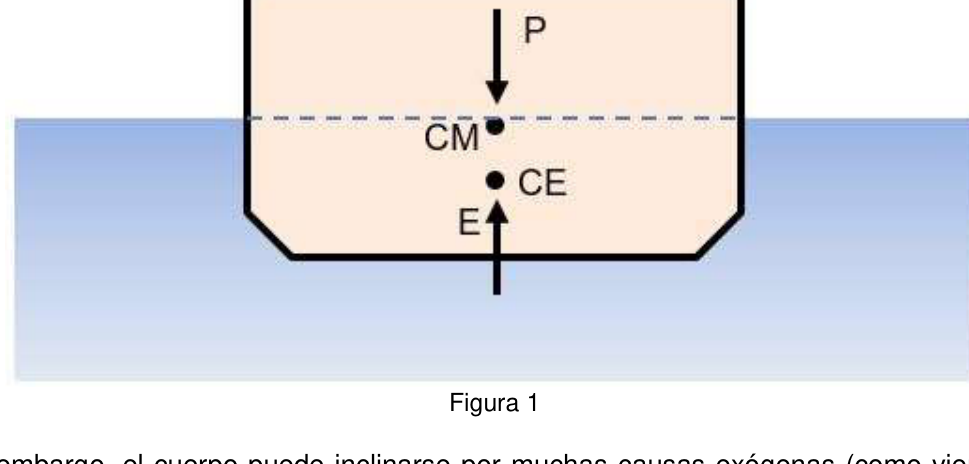
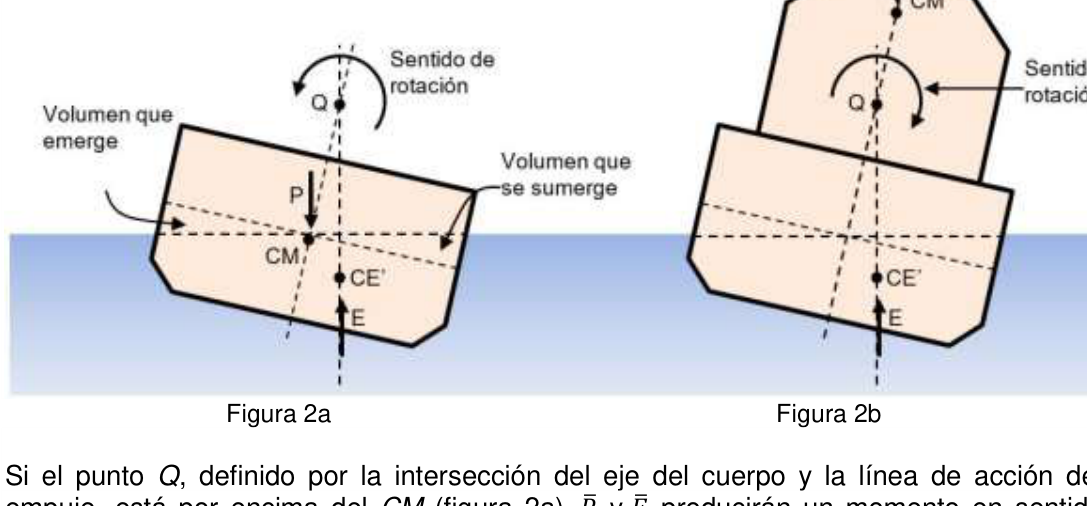
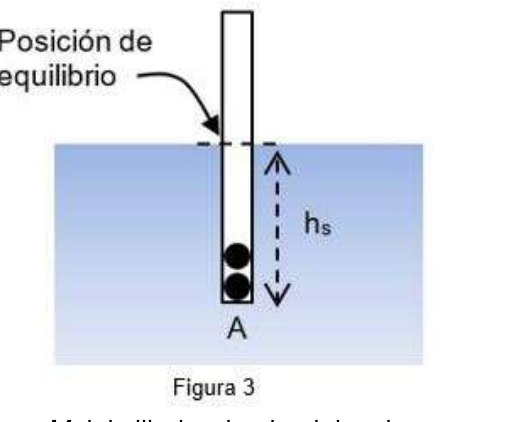
Topic: Fluid Mechanics Metodi: Hydrostatic Equilibrium, Experimental Data Analysis, Graph Linearization, Curve Fitting Competenze: Physical Reasoning, Experimental Data Analysis, Mathematical Modeling Objects: Cylinder, Container Fonte: Testo (PDF) — p.9
Flatabilità di un corpo vuoto (livello 1)
Prova sperimentale - Livello 1
Flutabilità di un corpo vuoto
Introduzione
Quando un corpo viene immerso nel seno di un liquido, se la densità media è inferiore a quella del liquido, floverà. Qualsiasi corpo che galleggia è soggetto a due forze verticali e opposte: una è il peso del corpo che è diretto verso il basso e l’altra è il impulso (peso del liquido sfogato) diretto verso l’alto.
Se si tratta di un corpo rigido, il peso agisce al centro di massa (CM) e la spinta al centro di massa del volume del liquido dislocato, noto come centro di spinta (CE). e sono sempre uguali in modulo e, se colineali, il corpo rimarrà in posizione verticale come mostrato nella figura 1.
(Figura 1)
Tuttavia, il corpo può inclinarsi per molte cause esogeniche (come il vento, l’azione delle onde, ecc.) causando il spostamento del centro di spinta in una nuova posizione CE’ come mostrato in Figura 2a e 2b. Questo provoca che le forze che agiscono sul corpo generino una torsione sul corpo.
(Figura 2a e 2b)
Se il punto Q, definito dall’intersezione dell’asse del corpo e della linea di azione della spinta, è sopra il CM (Figura 2a), e produrranno un momento in senso antiorario che farà ritornare il corpo alla posizione neutra o di equilibrio, in modo che l’equilibrio del corpo sia stabile. Se Q è inferiore a CM (Figura 2b), il corpo diventa instabile a causa del tempo di senso orario generato da e e l’equilibrio del corpo diventa instabile.
Supponiamo di immergere un cilindro vuoto di alluminio di massa M e sezione uniforme A in un liquido. Ciò che si osserva è che il CM tende a girare, indicando che il CM è sotto il punto Q (equilibrio instabile). Per abbassare la posizione del centro di massa bisogna aumentare la massa del cilindro. Questo è ottenuto, ad esempio, aggiungendo masse di peso uniforme m fino a far fluttuare il cilindro a destra come mostrato nella figura 3. In questa condizione, il volume immerso verifica l’equazione:
dove è la massa totale del corpo, è la densità del liquido e A è l’area trasversale. Se n è il numero di masse aggregate, si ottiene che:
In modo tale che:
(Figura 3)
Obiettivi
- Determinare sperimentalmente il valore della massa M del cilindro in alluminio e la massa m di una noce.
Elementi disponibili
- 55 noci di massa m
- 1 contenitore di liquido su base di legno.
- 1 cilindro vuoto di alluminio con scala graduata all’esterno.
- Un cronometro
- Una regola.
Processo
- Monta il dispositivo e determina il numero minimo di noci da inserire nel tubo di alluminio per farli fluttuare verticalmente. Attenzione particolare a non ingerire liquido nel cilindro.
- Da lì, aggiungi con attenzione le noci all’interno del cilindro e una volta raggiunto l’equilibrio misura la profondità di immersione .
Consigne
- Indicare il valore di .
- Fate una tabella con i valori e n.
- Grafico vs n.
- Aggiusta i dati per un’artigliatura e determina il valore dell’inclinazione.
- Determina il valore dell’ordinato alla provenienza di tale rettitudine.
- Determina il valore di M
- Determina il valore di m.
Data:
Topic: Fluid Mechanics Metodi: Hydrostatic Equilibrium, Experimental Data Analysis, Graph Linearization, Curve Fitting Competenze: Physical Reasoning, Experimental Data Analysis, Mathematical Modeling Objects: Cylinder, Container Fonte: Testo (PDF) — p.9
Flotabilidad de un cuerpo hueco (Nivel 1)
Prueba Experimental - Nivel 1
Flotability of hollow body
Introducción
When a body is immersed in the breast of a liquid, if its average density is less than that of the liquid, it will float. Any floating body is subject to two opposing vertical forces: one is the body weight that is directed downward and another is the push (weight of displaced liquid) directed upward.
If it is a rigid body, the weight acts at the centre of mass (CM) and the push at the centre of mass of the volume of the displaced liquid, known as the centre of thrust (CE). and are always the same in the module and, if they are colinear, the body will remain in vertical position as shown in Figure 1.
(Figure 1)
However, the body can tilt for many exogenous causes (such as wind, wave action, etc.) causing the centre of thrust to shift to a new EC position’ as shown in Figures 2a and 2b. This causes forces acting on the body to generate torque on the body.
(Figure 2a and Figure 2b)
If the Q-point, defined by the intersection of the body axis and the thrust action line, is above the CM (Figure 2a), and will produce an anti-clockwise moment that will cause the body to return to the neutral or equilibrium position, thus the body’s equilibrium is stable. If Q is below CM (Figure 2b), the body becomes unstable due to the timing generated by and and the body balance becomes unstable.
Suppose you submerge a hollow cylinder of M-mass and uniform A-section aluminum in a liquid. What is observed is that it tends to turn around, indicating that the CM is below the Q point (unstable equilibrium). To lower the mass center position, the mass of the cylinder must be increased. This is achieved, for example, by adding uniform masses m to the cylinder until it floats straight as shown in Figure 3. In this condition, the submerged volume verifies the equation:
where is the total body mass, is the density of the liquid and A is the cross-sectional area. If n is the number of aggregate masses, it is obtained that:
In such a way that:
The Commission shall adopt implementing acts in accordance with Article 21 of this Regulation.
Objetivos
- To experimentally determine the value of the mass M of the aluminium cylinder and the mass m of a nut.
Elementos disponibles
- 55 nuts of mass m
- 1 container with liquid on a wooden base.
- 1 hollow aluminium cylinder with a graduated scale on its outside.
- One timepiece
- One rule.
Procedimiento
- Mount the device and determine the minimum number of nuts to be inserted into the aluminium tube to float vertically. Take special care not to let fluid into the cylinder.
- From there, add nuts to the inside of the cylinder carefully and once the balance is reached measure the depth of immersion .
Consignas
- Enter the value of .
- Make a table with the values of and n.
- Grafique vs n.
- Adjust the data by a straight line and determine the slope value.
- Determine the value of the order at the origin of that line.
- Determine the value of M
- Determine the value of m.
Dato:
Topic: Fluid Mechanics Metodi: Hydrostatic Equilibrium, Experimental Data Analysis, Graph Linearization, Curve Fitting Competenze: Physical Reasoning, Experimental Data Analysis, Mathematical Modeling Objects: Cylinder, Container Fonte: Testo (PDF) — p.9
Flotabilidad de un cuerpo hueco (Nivel 2)
Prueba Experimental - Nivel 2
Flotabilidad de un cuerpo hueco
Introducción
Cuando a un cuerpo se lo sumerge en el seno de un líquido, si su densidad media es menor a la del líquido, flotará. Cualquier cuerpo que flota está sujeto a dos fuerzas verticales y opuestas: una es el peso del cuerpo que está dirigida hacia abajo y otra es el empuje (peso del líquido desalojado) dirigida hacia arriba.
Si se trata de un cuerpo rígido, el peso actúa en el centro de masa (CM) y el empuje en el centro de masa del volumen del líquido desalojado, conocido como centro de empuje (CE). y son siempre iguales en módulo y, si son colineales, el cuerpo permanecerá en posición vertical como se muestra en la figura 1.
(Figura 1)
Sin embargo, el cuerpo puede inclinarse por muchas causas exógenas (como viento, la acción de las olas, etc.) provocando que el centro de empuje se desplace a una nueva posición CE’ como se muestra en la figura 2a y 2b. Esto provoca que las fuerzas que actúan sobre el cuerpo generen un torque sobre el mismo.
(Figura 2a y Figura 2b)
Si el punto Q, definido por la intersección del eje del cuerpo y la línea de acción del empuje, está por encima del CM (figura 2a), y producirán un momento en sentido antihorario que hará que el cuerpo retorne a la posición neutral o de equilibrio, de este modo el equilibrio del cuerpo es estable. Si Q está por debajo de CM (figura 2b), el cuerpo se vuelve inestable debido al momento de sentido horario generado por y y el equilibrio del cuerpo resulta inestable.
Suponga que sumerge un cilindro hueco de aluminio de masa M y de sección uniforme A, en un líquido. Lo que se observa es que el mismo tiende a darse vuelta, indicando que el CM se encuentra debajo del punto Q (equilibrio inestable). Para bajar la posición del centro de masa hay que aumentar la masa del cilindro. Esto se logra, por ejemplo, agregando masas de peso uniforme m hasta lograr que el cilindro flote derecho como se muestra en la figura 3. En esta condición, el volumen sumergido verifica la ecuación:
(Figura 3)
donde es la masa total del cuerpo, es la densidad del líquido y A es el área transversal.
Si se saca al cuerpo de su posición de equilibrio (elevándolo o hundiéndolo una longitud x respecto a dicha posición) como se muestra en la figura 4 y luego se lo libera, sobre el cuerpo actuará una fuerza neta cuyo módulo es igual a la variación de empuje que ha sufrido y en sentido opuesto al desplazamiento, además de la fuerza de fricción del cuerpo con el líquido. Estas fuerzas darán lugar a un movimiento oscilatorio amortiguado. Sin embargo, despreciando la fricción en las primeras oscilaciones, se cumplirá que:
(Figura 4)
De tal manera que la solución a esta ecuación es con un período de oscilación dado por:
Objetivos
- Determinar experimentalmente el valor de la masa M del cilindro de aluminio y la masa m de una tuerca.
- Determinar experimentalmente el valor de K
Elementos disponibles
- 55 tuercas de masa m
- 1 recipiente con líquido sobre una base de madera.
- 1 cilindro hueco de aluminio con una escala graduada en su exterior.
- 1 cronómetro
- 1 regla.
Procedimiento
- Monte el dispositivo y determine el número mínimo de tuercas que deben introducirse en el tubo de aluminio para que flote verticalmente. Tenga especial cuidado en que no entre líquido en el cilindro.
- A partir de ahí agregue tuercas en el interior del cilindro cuidadosamente y una vez alcanzado el equilibrio mida la profundidad de inmersión .
- Para cada valor de n mida el período de una oscilación. Esta medición es muy difícil. Deberá desarrollar un método y un criterio para hacerlo.
Consignas
- Dé el valor de .
- Haga una tabla con los valores de y n.
- Grafique vs n.
- Ajuste los datos por una recta y determine el valor de la pendiente.
- Determine el valor de la ordenada al origen de dicha recta.
- Determine el valor de M
- Determine el valor de m.
- Haga una tabla con los valores de T y n.
- A partir de la ecuación (3) encuentre una manera de graficar estos datos de tal forma que la relación sea lineal. De una expresión.
- Grafique.
- Ajuste la recta y determine el valor de la pendiente.
- Determine el valor de K y compárelo con el teórico.
Dato:
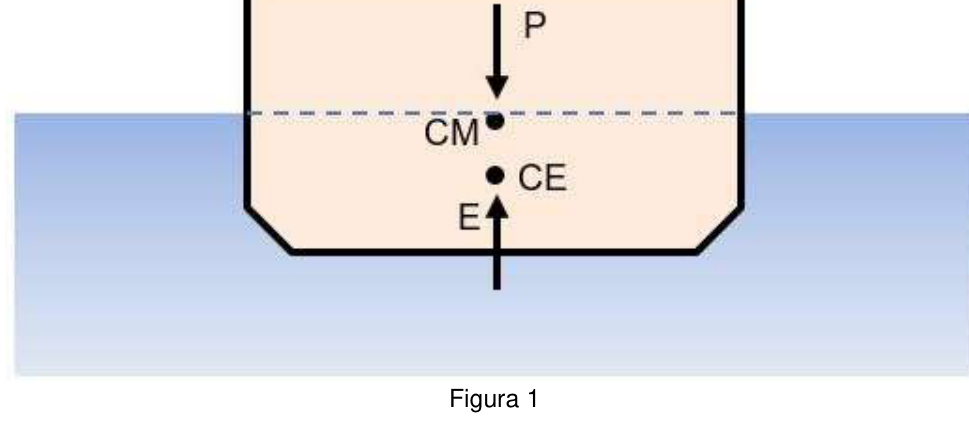
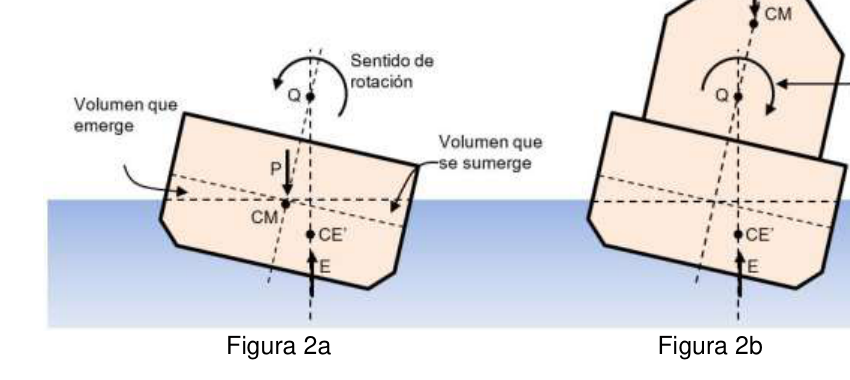
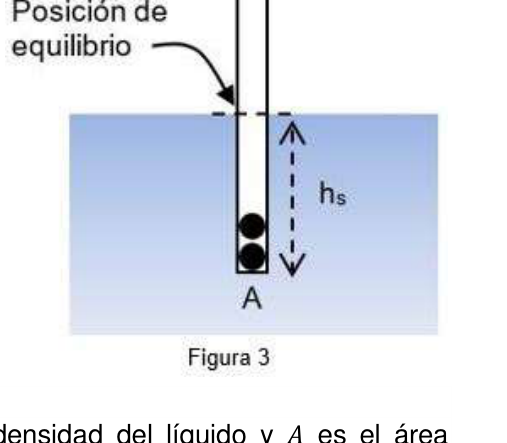
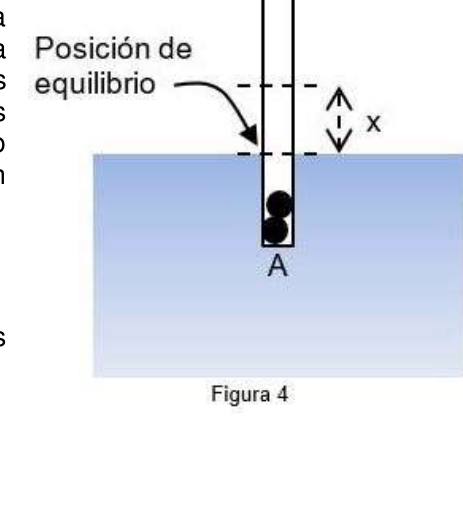
Topic: Fluid Mechanics, Oscillations & Waves Metodi: Hydrostatic Equilibrium, Simple Harmonic Motion Analysis, Experimental Data Analysis, Graph Linearization, Curve Fitting Competenze: Physical Reasoning, Experimental Data Analysis, Mathematical Modeling Objects: Cylinder, Container Fonte: Testo (PDF) — p.18
Flatabilità di un corpo vuoto (livello 2)
Prova sperimentale - Livello 2
Flutabilità di un corpo vuoto
Introduzione
Quando un corpo viene immerso nel seno di un liquido, se la densità media è inferiore a quella del liquido, floverà. Qualsiasi corpo che galleggia è soggetto a due forze verticali e opposte: una è il peso del corpo che è diretto verso il basso e l’altra è il impulso (peso del liquido sfogato) diretto verso l’alto.
Se si tratta di un corpo rigido, il peso agisce al centro di massa (CM) e la spinta al centro di massa del volume del liquido dislocato, noto come centro di spinta (CE). e sono sempre uguali in modulo e, se colineali, il corpo rimarrà in posizione verticale come mostrato nella figura 1.
(Figura 1)
Tuttavia, il corpo può inclinarsi per molte cause esogeniche (come il vento, l’azione delle onde, ecc.) causando il spostamento del centro di spinta in una nuova posizione CE’ come mostrato in Figura 2a e 2b. Questo provoca che le forze che agiscono sul corpo generino una torsione sul corpo.
(Figura 2a e 2b)
Se il punto Q, definito dall’intersezione dell’asse del corpo e della linea di azione della spinta, è sopra il CM (Figura 2a), e produrranno un momento in senso antiorario che farà ritornare il corpo alla posizione neutra o di equilibrio, in modo che l’equilibrio del corpo sia stabile. Se Q è inferiore a CM (Figura 2b), il corpo diventa instabile a causa del tempo di senso orario generato da e e l’equilibrio del corpo diventa instabile.
Supponiamo di immergere un cilindro vuoto di alluminio di massa M e sezione uniforme A in un liquido. Ciò che si osserva è che il CM tende a girare, indicando che il CM è sotto il punto Q (equilibrio instabile). Per abbassare la posizione del centro di massa bisogna aumentare la massa del cilindro. Questo è ottenuto, ad esempio, aggiungendo masse di peso uniforme m fino a far fluttuare il cilindro a destra come mostrato nella figura 3. In questa condizione, il volume immerso verifica l’equazione:
(Figura 3)
dove è la massa totale del corpo, è la densità del liquido e A è l’area trasversale.
Se il corpo viene tolto dalla sua posizione di equilibrio (alzando o immergendolo una lunghezza x rispetto a tale posizione) come mostrato nella figura 4 e poi rilasciato, sul corpo agirà una forza netta il cui modulo è uguale alla variazione di spinta che ha subito e in senso opposto al spostamento, oltre alla forza di attrito del corpo con il liquido. Queste forze danno luogo a un movimento oscillatorio amortizzato. Tuttavia, disprezzando il fratturazione nelle prime oscillazioni, si dovrà rispettare che:
(Figura 4)
In tal modo che la soluzione di questa equazione è con un periodo di oscillazione dato da:
Obiettivi
- Determinare sperimentalmente il valore della massa M del cilindro in alluminio e la massa m di una noce.
- Determinare sperimentalmente il valore di K
Elementi disponibili
- 55 noci di massa m
- 1 contenitore di liquido su base di legno.
- 1 cilindro vuoto di alluminio con scala graduata all’esterno.
- Un cronometro
- Una regola.
Processo
- Monta il dispositivo e determina il numero minimo di noci da inserire nel tubo di alluminio per farli fluttuare verticalmente. Attenzione particolare a non ingerire liquido nel cilindro.
- Da lì, aggiungi con attenzione le noci all’interno del cilindro e una volta raggiunto l’equilibrio misura la profondità di immersione .
- Per ogni valore di n si misura il periodo di oscillazione. Questa misurazione è molto difficile. Dovrà sviluppare un metodo e un criterio per farlo.
Consigne
- Indicare il valore di .
- Fate una tabella con i valori e n.
- Grafico vs n.
- Aggiusta i dati per un’artigliatura e determina il valore dell’inclinazione.
- Determina il valore dell’ordinato alla provenienza di tale rettitudine.
- Determina il valore di M
- Determina il valore di m.
- Fai una tabella con i valori di T e n.
- Sulla base dell’equazione (3) troverete un modo per graficare questi dati in modo tale che il rapporto sia lineare. - D’una espressione.
- Grafica.
- Aggiusta la retta e determina il valore dell’inclinazione.
- Determina il valore di K e confronta con il teorico.
Data:
Topic: Fluid Mechanics, Oscillations & Waves Metodi: Hydrostatic Equilibrium, Simple Harmonic Motion Analysis, Experimental Data Analysis, Graph Linearization, Curve Fitting Competenze: Physical Reasoning, Experimental Data Analysis, Mathematical Modeling Objects: Cylinder, Container Fonte: Testo (PDF) — p.18
Flotabilidad de un cuerpo hueco (Nivel 2)
Prueba Experimental - Nivel 2
Flotability of hollow body
Introducción
When a body is immersed in the breast of a liquid, if its average density is less than that of the liquid, it will float. Any floating body is subject to two opposing vertical forces: one is the body weight that is directed downward and another is the push (weight of displaced liquid) directed upward.
If it is a rigid body, the weight acts at the centre of mass (CM) and the push at the centre of mass of the volume of the displaced liquid, known as the centre of thrust (CE). and are always the same in the module and, if they are colinear, the body will remain in vertical position as shown in Figure 1.
(Figure 1)
However, the body can tilt for many exogenous causes (such as wind, wave action, etc.) causing the centre of thrust to shift to a new EC position’ as shown in Figures 2a and 2b. This causes forces acting on the body to generate torque on the body.
(Figure 2a and Figure 2b)
If the Q-point, defined by the intersection of the body axis and the thrust action line, is above the CM (Figure 2a), and will produce an anti-clockwise moment that will cause the body to return to the neutral or equilibrium position, thus the body’s equilibrium is stable. If Q is below CM (Figure 2b), the body becomes unstable due to the timing generated by and and the body balance becomes unstable.
Suppose you submerge a hollow cylinder of M-mass and uniform A-section aluminum in a liquid. What is observed is that it tends to turn around, indicating that the CM is below the Q point (unstable equilibrium). To lower the mass center position, the mass of the cylinder must be increased. This is achieved, for example, by adding uniform masses m to the cylinder until it floats straight as shown in Figure 3. In this condition, the submerged volume verifies the equation:
The Commission shall adopt implementing acts in accordance with Article 21 of this Regulation.
where is the total body mass, is the density of the liquid and A is the cross-sectional area.
If the body is removed from its equilibrium position (by lifting or sinking it a length x relative to that position) as shown in Figure 4 and then released, a net force whose module is equal to the change in thrust it has suffered and in the opposite direction to the displacement, plus the force of friction of the body with the liquid, will act on the body. These forces will give rise to a cushioned oscillatory motion. However, disregarding the friction in the first oscillations, it shall be complied with that:
The Commission shall adopt implementing acts in accordance with Article 21 of this Regulation.
So the solution to this equation is with a period of oscillation given by:
Objetivos
- To experimentally determine the value of the mass M of the aluminium cylinder and the mass m of a nut.
- To experimentally determine the value of K
Elementos disponibles
- 55 nuts of mass m
- 1 container with liquid on a wooden base.
- 1 hollow aluminium cylinder with a graduated scale on its outside.
- One timepiece
- One rule.
Procedimiento
- Mount the device and determine the minimum number of nuts to be inserted into the aluminium tube to float vertically. Take special care not to let fluid into the cylinder.
- From there, add nuts to the inside of the cylinder carefully and once the balance is reached measure the depth of immersion .
- For each value of n measured the period of an oscillation. This measurement is very difficult. You’ll have to develop a method and a criterion to do that.
Consignas
- Enter the value of .
- Make a table with the values of and n.
- Grafique vs n.
- Adjust the data by a straight line and determine the slope value.
- Determine the value of the order at the origin of that line.
- Determine the value of M
- Determine the value of m.
- Make a table with the values of T and n.
- From equation (3) find a way to chart these data in such a way that the relationship is linear. From an expression.
- I’ll draw it.
- Adjust the straight and determine the value of the slope.
- Determine the value of K and compare it to the theorist.
Dato:
Topic: Fluid Mechanics, Oscillations & Waves Metodi: Hydrostatic Equilibrium, Simple Harmonic Motion Analysis, Experimental Data Analysis, Graph Linearization, Curve Fitting Competenze: Physical Reasoning, Experimental Data Analysis, Mathematical Modeling Objects: Cylinder, Container Fonte: Testo (PDF) — p.18
Primer Prueba Preparatoria: Mecanica - Problema Teorico 1
El piloto de un avión quiere ir en línea recta entre dos ciudades (A y B). Las ciudades distan 100 km una de otra y se encuentran sobre el mismo meridiano. La ciudad desde donde parte el avión (ciudad A) está al norte de la ciudad de destino (ciudad B).
El avión tiene una velocidad, respecto al aire en calma, de 200 km/h. Al momento del despegue, se le informa al piloto que existe un fuerte viento de 50 km/h en dirección este-oeste.
a) Realice un diagrama de la situación planteada. En el mismo indique el sistema de coordenadas a utilizar, la ubicación de las ciudades A y B, la velocidad del viento y la velocidad del avión respecto a tierra.
b) Escriba una expresión para la velocidad del avión respecto de tierra en función de la velocidad del avión respecto del aire y de la velocidad del viento.
c) ¿Cuál es la dirección en que el piloto debe apuntar el avión a fin que pueda realizar el viaje como lo desea?
d) ¿Cuánto tarda en realizar el viaje entre ambas ciudades?
Considere g = 10 m/s
Topic: Newtonian Mechanics Metodi: Vector Decomposition, Kinematic Equations Competenze: Physical Reasoning, Mathematical Modeling Objects: Fonte: Testo (PDF) — p.21
Primo test preparatorio: Meccanica - Problema teorico 1
Il pilota di un aereo vuole andare in linea retta tra due città (A e B). Le città sono distanti 100 km l’una dall’altra e si trovano sul medesimo meridiano. La città da cui parte l’aeroplano (città A) è a nord della città di destinazione (città B).
L’aereo ha una velocità, ** rispetto all’aria calma, ** di 200 km/h. Al momento del decollo, il pilota è informato che c’è un forte vento di 50 km/h in direzione est-ovest.
a) Sviluppa un diagramma della situazione. In esso indica il sistema di coordinate da utilizzare, la posizione delle città A e B, la velocità del vento e la velocità dell’aereo rispetto alla terra.
b) Scrivi un’espressione per la velocità dell’aeromobile rispetto alla terra in funzione della velocità dell’aeromobile rispetto all’aria e della velocità del vento.
c) Qual è la direzione in cui il pilota deve puntare l’aereo per poter effettuare il viaggio come desidera?
d) Quanto tempo ci vuole per fare il viaggio tra le due città?
Considera g = 10 m/s
Topic: Newtonian Mechanics Metodi: Vector Decomposition, Kinematic Equations Competenze: Physical Reasoning, Mathematical Modeling Objects: Fonte: Testo (PDF) — p.21
The first test is Preparatory Test: Mechanics - Theoretical Problem 1
The pilot of an airplane wants to go in a straight line between two cities (A and B). The cities are 100 km apart and are on the same meridian. The city from which the aircraft departs (city A) is north of the destination city (city B).
The aircraft has a speed, ** with respect to calm air, ** of 200 km/h. At take-off, the pilot is informed that there is a strong wind of 50 km/h in east-west direction.
(a) Draw a diagram of the situation. It shall indicate the coordinate system to be used, the location of cities A and B, wind speed and plane speed relative to land.
(b) Write an expression for the speed of the aircraft relative to the ground based on the speed of the aircraft relative to the air and the speed of the wind.
(c) What direction should the pilot aim the aircraft in order to make the flight as he wishes?
(d) How long does it take to travel between the two cities?
Consider g = 10 m/s
Topic: Newtonian Mechanics Metodi: Vector Decomposition, Kinematic Equations Competenze: Physical Reasoning, Mathematical Modeling Objects: Fonte: Testo (PDF) — p.21
Primer Prueba Preparatoria: Mecanica - Problema Teorico 2
Dos resortes idénticos, ambos de constante k = 200 N/m y longitud natural , están fijos en los extremos opuestos de una pista plana como se muestra en la figura.
Se empuja un bloque de 5 kg contra el resorte izquierdo comprimiéndolo 0,15 m. El bloque, inicialmente en reposo, se suelta.
La pista no tiene fricción, excepto en el tramo AB. Si el coeficiente de fricción dinámico es = 0,08 y la longitud AB es 0,25 m, encuentre:
a) la velocidad del bloque en A. b) la velocidad del bloque en B. c) la compresión máxima del resorte de la derecha.
Luego de comprimir el resorte de la derecha, el bloque vuelve a pasar por el tramo AB y rebota en el resorte de la izquierda,
d) ¿Cuánto tiempo tarda en detenerse desde que empieza a transitar el tramo AB por tercera vez? e) Respecto del punto A, ¿dónde se detiene el bloque?
Considere g = 10 m/s
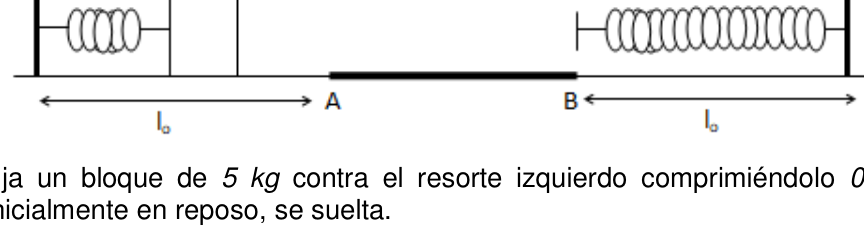
Topic: Conservation of Energy Metodi: Energy Conservation Method, Hooke’s Law, Free-Body Diagram Competenze: Physical Reasoning, Mathematical Modeling Objects: Spring, Block Fonte: Testo (PDF) — p.21
Prima prova preparatoria: Meccanica - Problema teorico 2
Due sorgenti identiche, entrambi di costante k = 200 N/m e lunghezza naturale , sono fissate alle estremità opposte di una pista piana come mostrato nella figura.
Si spinge un blocco di 5 kg contro la molla sinistra compresso 0,15 m. Il blocco, inizialmente a riposo, si solleva.
La pista non ha attrito, tranne che nel tratto AB. Se il coefficiente di attrito dinamico è = 0,08 e la lunghezza AB è 0,25 m, trova:
a) velocità del blocco in A. b) velocità del blocco in B. c) la compressione massima della molla destra.
Dopo aver compresso la molla destra, il blocco passa di nuovo attraverso il tratto AB e rimbalza nella molla sinistra,
d) Quanto tempo ci vuole per fermarsi dopo che il tratto AB è iniziato a transitare per la terza volta? e) Per quanto riguarda il punto A, dove si ferma il blocco?
Considera g = 10 m/s
Topic: Conservation of Energy Metodi: Energy Conservation Method, Hooke’s Law, Free-Body Diagram Competenze: Physical Reasoning, Mathematical Modeling Objects: Spring, Block Fonte: Testo (PDF) — p.21
The following is the list of the main types of technical assistance:
Two identical springs, both constant k = 200 N/m and natural length , are fixed at opposite ends of a flat track as shown in the figure.
A block of 5 kg is pushed against the left spring by compressing it 0.15 m. The block, initially at rest, is released.
The track has no friction except on the AB section. If the dynamic friction coefficient is = 0,08 and the length AB is 0,25 m, find:
(a) the block speed in A. (b) the block speed in B. (c) the maximum compression of the right spring.
After compressing the right spring, the block goes through the AB stretch again and bounces back into the left spring,
(d) How long does it take to stop after the AB section begins to transit for the third time? (e) With regard to point A, where does the block stop?
Consider g = 10 m/s
Topic: Conservation of Energy Metodi: Energy Conservation Method, Hooke’s Law, Free-Body Diagram Competenze: Physical Reasoning, Mathematical Modeling Objects: Spring, Block Fonte: Testo (PDF) — p.21
Primer Prueba Preparatoria: Mecanica - Problema Teorico 3
Un bloque A de 20 kg se conecta a otro bloque B de 30 kg por medio de una cuerda inextensible sin masa. La cuerda pasa por una polea sin fricción como se muestra en la figura.
El bloque B está conectado a un resorte que tiene una masa despreciable, una longitud natural de 20 cm y una constante de fuerza de 250 N/m. El plano sobre el cual está apoyado el bloque A no presenta fricción. Inicialmente el bloque B está en reposo a 40 cm del piso. Cuando el bloque B es liberado, ambos bloques comienzan a oscilar. (El plano inclinado forma un ángulo de 30° con la horizontal.)
a) Haga un diagrama aislado de fuerzas para cada bloque. b) Plantee las ecuaciones de movimiento. c) Calcule la velocidad de los bloques cuando el bloque B se encuentra a 20 cm del piso (es decir, cuando el resorte no está deformado).
Considere g = 10 m/s
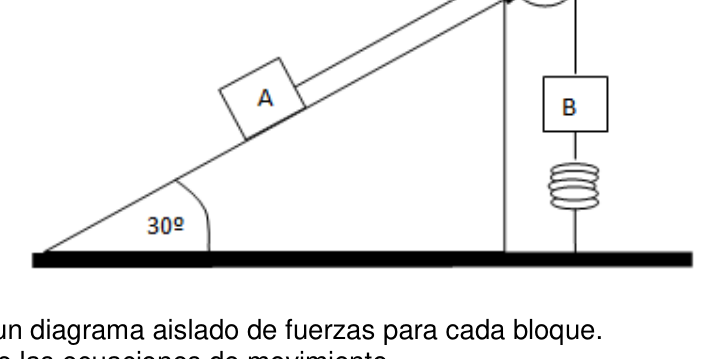
Topic: Newtonian Mechanics, Conservation of Energy Metodi: Free-Body Diagram, Energy Conservation Method, Hooke’s Law Competenze: Physical Reasoning, Mathematical Modeling Objects: Block, Pulley, Spring, String, Inclined Plane Fonte: Testo (PDF) — p.22
Primo test preparatorio: Meccanica - Problema teorico 3
Un blocco A di 20 kg è collegato a un altro blocco B di 30 kg tramite una corda inespandibile senza massa. La corda passa attraverso un pole senza attrito come mostrato nella figura.
Il blocco B è collegato a una sorgente che ha una massa scarsa, una lunghezza naturale di 20 cm e una costante forza di 250 N/m. Il piano su cui è appoggiato il blocco A non presenta attrito. Inizialmente il blocco B è a 40 cm dal pavimento. Quando il blocco B viene rilasciato, entrambi i blocchi iniziano a oscillare. (Il piano inclinato forma un angolo di 30° con l’orizzontale.)
a) Sviluppa un diagramma isolato delle forze per ogni blocco. b) Sullacciate le equazioni di movimento. c) Calcolare la velocità dei blocchi quando il blocco B è a 20 cm dal pavimento (cioè quando la molla non è deformata).
Considera g = 10 m/s
Topic: Newtonian Mechanics, Conservation of Energy Metodi: Free-Body Diagram, Energy Conservation Method, Hooke’s Law Competenze: Physical Reasoning, Mathematical Modeling Objects: Block, Pulley, Spring, String, Inclined Plane Fonte: Testo (PDF) — p.22
The first preparatory test: Mechanics - Theoretical problem 3
A block A of 20 kg is connected to another block B of 30 kg by means of an unextensible, massless rope. The rope passes through a frictionless pulley as shown in the figure.
Block B is connected to a spring which has a despicable mass, a natural length of 20 cm and a force constant of 250 N/m. The plane on which block A is supported shall not be frictional. Initially block B is resting 40 cm from the floor. When block B is released, both blocks begin to oscillate. (The sloping plane forms an angle of 30° with the horizontal.)
(a) Draw an isolated force diagram for each block. (b) Consider the equations of motion. (c) Calculate the block speed when block B is 20 cm from the floor (i.e. when the spring is not deformed).
Consider g = 10 m/s
Topic: Newtonian Mechanics, Conservation of Energy Metodi: Free-Body Diagram, Energy Conservation Method, Hooke’s Law Competenze: Physical Reasoning, Mathematical Modeling Objects: Block, Pulley, Spring, String, Inclined Plane Fonte: Testo (PDF) — p.22
Primer Prueba Preparatoria: Mecanica - Problema Experimental (Radio de giro)
Radio de giro.
La energía cinética de un cuerpo rígido se puede escribir como donde es la velocidad del centro de masa, es la velocidad angular y e son la masa y el momento de inercia respecto del centro de masa del cuerpo, respectivamente.
Considere un cilindro de radio y masa ubicado sobre un plano inclinado (ver la figura). Suponga que inicialmente el cuerpo está en reposo en la posición que se indica en la figura.
Si se libera al cilindro, permitiendo que descienda “rodando sin deslizar” () por el plano inclinado, la conservación de la energía mecánica se puede escribir de la forma: donde es la aceleración de la gravedad, es la altura que se indica en la figura y el tiempo en el que el cilindro recorre la distancia . Luego, se puede escribir, donde es el radio de giro.
Objetivo Determinar el radio de giro de un cuerpo cilíndrico
Materiales
- Cuerpo cilíndrico (lata vacía -de durazno, atún-, pila, etc.).
- Plano inclinado (madera, carpeta rígida, etc.).
- Cronómetro.
- Regla.
- Papel.
Procedimiento
- Determine el perímetro del cuerpo cilíndrico.
- En el plano inclinado, marque una distancia (mayor o igual a ).
- Para la altura (ver figura), mida el tiempo en el cual el cuerpo cilíndrico recorre la distancia . Repita la medición al menos 5 (cinco) veces.
- Repita el punto c) para, al menos, 5 (cinco) valores diferentes de .
Consignas a) A partir de la medición de , determine . b) Reporte las mediciones realizadas en una tabla. c) A partir de las magnitudes medidas y de la ecuación 3, elija dos variables ( e ) de manera tal de obtener una relación lineal entre las mismas. Realice un gráfico de las variables elegidas. d) Haga un ajuste lineal de los puntos graficados, y determine la pendiente y la ordenada al origen. e) A partir de la ecuación 3 y de los valores obtenidos del ajuste, determine el radio de giro del cuerpo cilíndrico.
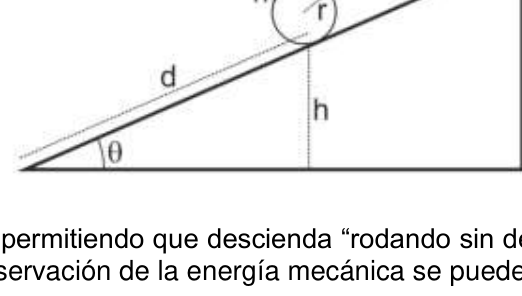
Topic: Rotational Dynamics Metodi: Energy Conservation Method, Graph Linearization, Experimental Data Analysis Competenze: Physical Reasoning, Experimental Data Analysis, Mathematical Modeling Objects: Cylinder, Inclined Plane Fonte: Testo (PDF) — p.22
**Prima prova preparatoria: meccanica - Problema sperimentale (Radio di rotazione) **
Radio di rotazione.
L’energia cinetica di un corpo rigido può essere scritta come dove è la velocità del centro di massa, è la velocità angolare e e sono la massa e il momento di inerzia rispetto al centro di massa del corpo, rispettivamente.
Considerare un cilindro di radio e massa situato su un piano inclinato (vedi figura). Supponiamo che inizialmente il corpo sia a riposo nella posizione indicata nella figura.
Se si libera il cilindro, consentendo di discendere “roto senza scivolare” () per il piano inclinato, la conservazione dell’energia meccanica può essere scritta come segue: dove è l’accelerazione della gravità, è l’altezza indicata nella figura e il tempo in cui il cilindro percorre la distanza . Poi si può scrivere, dove è il raggio di rotazione.
Obiettivo Determinare il raggio di rotazione di un corpo cilindrico
Materiali
- corpo cilindrico (lattina vuota - di durazzo, tonno, pila, ecc.).
- Piano inclinato (legno, cartellone rigido, ecc.).
- Un cronometro.
- Regola.
- Papero.
Processo
- Determina il perimetro del corpo cilindrico.
- Nel piano inclinato, segna una distanza (più o pari a ).
- Per l’altezza (vedi figura), misurare il tempo in cui il corpo cilindrico percorre la distanza . Ripettere la misurazione almeno 5 volte.
- Ripetere il punto c) per almeno 5 (cinque) valori diversi da .
Consigne a) A partire dalla misurazione di , determinare . b) Segnalare le misure effettuate in una tabella. c) Sulla base delle magnitudini misurate e dell’equazione 3, scegliete due variabili ( e ) in modo da ottenere un rapporto lineare tra le stesse. Fate un grafico delle variabili scelte. d) Aggiusta linealmente i punti graficati e determina la pendice e la pendice ordinata all’origine. e) Sulla base dell’equazione 3 e dei valori ottenuti dal regolamento, determinare il radius di rotazione del corpo cilindrico.
Topic: Rotational Dynamics Metodi: Energy Conservation Method, Graph Linearization, Experimental Data Analysis Competenze: Physical Reasoning, Experimental Data Analysis, Mathematical Modeling Objects: Cylinder, Inclined Plane Fonte: Testo (PDF) — p.22
The following is the list of the types of equipment used in the manufacture of the product:
The following shall be added to the list of the following:
The kinetic energy of a rigid body can be written as where is the center of mass velocity, is the angular velocity and and are the mass and moment of inertia relative to the center of mass of the body, respectively.
Consider a radius cylinder and mass located on an inclined plane (see figure). Suppose that the body is initially resting in the position indicated in the figure.
If the cylinder is released, allowing it to descend “rolling without sliding” () down the sloping plane, the conservation of mechanical energy can be written as follows: where is the acceleration of gravity, is the height indicated in the figure and the time the cylinder travels the distance . Then you can write, where is the radius of spin.
The Commission shall adopt delegated acts in accordance with Article 21 of this Regulation. Determine the radius of spin of a cylindrical body
The following table shows the manufacturer’s specifications for the manufacture of the product:
- cylindrical body (empty - of hardwood, tuna, pile, etc.)
- The slope of the plane (wood, rigid folder, etc.).
- It’s a timekeeper.
- It’s a rule.
- Paper. - What?
The following information shall be provided:
- Determine the perimeter of the cylindrical body.
- On the slope, mark a distance (greater than or equal to ).
- For the height (see figure), measure the time in which the cylindrical body travels the distance . Repeat the measurement at least 5 (five) times.
- Repeat point (c) for at least 5 (five) different values of .
The following information is provided by the Commission: (a) After measuring , determine . (b) Report the measurements made in a table. (c) From the measured magnitudes and equation 3, choose two variables ( and ) in such a way as to obtain a linear relationship between them. Make a graph of the variables you choose. (d) Linearly adjust the points graphed and determine the slope and the order of origin. (e) From equation 3 and the values obtained from the adjustment, determine the radius of torque of the cylindrical body.
Topic: Rotational Dynamics Metodi: Energy Conservation Method, Graph Linearization, Experimental Data Analysis Competenze: Physical Reasoning, Experimental Data Analysis, Mathematical Modeling Objects: Cylinder, Inclined Plane Fonte: Testo (PDF) — p.22
Segunda Prueba Preparatoria: Termodinamica, Electricidad y Magnetismo - Problema Teorico 1
Una esfera de hierro de 890 g tiene un diámetro de 6 cm y es 0.05 mm más grande que el diámetro de un agujero que se encuentra en una placa de cobre de 89 g. Ambas masas están a una temperatura de 30 ºC.
Si el sistema esfera-placa se introduce en un recipiente adiabático con 280 g de agua a 60 ºC
a) ¿Cuál es la temperatura final de equilibrio? b) ¿Pasará la esfera a través del agujero cuando el sistema llegue al equilibrio? c) ¿Qué temperatura final de equilibrio se requiere para que la esfera pase por el agujero?
Datos útiles: Coeficiente de dilatación del cobre: = 1.7 10 ºC Coeficiente de dilatación del hiero: = 1.2 10 ºC Calor específico del cobre: = 390 J/(kg K) Calor específico del hierro: = 450 J/(kg K) Calor específico del agua: = 4180 J/(kg K)
Topic: Thermodynamics Metodi: Conservation of Energy, First Law of Thermodynamics Competenze: Physical Reasoning, Mathematical Modeling Objects: Sphere Fonte: Testo (PDF) — p.23
Seconda prova preparatoria: Termodinamica, elettricità e magnetismo - Problema teorico 1
Una sfera di ferro di 890 g ha un diametro di 6 cm ed è 0,05 mm più grande del diametro di un foro che si trova in una scheda di rame di 89 g. Entrambe le masse sono a una temperatura di 30 oC.
Se il sistema sfera-placca viene inserito in un recipiente adiabatico con 280 g di acqua a 60 oC
a) Qual è la temperatura di equilibrio finale? b) La sfera passerà attraverso il buco quando il sistema raggiungerà l’equilibrio? c) Quale temperatura di equilibrio finale è richiesta per far passare la sfera attraverso il buco?
Dati utili: Coefficiente di dilatazione del rame: = 1,7 10 oC Coefficiente di dilatazione del ferro: = 1,2 10 oC Calore specifico del rame: = 390 J/(kg K) Calore specifico del ferro: = 450 J/(kg K) Calore specifico dell’acqua: = 4180 J/(kg K)
Topic: Thermodynamics Metodi: Conservation of Energy, First Law of Thermodynamics Competenze: Physical Reasoning, Mathematical Modeling Objects: Sphere Fonte: Testo (PDF) — p.23
Segunda Prueba Preparatoria: Termodinamica, Electricidad y Magnetismo - Problema Teorico 1
An 890 g iron sphere has a diameter of 6 cm and is 0.05 mm larger than the diameter of a hole found in an 89 g copper plate. Both masses are at a temperature of 30 oC.
If the sphere-plate system is introduced into an adiabatic container with 280 g of water at 60 oC
(a) What is the final equilibrium temperature? (b) Will the sphere pass through the hole when the system reaches equilibrium? (c) What is the final equilibrium temperature required for the sphere to pass through the hole?
Useful data: The copper dilation coefficient: = 1.7 10 oC Coeficiente de dilatación del hiero: = 1.2 10 ºC The specific heat of copper: = 390 J/(kg K) The specific heat of the iron: = 450 J/(kg K) The water temperature is specified as: = 4180 J/(kg K)
Topic: Thermodynamics Metodi: Conservation of Energy, First Law of Thermodynamics Competenze: Physical Reasoning, Mathematical Modeling Objects: Sphere Fonte: Testo (PDF) — p.23
Segunda Prueba Preparatoria: Termodinamica, Electricidad y Magnetismo - Problema Teorico 2
Considere el circuito de la figura y encuentre:
a) La corriente que entrega la fuente. b) La diferencia de potencial entre los puntos a y b. c) La corriente que circula por la resistencia de 20
(El circuito contiene una fuente de 25 V, resistencias de 10 , 10 , 5 , 5 y 20 , con los nodos a y b indicados en la figura.)
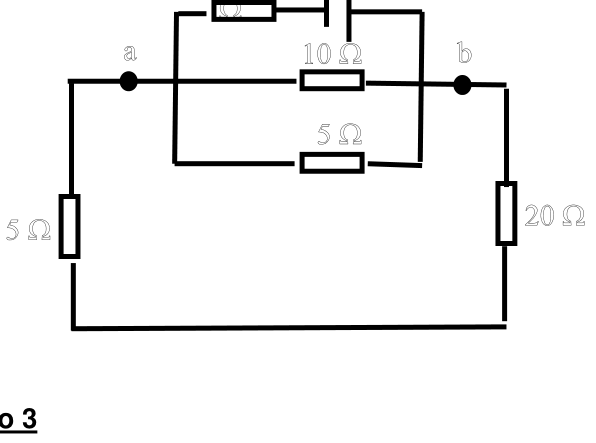
Topic: Circuits Metodi: Kirchhoff’s Laws, Equivalent Circuit Reduction Competenze: Physical Reasoning, Mathematical Modeling Objects: Resistor, Battery Fonte: Testo (PDF) — p.24
Seconda prova preparatoria: Termodinamica, elettricità e magnetismo - Problema teorico 2
Considerate il circuito della figura e trovate:
a) Il corrente che fornisce la fonte. b) La differenza di potenziale tra i punti a e b. c) Corrente che circola per resistenza di 20
(Il circuito contiene una fonte di 25 V, resistenze di 10 , 10 , 5 , 5 e 20 , con i nodi a e b indicati nella figura.)
Topic: Circuits Metodi: Kirchhoff’s Laws, Equivalent Circuit Reduction Competenze: Physical Reasoning, Mathematical Modeling Objects: Resistor, Battery Fonte: Testo (PDF) — p.24
The second preparatory test: Thermodynamics, Electricity and Magnetism - Theoretical Problem 2
Consider the circuit of the figure and find:
(a) The current delivered by the source. (b) The potential difference between points (a) and (b). (c) Current circulating at the resistance of 20
(The circuit contains a 25 V source, resistance of 10 , 10 , 5 , 5 and 20 , with nodes a and b shown in Figure.)
Topic: Circuits Metodi: Kirchhoff’s Laws, Equivalent Circuit Reduction Competenze: Physical Reasoning, Mathematical Modeling Objects: Resistor, Battery Fonte: Testo (PDF) — p.24
Segunda Prueba Preparatoria: Termodinamica, Electricidad y Magnetismo - Problema Teorico 3
Considere el sistema de la figura que consiste de una cámara dividida en dos partes por medio de un pistón de masa despreciable. La cámara de la derecha contiene 5 moles de un gas ideal monoatómico a 348 ºC. La longitud de la cámara es L = 1 m y su sección transversal es A = 0,25 m. La cámara de la izquierda se encuentra abierta y posee un resorte (sujeto únicamente a la pared) de longitud natural = 0.5 m y constante k = 10000 kg/s. No existe fricción entre el pistón y la cámara.
a) Encuentre la posición de equilibrio inicial del pistón.
Si ahora el extremo derecho de la cámara se pone en contacto con una fuente a temperatura
b) ¿Cuál tiene que ser esta temperatura, para que en el estado de equilibrio el resorte tenga su longitud natural?
Posteriormente un agente externo comprime aún más el gas cuasiestáticamente hasta alcanzar una presión igual a la presión de equilibrio del inciso a) (Pa), siguiendo la recta:
c) Calcule la variación de energía interna del gas en este proceso.
Finalmente se expande cuasiestáticamente el gas desde la posición de equilibrio del inciso b) hasta el volumen de equilibrio del inciso a) (Va) a presión constante.
d) Determine el calor intercambiado en este último proceso, indicando explícitamente si es absorbido o entregado.
e) Grafique el ciclo descripto en los pasos b-d.
Datos útiles: Presión atmosférica = 1,013 10 Pa Constante de los gases R = 8,31 J/(mol K)
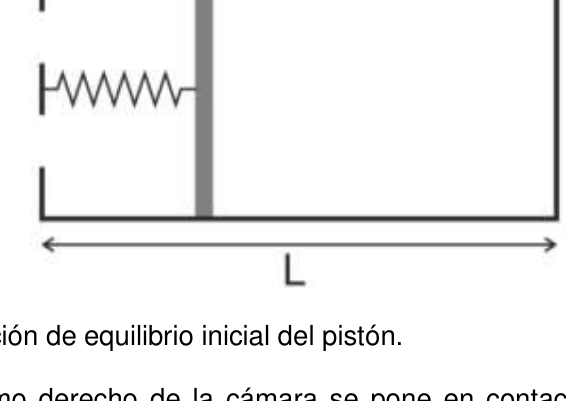
Topic: Thermodynamics Metodi: Ideal Gas Law, First Law of Thermodynamics, Thermodynamic Cycle Analysis Competenze: Physical Reasoning, Mathematical Modeling Objects: Piston, Gas, Spring Fonte: Testo (PDF) — p.24
Seconda prova preparatoria: termodinamica, elettricità e magnetismo - Problema teorico 3
Considerate il sistema della figura che consiste in una camera divisa in due parti con un pistone di massa scarsa. La camera sulla destra contiene 5 mol di un gas monoatomo ideale a 348 oC. La lunghezza della camera è L = 1 m e la sua sezione trasversale è A = 0,25 m. La camera sinistra è aperta e dispone di una risorsa (sopposta solo al muro) di lunghezza naturale = 0,5 m e costante k = 10000 kg/s. Non c’è friczione tra il pistone e la camera.
a) Trova la posizione di equilibrio iniziale del pistone.
Se ora l’estremità destra della camera viene messa in contatto con una fonte a temperatura
b) Qual è la temperatura necessaria per consentire alla primavera di avere la sua lunghezza naturale nello stato di equilibrio?
Successivamente un agente esterno si aprisce ulteriormente il gas quasi staticamente fino a raggiungere una pressione pari alla pressione di equilibrio di cui al punto (a) (Pa), seguendo la linea retta:
c) Calcolare la variazione dell’energia interna del gas in questo processo.
Infine, il gas si espandono quasi staticamente dalla posizione di equilibrio di punto b) al volume di equilibrio di punto a) (Va) a pressione costante.
d) Determina il calore scambiato in quest’ultimo processo, indicando esplicitamente se viene assorbito o consegnato.
e) Grafici il ciclo descritto nei passaggi b-d.
Dati utili: Pressione atmosferica = 1,013 10 Pa Costante dei gas R = 8,31 J/(mol K)
Topic: Thermodynamics Metodi: Ideal Gas Law, First Law of Thermodynamics, Thermodynamic Cycle Analysis Competenze: Physical Reasoning, Mathematical Modeling Objects: Piston, Gas, Spring Fonte: Testo (PDF) — p.24
Second Preparatory Test: Thermodynamics, Electricity and Magnetism - Theoretical Problem 3
Consider the system in the figure, which consists of a chamber divided into two parts by means of a scornful mass piston. The chamber on the right contains 5 moles of a monoatomic ideal gas at 348 oC. The length of the chamber is L = 1 m and its cross section is A = 0,25 m. The chamber on the left is open and has a spring (subject only to the wall) of natural length = 0.5 m and constant k = 10000 kg/s. There is no friction between the piston and the camera.
(a) Find the starting equilibrium position of the piston.
If the right end of the chamber is now in contact with a source at
(b) What is the temperature required for the spring to have its natural length in equilibrium?
Afterwards, an external agent further compresses the gas quasi-statically until it reaches a pressure equal to the equilibrium pressure of paragraph (a) (Pa), following the line:
(c) Calculate the variation in the internal energy of the gas in this process.
Finally, the gas is almost statically expanded from the equilibrium position of subparagraph (b) to the equilibrium volume of subparagraph (a) (Va) at constant pressure.
(d) Determine the heat exchanged in the latter process, explicitly indicating whether it is absorbed or delivered.
(e) Draw the cycle described in steps (b) to (d).
Useful data: Atmospheric pressure = 1,013 10 Pa The gas constant R = 8,31 J/(mol K)
Topic: Thermodynamics Metodi: Ideal Gas Law, First Law of Thermodynamics, Thermodynamic Cycle Analysis Competenze: Physical Reasoning, Mathematical Modeling Objects: Piston, Gas, Spring Fonte: Testo (PDF) — p.24
Segunda Prueba Preparatoria: Termodinamica, Electricidad y Magnetismo - Problema Experimental (Determinacion de la densidad del aire)
Determinación de la densidad del aire
Cuando un cuerpo cae en un fluido, el mismo sufre una fuerza de fricción que se opone al movimiento y que depende de la velocidad del cuerpo. Si el cuerpo cae por acción de la gravedad, esta fuerza puede igualar al peso del cuerpo, y éste alcanza una velocidad constante (hemos despreciado a la fuerza debido al empuje) denominada velocidad terminal. Esta situación se puede describir mediante la siguiente ecuación: donde es la densidad del aire, y son el área que el cuerpo le ofrece al fluido (sección máxima del cuerpo transversal al movimiento) y su masa, respectivamente, el coeficiente de arrastre, es la velocidad terminal y la aceleración de la gravedad.
Objetivo: Determinar la densidad del aire ()
Elementos:
- Hojas de papel A4 de gramaje conocido.
- Cronómetro
- Regla
- Transportador
- Compás
- Cinta adhesiva
- Tijera
- Cinta métrica (uso común)
Procedimiento Armado de los conos de papel: En una hoja de papel de gramaje conocido, dibuje un círculo de radio . Sobre este círculo, dibuje un ángulo como se muestra en el panel izquierdo de la figura.
Corte el dibujo realizado y pegue con cinta adhesiva los segmentos OA con OB para formar un cono como el mostrado en el panel derecho de la figura. Ponga atención al unir los extremos para que no queden espacios abiertos.
Arme dos conos para cada uno de los siguientes ángulos, y .
Mediciones: Coloque los conos de igual uno dentro del otro, ubicándolos de manera tal que las uniones estén contrapuestas. Deje caer los conos desde la altura máxima que alcance su brazo y mida el tiempo que tardan los conos en caer desde la altura de sus ojos hasta el piso. Trate de dejar caer el cono siempre de la misma altura y mantenga la cabeza lo más derecha posible. Repita esta medición al menos 10 veces para cada par de conos. Determine la altura de sus ojos utilizando la cinta métrica de uso común.
Análisis teórico La masa de cada cono puede determinarse a partir del gramaje de las hojas (, densidad superficial) y del área que se usó para formar el cono (), donde es el ángulo expresado en radianes.
El área que el cuerpo le ofrece al fluido (aire) es Como se puede ver en las figuras, se cumple: Luego, De la ecuación (1), podemos escribir Para las condiciones de medición donde y Reescribiendo, A partir de las mediciones realizadas, confeccione un gráfico de en función de y ajuste los puntos graficados con una recta. Determine la pendiente y la ordenada de la recta de ajuste. A partir de los resultados anteriores y utilizando la ecuación (2), determine la densidad del aire .
Considere .
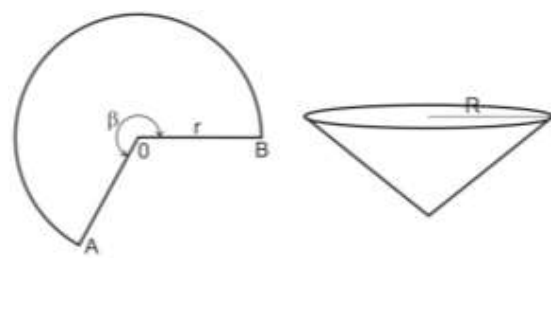
Topic: Fluid Mechanics Metodi: Experimental Data Analysis, Graph Linearization, Dimensional Analysis Competenze: Physical Reasoning, Experimental Data Analysis, Mathematical Modeling Objects: Fonte: Testo (PDF) — p.25
**Seconda prova preparatoria: termodinamica, elettricità e magnetismo - Problema sperimentale (determinazione della densità dell’aria) **
Determinare la densità dell’aria
Quando un corpo cade in un fluido, subisce una forza di attrito che si oppone al movimento e che dipende dalla velocità del corpo. Se il corpo cade per azione della gravità, questa forza può eguagliare il peso del corpo, e questo raggiunge una velocità costante (abbiamo disprezzato la forza a causa del push) denominata * velocità terminale*. Questa situazione può essere descritta con la seguente equazione: dove è la densità dell’aria, e sono l’area che il corpo offre al fluido (sezione massima del corpo trasversale al movimento) e la sua massa, rispettivamente, il coefficiente di trascinamento, è la velocità terminale e l’accelerazione della gravità.
Obiettivo: Determinare la densità dell’aria ()
**Elementi: **
- Foli di carta A4 di grammatica nota.
- Cronometro
- Regola
- Trasportatore
- Compassione
- Cintura adesiva
- Sceglierina
- Cintura metrica (uso comune)
Processo Armo di coni di carta: Su un foglio di carta di grammaggio conosciuto, disegna un cerchio radio . Su questo cerchio, disegna un angolo come mostrato nel pannello a sinistra della figura.
Taglia il disegno realizzato e incolla con nastro adesivo i segmenti OA con OB per formare un cono come quello mostrato nel pannello destro della figura. Attenzione a mettere insieme le estremità per non lasciare spazi aperti.
Armi due coni per ciascuno degli angoli seguenti, e .
Messi: Mettere i coni di uguale all’interno dell’altro, posizionandoli in modo tale che le unioni siano opposte. Deje caer los conos desde la altura máxima que alcance su brazo y mida el tiempo que tardan los conos en caer desde la altura de sus ojos hasta el piso. Cerca di abbassare il cono sempre alla stessa altezza e tenere la testa il più dritta possibile. Ripeti questa misurazione almeno 10 volte per ogni coppia di coni. Determina l’altezza dei tuoi occhi usando la cinta metrica di uso comune.
Analisi teorica La massa di ogni cono può essere determinata a partire dal grasso delle foglie (, densità superficiale) e dall’area che è stata utilizzata per formare il cono (), dove è l’angolo espresso in radiani.
L’area che il corpo offre al fluido (aria) è Come si vede nelle figure, si realizza: Poi, Dall’equazione (1), possiamo scrivere Per le condizioni di misura dove e Ritornando, A partire dalle misurazioni effettuate, si deve creare un grafico di in funzione di e regolare i punti graficati con una retta. Determina la pendenza e l’ordine della retta di regolazione. Sulla base dei risultati precedenti e utilizzando l’equazione (2), determinare la densità dell’aria .
Considera .
Topic: Fluid Mechanics Metodi: Experimental Data Analysis, Graph Linearization, Dimensional Analysis Competenze: Physical Reasoning, Experimental Data Analysis, Mathematical Modeling Objects: Fonte: Testo (PDF) — p.25
Segunda Prueba Preparatoria: Termodinamica, Electricidad y Magnetismo - Problema Experimental (Determinacion de la densidad del aire)
Determinación de la densidad del aire
When a body falls into a fluid, it suffers a friction force that opposes motion and depends on the speed of the body. If the body falls by gravity, this force can equal the weight of the body, and it reaches a constant velocity (we have disregarded the force due to the thrust) called terminal velocity. This situation can be described by the following equation: where is the density of air, and are the area the body provides to the fluid (maximum cross-sectional body to movement) and its mass, respectively, the drag coefficient, is the terminal velocity and the acceleration of gravity.
Objetivo: Determinar la densidad del aire ()
Elementos:
- A4 sheets of known grammatical paper.
- The time-meter
- The rule .
- The transporter .
- You ‘re sorry .
- Tape and tape
- Shearer
- Metric tape (commonly used)
Procedimiento *Arm of paper cones: * On a known sheet of grass paper, draw a radius circle . Above this circle, draw an angle as shown in the left panel of the figure.
Cut the drawing and paste the OA segments with OB with adhesive tape to form a cone like the one shown in the right panel of the figure. Pay attention to joining the ends so that no open spaces remain.
Arme dos conos para cada uno de los siguientes ángulos, y .
Mediciones: Place the cones of equal within each other, placing them in such a way that the joints are opposite. Deje caer los conos desde la altura máxima que alcance su brazo y mida el tiempo que tardan los conos en caer desde la altura de sus ojos hasta el piso. Try to drop the cone at the same height and keep your head as straight as possible. Repeat this measurement at least 10 times for each pair of cones. Determine the height of your eyes using the standard measuring tape.
Análisis teórico The mass of each cone can be determined from the grass of the leaves (, surface density) and the area used to form the cone (), where is the angle expressed in radians.
The area the body provides to the fluid (air) is As you can see in the figures, it is fulfilled: Then, From the equation (1), we can write For measuring conditions where and Rewriting, From the measurements made, make a graph of in relation to and adjust the graphed points with a straight. Determine the slope and order of the adjustment straight. From the above results and using equation (2), determine the air density .
Consider .
Topic: Fluid Mechanics Metodi: Experimental Data Analysis, Graph Linearization, Dimensional Analysis Competenze: Physical Reasoning, Experimental Data Analysis, Mathematical Modeling Objects: Fonte: Testo (PDF) — p.25