Alcune Costanti Fisiche
AIF – Olimpiadi di Fisica 2015 Gara Nazionale – Prova Teorica – 10 Aprile 2015 Alcune Costanti Fisiche Valori arrotondati, con errore relativo minore di , da considerare esatti COSTANTE SIMBOLO VALORE UNITÀ Velocità della luce nel vuoto Carica elementare C Massa dell’elettrone kg Costante dielettrica del vuoto Permeabilità magnetica del vuoto Massa del protone kg Costante di Planck J s Costante universale dei gas Costante di Avogadro Costante di Boltzmann Costante di Faraday Costante di Stefan–Boltzmann Costante gravitazionale Pressione atmosferica standard Pa Temperatura standard () K Volume molare di un gas perfetto in condizioni standard () Unità di massa atomica kg Altri dati che possono essere necessari Valori arrotondati, con errore relativo minore di , da considerare esatti. Per semplicità – salvo che non sia detto esplicitamente – questi dati, quando riferiti ad una specifica temperatura, si potranno utilizzare anche ad altre temperature senza errori importanti. Accelerazione media di gravità Densità dell’acqua (a ) Calore specifico dell’acqua (a ) Calore di fusione dell’acqua Calore di vaporizzazione dell’acqua (a )
AIF – Olimpiadi di Fisica 2015 Gara Nazionale – Prova Teorica – 10 Aprile 2015 LEGGI CON CALMA E MOLTA ATTENZIONE! È assolutamente necessario ricordarsi di NON scrivere il proprio nome su nessun foglio (ad esclusione del cartoncino che va chiuso nella busta piccola, come detto in copertina). Si dovrà invece SCRIVERE solo il proprio Codice Studente (riportato sulla busta piccola colorata) su ciascun Foglio Riassuntivo e su ogni foglio a quadretti utilizzato. Insieme ai testi, per ogni problema ti è stato consegnato un Foglio Riassuntivo sul quale dovrai riportare in modo sintetico le risposte ad ogni domanda; i valori numerici devono essere scritti con il corretto numero di cifre, in relazione ai dati forniti e – se necessario – con indicazione dell’unità di misura. È ESSENZIALE che tutti i risultati (formali e numerici) che hai trovato per ciascun problema siano riportati sul corrispondente Foglio Riassuntivo, poiché questo costituisce la base della valutazione della tua prova. Ricordati di usare un foglio a quadretti diverso per ogni problema e di scrivere per prima cosa, in alto a destra, il tuo Codice Studente! Sui fogli a quadretti devono essere riportate le soluzioni dettagliate, cercando di limitare il testo scritto e di privilegiare invece equazioni, simboli, numeri e diagrammi. Su ogni facciata dei fogli a quadretti con la soluzione di un problema va sempre scritto, in alto a destra, il numero del problema, il numero di pagina e il numero totale di pagine utilizzate per quel problema, come descritto in copertina. NOTA importante sui DATI NUMERICI: I dati numerici forniti nei singoli problemi, qualunque sia il numero di cifre con cui vengono scritti, si devono considerare noti con un’incertezza dello 0.1 %, salvo esplicita indicazione contraria. Le costanti fornite nella tabella generale si possono invece considerare note con incertezza trascurabile. Di conseguenza si scrivano i risultati numerici, quando richiesti, con un numero di cifre appropriato all’incertezza del risultato stesso.
AIF – Olimpiadi di Fisica 2015 Gara Nazionale – Prova Teorica – 10 Aprile 2015
Miraggio parabolico — Punti 100
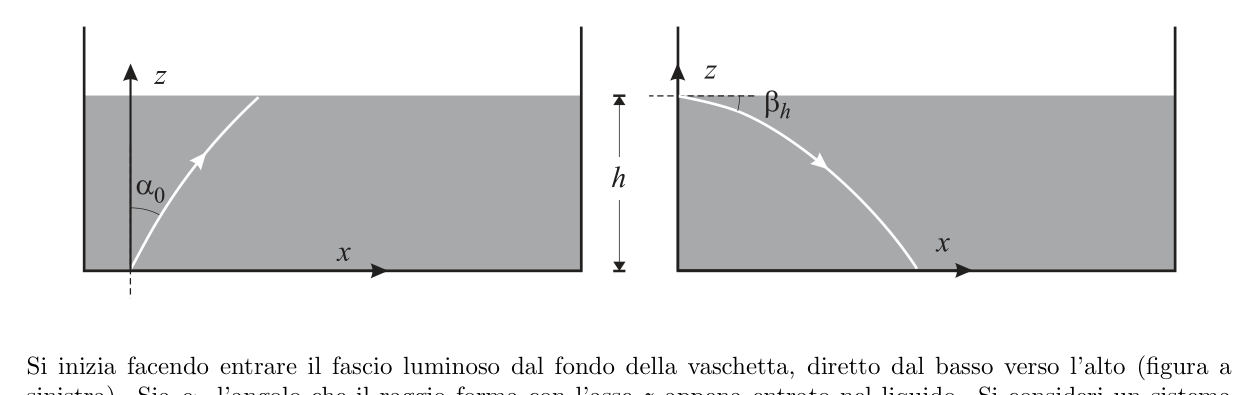
Quando al di sopra di un piano orizzontale la temperatura varia con la quota, restando uniforme ad una stessa altezza dal suolo, anche l’indice di rifrazione dell’aria varia e ciò fa sì che i raggi luminosi siano deviati da un percorso rettilineo, dando luogo al ben noto fenomeno del miraggio. Sarà studiato qui un fenomeno analogo. Si consideri un fascio di luce laser che entra in una vaschetta con le pareti piane e trasparenti. Nella vaschetta c’è una soluzione di acqua e zucchero in cui la concentrazione diminuisce progressivamente con l’altezza : raggiunge il valore di saturazione sul fondo del recipiente ed è praticamente nulla al livello più alto. L’indice di rifrazione dipende dalla concentrazione e quindi varia anch’esso con la quota, ma la funzione non è nota, non essendo nota la variazione della concentrazione al variare di : si sa solo che sul fondo il valore di è quello di una soluzione satura di acqua e zucchero () mentre al livello più alto, dove c’è la superficie orizzontale del liquido, . Al di sopra c’è aria, il cui indice di rifrazione può essere approssimato con . Lo scopo di questo problema è quello di capire, adottando alcune ipotesi semplificative, il comportamento del fascio di luce. Si inizia facendo entrare il fascio luminoso dal fondo della vaschetta, diretto dal basso verso l’alto (figura a sinistra). Sia l’angolo che il raggio forma con l’asse appena entrato nel liquido. Si consideri un sistema cartesiano nel piano verticale individuato dal raggio e dall’asse , e si ponga l’origine nel punto d’ingresso (vedi figura a sinistra). A partire da questo punto il fascio luminoso devia seguendo una traiettoria non rettilinea.
- Si trovi la deviazione angolare subita dal fascio nel liquido, dal fondo fino alla superficie superiore di separazione con l’aria, assumendo .
- Si trovi qual è il valore minimo che deve avere l’angolo d’ingresso se si vuole che il fascio non emerga in aria alla superficie superiore ma subisca una riflessione totale.
Come si è visto, la traiettoria del fascio di luce nella soluzione non è rettilinea, tuttavia la deviazione dalla retta è piccola: per semplicità verrà approssimata con una parabola con asse verticale nel piano , i cui parametri dipendono ovviamente dall’angolo di incidenza.
- Si calcolino i parametri della parabola per una incidenza all’angolo limite calcolato al punto 2 supponendo che l’altezza del liquido nella vaschetta sia . Si trovi inoltre la distanza, misurata sul fondo della vaschetta, dal punto di incidenza al punto in cui il raggio riflesso dalla superficie dell’acqua ritorna sul fondo della vaschetta (si supponga che la vaschetta sia sufficientemente lunga).
- Si ricavi, dall’equazione della parabola derivata al punto 3, l’espressione dell’indice di rifrazione in funzione di e lo si calcoli per , , e si tracci un grafico approssimativo di .
Negli esempi considerati finora la deviazione dalla traiettoria rettilinea è molto piccola. In altre condizioni però può diventare molto consistente, e il percorso del raggio può ricordare quello di un getto d’acqua sparato orizzontalmente.
Si supponga che il fascio entri nella vaschetta da una parete laterale, in un punto immediatamente sotto la superficie, quindi in e (vedi figura a destra). Supponiamo che l’angolo di ingresso nel liquido sia rispetto all’asse , verso il basso, e che il raggio arrivi sul fondo prima di colpire la parete verticale opposta.
- Si calcoli l’angolo che il raggio forma con l’asse sul fondo e la deviazione angolare subita all’interno del liquido.
- Supponendo che la traiettoria del raggio si possa approssimare con una parabola anche in questo caso di grande deviazione angolare, se ne calcolino i coefficienti. Si calcoli in quale punto il raggio arriva sul fondo.
p.3 — Raggio luminoso curvo nel liquido, due pannelli
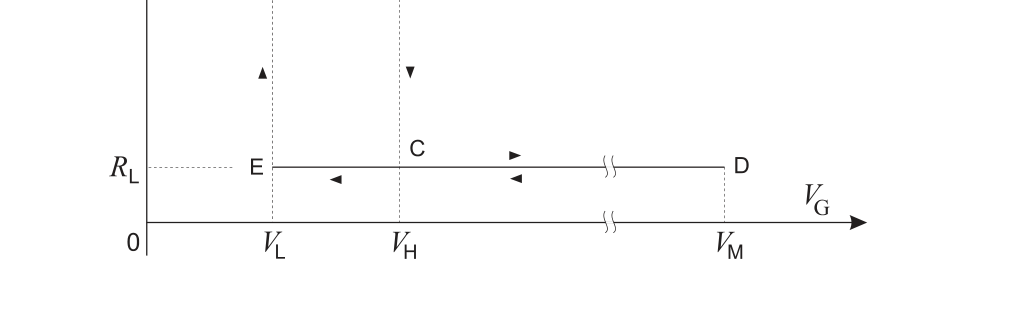
p.4 — Ciclo di isteresi resistenza-tensione della lampada
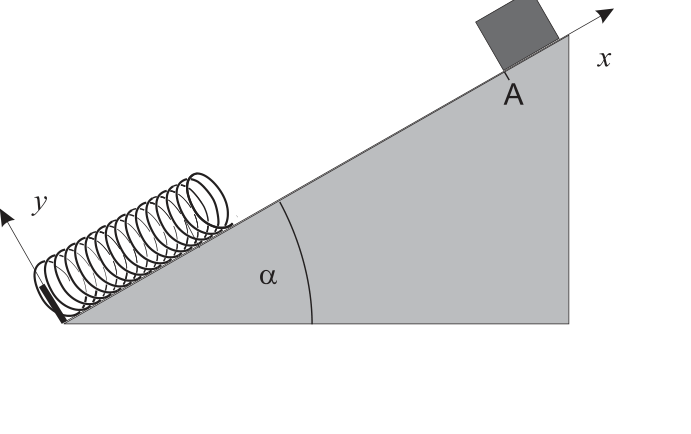
p.6 — Piano inclinato con molla e blocco
Topic: Geometric Optics, Wave Optics, Oscillations & Waves Metodi: Snell’s Law, Ray Tracing, Small-Angle Approximation, Approximation & Series Expansion Competenze: Mathematical Modeling, Physical Reasoning, Graph Linearization Objects: Container Fonte: Testo (PDF) — p.1 Soluzione: Soluzioni (PDF)
Some physical constants
AIF Physics Olympics 2015 National competition Theoretical Test 10 April 2015 Some Physical Constants Rounded values with a relative error of to be considered accurate The following is a list of the The symbol The value Unity Speed of light in vacuum Basic load C Mass of the electron kg The value of the product shall be the value of the product. The magnetic permeability of the vacuum Mass of proton kg Planck constant J s Universal gas constant The Avogadro constant is the The Boltzmann constant is the constant The Faraday constant The following is the list of the values of the values of the values of the values of the values of the values of the values of the values of the values of the values of the values of the values of the values of the values of the values of the values of the values of the values of the values of the values of the values of the values of the values of the values of the values of the values of the values of the values of the values of the values of the values of the values of the values of the values of the values of the values of the values of the values of the values of the values of the values of the values of the values of the values of the values of the values of the values of the values of the values of the values of the values of the values of the values of the values of the values of the values of the values of the values of the values of the values of the values of the values of the values of the values of the values of the values of the values of the values of the values of the values of the values of the values of the values of the values of the values of the values of the values of the values of the values of the values of the values of the values of the values of the values of the values of the values of the values of the values of the values of the values of the values of the values of the values of the values of the values of the values of the values of the values of the values of the values of the values of the values of the values of the values of the values of the values of the values of the values of the values of the values of the values of the values of the values of the values of the values of the values of the values of the values of the values of the values of the values of the values of the values of the values of the values of the values of the first Gravitational constant Standard atmospheric pressure Pa Standard temperature () K Molar volume of a perfect gas in standard conditions () Unit of atomic mass kg Other data that may be necessary Rounded values with a relative error of to be considered accurate. For simplicity unless explicitly stated these data, when referring to a specific temperature, The use of these devices can be done at other temperatures without significant errors. Average acceleration by gravity Density of water (a ) Specific heat of water (a ) Heat of water melting Heat of evaporation of water (at )
AIF Physics Olympics 2015 National competition Theoretical Test 10 April 2015 Read with Calmness and Attention! It is absolutely necessary to remember NOT to write your name on any paper (except for the cardboard box which must be closed in the small envelope, as stated on the cover). Instead, you will only have to write your Student Code (reported on the small envelope). The text of the summary paper is coloured on each of the two sheets used. In addition to the texts, you were given a Summary Sheet on each issue. The number of questions to be answered and the number of values to be used the number of digits must be written in the correct order, in relation to the data provided and if with the unit of measurement indicated. It is essential that all the results (formal and numerical) you have found for each The Commission has not yet published a report on the problem in the relevant Summary Sheet, as it is the basis for evaluating your evidence. Remember to use a different square sheet for each problem and write first. What, up on the right, your Student Code! The detailed solutions must be reported on square sheets, trying to limit the The text is written and instead you prefer equations, symbols, numbers and diagrams. On every facet of the square sheet with the solution to a problem, you should always write, Right up, the problem number, the page number and the total number of pages. And you can use it for that problem, as described on the cover. Important note on the numerical data: The numerical data provided in the individual problems, regardless of the number of digits they are written with, must be considered known with an uncertainty of 0.1%, unless otherwise explicitly stated. The constants provided in the The general table can be considered as notation with negligible uncertainty. Consequently, the numerical results are written, when requested, with an appropriate number of digits The Commission has not yet taken a decision on the basis of the results of the evaluation.
AIF Physics Olympics 2015 National competition Theoretical Test 10 April 2015
Miraggio parabolico — Punti 100
When above a horizontal plane the temperature varies with altitude, remaining uniform at the same The height from the ground, the refractive index of the air also varies and this causes the light rays to be deflected by a The path of the mirage is straight, giving rise to the well-known mirage phenomenon. A similar phenomenon will be studied here. Consider a laser beam of light entering a tank with The walls are flat and transparent. In the tank there is a solution of water and sugar in which the concentration of decreases gradually with : reaches the saturated value on the bottom of the container and is Almost nothing at the highest level. The refractive index depends on the concentration and therefore also varies with the quota, but the function is not known, as the change in concentration to the change in is not known: only that at the bottom of the The value of is that of a water and sugar saturated solution () whereas at the highest level, where is the horizontal surface of the liquid, . Above is air, whose refractive index can be approximated by . The purpose of this problem is to understand, by using some simplified assumptions, the behaviour of the of the beam of light. Start by entering the light beam from the bottom of the tank, straight from the bottom up (Figure a) (left) Sia l’angolo che il raggio forma con l’asse appena entrato nel liquido. Consider yourself a system Cartesian in the vertical plane as determined by the beam and axis , and place the origin at the entry point (see figure to the left). From this point the beam of light shall deviate following a non-rectangular path.
- The angular deviation from the beam in the liquid from the bottom to the upper surface of the separazione con l’aria, assumendo .
- Find the minimum value that the entry angle must have if the beam is not to emerge in the air on the surface but undergoes total reflection.
As we have seen, the path of the beam of light in the solution is not straight, however the deviation from the straight is small: for simplicity it will be approximated by a parabola with a vertical axis in the plane , the parameters of which are The Commission has already decided to take a decision on the basis of the information available.
- The parameters of the parabola for a boundary angle incidence calculated in point 2 shall be calculated by assuming the height of the liquid in the tank is . The distance measured at the bottom of the The water tank, from the point of impact to the point where the beam reflected from the water surface returns to the surface of the water bottom of the tank (assume that the tank is long enough).
- The expression of the refractive index function is obtained from the parabola equation in point 3. The value of the input data shall be calculated as and calculated as , , and an approximate graph of is drawn.
In the examples considered so far the deviation from the straight path is very small. Other conditions But it can become very substantial, and the path of the beam may be reminiscent of a shot of water. It’s horizontal.
Suppose the beam enters the basin through a side wall, at a point immediately below the surface area, then in and (see figure to the right). Suppose the entry angle into the liquid is be with respect to the axis, downward, and the beam reaches the bottom before hitting the vertical wall The opposite.
- Calculate the angle the beam forms with the axis at the bottom and the angular deviation within of liquid.
- Assuming that the radius trajectory can be approximated by a parabola even in this case of The resulting coefficients are calculated. Calculate the point at which the beam reaches the bottom.
**p.3 ** Curved beam of light in the liquid, two panels
p.4 — Ciclo di isteresi resistenza-tensione della lampada
**p.6 ** Flat tilted with spring and block
Topic: Geometric Optics, Wave Optics, Oscillations & Waves Metodi: Snell’s Law, Ray Tracing, Small-Angle Approximation, Approximation & Series Expansion Competenze: Mathematical Modeling, Physical Reasoning, Graph Linearization Objects: Container Fonte: Testo (PDF) — p.1 Soluzione: Soluzioni (PDF)