PROBLEMA n. 1 100 Punti Un cilindro isolato termicamente è separato in due scomparti contigui: il primo contiene 32 g di ossigeno (O) in un volume di , alla pressione di ; il secondo scomparto, alla stessa temperatura del primo, contiene 4.0 g di ozono (O) alla pressione di . Messi in comunicazione i due scomparti, si genera una miscela dei due gas e, a seguito di una lenta reazione , alla fine la quantità di ozono presente nel cilindro è del tutto trascurabile. Durante la reazione un pistone – anch’esso a tenuta di calore – consente di mantenere costante la pressione all’interno del cilindro mentre si riscontra un aumento di volume di .
- Determinare la pressione iniziale della miscela dei due gas.
- Mostrare che la reazione avvenuta nel cilindro è esotermica e valutare l’energia sviluppata in questa reazione da una mole di ozono.
- Nella formazione di ossigeno l’ozono si dissocia secondo la reazione . e quindi l’ossigeno atomico si ricombina in ossigeno molecolare. Sapendo che l’energia minima richiesta per la dissociazione di una molecola di ossigeno è J stimare, anche in base ai dati precedenti, l’energia di dissociazione di una molecola di ozono. NOTE: – Si risolva il problema nell’ipotesi che i due gas si comportino come gas ideali; – il peso atomico dell’ossigeno è 16; – il calore specifico molare dell’ozono a volume costante, nelle condizioni proposte, è approssimabile con 7/2 R. AIF – Olimpiadi di Fisica 1994 Gara Nazionale Senigallia, 14-17 Aprile 1994
Topic: Thermodynamics, Kinetic Theory, Conservation of Energy Metodi: Ideal Gas Law, First Law of Thermodynamics, Physical Modeling Competenze: Physical Reasoning, Mathematical Modeling Objects: Cylinder, Gas, Piston Fonte: Testo (PDF) — p.2 Soluzione: Soluzioni (PDF)
The Commission has already taken a number of measures. 1 100 points A heat-insulated cylinder is separated into two adjacent compartments: the The first contains 32 g of oxygen (O) in a volume of , at pressure of ; the second compartment, at the same temperature as the first, It contains 4.0 g of ozone (O) at pressure. Put the two compartments in communication, a mixture of the two gases is generated and, Following a slow reaction , the amount of ozone present in the final In the cylinder, it’s completely negligible. During the reaction a piston also with heat holding allows The pressure inside the cylinder is constant while a aumento di volume di .
- Determine the initial pressure of the mixture of the two gases.
- To show that the reaction in the cylinder is exothermic and to evaluate the energy developed in this reaction by a mole of ozone.
- In the formation of oxygen, ozone dissociates according to the reaction . And then the atomic oxygen recombines into molecular oxygen. Knowing that The minimum energy required for the dissociation of an oxygen molecule is J stimare, anche in base ai dati precedenti, l’energia di dissociation of an ozone molecule. Notes: The problem is solved if the two gases behave like ideal gases; the atomic weight of oxygen is 16; the molar specific heat of ozone at constant volume under the proposed conditions is approximately 7/2 R. AIF 1994 Olympics in physics National competition The Commission has decided to take the necessary measures to ensure that the Community’s financial resources are not used in the future.
Topic: Thermodynamics, Kinetic Theory, Conservation of Energy Metodi: Ideal Gas Law, First Law of Thermodynamics, Physical Modeling Competenze: Physical Reasoning, Mathematical Modeling Objects: Cylinder, Gas, Piston Fonte: Testo (PDF) — p.2 Soluzione: Soluzioni (PDF)
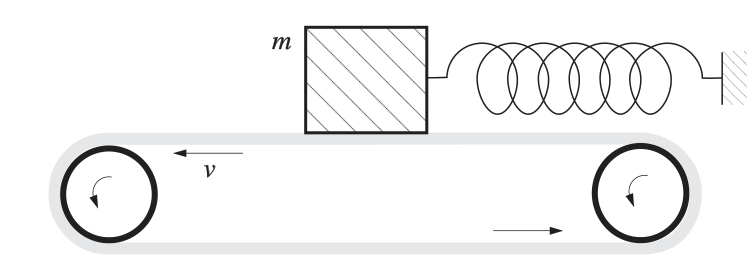
PROBLEMA n. 2 100 Punti H. Helmholtz nel 1860 ha condotto una ricerca sperimentale sul suono emesso da un violino studiando il comportamento della sua sorgente – una corda che vibra, sollecitata da un archetto – mettendo anche a punto procedimenti ingegnosi per ottenere gli elementi necessari ad una descrizione matematica del moto della corda nel suo complesso. Scrisse che “durante gran parte di ogni vibrazione la corda viene trascinata dall’arco. Poi, improvvisamente, essa si stacca e rimbalza, quindi viene ricatturata da altre parti dell’arco e di nuovo trascinata”. È molto difficile fare uno studio completo della situazione reale e ci accontenteremo di una analogia, semplificando drasticamente il problema: sostituiremo la corda con una massa attaccata ad una molla, immaginando che la massa sia sollecitata per attrito da un “archetto” costituito da un nastro scorrevole; affideremo al peso della massa il compito di simulare la pressione dell’archetto sulle corde, esercitata dal violinista. ——————————— La situazione ottenuta è rappresentata quindi dalla figura seguente; i valori numerici sono arbitrari. Il blocco, di massa , è attaccato ad una molla di costante (con un estremo fisso) e striscia sul nastro, che scorre con velocità costante trascinato da due rulli, come in figura. Sono noti i coefficienti di attrito statico e dinamico e fra blocco e nastro, che supporremo costanti. Supponiamo anche che, inizialmente, il blocco sia mantenuto fermo in modo che la molla sia in condizioni di riposo. Ad un certo momento () il blocco viene abbandonato e comincia a muoversi sotto l’azione del nastro. Valori numerici g N/m v m
- Supponendo che la velocità del nastro, per tutto il tempo che ci interesserà considerare, sia abbastanza elevata da avere sempre strisciamento, calcolare a quale distanza dalla posizione iniziale il blocco si arresterà momentaneamente. Segue a pagina 5 AIF – Olimpiadi di Fisica 1994 Gara Nazionale Senigallia, 14-17 Aprile 1994
- Mostrare che in queste condizioni il blocco compirà oscillazioni armoniche e determinare la relativa ampiezza e periodo.
- Determinare qual è la minima velocità del nastro che consente il moto descritto, verifica che con i dati numerici proposti la condizione è soddisfatta.
- Se il nastro si muove a velocità inferiore a quella calcolata al punto 3), il moto del blocco è ancora periodico, ma non armonico; descriverne l’andamento e rappresentare, anche in modo qualitativo, il grafico della legge oraria.
- Determinare la posizione del blocco nei punti significativi del diagramma tracciato e calcolare l’ampiezza del moto, ponendo ora . AIF – Olimpiadi di Fisica 1994 Gara Nazionale Senigallia, 14-17 Aprile 1994
p.3 — Blocco su nastro mobile collegato a molla
Topic: Newtonian Mechanics, Oscillations & Waves Metodi: Free-Body Diagram, Simple Harmonic Motion Analysis, Kinematic Equations Competenze: Diagrammatic Reasoning, Mathematical Modeling, Physical Reasoning Objects: Block, Spring Fonte: Testo (PDF) — p.3 Soluzione: Soluzioni (PDF)
The Commission has already taken a number of measures. 2 100 points H. Helmholtz in 1860 conducted experimental research on sound. Issued by a violin studying the behavior of its source a string that vibrates, pulled by an arrow also setting up procedures Engineered to obtain the elements necessary for a mathematical description of the motion of the rope as a whole. He wrote that “during much of the Every vibration the rope is pulled from the bow. Then, suddenly, she It’s untied and bouncing, then it’s being retrieved from other parts of the bow and again dragged in”. It is very difficult to make a full study of the real situation and to We’ll settle for an analogy, simplifying the problem dramatically: we’ll replace the rope with a mass attached to a spring, assuming that The mass is forced to friction by a “archet” consisting of a tape We’ll give the mass weight the task of simulating the pressure. The stringed organ, played by the violinist. ——————————— The situation obtained is thus represented by the following figure; Numerical numbers are arbitrary. The block, mass , is attached to a spring of constant (with an extreme fixed) and strip on the tape, running at a constant speed pulled by two rolls, As shown in the figure. The static and dynamic friction coefficients and are known between blocks and tape, which we assume constantly. The first is that the block is held firmly so that the the spring is in resting condition. At a certain point () the block It’s abandoned and it starts moving under the action of the tape. The following table shows the values of the values: g N/m v m
- Assuming that the speed of the tape, for as long as we’re concerned Consider, be high enough to have always crawling, calculate the distance from the initial position at which the block will be temporarily stopped. Following page 5 AIF 1994 Olympics in physics National competition The Commission has decided to take the necessary measures to ensure that the Community’s financial resources are used effectively.
- To show that under these conditions the block will have harmonic oscillations and determine the relative width and period.
- Determining the minimum speed of the tape for the described motion verifies that the condition is met with the proposed numerical data.
- If the tape is moving at a speed less than that calculated in point 3, the motor shall be: The blockage is still periodic, but not harmonic; it describes the trend and The time-law graph is also represented qualitatively.
- Determine the location of the block at significant points in the diagram trace and calculate the width of the engine, now . AIF 1994 Olympics in physics National competition The Commission has decided to take the necessary measures to ensure that the Community’s financial resources are used effectively.
**p.3 ** Mobile tape lock connected to spring
Topic: Newtonian Mechanics, Oscillations & Waves Metodi: Free-Body Diagram, Simple Harmonic Motion Analysis, Kinematic Equations Competenze: Diagrammatic Reasoning, Mathematical Modeling, Physical Reasoning Objects: Block, Spring Fonte: Testo (PDF) — p.3 Soluzione: Soluzioni (PDF)
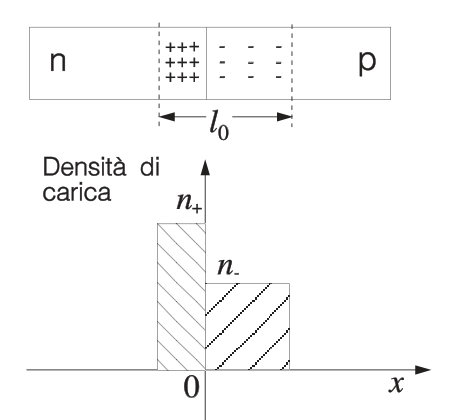
PROBLEMA n. 3 100 Punti La conduttività elettrica di un semiconduttore può essere aumentata sostituendo alcuni atomi della struttura cristallina con altri di diversa specie, senza modificare la neutralità elettrica del campione. Tale processo è chiamato “drogaggio”. Mediante il drogaggio di tipo n si aumenta la quantità di elettroni di conduzione; con il drogaggio di tipo p, invece, si producono delle lacune di elettroni dette “buche” le quali possono essere considerate come dei portatori di carica positiva uguale in valore assoluto a quella degli elettroni. Una metà di un campione di semiconduttore, avente sezione quadrata di lato mm, viene drogata di tipo n e l’altra metà di tipo p, nella zona di separazione tra le due, detta “giunzione”, alcuni elettroni migrano dalla parte di tipo n alla parte di tipo p ricombinandosi con le buche qui presenti. Al termine del processo si genera così una regione di ampiezza nella quale non ci sono più cariche libere di muoversi, che viene chiamata “regione di svuotamento”. La parte di tipo n della regione di svuotamento è caratterizzata dalla presenza di cariche positive dovute agli ioni del reticolo cristallino; mentre la parte di tipo p dalla presenza di cariche negative localizzate intorno agli ioni del reticolo. Il grafico in figura mostra una possibile distribuzione della densità di carica elettrica in una giunzione. La densità della carica positiva nella parte di tipo n della regione di svuotamento () è cariche per , mentre la densità della carica negativa () nella parte di tipo p della regione di svuotamento vale cariche per . n+ n- 0 x + +
++ + + + + l0
- Determinare e rappresentare graficamente il campo elettrico presente in tale giunzione.
- Assegnando al potenziale elettrico il valore zero in un opportuno punto del semiconduttore, determinarne l’andamento nella regione di svuotamento. Considerando i valori forniti per la densità di carica elettrica e che il campione è complessivamente neutro, calcolare il massimo valore che la differenza di potenziale elettrico può assumere. Tale valore è chiamato “barriera di potenziale”. Segue a pagina 7 AIF – Olimpiadi di Fisica 1994 Gara Nazionale Senigallia, 14-17 Aprile 1994 Collegando gli estremi opposti del campione di semiconduttore con un filo metallico la giunzione viene cortocircuitata e si osserva che nel circuito così realizzato non circola corrente elettrica. Il fenomeno si può spiegare assumendo che agli estremi del campione si generi sempre una differenza di potenziale detto “potenziale ohmico di contatto”, costante e indipendente dalla direzione e dall’intensità di una eventuale corrente elettrica che circola nel semiconduttore, che si oppone alla barriera di potenziale, e in questo caso la annulla.
- Tenendo conto del fenomeno illustrato qui sopra, mostrare che la barriera di potenziale cambia quando agli estremi della giunzione viene applicata una differenza di potenziale elettrico esterno . Determinare come dipende lo spessore della regione di svuotamento da . Quando varia l’ampiezza della regione di svuotamento rimangono costanti i valori della densità di carica elettrica, ma cambia la quantità totale di carica presente nelle due parti della giunzione. Si può parlare, in questo caso, di proprietà capacitive della giunzione.
- Determinare il valore della capacità elettrica di transizione che è definita come dove è la variazione di carica prodotta quando viene variato di il potenziale elettrico esterno applicato. NOTA: Per un semiconduttore la costante dielettrica relativa vale . AIF – Olimpiadi di Fisica 1994 Gara Nazionale Senigallia, 14-17 Aprile 1994
p.5 — Giunzione n-p e densità di carica
Topic: Electrostatics, Circuits Metodi: Gauss’s Law, Electric Potential Method, Coulomb’s Law Competenze: Physical Reasoning, Mathematical Modeling, Diagrammatic Reasoning Objects: Wire Fonte: Testo (PDF) — p.5 Soluzione: Soluzioni (PDF)
The Commission has already taken a number of measures. 3 100 points The electrical conductivity of a semiconductor can be increased by replacing some atoms of the crystalline structure with others of different species, without modify the electrical neutrality of the sample. This process is called “drugging”. The amount of conducting electrons is increased by n-type drugging; p-type drugging, on the other hand, produces electron gaps called ‘holes’ which can be considered as positive charge carriers equal in absolute value to that of electrons. Half of a semiconductor sample, having a square section of side mm, is drugged in type n and the other half in type p, in the area of The two electrons are separated by a “combination” of electrons that migrate from the Type n to the type p part, combining with the holes here. At the end The process thus generates a region of magnitude in which there is no They’re more freely moving, which is called the “empty region”. Type n part of the region of The emission of the product shall be determined by the following: The glass mesh; the part of the glass mesh Type p in the presence of negative loads Locate them around the ions in the reticulum. The graph in the figure shows a possible distribution of the electrical charge density in a junction. The density of the positive charge in the type n part of the The emptying region () is loads for , whereas the negative load density () in the type p part of the emptying region is cariche per . n+ n- 0 x + +
++ + + + + l0
- Determine and graphically represent the electric field in the The junction.
- By assigning the electric potential to a zero value at an appropriate semiconductor point, determine its trend in the emptying region. Considering the values provided for the electrical charge density and that the sample is neutral overall, calculate the maximum value that the difference of electrical potential can take. This value is called the potential barrier. It follows on page 7 AIF 1994 Olympics in physics National competition The Commission has decided to take the necessary measures to ensure that the Community’s financial resources are used effectively. Connecting the opposite ends of the semiconductor sample with a wire The metallic junction is short circuit and it is observed that in the circuit thus made there is no electric current. The phenomenon can be explained by assuming that The sample ends always generate a potential difference ‘ohm contact potential’ means a constant and independent of the direction and intensity of any electric current circulating in the semiconductor, which is It opposes the potential barrier, and in this case it cancels it.
- In view of the phenomenon described above, the barrier to The potential changes when a differenza di potenziale elettrico esterno . Determine how the thickness of the emptying region by . When the width of the emptying region varies, they remain constant the values of the electric charge density, but changes the total charge quantity present on both sides of the junction. We can talk about property in this case. The power output of the joint.
- Determine the value of the transition electrical capacity that is defined as where is the change in load produced when The external electrical potential applied is varied by . NOTE: For a semiconductor the relative dielectric constant is . AIF 1994 Olympics in physics National competition The Commission has decided to take the necessary measures to ensure that the Community’s financial resources are used effectively.
**p.5 ** Junction n-p and load density
Topic: Electrostatics, Circuits Metodi: Gauss’s Law, Electric Potential Method, Coulomb’s Law Competenze: Physical Reasoning, Mathematical Modeling, Diagrammatic Reasoning Objects: Wire Fonte: Testo (PDF) — p.5 Soluzione: Soluzioni (PDF)
PROBLEMA n. 4 100 Punti Guidando in una giornata assolata su un tratto piano e rettilineo di autostrada si nota che, in lontananza, il manto stradale appare “bagnato”. Il fenomeno, noto da sempre a chi attraversa zone desertiche, viene detto miraggio ed è dovuto alla rifrazione atmosferica in presenza di un gradiente termico particolarmente accentuato nei bassi strati d’aria. Si consideri uno strato d’aria piano e orizzontale, entro cui l’indice di rifrazione dipende solo dall’altezza. Sia l’angolo di incidenza di un raggio di luce nello strato ed l’angolo di emergenza dello stesso raggio dallo strato.
- Mostrare che, fissato , l’angolo dipende solo dai valori che l’indice di rifrazione assume sulle superfici superiore ed inferiore dello strato. Per l’indice di rifrazione dell’aria si osserva sperimentalmente che è proporzionale alla densità (legge di Gladstone & Dale) e si misura in condizioni di pressione standard ad una temperatura di circa .
- Mostrare che, per temperature prossime al valore dato, a pressione costante, l’indice di rifrazione dell’aria può essere approssimato dalla relazione . Verificare che . L’automobilista, che ha gli occhi ad un’altezza m dal suolo, ha l’impressione di vedere la strada bagnata ad una distanza di circa 200 m davanti a sé. Con buona approssimazione le traiettorie dei raggi luminosi possono essere assimilate a parabole (con asse verticale e concavità rivolta verso l’alto).
- Calcolare la lunghezza del tratto di strada effettivamente visibile da parte dell’automobilista.
- Determinare l’indice di rifrazione all’altezza dell’occhio del guidatore [] in funzione dei parametri dati e dell’indice di rifrazione al suolo []. Può essere utile tenere presente che .
- Supponendo per semplicità che il gradiente termico dell’aria sia uniforme, cioè che la temperatura T dell’aria vari linearmente con l’altezza h secondo la legge , determinare il gradiente termico .
Topic: Geometric Optics, Thermodynamics Metodi: Snell’s Law, Ideal Gas Law, Approximation & Series Expansion Competenze: Mathematical Modeling, Physical Reasoning, Estimation & Approximation Objects: — Fonte: Testo (PDF) — p.7 Soluzione: Soluzioni (PDF)
The Commission has already taken a number of measures. 4 100 points Driving on a sunny day on a flat, straight stretch of highway shows that, in the distance, the road surface appears “wet”. The phenomenon, It is known to those crossing desert areas as mirage and is caused by atmospheric refraction in the presence of a particular heat gradient. Accentuated in the lower air layers. Consider a flat, horizontal air layer within which the refractive index depends only on height. Whether the angle of incidence of a beam of light in the layer and the emergency angle of the same beam from the layer.
- Show that, if is fixed, the angle depends only on the values that the index of The surface of the layer is covered by a layer of refraction. For the air refractive index it is observed experimentally that is proportional to the density (Gladstone & Dale law) and measured under standard pressure conditions at a temperature of approximately .
- Show that, at temperatures close to the given value, at constant pressure, The air refractive index may be approximated to the ratio. Check that . The driver, who has eyes at a height of m from the ground, has l’impressione di vedere la strada bagnata ad una distanza di circa 200 m davanti a sé. With good approximation the paths of light rays can be Parabolically similar (vertical axis and upward concave).
- Calculate the length of the road actually visible from the side The driver.
- Determine the refractive index at the driver’s eye level [] the data parameters and the soil refractive index []. You can It is useful to keep in mind that .
- Assuming for simplicity that the heat gradient of the air is uniform, That is, the air temperature T varies linearly with the height h second The law determines the heat gradient .
Topic: Geometric Optics, Thermodynamics Metodi: Snell’s Law, Ideal Gas Law, Approximation & Series Expansion Competenze: Mathematical Modeling, Physical Reasoning, Estimation & Approximation Objects: — Fonte: Testo (PDF) — p.7 Soluzione: Soluzioni (PDF)