Questão 1 (exclusiva para alunos do 9º ano)
Um chuveiro elétrico de 6.000 W fica ligado em média 10 minutos por dia. Num mês de 30 dias qual será o valor pago pelo consumo de eletricidade deste chuveiro na conta, considerando que o valor do kWh é de R$ 0,10?
Topic: Circuits Metodi: Dimensional Analysis, Physical Modeling Competenze: Unit Conversion, Physical Reasoning Objects: — Fonte: Testo (PDF) — p.1
Questione 1 *(esclusiva per i 9° anno di età) *
Un bagno elettrico di 6.000 W è collegato per una media di 10 minuti al giorno. In un mese di 30 giorni, qual è il prezzo di consumo di questa doccia, considerato che il valore di kWh è di R$0,10?
Topic: Circuits Metodi: Dimensional Analysis, Physical Modeling Competenze: Unit Conversion, Physical Reasoning Objects: — Fonte: Testo (PDF) — p.1
Question 1 (MSK1/> *(exclusive to students in the ninth grade)
A 6,000 W electric shower is on for an average of 10 minutes a day. In a month of 30 days, what will be the amount paid for the electricity consumption of this shower on the bill, considering that the value of kWh is R$0.10?
Topic: Circuits Metodi: Dimensional Analysis, Physical Modeling Competenze: Unit Conversion, Physical Reasoning Objects: — Fonte: Testo (PDF) — p.1
Questão 2 (exclusiva para alunos do 9º ano)
A teoria eletromagnética de Maxwell permitiu determinar o valor da velocidade da Luz () no vácuo a partir da permissividade elétrica () e da permeabilidade magnética () segundo a relação:
Sabendo que as dimensões da permissividade elétrica são , determine através de análise dimensional as dimensões da permeabilidade magnética.
Topic: Electromagnetism Metodi: Dimensional Analysis Competenze: Unit Conversion, Physical Reasoning Objects: — Fonte: Testo (PDF) — p.1
Questione 2 (esclusiva per i bambini del 9° anno)
La teoria elettromagnetica di Maxwell ha permesso di determinare il valore della velocità della luce () nel vuoto a partire dalla permissività elettrica () e dalla permeabilità magnetica () secondo il rapporto:
Sapendo che le dimensioni della permissività elettrica sono , determina mediante analisi dimensionale le dimensioni della permeabilità magnetica.
Topic: Electromagnetism Metodi: Dimensional Analysis Competenze: Unit Conversion, Physical Reasoning Objects: — Fonte: Testo (PDF) — p.1
Question 2 (MSK1/> *(exclusive for students in the ninth grade)
Maxwell’s electromagnetic theory allowed the value of the speed of light () in the vacuum to be determined from the electrical permissiveness () and the magnetic permeability () according to the ratio:
Knowing that the dimensions of the electrical permissibility are , determine by dimensional analysis the dimensions of the magnetic permeability.
Topic: Electromagnetism Metodi: Dimensional Analysis Competenze: Unit Conversion, Physical Reasoning Objects: — Fonte: Testo (PDF) — p.1
Questão 3
Uma xícara de 10 g de chá é preparada numa sala a uma temperatura de 15 °C. A tabela abaixo representa a temperatura do chá como função do tempo medido imediatamente após o seu preparo.
| tempo (minutos) | 10 | 20 | 30 | 40 | 50 | 60 | 70 | 80 |
|---|---|---|---|---|---|---|---|---|
| temperatura (°C) | 65 | 49 | 38 | 30 | 25 | 22 | 20 | 18 |
Qual a taxa de resfriamento do líquido entre 10 e 20 minutos?
Topic: Thermodynamics Metodi: Experimental Data Analysis, Physical Modeling Competenze: Physical Reasoning, Estimation & Approximation Objects: — Fonte: Testo (PDF) — p.1
La domanda 3
Un bicchiere di 10 g di tè è preparato in una stanza a 15 °C. La tabella seguente rappresenta la temperatura del tè in funzione del tempo misurato immediatamente dopo la sua preparazione.
Il tempo # 10 # 20 # 30 # 40 # 50 # 60 # 70 # 80 # # # 80 # # # # # # # # # # # # # # # # # # # # # # # # # # # # # # # # # # # # # # # # # # # # # # # # # # # # # # # # # # # # # # # # # # # # # # # # # # # # # # # # # # # # # # # # # # # # # # # # # # # # # # # # # # # # # # # # # # # # # # # # # # # # # # # # # # # # # # # # # # # # # # # # # # # # # # # # # # # # # # # # # # # # # # # # # # # # # # # # # # # # # # # # # # # # # # # # # # # # # # # # # # # # # # # # # # # # # # # # # # # # # # # # # # # # # # # # # # # # # # # # # # # # # # # # # # # # # # # # # # # # # # # # # # # # # # # # # # # # # # # # # # # # # # # # # # # # # # # # # # # # # # # # # # # # # # # # # # # # # # # # # # # # # # # # # # # # # # # # # # # # # # # # # # # # # # # # # # # # # # # # # # # # # # # # # # # # # # # # # # # # # # # # # # # # # # # # # # # # # # # # # # # # # # # # # # # # # # # # # # # # # # # # # # # # # # # # # # # # # # # # # # # # # # # # # # # # # # # # # # # # # # # # # # # # # # # # # # # # # # # # # # # # # # #
|---|---|---|---|---|---|---|---|---| Il tempo è molto elevato.
Qual è il tasso di raffreddamento del liquido tra i 10 e i 20 minuti?
Topic: Thermodynamics Metodi: Experimental Data Analysis, Physical Modeling Competenze: Physical Reasoning, Estimation & Approximation Objects: — Fonte: Testo (PDF) — p.1
Question 3 - The Commission has decided to take the necessary measures to ensure that the Commission is able to take the necessary measures to ensure that the Commission is able to take the necessary measures to ensure that the Commission is able to take the necessary measures.
A cup of 10 g of tea is prepared in a room at 15 °C. The table below shows the temperature of tea as a function of the time measured immediately after its preparation.
♪ Time is 10 minutes ♪ 20 minutes ♪ 30 minutes ♪ 40 minutes ♪ 50 minutes ♪ 60 minutes ♪ 70 minutes ♪ 80 minutes ♪ |---|---|---|---|---|---|---|---|---| So, what’s the temperature?
What’s the cooling rate of the liquid for 10 to 20 minutes?
Topic: Thermodynamics Metodi: Experimental Data Analysis, Physical Modeling Competenze: Physical Reasoning, Estimation & Approximation Objects: — Fonte: Testo (PDF) — p.1
Questão 4
Uma xícara de 10 g de chá é preparada numa sala a uma temperatura de 15 °C. A tabela abaixo representa a temperatura do chá como função do tempo medido imediatamente após o seu preparo.
| tempo (minutos) | 10 | 20 | 30 | 40 | 50 | 60 | 70 | 80 |
|---|---|---|---|---|---|---|---|---|
| temperatura (°C) | 65 | 49 | 38 | 30 | 25 | 22 | 20 | 18 |
Calcule a quantidade de calor (em calorias) que deve ser fornecida para ferver a água a 100 °C antes do preparo do chá. (capacidade térmica da água )
Topic: Thermodynamics Metodi: First Law of Thermodynamics, Physical Modeling Competenze: Physical Reasoning, Unit Conversion Objects: — Fonte: Testo (PDF) — p.2
Il numero di persone che hanno ricevuto la domanda è stato risolto.
Un bicchiere di 10 g di tè è preparato in una stanza a 15 °C. La tabella seguente rappresenta la temperatura del tè in funzione del tempo misurato immediatamente dopo la sua preparazione.
Il tempo # 10 # 20 # 30 # 40 # 50 # 60 # 70 # 80 # # # 80 # # # # # # # # # # # # # # # # # # # # # # # # # # # # # # # # # # # # # # # # # # # # # # # # # # # # # # # # # # # # # # # # # # # # # # # # # # # # # # # # # # # # # # # # # # # # # # # # # # # # # # # # # # # # # # # # # # # # # # # # # # # # # # # # # # # # # # # # # # # # # # # # # # # # # # # # # # # # # # # # # # # # # # # # # # # # # # # # # # # # # # # # # # # # # # # # # # # # # # # # # # # # # # # # # # # # # # # # # # # # # # # # # # # # # # # # # # # # # # # # # # # # # # # # # # # # # # # # # # # # # # # # # # # # # # # # # # # # # # # # # # # # # # # # # # # # # # # # # # # # # # # # # # # # # # # # # # # # # # # # # # # # # # # # # # # # # # # # # # # # # # # # # # # # # # # # # # # # # # # # # # # # # # # # # # # # # # # # # # # # # # # # # # # # # # # # # # # # # # # # # # # # # # # # # # # # # # # # # # # # # # # # # # # # # # # # # # # # # # # # # # # # # # # # # # # # # # # # # # # # # # # # # # # # # # # # # # # # # # # # # # # # # # #
|---|---|---|---|---|---|---|---|---| Il tempo è molto elevato.
Calcola la quantità di calore (in calorie) da fornire per far bollire l’acqua a 100 °C prima di preparare il tè. (capacità termico dell’acqua )
Topic: Thermodynamics Metodi: First Law of Thermodynamics, Physical Modeling Competenze: Physical Reasoning, Unit Conversion Objects: — Fonte: Testo (PDF) — p.2
Question 4 - The Commission has not yet decided on the application of this Regulation.
A cup of 10 g of tea is prepared in a room at 15 °C. The table below shows the temperature of tea as a function of the time measured immediately after its preparation.
♪ Time is 10 minutes ♪ 20 minutes ♪ 30 minutes ♪ 40 minutes ♪ 50 minutes ♪ 60 minutes ♪ 70 minutes ♪ 80 minutes ♪ |---|---|---|---|---|---|---|---|---| So, what’s the temperature?
Calculate the amount of heat (in calories) to be provided to boil the water to 100 °C before brewing the tea. (water heat capacity )
Topic: Thermodynamics Metodi: First Law of Thermodynamics, Physical Modeling Competenze: Physical Reasoning, Unit Conversion Objects: — Fonte: Testo (PDF) — p.2
Questão 5
O gráfico abaixo descreve o movimento harmônico (amplitude como função do tempo ) realizado por um conjunto massa-mola.
Qual o deslocamento da massa entre e ?
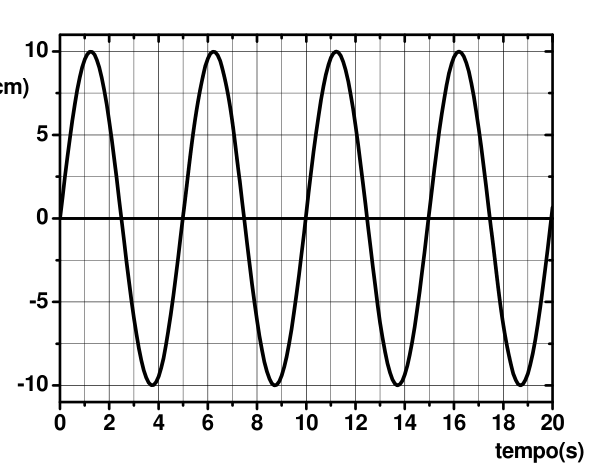 Gráfico x(t) do movimento harmônico massa-mola
Topic: Oscillations & Waves Metodi: Simple Harmonic Motion Analysis, Kinematic Equations Competenze: Diagrammatic Reasoning, Physical Reasoning Objects: Spring, Block Fonte: Testo (PDF) — p.2
Il numero di persone che hanno ricevuto la domanda è stato di:
Il grafico seguente descrive il movimento armonico (amplitude come funzione del tempo ) effettuato da un insieme di massa-molla.
Qual è il spostamento della massa tra e ?
Grafico x(t) del movimento armonico massa-molla
Topic: Oscillations & Waves Metodi: Simple Harmonic Motion Analysis, Kinematic Equations Competenze: Diagrammatic Reasoning, Physical Reasoning Objects: Spring, Block Fonte: Testo (PDF) — p.2
Question 5 - The Commission has not yet decided on the application of the rules on the application of the rules of procedure.
The following graph describes the harmonic motion (amplitude as a function of time ) performed by a mass-moll set.
What is the mass shift of between and ?
Graph x(t) of the harmonic mass-moll movement
Topic: Oscillations & Waves Metodi: Simple Harmonic Motion Analysis, Kinematic Equations Competenze: Diagrammatic Reasoning, Physical Reasoning Objects: Spring, Block Fonte: Testo (PDF) — p.2
Questão 6
O gráfico abaixo descreve o movimento harmônico (amplitude como função do tempo ) realizado por um conjunto massa-mola.
Qual velocidade média da massa entre e ?
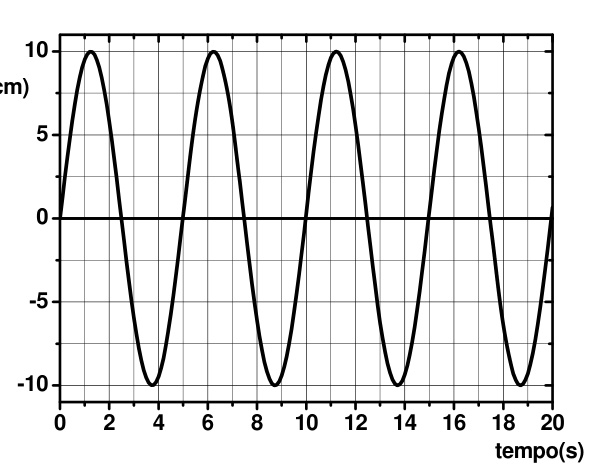 Gráfico x(t) do movimento harmônico massa-mola
Topic: Oscillations & Waves Metodi: Simple Harmonic Motion Analysis, Kinematic Equations Competenze: Diagrammatic Reasoning, Physical Reasoning Objects: Spring, Block Fonte: Testo (PDF) — p.2
Il numero di persone che hanno ricevuto la domanda è stato di circa un milione di persone.
Il grafico seguente descrive il movimento armonico (amplitude come funzione del tempo ) effettuato da un insieme di massa-molla.
Qual è la velocità media di massa tra e ?
Grafico x(t) del movimento armonico massa-molla
Topic: Oscillations & Waves Metodi: Simple Harmonic Motion Analysis, Kinematic Equations Competenze: Diagrammatic Reasoning, Physical Reasoning Objects: Spring, Block Fonte: Testo (PDF) — p.2
Question 6 - The Commission has not yet decided on the draft budget.
The following graph describes the harmonic motion (amplitude as a function of time ) performed by a mass-moll set.
What is the mean mass speed between and ?
Graph x(t) of the harmonic mass-moll movement
Topic: Oscillations & Waves Metodi: Simple Harmonic Motion Analysis, Kinematic Equations Competenze: Diagrammatic Reasoning, Physical Reasoning Objects: Spring, Block Fonte: Testo (PDF) — p.2
Questão 7
Dois corredores disputam uma prova de atletismo numa pista horizontal retilínea. A figura abaixo representa os dois corredores fotografados em intervalos sucessivos de tempo de 0,2 segundos. A pista tem uma indicação de distância a cada 1 metro.
Escreva a equação horária para o corredor 2. Considere o deslocamento horizontal e o tempo, com em .
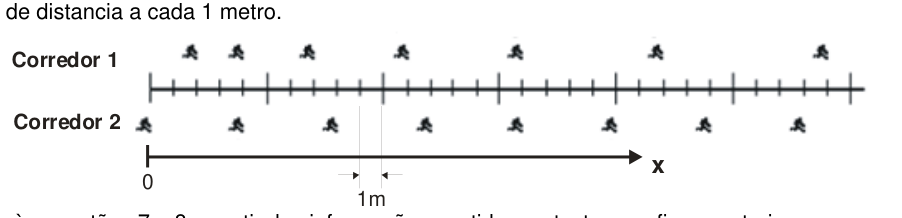 Foto estroboscópica dos dois corredores na pista
Topic: Newtonian Mechanics Metodi: Kinematic Equations, Physical Modeling Competenze: Diagrammatic Reasoning, Physical Reasoning Objects: — Fonte: Testo (PDF) — p.2
Il numero di persone che hanno ricevuto il messaggio è stato di circa un milione di persone.
Due corridori si disputano una prova di atletica su una pista orizzontale reticola. La figura seguente rappresenta i due corridori fotografati in intervalli successivi di tempo di 0,2 secondi. La pista ha un’indicazione di distanza ogni metro.
Scrivi l’equazione oraria per il corridoio 2. Considerare il spostamento orizzontale e il tempo, con in .
Foto strofoscopica dei due corridori sul circuito
Topic: Newtonian Mechanics Metodi: Kinematic Equations, Physical Modeling Competenze: Diagrammatic Reasoning, Physical Reasoning Objects: — Fonte: Testo (PDF) — p.2
Question 7 - The Commission has not yet decided on the application of this Regulation.
Two runners compete in an athletics event on a straight horizontal track. The figure below shows the two runners photographed at successive intervals of 0.2 seconds. The track has a distance marker every meter.
Write the time equation for corridor two. Consider horizontal displacement and time, with in .
Stroboscopic photo of the two runners on the track
Topic: Newtonian Mechanics Metodi: Kinematic Equations, Physical Modeling Competenze: Diagrammatic Reasoning, Physical Reasoning Objects: — Fonte: Testo (PDF) — p.2
Questão 8
Dois corredores disputam uma prova de atletismo numa pista horizontal retilínea. A figura abaixo representa os dois corredores fotografados em intervalos sucessivos de tempo de 0,2 segundos. A pista tem uma indicação de distância a cada 1 metro.
Qual(is) posição(ões) os corredores 1 e 2 estão juntos na pista?
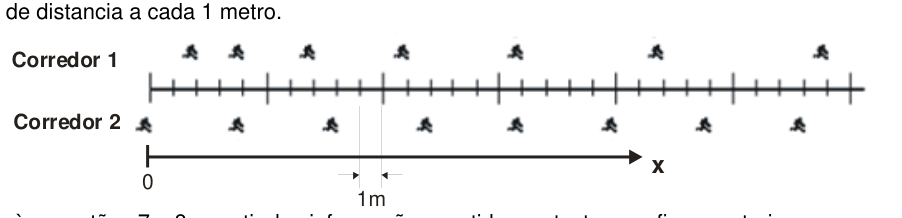 Foto estroboscópica dos dois corredores na pista
Topic: Newtonian Mechanics Metodi: Kinematic Equations, Physical Modeling Competenze: Diagrammatic Reasoning, Physical Reasoning Objects: — Fonte: Testo (PDF) — p.2
La domanda 8
Due corridori si disputano una prova di atletica su una pista orizzontale reticola. La figura seguente rappresenta i due corridori fotografati in intervalli successivi di tempo di 0,2 secondi. La pista ha un’indicazione di distanza ogni metro.
Quali sono le posizioni in cui i corridoi 1 e 2 sono insieme sul tracciato?
Foto strofoscopica dei due corridori sul circuito
Topic: Newtonian Mechanics Metodi: Kinematic Equations, Physical Modeling Competenze: Diagrammatic Reasoning, Physical Reasoning Objects: — Fonte: Testo (PDF) — p.2
Question 8 - The Commission has not yet adopted a proposal for a regulation on the application of the rules on the protection of workers’ rights.
Two runners compete in an athletics event on a straight horizontal track. The figure below shows the two runners photographed at successive intervals of 0.2 seconds. The track has a distance marker every meter.
What position are runners 1 and 2 together on the track?
Stroboscopic photo of the two runners on the track
Topic: Newtonian Mechanics Metodi: Kinematic Equations, Physical Modeling Competenze: Diagrammatic Reasoning, Physical Reasoning Objects: — Fonte: Testo (PDF) — p.2
Questão 9 (exclusiva para alunos do 9º ano)
Um asteróide se aproxima em direção à Terra. Caso não houvesse a ação da força de gravidade o asteróide passaria a uma distância da Terra. Desenhe uma possível trajetória deste asteróide, com a influência da ação da gravidade, indicando o asteróide num ponto antes e depois da aproximação e indique a Terra.
Topic: Gravitation, Newtonian Mechanics Metodi: Newton’s Law of Gravitation, Free-Body Diagram Competenze: Diagrammatic Reasoning, Physical Reasoning Objects: Planet Fonte: Testo (PDF) — p.2
Questione 9 *(esclusiva per i bambini del 9° anno) *
Un asteroide si avvicina verso la Terra. Se non fosse per l’azione della forza di gravità l’asteroide passerebbe a una distanza dalla Terra. Disegna un possibile percorso di questo asteroide, con l’influenza dell’azione della gravità, indicando l’asteroide in un punto prima e dopo l’avvicinamento e indicando la Terra.
Topic: Gravitation, Newtonian Mechanics Metodi: Newton’s Law of Gravitation, Free-Body Diagram Competenze: Diagrammatic Reasoning, Physical Reasoning Objects: Planet Fonte: Testo (PDF) — p.2
Question 9 (MSK1/> *(exclusive for students in the ninth grade)
An asteroid is approaching towards Earth. If there were no gravitational pull, the asteroid would have passed a distance from Earth. Draw a possible trajectory of this asteroid, with the influence of gravity, pointing to the asteroid at a point before and after approach and pointing to the Earth.
Topic: Gravitation, Newtonian Mechanics Metodi: Newton’s Law of Gravitation, Free-Body Diagram Competenze: Diagrammatic Reasoning, Physical Reasoning Objects: Planet Fonte: Testo (PDF) — p.2
Questão 10 (exclusiva para alunos do 9º ano)
A velocidade de lançamento de um projétil é quatro vezes maior que a velocidade na altura máxima. Determine o ângulo de lançamento .
Topic: Newtonian Mechanics Metodi: Kinematic Equations, Vector Decomposition Competenze: Mathematical Modeling, Physical Reasoning Objects: Projectile Fonte: Testo (PDF) — p.3
Questione 10 (esclusiva per i bambini di 9° anno)
La velocità di lancio di un proiettile è quattro volte superiore alla velocità massima. Determina l’angolo di lancio .
Topic: Newtonian Mechanics Metodi: Kinematic Equations, Vector Decomposition Competenze: Mathematical Modeling, Physical Reasoning Objects: Projectile Fonte: Testo (PDF) — p.3
Question 10 (MSK1/> *(exclusive for students in the ninth grade)
The launch speed of a projectile is four times the speed at maximum height. Determine the launch angle .
Topic: Newtonian Mechanics Metodi: Kinematic Equations, Vector Decomposition Competenze: Mathematical Modeling, Physical Reasoning Objects: Projectile Fonte: Testo (PDF) — p.3
Questão 11
Um trem de metrô acelera a partir do repouso a em uma estação para percorrer a primeira metade da distância até a estação seguinte e depois desacelera a na segunda metade da distância de entre as estações. Determine:
- A. o tempo de viagem entre as estações;
- B. a velocidade escalar máxima do trem.
Topic: Newtonian Mechanics Metodi: Kinematic Equations, Physical Modeling Competenze: Mathematical Modeling, Physical Reasoning Objects: — Fonte: Testo (PDF) — p.3
Il numero di persone che hanno ricevuto il diploma è stato di circa un milione di persone.
Un treno di metro si accelera da un punto di riposo a in una stazione per percorrere la prima metà della distanza fino alla stazione successiva e poi si rallenta a nella seconda metà della distanza di tra le stazioni. Determina:
- A. il tempo di viaggio tra le stazioni;
- B. la velocità massima di scala del treno.
Topic: Newtonian Mechanics Metodi: Kinematic Equations, Physical Modeling Competenze: Mathematical Modeling, Physical Reasoning Objects: — Fonte: Testo (PDF) — p.3
The Commission has already adopted a number of proposals for the amendment.
A subway train accelerates from rest to at one station to cover the first half of the distance to the next station and then slows down to at the second half of the distance of between stations. Determine:
- A travel time between stations;
- B. the maximum speed of the train.
Topic: Newtonian Mechanics Metodi: Kinematic Equations, Physical Modeling Competenze: Mathematical Modeling, Physical Reasoning Objects: — Fonte: Testo (PDF) — p.3
Questão 12
O diagrama abaixo representa um ciclo realizado por um gás ideal num diagrama de entropia contra temperatura .
- A. Esboce o ciclo dado num diagrama de pressão contra volume ;
- B. Determine o rendimento do ciclo.
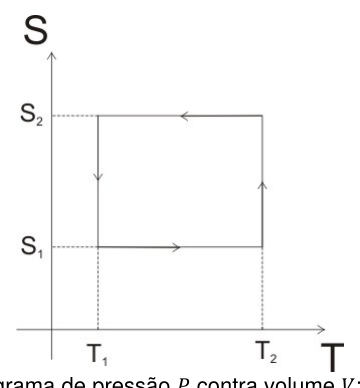 Ciclo termodinâmico no diagrama S-T
Topic: Thermodynamics Metodi: Thermodynamic Cycle Analysis, Ideal Gas Law Competenze: Diagrammatic Reasoning, Mathematical Modeling Objects: Gas Fonte: Testo (PDF) — p.3
Il numero di persone che hanno ricevuto il messaggio è stato di circa un milione di persone.
Il diagramma seguente rappresenta un ciclo effettuato da un gas ottimale su un diagramma di entropia contro temperatura .
- A. Descrive il ciclo dato su un diagramma di pressione contro volume ;
- B. Determina il rendimento del ciclo.
Cicco termodinamico nel diagramma S-T
Topic: Thermodynamics Metodi: Thermodynamic Cycle Analysis, Ideal Gas Law Competenze: Diagrammatic Reasoning, Mathematical Modeling Objects: Gas Fonte: Testo (PDF) — p.3
Question 12 - The Commission has not yet decided on the application of the rules of procedure.
The diagram below represents a cycle performed by an ideal gas on an entropy diagram versus temperature .
- A. Draw the given cycle on a pressure diagram against volume ;
- B. Determine the yield of the cycle.
The following shall be added to the list of the following:
Topic: Thermodynamics Metodi: Thermodynamic Cycle Analysis, Ideal Gas Law Competenze: Diagrammatic Reasoning, Mathematical Modeling Objects: Gas Fonte: Testo (PDF) — p.3
Questão 13
Um jogador de basquete, no momento de “enterrar” a bola, salta 80 cm verticalmente. Que tempo passa o jogador:
- A. nos 45 cm mais altos do pulo;
- B. nos 75 cm mais baixos?
Topic: Newtonian Mechanics Metodi: Kinematic Equations, Energy Conservation Method Competenze: Mathematical Modeling, Physical Reasoning Objects: — Fonte: Testo (PDF) — p.3
Il numero di persone che hanno ricevuto il diploma è stato di circa un milione di persone.
Un giocatore di basket, quando “enterra” la palla, salta verticalmente di 80 centimetri. Quanto tempo passa il giocatore:
- A. al di sopra di 45 cm dal salto;
- B, al di sotto di 75 cm?
Topic: Newtonian Mechanics Metodi: Kinematic Equations, Energy Conservation Method Competenze: Mathematical Modeling, Physical Reasoning Objects: — Fonte: Testo (PDF) — p.3
Question 13 - The Commission has not yet decided on the application of the rules of procedure.
A basketball player, when he buries the ball, jumps upright by about two inches. How long does the player spend:
- A at 45 cm higher than the jump;
- MSK1/B at the bottom of the 75 cm?
Topic: Newtonian Mechanics Metodi: Kinematic Equations, Energy Conservation Method Competenze: Mathematical Modeling, Physical Reasoning Objects: — Fonte: Testo (PDF) — p.3
Questão 14
Uma barra de comprimento é colocada sobre o eixo de um espelho côncavo de distância focal , como mostra a figura abaixo. Sabendo que a extremidade da barra está a uma distância do vértice do espelho, determine o aumento longitudinal da barra, ou seja, a razão entre o comprimento da imagem da barra e o comprimento da mesma.
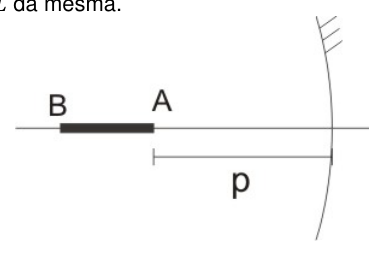 Barra AB no eixo de espelho côncavo focal f
Topic: Geometric Optics Metodi: Thin Lens & Mirror Equation, Ray Tracing Competenze: Mathematical Modeling, Diagrammatic Reasoning Objects: Rod, Mirror Fonte: Testo (PDF) — p.3
Il numero di persone che hanno ricevuto il messaggio è stato di circa un milione di persone.
Una barra di lunghezza è posta sull’asse di uno specchio concave a distanza focale , come mostrato nella figura seguente. Sapendo che l’estremità della barra è a una distanza dalla vertebra dello specchio, determina l’aumento longitudinale della barra, cioè il rapporto tra la lunghezza dell’immagine della barra e la lunghezza della stessa.
Barra AB sull’asse di specchio concave focale f
Topic: Geometric Optics Metodi: Thin Lens & Mirror Equation, Ray Tracing Competenze: Mathematical Modeling, Diagrammatic Reasoning Objects: Rod, Mirror Fonte: Testo (PDF) — p.3
Question 14 - The Commission has not yet decided on the draft budget.
A length bar is placed on the axis of a concave mirror of focal length as shown in the figure below. Knowing that the end of the bar is at a distance from the mirror vertex, it determines the longitudinal increase of the bar, i.e. the ratio between the length of the bar image and the length of the bar.
The following shall be added to the list of the following:
Topic: Geometric Optics Metodi: Thin Lens & Mirror Equation, Ray Tracing Competenze: Mathematical Modeling, Diagrammatic Reasoning Objects: Rod, Mirror Fonte: Testo (PDF) — p.3
Questão 15
A figura seguinte mostra um sistema de três barras de cobre de de comprimento e de área de seção transversal. As extremidades das barras estão ligadas num ponto comum. As outras extremidades estão colocadas cada uma em um banho de água fervendo (B), um banho de álcool fervendo (C) e um banho de gelo fundente (D). Sabendo que a condutividade térmica do cobre é , que a temperatura de ebulição do álcool é e que o calor de fusão do gelo é cerca de , determine:
- A. A temperatura no ponto ;
- B. A quantidade de gelo que derrete por minuto.
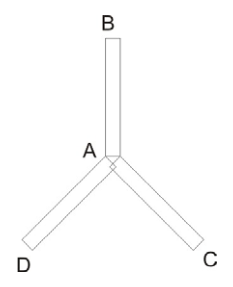 Sistema de três barras de cobre no ponto A
Topic: Thermodynamics Metodi: Physical Modeling, Conservation of Energy Competenze: Mathematical Modeling, Physical Reasoning Objects: Rod Fonte: Testo (PDF) — p.4
Il numero di persone che hanno ricevuto la domanda è stato di circa un milione di persone.
La figura seguente mostra un sistema di tre barre di rame di lunghezza e di area di sezione trasversale. Le estremità delle barre sono collegate in un punto comune . Le altre estremità sono state messe ciascuna in un bagno di acqua bollente (B), un bagno di alcol bollente (C) e un bagno di ghiaccio in fumo (D). Sapendo che la conducibilità termica del rame è , che la temperatura di scaldamento dell’alcol è e che il calore di fusione del ghiaccio è di circa , determina:
- A. La temperatura al punto ;
- B. La quantità di ghiaccio che si scioglie per minuto.
Sistema di tre barre di rame al punto A
Topic: Thermodynamics Metodi: Physical Modeling, Conservation of Energy Competenze: Mathematical Modeling, Physical Reasoning Objects: Rod Fonte: Testo (PDF) — p.4
Question 15 - The Commission has decided to take a decision on the draft budget.
The following figure shows a three-bar copper system of length and cross section area. The ends of the bars are connected in a common point. The other ends are each placed in a bath of boiling water (B), a bath of boiling alcohol (C) and a bath of melting ice (D). Knowing that the thermal conductivity of copper is , that the boiling temperature of the alcohol is and that the ice melting temperature is about , determine:
- A. The temperature at the point ;
- B The amount of ice that melts per minute.
Third-bar copper system in point A
Topic: Thermodynamics Metodi: Physical Modeling, Conservation of Energy Competenze: Mathematical Modeling, Physical Reasoning Objects: Rod Fonte: Testo (PDF) — p.4
Questão 16
Ana e Bia puxam os blocos e , respectivamente, como mostra a figura seguinte. Sabendo que a massa dos blocos é e , que o coeficiente de atrito estático entre os blocos é e que o coeficiente de atrito estático entre o bloco e o solo é (gravidade local ), determine:
- A. A força máxima que Ana e Bia podem exercer sobre os blocos para que o sistema permaneça em equilíbrio estático;
- B. A aceleração instantânea inicial dos blocos se Ana e Bia aplicarem o dobro das forças calculadas no item (a).
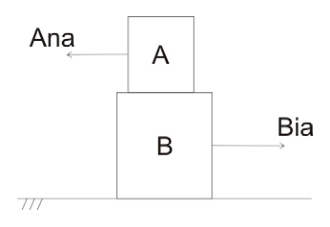 Blocos A e B puxados por Ana e Bia
Topic: Newtonian Mechanics Metodi: Free-Body Diagram, Newton’s Law of Gravitation, Physical Modeling Competenze: Diagrammatic Reasoning, Mathematical Modeling Objects: Block Fonte: Testo (PDF) — p.4
Il numero di persone che hanno ricevuto la domanda è stato di:
Ana e Bia tirano i blocchi e , rispettivamente, come mostra la figura seguente. Sapendo che la massa dei blocchi è e , che il coefficiente di attrito statico tra i blocchi è e che il coefficiente di attrito statico tra il blocco e il suolo è (gravità locale ), determina:
- A. La massima forza che Ana e Bia possono esercitare sui blocchi per mantenere il sistema in equilibrio statico;
- B. L’accelerazione istantanea iniziale dei blocchi se Ana e Bia applicano il doppio delle forze calcolate in (a).
Blocchi A e B trascinati da Ana e Bia
Topic: Newtonian Mechanics Metodi: Free-Body Diagram, Newton’s Law of Gravitation, Physical Modeling Competenze: Diagrammatic Reasoning, Mathematical Modeling Objects: Block Fonte: Testo (PDF) — p.4
Question 16 - The Commission has not yet adopted a proposal for a regulation on the application of the rules on the protection of workers’ rights.
Ana and Bia pull the and blocks, respectively, as shown in the following figure. Knowing that the block mass is and , that the static friction coefficient between the blocks is and that the static friction coefficient between the block and the soil is (local gravity ), determine:
- A. The maximum force that Ana and Bia can exert on the blocks to keep the system in static equilibrium;
- B. The initial instantaneous acceleration of the blocks if Ana and Bia apply twice the forces calculated in (a).
Blocks A and B pulled by Ana and Bia
Topic: Newtonian Mechanics Metodi: Free-Body Diagram, Newton’s Law of Gravitation, Physical Modeling Competenze: Diagrammatic Reasoning, Mathematical Modeling Objects: Block Fonte: Testo (PDF) — p.4