Física en los encierros de San Fermín.
¿Pero, hay Física en los encierros? Claro que la hay, mucha y muy compleja. En este ejercicio se pretende poner de manifiesto algún aspecto físico de este popular festejo. Naturalmente, será necesario utilizar modelos muy simples; de lo contrario, el problema sería prácticamente irresoluble.
La longitud del recorrido del encierro, desde la salida de los corralillos de Santo Domingo hasta la entrada de la plaza de toros es de y la duración promedio de los últimos treinta años, es de .
a) Determine la velocidad media de un toro en un encierro rápido y limpio como el del 8 de julio de 2008, cuya duración fue de 2 min 17 s.
Un tramo singular del encierro es la cerrada curva con la que se inicia la calle Estafeta. Su pavimento es prácticamente horizontal y allí los toros suelen derrapar dando lugar a situaciones peligrosas. La figura 1 es una fotografía a vista de pájaro de la famosa curva. En ella, superpuesta, se muestra la hipotética trayectoria de un toro y se supone que la curva es un arco de circunferencia de radio .
b) Haga una estimación de utilizando la escala que también se muestra en la fotografía.
Siendo coherentes con la “vista de pájaro” de la figura 1, podemos considerar al toro como una partícula puntual que traza la curva de la Estafeta con una velocidad de módulo constante , la calculada en el apartado (a). Además, suponemos que el toro no llega a “derrapar” pero está en el límite, es decir, que no desliza por muy poco.
c) Con estos supuestos, haga una estimación del coeficiente de rozamiento entre las pezuñas del cornúpeta y el pavimento de la curva de la Estafeta.
Supongamos ahora que un toro de masa (que visto de cerca no es precisamente una partícula puntual…) que se mueve con la velocidad del apartado (a), embiste a un despistado forastero de masa que se encontraba parado en la calle (no lo empitona, simplemente choca con él). Los dibujos a y b de la figura 2 corresponden respectivamente a los instantes inmediatamente anterior y posterior al choque y se supone que el intervalo de tiempo transcurrido entre ellos es muy corto. Como consecuencia del choque, la velocidad del toro se reduce en un 10 %.
d) ¿Cuál es la velocidad del forastero inmediatamente después del choque?
e) ¿Cuánto ha variado la energía mecánica del toro ? ¿Se transfiere íntegramente al forastero? Razone su respuesta.
f) Si estimamos como “duración del choque” un tiempo , ¿cuál es la fuerza media con que el toro empuja al forastero durante el choque?
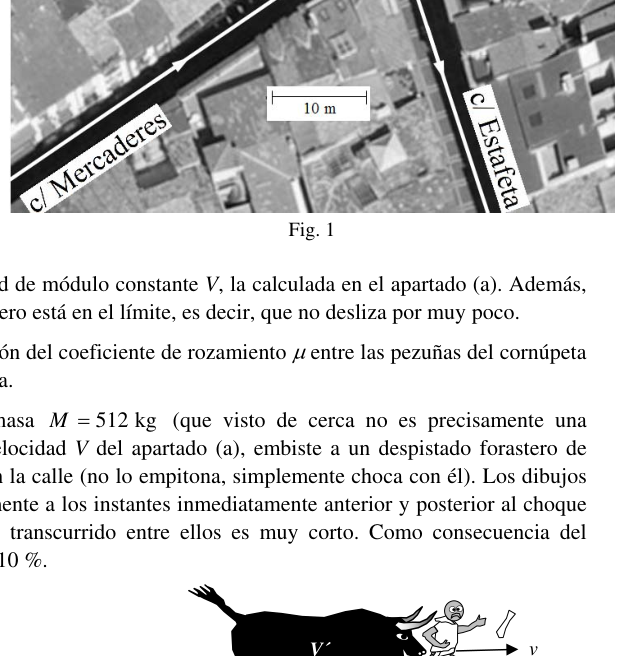 Fig. 1: aerial view of Estafeta curve, bull trajectory
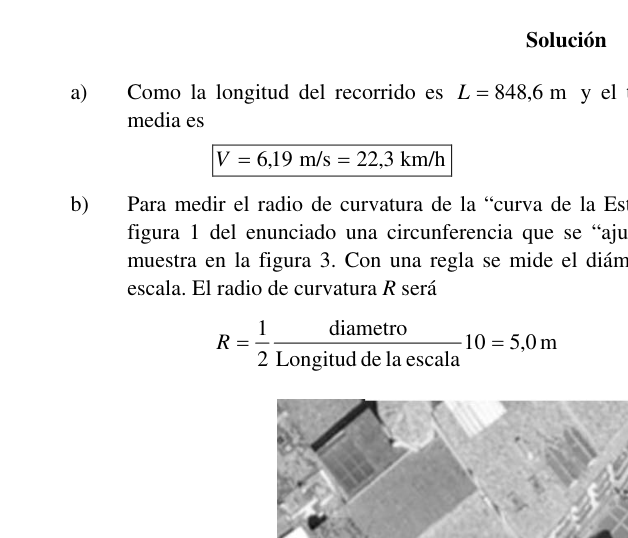 Fig. 2: bull-pedestrian collision before and after
Topic: Newtonian Mechanics, Conservation of Momentum Metodi: Kinematic Equations, Free-Body Diagram, Conservation of Momentum, Impulse-Momentum Theorem Competenze: Estimation & Approximation, Physical Reasoning, Mathematical Modeling Objects: — Fonte: Testo (PDF) — p.1
Fisica nei pressi di San Fermin.
Ma, c’è la fisica in prigione? Certo che c’è, molto e molto complesso. In questo esercizio si intende mettere in evidenza qualche aspetto fisico di questa popolare festa. Naturalmente, si dovranno usare modelli molto semplici; altrimenti il problema sarebbe praticamente irrisolvibile.
La lunghezza del percorso del blocco, dalla uscita dei corralillos di Santo Domingo all’ingresso della piazza dei tori è di e la durata media degli ultimi trent’anni, è di .
a) Determina la velocità media di un toro in un chiusura rapido e pulito come quello dell’8 luglio 2008, durata 2 min 17 s.
Un tratto singolare del chiusura è la curva chiusa con cui inizia la via Estafeta. Il pavimento è praticamente orizzontale e i tori spesso scorrono dando luogo a situazioni pericolose. La figura 1 è una fotografia a vista d’uccello della famosa curva. In esso, superposizione, viene mostrata la ipotetica traccia di un toro e si suppone che la curva sia un arco di circonferenza di radio .
b) Fa’ una stima di utilizzando la scala che viene mostrata anche nella fotografia.
Consistente alla “vista da uccello” della figura 1, possiamo considerare il toro come una particella puntante che traccia la curva della Staffa con una velocità modulare costante , quella calcolata al punto (a). Inoltre, supponiamo che il toro non arrivi a “scavare” ma sia al limite, cioè non scivola per molto poco.
c) Con queste ipotesi, si deve calcolare il coefficiente di rottura tra le stelle del cornoletto e il pavimento della curva della Stafeta.
Supponiamo ora che un toro di massa (visto da vicino non è proprio una particella puntaria …) che si muove alla velocità del paragrafo (a), abbia colpito un estraneo di massa che era in piedi in strada (non lo impita, semplicemente lo colpisce). I disegni a e b di figura 2 corrispondono rispettivamente agli istanti immediatamente precedenti e successivi allo sbalzo e si suppone che l’intervallo di tempo tra di essi sia molto breve. A seguito del colpo, la velocità del toro si riduce del 10%.
d) Qual è la velocità dell’allontanatore immediatamente dopo l’impatto?
e) Quanto è variabile l’energia meccanica del toro ? Si trasferisce interamente il all’estero? Raziona la sua risposta.
Se si stima come “durata dello scontrino” un tempo , qual è la forza media con cui il toro spinge l’esterno durante lo scontrino?
Fig. 1: aerial view of Stafeta curve, bull trajectory
Fig. 2: collisione bull-pedestrian before and after
Topic: Newtonian Mechanics, Conservation of Momentum Metodi: Kinematic Equations, Free-Body Diagram, Conservation of Momentum, Impulse-Momentum Theorem Competenze: Estimation & Approximation, Physical Reasoning, Mathematical Modeling Objects: — Fonte: Testo (PDF) — p.1
Physics in the San Fermín Bull Runs.
But is there physics in the bull runs? Of course there is—plenty, and very complex. This exercise aims to highlight some physical aspect of this popular festival. Naturally, we will need to use very simple models; otherwise, the problem would be practically unsolvable.
The length of the bull run course—from the exit of the Santo Domingo corrals to the entrance of the bullring—is , and the average duration over the last thirty years is .
a) Determine the average velocity of a bull in a fast and clean run like that on July 8, 2008, which lasted 2 min 17 s.
One particularly notable section of the run is the initial tight curve along Calle Estafeta. Its pavement is practically horizontal, and here bulls often skid, leading to dangerous situations. Figure 1 is an overhead photograph of the famous curve. Superimposed on it, a hypothetical trajectory of a bull is shown, and it is assumed that the curve is an arc of a circle with radius .
b) Make an estimate of using the scale also shown in the photograph.
Considering consistency with the “bird’s-eye view” of Figure 1, we may regard the bull as a point mass tracing the curve of the Estafeta at constant speed magnitude , as calculated in part (a). Additionally, we assume the bull does not skid but is at the verge of slipping—i.e., it barely avoids sliding.
c) Under these assumptions, estimate the coefficient of friction between the hooves of the bull and the pavement of the Estafeta curve.
Now suppose a bull of mass (which, when viewed closely, is certainly not a point mass) moves with velocity from part (a), and collides head-on with a startled outsider of mass who was initially at rest on the street (it does not ram him, but merely collides). Diagrams a and b in Figure 2 correspond respectively to the moments immediately before and after the collision, assuming that the time interval between them is very short. As a result of the collision, the bull’s speed decreases by 10%.
d) What is the velocity of the outsider immediately after the collision?
e) By how much has the mechanical energy of the bull changed ? Is this change fully transferred to the outsider? Justify your answer.
f) If we estimate the “duration of collision” as time , what is the average force with which the bull pushes the outsider during the collision?
Fig. 1: aerial view of the Estafeta curve, bull trajectory
Fig. 2: bull-pedestrian collision before and after