P3. Un prototipo de «gato» termodinámico.
Un estudiante aficionado a la física y a la tecnología ha ideado un dispositivo capaz de funcionar como un gato que permita levantar cuerpos a pequeñas alturas.
El dispositivo consiste en un tubo cilíndrico vertical con secciones diferentes; en la parte superior tiene un radio y en la inferior , tal como se representan en la figura 1. Dentro del tubo hay dos émbolos de masas y , unidos mediante una cadena inextensible, de longitud y masa . Los émbolos, que ajustan perfectamente en el tubo, pueden deslizar sin fricción. Todos los materiales con los que se ha construido el sistema son perfectos aislantes del calor.
Mediante la llave S se puede igualar la presión del espacio comprendido entre los émbolos con la atmosférica del exterior, . Con la llave S abierta, la base inferior de se apoya sobre unos pequeños pivotes que tienen como objeto, entre otros, dejar espacio para alojar una resistencia eléctrica de calefacción que es alimentada con una batería cuando se cierre el interruptor I.
Se supone que en el estado inicial (representado en la figura 1), la temperatura de todo el sistema es la ambiente, . A continuación, se cierra la llave S y se mantiene cerrada en todo lo que sigue. Considere que el aire se comporta como un gas perfecto diatómico de densidad .
(Calores específicos molares de un gas ideal diatómico: ; , donde es la constante de los gases perfectos.)
1º Determine la masa de aire, , encerrada entre los émbolos. Compruebe que esta masa es mucho menor que la del sistema deslizante (émbolos + cadena) y, por tanto, puede despreciarse en los cálculos del problema.
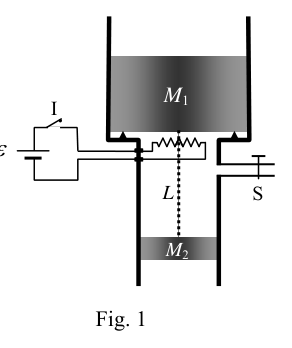 Fig. 1: tubo cilíndrico con émbolos y cadena
Topic: Thermodynamics, Fluid Mechanics Metodi: Ideal Gas Law, Physical Modeling Competenze: Mathematical Modeling, Physical Reasoning Objects: Cylinder, Piston, Gas, Battery, Resistor Fonte: Testo (PDF) — p.1
P3. Un prototipo di gato termodinamica.
Uno studente appassionato di fisica e tecnologia ha ideato un dispositivo in grado di funzionare come un gatto che permette di sollevare corpi a piccole altezze.
Il dispositivo consiste in un tubo cilindrico verticale con sezioni diverse; ha un raggio nella parte superiore e nella parte inferiore, come rappresentato nella figura 1. All’interno del tubo ci sono due emolli di massa e , uniti da una catena inestensibile, di lunghezza e di massa . I globuli, che si adattano perfettamente al tubo, possono scivolare senza attrito. Tutti i materiali con cui è stato costruito il sistema sono perfetti isolanti del calore.
La chiave S permette di eguagliare la pressione dello spazio compreso tra gli emblemi con l’atmosfera esterna, . Con la chiave S aperta, la base inferiore di si appoggia su piccoli pivot che hanno come obiettivo, tra gli altri, lasciare spazio per ospitare una resistenza elettrica di riscaldamento che viene alimentata da una batteria quando si chiude il interruttore I.
Si presume che, allo stato iniziale (representato nella figura 1), la temperatura dell’intero sistema sia l’ambiente, . Quindi chiudi la chiave S e resta chiusa per tutto il resto. Considera che l’aria si comporta come un gas diametralmente perfetto di densità .
*(Termate specifiche molari di un gas ideale diatomico: ; , dove è la costante dei gas perfetti.) *
1o Determina la massa di aria, , chiusa tra gli emolli. Verifica che questa massa è molto inferiore a quella del sistema scivolante (embolli + catena) e, quindi, può essere sprecata nei calcoli del problema.
Fig. 1: tubo cilindrico con embolsi e catena
Topic: Thermodynamics, Fluid Mechanics Metodi: Ideal Gas Law, Physical Modeling Competenze: Mathematical Modeling, Physical Reasoning Objects: Cylinder, Piston, Gas, Battery, Resistor Fonte: Testo (PDF) — p.1
P3. A prototype of thermodynamic gato.
A student who is fond of physics and technology has devised a device that can function like a cat and that allows you to lift bodies at small heights.
The device consists of a vertical cylindrical tube with different sections; on the upper part it has a radius and on the lower part , as shown in Figure 1. Inside the tube are two bulk embols and , connected by an unextended chain, of length and mass . The embols, which fit perfectly into the tube, can slide without friction. All the materials the system is built with are perfect heat insulators.
The S key can be used to equalize the pressure of the space between the emboluses with the atmospheric pressure outside, . With the S key open, the bottom base of rests on small pivots which, inter alia, make room for a heating electric resistance that is powered by a battery when the switch I is closed.
It is assumed that in the initial state (represented in Figure 1), the temperature of the whole system is the ambient temperature, . The S key is then closed and kept closed for all that follows. Consider that air behaves as a perfect diatomic gas of density .
*(Specific molar heat of a diatomic ideal gas: ; , where is the perfect gas constant.) *
1o Determine the air mass, , enclosed between the embolts. Check that this mass is much smaller than that of the sliding system (embands + chain) and, therefore, can be neglected in the calculations of the problem.
The Commission shall adopt implementing acts in accordance with Article 21 of Regulation (EC) No 1272/2009. 1: cylindrical tube with embols and chain*
Topic: Thermodynamics, Fluid Mechanics Metodi: Ideal Gas Law, Physical Modeling Competenze: Mathematical Modeling, Physical Reasoning Objects: Cylinder, Piston, Gas, Battery, Resistor Fonte: Testo (PDF) — p.1
2º Con objeto de levantar los émbolos (gato termodinámico), al aire encerrado entre ambos se le suministra lentamente calor mediante una resistencia eléctrica. En consecuencia, la presión interior variará. ¿Cuál es el valor de la presión crítica, , para la cual los émbolos comenzarán su ascenso? ().
Topic: Thermodynamics, Newtonian Mechanics Metodi: Free-Body Diagram, Hydrostatic Equilibrium Competenze: Physical Reasoning, Mathematical Modeling Objects: Piston, Gas Fonte: Testo (PDF) — p.1
2o Per sollevare gli emboli (gatto termodinamico), l’aria chiusa tra i due viene lentamente fornita di calore mediante resistenza elettrica. Di conseguenza, la pressione interna varia. Qual è il valore della pressione critica, , per la quale gli emboli inizieranno la loro ascesa? ().
Topic: Thermodynamics, Newtonian Mechanics Metodi: Free-Body Diagram, Hydrostatic Equilibrium Competenze: Physical Reasoning, Mathematical Modeling Objects: Piston, Gas Fonte: Testo (PDF) — p.1
2o To lift the embolts (thermodynamic cat), the air enclosed between the two is supplied with heat by electrical resistance. As a result, the internal pressure will vary. What is the critical pressure value, , for which the emboluses will begin to rise? ().
Topic: Thermodynamics, Newtonian Mechanics Metodi: Free-Body Diagram, Hydrostatic Equilibrium Competenze: Physical Reasoning, Mathematical Modeling Objects: Piston, Gas Fonte: Testo (PDF) — p.1
3º Desde el estado inicial hasta que los émbolos comienzan a ascender:
(a) ¿Qué tipo de proceso termodinámico ha tenido lugar?
(b) ¿Cuál es la temperatura, , del aire al comenzar el ascenso?
(c) ¿Cuánto calor, , habrá sido necesario suministrar para que empiece a ascender?
Topic: Thermodynamics Metodi: Ideal Gas Law, First Law of Thermodynamics Competenze: Physical Reasoning, Mathematical Modeling Objects: Gas, Piston Fonte: Testo (PDF) — p.1
3o Dal stato iniziale fino all’inizio dell’ascesa degli emboli:
**(a) ** Che tipo di processo termodinamico ha avuto luogo?
**(b) ** Qual è la temperatura, , dell’aria all’inizio dell’ascesa?
**(c) ** Quanto calore, , è stato necessario fornire per iniziare a salire?
Topic: Thermodynamics Metodi: Ideal Gas Law, First Law of Thermodynamics Competenze: Physical Reasoning, Mathematical Modeling Objects: Gas, Piston Fonte: Testo (PDF) — p.1
3o From the initial state until the embols start to rise:
What type of thermodynamic process has taken place?
**(b) ** What is the air temperature, , at the start of the ascent?
**(c) ** How much heat, , would it have been necessary to supply for to start rising?
Topic: Thermodynamics Metodi: Ideal Gas Law, First Law of Thermodynamics Competenze: Physical Reasoning, Mathematical Modeling Objects: Gas, Piston Fonte: Testo (PDF) — p.1
4º Una vez que despega, se produce la acción útil del gato elevando este émbolo hasta una altura . Supóngase que la elevación es muy lenta para poder despreciar la energía cinética del sistema.
(a) ¿Qué tipo de proceso termodinámico ha tenido lugar?
(b) Calcule la temperatura, , del gas al final de este proceso.
(c) ¿Cuánto calor adicional, , habrá sido necesario suministrar al gas?
Topic: Thermodynamics Metodi: Ideal Gas Law, First Law of Thermodynamics, Thermodynamic Cycle Analysis Competenze: Physical Reasoning, Mathematical Modeling Objects: Gas, Piston Fonte: Testo (PDF) — p.1
4o Una volta decollato , si produce l’azione utile del gatto alzando questo embolio fino a una altezza . Supponiamo che l’elevazione sia troppo lenta per poter disprezzare l’energia cinetica del sistema.
**(a) ** Che tipo di processo termodinamico ha avuto luogo?
**(b) ** Calcola la temperatura, , del gas alla fine di questo processo.
**(c) ** Quanto calore aggiuntivo, , è stato necessario fornire al gas?
Topic: Thermodynamics Metodi: Ideal Gas Law, First Law of Thermodynamics, Thermodynamic Cycle Analysis Competenze: Physical Reasoning, Mathematical Modeling Objects: Gas, Piston Fonte: Testo (PDF) — p.1
Once takes off, the cat’s useful action occurs by lifting this embolus to a height . Suppose the elevation is too slow to disregard the kinetic energy of the system.
What type of thermodynamic process has taken place?
**(b) ** Calculate the temperature, , of the gas at the end of this process.
**(c) ** How much additional heat, , will it have been necessary to supply the gas?
Topic: Thermodynamics Metodi: Ideal Gas Law, First Law of Thermodynamics, Thermodynamic Cycle Analysis Competenze: Physical Reasoning, Mathematical Modeling Objects: Gas, Piston Fonte: Testo (PDF) — p.1
5º Si se considera como trabajo útil el necesario para levantar el émbolo la altura , calcule la relación, expresada en %, entre dicho trabajo y el calor total suministrado, lo que puede llamarse rendimiento, , del proceso.
Topic: Thermodynamics, Conservation of Energy Metodi: First Law of Thermodynamics, Energy Conservation Method Competenze: Mathematical Modeling, Physical Reasoning Objects: Gas, Piston Fonte: Testo (PDF) — p.1
Se si ritiene utile il lavoro necessario per sollevare il pendolo l’altezza , calcolare il rapporto, espresso in %, tra tale lavoro e il calore totale fornito, che può essere chiamato rendimento, , del processo.
Topic: Thermodynamics, Conservation of Energy Metodi: First Law of Thermodynamics, Energy Conservation Method Competenze: Mathematical Modeling, Physical Reasoning Objects: Gas, Piston Fonte: Testo (PDF) — p.1
If the height is considered useful work for lifting the shovel , calculate the ratio, expressed as a %, between the work and the total heat supplied, which can be called the process performance, .
Topic: Thermodynamics, Conservation of Energy Metodi: First Law of Thermodynamics, Energy Conservation Method Competenze: Mathematical Modeling, Physical Reasoning Objects: Gas, Piston Fonte: Testo (PDF) — p.1
6º Para que el sistema evolucione lentamente, el suministro de calor se realiza mediante una resistencia conectada a una batería, de resistencia interna despreciable y fuerza electromotriz . Calcule el tiempo, , que deberá estar conectada la batería durante todo el proceso.
Topic: Thermodynamics, Circuits Metodi: First Law of Thermodynamics, Kirchhoff’s Laws Competenze: Mathematical Modeling, Physical Reasoning Objects: Gas, Piston, Resistor, Battery Fonte: Testo (PDF) — p.2
6o Per far evoluire lentamente il sistema, la fornitura di calore è effettuata mediante una resistenza collegata a una batteria, di resistenza interna scarsa e forza elettromotrice . Calcolare il tempo, , che la batteria deve essere collegata durante tutto il processo.
Topic: Thermodynamics, Circuits Metodi: First Law of Thermodynamics, Kirchhoff’s Laws Competenze: Mathematical Modeling, Physical Reasoning Objects: Gas, Piston, Resistor, Battery Fonte: Testo (PDF) — p.2
6o For the system to evolve slowly, the heat supply is carried out by a battery-connected resistance , of negligible internal resistance and electromotive force . Calculate the time, , that the battery must be connected throughout the process.
Topic: Thermodynamics, Circuits Metodi: First Law of Thermodynamics, Kirchhoff’s Laws Competenze: Mathematical Modeling, Physical Reasoning Objects: Gas, Piston, Resistor, Battery Fonte: Testo (PDF) — p.2
7º Represente en un diagrama Presión-Volumen el proceso seguido por el gas (aire) desde el estado inicial hasta que haya subido la altura .
Topic: Thermodynamics Metodi: Thermodynamic Cycle Analysis, Physical Modeling Competenze: Diagrammatic Reasoning, Physical Reasoning Objects: Gas, Piston Fonte: Testo (PDF) — p.2
7o Rappresenta in un diagramma Pressione-Volume il processo seguito dal gas (aria) dallo stato iniziale fino a quando ha raggiunto l’altezza .
Topic: Thermodynamics Metodi: Thermodynamic Cycle Analysis, Physical Modeling Competenze: Diagrammatic Reasoning, Physical Reasoning Objects: Gas, Piston Fonte: Testo (PDF) — p.2
7o Represents in a Pressure-Volume diagram the process followed by the gas (air) from the initial state until has risen to the height .
Topic: Thermodynamics Metodi: Thermodynamic Cycle Analysis, Physical Modeling Competenze: Diagrammatic Reasoning, Physical Reasoning Objects: Gas, Piston Fonte: Testo (PDF) — p.2