M(16O) 15.99491 a.m.u
M(16O) 15.99491 a.m.u.
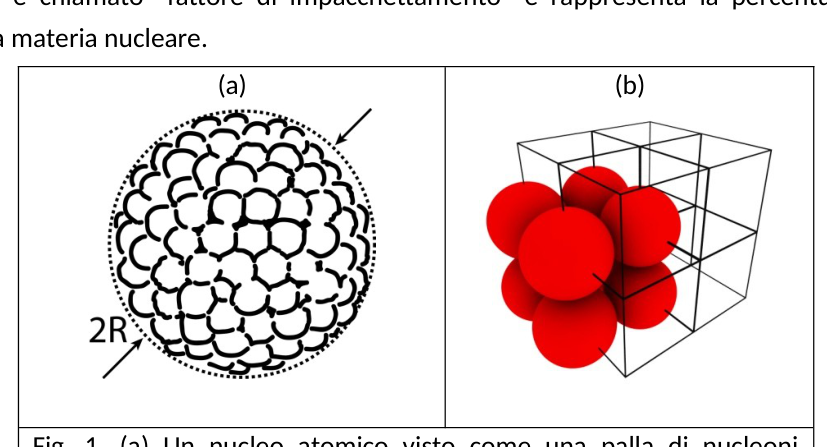
p.1 — Nucleo come palla di nucleoni e reticolo cubico
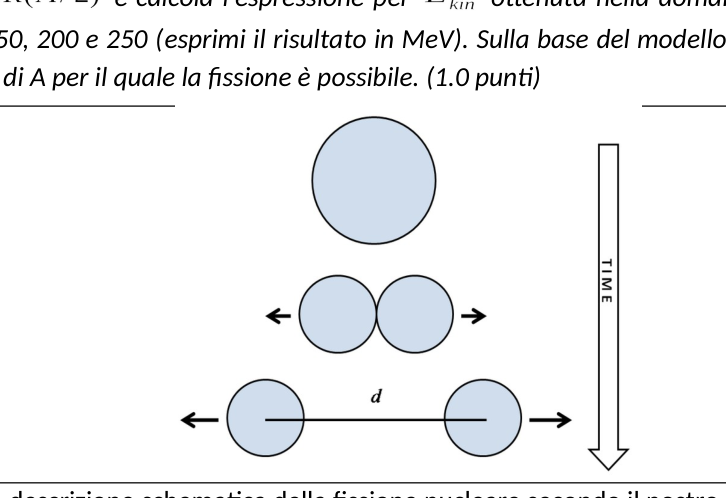
p.2 — Descrizione schematica della fissione nucleare
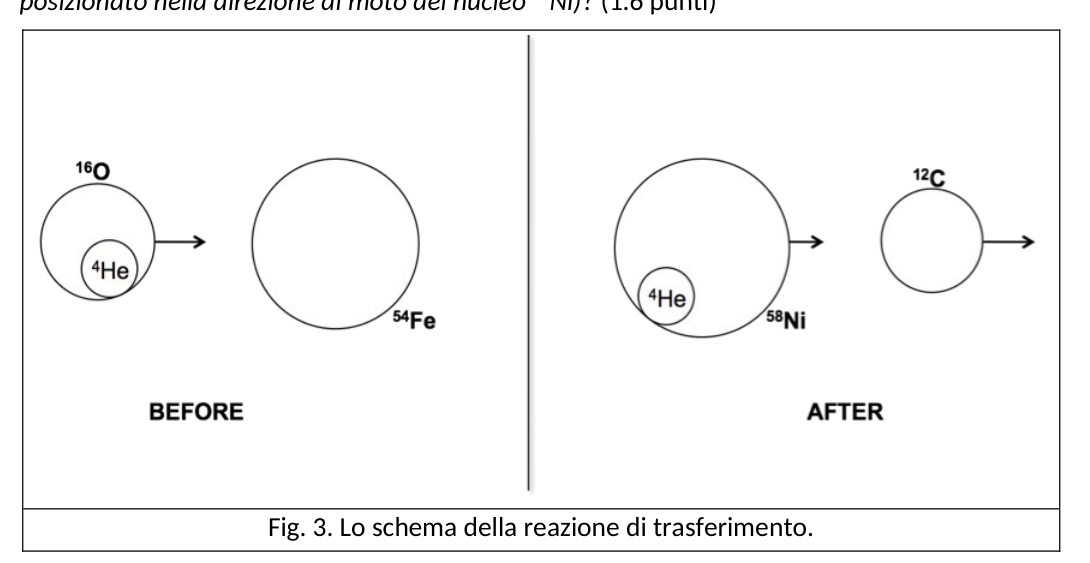
p.3 — Schema della reazione di trasferimento
Topic: Nuclear & Particle Physics Metodi: Mass-Energy Equivalence Competenze: Physical Reasoning Objects: Nucleus Fonte: Testo (PDF) — p.3
M(16O) 15.99491 a.m.u
M(16O) 15.99491 a.m.u.
**p.1 ** Nucleus as a nucleon ball and cubic lattice
The following information is provided by the manufacturer:
The following is the list of the samples taken:
Topic: Nuclear & Particle Physics Metodi: Mass-Energy Equivalence Competenze: Physical Reasoning Objects: Nucleus Fonte: Testo (PDF) — p.3
M(54Fe) 53.93962 a.m.u
M(54Fe) 53.93962 a.m.u.
Topic: Nuclear & Particle Physics Metodi: Mass-Energy Equivalence Competenze: Physical Reasoning Objects: Nucleus Fonte: Testo (PDF) — p.3
M(54Fe) 53.93962 a.m.u
M(54Fe) 53.93962 a.m.u.
Topic: Nuclear & Particle Physics Metodi: Mass-Energy Equivalence Competenze: Physical Reasoning Objects: Nucleus Fonte: Testo (PDF) — p.3
M(12C) 12.00000 a.m.u
M(12C) 12.00000 a.m.u.
Topic: Nuclear & Particle Physics Metodi: Mass-Energy Equivalence Competenze: Physical Reasoning Objects: Nucleus Fonte: Testo (PDF) — p.3
M(12C) 12.00000 a.m.u
M(12C) 12.00000 a.m.u.
Topic: Nuclear & Particle Physics Metodi: Mass-Energy Equivalence Competenze: Physical Reasoning Objects: Nucleus Fonte: Testo (PDF) — p.3
M(58Ni) 57.93535 a.m.u. Tabella 1. Massa a riposo dei reagenti nei loro stati fondamentali. 1 a.m.u.= 1.6605 10 -27 kg. b) Il nucleo 58Ni prodotto nello stato eccitato come discusso nel punto precedente, si diseccita nel suo stato fondamentale emettendo un fotone gamma nella direzione del suo moto. Considera questo decadimento nel sistema di riferimento nel quale 58Ni è a riposo e trova la sua energia di rinculo (cioè l’energia cinetica che il nucleo 58Ni acquista dopo l’emissione del fotone). Quanto vale l’energia del fotone in questo sistema di riferimento? Quanto vale l’energia del fotone nel sistema di riferimento del laboratorio (cioè quanto sarebbe l’energia del fotone misurata da un rivelatore posizionato nella direzione di moto del nucleo 58Ni)? (1.6 punti) Fig. 3. Lo schema della reazione di trasferimento.
Topic: Nuclear & Particle Physics, Special Relativity, Modern-Quantum Physics Metodi: Mass-Energy Equivalence, Relativistic Energy-Momentum, Photon Energy Relation Competenze: Physical Reasoning, Mathematical Modeling Objects: Nucleus, Photon Fonte: Testo (PDF) — p.3
M(58Ni) 57.93535 a.m.u. The following table is provided: Resting mass of the reactants in their basic states. 1 a.m.u.= 1.6605 10 -27 kg. b) The nucleus 58Ni produced in the excited state as discussed in the previous point, is dehydrated in its It was critical by emitting a gamma photon in the direction of its motor. Consider this. decay in the reference system in which 58Ni is at rest and finds its bounce energy (i.e. the kinetic energy acquired by the nucleus 58Ni after the photon is emitted). How much is it worth ? The photon energy in this reference system? What is the value of the photon energy in the system? The laboratory reference (i.e. how much would be the photon energy measured by a detector) positioned in the direction of motion of the 58Ni core)? The Commission shall adopt delegated acts in accordance with Article 21 of this Regulation.
- What? 3. The pattern of the transfer reaction.
Topic: Nuclear & Particle Physics, Special Relativity, Modern-Quantum Physics Metodi: Mass-Energy Equivalence, Relativistic Energy-Momentum, Photon Energy Relation Competenze: Physical Reasoning, Mathematical Modeling Objects: Nucleus, Photon Fonte: Testo (PDF) — p.3